For decades, an epic battle has raged in boardrooms and bush tracks. Two titans of touring trading blows to dominate the off-road market and the outback alike.Ever since way back in the 1950s, Toyota and Nissan have been throwing engineering might at their off-road programs to build 4x4s that’d dominate in every continent on earth. From the early days of the soft-top short-wheelbase G60 Patrols and FJ Cruisers, through the ’80s as they both ballooned into family wagons, and the ’90s when both hit their stride with big turbo-diesel six-cylinder engines and coil springs reining in solid axles.
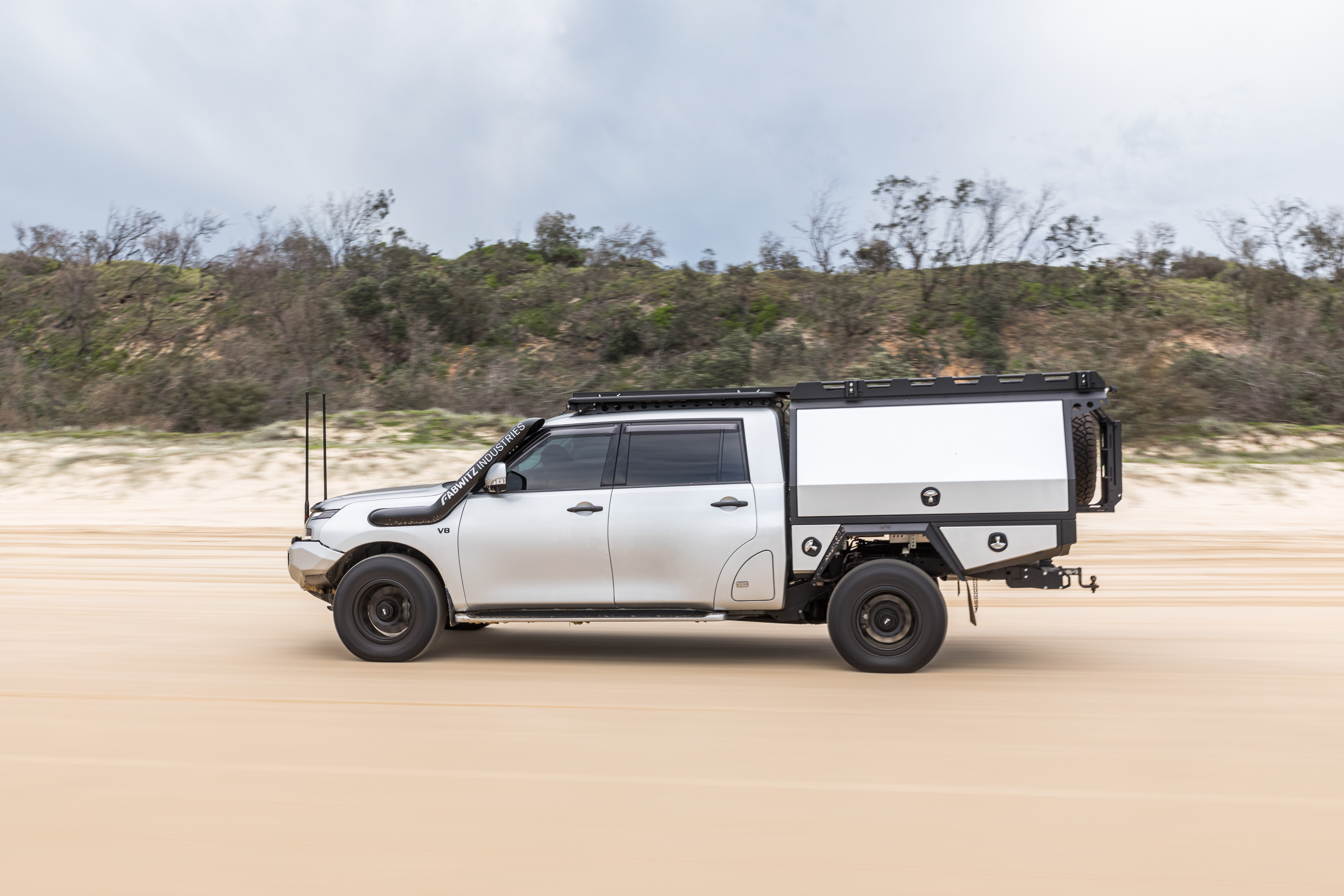
For many, it was peak 4×4 territory and something we still haven’t bettered. Unfortunately, with both manufacturers looking to get an upper hand with a giant leap forward, the war swung in the favour of Toyota’s LC200. The Y62 Patrol with its 400hp V8 failed to capture the hearts of Aussie 4WDers.In recent years the Y62 has clawed back to be a serious contender, and we’ve never seen a better example of that than this epic super-sized dual-cab.
Transformation
While the Gasson family’s silver Patrol may have left the manufacturing line a wagon back in 2019, it didn’t stay that way for long. Just a few months old and it rolled into the Toowoomba workshop of ASG 4X4, where it was sliced and diced beyond recognition.First up was losing all the sheet metal behind the rear doors, a new back wall was handmade turning the wagon into a dual cab, with a pair of handy tool-boxes pieced together where the old rear wheel arches used to be.From here the chassis copped a similar treatment, a massive 650mm extension was welded in with custom fuel and brake lines spanning the distance, and new wiring and rear driveshaft all going into the mix to make it work.
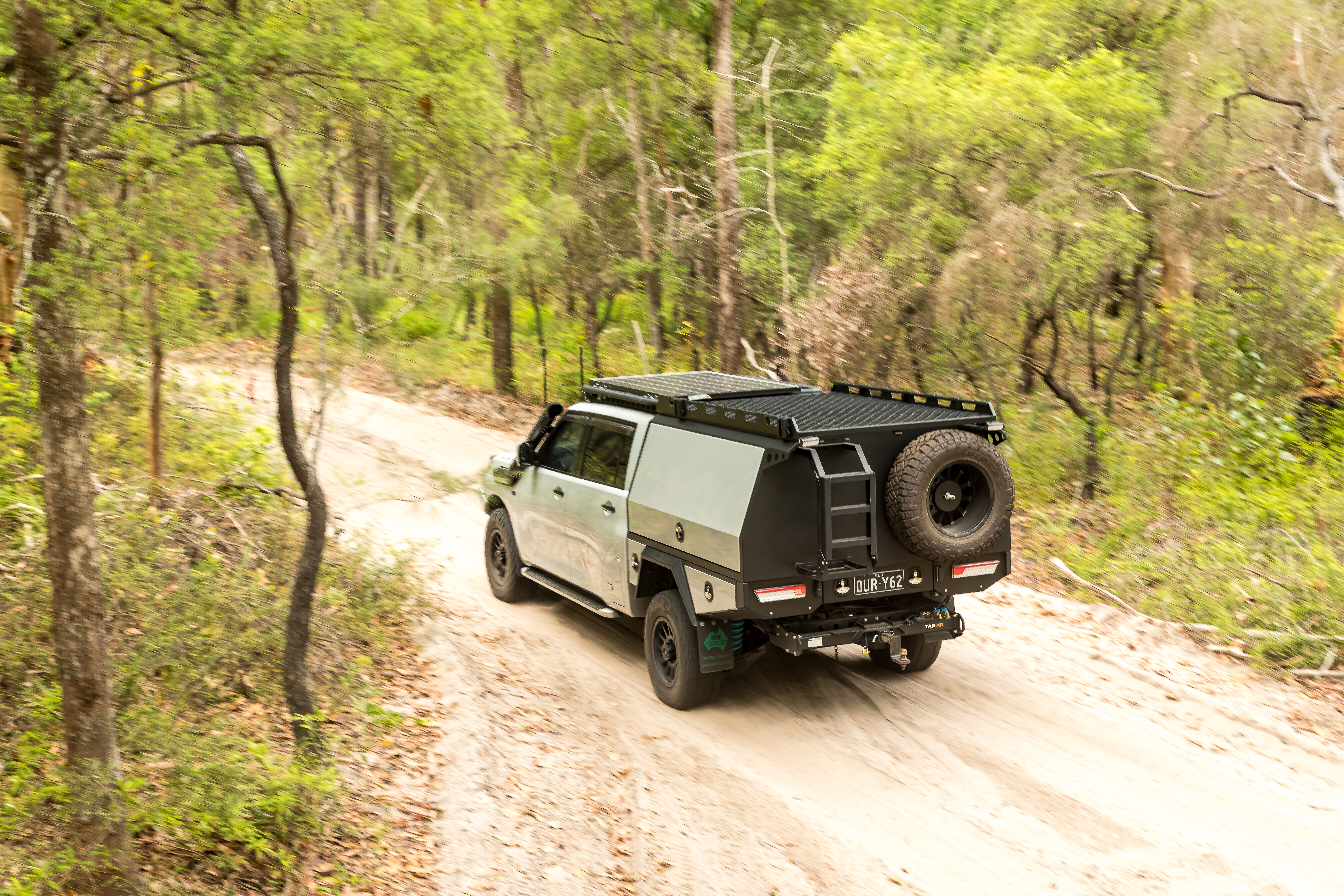
The dual-cab conversion allowed the family to fit a decked-out canopy on the rear, taking their Y62 from mall-crawling wagon to ultimate beach tourer. MW Toolbox in Coopers Plains, Queensland, were tasked with piecing together the canopy and have knocked it out of the park.Popping open the colour-coded aluminium door on the passenger side reveals a huge outdoor kitchen prime for Fraser Island cook-ups. Pride of place is the 85L Bushman fridge. With an internal 6L freezer and plenty of shelf space, it’s more than enough for the family’s adventures. It’s backed up with a full pull-out pantry, deep storage drawers, and a slide-out prep table all lit up by internal LED lighting. There’s even a 12V pie oven in there for easy meals on the road.Up top, there’s a custom roof rack built-in to the canopy, housing a Darche wrap-around awning fitted to clever RacksBrax quick-release lockable mounts. Swinging around the back, there’s an integrated ladder tucked high above the TAG tow bar before arriving on the driver’s side with bulk storage and a built-in weatherproof dog box. What will they think of next?
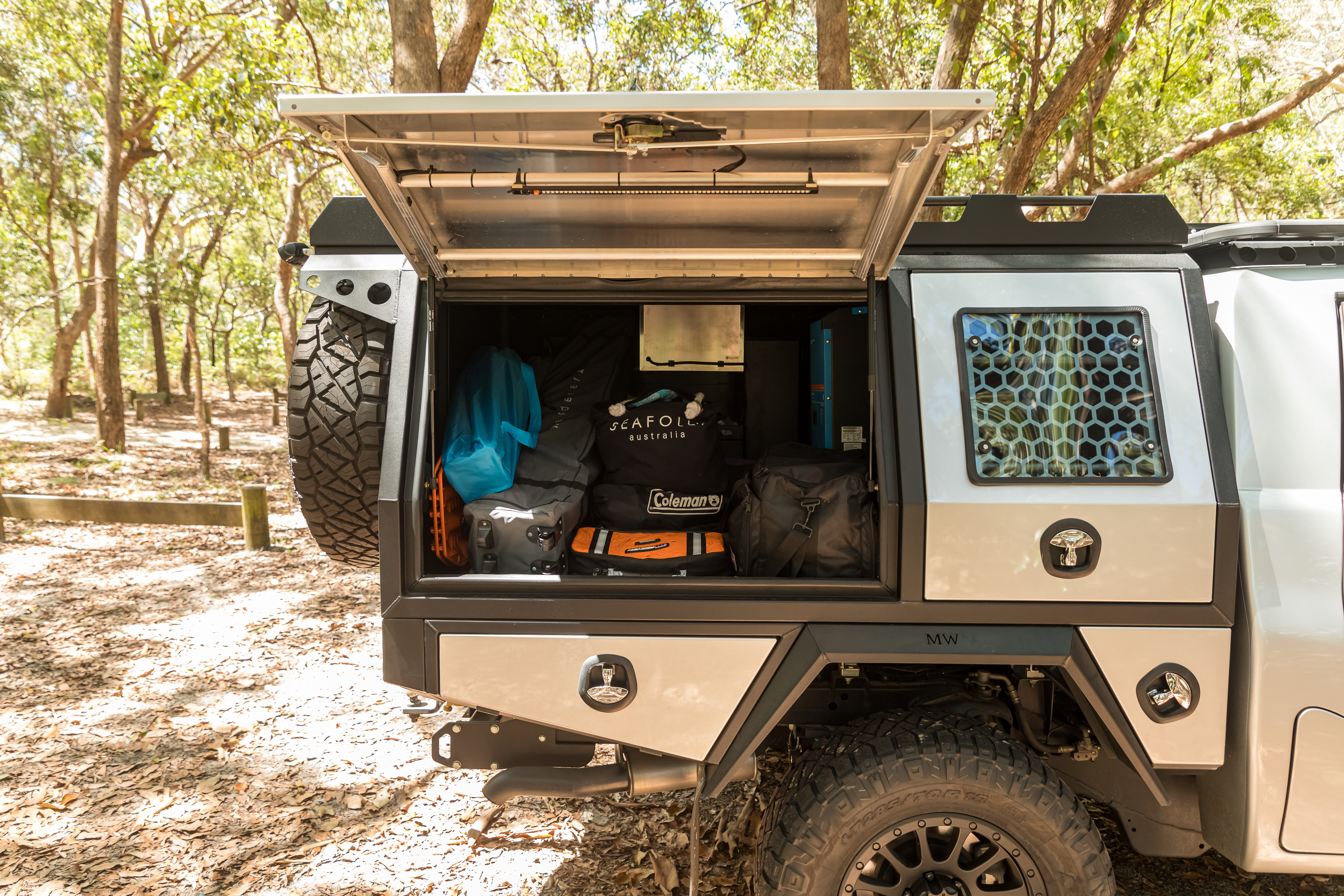
To keep the whole camp affair running late into the night, there’s a simply huge electrical set-up. Kicking off with 400W of solar panels on the roof, it feeds down to a powerhouse 12V system with a Victron MultiPlus-II handling both input and output. It pumps in a massive 120amp of charge from external AC when parked up at home or in a caravan park, 100amp from the Y62’s on-board electrical system or 30amp from the roof-mounted solar. All that power finds its way to a 320amp/h lithium battery bank. There’s 3000W of 240V power coming out the other end, as well as plenty of 12V power keeping the fridge, on-board air and water pumps running trouble-free.Back on the outside and the rest of the Patrol has been spec’ed up to match the tough-as-nails rear end. Up front a Dash Offroad Predator Evolution bar has been colour-coded and fitted by the team at Auramotive. It blends in well with the full chrome delete by Auto Emporium, giving the Y62 an off-road-ready look.
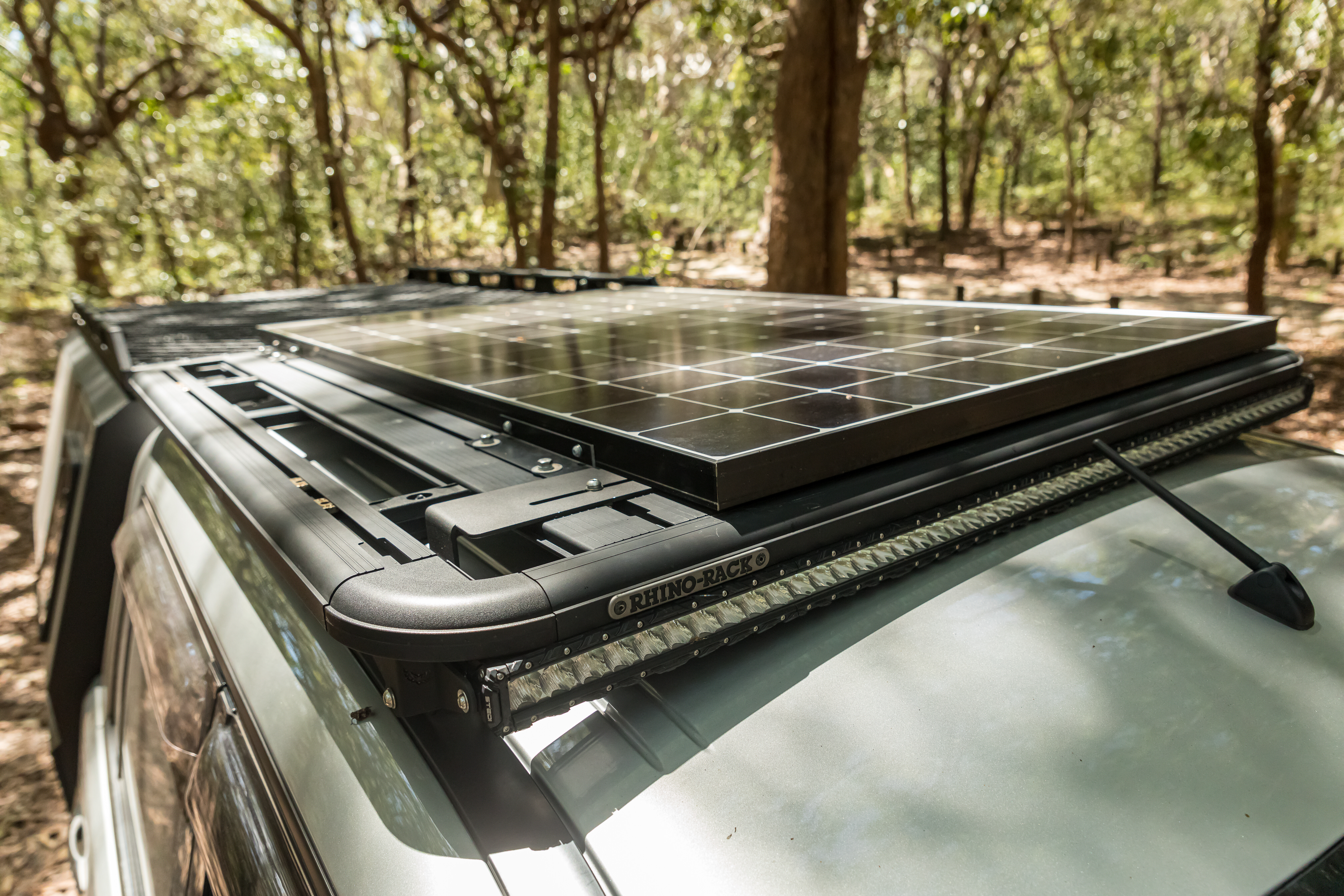
Moving back and a platform rack from Rhino-Rack has been fitted, ASG 4X4 modifying the rack and backbone system to work seamlessly with the now shorter roof of the dual cab. It houses a monster 51-inch Stedi ST3K light bar up front, with a set of Stedi camp lights up back. A custom towbar was designed by TAG to suit the chop and maximise departure angle, thanks to the new real estate available.Moving to the inside and the Gasson family have kept things neat and functional. One of the most important modifications was the installation of a Warrior 4×4 replacement rear-view mirror. The trick digital unit hooks up to a camera up back for rear vision, but also incorporates a dash cam, a 12-inch touchscreen, accident recording and in-built GPS.A GME XRS-330 UHF heads up the communication abilities, fed by dual antennas it’s able to perform just as well in the wide-open plains as the hills of the Great Dividing Range. It’s paired with a Cel-Fi GO unit, keeping mobile phones working far beyond their usual range. A digital dash cluster from CaRobotor replaces the factory offering, not only modernising the Y62’s interior but giving easy-to-read info on everything from fluid temps and pressures to digital inclinometer readings.
V8 petrol
While the inside is the epitome of refinement and technology, under the bonnet an old-school heartbeat keeps things motoring with an impressive 5.6L petrol-powered V8 punching out 400hp and 560Nm. It’s fed all the air it can handle thanks to a super-sized five-inch Fabwitz snorkel and Patroldocta airbox combination, before the spent gases are rocketed backwards through a hand-built three-inch exhaust.
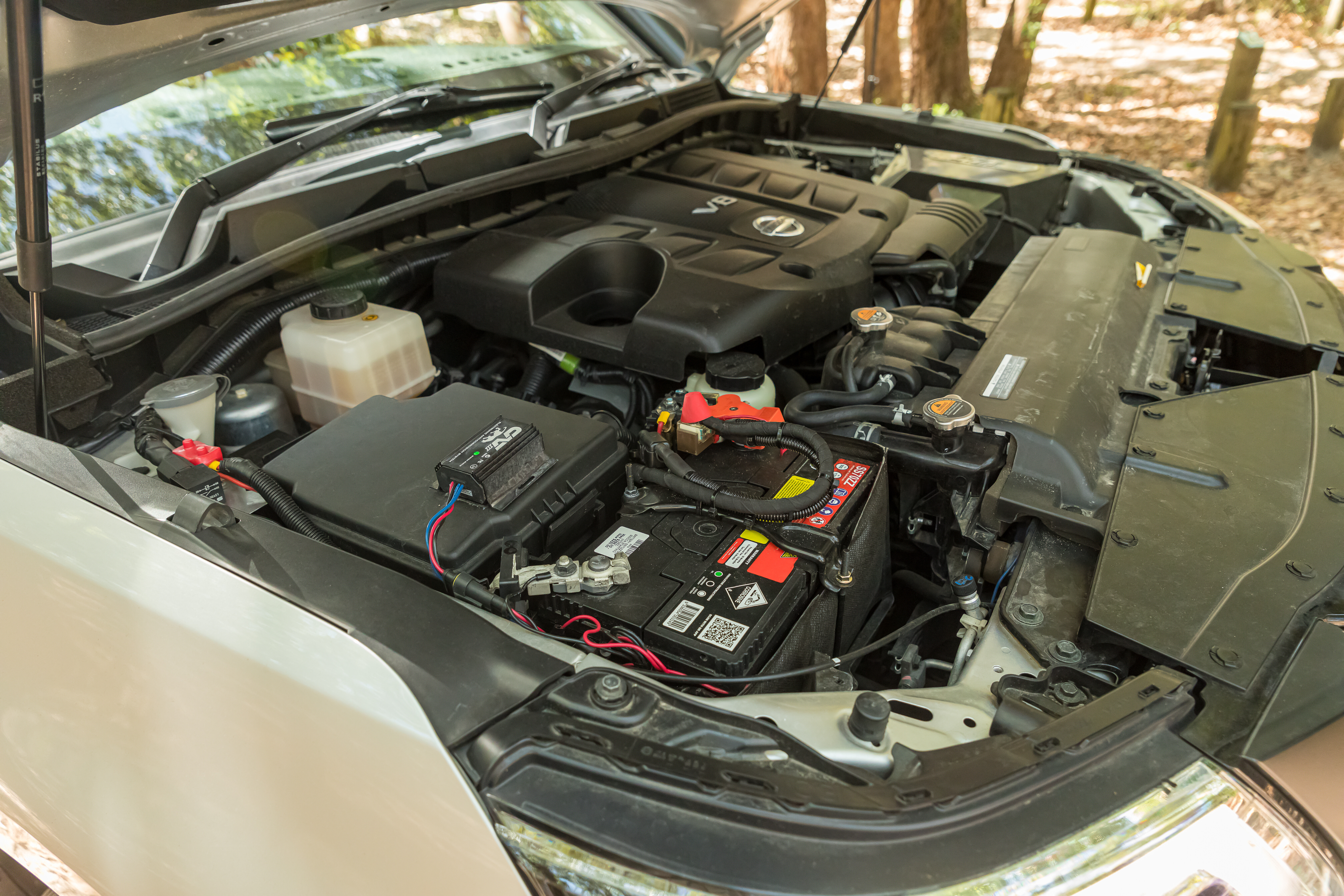
Drive is put to the ground through independent suspension front and rear. Up the back, ASG 4X4 lower control arms add serious strength and are tied in with the 4.2T GVM upgrade. The rest of the suspension is rounded out with 350kg constant-load Dobinson springs and Airbag Man helper airbags digitally controlled with auto-levelling and programmable ride heights including a sky high off-road mode. The suspension set-up allows easy fitment of Nitto Ridge Grapplers tyres punching in at 285/70R18 and wrapped around Elite Off-road Podium alloy wheels.If you need to catch your breath after that endless list of upgrades and modifications, you’re not alone. We’ve started seeing more and more built Y62 Patrols pop-up in these pages, but few to this level. A bona fide tried and tested, chopped and stretched tourer just isn’t something you see with a Patrol badge these days, but it’s proof that not only can the current generation of Patrols still hold their head high, they can pack just as big a punch as their old rivals.
The first blow
While the Patrol and ’Cruiser have been trading blows since 1951 when their predecessors went into production, the Patrol has often pipped the ’Cruiser at the post. Most people have heard the old story about the first ever vehicle crossing of the Simpson Desert being in a Patrol, the G60 loaded to the hilt with the Sprigg family and 200L of fuel to last the distance. It was only the second non-Aboriginal crossing of the desert, the first being Ted Colson on camel-back in 1936. But it’s not the only noteworthy first for the Patrol.While Toyota was first to market with its diesel engines, Nissan was the first to get rowdy with them winning the diesel class in the 1987 Paris to Dakar off-road race, back when they actually went from Paris to Dakar. It was also the first time a diesel engine had placed in the top 10 spots for the whole race. Coincidentally, it was also the first year a Patrol was seen sporting coil springs.The all-new GQ Patrol was a giant leap forward over the aging 60 Series LandCruiser, and first launched in late ’87 – it’d take Toyota another two years to catch up. The Patrol was also the first to sport an automatic transmission, the ’81 model MQ Patrol being optionable with a three-speed auto years before the ’Cruiser would lose the clutch pedal.
Weathered off-roaders sipping lagers at outback pubs will probably laugh you out of the establishment at the suggestion of heading out beyond the black stump with a Korean-built SsangYong Musso – we’ve almost seen it happen – but this luxury-laden XLV makes a hell of a lot of sense as a city-runabout-slash-weekend-adventure rig.
It’s a viable option for those wanting a dual-cab ute with modern tech and comfort for a fraction of the cost of the ‘more established’ utes on the market. Asking for less than $50K, the proposition begins to make even more sense.
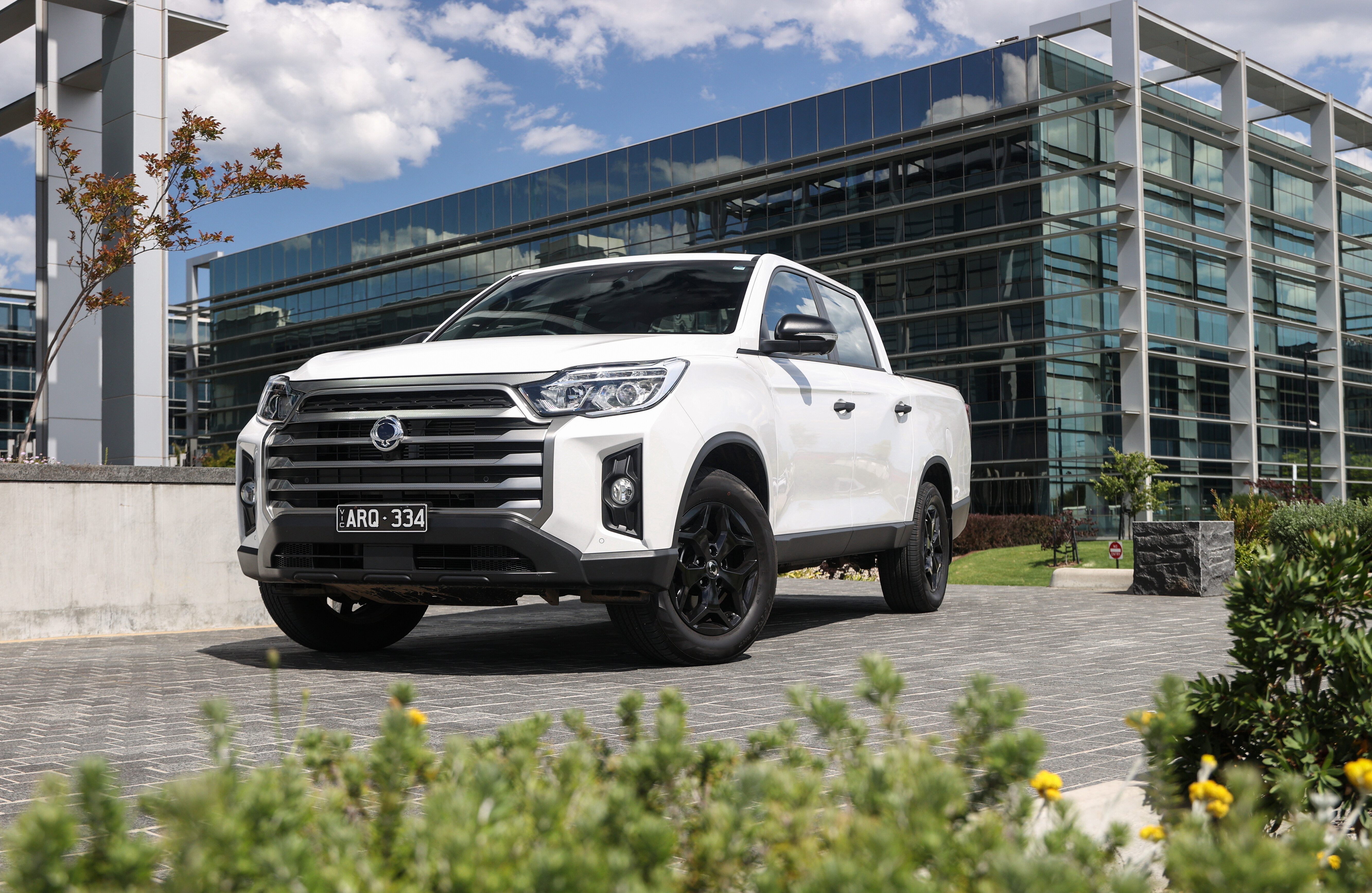
The Musso Ultimate is priced from $41,290 drive-away. Opt for the 300mm-longer XLV variant and you’ll need to spend a further $1500, and then add another $3000 on top if you tick the box for the Luxury Pack. So for $45,790 you can drive away with a brand-new, tech-savvy, luxury-laced dual-cab ute.
Said Luxury Pack gives owners dual-zone automatic climate control, a powered sunroof and more premium pews. All seats are now covered in Nappa leather upholstery instead of faux hide, the front seats are power-adjusted and the driver gets powered lumbar support. To keep kids’ bums warm on cold commutes, the rear seats are also heated.
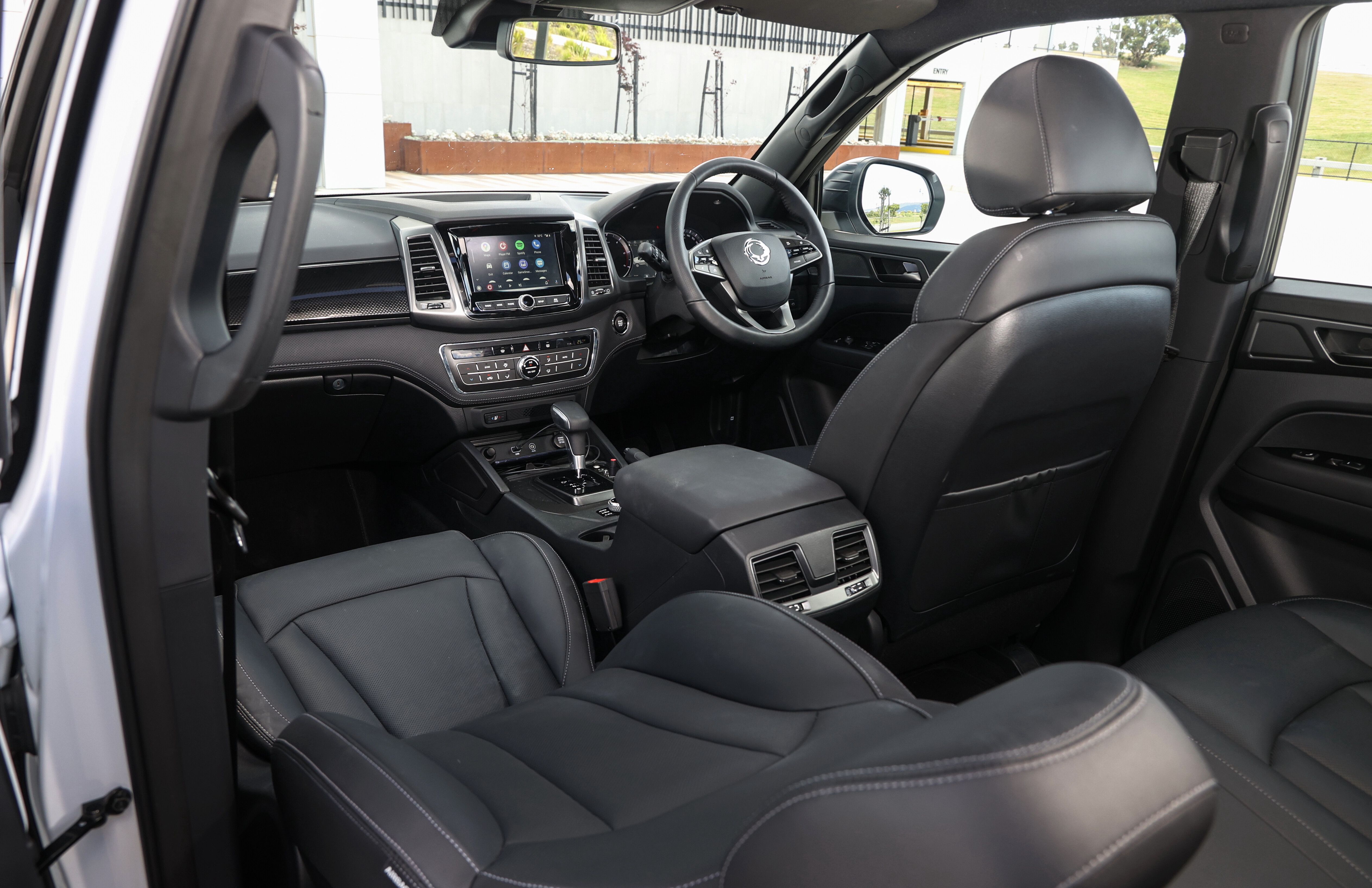
The cabin is wide and accommodating, and the seats supportive and comfortable. The centre console and dash are both well-appointed, belying the sub-$50K price tag. An easy-to-use dial to access 4WD functions is neatly positioned beside a traditional handbrake.
A cavernous tub – as mentioned, 300mm longer in XLV form – has two tie-down points that can be easily reached from outside the tray, and the tonneau cover can be easily detached and reattached in less than a minute.
It’s a viable option for those wanting a dual-cab ute with modern tech and comfort for a fraction of the cost of the ‘more established’ utes

Despite the price tag, the Musso XLV is not bereft of advanced safety systems either, with the Korean ute getting auto emergency braking, rear cross-traffic alert, lane-keep assist and departure warning, blind-spot monitoring, front and rear parking sensors and six airbags. It also comes equipped with a highly pragmatic tyre-pressure monitoring system that constantly assesses the pressure of each tyre – in this case, 255/60 R18 Nexen N’Priz RH7s – and alerts the driver of their status.
The Musso is powered by a 2.2-litre diesel engine, good for 133kW and 420Nm and backed by a six-speed auto. With coil suspension front and rear – unchanged from the pre-updated model – the Musso remains surefooted and tidy on-road.
Off-road, the rig is equipped with a part-time, dual-range 4WD system with electronic traction control and auto-locking rear diff. The added length of the XLV model proves to be something of an obstacle on more challenging terrain – and its bigger size can take some acclimatisation.

What is harder to talk about is longer-term ownership issues. Will it be reliable on a lap around Australia on desert roads and corrugated trails? How about after a few years? These questions will linger, but SsangYong’s seven-year warranty should help to ease such concerns.
For some real-world tow testing, we threw the keys to our mates across the hall at Street Machine Magazine, so they could tow one of their project cars out to Heathcote Park Raceway.
With coil suspension front and rear – unchanged from the pre-updated model – the Musso remains surefooted and tidy on-road
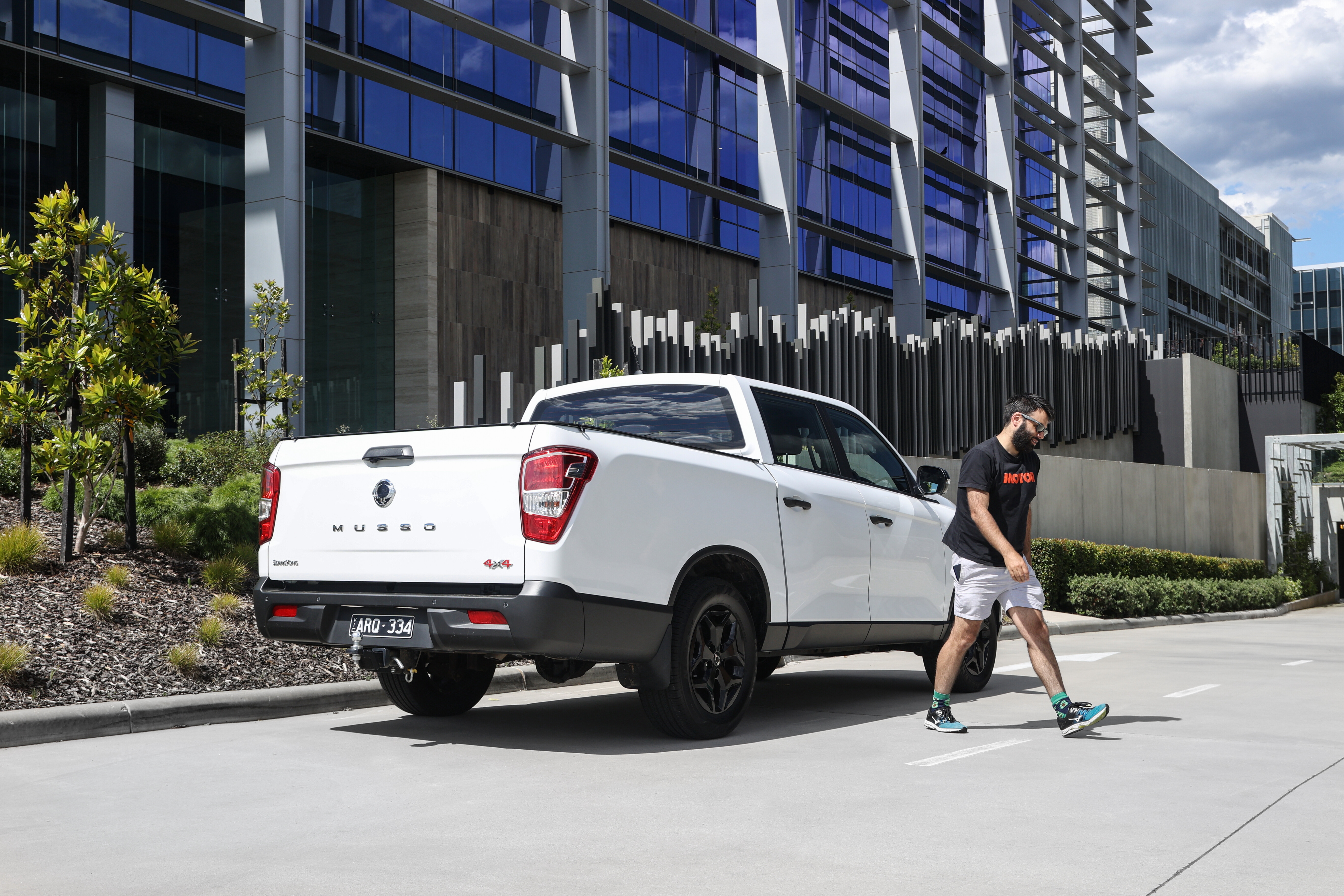
The guys are always towing their Carnage YouTube creations all over Australia in various dual-cabs, so we knew they would be able to give us an informed opinion on how the Musso XLV performs against the rest of the field.
We’ll let Street Machine’s Carnage host Scott Taylor take it from here.
The Tow Test
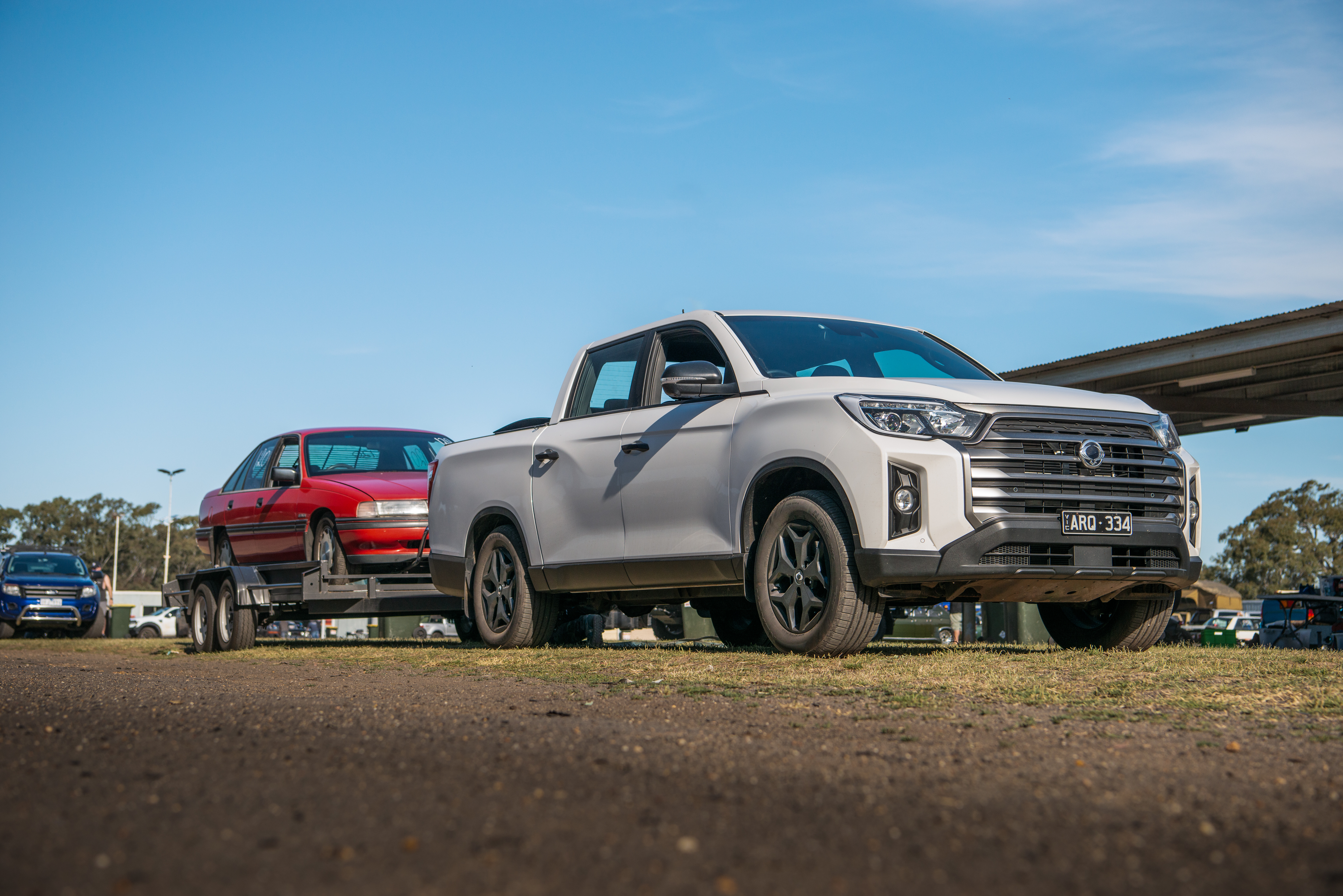
“Wow, what a beast!” were the first words out of my mouth when I laid eyes on the SsangYong Musso. Of course, I was aware of the Musso, but I’d never paid much attention to them. Roomy is certainly a term that comes to mind, and for those towing long distances, comfort is important.
The Musso XLV is big on the inside and even bigger on the outside; which is great when it comes to the pick-up bed capacity. When we usually pack for the track we typically have to weigh up needs and wants; we NEED race tyres and a jack, we WANT the big Esky and plenty of tools, but with the extra 300mm length of the Musso XLV, we found we could take everything.
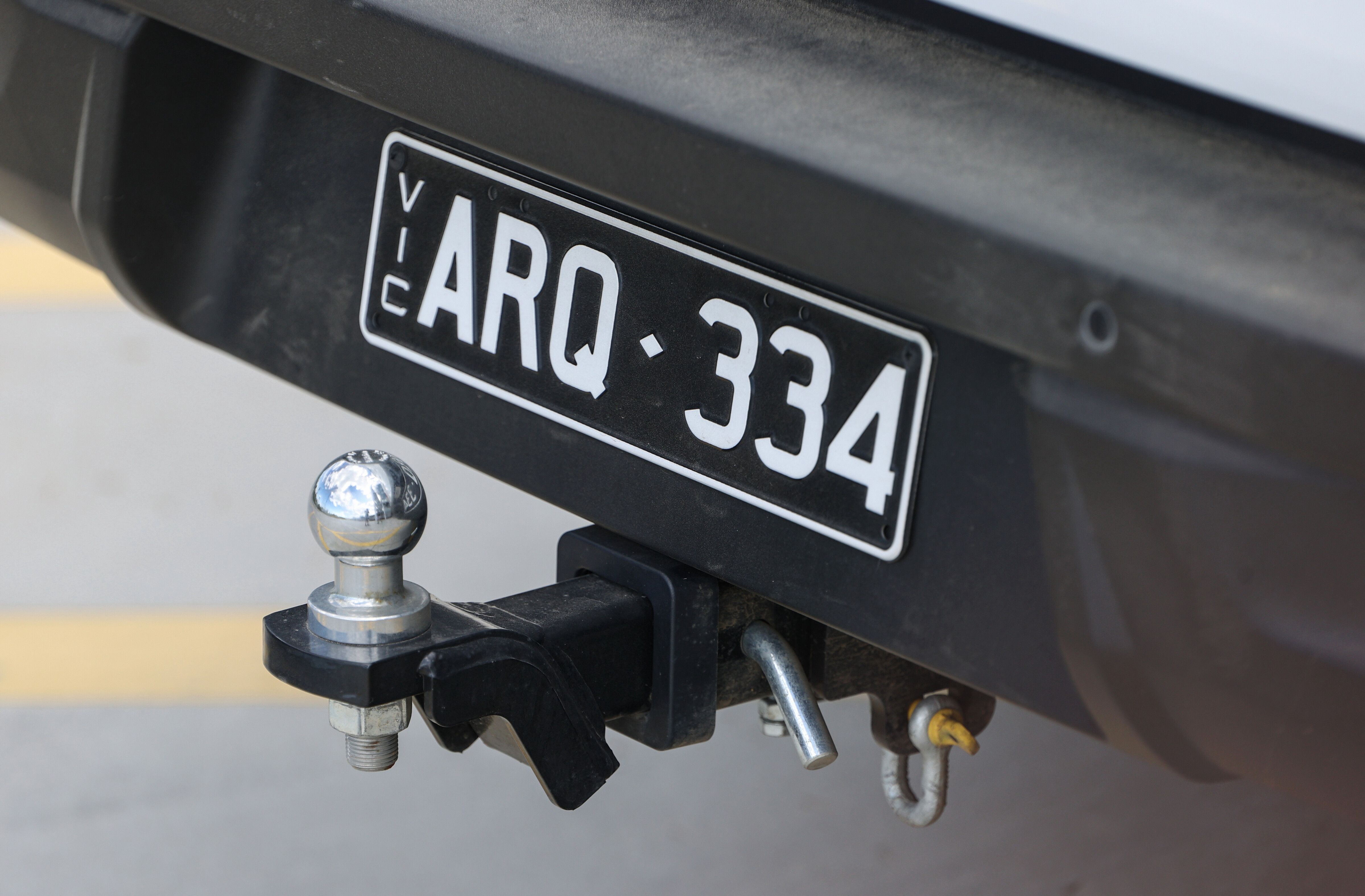
Hooking up was child’s play; the Musso’s reversing camera was perfect for lining up the tow bar and, while the 360-degree camera works okay, we didn’t feel it was quite as good as some of the others we’d experienced.
On the road, with 2100kg of race car and trailer tagging behind, the Musso was as stable as a house through Melbourne traffic, and the little 2.2-litre diesel gave us no complaints, except maybe fuel economy.
Loaded up, we made it the 382km to Heathcote Raceway and back on a tank of fuel, but I doubt we would have made it much further than that. Our only other complaint would be that the six-speed automatic seemed a little flustered through the hills; it never seemed to know which gear it wanted to be in.
The Musso XLV is big on the inside and even bigger on the outside; which is great when it comes to the pick-up bed capacity

But when you factor in the low price and SsangYong’s seven-year warranty, then those problems seem minor and the Musso XLV becomes a very attractive option for a weekend tow rig.
In terms of outright towing capability, we’d rank it solidly in the mid-field (bearing in mind the current crop of dual-cabs represents an extremely strong field), but we’d also score it above average in terms of comfort and carrying capacity. Overall we were pleasantly surprised.
Snapshot
- Next-gen Amarok to be based on new Ford Ranger
- Teasers show much of Ford’s equipment will be carried over
- Reveal expected later in 2022
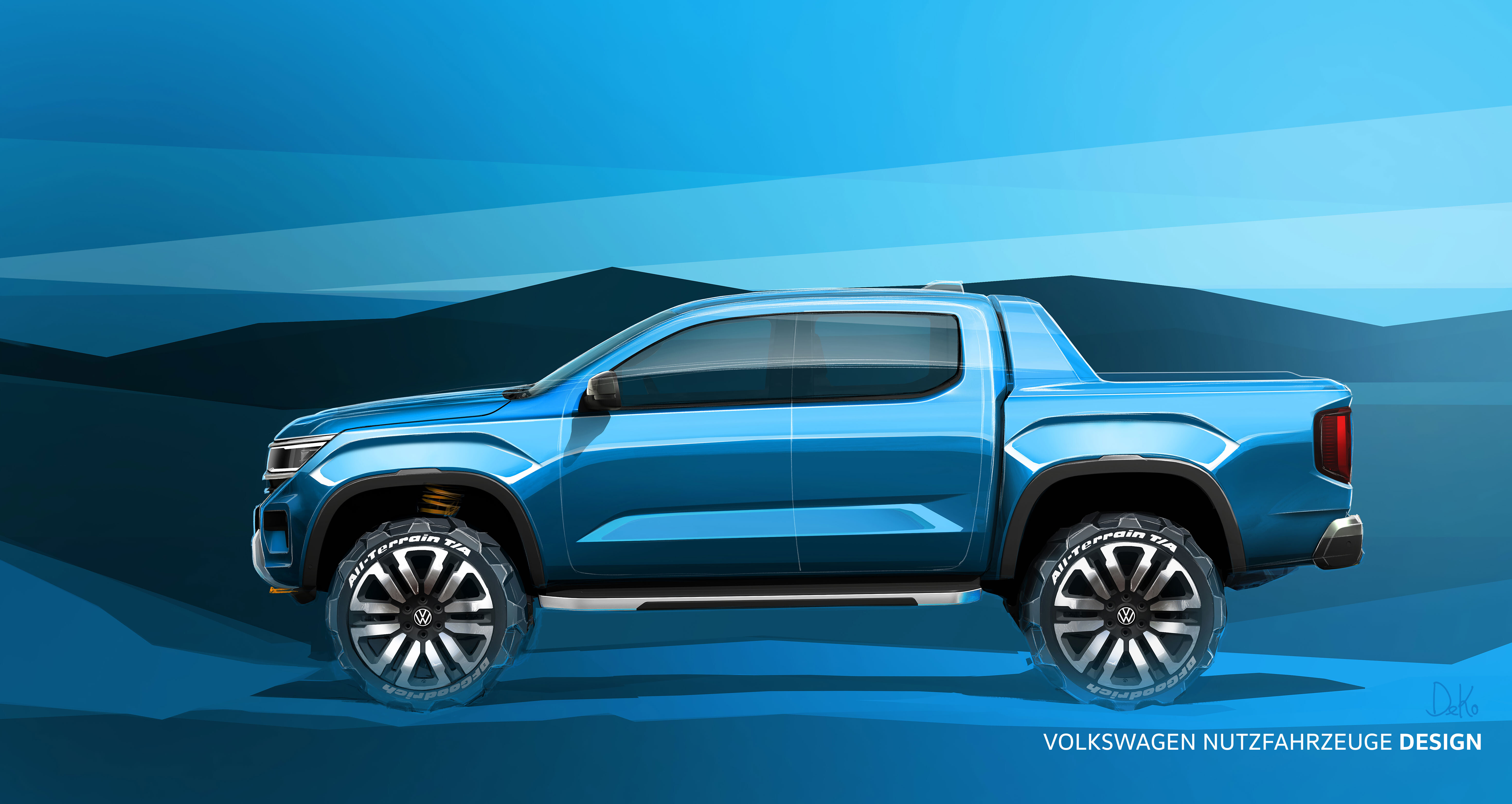
UPDATE, February 21, 2022: Volkswagen continues to tease the upcoming 2023 Volkswagen Amarok, this time in the form of more detailed design sketches than before.
While the aggressive, pumped-out guards likely won’t carry across to the production vehicle, it’s interesting to note the Ford Ranger’s unique box-step is gone on the Amarok, instead adopting a traditional ready bumper, which is mounted externally to the bodywork.
Not seen as clearly as before is the tailgate, which features the Amarok’s name pressed into the steel rather than a stick-on badge, while the Ranger’s large tub space carries across, allowing for a Euro-standard pallet to fit in the back.
No official date has been announced yet for the Amarok’s reveal, but with teasers showing nearly every angle of the dual-cab, it will undoubtedly be launched before the new financial year.
The story to here
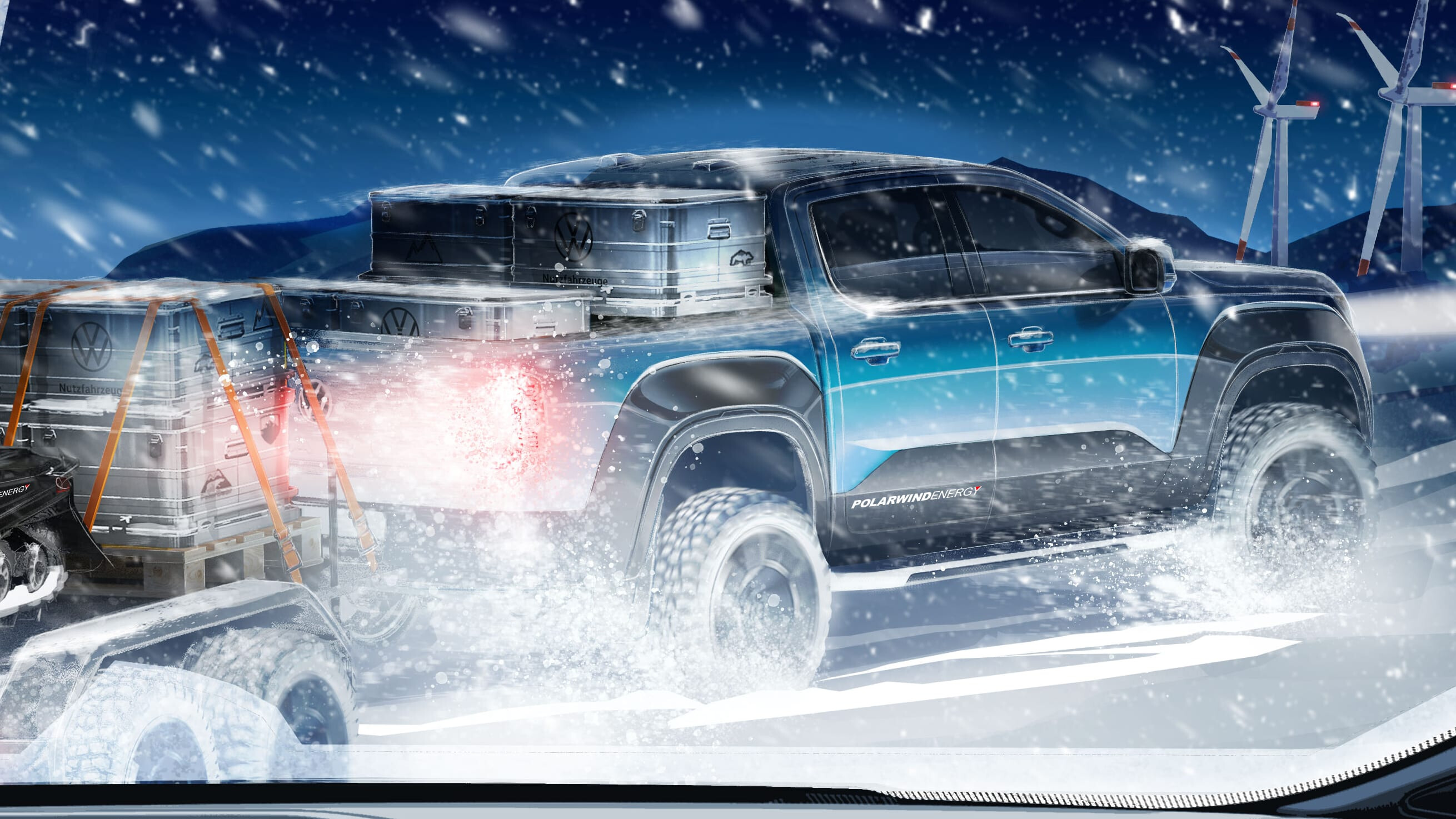
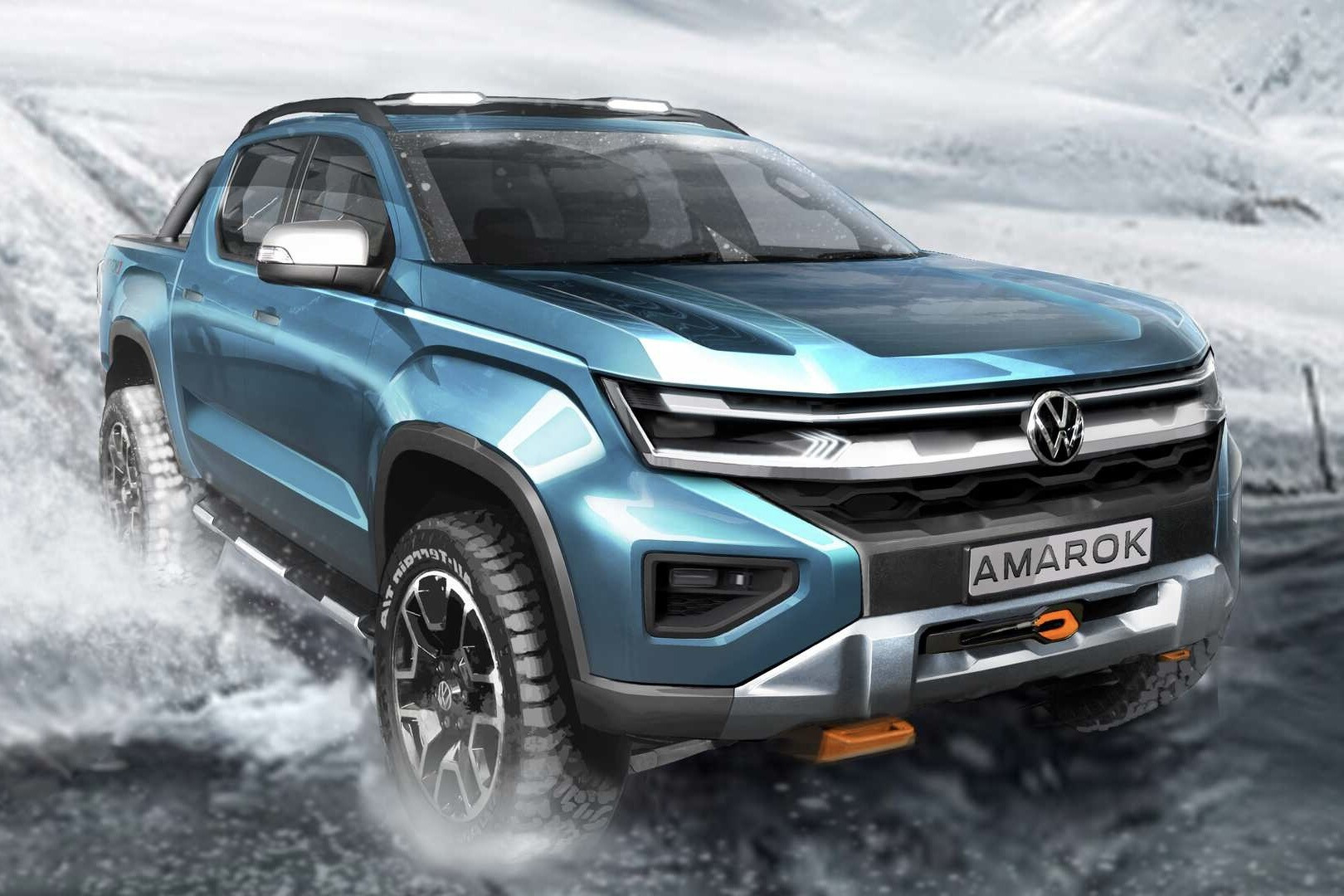
January 17, 2022: Volkswagen has shown off its latest official teaser of the second-generation Amarok in a design sketch, giving us our best look yet at the upcoming moden.
While the German manufacturer last teased the new Amarok after Ford had already revealed its Ranger twin, this new sketch gives us a first look at its side and rear profiles from a rear-three-quarter perspective.
With plastic cladding on the arches and a sizeable amount of ground clearance, it’s likely the Amarok, which Volkswagen has chosen to tease is an off-road focused variant, is potentially designed to compete against Ford’s Ranger Wildtrak.
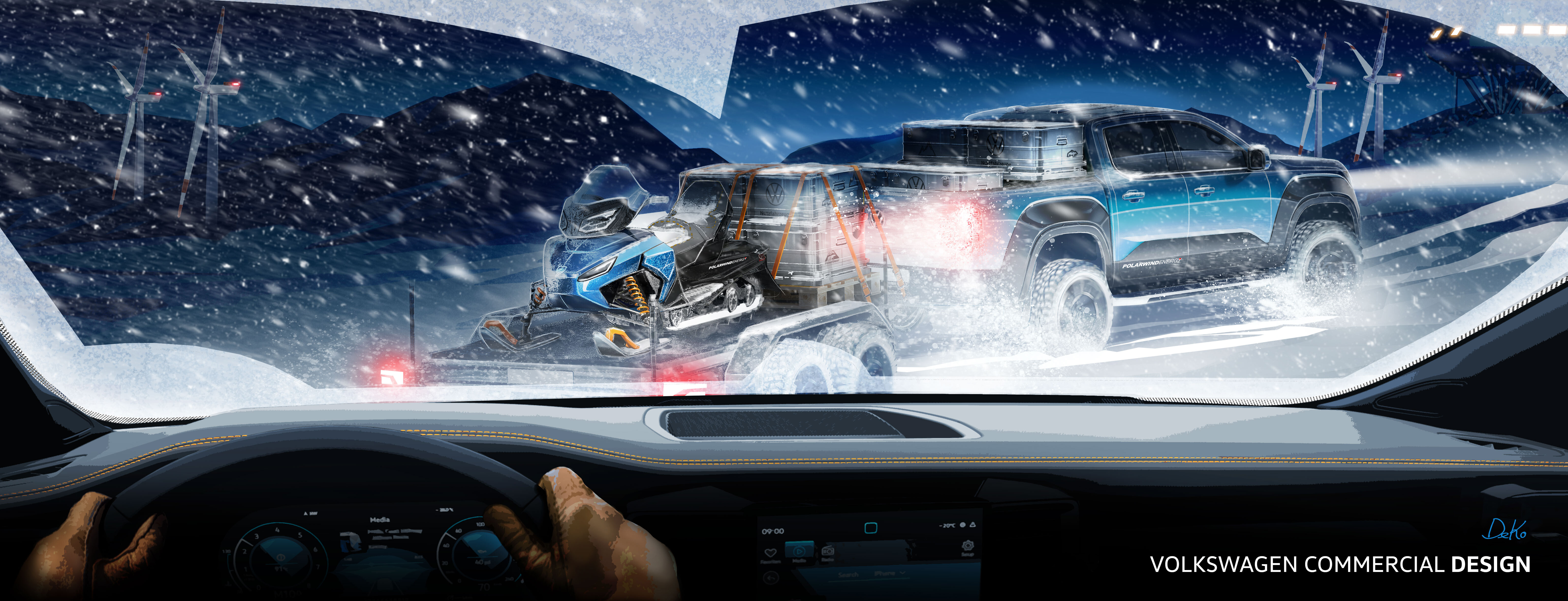
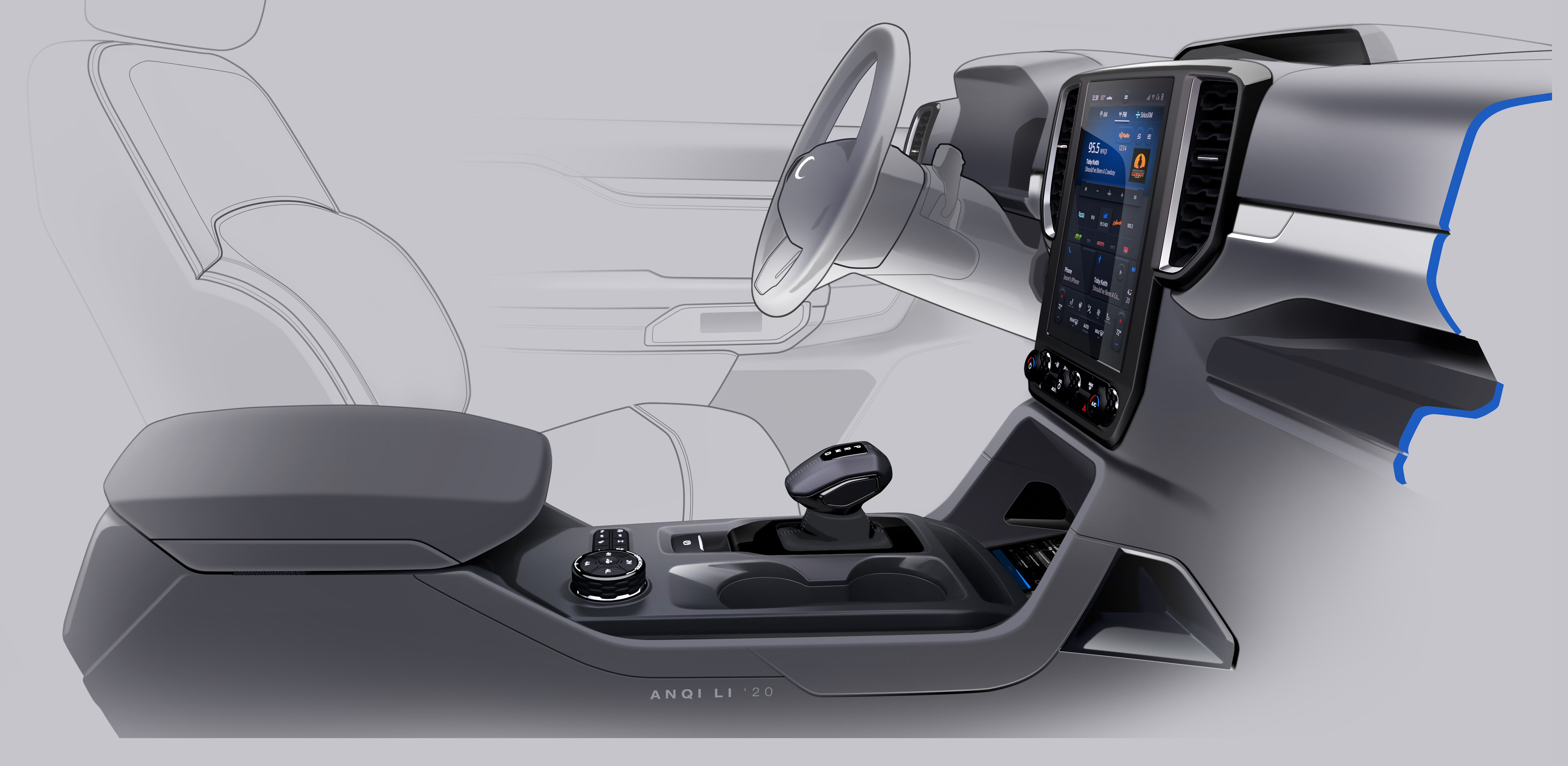
Although not much of the interior is shown off, we can see the Amarok’s dash uses a traditional, horizontally-oriented infotainment screen, rather than the Ranger’s vertical unit.
It’s likely the second-gen Amarok will also be larger than its predecessor, riding on Ford’s T6 platform, which is both longer (+100mm) and wider (+40mm) than the current ute.
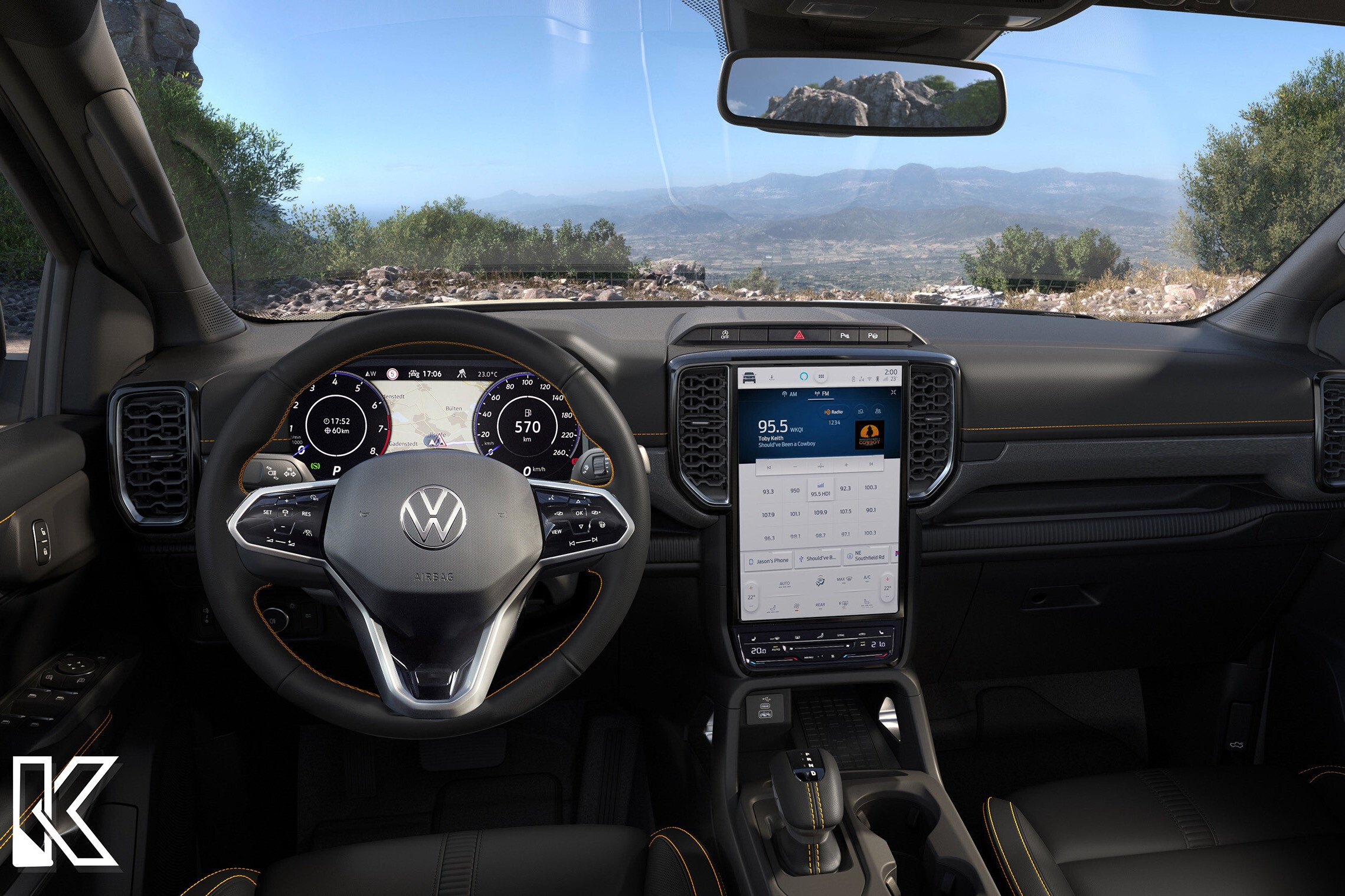
December 20, 2021: More renderings of the 2023 Volkswagen Amarok have been created, this time offering a look at the ute’s cabin.
Brazilian artist Kleber Silva created these digital images of the next-generation Amarok, but also used images of the recently-unveiled Ranger to create a rendering of the Volkswagen’s interior.
The Ford’s portrait-oriented infotainment touchscreen remains, as do the air vents on each side, but the driver is instead greeted with a Volkswagen logo on the airbag.
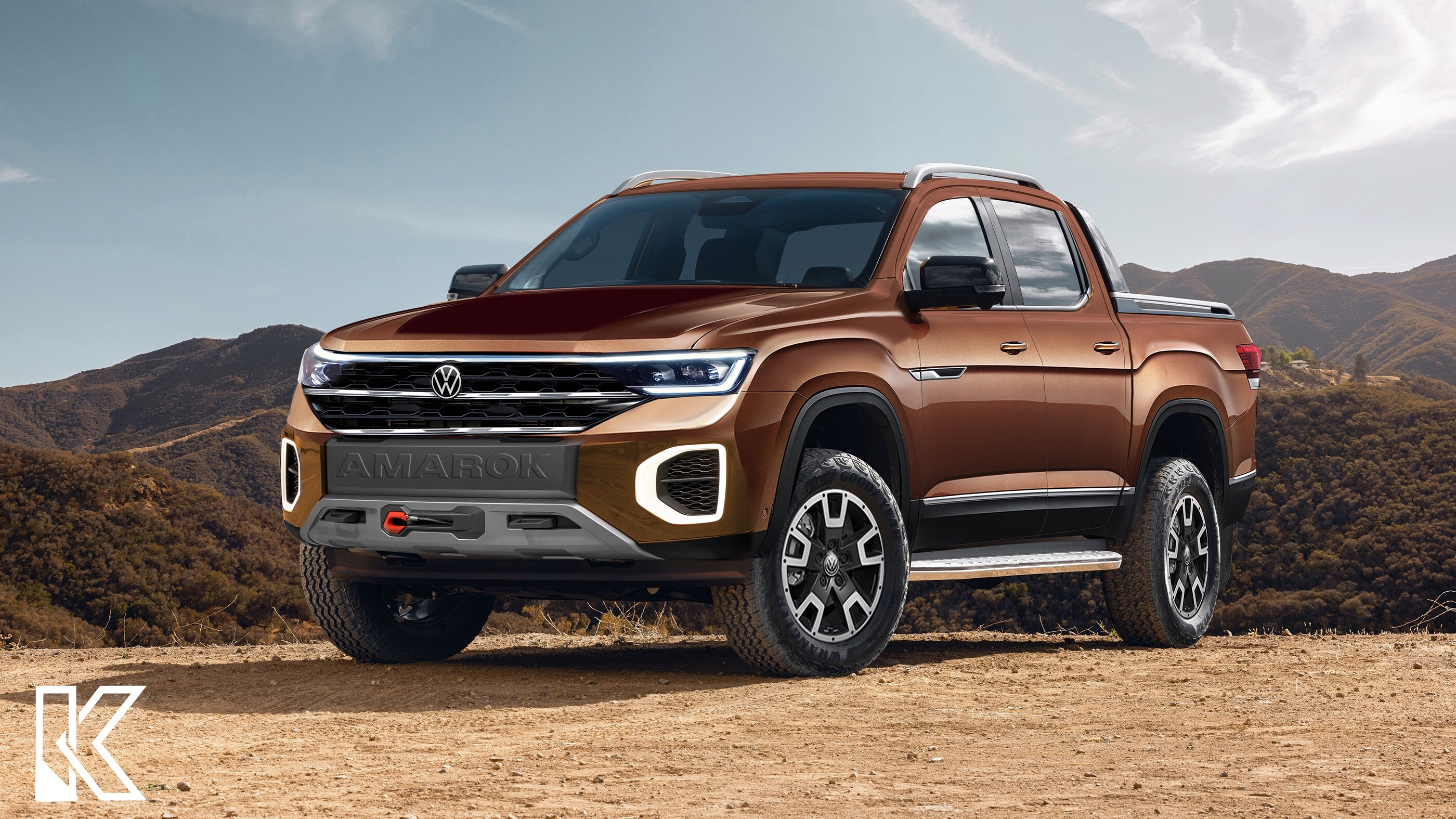
On the outside, the daytime-running lights run the full length of the grille, echoing design sketches of the new ute previously offered by Volkswagen’s design team.
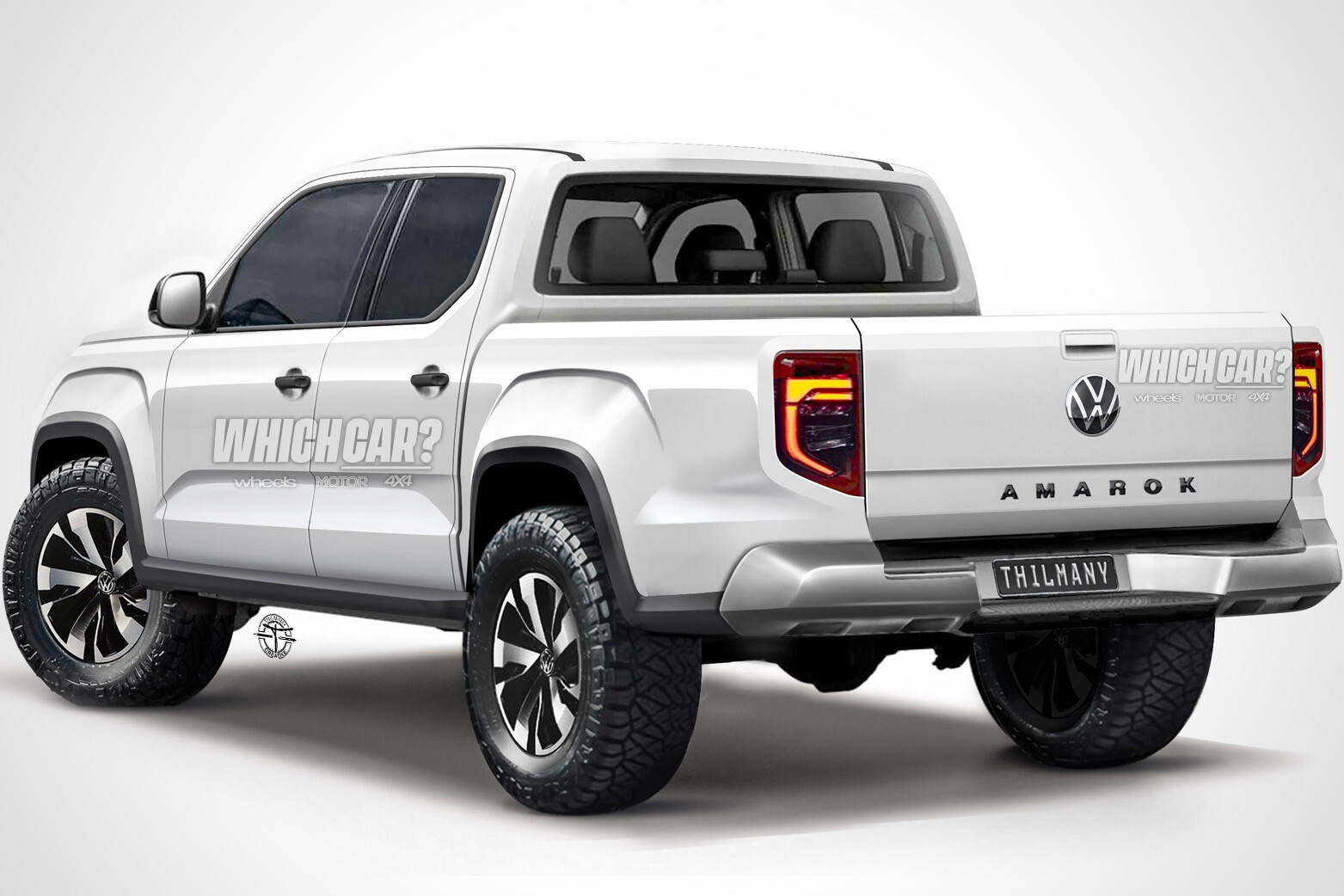
Unique alloy wheels, embossed tailgate with ‘AMAROK’ spelled out, and redesigned tail-lights help to differentiate the ute from its sibling.
Let us know which rendering you like best in the comments section below.
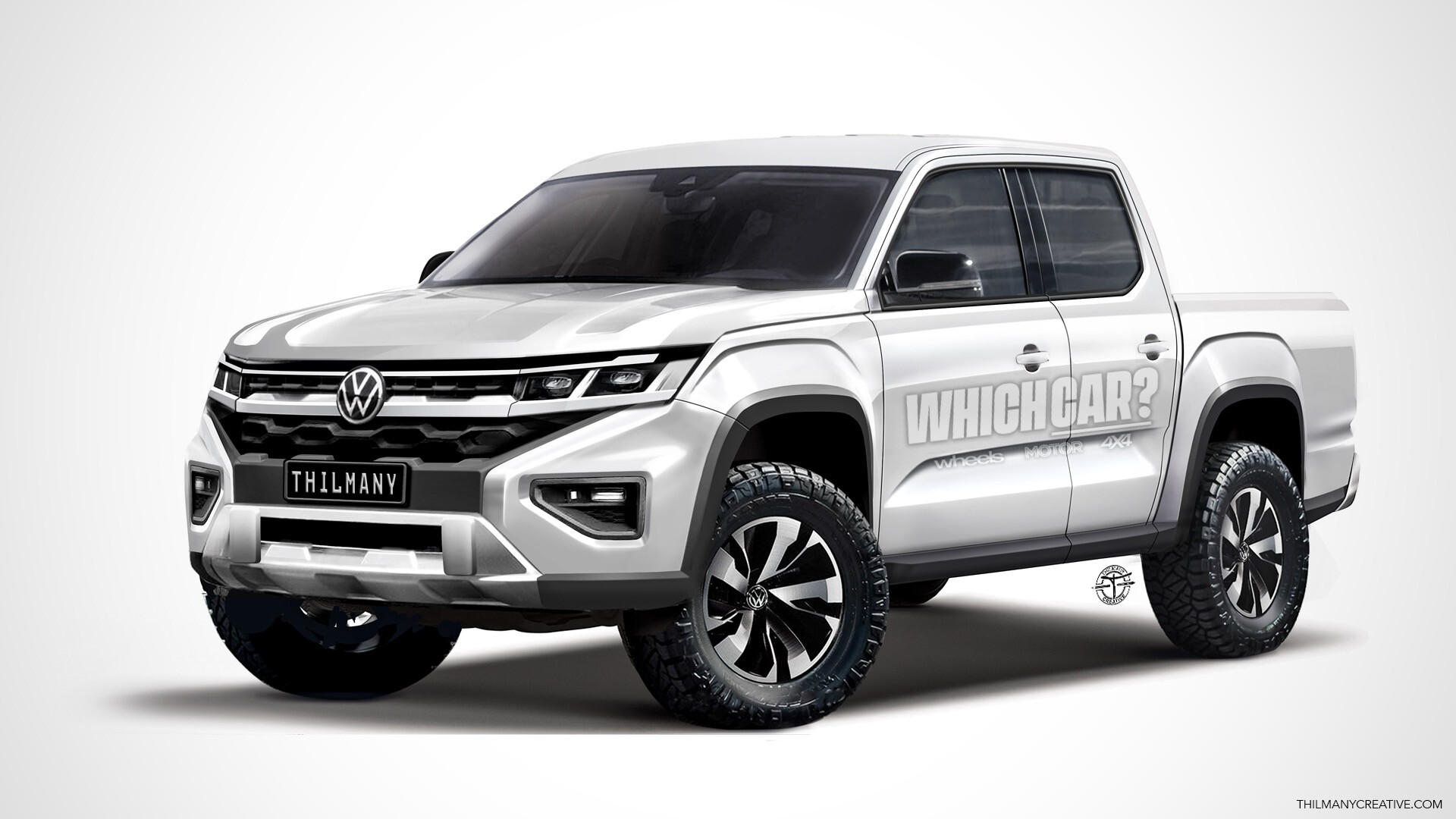
November 26, 2021: The 2023 Volkswagen Amarok is one step closer to its arrival, following the debut of the 2022 Ford Ranger.
Volkswagen and Ford signed a partnership in 2020 which allows the two giants to share autonomous driving technology, electric vehicle platforms, and commercial vehicles, and one of the first models to emerge from the alliance will be the new-generation Amarok, based on the Ranger unveiled this week.
The German carmaker is keen to point out the next Amarok is more than just a new badge fitted to the Ranger, with Volkswagen Commercial Vehicles personnel being sent to work with Ford’s design and engineering departments in the development of the project to ensure the model has “Volkswagen DNA”.
While the 2023 Amarok will share the same silhouette as the Ranger, it will have a new front-end and a revised rear, with the interior believed to be redesigned to fit within Volkswagen’s current style.
These renderings by artist Sascha Thilmany provide an idea of what we can expect when the new Amarok is unveiled next year.
It’s believed Volkswagen may have helped influence the decision to fit the Ranger with Ford’s 3.0-litre turbo-diesel V6 Power Stroke engine, as a favourite feature among Amarok buyers is the ute’s class-leading turbo-diesel V6 powerplant.
The Amarok’s current V6 offers 190kW and 580Nm, roughly on par with Ford’s Power Stroke V6 which produced 185kW and 600Nm when the engine was fitted to the F-150 pick-up in North America.
Though yet to be confirmed, it’s possible the engine may benefit from a new tune in order to extract some additional performance from the Power Stroke.
The new Amarok should also benefit from full-time four-wheel drive, announced as a new feature on the Ranger.
As in the outgoing Amarok, a 2.0-litre turbo-diesel four-cylinder will also be available – but, like the V6, it will be sourced from Ford.
The 2.0-litre TDI engine in the Amarok produces as much as 132kW and 420Nm, while the 2.0-litre bi-turbo diesel in the Ranger makes 157kW and 500Nm – a healthy upgrade for the Amarok.
“For the last one and a half years, [Volkswagen engineers] have been really co-developing together with our cooperation partner, Ford, this beautiful car,” Head of Design at Volkswagen Commercial Vehicles, Albert-Johann Kirzinger, said in a video published in 2020.
“We know what our Amarok means to our customers and fans in Australia. And that’s the reason why we are really working hard to have a 100 per cent Volkswagen, a true Volkswagen, and not only a rebadged Ford. I want you to rest assured that this Amarok will be a real beast.”
As well as the new engines, the Amarok will benefit from the Ranger’s long list of safety tech. The new equipment is a welcome – but minor – step up for the Ford, but will represent a generational leap for the Amarok, which currently lags behind its competition in this area.
More recently, Kirzinger suggested the next-gen Amarok may have a unique feature which helps to differentiate the ute from its Ford counterpart.
“Yesterday our partner unveiled their unique interpretation of a truck. We at Volkswagen Commercial Vehicles are delighted to offer the most hospitable welcome we can” Kirzinger wrote on LinkedIn.
“We wish the #NextGenRanger all the best for its global debut – stay tuned for an ace we have up our sleeve.”
Whether that means the Amarok will be the first mid-size ute to adopt an all-electric powertrain – as the Volkswagen Group doggedly pursues battery technology – or something else entirely, we will have to wait and see.
A friend of a friend asked me to help them buy a ute. A dual cab, and one with four-wheel drive, which almost goes without saying given that 4×4 dual cabs are the utes of choice of most people wishing to buy one.That doesn’t mean that people don’t buy other types of utes. They do, and two-wheel drive single cabs, which sit at the far opposite end of the ute market in terms of pricing, are the next most popular configuration.The friend-of-friend in question is a Mazda fan with loyalty born out of her ownership of two Mazda hatchbacks, a 323 and a 3, which back-to-back provided some 20 years of reliable and low-cost motoring.Having essentially decided on a Mazda ute, her question to me was “new or used?” … obviously unaware that the new Mazda BT-50 is in essence an Isuzu D-MAX, while recently second-hand BT-50s are essentially Ford Rangers. And if she wants a ‘real Mazda’ she would have to buy one that’s now gone 10 years old, all of which makes the ‘new or used’ question far more complex and well-beyond the usual pros and cons of buying new or used.
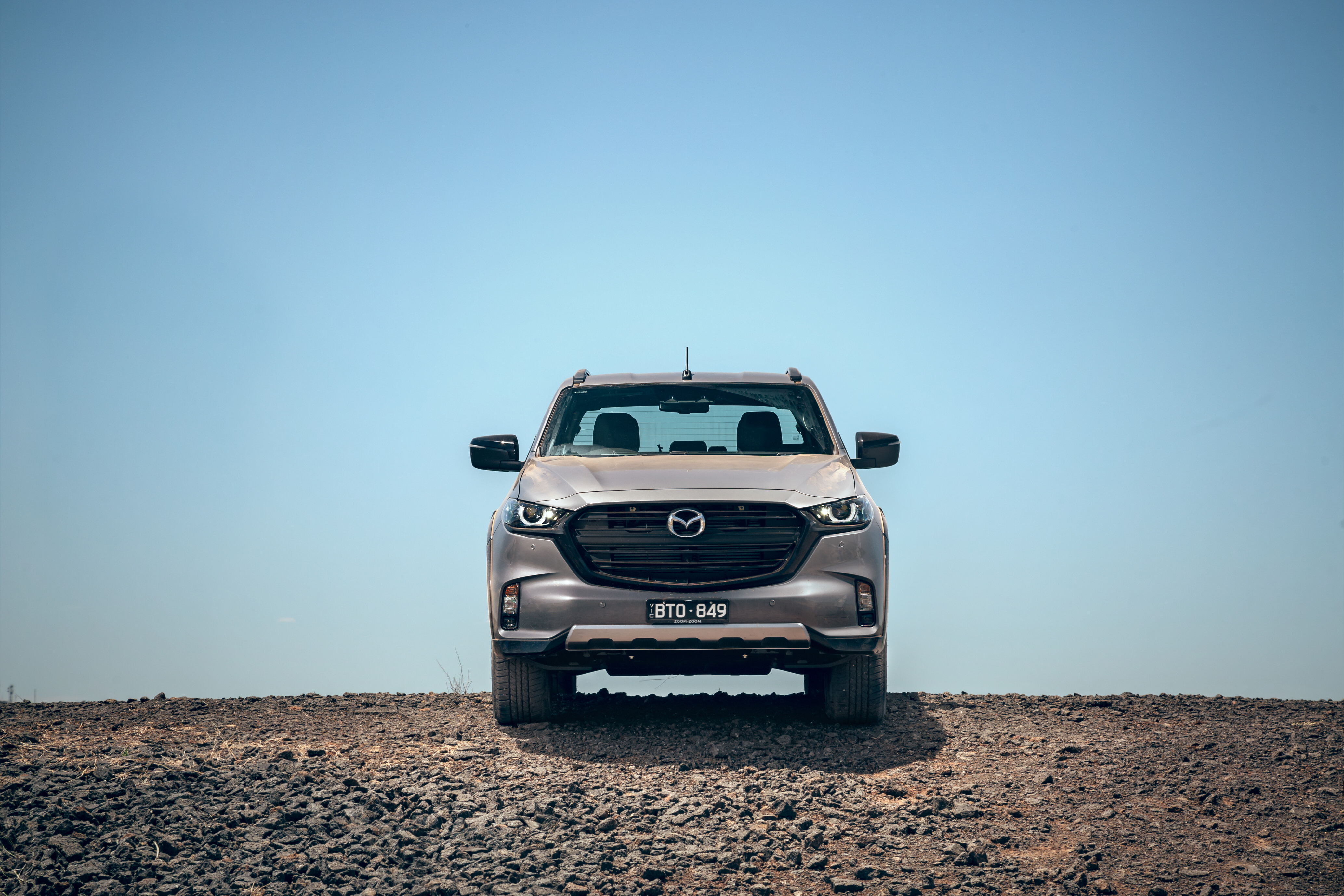
This, of course, is not just a Mazda thing. Up to 2011 if you bought a Holden 4×4 ute (any Rodeo or the first Colorado) you were actually buying a rebadged Isuzu . Likewise, all Ford 4×4 utes up to the first Ranger build on the T6 platform (late 2011) were rebadged all Mazdas.Of course, the official company line with all these rebadged utes is that you’re still buying what the badge says but in reality, this is stretching the truth.The latest chapter in the ongoing ute rebadging saga is that the second-gen VW Amarok due to arrive in the next 12 months will, in effect, be a mechanical clone to the soon-to-be-released new Ford Ranger, and will be built by Ford for Volkswagen.
However, there’s a twist with this latest exercise in rebadging in as much as it’s obvious that VW has said to Ford something along the lines of “if you want us to pay you to build Amaroks for us, it has to be the Amarok we want and not just the Ranger you want to build with our badge on it”.The issue for VW is that it couldn’t walk itself backwards from its current and brilliant Amarok, which, despite its age (oldest platform in class), still offers by far the best on-road performance (thanks to the V6 introduced in 2016), and overall driving experience in the class. Throw in an ease of off-road driving that other utes can only dream about, combined with plenty of off-road ability and peerless towing, and it’s clear that the new Ford-based Amarok has big boots to fill.
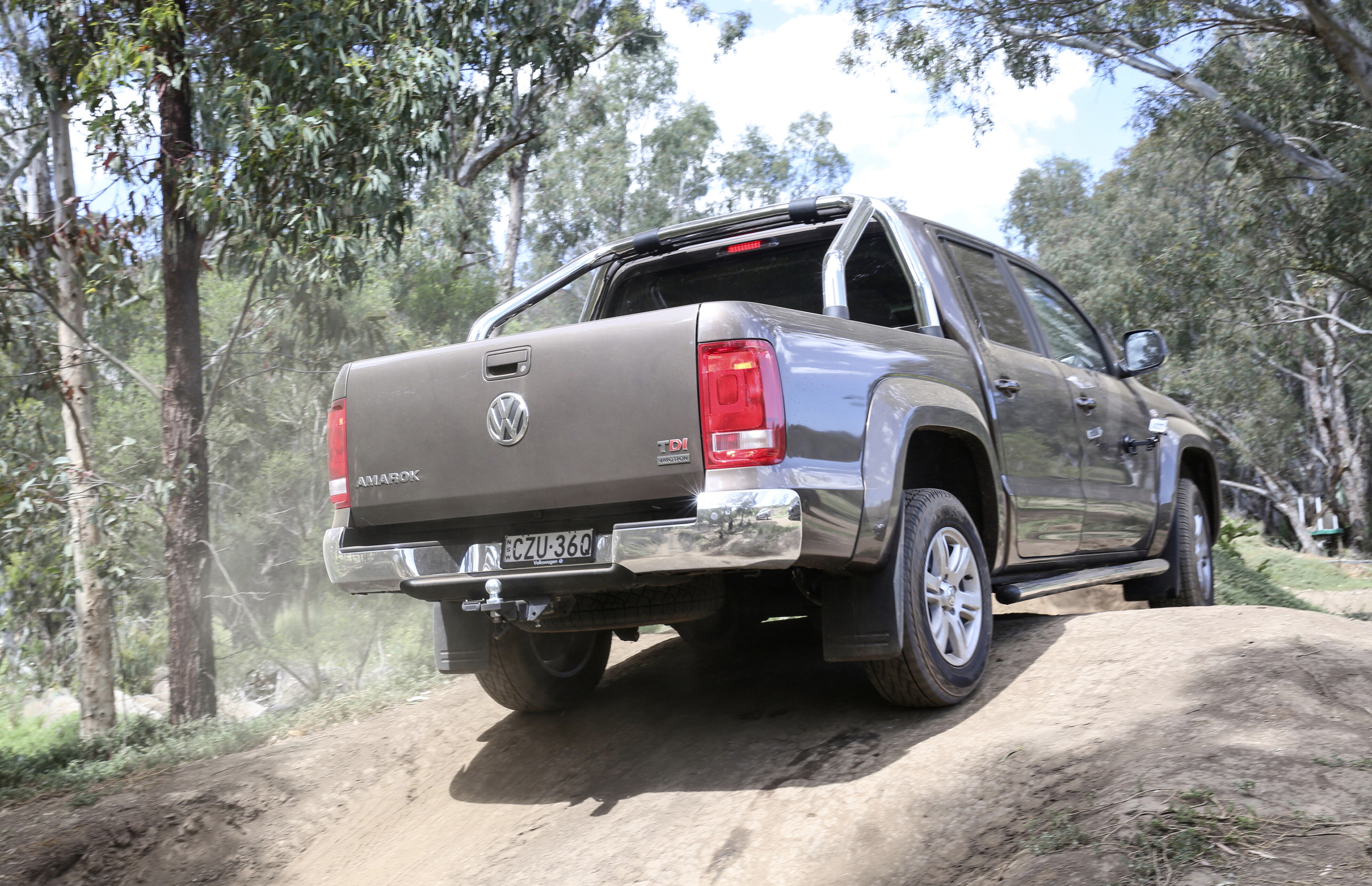
Ironically, the new Ranger will be the biggest winner out of this as it will come with some class-leading features that define the Amarok, not the least being a 3.0-litre V6 diesel and full-time 4×4. Even minor but still critically handy Amarok features, like being able to fit a pallet between the wheel arches in the tub, will be part of the package with the new Ranger.Ford will no doubt say that these features would have found their way into the new Ranger anyway, but I’d take this with a grain of salt. After all Ford could have fitted full-time 4×4 to the current Ranger by using the system from the Everest, but didn’t. Likewise, Ford could have fitted one of its Lion-family V6 diesels to the current Ranger but didn’t, instead opting for the somewhat unsatisfactory 2.0-litre bi-turbo diesel when the far more convincing 3.2-litre five-cylinder diesel was under threat from pending exhaust emissions standards.As for the pallet between the wheel arches, this is a design issue previously overlooked by Ford until now. And while it might seem an insignificant advantage, it does away with one reason why farm and trade users of utes need to fit aftermarket flat trays and suffer all the negatives in fuel efficiency and wind noise they bring. Trays with drop sides are even worse as they also rattle on bumpy roads. All in all, a quick way to put a dint in the refinement and fuel economy of your brand-new ute.
La frontera, the serrated fragment of terra firma that reaches south from the USA border toward the equator, possesses a centuries-long reputation for alluring treasure hunters, adventurers and wanderers.This mountainous strip of desert dissects the Pacific Ocean to form the Sea of Cortes, and its interior holds secrets known only to those willing to venture into the unknown. Amerindians, conquistadors, padres and revolutionaries have crafted its multifaceted character, the narrative of which has been the focus of books, songs and countless campfire yarns.This is Baja California, and with such a colourful chronicle, it is easy to understand why La Frontera has become one of North America’s most coveted overland destinations.
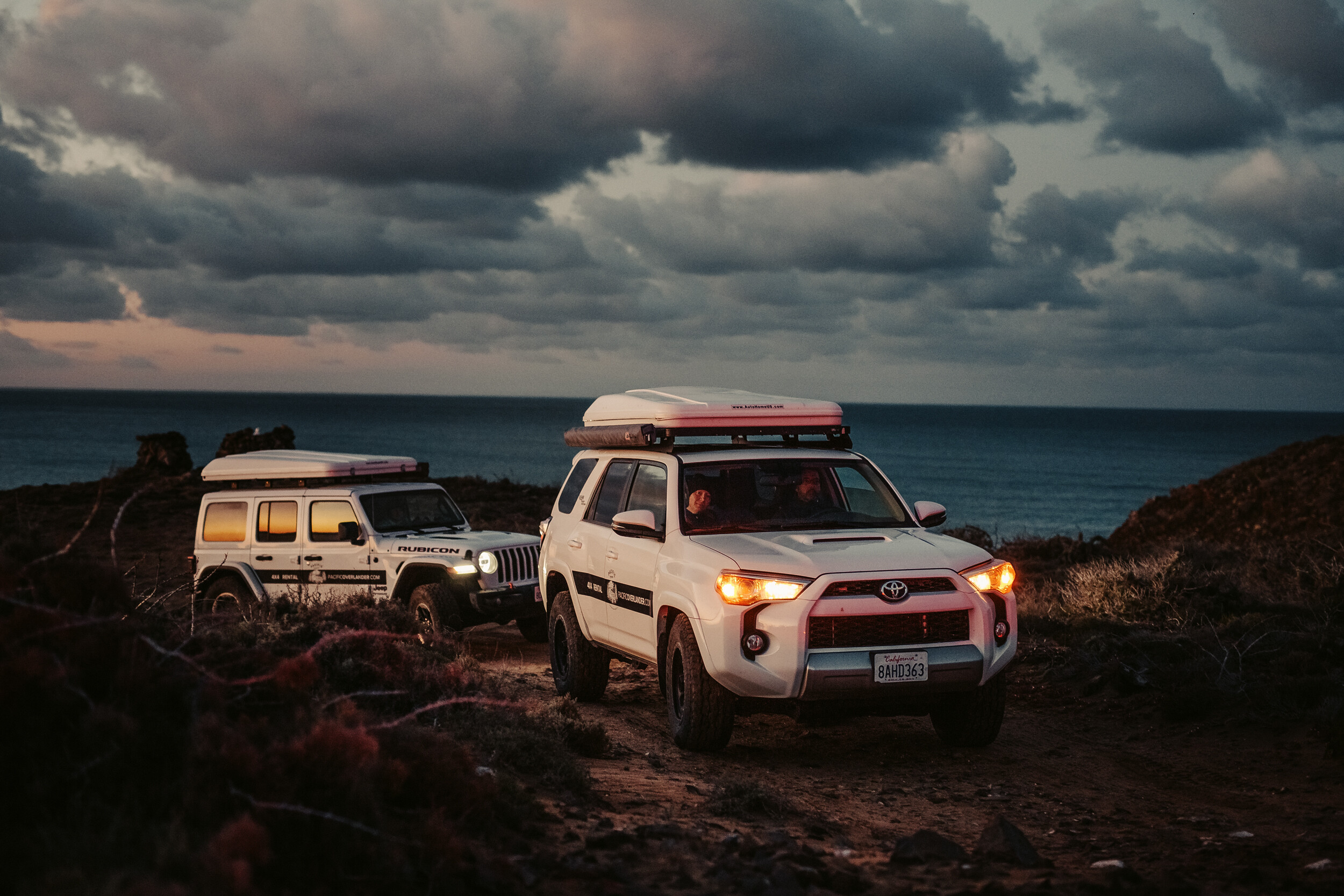
We can thank adventurous souls such as C.L. ‘Outdoor’ Franklin, columnist for the Los Angeles Times, for forging our path. In 1926, Franklin packed up a Buick Road Scout and ventured into a land deemed ‘unexplored’ on many maps. Within two short years the Automobile Club of Southern California had nearly completed the first graded road to San Jose Del Cabo. It was rough, but opened the door for the vehicle-dependent traveller.Mex 1, the lone paved artery that traverses the peninsula’s 1290km span, can now be driven in two days. However, the observant will notice an occasional trail leading off in to a forest of cardon cacti or across a solitary alkali flat. Take a left or right, it doesn’t matter. Baja’s magic is discovered when one searches out its isolated arroyos, Spanish missions and endless dirt two-tracks.A comprehensive guide to Baja could easily consume this entire issue of 4X4 Australia, but we’ve distilled the information down to the basics; enough to start planning your great exploration. We are also assuming you will source your 4×4 in the USA (California or Arizona). We won’t get in to specific locales and hidden gems, but don’t fret, much of a Baja adventure is pulling out a map and finding these treasures on your own.
Isla de Califia and buried treasure
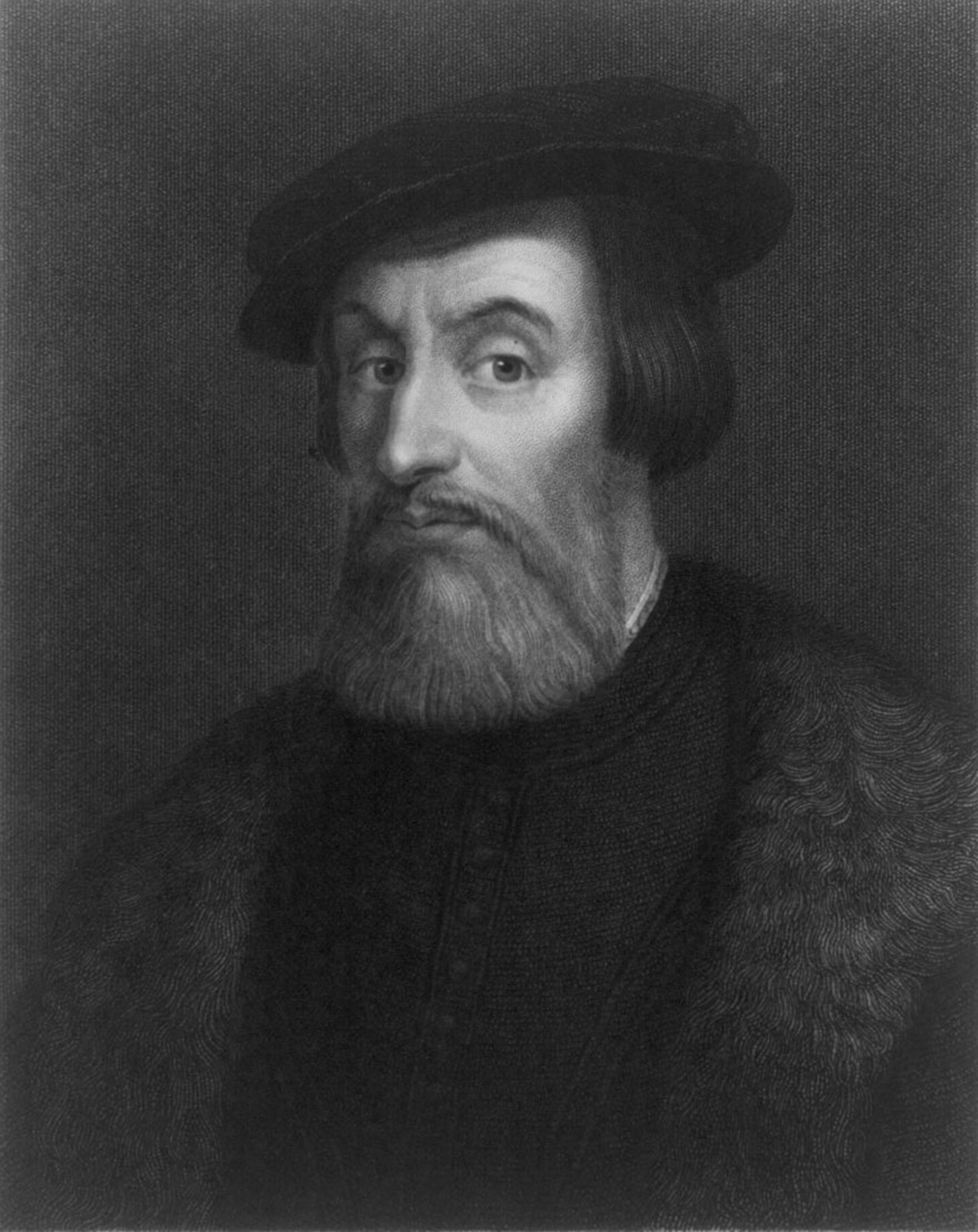
Baja’s proximity to the mainland, an unforgiving environment and sometimes unfriendly Indians rendered it difficult for the first European explorers to settle. The region’s early history is tumultuously laced with deception, pirates and plunder.In 1532, Spanish conquistador Hernán Cortés dispatched a fleet of ships to find Isla de Califia, the mythical land depicted in a 1510 novel and ruled by women. One ship is said to have been lost at sea, another suffered a mutiny and a third was captured by opposing general Nuño Beltrán de Guzmán. But the determined Cortés sent several more fleets and eventually established a colony in La Paz (The Peace). Ironically, the settlers died of starvation or at the hand of the Cochimi Indians, and Isla Califia lay undisturbed for the next 150 years.
Under order of the Crown, it was the Jesuits that established the first successful settlement in present-day Loreto. With the Holy Cross in hand, they managed to survive and developed a string of 17 missions along the length of the peninsula. They assimilated the Indians that were willing and eliminated those who resisted. During the following 100 years it is estimated that 80 per cent of the original 50,000 Amerindians perished at the hands of the Spanish or by introduced diseases. The Jesuits eventually gained too much power, and King Carlos III of Spain ousted them in lieu of the Franciscans, which were hence replaced by the Dominicans.Baja is rich with local lore. Legend has it that the Jesuits, who were tipped off about their expulsion, aggregated chests of gold, pearls and silver, and buried them in a cave near the lost Misión de Santa Isabela. After 250 years and dozens of expeditions attempting to locate the fabled booty, it still awaits discovery.
Vehicle and equipment
When it comes to hiring a vehicle for Baja’s backcountry, reliability is paramount. A stock high-clearance four-wheel drive such as a Jeep Wrangler or Toyota Tacoma will get you just about anywhere you want to go.
If opting to go with a hire company (more on that later) check their gear inventory: recovery strap, air compressor, tyre repair kit, jack, jumper cables, tools, shovel and MaxTrax?Get a specific list and make note of additional items to buy before you cross the border.
Navigation
The Baja California Almanac is by far the best analog resource, but the AAA map remains a good option − back in the ’70s and ’80s, this is all we had. They were out of print for the last decade, but the almanac is now available from www.benchmarkmaps.com Also source Amazon or eBay; although you may pay dearly.
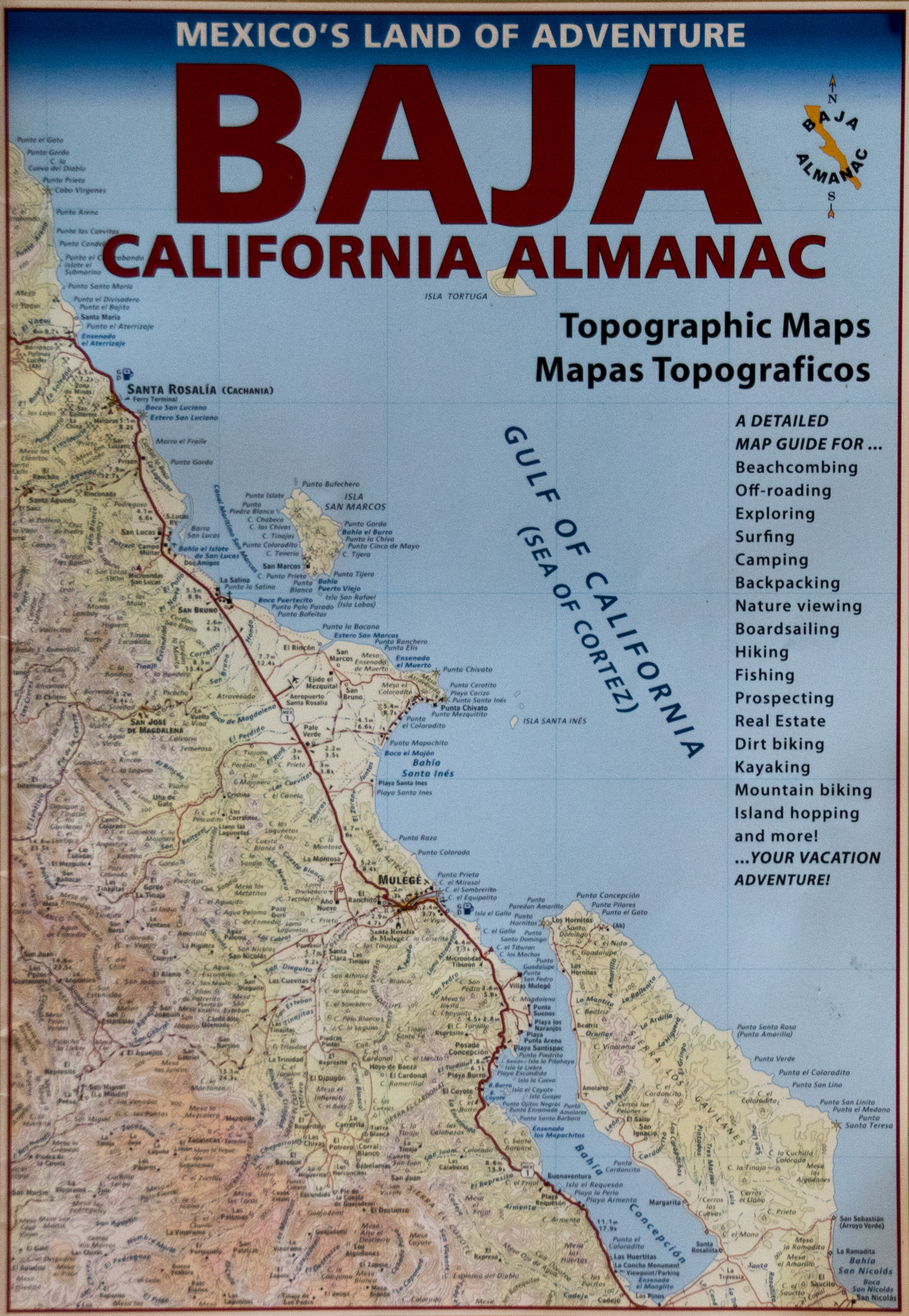
Apps such as Maps.me and GaiaGPS are great for recording a track, but I’ve not found a digital option with the almanac level of detail. iOverland has become a popular resource, but unfortunately our once-hidden camps are now a little less hidden.
Communications
Baja has come a long way since the days when CB radios were illegal. Today, a quality HAM unit such as the Yaesu handheld FT-60 (now with a new Emergency Automatic Identification feature for search-and-rescue work) will provide exceptional comms.
Regarding Personal Locator Beacons (PLBs) and satellite comms, Garmin’s InReach Explorer+, with its downloadable maps, mobile pairing and text messaging, is hard to beat.In regard to mobile-phone cell service, coverage is increasing but plan to be off-the-grid while in the backcountry.
Passports, insurance and visas
Vehicle insurance will be required by the hire company, and I personally don’t cross the border without it. It is akin to a stay-out-of-jail card (if temporarily), as in the case of an accident the uninsured may be detained until fault is assessed. If sourcing a vehicle in the USA, you will also need an affidavit from the company confirming you have permission to operate their vehicle in Mexico.
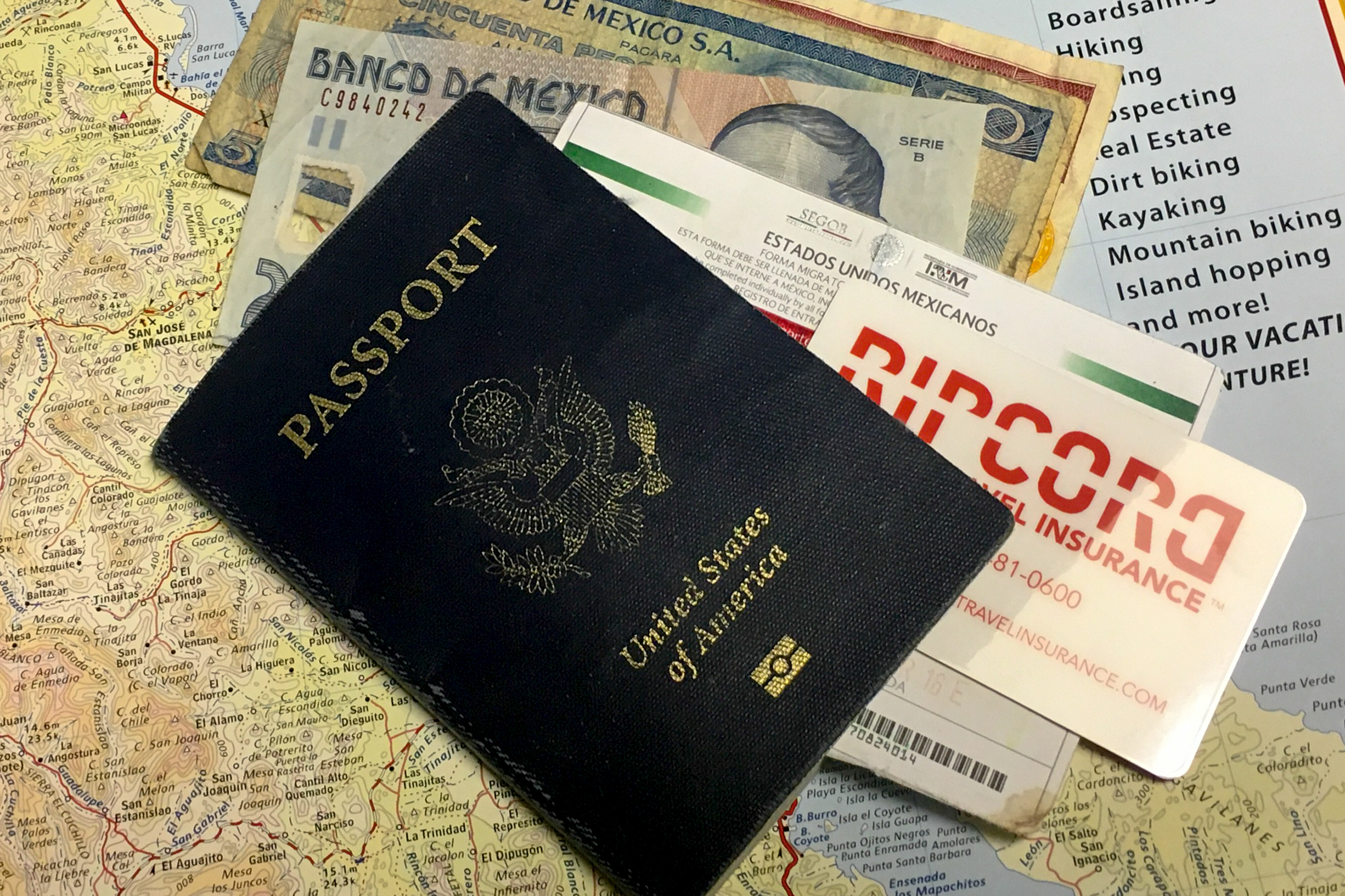
The FMM (tourist visa) is required for visits of more than three days. Make sure to stop immediately after you cross the border (before the red light/green light charade); there will be an immigration office to one side. If you miss it, stop and ask the officer for ‘oficina de migracion’. The cost is about $27 USD and it is valid for multiple entries during a 180-day period.I always keep my passport in a zippered pocket on my person; never leave it in a bag in your car or hotel room. Additionally, if you have an emergency and need a medevac flight, they won’t be loading you on a plane without your passport.
Dinero
As in much of the world, cash is king, and USA greenbacks remain a reliable instrument of negotiation. Stores, fuel stations and restaurants have exchange rates posted, but they can vary.

ATMs are everywhere and the best way to source local currency (pesos), but cybercrime is becoming an issue. I suggest setting up a travel ATM card not linked to any other accounts, only use bank machines and withdraw enough for a week at a time.Visa is accepted in some establishments (Mastercard and AmEx not so much), but remote areas are on a cash-only basis. My policy is to bring enough USD to get home if all hell breaks loose – reserve it for emergencies, and store it in several locations.
Rules of the road
The most dangerous road in Baja is Mex 1, and the hundreds of white crosses that line its non-existent shoulder are a constant reminder to stay alert. It is also advisable to not drive at night − cows, drunk drivers and accidents happen. This is of little concern if you take the backroads, which is why we go, right! One custom to remember is that a left signal can indicate a left turn ‘or’ that it is clear to pass. Again, stay frosty.
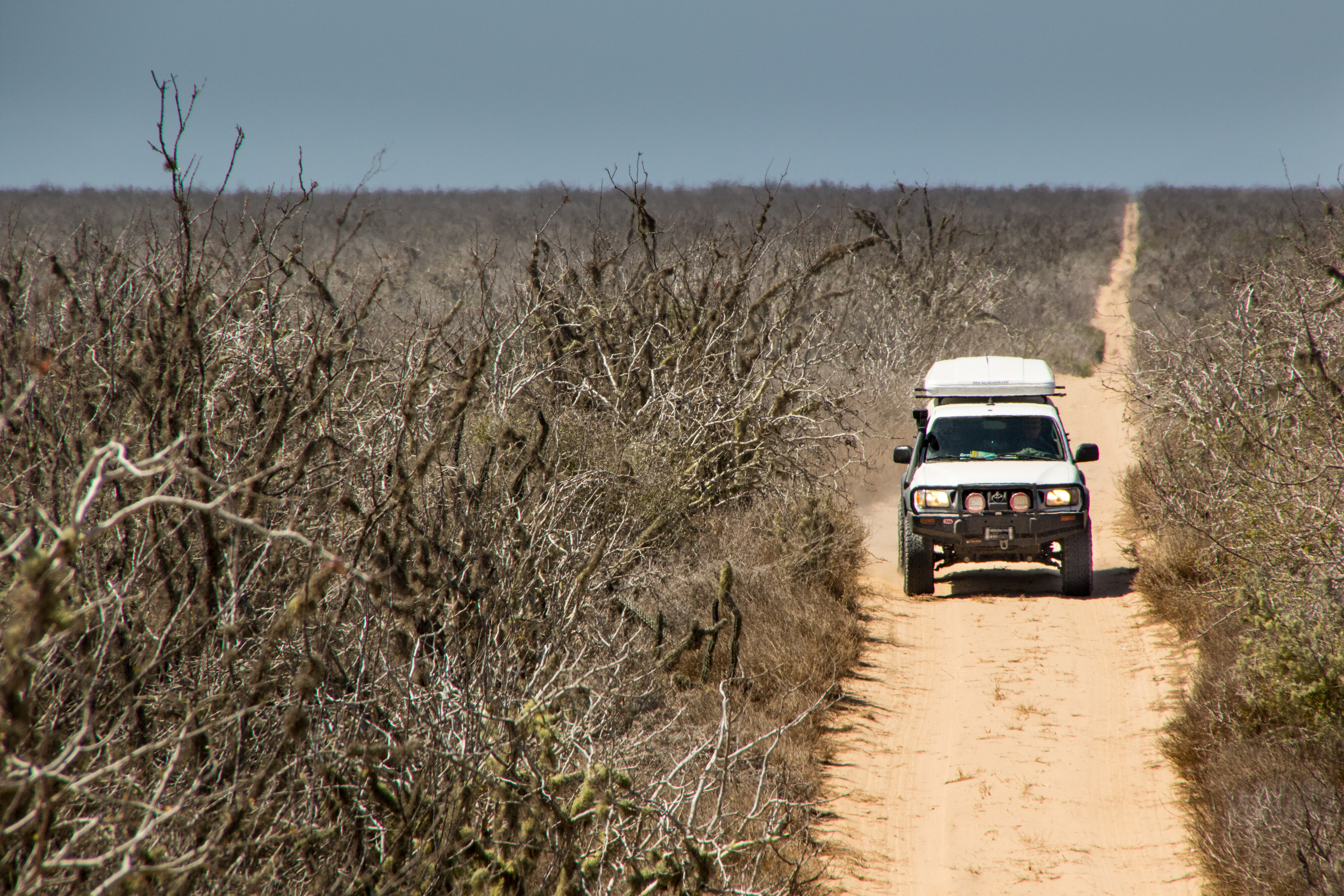
Distances between points can send your fuel gauge needle toward empty in a hurry. Carry enough to cover 400km of dirt driving, and more depending on your route. Back in the day, we brought a chamois cloth to filter fuel, but this is now only needed when sourcing it from a fish camp or ranchero.Pemex stations, run by the government, had fixed prices, no services and were the only option until recent deregulation. This has brought foreign investment, competition and a trend toward full service stations. You should note that not all offer diesel, and while Mexico passed legislation requiring ultra-low sulphur diesel, implementation has been slow.
Security and bribes
Generally speaking, Baja is pretty safe and I’ve made dozens of trips without issue. National headlines will bleed details of horrific NARCO crimes, but let’s put this in perspective. According to the US State Department, tourists have a greater chance of being murdered in New Orleans than in Mexico (even less in Baja). Theft and violent crime are present (as in any big city), so maintain situational awareness and don’t put yourself in precarious scenarios.
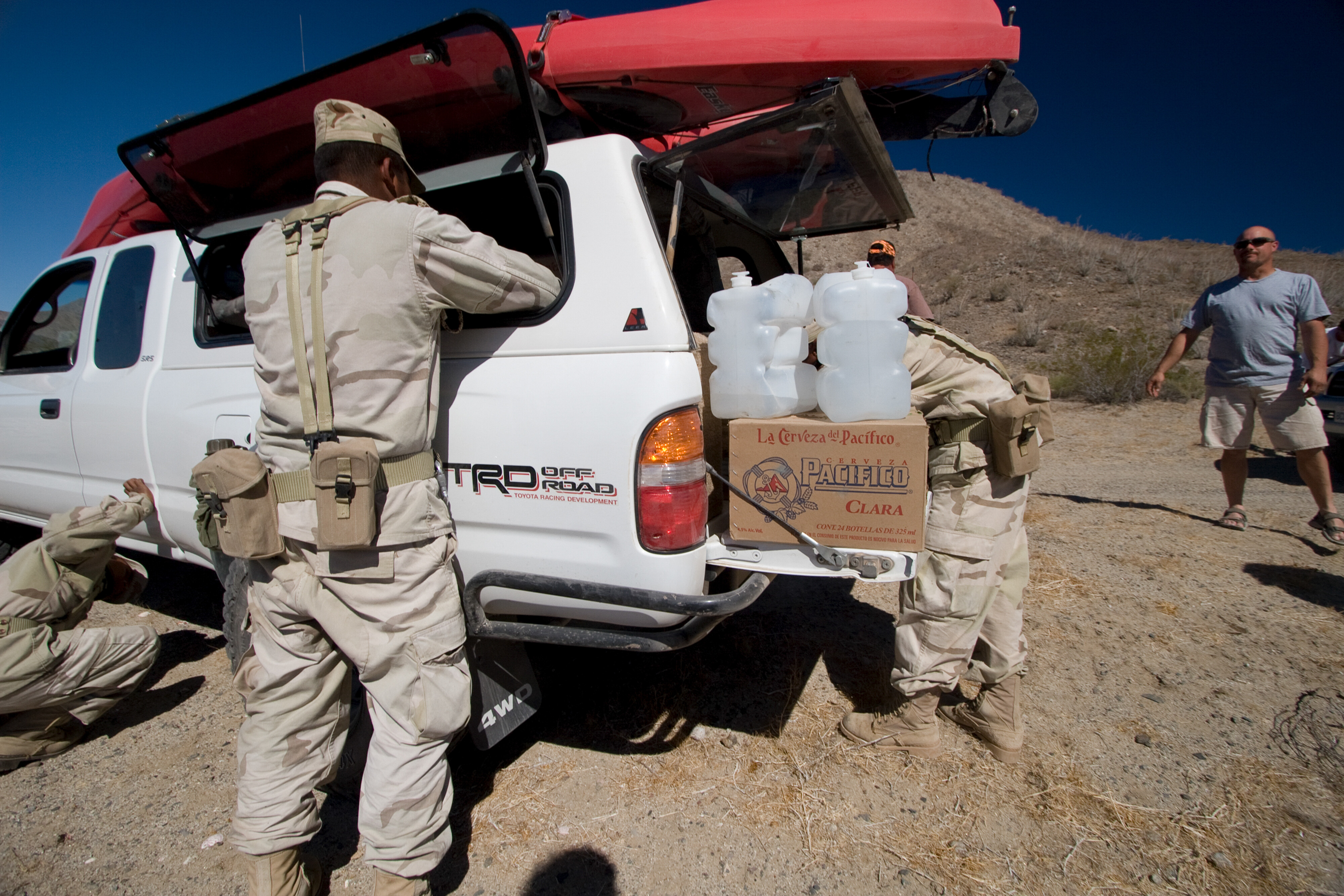
Military checkpoints staffed by 18-year-old kids with AK-47s are routine. They will look through a few bags and inspect the cab, but are polite and only looking for guns and drugs. Be patient and gracious. I do suggest keeping an eye on them and take your wallet/purse with you when you get out.La policía are another matter. As recently as last year, an officer in La Paz tried to pinch me for a bogus infraction − $200 for speeding, which I could pay on the spot. I wouldn’t pay the bribe, suggested that he write the ticket and I would pay any fine to the judge. Frustrated, he eventually returned my documents and wished me a good day. Time is the traveller’s friend.
Contraband
While Mexico’s constitution stipulates its citizens have the right to bear arms, the laws applied to this right are very strict. Unless you are heading for a guided hunting trip, we highly suggest leaving firearms at home.Mexico also recently revealed a proposal to legalise recreational marijuana, but until it becomes law, you should leave your doobage at the dispensary.
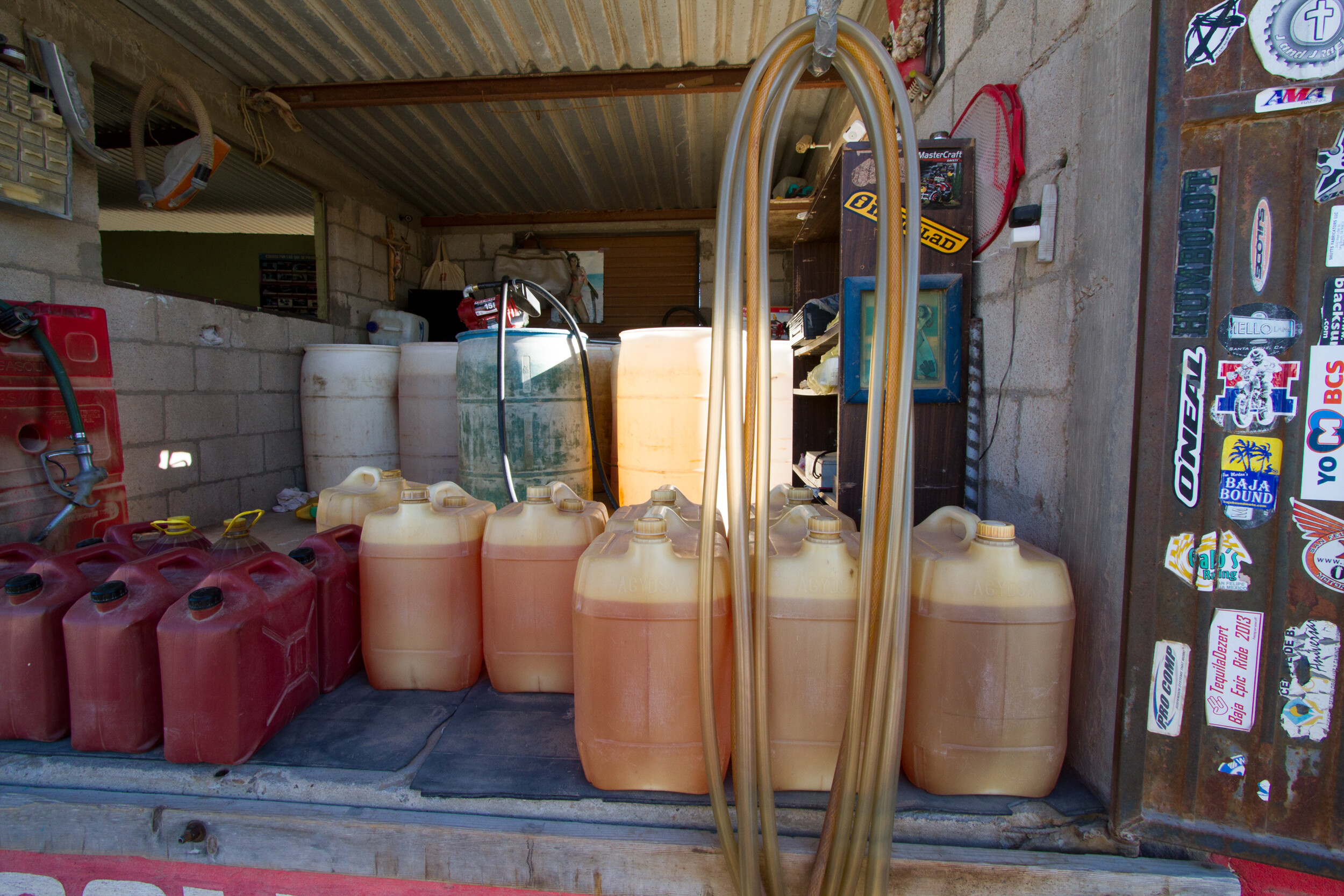
Regarding a few stubbies behind the wheel? Leave them in the cooler until the end of the day.Now the good news. Do you like machetes, switchblades and fireworks? There are no rules on knives or blade length, and you can blow off your fingers at will.
Montezuma and medical
Medical evacuation insurance is advised for travel in any third-world country. I use Redpoint Resolutions, which offers policies for a week or up to a year. They aren’t cheap, but they will extract you from Mt. Everest if needed.
Señor Montezuma (gastro/bacterial infections) still rules Mexico and has put the squeeze on many (pun intended). He lives in the public water supply and likes to hide in icy drinks, salads and vegetables. If sourced in established restaurants they are usually okay, but there is always a risk. Part of your medical kit should include Imodium A-D, and talk to your doctor about an antibiotic like cipro. If you need meds, look for a farmacia.
What to eat
Baja cuisine is not to be missed, so don’t load up for the entire trip before you cross the border. Fish, shrimp and carne asada (steak) tacos from street vendors are the norm, and look for the carts with locals gathered around. More traditional dishes can be found in restaurants and prices are generally reasonable. Major grocery stores (mercados) are found in larger towns, but you don’t want to overlook local panadarias (bakeries), tortilliarias (tortilla shops) or carniciaras (butchers).
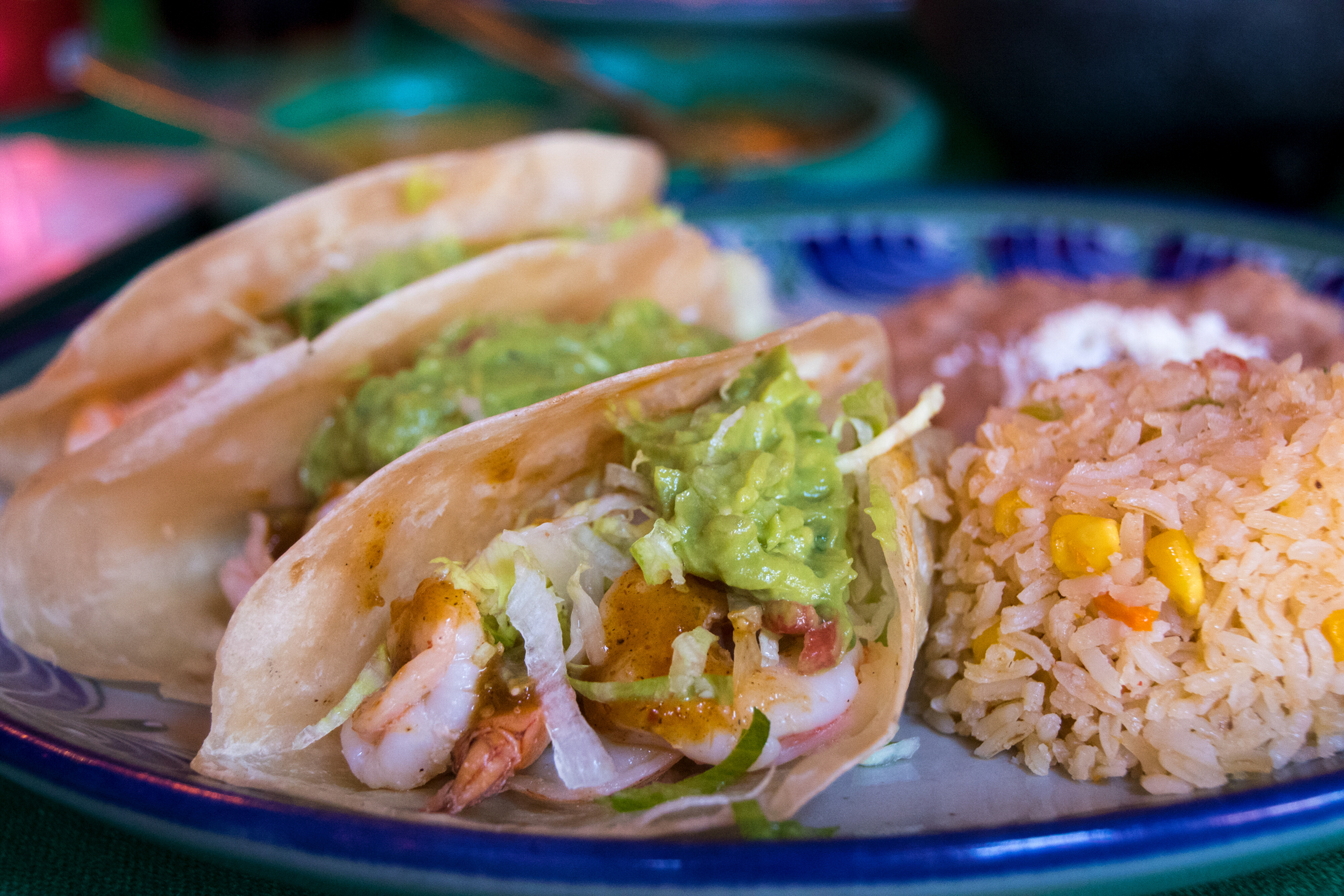
The peninsula is surrounded by water, and seafood is plentiful. If on the coast, make your way to the marina or stop at any local fish camp on the beach. It may look like a gypsy commune, but they probably have the catch-of-the-day on ice.Tequila is the spirit of Mexico, but beware of the cheap stuff as it will go down like firewater on an open wound. Good tequila is distilled from the blue agave in the state of Jalisco, and should be sipped like a fine liqueur rather than swigged like rot-gut whiskey. A good añejo (aged) such as Don Julio should do you right, and don’t forget to complement it with a cold Pacifico, Tecate or Modelo Negra (cerveza).
Planning and what to do
The good news is that Baja can be enjoyed year-round and backcountry camping is free. However, November attracts hurricanes and June through August can push the mercury toward the red zone. The Pacific side is predominantly cooler than the Sea of Cortes, and the pine-forested heights of Sierra San Pedro Martir may receive snow in the winter.Because most adventures zigzag from coast to coast, I’ve found the ideal season is February through to May.
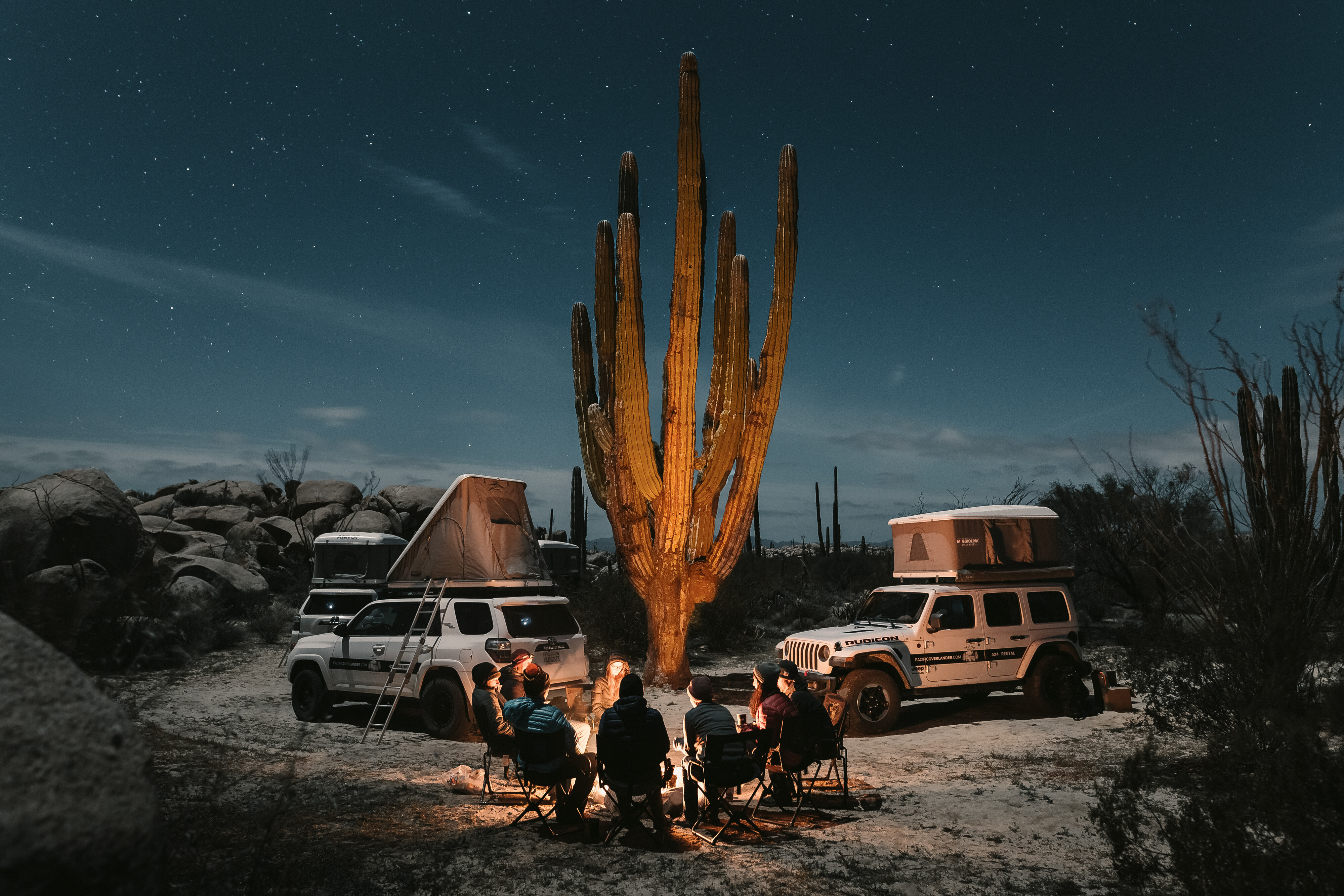
One could spend months exploring Baja’s nuances, so give yourself enough time to savour its magic without rushing. Two weeks will give you a good taste (more is better), and read up on forums like bajanomad.com or bajainsider.com The iOverland app is also a good source for camp spots.In February, you can go whale watching in Scammon’s Lagoon; April is good for snorkelling with whale sharks in La Paz; and kayaking or deep-sea fishing can be enjoyed year-round. Or, you can simply explore Baja’s remote tracks, wake up on isolated beaches, and soak in the history of its extensive Spanish mission system.
Ugly tourist syndrome
You’ve heard the term ‘Ugly Tourist’. This guy has a pocket of cash, little patience and a condescending attitude. Learn a few words in Spanish, obey the laws and show respect to the locals. If they don’t understand English, saying something louder only makes you look like an idiot. Smile, resort to sign language if needed. I recall snorting like a pig to convey I wanted to buy pork (try this for diarrhoea meds).Google Translate is a great app, and the Jiffy Spanish Phrase Book is a good pocket resource. Remember that this is their country. Embrace the delectable food, rich history, unique culture and all that is magical about La Frontera.
Suggested reads
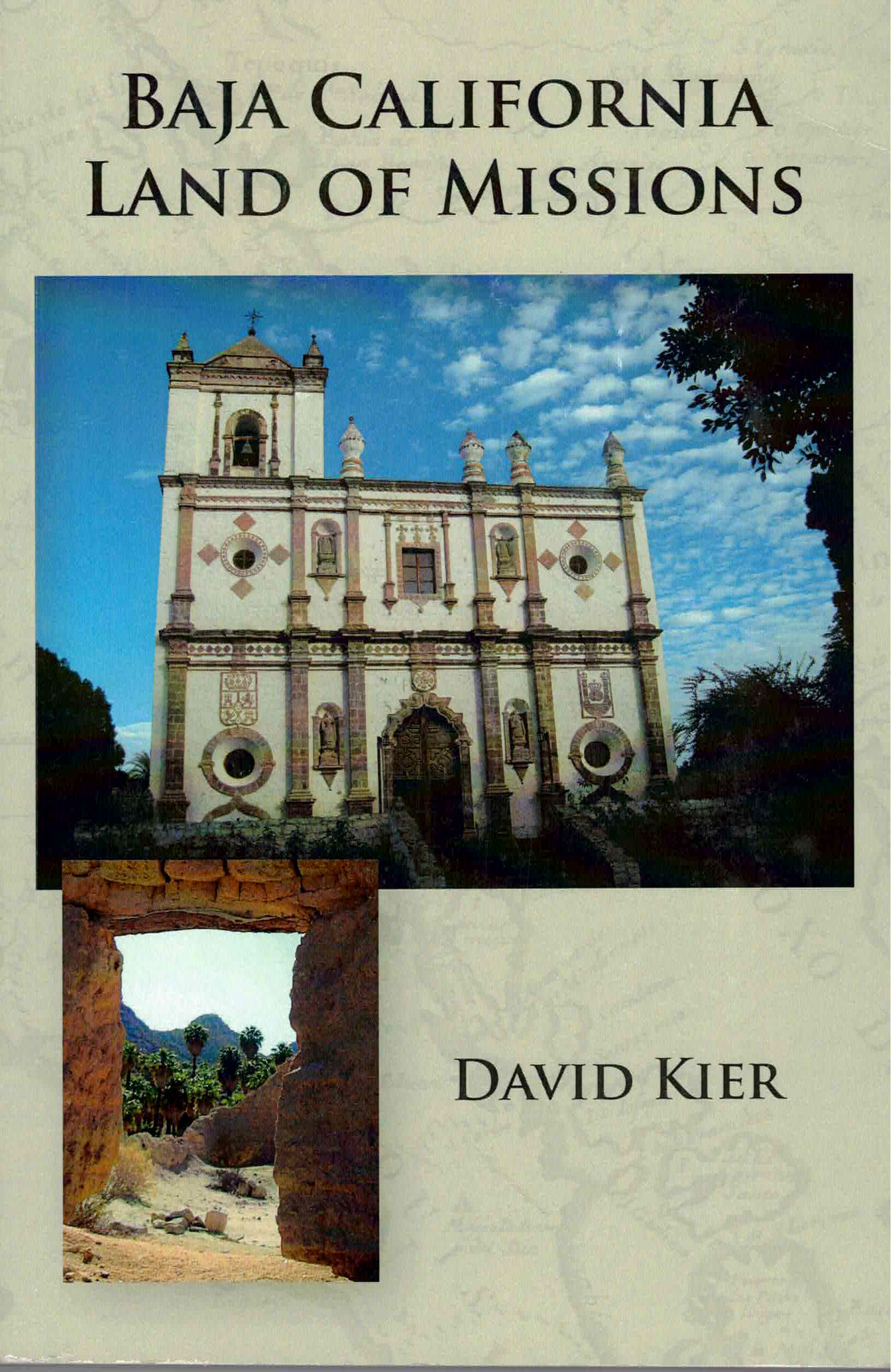
Baja Legends (Greg Neiman) is a wonderful compilation of local lore and history. Log from the Sea of Cortez (Steinbeck) offers a unique glimpse into the peninsula’s early days, and Off the Beaten Track in Baja (Erle Stanley Gardner) is a classic read. Baja California Land of Missions (David Kier) provides an overview of the mission system.
Hire companies
While most hire companies don’t permit their vehicles to cross into Mexico, a few are expanding their guidelines. Self-travel is a great option, and you can plan on spending about $200 to $250 USD per day plus additional mileage and insurance.Guided trips have the benefit of hitting the prime tracks and campsites, breaking the language barrier, and take the guesswork out of where to find the best fish taco. Though COVID has put the brakes on things over the last few years, now is a good time to start planning your 2022 south-of-the-border adventure.Pacific Overlander Pacific Overlander offers professionally guided trips from San Diego to Cabo San Lucas, and five-day trips of Southern Baja. The fleet includes Toyotas and Jeeps equipped with everything you need. Visit: www.pacificoverlander.comCalifornia Baja Rent-a-Car If you don’t mind bringing some camping gear or buying it in-country, San Diego-based California Baja Rent-a-Car offers Jeep Wranglers for a week or a month. They normally do one-way hires to Cabo San Lucas (a great option, but COVID currently restricts this), and can provide you with route ideas and other relevant information.Funki Adventures Based in San Diego, Funki is scheduled to begin self-travel Baja hires in 2022. Its four-door Jeep Wranglers are outfitted with rooftop tents, fridge-freezers, mess kits, and camping and recovery gear. Go to www.funkiadventures.com
Snapshot
- Grenadier slated to enter production from July
- Ex-Daimler French facility to be used
- Local pricing to start at $84,500
Ineos will be manufacturing its new Grenadier this July, with the company currently trialling the production of 100 prototypes to streamline the process.
The production will be at Daimler’s former Smart plant in Hambach, France. The site employs around 1000 workers and is the first carbon neutral car factory. The decision, however, is a departure from the original plan to build the car in the UK.
Ineos states the first phase underway is a “production try-out” to approve the build processes before full production can commence. Ineos recently spent almost $800 million on the factory for key upgrades. These included a fully-automated body shop, assembly site and semiautomated paint shop.
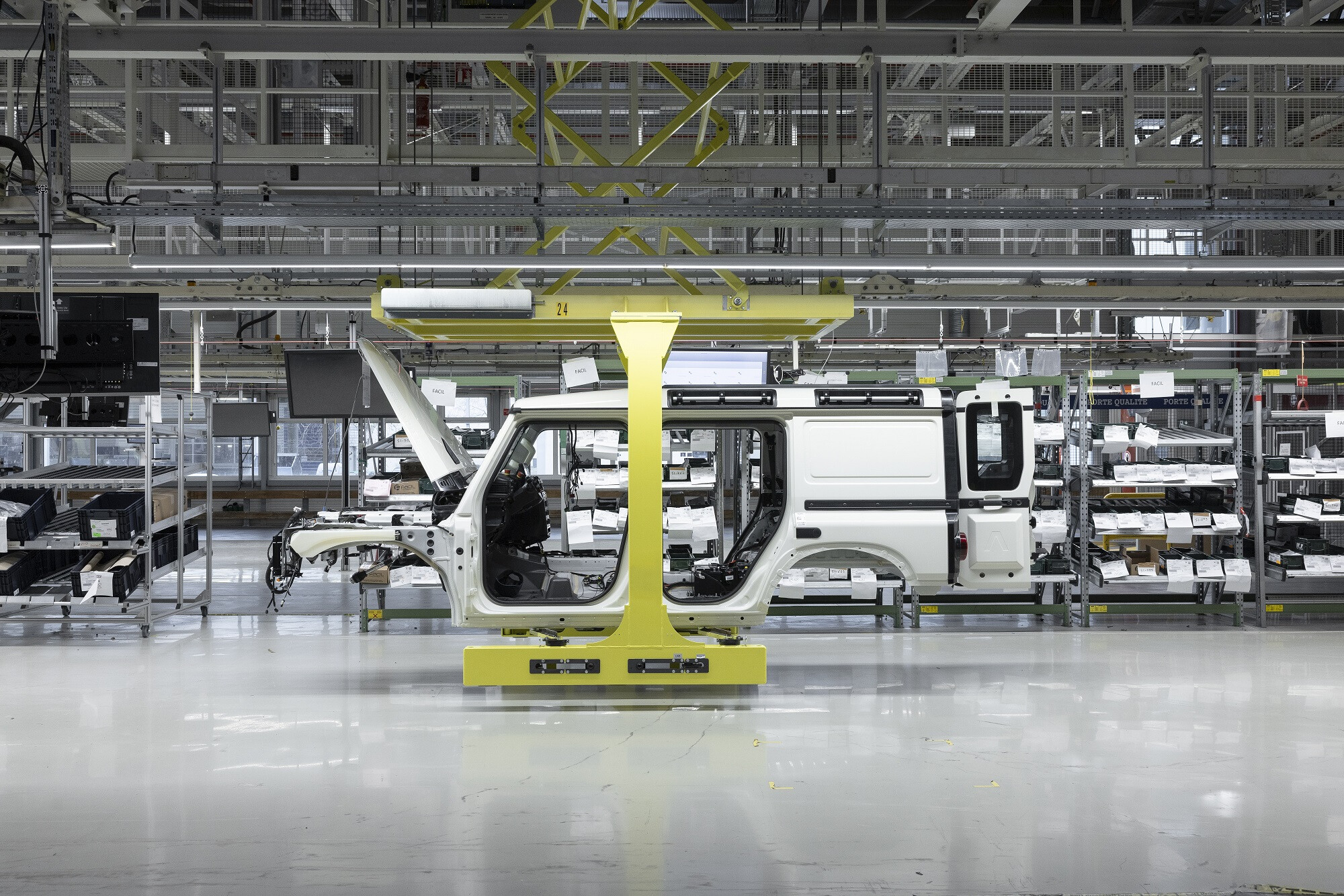
The Grenadier has solid axles with panhard rods front and back, as well as progressive coil springs on a body-on-frame platform – meaning it is first built as a rolling chassis before adding the body and drivetrain.
Underneath the bonnet is the choice of either a BMW straight six diesel or petrol turbocharged engine, with four-wheel drive and transfer box for low-range.
All of the latest information suggests the Ineos Grenadier should start to hit roads soon as a production vehicle. Since opening preorders, the brand has received approximately 15,000 reservations.
The price starts at $84,500 plus on-road costs in Australia. But the first batch of vehicles previously expected in August will likely be delayed.
Key Points
- New Everest to be revealed on March 1, 2022
- Front facia nearly identical to new Ranger
- Deliveries could begin as early as the end of 2022
UPDATE, February 17, 2022: Ford will officially pull the covers off the new Everest SUV next month – setting March 1, 2022 as its reveal date.
The Blue Oval has been drip-feeding information on the next-generation Everest since the reveal of its latest Ranger, with the duo underpinned by the same platform – as well as being manufactured in the same location.
Ford provided a short teaser of the new model ahead of its unveiling next month.
Read more about what we know so far below.
The story to here
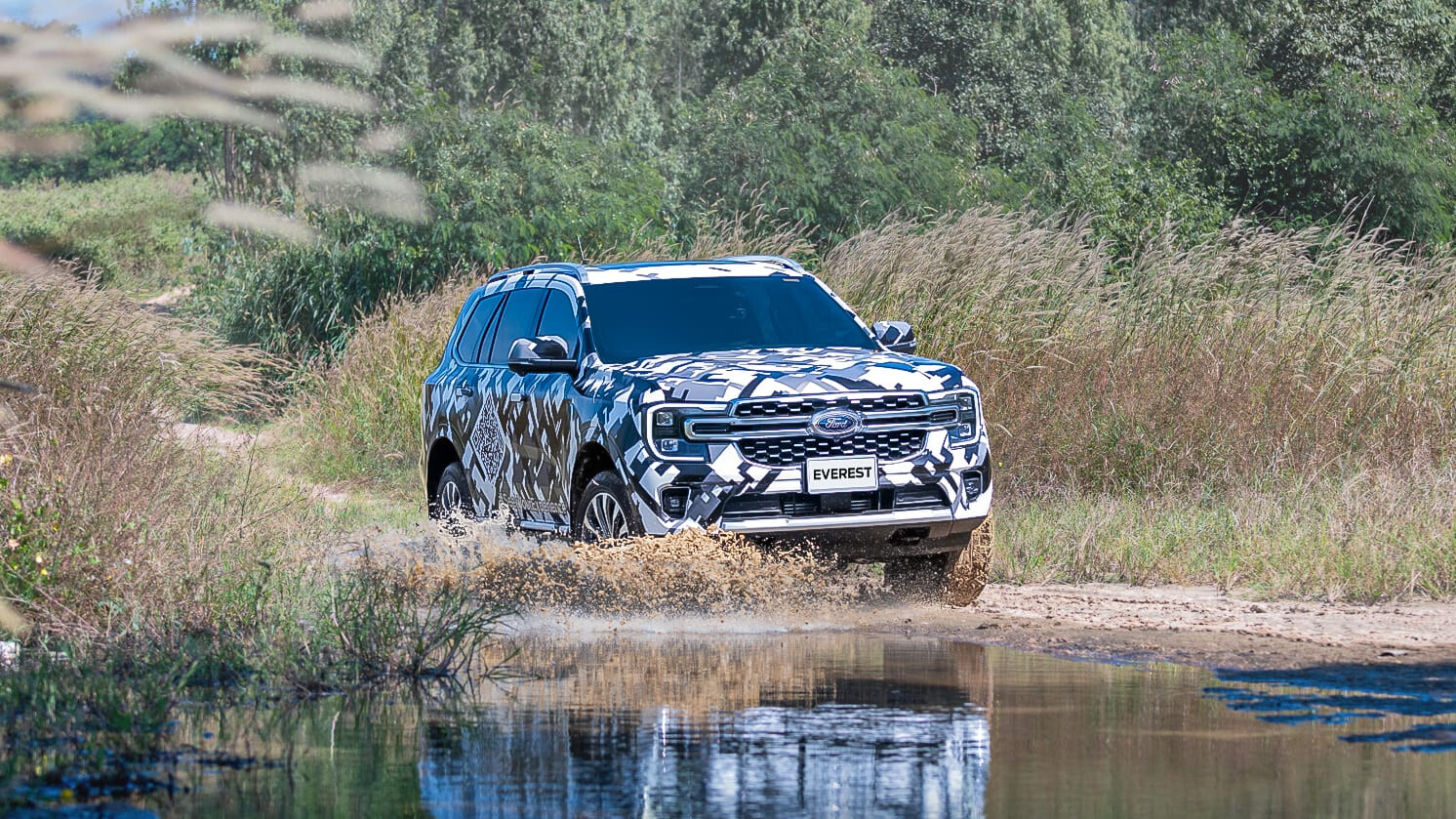
December 16, 2021: The new 2022 Ford Everest is set to be revealed early next year, with the Blue Oval’s latest teasers leaving little to the imagination.
Off the back of the next-generation Ranger’s unveiling last month, Ford has said it will be taking the camouflage off its new Everest in the first quarter of 2022 – only a handful of months before its utility sibling goes on sale.
Ford Australia’s exterior designer, Lee Imrie, said while the camo can’t hide all features of the Everest – such as its Ranger-esque grille and new rear lights – it doesn’t totally reveal all the highlights of the SUV.
Upgrade your 4×4
-
Bullbars
-
Underbody Protection
-
4X4 Tyres
-
Canopies
-
Roof Racks
-
Storage
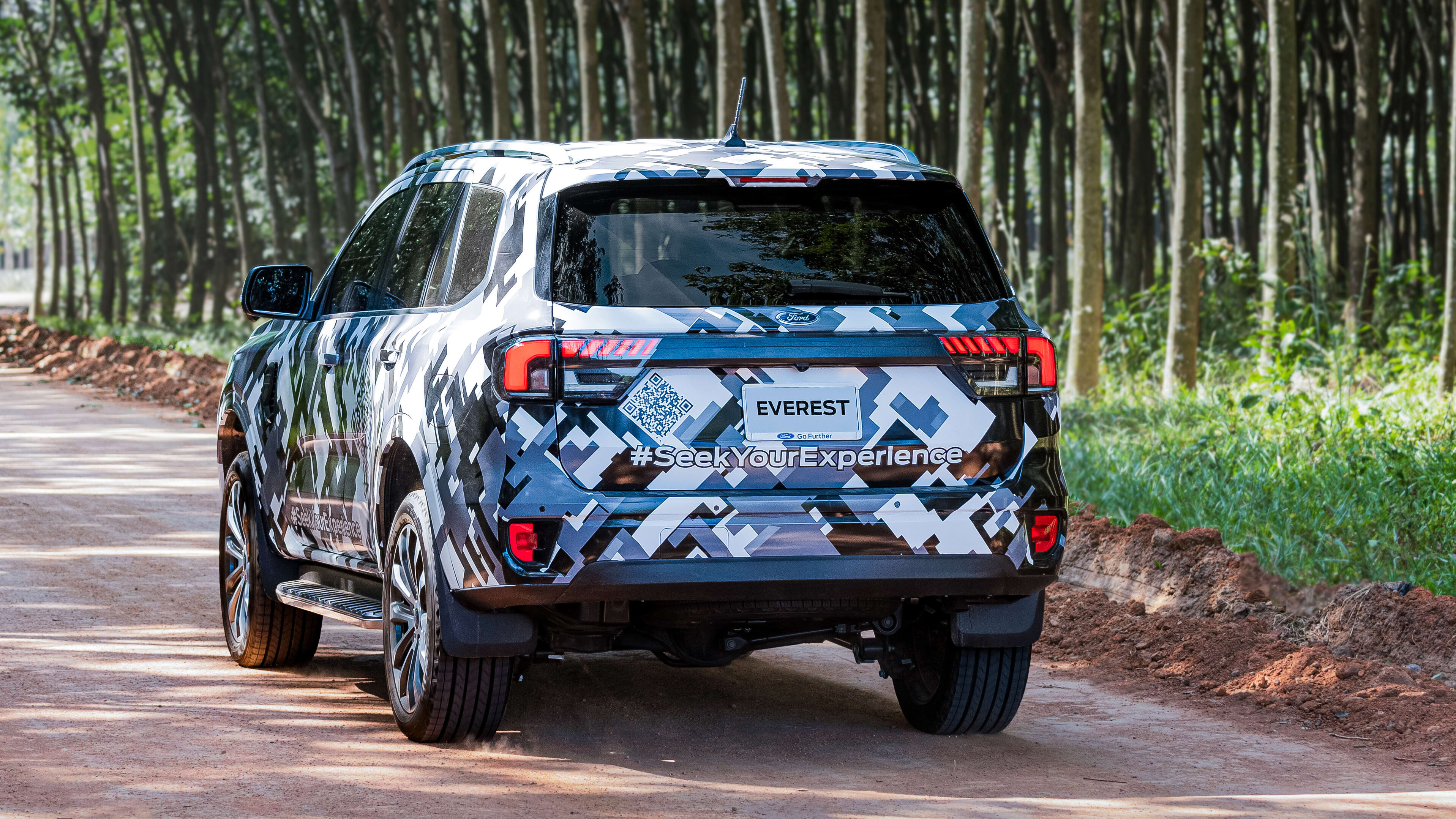
“We created an artistic pattern that hints at adventure,” said Imrie.
“The camouflage consists of a series of rectangles tilted on a 45-degree angle that were inspired by mountain peaks.
“We make sure the vehicle design remains hidden by creating the camouflage pieces in isolation. This means when it’s applied to the vehicle it’s a completely random pattern.”
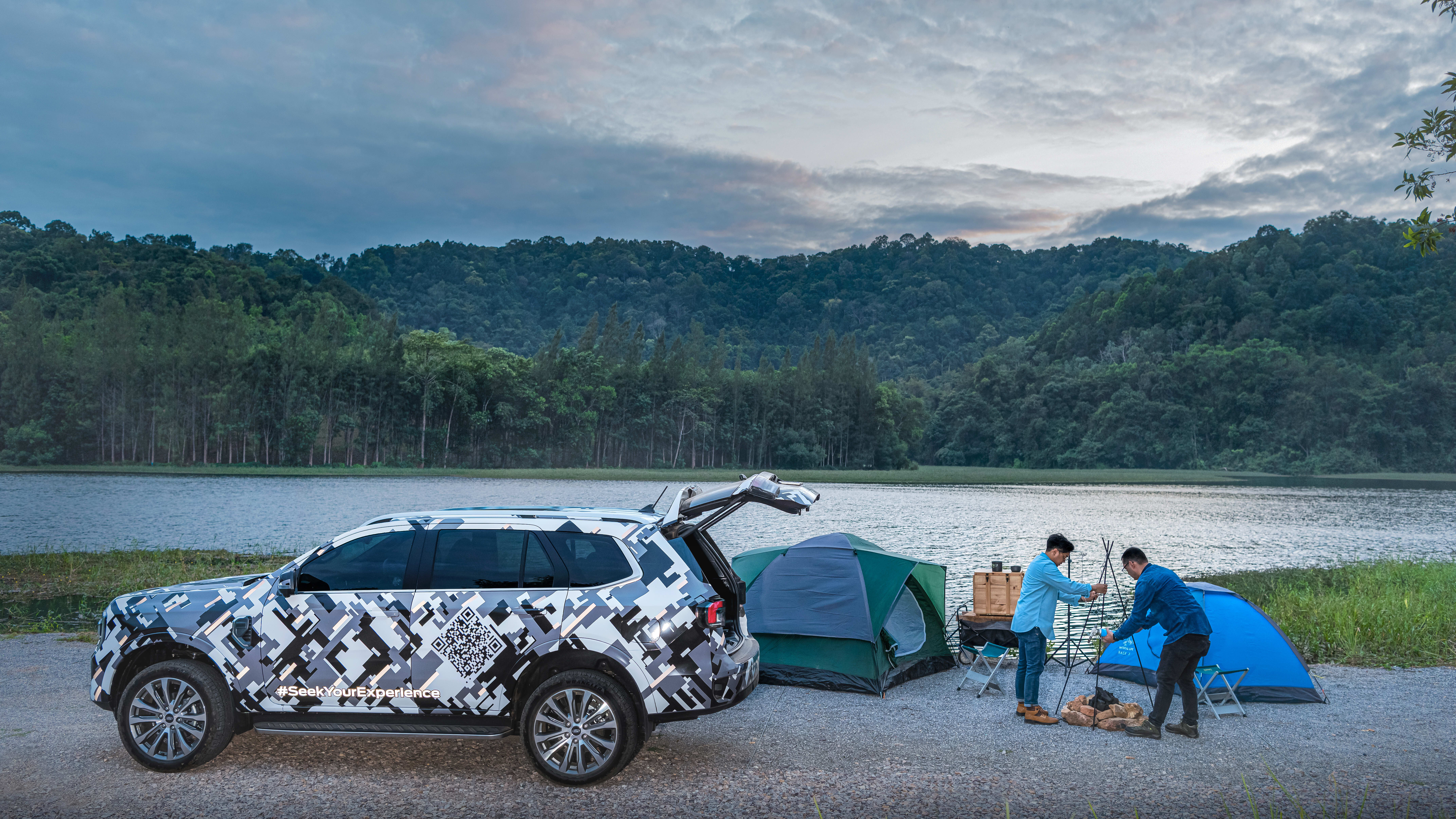
Although the vehicle pictured is a prototype model, its overall finish, plus the launch of the Ranger, means Ford could soon enter the pre-production stage – potentially allowing the Everest to come to market before the end of next year.
Slated to be produced in Thailand alongside the Ranger, the manufacturing facility for the pair is set to benefit from a US$900 million (AU$1.26 billion) investment to modernise the plant, with Ford aiming at an annual production of 270,000 vehicles.
It’s tipped the new Ranger’s powertrains will carry across to the Everest, with a choice of two four-cylinder, turbo-diesel engines (single and bi-turbo) as well as the 3.0-litre, V6 turbo-diesel expected to end up under the bonnet.
4X4 Australia's project builds
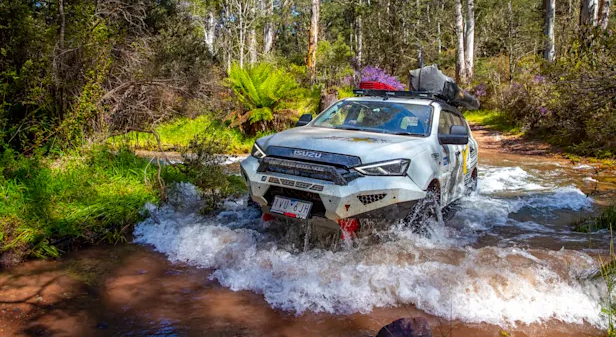
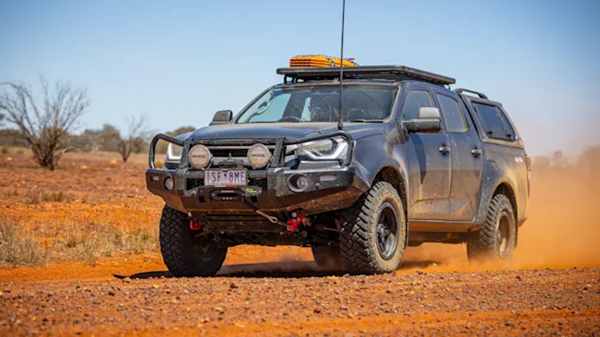
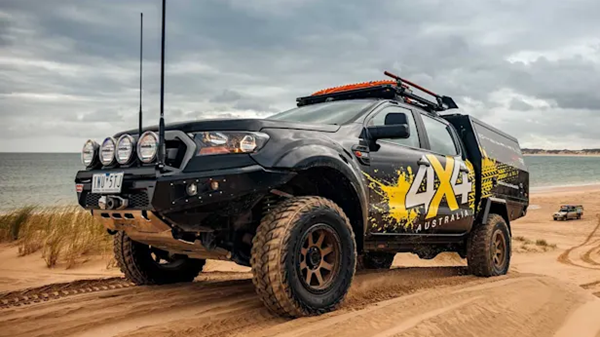
If there’s one thing in this world I refuse to compromise on, it is 4×4 recovery gear.In the scheme of things, it’s not even terribly expensive to purchase quality recovery gear that your life could literally depend on. Best of all, high-quality rated recovery gear is something you can take from vehicle to vehicle, if you have multiple four-wheel drives or plan to upgrade in the near future.With that said, when it came time to select what recovery gear we wanted on-board 4X4 Australia’s mighty D-MAX, we needed not only quality gear but modern recovery gear.
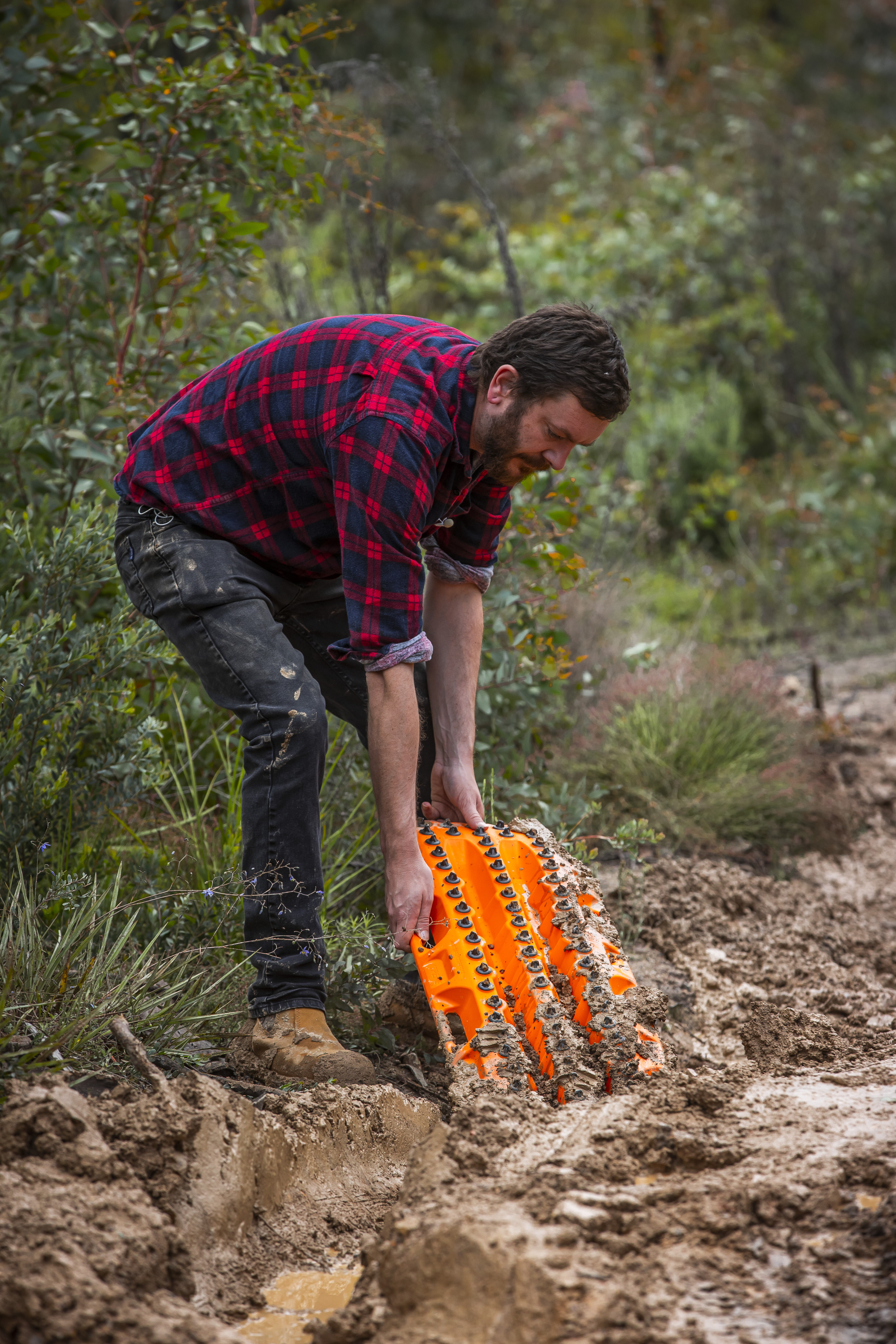
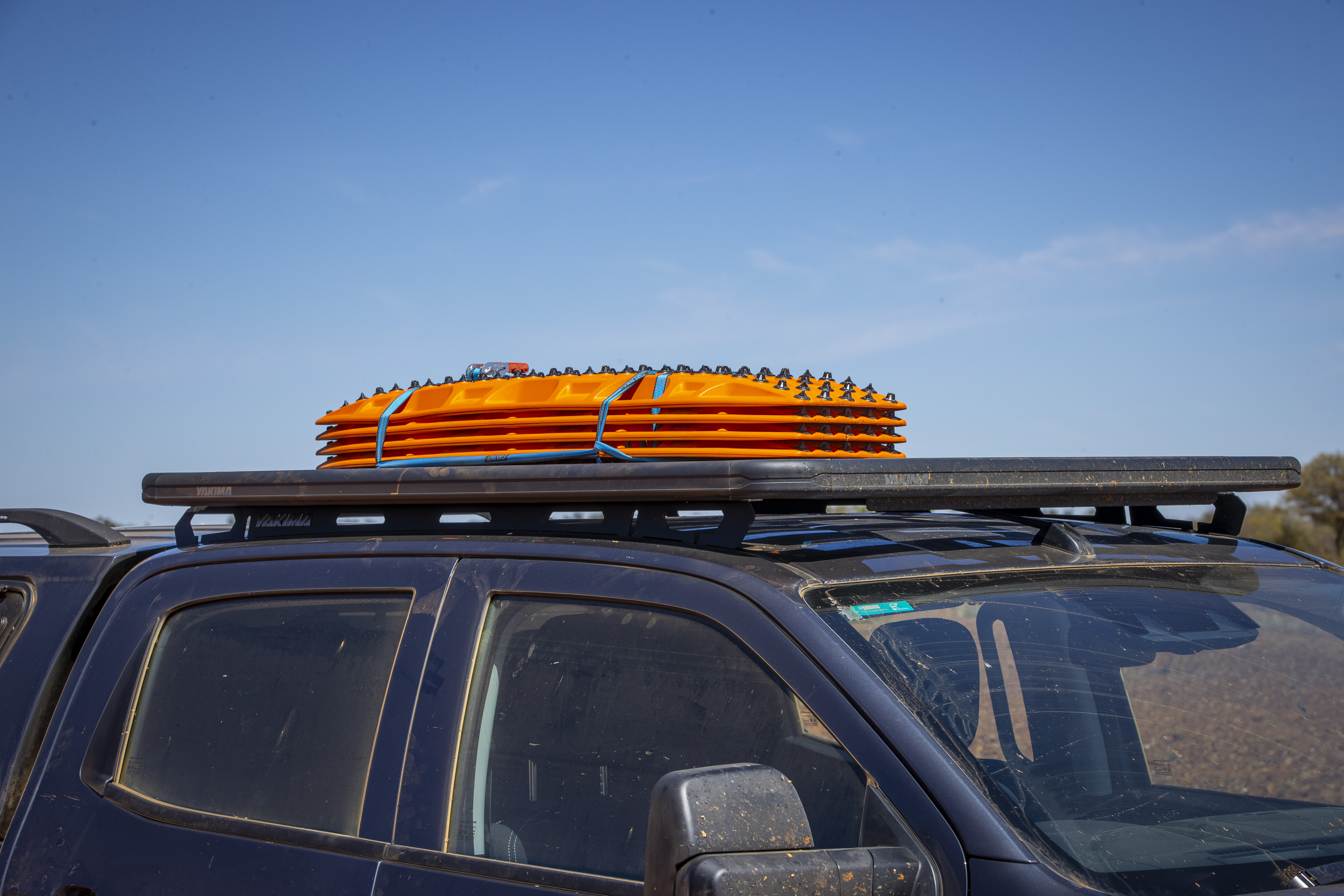
The name MaxTrax is synonymous with four-wheel drive recovery equipment, and with plenty of new exciting products on offer, we decided to give its products a run exclusively in our D-MAX.First of all, we chose four MaxTrax Xtreme recovery boards which live on our Yakima roof platform any time we head bush. They’ve already paid for themselves after we managed to get a press vehicle badly bogged in thick mud.With two placed behind the rear tyres, we were able to reverse out quickly and easily, without sustaining any damage to the MaxTrax or vehicle. This is one of the main things I love about MaxTrax recovery tracks: you can use them to help other four-wheel drivers and take them from vehicle to vehicle.
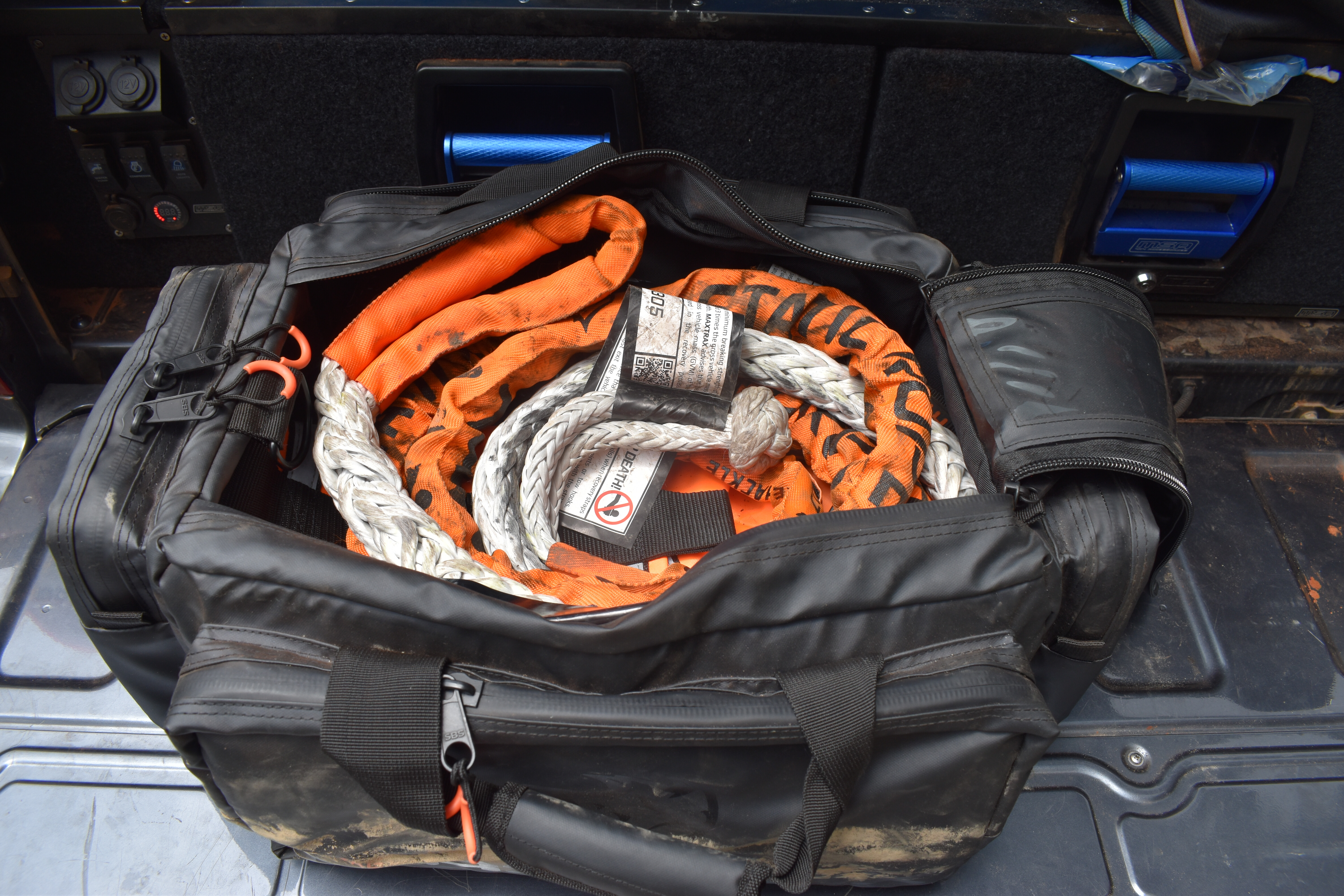
The main selling point for the Xtreme recovery tracks (other than the fact they work bloody well), is they feature 88 replaceable hard-anodised alloy teeth fixed to each recovery track. While it’s poor form to spin tyres on recovery tracks, sometimes it’s just not possible to avoid it.Now, if you do manage to damage one or more of these teeth, for just $30 you can buy a set of replacement teeth, and for $16.50 more you can buy a tool to change them out again. You are essentially buying a product that will last a lifetime. They are also Australian made, and we love supporting Aussie off-road companies.As well as the MaxTrax Xtreme recovery tracks, we decided to assemble a collection of recovery straps and soft shackles to carry inside the D-MAX. I’ve mentioned this previously, but I always keep essential recovery gear in a bag inside the cabin of the vehicle, in the event you are really stuck and can’t access the canopy and drawer system. For this task, we chose to grab a recovery kit bag and stock it full of everything we should ever need to safely extract our D-MAX or other off-roaders.
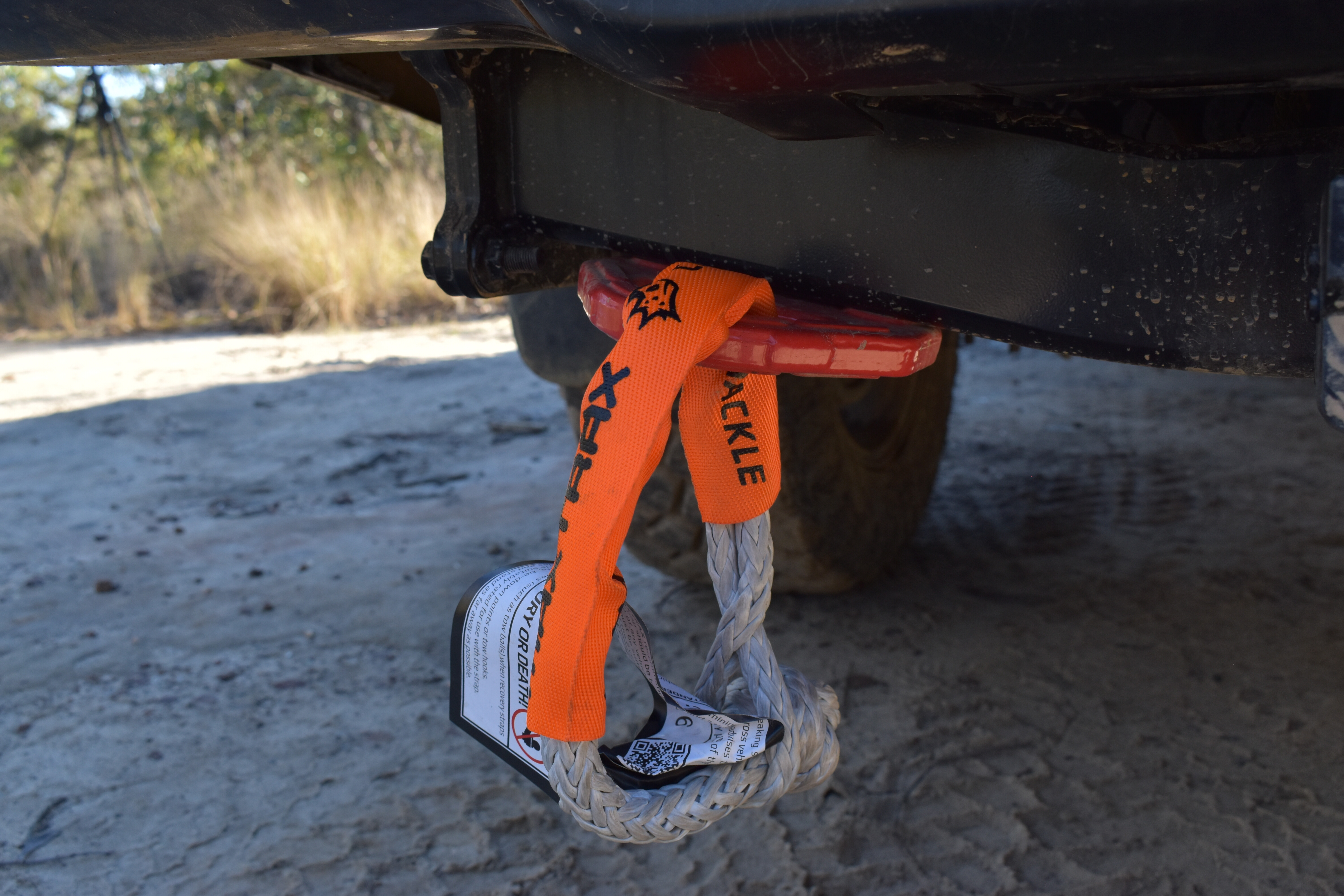
Now, if your 4×4 doesn’t have a winch and you always travel in a convoy, you can essentially get away with a snatch strap or kinetic rope, a shovel and some shackles (as well as rated recovery points). As we have an Ironman 4X4 12,000lb winch on the front of our D-MAX – and often travel solo – we had to take a closer look at what recovery gear we needed.Soft shackles, when used in conjunction with soft-shackle-safe recovery points, are a brilliant idea to save weight, so we carry five of those at all times, as well as a MaxTrax fuse shackle.We also carry a MaxTrax kinetic recovery rope for snatch-style recoveries, a static rope, a MaxTrax winch ring and rope dampener. Sometimes there’s just not enough rope on your winch to get out of trouble, so we have also selected a static winch-rope extension, and a smaller three-metre static rope which can be used as a bridle strap, small winch extension or tree-trunk protector.
At the rear of the D-MAX, we’re spoilt for choice thanks to the inbuilt recovery points on our Hayman Reese X-Bar towbar. However, we also decided it would be wise to carry one of the MaxTrax Hitch 50s which can be inserted into the tow-hitch; it’s also soft-shackle compatible.You can actually buy two different already-assembled recovery kits from MaxTrax – one called The Bush Kit and the other called The Beach Kit – which can help you out if you are unsure of what gear you need.These are comprehensive recovery kits that will last the distance when you need them most. Buy once, cry once – wise words to live by when it comes to recovery gear.AVAILABLE FROM: www.maxtrax.com.au RRP: $499 per pair (MaxTrax Xtreme recovery tracks); $899 (MaxTrax Bush Recovery Kit)
The 2022 Gaz Trackmaster will arrive on Australian shores next month, offering an alternative for those needing a tray – or a camper platform – with a high level of off-road capability.
Gaz is one of Russia’s largest vehicle manufacturers, with a number of overseas militaries using its models. Now local company Australian Adventure Vehicles (AAV4X4) is offering the Trackmaster to Aussie buyers from $89,500 before on-road costs.
Badged as the Sadko Next overseas, the Trackmaster is powered by a 4.4-litre intercooled turbo-diesel four-cylinder engine producing 110kW and 490Nm, mated to a dog-leg five-speed manual synchro gearbox or optional Allison six-speed automatic transmission.
While the Trackmaster can only manage around 95km/h, the Allison auto increases its top speed to “in excess of 110km/h”.
The Gaz offers part-time four-wheel drive – powering the rear wheels for normal highway driving, with a dash-mounted 4H and 4L selector for off-roading, combined with automatic front and rear differential locks.
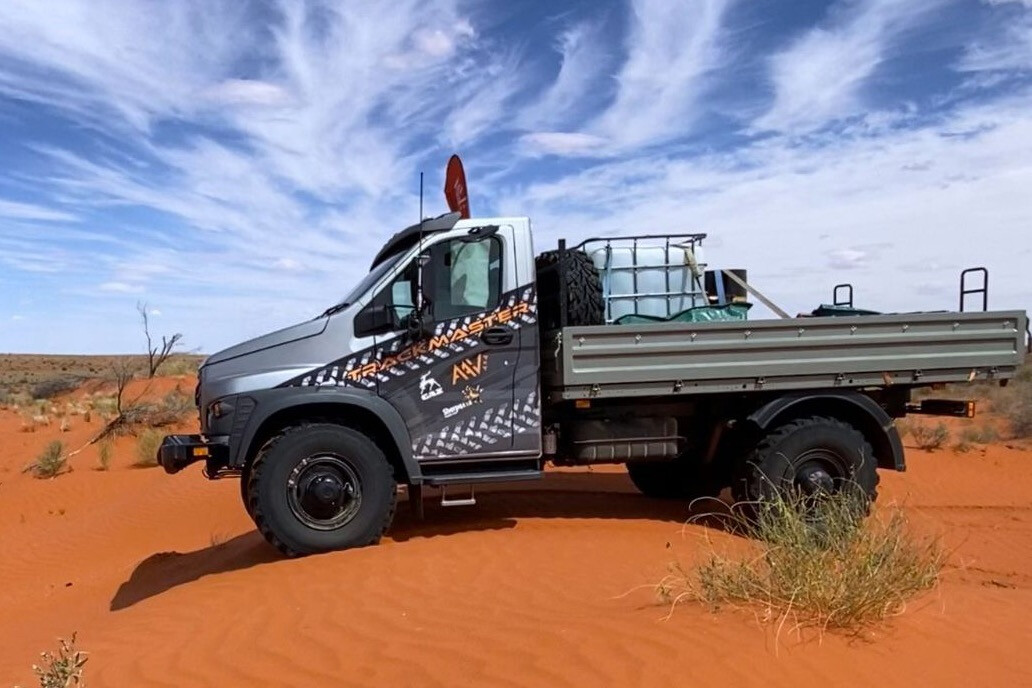
Thanks to the large 42-inch tyres, the vehicle has 315 millimetres of clearance, a 1.2-metre water fording depth, and an approach angle of 60 per cent.
However, while the Trackmaster has a curb weight of 3600 kilograms, its GVM is listed as 7450kg, meaning a light rigid driver’s licence is required to legally drive it in Australia.
This puts it up against the likes of the four-wheel-drive Fuso Canter and Isuzu NPS – but as AAV4X4 points out, the Gaz was designed from the ground up as an off-road vehicle, rather than being a commercial truck converted to four-wheel drive.
Included in the price for the single-cab is a tray, snorkel, cruise control, suspension driver’s seat with heating, bluetooth with music streaming, USB smartphone mirroring, steering wheel volume controls, twin fuel tanks, and the aforementioned twin diff locks.
Also standard is a central tyre inflation (CTI) system, which allows the driver to lower or raise tyre pressures on the fly, as well as allowing air tools to be used by connecting to the onboard air tank.
Buyers are able to option a 17,000 or 25,000lb electric winch, with a PTO also available.
AAV4X4 has suggested engine performance and tow ratings may be upgraded in the future, but for the time being, the Trackmaster has a maximum braked towing weight of 2650kg.
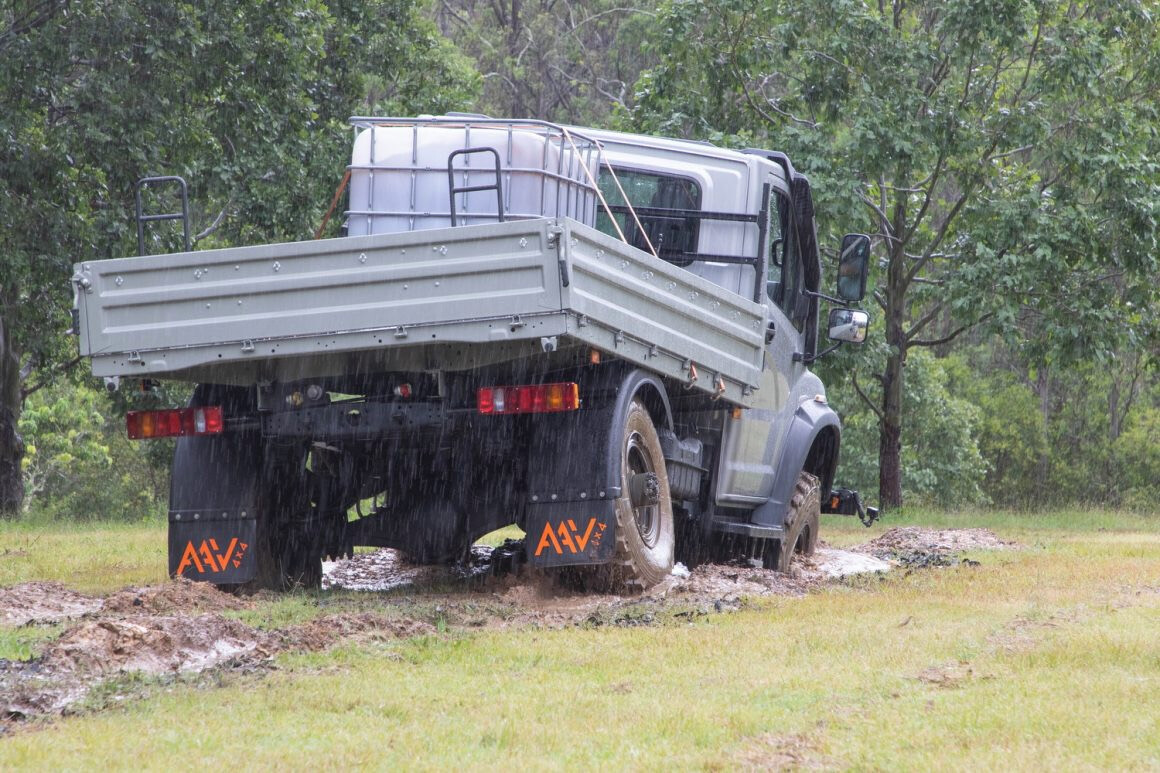
Being a commercial truck, the Gaz also misses out on mandated safety equipment for passenger vehicles such as airbags, but does have an anti-lock braking system (ABS) connected to its pneumatic brakes.
Buyers can option the Trackmaster in white, metallic silver, grey, or red, with a dual-cab in the pipeline.
First deliveries of the 2022 Gaz Trackmaster will begin in March, priced from $89,500 before on-road costs.
If you enjoy cooking over open coals as much as we do and you want to up your grilling game, then here’s a book you’ll want to check out.
Forget about burnt snags and dry rissoles, Firepit Barbecue by Sydney chef Ross Dobson will have you the talk of the tong-twirlers.The 200-page book includes more than 90 tantalising recipes plus tips on building your fire, using the right temperatures, marinating meats and preparing flavoured butters and salsas.
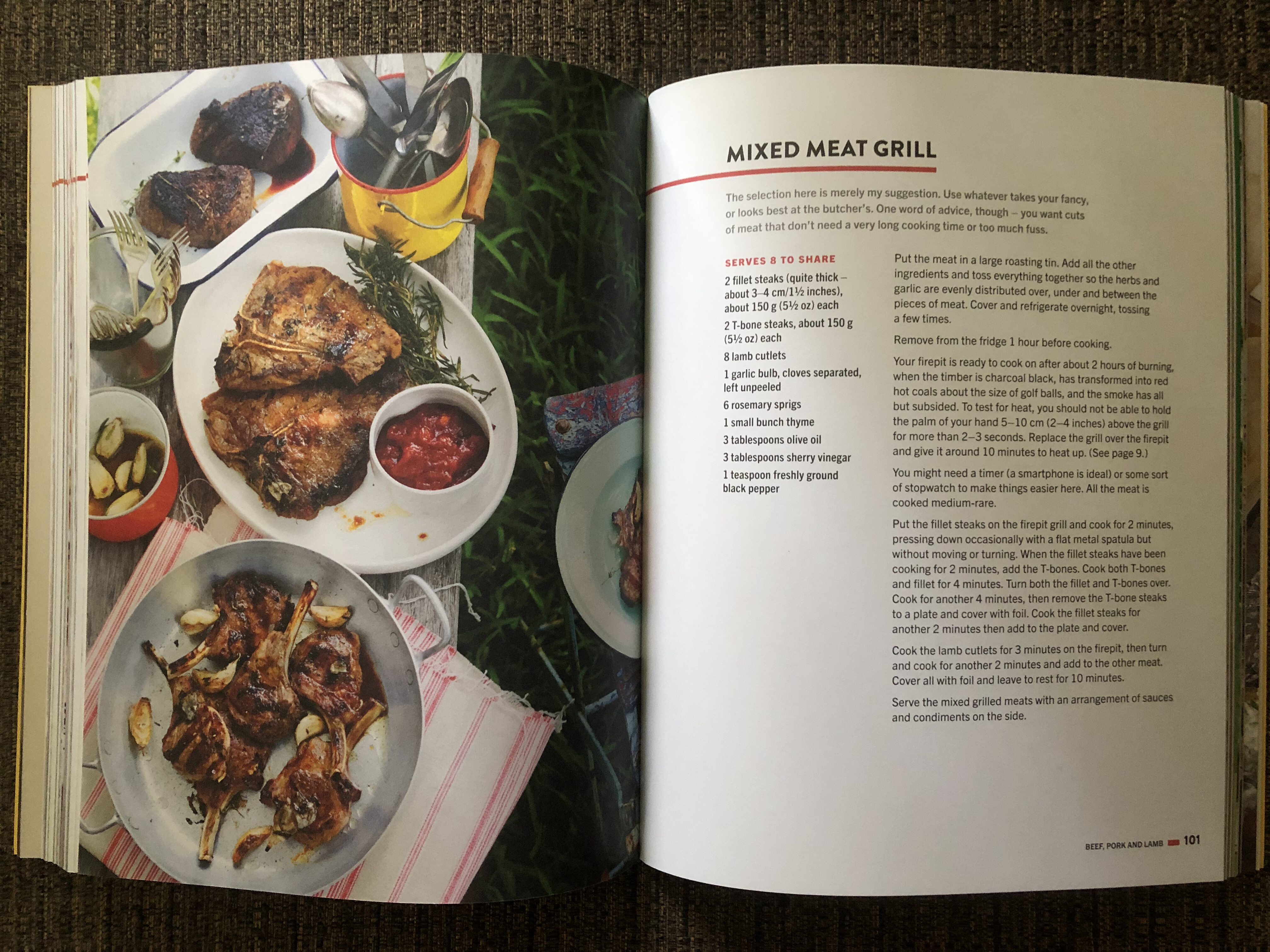
Individual chapters for poultry, red meats, veggies, seafood and sides are chock-full of detailed recipes and full-colour photography that will have your mouth watering.Lobster tails with chilli and garlic butter, teriyaki and beer chicken, and butterflied lamb are all on the menu. And, if you’re a stickler for a steak, the New York Cowboy is a flavour sensation!You won’t need any fancy barbecues or expensive smokers to prepare the meals in Ross’s book – they are designed to be cooked in the open over hot coals and, in many cases, an open drum with a wire grill over the top will suffice.
Be that in your backyard, at a campsite or someplace remote and isolated, you’ll be able to cook these up just about anywhere.Ross Dobson loves cooking in the outdoors and his previous books have included King of the Grill, Fired Up and Grillhouse. His recipes take influences from around the world to bring a swag of flavours to your barbecue, no matter what you are cooking or where.AVAILABLE FROM: Bookstores or murdochbooks.com.au RRP: $35