After the huge success of the BLUETTI AC500, which set a crowdfunding record of $12 million on Indiegogo, BLUETTI is back to shake things up by launching its first ecosystem SwapSolar on February 22 at 1am (AEDT).
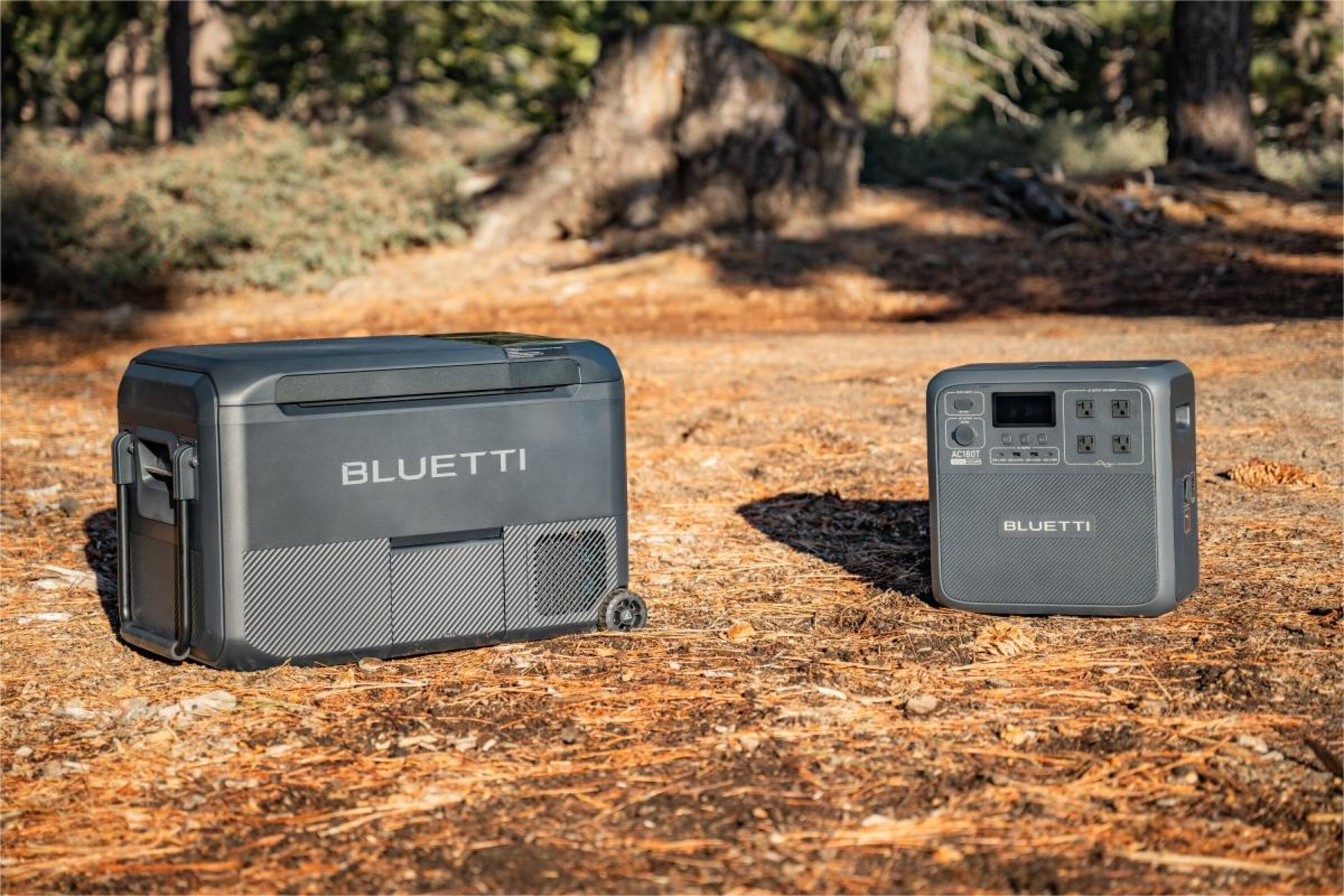
First unveiled at CES 2024, the SwapSolar includes the world’s first LFP-powered MultiCooler portable fridge and the AC180T hot-swappable battery power station. This groundbreaking duo offers an unprecedented blend of convenience and functionality for outdoor activities.
1
Meet BLUETTI SwapSolar: Two birds, one stone
The SwapSolar is not just a product; it’s an answer to your outdoor power needs, ice-making desires, and long-distance travel cooling cravings – all in one. The AC180T ensures your independent outdoor power supply off the grid, while the MultiCooler’s 3-in-1 design provides excellent coolness and efficiency.
As BLUETTI’s spokesperson, James Ray, aptly puts it, “We want users to savor the joy of outdoor life. SwapSolar is your ticket to 3-6 days of happy camping trip. Power up and keep your food fresh at once, it’s time to go wild with BLUETTI!”
Introducing BLUETTI MultiCooler
1
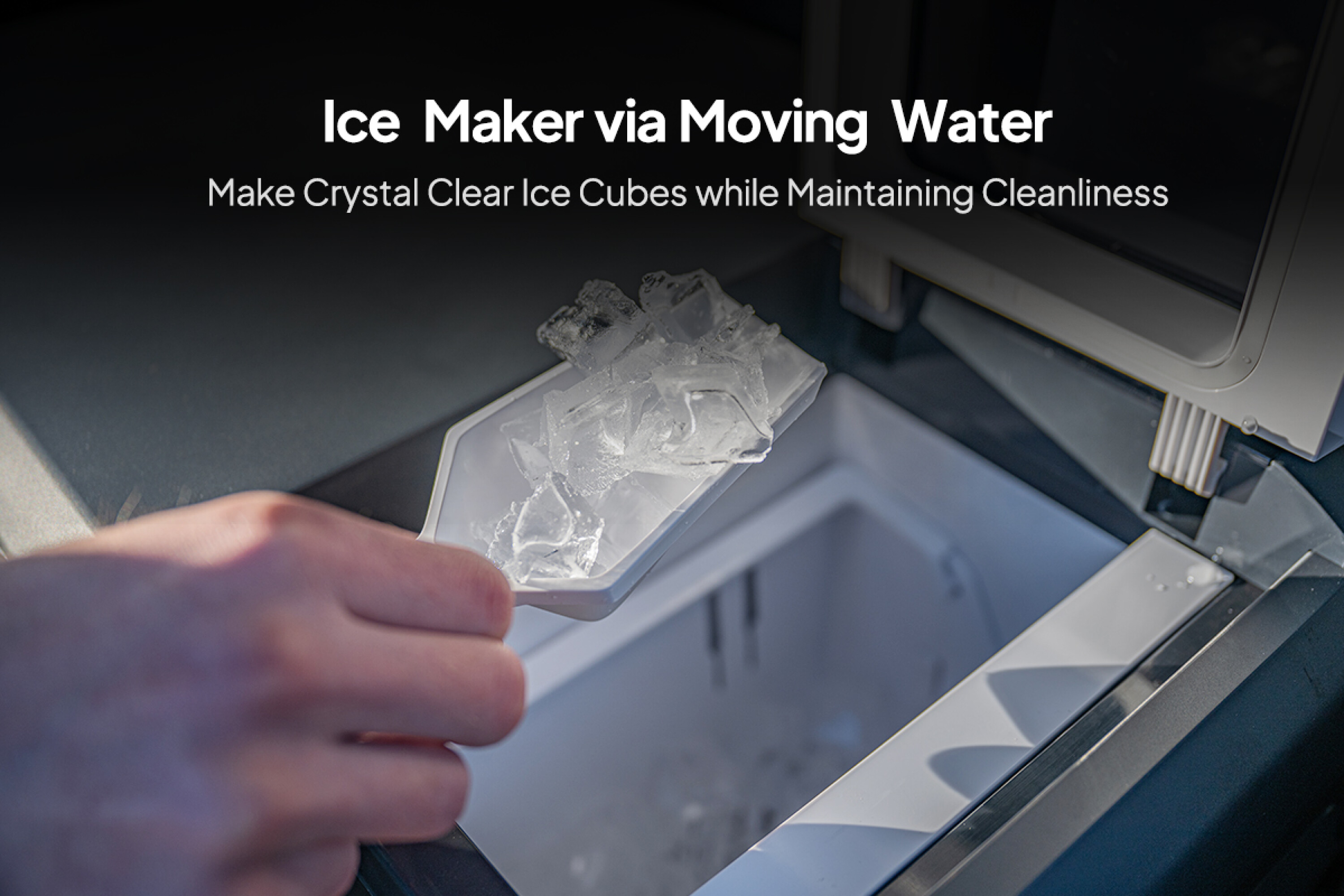
Imagine a fridge that does it all – ice making, refrigeration, and freezing – in one sleek design. The MultiCooler has a 42qt (40L) capacity, enough to hold about 60 cans of soda. With a temperature range of -4°F to 68°F (-20℃ to +20℃), it caters to all your temperature whims. Its powerful compressor ensures rapid cooling from 86°F to 32°F (30℃ to 0℃) in just 15 minutes! Plus, the built-in ice maker produces crystal-clear ice cubes in minutes, perfect for your fizzy drinks and cocktails.
Smart and portable design
Weighing approximately 52.9lbs (25kg) net, the MultiCooler is designed for easy lifting with side grooves. Got a full load? No problem. Use the wheels and drawbar for effortless transport. It’s even equipped with 45°tilt protection for rough terrain. Worried about stability in your car? The optional slider has you covered. And yes, it operates quietly at 30dB in refrigeration mode and 45dB in ice-making mode, ensuring a peaceful environment.
1
Easy control at your fingertips
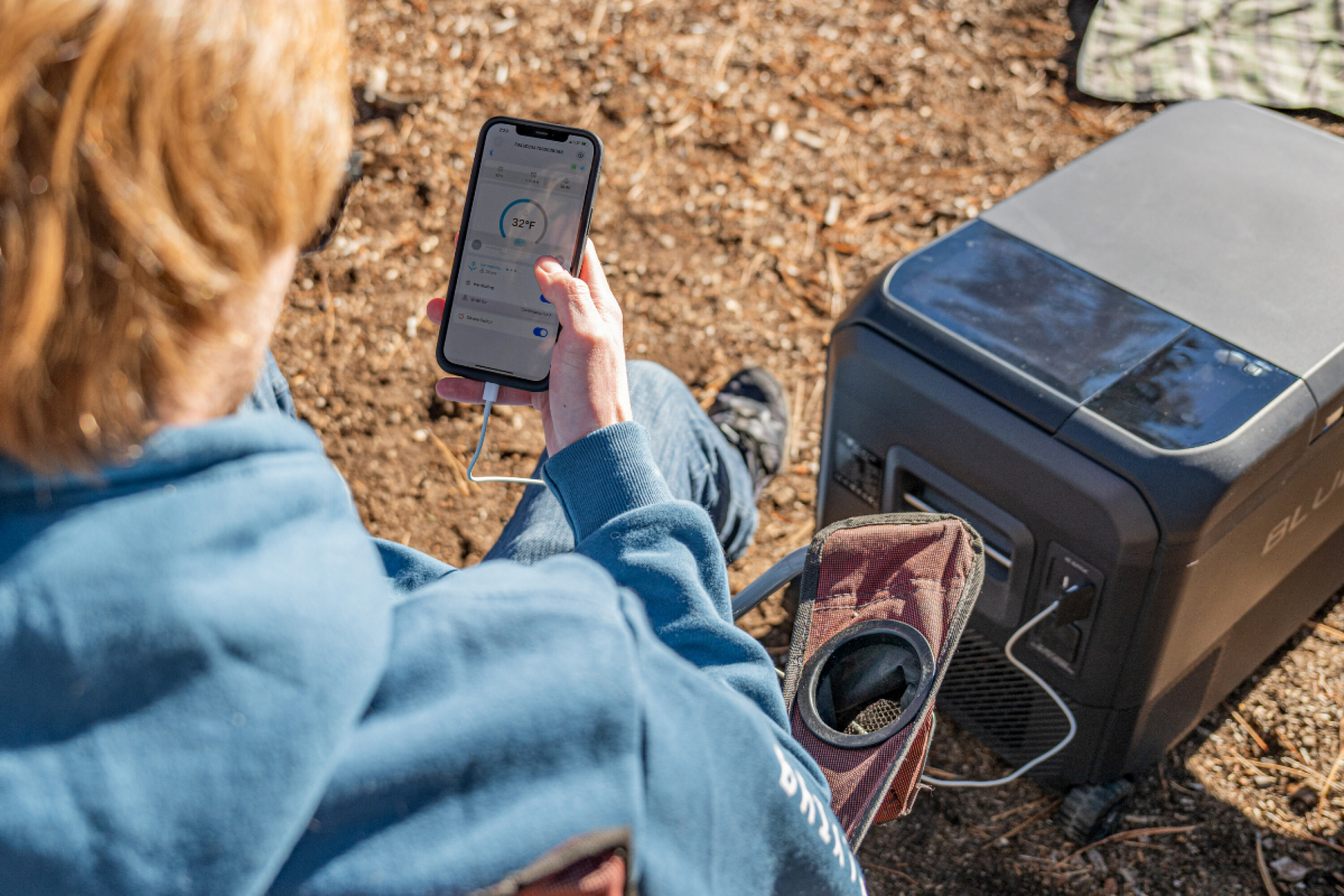
In addition to an intuitive LCD touch screen and a few touch buttons for easy use, the MultiCooler supports Bluetooth connectivity. Manage everything with the BLUETTI app – monitor temperatures in real time and adjust settings such as ECO mode and Self-Clean mode.
Versatile charging for any situation
The MultiCooler accepts four charging methods to keep your groceries at the right temperature. You can plug it directly into the wall or your car while making ice, a first in the industry. If you don’t want to drain your car battery, use one of the AC180T batteries to charge it for 3 days. With a battery inside and connected to solar panels, it will literally run non-stop as long as the sun is shining.
1
Introducing BLUETTI AC180T
Swappable battery for extreme flexibility
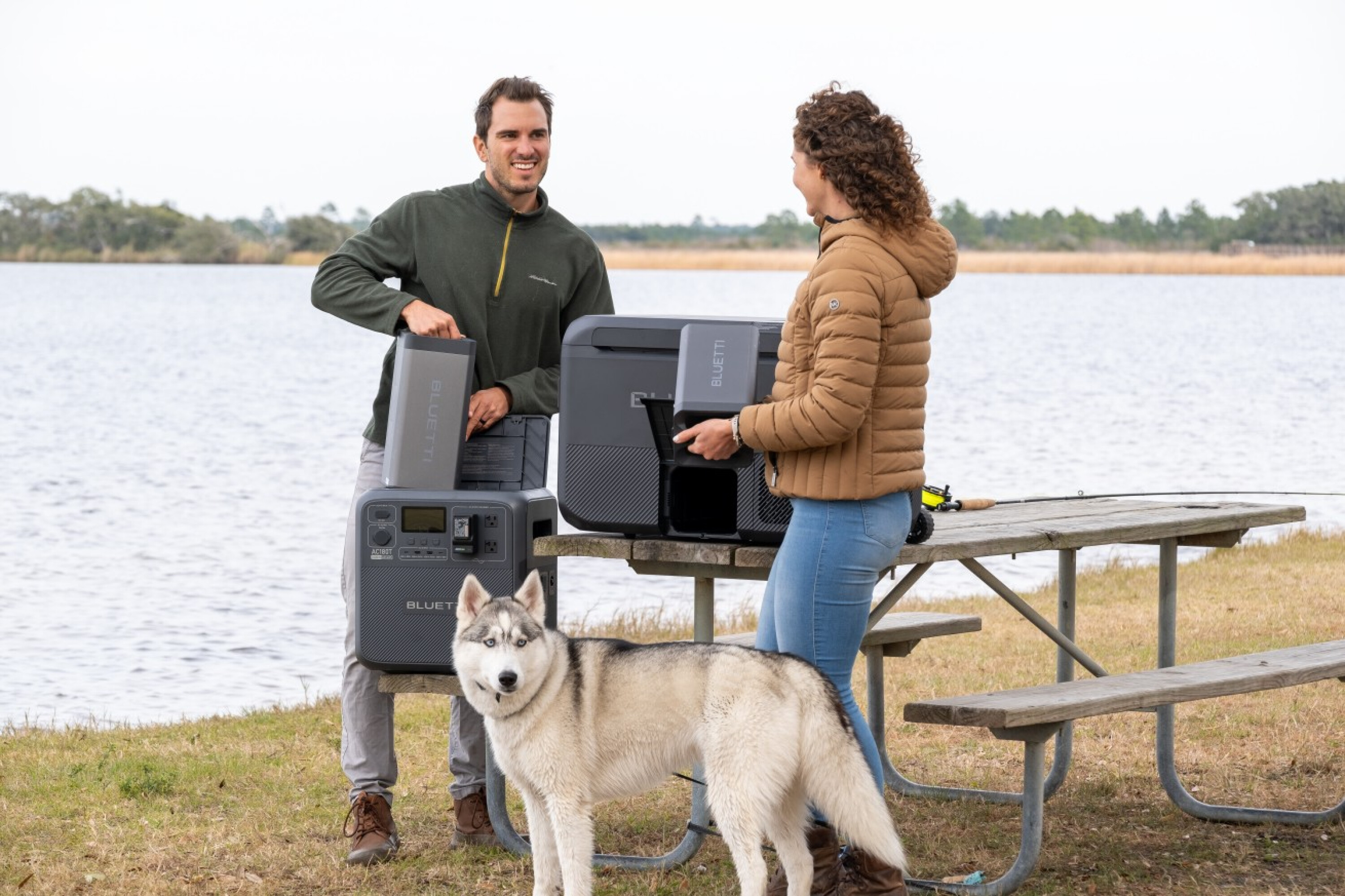
The AC180T introduces a removable battery design that allows you to replace its two B70 batteries(716.8Wh) from the top. It uses long-lasting and safe LFP batteries with 3,000+ life cycles and 5,000+ swap times. Since BLUETTI also sells these batteries separately, you can choose multiple battery packs to suit your needs. For longer trips and emergencies, just swap them out for instant full power anytime, anywhere.
To charge these batteries, plug the AC180T directly into a wall outlet for fast 1,440W AC charging or use solar panels for a constant power supply.
AC180T performance with battery
1 * B70 batteryu00a0
2 * B70 batteriesu00a0
Output power
1,200W
1,800W
Capacity
716.8Wh
1,433.6Whu00a0
Charging rate/ Time
850W; 80% in 60 mins, full charge in 90 mins
1,440W; 80% in 45 mins, full charge in 70 mins
Solar input
500W Max., 12-60VDC
Pricing and availability
BLUETTI offers a reassuring 5-year warranty for the AC180T and 2 years for the MultiCooler. Join the Indiegogo campaign starting February 22 at AEDT 1 am and enjoy the best deals on limited quantities. Deliveries are available to select countries in Europe, the USA, Canada, and Australia.
Productu00a0
Retail Price($)
Super Early Bird ($)
Limited Quantity
AC180T+MultiCooler
2198
1429
200
AC180T+MultiCooler+B70
2627
1719
100
MultiCooler+B70
1328
799
100
* Note: Prices are in USD per Indiegogo’s policy. Costs for non-US countries are based on current exchange rates. Shipping fees apply outside the USA; rates will specified on the purchase page by then.
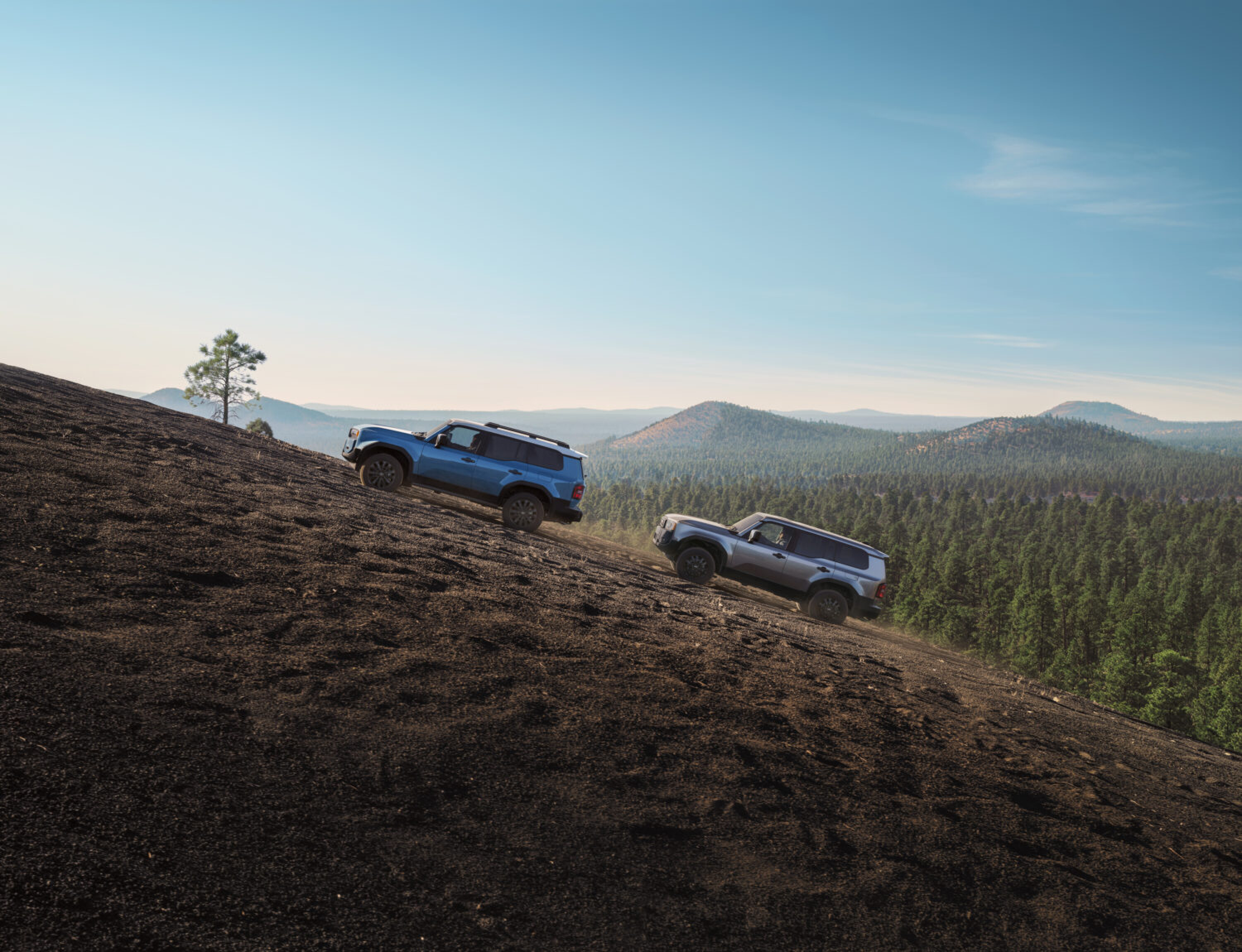
Following a two-year hiatus, the LandCruiser will return to the USA this year in the form of the 250 Series – or, as we know it, the Prado.
Unlike Aussie variants which will use old-school 2.8-litre diesel grunt paired with a 48-volt system when it lobs here later this year, US LandCruisers will be powered by a hybrid i-FORCE MAX powertrain mated to a full-time 4WD system.
That hybrid powertrain links an electric motor to a 2.4-litre turbo-charged petrol engine and eight-speed automatic transmission to produce 326 horsepower and 465 lb.-ft. of torque – approximately 243kW and 630Nm. A substantial increase on the diesel-powered 2.8’s 150kW and 500Nm.
There is speculation local Prados could get the i-FORCE MAX powertrain in the future .. just don’t expect it this year.
1
The three-model US line-up is expected to launch in US Spring 2024 (late March) with a price of US$55,950 (roughly AU$85,000) for the entry-level ‘LandCruiser 1958’ retro variant, distinguishable by its circular LED headlights. As with the more premium models in the line-up, it comes standard with full-time all-wheel drive, locking centre and rear differentials, a two-speed transfer case, CRAWL Control, and a 2400W AC inverter.
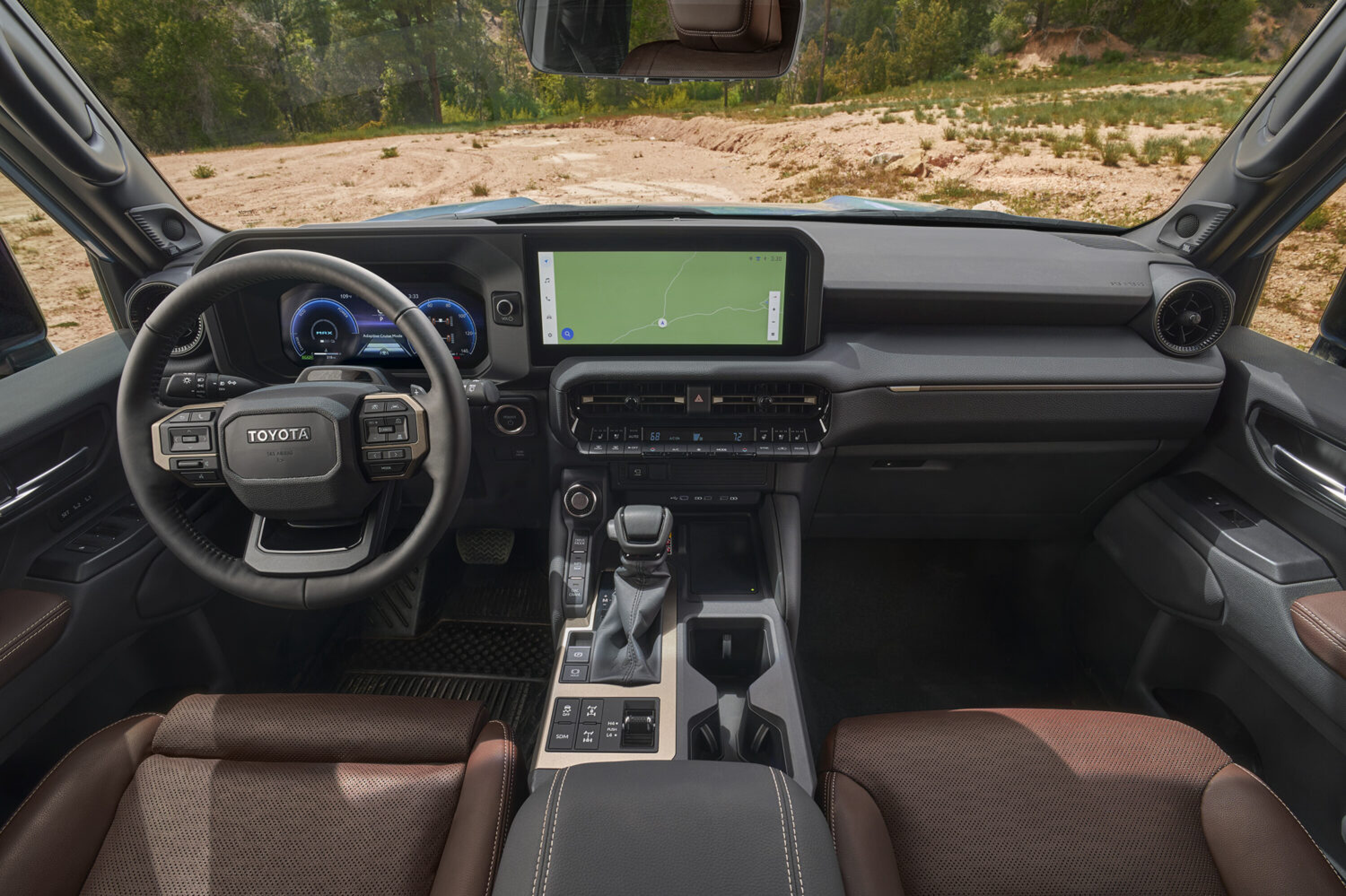
Standard equipment also includes heated cloth seats, blind-spot monitoring, automatic climate control, a seven-inch digital dash display, and an eight-inch touchscreen with wireless Apple CarPlay and Android Auto.
The mid-tier offering in the US will be known as the ‘Land Cruiser’ grade – confusing, we know. It drops the circular LEDs for rectangular units and adds heated front pews; a 12.3-inch full colour multi-information display; powered liftgate; a 12.3-inch touchscreen; and a 10-speaker sound system. To help off-road, it comes with a Stabiliser Disconnect Mechanism (SDM), Multi-Terrain Select (MTS), and a Multi-Terrain Monitor (MTM) system.
1
A Premium package can be added to the ‘Land Cruiser’ grade, which nets the owner a bunch of goodies including leather-trimmed seats, powered moonroof and a centre console coolbox. The range-topping First Edition gets all that and more, including a roof rack, rock rails and a front skid plate.
The Australian five-model line-up will consist of a new off-road-focused Altitude variant, as well as the VX, Kakadu, GX and GXL. It’s expected to launch locally in May or June this year.
New additions include a revised look, more tech, and 48-volt electricals for some variants
Toyota Australia has confirmed small price premiums for the drivetrain-enhancing 48-volt technology that headlines the updated 2024 HiLux range.
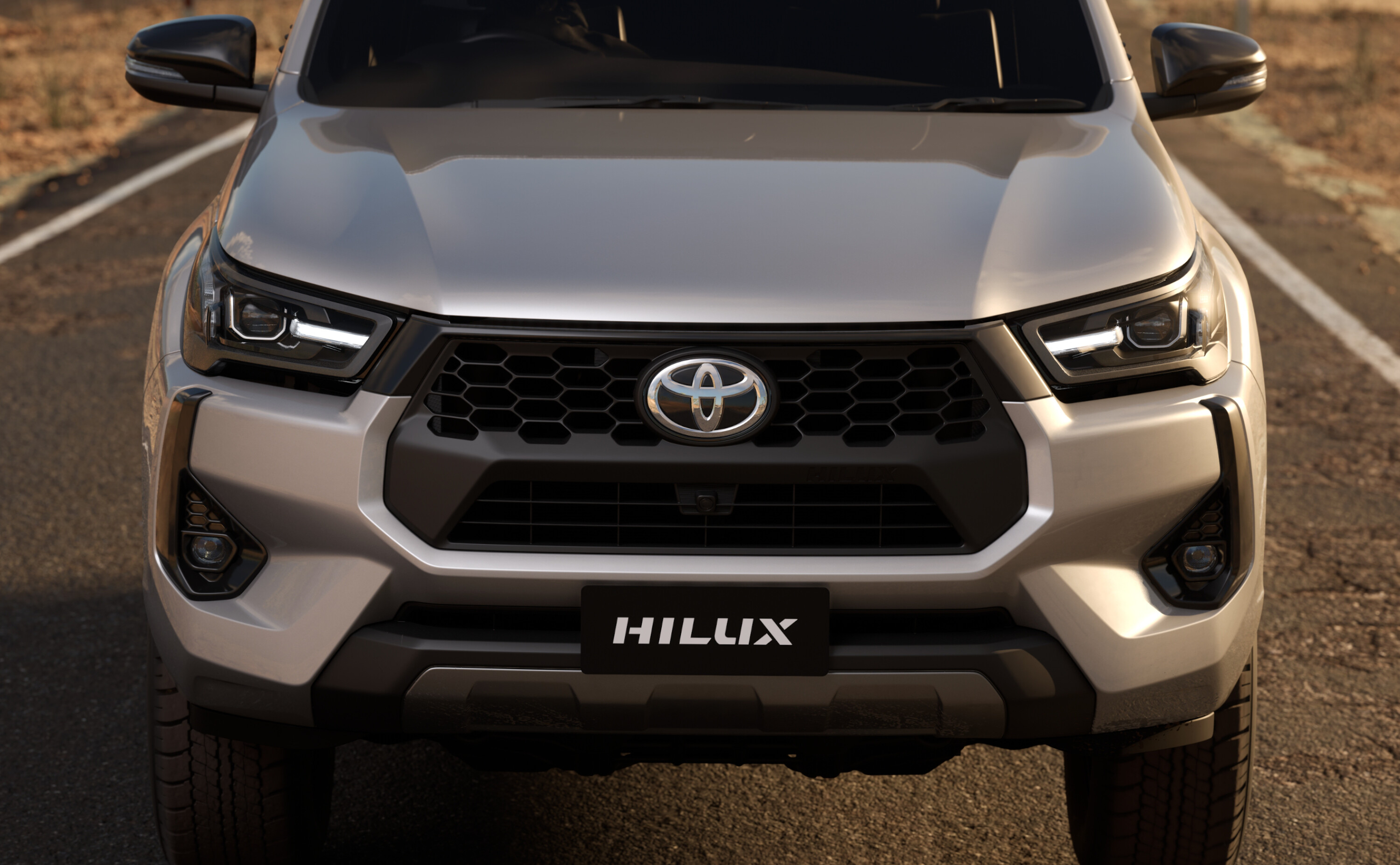
The mega-selling ute will arrive in dealerships in March sporting revised frontal styling and extra features in addition to the 48V battery system dubbed V-Active Technology.
The tech that promises improved driveability, performance, and efficiency is optional on 4×4 automatic dual-cab and double-cab chassis versions of the HiLux SR, standard on the same variants of the SR5, and standard on the Rogue dual-cab.
Ticking the V-Active Technology box for the SR adds $1025 or $1605, respectively, over the regular versions of the double-cab chassis and double-cab pick-up.
2024 Toyota HiLux V-Actice Pricing
SR 4×4 dual-cab chassis
$54,130
SR 4×4 dual-cab pick-up
$56,210
SR5 4×4 dual-cab chassis
$60,580
SR5 4×4 dual-cab pick-up
$63,260
Rogue 4×4 dual-cab pick-up
$71,530
All prices are before on-road costs
Options
Premium interior (SR5 only)
$2500
Premium paint
$675
The price of the SR5 double-cab chassis increases by $590, with the cost of the SR5 and Rogue dual-cabs both rising by $770.
The flagship GR Sport HiLux misses out on the tech.
The 48-volt system is paired to the HiLux’s familiar 150kW/500Nm 2.8-litre turbo-diesel four-cylinder, six-speed automatic transmission and 12-volt auxiliary battery.
Comprising a 48-volt battery, compact electric motor generator, and a DC/DC converter, Toyota says V-Active Technology will improve driveability, performance, fuel economy, and refinement of the 2.8-litre diesel.
1
The company has chosen the V-Active moniker to preserve Hybrid badges for its array of vehicles that employ more extensive petrol-electric technology.
Toyota suggests fuel-savings of about 10 per cent are possible, helped primarily by a new engine stop-start system.
Distinctively, it features two settings, with Long mode keeping the engine shut off for an extended period over the Normal mode.
V-Active also lowers the engine’s idling speed from 720 to 600rpm.
Official combined fuel consumption for 4×4 dual-cab versions of the SR, SR5 and Rogue using the standard 2.8L are 7.4, 8.0, and 8.4 litres per 100km, respectively.
1
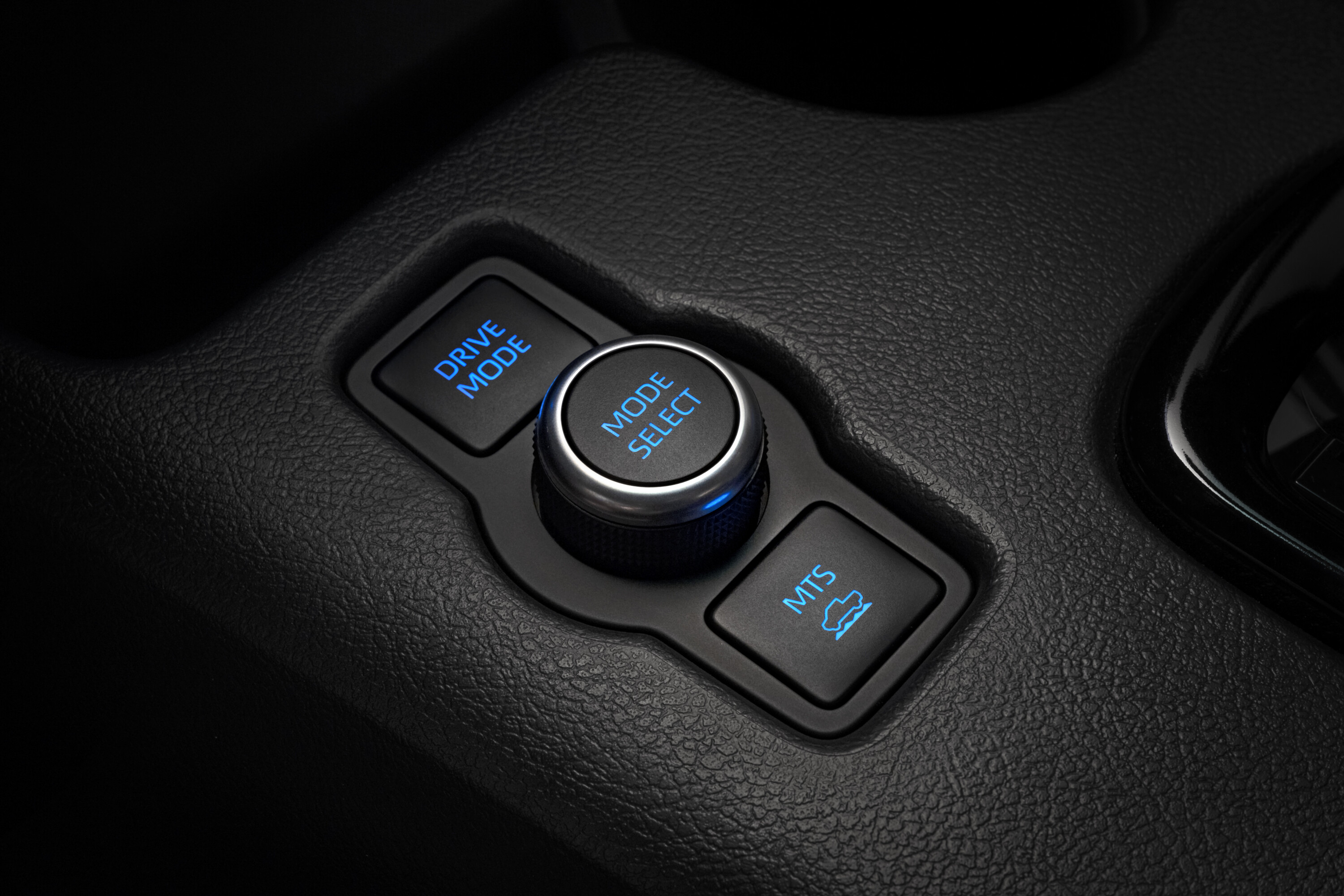
Variants fitted with 48-volt technology also benefit from a new MST (Multi-Terrain Select) dial, which sees the addition of six individual drive modes
The 48-volt option for the SR variant will be bundled with additional features, including dual-zone automatic climate control, keyless entry and push-button start, automatic up/down for the windows, and carpet floor mats.
The SR5, Rogue and GR Sport variants gain a wireless phone charger next to the gear shifter and two rear USB-C ports.
All SR variants – including those without the 48-volt option pack – now receive front and rear parking sensors.
In addition, all HiLux tubbed ute models have a new damping gas strut to make opening and closing the tailgate easier.
Toyota Australia has confirmed the new HiLux will retain its existing infotainment system with wired Apple CarPlay and Android Auto.
External revisions for the 2024 Toyota HiLux are limited to diesel-powered dual-cab models, and include a revised front end with an octagon shape for the grille, a trapezoidal lower section and a ‘bolder’ outer bumper that houses the fog lamps for the SR5 variant.
WorkMate diesel dual-cab variants include a new honeycomb mesh grille and a black lower and body-coloured side bumper finish.
Single-cab chassis and petrol dual-cab versions of the WorkMate retain the HiLux’s old styling that dates back to 2015 but receive a new black plastic finish for the bumper instead of dark grey.
SR models have a new silver lower-bumper finish, while the SR5 adds a black upper grille mould, dark-tinted headlight clusters, and gloss black trim for fog lamp bezels, side mirrors and exterior door handles.
Toyota Australia will be hoping the updates can help take the HiLux back to the top of the sales charts, after the arch-rival Ford Ranger ended its seven-year run in 2023.
The growing reliance on electronics when in the bush for things like fridges, battery tools, GPS, 12V ovens, induction cookers and pretty much anything else you can think of, has meant a growing reliance on auxiliary battery systems.
Charging or maintaining those systems when driving is simple enough, but what about when you set-up camp for a few days without any driving? You could run a generator but that relies on a limited supply of fuel; plus they’re noisy and not often welcome at camp. This is where solar comes in.
Portable or vehicle-based solar offers the flexibility to stay within remote areas without relying on fuel to recharge batteries. Simply connect a solar panel with a regulator to your batteries and away you go. Sounds simple, right? Until you go to purchase a potable solar panel and start hearing words like monocrystalline and amorphous silicon, and a grey cloud of confusion descends.
In this guide we’ve outlined some of the best solar panels on offer for four-wheel drivers, and we’ve split the panels in to three categories: Rigid; Folding/Flexible; and Solar blankets.
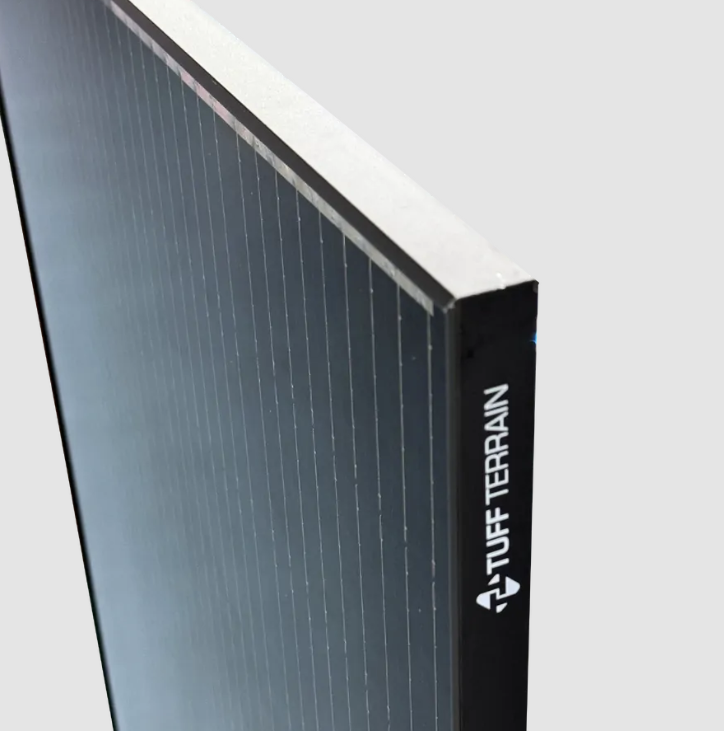
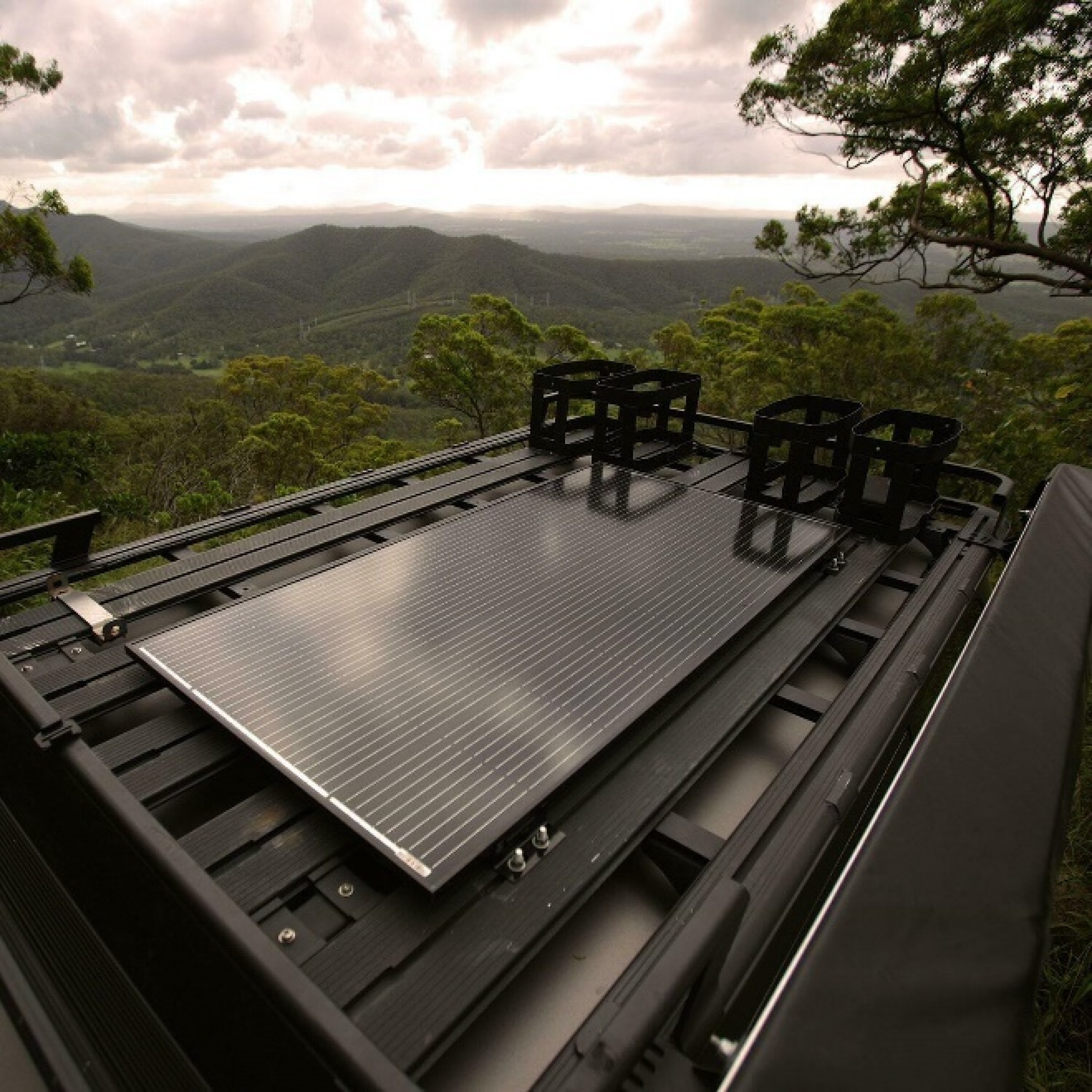
Tuff Terrain 12V monocrystalline solar panel (200W)
The Tuff Terrain 12V 200W monocrystalline solar panel provides 200W of power to run common 12V camp loads such as fridges, lights, and other off-grid gear.
Operating at 18.6 V, it is compatible with MPPT regulators and delivers reliable performance in a slim, 22mm, 10kg fixed-panel design. The 1400 x 700mm panel features universal mounting holes for up to M8 bolts and a robust aluminium frame built to handle corrugated roads, long trips, and hot conditions.
A 900mm lead with pre-fitted MC4 connectors allows quick connection to standard solar setups, making it easy to integrate into utes, vans, or campers. The kit includes the panel and the MC4 cable.
This panel is technically a fixed rather than portable unit, but with a massive 25-year warranty, we had to include it as it is a lifetime purchase.
It uses A-grade cells, which means it will maximise the power output from whatever sunlight is available. The panel also includes a diode bypass, which serves to minimise power drop caused by shade by redirecting power around shaded cells and features toughened glass to protect the cells.
These top-range panels are designed to be permanently fixed to a vehicle or caravan and, as such, do not come with a stand of any sort. So, if using them as a portable option, you will need to jimmy up your own stand. They would likely outlive most vehicles and, with an operational temperature range of -40 to + 85°C, will work pretty much anywhere.
1
Power output
170W
Cell type
Class A Monocrystalline
Warranty
25 years
Weight
12.5kg
Pros
That warranty, a massive 25 years
Class A cells
Quality build
Cons
The price
Lack of stand to make it truly portable
At more than 1m long, it really suits bolting on rather than carrying as a portable panel
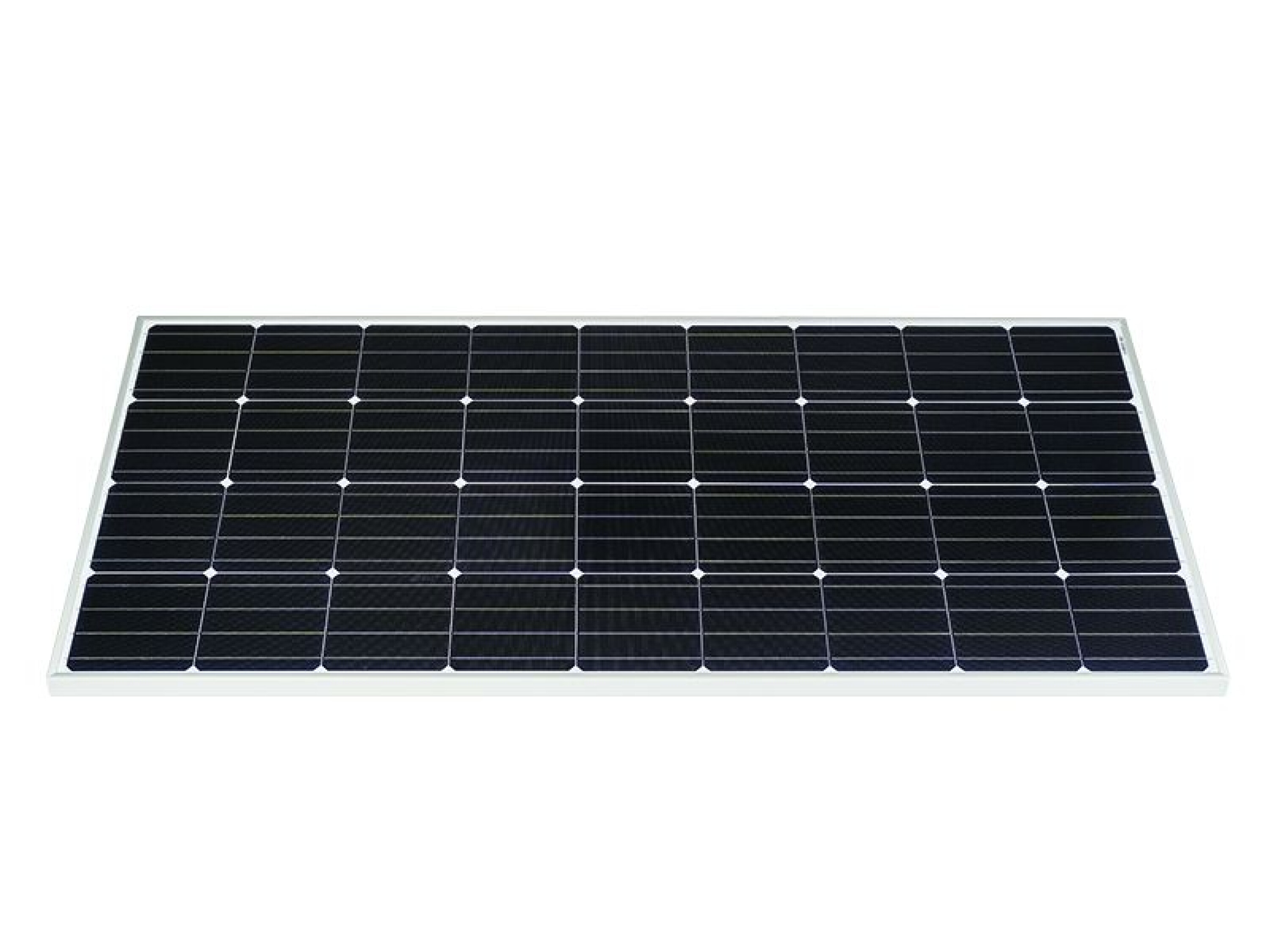
This panel is also technically a fixed rather than portable unit and is best suited to permanent mounting rather than being used as a portable unit.
With 170W and a claimed 9.5 amps of power output, this is a great value option. Customer reviews indicate that even in overcast conditions this panel will output two amps of power; but without a bypass diode feature, shade will impact the output of the panel. The Hardkorr unit comes with a healthy 10-year warranty and utilises Class A monocrystalline solar cells. At only 17mm thick, this is a slimline panel that will assist in reducing wind drag and assist fuel economy.
1
Power output
170W
Cell type
Class A Monocrystalline
Warranty
10 years
Weight
10kg
Pros
Good value
Class A cells
Thin design makes this more aerodynamic than the competition
Cons
Reports of corner caps coming off and mounting bracket holes not lining up
No bypass diode to assist with shade functionality
Over 1.3m long, which would limit mounting options on some vehicles
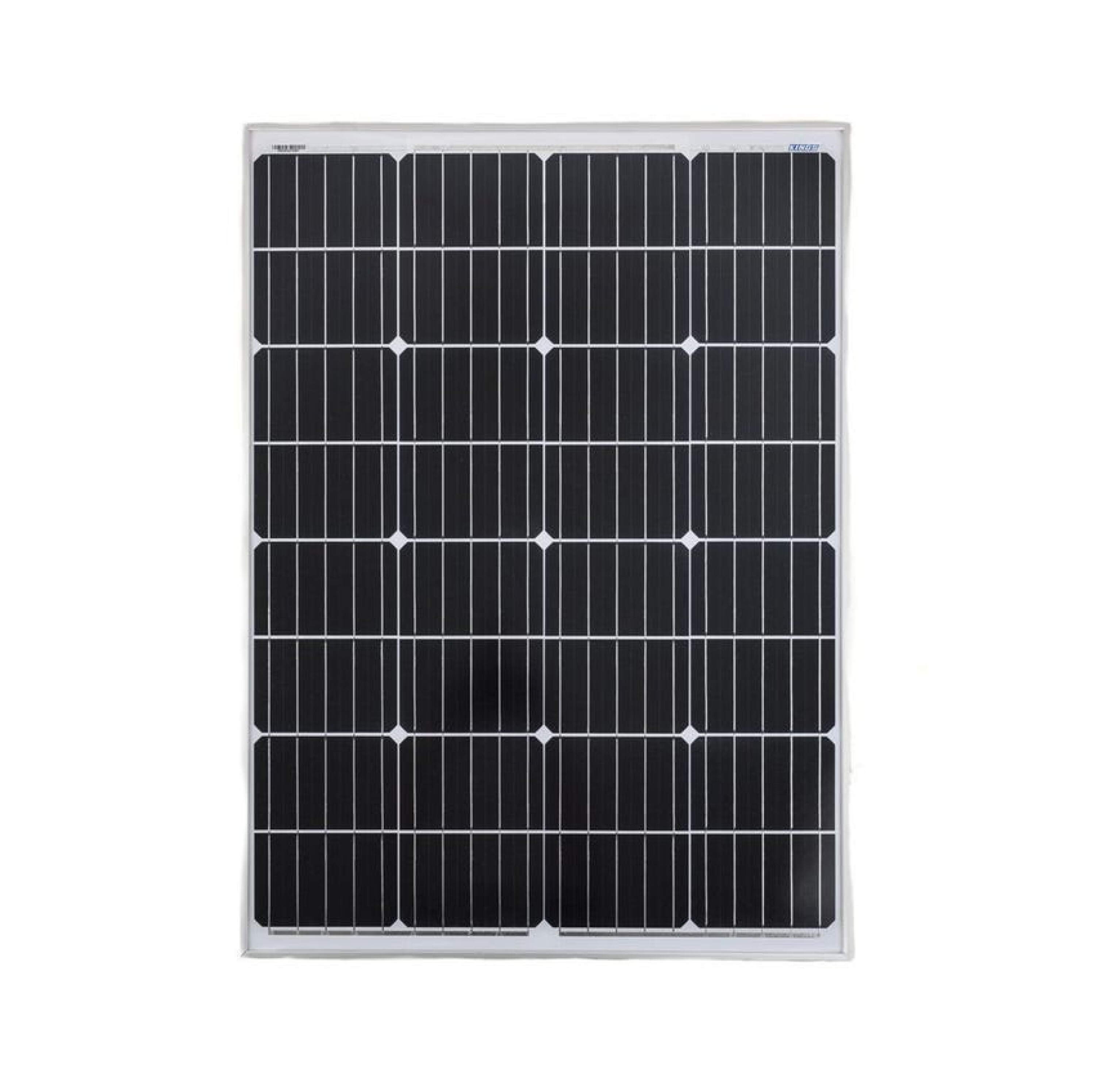
As the budget-friendly option in this group, this panel is cheap. However, with only a one-year warranty this would suit the occasional user rather than someone looking for a long-term option.
With a maximum power output of around 6 amps, this panel is on the lower side compared to the competition and real-world reviews suggest achieving this output is near impossible. If you are a regular tourer that relies on off-grid power via solar then this is probably not the panel for you. But if you’re the type of camper that does one trip a year and doesn’t want to spend big on something that may not get much use, then this panel may represent great value. As you would expect from a cheaper panel, no bypass diode means that shade will severely limit the output.
1
Power output
110W
Cell type
Class A Monocrystalline
Warranty
12 months
Weight
7.4kg
Pros
Cheap (price)
Class A cells
Short enough to be mounted sideways on most vehicle roofs
Cons
Cheap (build) and a little over ambitious with output claims
The gold standard. Redarc has been producing top of the line products for a number of years. Its solar panels, in particular, have an excellent reputation, but some might argue there is a badge ‘tax’ associated with this.
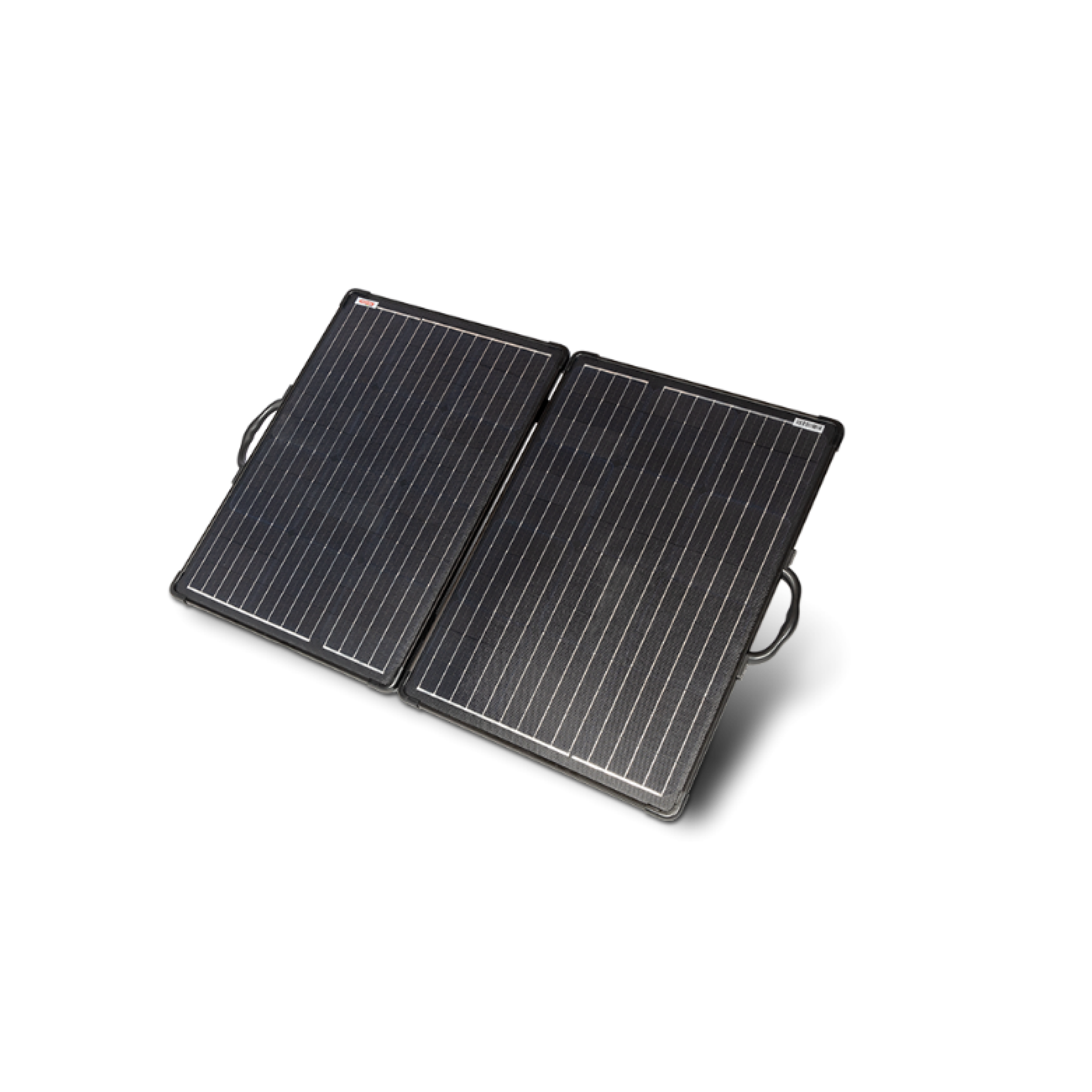
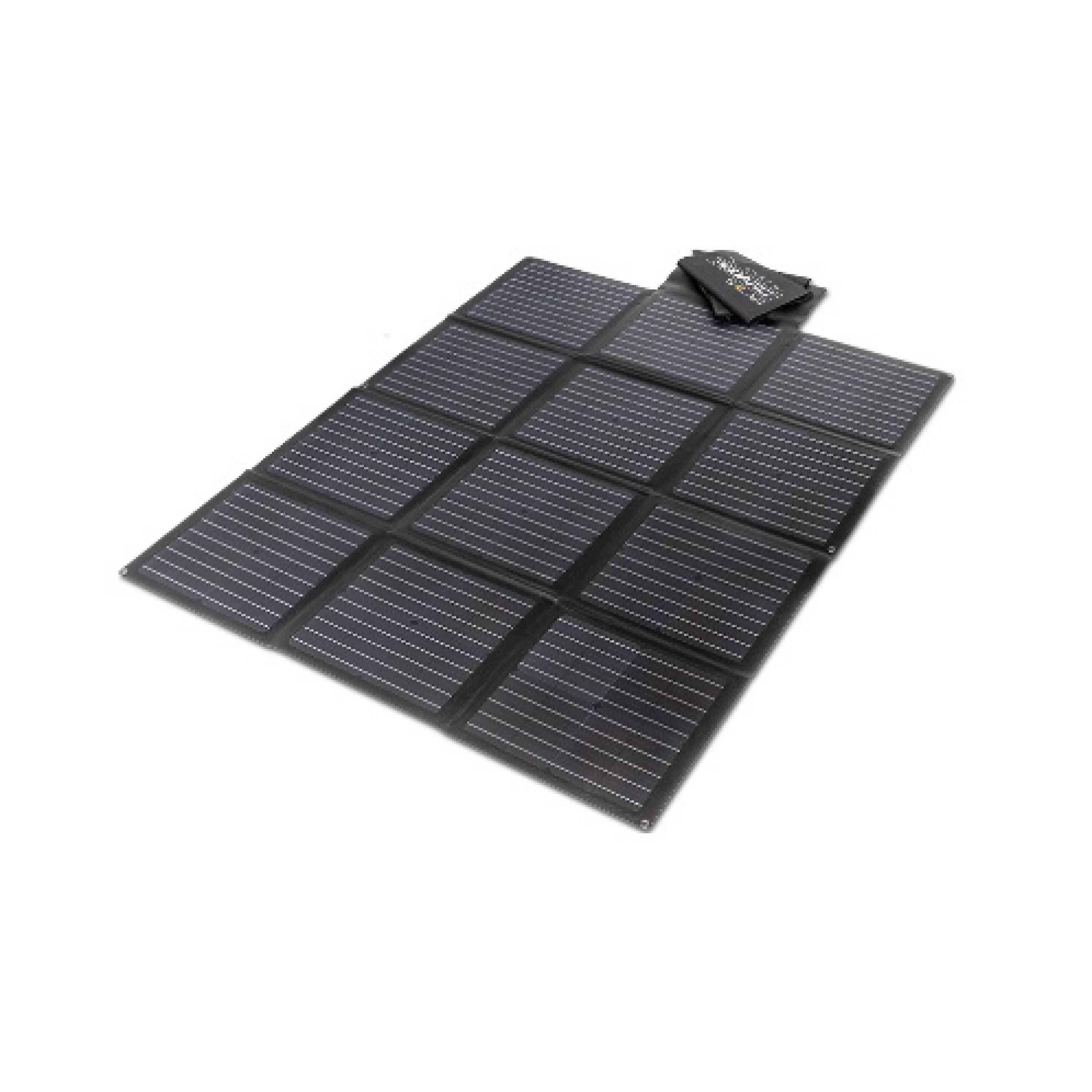
This panel comes with Anderson plugs already equipped, which makes it ready to plug in to a vehicle – a nice, simple, advantage over a lot of competitors. The panels fold up to a little over 500mm to fit in the average 4WD boot and includes a stand to allow it to be angled towards the sun when on the ground at camp. To make it tougher for touring, this product features an ETFE coating as opposed to glass. ETFE is more flexible than glass and can withstand higher temperatures. This also makes the panel very lightweight.
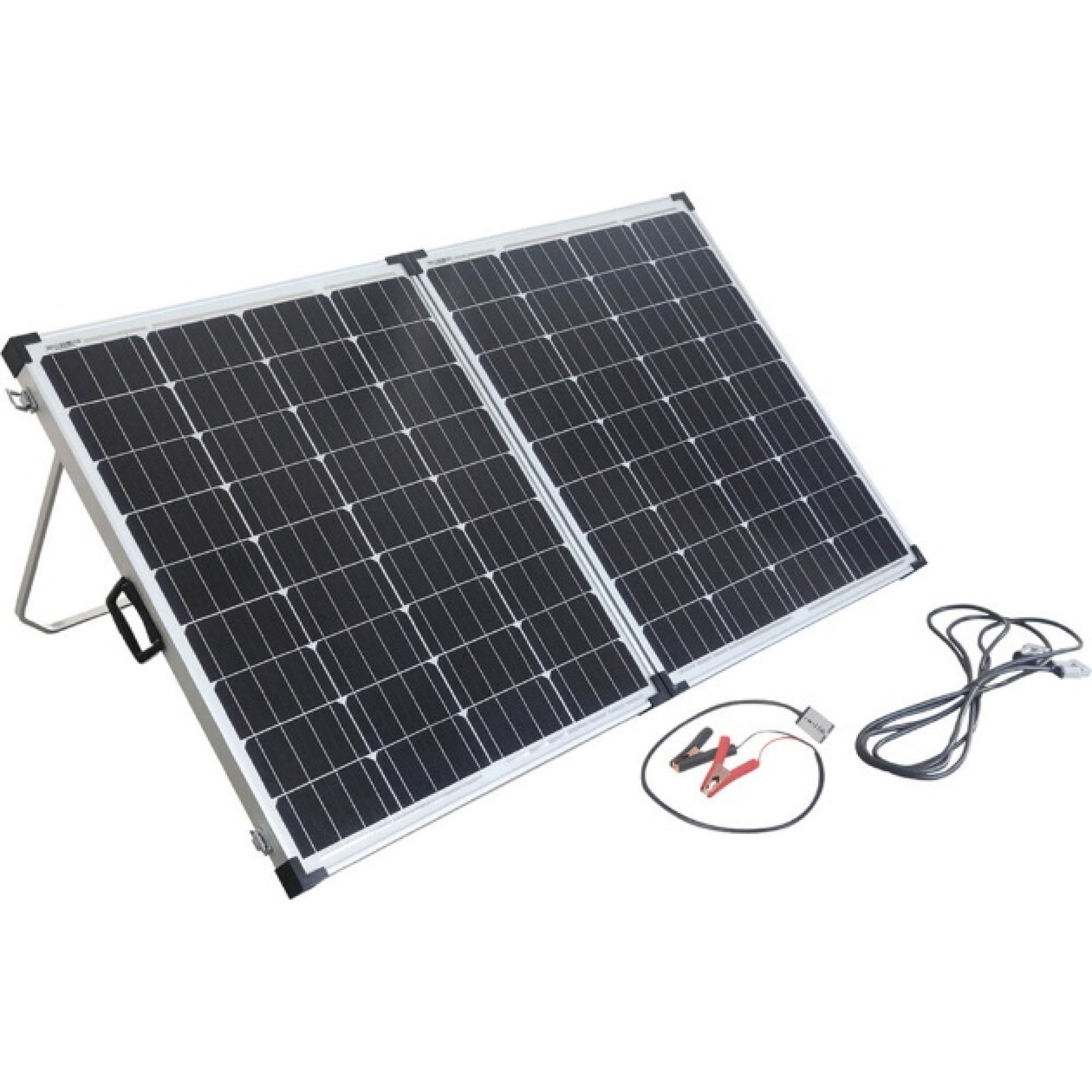
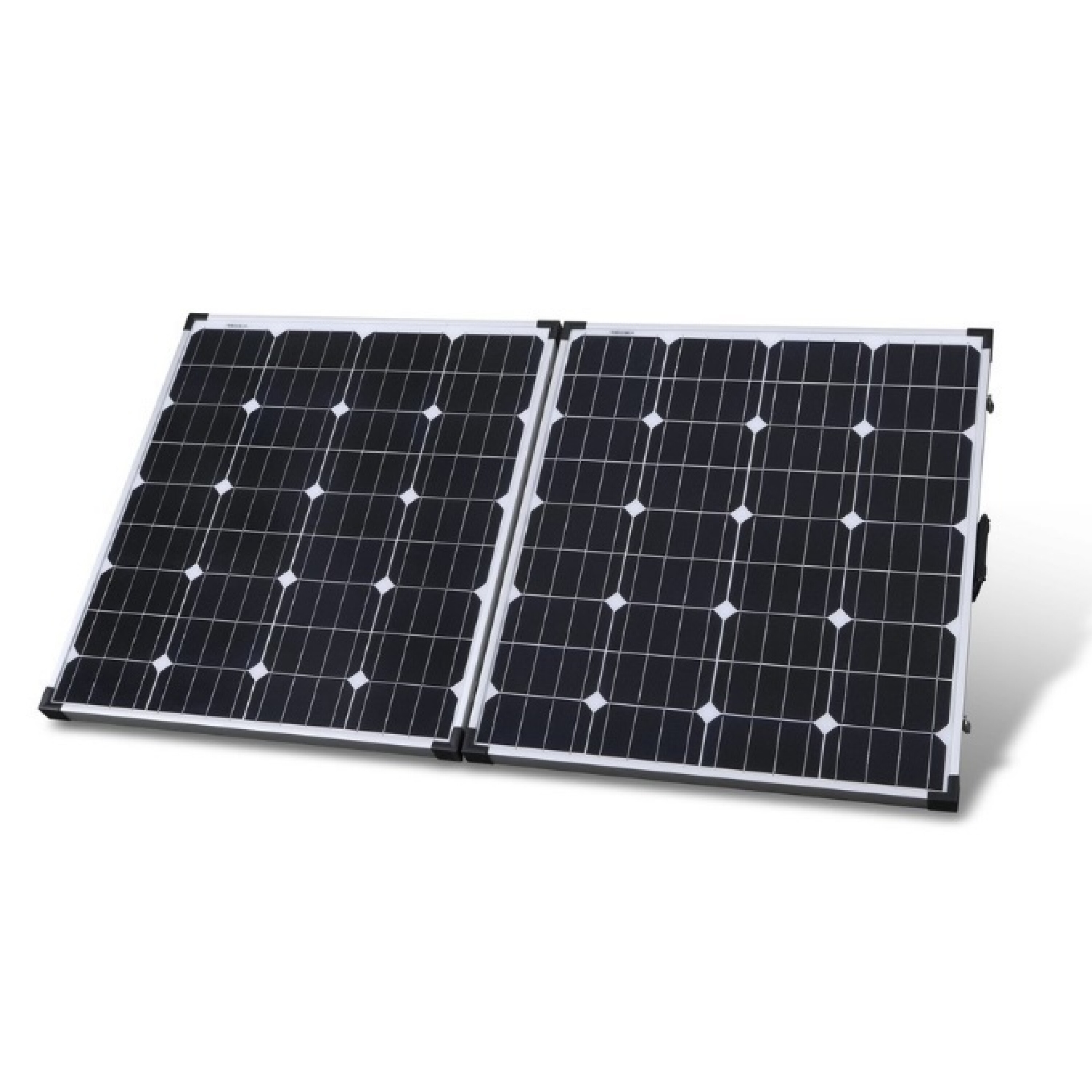
A budget-friendly option with a solid 160W output and pre-installed 5m cables and regulator, this panel comes ready to use right out of the box.
Inclusion of a 90cm long cable with alligator clips adds to the versatility and means this panel can be connected direct to a battery. With Class A monocrystalline cells, this panel outputs a genuine 160W or around 8.8 amps at a maximum. Users have reported it topping 10 amps in full sunlight. The panel includes an aluminium frame and dual stands to allow it to be angled towards the sun. A slightly larger folding size than a similar 120W unit means a little more space is required for transport.
1
Power output
160W
Cell type
Class A Monocrystalline
Warranty
12 months
Weight
10kg (approx.)
Pros
Good value
Regulator included
Anderson Plugs, alligator clamps and a long 5m lead pre-installed
Cons
Heavy compared to premium panels
The regulator may not be suitable for lithium batteries
Regulator mounted on the back of the panel means lifting the panel to see the read-out
This is a like-for-like competitor with the XTM unit that includes excellent versatility thanks to the same built-in regulator and included cables.
The biggest difference between the two is the excellent warranty offered by the Powertech unit. This panel also includes a solid aluminium frame and stands to allow it to be angled towards the sun. The big question with this panel is: How much extra is peace of mind worth?
1
Power output
160W
Cell type
Class A Monocrystalline
Warranty
5/25 years*
Weight
15.5kg (kit weight)
*This warranty covers the panels for defects in construction and manufacturing for a period of 5 years and warrants that the electrical power will remain above 80% for 25 years.
Pros
Class-leading warranty
Regulator included
Anderson Plugs, alligator clamps and a long 5m lead pre-installed
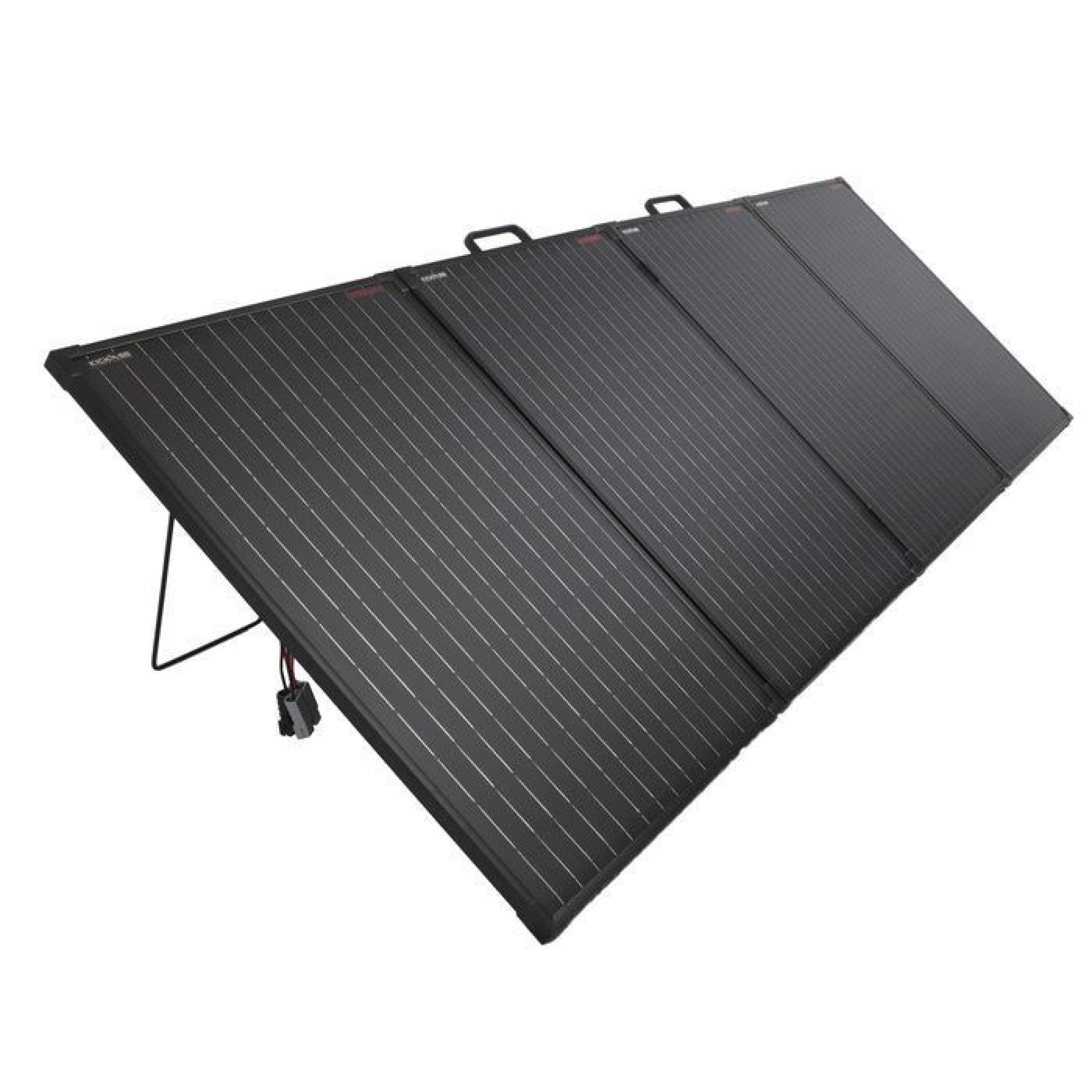
The 200W package folds up to a very similar size to competitors’ 160W panels.
So, if you’re power hungry without a huge amount of extra space then this thin offering from Kickass is well-worth considering. This panel comes with pre-installed Anderson plugs and a regulator. The kit includes an additional Anderson-to-Anderson extension lead and a cable with alligator clamps meaning it comes ready to use right out of the box.
1
Power output
200W
Cell type
Class A Monocrystalline
Warranty
3 years
Weight
11.85kg
Pros
Thin design means this is one of the best closed-size to power ratios available
Weatherproof including hail-resistance
Full ready-to-use kit including extension cables and regulator
Cons
Pricey compared to 160W offerings
Magnets that hold the panels together when folded have been reported to be too weak
Cheap PWM regulator should really be a MPPT for this price
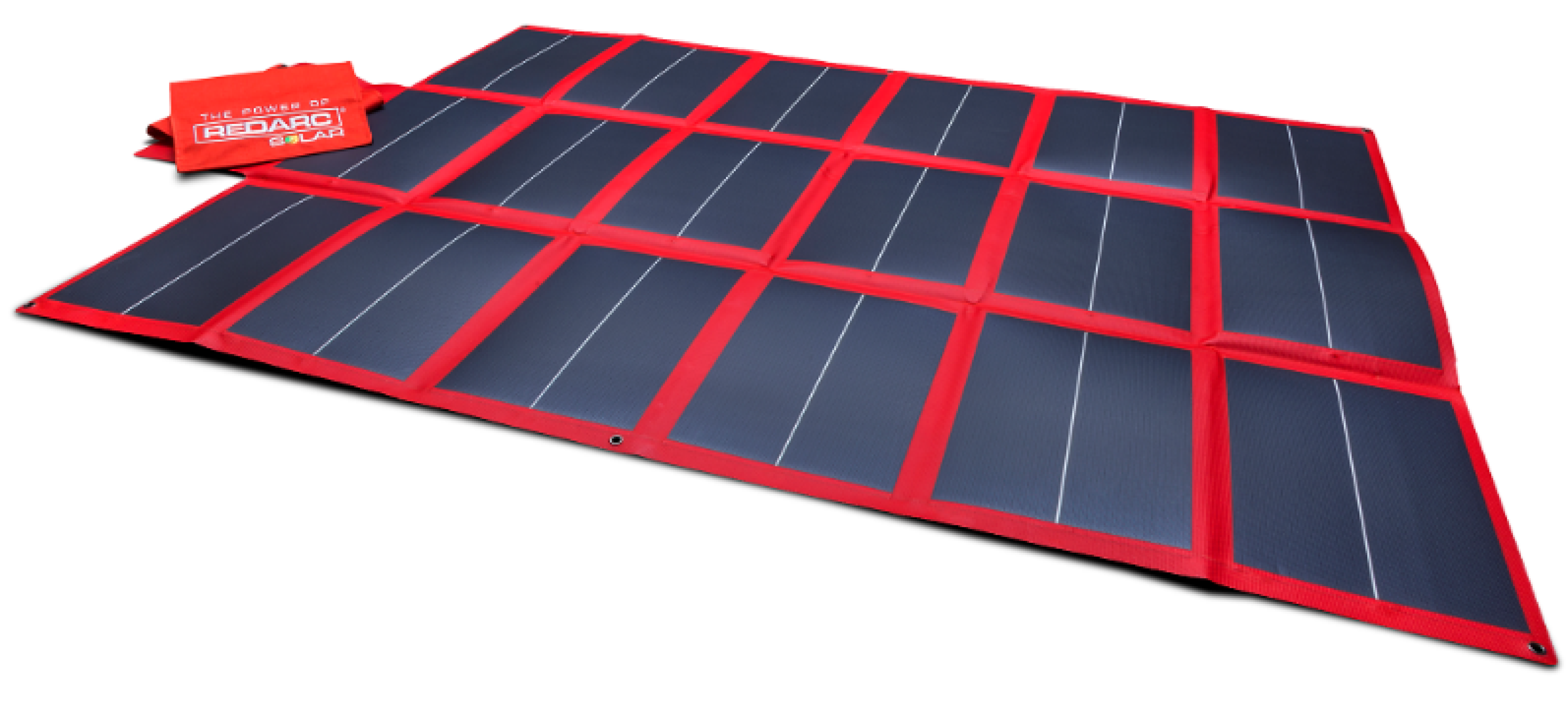
This Redarc unit is a premium folding solar panel at a premium price.
This top-quality unit features bypass diodes that connect each solar window, which effectively means if one window is blocked or shaded, then the remainder of the panel will still work. The panel is constructed with heavy-duty canvas and an anti-reflective, is scratch resistant with ETFE coating, which makes it tough and light. The Redarc panel comes pre-installed with Anderson plug connections but does not include a regulator.
1
Power output
240W
Cell type
Class A Monocrystalline
Warranty
2/25 years*
Weight
7kg
*This warranty covers the panels for defects in construction and manufacturing for a period of 2 or 5 years and warrants that the electrical power will remain above 80% for 25 years.
Pros
Outstanding power output in a small and lightweight package
Build quality
Bypass diodes that mean if one window is blocked the other 11 will work as normal
Cons
The price
For the money, a ready-to-use kit should be included
If the thought of spending more than $1000 on a solar blanket gives you panic attacks, then considering a KT blanket might be the way to go.
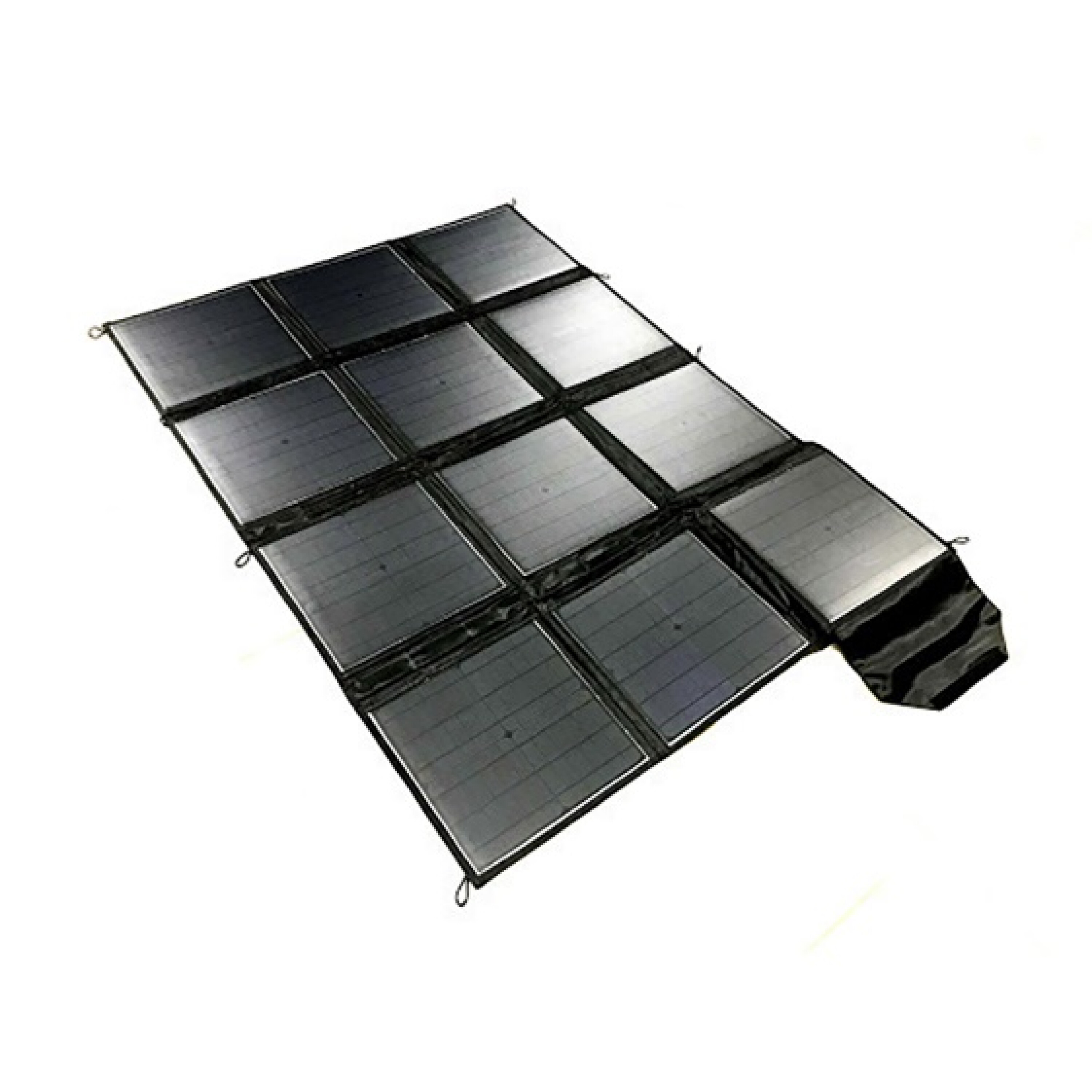
The unit comes with a confidence-inducing two-year warranty on the build and 25 years on the output. It also comes as a complete kit with regulator, cables etc included, so there’s nothing more to spend and the blanket is ready to be used right out of the box. This blanket includes a 12-window design for flexibility and includes a regulator that will charge all kinds of batteries, including lithium. The regulator also includes staged charging and is IP67 waterproof so a rainy day won’t hurt it. The open size of this blanket is quite large for a 200W unit indicates that the 200W output is very achievable and realistic.
1
Power output
200W
Cell type
Class A Monocrystalline
Warranty
2/25 years*
Weight
7.5kg
*This warranty covers the panels for defects in construction and manufacturing for a period of 2 or 5 years and warrants that the electrical power will remain above 80% for 25 years.
Pros
Good value
Warranty comparable to far more expensive blankets
Realistic output claims
Cons
Lighter grade nylon material compared to canvas of premium units
Heavier than premium units
The regulator is very good but an MPPT unit would be a welcome inclusion
Amorphous panels are designed to capture the full spectrum of light compared to conventional monocrystalline and polycrystalline solar cells. This means they work better in shade and overcast conditions.
Featuring the same heavy-duty canvas and ETFE coating as the monocrystalline panels, the amorphous version is every bit as lightweight and tough. With the better low-light performance, this panel would suit those that spend time camped in partial shade or in areas that are frequently cloudy (Tasmanians, I’m talking to you). Amorphous cells also cope with heat better, so would be a good option for those that spend time in the tropics.
1
Power output
112W
Cell type
Amorphous
Warranty
2/5 years
Weight
4.8kg
Pros
Unbeatable low-light performance
Build quality
Bypass diodes that mean if one windows is blocked the other 11 will work as normal
Cons
Pricey for output
For the price, a ready-to-use kit should be included
Output versus size is not as high as monocrystalline panels
We’re consuming more power when out and about than ever before. Fridges have been the norm for a while now but, with AGM and lithium batteries, four-wheel drivers have once again pushed the limits. Things like induction cookers are becoming more common; plus, we use our batteries to charge all kinds of electronics such as mobile phones, GPS units, camera gear and camp lighting.
This is where solar comes in. Portable solar panels come in all shapes and sizes: semi-portable/fixed panels, which work best bolted on to vehicles; folding rigid panels, which are super easy to set-up and pack-down; and solar blankets, which are lightweight and easy to transport.
Solar panels can be vital if you spend long periods camped at one spot without moving on, but buying a solar panel can be risky if you’re not sure what you’re looking at.
Cell construction
The most common cell construction you will come across is monocrystalline and, to a lesser extent, polycrystalline, which is becoming less common. We won’t get in to the technical aspects too much, but will note that polycrystalline is the cheaper of the two. Both types begin to lose output as temperature increases above 25°C, but monocrystalline cells lose less than polycrystalline cells. For this reason, monocrystalline cells are the more efficient of the two.
Monocrystalline cells are what you will find in the vast majority of portable panels on sale in Australia. These are great, cost-effective little cells, but shade, cloud and heat will severely limit their output. If you want to test this, try pouring some cool (not cold, as you may crack the glass) water over a solar panel on a hot day and watch the output increase briefly. Good quality monocrystalline cells will satisfy the vast majority of users.
‘Good quality’ is typically evident through the grade of the cell. Grade A cells are free of visible imperfections or defects; Grade B cells may have some slight defects but the power output will be the same. You will need to rely on manufacturers here because spotting those imperfections will be near enough to impossible for the layman.
If monocrystalline isn’t cutting it for you due to shade (cloud) or heat issues, the solution may be amorphous cell technology. These cells maintain a higher power output through overcast conditions and in high heat. These are far more expensive (up to double the cost of monocrystalline cells) but if you spend a lot of time in the tropical north where temperatures are regularly over 25°C or in the Apple Isle down south where it’s regularly overcast, then amorphous cells might be the only way to get reliable solar.
Design for purpose
When looking at a solar panel (be it rigid, folding or a blanket) the most important thing is whether it works for your needs and fits in with your set-up. If you have a lot of unused roof space then a rigid panel might suit you, but if you only have a tidy little space beside the fridge then a folding panel might work. Whichever design you go for, the panel needs to be built to work.
A rigid panel should be tough enough to resist hail and can be forgiven for not including a regulator and cables as it assumes a vehicle will be set up with those things. A folding panel should be light enough to transport and move around, come with functional stands and include a regulator and cables. Solar blankets should pack up small, be flexible and ideally should include a regulator and cables out of the box.
Output is obviously the most important thing to factor when determining which panel is for you. As a general rule of thumb, divide the quoted output in Watts by 18 to estimate the amps of power a panel will develop. (e.g. 200W panel would expect to develop around 11 amps of charging power at peak). Assess your power needs and remember this is a peak output not average.
Versatility
Fixed units are the least versatile of the group and can be used as portable panels in a pinch but are not designed for it. Folding panels and solar blankets are designed to be used anywhere, anytime. Units that come with regulators and cables genuinely meet the anywhere, anytime brief. Some top-of-the-line units lack everything required to be truly versatile but are better constructed and would be expected to last in the elements for longer than budget-friendly units.
Price and value
Hunt around eBay and you will find a bunch of very cheap panels. A low price is great and all, but with something like solar what we are really looking for is value. Many of the cheaper panels will underperform and not actually reach their quoted power output. In addition, cheaper panels are often poorly made and some time in the harsh Australian sun will see them quickly deteriorate.
For this reason, we’ve excluded eBay ‘specials’ from unknown suppliers and generally only included reputable manufacturers. We’ve also excluded anything below 100W, as less than this is simply not enough to keep up with even running a fridge on a hot day.
Value-adding inclusions like regulators and cables are highly rated here. A solid warranty ensures peace of mind and adds to that value.
How to avoid being ripped off
Unfortunately, this industry is rife with sellers claiming unrealistic power outputs from panels that simply cannot ever achieve it. The simplest way to avoid buying a claimed 200W panel that only outputs 100W is to check the size of the panel and compare it to the size of a reputable manufacturer’s panel. A panel that has half the area of a comparable reputable panel cannot output the same power. Monocrystalline panels should have a cell efficiency of around 15 to 24 per cent and any massive variation outside of this would be questionable.
Based on a 200W panel size of 1110mm x 992mm, the area required should roughly be 0.0055m2 per Watt. Use the following size guide as a reference when shopping. Any panel with a significantly lower area and you’re probably looking at a dodgy unit.
100W panel = 0.55m2
120W panel = 0.66m2
150W panel = 0.825m2
160W panel = 0.88m2
200W panel = 1.1m2
250W panel = 1.375m2
What to look for
Searching for solar panels can be overwhelming, but if you consider your power needs and the type of functionality you require, it begins to become clearer. Consider the level of portability you require and that will quickly decide whether you need a rigid, folding or portable panel.
When considering your usage, consider whether something ready to go out of the box is for you or maybe whether your existing top-of-the-line DC-DC charger accepts solar. Look at output and compare it to the size guide above. Ensure you will have enough output to power all of your gear (and don’t forget the toys). Ensure the panel you are looking at actually has a chance of meeting the quoted power output, and remember the quoted output is usually peak power. Less than optimal conditions will reduce this output.
The type of cells can be very important to people who spend a lot of time in extreme conditions. Amorphous may seem expensive, but if they work where others won’t then they may represent great value.
After-sales support
A well-known and respected brand with a good warranty and manufacturer support should provide confidence during the purchase process and many happy years of portable power. Try to cheap out and chances are you will be buying again in the near future. Be sure to check what the warranty covers, as many will have separate warranties on the build versus the power output.
4X4 Australia has been reviewing four-wheel drive vehicles, aftermarket products and camping gear for more than 40 years. When looking for the best swags in Australia there are some things that are essential to ensure you sleep soundly under the stars.
When we compared each of the swags in the list with hundreds out there we looked at the size, weight, durability and price. We also searched for additional features that make these swags stand out from the rest.
We looked at hundreds of user reviews and drew on our own experience sleeping in swags to make sure our recommendations are for the best on the market.
Disclosure: When you buy through our links, we may earn a commission. We also include products that we do not earn a commission from.
Sales figures show us each month what the most popular used cars are for Australian buyers, but popular doesn’t also mean best.
When it comes to the wildly popular ute segment, you should make sure the three models below are high on your list of cars to consider.
While the Triton definitely isn’t the last word in refinement, space, or comfort, it’s propelled as much by its strong value proposition as it is by its rugged mechanicals.
And there’s also the appeal of its conditional 10-year warranty, which – provided the previous owner had it serviced within the Mitsubishi dealer network – should leave you with enough warranty coverage to last the rest of the 2020s if you don’t breach the 200,000km distance cap. Yet even if servicing was handled elsewhere, the Triton still gets seven years and 150,000km of warranty regardless. Not bad at all.
Compared to its contemporaries, the MR Triton is a little on the small side in terms of footprint and load-carrying potential (though not by much). But a workman-spec GLX or GLX+ 4×4 auto can be had in the $30-36K region, which represents about a $10K discount on what they cost new. If you’re looking for a ute to last the long term, a fully warranted Triton is tough to beat.
Nissan’s first crack at the Warrior formula resulted in a rig that heaped a sizeable measure of off-road mods on top of a range-topping Navara – and it was all covered under warranty too. Developed by performance-car specialist engineering company Premcar, it worked like a dream when steered off the blacktop. Wanted a Ranger Raptor but didn’t have the budget? The Navara N-Trek Warrior was an affordable alternative.
Now, with its facelifted (but mechanically quite similar) replacement – the Navara Pro-4X Warrior – on sale, the N-Trek Warrior is a conspicuous bargain for those looking to take their utes somewhere muddy or dusty.
They tend to be priced in the low-$40K region, but higher-mileage examples can be found in the high-$30K realm. Considering a Toyota HiLux Rugged X or Ford Ranger Raptor of comparable age trades for about $10-15K more than a Navara N-Trek Warrior, that’s a cracking deal for something that’s outback-ready straight out of the box.
We love the D-MAX. It seems you do as well, given sales figures of Isuzu’s evergreen ute. The big draw is this vehicle’s proven reliability and both the affordability and availability of spare parts.
The four-cylinder 3.0-litre turbodiesel engine is mated to a bulletproof Aisin five-speed auto ‘box as seen in some old Prado models, so you know it’s not about to let you down.
While the D-MAX’s billygoating abilities may not be quite as athletic as some of its more modern rivals, it’ll mop up corrugated development roads all day without complaint. The interiors are workmanlike, but the plus side is that they’re easy to clean and not a lot goes wrong.
The facelifted D-MAX II LS-U from 2016 through to 2019 can be yours from a good deal less than $30,000, even with fairly modest mileages on the clock.
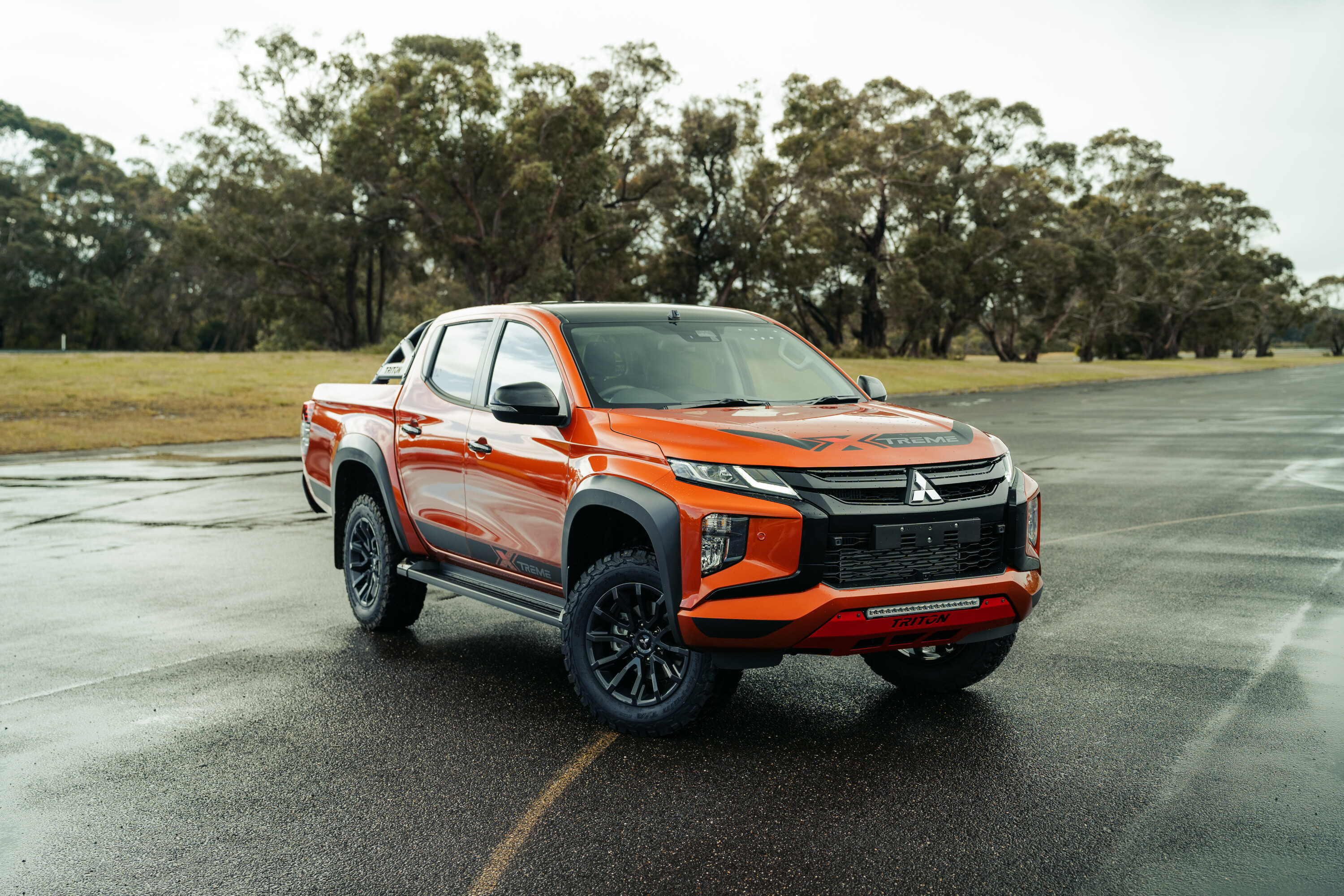
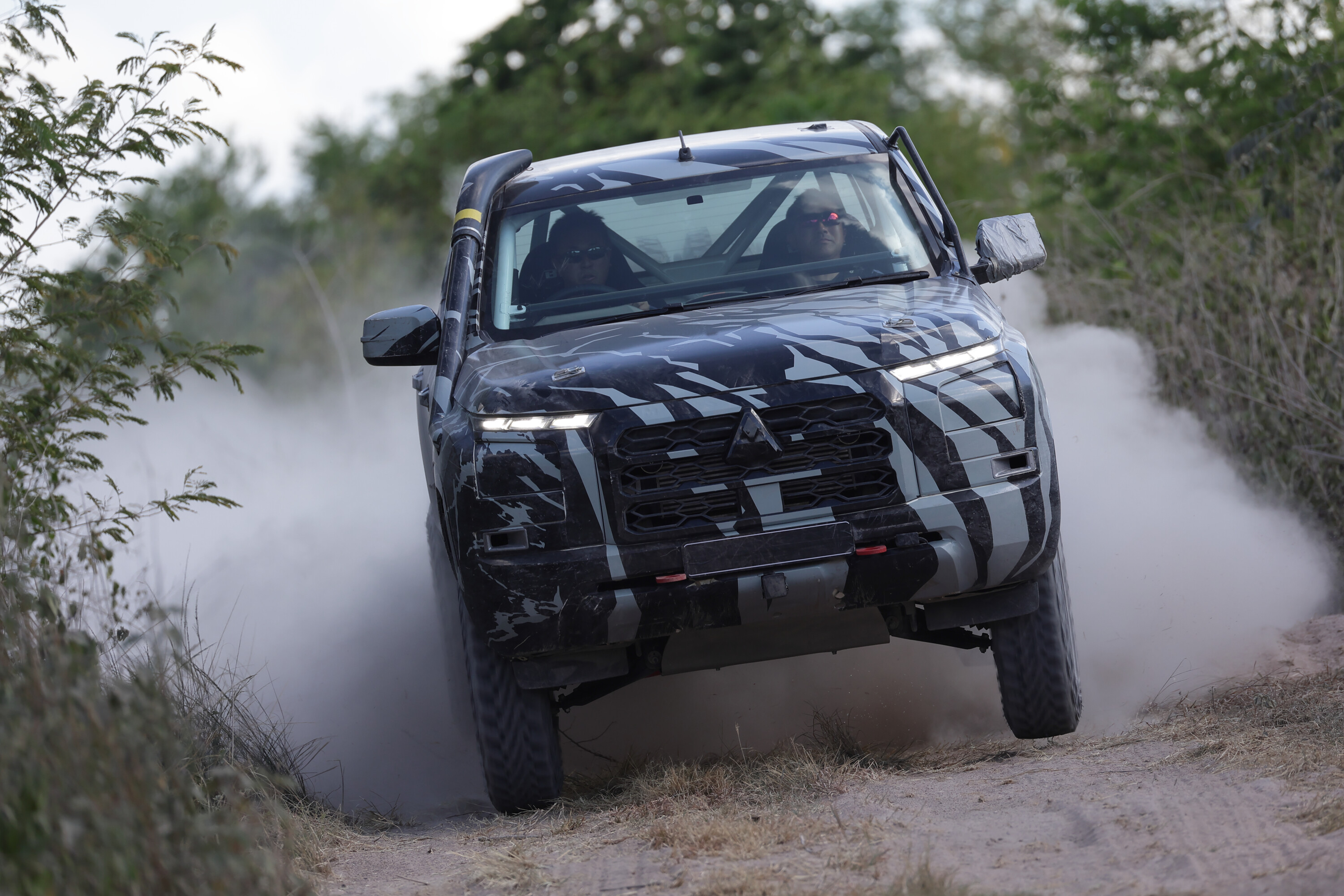
The fifth-generation Mitsubishi Triton was left without a factory-sanctioned halo variant until the very end when Australian second-stage manufacturer Walkinshaw launched the worked-over Triton Xtreme as a Nissan Navara Warrior rival.
It was a short 18 months from sketch to a limited 500-strong run, and the capability of the product in such a quick turnaround impressed Triton chief product specialist Yoshiki Masuda.
When asked if there’s a works Triton above GSR in the pipeline to rival the likes of the HiLux GR Sport, Ranger Wildtrak X, and Nissan’s Warrior, general manager marketing & product strategy Oliver Mann noted how the Walkinshaw relationship had shown Mitsubishi what was possible in our market.
“Global corporations have to make global decisions”
“We have looked at the vehicle and driven the vehicle, and we’ve been impressed with what [Walkinshaw] has done.
“It’s probably another one of those exploratory projects that explores where the pick-up proposition can go as a performance variant”, he told 4×4 Australia.
Masuda-san said: “Of course, you know, we want to have a more high-end model hero car and we want to expand in that direction”, but that currently, the launch line-up is the brand’s focus, followed by expanded single- and club-cab offerings.
“[Triton Xtreme] helped, I think, inform what the market opportunity might look like from an Australian perspective but obviously, global corporations have to make global decisions”, noted Mann.
1
Similar to Premcar’s targets with the Navara Warrior, Walkinshaw’s goal with Triton Xtreme goal was to craft a reliable, warranty-backed ute with upgrades that enhanced both off- and on-road capability.
With the majorly enhanced sixth-gen Triton – its much stronger frame, 50mm wider track and 130mm longer wheelbase – Mitsubishi has an even sturdier base to work from, and Masuda-san reckons the Ralliart in-house tuning arm can make a tougher ute.
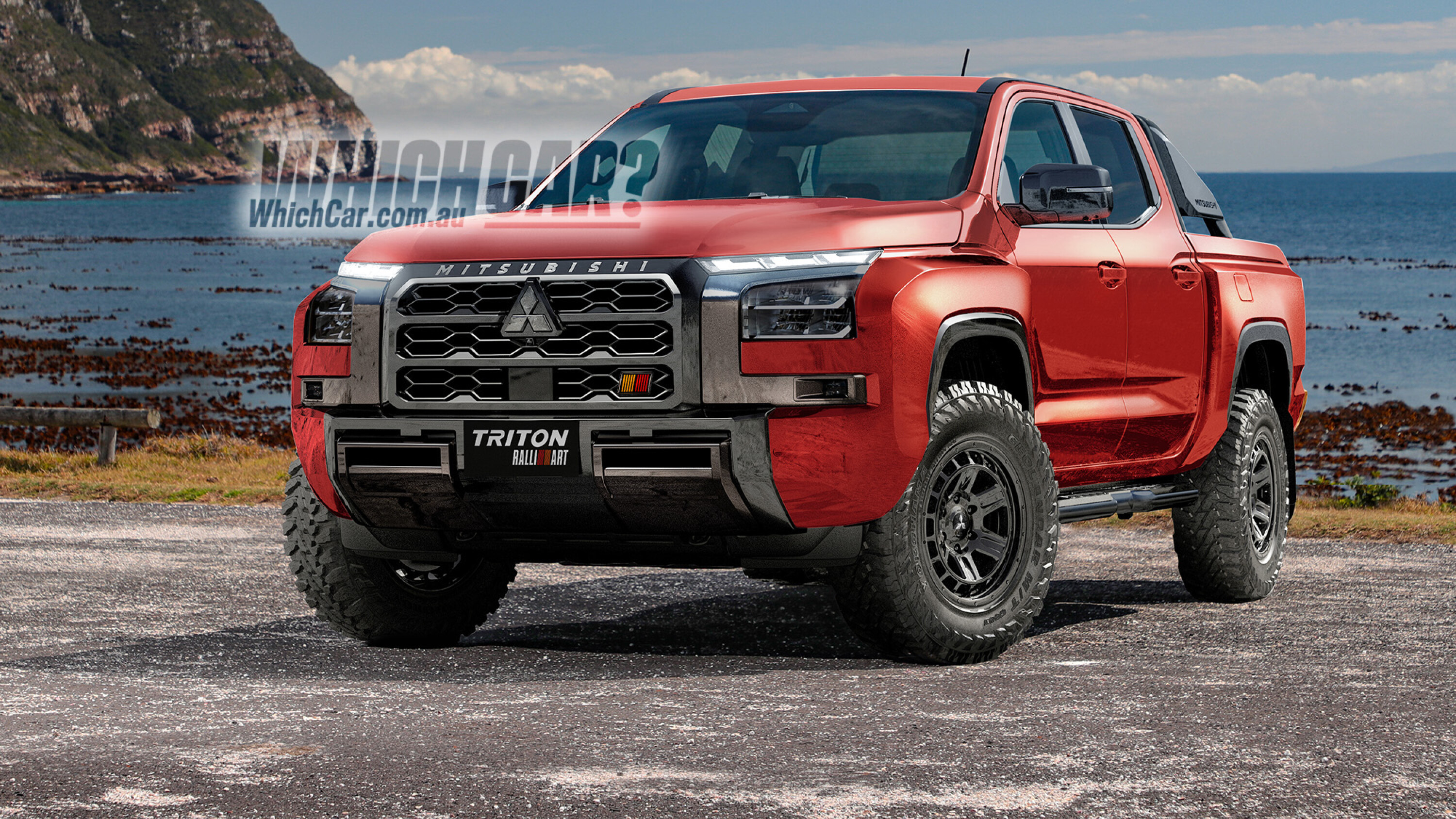
Expect similar upgrades to wheels and tyres for a Ralliart version; a suspension lift is a given. Extra underbody protection and visual enhancements are sure to play a part, too. We’ve already commissioned a speculative Triton Ralliart render to give you an idea of what to expect.
1
Mitsubishi developed the Triton’s frame with electrification front of mind, and is currently weighing up whether battery power or a plug-in hybrid powertrain (either petrol- or diesel-based) will best suit the ute application.
We also know Ralliart has been playing with the idea of performance-oriented plug-in hybrid tech, hinting at a tri-motor Outlander Ralliart halo concept in 2022. It’s possible this technology could feature in a future hi-po Triton – electric motors are famously not short on grunt, and a PHEV Triton could give Mitsubishi a true Ranger Raptor rival.
There’s another segment of dual cab buyers Mitsubishi sees potential in, though, those more interested in on-road presence, cabin presentation, and towing. The proliferation of older couples looking to explore Australia has seen the rise of plush specs including the $76,990 (before on-road costs) Ford Ranger Platinum.
Featuring 20-inch alloy wheels, quilted Nappa leather upholstery, heating and ventilation for the front seats, wood trim, brand-name stereo and more, the flagship Ford’s spec sheet reads more Mercedes than Mitsubishi.
The new Triton is capable of towing up to 3.5 tonnes (braked) and promises a more secure on-road drive with Australian-tuned steering bringing it closer to a large SUV than ever, so perhaps the luxe route is the one down which Mitsubishi should go.
Regardless of whether luxury or capability is where the Triton’s future variants will go, the team was not discussing details of a potential Ralliart or other halo. However, Masuda-san enthusiastically told 4×4 Australia that a ‘dream’ Triton is “really high up on my to-do list.”
Maintaining the correct tyre pressures on your 4WD can be a time-consuming process. Stopping to air down, then stopping again to air up takes time and effort.
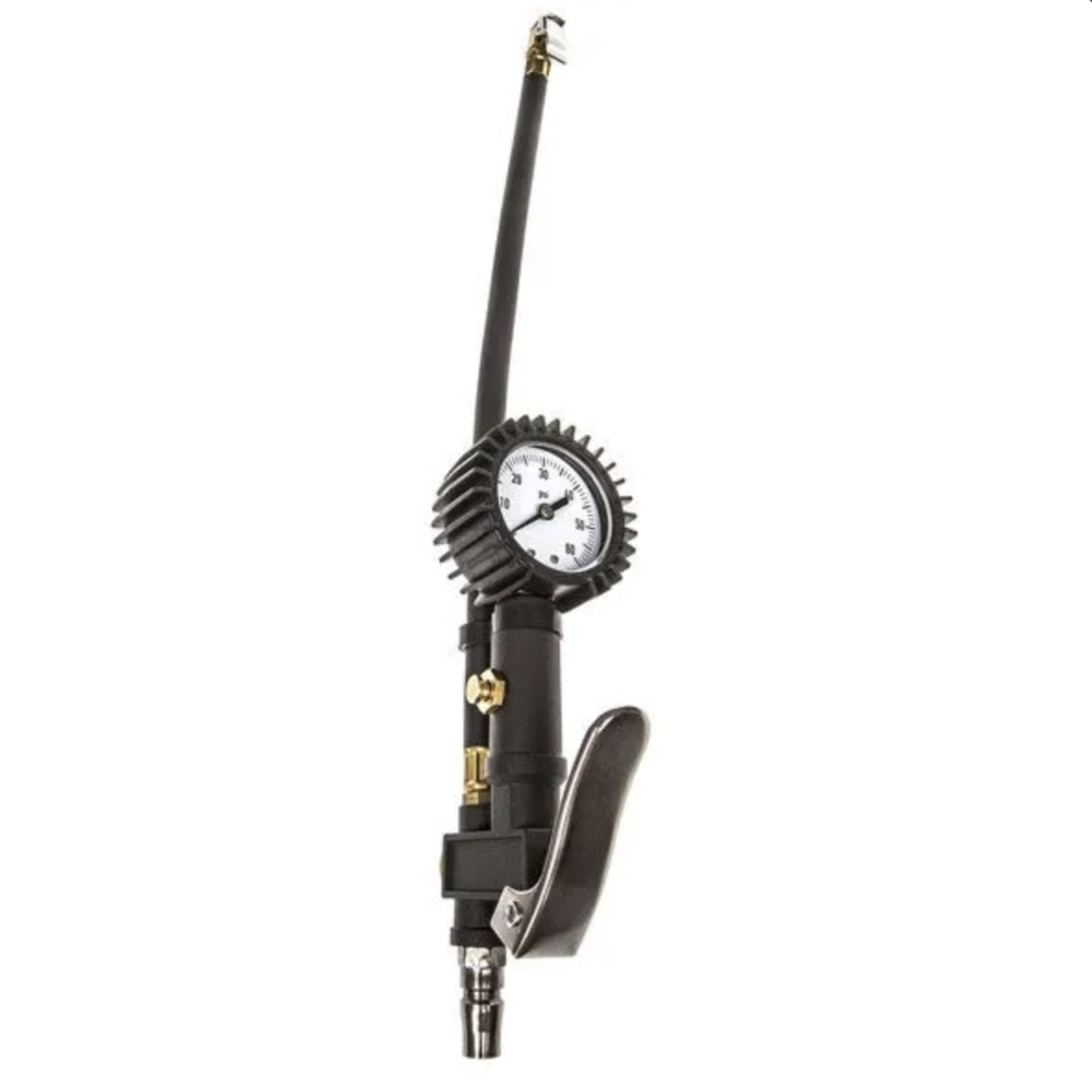
It’s tempting to either not let your tyres down off-road or to not re-inflate them when you know you should. Tyre deflators/inflators are designed to get the job done quickly. This way, you can look after those expensive pieces of rubber without spending half your life holding onto the end of an air compressor hose. And instead of one bit of gear to deflate your tyres and another to pump them up again, tyre deflators/inflators allow you to do both. That means less gear to carry with you and the convenience of one tool for both jobs.
You’ll find plenty of devices designed to either inflate or deflate your tyres. However, we’ve found a few that’ll do both. They range from cheap and simple to advanced electronically controlled systems. We’ve looked at both types and some in between, so you should find a tyre inflator/deflator here to suit your budget.
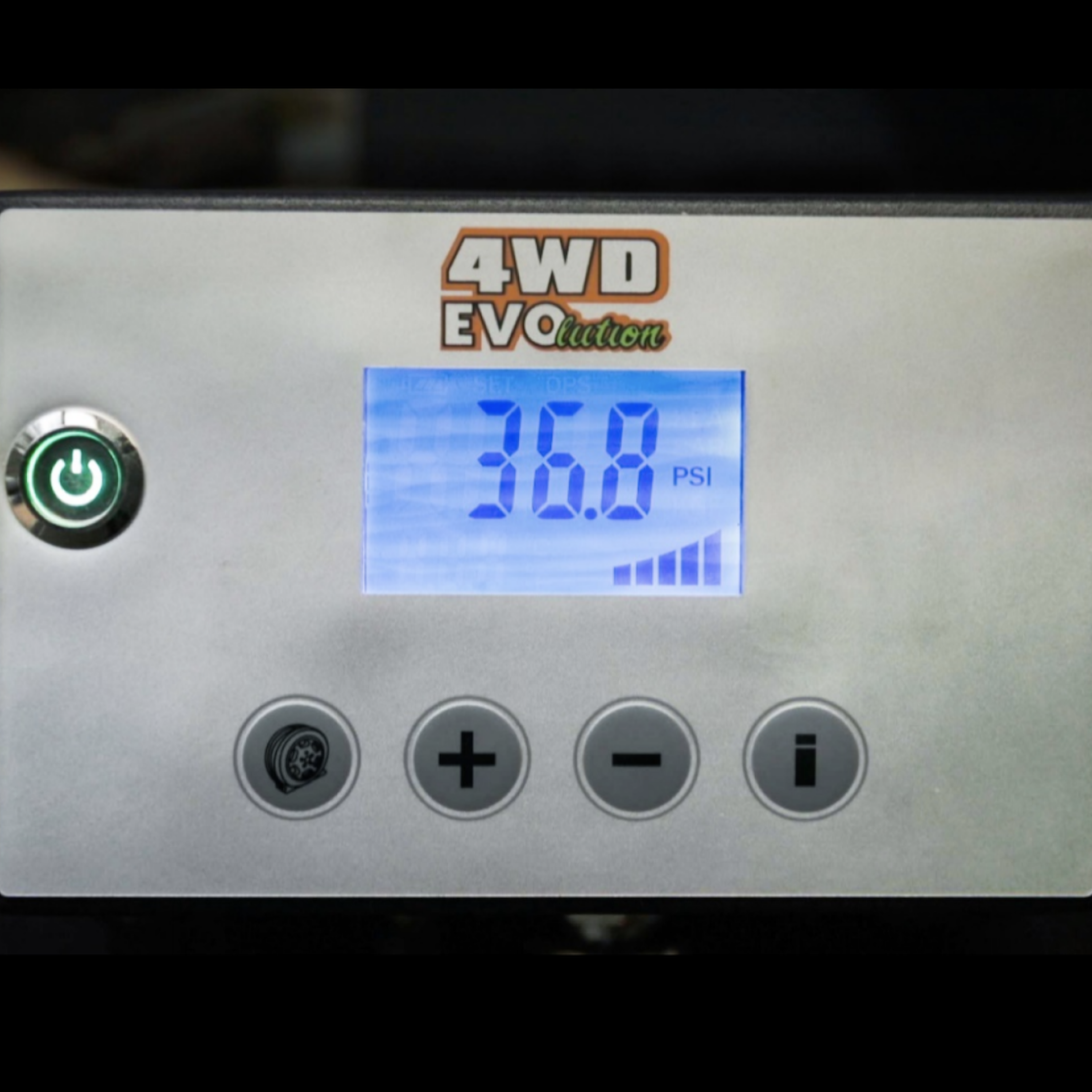
The AutoFlate system automatically adjusts your tyres to a pre-set pressure, and it works exactly like the automatic tyre inflation systems at service stations.
Simply connect the air hose to a tyre, set the pressure on the digital controller, press Start then stand back and wait. AutoFlate beeps once the tyre pressure reaches the pre-set level and shuts off the air supply. The “basic” AutoFlate system deflates or inflates one tyre at a time. However, you can buy add-on kits to do two or even four tyres at once. Also available as a portable unit.
1
Maximum pressure
150psi (1050kPa)
Max number of tyres
Four at once
Warranty
12 months
Pros
Adjusts pressures automatically
150psi maximum pressure
Add-on kits to deflate/inflate up to four tyres at once
Cons
Pricey
A lot of hoses
No faster than using a compressor to inflate individual tyres
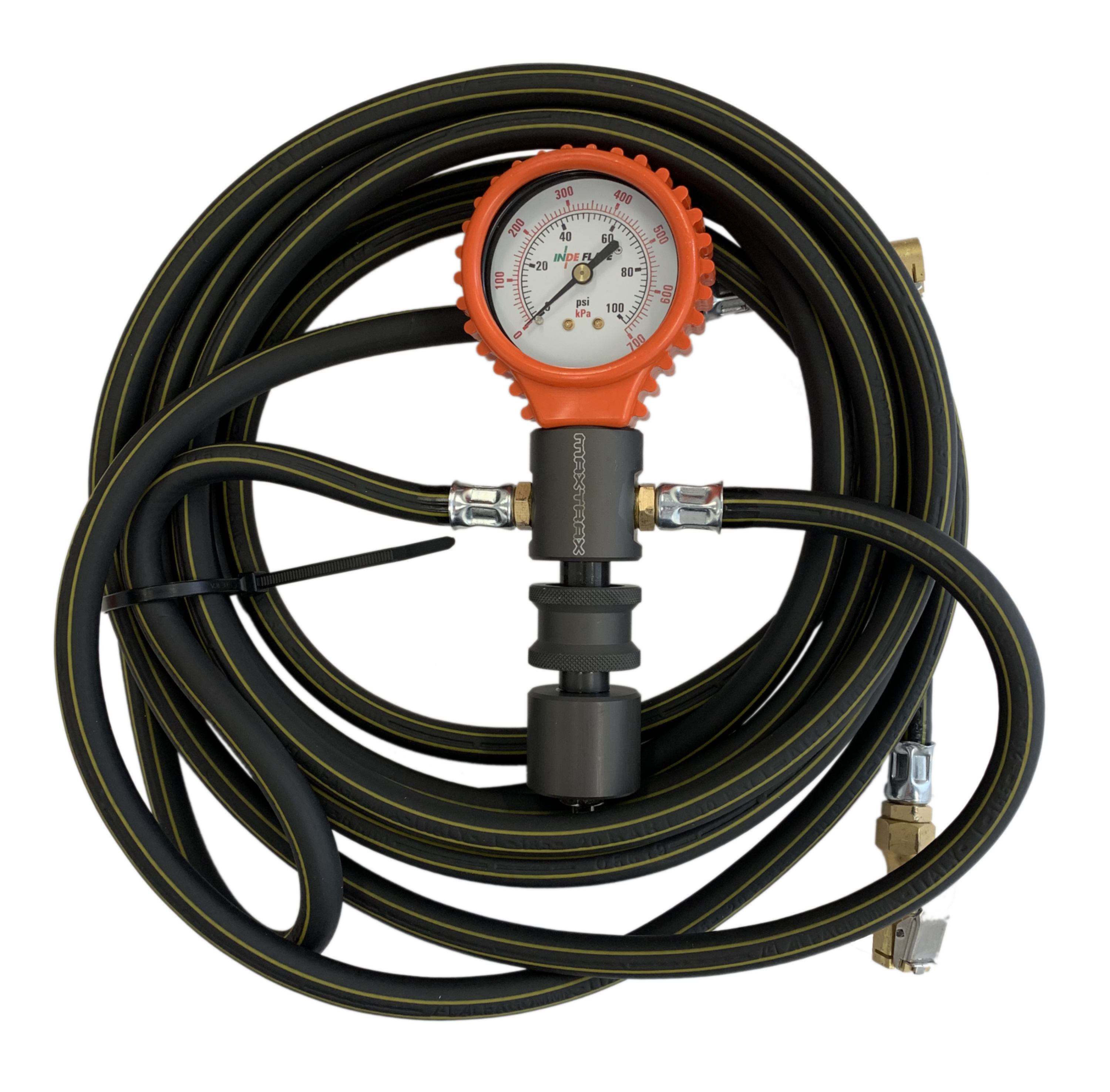
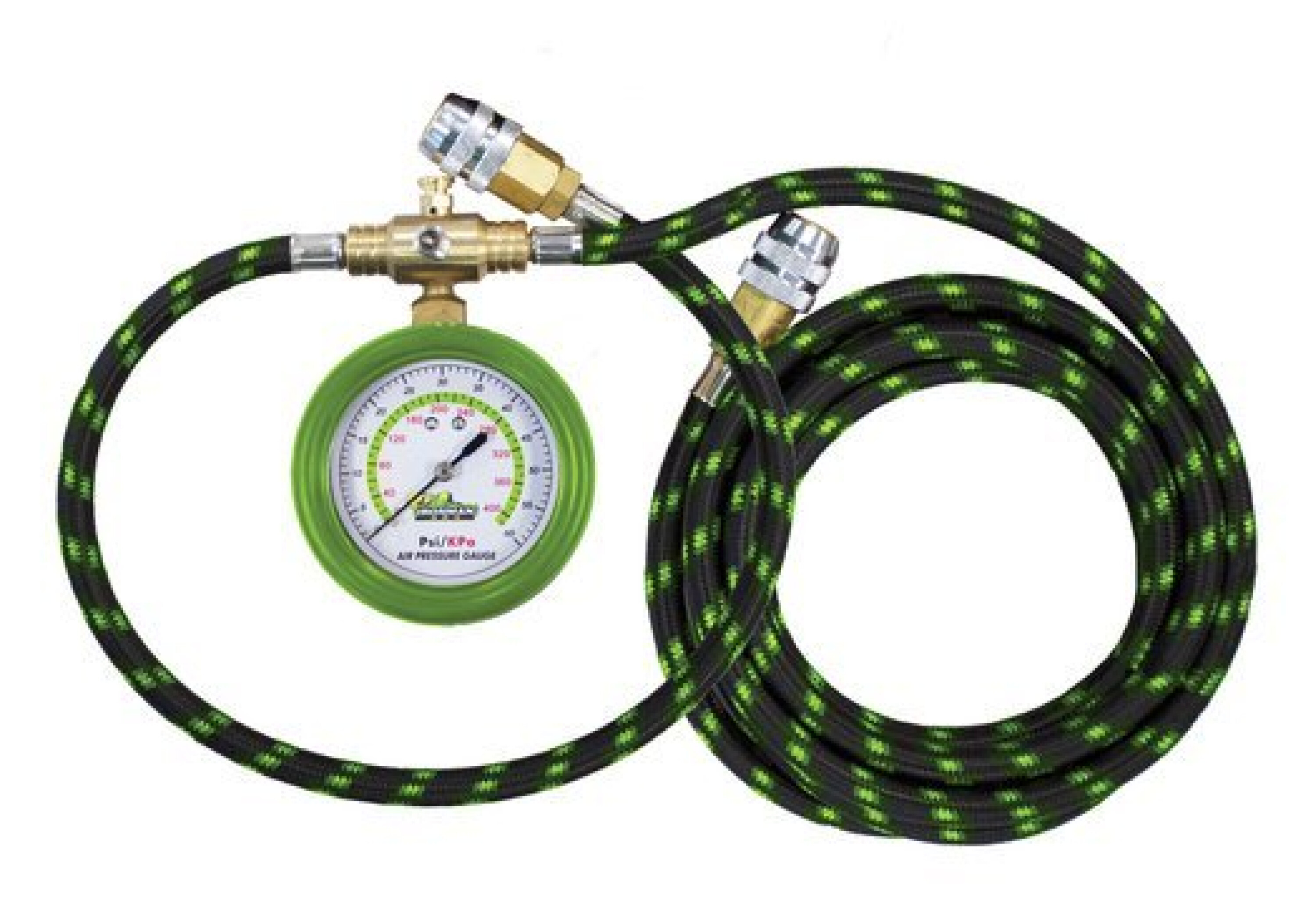
The Maxtrax Indeflate uses two three-metre hoses with a common pressure gauge. This allows you to adjust tyre pressures in two tyres at once. It’s also available as a four-tyre system, saving even more time when deflating tyres.
The pressures equalise between the two tyres, giving you peace of mind that both tyres are at the same pressure. The Indeflate is a top-quality piece of gear. Everything from the air fittings to the main aluminium body are made from premium materials. All hoses are rated at 300psi (2000kPa) and the gauge reads to 100psi (700kPa).
When deflating tyres, the clip-on valve chucks are a breeze to attach. And you don’t have to crouch down for long periods… simply connect the hoses then deflate your tyres using the dump valve and gauge. When inflating tyres, use the built-in Schrader valve (the same as the valve stem on your tyres) to attach your compressor. Then stand back and wait while the Indeflate pumps up two tyres at once. If you’re looking for a durable unit, this one should last for years.
1
Maximum pressure
100psi (700kPa)
Max number of tyres
Four at once
Warranty
12 months
Pros
Equalises pressures between tyres
High quality components
Simple dump valve for deflating tyres
Cons
No faster than using a compressor to inflate individual tyres
Have to stop and regularly check pressure when deflating
The Kings 3in1 is a cheap (around $30) alternative if you’re on a tight budget. The body’s stainless steel and has a large 60psi pressure gauge, and the tyre chuck is a straight clip-on type, making it easy to connect to any valve stem.
To deflate a tyre, hold down a push-button until the tyre reaches the desired pressure. You inflate the tyre by squeezing and holding a hand lever. The downside is, you need to deflate or inflate each tyre individually. However, for the price it’s a great compromise between price and functionality. An ideal tool if you’re starting out and need something cheap and easy to use.
The ARB Pressure Control Module takes tyre deflation and inflation to the next level, by controlling your tyre pressures and your compressor from your smartphone.
Download the Compressor Connect app and set up to four pre-set pressure levels. Once the module reaches the nominated pressure, the app vibrates your phone and gives you an audible alarm. The Pressure Control Module’s a useful addition to any compressed air system. Its compact size means it’ll fit neatly into tight spaces. However, be aware it only works with existing ARB compressors. And the ARB Pressure Control Module requires additional hardware to complete the installation, and installation is not straightforward.
1
Maximum pressure
Set to maximum pressure of compressor
Max number of tyres
Depends on your existing system
Warranty
Three years
Pros
Control from an app on your phone
Multiple pre-set pressures
Adjusts pressures automatically
Cons
Installation requires wiring knowledge
Not all components are supplied for final installation
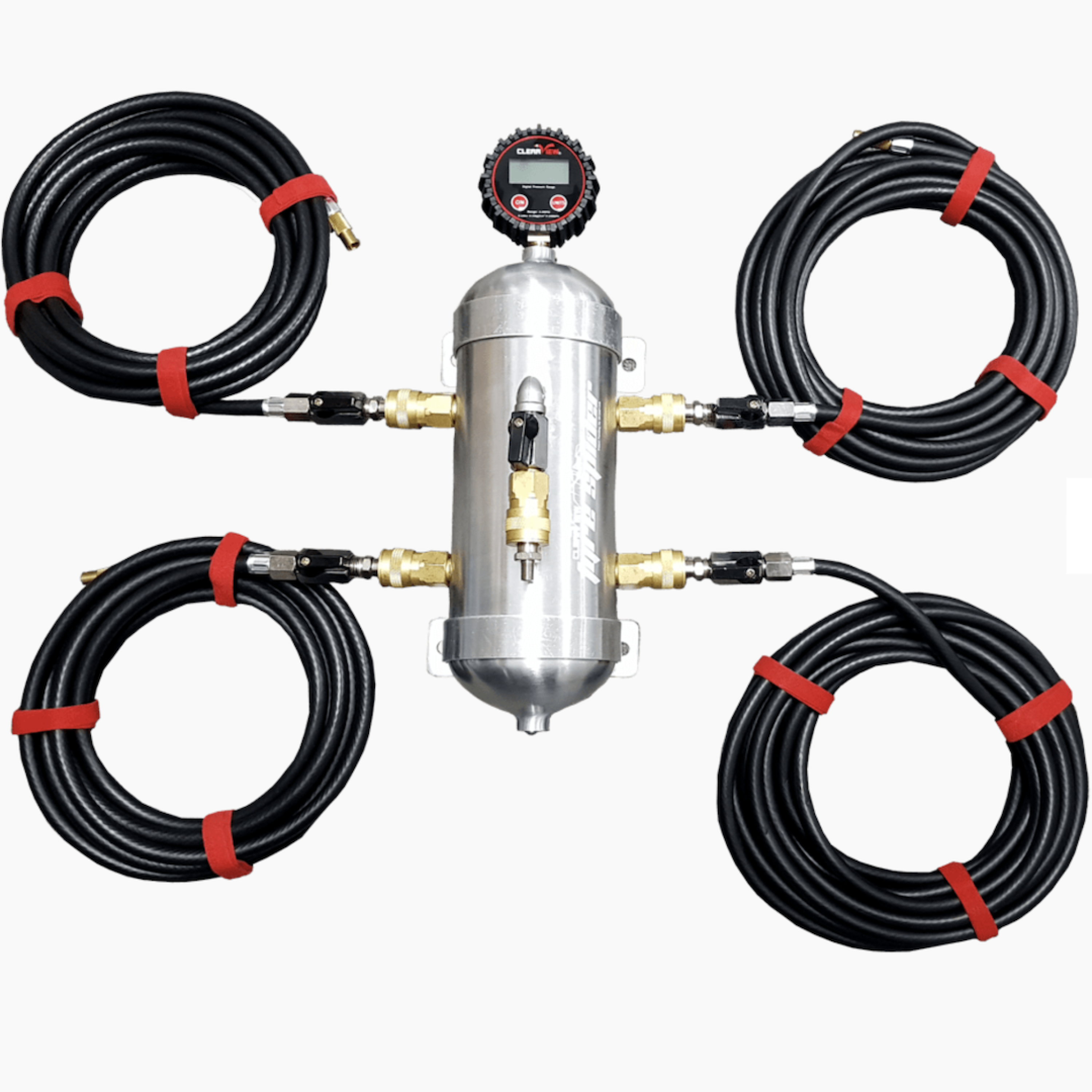
The Clearview Tyre Spider is a perfect compromise between simplicity and ease of use. It’s actually one of those devices you could build yourself, but Clearview supply the ready-made package … so why bother?
This unit is built around a small pressure tank with four quick-connect couplers for the tyre hoses, a pressure gauge, and a main inlet/outlet valve. Each outlet hose has a shut-off valve, so you can deflate or inflate individual tyres to different pressures. Deflating tyres is a breeze. Simply open the main valve and let the air out. The kit comes with two five-metre and two eight-metre hoses, allowing you to reach the wheels on your caravan or toy hauler.
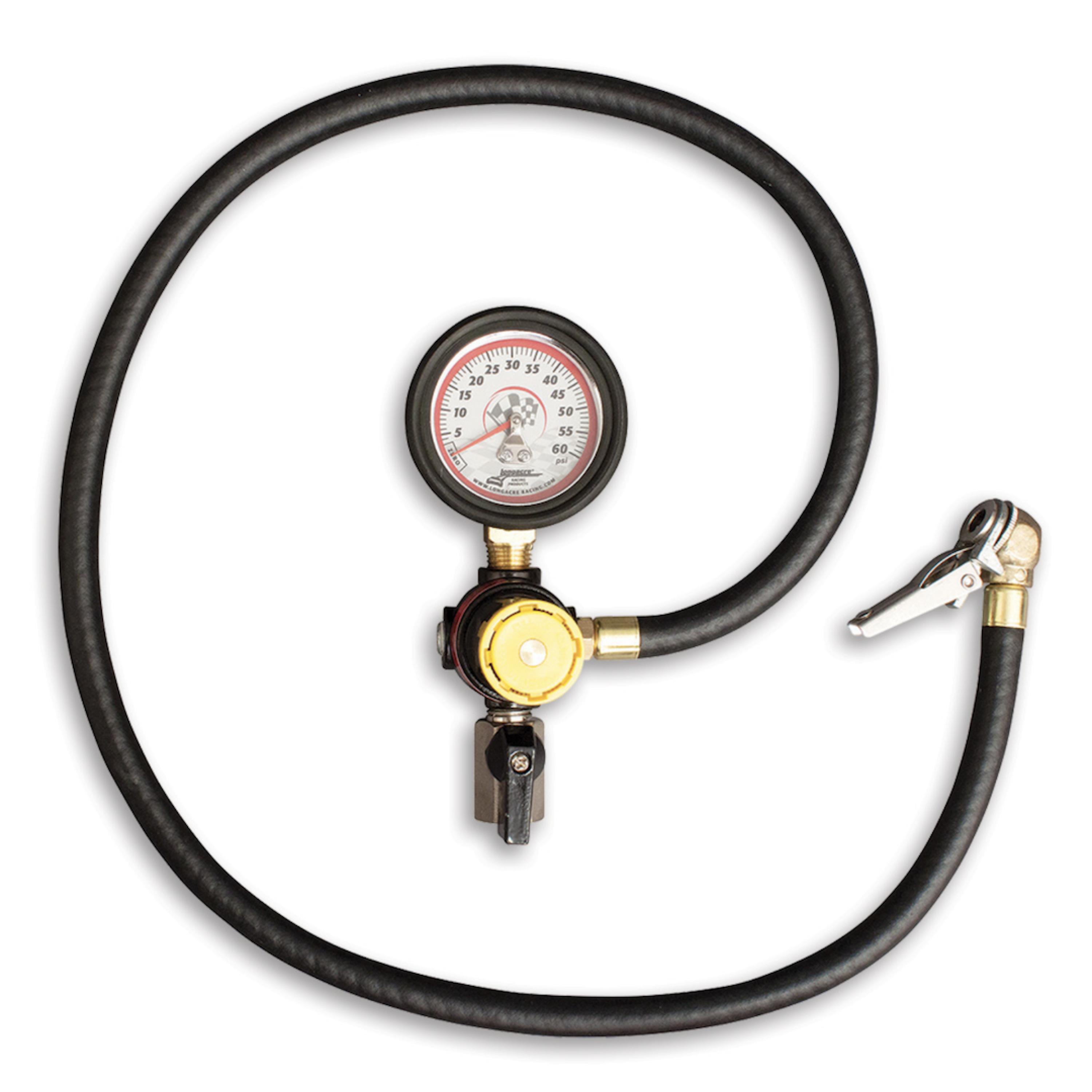
Longacre supply premium products to the motorsports industry, so you’d expect its deflator/inflator to be a premium quality product. Well, yes and no…
There’s no doubt the components are high quality, but it has a few shortcomings. The standout is the clip-on air chuck. The 90-degree inlet and awkward hand lever might be fine for racing rims, but they can be a nightmare to attach to the valve stem on some 4×4 tyres.
Stripped down to basics, the Longacre auto-fill inflator/deflator is an adjustable pressure regulator with a gauge and a hose. You adjust the desired tyre pressure with the hand knob, a fiddly and slow process. Speaking of slow; numerous users report this device to take quite a bit longer to inflate tyres than with a compressor alone.
In fairness, this unit isn’t really designed to be used in applications where you continually want to air up and down. Rather, it’s meant for the racetrack where exact tyre pressures are critical. Service crew would set the regulator once, then check each tyre to add or remove small amounts of air as needed every time the car comes into the pits.
The Ironman 4×4 Air Champ dual inflator is advertised as a deflator/inflator. However, users report it’s slow to deflate and more suited as an inflator than a deflator.
Are you fussy about equalising tyre pressures? You could use another deflator, then use the Air Champ to equalise pressures at the end, but it does mean you’d need to carry a separate tyre deflator.
The hose lengths are marginal at best. This device is best suited to small vehicles, due to the short overall hose length. The Air Champ uses a Schrader valve (the same as the valve stem on your tyres) to attach the compressor for inflation. So it’s compatible with any air compressor. The snap-on valve chucks make attaching the hoses to your tyres’ valves easy.
The Ironman Air Champ Dual Inflator is a cheap and compact option compared to other units which deflate/inflate two tyres at once. It’s just a matter of whether you’re willing to trade off price for features.
1
Maximum pressure
60psi (415kPa)
Max number of tyres
Two at once
Warranty
12 months
Pros
Equalises pressures between tyres
Compatible with any compressor
Valve chucks are snap-on
Cons
No faster than using a compressor to inflate individual tyres
Most serious off-roaders have an air compressor, either mounted in their vehicle or a portable unit. However, all the compressed air in the world isn’t much use if you can’t easily deflate or inflate your tyres.
What to look for
There are hundreds of different tyre inflators or tyre deflators on the market, but surprisingly few do both jobs. The ones that do exist vary widely… from fully automatic systems which you control with a phone app, to basic hand-held units with a manual hand lever.
Some of us can’t resist the latest gadget, so might be tempted to go with a bells and whistles product like the ARB Pressure Control Module. But when you’re on your own out in the middle of nowhere, simple is always the best option. The last thing you want to be doing out bush is relying on complex controllers and the vagaries of Bluetooth connections.
Then again if you always travel with a group, then this might not matter.
The best compromise is the units which deflate and inflate all four tyres at once… and are purely mechanical. In our selection, the Maxtrax Indeflate (choice of 2 or 4 tyres) and the Clearview Tyre Spider (4 tyres) fit the bill.
Don’t discount the AutoFlate Automatic Inflator/Deflator (choice of 2 or 4 tyres) either. Yes, it has an electronic controller. However, if it dies you can easily bypass it – unlike the ARB Pressure Module which controls the compressor.
The downside of these units? Set up and pack down time.
You need to dig out the hoses and valve chucks, connect them all to both tyres and the main valve body, then connect the compressor (if you’re inflating tyres). Then once you’re done, you need to roll up and pack away four sets of hoses.
And if you’re in mud or bulldust, you’ll end up with dirt and mud all over your gear.
The big advantage of these units is you can be sure each tyre will have the same pressure. This becomes increasingly important as you load up your fourbie and head into hot and rugged terrain.
For pure simplicity, you can’t go past a unit like the Kings 3 In 1 Ultimate Air Tool. There’s really nothing to go wrong. And for the price, you can buy two and have a “just in case” spare.
What you ultimately decide to get depends on your style of travel. Look for a compromise between deflation/inflation time and complexity. If something can go wrong at the worst possible time… eventually it will!
A word on inflation time for those systems which inflate 2 or more tyres at once…
The system is only as good as your compressor
Your compressor delivers at set flow rate based on pressure. It will deliver the same amount of air (give or take a bit) regardless of whether you pump up one tyre or four tyres at once. It can only deliver so much air and no more.
What does this mean?
If you buy a tyre deflator/inflator which allows you to pump up two or four tyres at once, don’t expect to inflate your tyres any quicker.
Your compressor will take four times as long to inflate each tyre. However because you’re inflating four at once, the overall time won’t really change. It could even be slower if you have to set up a spiderweb of hoses then pack them all away again.
In fact, some users report systems like the Maxtrax Indeflate actually take longer overall to inflate tyres. It’s likely all those extra hose lengths and multiple fittings reduce the air flow.
Where you do pick up time is when deflating tyres. Being able to deflate four tyres at once is a huge time saver… plus you know they’ll all be at the same pressure.
Talking of pressure, also consider the tyre deflator/inflator’s maximum pressure rating before parting with your hard-earned.
Maximum pressure
Some devices we reviewed are limited to 60psi (415kPa) maximum pressure. For most off-roaders this is fine. But with the growing popularity of small 4WD trucks kitted out as tourers, 60psi isn’t enough.
If you own a small truck or are considering one, you’ll need a maximum pressure rating of at least 100psi – preferably 120psi.
On road, these larger truck tyres need somewhere between 80 and 100psi depending on the weight they’re carrying.
Price
You might have noticed we didn’t list pricing in our reviews. This is because many of the tyre deflators/inflators are available with extra hose kits, air chucks and so on. All these extras can easily push the price well above $500.
At the other end of the scale, the Kings unit retails for around $30.
What you ultimately spend depends entirely on your budget and what type of system is best for your style of 4WDing.
4X4 Australia has been reviewing four-wheel drive vehicles, aftermarket products and camping gear for more than 40 years. When looking for the best swags in Australia there are some things that are essential to ensure you sleep soundly under the stars.
When we compared each of the swags in the list with hundreds out there we looked at the size, weight, durability and price. We also searched for additional features that make these swags stand out from the rest.
We looked at hundreds of user reviews and drew on our own experience sleeping in swags to make sure our recommendations are for the best on the market.
Disclosure: When you buy through our links, we may earn a commission. We also include products that we do not earn a commission from.
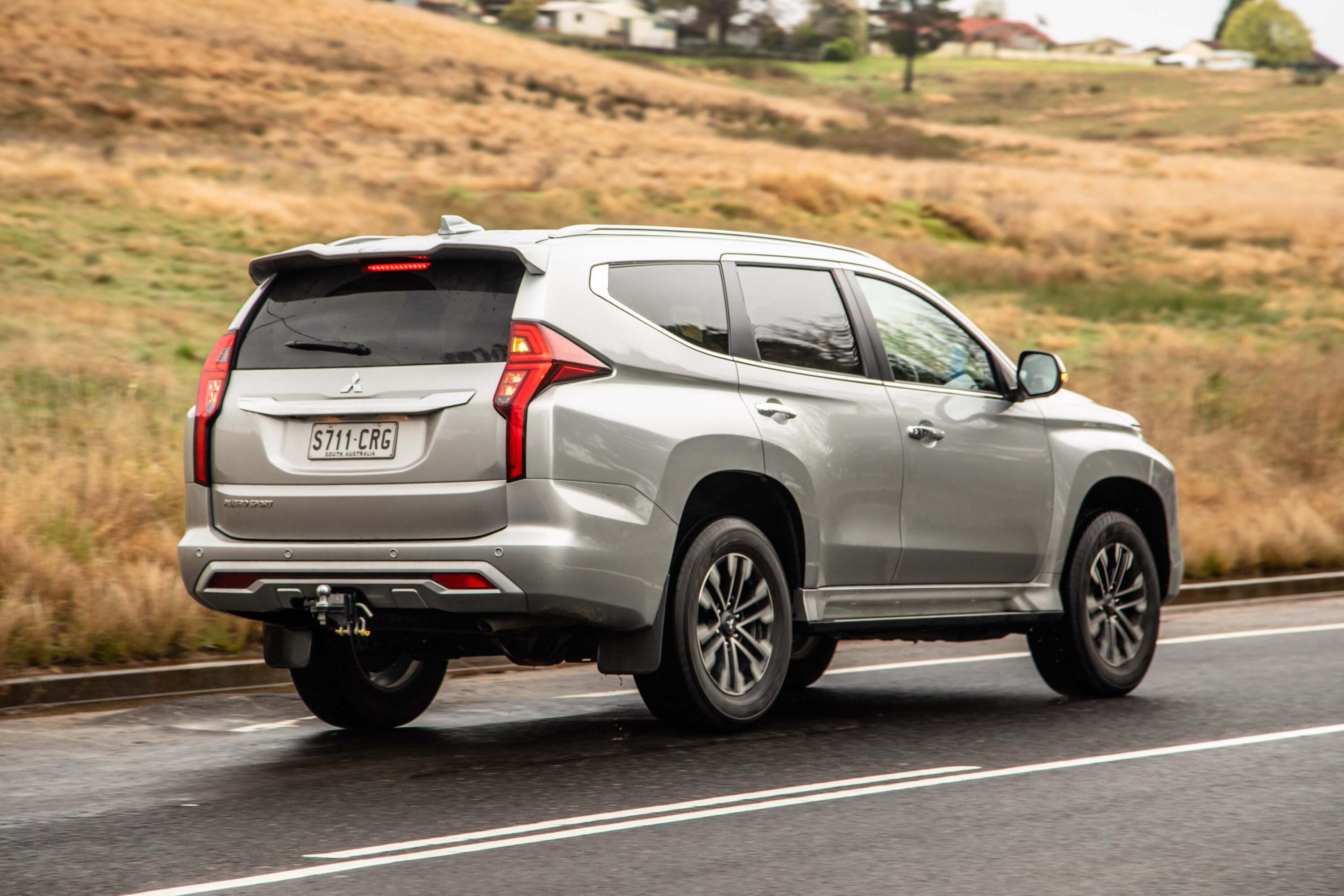
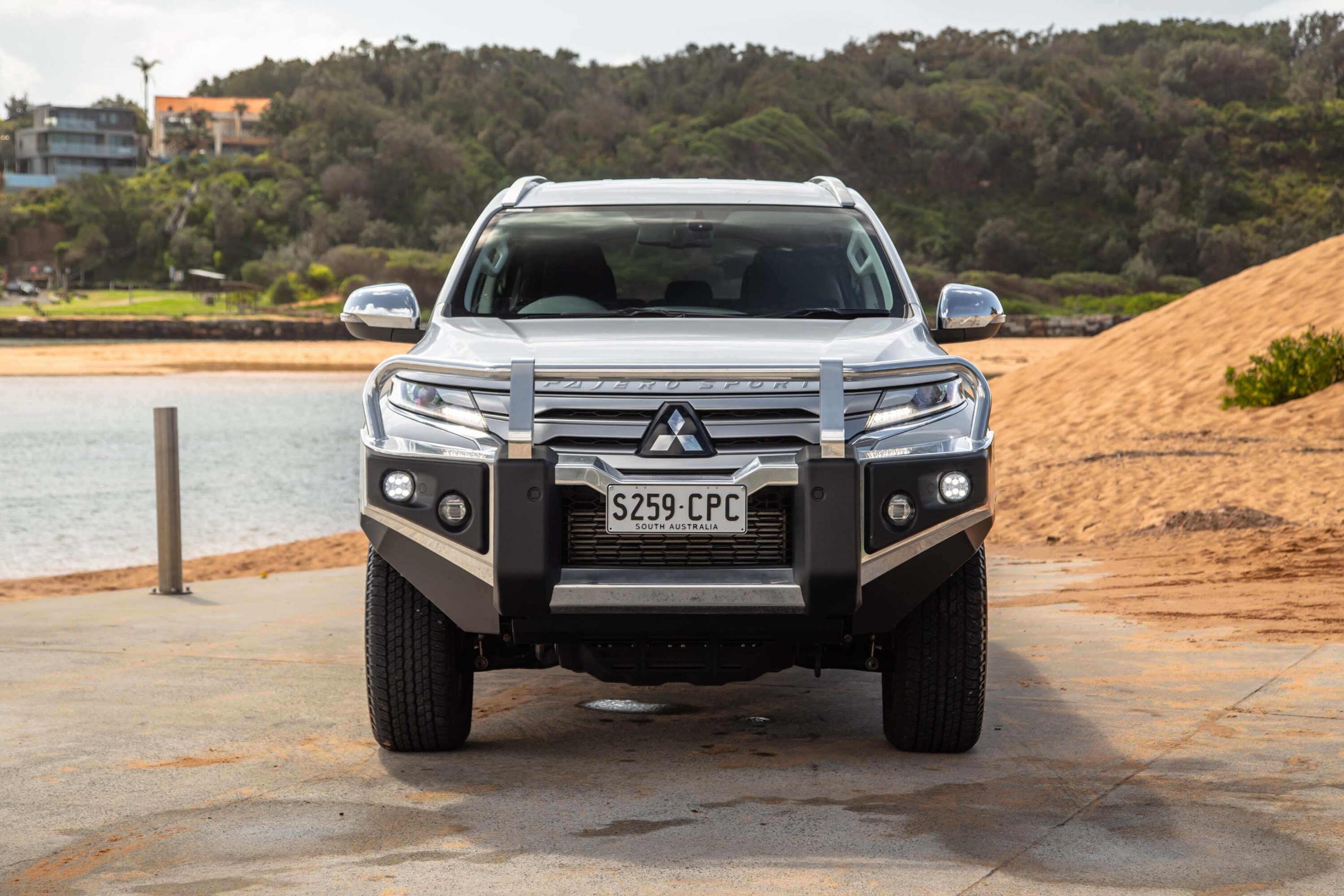
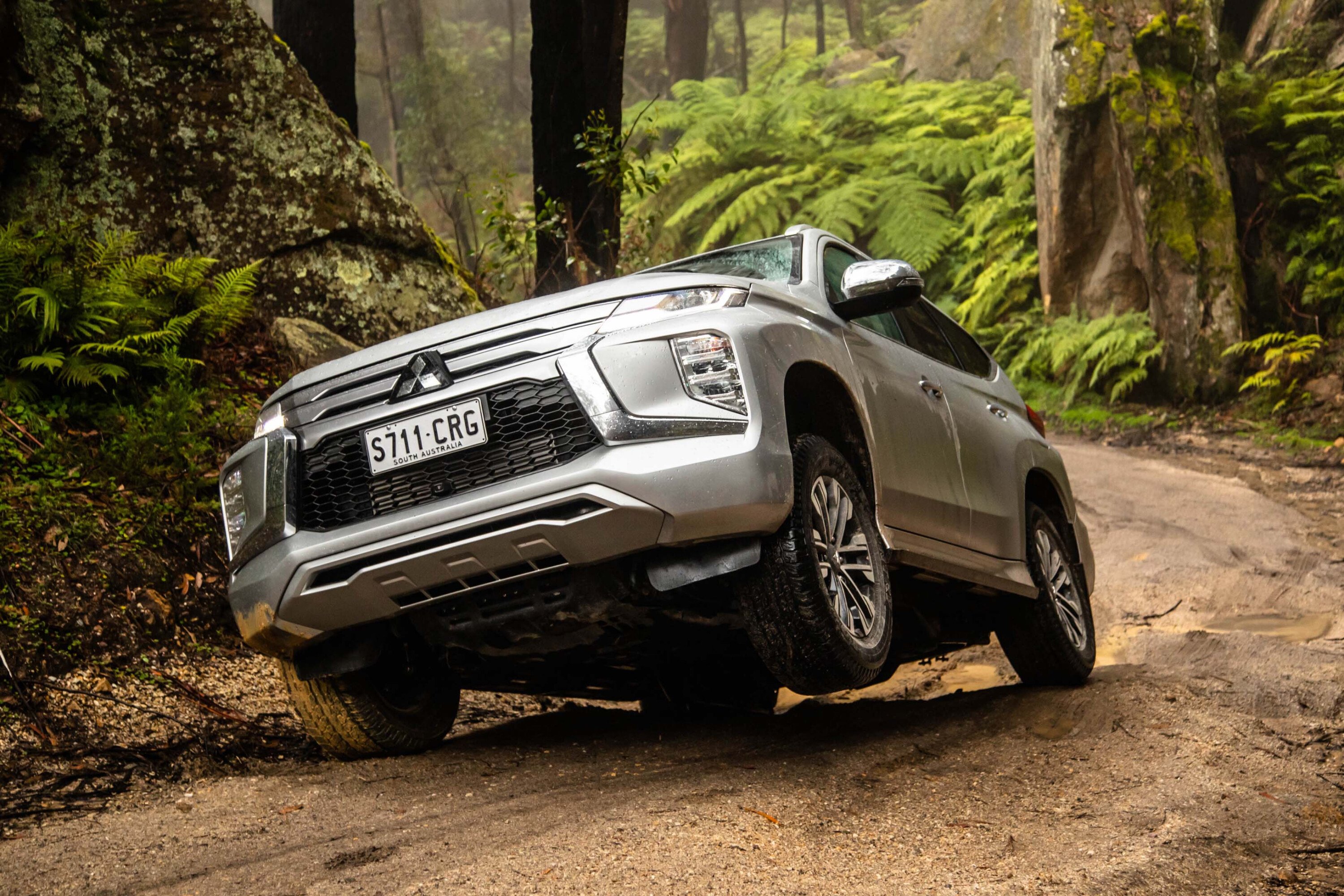
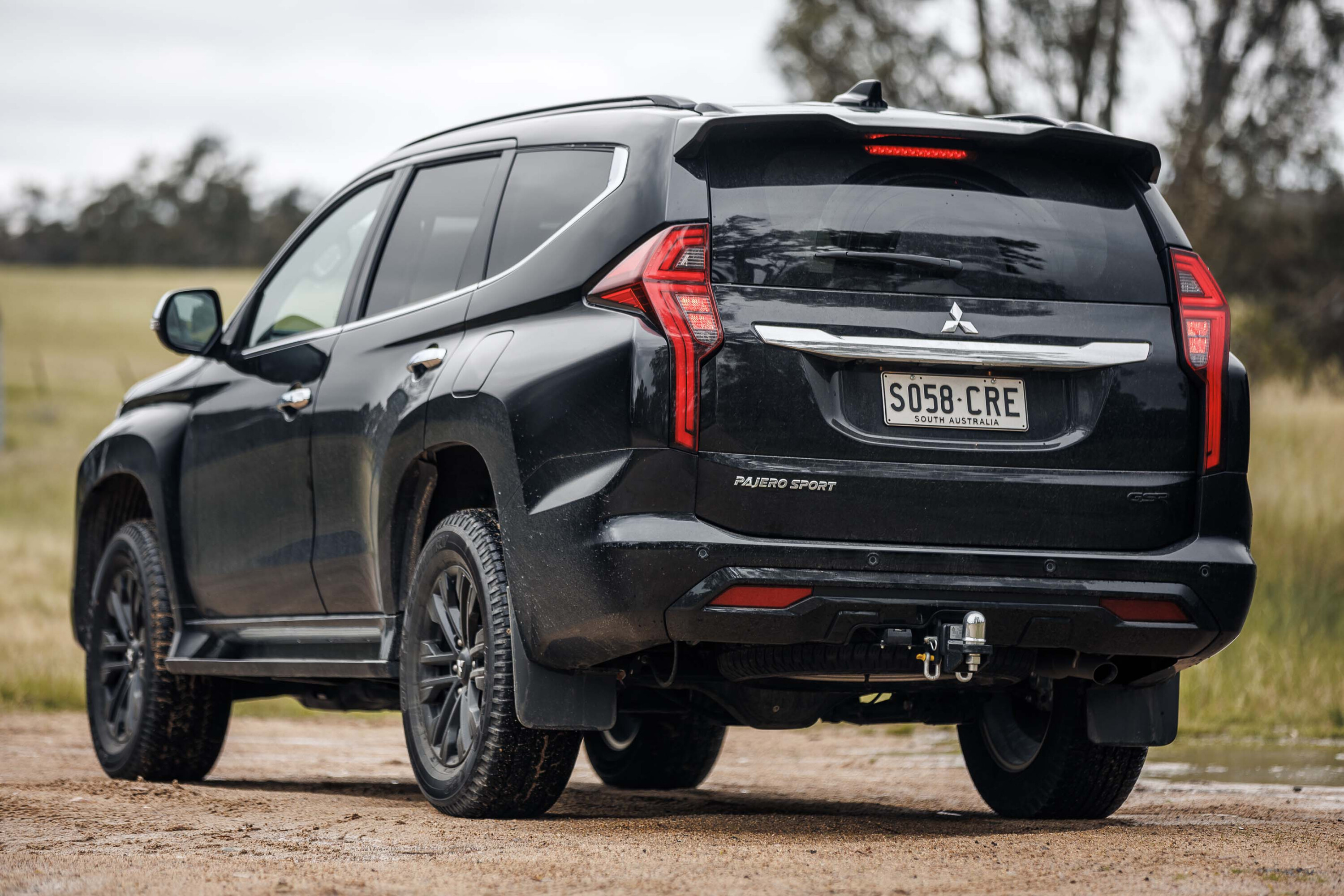
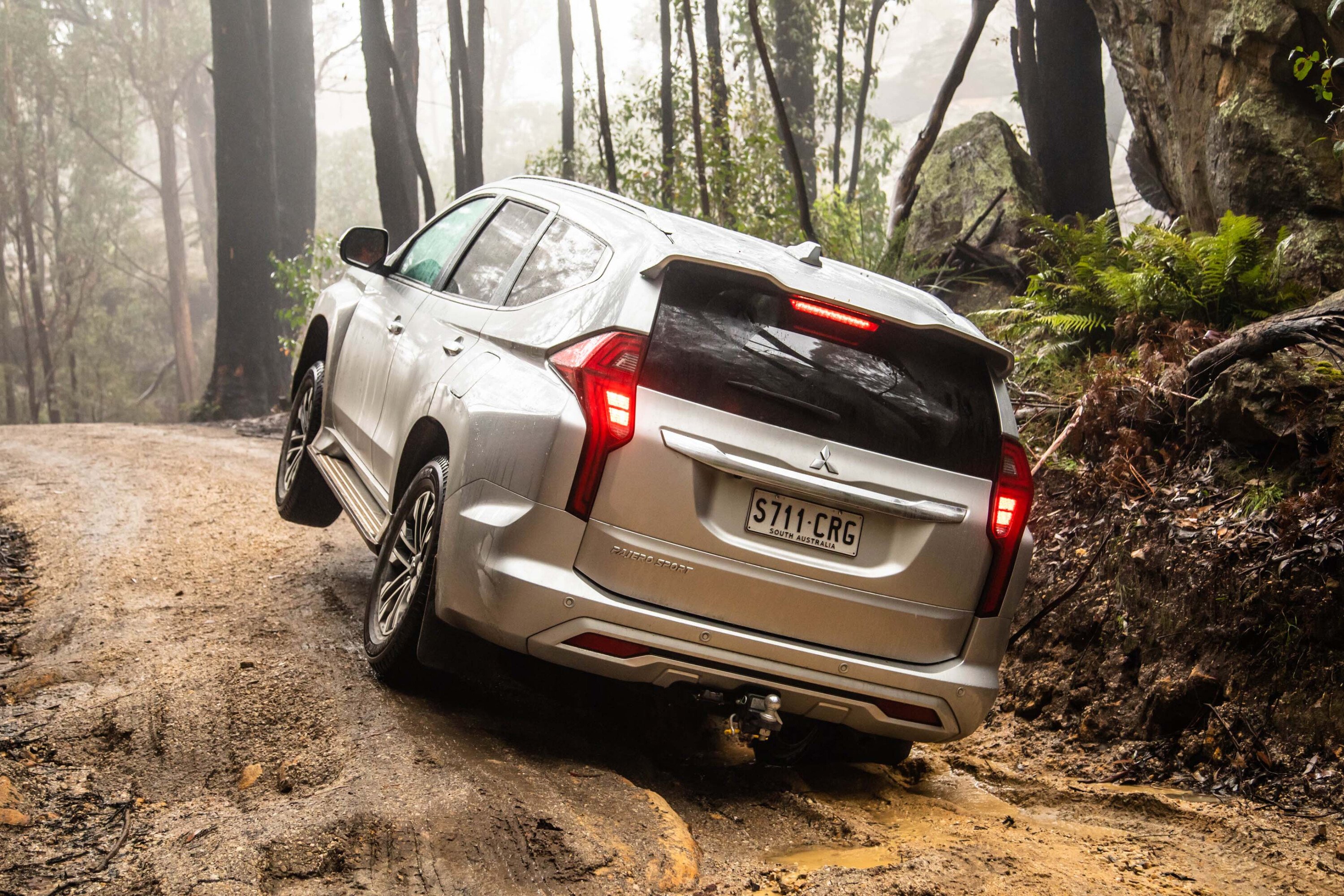
The Mitsubishi Pajero Sport is a large SUV built on the same platform as the Triton dual-cab ute. That means it has tonnes of interior space, but also an old-school ladder chassis and solid axle rear suspension (which can make it feel a bit like a light truck).
On the upside is a 3100kg towing capacity and impressive off-road ability. Plus rock-solid reliability, backed by Mitsubishi’s industry-leading 10-year warranty.
While it comes crammed with modern features and equipment, the Pajero Sport is a dependable, somewhat no-frills vehicle that will get the job done for many hundreds of thousands of kilometres.
What body styles are available for the Mitsubishi Pajero Sport?
The Pajero Sport can only be had as a five-door SUV, in either five- or seven-seat configurations.
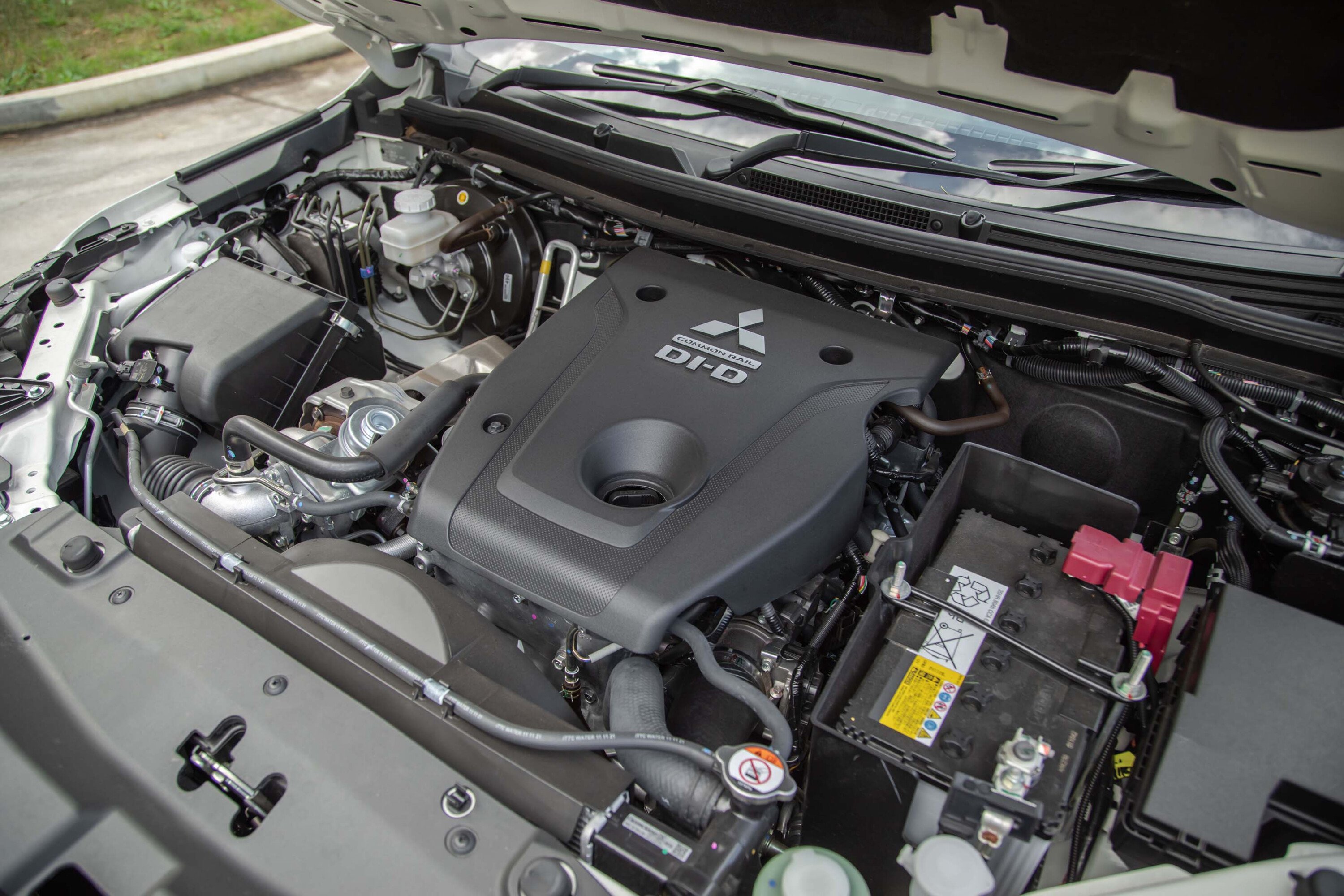
There are versions with rear-wheel drive and all-wheel drive, all using the same 133kW/430Nm 2.4-litre turbo-diesel four-cylinder engine and eight-speed automatic transmission. The Pajero Sport competes in Australia’s sub-$70K large SUV segment.
What features are standard in every Mitsubishi Pajero Sport?
The features listed below are standard in the entry-level GLX 2WD model and will appear in higher-grade models, unless replaced by more premium equivalent features.
The Pajero Sport range is surprisingly uniform, with all variants using the same 133kW/430Nm turbo-diesel powertrain, all equipped with 18-inch wheels and all featuring the same 8.0-inch central touchscreen.
Opening the range is the GLX spec that comes in a five-seat configuration with rear-wheel-drive only. It has manually-adjustable cloth seats and misses out on some safety equipment compared to upper-grade models, such as blind-spot monitoring, rear cross-traffic alert, dusk-sensing headlights and lane-keep assist.
1
As you move up the range, more and more goodies are added, effectively topping out with the Exceed, of which the main party trick is its swanky 8.0-inch digital instrument display (which goes a long way to modernising an otherwise old interior).
Most of what you get for spending extra on the GSR over an Exceed is the unique blacked-out exterior look.
Upgrading to a GLS gets you those features plus:
2024 Mitsubishi Pajero Sport GLS features
Auto-dimming rear view mirror
Satellite navigation
Rear spoiler
Third-row seat split folding function
Privacy glass
Third-row seat recline adjustment
Powered tailgate
Rear floor storage box
Tyre pressure monitoring system
Automatic dusk-sensing headlights
6 speakers
Automatic rain-sensing wipers
1
The GLS Deluxe takes things a step further with:
2024 Mitsubishi Pajero Sport GLS Deluxe features
Leather-appointed seats
Top-down parking camera view
Electric front seat adjustment
Steering wheel camera switch
The next grade, Exceed, gets you those features plus:
2024 Mitsubishi Pajero Sport Exceed features
8.0-inch LCD digital instrument display
Remote Smartphone App
Heated front seats
Ultrasonic misacceleration mitigation system
8-speaker audio system
Front parking sensors
1
The GSR 4WD is the most expensive version and has the same power, 8.0-inch touchscreen and all-wheel-drive, but adds:
The Pajero Sport was awarded a maximum five-star ANCAP rating under less strict criteria in 2015, and its score has expired. Thus, vehicles built from Jan 1 2023 are UNRATED.
Standard equipment on the GLS includes forward auto emergency braking (AEB) with pedestrian detection, adaptive cruise control, front and rear parking sensors, a low-resolution 360-degree monitor and a reversing camera.
To get all the safety gear you’ll need to move up to the Pajero Sport Exceed ($60,690 before on-road costs) with its standard blind-spot monitoring and rear cross-traffic alert.
During testing, we have noted decent ABS and ESC tunes on both tarmac and dirt. The Pajero Sport’s high-set driving position and upright A-pillars provide great visibility in urban environments.
How comfortable and practical is the Mitsubishi Pajero Sport?
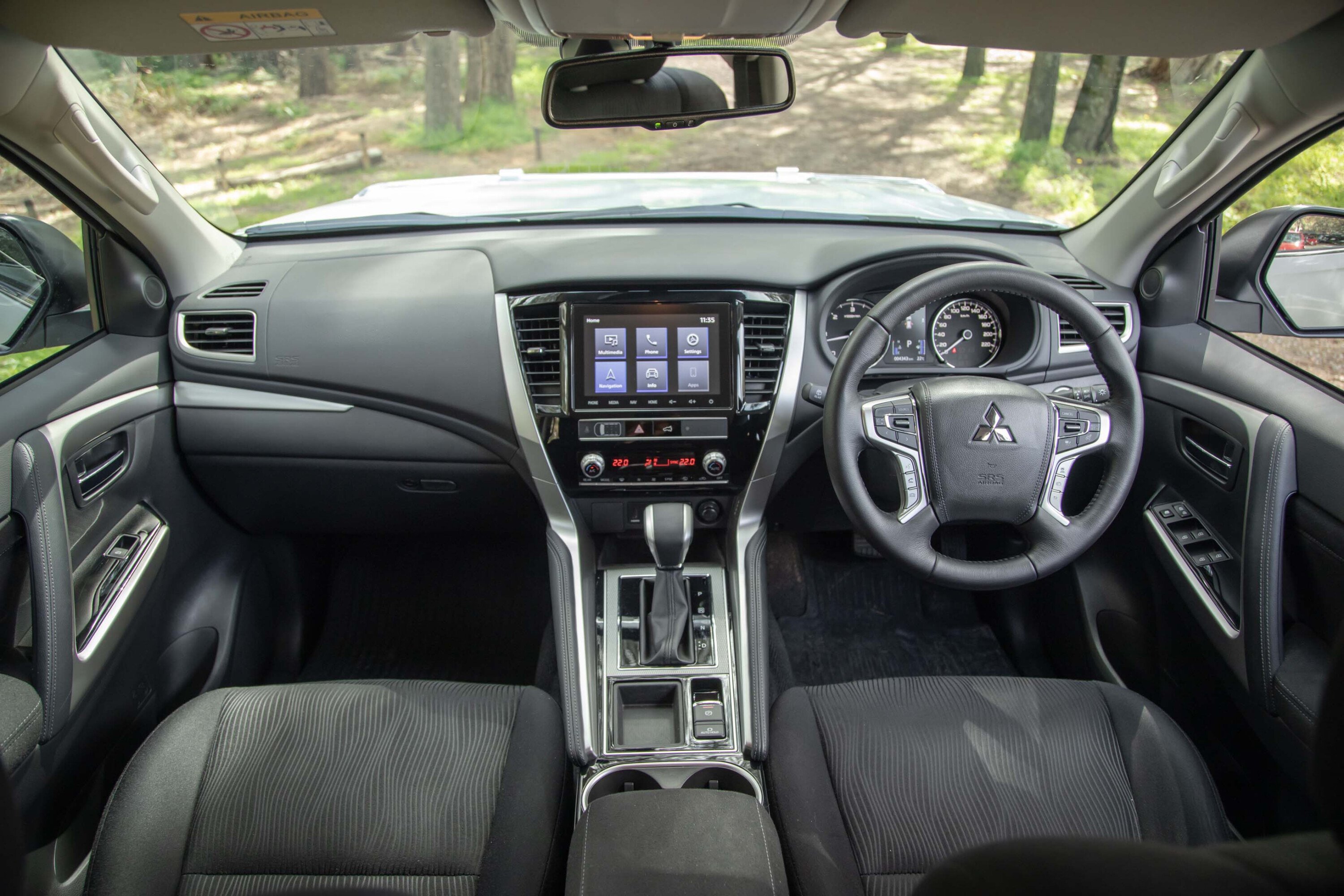
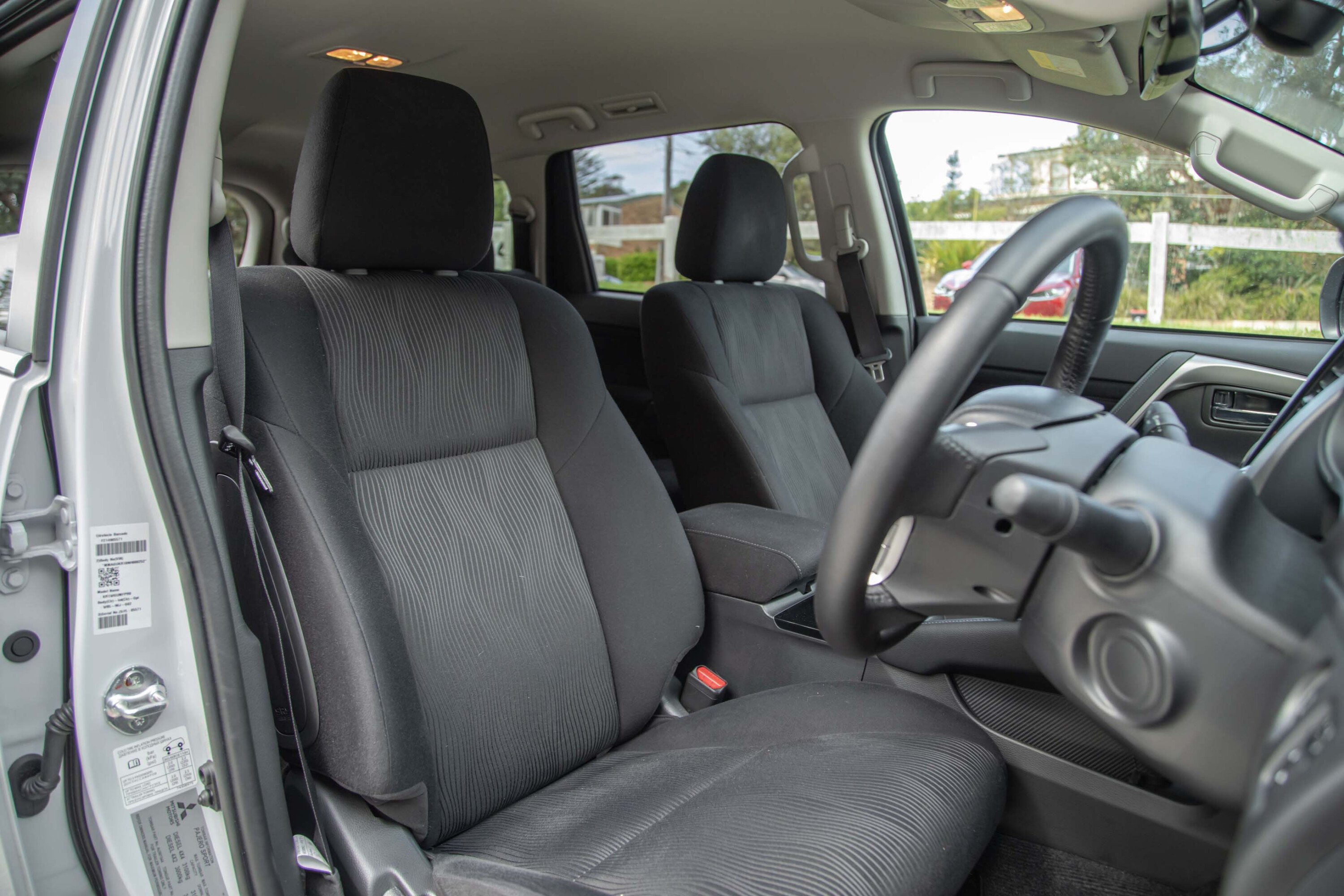
Despite feeling dated in certain areas, the Pajero Sport’s interior is a comfortable place for a family voyage.
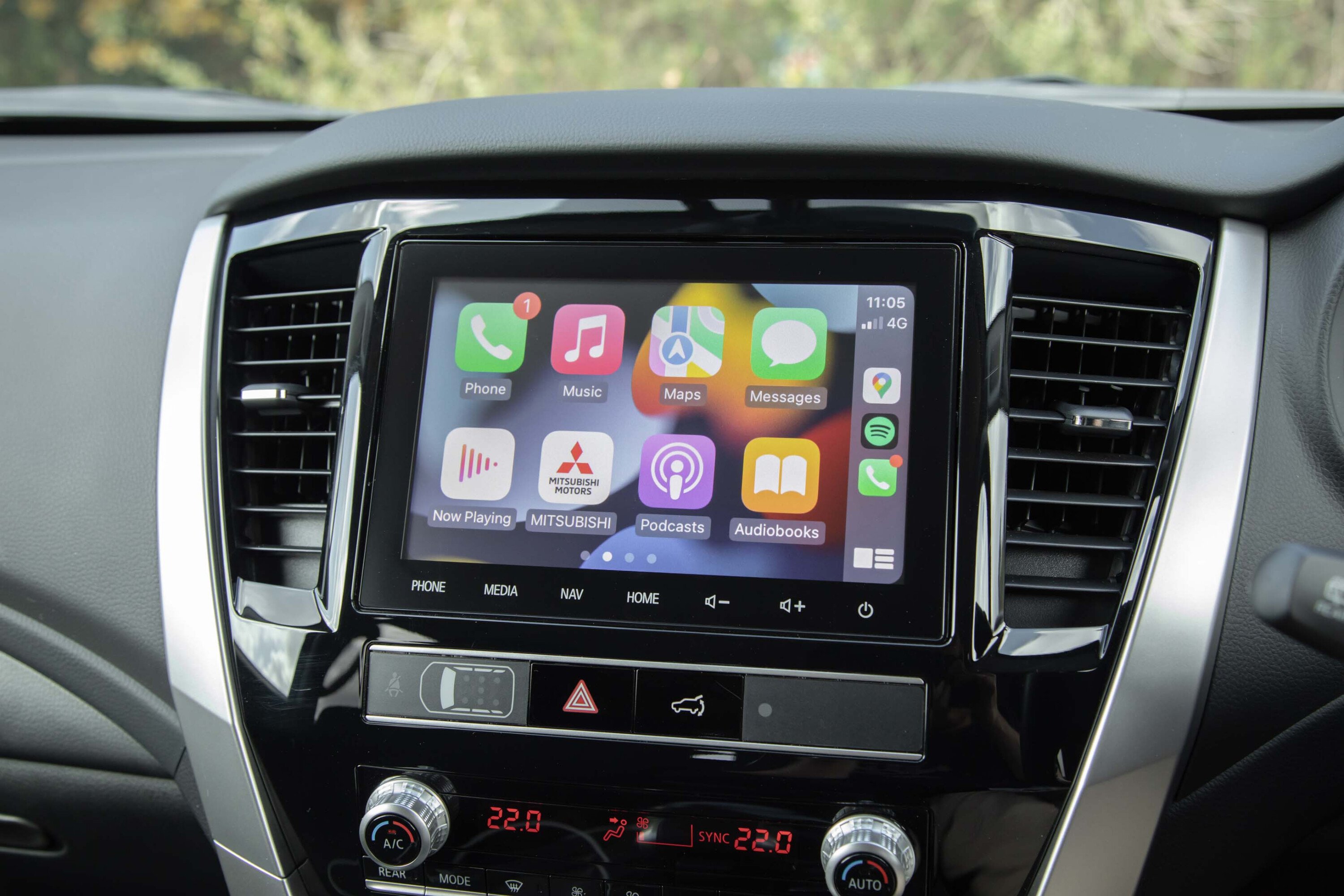
The undersized eight-inch touchscreen now feels a generation old, with the system itself slow to boot by modern standards.
Embedded TomTom navigation is provided but with the inclusion of Apple CarPlay and Android Auto, we’re hard-pressed to know if anyone will ever use it. Still, the most commonly used applications and functions are easy to find.
1
“It’s actually in third-row space and packaging that the Pajero Sport really surprises.”
We don’t love the on-screen touch buttons – instead of ‘actual’ buttons and dials – for things like volume control. Not only is there a delay when pressing the buttons, but the screen doesn’t take long to get filthy with fingerprints.
An updated user interface, a bigger screen, and buttons and dials would make a world of difference.
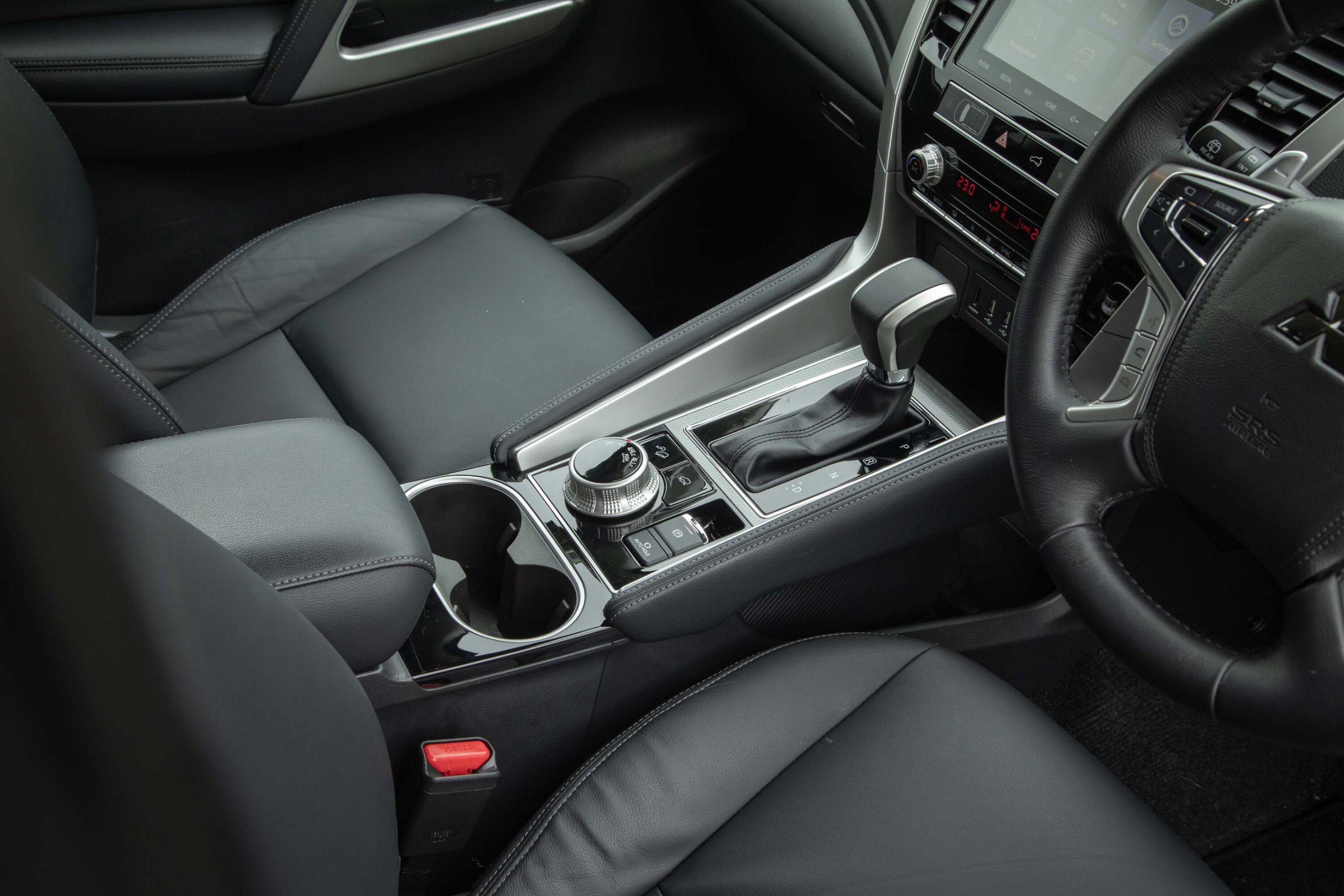
Front passengers are greeted with two USB points, one HDMI point and a 12-volt outlet. Grab handles for the driver and front and rear passengers make entry and exit easy for weary travellers, and, unlike the base-spec GLX, the GLS comes with dual-zone climate control.
In the GLS Deluxe cabin, there’s a thin veneer of plushness that separates it from a Triton. The leather-appointed seats do have lumbar adjustment but aren’t the last word in comfort. Storage isn’t particularly clever, with no great spot to leave a large smartphone. Door bins are still well-sized, and there’s decent covered storage beneath the armrest.
1
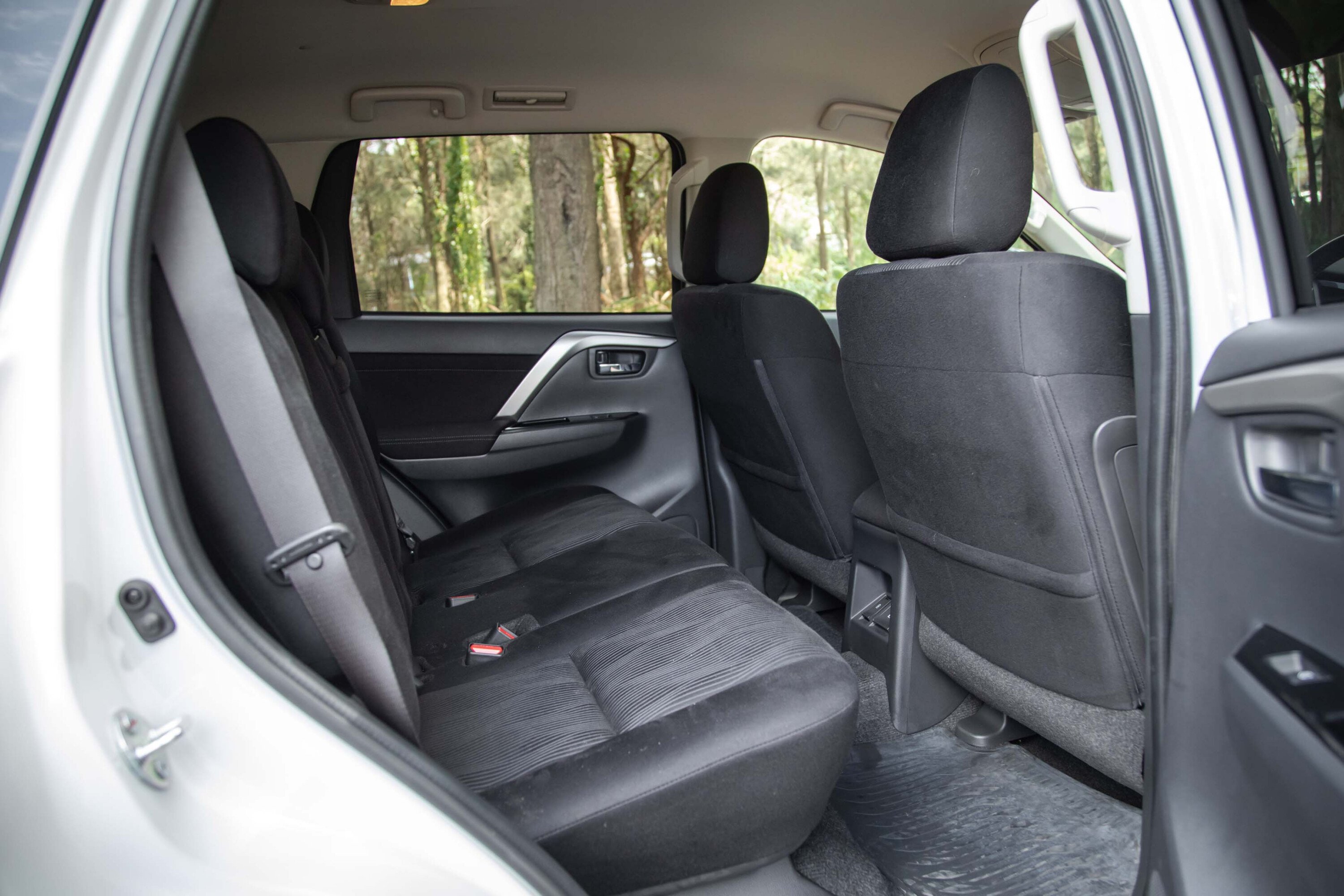
Moving into the second row, the Pajero Sport is limited in its flexibility by not having a sliding bench.
The backrest is adjustable, though not to a great degree. Space is also tight; headroom isn’t great and the body-on-frame construction means the floor is quite high.
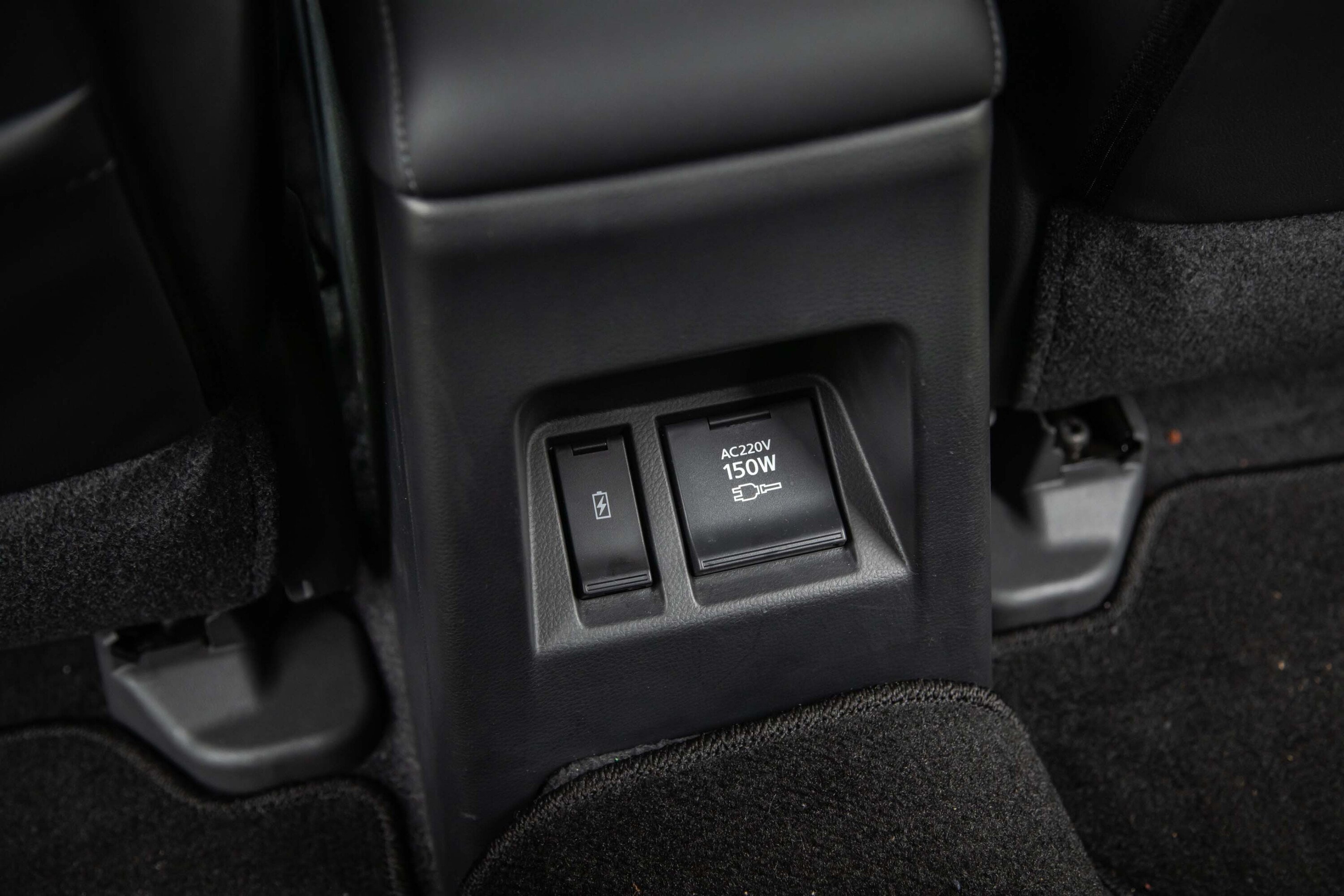
The Pajero Sport’s roof-mounted vents are adjustable so will keep second-row riders cool, though there isn’t a separate climate zone. USB-A charging points and a 220V household-style socket provide plenty of charging flexibility. The three-pin socket is great for camping applications, too.
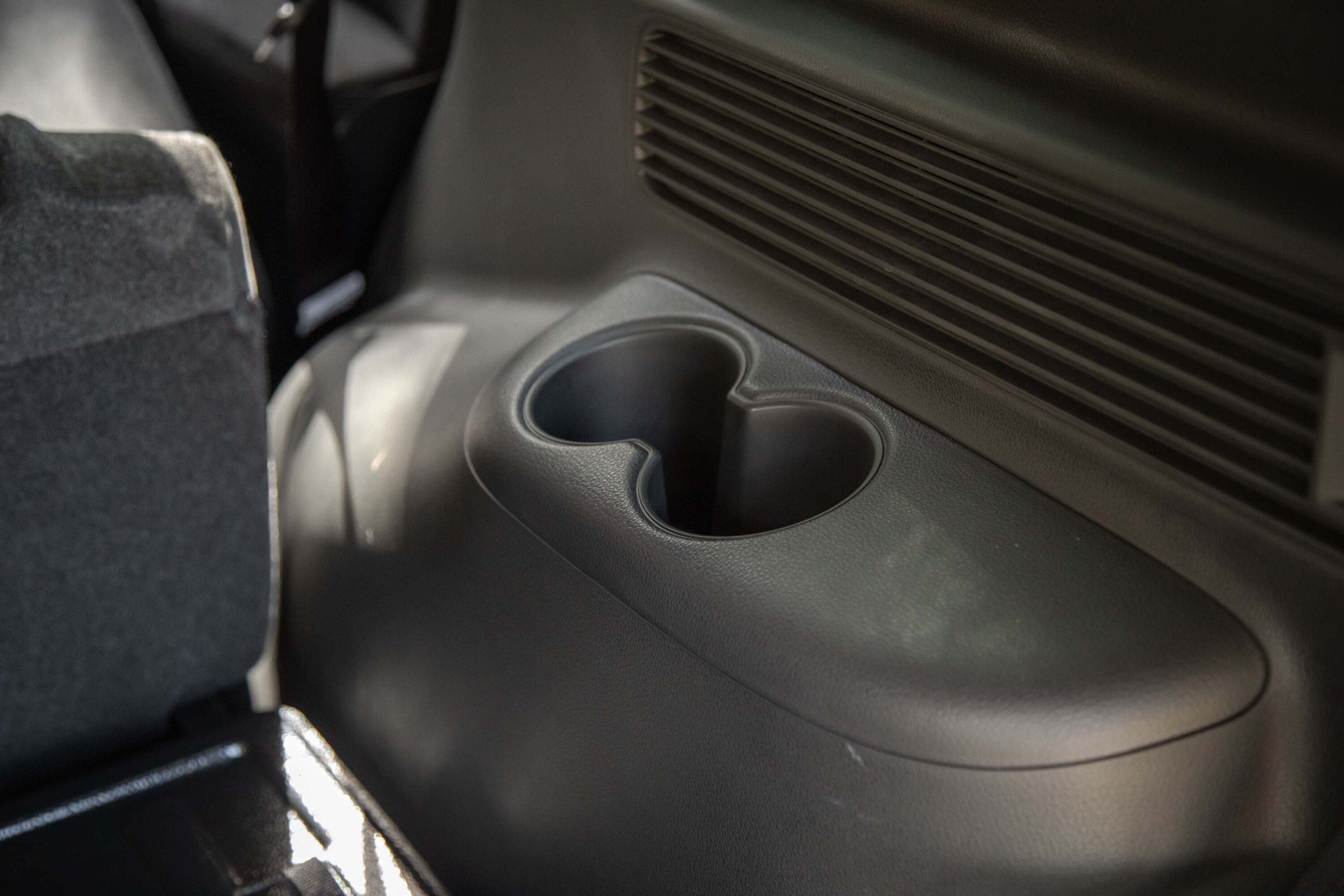
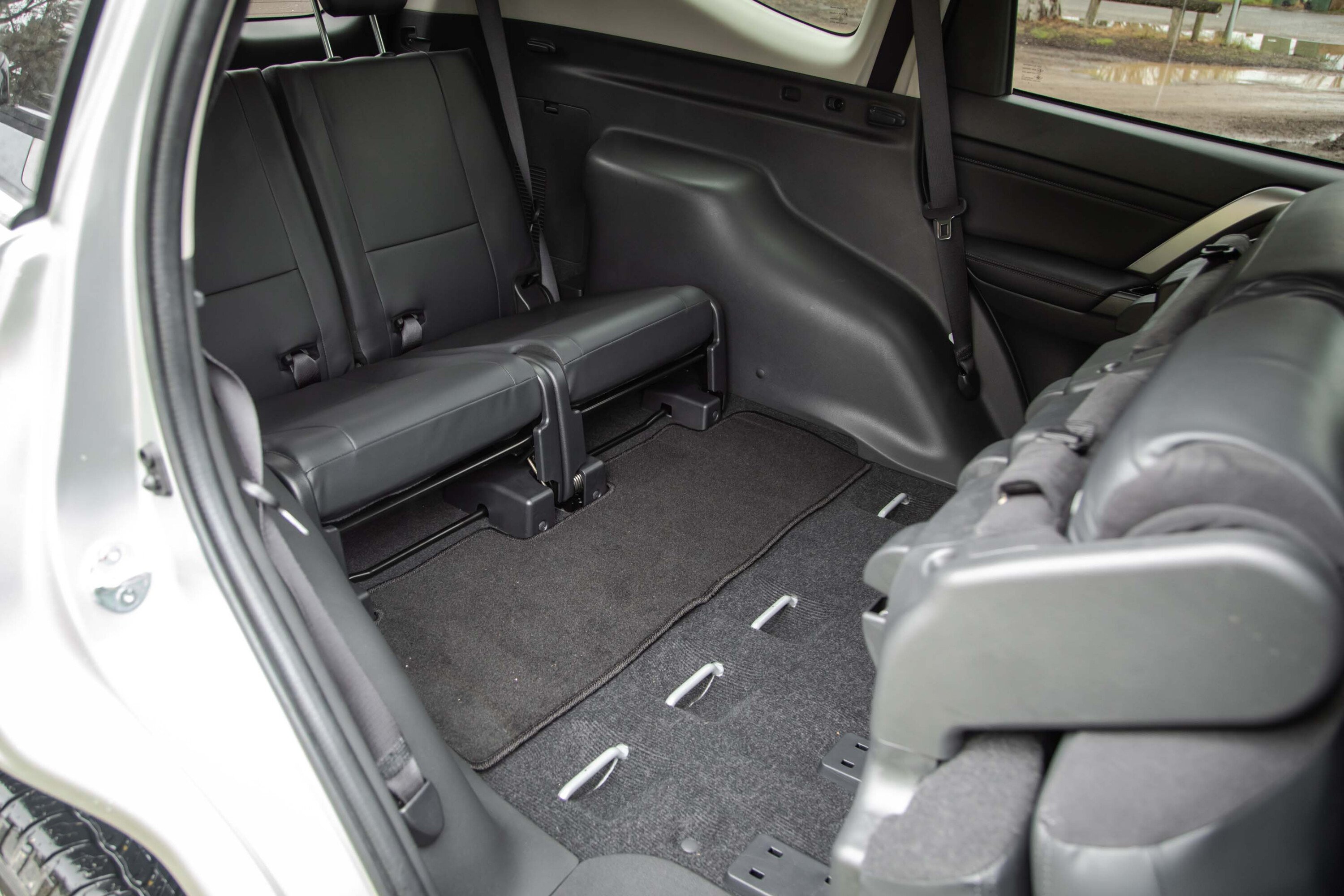
It’s actually in third-row space and packaging that the Pajero Sport really surprises. Despite being set a little higher than the second row, there’s still reasonable headroom twinned with an excellent view out – there are even roof-mounted air vents and two cup holders on each side. The tumble-forward second row makes for very easy ingress.
How much boot space does the Mitsubishi Pajero Sport offer?
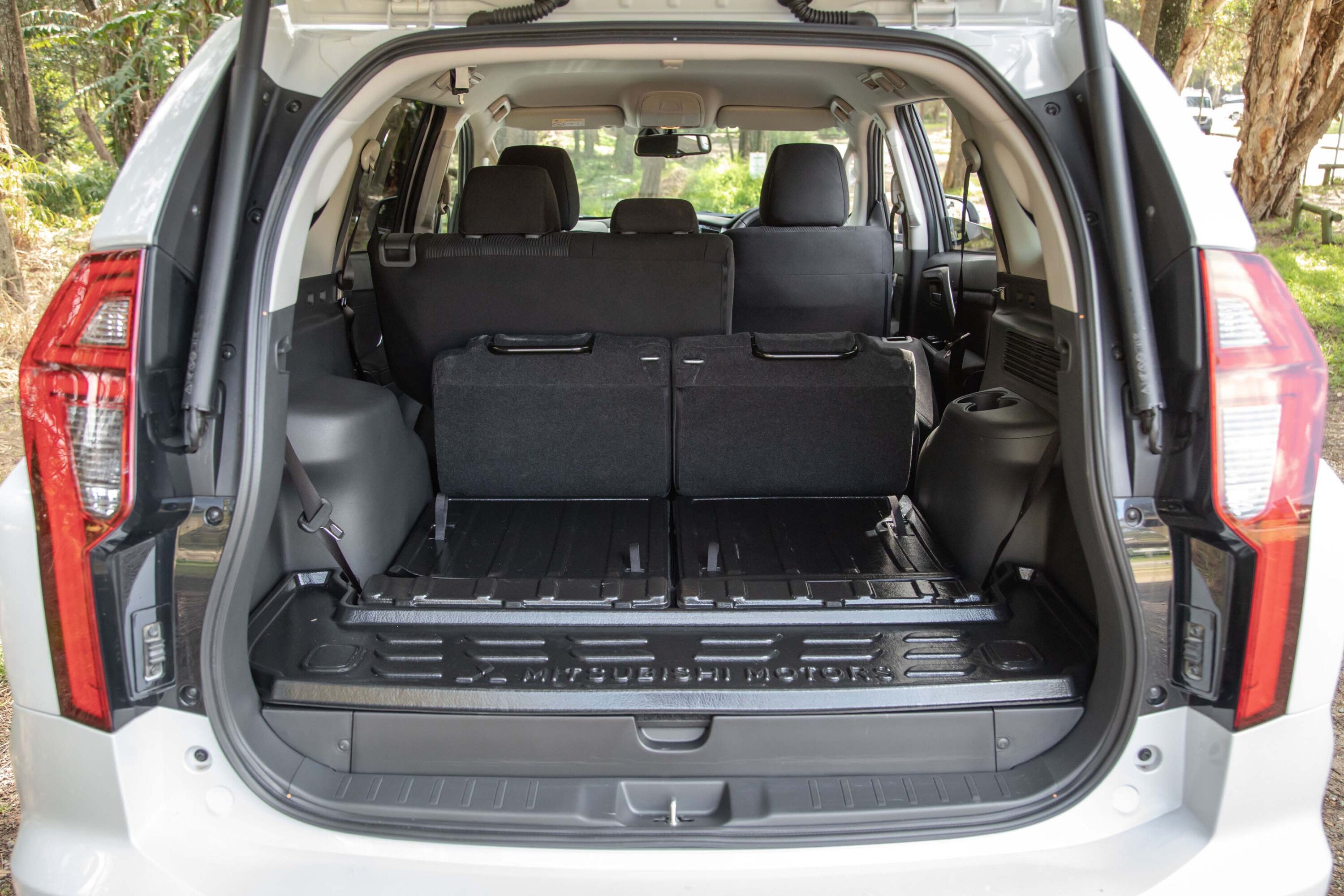
With three rows upright, the Pajero Sport has a 131-litre boot. With two rows up – in five-seater mode – that swells to 502 litres. With both rear rows folded, there’s a huge 1488 litres of luggage space.
The GLS model also features a handy rear floor storage compartment.
All Pajero Sport variants package a full-size spare tyre under the vehicle; great peace of mind for touring.
The Pajero Sport is nice and easy to drive, even if it’s not as polished on-road as something like a Mitsubishi Outlander.
With a modest 133kW and 430Nm on tap, there’s no disguising the fact Mitsubishi’s 2.4-litre MIVEC DID turbo-diesel engine seems to work hard to get the two-tonne Pajero Sport up to speed.
It’s also not the quietest nor smoothest in its operation, but once at 100 clicks on the freeway, this burly SUV is a pleasant place to sit.
1
Like others in this category, the Pajero Sport utilises a ladder-frame chassis derived from its ute-based sibling, but it replaces the leaf springs found at the rear of the Triton with coils. The front end shares the same coil design. This translates to a much smoother on-road composure than the Triton ute.
Its eight-speed transmission is well-calibrated, with up- and down-changes fairly smooth by large SUV standards. The GLS 4WD is equipped with paddle shifters, which is convenient for when bitumen turns to dirt.
The Pajero Sport is comfortable enough, but if you’re not doing any towing, only carrying two to four passengers most of the time, and don’t care for off-roading, there are much nicer and more comfortable options available for around the same price.
Which Mitsubishi Pajero Sport engine uses the least fuel?
By official fuel efficiency ratings, all models in the Pajero Sport range return 8.0L/100km in the ADR 81/02 combined cycle.
During our real-world testing of a 4WD model, the Pajero Sport’s diesel engine returned an economical 8.8L/100km over 350 kilometres.
The Pajero Sport has a 68-litre fuel tank, giving it a theoretical range of around 800km.
If air pollution is a concern for you, petrol alternatives might be worth a look – such as the Mitsubishi Outlander – as petrol engines release fewer toxic exhaust particulates into the atmosphere.
What is the Mitsubishi Pajero Sport’s towing capacity?
Four-wheel-drive models can tow up to 3100kg braked and 750kg unbraked.
For 2WD models, it’s 3000kg braked and 750kg unbraked. The maximum tow ball load is 300kg for 2WD models and 310kg for 4WD.
How long is the warranty and what are the Mitsubishi Pajero Sport’s servicing costs?
The Pajero Sport is covered by Mitsubishi’s 10-year/200,000km Diamond Advantage warranty.
It’s the longest in time terms across the industry but does stipulate that the vehicles are serviced at a main dealer. Otherwise, the duration reverts to a more industry-standard five years.
The Pajero Sport’s service intervals are 12 months or 15,000km, whichever comes first. It will cost $2495 to maintain over five years, climbing to $5990 for 10 years with the most major $999 scheduled service coming in the eighth year of ownership.
Which version of the Mitsubishi Pajero Sport does 4X4 Australia recommend?
The GLS 4WD with the $1500 optional Deluxe Pack seems like a smart buy, but you may as well stump up the extra few grand for the Exceed. It’s worth it for the seat heaters alone. Spoil yourself – you deserve it.
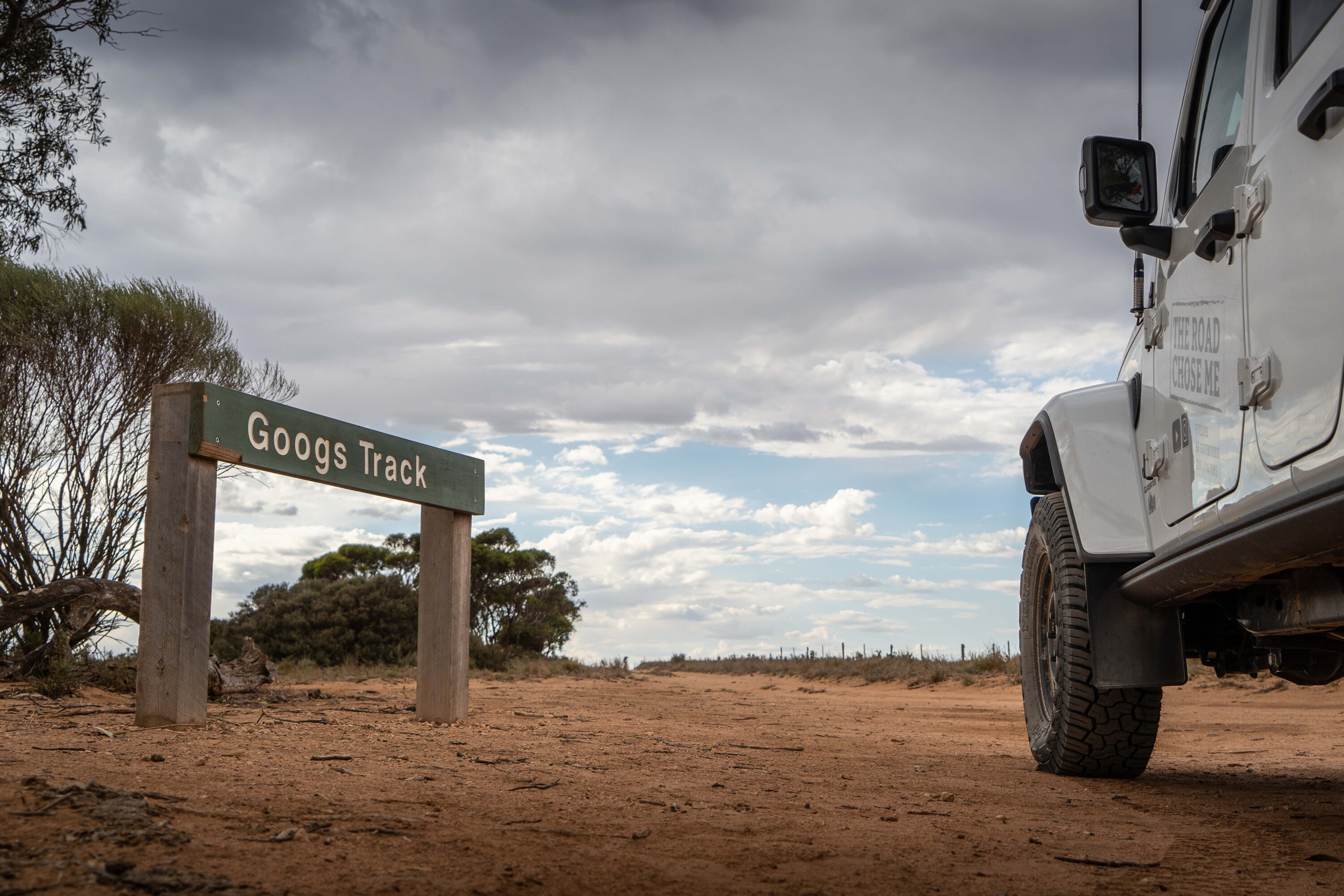
In 1973, an Australian outback farmer by the name of John ‘Goog’ Denton came up with the idea to cut a track directly north through rough Aussie scrub and sand dunes from his cattle station in South Australia towards the Red Centre.
With an idea like that it would be easy to assume Goog was a bit crazy, though I don’t actually think that was the case. He was probably just an ambitious guy who loved a good challenge, and from all accounts he faced that challenge with a huge smile and plenty of laughs.
The record states that Goog took on this task in search of better grazing land for his cattle, though I think it’s more likely he was just looking to have some fun and adventure. Years of blazing hot sun probably cooked his brain a little, but it’s probably best to overlook that as the normal kind of Aussie crazy.
1
Without any help from the government or military, Goog and his family slowly pushed a track through the scrub and sand using whatever old machinery they could muster.
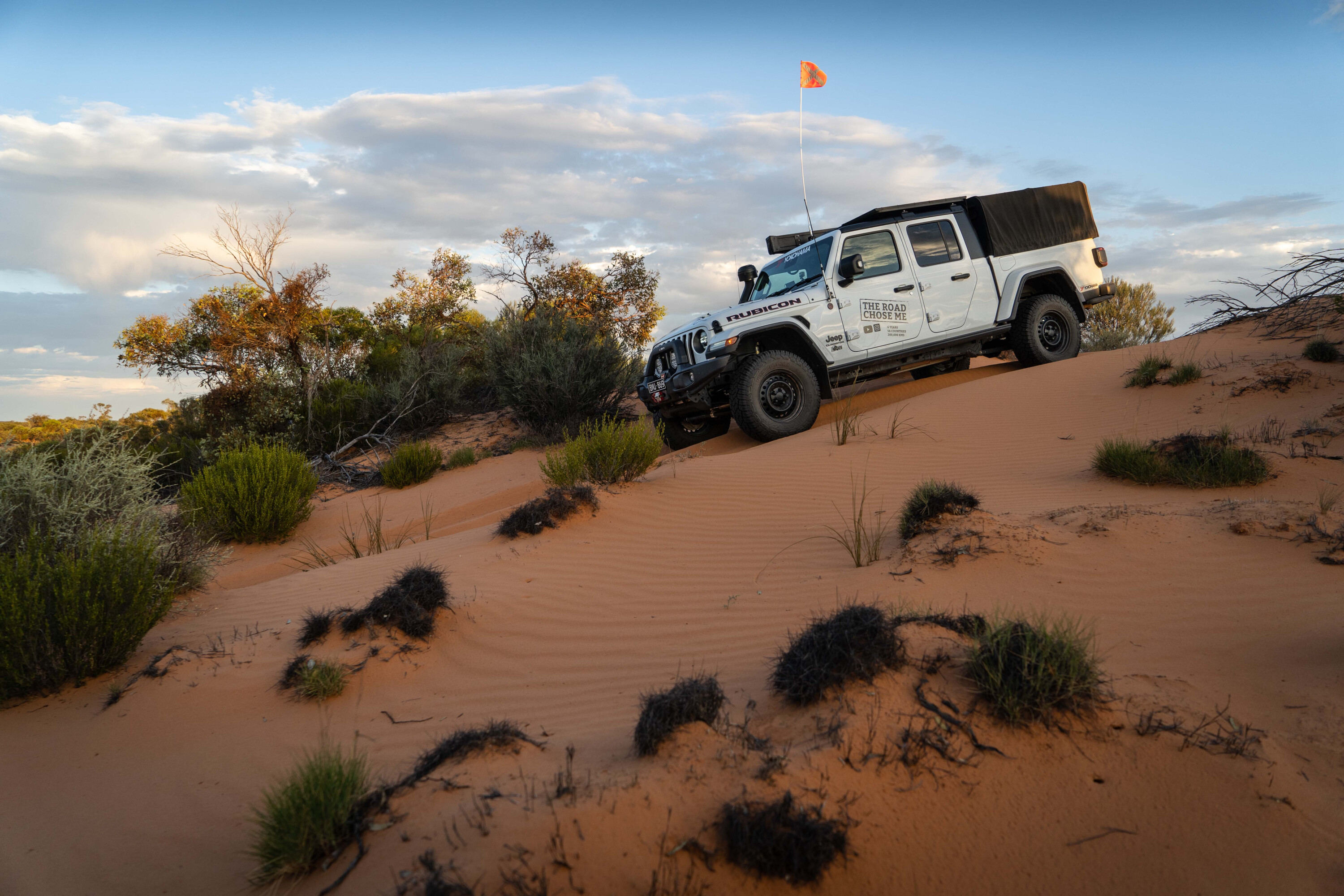
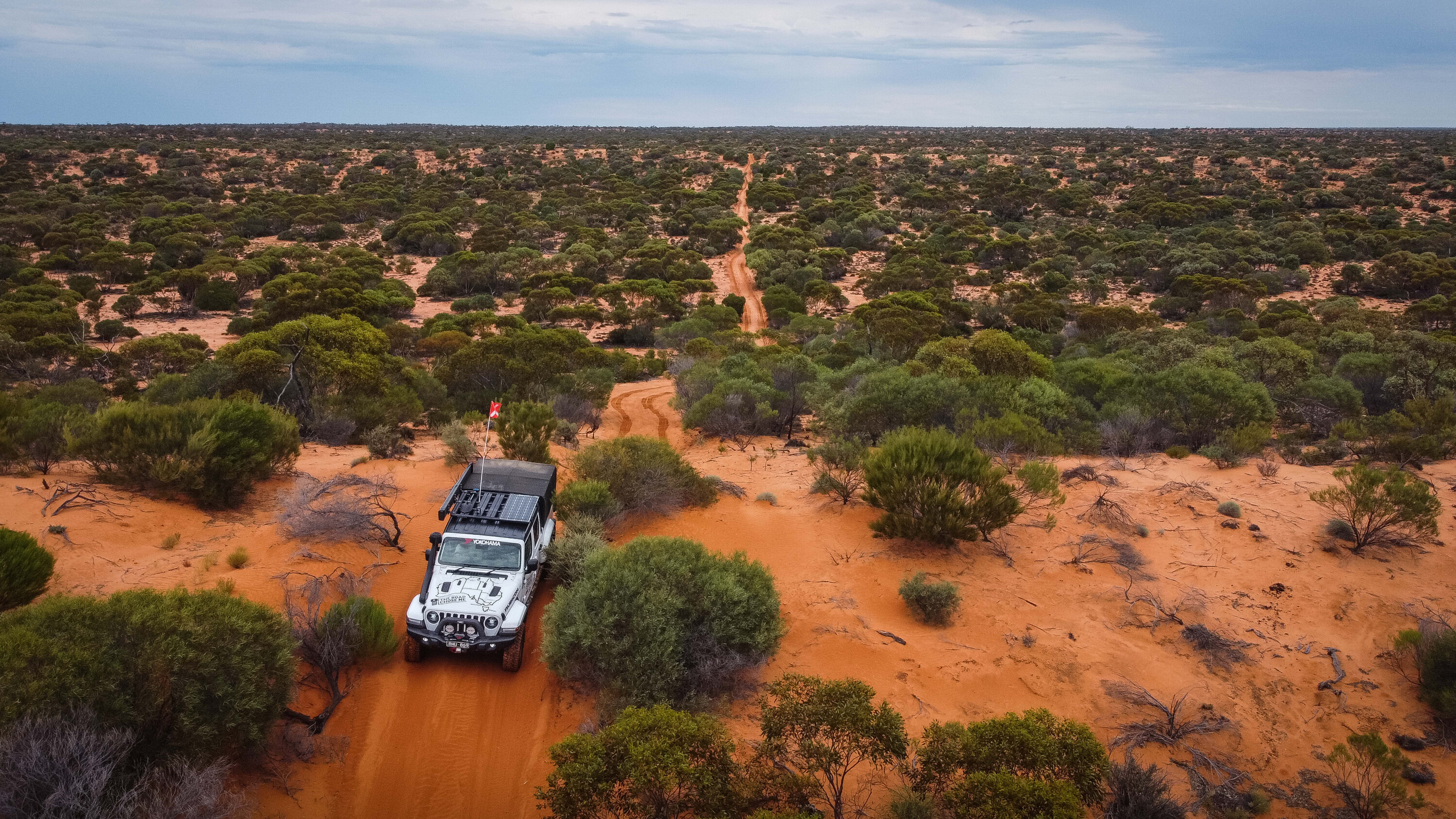
Now, almost 50 years later, the original unmaintained single track remains as a primitive route through the scrubby bush. Famously, as it heads directly north, the track climbs up and over 363 bright red sand dunes, and we will have to climb up and over every single one of them as we push towards the red centre.
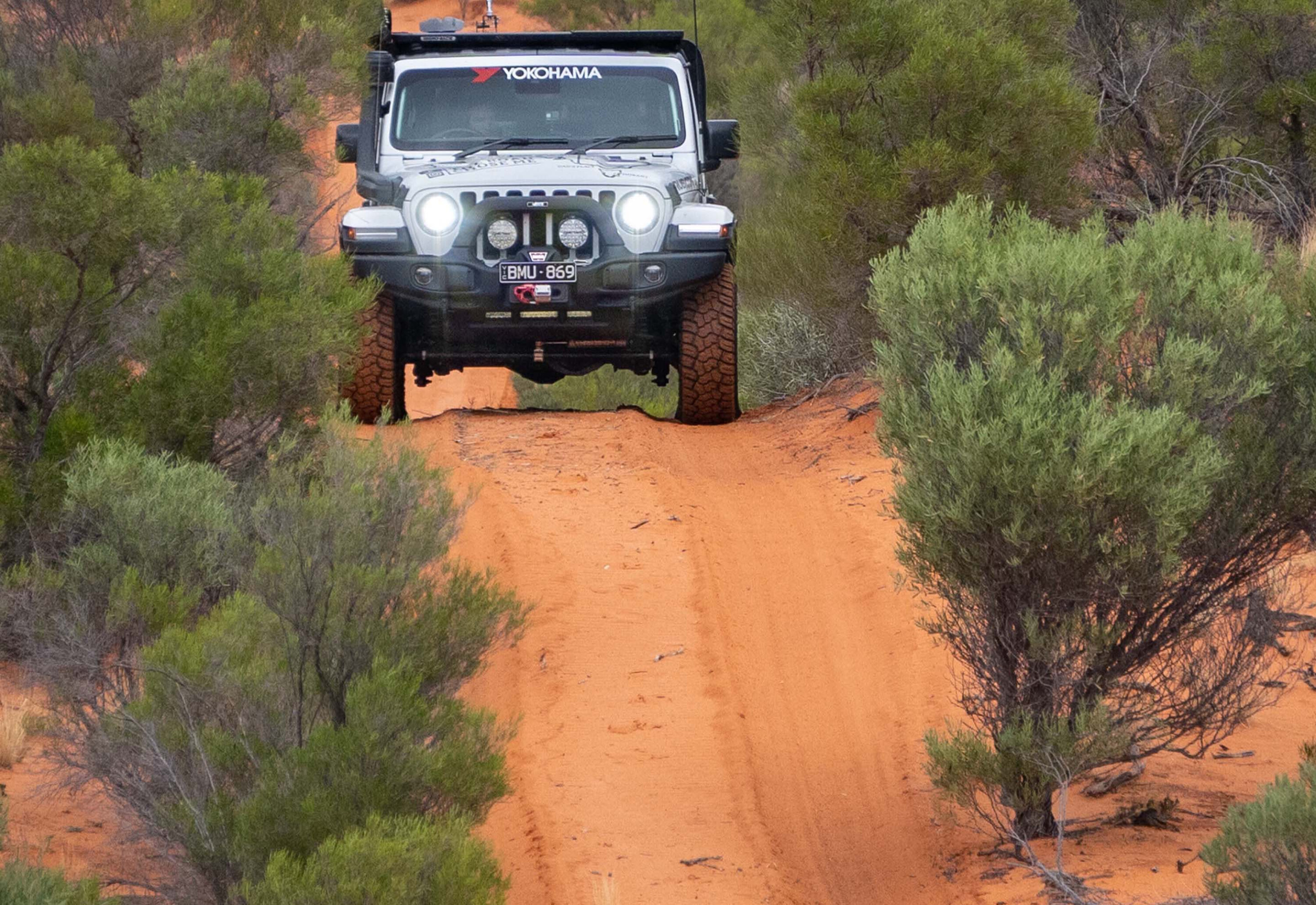
After exploring the Victorian High Country and Tasmania in my Jeep Gladiator, I’m feeling more confident with the setup every day, and Googs Track feels like the perfect opportunity for remote exploration, where I can put all systems to the test in preparation for much more remote desert travel to come.
1
Heading north
Arriving in the small beachside town of Ceduna in South Australia, I’m more than a little disoriented to realise I’ve already driven halfway across this massive continent.
Looking west, a huge road sign announces I would still need to drive 2000km to reach Perth, while facing east an equally large sign shows there are also 2000km to Sydney. While Perth is in the plan on this tour, it will be many months before I venture further west than I am now.
In Ceduna I fill both the main and auxiliary petrol tanks to the brim, and get some friendly ribbing at the service station from a LandCruiser owner who thinks my Jeep won’t be able to handle the soft sand on Googs Track. After many months in Australia, I’m getting used to this kind of thing and as usual I will let the Jeep do the talking.
1
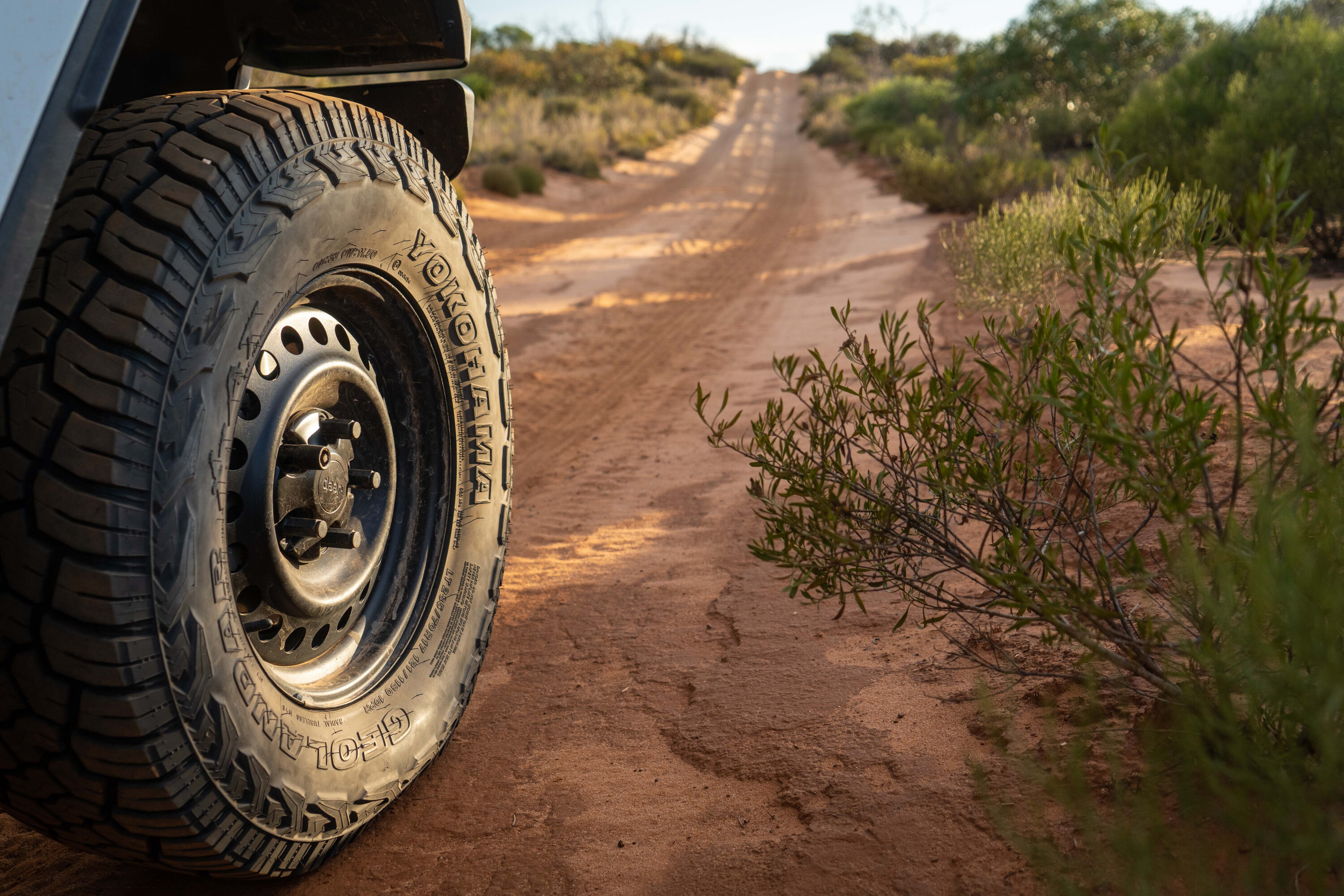
Setting out late in the afternoon, Katie and I air down to 16psi not long after turning off the Flinders Highway.
At these pressures the tyres will have a much larger contact patch giving much more grip in the soft sand. If needed, I can go much lower, though I’ll start at this pressure and see just how soft the sand gets. I also attach a sand flag to the roof rack to make the Jeep more visible to oncoming vehicles, and I will drive with my headlights on at all times.
Over the years there have been horrific crashes when two vehicles meet on top of dunes, both aggressively climbing at speed and unable to see each other until the last second.
1
Combined with frequent location call-outs over our CB, the tall and bright sand flag is a last line of defence to avoid the worst-case scenario with any oncoming vehicles.
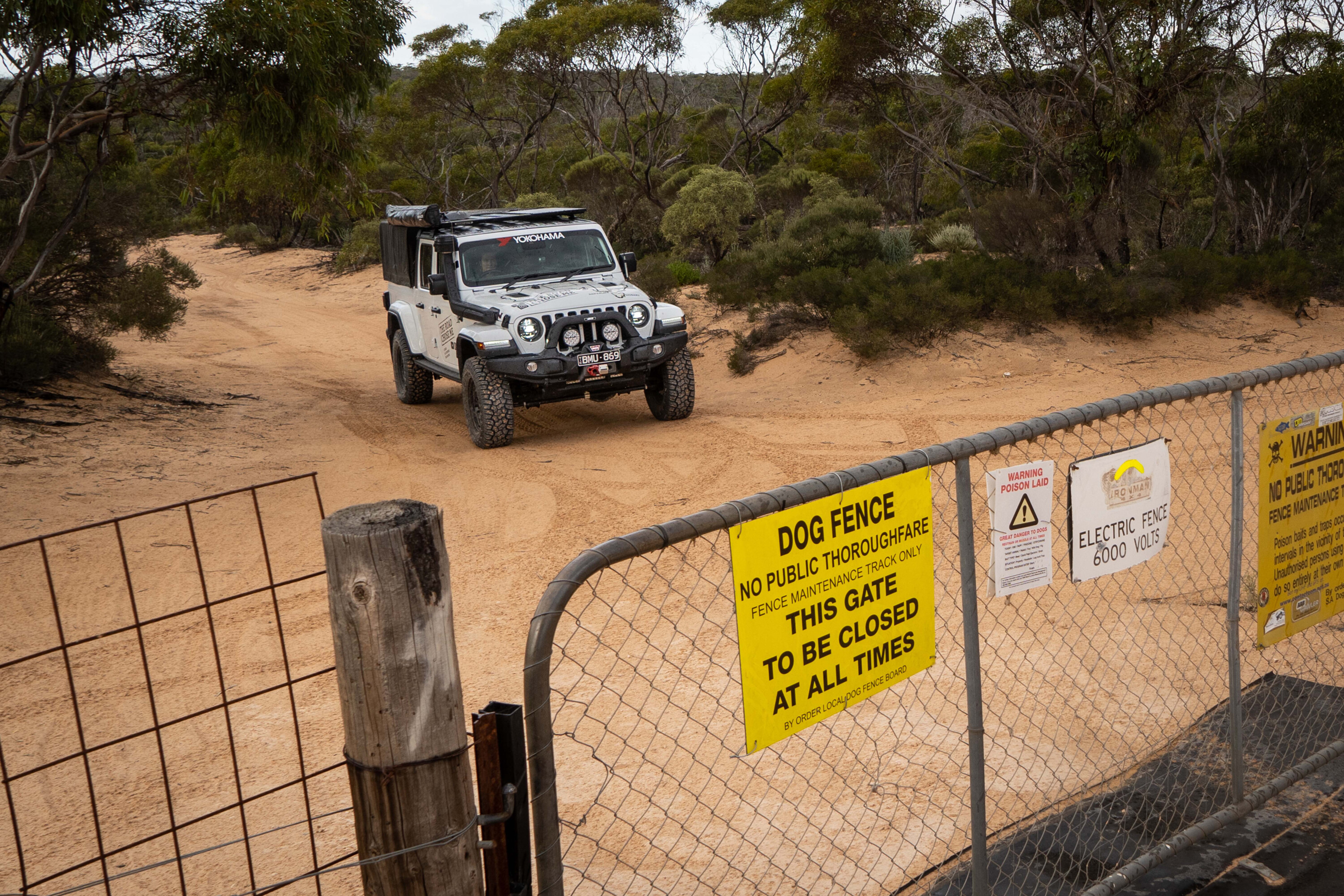
At first the track is dusty and corrugated as it meanders past cattle stations and eucalyptus trees that are huddled together looking as if they’re trying to conserve water. With the stations fading in the rear view mirror we pass through the dog fence that runs east to west for many thousands of kilometres.
Packing a punch of 6000 volts and buried into the ground, this fence is an attempt to stop the enormous plagues of rabbits, dingoes and wild cats from roaming freely.
1
Though I usually like to test electric fences, I think it’s wise to leave this one alone.
In the first hours the track passes over only a handful of smaller bright red dunes that are easy to climb. Nothing presents a problem, and we make slow and steady progress until reaching camp at sunset.
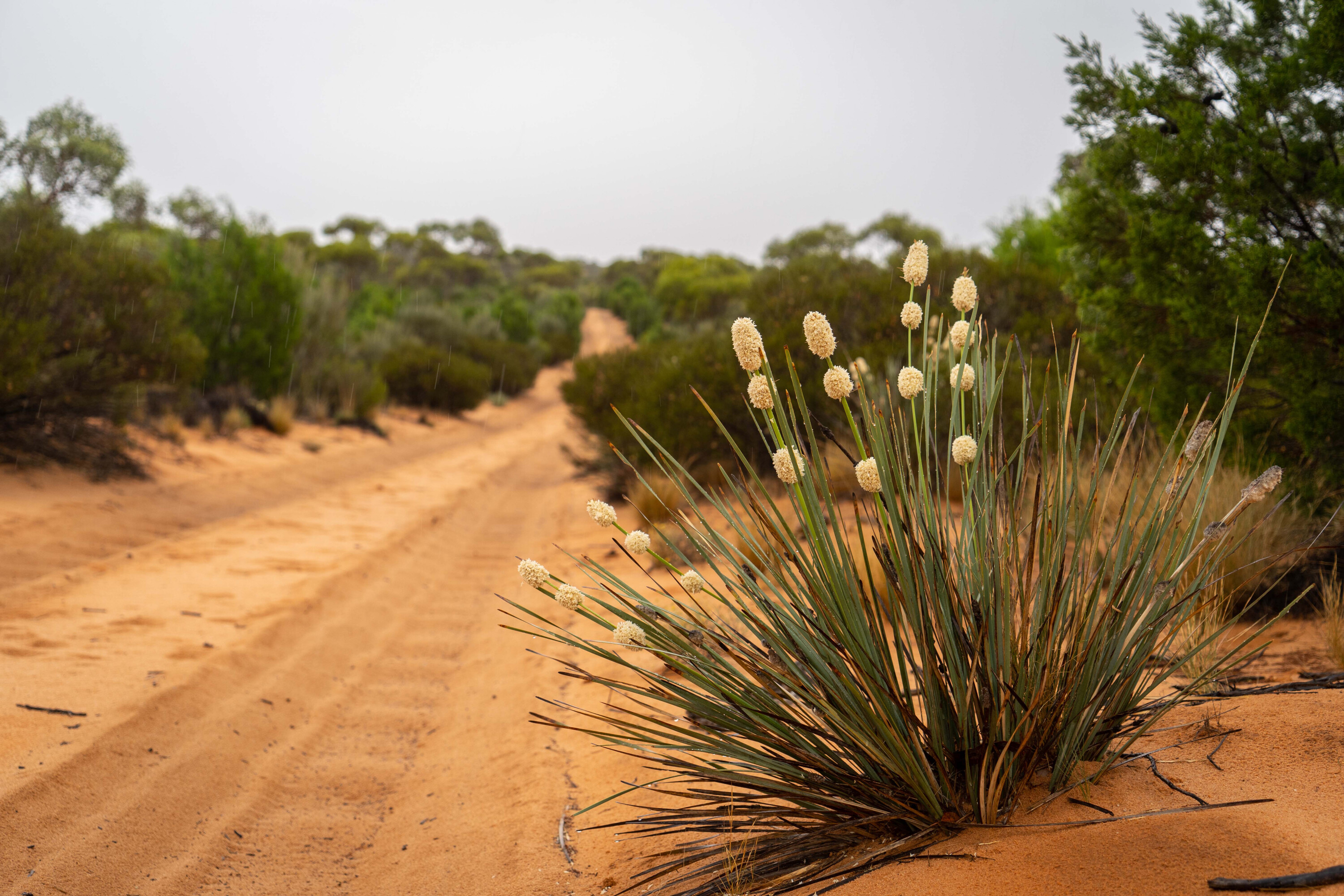
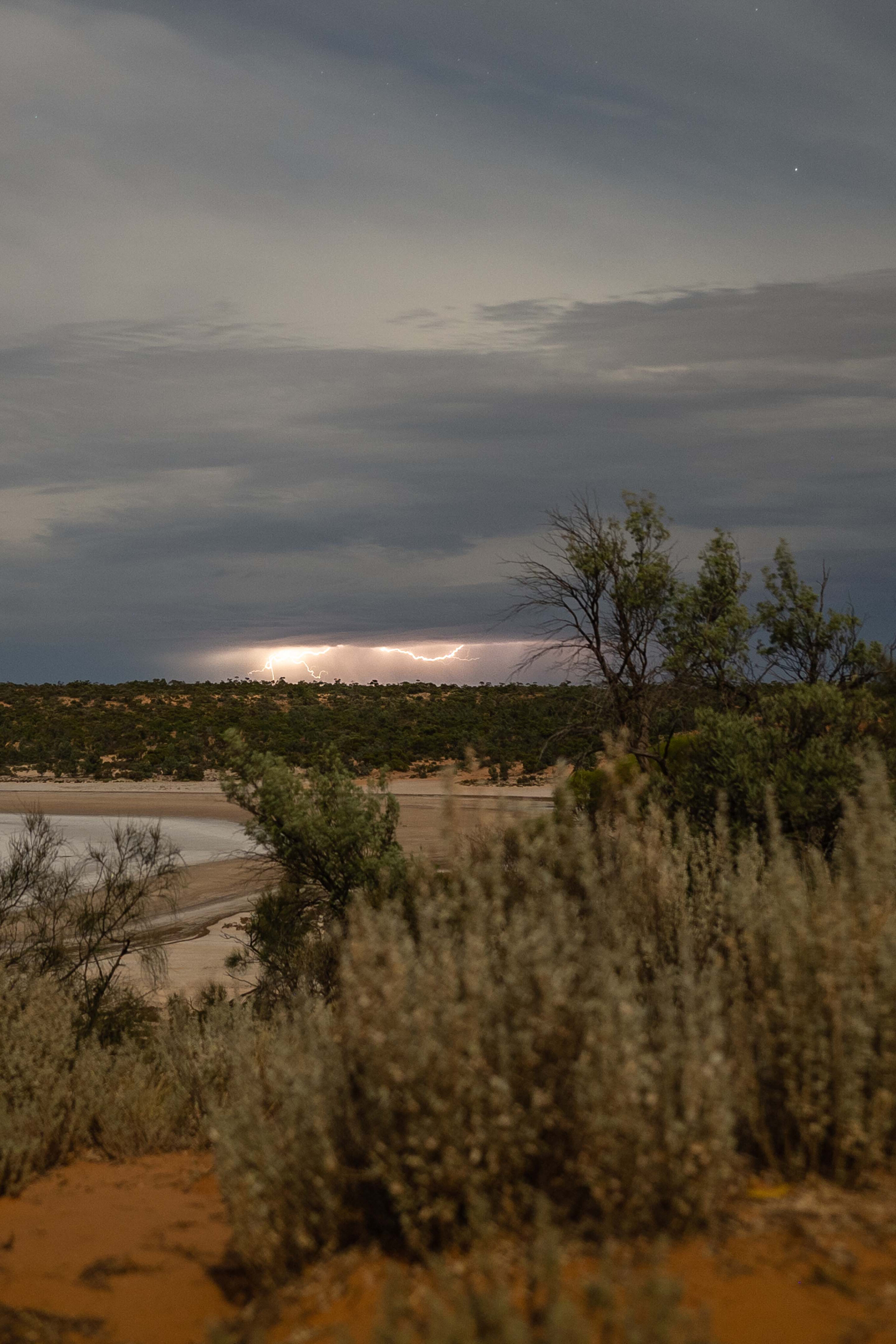
Googs Lake is an enormous salt pan that rarely contains water. While cooking a huge feast of burgers and salad for dinner, we are treated to an impressive display of heat lightning far to the south as rainstorms that have ravaged much of the continent continue their endless assault. All day I’ve been shocked by how green the desert is, a clear indication of the heavy rainfall that is seemingly endless.
1
Let the dunes begin
In the morning we’re on the track for only 30 minutes before we start contending with the bright red dunes that define this track.
These massive dunes that run east to west across the track are the only feature in the otherwise flat landscape, and they stretch into the distance like an endless procession of ocean swell rolling towards shore.
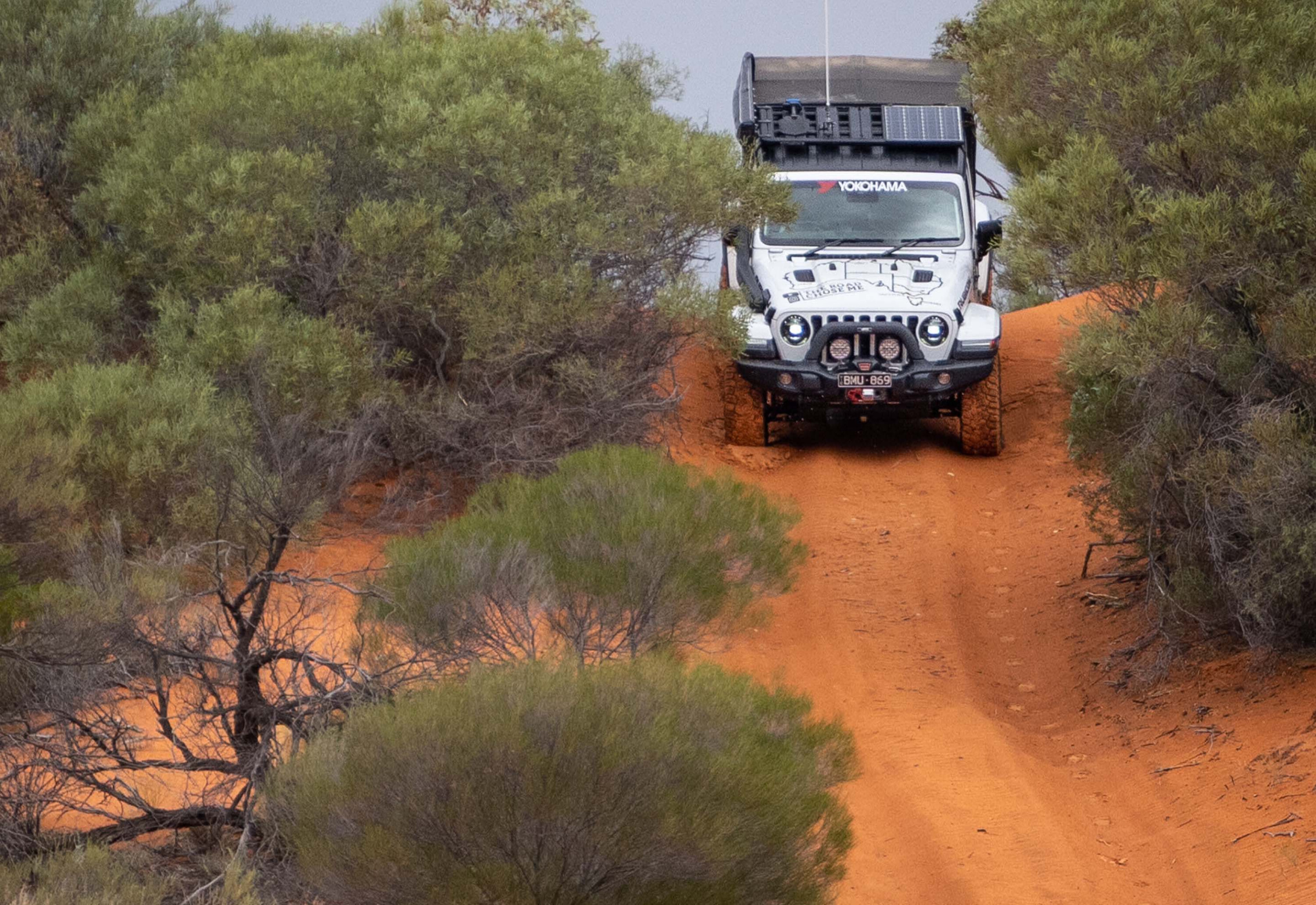
Because the dunes run east to west to the horizon, and we’re driving north, we must climb directly up and over every single one. The dunes come thick and fast, usually with only a couple of hundred yards rest between each.
1
After the first 50 or so I start to sense a pattern in the ever shifting sand.
Roughly speaking there appear to be about 10 or 15 smaller dunes that slowly build in height until we reach a much taller dune, from the top of which we are treated to stunning views over the harsh landscape that stretches to the horizon. These larger dunes are much softer, and because we’re the first vehicle to tackle them for the day, the top of each is a mound of soft untouched sand that has blown in overnight.
The climb up the face of these dunes is often rutted and lumpy, thanks to other vehicles having struggled and dug holes through excessive wheel spin. Towing a trailer is not recommended on Googs Track, though plenty of people still do.
1
This results in the biggest and softest dunes being badly churned up. With low tyre pressures and no trailer holding us back, we easily climb up the tallest and softest dunes without so much as spinning a single wheel.
Moving north we catch the occasional glimpse of emus darting away, which move extremely quickly through the scrub and small trees. We also spot plenty of wild camel tracks in the soft sand, leaving no doubt they use the track to move around, though we never actually see any.
As the day wears on we spot hundreds and hundreds of golden orb spiders building enormous webs that are often more than three metres across. Apparently they’re doing great in the wetter-than-usual conditions, and many are nearly as big as my hand across. Though they are not considered toxic to humans, I fall firmly in the ‘leave them alone’ camp when it comes to snakes and spiders.
1
Endless waves of sand
As we climb up and over hundreds of dunes I begin to feel a kind of monotony mixed with sea sickness, and I feel a little like a cork being tossed around on a huge ocean swell.
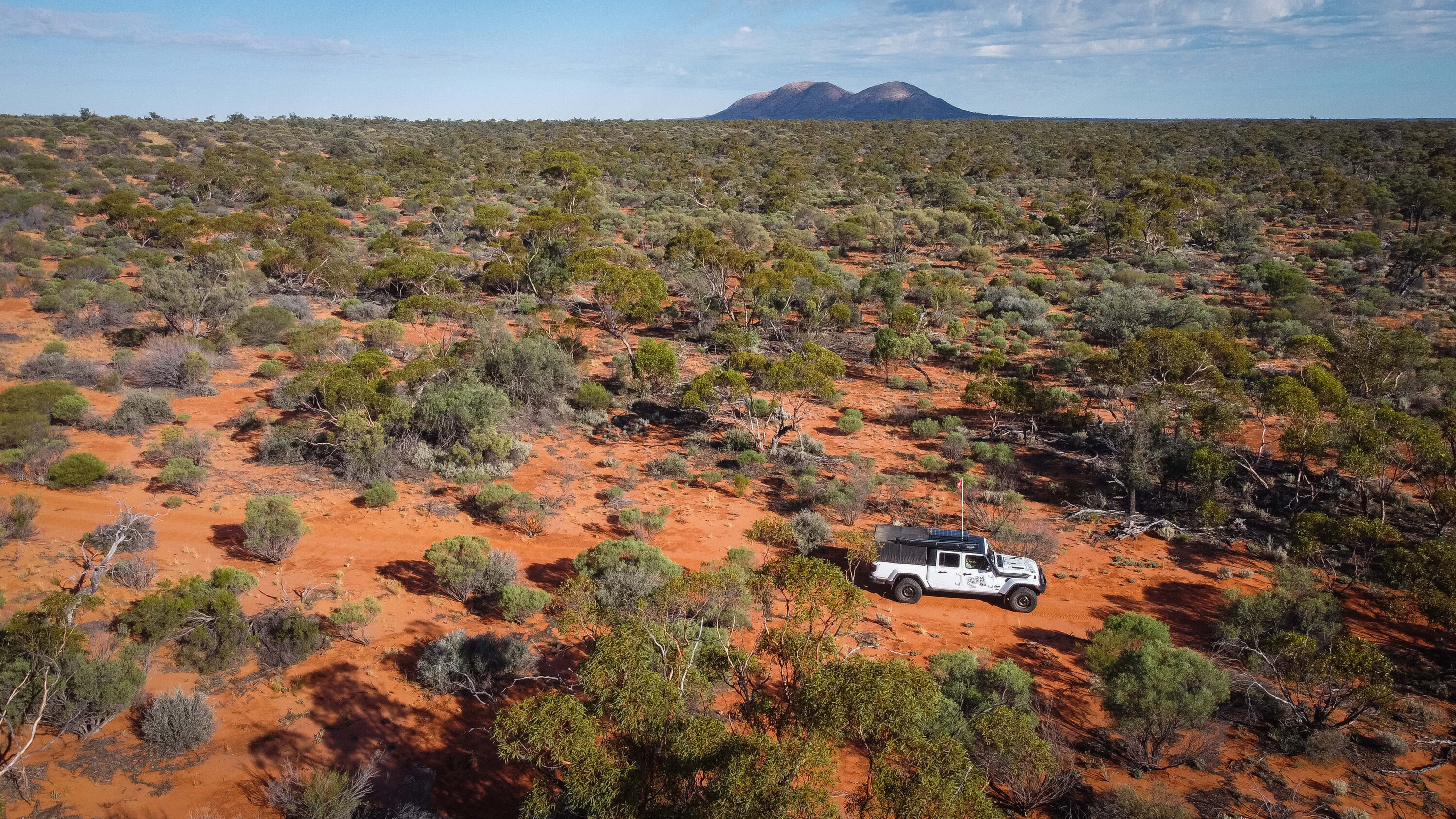
For hour after hour we continue north in the same fashion before stopping under a scrawny gum tree in an attempt to find some shade for lunch. Late in the afternoon we roll into camp at Mount Finke, the only feature on the landscape for hundreds of miles in any direction.
We haven’t seen a vehicle or heard anything on the radio for the entire day, and we’re a little shocked to see other people at camp.
1
They’re moving south, and they confirm they have heard us calling on the radio for the last 20km as we slowly got closer.
After a day without hearing a single crackle, it’s reassuring to know our radio works just fine.
In the morning we rise early and hike to the top of the rocky mountain to catch a stunning red sunrise that stretches far across the landscape. With the sun low on the horizon the waves of sand are clear to see, and it’s humbling to realise we’ve only crossed a few hundred of the many, many thousands that stretch as far as the eye can see.
1
John “Goog” Denton
Born in 1938, Stanley Gilbert John ‘Goog’ Denton left school at age 12 to work with his Dad on the family farm in South Australia.
According to his wife Jenny, the nickname ‘Goog’ was given to him early in life as a result of him selling eggs for his mum, and as they tend to do, the nickname stuck. Soon after tying the knot, Goog and Jenny moved to a property north of Ceduna, which they named Lone Oak.
The property was originally 5800 acres (2300ha) of scrub just north of the dog fence with thick bush and sandhills extending north to the east-west railway line, 200km away. Together they built a family home on the property and over the next five years their three children were born.
1
Eventually curiosity got the better of Goog and he came up with the crazy idea to push a track northward. Starting in 1973 the track inched forward, with Goog and the whole family inching along however they could.
Often friends and other local farmers pitched in to help, and it was all hands on deck. A grader was eventually purchased and at times a bulldozer was used to get through the most difficult areas.
Goog and his family faced numerous challenges as they slogged away building the track. From drought to bushfires, worn-out machinery to the relentless heat, they had an impossibly hard time of it. Without a breath of wind temperatures can push towards 50°C, and for that reason it is strongly advised not to drive the track in during the summer.
1
It took Goog and his family three long years battling the scrub and sand dunes to realise his dream and complete the track.
The Australian outback is not a friendly or forgiving place, and completing this track took an unimaginable amount of hard work and perseverance.
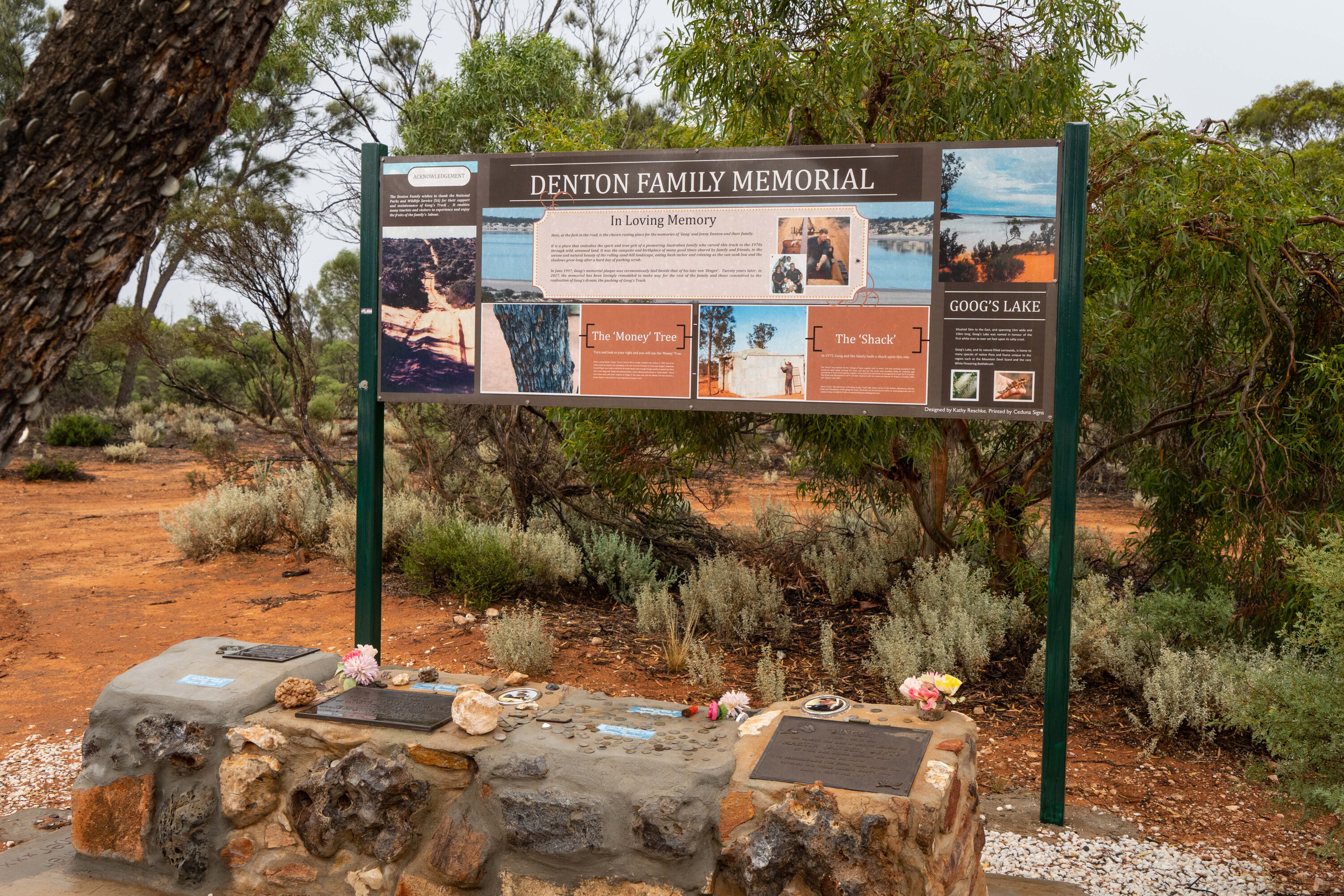
In stark contrast we completed the track in just a couple of days, and I’m ashamed to say we had the air conditioner running most of the time.While his track and legacy live on, Goog was sadly killed in an accident near the track in 1996. After visiting the memorial constructed near his namesake lake, I spent many hours thinking about Goog and his herculean effort against all odds.
I like to think he still gets a laugh about all the people driving his track 50 years after his incredible achievement.
More information
Goog’s wife Jenny has written an excellent account of their lives and adventures building the Googs Track called Memories of Pushing Goog’s Track. It is available for purchase at available at googstrack.com
You can join Dan Grec’s ongoing adventures on YouTube and Instagram @TheRoadChoseMe [↗️]
A decades-long partnership was broken when Ford ended its deal with Mazda to work together on midsize utes.
It was a deal that saw Mazda B-Series utes being rebadged as Couriers and Rangers, and then once Ford created the PX Series Ranger, the deal swung the other way for Mazda to use for its BT-50 models.
When Ford terminated the deal for its then forthcoming ‘Next-Gen’ Ranger, Mazda went looking for a new partner and found a good deal with fellow Japanese brand Isuzu.
In truth, the latest Mazda BT-50 utes are the latest Isuzu D-Maxs, with a fresh skin on them and a revised interior. Everything behind the face is shared, from the powertrains to the chassis and, as owners of Isuzu utes will tell you, that’s a good thing.
1
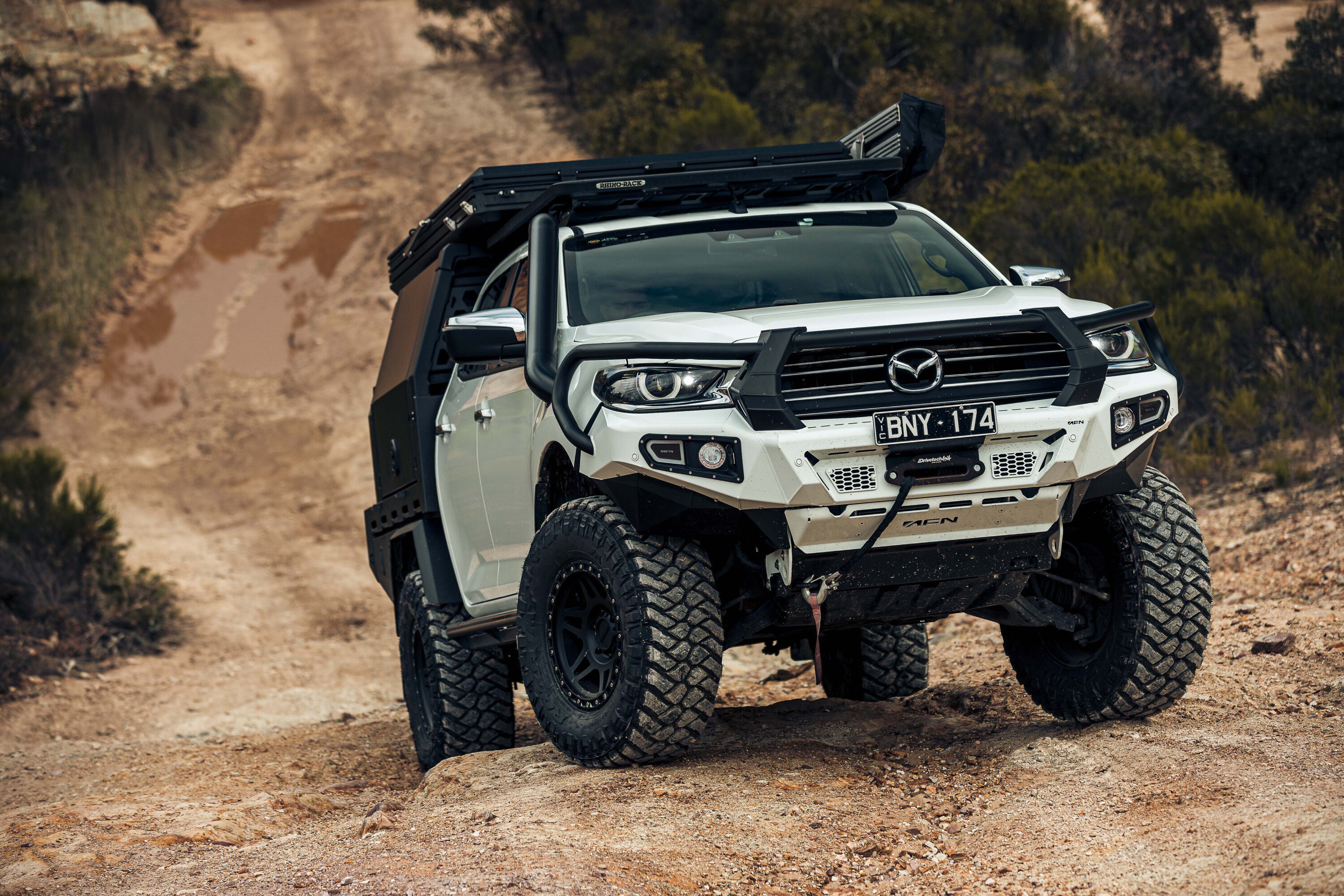
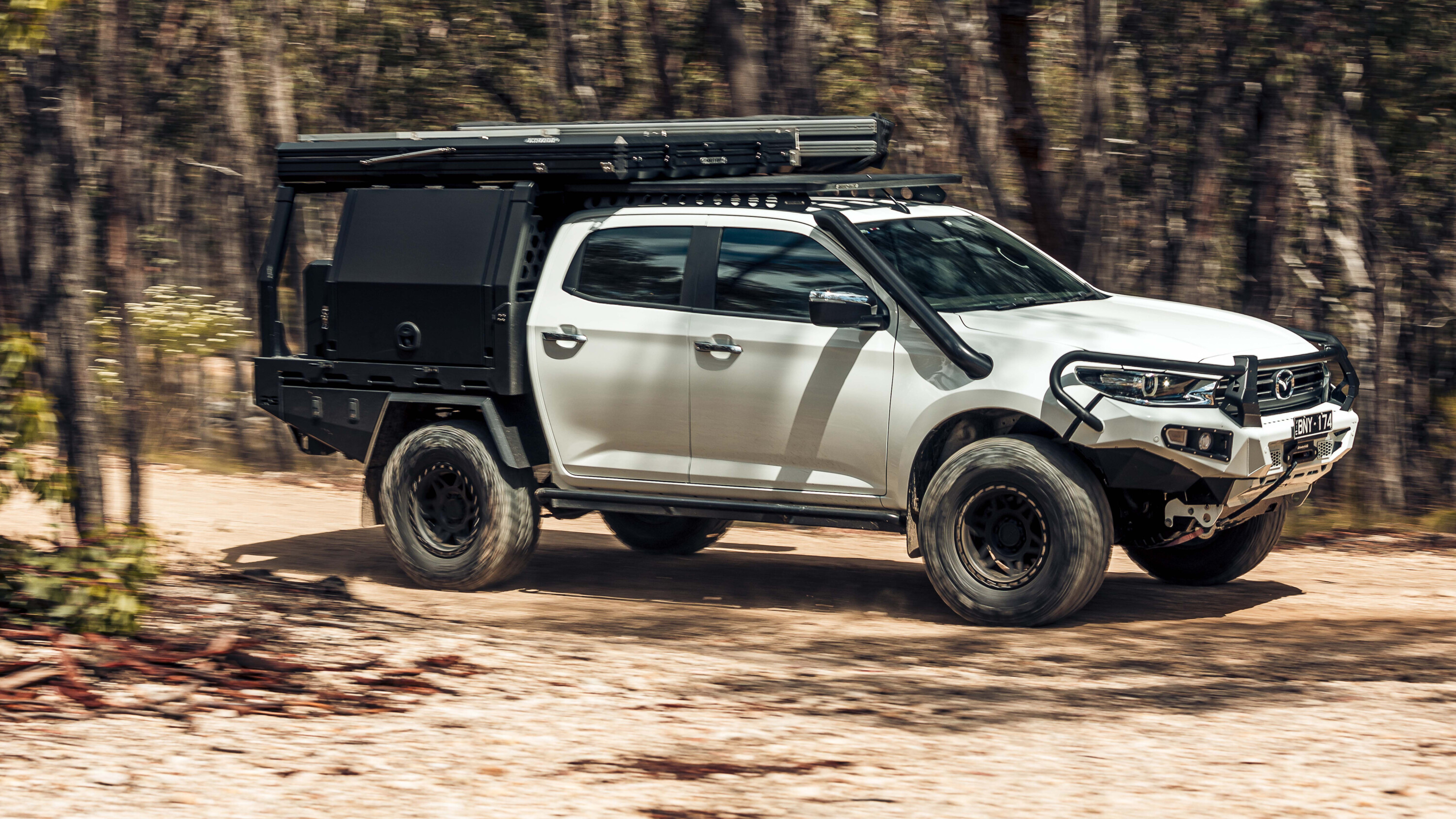
Melbourne’s Jarrod Thorton could see it was a good thing as well, and chose a new BT-50 to showcase the work of his business, Rock Solid Trays & Canopies.
“At the time it was either the BT-50 or D-Max that had released the new-generation models,” Jarrod told 4X4 Australia. “I preferred the style of the BT-50 as well as them being more readily available.”
That’s a familiar tale we’ve heard from BT buyers; while waiting lists for D-Maxes have at times blown out to months, you could walk into a Mazda dealership and drive away in a stylish new ute that is essentially the same car.
1
Top spec
The GT model was the top of the Range BT-50 when Jarrod bought it new in 2021 so it came very well equipped off the showroom floor.
But its high levels of luxury and safety equipment from the factory pale into insignificance when you see what Jarrod has done with it since.
As you might guess from the name, Jarrod’s business makes trays and canopies for utes so it was a given that the new BT was going to be the recipient of some Rock Solid goodness.
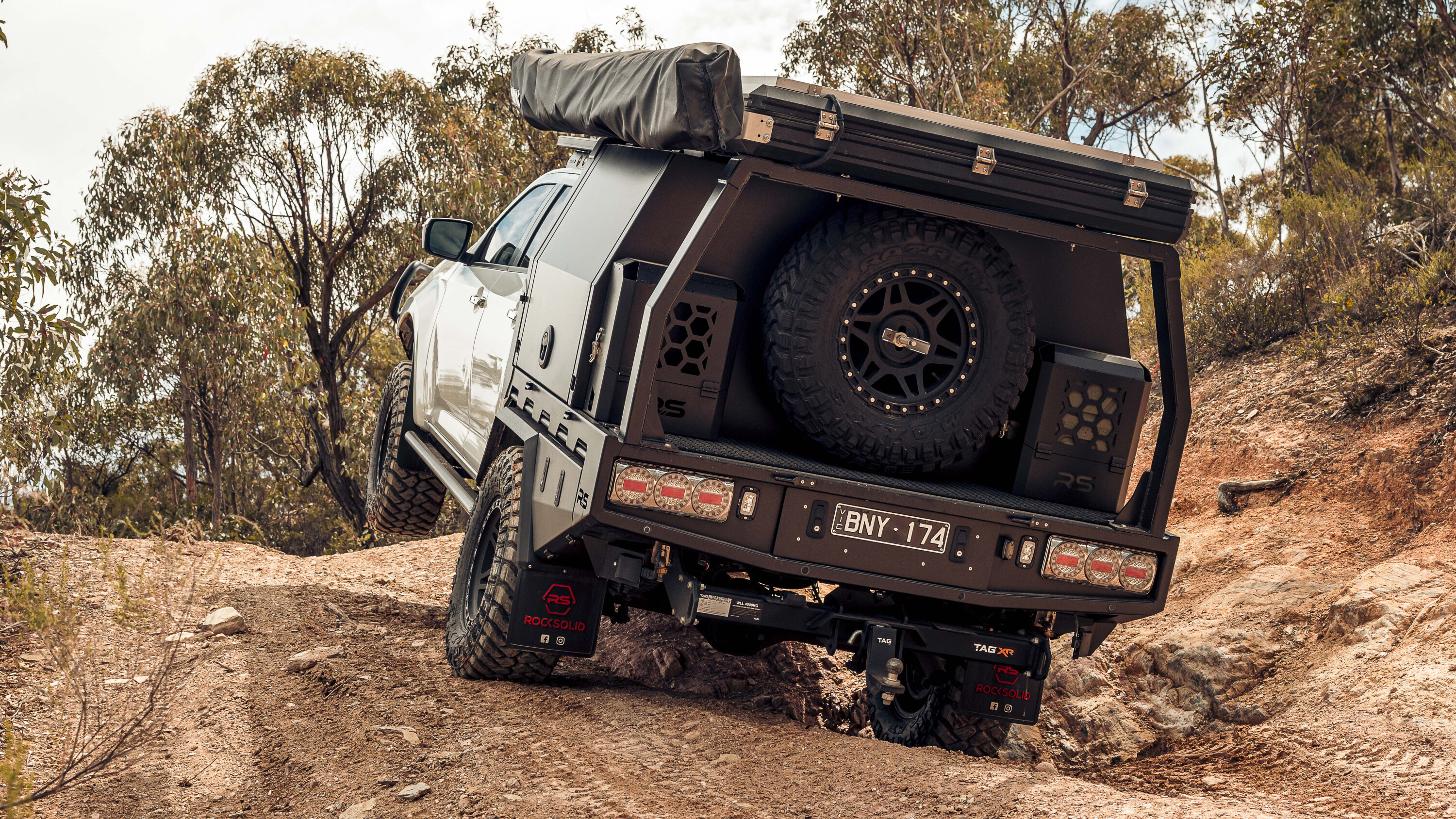
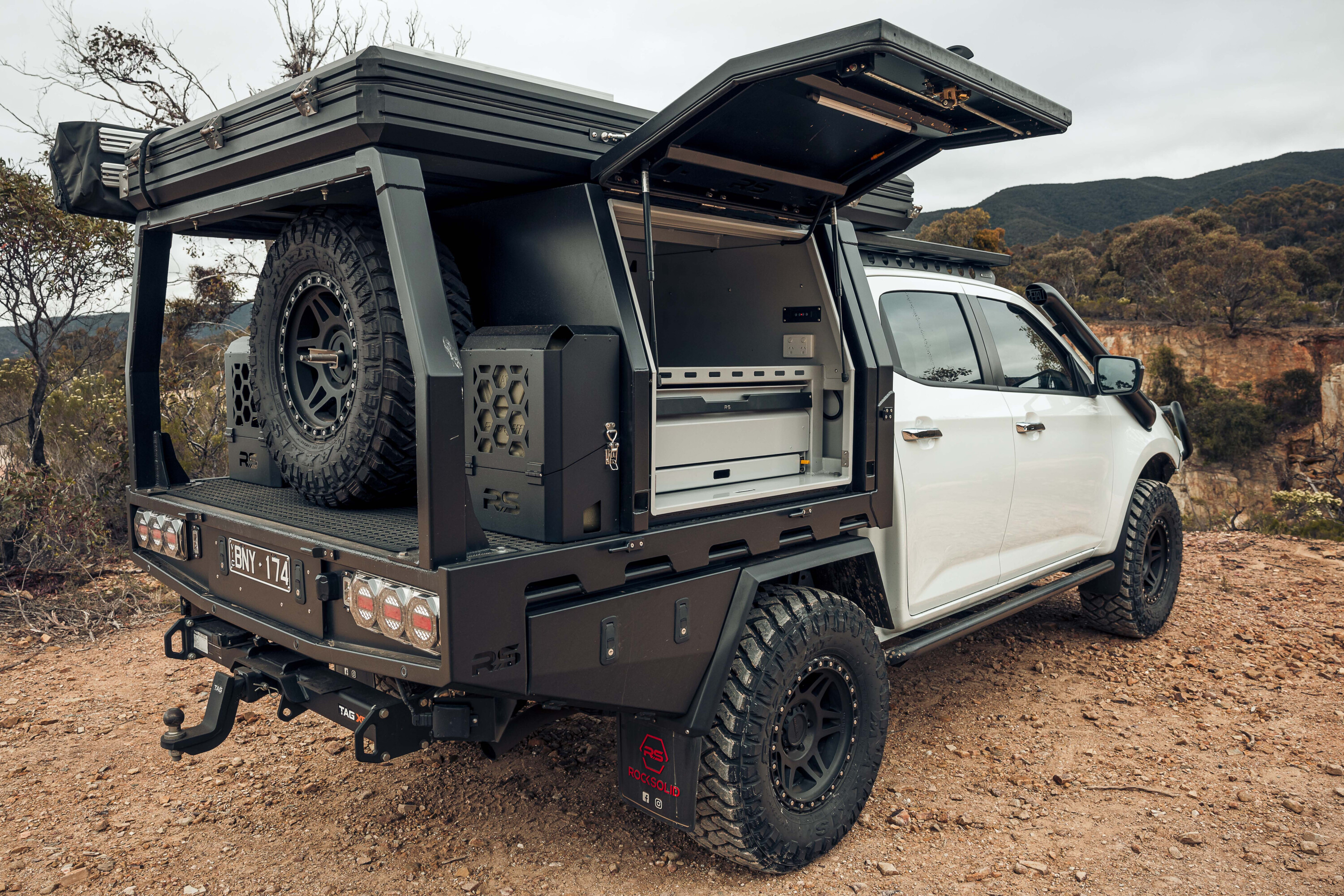
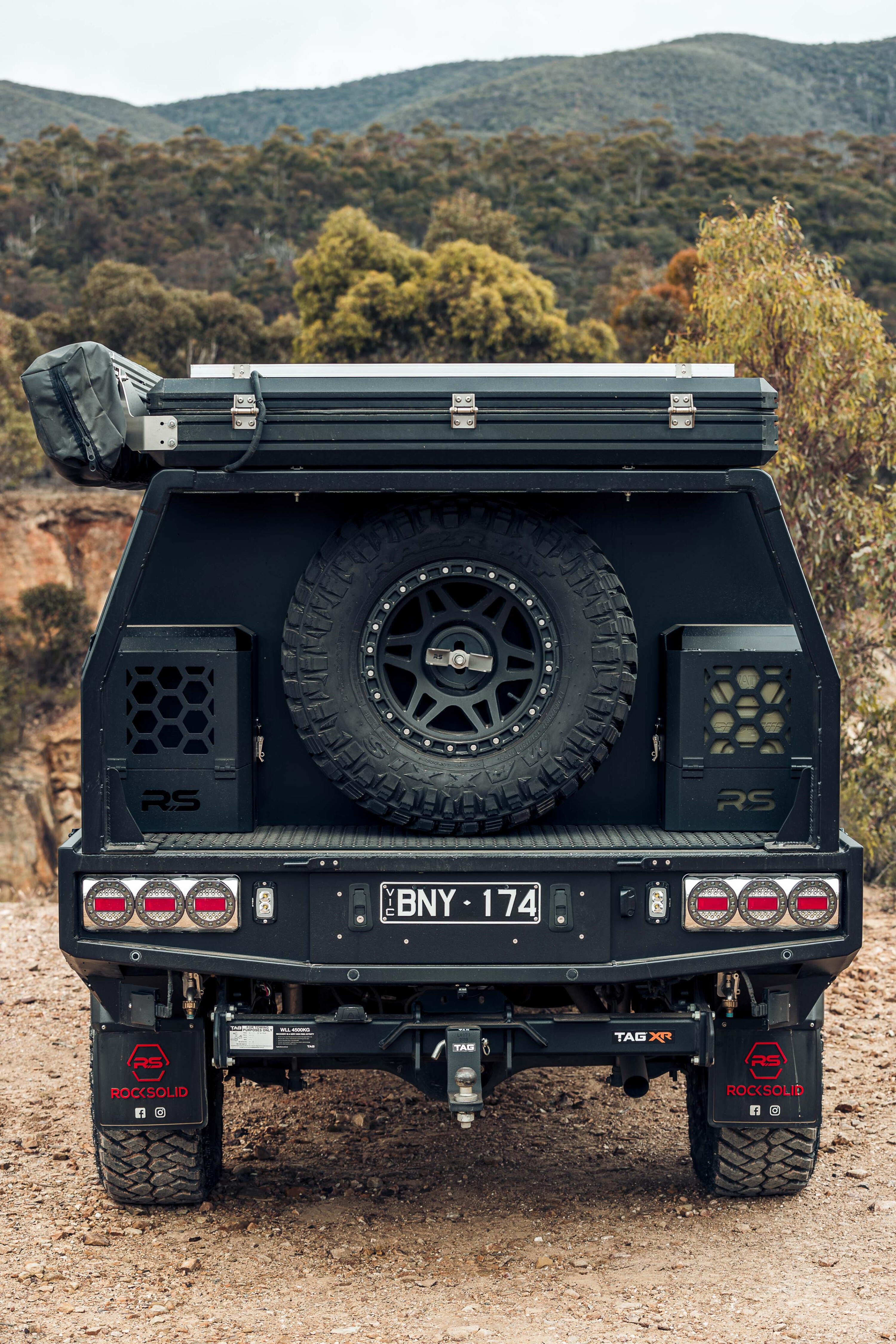
The standard cargo tub was quickly dispatched and in its place a Rock Solid Premium tray measuring 1700mm x 1850mm is the platform on which a solid touring setup is built. The Premium tray includes under-tray boxes, a 1200mm Trundle drawer, 60L stainless steel water tank, one-piece flared mudguards and a rear ladder rack.
1
The 1000mm Rock Solid canopy houses an 85L Bushman fridge with slide-out drawer/table, a pantry (also with a drawer and table combo) and the 12V power supply system.
This is built around a Safiery 200Ah battery fed by a Victron Orion DC charger, Victron MPPT 100/20 solar charger, and feeding a Victron Pheonix 12/2000 inverter. An Ecoxgear Bluetooth speaker is also included to provide the camping tunes.
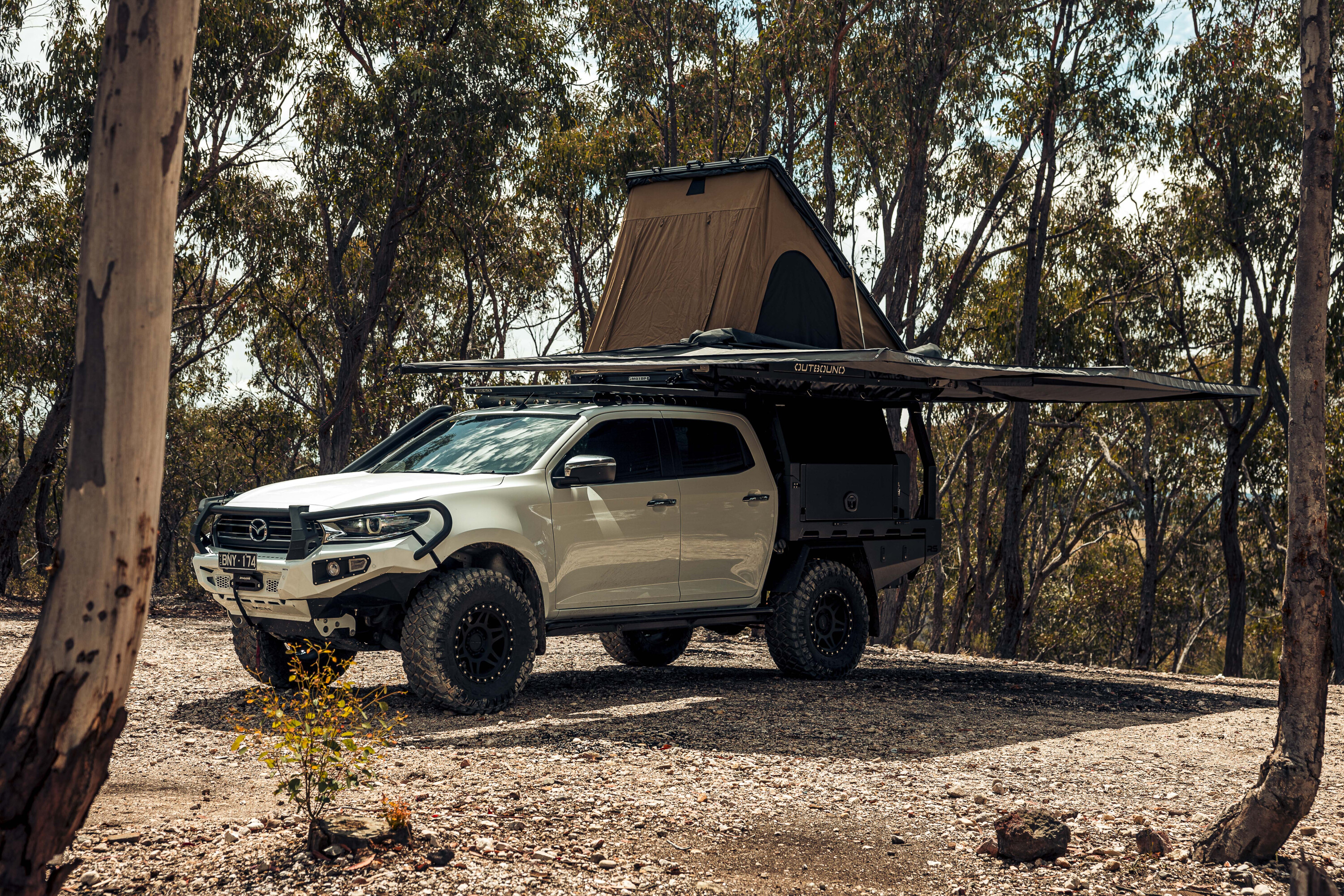
The internals of the beautifully crafted canopy are set up for touring and there’s a Motop Roof Top Tent upstairs for accommodation, and a 270° awning from Supa Peg to provide protection from the elements. Both of these attach to the canopy via a Rhino-Rack Pioneer Platform mounted to a backbone system.
Using a shorter 1100mm canopy on the tray leaves a stubby space to tie things down and is also where the spare wheel and jerry can are secured.
1
Give us a lift
That spare wheel is a neat looking Method 312 alloy wrapped in a 295/70R17 Maxxis RAZR M/T to match the rolling stock on the vehicle.
To make space for the larger 33-inch rubber, Jarrod enlisted the services of Solve Offroad in Sydney for a bespoke suspension package.
Solve is a Fox specialist store and rather than sell you whatever they have on the shelf like some other stores might, the team there tailor springs and dampers to suit different applications.
1
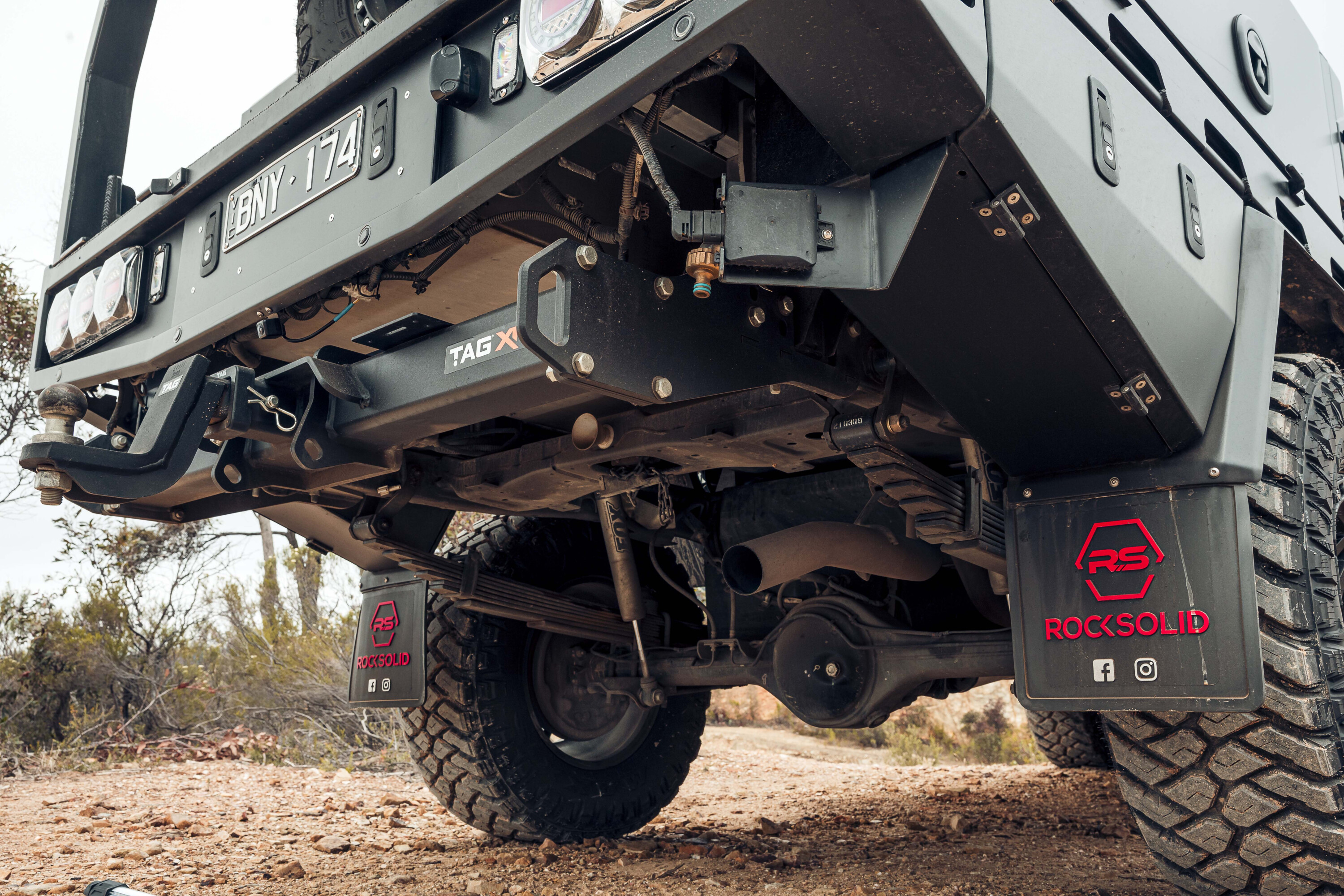
For the BT they fitted Fox struts with coils that raise the ride height almost three-inches up front, while under the rear the Fox dampers work with Tough Dog 500kg constant-load leaf springs.
Solve ensures its shocks are the right length and travel to suit the vehicle to prevent any over-travel or damage to vehicle axles and drivetrain components, spending significant time to ensure each suspension kit is perfectly suited to each application.
Solve also fits Ironman Pro Forged upper control arms and a Munji diff-drop kits to BT-50s to keep all the suspension and CV angles on a happy plane for smooth-riding longevity.
1
Touring time
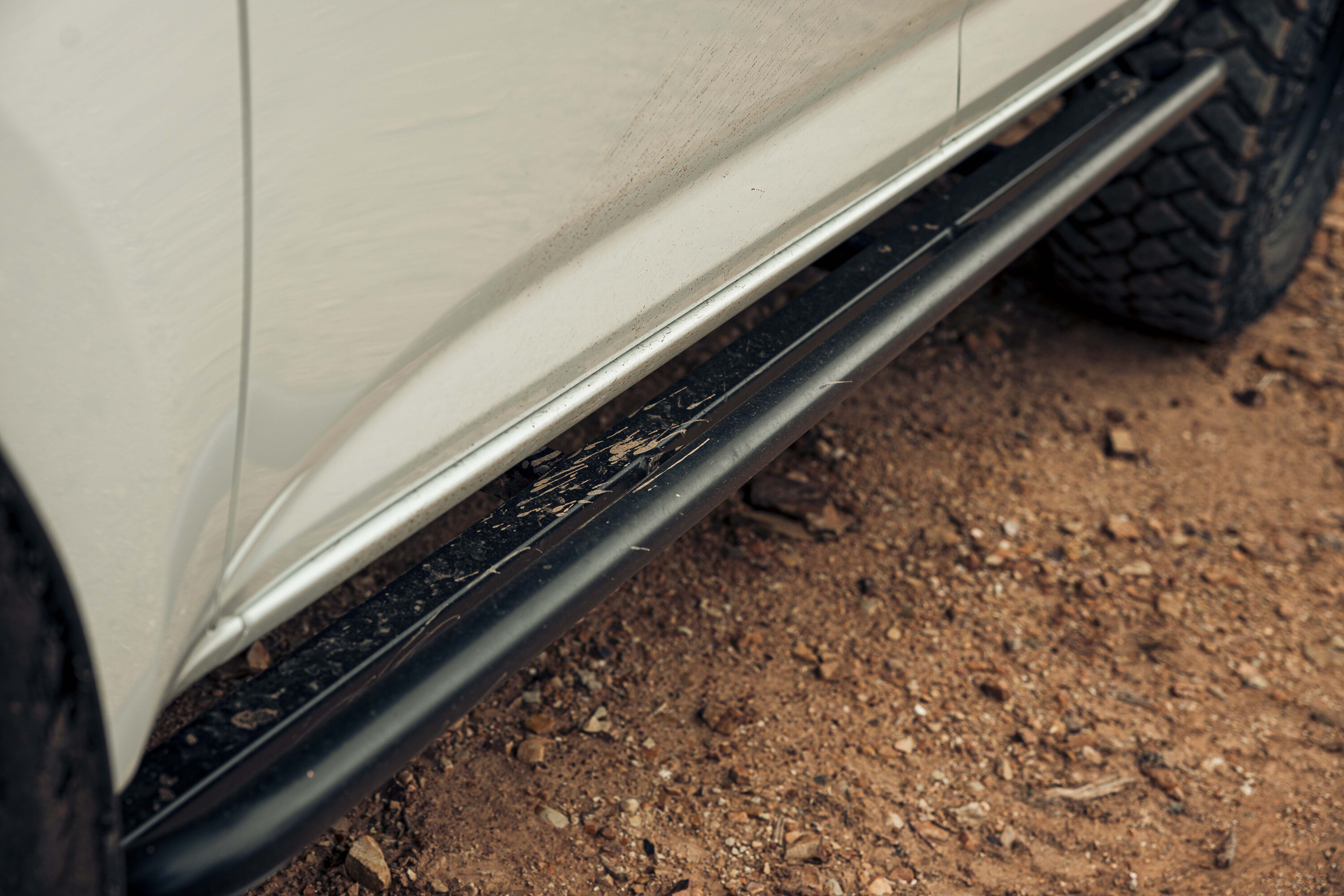
An ARB long-range fuel tank is fitted to increase Jarrod’s touring range, while mechanically the BT runs a stock 3.0-litre Isuzu 4JJ engine and driveline, the only addition being a stainless steel intake from Phat Bars who also made up the rock sliders that tuck in nicely along the sills for protection.
Frontal protection comes by way of an AFN bull bar that conceals a trick two-speed winch from Drivetech. The stylish AFN bar complements the Mazda’s good looks as well as protecting it, with underbody bash plates and rated recovery points included.
At the rear-end, a TAG Extreme Recovery (XR) tow bar provides protection, 3500kg towing capacity, and multiple rated recovery points.
1
Jarrod says he has enjoyed his travels with his BT-50, with trips to Stradbroke Island and the York Peninsula, but with other vehicles to develop Rock Solid products for, he has recently moved it on.
“The BT-50 has been sold,” Jarrod told us not long after we photographed it. “The new owner will be heading west on a six-month trip to see as much of the country as he can with it.”
It sounds to us like someone has scored themselves a sweet touring rig that is beautifully built, and being a BT-50 makes it stand out from what everybody else is driving.
1
Rear-end fit out
If you like the look of the canopy and touring setup on the back of Jarrod’s Mazda BT-50, make sure you check out the Rock Solid Trays & Canopies website at rocksolidau.com.au [↗]