
Have you noticed the trend towards smaller and smaller diesel engines, especially in the popular ute market?
Not too many years ago the Mitsubishi Triton had a 3.2-litre diesel, but it was replaced by a 2.5-litre and then a 2.4-litre. Likewise, engine capacity in the Nissan Navara dropped from 3.0 litres to 2.5 litres and then to 2.3 litres. Meanwhile, the Holden Colorado now has a 2.8-litre diesel, whereas the previous generation had a 3.0-litre diesel. And, most recently, the new Toyota Hilux arrived sporting two new diesels, a 2.8 and a 2.4, where the previous model had a 3.0-litre.
The exceptions to this downsizing trend are the Ford Ranger and Mazda BT-50 ‘twins’. Both use a 3.2-litre five-cylinder diesel of Ford origin, whereas the previous Ranger and BT-50 were powered by a 3.0-litre Mazda diesel.
However, the talk now is that Ford is currently looking at a smaller diesel for the next-generation Ranger. There’s also a rumour that Mazda will go its own way with the next-generation BT-50, but that’s only speculation at this stage and merely an aside here.
If Ford did wish to fit a smaller engine to the Ranger, it could do a lot worse than the 2.7-litre V6 diesel currently used in its soon-to-be-discontinued Territory, and previously used in the Land Rover Discovery 3 and 4. Or it could use a single-turbo version of the 3.0-litre bi-turbo V6 currently found in the Discovery. Both of these engines are of course Ford designs, although Peugeot had a hand in the original 2.7.
Smaller engines have a few benefits, including better fuel economy and the fact that they weigh less. Lighter engines also don’t need such a heavy chassis structure to support them, so the weight savings are multiplied. Smaller-capacity engines are also physically smaller, which means they are easier to package with a vehicle and leave more room for passengers and cargo.
Manufacturers can happily make this move to smaller diesel engines because more sophisticated fuel-injection systems and turbochargers, among other things, mean that engine downsizing doesn’t have to come at the expense of power. In fact, all of the new smaller-capacity diesels produce more power and torque than the engines they replace.
The downside is that a small engine has to work harder than a big engine to make the same power, and even harder to make more power. That just comes down to the inescapable laws of physics.
There was a time, however, when ‘working harder’ for an engine meant revving harder. That was certainly the case when comparing small and large petrol engines, such as a four-cylinder and a V8. But these new diesels don’t rev much harder than diesels of old. Instead, they work harder in another way – namely,they have higher effective operating cylinder pressures.
They achieve those higher operating pressures via improved combustion efficiency, not higher compression ratios. In fact, modern diesels typically have much lower compression ratios than diesels of not too many years ago, and vastly lower ratios than those of a decade back.
The good news is that while these smaller diesels work harder than diesels of old, it’s a lot easier to design an engine to cope with higher operating pressures than it is to design an engine whose longevity won’t be compromised by constantly high engine speeds.
It’s getting to that time of the year when we start planning our next long-distance escape.
This got me thinking about the best on-road and off-road trips you can do in Australia. And we are certainly spoilt for choice here!
Close to home we can hitch up the camper and head to the High Country. With a bit of planning, we can start a trip from Yarra Glen, just outside Melbourne, and end up close to Katoomba, west of Sydney. Or you can do it the other way around, starting at Katoomba. They are both great four-wheel-drive trips.
Either way, allow yourself a minimum of a couple of weeks to experience the best camping spots and the most challenging tracks – some of which you won’t be able to take the camper on. Many of the tracks are also closed during winter, so plan your trip for the next couple of months or wait until next spring.
Cape York remains high on the list for most four-wheel drivers and, with around 40 trips to the Cape (not all to The Tip) under my belt, it’s probably my favourite long-distance drive.
Start in Cairns, head up the Creb Track to Cooktown and then through Starcke National Park to Lakefield NP before hitting the Overland Telegraph Line track for the run to The Tip. On the way back, head west at Pormpuraaw for a stimulating trip south to Normanton.
A Simpson Desert crossing is a challenging undertaking, and for many it is their first real taste of a tough 4WD desert experience. Still, many people return, so, like most, you’ll probably find one trip isn’t enough. Whether you start at Mount Dare or Birdsville and head east or west along the French Line, the WAA Line or Rig Road is entirely up to you. This year, with good rains in the region, it will be a trip to remember.
The Kimberley is a long way away from the populated east coast of Australia, but that doesn’t stop it from being one of the most favoured off-road adventure destinations in Australia.
Take the Gibb River Road – not because it is a great 4WD challenge but because it gives access to some of the best and most impressive gorges and waterholes in Australia. At the very least, head to the Mitchell Plateau and, if you’re looking for a tougher adventure, head out along the Walcott Inlet track once you have obtained a key and permit from Mount Elizabeth Station.
For desert lovers and those looking for a long-distance adventure, the Canning Stock Route rates as one of the best in the world, and one of the longest. From Wiluna to Halls Creek it’s about 1850km with just three fuel points along the way. You have to be well-prepared and experienced before you head along this route, but the experience, the ever-changing vistas and the sense of history make it all worthwhile.
Also making my Top 10 list is the Flinders Ranges, which offers easy 4WDing and awesome landscapes, especially in early spring and after good rains such as we’ve had this year, when the northern Flinders are at their finest.
A sojourn between Esperance and Ceduna along the beaches and cliffs of the Great Australian Bight is hard to beat, especially in spring and early summer, while the west coast of Tassie is an awesome place to experience in summer. Back up north, take on the Gulf Track this winter between Normanton in Queensland and Roper Bar in the Northern Territory, where fishing is high on the agenda of every traveller.
Last but not least on my Top 10 should be easy to choose, but there are too many great trips vying for a spot. You could head to Fraser Island in south-east Queensland, or strike west to the Coral Coast south of Exmouth in Western Australia. Maybe the New South Wales Corner Country is a bit closer to home and fits you better – start in Broken Hill, head north and end up in Innamincka on the banks of the Cooper. What could be a more Aussie trip than that?
Go on, go see Australia! Happy trails wherever you travel.
I first met Denis Bartell when I was editing an outdoor magazine and he was about to walk across the Simpson Desert. By then, the mid-1980s, he had already carved a name for himself thanks to some truly incredible exploits in the desert.
Later, when I was first editing this mag, I met him again on a number of occasions while he was walking and canoeing the desert country and its rivers, as well as developing his DB Swag, a precursor to all the modern fully enclosed swags we see today. Just recently we caught up on the phone and talked of those old days.
His first crossing of the Simpson was in July 1977, when he set out from Cape Byron to make a double crossing of the continent. He had planned for the east-west crossing of the Simpson to be entirely cross-country and to pass close to the centre of the desert. We chatted about that and I asked him how he navigated across the dunes before GPS and live mapping.
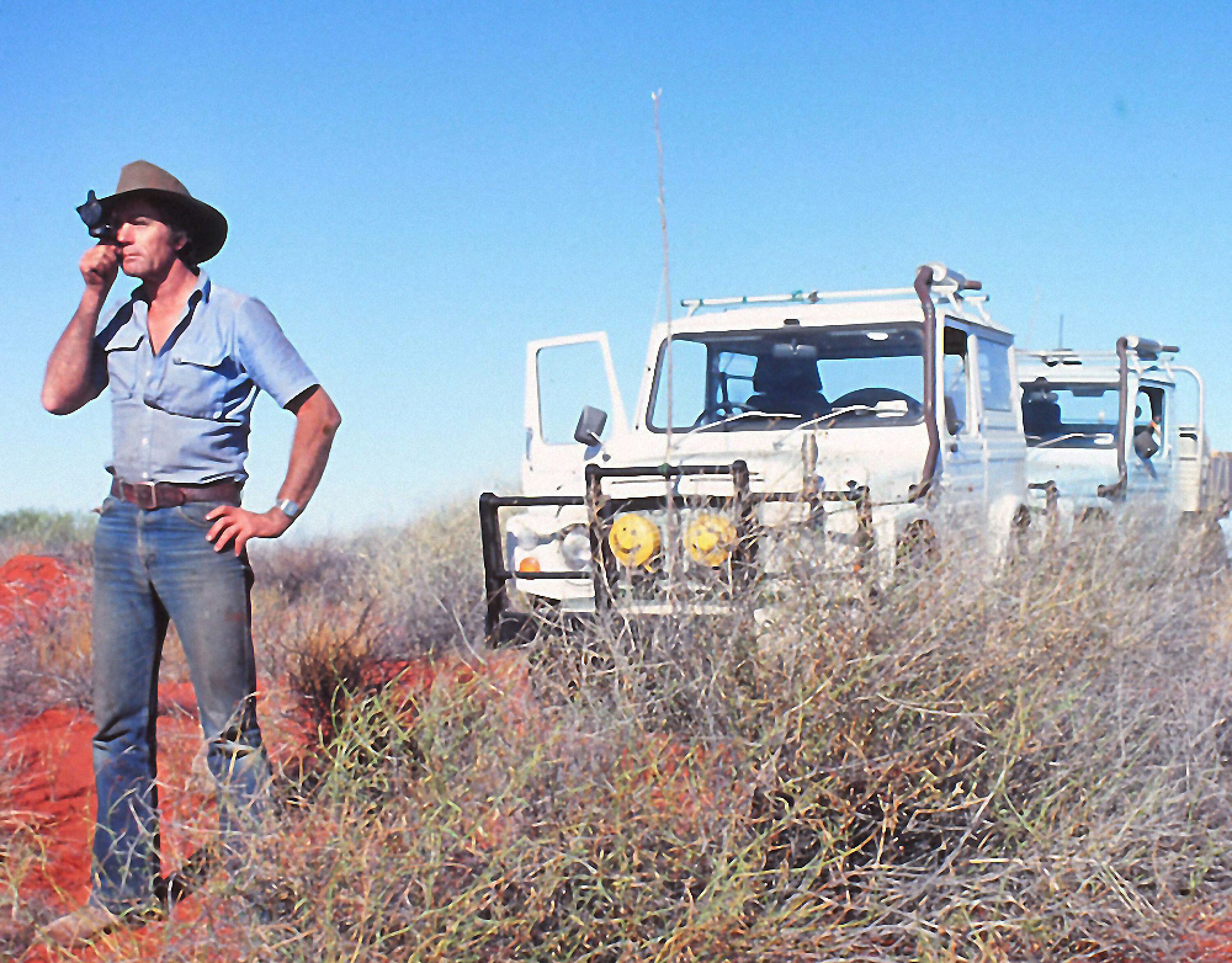
“Well, I never could use a sextant – too lazy to learn, I guess,” he said, “but I’d take a compass bearing on a tree, a bush or, more rarely, a prominent dune crest, and then for the next 15 minutes or so I’d stay on course by keeping the shadow of the antenna, or whatever, and its position across the bonnet in the same place, and that kept me on course.”
It was a quick and handy way to navigate and Denis was pretty good at it, as on subsequent trips he found many historic points that had eluded sextant-wielding searchers. He also managed to set a record or two.
In 1966 the Leyland brothers pioneered a route from Steep Point to Byron Bay, taking more than 110 days. In the 1970s Hans Tholstrup, in a Daihatsu four-wheel drive, completed the first solo one-way crossing of the Australian landmass – in just 13 days. Denis was out to beat Tholstrup’s time, and Suzuki was sponsoring him to do it.
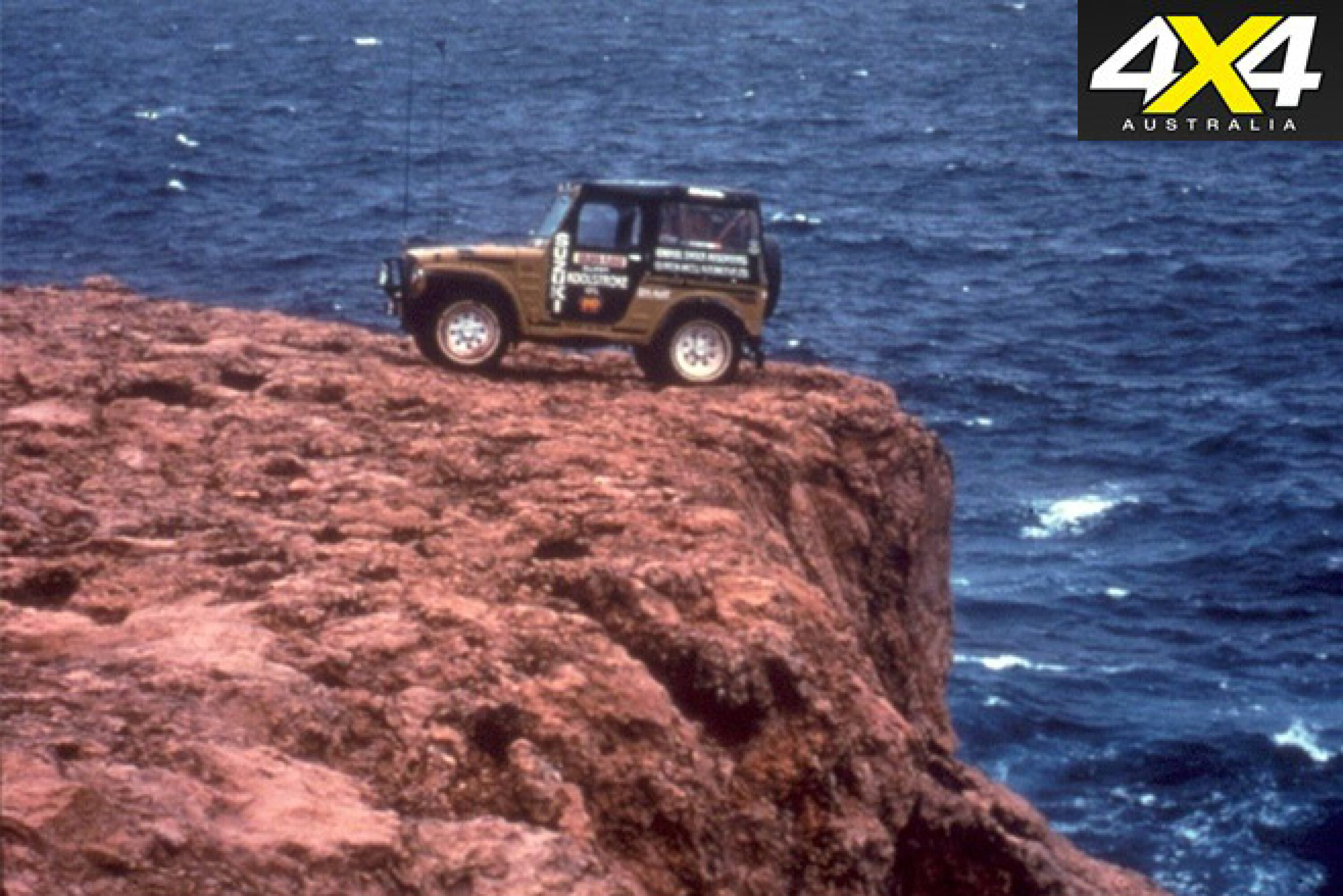
Denis set off in a 25kW three-cylinder, four-stroke, 540cc Suzi and faced numerous challenges: he was hung up on spinifex clumps, he teetered on a roll-over on various occasions, and he only saw a couple of other hardy souls throughout his journey, including Robyn Davidson, whose book Tracks went on to become a bestseller and later made it to film.
Despite all this, Denis successfully crossed the country from east to west. Then, on the return trip (west to east), he beat Tholstrup’s time, cutting the record to nine days, two hours and 20 minutes. Not even a busted front axle could stop him.
The following year he set out again, this time in a more powerful 800cc Suzi, for a record-breaking west-to-east crossing. Plagued by rain and flooded claypans and roads, he set a time of six days, 22 hours and seven minutes. That time still stands as the record for a crossing by a solo driver.
In 1979 he set out on another first – to follow Cecil Thomas Madigan’s 1939 route across the northern Simpson. With him was the then editor of Overlander magazine, Michael Richardson. In a couple of Suzukis – an LJ80 hardtop and an LJ81 trayback – the two men left Molly Clark’s new Andado Homestead and travelled via Old Andado to The Twins and Fletcher Hill, before plunging into the heart of the desert.
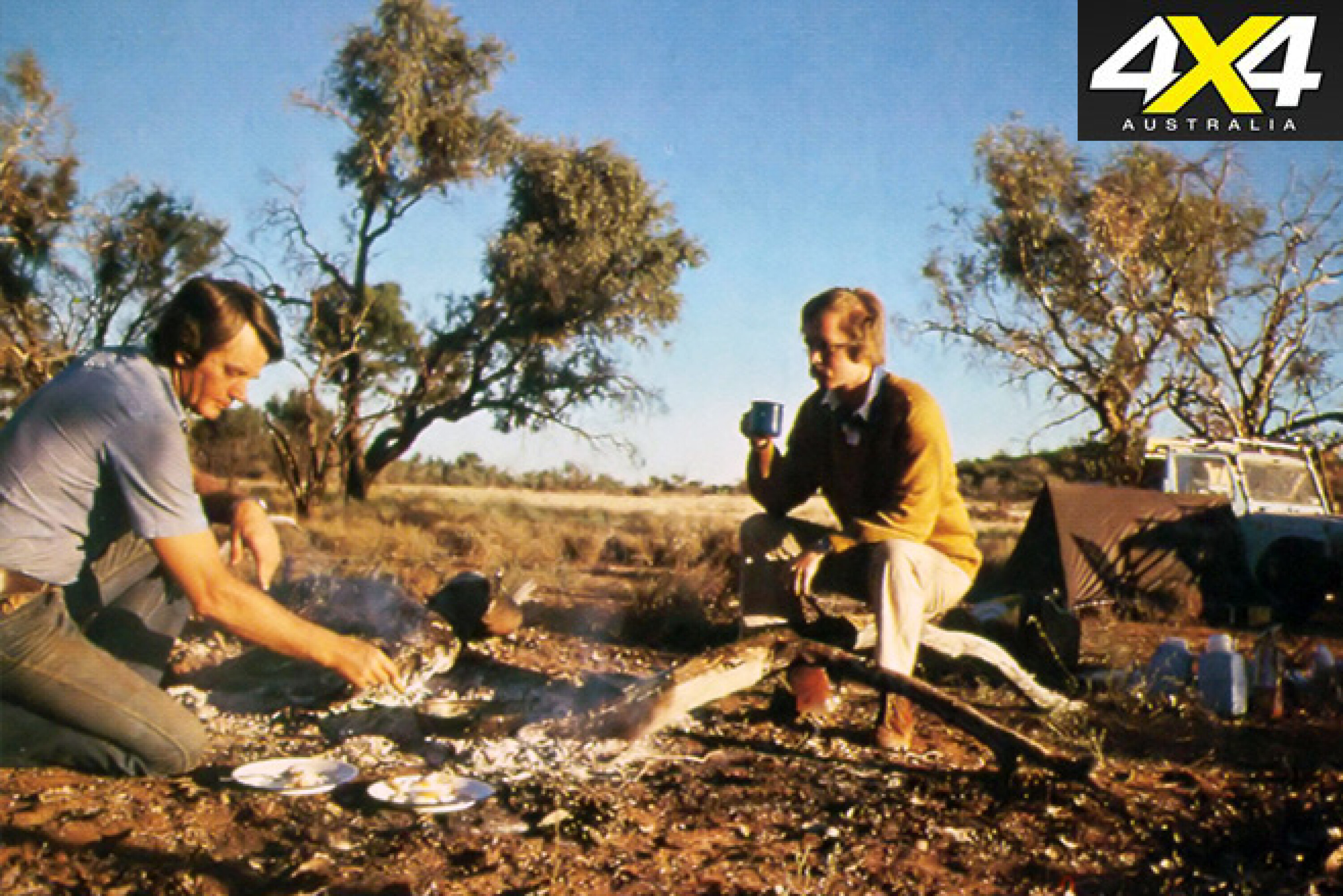
A few days later they discovered Madigan’s blazed tree on the Hay River, before pushing onto Kuddaree Waterhole and finally reaching Birdsville. Today, few intrepid desert travellers take on the challenge of this cross-country route, though it’s now made easier by GPS and the known and marked location of all of Madigan’s campsites.
The following year saw Denis back in the desert, this time in a shorty Land Cruiser, achieving what I believe was his greatest feat in a vehicle in the Simpson. With his teenage son, Richard, they headed east from Dalhousie in the footsteps of David Lindsay’s 1886 expedition. Denis went on to cross the southern Simpson, using his tried and proven navigation method to discover six of the eight Aboriginal wells found by Lindsay. He also found two of Lindsay’s blazed trees.
A government-sponsored expedition around the same time failed to find any of these wells and Denis was later asked to find the remaining two wells, which he did in 1983 when he took a group of archaeologist to all eight wells. In 1981 he discovered another well that was mentioned but never visited by Lindsay.
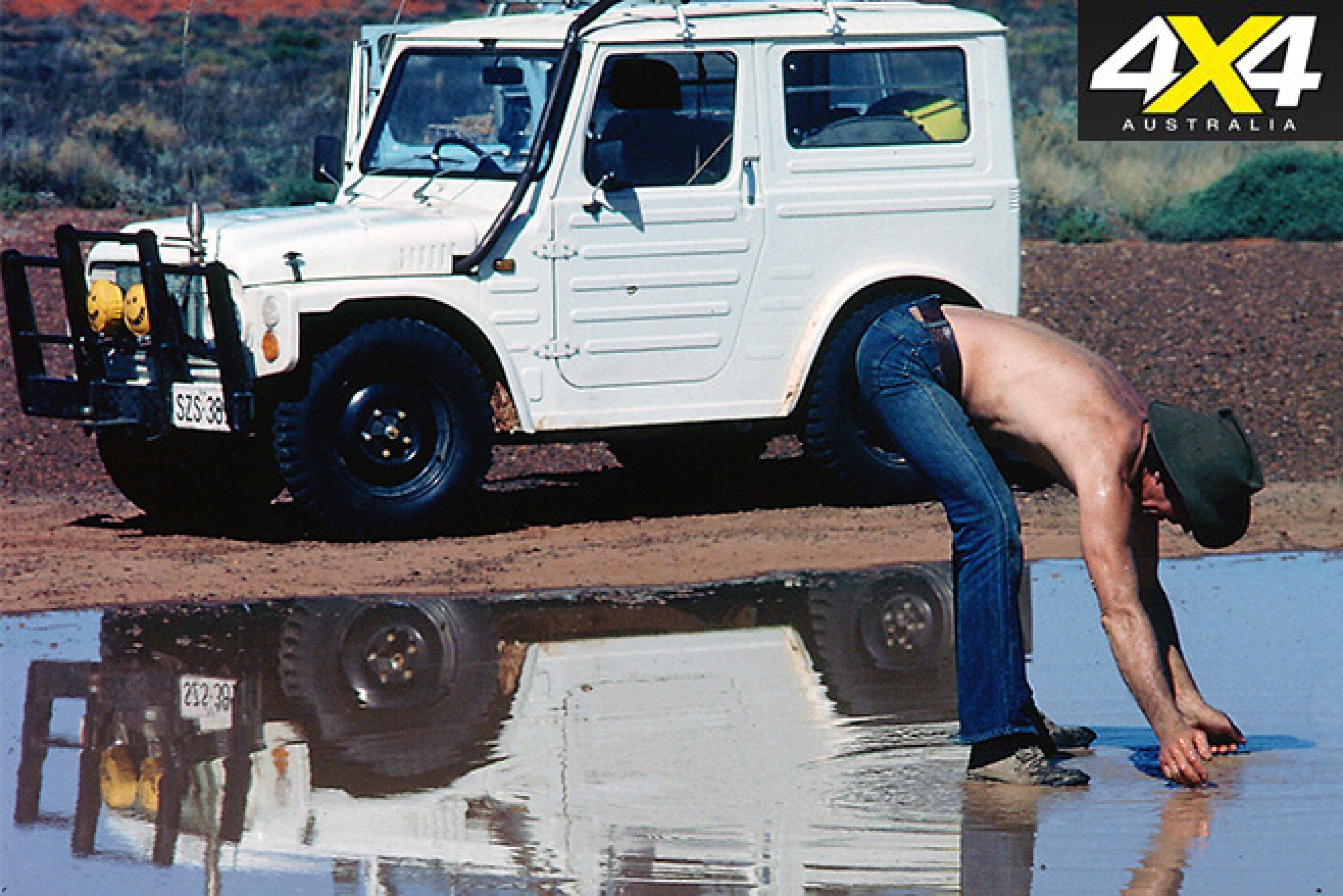
In 1984 he set out on another ground-breaking trip. This time it was on foot but again across his beloved Simpson Desert, from Alka Seltzer Bore to Birdsville. Using the old Aboriginal wells he had rediscovered on earlier forays, his route was not a straight line but a long sweep south, taking in the life-giving waters of the wells. That crossing – the first unaided walking crossing of the desert – took 24 days, and though he survived it, his body was a wreck by the time he finished.
Still he hadn’t had enough of desert travel, and the following year, after recovering from his previous exploit, he set out on his greatest physical challenge yet – a walk from Burketown on the Gulf of Carpentaria to Adelaide on the Gulf of St Vincent, via, of course, the Simpson Desert.
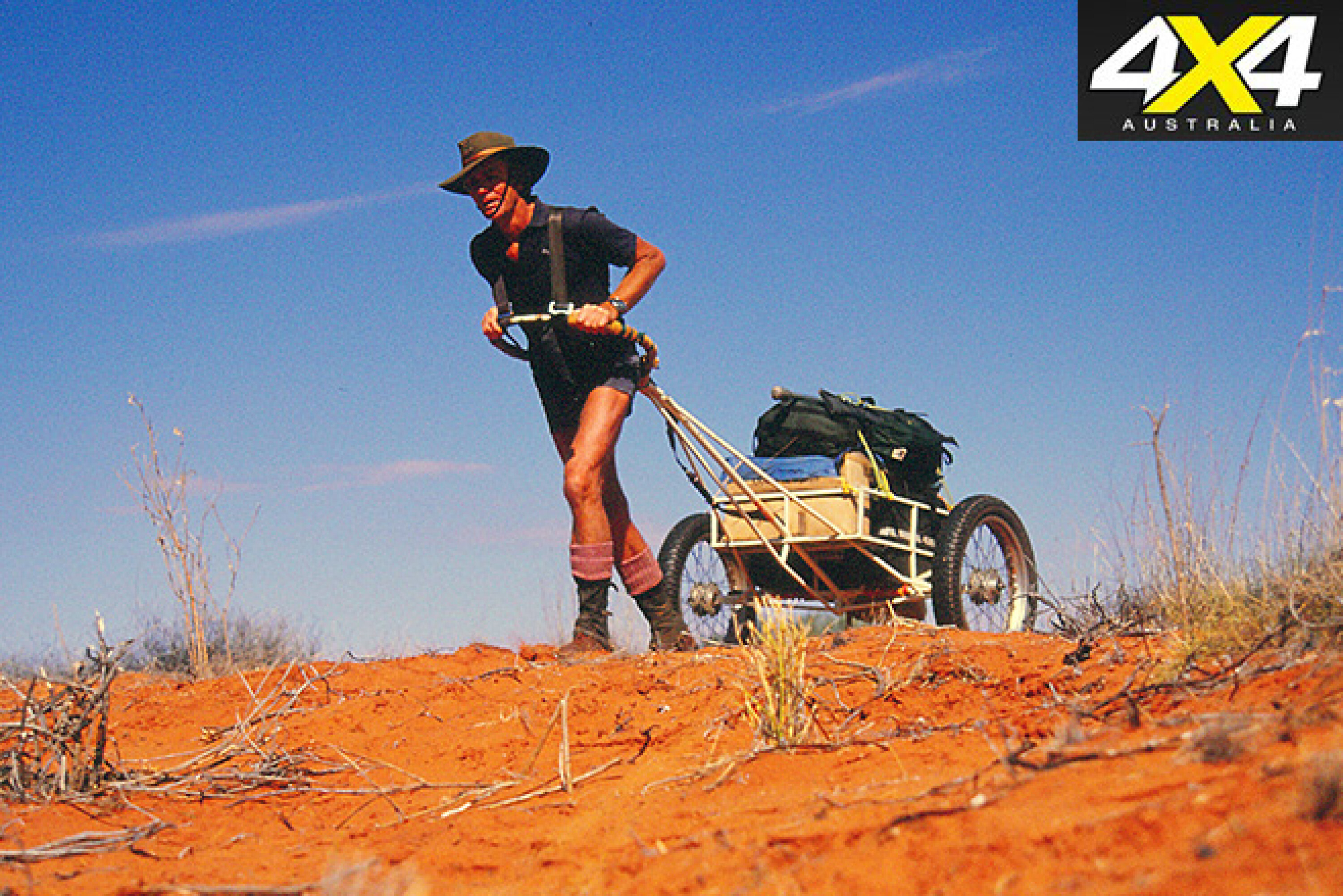
His gulf-to-gulf expedition wasn’t without its dramas or challenges, not the least of which was his pair of old knees that failed him before he entered the northern section of the desert.
While many people would have given up, Denis simply changed from doing an unsupported crossing to having an air drop, which meant he needed to carry less food, and, importantly, water. His 2500km trek across the continent took five months, and after that challenge his knees were operated on.
In late 1985 Denis was again seeking new adventures when he became the first person to drive a solar-powered car from Darwin to Adelaide. The following year, he was back leading an expedition to all the wells he had previously discovered in the Simpson for the South Australian Department of Environment. He then went prospecting for gold across the outback for a few years.
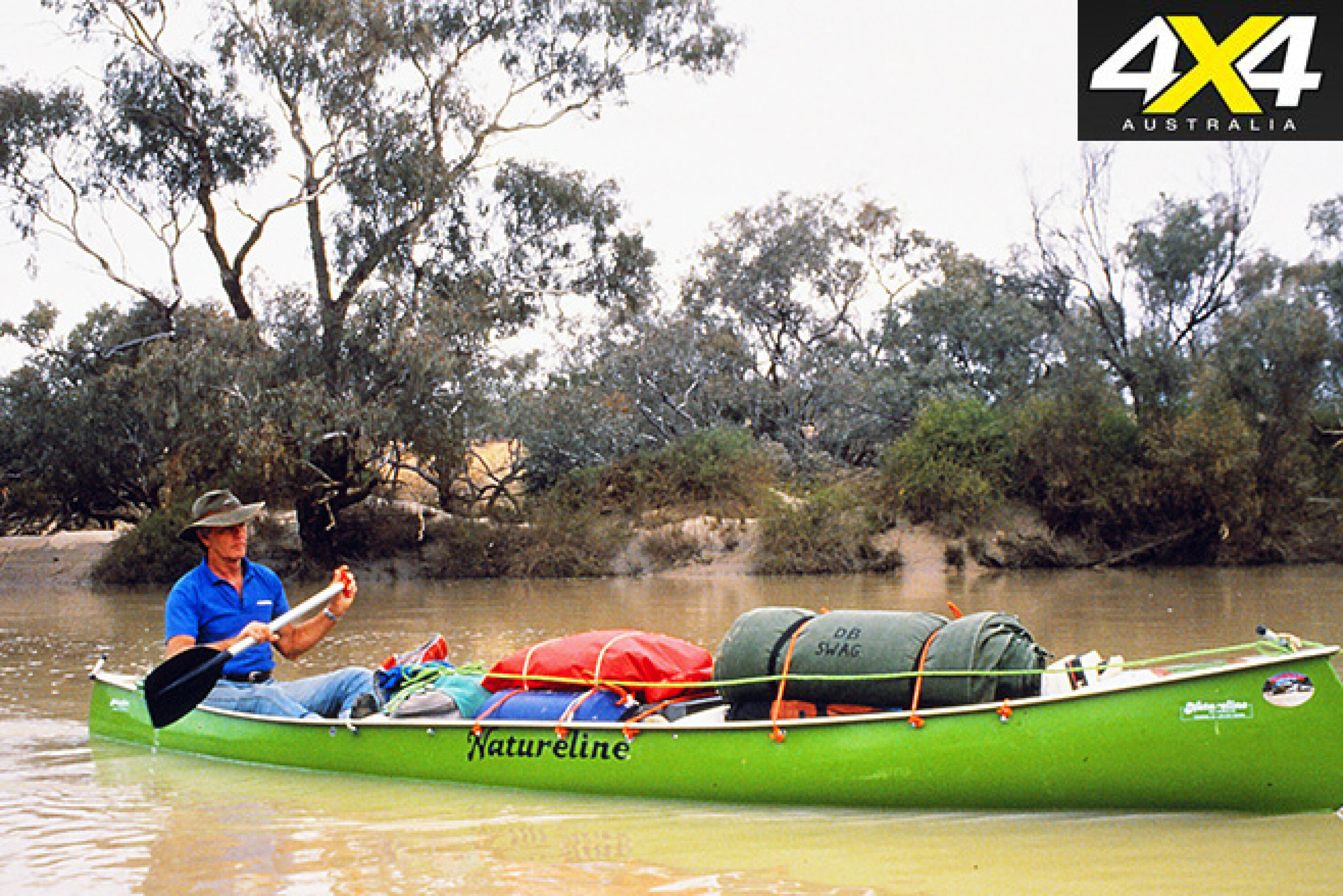
Denis was back in SA when, in mid-1989, the Cooper and its tributaries came down in flood. Here was an unmissable chance for an adventure and, with almost four metres of water running over the causeway at Innamincka, he pushed his canoe into the flow farther upstream at the Nappa Merrie crossing, and set out for Lake Eyre.
With Denis confused by the many channels through the huge lignum swamps, the trip was no walk – or paddle – in the park. Many channels were dead-ends and he spent a number of nights sleeping in his swag on top of all the gear in his canoe.
Still, there were days and nights spent in blissful isolation, with just the birds and wildlife to disturb him; some places were so pleasant he stayed two nights at them. After six weeks and with the flood not big enough to carry him through to the Birdsville Track, he hid his canoe and headed back to civilisation.
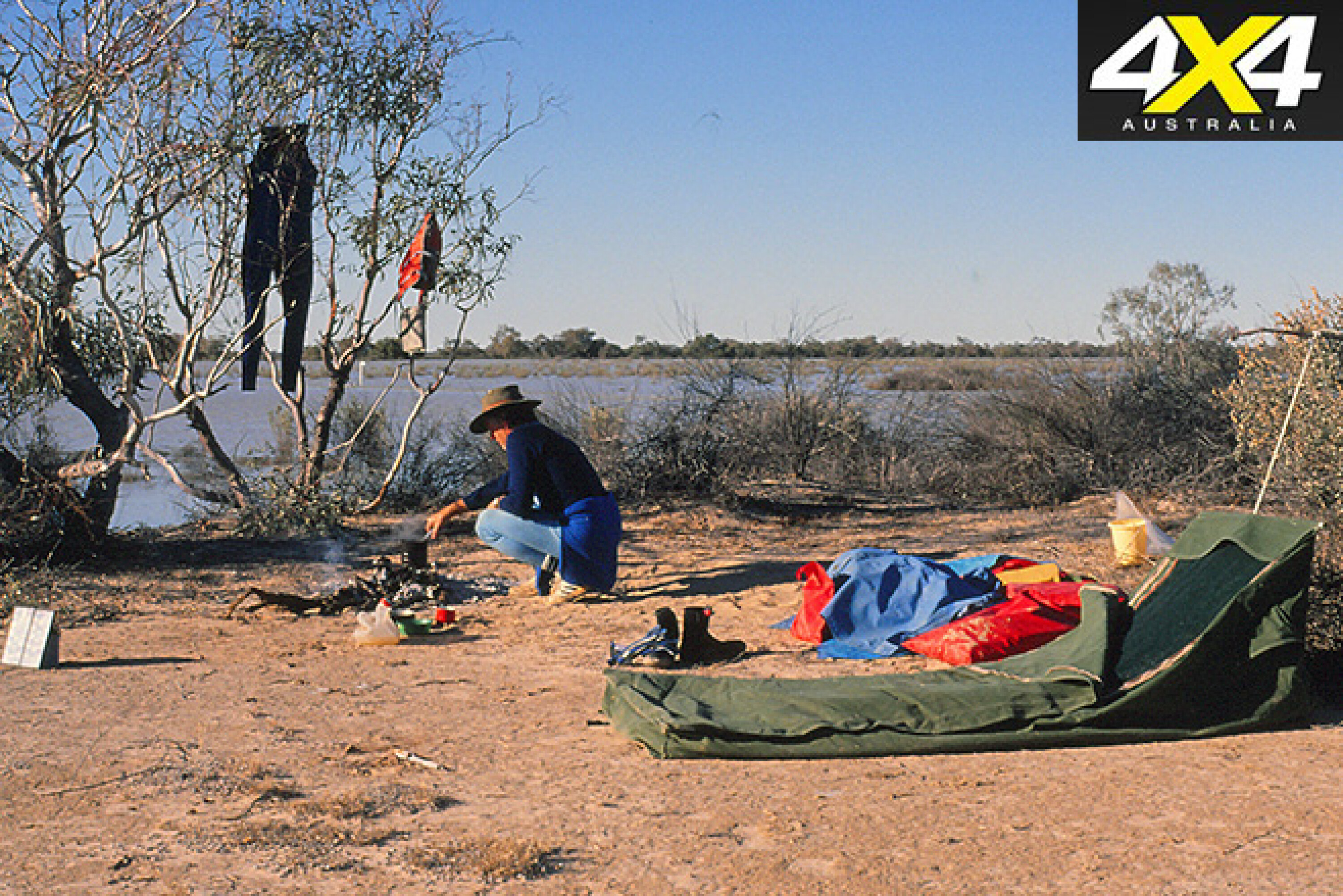
After a couple of weeks’ break he returned to his journey to the Track, though the flood had still not reached Lake Eyre. He was elated to have come so far but disappointed that he had not been able to reach the great lake.
In 1990, however, a bigger flood oozed down the rivers towards Lake Eyre. This time Denis could wait for the water to make it all the way before, in early October, he set out from the ferry point across the Cooper and entered Lake Killamperpunna. Three days of hard consistent paddling brought him on to the waters of Lake Eyre. He was then one of the very few people to have paddled the Cooper all the way to the lake.
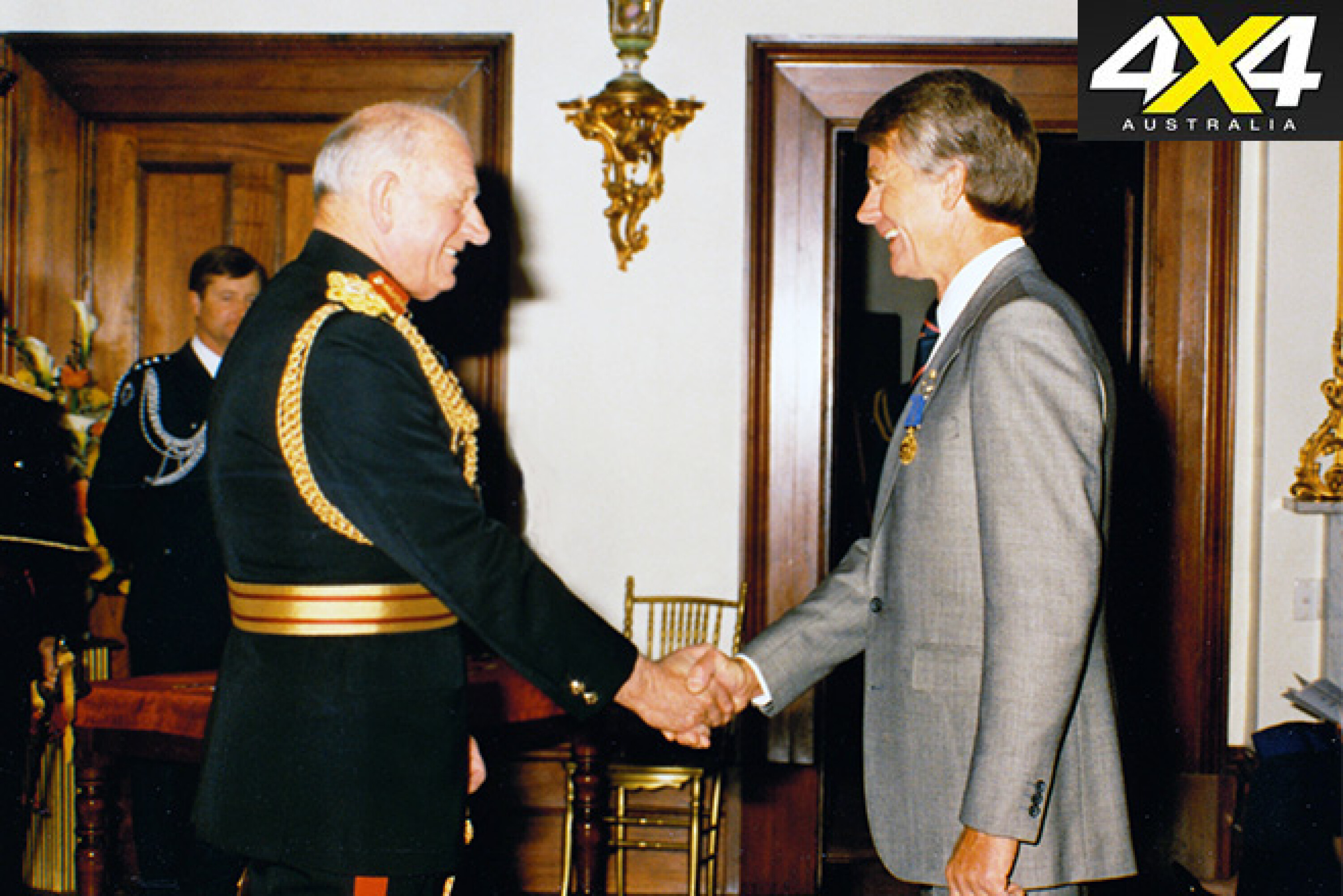
That year he received an Order of Australia medal for his achievements, followed in 1994 by the Australian Geographic Society’s gold medal, as Adventurer of the Year.
In early 1994 Denis tracked down Ted Colson’s son, Danny, and with the legendary Noel Fullerton lending Denis a string of his favourite camels and giving him some training in their use, Denis and Danny set out from Bloods Creek in early August of that year to follow in Danny’s father’s footsteps. They headed via Mount Dare out along the Finke River flood-out country to the now capped Dakota Bore. They then went south to the well-visited Purni Bore.
From there the route went east towards the Approdinna Attora Knolls, a popular camping spot these days for Simpson travellers, then on to Poeppel Corner. From here a faint and partly overgrown track once headed almost directly east (it’s practically impossible to find it now) to Eyre Creek and on to Big Red. From there it was an easy ride into Birdsville, just 14 days after they had left Bloods Creek Bore.
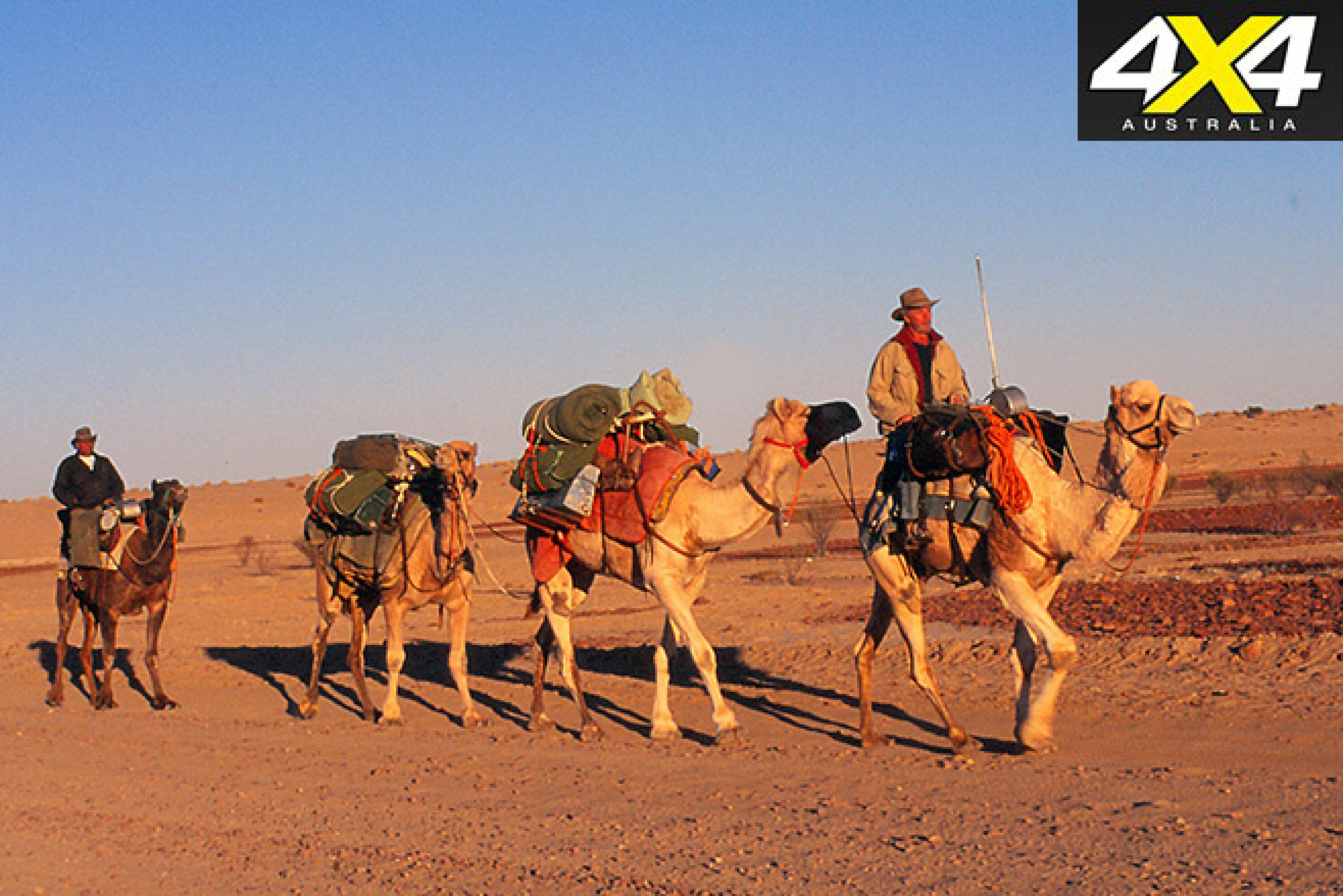
He was back in the Simpson in 2006 – he still can’t believe he passed a 12-year hiatus without visiting his beloved desert – helping support his daughter and her friends on a charity walk as they followed his walking route across the desert to raise money for the Breast Cancer Foundation.
In 2009 he was back in the Simpson again, raising a toast to a departed friend. The following year, he drove the vehicle back-up for his son, who walked across the desert in his footsteps.
Talking with Denis over the phone, I had to ask him about Big Red, the great dune he had named back on his first crossing of the desert, in 1977.
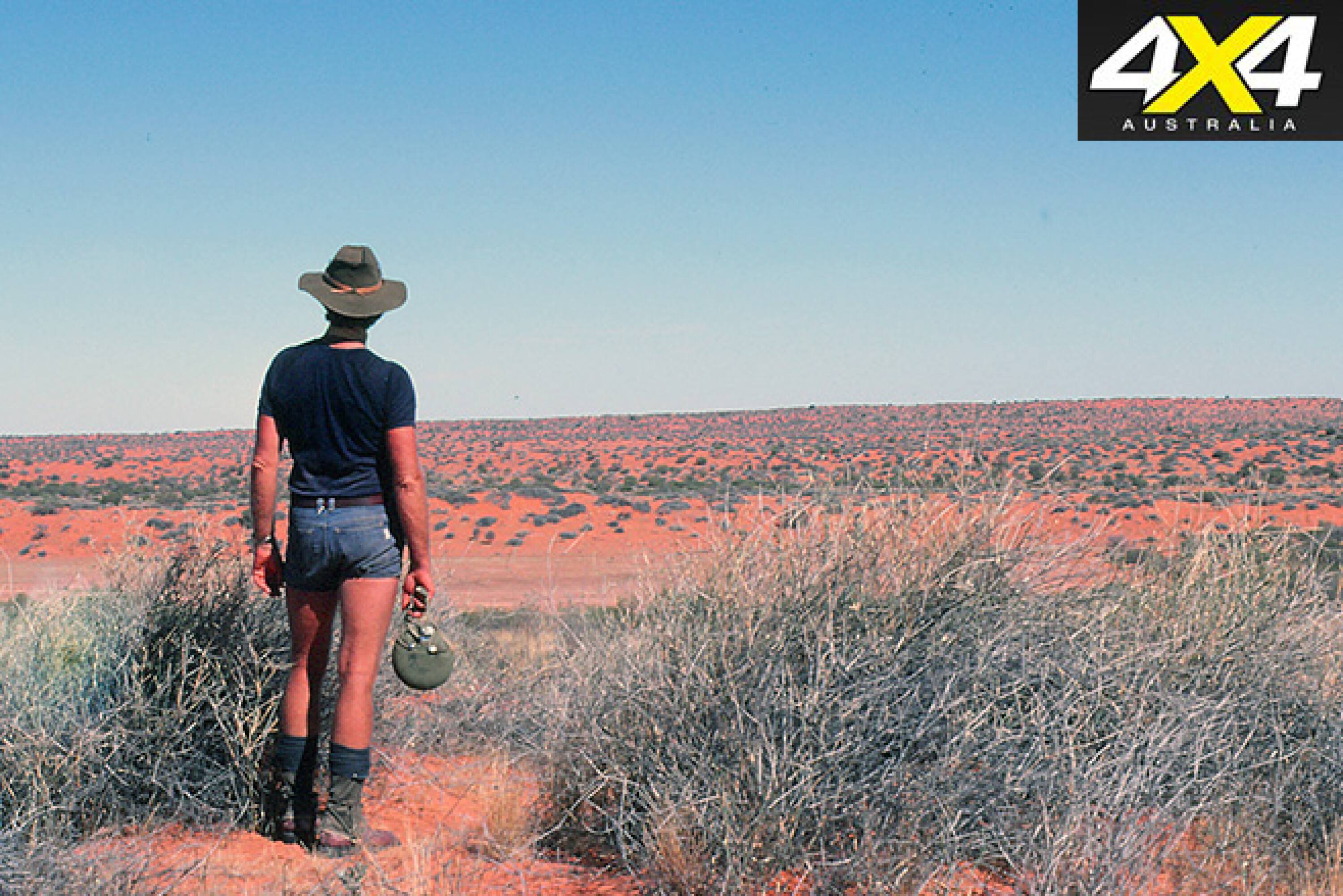
His reply was touched with feeling: “I had named it during that first crossing. In 1980, while sitting on one of its fiery domes, I was so inspired by the most magnificent sunset I had ever seen that I wrote a poem called Big Red, and for Overlander magazine [August 1982] I wrote a story called Three Tracks Across The Simpson, wherein I duly noted its position on the map.
“Promoted through the media, the mystery and romance of a big, red sand hill was born and over the past 40 years and 70-plus crossings, mostly solo, a ritual formed between that dune and me.
“A sunset whenever possible from Big Red was something not to be missed, for it was then that I could easily relive, in a most vivid form, my past journeys and scenery from its ever-changing landscape – I could truly be at one with the spirit of the desert.”
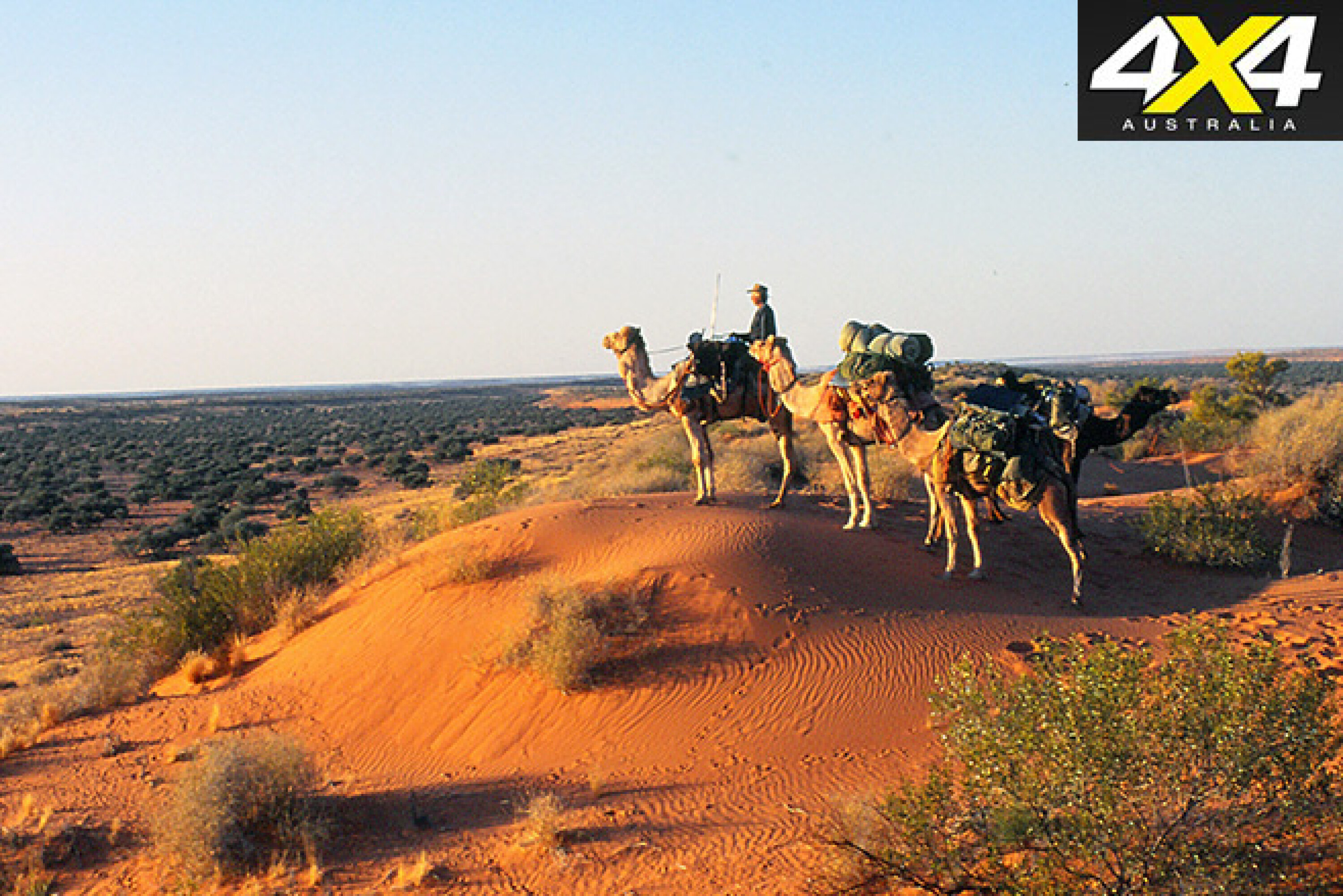
A lot of people have followed his example and sat on that mighty dune as the sun rose in the east or sank in the west, when the desert and that dune are at their most magical.
I hung the phone up reluctantly but I reckon if a good offer came along, Denis would drop everything, throw his DB Swag into the Cruiser and head out to the Simpson once more. He might live in south-east Queensland, but his heart – and the incredible legacy he created – is in the Simpson.
*First published in April 2016








Not tied down by a family and a tribe of kids? Then check out the Hilux Extra-Cab.
The Extra-Cab is Toyota’s first new Hilux in 10 years, which is exciting considering the brand is the best-selling 4×4 in the land.
Is it worth the wait? With Toyota’s spritely, new 2.4- and 2.8-litre turbo-diesel engines, it would seem so.
The Extra-Cab benefits from the much-improved rear wheel travel of this generation Hilux and an extremely effective traction control system specifically tuned for off-road conditions. It also has better approach and departure angles than before and more robust underbody protection. The SR Extra-Cab comes with a rear diff lock.
A 300mm longer tray than the Hilux dual-cab makes it a much better proposition for carrying motorbikes.
For a bloke without a family there’s plenty to like about the Extra-Cab HiLux. It may essentially be a two-seater, but it’s more practical in many ways than a Dual-Cab. And it’s cheaper! And if you need to carry two extra people over short distances you can, both legally and safely.
One of the biggest considerations for any family purchasing a vehicle is the availability of comfortable seating for all its members.
Sure, those fold-down third-row units do the job for a while, but you can forget about seating lanky teenagers or adults on them – unless you really don’t like someone!
I wanted something better for the Troopie, so I looked into the aftermarket seating options. Keeping in mind that a couple of my kids use child seats, I had to include child anchor points with anything that was installed.
When I chanced upon Techsafe Seating’s website, I knew I was on to a winner, with the availability of single-, double- and triple-seating options – all of which included built-in child anchor points and built-in retractable seatbelts. Having the seatbelts incorporated into the seat makes for easier positional mounting by not having to align with the vehicle pillars. Plus, it makes engineering easier.
As luck would have it, the Techsafe website has a lot of photos from a case study in which a Troop Carrier shows all versions of their seats – it was the perfect opportunity for me to make an informed decision. All I had to do was decide whether to go for single seats or a combination of doubles or triples, all of which are ADR-approved.
After drafting a few options for how I wanted my fridge, camping gear and general storage to fit, I chose to go for four individual bucket seats. This allowed the kids to enter via the aftermarket third door and walk through to their desired seating positions.
The seats come in left and right models; naturally, I have two of each. Keeping the space between the two rearmost seats (third row) allows me to slide in long items from the rear. I could also build in a storage box with a ‘glovebox’ or arm rest mounted for use by the third-row passengers. The second row has to maintain the walk-through to allow easy access to that third row.
Buying the seats was one thing, but mounting them was a new kettle of fish. Sure, I could have knocked up a few mounts with the welder and whacked them in, but for the safety of my passengers – and to keep it all legal – I went looking for someone who would take on my custom job. Having spoken to Total Care 4WD in Sydney’s Seven Hills, I sketched up what I wanted and consulted an automotive engineer. I then left them to manufacture my custom base mounts to ensure all was safe, legal and practical.
While the finished powdercoated brackets may look sturdy and basic, the hidden details of the mounting system under the Troopie’s floor make fitting and removal easy. Total Care removed my fuel tanks and other underbody gear to access the underside of the floor and weld in reinforcing plates and captive nuts, making removal of the seats a one-person job.
This means it’s easy to remove all seats when I want to use the Troopie to camp in or to cart huge loads. The seat closest to the extra door (the passenger-side of second row) was fitted to a slide mechanism to make entry and exit as easy as possible; all other seats are fixed.
While following my fitting requirements, Total Care also consulted with the engineer during the manufacturing process to ensure minimum legal distances fore and aft, as well as sideways, were adhered to. Basically, everything was done legally, so should we ever end up in an accident, all insurance will be valid. Plus, all registration and ADR requirements have been met, so there shouldn’t ever be negative feedback from the constabulary. As is needed for any modified road-registered vehicle, I carry records with me at all times to prove what has been done.
Once the whole job was finished and signed off by the engineer, all I had to do was visit my local RMS office to update the records to specify a six-seater, and register the engineering papers – an easy process when done correctly.
While the Techsafe seating is generally sold to the mining and commercial industry and features hard-wearing vinyl surfaces, I’ve found them to be of adequate comfort; not the most luxurious seating but plenty good enough for my needs. Each seat does flip forwards with the release of a rear-mounted lever, but there is no reclining adjustment. With all four seats folded down, there is a huge amount of space to cart long gear, or each seat can be tilted individually to suit.
It certainly was a big exercise, but all up I’ve successfully managed to have comfortable and safe seating for six adults. Perhaps some seat covers will aid in comfort and stop the ‘sweaty thighs’ on the vinyl seat surface, but, other than that, I’m a happy trooper.
For more information on the range of Techsafe seats and installer locations, visit www.techsafeseating.com.au.
For the range of 4×4 gear and services from Total Care 4WD visit www.totalcare4wd.com.au.
Rated
Available from: www.techsafeseating.com.au RRP:Varies depending on seat type and fitting charges. We say: Fantastic option for custom extra seating.
Anyone who has ever been to an abandoned mine site will be familiar with the scene.
There are skeletons of old buildings surrounding the mine works – smelter, brick kilns, that sort of thing. But Mount Mulligan has one big factor that sets it apart: 75 men died there in a tragedy that rocked not just the community but also the entire state of Queensland.
Mt Mulligan had been a producing coal mine since 1910. In September 1921, the entire population of working miners were ‘below’ when a massive explosion ripped through the mine and snuffed out the lives of every man underground. The cause was debated at great length, because Mulligan was noted as a ‘clean’ mine, meaning that no gas leaks had ever been detected. Eventually the explosion was blamed on the careless handling of explosives. When it blew, the ever-present coal dust caught fire and the men never had a chance. To this day it remains Queensland’s worst industrial disaster.
Today, as it did all those years back, the Mt Mulligan massif broods over the remains of the town. Roughly three times the size of Uluru, Mulligan is an imposing sight through anyone’s eyes. It had been known as Ngarrabullgan by the local Djungan people, then in 1874 an exploring party led by James Venture Mulligan set eyes on its magnificence. Although not the first Europeans to see the mountain, it became known as Mt Mulligan from that time on.
In the right sort of light the mountain’s flanks glow with a dull sheen. You usually get your first glimpse of it when you crest a rise in the track that comes in from Dimbulah. It crouches on the horizon bathed in a blue haze, standing proud above the low scrub country that surrounds it. At this point you have travelled perhaps 20km over a track that varies only in its texture. The track is corrugated for a few kilometres, then to break up that monotony some washaways are tossed into the mix along with numerous, mostly shallow creek crossings.
We visited the track in the very early part of the North Queensland wet season. The day was sunny and in places the track raised a modest plume of dust to mark our passing. There was of course the occasional wet patch and a few creek crossings, but they prompted little concern. The water flowed cleanly over the crossings and gave no indication that heavy rain had fallen. We marked one crossing as a possible future campsite.
On the way in you will pass a turn-off to the old township of Thornborough. There is little left of the town these days, but its graveyard is classified by the National Trust and makes an interesting stop on your way. Thornborough was a small but thriving community and boasted an outstanding number of hotels – because mining is thirsty work. By 1924 only one pub remained, while in 1921 the post office had ceased to operate, closing finally in 1931.
The old town-site of Mt Mulligan was reached without drama and we pulled up at the site of the old Mt Mulligan pub. The remains of the town today are mostly marked by the stumps that supported the town’s buildings. At one point some 10,000 souls lived here. Today there are a few signs that depict the buildings that had once been here, the pub being an obvious one, along with the RSL and a number of other buildings, both public and private. There was even one sign that declared the family of Denman had lived there!
Lunch was eaten in the shade of a big tamarind tree on the site of the pub. All around us the old building stumps dotted the ground, with small termite nests competing for space, while the Mulligan massif loomed over it all. A rusting sign in the tamarind tree proclaimed that a couple of blokes called Tim and Joe had enjoyed dinner camp (lunch) there as well. We followed their example.
Most of the country around here is occupied by Mt Mulligan Station, and there used to be camping available. But that has since changed, with the station being bought out by a company intending to develop a resort here, and most of the tracks that are away from the main road in are closed. The old town site though will continue to be open to the public.
You can spend plenty of time in Mt Mulligan just wandering around looking at what remains of a once-thriving township, so it’s fortunate that the journey there is easily done as a day trip from Mareeba, or even Cairns, so you can take your time to poke around. The entrance to the old mine has long since been blasted closed, its location only marked by some old wire cable on the ground and a bit of a dent in the side of the mountain.
Nearby and above that is the more tangible evidence of a concrete entrance to the air vent that allowed somewhat fresher air to circulate underground. Not far from there is the chimney of the smelter, in surprisingly good condition considering the ruins it presides over.
Strewn around are the constant reminders of what once was – here the remains of an old truck, there a rusted kerosene tin with a few bullet holes in it. Then there are the solid cement walls of buildings that defied those who removed most of what was moveable.
The cemetery yields further information. Many of the graves are unmarked, but others tell a story of mine mishaps and childhood illness. For many in the early days of the mine, it was clearly a tough life and old age seemed to be a fairly small factor for the majority of residents. Congratulations should go to the members of the Cairns 4WD Club who take responsibility for the upkeep on the graveyard.
As can happen at any time in the far north, the weather changed dramatically during our visit. To the north-east, the sky had turned purple with the threat of a storm, and distant thunder reminded us that the wet was well on the way. We shelved any further exploration of the site and began to backtrack.
This decision turned out to be the right one. The storm had curled around on our escape route and had caused a couple of the creeks on our route to rise. One in particular needed a bit of caution, but this is all part of travel in fairly remote country. The weather often assumes control, so you must adapt. Checking out any creek or river crossing on foot is never a waste of time.
The rain increased as we headed out along the track back to Dimbulah as rivulets of muddy water streamed into the gullies, lining the track. I spared a thought for those who had gone before, doing the same journey in much more primitive transport. A thought too for the wives and children who were left behind on the day the mine took their men.
Mission to Mulligan
GETTING to Mt Mulligan is a fairly easy day trip out of Cairns or Mareeba. From Mareeba, it’s roughly 120km one way so, with a reasonably early start, you can be home for dinner. It should never be forgotten though that this part of Australia can throw a spanner into your plans. While the track out from Dimbulah is probably driveable in a conventional vehicle, a 4WD is a far better choice. Corrugations and the regularity of creek crossings might leave your Falcon in shreds.
For fuel, your last chance to top up is Dimbulah, while on the way back there is always the pub, should thirst be getting the better of you. Also, you should take plenty of food and water; there is nothing available at Mulligan.
For additional info, a stop at the visitor centre in Mareeba is well worth the time. If you can, ask to talk to Mary Thompson, the local historian and absolute fund of knowledge on Mt Mulligan. Mary frequently gives talks to tour groups, but doesn’t mind a smaller audience.
The Aboriginal people of the area make up a number of clans under an overall tribal name. One group, the Wahoora, called the mountain ‘Woothakata’, which means ‘strange-shaped mountain’. White-fella names include Mt Lilly, named by William Hann in 1872. Then William Temple Clark called it, rather unimaginatively, Box Mountain in late 1873. Of course Mulligan was the only name that stuck, even though old James Venture Mulligan was said to be a little underwhelmed by the idea.
Farther on, it’s possible to travel beyond Mulligan on Kondaparinga Road to link up at Cooktown Crossing on the Mitchell River. However, there is the Hodgkinson River to cross, and both this and the Cooktown Crossing become impassable after heavy rain.
Click here to explore more of Queensland.
It’s one of the oldest new 4x4s you can buy, yet the GU Nissan Patrol is still a hard-working toiler.
The GU – or Y61 Patrol – has been with us for 19 years, but its days are numbered.
The GU Patrol might be old, but in many ways it’s the perfect 4×4 touring vehicle. It’s big and accommodating, well-proven and adaptable, and it has limited gimmicks – the likes of which could leave you stranded in a remote place.
Sure, the powertrain is underdone by modern standards and the safety is lacking, but get over those factors and you have the basis for a top off-roader. This type of vehicle is becoming harder to find in new-car showrooms and the GU is one we’ll miss when it’s gone.
There’s obviously been a lot of talk about Land Rover Defenders lately. After all, production of this iconic vehicle has finally come to an end after an incredible 67-year stint.
Despite the Defender’s extremely old architecture, it’s amazing how much the vehicle has been developed over the decades. Forget about coil springs, common-rail injection, electronic traction control and the like – I’m talking about the cup holders.
Yep, for a number of years, wagon variants of the Defender have sported cup holders. Two of them, in fact, located conveniently in the centre console area between the front seats.
Prior to this upgrade, there was really nowhere you could safely deposit an open can or bottle, other than to hold it between your legs and hope that it didn’t splash all over your pants while bouncing along a track. On the upside, at least you could open the vent flaps beneath the windscreen to hasten the drying-up process.
An alternative was to make your own cup holders. Not requiring the use of the centre seat in my short-wheelbase Series IIA, I once fashioned a centre console not dissimilar to the one that Land Rover came up with.
My version was made of MDF board and featured a big storage section and a couple of cup holders at the front. It had a hinged lid with a cushion on which you could rest your arm, and the whole lot was covered in vinyl. I was so proud of its functionality and appearance that I transferred it to my 1977 Series III several years later.
I then modified it by fitting a rearward-facing subwoofer to enhance the audio performance of the sound system I had fitted.
Driving a 2015 MY Defender 90 Heritage the other day, I noted the similarity of Land Rover’s most recent cup-holder solution; a centre console made of MDF board with a big storage area, a hinged lid with a cushion on top, two cup holders at the leading edge and a rear-facing subwoofer. Hmmm! Awfully familiar, I thought. Perhaps Land Rover saw my design in an old issue of 4X4 Australia and decided to copy it.
It’s just as well they didn’t copy an earlier cup-holder design that we came up with while traversing the Simpson Desert in a 130 Crew Cab. For this design, we cut the bottoms out of a couple of 1.25-litre plastic drink bottles and gaffa-taped them to the dashboard and the inside of the windscreen. They were deep enough to comfortably hold an aluminium drink can, or even a smaller-capacity 600ml plastic bottle, but they soon presented a problem.
On particularly rough sections of track, when the drink cans/bottles had only recently been opened, any spillage would end up on the inside of the windscreen. The first time this happened I instinctively flicked on the wipers, which, of course, offered zero benefit.
Despite trying to perfect this cup-holder design over the next week or so, we never resolved the splashing problem, and eventually gave up on the idea altogether.
I’ve seen a lot of different cup-holder designs over the years, but none have impressed me as much as those fitted to mid-1990s Toyota Hiluxes and 4Runners. These clever devices pull out of the dashboard so your drink is located directly in front of the air vents. One advantage of this design is that your drink is located up high where you can access it easily without diverting your eyes from the road.
More importantly, perhaps, it means that the air conditioner keeps your soft drink cool in summer and the heater keeps your coffee warm in winter. Genius! It was an idea copied by many manufacturers over the years to varying degrees (excuse the pun) of success.
When the all-new Defender comes in 2018, it will be interesting to see what the cup-holder solution is. I doubt that Land Rover will copy the ‘too close to the windscreen’ design, and I hope that it doesn’t stick with the ‘between the seats’ design. With any luck, the Poms will copy the Japanese for a change and rip off the Hilux cup-holder design. I certainly won’t take offence at that.
THERE ARE only a handful of names in off-road racing that merit the title of ‘living legend’.
The criteria may vary depending on which campfire debate you eavesdrop on, but everyone seems to agree that those whom have been playing in the dirt for 50 years qualify; they’re even raised to near-deity status.
Back in 1967, Rod Hall, a young gas station owner and four-wheel drive enthusiast, heard about a new event while Jeeping with friend Larry Minor at Pismo Dunes, California. It wasn’t the normal gymkhana that he’d done before, but a 1000-mile desert adventure in a land with no maps, few petrol sources and even fewer towns.
The two pooled their funds, bought a stock Jeep CJ-5 and mailed in a registration form for the National Off-Road Racing Association’s (NORRA) Mexican 1000.
Between the starting line in Ensenada and the chequered flag in La Paz, they dodged tyre-shredding cacti, baked in the unrelenting Mexican sun, cleared hill and dale, got lost a dozen times, tossed their tools out (too much clanking around), and ate soggy sandwiches their wives had packed in a cooler. With only a whiskey compass and the sun to navigate by, they somehow made it to La Paz.
It was the opening chapter of a carrier that would span five decades, many continents, a number of vehicle brands, record-breaking winning streaks (35 straight, which still stands), and it would put its lead character in the history books.
Last year, Rod Hall pulled his championship Ford Bronco, which he won the 1969 Mexican 1000 in, from the Off Road Motorsports Hall of Fame’s museum in Reno, Nevada, and sent it to Samco Fabrication for a full restoration.
The Bronco, which was built by Bill Stroppe, has a past that’s as storied as Hall himself. After Hall and teammate Larry Minor drove it to an overall win in the 1969 Mexican 1000, it was sold, raced, resold and then retired to a Barstow junkyard in California.
Half buried in sand and nearly forgotten, it was discovered by a local race fan and restaurant owner, and put on display in front of a Denny’s. In 2003 it was donated to ORMHOF and found its way back to Hall.
On April 24, Hall, who has achieved more podium finishes that any American off-road racer, including 24 Baja 1000 Class wins and the only overall win in a four-wheel drive, will slip behind the wheel and again pilot his old steed down the peninsula in the 2016 General Tire NORRA Mexican 1000. It will be a monumental 50th 1000-mile Baja race for Hall.
4×4 Australia spent the weekend as guests of Ironman 4×4 at the grand opening of Cairns to Cape 4×4 in Cairns.
Nathan Lockyer is bit of a mechanical legend up in Far North Queensland and folks come from all around to have him work on and maintain their 4x4s. Nathan and his wife Lana have taken a big step and moved from their old workshop to a new purpose-built facility.
The new store features a huge showroom with all the latest products from Ironman 4×4 and other leading brands on display and there’s a friendly staff on hand who know their stuff and are all too willing to help you get the right gear for your vehicle.
Out the back are four work bays with new hoists, a specialised 4×4 wheel alignment rig and racking for products. The shop has two qualified mechanics as well as two fitters on staff so that C2C can handle all your 4×4 needs including accessory installation, suspension work, mechanical repairs, diff and gearbox rebuilds and pre trip inspection.
This makes C2C the perfect last minute stopover on your way to The Cape to ensure your 4×4 is up to the challenge.
Opening weekend special prices saw Ironman fridges, winches and other accessories running out the door with plenty of forward booking to keep the boys in the shop busy for the next few months. There was a jumping castle for the kids, Cairns surf life-saving club manned the sausage sizzle and a great display of Ironman vehicles from around the country.
Despite the wet weather the crowds were constant across the weekend an one lucky fella even won himself a brand new three-meter Quintrex tinnie just for being there and entering the draw!
The new Cairns To Cape 4×4 is at 116 Aumuller Street Bungalow in Cairns or you can find them online at www.cairnstocape4x4.com. Phone number for the friendly staff there is 07 4053 5900. Check them out on your next trip north.