
KEEP the coldies stored in the fridge this Australia Day and instead pack the 4×4 with the essentials and hit the dusty trails. To celebrate the great country we live in, why not indulge in some of the finest tracks available to us? Here are some of the best 4×4 day trips you can do this Australia Day.
MORETON ISLAND IT’S possible to experience Moreton Island in a day. However, we recommend turning your day trip into a four-day sojourn by getting more time off – hopefully your boss is kind to you. Nonetheless, the island is 38km from north to south, and 8km across at its widest, so you’ll be able to get around and see plenty of its tracks in a day. There are also plenty of scenic spots to drop in a line or to stop for lunch. Depart for the island early to give yourself plenty of time.
TOOLANGI STATE FOREST VICTORIA’S Toolangi State Forest is located 70-odd kilometres from the CBD and is only a 90-minute drive from Melbourne. There are a number of roads leading into the park as you head north from Healesville. The tracks vary in their degrees of difficulty, so there’ll always be a track to pique the interest of all who tackle it. It can get busy during holiday periods, so expect to encounter a few likeminded individuals this Australia Day.
SAPPHIRE COAST NSW’s Sapphire Coast is home to the Bournda National Park, an ideal place for the adults to lock the hubs and for the kids to run amok. The park is home to some of the best fishing and off-roading spots within Australia. If coming from the major cities you’re better off turning the public holiday into a four-day break, as it’s a bit of a drive.
THE TOP END THE Top End in the Northern Territory includes the popular Kakadu National Park. The drive to reach the park from Darwin takes less than two hours, so Darwinians are spoilt for off-road choice in the region. The fishing is also top notch in the Top End and is often referred to as the best in Australia.
TASMANIA ANYWHERE can essentially be a day-trip when you live in Tasmania, and there are quite a few 4WD tracks that’ll take you there and back again within a day. Try your luck at the Apple Isle’s Cradle Mountain, or the moderately difficult Brushy Lagoon, or, if you’re up for the challenge, the tricky Arthur Beach Track. Better still, head to the tracks of Bruny Island.
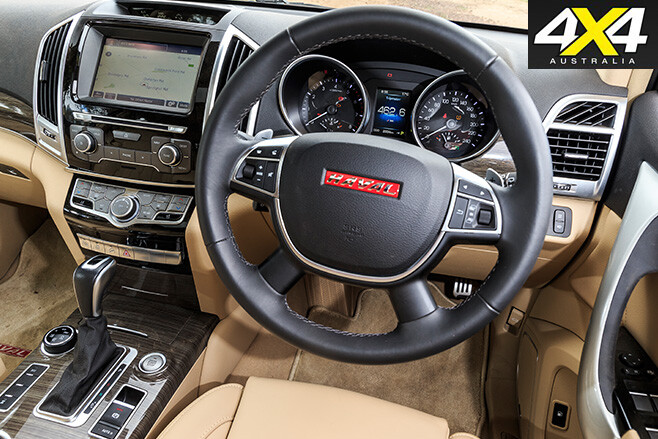
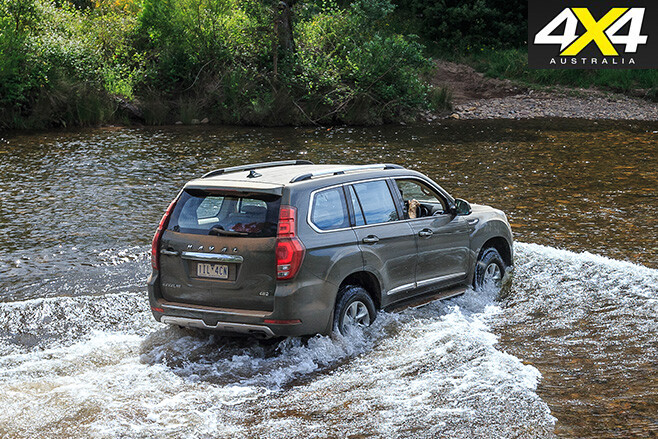
HAVAL is Great Wall’s SUV offshoot brand, and the H9 is the only proper 4×4 in the Haval range.
While a ‘take’ on the Toyota Prado in general size and layout, thanks in part to Haval’s recruitment of former Toyota chief engineer Suguya Fukusato, the H9 is petrol-fuelled only.
The engine in question is a 2.0-litre turbo four-cylinder, reportedly designed in-house at Haval. The 4×4 system uses a self-locking and self-proportioning electronic transfer case (built under license from Borg Warner) much like that used in the Ford Everest.
The model supplied for 4X4OTY was the top-spec Luxury. The cheaper Premium loses the sunroof, leather, electric-seat adjust and has 17s in place of 18s and no terrain settings for the otherwise similar 4×4 system.
The winner of the coveted 4X4 of the Year award will be announced at the Australian Motoring Awards (AMAs) on February 1.
The AMAs, to be held at Crown Casino in Melbourne, will also present the WhichCar Style award, the MOTOR Performance Car of the Year and the Wheels Car of the Year awards.
Keep an eye on 4X4 Of The Year throughout the night on February 1 to be the first to find out which vehicle has been awarded the 2017 4X4OTY award. Or tune in to our Facebook page!
2017’s strong field of 4X4OTY contenders includes: Haval H9, Holden Colorado, Holden Trailblazer, Mercedes-Benz G300, Mitsubishi Pajero Sport, Toyota Land Cruiser 79 Series and the Volkswagen Amarok V6.
MORE 4X4 OF THE YEAR
HOME: 4X4 OF THE YEAR 2017
The seven most interesting 4×4 vehicles of 2016 get together for a week to determine the 4×4 Of The Year.
THE FINALISTS
Meet the seven most interesting 4×4 vehicles of 2016 battling it out to be crowned 4×4 Of The Year.
THE RESULTS
Only one of the seven best 4x4s from 2016 can be crowned 4×4 Of The Year 2017
4X4 OF THE YEAR HOME
Finding Australia’s Best 4x4s
It’s been a big year for new 4X4s and we have gathered the pick of them to battle it out to decide just what will be the 4X4 of the Year.
The short-listed vehicles include the reigning 4X4 of the Year champion, the Jeep Grand Cherokee, back in with another shot at the title thanks to a new diesel engine option. It’s a similar story for the Range Rover Vogue with its new 4.4-litre TDV8 while Mercedes-Benz has re-introduced its venerable G-Wagen to the Australian market after a quarter of a century absence.
Here we have the diesel version, the G 350 Blue TEC. Meanwhile, the Toyota LandCruiser 200 gets another shot at glory via a new base-spec GX variant while the only all-new vehicle in the group, and the only one with petrol power, is the Toyota FJ Cruiser.
Jeep’s WK Grand Cherokee petrol V6 won 4X4 Australia’s top gong last year thanks to its excellent value package, impressive on-road performance and decent off-road ability.
It’s back this time with the much-anticipated 3.0-litre V6 turbo-diesel engine and once again we have the Laredo specification equipped with Selec-Terrain and height adjustable air suspension. At $54,450 as tested it’s an early favourite to take back-to-back titles.
The Range Rover Vogue is nearing the end of this third generation model’s life, but its last hurrah is a sublime 4.4-litre TDV8 engine mated to a silky smooth eight-speed automatic transmission. Unlike the previous 3.6-litre TDV8, this new 4.4-litre engine has a sequential bi-turbo system rather than parallel twin turbos, while the eight-speed auto is exclusive to this engine in the Rangie line up. The Vogue’s new driveline is accompanied by a number of interior and specification upgrades and, as tested, will set you back $196,690.
The Mercedes-Benz G 350 BlueTEC is also at the upper end of the price range at $169,480 (as tested), but its 30-plus years of incremental development, not to mention its triple differential locks makes it a well proven off-roader.
The LandCruiser 200 Series GX model is the Cruiser that farmers, miners and other sectors of industry have been asking for since the 200 landed in 2007. Stripped of many features including carpets and third-row seat, the GX Cruiser retains its twin-turbo 4.5-litre V8 diesel engine, six-speed auto and 3500kg towing capacity, but at $77,990 it’s still not cheap. With less weight on board the payload is up to 710kg and dual fuel tanks are standard.
The polarising retro-inspired style of the FJ Cruiser hides mid-wheelbase Prado underpinnings so we expect a great ride and strong off-road performance for the funky FJ. But how functional would the suicide-style rear doors and thick side pillars be in the real world? And can a petrol V6 engine compete with the efficient turbo-diesels? Is the part-time four-wheel drive system of any real benefit, or is it just keeping the FJ’s price point low at $44,990?
These five top-class vehicles are a diverse and interesting lot, but all will be put to the test by the 4X4 Australia judges over all sorts of terrain, both on- and off-road, to determine a worthy winner of the 4X4 of the Year crown. Let the testing begin!
TEST ROUTE
Contrary to what many people may think, a week of testing the 4X4OTY vehicles isn’t just a swan around to the judges’ favourite or pretty locations to indulge one’s ego. No, there’s purpose and design in our wanderings.
This year, with our judges ensconced in their charges, we headed north out of Sydney cruising the freeway until we peeled off the dual lanes onto a lesser road in search of an old quarry near Freeman’s Waterhole where you can pick one of a half dozen rocky, eroded tracks and test out your skills and/or the capability of your 4X4.
In such places it’s easy to bend or break a vehicle (something we don’t set out to do as it proves nothing), but here we get a good idea of suspension travel, wheel articulation, the capability of traction control (every modern vehicle seems to have it these days), diff locks and more.
Leaving there relatively unscathed we headed to the sand mecca of Stockton Beach. For many four-wheelers this is their favourite playground close to the ‘burbs of Sydney and Newcastle and once you cruise the beach and wind through an untracked patch of dunes you can easily understand why. Getting bogged here is part and parcel of the experience, but it proves how good some of the traction control systems work in this soft shifting environment and how engine and gearbox management systems mate together.
Next day saw us threading through the hills and across second- and third-class bitumen roads as we headed to Gloucester and then higher into the mountains around Barrington Tops. Nature played us a bonus with heavy rain as we headed along ever more slippery tracks to our camp for the night at the Manning River campsite.
Rutted tracks had turned to mud-filled, slippery trenches as we headed off next morning winding along forest trails, all of us wishing we had better (read: more aggressive) tyres than the factory fitment.
Slippery tracks gave way to second-class dirt roads, then narrow bitumen country roads as we headed south, looking for a tyre repair place for a couple of slow leaks.
More of the same was on the agenda the next day as we headed through rich farming country and on to Abercrombie River National Park where we found a few fast forest trails that spanned some open, ridge-top country. Entering the park we headed along the Abercrombie Fire Trail to The Beach camping area, the track being typical of the Great Divide; steep and winding; up hill and down dale.
Our last day found us headed along the Silent Creek and Brass Walls fire trails that not only tested traction control, gearing, engine flexibility and performance, but also ride comfort and vehicle dexterity.
Two hours later we were in Goulburn and then cruising north towards Sydney. The list of damage was minor; a few repaired tyres, some plastic underbody protection ripped off, and the odd scratch or three.
Our job was done – or nearly so. Words had to be written and points pondered over to find a winner for this year’s 4X4OTY. Honestly, it’s a lot harder than it looks.
JUDGING CRITERIA
VALUE FOR MONEY This is judged according to a vehicle’s equipment level, safety features and price relative to its direct competitors.
DOING THE JOB This is judged according to a vehicle’s design brief. In the case of a 4X4 wagon, we look at how well it performs on- and off-road, and its interior accommodation for passengers and cargo.
BUSHABILITY This is how well a vehicle is equipped for Aussie off-road and outback travel. Suitability of the wheel and tyre specification, touring range, available accessories and underbody protection are some of the factors considered here.
BREAKING NEW GROUND This refers to advancements in technology and design. If a vehicle has the latest safety features, worthy engine technology or an advanced driveline, it will score well here.
BUILT TOUGH This is the obvious one. It refers to how strong a vehicle is, and how well it will cope with the rigours of tough off-road and outback driving environments.
JUDGING PANEL
It’s not every day you get six people together in the one place for the one event whose combined 4X4 experience totals 209 years. We did… and it was for this year’s 4X4OTY.
Our judges have driven everything from Series I Land Rovers and World War II Jeeps to the fastest 4X4s on the planet… real experts in every facet of four-wheel driving… who can cut through the PR hype, the engineering jargon and the plain old bulldust to get to the very heart of the matter.
Fronting our role call of the best in the business is the ‘young un’ of the group, Glenn ‘GT Camper’ Torrens. A motoring journo for 20 years, for the last 10 years he’s been involved with testing 4X4s, drives a HiLux as his daily set of wheels and reckons the worst 4X4 he has ever tested was a Tata ute .
Next in our judging group is Don ‘Been bogged everywhere’ Shewring, our guest judge from TJM HQ in Brisbane. Now Don may have only been in the 4X4 recreational field for five years or so, but before that he punted around the bush and the outback in a series of 4X4 utes selling heavy plant equipment to mining companies. He currently drives a well set up (as you’d expect for the Distribution and Development Manager from TJM) V8 Toyota Troopie.
Matt ‘Got Wheels, Driven it’ Raudonikis cut his teeth in an FJ45 Cruiser on Rainbow Beach back in the early 1980s and he has been testing cars and 4X4s since the 1990s, as well as being editor of a national 4X4 magazine between 2000 and 2007.
As the current editor of 4X4 Australia, Fraser ‘Field Marshal’ Stronach got into four-wheel driving from his job as a geologist field assistant back in 1970 when he bounced his way along tracks in the backblocks of NSW in a Datsun (read Nissan) G60.
Road-testing bikes from 1979, by 1987 he was involved with a national 4X4 magazine and two years later became its editor, a job he held until 2000. Since then as a freelance writer and road tester he has driven just about every new 4X4 on the planet.
It was way back in 1965, when Ron ‘Lose a Wheel or Two’ Moon drove his first 4X4, a Series II Land Rover when he joined the Army as an auto elec apprentice. Taking over 4X4 Australia magazine in 1988 he remained editor for nearly 15 years. Now, as editor-at-large, he drives only ‘real’ 4X4s (mainly his Nissan Patrol) in some of the world’s greatest places, and his most embarrassing moment was when he lost two wheels off his camper trailer and Patrol respectively in the course of just three months!
Few people in Australia can match Norm ‘The Legend’ Needham when it comes to 4X4 experience. He drove a Series I Land Rover as early as 1960 while his first 4X4 was an FJ40. In 1975 he took that to Cape York and wrote about it in a national 4X4 magazine.
One of the early members of the Toyota LandCruiser Club in NSW, in 1985 he established Traction 4, the specialist 4X4 repair centre later known as ARB Artarmon. He currently owns a V8 petrol 100 Series Cruiser converted into a ute.
THE CONTENDERS
JEEP GRAND CHEROKEE LAREDO CRD
MERCEDES-BENZ G 350 BLUETEC
RANGE ROVER VOGUE TDV8
TOYOTA FJ CRUISER
TOYOTA LANDCRUISER 200 SERIES GX
THE WINNER IS… TOYOTA FJ CRUISER
SET-PIECE 4X4 Good ground clearance, short overhangs, a relatively short wheelbase, plenty of rear axle articulation and the standard inclusion of a rear diff lock meant the FJ crawled up our rocky climb with relative ease. Vision over the big dashboard and short bonnet is okay, but not great, while the large exterior mirrors help with rearward visibility where the large pillars hinder lines of sight. The A-Trac (Active Traction Control) button gives the driver electronic traction control when in low-range but the diff lock gets it over just about anything.
TRAIL The FJ’s almost compact proportions make it nimble and easy to punt along bush tracks. Again, visibility is just adequate but you always know where it is on the track. The low-range gearing is deep enough to control steep descents without resorting to electronic control and the V6 engine has enough grunt to get you up the hills. The ratios in the five-speed auto are well matched to varying terrain but the dogleg shifter can be awkward at times.
SAND The FJ’s relatively light 2000kg weight and revvy 200kW petrol engine make it a stand-out performer on the beach and dunes at Stockton. The great ramp-over angle gets it over sharp lips at the crest of dunes and the A-Trac works well to keep the little wagon punting over the soft stuff.
TOURING Full-time 4X4 would be nice for when the road surface varies from sealed to unsealed or icy surfaces, but the safety net of electronic stability control makes up for the limitation of 2WD. The FJ’s suspension offers a nice balance of comfort and handling although the live rear axle can be upset on corrugated corners. The petrol V6 with five-speed auto is the only powertrain offering and does a commendable job in all conditions. Fuel figures of 15.4L/100km on test surprised us as it matched some of the big diesel wagons, but the FJ’s touring range is compromised by its small 72-litre fuel tank. However, there’s an acre of space under the back for an extra tank if desired.
CABIN / ACCOMMODATION / EQUIPMENT The big dashboard, flat windscreen and body-coloured interior panels take a bit of getting used to, but once you get comfortable in the FJ it’s a great place to be. It’s not a big wagon so space is at a premium and the rear seat can be a bit awkward to access through the rear-hinged doors. The rear passengers also have small windows that don’t open so their view is restricted. Vinyl/rubber floor coverings and water/stain resistant seat fabrics are practical but a few more 12-volt power outlets including one in the cargo area would be appreciated.
PRACTICALITIES / INCIDENTALS The FJ Cruiser is a small wagon so is really only practical as a two person tourer on anything longer than weekend trips. There are plenty of accessories available for it, while the 17-inch wheels offer heaps of tyre options. Safety hasn’t been compromised by the affordable price tag with traction and stability control, ABS brakes, and six airbags as standard. Rear parking sensors and a camera are also factory fit. Payload is a moderate 510kg while towing capacity is an equally average 2250kg.
SUM-UP At the start of the week, most of the judges didn’t give the FJ much hope of winning 4X4OTY. But as the days progressed, the FJ’s fun factor, the simplicity of design, and the way it works so well came to the fore. Three judges scored it first, two scored it second and another third against tough competition. The FJ Cruiser puts enjoyment into driving on- and off-road thanks to its individual styling, ease of use, affordability and no-fuss ability. Whichever way you look at it, the FJ Cruiser is a great 4X4 and a worthy 4X4 of the Year winner.
SPECS Engine: V6 petrol Capacity: 3956cc Power: 200kW@5600rpm Torque: 380Nm@4400rpm Transmission: Five-speed auto /part-time 4X4 Weight: 2000kg GVM: 2510kg Payload: 510kg Towing capacity: 2250kg Wheels/Tyres: 17-inch 265/70 Fuel tank capacity: 72L ADR combined fuel consumption: 11.4L/100km Fuel use on test: 15.4L/100km Base Price: $44,990 Price as tested: $44,990
IT IS a read-it-and-weep story if you’re a Holden fan, and it’s called the Chevrolet Colorado ZR2. It’s a brand new off-road-modified Colorado ute made in the USA, but only for North American markets. Effectively it’s showroom and off-road custom all in one.
The core vehicle is our Colorado, diesel and all – a new engine to the US market – but it also comes with a petrol V6 teamed to a new eight-speed automatic.
ZR2’s off-road enhancement starts with a 50mm lift, 90mm wider front and rear track, chamfered front and rear bumpers for better approach and departure angles, skid plates for the engine, gearbox and transfer case, tubular rails to protect the rocker panels, heavy-duty front suspension control arms, and 31-inch ATs on 17s.
But that’s only the start of things. It also gets driver-switchable front and rear lockers, where our Colorado doesn’t even get a rear locker let alone twin lockers.
The ZR2 also gets Dynamic Suspension Spool Valve (DSSV) damper technology, which only a few years ago was the stuff of Formula One, specifically the Red Bull F1 cars that won the driver’s and constructors’ championships from 2010 to 2013. DSSV is also seen up and down the pit lane at the Le Mans 24 Hour and has been used in high-end sports cars such as the Aston Martin One-77, the Ford GT and GM’s own Camaro Z/28.
The DSSV technology comes from Multimatic, a Canadian engineering company that supplies the automotive industry with specialised parts and services. DSSV is notable for many reasons, not least for being relatively simple and very cost effective given the high level of sophistication. The fact that F1 technology of just a few years back can be made affordable for a production car tells the story.
The DSSV’s so-called ‘spool’ valves are small metal cylinders, roughly half the height of the common C-size battery, that replace the flexible shims used in conventional dampers to control the damping force. The cylindrical spool valves have various ports that control the flow of the hydraulic fluid and therefore the damping force. More importantly, the shape and the size of these ports can be varied almost infinitely to produce the required damping force.
The machining of these ports is done using fine-control robotics. Multimatic has special software that allows the damping characteristics to be defined by numerical values, which are then used to determine the subsequent port machining in the spool valve.
The client company, in this case GM, specifies the separate rebound and compression damping curves it wants as a starting point for suspension tuning, and Multimatic feeds that data into its software. In the case of the ZR2, Multimatic apparently then ran 15,000 simulations before a single part was machined, thereby reducing the real-world tuning and development time to a quarter of that normally required for a manufacturer to sign off on a suspension tune.
An added benefit of using these machined spool valves compared to flexible shims is that they are easily produced and have virtually no variation from part to part, which is a problem with conventional dampers where damping force can vary by up to 10 per cent between two supposedly identical dampers at mass-production tolerances. Typical DSSV dampers use one spool valve for compression damping and a separate spool valve for rebound damping.
The ZR2’s system builds on this by employing two different compression-damping spool valves, one for normal road use and a second that automatically comes into play for high impacts on the front end when landing off something like a jump or hitting a deep washout at speed. That means the suspension can be fine-tuned for both road driving and hard off-road driving without one compromising the other.
Interestingly, GM didn’t wish to use its electronically controlled ‘MagneRide’ variable damping system (see below) on the ZR2 as it is reportedly more heat sensitive and more complex than DSSV, which has no electronics and is less impacted by temperature and damper fluid viscosity.
Will all this come to a Colorado near you anytime soon? Probably not, unfortunately. The ZR2 is produced in left-hand drive for the US and Canadian markets. Our right-hand drive Colorado is built in Thailand. Not that they couldn’t build a ZR2 in Thailand given most of the parts are add-ons with only the lockers requiring re-engineering work. Better go complain to your local Holden dealer.
MAGNERIDE DAMPING
GM first introduced ‘MagneRide’ variable damping in January 2002 in its upmarket Cadillac brand and has since used it widely via various updates. The system was developed by UK-based automotive parts supplier Delphi Corporation, originally a spin-off from GM, but by that time a fully independent company in its own right.
MagneRide uses dampers containing electromagnetic coils and special damping fluid that contains iron particles.
By altering the electric current to the electro-magnetic coil, a magnetic field (of varying intensity) can be created, which causes the iron particles to cluster and restrict the flow of the damping fluid through the damper’s oil passages, which in turn increases the damping force.
As well as being able to vary the damping force almost instantaneously, according to the roughness of the road being traversed, the system can also provide a flatter ride by automatically firming up the suspension to counter body roll.
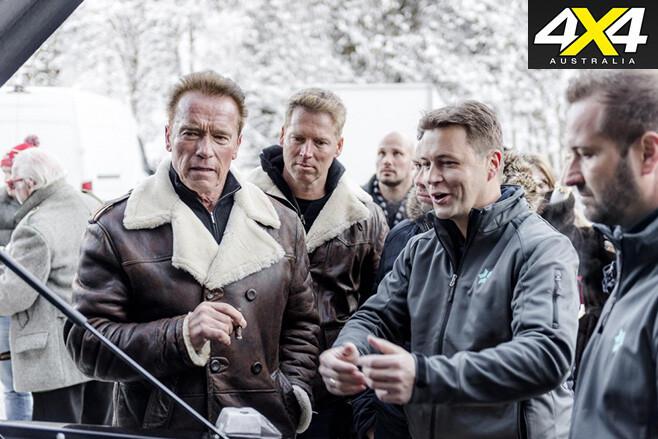
ELECTRIC energy company Kreisel has converted a Mercedes-Benz G-Wagen to full electric power, with 360kW of instantaneous power coming from 80kWh of battery packs that are housed both under the bonnet and in the rear of the vehicle.
We don’t know if the G’s legendary off-road credentials have been retained with the electrified variant, but on-road this vehicle will sprint from zero to 100km/h in just 5.6 seconds. The 420kW, twin-turbo V8 petrol-fuelled AMG G63 covers the same dash just 0.2 of a second quicker and is a lot less environmentally friendly.
The G-Wagen was built in Graz, Austria, so it’s only fitting that Kreisel, an Austrian company, has enlisted the Austrian-born Arnold Schwarzenegger to promote the converted G in Europe and in the USA, where Arnie will be driving one of the prototypes in California.
“This amazing off-road vehicle as a clean and fast electric car? A dream has become real!” says the cigar-chomping Schwarzenegger at a media event in Europe.
Schwarzenegger is known for his love of big 4×4 vehicles, particularly Hummers, and in the past he had a H1 Hummer converted to hydrogen fuel in keeping with the clean air laws of his adopted home state.
Kreisel has developed electric-powered vehicles in the past including an electric plane. It also manufactures and sells home power storage systems, similar to Tesla’s Powerwall, for European homes.
There’s no mention of the driving range of the electric G-Wagon, but if it were reasonable it could be the first electric vehicle we might want to drive!
Jeep, Land Rover, Toyota, Nissan. It’s like an honour role in the history of 4X4s. Thanks to fate, luck, coincidence, call it what you like, all four of these iconic marques, along with Holden, are represented in this year’s 4X4 of the Year (4X4OTY) shoot-out.
From Jeep, the most significant off-road marque of them all as the original WWII Jeep jump-started the 4X4 world as we know it, we have two Wranglers, a four-door Sport and a two-door Rubicon.
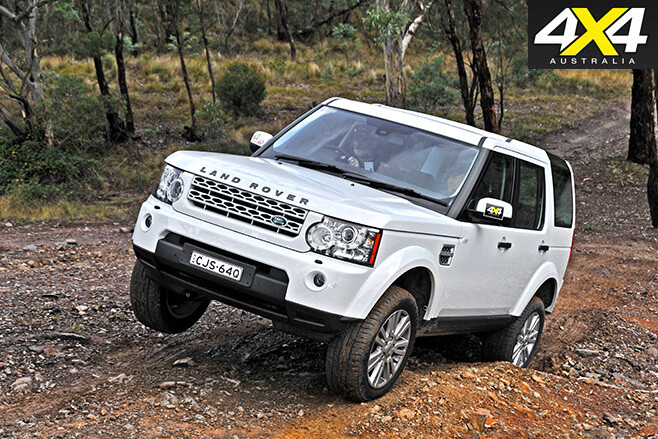
From Land Rover we have the latest iteration of the Discovery 4; from Toyota the new petrol 200 Series; and from Nissan, and this is the ‘biggie’ in more ways than one, is the new Y62 Patrol. This is the first all-new Patrol in 25 years. Yes, it’s been a very long time coming. And we also have Holden’s new Colorado 7.
All these vehicles are here for the same reason: they are either completely new (Patrol and Colorado), or sufficiently changed to be considered ‘new’ with the Discovery, the 200 and both Wranglers all sporting different powertrains from their predecessors.
This is, of course, what 4X4OTY is all about. It’s the ‘newness’ of these 4X4s that gets them an invite to the party. If a vehicle is not new, it stays at home. It’s as simple as that.
Given that the contenders for the award range in price from $38,000 to $113,900, accommodate as few as four people or as many as eight and have engines that range from a 2.8-litre four-cylinder turbo-diesel to a 5.6-litre petrol V8, this is not a comparison test.
Instead, our seven judges score the contenders against each of the award’s five criteria. Each judge scores each criterion for each vehicle out of 10 points so each vehicle can receive up to 50 points from any one judge. The judges’ scores are then tallied to arrive at a winner.
JUDGING CRITERIA
VALUE FOR MONEY This is judged according to a vehicle’s equipment level, safety features and price relative to its direct competitors.
DOING THE JOB This is judged according to a vehicle’s design brief. In the case of a 4X4 wagon, we look at how well it performs on- and off-road, and its interior accommodation for passengers and cargo.
BUSHABILITY This is how well a vehicle is equipped for Aussie off-road and outback travel. Suitability of the wheel and tyre specification, touring range, available accessories and underbody protection are some of the factors considered.
BREAKING NEW GROUND This refers to advancements in technology and design. If a vehicle has the latest safety features, worthy engine technology or an advanced driveline, it will score well here.
BUILT TOUGH This is the obvious one. It refers to how strong a vehicle is, and how well it will cope with the rigours of tough off-road and outback driving environments.
To put the judges in a position to confidently rate each vehicle, we have regular driver rotations over our four-day on- and off-road loop so each judge gets to drive each vehicle in a variety of differing environments. All the judges also drive the contenders over a short, set-piece 4X4 hill. And we conduct under-bonnet, under-vehicle and interior inspections, and sample every seat in every vehicle. Yes, we even squeeze into third-row seating where fitted.
JUDGES
- Marcus Craft
- Ron Moon
- Fraser Stronach
- Matt Raudonikis
- Justin Walker
- Brad Newman
- Peter Williams (Guest Judge: Opposite Lock)
THE CONTENDERS
JEEP WRANGLER SPORTS UNLIMITED
JEEP WRANGLER RUBICON
HOLDEN COLORADO 7 LTZ
LAND ROVER DISCOVERY 4 TDV6
TOYOTA LANDCRUISER 200 GXL
NISSAN PATROL Ti-L
ROUTE
DAY ONE We assemble at 8am in Lithgow, two hours west of Sydney. Here we fuel up each of the contenders, and the two support vehicles. This initial fill (along with the final fill) is essential in accurately measuring fuel consumption. From there we head to nearby Rydal to a short but challenging 4X4 climb.
Here the judges drive all of the vehicles for an initial familiarisation. After a self-catered lunch we head to Tarana, O’Connell, Black Springs and Porters Retreat via a mixture of sealed and unsealed roads to the western entrance to the Abercrombie River National Park. Inside the park we take Abercrombie Fire Trail to The Beach camping area, our overnight stop.
DAY TWO We rise at 5.30am. After breakfast we continue east along the Abercrombie Fire Trail before turning onto the Middle Fire Trail, the Felled Timber Fire Trail and finally the Retreat Fire Trail back to the Park’s western entrance.
The park offers easy to moderate four-wheel-driving in dry conditions but there are still plenty of steep and gnarly pinches and a couple of river crossings. From there we head south to Taralga for under-vehicle inspections on the hoist at Taralga Engineering. We overnight at the historic Taralga Hotel.
DAY THREE Leaving Taralga at 7am we head via Bannaby and the Swallowtail Fire Trial to Marulan (fuel stop) and Goulburn (food restock). Then it’s south to Braidwood and then via the Krawarree and Snowball roads to the western entrance of Deua National Park at the Minuma Range Fire Trail. From there we take the relatively steep but very rocky Dampier Mountain Fire Trail to our picturesque overnight stop at Bendethera.
DAY FOUR A 5.30am start under threatening skies. We head north on the Merricumbene Fire Trail to the Araluen road. This is a steep, gnarly and arduous drive especially in showroom-stock 4X4s on road-pattern tyres. In the wet it’s best avoided no matter how well equipped your vehicle. Luckily we encounter no more than a light drizzle but even that makes things a little tricky at times. Once on the Araluen road we head via Braidwood and Goulburn to Marulan, the final fuel stop.
WINNER!
LAND ROVER DISCOVERY TDV6
Six finalists; all new or significantly revised in the last year. That’s the condition of entry to this award. The Nissan Patrol Y62 and the Holden Colorado 7 are both all new while the two Jeep Wranglers, the Land Rover Discovery 4 and the Toyota LandCruiser all have new powertrains. Anything that’s not new or significantly revised isn’t eligible.
The six finalists are not compared against one another but are scored by the seven judges against the award’s five, long-running criteria. The scores from the judges are tallied and the winner is the vehicle with the highest score. All scoring is done in secret so there’s no collusion or coercion.
Before the scoring, the finalists are put through four days of intensive on- and off-road driving, some of it as tough as you’d expect a showroom-stock 4X4 to be faced with. When not scrambling up a steep and loose trail or carving up a bumpy, winding back road, the contenders are poked and prodded, sat in, measured, raised up on a hoist for underbody inspections, and closely scrutinised for fuel use. We also camped out during this test, which gave our judges a chance to live out of the vehicles for a few days.
All six contenders acquitted themselves well during the four days and met every challenge thrown at them. None failed to proceed. By some miracle, the only casualty was a mudflap on the Wrangler Sport, detached and lost in parts unknown.
Oh, and someone ran over Phil Cooper’s video camera…
When the dust had settled and with the scores submitted and tallied, the Colorado 7 managed 194 points (out of a possible 350) to come in at sixth place. Highlights include plush but well-controlled suspension and a decent equipment level but the engine is noisy and too thirsty, the gearbox not always fully in sync with the engine and the interior packaging could be better.
In front of the Colorado and close to each other (not unexpectedly) are the two Wranglers with the four-door Sport (211 points) just edging out the two-door Rubicon (210 points).
The Sport’s value for money is strong and it’s more practical than the Rubicon given its extra interior space, but you can’t beat the Rubi off road. Regardless of their differences, both Wranglers are very much more at home in the bush than they are on the bitumen.
A considerable distance ahead of the two Wranglers and (on 252 points) is the Patrol. In many ways a technical tour de force it simply lacks a real focus on local conditions. Petrol engines in this market sector aren’t popular and the Patrol’s very thirsty V8 also asks for premium fuel, although this is probably no big deal as it ran fine on 91RON during our time with it.
The fully-independent suspension, as trick as it is, does its best work on-road (negating body roll) but lacks height adjustment for more difficult off-road driving. More under-engine protection is also needed for rocky trails.
Toyota’s new petrol V8 Cruiser gained 263 points and in doing so edged out the Patrol. It’s less thirsty, marginally more comfortable off-road, better protected underneath and gives little away in refinement. In some situations it’s actually quieter than the Patrol. Not surprisingly it scored far better on Bushability due to the wealth of available aftermarket enhancements.
Taking all before it however is the Discovery 4, with 272 points. This is the new ‘budget’ model in the MY13 Discovery line-up and at $68,990 (plus on-road costs) is sharp value. Our test vehicle had nearly $8000 worth of options but the only ‘must have’ is the $1060 auto rear locker.
The real beauty of the Discovery is that it strikes such a unique balance between being an engaging on-road drive and a capable off-roader. No other 4X4 here strikes this balance as well. Add in a comfortable, space-efficient and versatile cabin and you really have the lot.
The new ‘low-power’ bi-turbo V6 diesel is frugal but still punchy while the eight-speed ZF auto works a treat on-road and does just about everything right off-road save for an occasional slowness to kick down on steep climbs. You can, of course, use the steering wheel-mounted paddles to change gears manually but these aren’t as convenient as the previous system with a conventional console-mounted shifter. Pity that.
Of course, the Discovery could be better. A bigger fuel tank would help, as would a more practical tyre/wheel combination. The 19s with their 255/55 tyres aren’t ideal although aftermarket 18-inch wheels are available.
Regardless, the Discovery is a standard-setting vehicle. It’s refined, comfortable, quiet, capable, spacious, clever, tough and affordable.
FINAL RANKINGS
1. Land Rover Discovery TDV6 2. Toyota LandCruiser 200 GXL 3. Nissan Patrol TI-L 4. Jeep Wrangler Rubicon 5. Jeep Wrangler Unlimited 6. Holden Colorado 7 LTZ
*Not in contention VW Amarok Trendline TDI420
FOUR-wheel drive aficionados are spoilt for choice in terms of new 4x4s, but it can get expensive when it comes time to purchase that brand-new fourbie.
Enter the budget, Chinese-made offerings. Foton is one such Chinese manufacturer that makes no-nonsense, relatively cheap 4x4s in single- and dual-cab variants. Here’s what you get for your money:
FOTON TUNLAND SINGLE CAB UTE
Drivetrain: 2.8 litre 4-cylinder 16-valve SOHC turbo-diesel with five-speed manual. Style: Single-cab ute.
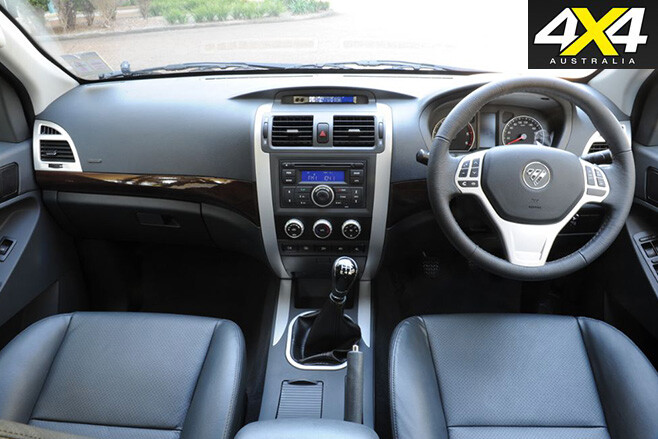
What you get: BorgWarner transfer case; Dana diff; Dana limited-slip rear diff; 120kW at 3600rpm and 360Nm at 1800-3000rpm; 200mm of ground clearance; 1015kg payload; 2500kg max towing capacity (braked); 750kg max towing capacity (unbraked); hydraulic power-assisted rack and pinion steering; double wishbone, coil spring (front suspension); leaf spring with live beam axle (rear suspension); front ventilated discs; rear drums; 16in steel wheels with 245/70 R16 tyres; Bosch 4-channel ABS with EBD (anti-skid brake system with electronic brakeforce distribution); dual front airbags; remote keyless entry; tow hook up front; leather steering wheel; CD/MP3/radio audio with Bluetooth streaming; AUX/Mini USB ports; Tilt-adjusting steering wheel with controls for Bluetooth, audio and cruise control. Seating capacity: two. RRP: $25,990*
FOTON TUNLAND DUAL CAB UTE
Drivetrain: 2.8 litre 4-cylinder 16-valve SOHC turbo-diesel with five-speed manual. Style: Dual cab ute.
What you get: BorgWarner transfer case; Dana diff; Dana limited-slip rear diff; 120kW at 3600rpm and 360Nm at 1800-3000rpm; 200mm of ground clearance; 1025kg payload; 2500kg max towing capacity (braked); 750kg max towing capacity (unbraked); hydraulic power-assisted rack and pinion steering; double wishbone, coil spring (front suspension); leaf spring with live beam axle (rear suspension); front ventilated discs; rear drums; 17in alloys with 265/65 R17 tyres; Bosch 4-channel ABS with EBD (anti-skid brake system with electronic brakeforce distribution); tyre pressure monitoring system with dash readout; dual front airbags; rear parking sensors; remote keyless entry; ute tray with liner; power side mirrors with defrost function; side steps; daytime running lights in lower front bumper; rear step bumper with reversing sensors and fog lamps; tow hook up front; CD/MP3/radio audio with Bluetooth streaming; AUX/Mini USB ports; tilt-adjusting steering wheel with controls for Bluetooth, audio and cruise control; leather seat facings; eight-way adjusting driver seat with height, lumbar, fore-aft slide, recline; three-place rear bench seat with flip-up seat. Seating capacity: five. RRP: $30,990*
*Nationwide driveaway price. Includes on-road costs.
During winter, snow bunnies migrate 375km north-east of Melbourne to enjoy the white dust that has fallen over the popular Falls Creek resort. But the winter destination also offers its charm during the less prevalent warmer, summer months.
This article was originally published in the October 2014 issue of 4×4 Australia.
Snow season ends late in October and by then the village resembles a ghost town, the wall to wall skiers and snowboarders have melted away with the snow.
While many lodges and chalets only accommodate guests during peak season, there’s still plenty of accommodation available at comfy ski lodges or at the upmarket Quay West Resort. There’s something for all travellers on any budget.
The Viking Alpine Lodge is perfect for those looking for cheap and basic accommodation. The lodge is self-catered with en suite facilities. A large guest lounge occupies most of the top floor and features a large communal cooking area with ovens, microwaves, cooktops and sinks, so that several guests can prepare food at the same time. Like most of the accommodation in Falls Creek, the Viking Alpine Lodge offers excellent views of the surrounding ranges.
Before it was officially named Falls Creek in 1938, the area was originally opened up as part of the Kiewa Hydroelectric Scheme and was known as Horseshoe Creek by local graziers – due to the boggy country that often pulled shoes off the horses. It was not until the late 1940s that the first ski lodge was built. Along with nearby Mount Hotham, Falls Creek is one of Victoria’s premier snowfields with 15 ski lifts and several thousand beds.
Falls Creek can be reached from Omeo in the east and Albury-Wodonga in the north, but most Melburnians take the Hume Highway to Wangaratta and travel via Bright and Mount Beauty. From Wangaratta this drive passes through the beautiful Ovens Valley, which includes attractions such as bushwalking, sightseeing, photography, camping and numerous first class wineries.
For the four-wheel drivers, the township of Bright is a kick-off spot for trips into the Buckland and Wonnangatta valleys. The impressive Mount Buffalo, which overlooks the Ovens Valley, is a delightful sightseeing location and a great spot to take the kids for a bit of snow play. In autumn, the valley is awash with colour from deciduous trees preparing for the approaching winter – orchards of walnuts and chestnuts paint the valley with a range of colours, from deep ochre red to brilliant yellow.
From Bright, the road to Mount Beauty is sealed, but it’s steep and winding as it climbs towards Tawonga Gap where the lookout has impressive views over the township of Mount Beauty on the Kiewa River. From Tawonga Gap, it’s a tortuous descent to the river valley before a further 35km winding climb to Falls Creek. Be warned, these roads are a magnet for pedal and motorised two wheelers, so take it easy and be prepared to share the road.
Falls Creek, in the heart of the Alpine National Park, is located in one of Australia’s most fragile environments. As a result, much of the Bogong High Plains is off limits to vehicles, so those seeking 4×4 adventure need to look further afield. Once off the bitumen, the roads that are open to the public can only be accessed by four-wheel drive or on foot.
There are more than 60 mountain huts (or remnants of huts) in the Alpine National Park.
Many of these are found near Falls Creek and are remotely located in difficult terrain, so access can be challenging. However, a few huts are in reach for those prepared to undertake moderately difficult walks. Not many of these huts have survived their original form due to the rigours of weather and bushfires, but they still provide a glimpse into what living conditions must have been like for the mountain cattlemen that worked up in this country in the 1800s.
Six huts that can be easily reached from Falls Creek are: Wallace’s Hut, Bogong Rover Chalet, Cope Hut, Faithful’s Hut, McNamara’s Hut and Pretty Valley Hut (the latter is also known as Horseman’s Hut). The first three are on the easy six kilometre Wallace Heritage Trail Walk, which starts 12km east of Falls Creek on the Bogong High Plains Road and returns onto the same road a couple of kilometres further on. Wallace’s Hut dates back to 1889, making it the oldest cattleman’s hut in the Alpine National Park.
Bogong Rover Chalet, halfway along Wallace’s Heritage Trail, came about from the growing interest in snow skiing in the 1930s. Rovers regularly undertook skiing trips into the area and the chalet was built in 1932 to provide adventurers with accommodation. Cope Hut, 750 metres from the southern end of the trail, was built by the Victoria Ski Club in 1929 as a winter refuge. You can only imagine how arduous the journey into that area would have been 80 years ago.
East of Falls Creek, on the road towards Omeo, are two bush campsites – Langford West and Raspberry Hill. Both are pleasant, grassy areas with fireplaces and toilets surrounded by snow gums. Travelling east from Raspberry Hill you’ll find the turnoff to Faithful’s Hut. The access track can have a couple of shallow bog holes at times and, whilst not difficult, it’s more suited to a 4×4.
About 50 metres off the main road is a delightful campsite with toilet facilities and fireplaces set in a grassed area beneath large gum trees. This is perhaps the pick of potential campsites in the area as it’s less used – access is partially hidden on a bend and the site is not shown on some maps. A gated track off the campsite runs 750 metres down into the valley where Faithful’s Hut sits on the banks of an idyllic mountain stream. The return walk is relatively strenuous as it’s consistently uphill and quite steep in parts.
Two kilometres further east, along the main road, is the turn off to McNamara’s Hut. This easy track is very narrow in places and, with some ruts and potholes, it’s only suited to a high clearance 4×4. The track stops at a small car park with a 500 metre walking track to the hut.
The hut was built in the 1940s by the McNamara family who had an association with cattle grazing in the area since the 1850s. Eventually abandoned, it fell into disrepair until the 1970s when it was resurrected by volunteers. It was used and maintained for another 30 years by a group of people from the Mittagundi Outdoor Education Centre. Destroyed by a bushfire in 2003, the hut was rebuilt to its present form in 2004 by volunteers who used close to 40-tonne of logs.
Mount McKay stands 1849 metres tall and is a 15 minute drive out of Falls Creek – just off the gravel road to Pretty Valley. You can drive to the top, however stopping at the car park a few metres below the communication tower is a better idea – once you’re at the top there’s not enough room to turn around.
Mount McKay has 360 degree views and, on the right day, with a glass of champagne and a camera, it’s a great place to watch the sun setting over Razorback Range to the west. Mount McKay supposedly claims the title of being the highest point with road access in Victoria. Mount Hotham is 12 metres higher but the road isn’t open to the public.
From Mount McKay, the road passes Pretty Valley Hut. Built in 1984, this small hut is a reconstruction of the original 1930s hut erected on the site. The road ends at Pretty Valley Pondage.
Interestingly, the 2003 fires removed almost every trace of the tough woody undergrowth here; however, low granite boulders took the heat out of the fire and stopped the adjoining branches from burning. Those branches still cling to the rocks.
If heading down the mountain towards Mount Beauty, make sure to stop off at the car park near the bridge that crosses the Kiewa River, near Bogong Village. From here, there’s an easy two-kilometre return walk to Fainter Falls. The walk curves along a well-made track with viewing platforms, making it an excursion for the entire family. The falls are at their most spectacular after a rainfall, or in the wetter months.
Only three hours from Melbourne, and with budget accommodation, Falls Creek is a great option for a weekend away. Whether you want to buckle up the walking boots or just spend a relaxing weekend amongst spectacular scenery, Falls Creek has something for everybody.
TRAVEL PLANNER
- WHERE: Falls Creek is 375km, and about four hours drive, north-east of Melbourne by way of the Hume Highway and the Great Alpine Road to Bright.
- WHEN TO TRAVEL: Very popular and often booked out in the winter snow season, the warmer summer months are perhaps the best for sightseeing. With temperatures rarely exceeding 20°C, Falls Creek’s alpine climate is an attractive refuge during the hot weather. Overnight temperatures regularly fall to single digits, or sub zero, with snow a possibility at any time of the year.
- STAYING THERE: Falls Creek offers a range of accommodation from chalets and lodges where guests self-cater through to luxury rooms at the QT Hotel. For those wishing to camp there are three designated bush campsites (with toilets) about 10km east of Falls Creek on the Bogong High Plains Road (Langford West, Raspberry Hill and Faithful’s Hut campsites). Previously free, camping fees for the Alpine National Park are proposed to commence during 2014.
- SUPPLIES: Falls Creek has a supermarket which operates with reduced hours in summer. Fuel and other supplies can be purchased in Mount Beauty but not at Falls Creek.
- ROAD CONDITIONS: The main all-weather Mount Beauty to Falls Creek Road can be subject to rain, fog, snow and ice. With many sharp and blind corners defensive driving is a must. The few secondary roads open to the public, such as those to Mount McKay and Pretty Valley, can be corrugated and rough in places. However, any standard vehicle should comfortably cope with them.
- MAPS: A good quality Hema paper map and GPS is recommended.
- CONTACTS: Falls Creek Visitor Info Centre, www.fallscreek.com.au, Phone: (03) 5758 1202
This great dish was made for us during our trip to the Kimberley mid-2016.
Rob and Rosie were our travelling companions for a few weeks and she cooked up this delicious meal one evening. Given to her by a friend who works as a doctor in South Africa, it will definitely become one of our go-to meals for when we are away (and at home).
INGREDIENTS Serves: 4 to 6 6-8 chicken pieces 1 cup dried apricots ½ cup sultanas (more or less to taste – optional) 2 med onions – cut into wedges 2 large carrots – cut into large chunks 2 celery sticks – cut into large chunks 10 baby potatoes For the sauce 2 tsp turmeric powder 2 tsp sweet paprika powder 2 tbsp curry powder 2 tbsp mango chutney ¼ cup mayonnaise 1 med can apricot nectar 3 cups water
DIRECTIONS Prep Time: 15-20 mins (prep veggies) Cooking Time: 30-45 mins (depends on chicken size) • Prepare your coals. You don’t need to preheat your camp oven. If baking at home, preheat your oven to 180°C. • Make sure you buy the ‘big’ oven bags, and use two (one inside the other) to add strength and stop the bag splitting. • If baking in your camp oven, line the oven with foil just in case the oven bag splits. That’ll save you cleaning up a mess. • Prepare the chicken – cut thighs in half, or if using Maryland cut the leg from the thigh so you have two pieces. • Prepare all the vegetables – cut into large pieces so they hold their shape and don’t fall apart before the chicken is cooked. • Make up the sauce by mixing all the dry ingredients together first in a large bowl or jug and then add the wet ingredients and mix through well to combine. • Now you’ve got everything ready, place the oven bag in your camp oven, or in an ovenproof dish if baking at home. • Place the chicken in the bottom of the oven bag, add the veggies and then pour in the sauce. • Seal the bag, poke in a couple of holes near the top of the bag. • Place your camp oven on a bed of coals, put on the lid and add some coals to the lid. You don’t want the coals to be too hot as this meal is best cooked slowly. Allow to simmer away gently. • If you don’t want to cook over coals, cook on your gas stovetop. • You can serve it as is or on a bed of rice.
VIV’S HINTS YOU could add whatever vegetables you like, including sweet potato that is peeled and cut into large chunks. Also some green beans cut into large pieces.
Add more water if feeding a crowd – that way you’ll have plenty of flavoursome juices. You may need to forgo the oven bag due to the quantity required. No problem if you don’t have an oven bag, just put everything straight into your camp oven.
For more tasty ideas, visit 4X4 Australia’s Bush Cooking recipes.
4X4 Of The Year 2014 threw up a mixed bunch of combatants from the new or revised 4×4 vehicles released in 2013.
This article was originally published in the February 2014 issue of 4X4 Australia.
Without a large number of significant new wagons and next to no new 4×4 utes worth talking about, the two body styles have been brought back together again; and with the way things are shaping up, we reckon this is how it will stay.
4X4 Australia’s Ute Of The Year award came from another era when it was very difficult for a ute to take the overall 4×4 accolade. Utes were still basic load-lugers and lacked the features enjoyed by most modern 4×4 wagons such as five-star safety, electronic traction and stability control, and the little items that make them comfortable family and long distance touring vehicles.
This has changed now and as many 4×4 wagons become more suited to light duty off-road work, double-cab 4×4 utes have become the vehicle of choice for many. They are safe, comfortable, refined and offer performance that is comparable to the wagons. Add in the practicality of having a load bed on the back and the swag of accessories available and you can see why they have become so popular.
Following the burst of new ute releases in recent years, there’s only one that made it to the 2013 list but with class leading power, torque, towing capacity and safety, the Holden Colorado is a worthy addition.
If you’re wondering how we can include vehicles such as the Colorado and the Range Rover in the same road test, you need to remember that we don’t compare them against each other but against a set criteria established by 4X4 Australia over decades of vehicle evaluation. The same criteria has been used in past Ute Of The Year and 4X4OTY road tests and for 2014 it is applied to all the vehicles combined.
VALUE FOR MONEY is judged according to a vehicle’s equipment level, safety features and price relative to its direct competitors. Just because a vehicle has a high price doesn’t mean it’s not worth that money in the same way a cheap car isn’t always good value.
BREAKING GROUND refers to advancements in technology and design. How a vehicle has raised the bar in its class and has whether it has taken 4x4s to a higher level. If a vehicle has the latest safety features, worthy engine technology or an advanced driveline, it will score well in this category.
BUILT TOUGH refers to how strong a vehicle is and how well it will cope with the rigours of tough off-road driving environments. Will it be up to the task of sustained Outback travel or fall apart at the first hurdle?
BUSH ABILITY is how well a vehicle is equipped for off-road travel. Suitability of the standard tyres for rough roads, touring range, available accessories and under-body protection are just some of the factors considered here. Is this a vehicle you would chose to drive around Australia the rough way, or is it best left in the suburbs?
DOING THE JOB is judged according to a vehicle’s design brief. Does a supposed luxury vehicle have all the latest in comfort and convenience features and do they work as you would expect them to? How well a ute carries a load in its tray, or how a seven seater accommodates a family will all come in to play here.
As always, we assembled a crew of esteemed 4×4 enthusiasts, testers and judges. Former editors Ron Moon and Fraser Stronach were joined by current editor Matt Raudonikis, while Ironman 4×4’s Adam Craze and Kristian Ristell added their expertise with Norm Needham and Grant Henderson pitching in with help and observations. Phil Cooper pulled double duties snapping the pics as well as keeping us fed in camp while Andrew Britten shot the video footage.
A top bunch of blokes who made it a fun week of working with 4x4s in the bush. Read on to see how it all went and which vehicle has been named the 4×4 Of The Year winner.
TEST TRACKS FOR A TOUGH FIELD
The thick veil of sand blasting across the beach from the strong south westerly winds obscured every bit of the surface of the sand giving no indication of a pot hole, dip, gully or sudden sharp ridge. It was almost like driving blind. The torn up state of the beach from previous storms also posed a threat, with stretches of soft sand waiting for the opportunity to trap us.
So the last afternoon of vehicle testing started to pan out as we headed along New South Wales’ famous Stockton Beach.
Our test had started four days and 1200km before. We had slipped out of Lithgow and headed into the nearby hills and state forest near Rydal, where the Coxs River has cut some steep gullies over the years. There is a steep and eroded track here that is a fabulous test on a vehicle’s off-road capability. The object was to pick a tough line up the hill that will stretch all of a vehicle’s four wheel drive credentials and then take each and every vehicle up that very same route. Suspension travel, low range gearing, traction control, along with locking diff capabilities all get measured here.
From the Coxs River, we tracked generally northwards on first and second class bitumen roads including the Bells Line of Road through a scorched and ravaged Blue Mountains National Park.
We took Mountain Lagoon Road and dropped down the ridges through the Wollemi National Park on a variety of roads and tracks, some chopped up by winter rains, to end up at the hamlet of Upper Colo. Meandering along the Colo River and then bigger Hawkesbury River, we found our way to St Albans where we camped for the night.
The next day, our route took us through Yengo National Park and the Watagan and Olney State Forests where the terrain and the weather threw up a variety of conditions, testing the vehicles capabilities, axle tramp and suspension damping along with their NVH through rutted and pot holey tracks, chopped up corners and long climbs and descents.
Camp that evening was at the very pleasant Olney State Forest camping area where we swapped experiences and thoughts on the day’s drive, vehicle capabilities, fuel economy and general ride and handling characteristics over the wide selection of terrain we had pushed them through.
When the sun had risen, we drove our beasts along Watagans Forest Road, which gave us great views of the coast and lakes below our mountain top route as we headed for Cessnock and Singleton. Tracing the Goorangoola Creek, we took to more dirt roads, bumping through the road’s dips and dives and numerous crossings of the stream before racing along exposed ridges towards Aberdeen and Lake Glenbawn State Park.
Second class blacktop took us to Gundy and Moonan Flat. The steep climb on the Barrington Forest Drive, through rich forested country and over the Barrington Tops, was a chopped up road, leading to our descent to Gloucester and a camp on private property along the edge of a stream north of Port Stephens.
The last day of testing began with a thorough inspection of the vehicles’ engine bay and under carriage before we headed to Stockton Beach. We all got a dose of Mother Nature’s wrath as we received a wind blasting, pushing our good manners to the brink. Getting bogged was one thing; but digging in sand to loosen tyres from the beaches enfolding grip and finding recovery points while being sand whipped was another story. But what the hell…
Testing vehicles for 4X4OTY surely beats a real job!
MEET THE CONTENDERS
HOLDEN COLORADO LTZ DUAL CAB More power, a new manual gearbox and revised equipment headline the changes to the MY14 Holden Colorado.
HOLDEN COLORADO 7 LTZ Not satisfied with its initial effort, Holden revamped its Colorado 7 wagon just twelve months into its life.
ISUZU MU-X LS-T Just as Holden created the Colorado 7 from the Colorado ute, Isuzu has turned its D-Max ute into the MU-X wagon.
JEEP GRAND CHEROKEE CRD OVERLAND Thanks to range expansions and revisions, the Grand Cherokee is appearing in 4X4OTY for a third time in four years.
RANGE ROVER SPORT SDV6 HSE The original Range Rover Sport was based on a Discovery platform but the new Sport is from that of the new Range Rover.
RANGE ROVER SDV8 VOGUE The new Range Rover just missed out on being eligible for last year’s 4X4OTY, but it’s here now staking its claim.
AND THE 2014 4X4 OF THE YEAR WINNER IS….
Jeep Grand Cherokee CRD
WE’VE said it many times before but we’ll say it again. Our 4X4 Of The Year award is only open to vehicles that are new or significantly revised in that year. Three of our finalists, the Isuzu MU-X, the Range Rover and the Range Rover Sport are all new. The other three of our finalists, the Holden’s Colorado and Colorado 7, and Jeep’s Grand Cherokee CRD all make the starting grid thanks to significant powertrain revisions.
As ever, the vehicles aren’t directly compared as in a conventional comparison test but are rated against the award’s five long-standing criteria.
Judging is by ‘secret ballot’ at the conclusion of the week’s testing. This is not an open consensus, nor do the judges, in awarding their points confer, consort, collude or conspire with one another.
Of course, plenty of open discussions occur during the normal course of the week of testing, but that’s where it ends.
Each judge scores each vehicle out of ten for the five criteria. That means that each vehicle can get a maximum of 50 points per judge. The judges’ scores are then tallied with the vehicle gaining the most points declared the winner… it’s all very simple.
At the end of the week, after the dust had settled and the judges had returned to their respective digs, mused on the vehicles and analysed their performance in all aspects of the testing and finally submitted their respective scores, the result was close but unanimous… the Jeep Grand Cherokee CRD is the 2014 4X4 Of The Year.
All six judges voted the Grand Cherokee CRD the pick of the crop. Not by much, mind you, and five judges had the Range Rover Sport in second place.
Unanimous results are rare in the history of this award and this speaks volumes for the attributes, performance, appeal and, above all, the value of the Grand Cherokee CRD.
Our test Grand Cherokee was a top-spec Overland. As tested, it asks $71,869 (plus on-road costs) but is so loaded with kit that it could command a $100,000 plus price tag. If you don’t want all the bling, the identical mechanical package can be had for $55,219 (plus on-roads) in the form of a $51,000 Laredo CRD optioned up with air suspension ($2500) and the off-road pack ($1500), which critically adds the rear locker. The extra $219 is for a dealer-fitted front recovery hook.
For that amount of money you get a high-tech European V6 diesel, the world’s best-practice automatic gearbox and a highly sophisticated chassis co-developed with Mercedes-Benz. The fact that the Grand Cherokee isn’t an absolute hard-core off roader is disappointing but this isn’t enough to deny its place as the worthy winner 2014 4X4 Of The Year.
Final Scores (/300) Jeep Grand Cherokee Overland: 212 Range Rover Sport SDV6: 200 Range Rover SDV8: 191 Holden Colorado LTZ: 190 Holden Colorado 7 LTZ: 177 Isuzu MU-X LS-T: 176