
A FEW weeks ago I was driving through the Flinders Ranges with my mate Michael Ellem and his wife Gab.
We were on very familiar roads and tracks, having travelled through this spectacular part of the world many times over several years.
We were both towing trailers for a photo shoot. Hitched up behind Michael’s BT-50 was his mobile office, which comes in the form of a Jayco Basestation; while I was driving one of ARB’s well-set-up 200 Series Land Cruisers with a single-axle Lotus Off Grid van.
Now, you’d think towing a couple of big trailers would preclude you from going too far off track, but I can assure you, we found some nice out-of-the-way campsites.
Our first night was spent at Waukaringa Ruins, just 35km north of Yunta. Even though it’s situated on private property, camping is permitted within the vicinity of the ruins, which consist principally of the old Waukaringa Hotel. If you haven’t been here before, it’s well worth the effort, if for nothing else but to meander about the ruins and read about the ghost town’s interesting history.
The following day we worked our way through some truly beautiful country, along winding gravel roads to Hawker, where we arrived quite late and so decided our best option would be to spend the night in the caravan park. While the convenience of toilets and a hot shower was appreciated, we were looking forward to getting back out in the bush the following evening.
We spent the next day taking in some of the sites throughout Ikara-Flinders Ranges National Park. We dropped our camping fees into the box when entering the park and found a nice enough spot where both trailers would fit and there were no other visitors in sight; although, we could hear some other campers not too far away.
However, we found the perfect spot on the fourth night. After another day’s driving, we neared the western end of Parachilna Gorge as the sun dropped towards the horizon. We scoped out a couple of campsites by the river and had almost settled on one not too far from the road when Michael noticed a track leading up a small tributary on the other side of the creek.
As we drove up the narrow gorge, sizeable trailers in tow, we started to wonder if we’d find somewhere suitable to turn around, let alone a decent spot to set up camp. To our surprise, we found both just a few hundred metres in.
There was still enough light for Michael and Gab to shoot some stills and video of the vehicle/trailer combos driving through the spectacular gorge, before we set about trying to find a way to access the slightly elevated campsite. Other than a tricky approach, it offered everything we needed: it was big enough, it was almost level, and it was covered in green grass.
Another vehicle drove up the narrow gorge as we were backing the second trailer into position; its occupants must have wondered why we’d bother trying to put two big vans into such a small and out-of-the-way spot. But once in-situ, we stood back and admired our handiwork. Yep, this was the perfect spot!
Ironman 4×4’s Flinders Trip: SA
As well as being well away from the road through Parachilna Gorge, this campsite offered another very important feature: a steep rocky track that led to a grassy lookout where we could photograph some other items on our shot list. That rocky track also proved the perfect challenge for the 1/10th scale rock crawlers we had brought along on our mini Flinders adventure.
As the last light of the sun vanished and the Milky Way lit up the sky with its celestial magnificence, we reflected that this truly was the perfect spot. Solitude, a warm campfire, cold beers and RC crawlers… what more could you want?
IN THE middle of the vast Gulf Savannah, that stretches from the Northern Territory to outback Queensland, is an oasis surrounded by Livistona palms, pandanus and white cedar trees.
Boodjamulla (Lawn Hill) National Park (NP) is a place of breathtaking beauty, with Lawn Hill Creek winding its way through steep sandstone cliffs and cascading down majestic waterfalls.
The magnificent landscape can be experienced on a challenging bushwalk or by jumping in a canoe. The Island Stack walk involves climbing a steep track to the lookout, where an adjoining 1.7km walk takes you around the ‘table top’ for impressive panoramic views. An easy walk to the Cascades leads you to tufa formations, where you can swim in the cool spas.
For those interested in Aboriginal culture, the Wild Dog Dreaming track provides access to Aboriginal art shelters.
One of the most popular walks would have to be the track to the Indarri Falls. Formed from delicate layers of calcium carbonate deposited by the river’s lime-rich water, Indarri Falls’ tufa wall extends up to 30 metres below the surface. The falls are a perfect place for a refreshing swim with the barramundi, turtles and archerfish in the icy, emerald-green water.
From Indarri Falls you can hike up to Duwadarri Lookout for an incredible vista over the impressive gorge, cliffs and surrounding country. Be prepared for a steep ascent or descent, depending on where you started this hike.
For most campers, hiring a canoe is the preferred method of enjoying the cool watersof Lawn Hill Creek. Pushing off through the purple waterlilies that crowd Duwadarri Waterhole, you glide upstream past palm-fringed banks where crimson finches flit amongst the pandanus.
Halfway through Middle Gorge, the banks recede to be replaced by soaring red cliffs that blaze with the rising sun. Paddling to the Indarri Falls, you then have to carry the canoe around the tufa dam to be relaunched in Upper Gorge. Once afloat in Upper Gorge, the creek narrows, disappearing into a maze of fan palms and waterlilies before dramatically emerging in a new landscape of spinifex slopes dotted with snappy gums.
For bird-lovers, there is plenty to enjoy. The rare and beautiful purple-crowned fairy-wren can often be seen among the pandanus lining the gorge, along with the buff-sided robin with its distinctive high-pitched call. In the open grassland, the deep red of the crimson finch is unmistakable.
If you’re walking or canoeing along the gorge, you will be amazed by the variety of water birds, including the great egret, Australian darter and cormorant. Varied lorikeets and red-winged parrots are a stunning sight as they streak overhead.
The colonial history of Lawn Hill NP can be traced back to the 1860s, when pastoral pioneers, including Page, Mytton and Cooper, brought the first cattle here. But this was soon followed by an outbreak of ‘gulf fever’ that caused many graziers to leave the area.
In March 1975, the famous cattle king Sebastiao Maia arrived from Brazil and the story goes that he paid a Sydney taxi driver to be his interpreter and chauffeur as he travelled the country in search of potential cattle stations. He took over the lease of Lawn Hill Station, one of the largest cattle stations in Queensland (11,000km²) in 1976. In 1984, Maia surrendered 12,200ha of Lawn Hill Station to the state government as national park.
Culgoa Floodplain National Park, Queensland
The story behind Adel’s Grove is a rather sad one. In 1920, French botanist Albert de Lestang took up the property as an experimental botanical garden; hence the name, Adel, from his initials. By 1939, he had some 1000 species of exotic and native plants, shrubs and trees growing on the property. He was also a blacksmith, carpenter and saddler, and bought and sold horses and cars.
Unfortunately, in the early 1950s, a devastating fire swept through the Grove while Albert was absent, destroying everything including his dwelling and trunk containing his research papers. His last years were spent in a nursing home in Charters Towers, where he died in 1959 at the age of 75, most probably broken-hearted.
Time permitting; you may want to pay a visit to the Riversleigh World Heritage Area, which protects one of the world’s richest and most significant fossil mammal sites. When travelling from Lawn Hill Gorge, it is a 51km drive. The fossils have been superbly preserved in limestone outcrops. Riversleigh’s fossil site has good interpretive displays, and the Miyumba Bush Camp is nearby on the banks of the Gregory River.
It is a long journey to Lawn Hill, but to experience an emerald oasis in the middle of dry savannah country needs to be seen to be believed, and it is a sight you’ll never forget.
READERS’ rigs has returned with a bang.
In this instalment we’ve got some wildly modified machines, some tamed weekend warriors and a few that are neat and tidy.
Check out more Readers’ Rigs here.
Get involved and shoot through some photos of your 4×4 to our Facebook page. Also, keep an eye on the Readers’ Rigs section of the magazine, as we may feature your pride and joy one day.
2014 JEEP WRANGLER JKU – OSCAR LISTER
Mods are too many to list all of them, but a few include: 3.5-inch lift, 35-inch tyres, Method Race wheels, AEV & Poison Spyder bars and armour, Runva winch with hardwired in-cab switch, 4.56 Yukon ratios, sleeved and gusseted front axle, twin-locked TJM Pro Lockers, Nitro rear axles, and Synergy adjustable control arms all ’round. Best places are pretty much anywhere off the bitumen, but Land Cruiser Park and Fraser Island are two of my personal favourites.
2007 NISSAN PATROL GRX – RODRIGO GALVEZ
It’s got an ARB Sahara bar, Thule roof rack and 285/75/17 mud tyres. IPF 900s are getting installed.
2000 NISSAN PATROL GU – RUSSELL OPPERMANN
I bought it off of my old man about three years ago. It was completely stock standard with a rebuilt ZD30 and auto, and it was a good base to build a tourer to my specs. Have added two-inch Kings Springs with Bilstein shocks, Fuel Off-road Revolver alloy wheels and 285/75/16 MT P3 muddies, a bullbar and 12,000lb winch, LED spot lights, and a 20-inch light bar. I’ve added a 42-inch light bar to the roof rack since the photo. It also has a full-length alloy roof cage, dual wheel carrier, Safari snorkel, drawers and shelf/divider, drop fridge slide, dual batteries and UHF. After tearing the flex plate off the back of the ZD30 coming home from the Northern Territory, I decided to ditch the grenade and put a 6.0-litre V8 and six-speed auto in to make touring and towing the camper a much nicer experience. Future plans are to upgrade the electrics and to dual-cab and chassis-stretch it. Best place I’ve been in it so far is definitely Lorella Springs; that place is incredible and I can’t wait to get back there.
2006 LAND ROVER DEFENDER 130 TD5 – SHAYNE YOUNG
I’m an Aussie who has been traveling the world for the past 24 years, and this is the truck I plan on driving back home to Australia in. It was purchased in the UK approximately three years ago and I’ve been doing everything myself. I upgraded pretty much everything and then some: VNT turbo, chipped computer, custom high-air intake, GKN electric overdrive, ARB locker differentials, electrically operated roof-top tent customised to allow entry from inside the truck bed, 1500km fuel range, 120 litres of fresh water thanks to custom-made auxiliary tanks, front and rear electric winches, underbody protection, custom external protection cage, full LED lighting, in-cab bilge pumps, three batteries, 160-watt solar panels, hot and cold running water, and an in-cab diesel fire heater… just the necessities.
2006 TOYOTA LAND CRUISER GXL 1HD-FTE – STEVE & BEC GUNSON
We’ve had it since new. It’s got two-inch OME suspension, with airbags inside rear springs to help with the weight when towing. It also has a diff drop kit, chip, three-inch exhaust, larger cross country intercooler, heavy duty valve body and torque converter lock-up kit in tranny, snorkel, drawers, cargo barrier, fridge, Long Ranger fuel and water tank, Kaymar rear wheel carrier, full-length roof rack with Foxwing awning, GME CB radio, Alpine stereo with sub, reversing camera, ARB Deluxe winch bar and side steps, Warn winch with synthetic rope, dual battery system, and front and rear ARB diff locks. We’ve done the Canning Stock Route, Gibb River Road and many tracks around the Pilbara with our camper trailer in tow. It’s been a great wagon… we love it.
2016 FORD RANGER – STEVE SHOTTON
I bought it new in March, 2016. It’s an Aurora Blue XLT with the Tech Pack upgrade. It has an ARB Summit bullbar, scrub bars, side step/rails and rear step, ARB Ascent canopy, ARB underbody protection, Clearview towing mirrors, Rhino Rack and Tradie cage, two-inch lift with Lovells gear, Ironman 12,000lb winch, black KMC Addict wheels with 285/75X17 Nitto Terra Grapplers, tub-mounted dual batteries with Intervolt DCC Pro power management system, and a Tekonsha P3 electric brake system. I also removed the sunglasses holder and installed a custom switch panel for Waeco fridge, Stedi LED light bar, Penetrator LED driving lights and Narva rear-mounted work lights. Plans for 2017 include custom Drifta drawers and shelves, and a Foxwing awning. No plans for ECU and exhaust work until it’s out of warranty. So far I haven’t done anything too wild. It’s been mainly for towing our van, but we stayed at Bretti and spent some good days up in the Barringtons last year. We’ve just moved to Hallidays Point in NSW, so we’re looking forward to exploring between Gloucester and Coffs Harbour when time permits.
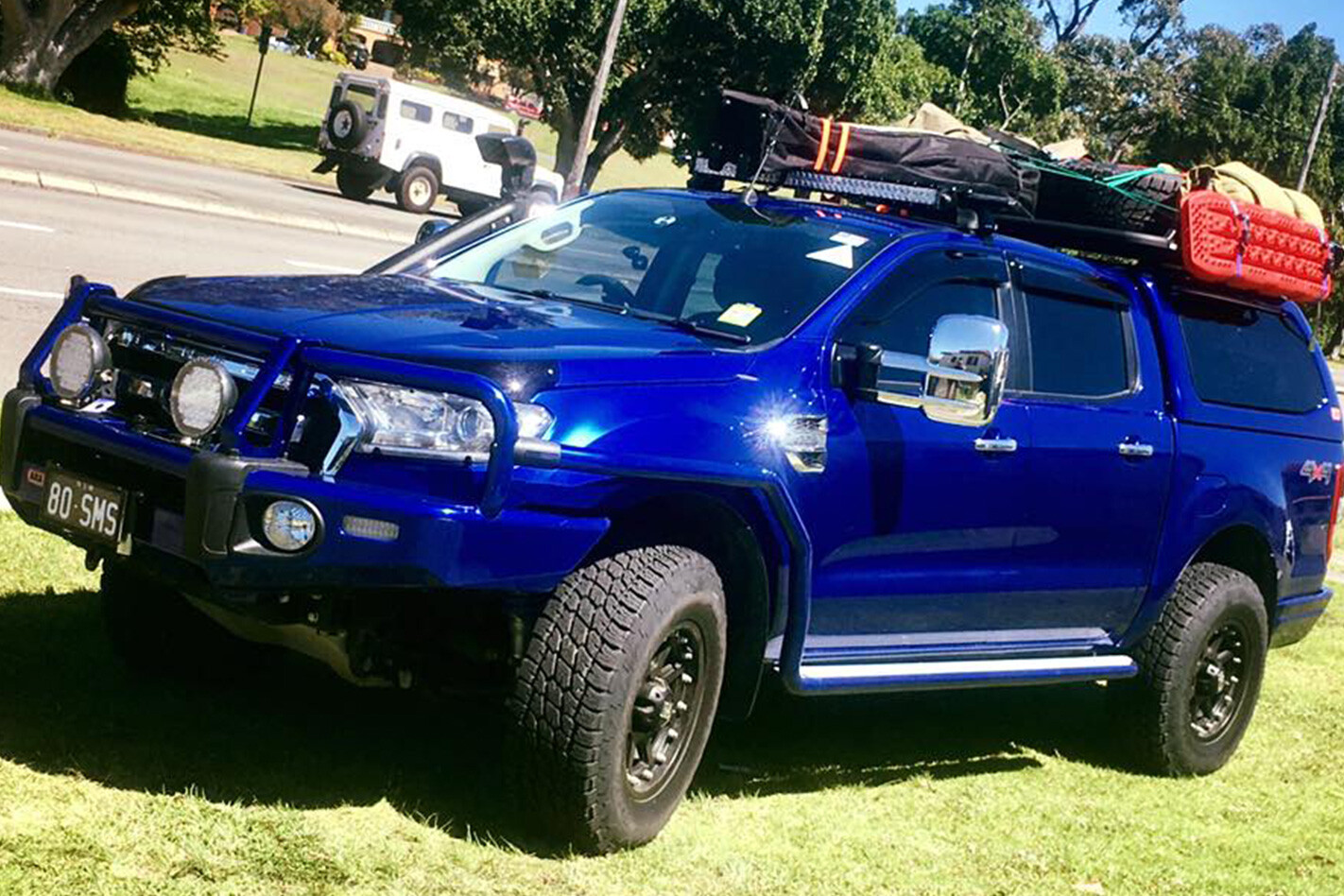
LIKE it or not, modern 4x4s are often built for show, not go.
Usable lift, grippy tyres and bar work are sometimes put on the back burner for 10-inch-lifted rigs on 20-inch wheels that won’t see terrain tougher than the Bunnings carpark on a Saturday morning. This Toyota Hilux, however, is anything but.
Vote for the 2017 N80 Toyota Hilux SR5 to win 2017 Custom 4×4 of the Year
A keen fisho and part-time hunter from Sydney’s northern beaches, Joe Emmerton needed a rig that’d not only lug around a near-two-tonne boat, but would get him beyond the black stump to top secret hunting spots with enough ability left up its sleeve to bounce through gnarly rock-laden tracks on the days in-between.
No small ask, but Joe had a plan. With the new N80 Hilux just released and his older model due for replacement, the choice was a no-brainer. “I saw potential in the new shape,” Joe said. “I know what Hiluxs are like, and I knew I could make mine look different from the rest.”
Joe’s the kind of bloke who likes the nicer things in life, so when it came time to tick the options box on his new ride, he went all out with the top-spec SR5. The fancy badging didn’t just mean colour-coded bumpers and a premium interior, he also picked up the high torque 2.8-litre turbo-diesel donk, a factory rear diff lock, and bundles of articulation out of the rear suspension.
Project Toyota HiLux gets Harrop ELocker
Like all good tourers, Joe’s N80 is built on a solid foundation. Up front, the stock struts have been binned. In their place are a set of four-inch-lifted mono-tube Bilstein struts. Joe had the guys at Heasman Steering and Suspension weave their magic with a set of custom-rate H&R coil springs to dial the ride in for his needs.
More height was gained by shoehorning in a 50mm body lift from VMN for a ride height that sits 150mm higher than stock. Of course, you can’t go pushing an independent front end to those heights without running into a few issues along the way. The first issue was binding CV joints; the extreme angles from the lift were a recipe for disaster when pushed through the terrain Joe calls a ‘quick run in the bush’.
To help correct the CV angle, Joe opted for a complete diff drop arrangement from the guys at Phat Bars. They’ve replaced weak factory mounts, but also bumped CV angles back into an acceptable range. The next issue was getting the whole affair aligned.
With such a large lift, the Hilux simply ran out of adjustment with the stock arms in place. A quick call to CalOffroad had a set of its heavy-duty adjustable arms slotted in place. The arms were a bolt-in replacement, but with geometry re-jigged and an adjustable OEM-style ball joint, they’ve given enough wriggle room to get Joe’s Hilux driving better than stock.
Up the back, Joe had the factory rear springs re-arched and teamed up with a set of Snake Racing extended shackles to dial the rear end up four inches to match the front. A set of matching rear shocks were slotted in, too, with Bilstein’s remote-res 5160 shocks keeping things under control. “The ride is so much more comfortable than stock,” Joe said.
“On dirt roads and corrugations, having the remote res in the rear keeps it consistent and doesn’t fade. It’s much firmer and handles nicer, too.”
The set-up has allowed Joe to shoehorn in a set of 305/65R17 Mickey Thompson Baja MTZ mud terrains with 17-inch Dynamic D-Hole steel wheels in a -30 offset. To make the N80 a more versatile platform, Joe has installed a Locker Anytime module.
The little black box means he can bypass the factory limitations, letting him engage the rear locker at any speed in either high range, low range or 2WD, making it a valuable tool for launching boats on slippery ramps.
All the off-road performance in the world doesn’t help if you beat yourself into a pulp on the first obstacle. With that in mind, Joe’s taken frontal protection very seriously. The focal point is the AFN4x4 hoopless bullbar. It’s a full replacement offering, so no goofy stock bumper cuts were required, and it incorporates built-in recovery points.
Protection extends underneath with a full set of Phat Bars bash plates covering the radiator right back to behind the transfer case. Hidden inside the front bar is a Runva 11XP 11,000lbs 12V winch wrapped in synthetic rope with an aluminium thimble end instead of the usual hook.
Heading down the flanks you’ll find more Phat Bars kit, with a set of angled sliders keeping unmentionables in one piece; while up the back the stock towbar has been kicked up 100mm with lift brackets from Dowtech for an improved departure angle.
Up top is a plethora of Rhino-Rack gear, but don’t expect to find it all on the shelves. Joe’s got a solid working relationship with the team over there, so his N80 is actually the test mule for their new low-profile tray-mounted rack system.
It keeps the Howling Moon roof-top tent below the roof line, so fuel economy doesn’t take a hit and it allows easy access into the tray from all sides. Plus, it provides a handy platform for the side-mounted LED camp lights. There’s another pair of camp lights, too, although this time they’re mounted to a more traditional Rhino-Rack platform system on quick-release mounts.
It sports lockable mounts for a set of four MaxTrax as well as a high-lift jack on the spine. A sunseeker awning also got the nod.
Things look relatively sedate beneath the bonnet but, like most modern diesels, the secret to power comes with a keyboard, not a spanner. The 2.8-litre donk sucks air in through the four-inch stainless steel Fabulous Fabrication snorkel and expels it through a full turbo-back three-inch stainless exhaust from Arclite Engineering.
In between, the guys from Just Autos in Queensland worked their magic. While the new tune boasts a huge 50 per cent increase in torque, Joe’s quick to point out the real improvements are in fuel economy and drivability. “I went from 12.2L/100km on the way to get the tune. On the way home, it was down to 8.5L/100km,” he said.
“It’s so much nicer to drive, too. I can leave it in sixth gear on the freeway and it just pulls. I’ve got an 1800kg boat I put behind it, and it comfortably does it in fifth gear now.”
If you’re eyeing off the interior for a laundry list of modifications, you’ll be sorely disappointed. There’s just a GME UHF behind the dash and an Engel sitting on the back seat. The reality is modern 4WDs just don’t need that much work inside. They’re comfortable, quiet and provide a great place to lock your foot into the kick panel for hours at a time.
That’s the mentality Joe’s taken to the whole build. Sure, things are done with a little flair, but the basic build isn’t that far removed from the tourers of 20 years ago.
A little kit to make it more capable, a few odds and ends to keep it in one piece, and enough room for a months’ worth of camping gear. 4x4s might look a little different now, but they’re still the adventure machines they’ve always been.
WHEN Mercedes-Benz unveiled its X-Class ute in Cape Town this week, there was no drive component on the program. That will have to wait until the official launch in October this year.
However, there was the opportunity to ride shotgun in an X-Class on a private test track comprising both on- and off-road sections.
While we didn’t expect to learn a lot from this brief ride-along, it did reveal some interesting elements of the car that indicate Mercedes-Benz may well deliver on its promise of a premium performance pick-up.
The driver was one of Benz’s own test drivers, and he sure knew how to pedal… he didn’t hold back. The vehicle was an X250d Power, so a top-spec ute with the 450Nm bi-turbo four-cylinder engine backed by a seven-speed auto and part-time 4×4.
The track, on a private estate that has to be seen to be believed, features an amazing collection of cars. As we dove around we spotted – what appeared to be sitting and waiting as a recovery or medical vehicle – an immaculate Toyota Mega Cruiser in white. Rare and stunning, it was part of the owner’s private collection.
Back to the Benz.
The first thing you notice as you drive off in the X250d is that Mercedes-Benz has done an impressive job of insulating the cabin from road and engine noise. The Renault 2.3-litre diesel can be quite vocal and harsh when pushed hard in the Nissan Navara, but there was none of that as the driver held the throttle to the floor around the test track.
He didn’t lift off around the bends either, and this is where the second revelation became evident: The X-Class handles like no other one-tonne ute, except maybe a VW Amarok. However, more testing will be needed to confirm this.
The improved dynamics come courtesy of the MB-tuned suspension that starts with a wider wheel track front and rear, and a spring and dampener setting that’s more in tune with Benz characteristics.
The wider track is due to the bespoke disc brake-equipped rear axle and front control arms that are 75mm wider than those on the D23 Navara. Ball joints, geometry and bushes have all also been altered to improve ride and handling. The X250 hurtled around corners without the squeals and slides you might expect of a double-cab ute on a racetrack.
On gravel, the driver switched to 4×4 high-range and the X250d ambled over rocky obstacles, inclines and declines. 4×4 low range needs to be selected when stopped and it provides a 2.7:1 reduction in gearing, enabling the X-Class to walk up and down steeper terrain. The rear diff lock, which will be standard on all Australian X-Classes, also helped over the manufactured moguls.
Approach, rampover and departure angles of 30.1 degrees, 22.0 degrees and 25.9 degrees respectively give good clearance. Maximum ground clearance is quoted at 221mm for Australian vehicles, which is 20mm higher than the Euro-spec version we were in here. Fording depth is 600mm… a capable set of off-road figures for a ute.
The suspension impressed with its compliance and control as the X250d hurtled over the off-road track, taking whoops that would have upset any other one-tonne ute on OE shocks at that speed. The driver and the car really made covering both the low- and high-speed sections of the off-road track look and feel easy.
This short teaser of the X-Class showed positive signs for the new model and only left us waiting in earnest for a full test of it when it arrives in Australia in April 2018. Then, to tempt us further, we will get the x350d with its 550Nm V6 diesel engine and full-time 4×4 with low range later in the year.
SCOTT Newbie’s tale of 4×4 passion and the love of the outdoors begins back in New Zealand.
This article was originally published in the November 2011 issue of 4×4 Australia
Imagine an excited young lad heading off with his dad to watch the adrenalin-pumping action of man and machine battling the elements. Picture the boy’s widening eyes as a thundering vehicle approaches, engine screaming, and bursts through the bushes into view. Watch his jaw drop as the 4×4 slews sideways into an impossible turn, tyres spinning frantically for grip in the sodden earth.
His senses are overwhelmed with the sight, sounds and smells of vehicles pushed to their limits in the heat of competition. At day’s end, that clean shirt – the one his mum told him to take extra care of – is forever battle-scarred with honourable splatters of mud. He is completely and utterly hooked. And so it was that Scott and his dad would sneak out every chance they could to enjoy the buzz of NZ forest rallies.
Having developed, quite literally, a taste for mud, Scott was keen to follow the path of many a good 4×4 enthusiast and share his passion with like-minded individuals by getting involved in the 4×4 industry.
Not shy to roll up his sleeves, Scott’s first job was working for a company based in Christchurch that specialised in the design and fabrication of quality bullbars. It provided a strong grounding in the processes and techniques needed to fabricate durable, robust accessories, and gave Scott an up-close understanding of what constitutes quality and how to spot an inferior product.
Scott made the move to Australia and is now based in Perth with his wife Klaartje. Fortunately they have friends and family back in Melbourne, which gave Scott a perfect excuse to contemplate a big trip east, starting out on the great central road, through Alice Springs and maybe the Simpson Desert, and eventually winding back down to suburbia. Which meant Scott needed a great rig with all the right kit.
Scott explained his choice of a 2009 dual-cab TD 2.5 Triton: “I have fond memories of my good, old trusty and much-beloved mate, the MQ Shorty. With a suspension lift and some chunky Mudzillas all ’round, there wasn’t much we couldn’t get through. Those tyres used to howl so loud they’d drown out the stereo – yep, good days.
“Sadly, the MQ fell victim to the Marysville fires in 2009. Since then I’ve had a couple of Toyota Hiluxes, but so did everyone else. It was time for a change and I wanted to try something a bit different.
“For my needs, the Triton had all the right credentials and offered a cost-effective foundation on which to build a competent tourer. It still had to be a fully functional pick-up. I didn’t want something I couldn’t use for daily delivery duties or for loading up and heading bush for a few nights’ camping.
“I’ve had the Triton for almost two years now, and yes, that 2.5TD is good fun. It still puts a smile on my face when the turbo kicks in and gives me a firm shove in the back – especially since I fitted a Red Back 2.5-inch full-flow performance exhaust system.”
Being a four-wheel driving enthusiast for the best part of nine years can teach you a thing or two. The school of hard knocks is a good teacher of what not to do, and Scott is quick to point out the sense of always using quality equipment. “Get the right advice from people in the know and don’t cut corners when it comes to protecting your vehicle and the safety of your passengers,” he says.
It’s a solid philosophy to live by, and you can see it working in the set-up and customisation of Scott’s truck.
Tough Dog adjustable struts and shocks are used to give the Triton its brutish stance, and they’re coupled with Tough Dog coils and Superior Engineering Extended Shackles. While they give a modest 40mm lift, Scott was firm on the benefits.
“Off-road capabilities have been significantly improved,” he says. “With better ground clearance, enhanced wheel articulation over undulating terrain, and overall improvement in on-road stability and control.”
To make the best of the Triton’s newfound off-road prowess and ensure Scott can get the extra urge firmly down to terra firma, he’s enlisted the help of the impressive Mickey Thompson 265/75-R16 MTZ tyres.
With the ability to travel further off the blacktop, Scott has added a VMS Touring 500 GPS unit to make sure the Triton stays on its plotted course. Should the unthinkable happen, leaving Scott with no alternative but to ask for directions, he can always use the GME TX3100 UHF to check in with the convoy before Klaartje slaps him!
Protecting the Triton’s nether regions on these out-of-the-way excursions are Outback Accessories’ 3mm steel underbody protection plates. These cover both the sump and gearbox, and Outback Accessories’ rock sliders keep the sill straight and true when negotiating the rocky trails or creek crossings. Scott reckons these are essential. “It’s a real confidence thing,” he says. “To know you have solid frontal, underbody and sill protection.”
Up front, the Triton looks a little like a Star Wars stormtrooper, sporting competition smart bar work from the lads at X-Rox Bullbars. And turning total darkness into daylight is no mean feat, but Scott’s got any night-time departures covered with two LightForce Genesis, and three LightForce 140 Lance driving lights.
After driving all day to reach that little-known secluded spot, a comfortable camp is paramount. Being able to carry all the necessary gear for the trip safely and securely is critical to the success and enjoyment of the trip, but being able to access it easily is just as important.
To help here Scott uses a combination of a Rhino Rack Alloy Roof Basket up front – perfect for smaller, lighter items – and a solid WindCheetah alloy roof rack for the rear tray, which also provides the mounting platform for the Eezi-Awn roof tent.
There are even bright 4×4 Equip LED lights to help out when setting up after dusk.
“The Eezi-Awn tent has been a real benefit,” Scott reckons. “It’s finished in quality canvas that is cool in summer but offers good protection and a comfortable night’s sleep even when the weather turns nasty.”
Knowing there’s a comfy bed to fall into makes sitting around the campfire with a cleansing ale that little bit more relaxing.
Unlike a typical tradie’s rack, the WindCheetah sits a little lower, with the load that much closer to the Triton’s centre of gravity. Scott confirmed that it helps lower overall wind noise and reduces any impact on vehicle stability. It looks good, too, highlighting the Triton’s radical rear design, which is a welcome departure from the more typical straight-up, box-shaped ute.
Even with the lower rack, there’s still plenty of headroom in the rear tub to put in the National Luna 40L fridge-freezer, to be stacked, no doubt, with drinks and tasties.
Taking responsibility for his own recovery and retrieval, Scott also keeps a Mean Green Recovery kit on board, along with 4×4 Equip Combo shovels and axes – just in case.
I asked Scott to name the biggest impact he’d noticed after all the changes. “The most important mod I’ve made is the Tough Dog suspension system,” he said without hesitation.
“It completely changes the attitude of the vehicle to one that is more responsive to driver input. It also lasts the distance when it comes to a lot of dune and corrugation work. The shocks never fade, which is pretty important when it comes to control. And coupling the upgraded suspension with the Mickey Thompson tyres has made the Triton a more than capable off-roader.
A word, too, from experience: “I would use adjustable struts and shocks over the non-tunable variety next time, just to avoid doing it twice.”
“The best feature of the vehicle would be the traction control – but only in certain situations,” Scott adds. “The fact that you can turn it off and on is great, because in mud and rough terrain it works well, but not on the beach – as the traction control kicks in, it takes your speed away so you lose momentum.”
Other benefits of the re-fit? “The addition of the roof tent and National Luna Fridge makes camping very comfortable, which is important if you want your wife to come along. The tent also has a clever quick-release system so the whole roof tent can be removed easily to create more storage up top.” Scott’s still working on perfecting the Triton.
“High on the list of to-dos is a long-range fuel tank, dual-battery system and snorkel,” he says.
Scott’s tested out his mods in some fairly trying conditions. “The Triton recently did a trip to Southern Cross and the surrounding goldfields area. It performed really well in the less than favourable conditions. Great trip too – it’s good to get away sometimes and the area we were in felt very isolated from the rest of the world.”
He gets plenty out of closer, long-weekend destinations too, and lists Brunswick, Lancelin and Pemberton as his favourite, easily accessible WA spots. He also reckons Mt Terrible, back in Victoria, is a great destination.
Scott says building up a good tourer is a team effort. “I’d like to thank Chris and his team down at Opposite Lock in Jandakot,” he says.
“They have been really important in getting the Triton sorted and making it as capable as it is. Plus my mate Craig, who’s a great sounding board and, most importantly, my beautiful wife for putting up with me!” Smart thinking, Scott – say nice things about your wife before you ask for the okay to install those extra bits…
Scott’s approach to tweaking his Triton has been spot-on, and he’s had plenty of fun to prove it. “If you get the right information and have your accessories professionally installed, you won’t get stuck in the middle of nowhere when something lets go in the worst way.”
Sounds like good advice.
MORE: Mitsubishi Triton Range Review MORE: Mitsubishi Triton Specs, Range & Price
IF IT’S time to update your fourbie with some fresh kit, then check out these latest offerings from a range of suppliers. From recovery kits to bullbars and fresh rubber, there’s something for everyone to help escape the winter blues.
ARB WEEKEND RECOVERY KIT
ARB’s new weekend recovery kit is the ideal must-pack item for those who are heading bush for a few days. The kit packs down in a tough PU-coated cotton/canvas recovery bag that takes up minimal cargo space. It offers all the recovery essentials including an ARB 80,00kg vehicle recovery strap, two 4.75T galvanised 19mm shackles (with red powder coated pin) and a pair of tough cow-grain leather rigger’s gloves. The recovery bag itself includes dedicated sewn-in shackle holders, heavy-duty buckles and a strong rubber carry handle. Pack this in your rig for a weekend away and you’ll have a lot less to worry about. Website: www.arb.com.au
NIKON COOLPIX W300
THE dusty, wet and humid conditions of Australia can be tough on electronic gear – especially cameras. Nikon’s new COOLPIX W300 lets you take high quality 16 megapixel snaps and 4K video without the worry of dust/water/moisture ingress. Its waterproof to 30m, shockproof up to 2.4m, freeze-proof (down to -10°C) and dustproof, and it packs plenty of high-end features inside its compact 230g body. Website: www.mynikonlife.com.au
TJM SIGNATURE BAR LC200 (2015+)
TJM’s new alloy Signature bar is airbag-compatible, winch-rated to 12,000lb, includes provision for the LC200’s OE parking sensor and forward-facing terrain monitor cam and anti-collision radar, and can be fitted with spotties of up to 220mm. The bar also features LED indicator/park lights and fog lights, two aerial tabs, and custom bumperettes. The bar’s main centre loop is 76mm in diameter, with the two side loops that protect the headlights measuring 63mm. The bar also features TJM’s high-strength steel mounting system and its recovery points are rated to 8000kg in a straight-pull. Fitment takes around five hours. Website: www.tjm.com.au RRP: $2750 (excluding freight and fitment)
CONTINENTAL TYRES GRABBER X3 & AT3
COMBINING on- and off-road performance, the new General Tire Grabber AT3 is the third-generation of the US company’s all-terrain tyre and includes 40 different sizes across rim diameters from 15- to 20-inch. This latest-gen rubber incorporates Grabber’s TracGen and Comfort Balance technologies to ensure optimum off-road capability without sacrificing on-road performance. General Tires has also included DuraGen Technology (a layered three-ply construction) across the Grabber AT3 range for enhanced puncture resistance and robustness. Released at the same time, the mud-terrain General Tires Grabber X3 is aimed at mild to challenging off-road driving and is now available across 20 sizes (covering 15- to 18-inch rims). Both tyres share high strength steel construction and advanced cut- and chip-resistant compounds. Website: www.continental-tyres.com.au
NARVA TRUCK-LITE LED HEADLAMP
NARVA has built on the success of its round seven-inch LED headlamp with the release of this new 9-33V rectangular model, featuring the same tech as the round model. Interior reflectors evenly distribute light for optimum night-driving visibility, plus it ups the lighting for all modes – park, low and high beam. Measuring 200x142mm, the headlamp features a tough polycarbonate lens and military-grade housing, so it’s more than up to the rigours of outback touring. The new light contrasts its high output with a lower power drawer: 1.80A at 12V and 1.00A at 24V (low beam); 3.60A at 12V and 1.80A at 24V when on high beam. The lights come with a pre-fitted H4 connector for easy fitment, as well as a three-year warranty. Website: www.narva.com.au RRP: $699
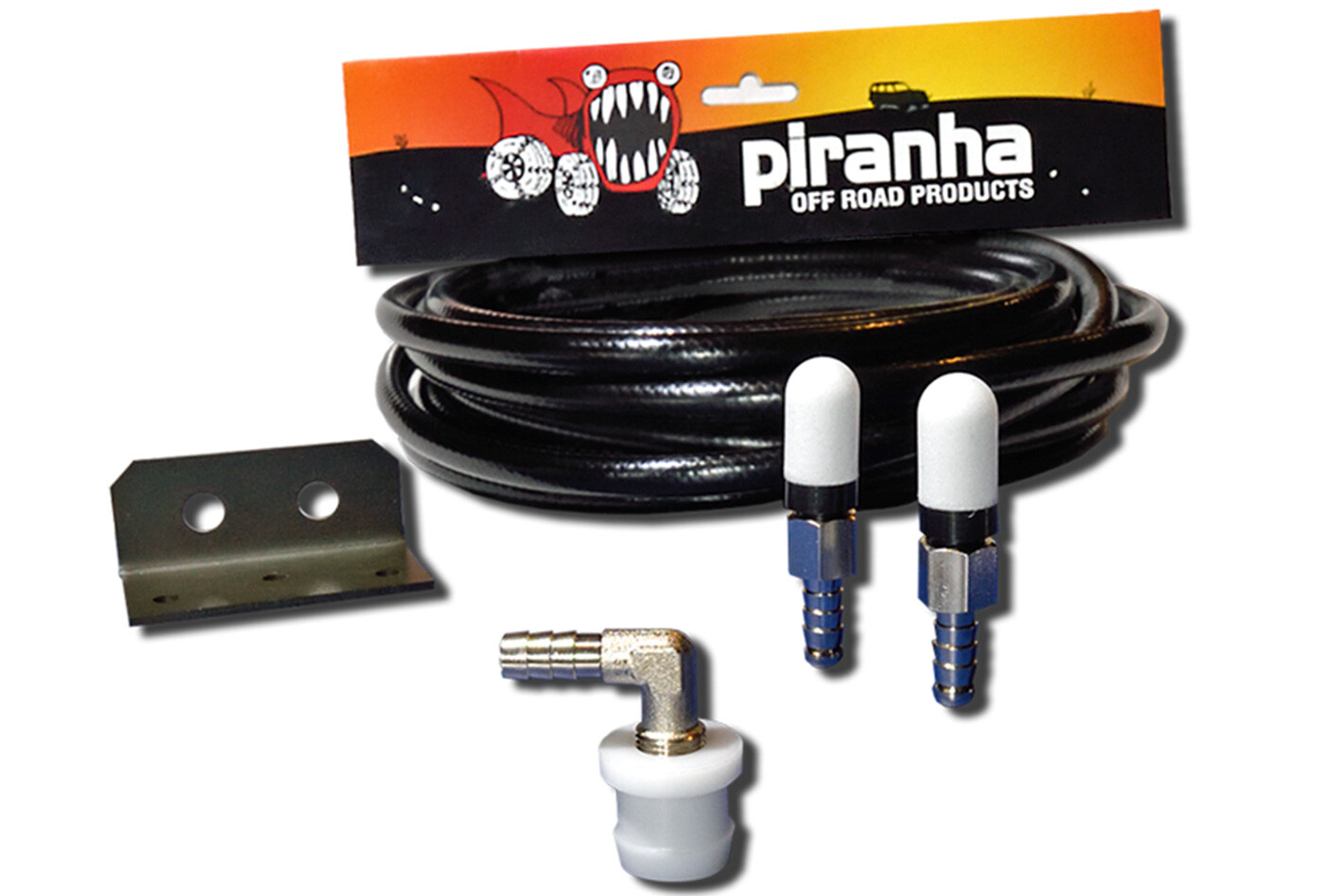
PIRANHA UNIVERSAL DIFF BREATHER KIT
PIRANHA Off Road’s universal diff breather kit is well proven and includes seven metres of hose, two osmotic filters, clamps, and all the essential fittings needed to ensure the fitment of the breathers is done properly. These excellent kits extend the breathers higher from the diff housing to eliminate any chance of water ingress during a water-crossing or when tackling a muddy track. Piranha Off Road has been making these universal kits for years but keep updating for the latest 4x4s, with vehicle-specific kits available for rigs such as the new Triton and Pajero Sport (an extra $20), both of which need a replacement fitting in the rear diff housing to work effectively. As well as these two, Piranha offers vehicle/brand-specific kits for Toyota ($12), Nissan ($12), Pajero ($40) and Ford Ranger ($20). Website: www.piranhaoffroad.com.au
MERCEDES-BENZ has pulled the covers off its X-Class one-tonne ute, which will go on sale in Australia early in 2018.
This will be Benz’s push in to one of the best-performing new vehicle segments at present, and it will fill a niche it’s not currently in.
Before you start asking what a German company best known for its luxury cars is doing with a ute, the X-Class will sit in the company’s vans division. Remember that Benz make cars, trucks, buses, vans and SUVs.
The X-Class, a double-cab 4×4 ute, shares its platform with the Nissan D23 Navara, and it will initially be available with a choice of two 2.3-litre diesel engines taken from the Navara range.
These will be backed by six-speed manual or seven-speed automatic transmissions and part-time 4×4.
Around the middle of the year, Benz will unload its key weapon, with its own V6 diesel engine producing 550Nm and backed by a seven-speed auto and full-time, 4MATIC 4×4 with a low range transfer case.
The X-Class X350d will join the Volkswagen Amarok as the only V6 diesel in a class where four- and five-cylinder engines are the norm, but it will trump the 165kW VW with its 190kW.
The range-topping X350d will also include a dynamic select drive system, offering five driving modes including Comfort, Eco, Sport, Manual and Off-road modes. This system customises the various drive and chassis systems to best suit the driving conditions and will be the first of its kind for a ute in Australia. Fuel-saving stop/start technology and paddle transmission shifters are also part of the X350d package.
The entry level X220d makes 120kW from its single turbo-diesel engine, while the X250d makes 140kW from the bi-turbo engine. Benz hasn’t revealed torque outputs for these engines, but the power figures are in line with the Nissan Navara; so expect 403 and 450Nm respectively from the Renault-developed engines.
The ladder chassis is also derived from the Navara platform and includes the unique-to-class five-link coil spring rear suspension. The X-Class will only be offered with rear coils, while Nissan still offers the option of leaf springs at the rear for towing or load-carrying.
The X-Class will have a towing capacity of 3500kg and payload up to 1100kg, so it will be interesting to see how Benz has calibrated that rear-end when we get to drive it. The X-Class rear-end is fitted with disc brakes as opposed to drums found on most 4×4 utes.
A wider wheel track for the X-Class should improve its ride and stability over its donor Navara. The Benz has 1632mm front and 1625mm rear tracks, as opposed to 1570mm track front and rear on a Navara. The 3150mm wheelbase is the same on both vehicles.
As can be seen in these first images of the production-ready model, the X-Class is a tamed down version of the two concept vehicles shown last year. Gone are the 35-inch off-road tyres and 22-inch rims; the production car will have a choice of 17-, 18- and 19-inch wheels in a variety of styles. The bodywork is also toned down, but is clearly Mercedes-Benz with the signature grille and styling elements.
The interior is all Benz, with components sourced from the C-Class passenger car and V-Class van ranges. This will give buyers in this ute segment never-before-seen choices of materials and features and, most of all, luxury. We expect leading levels of connectivity for devices on the move as well, with the 8.4-inch A/V screen connected to navigation and 360-degree cameras.
You can see where compromises have had to be made as the Nissan/Benz platforms were melded. For example, the HVAC controls sit very low in the centre stack, while there’s an acre of vacant space above them that would have been a much more practical location. In fact, the entire dashboard looks a bit plain and hit-and-miss in its execution.
2017 Mercedes-Benz G300 CDI Review
Likewise, the steering column lacks reach adjustment, which is a carry-over from the Navara. Yet the X-Class brings a fresh face to the busy market, and with it comes a level of style and prestige not yet seen in the segment. How well that style and equipment actually works we’ll just have to wait to see.
Safety will be top level with the X-Class employing pre-collision assist, lane-keeping assist, trailer-sway control, stability control and seven cabin airbags to protect occupants. LED headlights offer excellent night-time visibility for improved safety.
The X-Class will be available in three levels of specification: Pure for the tradies and farmers market; Progressive adds extra features; and Power is the top-spec for those who want Benz levels of features and performance.
Australian-delivered X-Classes will be built at Renault/Nissan’s plant in Barcelona, Spain, which also manufactures the Navara for European markets and Renault’s Alaskan pick-up (which is also shares the D23 platform).
European deliveries will start later this year, and we’ll have to wait until then to know if Mercedes-Benz has succeeded with its new ute.
I KNOW, I know, it’s another bloody Land Rover.
With the increasing proliferation of Brit off-roaders in the 4X4 garage, you’d be forgiven for thinking there’s been a liberal spiking of the water with Solihull Kool-Aid at the 4X4 Australia watering hole. And, to be honest, I don’t have any excuse – and I don’t need one.
You see, I was stung by the Landy bug many years ago – long-term 4X4 readers may remember my white 2003 Discovery TD5. It was one of my favourite vehicles and it was only sold off due to needing every spare ounce of cash to enter the hideously frightening Sydney real estate market.
We’ve poodled around town in a succession of soft-roaders ever since – and have been content, to a point – but once the Walker clan grew larger and a bit older, camping started to become a favourite family activity, and our Subaru Forester wasn’t going to cut it.
My criteria was pretty simple: the vehicle had to fit a $15,000-ish budget, it had to be a diesel, it had to be capable (and comfortable) off-road for both long and short journeys, it had to have plenty of available aftermarket accessories, and it had to have some semblance of on-road good manners. For those criteria, the best bang for my bucks was a LR Discovery.
Initially, I was looking at TDi variants, but then this two-owner 2003 TD5 popped up online from a used dealer, fitting snug on that budget-line limit and with only 130,000km on the odometer.
A few emails and phone calls to industry expert Jason Lock, followed by a top-notch inspection (and clean bill of health) from the team at The Toorak Tractor (Braeside, Vic) and I was on a bomber down to Melbourne to pick up the gold rig and drive it back to Sydney.
I knew what to expect on the drive back up the Hume Highway, performance-wise: a steady, stately pace at best, thanks to the 101kW/315Nm TD5. However, I had forgotten how effortless that engine was once up to speed (and yes, that does take a while).
So, it was an uneventful trip. Having burnt a pile of CDs beforehand (that’s right, there’s no Bluetooth here, folks) I sat back, turned on cruise control, wound up the volume and just enjoyed the drive.
2016 Ford PXII Ranger XLT joins the 4X4 shed
Uphill and down dale, the cruise control kept the TD5 humming away contentedly. Big, long hills were no drama and, yeah, it took a while to get past other vehicles, but what’s the rush? More impressive than the fact I arrived in Sydney without drama (916km later) was the fuel consumption figure of 9.2L/100km – not bad for the vehicular equivalent of a brick shithouse when it comes to pushing through the air.
I learnt a few things modifying our old Disco, so will be doing things a little differently this time, ensuring the end result is a touring rig that will get us there and back again, each and every time. Stay tuned.
CHAELUNDI National Park is located in a remote area, 60km north of Dorrigo.
To gain access, you need a New South Wales Parks and Wildlife Services (NPWS) key, and once you’re down into the guts of the park, it’s prehistoric-like. Entering Chaelundi from the Nymbodia side, 24km south-west from Grafton, is relatively easy to find thanks to the Boundary Creek Road sign post, as well as the directional sign to Chaelundi.
The roads here are irregularly maintained and pass through several working cattle properties, so care must be taken.
Boundary Creek Road follows the terrain for many kilometres before it starts to wind down into deep gullies, providing views of the hills ahead as you travel at 700 metres above sea level. Logging is still performed in these areas, so be aware of any warning signs, trucks or machinery, and be sure to drive with your lights on.
A short drive down will bring you to an intersection, which will direct you to Chaelundi National Park. From here, you will need to veer right down onto the Shannon Creek Trail.
This trail wanders deeper into the forest where, if you keep an eye out, you may be lucky enough to spot lyrebirds, goannas, or even wallabies. Shannon Creek has a quaint little stop area with a pit toilet, barbecue, table and an info board which outlines a detailed history and geological data of the area.
Raising sharply from here, the trail passes huge white gums and massive tree ferns that line the road until the top of the ridge. To the left, you’ll find the beginning of the Chandlers Creek fire trail, and it’s here that you will need the NPWS key. Be sure to check the key box for spiders before reaching in.
From the top of this trail you’ll notice the track is all downhill and you’ll need a low-range 4WD as it gets pretty steep. Good ground clearance would also be an advantage to avoid the washaway mounds, which can get a little high and tricky at times.
As you wander down this trail, check out the prehistoric spiky and fibrous Cycad and Burrawang plants, which date back to the dinosaur period some 200 million years ago.
The trail wanders down the mountain for kilometres, dropping several hundred metres to the bottom, but you’ll be rewarded with impressive views of the valley through the trees. At the bottom are several creek crossings, which have a firm, rocky base, but it’s still worth checking them out, especially if there has been rainfall.
Following the trail across several open valleys, you’ll be pleasantly surprised upon arriving at the Doon Goonge campground. Camping here is superb, with grassy sites overlooking the river below – a backdrop of the seriously steep terrain, swimming holes just a minutes’ walk down the bank, clean drop toilets, fire pits and solitude.
NPWS control the number of campers visiting this area at any one time, with a maximum of six camping spots allowed. You’ll need to take your rubbish with you to keep the area pristine for others to enjoy, as there are no bins to keep vermin away. You’ll also need to bring your own firewood.
This area is great for kids as it’s flat, grassy and relatively safe. Swimming is possible in the nearby Chandlers Creek, which gets waters that have filtered down through the valleys and are always refreshing – plus, the running water is always a pleasant sound to fall asleep to as it trickles through the night.
The drive out isn’t hard, but you’ll need low range as you head out from Doon Goonge because there are several creek crossings.
Putting it in low range will also minimise track damage. Heading out of Doon Goonge will put you on Quartz Road, which will eventually lead to a gate that can be unlocked using the NPWS key. The sights from here are quite spectacular, offering views across to gorge walls and the tracks you’ve just driven across.
Quartz Road is a section where you’ll need to find your own pace depending on its condition, as it’s irregularly maintained and can get very rough.
The track continues for a further 10km uphill towards the outskirts of Chaelundi National Park, where you’ll arrive at a T–intersection on the Chaelundi Trail.
The option here is to turn left for a 90km drive back to Dorrigo, or turn right and head towards Boyd River and the Old Glen Innes Road.
By turning right and following the Chaelundi Trail down through several valleys for a further 15km, you’ll soon arrive at the old settlement of Dalmorton. This area was part of the Cobb and Co route at the turn of the century, and it was once alive with gold mines and a bustling settlement.
Now a ghost town, the NPWS is going to lengths to preserve the area and its remaining buildings. Several info boards provide a brief history from the past 100 years and give you plenty of room to imagine what it would have been like out here in its heyday.
Heading east from beside the river, Grafton is only 90 minutes’ drive away. This area is remote and definitely worth the visit for those looking to explore, escape the crowds and enjoy a secluded weekend away.LOCATION Chaelundi NP is located 60km north of Dorrigo on the NSW north coast. With prehistoric plants and 4WD access within a locked valley, this rugged and remote park holds plenty of natural beauty within. A NPWS key is needed to access the area and is available from the Dorrigo Rainforest Centre. Vehicle numbers entering the park are controlled.
CAMPING The main camping area is Doon Goonge, which has large, grassy open sites beside Chandlers Creek. There are pit toilets, fire places and tables. Be sure to pack your bathers as the creek is safe for swimming (best to boil before drinking). Plenty of room for off–road campers, tents and swags.
WHAT TO TAKE You’ll need to take everything from food, water, firewood and plenty of fuel. As soon as you leave Dorrigo there are no towns or stops along the way and, when travelling out the other side, the nearest town, Grafton, is 100km away. There is no phone service, little traffic and no farms to offer help, so ensure you’re very self-sufficient.
CONTACTS, MAPS AND INFORMATION Most relevant and up-to-date information can be found on the NPWS website (search for Chaelundi National Park). The key to access the park must be booked prior through NPWS and can be picked up at the Dorrigo Rainforest Centre; they can be called on (02) 6657 2309. There is a deposit for the key, but this will be refunded once the key is back in their hands. Hema apps and navigators show all roads into and out of the park.