
JEEP’S factory accessories brand MOPAR has shown it’s getting serious about supplying kit for the new JL Wrangler.
Once the realm of aftermarket companies, MOPAR now wants a slice of the huge spend enthusiasts make on their Jeeps after they’ve left the showroom, and it displayed a couple of vehicles showcasing the products at the Los Angeles Auto Show.
“The Jeep Wrangler is one of the most versatile and customised vehicles in the industry,” said Pietro Gorlier, Head of Parts and Service (Mopar), FCA. “A total of 98 per cent of Jeep Wrangler vehicles are typically outfitted with at least one of our products.
“We worked with the Jeep brand, engineers and designers to create an exclusive line of parts and accessories that perfectly match the new Jeep Wrangler, delivering unique functionality, style and factory-backed quality.
“The two customised vehicles at LA showcase our new product portfolio and empower owners to personalise the new Jeep Wrangler for extreme off-roading or for all-purpose lifestyle adventures.”
Just how many of these factory-backed accessories will pass the nanny laws in Australia is yet to be revealed, but you can bet Australian enthusiasts will be looking to kit up their JLs as soon as they land here late in 2018.
Worrying are the reports that Australia will not be getting any manual gearbox-equipped Wrangler or the V8 turbo-diesel engine that is being offered in the USA.
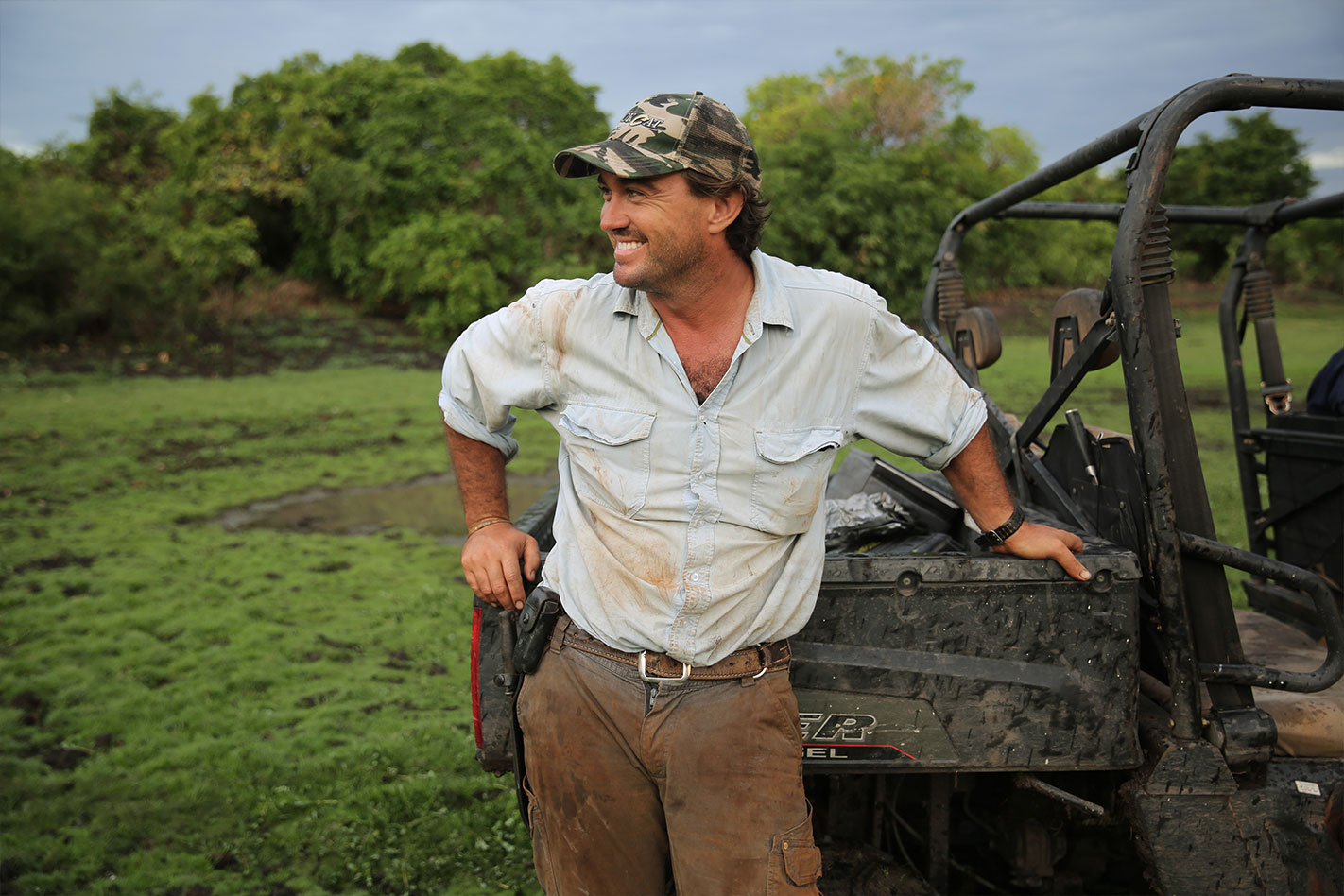
The deep thrum of a helicopter from somewhere above the treeline is the first sign that Matt Wright, Nat Geo TV’s Outback Wrangler is about to arrive to say g’day.
Like meeting any ‘personality’ these days, there’s always a question in the mind whether they are ‘just like they are on TV’ or totally different. It only takes a hello and a handshake to confirm Matt is a regular knockabout bloke. Of course, this particular bloke is living an awesome dream: producing his own TV show, capturing (and relocating) rogue crocs, and running a successful Top End tourism operation about an hour or so west of Darwin.
The weekend I catch up with Matt is, as always for him, particularly frantic; there’s a tour group to entertain via one of his other business ventures (Outback Floatplane Adventures), a pesky 4X4 Australia journo (yep, that’d be me) to host for a day or so, and some last-minute filming to be done by Nat Geo TV for Season 3 of the hugely popular Outback Wrangler.
No sooner have we exchanged pleasantries than I have thrown my gear into his 79 Series Cruiser ute for a later pick-up and jumped aboard one of Matt’s airboats following a swamp channel to the Outback Floatplane Adventures pontoon on Sweets Lagoon. Here, guests are waiting to meet one of Australia’s most unique – and unassuming – television personalities.
In the beginning
When viewers watch Season 3 of Outback Wrangler they will see an experienced main presenter, but what they won’t see is the many years of hard graft and lessons learned along the way to this point, and it all started back in 2006 with Matt’s idea of showcasing the life he leads and the country – and people – that he lives in.
“My friends and family had no idea what sort of stuff we did,” Matt says, referring to his pre-TV career of mustering, breaking-in brumbies, catching crocs and collecting croc eggs. “So I thought we’ll just do a little local show – just try something – and base it a bit on what Troy Dann had done [the ’90s-era Troy Dann’s Outback Adventures]. “I used to like his show; it showcased the landscape… I wanted to showcase the country and the people that were in it, and that’s where it started.
But Jesus, it has taken a lot of years…” The journey to TV stardom wasn’t a fast or easy path, however, with Matt initially filming a couple of sizzle reels (highlight footage) out on location for distribution to potential broadcasters, something he looks back on ruefully. “I cringe now when I watch those, but you’ve gotta start somewhere,” he laughs. “Speaking on camera and all that was tough initially, but I am glad I did it when I did – it was good practice – but then I left; I gave up the idea…” Matt left Australia to spend some time in Canada, again flying, helping researchers and parks staff locate and tag native wildlife, except this time it was bear, caribou and wolf.
Meanwhile, back in Australia, his TV idea was about to take an interesting turn. It was while chasing Canadian wildlife that Matt was contacted by Nick Fordham, now his agent. Fordham had seen Matt’s sizzle reel and loved it; he wanted to work with Matt to make his idea a commercial reality. “He said he loved it and wanted to push it and make it work,” Matt says. “I said ‘well, I am not back in Australia for another few months’.
Over that time, though, I lined up another cameraman and Nick came up and we went across to the Arafura Swamp, where we were collecting croc eggs, and shot some good stuff.” It still took another couple of years before the big break, courtesy of Channel 7’s Sunday Night in 2011, when Matt encountered what is judged one of the largest crocs ever captured in Australia, and one that had been causing the local landowner plenty of grief due to stock losses. Funnily enough, Matt reckons, it was nearly a case of mistaken identity. “I didn’t know how big this croc was – it was just a croc. I nearly swung the gate closed on him as I didn’t think he was big enough or the right one.
Then I thought I had better keep him there and not let the landowner down. We had a look at him and f—k, he nearly launched out of the water at us and came up on top of the rails,” he laughs. “It wasn’t a nice feeling.” The exposure was immediate and included plenty from overseas, which led to Matt signing on with National Geographic. The first season of Outback Wrangler soon followed, with four 30-minute episodes.
It still wasn’t all smooth-sailing: the Global Financial Crisis hit in 2008 and this led to reduced funding for television, which ultimately led to Matt and Nick deciding to “do it ourselves”. The result has been the last three years spent filming seasons two and three of Outback Wrangler. For Matt it has been a long slog. “It’s been like building a business, really, or building a brand, and I have in that time also developed so much other stuff.
When I started the show, I was flat-out owning the Toyota, but I have built my business up well and I’ve got quite a collection of toys now that we can utilise for the show as well.” Top End wonderland Our airboat ride is fast; it’s not more than five minutes after dropping my gear in Matt’s ute that I am jumping off his airboat onto the floating pontoon that contains his 11-metre custom luxury cruise vessel that doubles as the restaurant for punters who join Matt on one of his company’s half-day (or longer; there are many options) tours.
Introductions out of the way, we are soon all bundled into the two airboats for an exploratory tour through the myriad waterways branching off Sweets Lagoon. And it is brilliant; I will confess to being a huge fan of the NT in general and am always keen to see more of it. A stand-out is meeting “Bonecruncher”, a four-metre saltie that has had a large portion of his lower jaw bitten off by another male during a territorial dispute.
It’s nearly like this croc knows when the show is on – it only takes a couple of shouts from Matt aboard his airboat for Bonecruncher to swim over and impress/overawe the punters. Matt’s familiarity with crocs – and his admiration of them – shines through as he gets hands-on with Bonecruncher, describing the various features that make up a saltie while his hand is on top of the croc’s upper jaw. Matt and fellow airboat pilot Ben soon move the two boats farther into the narrow side channels, where the crafts’ powerplants (an LS1 V8 on the smaller of the two, with a PCM [Pleasure Craft Motor] on the bigger one) work hard to push the airboats over sunken logs and branches, as well as shallow sections of the waterways.
It’s a brilliant way to spend a few hours, topped off with fresh-caught and barbecued barra for lunch back at the pontoon. As well as the tours, Matt has started an overnight accommodation venture. Safari-style tents (with showers) are dotted around a beautiful part of his 600-acre property, not far from “The Shed” his work HQ and, as the name suggests, a corrugated iron homestead that houses Matt and his crew. I meet Ben and Cody during my time here, with both of them (like their boss) flat-out tackling numerous tasks around the property. It’s bloody impressive that Matt and his team fit it all into their workday, but it’s definitely got a lot to do with the adage of ‘can’t sit still’ in terms of Matt’s strong work ethic.
It is this, along with his passion for wild animals, that’s been part of his life since he was a youngster, with his versions of ‘pets’ being decidedly different from most children. “Mum was pretty scared when I was doing it all at the start,” he says. “But even when I was a kid I was catching brown snakes, taipans, tiger snakes – anything deadly I could get my hands on. So she’s got some faith in me now that I can handle myself.”
Balancing act
With the new season of Outback Wrangler about to hit TV screens globally, you’d think Matt would be ready for a short break. But, with his wedding in a few weeks, plus the ongoing expansion plans for his business and pre-production for the next few seasons of the show, this hard-working self-starter won’t see any downtime for a while. It’s a necessity to some degree; the tours and accommodation help fund ideas he has for the TV show, while the show itself repays that with additional exposure for his business – and it is still the ‘big one’ among his various enterprises, he affirms.
“Yeah, for sure, I mean we’ve spent so much time and effort doing it now,” Matt says. “It would be good to see it get reasonably big overseas and it’s good for Australia. That’s sort of what I am pushing now – more for the Territory… and for tourism in Australia.” There’s a quiet confidence that this next season of the show will be the best yet, which should see these hopes fulfilled. “We stepped it up; we’ve done eight half-hours (shows) which pretty much could have been made into eight one-hours, we had so much content,” Matt says.
“We had more places to go to, bigger crocs, and we put a bit more effort in and pushed a bit harder and away we went.”
An old stager
When viewers see Matt and his crew wrangling crocs out of swamps and rivers the perception for the ignorant could be it’s a cruel thing to do, or that he has little respect for the animal, but the truth is as far removed from that as possible. Matt’s admiration for these huge reptiles is very high and his first thought is always of the animal’s welfare. His ‘soft spot’ is never more pronounced than when he introduces me to the resident of one of the enclosures near The Shed – the crocodilian equivalent of a stately gentleman: Tripod.
As the name suggests this 5.5-metre, 770kg, roughly 80-year-old big bopper has only three legs – his front right leg was bitten off by another male at a croc farm years ago. Matt took him on around 12 months ago after he was copping some rough treatment from younger males at the farm. I take a slightly deeper breath than normal when Matt opens the gate – Tripod is laying half-in/half-out of the water right near it – but the old fella seems content to just sit there in the sun.
Even Matt’s waving of a pig’s leg in front of him barely causes any movement – nor does Matt’s good-natured comments of “you lazy bugger” elicit much response. And then it happens; just when I thought Tripod wasn’t going to budge, in a split-second he lifts up and lunges, jaws agape, at the bait. I am both amazed and impressed; Tripod is getting on in croc years, yet is still lightning fast and only slightly slowed down by his lack of front foot for that extra leverage.
A few more lunges and ‘clump’ of jaws banging together and he gets his dietary reward. I ask Matt if he thinks there are still older, bigger ones out there. “Oh, there’d have to be. Problem is, with the general public, they see one big croc and you get one redneck and they shoot them,” Matt says with a tone of disgust. “If it had been there for a long time that’s just silly, you know.”
Never slow down
While we’re having a few beers at sunset Matt gets another call: Nat Geo TV is keen to film promo footage tomorrow; the crew is at the nearby Sandpalms Roadhouse ready to go. Oh, and they will need a huge NG border made out of timber for some of the filming. Next minute – and for many minutes after that – me, Matt, Ben and Cody are at the roadhouse, chatting with owners Tommy and Julie, and tucking into some Top End nosh while Matt and the NG TV crew discuss the details for tomorrow’s shoot. Incredibly, it all gets done; by the time I wake up the next morning, Matt has already gone to set up for the filming.
Meanwhile, Cody is dropping me into Darwin for my flight back to Sydney, with a detour to pick up that timber NG border (painted yellow, of course) from a local supplier who was up until 4am finishing it. Just when I thought that, maybe, Matt might actually get that short break, I remember one of the last things he said to me before I left: “I was just talking to Mick on the way out; we’re just about to start collecting crocodile eggs for croc farms as well, and that goes for another five months.”
It is dangerous and exciting work. In fact, you’d reckon there’d be the potential for a hard-working Aussie to make a globally successful TV show out of it…
THE WORKHORSE
Matt Wright has been a Toyota fan since he started driving, owning and using a variety of the brand’s Land Cruiser utes and wagons over his many years working in remote areas.
His latest rig is a moderately tweaked LC79. “I love it, I really do,” Matt says. “It’s a good rig; it’s tough, and it does what I want.” In terms of mods, Matt has kept them to essential things he needed done for the Cruiser to benefit his business.
“I haven’t done anything to it, bar fitting airbags to the rear, a radio and a bullbar and a couple of spotlights,” he says. “That’s all you need really… I just need shit to be practical and work. “Having the airbags is good for loading up fuel, so it carries a lot of weight.
Plus it carries the airboats around – the big one would be 1.5 to 2 tonnes. “The only other thing I have done is remapped the chip for a bit more grunt.”
WRANGLING THE BIG SCREEN
Outback Wrangler Season 3 had its world premiere on National Geographic on Wednesday, December 6 at 8.30pm AEDT. This season contains eight 30-minute episodes. In this season the crocs are bigger than ever and the team face a number of hairy moments, including having their tinny nearly overturned by a particularly cranky croc.
National Geographic is available on Foxtel, Foxtel Now, Fetch and the National Geographic App: www.nationalgeographic.com.au/tv/outback-wrangler
TOYOTA’S FJ Cruiser is a great 4×4 for people who don’t need or want the size of a larger vehicle.
Its Prado-based chassis and suspension, simple part-time 4×4 system and well-calibrated A-TRAC traction control make it pretty capable right out of the box. The only things worth complaining about are that the quirky styling isn’t everyone’s cup of tea, they only came with a V6 petrol engine and no diesel option, and, as with any smaller wagon, there comes a time when you need more space.
Managing the space you have is a great way of optimising it, and the most efficient way of doing that in the back of any wagon or ute is by fitting a set of cargo drawers. Slide-out drawers allow you to compartmentalise your gear, secure it in rough terrain, keep it out of the prying eyes of thieves, and give easier access to items up the front of your cargo area. An example of how you might use a pair of drawers would be to store 4×4 kit and recovery gear in one of them, while the other is reserved for food, stove and camping equipment.
When 4X4 Australia’s chief photographer Ellen Dewar was looking to maximise the cargo space in her 2016 FJ, she researched online and found that Drifta Camping & 4WD in Gloucester, NSW, is one of the few drawer manufacturers that have a set-up ready to bolt into an FJ. As Drifta makes its products to order in its own Australian factory, it can customise them to suit depending on your needs. “I chose the Drifta drawers for ease of use and they are purpose-built for specific car models,” Ellen said.
“Quick installation and being removable means you don’t have to keep them in the vehicle all the time and it’s an easy changeover.” There was no need for any customisation for this application, but Drifta offers a few options with its system. The standard kit includes a pair of drawers measuring 1050mm (W) x 770mm (D) x 25mm (H) to sit behind the FJ’s second row of seats.
A slide-out table with fold-down legs slots in neatly over one of the drawers, and all mounting hardware is included in the kit. Ellen added the slide-out top on one of the drawers to mount a Waeco fridge on, and an extended bed panel that lies over the folded back seat to create a 1500mm-long flat storage space. Installation of the Drifta drawers into an FJ is a breeze. You remove the four factory tie-down loops and the plastic trim across the back of the cargo area, and then place the unit inside the car.
Being made of 12mm plywood, the Drifta drawers are lighter than steel units and, with the drawers removed from the unit housing, it can easily be lifted and placed in the car. The unit is then secured to the threaded holes where the tie-downs were, using the supplied brackets and bolts.
The drawers slide in on a Teflon-like plastic material, which means there are no metal or ball-bearing runners to take up space or jam if they get dust in them. This simple slide system saves space and allowed the designers at Drifta to maximise storage space in the drawers themselves, which becomes handy. “The Teflon drawer slides make them smooth, and easy to open and close,” Ellen explained. “The size of the drawers enables various-sized items to be stored and, with the addition of the in-built pull-out table, you can slide it out to quickly make lunch on the run, or pull it out completely to use as a coffee table or dining table for longer overnight stays.”
The drawers are covered in quality marine carpet and each has a locking handle at the front and a simple spring-loaded catch at the back, to stop them sliding all the way out, but still allow you to remove them when needed. The drawer unit sits 250mm high, so it lines up with the wheel-arch trims at the side of the FJ. There’s an internal access hole to get to the factory jack location and, on later-model FJs like this 2016 example, they cover up the factory 12-volt outlet so you need to relocate them up above the unit.
We had the always capable Phil Cochrane from Ontrack Automotive in Ferntree Gully wire in a dual-plug unit with heavy duty-rated wiring, to cope with fridges and so on. Ellen did have this to say of the drawers, though: “I had to check regularly that the fridge slide didn’t pinch the cord at the back when pushing it in to the locked position. This is unavoidable due to power-plug position of the fridge. You should check the actual sizing of compatible fridges before buying, as the CFX-40 Waeco I had didn’t quite allow for the back seat to be locked in place.”
Also coming from Drifta is the 270-degree Rapid Wing awning. Another great Australian-designed product, the Rapid Wing spans 2.4 metres around the back and side of the FJ to offer protection from all conditions. “The Drifta awning is the perfect fit for my style of camping,” Ellen said. “Being able to prepare food and access the interior under the protection of an awning makes living without a tent easy.”
The FJC’s factory Toyota roof rack poses a problem for mounting an awning, but that was solved by sourcing a set of 6061-T6 billet aluminium from Fourtreks in the USA. These brackets are metal porn and are made to mount a variety of things to tubular roof racks or roll bars. They weren’t cheap, but they are beautifully made and got the job done. After unzipping it from its bag, opening it out and folding down the four telescopic poles, the awning sets up in minutes.
The Drifta rope and peg kit has sturdy sand screw-type pegs, regular metal pegs and high-vis guy ropes to secure your awning in windy conditions. For added protection, side walls are available as an option and these can be easily attached by the stitched-in Velcro. “I love the ease of set-up and pack-up. Literally minutes and you’re ready to go,” Ellen told us. “The built-in poles with twist spreader capabilities are a major plus for those with height disadvantages, and it also alleviated the need for an additional pole bag.
The peg set and orange guy ropes keep tripping hazards neatly compact and visible. “Being easy to set it up solo is great, but with its size also opens up the risk on high-wind days of catching and flipping the awning on pack-up or set-up.”
Drifta Drawers AVAILABLE FROM: www.drifta.com.au RRP: $1240+ WE SAY: A great way to organise gear and utilise available space.
Drifta Awning AVAILABLE FROM: www.drifta.com.au RRP: $1395 WE SAY: Easy to set up, offers great protection from the elements.
SUMMER edition… we hear you ask?
Well, we’ve increased out work-load and will be bringing you 13 issues next year, so to get us on track – and to get you the right issues in the correct months – we’ve produced the Summer Edition to wrap up 2017.
This way the January 2018 issue will arrive in January… who’d have thought?
It’s a cracking issue, too, with the first official drives of Merc’s X-Class and LDV’s T60, complete SEMA 2017 coverage, and a modified V8-powered 200 Series.
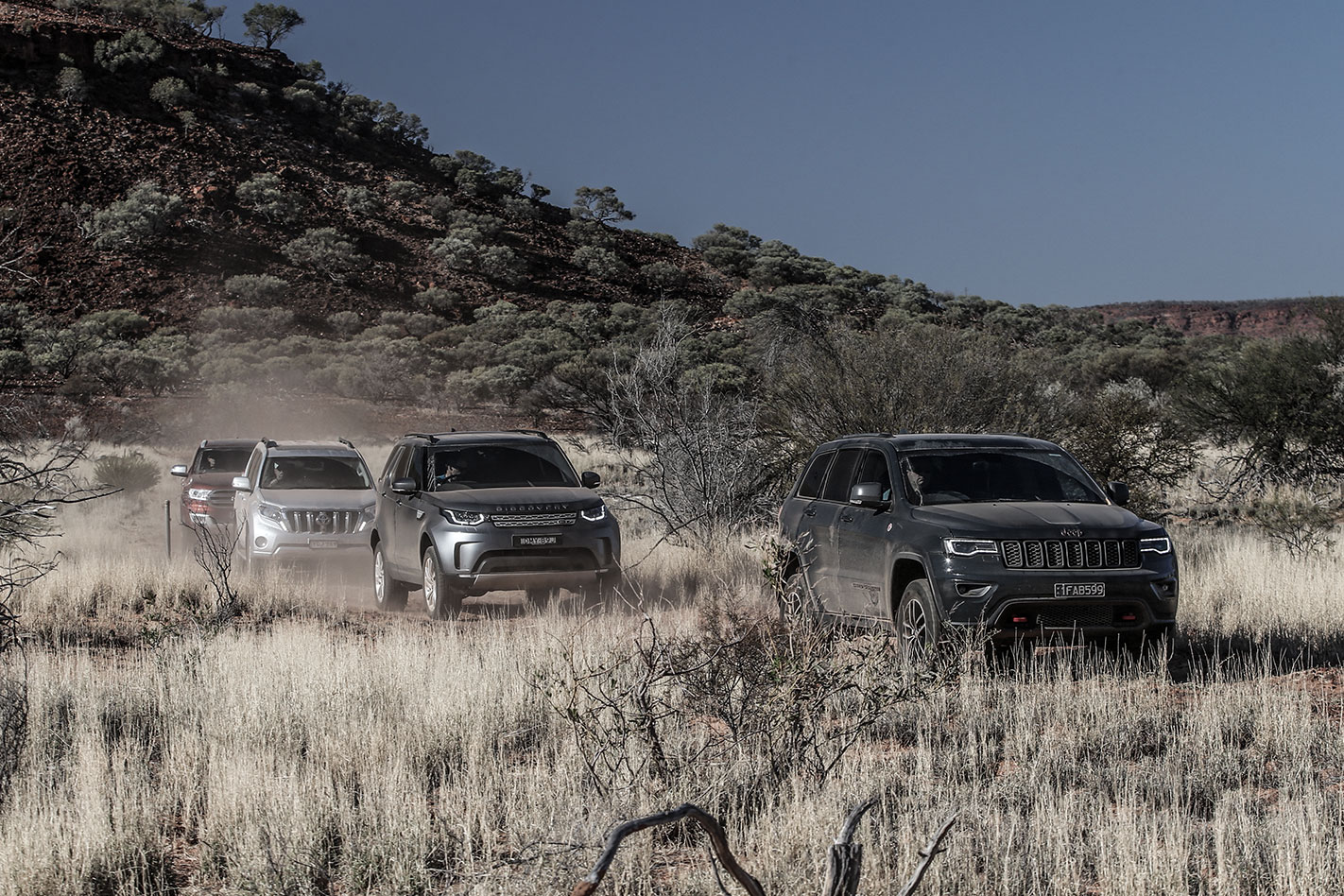
We also throw the new Disco into a baptism of fire against the best-in-class: Everest Titanium, Grand Cherokee Trailhawk, and Prado Kakadu.
Get your copy of 4X4 Australia from newsagents or by subscribing to 4X4 Australia in electronic or print format.
What else you’ll get this month:
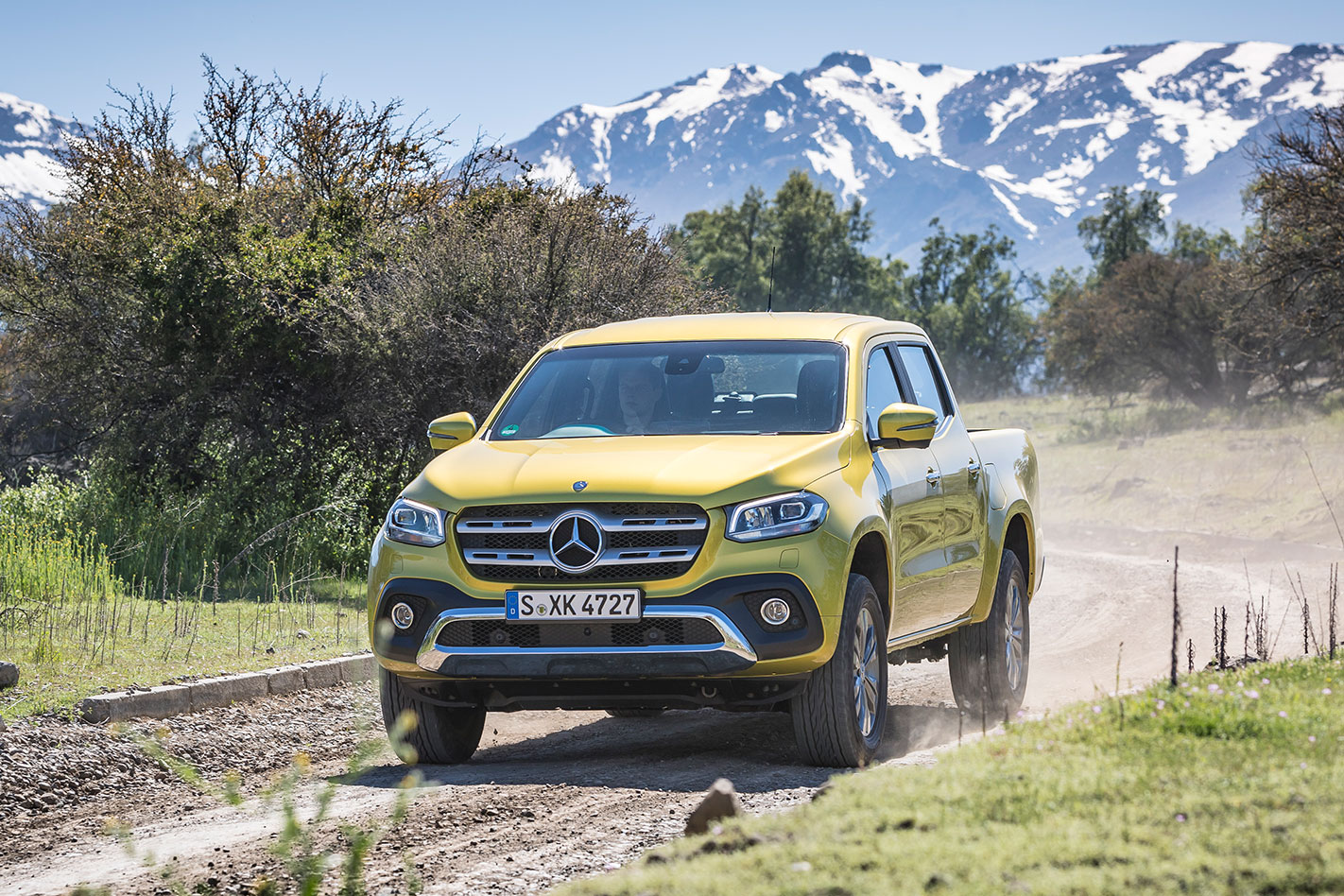
FIRST DRIVE: MERCEDES-BENZ X-CLASS First fang in Merc’s X250D leaves plenty of unanswered questions.
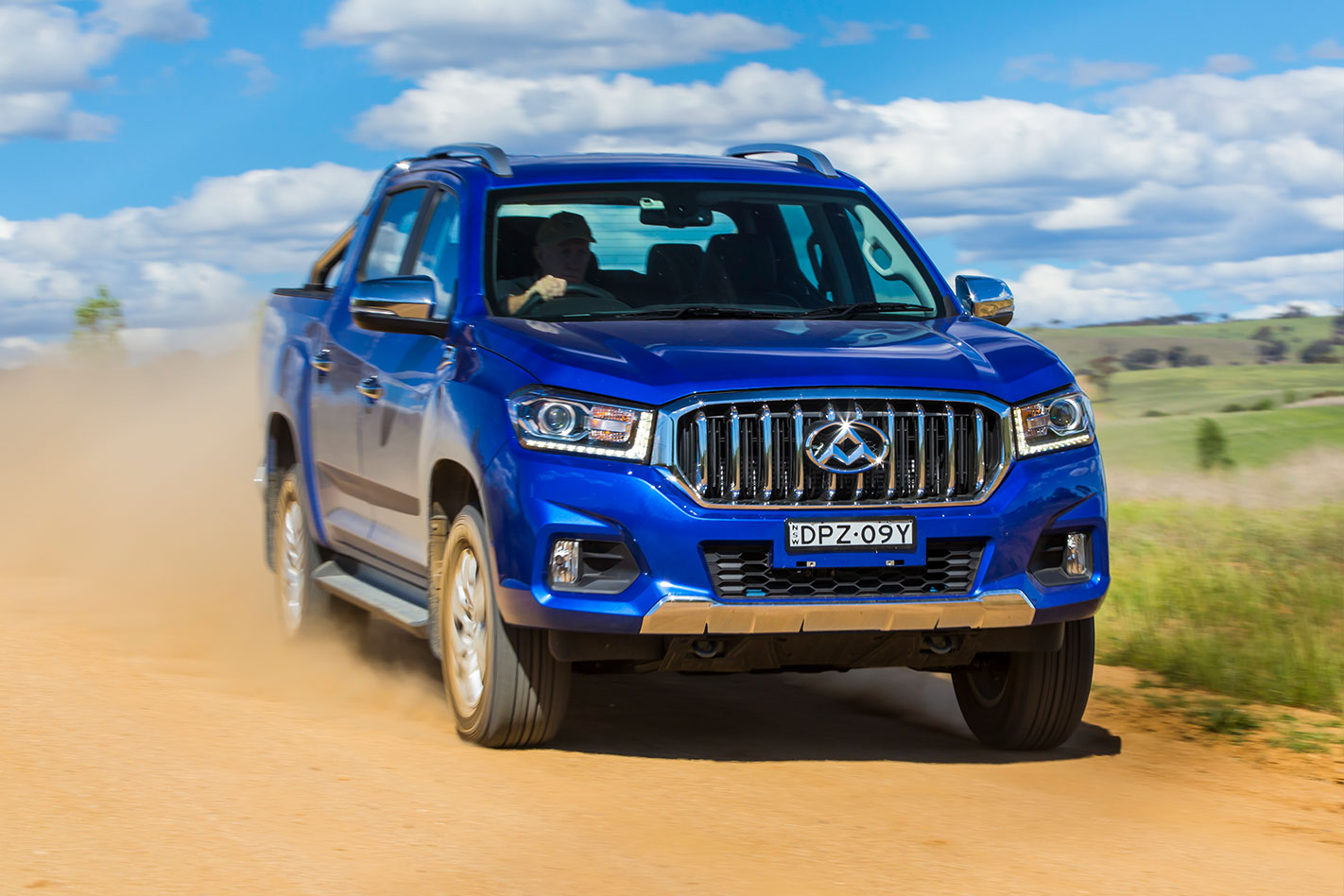
FIRST DRIVE: LDV T60 Budget-priced Chinese ute kicks up local dust for the first time.
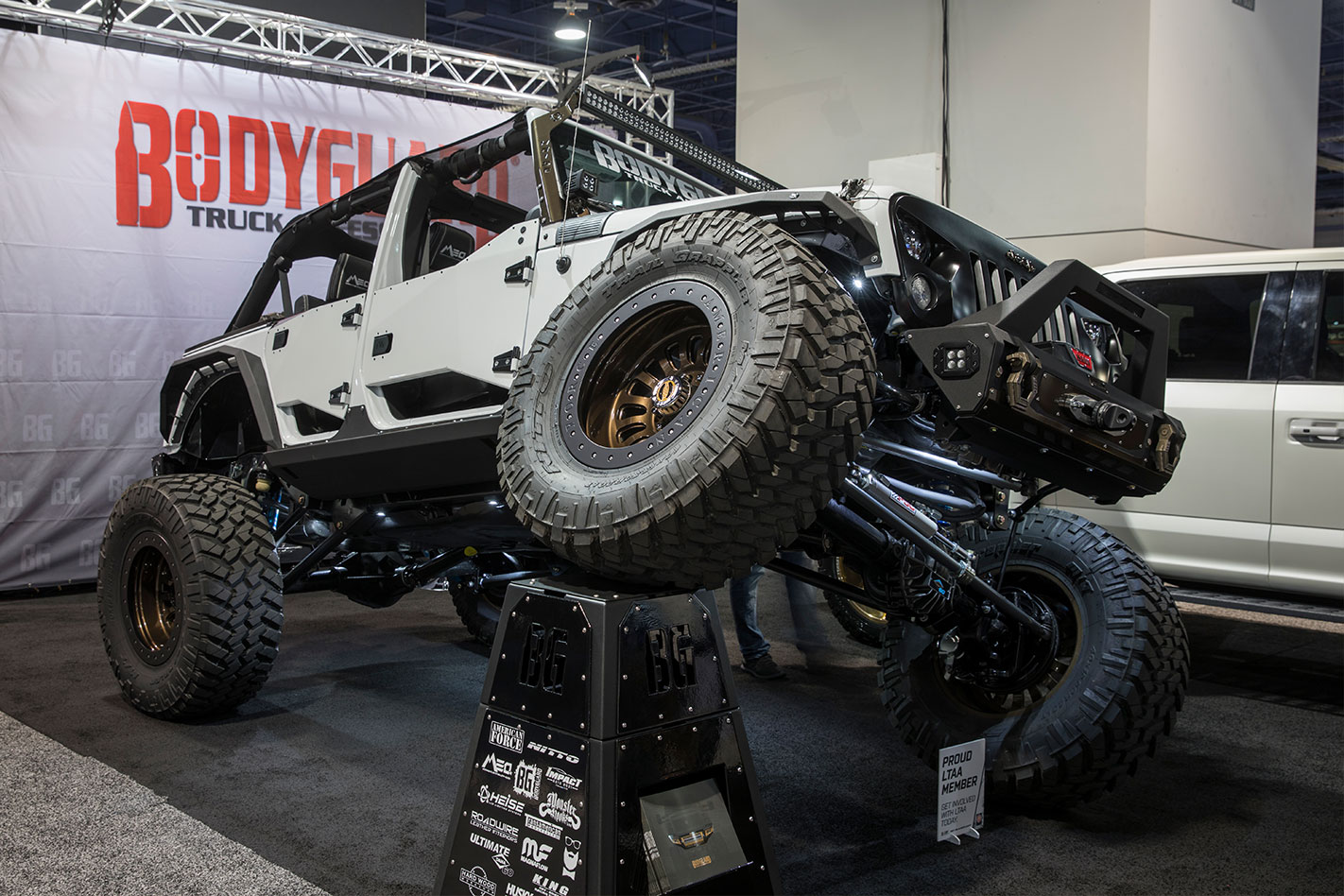
SEMA 2017 COVERAGE The best and wildest rides and products from SEMA 2017.
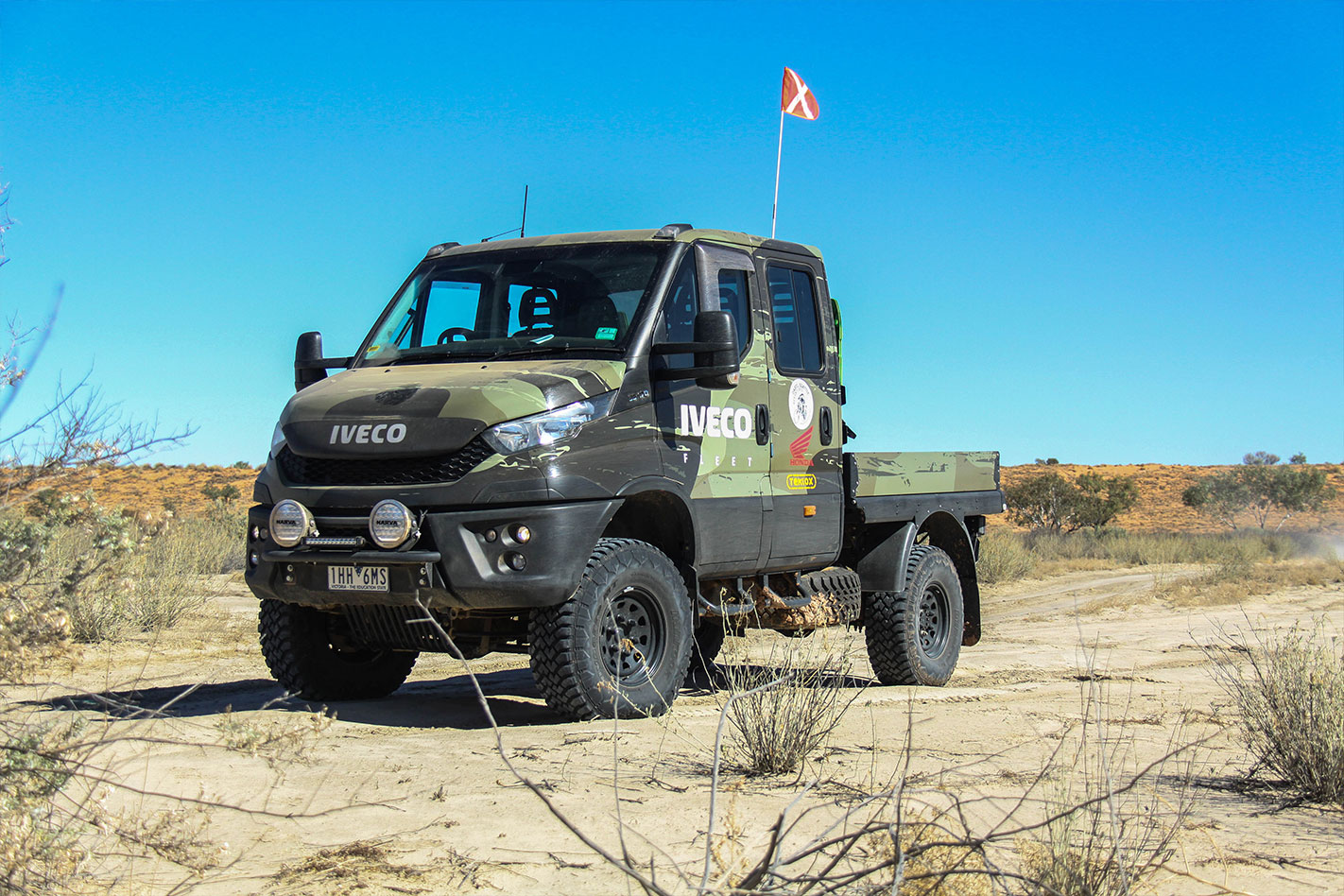
IVECO DAILY 4X4 VOYAGE Traversing the Simpson Desert in a couple of Iveco trucks.
OUTBACK WAGON COMPARISON Ford Everest Titanium v Jeep Grand Cherokee Trailhawk v Land Rover Discovery SD4 HSE v Toyota Prado Kakadu.
THE OUTBACK WRANGLER’S MATT WRIGHT We caught up with TV’s Matt Wright ahead of the Season 3 premiere of The Outback Wrangler.
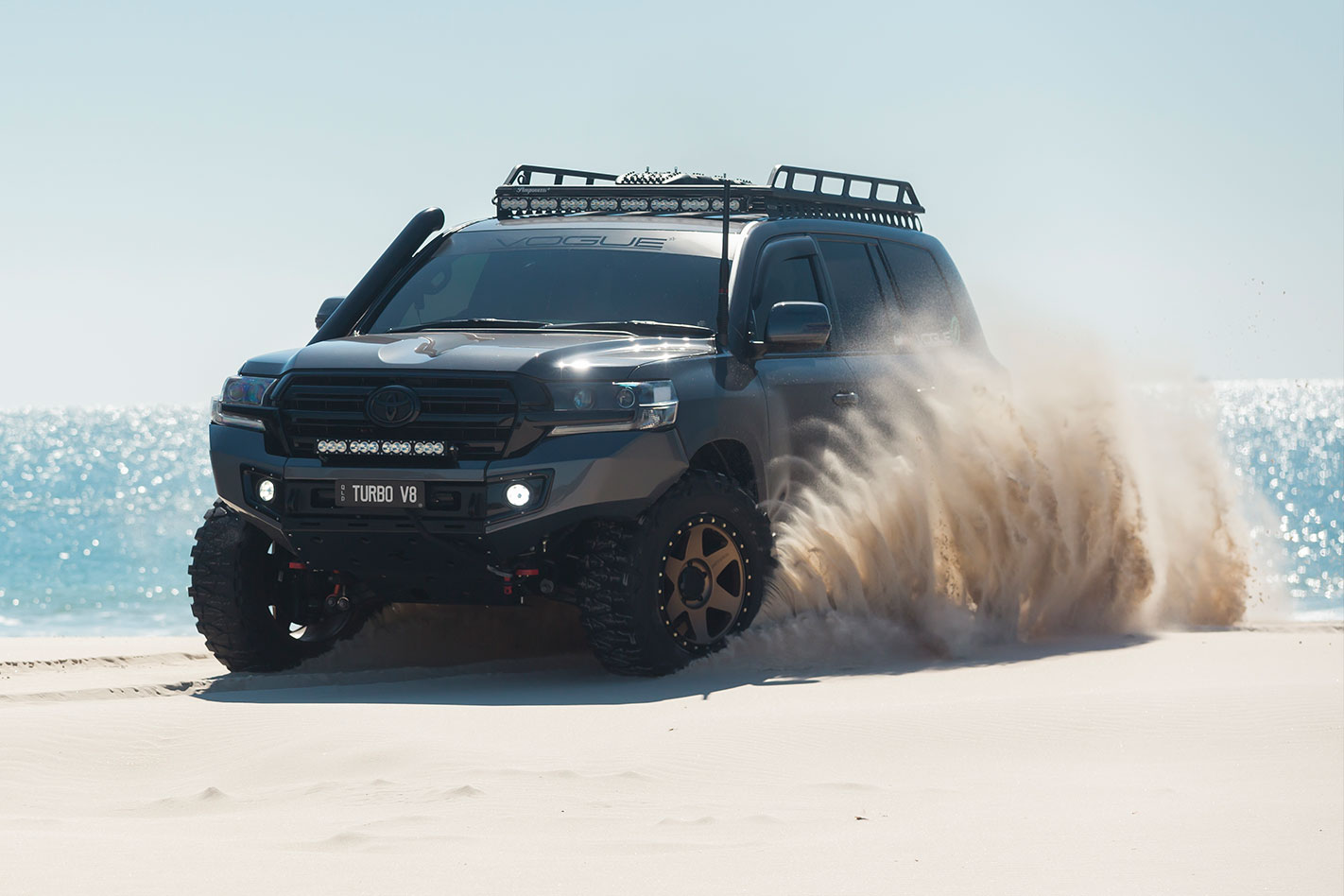
CUSTOM LAND CRUISER 200 SERIES With a 1000Nm-producing V8, this 200 has the go match the show.
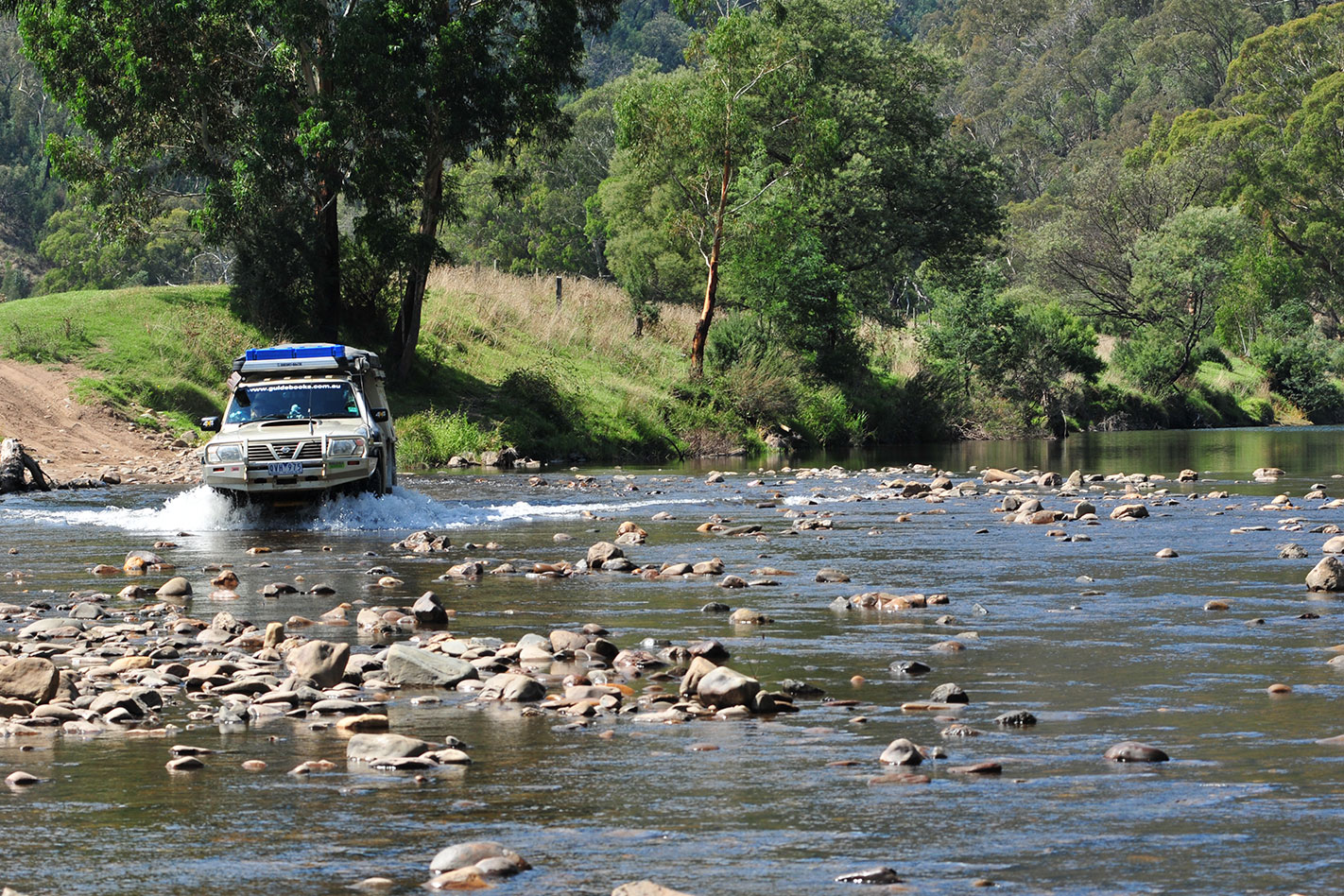
CAPITAL CITY ESCAPES: MELBOURNE The best weekend escapes only a few hours’ drive from Melbourne’s CBD.
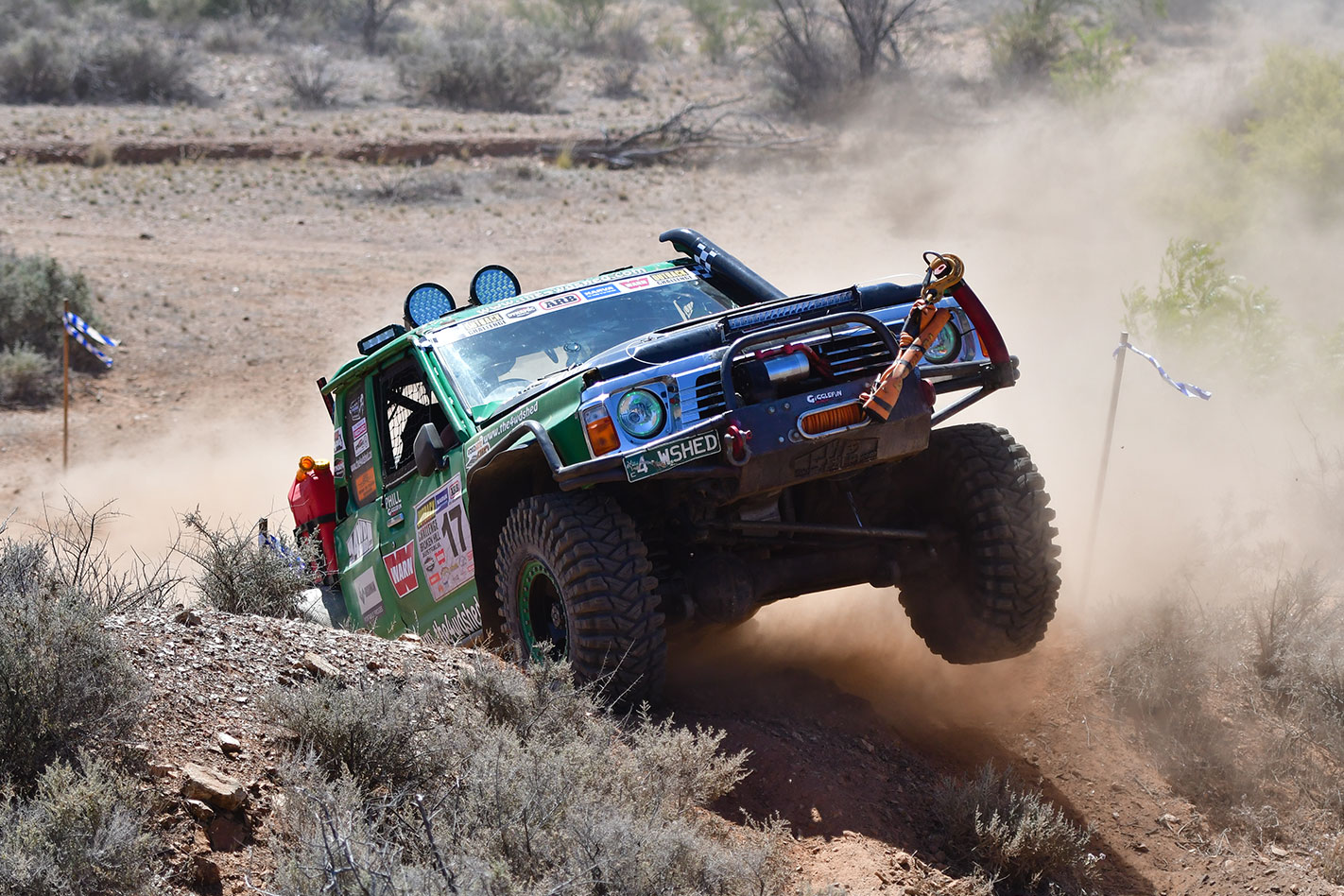
2017 OUTBACK CHALLENGE The heat was on at the 2017 Outback Challenge. We were there for all the action!
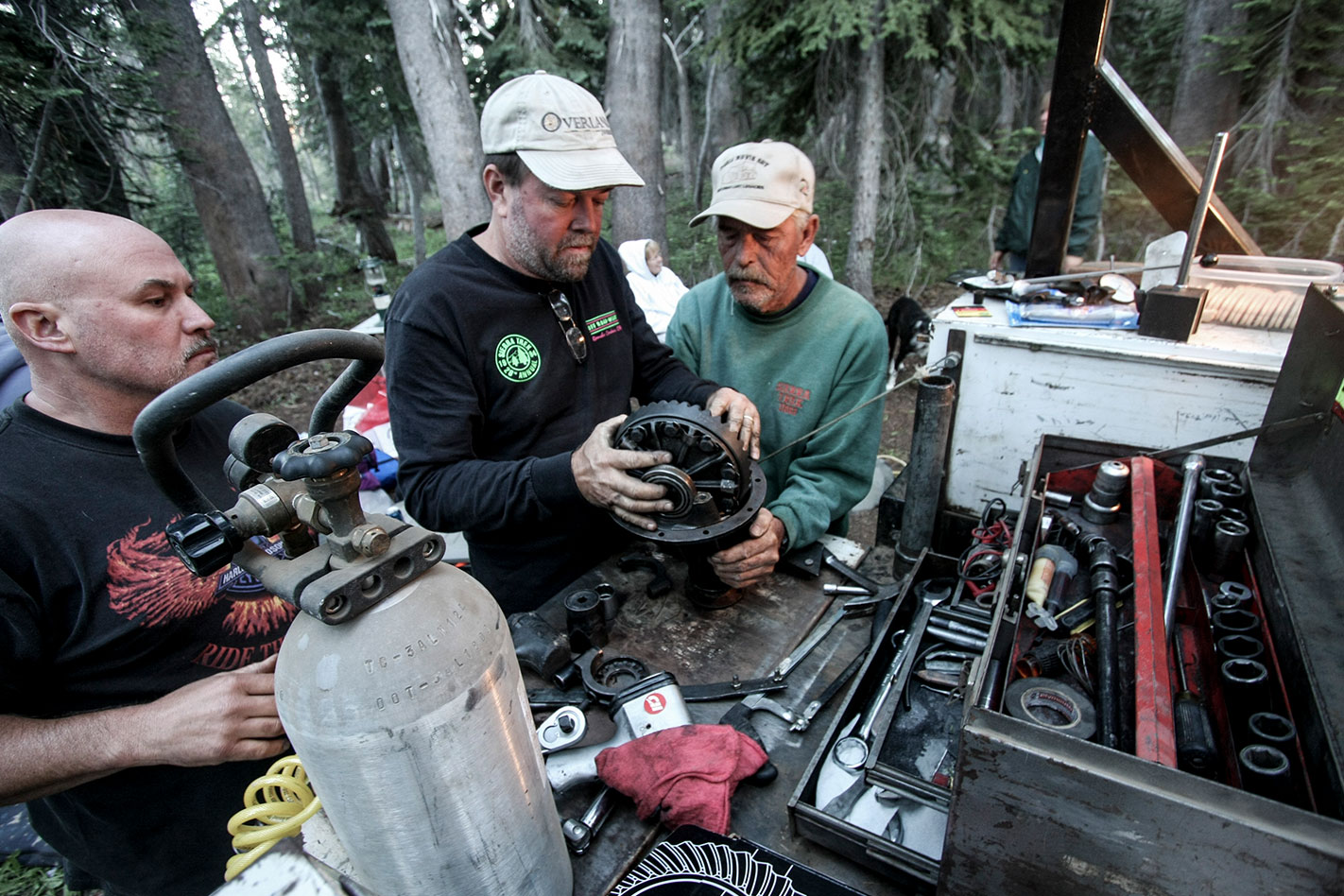
THE VEHICLE-BASED SUITCASE We list everything you need to pack for any off-roading situation.
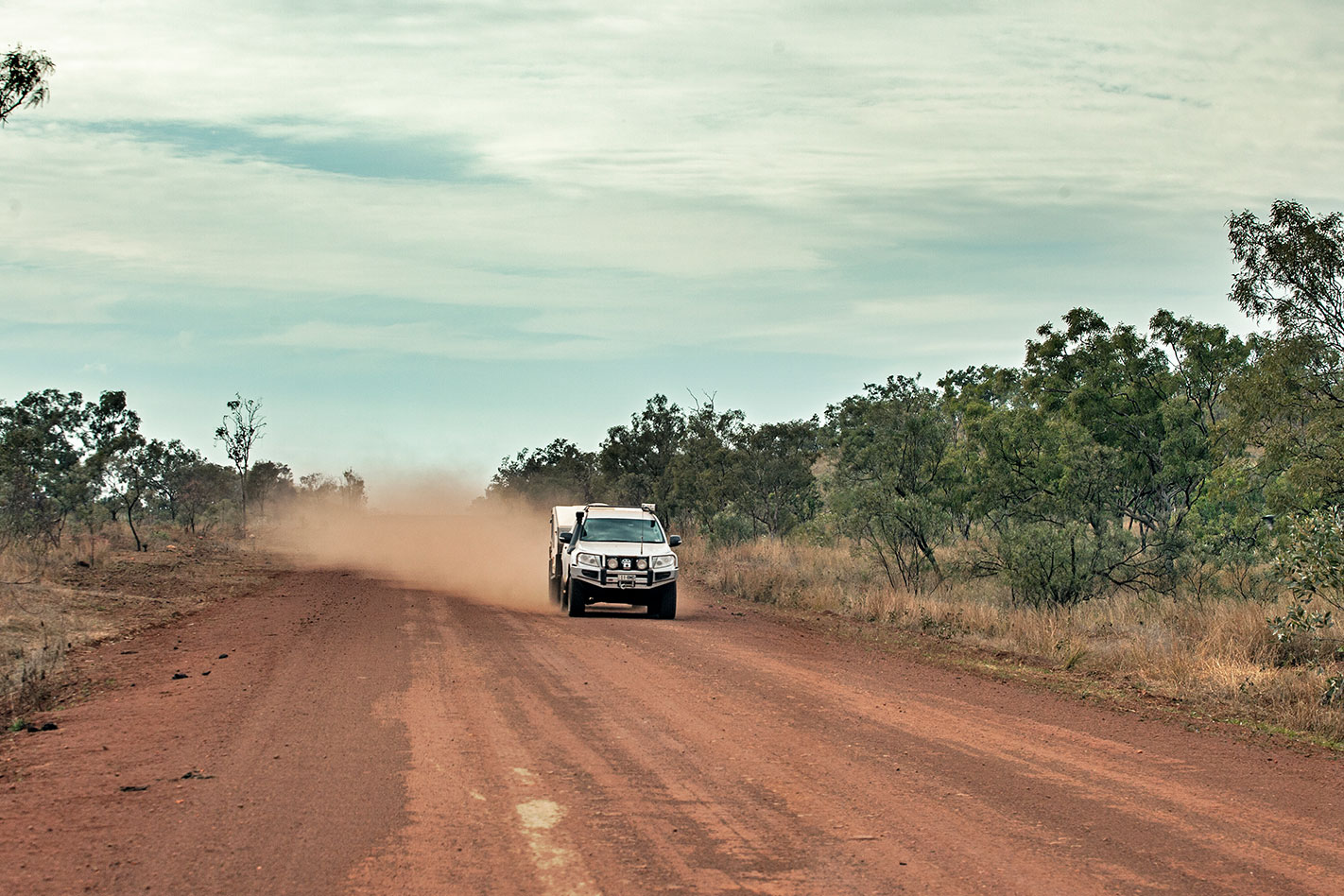
CHARNLEY RIVER STATION, WA Charming Charnley provides a great base to explore the best of the Western Kimberley.
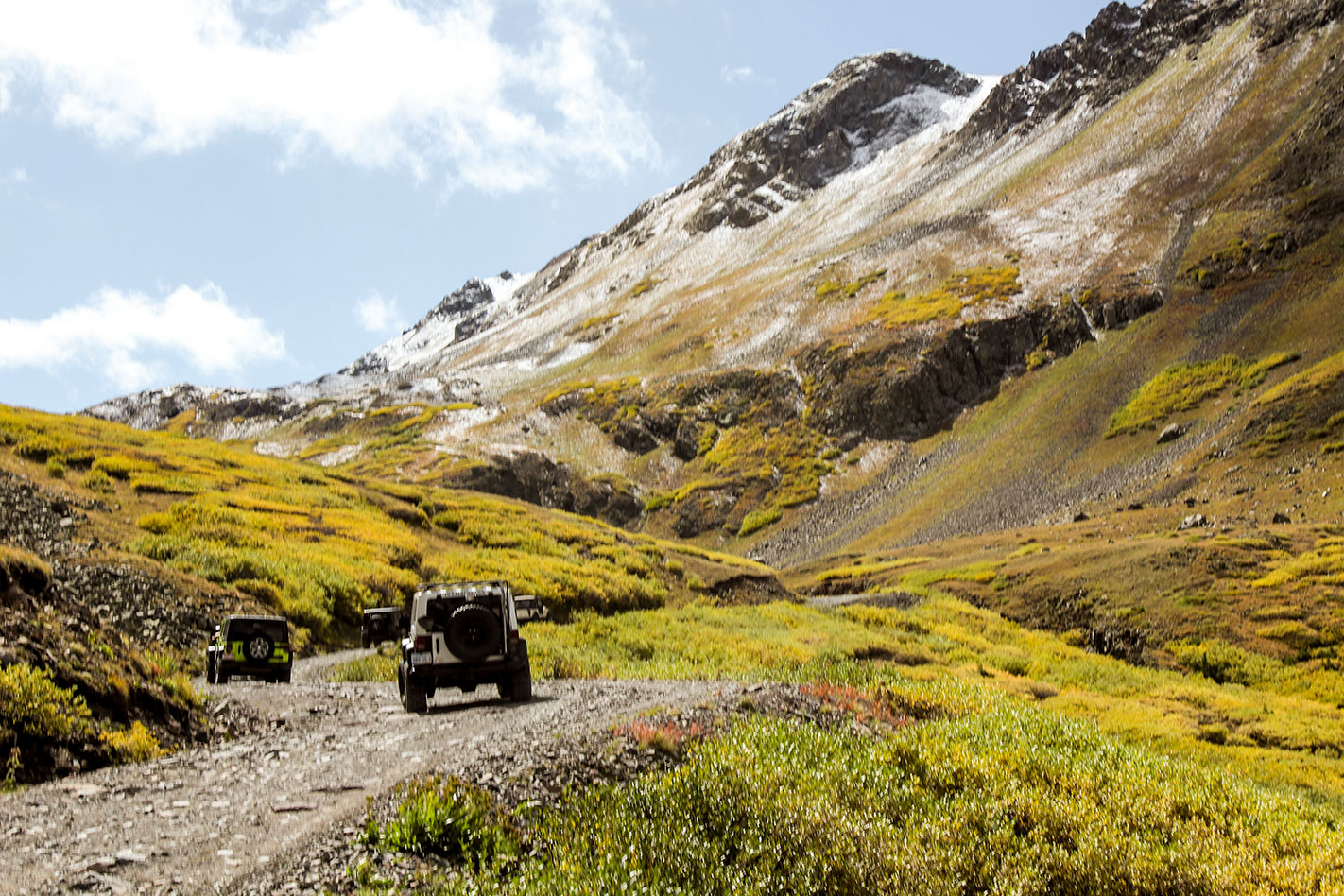
30TH OURAY JEEP JAMBOREE, USA Four-wheeling through the USA’s Colorado Rockies for the 30th Ouray Jeep Jamboree.
THE REST
THIS month we install a set of drawers and an awning from Drifta to snapper Ellen’s FJ, take a look at the Thunder Multi-Function Jump Starter kit, try out a Darche Eclipse side awning, and fit a Flashlube diesel filter. We also list a heap of new aftermarket products that have recently landed in catalogues.
Matt calls out “paid-for” reviews, Fraser points out how smaller engines are required to push out increasingly more power, and Ron lists the best off-roading and camping apps on the market.
Three 4x4s get a spot in our long-term garage this month: Matt’s BJ73 Cruiser, our resident G300 Professional and the Perentie 110. Plus, we pop in for another brew at the famous Silverton Pub.
The Summer Edition of 4X4 Australia is in stores Thursday, December 7.
THE Toyota Hilux and Ford Ranger were Australia’s best-selling vehicles in November, 2017 (when 4×4 and 4×2 variants are combined).
And, with only one month left in the annual 4×4 sales race, the Ford Ranger has all but stitched up top spot by maintaining a healthy sales lead ahead of Toyota’s Hilux.
Ford has dispatched 33,827 4×4 Rangers so far in 2017, 1644 more sales than Toyota which has sold 32,183 4×4 Hiluxes.
It’s been a tightly fought two-horse race all year – the next best-selling vehicle is the Mitsubishi Triton with 18,051 4×4 sales – which looks set to go the way of the blue oval.
When compared to 2016, Ford Ranger sales are up 20.8 per cent year-to-date; the Toyota Hilux is up 15.9 per cent.
Despite the Ranger standing on the highest podium, the Hilux has enjoyed consecutive months atop the monthly 4×4 charts – this time pipping the Ranger by just 21 sales.
Records continue to tumble on the overall market, with November sales reaching a total of 101,365 sales – a 2.5 per cent increase on November, 2016.
“This keeps the industry running at 0.6 per cent ahead of last year’s record pace,” the FCAI report indicated. “The majority of the market momentum was again with small and medium SUVs, and 4×4 utilities.”
Compared to the same month last year, the SUV market is up 8.6 per cent; the LCV market is up 7.9 per cent; while the passenger vehicle market is down 7.3 per cent.
FCAI’s Tony Weber is confident the industry will surpass last year’s record total of vehicle sales: “The momentum built in the market over the past few months appears to be continuing, so we’re on target for another record year,” he said.
The Toyota Hilux (4×4 and 4×2) was the overall best-selling vehicle for November with 4103 sales. It was followed by the Ford Ranger (4×4 and 4×2) with 3576 sales, Toyota Corolla (2959), Mazda3 (2464) and Mazda CX-5 (2358).
Spend time with Daniel Hearn and you can’t help but get drawn in by his infectious passion and sense of adventure when it comes to four-wheel driving.
This article was originally published in 4×4 Australia’s September 2012 issue.
Daniel has incredible tenacity and patience. Combining those traits with an in-depth knowledge of his vehicle’s strengths and weaknesses has seen Daniel successfully craft himself a very capable and well set up tourer, perfectly adapted to take on the challenge of difficult terrain. But Daniel has also retained a safe, reliable and comfortable vehicle ideally suited for extended driving holidays to remote bush settings.
Purchased new, the 2007 Patrol GU needed just a little bit of “tweaking”. Daniel’s never been known to do things by half, so the Patrol hasn’t had a moment’s rest; its transition to the ranks of custom tourer was achieved in record time. It was immediately fitted with a four-inch lift and 35-inch rubber ready for its first adventure. Keen to get the right set-up for his needs Daniel then tried a six-inch lift, dropped it to two inches then back to three, which he’s found provides the best compromise between off-road flexibility and on-road comfort and stability.
Daniel explains: “To get to that point I tested various combinations of shocks and springs from Dobinsons and Tough Dog, finally settling on an Old Man Emu (OME) combination of springs and long-travel sports shocks. The on-road handling is very good and I’ve yet to fault them in the bush. When they are ready for replacement I’ll most likely go for remote-canister shocks that offer greater ability to handle high temperatures experienced on lengthy corrugated roads.”
The Patrol’s front shock towers have been extended to accept the longer OME shocks, with dislocation cones allowing the rear springs to drop away for maximum wheel travel and then reseat on the rebound. Daniel also strengthened the rear spring perches for added durability in the rough, a problem area on Patrols when they’re being worked hard off-road. The final additions to the underbody off-road arsenal are adjustable Panard rods, an adjustable front drag link and adjustable Snake Racing lower-rear arms.
Not content with the standard Nissan steel bullbar, Daniel fitted an impressive tube bar, which was subsequently modified to suit his specific needs. The next challenge will be to remove the low-mount Warn winch in favour of a high-mount unit with greater capacity and strength. While retaining the mounting-point brackets from the original sliders, Daniel made new slider rails to better protect the body’s sill panel while minimising potential hang-ups on sharp rampover angles.
Daniel’s mate Ash Belich custom-fabricated two rear bars to suit the GU. Given the solid construction, strength and good looks, it’s easy to see why Daniel wasted no time in laying claim to the second bar. Ash had already designed the bar with dual stub-axle mounts, so Daniel and another mate, Lee Coupe, fabricated a wheel carrier that provides the perfect mounting platform for two rear work lights.
It’s easy to see this is no off-the-shelf Patrol customisation with Daniel’s own designed, fabricated, superbly crafted and serious-looking four-inch stainless-steel snorkel gracing the passenger side of the vehicle. It suggests that there’s something more than a bit special under the bonnet.
I asked Daniel how he’d found the 3.0-litre diesel especially when pulling his camper trailer through the bush. If Daniel was starting over he would have gone looking for a 4.2-litre six and side-stepped the 3.0-litre. Daniel said “I understand the 4.2 had run its course with emission standards, but what about the V6 in the Navara? Reckon the aftermarket boys will have a field day with that donk. Can you imagine how many Patrols would race out of showrooms with a 550Nm V6 up-front – you gotta wonder.”
But with the 3.0-litre four firmly in the engine bay, the smart thing was to make the best of it. “It’s not a bad motor,” Daniel reckons, “but it really benefits considerably from a little bit of expert tuning, and I have to take my hat off to the work done by Matt Craig at United Fuel Injection.
“I now run a custom-made three-inch mandrel-bent exhaust to minimise exhaust restrictions. There’s a Rapid Chip altering the factory fuel mapping, a larger bonnet scoop and airbox with bigger capacity intercooler to reduce air temperatures. Each adds to the overall improvements in throttle response and torque, which makes for crisp acceleration and strong pulling power – a real advantage in soft sand or overtaking with the trailer.”
Daniel confirmed he’d had some typical annoyances from the factory ECU-controlled turbo boost. It can be erratic with high-pressure spikes and fluctuations, depending on driving circumstances.
He told me he’d installed the popular needle-valve solution to control the rate of turbo spool, and a Dawes valve to moderate maximum boost to 20psi at full throttle and 4000rpm. This combination removes the pressure spikes and provides a smoother, more linear boost under high engine loads. Daniel also advised me that once making the changes it’s an absolute must to have a boost and exhaust temperature gauge to keep things in check. There’s also a catch-can to stop the build-up of oil residue on the mass air-flow sensor (MAF). Add in a new module – on order – to remove the drive-by-wire throttle-actuator delay and the problem should be well sorted.
Even with the mods to date, Daniel doesn’t think the potential for the engine has been fully explored. In its current guise it makes a respectable 135kW and a healthy 400Nm. But there is a new turbo on the way with the possibility of adding methanol injection to keep the edge off those higher exhaust temperatures when working it hard.
Understandably, with the extra power and torque, there’s more stress and strain on driveline components. Daniel’s running a heavy-duty clutch to ensure all the additional power gets to the ground. The composition of the friction plates also tolerates greater temperatures if there’s slippage when on hills or rock-climbing.
The Patrol runs the standard Nissan rear limited-slip differential, which Daniel reckons is the best feature of the standard vehicle: “it’s so strong … even the comp guys use them”. Mind you, a little extra traction assistance comes from what Daniel regards as his most practical accessory, a Lock Right unit installed in the front differential. “It’s just that little bit of extra bite to get further before breaking out the winch.”
Daniel has a brand-new set of ARB Air Lockers taking up room under his bed … because he’s just hasn’t yet found any obstacle that the standard limited-slip and Lock Right combo can’t handle. I suspect that this is testament not just to the current set-up, but also his driving skill.
Keeping everything off the ground is a smart-looking set of 16-inch alloys, which Daniel picked up second-hand for only $400.
He also scored a set of brand-new old-style Mickey Thompson Baja Claws, which are perfect for his more adventurous outings. Daniel did mention that running the larger tyres meant the engine was working harder and the speedo was out. However, swapping over the diff from the standard 4.1:1 to the 4.3:1 used with the automatic Patrol gets everything back on track.
For night driving, Daniel’s fitted higher output globes to the Patrol’s standard head lights to complement the three Rallye 4000s driving lights that run 75-watt HID upgrades.
Look inside and Daniel’s been at it again, designing and fabricating most of his own gear. At the rear, there’s a large storage drawer, a fridge compartment complete with aftermarket fridge slide, plus an overhead cage to mount cookers and Daniel’s favourite accessory, the 12-volt oven.
“I pull up and enjoy a hot lunch while my mates are still standing around scratching their heads looking at frozen bread in the fridge or eating a sloppy salad roll they bought several hours earlier from a servo.”
Daniel’s fitted a space-case in place of the passenger’s rear seat to house recovery gear and other essentials such as a tyre-repair kit. The space-case actually serves a dual purpose as he’s made a top cover, which is exactly the same height as the rear door, to provide a level surface for sleeping, if the need arises.
He’s fabricated a table that drops down from the rear doors for food preparation, with holders for soap and dishwashing dispensers. There’s also a 20-litre tank for fresh water, supplied through a caravan pump with a handy outlet on the passenger’s rear door. A Glynd heat exchanger under the bonnet also makes it possible to have a hot shower at day’s end.
And while you’re camping at night, there’s enough stereo power to hold a small music festival. The system uses large Kenwood and Clarion amps driving Clarion speakers and a 13-inch subwoofer, all centrally controlled via a Jenson remote-screen audio deck. Meanwhile, a GME 4400 UHF covers the communication requirements.
4×4 Australia custom reviews
Inside the Patrol, there’s a roll bar for added protection should the unthinkable happen, and Daniel’s custom-designed and built dash pod incorporates winch controls and switches for the lights, the 12-volt oven, the air compressor, and those unused Air-Locker buttons.
Navigation duties are covered by a Magellan GPS and the Street/Off Road Magellan Crossover unit. The Media tech seven-inch touch-screen system provides easy access to OziExplorer and Hema maps.
Up top there’s a Rhino roof-rack and a Foxwing awning that offers a quickly deployed shelter from the elements to help enjoy a spot of lunch or a cold ale at the end of a long day’s driving.
Vehicles like Daniel’s evolve over time, as you learn what does and doesn’t work for your specific needs. Doing so much work yourself saves you money but the real bonus is a vehicle that’s priceless. Daniel can be rightly very proud of his 2007 GU Patrol and the level of capability and functionality it now offers.
AS we were stalking the massive SEMA halls last month, we stumbled upon a familiar face: Harrop Engineering, just one of the many Australian companies attending the 2017 SEMA Show.
Heath Moore was in the States showcasing Harrop Engineering’s range of blowers. Why SEMA? “The SEMA Show is the biggest show of its kind in the world – there’s the Americas, Middle East, Europe, Africa – there’s a lot of people here looking to find the best products,” Heath said.
Harrop Engineering is already well-known in Australia, Middle East and Europe for its quality of product, but Harrop acknowledges there’s an opportunity for it to grow in the US market.
“We’re selling a lot in the Middle East and Europe, but the US market is a huge opportunity for us,” Heath said. “There are a lot of companies that do superchargers, but we’re very proud of the quality and the manufacturing capabilities on the design and packaging that we’ve got.
“Hopefully it will be a very successful growth period for Harrop USA.”
REDARC’S latest dual-input, multi-stage, 12-volt, in-vehicle battery charger is a beauty.
One of 14 in-vehicle chargers the company makes, there’s one to suit your charging requirements and your vehicle’s technical demands. A DC-DC battery charger will ensure a dual or second battery is kept at its correct voltage and 100 per cent charged all the time, even if it’s a fair way away from the alternator, say in a camper van.
You can also use these units to isolate a second or auxiliary battery from the vehicle’s main battery and ensure the main battery isn’t run flat by all the current-demanding components we all like to have these days – a 12-volt fridge being the main culprit of flat batteries.
The unit fitted to our Cruiser is a BCDC1240D, which is one of Redarc’s top units and means the charger can handle 40 amps continuously, with a voltage range of 9 to 32 volts. It can charge and maintain any lead acid battery, as well as calcium, AGM and lithium batteries.
This dual-input charger is designed to receive charging power not only from the vehicle’s alternator but from a solar panel. When a panel is connected to the unit it will take as much power from the solar input as it can before supplementing that power, up to the maximum rated output, from the vehicle alternator.
The crew at Outback 4WD in Bayswater mounted the unit in the front of the engine bay where it will receive good airflow, ensuring it will operate at its optimum – in temperatures up to 55°C. To select the different charge profiles that the unit is capable of delivering for different batteries and situations, it is simply a matter of changing the connection of one of the wires.
The charger is a three-stage unit: Boost, Absorption and Float stages. Boost stage is the initial process of charging; when the battery voltage reaches its proper level the current drops to the Absorption stage, which is maintained until the current demand is less than 4 amps; the unit then switches to the Float stage, where the battery voltage is then maintained at 13.3 volts.
The LEDs on the front panel indicate the charge profile and the power source, while the charge status is indicated by the continuous flash of the ‘Stage’ LED. The different Redarc chargers are rated from 6 amp up to 40 amp and are priced from less than $400 up to $1000.
Designed and manufactured in Australia, all come with a two-year warranty. They’re a first-class product and are designed for years of trouble-free operation. I can’t recommend them highly enough.
AVAILABLE FROM: www.redarc.com.au RRP: $790 WE SAY: Well-designed and made to last a lifetime.
OUR small convoy of vehicles crested a low sand dune, with a line of scattered trees in front of us marking the main channel of the ephemeral Hay River.
We quickly came to the dry, gutter-like creek and propped beside a small sign that marked Madigan’s Camp 15. Here we met the well-used and distinct Hay River Track, which now runs between Poeppel Corner in the south and Batton Hill’s small campground in the north, just south of the Plenty Highway.
We turned south for a relatively quick and painless 17km drive to Madigan’s Camp 16 and the gum tree he blazed that still stands tall and healthy.
It’s now surrounded by a scrappy wire fence and a plethora of star pickets and signs denoting who has been there and when.
This visual blight occasionally gets thinned out, leaving only a couple of the more historical signs such as the DNM (Division of National Mapping) plaque from 1974 and the small yellow signs that mark each of Madigan’s camps across the desert. Those small signs were first erected in 1994 by David Owen and Robert Correa, then operators of Owen Correa Outback Adventurers.
Their research and subsequent marking of all of Madigan’s camps have made it easier for later travellers to follow the route – an oft-used two-track has been developed between camps. The track also makes it a lot easier on vehicles, as the route is much smoother than travelling cross-country.
The easy-to-follow route also eliminates the need for comprehensive navigation. In 1939, when Cecil Madigan and his team first crossed the desert, they filled in one of the last great blanks on the map of Australia. The desert had been penetrated by early explorers from the time of Charles Sturt’s expedition in 1844, but not very far.
In 1886 David Lindsay almost crossed the entire desert from west to east, but turned back before doing so. Then, in 1936, Ted Colson, then owner of the Bloods Creek pastoral lease on the western edge of the desert, became the first white fella to cross the sands to Birdsville and back.
From Bore No1, north of the Old Andado Homestead, Madigan’s group of nine men loaded their string of 19 camels and headed north towards the junction of the Hale and Todd rivers before striking east across the desert.
This journey across the Simpson was without any drama and was wet for much of the time, meaning the camels had plenty of food and ended the trip in better state than when they left. It took nearly four weeks to cross the desert and, from Birdsville, they continued their walk south to Marree.
Francis Birtles Australia’s greatest overlander
The French Line became the first route pushed across the desert in 1963 and 1964, with the Colson Track being graded around the same time. Reg Sprigg and his family, as part of the exploration work for the drilling companies, became the first to drive across the desert between Mt Dare and Poeppel Corner in a Nissan Patrol, in 1962.
The Leyland Brothers followed in a couple of Land Rovers in 1966, using the French Line to cross the desert as part of the first vehicle crossing of Australia from Steep Point to Cape Byron. The QAA Line used by all modern-day travellers between Birdsville and Poeppel Corner was constructed in 1979, while the other routes across the desert were also graded between those years.
Denis Bartell started crossing the desert via the French Line in the mid ’70s, and he set out on his crossings of the desert in 1977 as part of a record-breaking double crossing of Australia. What was unique about the trip was the cross-country section through the very centre of the desert between Dickerrie Waterhole in the east and Dakota Bore in the west.
It was also against the steepest face of the dunes; all in an underpowered three-cylinder two-stroke LJ50 Suzuki that displaced 539cc and produced a mammoth 24kW and 57Nm. When Denis drove the Madigan Line in 1979 – in an updated LJ80 Suzuki with a 31kW four-stroke engine – the northern Simpson was completely untracked as it was when we followed the route in 1989.
In both situations, the going was a lot tougher than today and we each took seven days to cross the desert from Old Andado to Birdsville. On this latest trip we rolled north from Oodnadatta and stopped off at the Abminga railway siding on the Old Ghan Railway line.
Deserted ever since the railway through the heart of the country was shifted farther west back in 1980, the buildings have slowly fallen into decay with the corrugated iron roofs of the fettlers’ cottages being ripped off by a wind storm a few years back.
Madigan’s party left the train here to head for Charlotte Waters, this first leg in a truck driven by a younger – and later to become the legendary Birdsville mailman – Tom Kruse. From the deserted buildings at Charlotte Waters, Madigan’s party followed Coglin Creek, traversing the Finke River flood-out country before crossing a couple of dunes to arrive at Old Andado Homestead.
We journeyed to Charlotte Waters (only scattered ruins remain, with most of the functional building material being used to erect the New Crown HS in the early 1980s), but, like most modern travellers, we diverted to the civilised delights of the Mt Dare Hotel and campground.
The next day, after replenishing water and fuel stocks, we headed north on a bulldust-shrouded track to cross the Finke to Old Andado. This was, up until recently, the home of the legendary pioneer Molly Clark and her family. Today it is maintained by a family trust and a caretaker is in residence.
Camping is available nearby, and a walk through the old historic homestead, left much as Molly had it, is a must-do. Molly lies buried in the country she loved, just a couple of hundred metres to the east of the old homestead.
We left Old Andado and headed north, passing through the Mac Clark Conservation Reserve, established to protect one of the three groves of waddy trees in the world; the other two stands exist north of Birdsville and south of Boulia. In 1939, Madigan commented on how few trees there were here after most had been removed for the construction of fences and cattle yards.
Today, after Molly’s husband had fenced the area in the 1970s and it was declared a reserve in 1982, these hard-wooded, slow-growing trees seem to be thriving, with many now outside the fenced area designed to protect the young ones from grazing cattle.
Heading along little-used station tracks and across flat sandy plains with the odd patch of small gibber stones, Denis reminisced about how good such country was to travel across in the little Suzuki – the going being quick and relatively comfortable compared to the spinifex-lumpy sand dunes.
That night we camped at what is marked on most maps as Camp 1A, located beside the station track and east of Madigan’s Camp One (MC-1). Back when the camps were found and marked by David Owen and his crew, the station owner didn’t want people going to MC-1, hence MC-1A.
The next morning we headed north along the edge of a low range of jump-ups, the most prominent peaks being named after members of Madigan’s original party: Marshall Bluff and Crocker Hill.
We climbed the nearby Poodinitterra Hill’s small cairn where, between the peak and the convoluted line of the low range on a section of flat ground cut by some narrow threads of transient streams, was where Madigan made his Camp 2.
Just north of here we passed a derelict Case tractor (you’ll find a ‘Geocache’ around here) and arrived at The Twins, two distinctive conical-shaped hills that lie side by side. Madigan had climbed these and found a small cairn, probably built by the surveyor T.E. Dale while on a traverse from Charlotte Waters to the East MacDonnell Ranges in 1916.
Plaques erected by the RGS (SA branch) and Reg Sprigg, both in 1967, now adorn the cairn, but, thankfully, no other markers have been left here. We clambered to the top of the steep-sided hill and admired the great view the peak gives of the surrounding country and dunes, which begin not far to the east.
We only stopped for a morning brew, but there are a couple of reasonable spots to camp. We turned south and then east from The Twins and followed a clear set of tracks across some big dunes and wide swales. This route crossed the flood-out country of the Hale River, which would make a pretty reasonable spot to camp among the scattered clumps of trees.
We turned north after meeting with the Colson Track, passing a crossroad, the western side of which leads to the site of a relatively new mining camp. Heading a short distance north we came to MC-5, to the west of the Colson Track.
There’s not a lot to keep one here for long, so we headed east again on a well-worn two-track, cutting the old mining road and striking on towards MC-6 and camping that evening between MC-7 and MC-8. We had done an unprecedented 176km for the day; something impossible to do in earlier times.
The next day we crossed some of the tallest dunes of the trip, passing through MC-9 and MC-10 before coming to Madigan’s Camp 11. There was water and good feed for his camels here, so Madigan stopped for the night, even though he had left his previous camp just an hour or so earlier.
In 1981 this was one of the first campsites relocated and marked by the Division of National Mapping (DNM), the two claypans here being very distinctive. Denis had passed this spot a short distance to the north, while on my trip in 1989 we had the good fortune of a DNM member who led us to the claypans.
Today, the track makes navigation easy. We passed through MC-14 the next day, and then a short distance later came to the Hay River, MC-15 and turned south to MC-16.
Madigan wondered when he blazed the small gum tree (the biggest he could find in the Hay) who would be the next person to see it – that could have been oil seekers who were pushing north, while in 1974 a DNM group passed this way while establishing benchmarks along the Hay River as part of their survey of the Simpson.
Denis was almost certainly the next to arrive here, close to last light after a long day bumping across the dunes. He and his travelling companion, Michael Richardson (then editor of Overlander magazine), opened a bottle of red wine and saluted Madigan and his men, who on their crossing were feeling pretty happy with themselves and had opened a bottle of whiskey to celebrate at MC-15.
Many modern-day travellers opt to continue down the Hay River to Poeppel Corner and the more well-known public access routes across the desert. Heading east on the Madigan Line demands permission from Adria Downs Station and the Queensland NP&WS to cross the Munga-Thirri National Park.
We received permission from both organisations and continued east, crossing more dunes on a track that was still pretty well-defined, but certainly a lot less used than the route west of the Hay River. As we closed in on the border, the desert’s dunes grew farther apart and more claypans and stands of gidgee trees arrived on the interdunal valleys.
We took a diversion and found Mudloo Well in among a large stand of gidgee scrub – well, we found a star picket and sign that indicated the well. This often-elusive watering point, with a sloping man-made funnel-shaped shaft, was once a very important Aboriginal native well.
Reportedly 30-foot deep, it’s a bit of an enigma and, neither Denis (who rediscovered many native wells through the desert and was acclaimed by researchers and Aboriginal people for his endeavours) nor I, were reluctant to confirm our most recent ‘discovery’.
I would like to spend a bit more time here and confirm where the well actually is… or was. We pushed on as the going became easier and faster. Our run that day was a long one of 149km (in nine hours) as we tracked south, crossing out of the park where the old vermin-proof fence marks the park boundary.
The sun was making tracks to the western horizon as we crossed the dry and dusty flood-out country of the Mulligan River, and it was near last light as we pulled up to camp at Kuddaree Waterhole on the Eyre Creek – Madigan’s Camp 20. Surprisingly we found the waterhole dry, but the next day we were delighted to find the Annandale Waterhole along a pleasant stretch of gum tree-lined water.
Nearby, the ruins of Annandale Homestead can still be seen and admired. Sadly we didn’t dally long and headed south on good station tracks, stopping at Dickerrie Crossing where Denis had started the cross-country leg of his double jaunt across Australia, 40 years previously.
That evening we camped at the base of Big Red, the dune Denis had named in 1977 after sitting atop its fiery crest on a number of previous occasions. Like most Simpson travellers we sat on the great red dome and paid homage to that great sandy expanse and to what Denis referred to then as his, “desert of dreams”.
Today, his desert of dreams is a dream for all of us. Get out there and enjoy it.
This area is remote and you need to be well-equipped and experienced at desert travel. Any recovery out here is time-consuming and very expensive. The route was easy to follow, but dry, windy conditions may cover the tracks, making good navigation essential.
TRAVEL PLANNER
This area is remote and you need to be well-equipped and experienced at desert travel. Any recovery out here is time-consuming and very expensive. The route was easy to follow, but dry, windy conditions may cover the tracks, making good navigation essential.
PERMITS A permit is required from the Central Lands Council (CLC) to travel the Madigan Line. It’s easy to get and free: www.clc.org.au/articles/info/application-for-an-entry-permit
If you have any queries, phone: (08) 8951 6211. If you head south on the Hay River Track to the public access routes, you require a Desert Parks Pass from NPSA: www.environment.sa.gov.au/parks/entry-fees/parks-passes/desert-parks-pass
DISTANCE AND FUEL It’s approximately 720km from Mt Dare to Birdsville via this route. Fuel usage can be heavy depending on conditions. Both Patrols and the Hilux consumed 130 to 140 litres of diesel. We each carried 200 litres, and it’s advised to carry similar. Petrol vehicles would need more.
MORE INFO Pink Roadhouse, Oodnadatta: www.pinkroadhouse.com.au Mount Dare Hotel: www.mtdare.com.au Old Andado: www.oldandado.com.au Birdsville: www.queensland.com/en-ie/information/wirrarri-visitor-information-centre
GREAT READS Crossing the Dead Heart, by Cecil Madigan Desert Walker, by Denis Bartell (www.desertwalker.com.au)
VERY few people can say they enjoy taking their work home with them, let alone away on holidays.
This article was first published in 4×4 Australia’s July 2012 issue.
But if you work in the 4X4 industry and can cope with the constant temptation of living in an off-roader’s answer to a lolly shop, it’s not hard to combine work and play.
With years of experience in the industry and the latest knowledge on the best products, Chris Leybourne was likely not only to have a very cool rig but to have no trouble convincing us that the gear he’d kitted it out with was the best choice. Like most young lads, Chris’s introduction to the dirt was a humble beginning.
His first ride was a Ford Escort that didn’t hold much credibility with the girls. But what it lacked in presentation it made up for in the sheer fun of punting it around out-of-the-way forestry gravel tracks. It wasn’t long before he was no longer content to accept the restrictions placed upon the Escort by the edges of the winding tracks.
Chris started saving his pennies for something that would let him explore the fascinating landscape beyond the graded gravel. By 19, Chris was on his way to owning a succession of 4X4s ranging from V8-powered HiLuxes, LandCruisers and even a ground-shaking V8 diesel Patrol.
Chris readily confessed that each vehicle promptly departed from the original OEM design. Each fourbie came with a different set of challenges and problems to overcome to improve capability and reliability. “Modifying each vehicle allowed me to create my own style and visual appeal, rather than just driving another clone,” Chris said.
Chris was already living a life less ordinary when he signed up for a 2011 four-door JK Jeep running the factory 3.6-litre V6 petrol coupled to the standard auto ’box. Naturally, Chris up-spec’d to the more aggressive Rubicon model offering better rims and tyres with electric diff locks front and rear.
Why the Jeep, and not another Toyota or Nissan? Chris grinned, “I have fond memories of riding in the back of a CJ7 Jeep with no roof when I was a kid, I just loved it. With the JK, I’ve got the freedom to remove the roof when I want to enjoy those balmy summer nights, wind in the hair and the sound of the engine.
2018 Jeep JL Wrangler: more images released
Nothing compares to the sensation of open-air motoring, it’s simply great fun.
“On the business side, Jeep has a well-respected name with rich heritage and the JK Rubicon is no exception, offering strong off-road performance out of the box. And I liked the fact the Jeep Rubicon is one of the few remaining live-axle designs in a sea of independent suspension evolutions from other manufacturers.
It means the JK provides the perfect platform for some specialist tuning to create a robust family tourer capable of withstanding the rigours of outback travel in comfort and safety.”
As Chris well knew, building a competent off-road warrior is one thing, but it all too easily compromises the vehicle’s on-road dynamics. Not only did the Jeep have to prove itself as a competent off-road explorer for dad to play in; it had to meet the demands of family commuter, work truck and daily driver.
It also needed to be a long-distance tourer capable of pulling a camper-trailer while providing comfortable accommodation for many hours in the cab for mum, dad and three kids. You don’t attain this breadth of functional capability and reliability in a vehicle unless you really know what you’re doing.
We’ll admit, at this stage we were a little dubious as to the broad capability of this rig – it looked like a custom truck. Chris spotted our reservations and interrupted with an offer we seldom hear: “Not convinced eh, would you like to have a drive?” Before Chris had the chance to change his mind, I’d snatched the keys from his hand with the precision of a cobra and had my rump firmly planted in the command seat.
He got me back out of the seat with his next comment: “You know, it’s a lot more fun with the tube doors.” Within minutes Chris had unbolted those restrictive side-skins and we fitted the ultimate Jeep accessory. Twisting the key growled the V6 into life.
It quickly settled into a seductive burble thanks to custom exhaust headers and performance stainless-steel dual outlet muffler beautifully installed to look like a standard OE fitment. As we made our way through the car park first impression was positive.
It’s smooth, seating is comfortable and the rubber-necking we were copping courtesy of those tube doors was an ego boost even if we were only borrowing the glory. Turn onto the blacktop and this Rubicon retains a civilised driving demeanour; steering is responsive, the suspension absorbs minor surface irregularities and bodyroll is predictable and linear through winding bends.
We had to keep reminding ourselves that Chris was sitting next to us as the temptation to sink the slipper and enjoy the seductive rasp of the exhaust on exiting the corners was getting stronger.
Chris told us that having tried and tested so many variations of suspension across a number of vehicles, “you begin to appreciate the nuances for a balance between on-road stability and off-road toughness and flexibility”. Chris chose AEV’s 3.5-inch suspension kit specifically designed for the JK and completed the fit-out with quality Bilstein shocks.
Chris explained, “AEV’s approach is more than just increasing wheel articulation or suspension height, but rather obtaining a system extremely capable off-road, while offering superb on-road performance and handling.
They’ve achieved this by optimising the geometry of the JK’s steering and control arms to accommodate the extra lift while retaining excellent braking and cornering feel. With the correct geometry the springs and shocks don’t have to work so hard to compensate for a poor set-up.”
Chris’s Rubicon proved the point; he definitely had a well-balanced on-road ride, now we needed to see if it had improved the ability for exploring off-road. Watching this Jeep in its preferred playground negotiating rocky outcrops with enough flex to make a Pilates instructor wince, it’s hard to believe how well it sits on the road.
Having the extra lift and flexibility to keep the Jeep level when negotiating difficult terrain would also make the task of pulling a camper-trailer to those secluded camping spots that much easier and safer.
To give the Jeep every opportunity to gain the maximum benefit of the electrically-operated diff locks, Chris swapped the original factory rims for some bold Metal Mulisha rims wrapped in sticky Pro Comp 325/65R18 X-Terrain tyres.
Chris said the reverse rotation works better in the sand and loose rock because they don’t dig in as much, plus it keeps the blocks square so in the winter months when the mud gets deep, you can flick them around for optimum traction.
To ensure the Jeep doesn’t lose its Cheshire grin from wayward animal strikes or the odd tree stump, frontal protection is in the form of a solid AEV black winch bumper bar with over-riders tailored perfectly to the Jeep’s original bodylines.
Neatly housed inside the front box section is a tough Warn XD 9000lb winch with synthetic rope for safety when performing those recovery operations in the unlikely event that the Jeep should get stuck.
Night driving is supported by two powerful Lightforce HID Genesis spotlights with any gaps filled in by a brilliant-white LED light bar hiding just beneath the front rail of the Land Rover Defender roof-rack – yep, both the rack and LED light bar fit perfectly, so good in fact that you’d think they were Jeep options.
Rounding out the body protection are Hulk Hogan bicep flares from Bushwhacker and an AEV snorkel to make certain the Jeep breathes easily. The Jeep keeps its cool when things get tough, thanks to the stylish and practical AEV heat-reduction bonnet with polished silver accented air vents.
Looking after the tail-end duties for spare wheel, shovel, axe or high-lift jack is the smart-looking AEV rear bumper and wheel carrier. An interesting feature of this design is it incorporates two four-litre water tanks, one at each end.
Very handy for a quick clean-up or to fill the billy for an afternoon cuppa. Controlling communications and navigation duties in the Jeep is a GME TX3520 UHF remote-mount radio sitting neatly above the driver’s rear-view mirror. Chris sighed that “like many new vehicles these days dashboard real-estate in the Jeep for mounting additional equipment is limited”.
The TX3520 provides the perfect compromise of compact dimensions for a fully-featured radio. Chris was using the VMS 700 for touring duties, but is planning on giving the smaller Hema unit a try given it would impact less on the interior space.
Chris has paid special attention to keeping the interior of the Rubicon clutter-free, carefully installing or concealing gauges, switches and wiring harnesses needed for lighting, comms, accessories and power outlets. Secure storage in a JK can be a bit tricky, especially with no roof or when only running the soft-top.
It’s less of a problem when you’ve got a deep, lockable Tuffy roller-drawer system which will easily house the recovery equipment with plenty of room for extras like a camera, purse or wallet for when you need to leave the vehicle unattended.
The Tuffy system also provides a good flat surface area, on to which Chris can load up the fridge/freezer to fill with goodies and cold drinks for the family.
Chris summed-up the key benefits after all the changes: “Without doubt the suspension system was the best modification made; it gives the vehicle a unique visual appeal, retains near-perfect OEM road manners yet transforms the Jeep into a very capable tourer and off-road explorer.
“Wheel travel has been vastly improved, allowing the vehicle to stay in contact with terra firma over much more challenging terrain, readily maintaining forward motion in situations the Jeep might otherwise have been stuck.
“The on-road control and handling are standouts for me – I had a lifted Patrol that floated so badly over the road under cornering that you felt sure you were going to scrape the door handles.
Plant the Jeep in a corner and you know you’ll make it out the other side. The engine performance is crisper under acceleration since the headers and muffler were fitted, and I just love the exhaust note.”
Chris loves the Jeep, especially with the roof off on a summer evening enjoying a run on the beach with his wife Helen and the kids, but he does have a pet hate: no factory-option V8. While he dreams of a conversion, his patient wife just rolls her eyes and says “no”.
Especially as a new camper-trailer is currently the subject of hot debate. While Chris has plenty of long-distance touring behind him, including two trips along the Canning Stock Route, he hasn’t yet had the chance to take the new Jeep too far.
The family already have several holiday destinations ticked off the Jeep’s to-do list including exploring the gold country run around Southern Cross, playing in the dunes near Lancelin, Wedge Island and down to Western Australia’s south-west region – including Chris’s favourite little town, Pemberton, surrounded by national parks.
“I can’t wait to test out the Jeep on a big trip, camping with an open fire, millions of stars in a crisp, clear night sky. Sunrises that leave you speechless and sunsets to take your breath away,” he said. “I’m lucky my wife Helen, my two girls Jordan, 19, and Abi, 10, and my boy Lachy, 14, all love camping.
There’s nothing they enjoy more than throwing down a swag under the night sky, laughing and joking around a camp fire or getting out and exploring the bush. Watching the kids have lizard-catching competitions can be just priceless. “It’s suddenly coming across things you don’t normally see which make the travel and destinations so memorable.
I love how my whole family becomes energised by the beauty of a rugged landscape or playing on pristine beaches with crystal waters. You don’t forget the sights and sounds of native animals and insects in the wild, or seeing your first wild eagle and witnessing the kids’ astonishment at how large they are.
You’ve just got to get out there and experience it for yourself.” I decided the strongest testament to Chris’s passion for all things off-road was young Lachy, who’s already stripped his own FJ40 and is carefully rebuilding it, piece by piece. Lachy confided that: “Once the FJ40 hits the dirt we’ll be able to see how well dad’s Jeep really holds up.”