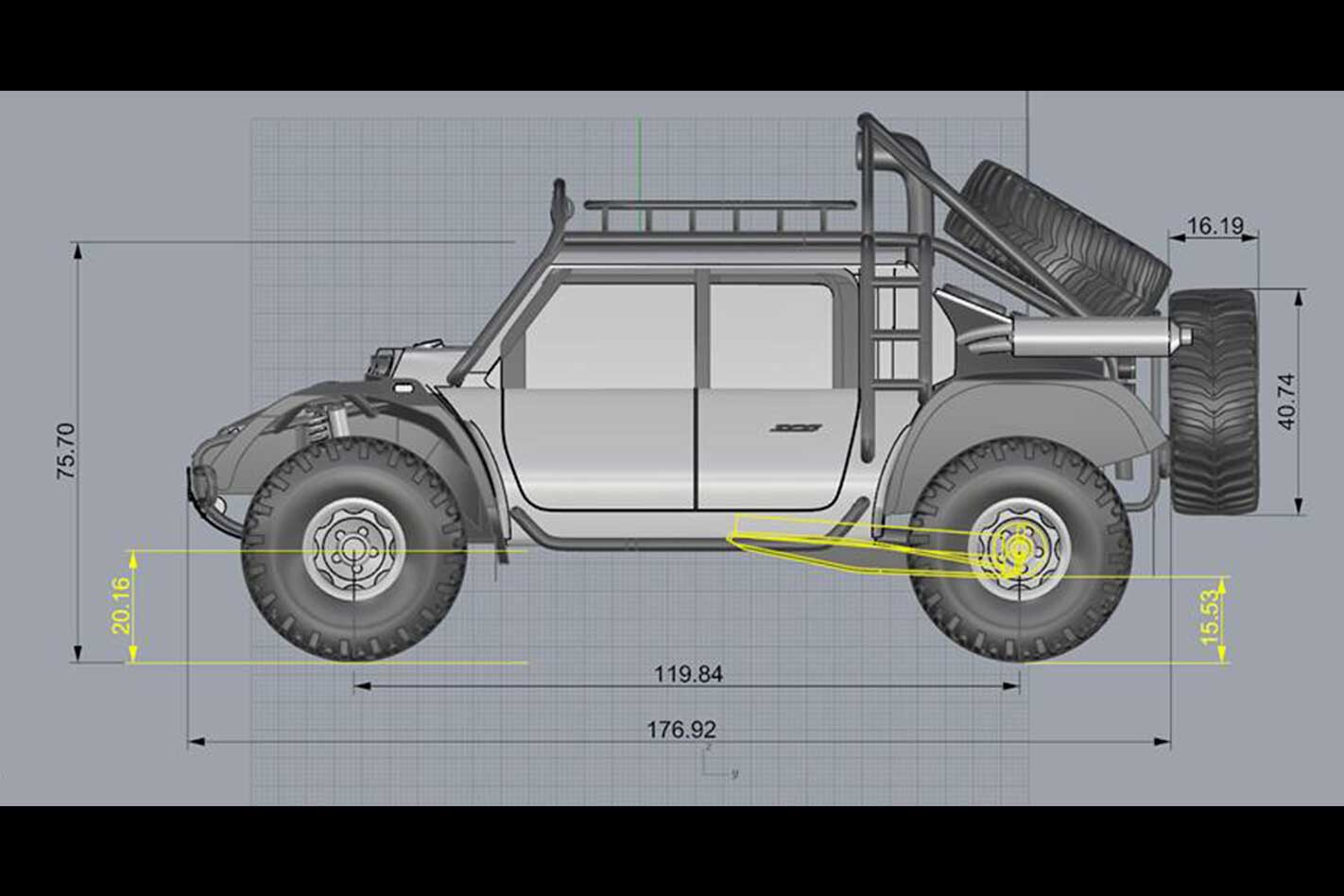
IN A WORLD full of politically correct electric and autonomous cars, it’s nice to know there are still people out there with a passion to build interesting and fun vehicles. Robert Bollinger is one such person with his Bollinger B1 electric off-roader, and now we have the Volcano from Scuderia Cameron Glickenhaus.
SCG is best known for its Ferraris and endurance-racing sports-cars, but the Volcano will be an off-roader reminiscent of the iconic Hurst Baja Boot. Glickenhaus bought the Hurst Baja Boot when it came up for auction a few years back, to add to his collection of classic cars.
SCG is calling the modern interpretation of the Boot the Volcano, and it will be available in both two- and four-door versions. SCG is also planning an expedition version of the Volcano, which it hopes to drive up a 7000-metre-high volcano in South America, to break the record for the highest a car has been driven – and there will be opportunities for SCG Volcano customers to join the expedition in their own vehicles.
The Hurst Baja Boot was the first of two Boots made and was raced by Bud Ekins and Steve McQueen in off-road events such as the Baja 1000 during the late 1960s. The rear-mounted, small-block, Chevrolet-powered four-wheel drive Boot was revolutionary for its time and could be considered the precursor to today’s off-road buggies and trophy trucks.
Unlike the Boot, the SCG Volcano will have a sealed, air-conditioned cockpit, a modern 5.0-litre V8 engine and modern suspension design offering around 500mm of travel.
As cool as it is, the SCG Volcano will only be made in low numbers and be priced around the US$100,000 mark. The low volume should qualify it for special vehicle registration in the USA.
THE Australian automotive industry’s best and brightest assembled last week at Melbourne’s Forum Theatre for the 2018 Australian Motoring Awards (AMAs).
The AMAs is an annual event that awards the best in the industry, as voted by expert judges from the respective brands: Wheels Car of the Year, MOTOR Performance Car of the Year, WhichCar Style Award, and the big one, 4X4 Australia’s 4X4OTY.
Shane Jacobson, a self-confessed petrol-head, steered proceedings and wooed the 200-strong in attendance with his charm and wit. While Wheels’ esteemed journo Peter Robinson hosted an insightful Q&A with Paul Beranger, the former head of Toyota Style Australia.
Watch the above video for a glimpse at the night’s proceedings, and for complete coverage of the 2018 4X4 of the Year, pick up a copy of 4X4 Australia’s February issue, in stores Feb 1.
The Grand Cherokee just keeps on coming back for more when it comes to 4X4OTY.
It’s already a two-time winner, and this is the fourth time a model from this generation Grand Cherokee has been shortlisted for the award.
This is thanks to its on-going mechanical evolution, which saw it win on debut in 2011 with a petrol V6, finish third the following year (behind two Toyotas in a very strong field) as a diesel V6, and then win again in 2014 when an eight-speed automatic joined a revised diesel engine.
What we have this year is the first time there’s been a Grand Cherokee pitched specifically at the off-road enthusiast. Not only does it combine all the off-road options in the Grand Cherokee catalogue, but there’s some bespoke Trailhawk bits that help make it somewhat of a ‘factory custom’.
Despite Jeep being an ‘All-American’ icon, the Grand Cherokee’s mechanicals are essentially a German/Italian mix, including Mercedes-Benz chassis, a V6 diesel from Fiat/VM Motori, and gearbox from Germany’s ZF; all reflecting Jeep’s corporate tie-up with Benz and now Fiat.
TOURING
The Trailhawk is a very accomplished road car, no matter the nature of the road. Of course, it should feel at home on the road given its fully independent suspension and monocoque construction, but it delivers even beyond that.
Perhaps it’s the Benz heritage shining through, but the Trailhawk’s combination of responsive and sharp steering, poised handling on the bumps and plenty of punch from its V6 diesel makes it very much a ‘driver’s car’ by the standards that prevail in the wider 4×4 world.
It’s also a great car to eat highway distance thanks to the engine’s low-rpm torque and the long-legged eight-speed. Not much wind or road noise, either, and a comfortable ride on standard 18s.
The air-spring suspension provides off-road lift but helps on-road dynamics and aerodynamics by automatically lowering itself (from a default ride height that is already low) once up to highway speeds.
TRAIL DRIVING
The height-adjustable air-spring suspension is the Trailhawk’s number one off-road party trick. With the simple press of a button you can jack up the Trailhawk from its default road clearance of 205mm to 233mm (the standard off-road setting) or all the way to 260mm at the highest setting.
The downside is that, when jacked up, the Trailhawk has less droop travel, which results in the suspension banging and crashing on the bump stops over rough ground, especially on the highest setting. On the standard off-road setting (233mm) things aren’t too bad, but the Trailhawk is never particularly plush off-road given the suspension’s limited travel regardless of where the ride height is set.
While not particularly comfortable in rougher off-road conditions, the Trailhawk is certainly capable enough thanks to its ‘smart’ 4×4 system with effective terrain settings, a self-locking rear diff, deep low-range gearing, standard all-terrain tyres and solid underbody protection.
Not so good off-road is the low driving position with poor over-bonnet visibility and a limited wading depth (508mm claim), as the air intake is somewhat vulnerable located under the bonnet lip. The off-idle throttle progression isn’t great, either.
SET-PIECE HILL CLIMB
As ever, the make-or-break set-piece hill-climb reveals much of the 4X4OTY contenders, and it’s certainly no different with the Trailhawk. Here’s it’s all about suspension travel – or lack of it, to be precise – and chassis electronics.
Jacked right up the Trailhawk has no trouble with clearance, but the short-travel suspension has it bucking around, lifting wheels and putting on a dramatic show. It shouldn’t be able to make the climb, but it does, and, apart from the extreme body movement, does it with little fuss. For that you can thank Jeep engineers’ mastery of traction control calibration and the ‘tuning’ of the rear auto locker. Excellent hill-descent and hill-ascent control, too.
CABIN AND EQUIPMENT
As 4×4 wagons go, the Trailhawk is more medium than big and, unusually in the segment, only seats five. The cabin also feels somewhat closed in and more passenger-car wagon than 4×4. Still, it’s comfortable up front; although, the driver’s footwell is a bit crowded, especially with the foot-operated parking brake.
Not a big rear seat, either, and luggage space is more okay than good. The spare is under the floor, which means clearing the luggage area to change a flat.
Given the Trailhawk sits near the top of the Grand Cherokee range, it’s no surprise to find it loaded with all the kit most people want; although, high-end safety features like radar cruise, forward-crash warning, blind-spot monitoring and rear cross-path detection are optional ($3250).
PRACTICALITIES
The Trailhawk’s respectable fuel capacity (93.5 litres) and frugal engine make for a good touring range as standard – the best of our six contenders, in fact. Likewise, the 256/60/R18-inch wheel and tyre package is Prado/Hilux size for added practicality, although you can’t fit 17s.
Positives include a 3500kg tow rating (and plenty of V6-diesel torque to back that up) and decent aftermarket support for things like frontal protection and snorkels.
SUMMARY
Despite being the most off-road oriented Grand Cherokee so far, the Trailhawk is still a Grand Cherokee, for better or worse. That means it’s excellent on-road – even on very poor roads – and more than handy off-road, even if it could be more comfortable. Its strong value is offset by the fact its more a medium-size 4×4 wagon than a large one.
2018 JEEP GRAND CHEROKEE TRAILHAWK SPECS Engine: 3.0-litre V6 turbo-diesel Max power: 184kW at 4000rpm Max torque: 570Nm at 2000rpm Gearbox: Eight-speed automatic 4X4 system: Dual-range full-time Kerb weight: 2300kg (approx) GVM: 2949kg Payload: 649kg Towing capacity: 3500kg GCM: 6099kg Fuel tank capacity: 93.5 litres ADR fuel claim: 7.5L/100km Test fuel use: 10.2L/100km Touring range*: 867km Price: $77,400 (+ORC)
*based on test average, tank capacity claim and a 50km safety margin.
THE February 2018 issue of 4X4 Australia will be on sale from February 1.
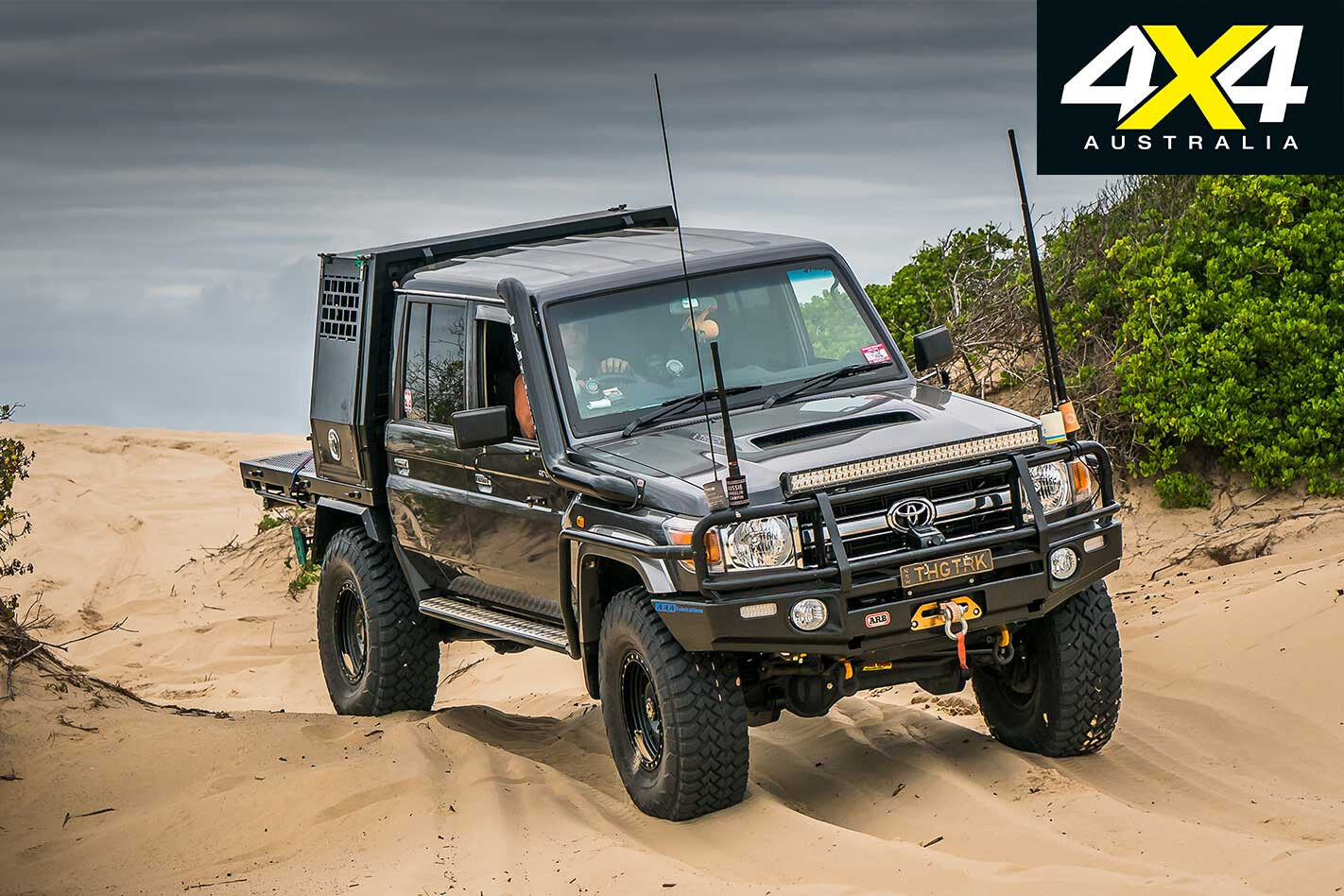
Not only does this issue feature complete coverage of the 2018 4×4 of the Year award, but we’ve slotted in one of the meanest custom-built LC79s to be found on Aussie tracks – aptly named ‘Thug Truck’.
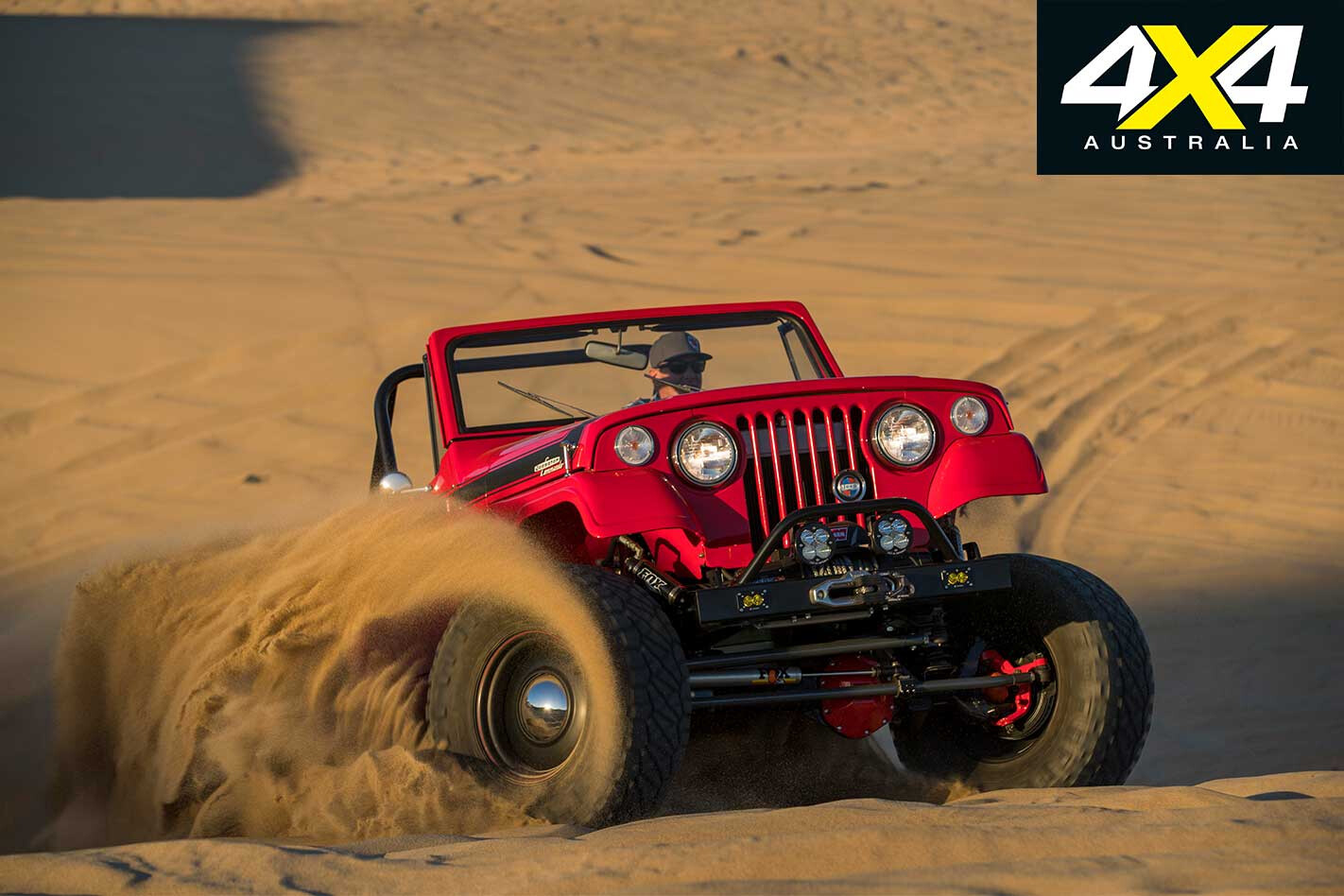
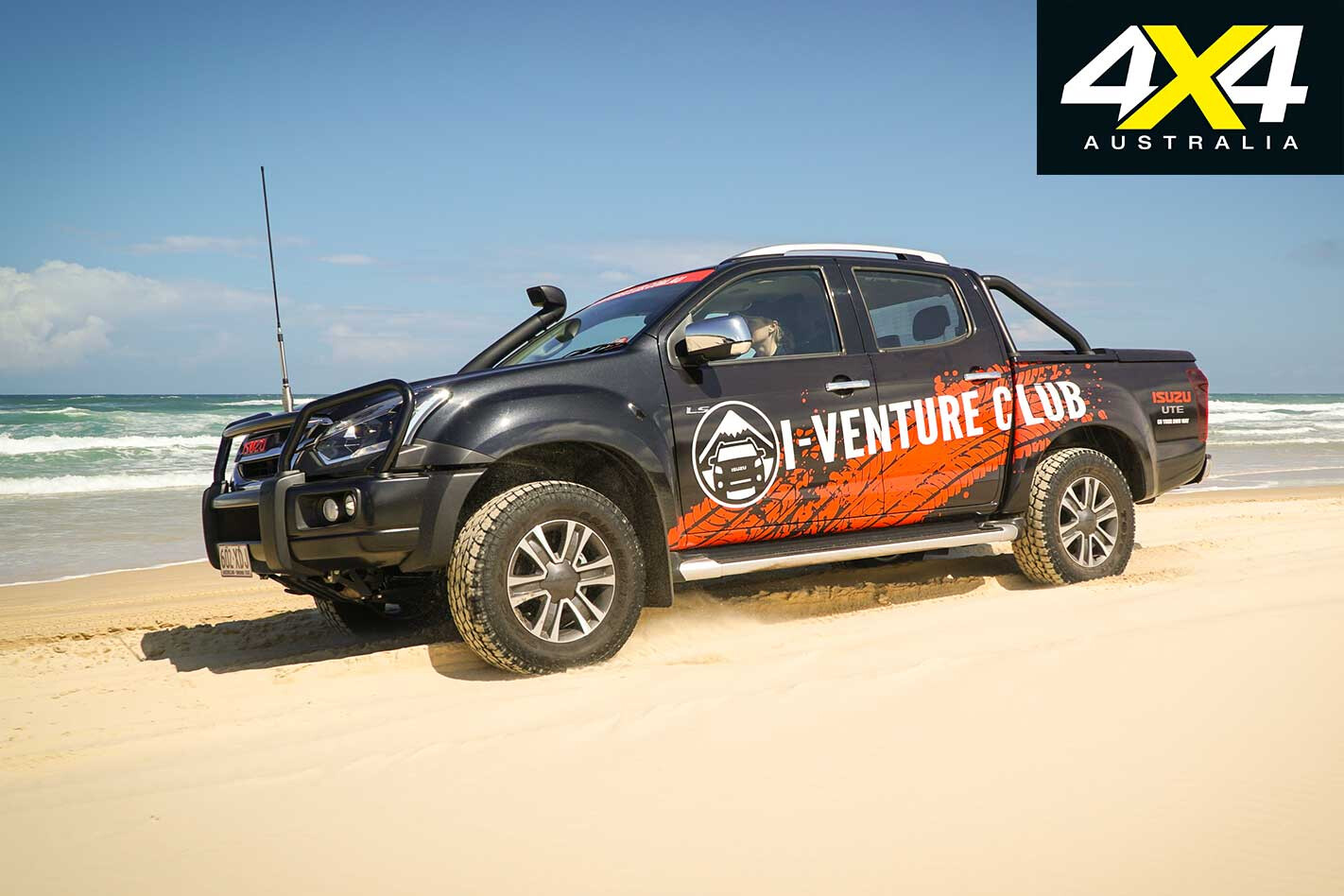
We also sneaked a peek at Synergy Manufacturing’s Jeepster Commando, a rig that stole the spotlight at the 2017 SEMA Show. Plus, we packed our boardies and took off to Fraser Island for Isuzu’s I-Venture Trip.
Get your copy of 4X4 Australia from newsagents or by subscribing to 4X4 Australia in electronic or print format.
What You’ll Get in the February 2018 issue:
CUSTOM: 2014 Toyota LC79 Beast of an LC79 lives up to its ‘Thug Truck’ reputation.
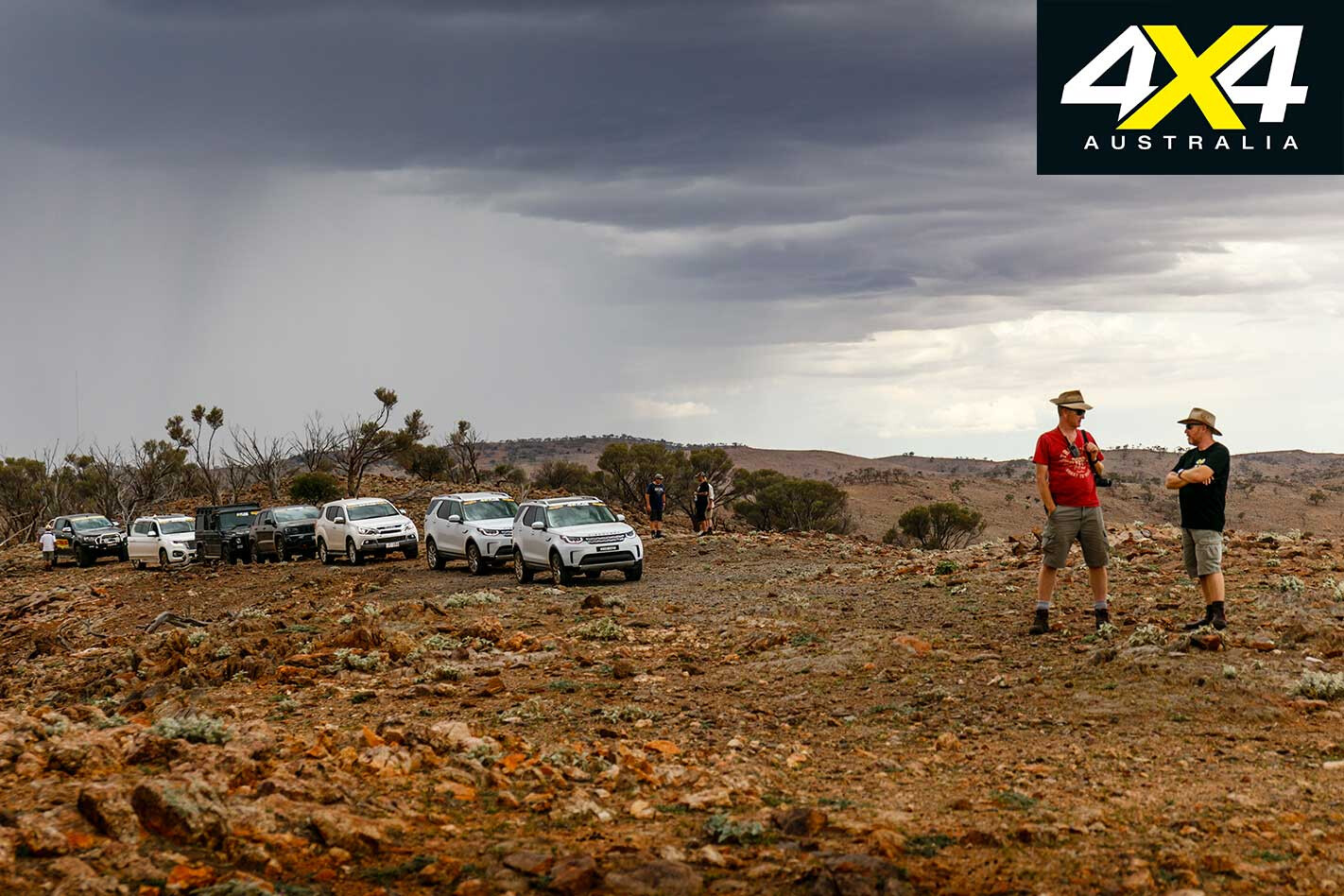
2018 4X4 of the Year Six contenders vie for the coveted 4X4OTY title.
CUSTOM: Jeepster Commando A closer look at the rig that turned heads at SEMA 2017.
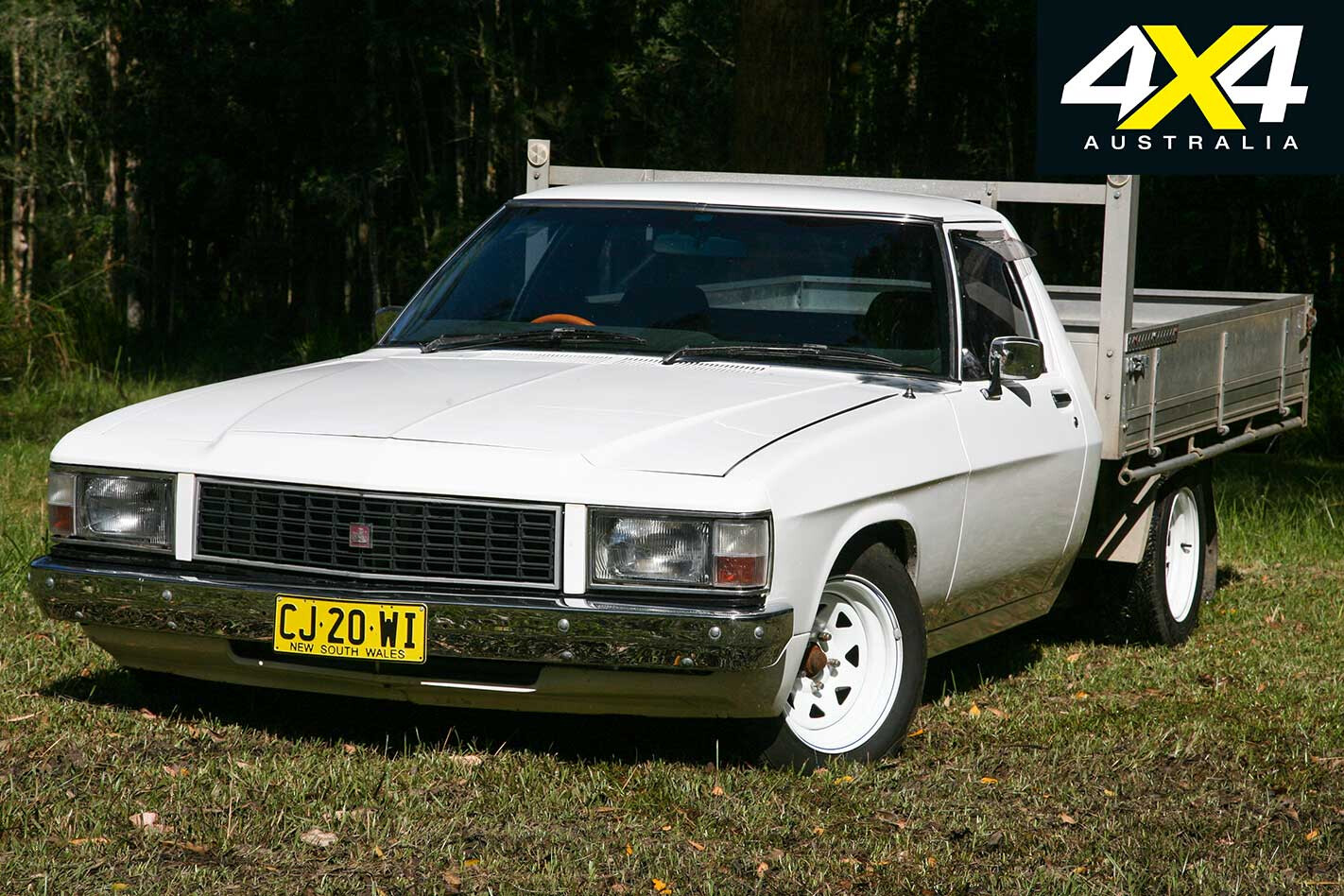
TONNER FILES: Holden Overlander Custom build begins on Holden’s one-tonne Overlander.
EXPLORE: Isuzu I-Venture Club heads to Fraser Island Tackling the world’s largest sand island, with Isuzu UTE Australia.
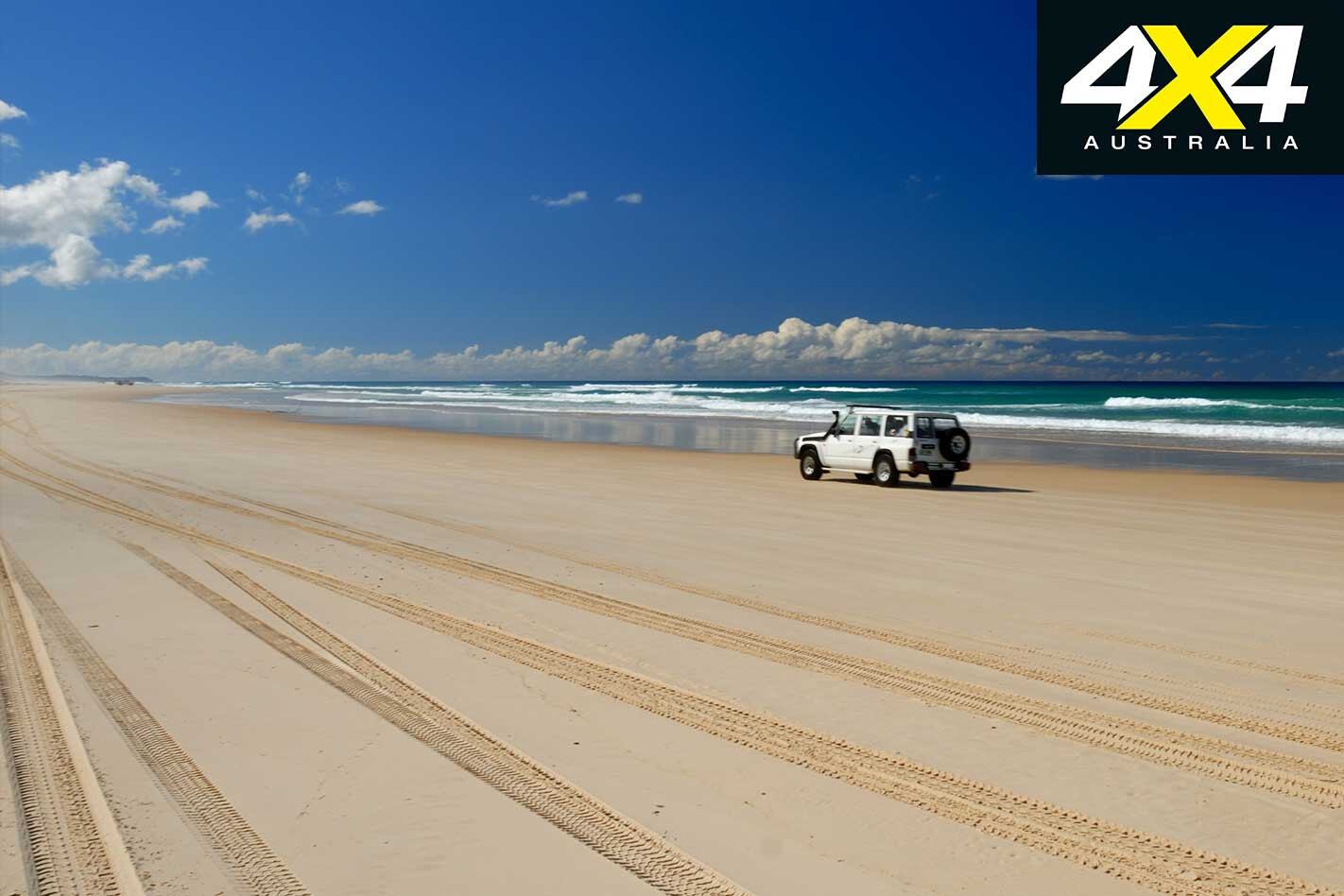
EXPLORE: Brisbane Weekend Escapes With sunshine all year long, Brissy makes for an ideal base for off-road adventures.
GEAR: 2018 4×4 Tyre Test Revealing which off-road-focused tyres work best on bitumen.
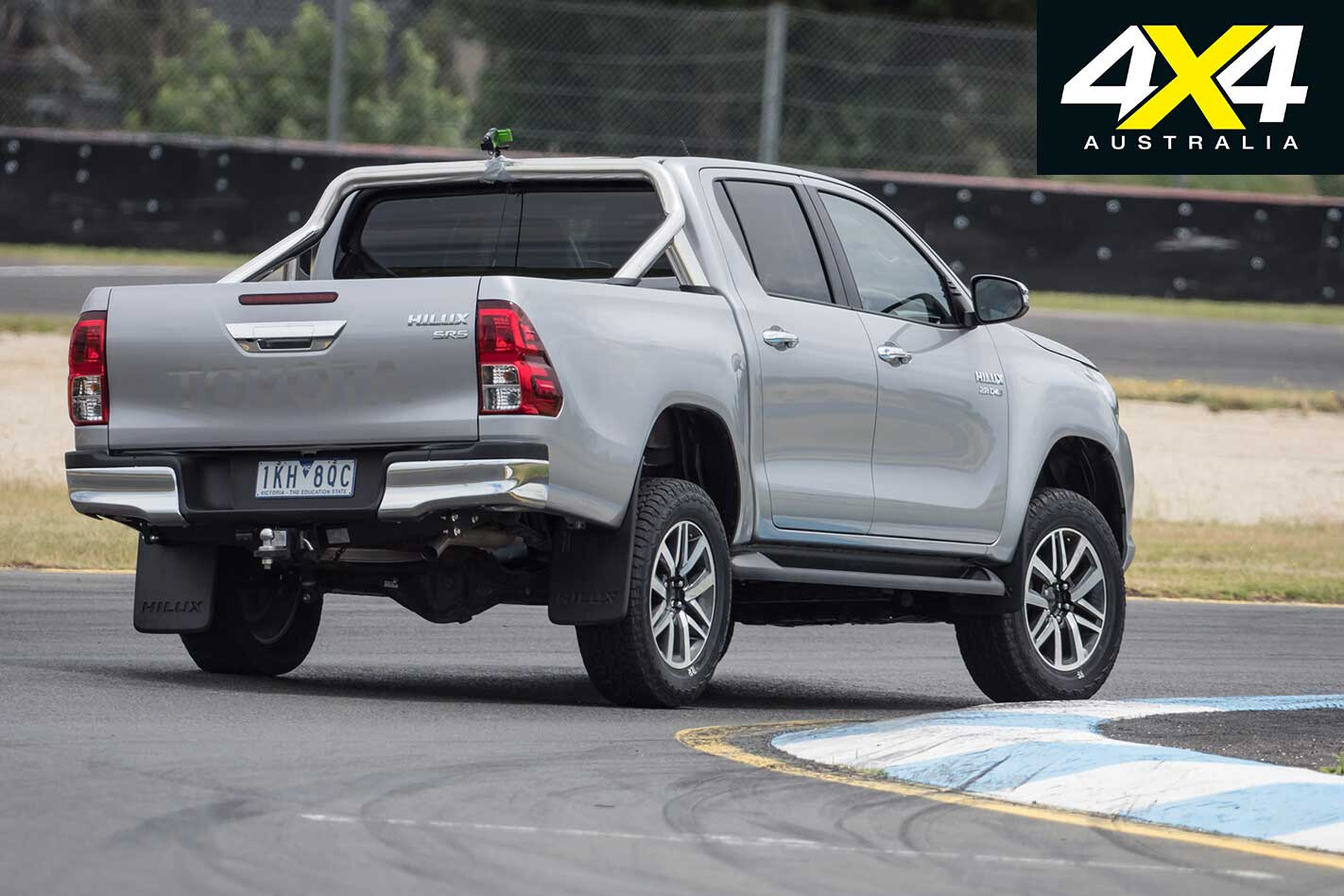
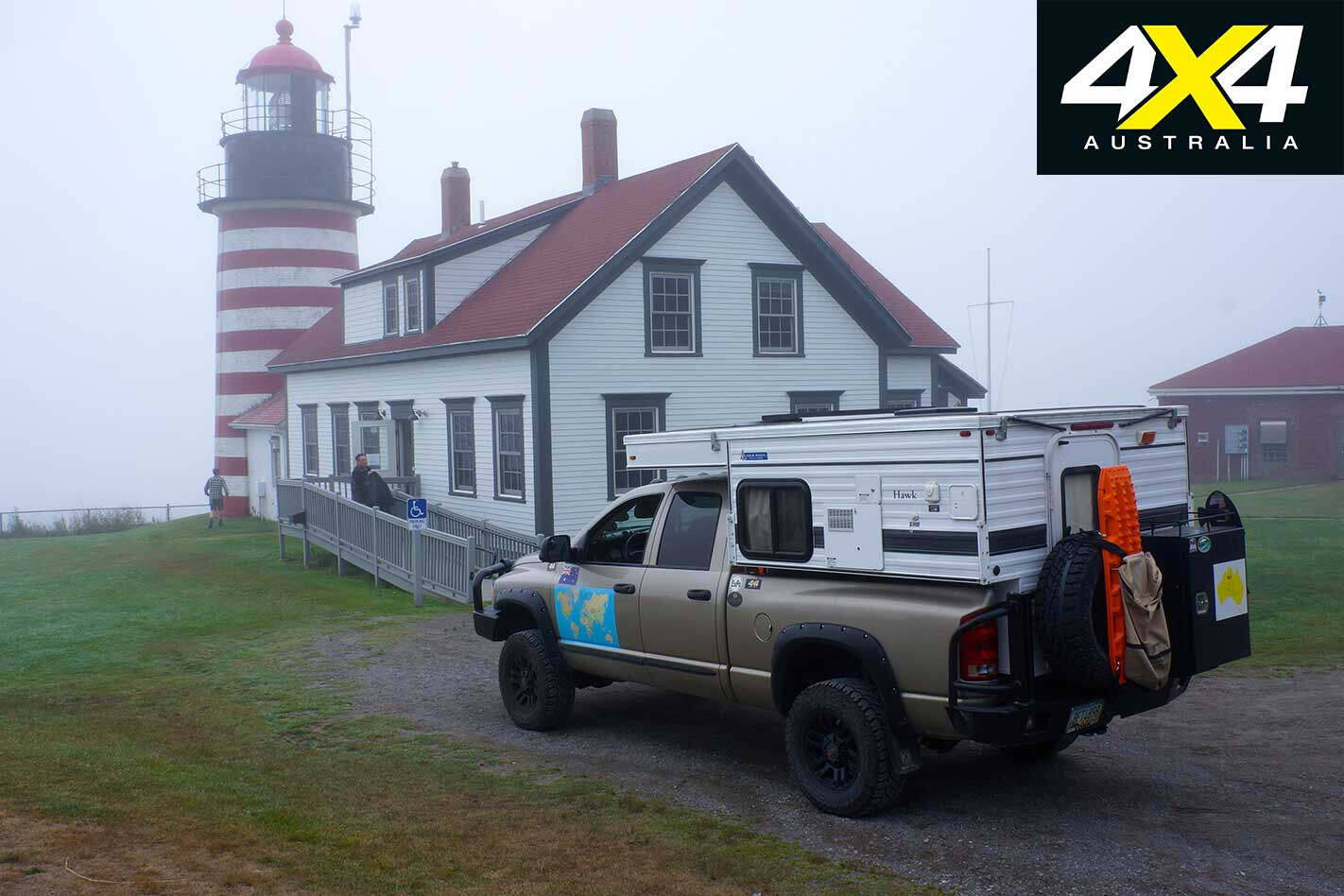
EXPLORE: North America A 68,000km 4×4 jaunt through the USA, Canada and Mexico.
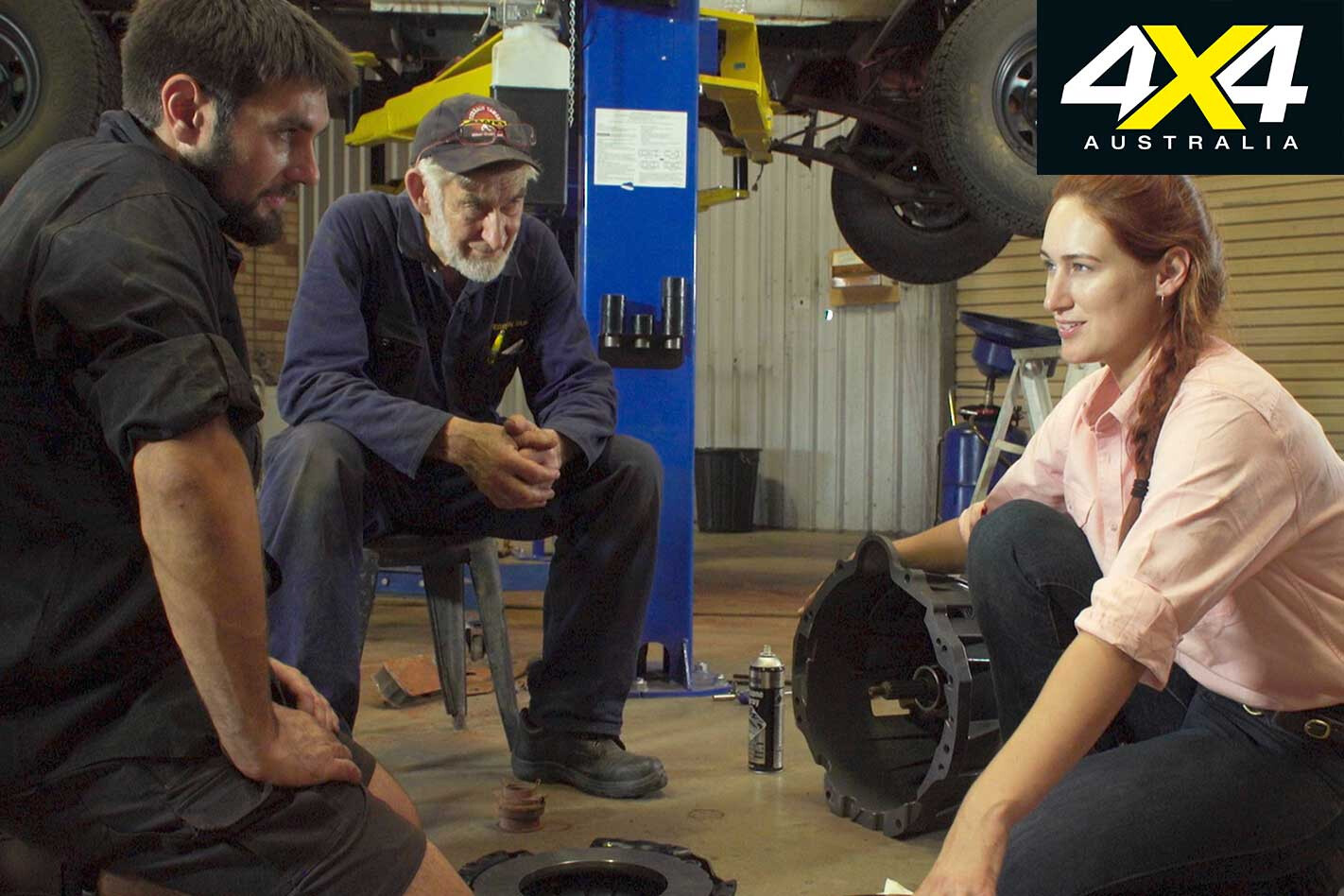
CUSTOM: Jillaroo Jess’ LC79 Terrain Tamer tames the social media icon’s Cruiser.
What Else?
We welcome a 2017 Nissan Patrol Ti-L to the shed this month, where it joins the Discovery TD5 and Matt’s 1985 BJ73.
We also visit Safari 4×4 Engineering and sift through its product catalogue; plus we take a look at the latest gear to hit the market, including STS’s Comfort Deluxe SI mat.
Fraser explains how ditching internal combustion engines for electric motors may not be that simple, and Ron tells punters to put down their bloody phones.
Enjoy the read!
The Td6 is the most powerful and most expensive engine in the new Discovery range. As the name suggests, it’s a six-cylinder design – a 3.0-litre V6, in fact – but not quite the same engine that was in the Discovery 4.
What’s gone is the bi-turbo arrangement used on both the low-power (TD) and high-power (SD) iterations of that V6, in its place is a simpler single-turbo engine that claims more power than even the SD (190kW) and the same torque (600Nm). This is testament to advances in design, where new smaller turbos that spin up quickly for faster response can produce the pumping volume of larger, older-design turbos. This new V6 also has a revised fuel-injection system to overcome the loss of the second turbo.
Significantly, the Td6 shares the all-new lightweight aluminium monocoque of the Sd4, but varies in some mechanical detail. The Td6 is a little over 100kg heavier than the Sd4, and it has a bigger fuel tank and a slightly taller final-drive gearing.
TOURING
The evaluation procedure for 4X4OTY is not about how the vehicles compare against one another (as they are often very disparate) but how they rate against the criteria. That said, it’s only natural that direct comparisons are made between the two Discoveries. (Limited exposure to the new Discovery prior to 4X4OTY meant we weren’t sure what the best engine option is, hence the reason for shortlisting both.)
The Td6 provides a different driving experience from the Sd4 that’s immediately obvious. Whatever the Sd4 does well, the Td6 generally does better. It’s more refined, quieter, smoother and more relaxed, generally requiring less revs and gear-changing to do the same job as the Sd4. However, pedal to the metal, the Td6 doesn’t enjoy much of an advantage, as its extra weight and slightly taller gearing take the edge off its extra power and torque. If the Sd4 feels Range Rover-like, the Td6 does so even more, a serene vehicle that is notably quiet in the cabin at touring speeds on just about any road surface.
Both 4X4OTY Discoveries were HSEs, which means the 20-inch wheel and tyre package had the same, sometimes firm, edge to the ride and a similar sporty feel to the handling, even if the Td6 is a little heavier in the nose and not quite as agile.
TRAIL DRIVING
What one Discovery does on the trails, so does the other, and this is where the differences between the four- and six-cylinder engines is least felt. Like the Sd4, the Td6 has the height-adjustable air suspension, which, along with generous wheel travel, is one of the Discovery’s trump cards that help make it an accomplished trail performer. The height-adjustable suspension can raise the car by 75mm above the default ride height at speeds below 40km/h.
Below 80km/h you can lift the suspension by 40mm or up to 248mm of clearance, which is still handy. In both cases the ride becomes firmer, due to the reduced droop travel, especially in the higher setting. Like the Sd4, the standard high-speed-rated tyres with their vulnerable sidewalls aren’t what you want, especially around anything sharp such as rocks or tree roots.
SET-PIECE HILL CLIMB
While the two Discoveries were much of a muchness on the trails, the set-piece hillclimb highlighted a couple of differences; although, nothing specific to the engines, merely how the two vehicles were optioned. Unlike the Sd4, the Td6 wasn’t fitted with the rear locker or Terrain Response 2. It still made the climb without too much trouble, but not as effortlessly as the Sd4.
How much difference the locker makes and how much is due to the Terrain Response 2 is hard to say, but we suspect it’s more the former than the latter.
CABIN AND EQUIPMENT
What applies to the Sd4 cabin applies to the Td6, as there’s no difference in size or seating layout. Notable with this new Discovery is it’s available from a spartan, no-frills S model up to a lavish HSE Luxury, and while lots of options are on all equipment grades not all grades get all options. The S model, for example, can’t be had with LED lights, DRLs or signature taillights, so you can’t make it look like a HSE.
Likewise, many high-end interior items of up-spec models can’t be optioned on the S or, in some cases, the SE.
PRACTICALITIES
The Td6 gets an extra eight litres of fuel capacity over the Sd4, so 85 litres rather than 77, which is exactly what it needs to make good the touring range difference given the Td6 isn’t as thrifty. Otherwise, what applies to the Sd4 in terms of towing, load carrying, tyre options and aftermarket support, or lack thereof, also applies to the Td6.
A difference between the two engines – looking at a basic barebones Discovery for off-road use – is that the Td6 in S spec can’t be optioned with the rear locker. If you want that you’ll need at least an SE. The trouble is the SE can’t be had with the coil-spring suspension that’s standard on the S. So there’s a catch-22 here. The height-adjustable air springs add much to the Discovery’s on- and off-road functionality, but at the cost of increased complexity.
Interestingly, with both the air and coil suspensions, passive dampers and swaybars are used, making the coil suspension very simple and suitable for an aftermarket lift.
SUMMARY
The Td6 benefits from the aluminium platform; the reduced weight brings benefits such as stronger performance, sharper on-road dynamics, lower fuel use and enhanced off-road capability. It also means you get a bigger and more spacious vehicle without the usually attendant weight penalty. Like the Sd4, fuel range and standard tyres remain issues.
LAND ROVER DISCOVERY Td6 HSE SPECS Engine: 3.0-litre V6 turbo-diesel Max power: 190kW at 3750rpm Max torque: 600Nm at 1750-2250rpm Gearbox: Eight-speed automatic 4X4 system: Dual-range full-time Kerb weight: 2223kg (five seat) GVM: 3050kg (five seat) Payload: 827kg (five seat) Towing capacity: 3500kg GCM: 6650kg (five seat) Fuel tank capacity: 85 litres ADR fuel claim: 7.2L/100km Test fuel use: 10.8L/100km Touring range*: 737km Price: $100,261 (+ORC)
*based on test average, tank capacity claim and a 50km safety margin.
A factory-fitted fuel tank has the potential to leave you high and dry on your next cross-country expedition.
The restricted capacity of some OE tanks – on average sitting at around the 80-litre mark – will only get you so far before a top-up is required, but topping up gets harder the farther you are from civilisation, where fuel bowsers become rarer than hen’s teeth. Adding an auxiliary fuel tank, or replacing the factory tank with a long-range option, is a non-negotiable for a remote-area travel; but there are many other advantages to fitting an aftermarket tank.
To dig a bit deeper, we spoke to three of the biggest players on the Australian scene: ARB’s Mark Berger, Brown Davis’s Cam Brown, and Out of Town 4WD’s Ric Black (they’re the gurus who produce the Long Ranger fuel tanks).
AUXILIARY OR REPLACEMENT TANKS
There are two types of aftermarket fuel tanks we’ll be taking a closer look at: auxiliary (or back-up) tanks, and long-range replacement tanks.
An auxiliary fuel tank works in tandem with the primary tank to provide additional fuel on top of the standard tank – should the user be pointing their fourbie to the centre of Australia or the northern tip of FNQ. Often the tanks are usually connected and the driver can be kept aware as to how depleted the respective tanks are. The driver can then switch between tanks via the flick of an in-cabin switch.However, not all aftermarket fuel tanks are for auxiliary or back-up purposes. ARB’s Frontier Tank, for example, is a replacement long-range tank for OE equipment. The Frontier Tank, which ARB has manufactured for about two years at its Adelaide facility, is independently designed for specific vehicle applications, as tank volume, weight and weight distribution will vary from model to model.
“Volume can range from 112 litres up to 180 litres for a full replacement tank,” Mark Berger, ARB’s brand marketing manager, added. It’s this increased capacity which is a major selling point, with customers wanting more travel with less fuel stops – often unavoidable on a big, remote-area trip. “Dependent on vehicle and tank size, some makes and model achieve almost double the fuel capacity with the addition of a Frontier fuel tank,” Berger said.
Cam Brown said the same applies to Brown Davis’s extensive range of tanks: “On the current range of 4WD ute replacement long-range fuel tanks we try to double the vehicle’s fuel capacity. For example, on the current model Hilux we swap out the 75-litre standard tank and replace it with our 150-litre tank, which doubles the vehicle’s driving range.”
As no two vehicle makes are alike, OOT 4WD’s production manager Ric Black explained that some require an auxiliary tank and some can utilise a replacement tank. “For example, a Suzuki Sierra has a standard 40-litre tank and we can only fit an extra 30-litre tank under such a small car,” he said.
A 150L LRA auxiliary fuel tank would be able to take a supercharged V8 Nissan Patrol’s total capacity up to 290 litres, giving it a range of more than 1000km between drinks.
Ric told us the most popular range for fitment of the Long Ranger is the current model Hilux.
“Our biggest replacement fuel tank for this model has a capacity of 182 litres, providing a massive improvement of 102 litres. This has the potential for an extra 1300km range – that’s a huge detour you can now make.”
But a long-range tank isn’t solely for people looking to get to the most remote regions of this massive country, as Brown Davis’s Cam Brown told us: “We also find a lot of people want to fill up when they know the fuel is top quality. With the extra range [of a long-range fuel tank] it gives you the luxury to pick your fill-up locations.”
It’s a great long-term coin-saving technique, with money saved in the long run every time you fill the tank to the brim when fuel prices are at their cheapest – makes good sense.
BUILT TOUGH
Quality-made aftermarket fuel tanks are also built tough, meaning they’ll be remarkably reliable. To ensure maximum strength and durability, “all Brown Davis long-range fuel tanks are constructed from 2mm aluminium coated cold rolled steel,” said Cam Brown. “This gauge of steel is sufficiently resistant to impact damage so that additional tank guards are not necessary.
“The aluminium coating on the specific steel used by Brown Davis offers the best of both worlds, with the strength of steel and the anti-corrosion properties of aluminium. The 2mm aluminised steel with internal baffles has proven itself over the past 30-plus years.”
ARB’s Frontier tank, on the other hand, is manufactured using crosslink polymer. “The plastic is amazingly strong,” Mark Berger said, “having impact, UV, chemical and fire resistance. ARB Frontier tanks are the first and only polymer tanks on the market and are borderline indestructible.
“The strong crosslink-polymer made up with a 7-9mm-thick wall makes the Frontier one of the strongest tanks on the market.”
Ric Black explained that the material of choice for the Long Ranger is aluminised steel, which is sourced from mills in Asia as it’s a specialty steel not made locally.
“This is basically cold rolled steel with a thin coating of aluminium added during manufacture for excellent corrosion resistance,” Ric told us. “Being made of 2mm aluminised steel the strength is unmatched, with design features such as integrated baffles and padded brackets to make sure it can handle whatever you throw at it, or, in most cases, what you land on.”
GROUND CLEARANCE
In addition to the strong, robust construction, the units often take into account ground clearance and are designed to suit. For example, OOT 4WD offers hi-capacity and hi-clearance versions of its Long Ranger.
“The hi-capacity is the biggest tank we can get under there and still remains reasonable off-road; this is great for the outback tourer,” Ric said. “Then, for most popular makes, we have our unique hi-clearance designs; these are great and, in most cases, give the more adventurous off-roader a greater range and more clearance than the genuine fuel tank.”
GO WITH THE PROS
For such an important job – which could prove to be a lifesaver on a remote-area adventure – it’s essential to get a quality-made product from those in the know.
Brown Davis, for example, has been producing fuel tanks since the early 1980s, but the idea originated in the mid-70s when David Brown (director) and Rod Stephens Racing created a lightweight aluminium fuel tank to give their Holden Torana the extra laps they needed around Mount Panorama.
This lead to a close friend wanting this same principle applied to his 40 Series Land Cruiser to get him to the tip of Cape York, and suddenly Brown Davis long-range fuel tanks were born. Cam Brown put it eloquently when he said: “In 2018 we will celebrate 40 years in business. When you buy a fuel tank or any product from a company that has been manufacturing for this long you know they must be doing something right.”
With more than 250 different tanks in the Brown Davis catalogue to choose from, there are small 50-litre auxiliary tanks for Jeep Wranglers and Defender 90 Series up to 210-litre replacement tanks for Mercedes Sprinter vans.
Likewise, manufacture of The Long Ranger began in the 1970s – “let’s just say we still have the original drawings in inches”, Ric Black added – and by 1980 sales began to skyrocket. It’s this experience which is why it’s advisable to stick with the trusted brands.
“When you make a decision to buy something cheap you often have the rationale that it’s not that important or you don’t use it that much, but every time you turn the key and start your vehicle you want your fuel tank to work; it’s not a purchase you should gamble with and hope for good luck with it,” Ric said.
ARB’s Mark Berger ratified that point, adding that an aftermarket fuel tank isn’t something you should take a risk on: “4x4ing often sees us traversing some rocky grounds, with sharp, protruding rocks and steep drop-offs. A less quality-built tank could soon see you with 100 litres of diesel on the tracks, hundreds of kilometres from help. The cost of recovery and the misfortune of this situation is probably not worth the risk of saving money on a cheaper, less-engineered product.”
INSTALLATION
Across the board, professional installation of replacement tanks – traditionally mounted underneath the vehicle, between the axles – is relatively straight-forward and usually takes about two to three hours. However, the installation of auxiliary tanks is a longer process, usually taking up to five hours. “An auxiliary tank is more involved as all the new fillers, gauges and transfer pump need to be installed,” Ric Black said. Cam Brown agreed: “Auxiliary fuel tanks require some wiring for secondary fuel gauges, along with plumbing for fitment.”
All the experts agreed that DIY fitment of replacement tanks is easily achievable with the right tools (and available access to a hoist), but fitment of auxiliary tanks requires a lot more mechanical knowledge and should ideally be left to the experts to do.
RRP & WARRANTY
- ARB Frontier Tank RRP: $1050-$1500 (approx.) Warranty: Three-year
- Brown Davis RRP: $900-$1800 (replacement tanks $900-$1200) + fitting and freight (approx.) Warranty: Three-year
- The Long Ranger RRP: $900-2000 ($1200 average approx.) Warranty: Three-year
With Thanks
- ARB Phone: 1300 272 494 Website: www.arb.com.au
- Brown Davis Phone: (03) 9762 8722 Website: www.browndavis.com.au
- IRONMAN 4X4 Phone: (03) 9532 1111 Website: www.ironman4x4.com
- The Long Ranger Phone: (02) 4953 3288 Website: www.thelongranger.com.au
Mercedes-Benz’s Gelanderwagen, or G-Class as it is now known, has been in production in one form or other since the hand-built ones were first assembled in 1975, which is a notable achievement in anyone’s books.
More surprising is the fact the G-Wagen hasn’t changed all that much in all that time, outside of the inevitable evolution in powertrains.
Originally conceived for military use as a general light-duty vehicle well behind the lines, the civilian G-Wagen was first offered in Australia in 1983; although, it was withdrawn from sale five years later.
Fast forward to 2011 and Mercedes announced that the G-Wagen would be reintroduced to Australia, effectively off the back of the contract to supply the Australian Defence Force (ADF) some 1200 G-Wagens to replace its ageing fleet of Land Rovers.
Two models were offered to private buyers, the G350 with its 3.0-litre diesel and the AMG G55 with its monstrously powerful 373kW/700Nm supercharged petrol V8. The G350 diesel made our 2012 4X4OTY shortlist.
In 2016, Mercedes expanded the range with the first of two G-Professional models, a single-cab-chassis that made last year’s 4X4OTY shortlist. Now making it back-to-back 4X4OTY appearances for the G-Class is the second of the two Professional models – the G300 Pro five-door wagon.
Don’t be fooled by the Professional tag, as this isn’t a G-Wagen pitched at ‘professionals’ as we know them, but rather it’s a $55K less expensive, stripped-out commercial version of the $165K G350. Another way to look at it is as a civilian version of the G-Wagens supplied to the ADF, and hence a back-to-basics vehicle.
TOURING
Arguably the most significant change from the G350 to the G300 Pro is the use of a more utilitarian powertrain, where the V6 diesel is detuned from 155kW/540Nm to 135kW/400Nm, in part to run on low-grade diesel. A simpler five-speed auto – a long-serving Benz gearbox – replaces the G350’s more sophisticated seven-speed auto.
135kW and 400Nm aren’t bad ‘numbers’, but the G-Wagen is relatively heavy (2350kg) and, worse still, is tall and blunt-nosed, creating a huge amount of aerodynamic drag at highway speeds. The result is the G-Wagen isn’t going to get anywhere all that quickly, and it’s hardly worth trying given fuel consumption jumps quickly above 80km/h. In effect, it’s happy as a 90km/h tourer yet already unhappy by 110km/h, even if it can go faster.
Try to push the G-Wagen beyond its ‘happy’ envelope and not only does fuel use ramp up but so does wind noise. As does engine noise, due in part to the relatively low highway gearing. Not much joy either in the vague steering and disconnected handling that results from having live axles front and rear, all of which reinforces the ‘steady as she goes’ approach best taken when driving the G-Wagen.
Settle back and take your time and the G-Wagen rewards with an upright driving position that’s comfortable over long distances and a great vista courtesy of the low waistline and expansive glasshouse. Touring is all about seeing things, and you see more out of the G-Wagen than modern 4x4s. Full-time 4×4 is also welcome.
TRAIL DRIVING
If the G-Wagen isn’t the ideal tool for a quick highway dash it soon becomes the weapon of choice when you head off into the bush; the rougher and tougher the better. This is where the G-Wagen comes into focus and feels totally at home.
In fact, you don’t even need a trail, as the G-Wagen, thanks to its lofty clearance, robust light-truck all-terrain tyres, solidly engineered chassis and suspension, triple diff locks, standard snorkel and commanding driving position is a genuine off-road vehicle capable of making its own way. Nothing else here gives you the same level of confidence and assurance that it will get you anywhere you want to go.
SET-PIECE HILL CLIMB
No surprises the G-Wagen made it up the set-piece hill climb, but it needed both the centre and rear diffs locked. Despite live axles there’s not a great deal of wheel travel, and keeping the lockers open and relying on the electronic traction control wasn’t sufficient to get it up the hill. And once you lock the centre diff, which cancels traction control, you also need the rear locker. Left in reserve is the front locker…
CABIN AND EQUIPMENT
The G-Pro’s cabin is that of a basic ‘work’ vehicle, even if our test vehicle was fitted with heated, leather-clad seats, a radio/CD player, a wood floor in the load area and electric door mirrors – all factory options. Otherwise, the interior, including the dash that’s unique to the G300 Pro and not shared with the G350, is purely designed for functionality not aesthetics.
This cabin is tall, spacious and boxed-shaped, but only has four seats. The upside is you can walk through to the load area between the two rear ‘bucket’ seats.
PRACTICALITIES
The G300 Pro has a decent 97-litre tank, but, with the heavy fuel use, doesn’t translate to a long touring range. However, it does have a massive 1200kg payload and a very high 6700kg GCM.
As standard the G300 Pro can go bush, but factory options – bullbar, walk-on bonnet, roof rack, side-steps and towbar – add to functionality.
SUMMARY
In many ways the G-Wagen remains a product of the 1970s, which is exactly what you want in a world where modern 4x4s are becoming softer. It’s a 4×4 that harks back to the ‘good old days’ when Land Rovers and 40 Series Land Cruisers didn’t need a track, just a compass bearing.
2018 MERCEDES-BENZ G300 PROFESSIONAL SPECS Engine: 3.0-litre V6 turbo-diesel Max power: 135kW at 3800rpm Max torque: 400Nm at 1600-2600rpm Gearbox: Five-speed automatic 4X4 system: Dual-range full-time Kerb weight: 2350kg GVM: 3560kg Payload: 1210kg Towing capacity: 3140kg GCM: 6700kg Fuel tank capacity: 97 litres ADR fuel claim: N/A Test fuel use: 15.1L/100km Touring range*: 592km Price: $109,900 (+ORC)
*based on test average, tank capacity claim and a 50km safety margin.
This is the second year in a row the Haval H9 has made the 4X4OTY shortlist, after first arriving in Australia in early 2016. Now it’s back courtesy of what is effectively a new powertrain.
Think of the Haval H9 as a Chinese ‘take’ on Toyota’s Prado. Excellent vehicle to copy, of course, and you can’t blame Haval for thinking, “let’s build something like this”. Haval even employed a Toyota chief engineer to help them.
Haval is an offshoot brand from Chinese ute-maker Great Wall, and among the various Havals sold in Australia the H9 is the only serious 4×4, the others being lighter-duty SUVs.
While the H9 mimics the Prado in its body dimensions, seating layout, body-on-chassis construction, suspension layout, wheel and tyre specification, and by having dual-range full-time 4×4, it’s not offered with a diesel engine, which would seem like a deal-breaker on the Australian market.
Still, it’s not all bad news, as its petrol engine – a 2.0-litre four-cylinder – is a very up-to-the-minute design with direct injection, twin-scroll turbocharging and variable valve timing on both inlet and exhaust sides.
In another touch of sophistication the Haval has an eight-speed automatic gearbox from German transmission specialist ZF, which is new and replaces the ZF six-speed used before.
TOURING
The H9’s engine upgrade adds 20kW (now 180kW) and more torque on tap at lower engine speeds. It now claims 350Nm from 1800rpm, where previously its max 324Nm didn’t come on stream until 2000rpm.
If you think 350Nm from 1800rpm sounds handy and almost diesel-like, you’d be right. Better still, that 350Nm stays on tap all the way to 4500rpm, which gives this engine top-end zip that’s very un-diesel like.
On the open road the ‘little’ turbo-petrol engine has no trouble hauling the weight or the bulk of the H9 and is generally unfussed, even if it shuffles up and down the gears a bit when pressed. Still, with the excellent refinement of the ZF eight-speed, this isn’t a problem and likewise the engine is smooth and quiet even when asked to rev, which it does willingly.
Smooth and quiet are also key words in terms of the way the car works on the open road. The ride is plush and both wind and road noise are well suppressed, not surprisingly both Prado traits.
In some ways, however, the ride is too soft at times and, combined with somewhat vague steering, the H9 can feel a bit loose and floaty, especially at higher speeds on bumpy and undulating roads.
TRAIL DRIVING
The H9’s soft and supple suspension is the reason behind impressive performance on rocky and rough trails. The long travel suspension and well-calibrated traction control also sees the H9 through gnarly bits without fuss, even if a little more ground clearance wouldn’t go astray. Good vision from the driver’s seat, too.
The H9 has a full-time 4×4 system courtesy of a BorgWarner dual-range transfer case with an active self-locking and self-proportioning centre differential, much like that employed with the Ford Everest. There are also terrain settings for Sand, Mud and Snow, but these are only available in low-range, which is an oversight as these setting should be available in both high and low range.
The H9 draws its intake air from the inner guard for safer water crossings (a claimed 700mm wading depth) and comes with solid front and rear recovery hooks.
SET-PIECE HILL CLIMB
Our set-piece hill climb is designed to stop, or at least test to the max, any showroom-stock 4×4, but the Haval managed the climb without raising a sweat. In fact, the H9 was as good as any vehicle here. While it did its best work with the rear locker engaged, it also managed the climb without the locker. All of which can be put down to its long wheel travel, especially that of the rear live axle.
CABIN AND EQUIPMENT
The H9 has a big and comfortable cabin with a spacious second-row seat and a third-row that’s okay for up to medium-sized children. Again, very Prado like. Decent luggage space, too.
This top-spec H9 Ultra has a lavish list of equipment commensurate with an $80K 4×4, not a $45K 4×4. The kit includes leather; electric/heated/air-conditioned front seats complete with massage function; a premium audio system; electric folding third-row seats; advanced safety kit; and a panoramic sunroof. Not so good is the somewhat fussy and unfriendly layout of the dash and switchgear, as well as some aspects of the fit and finish.
PRACTICALITIES
The downside of the Haval’s otherwise impressive engine is relatively high fuel consumption. Overall it averaged 14.0L/100km for this test but got down to 12 on the highway. All of which means the 80-litre fuel capacity translates to modest touring range. The H9’s engine, as is the norm for turbo-petrols, is also specified for premium (95RON) petrol, both a running-cost factor and a potential availability issue in some areas. Petrol power doesn’t bode well for towing economy, and max tow capacity is a modest 2500kg.
Better news is that the Haval runs Prado/Hilux wheel and tyres sizes, which is what you want for tyre replacement in an emergency in the middle of nowhere. The H9’s limited sales don’t bode well for aftermarket support.
SUMMARY
There’s no doubt the H9 is held back by the lack of a diesel donk, but it still offers a truck-load of value in what is a capable, comfortable and surprisingly practical 4×4. And what you save on the initial purchase price over something like a Prado diesel is going to pay for an awful lot of petrol.
2018 HAVAL H9 ULTRA SPECS Engine: 2.0-litre 4-cyl turbo-petrol Max power: 180kW at 5500rpm Max torque: 350Nm at 1800-4500rpm Gearbox: Eight-speed automatic 4X4 system: Dual-range full-time Kerb weight: 2230kg GVM: 2850kg Payload: 620kg Towing capacity: 2500kg GCM: 5350kg Fuel tank capacity: 80 litres ADR fuel claim: 10.9L/100km Test fuel use: 14.0L/100km Touring range*: 521km Price: $44,990 (+ORC)
*based on test average, tank capacity claim and a 50km safety margin
The proliferation of self-drive four-wheel drive tracks throughout Australia is evidenced by the growing number of self-drive tracks in South Australia’s Flinders Ranges. Some examples include the Bendleby Ranges self-drive, the Arkapena Scenic Adventure at Rawnsley Park Station, the Stirrup Iron Range 4WD adventure at Mulga View Station, and the well-known Skytrek at Willow Springs.
If you’re new to remote-area driving and not yet ready to head deep into the outback with your new 4×4, self-drive station tracks can help ease you into it without the concerns of getting lost… or worse.
The self-drive tracks at Rawnsley, Bendleby and the Skytrek at Willow Springs offer an environment where you’ll always be close to help, with most stations operating a dedicated CB channel should you get into any strife. Self-drive tracks also vary in degrees of difficulty, so travellers can test their driving level and vehicle ability. Plus, punters are often provided with key local information by the station owners, which can include updates on track conditions, as well as detailed custom-made maps with highlighted points of interest.
Punters can explore three of the main station’s self-drive tracks in just a couple of days. Starting at the Bendleby Station, they will be less than 150km from Rawnsley Station; and Willow Springs (the Skytrek) is another 60km north of Rawnsley Station. Both Rawnsley and Willow Springs are very close to the Wilpena Pound, which was originally thought to be an ancient volcano but recent studies indicate it’s a natural amphitheatre of mountains.
With its rugged,bright cliff faces, ancient gorges and extensive plains, explorers will be left with a lasting memory – it’s hard to believe that hundreds of millions of years ago, where the existing ranges now stand, was originally an inland sea.
If driving north, Bendleby Station provides the first opportunity to tackle some self-drive tracks. The Bendleby Ranges is a combination of two adjoining properties – Springs and Gumdale – and totals 150km². The many ruins scattered across the properties are testimony to the harshness this environment presented to its first settlers. The Ellery family (Gumdale) and Luckraft family (Springs) have owned these properties for more than 40 years. Today, the properties, while separately managed, feature incredible tracks to explore and several of the region’s well-kept secrets.
The Bendleby self-drive 4WD tour features plenty of trails, ranging from beginner tracks to challenging ones, to keep folks busy for more than a couple of days. The property, with terrain that varies from hills to plains and provides excellent views towards Lake Frome and Wilpena Pound, stretches 17km long, 8km wide and reaches heights of up to 1171m above sea level. Similar to the other self-drive tracks in the region, maps and extra information, including an update on the track’s condition before you set off, are provided on arrival.
A well-known spectacle in the region is the sunset on the North-South Ridge, so ensure your camera battery is charged. If you’re looking for a secluded campsite on the Bendleby Ranges you will not be disappointed, with plenty of remote locations available along creek lines.
As you continue northeast towards the heart of the Flinders Ranges you’ll hit Rawnsley Park Station, another private property that provides hours of self-drive fun. Rawnsley Park Station overlooks the southern side of the Wilpena Pound, and here you’ll experience the unspoiled beauty of the Arkapena Station that is now part of Rawnsley Park Station. The Arkapena 4WD track is tough, with steep, rocky ascents and descents, and you should give yourself at least five hours to explore it.
On the track you’ll encounter the old station dog fence that was built in the late 1800s to keep dingoes out of the newly settled farming land. There’ll also be some great views following some decent ascents, before arriving at the Pugilist Hill Lookout. This lookout, which provides a fantastic view of Wilpena Pound, was given its name after two station hands had a fist fight on top of this hill in the early 1930s.
By now you and your 4WD should be well warmed up, but by continuing towards Willow Springs Station you may be saving the best ’til last. Just 50km from Rawnsley Station you will arrive at the entrance of Willow Springs, which is home to the well-known Skytrek self-drive track. Willow Springs, originally called Appealinna, was initially worked as a station in the mid-1850s. The present owner’s family has been there since the early 1920s, with tourism now being a major part of the station’s activities. Like many similar places in Australia, Willow Springs Station was one of the early pastoral leases in the area.
The Skytrek office is located beside the homestead on the station, and you’ll be welcomed by the office staff and asked to fill out the necessary paperwork. When you pay your access fee to the Skytrek you’ll receive a key, which allows you to open a couple of gates on the route, and an information pack with all the track details including a map and information highlighting 40 markers along the route – as well as suggested lunch spots. You’ll be advised to use Channel 4 to contact the homestead while out and about and Channel 7 Repeater (Emergency only 090, contact Hawker RAA) should you encounter any trouble.
Like the other self-drive tracks in the region it’s advised to let some air out of your tyres and make sure everything is secure in your vehicle before starting the Skytrek. You will be straight into it shortly after leaving the station, with the earlier part of the drive manageable in high range four-wheel drive; however, low range is soon essential.
From Marker 25 on the current track, the track heads east onto old station roads and offers new views and attractions including the Old Shepherd’s Hut and a spectacular photo opportunity of the Wilpena Pound. The newly established track incorporates approximately 79km of interesting 4WDing, with some challenging sections along the route that can take up to six hours. Along the route you’ll pass an old woolshed built in 1923, as well as pine trees, natural springs, river red gum trees and Aboriginal engravings – keep an eye out and you might even see a carpet python.
Similar to Rawnsley Park Station, one of the markers will see you pass by some clues that will identify the previous existence of ancient seabeds. Be sure to get out and have a look as the kids will love seeing the markings on the slated rocks, with the ripples estimated to be a couple of million years old.
You don’t have to be new to 4WDing to enjoy these self-drive tracks, with a combined total of hundreds of kilometres of unique terrain where even the experienced tourer has something to learn. One thing is guaranteed, though: exploring these tracks will leave both the novice and experienced four-wheeler itching to further explore the thousands of kilometres of remote tracks.
Professor’s Camp The Professor Jim Gehling camp can be found on the Arkapena 4WD track. Professor Gehling is a palaeontologist who camps here when searching the ridges of the Chace Range for Ediacaran fossils. These fossils are the oldest known animal fossils, between 542 and 635 million years old, and consist of many plants and animals found on what was once an ocean floor. Samples of fossils recovered include those from jellyfish, sea slugs, sea stars and worm-like organisms.
Native Fauna The self-drive tracks at Bendleby, Rawnsley and Willow Springs are home to many native animals including dingoes, emus, goats, red and western grey kangaroos, and the recently re-established yellow-footed rock wallaby.
TRAVEL PLANNER
Staying There All of the stations that have self-drive tracks also provide campsites, and Rawnsley Park Station offers camping with excellent amenities and services. There are a number of campsites available on Willow Springs Station surrounding the homestead, with basic amenities. The Bendleby Station campsite has basic amenities, fire rings and firewood.
Track Conditions Skytrek is one of the Flinders Ranges’ most popular 4WD tracks and can be challenging in spots. Both the Rawnsley Park and Bendleby Stations offer challenging tracks, incorporating different types of terrain.
Best Time to Travel The Flinders Ranges enjoys clear, sunny days all year ’round. These self-drive tracks are suitable to drive any time of the year; however, it’s advisable that people contact the stations after very rare rainfall as wet conditions could lead to track closure. It’s also worth noting that you are pretty much on the periphery of the desert, so it can get hot in the summer months, with temperatures often exceeding 40°C.
Maps Australia Easy Read Road & 4WD Atlas: 9th edition. The SA Department of Environment & Natural Resources, 1:50,000
Additional Information Scenic flights are available close to Willow Springs Station, with amazing views of Wilpena Pound.
What to Take You’ll need to be relatively self-sufficient, so bring plenty of water, food and recovery gear. It’s advised to take your own firewood, as you’re not allowed to take it from Willow Springs Station.
Restrictions and Permits A permit to drive these self-drive tracks can be purchased at the stations.
KEY CONTACTS
Skytrek Willow Springs Station Ph: (08) 8648 0016 Email: [email protected]
Rawnsley Park Station Ph: (08) 8648 0700 Email: [email protected]
Bendleby Ranges Ph: (08) 8658 9064 Email: [email protected]
Wilpena Pound Ph: (08) 8648 0048 Email: [email protected]
Outback South Australia Tourism Ph: 1800 633 060
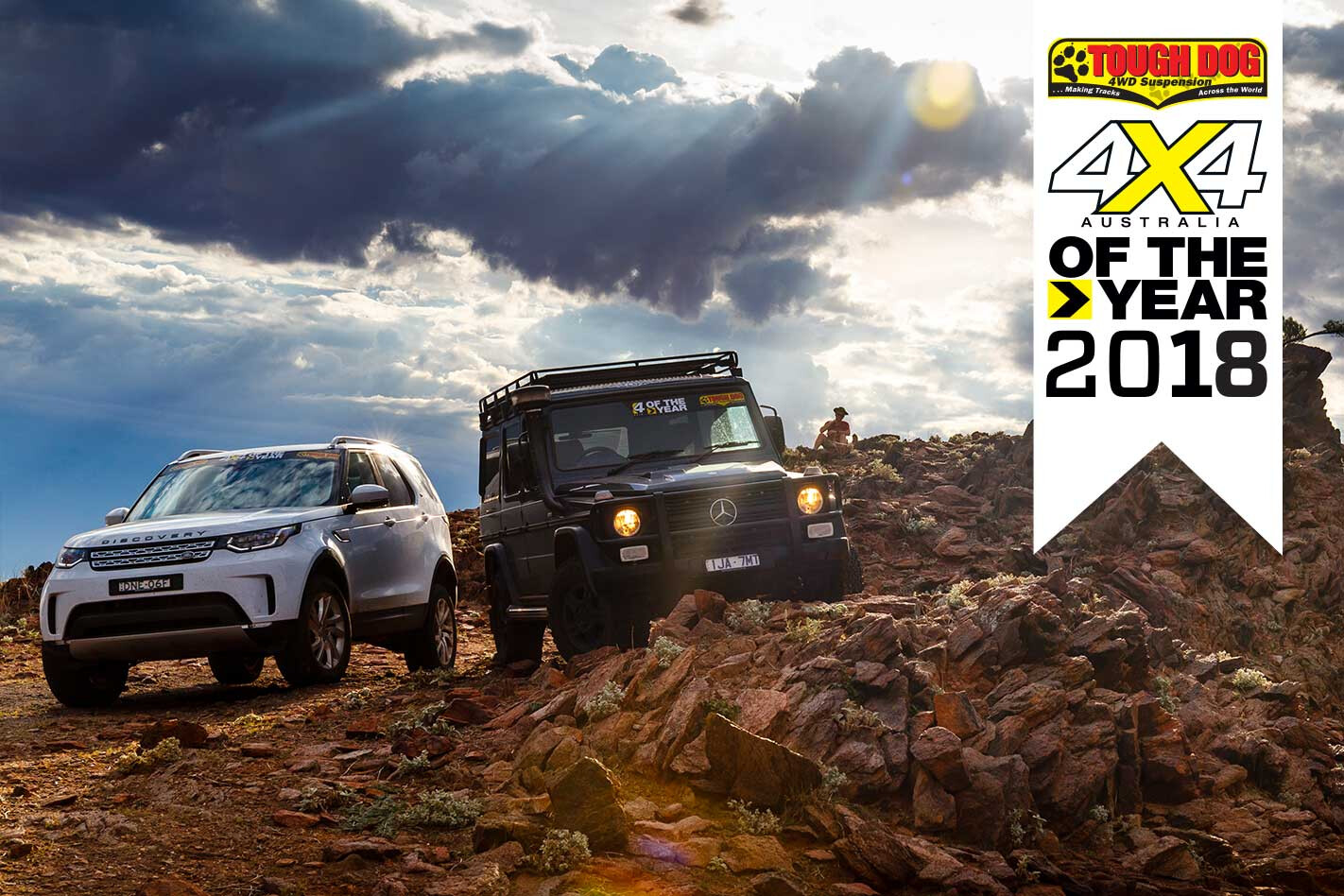
I was looking forward more than normal to our annual testing of 4X4OTY contenders; not only because we were heading back to the Melbourne 4×4 Training and Proving Ground but also due to the fact we were heading north to get some red dust beneath our tyres and fingernails.
The proving ground, north-west of Werribee and tucked into the steep-sided valley of the Werribee River, seems to be an anomaly so close to Melbourne and in a landscape of flat grassland. Once you drop down the side of the gorge to the proving ground itself, you quickly understand why it is such a popular and respected spot for testing all sorts of 4×4 vehicles, from SUVs to modified off-roaders to heavy 4×4 and 6×6 trucks.
The range of tracks, varying climbs, woopty doos and creek crossings is fantastic. Of course, we couldn’t stay away from the many water crossings the 4×4 park has to offer. We took all the contenders for a bit of a paddle, justifying to ourselves that such action was for the camera and video crew’s benefit.
This year we only had a day at Werribee, limited to set pieces including the tough hill climbs where a vehicle’s articulation, wheel travel, electronic traction control (ETC) and diff-lock activation are tested to the limit.
By tackling such obstacles with the same line and same speed, the surprises you get in regards to a vehicle’s off-road capability is incredible… and so it was with the six contenders for this year’s 4X4OTY.
The following day saw us on the highway heading north, swapping vehicles every hour or so as we cruised through central Victoria into the outback of south-western NSW. Such long hauls, which saw us cruising at the 110km/h limit for most of the way, soon highlighted deficiencies in vehicle comfort levels, ride and handling, NVH and cruising ability. Not that you can complain too much about those things in today’s modern 4x4s, but there are differences, and the two Discoverys revelled in it.
It was late afternoon when we pulled into Broken Hill for fuel. Not surprisingly, the slab-sided, box-on-wheels Merc G-Wagen had sucked down the most fuel on our highway run. From Broken Hill we drove on a second-class bitumen road, with lots of dips into and out of creek crossings, heading toward Eldee Station, our base for the next three days. This drive has the potential to be hazardous, owing to wayward ’roos, wandering feral goats and the occasional lazy horse or dusty camel that often graze beside the road or wander across it.
We didn’t even stop at Silverton’s iconic hotel as we pushed onto the dirt for the short 20km or so to Eldee Station and a warm welcome from hosts Naomi and Stephen Schmidt.
Eldee Station is a working sheep and cattle property covering some 150km² of varied semi-arid country. About a third of the property is taken up by the rugged Barrier Ranges, where steep and rocky gorges are carved by creeks that flood and roar after heavy rain. The rest of the property straddles the near flat Mundi Mundi Plains that are cut by the channels of the Mundi Mundi and Eldee creeks.
The tracks are as varied as the country, and while the routes across the Mundi Mundi Plains are generally easy, they are dusty and, where they cross a creek, can be rough. Recent rains had seen creeks flow, and each channel was a sheer-edged drop. If you hit one unprepared you were far more observant from then on!
Climbing into the ranges, the tracks edge along ridges or drop down flanks of rocky hills to cross a sandy creek before, again, ascending a boulder-strewn slope. Often the tracks took an easier route along sandy creeks until enclosed by slab-sided rock walls and becoming too narrow. Here, the track often led up craggy hills in a set of challenging stony steps that tested everything from suspension travel and damping to driver visibility and passenger comfort.
While there are five designated routes totalling around 120km, we spent the most time in the hills surrounded by red rock country, admiring the views from our eyrie-like vantage points.
Shallow patches of water from when the creeks had run a few days earlier added to the fun. It also added a touch of coolness for the first two days, during which temperatures nudged 40 degrees. Then the rain came, and with it a spectacular sound and light show. The hungry soil soaked up most of the water and the creeks flowed for a short time.
We swapped regularly between the six vehicles (and the Tough Dog Ford Ranger), enjoying the varied tracks and their changing conditions. There’s nothing like going immediately from one vehicle to another to highlight different aspects of a vehicle’s performance and capability.
Sunsets were taken atop one of the many hills overlooking the plains and were a fabulous way to end each day. With Eldee Station open to the public, its tracks and sunsets are something you should try. All the judges highly recommend it.