
I was never all that good at understanding the intricacies of financial and economic policies. Sure, I know how to look after my own budget (so I don’t blow so much money on Landy bits that there’s none left for the groceries), but as for terms like dynamic stochastic general equilibrium modelling, or even supposedly simple stuff like bond futures, you may as well be talking about Daniel Craig’s replacement.
Nevertheless, I read a story that the economy is in such a poor state – with stagnant wage growth, poor retail sales and the like – there’s a chance interest rates will head into negative territory. In other words, the banks would have to pay consumers to take out a loan. This is already the case in Japan, Switzerland, Sweden and Denmark.

Would that mean my mortgage would no longer be a financial burden? That the bank would start paying me interest on the outstanding balance? Well, yes. However, as I read further down the page the news was not all good, because negative interest rates would also mean house prices would blow out, so you’d struggle to ever offload your overpriced abode down the track.
But what about negative interest rates on vehicles? Surely that would have to be a good thing. After all, new vehicles have a tendency to devalue quite rapidly, regardless of how high or low interest rates are at the time.
Imagine for a minute that the bank would pay you interest on your car loan. You’d no longer be budgeting to buy the most affordable vehicle you could, but the most expensive one! After all, the more money you borrowed the higher your interest payments … back into your account. Crikey! If you borrowed a huge sum you could probably earn enough interest to have the bank paying your fuel bill.
You’d probably even buy a second 4×4, to earn even more interest on your debt.

Me? I’d take out a huge loan to buy a massive property not far out of town, get another loan to build a big shed, and then I’d get car loan after car loan to fill said shed with old Land Rovers, Land Cruisers and Patrols – and maybe even a few old Jeeps and an old Dodge Power Wagon.
But I digress. As an individual four-wheel driver, you would not be the only beneficiary of negative interest rates on your car loan. Because you’d want to borrow more and more, the car companies would all of a sudden be selling more and more 4x4s, and top-spec models at that, so they’d have to put on more shifts to keep up with demand and maybe even open more factories and employ more people to build these go-anywhere luxo-barges.
Of course, with the bank paying your fuel bill you’d be more inclined to travel long distances, too, so the fuel companies would be doing alright, as would the restaurants, pubs, hotels, motels and grocery stores in the communities you visited.
With the debt economy pumping along, soon enough people would be swimming in cash. But where would they keep it? With negative interest rates you’d have to pay the bank to store your money … or stash it under your pillow.
That’s not the only problem with negative interest rates. In Japan and those European countries where this has happened, negative interest rates have been blamed for weakening the banks, keeping dying companies alive and, of course, fuelling unsustainable growth in personal and corporate debt. Like an addictive drug, those countries now hooked on negative interest rates have found it hard to kick the habit. After all, with massively blown-out house prices there’s not much appetite for higher interest rates on unsustainable debt.
If this all sounds a bit confusing, or even completely wrong, please refer to the first paragraph.
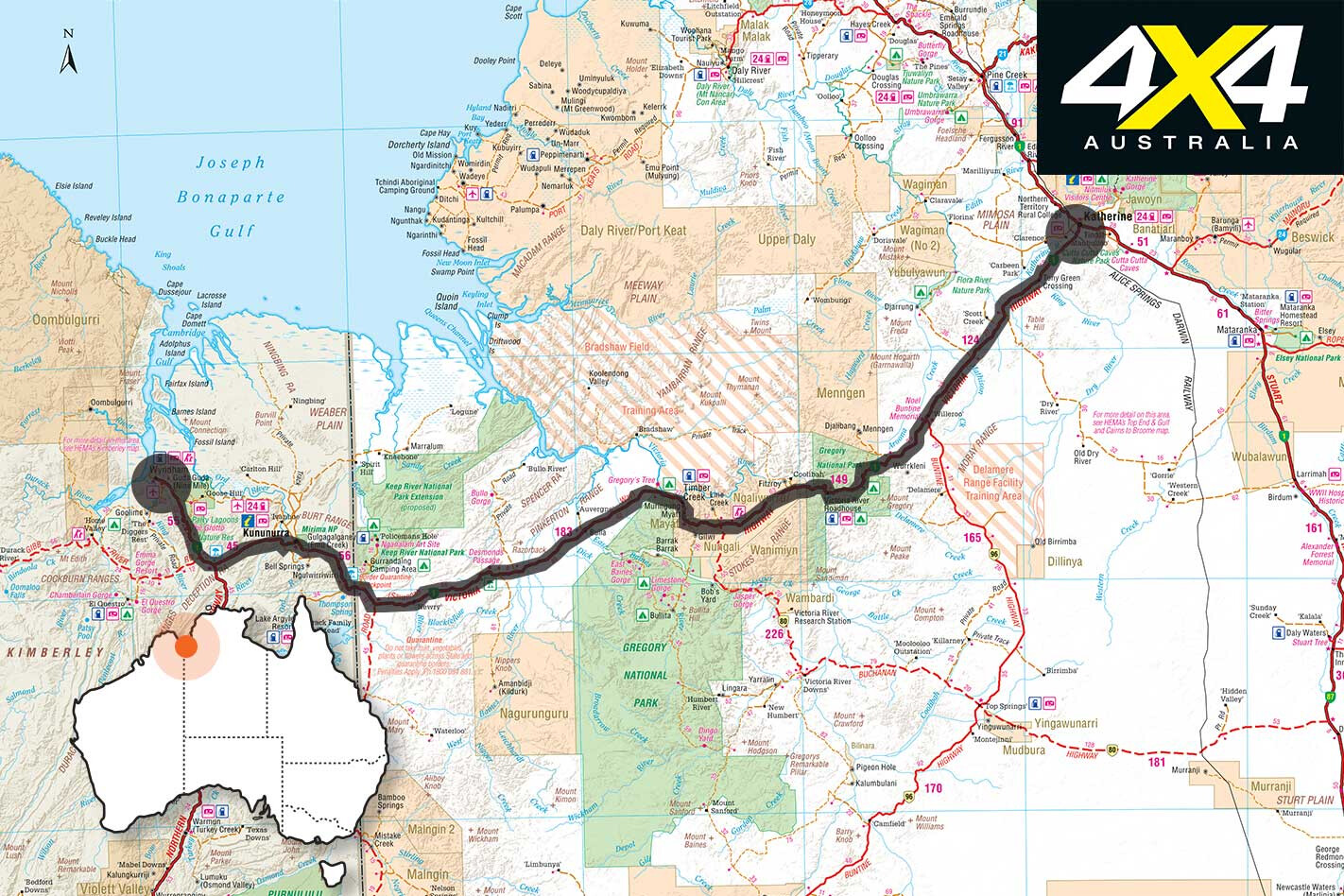
While the Victoria Highway is fully sealed, there are several sidetracks that lead to cattle stations, Indigenous communities and national parks along its length, and there are plenty of rest areas and campsites in strategic places to ensure travellers can pull-up and unwind when tired.
Despite being blacktop, the Victoria Highway is still subject to seasonal closures in the wet season. Some 86km west of Katherine is the turnoff to Flora River Nature Park, a 46km dusty drive to running springs and tufa dams that keep stunning crystal-emerald pools full to the brim.
Camping is permitted here and tinnies with no more than a 15hp motor are allowed on the pool, allowing access to a spectacular waterfall. The fishing is also outstanding, with barramundi and sooty grunter present in decent numbers. No swimming, though, as crocodiles live here.
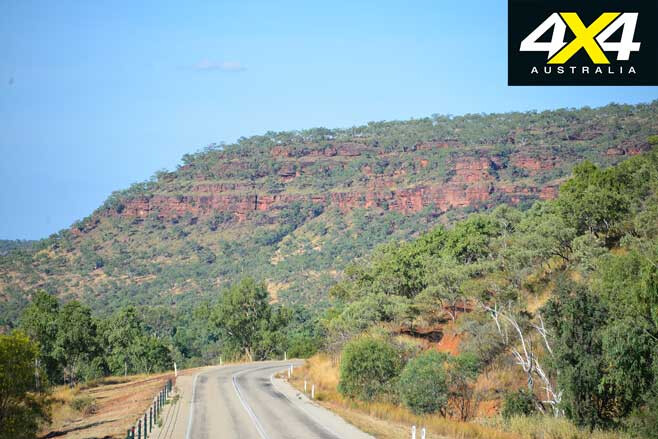
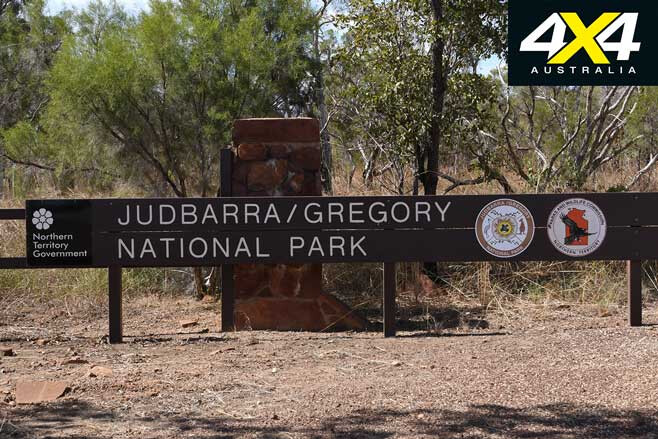
Farther west, the timbered country subtly changes to plains before hilly country abruptly encounters escarpments and cliffs, where the Moray Range rears up from the woodlands. Beyond here are the massive Stokes and Fitzroy Ranges. This is where the highway cuts through the Eastern Section of the Judbarra/Gregory National Park, and the Sullivan Creek campground is the first encountered when entering the park.
Another 17km on you’ll find the Victoria River Roadhouse situated on the banks of the freshwater reach of the mighty Victoria, the largest tidal stream in Australia. The river is 26km wide at the mouth and has a tidal influence of some 130km as it races upriver twice every 24 hours in a massive display of movement and power.
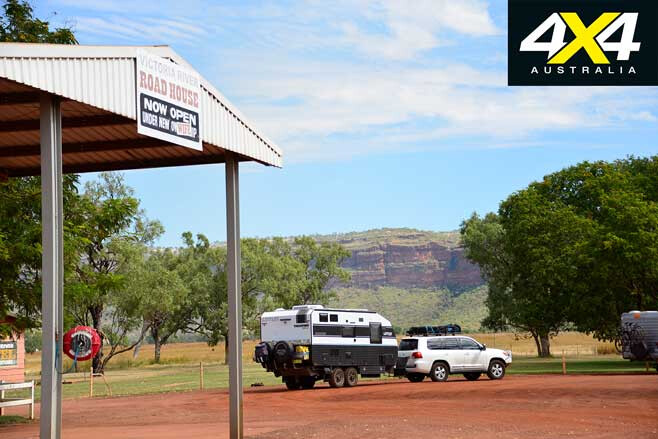
The roadhouse is a favoured stopover for those who prefer comforts like hot showers and hot meals. It’s close to park walks, Aboriginal rock-art sites and scenic attractions, and it has a campground, motel rooms, meals and fuel; plus, boat tours run from here.
A Northern Territory Parks and Wildlife Commission ranger station is west of the roadhouse, while the Park Visitors Centre has plenty of information on what you can do and what you’ll need during your stay.
At 13,000km², Judbarra/Gregory NP is the second largest park in the NT, a total wilderness regime that’s best seen via bush tracks with a reliable 4×4 and a good pair of hiking boots. Much of the park consists of spectacular escarpments, mountain ranges and deep gorges where no tracks go. In years past, much of it was part of a cattle-grazing empire that has left a legacy of tracks, old yards and stock dams.
Another feature of the park is its boab trees, which grow regally along the highway and on the steep, scree-covered slopes under the ochre-red scarps that dominate the high ranges. Only nine species of boab (or baobab) trees exist in the world; eight are on the African continent, including two on the Arabian Peninsula, with our own endemic boab, Adansonia Gregorri, only occurring in the Kimberley and the Victoria River district. They are believed to date back to when Australia was connected to Africa during the Gondwana period.
To start your Judbarra/Gregory adventure, take the Escarpment Walk track that commences 2km west from the roadhouse along the highway. It’s a bit of a slog so it’s only for the fit, and remember to take plenty of drinking water when hiking in the region.
Another wonderful spot is Joe Creek Picnic Area and the Nawulbinbin Walk, 10km west of the roadhouse. Just 2km from the highway, the walk is steep and difficult in spots, so, again, only the fit should consider attempting it. And remember to always let someone know when you explore remote places.
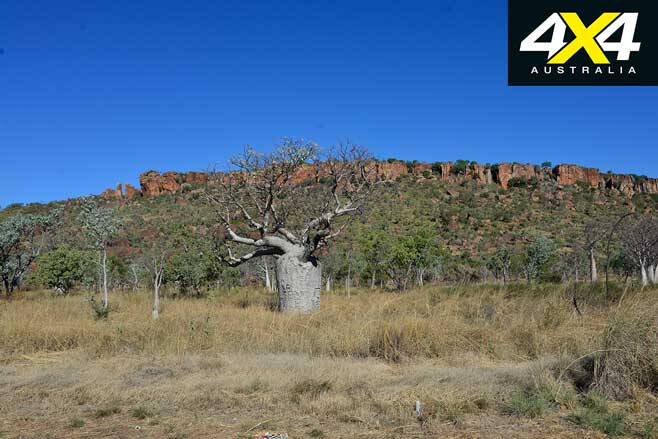
The Old Victoria River Crossing is just up the road, where the old Coolibah and Bradshaw Stations track crosses the river. Bradshaw Station is now owned by the Department of Defense and is used as a training base.
A bridge has been built across the tidal section of the river west of Timber Creek and it’s open to the public, but only to walkers. The old crossing has rapids running over rocks that offer safe knee-deep swimming to cool off, but never swim in deep pools … that’s where the crocodiles live.
Judbarra/Gregory NP is divided into eastern and western sections, and the highway follows the river for some distance before heading out of the eastern section and entering Indigenous lands. The park’s network of 4×4 tracks can also be accessed from the Buchanan and Buntine Highways. Some 17km before Timber Creek, you can head south on the Bullita Access Road to the Jasper Gorge Campground, where permanent waterholes and high cliffs make for a great wilderness camp.
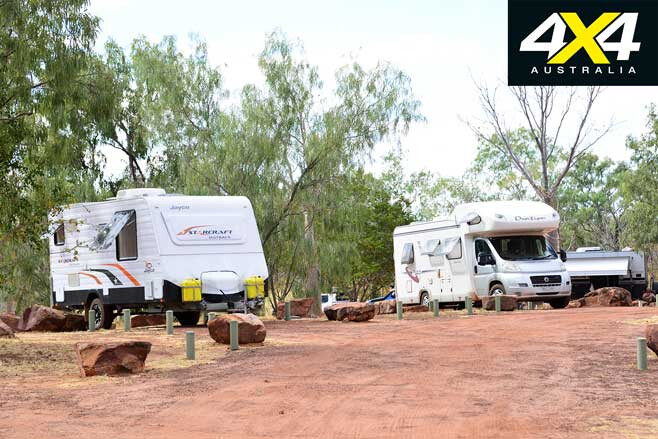
Back on the highway, turn off 10km before Timber Creek for the 42km drive to old Bullita Station. There is also a track north of the Jasper Gorge campground that connects with the Bullita track. There are several campgrounds in the park including a favourite on the East Baines River, where you can catch a barra for dinner if you’re a keen angler.
The historic Bullita Homestead features a display that highlights the history of the region before it became a park and was handed over to the traditional owners, who rate it as an important cultural and heritage region. It is divided into the traditional lands of several language groups, and the park is still used for traditional and cultural events that date back thousands of years.
Some of the largest art sites in Australia are in the park, with caves and shelters housing huge rock-art galleries adorned with friezes of stencils, printing, packing, pounding and animal and human motifs, which are the most common. Several galleries and art sites are open to the public.
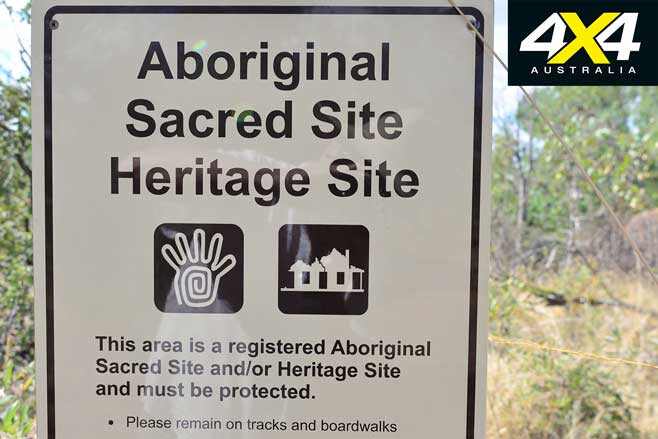
A number of old station tracks also remain open to the public, and the park is well signposted with attractions highlighted. Exploring the western section of Judpurra/Gregory is best done with the help of another vehicle, as the region is very dry, hilly and isolated. It will take days to see much of it, but it’s the best wilderness park in the NT for those who really want to get away from other people.
Timber Creek, with a population of about 300, has a roadhouse, camping and motel accommodation, police station, police museum and a medical centre. It’s a popular venue for barramundi fishers who fish the tidal stretch that commences behind the village.
For something different, take the very steep and narrow sealed road about 3km west of the village on your right, and drive right up onto the top of the forbidden Newcastle Range. Here, sweeping views of the river and Timber Creek unfold to far horizons. It’s one of the best lookouts in the tropics and a total surprise that sees little public attention from passing tourists.
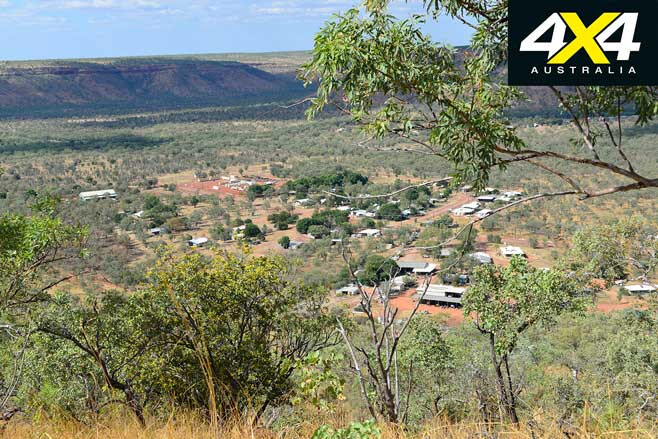
There are picnic tables and a very informative memorial to the North Australian Observation Unit (NAOU), better known as the “Knackaroos”. The NAOU was formed by anthropologist Major W.E.H. Stanner on May 11, 1942, after the Japanese bombing of Darwin on February 19, 1942.
The Knackaroos were all volunteer bush commandos; their headquarters were in Katherine and three companies, comprising 550 soldiers and 59 Aboriginal people, including trackers, donkey and horse-tailers, were stationed on the Gregory, Roper and Ord Rivers.
They patrolled the unpopulated coastal regions on horseback, in vehicles and in eight boats. Most carried their own personal firearms, or captured enemy weapons scoured from the army. Some even had their own personal mounts. They endured isolation, crocodile attacks, malaria, hunger, thirst and the knowledge that they were expendable as far as the army was concerned. Had it not been for the skills of the Aboriginal trackers and the NT Mounted Police, more would have perished.
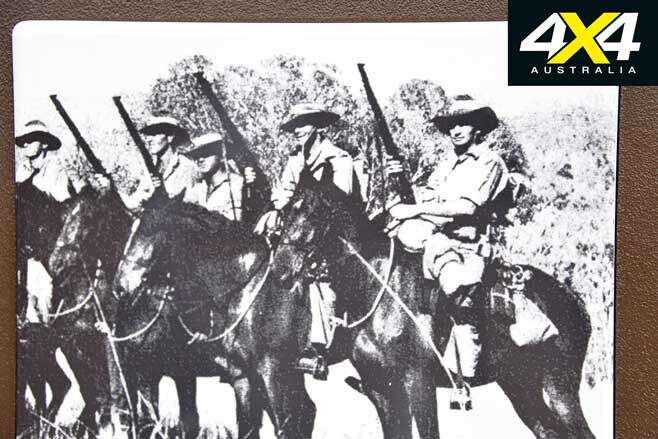
West of Timber Creek is the Big Horse Creek campground and boat ramp, which is a great spot to pull-up stumps, launch the tinnie and catch a barra. Down the highway a little farther on, park and take the walk across the Bradshaw Bridge and experience how big and wide the Victoria River truly is – 100km from the mouth.
About 9km from Big Horse Creek Campground take the marked bush track to Gregory’s Tree, a massive boab. This is where explorer Augustus Charles Gregory landed his expedition in 1855 and established “The Depot”. From here he set out to explore the region to the south.
After several successful forays to the south, Gregory left an inscription carved into a huge boab tree explaining that a letter of the expedition’s intentions had been buried nearby just in case they became lost en route to Brisbane.
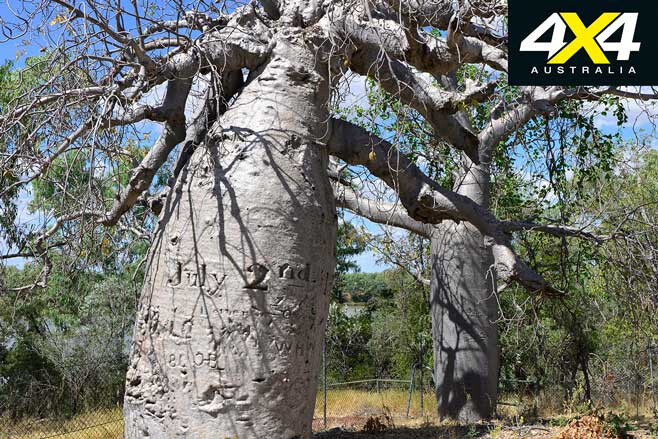
The date was July 2 ,1856, when the Gregory party headed east exploring the Elsey, Roper and McArthur Rivers before entering Queensland and turning south, crossing the Flinders, Burdekin, Fitzroy and Burnett Rivers on the hitherto largely unexplored western side of the Great Dividing Range.
He rode triumphantly into Brisbane on December 16, 1857, marking one of the most successful expeditions of exploration ever; yet it remains relatively unknown. Gregory’s name is a fitting tribute to the boab tree and the park.
Farther west on the highway, the East and West Baines Rivers are crossed, and beyond here the landscape opens into woodland, scrub and plains. The different boab trees and groves will keep you enthralled, as not one tree looks the same as the next. Many have names carved into them, but thankfully these unsightly vandalistic habits that started with Gregory appear to be a passing trend. Distant ranges on the horizon promise much, but it’s not until one nears the Western Australian border that ochre-red escarpments and spinifex-grassed ranges make for a welcome change.
The East Kimberley Region
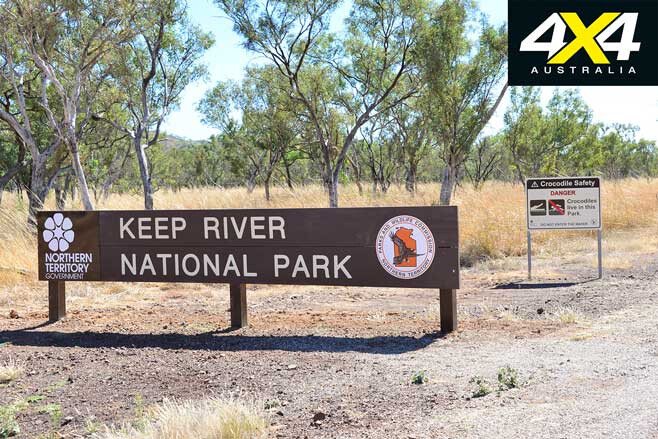
The Keep River NP entrance is only 3km from the WA/NT border. While only a small park it’s high on natural attractions, geological wonders and cultural values. There is an abundance of Aboriginal rock art, a “city” of striped sandstone structures reminiscent of the Bungle Bungle Range, and lots of waterholes fringed by gallery forest. There are two campsites within the park called Gurrandalng and Jarmen, and both offer great walks to several attractions and escarpment climbs.
The park is close enough for people staying in Kununarra to do several of the walks on day trips. The road at the park entrance continues north before turning west into WA, where it connects with the sealed Weaber Plain Rd to Kununurra.
On the Victoria Highway there is a quarantine station on the border where travellers are required to pull-up and dispose of fruit and vegies in the bins provided – quarantine officers search all vehicles and fridges. From the border it’s an attractive scenic drive to Kununurra, where every turn on the road reveals more photogenic views.
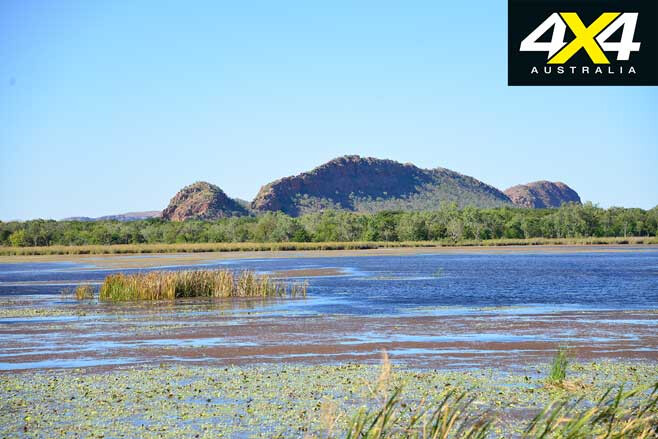
Kununurra is on the junction of the Victoria and the Great Northern Highways. It’s a progressive farming town situated on the banks of the Ord River and the gateway to the East Kimberley. There are many attractions and things to do including a visit to Hidden Valley NP, Kelly’s Knob Lookout, river and fishing cruises on the Ord River, nearby Lake Argyle and Lake Kununurra, day trips to Wyndham and Parry Creek, and more.
Wyndham is about 100km to the north of Kununarra. Visit the Grotto en route and marvel at the panoramic views of the Terr, Erskine and Cockburn Ranges. There are two parts to the town: Old Wyndham (The Port – established in 1886 when gold was discovered at Halls Creek); and New Wyndham, or The 3-Mile, which is now the residential and shopping centre for the 800-strong population.
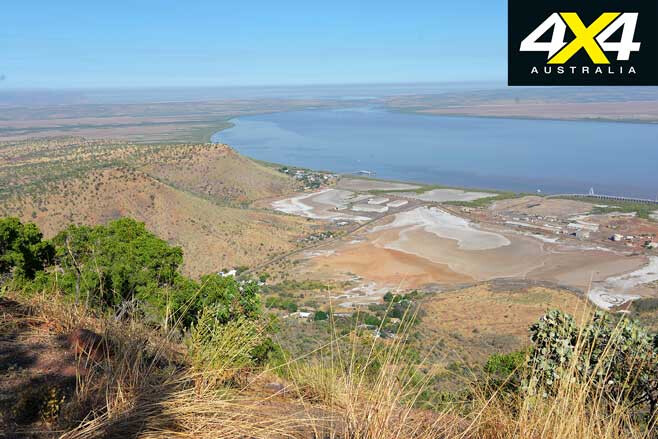
The 3-Mile is where you can head several kilometres up the steep Bastion Range to the famous Five Rivers Lookout. If you strike a clear day you can see far up into the Cambridge Gulf, but I have yet to strike one on several visits, as either sea haze or bushfire smoke obscured much of the view. Still, the lookout with its picnic facilities and views of The Port make for an amazing detour.
The Port is where much of the ABC TV series Mystery Road is filmed. It underwent a massive makeover to make it look like a lively township. In reality, the pub is closed and few people live there nowadays, preferring the facilities of “new” Wyndham. Only the Police Station remains…
Parry Creek
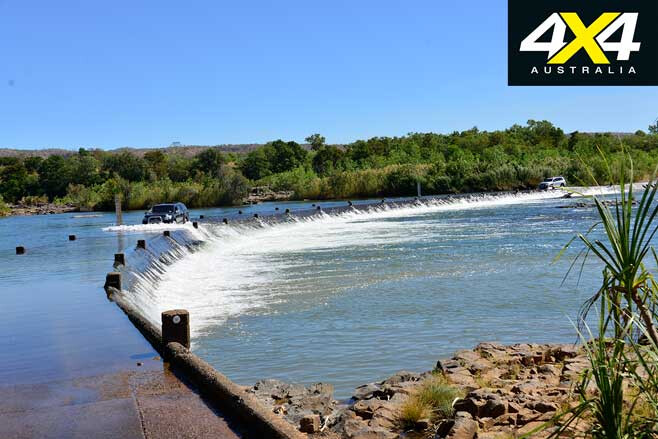
Old Halls Creek Rd takes you to Parry Creek Station and back to Kununurra, via Ivanhoe Crossing, or the alternate Valentine Rockhole Track when the crossing is running high.
From the Wyndham Rd take the track on the left to Telegraph Hill, where defense personnel were stationed during our disagreement with the Japanese forces that bombed Wyndham. The hill has great views, including Parry Lagoon below on the flood plains.
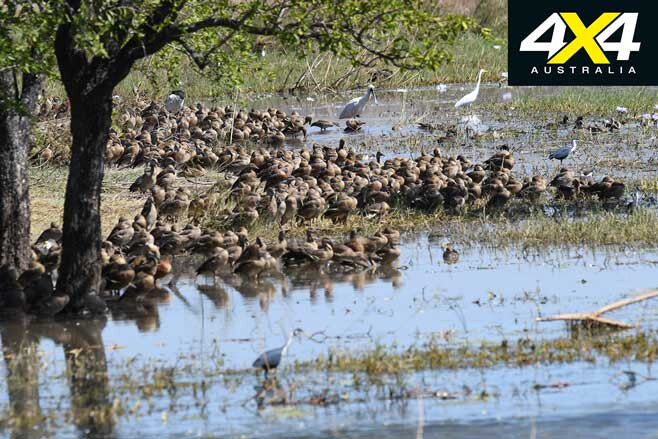
The billabong is home to myriad waterfowl and plains birds; take a pair of field glasses and enjoy the birds from the comfortable bird hide that extends over the water.
Nearby Parry Creek Farm has comfortable accommodation with cabins built over the water amongst shady tropical trees. A fully licensed restaurant, campgrounds and a crocodile-free swimming pool makes it a welcome interlude away from the crowds.
The farm is surrounded by the Parry Creek wetlands, which are rated as “Wetlands of International Importance” under the Ramsar Convention. From the farm it’s only 13km to Ivanhoe Crossing, with boab stands and billabongs to enjoy en route, plus wonderful panoramas over the plains, the ranges and hills beyond. Try and lure a barra for tea, but beware of the Ord River crocs which are the fattest saurians anywhere … they didn’t get like that for being slow.
Take care and enjoy what the Victoria Highway has to offer; it’s well worth the drive, but only if you get off the blacktop.
The Victoria Highway Travel Planner
Flora River Nature Park – (08) 8973 8888; nt.gov.au Victoria River Roadhouse – (08) 8975 0744; visitkatherine.com.au Judbarra (Gregory) National Park – (08) 8975 0888; nt.gov.au Timber Creek Hotel & Caravan Park – (08) 8975 0722; timbercreekhotel.com.au Wirib Store & Tourism Park, Timber Creek – (08) 8975 0602; wirib.com.au Keep River National Park – (08) 9167 8827; nt.gov.au Ivanhoe Village Caravan Resort, Kununurra – (08) 9169 1995; ivanhoevillageresort.com Parry Creek Farm – (08) 9161 1139; parrycreekfarm.com.au NT Road Conditions – 1800 246 199; roadreport.nt.gov.au Katherine Visitors Information Centre – (08) 8972 2650; www.visitkatherine.com.au
Note: Camping fees apply in all NT National Parks, as do entry fees in WA National Parks. All park tracks may be impassible in the wet season from November to April. The best time to visit is from May to August.
Author’s note: I visited in mid-May and most park tracks in the NT were still closed.
We all dream about throwing in the job and setting off on the 4×4 adventure of a lifetime, don’t we? Don’t tell me I’m the only one.
The idea of setting off with no deadline, no real plans and not a care in the world sounds like paradise to me. Just pick your direction – clockwise or anticlockwise – and hit the road for a lap around Australia.
Australia has so many amazing places to explore and visit that you could travel around it your entire life and not see it all. And then there’s the rest of the world to explore!
Unfortunately, very few of us have the time or money to embark on such travels, and even those who do usually set themselves a time limit of some kind that they have to adhere to. A month, six months, a year; you’re only limited by your budget and sense of adventure.
Instagram is a great place to find inspiration for such long-term adventures as there are plenty of folks there sharing their own trips around the country and around the globe in their 4×4 vehicles. Two such folks that caught my attention are Grommy and Twain, and you’ll find them at @thealternateroad on IG. Actually, it was their Troop Carrier called Bruce that caught my eye first as it’s a great example of a well set-up expedition vehicle. Check out the feature on Bruce in the October 2019 issue of 4×4 Australia and follow their travels on IG.
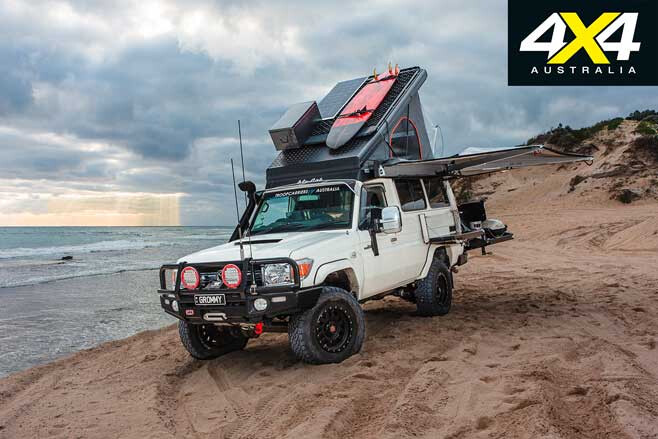
Another adventurous couple that I have been following on IG for a few years hail from the United Kingdom, but it’s their South American travels that I’ve been enchanted by.
@travel_beasts are also roaming in a Land Cruiser 70, but theirs is a mid-wheelbase 73 Series, so they’ve been forced to do things a little differently when living out of their mini-Troopy. At present they have the Middy back in the UK where a camper back is being manufactured from scratch and fitted to it, while many repairs are being done before they set off again on their next adventure. They sure do take the not-so-popular roads, so I’ll be interested to see where they get to next.
Wherever you find your inspiration, whatever your budget and even if you can only afford a long-weekend away from work, get out there and make the most of it.
TOYOTA Motor Corporation has notched up a sales milestone, with the Japanese brand selling more than 10 million LandCruisers globally.
Australians can’t seem to get enough of the iconic vehicle, either, purchasing more LandCruisers than any other market around the world. In fact, since the original BJ launched in 1951 (renamed LandCruiser in 1954), local sales have exceeded 1.065 million, which is a staggering 10.6 per cent of global sales.
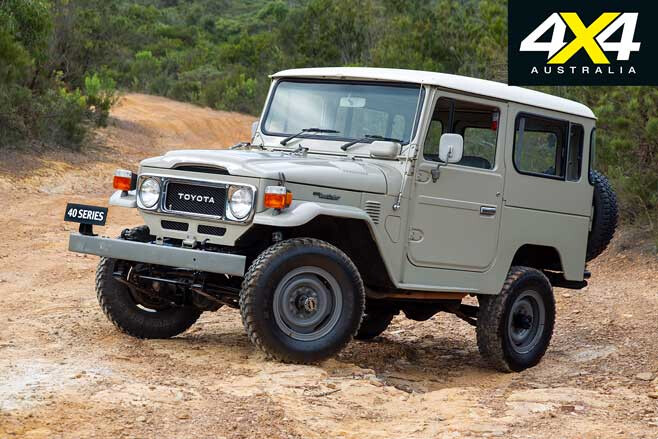
In 2018, Australian buyers accounted for 13.3 per cent of global LandCruiser sales (42,267 of more than 318,000 vehicles). This strong local interest made Australia the biggest market for the 70 Series and the third-biggest market for the 200 Series and Prado.
This is incredibly impressive considering the iconic off-roader is sold in approximately 170 countries and regions around the world.
Toyota Australia puts the LandCruiser’s ongoing success down to reliability and capability.
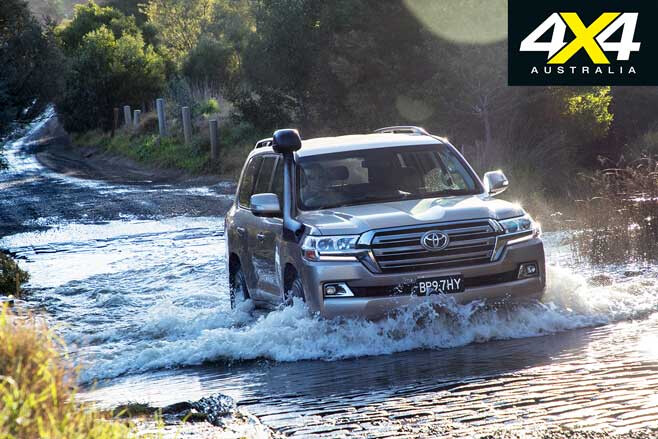
“In Australia, one of the first LandCruiser customers was construction magnate Sir Leslie Thiess, who bought several for use on the rugged construction trails of the Snowy Mountains Hydro Electric Scheme,” said Toyota Australia Vice President of Sales and Marketing, Sean Hanley.
“Like all the other four-wheel-drives, the LandCruisers had some issues in the extreme conditions, but it was Toyota’s response that set the company apart from its rivals.
“Toyota flew out engineers from Japan who lived on site to study and rectify the problems. They also flew out parts and sent the broken bits back to Japan – to analyse them and fix problems at the source.
“This was an amazing engineering response – an absolute determination to deliver quality, durability and reliability.
“It’s that dedication to providing trouble-free performance that has been crucial to the success of the Toyota brand across Australia.”
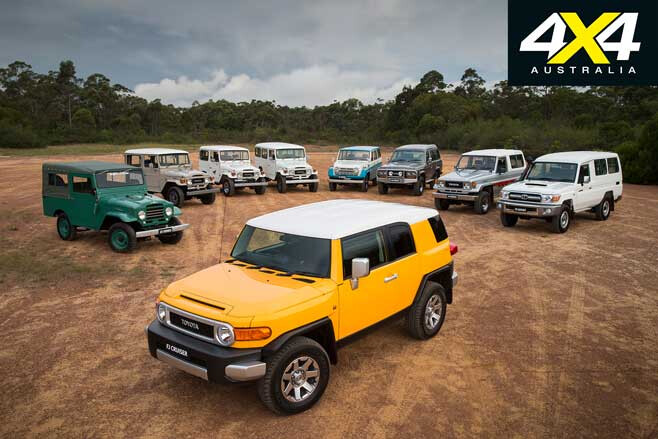
Information on the next-gen LandCruiser is scarce at this stage, with an ETA still a few years off yet.
AUSTRALIAN LANDCRUISER SALES Wagon: 362,800 (200 Series and predecessors) Workhorse: 397,000 (70 Series and predecessors) Prado: 305,500 TOTAL: 1,065,300
JEEP AUSTRALIA has introduced a range-topping luxury-spec Summit variant for the V6 model of the Jeep Grand Cherokee.
Priced at $84,450, the Grand Cherokee Summit is essentially based on the 3.0-litre EcoDiesel V6 S-Overland model, with the $1500 premium going towards plush new exterior styling elements and premium interior appointments.
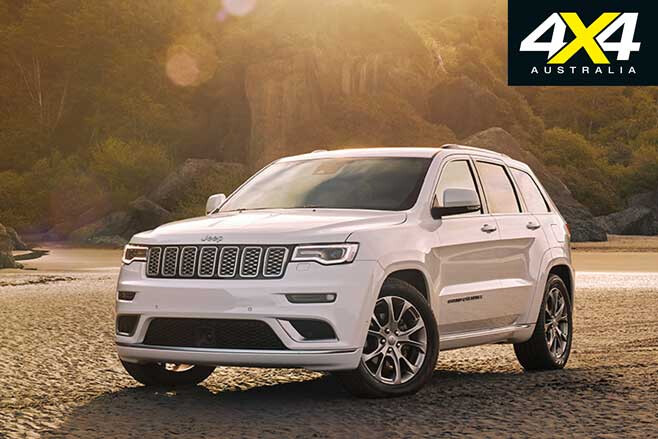
The exterior is garnished by accented brightwork elements on the front fascia, restyled rear fascia with dual trapezoidal exhaust tips, 20-inch wheels, along with body-colour side sill cladding, wheel arches, mirror caps, and door handles.
As for interior appointments, the Summit cops the 8.4-inch Uconnect infotainment system with a Harmon Kardon premium audio system. The interior is upholstered in Natura Plus soft leather seats, and finished with suede-like headliner and Berber cargo and floor mats.
Customers also have the option of specifying the cabin with Laguna quilted leather seats, as well as leather-wrapped door panels, centre console and glove box.
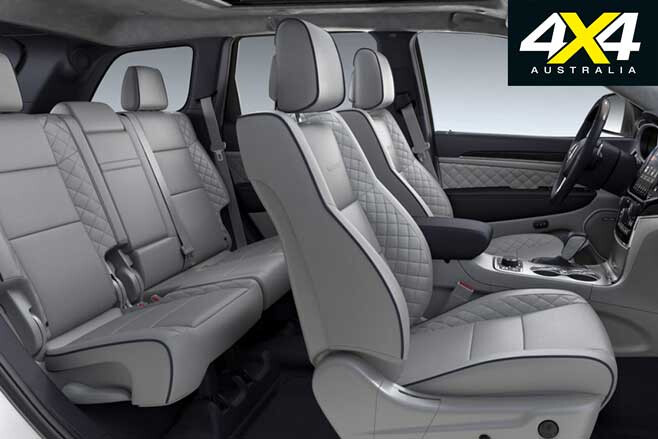
“Positioned over the current refined Overland trim, Summit goes one step further in providing the ultimate luxury a Grand Cherokee can offer in an area of the market where Europeans are very strong,” said Guillaume Drelon, Director, Brand and Product Strategy.
“Without compromising Jeep legendary capabilities, Summit is providing an extra edge of adventure, bringing to market the best combination of on-road refinement, technology and comfort with best in class off-road capabilities.”
LAND ROVER dealers across the USA are understandably excited by the return of TReK ’20, which kicks off this weekend with round one of dealer trials at the spectacular Biltmore Estate Land Rover Experience Center in North Carolina.
Plus, Land Rover enthusiasts in the US will soon be able to purchase a specially equipped Limited Edition TReK Discovery 5.

Participating dealers will be driving the Limited Edition TReK Discovery 5 wagon kitted out with gear aimed at improving off-road capability.
TReK started way back in 1996 as a team-building event for then the fledgling Land Rover North America network, but the event wound up in 2003 after it was held at the Forbes Trinchera Ranch in southern Colorado.
TReK was instigated by Bob Burns, Training and Development Manager Off Road Programs for Land Rover North America, to “test employees’ mettle, ability to work as part of a team and Land Rover vehicle knowledge.” The event was based on the popular Camel Trophy, albeit held over a two-day period rather than the sometimes several weeks required to complete the gruelling Camel Trophy.
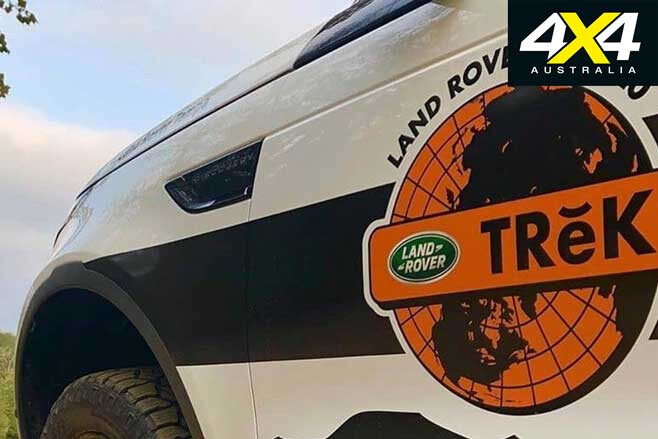
The success of TReK in North America, and the positive effect it had on dealer morale and vehicle sales, resulted in several other markets staging their own events, as well as the advent of a Global TReK competition in South Africa in 2001.
The first vehicles used for TReK were specially equipped bright yellow 1996/97 model Discoverys with blacked-out bonnets and ‘XD’ decals, and these are now sought after by collectors. The Discovery 2 was used in later years with bright orange paint reminiscent of the G4 Challenge Defenders.
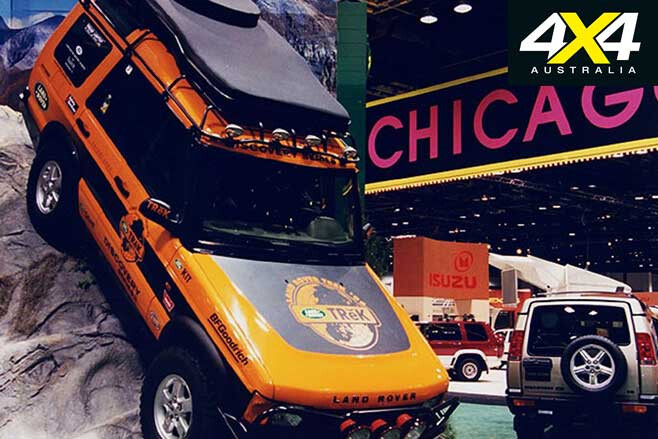
For TReK ’20, drivers will pilot the Limited Edition TReK Discovery 5 wagon kitted out by Lucky 8 Off Road Equipment with Goodyear Wrangler Duratrac 255/55R20 rubber, nudge bar, Rhino Rock Sliders, roof rack, Baja Designs LP6 Pro LED driving lights up front and LP9s on the roof, Warn winch, ARB Tred Pro recovery boards and Factor 55 winch safety products.
Not bright yellow like their predecessors, but the white Limited Edition TReK Discovery 5 wagons still stand out from the crowd thanks to their added accessories, blacked-out bonnets and special TReK ’20 decals.
We’ve taken a closer look at Rhino-Rack’s new Backbone system to suit the four-door JL Wrangler, as well as the new Sombra shelter from BlackWolf.
Rhino-Rack Backbone

Rhino-Rack has developed a Backbone system to suit the Jeep Wrangler JL 4-Door. Under development for two years, the Rhino-Rack Backbone can be fitted by one person without removing the Hard Top. It attaches to the factory chassis points to distribute weight evenly throughout the vehicle’s body, which results in an impressive 120kg load capacity when installed in conjunction with a Pioneer Platform.
The Backbone has been designed to complement the Wrangler’s aesthetics, with a bold, solid construction. It’s made from durable, non-corrosive cast aluminium, and a black powder coat finish ensures the Backbone mates seamlessly with Rhino-Rack Pioneer Systems.
The Backbone is compatible with RLT600 removable legs and RCL low locking legs, providing set-ups that can be tailored to individual requirements. The RCL legs bring any Pioneer Platform closer to the roof for easy access, loading and unloading.
RRP: $599 Website: www.rhinorack.com.au
BlackWolf Sombra Shelter
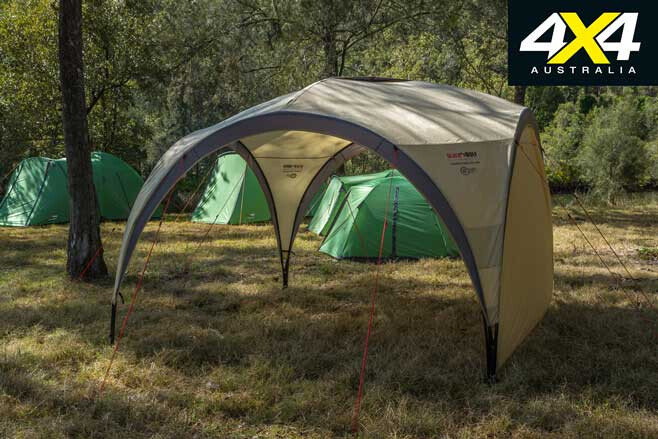
The new BlackWolf Sombra Shelter is has been designed to provide much-needed shade under the harsh Aussie sun, as well as protection from wind and rain. The Sombra features a 150D polyester canopy with a UPF 50+ sun protection rating coupled with a 2000mm waterhead rating to keep you dry on rainy days.
The canopy fits over BlackWolf’s custom 19mm Tuff steel poles, which are claimed to offer enough strength to keep the set-up in place in even the windiest conditions. A side panel is available as an optional extra for added protection from the elements. BlackWolf says the Sombra Shelter is also quick to erect and take down, and that it packs down to a convenient compact size for easy vehicle storage when not in use. There are two models available: the Sombra 300 and the larger Sombra 450.
RRP: $399.99 (Sombra 300); $499.99 (Sombra 450) Website: www.blackwolf.com.au
The TrailRider dual-cab 4×4 is what you get when Walkinshaw Performance, better known for running V8 Supercar race teams, turns its hand to LDV’s T60, a Chinese ute that first arrived in Australia in late 2017.
Now you might think Walkinshaw Performance, given its expertise in engine enhancement, has worked over the T60’s 2.8-litre diesel, but that’s not the case. Instead, Walkinshaw’s work with the T60 has centred on the chassis, with new suspension dampers and a sports (19-inch) wheel and tyre package. Locally engineered accessories including side-steps, nudge bar, sports bar and roller tonneau cover complete the TrailRider package.
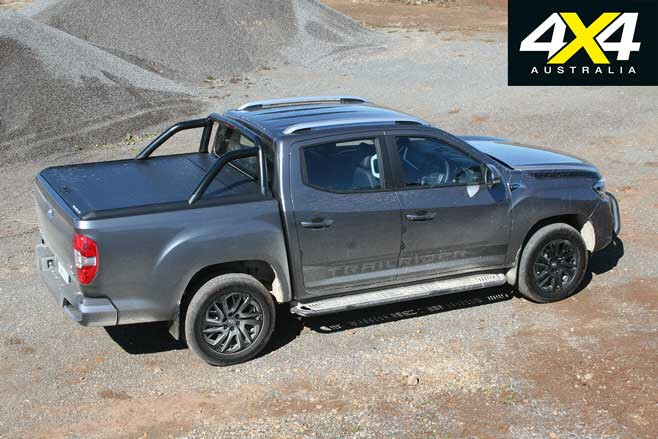
The suspension recalibration comes off the back of criticism of the original factory setup and will be applied across the entire T60 range, right down to entry-level Pro models. Thanks to Walkinshaw’s efforts, the on-road dynamics have been transformed from flighty and loose to composed and reassured.
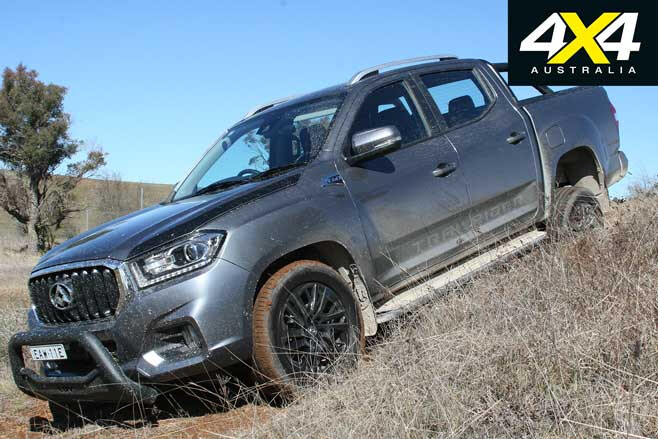
Despite the newly found chassis control and the relatively low-profile 19s, the ride is also surprisingly compliant. But while the new tyres (255/55R19 V-rated) may work well on-road, they hardly live up to the ‘TrailRider’ name off-road, given their low profile and thin sidewalls, which are arguably a more significant issue off-road than their ‘highway’ tread pattern.
The TrailRider still has good clearance, reasonable wheel travel and the benefit of a mechanical self-activating Eaton rear locker, so with some robust off-road tyres on standard 17s it would be more than handy off-road.
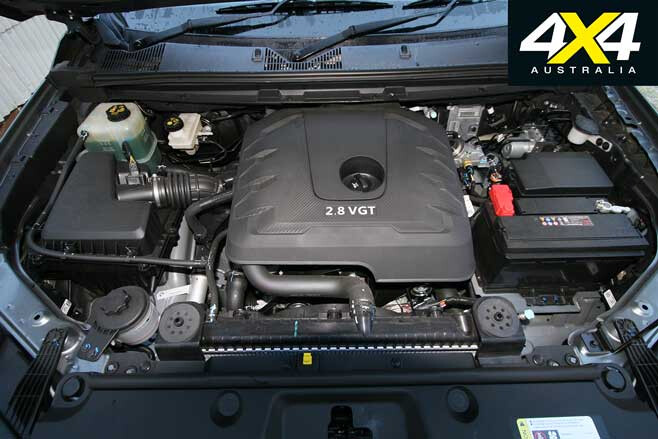
It’s a shame Walkinshaw didn’t tweak the engine, though, as the standard 110kW and 360Nm means performance is lacklustre. It still gets along without much effort, but there’s not much left in reserve for hills or highway-speed overtaking.
The 2.8-litre four-cylinder diesel comes from the same VM Motori family (but built under licence) as the 2.8 diesel in Holden’s Colorado, so it would seem to have a fair bit in reserve for aftermarket tuning. In fact, a Walkinshaw retune of the Colorado’s 2.8 nets something in the order of 176kW and 600Nm.
When we previously tested the TrailRider’s manual variant we found the gearing a little too tall for the highway, given the modest power output. Likewise, high-four with the manual is too tall for even the easiest off-road driving, which means selecting low-four in situations where high-four should suffice.
The six-speed auto, which is similar to the auto in the Colorado but built under licence, works better both on- and off-road and is definitely the better of the two transmissions given the manual’s too-high final-drive gearing. Like the auto ’box in the Colorado, the TrailRider’s auto offers well-timed and proactive shifts.

At around $40K, there’s no doubting the TrailRider’s value. It’s a big ute with a spacious cabin, it’s reasonably comfortable and has a long list of luxury and convenience kit including leather, electric seat adjustment and keyless entry and start. Thanks to a comprehensive safety portfolio it also achieves a five-star ANCAP safety rating, making it the first Chinese ute to do so.
2019 LDV T60 TRAILRIDER A/T SPECS Engine: 2.8-litre 4-cyl turbo diesel Max Power: 110kW @ 3400rpm Max Torque: 360Nm @ 1600-2800rpm Gearbox: 6-speed auto 4×4 System: Dual-range part-time Crawl Ratio: 36.7:1 Front Suspension: Independent/coil springs Rear Suspension: Live axle/leaf springs Kerb Weight: 2100kg (approx.) GVM: 2950kg Towing Capacity: 3000kg (braked) GCM: 5950kg Fuel tank capacity: 75L ADR fuel consumption*: 9.6L/100km On-test fuel consumption: 9.8L/100km Price: $41,042
AN EPIC recreation of the extraordinary 1969 East-West expedition of Australia tops a long list of juicy 4×4 yarns this month.
A convoy of Jeeps tackled the coast-to-coast adventure – the BFGoodrich East-West Australia Jeep Expedition – which even included two members of the original journey. Read all about it in the October 2019 issue of 4×4 Australia.
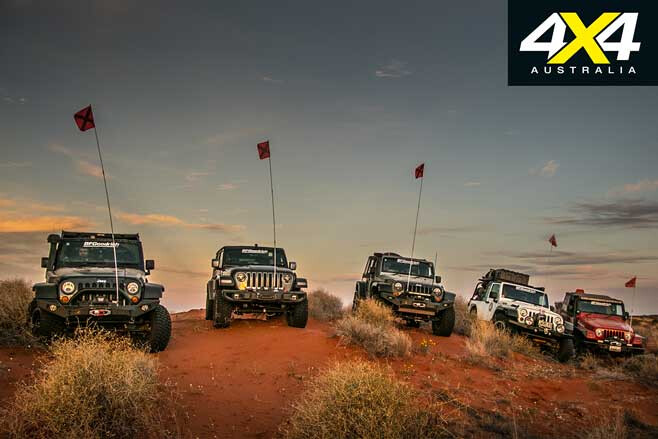
Three tidy custom four-wheel drives also feature in the mag: a Toyota Troopcarrier, an N80 Hilux and a Nissan GQ Patrol. Plus, we’ve included the next instalment of MSA 4×4’s massive 6×6 LC200 build.
Fraser Stronach delves into the details of dual-cab ute safety systems, explaining what each ute on the Australian market is equipped with and/or lacking.
A buyers’ guide to camper trailers and an in-depth look at beadlocks also grace the pages this month.
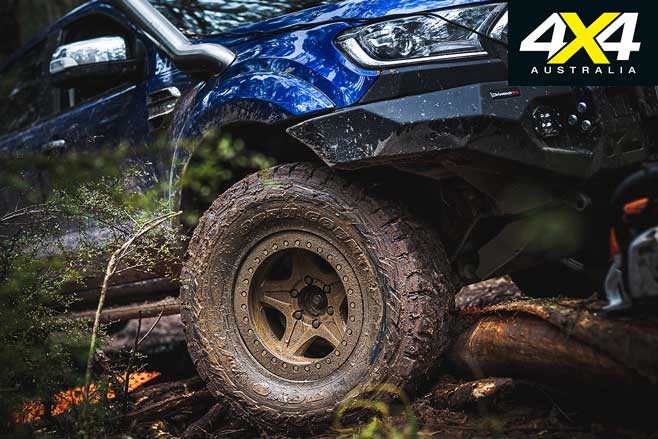
Proving there’s no shortage of off-road destinations to add to your planner, this month we ventured to the East MacDonnell Ranges in Central Australia, travelled along the Victoria Highway from the NT to WA, and relaxed at Queensland’s Eurimbula National Park.
WHAT ELSE IS THERE? – First drive of the auto LDV T60 Trailrider – Ranger, JL Wrangler and Hilux shed updates – Readers rigs and new products – News, events and monthly columns
The October 2019 issue of 4X4 Australia is out September 19.
THE final round of the 2019 ARB Australian Off Road Racing Championship will take place this weekend – September 20-22 – at Millicent on South Australia’s Limestone Coast, with more than 80 off-road racers converging for the Teagle Excavations ARB Pines Enduro.
Held within the Tantanoola Pine Forest – and based out of the stadium-style arena at Teagle’s Quarry – racers will kick things off from 10am on Saturday at the Hards Transport Services Prologue, to determine the main race’s starting order.
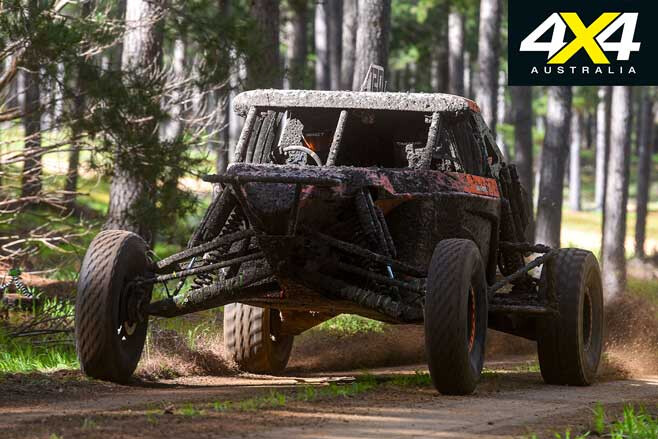
This will be followed by four-lap heats of wheel-to-wheel racing in the stadium-style arena. Plus, one lucky spectator will get the chance take a hot lap of Teagle’s Quarry alongside an experienced steerer.
The contingency will descend into the forest on Sunday from 8:30am, where combatants – in a reverse-grid format – unique to the Pines – will tackle six laps of a tortuous 60km course, overcoming tree-lined straights, blind crests and fast corners.
With an outright win at the opening round of the season, North Queensland’s Talbot Cox leads all-comers and will head into the ARB Pines Enduro behind the wheel of his V8-powered Toyota as the man to beat for the championship. Snapping at his heels, though, will be Aaron Haby and Dean Meginley.

A host of other drivers will also be aiming to stand atop the podium in their respective classes, including Brent Martin, Rhett Standen, Steven Orr, Paul Grant, Bernie Clohesy, Phil Lovett, Sandy Bowman, Stuart Chapman and Daniel Wells.
To follow the event live across the weekend, head to: www.arboffroadracing.com.au