
HISTORICAL commercial alliances – and rivalries – within the global ute market means that now, in 2020, all the popular new utes currently on sale are all either near the end of their generational life, or midway through a generation.
In broad terms that means they are all near 10 years old, or five years old with none of the current popular utes being new-generation designs.
In simple terms the ‘oldies’ are the VW Amarok, Ford Ranger, Mazda BT-50, Holden Colorado and Isuzu D-Max, which arrived in Australia in that order in 2011/12. The mid-generation utes include the Mitsubishi Triton, Nissan Navara and Toyota Hilux, all of which arrived here in 2015.
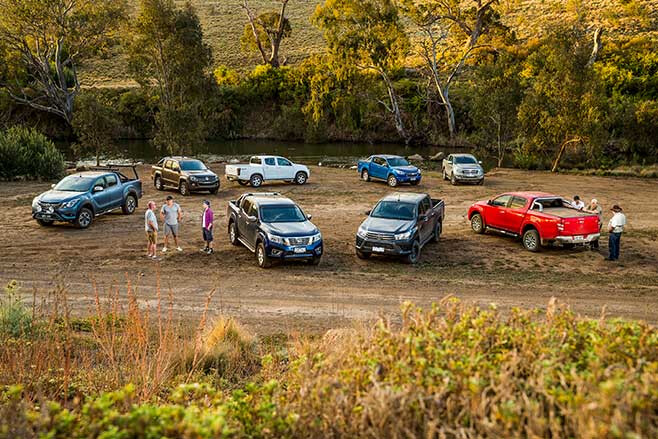
Of course, things haven’t remained completely static with those utes since their respective initial arrivals, although some have changed more than others.
Courtesy of a potent V6 diesel, the Amarok is the most changed although the 2016 re-engineering of both the Ranger and the Colorado also brought significant changes, as did the optional 2.0-litre 10-speed powertrain in Ranger in 2018. Even the mid-generational utes have seen evolution and changes in the last five years with Triton receiving a mid-life refresh last year.
All of this bodes well if you’re looking to buy a second-hand ute, as you can go back a good number of years to something that’s more affordable without having to settle for a previous generation design, which, by and large, lack the performance, safety, equipment, general amenity and, in some cases, the cabin size of the current generation utes.
HOW TO BUY A USED CAR
BUYING second-hand and making sure you get a good ute is not rocket science but does require patience, perseverance and, above all, a plan!
You might be thinking of either buying privately or buying through a dealer, as both have advantages and disadvantages, but it’s best to explore both. The wider the net you throw, the better chance of catching the best fish.
The main car-selling websites, which are the best place to starting looking for a second-hand ute, tend to combine private-sale and dealer second-hand cars anyway – unless you select another level of sorting – so that wider net is automatically thrown for you.
Dealer cars come with certainly of title and ownership, and generally with some warranty but will cost more and may not be necessarily be a good car, depending of course on the diligence of the dealer.
Private-sale cars are generally cheaper, but come with no warranty and you’ll need to thoroughly check that the person selling the car actually owns the car.
On the subject of throwing a wide net, those same websites allow you to select a ‘distance from you’ as one of the search criteria. No point in even considering utes that are too far away to inspect with reasonable convenience unless to get a better idea of average prices for the type of ute you’re looking for. If you live close to a state border, the ‘by state’ searches are also irrelevant and another reason to use ‘distance from me’.
Once you have selected your preferred price range, the next key search criteria you need to use is ‘lowest mileage’, which is generally far more important than a ute’s age in years given all utes have a finite mechanical life – hopefully at least 400,000km – and the more of it that is used up when you buy it, the less that is left. The only qualifier on this is you may have a low-mileage older ute that’s been out in the weather all its life and its poor exterior condition overrides its mechanical youthfulness.
As ever, a documented service history is close to being essential (dealer car or not), while a documented ownership history is also important although not as vital as the service history.
A professional road-worthiness inspection by a mechanic is also very worthwhile if you’re not mechanically minded. Even having a friend along when inspecting a potential purchase is a good idea if, for no other reason, they may notice something you don’t.
Here’s a rundown of the current 4×4 utes and how they shape up as a second-hand buy, and presented according to new-sales popularity.
FORD RANGER
THE current generation Ranger arrived here in late 2011 but was revised heavily for the 2016 model year with improved engine response and refinement, electric power steering and changes to the way the chassis electronics work, which, along with the generous wheel travel, helps make the Ranger a top-tier performer off road.
The Ranger has a big roomy cabin that’s second-to-none in terms of combined front and rear legroom, and with the gutsy 3.2-litre five-cylinder diesel is about as good as it gets for heavy-duty low and tow work.
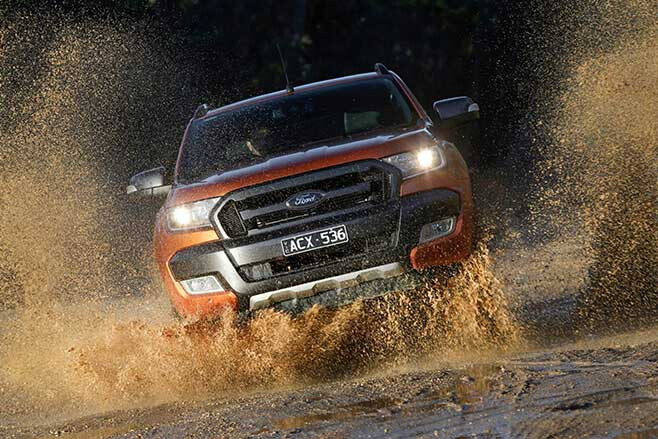
An optional powertrain, a 2.0-litre bi-turbo diesel with a 10-speed automatic, came in 2018 and while the small bi-turbo engine has the same towing capacity on paper as the 3.2 it doesn’t match the bigger engine when there’s serious work to be done, although it’s quiet and refined and peppy enough with moderate loads.
Unfortunately, it also has to work harder to do the same job as the 3.2, which makes the ‘big’ five-cylinder engine still the pick of the two. Such is the Ranger’s popularity it now outsells the Hilux in 4×4 models, which keeps second-hand prices strong. And an all-new Ranger is due in the next couple of years.
TOYOTA HILUX
THE Toyota Hilux is probably the most sought after of second-hand utes due to its solid reputation, and the high demand keeping prices high and the chances of getting a ‘bargain’ Hilux quite low.
The current generation Hilux 4×4 arrived here late in 2015 with three different engines and the usual cabin and drivetrain options.
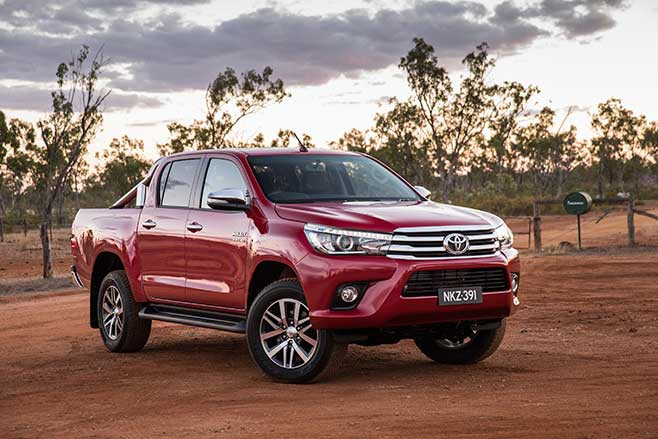
The Hilux is a ute that does most things well enough although the mainstream engine – the 2.8-litre diesel – is a little underwhelming in performance and over-geared with the automatic and works better as a manual. The 2.4-litre diesel in lower spec 4x4s does an admirable job but is no powerhouse.
If, by chance, you’re after a petrol ute then the Hilux is the only option in this class among the current generation utes. The 4.0-litre V6 in question is a rare find second-hand but is powerful, if relatively thirsty, and offers simplified maintenance compared to contemporary high-tech turbo diesels.
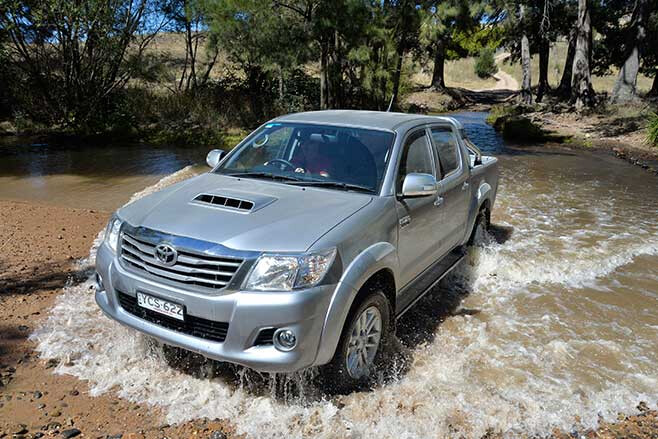
The Hilux is also physically smaller than big utes like the Ranger and the payload and towing capacities not as high in some cases. Like the Ranger, the Hilux is however a top-tier off-road performer due largely to its class-leading rear wheel travel.
MITSUBISHI TRITON
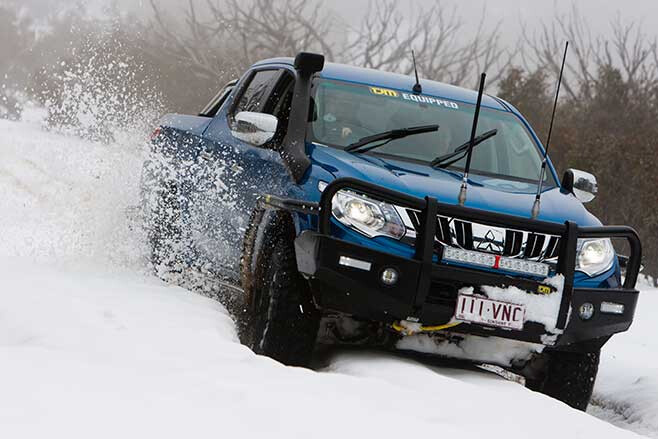
THE current generation Triton arrived here in 2015 and is distinguished from the other popular utes by being a bit smaller and not as good for carrying or towing heavy loads, but it’s also handier in confined places and the least expensive of the mainstream utes.
This is why its new sales rank only behind Hilux and Ranger. The low new price also translates to low second-hand prices, while strong new sales also means good supply on the used market. If you want a less costly ute than the Triton, then you’ll be looking at a Chinese, Indian or Korean offering.
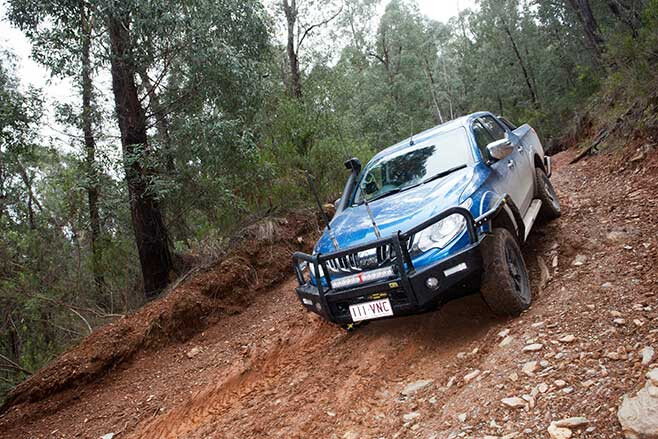
Recent-model Tritons are very strong with add-on safety equipment, while more expensive variants also have the inherent primary safety bonus of full-time 4WD, a consistently underrated advantage that the Triton holds over the other popular utes, bar automatic Amaroks. And in the case of the Amarok, the full-time system is single range, whereas the Triton offers the combination of full-time 4×4 and dual range.
Unfortunately, while that helps the Triton in a touring role, the limited wheel travel means the Triton’s star fades off road and, along with the Navara and D-Max is a bottom tier off-road performer.
HOLDEN COLORADO
THE announcement that US carmaker General Motors is closing the Holden brand in Australia can only force down the value of second-hand Colorado utes.
Holden has guaranteed parts and service until 2025, but beyond that it will mean sourcing parts through independent channels. And unfortunately, while there are some common parts between the Isuzu D-Max and the Colorado most of the service-sensitive items such as the engines and gearboxes are different.
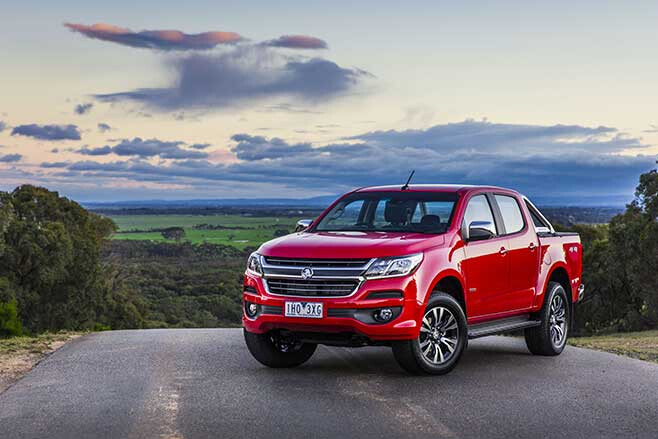
Outside of that the Colorado offers a biggish cabin and a hard-working engine that gets the job done. Excellent automatic gearbox too. It could well be the value buy in the used-ute market.The current generation Colorado came out in mid-2012 and a top-to-bottom re-engineering in 2016 made it far better in terms of body and powertrain refinement, ride and handing, and steering courtesy of electric power steering.
The introduction of second-generation off-road specific electric traction control in that year also moved the Colorado from a bottom-tier off-road performer to a mid-tier off-road performer. So, if you’re after a Colorado, then you definitely want a 2016 or later model!
NISSAN NAVARA
THE current Nissan Navara, or D23, was another 2015 release and is distinguished in the broader ute market as most dual-cab variants having coil springs at the rear, and not traditional leaf springs.
It’s fair to say that this generation Navara has been a disappointment for Nissan, sales-wise, failing to gain the market penetration of its predecessor, the D40. Despite claiming a 3500kg tow rating to match the bigger utes in the class such as Ranger and Colorado, the Navara proved none too good at either towing or carrying heavy loads, although this was improved for the 2017 model and again in 2018.
You can get traditional leaf springs at the rear of a Navara D23, but only with the less powerful single-turbo engine and not with the more powerful bi-turbo engine that is the default engine across the broader range.
The Navara’s relatively poor ground clearance and limited wheel travel also means it’s a bottom-tier off-road performer, despite coming with a rear locker as standard.
If you want a more general-duties ute and not a heavy-duty workhorse or off-road weapon, the Navara still offers decent performance and good levels of equipment, so can be good value. And if you want a dual-cab 4×4 with a factory sunroof, or an opening back window, then it’s the only choice!
ISUZU D-MAX
THE Isuzu D-Max has been the quiet achiever of the ute market, rising from near obscurity upon release in 2012 (at the same time as the Colorado) to a significant force in the market today.
Not much changed in the first five years of this generation’s life but 2017 brought a revised engine, new gearboxes and stronger all-round performance. The engine needed upgrading for Euro 6 emissions standards, which meant, among other things, the fitting of a diesel particulate filter.
The D-Max is still a modest performer but will get the job done even when towing heavy loads. Call it an honest workhorse, every day, all day. Like the Colorado, whose bodyshell and ladder frame it shares, the cabin is mid-size, so bigger than Navara or Triton, but not as roomy as a Ranger, BT-50 or Amarok.
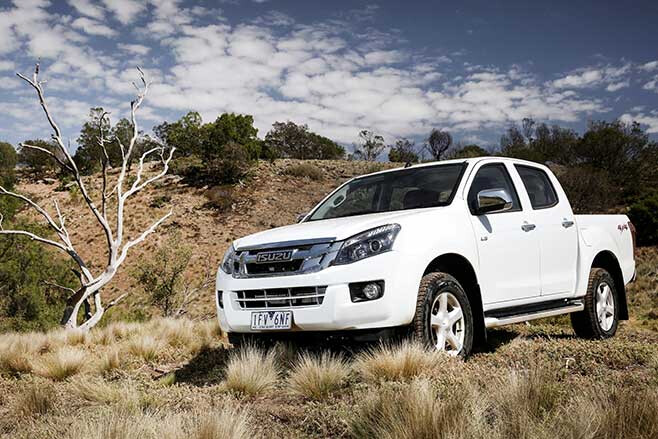
The D-Max however, isn’t anything special off road and while better than Triton or Navara, it still falls in the bottom-tier utes in terms of off-road performance.
With its excellent reputation for reliability and low service costs the D-Max is a popular second-hand buy and one that keeps its second-hand value well. As with buying a second-hand Hilux, finding a ‘bargain’ D-Max won’t be easy.
An all-new D-Max is due in 2020 but the timing is uncertain given the CV-19 disruption. When it does arrive, it will be the first of the next-generation utes to do so.
MAZDA BT-50
WHEN this generation Mazda BT-50 arrived in late 2011, it was a rebadged twin of the then-new Ford Ranger. There were a couple of minor technical changes – steering-rack ratio and suspension damper calibration – but otherwise the two were mechanically identical.
From 2016 on however, with Mazda not adopting the mechanical enhancements made to the Ranger in that year, the BT-50 fell behind the Ranger in a number of ways, notably engine refinement and flexibility, and off-road where the BT-50 is a mid-tier performer, although a good one at that.
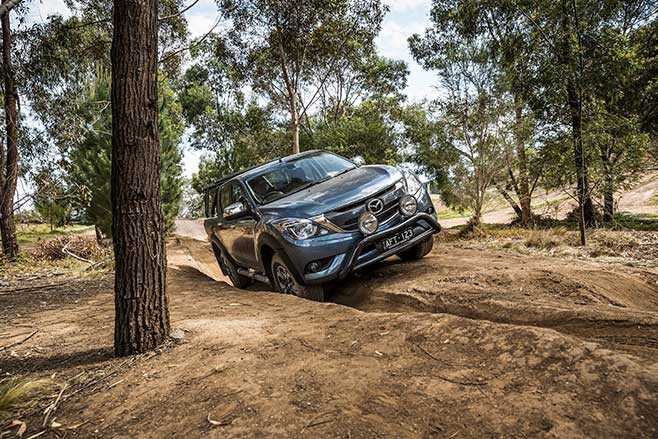
On the other side of the ledger, you can make an argument for the BT-50 staying with the proven, long-term reliability of hydraulic power steering and not adopting electric power steering, as did the Ranger.
Despite the similarities the BT-50 has only enjoyed a faction of the Ranger’s sales, so is not as common on the used market. But if you can find one, it offers the same basic attributes of the Ranger, namely a big cabin and excellent load and tow performance thanks largely to the big and ‘grunty’ 3.2-litre five-cylinder diesel.
A new generation BT-50, sharing a platform with the upcoming Isuzu D-Max, is expected later this year.
VOLKSWAGEN AMAROK
VOLKSWAGEN’S Amarok first appeared in Australia in early 2011, initially with a four-cylinder bi-turbo diesel. This was joined by a 3.0-litre V6 diesel in late 2016. Even with its four-cylinder engine, Amarok set the benchmark for utes in many ways and the V6 has pushed that superiority out to another level.
In terms of performance, heavy-duty towing power, ride and handling, the safety of full-time 4WD, fitting a full-size pallet between the wheel arches and ease of driving, there is none better.
Until recently, the V6 was only mated to a single-range full-time 4×4 auto system but is now available as a part-time, dual-range 4×4 manual, however don’t expect to see many of these pop up on the second-hard market for a while yet.
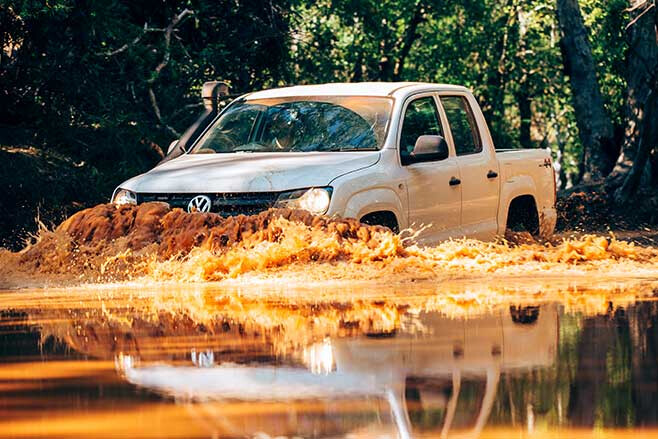
Still, if you think the lack of low-range is a handicap off road for the Amarok automatic, then you would be wrong as it’s a genuine top-tier off-road performer along with Ranger and Hilux and better than most utes with low range.
On the negative side of the ledger, the Amarok has no rear cabin airbags, in any model, while the lack of VW dealerships in regional and rural areas and the Amarok not being the favourite of independent country mechanics are other drawbacks.
An all-new Amarok isn’t far away and it appears it will be based on a Ford platform, which means the current Amarok could be one of a kind.
The June 2020 selection of 4X4 Australia Readers’ Rigs has landed.
2015 MITSUBISHI MQ TRITON
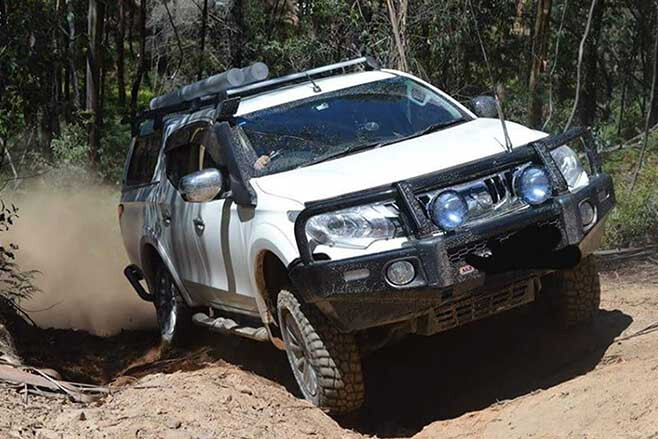
IT has an ARB bulbar, IPF Xtreme Sport Series lights, TJM rear bar, TJM canopy with storage drawers, a dual battery setup, a Rhino-Rack deck on the canopy, an ARB long-range fuel tank, and many other extras. It has been to Tasmania twice, and hopefully I will be going to the Victorian High Country once the travel ban is lifted – ANDREW JACKMAN
FORD PX2 RANGER
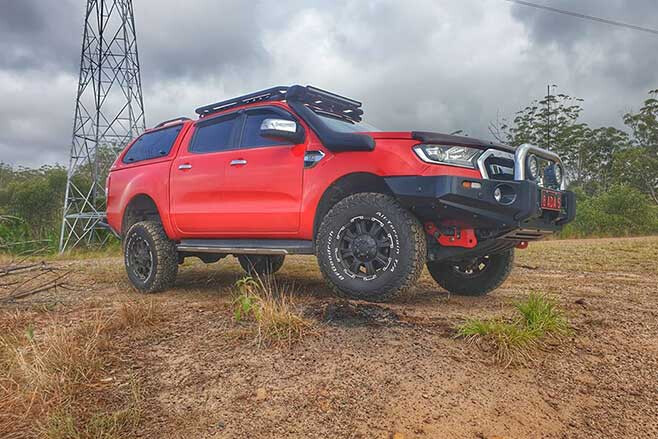
IT’S the 3.2-litre, auto. Kit includes a two-inch Ironman 4×4 lift, Ironman front and rear bars, Ironman LED spotlights, a Rhino-Rack Pioneer platform on a Backbone system, TJM snorkel, SJS canopy, rear drawers, dual battery setup, BFGs all around in 285 x 75 x 17s, and 17×8 Dynamic Hi8s with a positive offset of 40. It has done 90,000km. It’s a never-ending money pit when it comes to mods – JOHN SISSON
1990 NISSAN GQ PATROL
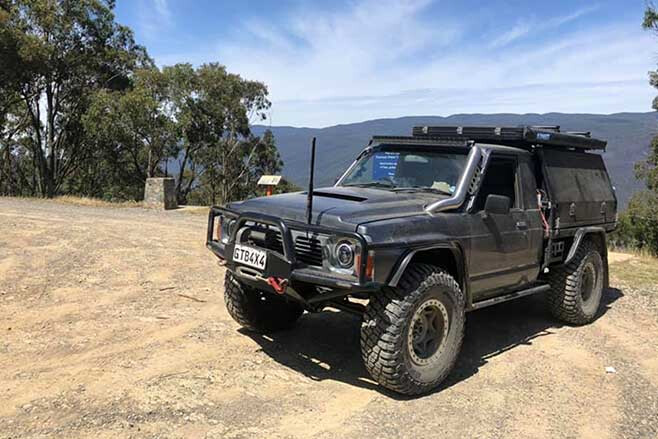
THE chopped Patrol has the TD42 with 200hp, and it’s just over standard height with 37s, twin air lockers and a canopy, all fitted to go remote camping – JESSE BUDGE
2019 NISSAN Y62 PATROL
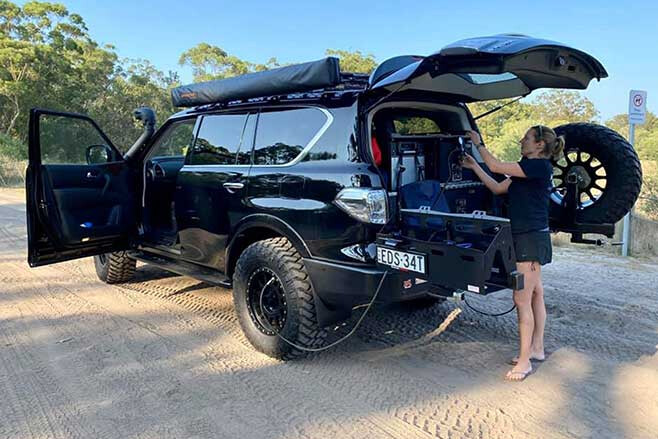
BUILT by More 4×4 Sydney, the Patrol has a two-inch lift, 35-inch Maxxis MTs, 125amp/h Safiery lithium battery, 1200W inverter and solar controller Victron with Bluetooth, ARB dual compressor. Dash front bar, Kaymar rear bar, 1100lb Runva winch, RV Storage aluminium drawers, Tracklander rack, Safari snorkel, Stedi Type-X Pro spots and 51-inch lightbar, Darche awning, X-Force exhaust, GME radio, CarPlay, and as of this week 140L tank and rock sliders – GREG NOBLE
2019 FORD RANGER RAPTOR
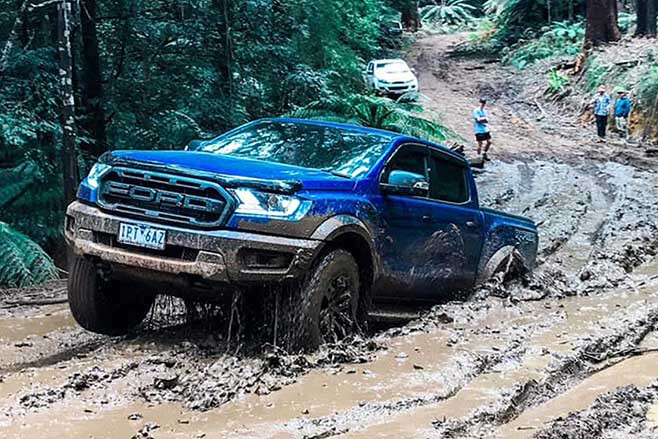
IT HAS a suspension lift kit – two-inch coils on stock Fox Racing coil-overs – as well as an Offroad Animal front bar with Stedi lighting. I’m going in this week for an ARB Linx, to control spotties and a few other things. Then next week it’s getting a Brown Davis long-range tank – TIM KNIGHT
2007 TOYOTA HILUX GGN25R
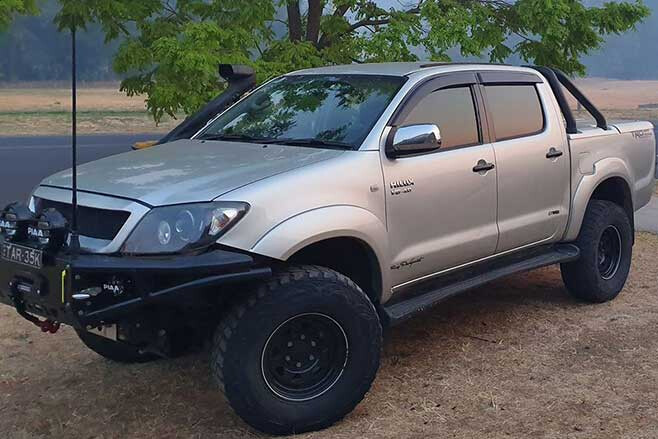
GEAR includes a two-inch lift, 33-inch tyres, an Xrox front bar, full Phat Bars underbody protection, Denso snorkel adapted to fit the V6, dual batteries (including iTechworld lithium starter battery and DCDC charger), PIAA driving and fog lights, Carbon 12,000lb winch, GME UHF, aftermarket Android head unit, and a ute-swag tent. I also have 4.11 Nitro gears with front and rear air lockers waiting to be installed after COVID-19 – MARK SIMPSON
Before the 4X4 Australia Ranger was shipped off to Tassie for its most recent off-road adventure, we kitted it out with Narva Ultima 180 LED driving lights.
These small-diameter (180mm) lights are ideally suited to vehicles with limited mounting space, and while this is not necessarily the case with our Ranger – which wears a trick-looking loopless AFN 4×4 bar – the compact dimensions do allow us to easily fit four of the Ultima 180s up front.
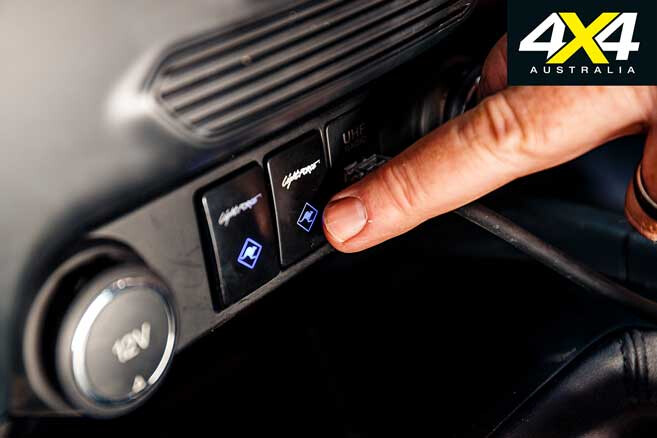
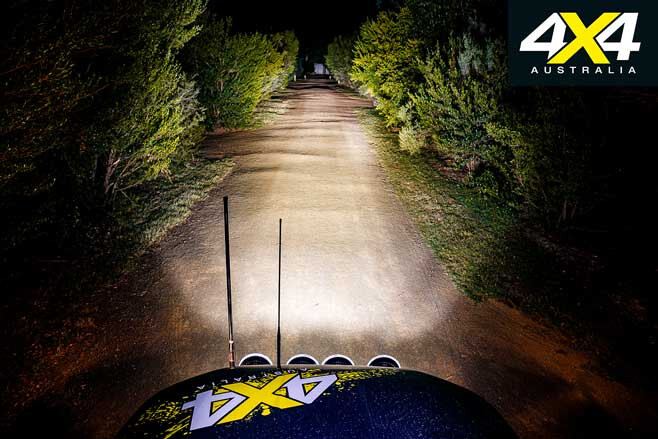
The Ultima 180s feature a hybrid beam pattern that’s engineered to provide a volume of light for off-road 4WD use combined with long-range light performance for on-road driving; and the fact that we have four of them fitted means we can aim the inside pair straight down the track while skewing the outside pair slightly to the sides, which provides plenty of light right where it’s needed, no matter the driving conditions. We’ve also fitted separate light switches for each pair, which allows us to run just the inside pair or the outside pair, or all four lights at once.
Before getting into the technical nitty-gritty, let’s talk about light performance. We tried to avoid driving at night in Tassie due to the abundance of wildlife, but on one particular night this could not be avoided, and we didn’t make it out of the track from Montezuma Falls till around 11pm.
This track is pretty slow-going, but with potoroos and quolls all over the place, it was fantastic to have a long throw of light down the centre of the track as well as a generous spread of light to the sides. This also proved beneficial once we finally made it on to the road for our run back into Zeehan; reflected light from road signs could be easily minimised by switching off the inside lights, while the outside lights still produced much-needed light to the sides of the road, far in excess of what the Ranger’s standard high-beam lighting could achieve.
One of the other things I like about the Ultima 180s is how easily they can be vertically adjusted if needs be; and no tools required thanks to the large aluminium adjuster knob on each light.
Now for the techy stuff: according to Narva, the Ultima 180’s 25 “5W XP-G2 Cree LEDs produce 120W of pure white light (5700°K) … (and) extraordinary volumes of broad penetrating light of 12,000 raw lumens (6795 effective lumens)”.
For the technically literate, the important figure of 1 Lux at 600m (per pair) allows for direct comparison with other lights. Narva also says the reflector used in the Ultima 180 is a highly polished super-efficient alumininium metallised unit, with precisely sculpted parabolas that allow the light produced by the LEDs to be controlled.
The Ultima 180s also feature a DRL (Daytime Running Light) function to improve daytime vehicle visibility and safety.
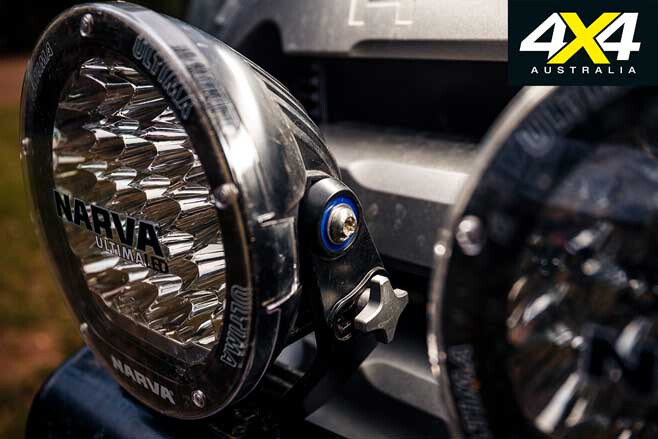
The Ultima 180’s 25 LEDs are housed in a tough pressure-diecast aluminium housing with built-in ‘Active Thermal Management System (cooling fins) to ensure cool running. The housing is sealed against dust and water ingress (IP66 and IP67) and has a Nitto breather vent and DT connector. The lens and lens protector are made from a virtually unbreakable hard-coated polycarbonate. Each light weighs in at 1.75kg and Narva claims a modest current draw of just 8.9A at 12V.
Versatile three-bolt mounting options make the Ultima 180s compatible with all nudge bar and bullbar makes and models, and the tough mounting bracket features a polymer rubber suspension system to make the light impervious to shock and vibration. The four lights on the front of the Ranger have certainly proved shake-and-rattle free over some pretty rough roads and tracks thus far.
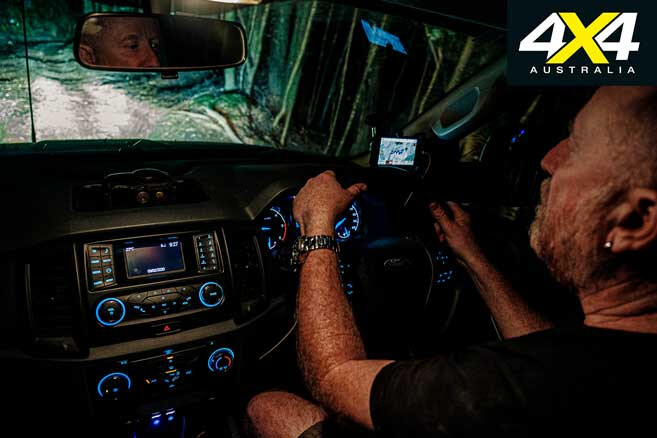
The Narva Ultima 180s are supplied with a wiring harness and switches, and interchangeable coloured trim pieces (blue, black, yellow and red) for vehicle customisation. The standard stainless-steel bezel can also be replaced with an optional gloss black or chrome plated bezel for further customisation – again black on our Ranger.
For peace of mind, Narva backs the Ultima 180 LEDs with a five-year warranty.
RATED Available from: www.narva.com.au RRP: Lights $489 ea; Gloss black bevel $49 ea We Say: Big useable light output in a small and tough package.
Planning a trip to Northern Queensland? Here’s something to read before you go. Plus, we take a look at a new DPF Spray from JLM Lubricants.
100 THINGS TO SEE IN TROPICAL NORTH QUEENSLAND

Whittle away some spare time by picking up a book and planning your next off-road adventure. This guide to Tropical North Queensland – written by locals Catherine Lawson and David Bristow, who’ve been exploring the area’s land and sea for more than 20 years – includes the 100 best places to visit in the region, from swimming holes, rock-art galleries and outback locations. We’re sure the Great Barrier Reef is in there somewhere…
RRP: $29.95
Website: www.exploringedenbooks.com
JLM PRESSURE PACK DPF CLEANING SPRAY
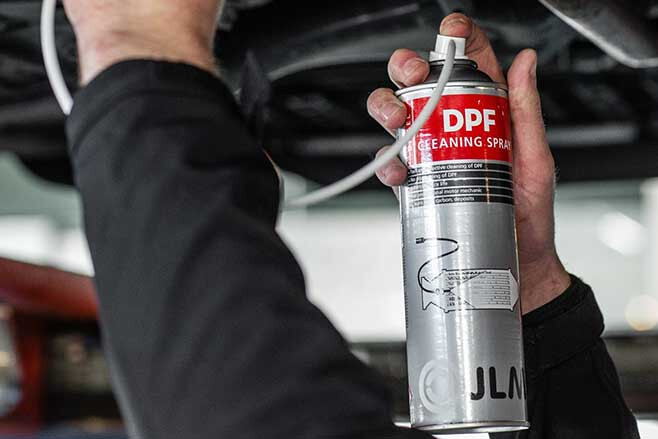
JLM Lubricants’ DPF Spray has been designed for low- to mid-range soot blockages, with the product capable of unblocking up to 80 millibar from the DPF. Not only can the spray unblock low-pressure blockages, it’s also ideal for preventative maintenance for vehicles prone to cold drive cycles. It’s time to say goodbye to the unnecessary removal of DPF systems!
RRP: $39.95
Website: www.jlmlubricants.com
On a recent trip to Tassie, Deano and the 4X4 Adventures team ran our Ford Ranger through its paces over the small state’s big tracks.
Recently fitted to the Ranger was a 60-litre myCOOLMAN fridge, housed on an MSA 4×4 drop slide … after a long day on the rough stuff, nothing beats a few ice-cold brews, right?
In the above video, Deano runs us through some of the fridge’s key features: the turbo function, which increases the speed of the compressor to cool things quicker; not one, but two bottle openers; and the extremely tough and durable carry handles.
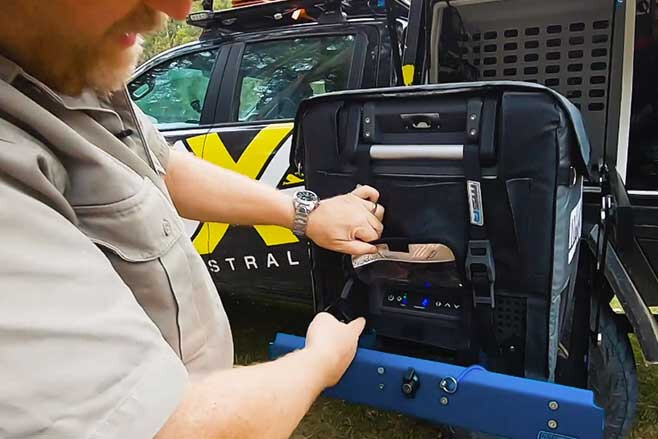
He also illustrates how easy it is to control and monitor the fridge via Bluetooth and the accompanied phone app.
The 60-litre myCOOLMAN fridge utilises a 12/24 volt DC compressor, has a two-way opening lid, an easy-to-read display, LED interior lighting and plenty of interior space.
So far, the 60-litre myCOOLMAN fridge fitted to our Ford Ranger has been flawless in its operation. We’ll keep you posted on how it fares on our next trip.
More information: www.mycoolman.com.au
THE TERM ultimate is thrown around a lot in 4WD land. The ultimate suspension. The ultimate driving lights. The ultimate budget-beater imported swag with the ultimate free magazine thrown in.
2020 CUSTOM 4X40TY: Vote now for a chance to win!
The problem is, and it’s a damn big one, is they never do the word justice. They’re far from the ‘ultimate’, nowhere near the best of the best, and hardly the king on top of the mountain. But some things, they’re a little more deserving of the title.
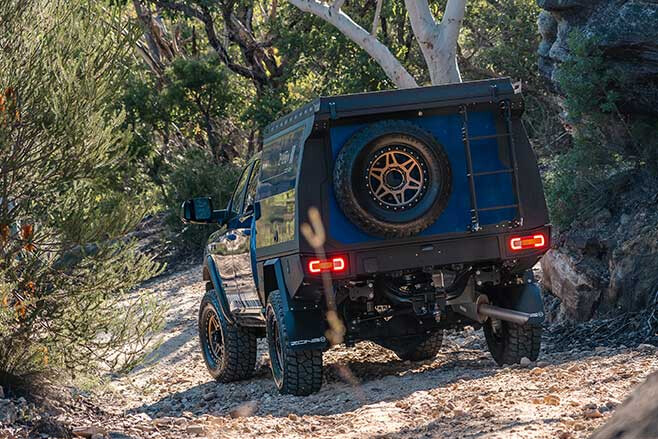
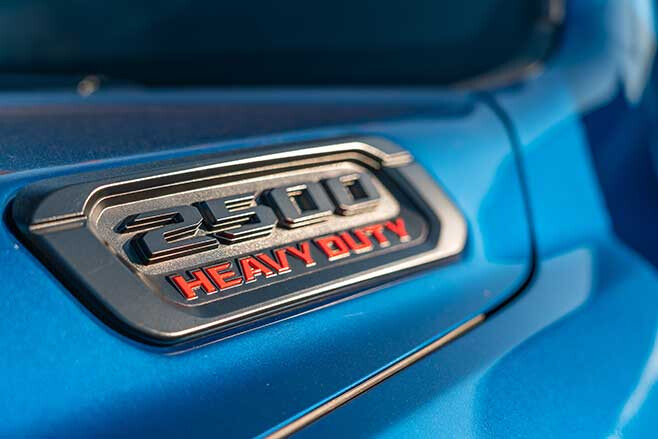
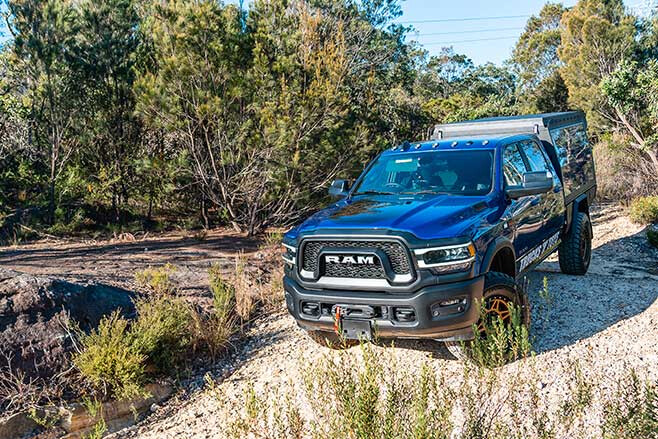
The 4×4 Ram 2500 you’re looking at now is the ultimate, make no mistake, it’s the best of the best, the toughest of the tough, the king of every single mountain it’s ever travelled on, and the benchmark other 4x4s need to be measured against. What the hell are you guys on about? We thought you’d never ask.
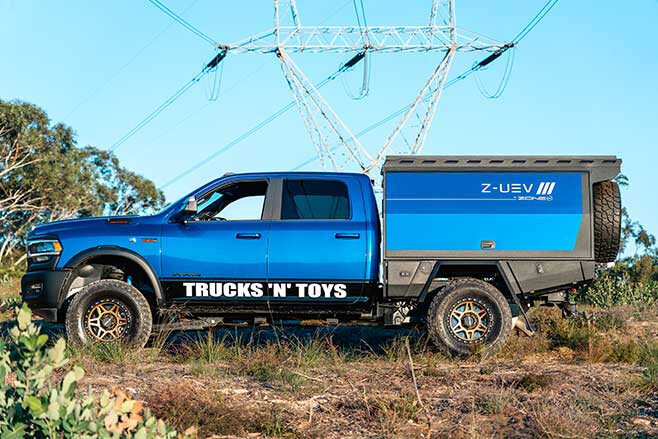
You see, this isn’t any ordinary yank tank, it’s a Power Wagon, and those who know what that means, know the next few pages will be filled with the best gear money can buy, and almost all of it factory fitted.
If you’re familiar with the Ram platform you’d no doubt know the 2500 is the workhorse of the family, monster-truck-sized live axles front and rear, coil springs the size of a Mack truck’s, and a 6.7-litre straight-six Cummins Diesel lumbering away under that elongated bonnet. The Power Wagon takes that up a notch. While it still retains that rugged over-engineering perfect for Alaskan oil fields or Texas ranches, it does it with a little more flair.
Up front, straight off the showroom floor, Ram Trucks has replaced the oil-burning diesel with a fire-breathing 6.4-litre V8 Hemi sucking in high-octane unleaded and pushing out more than 400 horsepower and nearly 600Nm. Rather than the clunky column shifter of diesel offerings, the Hemi is spurred into life by a dash-mounted dial engaging the eight-speed automatic cog-swapper, before a set of driveshafts the size of tree stumps send power fore and aft.
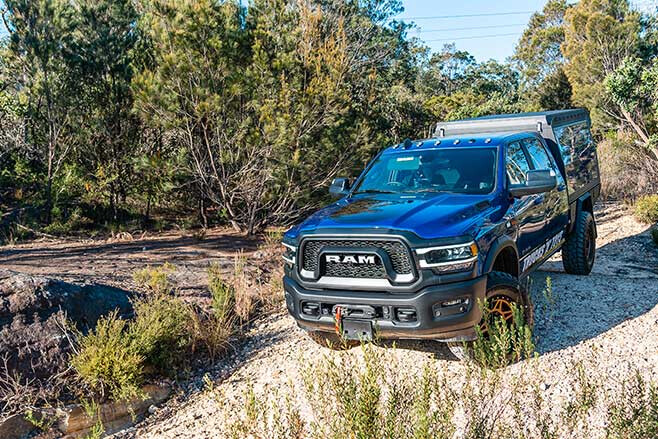
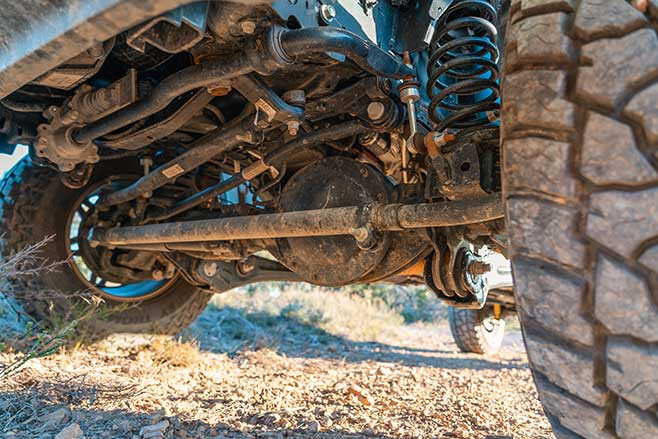
The front live axle is kept in place with a radius arm setup similar to what you’d find in most Patrols or LandCruisers, and although from the factory they’re fitted with a super-flex-style arm on both sides.
The third bushing allowing the arms to articulate further than a base model, by reducing the binding point radius arms typically have. It gives the Power Wagon monstrous off-road capability without reducing its ability to do serious work. An electronic diff lock up front is engaged with a tap of a button, and wraps around a 9¼-inch ring gear. Helping the front end to seriously open up off-road is an electronic sway bar disconnect, with a set of two-inch lifted springs mated to Bilstein shocks.
Moving rearwards, Ram has somehow managed to have one of the toughest trucks on the planet ride surprisingly well thanks to a 5-link coil-sprung arrangement. It holds the rear axle in place with a second set of lifted springs and Bilstein shocks, while a rear locker sends drive to both wheels. and another sway bar is fitted high-and-tight. The combination allows for 33-inch tyres stock, with 35-inch Mickey Thompson Baja ATZ P3s squeezed in these guards, wrapped around Method Race Wheels.
Up front, a factory steel bar protects the Power Wagon’s soft spots, with the Warn fairlead a factory inclusion. Nestled deep within the cattle-grate-sized bumper is Warn’s legendary 12,000lb Zeon winch. It’s wrapped in lightweight heavy-duty rope, with an extended shift lever allowing easy engagement without reaching arm-deep into the bar to kick it into gear.
On the inside, shy of a UHF tek-screwed to the dash, the interior of the Power Wagon is the dream of most 4x4ers. Front and rear leather seats are easy to clean, with the front pews featuring heating for cold Victorian High Country mornings, and cooling for outback runs in the heart of Australia. A plethora of high-resolution screens give up-to-date info on everything from 360-degree cameras to fuel consumption.
Moving rearwards and ‘big blue’ starts making a whole lot more sense as an Aussie tourer. In place of the nearly two-metre-long stock tub, an ultra-lightweight canopy from Sunshine Coast manufacturer Zone RV now resides. Constructed nearly entirely of composite materials and aluminium it barely makes a dent in the GVM of the Power Wagon, not that it’d care either way.
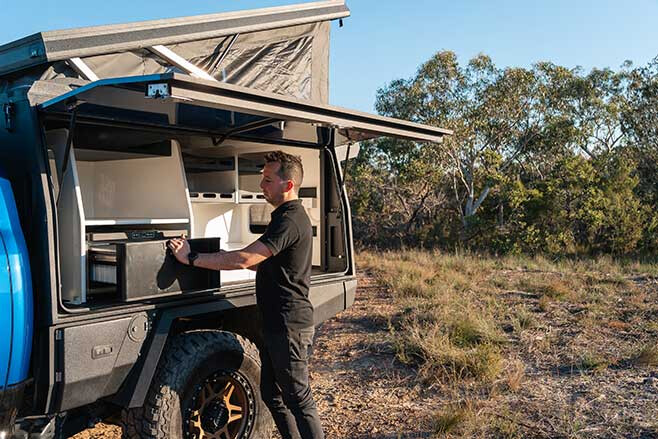
Popping open the aluminium-skinned door along the passenger flank reveals a well-laid-out kitchen similar to what you’d find in a high-end caravan. Up front there’s an Evakool 40L fridge-drawer keeping drinks cold and weights down, and by doing away with a traditional chest fridge and drop-slide the unit is far more accessible and takes up less footprint in the canopy.
Above is a series of shelves perfect for stashing a space case or Weber Q. Moving rearwards, an extensive pantry setup provides easy storage for food and cooking equipment. Sliding out from the rearmost saddle box is a huge stainless-steel kitchen bench, with a pop-out sink making roadside cleaning-up a breeze.
Jumping around to the driver’s side reveals a cavernous storage area and tie-down points big enough to load an army of swags, but up top is a little more fancy. Climb up the ladder, pop the two clasps and a built-in rooftop tent emerges in just seconds. The arrangement uses the roof of the canopy as the base, keeping the total weight down to barely more than a mattress and sleeping bag. There’s lighting up top, as well as power outlets for reading lights or charging devices while you sleep.
Hidden down beside the fridge is a huge power wall from Queensland-based Enerdrive. Based off a lightweight 200amp/h lithium battery pack, the power wall features the usual suspects like DC to DC charging, a 2000W inverter, and 240V power points spread throughout the canopy. It also houses a high-tech touchscreen Garmin device that allows monitoring of water levels in the 100L water tank, battery charge levels from solar inputs, and full control of all the lighting. The unit lives in the windscreen, with a dock installed on the power wall.
The spec sheet for the big blue Power Wagon reads like the who’s who of aftermarket gear – the wish list every 17-year-old scrawls out when they start planning their very first 4×4 – including the kitchen sink. But the guys at Trucks ‘N’ Toys have actually barely modified it at all, even going so far as to leave the stock exhaust in place.
It’s kind of a testament to the idea of starting with the right vehicle from the get-go. As much fun as wrenching spanners in your spare time is, there’s a lot to be said about jumping in the hot seat and taking on the big lap in a near stock 4×4 that’ll eat up everything you throw its way.
TALKING CIRCLES
IF YOU’VE had even a cursory interest in vehicles you’d no doubt have come across the legendary name Hemi, and the sly grin that comes across grey-bearded drag racers as they remember their misspent youths. So, what exactly is a Hemi? And why do people rant and rave about them?
The principle is simple. Any engine, whether it’s diesel or petrol, needs a combustion chamber. Somewhere for air and fuel to be compressed, ignited and expanded in. The more efficient this chamber, the better fuel converts into mechanical power. Things like heat loss through the cylinder walls or head or uneven burns in the combustion chamber all sap power.
Most engines run a combustion chamber with a relatively flat top, the Hemi by comparison runs a round or hemispherical-shaped combustion chamber in the head. The theory is a smaller surface area and more even efficient burn without the dead corners in a flat-topped chamber produces more power. Is it the final word in engine technology? Absolutely not, but it’s cool as hell.
THE JULY issue of 4X4 Australia is out now, with the new issue overflowing with juicy 4×4 goodness.
We delve in and take a close look at the new-look Isuzu-based 2021 Mazda BT-50 that adorns the cover of this magazine. Plus, we revisit the irrepressible LC200 Sahara, taking the elder statesmen for a spin on some gravel.
Dan runs a microscope over a RAM 2500 Power Wagon, which he penned as “the best of the best, the toughest of the tough, the king of every single mountain it’s ever travelled on, and the benchmark other 4x4s need to be measured against”. High praise, indeed.
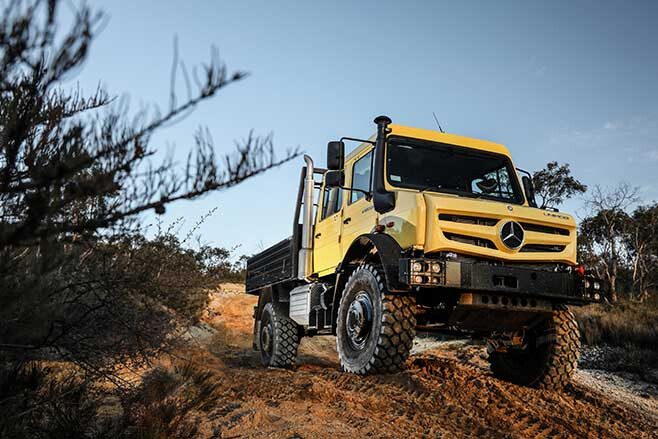
However, Matt drove an unstoppable Unimog U5023 and asked whether it’s the ultimate adventure touring vehicle. Which one would you choose?
Looking at swiping the credit card for a ute, but a new rig from the showroom is out of the equation? We’ve got you covered, with a guide on how each of the current utes shape up on the second-hand market – plus we highlight what to look for when buying a used car.
Not long ago we asked our readers to name their favourite 4×4 tracks in Australia. To get you pumped for your post-coronavirus trip, we’ve listed 10 essential Aussie tracks as voted by our readers.
Part Two of our Tasmanian trip for the 4X4 Australia Adventure Series is also squeezed into this mag, with the crew travelling through the Apple Isle’s southern and central delights.
WHAT ELSE IS THERE? – 2020 Defender features guide. – Defender gets an auto conversion. – Satellite Phone buyers’ guide. – New gear, readers’ rigs and long-term updates.
The July 2020 magazine is OUT NOW!
When I picked up the 4X4 Australia Ranger in Melbourne for our impending Tassie adventure, it had been fitted with a new set of Goodyear Wrangler MT/R Kevlar muddies, which was reassuring since I was expecting to encounter a fair bit of mud in the island state.
The Wrangler MT/R Kevlars are the same LT285/70R17 size as the Maxxis RAZRs that were fitted previously, those tyres having done a tough stint on the Ranger on its 2019 trip through the Flinders Ranges.
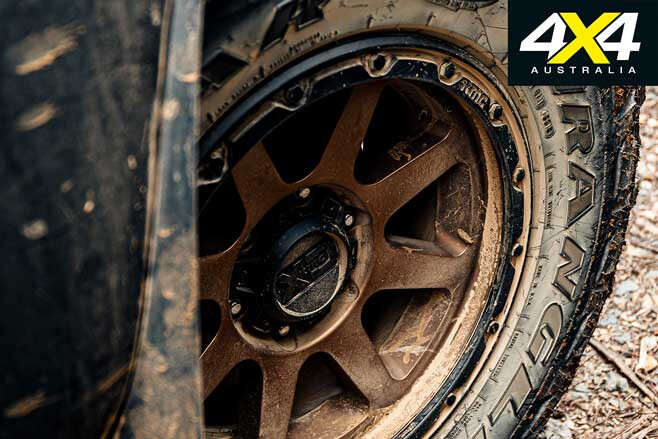
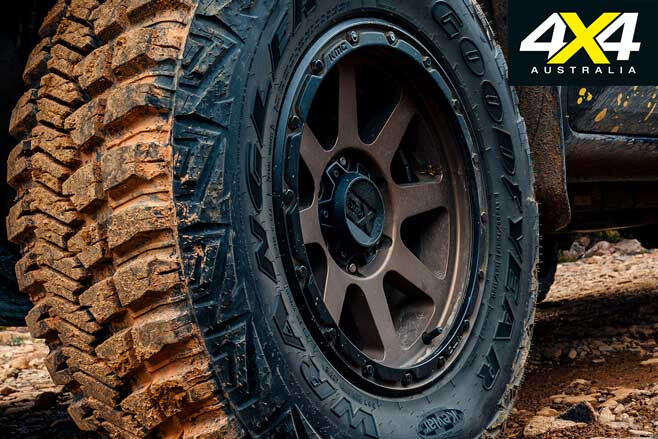
Mounted to the Ranger’s good-looking KMC XD Addict 2 alloy rims, the new MT/Rs certainly look the part thanks to their aggressive open-block tread pattern that wraps around on the sidewalls. The MT/Rs also feature a somewhat unique asymmetric tread design, which Goodyear claims benefits both “aggressive traction” when driving off-road and “superb handling” when driving on-road.
My first taste of the MT/Rs was on dry roads, firstly commuting through Melbourne and then, once off the Spirit of Tasmania I, on the highway from Devonport down to Longford. This leisurely cruise on the highway, with a freeway section thrown in, didn’t yield much information when it comes to on-road grip, steering and braking, but it did highlight the noise generated by the MT/Rs which, while not excessive, seemed more noticeable than some other new muddies we’ve tested before. Sure, muddies generally get louder with age when the edges of the tread blocks start to flare, but the MT/Rs were too new exhibit this type of wear.
The next day I got to sample the MT/Rs on wet bitumen and gravel roads, and Goodyear has obviously gone to great lengths to ensure they perform well in such conditions with their unusual asymmetric tread pattern. There are few sipes on the inside tread blocks, which are chunky items spaced far apart, no doubt aimed at gaining purchase in slippery off-road conditions, as well as quickly clearing away mud. And while the outer half of the tread pattern is also quite chunky, there’s an obvious longitudinal channel and a lot more siping in the tread blocks, clearly aimed at maximising water dispersion when driving on wet roads. Just look at the overall tread pattern and it’s quite clear to see what the Goodyear engineers have tried to achieve with this asymmetric design: a combination of off-road grip and on-road performance.
The tread compound is also important when it comes to on-road grip, especially in wet conditions, and while the use of silica in tyre compounds is nothing new, it’s the blend that dictates how a tyre performs in terms of rolling resistance and grip. In the MT/R, Goodyear claims to have come up with a special blend it imaginatively calls ‘Advanced Silica Compound’ that’s claimed to enhance off-road traction and wet on-road grip. Wet-road performance certainly proved impressive, with good steering feel in sketchy conditions, plenty of grip and strong braking performance.
Tassie provided an opportunity to test the MT/Rs in a wide variety of conditions including gravel, undulating rocky tracks, high-country hills, muddy sections, hard-packed sand and, on the West Coast, what the locals call quicksand. I ran 35psi on the road and dropped pressures once off the blacktop, down to 28psi on gravel roads, to 23psi on gnarly off-road tracks and as low as 16 to 13psi on super-soft sand.
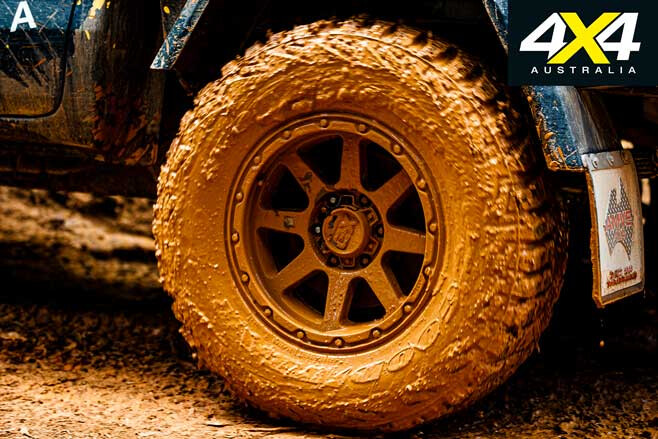
The MT/Rs did not disappoint, offering good traction no matter the surface. They also copped a pounding on some of the narrower tracks we encountered, with tree roots and rocks attacking the sidewalls at every opportunity but inflicting no visible damage – not even a scratch. As well as traction ridges that see the tread pattern continue over to the sidewall, the MT/R has a Kevlar reinforced sidewall construction, which proved impervious to damage despite my sometime wayward off-road driving that saw me occasionally brush up against rocks and other obstacles.
When lowering tyre pressures for soft sand driving, the MT/Rs didn’t ‘bag-out’ too much in the sidewalls, even at 13psi when recovering one of the other vehicles on our Tassie adventure.
Tassie is only a small state and, so far, we have only put around 3000km on the MT/Rs, but there’s plenty more off-road work ahead for these muddies.
RATED Available from: www.goodyear.com.au RRP: $499 ea We Say: Strong performance on and off the road, albeit a little noisy.
MSA 4X4 Accessories’ head honcho, Shane Miles, brought along his six-wheel drive LandCruiser 200 Series on a recent jaunt we took to the Apple Isle.
Fitted to the massive rig is the brand’s clever towing mirrors, which have been punished over many kilometres by the team before bringing it to market.
In the above video, Shane shows Deano some of the mirror’s nifty little tricks and its clever design. For example, they’ll fold inwards or outwards if you happen to clip a tree on a tight bush track.
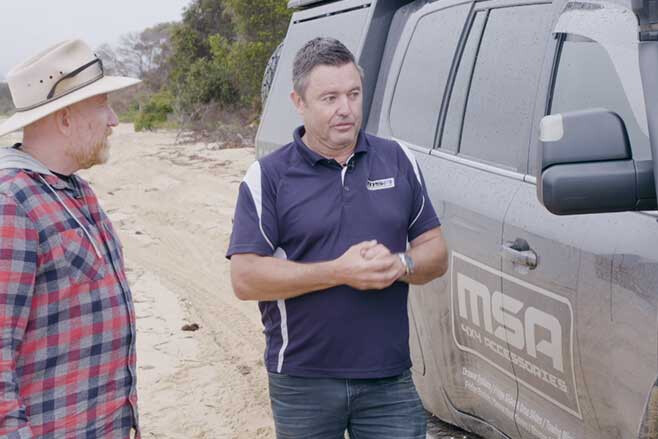
The mirrors, which remain unobtrusive in their design, provide the driver with full vision for the length of the trailer or caravan being towed.
“The key was to design a mirror that, when not towing, still looks proportionate to the size and styling of the vehicle. We needed to design a set of mirrors that just look right,” said MSA 4×4.
“Our new MSA 4X4 Driving Mirrors feature a unique design with a large single mirror that pivots on an extremely heavy-duty extension slide, that allows the mirror to be returned to its normal “non-towing” position, to avoid the extended mirrors permanently protruding off the sides of the vehicle.”
The mirrors are ADR-compliant and come with a five-year warranty.
More information: www.msa4x4.com.au
- Introduction
- Update 1: Fitting In
- Update 2: Midsize Triton
- Update 3: Towing with the Triton
- Update 4: Photographer’s Impression
- Update 5: No Fuss, No Frills
Introduction
A new year and a new long-term test truck for the magazine, as we welcome this Mitsubishi Triton GLX+ to the shed. The Triton finished 2019 as the third best-selling 4×4 in Australia, launching with a full reskin early in the year and receiving an up-spec towards the end of the year.
The new look came with a heavy load of standard safety equipment to give the Triton more safety kit than any other 4×4 ute on the market, including those that cost almost twice as much. The standard inclusion of rear cross-traffic alert puts it ahead of European rivals such as the Mercedes-Benz X-Class and VW Amarok, in terms of standard safety equipment.
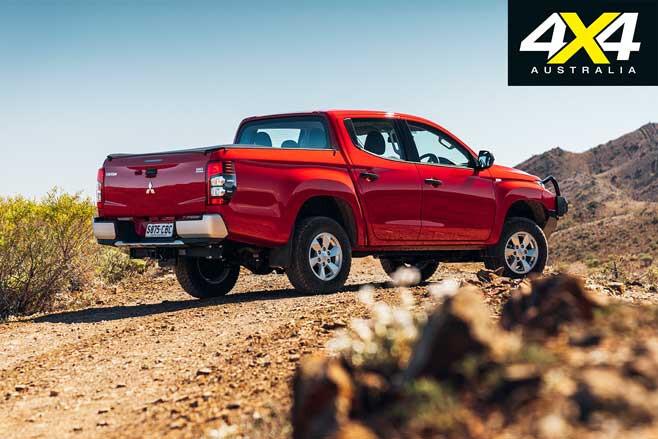
Our demo model comes with more than 6000km on the clock and a few factory extras including the steel front bar, LED light bar, a tow bar, floor mats and a tonneau cover. These add around $7K to the drive-away price, but on current pricing you could drive out in a GLX+ with all this kit for $47,668. That’s a lot of truck for less than $50K, The Triton owes its sales success to sharp pricing and value for money.
There was good news for off-roaders with the 2020 updates, with the rear diff lock dipping further down in the range so that this GLX+ specification now has it as standard; it was previously only offered in the top-of-the-range model. Also new was the inclusion of 245/70R16 Bridgestone Dueler all-terrains to the GLX and GLX+.
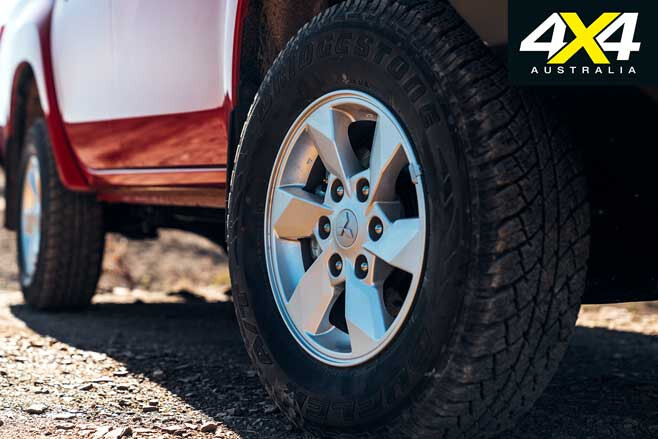
These worthy additions add to a long line of standard features including the Super Select 4×4 system that gives the user the option of full-time AWD, as well as the usual RWD and locked 4×4 settings. There’s a comprehensive A/V system with Apple Carplay/Android Auto, and all the bits and bobs you expect in a mid-range pick-up.
We look forward to putting the Triton through its paces over the next six months. It’s always been an honest toiler that gets on with the job without any pretence; it’s not everyone’s bunch of grapes, but when you consider the safety package and drive-away pricing, it bears further investigation beyond the flash and glamour of some of the more popular 4×4 utes.
4×4 Shed Log #1: 2019 Mitsubishi Triton GLX Current mileage: 6775km Price: $50,403 (as tested)
Update 1: Fitting In
The Triton finds its place in the shed during its first month with us.
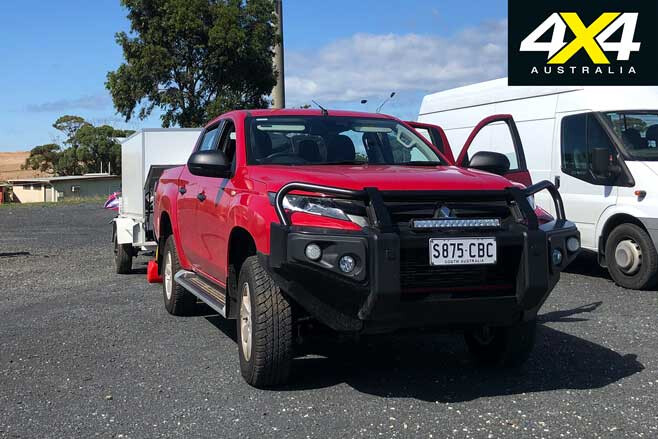
The Mitsubishi Triton hasn’t left town for its first month with us, but it hasn’t been laying idle either. As always when you have a ute, especially one with a towbar, mates appear from everywhere wanting to borrow it.
This time it was Louis from MOTOR Magazine who was looking to tow his go-kart trailer over a weekend and the ZL1 Camaro he regularly drives strangely enough doesn’t have a hitch. I happily swapped keys with him and, as expected, the Triton made light work of the relatively light kart trailer. For the record; the ZL1 attracts a bit more attention than the Triton does. It goes a bit better, too, but it can’t tow a trailer or go off-road.
The MOTOR team nabbed the Triton again for use as a camera car on a shoot with the Camaro at the racetrack, and it gave us the chance to bag these pics.
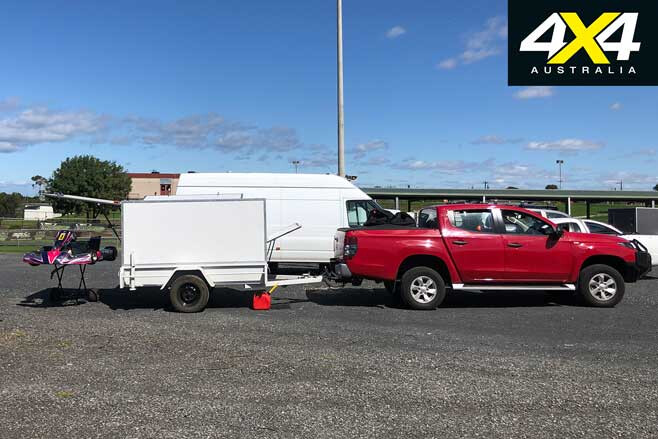
Back in Melbourne, the Triton has slipped into commuter mode and is a very easy vehicle to live with for this use. It really is an appliance that you just use and it does the job without fault. It’s an easy vehicle to get in and out of, offers plenty of outward vision for the driver and is reasonably comfortable.
The Triton is one of the few 4×4 utes on the market that has a steering column that is adjustable for both height and reach, yet with my 185cm frame in the driver’s seat I still find the steering wheel a long way away and would prefer it closer. It is less than ideal, but moving the seat further forward would have my knees touching the steering wheel.
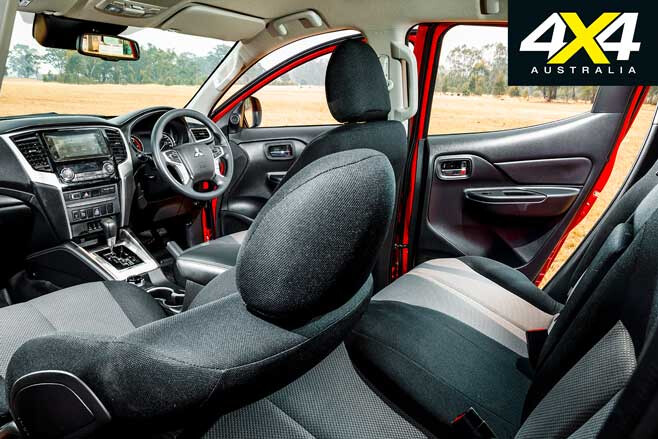
Speaking of moving the seat forward, the only problem we’ve had with the Triton came when Tristan Tancredi drove it and was unable to slide the seat forward any more than a few centimetres. There was obviously something jamming the left-hand seat slide, but looking under it didn’t show anything. Removing the seat revealed a five-cent piece that had well and truly wedged itself into the rail preventing full travel. The offending bent and buckled coin was removed to make things right.
While most of the cabin controls and functions within the Triton are simple and easy to operate, a personal hate of mine is the absence of dials to control things like the audio volume and cabin temperature.
Car companies seem hell-bent on doing away with dials and replacing them with buttons even though dials are more tactile, easier to use without having to look at, and faster responding to inputs. In this age when safety experts are always preaching about driver distractions, you’d think having the simplest controls for regular function would be a no-brainer. Mitsubishi isn’t the only company at fault here, most of them are guilty of disregarding knobs.
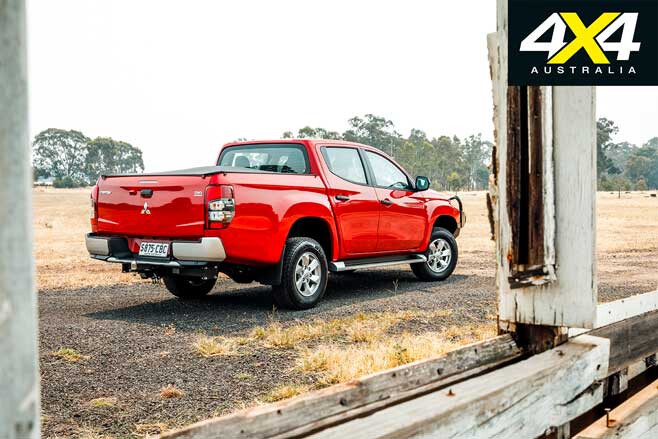
The cabin is otherwise well-appointed with all the stuff you want; single-zone climate control, a decent-sized display screen with access to Apple Carplay/Android Auto, and good storage compartments. Just as important, it doesn’t have the stuff you don’t want; there’s no keyless entry or start button, and no power tailgate at the back. Even so, it’s still frustrates when it doesn’t let you remove the key from the ignition before you put it in park, and the self-locking doors function can’t be switched off.
The Triton has proved itself easy to live with in town, so now we just have to get it out and get it dirty.
4×4 Shed Log #2: 2019 Mitsubishi Triton GLX Current mileage: 8018km Price: $50,403 (as tested) Mileage since last update: 1243km Average fuel consumption: 11.1L/100km
Update 2: Midsize Triton
Is it true that good things come in small packages?
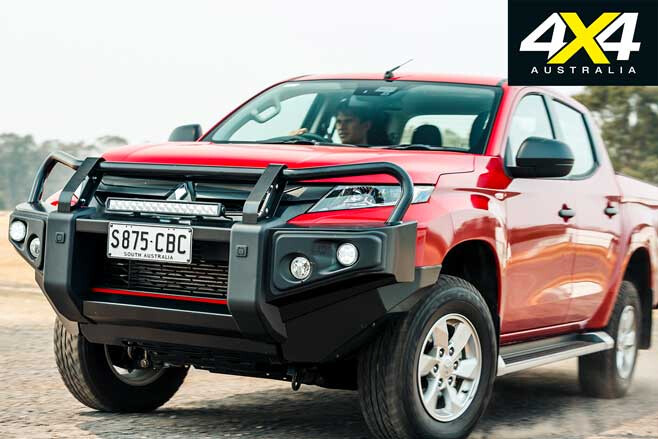
While many of us love the big truck feel and ride of some of the larger offerings in the one-tonne 4×4 segment, the appeal of that extra size soon fades once you’re back in town and looking for a spot in the local carpark.
With long wheelbases and even longer overall lengths, some of these double-cabs can be a real pain in the butt to park around town. And speaking of butts, many urban parking spots aren’t marked for five-metre plus utes and they will leave their tail hanging out past the designated space.
Thankfully the Mitsubishi Triton isn’t one of these utes and is actually one I don’t mind driving around town. With its total length coming in at 5305mm, and more importantly the wheelbase at 3000mm, the Triton is one of the easiest utes for the urban adventure.
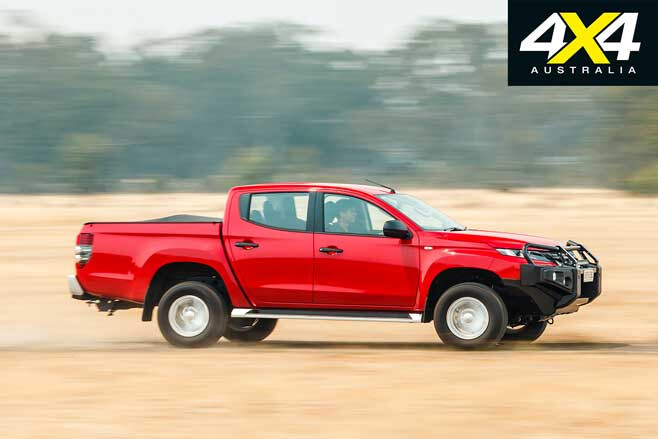
While the short wheelbase might not be the best thing for carrying a load in the tray, as it puts most of the load behind the rear axle, it does make the Mits more manoeuvrable, both in town and out on the tracks. Its 11.8m turning circle is really noticeable when you’re exploring places like the high country or desert scrub where tracks twist and turn in between bushes.
Defying its size, the GLX+ has a healthy payload of 945kg and Mitsubishi has wisely kept its maximum towing capacity at 3100kg. While that might be 400kg down on some of its competitors, in the real world the Triton is better off with its 5885kg GCM (Gross Combined Mass) leaving you with a solid 830-usable kilograms you can still load in to the car. That maximum towing capacity isn’t always what you make of it until you line it up against the GCM and see what you can carry in the car as well.
Triton is one of the best in this regards allowing you to still carry a few mates and some gear in the car when you have a heavy trailer on.
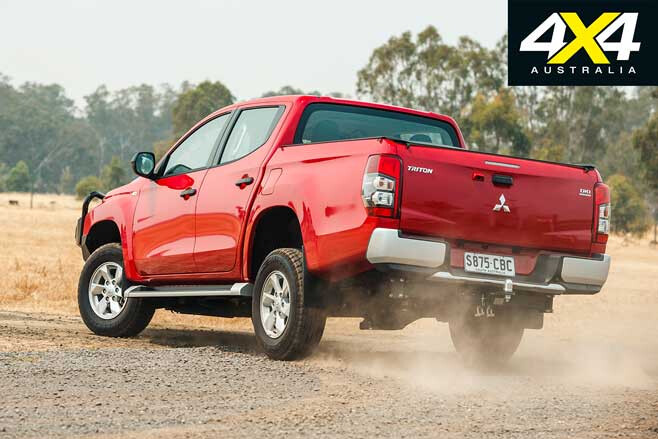
The Triton’s 2.4-litre diesel engine punches above its weight too. Like all inline four-cylinder engines it can be a tad harsh when you wring it to get the full 133kW and 430Nm out of its four pots, but for general duties it’s refined and smooth. It mates well to the six-speed auto transmission, again making for ease of use.
Sometimes it is true that good things come in small packages, err smaller packages, and this rings true with the user-friendly Triton.
4×4 Shed Log #3: 2019 Mitsubishi Triton GLX Current mileage: 8338km Price: $50,403 (as tested) Mileage since last update: 320km Average fuel consumption: 11.3L/100km
Long-termer options Triton GLX with red paint: $43,490 Tow bar kit: $1170 Black protection bar with fog lamps: $4193 Rubber mat set: $107 LED light bar: $708 Soft tonneau cover: $735
Update 3: Towing with the Triton
The Street Machine gang won’t be taking our long-term Triton to the apocalypse – 15/5/20
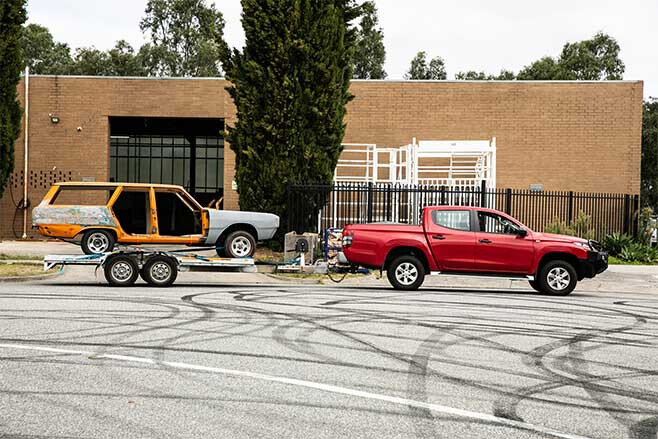
WITH CORONAVIRUS on the tips of everyone’s tongues, and grubby little fingers, the Street Machine Carnage workshop decided to take action and prepare for a Government mandated Stage Four Lockdown.
There was no time to prepare so we grabbed a hire trailer and laid our oil-stained hands on the keys to 4X4 Australia’s long-term Mitsubishi Triton GLX+.Street Machine Carnage is a YouTube based car-modification channel that modifies, builds and sometimes destroys performance cars for the purposes of entertainment. As a consequence we spend a lot of time towing with dual-cab utes and other SUVs, and usually over long distances.Jumping in the first time, we were surprised by the basic interior with rubber flooring and cloth seats that felt like a call back to the ’90s. Even the ignition key feels basic with the blade-like key shaft that threatens to penetrate you every time you sit down. We should be thankful it needed to be inserted to start the car.
But it’s not all bad, the standard reverse camera and screen is excellent and we had no trouble reversing with the hire trailer, which are notoriously evil beasts with short drawbars and poor maintenance records. The side mirrors are large and clear, and combined with the centre screen we had no dramas.Out on the road the Triton never felt lacking for power. It never struggled to match traffic on the freeway on-ramps or held up traffic in any way. The 2.4L MIVEC diesel is a strong performer and despite it only having 133kW and 430Nm we didn’t miss any of the power that we usually have access to while driving its competitors.
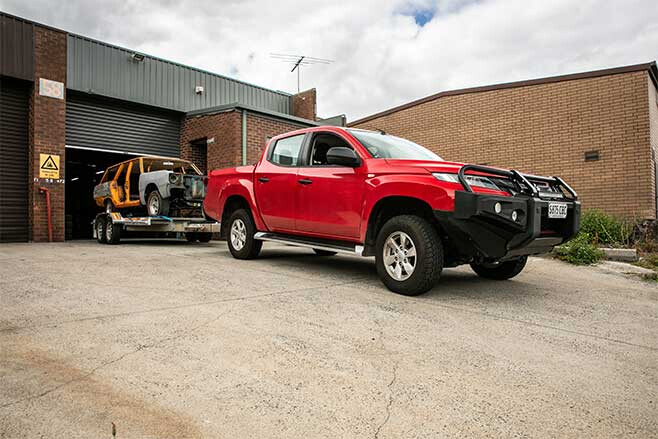
However we have to admit the heavy-duty leaf-spring rear suspension had us voicing a few choice words when we hit bumps. Despite having a towing capacity of just 3100kg the rear suspension feels surprisingly firm, probably more so than it needs to be. When combined with the less than compliant bucket seats it made the hour-long drive less than pleasant.
We certainly wouldn’t want to be travelling for a full day in those seats with that suspension – ’90s flashback again. But the Bluetooth stereo was adequate and the automatic air-conditioning worked so it wasn’t a total time warp back to the days when tradies had iron butts and all the entertainment that an AM radio could provide.So we can’t say that our first experience with the Triton GLX+ was an unqualified success. Sure, it got us out of a jam and now we have the Valiant wagon locked away in the home garage to be worked on if and when the Government lock us all inside to curtail the spread of COVID-19.
As we write this, Level Three restrictions have just gone into effect in Victoria, but is the Triton really the car that we’d want to be locked into for the Apocalypse? Sorry, but we can’t say it is. Diesel dual cabs have come such a long way in the past 20 years and we can’t help but feel that the Triton is lagging a long way behind. – Scott Taylor – Street Machine
Update 4: Photographer’s Impression
Our ace snapper gets out of the passenger seat for a suburban dad’s rating of the Triton – 23/6/20
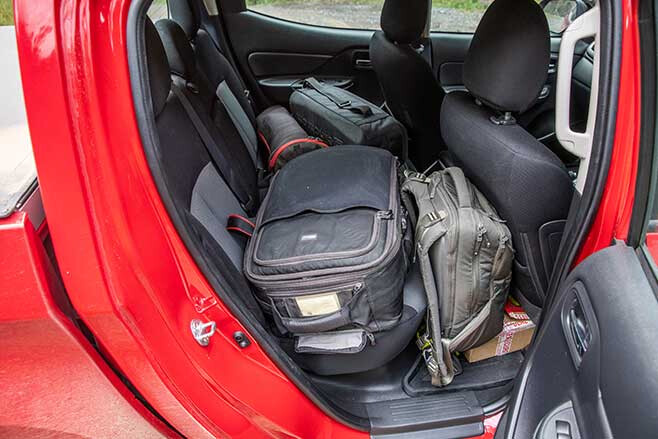
I GOT my (clean) hands on the Triton long-termer because of coronavirus. You see, usually when we go out to shoot a car for a review – in this instance the short-wheelbase SsangYong Musso for last issue – it’s just a matter of jumping in with the journo and heading into the scrub.
I’ll jump out when we see a good-looking track, clamber up to the top to photograph the car coming up, jump back in and away we go. But due to social distancing I needed a separate car, and I don’t think my trusty Falcon would have been quite up to the job … if only it was an AU!
So I was thrown the keys to the Triton. This meant I had access to it over the weekend, and when you suddenly have a dual cab at your disposal, tasks that are normally a pain or not feasible with a sedan become no hassle.
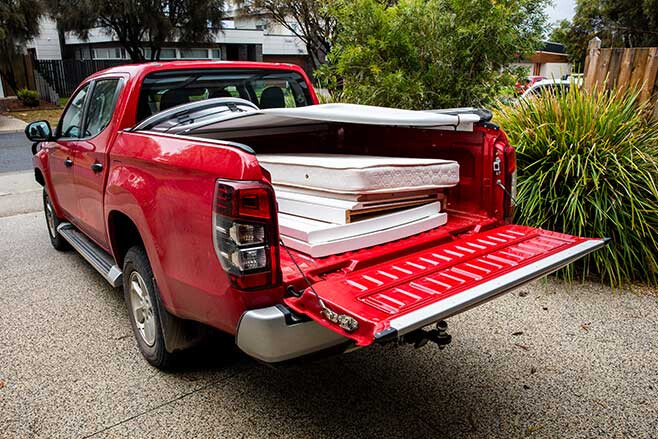
Some friends lent us a cot in between having kids, but they needed it back after having a third and it doesn’t fit in my car. Talk about perfect timing! The cot was disassembled and it fit in the tray without a drama.
I mingled right in with all the other dual cab owners at the local Bunnings carpark as well, picking up a couple of 20kg bags of play sand and a miniature slide to keep my sixteen-month-old boy, Charlie, entertained in these times of self-isolation.
The amazing thing with the Triton is that it does everything you need of it. It happily got me down some steep terrain on the shoot; that usually, as a passenger, I don’t need to stress about. And it was just as happy getting around suburbia to run basic errands.
Is it the perfect fit for a full-time photographer/suburban dad? Almost.
The problem with utes as a snapper is the risk of leaving gear in the tray, even if you have a lockable canopy. For this reason alone, a wagon would be the safer bet – Nathan Jacobs
Current mileage: 9167km Price: $50,403 (as tested) Mileage since last update: 573km Average fuel consumption: 11.2L/100km
Update 5: No Frills, No Fuss
Our time with the Triton has ended, and it will be missed by everyone who borrowed it over the past six months – 12/7/20
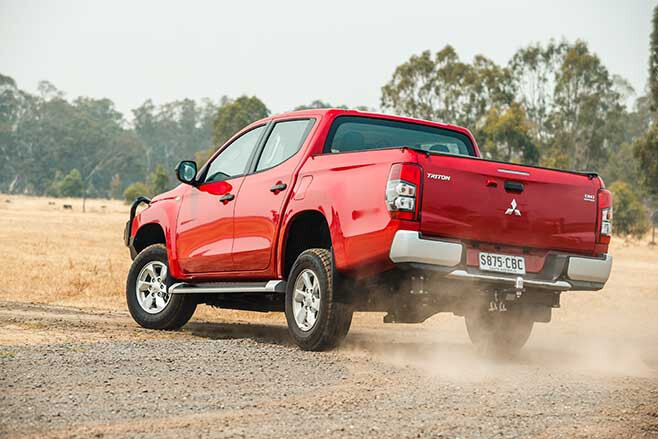
OUR SIX months with the Mitsubishi Triton has come to a close, and while our hopes to take it out and about as we normally would with a long-term test car were thwarted by the Beer Flu pandemic, it has still seen plenty of use around town.
In fact, the Triton has probably seen more varied use than other vehicles we’ve had in the shed. The old adage of ‘you’re everyone’s mate when you have a ute’ has never been truer, and the Triton has been passed around the office to tow trailers and race cars, haul garden waste, pick up hardware from Bunnings and carry motorbikes in its tray.
The Triton, therefore, has proved very versatile when it comes to carrying a load in its tub, and most said it did the jobs called of it without any fuss.
Versatility is the biggest trait of any double-cab ute, and the Mitsubishi delivers that in a value-packed Triton that is usually more affordable than the competition. The GLX+ is the second lowest in the range of double-cab 4×4 auto Tritons, yet for $41,490 drive-away it comes with all the features you need for a one-tonne ute.
The cabin is comfortable and easy to live with, even if it’s not as big as some of its competitors inside. There’s standard big screen info with Apple CarPlay, a rear diff lock for off-roading and all the creature comforts you could want in this price range. It has a 945kg payload and 3100kg towing capacity and, significantly, the towing doesn’t eat in to your payload as much as it does on some other utes thanks to the 5885kg GCM.
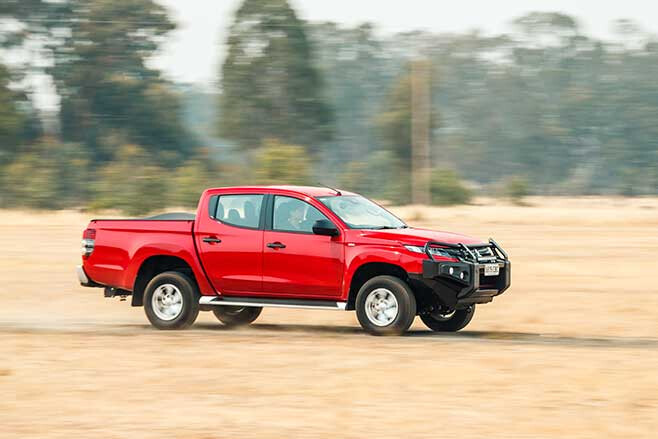
The only real off-road driving we’ve been able to do in the Triton has been as a photographer’s car on a couple of photoshoots, and it was surefooted and competent on the tracks and simple to use for a less experienced four-wheel driver. This particular car was one from the original model launch on the rugged Warraweena Conservation Park in the Northern Flinders Ranges, South Australia, where Deano was able to give it plenty of bush driving.
A feature we often debate the value of in a 4×4 vehicle is the availability of full-time 4×4 as well as locked 4×4 high and low range. The Triton is one of the few 4×4 utes available that offers this, however it is not fitted in the GLX+. You need to step up to the GLS to get that in the Super-Select system.
I’ve always argued you don’t need full-time 4×4, but during a particularly wet time in Melbourne, I went looking for it in the 4×4 selector dial to curb the amount of wheel spin I was getting on the slick roads in 2WD. When pulling out in traffic, the wheels would spin and activate the electronic traction control and cut my throttle, potentially creating a dangerous situation. This is the case in most other 4×4 utes that are all part-time 4×4. So they are 2WD when on-road.
Full-time 4WD would have been a blessing in these conditions, but when I turned the dial, I found I only had locked 4×4, which is not suitable for on-road use. So there was a great argument for the full Super-Select 4×4 system as found in the other Triton models and worthy of consideration for anyone buying a 4×4 ute.
Current mileage: 10,070km Price: $50,403 (as tested) Mileage since last update: 903km Average fuel consumption: 10.3L/100km