
The August 2021 issue of 4X4 Australia magazine is officially on sale, so head to your nearest outlet and grab yourself a copy.
Oozing with 4×4 goodness, the August issue is packed with quality off-road content. None more impressive than the chopped and stretched 79 Series build found on the cover. The Queensland-built LandCruiser has quite a unique backstory and an extensive list of modifications.

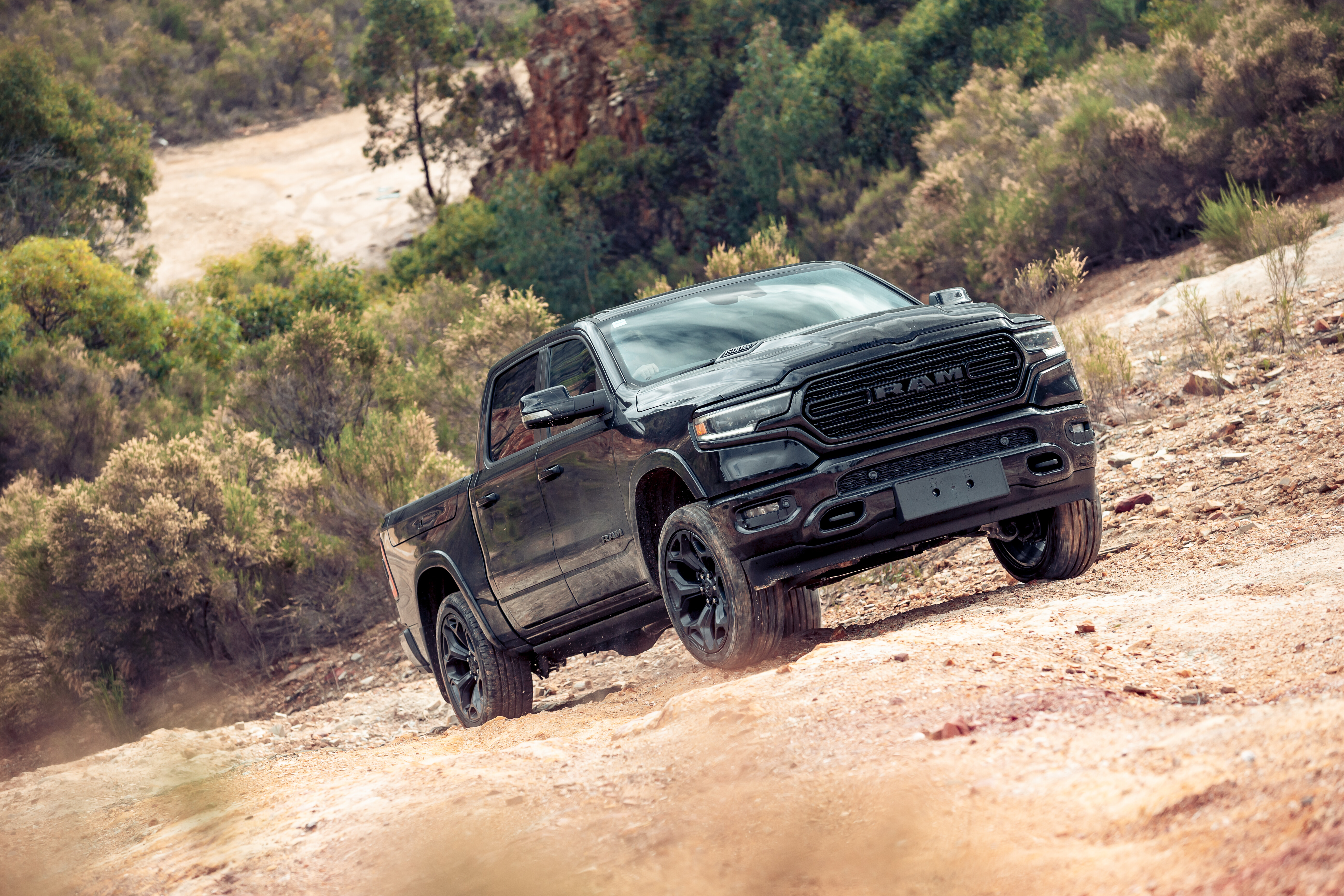
On the new metal front, we venture to loose gravel to fang a range of fourbies: the all-new 2021 RAM 1500 Limited, the Walkinshaw-fettled VW Amarok W580, and a factory-accessorised 2021 Navara ST. Plus, our USA guru Chris Collard drives the upcoming Jeep Grand Cherokee L in the States.
In the long-term shed, we bid adieu to the SsangYong Musso XLV Ultimate after 12 months, Dan Everett’s Everest Sport heads to the rocks with a camper trailer in tow, and Kian gets his GQ Patrol ready for its first off-road foray.
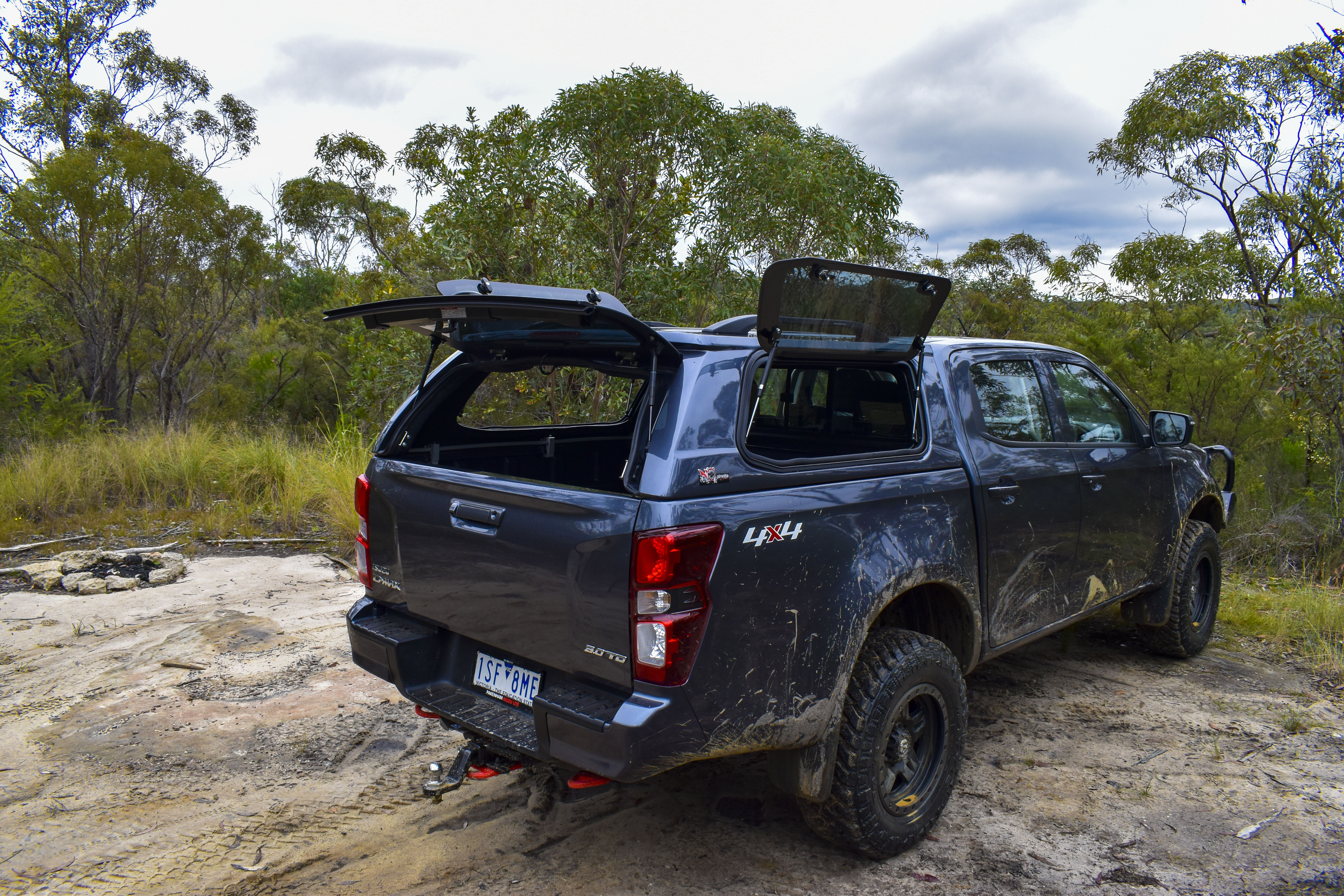
We test a suite of new aftermarket gear including a GME XRS-330C UHF, a set of Mickey Thompson Baja Boss muddies, and a Lifestyle Campers Reconn R2 Elite camper trailer. Plus, Evan installs a Piranha Off-Road fibreglass canopy to the 4X4 Australia D-MAX.
Ron Moon never stops exploring, and this month he travels beyond Omeo to the wild mountains of the Vic High Country. We’ve also included travel yarns to both Mungo National Park in NSW and the Western Explorer Highway in Tasmania.
The August 2021 issue of 4X4 Australia is in stores now!
WHAT ELSE IS THERE?
– ARB Eldee Easter Festival in photos – New products on the market – Your embarrassing 4×4 moment – Readers’ Rigs – Monthly columns – 4×4 news and more
Snapshot
- LC300 wears an alloy bullbar
- Tow testing in Australia
- On sale in Q4 this year
Toyota is expected to launch its all-new 300 Series LandCruiser in the coming months, and official photos showing the production vehicle have been released from overseas. So it’s no secret what the big Cruiser looks like.
This is the first time we’ve seen images of one driving in Australia, as this matte-black wrapped vehicle was snapped on the streets of Melbourne recently.
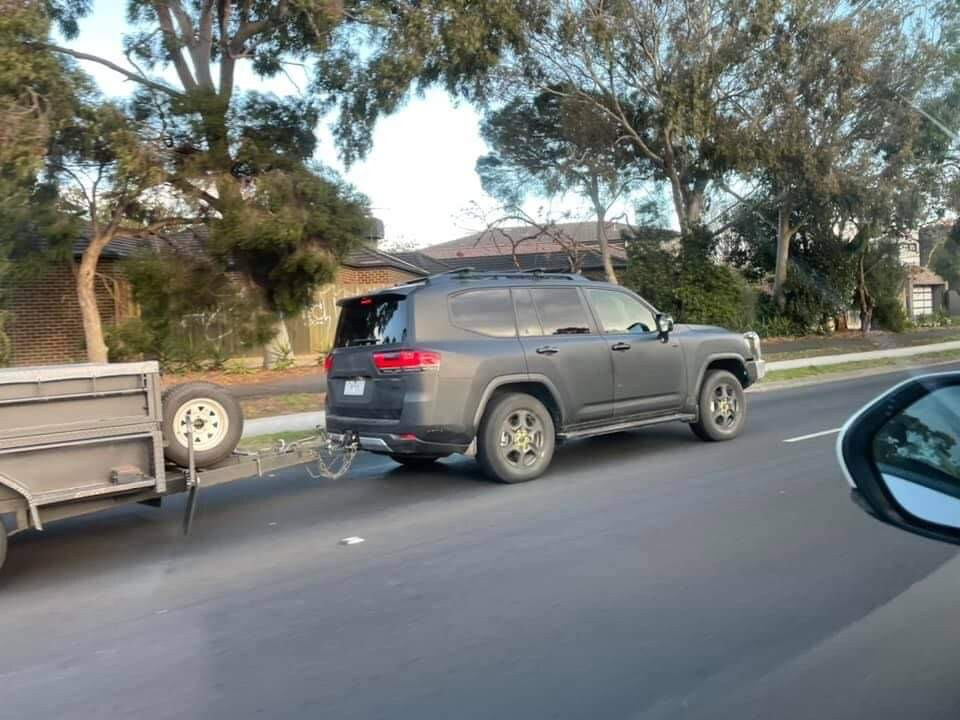
Australia is one of the prime countries where Toyota does its research and development of its four-wheel drive vehicles, such as the LandCruiser, Prado and Hilux, and we expect this is a pre-production 300 Series.
Toyota has done a pretty good job of keeping its development vehicles under wraps until now, but as the release date grows nearer and the official images are in the public domain, it is obviously letting its guard down.
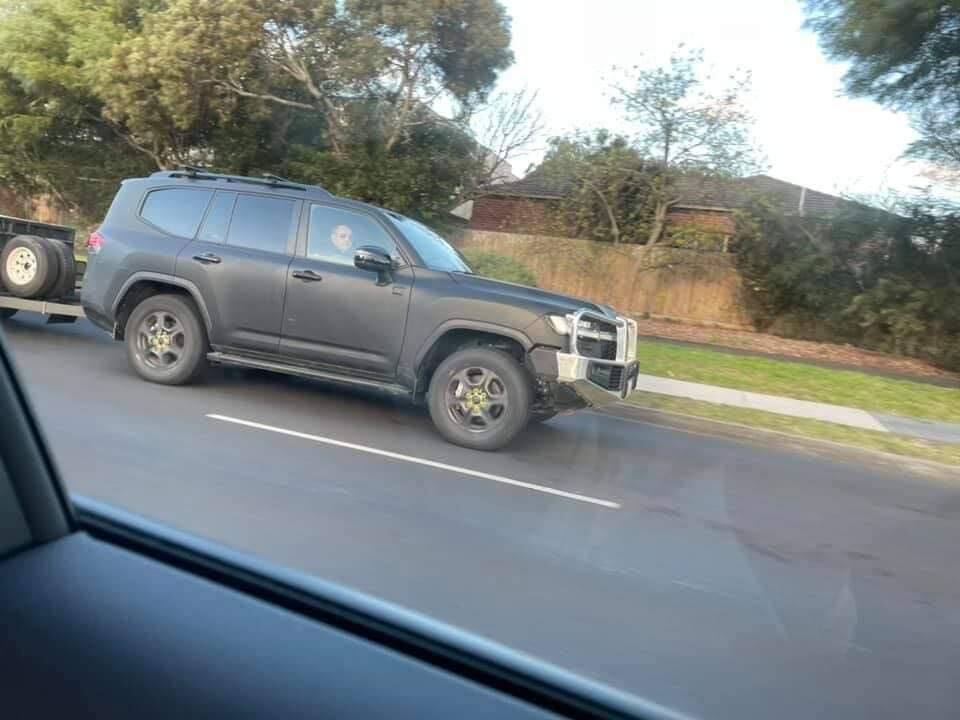
We don’t get a full look at the trailer the Cruiser is towing here, but you can expect Toyota’s engineers would have been testing the new 300 under all sorts of conditions with heavy loads in tow. The current LandCruiser 200 Series has a 3500kg towing capacity and the 300 Series will have to have at least the same.
The 300’s 700Nm, 3.3-litre twin-turbo V6 diesel engine and 10-speed automatic transmission would have all been tested at full payload and weight on steep grades and off-road, to ensure it is up to the task ahead of it.
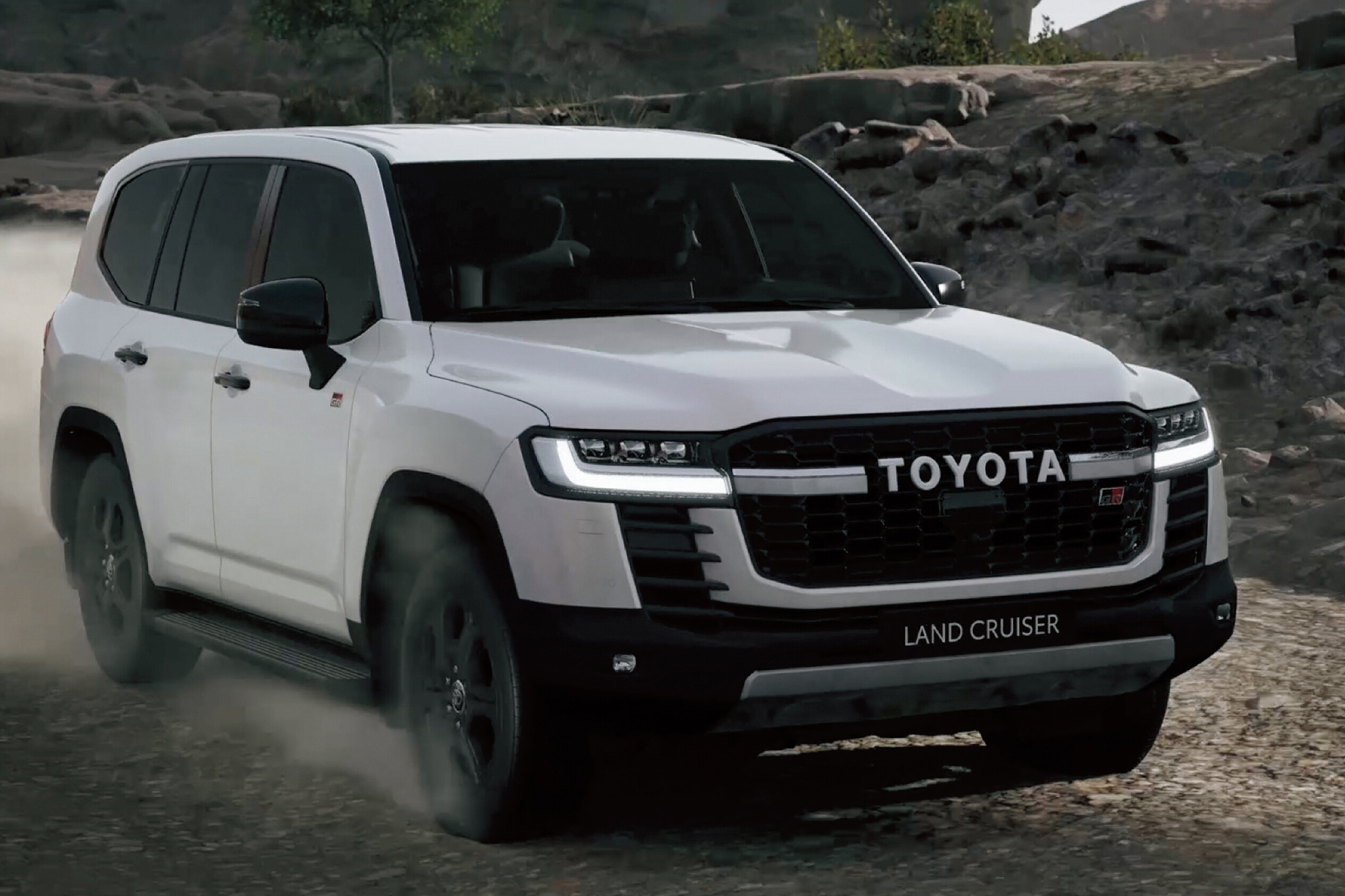
What’s also interesting about this vehicle is that it is fitted with an alloy bullbar and we expect that this will be a genuine Toyota accessories item. The tow bar would also be specifically developed locally for Australian conditions, as the LandCruiser is a favourite vehicle for those who tow.
We’re expecting more news on the local line-up and pricing of the 300 Series LandCruiser in the coming month, with sales to start in October or November.
Snapshot
- More than 238,000 units sold in Australia
- 60 years since the G60 landed locally
The iconic Nissan Patrol celebrates its 70th anniversary this year, with 2021 marking 70 years since the arrival of the 4W-Series.
Sold exclusively in Japan from 1951, the first-gen 4W60 ─ which adopted the Patrol nameplate in 1958 in 4W65 guise ─ utilised a 3.7-litre in-line six that produced just 56kW. It ran a part-time 4WD transmission and a four-speed manual transmission.
Australia had to wait 10 years before the first Patrol landed locally in 1961, with the second-gen G60 ─ known widely as the Datsun Patrol ─ offered in soft-top, wagon and cab-chassis body styles.
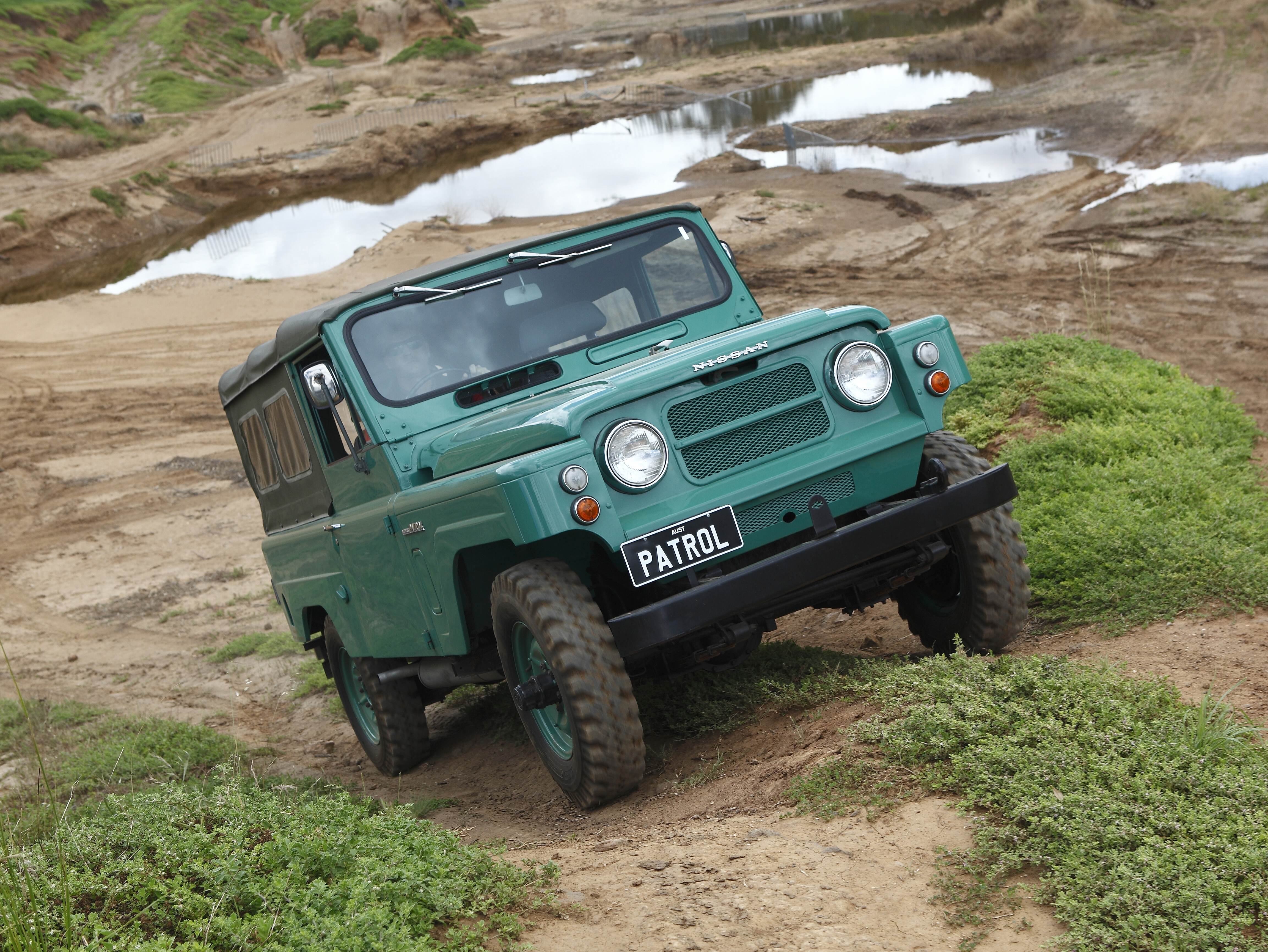
A crowning achievement of the G60 occurred in September 1962, when the Sprigg family ─ Reg, Griselda and children Marg and Doug ─ became the first to cross the Simpson Desert in a motor vehicle. The 12-day, dune-bashing journey followed a route from Andado Station in the NT to Birdsville in Queensland ─ now known as the well-trodden French Line.
The Datsun G60 Patrol featured a 92kW 4.0-litre in-line six and remained largely unchanged for the next 19 years, before the arrival of the famous MQ Patrol in 1980.
At launch, the MQ was available with either a 2.8-litre petrol or 3.3-litre diesel six-cylinder engine, and it was the first Patrol to utilise an automatic transmission ─ a three-speed unit available in the top-spec Deluxe Wagon. Four years later the MQ adopted a turbo-diesel option, an SD33T six-cylinder good for 81kW and 255Nm.
Nissan pulled the wraps off its coil-sprung GQ Patrol in 1987, which was offered with all-new 4.2-litre petrol or diesel six-cylinder engines mated to either five-speed manual or four-speed automatic transmissions. A 3.0-litre petrol six was added in 1990, followed by a 2.8-litre turbo diesel in 1995.
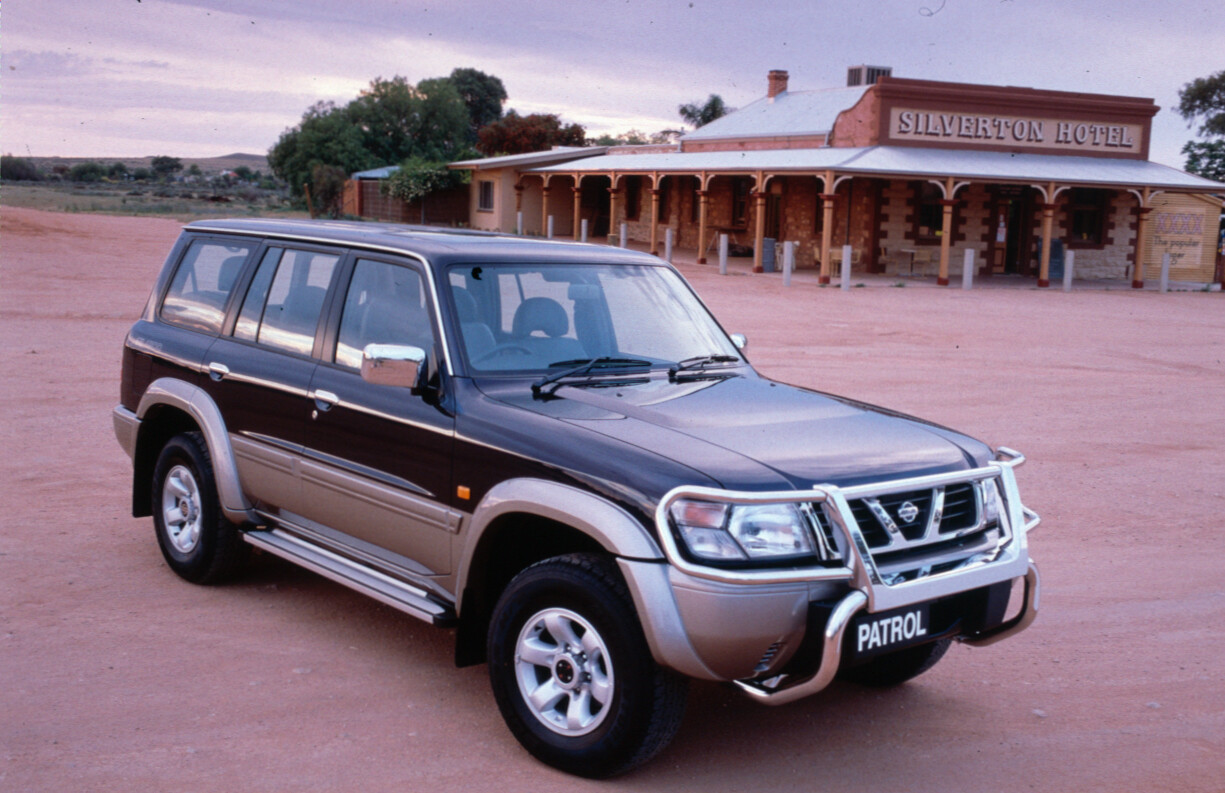
The fifth-gen GU Patrol arrived in 1997, sporting radical updates to suspension, chassis and driveline components. Originally available with a refined 2.8-litre turbo-diesel six or a 4.2-litre naturally-aspirated six, a turbo-charged six arrived in 1999, a ZD30 3.0-litre turbo four in 2000, and a 185Kw-420Nm 4.8-litre petrol six in 2001.
The GU was hugely popular with Australian buyers, with Nissan selling more than 10,000 units per year between 1998 and 2000, making Australia the largest market in the world for the Patrol.
Nissan changed gears in 2014 with the arrival of the tech-savvy Y62, available exclusively with a 5.6-litre petrol V8. Unlike previous iterations of the Patrol, a heavy emphasis was placed on the Y62’s on-road performance ─ highlighted of course, by its fully-independent suspension set-up with Hydraulic Body Motion Control. The Y62 was updated in 2020 with a fresh look and the addition of vital modern safety technology.
In its 60 years on the Australian market, Nissan has shifted more than 238,000 Patrols.
“The Patrol has been an integral part in the success of Nissan here in Australia and, over the same time, has opened many new pathways for Australians to explore this rugged country thanks to its renowned off-road abilities and dependability,” said Adam Paterson, Managing Director of Nissan Motor Company Australia.
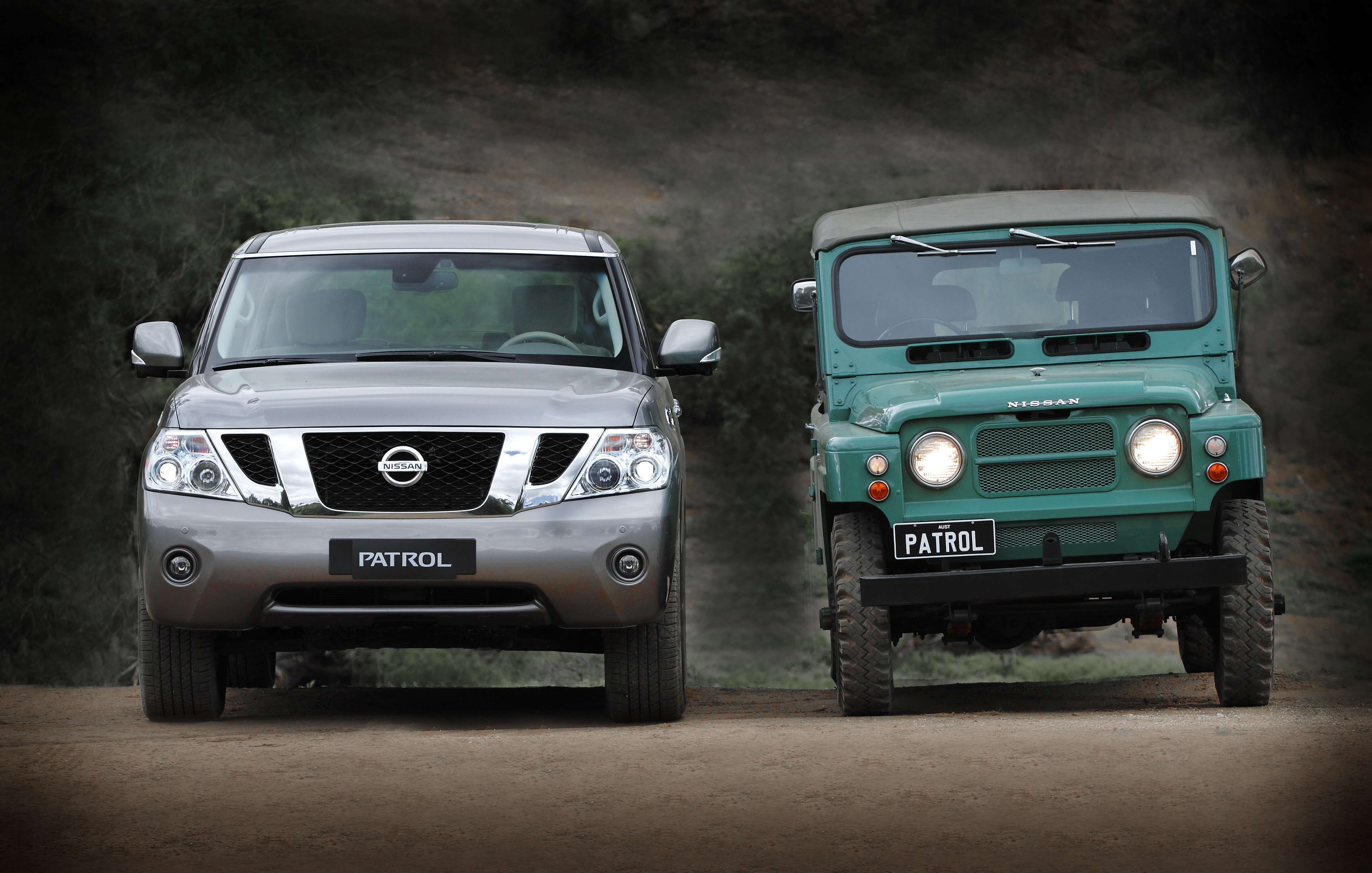
Interestingly, Toyota is marking 70 Years of the LandCruiser this year, although the name was never used until 1953. Like Nissan/Datsun, Toyota was building Jeep-like 4×4 vehicles in Japan in the post-war era and its BJ became the LandCruiser just before Jeep filed a trademark on its name. Nissan soon followed suit and named its vehicle the Patrol.
Further coincidence is that the vehicle they are both copying, the Willys Jeep, celebrates its 80th in 2021. There can be only one original.
Snapshot
- Amarok W580X to launch in April 2022
- No price confirmed as yet
- Lift kit and off-road specific tune to feature in tweaked ‘Rok
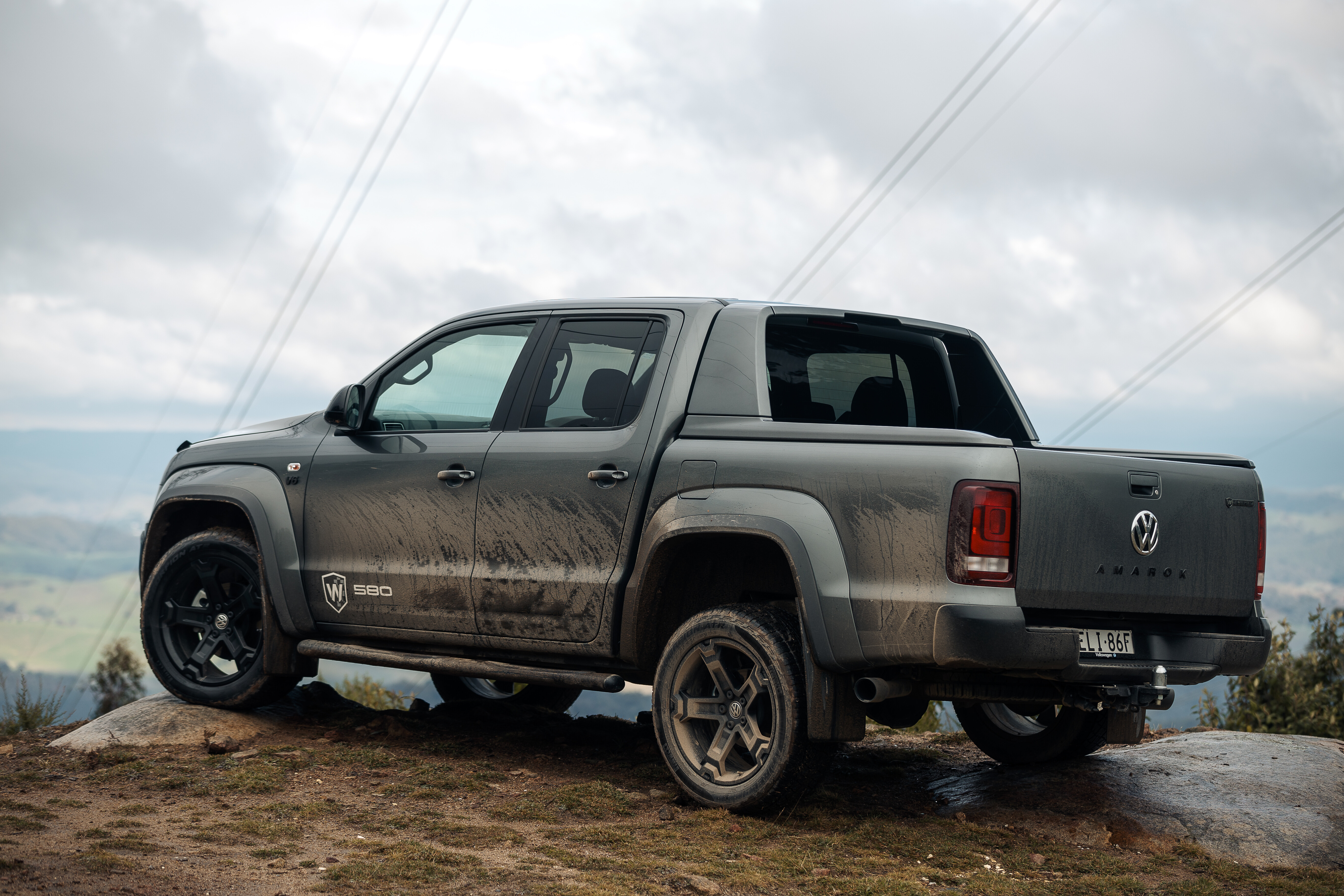
Volkswagen has officially revealed its off-road-ready Amarok W580X, with the mud-slinging variant to be available in showrooms from April 2022.
Unlike the previous collaboration with top-level tuners Walkinshaw Performance – for the road-oriented W580 and W580S, released earlier in 2021 – VW’s W580X has been sharpened specifically for off-road duties.
To this end, Walkinshaw will equip the W580X with a suspension lift and off-road tune utilising MTV twin-tube dampers; custom bash plates; and rock sliders. The W-Series off-roader will also feature Seikel underbody protection and breathers; rubber mats; an LED light bar; and wheel arch extensions.
VW Amarok W580X standard kit
- 18″ forged alloy wheels
- AT tyres
- Wheel arch extensions
- Front suspension lift and off-road tune (MTV twin tube damper)
- Rear suspension off-road tune (MTV twin tube damper)
- Rubber mats
- New front upper grille design
- Front bumper inserts (fog lamp surrounds) with LED fog lamps
- Art velour seat trim with Walkinshaw branding
- Heated front seats
- Bi-xenon headlamps with LED daytime running lights
- Dual zone Climatronic air conditioning
- Multi-function steering wheel with paddle shifters
- Black exterior mirror housing and rear bumper
- Discover media navigation audio with App-connect
- Tyre pressure monitoring system
- Custom bash plate
- Custom rock sliders
- LED light bar with integrated switch
- Seikel underbody protection and breathers
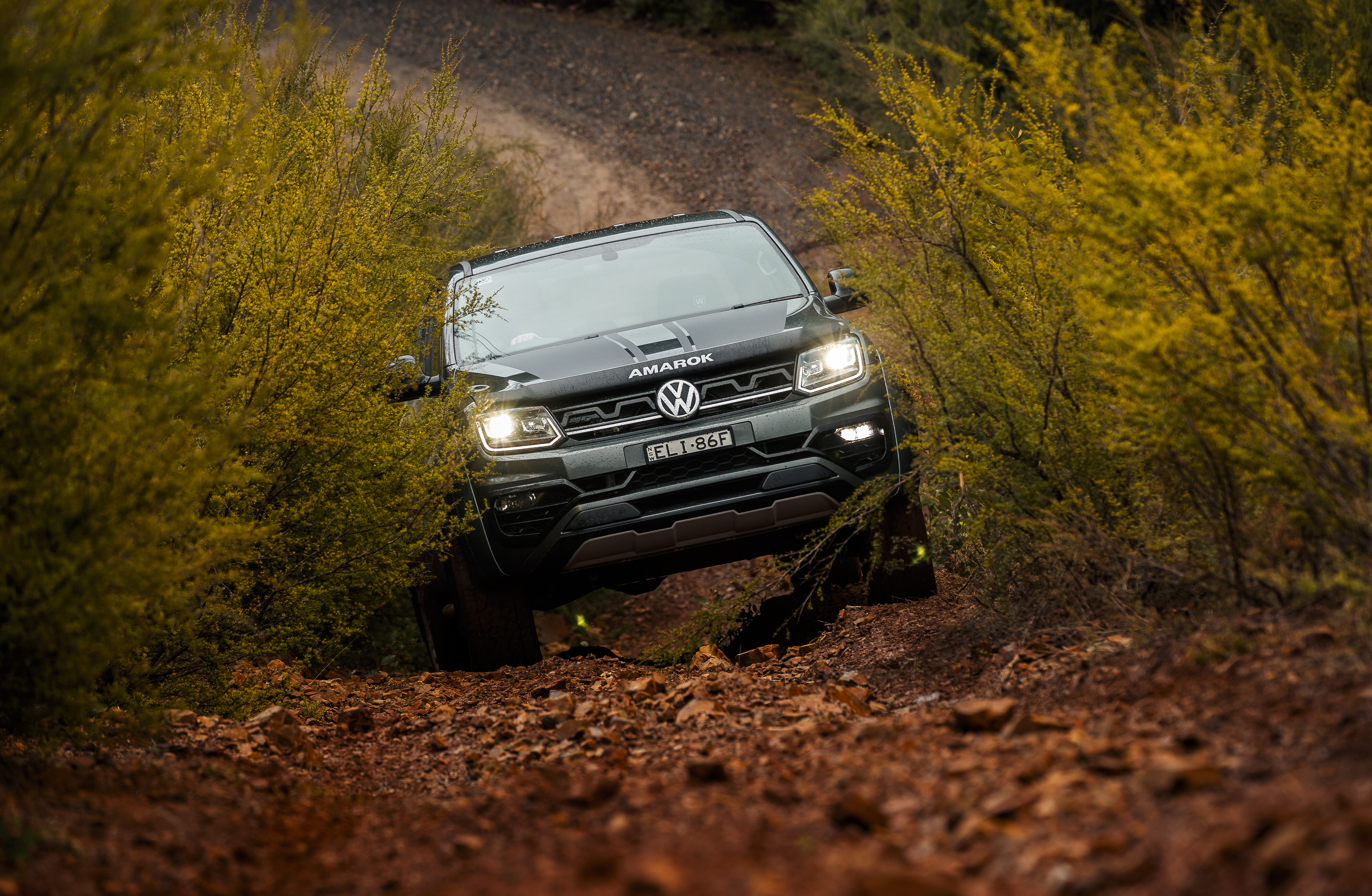
Much like the W580 and W580S, the W580X is powered by the Amarok’s proven 190kW/580Nm V6 turbo-diesel engine which runs through an eight-speed ZF auto transmission.
“The first W-Series was a chance to offer something no-one else in the market could do – a powerful, dynamic ute which was as comfortable on highways as it was on Alpine passes,” said Nick Reid, national marketing and product manager, and Amarok W-Series lead.
“With the new W580X, our W-Series off-road Amarok, we can lean in to another aspect of the Amarok’s platform. We know the Amarok is among the best off-roaders around in standard form, but with Walkinshaw giving it a unique tune, we’ll be able to offer something unbeatable to Australian customers,” he added.
The W580X is expected to be offered in limited numbers. Official pricing and detailed specification will be revealed closer to the vehicle’s launch in April 2022.
For me, a 4×4 is a tool – a tool to find solitude, peace and to immerse myself in Mother Nature. In fact, I actually call my rig ‘the freedom machine’ because that is exactly what it offers me, freedom. I often find myself in places that do not require low-range or technical driving, and I’m fine with that; although, there is plenty of satisfaction to be had driving difficult and challenging tracks.
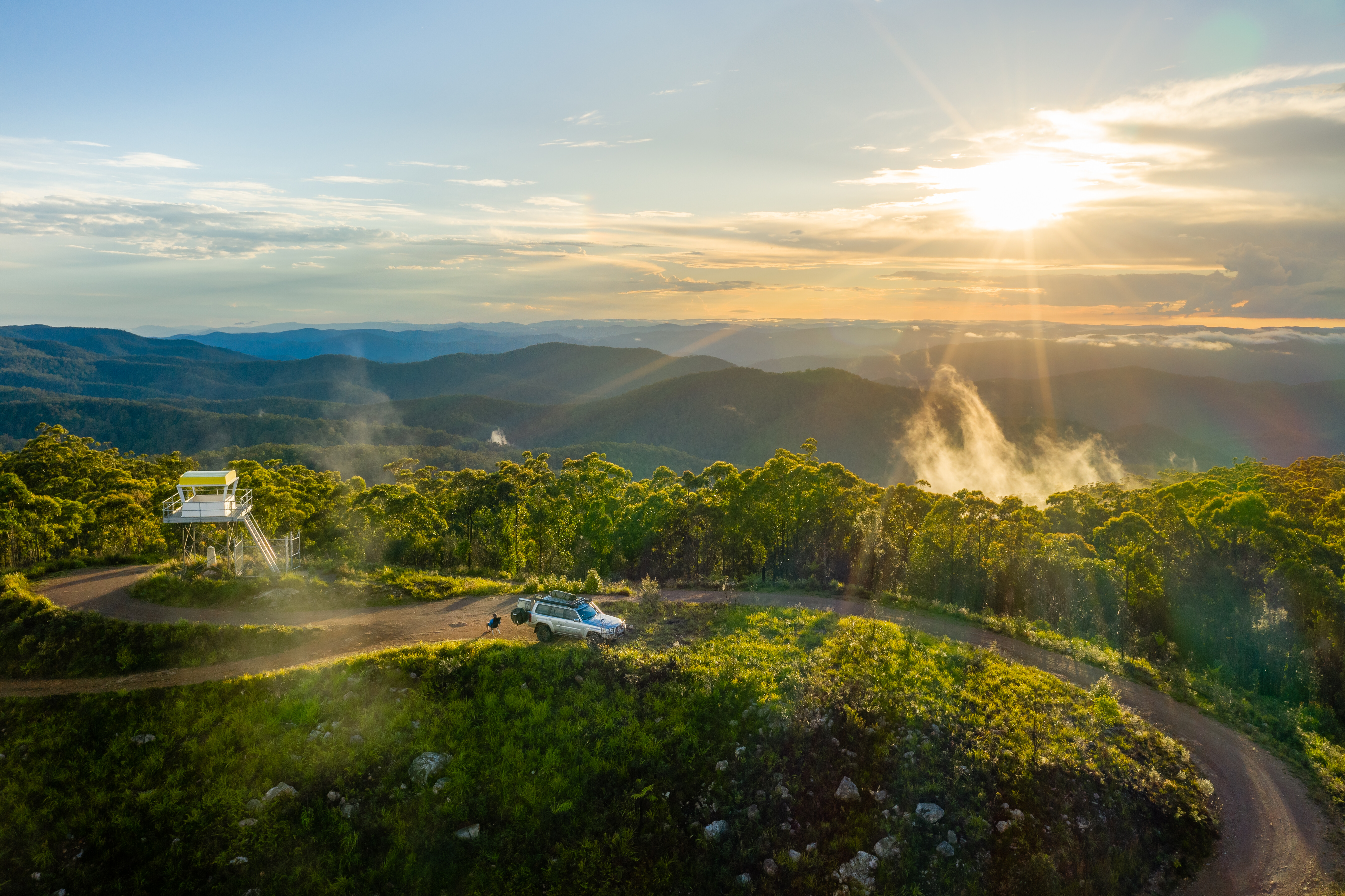
One such place I have started to visit regularly are the mountains north of Gloucester in NSW. For the most part it’s easy driving but there are slippery and steep challenges to be found, if you explore the overgrown and less-travelled tracks.
The one thing it has in spades is natural beauty. Dirt roads cut through this heavily forested green landscape taking in creek crossings, waterfalls, sub-tropical rainforest, tall-timbered ridgelines and stunning elevated viewpoints. From the coastal hinterland through to 1000m-plus peaks, you are rewarded with scenic diversity. It is incredibly beautiful and nearly always quiet, and it is not well-known at all.
CHASING STORMS
On this trip I was travelling in the height of summer, on a mission. These mountains cop some ferocious storms; I had witnessed many in the past and a look at the forecast had me excited in anticipation of capturing nature’s fury on camera.
This region was about to be belted with large storms. It was the perfect excuse to get away again and, believe me, I can get pretty creative when it comes to making excuses to jump in to my 4×4. Equally important was a desire to share a different 4×4 experience with you.
The fact you are reading this means you are as passionate about 4WDing as me, but I wanted to connect with you on a different level. I decided to share my passion for photography by simply enveloping myself in nature, and one of my favourite things to photograph is stormy weather. It is what often drives me to travel.
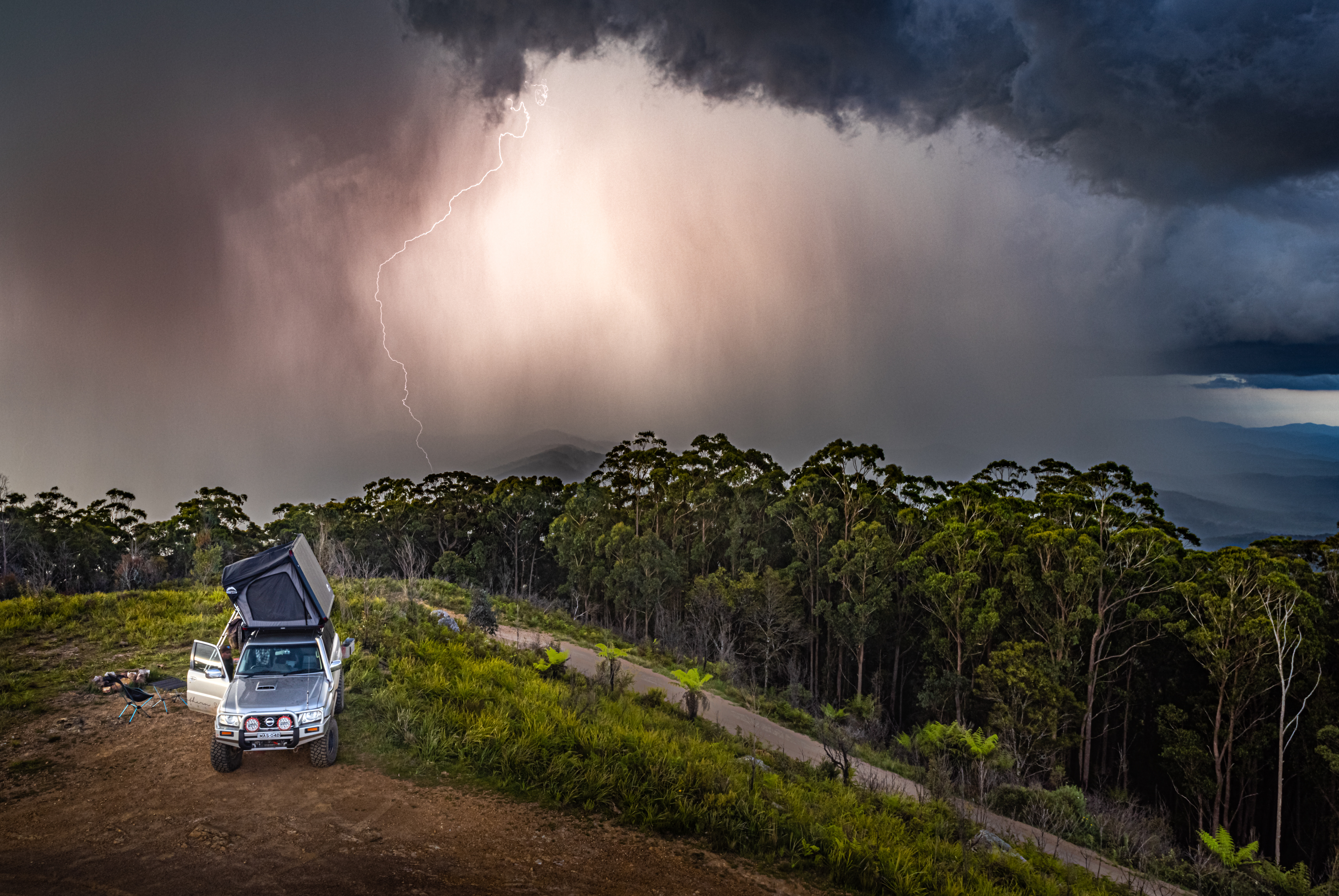
I was driving toward Gloucester and the sky was filled with tall, convective towers of cloud
For whatever reason you travel (and that may change trip to trip) I’d like you to take a moment and embrace it. It is incredibly easy to become disconnected with our own values. We are bombarded with content and the experiences of others and forget how to value our own.
Well, the prediction models were looking accurate. I was driving toward Gloucester and the sky was filled with tall, convective towers of cloud … it would be on soon.
After a quick shop and refuel I was only 10 minutes in to the dirt when the first storm cell approached from the north. I threw caution to the wind (literally) and decided to send up the drone to capture the rapidly approaching storm with a pretty evil-looking gust front. I knew from experience that as the front hits it would bring powerful winds and rain, potentially carrying the drone away, never to be seen again.
Seeing it from the air was even more impressive than seeing it from the ground and I managed to safely land just in time. I was already feeling happy and excited, and the next few days promised even better storm conditions.
DINGO TOPS

The next few hours were happily spent in driving rain as I made my way to my first camp, Dingo Tops rest area (within Tapin Tops National Park). It is a beautifully lush and green site with good amenities; although, it is also accessible by car so is not as remote as the other areas I had in mind.
From here it is easy to branch out in many directions to take in waterfalls, tough tracks or views. I had the place to myself and by now the stormy skies resembled a mess of low-level showers, so it was an early night, ready for tomorrow’s action.
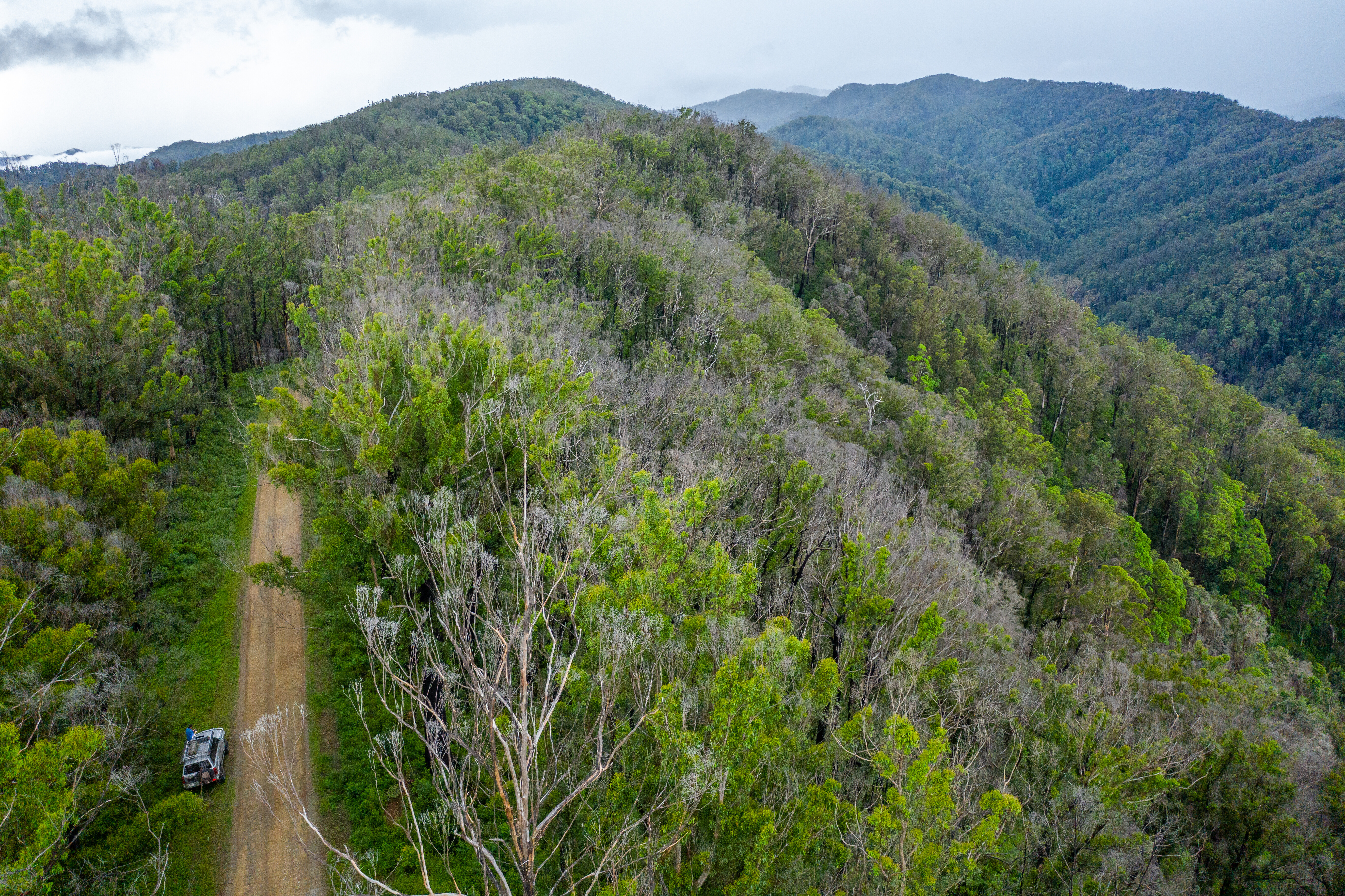
I spent a good while in the early morning chatting to a local ranger about the impact of the devastating fires of Christmas 2019. A sad conversation, but it was clear to see that regrowth was strong. This summer was relatively wet and cool, a stark contrast to last year’s dry inferno.

I had a few elevated spots in mind to observe the afternoon’s storm build-up. I set up the rooftop tent and chilled out in the shade with 360-degree views at Blue Knob and, to be honest, it was a really nice way to pass the day – reading and running some time lapses on the GoPro.
By mid-afternoon I had witnessed the development of two very impressive distant storms. But within the period of an hour the overhead sky had also transformed, the cauliflower-looking towers above were merging rapidly and good, dark bases evolved.
Soon my immediately surrounding atmosphere was absolutely alive and dynamic. I realised at this point that I could be absolutely belted, as what I thought was a dark band of narrow inflow was actually a storm base overhead.
There were some mild overhead rumbles, then boom! A bolt landed within 100m of me, a clear-air bolt that threw well-out from the storm tower. I was kind of expecting that possibility, but it caught me completely off guard and I jumped at the flash and instant crack. I was in the danger zone of this rapidly building beast. But I knew this would quickly pass.
Thankfully driving winds took this monster away, and I was in the perfect position. I spent the next few hours shooting this and two other beast storms. There were several close bolts and I managed to score a photo of one not too far away. Incredibly I stayed dry the whole time; had I been just a kilometre away, I would have been drenched at least three times. It was an incredible day of storms, which sadly didn’t continue into the night – the atmosphere was completely gutted in a few hours.
The next few days I spent travelling the area, including a night at the lovely Maxwells Flat camp area and Ellenborough Falls. Yes, there were more storms, but not as impressive as those on the second day.
It was one of the best trips I have done in recent times, it was real food for my soul. I have travelled all over Australia and really enjoyed it, but sometimes all it takes is that short little trip close to home to replenish yourself.
TRAVEL PLANNER
Tapin Tops National Park can be accessed year-round. The driving is easy but keep an eye out for logging trucks, particularly on the main roads. There are several camp areas in the park: Dingo Tops has sheltered barbecue areas, long-drop toilets and campfire rings; Maxwells Flat is basic bush camping but does have two long-drop toilets, and it runs alongside a lovely clear-water creek with plenty of birdlife.
There are plenty of attractions to explore in the closely neighbouring parks including falls, creeks and campgrounds of varied amenities.
TOP FIVE PLACES TO VISIT
- Dingo Tops Camp Area
- Ellenborough Falls
- Blue Knob Lookout
- Rowleys Rock Lookout
- Maxwells Flat Camp Area


What can be more rewarding than taking the 4×4 you’ve built with your own skills, and blasting it all over the outback? In the case of Joel Fowler and this 2014 Hilux SR, that blasting is conducted at high speed and regularly off the ground.
Joel originally started his 4×4 life with a single-cab N70 Hilux, which he duly modified and enjoyed for more than six years before reverting it to stock and trading in on a rally-inspired 2014 WRX hatch. Combining the ability to conduct spirited driving and all-wheel drive proved the little hatchback a winner in Joel’s eyes: “It was probably the best car I ever have had, but you just couldn’t do much in it.”
Missing the beach and bush driving had Joel scanning the classifieds only six months later for another Hilux. “It had to be exactly what I was looking for, but this time it had to be auto, and maybe a TRD if I could find one,” he explained.

The aim being to build an off-road rig in a pre-runner style capable of maintaining high speeds across the rutted and frequently washed-out Kalgoorlie dirt roads which Joel calls home. A short time later Joel spotted this untouched 2014 Tidal Blue SR example sitting in a car yard. So the Rex was swapped over and Joel was back in a Hilux again.
With Joel being the talented metal fabricator (Fowler Fabrication) that he is, you could borrow money to bet that his new whip wouldn’t stay standard for long. “It was bone stock, so I dropped by the workshop on the way home from the dealer and chopped the exhaust off. Just to make it sound a little better.” That exhaust now exits racer-style just below the right rear door, now upgraded to a three-inch diameter with a J-pipe/resonator and hotdog.
UNDER CARRIAGE
That took care of the aurals, but 4×4 looks matter and a more aggressive stance was needed for the high-flying antics Joel had in store for the Hilux. A set of D-Hole steel rims where chosen for strength, before being wrapped in 285/70R17 Sailun Terramax ATs. The -22mm offset pushing the ensemble an extra 52mm wider on each side than standard and, according to Joel, gives a much more stable ride at speed. Keeping those tyres off the ‘guards and bodywork was paramount, with Joel lifting the body and tub two inches before setting about building the suspension to suit.
Just bolting on a set of steelies and tyres isn’t going to get you sailing over rampant undulations, Joel instead building something with longer than standard suspension travel and much more damping control. Starting with the front, a pair of Dobinson MRA remote-reservoir struts with 2-inch taller coils were installed. These allow for the adjustment of both slow- and high-speed compression control, making suspension tuning a far easier task.

When it came time for the rear suspension Joel went to the next level after experiencing some failures with his first Hilux. “I went with a kit which was a basic off-the-shelf bolt-on,” he tells us, because, “It was probably too hard, as the eyes of the shocks were breaking off and the seals were blowing out. The overall ride was just way too hard.”
To remedy those failures with this build Joel upgraded to a Profender 10-inch triple bypass shock set-up in a custom shock cage that also houses the remote reservoirs. The length of these shocks required holes to be cut in the tub floor and the cage mounted inside the tub itself. This does nothing for the sealing of the tub inside the canopy, however the benefit being it allows a far greater range of movement from the currently standard leaf packs.
Keeping in mind Joel’s intention was to be able to jump his ’Lux regularly, a pair of four-inch hydro bumps were installed along the outside chassis rails, providing a far better form of bump stop when slowing down the almost maxxed-out compression travel when coming back to earth.
ENGINE MODS
While the majority of owners would go for the most power they can afford, Joel has made the engine modifications more in line with his own philosophy. “Your car’s useless if you can’t get the power to the ground,” he says. “If you go out bush and you want to go fast, having all the power in the world means nothing. I tell everyone, sort the suspension out properly and you will go faster.”

With those wise words in mind the engine mods were kept modest, delivering a safe raised boost level via a Stage 2 ProCharge GTX turbo. A generic front-mounted intercooler found its way behind the Bmesh grille, with the pipework taken care of by Joel himself.
Connected to his own four-inch snorkel, a custom air box was next, with a cone filter element complete with clear Perspex cover and lobster-back joins on the curved four-inch turbo intake pipe. Combined with an ECU remap, the turbo now funnels 23psi in to the stock engine. While Kalgoorlie is currently devoid of a dyno, Joel estimates the power to be in the 190hp-550Nm range.
CABIN RENO

Once the suspension and power were working together, Joel turned his attention to making the interior more fit for purpose. Anyone who has taken a standard Hilux for an extended journey would agree the standard pews tend to turn into cement slabs after a short amount of time. Remedying this, a pair of leather and suede-covered Toyota 86 GTS buckets were chosen, with the standard seat rails modified to suit.
Keeping his passenger entertained is a Kenwood 919 head unit pumping vibes to Kenwood Stage Sound six-inch speakers and eight-inch sub/amp combo. Letting his mates know where he’s gone after leaving them behind is a GME TX3100 radio and stubby antenna.
Making space for a fridge and some recovery gear saw the rear seat deleted and a false floor installed, hiding an ARB compressor complete with external power switch and hose connection. As a lucky charm, a Chuck Norris DVD and a mate’s holed Hilux piston is kept in the rear firewall’s storage bag at all times.
Hopefully with the undefeatable power of big Chuck, those currently stock pistons will stand up to all the pounding the turbo and trails serve up to them. Rounding out the rear end, an ARB fibreglass canopy houses three XTM drawer sets bolted down alongside a pair of MaxTrax recovery boards.
If the stance and colour wasn’t enough to get him noticed, Joel took to the bonnet and fitted an FG Falcon bulge. Complementing the new look are a pair of 60mm Utemart flares, along with some aggressive trimming of the standard front bar. The absence of a steel bullbar keeps the front end light, increasing the ability to leave terra firma. Rounding out the front are a pair of halo headlights, a 22-inch light bar and a Stedi 50-inch curved light bar up high.
Keeping in mind his rig gets taken anywhere and everywhere, Joel would like to thank Regan Carter for keeping it looking top notch, and James Hitchcock from Hitchcock Engineering and Powder Coating (Broadwood, WA) for his assistance. Seeing the way Joel has adapted his Hilux using his own fabrication skills to get it doing exactly what he set out to achieve, only bodes well for what he has planned for the future. We can’t wait to see where that takes him.
Snapshot
- Rubicon trim returns to Wrangler range
- Prices to start at $64,950
- Deliveries expected to begin later this year
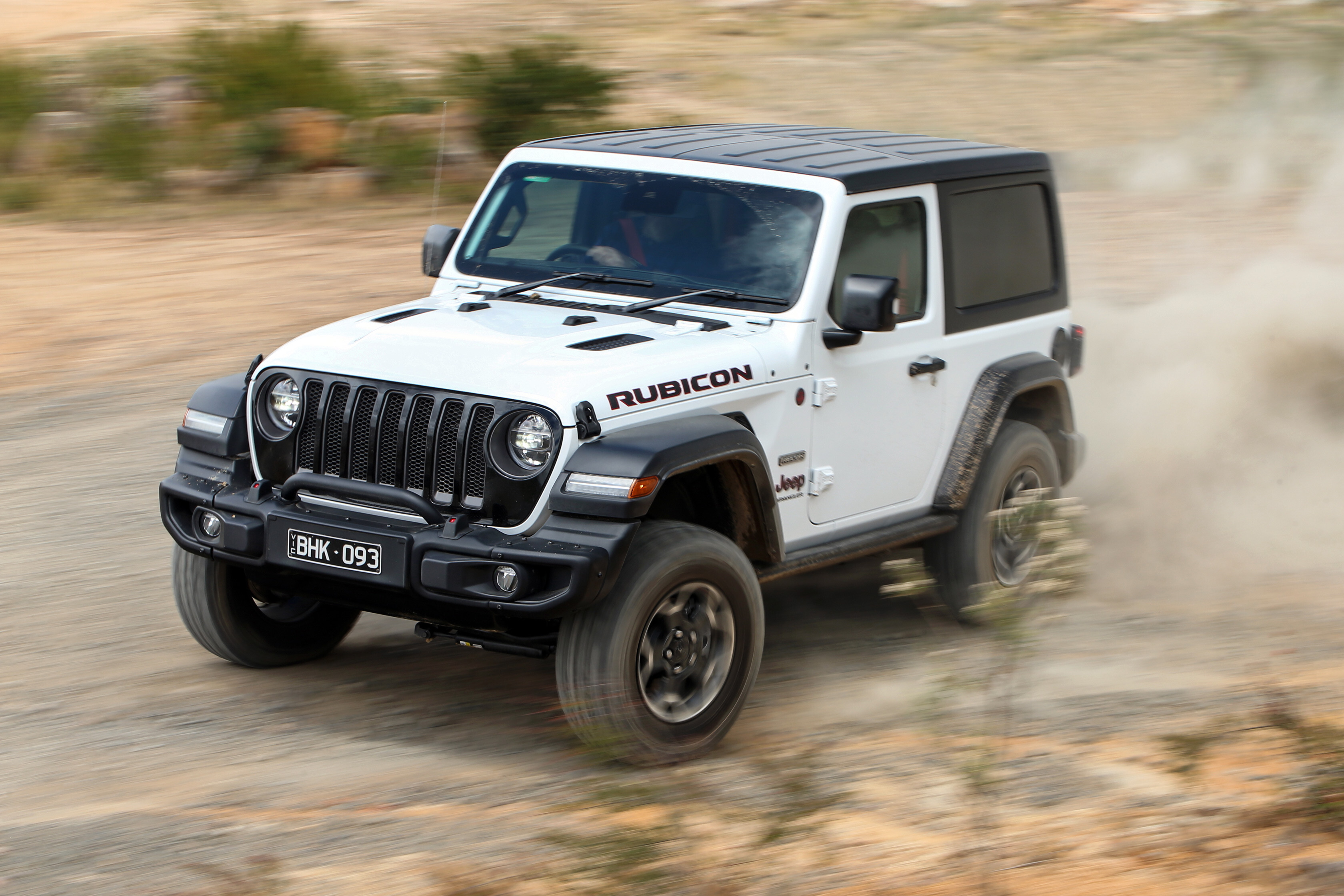
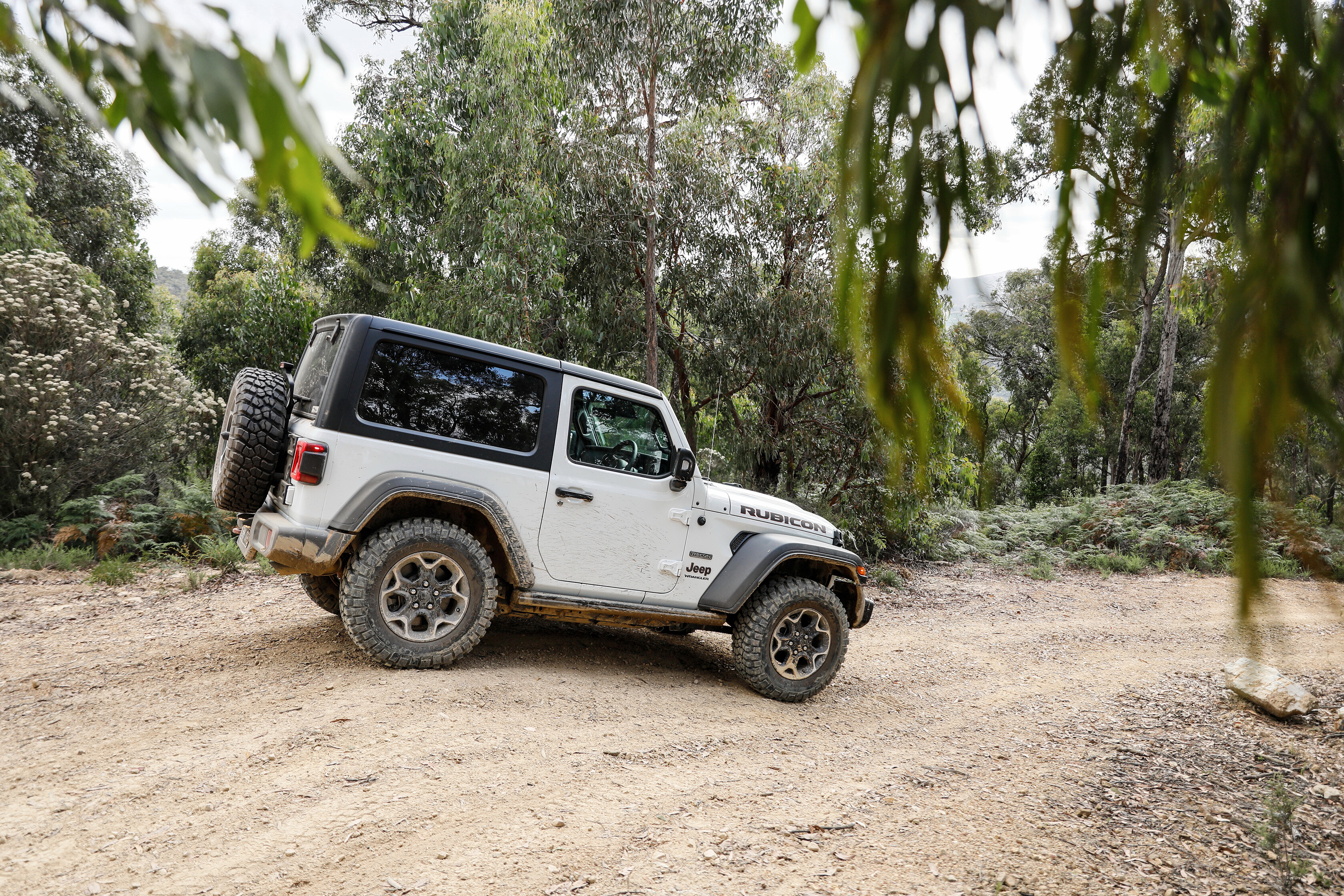
The Jeep Wrangler Rubicon ‘Shorty’ is back in Australia, returning to the American marque’s local line-up as a part of its mid-2021 updated range.
Having last featured as a permanent fixture Down Under in 2015, the return of the Rubicon Shorty comes after the success of the limited-edition MY20 Rubicon Recon – with its full local allocation selling out.
With the return of the Rubicon name, the Jeep Wrangler again has an off-road oriented variant, joining the Sport S and Overland trims in its short wheelbase guise.
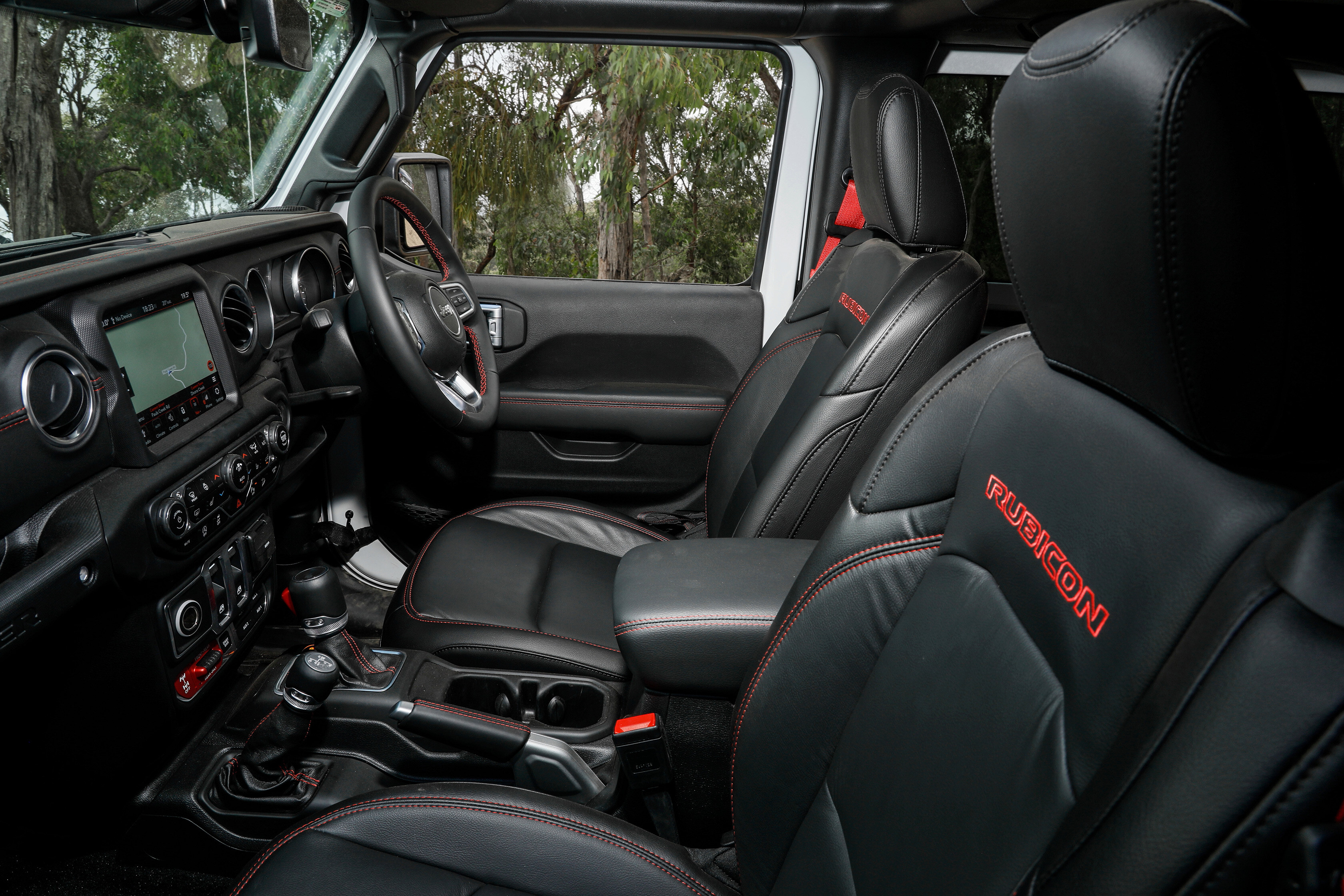
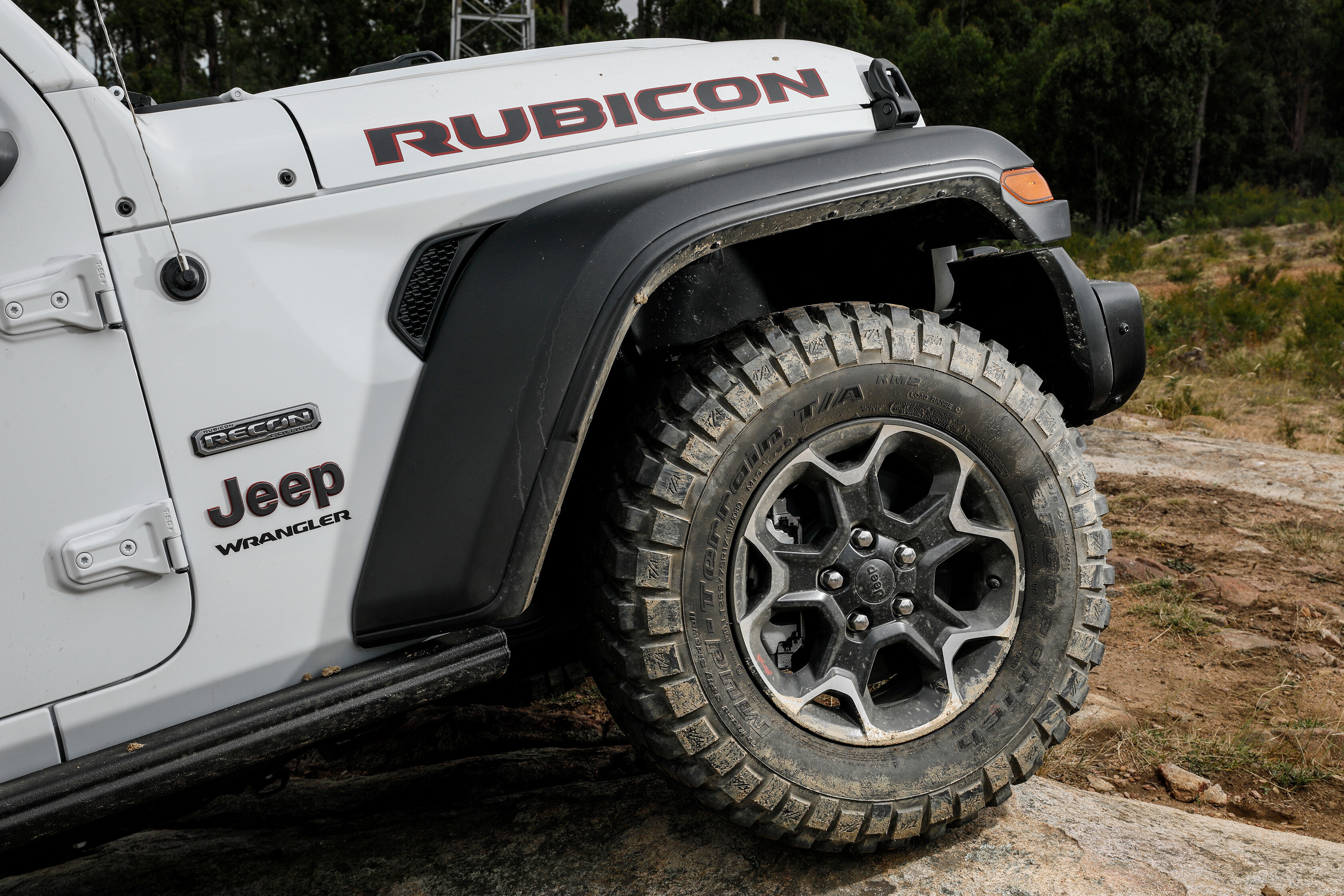
Note: Images of the 2021 Wrangler Rubicon Shorty are not yet available, all photos used here are of the Wrangler Rubicon Recon Limited Edition. This story will be updated when the new images are obtained.
Pricing
Available as either the Rubicon or Rubicon Unlimited, the new variants start out at just under $65,000. Listed prices are all before on-road costs.
- Wrangler Rubicon – $64,950
- Wrangler Rubicon Unlimited – $69,950
Trail Ready Package – $2950
- Steel front bumper
- Forward facing TrailCam
- 17-inch black alloy wheels.
Rubicon Premium Package – $2950
- Body colour fender flares
- Body colour freedom hard top.
Features
The base Rubicon is packaged with a range of standard equipment, including:
- Rubicon fender decal
- Black fender flares
- Black three-piece freedom hard top
- Deep tint sunscreen windows
- LED headlights/taillights/daytime running lights/fog lights
- Rubicon leather-trimmed seats
- Heated front seats and steering wheel
- Uconnect 8.4-inch touch screen display with satellite navigation
- Apple CarPlay and Android Auto
- 7.0-inch driver information display
- Electronic sway bar disconnect
- Heavy duty rock rails
- Nine-speaker Alpine premium audio system
- Security alarm
- Remote start system.
- McKinley leather-trimmed seats
- Soft-touch door panel trim
- Cargo tie-down rails
- Leather gear knob and handbrake lever
- Body coloured flares.
Engine, drivetrain and fuel economy
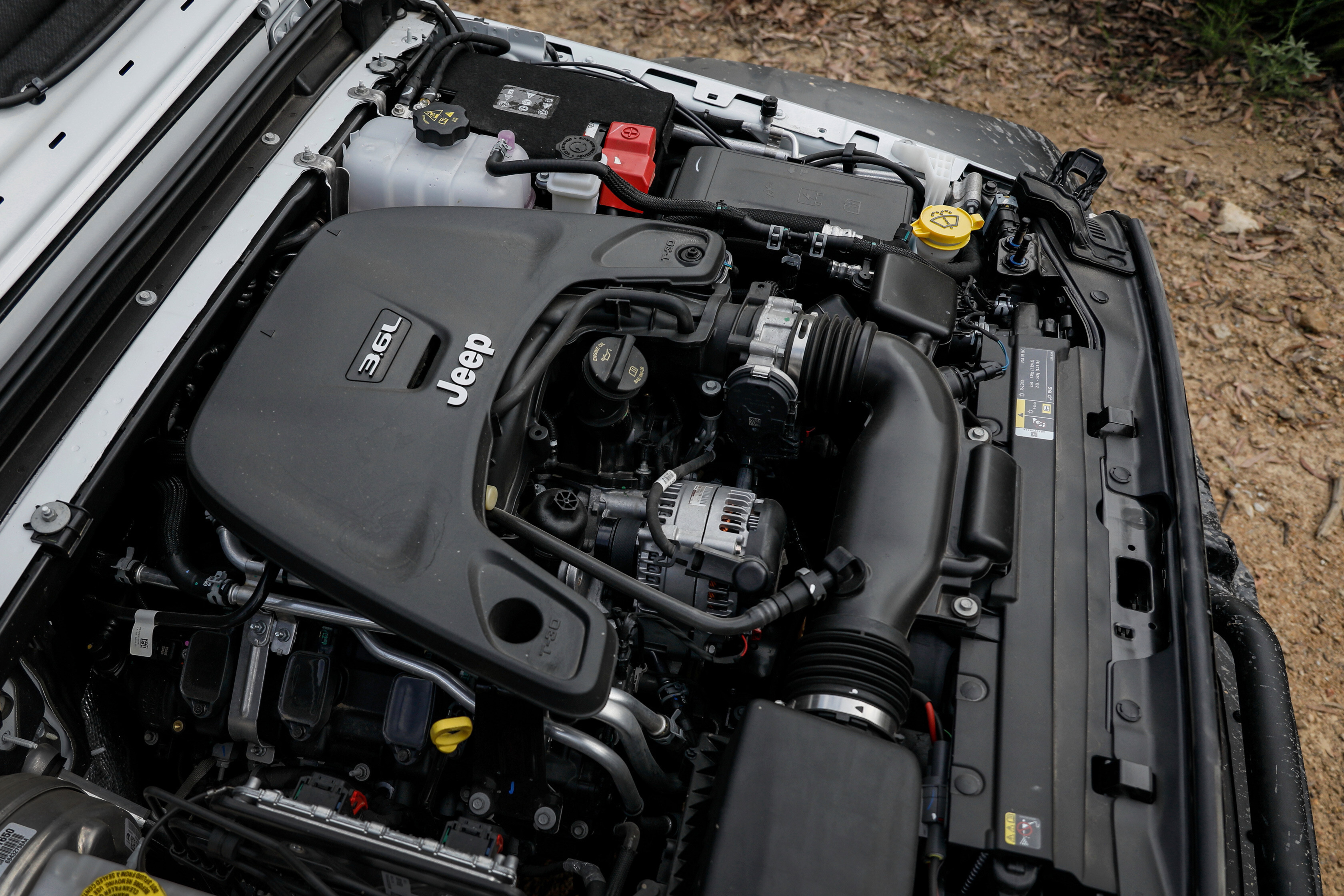
The Rubicon trim retains Wrangler’s standard Pentastar V6 petrol engine, developing 209kW and 347Nm with a combined fuel economy of 10.3L/100km.
Available only as an eight-speed automatic, the Rubicon features Jeep’s Rock-Trac active on-demand 4×4 system with a 4.10 rear axle ratio, plus Tru-Lok front and rear locking differentials.
Safety
Last tested by ANCAP in 2019, the current generation Wranger has a three-star safety rating, upgraded from one-star after autonomous emergency braking and blind spot monitoring were brought in as standard equipment.
Safety technology in the Rubicon includes:
- Forward collision warning plus
- Adaptive cruise control with stop
- Blind spot monitor with rear cross path detection
- Parkview rear backup camera
- ParkSense front and rear park assist system
- Remote proximity keyless entry.
Warranty and servicing
All Jeep models come with a five-year/100,000km warranty which includes 12 months roadside assist.
The Wrangler Rubicon comes under Jeep’s capped price servicing for $399 every 12 months/12,000km, renewing the roadside assistance package when services are undertaken at Jeep dealers.
Availability
The 2021 Wrangler Rubicon variants are currently available to order with deliveries expected to begin from the fourth quarter of 2021.
Head on over to our Facebook page and send us a photo of your 4×4 in action. You could win a Wurth under-bonnet LED valued at $249
NISSAN PATROL GU COIL CAB
It was originally a wagon but has been body swapped to a ute. The factory TB has been swapped out for a 5.7L LS1 V8 with a built auto transmission and is fully engineered. It has a custom-tubed tray and a 1200 canopy I’ve fitted out for touring with a Bushman’s 85L stand-up fridge-freezer, Travel Buddy oven, drawers, shelves and 12V set-up.
Other mods include a 65L water tank fitted under the tray with an electric pump; front ARB air locker and 4.6 diffs to suit the 35-inch Maxxis Razrs; Superior Engineering four-inch lift kit with panhards, control arms, etc. to handle the hard tracks; PSR coil tower bracing front and rear; PSR chassis bracing; XR falcon seats; B&N shifter; gauges for all the motor and gearbox vitals; transmission cooler; Platform roof rack; Rhino-Rack awning; dual tyre carriers; dual batteries; and a winch with in-cab controls.
It’s a capable rig, great for both touring and hard tracks. -Aden Molyneux-Cole
NISSAN NAVARA NP300
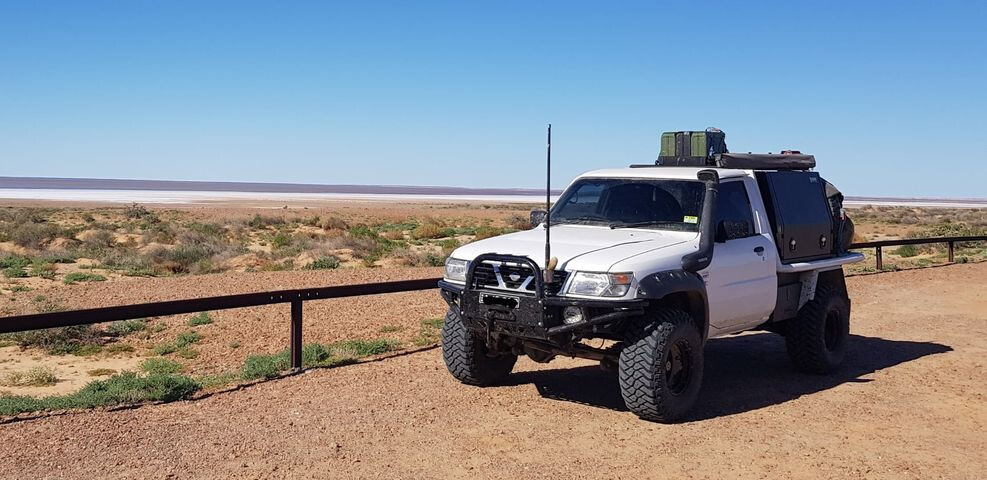
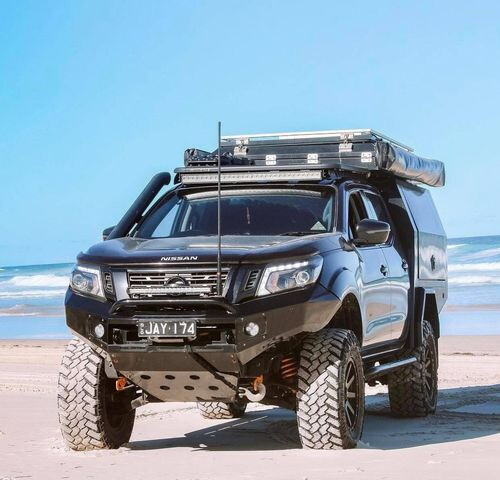
This rig was built for a Cape trip and touring. It’s running a five-inch lift in total (three-inch suspension and two-inch body lift); and a custom tray and canopy running a Bushwakka Nest 360 rooftop tent, Bushwakka 270 awning and shower tent. It has been custom-tuned to 187hp and features custom sliders, Shoreline bullbar and Platinum snorkel.
All pipes under the hood are stainless steel and there’s a custom airbox. Tyres are 295/70R17 on a XD rim. It’s running an Anytime 2WD diff lock from Race Wires. Inside the cab is a custom head unit and Razorback seat covers. -Jayden Campbell
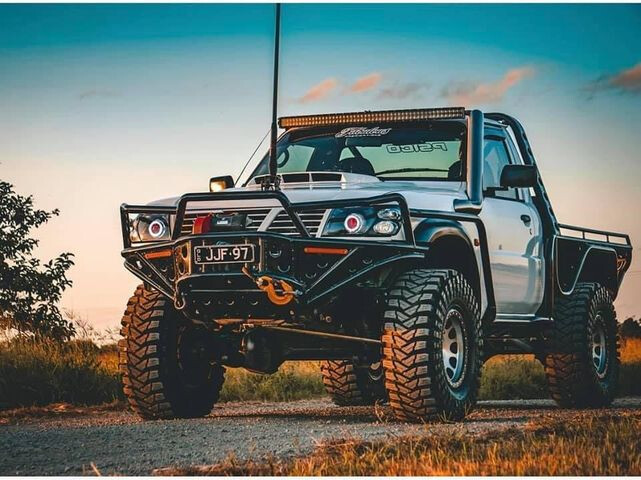
NISSAN GU PATROL
Owned this ute for nearly six years and I built everything on it myself including a coil conversion. It has 37-inch Treps, a front TJM locker, a four-inch lift and hydro bumps all around with 12- and 14-inch Fox adjustable shocks, and long arms front and rear. It also has a high-mount front and low-mount rear winch. Nothing makes you more proud of your car when a kid gets a smile as you drive past. -Jarrod Francis
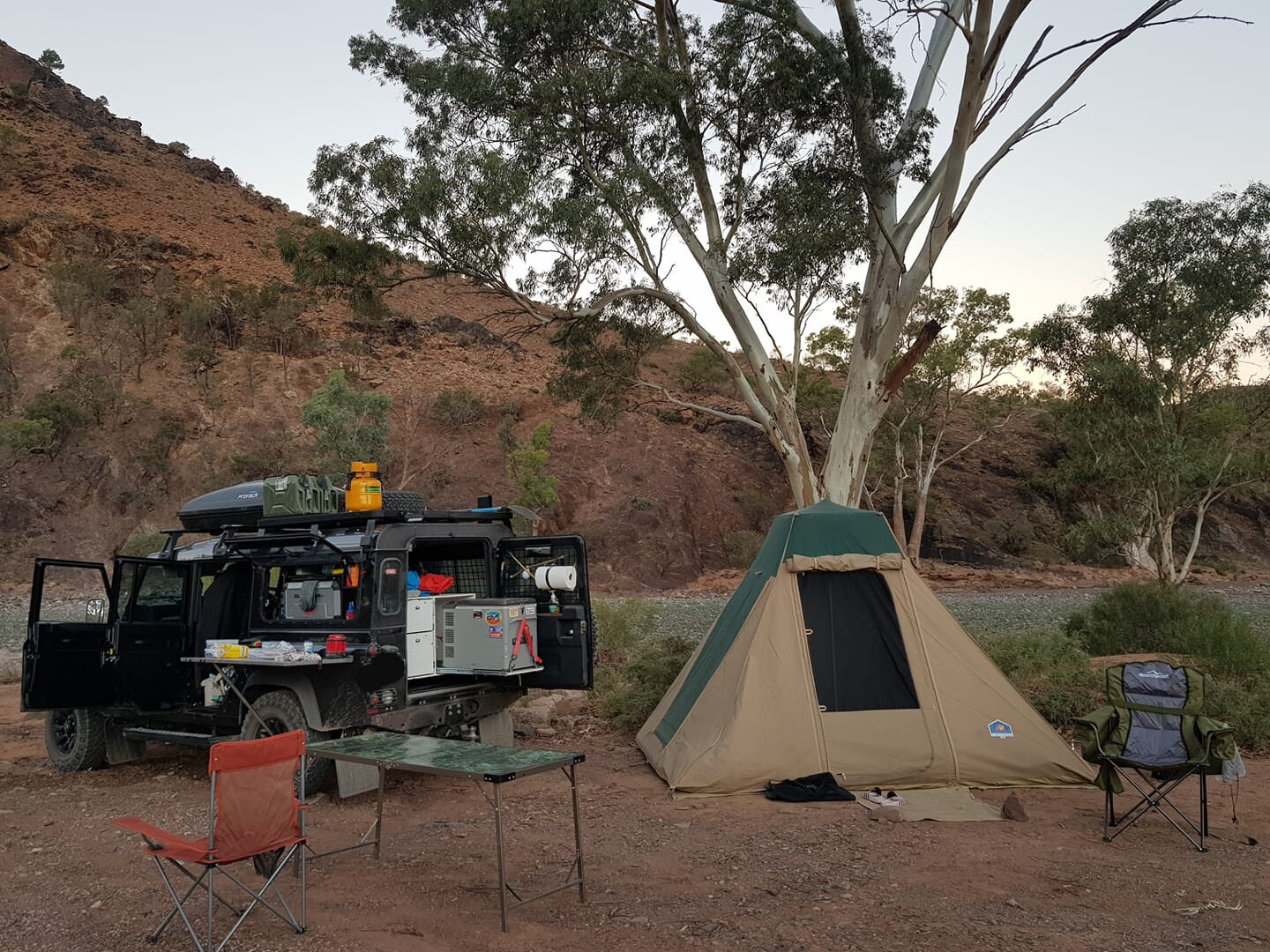
LAND ROVER DEFENDER
Our Land Rover Defender can be seen here camped at Parachilna Gorge in the Flinders Ranges, SA. Home-built drawers in the rear fit the 40L Engel on slides, and there’s a cavity underneath for the table to slot in. Two side drawers store food, pots, pans and crockery. The side window is fitted with storage shelves for quick access to gas cooker, condiments and glassware. The Frontrunner table attaches to the side of the vehicle for extra workspace. -Zoe Ryan
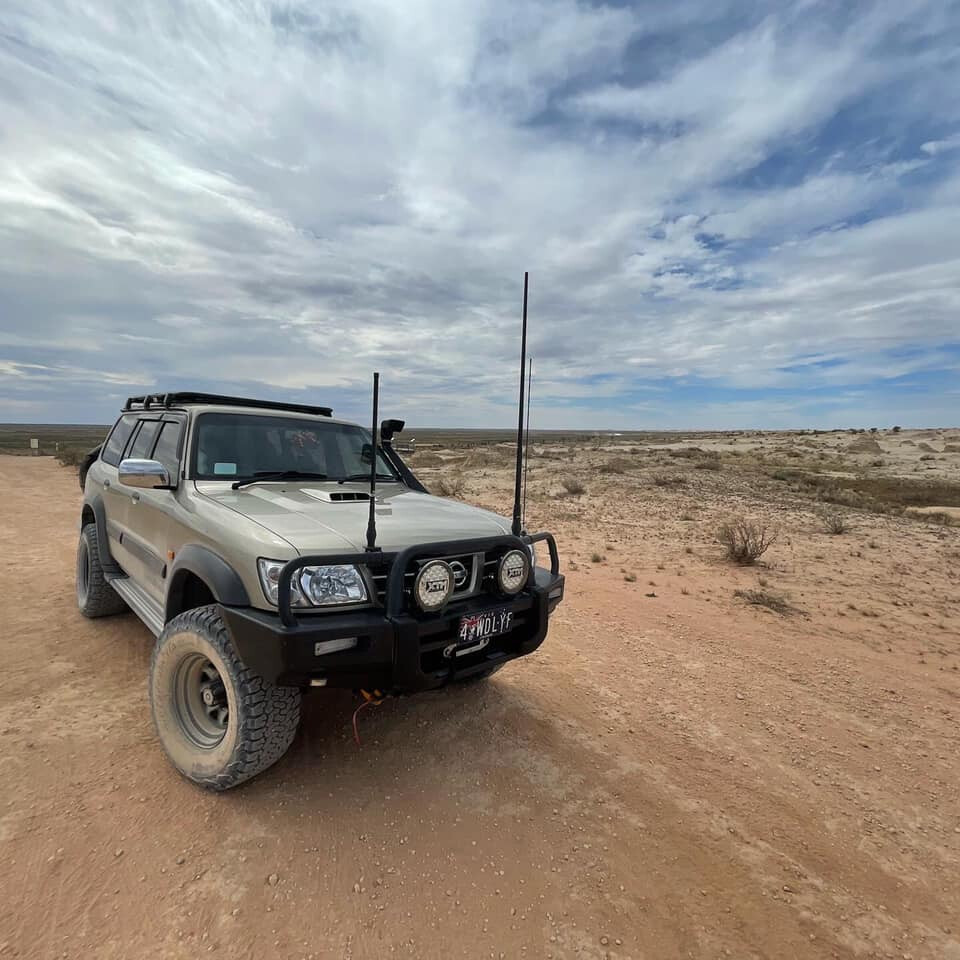
2004 NISSAN GU PATROL
This is my factory 4.2-litre intercooled turbo GU Patrol wagon. It is set up for off-road touring and has been around a bit. It has been as reliable as a rock, due to the 4.2. It has 33s and a two-inch lift to keep everything nice and legal. But that does not stop where it goes. Just need to point! -Ayeshan Bandara
2018 VW AMAROK V6 SPORTLINE
The 3.0-litre turbo diesel has been tuned for 183kW and 650Nm at all four wheels, and the last quarter mile was 15.268 secs at Willowbank Raceway. Powertrain updates include diff/gearbox/transfer case breathers; Process West Terratuff Sepr8r Catch Can; Fuel Manager 30 micron secondary fuel filter; and Wholesale Automatics transmission oil cooler.
Other notable additions – from a long list of gear – include Mickey Thompson ATZ P3 tyres; Outback Armour Expedition adjustable suspension; a custom 43mm body lift; Roadsafe 25mm diff drop and Blackhawk Upper Control Arms; Rival front bar; custom underbody protection; TJM snorkel; Carbon 12K winch; Rhino Pioneer Platform and Pioneer Backbone mounting system; EZDown Tailgate Strut; Darche Panorama 1400 rooftop tent and rear awning (1.4 x 2m); and loads more! -Nathan Dell

We all know how popular the current JB74 Suzuki Jimny has been since its release back in 2019. Internationally popular, too, not just in Australia. And while I can’t help but agree that the 2021 Jimny is a fun and capable 4×4, let’s be honest … it’s not exactly a large vehicle.
I’ve owned Suzuki 4x4s my entire driving life, my first ever vehicle was a Suzuki Sierra I paid $1200 for. I still own one to this day in a state of constant evolution. The only way I can describe owning any Suzuki 4×4, is an unhealthy relationship filled with a broad spectrum of passion-charged emotion. The highs are high, the lows can be low. One thing is for sure, though: Life will never be dull when you own a Suzuki 4×4.
Here’s a prime example. I made it from Mascot to Newtown in the inner-west of Sydney after picking up the Jimny, before someone waved at me. Normally, when people wave at me it means my latest Marketplace purchase has caught on fire, or something vital had fallen off it.

This time, it was a bloke in another Jimny; nicely modified, too. He just wanted to let me know he had a Jimny as well. I’d forgotten all about the so-called Jimny wave, similar to the Jeep wave (just less expensive). You are buying into just as enthusiastic a way of life, though. A life of being wet, muddy and covered in sand, yet with a smile on your face the whole time.
Basically, I know full well what it’s like to live with such an endearing yet challenging vehicle. Which is why I decided to push the boundaries and load up this friendly looking Kinetic Yellow Jimny with a stack of camping gear and head for the hills. I wanted to see what you could actually take on a trip if you were to head away for a weekend in a Jimny. I was pleasantly surprised at what could fit inside, all with relative ease too thanks to those box-like dimensions and the ability to fold the back seats flat.
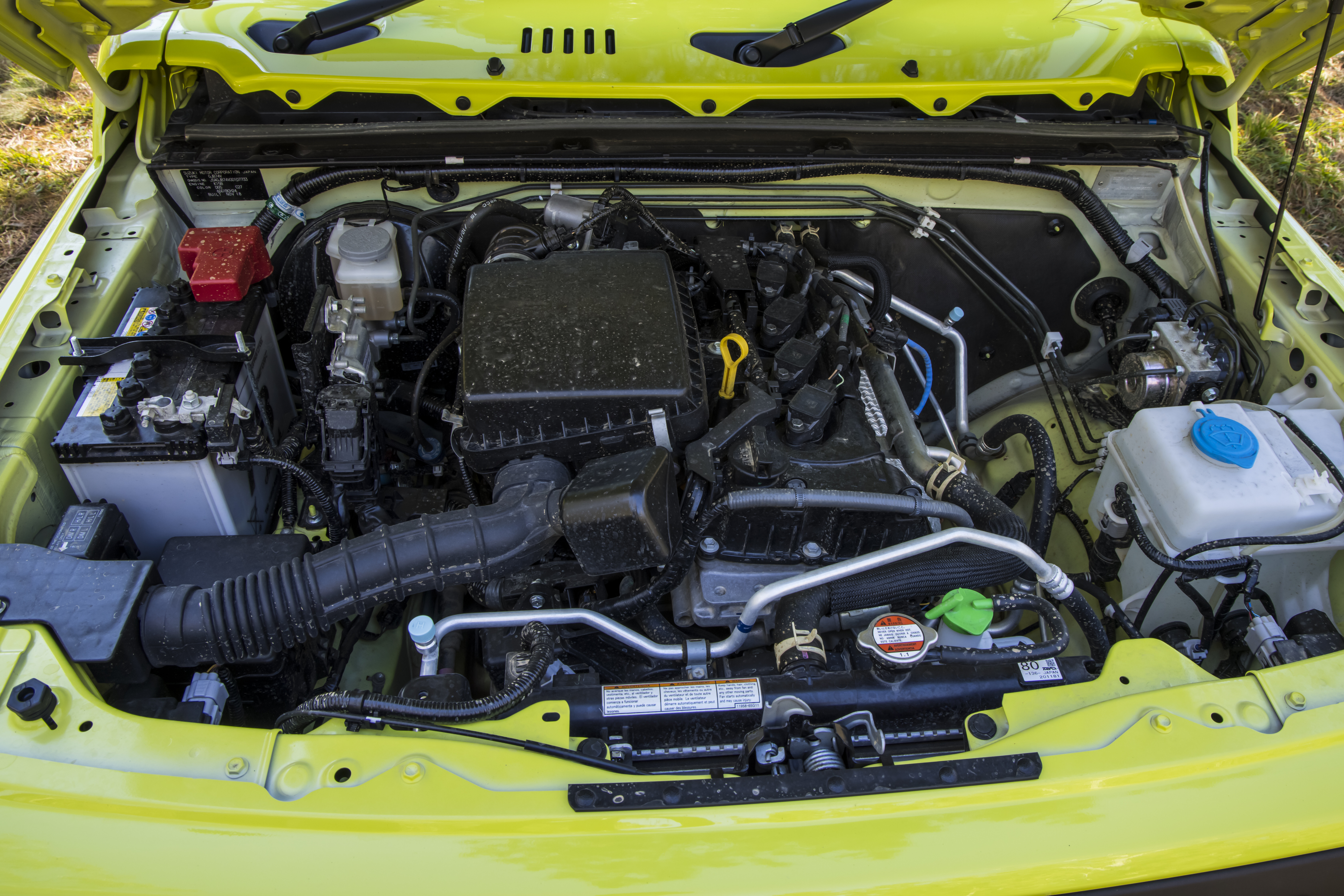
I’d love to see the factory turbo motor from the Suzuki Swift offered. That would be next level fun
POWERTRAIN & PERFORMANCE
With just 75kW of power and 130Nm of torque, the Jimny certainly doesn’t set the world on fire performance-wise. But while those figures seem low, you have to remember this is a light vehicle, and that 1.5-litre four-cylinder petrol engine likes to rev. In fact, it makes peak torque at 4000rpm, so you have to drive it accordingly. I’d love to see the factory turbo motor from the Suzuki Swift offered. That would be next level fun. One can dream …
Our test vehicle was equipped with the five-speed manual, which would be the most popular choice for most Jimny owners. There is also a four-speed automatic transmission available. At highway speeds, a six-speed manual would really settle things down in terms of cabin noise and fuel consumption.
Speaking of fuel consumption, we managed to record an average of 7.5L/100km. This was recorded over mixed terrain including highway, around town and off-road. Not bad considering the manufacturer’s quoted figure is 6.4L/100km, and we had a decent amount of camping gear on-board for the majority of the test period.
ON-ROAD RIDE & HANDLING
Let’s be real, this isn’t going to be a strong point for any SWB four-wheel drive, but the JB74 Suzuki Jimny certainly is a fun vehicle to drive around in (have you noticed a theme). The ride is very soft and floaty, so much so that when you tuck your seatbelt in, the vehicle moves with you. But this softness also provides a decent ride quality on-road for what it is.
There’s plenty of body roll around sharp corners, but it’s not an issue at lower speeds around town. I actually really enjoyed driving the Jimny around my local area, thanks to the high amounts of visibility and sheer fun factor offered by this pint-sized off-roader. The bright Kinetic Yellow colour choice also helped finding the little Jimny in the shopping centre carpark.
On the highway, things are a little more intense as the Jimny revs its little heart out trying to keep up with traffic. In this manual transmission-equipped Jimny, revs sat at around 3300rpm while cruising at 110km/h. It has a habit of being blown around by trucks too, which requires a fair amount of steering input to keep true.
The JB74 certainly is a big leap forward from the previous model, but at the end of the day it is still a small, lightweight, brick-shaped vehicle. It’s all part of the fun and experience of driving something as unique as the Jimny. As they say, life is too short for boring cars.
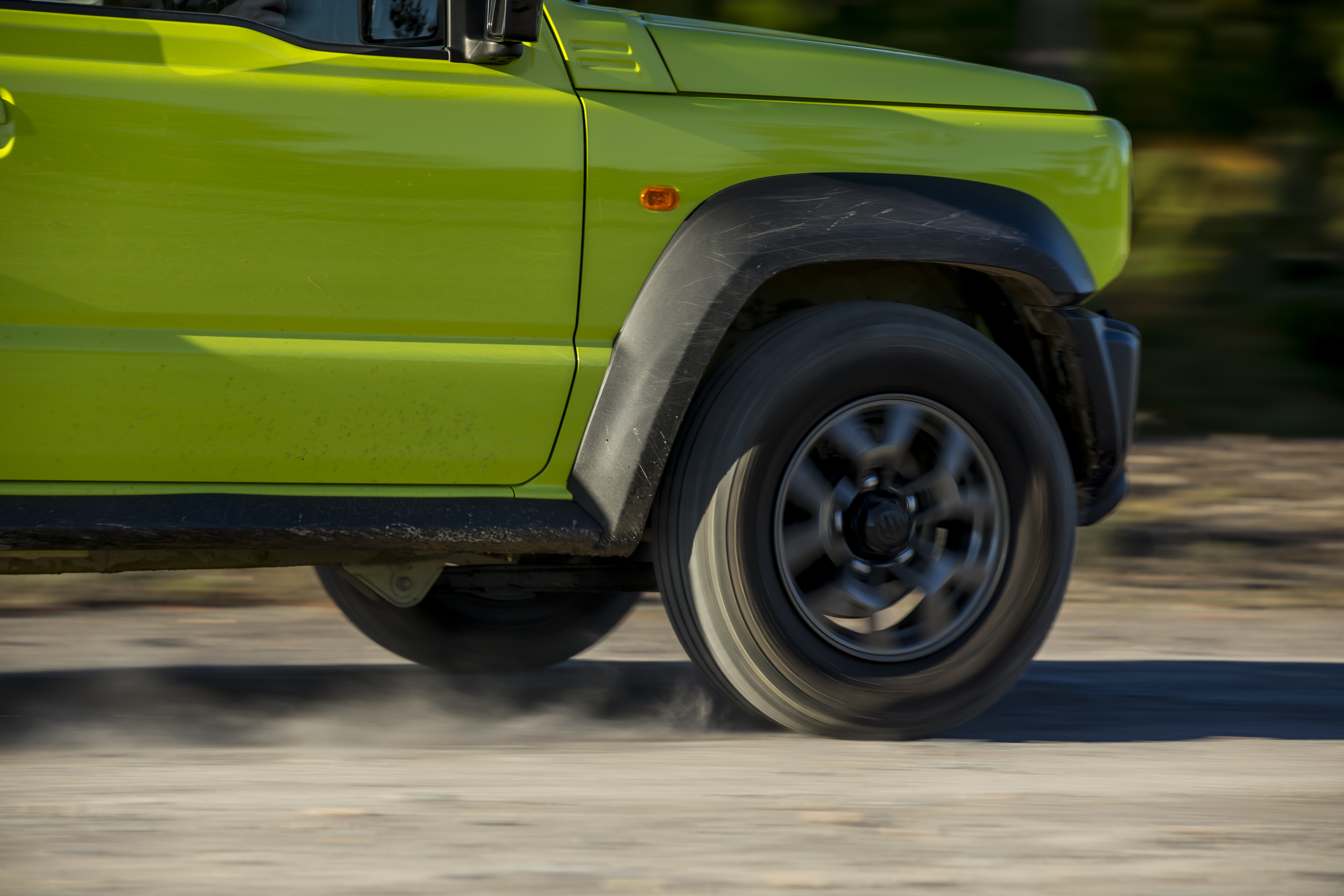
OFF-ROAD
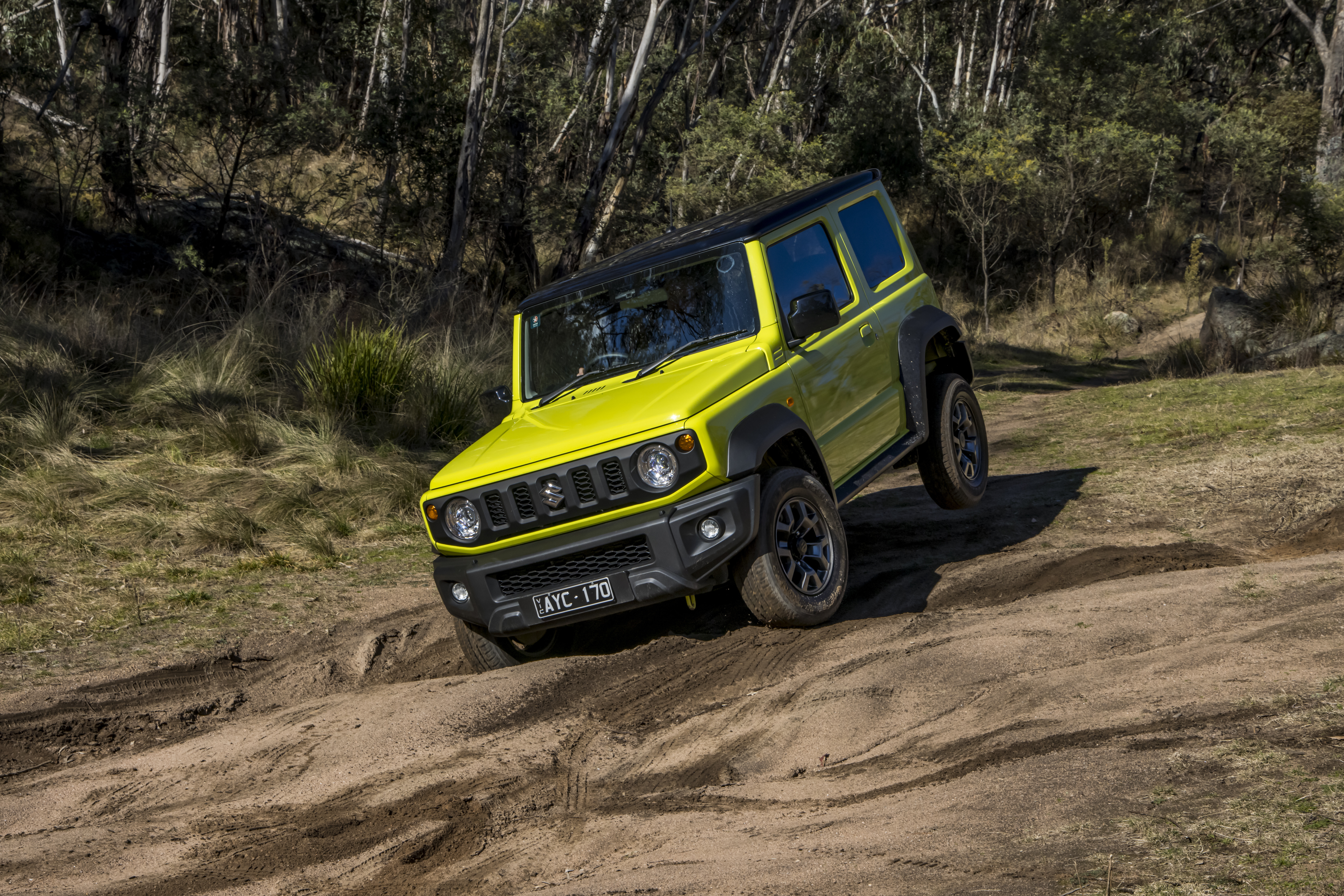
There are very few four-wheel drives that compete with the Jimny in terms of off-road ability. I’m not saying that it is the most capable 4×4 around, far from it. But thanks to the small dimensions and impressive approach and departure angles, you can drive lines and tracks not possible in a full-sized fourbie. It’s a hoot.
Ground clearance is the biggest limitation, with the suspension radius arms mounted low under the chassis. Again, the aftermarket industry can help fix this, with both suspension lift kits and protection plates which prevent the chassis mounts from being damaged.
The All-Grip traction control system found in the Jimny is pretty damn good, too. If you keep the revs up, it works to send traction to the wheels with grip by applying brake pressure to the spinning wheel. If you don’t keep the revs up though, the vehicle will want to stall rather easily. This is definitely one area the automatic gearbox would have the advantage off-road.

I love seeing a traditional and simple 4WD lever in the cabin, to do away with troublesome dials that can take time to work out what you’ve asked them to do. It’s easy to know when the Jimny is in 4WD, something that can be done on the fly at speeds up to 100km/h in high-range. Low-range activation must be made when the vehicle is at a standstill.
With coil springs on all four corners, and solid axles, you’d expect decent suspension articulation from the Jimny. It’s okay but definitely something that could be improved with more money spent on aftermarket accessories. In fact, a suspension upgrade (or GVM upgrade) would be the first modification I’d make if I was to buy a JB74 Jimny. Which, one day, I hope to do.
CABIN & ACCOMMODATION
Suzuki has done a wonderful job creating a fun yet practical interior. It’s almost cartoonish, but not in a brash or cheap-feeling way. The dash layout is simple, sturdy and effective. It’s definitely not luxurious, nor should it be. There are so many throwbacks to previous Suzuki 4x4s as well, such as the dash cluster which is a nod to the instruments used in the older SJ70 Suzuki Sierra.
There are plenty of modern features like a seven-inch touchscreen with Apple CarPlay and Android Auto, and safety tech like Autonomous Emergency Braking. However, with a three-star ANCAP rating, it’s certainly not one of the safest new vehicles on the road.
I personally like the feel and looks of the cloth seats, but this is entirely subjective. One thing I don’t love is the lack of storage and the strange positioning of the cupholders. They’re behind you, so you can’t really see where you’ve put your water bottle. There is also only one USB port, which you need to plug in to pair your phone to the touchscreen. There is a 12V socket, so a simple dual-USB adaptor would be a wise addition. Another point worth mentioning is the LED headlights with High Beam Assist, which are nice and bright when the sun goes down.
PRACTICALITIES

This was a major component of this test. As mentioned previously, I wanted to see just how much camping gear you can fit into such a small package with the seats folded down. I managed to fit the following camping equipment inside with room left over for additional water, firewood or a decent-size air compressor.
On-board was a 75L fridge (massive overkill for this vehicle, but it fit and I like beer), two camp chairs, a 200w folding solar blanket, portable power station, single swag, storage tub (with cooking gear and food), camp table, recovery gear (snatch strap and shackles), and a bag of clothes.
There was nothing stored on the passenger seat, so for two people it could seriously work as a micro-camping machine. A set of lightweight roof racks (Suzuki recommend 30kg max roof load limit) would see an awning bolted on for shelter, and space for a double swag on the roof. Pretty impressive stuff.
One limitation worth mentioning, though, is the small 40L fuel tank. It’s not a deal breaker, just something you’ll need to be aware of. Luckily, the aftermarket again has you covered here with 80-litre long-range fuel tanks available to double your range.
SUMMARY
It’s fun, cheap to buy, capable off-road and pretty good on fuel. In saying that, with the recent price increases, the Jimny is dangerously close to being too expensive for what it is (in my opinion). I really want to buy one, but considering there’s a waiting list of apparently six to 12 months, and prices are coming in at around or over $30,000 drive-away (depending on options), you have to really want a Jimny to make it work. For me, if it was $25,000 drive-away, I’d put an order in tomorrow and then fit some bigger, more aggressive tyres, a lift kit and a lightweight roof rack.
I get that the popularity and short supply has created a huge demand for the little Zook, and that’s great news for Suzuki. I’d like to think that when things calm down and supply increases, prices will drop. But then again, I can’t see that happening anytime soon.
So, yes, the JB74 Jimny lives up to its hype. Yes, you can daily drive a Jimny and take one four-wheel driving. And yes, you can fit a decent amount of camping gear inside if you pack smart. It’s not what I’d call comfortable, and it’s a challenge on the highway, but if that’s not an issue for you, and you just want a Jimny, there’s nothing else like it on the market.
We’re looking forward to driving the new Jimny Lite which is due for release soon and should come in a few grand cheaper.
- Part 1: Rhino Charge
- Part 2: Stuck in the ‘Burbs
- Part 3: Making Musso Memories
- Part 4: Back to Work
- Part 5: Breaking Free
- Part 6: The Great Escape
- Part 7: Chasing Stars
- Part 8: Workin’ for the Man
- Part 9: Better than you think
Part 1: Rhino Charge
We get a SsangYong Musso in the shed to play with.
IF YOU’VE been reading this magazine over the past six months, you will know we’ve been pretty impressed with the latest SsangYong Musso. While it’s pretty easy to say that a $38,000 double-cab ute is a lot of car for your dollar, it’s not just the bang for your bucks that draws us to the Musso.
This latest model Musso, which came out in Australia in the middle of 2019, is one of the best-driving utes in the highly competitive 4×4 ute segment. Folks are quick to joke when we say we like the Musso, but that soon changes after they ride in it.
This has prompted us to add the Musso (a Korean word for rhino, in case you were wondering) to our 4×4 fleet. We’ve gone with the XLV variant with its 110mm longer wheelbase and massive cargo tub over the standard model. We also chose the mid-spec Ultimate for its coil-spring ride and comfort, and better equipped interior.
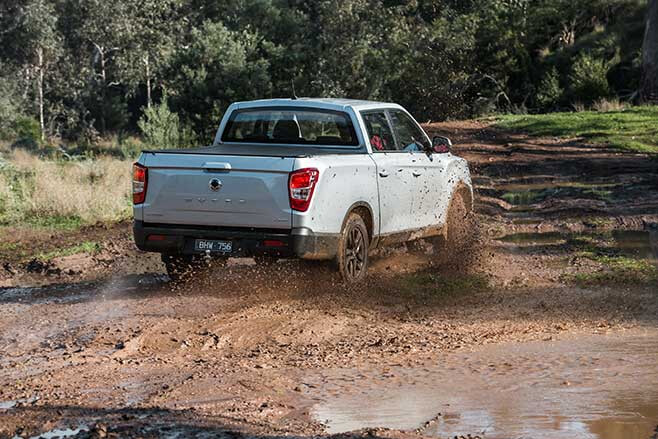
While the Ultimate is the mid-spec, it is loaded with features you’ll be paying a lot more for in other 4×4 utes. Heated and vented leather seats, and a big eight-inch screen in the dash with Apple CarPlay and Android Auto feeding an eight-speaker audio system, all in a cabin that feels (and is) much wider and more spacious than any other ute on the market.
The VW Amarok might come close to the Musso in cabin width, but there’s certainly no rubbing shoulders with the front seat passenger as you get in Benz X-Class or Mitsubishi Triton.
The Musso doesn’t miss out on any safety tech and is up there with the Triton as one of the best-equipped utes in this regard. Standard kit includes all the features you expect including electronic stability and traction control, Autonomous Emergency Braking (AEB), forward collision warning, front vehicle start alert (FVSA), lane departure warning, tyre-pressure monitoring system (TPMS), front and rear park assist, blind spot detection, Lane Change Assist (LCA) and Rear Cross Traffic Alert (RCTA).
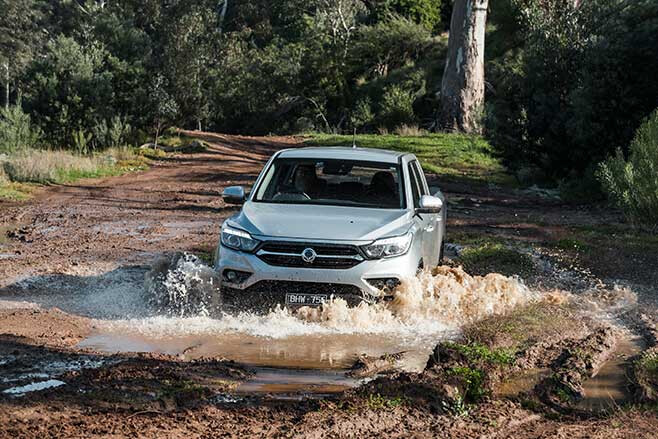
We have found the lane departure warning to be overly sensitive and annoying on narrower roads, and thankfully you can turn its chime off. FVSA was a new one for us and is an alert that lets you know when the vehicle in front has moved on when sitting in traffic if your mind is elsewhere.
We always love a good TPMS for keeping us informed of the pressures in all the tyres, particularly when you’re on rough roads that can be hard on tyres.
A nice touch to the Musso’s TPMS is that it randomly flashes up the current situation of the tyre pressures. We’ve only noticed this happening once in the first two weeks of driving this car, but it’s a great feature. How often do most of us check our tyre pressures?
The mechanical package comprises the 420Nm 2.2-litre diesel engine backed by a smooth eight-speed auto and part-time four-wheel drive.
The rear locking diff is an auto-locking unit and not driver-selectable, but has proven to be very effective in past tests.
WhichCar brings a Musso to the Deni Ute Muster…
We loaded the Musso up with some factory accessories that come from some well-known brands including the Ironman 4×4 suspension kit and underbody protection, Redarc Tow Pro brake controller, factory tow bar and tonneau cover.
These are all factory-backed and dealer installed, and fully covered by SsangYong’s excellent seven-year warranty.
We look forward to putting this Rhino to work over the coming months and getting a true feeling of what it’s like to live with.
THE DATA
TOTAL KM: 563km DATE ACQUIRED: July 2020 PRICE: $37,990 – $42,848.90 AVERAGE FUEL USE: 10.3L/100km
Part 2: Stuck in the ‘Burbs
New Maxxis RAZR tyres and some light-duty use for our SsangYong.
WITH the Melbourne lockdowns restricting us to a five-kilometre radius of home, we haven’t been able to put many miles on the SsangYong Musso XLV this past month, but it is proving to be a comfortable urban commuter.
The extent of our travels have been the commute to the shops and back, and we’ve appreciated the big, comfortable interior space, heated seats, and the large screen and clear reversing camera that help us slip into the parking spaces at Woollies.
Despite being bigger than some of the other utes in its class, the Musso is easier to park than most, thanks to its expansive glasshouse and visibility, and the aforementioned rear camera and parking sensors.
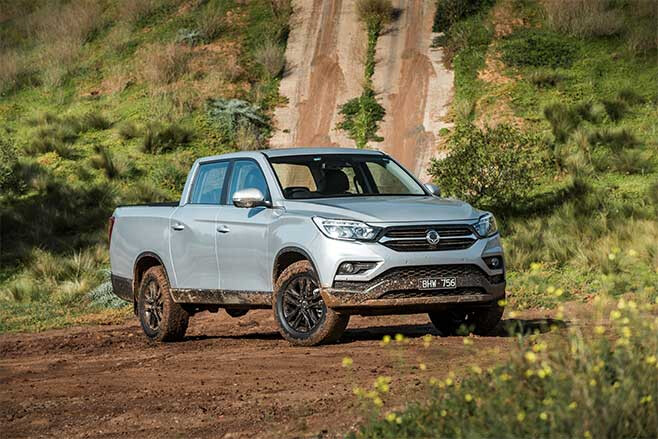
We did squeeze in a bit of off-roading with the ‘Rhino’ when we headed out to the Melbourne 4×4 Training & Proving Ground, but before we did we replaced the tyres that came on it with a set of Maxxis’ new AT811 RAZR tyres.
We were mighty impressed with the RAZR MT772 muddies when we had them on our Ranger and when we saw the AT811s at the SEMA Show last year, and we were keen to try them out. The new all-terrain RAZRs only landed here in July, and when we saw the ATs had launched in Australia we queued up to get a set.
Of course, being an all-terrain tyre the 811s are a less-aggressive tyre than the 772 and deliver a better on-road driving experience, but Maxxis took some of the tech from the muddy and applied it to the AT to give it a more purpose-built appearance.
Aggressive side biters sit in between deep shoulder lugs for improved off-road traction and sidewall protection, and these are aided by the relatively open design of the chunky tread blocks across the tread face.
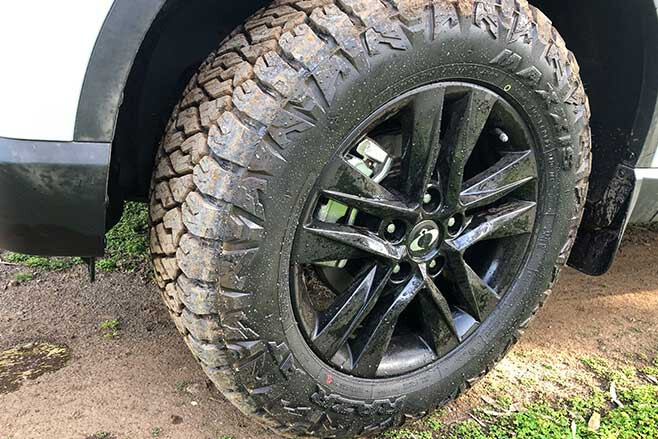
All but one size (33.105R15) in the 21-size range of AT811 RAZRs are light-truck construction, with a durable 10-ply rating and 3-ply sidewall for strong resistance to punctures and damage.
We replaced the Musso’s tyres with RAZRs in the same 265/60R128 size as OE spec, albeit these are LT tyres. These retail for $310 to $320 per tyre, so shop around to find the best deal on them. We had them fitted by our good friends at Competition Tyres & More in Murrumbeena, Victoria.
Initial impressions on wet and dry roads are that they are super quiet and comfortable, with nothing to really challenge them in commuter conditions. At the proving ground they made light work of the gravel, mud and rocks found around the property at road pressures.
Having the more aggressive tyres on the already capable Musso makes a good thing better, allowing us to take it more places. So we’re looking forward to getting out to some more challenging terrain once the pandemic lockdown lifts, to see how both cars and tyres perform.
THE DATA
TOTAL KM: 643km KM SINCE LAST MONTH: 70km AVERAGE FUEL USE: 11.7L/100km
Part 3: Making Musso Memories
Understanding what Aussie drivers do with their vehicles is something Korean carmaker SsangYong has quantified – 27/10/20
ANOTHER month of Victorian lockdowns has meant another month of us not being able to go far in our Musso XLV. In fact, we still haven’t had to put any fuel in it.
While we haven’t been able to put the Musso to much use it has been interesting to read a survey recently commissioned by SsangYong on how Australians are likely to use their vehicles over a seven-year period.
SsangYong chose seven years as that’s how long its vehicles are covered by the factory unlimited-kilometre warranty.
While there might be people who will have questions about buying a vehicle from a relatively small importer such as SsangYong, that seven-year warranty should certainly allay any fears about the vehicle’s quality and dependability.
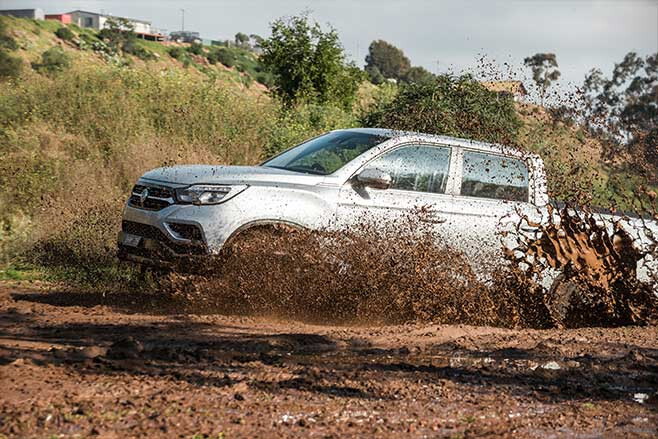
On average, Australians drive 13,400km per year, so that’s 93,800km over the seven-year warranty period.
“Across seven years, an average Australian driver will make 5063 individual trips,” according to Stevan Dimitrovski, the national marketing manager at SsangYong Australia.
“They’re likely to pop the boot 1343 times, play 3167 songs, make 877 hands-free calls, and have 302 unique arguments over directions.”
Relating this to our experience with the Musso XLV; it has a tailgate and not a boot and the tailgate is locked via the central locking, a very handy feature not found on many popular 4×4 utes.
Playing music, making hands-free calls and seeking directions is easy in the Musso thanks to the Apple CarPlay and relatively large eight-inch screen.
The eight-speaker sound system fitted within the Musso XLV Ultimate is a step above most popular utes as well; some of them only offer two speakers! But we do wish the sound system had more volume as I often find it already at its max when I go to crank it up.
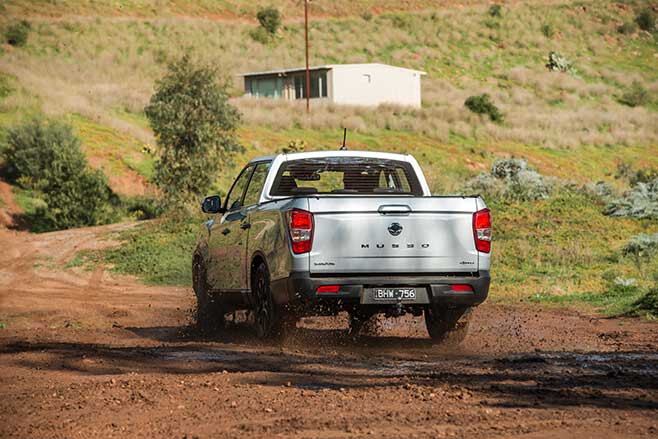
SsangYong’s ‘Long Drive’ study also found that across that seven-year period, men are expected to take 692 more trips than women (5424 compared to 4732) and the blokes are also expected to open windows more (2162 times) compared to women (1820 times). Australians are predicted to reverse park 1569 times on average over seven years.
Interestingly, 98 per cent of Australians are likely to harbour memories of their cars associated with life milestones or family occasions, rather than memories about their ‘new car’ experience.
This is particularly relevant for a go-anywhere adventure 4×4 ute like the Musso; you’re more likely to remember what car you were in when you conquered the Simpson Desert’s ‘Big Red’ sand dune than elements of getting a new car.
What’s that other saying? No one remembers the time you got 10L/100km fuel economy.
Equipping the Musso with factory-backed accessories such as the Ironman 4×4 suspension, underbody vehicle protection and all-terrain tyres, as we have done on the XLV, furnish the Musso for such memorable adventures. All the accessories are also covered by the same seven-year factory warranty.
So far the lockdown is creating memories for all the wrong reasons. We’re just itching to break free from the suburbs and set out on some memorable adventures in the Musso.
THE DATA
TOTAL KM: 771km KM SINCE LAST MONTH: 128km AVERAGE FUEL USE: 11.9L/100km
Part 4: Back to Work
We’re finally getting our and using the Musso as intended – 22/12/20
AFTER months in a hard Victorian lockdown and being tethered to the suburbs, we’ve been able to venture a bit farther afield in the Musso, using it as the photographer’s car on a worker permit.
This allowed our snapper Alastair to drive it up to Lederderg for these pics and later down to Gippsland to shoot Anthony’s Patrol for the cover of this issue.
Just as the Musso has been a comfortable and easy car to live with around town, it works well for these little day trips and light off-road use. The spacious cabin is well-equipped in this Ultimate specification and, as it is the long-wheelbase XLV model, the massive cargo tub easily accommodates any gear we need.
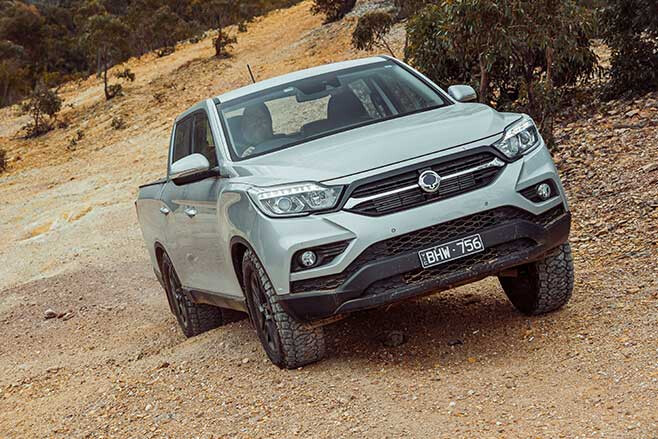
On the day these photos were taken we had the new Mazda BT-50 there to shoot, and driving the two back-to-back you quickly appreciate the wider cabin of the Musso that gives a much bigger feeling inside the car.
It’s also quieter inside and after sampling both the BT-50 and Isuzu D-Max siblings around the same time, I’ve got to say the Musso is much more refined in the cabin with less noise from the engine and lower NVH levels all-round.
We weren’t comparing the two utes on the day but as an indicator, where the Mazda scraped its side-steps cresting a large hump, the SsangYong cleared it, but it did touch its tail on departure; a price you pay for the larger cargo space.
Even with its optional Ironman 4×4 suspension package raising the ride height around 45mm, the Musso still feels low. That said, it is an essential option for anyone wanting to use their Musso off-road.
While the rear overhang is something you need to be wary of when off-road, the benefit of that massive tub (300mm longer than the standard Musso) is how much you can fit in it.
Being allowed farther afield allowed me to pick up some wheels and tyres and five 265/75-15s fit in there easily, with room for two more and you’d still be able to keep them all under the tonneau cover.
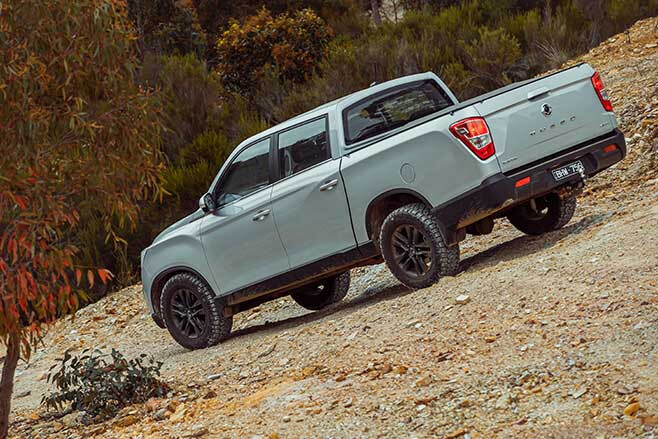
Having the weight of these wheels and tyres in the tub also softened out the all-coil spring suspension a bit for a more comfortable ride.
Like any one-tonne ute the Musso can be a bit choppy in the ride department when there’s no load on board, but a light load like this balances it out nicely.
In XLV Ultimate trim like our car, the Musso has an 880kg payload. If you need more, the lower-spec ELX model with leaf springs under the back gives 1025kg payload with all 4×4 Mussos having a 3500kg towing rating.
Getting out of town allowed us to put a more respectable 700km on the Musso XLV and the highway driving dropped the fuel use down to a 10.9L/100km average.
The more time we spend in the Musso and the kilometres we rack up in it, the more we think this is the most underrated ute in its class and definitely one that buyers should check out before they pass it by.
THE DATA
TOTAL KM: 1428km KM SINCE LAST MONTH: 657km AVERAGE FUEL USE: 10.9L/100km
Part 5: Breaking Free
We leave suburbia behind and take a long-overdue off-road day trip – 14/01/21 Words: Tristan Tancredi
FOLLOWING months of hibernation, Netflix and food deliveries, it was great to get out again and enjoy the Victorian sunshine and clock up some proper mileage in our long-term Musso.
We say that as a big slab of our time spent with the Musso has been whittled away during lockdown, with the Korean dual-cab mainly sitting in the carpark, and used sparingly to pick up groceries and Bunnings orders.
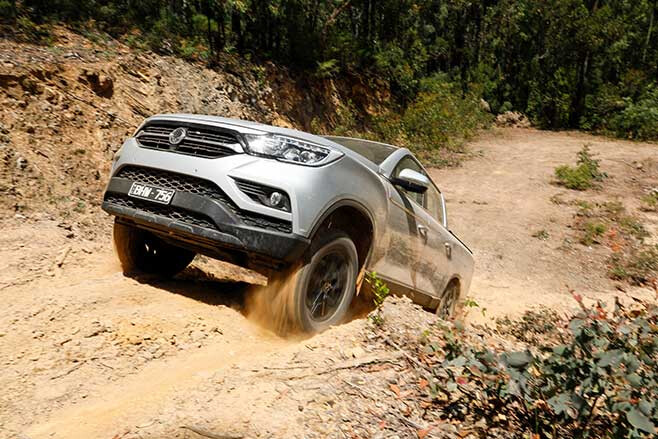
With restrictions lessened considerably over the past month or so, we decided to point the Musso to Healesville and beyond to Toolangi, to dust off the cobwebs and take a long-overdue off-road day trip.
Located at just over 70km from Melbourne via blacktop, Toolangi is a sweet spot for off-roaders looking to escape for a weekend – or just an afternoon, really.
With a selection of interweaving off-road tracks – ranging from mild to somewhat wild – the region is lush with vegetation, and well-used by four-wheelers throughout the year.
Being a weekday on our jaunt, though, we had the place to ourselves.
On the tarmac drive to reach the dirt, the wide, spacious interior and securely heated and vented front pews (no height adjustment for the passenger) make the Musso a comfy vessel for the occasion – though the cheap plastic clothing the dash is to be expected.
That there was a fair bit of weight in the Musso’s extended tub – courtesy of some used wheels and tyres editor Matt picked up on the cheap – made the ute feel well-connected to the bitumen.
This particular Musso is the XLV variant, which means it has a longer wheelbase (by 110mm) and a bigger cargo tub than the standard model.
Despite its size, though, rear parking sensors and a rear camera make it a cinch to park. It also has the Ironman 4×4-developed suspension setup, which can be purchased and installed from the factory.
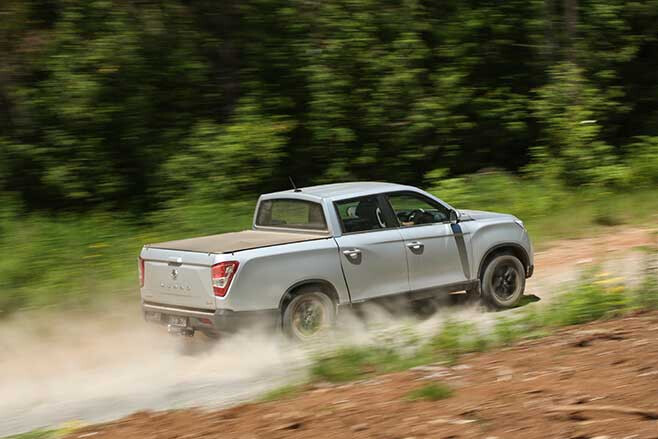
You really feel it off-road, too, with the Musso feeling well-connected to terra firma on undulating backroads. On some of the more challenging climbs, the Musso had no issues keeping up with a 2020 Toyota Hilux cab-chassis we had along for the ride.
The 4WD system is easily manipulated via a dial on the centre console, with 4WD High able to be activated on the fly.
There are a few nit-picks, though, including the sensitive driver assistance systems such as lane departure warnings and a chime that alerts the driver when the vehicle in front of them has departed.
The alarm button on the key fob is also too big and obtrusive – and accidentally pressed on numerous occasions.
There are a few upcoming trips planned with our long-term Musso, so stay tuned to see how it coped with end-of-year festivities.
THE DATA
TOTAL KM: 2761km KM SINCE LAST MONTH: 1333km AVERAGE FUEL USE: 9.0L/100km
Part 6: The Great Escape
The Musso is loaded up and heads to the mountains, only to have its freedom cut short by a sudden border closure – 05/03/21 Words: Matt Raudonikis
IT FEELS like all the monthly reports we did on the Musso through 2020 ran along the lines of ‘Sorry, but we’re in lockdown and have only done 15km this month’ or ‘Pulled a quick daytrip to the outskirts of town between lockdowns and the Musso feels great’.
Thankfully, the end of 2020 and into the New Year gave us some freedom to use the SsangYong as it is supposed to be driven, but there was still another border restriction to throw a curveball.
Before we knocked off for the Christmas break, we took the opportunity to take the Musso out on a road test with the updated Hilux, which you may have already read about in this magazine. Once the holidays started and travel restrictions were eased, we were finally able to take the Musso bush on a camping trip. Even then, a border permit was needed should we venture out of the state and want to get back into Victoria again.
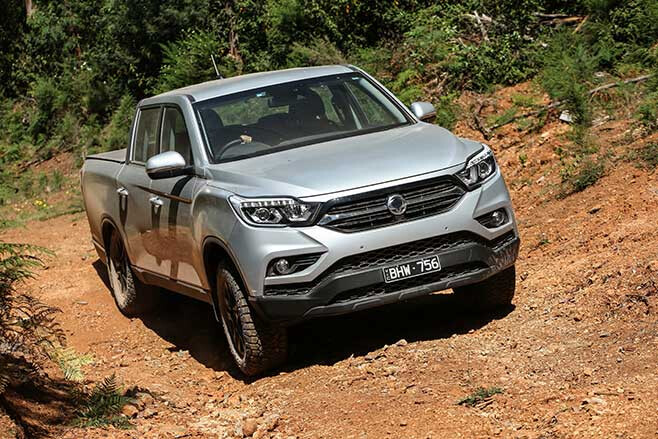
A few days up on the Snowy River were planned and I loaded the Musso up. The tie-down points and 12-volt outlet in the massive cargo tub were put to use to secure and power the ARB fridge, and the load space easily accommodated gear including swags, camp chair, water drum, space cases, etc. All covered under the soft tonneau cover. Why they made the spars that support this cover in three pieces is beyond me, as they come loose and fall apart when simple one-piece spars are no fuss.
DAVID vs GOLIATH: Musso vs Hilux
The Musso’s spacious cabin has always been welcoming, and the vented and cooled seats proved their worth while travelling under the hot summer sun. At the same time, the manual air-conditioning seemed to struggle to pull the temp down when returning to the car after it was parked in the sun, even with everything cranked to maximum.
Another deficiency for travelling is the lack of USB ports, as the single one in the console isn’t enough in this day and age. You need to have your phone plugged into it for music and maps, which leaves nowhere else to charge any other appliances. Other than these minor gripes, the Musso is a great place to spend long days behind the wheel.
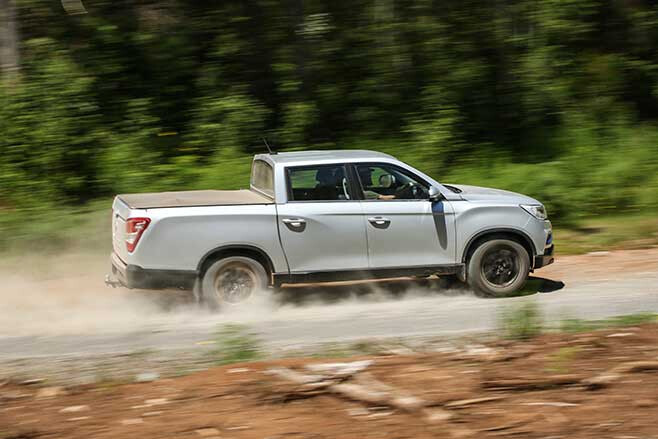
Driving impressions reflect what I said in the road test in this magazine, but the suspension certainly feels much better when there’s some gear in the back. Another mention of the TPMS; on a 40˚C day the tyres were obviously heating up on the tarmac, and once we hit the mountain twisties it wasn’t long before an alarm sounded with a warning of ‘High Pressure’ in one of the rear tyres. I couldn’t have timed it better really, as we were about to hit the dirt and it was time to drop the pressures anyway, but just another reason to make me think this is the best OEM-fitted TPMS I’ve seen.
Speaking of the tyres; the Maxxis RAZR A/Ts have proven to be an excellent choice for this car. They have been quiet and smooth around town, steer well on the twisty roads, and were surefooted and well-planted on gravel roads and low-range off road. Some of the High Country tracks heading up from the Snowy River are steep and rocky, the perfect place to damage a sidewall on a lesser tyre, but the RAZRs have come away unscathed and there’s still a lot of life left in them yet.
The lockdowns threw another spanner in the works as Victoria closed its border again on New Year’s Eve, requiring a quick pack-up and hasty retreat back south. Once in Victoria, we enjoyed the road south from Corryong to Benambra, its many twists, turns and climbs a joy to take in the mighty Musso.
Part 7: Chasing Stars
The Musso is put to work as a video support rig on 4X4OTY – 16/04/21 Words: Matt Raudonikis
OUR Musso XLV continues to prove its worth as a reliable and capable tool for whatever job we task it with. Be it picking up parts, trips to the hardware store, daily commuting or heading off-road, it has always been up to the job.
Most recently the Musso was called upon to be the transport for the media team on our 4X4 Of The Year road test. This meant hauling three guys and all their camera and camping gear away on a five-day trek, chasing the best new four-wheel drive vehicles of 2020.
The 4X4OTY test was conducted in the Victorian High Country and we took in some of the steeper and more scenic tracks to test the mettle of the contenders and capture the best imagery available in the region. Chasing vehicles that most consider far more capable than the Musso certainly put the SsangYong to the test.
The Musso XLV was among the finalists for 4X4OTY in 2019 when it surprised the judges with its performance. It wasn’t in contention this time around, but having to chase and overtake the convoy of contenders time and time again over the week sure put through its paces.
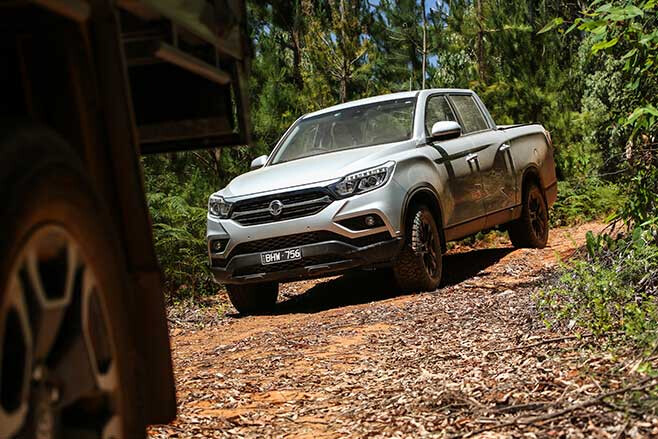
The car we had on 4X4OTY in 2019 had the standard suspension and our only comment to SsangYong after testing was that it needed a lift and better suspension, to which they replied: “You should drive one with the optional Australian-developed suspension it in.” We took them up on the offer and our Musso XLV is equipped as such, giving it around 40mm extra clearance over standard.
Still, the Musso banged and scraped over some of the rockier tracks in the mountains more so than the other cars on this drive. Thankfully we also equipped it with the optional underbody protection, which, along with the suspension kit, was also developed here by Ironman 4×4. The metal plate under the engine now bares a few scrapes and marks where it ground out over the rocks, but it did its job and protected the car’s vitals.
The Musso XLV could really use some protection between the axles, as the long wheelbase of the XLV (110mm longer than a regular Musso) leaves the belly of the car susceptible. A plate beneath the fuel tank would be good idea as our one is now dented and the mounting strap damaged. The chassis rails also show scrapes, but they are sturdy and undamaged.
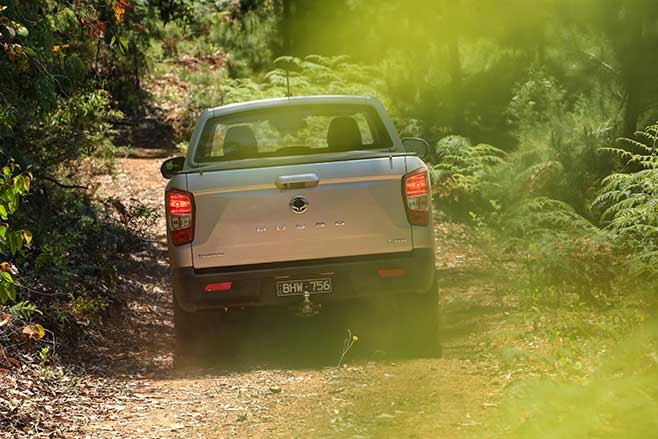
Our Ford Ranger-owning video director Matt Bourke spent most of the time behind the wheel of the Musso on this trip and said, “It went everywhere we asked it to with only a few underbody scrapes, but that’s due to the tub being so long.
“I was rather impressed with it to be honest. For the money it’s not a bad ute with all the creature comforts, leather heated and cooled seats, and Apple CarPlay.”
Videographer Cam Inniss spent plenty of time on the back seat and commented, “I thought the backseat was quite comfy for a ute, plenty of room back there.” Cam also mentioned the quiet on-road ride which is something we’ve commented on several times, particularly when compared to other utes in this class.
The 2.2-litre diesel engine isn’t a rocket, but it is one of the most refined four-cylinder units you will find in this class.
Part 8: Workin’ for the Man
The Musso continues to impress our less-experienced crew – 07/05/21 Words: Matt Raudonikis
OUR Musso continues to serve as my daily transport and back-up vehicle for the photographic team when we’re away on shoots. Photographer Alastair Brook has taken it out on a few shoots of late and was also among the team in it on the 4x4OTY road test in the Victorian High Country.
Alastair said of his time in the Musso, “It’s pretty capable with the off-road tyres. Even a newbie such as myself could get up stuff others needed a couple of goes at. Plenty of toys included for the price point; heated and cooled seats and CarPlay in a car that size for the price point is commendable. The dash is good and I like the occasional reminder of the tyre pressures.
“The ride is decent and on-road manners are quite good. The space in the back serviceable; probably more so than that rental Hilux we had on the Flinders trip.”
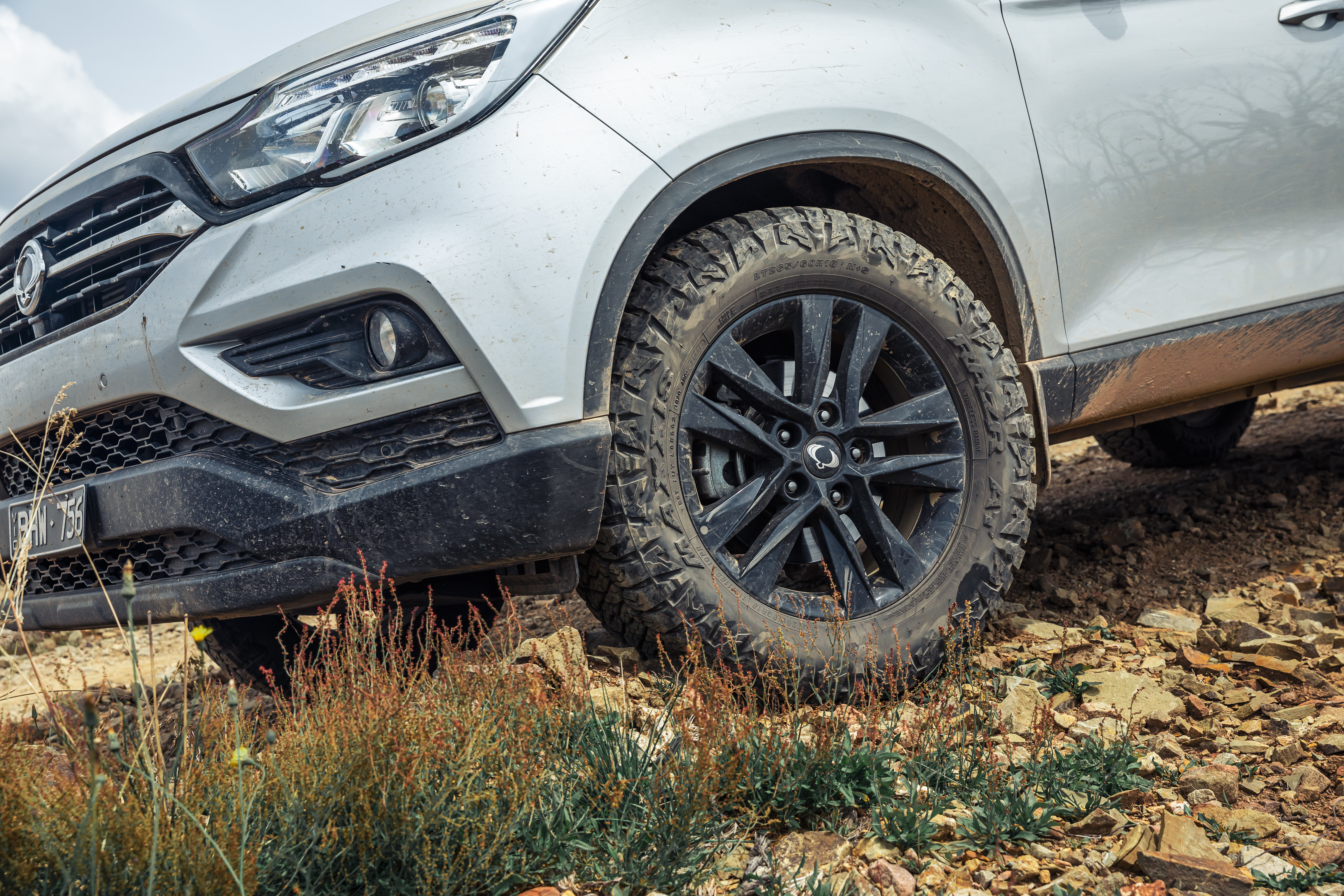
Those off-road tyres Alastair was referring to are the Maxxis RAZR AT811 all terrains that we fitted early on in the test, and they are performing excellently covering all sorts of terrain and holding up well.
The RAZRs are the same 265/60-18 size as the OE tyres that SsangYong fits to the Musso, so there was no trouble fitting them and they have given us peace of mind when travelling out on the tracks. And some of those High Country tracks were rubber punishing rocky!
They have around 5000 kilometres on them now and still look as new. That said, the Musso’s standard tyre-pressure monitoring system (TPMS) is showing that the driver’s rear has a slow leak in it which we’ll have to investigate before we head out of town again. The TPMS reminds us of this every time we get in the car and is a great feature.
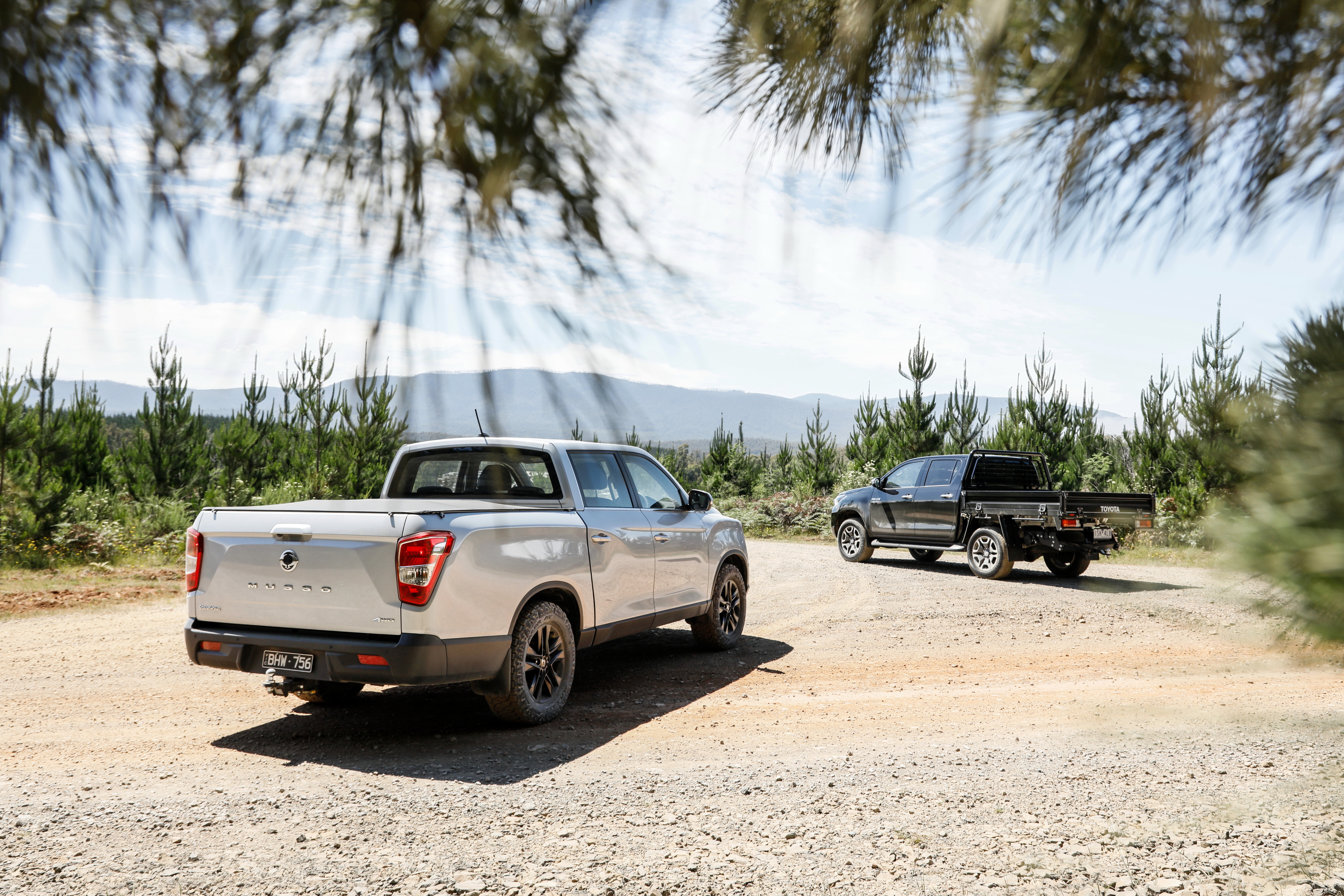
A few of the drivers of late have mentioned that the Musso can be tricky to park, partly because of its size but also that the rear corners of the tub are relatively high. At 5.4 metres long, the Musso is longer than most cars even other double-cab utes and it does hang its tail out beyond the marking in the local car parks.
So yes, it does take a bit of extra care when negotiating such places but front and rear parking sensors plus the reversing camera, make the job a lot easier. The image from the reversing camera is bright and clear on the large in-dash screen.
KM THIS MONTH: 6521km AVERAGE FUEL USE: 11.2L/100km
Part 9: Better than you think
After a year in the shed, the Musso XLV Ultimate has proved itself a value-for-money conveyance with respectable off-road cred, features and refinement – 19/07/21
Well, it was with us for 12 months, but thanks to COVID and its numerous lockdowns and border closures, the mighty Musso only racked up 10,000km during that time.
It got up to the Victorian High Country a few times, supported numerous road tests and photo shoots as our photographer’s car, and there were a couple of interstate drives squeezed in there when we could.
The Musso was a surprise to most who drove it, as they were impressed with its level of features and refined cabin. Even with the optional off-road suspension, the XLV was still a bit of a low-rider and that limited its ability in the rough stuff, but it was an excellent all-road and highway tourer.
Just before we had to give it back, I had cause for a trip up to the New South Wales mid-north coast and the Musso was the first choice for the drive due to its comfort and features.
In the last update I mentioned we had picked up a screw on one of the Maxxis RAZR all-terrain tyres and it was leaking slowly. I had been using the SsangYong’s excellent tyre-pressure monitoring system (TPMS) to keep an eye on this and managed the pressure with regular top-ups, but a wiser person would have repaired it before setting off on such a drive.
Sure enough, 800km into the drive the screw parted ways with the tyre and the TPMS instantly told me trouble was afoot. It was no trouble to pull off the highway and change the tyre, helped by the high-quality and easy-to-access jack and related hardware to do it.
I was especially impressed with the solid one-piece handle for winding down the spare from beneath the tray (multi-piece handles are never any good) and the solid and sturdy jack itself. The quality tools made the job as easy as it could have been. And a big thanks to the guys at Tyrepower in Tuncurry, NSW, who did a great job of repairing the tyre and refitting that wheel back on the Musso.
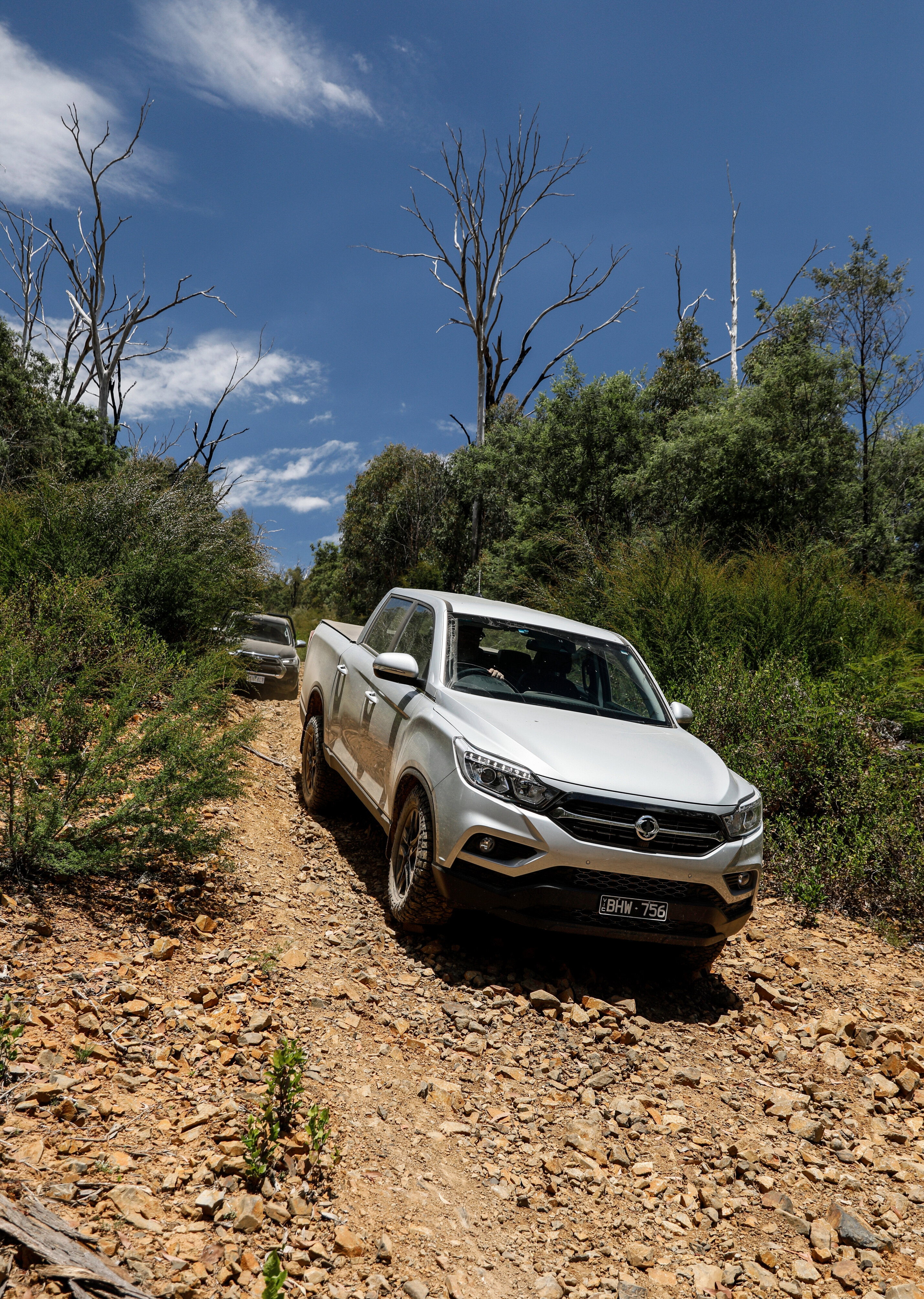
The Musso ate up the 1100km drive and recorded 8.8L/100km of fuel use for the return journey. That’s a bit more than you would expect if you had the OE tyres on, but the RAZR ATs were there to give reassurance when we hit the gravel roads and tracks while we were away.
During our time with the Musso, a lot of people were quick to say ‘you get what you pay for’ about the car, but the Musso proved more than just a good value-for-money prospect. It was a great long-distance tourer regardless of the road you were on, it was comfortable and well-equipped for day-to-day commuting around town, and it proved more than capable for off-roading where ground clearance wasn’t such an issue.
A bit more suspension height and it would be awesome!
TOTAL KM: 10,075km KM SINCE LAST UPDATE: 3554 AVERAGE FUEL: 10.8L/100km