
I tend to carry the tools I use relatively regularly in a tool roll and, with the demise of my old kit, I have been looking at buying and trying a few different tool rolls on the market.I finally found the Crashpad tool roll on the web and ordered one, as it looked pretty good and the price wasn’t too out of this world – and I was suitably impressed when it arrived.Measuring 32cm wide and 120cm long, the tool roll is made from 410gsm heavy-duty canvas and features 18 individual pocket slots in two layers. Two of these slots are extra large for tools such as hammers, and there are 10 medium-size pockets and six small slots for screwdrivers and the like.
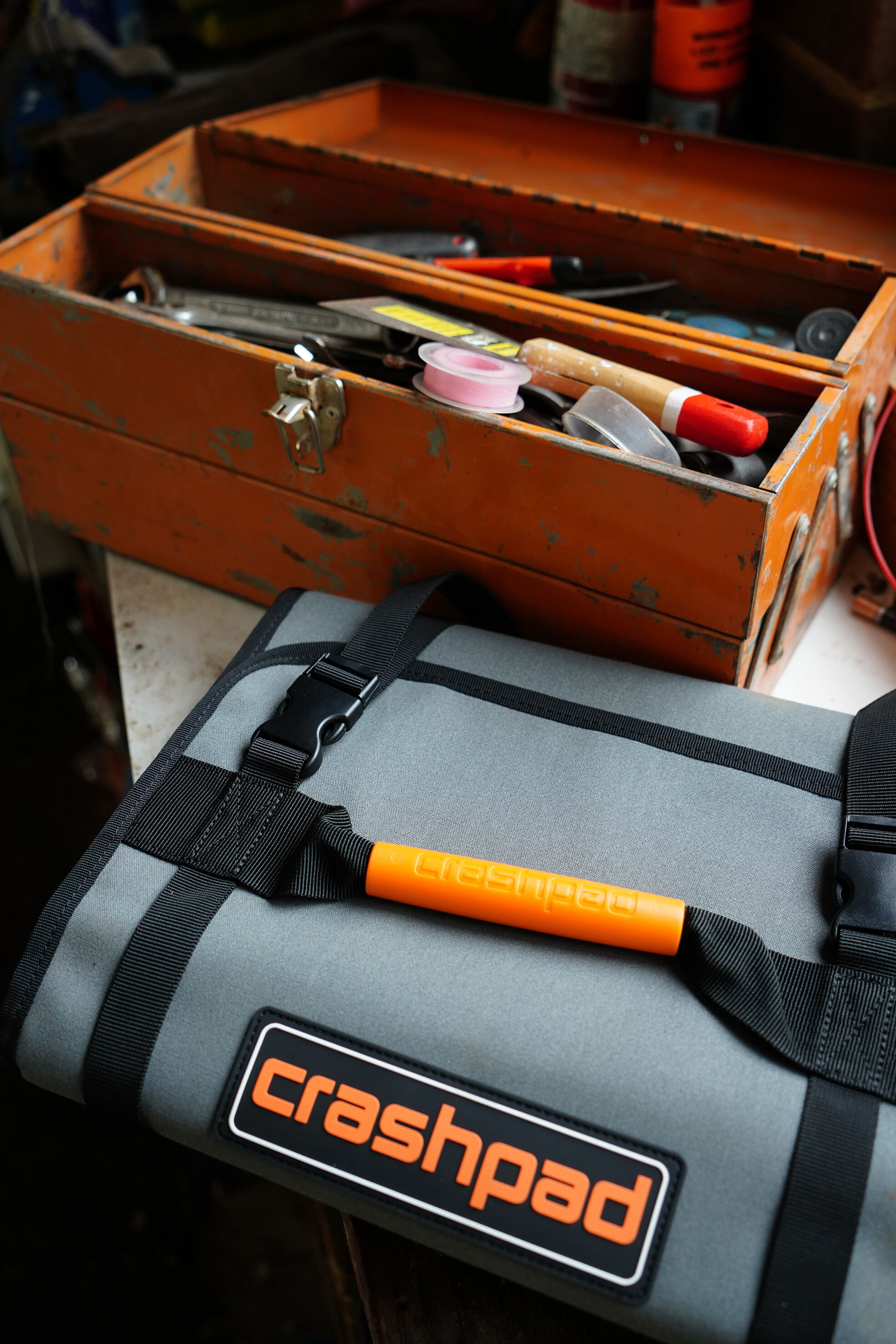
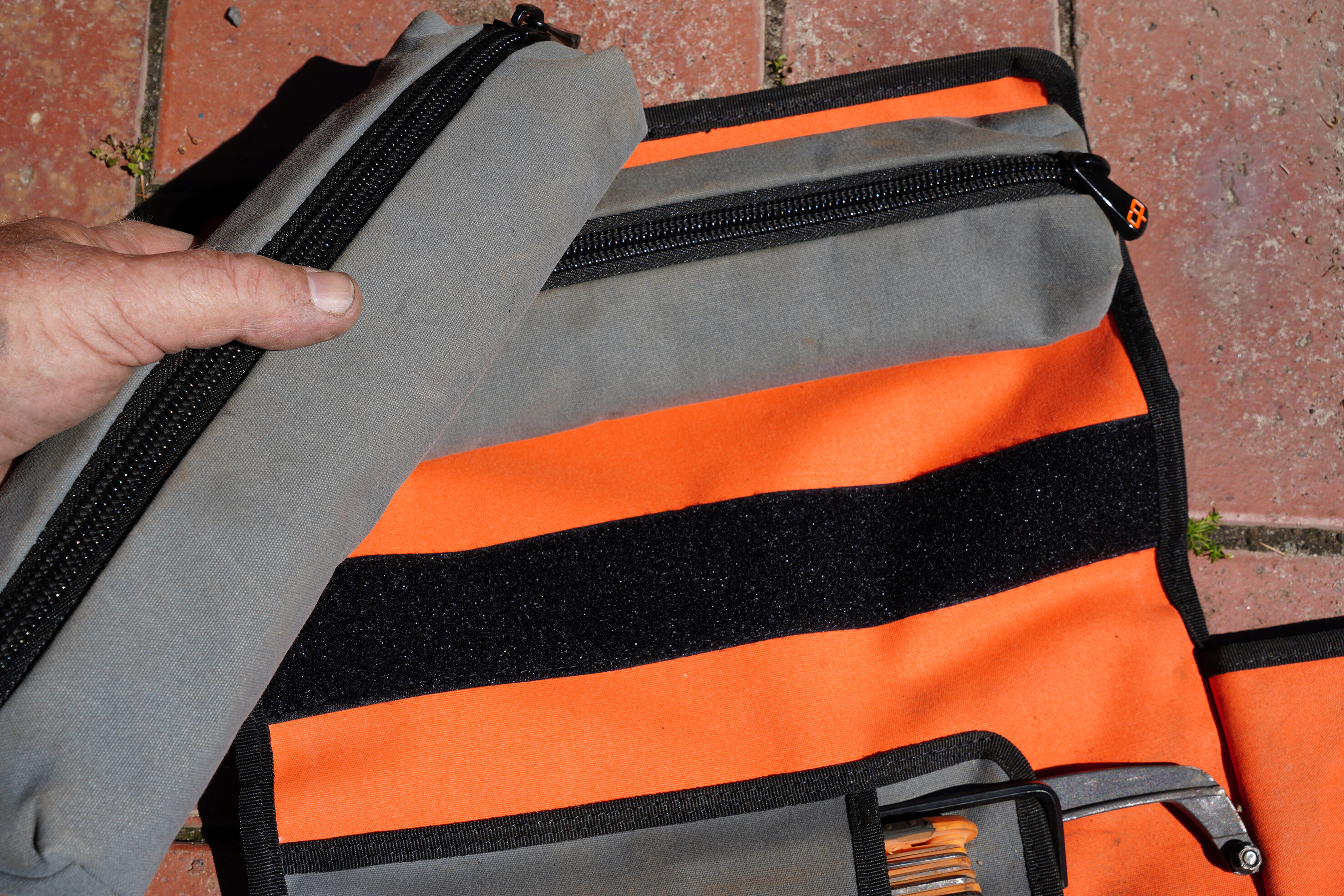
At one end of the roll are two removable, small zippered bags, while at the other end is a single zippered bag, and these are ideal for carrying items such as tape, fuses, jeweller screwdrivers, etc; they are very handy.The sewing is neat and seemingly strong, while the zips in the removable pockets are first class. If there is any criticism of the roll it’s that some of the slots are pretty tight once they have a biggish tool in them such as the handle of a hammer or a large set of pliers.I’ve managed to squeeze about 30 tools ranging from files and a steel ruler to side cutters, spanners, screwdrivers and a couple of hammers; all the tools I use on a regular basis. Still, the resultant photo doesn’t look as tidy as those on the web but, nonetheless, it works well.
Loaded as it is with the tools, the roll is around 20cm in diameter, easily carried with the inbuilt handle and, when not in use, resides beside the back seat of the Cruiser or the Patrol.Apart from the purchase price you’ll be up for a few extra bucks for shipping, depending on where you live. Still, the costs are pretty reasonable and you get a bloody good product delivered to your door.
AVAILABLE FROM: crashpadgear.com.au RRP: $145 plus shipping
Snapshot
- 2022 Nissan Patrol pricing and specifications revealed
- Small styling changes for MY22
- Prices have increased, starting at $82,160 plus on-road costs
The 2022 Nissan Patrol has been revealed with minor revisions, along with a price increase for the new year.
Nissan has applied its new logo to the Patrol, along with a mild redesign of the four-wheel-drive’s grille for the Ti variant, and fender vents located above the front wheel arches for both the Ti and Ti-L.
Both models have gone up by $1000 for 2022, to $82,160 before on-road costs for the Patrol Ti, and to $95,115 plus on-road costs for the range-topping Patrol Ti-L.
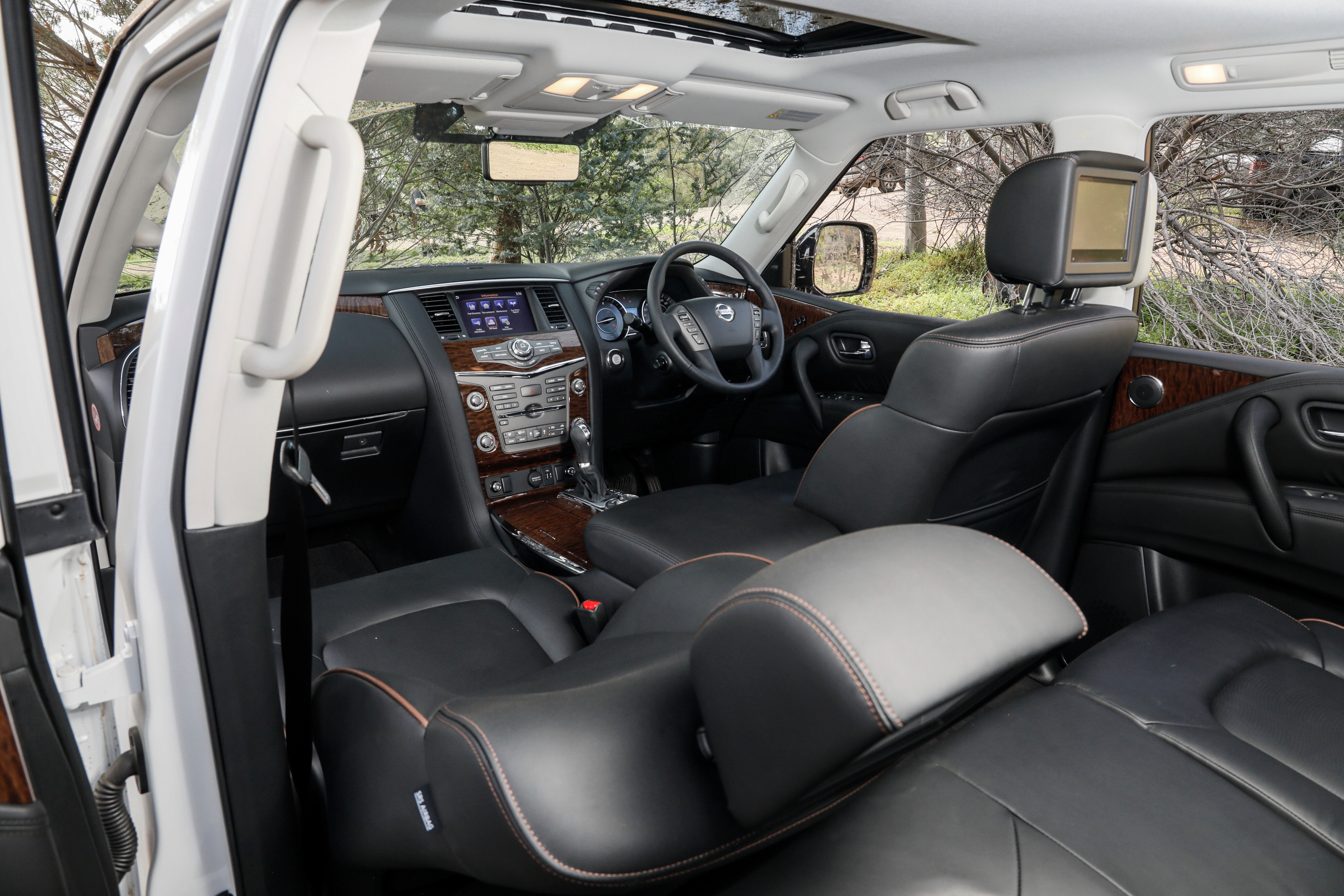
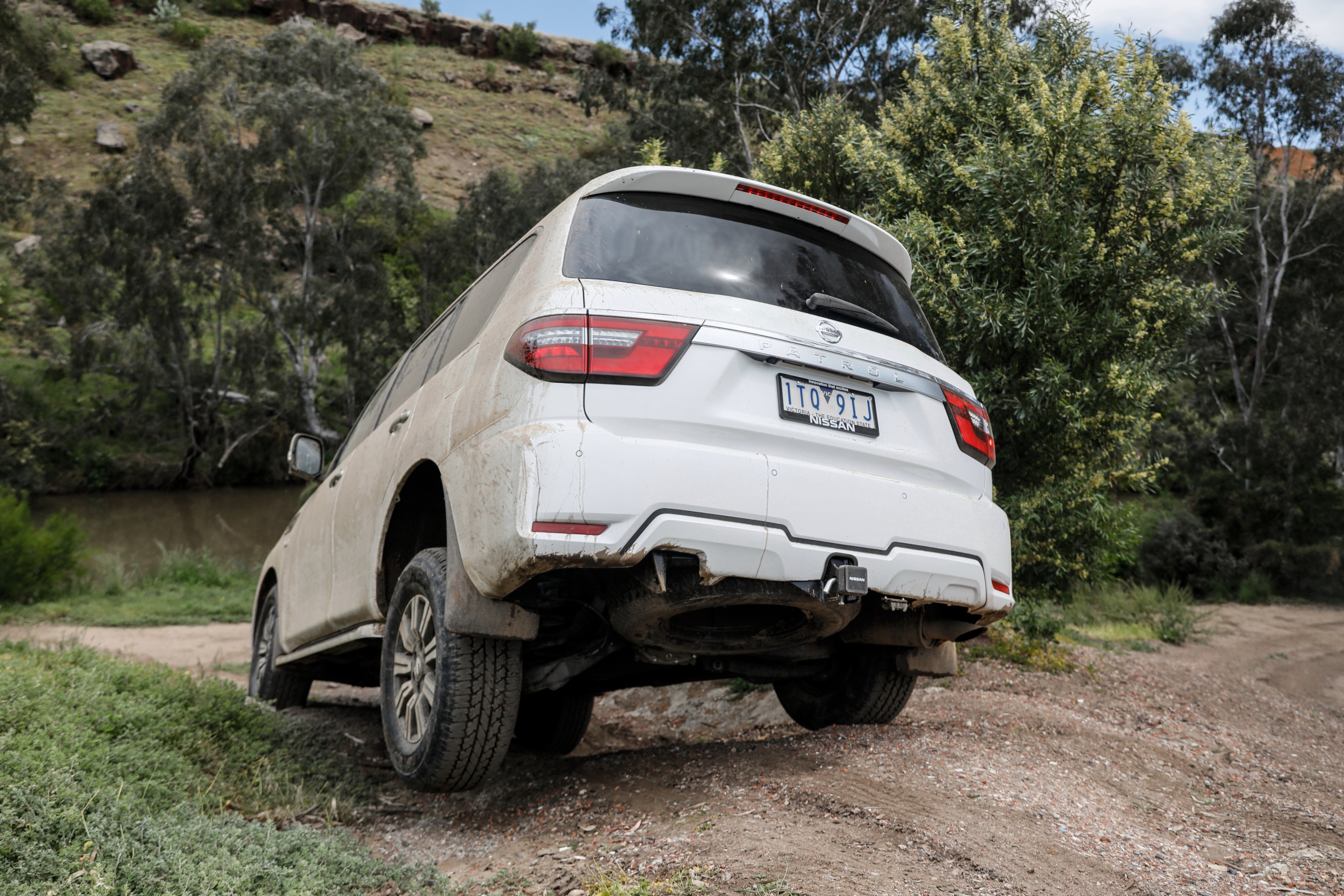
As before, the Patrol is powered by a 5.6-litre naturally-aspirated petrol V8 producing 298kW and 560Nm, powering all four wheels through a seven-speed automatic transmission.
Despite the Y62 Patrol being on sale for nearly a decade, in 2021 Nissan enjoyed its highest sales for the generation – while recording the most Patrol wagons sales since 2008.
2022 Nissan Patrol Australian pricing
| Model | Price |
|---|---|
| Nissan Patrol Ti | $82,160 |
| Nissan Patrol Ti-L | $95,115 |
Note: All prices exclude on-road costs.
Engine, drivetrain, and fuel economy
The 2022 Nissan Patrol is offered with a sole 5.6-litre, naturally-aspirated petrol V8, with 298kW of power and 560Nm of torque.
The engine requires a minimum 95RON (premium unleaded) petrol when filling its 140 litre fuel tank, with Nissan claiming a combined 14.4 litres of fuel used for every 100 kilometres driven.
The Patrol comes with seven-speed automatic transmission, with manual mode and Adaptive Shift Control.
A low-range four-wheel-drive system with Intelligent 4X4 and electronic 4WD selection comes as standard, along with a rear helical limited-slip differential for improved traction.
Safety
The Nissan Patrol Y62 generation does not have a rating from either ANCAP or Euro NCAP.
All models come with the following safety equipment:
| Surround-view monitor |
| Intelligent emergency braking |
| Intelligent forward collision warning |
| Rear cross-traffic alert |
| Intelligent lane intervention |
| Lane departure warning |
| Blind-spot warning |
| Intelligent blind-spot intervention |
| Hill start assist |
Dimensions
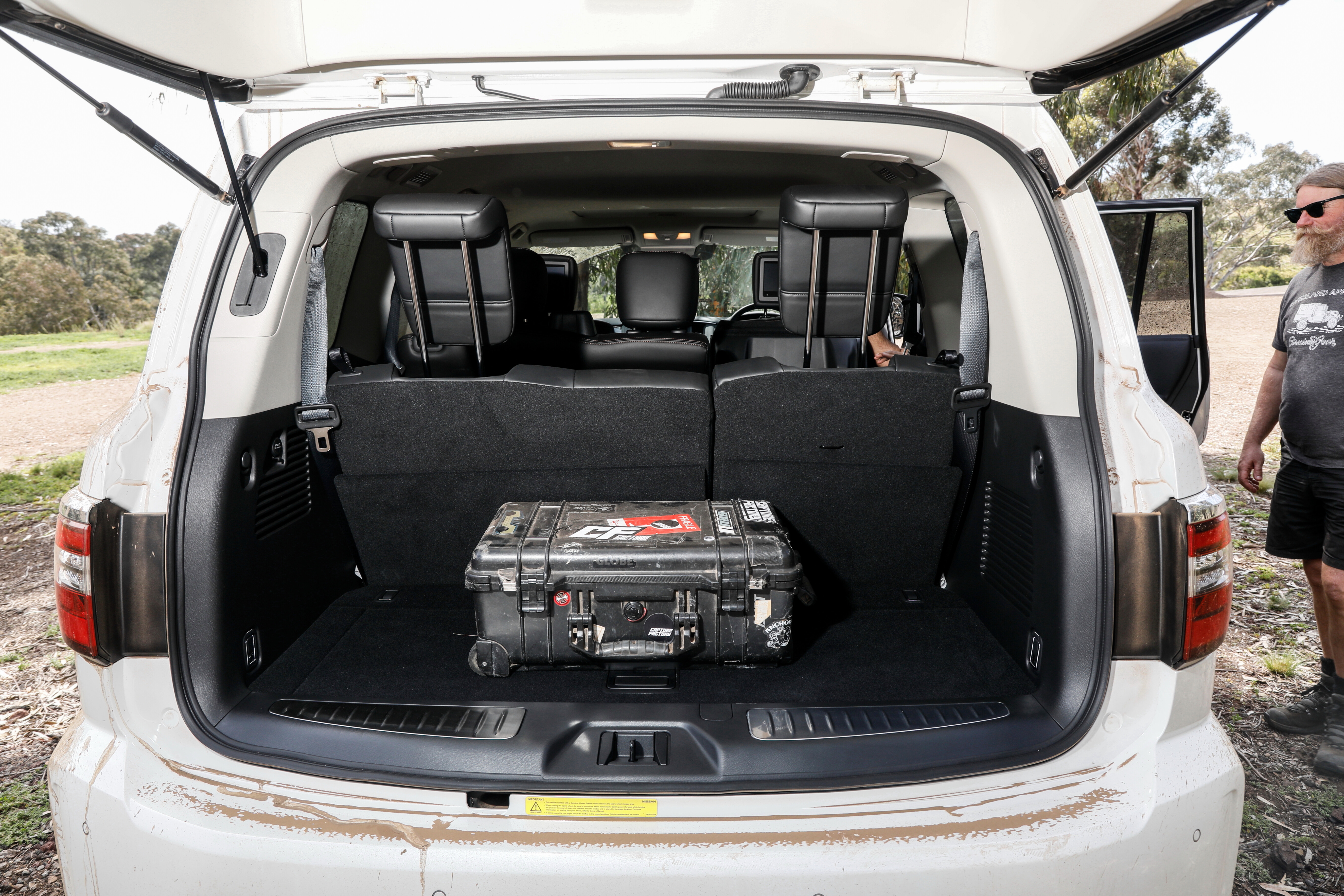
The Nissan Patrol Y62 is a 5175mm long, 1995mm wide, and has a 3075mm wheelbase. The Ti has a height of 1940mm while the Ti-L is 1955mm tall.
The model is rated to tow up to 3500kg braked, or 750kg unbraked, with a tow-ball down weight of 350kg.
Warranty and servicing
Nissan offers a five-year/unlimited-kilometre warranty for the Patrol, along with capped-price servicing available at dealerships every six months or 10,000km.
2022 Nissan Patrol features
Nissan Patrol Ti standard equipment:
| Intelligent 4X4 with electronic 4WD selection |
| Rear helical limited-slip differential |
| Hill descent control |
| Off-road monitor |
| Front and rear parking sensors |
| 18-inch alloy wheels |
| Heated door mirrors with power adjustment/folding and integrated indicator lights |
| Audio system with CD/DVD, USB input, Bluetooth audio streaming |
| Satellite navigation with 8.0-inch touchscreen |
| Traffic monitoring system |
| Six speakers |
| Tri-zone climate control air conditioning |
| Eight-seat capacity |
| Eight-way power adjustable driver seat |
| Six-way power adjustable front passenger seat |
| Tyre pressure monitoring system |
| Hydraulic Body Motion Control suspension (HBMC) |
| Leather accented seat trim |
| Automatic headlights |
| LED front fog lights |
| Remote keyless entry |
| Intelligent cruise control |
Nissan Patrol Ti-L adds:
| Seven-seat capacity |
| Driveru2019s seat memory |
| First row centre console cool box |
| Bose 13-speaker premium audio system |
| Two second row seat 8.0-inch entertainment screens with headphones and remote control |
| Intelligent rear-view mirror |
| Puddle illumination light |
| Power tailgate |
| Roof rails |
| Electric tilt and slide sunroof |
| Heated and cooled front seats |
| Electronically-adjustable steering column |
Availability
The 2022 Nissan Patrol is available to order now.
Nissan’s 2022 Australian line-up is coming together
A Canadian company focused on armoured vehicles and security equipment has taken the bullet-proof reputation of the Toyota LandCruiser to another level.
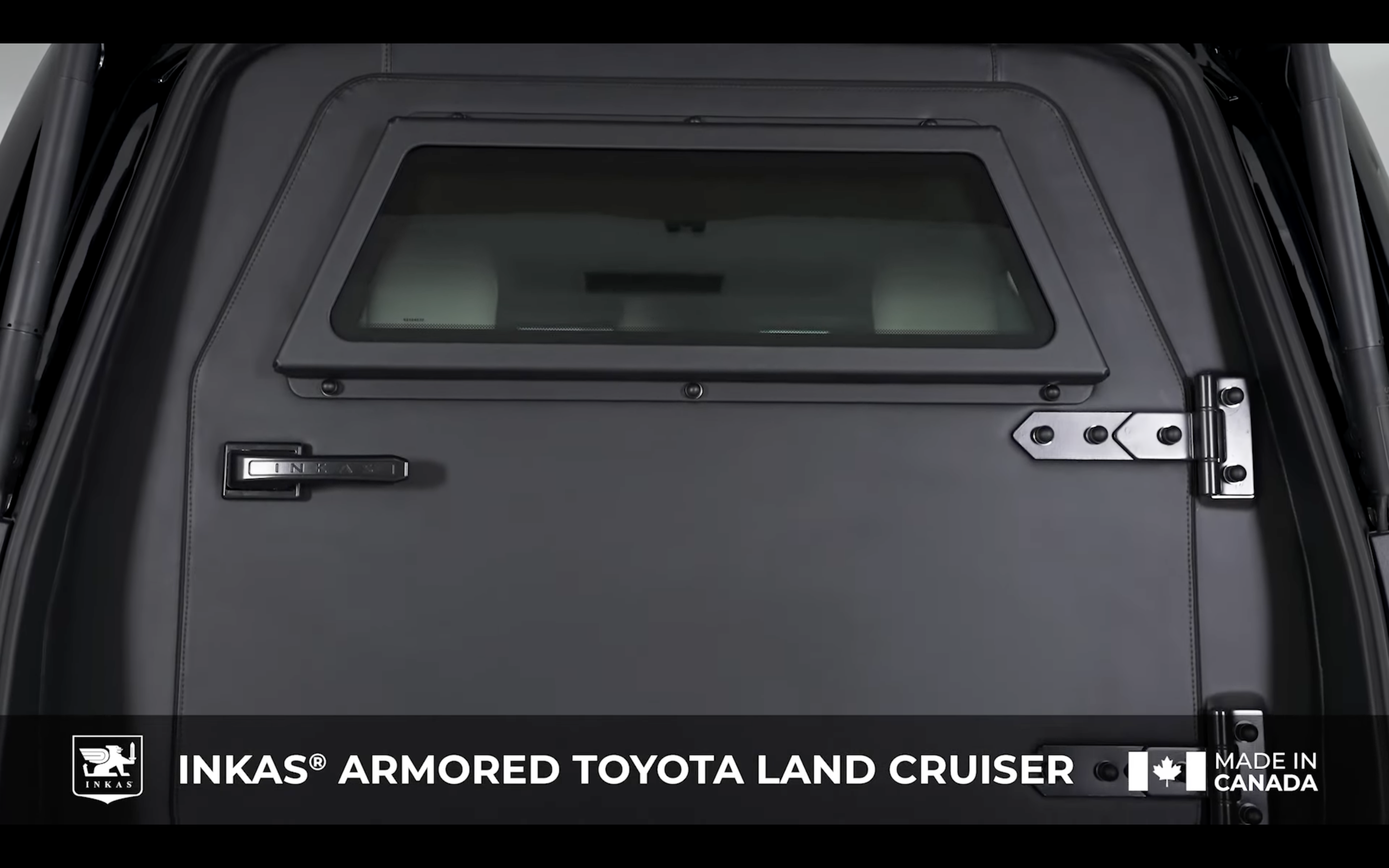
Joining a number of companies taking advantage of the VIP-status of the latest-generation off-roader, Inkas has developed a LandCruiser 300 Series with BR6 level protection.
This allows it to shield occupants from high-power assault rifles and even explosions from a pair of DM51 hand grenades.
Modifications to the standard LC300 body include; armour reinforcement to the engine bay, better defence for the vehicle battery and engine control module (ECU), strengthened suspension, a set of run-flat tyres, and armour protection for the vehicle’s entire cabin.
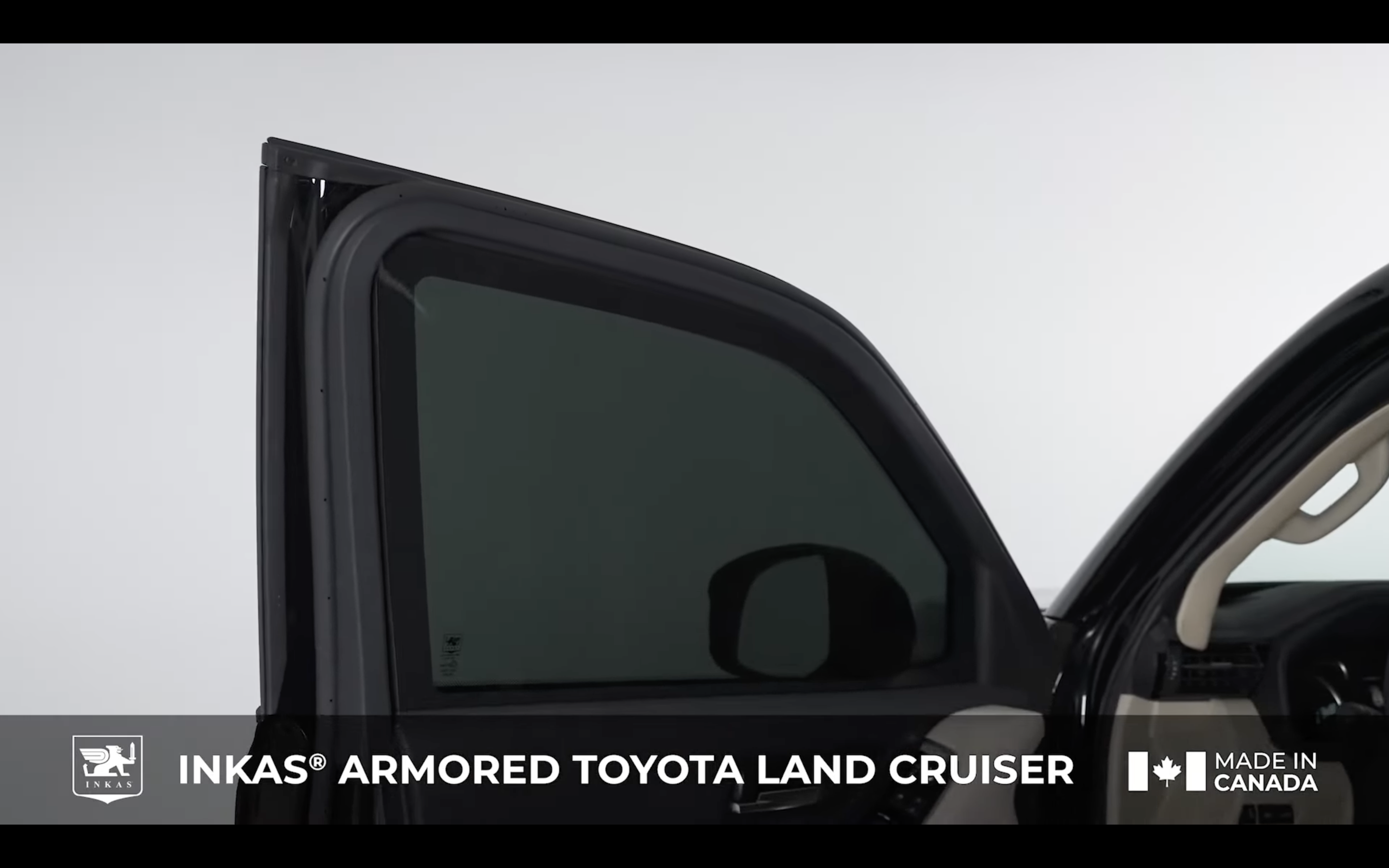
Other adjustments comprise; heavier-duty brakes, emergency lights, a fire suppression system and fire extinguisher, heavy-duty wheels and an external public address (PA) system.
Under the bonnet, the armoured LandCruiser 300 Series includes the choice of three powertrains. These are: the stock naturally-aspirated 4.0-litre petrol V6, producing 202kW of power and 361Nm of torque, the 305kW/650Nm 3.5-litre twin-turbo petrol V6, and now-familiar 227kW/700Nm 3.3-litre twin-turbo diesel V6.
Primarily designed for LC300 examples bound for the Middle East, the armoured version can be added to any market-specific trim level.
Construction takes place in Canada – despite the recent discontinuation of the LandCruiser in the North American market – with final examples exported back to the country of origin.
Inkas is one of many armoured vehicle companies developing a ballistic-rated LandCruiser 300, with US-based Alpine Armoring currently in the process of developing its own version.
SVI Engineering, a South African company, also revealed an armoured LC300 in September 2021.
Inkas is yet to confirm pricing for the armoured LandCruiser 300 Series, however, its price tag is likely to be as hefty as the shielded equipment it is fitted with.

Prodrive – the company behind many successful off-road racers – has unveiled the Hunter, a road-going version of its Dakar Rally car.
Developed to be a road-legal iteration of the Prodrive BRX Hunter T1+ driven by French driver Sébastien Loeb, the Hunter features performance and suspension improvements to better conquer harsh terrains.
Under the bonnet, the Hunter shares its Ford-sourced 3.5-litre twin-turbocharged V6 (as found in the Ford GT and F-150 Raptor) with the Dakar racer.
However, outputs are bumped up to the max, with more than 447kW of power and 700Nm of torque – the former an increase of 50 per cent.
Other shared elements include an identical tubular spaceframe structure, carbon fibre bodywork, six-pot racing brake calipers, ventilated discs all around, and 35-inch tyres with 17-inch rims.
Prodrive has replaced the sequential manual gearbox with a six-speed paddle-shift transmission to ensure smooth gear changes in milliseconds.

The double-wishbone suspension with adjustable dampers has an additional 50 millimetres of travel at 400mm, for “a smoother ride and even greater ability to cross the roughest terrain at speeds unimaginable in any other vehicle.”
Inside, a digital display and more traditional controls are included in the cabin, while the company has also fitted sound deadening and allowed for greater luggage space through a reduction in the fuel cell.
“We took the deliberate decision to keep the Hunter Hypercar as close to the original as possible,” said Prodrive chairman, David Richards.
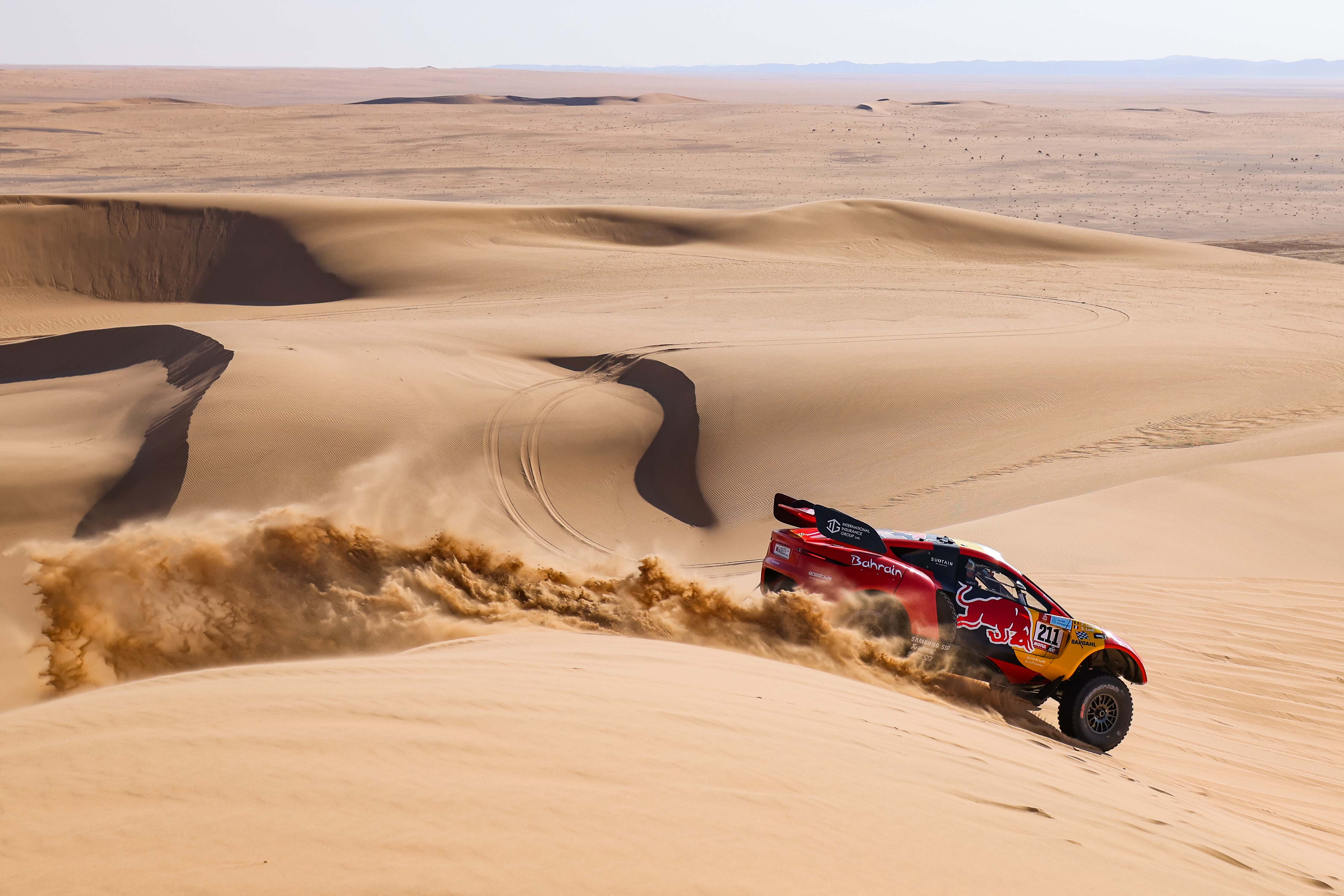
“It’s about giving owners the opportunity to experience what it is like to drive Loeb’s Dakar car across the desert, but with all the comforts of a road car and the ability to drive it from your home, through a city, to any destination of your choice.”
The first car (pictured in this story) was produced for Prince Salman bin Hamad Al Khalifa of Bahrain, with further units retailing for £1.25 million (AU$2.2m) before local taxes.
A limited quantity of around 25 examples will be produced.
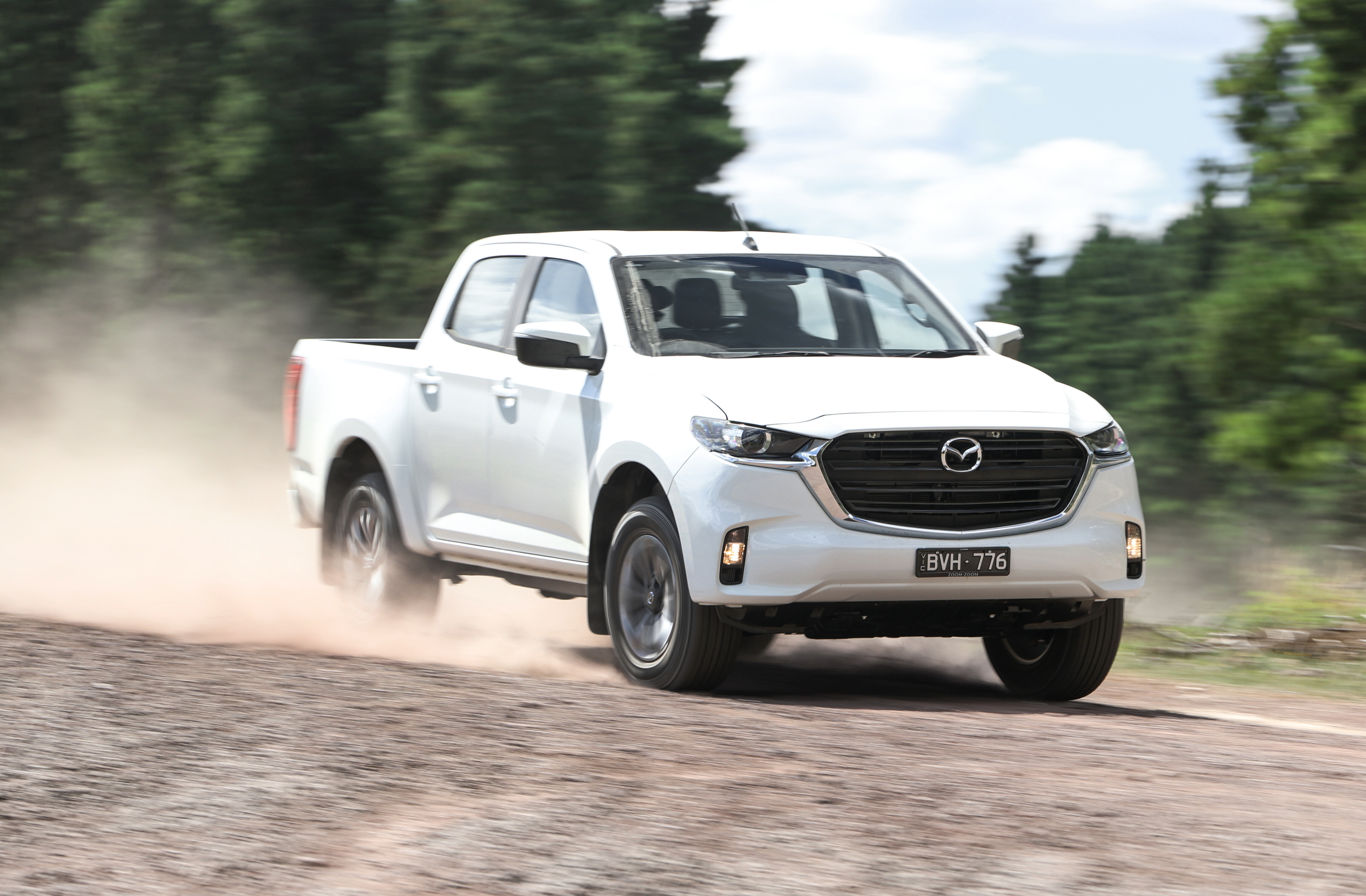
A key to Mazda’s platform-sharing arrangement with Isuzu is that the latest-gen BT-50 shares Isuzu’s venerable 3.0-litre turbo-diesel engine; an engine praised for being unstoppable and ‘truck tough’. It’s just a D-MAX disguised as a BT-50 … yeah?
Since Mazda severed ties with Ford and began its new relationship with Isuzu, the BT-50 has been somewhat of a sales success, despite the tribulations brought to the market by COVID – in fact, the BT-50 registered a sales record of 1222 in January 2022.
Helping with that sales success is in large part thanks to the popularity of said 3.0-litre, four-cylinder engine, code-named 4JJ3-TCX in its current iteration. That’s why the addition of a new variant powered by a 1.9-litre turbo-diesel engine is cause for a double take or two.
? Hello from the future! You can continue reading this story, or you can visit our latest BT-50 Range Review linked below.
REVIEW CONTINUES…
Price point
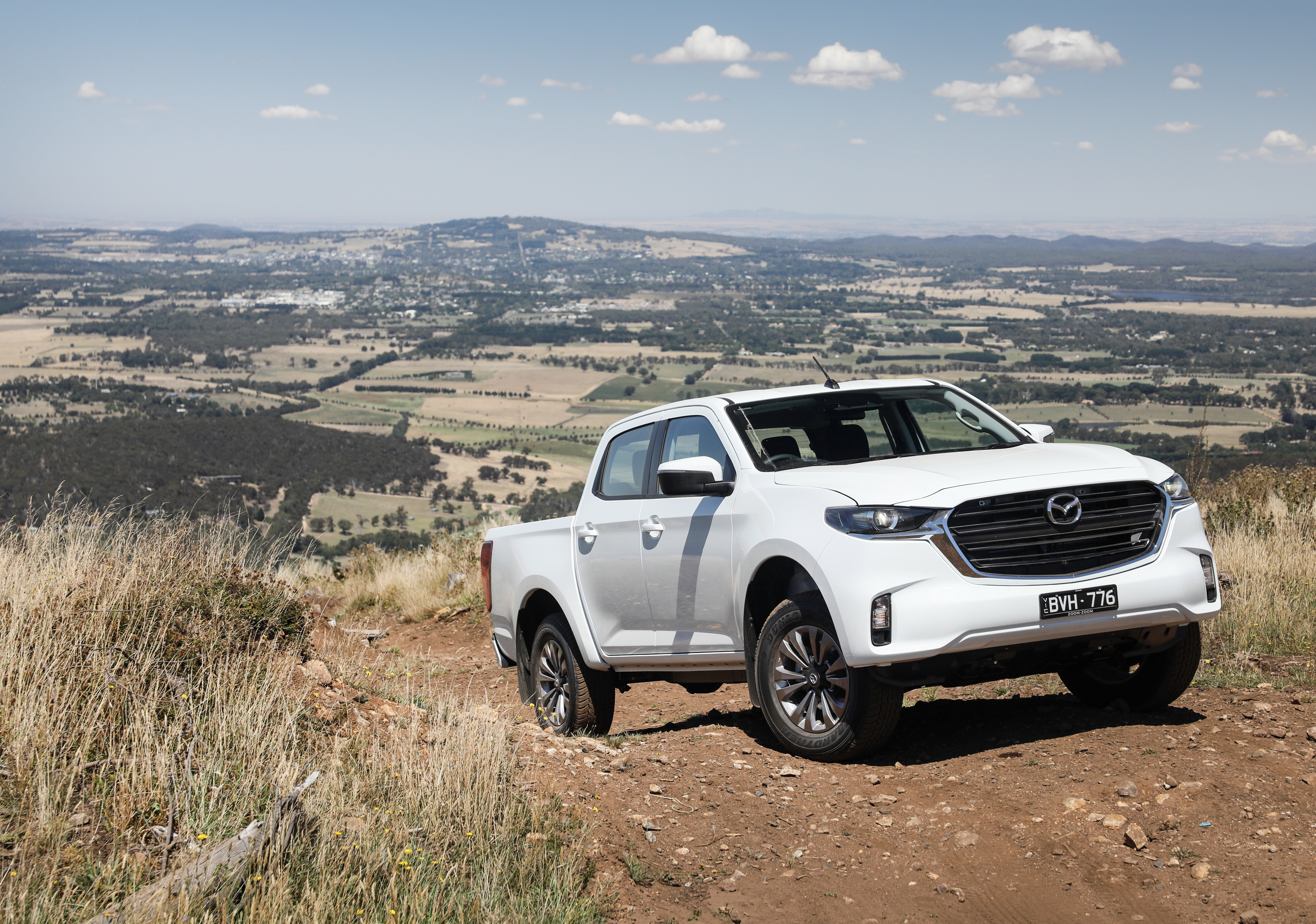
Dubbed the XS, the 1.9-litre variant is the new entry-level model in the BT-50 line-up. The cheapest entry point is the XS single-cab chassis in 4×2 configuration, priced at $33,650.
However, for those who prefer to pack up the tools and chase off-road trails on weekends, the only 4×4 variant in XS trim is the XS dual-cab pickup, listed at $51,240. It’s also the model we recently took off-road.
Engine performance
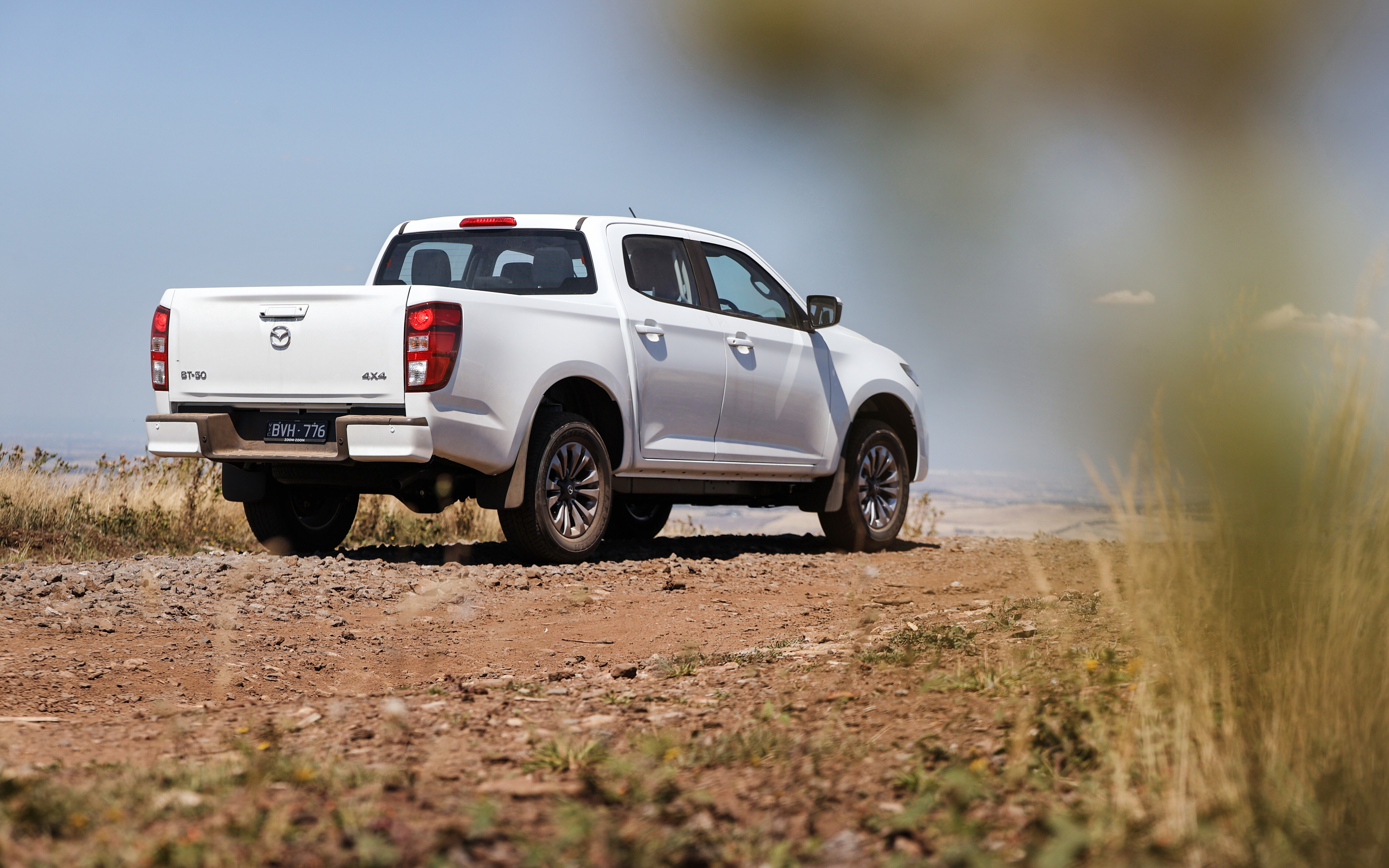
The 1.9-litre engine generates 110kW and 350Nm, significantly less than its more renowned 3.0-litre stablemate (140kW and 450Nm). In XS 4×4 form, the only option is to run that through a six-speed automatic transmission, as no manual gearbox is available … unfortunately.
Mazda lists the smaller-capacity engine with a combined fuel consumption of 6.9L/100km. We ended a week of on- and off-road driving with the figure sitting at 9.5L/100km.
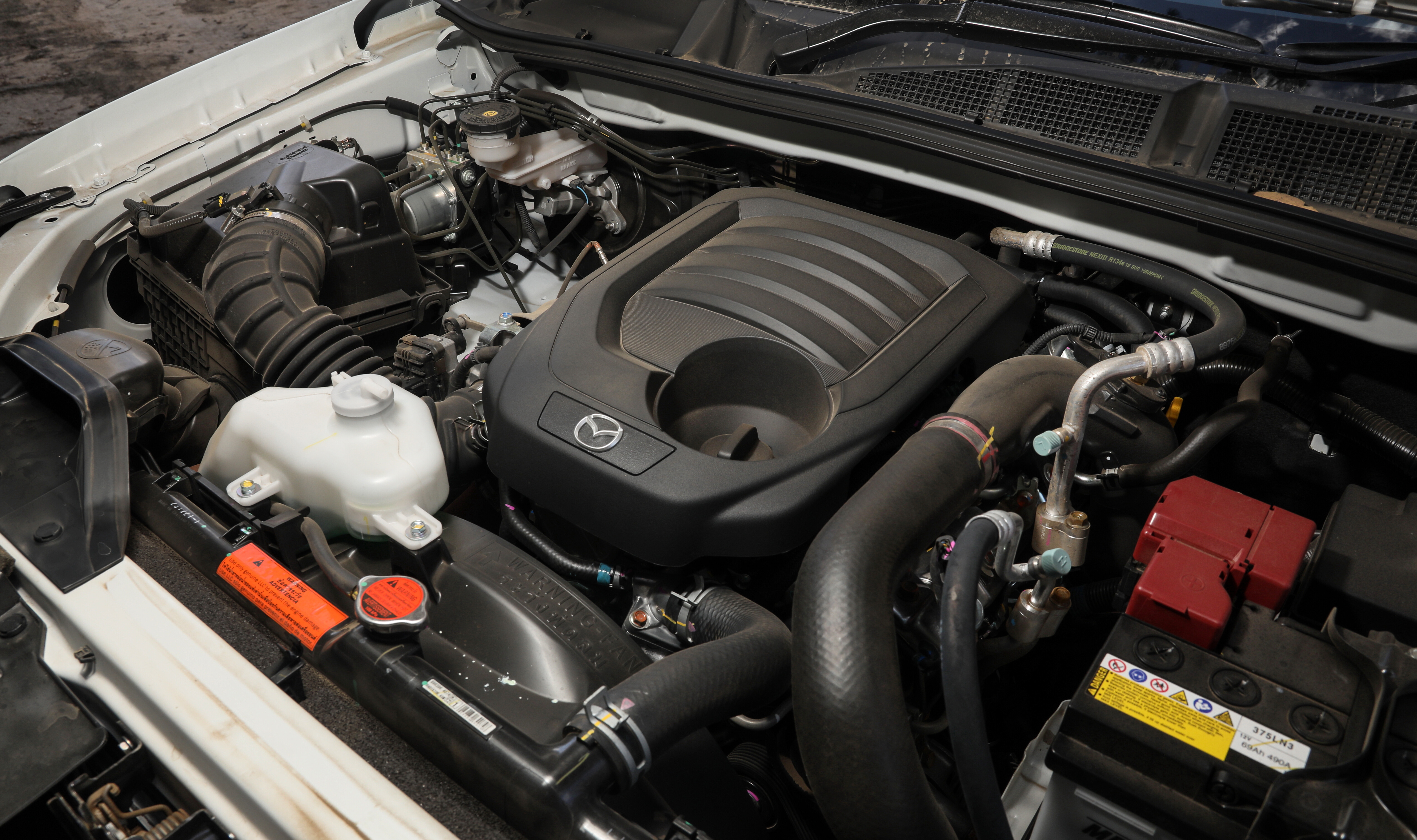
Despite a drop of more than a litre in capacity, the 1.9-litre engine is a competent performer both on- and off-road. As you’d expect, it needs to work harder, earlier; but once you’re up to cruising speeds, it’ll sit comfortably at around 1750rpm in top gear.
The six-speed Aisin transmission is mated well to the 1.9-litre engine, engaging the required gears without too much fuss. Occasionally it’ll need a bit of help to drop down (or back up) when off road, but this was a rare occurrence.
Off-road
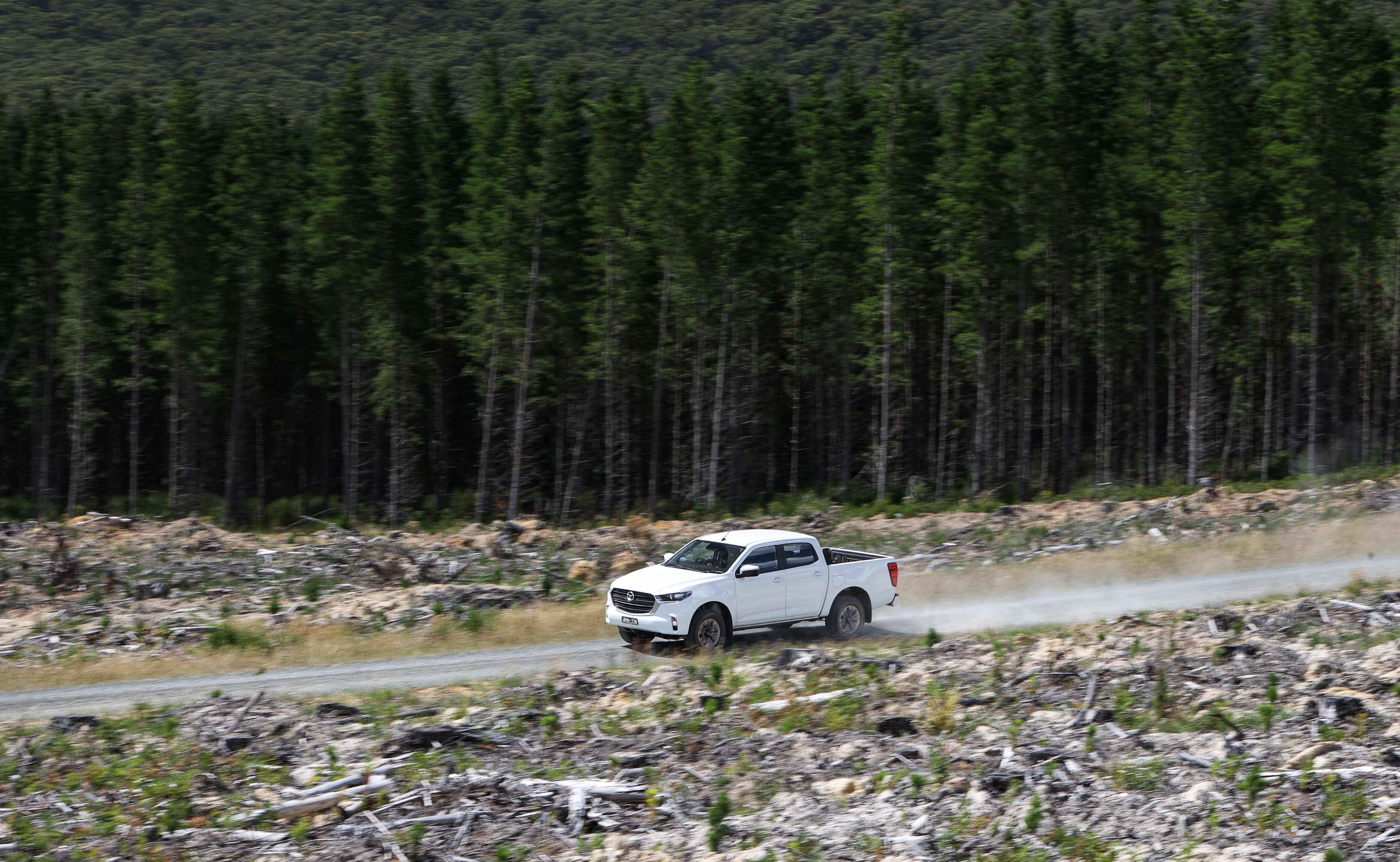
Like many unladen dual-cab utes, the BT-50 XS would benefit from some weight in the tray. Unladen, the XS does bounce and sway on sweeping bends and undulating gravel back-roads – nothing 100kg strapped down in the tray wouldn’t fix.
The part-time 4WD system – with high and low range – can be easily selected via a rotary dial located in a great spot on the centre console. A driver-selectable rear locking diff is standard, and easily located and engaged when required.
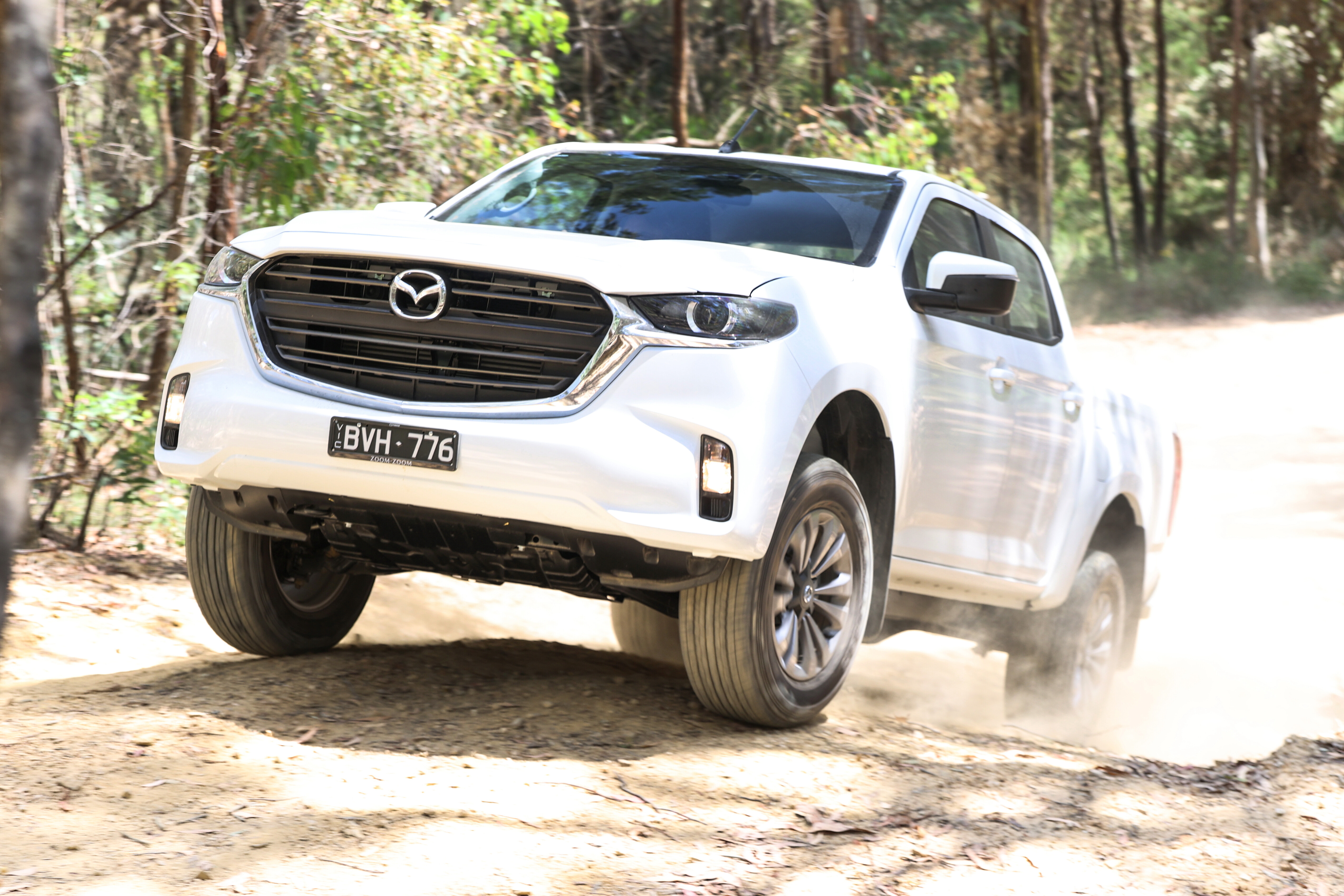
On some scrabbly climbs in the Mount Macedon region of Melbourne, the 1.9L felt as capable as the 3.0-litre SP variant we’d previously steered off-road at launch. The leaf-sprung rear-end did slap around at times, but the vehicle remained compliant and at no stage struggled despite some challenging terrain.
Ground clearance sits at 235mm, and we managed to scrape on a few steeper sections. Adequate approach and departure angles (30° and 23.9° respectively) and an 800mm water-fording depth (close to the class leader) makes the XS a great all-round performer.
One issue from our off-road excursion, which also translates to the on-road experience, is engine NVH can be intrusive. As the 1.9 needs to work harder to get the vehicle up a steep track or ahead of a slow road train on bitumen, it can be quite an earful until it settles at the mid-range.
The XS 4×4 wears 17-inch alloys – 17-inch steelies on 4×2 models – and on our test vehicle they were wrapped in 255/65R17 Dunlop Grandtrek AT25s.
Interior
For its $51,240 asking price, the XS loses a few nice-to-haves that are standard on the premium models. Gone are the dual-zone climate control, leather-clad steering wheel and gear-shift lever, front seat warmers, and automatic seat adjustment.
Instead, the XS model has vinyl in lieu of carpet (a benefit to some), comfortable and supportive cloth trim pews instead of leather seats fused with synthetic-suede seen on the SP, and two speakers instead of eight.
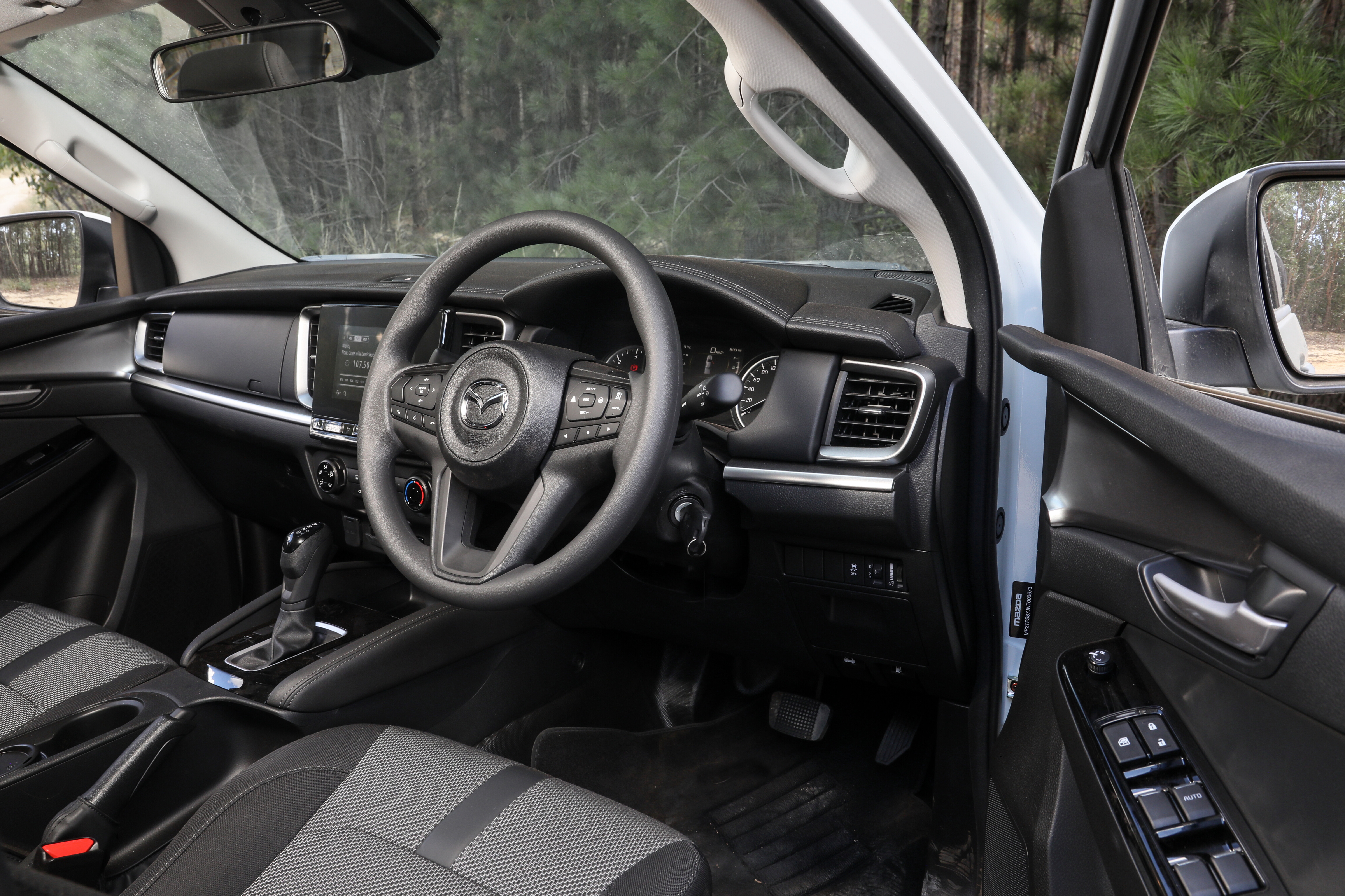
As mentioned in our launch review, the XS has the smaller seven-inch touchscreen with a few apps (best avoid Mazda’s standalone sat-nav software). It does come with Apple CarPlay and Android Auto connectivity, but Android Auto failed to recognise my Samsung Galaxy following numerous attempts with different cables – Mazda says that not all devices support connectivity, so it might be best to check with your Mazda dealer first.
The placement of buttons instead of dials for common uses – temperature and volume control, for example – is an annoyance, especially off road, and it would be nice to see simple dials used instead.
Safety
The BT-50 was awarded a five-star safety rating by independent body ANCAP. It features a full suite of advanced safety tech: Anti-lock Braking System (ABS); Autonomous Emergency Braking (AEB); Braking Assist (BA); Electronic Brake-force Distribution (EBD); Electronic Stability Control (ESC); Emergency Stop Signal (ESS); Hill Descent Control (HDC); Hill Launch Assist (HLA); and a Traction Control System (TCS).
Mazda also listened to consumer feedback and added a new Lane Support system button to the steering wheel of all variants, so users can toggle the tech on or off with their right thumb.
Verdict
Despite its entry-level status, the XS still asks for more than $50K in 4×4 form. The easiest way to think of an XS is that it’s an XT – the previous entry-level BT-50 – with a smaller engine. The XT retails for $53,360; the XS for $51,240. So the savings to be had opting for the smaller-capacity XS over the equivalent XT variant is just $2120. Think of it this way: Is it worth losing 1.1 litres in capacity for $2120?
In saying that, despite its size, the 1.9-litre engine is competent on both on- and off-road tracks … we’d still prefer to stick with the ‘truck tough’ 3.0-litre engine, though.
2022 Mazda BT-50 XS 1.9 4×4 specs
| ENGINE | 1.9L four-cylinder turbo-diesel |
|---|---|
| CAPACITY | 1898cc |
| MAX POWER | 110kW at 3600rpmu00a0 |
| MAX TORQUE | 350Nm at 1800 to 2600rpm |
| GEARBOX | six-speed automatic |
| 4X4 SYSTEM | Part-time with high/low range |
| FRONT SUSPENSION | IFS with coil-over dampers and anti-roll baru00a0u00a0u00a0u00a0 |
| REAR SUSPENSION | Live axle with leaf springsu00a0u00a0u00a0u00a0u00a0u00a0u00a0 |
| TYRE/WHEEL | 255/65R17 / 17-inch alloy |
| KERB WEIGHT | 1935kg |
| GVM | 3100kg |
| PAYLOAD | 1165kgu00a0 |
| TOWING CAPACITY | 3000kg |
| GCM | 5500kg |
| SEATING | 5 |
| FUEL TANK | 76L |
| ADR FUEL CLAIM | 6.9L/100km |
| ON-TEST FUEL USE | 9.5L/100km |
| DEPARTURE ANGLE | 23.9u00b0 |
| APPROACH ANGLEu00a0 | 30u00b0 |
| RAMPOVER ANGLE | 23.3u00b0 |
| WADING DEPTH | 800mm |
| GROUND CLEARANCEu00a0 | 235mm |
Australia is a land like no other. We’re an ancient place, isolated at the ends of the earth and sharing little in common geographically with the rest of the world. Cold Antarctic winds blow across endless deserts. Snow-capped mountain ranges climb to the heavens within cooee of the beach. And some of the largest sand islands in the world are within sight of rainforests so ancient they predate the seven seas.
As beautiful as this place is, and as privileged as we are to call it home, it’s also a harsh, unforgiving land. Manufacturers from all across the world spend millions for the opportunity to test their prototype 4x4s in our land. This country is the real deal.
It’s for this reason we’re held in high regard the world over for our big touring builds. Four-wheel drives built with decades of experience on not only what can survive the harshest country in the world, but what can do it comfortably.
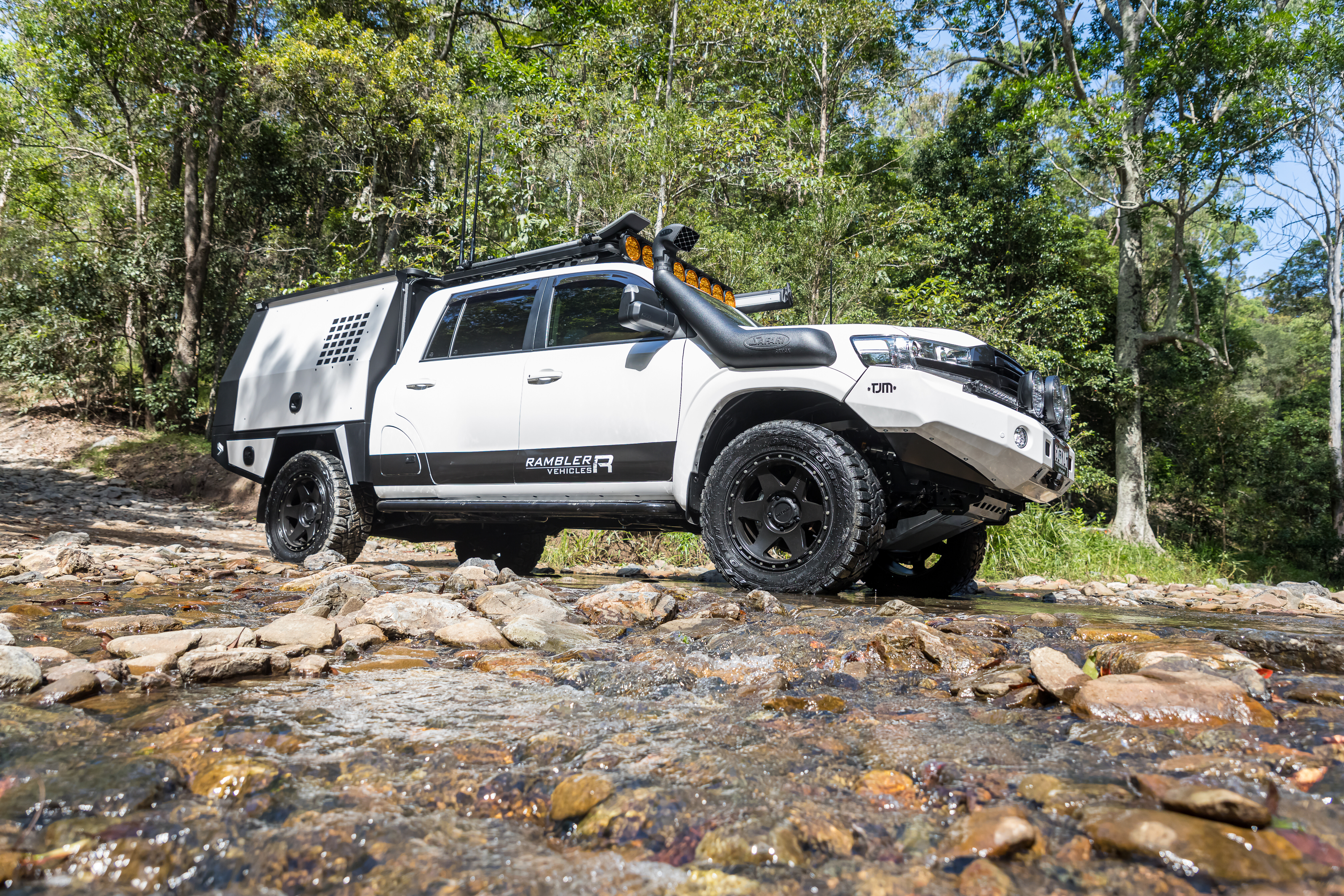
For those lucky enough to live in Queensland’s southeast, a local shop under the name Rambler Vehicles is aiming to turn that wealth of knowledge into turnkey custom 4x4s ready to take on any terrain. The stunning 200 Series LandCruiser you’re looking at is its latest build and arguably one of its best.
V8 homage
Signing on the dotted line for a 2021 LC200, owner Kris set out to build one of the last of the V8s into a rolling billboard for what Rambler Vehicles can do.
As good as the wagons look from stock, it was never going to fit the bill for a Rambler build. Step one was rolling the 200 to the nearby ASG4X4 for one of its tried and tested dual-cab conversions.
The wagon was sliced and diced with a new rear wall stitched in just behind the rear doors and some clever toolboxes filling in where the wheel arches used to be. The wheelbase was bumped out 650mm longer for better weight distribution too.
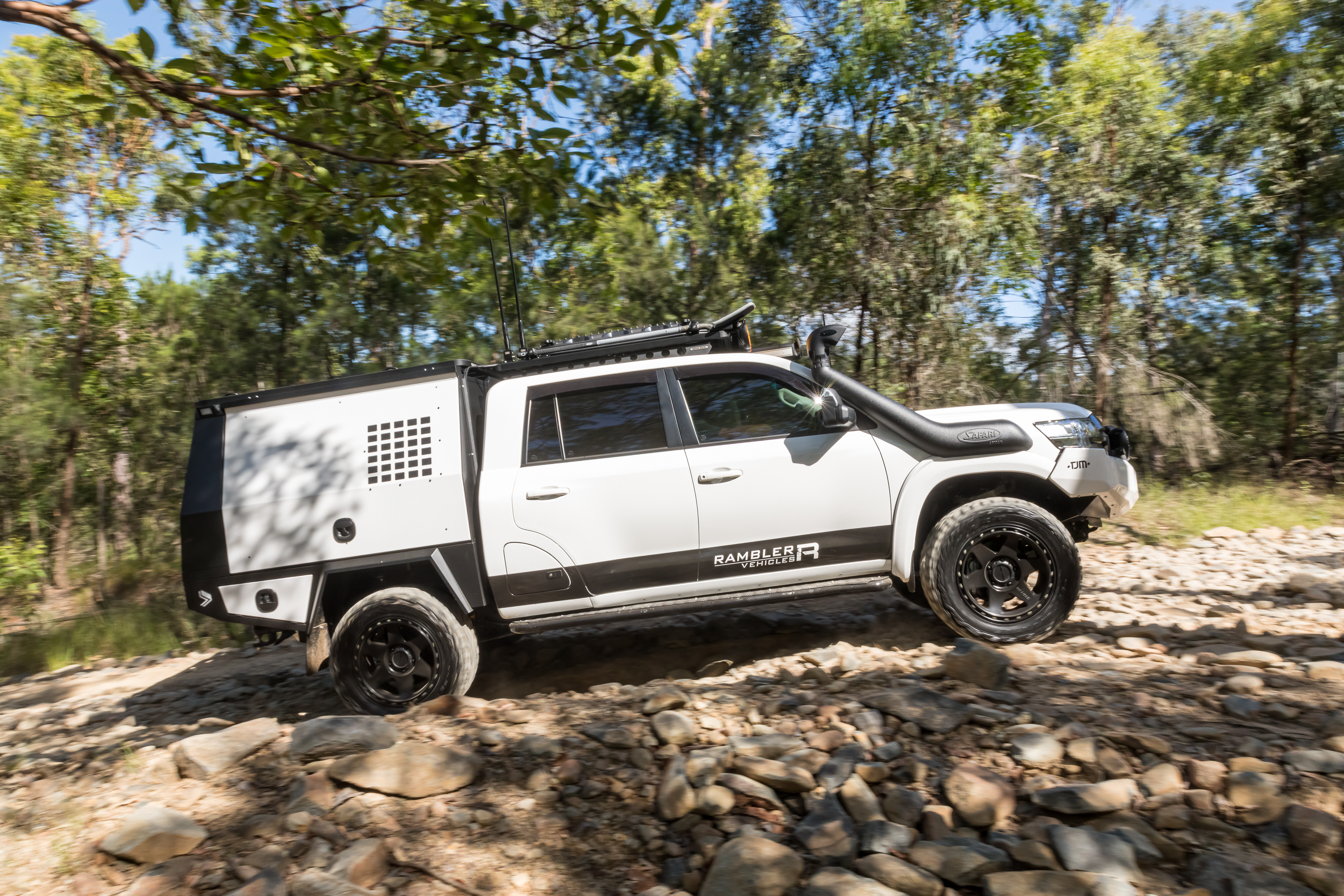
With the wagon converted to a dual cab, Rambler set about giving it a solid foundation that’d cope with the terrain it’d be travelling through. Riding 3-inch higher than stock, a set of TJM XGS springs up front are wrapped around a set of matching TJM Pace Remote Res Shocks. In the rear, a second set of the remote reservoir TJM Pace shocks have been fitted, although this time there’s no coil springs in sight.
A full below rear-end set-up from Airbag Man has replaced the steel springs, giving a huge boost in ride quality and also allowing easy adjustment of rates to suit the load when touring or towing. The newfound real estate in the wheel arches has allowed Rambler to shoehorn in a set of 35-inch Toyo Open Country RTs.
They’re wrapped around a set of Con 10 alloy wheels from Method and punch in at an impressive 20-inch diameter. The larger diameter provides better on-road handling, while the 35-inch tyre ensures there’s plenty of sidewall flex for off-road situations.
Engine enhancements
To keep the whole thing motoring down the road better than stock, Rambler has installed some much-needed upgrades under the bonnet. Starting with a Safari Armax snorkel, the twin-turbo 4.5L V8 diesel is able to suck in all the air in the world. After the twin turbos compress the incoming air, a PWR intercooler up top drops intake temps giving an even denser intake charge.
From here, Bayside Performance Services has tweaked its magic on the ECU to eke out more power before a Legendex exhaust system runs dual three-inch pipes from the turbos into a single four-inch dump out the rear.
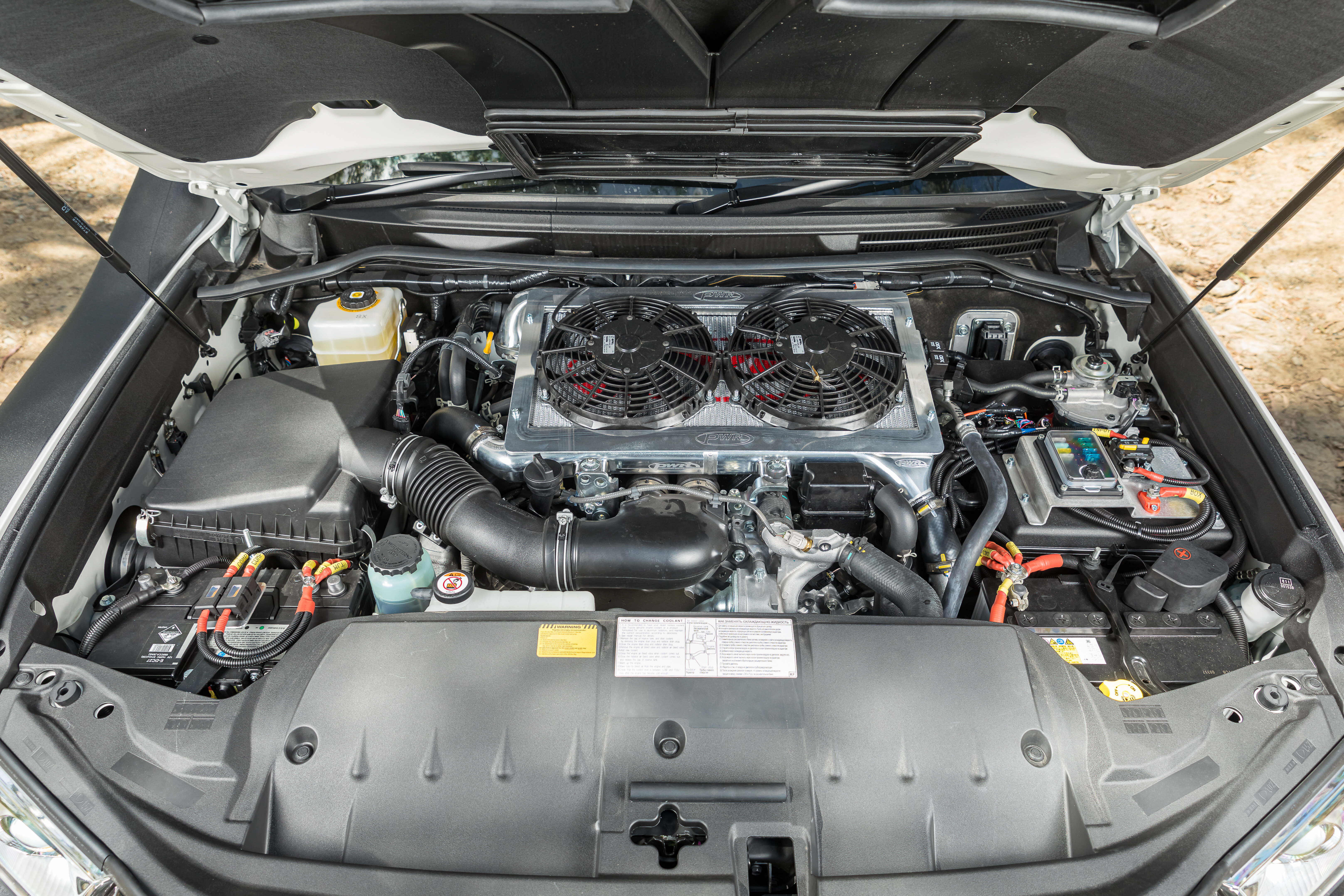
The stock automatic transmission remains in place, but it’s copped a similar treatment. A Wholesale Automatics transmission cooler up front helps keep temps down, while a Nomad valve body pairs with a transmission tune to handle the extra power and firm up those gearshifts. A torque converter lockup kit was added too, to aid with engine braking and drop RPMs at cruising speeds.
With the mechanics sorted, Rambler set to work decking the big Cruiser up with every accessory you could ever desire doing the big lap. Up front, a full suite of TJM armour has been spec’d up; the Venturer bar protecting against animal impact but also serving as a home for a TJM 12,000lb winch, while matching TJM side-steps armour up the flanks.
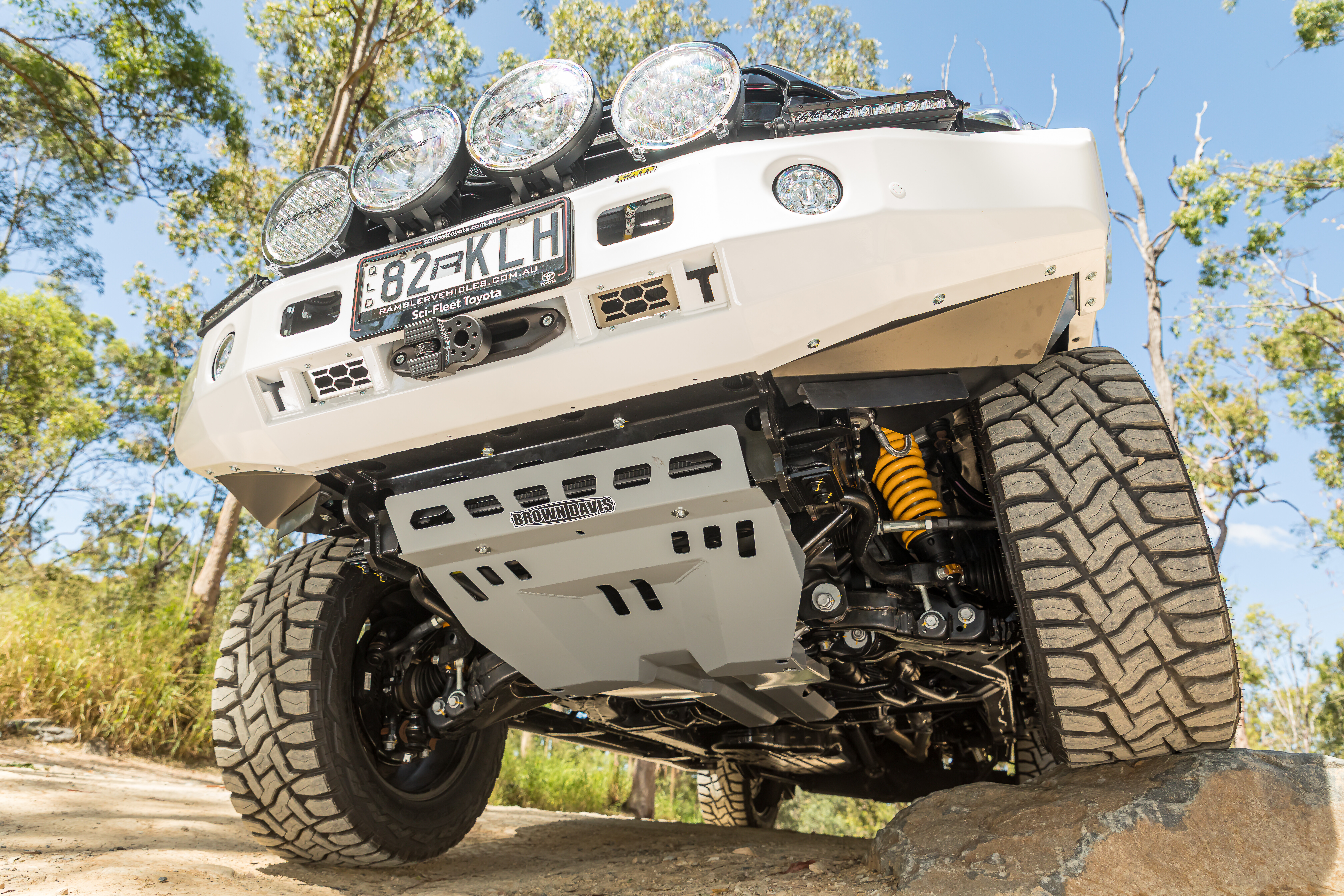
Ensuring there’s more than enough light for even the longest outback highway, no less than 14 forward-facing driving lights have been fitted. All sporting the Lightforce logo are eight amber-coloured Venom lights fitted on top, two HTX and two Genesis lights taking pride of place on the bar, with two smaller light bars providing a flood pattern.
Spinifex classic
Moving rearwards and the 200 sports the go-to Rambler canopy with a Spinifex Manufacturing Midi body. The ¾-canopy allows easy access to the dual spares on the back, while still providing bulk storage on the inside. On the nearside, a full kitchen set-up fills out the box.
A 130L Bushman’s upright fridge butts up against the headboard, while a pull-out pantry fits in next to it. There’s a full Bluetooth stereo install, pie oven, coffee machine and even a slide-out induction cooker tucked underneath.
There’s also a monster electrical system, ensuring all the gadgets and gizmos stay running, no matter how long you spend crossing the desert.
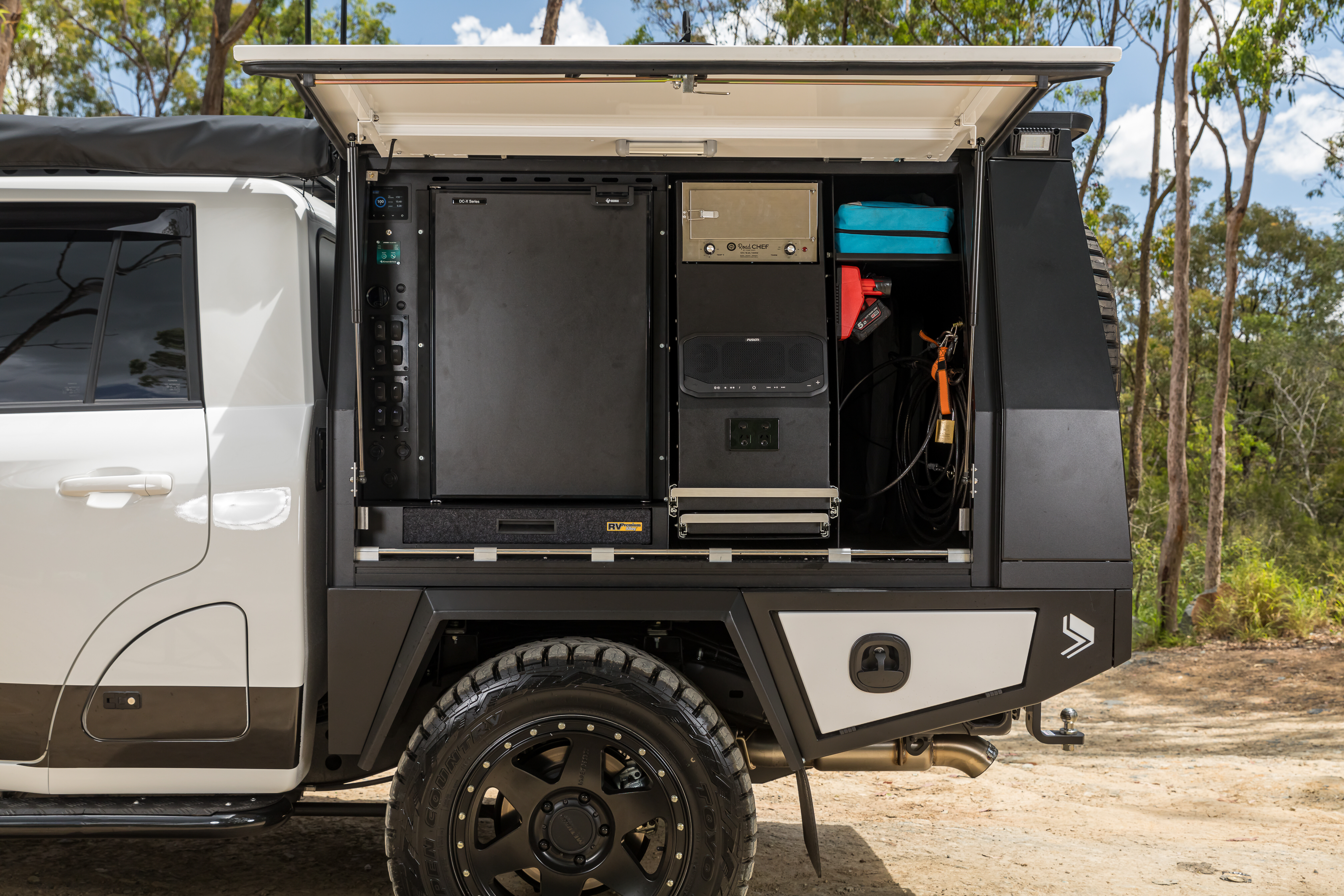
A Victron 240V multi-channel charger is the brains of the system. It feeds a 200amp/h Korr Lithium battery when parked up at home or plugged in at a caravan park. An Enerdrive DCDC charger keeps the battery topped up on the road, with a matching Enerdrive 2000W inverter spitting out usable power on the other end.
A TJM Dual Battery System up front ensures the big Cruiser can jump-start itself in the middle of nowhere too, a handy feature for solo travellers. There’s ample room to stow bulky items in the offside compartment, with any overflow finding a home on the dual Rhino-Rack platforms up top.
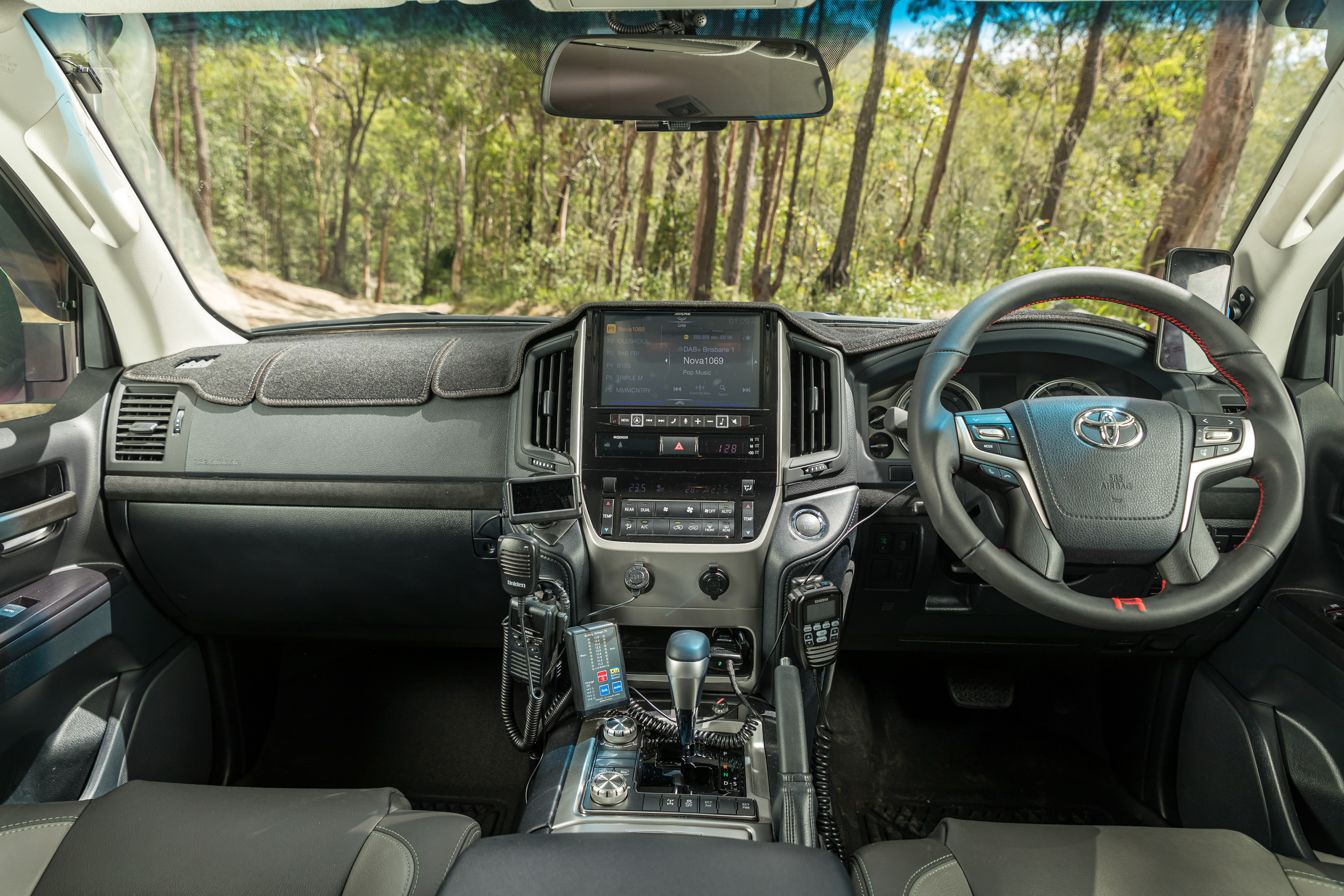
On the inside, Rambler has focused on building a cohesive interior, rather than throwing accessories everywhere they’d fit. First things first, the seats have been rebolstered and wrapped in Nappa leather to ensure drivers arrive at their destination feeling a million bucks. A Cel-Fi Go, RV Wi-Fi, and Uniden UHF arrangement has been installed for reliable communications, while an Alpine stereo incorporates off-road mapping and upgraded speaker componentry.
If it seems like you’ve heard of most of these modifications before, there’s good reasons why. Rambler isn’t attempting to reinvent the wheel here, the company is attempting to polish it, hone it down to the must-haves and make it easier than ever for would-be adventurers to explore this country, knowing the vehicle they’re driving is purpose built for the job.
It’s a growing trend of bona fide tourers and we’re stoked to see more people out exploring this unique land, and expecting to see more and more of them doing it in a Rambler.
Remote work
Go back 10 years and remote reservoir shocks were something you’d find in fancy off-road racers. Real tourers used big-bore shocks. So why are we seeing more and more tourers with remote reservoir shocks, and what’s the big difference between the two competing technologies?
It all comes down to sheer volume. The way a shock absorber absorbs shocks is by running oil through a valve. By controlling the flow of the oil through the valve you can stop the 4×4 bouncing around. Simple.
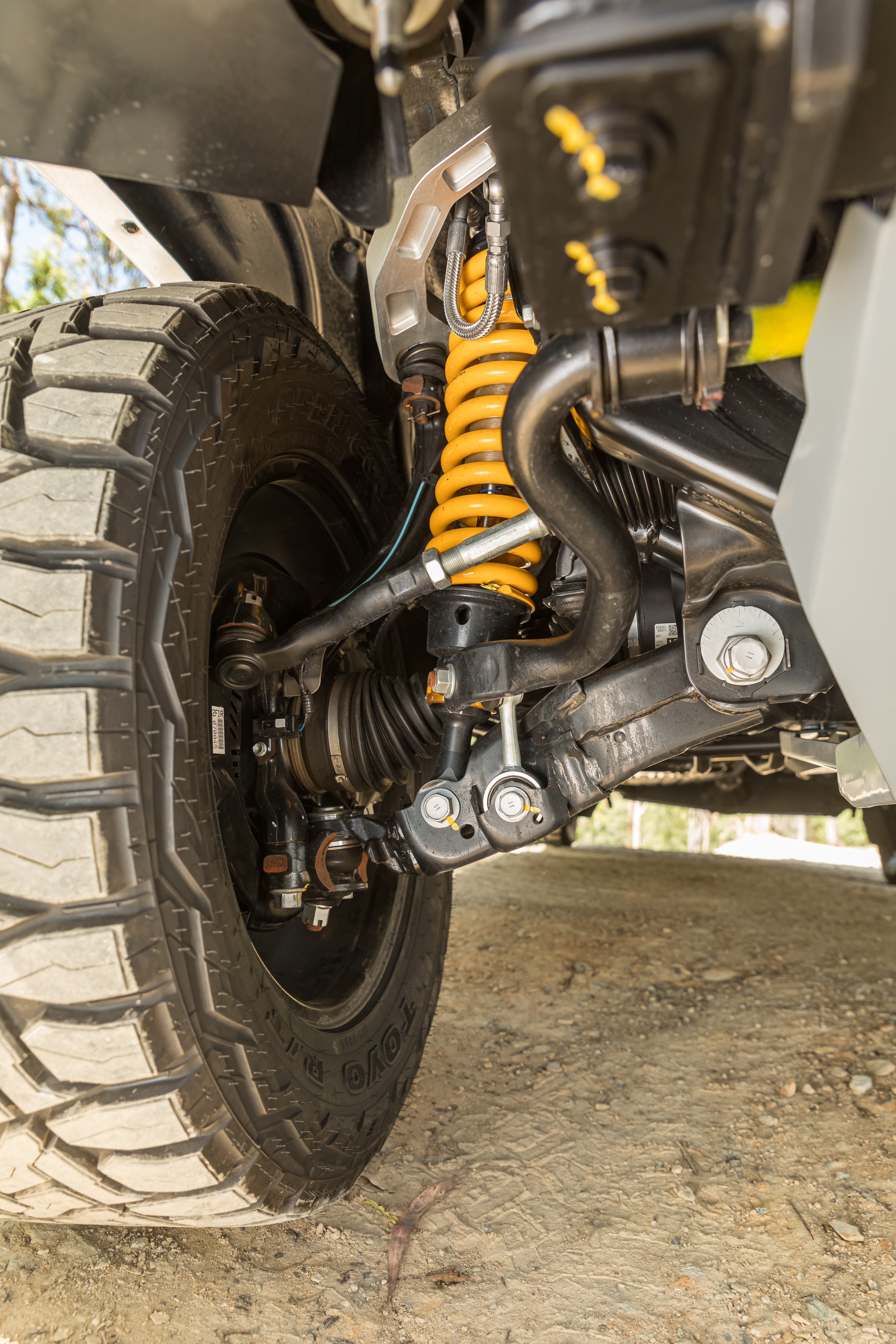
The problem is, every time you force the oil through the valve the oil heats up a little. It’s not an issue around town, or with slow rock-crawling, but go hit the corrugations and your shocks will quickly heat up to the point the oil will begin to thin out or even turn to foam and pass through the valve easier. The result is called shock fade and gives you a less effective shock, right when you need it most.
External reservoir and big-bore shocks both aim to combat this by increasing the amount of oil in the shock, making it take longer to heat up and prolonging the abuse they can handle before shock fade sets in. Remote reservoir shocks simply add more oil than a big-bore can, and by storing it away from the main body of the shock it’s able to stay cooler for longer.
The 2024 Ram 1200 is set to become a reality, according to rumours from the Americas.
Just months after 4X4 Australia suggested a smaller Ram ute could be on the horizon, new information has emerged suggesting the company will spin off two pick-ups from a secret program known as ‘Project 291’.
According to Brazilian news outlet Autos Segredos, the Ram 1200 will be designed to compete with the Toyota HiLux and Ford Ranger in Latin American markets, while Motor Trend is reporting a new Ram Dakota is being developed for North America to fight the Ford Maverick and Hyundai Santa Cruz.
It’s likely the 1200 will see a four-cylinder turbo-diesel engine borrowed from the wider Stellantis stable, while some are suggesting the Dakota ute could go for a V6 to better suit US buyers.
These renderings by Brazilian artist Kleber Silva provide a glimpse of what a smaller Ram dual-cab pick-up could look like.
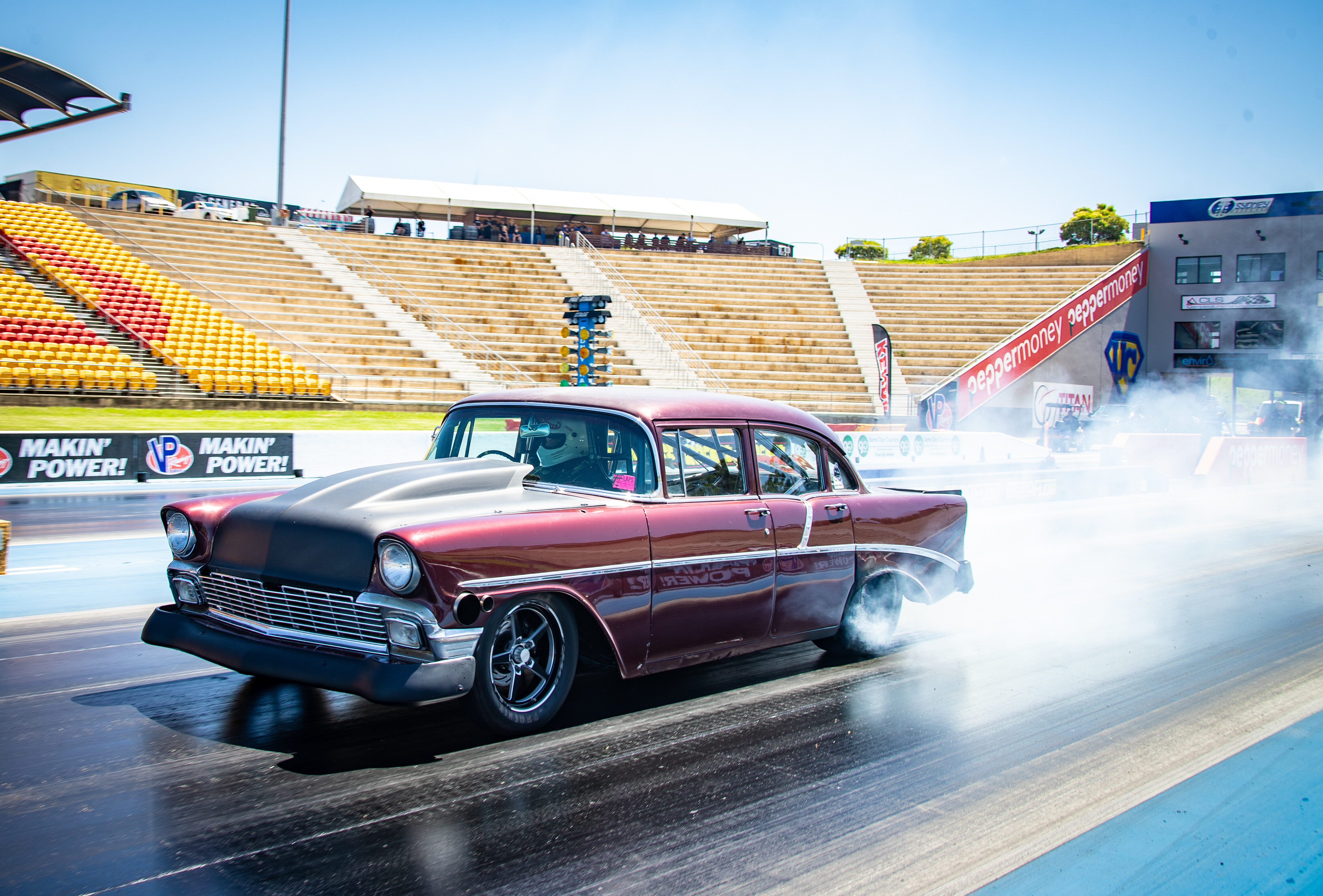
Inside sources say early Ram 1200 prototypes were assembled for “internal testing” around a year ago, with engineers now preparing vehicles for on-road testing ahead of an unveiling in early 2023.
The 2024 Ram 1200 and Ram Dakota are expected to go on sale in the third quarter of 2023, but given these will both be made in left-hand-drive, don’t hold your breath for an Australian version.
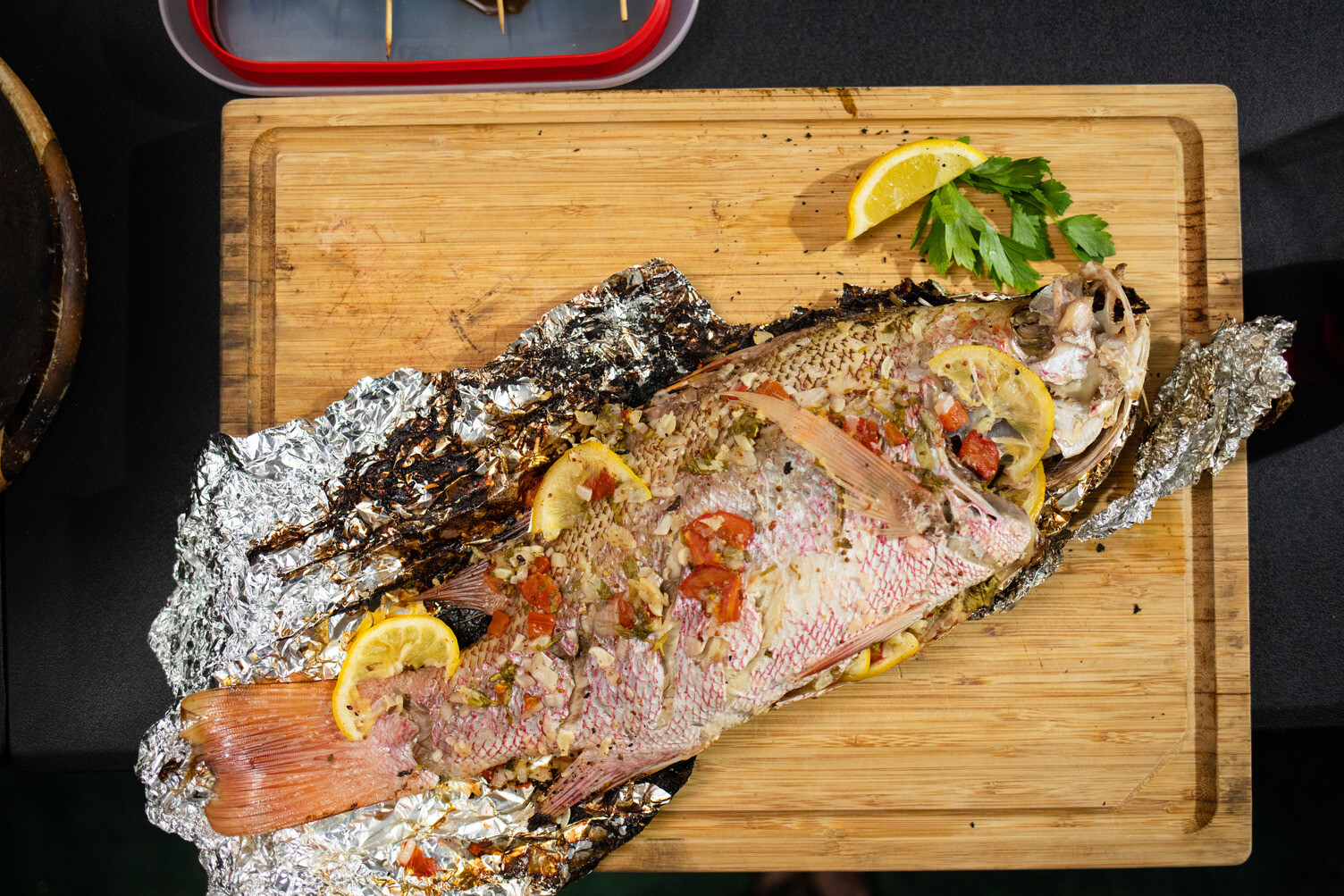
Had some luck with the rod and reel during the day? Here’s the best way to turn that fish into a delectable supper.
Ingredients
- 1 whole fish scaled and cleaned (snapper is a great option!)
- 1 red onion
- 1 tsp mustard seeds
- 1 tomato
- ¼ cup shredded coconut
- ¼ cup coriander
- 1 lime
- 2 lemons
- Pinch raw sugar
- Pinch salt & pepper
Cookware needed
- Campfire Camp Grill
Method
- Finely dice onion, tomato and coriander. Place into a medium mixing bowl.
- Add mustard seeds and shredded coconut and stir through.
- Next squeeze lime and one lemon in to the bowl followed by a pinch of sugar. Mix well.
- Slice second lemon into wedges.
- Place (scaled and cleaned) whole fish on to an oiled sheet of tin foil.
- Fill the inside of the fish with ¾ of filling and ¾ sliced lemon wedges. Top with leftover filling, lemon wedges, and salt and pepper to taste.
- Wrap and seal fish in tin-foil sheet. Place on campfire grill over low coals for 30 to 45 mins depending on fish size.
- Serve with grilled veggies and camp oven rice.
A closer look at new camping gear released by Companion, OZtrail and Campfire.
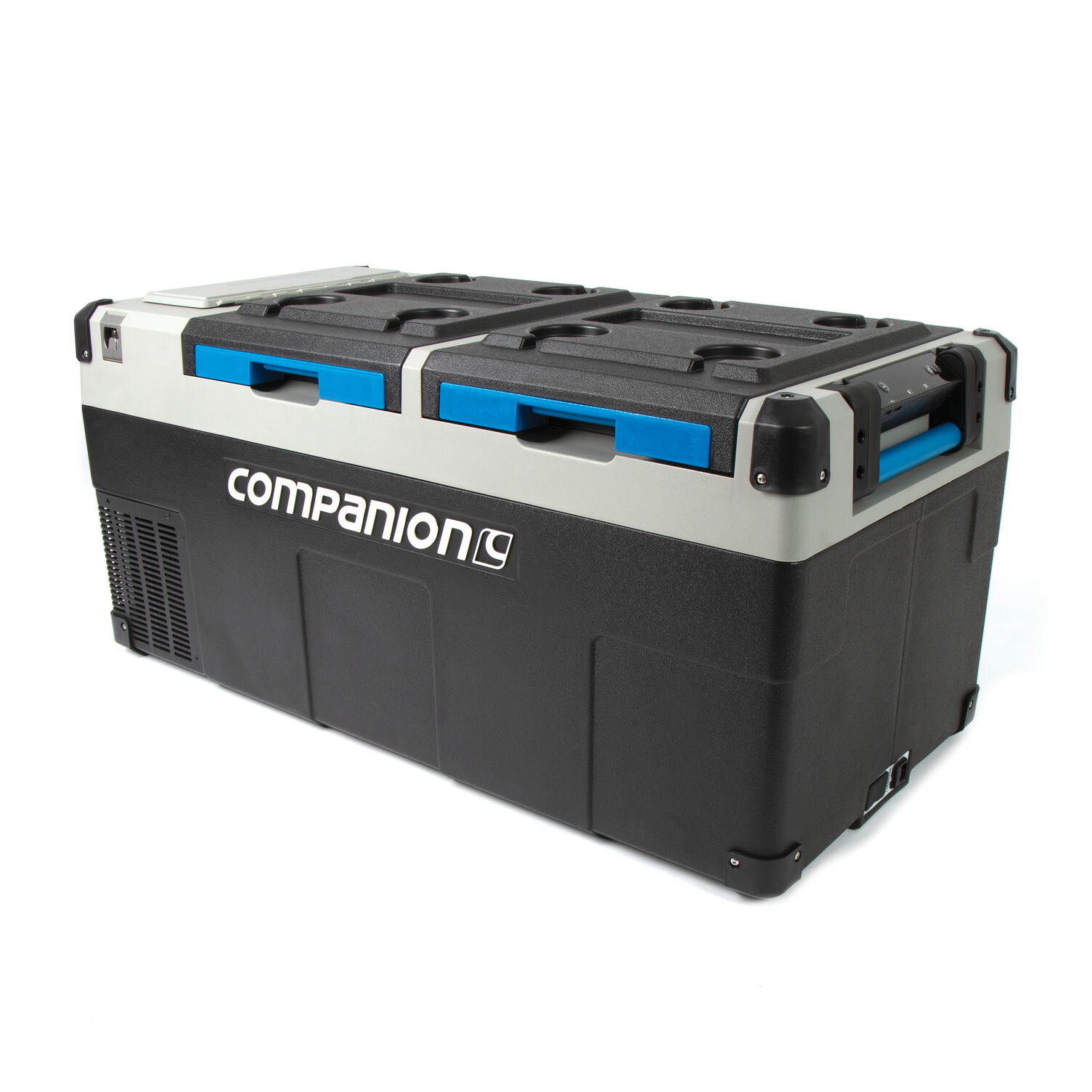
Companion lithium dual-zone rechargeable fridge/freezer
This robust unit from Companion features more than 24 hours of battery life from a single charge, thanks to its integrated/removable 12V 42amp/h lithium-ion battery.
Said battery doubles as a power pack, with two USB ports. The fridge/freezer also features direct solar connections for an extended runtime; a dual-speed SECOP compressor; three-stage battery monitor; AC and DC operation (240V and 12V/24V); a digital LED display control panel; dual direction lids; internal LED lighting; and much more.
The unit comes with a three-year warranty.
RRP: $1779.99
OzTrail 3D FatMat 750
The new FatMat series of inflatable sleeping mats from Aussie camping icon OZtrail includes three models, with the 750 our pick for those looking for comfort, a decent packed size, and durability, plus it’d make an ideal mattress for your swag, enabling it to be packed smaller.
The FatMat 750 features a high-density open-cell, cross-cored, memory-foam design mattress, measuring a monstrous 150mm thick, which ensures it ‘gives’ to the shape of your sleeping body, thus offering optimum support for a good night’s snooze.
Measuring 1980mm long, 760mm wide and 150mm tall, the FatMat 750 packs down to a svelte 760mm x 300mm x 220mm and weighs 4.4kg.
Inflation/deflation is via an easy-to-use 360-degree twist valve. There’s a handy carry bag with compression straps included, too. The 30-denier (D) TPU coated top and side and tough 75D base should ensure years of use and there is also a repair kit included.
RRP: $300

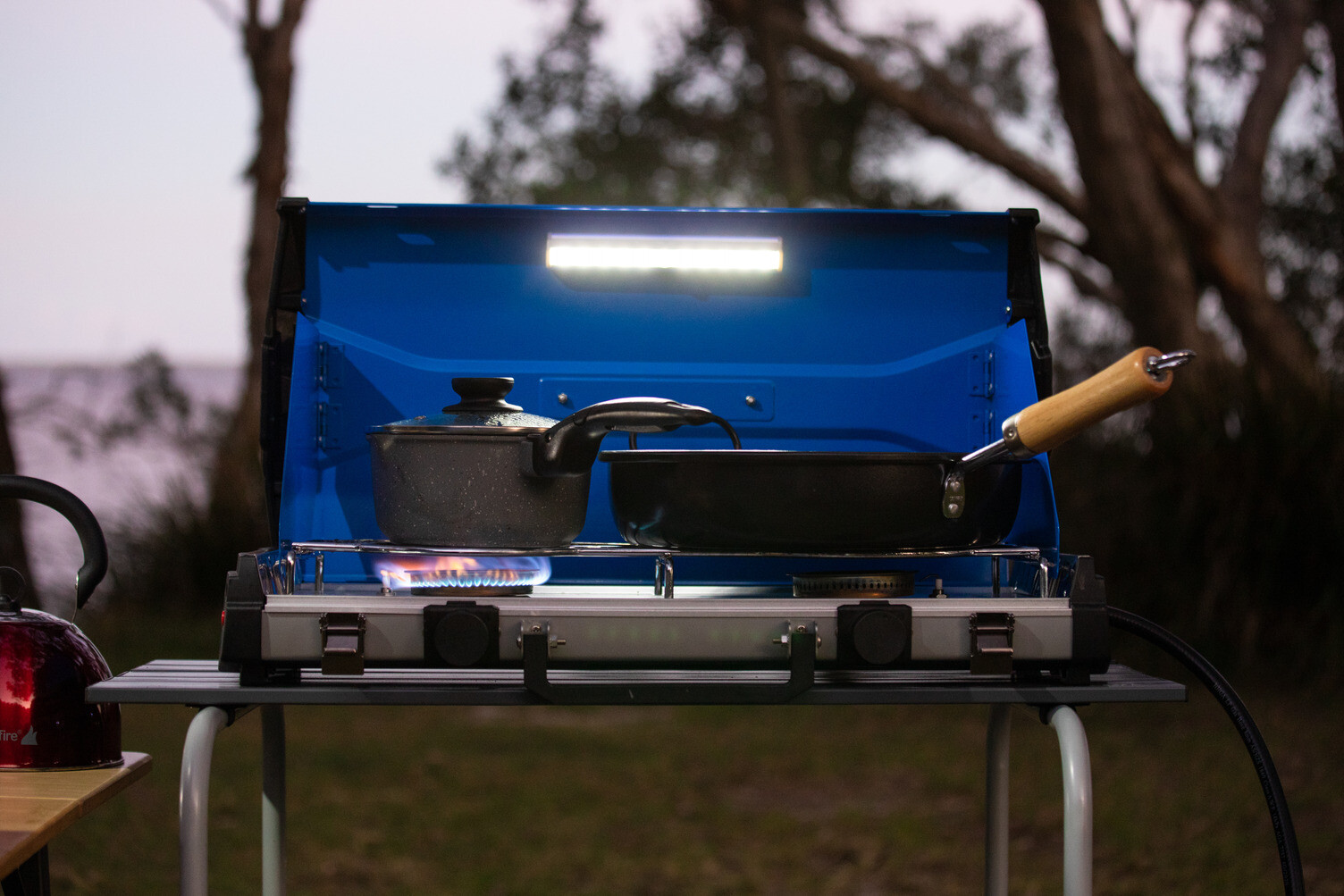
Companion ProHeat stove
The ProHeat stove is a sleek and robust two-burner designed to connect to a gas bottle or bayonet fitting on a caravan or camper.
The stove features a low profile to suit built-in RV/Camper kitchens, a large cooking area, built-in windshields, dual ignition, and a magnetic LED cooking light for visibility in low-light conditions.
The ProHeat 2 Burner LP stove will complement the most amateur of cooks around the campsite.
RRP: $239.99
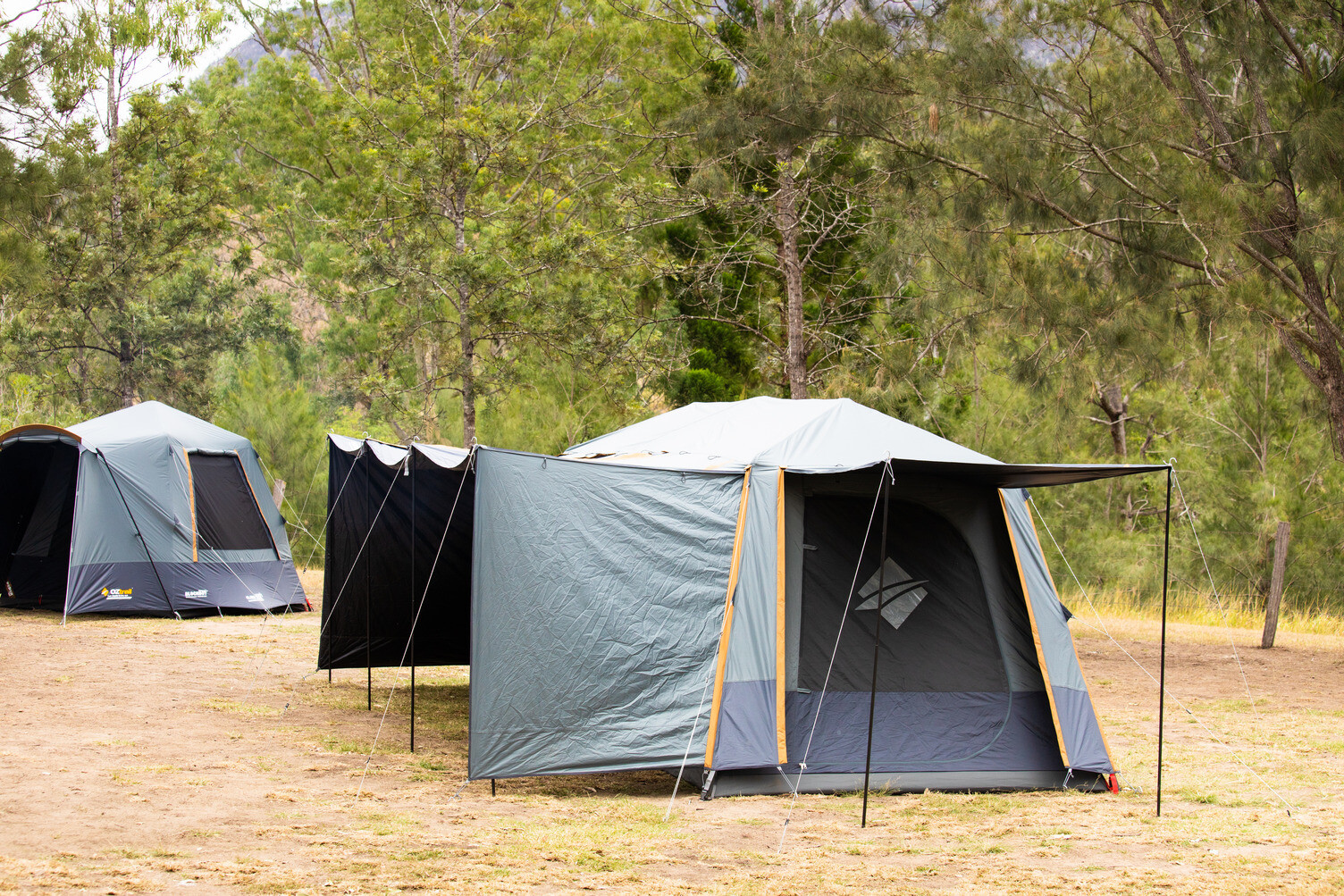
OZtrail fast-frame Lumos tents
Whether touring with a partner or the entire family, OZtrail’s Fast Frame Lumos tent is designed to make life easier thanks to its easy pitch, fast-frame system.
Packed full of clever features like integrated LED lights, Blockout fabric, ClimaTech Vents for optimal ventilation and full side awnings with removable wind breaks, camping has never been more convenient.
The removable wind breaks are only available in 10P and 12P tents only.
RRP: From $729.99 to $1449.99
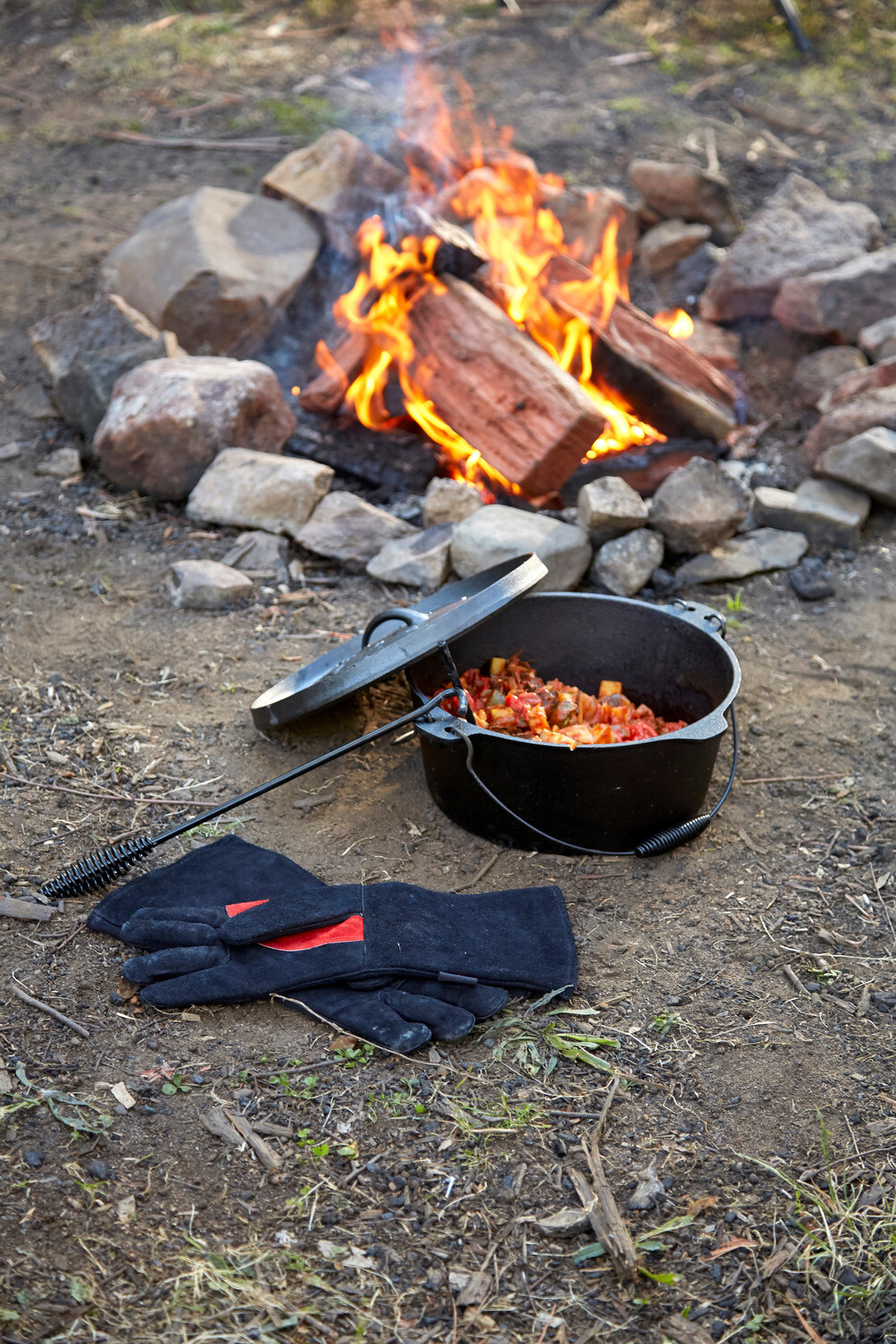
Campfire 9-quart camp oven set
From stewing to baking and roasting, a camp oven is one of the most versatile pieces of cookware you can own when it comes to cooking over a fire.
Campfire Australia provides a wide range of pre-seasoned, cast iron cookware designed to suit all your cooking needs.
Campfire offers smaller three-piece packs to larger 11-piece kits that have all the essentials you need to make a hearty meal.
RRP: From $124.99 to $199.99
COMPANION: companionoutdoor.com OZTRAIL: www.oztrail.com.au CAMPFIRE: www.campfirecook.com
We take a closer look at some aftermarket equipment released by EFS 4×4 Accessories
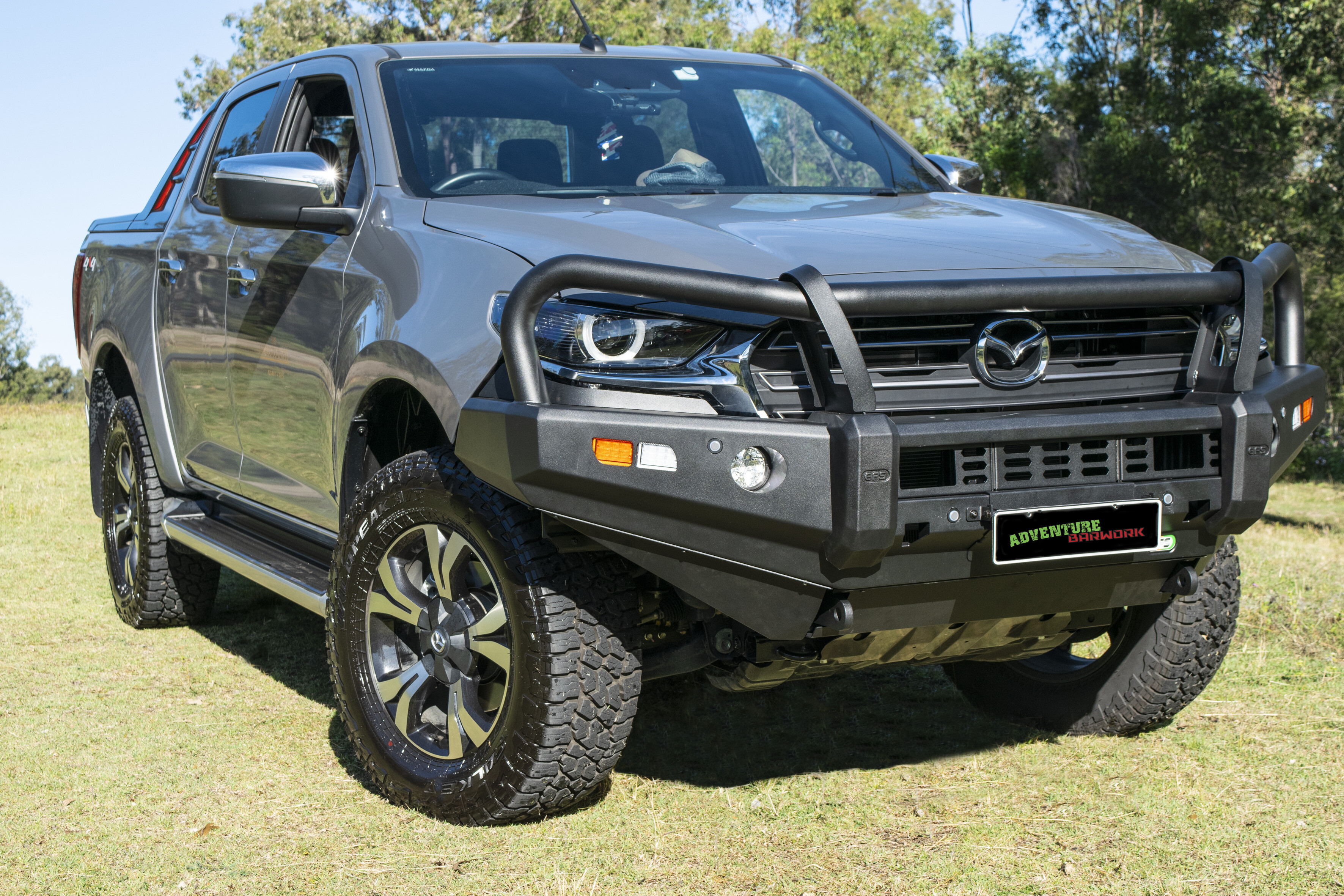
Stockman bullbar for new BT-50
EFS 4WD has added an Adventure Stockman bullbar for the new Mazda BT-50 to its range of bar work. With a contemporary, tough design, the bullbar features an HD 63mm tube, LED lights, EFS bumperettes, and an aerial mount. The bar has an Endura coat finish, is ADR compliant and winch-ready.
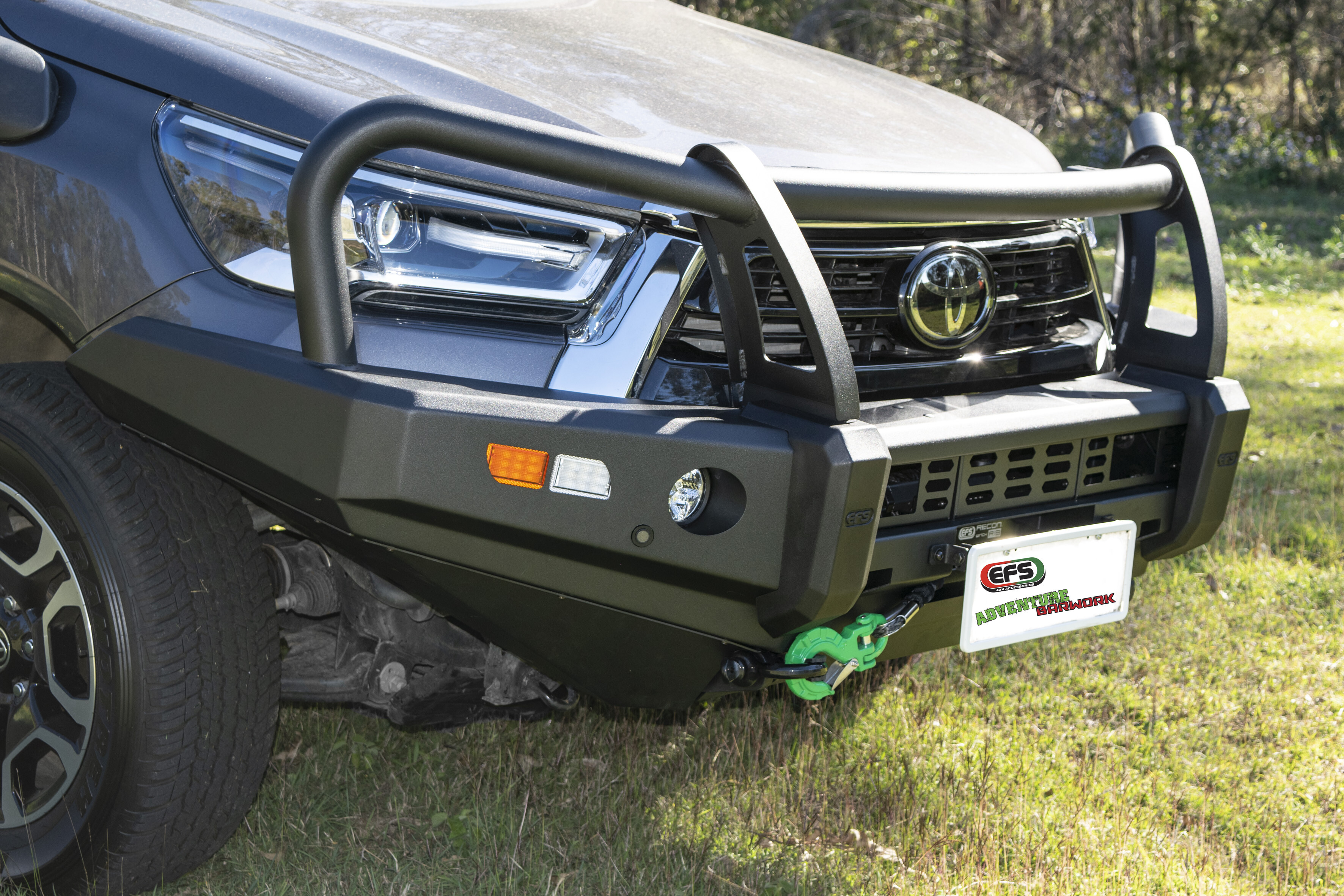
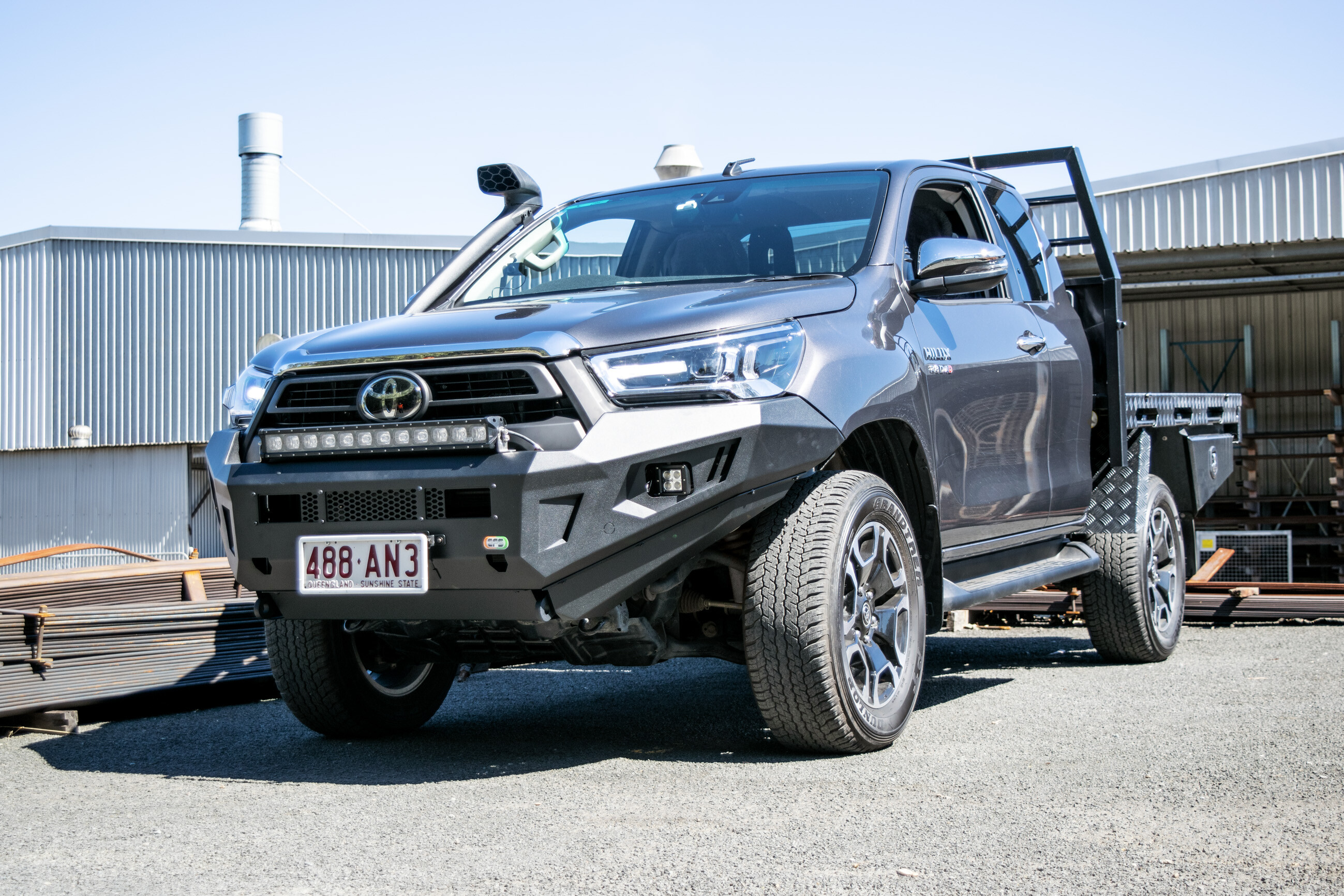
Adventure Stockman bullbar for 2020+ Toyota Hilux
Owners of Toyota’s mega-selling HiLux now get the choice of an all-new bullbar, courtesy of EFS, with its Stockman bar, designed for 2020-onwards Hiluxes.
The ADR-compliant bar is Endura coat-finished, and includes two aerial mounts, front bumperettes for additional protection, super-bright LED lights, includes CND headlight infill trims and is winch ready, thanks to its winch cradle mounting bracket. The heavy-duty 63mm steel tubing means the Stockman offers optimum frontal protection for ’Lux owners, while meeting vehicle airbag regulations and it comes with a two-year warranty.
Check with your local EFS dealer for availability. RRP: $1885
XCAPE bullbar for Toyota Hilux
EFS 4×4 Accessories recently released an Xcape bar for 2020+ Toyota Hilux models. The bumper-replacement-style bar’s slimline design means it integrates neatly with the nose of the Hilux and remains ADR compliant.
The high-clearance bar is winch-compatible and includes bright LED auxiliary lights. It comes in a tough Enduracoat finish, or it can be colour-coded. The bar comes with a two-year warranty and is available now.
EFS Recon R10 and R13 winches
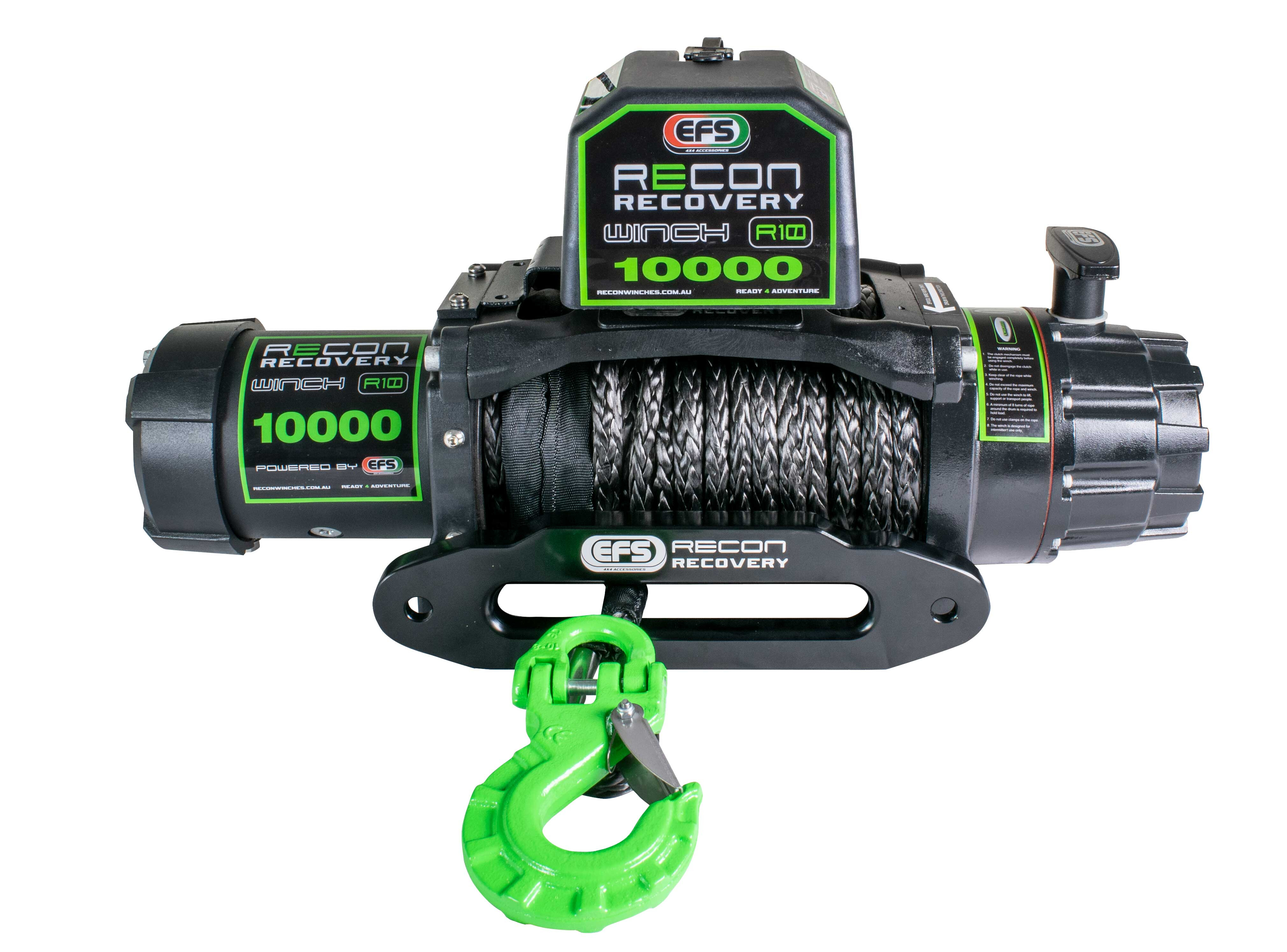
EFS 4×4 have introduced its new-look Recon R10 and R13 winches.
Not just a pretty face, the winches give you confidence to explore the path less travelled and help you start moving again, should you encounter a sticky situation. The R10 features a 10,000lb rated single-line pull and a 158:1 gear ratio; the R13 ups that to 13,000lb and comes with a 265:1 gear ratio.
Both winches are powered by a 6hp 12V series wound-balanced electric motor with waterproof motor/gearbox and feature three-stage zinc-plated hardened planetary gears; a motor breather kit; rotating ring gear clutch with T-handle clutch engagement; and 18,000lb SYNTUFF synthetic multistrand rope.
Xtreme suspension kit for RAM 1500
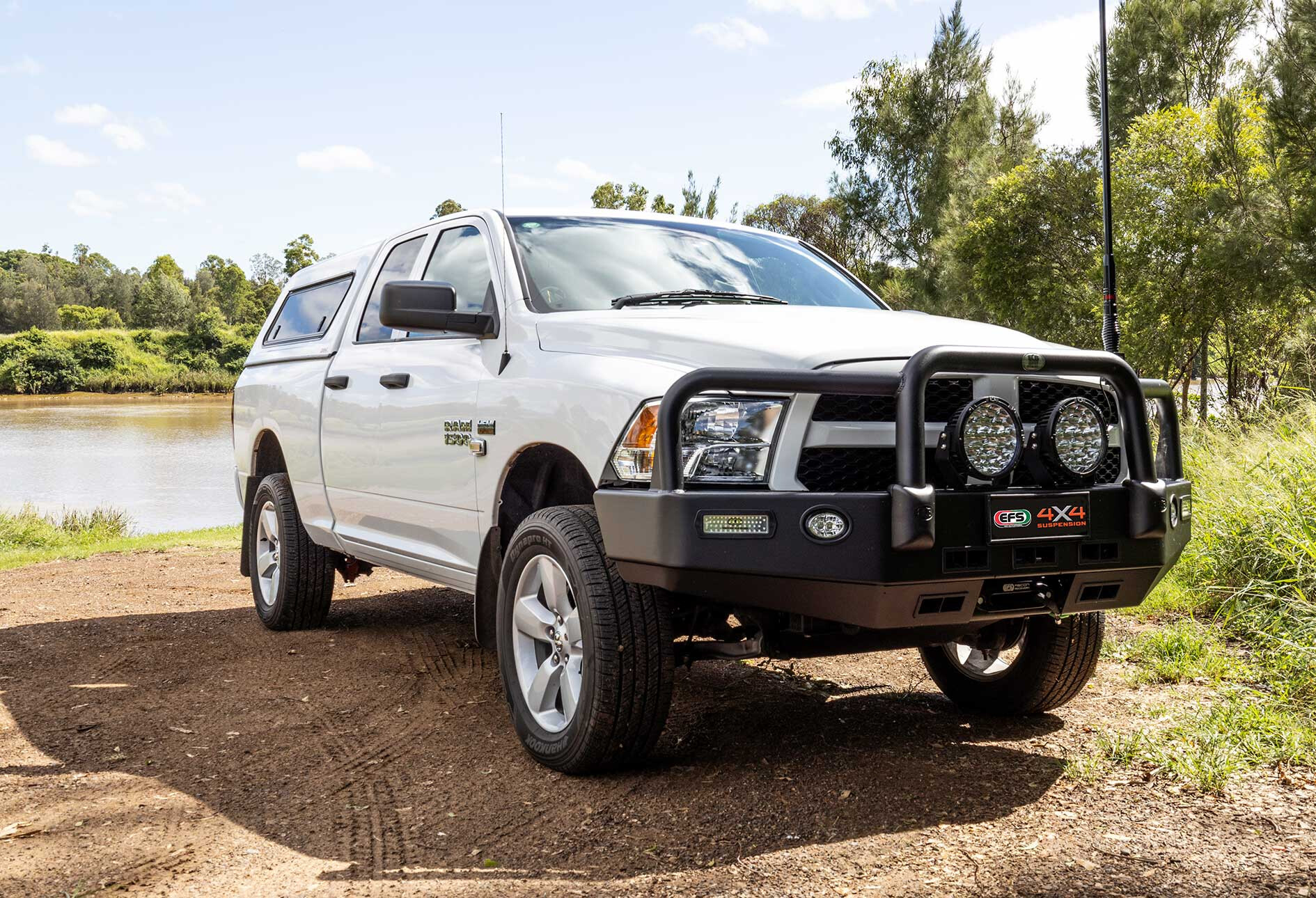
EFS 4×4 Accessories has given the RAM 1500 an extra layer of toughness, releasing its upgraded Xtreme suspension kit for the big ute.The kit features the brand’s largest outer body shocks and struts (65 and 63.4mm) for greater fluid volume, ideal for limiting damping rates. Said to provide greater off-road endurance, travel and lift without compromising on ride quality, the kit includes EFS Xtreme shock absorbers (45mm piston, hardened chrome 20mm shaft and DMC technology).The gas-pressurised, twin-tube struts and shocks come with the EFS-upgraded coil springs for approximately 50mm of lift from OEM. RRP: $1840
WEBSITE: https://efs4wd.com.au/ PHONE: 1300 337 493