
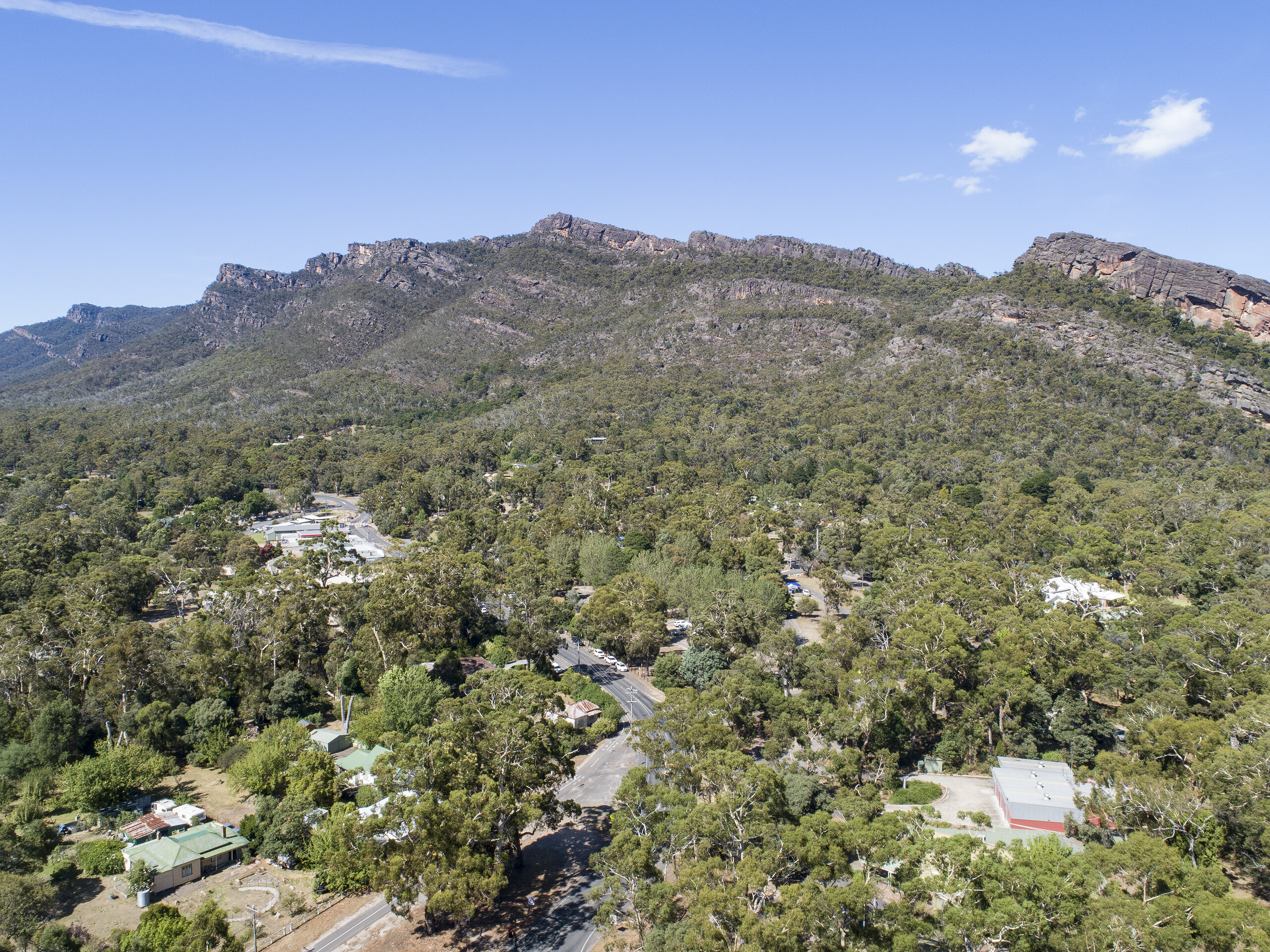
With hundreds of kilometres of gravel roads, 4×4 tracks and walking trails, plus accommodation, restaurants and numerous wineries, the Grampians attracts those who want to get up close and personal with nature as well as those who don’t want to leave life’s little luxuries behind in the process.Halls Gap (population 430) located at the northern end of the National Park is the gateway to the Grampians. While small, the town provides a good range of services with a bakery, general store, hotel, service station and cafes that support a seemingly endless flow of tourists.
The town has a range of attractions, including Victoria’s largest regional zoo featuring more than 160 species of native and exotic mammals, reptiles and birds. The zoo offers special one-on-one up close and personal encounters with dingos, meerkats, giraffes, cheetahs and rhinos. For the kids there is electric-bike hire and a paved bike/walking track running the length of the town that they can terrorise. Meanwhile, long-suffering parents can indulge in self-medication at any (or all) of the numerous nearby wineries (Fallen Giants being a recommendation).Piscators (as in fishermen, not the VB swillers) will find the Grampians abounding with man-made lakes and reservoirs, most of which are stocked with redfin and trout. And, if your fishing skills leave a bit to be desired, the Halls Gap Hotel does a mean fish and chips – just be sure to book.
Rock art
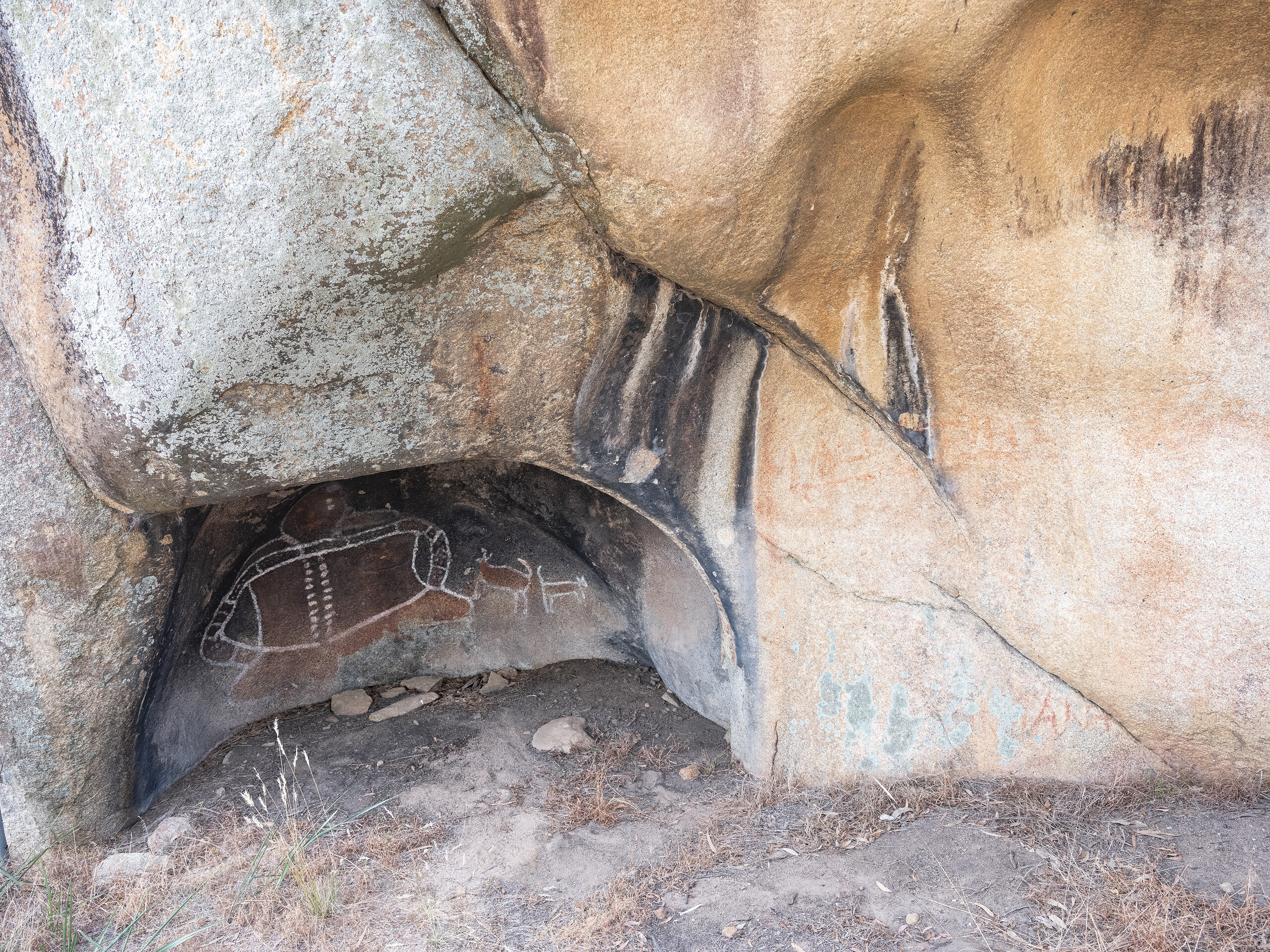
A not to be missed attraction is the Brambuk National Park & Cultural Centre. With indigenous dancers, artists and storytellers, the Centre celebrates connection to Country. Known as Gariwerd to the traditional owners, the Grampians has the largest number of aboriginal rock art sites in Southern Australia and 80 per cent of Victoria’s rock art sites. Up to 20,000 years old, some 200 art sites have been recorded, of which five are open to the public. One of the public sites is Bunjils Shelter, a hollow in the base of a huge granite boulder in the Black Range Scenic Reserve a few kilometres to the northeast of Lake Fyan. Bunjil was considered a creator deity by some aboriginal people who believed that in the Dreamtime he took shelter in this cave.
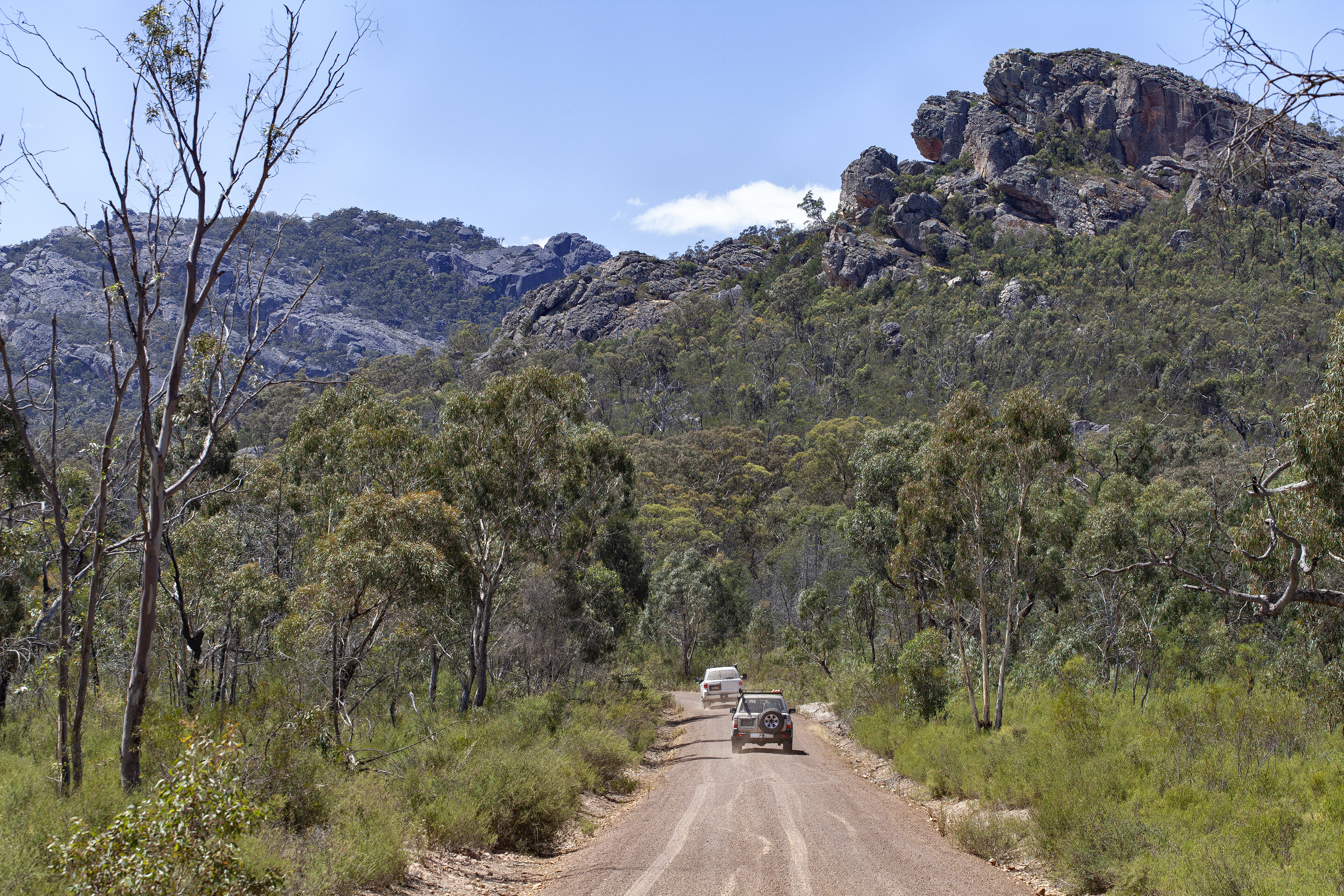
The park is criss-crossed with unsealed minor roads and tracks of varying condition. Some wouldn’t worry a standard passenger vehicle, but others are steep and rocky. Slippery in the wet, they demand nothing less than a 4×4, making the Grampians a popular destination for the 4WD community. The numerous campgrounds scattered throughout the park offer an opportunity for like-minded groups to congregate in the bush and use their vehicles for the purpose for which they were intended.
Campgrounds need to be booked online, so just rolling up and grabbing a site is no longer an option. Most campgrounds have provision for a couple of caravan/campervan sites, but general camping sites can’t be directly accessed by vehicle. It must have been someone with a vindictive streak at Parks who had the bright idea – “as well as making visitors book a site online when there is no internet, we’ll put bollards around it so they have to carry all their gear from their vehicle to the campsite”. Bad luck if you are disabled!Campsites have toilets and fireplaces (you are permitted to collect fallen timber), but perhaps an unpowered site in a caravan park for about $12 more a night is an alternative when you consider the ready access to a hot shower, swimming pool, coffee shop, pub meal etc. I guess if you are out for a 4WD weekend with the boys who change their oil more often than their underwear, planning to imbibe copious amounts of VB while eating burnt offerings around a fire, then the remote campground is probably the place to be. However, if travelling with the wife and a couple of young ferals, then Halls Gap with the other comforts and attractions it offers could save a marriage.
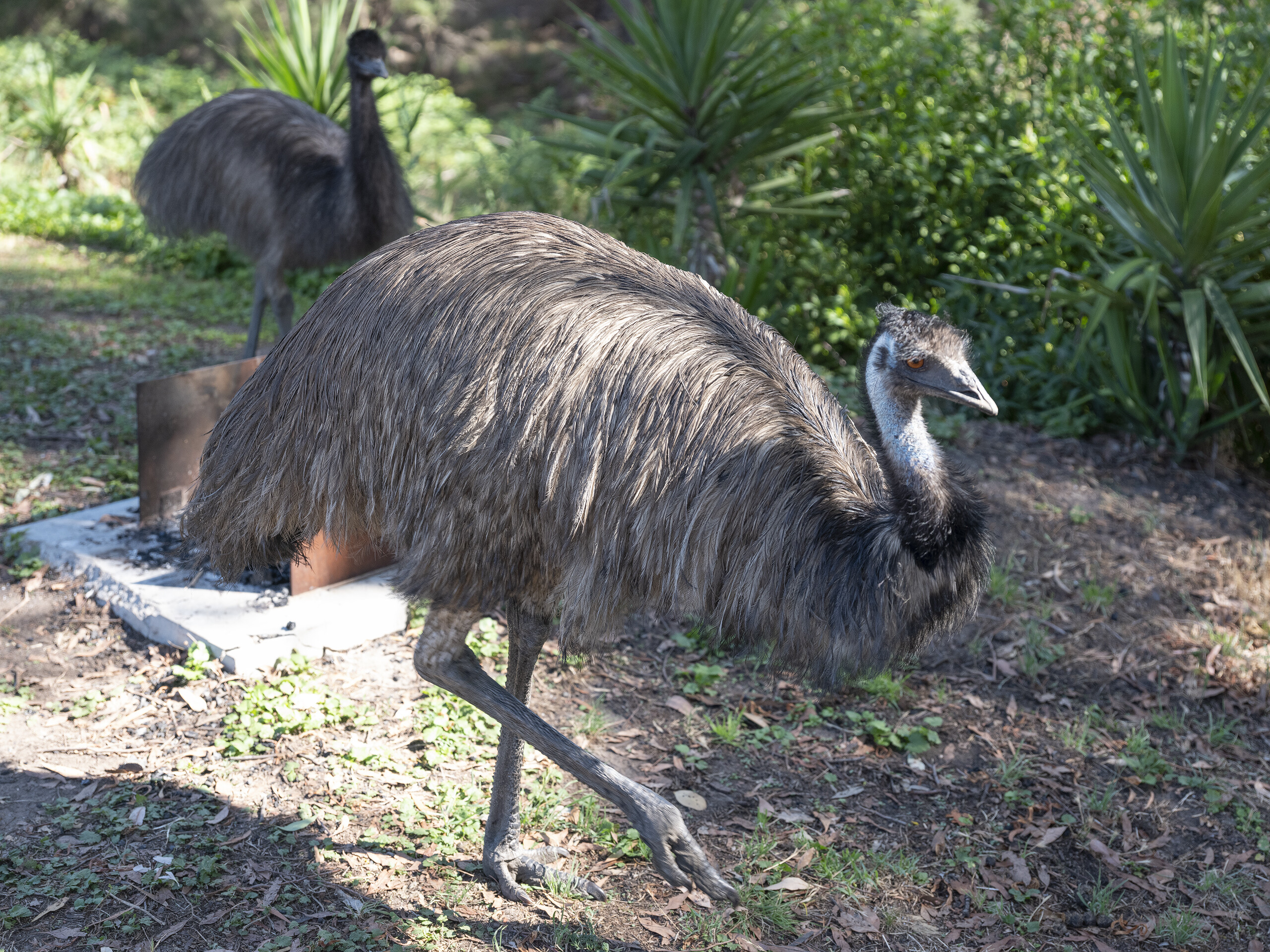
There are three caravan parks in Halls Gap, with Parkgate on the town’s northern entrance recommended. Emus and kangaroos regularly wander the grounds, and the odd kookaburra will occasionally drop in looking for a free meal. It’s a good idea to be cautious of the emus as they can have ‘attitude issues’ towards campers who they feel are not sharing appropriately.
While it is bad form to feed native animals, they can be hard to resist. A kookaburra that landed on the back of a chair next to me ended up taking a sliver of uncooked steak from my hand (a sliver of hand seemed a possible alternative if I failed to comply!).
Sandstone Ranges
For anyone wanting to have a closer look at the scenic attractions beyond what they can see out of their vehicle window, there are numerous walks to lookouts and other points of interest near Halls Gap. Mt Victory Road winds through the gap in the range from which the town takes its name, rising steeply past the aptly named Elephant’s Hide, a wide expanse of sloping grey rock that could be mistaken for an ancient lava flow. While a plausible theory, given much of Victoria’s Western Districts have a volcanic history, the Grampians’ massive rocky outcrops, cliffs and jagged ridges are sandstone that formed 380 million years ago from river sediments that were laid down to a depth of 7km. Tectonic forces subsequently lifted and folded the sandstone to form three parallel ranges (Mount William, Serra and Victoria).
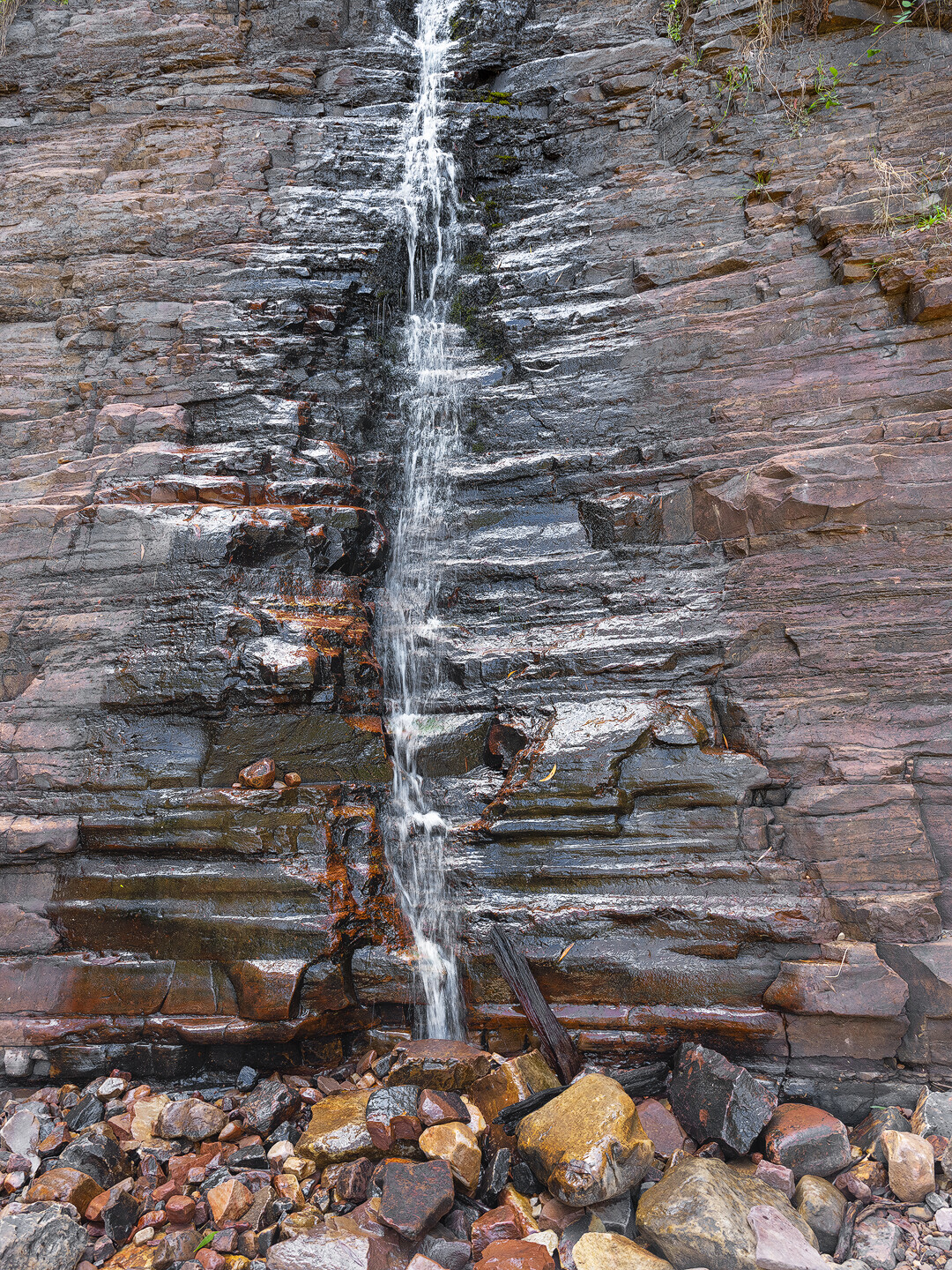
Those who have overeaten and over-imbibed during their stay can work off these excesses by visiting the numerous lookouts dotted around the park. A short distance past the Elephant’s Hide is the Wonderland carpark where several walks of varying difficulty start. Lakeview Lookout and the Pinnacle Lookout both offer stunning panoramas over Halls Gap and the plains stretching away to the east. A shorter, less arduous access to these lookouts can be found at nearby Sundial carpark, down the road from which you’ll also find an easy walk to Silverband Falls. Little more than a trickle in summer, this waterfall is notable because it disappears in to the ground at its base to flow underground for a short distance. From the carpark located at the end of the sealed Mt William Road (which offers good views as it climbs to the top of the range) there is a 45-minute walk to the summit of Mt William. The walk is moderately difficult and while we didn’t tackle it given the hot weather, the views are said to be perhaps the most spectacular in the Park.For those who are unfamiliar with the Grampians, Four Wheel Drive Victoria in conjunction with Parks Victoria have published a Grampians Drive guide to a suggested sightseeing drive as well as other handy hints. A link to this guide can be found in the Things to See and Do section of this article.
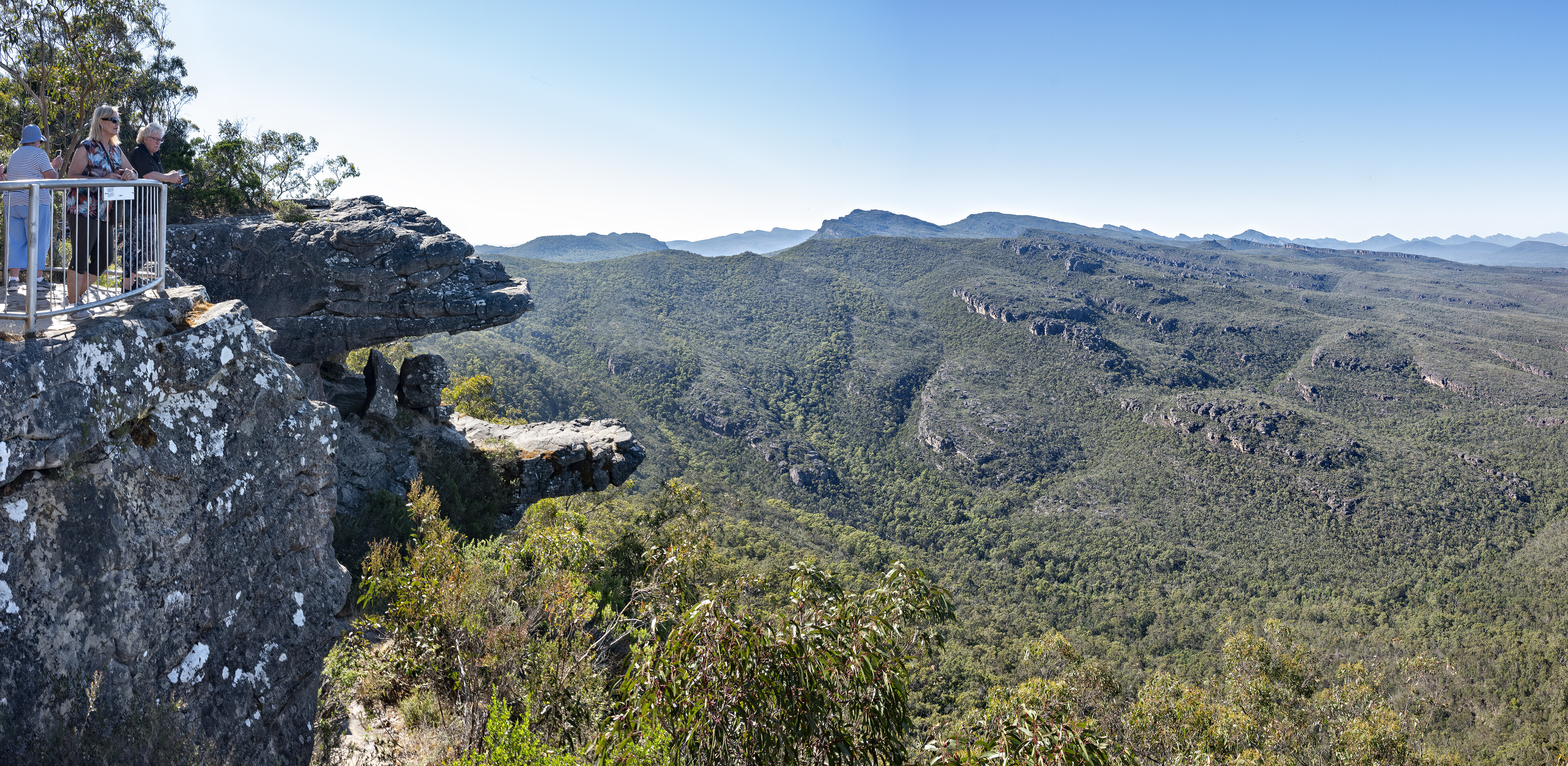
Our first day out saw us at Reed Lookout on Mt Victory Road. With great views across the ranges to the east and west from the car park, it is a top spot to take in a sunrise or sunset with a bottle of bubbly. An easy 1km walk from the carpark takes you to the Balconies for more panoramic views.
Mackenzie Falls
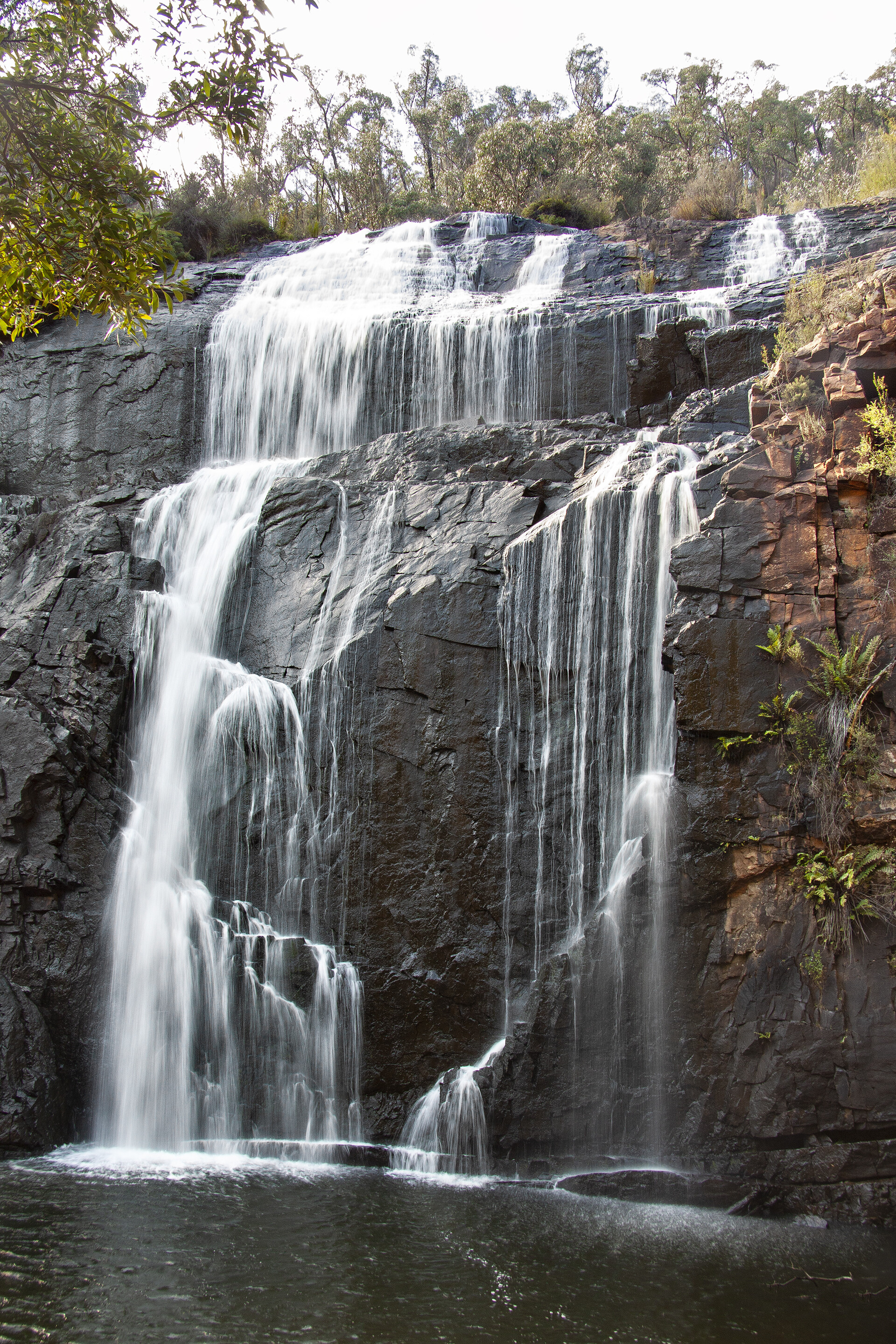
Another 2km west is the turnoff to MacKenzie Falls, one of the largest waterfalls in Victoria and the only one in the Grampians to flow all year round. It might seem a great place to cool off on a hot day, but swimming is not permitted following a number of drownings here. Those of less than average fitness need to be aware that with 260-plus steep steps to the bottom, the climb back to the top is testing. Close to the car park, a short side track leads to the picturesque Broken Falls.
From MacKenzie Falls, Wartook Reservoir can be found nearby. With shady picnic tables and a view across the water, it makes for a pleasant lunch spot.While at Wartook Reservoir, we reduced our tyre pressures intending to drive Mt Difficult Road which runs some 27km around the reservoir and returns to Halls Gap via Boroka Lookout. However, our day’s 4WD activities ended after just a few hundred metres as the road was closed.Our run the following day saw us airing down again not far from Reed Lookout on Glenelg Road, a 2WD gravel road that runs the length of the valley. We stopped off at Moora Moora Reservoir whose blue waters are dotted with myriad small clumps of reeds, all backed by a steep range that borders the lake’s far shoreline.
The tracks
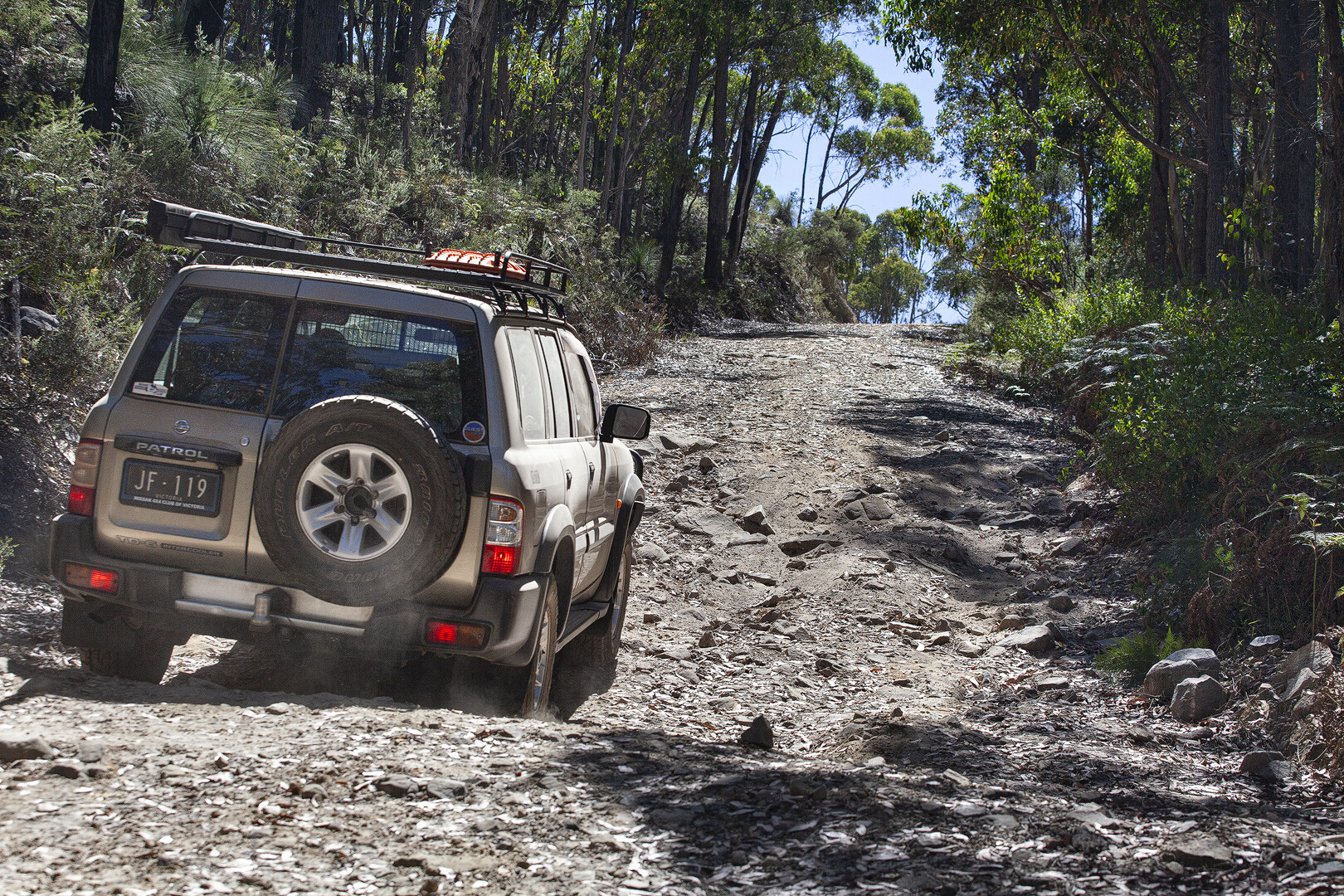
Our first chance to engage 4WD was Victoria Range Track which rose steeply along the eastern side of the range. Despite ruts, potholes, washaways, the odd fallen branch and large loose rocks, it was an enjoyable drive. Cresting the top of the range saw large boulders and rugged outcrops of rock edging the road which then descended to our lunch stop at Buandik campground. There is aboriginal rock art to be seen here (Manja shelter) but it being a hot sunny day, a cuppa in the shade of a large gum tree won out over a 1km uphill slog to said shelter.After lunch it was back on to dusty all-weather gravel roads (Red Rock, Lodge and Rose Creek Roads) to Mt Victory Road and Halls Gap. While not a challenging drive, the views of the western ramparts of the Grampians that flanked our journey were impressive and provided camera fodder aplenty.
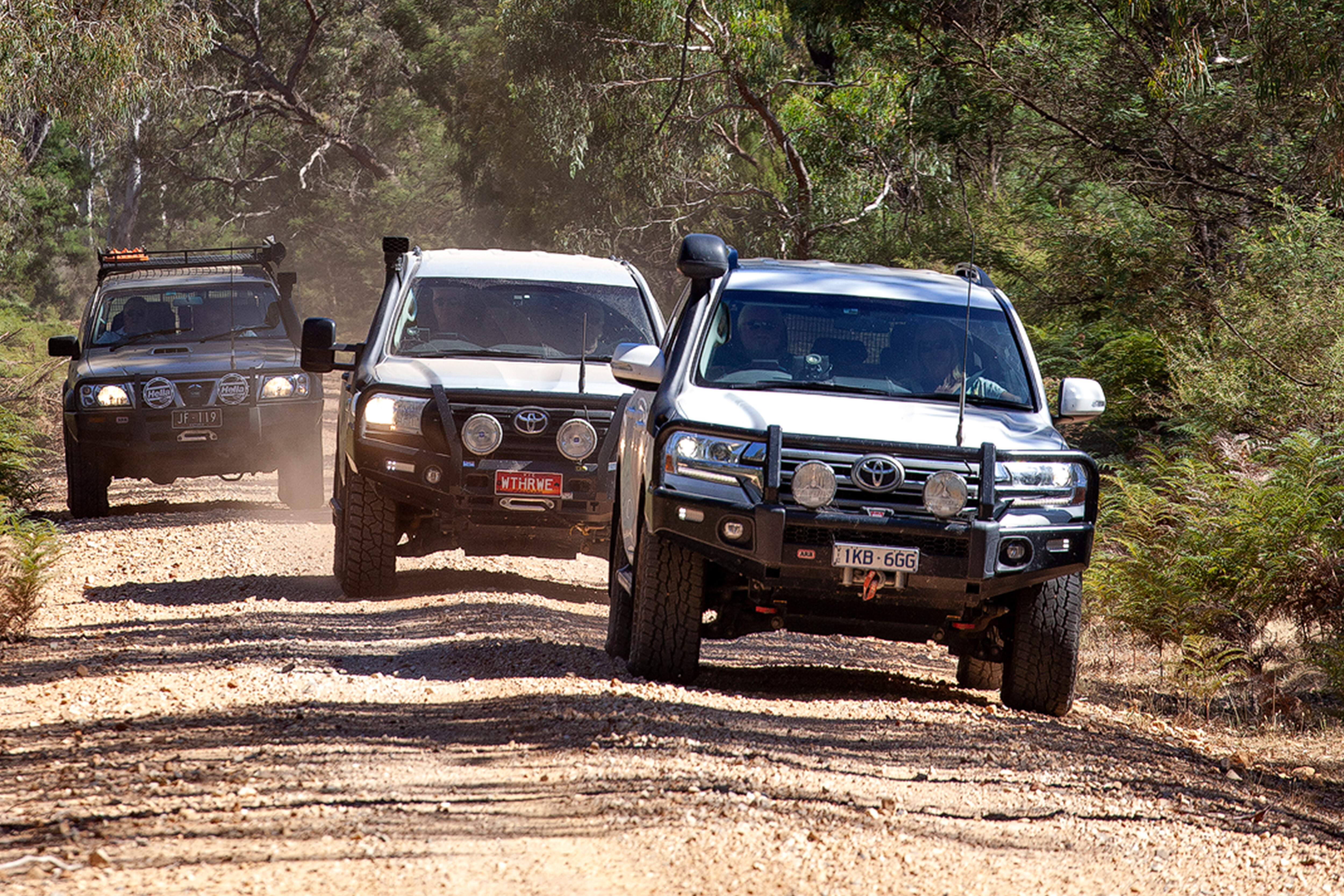
For anyone planning to check out other tracks in the park, on a previous trip we also went north from Halls Gap on Mt Zero Road, taking Coppermine Track from Roses Gap to Mt Zero where more examples of aboriginal rock art can be found. Heading south again we used Polhner Road, Chinaman Track, Wallaby Rocks Track and Launders Track from where it is a short run back to Glenelg River Road. Given the wet conditions during that previous visit, some in our group found Launders Track to be exceptionally challenging – and Parks’ current track notes suggest that hasn’t changed.All the caravan parks in Halls Gap have a ‘no dogs’ policy. If travelling with woofers check out nearby Lake Fyans Holiday Park which is dog friendly outside of school holidays and long weekends. If you are the type who only frequents the cinema on Tightarse Tuesdays and prefer to free camp there are limited options. However, Glendinning campground on the shores of the Rocklands Reservoir or Lake Lonsdale campground, are both free, dog friendly, have shady campsites, basic facilities and fishing at your door.
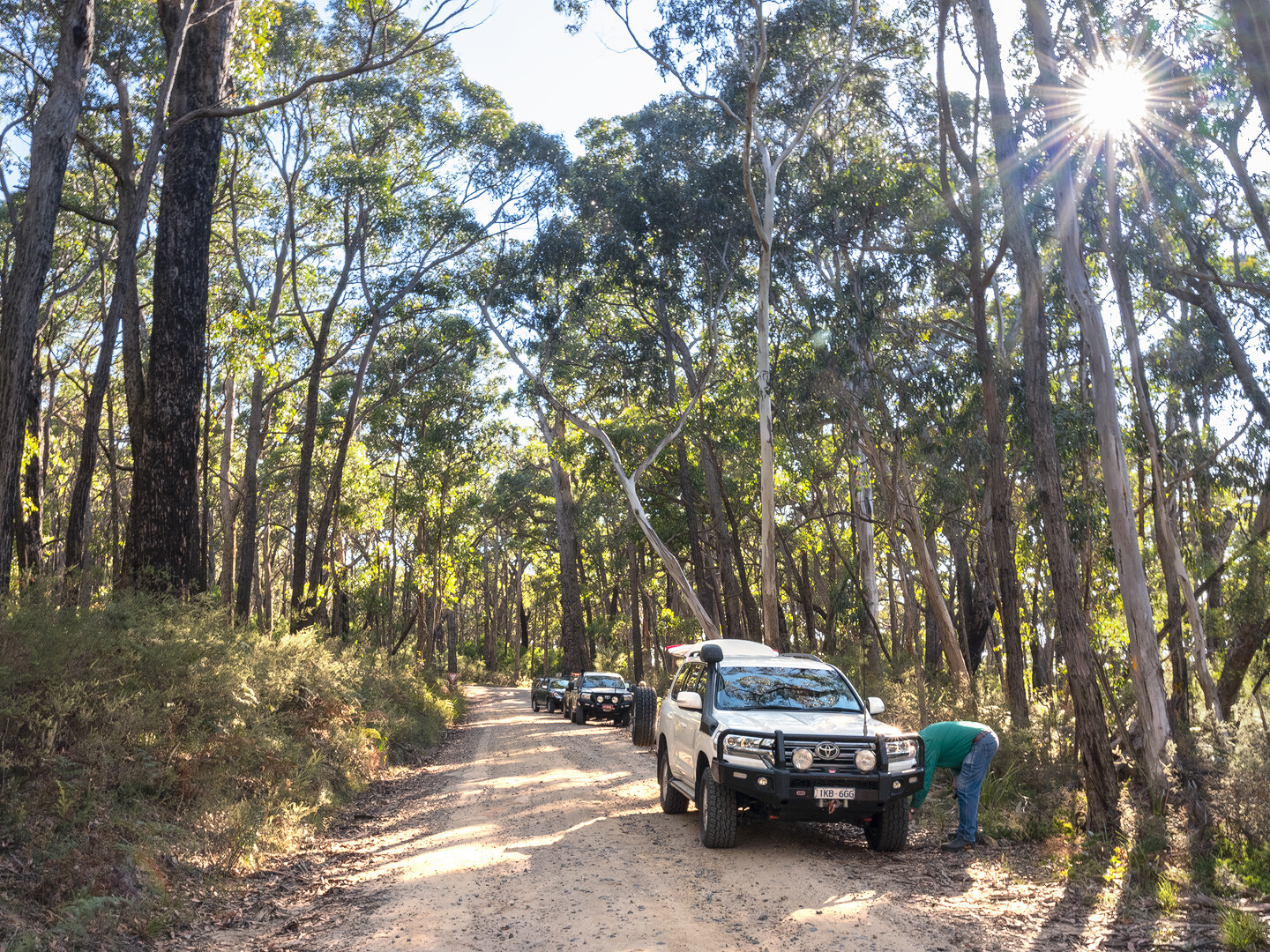
The Grampians is a place that has something for everyone with attractions to keep you entertained for days. It’s a location you can visit time and time again and always find something new to do or see.
Photographing sunrises
The hardest part photographing sunrises is the need to get up early – very early. And without a subject such as a dead tree, windmill etc, sunrise photos are nothing more than colour and unlikely to end up hanging on your wall. Lake Lonsdale, 20km north of Halls Gap, is dotted with large dead trees that made ideal subjects for a very spectacular sunrise.
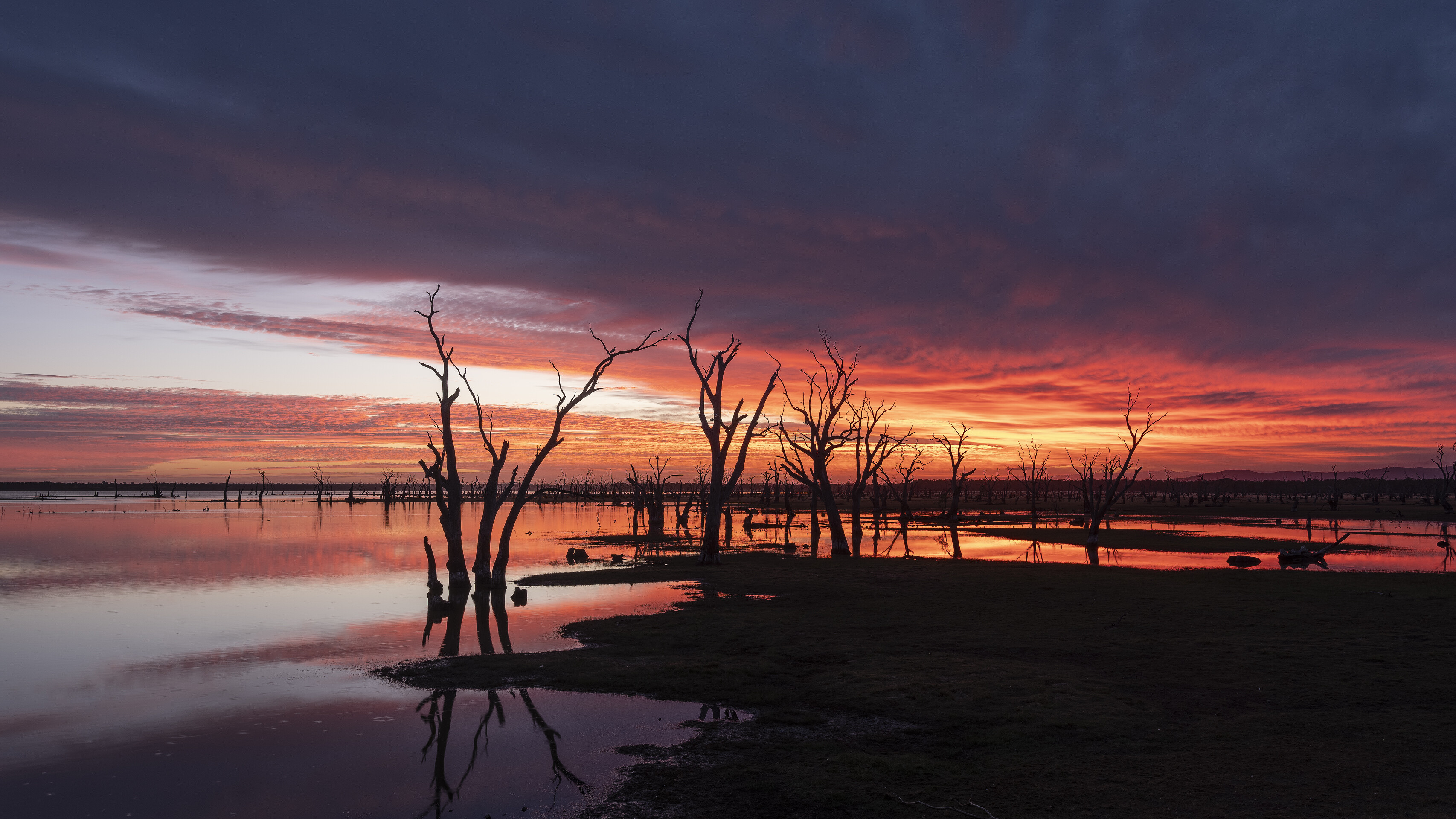
The part of the horizon where the sun is rising will be very bright, while the rest of the sky can still be quite dark.Ideally, set the camera to manual mode with ISO of 100, aperture of f11 (for the sharpest focus) and exposure taken from a bright (but not the brightest) area of sky. Shutter speed is likely to be half a second or longer, so if you don’t have a tripod, increase ISO and aperture to raise the shutter speed to about 1/60th of a second, enabling you to hand-hold the camera. Check each image to make sure none of the sky is ‘blown out’ and adjust settings accordingly.A sunrise is at its most colourful for less than a minute, just before the sun breaks over the horizon – so take plenty of shots or risk missing the moment.
Grampians (Gariwerd) National Park, Victoria
5 things to see and do
01: TAKE IN A LOOKOUT Boroka Lookout, near Halls Gap, has stunning views over the town and the plains stretching to the east. Likewise, Reeds and the Balconies lookouts are also great locations to catch a sunset or sunrise with a bottle of bubbly. With car parks close by, little walking is required but the more energetic might want to check out the walks along the tree-lined rocky tracks to Lakeview and Pinnacle lookouts.02: MACKENZIE FALLS One of Victoria’s largest falls that runs all-year round. The steep walk down 260 steps to the base of the falls makes the return journey an effort, but the view from the bottom is worth it.03: EXPLORE THE WINERIES ThereE are some 23 wineries in the Grampians area and a rundown on some of the best can be found by visiting www.wineregionsaustralia.com. au/victoria/grampians-wineries Two wineries close to Halls Gap recommended for a visit are Fallen Giants and Pomonal Estate.04: THE GRAMPIANS DRIVE Four Wheel Drive Victoria and Parks Victoria have collaborated to provide a comprehensive guide to a sightseeing drive that circumnavigates the Grampians. For details visit: www.4wdvictoria.org.au/iconic4wd/index.php/homepage/grampians-drive05: SUNRISE AT LAKE LONSDALE Dead trees on the western side of Lake Lonsdale make great photographic subjects when backed by a colourful sunset, but it’s worth the trip just to see and hear the prolific birdlife waking up. Graceful pelicans skim across millpond-still water, roosting spoonbills are silhouetted against the glow of first light, while the raucous calls of myriad corellas fill the air as they start a new day.
For the chance to get your four-wheel drive published in the next issue of 4X4 Australia magazine, post some snaps of it on our Facebook page or shoot an email to: [email protected]
2010 Toyota LandCruiser Prado
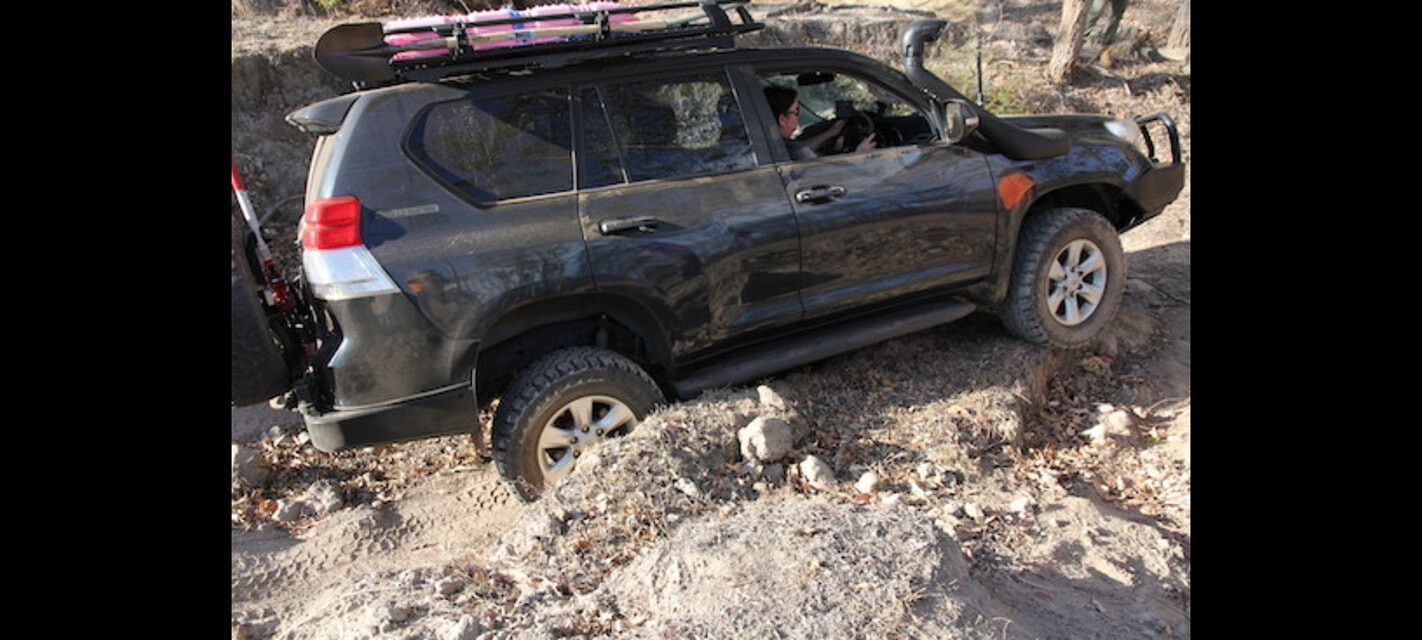
I bought it second-hand back in 2014 with about 55,000km on it. It was stock as a rock, and we slowly modified it for our needs – we first added UHF, rear drawers, fridge and slide for camping.
We hit the Vic High Country within six months of buying it and fell in love. Fast forward to 2022 and it has all the berries: trans cooler; all the UVP; deluxe bullbar with 12,000lb winch; GVM upgrade; 225-litre fuel tank; and a rear bar. It recently ticked over 135,000km.
Our last big trip was to Cape York in 2020; with borders closed, the tracks and roads were quiet. We towed our camper trailer all the way up to the tip, via the OTT. Never used the winch, as we don’t rock crawl – and with twin air lockers, it has never been stuck – Alex Caddell
Nissan D40 Navara
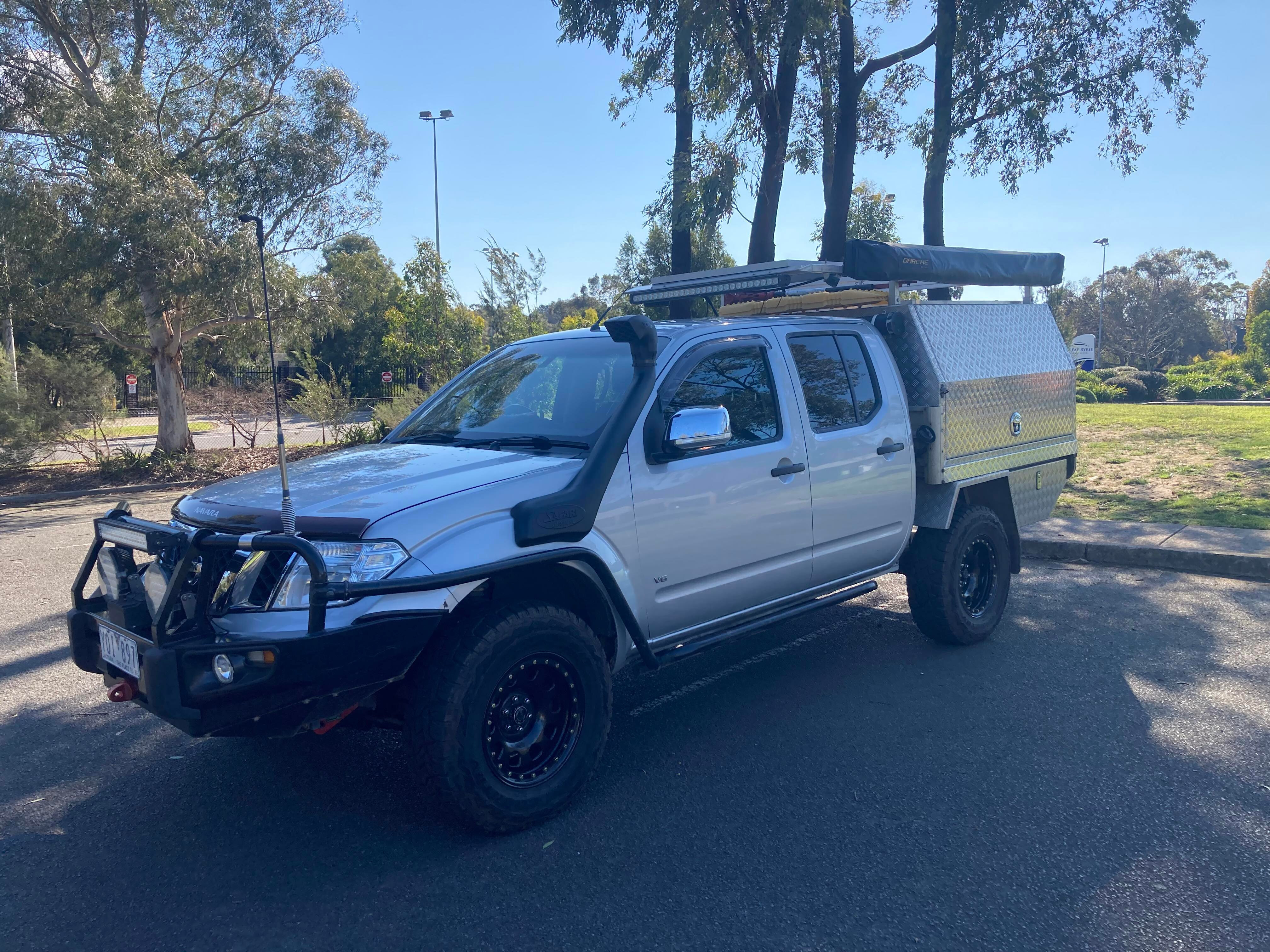
This is my Nav with the lot: remap; 150-litre fuel tank; 40-litre water tank; 450kg springs for all the weight; Darche 270 awning with sides; two 40-litre fridges; gas and hot water; ARB front and rear lockers; and more lighting than you can poke a stick at. Bought the car new in 2011 and only has 120km on the clock. It’s my family’s pride and joy – Craig Bailey
1995 HDJ81 Toyota LandCruiser
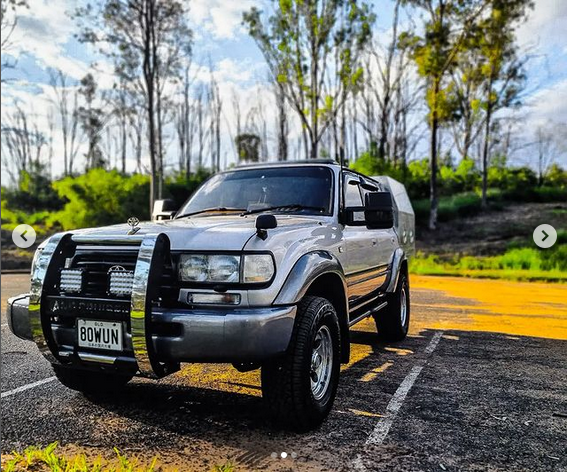
Over the past 18 months I’ve been completing a restomod on an imported LandCruiser with the view of building a touring vehicle for myself and my young family. The vehicle was imported in 2020 and upon inspection in Australia had significant rust issues throughout the entire vehicle. This prompted me to undertake a restoration which I have done completely by myself (aside from the full respray).
The vehicle even needed a rear new axle housing as the previous one was held together with fibreglass on the Panhard mount, with only two threads remaining on the actual axle – even the shocks were fibreglassed over and painted to ‘look’ good for pictures in Japan.
The restoration has been comprehensive using genuine OEM Toyota parts, even down to new door seals/rubbers and bolts. I’ve also updated the interior to modern standards, braced the chassis front and rear, and added a custom front differential with welded-in bracing and a weld-on bash plate. I’ve converted the vehicle to a dual-cab ute, accompanied by a custom aluminium tray and canopy. I’ve tried my best to support Australian manufacturers and businesses by using high-quality Australian-made products – Dallas Craig
2019 Jeep Wrangler Rubicon
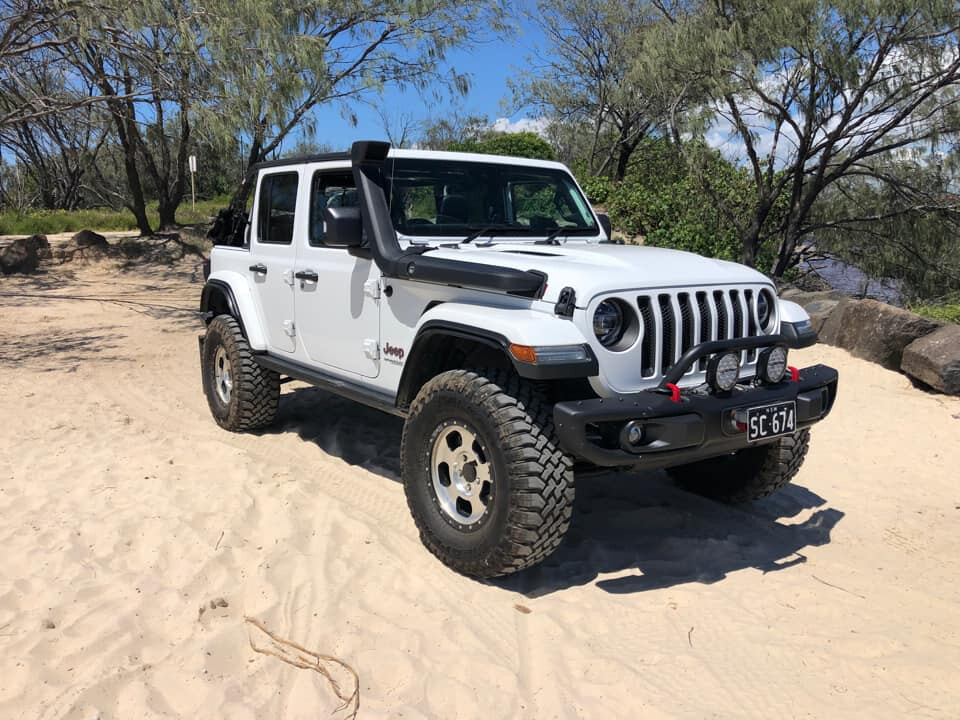
It’s the four-door 3.6-litre auto with leather interior and the electrical pack. Mods include an AEV lift; Falken Wildpeak MT tyres on American Racing wheels; a Warn winch; tailgate/wheel carrier; auxiliary fuel tank; remote air bags; electric brakes; custom drawers; and a Redarc dual-battery with lithium – Steve Cassano
2021 Ford Everest
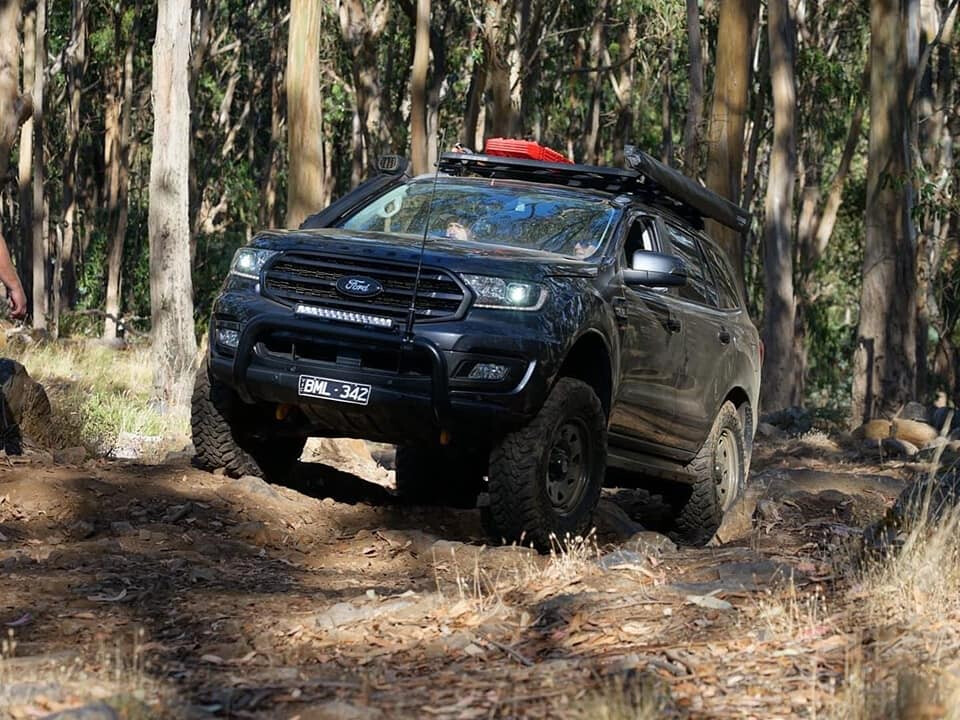
My Everest features a Rhino-Rack platform with roof racks; factory Ford snorkel; nudge bar; light bar; custom-built false floor with third row removed; fridge and kitchen slide; modular drawer on the other side; two-inch Outback Armour lift; 275/70R18 Toyo MT tyres on Sunraysia pos30 offset steel wheels; and an all-important catch can under the bonnet.
Up next on the list will be a bullbar and winch, along with a secondary fuel filter and second battery – currently just running a battery box, which suits my weekend-only camping trips – Andrew Smarrelli
1996 TB42 GQ Patrol
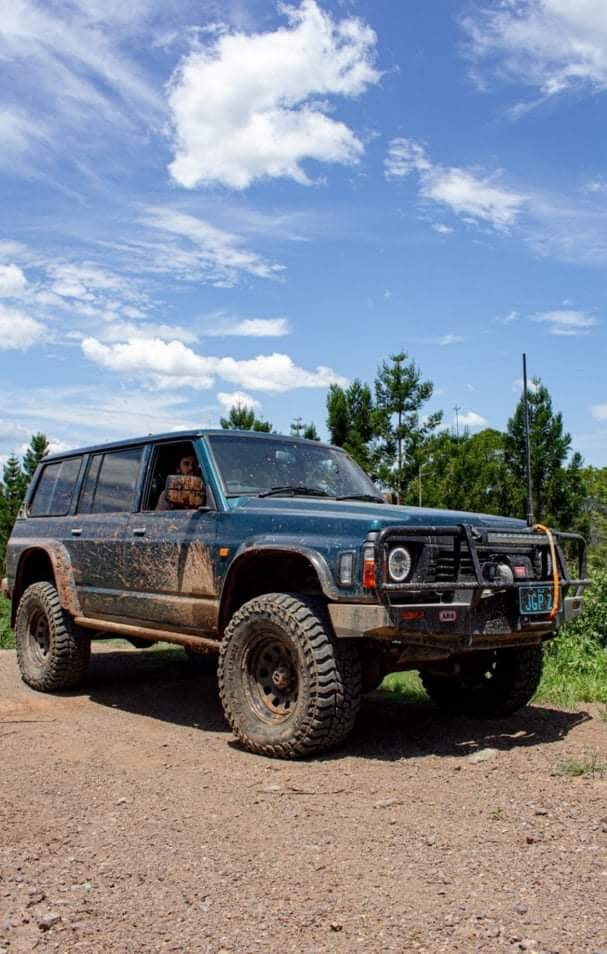
Mods include a four-inch lift on 35-inch Mickey Thompson Baja Boss MT tyres; ARB bar with Warn high-mount winch; and drawers, fridge and 12-volt set-up in the rear. I have GU diffs almost ready to go in, so it will soon be twin-locked – Jacob Pears
Get the most out of your BT-50 with some genuine accessories.
I slide in to the comfortable seat of the Mazda BT-50 Thunder. In standard guise, there are a host of additional components fitted to this vehicle that add to your enjoyment while driving it.
Along for the ride is Lloyd. He’s been driving the BT-50 for 50 days now and has some thoughts on why this could be the most comfortable and capable car he has been in.
During his journey with the vehicle, he found the electric tonneau cover a lifesaver.
? Hello from the future! You can continue reading this story, or you can visit our latest BT-50 Range Review linked below.
REVIEW CONTINUES…

Being an avid surfer, he could fit a six-foot surfboard in the tray, and with a simple press of a button, cover it up so no one even knew it was there. He was completely at ease leaving the BT-50 parked anywhere around his hometown, given the privacy and security that the cover provides.

The BT-50 Thunder is geared to those that look to get off-road often, and as such is fitted with plenty of tough accessories. One that adds to the look are the side- steps.
I believe some owners may want a proper rock slider setup, although Mazda does not offer one, as it isn’t compatible with the side airbags. Nonetheless, the steps do a great job of providing easy access to the vehicle and are suitable to stand on when you want to take a look at what is ahead from an elevated position.
Lloyd is tall, so he didn’t use the steps all that often, but he was a huge fan of the bash plates hidden underneath the car.
“I didn’t have to worry about hitting anything while out in the bush,” he said.
He often uses his own 4WD to tackle rocky tracks that lead through to the local beaches, so having that protection was a godsend.
The protection the plates offer to the front end of the car cannot be understated. Not only do they protect you from hard impacts from rocks and even tree stumps, they also protect the underbody from wildlife impact.
And on that note, the BT-50 Thunder is also fitted standard with a light bar. Most of the roads out of the main suburban areas are not lit, so having a sturdy and bright light bar on the front end is paramount in rural areas.

It’s an excellent safety feature lighting up the roadway beyond what a conventional high beam is capable of. We used it one night after some rain and could even see frogs hopping across the road in the distance.
Lloyd said it was excellent for night-time runs to town from Crescent Head, where the road is not illuminated and can be quite dangerous.
The light bar sits on a very tough looking bullbar in matte black. It is angular and really gives the front of the BT-5 50 Thunder a different look. You know it when you see it, and if you are forking out for this model, you can be assured you will not be mistaken for a run- of- the- mill model.
To add to that aggressive and independent appearance, the Mazda design team has added a sports bar and wheel- arch flares. While not entirely functional accessories, both work to deliver a tough looking exterior. I only wish they had married the line of the bullbar with the wheel arches. Despite this, it still looks like it all fits together.

The rims are specific to the BT-50 Thunder. The highway focussed tyres, the same as fitted to other BT-50 models sit on 18×7.5-inch black alloys. The tyres are not geared to heavy off- roading, and Lloyd suggested that this would be something he would change straight away to suit his rocky, muddy track work. Something like an all-terrain or mud- terrain set- up.
The tyres are great on the beaches, if that is more of what you expect to be doing.
Lloyd and I agree that we would both fit a snorkel, which is available through Mazda and is a part of its accessories list for all BT-50 models.
On Mazda’s website is a comprehensive list of accessories that you can fit additionally to many of the BT-50 models. The range is going to cover all types of usage in and includes things like ladder racks if you are a tradie, UHF radio if you are a keen off- roader, and optional tow bar and electronic trailer brake as was fitted to the BT-50 Thunder.

From the list, I would most certainly add a charging pad for my phone, which does away with the cord constantly being in the way, and the entertainment holder for iPads, given my children’s love of Bluey. Plus, considering how dirty the kids and I can be, the rubber mats would be a great addition.
No matter what you love doing in your BT-50, the genuine Mazda accessories are going to keep you satisfied. Not only is the list comprehensive, and we have only touched on a few of the many items available, but being standard fitment they are all most importantly covered by the Mazda warranty.The full series.
The full series
Key Points
- Hilux and Ranger remain atop 4×4 charts
- LC300 sales begin to rise
- D-MAX and Triton fight to be third best-selling ute
The new-car market continues to be plagued by ongoing supply issues, as the auto industry struggles to meet increasing buyer demand.
In fact, overall new-car sales are well down in 2022 compared to the same time last year (-18,920 or -4.1 per cent). Delving deeper in to that segment, the PU/CC 4×4 market was down 7.8 per cent in May 2022 compared to May 2021 (16,285 sales versus 17,668), and down 0.3 per cent YTD (79,573 versus 79,803). The PU/CC 4×4 market still holds an 18.2 per cent share of overall sales.
“The global automotive industry continues to be plagued by a shortage of microprocessor units and shipping delays. This issue is not unique to Australia,” said FCAI chief executive, Tony Weber.
“Carmakers continue to report high demand across dealer showrooms and online marketplaces. Pandemic interruptions continue to impact manufacturing and conflict in Ukraine has disrupted vehicle component supply.
“Monthly sales figures are also dependent on shipping arrivals which continue to be uncertain. We do not expect supply chains to stabilise until these issues are resolved.”
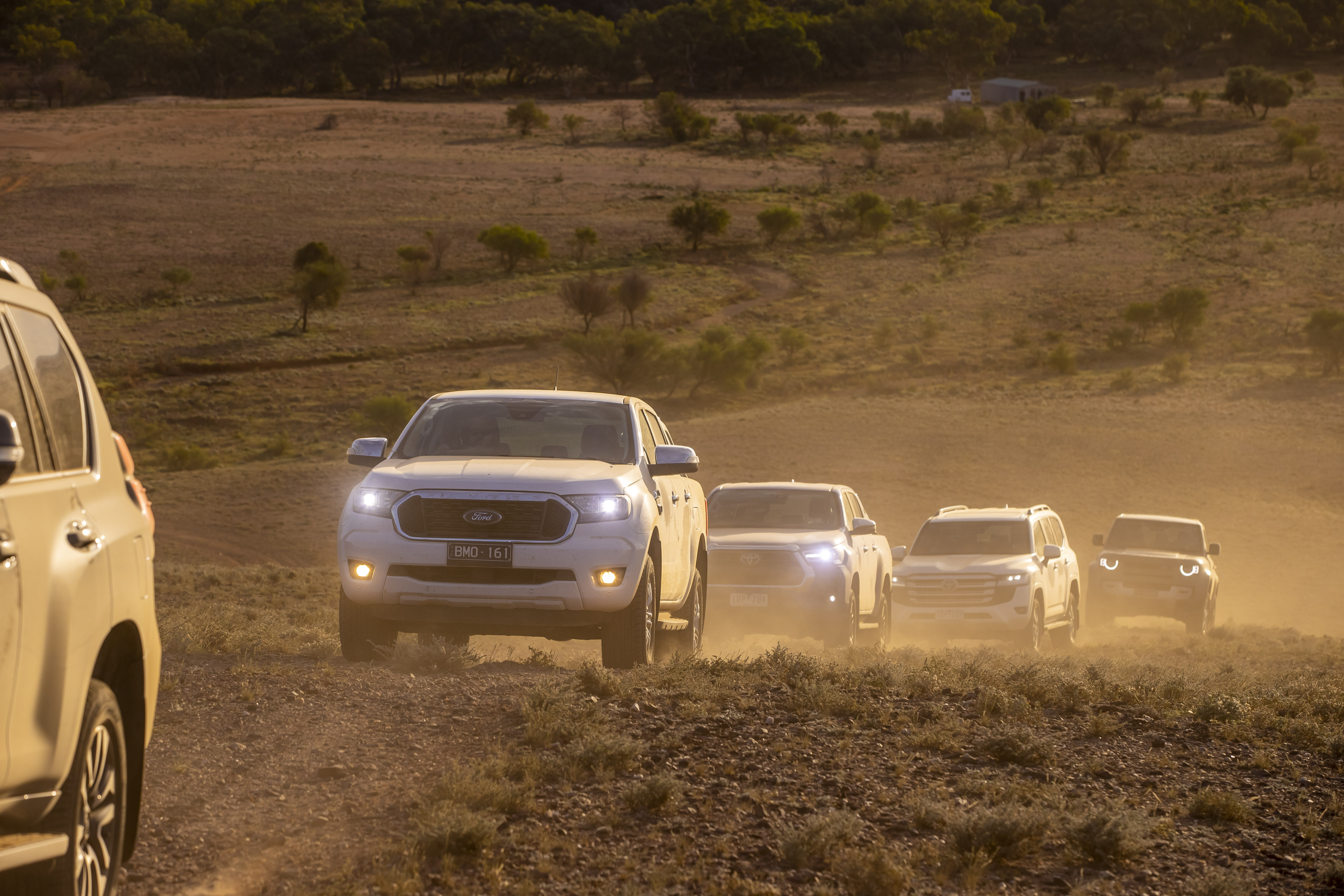
The Toyota Hilux remains the best-selling 4×4 variant in Australia. In fact, when you combine 4×2 and 4×4 variants, the Hilux is the best-selling overall vehicle in Australia (5178 sales).
Ranger sales also remain steady as Ford runs out its current model in preparation for the next-gen model set to release imminently. When you combine 4×2 and 4×4 sales, the Ranger is the third best-selling vehicle in Australia (3751), proving Australia’s appetite for utes remains strong.
Ford will be hoping it can avoid supply issues when the new Ranger goes on sale – especially the highly anticipated V6 diesel model.
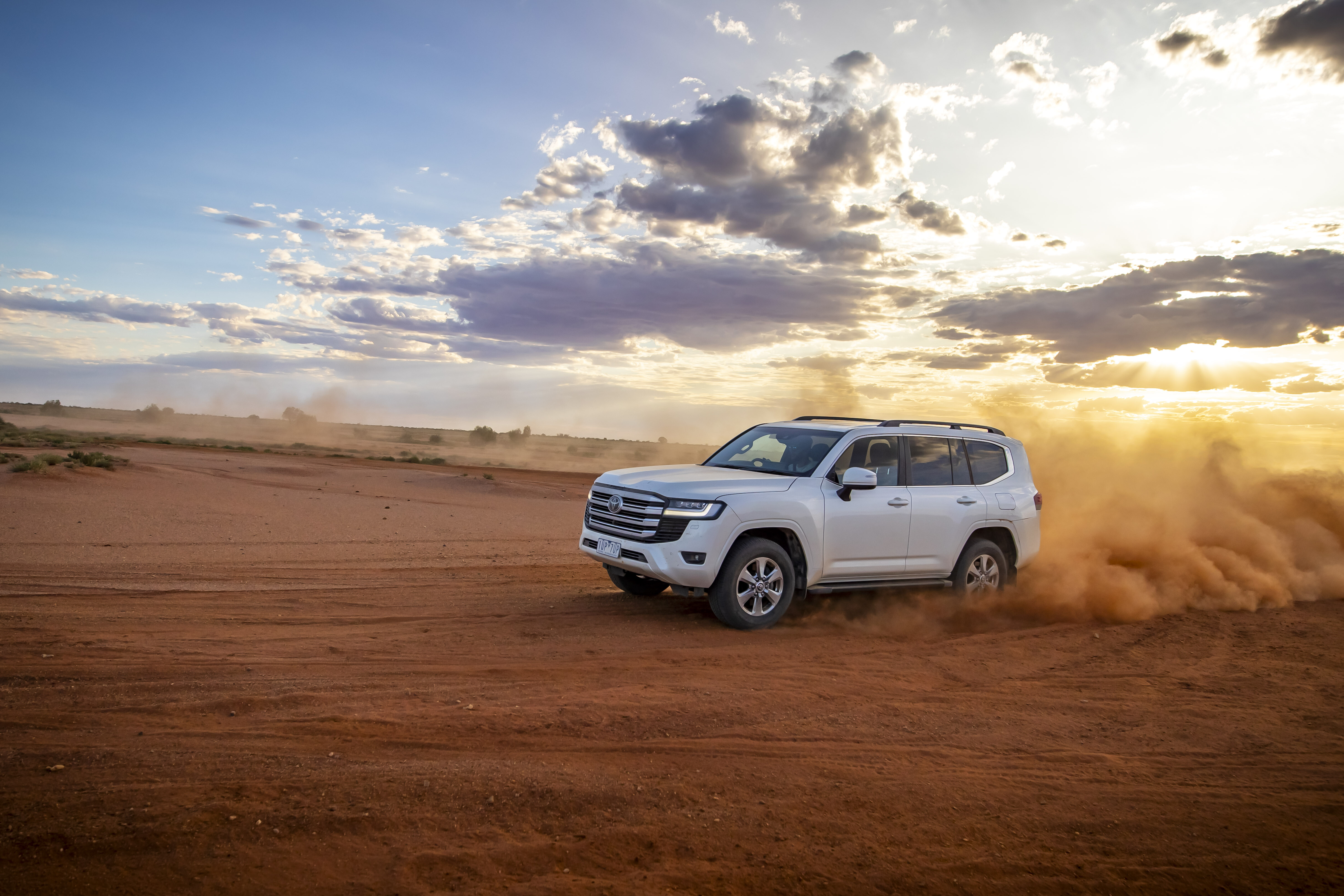
Sales of the LandCruiser 300 Series have started to gain a bit of traction, after supply issues limited sales earlier in the year. A total of 1363 units left dealerships in May, up from 829 total in April. We expect that to continue as we head deeper in to 2022.
The Isuzu D-MAX and Mitsubishi Triton continue the battle to be Australia’s third favourite ute. The tit-for-tat rivalry heated up in May, with the D-MAX overtaking the Triton in the sales race with a strong showing for the month.
4×4 sales in May 2022
| 1 | Toyota Hilux | 3999 |
|---|---|---|
| 2 | Ford Ranger | 3452 |
| 3 | Toyota Prado | 2195 |
| 4 | Isuzu D-MAX | 1939 |
| 5 | Mitsubishi Triton | 1778 |
| 6 | Toyota LandCruiser 300 | 1363 |
| 7 | Toyota LandCruiser 79 | 1304 |
| 8 | Isuzu MU-X | 1061 |
| 9 | Ford Everest | 1014 |
| 10 | Nissan Navara | 939 |
Total 4×4 sales in 2022
| 1 | Toyota Hilux | 18,497 |
|---|---|---|
| 2 | Ford Ranger | 15,738 |
| 3 | Mitsubishi Triton | 13,395 |
| 4 | Toyota Prado | 11,400 |
| 5 | Isuzu D-MAX | 8403 |
| 6 | Mazda BT-50 | 5355 |
| 7 | Nissan Navara | 5165 |
| 8 | Toyota LandCruiser 79 | 4671 |
| 9 | Toyota LandCruiser 300 | 4378 |
| 10 | Mitsubishi Pajero Sport | 4297 |
Our latest High Country jaunt started in the small historic township of Woods Point.
It’s pretty hard to believe today, going by its small rustic size, but within three years of it being established in 1862 by Henry Wood, who set up a store here to service the workers and their families at the nearby Morning Star gold mine, the town had 36 hotels! Today, it rates just that many permanent residents.
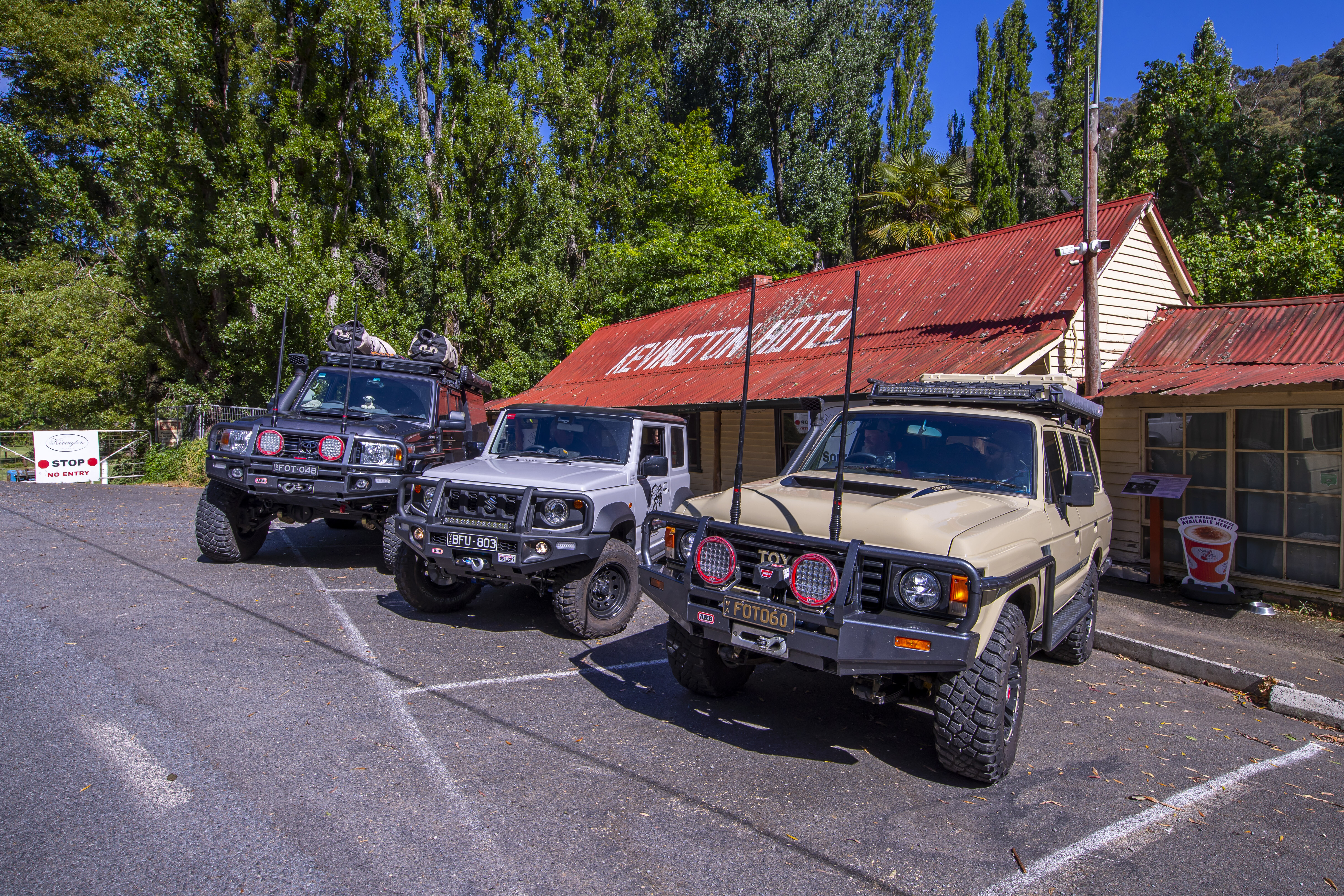
With us was Michael Ellem in his well-set-up 79 Cruiser, and also along for the ride was Michael’s Sandy 60 and Alan Johnson’s mighty little Suzuki. While Editor Matt drove the Suzi.
Our route took us from Woods Point to nearby Comet Flat, and we splashed across a couple of shallow creek crossings to get there. Located on the upper reaches of the Goulburn River, Comet Flat is one of a number of popular campsites located along the Goulburn and nearby Jamieson Rivers.
This wide area of State Forest is included in the Upper Goulburn Historic Area and sits between the eastern edge of the Eildon National Park and the south-western edge of the vast Alpine National Park.
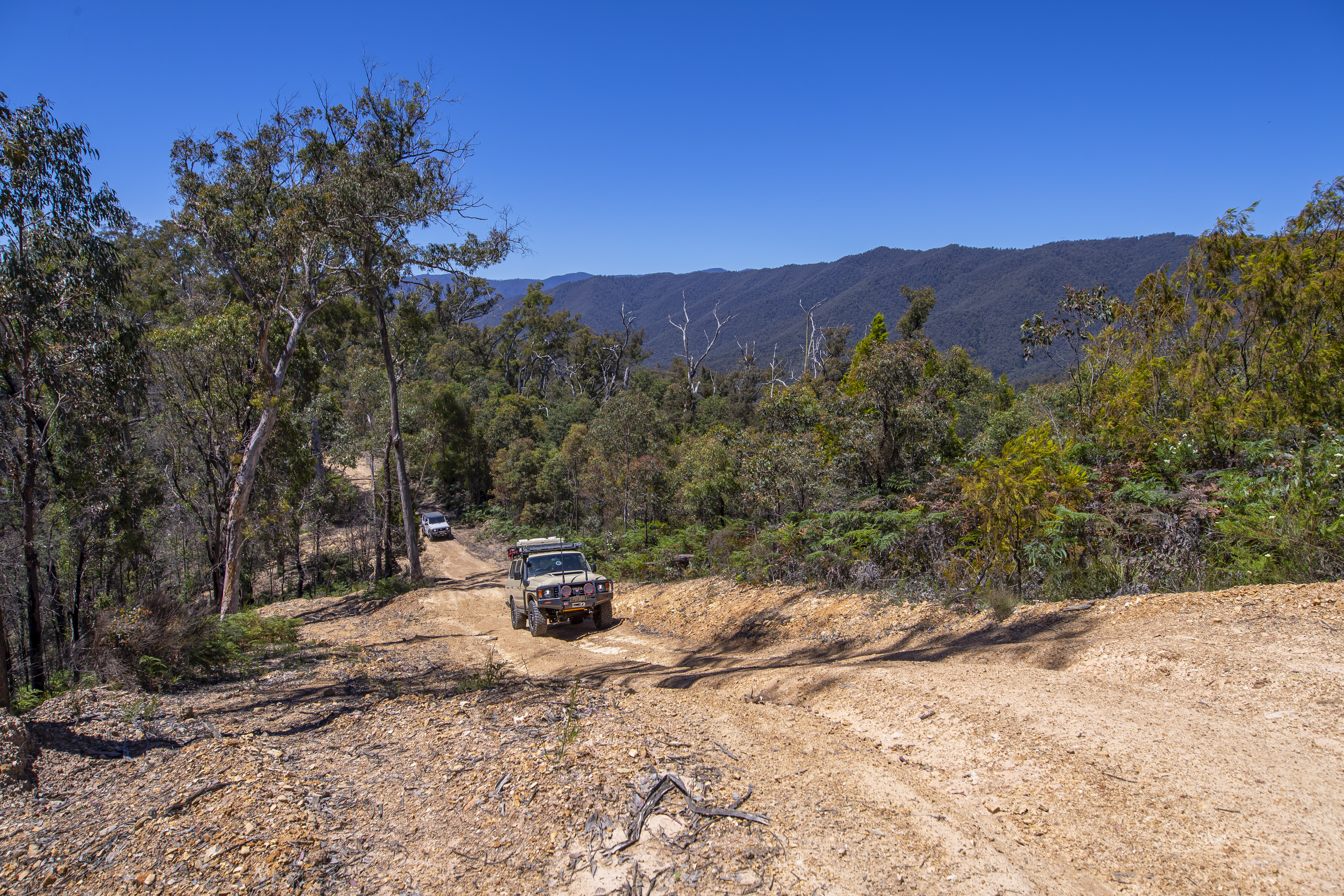
The landscape of the Upper Goulburn River, with its ranges, deep gullies and thick forest, would have been bloody difficult to traverse back in the early days of European settlement.
However, when gold was discovered at Gaffneys Creek in 1859, the early pioneers overcame the challenges and began to open up the Upper Goulburn Valley through the persistent search for gold. Their legacy is still evident today and is most easily seen in the towns and old mine sites that dot the area, of which Woods Point is just one.
Others include Matlock, which is now just a barren ridge and hilltop with only a few relics of its gold-mining past that in 1865 supported seven hotels, seven stores and two banks. A bushfire in 1873 almost destroyed the town, forcing residents to resettle at a new site; the cemetery still bears silent testimony to its great beginnings.
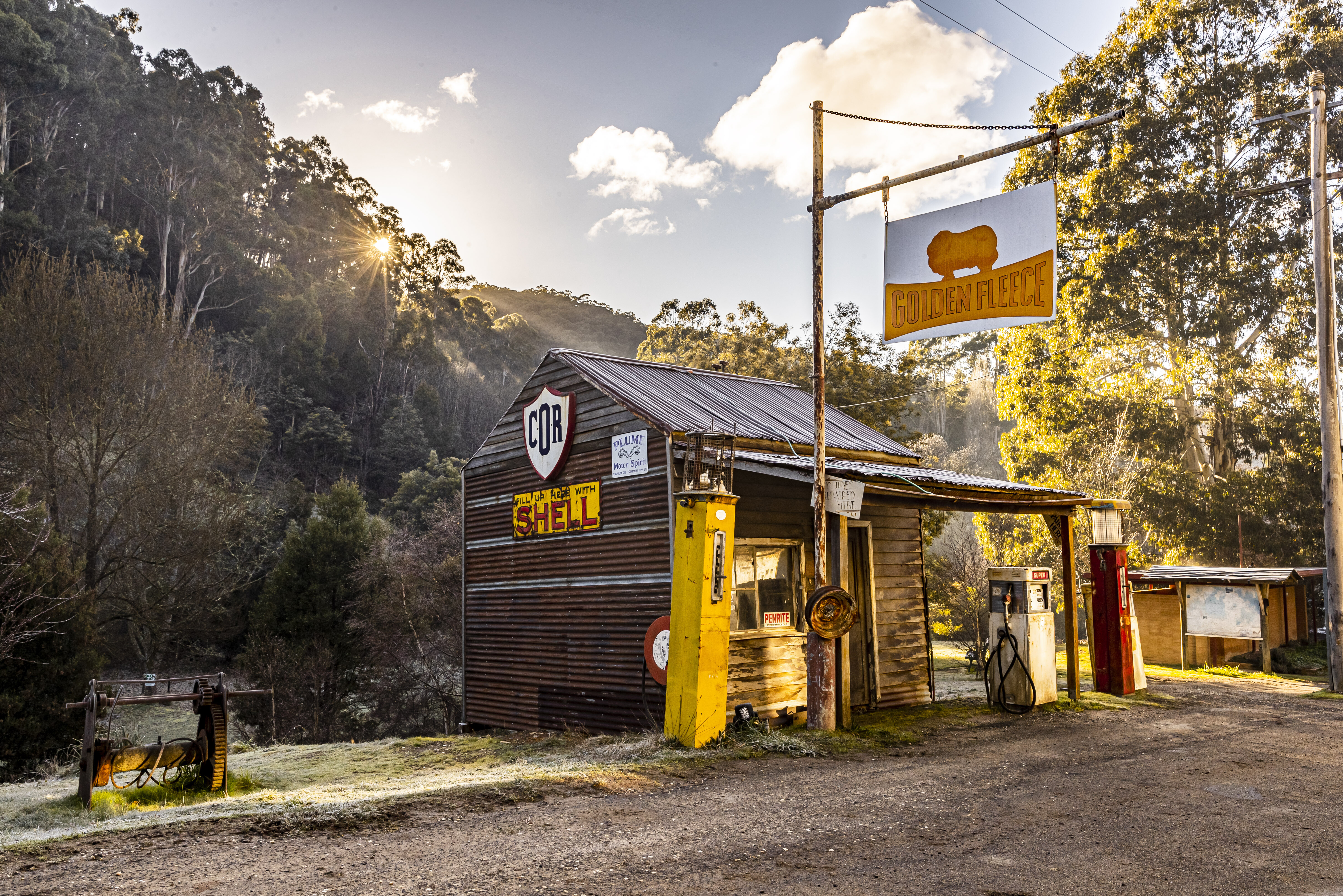
Heading north from Woods Point is the A1 Mining settlement, the site of the A1 Gold Mine which began operations in 1861 and, along with the Morning Star in Woods Point, produced almost 60 per cent of Victoria’s total gold output from the 1950s to the late 1970s.
This unique settlement in the narrow Raspberry Creek valley retains much of its original mining characteristics. Farther north again is Gaffneys Creek, which is the site of the first gold discovery on the Jamieson-Walhalla goldfields in 1859.
As you head towards the famous bush pub at Kevington, you’ll pass not only a few old gold-mining town sites but also some delightful flats ideal for throwing down the swag or setting up the camper.
At Tunnel Bend Reserve you will find a water diversion tunnel that was dug in 1866 to allow alluvial mining of the river bed, which just goes to show the effort these early miners went to in their quest for gold and riches.
Just south of Tunnel Bend, close to the historic old town of Knockwood, we turned on to the Moonlight Spur Track for the steep rough climb to the top of the ridge, where we turned on to the Mt Terrible Track which takes you to the crest of this 1260m peak.
This is just one of the many steep and challenging tracks that cut through this rugged region of verdant valleys and steep ridges, climbing to high points that give wonderful views over seemingly virgin country – little touched by man. For most of these steep tracks, low range and high ground clearance is a necessity, while lockers front and rear ease the load on both vehicle and driver.
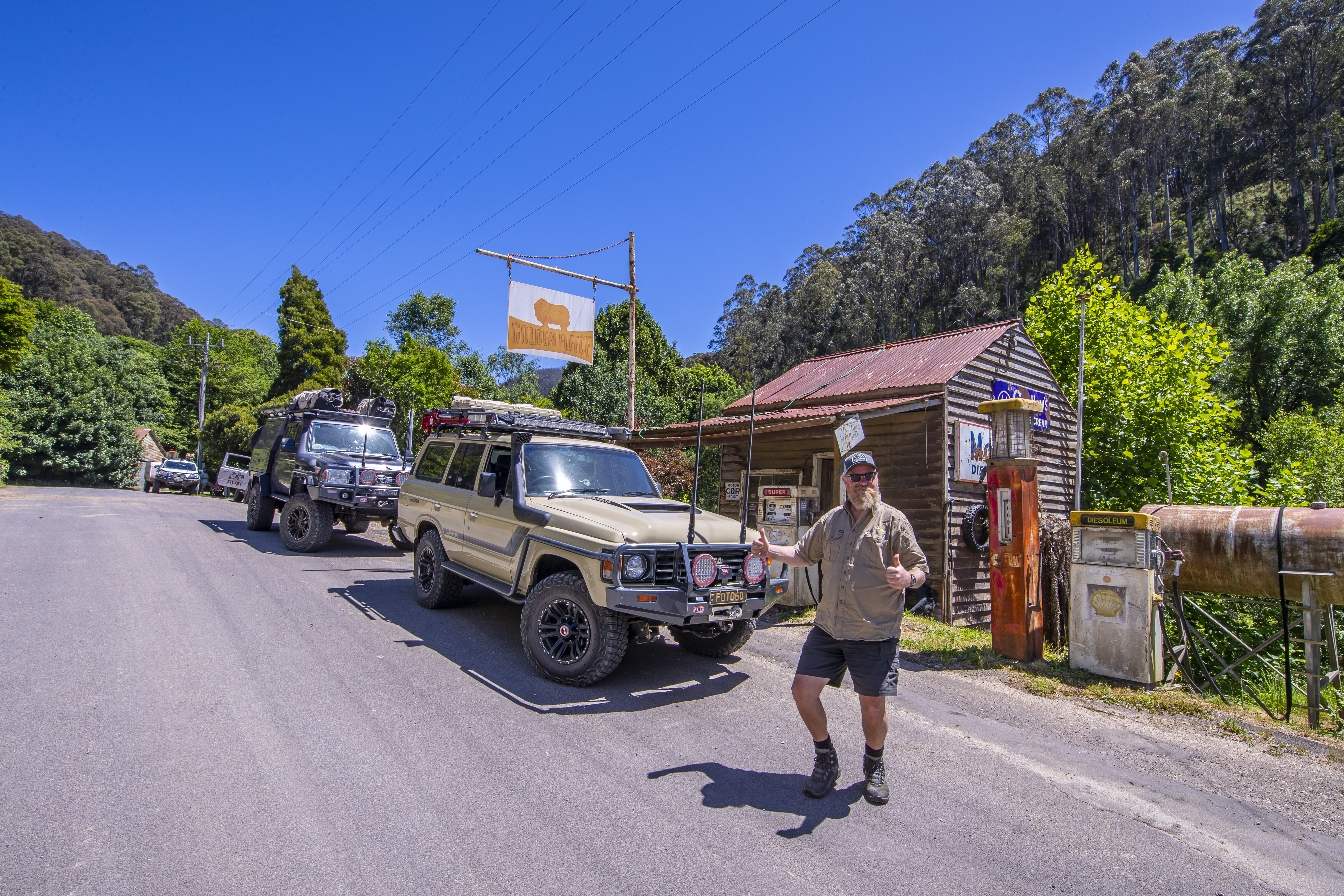
The 60 Series Cruiser was in its element here, with Alan stating, “The power and torque from the V8 was mind blowing, just like a tractor the torque at 600 revs being phenomenal!” He continued, “But you can feel the weight of that big engine up the front, but nothing stops it. On the highway the Sandy 60’s performance is okay although nothing startling, but once off-road it really comes in to its own. It’s a fantastic conversion with lots of mod cons and it looks great!”
On the crest of Mt Terrible with its not-so-terrible 360-degree view, is a hut and a steel fire tower. The fire tower, manned each and every fire season, was constructed in 1962 and stands around 22 metres above the ground. The hut was originally built around the same time to provide accommodation for the fire spotter, but this hut was burnt down in 2012.
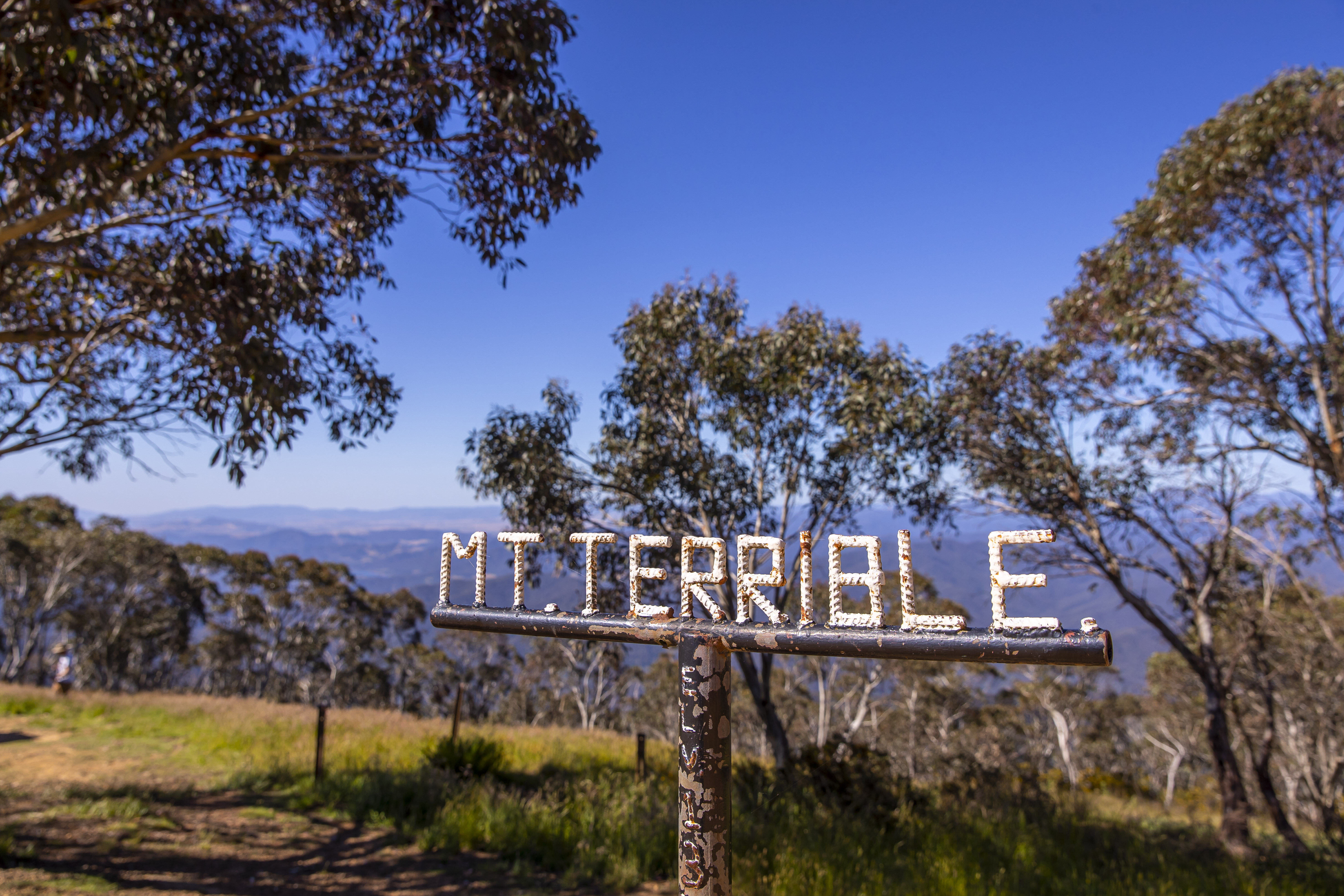
The hut was rebuilt in 2016 with the help of DELWP and the Victorian High Country Huts Association, which has done, and are still doing, some fabulous work through the Victorian Alps, restoring and rebuilding historic huts damaged or destroyed by fire – it seems to be a never-ending job!
In the winter months the crest of the mount often gets snow, so if you’re heading that way in winter be prepared and enjoy driving in the cold and wet stuff, building a snowman or enjoying some tobogganing.
There wasn’t any snow when we were there, and once we had admired the view and dropped off the high ground, we continued on the Mt Terrible Track which ends at the more major Eildon-Jamieson Road.
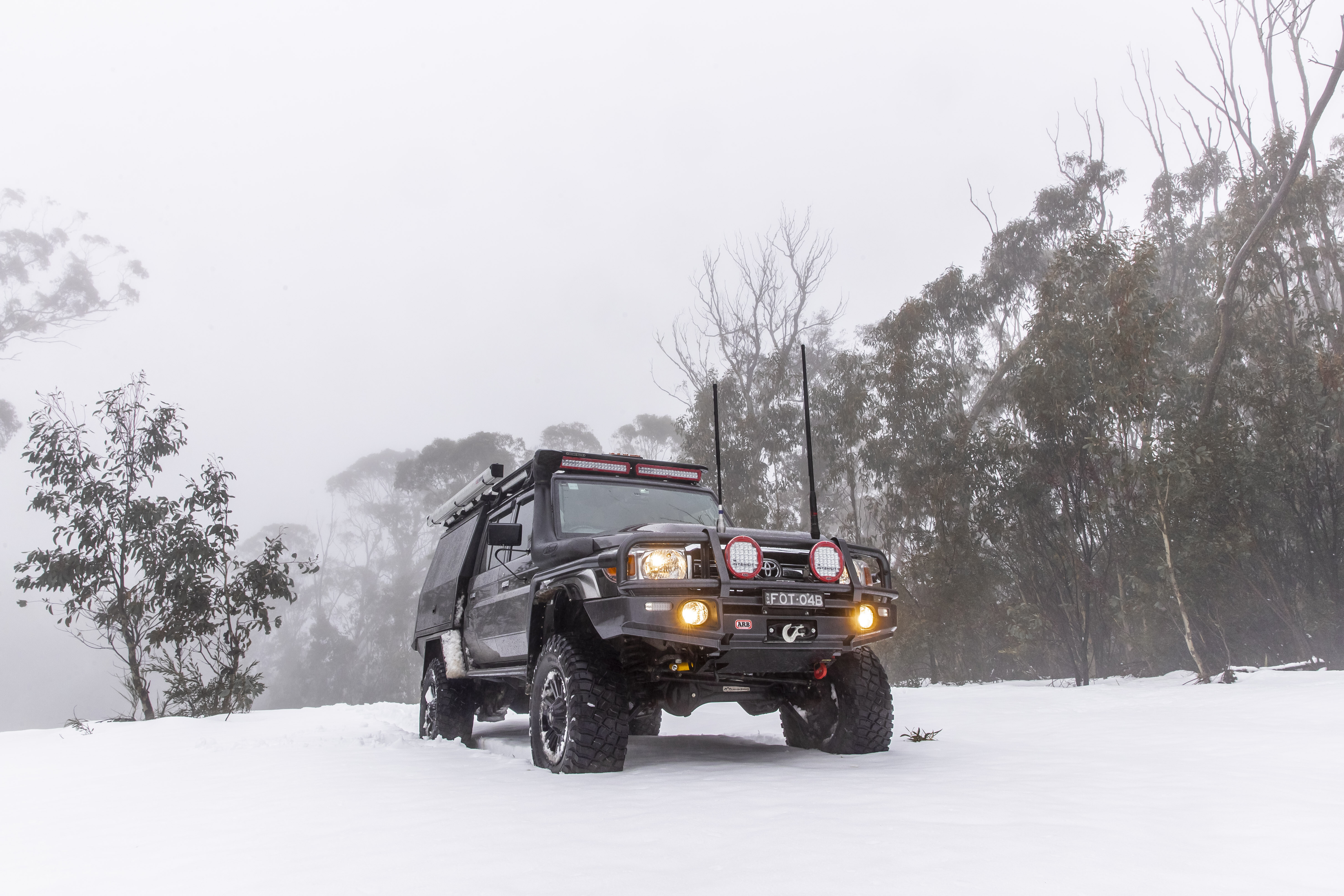
That evening we threw down our swags at Granny Flat, just east of the largest township in the area, Jamieson. The flat here is a large well-maintained grassy area beside the delightful flowing waters of the Jamieson River. The site provides a few basic facilities and is a popular base for those exploring the surrounding area.
We love it and you can understand why the whole Upper Goulburn Valley is so popular when it has so many great camping spots, fabulous 4WD tracks and lovely waterways to fish and swim in. All so close to Melbourne that it becomes ideal for a weekend camping trip or even a single day jaunt.
Five things to see and do
01: UPPER GOULBURN HISTORIC AREA
The Upper Goulburn Valley is an attractive and rugged area of the High Country with a significant gold-mining heritage. Explore history and nature at Woods Point, Gaffneys Creek, Kevington and Jamieson, and the township sites of Matlock, Knockwood and Ten Mile.
02: WOODS POINT
This one-time Victorian Gold Rush hotspot is a popular tourist destination, particularly for off-roaders and summer campers. Tucked away among the towering gums of the High Country on the headwaters of the Goulburn River, Woods Point offers accommodation at the Commercial Hotel, and camping at Comet Flat.
03: A1 MINING SETTLEMENT
This unique settlement and prolific provider of the golden stuff back in the day, is situated in the narrow Raspberry Creek valley on the Mansfield-Woods Point Road and retains much of its original mining characteristics.
04: MT TERRIBLE TRACK
For adventurous off-road touring there are plenty of challenging mountainous tracks to explore, including the Mt Terrible Track with its brilliant 360-degree summit views of the surrounding valleys and ridges.
05: GRANNY FLAT
East of Jamieson is the 4WD-accessible Granny Flat free campsite, featuring a well-maintained creek-side grass area with picnic tables, fire pits and drop toilets. Pet-friendly Granny Flat makes an ideal base for 4WD and dirt bike exploring.
The dual-cab ute has taken over Australia. Every suburb. Every beach campsite. Every outback pub. Every construction site. Every single one of them is swarming with dual-cab utes. It makes sense – they’re designed for us.
The ultimate work rig, family runabout and play toy all in one car spot. An open ticket to adventure, while still feeling like you’re making a practical choice.
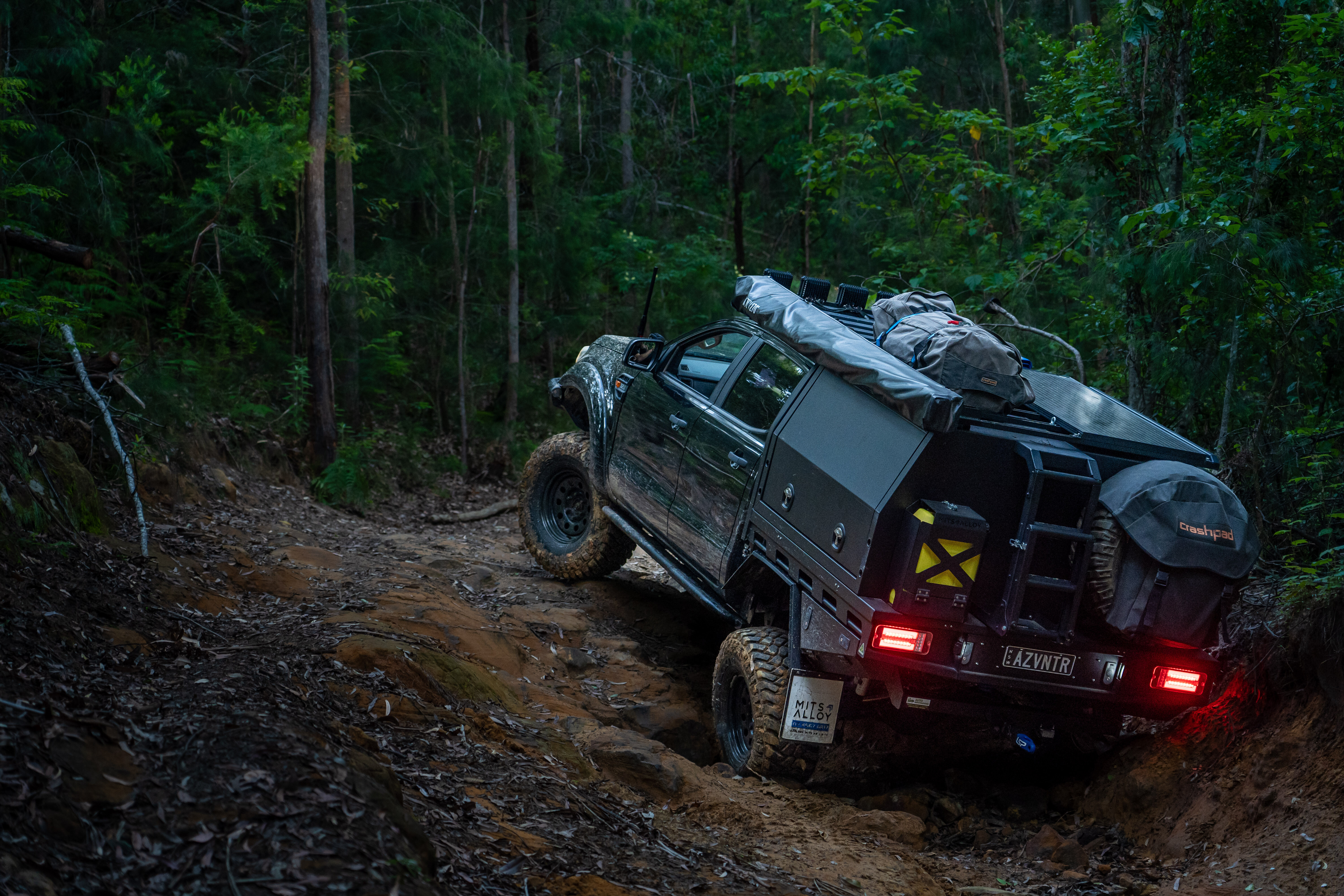
For Newcastle local Aaron Brown, or Azventures as the internet knows him, this all rings true. A chippy by trade, an adventurer by heart and now part of the crew at MITS Alloy, his 2015 Ranger is the perfect rig for work and play.
It didn’t come that way from the factory, though. Aaron’s adventure machine is the result of years of hard work, with plenty of trial and error thrown in to the mix in his attempt to build the perfect work toy for the 9 to 5, and the adventure machine when he’s off the clock.
Trick suspension
Supporting the whole affair is a tricked-up chassis with some wild suspension components front to rear. Leading the charge up front is a 2.5-inch lift to bump the Ford’s altitude up without affecting ride quality or handling.
To achieve the new height, a set of Fox 2.0 struts have been fitted either side. They’re slung in to SuperPro replacement lower control arms, while Tough Dog tube uppers rein the alignment back in to respectable limits.
Huge G.O.A.T. Offroad tie-rod ends have beefed up the steering department, a common weak point for people pushing the T6 platform to its limit. A full suite of Bendix brake upgrades also got the nod – its Ultimate rotors backed up by trick pads and braided brake lines all-round.
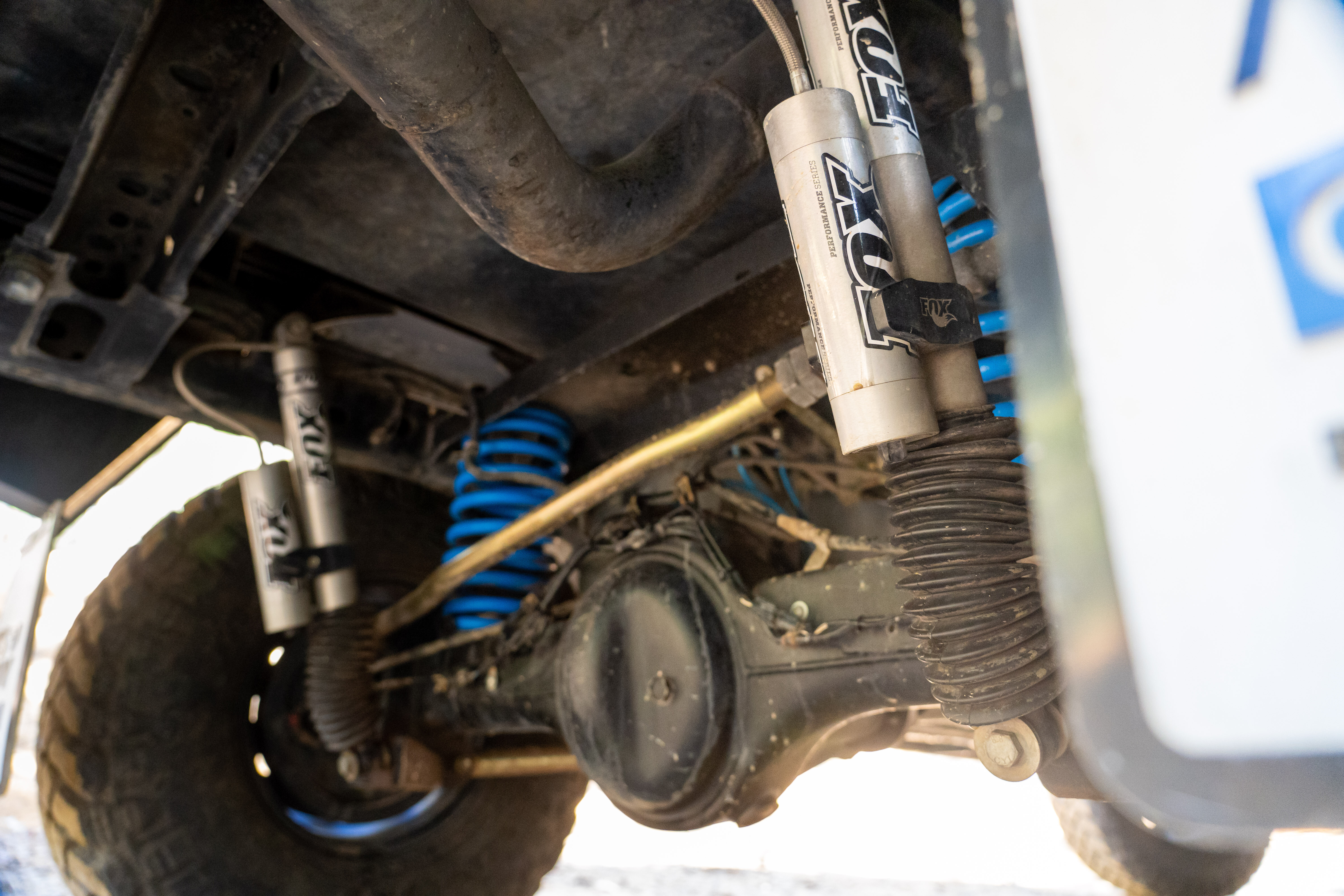
Moving rearwards and Aaron has completely ditched the factory leaf-spring suspension set-up. In its place, a Superior Engineering coil conversion has been welded in, giving a smoother ride and huge improvements in off-road articulation.
Similar to the rear suspension in a LandCruiser, the new set-up uses four heavy-duty adjustable link arms holding the diff fore and aft, while a matching Panhard rod keeps things moving down the road in a straight line.
After spending the GDP of a South American company by experimenting with spring rates, Aaron’s finally settled on a set of springs from Lovells for the perfect combination of ride quality and handling, while a set of Fox remote reservoir 2.0 shocks keep the whole arrangement behaving itself.
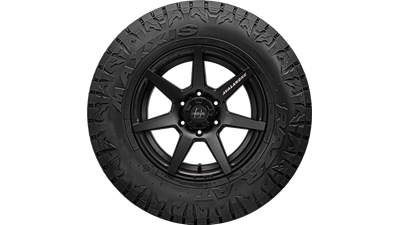
The combination provides ample room to shoehorn in 315/75R16 Maxxis RAZR tyres wrapped around steel wheels.
Engine house
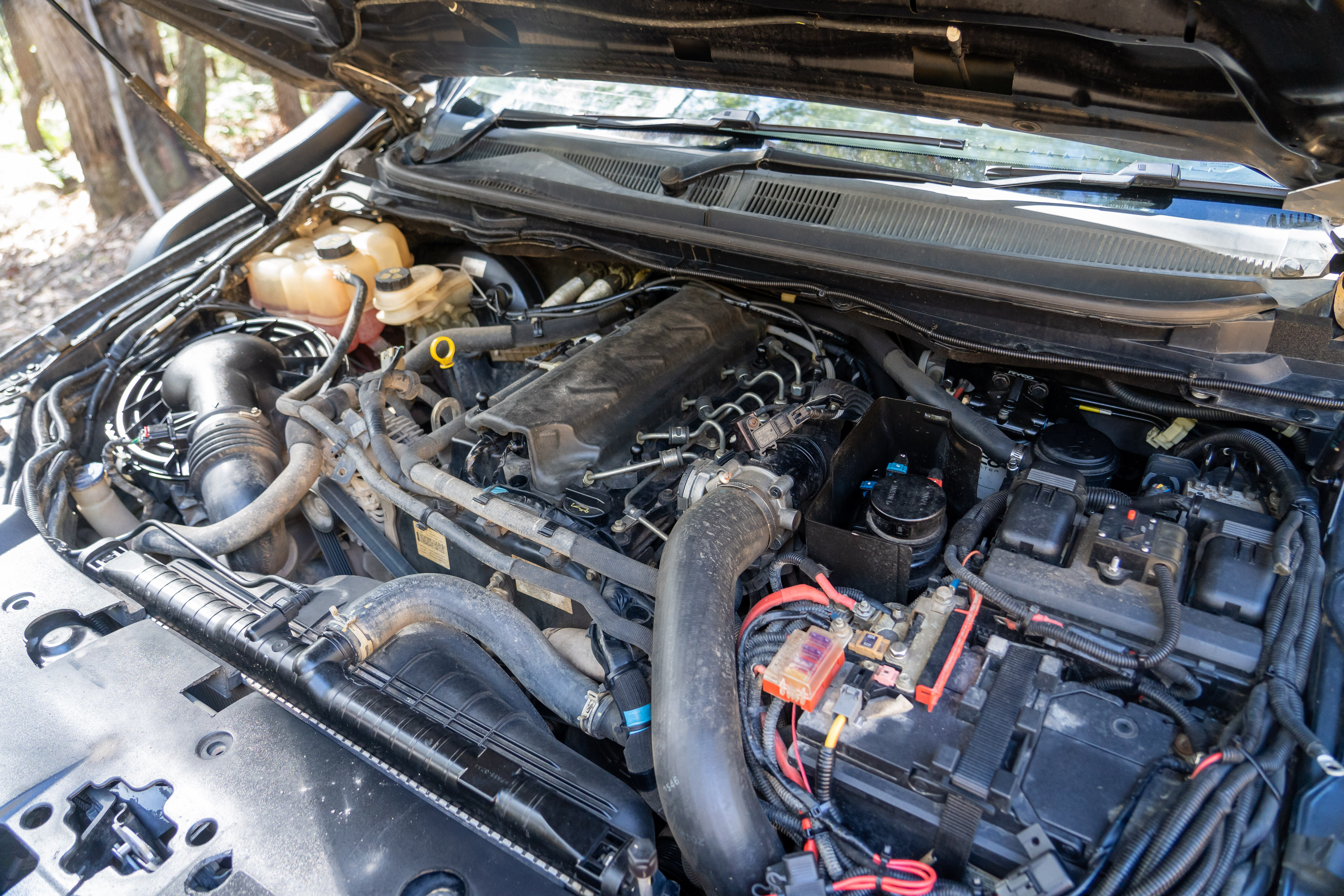
Motoring the set-up down the tracks is Ford’s 3.2 Duratorq five-cylinder turbo-diesel. It breathes a little easier, thanks to an Airtec snorkel by TJM feeding cool air down through the factory airbox.
A spicy tune from the guys at Legendex has ramped up the power output, before its three-inch turbo-back exhaust has spent gases rocketing backwards.
Sending drive to both axles, the 6R80 six-speed transmission has an external cooler kit from Wyong Automatics fitted, while both driveshafts are mated to lockers at each end – the factory electronic locker in the rear housing, with an aftermarket unit from Harrop Engineering up front.
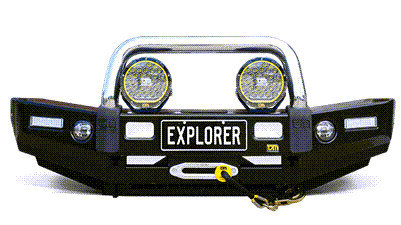
Back on solid ground and Aaron’s spec’d the Ranger up with armour from front to rear. Heading up the package is the aggressive-looking Chaser bullbar from TJM. Constructed out of tube and plate, the prerunner-style bar sits tight to the body and houses a matching TJM Torq 9500lb winch.
Moving backwards and a full set of TJM bash plates have been installed to protect the Ranger’s soft undercarriage components, with a few DIY mods required to make them fit around the Roadsafe diff drop.
Along the flanks, Legendex rock sliders protect the sills and doors, while a Front Runner alloy roof rack provides storage up top.
There’s an awe-inspiring amount of light pointing forward thanks to a Stedi light bar on the bullbar, gutter lights mounted at the bottom of the A-pillars, and five more Stedi LED lights up top.
Mighty MITS
Up the back, a sleek MITS Alloy canopy rounds out the package. Not surprising, considering Aaron hung up his circular saw to go join the MITS Alloy team full-time.
Expertly welded together out of lightweight aluminium, the MITS Alloy unit is a two-piece combination. The canopy and tray package is perfect for the worksite or touring, while the canopy lifts off leaving just the tray to cop a hiding should Aaron decide to test the Ranger’s twin-locked capabilities.
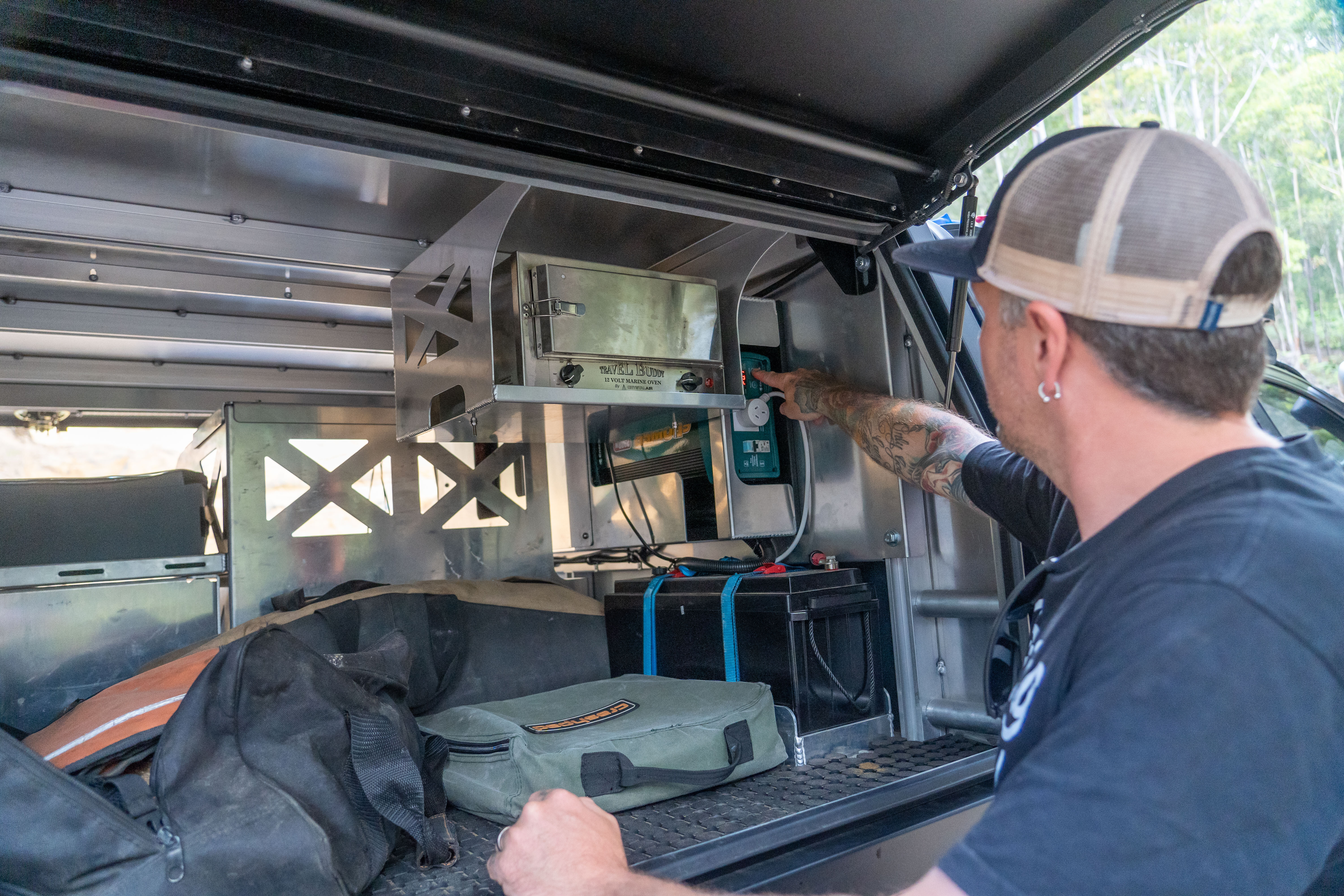
With the canopy fitted, Aaron has enough goodies to last for weeks on the tracks without needing to duck in to civilisation. A huge Enerdrive electrical set-up is the brain of the beast; powered by a KickAss lithium battery, the set-up provides ample power for the on-board water tank, inverter, on-board air and TravelMate fridge. There’s even enough left over to fire up the Travel Buddy pie oven.
The passenger side of the canopy is decked out with a heap of Crashpad soft storage solutions, as well as a pull-out pantry and prep table, while a trundle tray underneath provides huge storage for all the track-side tools you could ever dream of. Up top, solar panels are accessible via the rear-mounted ladder.
Interior mods
Moving in to the cockpit and Aaron’s kept things simple but effective. To increase storage room even further, he yanked the back seats out and fitted a false-floor section with slide-out tubs underneath. They’re the perfect place for overflow food and cooking items, while clothes bags live on top. It also provides a convenient mounting point for the GME Personal Locator Beacon within easy reach of driver and passenger.
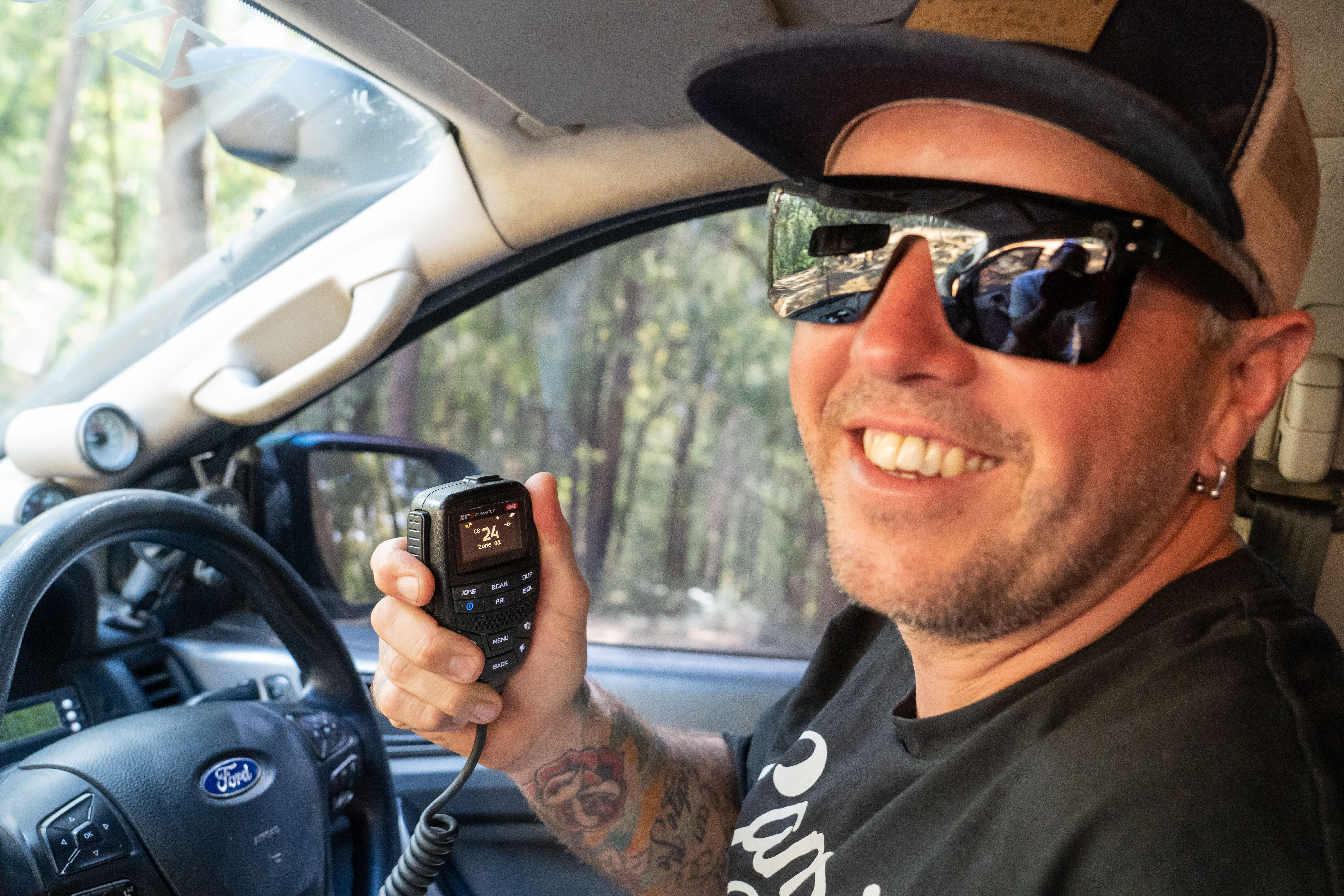
Up front, a GME XRS takes pride of place, while a ScanGauge provides up-to-date readings on everything from coolant temp to battery levels. A Thrust Monkey throttle controller lets Aaron dial throttle sensitivity way back for maximum control when off-road.
If you’re looking for chrome wheels and marble-finished bench tops in Aaron’s rig, you’re going to be sorely disappointed. It’s the definition of go, not show. Purpose-built to tow a two-tonne trailer to the job site Monday to Friday, then head off to cross deserts on the weekend.
Leaf versus coil
For most of history the debate between coil and leaf springs has been fairly one-sided – leaf springs were better.
In all fairness, that’s because, despite leaf springs being around since Roman times, coil springs are only about 250 years old. Despite that, coil and leaf springs are still both common today on anything with four wheels. The reasons are straightforward, and they both have pros and cons.
Leaf springs are tough, simple to design and engineer in to a vehicle and affordable to manufacture. So why did Aaron yank them out, and why are so many 4WDers spending thousands to replace them with coils?
In short, coils offer superior ride quality, easier tunability and, with correct link geometry, can out-flex most leaf-spring set-ups. If your primary goal is to tackle challenging 4×4 tracks or ride in comfort, then coils should be on every corner of your 4×4.
Snapshot
- Pricing revealed for ARB Ford Ranger accessories
- All ARB equipment is backed by Ford
- Ultimate Ranger will set buyers back over $20,000 on top of the base vehicle
UPDATE, July 2022: New Ford Ranger review – it’s here at last
The new 2023 Ford Ranger is now on sale in Australia, and the local media launch has been run. The Wheels and 4×4 Australia teams have both driven the new Ranger, and you can find their stories at the links below.
Story continues…
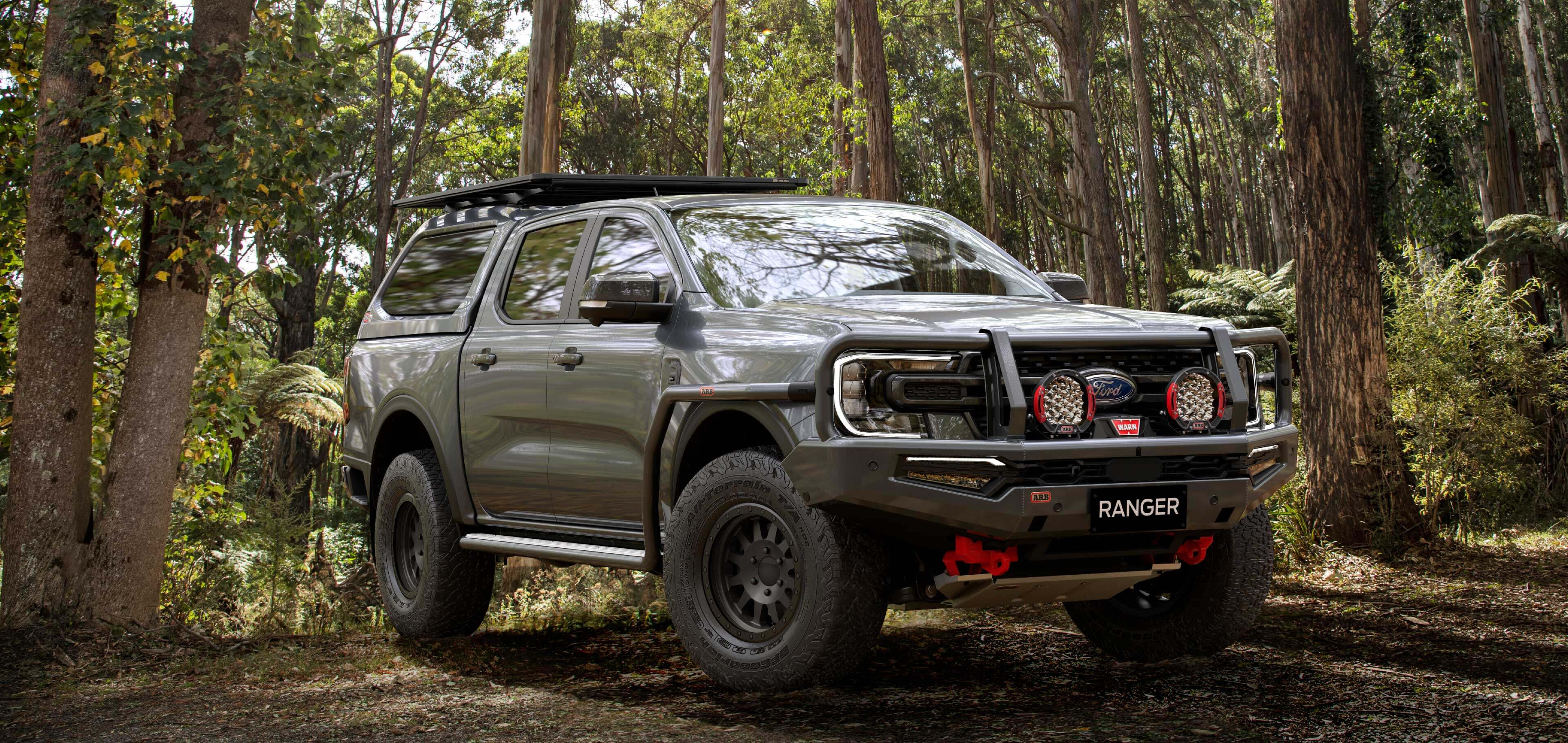
The next generation Ford Ranger has got everyone in the off-road space talking, especially around the fact you can option up the vehicle from the Ford dealership with a suite of ARB accessories.
Not just basic items like bull bars and canopies either; we’re talking about major off-road gear like ARB Air Lockers, suspension packages and underbody protection for serious off-road clout.
Further information has just surfaced on the Ford Ranger Next Gen Owners Australia Facebook page, where the ARB pricing and options range has been listed in detail. It’s an exciting list, too, however some prices are still yet to be announced. We’ll keep you updated as information surfaces.
We’ve covered the details and background information regarding the partnership with ARB previously, now we want to focus on purely on pricing, and to see just how much it would cost with the information at hand to tick most boxes on the options list – building the ultimate factory-backed 4X4 2022 Ford Ranger.
Disclosure: While fitting times have been provided in this document, fitting costs are based off ARB’s rough price guide. ARB Narellan quotes $130 per hour to fit accessories, so we will work off that figure. This figure could be higher or lower through Ford dealerships, but it gets the conversation started.
Upgrade your Ranger
Frontal protection
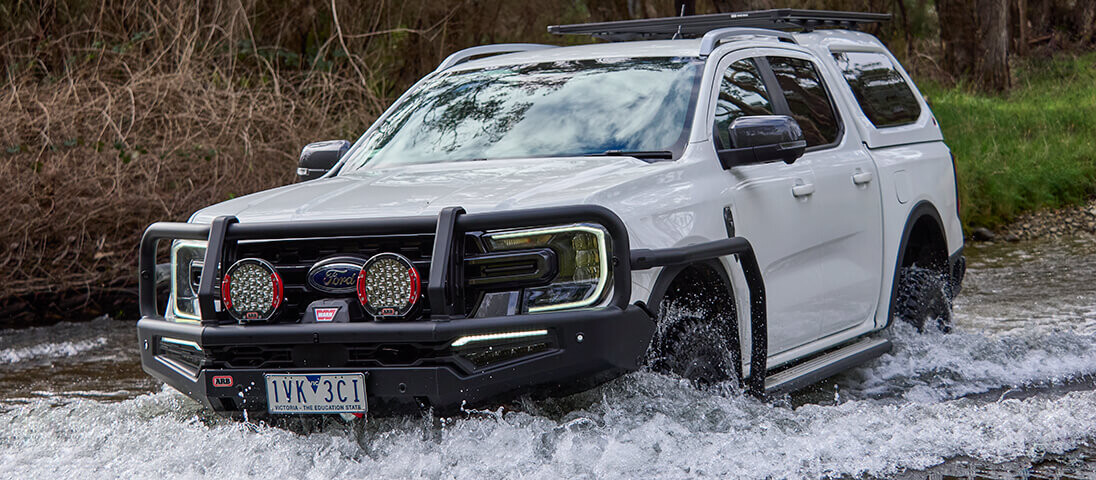
There are five options when it comes to frontal protection in the ARB line up for the 2022 Ford Ranger, including the Summit Bar MKII, Summit Sahara Bar MKII, Commercial Bar, ARB Spartan Bar and the ARB Stealth Bar.
| Accessory | Price |
|---|---|
| Summit Bar MKII | $3225 ($3275 for models with parking sensors and front camera) |
| Summit Sahara Bar MKII | $2925 ($2975 for models with parking sensors and front camera); $245 polished tube kit, $725 for black tube kit |
| Commercial Bar | TBC |
| Spartan Bar | TBC |
| Stealth Bar | TBC |
| Fitting: five hours | $650 |
Under vehicle protection
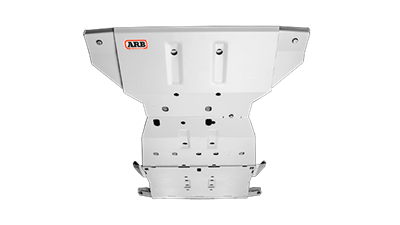
ARB has listed two options for underbody bash plates, with their Under Vehicle Protection (UVP) which is constructed from 3mm sheet then laser cut and press formed, or their Under Vehicle Armour (UVA) constructed from crosslinked polymer. Prices for these items are:
| Accessory | Price |
|---|---|
| Under Vehicle Protection | $1195 |
| Under Vehicle Armour | $1195 |
| Fitting: one hour | $130 |
Rear protection
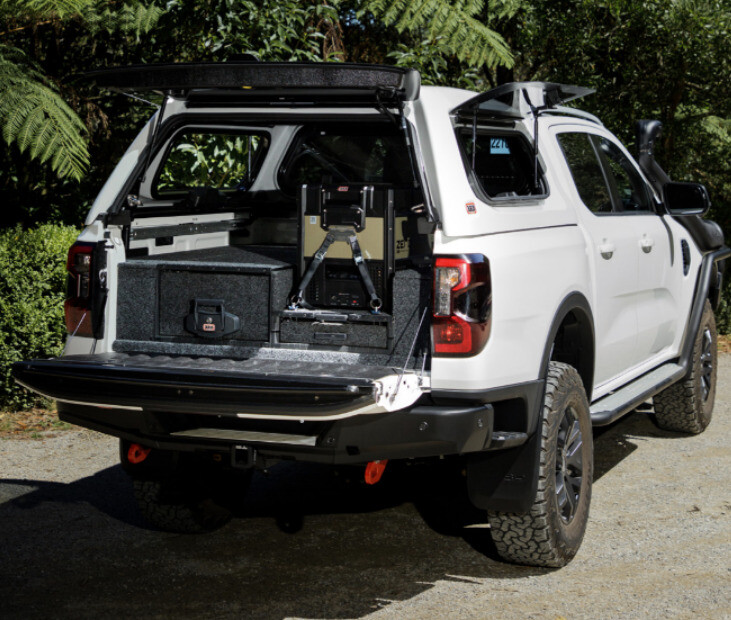
There’s only one option for a rear bar, the ARB Summit Rear Step Tow Bar, which offers protection and excellent ground clearance while still allowing access to the factory step-up function.
| Accessory | Price |
| ARB Summit Rear Step Tow Bar | $1835 |
| Fitting: one hour | $130 |
Summit side rails and steps
For additional protection, side rails and steps are also available which also make for easier access into the vehicle for those who may be vertically challenged. They also allow for easy access to the roof if you decide to fit a roof rack (also available).
| Accessory | Price |
|---|---|
| Summit Side Steps | $1095u00a0 |
| Summit Brush Bars | $795 |
| Summit Return | $375 |
| Fitting: two hours, 15 minutes | $295.50 |
Recovery points
Every four-wheel drive should have rated recovery points, as such Ford is offering front-and-rear ARB recovery points to suit the Ranger. These will work with the UVP, UVA or original equipment underbody protection, and each recovery point has been rated to a maximum load of 8000kg. Rear recovery points can be optioned up with the rear Summit bar, these costs are for the front end.
| Accessory | Price |
|---|---|
| Front Recovery Point (LHS) | $252u00a0 |
| Front Recovery Point (RHS) | $252 |
| Fitting: one hour | $130 |
Canopies and sport lids
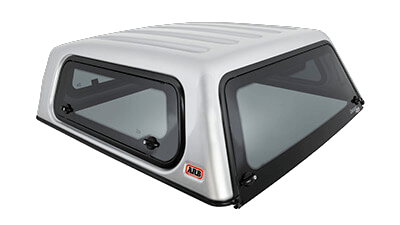
Talk about being spoiled for choice when it comes to canopies – there are five listings for options to cover the tub area of a 2022 Ford Ranger; including a sports lid if you don’t need maximum storage space but do need the peace of mind from a lockable cover.
| Accessory | Price |
|---|---|
| Sportslid | $2855 |
| Classic Textured | $2640 to $3220 |
| Classic Smooth | $3235 to $3814 |
| Classic Plus | $3615 to $3815 |
| Ascent | $4722 |
| Fitting: one hour (Sportslid); four hours (Classic Textured and Smooth); four hours and 30 minutes (Classic Plus and Ascent) | $260; $520; $585 |
Suspension systems
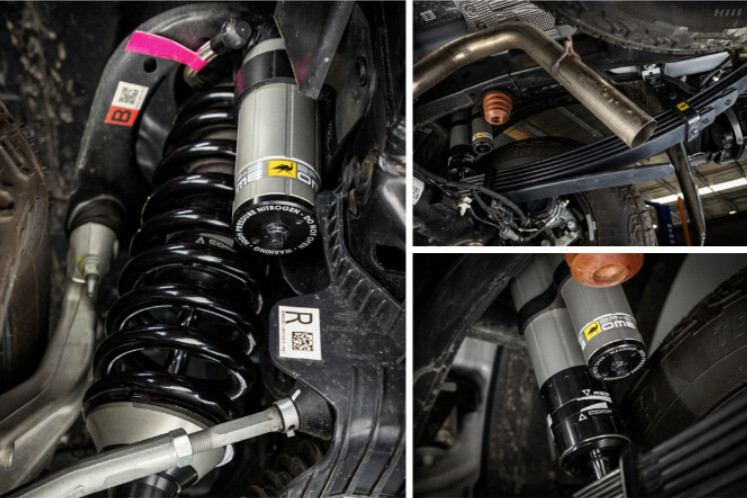
A GVM Upgrade for the Ranger is in the works – and how cool is that, a GVM upgrade direct from the manufacturer! – but sadly, it’s not available just yet. In the meantime, you’ll be able to select from Old Man Emu BP-51 or Nitrocharger Sport suspension systems depending on your needs and budget.
Note: Labour has not been quoted as of yet, for this exercise we’ll work off five hours labour @ $130 per hour = $650 (this is an approximation, not fact)
| Accessory | Price |
|---|---|
| Nitrocharger Sport Front Struts; Rear Shocks | $650 (front pair); $370 (rear pair) |
| Old Man Emu BP51 Front Struts; Rear Shocks | $2090 (front pair); $1430 (rear pair) |
| OME Rear Leaf Springs | $740 to $980 (pair) |
| OME Front Fitting Kit | $175 |
| OME Rear Fitting Kit | $100 |
| OME Trim Packer | $20 |
| OME Driveline Spacer Kit | $25 |
| OME Headlight Sensor Bracket | $25 |
| OME Bump Stop Adapter Kit | $22 |
| OME Diff Breather Extension Kit | $7 |
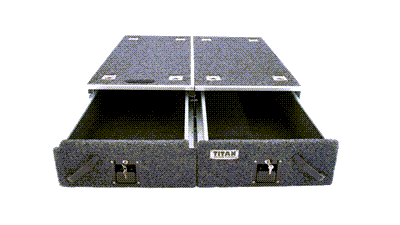
Storage drawers
Pricing hasn’t been confirmed for the range of tub storage drawers, however given they will be available, it’s worth mentioning if you are looking to add them for a touring setup.
ARB has developed vehicle specific drawer side floor and installation kits, which will work with or without the factory tub liner. If you want to go one step further, the ARB Slide Kitchen featuring a three-burner stove, sink and bench space will also be available to work with the 2022 Ford Ranger.
Roof rack systems
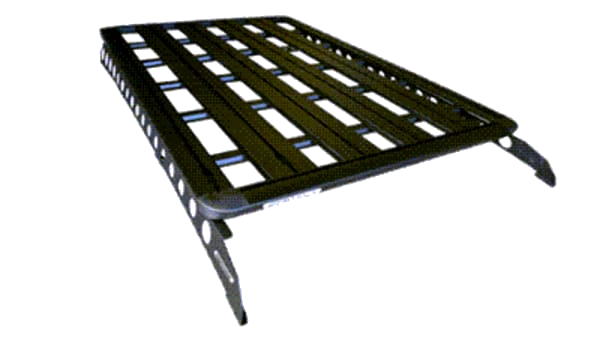
ARB’s Base Rack has been made available to suit the 2022 Ford Ranger, which has been designed to sit as low to the vehicle’s roof as possible for reduced wind drag.
It’s a fairly detailed installation too, with the interior roof lining needing to be dropped, so the factory roof holes can be drilled out to 10mm using s step drill. You will pay a bit more here for fitting, but it’s safe to say that rack won’t be going anywhere.
| Accessory | Price |
|---|---|
| Base Rack Mounting Kit | $495 |
| Base Rack Roof Rack | $695 |
| Fitting: two hours and 30 minutes | $325 |
ARB air lockers
Front and rear ARB air lockers will be available for the Ranger. At the moment, ARB only quotes fitting times for the front diff lock as it’s safe to say many people will retain the factory rear locker and opt for the ARB Air Locker in the front for genuine four-wheel drive.
No pricing has been given for the supply or fitment of the air compressor yet, however ARB mentions there is a unique bracket which allows for fitment of the compressor in the right rear fender.
| Accessory | Price |
|---|---|
| ARB Air Lockers | $1150 each ($2300 for both) |
| Fitting: six hours (front only) | $780 |
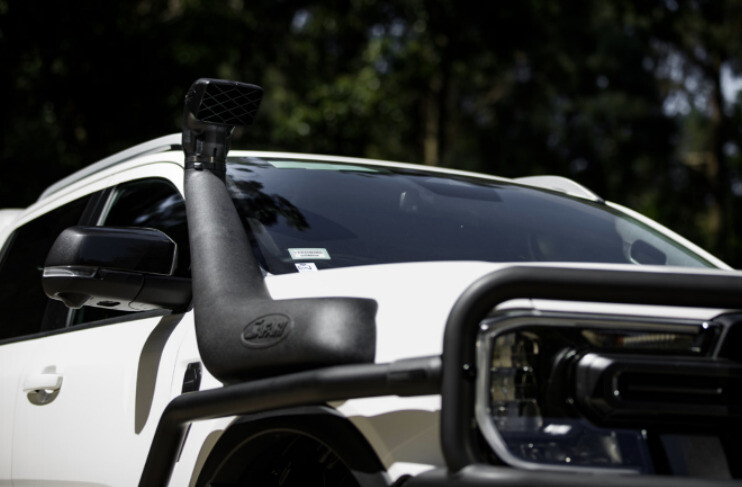
Snorkels
ARB has a long-standing tradition of partnering with Australian company Safari Engineering, which is offering their V-Spec Snorkel for the 2022 Ford Ranger. Their larger ARMAX Snorkel is not available at this stage, but we hope to see that in the near future.
Note: No fitting cost has been provided, but looking at the ARB Price List for the PXIII Ranger as a guide, the cost is $360.
| Accessory | Price |
|---|---|
| Safari V-Spec Snorkel | $638u00a0 |
Long range fuel tank
Boosting the factory fuel range, there is the option of installing a 140L Frontier long range diesel fuel tank. This is a massive increase in fuel capacity which should see the Ranger being able to travel distances of well over 1200kms without refuelling.
Note: No fitting fee has been provided, however looking at the 2021 ARB pricelist, they list $210 for fitment to the PXIII Ranger as a guide.
| Accessory | Price |
|---|---|
| Frontier Long Range Diesel Tank | $1360 |
Side note
The list of accessories available doesn’t end there, however pricing hasn’t been released due to the nature of bespoke installations depending on individual requirements.
These items include full 12V dual battery systems, wiring looms for ARB driving lights ($157 for the loom), the ARB Linx A-pillar mounting bracket to control these accessories and the previously mentioned mounting kit for an ARB compressor for air Lockers or tyre inflation.
Still, this is a massive list of inclusions of quality accessories for a vehicle so new, we will keep you up to date as more information surfaces.
How much for the ultimate Ranger?
There are many variables, and as previously discussed we don’t know exact fitting fees charged yet, forcing us to work off information sourced for this article.
However, this is the perfect time to play around and configure your ultimate off-road ready Ford Ranger. This is what I’d do if I won Lotto tomorrow, and built up my dream 2022 Ford Ranger from the factory.
| Accessory | Price |
|---|---|
| Summit Bar MkII | $3925 fitted |
| Under Vehicle Armour (UVA) | $1325 fitted |
| ARB Summit Rear Step Tow Bar | $1965 fitted |
| Front Recovery Pointsu00a0 | $634 fitted |
| Ascent Canopy | $5307 fitted |
| Old Man Emu BP-51 Suspension | $5524 fitted (approx. figure) |
| ARB Base Rack Roof Rack | $1515 fitted |
| Front ARB Air Locker | $1930 fitted (not including air compressor or compressor fitting u2013 TBC) |
| Safari V-Spec Snorkel | $998 fitted (approx. figure based on ARB pricelist for PXIII Ranger) |
| Frontier 140L Long Range Diesel Tank | $1570 fitted (approx. figure based on ARB pricelist for PXIII Ranger) |
| TOTAL | $24,693 |
4X4 Australia’s project builds
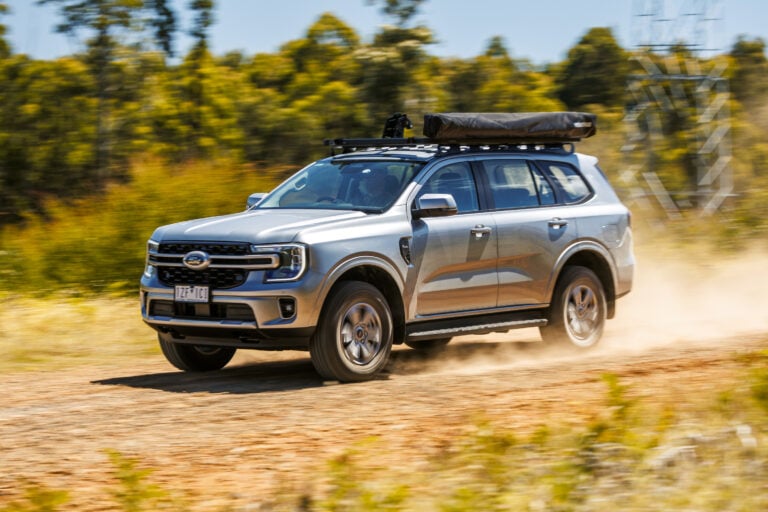
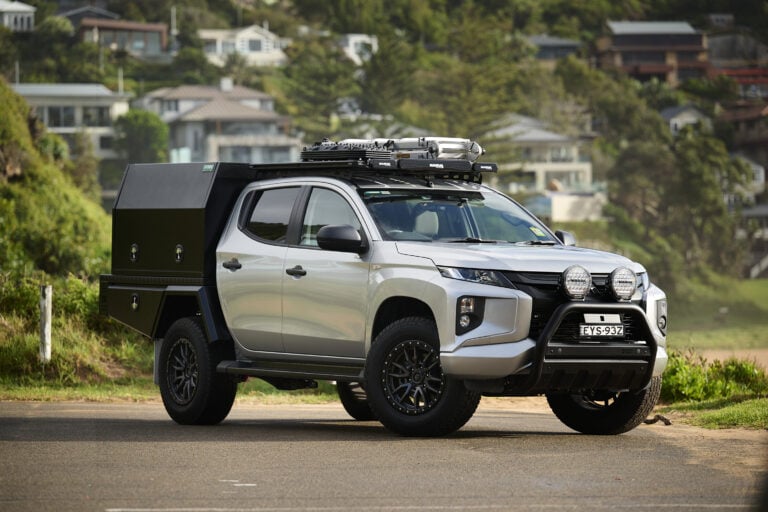
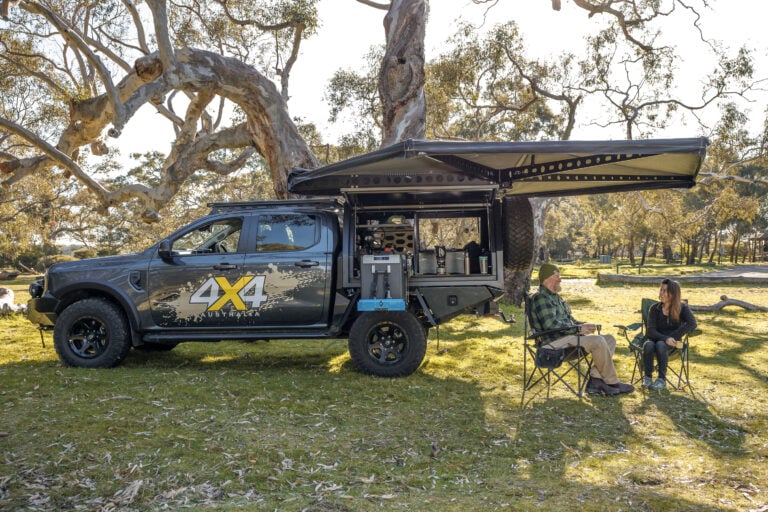
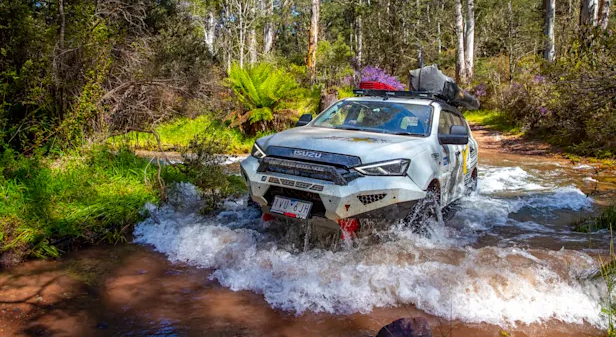
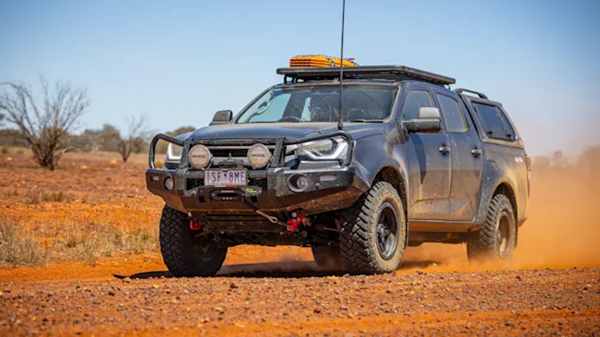
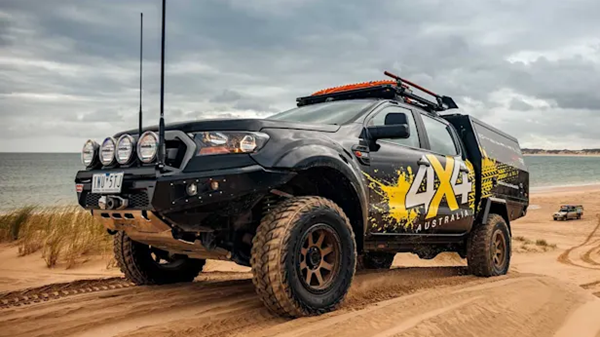
Like many things, sharing your adventures when you’re out four-wheel driving is better than doing it on your own.
So whether you’re four-wheeling with mates, touring with your local 4×4 club or are part of an organised tagalong group, whenever you travel in company with other vehicles, all drivers should formulate and stick to a set of rules to ensure everyone stays safe and no one gets lost. These rules are commonly referred to as convoy procedure.
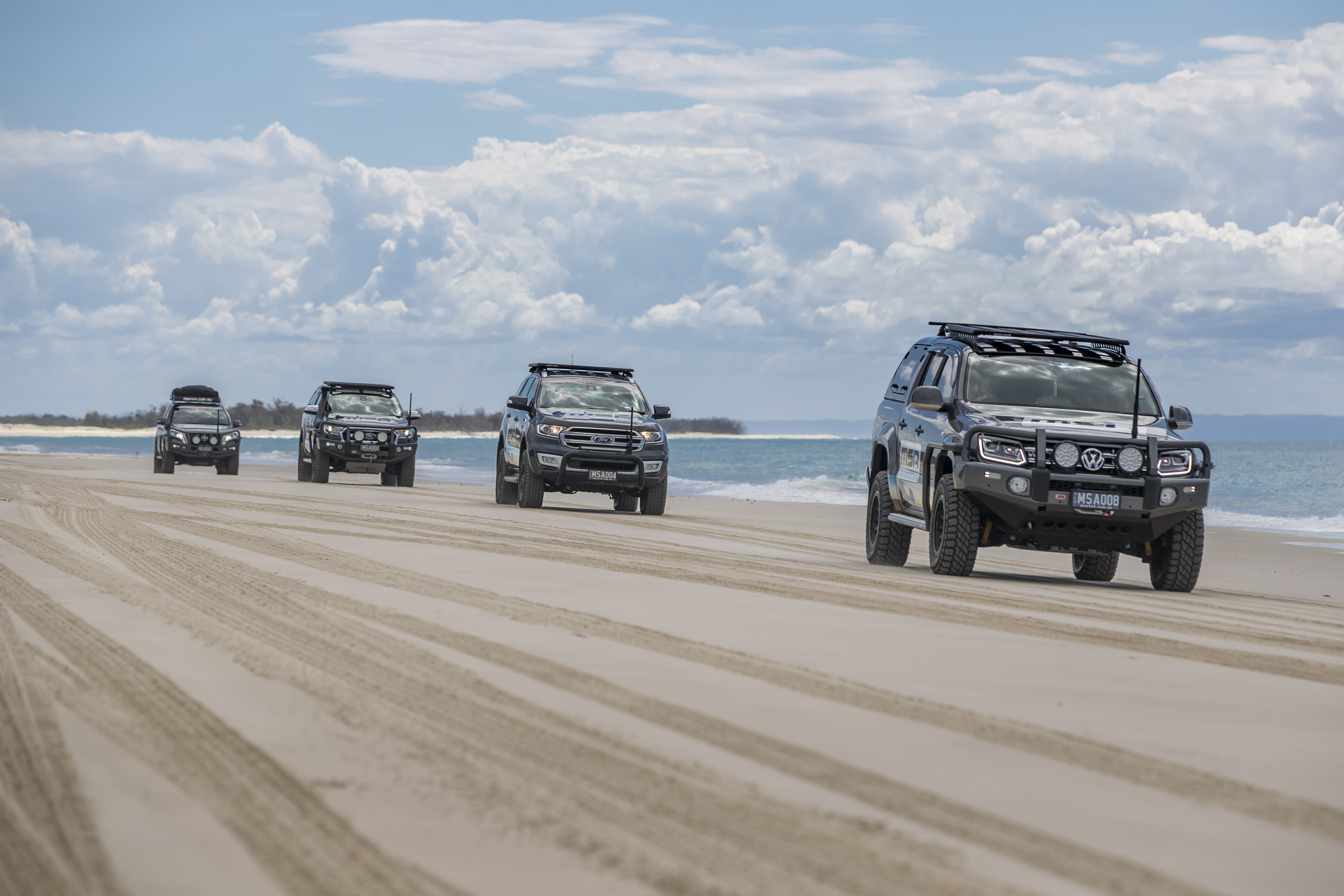
Having set rules when you head out bush might sound a bit draconian, but if the convoy is just a rabble of travellers without any organisation – or the ability to communicate with each other – some in the group could soon become hopelessly lost. The other advantage of adhering to proper convoy procedure is that all travellers can be alerted to potential hazards along the route.
Not only will following a few simple convoy rules ensure all convoy participants will safely find their way to the intended destination, it will also minimise stress and ensure everyone has a good time while out on the tracks … and isn’t that what four-wheel driving is all about?
Clear communications
Once everyone has met up for the start of a trip, it’s important to get everyone together for a powwow to go through proper convoy procedure.
First up, a trip leader needs to be assigned, and this person needs to be an experienced four-wheel driver who knows what they are doing and where they are going. A trip leader who doesn’t know where he/she is going can lead the whole convoy in to precarious situations, or even become lost.
With the leader assigned, their first job is to in turn assign a tail-end Charlie, who should also be an experienced four-wheel driver. Both the trip leader and tail-end Charlie should have high-quality UHF radios so they can communicate clearly with each other.
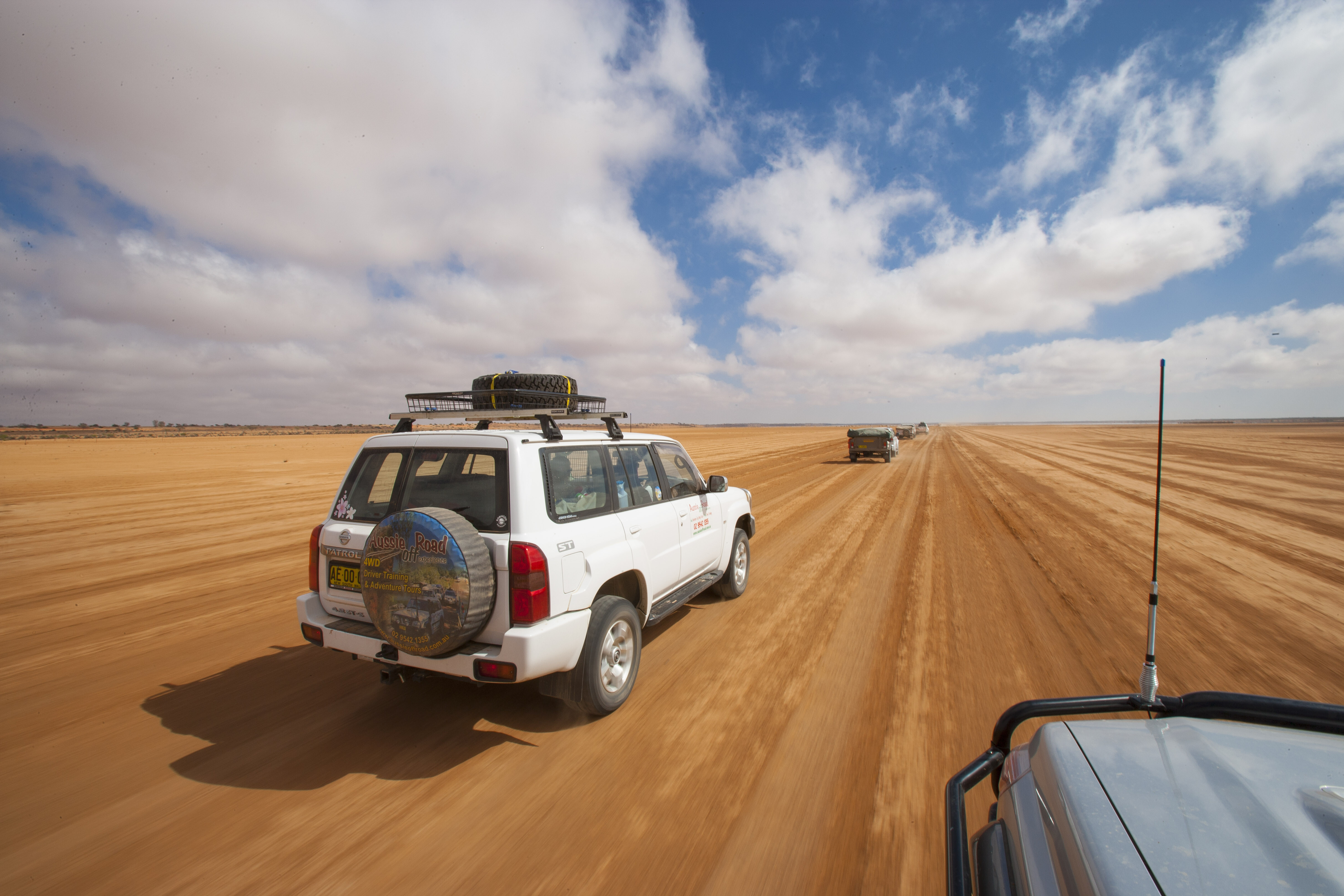
Depending on how many vehicles there are in your group, and the conditions encountered, it’s entirely possible the convoy might spread out beyond the range of the leader’s and tail-end Charlie’s UHF radios, so it will be up to other drivers in the convoy to relay messages up and down the line.
Once it has been confirmed that everyone has a UHF radio, a channel needs to be agreed upon. Make sure the convoy uses a channel that has not been assigned to emergency services and ensure that everyone knows what channel will be used for the trip.
Before setting off, the trip leader should ask for a radio check; the second vehicle should respond, followed by the third and so on down the line until the tail-end Charlie has responded. The leader will then know that everyone has an operating radio and is on the right channel.
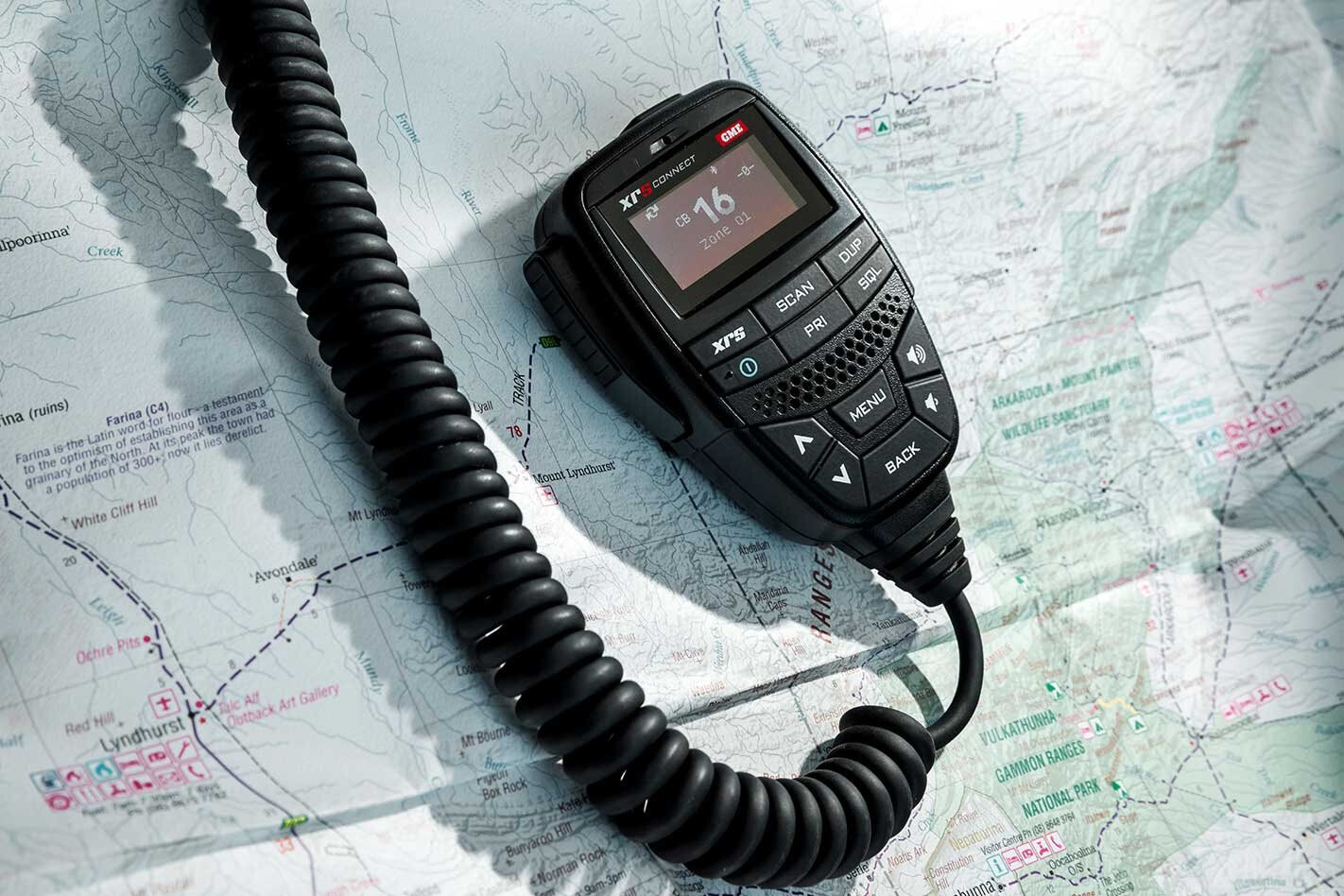
While general chit-chat on the UHF can be hugely entertaining, it should be kept to a minimum so that more important messages can be communicated between vehicles in the convoy, such as whether there are oncoming vehicles or other hazards to look out for, like terrain anomalies, wildlife or unfenced livestock.
As with the radio check, information regarding such hazards should be passed down the line. In the case of oncoming vehicles, pass on as much useful information as possible such as the number and type of vehicles that are coming. In the case of large oncoming trucks, it might be a good idea for the leader to pull the convoy over in a safe spot to let big trucks pass.
Speaking of safe spots, when the trip leader wants to pull the convoy up, he/she should make sure there’s enough space for all the vehicles in the convoy to safely get off the road or, if driving on a track, that there is enough space for other vehicles to drive past.
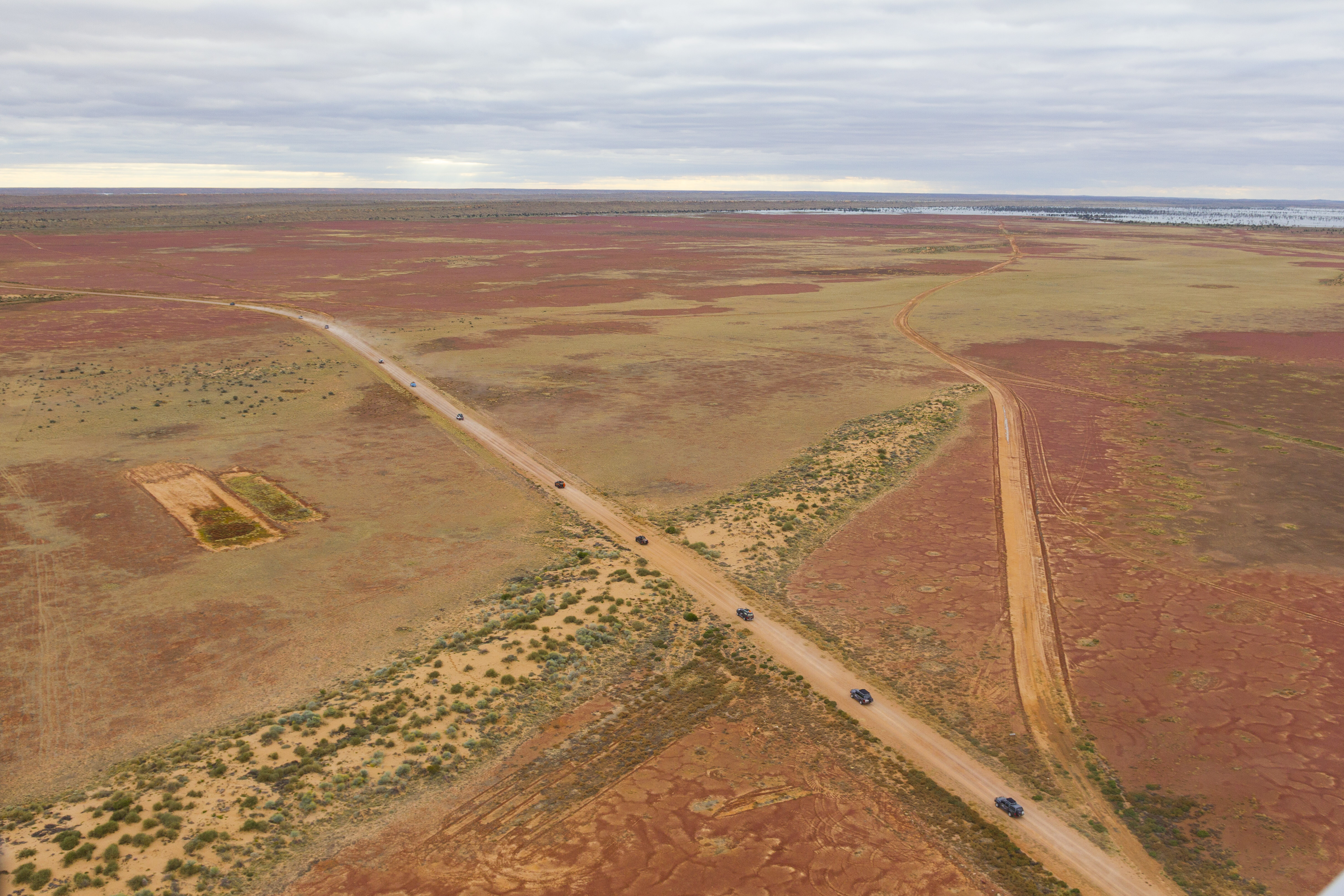
As well as hazards, the trip leader should use the UHF to communicate navigation information, such as when a left or a right turn is coming up. In addition to communicating this information via UHF, each vehicle also needs to physically ‘mark’ each turn by pulling up in a safe spot with the appropriate indicator on and waiting there until the following vehicle signals it has spotted the marked turn, either by a call on the UHF or a flash of the high beam.
If every vehicle in the convoy marks every turn, then the convoy should always stay together. Having said that, sometimes distracted drivers can still miss turns, so if you’re marking a turn and you see the following vehicle just drive on by, get on the UHF quick smart and let them know they missed the turn.
Assuming all vehicles have successfully made the turn, the tail-end Charlie should acknowledge this on the UHF and other vehicles should relay that information up the line to the trip leader.
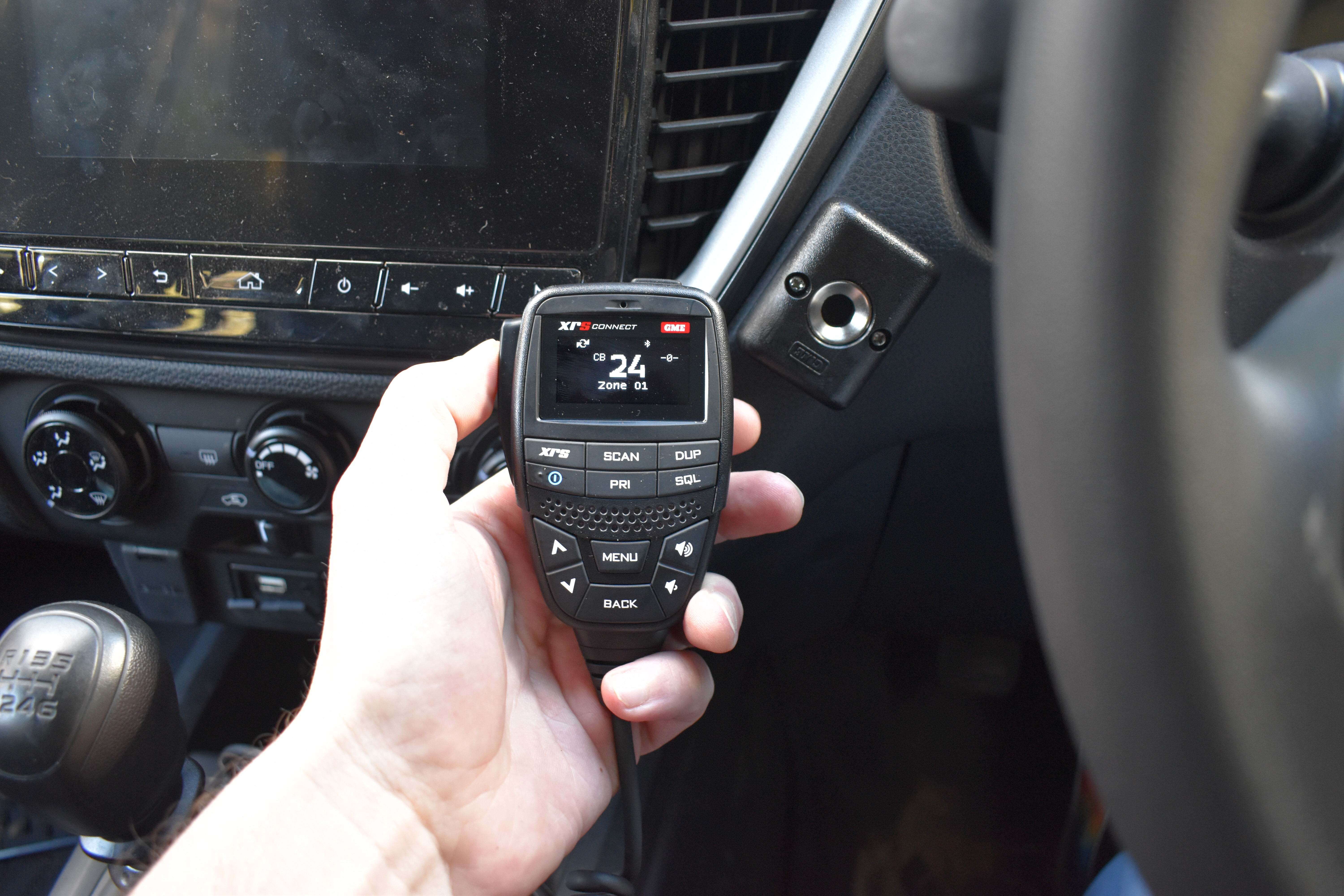
Other things the trip leader should communicate to the group include providing a general overview of the plan for the day.
Important information to share with the convoy includes expected overall distance to be travelled and expected trip duration, the location of rest stops and what facilities will be available (food, water, fuel, toilets etc.) en route, and what conditions can be expected.
The trip leader should also allow the convoy plenty of time at rest stops to check or adjust tyre pressures to suit varying terrain.
Spaced out
When you’re travelling in a convoy, all vehicles should maintain a safe distance between each other, and this distance will vary depending on vehicle speed and road/track conditions.
When driving on sealed roads, you might feel that another driver is too close to you, or that a following driver has dropped back so far you can’t see them anymore. If they’re too close, politely tell them you feel uncomfortable with the gap between your vehicles, and ask them to drop back a tad; if they’re too far back, advise the trip leader that he/she might need to slow the convoy to allow the vehicles to bunch up a bit.
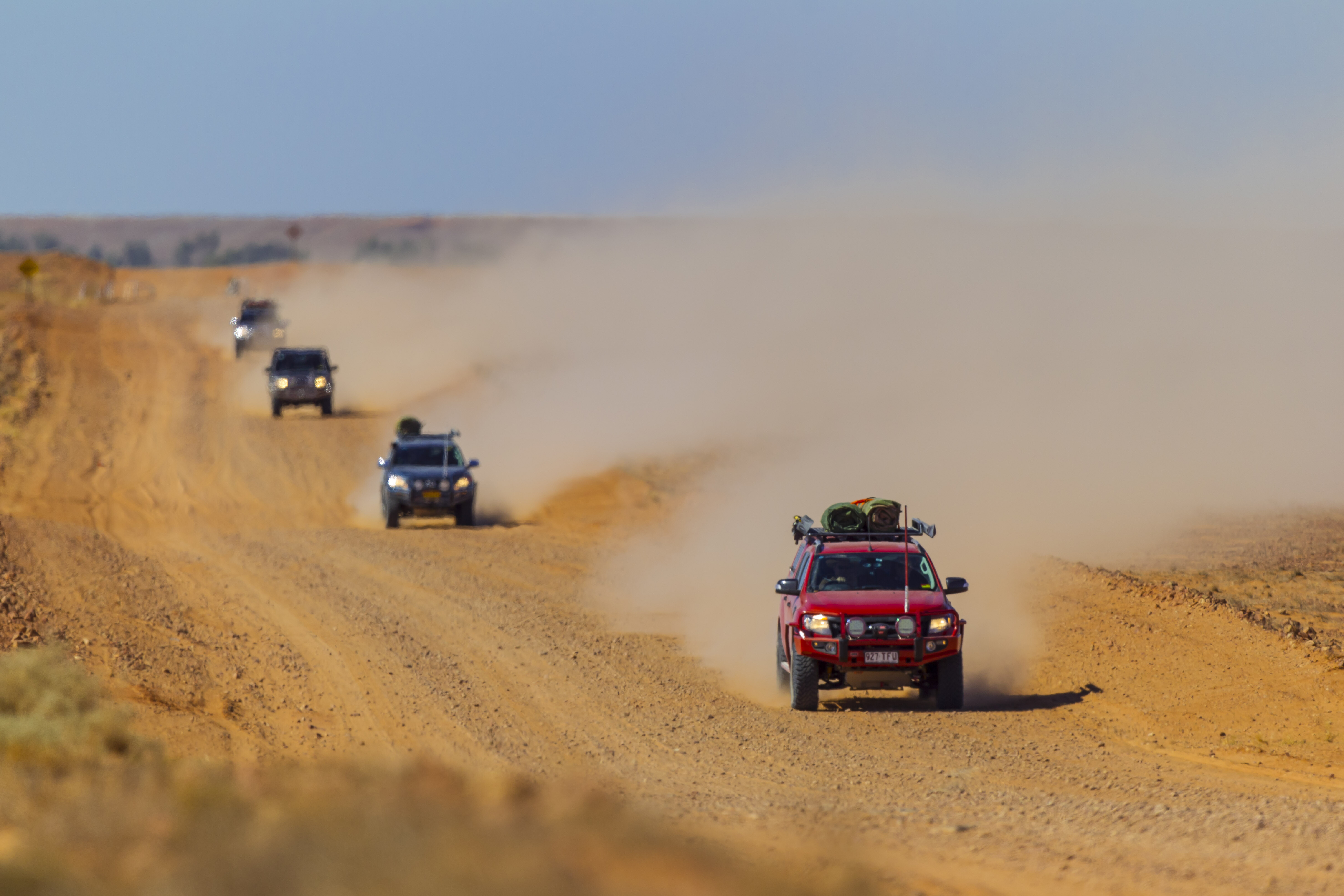
On gravel roads, there is plenty of incentive to keep a decent gap between vehicles. In dusty conditions, you should always leave enough space between you and the vehicle in front so that you have a clear view of what is ahead.
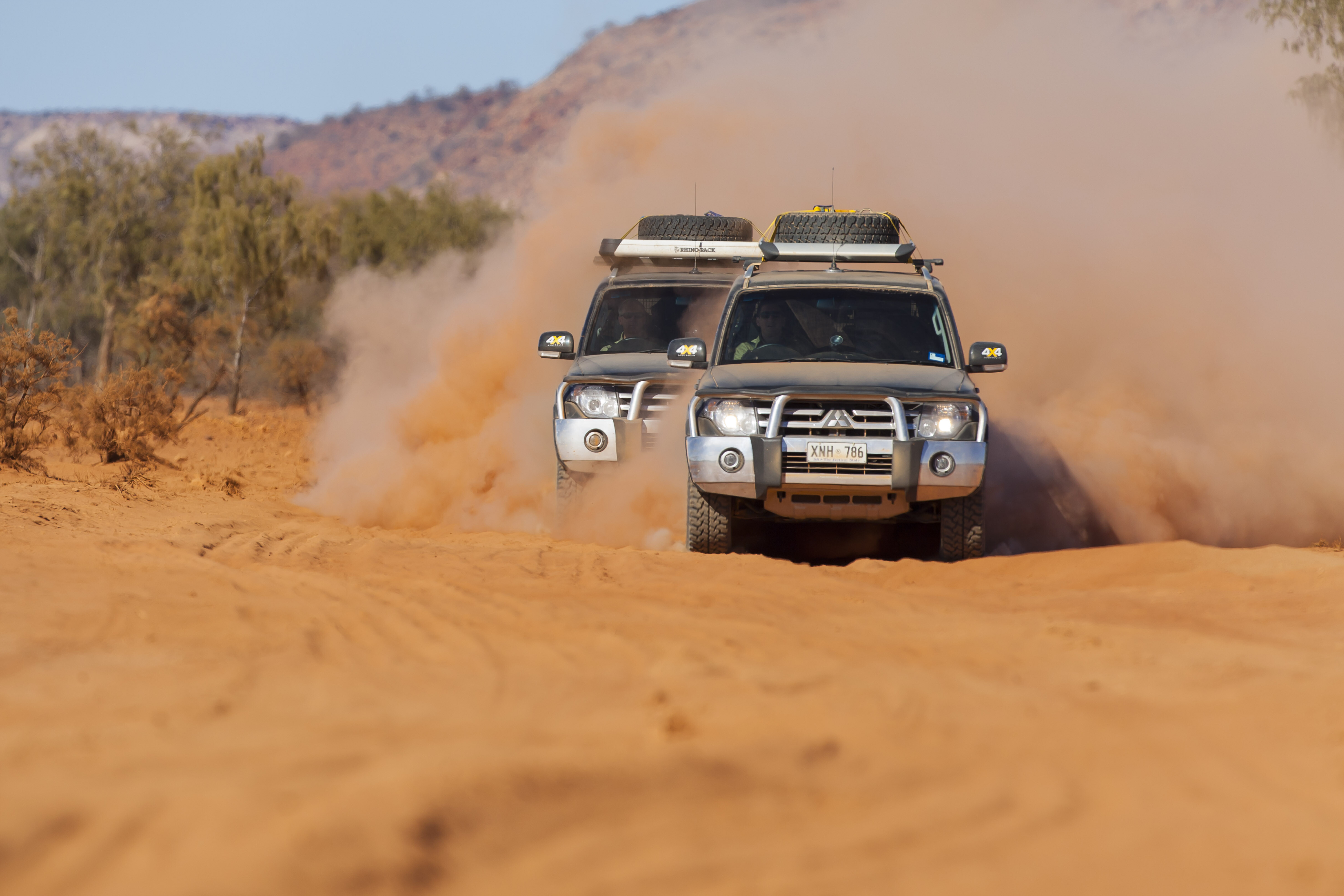
Driving in the dust cloud of the vehicle in front can be dangerous because you won’t be able to see where you are going, and you won’t be able to spot hazards. In addition, driving in dust clouds is no good for your vehicle as the dust will get sucked in to the engine’s airbox and clog the air filter, decreasing engine performance and increasing fuel consumption.
If the convoy catches up to a slower vehicle that is generating a large dust cloud, it could be a good time to pull up in a safe spot and put the billy on rather than everyone trying to overtake with limited visibility.
Likewise, if there is an oncoming vehicle that is generating a large dust cloud, it’s often wise to pull over and stop if there is space to do so, to let that oncoming vehicle pass. The trip leader must always clearly communicate the intention to pull over.
When tackling off-road terrain, each vehicle in a convoy should wait for the preceding vehicle to clear an obstacle before setting off themselves. On steep and slippery hills, for example, make sure the vehicle ahead has successfully climbed gnarly sections before having a go yourself; if they don’t make it, they might need to back up to have another go, and they won’t want your vehicle filling their mirrors when they are trying to reverse down a slimy track.
When tackling water crossings, ensure the vehicle ahead of you has safely made it across to the other side … and has successfully exited the water before proceeding yourself. If they haven’t completely made it out, they might be blocking the only exit point, in which case you could find yourself stuck in the drink with nowhere to go.
Regrouping
It is important for the convoy leader to factor in enough rest stops for the convoy. In addition to giving everyone a break, pulling up for a rest stop is a clever way to regroup a spaced-out convoy.
Allow enough time at rest stops for the last few vehicles to have a decent break; even if the trip leader has been waiting around for 10 minutes, they shouldn’t head off again as soon as the tail-end Charlie rolls up, as they will probably be looking forward to a break too.
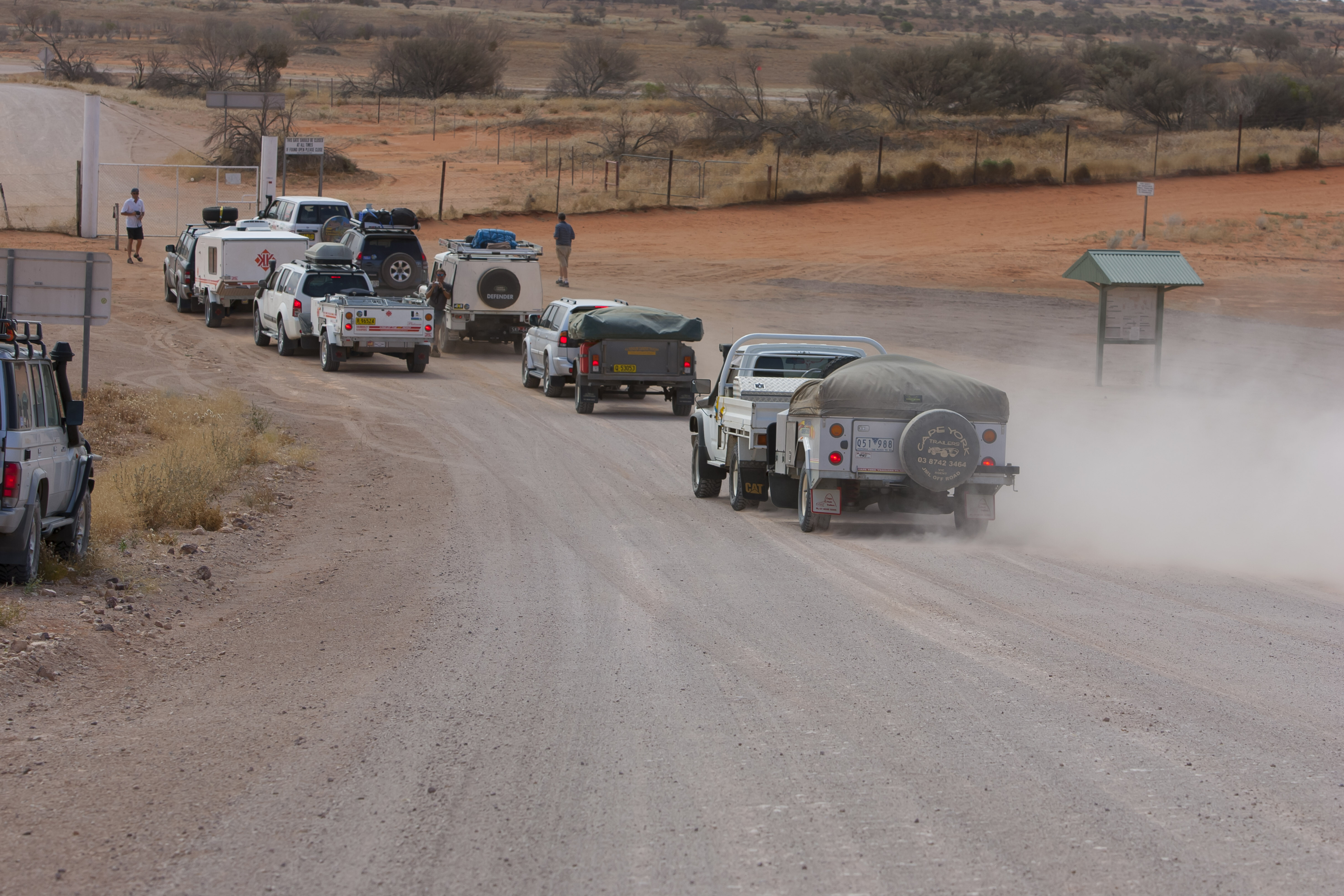
With a spaced-out convoy, the trip leader and tail-end Charlie may not have communicated directly with each other for some time, and rest stops present the perfect opportunity for them to get together and have a chat.
They can discuss how things are progressing, if the convoy speed is appropriate, if anyone is not communicating effectively or if some drivers need reminders on procedural issues; and if any problems need addressing, these can be sorted out in private rather than over the air where the whole group can listen in.
Two radios
On occasion, you might be driving through areas where there are road works, or industry such as logging is in operation. There will usually be signage advising what UHF channel is being used in the area.
Rather than your whole convoy switching UHF channels, if your convoy leader has two UHF radios, he/she can switch one to the channel for the area and then relay any relevant information via the convoy’s channel.
That second radio might be a handheld that is usually used for off-road spotting or for use when doing other activities around the campsite.
Have fun
Discussing procedures and rules don’t really promote a fun vibe, but when it comes to travelling in convoys, if everyone sticks to the program there’s a far greater chance of having a fun trip.
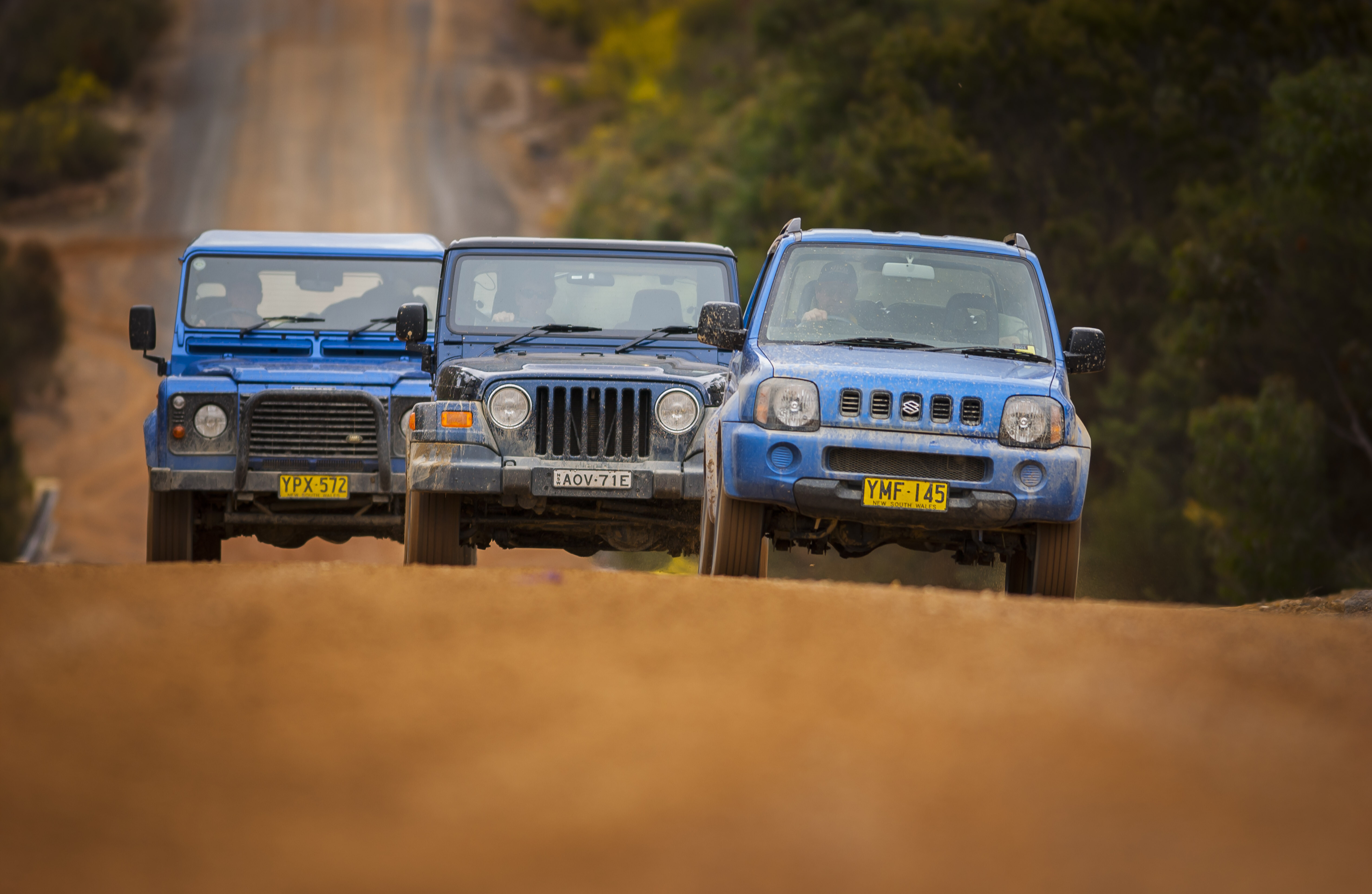
On the flipside, if convoy participants don’t follow procedures and rules, people can get lost and hurt … and that certainly isn’t any fun.
We’ve discussed quite a few things in this instalment of 4X4 Australia’s How To series, but apply a little focus whenever you’re driving in a convoy and it will soon become second nature, ensuring you always have fun and safe trips, whether that’s with old mates or newfound friends.
Dos and don’ts
DO
- Choose a wise and experienced trip leader and tail-end Charlie
- Make sure your UHF is working and on the right channel
- Always mark turns and ensure the following vehicle sees you
- Call out hazards and oncoming traffic on the UHF
- Make sure there is plenty of space for all vehicles to pull over
- Drive in the dust cloud of preceding vehicles
- Drive too close to vehicles in front of you
- Drive off-road obstacles until the vehicle ahead is out of the way
- Block the radio channel with chit-chat for hours on end
- Forget to turn on your headlights when driving on dirt
The June 2022 issue of 4X4 Australia is officially out now!
The all-new Jeep Grand Cherokee has been thrust in to the seven-seat arena for the first time, with 200mm added to the wheelbase of the L model.
Not only did we drive the tech-laden Grand on Aussie soil for the first time for this issue, we lined it up against a Nissan Patrol Ti-L to see how it fared off road against a proven performer.
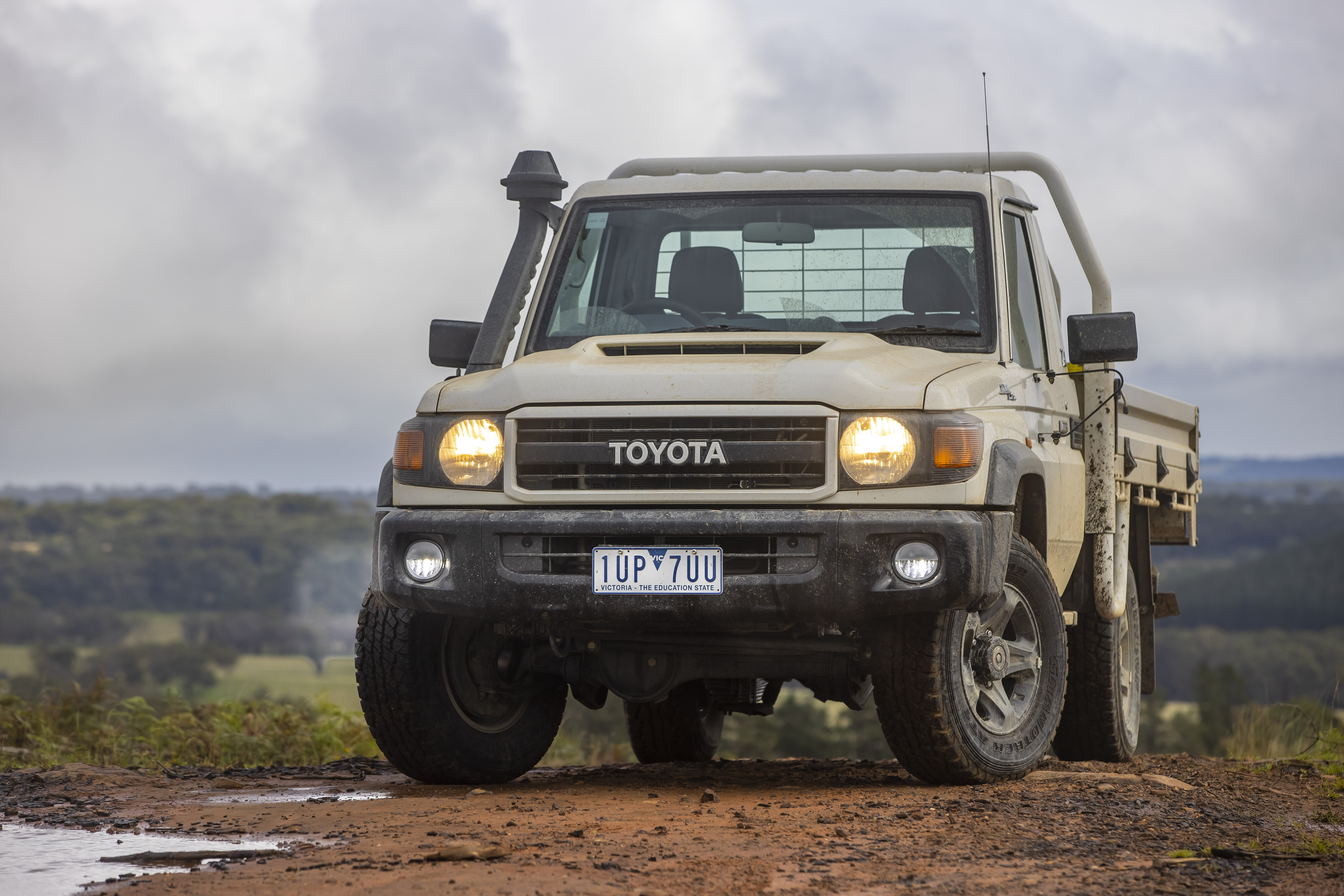
Last month, we went off road in a limited edition 76 Series wagon, built to celebrate the 70th Anniversary of the iconic LandCruiser nameplate. Toyota also pieced together a 70th Anniversary 79 Series single cab, and we got it muddy for this issue. Priced at $80K, is it worth it?
Matt spent time in a Ranger V6 prototype – and chatted to the engineers behind it – at the end of last year, but we weren’t allowed to talk about it until now. You can read about it in the mag, and early impressions suggest this thing is going to be an absolute ripper.
We also pore over a 1952 Austin Champ, a war rig created to confront the original Jeep. This example sat idle, hidden away for 40 years, but it is now free to remind us all of the quality of British engineering.

Four-wheel drives have come a long way over the last 60 years – no longer are they rudimentary expedition vehicles. In the June mag, Fraser Stronach has outlined the 10 most significant 4×4 advancements over the years, from modern turbo-diesel engines to adaptive suspension and everything in between.
Plus, in the latest instalment in our ‘How To’ off-road series, Dean Mellor discusses convoy etiquette and why communication is the key to a safe and enjoyable multi-car trip.
What else is there?
- Mundi Mundi Plains + Silverton
- Off-road in our PRO-4X Warrior long-termer
- 2022 Easter Jeep Safari wrap
- Kakadu National Park, NT + Coen, Queensland
- ARB twin air compressor + Darche Dirty Dee 1400 swag + Spot X tested
- Columns, products + more
A quality winch is the cheapest form of insurance you can have on a four-wheel drive.
If you need it just once, it has basically paid for itself. In saying that, there’s not much point having a poorly serviced winch, or a cheap unit that can’t do the job it’s intended to do in the heat of the moment.
We chose to install an Ironman 4×4 12,000lb Monster winch with synthetic cable to the front of the 4X4 Australia D-MAX, and after a year of service it has been a solid performer.
We opted for synthetic rope as it is lighter than steel cable, with this winch weighing in at 29kg. You can also select a 9500lb version if you own a lighter vehicle, with either steel cable or synthetic rope available.
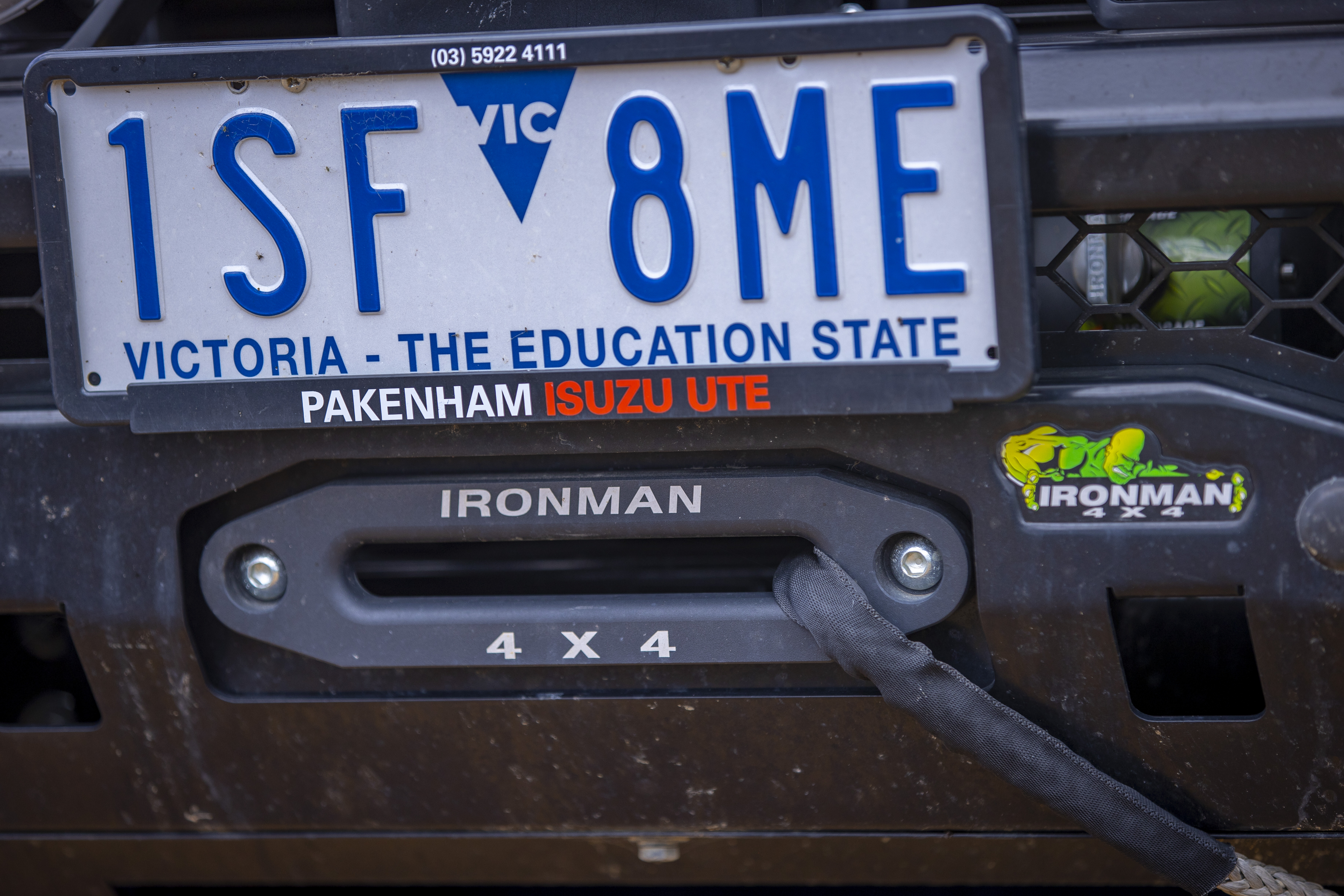
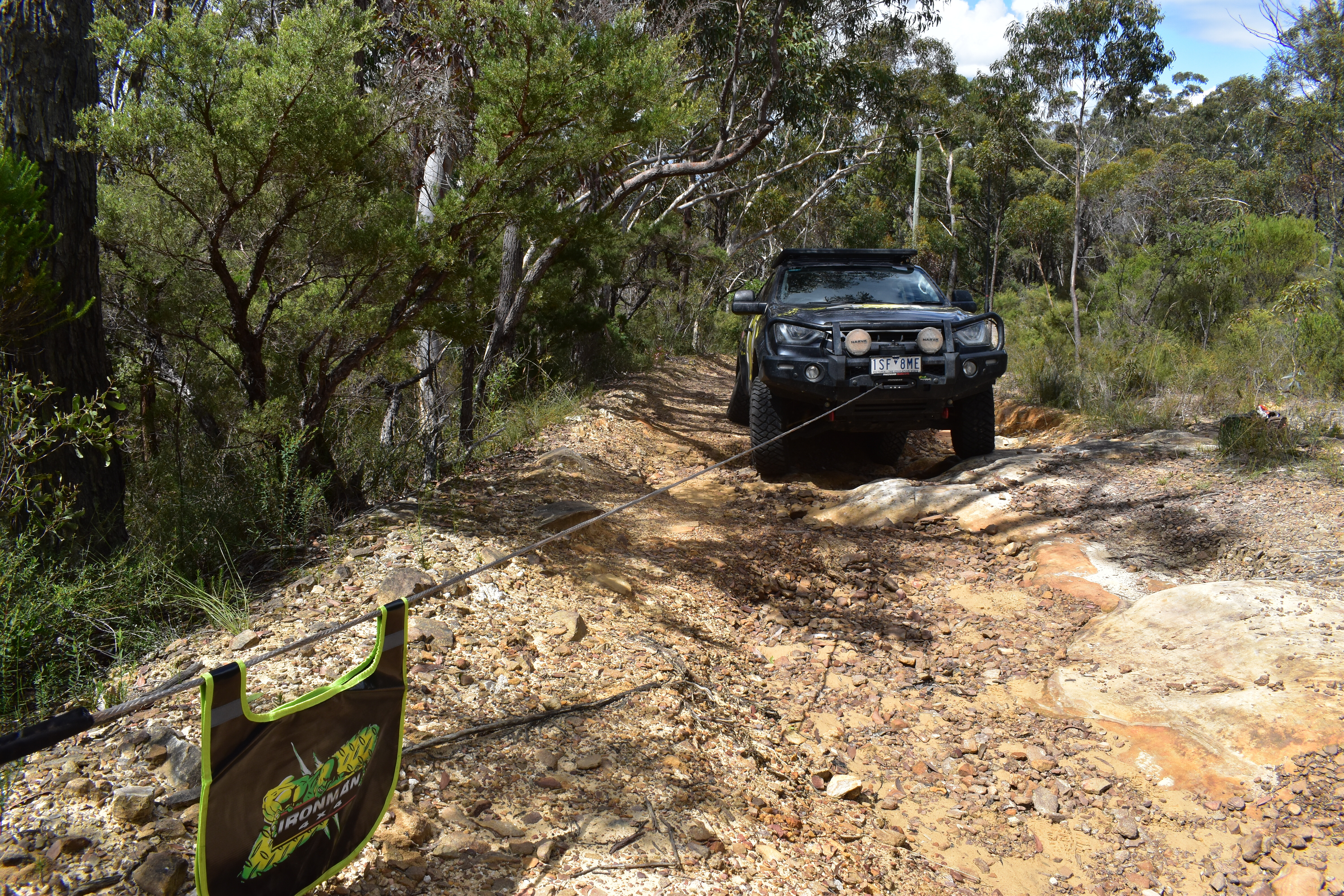
The thing I like most about the Ironman 4×4 winch is how easy it is to free-spool rope off the drum when walking towards an anchor point. Some winches I’ve used in the past have been damn near impossible to free-spool, requiring you to engage the winch and reverse it out.
This adds additional unwanted heat to the winch, as well as eating in to your battery voltage. A winch that is easy to free-spool is a good winch in my eyes, as I’m not a big lad.
The clutch engagement mechanism is also simple and easy to use, and it was installed just where we wanted for easy access on the Ironman 4×4 Commercial Deluxe bar we had installed on the D-MAX.
Another trick feature is the breather system found on the motor of the winch. This helps no end in keeping water out of the winch’s vital components when driving through river crossings. It’s made up of a length of hose that runs up to the highest point of the engine bay, with a unique filter fitted to the top to stop dust and water ingress in serious conditions. It’s a great feature to see fitted from the factory, and it will assist with overall longevity.
The remote supplied with the winch is also a winner, being able to operate it wirelessly or wired. To use it wirelessly, a small dongle needs to be pushed on to the control box; if you’d prefer to use a cable, just plug one end of the supplied cable in here and the other to the remote.
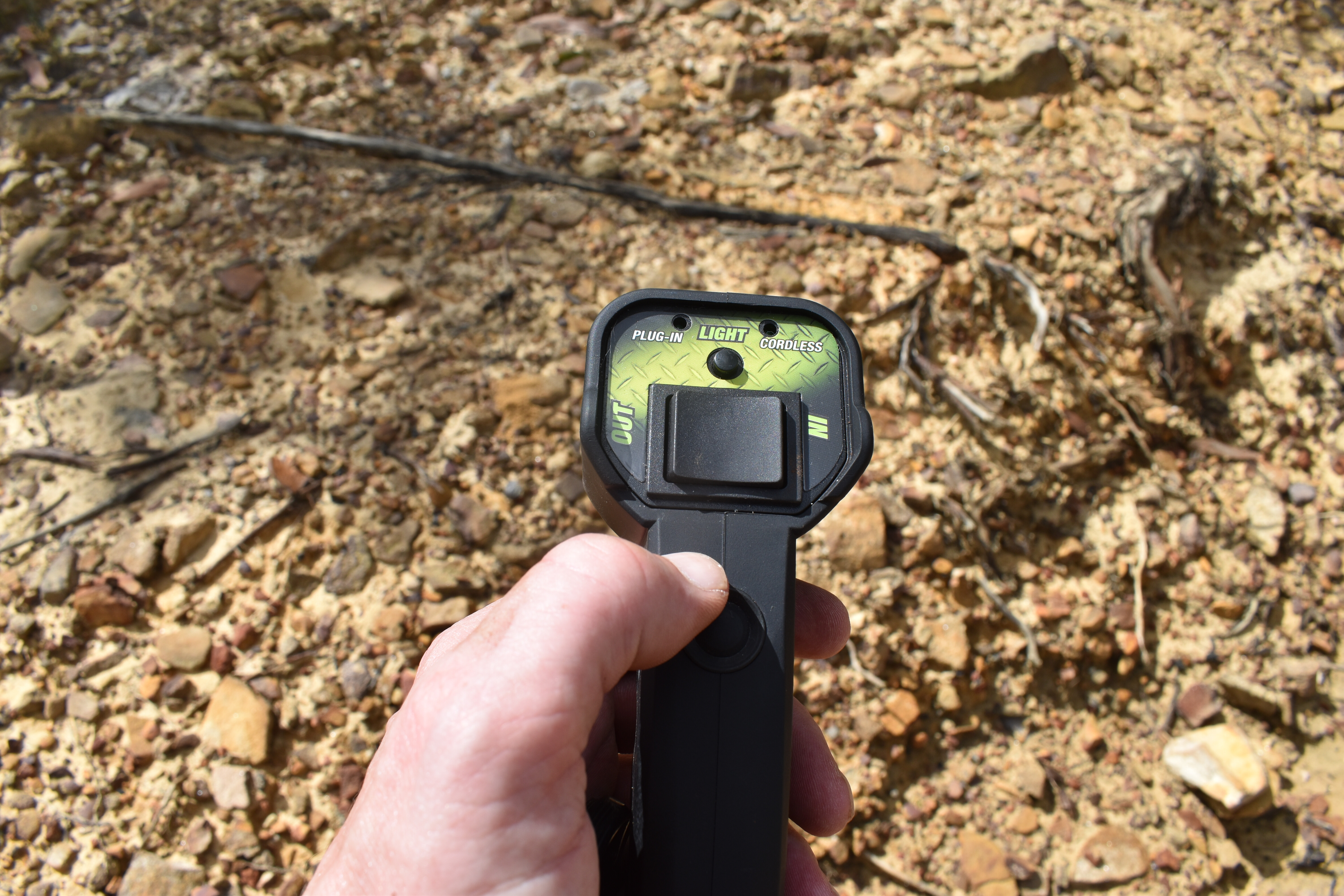
The remote even has an LED light built in to the handpiece, which comes in handy during night drives. A cable damper is included in the kit too, which we’ve stored in the D-MAX since the day it was installed – safety first when it comes to winching.
All that we have done to keep it working well so far is to use it at least once a month, ensuring internal components are being regularly greased. A good practice to get in to for anyone that has a winch fitted to their vehicle.
We also ensure the synthetic rope is washed after it has been used in mud. If you look after your gear, it will look after you.
AVAILABLE FROM: www.ironman4x4.com RRP: $1223 (sans installation)