
Snapshot
- Compact Cruiser wins the 2022 Car Design Award for Concept Vehicles
- EV off-roader could enter production as the LiteCruiser
- Toyota plans to launch 30 EVs by 2030
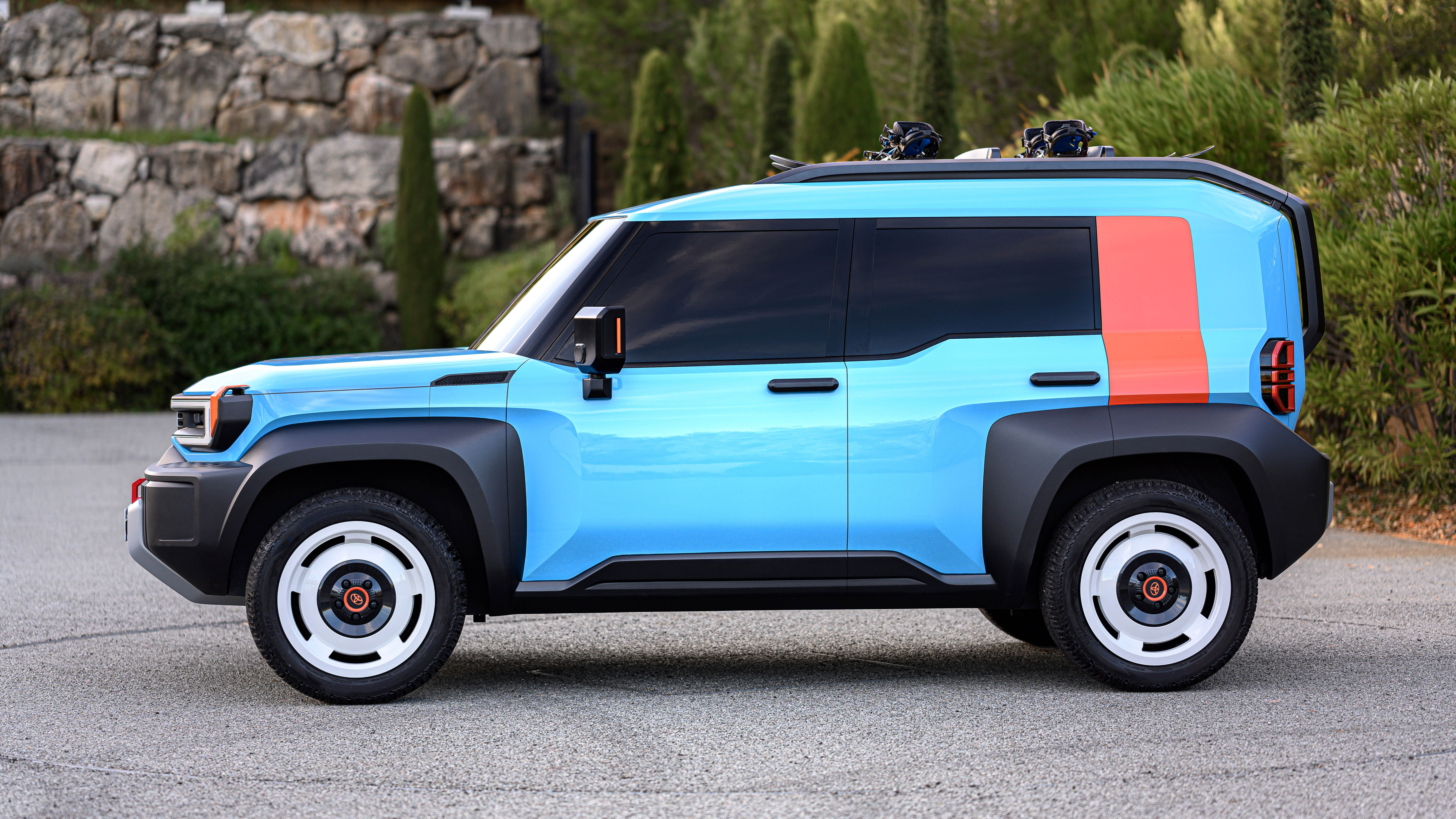
The Toyota Compact Cruiser EV could be the manufacturer’s retro-inspired answer to the Suzuki Jimny, with the electric concept already picking up a prestigious design award.
Loosely based on the FT-4X concept from 2017, the Compact Cruiser has won the 2022 Car Design Award for Concept Vehicles, beating the Porsche Mission R, Audi Sky Sphere and Volvo Concept Recharge to the prize.
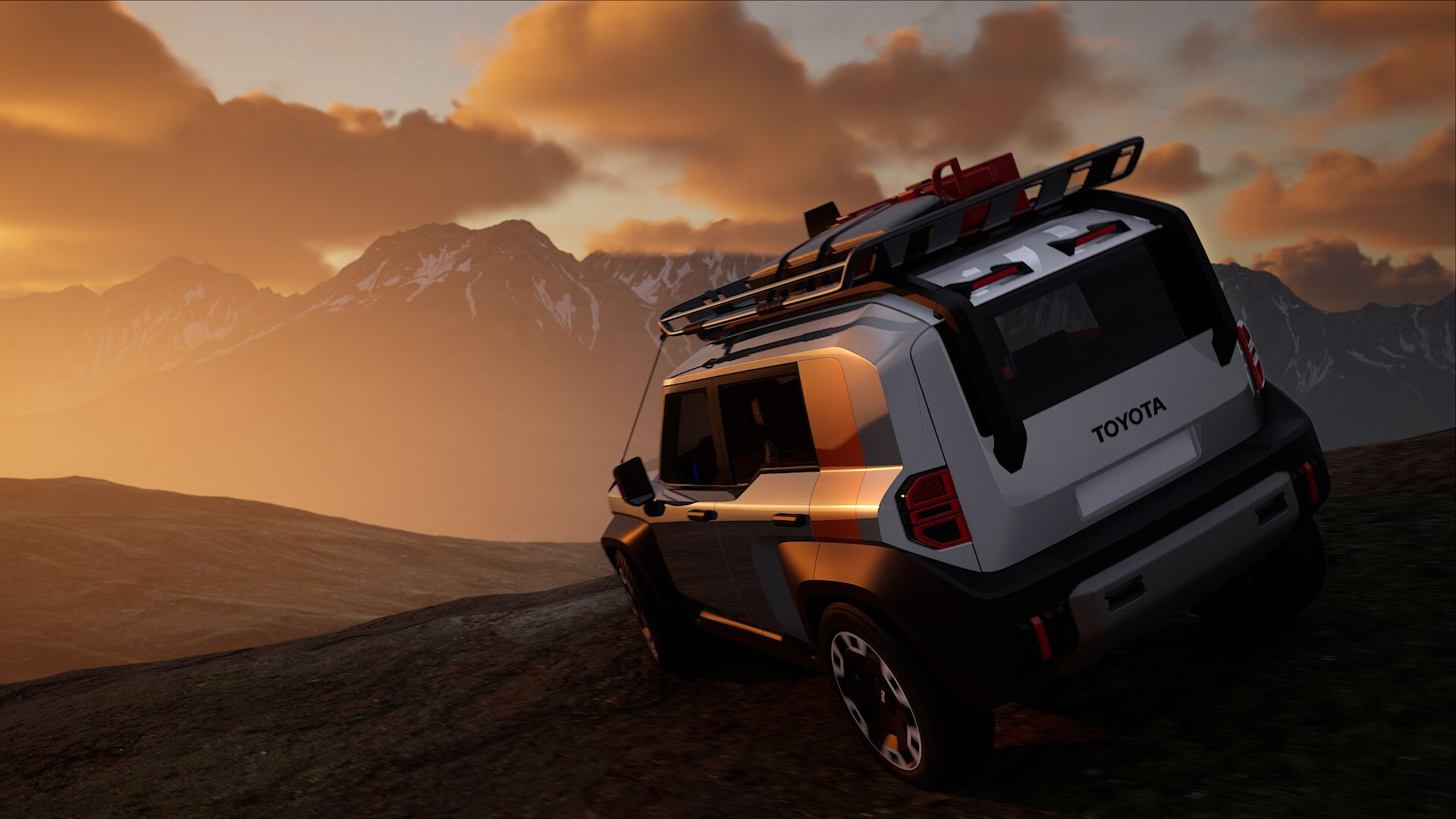
The EV takes inspiration mostly from the FJ Cruiser off-roader, featuring a short wheelbase with minimal overhangs and a bash plate to tackle tough terrain.

The prospect of seeing the Compact Cruiser enter production as shown here is unlikely, but the concept did form part of a Toyota EV concept presentation last year, with the ‘LiteCruiser’ name briefly shown in an interior shot.
Toyota’s senior designer Simon Humpheries believes the advent of EVs places higher importance on owners expressing themselves, with the Compact Cruiser serving as its offering for those who prefer to explore off-road.
“Our research into electric vehicles has been ongoing for more than 30 years, and we’ve come a long way’ said Humphries.
“After an initial phase of contact with electric vehicles, people will want zero-emission cars that speak about them and express their lifestyle. And the Compact Cruiser EV is a perfect example of that trend.”
If Toyota’s presentation from last year is to be believed, the Japanese manufacturer will introduce a total of 30 EV models to the global market by 2030, targeting 3.5 billion sales from battery-powered vehicles by that time.
Potentially wearing the LiteCruiser nameplate, expect the Compact Cruiser to go up against the Suzuki Jimny and Jeep Wrangler in the off-road segment.
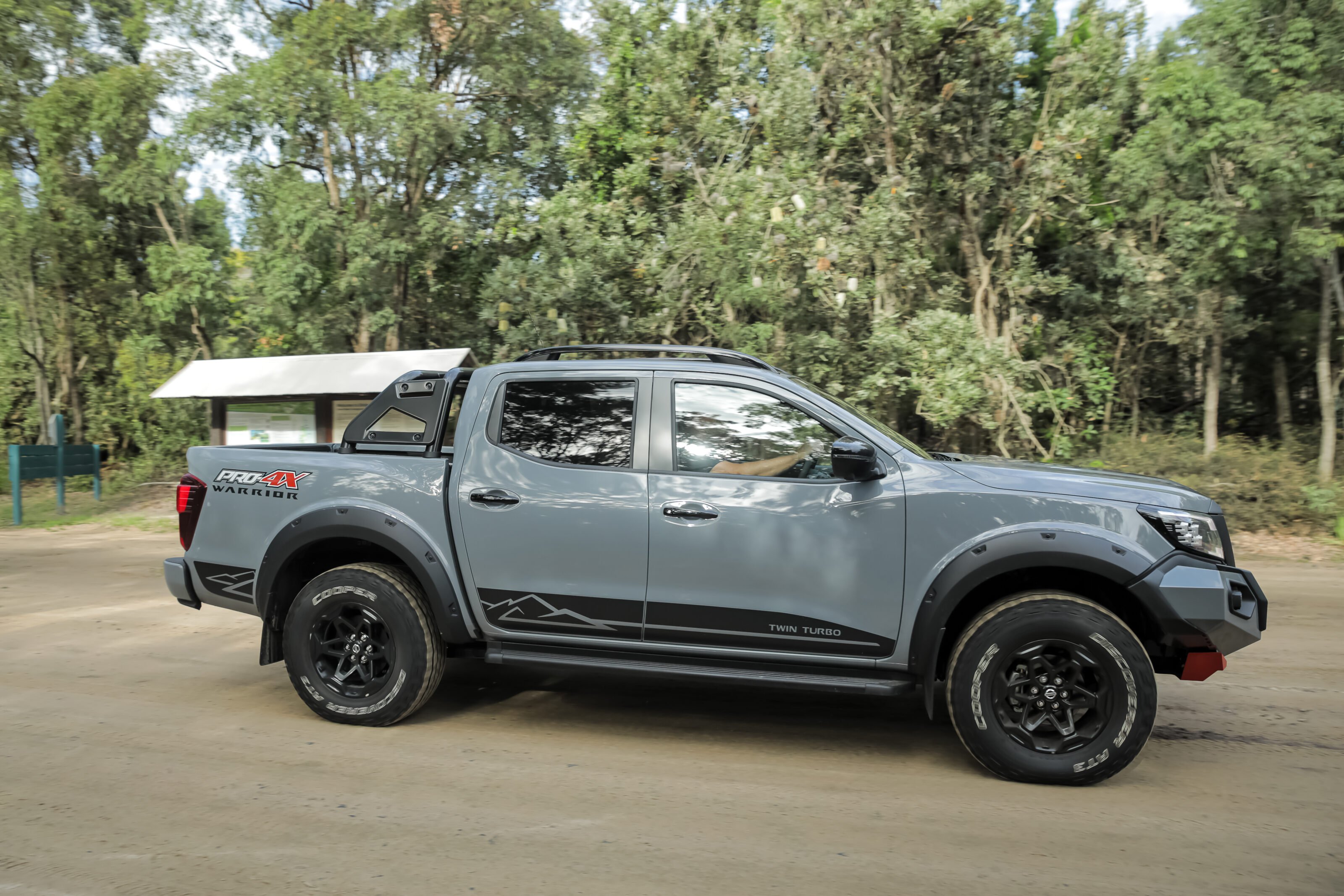
We’ve said it before – the PRO-4X Warrior is the best Navara ever from Nissan. That’s why we chose to secure one as a long-term tester so that we could spend some more time with it.If you’ve been following along, you would have seen us follow our car down the production line at Premcar before we took delivery of it, and no sooner than it was delivered we took to the highways in search of sandy tracks.While we’ve reviewed the PRO-4X Warrior already, our car was ordered with the six-speed manual gearbox, and we were keen to see how it performs on a road trip.
Powertrain & performance
All PRO-4X Warriors are powered by Nissan’s 2.3-litre bi-turbo diesel engine, but you have the choice of a seven-speed automatic or a six-speed manual transmission. We chose the manual for our test car because we like manuals and admire that Nissan still gives buyers the choice, even if automatics are preferred by most Australian buyers.The engine’s 140kW and 450Nm are modest by class standards but the Navara gets along without fuss, helped by the broad torque band afforded by the bi-turbocharger arrangement. The modest outputs are also helped by the manual gearbox, with its more direct feeling and no power-sapping torque converter.
The shift feel of the gearbox is positive, precise and always easy to operate. The same can’t be said of the transfer case which, like most modern vehicles, is selected via an electronic dial and not the old transfer lever. It shifts easily between 2WD and high-range 4×4 while you’re on the go – when, for example, you’ve just departed the highway for a loose gravel road; but shifting in to low range can be frustratingly difficult.On a few occasions during this drive we weren’t able to select low range when we needed it. Vehicle stopped, gearbox in neutral, clutch in, and no matter how many times we tried, it would not select low range. Even after moving the car forward and back to try and get it to engage. We did eventually get it into low, but only once we were back on flat ground and not when we needed it while rescuing a bogged car or when driving in soft sand. This is a common fault of these electronic switches, but this case is one of the most frustrating we’ve found.
On-road ride & handling
Our plan for this drive was to hit some beaches in the Warrior and, as there are very few options to legally drive on a beach in Victoria, that meant a few hours on the highway heading north. In these conditions it’s hard to fault the Warrior; it gets along at the highway speed limit at around 2250rpm in top, the cruise control does its job without any radar interference, the stereo provides the tunes, and the kilometres pass on by.Get off the highway and on to the twisties and the Navara performs admirably considering it rides on all-terrain tyres and raised suspension. The Premcar suspension does an excellent job of controlling the ute over rough back roads and through mountain bends. This suspension is the key to what makes the Warrior so good.
The car eats up the miles so well that I was surprised at how often I had to stop for fuel. The PRO-4X has an 80-litre tank and it felt like it was sucking through it quickly, but measuring the consumption revealed figures around the 10L/100km mark. What became obvious is that the distance to empty figure on the dash is more like the distance to reserve, as there was still at least 10 litres of fuel in it once the DTE reached zero. I drove 80km on zero and it still only took 70 litres, so the touring range amounts to about 800km on the open road.
Off-road
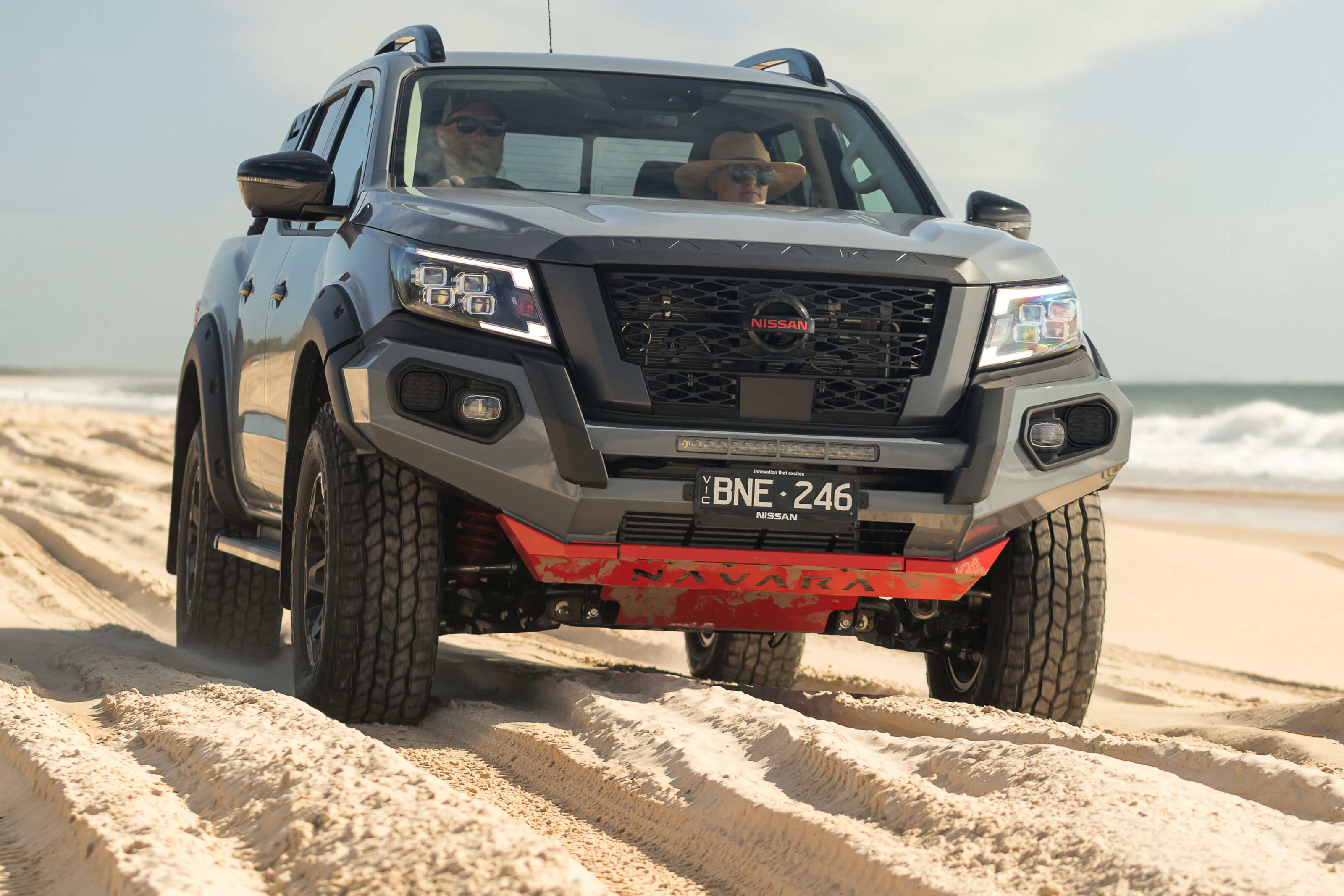
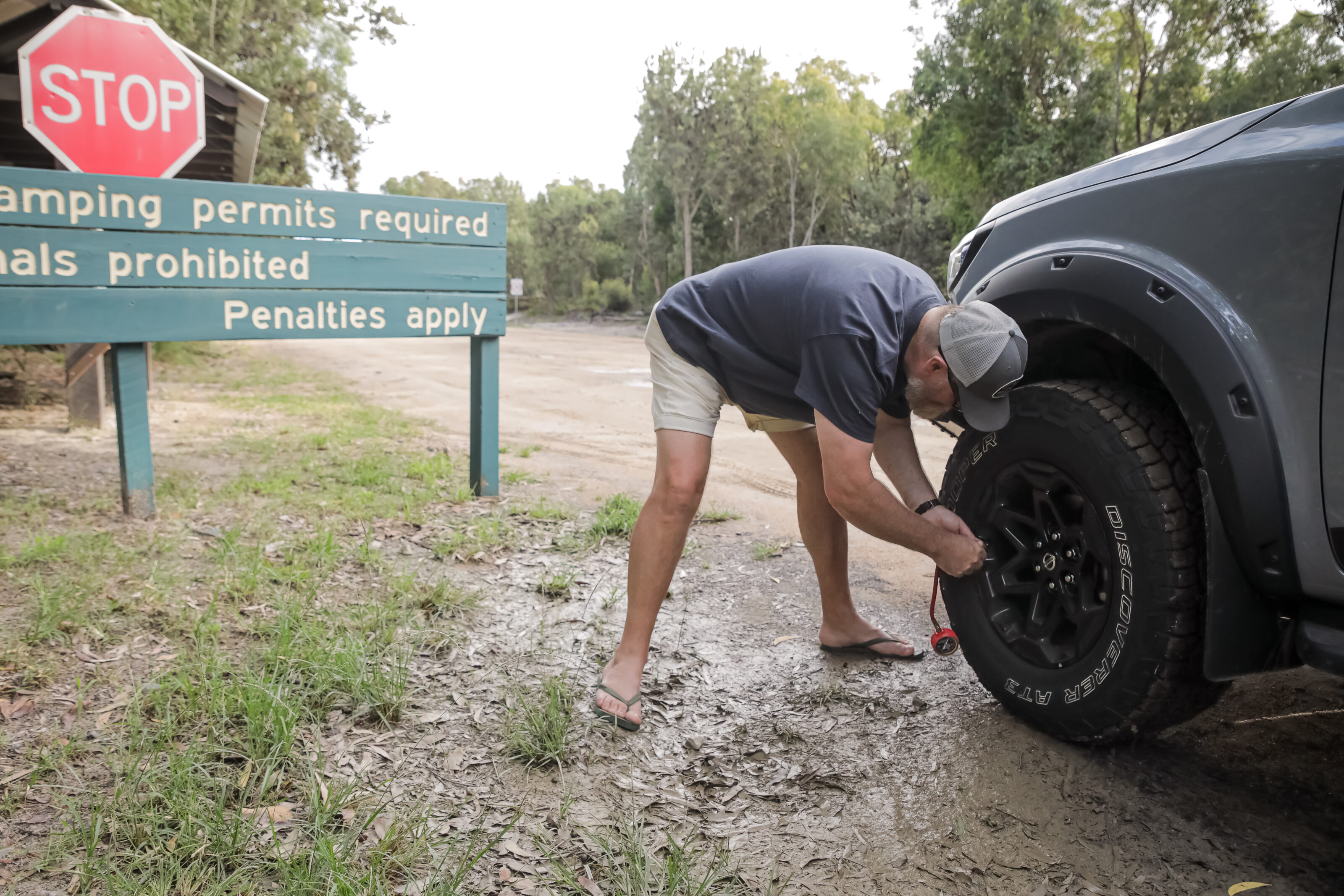
The off-road element of this drive was on the beach and, with the LT tyre pressures dropped to an appropriate 18psi, we hit the sand. It’s worth mentioning here that the PRO-4X has a tyre-pressure monitoring system on the dash and, while it tells you that the tyres are low on air once you drop them, it doesn’t emit annoying warning beeps while you’re beach driving.
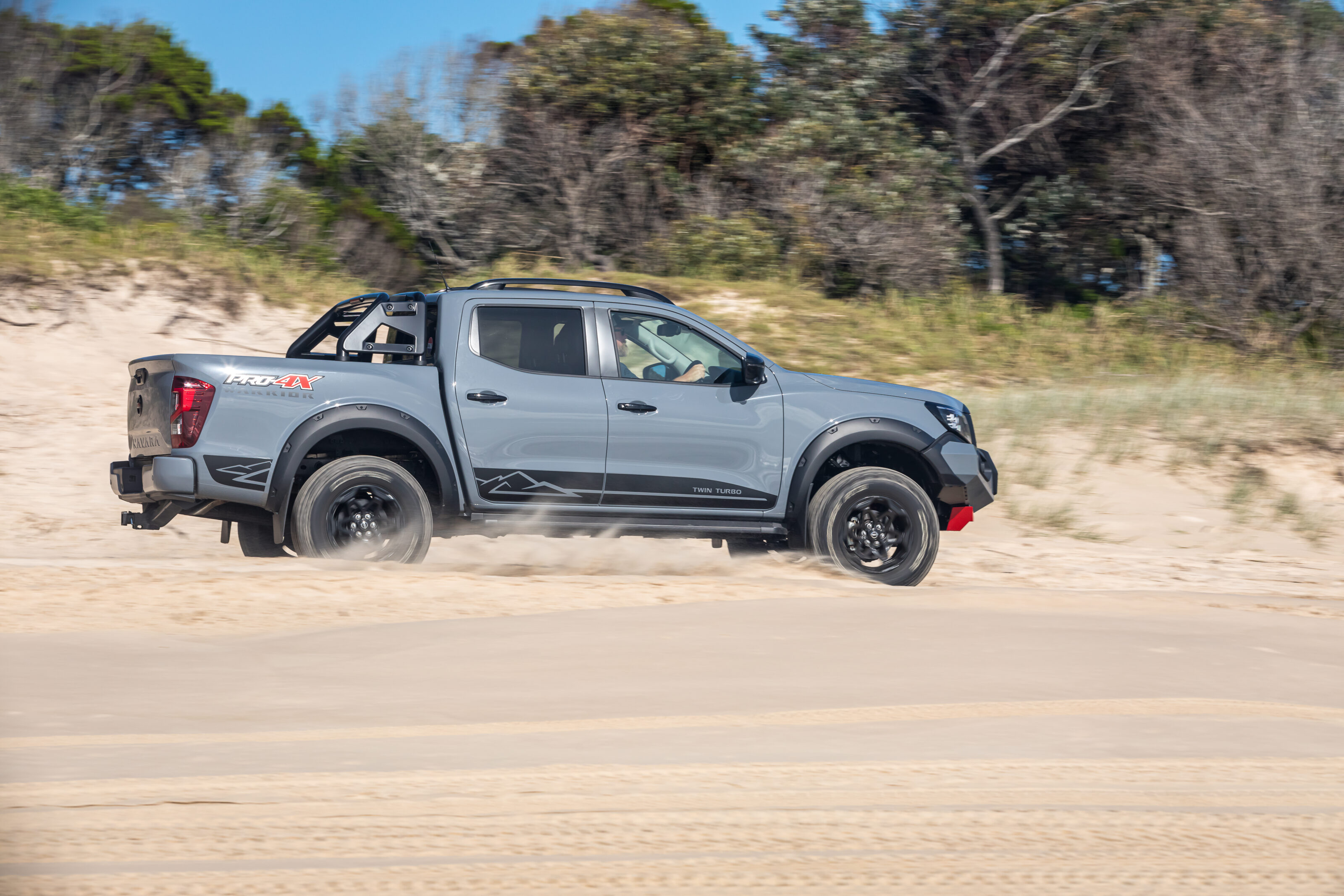
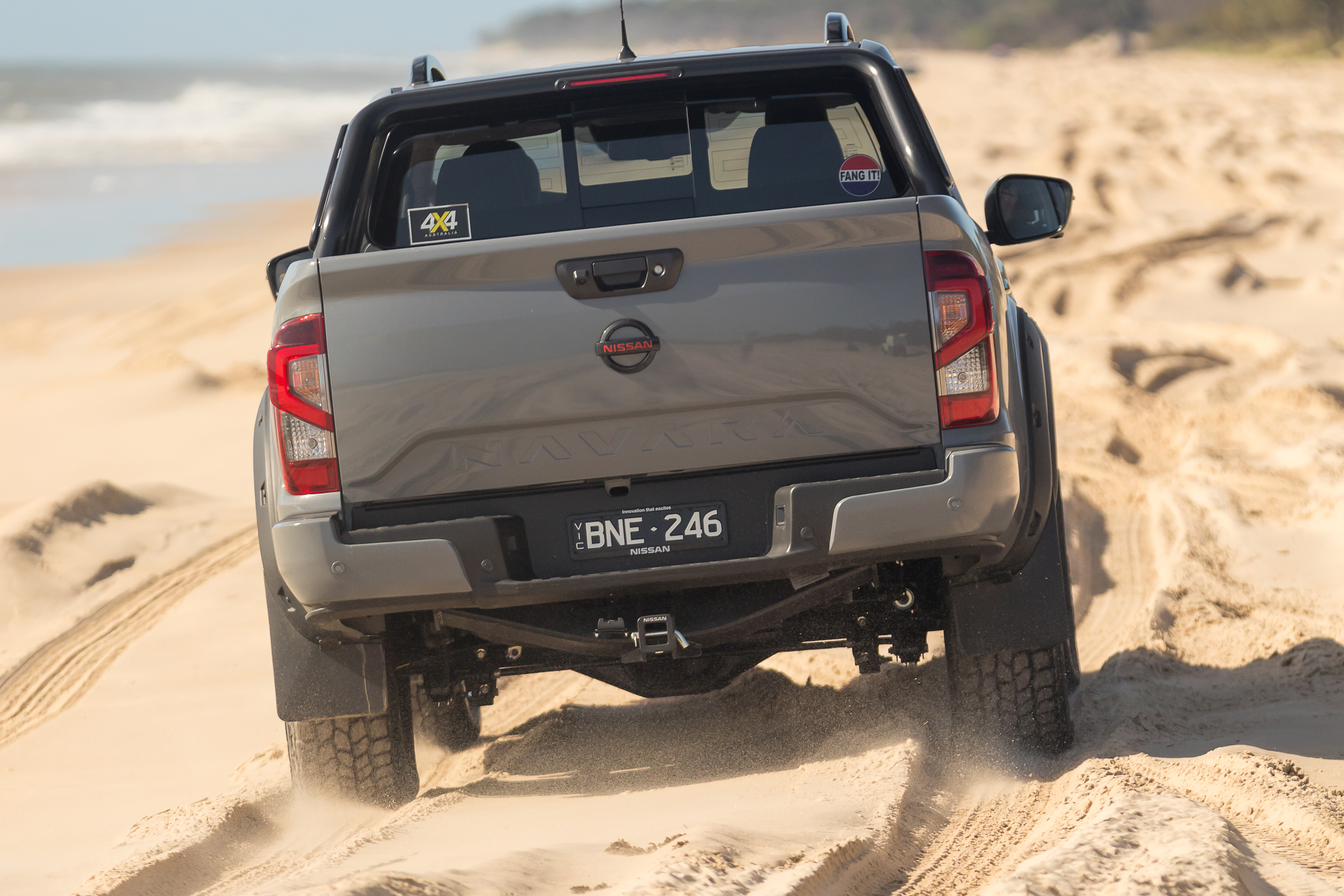
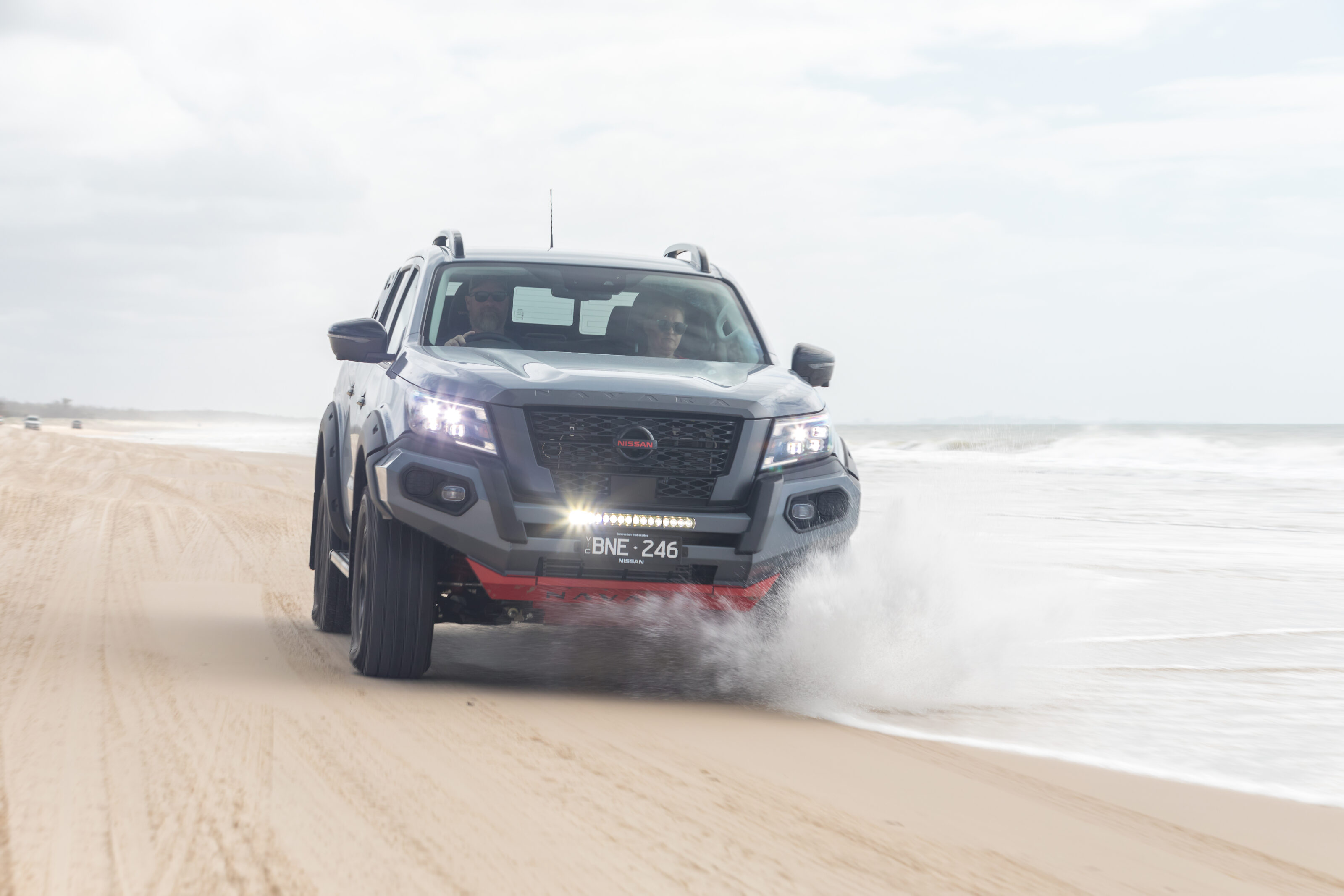
Aside from the aforementioned trouble selecting low range, which could get you stuck in the wrong conditions, the Warrior ate up the beach. Again, the suspension does a superb job of soaking up the bumps and ruts, the added ground clearance meant it never scraped the sand, and the Cooper AT3 tyres provided plenty of floatation over the softer sections.When in low range we found that second and third gears were well-suited to the heavier sections and when turning around, without punishing the clutch.We’ve got this Warrior for six months, so we’ll be exploring different terrain in that time.
Cabin & accommodation
The PRO-4X Warrior is the halo model in the Navara range and the cabin is well-appointed, but if you want power-adjustable and heated front seats you have to make do with the ST-X model. I know I’m going to miss the seat heaters as Melbourne slips into winter hell. Don’t knock ’em until you’ve had them!
The leather-trimmed seats are firm and flat and take a bit of getting used to, but once comfortable I had no trouble spending long days behind the wheel. The lack of steering reach adjustment is an issue for anyone my height (185cm), but you get used to it.The Navara’s dash is easy to read and use, with just the right amount of info and not too much you couldn’t care less about. The controls are also simple and easy to operate, with big buttons for the dual-zone temperature control and tactile dials for the audio volume and tuning functions.
A good-sized screen is there to view the audio controls, rear-view camera and around-view cameras, which can be handy when driving off-road as they show what’s directly in front of the car.With no rear-seat passenger for this trip, we were able to fold the seat up and stow recovery gear in the under-seat bins and also carry our luggage where it was secure. The PRO-4X’s factory window tint is quite dark, protecting your kit from prying eyes when parked.
Practicalities
With its uprated and raised suspension that works exceptionally well, AT tyres, metal underbody protection plates, and steel front bumper with inbuilt LED light bar, the PRO-4X Warrior is ready to hit the tracks no matter where you want to go.It would be nice if the front bar had provisions for auxiliary lights and antennae mounting, so they are things you might want to work around. And while the cargo tub has a liner and handy adjustable tie downs, it would be nice to have a dedicated 12-volt power outlet in there to power a fridge.Unlike the other factory hot-rodded 4×4 utes on the market, the PRO-4X retains its full 3500kg towing capacity and has a 961kg payload, so there are no compromises there. It’s also available with a choice of manual or automatic transmission – all key factors in helping us select our next drive car.
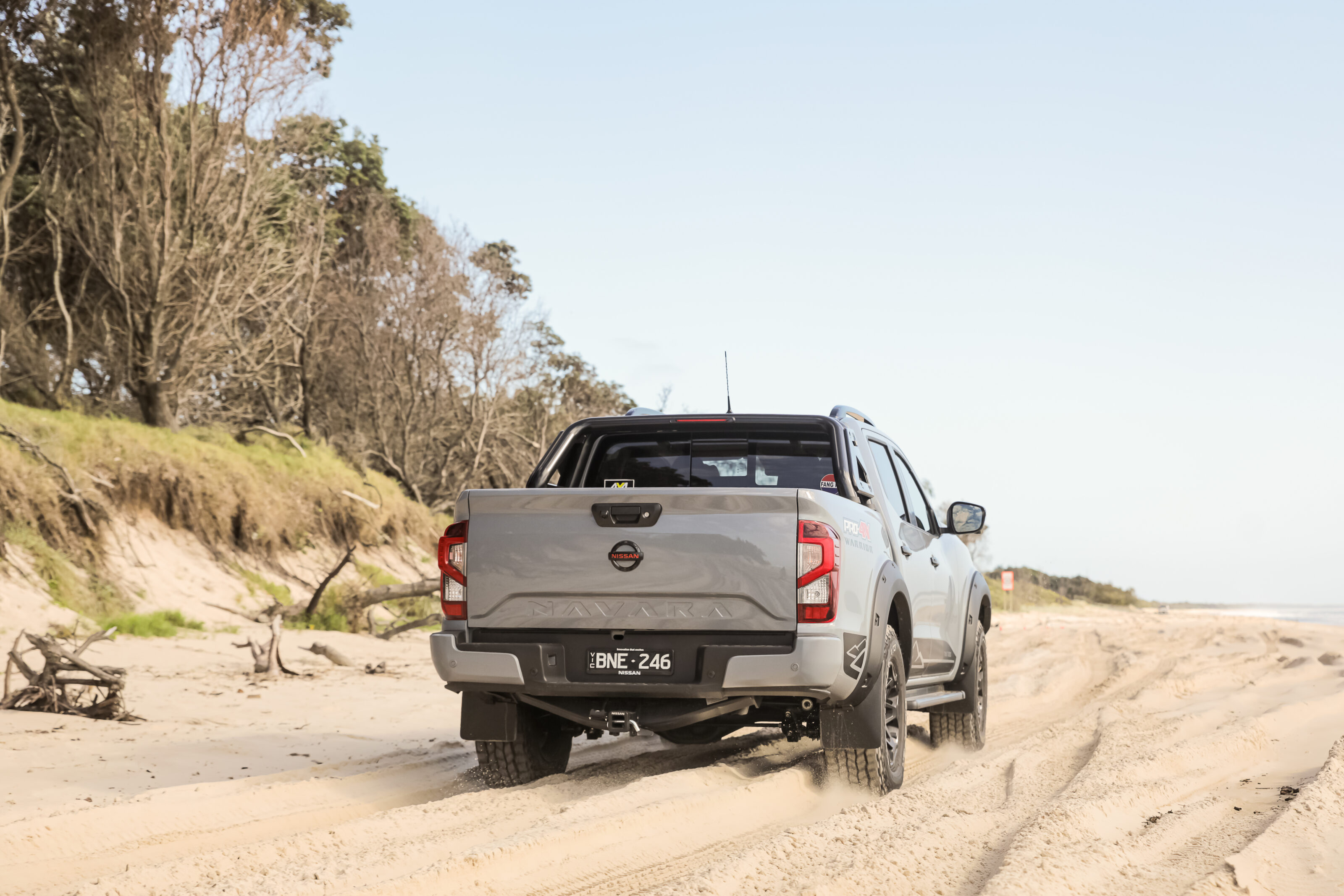
Nissan has a range of factory accessories available for the Navara over and above what are fitted to the Warrior including an intake snorkel, Warn winch and canopy. The Navara is popular enough that the aftermarket suppliers also cater for the Navara very well. A full bullbar might be a consideration for owners wanting to do a lot of outback miles, and a set of rated front recovery points are essential; but, really, the rest of the Warrior package does an ace job.
Summary
At a smidge less than $70K (+ORC) the PRO-4X Warrior represents a lot of ute for the money. It’s not the biggest or most powerful ute in the class, but it is a vehicle that you could comfortably drive out of the showroom and travel anywhere in Australia without having to fork out for essentials like light-truck tyres and quality suspension.The Warrior package is professionally engineered, tested and installed to full OE standards which no aftermarket supplier seems to be able to do, and it’s this full integration of components that makes it a winning package.We reckon the bi-turbo engine feels more responsive when mated to the manual gearbox, and it has been great to log up the miles in a stick-shift 4×4 ute. We’re certainly looking forward to exploring more varied off-road terrain in the Warrior.
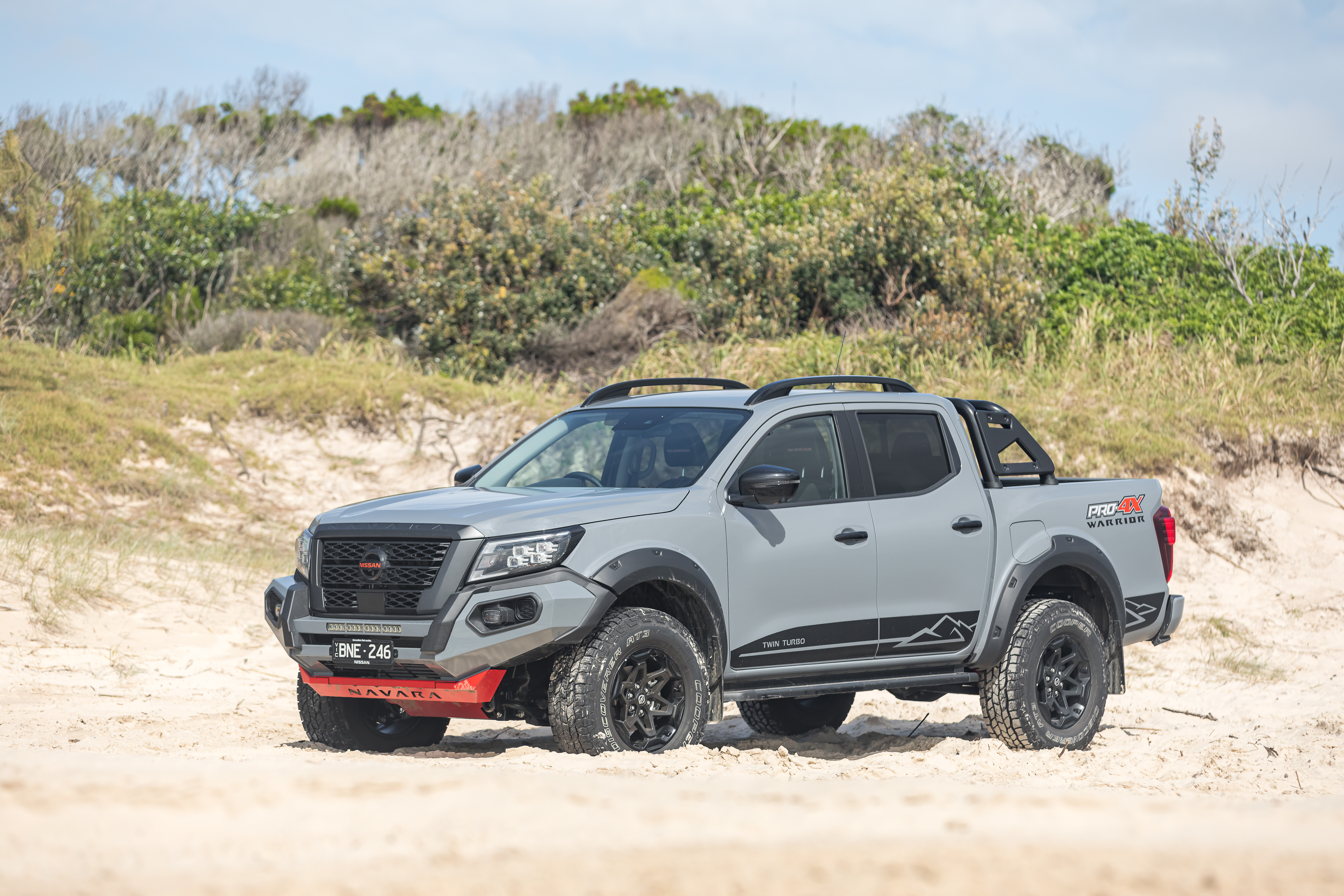
Nissan Navara PRO-4x Warrior specs
Snapshot
- SsangYong Torres revealed as off-road oriented SUV
- Australian launch confirmed, timing unknown
- Petrol variant to be joined by electric model in the future
The 2023 SsangYong Torres has been revealed, with the Korean manufacturer aiming to take on the heavily contested off-road market.
Previously teased last month, the covers have come off SsangYong’s latest creation as the Torres targets its established Japanese rivals such as the Toyota RAV4, Mazda CX-5 and Nissan X-Trail. It will enter the lucrative medium SUV segment when it launches in Australia, although no specific timing has been announced as yet.
Details about what underpins the Torres are thin on the ground, although it’s likely the SUV will adopt a unibody platform – like that of its Korando stablemate – over a body-on-frame architecture, such as what is found in the Rexton and Musso.

Under the bonnet, the Torres makes use of the Korando’s 1.5-litre, turbocharged four-cylinder petrol engine, producing 125kW and 280Nm, and mated to a six-speed torque-converter automatic transmission – with front-wheel drive as standard and all-wheel drive as an optional extra.
While there are no plans for the Torres to adopt the Korando’s 1.6-litre turbo diesel engine, it’s understood there might be an all-electric variant in the works, utilising the powertrain from the Korando E-Motion – a vehicle which uses a 140kW electric motor and a 61.5kWh battery pack for a driving range of 339 kilometres.
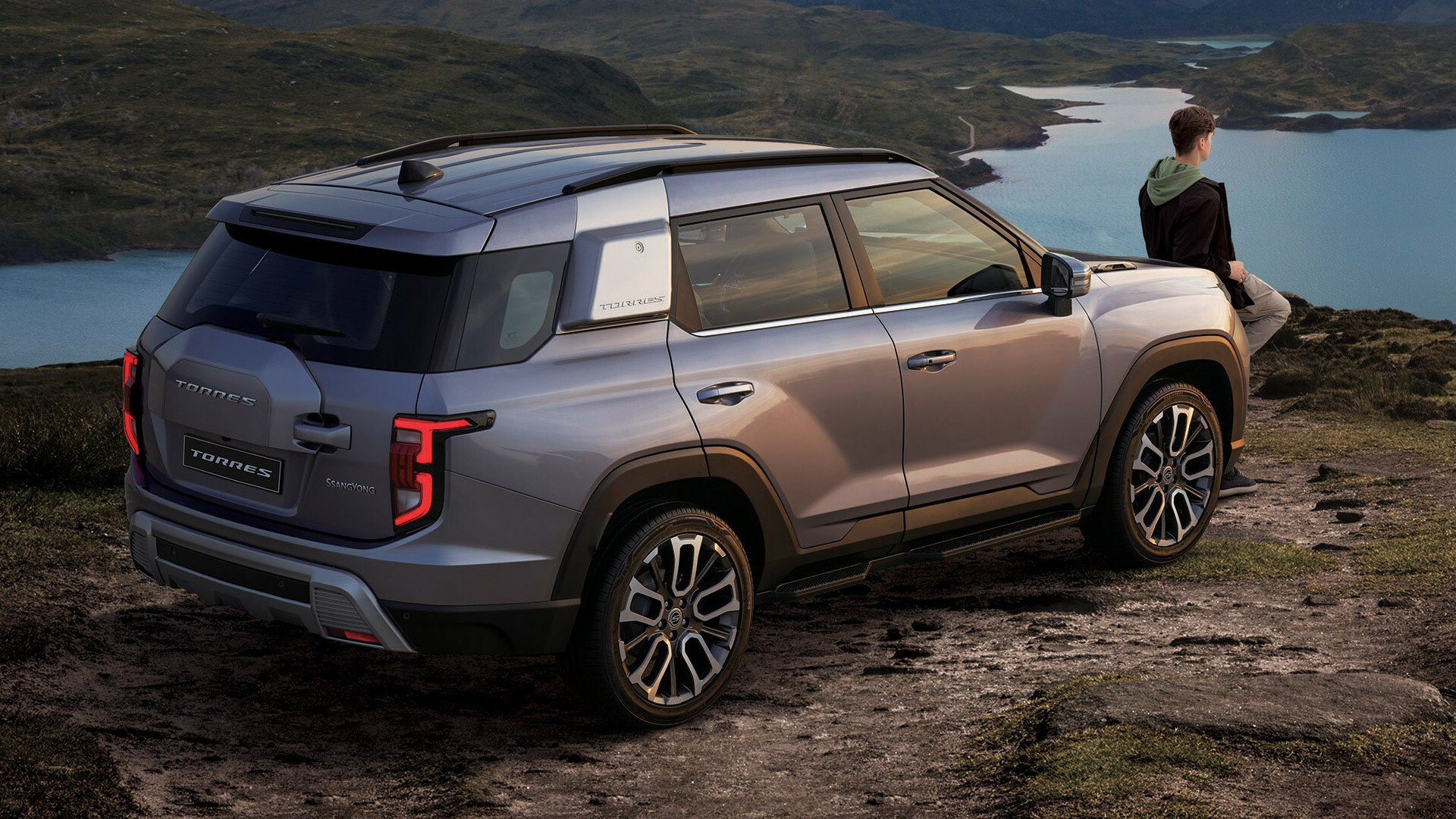
Riding on 17-inch wheels in standard guise, a range of 18- and 20-inch alloys are also available for the Torres, while two-tone paint can also be optioned on the SUV.
Internal storage is quoted at 703 litres with the back seats up and 1662 litres when folded flat, but the addition of exterior storage boxes behind the C-pillar gives added flexibility for when space inside is at a premium.
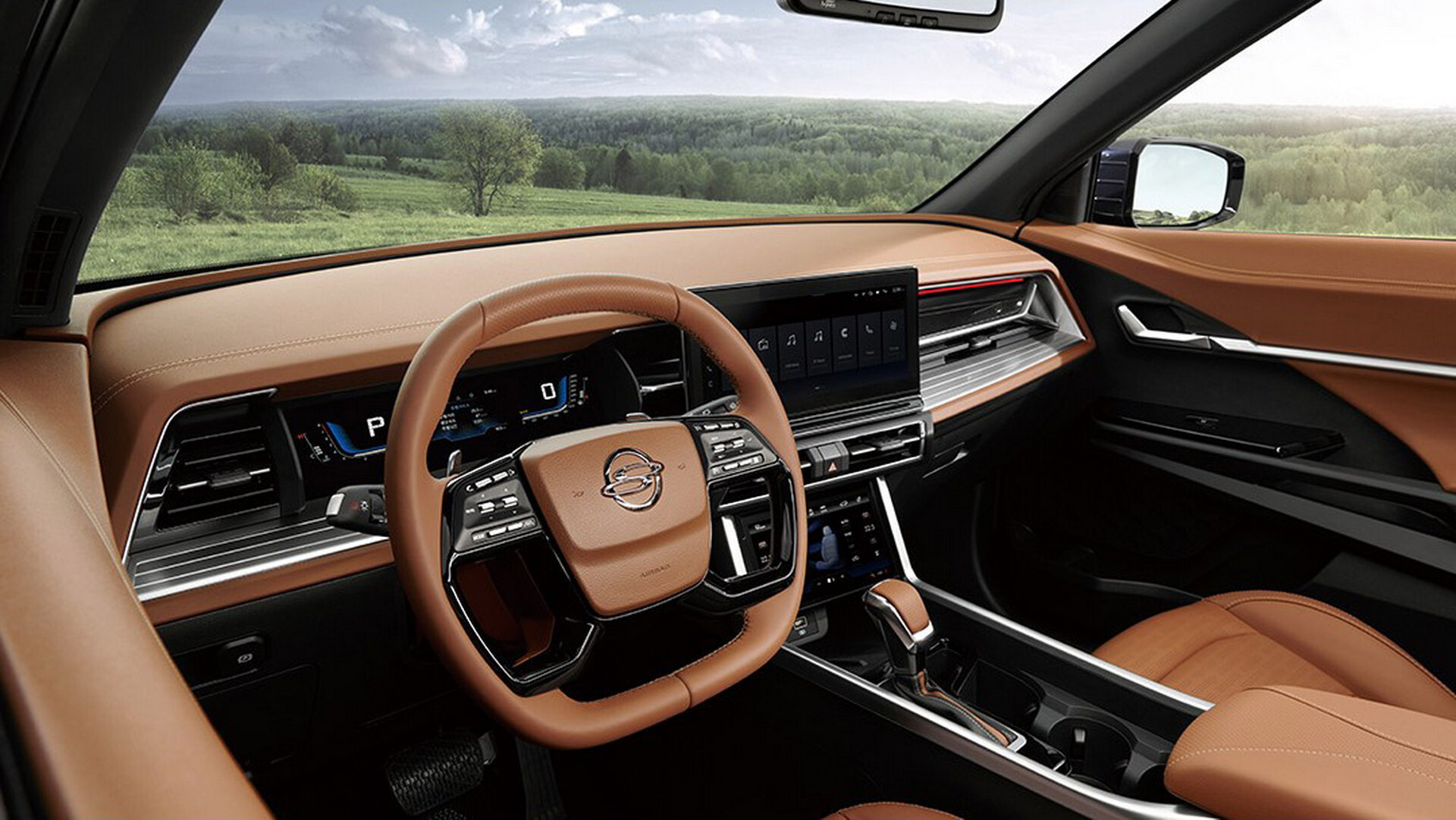
Inside the cabin, a digital instrument cluster is joined by a 12.3-inch infotainment screen sitting in the centre of the dash above an eight-inch climate control panel, all of which are angled towards the driver.
Additional interior equipment, available as optional extras, includes; ambient lighting, a six-speaker sound system, synthetic or real leather seats which are heated and ventilated in the front seats and heated in the rear, all of which are understood to be optional features.
Building on the safety technology, which earned the Korando a five-star ANCAP rating, the Torres also boasts; seven airbags, autonomous emergency braking (AEB), lane-keep assist, blind-spot monitoring, driver attention monitoring and adaptive cruise control.
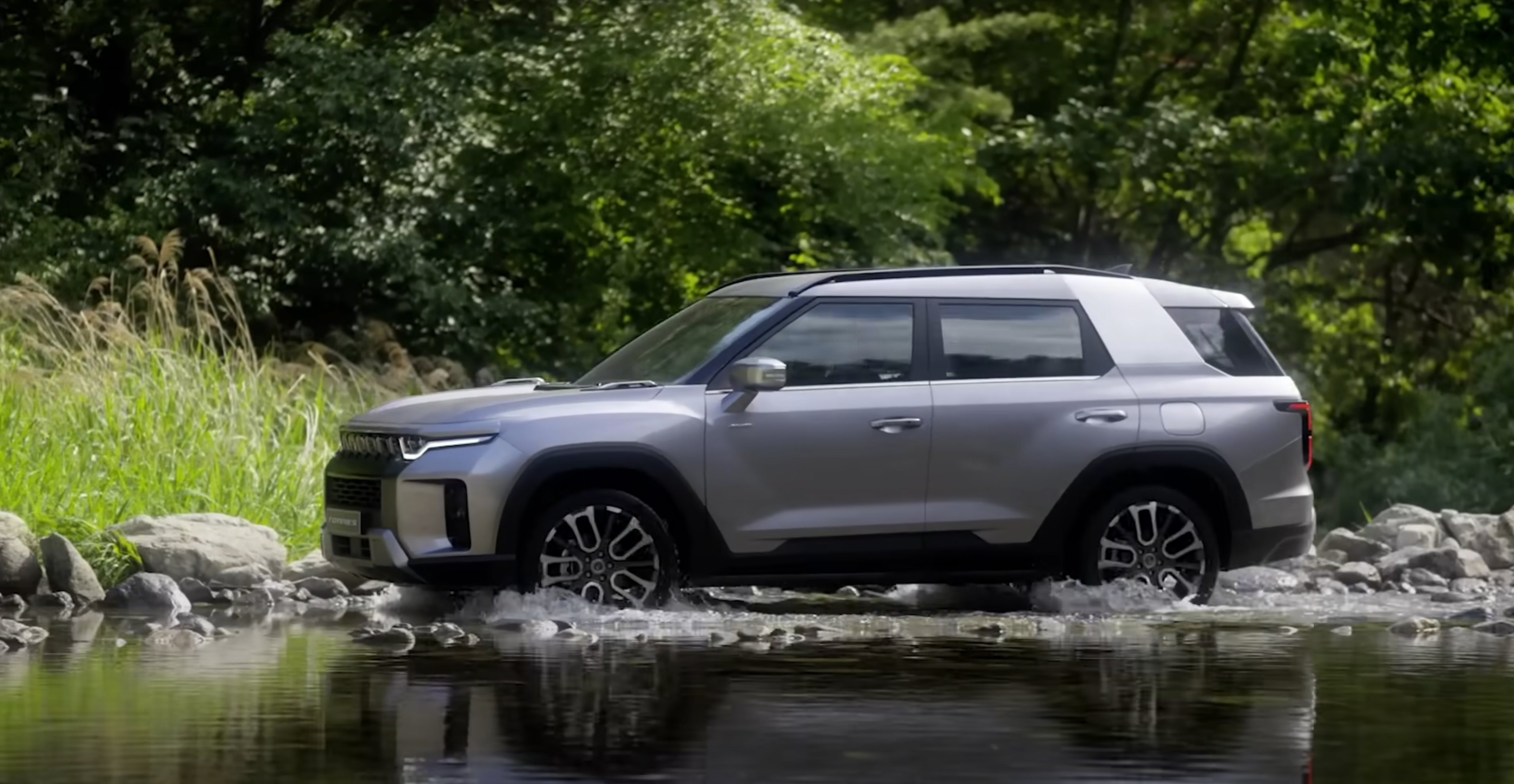
SsangYong’s Australian arm has confirmed the Torres (codenamed J100) is in its local product plan, although timing on when we might expect the Korean SUV isn’t locked in.
Stay up to date with 4×4 Australia for all the latest news on the Ssangyong Torres.
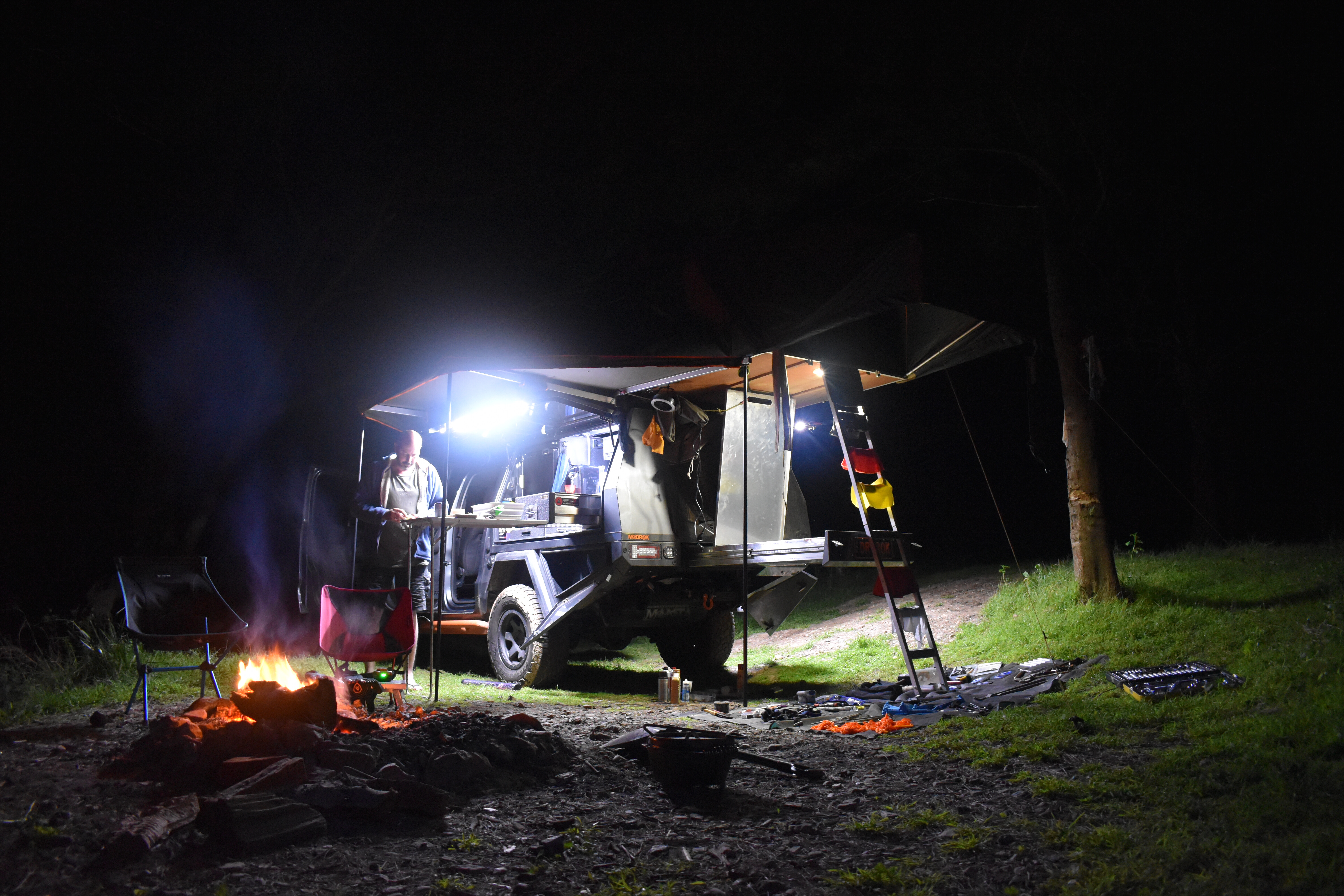
It doesn’t matter what, where or how you drive, if you’re heading off-road in any vehicle for any purpose one of the biggest set of decisions you can make is the type of 12V system you’re going to run. After tyres and suspension, getting your electrics dialled in will arguably be the most useful addition to your vehicle, even more so when camping.The problem is, unless you have degrees in electrical engineering, astrophysics, an IQ in the 200s, your surname is deGrasse Tyson or are some sort of Tesla-spec savant (no judgement, it’s your time to shine), you’re probably not up to speed on the latest advancements in battery technology, 12V accessories or the myriad ways to set yourself up for off-grid electrickery. And to make things worse, over the past decade or so things have moved on from “huh, that’s a nifty gadget” to “that’s outright bonkers”.Let’s dive in.
Getting the basics down
First things first, we should probably get in to some of the terminology used in this guide. Because 12V chicanery is pretty daunting for the uninitiated, let’s get our head around the basics by using the comparison of electricity to water running through a pipe, and the various devices being the things that impact the flow of that water.For example: volts, amps and resistance – compare the volts to how much water pressure there is or how much you turn the tap on (in this case, it’ll be pretty much always 12V); the amps, or current, would be the water-pipe diameter (or how big your battery is); and the resistance (caused by, say, a 12V LED light) would be a clod of dirt in the pipe that impedes the current. So the more dirt (accessories) impeding the flow (current), the more it drops.Got it? Cool, let’s get into the nitty gritty.
Building your battery system
STEP 1: Working out current draw
Easily the most subjective part of this process is working out what’s going to suit your needs, but it’s the important first step on your journey to a functional battery system.Now, say you only need to power a fridge and a couple of camp lights, so your system requirements are going to be very different to your mate, who’s a bit of a glamper and wants to run the same as you but also a second fridge as a freezer, a microwave, a 12V hairdryer and he needs to watch the footy on a Friday night on his 12V telly.
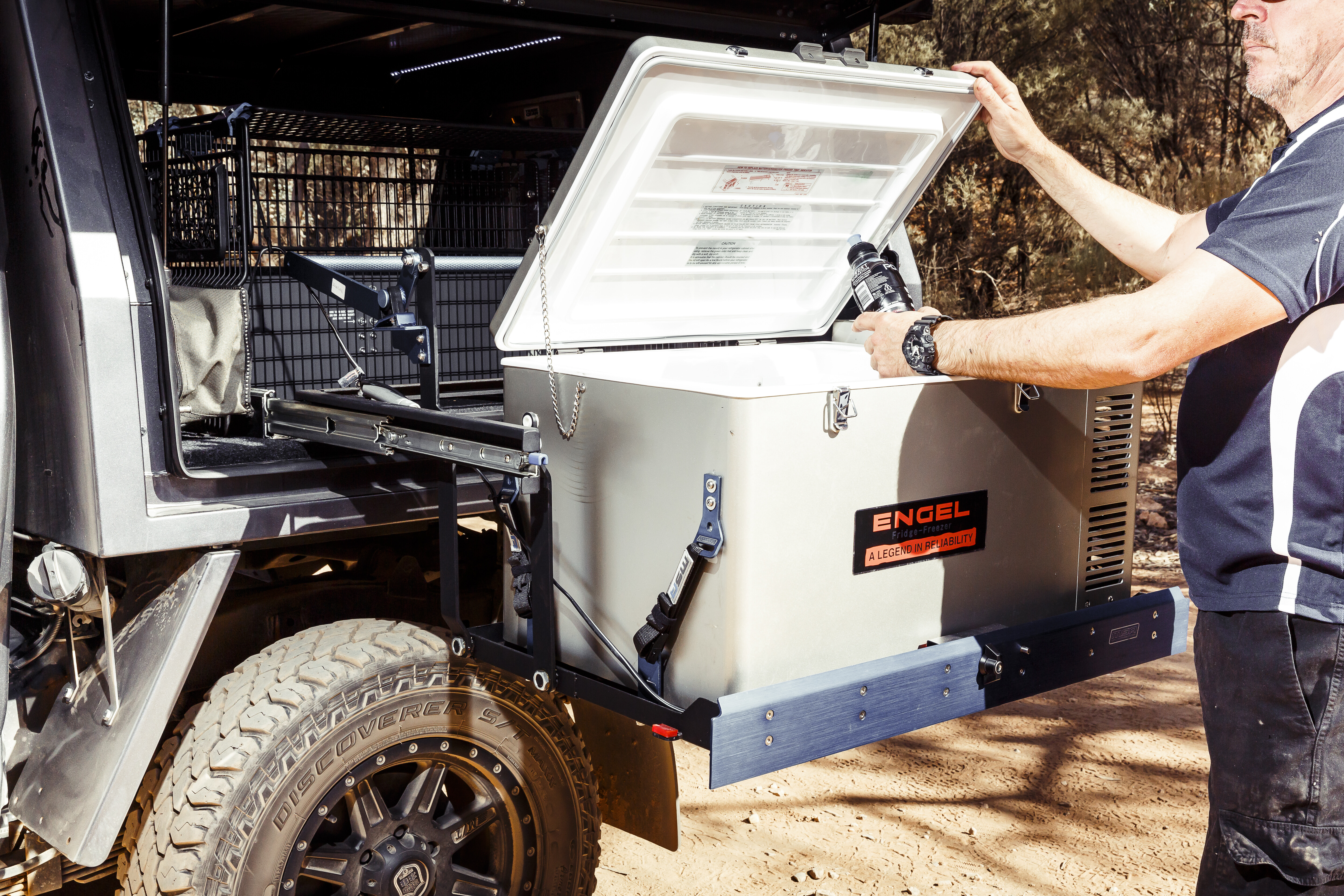
You need the rough current draw for each and every 12V accessory you want to run while the vehicle is turned off. Let’s throw some figures around to give you an idea.For a fairly standard set-up, say you have a 60L fridge, four LED camp lights and you want to bump some tunes through your 4×4’s stereo (before 9pm and at a reasonable volume, because you’re not a scum queen). Of course, you’re not running your lights or music all the time, so we have to factor in a rough ‘hourly usage’ amount. So, we’ll say you’re running your fridge for a full day of camping (24 hours), your stereo for two hours as you’re making dinner, and your camp lights for four hours as an estimate.Your fridge will be drawing roughly 85amp/h over 24 hours, your stereo will be 10amp/h and your four lights will be sucking around 8amp/h from your battery. A little addition later and we’re at 103amp/h over a 24-hour period for your battery needs.
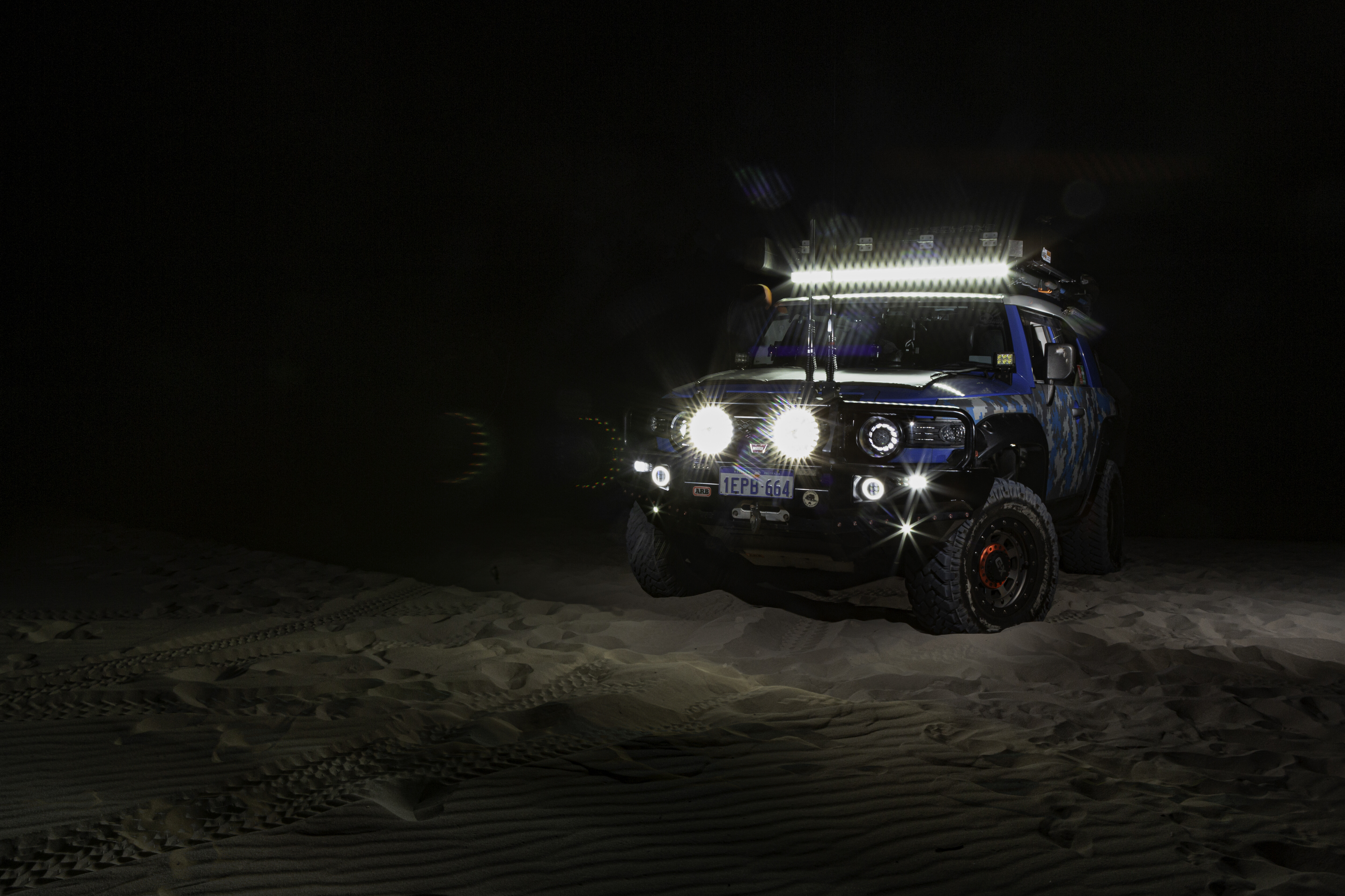
Now let’s look at your mate’s requirements. Fridge, stereo and four lights are 103amp/h, but let’s also add in a second, smaller fridge at 70amp/h; a microwave (10 minutes total run time per day) at 30amp/h; a hairdryer (10 minutes per day) at 27amp/h; and the TV (4 hours per day) at 12amp/h. This guy is going to need 242amp/h to get him through a 24-hour period, which is more than double your needs, and will cost a lot more. Knowing your approximate current draw is important, so let’s keep building our 12V set-up.
But before we do, a note on smart alternators
Wait, what the hell is a ‘smart’ alternator?! Ugh. Hands up who loves car manufacturers adding unnecessary complexity to their 4x4s? Yeah, my hand is down too, but let’s have a quick chat about smart alternators.A decade or so ago some boffin who deserves a Chuck Norris roundhouse to the dome, arbitrarily decided that a standard fixed voltage alternator caused too much mechanical load on a vehicle. So they came up with a system to essentially turn the alternator off once the main starting battery is at full charge and reduce exactly four-fifths of bugger-all load, to increase fuel economy and thereby reduce emissions by what must be truly infinitesimal amounts.Luckily, they increase complexity and will not charge a secondary battery. Unfortunately, nobody has invented a sarcasm font as yet, so you may have missed that they’re an absolute waste of time.Luckily (seriously this time) there are a range of battery chargers on the market that will allow a secondary battery to be charged, even with a not-so-smart alternator, but just make sure you know what your vehicle has before laying down your hard-earned. A quick and cheap workaround is to buy an Alternator Output Compensator (AOC) from Piranha Off Road, which will allow your variable-rate alternator to charge a modern battery.
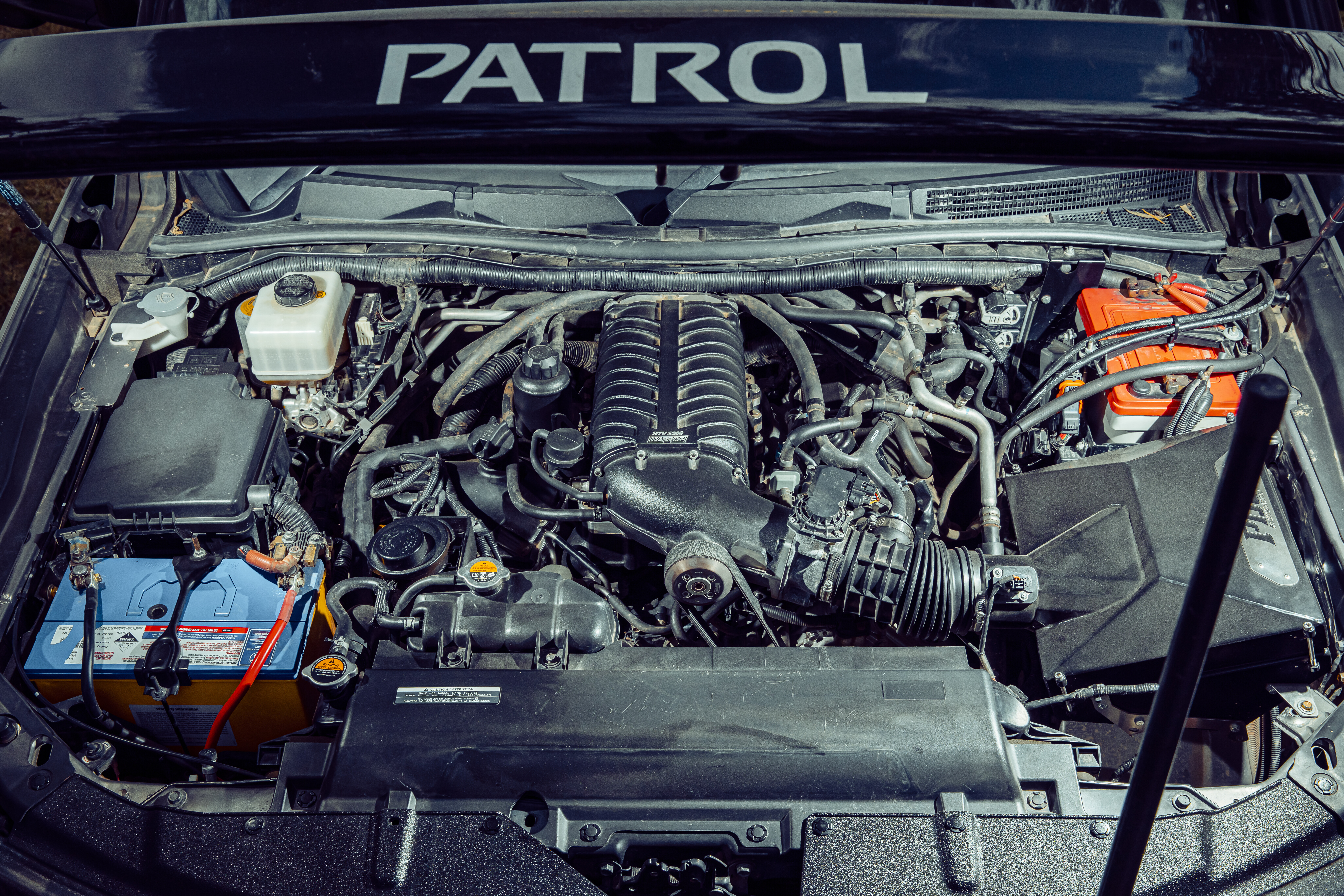
A quick and easy check to see if your vehicle has a smart alternator is to take a look near your vehicle battery (usually around the negative terminal) and see if you can spot a battery sensor module. If you can, you have a smart guy and will need to purchase a charger or AOC that will allow for it. Right, moving on.
STEP 2: Choosing your battery
There has probably been more advancement in battery technology over the past decade than there has been in the preceding four. The big new player on the scene is Lithium Iron Phosphate (LiFePO4), commonly contracted to just lithium batteries, or there’s the tried-and-true Absorbed Glass Mat (AGM) units, or the cheaper wet cell lead acid types.
We’re going to leave out hybrid cranking/deep cycle batteries for the sake of brevity, but these can be a great secondary battery if you’re running a lot of high current-draw accessories, like a 24V winch or a bevy of halogen lights. For most people though, a dedicated deep cycle auxiliary is the way to go, so we’ll stick to them.
Lead acid (wet cell)Starting with the cheapest first, these are the batteries for an absolute shoestring budget. Not so long ago, one of these combined with a simple boat battery switch was the way to get yourself a battery system on the cheap; but, to be completely honest with you, there is very little reason to go with a wet cell battery these days – a little more outlay can get you a system that’s orders of magnitude better.

AGMFor the budget-conscious, AGMs are still the pick of the litter. They use a glass weave (think raw fibreglass sheeting) between the plates in the battery which absorbs the acid and lowers the internal resistance, enabling faster charging and delivery of higher current when needed. They can also handle deeper discharges than wet cells and tend to last longer too.Their big advantage over lithium batteries is their ability to handle heat, so are safe for under-bonnet mounting and they’re a chunk cheaper as well, but after that the advantages run out. Put simply, they’re yesterday’s hero, and lithium is the new hotness. However, if you’re only able to mount an auxiliary under the bonnet, these still tick the boxes.
Lithium batteriesLithium is the go-to for most modern battery systems. Not to put too fine a point on it, but they take a bat to everything else. About the only reason you wouldn’t go with lithium is price, which frankly, is fair enough given they’re up to 200 per cent more costly than a similar-spec AGM, but note that they can last up to four times as long, so there’s a strong argument they’re actually less costly over their life cycle.
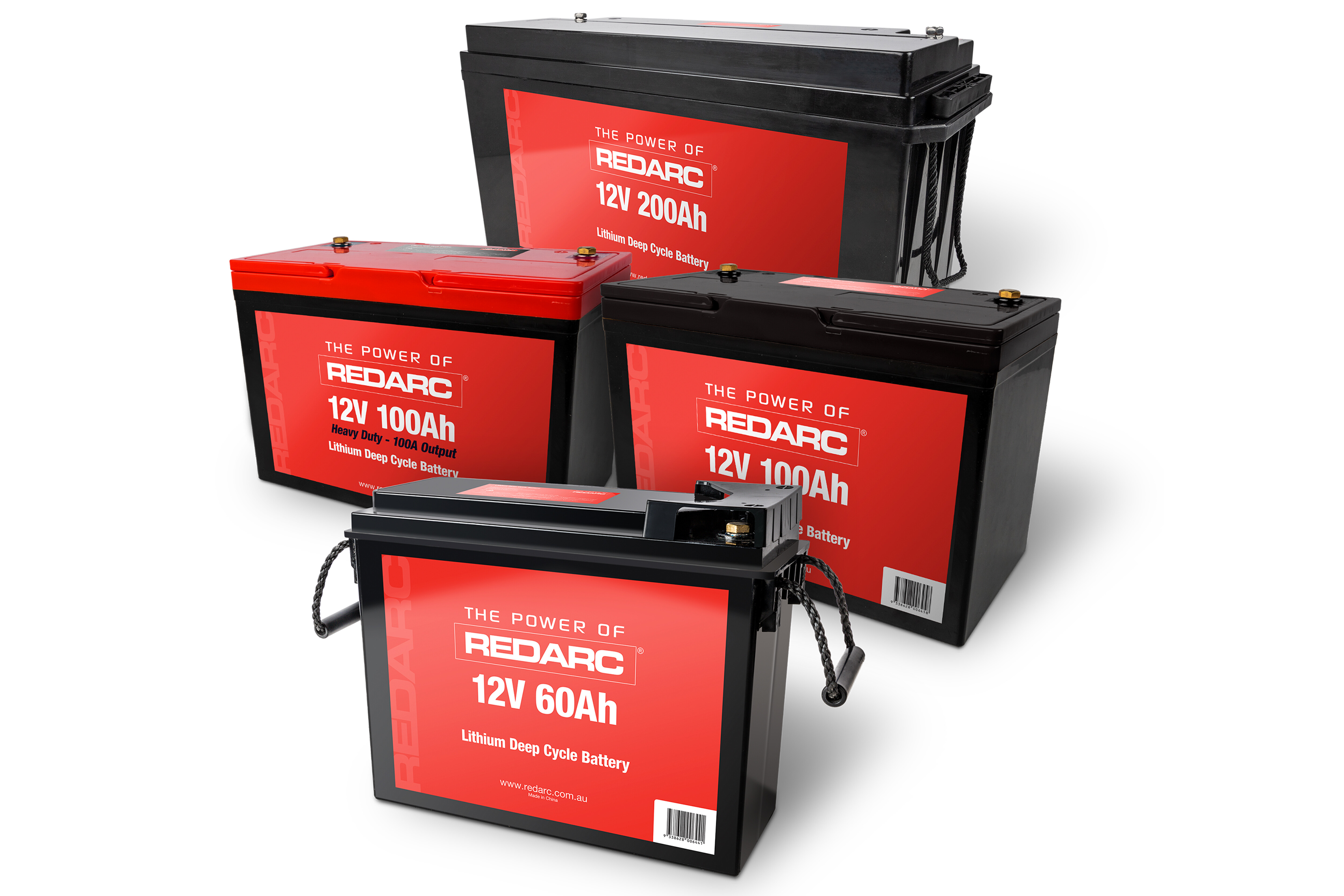
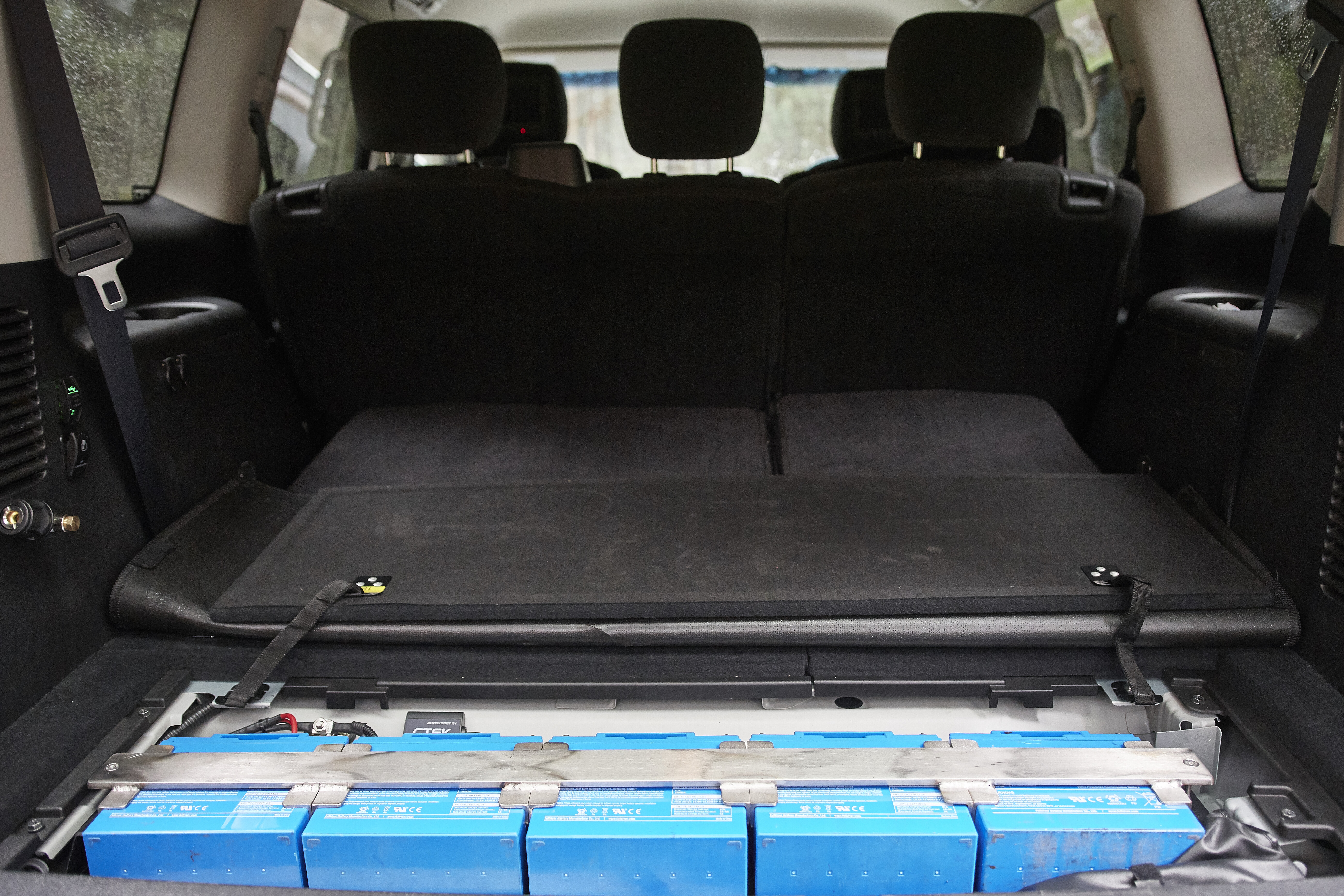
However, they can’t handle heat so under-bonnet installs are out, and they need a special charging profile to work effectively, so you can’t upgrade your AGM-based system with a lithium battery, you’ll likely need to start from scratch.From there, though, it’s all gravy. Up to 65 per cent lighter, can deliver up to 95 per cent of their current without a massive change in voltage (AGMs can go around 50 per cent – so a 200amp/h AGM is equivalent to a ~100amp/h lithium), charge quicker, and a quality lithium can be drained some 3000 times (vs around 1200 for a good AGM). They’re also available in slimline shape, so mounting behind the rear seat in a dual cab cancels the “I’ve got nowhere to fit it, and I don’t want it in my tub” problem. If the initial outlay is affordable, then lithium is the only choice, hands down.

STEP 3: Isolators, chargers and management systems…Oh my
Or in other words, how to keep your auxiliary battery charged.Selecting the right charger for the job may not be as easy as it first seems; there are a couple of things you need to factor in before you start shrilly yelling your credit card numbers in to the phone. The three big ones are: Type of battery you have (lithium or AGM etc.); the maximum charge voltage; and the maximum charge current your battery can handle (both figures should be readily available from the manufacturer). Each battery will react differently to different charge profiles, so matching your battery to its charger will not only extend its life, but it’ll also reach 100 per cent state of charge quicker too, so it’s worth getting this bit right.Let’s say you have a 100amp/h AGM battery with a maximum charge current of 30amp and maximum charge voltage of 13.8V, you would look for a charger with a max current of 30amp to keep things on the safe side. Makes sense when you think about it, eh? Sticking a charger in with 50amp maximum current would most likely kill your battery fairly quickly. Got it? Awesome, let’s take a look at the charger options.
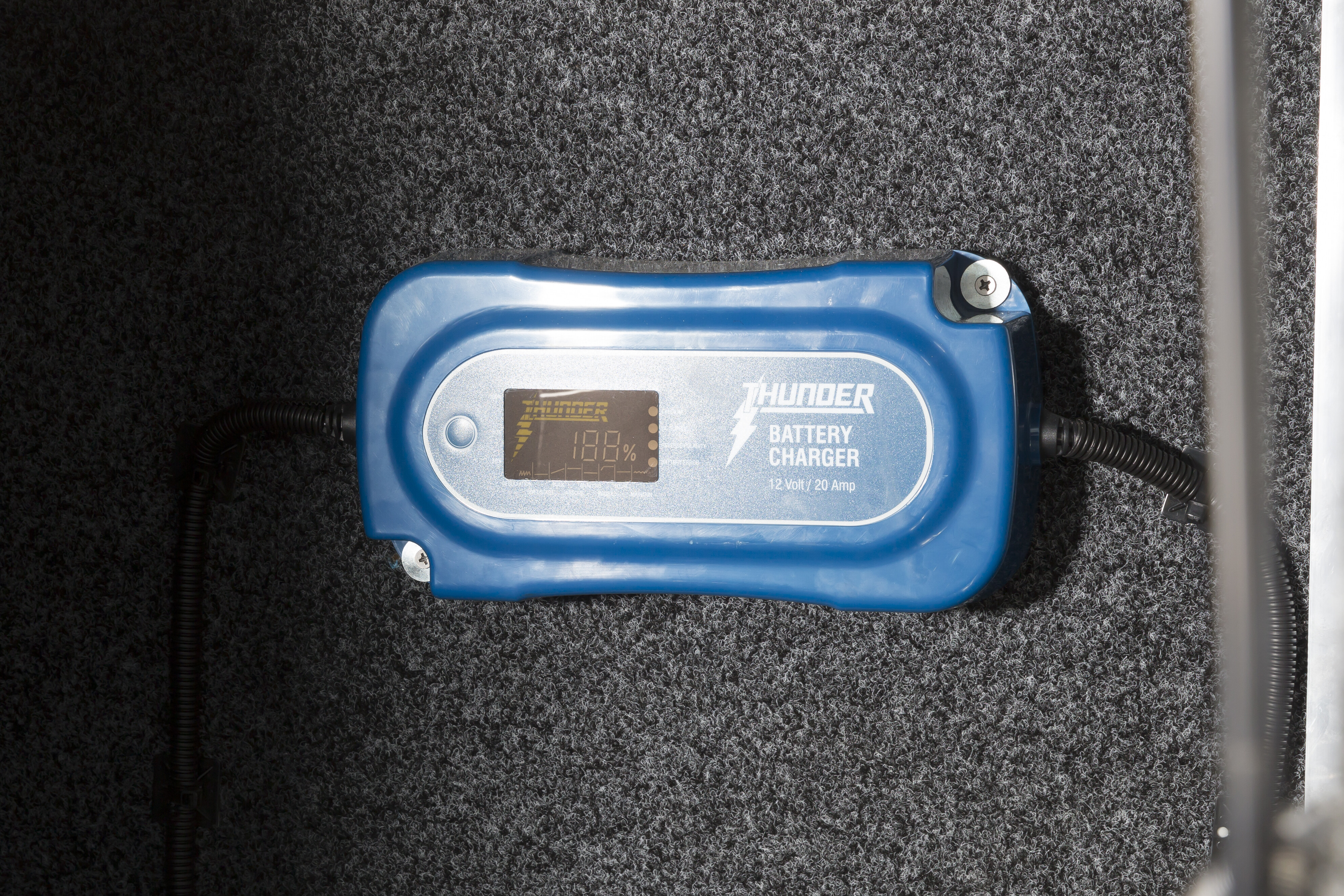
Boat switchesBack in the days before smart alternators, specific battery charge profiles and the internet, it was a whole lot simpler to get an auxiliary deep cycle installed in your rig. Basically, all you needed was a means of securing your second battery, some cabling and a marine battery switch that directed charging current from your alternator to either of your batteries with a flick of a dial. You charged up your auxiliary while driving, then flicked it back over to your starting battery when you’d pitched camp. Dead simple, cheap and foolproof … until you forget to switch things over and you end up draining your starting battery and stranding yourself.Many newer (read: better) batteries won’t be compatible with this type of switching system considering the range of charging profiles. Given the proliferation of modern battery chargers these days, unless you’re powering up a paddock basher with a few camp lights and an old wet cell, there is little reason to be running a boat-switch system.Think of it like this: not that long ago it was considered cutting edge to have a device in your pocket that could contact another human being; nowadays the pocket-device can access all of the knowledge known to mankind and do a whole lot more.It can still make a call, but the scope of its function has grown exponentially. Battery chargers are the same, and there’s so few reasons to be carrying a Nokia 6210 around today.
IsolatorsThe next step in dual-battery charging evolution is the humble battery isolator. These should be considered the entry-level charging system for most modern systems and offer terrific bang for buck as a starting point; however, they do lose out on some of the perks of a more comprehensive set-up. But we’ll get to that in a minute.Essentially, an isolator will use a microprocessor to determine when your starting battery is fully charged and then direct current from the alternator to your auxiliary, allowing it to gain full charge as well. They will also prevent your starting battery from being drained by your auxiliary when at camp, so you’ll always be able to kick your vehicle in to life. They will also isolate the starter and auxiliary batteries if the latter is being fed by an external source like solar. They’re undoubtedly a nifty inclusion to any 12V set-up, but there are still options that can do things bigger, faster and stronger.
DC-DC chargersThis is where stuff starts getting good – a DC-DC charger, when paired with the right battery, is a game changer. Many of the upper-end versions of these things incorporate multi-power point tracking (MPPT) regulators (a fancy way of saying they can run solar), a voltage booster so your smart alternator doesn’t tap out when trying to charge your auxiliary battery, and pretty much do everything but stroke your hair and tell you everything is going to be okay. They can even, when used in conjunction with a smart isolator, jump your starting battery from your secondary unit.For quite a few years these were considered the bee’s knees of dual batteries, but then nerds in white coats went and outdid themselves and came up with …
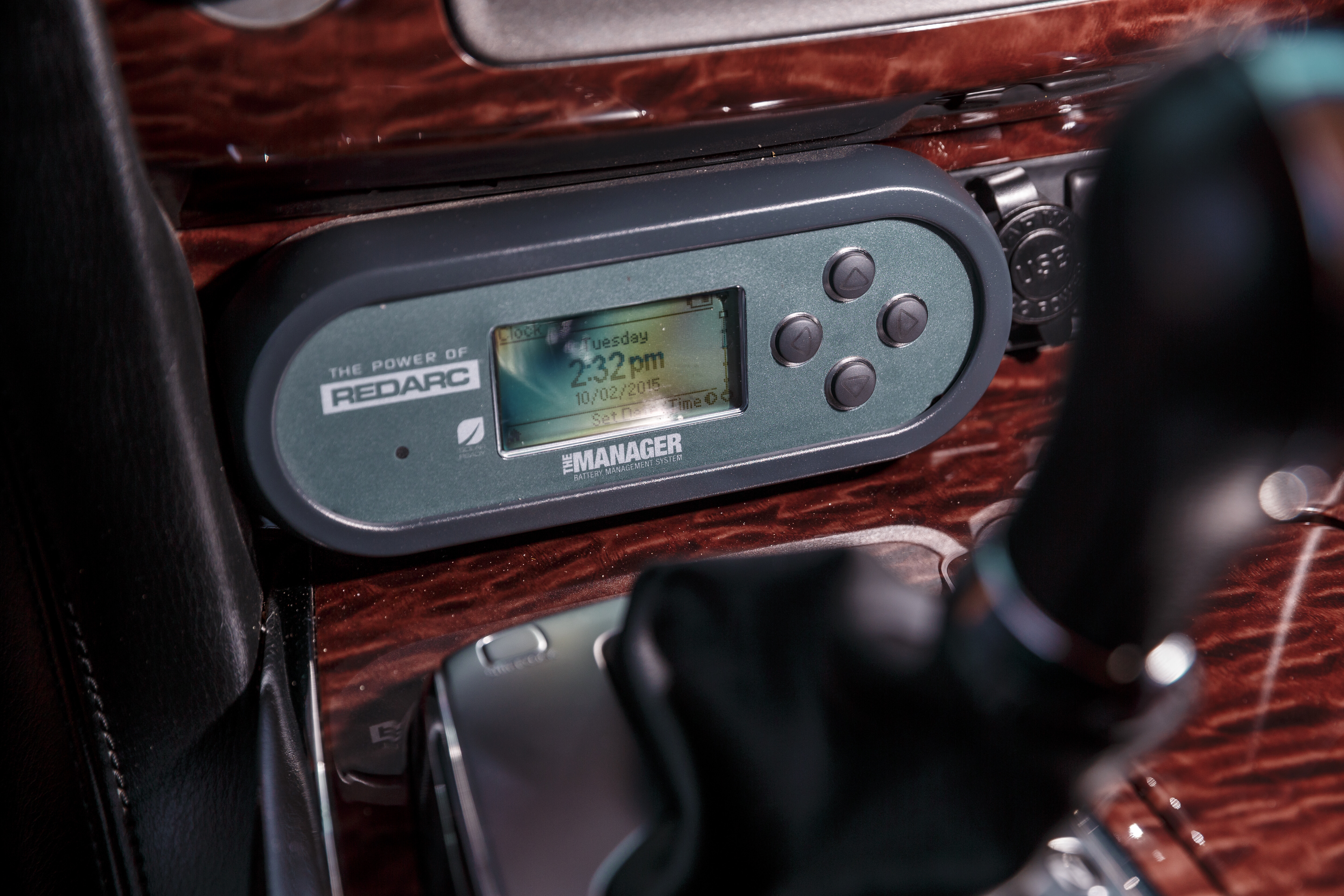
Battery management systemsThe Cohibas of the battery charging world, a standalone BMS is the latest and greatest thing since sliced beer. These little technological marvels allow you to do everything but achieve nuclear fusion, and that’s probably only because we haven’t found the button for it yet.They’ll charge any type of 12V battery; they can receive charge from 240V, 12V-DC from your alternator (smart or dumb) and solar; and they’ll tell you the percentage your battery is charged and tell you how much time you have until its flat … the list goes on.
Look, if you’re cruising the net for one product that can do up to six other products’ job, this is where you need to be looking.
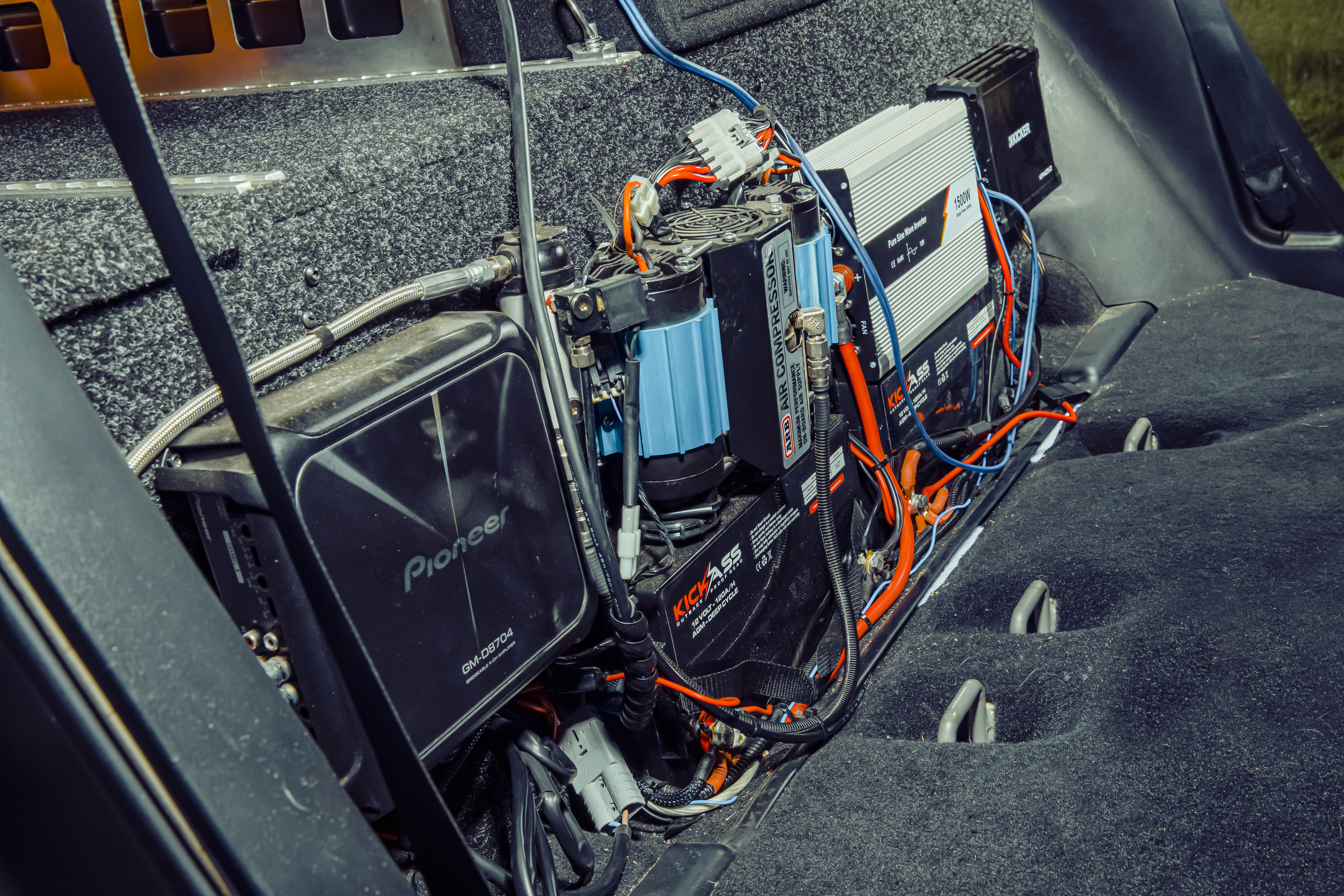
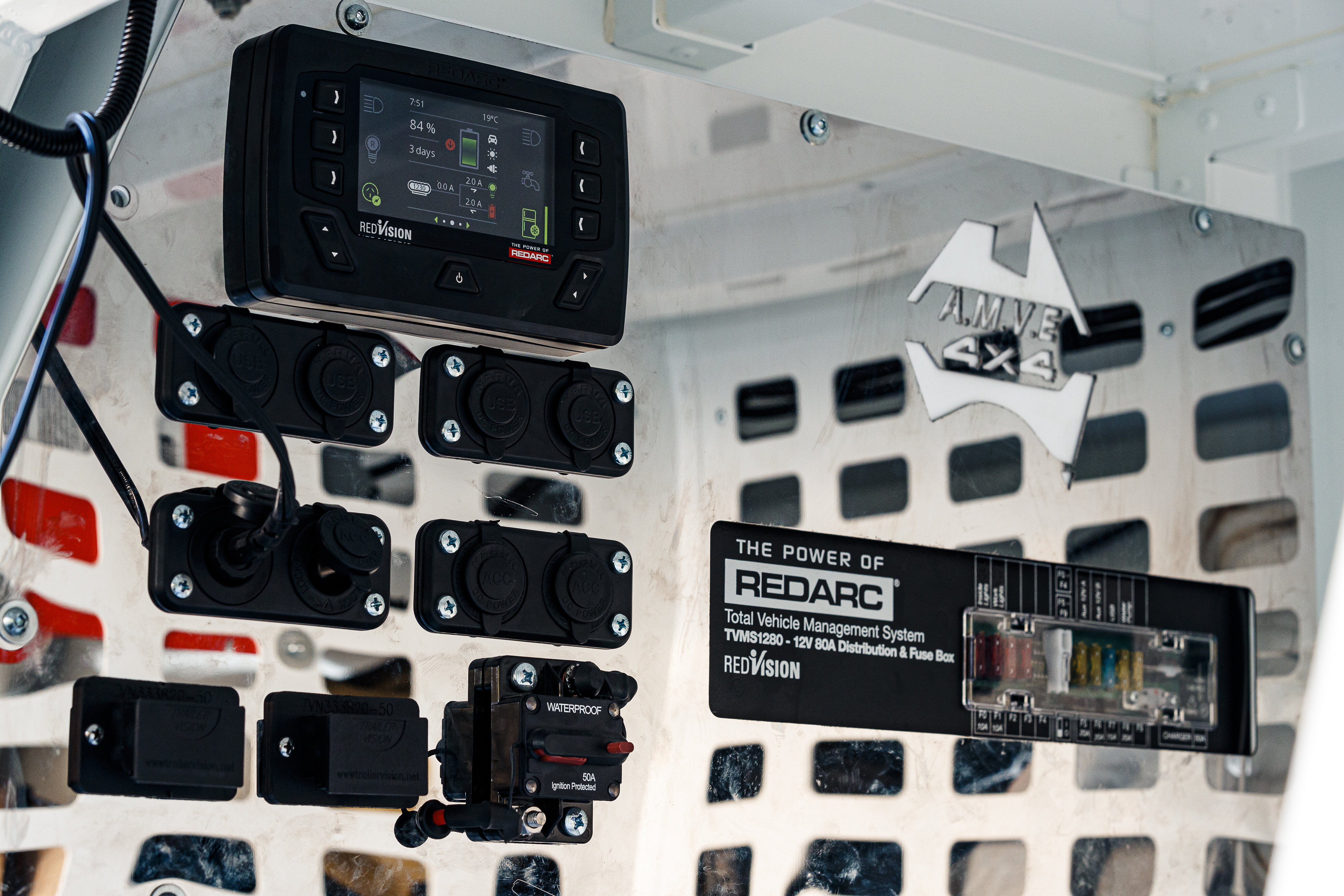
There are even options on the market, such as Redarc’s Manager 30 and Red Vision systems, that can oversee your entire 12V set-up including fuses and the ability to control your fridge temp, camp lights, stereo and just about anything else on your vehicle that uses electricity. It’s the equivalent of an old guy rocking up in a DeLorean and saying that where we’re going, we don’t need roads. Welcome to the future, fam.
STEP 4: Optional extras you should consider solar
You’re planning on staying at camp for more than a couple of days? No-brainer, you need solar. To break it down as simply as possible, solar panels or blankets are rated in watts – the higher the wattage the better. Easy, right? Then there comes the choice between mono-crystalline panels and poly-crystalline panels. To be honest, this is an entire article on its own, but the short and curlies is to get monocrystalline panels – they’re better. Fight me.

Then you have the whole regulator debate. Again, to put it as concisely as possible, multi-power point tracking (MPPT) is the business, don’t settle for anything less.
Hard-mounted versus soft-mounted (blankets or removable stands) are entirely subjective and there are multiple arguments for both. Ideally, get yourself a combo – a hard mount on the roof for when you’re driving, then a moveable unit that can be directed at the best angle for sunlight while at camp. However, we’re not here to tell you when to turn your snags on the barbecue.
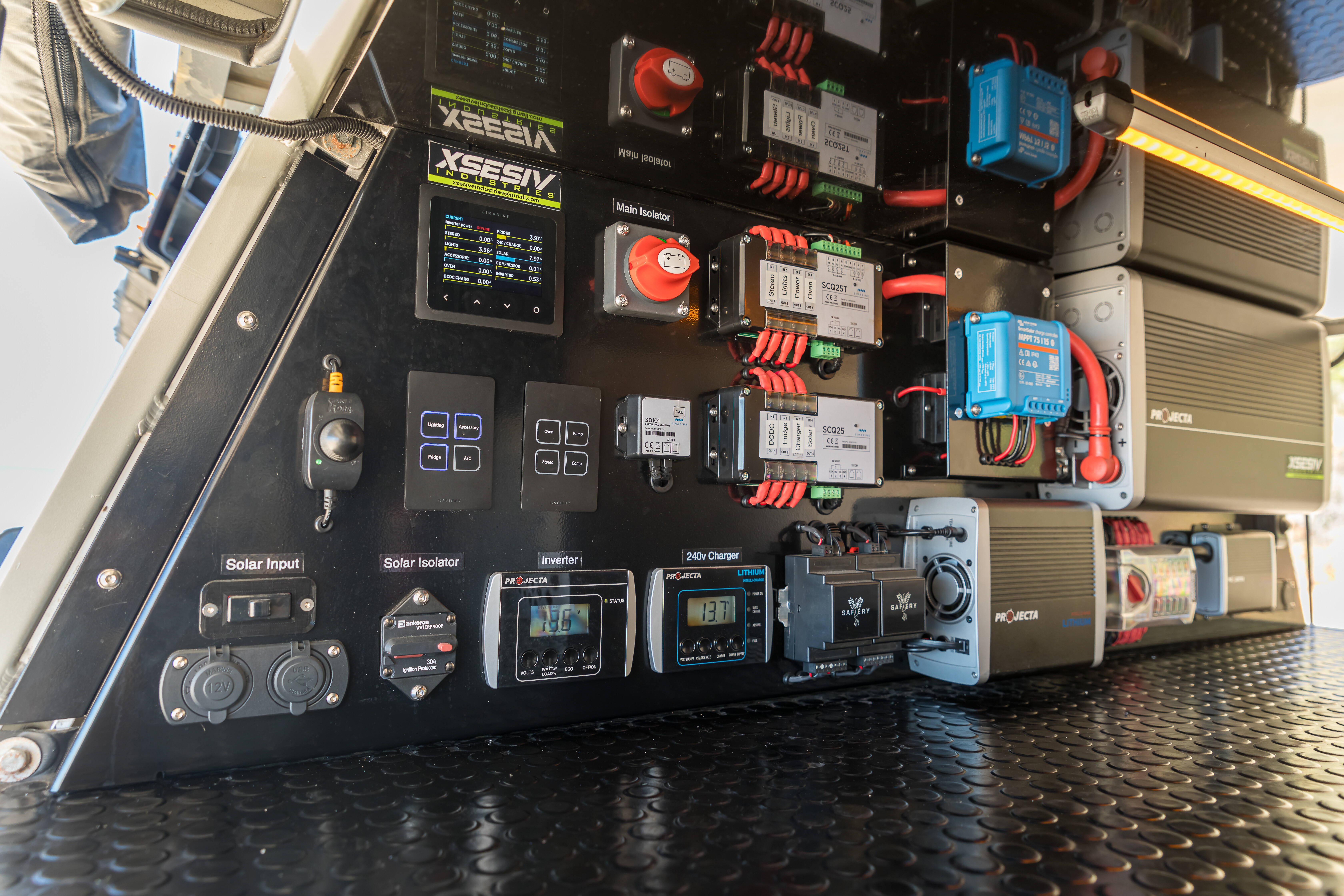
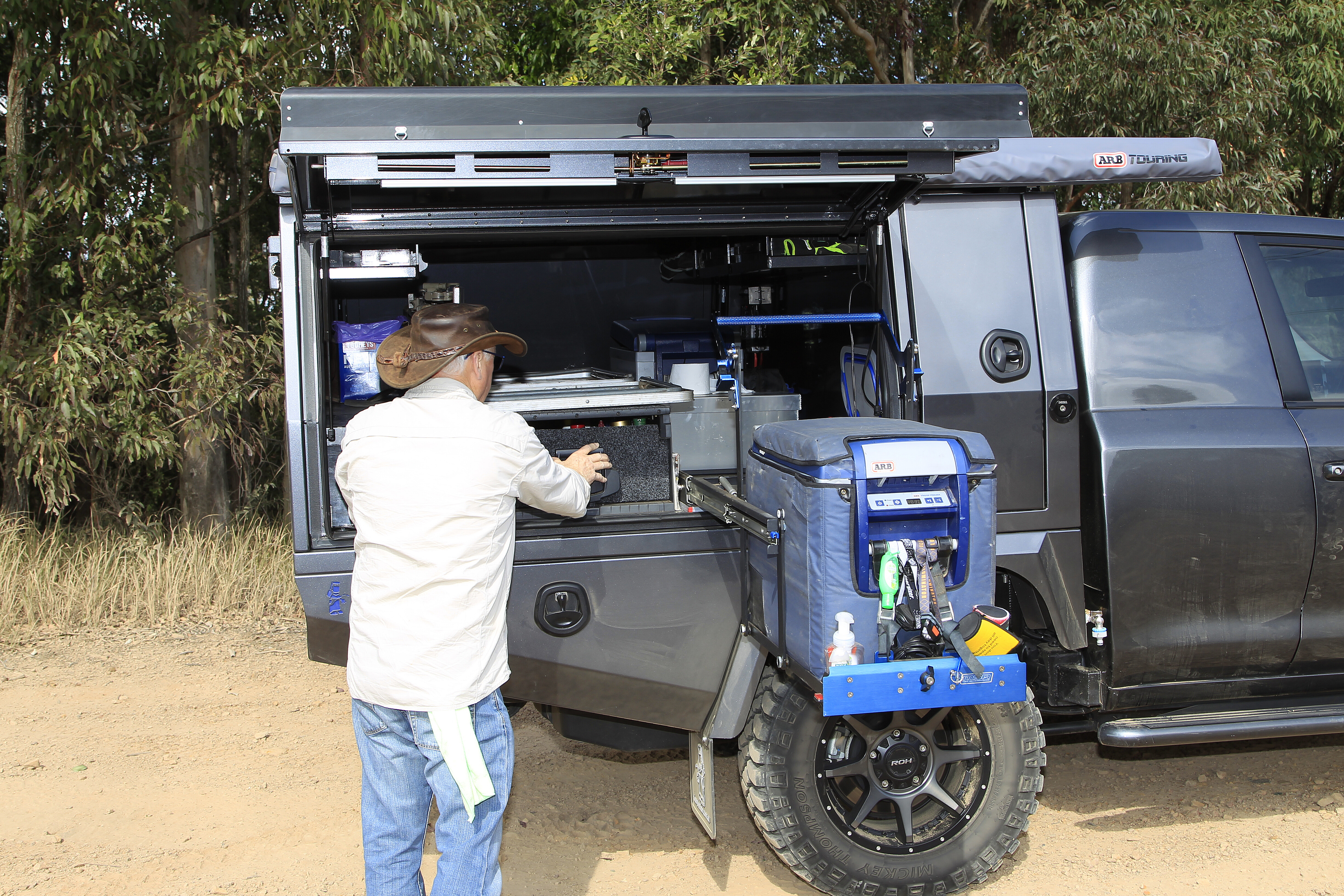
Power distributionPOWER distribution blocks are fantastic for providing a ready mount switch panel, every outlet from USBs to Anderson plugs and accessory fuses in one handy location. Readily available and well-priced, these can make installing a range of aftermarket 12V gear 100 times easier and keep things neat and tidy.
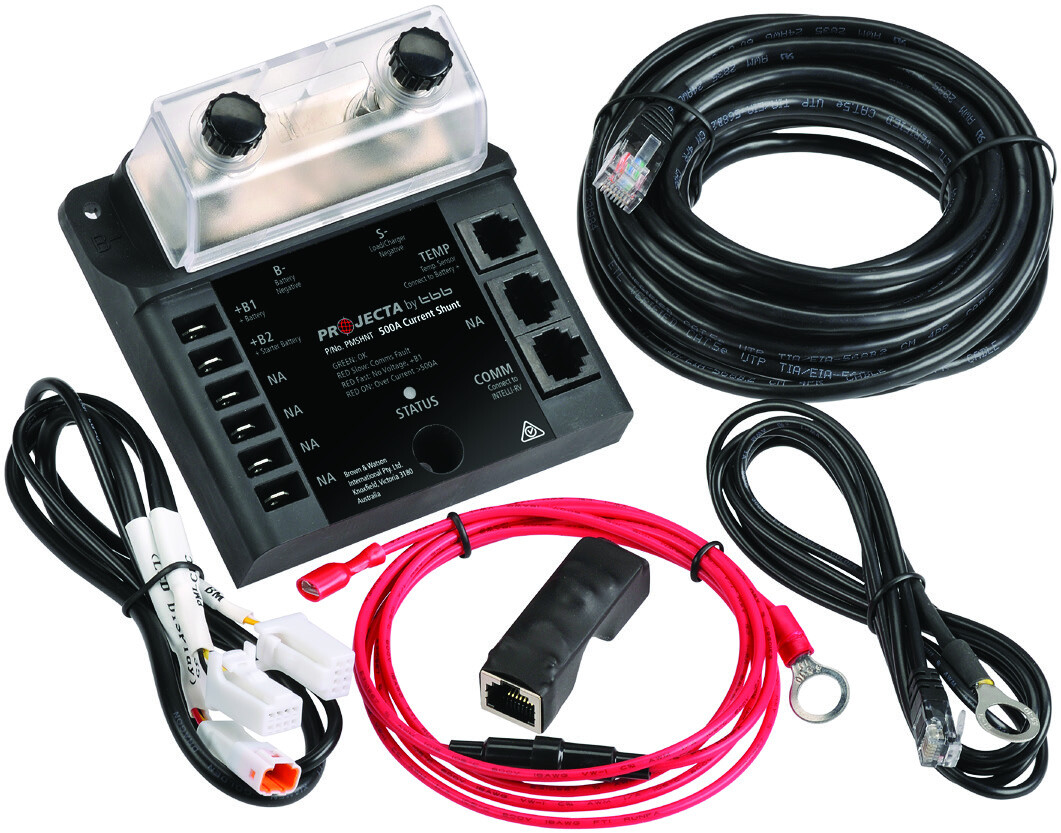
ShuntsRemember back in the 1990s when you had that sweet-as battery monitor in a fancy LCD display sitting proud on your LandCruiser’s dash? Yeah, we’re trying to forget those days too, and helping us with that particular facepalm is the new crop of smart shunts. Essentially a battery monitor, but instead of having to mount it to your dash and lower your dad’s opinion of you, they beam your battery status straight to your smartphone via Bluetooth. You don’t even have to leave your camp chair to know how your auxiliary battery is handling life.
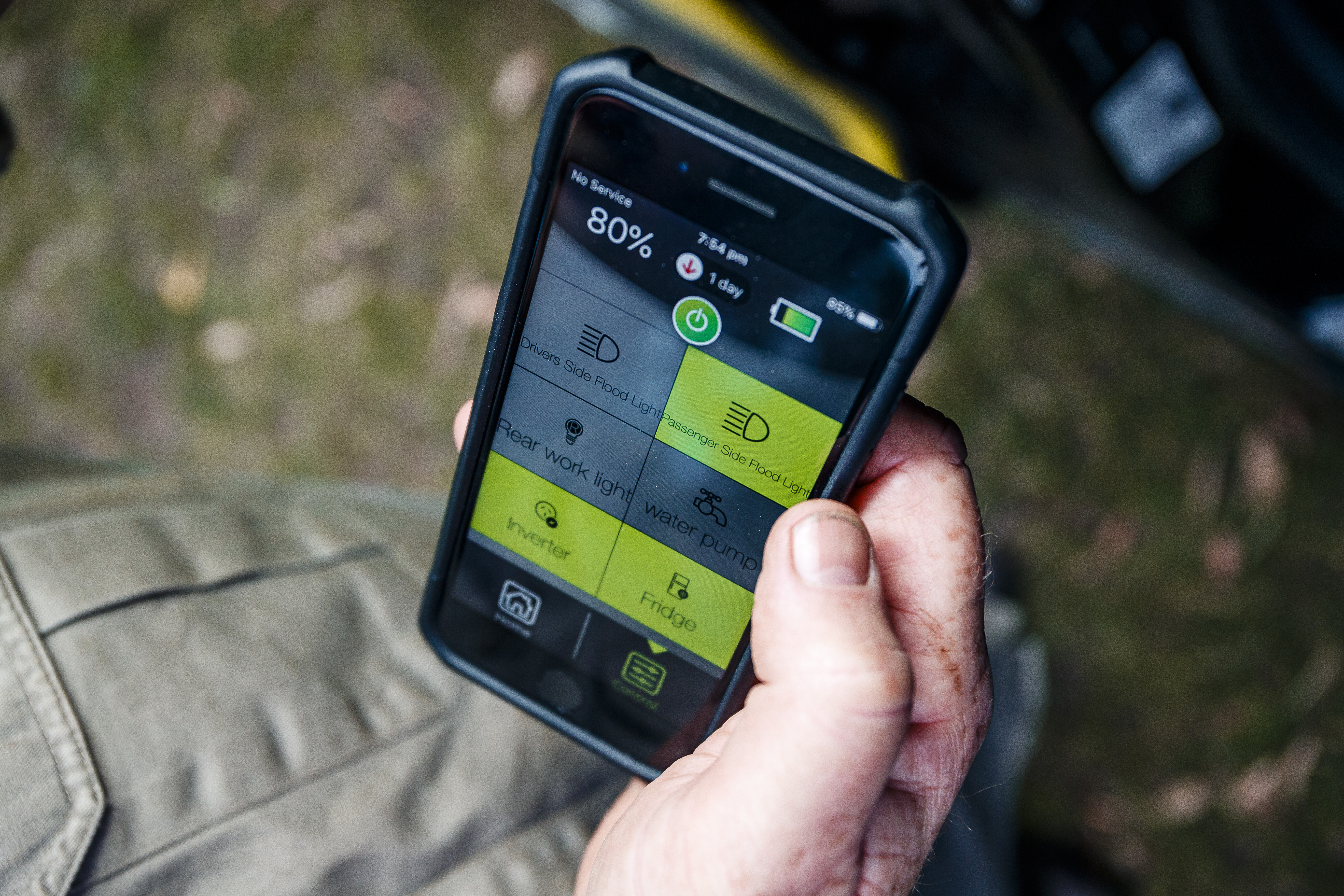
Low voltage protectorsOne of the main advantages of lithium is that you can get a lot of volts right up until the battery is nearly dead, then without warning you’ll be powerless and wondering why the hell your Best of Billy Ray Cyrus album suddenly went silent.This is where a low voltage cut-off comes in to its own. Generally, these are solid state electronics, so no moving parts and ultra-reliable, they sense when the voltage drops below a preset figure and will shut things down, preventing you from completely draining your battery. You may think to yourself, “she’ll be right, I’ll just run the engine and let the alternator charge her back up, I don’t need one!” except that if a lithium battery reaches a deep enough state of discharge, your alternator or solar won’t have enough zap to bring it back to life. That’s when you need a …
240V chargerIt may seem weird to plug your non-electric 4×4 in to the outlet in your garage, but a 240V mains charger will have your lithium up to 100 per cent state of charge quicker and easier, and it’s the only method that will revive a battery that has been severely depleted. These are only really needed for lithium systems and are not an absolute necessity, but they’re damn handy to have when you need one.
Inverters
Selecting an inverter is an essential part of choosing your battery system and is, again, an entire article on its own. The 30-second version of this textbook of info is to work out what 240V (i.e., stuff with a household electrical plug) accessories you’re running and determine the wattage you’ll need to run them, then add 20 per cent on top for safety. Say you want to run a 1000W microwave, you’re better off sourcing an inverter that’s at least 1200W or, preferably, higher.
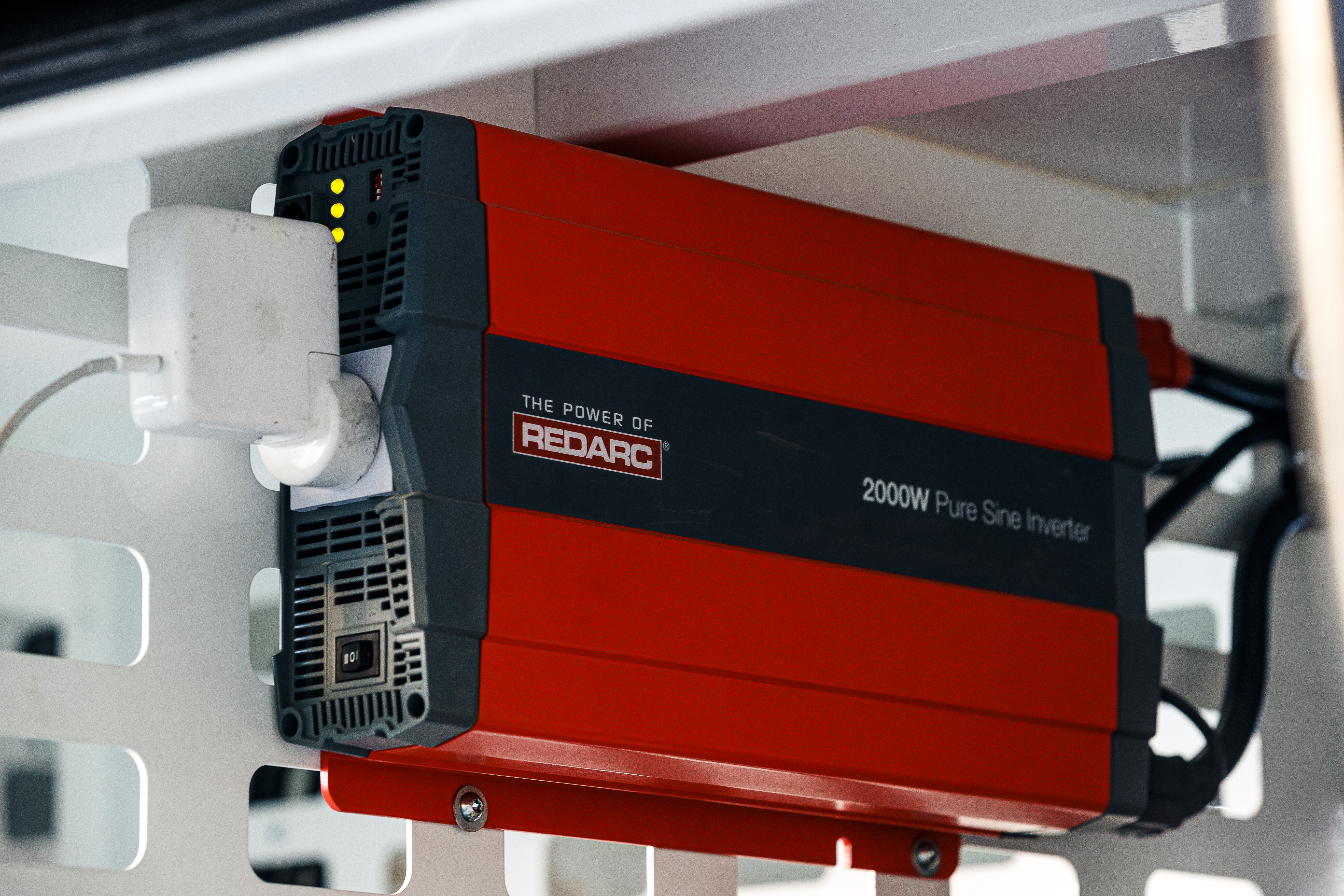
Now, with that said, it’s a fair chunk more expensive to run larger (2000W and up) inverters, everything from having to purchase a larger battery (200amp/h for a 2000W inverter) down to having to run thicker cabling, which adds up quickly, so think long and hard before deciding you can’t live without your Dance Revolution arcade machine while camping. Also, get a Pure Sine Wave unit unless you’re happy to melt your modern electrical devices.
Laying cableSelecting the correct cable for your install is pretty important. The two main considerations are whether the cable is capable of holding the current you’re going to be sending down it and whether there will be an unacceptable amount of voltage drop along the cable length. To work out current capacity we have to go back to our Electrics 101 high school class and remember that the amps (current) is equal to the watts divided by the voltage.
Say you have a 50W light you want to power, we know the voltage is 12V (actually it’s 13.8ish when your car is running, but let’s not get bogged down with details) so 50/12 gives us a figure of 4.17amp. It’s not a great idea to have a cable that’s operating at the upper end of its capacity, so you’d use wiring that’s rated to 10amp or above in this instance.
However, cable does introduce resistance to the current, and the longer the cable is, the greater the resistance. There is a mathematical formula to work out resistance over cable length, but frankly it’s probably unnecessarily complicated and involves determining the cable’s resistance per metre (in ohms) so we won’t bore you with the brainsplosion.If you really care, there are plenty of voltage drop calculators online, or you can just use the rule of thumb: if you’re unsure if the wire is suited to the task, go up a size. Because, science.
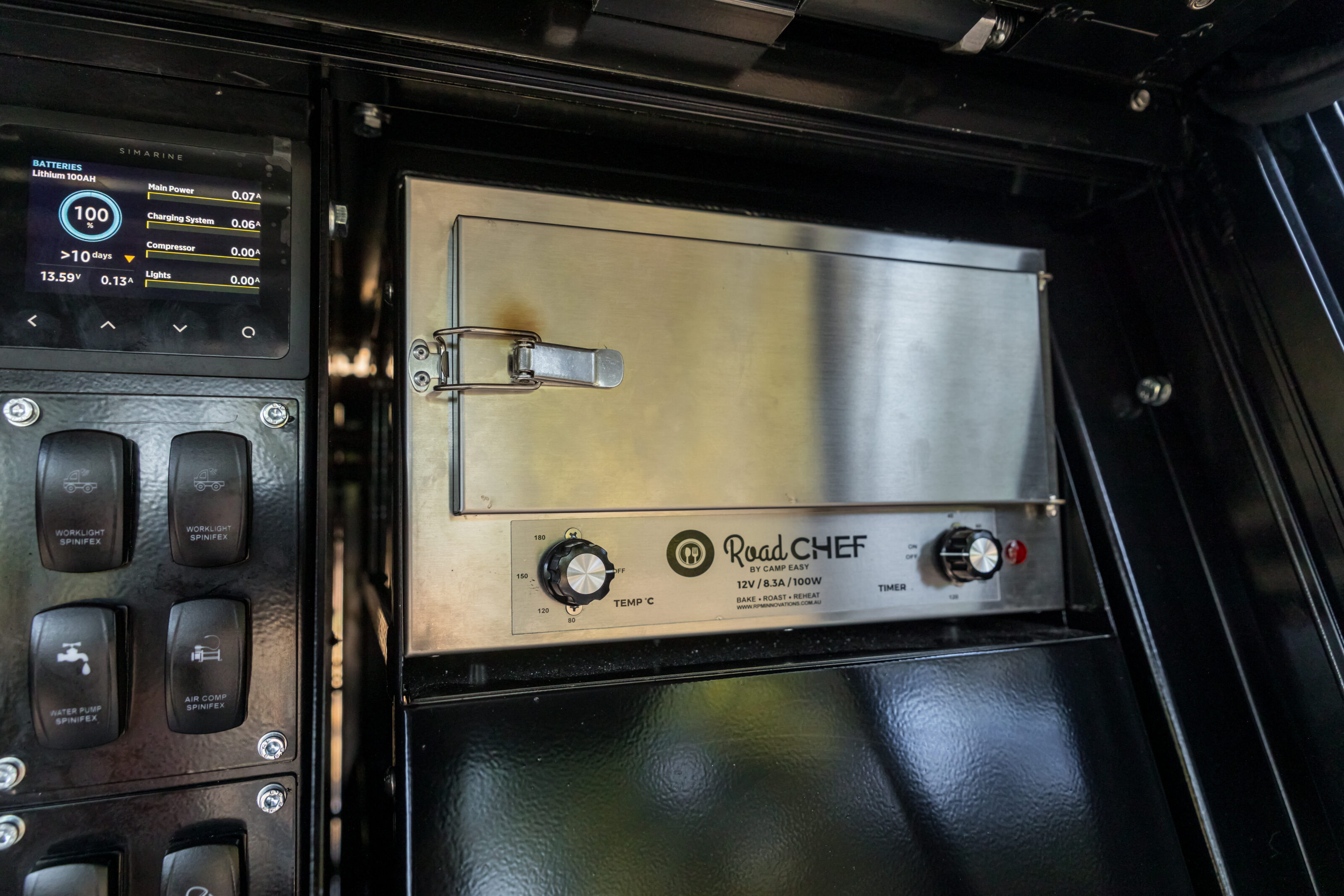
Quick guide: Glossary of terms
AGM: Absorbed Glass Mat; a type of lead acid batteryAMP HOURS: Is a measure of charge or current flow over time. 1amp/h is a current of 1amp flowing for 1 hourBATTERY ISOLATOR: Used to separate the flow of direct current (DC) to more than one branch in a single direction, allowing two batteries to be charged from one alternator without the batteries being connected in parallelBATTERY MONITOR: Measures voltage and current in and out of a battery, and tracks the charge remainingBMS: Battery Management Systems are a comprehensive watchdog for a vehicle’s batteries, and will prevent them from being too drained, overcharged, undercharged and about a billion other thingsCURRENT: Voltage divided by resistance gives us electrical current, usually measured in ampsCOLD CRANKING AMPS (CCA): The amount of punch a starting battery packs. Basically, the higher the CCA, the quicker it’ll spin your starter motorCURRENT DRAW: How much battery power a device or accessory needs to runDC-DC CHARGER: A step up from an isolator, a DC-DC charger will ensure a battery gets the correct amount of charging current for its charge profile, extending its life and speeding up the charging process.DEEP CYCLE BATTERY: A battery that is designed to be deeply discharged many times over its lifespan, making them ideal for running accessories when the engine is switched off. Modern units are usually AGM or lithiumHYBRID BATTERY: Can be regularly discharged while still providing a substantial number of cold cranking amps. Can be used in either deep cycle or starting roles, and if you can only afford a single battery in your 4×4INVERTER: A device that takes a 12V input and turns it in to a 240V output. Essentially, it allows you to run household electrical items while you’re travelling remotelyLEAD ACID: A standard wet cell 12V battery, largely superseded but is used in budget builds without a worryLITHIUM: The new wave of aux batteries that can be discharged deeper and for longer. Pretty much the best you can get, but be warned, cheap lithium batteries are just that and will leave you disappointedRESISTANCE: A counteracting force against the flow of current. Resistance in a circuit can be introduced by accessories drawing current or faults in the circuit itselfSHUNT: See battery monitor, but its smarter and better-looking brotherVOLTS: Voltage is the force from a battery that pushes charged electrons through the various circuits in a vehicle12V: Common voltage of almost all modern ICE vehicles240V: The voltage found in Australian households
WITH THANKS PIRANHA OFF ROAD PRODUCTS www.piranhaoffroad.com.au (03) 9762 1200REDARC www.redarc.com.au (08) 8322 4848
The Granite Belt in northern NSW is known for its wineries, Celtic culture and cool, crisp air. But did you know there’s a great drive where you can explore historical mines, spectacular scenery, checkout local bushranger hideouts along the way, plus great campsites tucked away?With very cool winters on the tablelands and stifling summers, I decided to explore the region north-west of Glen Innes in early spring hoping for a little colour and to miss the extreme temps that frequent this area. Glen Innes is a funky little town with boutique gift shops, great bakeries, heritage-listed buildings and has most of the services that you would find in larger towns.
There are several tourist drives that run around the town, and a great drive is tourist drive number 11 but with a twist. After restocking supplies and fuel at Glen Innes, the road north-west towards Emmaville is a nice introduction to the area’s wonderful grazing land. It’s a typical English-looking area with tree-lined windbreaks defining fence lines, sheep-filled paddocks, plus boutique wineries offering tourists wine tastings. The road to Emmaville is tar for its 40km length, but as it leaves the flat fertile grazing land it twists and weaves its way over several ranges where you need to be on the lookout for feral goats, ’roos and deer beside the unfenced road.
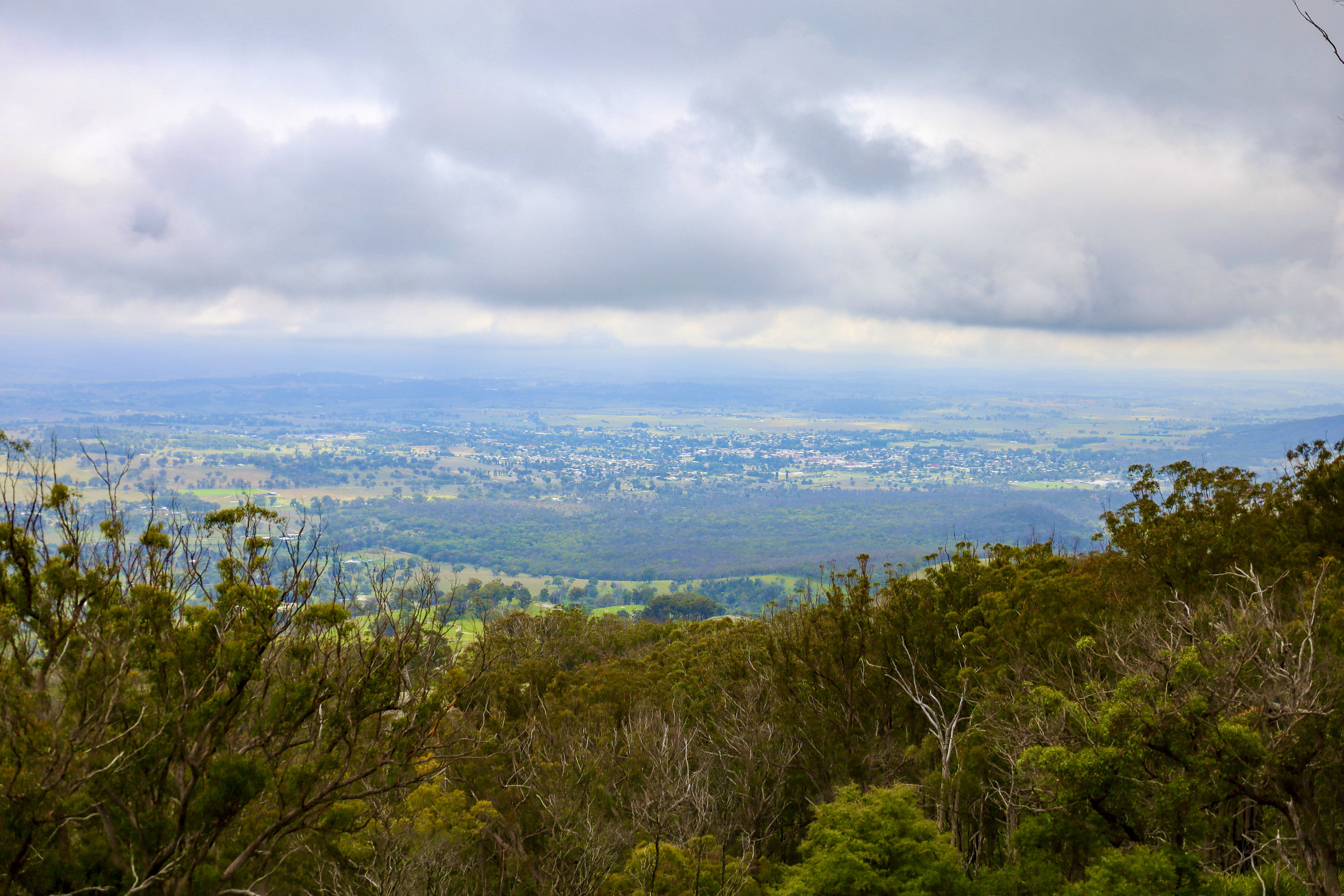
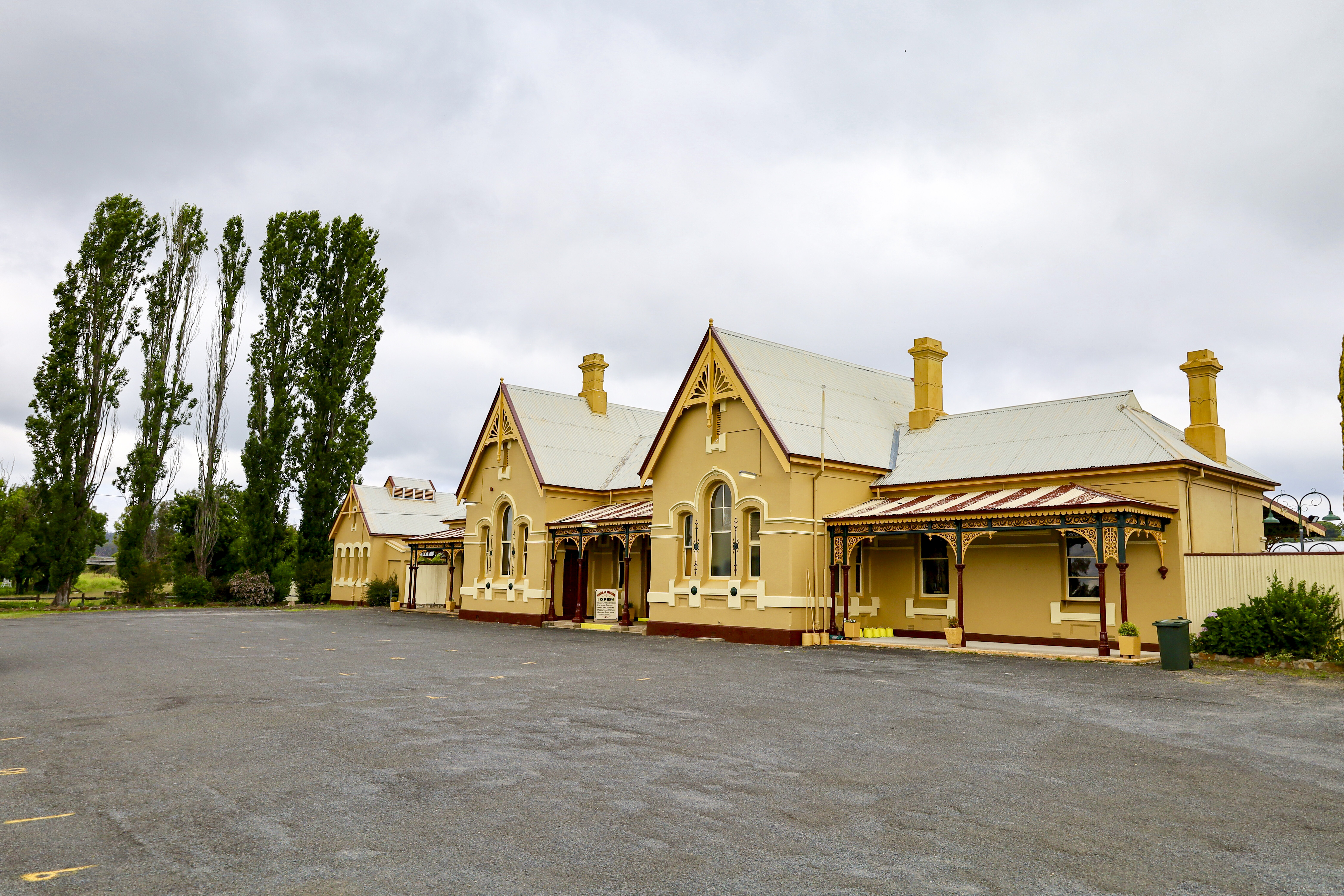
Getting closer to Emmaville you will come across the Y Waterholes (yep, that’s their name!) that grace both sides of the road. These waterholes are from the nearby lead mine, now closed. Over time, the water has become safe for the birdlife to inhabit its waters and shoreline, from swans, wild ducks, ibis and a host of other birdlife and is a nice change from the dry forests nearby. Farther down the road you come to the once booming town of Emmaville. Several places are worth checking out here, the mining museum (only open mid week), the Emmaville lookout, the tin church and several old graveyards where headstones date back to the 1800s. There is a general store and fuel if you really need to top up.
Ottery Mine
Following the tourist drive out of town for just 5km, a turnoff will appear to your left towards Torrington. This is where we leave the tourist drive and the adventure begins. The landscape out here is harsh, scattered dry timber with granite boulders dotting the landscape.
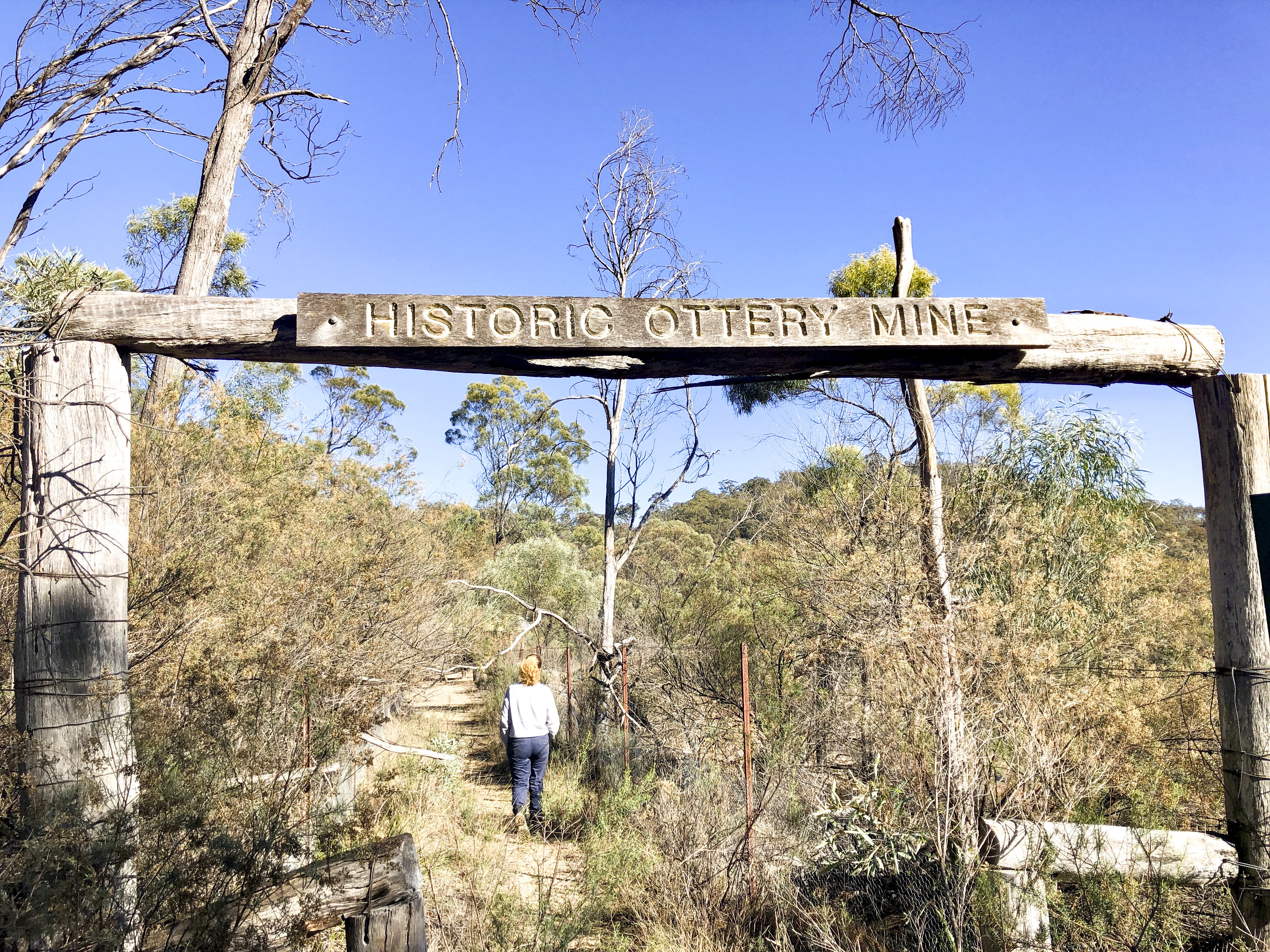
It’s pretty easy to miss, but just 6km along, the road narrows and passes through a gate and across a grid. Not signposted but this is where you need to turn left to explore the old Ottery mine. The formed track will lead you to an open area where there is plenty of parking for 4WDs.
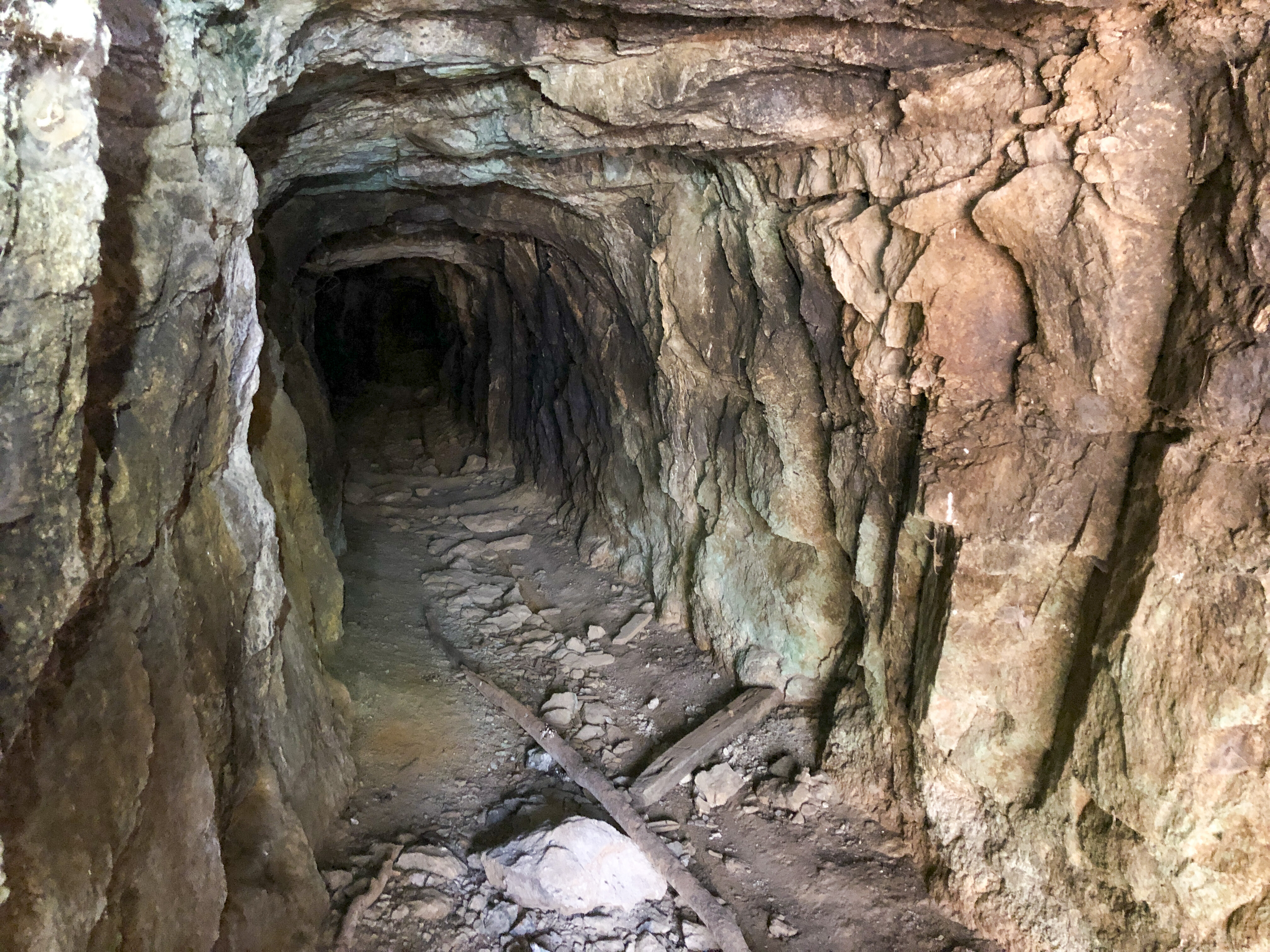
Adhering to the warning signs at the beginning of the track (no collecting rocks or going past the fences) it’s an easy stroll in to the old arsenic mine and historic Ottery tin-mine site. The Ottery tin mine was one of the first underground base metal deposits in the area. It was worked from 1882 till around 1905 and produced an estimated 2500 tonnes of tin concentrate, plus 2004 tonnes of white arsenic. Several attempts were tried to reopen the mine up to 1957 with no success and due to the import of cheaper arsenic, the mine finally closed.Exploring the old mine area here is great, as you can wander around freely where you can see old relics such as mine buckets, the main shaft that is 80m deep, the large chimney flue, cooling chambers, furnaces and more.
Interesting to note that white arsenic is still leeching out of the workings. Arsenic was used for a variety of purposes at the time, from the control of prickly pear as well as an important ingredient for many animal health products such as sheep dip. After the mine closed, it was left in a very damaged state with open mineshafts and obviously a few health risks with open waste dumps. Rehabilitation work was carried out by NSW DPI making the site safe to explore from behind fences and is now an important historical site.This is a great place to lose an hour or more following the path around the mine, reading the information boards and imagining just how life was out here over 100 years ago. Back through the gate, the tar winds its way for around 5km on to the dirt for an easy 30km drive towards Torrington.
Captain Thunderbolt
As you approach the outskirts of Torrington, keep an eye out for Dutchmans Road on your left, this will lead you to the Nomads camping and picnic area. While great for a tent or two, this camping area is really designed for more of a stopover than a camp, and you can take the short walking trail to one of Captain Thunderbolt’s hideouts.
Captain Thunderbolt was known to have roamed the area from Uralla in the south to Tenterfield in the north. Along the path, the granite boulders can only be described as huge as they have sat for thousands of years. The path will soon lead you to formed steps that wind there way up through the boulders and soon disappear in to the abyss. As you sneak between the rocks you can see why the bushrangers used to hide in these areas, it would of been a great spot to hide and to find a higher peak to keep an eye out for approaching authorities. The walk leads you through dark sections between the rocks eventually ending at a steel ladder that’s near vertical for 10m where you can stand safely on a platform giving you 360-degree views to the horizon.Heading back to Torrington, you’ll find this town is near deserted with only a handful of houses still occupied. Mining activity peaked here around the 1920s when Torrington and nearby villages served about 600 miners. Torrington was a bustling town with five general stores, a butcher, baker, courthouse, police station, post office, two churches and a hotel. Nowadays there are no facilities and no services, but surprisingly there is a limited mobile phone reception if you stand the right way.
Torrington SCA
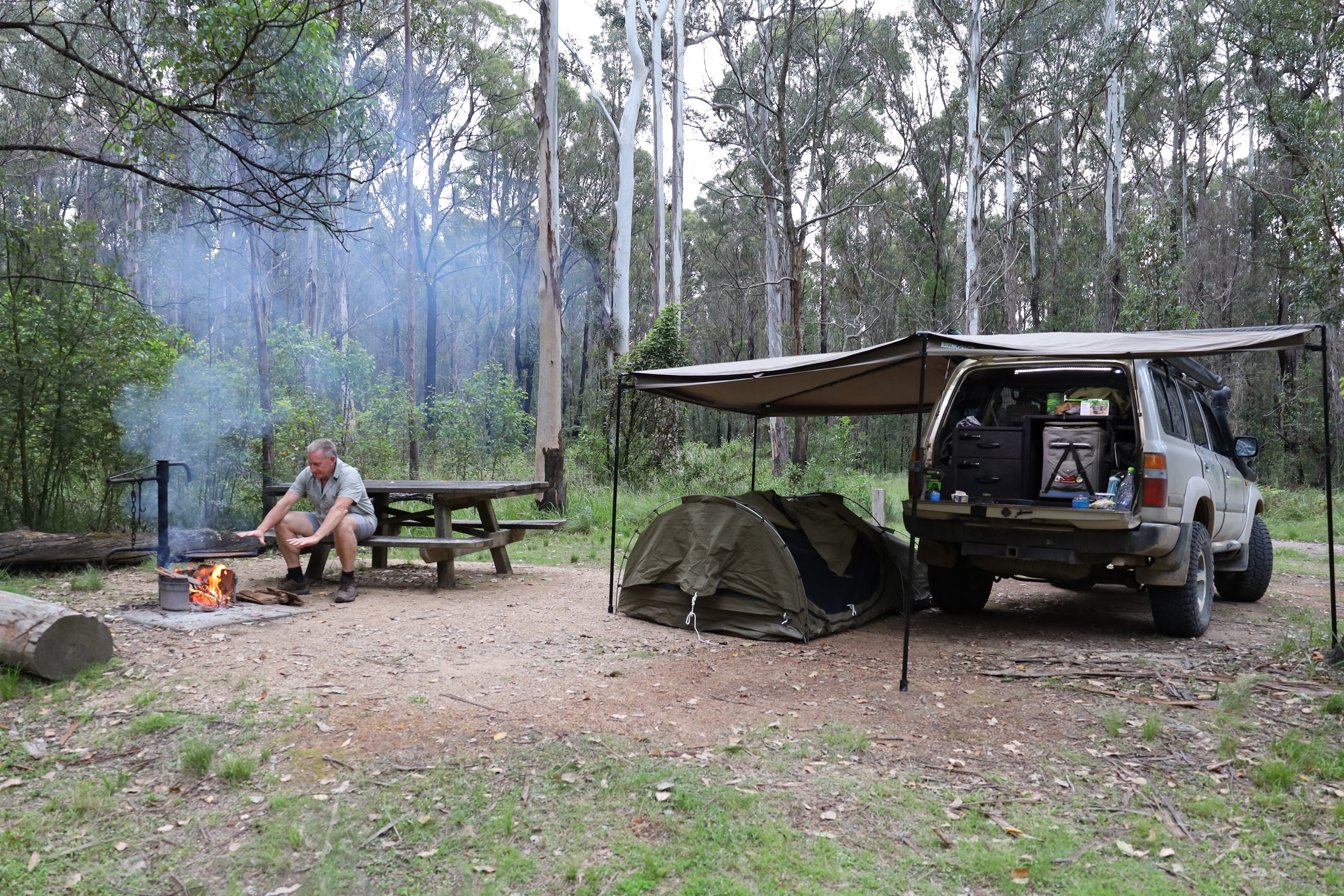
Leaving Torrington along Silent Grove Road, it’s a short 15-minute drive to a great camp area as you enter Torrington State Conservation Area, a sign will point you to the right just 2km out to Batherarm camp ground and picnic area. There are great facilities, with each camp area having its own pit toilet, tables and a water tank. Watch out for mineshafts and workings, they are everywhere, as this section is known as a dedicated fossicking area where you can find several types of crystals, gems and minerals. There are three camping areas, aptly named 1, 2 and 3. The first two have easy access but camping area number three is across the creek and you will need a four-wheel drive, especially if towing a camper trailer. The creek doesn’t get a lot of flow but with a bit of traffic it can be a bit rough and bumpy.
No bins are provided out here so you will need to carry all rubbish back out, this keeps the vermin away and the camp areas clean. A local information board gives you some great local history, wildlife rundown and an insight to fossicking in the area. The geological features and climate patterns are unique to the Torrington SCA and the surrounding tablelands providing habitat for more than 30 species of reptiles and around 13 native frog species.Leaving camp is as simple as heading back out to the turnoff for a right-hand turn back on to Silent Creek Road, where granite cliffs and grunge rock sculptures tower beside the road. It’s hard to believe there was mining activity out here, but this area was known as The Silent Grove Nugget Mine, if you look closely throughout the bush you will see old workings, building foundations, massive open-pit mines now filled with mineral-rich water and even abandoned equipment. A dead giveaway are the signs trackside warning you of shafts in the area that you may fall in to.
Mole River
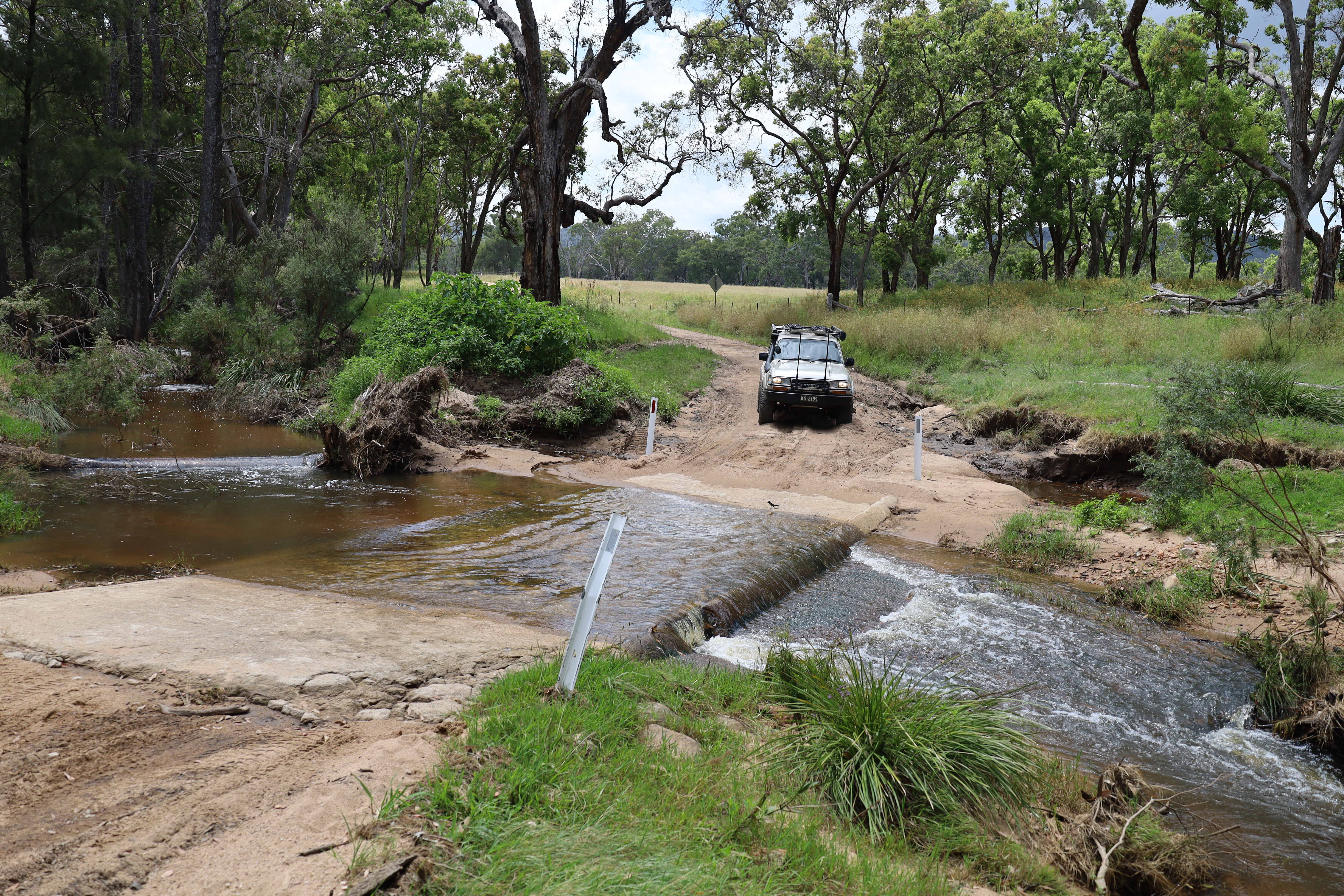
The landscape soon opens up, giving way to sheep stations and then cattle stations where mountain peaks and ranges start to appear, rising to near 1100m. The roads out here are narrow, sketchy and unmaintained as they twist over and down the other side of ranges towards Mole River.With the steep terrain out here, the Mole River can at times have some serious flooding, checkout the amount of debris in the trees high above and just how much bend the trees have in them from recent flooding. An interesting note out here are the low bridges you cross from time to time, this allows the debris to simply flow over the top and not destroy any bridge foundations thus not cutting off the roads.
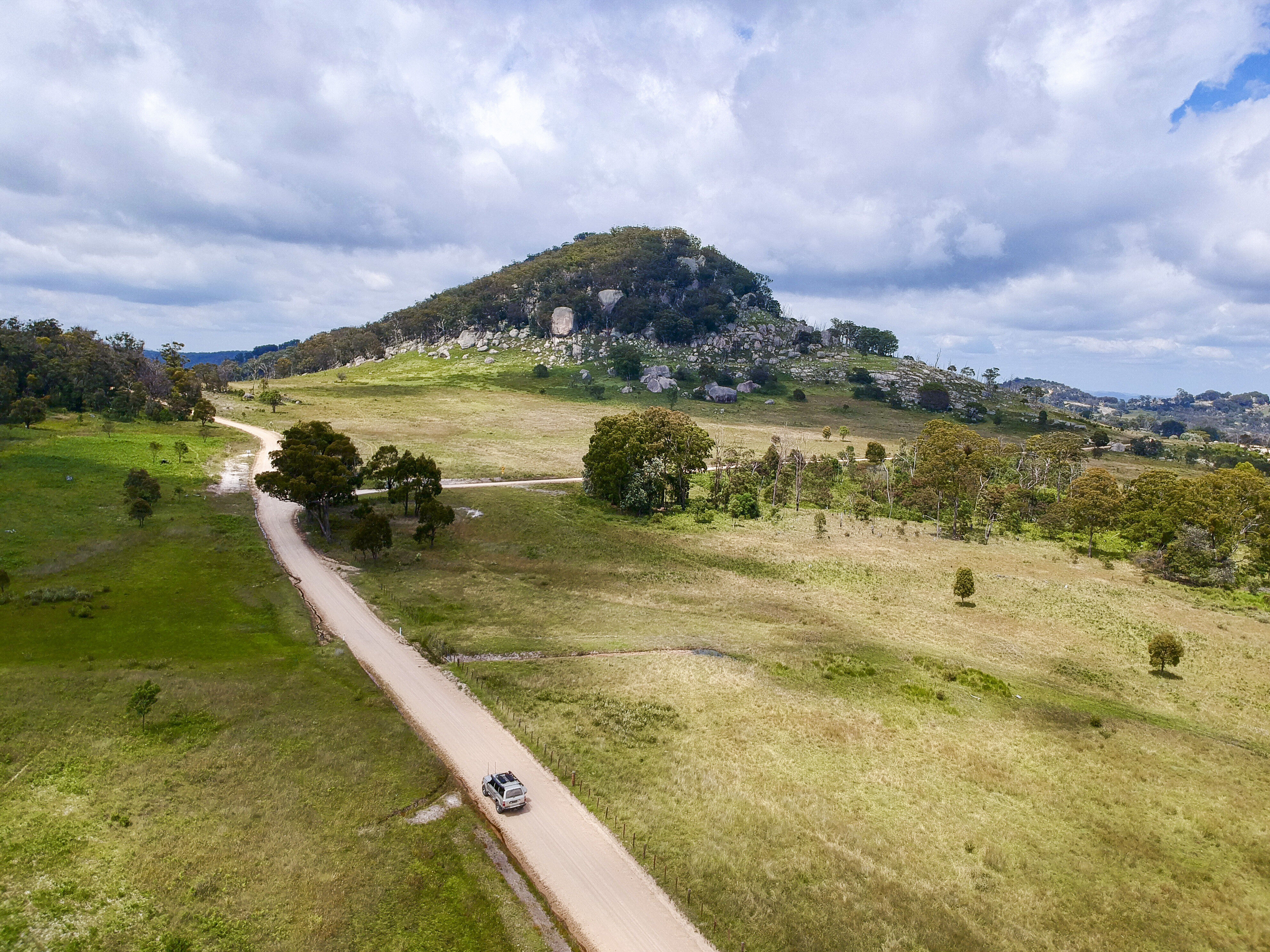
A further 3km along, two options appear, either going straight on the tar to the Bruxner Highway, or turning right on to Upper Mole River Road which I did. As you keep going through Gunya Station there are some amazing granite outcrops around you, yet it’s hard to believe that you’re at 1000m above sea level. But be warned, in the winter months it can get a covering of snow so be prepared in the cooler months.
It seems everything blooms out here, plenty of wild goats, wallabies and ’roos, with prickly pear cactus and grass trees scattered amongst the rocks. A pleasant sight soon emerges and points you towards Tenterfield just 27km away along the Upper Mole River Road. It seems out here that there can be surprises just when you least expect them, like popping around another corner to be greeted with stunning views across another valley or massive rock formations. The road to Mount Mackenzie at 1300m high, gives stunning views over the Tenterfield area north to the Queensland border, and a great way to end a drive of the Granite Belt in northern NSW.
Top 5 highlights
01: Ottery Mine The Ottery Mine is a heritage-listed former arsenic and tin mine where much of the infrastructure remains. This includes the former refinery, calciner, kilns, arsenic chambers and chimney stack.
02: Bushrangers Captain Thunderbolt was a famous local bushranger of the northern New England region of NSW. Old Thunderbolt was famous for using the massive granite boulders as lookouts and places to hide in, which the walking trails in the Torrington SCA will point out.03: Torrington State conservation area The Torrington SCA spreads across the rugged Mole Tableland featuring dry forests and woodland mixing with scenic granite outcrops and boulders, gorges, swamps and small creeks. Notable are spectacular wildflower displays between September and March.04: Camping You can camp withing the Torrington SCA at the Batherarm campground and picnic area. There are three campsites within Batherarm, designated as 1, 2 and 3. Camp areas 1 and 2 are 2WD accessible, but getting to 3 requires a 4WD. Each camp has its own pit toilet, tables and a water tank. More info at: www.nationalparks.nsw.gov.au05: Mount Mackenzie Scenic Lookout At an elevation of 1300m, the Mount Mackenzie Scenic Lookout provides some spectacular views of the NSW Northern Tablelands and one of the places to see snow in winter. A great picnic spot, the lookout’s facilities include barbecues, picnic tables, picnic shelters and a toilet.
Enhanced Safety with the BT-50.
Mazda wants you to be completely safe while behind the wheel of the BT-50. And to aid that, they have added a host of safety tech onboard to make every drive safe and trouble free.
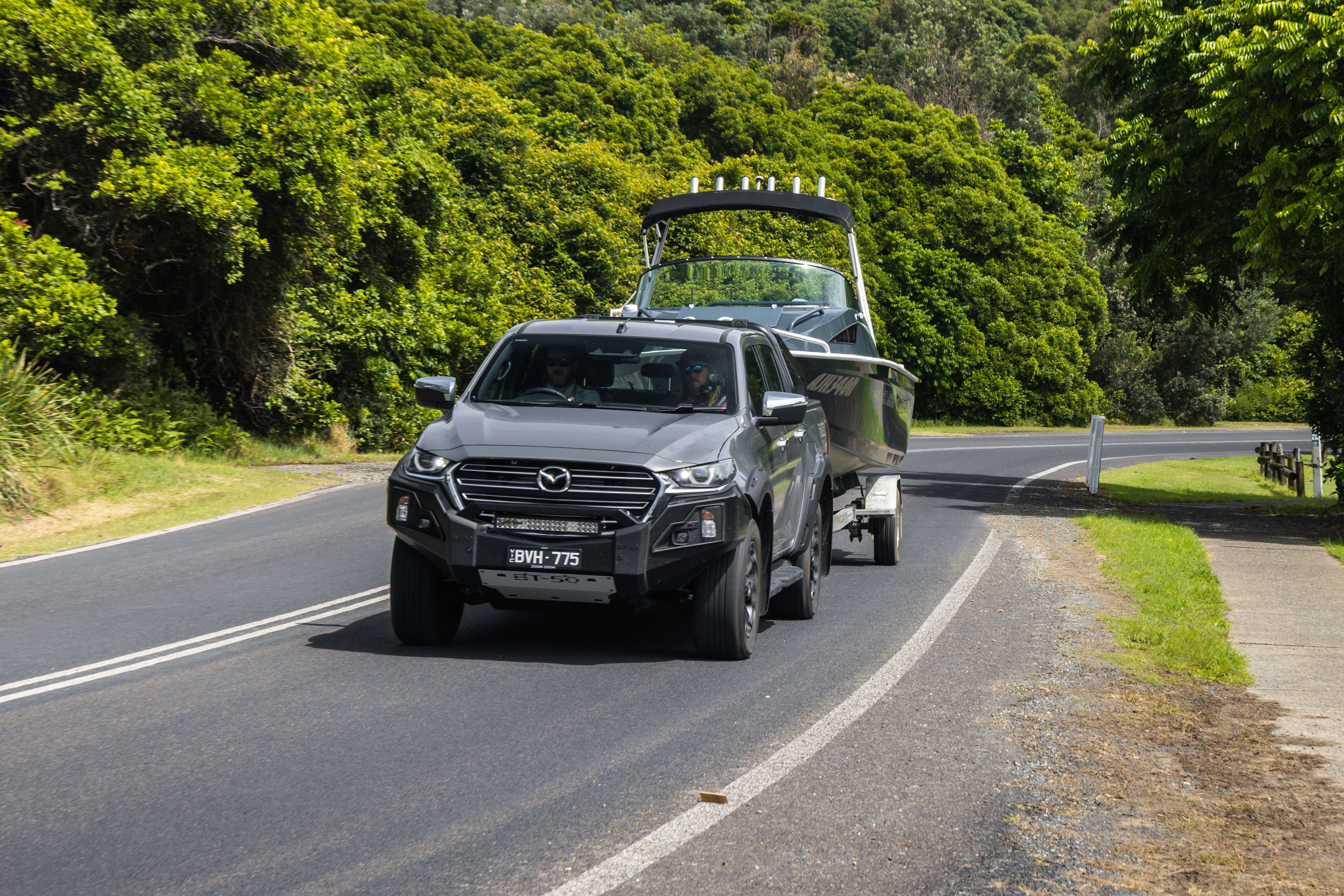
With a 5-star ANCAP safety rating this is one of the safest Utes you can buy. Lloyd Mather has had the BT-50 Thunder for 50 days and driven it daily instead of his trusty 100 Series Landcruiser. He has loved the onboard safety the BT50 offers, making each drive not only safe, but easy too.
He said, overall, the safety tech has made this car a breeze to drive. “Compared to my vehicle there are definitely more beeps and buzzes, but I have found the traffic alert systems and cruise control particularly useful.”
? Hello from the future! You can continue reading this story, or you can visit our latest BT-50 Range Review linked below.
REVIEW CONTINUES…

On the road is where a host of features came to the fore during Lloyd’s time with the vehicle. The lane departure assist was noticeably working occasionally pulling the vehicle back to the centre of the lane on freeway drives.
Lloyd also mentioned that on the one occasion he was merging back onto the freeway and did not indicate, the wheel felt difficult to point in the direction he wanted. This can be avoided by using the correct signals.
When on the road and traveling over 60 km/h, lane departure warning and assist both work to keep you on the road. If you are wandering from your lane, an alarm will sound, and if you have assist on, the vehicle will steer back into the lane. It is very quick at detecting any drifting.
Having an older Landcruiser with neither cruise control nor adaptive cruise control left Lloyd very excited about longer drives. He noted that the drives to Port Macquarie or Coffs Harbour were quite tiring before but the comfort and ease of use of the adaptive cruise control was a game changer.
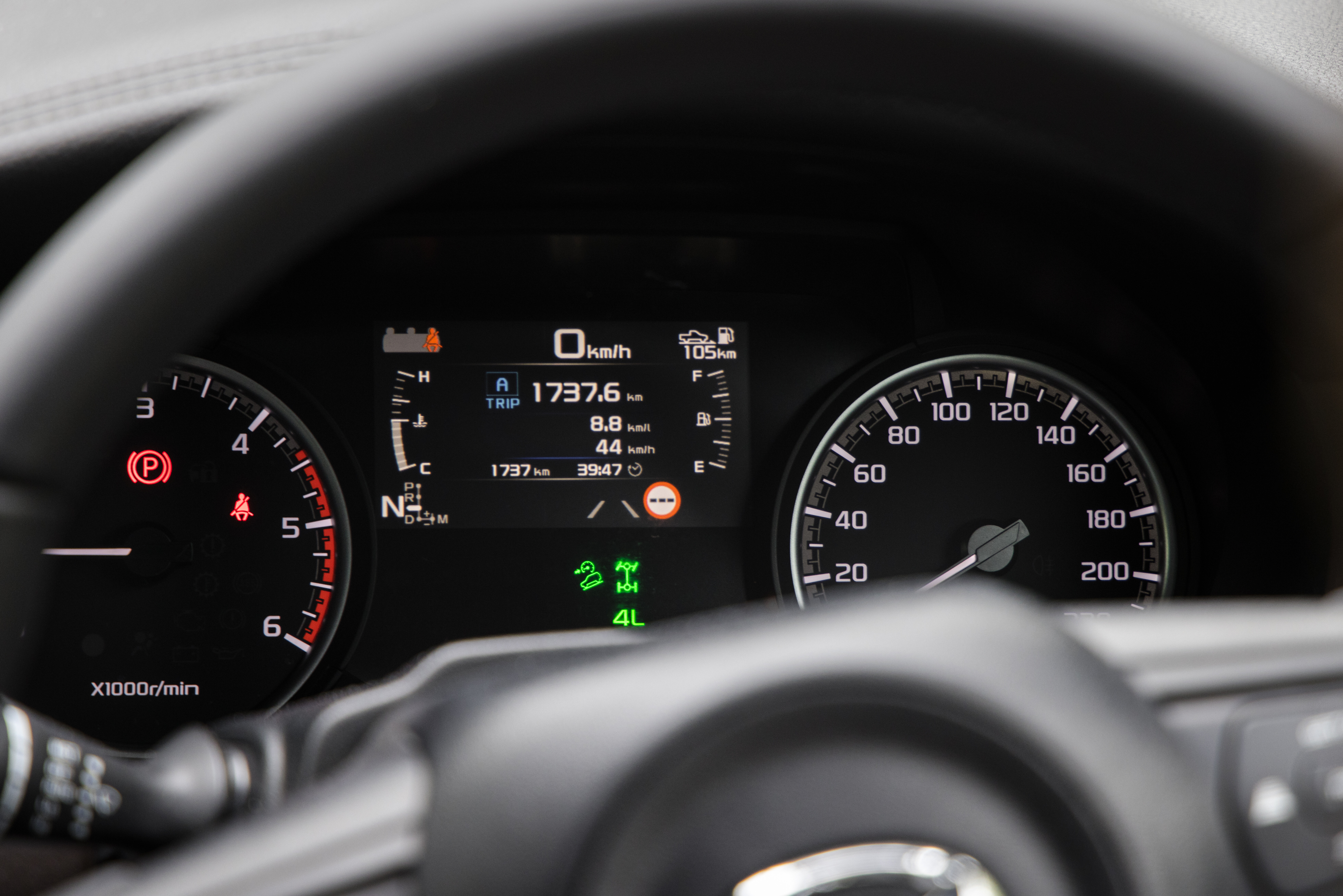
On the freeway, adaptive cruise control will keep the car and you moving forward in safety. You can set the distance from the vehicle in front and from there, the sensors will make sure you never get dangerously close to it.
At the same time cruise control itself is very easy to set and reset when you enter a new speed zone. The system relies on cameras and sensors mounted on the front windscreen and in heavy rain, it is worth noting that the adaptive cruise control will not operate.
The blind spot monitoring was another feature Lloyd noticed which alerts you to vehicles sitting alongside you with a flash in the side mirror. It is a great feature which is sure to save you on more than one occasion. In saying that, the mirrors are large and offer an excellent view down both sides on the vehicle.
A handy feature when parking in town for Lloyd was Mazda’s rear cross traffic alert system. It makes it a breeze to get out of any nose first parking spot. While reverse is engaged, sensors in the car assess and monitor for vehicles approaching from either side and notify him inside the cabin with a loud audible beep. “This ensured I didn’t reverse into another vehicle accidentally and given it is not my car, that was very helpful.” he said.
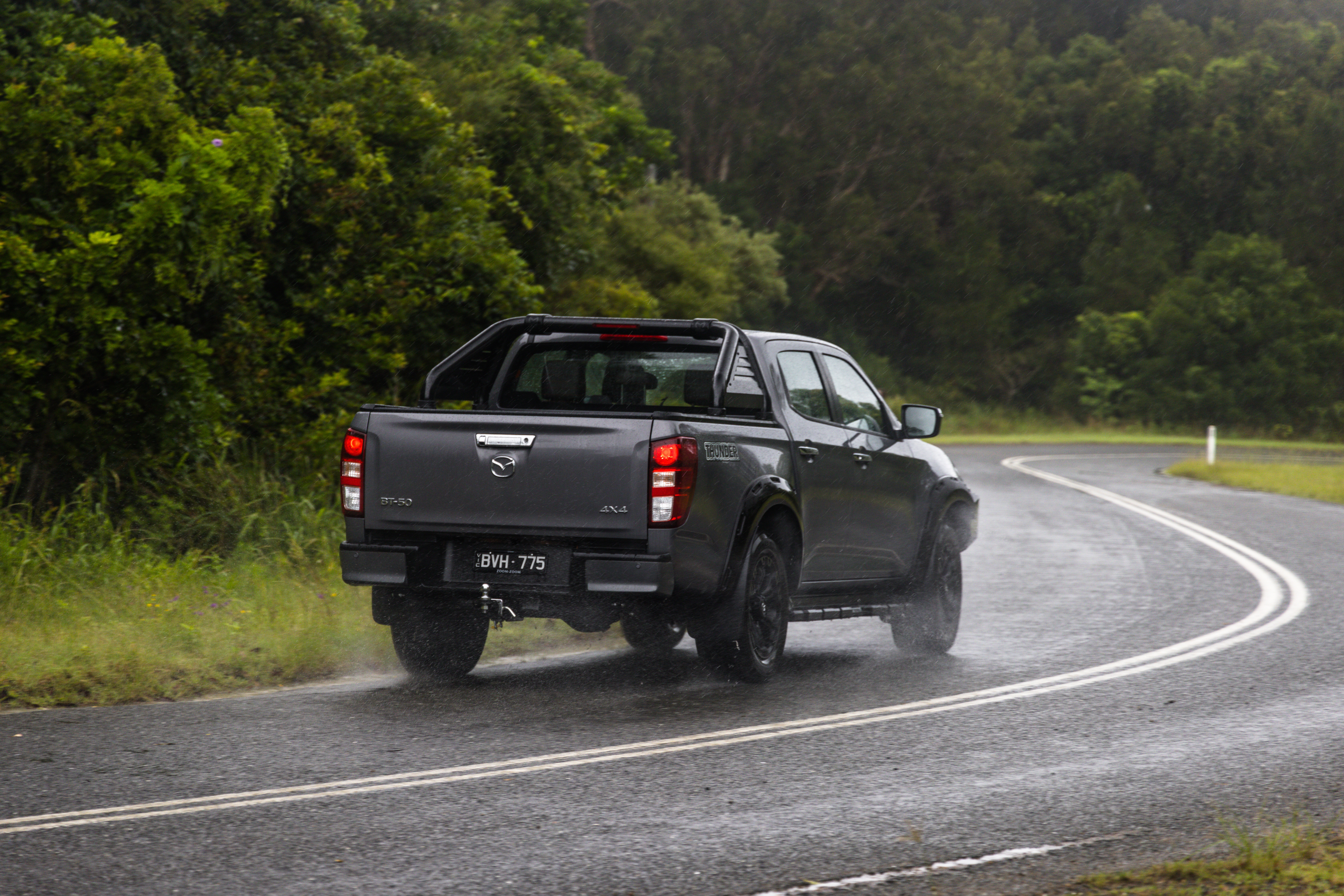
When driving at night Lloyd noticed the high beams dipping for oncoming traffic.
“I noticed the high beams automatically turn off when oncoming vehicles are detected. The system is quite efficient. I have not felt comfortable enough to let it dip the high beams all the time, but it has worked when I have forgotten to be courteous to the oncoming traffic.”
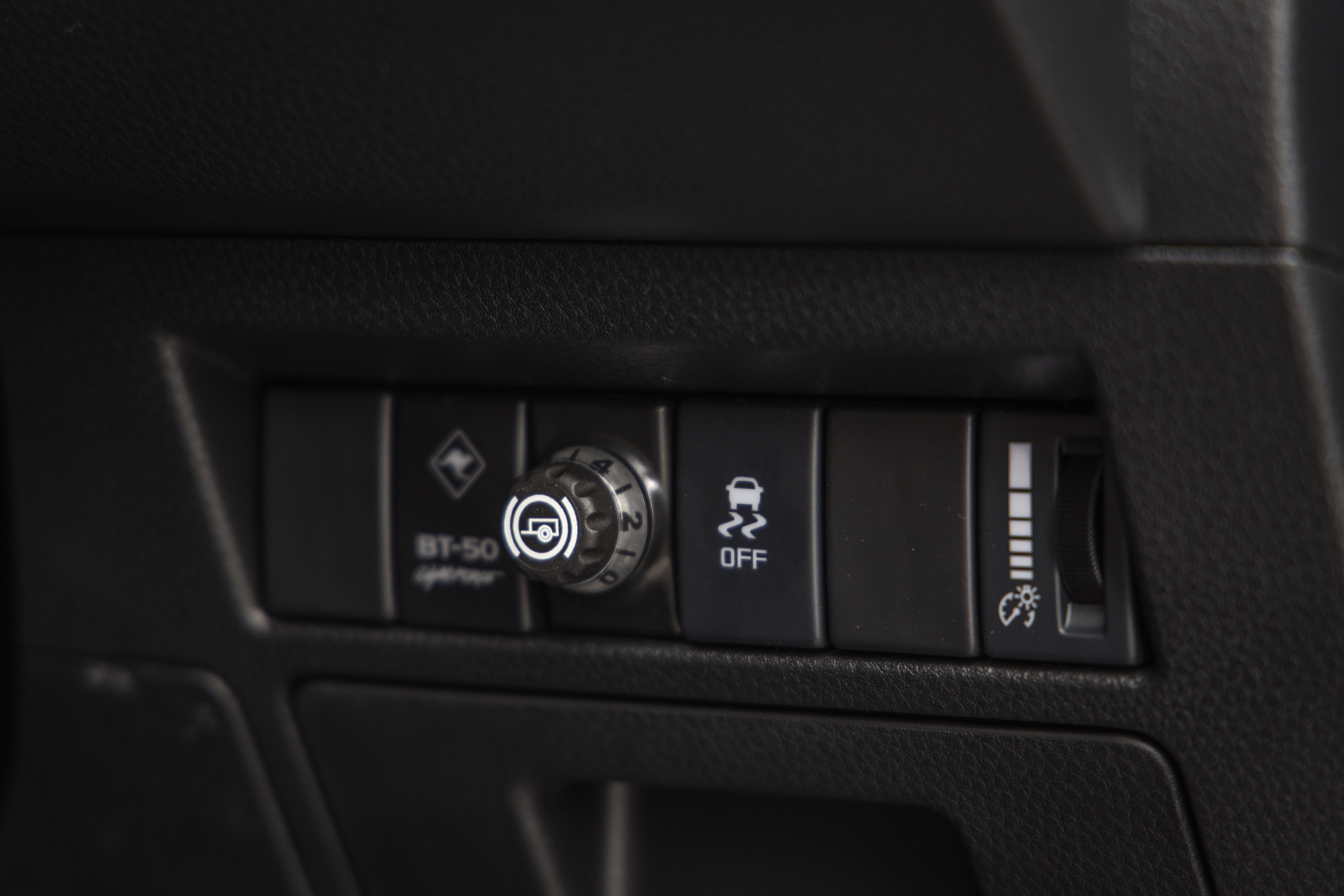
Another safety features which Lloyd did not use is a towing sway control. The BT50 makes an excellent tow vehicle. With a down ball weight of 350kg and a towing limit of 3,500 kilograms, owners are definitely able to tow. The towing sway control will use braking and torque when it senses a trailer causing the car to sway. This action will reduce the sway of the trailer and help bring it under control.
He did love the hill descent control when off road, taking much of the work out of any downhill assaults while getting to his favourite off the beaten track beach. Even if you get into any trouble, autonomous emergency braking with turn assist will let you know you are about to have a smash and help you potentially avoid it.
Again, Lloyd did not feel the need to test this feature. The alert is hard to miss and may save an inattentive driver. And if you are not paying attention to the speed limit either, excessive speed warning lets you know about it instantly.
Finally, families are surrounded by a class leading airbag set up with a set of frontside, and curtain bags, driver’s knee airbag and a front centre bag between the front seats, and you have a comprehensive safety package making sure you spend more time on the road in complete safety.
The safety tech onboard the BT50 is comprehensive and designed in a way that it is not merely glossy. It is functional and works quickly and efficiently. It is superior technology like this that makes every drive one to enjoy in the BT50 Thunder.
The full series
The 4×4 world is obsessed with the latest and greatest. We have to have the newest gear, the brightest lights, the most elaborate awning you could conceive. We’re desperate for an extra 5hp at the rear wheels, no matter how much power we had originally anyway. People line up out the door when a manufacturer releases a new model, the upgraded cupholders too tempting to ignore. It’s been a slow change, one few people have noticed, but while 4x4s used to be built late at night in the garage with mates, they’re now built online one Afterpay order at a time.
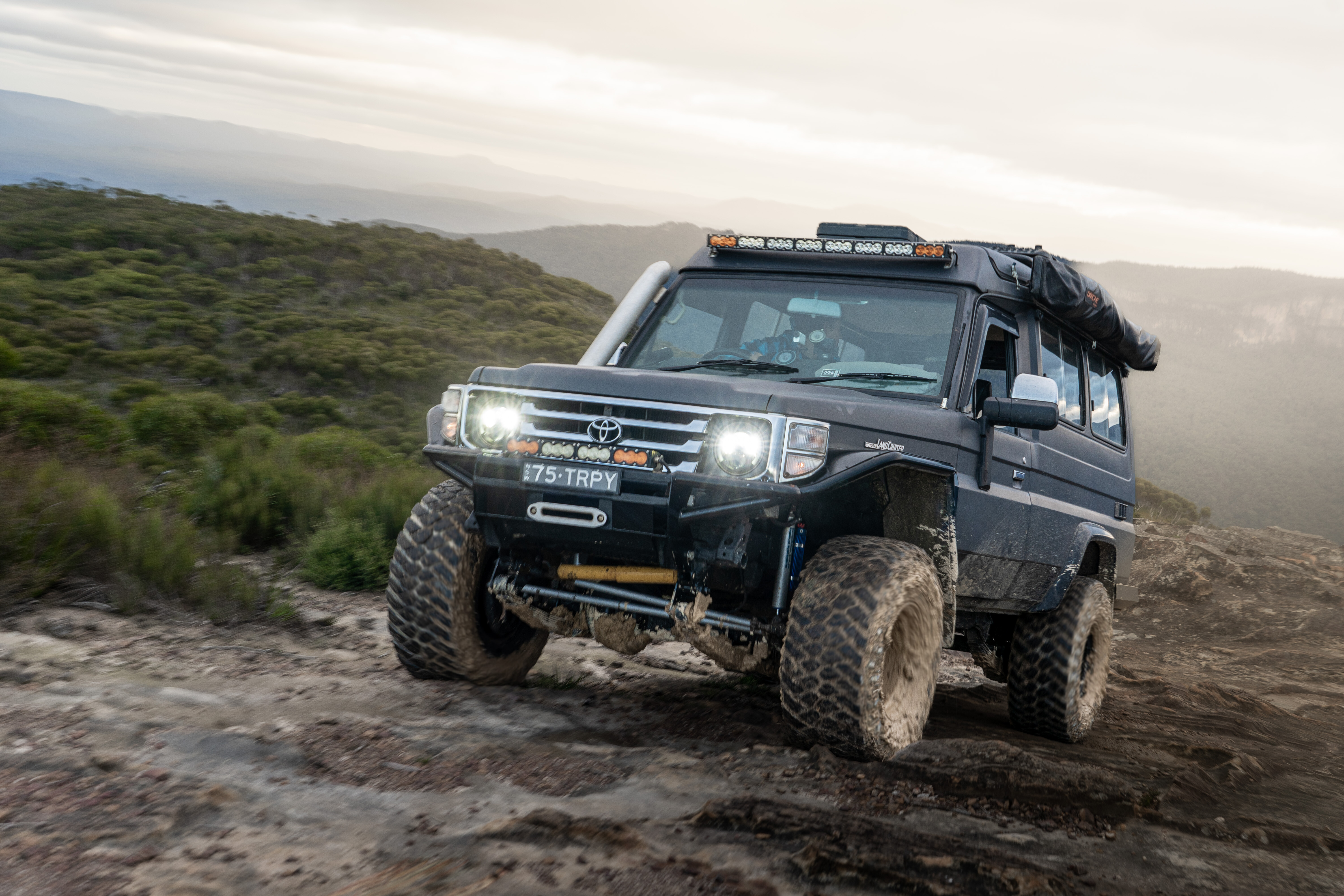
But deep in the back country, far beyond the reaches of 4×4 fast fashion, hard graft is still piecing together some of the coolest builds on the tracks. Ryan Kestle’s unbelievable 75 Series Troopy is one of them.Rolling off the production line way back in 1989, Ryan’s HJ75 Troopy has been sculpted from the ground up into his perfect adventure machine. Starting from the chassis up, the Troopy’s front and rear diffs have been relegated to the scrap heap, a matching set from a 60 Series Cruiser now live in their place. The near identical units bumping the Troopy’s track width out around three inches front and back. Both axles are sporting Harrop ELockers for maximum traction, and they’re wrapped around 4.3:1 Nitro ring and pinion sets front and back.
SUSPENSION TWEAKS
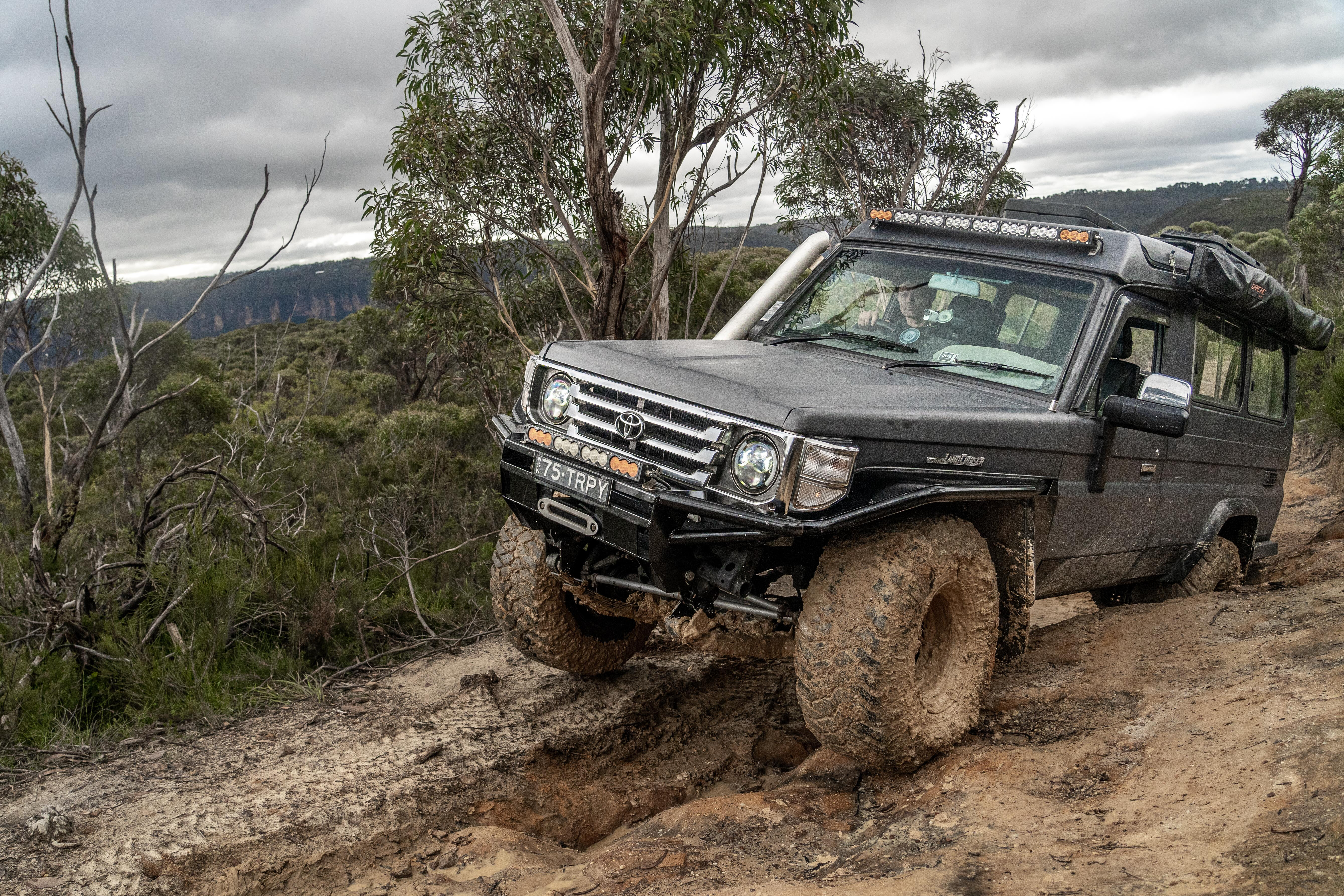
Rather than chasing lift with an off-the-shelf suspension kit, Ryan has massaged the Troopy’s suspension on the hunt for flex and ground clearance. Up front Ryan’s sourced a pair of rear EFS two-inch lifted leaf springs designed for an FJ60, then spun them around backwards. The factory mounts have been tweaked to improve the shackle angle for maximum articulation. While the welder was out, the factory shock towers were extended, allowing Ryan to make the most of the Superior Engineering 2.0 12.5-inch travel Remote Reservoir Shocks.Up the back, a second set of two-inch lifted EFS springs designed for a 75 have had their total leaf count reduced with the load leafs removed. The result is less load-carrying capacity, but a smoother ride and improved articulation.
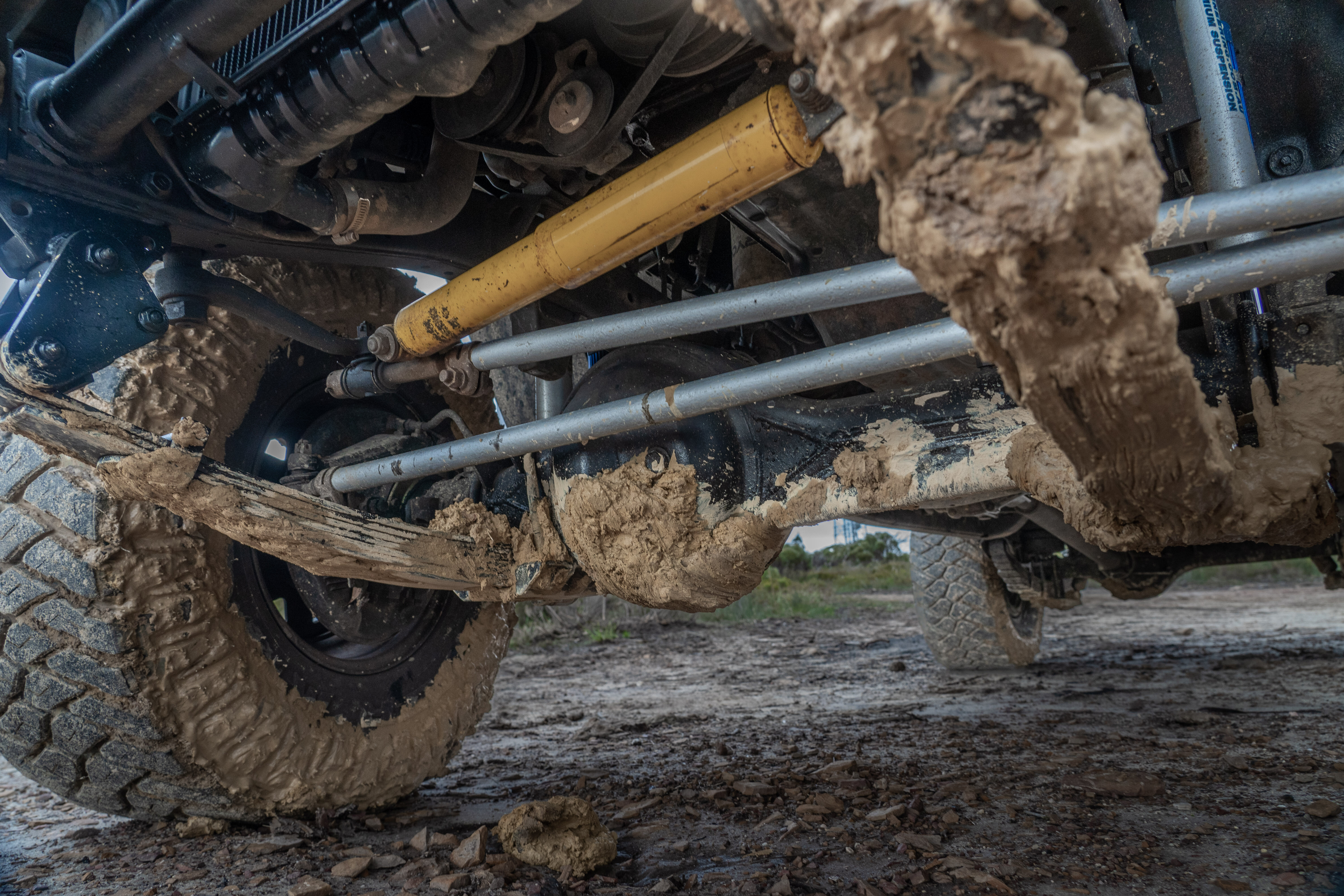
Eagle-eyed readers will spot high-clearance U-Bolt plates front and rear, helping claw back valuable ground clearance. The entire affair has allowed Ryan to squeeze in a set of 33-inch Maxxis RAZR mud tyres around 15×10-inch steel wheels, the DBA rotors hidden well within the-44 offset.
LONG LIVE THE KING
If you’re not a Toyota fanatic, you’d be forgiven for not understanding all the fanfare over the trusty 12HT. From external appearances, it’s a bit of an oddity. A big straight-six turbo-diesel putting out comparable power and torque to the 80 Series’ naturally aspirated diesel. So why is it still held in high regard more than 30 years since the last one was built?
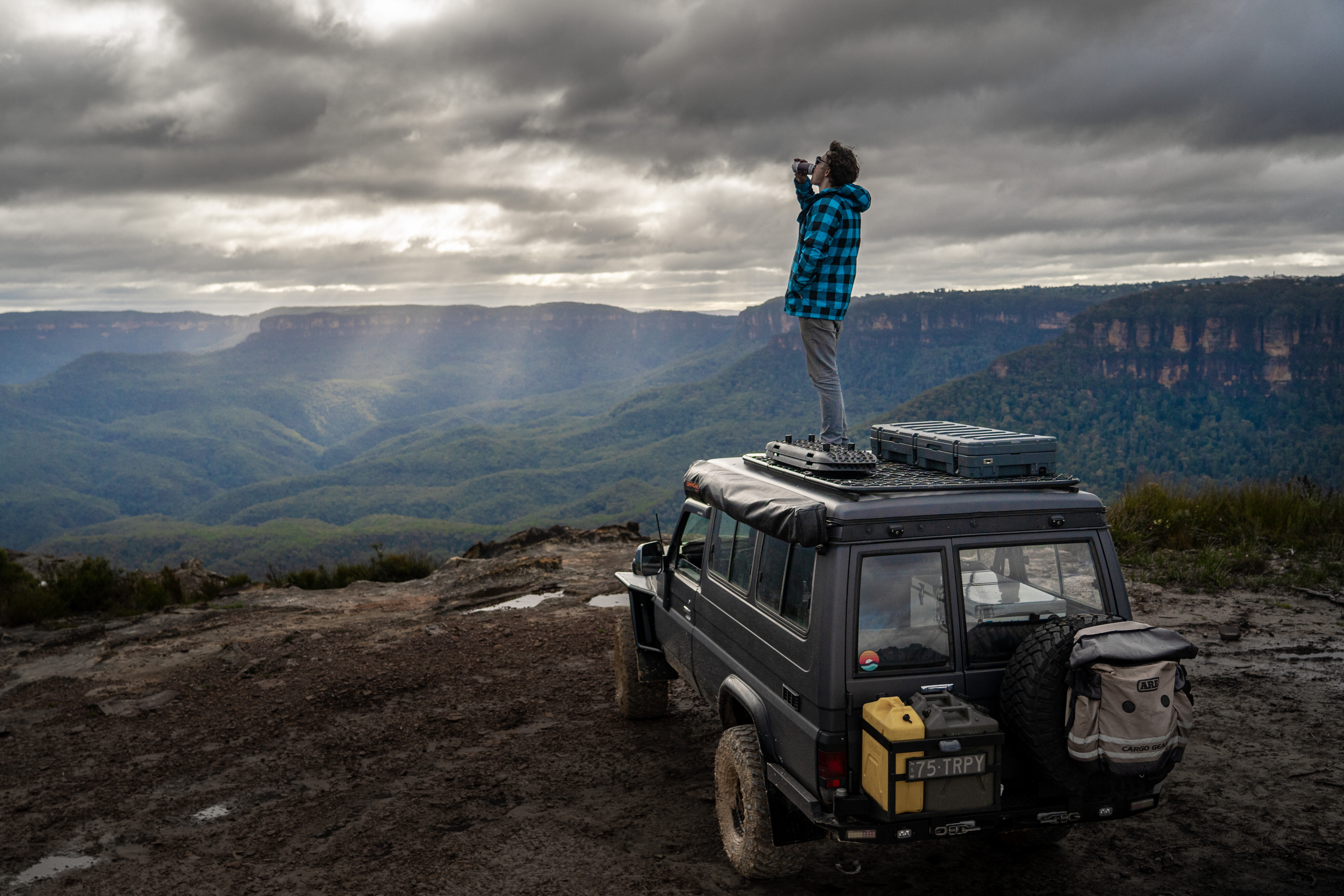
Put simply, it’s a bridging motor. Way back in the ’80s, it was leaps and bounds ahead of its time. Longer piston skirt than the outgoing 2H, direct injection, a clever glowplug-less design, and oil squirters on the pistons meant it was worlds above everything you could buy up until then.
The opposite is also true. Right after the 12HT, Toyota went to far more complex motors. Overhead cams. Timing belts. More susceptible to bad fuel and more mechanically complex. The 12HT is seen as the last of the mechanically simple and reliable motors, and the first of the big power and easy driveability motors. It’s not hard to see why they’re so sort after even today.
ENTER 12HT
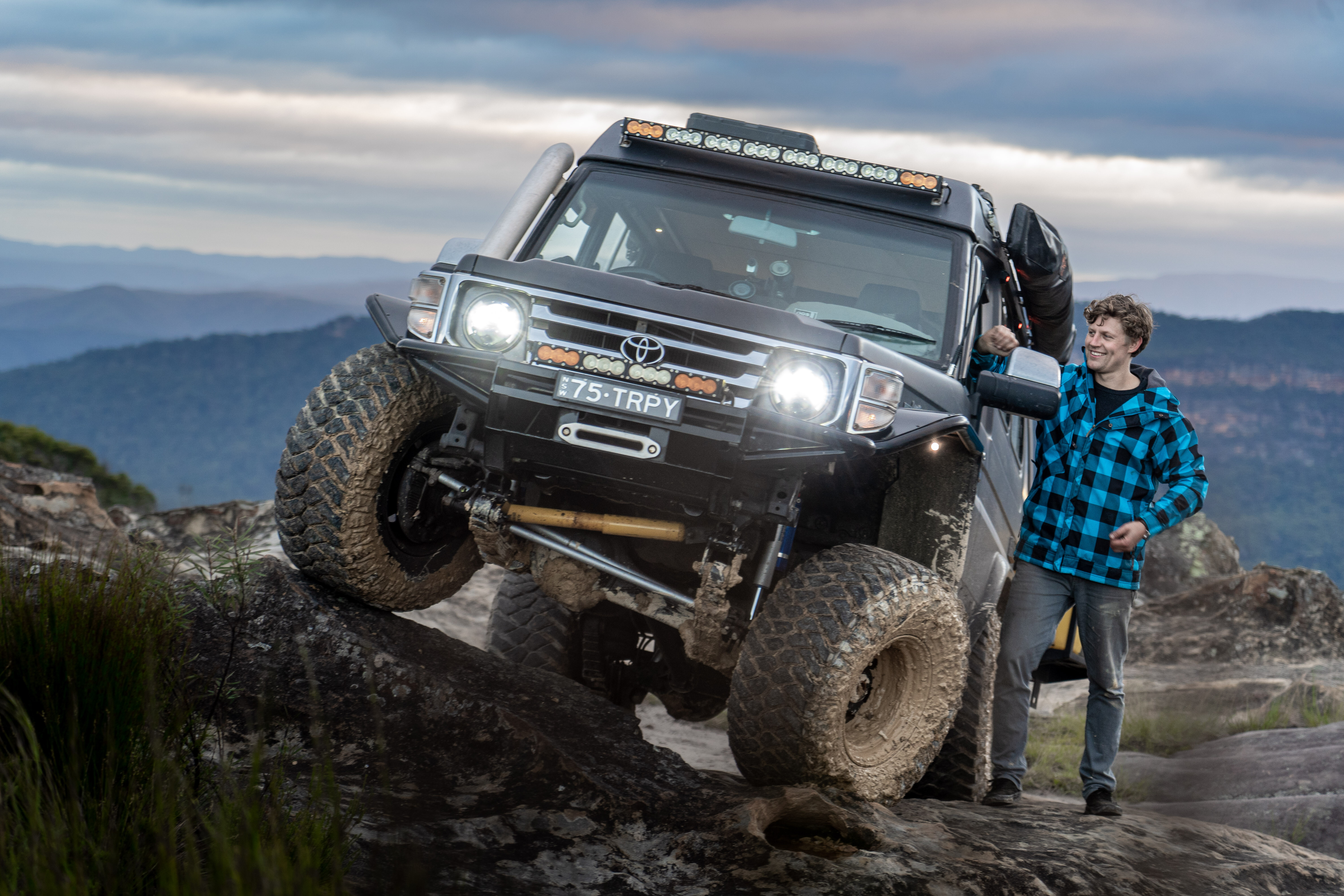
Pop the bonnet of the 75 and you’ll find an old-school diesel, but not the one you expect. One of Ryan’s first jobs when the near stock 75 rolled in to his garage was to update the lethargic 2H diesel. Making 107hp and 240Nm 33 years ago when it first fired in to life, it’s barely enough to keep up with traffic these days. In its place now lives the widely regarded 12HT Toyota factory turbo-diesel. Making 134hp and 315Nm from stock, it was capable of handling the extra horsepower Ryan was going to wring out of it.Breathing through the handmade four-inch aluminium snorkel, a G-Turbo Green Wheel set-up hoots and hollers on the dyno, all the way up to 176hp and 550Nm at the wheels. A handful of supporting mods help it in this endeavour, namely the three-inch straight-through exhaust, K&N high-flow air filter and the Ryco Fuel Water Separator.
BAR WORK
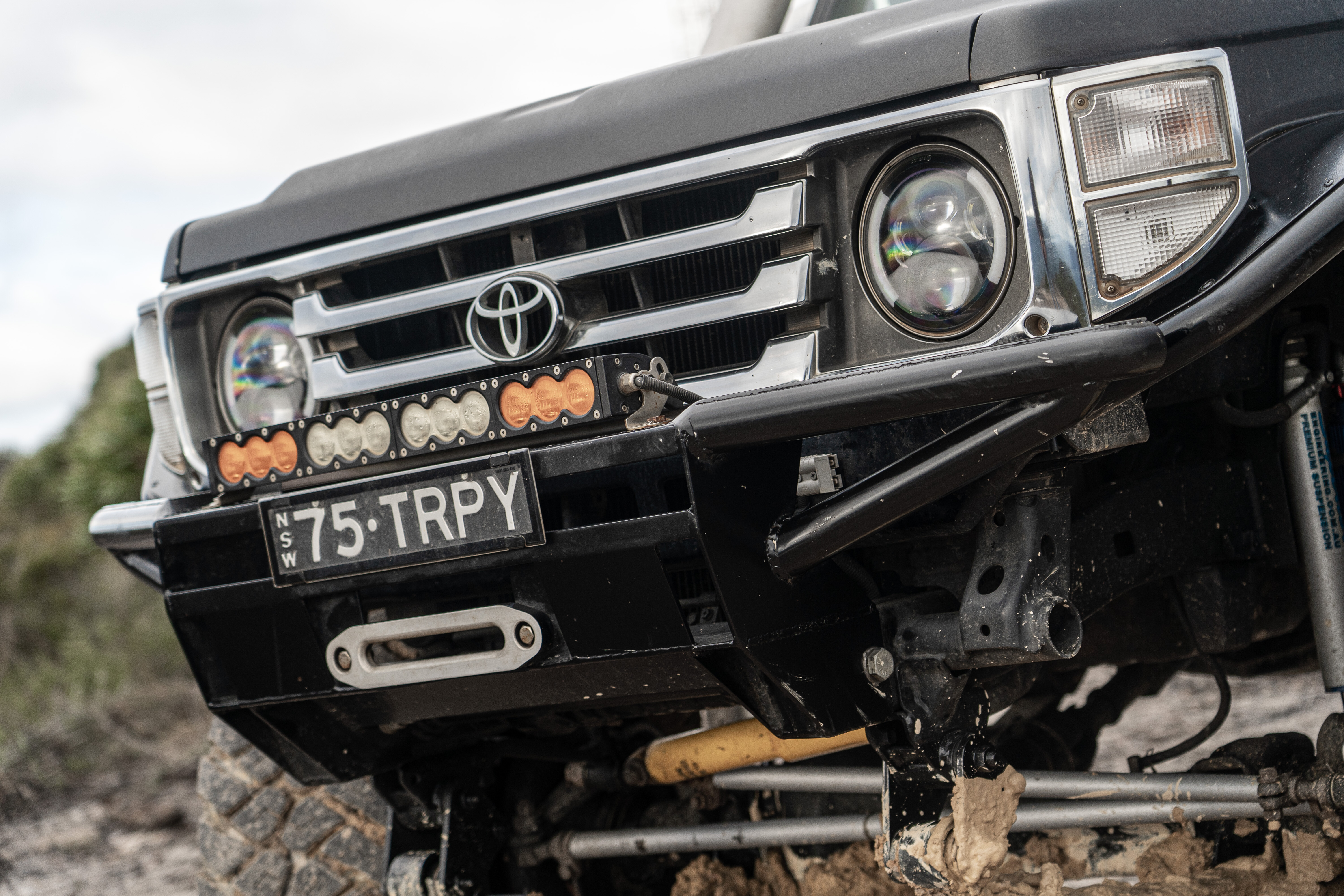
Back up on solid ground and the Troopy’s exterior has had even more of an overhaul than the driveline and suspension. Protecting the too-good-to-be-true Raptorliner coating is a series of custom bar work from front to back. Up front, a hand-built winch bar tucks in high and tight to the Cruiser’s body, a later model HDJ79 grille sneaking in behind the eBay special LED light bar.Moving down the flanks and the entire front guards have been replaced. While the purists might look away in horror, the custom tube guards allow Ryan to take on any track without worry of crumpled sheet metal. Likewise, armour plating along the flanks lets him run without traditional rock sliders. And the rear quarter panels have been chopped; a raised rear bar now lives in their space and houses not only the spare tyre high and tight, but three jerry cans, complete with a skid plate underneath them.
TRAKKA TOP
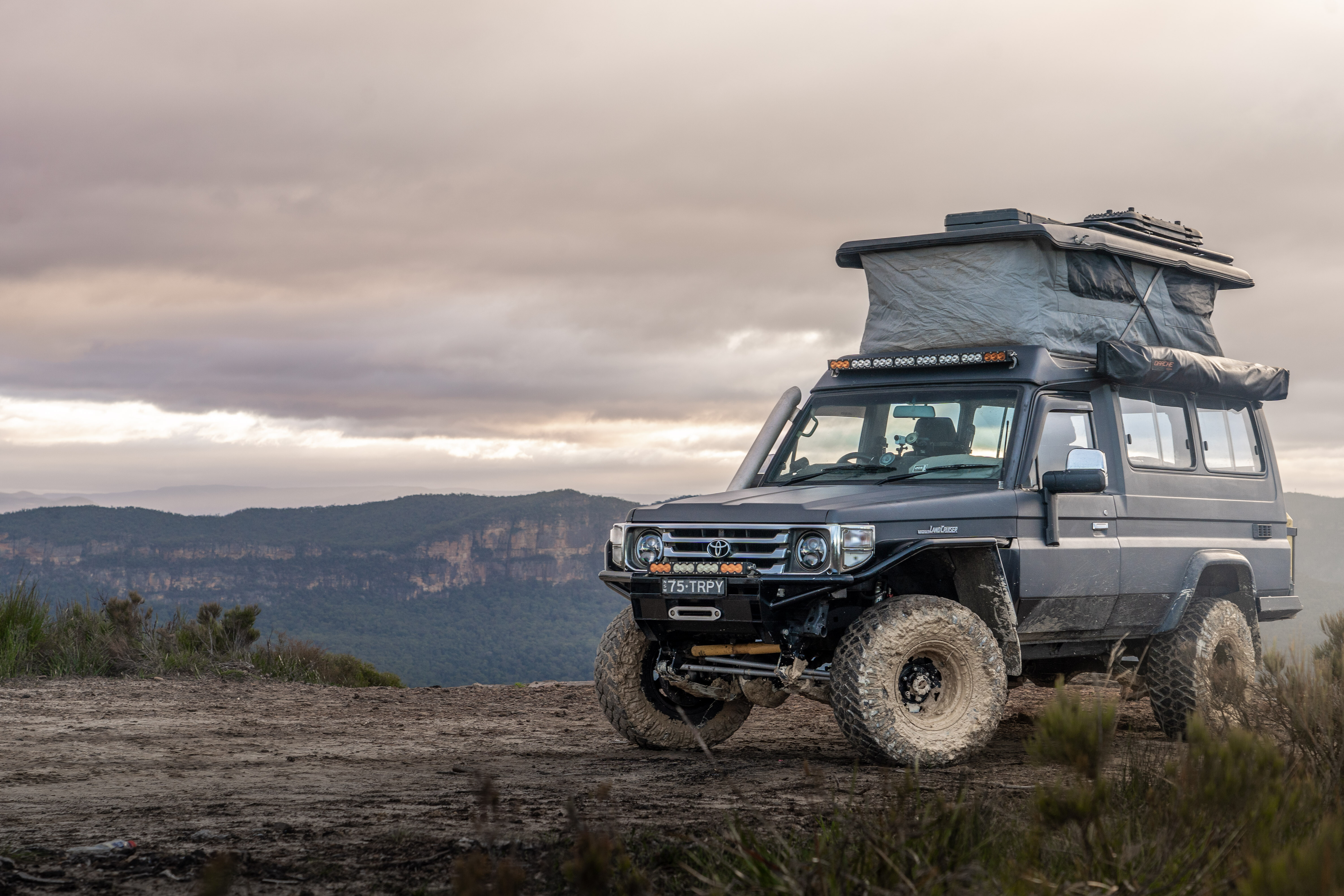
Up top, a hint of the Troopy’s age shines through for those who know what they’re looking for. A pop-top conversion from Trakka replaces the Troopy’s tin-top with a lightweight fibreglass unit that easily lifts allowing full standing room inside. Attached to the side is a Darche 270-degree wraparound awning as well as six Stedi LED exterior lights around the perimeter. The roof itself houses an Ocam Roof Rack and Caos Roof Box, for additional storage.
INTERIOR FIT-OUT
Moving to the inside and that hands-on DIY craft shines through even further. Starting from the rear, the Troopy’s barn doors have been recessed in, allowing for two Frontier Lines folding camp chairs and a Jetboil stove to tuck inside. The full-length internal panels also provide storage, as does the 150L pull-out drawer with stainless-steel prep table. Food and drinks are taken care of with an Evakool 75L dual-zone fridge-freezer up the back, and a Waeco CDF11 centre-console fridge up front. A full-length bench runs along the left-hand side, allowing Ryan to work on the road, while a Trakka two-person bench seat to the right folds down flat so his young fella can sleep there while dad’s up in the pop-top bed above.
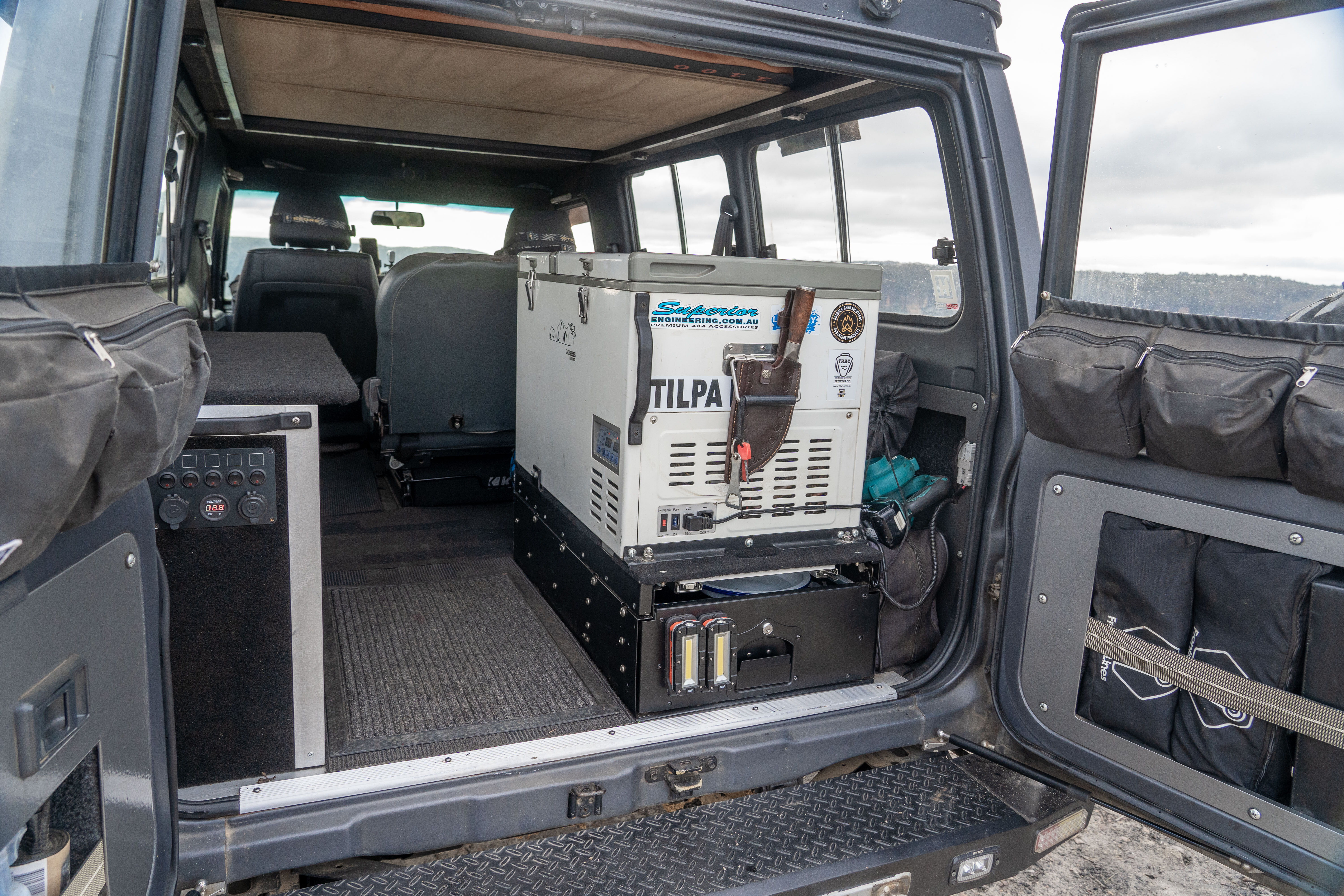
A simple 12V set-up keeps everything running late in to the night. A Ctek D250S up front serves as a solar regulator for future mods, with a Baintech 110amp/h standalone lithium set-up out back. It feeds in to a 2000W pure sine wave invertor and more USB outlets than you could count on both hands.
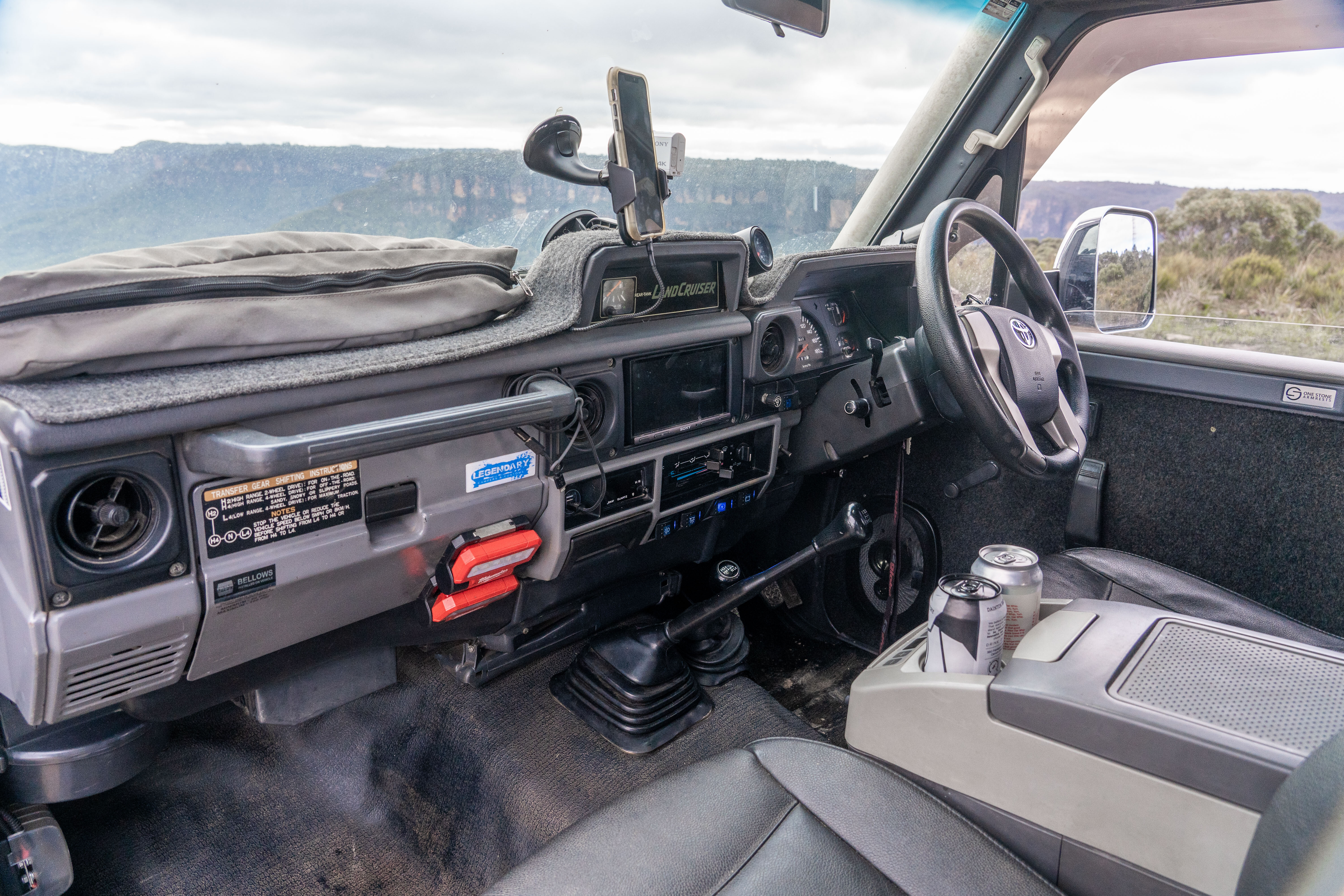
Up front in the captain’s seat, both front pews have been replaced with leather units from a BMW 320i, of all things. They bolt in tight on Huracan mounts, while a Prado steering wheel updates the forward vision. While the outside of Ryan’s Troopy is striking, it’s the inside that shows real attention to detail. From the clever canvas storage to the adjustable throttle dampener and to dial-in pedal feel, it’s unbelievable just how thorough this build is.
Like most car enthusiasts, Ryan constantly ebbs and flows between wanting to sell it to move on to the next project, or wanting to fully rebuild it. By the time you read this it could be parked up in a rich sheik’s private collection, pulled apart in the shed with a 200 Series LandCruiser chassis underneath, or hopefully trundling along the tracks for another 33 years making memories for Ryan.
The time has come to sell our beloved 2020 Isuzu D-Max after building it up over the last few years. We’re moving on to our next project vehicle build, which will be announced soon. Before that kicks off, we need to clear space in the shed so it’s time for the D-Max to find a new owner.
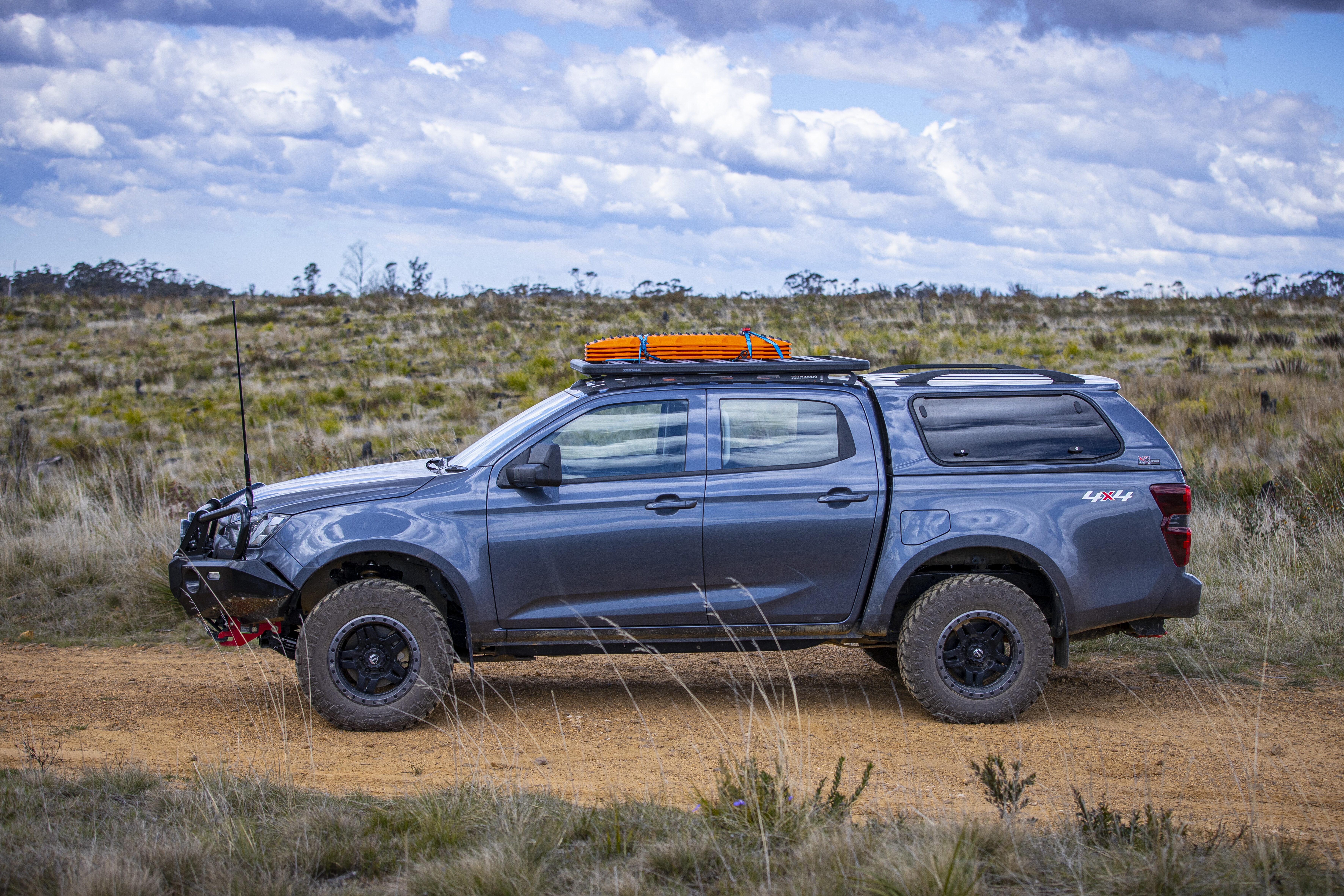
The D-Max is a 6-speed manual, so you’ll need to know how to drive a manual transmission, otherwise there isn’t much you’ll need to do as it’s been completely decked out for off-road driving and touring. While it’s been accessorised heavily, the good news is it hasn’t been abused off-road, just mild touring to capture images and create content for 4X4 Australia magazine.
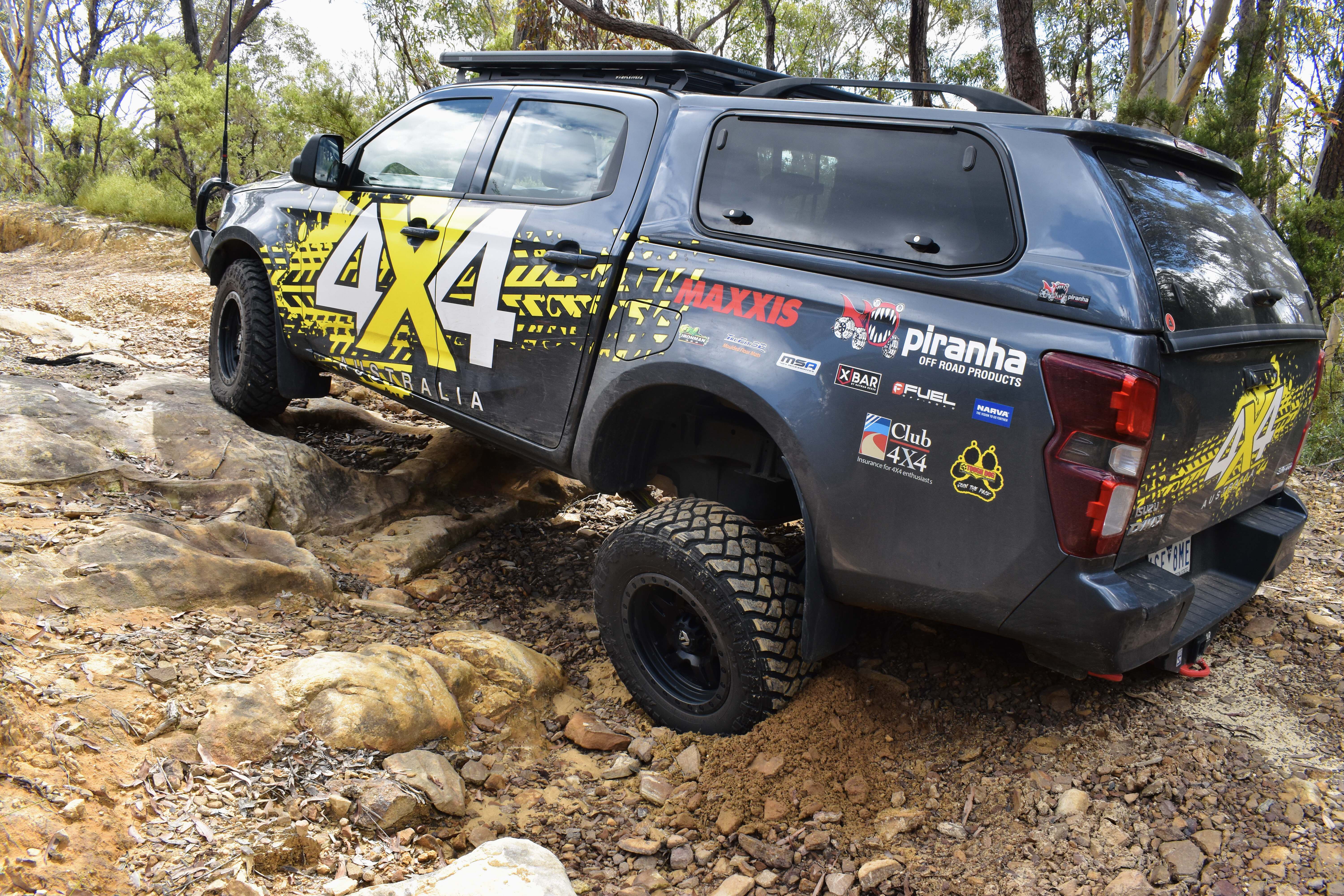
This Isuzu D-Max has been built up by the team at 4X4 Australia Magazine, with the build series featuring on YouTube, the 4X4 Australia print magazine and on our website. You can watch the final reveal video here.
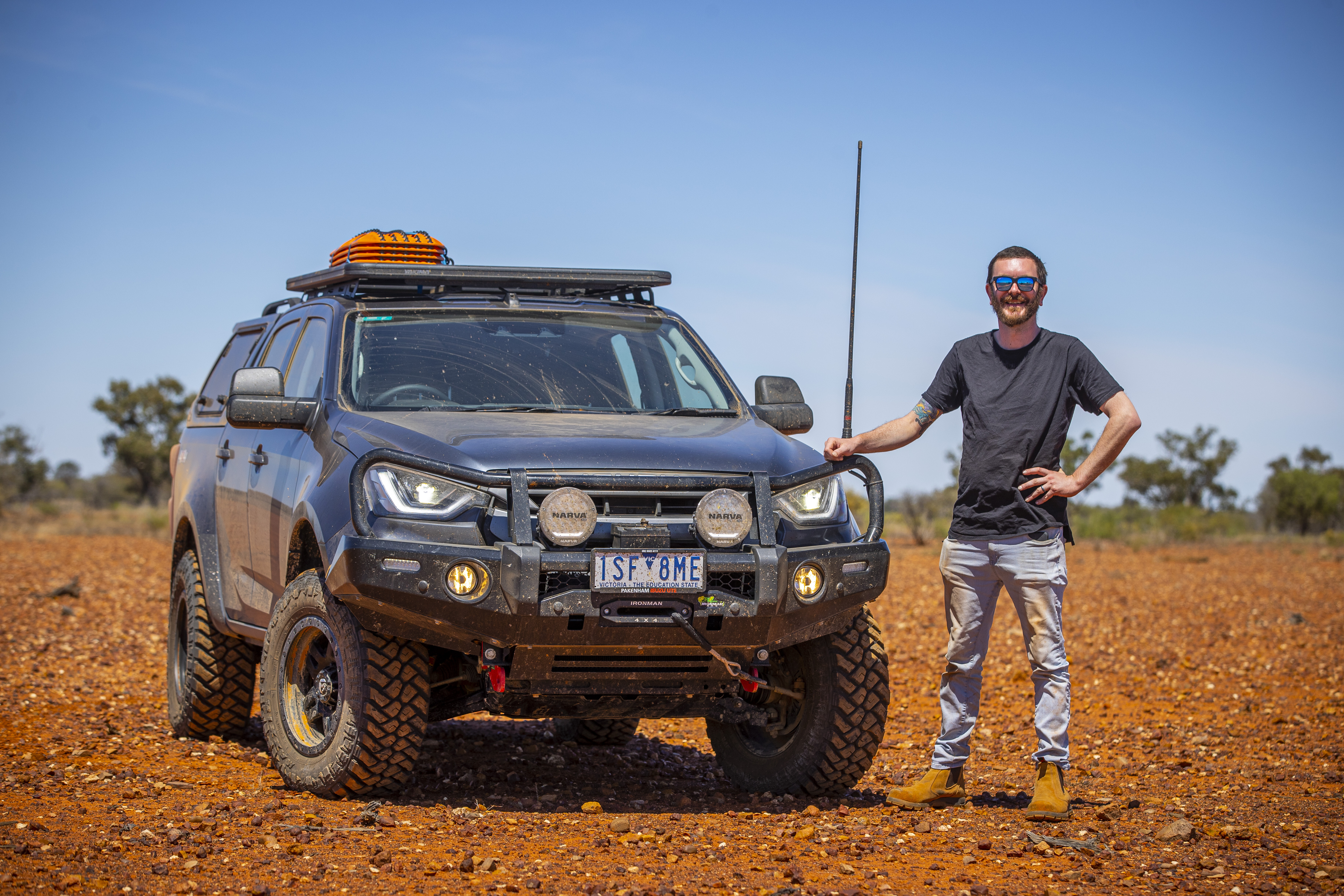
No expense was spared building a capable and reliable touring vehicle. Modifications include:
- Ironman 4X4 Commercial Deluxe bull bar, with 12,000lb winch and recovery points, Narva LED driving lights and GME aerial (connected to a GME XRS Connect UHF)
- Yakima RuggedLine roof rack and platform
- Piranha canopy
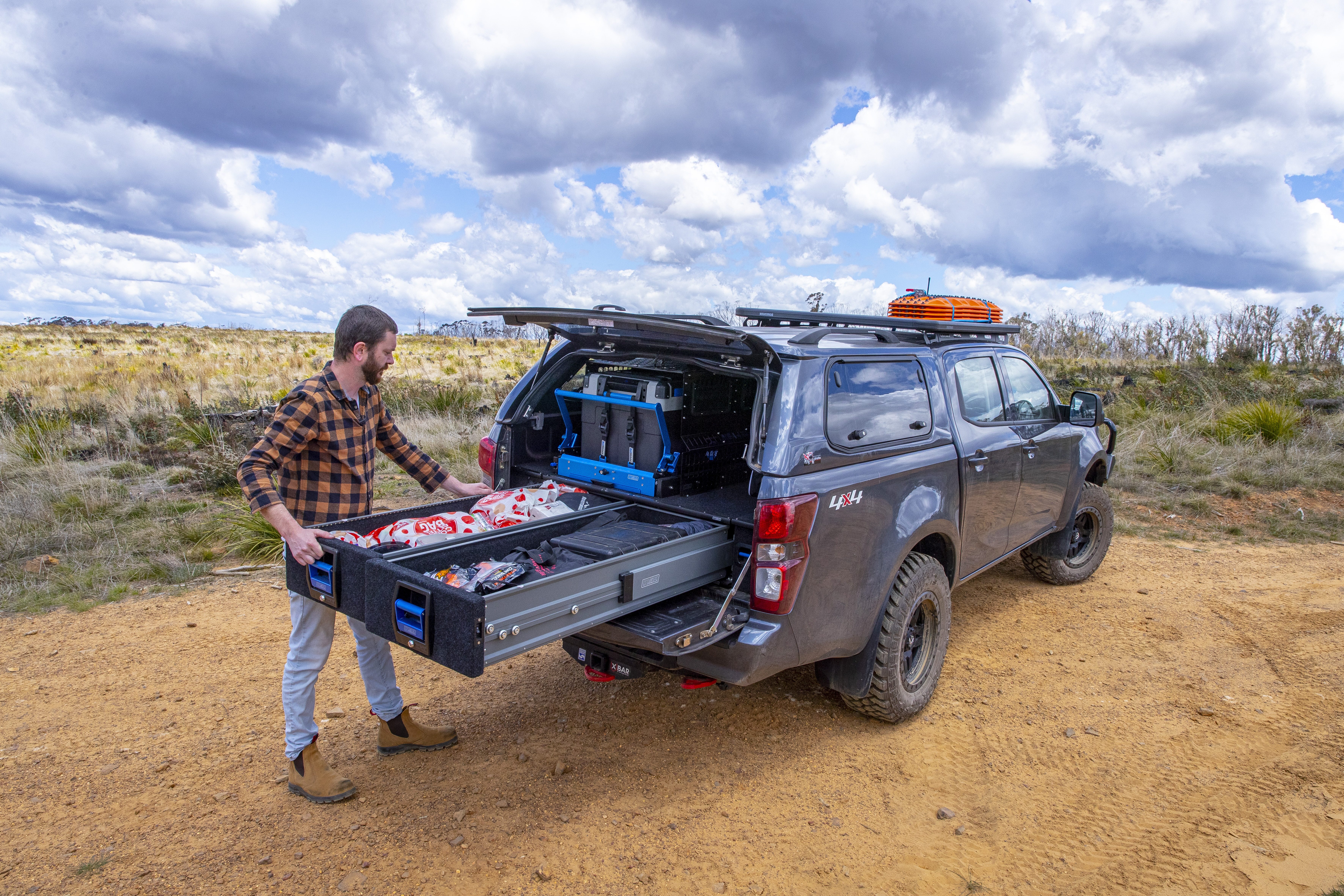
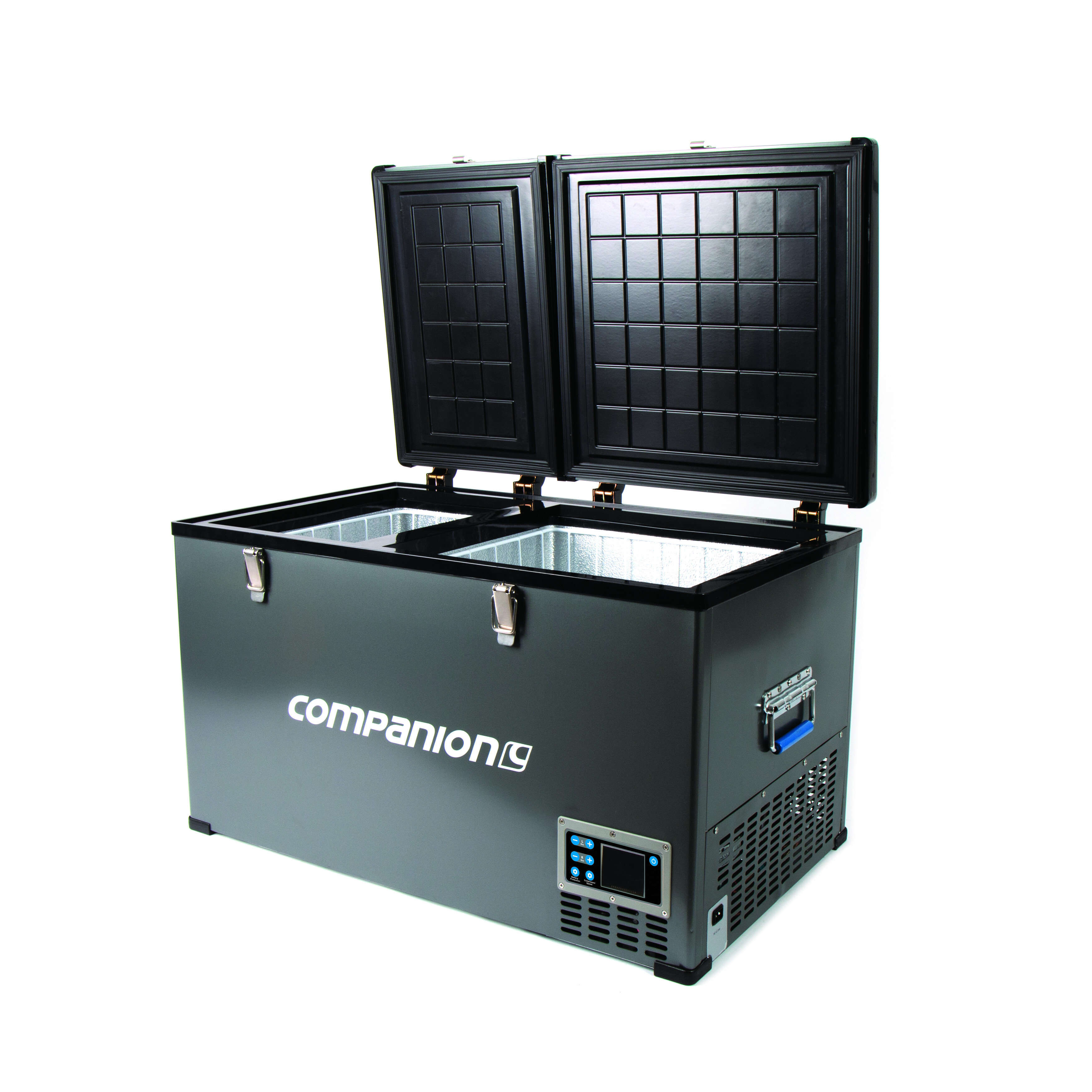
- MSA storage drawers with drop down fridge slide and Companion fridge with in-built lithium battery
- 100Ah Invicta Lithium battery, Piranha DCDC charger mounted behind the back seat on a Piranha battery tray
- TruFit 3D floor mats
- Full Tough Dog Suspension lift kit front and rear
- Maxxis RAZR mud tyres mounted on Fuel Anza alloy wheels
- Pacemaker 3” DPF back exhaust system
- Maxtrax recovery gear
- Hayman Reese X-Bar Heavy Duty towbar with recovery points
The Savannah Way is around 3700km of stunning, remote, isolated and historically injected areas all linked by bone-jarring corrugated roads. It’s an iconic drive covering two states and one territory in Australia (Queensland, the Northern Territory and Western Australia) passing by five World Heritage sites, 15 National Parks, endless free camping and station stays making it a journey waiting to be explored.
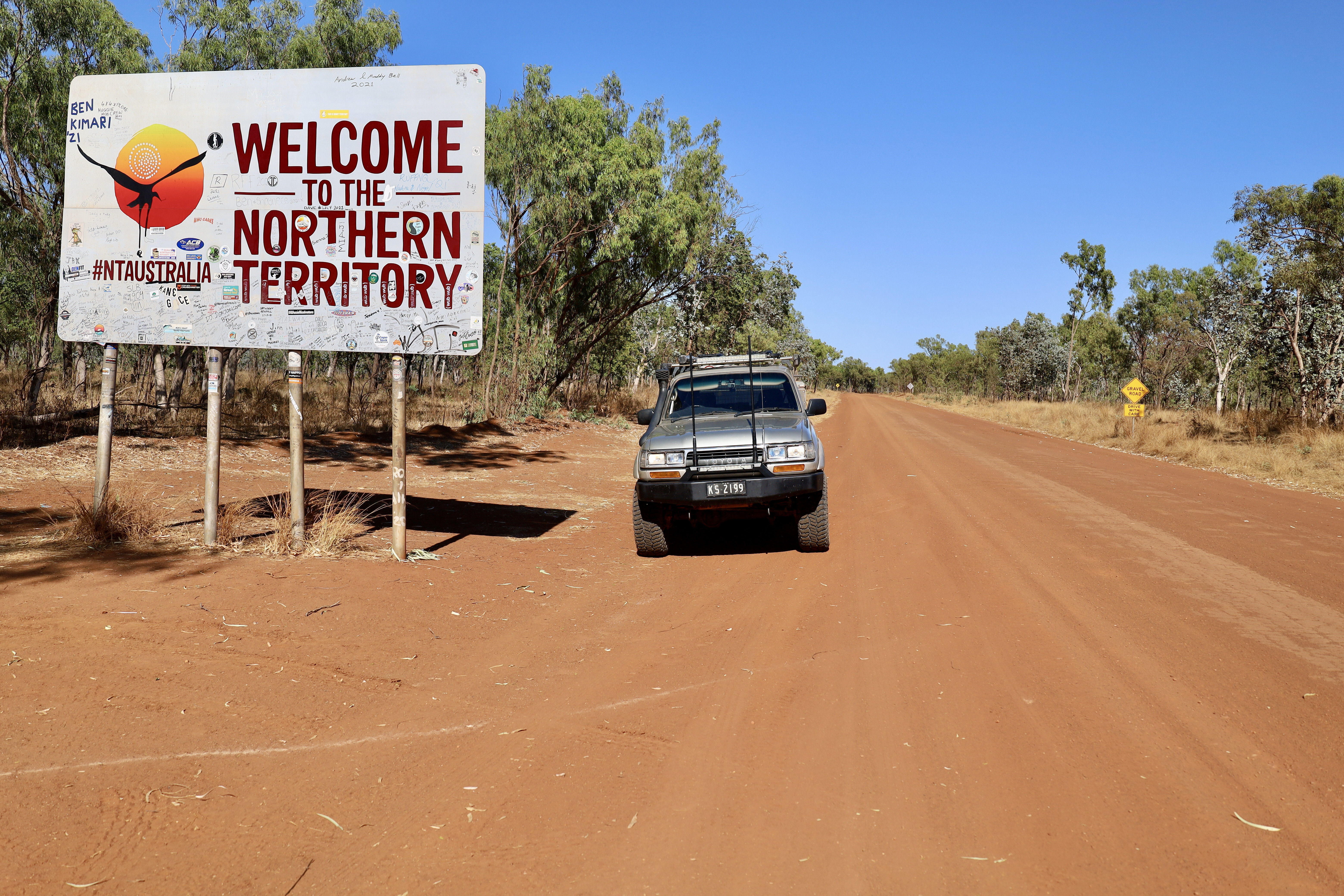
From the east, your Savannah travel route can start at Cairns in thick tropical rainforest, then through the deep outback gorges and end in the historic town of Broome or even in Kakadu National Park. Top Savannah Way highlights include the amazing rock formations of the Lost City, ancient Aboriginal rock art, impressive waterfalls, remote driving and much more.Now while there’s so much to see and do over the 3700km, I found an array of history and stunning scenery in a short 700km section between Burketown in Qld and Borroloola in the south-western gulf region of the NT. That’s the great thing about the Savannah Way, you don’t have to do the whole journey at once, its easy to break away from it to explore different regions.
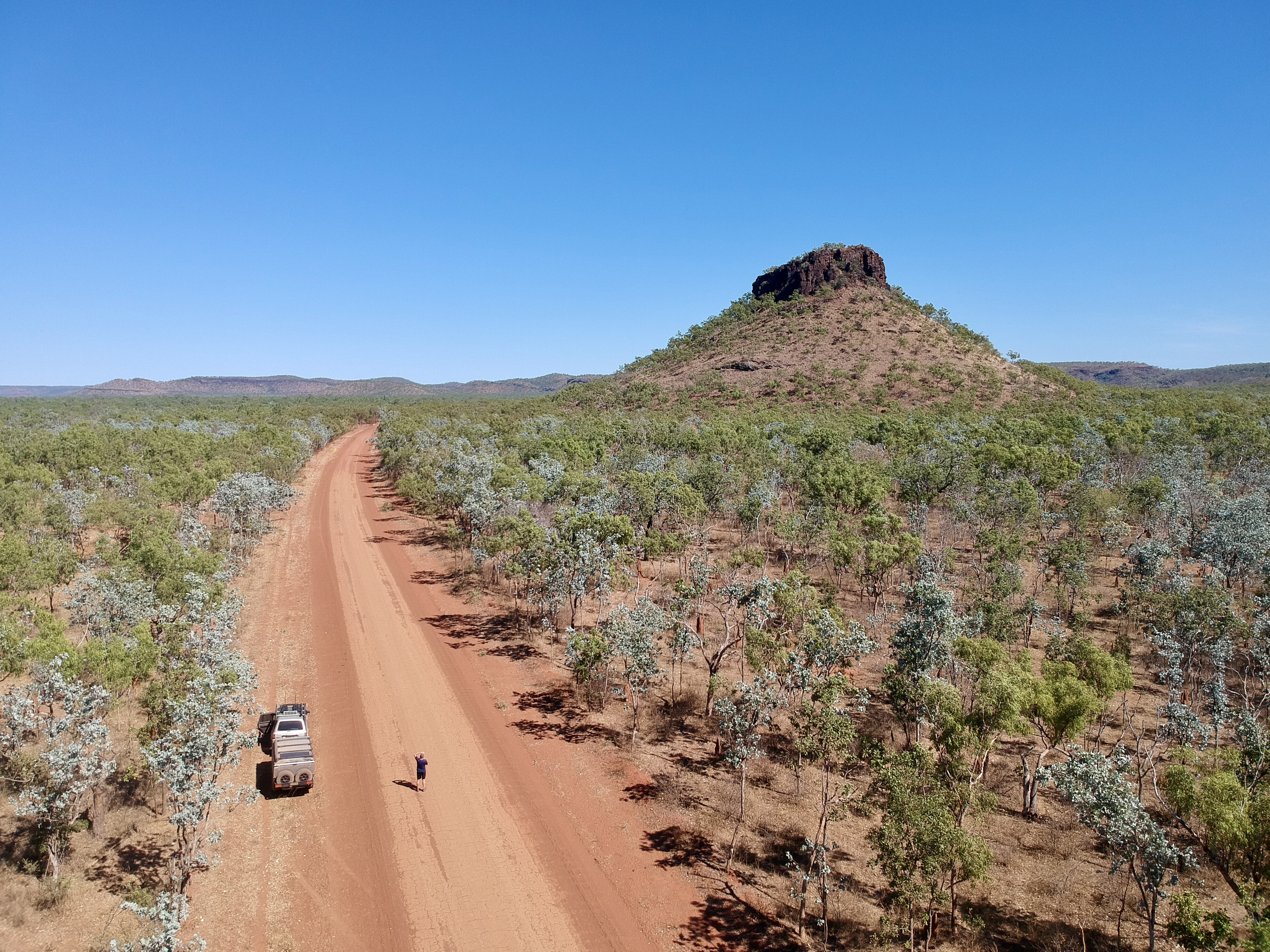
Burketown, right in the dip of the Gulf of Carpentaria seems so far away from life and anything else, but back in the day (1860-90) this area was alive with industry and fellow pastoralists looking for new land to settle on. Wind the clock back to 1841 when John Stokes explored the gulf’s coastline in HMS Beagle and liking what he saw, described the area as ‘the plains of promise’. Then, 20 years on in 1861, legendary explorers Burke and Wills travelled by land to finally reach the area, opening it up for settlement in 1864.The town had a bumpy start over the next few years, William Landsborough arrived with a group of native police to bring order to the settlement, in 1866 gulf fever ravaged Burketown after a ship arrived with all the crew dead, the disease devastating the town’s population. To make matters worse, in 1887 a cyclone flattened the tiny settlement. Being so remote and isolated, the town’s population peaked in 1911 to 265 people, who mainly worked off the land and at the boiling works.
On the north-side of Burketown, a boiling works was set up in 1866 for cattle to be slaughtered producing meat, tallow and to process hides and skins. In 1870 this processing plant was the third largest in Qld processing 100 cattle a day, sending products as far away as London and importing stock from New South Wales and South Australia. Unfortunately a fire ripped through the plant in 1898 and burnt the place to the ground, but the townsfolk rallied together and raised funding to rebuild the plant. After several more years of operation, the boiling plant finally closed in 1914 due to the high cost of wages, transportation and now the lack of stock to cull.Today the old boiling plant has a strange smell in the air, the huge boilers and wheels lie silent on the ground and nearly all of the timber foundations have been eaten away by termites, yet it’s a fascinating area to walk around and to think what used to be.
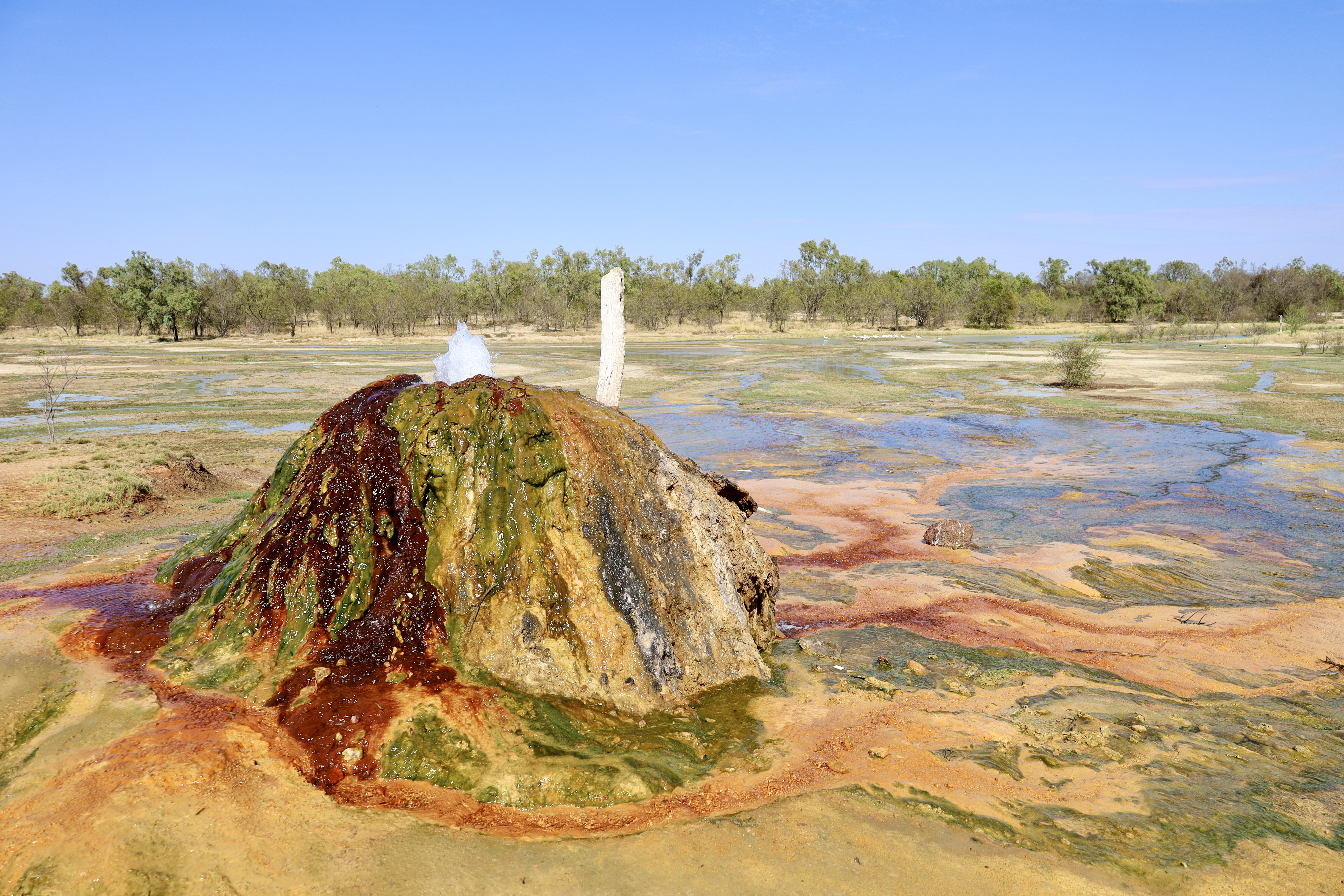
Modern Burketown proudly announces itself to the world as ‘The Barramundi Capital of Australia’. Situated on the flat plains of the gulf near the Albert River, it is really nothing more than an outback town these days where you can stock up on a few supplies and explore the local history. Another amazing piece of local history is the Artesian Bore on the southern side of town that was sunk back in 1897. Somehow they drilled down to 702m allowing the flow of mineral-rich water to gush out of the ground at a phenomenal rate where the minerals have built up leaving a 4-foot high statue before the water flows out on to the wetlands.
HELL’S GATE
Leaving Burketown and heading west on the Savannah Way, it’s dry and dusty and typical gulf landscape. But come the wet season and the whole region gets shut down due to the immense amount of water that this area receives. Both Tirranna Springs Roadhouse and Doomadgee are settlements where you can top up with food and fuel, and what surprised me was that it was a sealed road all the way to Hell’s Gate Roadhouse, nearly 200km away.
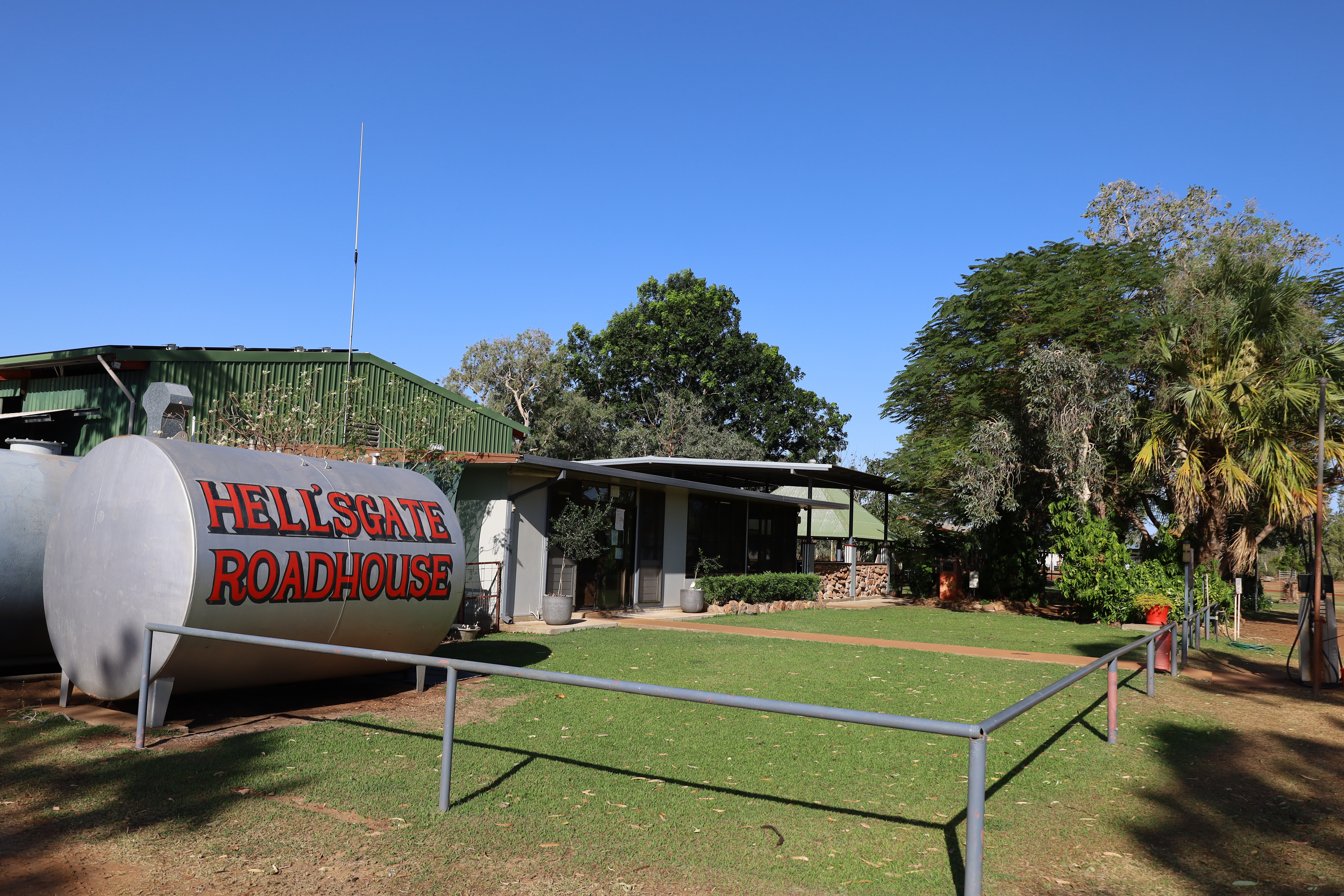
Hell’s Gate is like a retreat away from the harsh landscape of the surrounding country, where you can pull up and camp for a night or two with green grassy campsites shaded by outback gums. If you don’t want to cook, the roadhouse has a great menu inside, plus there’s an outdoor bar area to knock down a few cold ones. Part of Cliffdale Station, the roadhouse was built after six years of tough times and no income for Cliffdale, and today, it’s a must-do stop for any traveller. Not only does the roadhouse offer amazing food and accommodation, it also offers helicopter flights to remote water holes, functions and entertainment.So, why the name Hell’s Gate? Well the name comes from the name of the small gap in the escarpment just one kilometre south of the roadhouse, originating in the early days of settlement of the gulf when the tough police force would escort settlers and travellers to the ‘portals of Hell’s Gate’. From that point onwards, they were ‘on their own’ until they reached the safety of police protection at Katherine in the NT nearly 1000km away.
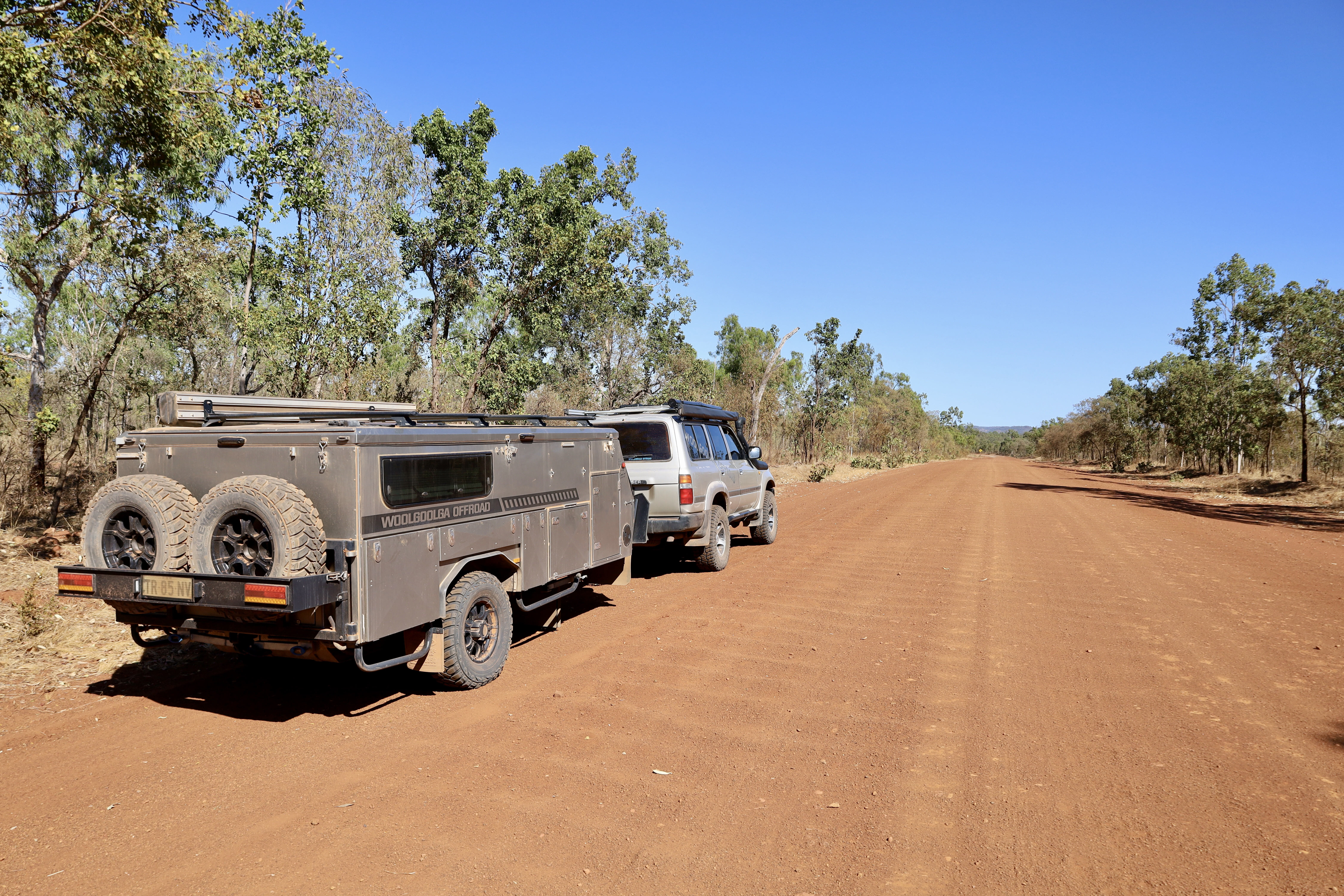
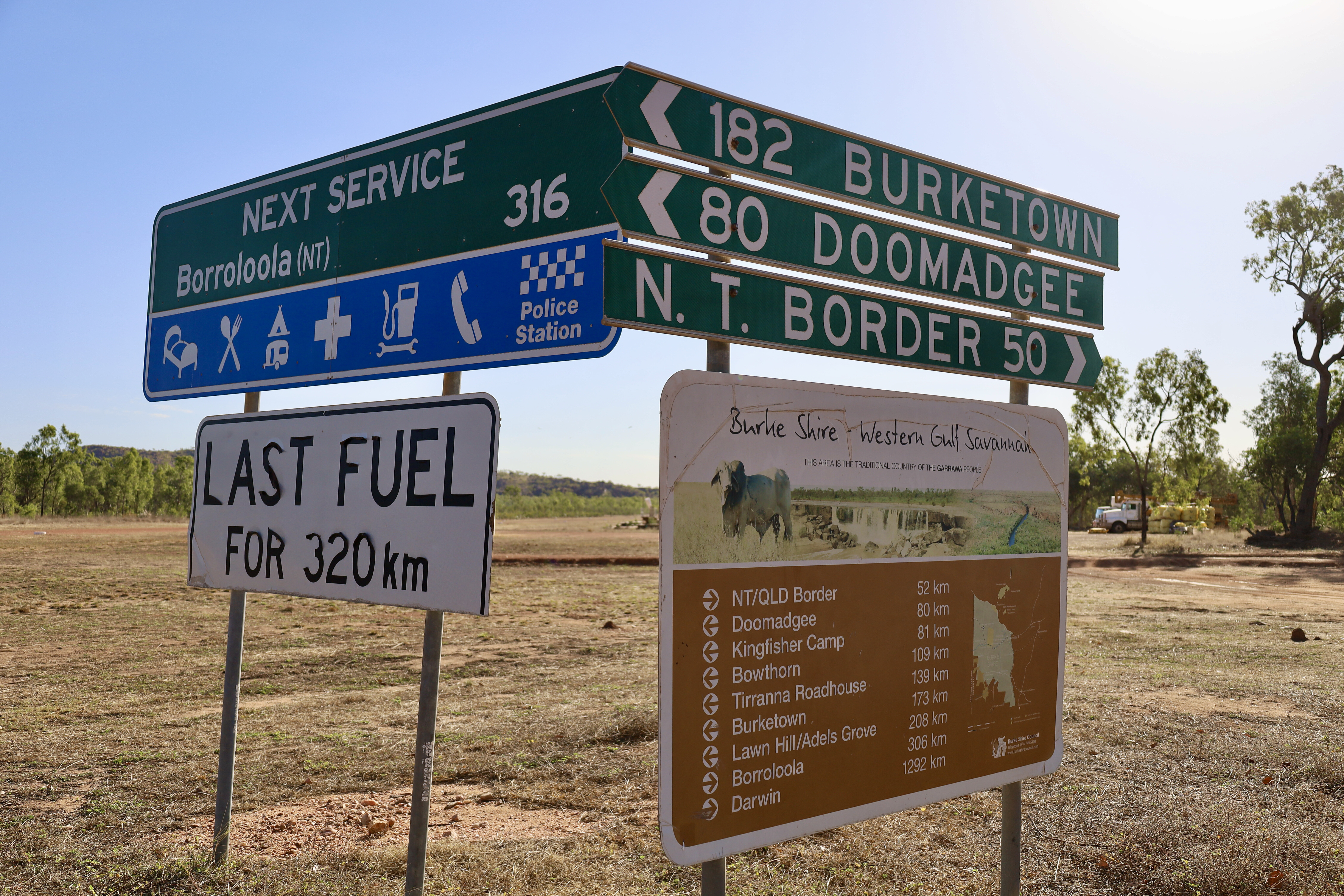
When you consider that back then travellers were on foot or horses, traversing lands that were largely unexplored and considered very dangerous, it would well have seemed like the gateway to hell. Where the road passes through Hell’s Gate, it’s the same track that explorer Nat Buchanan travelled as he guided the first settlers to ‘take up’ and settle the first two ‘cattle runs’ in the NT in 1881.Leaving Hell’s Gate the dirt road is rough as nails, with extreme corrugations where your tyres need to be lowered and everything tied down. It’s only 55km to the NT border but it takes time and if later in the year, the bulldust holes are thick and deep. By the way, Hell’s Gate is the last stop for fuel heading west until Borroloola, 320km away.
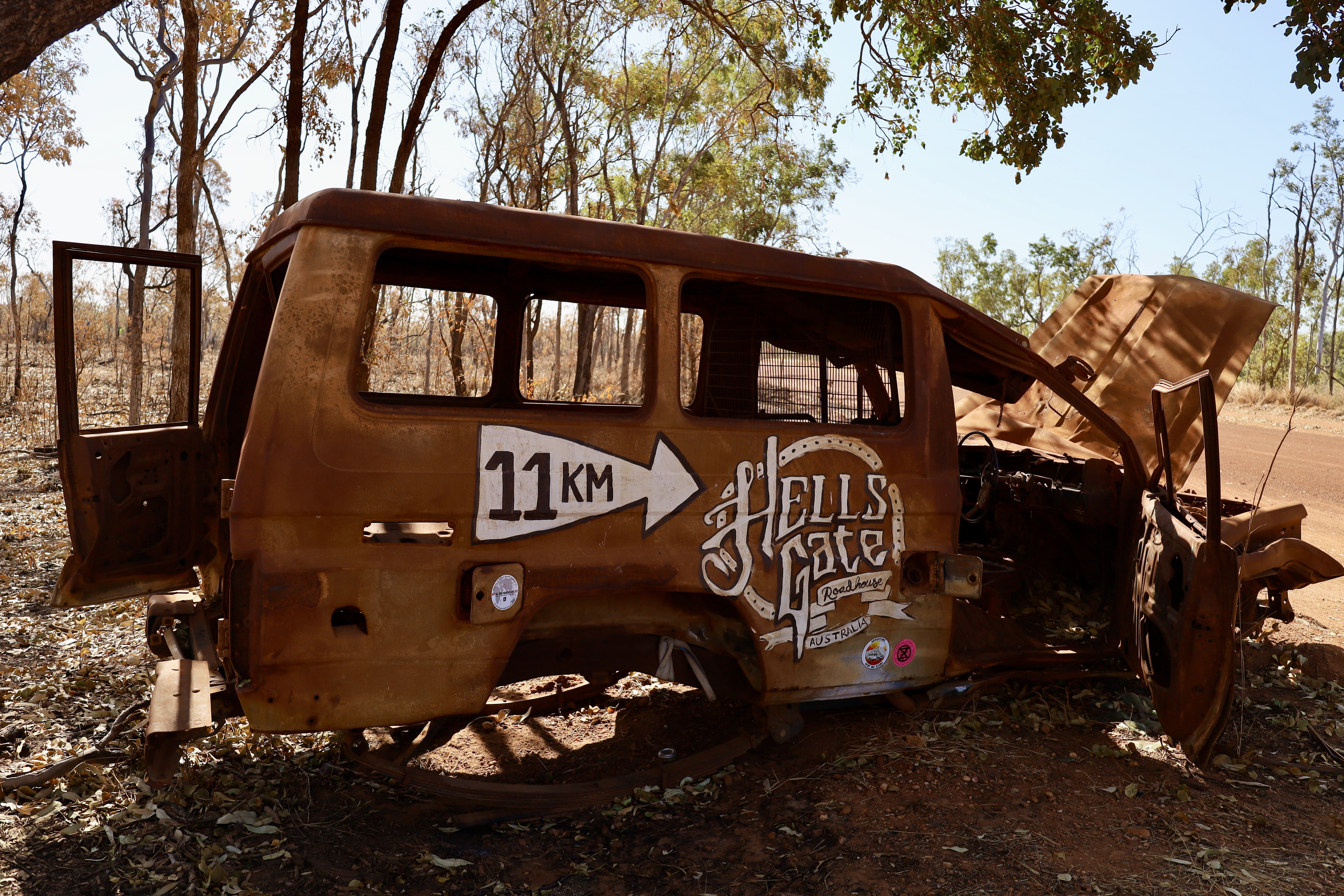
Wollogorang Road from the NT border is a spectacular drive, passing through Echo Gorge where the views from the top are endless in all directions, creek crossings (these turn to major rivers in the wet season) lined with age-old pandanus palms and huge gums constantly seeking water in the dry times. These creeks and pools are so very inviting but this is still croc country, and while you may not see them, they will see you.
BORROLOOLA
Another great feature of the Savannah Way is the amount of free camping available along the way. Some may be old gravel pits while other spots have views across the plains, but please remember to keep these areas clean. The 350km from Hell’s Gate to Borroloola is doable in one day but depending on conditions, your set up and time restrictions, stopping midway takes the pressure off those endless corrugations that seem to rattle everything loose.
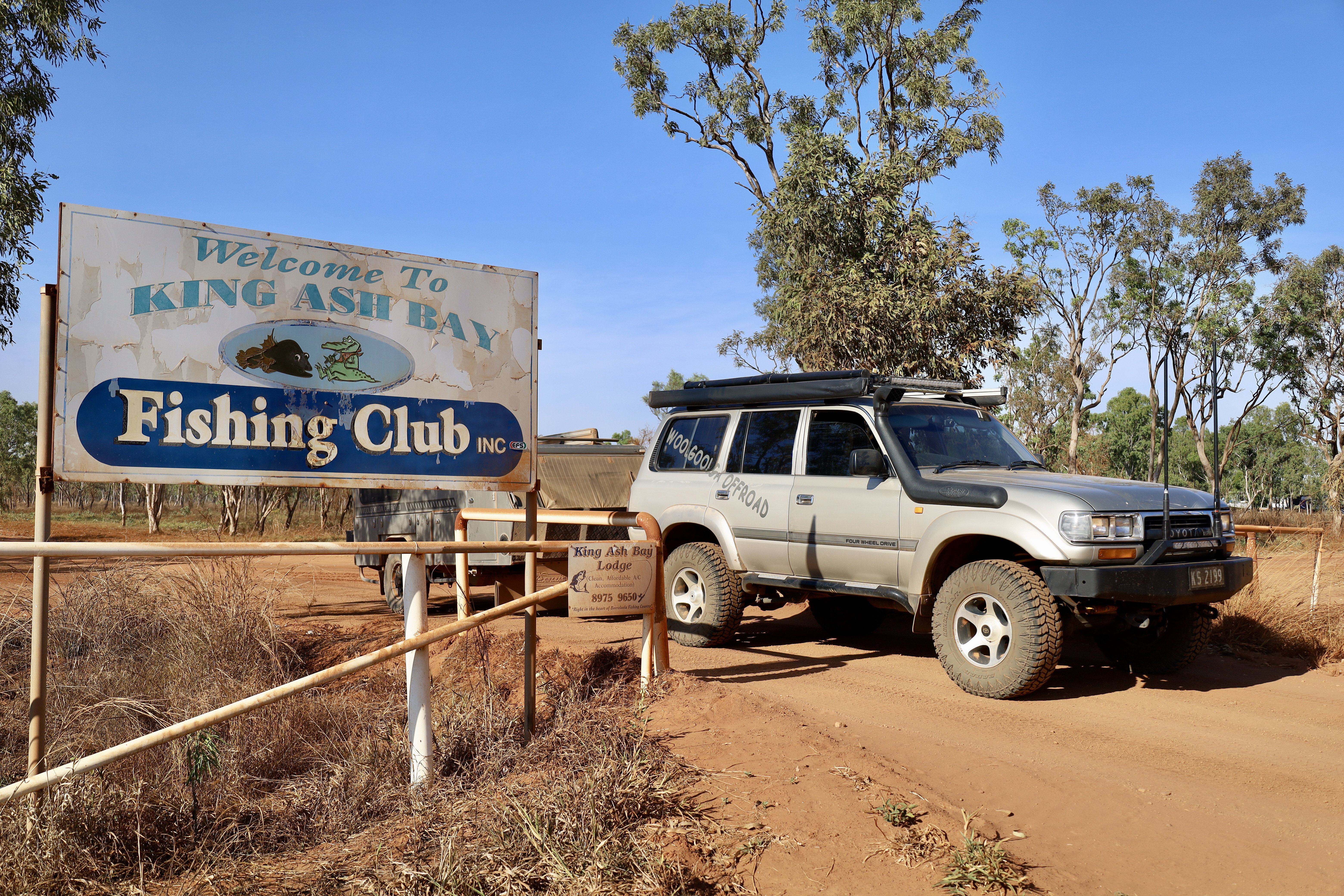
Arriving at the town of Borroloola is like entering a wild frontier town, where it’s been an isolated refuge for old bushmen and hermits since 1950. Borroloola has an Aboriginal population of around 800 and their culture is highlighted all around the town. The local museum was once the town’s police station and is now managed by the National Trust where it’s packed full of history items from the mid 1880s. The building, made from corrugated iron, has been partially restored but sits on the original foundations from when it was built in 1886.The town has good facilities to restock before heading either farther along the Savannah Way to WA or north-west towards Darwin. Borroloola is known as a top barramundi fishing destination when the population doubles in the winter months and where anglers either stay in town or head out to King Ash Bay on the banks of the McArthur River. It gets busy out here, as mad-keen barra fishos base themselves here for months at a time with literally hundreds of kilometres of waterways to chase barra and access to the Sir Edward Pellew Group of Islands.

So if you’re doing the entire length of the Savannah Way or just parts of the iconic adventure across the top of Australia, there’s something up here for everyone. Just remember to create your own adventure.
Top 5 highlights
01: Burketown Situated near the bottom of the Gulf of Carpentaria, Burketown is an isolated outback town where visitors can experience the natural wonders of the region. A great place to plan your visit is through the Burketown Visitor Centre website www.burketown.com.au02: Hell’s Gate For the early European settlers, Hell’s Gate (named after a gap in the escarpment the road passes through) was the gateway to a fate unknown. Today, the eponymous Roadhouse on Cliffdale Station (located 50km east of the NT-Qld border) offers accommodation, meals, campsites, and more. Log on to www.hellsgateroadhouse.com.au03: Borroloola Borroloola is a remote fishing community located on the McArthur River, some 50km upstream from the Gulf of Carpentaria. Renowned for it’s excellent fishing and camping, Borroloola has good facilities to restock.04: Fishing Both Burketown and Borroloola claim fame as fantastic fishing destinations. Anglers can plonk a bait or lure in the rivers, estuaries or offshore, with barramundi high on the list as well as other sports fish like giant trevally, queenfish, Spanish mackerel, cobia, jewfish, golden snapper, red emperor and coral trout.05: Free camping A great feature of the Savannah Way is the amount of free camping available along the way, some are as basic as old gravel pits and other sites have views across the plains. Authorities request that tourers leave these areas clean for other users.
The 2022 Mitsubishi Outlander PHEV has well and truly earned its model name becoming the first plug-in hybrid to cross the Simpson Desert – piloted by Mitsubishi Motors Australia’s managing director, Shaun Westcott.
Departing in late April, the Mitsubishi boss hit the world’s largest parallel dune desert in a pre-production version of the new Outlander PHEV, completing a 3777 kilometre odyssey in eight days with no major incidents to report.
While some regard a plug-in hybrid as synonymous with suburbia, Westcott said he was determined to prove the Outlander PHEV has more all-terrain ability than many might expect.
UPDATE, July 2022: Outlander PHEV pricing announced
Australian pricing and details for the Outlander PHEV have now been revealed. Even better, we’ve also driven it! Get the full story at the links below.
Story continues
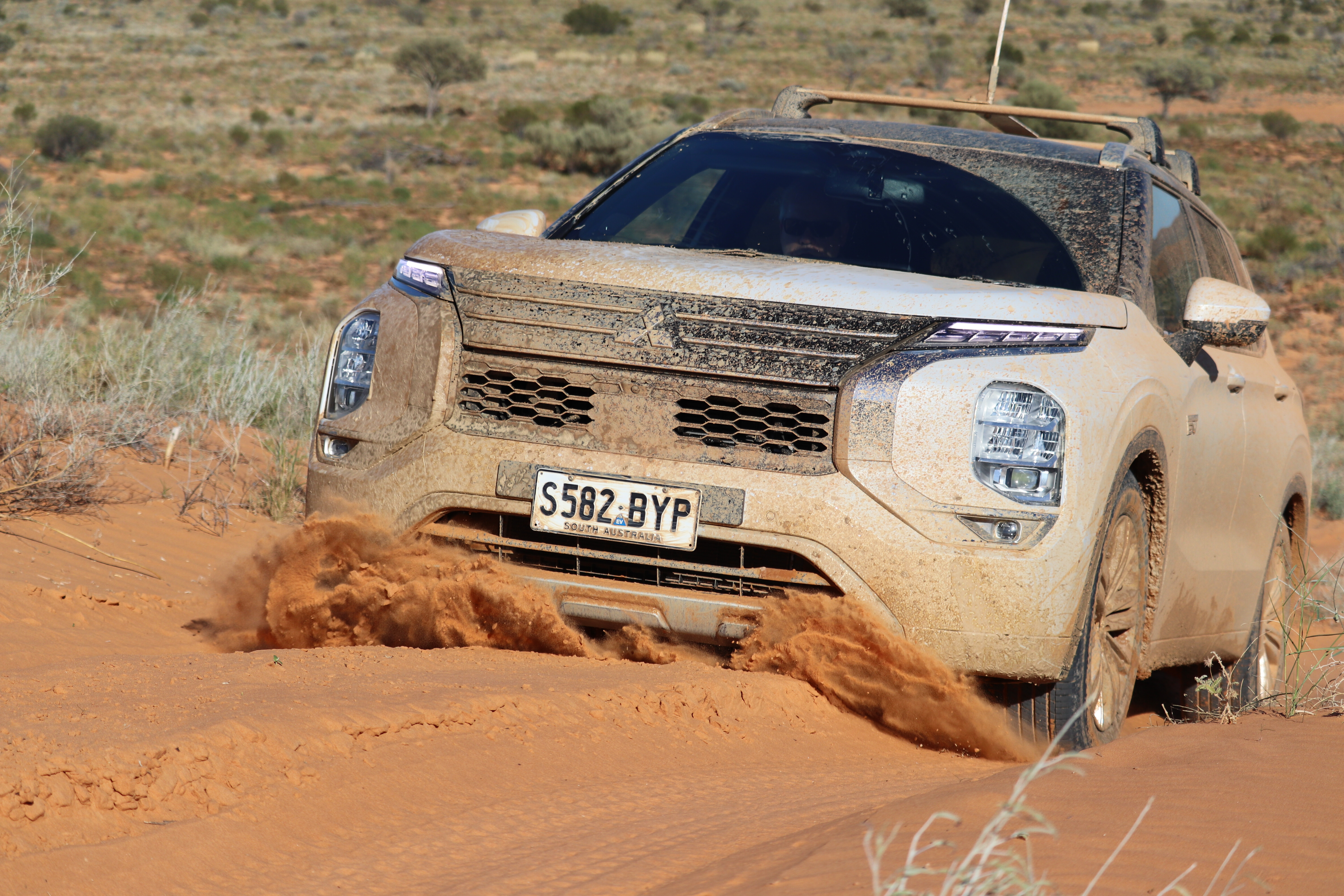
“We wanted to prove it also holds true to Mitsubishi’s undisputed adventure DNA,” he said. “What better way to do that than to cross the Simpson Desert?
“The Simpson is the longest parallel sand dune desert in the world, with over 1100 peaks. Beyond that, the remnants of the wet season meant several mud and water crossings were required.
“Like on any adventure, we had some interesting moments, but I’m happy to say the Outlander PHEV met the challenges head-on.”
The adventure started in Adelaide and took Westcott and the plug-in up the Oodnadatta Track, via Port Augusta, to start the attempt at Mount Dare in the desert’s west. From there the adventure led them across the top of the Simpson, crossing the border into Queensland to Birdsville, before returning south to finish in Adelaide via the Birdsville Track.
Other than some extra underbody protection and optional 18-inch wheels, the Outlander was unchanged from the version that’ll be hitting Australian showrooms later this year, and the sight of the apparently unmodified SUV raised a few eyebrows in the bush.
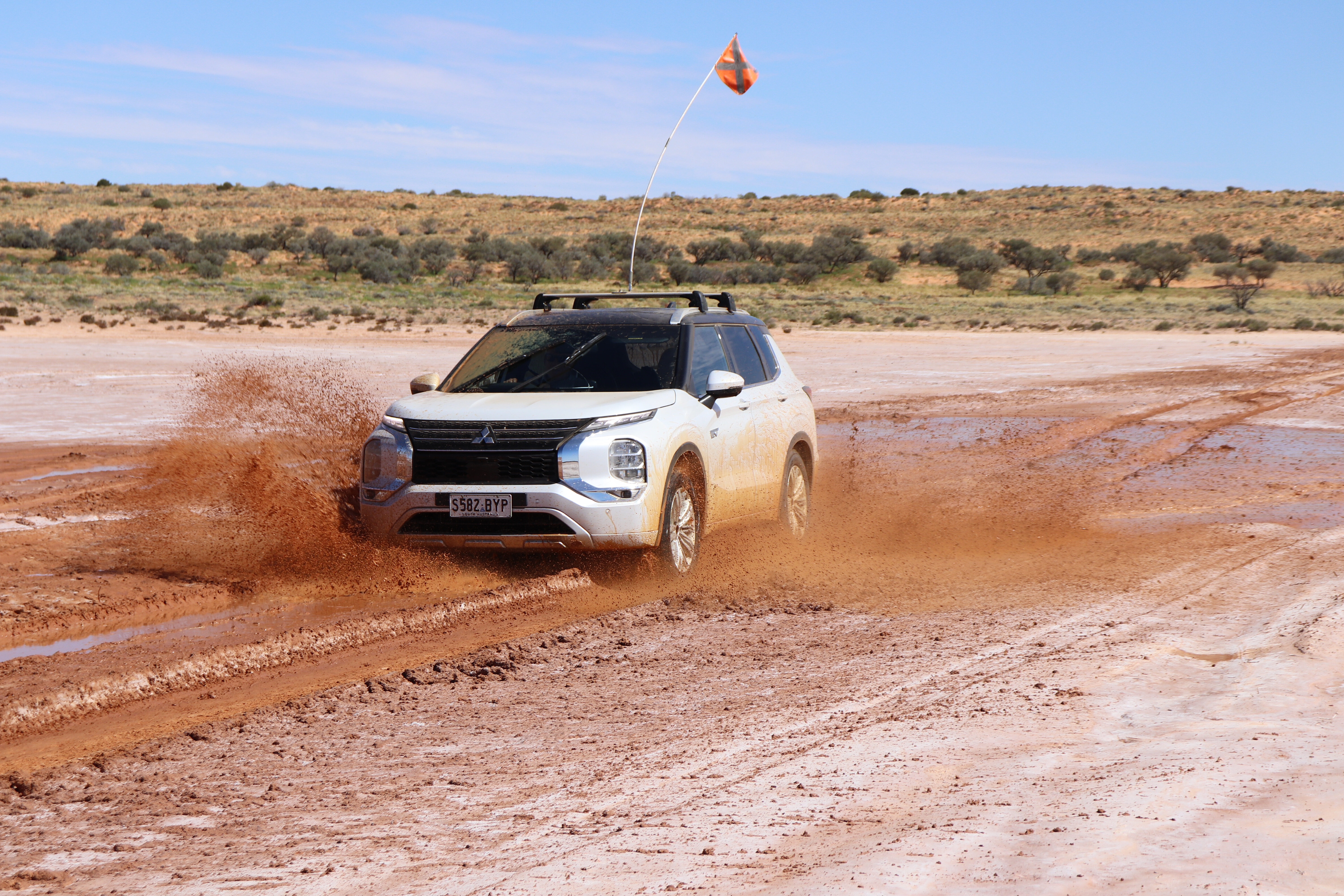
“We came across several serious off-roaders on our travels, and they couldn’t believe what we were attempting. Their faces when they saw us emerge out the other side proved our point – this vehicle furthers Mitsubishi’s adventure credentials.”
Equipped with a 2.5-litre petrol engine, the Outlander PHEV can function as a regular mild-hybrid once its 20kWh battery is exhausted, offering zero emissions EV characteristics for up to 84km – and as much as 900km when the Atkinson cycle four-cylinder and electrics are working in unison.
Adding to its outdoor lifestyle credentials, the on-board battery can be used to run electrical equipment when away on excursions, including a proper coffee machine, powerful lighting or caravan electrics, for example – far longer and with more power than an auxiliary 12-volt battery.
Speaking before the trip, Westcott said an adventure like the desert crossing might be a little more extreme than many families would attempt in their PHEV, but it highlights the various attributes of the Outlander regardless of how you apply them.
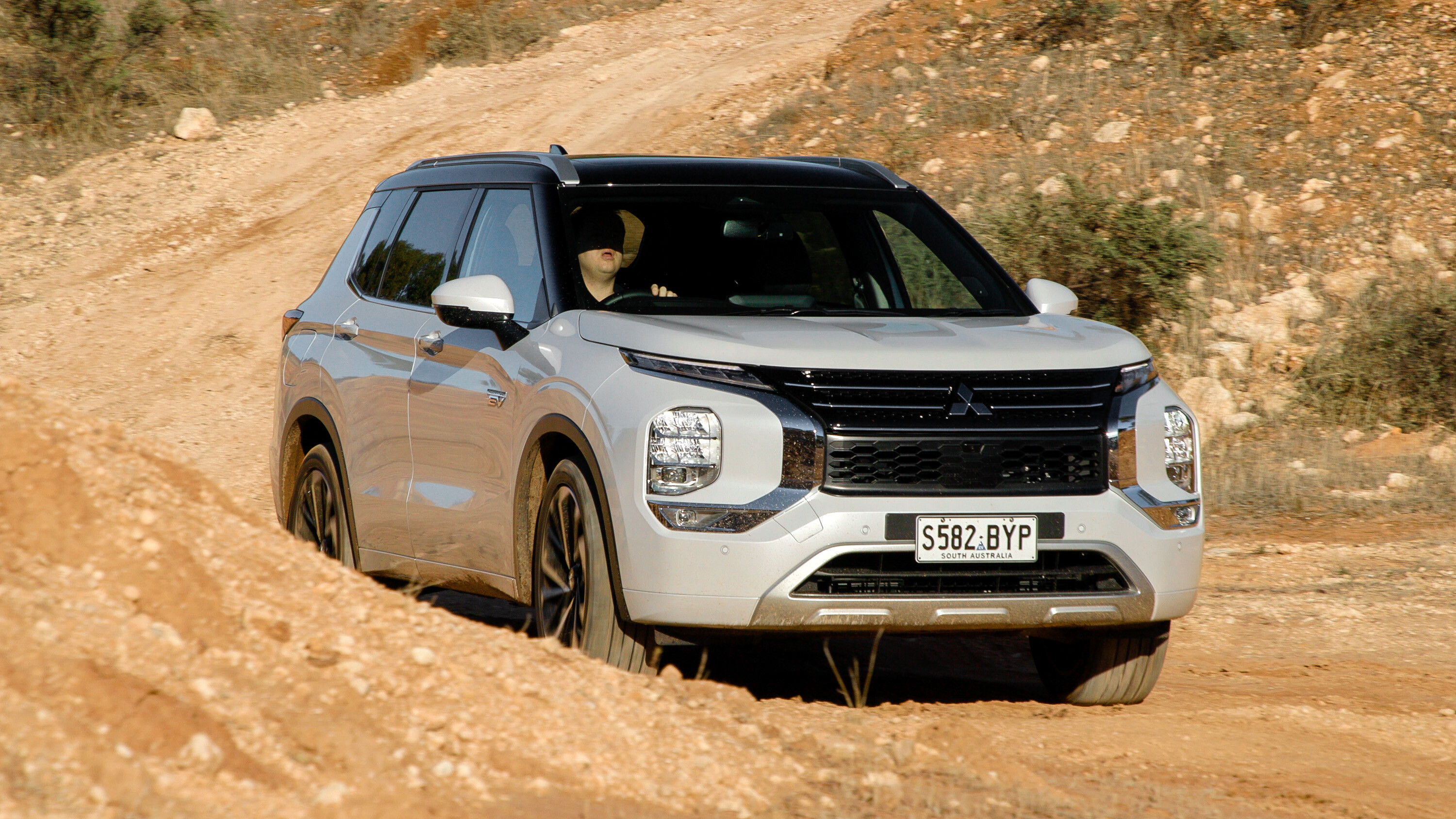
“What I’d like to demonstrate is that we don’t have [driving] range anxiety. You’re not going to find a charging station in the middle of the Simpson Desert, probably ever. It gives us the total flexibility to have an EV for every-day life and covers your commute.
“We conducted research and our customers use their PHEVs in full-electric mode 84 per cent of the time. But if you do want to go out to the Flinders Ranges or Blue Mountains or whatever, you can do that. This vehicle seamlessly does both.”
It might be the first time a plug-in has successfully completed one of the world’s most grueling off-road adventures, but it’s not the first time for an electrified vehicle. In 2016 a pair of Suzuki Sierras, converted to electric power, made the crossing as part of the Aussie Outback Solar Challenge.
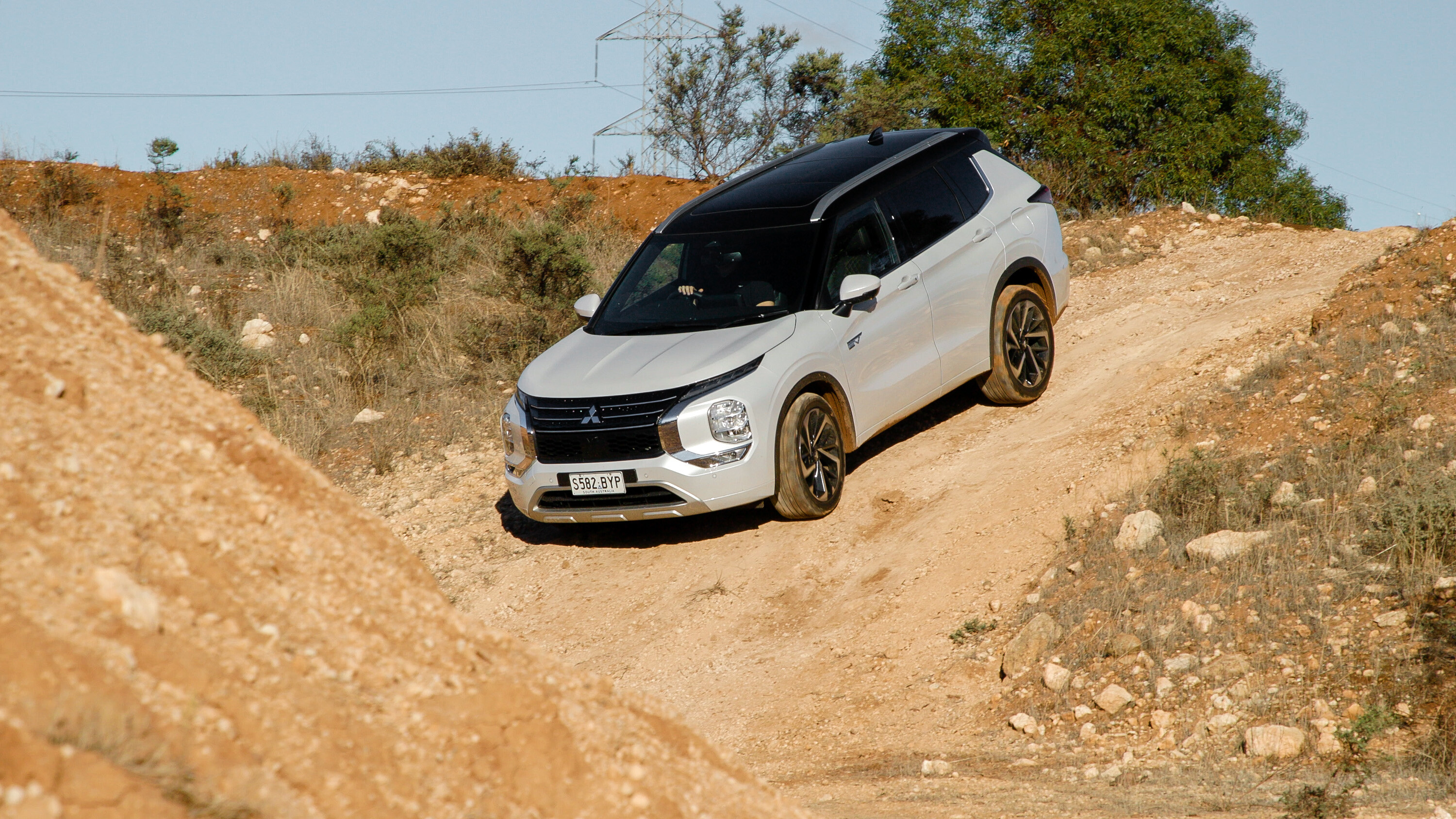
Regardless of the vehicle, the Simpson Desert is an unforgiving expanse covering 170,000km² with temperatures ranging from minus two to 50 degrees, and any attempt to navigate it should be taken very seriously.
Along with decades of off-road experience, Westcott was accompanied by a Mitsubishi technician, tools, recovery equipment and supplies.
“From our first experience in the new Outlander Plug-In Hybrid EV, we knew it was the right car for Australian families,” said Westcott. “It can run the weekday commute on pure EV power, while also being capable of taking up to seven people away for a weekend of touring.”
Keep your eyes on Whichcar.com.au later this month for our exclusive first drive of the Mitsubishi Outlander PHEV or read it in Wheels magazine on shelves today.