
Hot on the heels of the 2022 Ford Ranger ute launch, the Ford Everest wagon will be dropping in showrooms around August.
As Ford Australia did with the next-gen Ranger ute, it invited a select group of media to preview the new wagon months before it was revealed to the public.
First up was a visit to the Ford Design Studio in Broadmeadows, Victoria, where we got our first look at the 2022 Everest. Those details were revealed in March, along with the powertrain specification.
UPDATE, September 13, 2022: New Ford Everest on sale, and we’ve driven it!
The new-generation 2023 Ford Everest is finally on sale in Australia, and our man Matt Raudonikis has driven it. Get the full story, and our first-drive video, at the link below.
The story to here

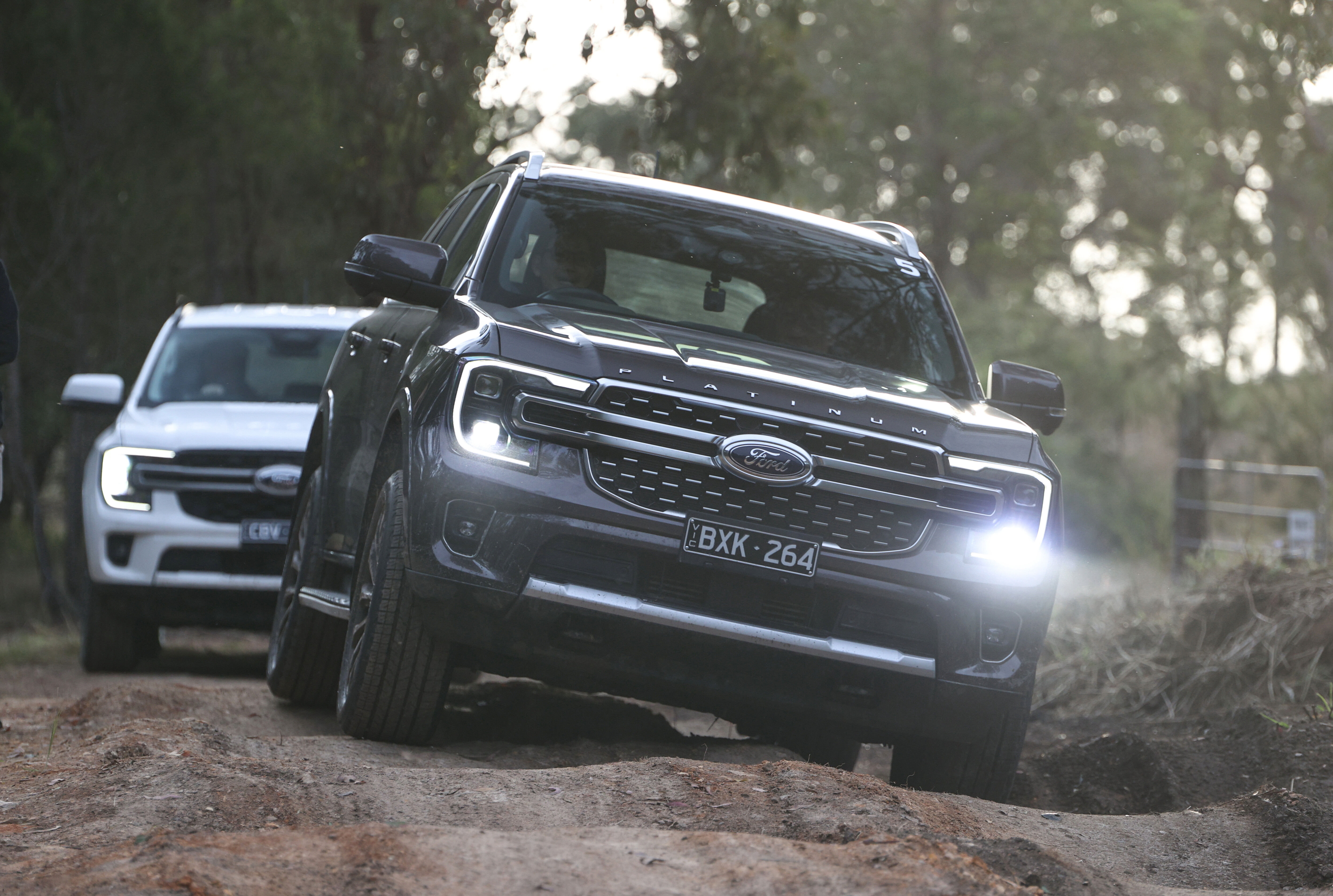
After the design reveal it was a trip to the Ford Proving Ground at You Yangs for our first stint behind the wheel of the new model. The ride for the day was a pre-production prototype, so it was still camouflaged and in some areas incomplete.
It was a high-spec Platinum model distinguished by its raised roof rails and ludicrous 21-inch diameter alloy wheels, which only the top model gets as standard. The Everest Platinum is set to start at $77,690+ORC.
More importantly, the prototype was powered by the new 3.0-litre V6 diesel engine, 10-speed automatic transmission and full-time four-wheel drive system, which is basically what has just debuted in the Ranger ute.

The 600Nm diesel V6 revealed its performance chops on an unsealed road loop with a couple of little ruts that required slowing down to cross. There’s plenty of grunt available under the driver’s right boot that should equate to what’s needed to haul the now 3500kg maximum tow rating. That’s right, the T6 wagon now gets the same tow rating as the Ranger ute on the similar T6 ladder frame platform.
The Everest has a coil-spring live axle under the back end as opposed to the Ranger’s leaf springs, and combined with the wider track of the new model provides a stable and well-behaved chassis package on rougher roads.
It will be really interesting to drive these cars with a load on board and/or with the Ford-approved optional ARB Old Man Emu suspension fitted.
Low range
After the road loop we selected low range in the new full-time 4×4 transfer case, and mud/ruts in the Multi Terrain Selector, to tackle the off-road loop.
I still think that selecting the modes in the MTS will take some familiarisation, as it is possible by using the off-road pages on the large centre-stack screen or using a dial on the console. Selecting some of the off-road modes in MTS automatically shifts the transfer case in to low range and activates the rear differential lock. I’m sure it will become second nature after more time behind the wheel of the new Fords.
This is the same off-road course we did in the new Rangers a few months prior, and again the Everest covered it with relative ease. Steep climbs and descents, a hump taken diagonally that showed up the cross-axle articulation, a rocky dry creek crossing and steep side slopes, all put the Ford through its paces but well within the limits of the vehicle.

Engaging the front camera provided a handy forward view when crossing the blind crests to show which way the track went. It’s a bit like having a spotter to give you direction. The big portrait screen that displays images from the camera forms the hub of the info and entertainment system. It takes up most of the new centre of the dash.
The Everest will be available in five- or seven-seat models, with the new seat actions that fold completely flat on the second and third rows to give you the best cargo storage options. The interior isn’t really any bigger than the outgoing model, but the location of the seats gives more space for second- and third-row occupants than what was available in the outgoing model.
It’s an interior that promises to be more accommodating for families, and when combined with the new powertrains and features, this new Everest should provide Ford with its best opportunity yet to take on the ageing yet seemingly unapproachable Toyota Prado in this category of wagon.
2022 Ford Everest 4×4 pricing
| Everest Ambiente 2.0Lu00a0 | $57,990 |
|---|---|
| Everest Trend 2.0L | $65,290 |
| Everest Sport 3.0L V6 | $69,090 |
| Everest Platinum 3.0L V6 | $77,690 |
The wait is over, and the new 2023 Volkswagen Amarok has been revealed globally – this is what it will actually look like.
The new 2023 VW Amarok has been one of the most anticipated and drawn-out vehicle releases of late, with a steady supply of information and images leaked over the last few months; however, we’ve not been able to identify exactly what the next generation Amarok will look like.
December 7: NEW AMAROK DRIVEN! Words & Video
We’ve finally driven the new-gen 2023 Volkswagen Amarok, with Jez jetting (Jet jezzing?) to South Africa for a world’s-first spin in the new ute. Get our full story below.
Story continues
2023 Volkswagen Amarok revealed
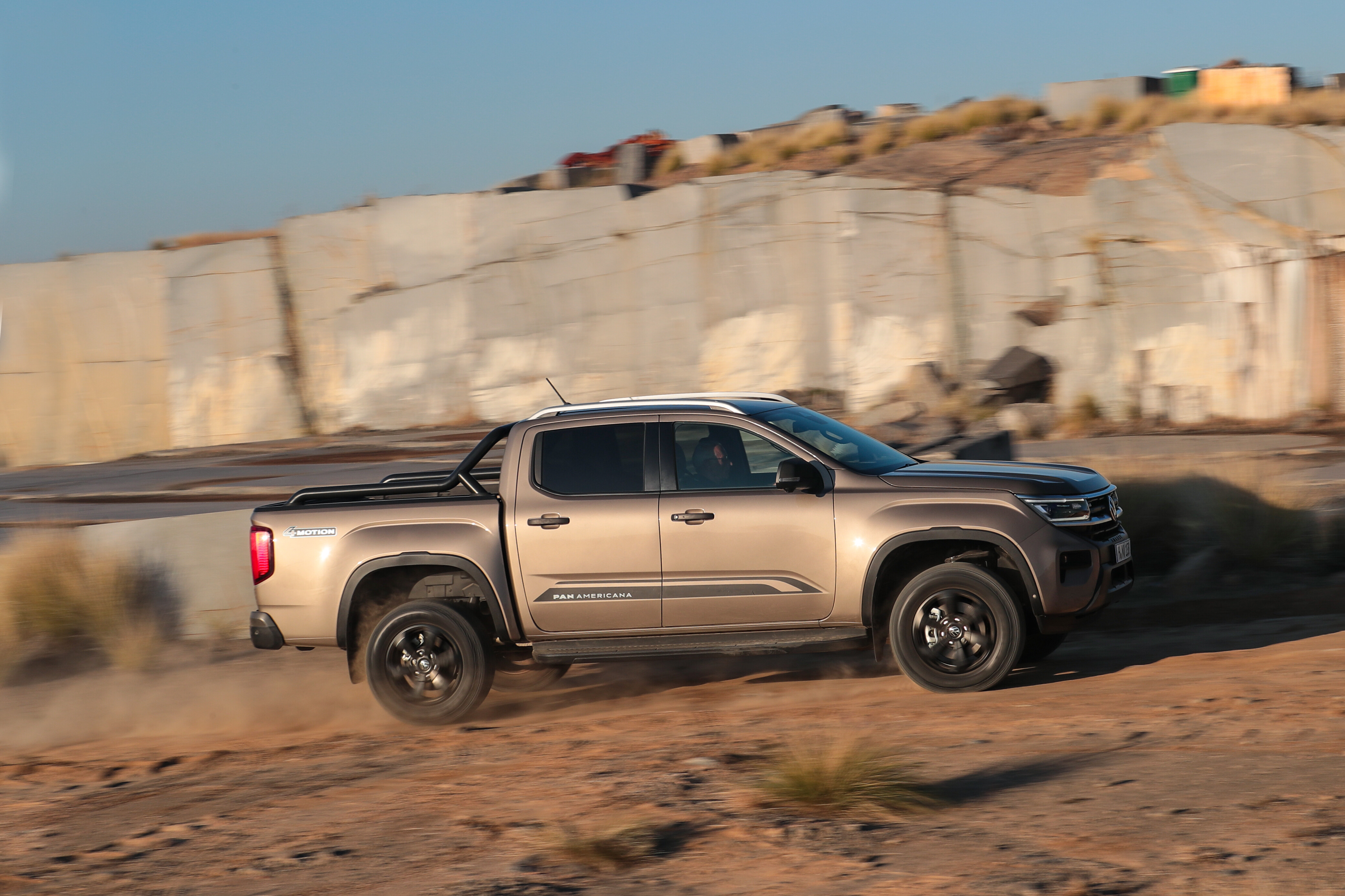
This has all just changed, the 2023 Volkswagen Amarok has just been revealed globally, with fresh information and images of the final production vehicle made available to media and the public.If you would like to watch said reveal, you can check it out HERE.
Volkswagen is calling the 2023 Amarok the best ever Amarok for its customers. It will be available in both single and dual-cab variants, as well as in rear-wheel-drive, and four-wheel-drive configurations.
It is produced in South Africa, with significant engineering and development input from Australia, with Volkswagen saying it has been designed with the Australia, Africa, Asian and European markets in particular, as well as New Zealand and the Middle East.
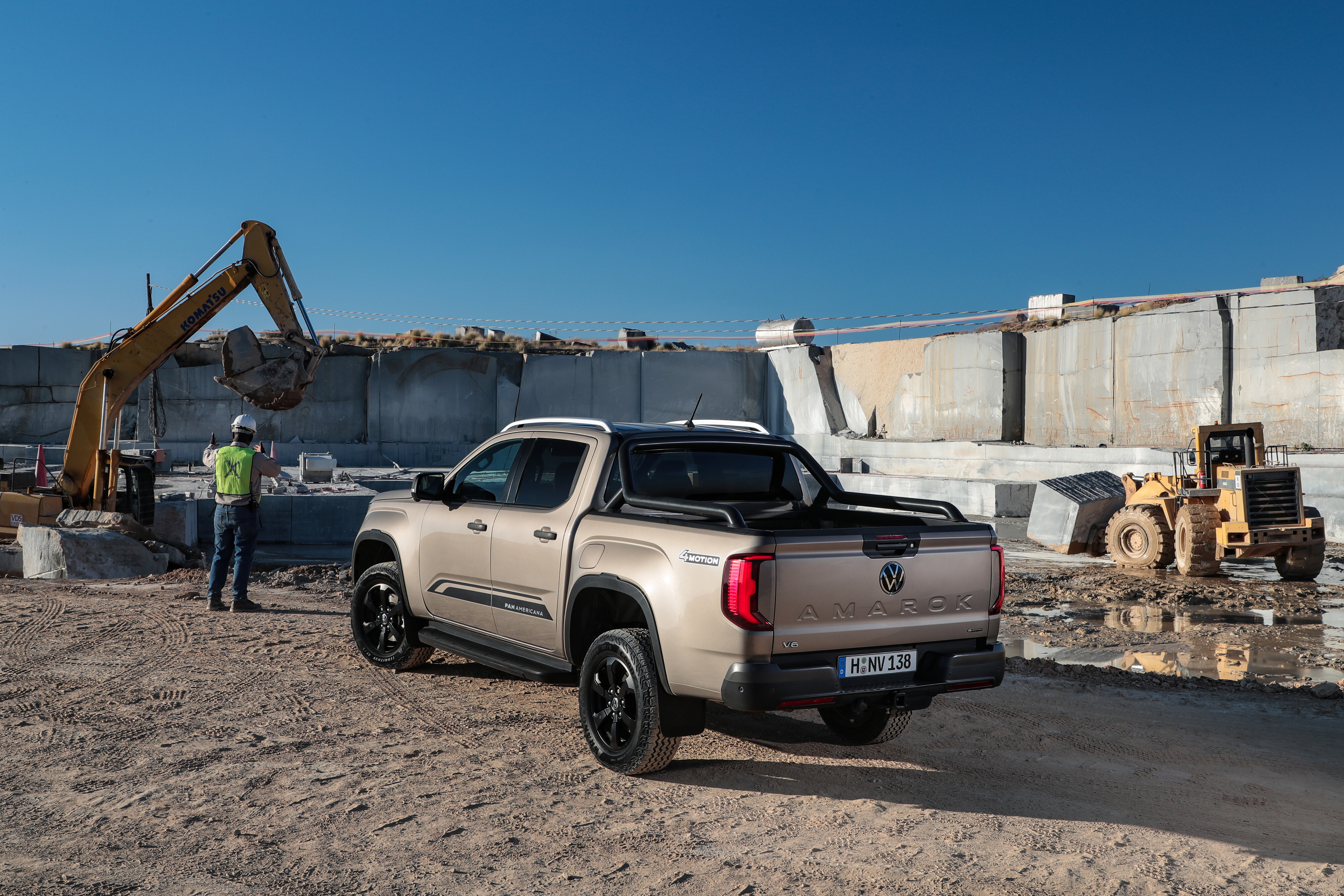
This new Amarok took four years of project work to reach production, with over three years spent at a special design studio in Melbourne, Australia, designing the vehicle.
Based on the next generation Ford Ranger T6.2 platform, the 2023 Volkswagen Amarok is bigger, both in width and length. The wheelbase has been extended, and the overall aesthetics significantly beefed up compared the outgoing model.
It is 10cm longer than the previous generation, with both a longer wheelbase and cabin providing more interior space especially in the back seat. Despite the longer dimensions, the front and rear overhang has been reduced, providing better clearance for off-road work.
The payload has been increased to 1200 kilograms, and the 2023 Volkswagen Amarok retains a 3500kg towing capacity.
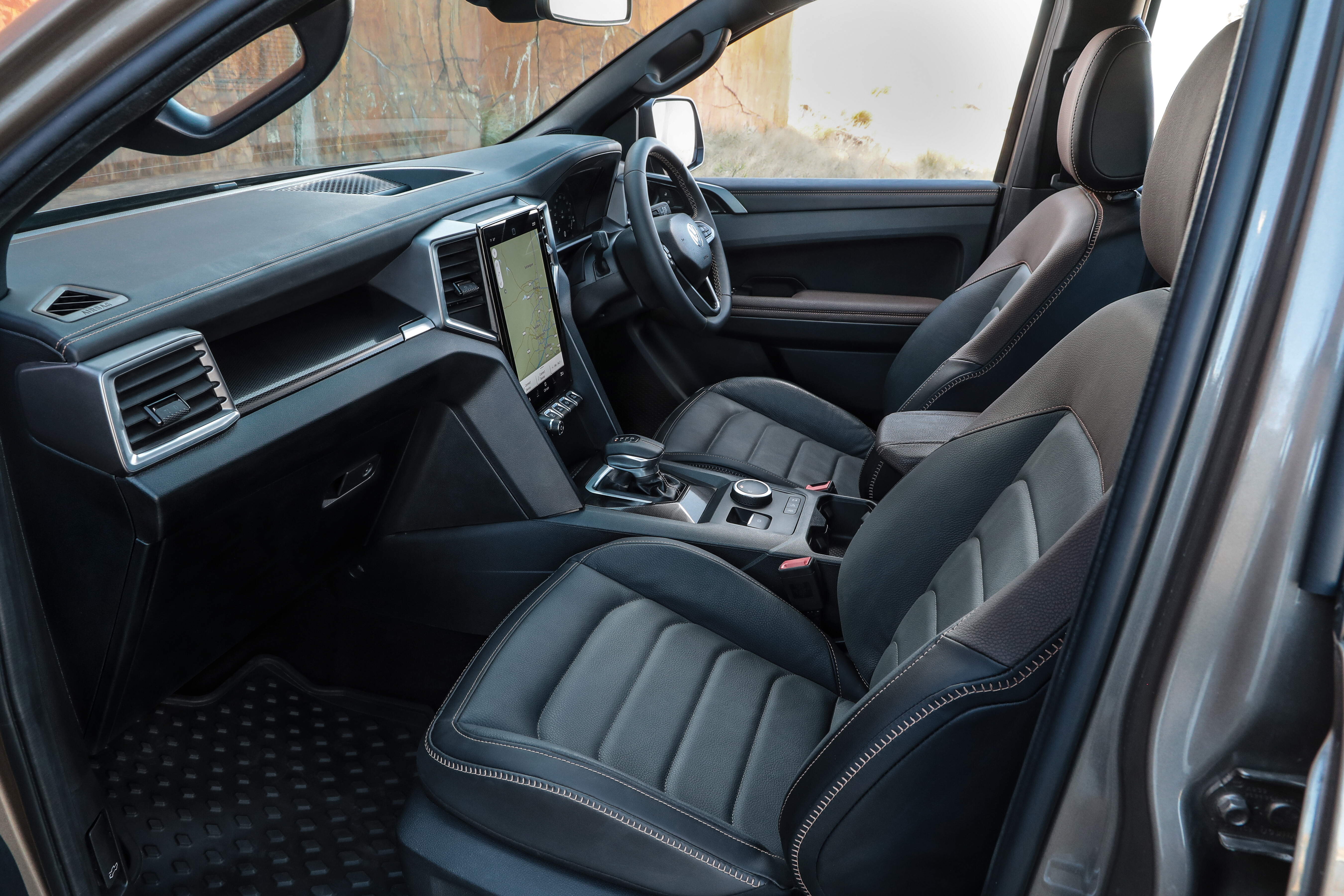
Interior wise, the 2023 Amarok has been completely overhauled, and, as you’d expect, is rather premium-looking. Featuring a large centre-mounted infotainment screen, it also has physical buttons to control interior features – as well as various off-road drive modes.
Long gone are the days of low-spec interiors in utes, with a growing trend towards luxury workhorses that are exceedingly popular both in the suburbs and on job sites.
Whilst based on the new Ford Ranger, the Amarok features unique interior and exterior designs to separate it from the Ranger. A 10- or 12-inch centre-mounted infotainment screen can be found on all 2023 Amaroks, the size depends on which specification, with the lower grade variants receiving the smaller 10-inch screen.
VW describes the interior design as highly functional, and it must be said this new look is definitely an improvement on the previous generation – which was absolutely showing its age.
Five trim specifications have been confirmed, these are as follows: Amarok which is the entry level offering, Life, Style, PanAmericana with off-road focused accessories and credentials, and finally the Aventura as a more upmarket, on-road-biased, model.
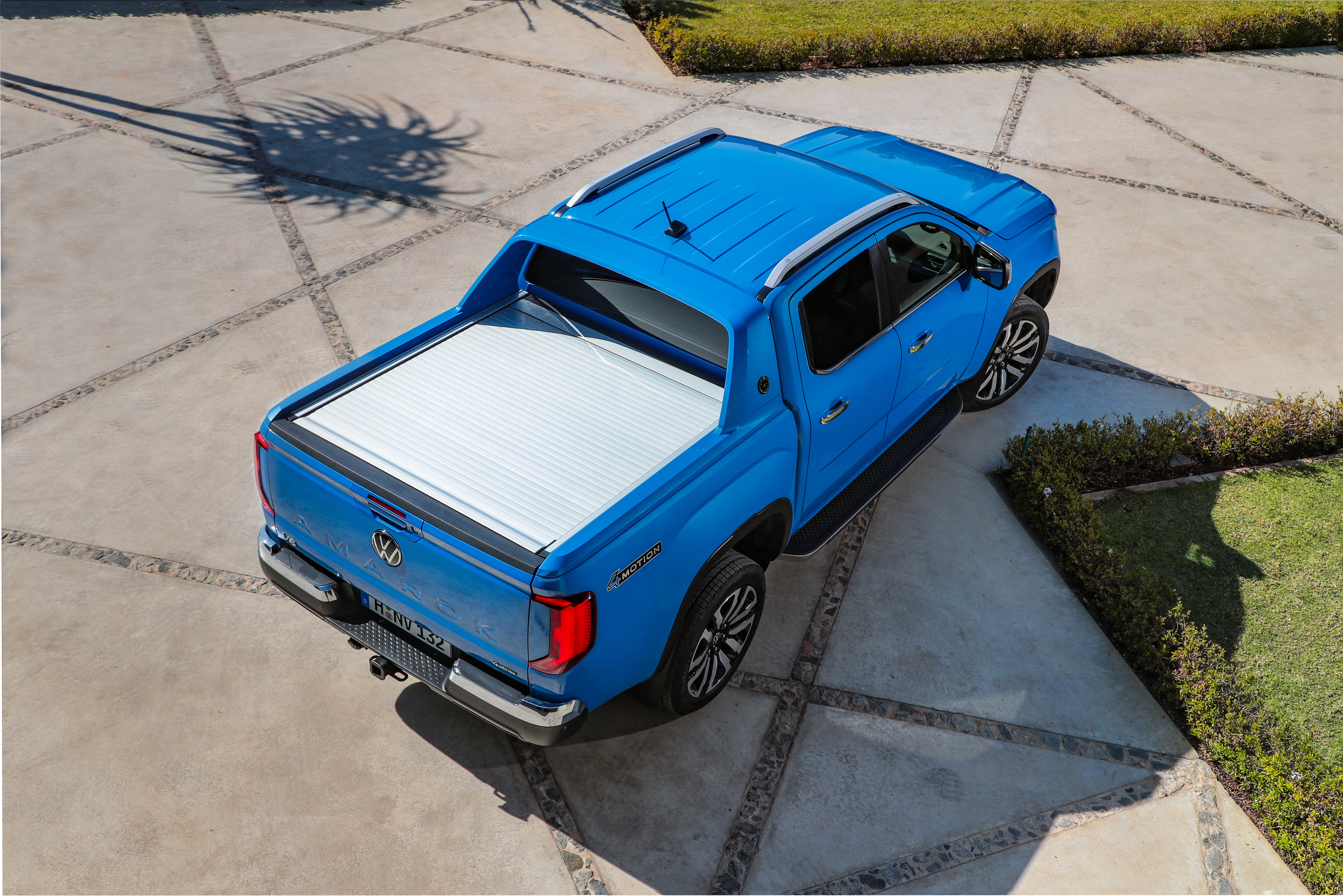
At the back of the 2023 Amarok, the tub looks to be massive in size, and can still carry a pallet between the wheel arches, there are both manually or electronically controlled roller covers available to provide security and ensure your load is covered.
The Amarok will also have an automatic handbrake, which they say is a benefit when four-wheel driving. LED tail-lights have been confirmed for the rear lights, and slim designed LED headlights too.
Volkswagen has also confirmed there will be up to five different engines offered globally, all of which will be turbocharged. There are three 2.0-litre turbo diesel engines producing between a claimed 110kW and 154kW, there is also a higher output 3.0-litre V6 turbo-diesel engine with a claimed output of between 177kW and 184kW.
Lastly, a 2.3L turbocharged petrol engine producing a claimed 222kW of power. A 10-speed automatic transmission replaces the previous 8-speed gearbox, and there is the option of a 6-speed automatic gearbox as well as a five and six speed manual gearbox depending on engine selection.
There are two different four-wheel drive systems available, with the 4MOTION all-wheel drive systems now. One is selectable all-wheel drive based on the terrain you are driving, the second being permanent all-wheel drive.
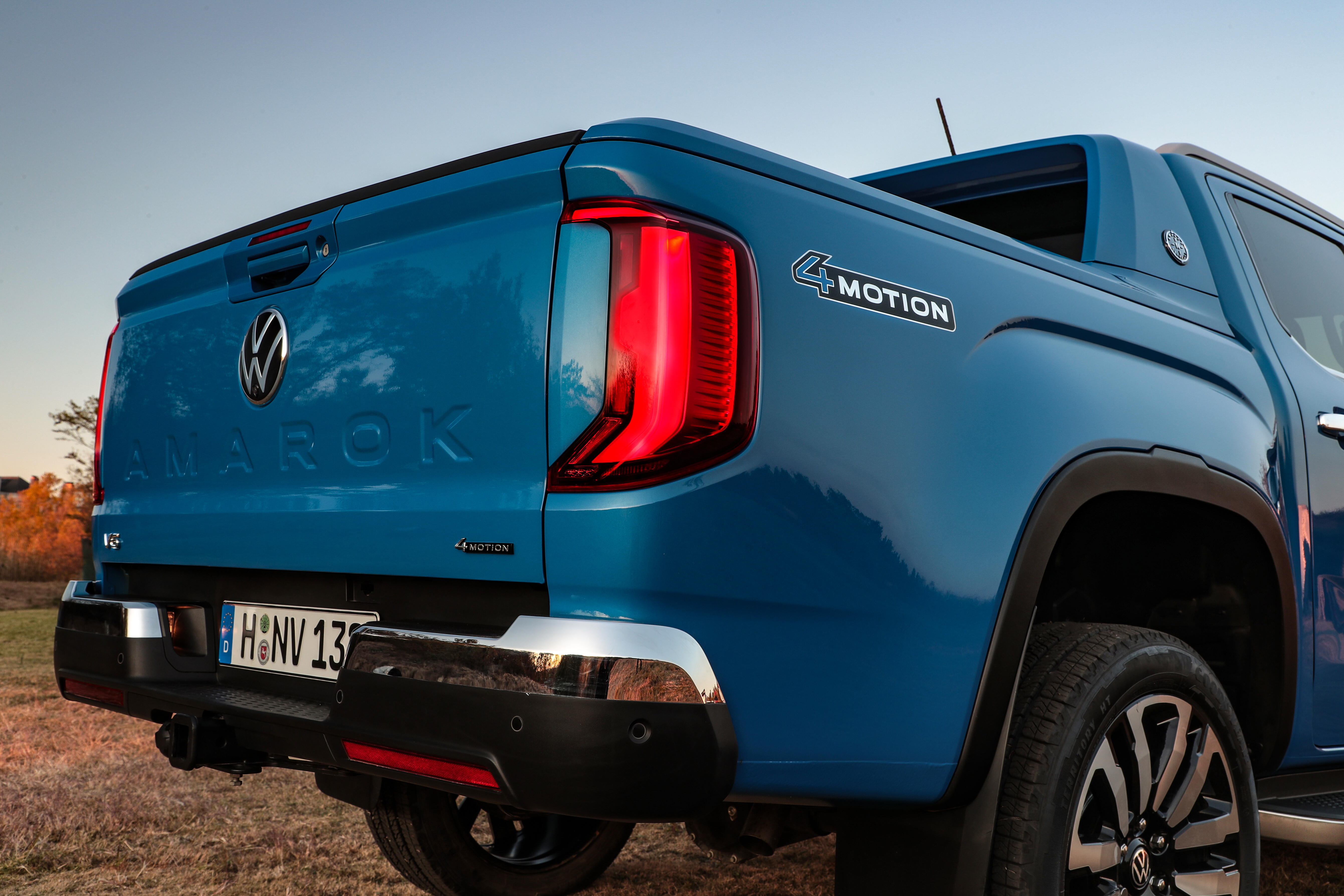
Safety wise, there are over 20 new driver assist systems found in the 2023 model, including Adaptive Cruise Control – which VW says incorporates road signs into the automatic control of speed via camera scans. There are also up to six different driving profiles (drive modes), allowing the driver to dial in settings for technical off-road driving or when navigating slippery terrain for example.
Pricing is yet to be announced for the Australian market; however we will update this article with any additional information as it happens.
The 2023 Amarok is currently in production, with the market introduction in Australia expected for early next year.
No more renders or sketches – we now know what the 2023 VW Amarok looks like, we’d love to know your thoughts on it though.
Is the 2023 VW Amarok what you’d thought it would be, and are you considering purchasing one for your next four-wheel drive dual-cab ute? Leave us a comment below!
2023 Volkswagen Amarok dimensions
| Height | 1880mm |
| Width | 1910mm |
| Length | 5350mm |
| Wheelbase | 3220mm |
| Towing capacity | 3500kg |
| Payload capacity | 1200kg |
? MORE 2023 AMAROK
Get all of our latest stories in one handy place, with our Everything You Need to Know article at the link below.
When it comes to rock driving, no matter whether you’re confronted by sandstone steps, limestone boulders, a river stone-strewn creek bed or a shaly hill climb, there is a common element: rocks are hard and unforgiving on your vehicle and equipment.
To drive in rocky terrain safely and successfully you need a capable four-wheel drive with plenty of ground clearance, appropriate traction aids and comprehensive vehicle-protection equipment. In addition, you will need to survey the terrain ahead and drive it with the correct technique, and carry appropriate vehicle recovery gear in case things don’t go to plan.
Here’s our guide to becoming a rock star.
The right vehicle
When it comes to vehicles that work well in rocky terrain, common characteristics include ample ground clearance, long suspension travel, effective traction aids, minimal front and rear overhangs, decent low-range gearing, an engine that makes strong torque from low revs and, most importantly, the right tyres.
Rocks are hard, abrasive and many of them have odd shapes with sharp edges, and these can be hell on tyres; so it’s vital when driving in rocky terrain that your vehicle is fitted with Light Truck (LT) construction tyres. Unlike the Passenger (P) rated tyres that many standard 4x4s come with from new, LT tyres have a much tougher construction, with multiple layers across the tread face and in the sidewalls, which makes them more resistant to damage driving in rocky terrain.
Whether you opt for all-terrain or mud-terrain tyres is not so important for rock driving, but selecting an LT construction tyre is. You can tell the difference between a P-rated tyre and an LT tyre by looking at the markings on the sidewall (see boxout ‘Tyre Markings on page 132’).
When clambering over rocky terrain you don’t want the underside of your 4×4 grounding on hard rocks, and the best way to avoid this is to ensure the vehicle has plenty of ground clearance. In the case of vehicles fitted with live axles front and rear, the diff housings will be the lowest points, and the only way to increase clearance under these is to fit larger diameter tyres or, in extreme cases, portal axles.
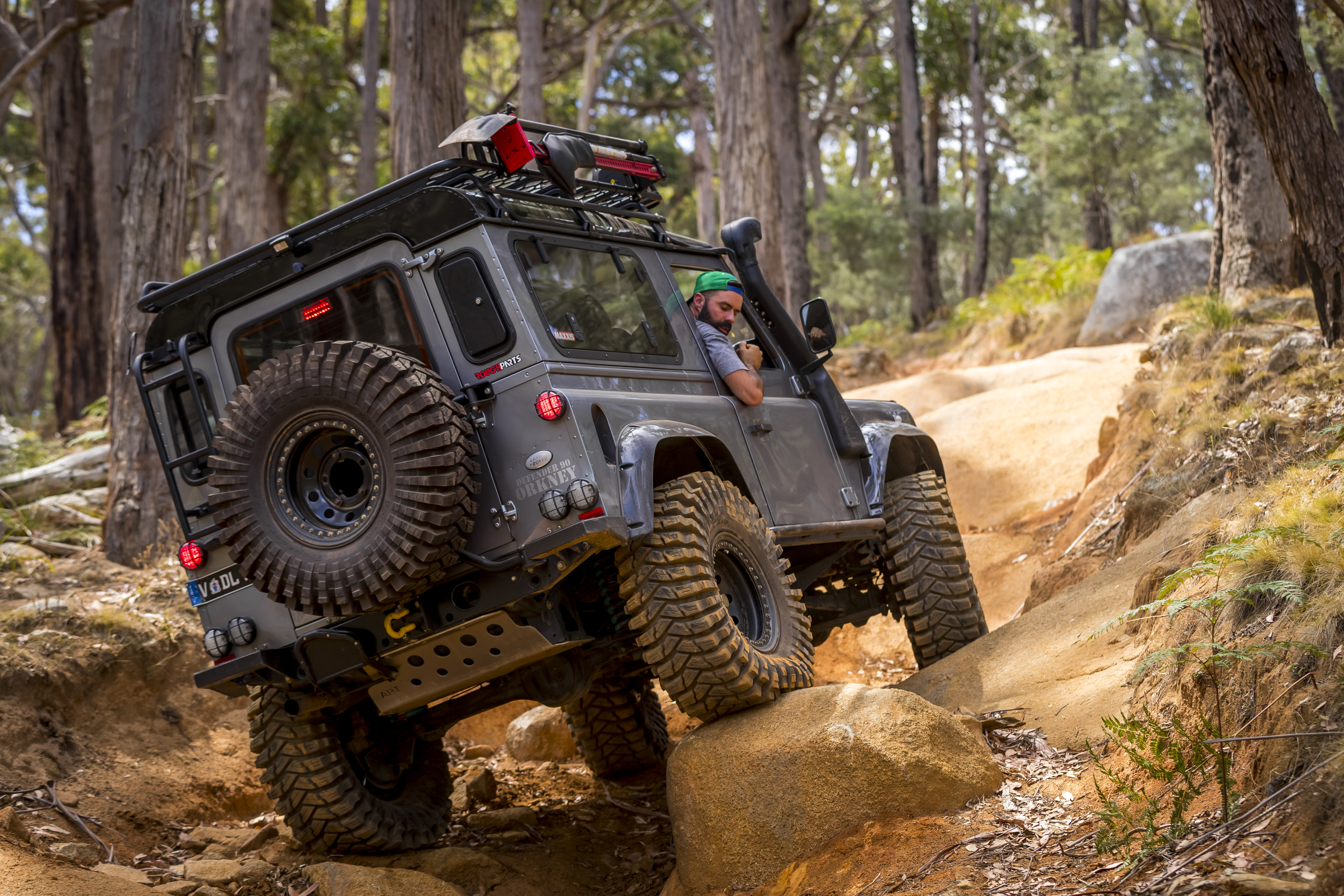
Nevertheless, a raised suspension will make it less likely for other underbody components to ground on rocks, such as the lower edge of the radiator, the engine sump, the transmission and the transfer case, as well as body components like the vehicle’s sills and front and rear bars.
When it comes to ground clearance, vehicles with independent suspension, or a combination of an independent front suspension (IFS) and a live-axle rear, also benefit greatly from the fitment of a raised suspension and larger diameter tyres.
Another benefit of well-engineered aftermarket suspension systems is they provide additional wheel travel, which means your vehicle will be less likely to lift a wheel off the ground when clambering over uneven, rocky terrain, maximising available traction.
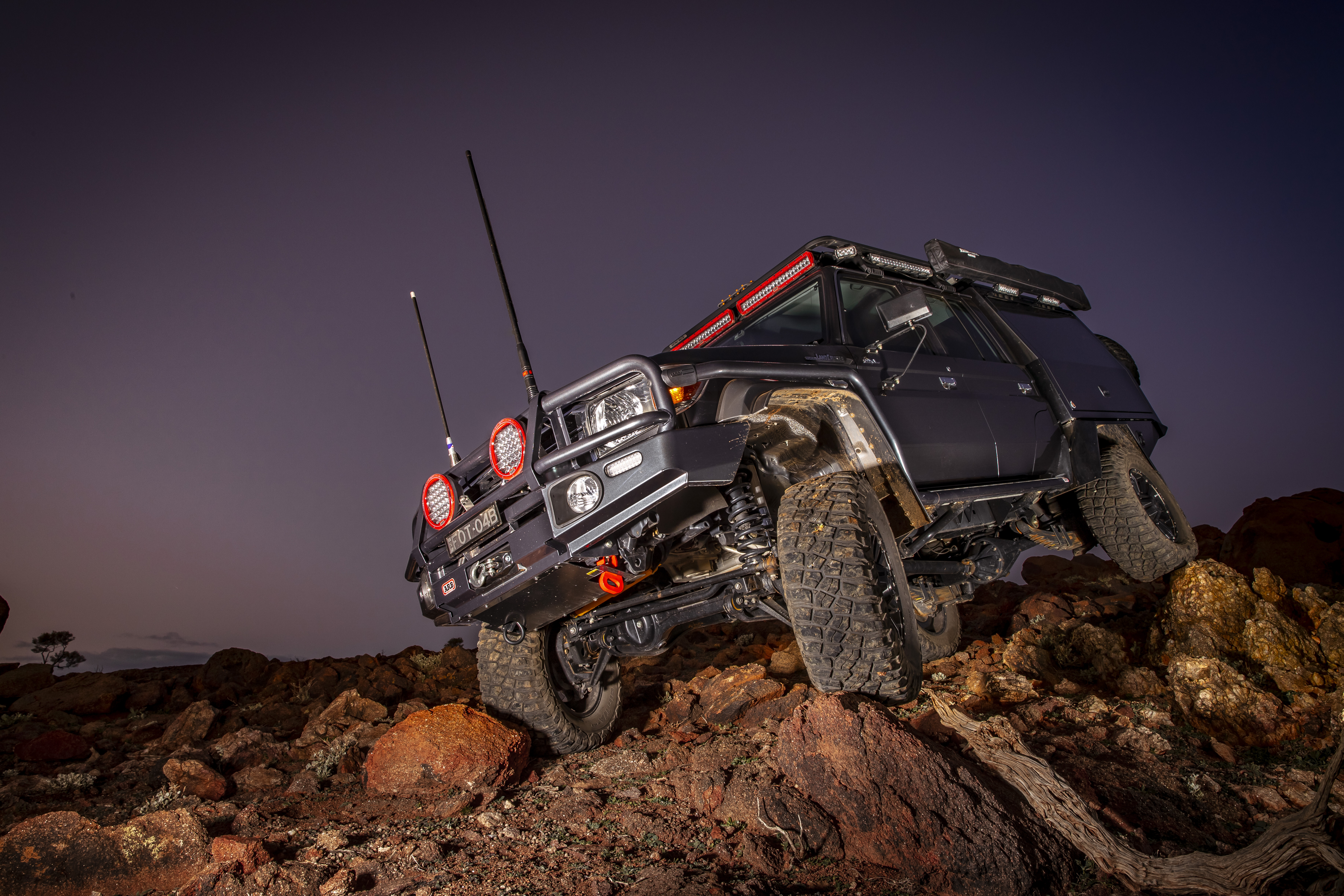
Driving too fast over rocky terrain is a sure-fire way to damage your vehicle, so you really want to drive as slowly as you can and only as fast as you need to, which is why you want a vehicle with good low-range reduction. This will allow you to crawl over obstacles at a snail’s pace while maintaining enough engine revs to prevent stalling in the case of vehicles with a manual gearbox.
While you are unlikely to stall the engine of a vehicle with an automatic transmission, low overall gearing is still beneficial, giving the driver more control at slow speeds and minimising the strain on mechanical components.
Finally, a vehicle with an engine that delivers peak torque low in the rev range is better suited to crawling over rocks at slow speeds than an engine that needs lots of revs to deliver peak output. The idea when rock driving is to keep progress smooth and slow.
Protection equipment
Even with big tyres and a massive suspension lift, if the terrain is gnarly enough there is still a good chance the underside of your vehicle will ground on rocks, which is why you need decent underbody armour to protect vital mechanical components and body work.
Up front, a decent bash plate should provide protection for the radiator, steering components, engine sump, gearbox and transfer case. It needs to be manufactured from thick enough material (usually steel but sometimes alloy) to provide good protection, but it should also be designed in such a way that it doesn’t overly reduce ground clearance or impinge on the vehicle’s cooling system. It should also be securely mounted to the vehicle’s chassis at various points so it can handle big hits when driving over rocks.
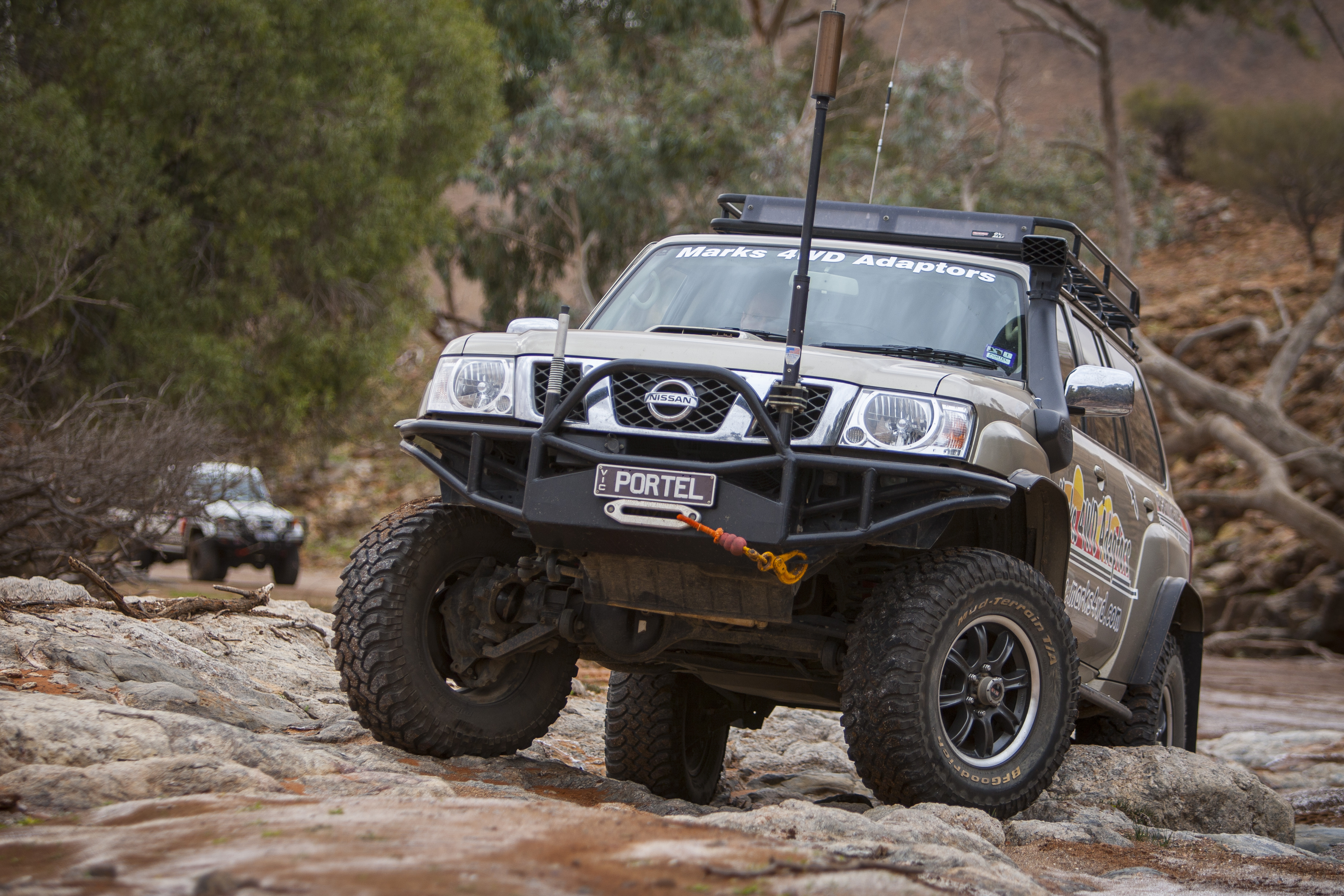
Diff housings are also susceptible to damage when driving in rocky terrain. There are a couple of options when it comes to protecting your vehicle’s diffs; the standard housings can be replaced with stronger aftermarket items, or diff guards can be fitted over the OE housings. Fuel tanks and water tanks (where fitted) can also be damaged when rock driving, so if they hang low and look vulnerable, ensure they are also adequately protected by appropriately positioned bash plates.
The sills of your vehicle are also susceptible to damage when driving off road, even if your vehicle is fitted with factory side-steps. In fact, the side-steps on many modern vehicles are manufactured from thin aluminium or plastic, and while they might support your body weight when you step inside, they will not support the weight of the vehicle when it lands on a rock.
Not only will the side-steps themselves be damaged, but they will offer little protection for the under-door sills. The solution is to fit a set of aftermarket steel-tube side-steps, or, even better, some rock sliders. If you opt for side-steps, make sure they are well-designed and engineered, with an underside profile that maximises ground clearance and several attachment points to the vehicle’s chassis. Well-engineered rock sliders will be able to support the full weight of the vehicle and won’t ‘catch’ on obstacles as they slide along rocks when driving off road.
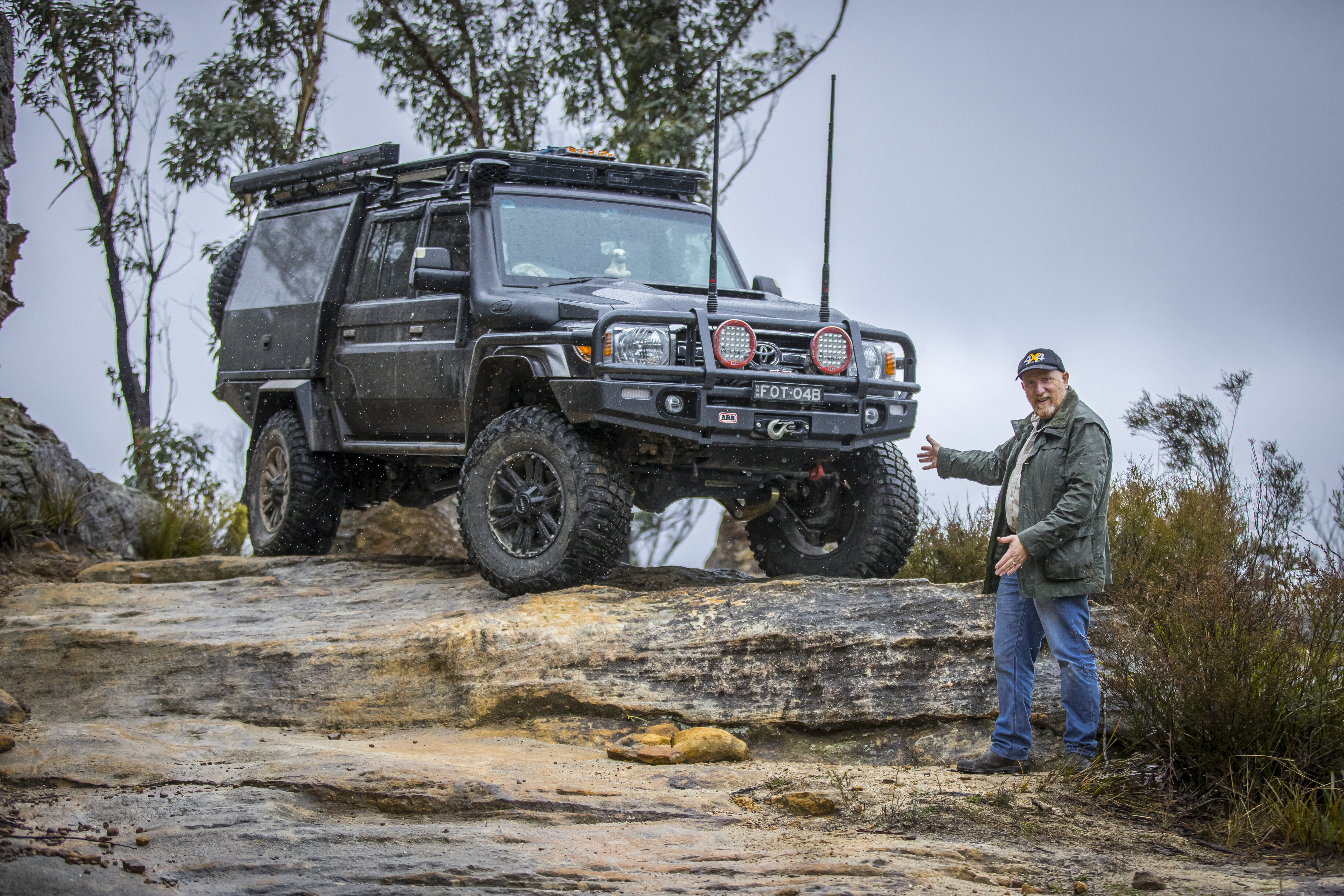
No matter what style of frontal protection you go for, ensure the bar has a profile that will maximise the approach angle of your 4×4. Most bars are designed with wings that angle up at the sides, providing greater clearance at the steering wheels while maintaining protection in the centre of the vehicle, as well as a place to mount a winch. Bars made from steel offer the best protection when rock crawling, and while some alloy bars are able to cope with big hits, most have a steel subframe so are almost as heavy as a steel bar anyway.
Many modern 4x4s have long rear overhangs, especially utes, and standard bumpers are pretty much ready for the scrapheap after their first off-road foray. There are plenty of aftermarket rear bars to choose from and, like the front bar, opt for a steel rear bar that is designed to maximise ground clearance.
Oh, and if you’re about to order a new 4×4, avoid ticking the towbar option when you’re on the website’s vehicle configurator; some OE tow bar designs are horrendous, and not only do they look awful but they compromise the vehicle’s departure angle. There are plenty of well-designed aftermarket options on the market.
Vehicle set-up
As soon as you head off road, the first thing you should do is to set your vehicle’s tyre pressures. The correct pressure for rock driving will depend on several factors, including the terrain type, the weight of your vehicle and the kind of tyres fitted. Assuming your rig wears quality LT tyres and you run them at 35psi on the road, for driving in rocky terrain you will want to lower pressures to around 22 to 28psi.
Lowering tyre pressures offers several benefits: it results in a longer tyre footprint, which means more traction; it allows the tyres to conform to uneven terrain, which minimises the chance of impact damage across the tread face; and it improves ride quality for vehicle occupants.
When running lower pressures off road, always be wary that the tyre sidewalls will be more susceptible to damage as they bag out, and there is even a chance you could peel a tyre off the rim if you make sudden and aggressive steering inputs.
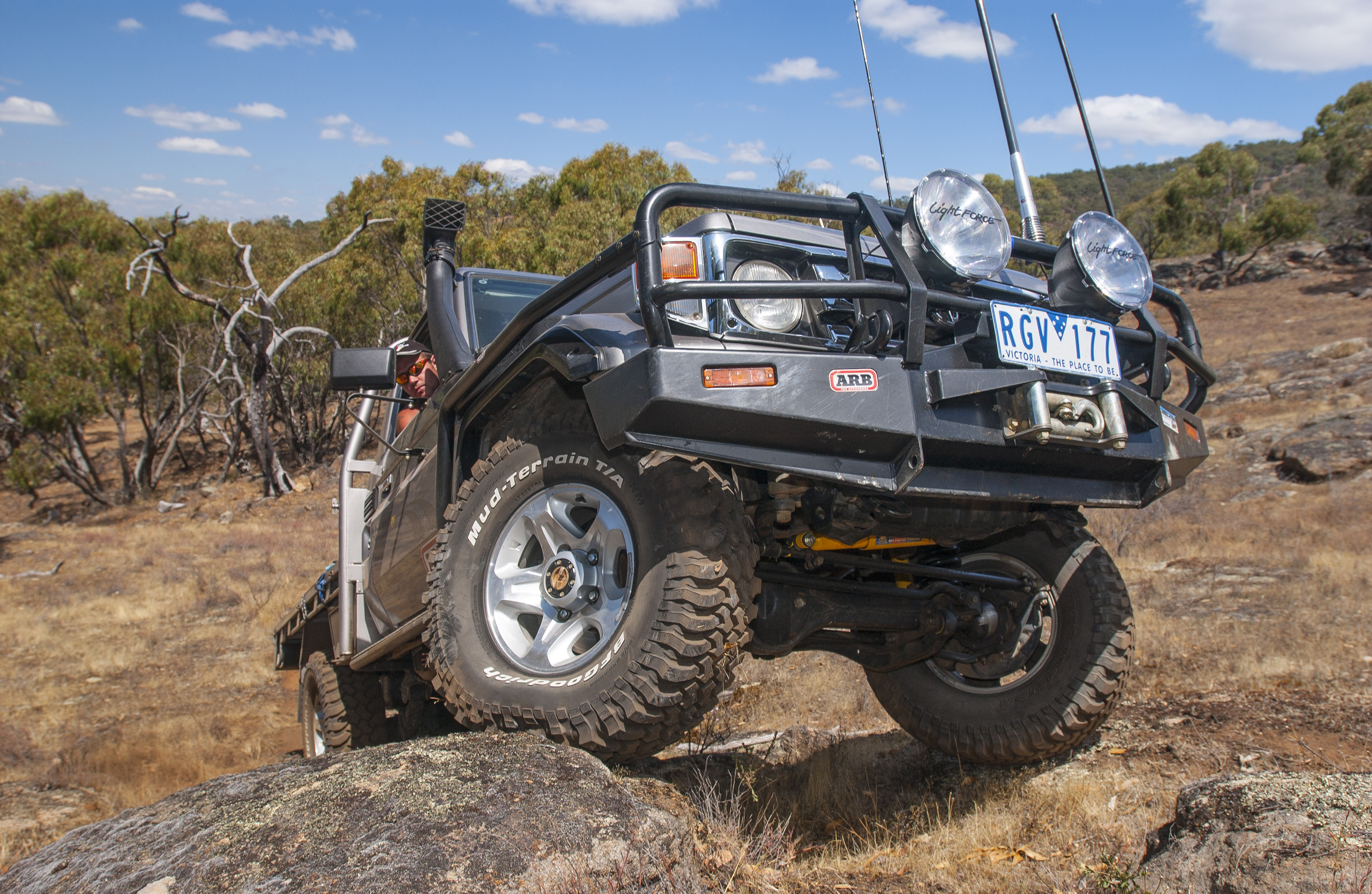
The next thing to do is to select the appropriate gear and the best traction aids for the terrain. If you are clambering over big rocks, you will want to do so as slowly as possible, so first gear low range should be selected; but if you need to climb a steep hill over shaly rocks, you might be better off in second gear low range so you can build and maintain momentum. Remember, you want to go as slow as you can and only as fast as you need to.
In challenging terrain, engage all the traction aids available to you. Bear in mind, however, that on some vehicles, engaging the rear diff lock will switch off the traction control, which can make it more difficult to climb over rocks if you exceed maximum wheel travel. So, if you’re struggling to climb over an obstacle with the rear diff lock engaged, you might want to try it without to see if that helps. If your vehicle is set up like this, you should consider fitting an aftermarket front diff lock.
Driving techniques
As mentioned, the key to successfully negotiating rocky terrain is to do it as slowly as possible, but in some circumstances you will need enough momentum to make it over rocks. With practice, you will discover the best gear to select and the best speed to drive over different types of rocky terrain.
Look well ahead when driving over rocks and plan your route. Also keep an eye out for an escape route if things don’t go to plan. In particularly tricky terrain, it’s advantageous to have a spotter outside of the vehicle who can keep an eye out for obstacles and direct the driver to take the safest route.
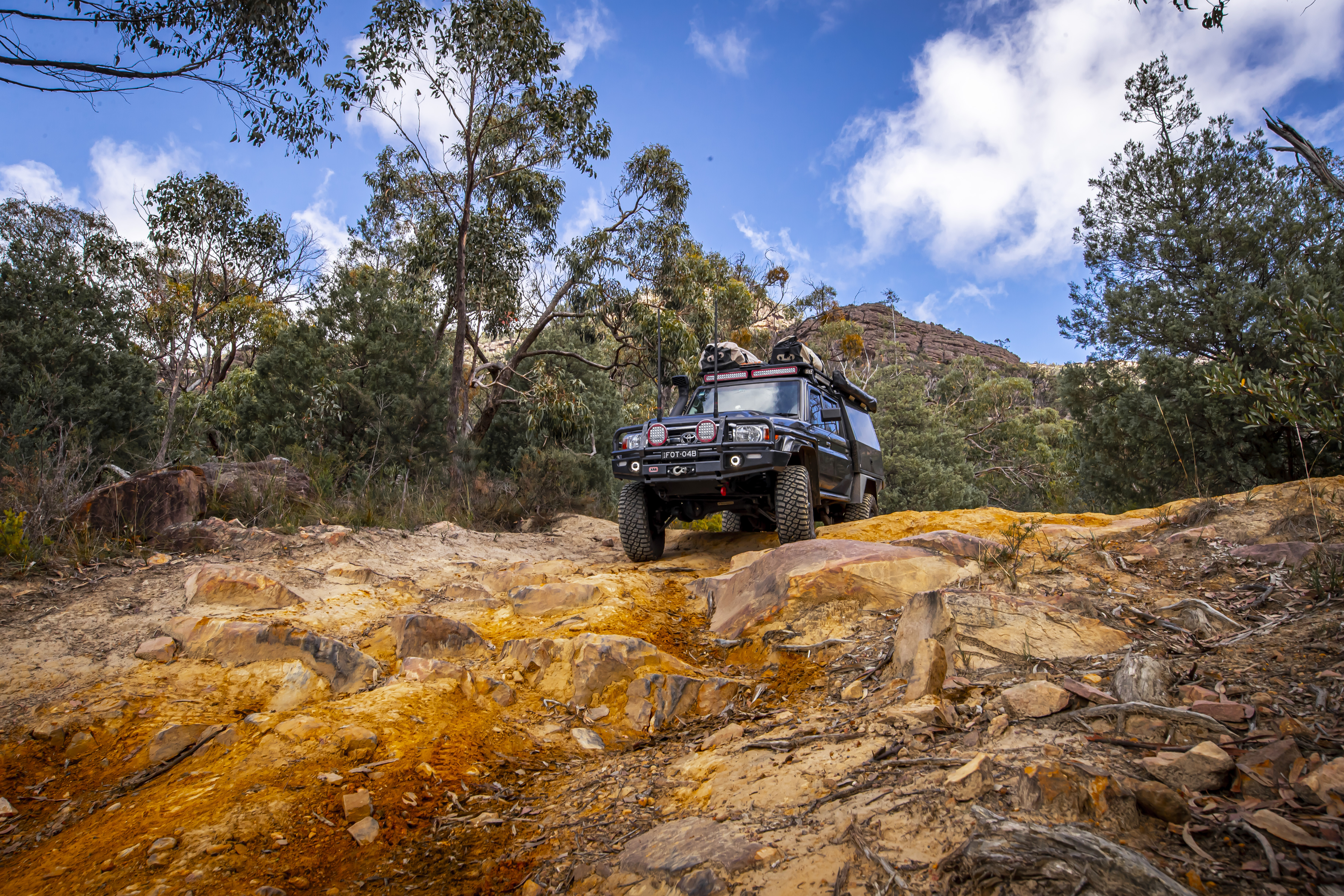
For the driver and spotter team to be effective, however, it’s vital they communicate clearly with each other, whether they are using hand signals, a UHF radio or a combination of both. Always have a chat before tackling difficult terrain to ensure both the driver and spotter understand and agree on signals.
The other advantage of a spotter is they can be used to clear obstacles and perform track-building duties when required. It’s vitally important the driver can always see the spotter, and the driver should stop immediately if the spotter can’t be seen. Do not resume driving until visual contact has been established and the spotter has given the all-clear.
If you get stuck
Sometimes things don’t turn out as envisaged, no matter how much thought and planning is involved. If you get stuck when driving over rocky terrain, you will obviously need recovery equipment to get out. If you are travelling with other vehicles, a snatch recovery might be a quick and safe solution; but if travelling on your own, you might need to do some track building to get out, using whatever is available whether that includes rocks and branches, recovery boards or a combination of those items.
A vehicle-mounted winch is an invaluable tool when rock driving, especially if you’re on your own, as is a high-lift jack, which can be used to lift a vehicle to manoeuvre it in to a better position, or to pack up the terrain under the wheels. Bear in mind that high-lift jacks are inherently unstable, so you really need to know what you’re doing if you use one. And never put any part of your body under a vehicle that has been elevated using a high-lift jack.
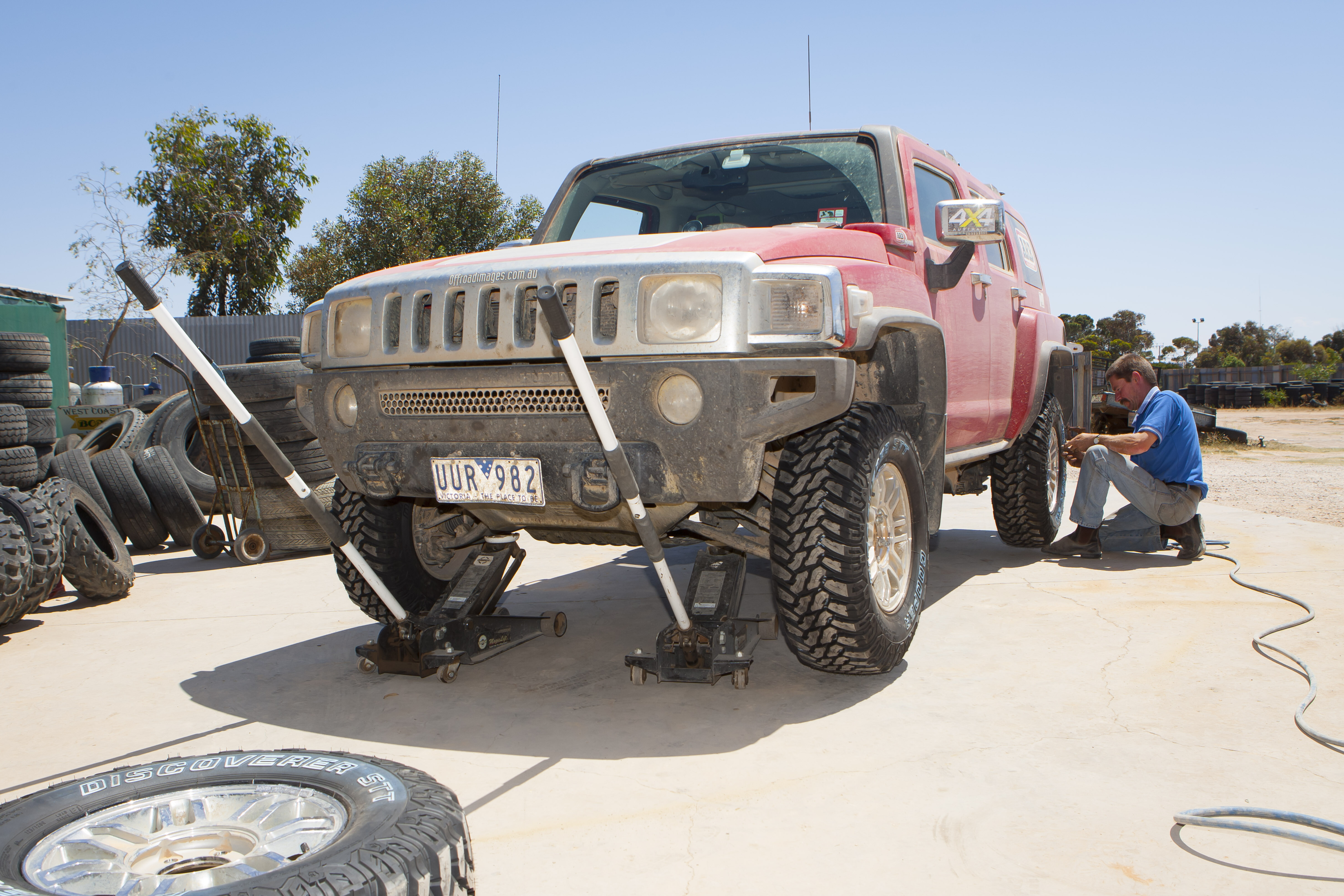
As well as recovery gear, you will need to ensure your vehicle is equipped with rated recovery points front and rear.
Tyre damage is common when driving in rocky terrain, so you should always carry a tyre repair kit, a quality air compressor and gauge, and at least one spare tyre. Also make sure your vehicle’s jack is in good working order and that you know where your wheel-changing tools are.
There are plenty of other things that can break when rock driving, so having the mechanical knowledge, the tools and the components to make trackside repairs will be advantageous. As will having a communication device that works when you are out of mobile phone range, such as a satellite communicator or a sat phone. And it’s not just vehicles that can be damaged in rocky terrain, so carry a first-aid kit, and know how to use it.
Bloody good fun
After reading this ‘How To’ instalment you probably think you’d have to have rocks in your head to go rock driving. Sure, rocks are hard on your vehicle and on your gear, but successfully tackling rocky terrain can be bloody good fun, and sometimes unavoidable depending on where you want to get to. However, with the right vehicle set-up, the right gear and a bit of knowledge, you too can become a rock star, so get out there and enjoy it.
Tyre markings
There is plenty of information moulded on the sidewall of a tyre. Here is what it means in the case of an LT285/70R17 tyre. For example: ‘LT’ stands for Light Truck; ‘285’ for tyre width in millimetres; ‘70’ for sidewall height as a percentage of tyre width; ‘R’ for radial; and ‘17’ for rim diameter.
Note that not all tyres marketed for off-road use have a Light Truck construction. It might look like a tough all-terrain or mud-terrain tyre, but if the sidewall marking says 285/70R17 without the ‘LT’ in front of it, the tyre is most likely a Passenger (P) rated tyre, with a light construction that will be more susceptible to damage when driving in rocky terrain.
Do
- Fit LT tyres and lower tyre pressures
- Fit lifted suspension and under-vehicle protection
- Survey terrain ahead and use a spotter if possible
- Drive as slowly as possible and only as fast as needed
- Carry tyre repair kit, compressor and recovery gear
Don’t
- Drive too fast for the terrain
- Drive where you can’t get out again
- Proceed without clear communication with your spotter
- Drive if you can’t see your spotter
- Get under a vehicle that’s been elevated with a high-lift jack
The home base of Ford’s global operations has reportedly trademarked the ‘Thunder’ name for its Ranger, F-150 and Maverick pick-ups, hinting at new variants for the trucks.
As reported by Motor Authority, submissions to the US Patent and Trademark Office (USPTO) show three individual filings by the Dearborn-based manufacturer for the Thunder nameplate to be attached to the popular Ranger, F-150 and Maverick models – with all but the latter are on sale in Australia next year.
It’s not the first time Ford has used Thunder on the Ranger – a 2020 special edition model went on sale in Europe, blending elements of the Wildtrak variant with the Raptor’s diesel engine.
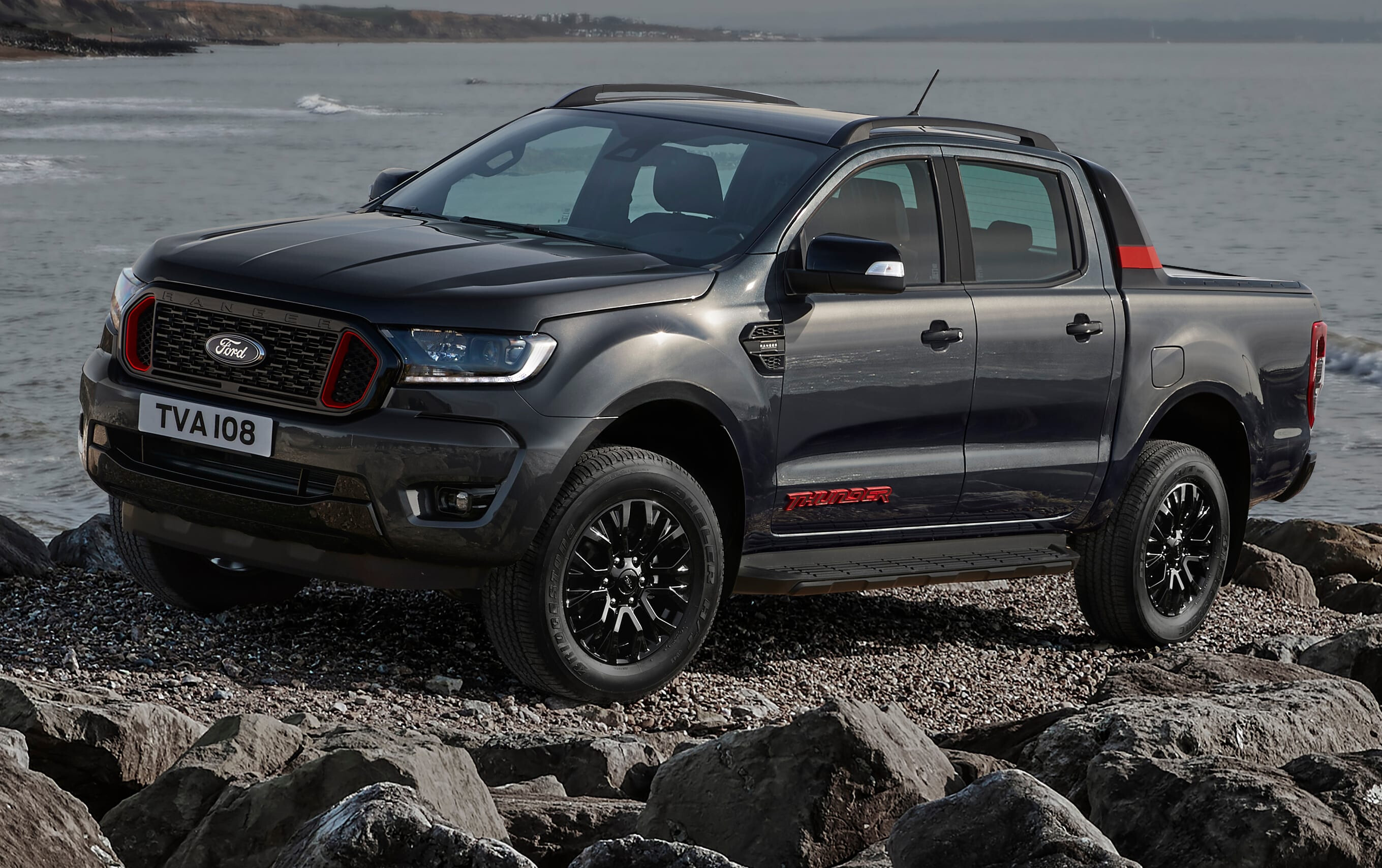
Although Ford may not end up making use of Thunder just yet, it can at least keep the names in its pocket for a rainy day when it needs to expand the already sizeable line-ups of the Ranger and F-150.
For the Ranger, the latest-generation ute is about to launch in Australia, headlined by the flagship Raptor variant – which now boasts a 3.0-litre, twin-turbo V6 petrol engine.
While Ford Australia is also set to bring its F-150 Down Under next year, the all-electric F-150 Lightning has been making waves in its native US, with the bespoke EV pick-up in high demand as the first mass-produced model of its kind.
Sadly, local buyers might not get a taste of the Maverick, Ford’s smallest pick-up, which was revealed last year to slot under the Ranger in the North American market only.
It’s worth noting Mazda has recently used ‘Thunder’ on its off-road focused BT-50 dual-cab, meaning Ford would have to do some serious arm-twisting to use the name here.
Snapshot
- HiLux on top again with 5355 monthly sales, 21,982 for the year so far
- Ranger sits in second despite waiting for next-gen model to arrive
- GWM makes an appearance in the top 10
The Toyota HiLux retains its comfortable lead as the best-selling 4×4 on the Australian new car market at the halfway point of the year, recording a dominating June in the showrooms.
In new car sales figures released earlier today, data revealed Toyota managed to shift 5355 examples of its popular HiLux ute in the last month of the financial year, despite the market going through its worst June since 2011.
Even without taking the stellar 100 per cent increase in sales of the 4×2 HiLux, the sales performance of the 4×4 resulted in a 24.5 per cent rise in deliveries over June last year, contributing to 23,852 utes finding homes before July.

While the Ford Ranger’s 18,285 year-to-date sales means it remains in touch of the HiLux, the 2547 registrations throughout June equalled less than half of its Japanese rival, representing a 54.6 per cent year-on-year drop. For Ford, the new Ranger can’t arrive soon enough if it wants to get back in the hunt.
Isuzu’s D-Max moved up to third for the month, displacing the Toyota Prado from the last spot thanks to its 1953 units shifted, sitting ahead of the fourth-placed Mitsubishi Triton – which recorded 1633 sales.
Triton is the quiet achiever of the year, currently taking the third spot on the year-to-date standings with 15,028 registrations, just ahead of the Prado’s 12,978 and almost 5000 clear of the D-Max’s 10,356 sales.
Prado continued to be the best selling LandCruiser-badged model with another top-five results for the month, although its 1578 units shifted was only 60 sales more than the LandCruiser 300 Series, making hay while the sun is shining on its Japanese plant.
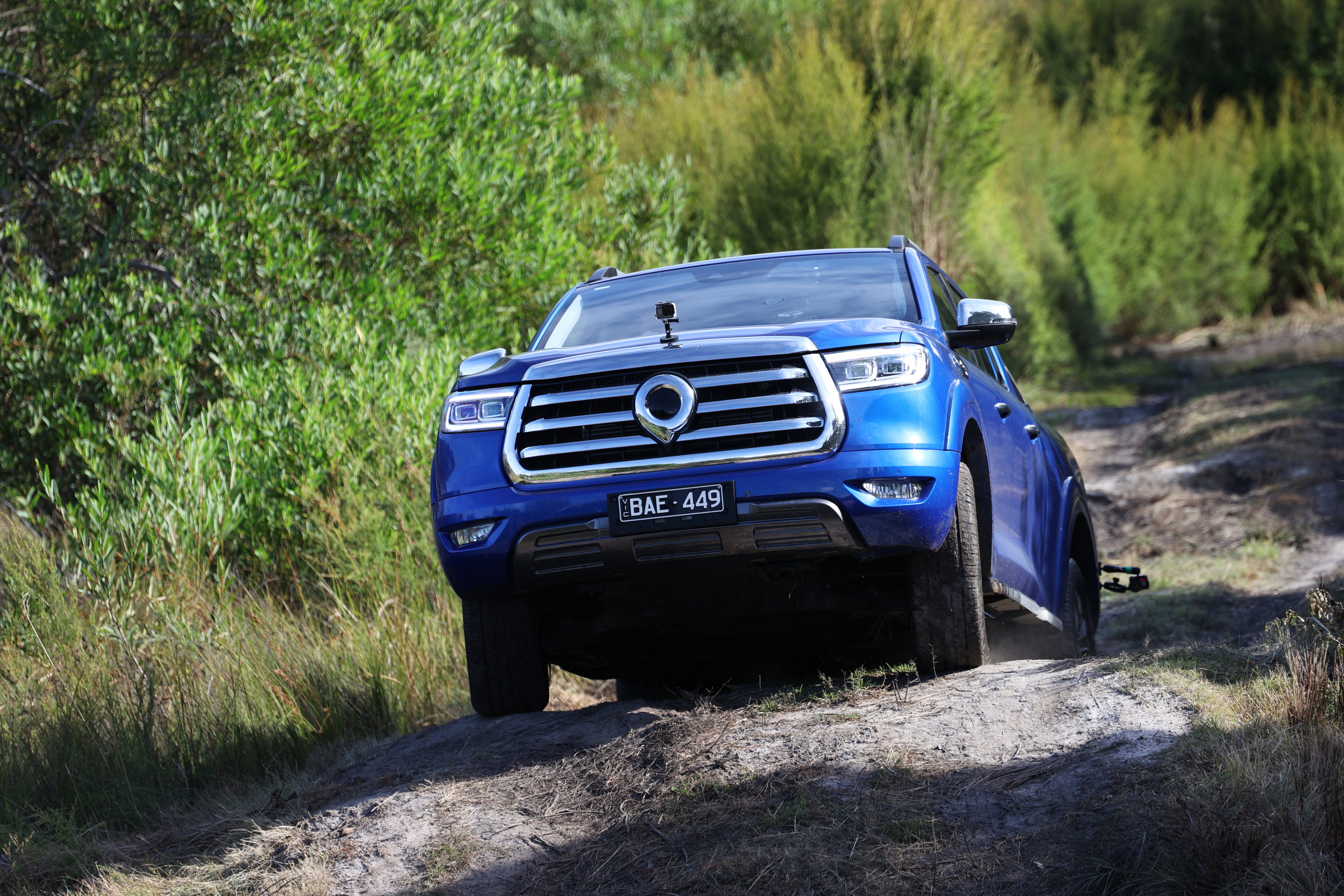
A surprise inclusion to the top 10 is the GWM Ute, with 1273 sales for the month, managing to beat established rivals, such as; the LandCruiser 79 Series (1265 sales), Ford Everest (1234 sales) and Isuzu MU-X (1074 sales).
Previously present in the top 10 over the past two months, both the Nissan Navara and Mitsubishi Pajero Sport failed to make the cut in June, recording just 746 and 704 sales respectively – less than the 11th-placed Mazda BT-50.
Federal Chamber of Automotive Industries (FCAI) Chief Executive Tony Weber said the wider market is facing ongoing supply shortages owing to a number of external factors.
“Globally, carmakers are continuing to suffer from plant shutdowns,” said Weber.
“In Europe we have component supply heavily impacted by the conflict in Ukraine. Microprocessors continue to be in short supply and global shipping remains unpredictable.
“While demand for new cars remains strong in Australia, it is unlikely we will see supply chain issues resolve in the near future.”
June 2022 4×4 sales
| Rank | Model | Sales |
|---|---|---|
| 1 | Toyota HiLux | 5355 |
| 2 | Ford Ranger | 2547 |
| 3 | Isuzu D-Max | 1953 |
| 4 | Mitsubishi Triton | 1633 |
| 5 | Toyota Prado | 1578 |
| 6 | Toyota LandCruiser 300 | 1518 |
| 7 | GWM Ute | 1273 |
| 8 | Toyota LandCruiser 79 | 1265 |
| 9 | Ford Everest | 1234 |
| 10 | Isuzu MU-X | 1074 |
Year-to-date 2022 4×4 sales
| Rank | Model | Sales |
|---|---|---|
| 1 | Toyota HiLux | 21,982 |
| 2 | Ford Ranger | 18,285 |
| 3 | Mitsubishi Triton | 15,028 |
| 4 | Toyota Prado | 12,978 |
| 5 | Isuzu D-Max | 10,356 |
| 6 | Mazda BT-50 | 6324 |
| 7 | Toyota LandCruiser 79 | 5936 |
| 8 | Nissan Navara | 5911 |
| 9 | Toyota LandCruiser 300 | 5896 |
| 10 | Isuzu MU-X | 5327 |
As we’re often travelling in new cars that don’t have auxiliary battery systems in them, we’re always wary of draining batteries when running fridges while camping on road tests.
We’ve been caught out by draining the batteries on test cars more than once and had to pull out the jumper cables. That’s fine, so long as you have another car to jump it off.
The advent of relatively small and affordable lithium jump-start units has changed things and no longer are we relying on having a second vehicle at hand to jump-start a dead battery.
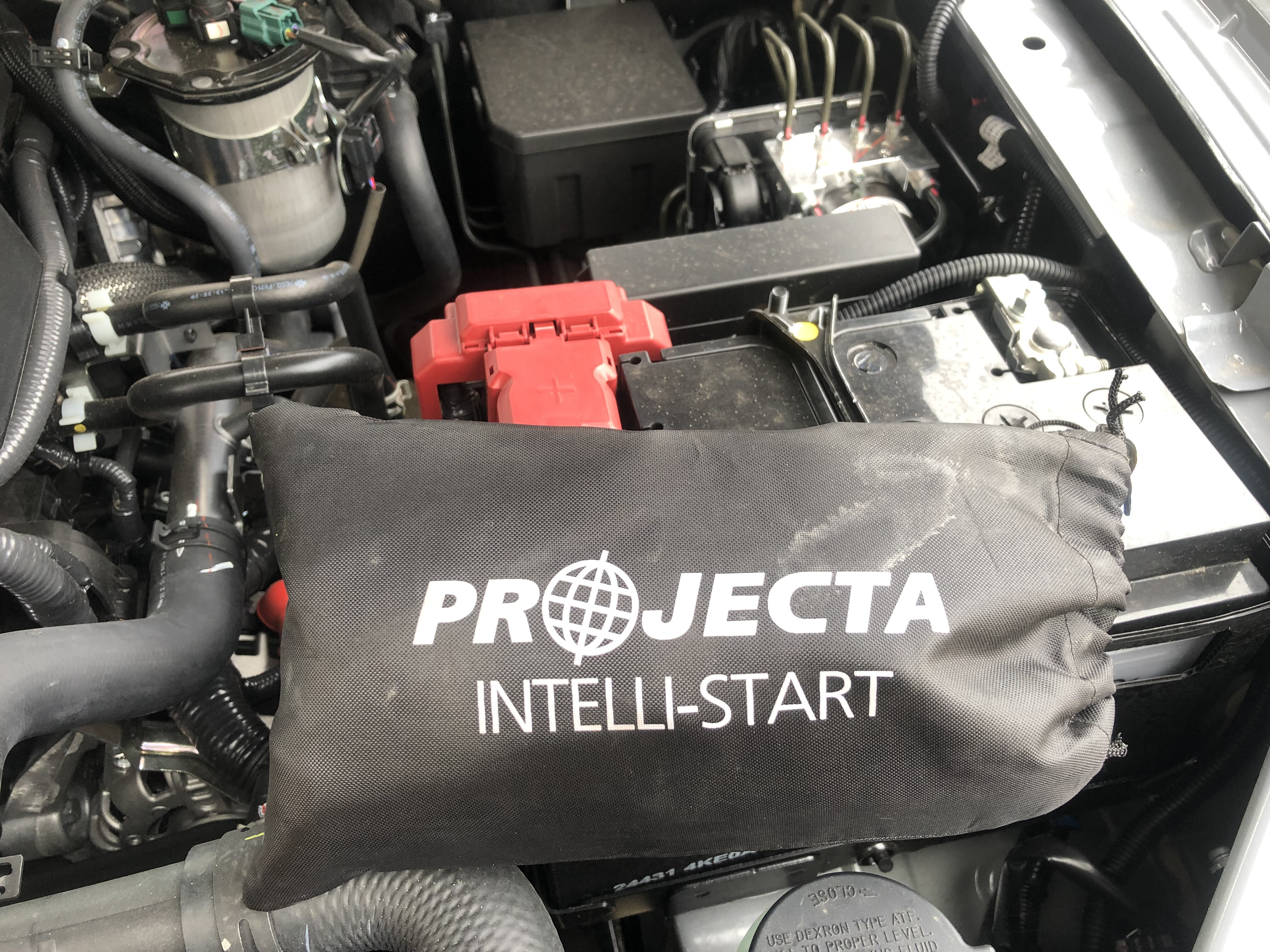
Projecta’s 1200amp Intelli-Start Lithium Jump Starter has become an invaluable part of our recovery kit and already it’s been used on classic old cars, new 4x4s and our own vehicles.
The heart of the Intelli-Start unit is a 3.0amp/h at 12.8-volt, 1200amp at 3.2-volt Lithium Iron Phosphate (LiFePO) battery that is claimed to be capable of jump-starting diesel engines up to 4.5-litre capacity and petrol engines up to 7.0 litres. That covers just about everything you’re likely to find under the bonnet of a 4×4 and the variety of vehicles we’ve used it on.
You can charge the unit via a USB plug and it’s advisable to do this regularly to keep the unit charged and ready to use when you’re not using it. The really clever tech in the unit that impresses us is its ability to recharge back to its previously held charge by simply leaving it connected to the recently jump-started battery for around 40 seconds after starting, and letting the vehicle’s alternator charge it back up.
The LED lights on the unit let you know when it’s fully charged again and ready to pack away for next time.
The Intelli-Start unit is easy to use thanks to its charge indicator lights, connection indicator that shows you have the clamps on the right way, and large, easy-to-use buttons. You really can’t go wrong with this unit.
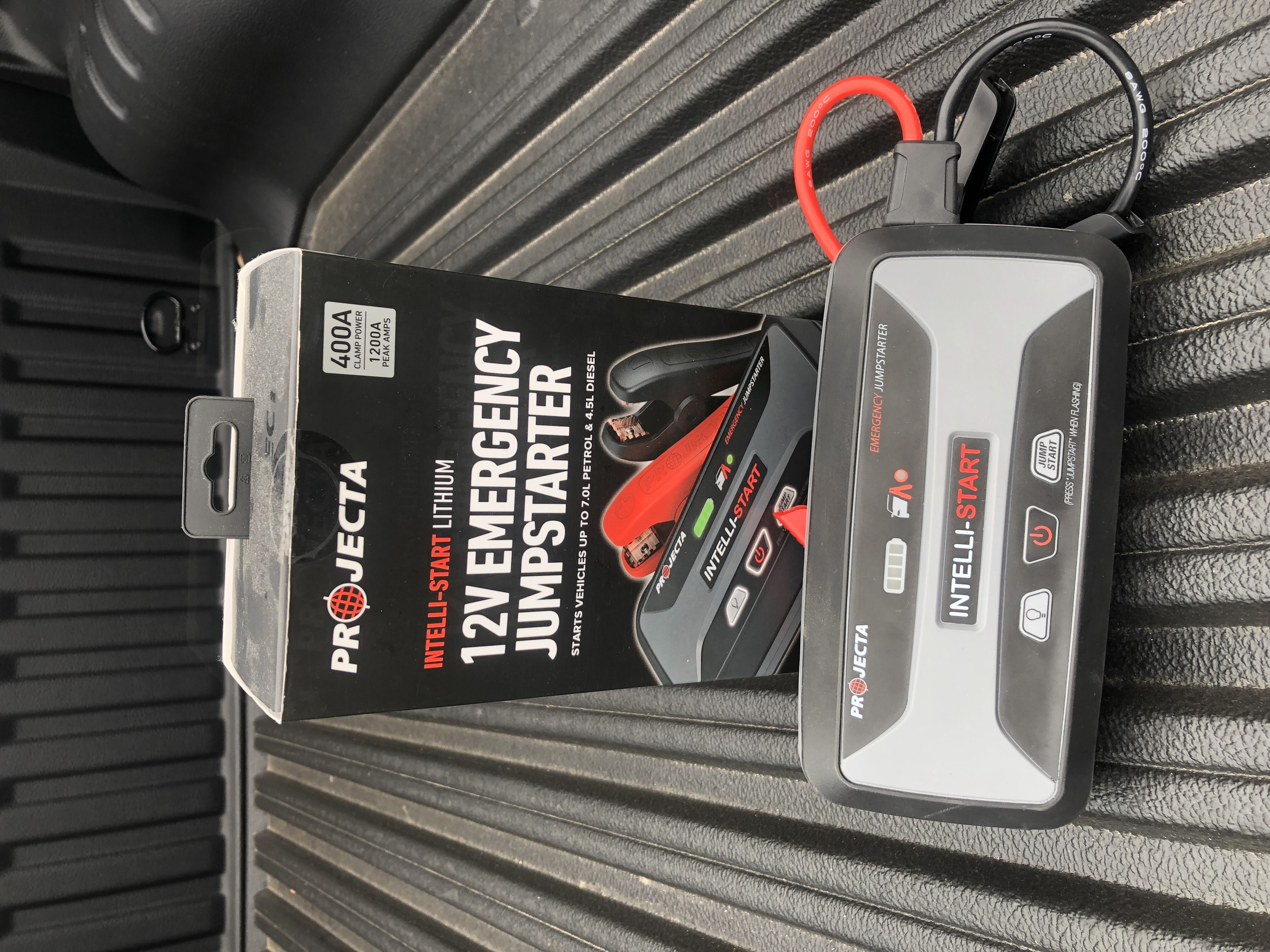
There’s also an LED work light on the side and a USB output port to charge things like mobile phones when you need to. You can see why it’s such a handy piece of gear to have in your kit, ready to use.
The compact unit weighs less than 1kg and packs up in its own carry bag that easily fits under the seat of your car or in some gloveboxes. Being a Projecta product, it’s made well and IP53 rated for protection against the weather and elements.
The 1200amp unit retails for around $300, but shop around and you’ll find the best deal. There’s also a 900amp version available for smaller engines, but this 1200amp unit has already earned its place in our travel kit.
AVAILABLE FROM: www.projecta.com.au PRICE: Around $300, but shop around
Ever wondered why common-rail diesel injection systems can deliver fuel to the engine’s combustion chamber not just in one squirt but in multiple squirts for any one combustion event? Didn’t know they did, perhaps?
Well there’s some super clever tech here that changes a short, sharp combustion event in to one that’s more subtle but longer and more muscular.
By combustion event I’m referring to the chemical combination of air and fuel in an engine’s combustion chambers, which is the space left above the piston in any given cylinder when the piston is at or near the top of its stroke.
This chemical combination is effectively an explosion as the potential energy of the fuel is violently released as heat as the fuel ‘burns’. In a diesel the fuel is ignited by the heat generated by compressing the intake air rather than via an electric spark, as is the case with a petrol engine, as you know.
A common-rail’s multiple injection technology is in fact one of two key reasons why today’s diesel engines offer such energetic, refined and frugal performance to the point where the best of them are outright rockets, and that’s not just the V8s! The other reason is the enormous recent advances in turbo technology, including the use of multiple turbos.
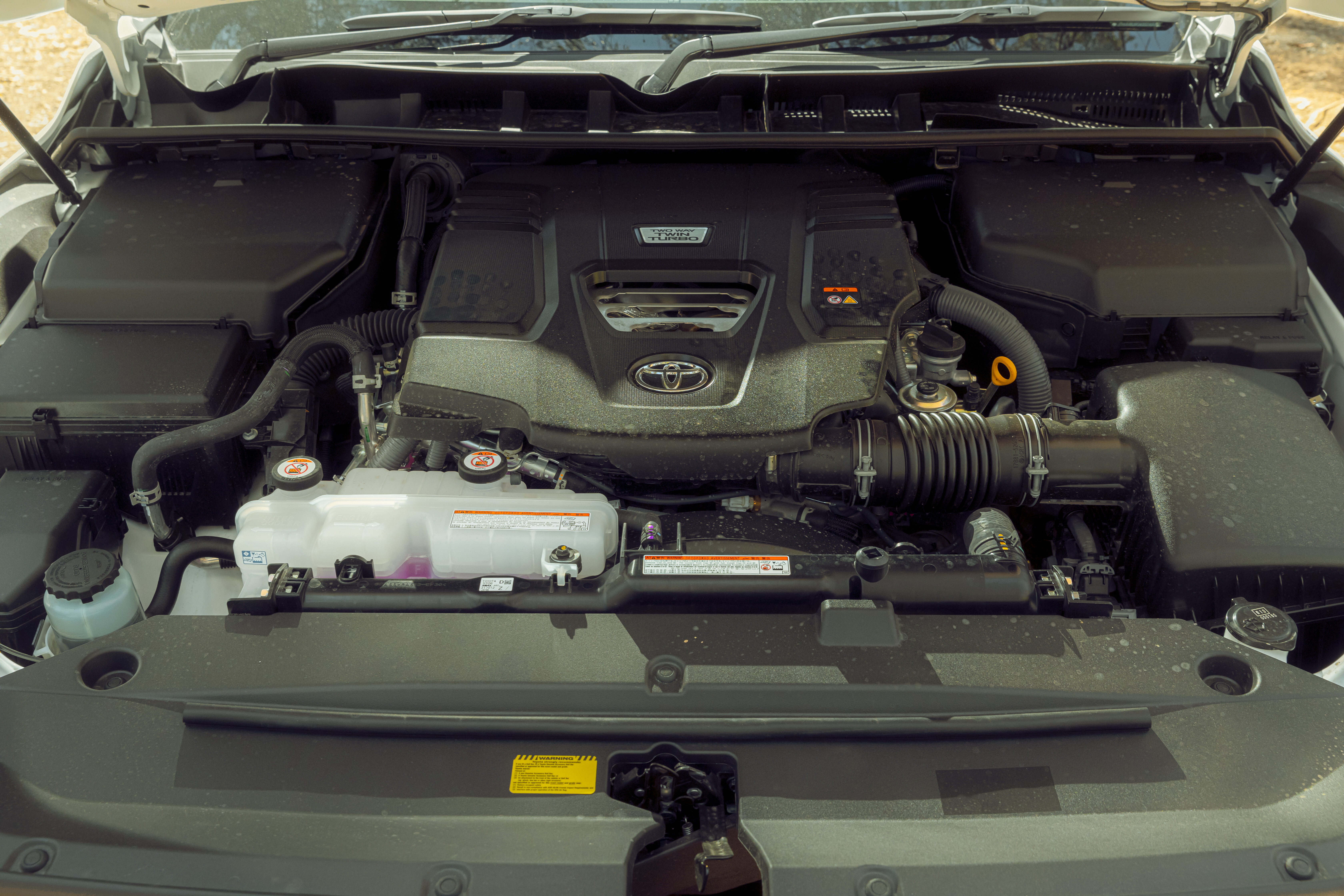
Multiple injections of fuel lengthen the combustion event so that peak cylinder pressures are maintained for a longer period, therefore increasing the effective down-stroke force on the piston. And if you can increase the force that produces more torque at the crankshaft and therefore more power, providing everything else is equal.
Old-school diesels dumped all the fuel in one go and then combined with a very high compression ratio – the measure of how much the intake air is mechanically squeezed down in to the combustion chamber – produced a short duration but violent explosion. You can make reasonable power this way but there’s a lot of noise, or so-called diesel rattle, and a harsh and unrefined feel to the engine. That may be acceptable in a truck but not what you want in a passenger vehicle, 4x4s included.
With multiple injections the combustion event is initiated with a small amount of fuel, but then continued with subsequent injections for as long as is dictated by the throttle input and engine load. Wide-open throttle on full engine load produces the most injections, while small throttle openings and light engine loads mean just a single squirt of fuel.
The length of time you can extend the combustion event is of course limited. As the piston starts on its power stroke, the combustion chamber’s volume quickly increases, so injecting more fuel in to continue the combustion event brings diminishing returns in terms of effective cylinder pressure.
The benefit of using multiple injections is such that modern diesels can get away with much lower compression ratios, down from around 22:1 of a diesel of 25 years back to more like 15:1 in a modern diesel. This ‘softer’ compression ratio helps in making a much quieter and more refined engine.
Effective cylinder pressure is generally quoted as a Brake Mean Effective Pressure (BMEP), which is a figure calculated from how much torque the engine produces as measured on a brake dynamometer.
If you have high effective cylinder pressures, you don’t need high engine speeds to produce good power, as witnessed by the fact that modern diesels don’t rev any higher (and in some cases lower) to produce so much more power than old-tech diesels.
The BMEP of an engine is effectively a measure of its state of tune, or in other words how ‘tuned up’ it is. It is not, however, a measure of how much torque or power it produces, which depends on the additional factors of engine capacity and engine speed.
So how are these multiple injections carried out in such a timely and effective manner? You can put that down to fast-switching piezo-crystal injectors and the extremely high fuel pressures of modern common-rail systems.
UPDATE, July 1, 2022: New Amarok exterior teased, reveal set for July 7
The new Volkswagen Amarok may only be one week away from its reveal, but that hasn’t stopped the flow of teasers from rolling out.
Volkswagen Commercial Vehicles has shown off the second-generation dual-cab’s wheel and front guard design in its latest set of teasers, with the body shape borrowing heavily from the outgoing model despite its Ford Ranger underpinnings.
New design wheels fill the arches, while Volkswagen has also announced buyers will be given the choice of fitting all-terrain tyres as a factory-backed option for the first time, although it’s unclear as to whether Australian customers can benefit from the offer.
As potentially the final round of teasers to be released, Volkswagen is now gearing up to reveal the Amarok in full next week, with the covers set to come off on July 7.
The story to here
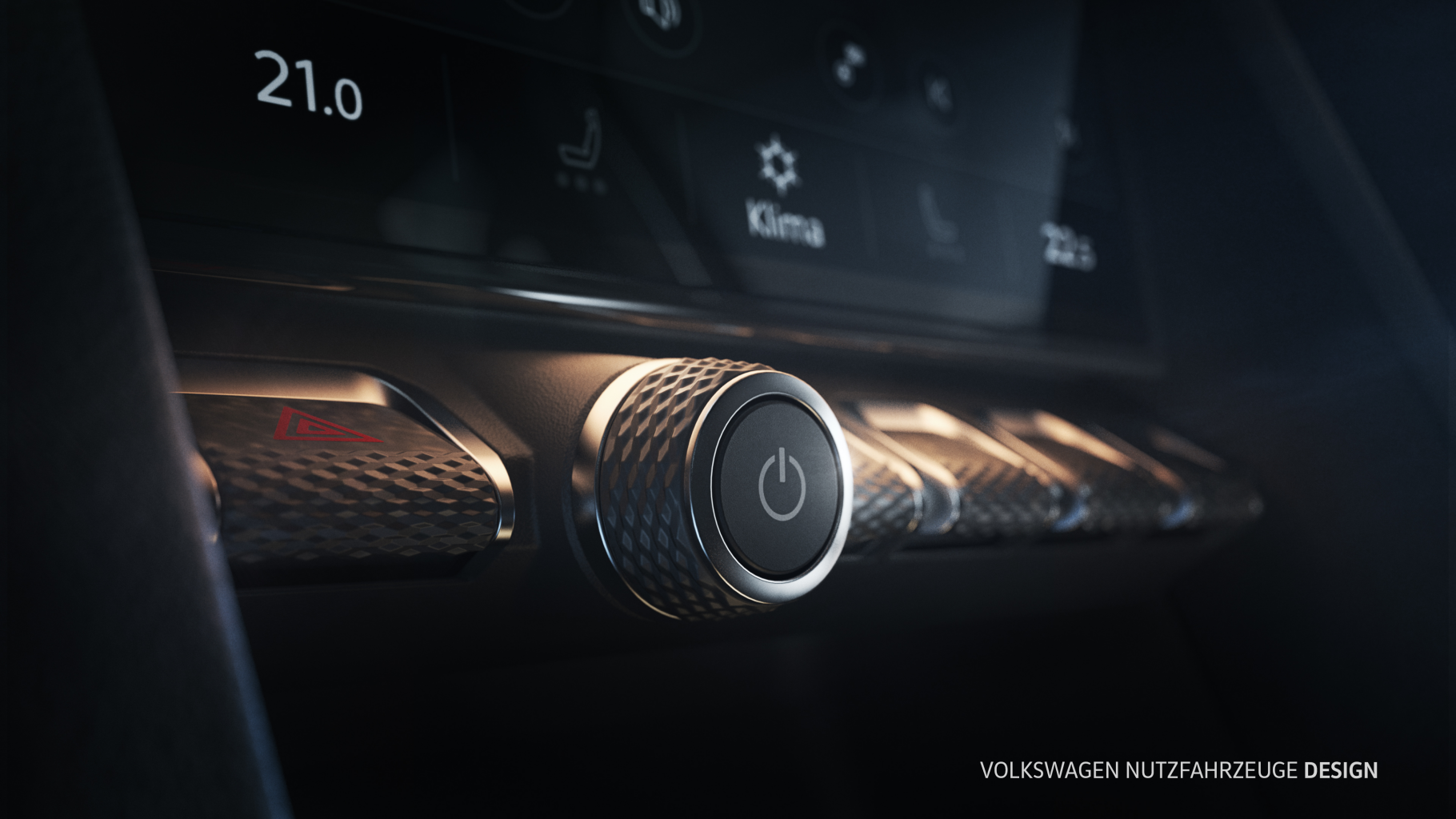
June 28, 2022: Amarok interior to use physical buttons
Volkswagen continues to drip-feed information about its new Amarok in the lead-up to its reveal next month.
The latest teaser provides a closer look at the controls for its infotainment and climate control system. Thankfully, unlike many of Volkswagen’s passenger car range, Volkswagen Commercial Vehicles has reverted to physical buttons for a majority of the interior controls.
“Numerous new driver assist systems, including 20 that are new to the Amarok, call for clear structures to enable ease of use and precise adjustment,” the manufacturer said.
“Volkswagen Commercial Vehicles is using a mix of digital functions and ergonomically optimally-configured buttons and push/rotary switches in the Amarok that are intuitive to use.”
The physical buttons control functions such as the parking systems, climate control and driving mode selection – all of which have to be accessed through sub-menus in cars like in the Mk8 Golf.
Volkswagen will officially take the covers off its new Amarok in just over a week on July 7.
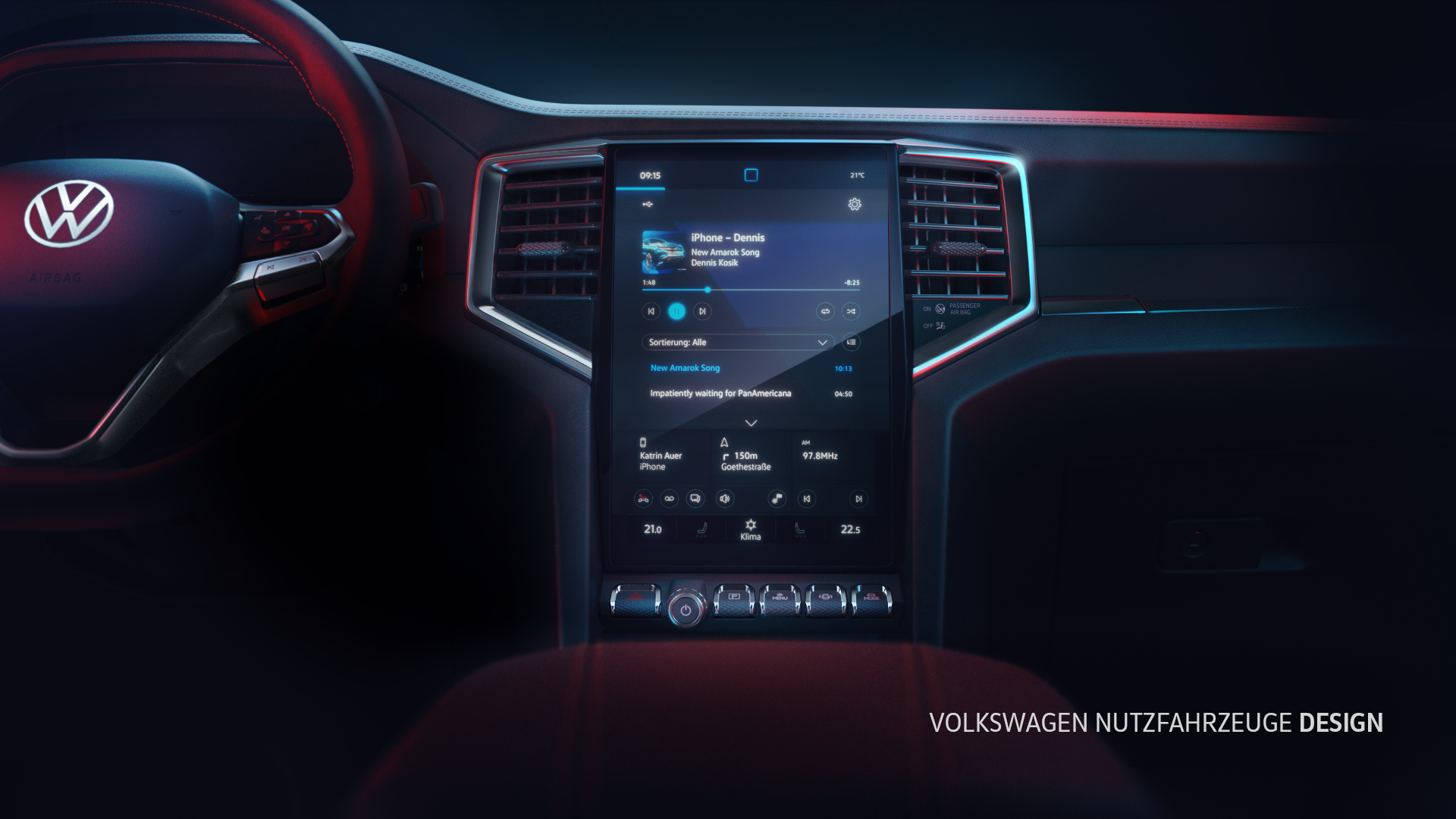
June 11, 2022: New Amarok previews infotainment
Another week, another look at the upcoming 2023 Volkswagen Amarok. This train ain’t slowing down.
Following earlier looks at its exterior styling (and a very stylised sketch showing the cabin, scoll to the bottom of the story), this latest image reveals what we can expect from the new 2023 Amarok’s infotainment: a bloody big screen.
No surprises there, of course, with the new Amarok based on Ford’s new Ranger – and we already know that one has a huge screen too.
Importantly, it seems clear the Amarok will get its own unique dash design, adding a more VW-styled flavour to its interior.
Watch for the flood of teasers to continue in the lead-up to the new Amarok’s reveal later this year.
June 6, 2022: New 2023 Amarok teased again
The 2023 Volkswagen Amarok has been teased again ahead of its official reveal next month, with covers set to come off the second-gen ute on July 7.
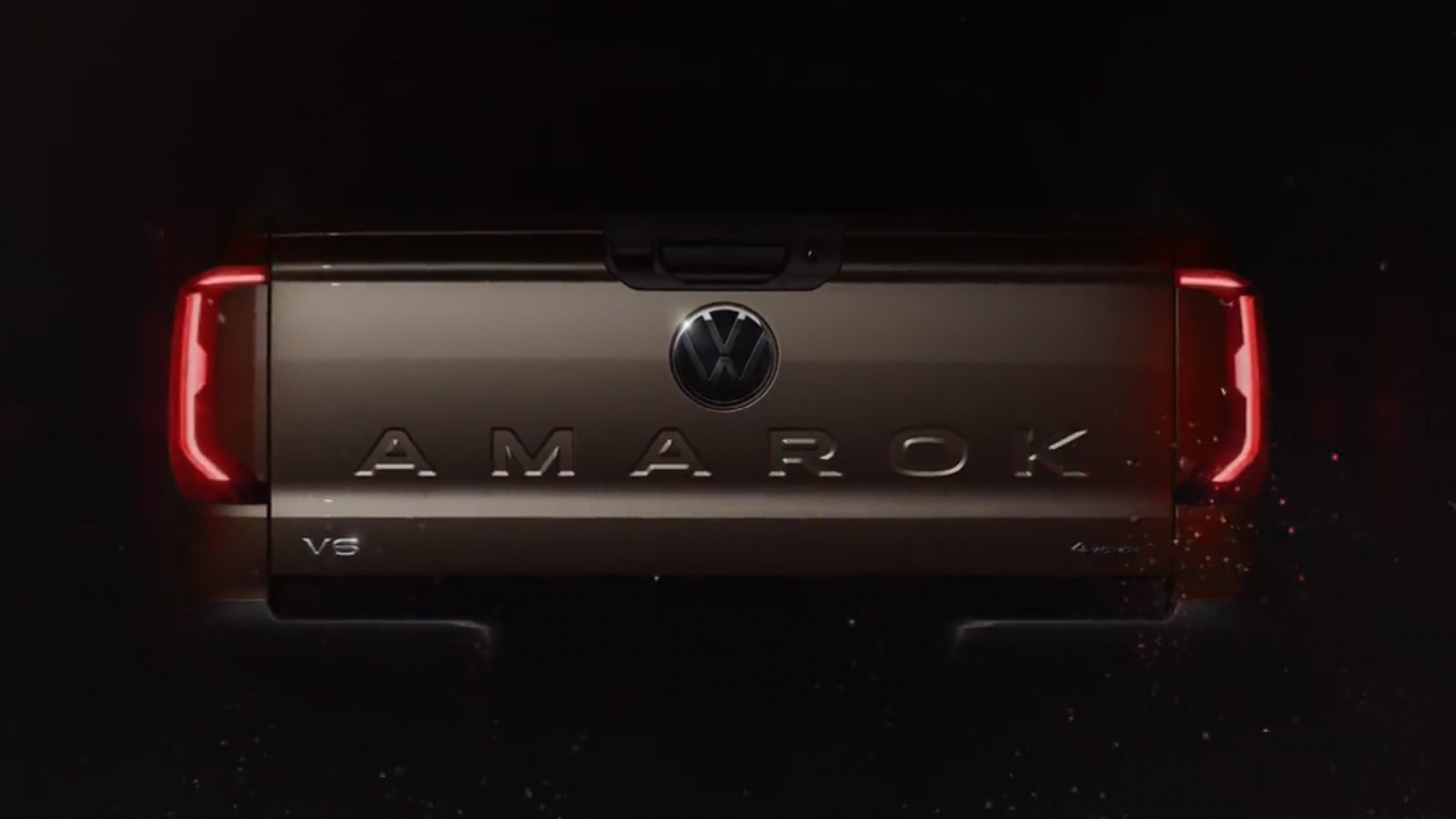
Taking to Twitter, Volkswagen Commercial Vehicles released a video which culminates in the tailgate of the Amarok being shown, with its name stamped into the metal.
We can also see a V6 badge on the bottom left-hand corner of the tailgate, showing this particular version is powered by the 3.0-litre ‘Lion’ V6 turbo-diesel, which will also power the Amarok’s twin – the new Ford Ranger.
We’re now just on one month out from the Amarok’s reveal, having been teased for the past two years by Volkswagen as the German manufacturer’s joint collaboration with Ford.
Read on below to find out what we know so far about the new Amarok.
May 25, 2022: New 2023 Volkswagen Amarok teased in ‘concept’ form
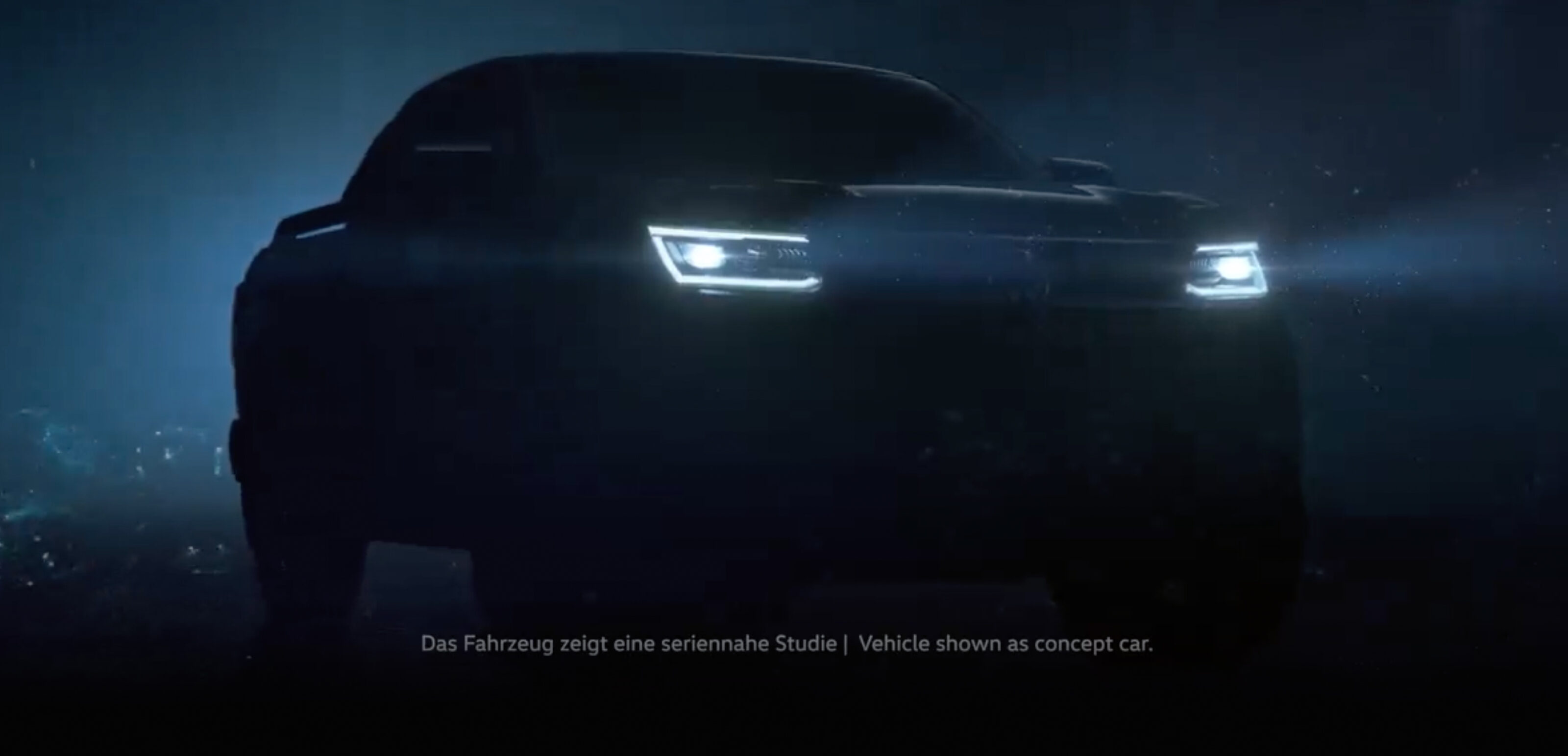
A new preview for the upcoming 2023 Amarok has been handed down, this time coming in the form of a shadowy computer-generated video published to the LinkedIn profile of Volkswagen Commercial Vehicles design boss Albert-Johann Kirzinger.
The video, embedded below and captured in a still image above, offers a decent look at the silhouette of Volkswagen’s second-generation Amarok, which will share its architecture and much of its sheetmetal with the new 2023 Ford Ranger.
For more on the new Amarok, see our evolving story below.
2023 Volkswagen Amarok: new details revealed
Snapshot
- 2023 Amarok bigger than outgoing model, 100mm longer
- New heavily digital cabin
- Petrol and diesel engines, but Australian options TBC
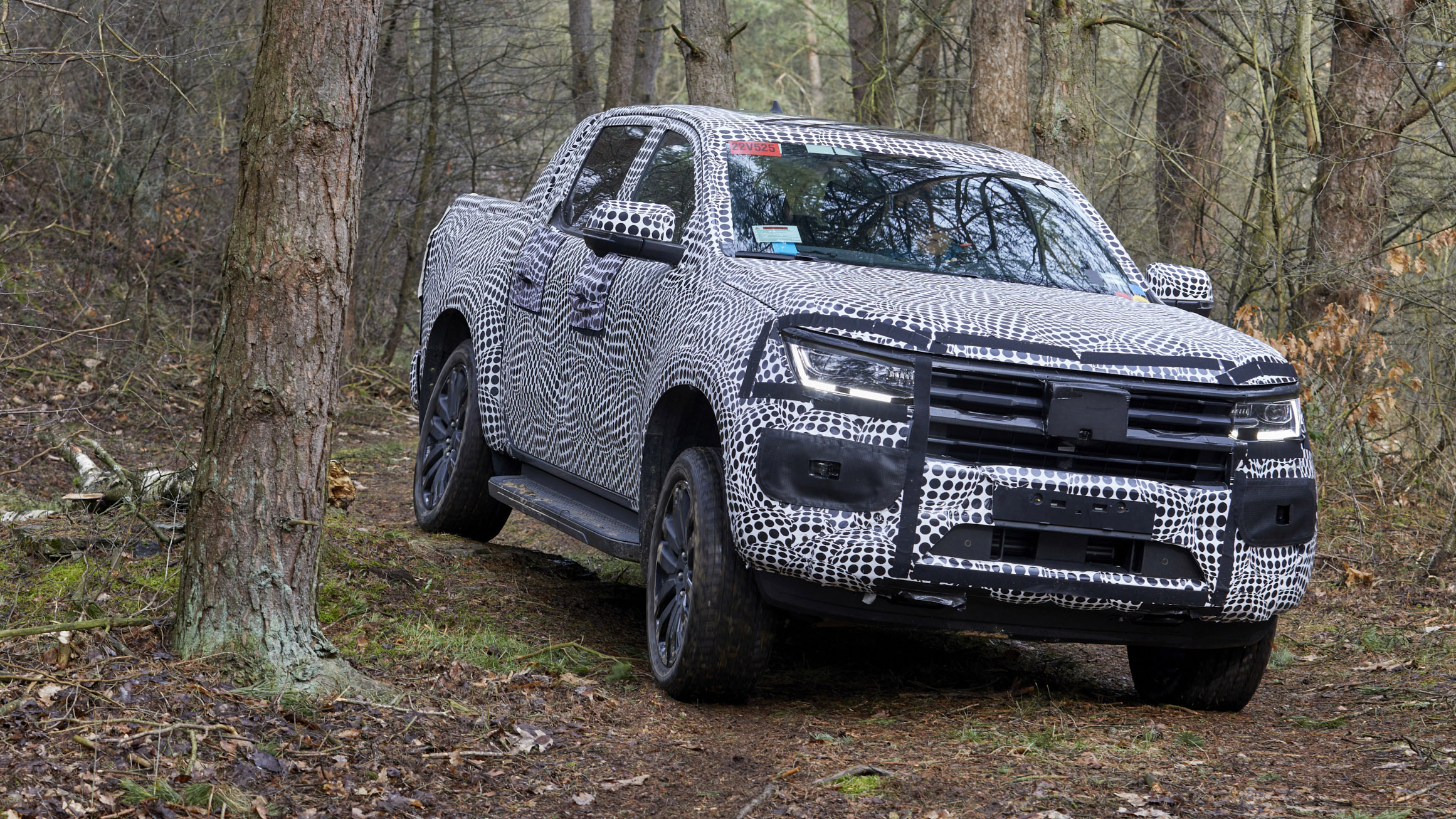
It’s been a long time coming, but we can finally take our first look at the new 2023 Volkswagen Amarok – albeit in camouflage, thanks to a set of new photos released this week.
New details around equipment and specifications have also emerged, painting a solid picture of what we will see in the market towards the end of 2022 (at the earliest).
Designed and tested in both Australia and Germany, based on 2022 Ford Ranger underpinnings and manufactured in South Africa, the new-generation Amarok is an important vehicle for VW to get right.
With over 830,000 Amaroks sold to date in Europe, South America, South Africa and in the Oceania regions, according to Volkswagen, the key for future success revolves around engineering solid drive systems, high load-carrying capabilities, system functionality and a focus on off-road ability.
EXTRA: 2023 Volkswagen Amarok imagined
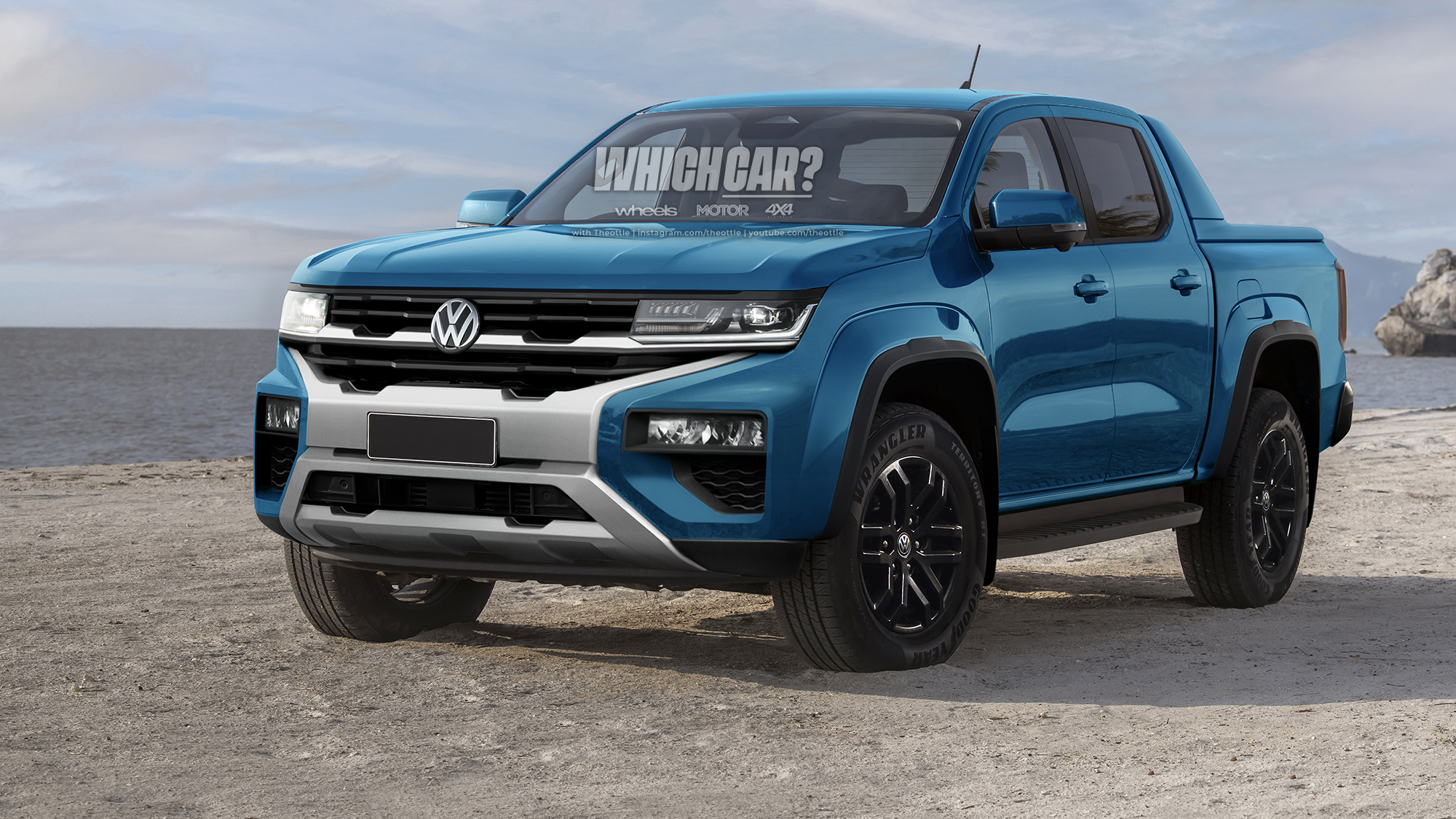
Using the photos in this story, we’ve had our brilliant rendering artist Theottle put together a pair of new images that we reckon offer the closest look yet at the new-gen Amarok.
Enjoy them here. The rest of this story continues below.
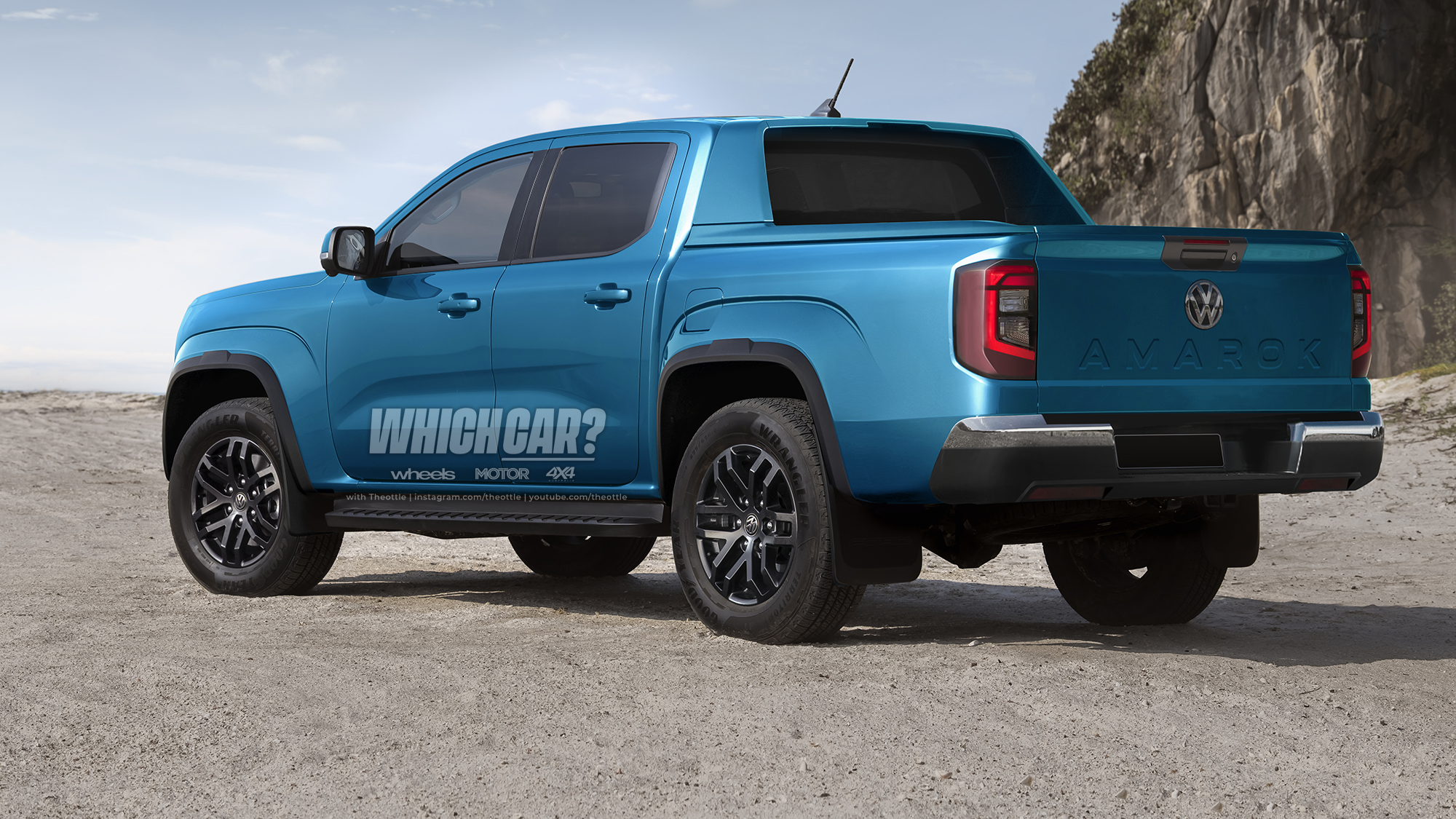
The 2023 Amarok is bigger than before
The new Amarok is larger than the current model, including an expected longer wheelbase of 3270mm – an increase of 175mm. This means more space in the Amarok’s cabin, and a higher payload capacity now claimed to be 1200kg. The industry benchmark towing capacity of 3.5 tonnes is also said to be retained.
With a longer wheelbase, the new VW Amarok will have less overhang, providing a better approach and departure angle for improved off-road ability. Overall dimensions have been stretched to 5350mm too, which is an increase of 100mm in total length.
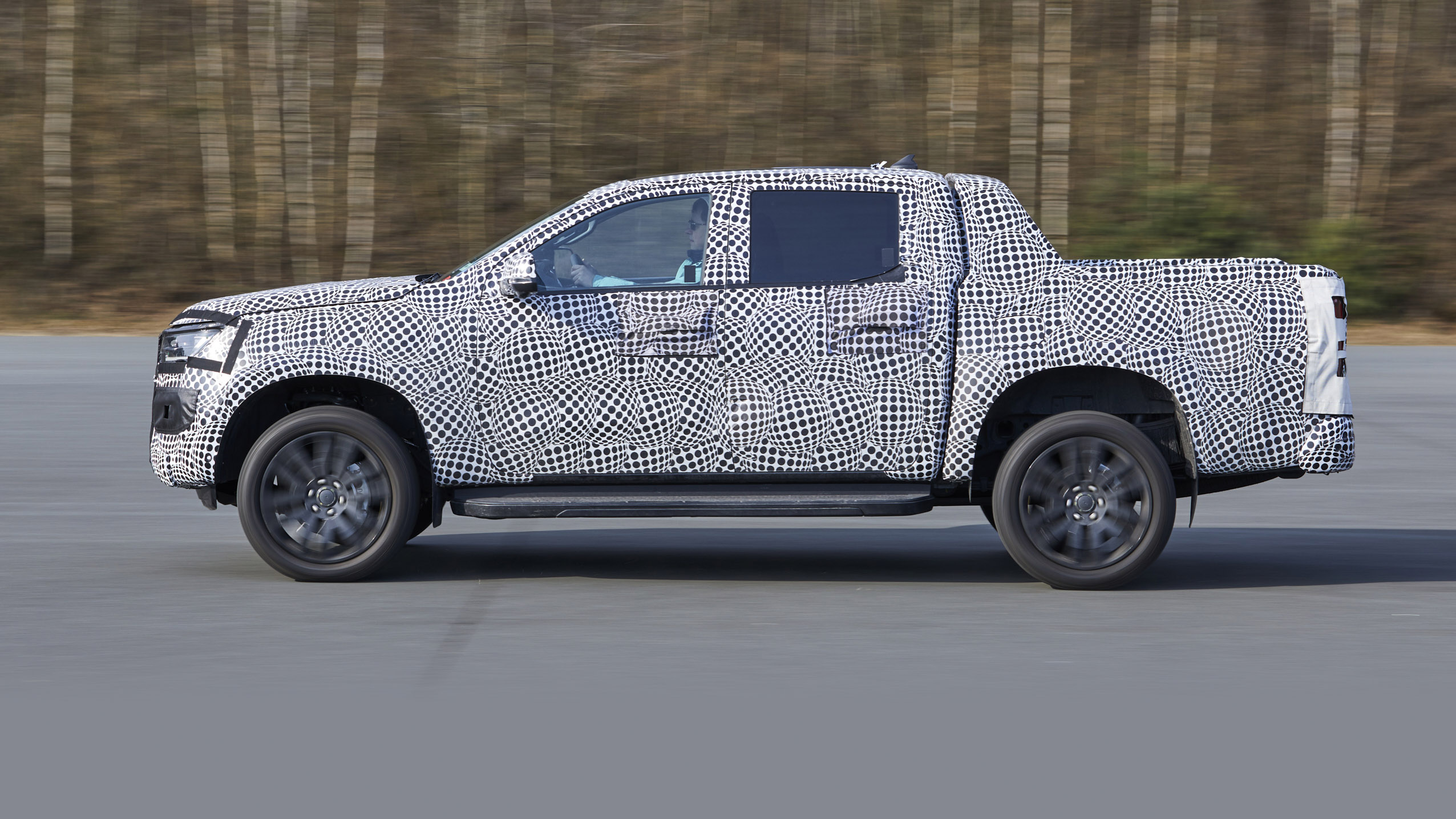
2023 Volkswagen Amarok powertrains
Engine and gearbox options for the Australian market are yet to be confirmed, although Volkswagen have told us there will be a choice of one petrol engine and up to four different diesel engines globally – depending on the market.
This line-up will consist of four- and-six-cylinder engines, ranging in cubic capacity from 2.0 to 3.0 litres. And, again while not yet announced, it seems a safe bet to assume Australia will receive a V6 turbo diesel engine.
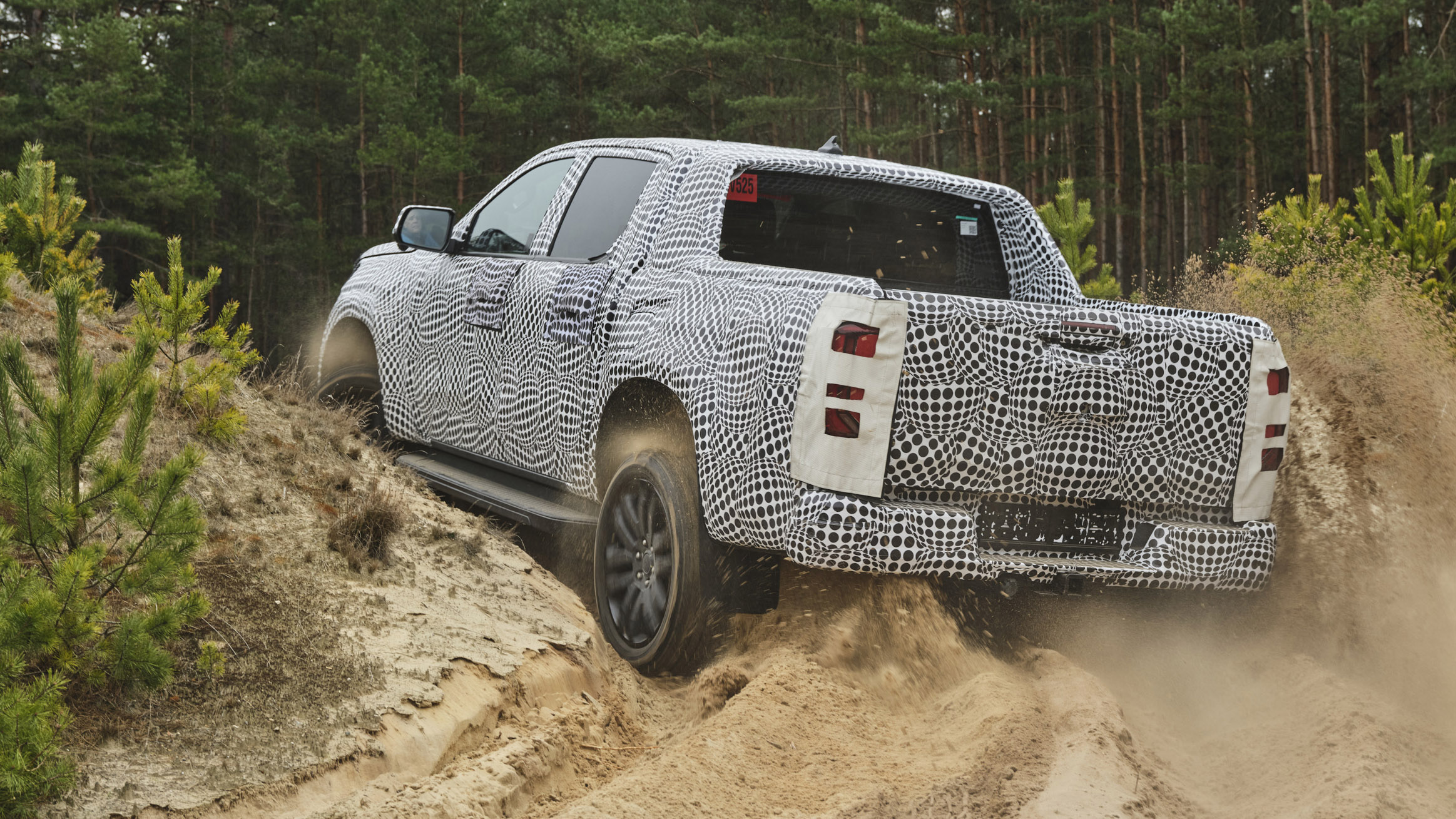
New Amarok design, inside and out
On the styling front, it’s easy to see this isn’t just a bigger ute, but it’s bolder in design with a traditional VW upright design bonnet, upper bars across the radiator grille and narrow LED headlights that will be standard on all 2022 VW Amaroks.
Lighting upgrades can be further optioned with what Volkswagen is calling ‘IQ.Light – LED matric headlights’ which reportedly underline the Amarok’s high-tech look.
Regarding the styling inspiration for the new Amarok, Albert Kirzinger, Head of Design at Volkswagen Commercial Vehicles has this to say: “For the new generation we have significantly modified the Amarok’s archetypal design. It is now unambiguously more expressive and once again appreciably more impressive.
“The aerodynamic styling bar – a hoop that straddles the cargo box – serves as an optical elongation of the double cab into the box, emphasising the dynamic and solid proportions of the new Amarok bodywork.”
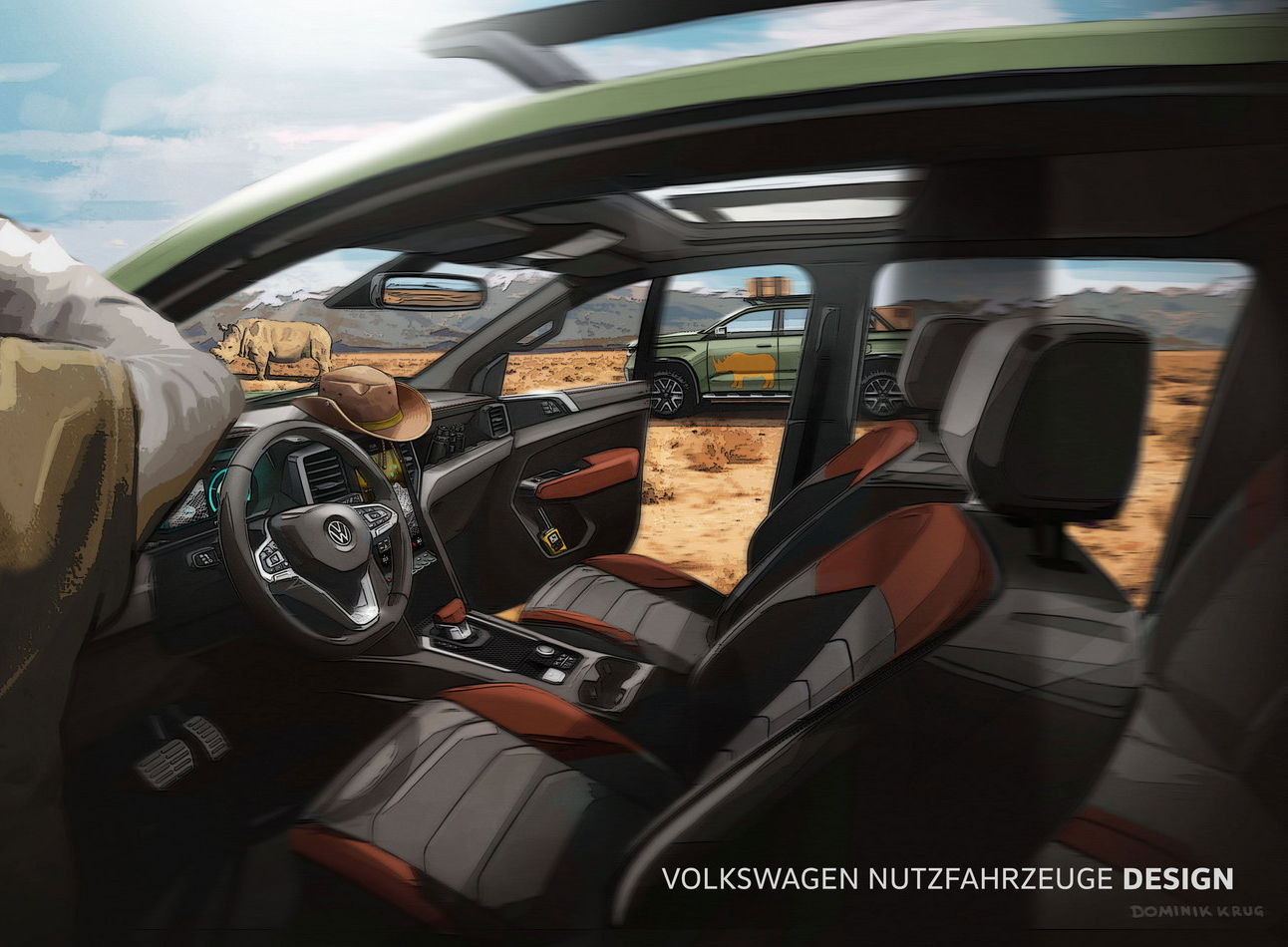
The rear of the Amarok is a new design also, with LED lighting and a wide tailgate embossed with Amarok branding. Speaking of wide, yes, you can still fit a full-sized euro pallet sideways between the wheel arches, with tie-down points in the tub to secure bulky loads.
Interior styling and quality is also expected to take a leap beyond the current model Amarok, which has remained largely untouched since its original release back in 2010/2011.
Safety technology is also improved, thanks to more than 30 driver assist systems, with over 20 of those being completely new additions to the Amarok range.
Just like the new Ranger, the interior will be largely digitally controlled, with a centrally mounted tablet-style infotainment display handling most of the vehicle’s day-to-day operations, and off-road modes.
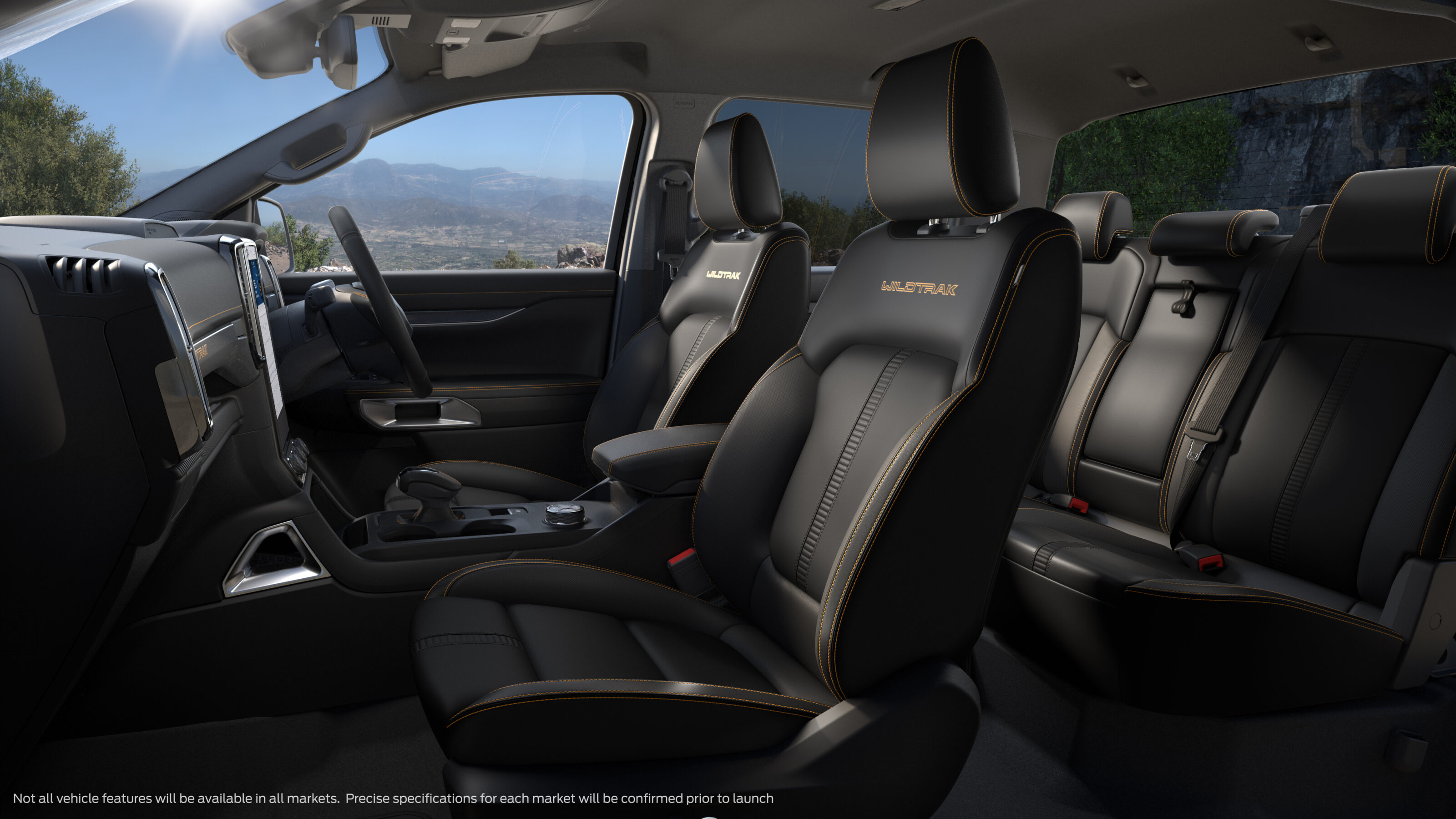
Comfort has always been a strongpoint of the Amarok, as such this is said to be further enhanced with more space inside the cabin, as well as upgraded seating front and rear, with VW saying there will be ample space in the rear to seat three adults.
2023 Volkswagen Amarok trim grades
There will be five trim specifications available in the new Amarok range, starting with the entry-level model dubbed simply ‘Amarok’.
Next up the tree is the ‘Life’, followed by ‘Style’, leading up to the ‘PanAmericana’ (off-road character) and the ‘Aventura’ (on-road character).
It’s great to see manufacturers offering vehicles with off-road accessories from the factory, as well as more on-road focused models so you can choose what suits your needs best at the time of purchase.
Maximum wheel-size specification has also been announced, with offerings up to a very off-road unfriendly 21-inch (other wheel sizes are yet to be confirmed), however it appears all-terrain tyres will be offered from the factory, which is a positive sign. Fingers crossed we’ll still have access to 17-inch wheels – the industry standard for modern off-roaders, we reckon.
Pricing is yet to be announced; we will report on this and update as soon as further details emerge.
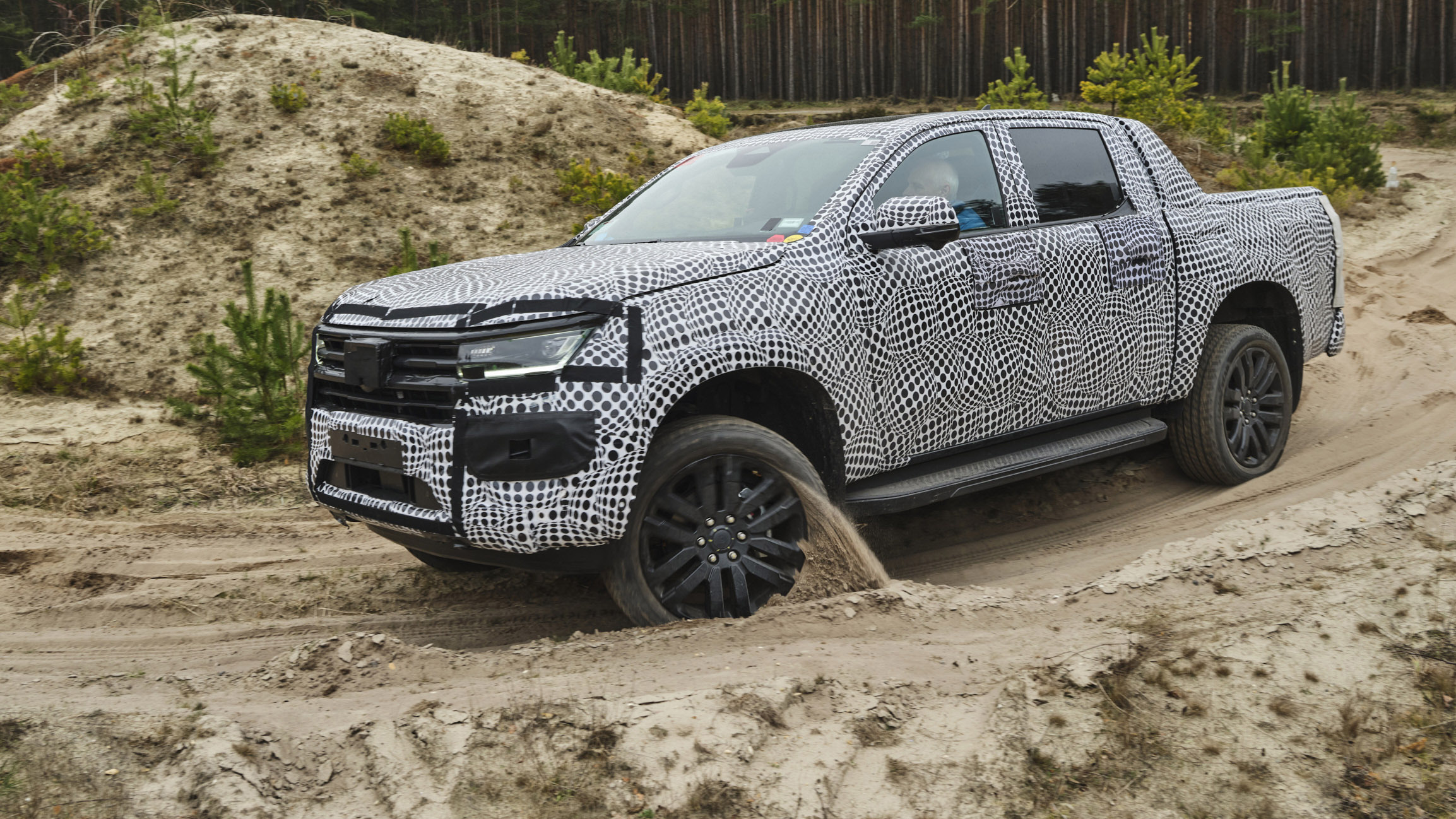
You have most likely heard of a tyre plug, which is a self-vulcanising repair cord that is used to ‘plug’ the hole where a tyre has been punctured. While fast and convenient, plugging a tyre should only be used when there are no other options, and should only be considered a temporary or emergency repair.
A tyre plug is a sticky, malleable object that is slightly longer and slightly narrower than a cigarette, and it is forced in to a tyre using a special insertion tool.
When in place, it plugs the hole in a tyre caused by a foreign object such as a nail or screw, or a hole caused by a sharp object such as a rock or a tree root. Tyre plugs can only be used to temporarily repair tubeless tyres; you will need a vulcanising patch to properly repair a punctured tube.
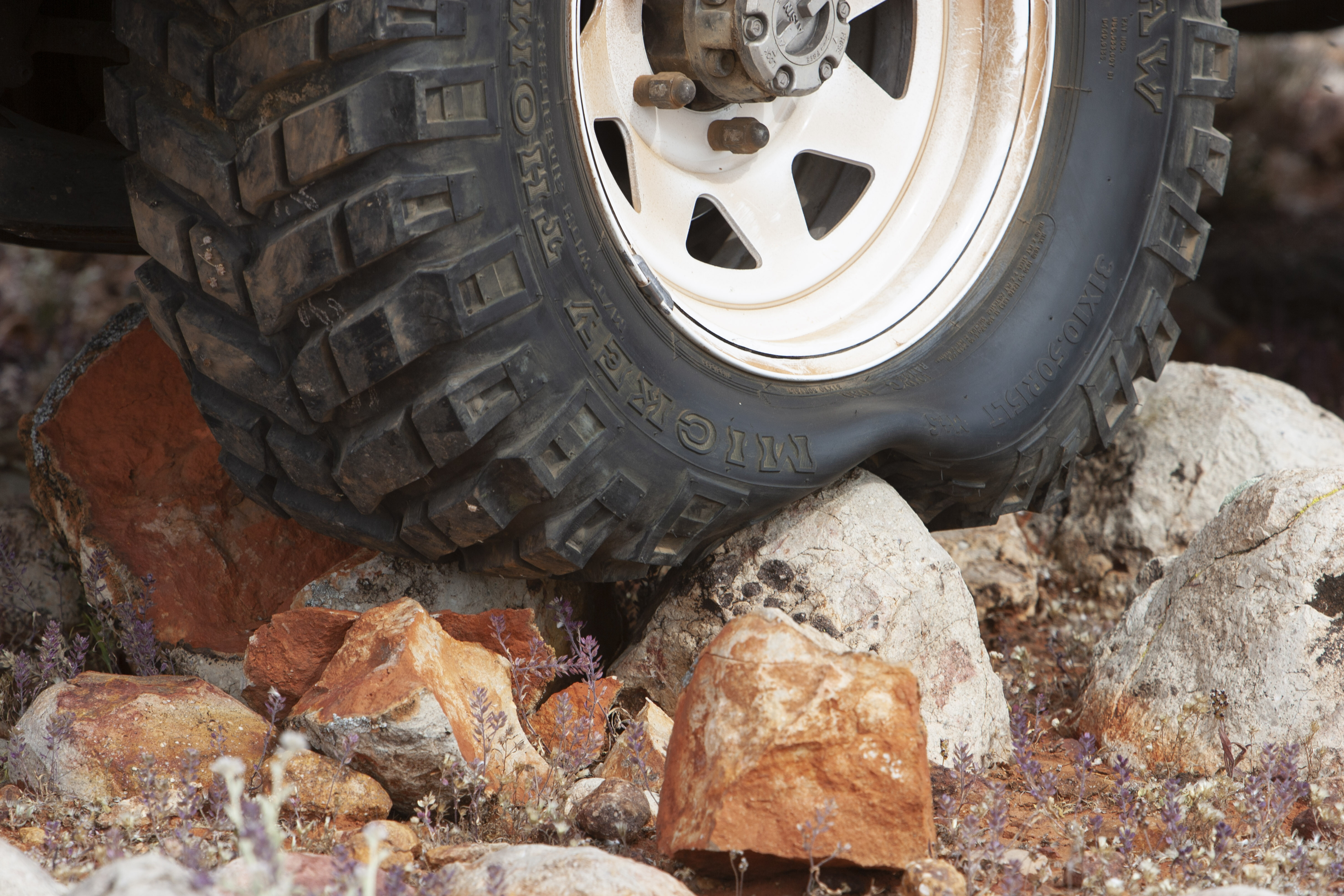
If you make a repair to a tubeless tyre using a plug, you should ensure the tyre is repaired permanently as soon as practicable by removing it from the wheel and patching it from the inside.
Finally, plugs should only be used across the tread face of the tyre. If you get a puncture in the shoulder or the sidewall of the tyre, a plug is not a suitable repair choice. In fact, a tyre damaged in either of these areas will most likely be unserviceable and will need to be replaced.
Detecting deflation
When you are driving at high speed on the road, you probably won’t have any problems detecting a deflating tyre, as it will affect the way the vehicle handles. If it’s a front tyre that is deflating, it will affect the vehicle’s steering, pulling it to the direction of the deflating tyre.
If it’s a rear tyre that’s deflating, chances are you will feel the vehicle move around unpredictably, especially when cornering. When tyre pressure drops very low, you will hear the tyre make a flapping sound, by which stage it’s likely being subjected to irreparable damage.
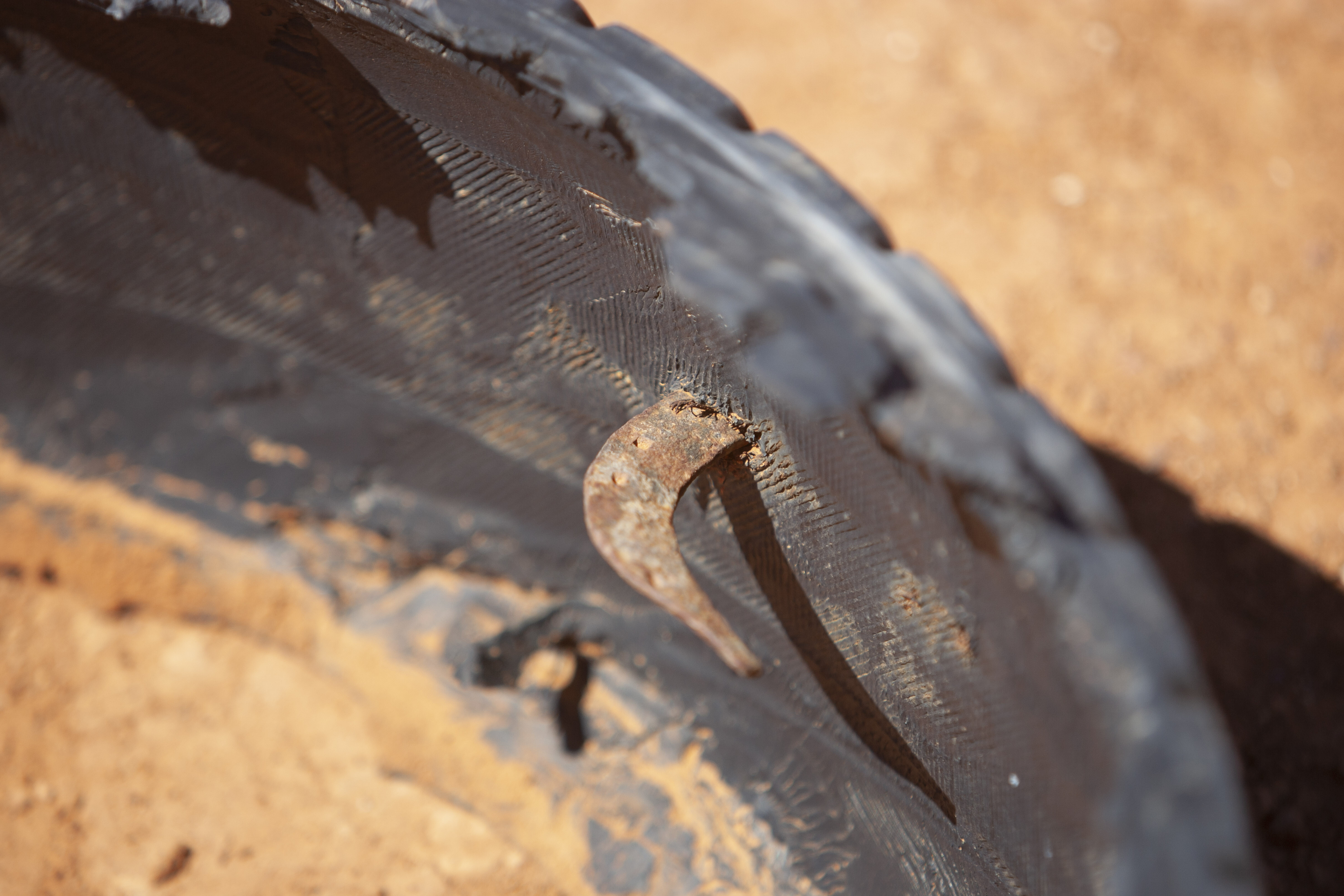
It can be more difficult to detect a deflating tyre when driving at low speeds off road; as the terrain is uneven anyway, it can be more difficult to feel any effect a deflating tyre has on vehicle handling.
Of course, if your vehicle is equipped with a Tyre Pressure Monitoring System (TPMS), this should alert you to a deflating tyre well before any irreparable damage occurs. If you don’t have a TPMS fitted, you should consider equipping your vehicle with an aftermarket one.
A good quality TPMS only costs a couple of hundred bucks, which is less than the price of one good quality off-road tyre, so it will pay for itself even if you are only ever alerted to one deflating tyre.
Finding the cause
Once you have detected a deflating tyre, you should pull up as soon as it is safe to do so, and well off the road or track so that you are not in the way of other vehicles. You should also look for a level area to pull up in case you need to jack the vehicle up to remove the wheel with the deflated tyre.
You now need to find what caused the damage. Sometimes this is easy, as the object that caused the puncture can be an obvious protrusion. If the tyre is still partially inflated, there’s a good chance you’ll be able to hear air escaping at the puncture point. You will also be able to feel this with your hand. If the tyre is completely deflated, you’ll probably need to dig out your air compressor and pump it up to find the puncture point; you will need to reinflate the tyre to make the repair anyway.
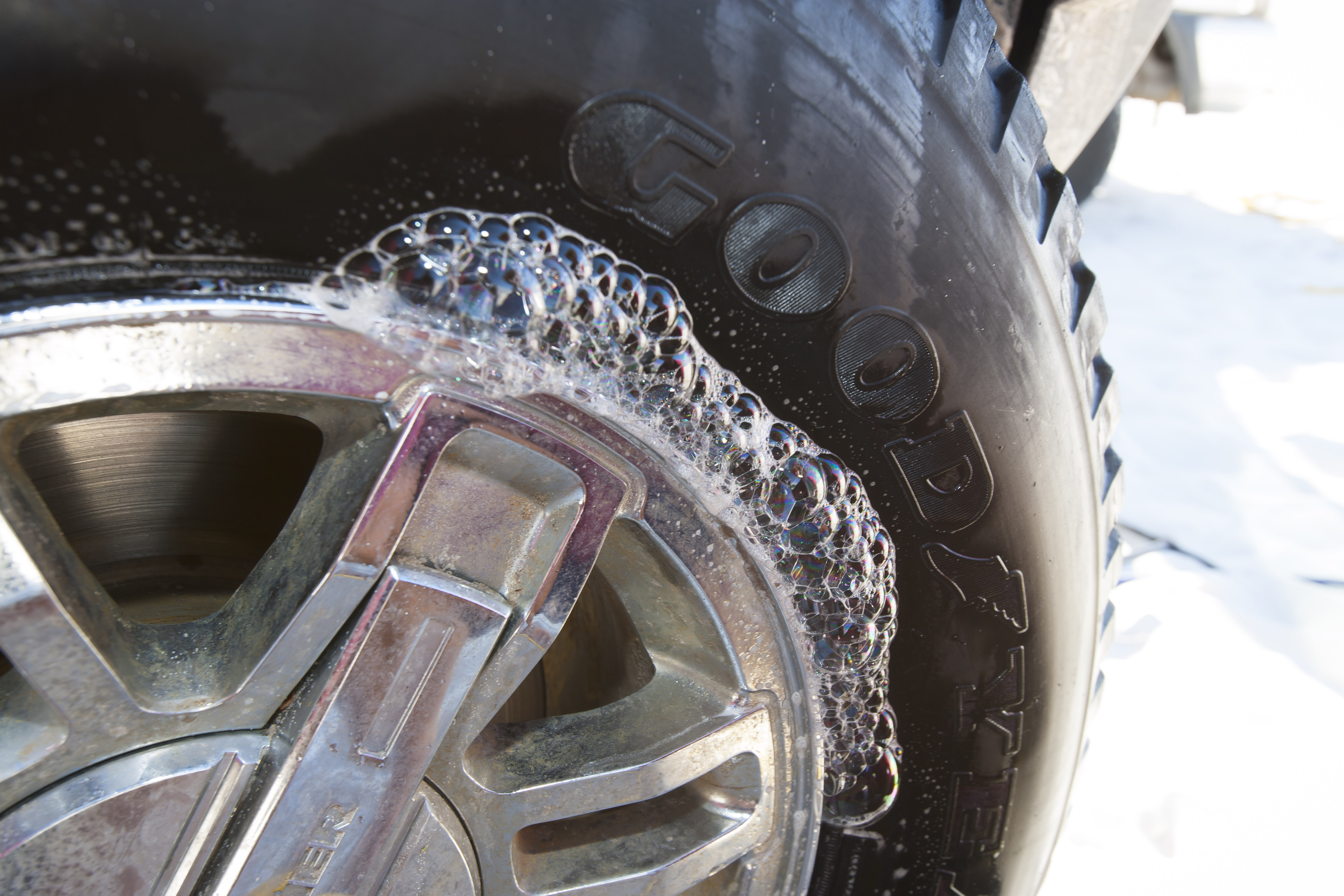
If you can’t hear or feel the leak, you might be parked on top of the puncture, so drive forwards or backwards half a wheel turn and check again for the sound of escaping air. If you can find the leak, and it is in a repairable part of the tyre, mark it with some chalk. If you can’t find the leak, you will need to pour water over the tyre and look for bubbles that will indicate where the leak is. This task will be made easier with the wheel removed from the vehicle; it will also be easier to insert the tyre plug with the wheel off the vehicle.
Always ensure the park brake is on, the transmission is in gear/park, and the wheels are chocked before jacking up the vehicle to remove a wheel. You should also ensure the vehicle is secured and chocked if you are going to attempt the repair with the wheel still on the vehicle.
Tyre repair kit
You’ll obviously need a tyre repair kit to plug the tyre. Most four-wheel drive aftermarket companies sell tyre repair kits, and they all come with similar contents, so you might wonder why some are more expensive than others.
The answer lies in the quality of the tools in the kit, and when plugging a tyre you don’t want a crappy reamer or insertion tool that’ll fall apart in your hands, so always go for quality gear.
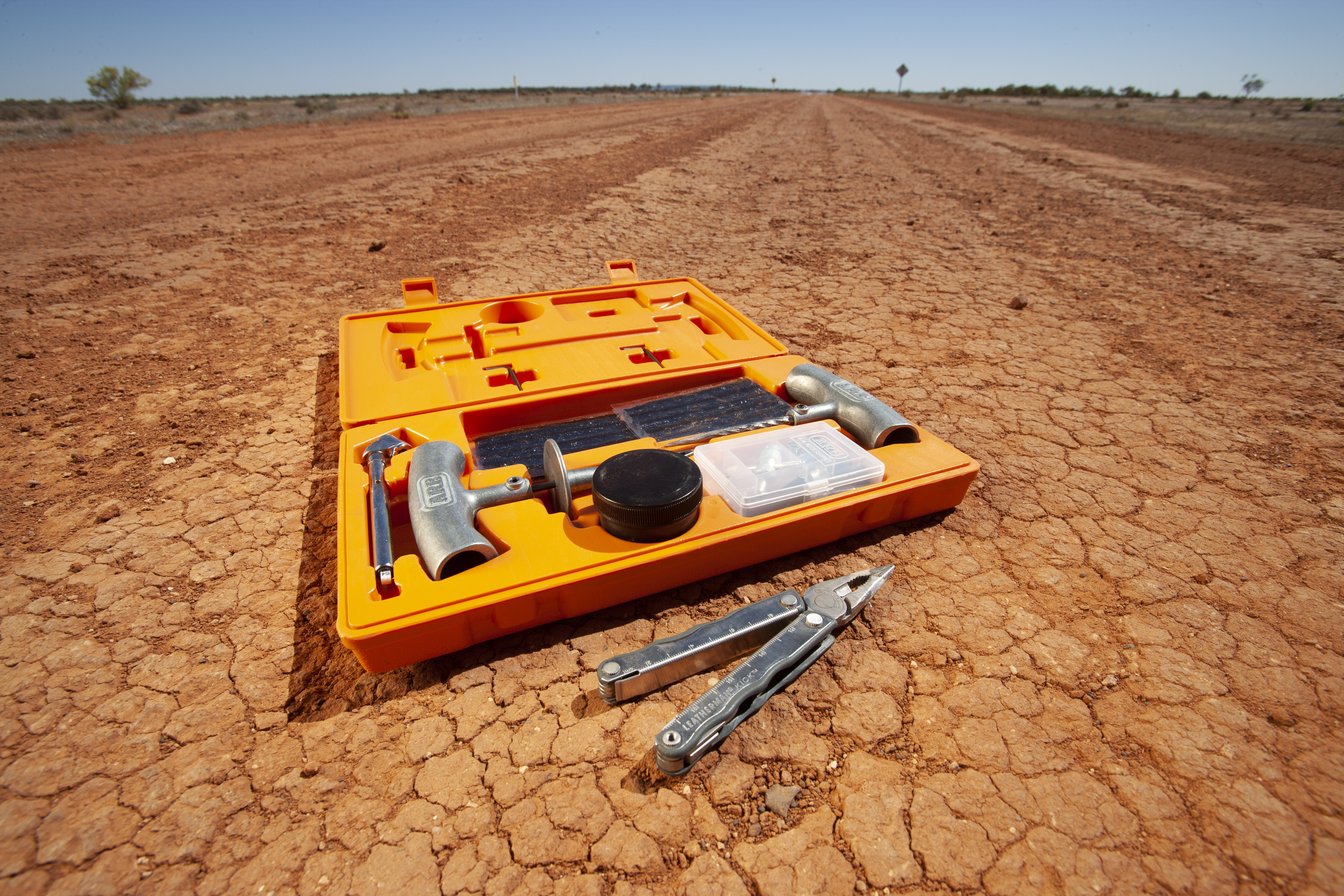
So, what will you find in a basic tyre repair kit? A plug insertion tool, a reaming tool, a pair of needle-nose pliers, an Allen key (for tightening the insertion and reaming tools when necessary), a small knife, a handful of self-vulcanising repair cords, a tub of lube, and several valve stems, valves and dust caps.
Of course, you will also need an air compressor and a tyre gauge, and once again, always opt for good quality units rather than cheapies.
Pump and plug
As mentioned, the tyre will need to be inflated to make the repair. Don’t be afraid to overinflate the tyre as you can set the correct pressure afterwards, and the higher the pressure, the easier it will be to insert the plug.
Once at the desired pressure, using the pliers, remove the object that caused the puncture and quickly insert the reaming tool in the hole to stop air escaping.
The next step is to push and pull on the reaming tool a few times to force it in and out of the hole; this will make the hole big enough to insert the plug. It will also clean the hole, which will be through several layers of the tyre including the tread face, and the various plies and belts.
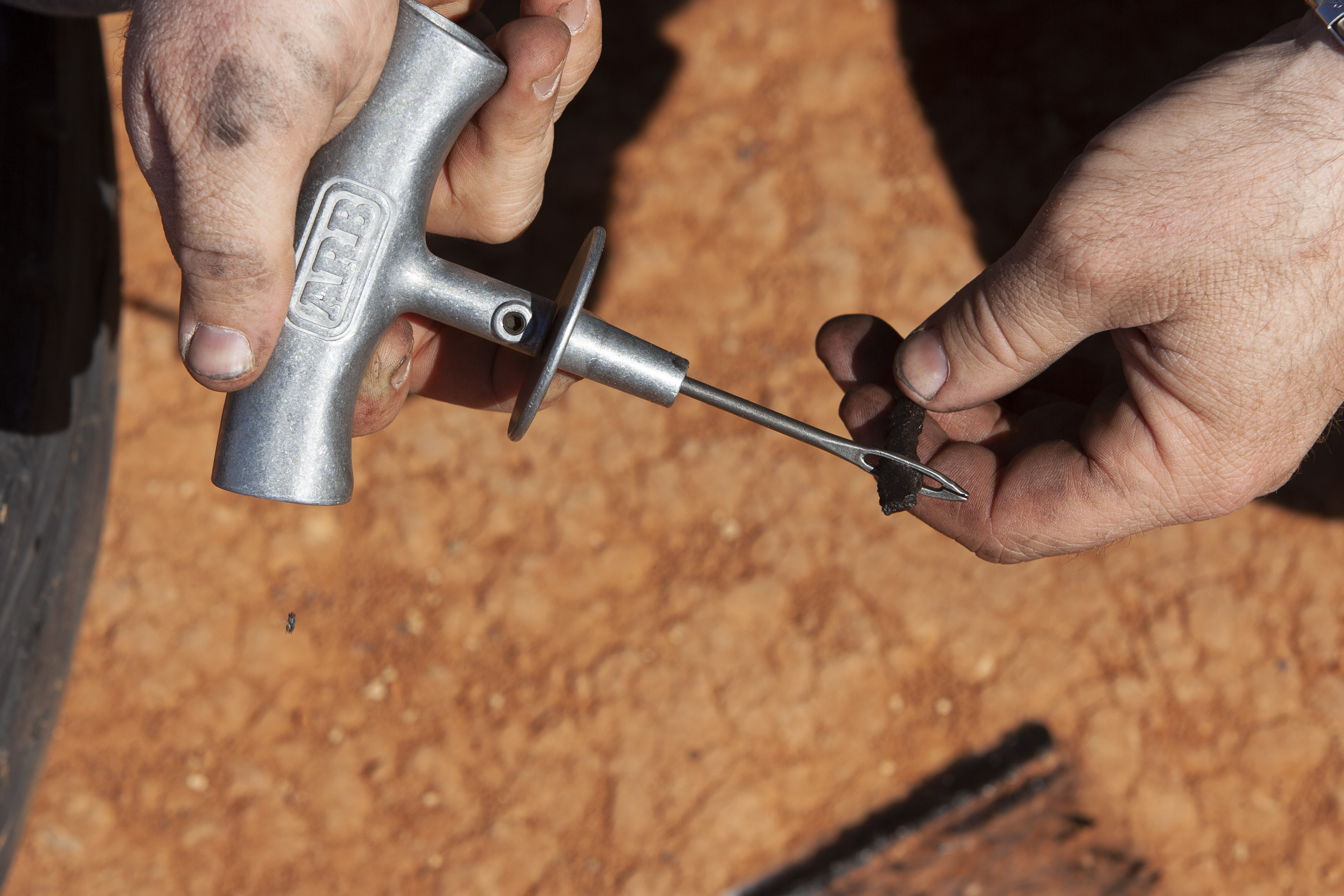
When using the reaming tool, and later when inserting the plug, always follow the direction of the original puncture; so if it’s at an angle, clean the hole at that same angle.
Leave the reaming tool in the tyre while preparing the plug. Grab one of the plugs and dip one end in the tub of lubricant, then feed the plug through the hole in the needle of the insertion tool. Now apply a generous coating of lubricant to the plug and pull each side of the plug back so it is almost flush with the needle.
Remove the reaming tool and force the loaded insertion tool in the hole. Sometimes it will go in easily and sometimes it will require a fair amount of effort, aided by some grunting, swearing and sweating. If it’s a big struggle to get the plug in, try inflating the tyre a bit more.
Remember, it will be easier to insert a plug with the wheel removed from the vehicle, as you will be able to use more of your body weight to force the insertion tool in to the tyre.
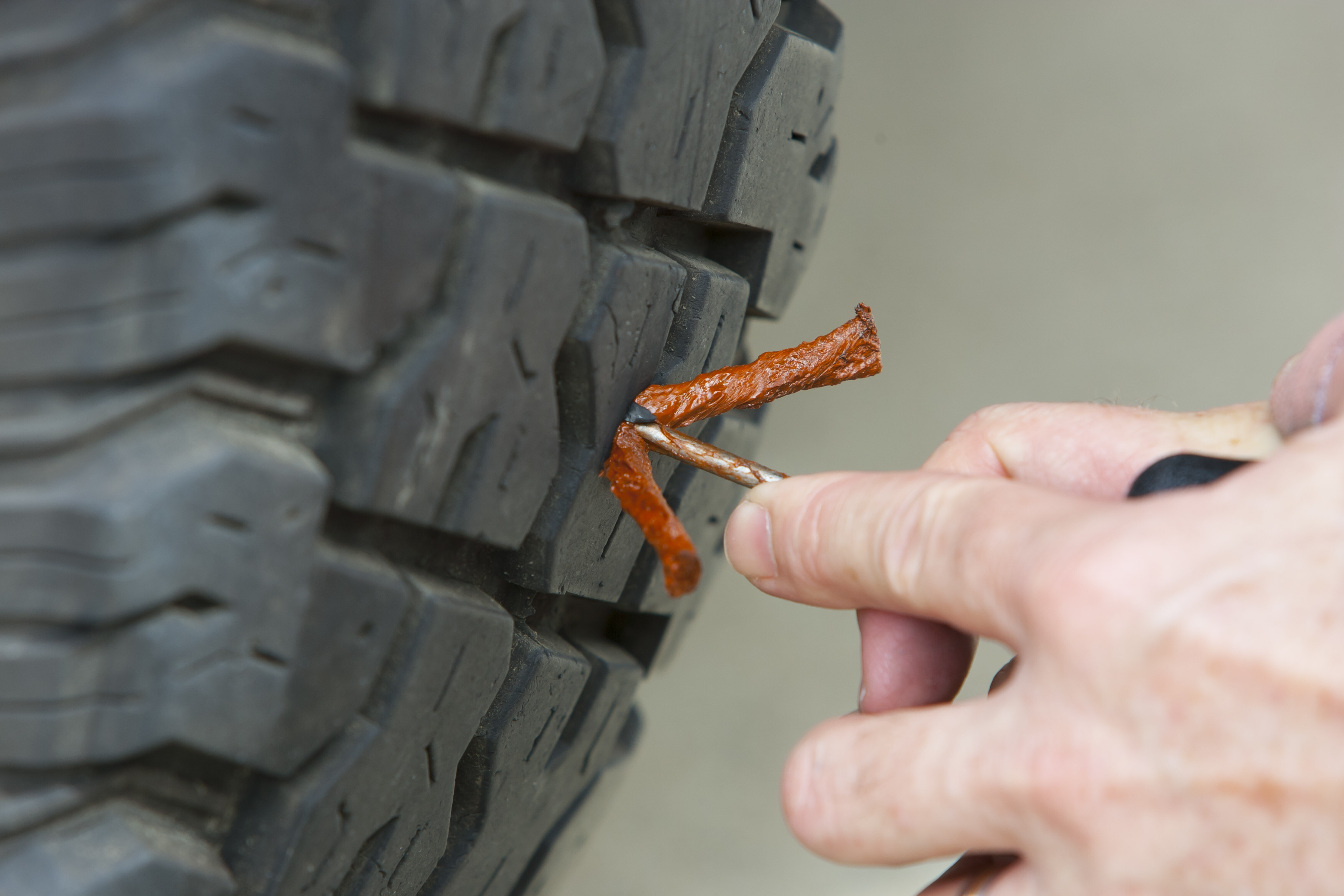
Once fully inserted, push down on the collar of the insertion tool as you pull back on the handle to remove the tool. The collar will ensure the plug stays in the tyre. Have a listen for air leaks and pour soapy water over the repair and look for any bubbles that will signify a leak. Saliva is a good substitute if you don’t have any soapy water on hand.
If there is still a leak, it may need another plug (or even more) until the hole has been successfully repaired, but if you need more than one plug there is a higher risk of the repair failing, so you’d be better off fitting the spare.
If there are no leaks and the repair has proved successful, trim the excess plug so that it is flush with the tread face. Ensure the tyre is inflated to the correct pressure and refit the wheel (if removed).
Then drive for about 10 minutes and check the air pressure to ensure it’s not leaking, and that the wheel nuts are tight.
A permanent fix
As mentioned, a tyre plug should only ever be considered a temporary or emergency repair, and you will need to remove the tyre from the rim and inspect it thoroughly, both externally and internally, for structural damage.
If the tyre was run for any length of time while deflated, chances are the sidewalls will have been damaged, in which case the tyre should be replaced.
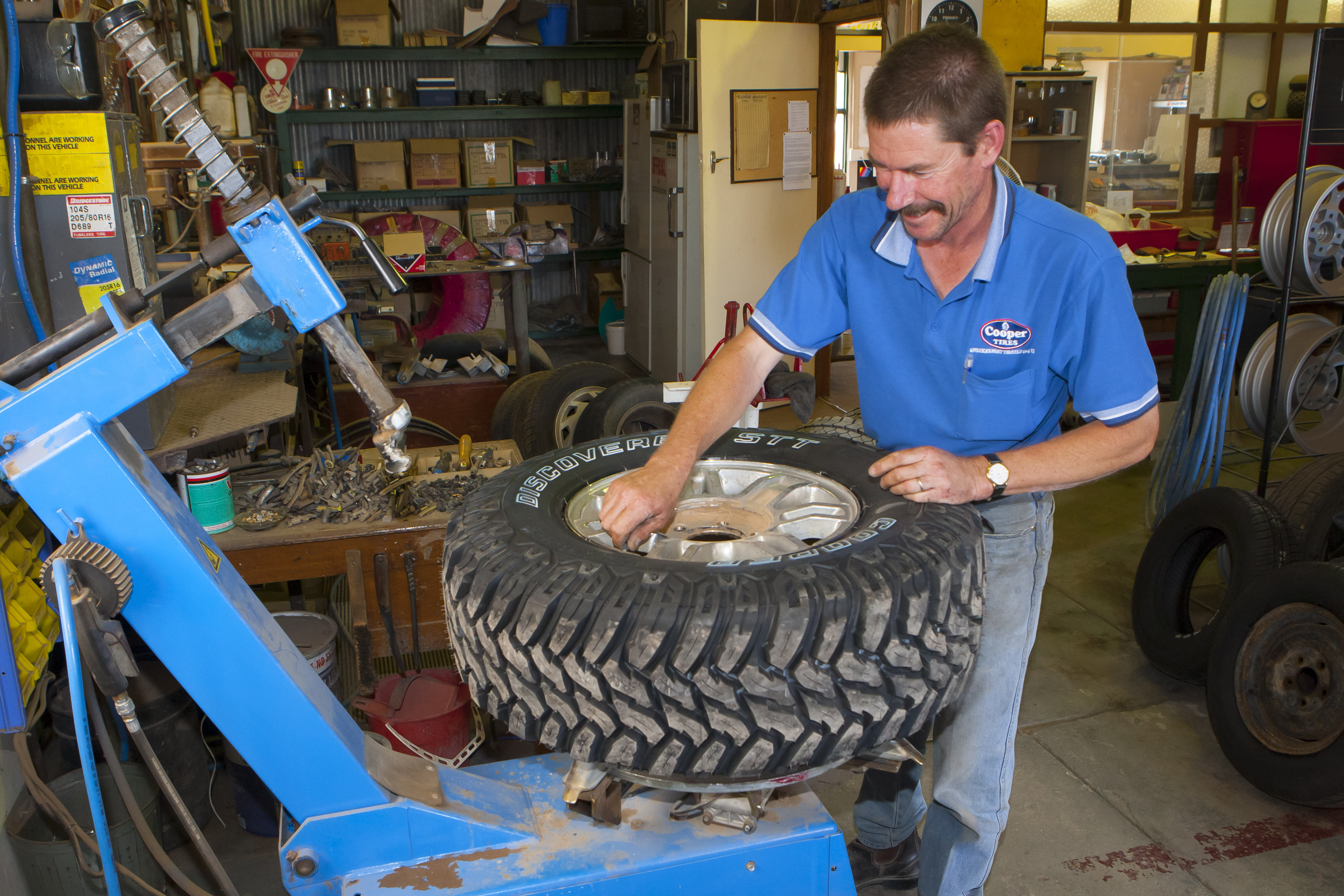
If there is no sidewall damage, and a visual inspection reveals that that area around the puncture can be safely repaired, the plug should be removed and a vulcanising patch applied internally to the punctured area.
If you don’t have the tools required to remove the tyre from the rim, or the know-how to perform a permanent patch repair, take the tyre to a specialist tyre repair centre for evaluation/repair.
Do
- Install a TPMS in your vehicle
- Always travel with a tyre repair kit and air compressor
- Handbrake on and chock wheels when jacking a vehicle
- Check that the tyre repair is holding air
- Tighten wheel nuts to correct torque settings (and recheck)
Don’t
- Try to plug a tyre sidewall
- Rely on a plug as a permanent repair
- Buy an el cheapo tyre repair kit
- Drive on a deflated tyre
- Forget to check you have plenty of plugs/lube in your kit
The recent election of the Federal Labor government would have, no doubt, had the local car-industry executives sit up and take notice. Not because Labor won but the manner in which they did.
Fact is, Labor didn’t so much as win as the Liberal-National Coalition lost, and Labor got home off a huge swing in public concern about the environment and climate change.
So strong was this shift in public sentiment that the Greens increased its presence in the House of Representatives by 300 per cent (going from one seat to four seats), the LNP lost a swathe of their most loyal heartland seats to green-leaning independent candidates (the so-called Teals) and Labor picked up seats off the back of Green and green-leaning independent preferences. So strong was this green tide that Labor even dropped in its primary vote percentage.
So why does all this matter to car-company suits?
Well, there are two reasons: vehicle exhaust-emission standards, especially as they apply to diesels, and electric vehicles (EVs). While Labor can govern in its own right and not have to call on the Greens or independents to pass legislation, it can’t ignore this shift in mood, nor the vocal lobbyists that will no doubt pop up, and will need to be proactive with exhaust emissions and electric vehicles.
The vehicle emissions issue revolves around the introduction of the Euro 6 standard for light vehicles, which was put on hold by the successive LNP governments that have been in power over the last nine years. (Under the legislation ‘light vehicles’ are defined by those under 3500kg GVM.)
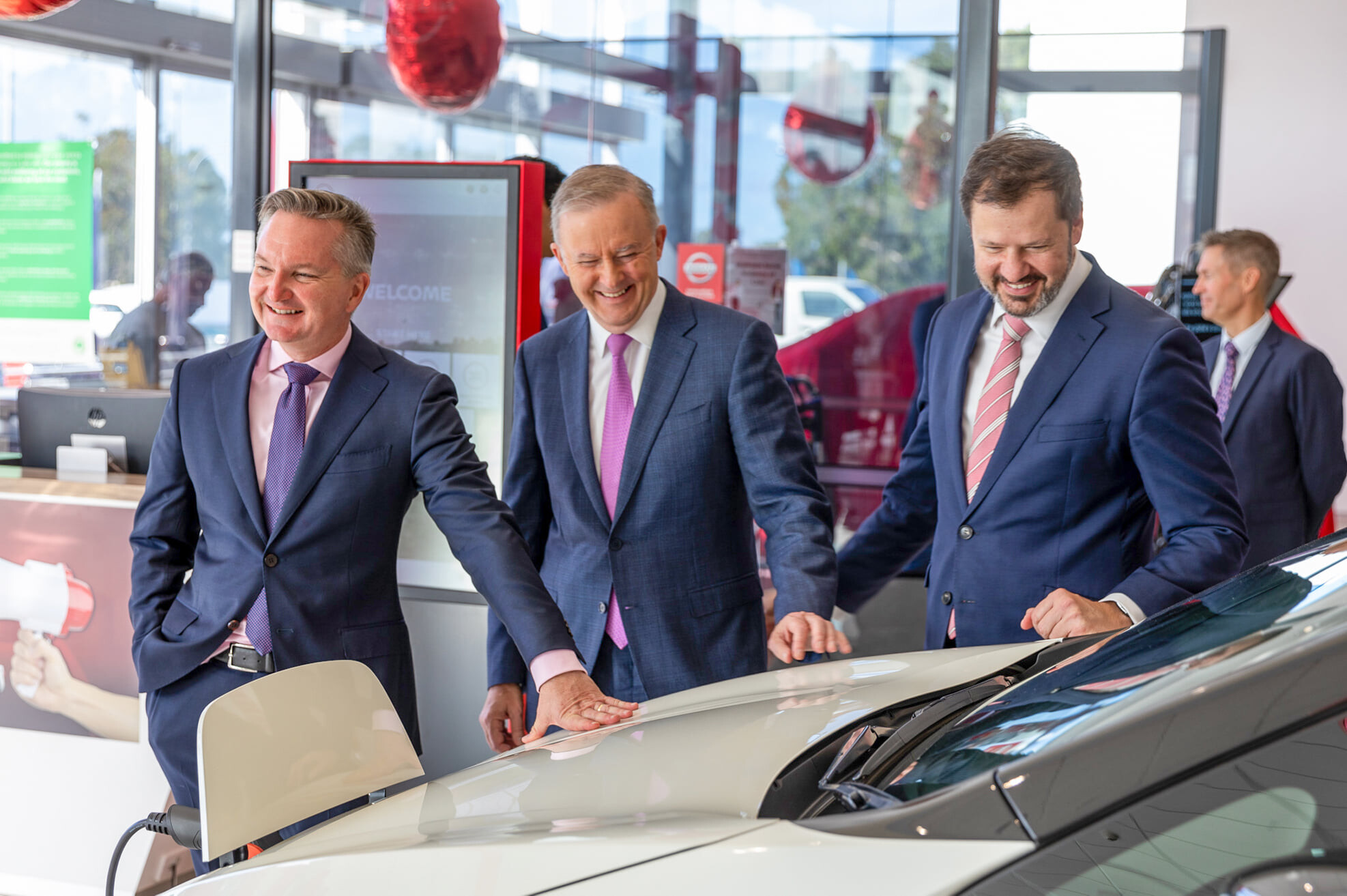
Of most concern to the local car industry is that under the schedule set by the previous Rudd-Gillard-Rudd Labor governments, Euro 6 would have applied to any all-new light vehicle being introduced from July 2017 and for all new light vehicles by July 2018.
The new Labor government could well say to the car industry that they have had years to plan for Euro 6 and it’s going to implement Euro 6 quick-smart. Of course, many current new petrol and diesel light vehicles already meet Euro 6, but there are many (particularly diesels) that don’t, even including brand-new models like the 300 Series LandCruiser.
The difference between the current Euro 5 standard and Euro 6 (as it applies to diesels) is notably lower permitted levels of nitrogen oxide (NOx), a requirement that is typically addressed by selective catalytic reduction systems that rely on what’s commercially known as AdBlue.
While a rapid adoption of Euro 6 might be inconvenient, although perhaps not too painful for the local car industry, they certainly won’t like any talk of Euro 7, which is currently under discussion in Europe and could come in place as early as 2025. Taking any current diesel sold in Australia to a standard beyond Euro 6 will be costly and difficult, if not impossible for most current models.
While these Euro standards address environmental concerns they don’t actually apply to carbon-dioxide emission, which is central to climate change. Standards for carbon-dioxide emissions, which is directly related to fuel consumption, is another potential issue for the local car industry that won’t be far away.

If all this worries the local car companies, they will also be hoping the new federal government will come up with a cohesive roadmap for EV take-up given there will be considerable and loud lobbying for the same to happen as soon as possible.
There are lots of decisions to be made concerning possible EV incentives, possible EV taxes to recoup lost fuel-excise revenue, the building of practical EV charging infrastructure, and beefing up the national electricity grid to cope with the power demand of EVs given the grid is not in a position to cope with a rapid EV adoption in its current state.
The local car industry will also be hoping that all state governments work with the new federal government on this and not against it, although that may be too much to ask.