
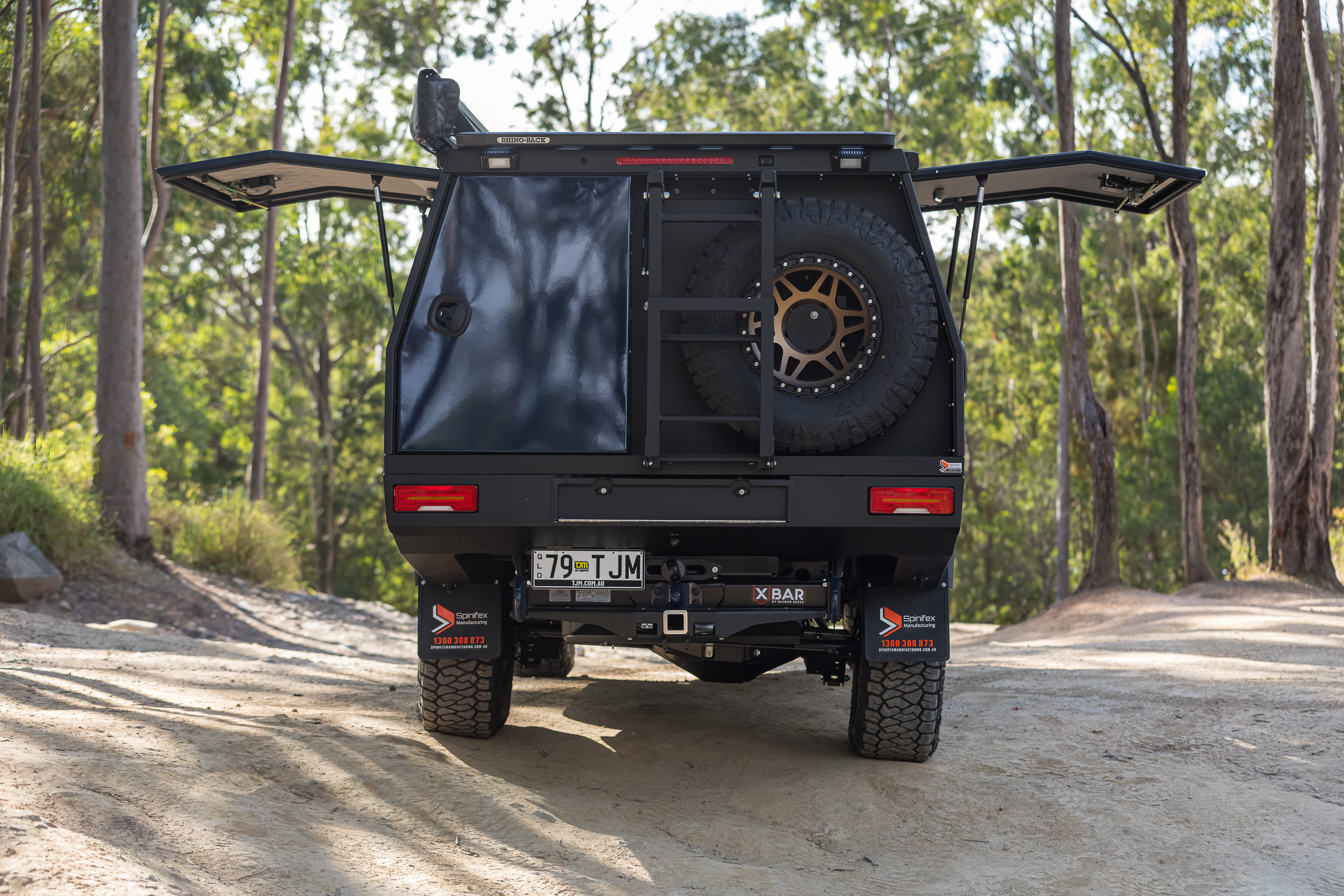
Brad Russell, the owner of this neat-as-a-pin Midnight Blue 79 Series LandCruiser, is a bit of an adventurer it seems.
He’s worked in the four-wheel drive industry for more than 20 years, has travelled all over Australia, owning both a modified Troop Carrier and 79 Series dual-cab LandCruiser previously.
This sort of real-world experience is invaluable when it comes to knowing what to modify and how to achieve your vision when it comes time to build your idea of a dream off-roader, something Brad has nailed with his latest and greatest creation dreamed up and made in to reality by the team at Rambler Vehicles.There isn’t much that the Rambler Vehicles team hasn’t touched on Brad’s 79 Series, you often hear people referring to their builds as ‘game changers’, well this Cruiser hasn’t just changed the game, it’s rewritten the rule book both in terms of outright attention to detail, as well as the quality of accessories and modifications included.
Let’s take a closer look at the Rambler Vehicles 79 Series LandCruiser, oh, and if you want one just like it, the Rambler team will be more than happy to build one just like it for you. Just saying.
Off-road protection
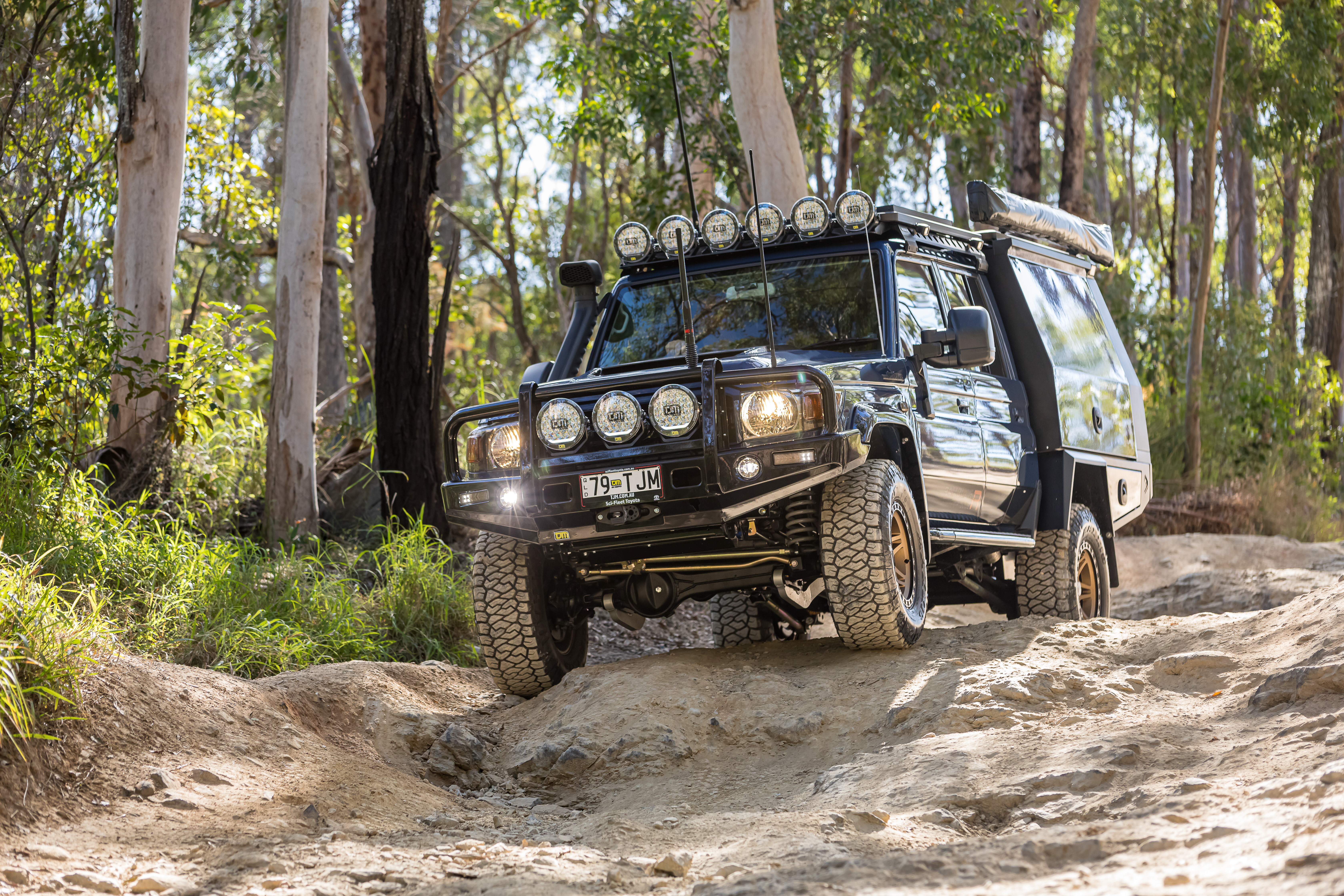
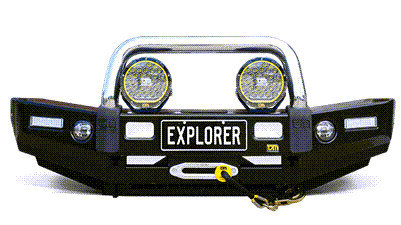
A suite of TJM barwork protects Brad’s LandCruiser double-cab, including the star of the show a T13 Outback steel bullbar on the pointy end of the 79 Series.
TJM side-steps guard the sills from off-road impacts, and an Airtec snorkel, also from TJM, saves the engine from water and dust ingress. For the ultimate in peace of mind when it comes to recovery duties, Brad had the crew at Rambler Vehicles install front-and-rear TJM 12,000lb winches with synthetic rope, allowing the big 79 Series to recover itself forwards or backwards should the need arise.A Hayman Reese X Bar takes care of protection and recovery hitching at the back of the canopy.
Engine upgrades
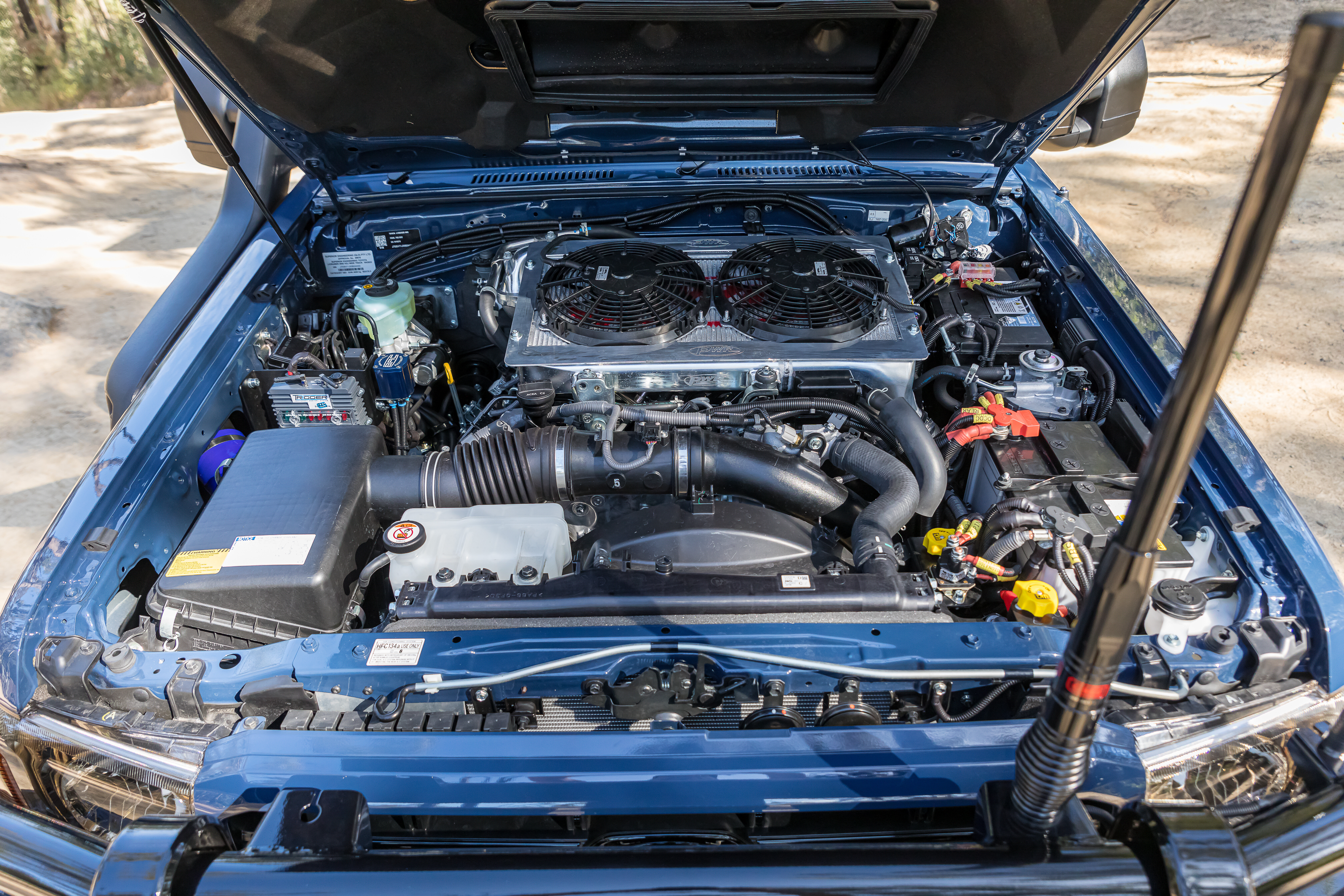
The stock VDJ 4.5L V8 turbo-diesel engine was never going to cut the mustard in terms of performance figures on this build, considering how well the V8 responds to upgrading, the Rambler team did the only logical thing and went to town utilising tried and tested products to boost output.
Starting with an upgraded NPC 1300Nm clutch (mandatory for tweaked up Cruisers) to cope with the additional power, a PWR intercooler was installed as well as a Legendex side-exit exhaust system.
Tuning wizards G&L were enlisted to build and supply one of their turbo chargers, as well as a set of +30 injectors to provide more fuel to the big V8. For tuning purposes, an ECU Shop Tune Cube was installed, and after spinning the Blue Rambler up on the dyno, the final result ended up with 308hp at the rear wheels and 890Nm of torque. Impressive results indeed!
Suspension
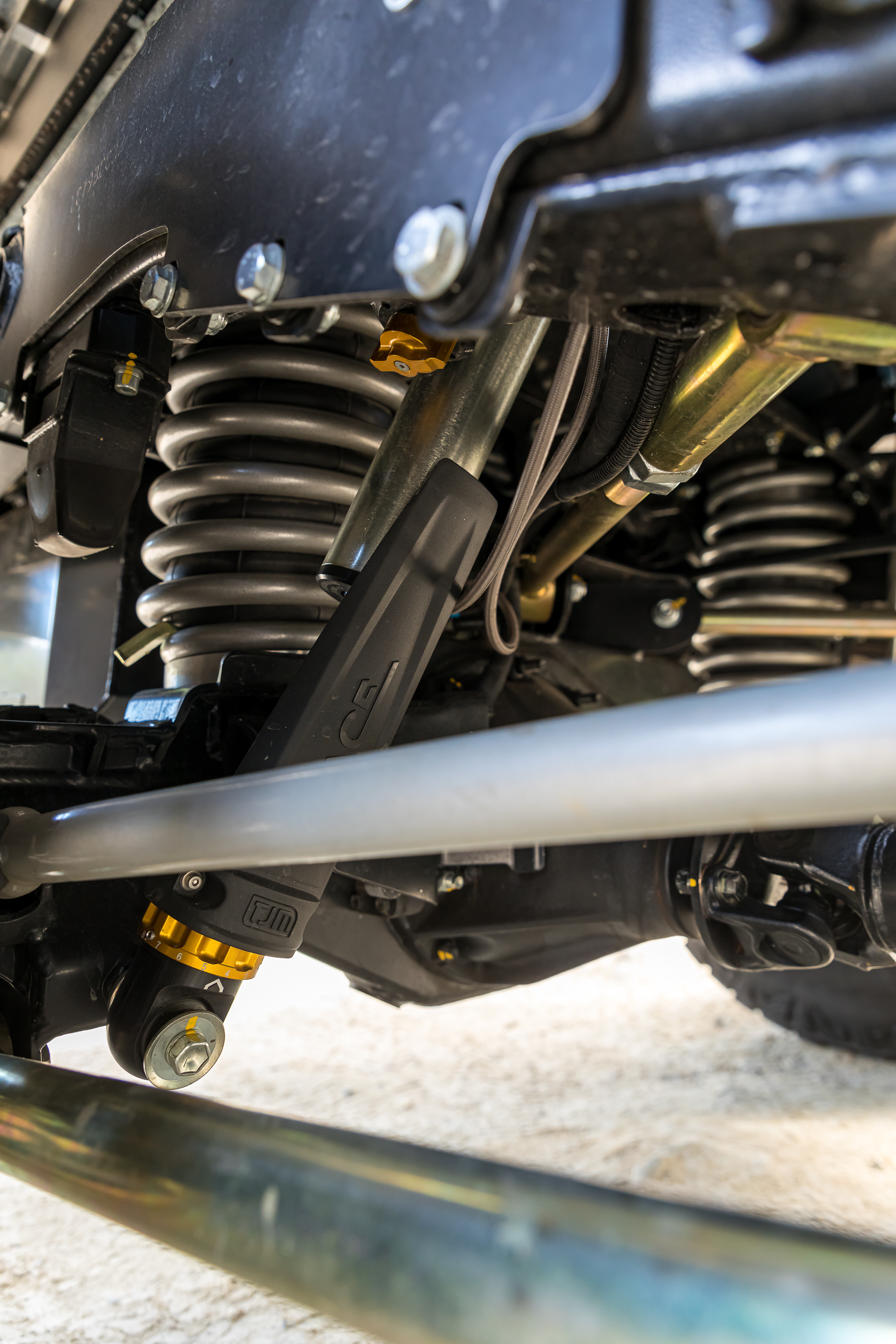
With so many choices on the market for suspension to suit the 79 Series, Brad decided to go all out and have a Superior Engineering rear coil conversion installed, and chucked the leaf springs in the bin.
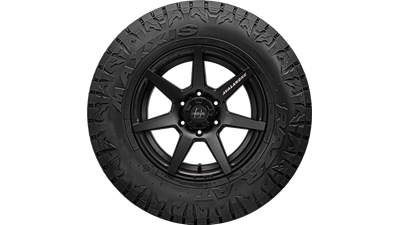
Not only does this offer the advantages of coil springs, such as more suspension travel and a better ride, this option also provides a new Superior Engineering rear axle housing that is stronger and now matches the front track width. By having the Superior Engineering kit fitted, Brad was also able to upgrade his GVM up to 4200kg, to keep things legal when loaded up.Superior Engineering Panhard rods, radius arms and steering arms have also been installed, which are much stronger than the factory Toyota items. The vehicle has been lifted 2-inches, which makes plenty of space for those 34-inch Maxxis all-terrain tyres. Controlling the bumps, is a set of TJM Pace remote-reservoir shock absorbers, which really tie the whole package together.
Custom interior
We all know the interior of a 79 Series is best described as farm spec, and this was never going to be good enough for Brad and the Rambler Vehicles team.
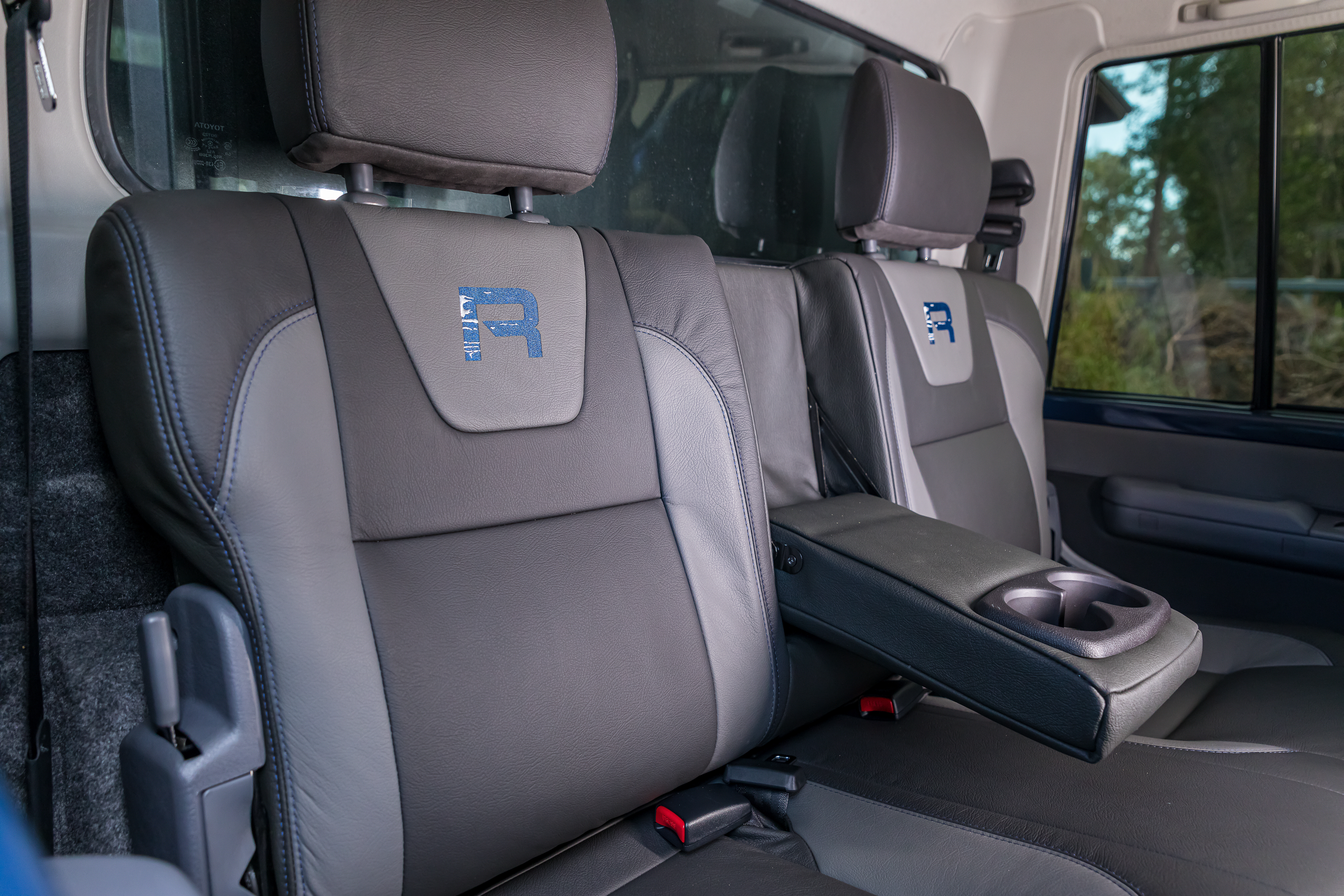
The full interior was exclusively designed for Rambler, with patterns and bolstering only found in its vehicles, retrimmed in nappa leather by the experts at Carmen’s Auto Trimmers.
The front seats are custom bolstered to offer extra shoulder support, as well as extended leg support, side bolstering and eclectic lumbar support. Now that’s a fancy farm truck.
Even the steering wheel has seen significant upgrades, starting with a 70th Anniversary steering wheel with upgraded controls, which was then retrimmed in matching leather, and there’s also a Cruiser Consoles centre console that has been colour matched to the car.
If the intoxicating note produced by the V8 Cruiser isn’t enough, Brad has opted for an awesome Alpine sound system, including Alpine’s 11-inch Halo head unit, R-Spec speakers and amp, as well as two 10-inch Kicker subs for a bottom-end boost.
Rambler Vehicles 79 Series specs
For more information Visit: www.ramblervehicles.com.au
“The biggest white space opportunity for our brand to grow, has been the midsize pickup”
Snapshot
- Smaller Ram ute under consideration
- Potentially reviving Dakota nameplate
- Huge volume segment in Australia
Ram doesn’t offer a mid-size ute in the United States, but that could change if dealers show interest in a new vehicle.
It’s been 11 years since Ram offered the Dakota mid-size ute in North America. Reports in 2020 suggested that Ram had again trademarked the Dakota nameplate – it would make sense for a Toyota HiLux and Ford Ranger rival to wear that badge.
“We’re looking at it, believe me, I am. We’ll see, but I am thinking about bringing it and giving our dealers a sneak peek,” Ram CEO, Mike Koval, told Automotive News.
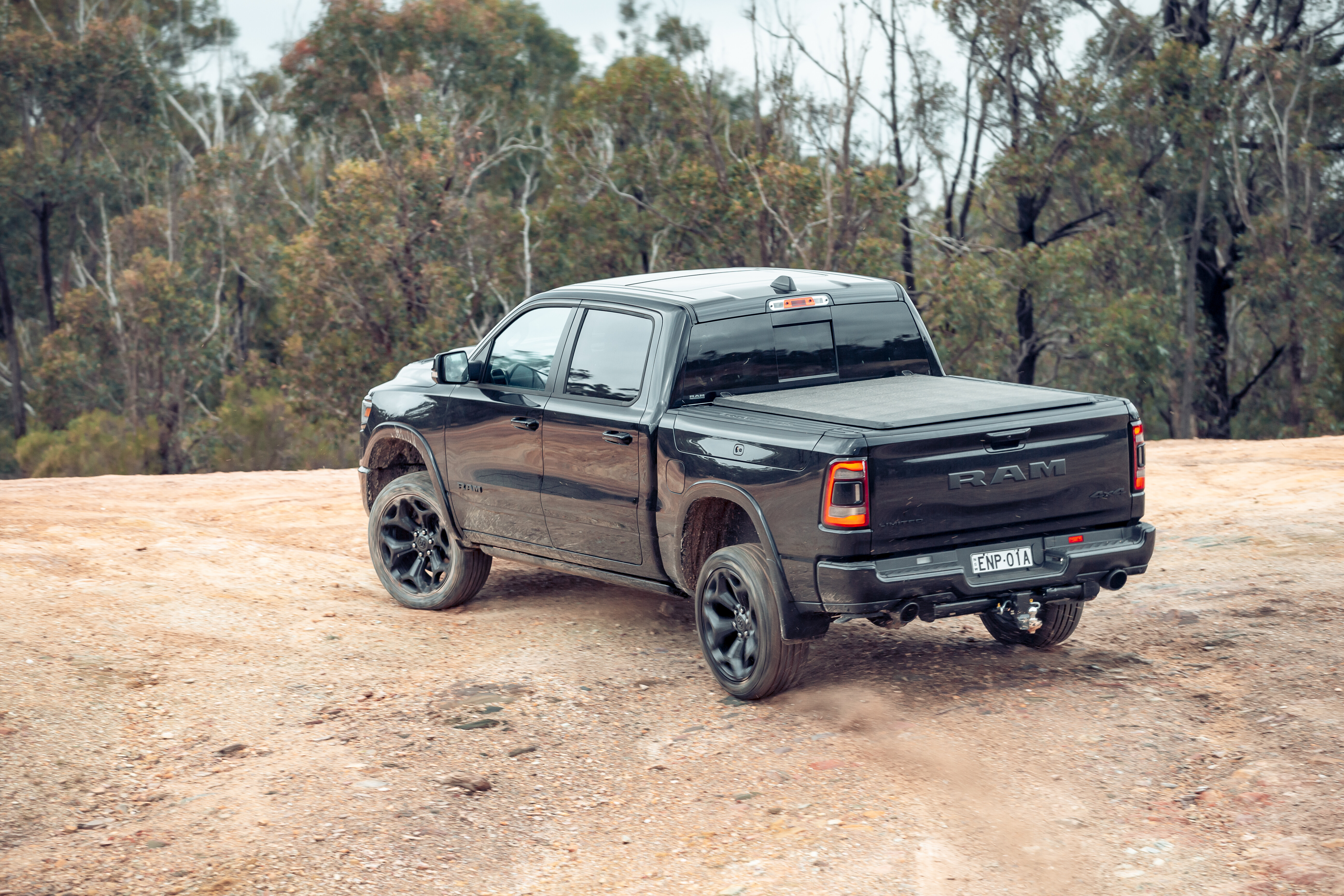
In the United States, full-size pick-up trucks are the most popular – with Ford’s F-150 the country’s best-selling vehicle. We’re seeing increased demand for full-size pick-ups in Australia with Ram 1500s converted to right-hand-drive in Melbourne.
Why would Ram make a one-tonne ute?
While Australia may be falling in love with full-sized trucks, one-tonne utes still outsell them significantly. In August 2022, Ford sold 4497 4X4 and 4X2 Rangers, while Ram shifted 499 1500s.
A new competitor in the mid-size segment from Ram therefore has more global prospects, as Koval pointed out to Automotive News.
“We’ve always said we know that on a global basis, probably the biggest area, the biggest white space opportunity for our brand to grow, has been the mid-size pickup”
Australia isn’t the only market where mid-size utes are popular. It’s a significant segment in North America as well, where the Toyota Tacoma and Ford Ranger dominate.
Export markets for a mid-size ute are broader than a full-size truck, and include South American countries and South Africa. Even Europeans are starting to fall for the one-tonner.
What would a one-tonne Ram look like?
We can expect some of the Ram 1500’s signature design details to feature, such as the crisp LED headlights and imposing grille.
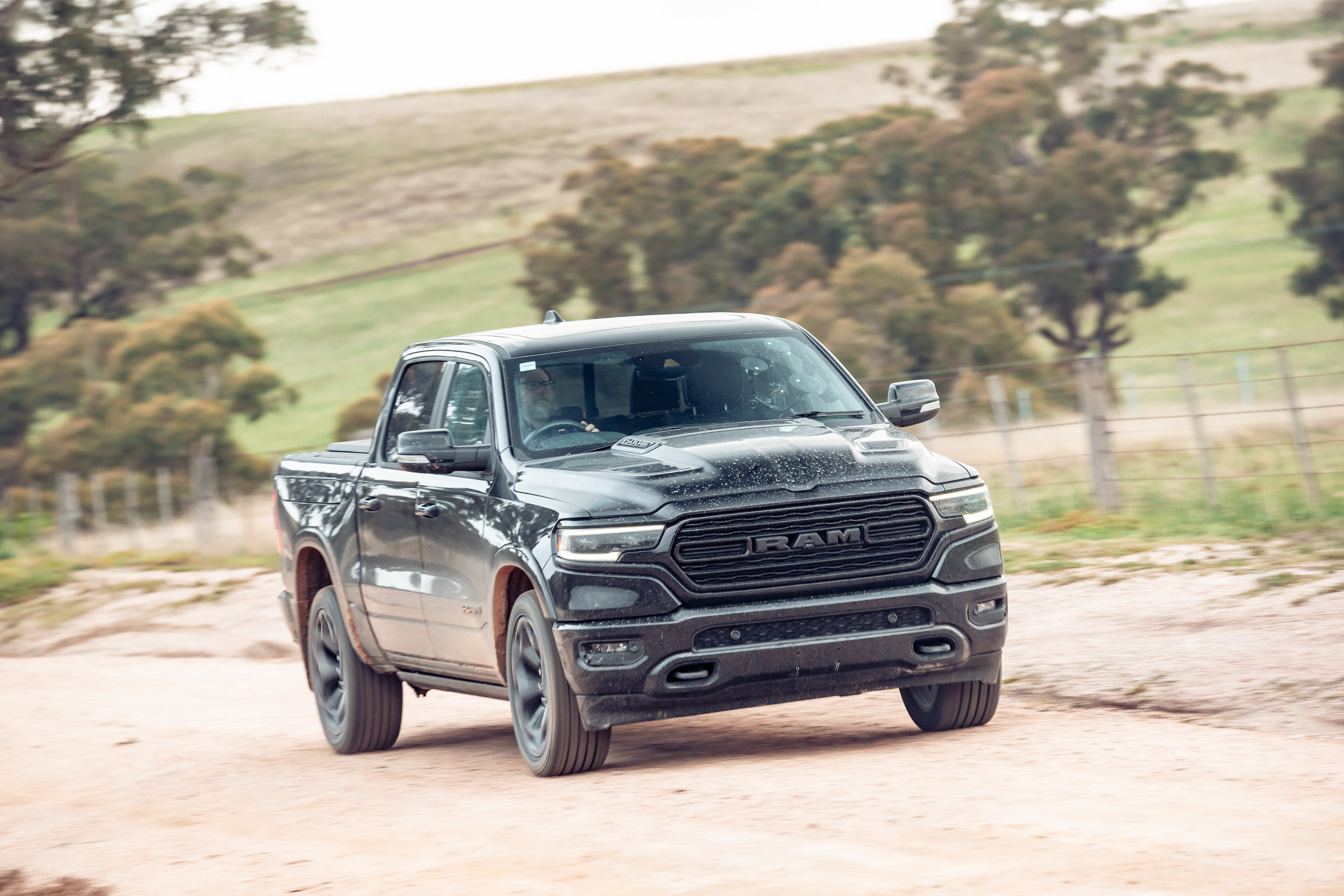
According to Randy Dye, chairman of the Stellantis United States dealer council, the one-tonne Ram won’t ‘just’ be a shrunken 1500.
To work, it will need to be “a little more youthful version of our truck… Obviously, there’s going to be some luxury associated with it. I think it’s going to be more about being sporty and being youthful,” Dye said to Automotive News.
A one-tonne Ram ute is still a long way from reality. But if dealer response in the United States is positive, it’s a vehicle that has plenty of Australian potential.
Snapshot
- Australian company with 25 years experience first in the world with RHD Bronco
- Both vehicles available in any spec offered in the USA
- Tundra here soon with Bronco to follow
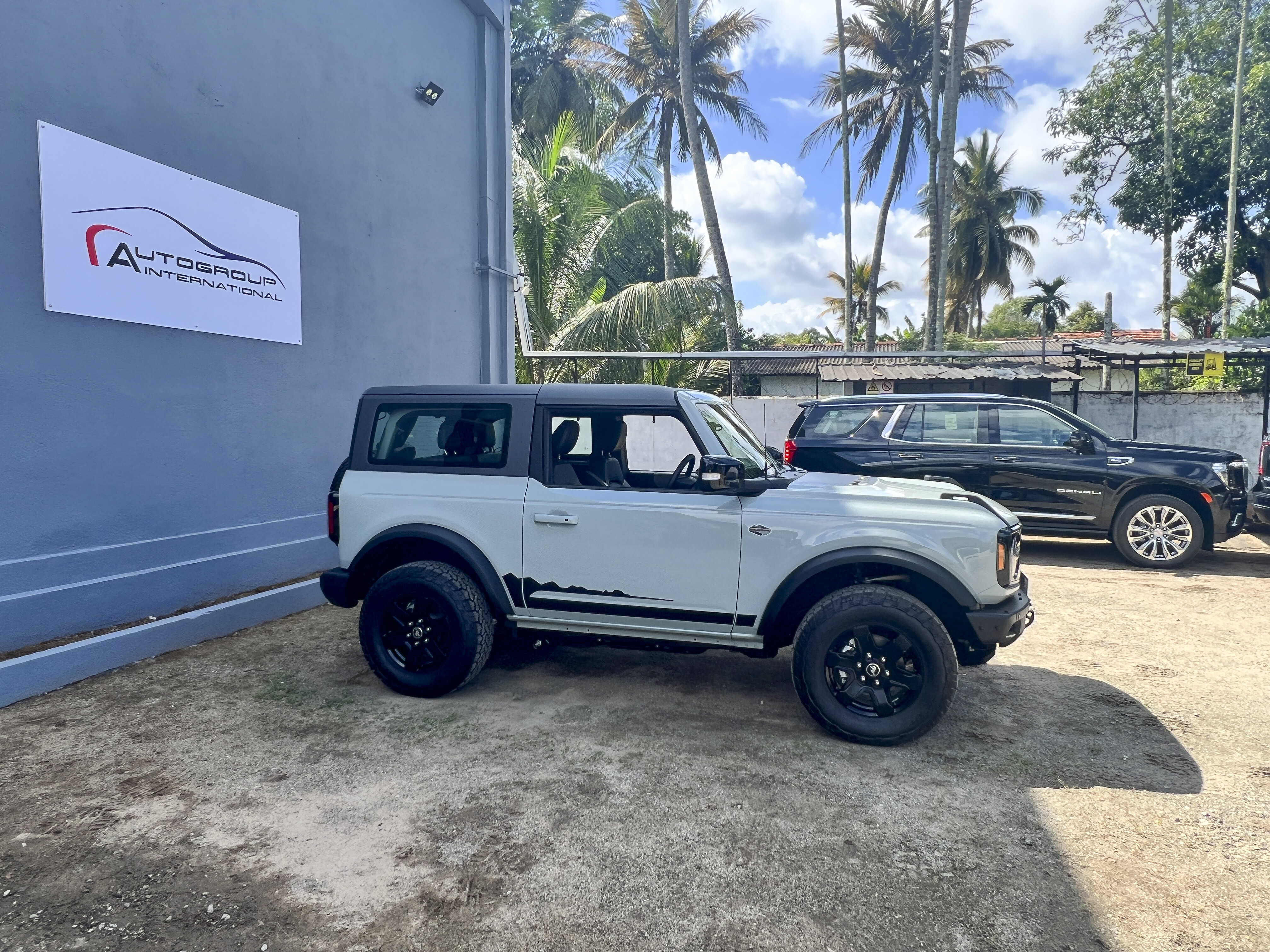
With all the talk of right-hand drive versions of American vehicles coming out of the recent Detroit Auto Show, including stories of RHD production of the Ford Bronco, an Australian-owned company has just completed its first left to right conversion of the retro Ford off-roader.Autogroup International (AGI) is an Australian-owned company with its manufacturing base in Sri Lanka, that has been converting American vehicles from left to right-hand drive for more than 25 years. Over that quarter of a century of conversions, AGI has converted American pickup trucks, Corvettes, Camaros, Dodge Challengers, Nissan Titans, Mustangs, Lincoln Navigators, Hummers and many other makes and models for export to RHD markets including but not limited to Australia.
Upgrade your Ranger
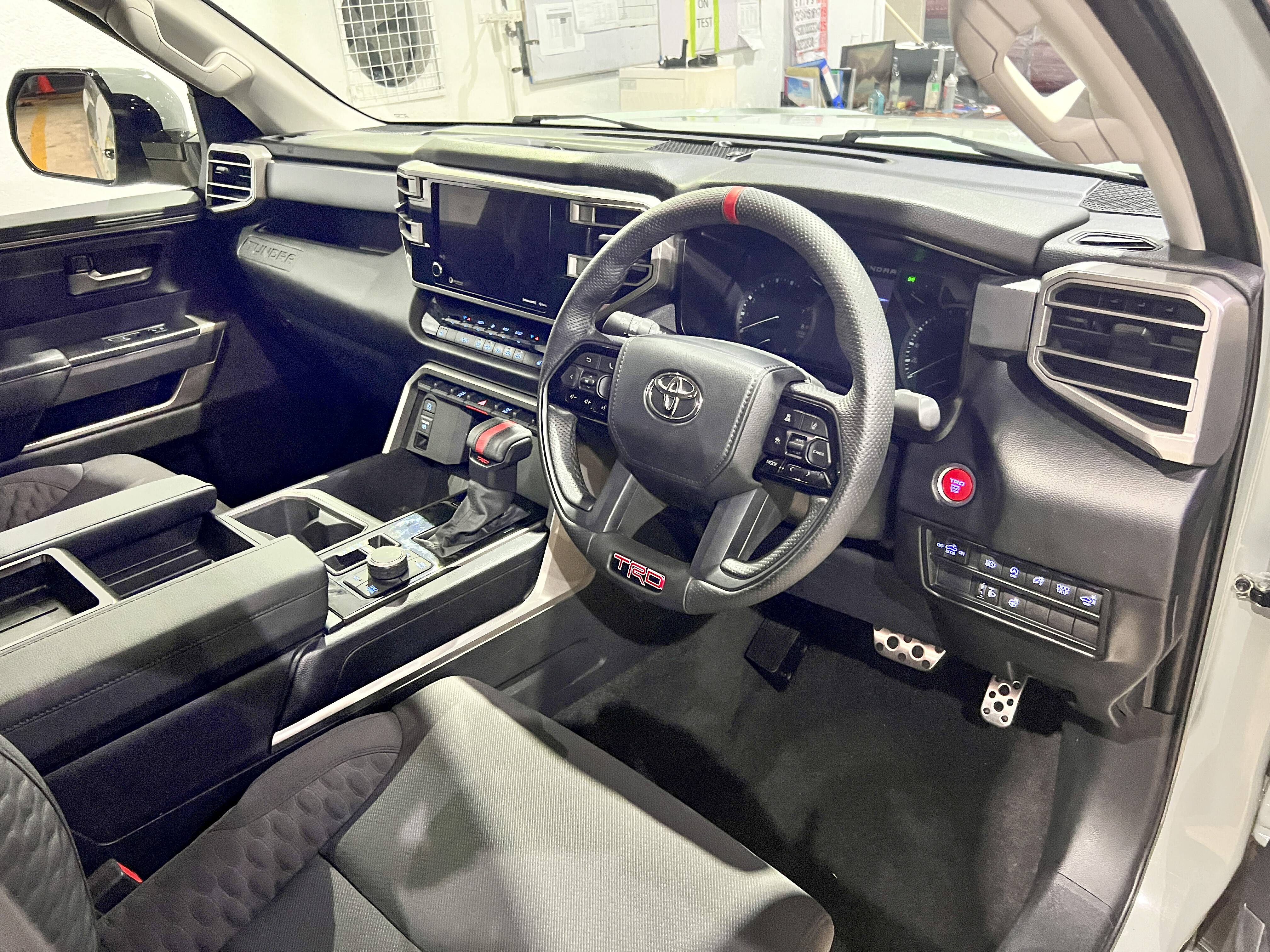
AGI is ISO 9001 2015 certified and Australian Design Rules (ADR) compliant for Conformity of Production and its conversions are mirror image swaps from left-to-right. AGI conversions use a completely new dash panel that is manufactured to OE standards to accommodate the steering on the right-hand side of the passenger compartment with the driver optimally centred behind the steering wheel.
The new Ford Bronco and 2022 Toyota Tundra are just the latest vehicles to come out of the Colombo manufacturing facility with the steering on the opposite side of the car to where it was when it entered the factory.
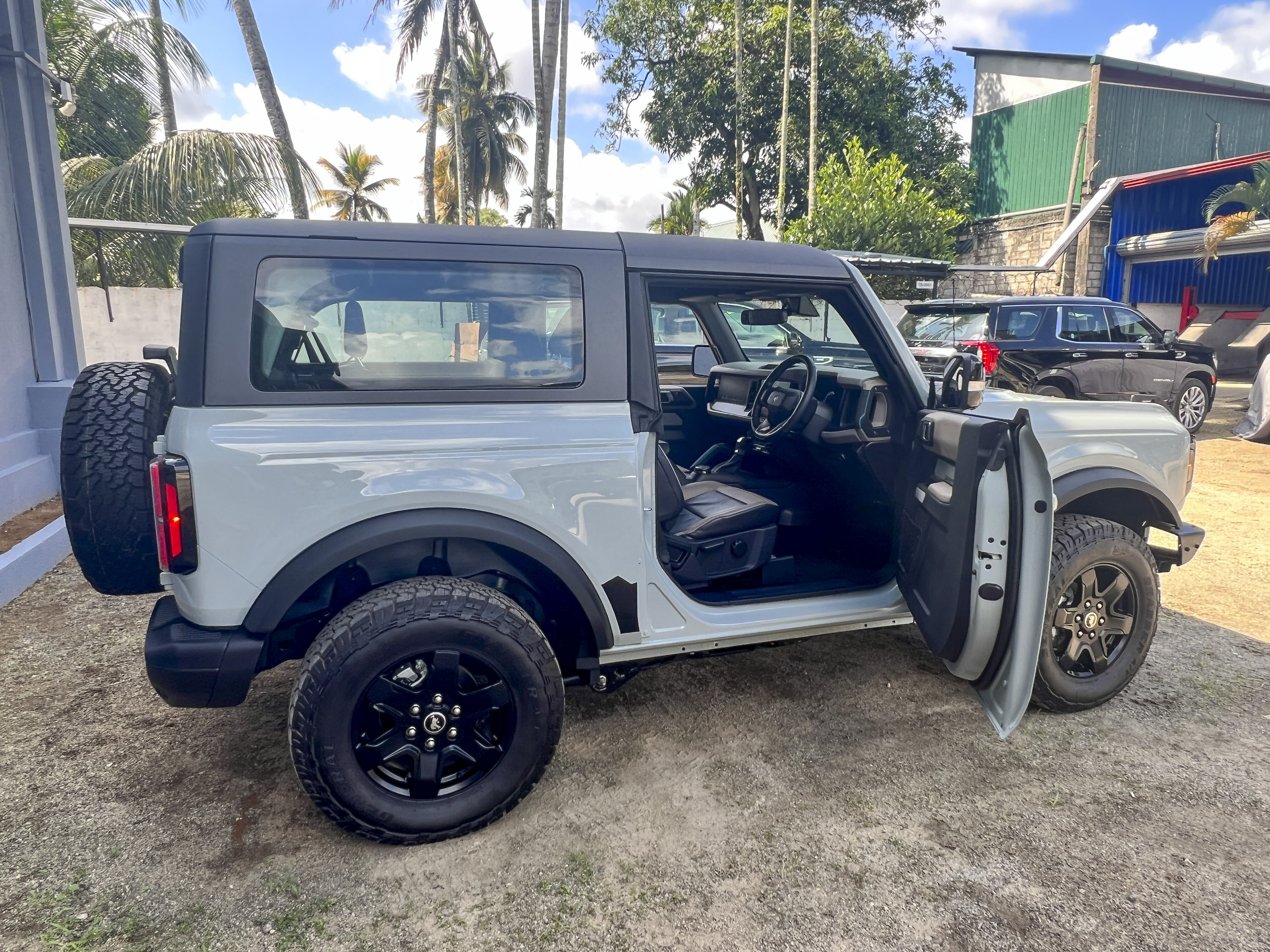
The first Bronco to come out of the AGI factory is a 2-door, 2022 Bronco Wildtrak, but with the engineering of the transition now complete, there is no reason that the process couldn’t be applied to any current generation Ford Bronco.Being based on the same Australian-engineered T6 chassis platform as the Ford Ranger and Everest, the Bronco represented an easier transition for the team at AGI as there were many RHD parts available from Ford.
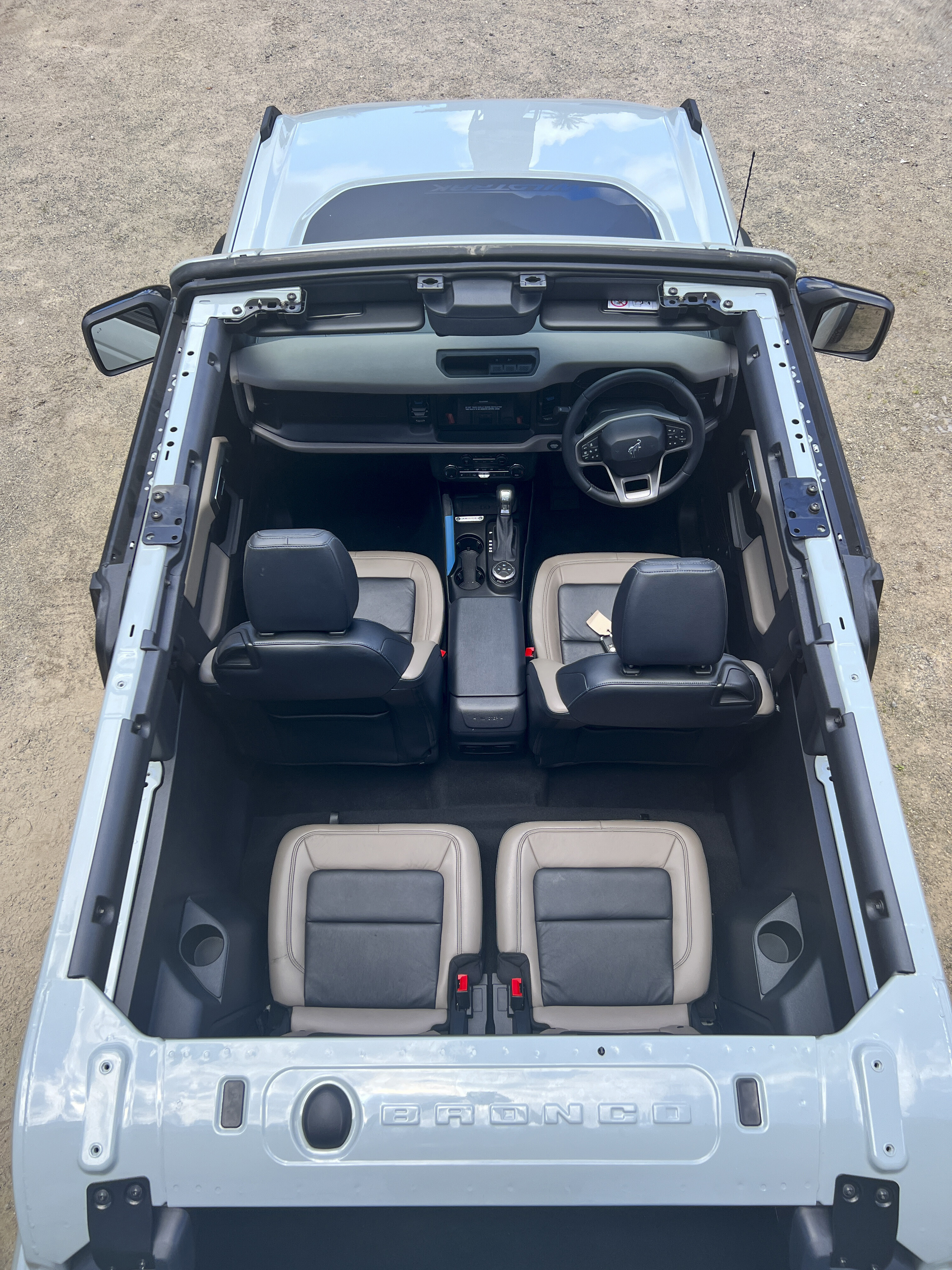
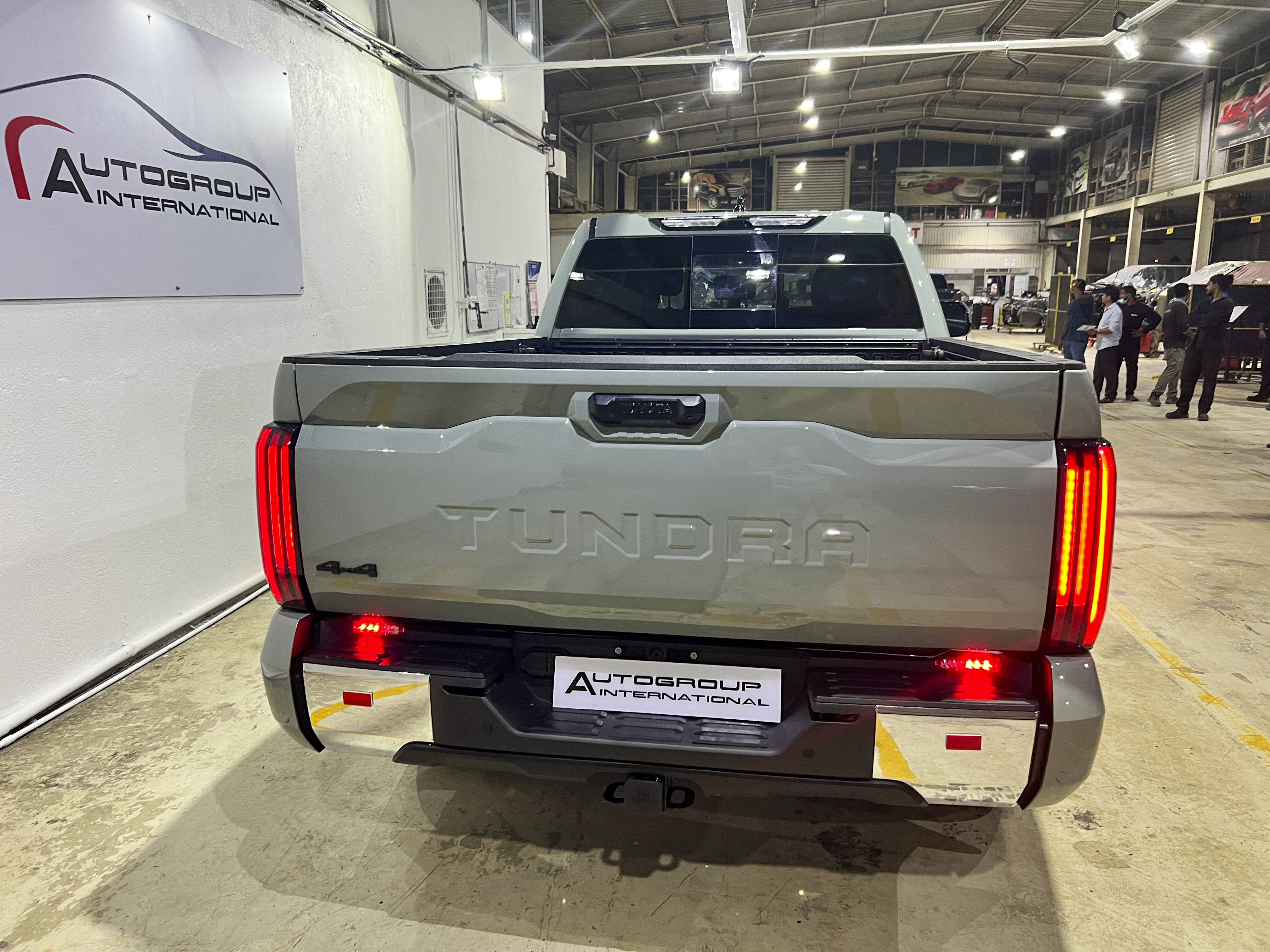
At the Detroit Auto Show in September, Ford president and CEO Jim Farley said that Ford could build the Bronco in right-hand drive for markets such as Australia, but as the demand for the model is currently so high in the USA, RHD production couldn’t be considered until that domestic market demand slows; and that slow in demand could be two or more years away.The 2022 Toyota Tundra full-size pickup is the other most recently converted vehicle to come out of AGI and like the Bronco, its conversion benefitted from the fact that the latest model now rides on the same chassis platform as a RHD vehicle. In this case itís the 300 Series LandCruiser which is of course, manufactured in right-hand drive from the factory and although they are built in different factories, both the Tundra and LandCruiser ride on variants of the TNGA platform.
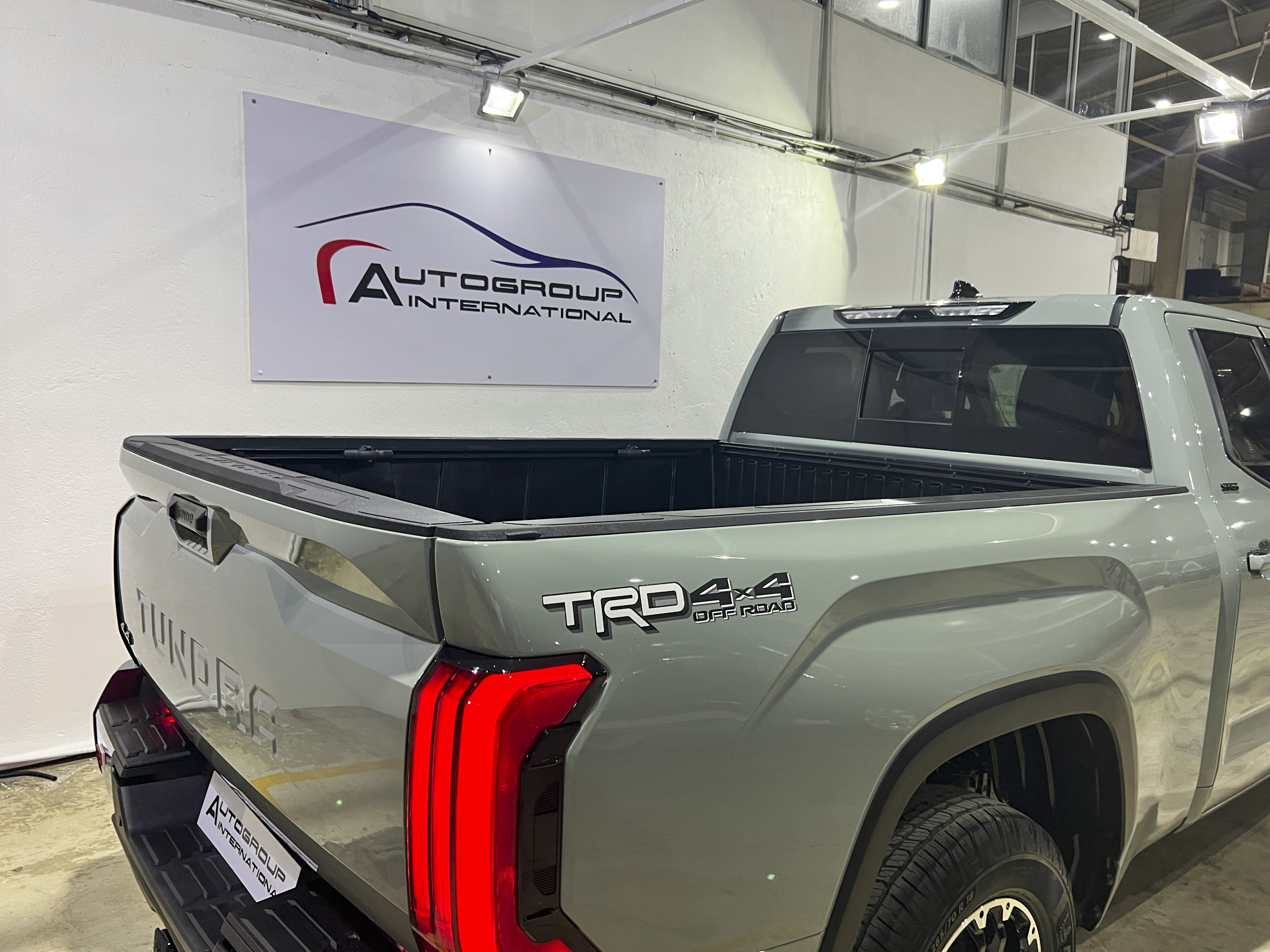
Toyota Australia recently confirmed that it is currently evaluating the Tundra for release to the Australian market and is working with another conversion specialist, Walkinshaw Automotive, where the conversion will utilise components such as the steering column, rack, pedals and gearshift selector from the LC300.The Toyota/Walkinshaw Tundra are currently undergoing testing in Australia and have not yet been confirmed for Australian launch, although it is highly expected to happen in 2024.
The Australian owners and local retail arm of AGI is American Vehicles Sales (AVS) based in Rowville, Victoria. AVS’s James Hill told 4X4 Australia Magazine that the Bronco and Tundra will be coming to Australia and they will be on sale here.
Hill said, “I’ve got Tundras on their way to Australia now and Broncos will be coming soon. They’ll have to go through approvals before they can be registered here but that will happen soon enough.”Regarding the Tundra, James said that AVS will be able to offer any variant a buyer could want.
“If someone wants a single-cab Tundra, we can get it for them”, he said.Toyota has said that it will only bring the double-cab Tundra here and only with the hybrid petrol V6 engine.Check out the range of American trucks and muscle cars already available at AVS online at www.american.com.au and keep an eye on the site for the Broncos and Tundras coming soon.
4X4 Australia's project builds
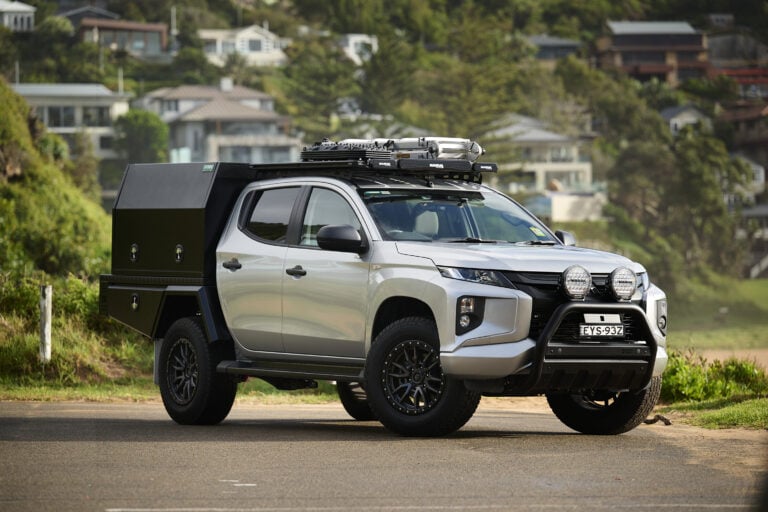
As responsible four-wheel drivers, we all know about rated recovery points on our vehicles and the importance of them for safe vehicle recoveries when we inevitably get stuck. The reason we need them from the aftermarket is that very few OE vehicle manufacturers equip their new vehicles with loops or hooks designed for such loads and forces.

This is why there is such an extensive range of recovery points available from the aftermarket. You know the ones that are usually brightly-coloured, poking out from under the front bumper where they are ready to accept your winch hook or snatch strap in order to yank the vehicle out of trouble.These recovery points are mainly available only for the front of vehicles; why not for the back? Isn’t the back of the vehicle that is pulling the stuck vehicle out, usually where you will attach the tow or snatch strap? Yes it is, and in most cases the user will attach the strap to the tow hitch, either via a specific recovery hitch, or by using the hitch pin inside the square section of the receiver.

Never loop a strap or rope over a tow ball for vehicle recovery. Tow balls are not made to take the sort of loads generated in a snatch recovery and when they break off under load, they become a potentially deadly missile, usually heading straight back toward the stuck car at ballistic speed.The loads generated by a snatch strap can far exceed those of towing any trailer you will ever legally haul behind a regular 4×4 vehicle. Remember, this is why you are using a strap rated to 8000kg or more to pull out your 2900kg car. So it stands to reason that where you attach your recovery straps to the rear of your vehicle, should be designed and engineered to cope with such loads, just like the recovery points you fit to the front of your vehicle are.

Hence the introduction of recovery rear bars; an evolution of towbars but engineered to include attachment points that are rated to cope with the loads of a snatch recovery and also spread that load across the width of the bar and not just on the central point at the hitch receiver. This style of recovery bar first saw the light of day on the back of 4×4 utes, and particularly those that are fitted with trays or service bodies and don’t have a standard rear bumper.Queensland’s TAG Towbars & Accessories has been designing and manufacturing its extensive range of towbars in Australia for more than 35 years, and it was only a couple of years ago when we started to see its then-new XR (Extreme Recovery) towbars adorning the backs of some of our feature cars.
The first one we saw was on the back of a chopped and stretched Y62 Patrol so it was a truly custom vehicle, but until now, we’d never seen a recovery bar fitted to the back of a 4×4 wagon. So we threw the TAG team a challenge with our MU-X project car.

Space invaders
The back of a wagon presents a few more challenges to the designers of the bar than that of a tray-back ute as it has a more stylised rear bumper that you want to retain as much of as possible. There’s also the fact that most of the 4×4 wagons are burdened with third-row seating which more often than not fold in to the floor of the rear space in the wagon. This encroaches on the available space under the car where you want to put your tow bar, long-range fuel tank, and the spare wheel is usually under there as well.So 7-seat wagons present a perfect storm of limited space to work within. To the team at TAG (TAG-team) this presented them with an engineering version of Tetris and it was a challenge they were certainly up for.

To meet the greater demands of vehicle recovery, the XR bars are made heavier-duty than a regular tow bar. Heavier-duty than even TAG’s own HD tow bars; and they are not just a TAG HD tow bar with recovery points at each end. For the MU-X, the XR’s side plates that mate the cross member to the chassis are 12mm thick instead of 10mm on a HD bar, and they incorporate the machined recovery points, each rated to 4000kg WLL (Working Load Limit).
The recovery attachment points protrude through slots neatly cut in to the factory plastic bumper and are finished off neatly with pinch weld.
You can see straight away that having the recovery points at the ends like this put them directly in line with the chassis rails and not at a point in-between them, so that any force pulls directly back on the strength of the rails.

The available space under the back of the MU-X did pose a few problems and some yet to be resolved. For a start, the team used a 65 x 65mm cross member instead of the usual 75 x 75mm RHS on the HD bars. This smaller size allows it to fit while still retaining a 3500kg towing rating to match the vehicle’s tow capacity.
When it came to fitting the XR bar under our MU-X, the first one they were able to access, they found that it interfered with the rear parking sensors which protrude a fair way back behind the plastic bumper. This meant moving the bar more forward in the vehicle which again threw up further challenges, especially as our car is fitted with taller than standard tyres.
We went up a size in tyre for our build going from the MU-X LS-M’s standard 255/65R17 (764mm diameter) to a 265/70R17 Maxxis RAZR AT which Maxxis quotes has an 808mm diameter. It’s a modest and legal size upgrade to give a bit more sidewall and a tad more ground clearance and while it fits easily within the wheel arches, it gets tight for the spare wheel and tyre.

With the XR bar needing to move forward under the car, this in turn pushed the spare tyre to the point where it was rubbing against the Panhard rod that locates the rear differential. The only solution to allow us to safely drive the car was to deflate the spare and be sure we always have our compressor on board should we need to reinflate and use the spare.
Personally, I would have been prepared to sacrifice the rear parking sensors if it would grant us the required space as the MU-X does have a useful rear-view camera for when you are reversing. TAG is working on other solutions looking at different sized cross members and designs.
One of the advantages of designing and manufacturing your products locally in Australia is that for TAG to take another look at the XR product for the MU-X, it’s all done in-house and there’s no toing and froing with overseas manufacturers. Watch this space for updates!

Of course, it you are happily running the standard 31-inch tyre then this won’t be an issue for you, and the TAG XR will be the perfect towing and recovery bar solution for you.I have to admit that I was concerned about how the XR bar would look on the back of a wagon and how much of the rear plastic bumper would have to be cut away, but I’m pleasantly surprised and impressed with the look of finished product. The bar itself is nicely finished in dark powder-coating to protect it against the elements. The eyelets in the recovery points have bevelled edges, so they’re not too harsh on your soft shackles, although we’d still recommend soft shackles with a protective sleeve or coating if you’re not using steel shackles.On a tray-back ute application, the mounts for the trailer plugs are on top of the XR bar, but to put them up that high behind the bumper of a wagon would make them hard to access. On our MU-X, the trailer plug mounts on the OE bumper where it’s easy to get to.

The TAG XR bar comes with a standard 50mm hitch and ball, while TAG has a huge selection of drop-hitches and other towing accessories should your set-up need something different. All TAG towbars come with a limited lifetime warranty.The TAG Extreme Recovery XR bar for the MU-X retails for $964 for the bar only. This compares to a TAG HD tow bar that costs $790 RRP. This is the first XR bar for a wagon but expect to see more soon for popular models like Land Cruiser 300, Patrol and Prado. TAG Towbars has stockists and fitters all across Australia, and you can find you’re nearest one by visiting the website at: www.tagtowbars.com.au
RATED
Available from: www.tagtowbars.com.au RRP: $964 TAG Extreme Recovery XR bar (sans fitment) What we say: Australian-made TAG towbars come with a limited lifetime warranty.
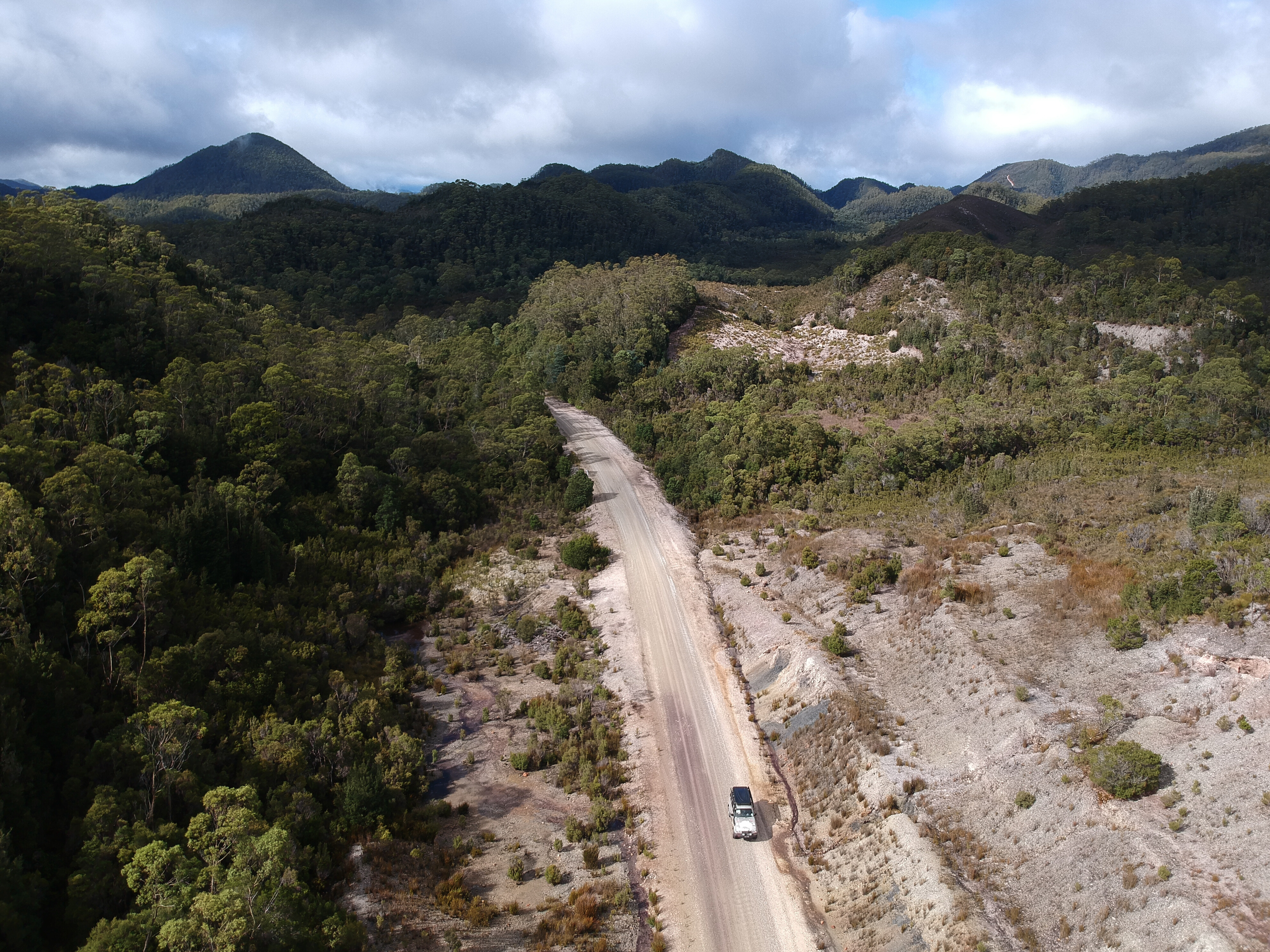
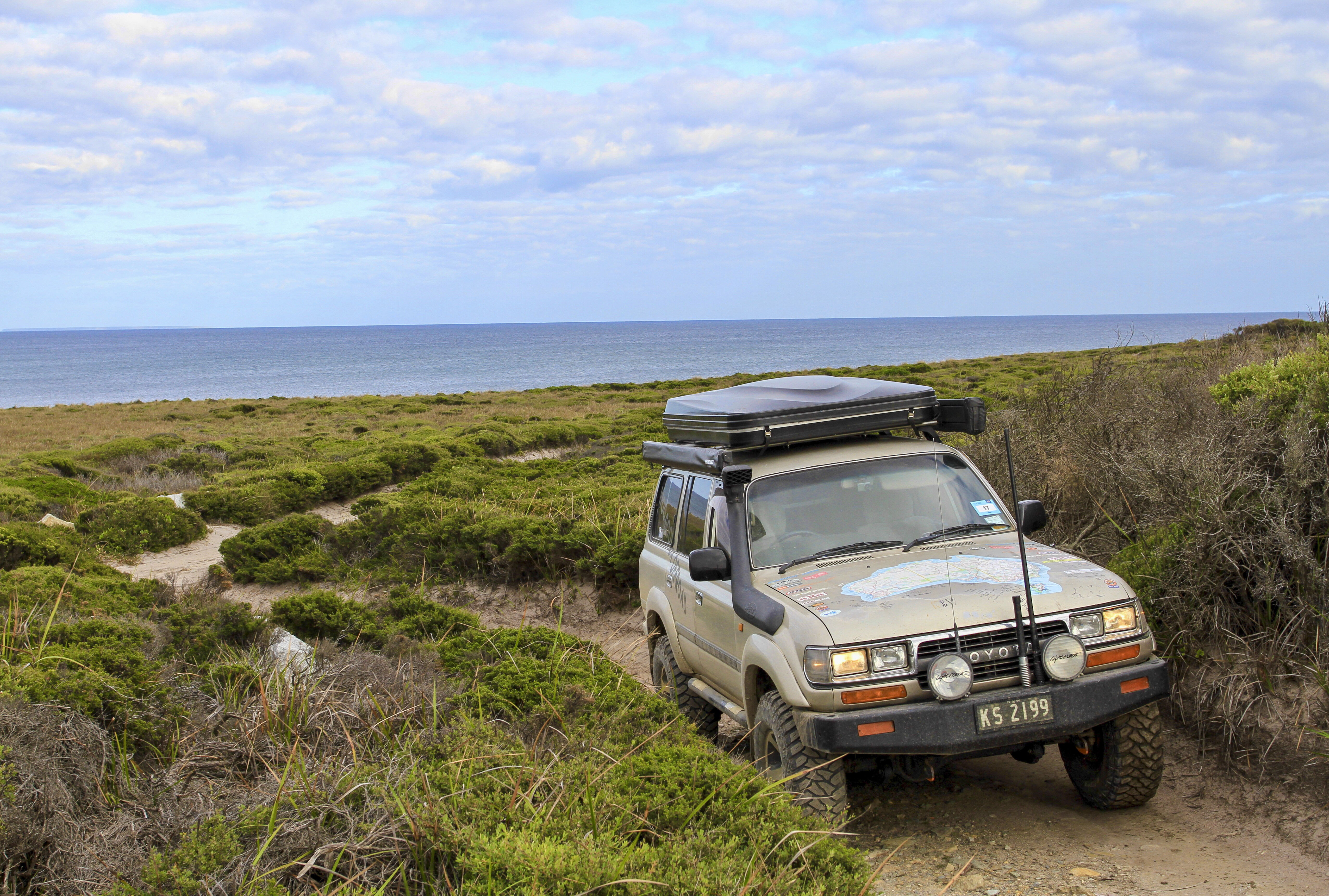
Tasmania is full of stunning scenery, has an array of history and some bloody great four-wheel driving to boot. I wanted to try and get to the NE corner of the state on this trip from Hobart totally off-road, and with a few snippets of local info, I did just that.My starting point was Sorell, just out of Hobart, where there’s plenty of decent supply shops for food and fuel. I was given a tip that if I headed 20km up the Tasman Highway and found Woodsdale Road, that’s where I could hit the dirt and stay there to the cape – and an easy and scenic run up to the bitumen to the turn point got me in the groove for the trip. Woodsdale Road is a well-used dirt road that feeds farms and a few wineries, and it leads in to the forest; nevertheless, I was on the dirt for the journey.
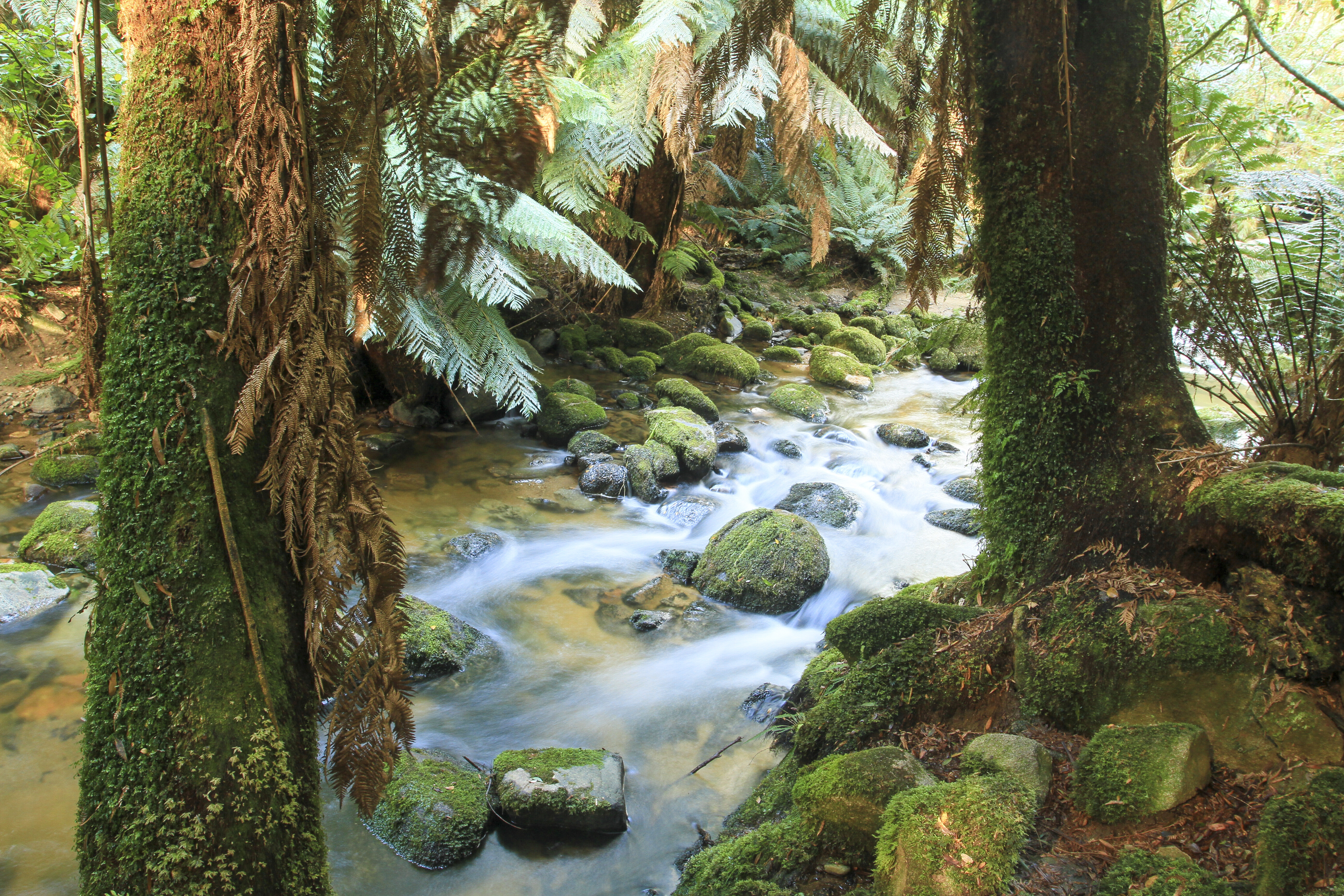
Passing alongside Prossers Ridge line and turning across towards Mount Hobbs it was the typical bush I was used to on the mainland, with great views and growing anticipation of what was in store for the next few days.
Swanston
A local told me about the Swanston Track and where it followed the northern side of the Buckland Military Training Area, and it’s a pretty easy track to find at the end of Swanston Road. It was interesting that where I crossed Little Swanport Creek was the old convict transit town of Swanston. These days, it’s nothing more than a sign indicating that it was here back in 1830, that convicts where rested on their way from Little Swanport inland to Oatlands some 40km farther west. Oatlands has more than 150 sandstone buildings and is one of the oldest settlements in Tassie.
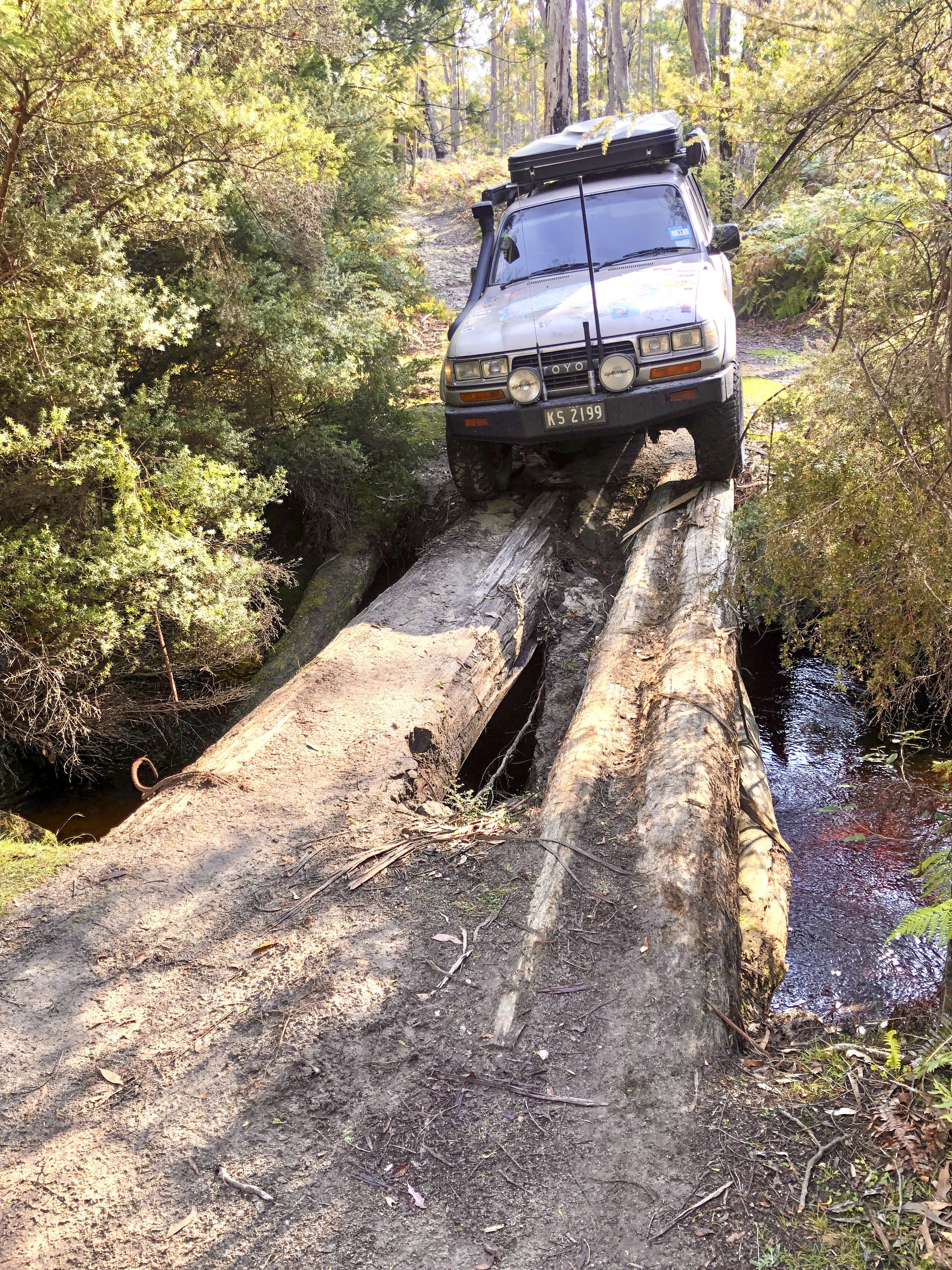
The Swanston Track is around 30km long and is a great challenge in the dry as it follows the military property, but you need to adhere to all the warning signs along the way. The track is regarded as hard and you need to allow up to three hours as it’s a combination of steep rocky climbs and bog holes, with several steep switchback creek crossings thrown in. I won’t say that it was too hard but I wouldn’t recommend it for a soft-roader as you’ll need some decent ground clearance and proper low range.
The track ends at Little Swanport, where I had to head north on the Tasman Highway for just 5km before turning left on to McKays Road. A lot of dirt roads in Tassie are working roads and this one was no different with logging operations underway, but in most cases the main roads are open with care.
Chasing waterfalls
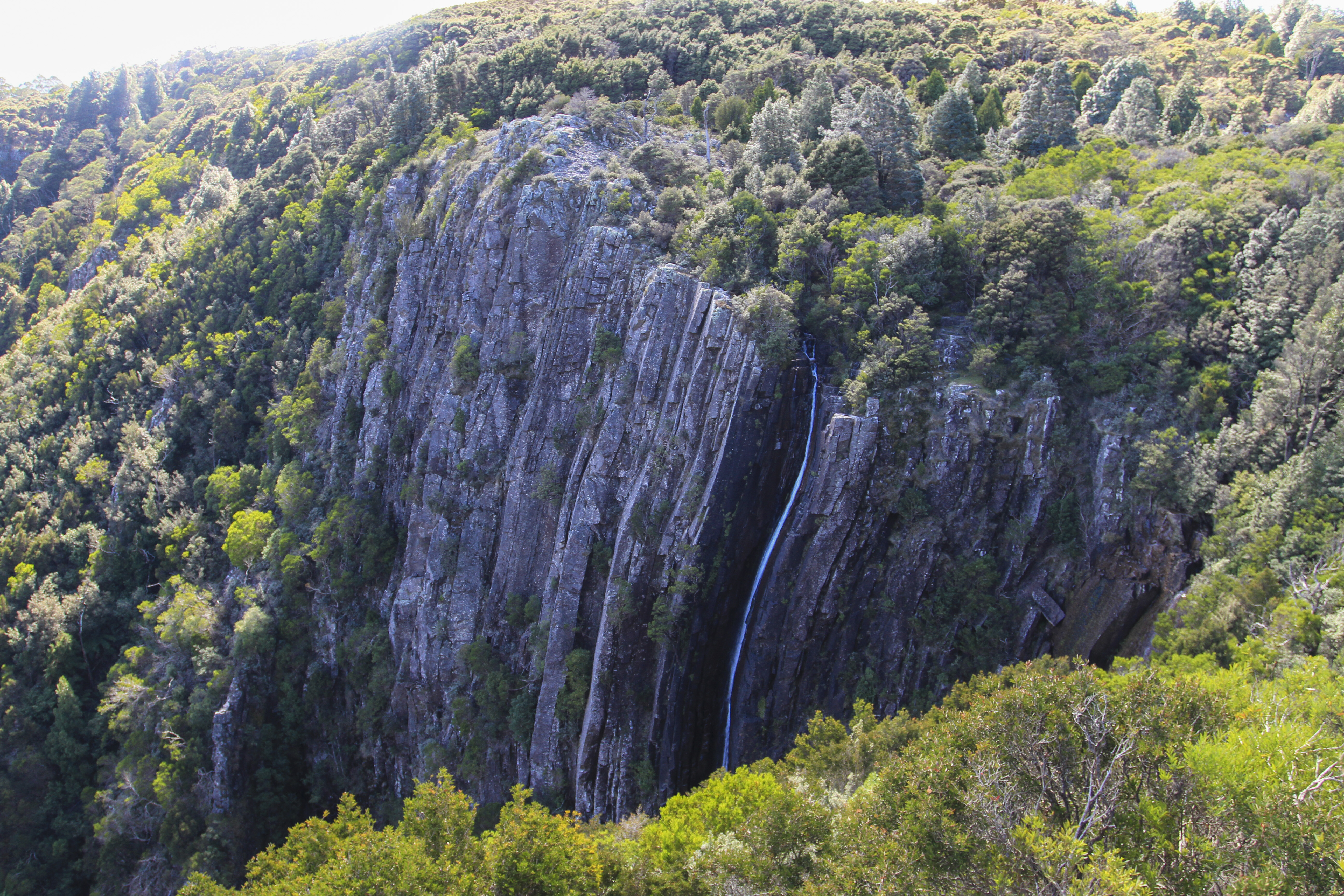
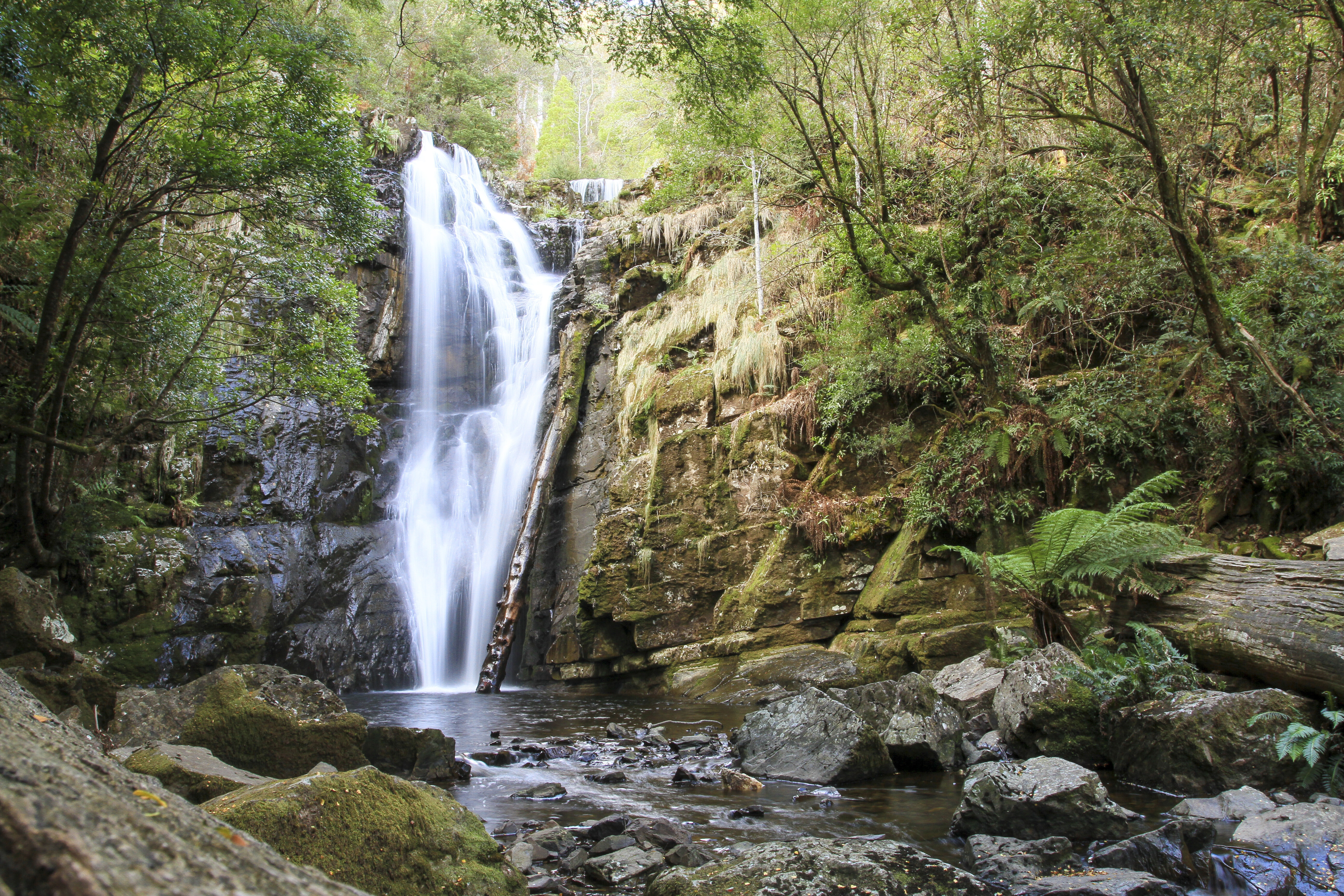
A highlight of Tasmania is the vast amount of waterfalls due to the high rainfall and the island’s steep terrain, and one I discovered was Lost Falls about 50km along McKays Road. It’s a 10-minute walk from the car park but it’s well-worth the effort, as the water tumbles over several drops to weather away the basalt rocks. Crossing over the Leake Road intersection back on to the dirt, Meetus Falls was another port of call and a blast of a stopover – it’s one of the taller waterfalls on the island, along the Cygnet River.McKays Road continued on for about 60km, with Douglas-Apsley National Park on one side and pine plantations on the other. There are tall peaks in every direction, and you’ll need wheel chains in winter due to the icy roads.
At the end of McKays Road I took a left on to Valley Road, and once again mountains lined the route until they gave way to the Break O’Day Plains, where rich farmlands mimicked something out of an English movie. Imagine stone walls and twisted trees used as windbreaks allowing the livestock to graze in the thick, green paddocks.I had to turn right on to Main Road – a short 11km tar section – before heading north to Barnes Road and farther north to Evercreech Road and Mount Albert Road. These great, narrow roads are lined with plantations of cyprus pine and blue eucalypt forests, grown for sustainable harvesting.
Pub in the paddock
Just near Pyengana is St Columba Falls, the second tallest in Tassie with a single drop of 90 metres – and I wasn’t disappointed following a short walk along a tree-fern lined pathway. The valley here is rich in history that dates back to 1875, when the Cotton family (mum, dad and 10 kids) settled to set up life as farmers. The story goes that their boys were more invested in drinking than farming and, as the years went on, the town grew and more people socialised at the family home. So instead of building a hotel, the boys simply licensed their family home as the Columbia Falls Hotel, known today as the Pub in the Paddock. If you read the signs near the falls and follow the directions, you can still see remnants of the 45km water race that was used to get water to the tin mine near St Helens.Leaving Pyengana via the highway, I headed up Anchor Road towards Lottah. On the way I stopped at Halls Falls, which didn’t disappoint with its wide drop over the rocks. Just above the falls is a man-made weir created when Chinese miners worked tin during the 1880s.
One of my goals on the trip was to find the Anchor Stampers and, following the rough map near Halls Falls car park, it’s another 30 minutes up the road through Lottah. This area was so rich in tin that by the mid-1800s it was regarded as the largest in the world, with locals calling the place ‘The Mountain of Tin’. A short walk to the stampers had that wow moment, leaving me shaking my head after reading of the achievements and history of the district.
The Anchor Mine Company had the largest water wheel in Tassie – 20 metres in diameter and around 20 tonnes in weight – but the water supply was inadequate to operate it at full speed and it could only run 30 of the 40 stampers. Over the years, the mine had several owners with varying degrees of success.
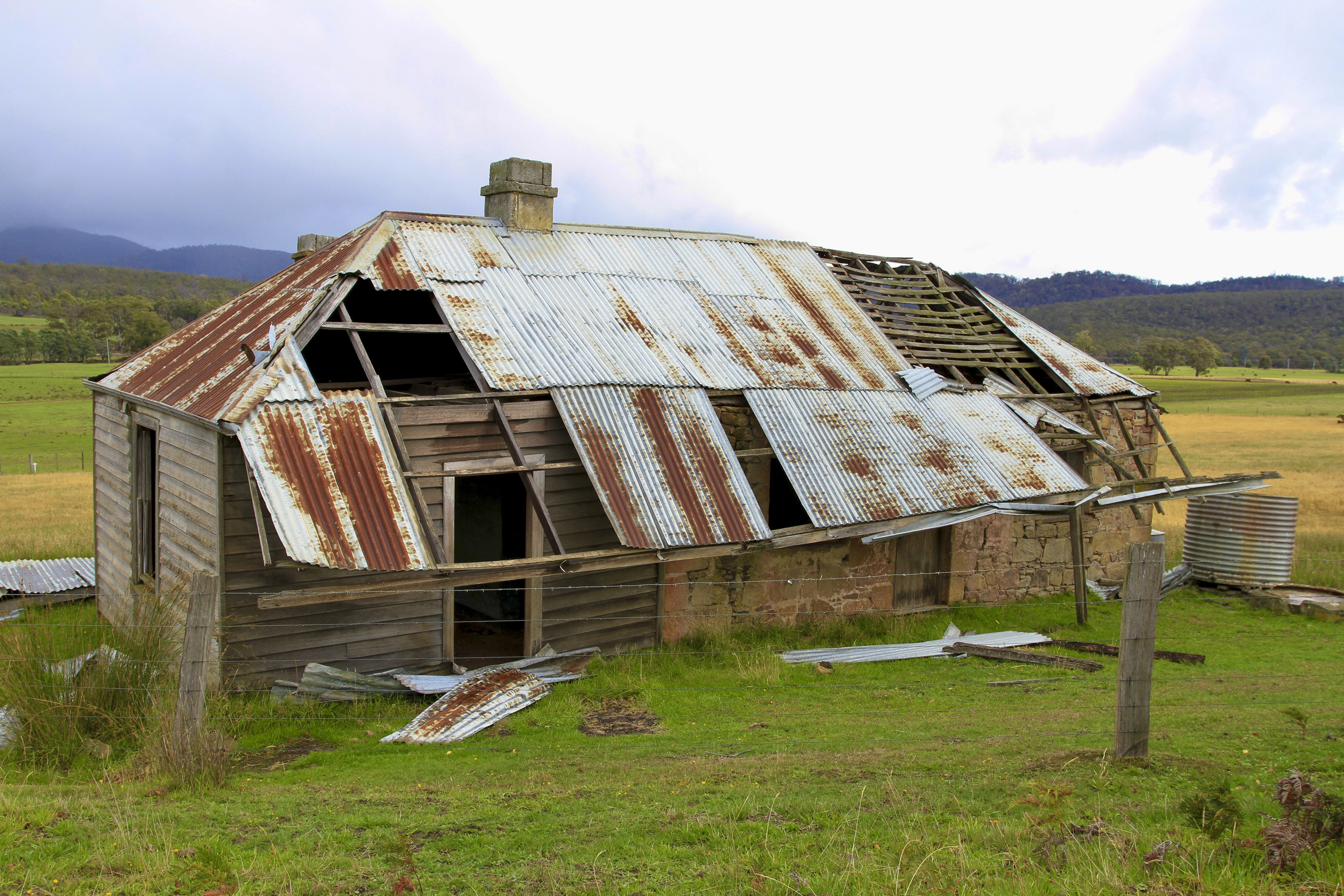
In 1904, aerial haulage replaced the horse-drawn system up to the other mines above the processing plant, but 10 years later the mine closed. Further attempts to reopen the mine up until 1996 have been trialled, but they failed to produce a profit. The last owner couldn’t remove the last two stampers and they were left as a memorial.Along the walking track you can still see old trolley carts, wheels and one of the dams. Up the road, Blue Tier Reserve was once the mining hub where a small town called Poimena survived. After tin was found, the thick rainforest was cut down and creeks were sluiced for the water – but tin soon began to run out and by 1954 the last building was moved to St Helens.
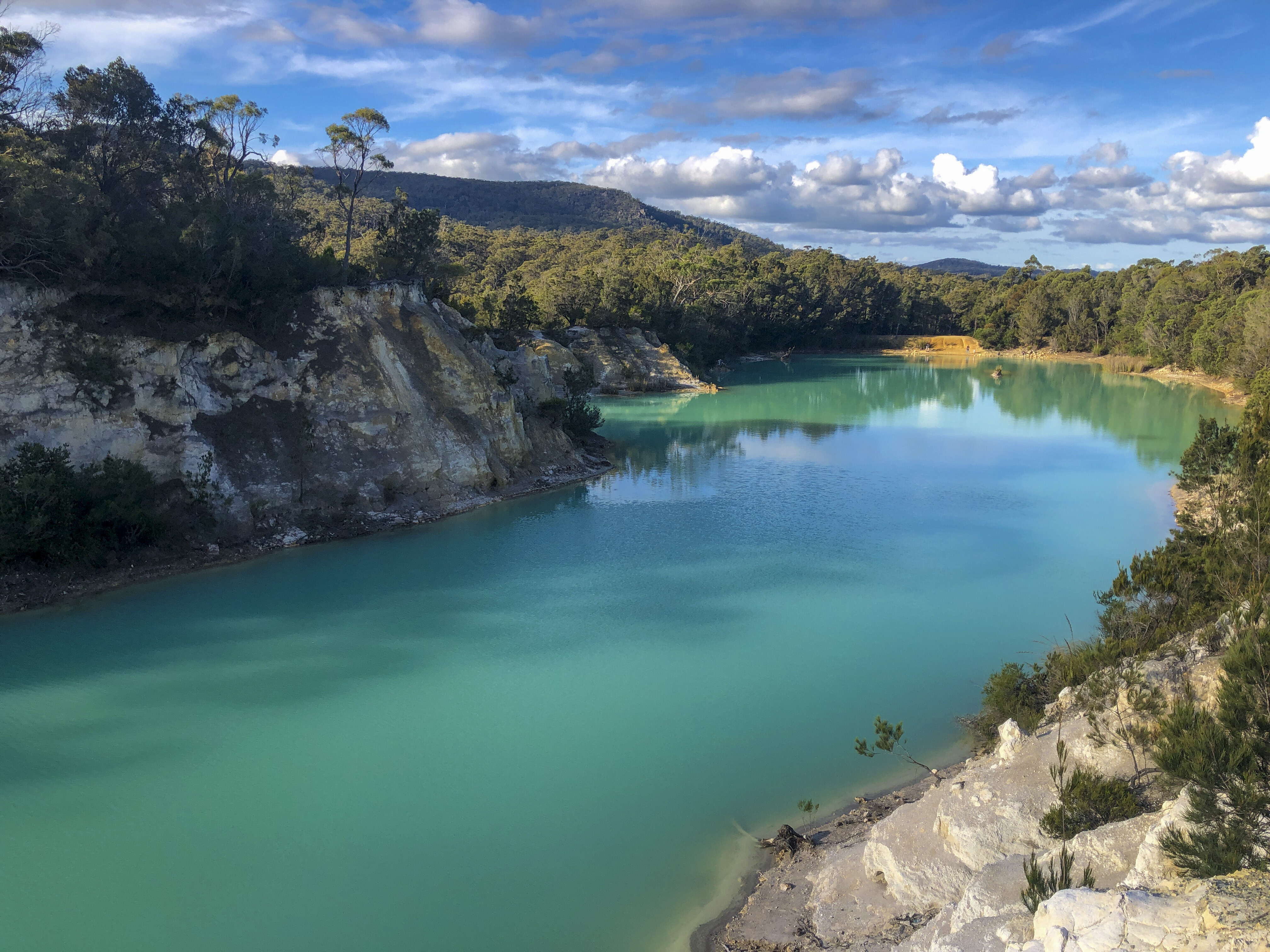
Little Blue Lake
Counsels Road that leads north from Poimena soon turns in to Tebrakunna Road, and they’re both good touring dirt roads. My goal was to stay on the dirt all the way to Cape Portland, but I heard of an unusual blue lake nearby – so at the end of Ogilvies Road, I trundled along Gladstone Road to the Little Blue Lake. The lake was once a tin mine that littered the area but has since been filled with water and can be accessed for swimming (not advised) and kayaking. The iridescent blue colour is from the rich minerals in the white clay that line the lake’s shores and base.Back to the dirt and it’s an easy drive through the forest following the Great Musselroe River, and even through here there’s evidence of the mining days with deep open-cut mines and relics. At the end of the road you can either turn towards the east coast or head to the top of the state. The trip to the east coast and Mount William National Park is a good hour-long trip through farmlands until you enter the park and, by heading out along Eddystone Point Road, there’s more history to explore. Back in 1642, Abel Tasman sighted this coastline but couldn’t map it correctly due to bad winds and rocky outcrops. It was the late 1800s when the lighthouse was finally built from local pink granite, along with several cottages.
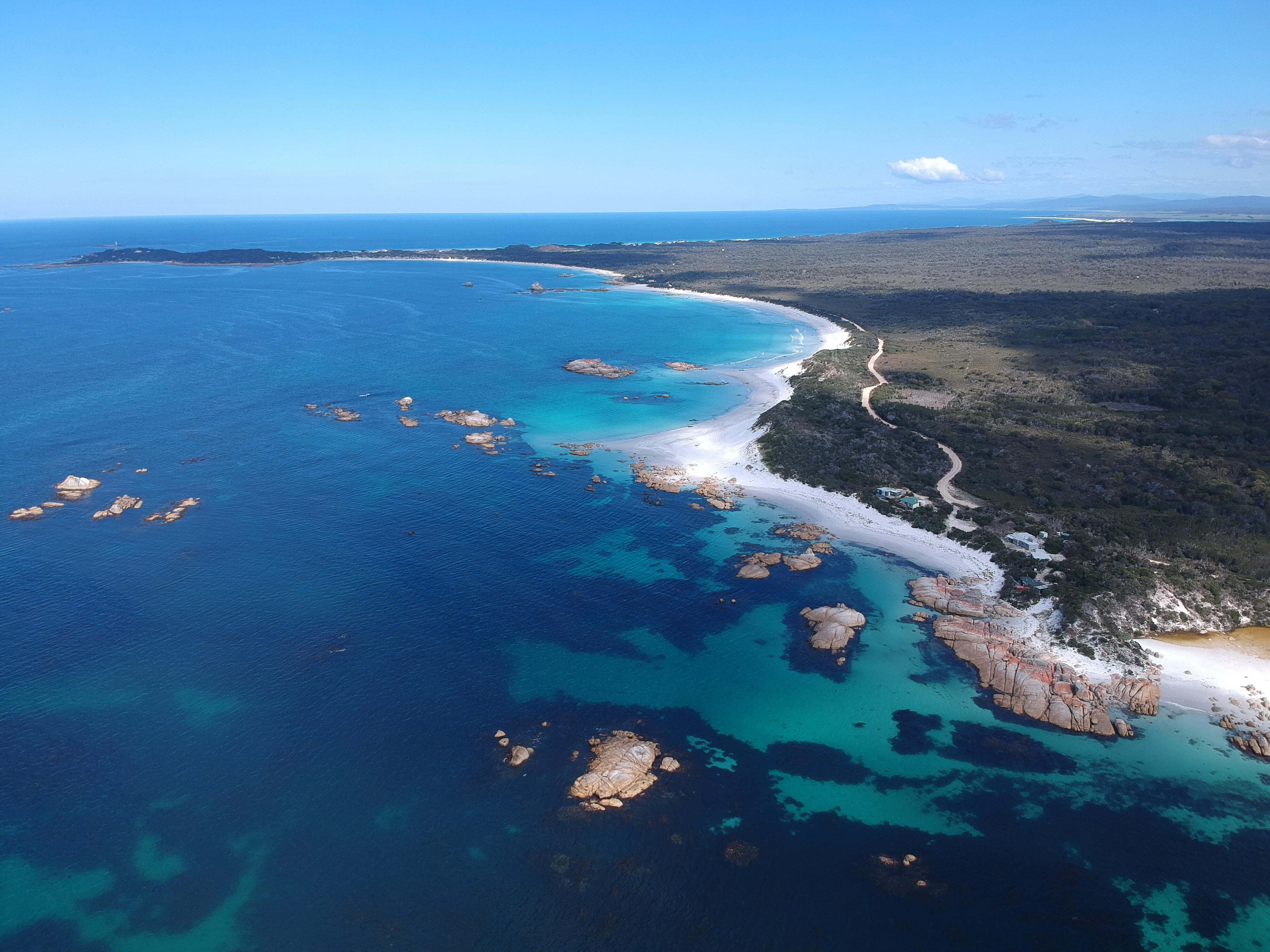
Heading north to Cape Portland the road traverses typical coastal plains with windswept trees leaning to one side and low-growth scrubs that have adapted to the conditions. Midway to the top, Rushy Lagoon farm holds most of the land. This mega property runs thousands of sheep and cattle and has a small community to manage it. Also dotted on the landscape are several wind farms. At the end of Cape Portland Road the camping at Petal Point is pretty special, with windswept ocean views toward Bass Strait, and beach access along Ringaroomba Bay. On the eastern side of the Cape, camping is permitted at the Little Musselroe Bay area at the entrance to the Little Musselroe River.After a little local knowledge and digging around with some maps, I managed tackle the Hobart to Cape Portland off-road drive. It’s a trip that can be done on the bitumen in just five hours, but off-road it’s a four-day journey seeking out waterfalls, mine relics and maritime history. I just wonder what else I missed.
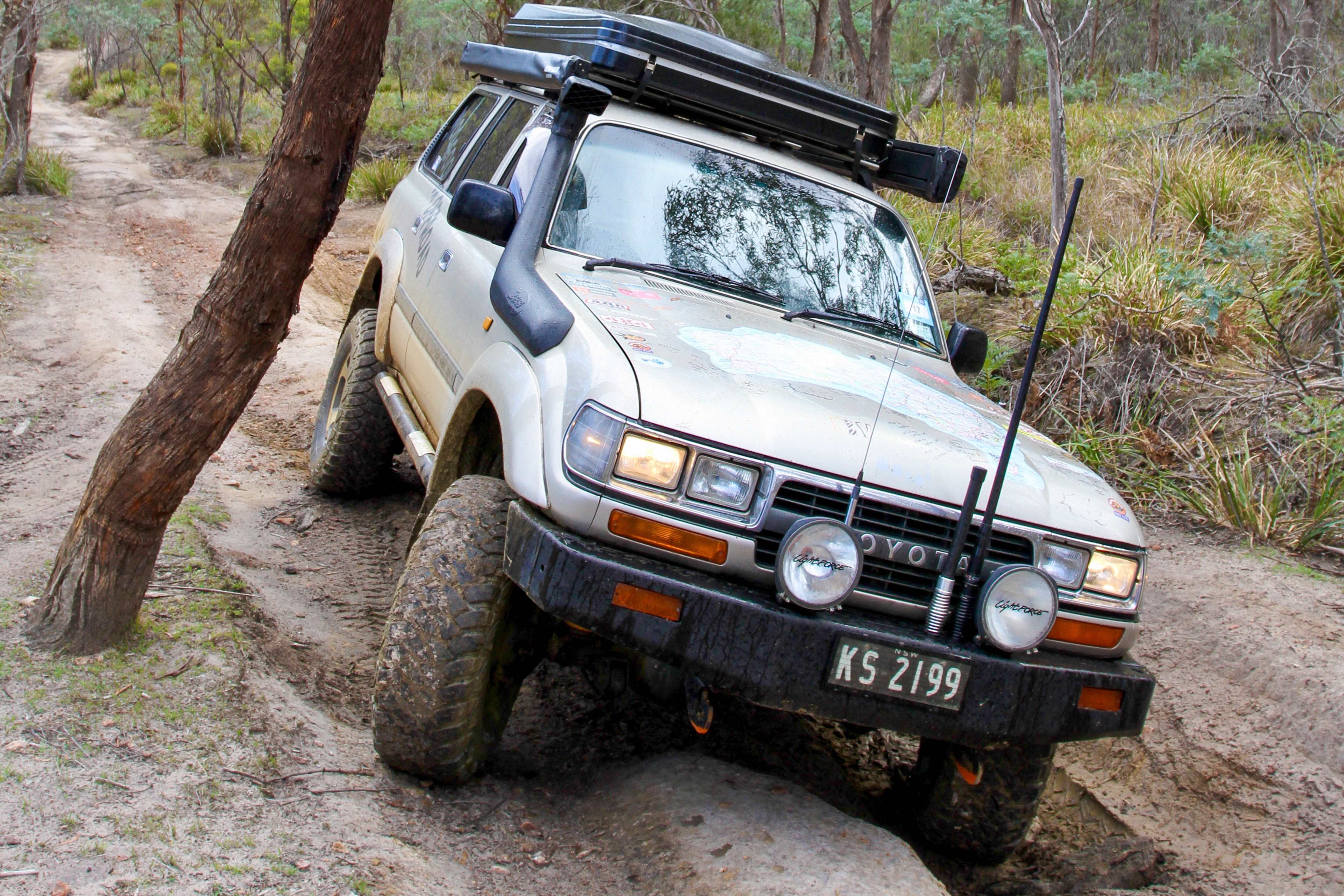
Five things to see and do
1. OatlandsSome 80km north of Hobart on the Midland Highway is the historically important town of Oatlands, containing Australia’s largest collection of sandstone Georgian buildings. The town was established around a military precinct in the late 1820s, with 150 of these mostly convict-built buildings still standing.2. Tumbling waterBlessed with abundant rainfall, Tasmania hosts plenty of waterfalls. Notable among the many cascades are the Lost Falls near Pyengana, the high Meetus Falls on the Cygnet River, and St Columba Falls 30km west of St Helens, one of the tallest.3. Tin menThere’s no missing the influence tin miners have had on NE corner, with plenty of info highlighting the industry’s old points of interest such as the remants of the Anchor Stampers a few kays from the Halls Falls turn-off.4. Little Blue LakeTalking of tin, check out the flooded former Endurance Tin Mine near Gladstone. Now known as the Little Blue Lake, it gets its name courtesy of the bright-blue mineral-rich water. Officially there’s no swimming here, but apparently people do in summer. Hmm, you can have that.5. Free campingOne of the great things about Tasmania is the amount of free camps, and along the way of this adventure there were plenty to choose from in the forest, lakeside or close to the coast.
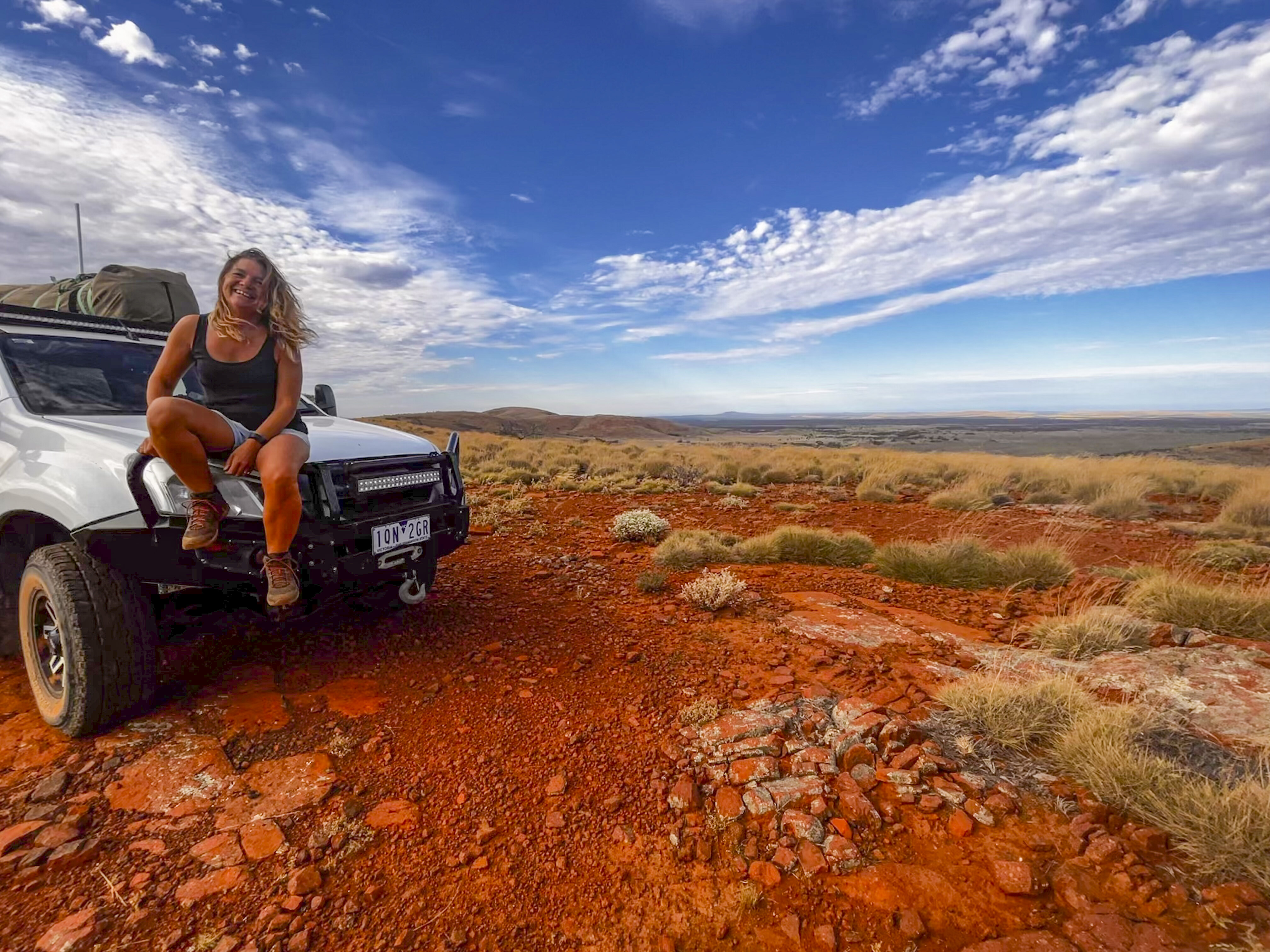
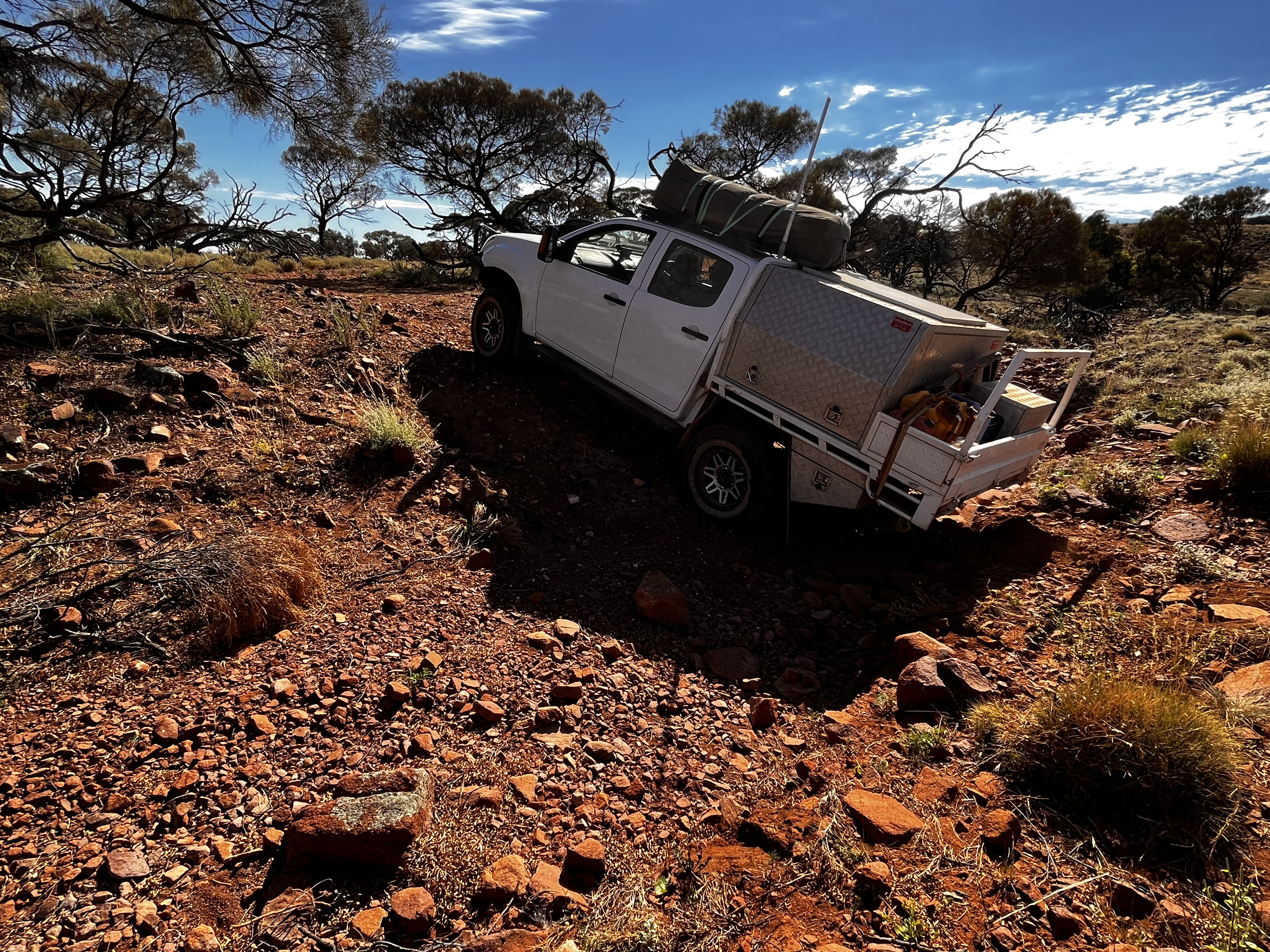
It’s like a body massage on wheels and one of the rockiest four-wheel drive tracks we’ve ever been on, not to mention the slowest. We’re rocked and jolted all the way to the top, barely eight kilometres return to reach the summit, which we can see from the station down below, but it takes us more than an hour. Crawling in low range, over shale and red rock, it’s a climb more suited to billy goats. But it gives the D-Max a good workout, and at the top the view is spectacular. A bonus is picking up some hard-to-find 3G Telstra reception.
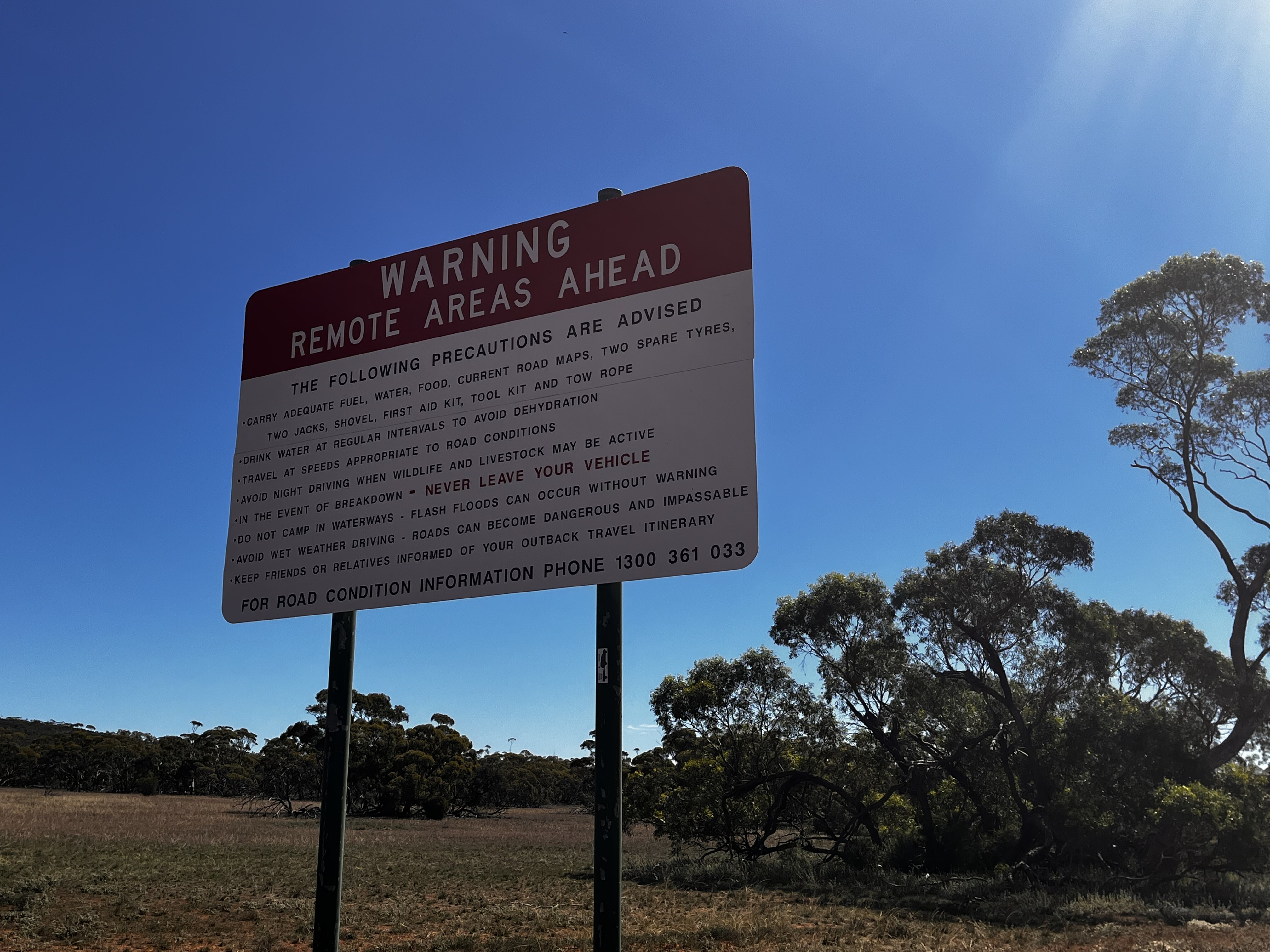
We’re at Mount Ive Station in the Gawler Ranges, located 200km west of Port Augusta and 500km from Adelaide. It’s remote and far from anywhere, so sporadic phone reception is welcome. We’ve just spent a couple of nights camped within the Gawler Ranges National Park at Yandinga Campground, a great base to explore the park by four-wheel drive. One of the best tracks is the LP track where you’ll find plenty of interesting sites including the important Pondanna Outstation, a relic of early station life. Many years ago, Pondanna was the first site to supply hay throughout this region.The Gawlers are full of history. It’s a place of ancient ranges, deep gullies, seasonal waterfalls and rocky gorges. It may not be as popular or well-travelled as the Flinders Ranges, but its remote location is perhaps its biggest appeal. Proclaimed a National Park in 2002, the landscape is renowned for its wildlife and geological formations, like the pillars and organ pipes. But there’s so much more to the Gawlers that gets under your skin, in the best possible way.
Station stay
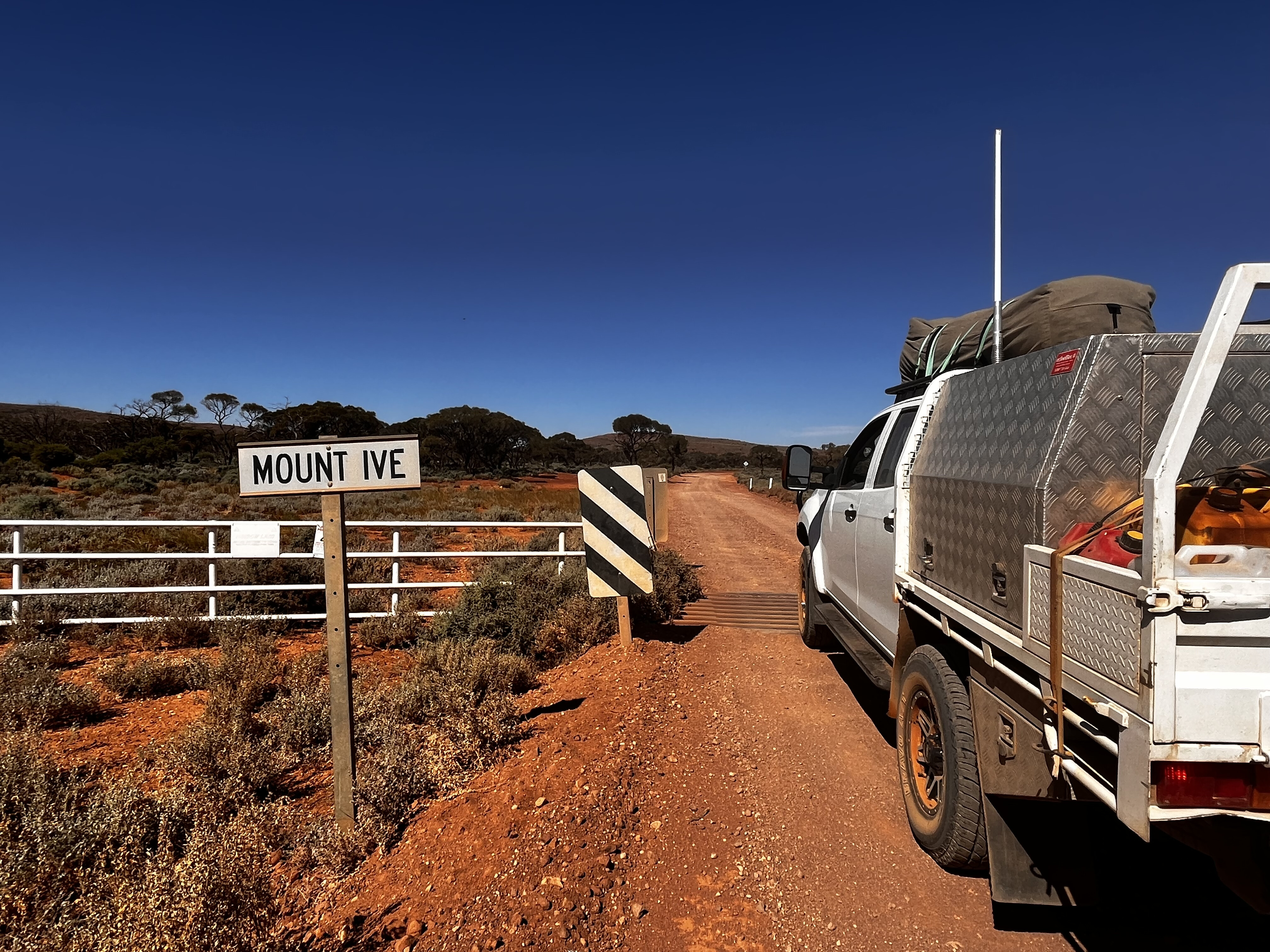
Leaving Yandinga, our Gawler Ranges adventure continues with three nights booked at Mount Ive Station, a place that epitomises the Gawler outback experience.Red earth, wide open space and a dirt road devoid of any traffic except for emus is what you can expect as you drive from the National Park towards the station. Depending on the state of the road, tyre pressures are best reduced on both car and van as the corrugations can be pretty rough. You’ll know you’ve reached Mount Ive when you see the turn-off and the replica submarine half buried beneath the red earth.
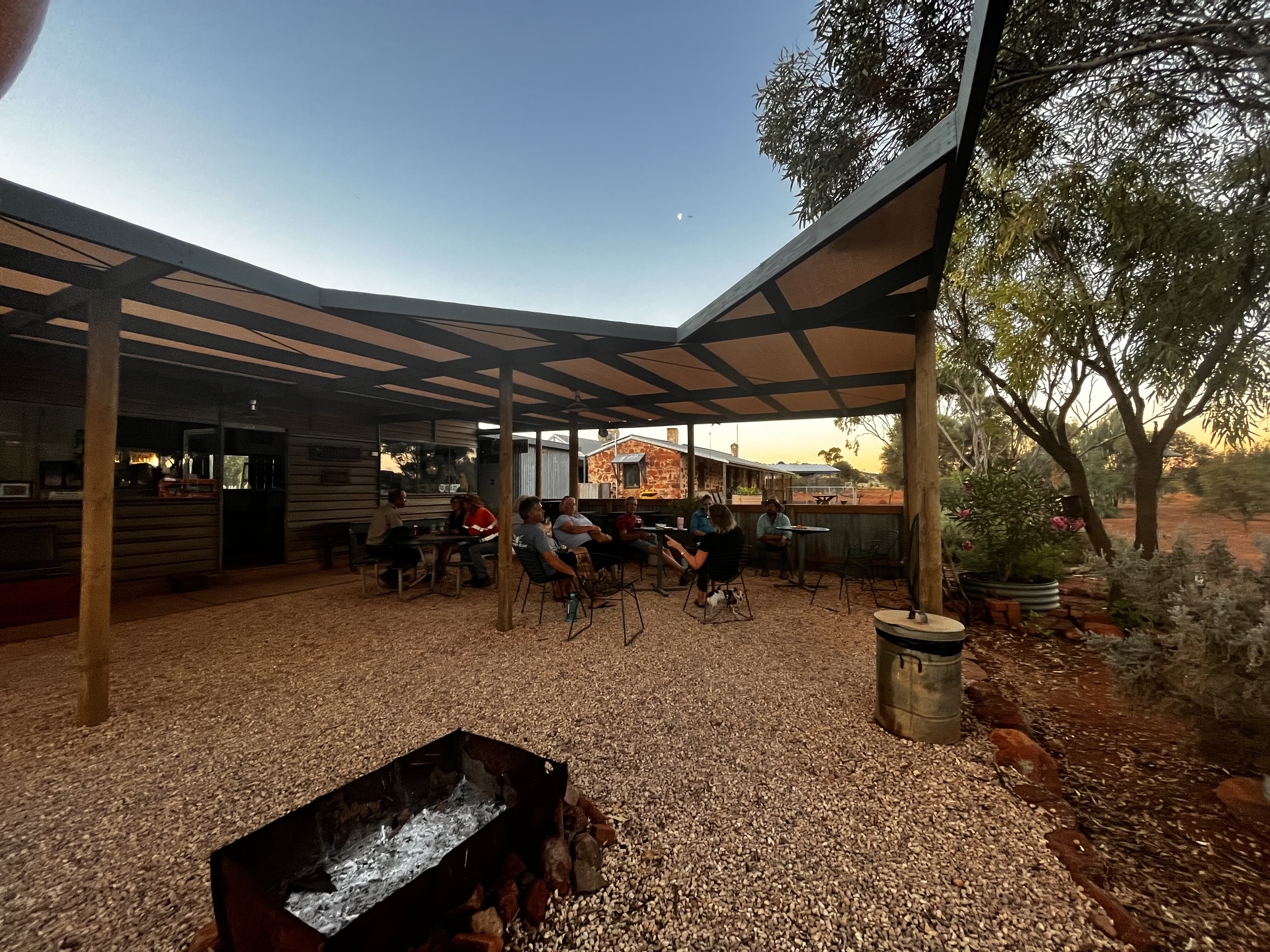
We arrive to a quiet, peaceful campground with only a handful of other campers around. It’s the week before Easter and we can take our pick of spacious powered sites. There’s also plenty of unpowered sites, four en suite dongas, a self-contained stone hut and shearing quarters. Hot water is provided by burning wood 24 hours a day in the donkey boiler. We choose a spot near the camp gazebo; it’s also close to the communal Spinifex Bar where fellow travellers and staff congregate each night to share stories over drinks.We meet the current workers on check-in, Sally and Panda, and find out they’re looking for additional staff to help on the station. We seriously contemplate it as a great way to stop for a while to replenish our finances. We’ve worked out west in Kalbarri months back and the idea of station work is different and appealing. We also meet Sharon and Rob, long-term workers at the station who are back to help out again. Their hospitality is exceptional and the thought of working out here grows. For the moment, however, we’re happy to settle in at camp and plan our adventures for the coming days.
Mount Ive is a working station. It was established in 1862 and since 2002 has been in the Newton family. Today the Newtons run 3500 fine-wool Merinos on their 900km² property, with plans to restock Mount Ive to its 10,000-head capacity. Time it right and you’ll see the shearing in action. However, most people come here for the four-wheel drive tracks that were once old mustering trails.
Track pass
These tracks are continuously maintained and a fantastic way to explore the terrain of the Gawler landscape. There’s a few to choose from and we’ve purchased the $75 pass which gives us access to all the tracks on the property, plus a gate key to reach the shores of Lake Gairdner. Always remember the rule of thumb, leave each gate as you find it. At Mount Ive the gate near the Horse Well tank and windmill marks the start and end of a number of the drives, and from there you can see the homestead and outbuildings.
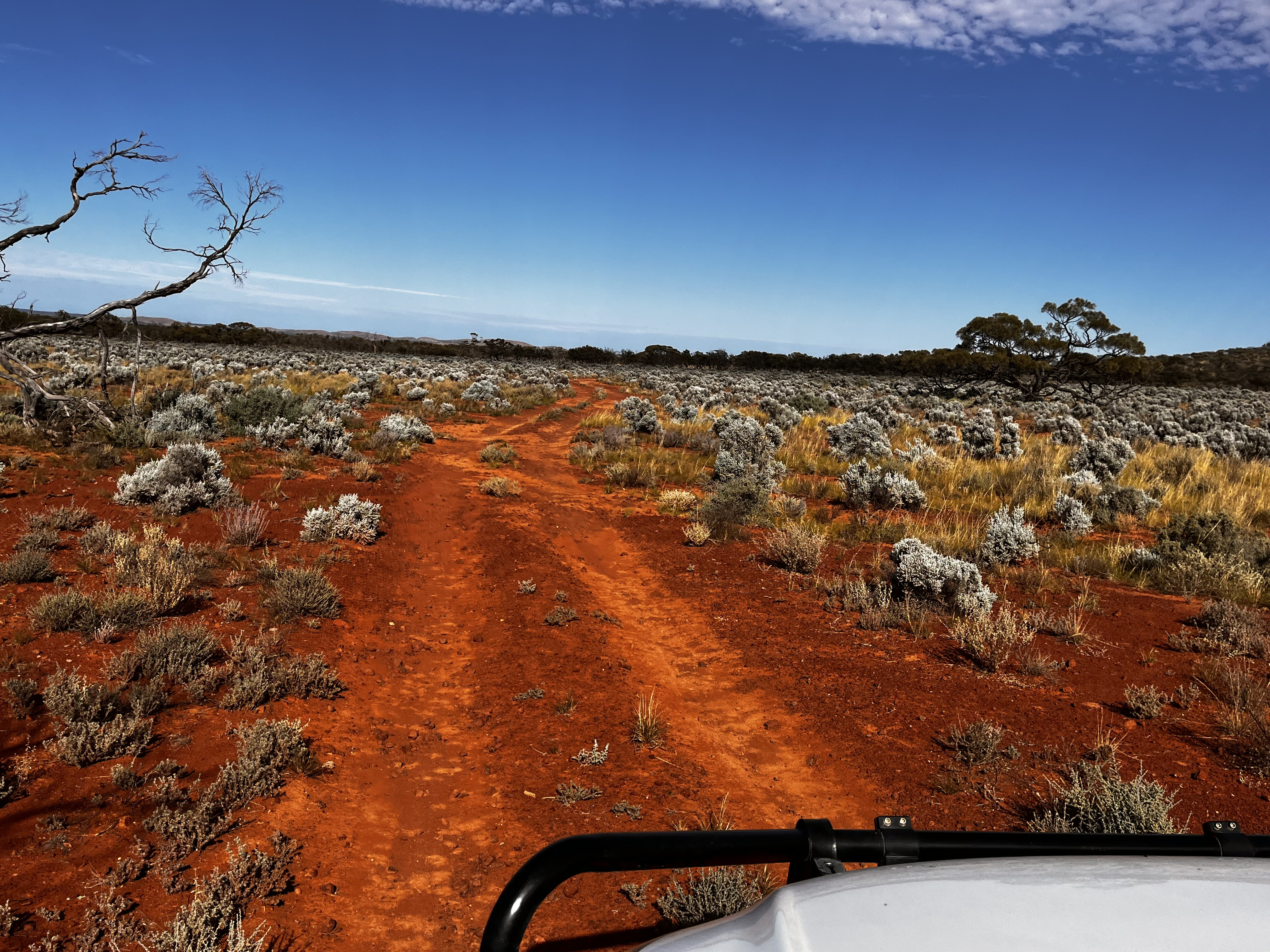
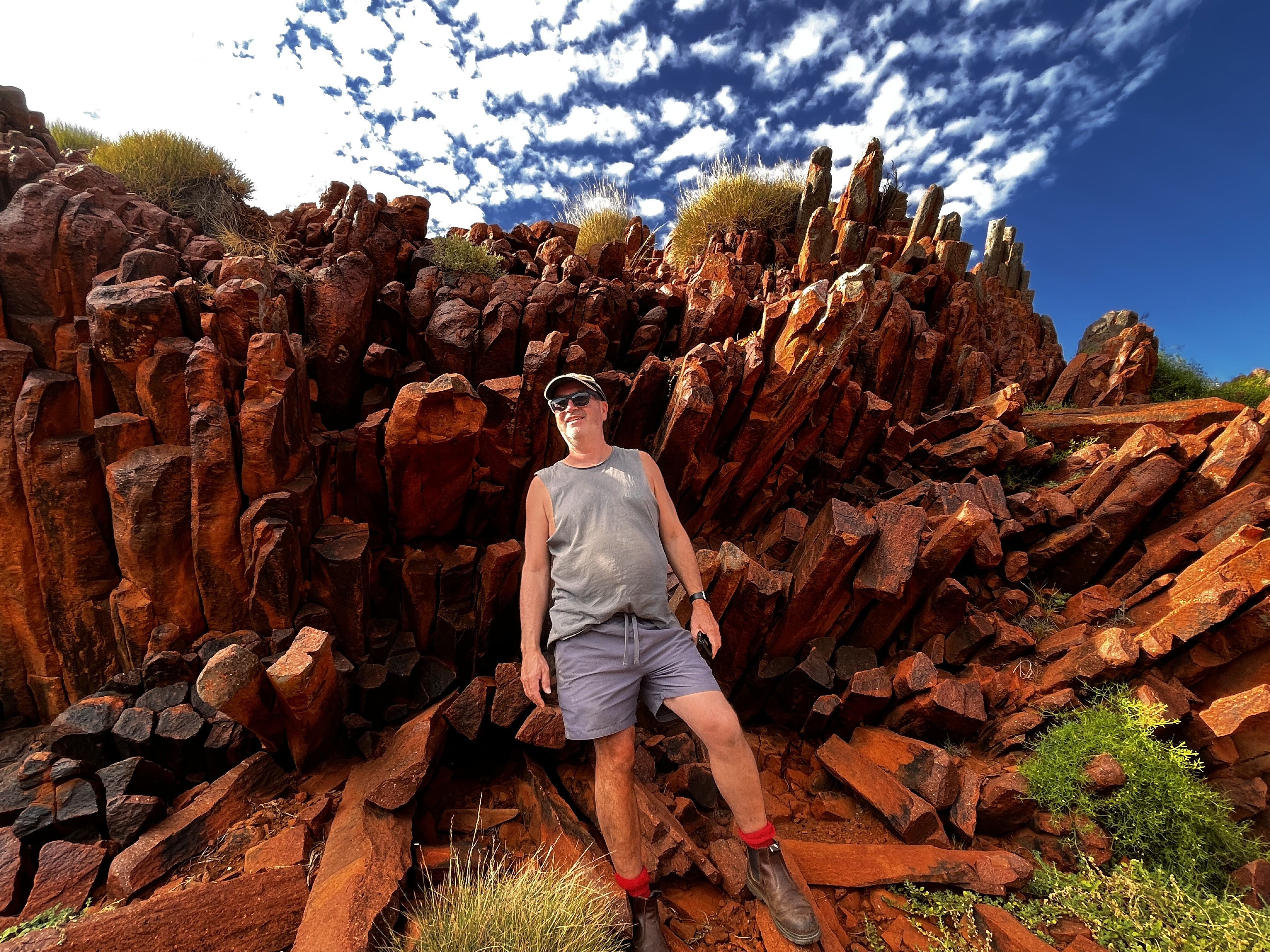
The Flight Path is our first track and a great taste of the diversity of the ranges. With our mud map in hand and tips from Rob and Panda at the station, we navigate 30km over three early-morning hours with a range of scenery that awes me at every turn. Forget about the speed aspect here, as these are remote mustering tracks and it’s slow going. Stones and other obstacles, numerous dry creek beds and small rutted crossings are dotted throughout this arid landscape.We cross dry riverbeds, climb steep ascents to lookouts with views over the rocky landscape, and stop in various locations, marked on our mud path, for short walks to ancient pillars. Along here is a great opportunity to explore these organ pipe formations; they’re some of the more accessible examples of rhyolite columns in the Gawler Ranges. The mud map is essential, as the track becomes almost indistinguishable in places – but the green markers keep us on track.
Some of the time it’s slow going, which is fine as it allows us to appreciate the stunning views and watch out for the many ’roos and emus, most of which are nonplussed at the sight of us. Make sure you detour to the lookout as it offers amazing views across the property and to Peterlumbo Hill in the distance.The Flight Path is named after Graham Flight, who spent days of hard manual work on this mustering path. Today it’s marked as medium to challenging and a high-clearance vehicle is definitely required.That afternoon, after going back for lunch, we tackle the next drive to Mount Ive summit. You can see it from the station but getting up there proves to be one of the slowest and rockiest tracks on the station. Then later, just before nightfall, we head out again to see the giant wombat holes. It’s barely ten kilometres and an easy and scenic drive to reach the seriously impressive holes. We had hoped to see some of the southern hairy-nosed wombats in their local habitat, but they proved elusive.
Billy can spotting
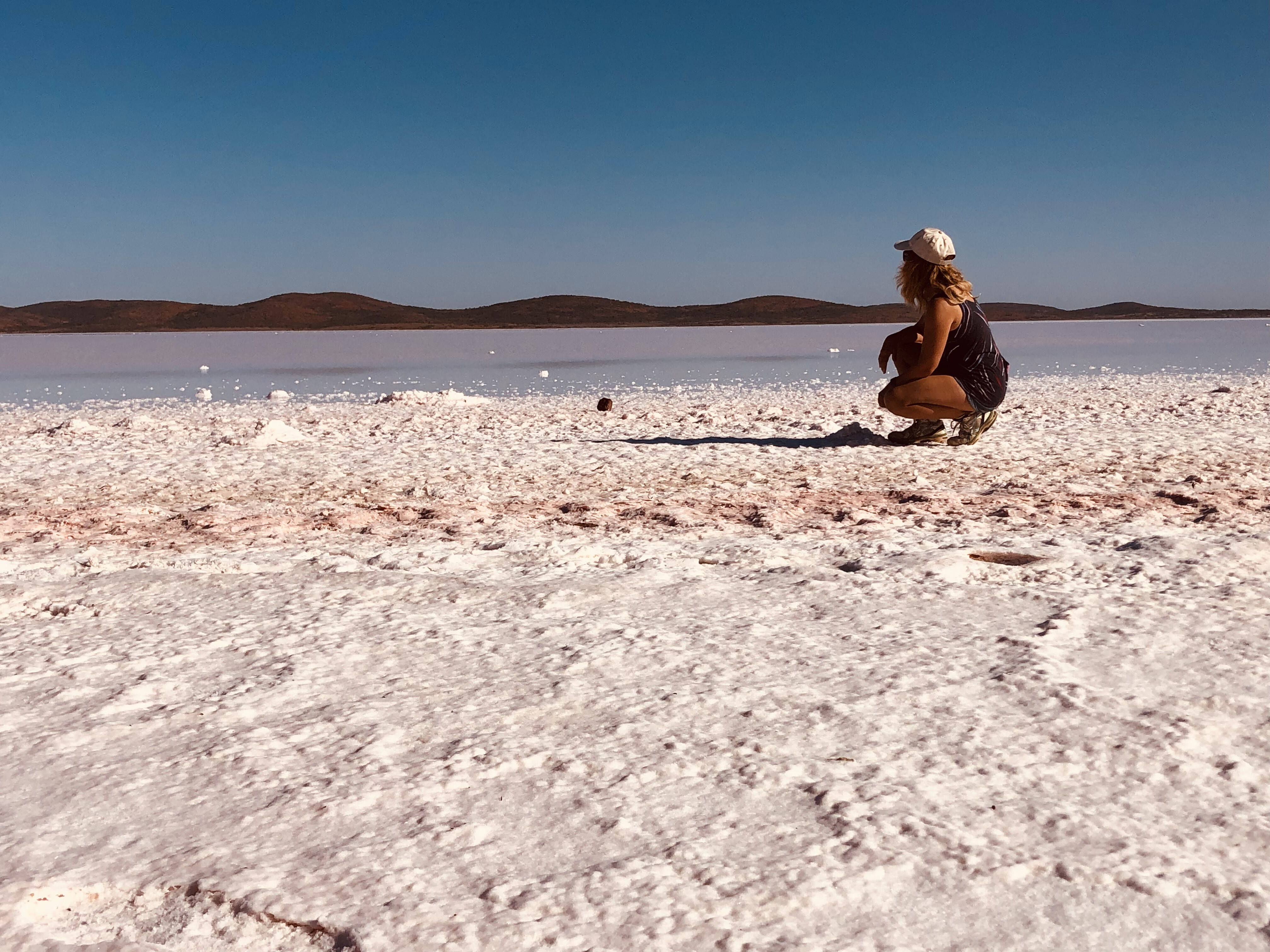
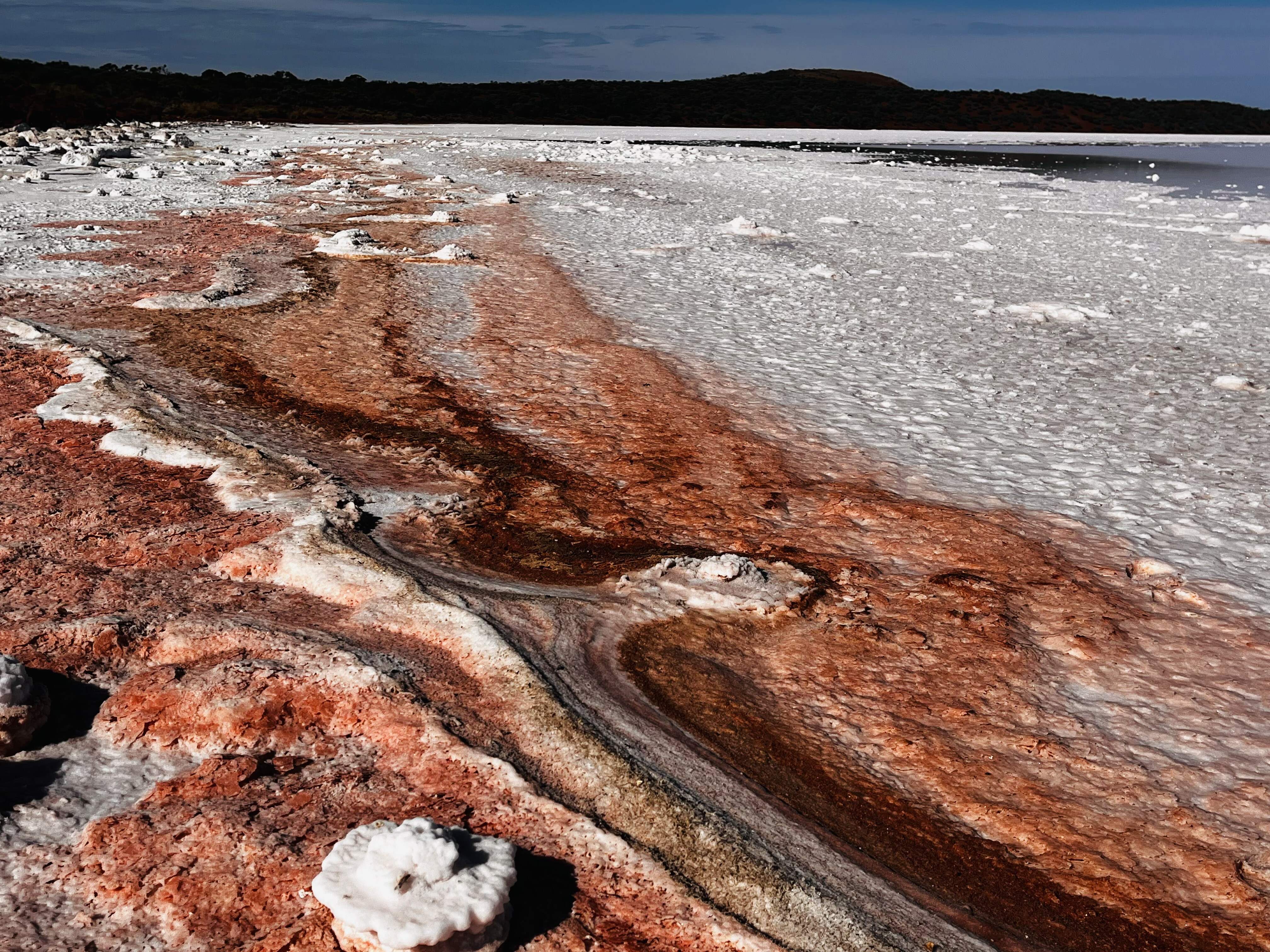
Along the Billycan drive is great diversity in the landscape. The colours are bright and green, and the hills full of yellow wildflowers that contrast against the red-rock ranges. It’s one of my favourite drives on the station for this very diversity and the brilliance of the colours. Not to mention that looking out for billy cans hanging from trees is a lot of fun – what a great idea to mark a track!The absolute highlight of a stay at Mount Ive Station is a trip out to see the stunning Lake Gairdner, the third largest salt lake in Australia. Located 35km north from the homestead, Lake Gairdner is majestic and breathtaking, especially that first sight of the dazzling white of the salt bed against the red earth. It’s quiet, pristine and, with not another soul around on our visit, walking on the salt bed is surreal. The crunch underfoot is the only sound – even mid-morning there was no one else there. With the recent rains, there’s water in the lake and it makes for an amazing sight to see the crystal-clear water on top of a dead flat salt crust. If I ever go back again I’d visit at sunrise or sunset for the amazing reflections, but anytime is spectacular. As for staying overnight, camping is only allowed at Lake Gairdner during the annual Dry Lakes Racers Australia Speed Week.
With the key to Lake Gairdner, there’s also access to a great Organ Pipes walk and the Embankment, an impressive and historic stone wall built in the late 19th century to catch water. The Embankment is a favourite watering hole for emus and ’roos, and even a refreshing dip for humans when the temperature soars.Back at the station, keen golfers can have a go at the ‘Dirty Greens’ 10-hole golf course challenge. Having recently completed the Nullarbor Links I gave it a miss, but it looked entertaining.Always check out the roads beforehand if you intend to head out to Mount Ive. Roads can change quickly in the outback, with unpredictable weather conditions. However, don’t let that put you off. Mount Ive is the quintessential outback experience – it has adventure, hospitality, room to breathe and that red earth beauty that gets in to your soul. It even has its own airstrip, fuel and basic supplies, but come well-prepared … and make sure you bring a big dose of adventure. Our adventure almost led us to an outback job, , but not quite.
5 things to see and do
1. Gawler Ranges National ParkIt may be accessible by high-clearance 2WDs, but Gawler Ranges National Park is best explored by 4WD. The park is one of Australia’s newest and protects rare and threatened plants and animals, including crimson mallee and the yellow-footed rock-wallaby, and is famous for its Organ Pipes rock formations.2. Lake GairdnerMount Ive Station offers a $75 pass for access to all the tracks on the property, plus a gate key to reach the shores of Lake Gairdner, Australia’s third largest salt lake. The pure white salt lake is over 150km long, up to 48km across, with the salt up to 1.2m thick in places.3. Dry Lake RacersLake Gairdner is also the venue for Dry Lake Racers Australia’s annual Speed Week, held next from March 20 to 24, 2023. As one of a few places on the planet where you can go as fast as you want, Speed Week attracts an eclectic mix of cars, motorcycles and trucks testing their limits.4. Park stayGawler Ranges NP has several campgrounds with Chillunie, Kolay Hut and Mattera accessed by 4WD only, while Scrubby Peak, Waganny and Yandinga campgrounds suit 2WDs and caravans. The NP’s restored Pondanna Outstation is also available for group accommodation, with six main rooms.5. Mount Ive StationMount Ive is a family owned sheep station situated in the heart of the Gawler Ranges and is a great place to enjoy the best of the South Australian outback. Accommodation here spans powered and unpowered campsites, en suite dongas, the restored Little Stone Hut, self-contained huts, and the Shearers’ Quarters and Stone Rooms sharing communal kitchen and bathroom facilities.
UPDATE: Mercedes-Benz EQC confirmed for 2024 debut
The upcoming Mercedes-Benz EQG – an all-electric version of the iconic G-Class SUV – will make its market debut in 2024, the company’s chairman has confirmed.
Speaking with media this week, Mercedes chairman Ola Källenius said buyers can expect to see the EQG launch somewhere around the middle of the year, although actual sale dates are likely to vary by market and region.
Källenius looks to have gone all-in on the idea, too, telling reports: “From now on, going off-road is electric”.
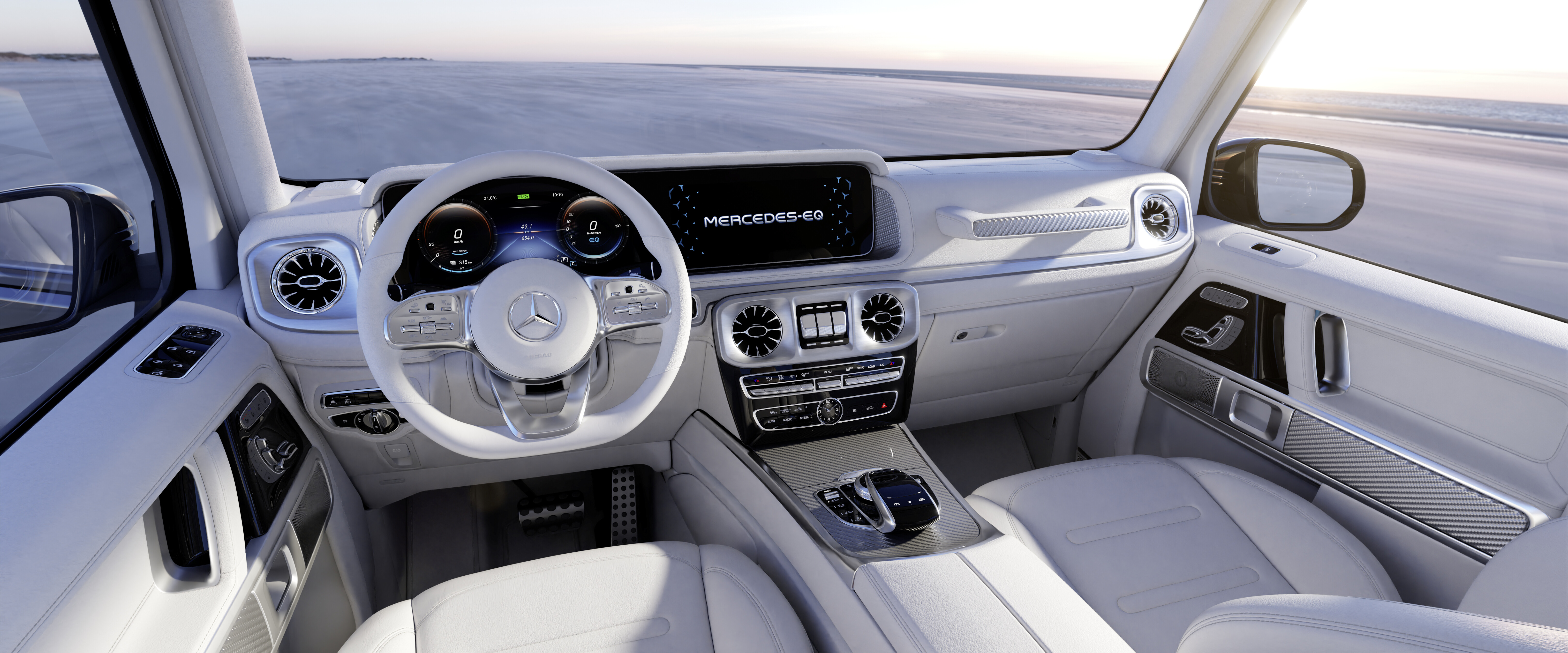
The news follows confirmation in 2019 that an electric version of the G-Class was in the works, to build on the brand’s growing range of ‘EQ’ models like the original EQC, the newer EQA, the EQB, the EQS (and an EQS SUV) and now also the EQE sedan and upcoming EQE SUV.
There is also some irony to the confirmation of a 2024 launch for th EQG, with customers claiming earlier this year that wait times for the ‘regular’ G-Class models have blown out to 2024.
We can expect at least one fan to throw his hand up for the electric G-Class, with avowed EV fan Arnold Schwarzenegger having revealed his own electric-converted version back in 2017.
Watch for more on the EQG to come in the months ahead.
The story to here
September 2021: Mercedes EQG concept revealed
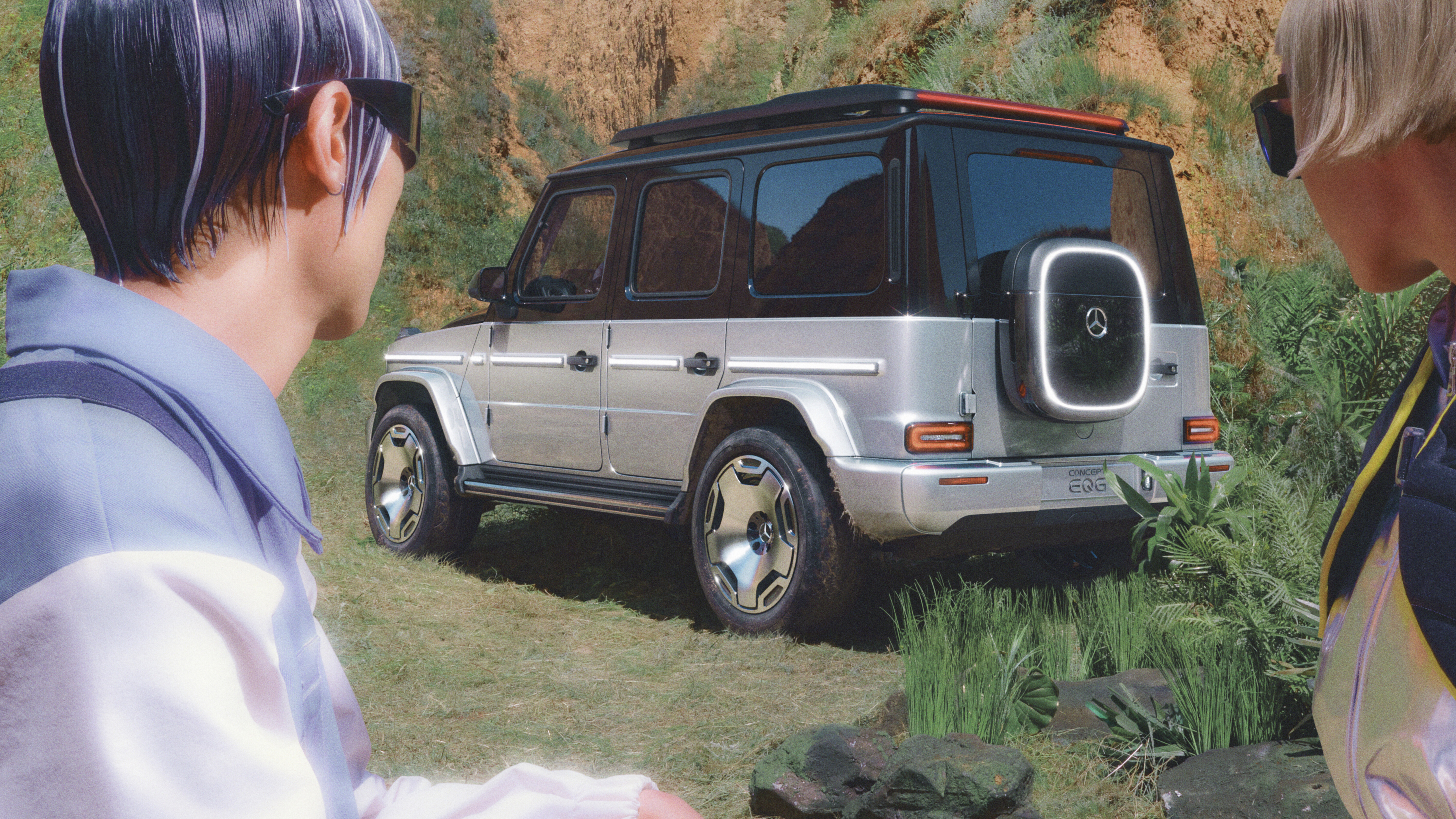
The 2024 Mercedes-Benz EQG has been shown early in the form of an all-electric concept car.
Mercedes-Benz has previewed the battery-powered G-Wagen at the 2021 Munich motor show, updating the 42-year-old premium off-roader for the 21st century.
But while Mercedes has provided few technical specifications for the EQG Concept – exact details are expected ahead of the official launch of the 2024 EQG production car at a later date – it appears as if the vehicle’s off-road capabilities have been maintained.
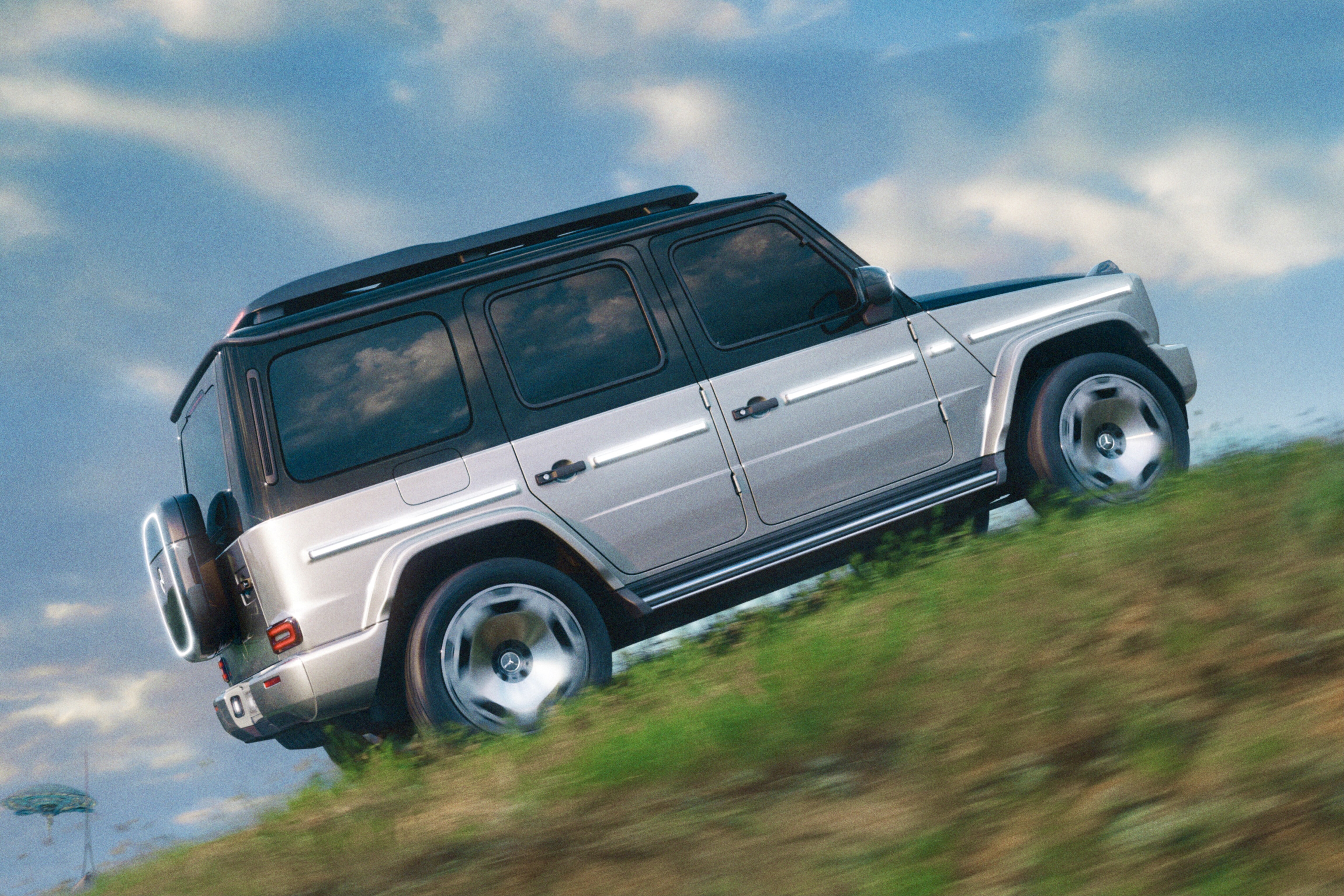
The EQG Concept retains its ladder-frame chassis and rigid rear axle, specially-developed for the integration of electric motors, with drive sent through a two-speed gearbox to replicate low-range.
Batteries mounted in the chassis help to lower the vehicle’s centre-of-gravity, while the high torque output generated by the four electric motors lends itself to off-roading – aided by the ability to send power to whichever wheels have the most traction.
Power figures haven’t been provided, but expect some big numbers when the production car is eventually revealed.

Trademark filings uncovered back in April point to two potential models: EQG 560 and EQG 580. It’s possible EQG 580 could borrow its powertrain from the EQS 580, due to land in December with 385kW and 828Nm.
However, while the EQS 580 has dual electric motors, the EQG Concept has a quad-motor powertrain – perhaps providing us with a glimpse of what we can expect from an EQG from AMG.
To help differentiate it from its petrol and diesel-powered ancestors, the EQG Concept gets a blanked-off grille with an integrated ‘3D effect’ light pattern, and LED light strips adorned across its two-tone body. A set of 22-inch alloys have been fitted, which are vaguely reminiscent of AMG’s iconic ‘Monoblock’ wheels.
A lockable storage container on the rear tailgate replaces the spare wheel, with a design replicating a Mercedes Wallbox – a home charging station for electric cars.
The G-Class was one of four fully-electric vehicles to be unveiled by Mercedes-Benz at the exhibition – two concept cars and two production cars – as the German carmaker forges ahead with its zero-emissions vehicle portfolio.
In July 2021, Mercedes-Benz announced every all-new vehicle platform would be electric-only from 2025 onwards, and has previously confirmed an electric G would form part of its line-up.
“The [electric vehicle] shift is picking up speed – especially in the luxury segment, where Mercedes-Benz belongs. The tipping point is getting closer and we will be ready as markets switch to electric-only by the end of this decade,” Mercedes-Benz CEO Ola Källenius said at the time.
“By managing this faster transformation…I am convinced that we will be successful in this exciting new era.”
When your 4×4 journey has included a succession of Toyota vehicles you soon get to the point when the time comes to create your ultimate LandCruiser.
A build that takes in all the aspects that you’ve learnt over the years about what works on a 4-wheel drive and what doesn’t. The equipment that you like and dislike, and the gear you really want. Plus there’s always that new piece of kit that you just have to have.
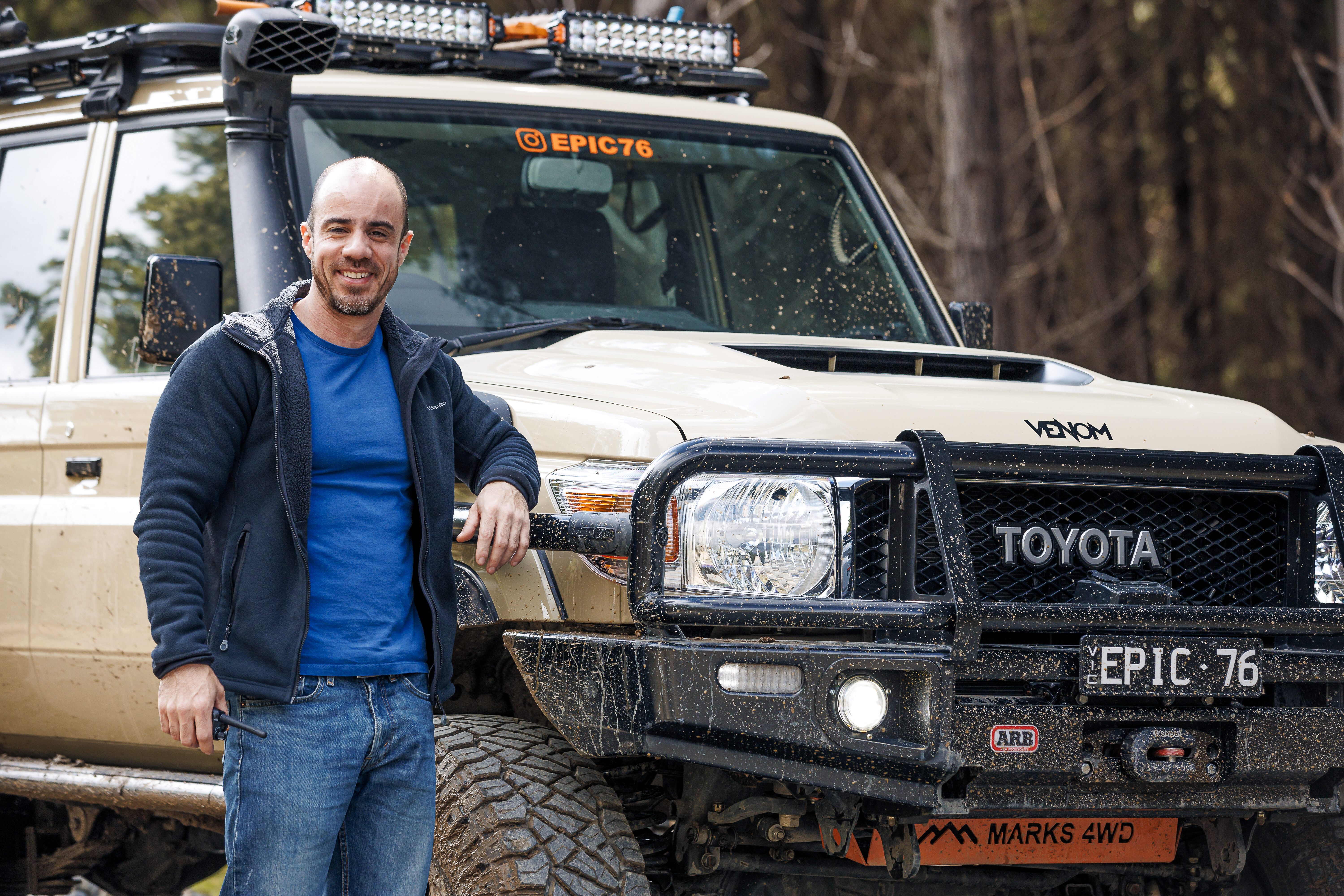
So it was for Melbourne 4-wheel driver Luis Barrera. Luis had a 2011 LandCruiser 76 as his daily ride after owning a few of short-wheelbase LandCruisers overseas, but like many owners he saw the shortcomings of the modern 70 Series models.
“I already owned a 2011 76 Series and wanted to take it to the next level by fixing all the issues that Toyota overlooked when designing it,” Luis recalls.
On track
One of those issues was the wheel-track discrepancy, where the rear axle on the VDJ 70s is considerably narrower than the front. It’s long been a source of frustration for owners and there are several aftermarket solutions available to correct it by widening the rear track to match the front.
Other things Luis found his old 76 lacking were the GVM capacity for a well-equipped tourer, the performance of the standard brakes, including the handbrake, and the legal tyre size limits.
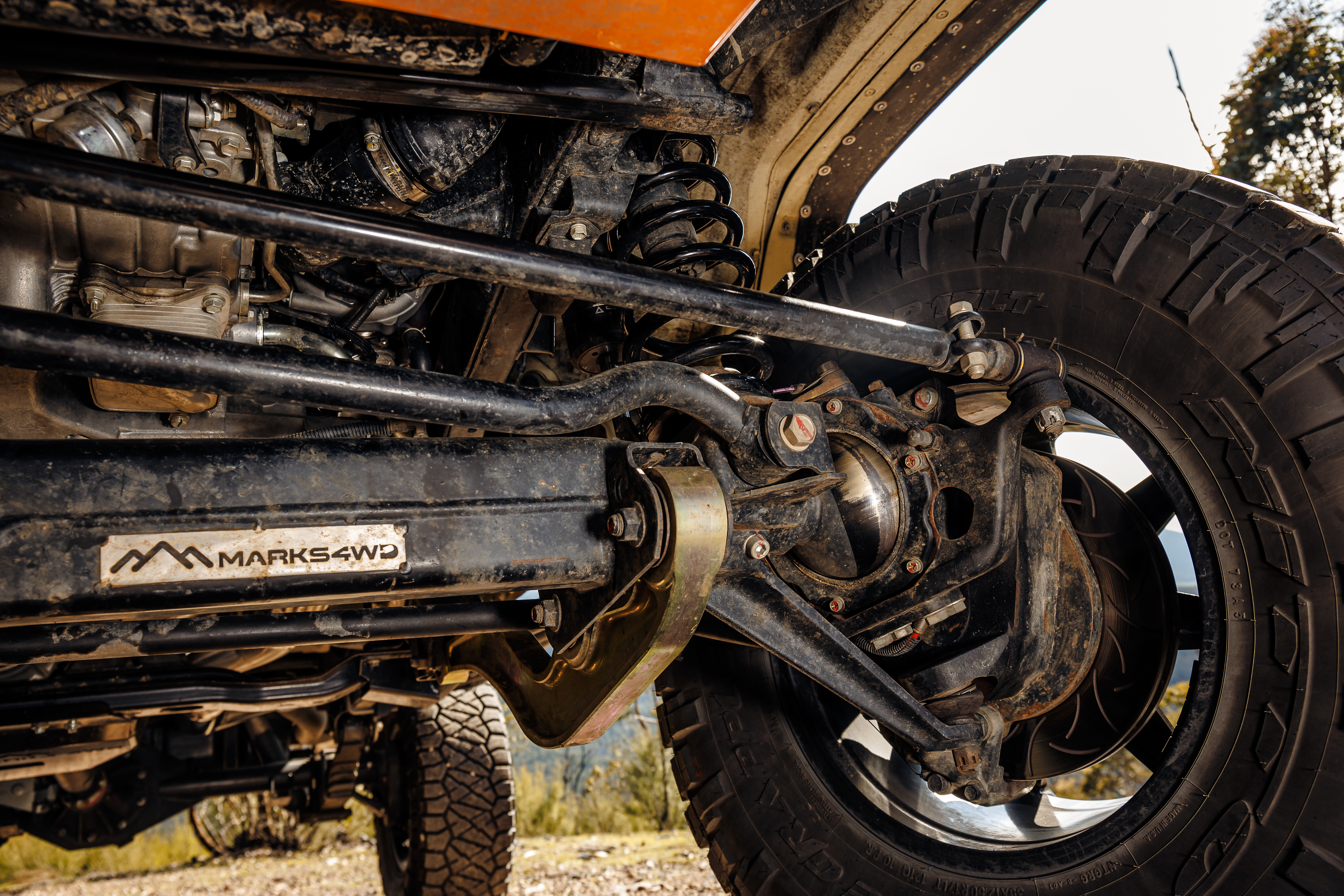
“It just made sense to fix all of them at once,” says Luis, “and the way to do that was with a portal-axle kit from Marks 4WD Adaptors.”
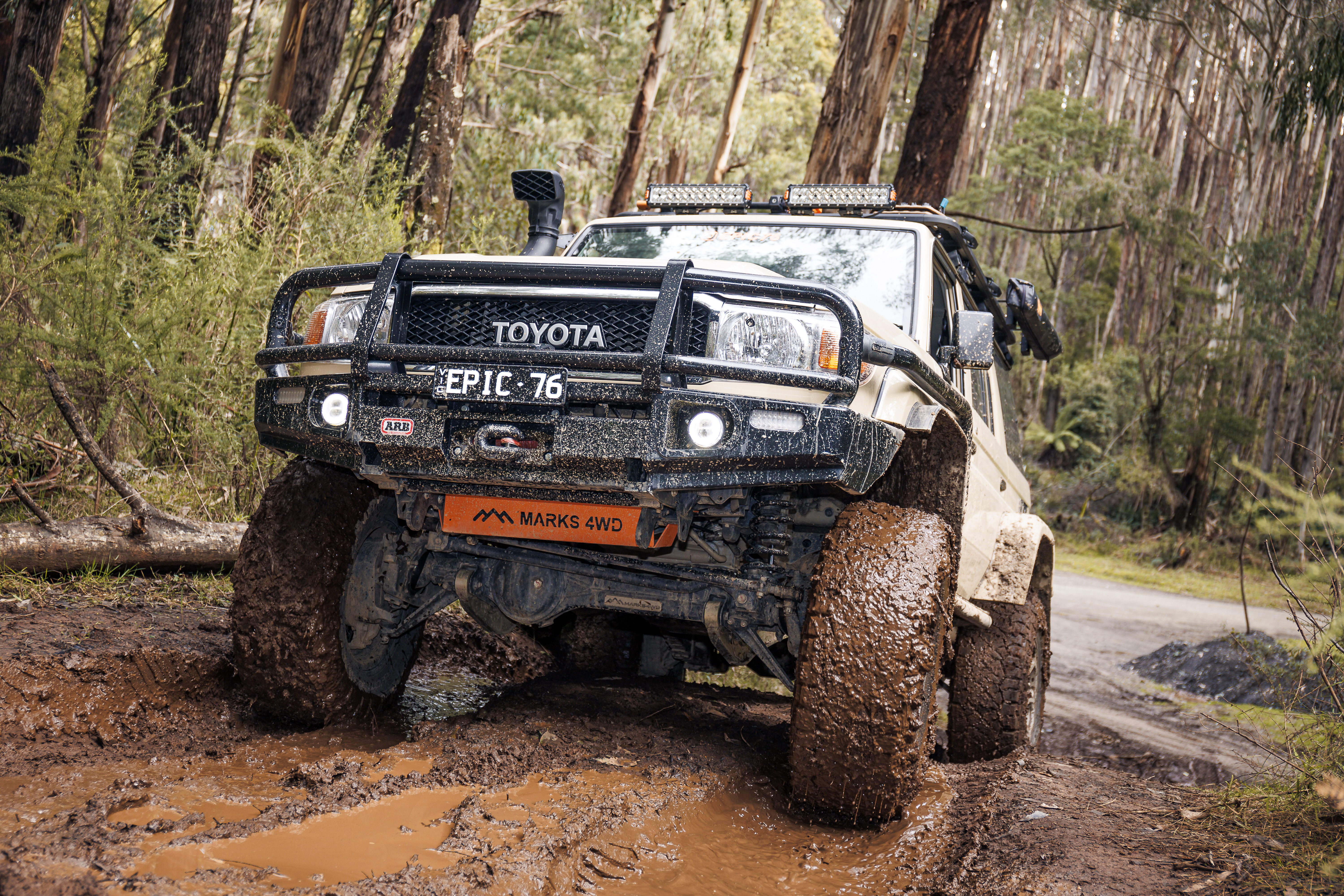
The Marks portal kit is popular with 70 Series owners for just that reason; it addresses all the above issues and improves the vehicle in many ways. It widens the wheel track front and rear to not only have them matching but also the extra width gives added vehicle stability; it raises the ride height by four-inches, fixes the standard Toyota handbrake and allows you to legally run 35-inch tyres.
The catch is that the kit is costly and if you’re in Victoria as Luis is, the kit needs to be fitted before the car is first registered as part of the Second Stage Manufacturing (SSM) approval process.
So Luis went out and bought himself a new 2021 LandCruiser 76 which went straight to the Marks 4WD workshop before it was registered for the conversion.
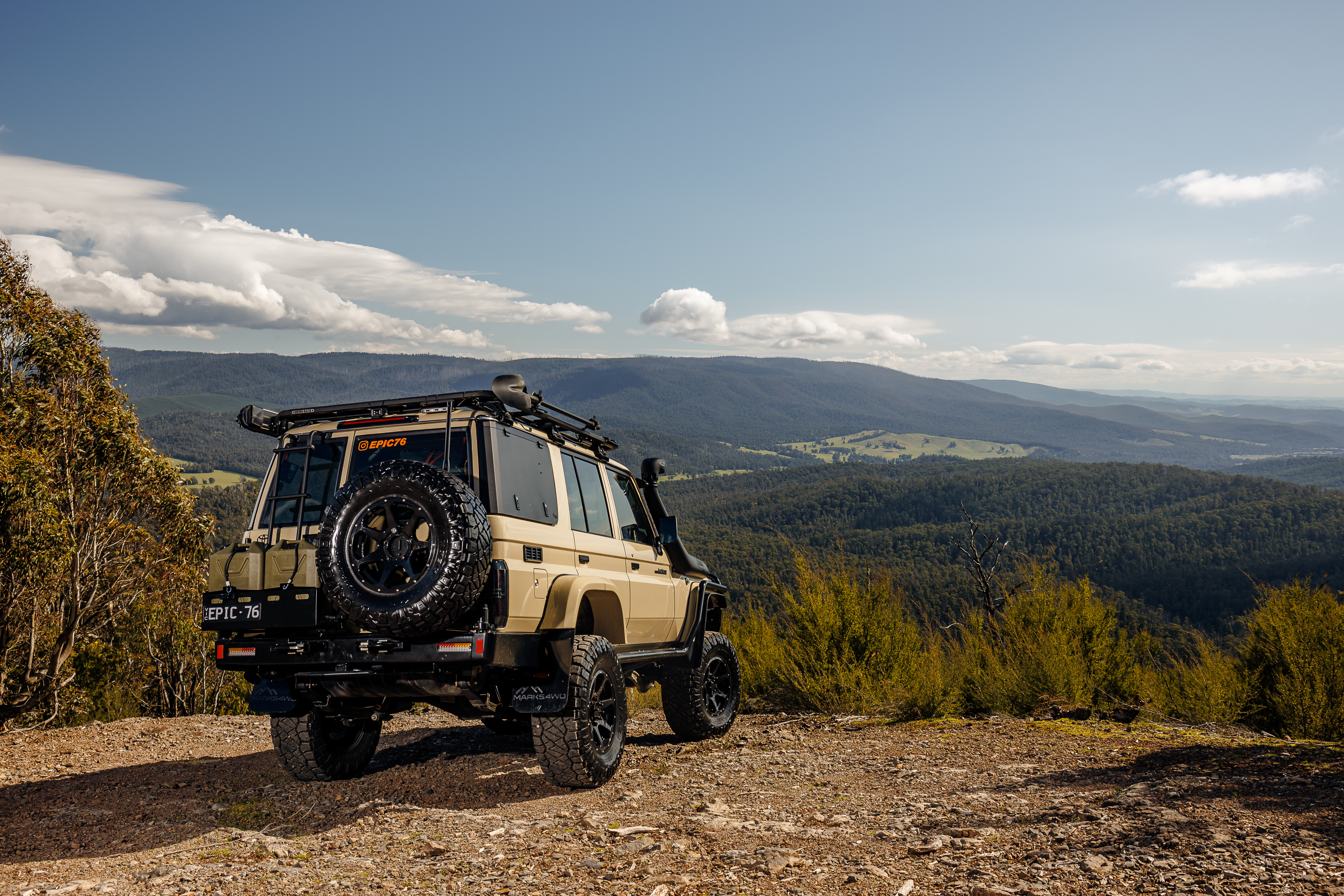
By the time the Cruiser rolled out of the workshop on its new axles, wheels, tyres and suspension, it also had a brake upgrade with the Marks hydro-booster upgrade and slotted rotors front and rear. The tyres are now 35×12.5 Nitto Ridge Grapplers and they are covered under the rear by custom flares created by South-East Queensland Marks 4WD dealer, Mick Tighe Automotive.
The wheels bolt to the portal axles which are connected back to the chassis using JMACX billet arms and an ARB BP-51 suspension kit which gives a further 2-inches in height.
Marks also fitted the frontal protection with the fog lights in the ARB bullbar now serving as the main low-beam headlamps. This is done to lower the lights to meet the ADR specification with the higher ride height of the car.
The plan
Once the Cruiser was fitted with its EPIC 76 number plates, Luis was then able to get to work himself on building the truck he always wanted.
A Rhino-Rack platform mounts a pair of Stedi light bars at the front, a set of MaxTrax, shovel and axe, while there are more Stedi floodlights at the back and on the sides of the rack for camp lights.
To keep the lights and accessories powered, Luis has installed a sealed and brushless 200amp alternator to avoid issues with mud and water ingress. A pair of Redarc DC-DC chargers keep an 800CCA main battery and 200amp lithium battery charged with a Redarc solar panel and Enerdrive monitor helping out.
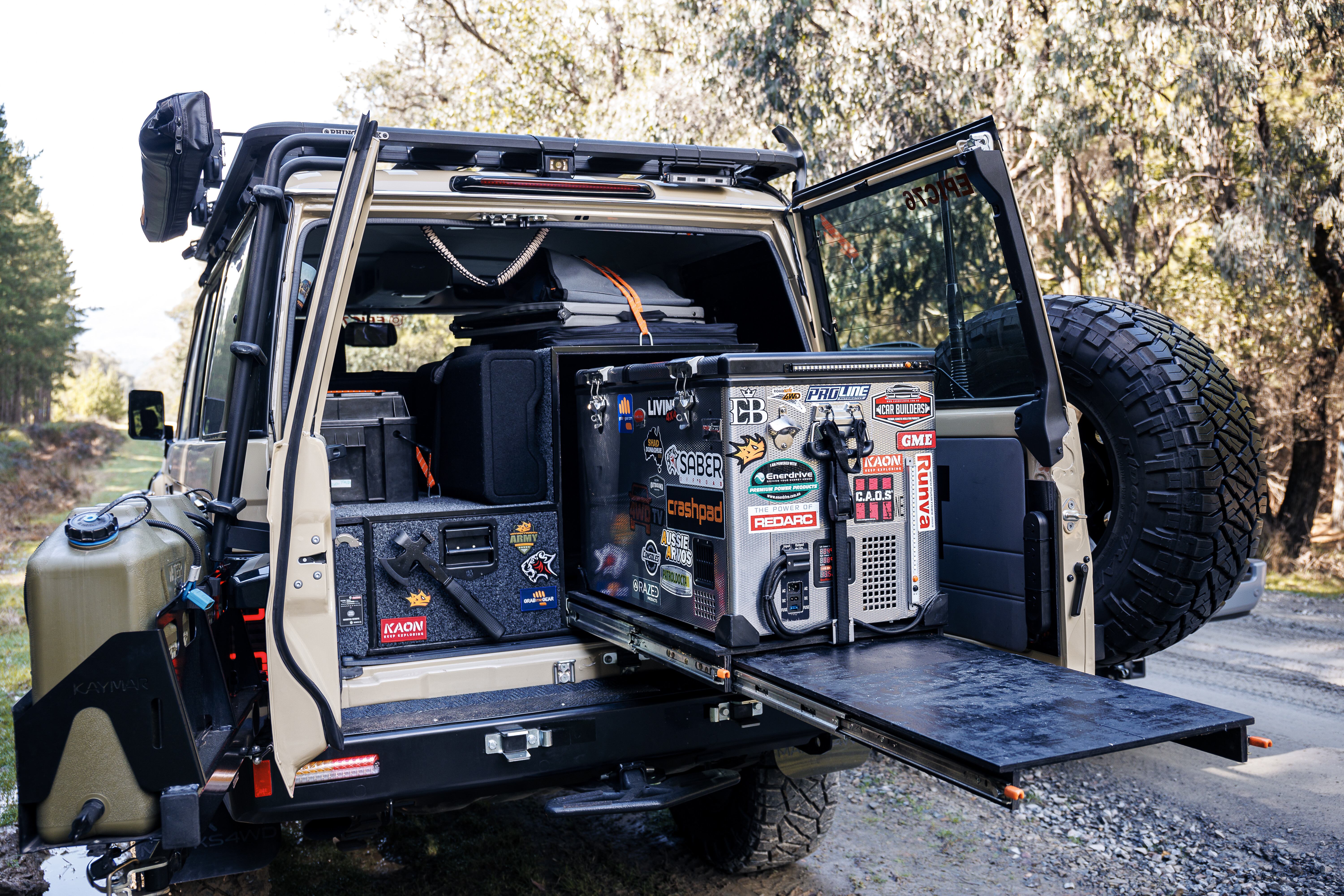
There’s a Redarc 2000W inverter to feed and that is used to power things like the induction cooktop, toaster and kettle as well as charging other accessories.
Luis built his own rear cargo set-up to suit his travel and camping needs. It includes drawers, a water bladder and a fridge slide that carries a 66-litre Snowmaster fridge and has an extension table for use when camping.
Up front, a roof console provides more storage and mounts a GME XRS UHF radio. Luis has upgraded the sound system for tunes by fitting a Pioneer head unit, Kicker and JL Audio amplifiers, a Kicker sub and Morel Virtus 3-way speakers.
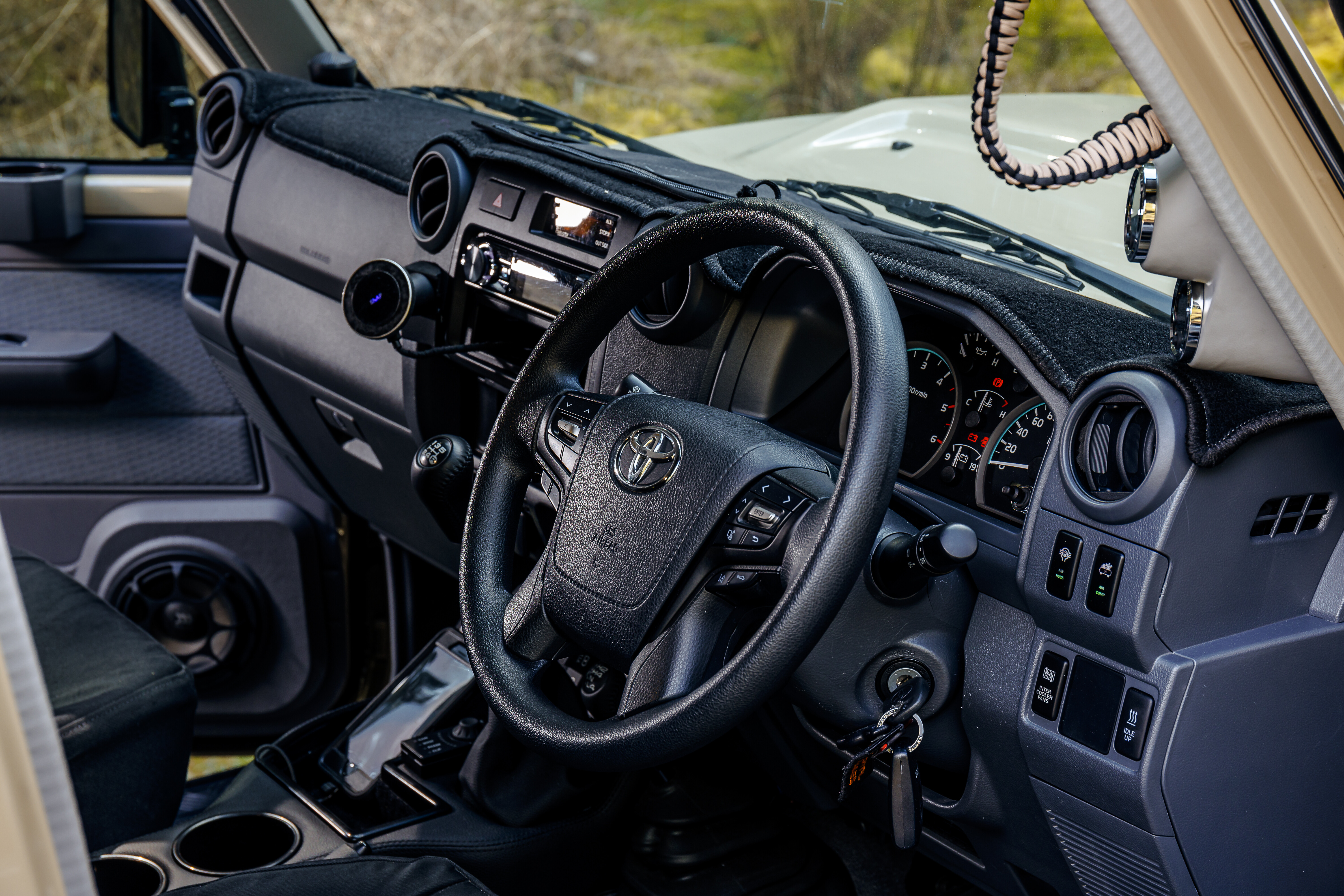
To make the listening experience and general driving a whole lot more pleasant, sound deadening was applied to the floors, inside the doors and on the roof of the Cruiser to get rid of that commercial van tinniness they have.
Black Wolf seat covers protect the Toyota seats from dirt and grime, One Stone armrests sit atop the doors to give your elbows somewhere to rest, while Luis replaced the internal grab handles with cool looking paracord handles from Custom Cords.
DIY with help
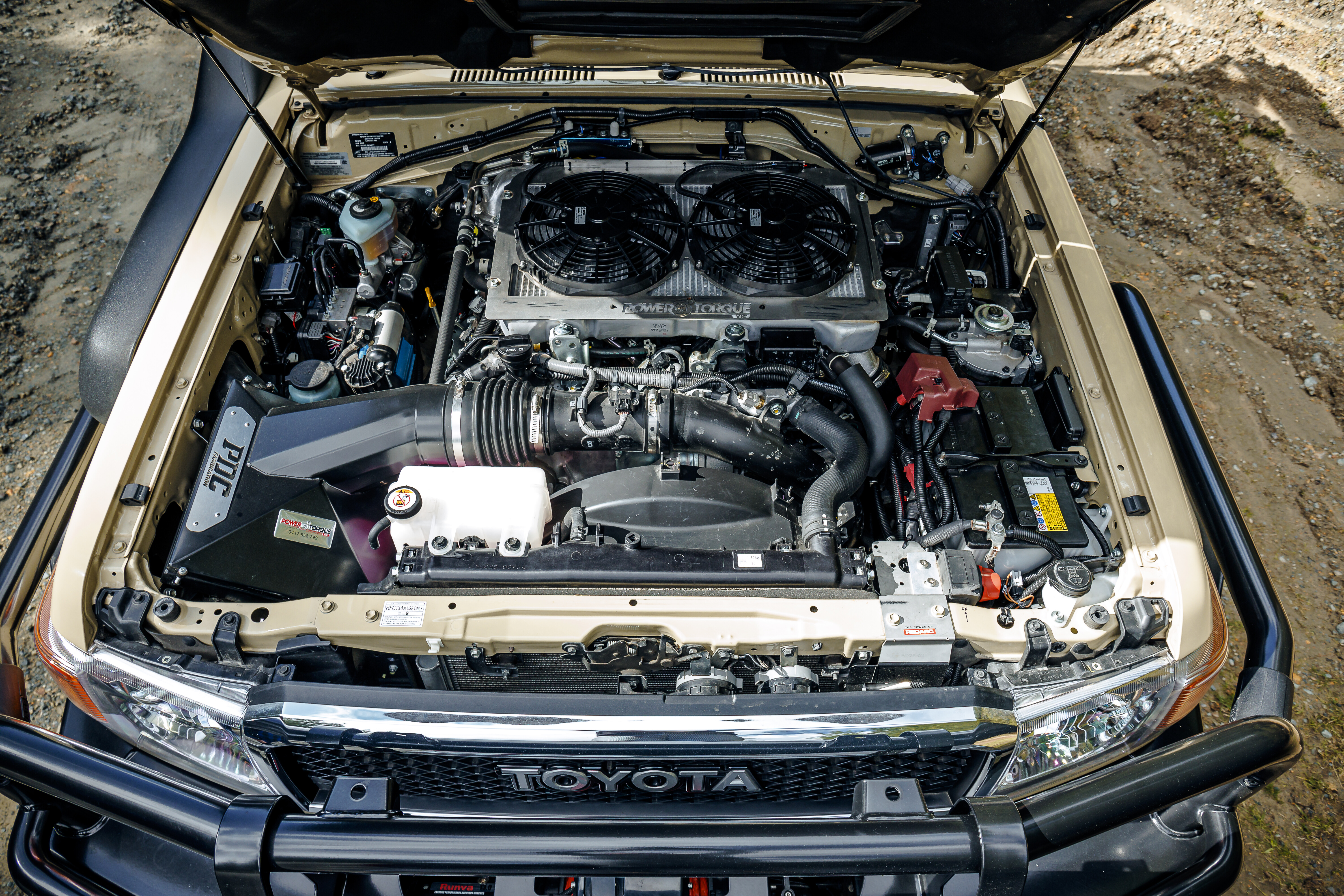
Luis has handled most of the build himself, only going to the experts for a couple of key specialist items. This includes the original fit-out and SSM approval by Marks 4WD, and when it came time to squeeze a bit more out of the 1VD engine, he turned to the well-respected Power Torque Victoria for a dyno tune and tweak.
Steve “Boothy” Booth from Power Torque replaced the factory turbocharger with a G350 from Gturbo, fitted a new airbox from Patroldocta that gets its air from a Safari Armax snorkel, and replaced the standard clutch with a 1300Nm unit from NPC that will better cope with the new-found grunt.
The 4-inch stainless-steel exhaust system is from VDJ specialists GSL. On the dyno, Power Torque retuned the factory ECU and the Cruiser now puts out a healthy 801Nm and 207kW at the treads ‒ Epic!
With its added ground clearance, bigger tyres, tuned V8 engine, and overlanding fit-out, Luis has created what could be the perfect 76. Well, perfect for him at the very least.
“My 76 is my daily so I need a vehicle that can be driven around the suburbs yet also be very capable on trips,” says Luis. He also said it gets a lot of interest when doing the daily school run to pick up his daughter.
By only working with the best names in the business and the best brands, he’s also kept the build very simple and dependable. Rather than go to a heap of different shops with each of them working on the car, Luis says that only three people have worked on his Cruiser.
“I want the car to be as reliable as possible,” he told us. “So only three people have worked on the car ‒ Marks 4WD (drivetrain and suspension), Power Torque Vic (engine) and myself (electrics). Since that covers all systems, it will stay that way.”
That’s a sensible way to complete a major build and a good way to ensure many reliable miles ahead. Luis tells us that he likes travelling in the Victorian High Country, along the Murray River, Robe and Beachport, and even as far away as Fraser Island. “I am yet to start travelling more (thanks to COVID) but I am sure I will start adding locations more to the list.”
Keep and eye out for Luis and his Epic 76 out on the tracks or you can follow him on Instagram at @sirluisbarrera.
It’s said that you should never pass on the faults of your parents to your own children yet, on the other side of the coin, there is no reason not to pass on the best parts of your childhood.
Queenslander, Alicia Randall, subscribed to the latter way of thinking with fond memories of camping and four-wheel driving when she was growing up and wanting to give her own child the same great experiences.
“I purchased the Hilux brand-new when I was a single mum,” recalls Alicia. “The day I picked it up from the showroom, I went home and packed it up with our camping gear and headed off to Bribie Island on our own for a few nights.”
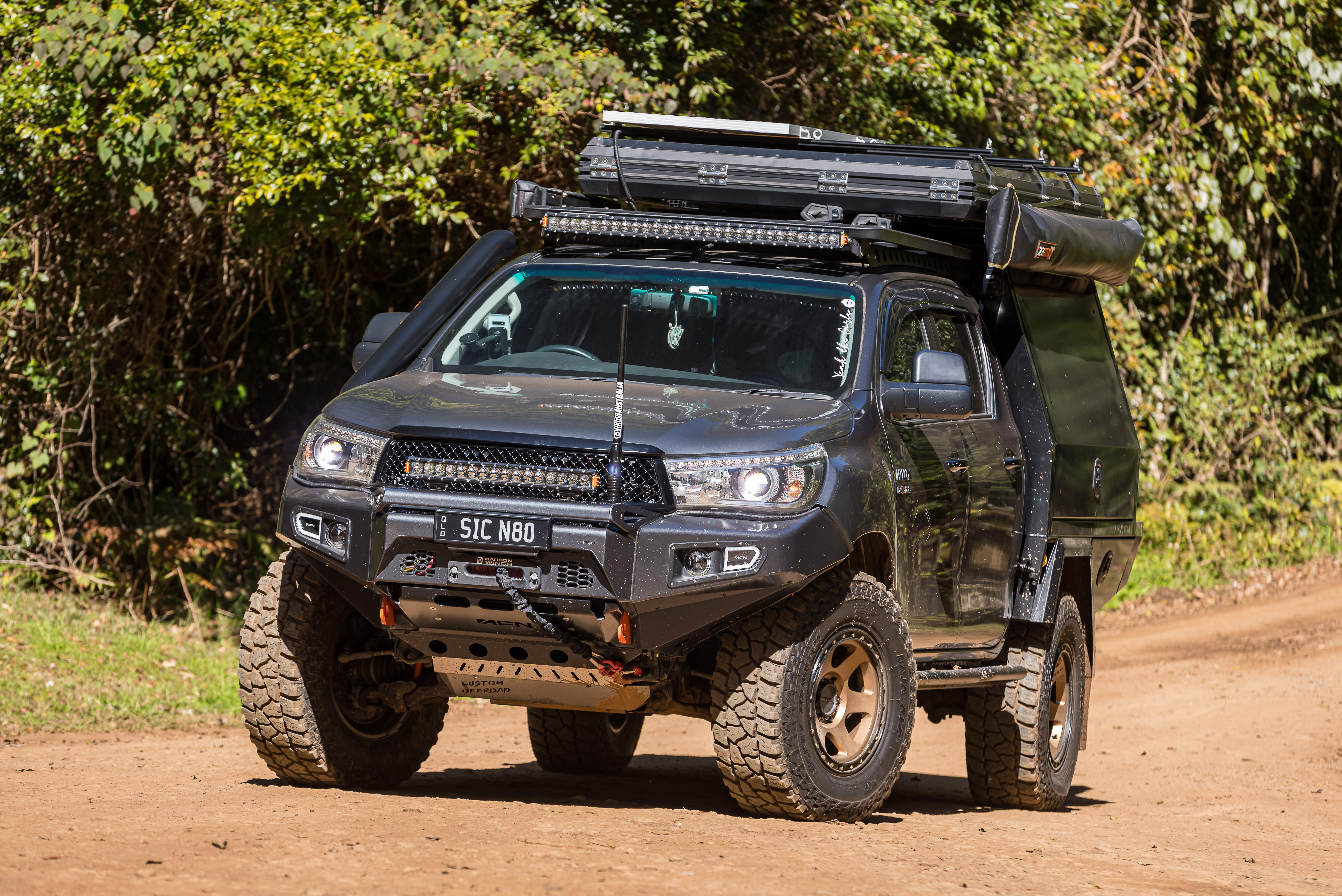
Living on South-East Queensland’s coast means Alicia and her family are spoiled for choices when it comes to beach camping and 4WD adventures, and that trip was the first of many exploring Bribie, Fraser, Stradbroke and Moreton Islands in the Hilux.
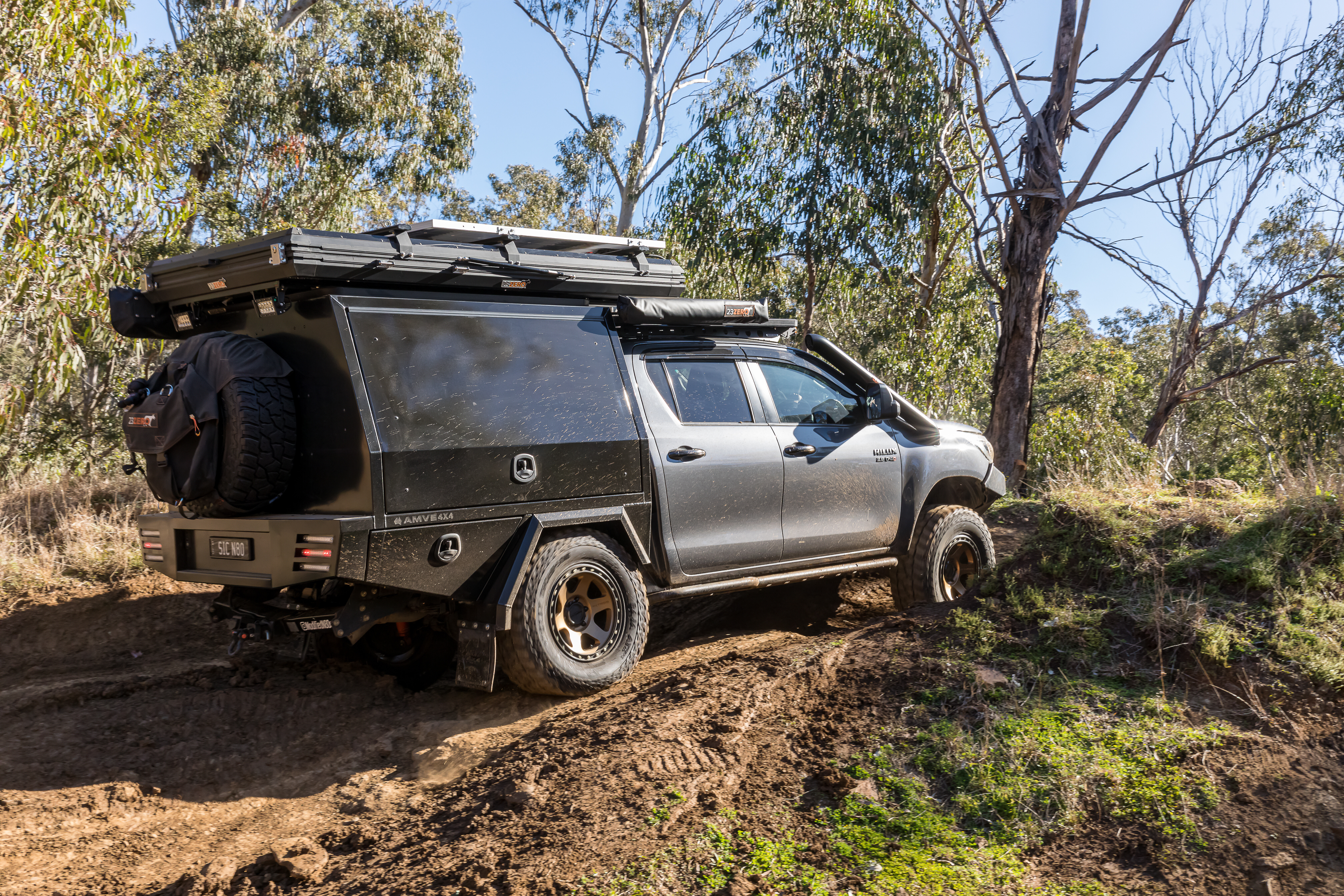
The 2017 SR5 Hilux was kept relatively stock for the first few years of ownership, as it served double-duty for family and business usage. It was loaded up with work gear during the week and was more than up to the task of exploring the beaches on weekends.
“The Hilux had everything that I wanted in a modern car at that time,” says Alicia, “plus the capability to get me everywhere I wanted to go and also serve as a work ute.”
Inevitably, Alicia saw ways she could improve the way the Hilux serves her purposes and the modifications began in earnest.
“After a few years of packing and unpacking the car nearly every weekend, I decided I needed a more elaborate setup, something that I could leave in the car all the time and make life easier.”
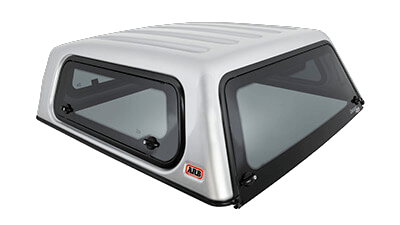
AMVE canopy
Alicia and partner Brett started researching canopies and came across the team at AMVE 4×4 who appeared to have just what they were after. Jamie and the crew at AMVE talked to Alicia and Brett and figured out their needs for the Hilux and keeping it as a dual-purpose vehicle. Alicia wanted to maximise the space in a canopy and be able to leave their gear stored in there, plus be able to accommodate a large upright fridge and kitchen.
AMVE convinced Alicia of the benefits of a chassis mounted canopy over a tray mounted one and the deal was done for a custom designed unit.
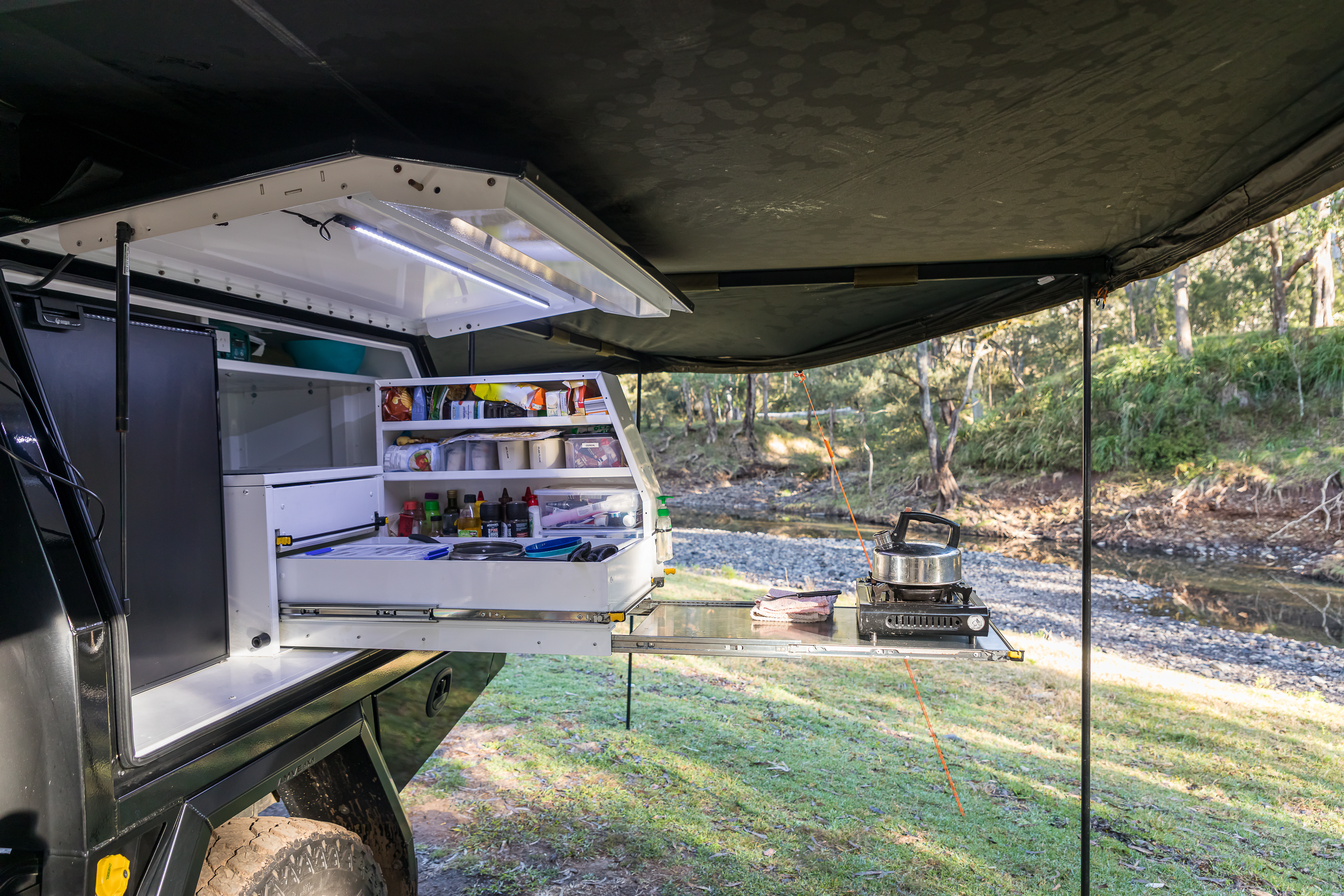
The powder-coated aluminium canopy is basically split down the middle in to two separate sections. The driver’s side of the canopy has been left relatively empty as a place to carry bigger bits of kit like a swag, storage boxes and Alicia’s work stuff, plus it’s on this side that you get access to the 12-volt set-up.
On the passenger’s side you’ll find that 130-litre Bushman upright fridge and a stainless-steel slide-out kitchen that includes a work table, microwave oven, storage drawers and shelves. It’s a complete set-up to enable easy camping and quick access when on the road.
The passenger-side and kitchen are covered by a 23Zero 270° awning to keep the Queensland sun and any inclement weather off the workspace, while the shower tent on the driver’s side and the rooftop tent are also from 23Zero.
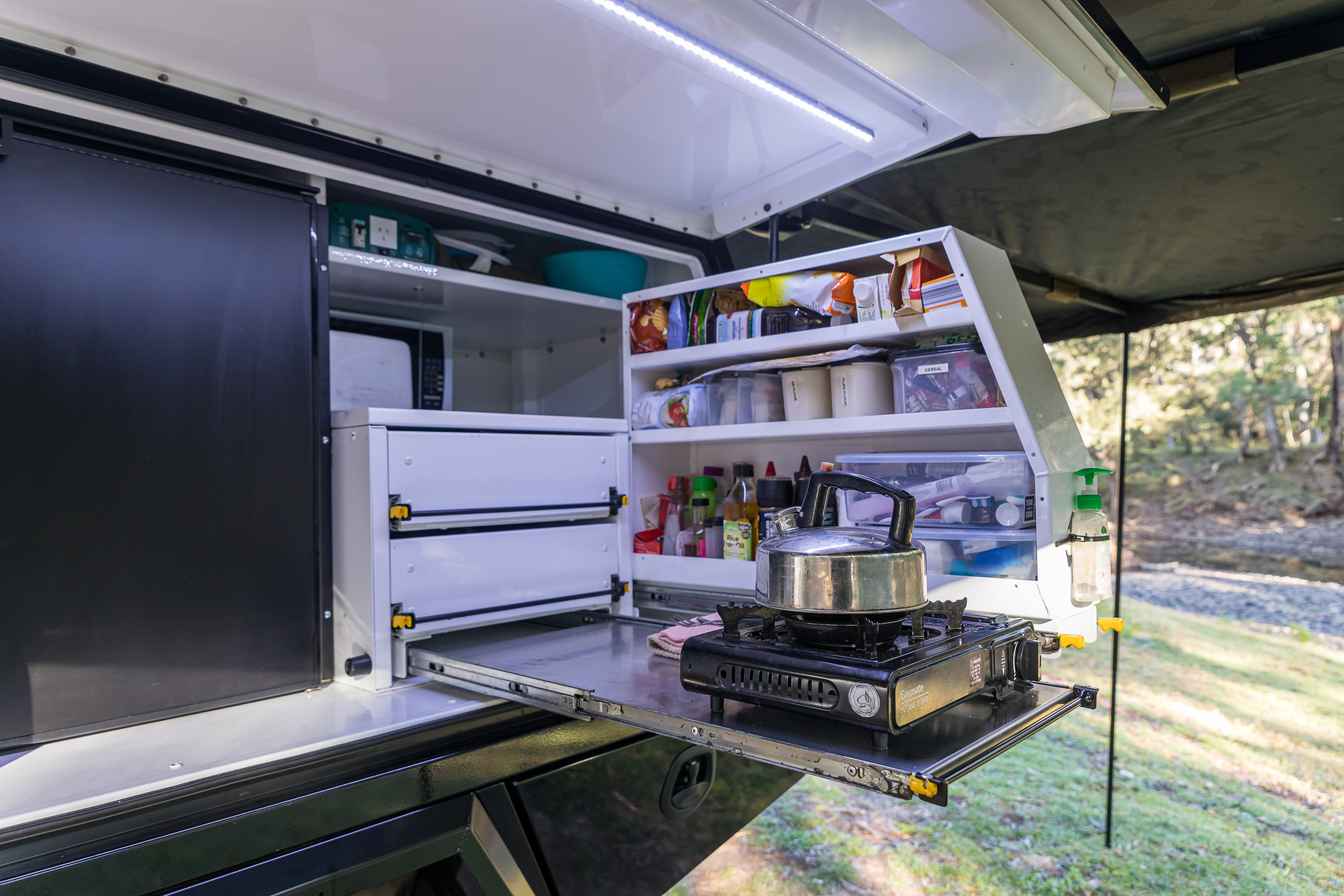
Other features of the AMVE canopy include tapered tool boxes at the rear corners, a trundle drawer at the back and a 60-litre water tank with electric pump.
The comprehensive 12-volt set-up employs an Enerdrive 40amp DC Charger, 40amp AC Charger, 50 and 500amp shunts and 50, 80, 200amp circuit breakers, all keeping a 200-amp lithium battery and a host of accessories happy. There’s also a 200-watt inverter for powering the 240-volt appliances like the microwave and charging things up. A Redarc solar panel fitted atop the tent helps keep things charged when parked up in camp.
Of course, it’s no use having this awesome camping set-up without the car to get you to the best places and, as good as the Hilux is standard, Alicia has fitted a swag of good gear to improve its capabilities.
Exterior
Starting at terra firma where the 285 Mickey Thompson Baja ATZ P3s fitted to Method Race Wheels alloys handle the terrain. Their action is managed by Outback Armour front coils and adjustable shocks, while the rear leaf packs were modified by Bayside Springs to suit the load on board.
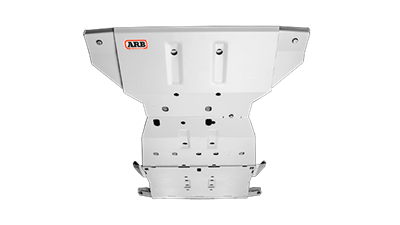
Protection-wise there’s a loopless front bar from AFN with Custom Offroad underbody plates to look after the undercarriage, while rock-sliders from Legendex protect the sills.
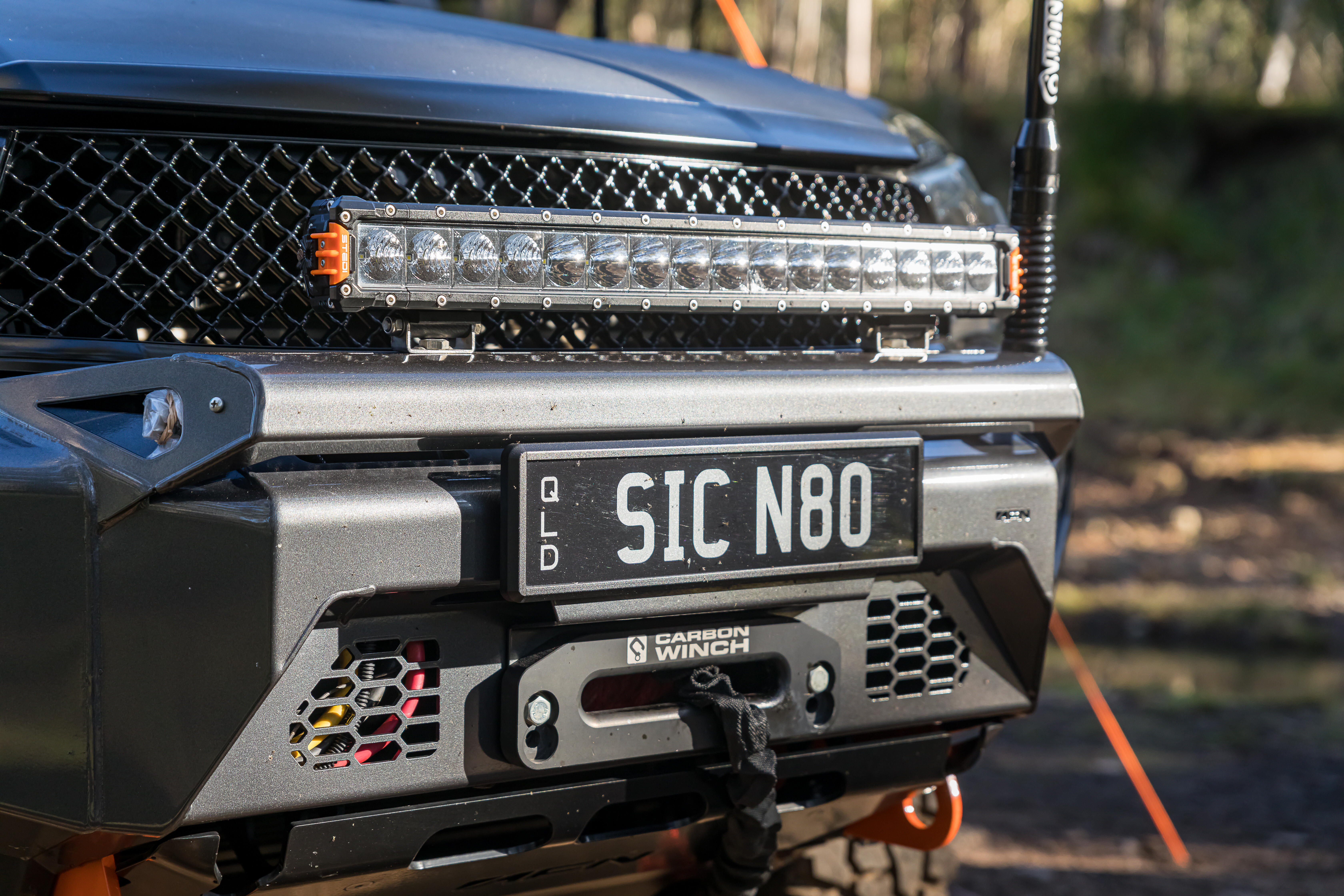
Inside that AFN bar is a Carbon Winch and the front recovery points are from AMVE, while a full recovery kit is carried to help out when needed.
Lighting the track ahead are a 24.5-inch Stedi LED bar atop the bumper, while the 41-inch bar mounted on the front of the roof rack also comes from Stedi. There are also rear-facing LED work/reversing lamps and the AMVE canopy comes with LED strip lighting to keep everything in clear sight.
Engine
The Hilux’s 2.8-litre diesel engine breathes in via a Legendex 4-inch snorkel and In House Fabrications airbox, and exhales via a 3-inch ceramic coated exhaust system also from the crew at Legendex. Legendex dyno-tuned the combo to maximise the airflow benefits and it now puts out a healthy 504Nm and 182hp at the treads.
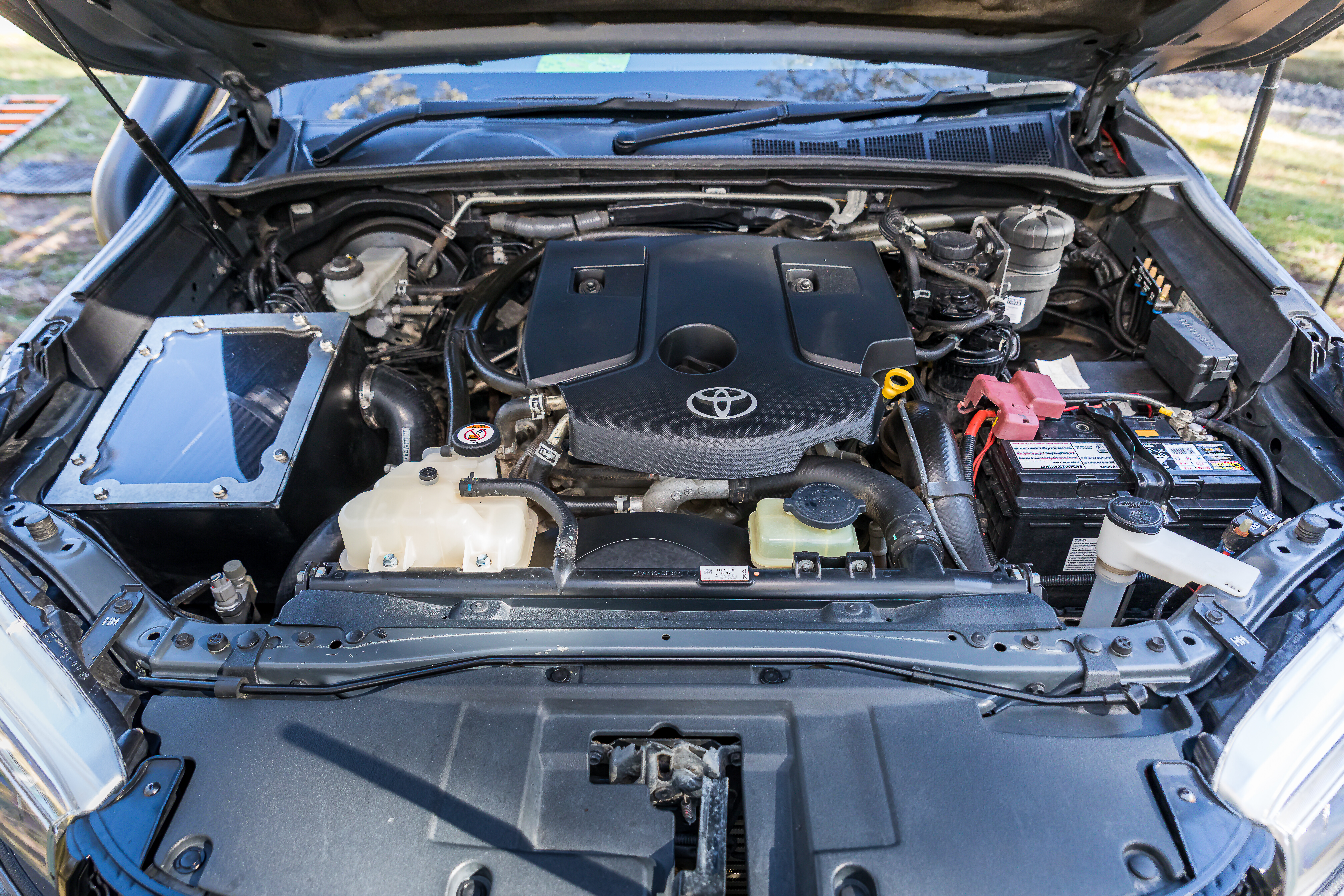
A beefed-up Exedy Hi-Torque clutch was employed to handle the extra grunt ahead of the standard Toyota gearbox. For now, Alicia makes do with the Hilux’s standard rear differential lock and ETC, but says she wouldn’t mind fitting a locker in the front diff in the future.
To the Cape
All this extra kit on the Hilux was done in preparation for a trip to the Cape and after a few delays, that trip should be happening around the time you’re reading this yarn. To help cover the long-distance touring, Alicia has added a 135-litre fuel tank from Ironman 4×4, a UHF radio, and a Hema navigator sat-nav unit.
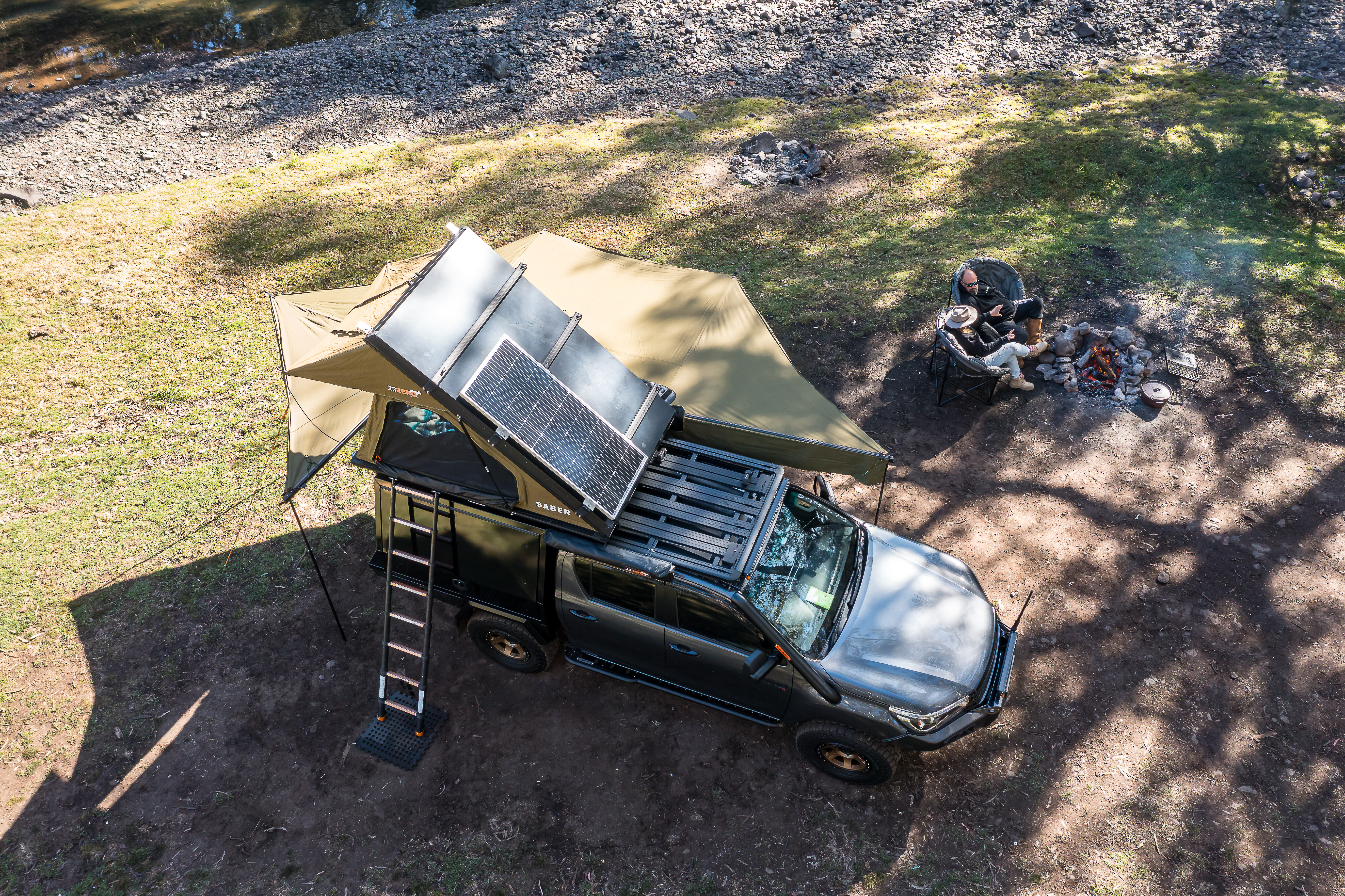
“The build started at the beginning of 2021 and we had the majority of everything on the car by mid year,” says Alicia. There’s been a tonne of little bits and pieces added since then, but it’s Cape ready now and set to head north.
“This build has made packing up for camp and hitting the tracks nice and easy, and we can roll in to camp and set up within 5 minutes which has been life changing.”
The annual music festivals at some of our most popular outback locations have become a big drawcard for 4×4 travellers from all over the country.
Initially it was the Big Red Bash, held on the biggest sand dune in the Simpson Desert near Birdsville, Queensland; but it has been joined by the Mundi Mundi Bash near Broken Hill in western NSW, the gatherings drawing music fans and nomads from all corners.
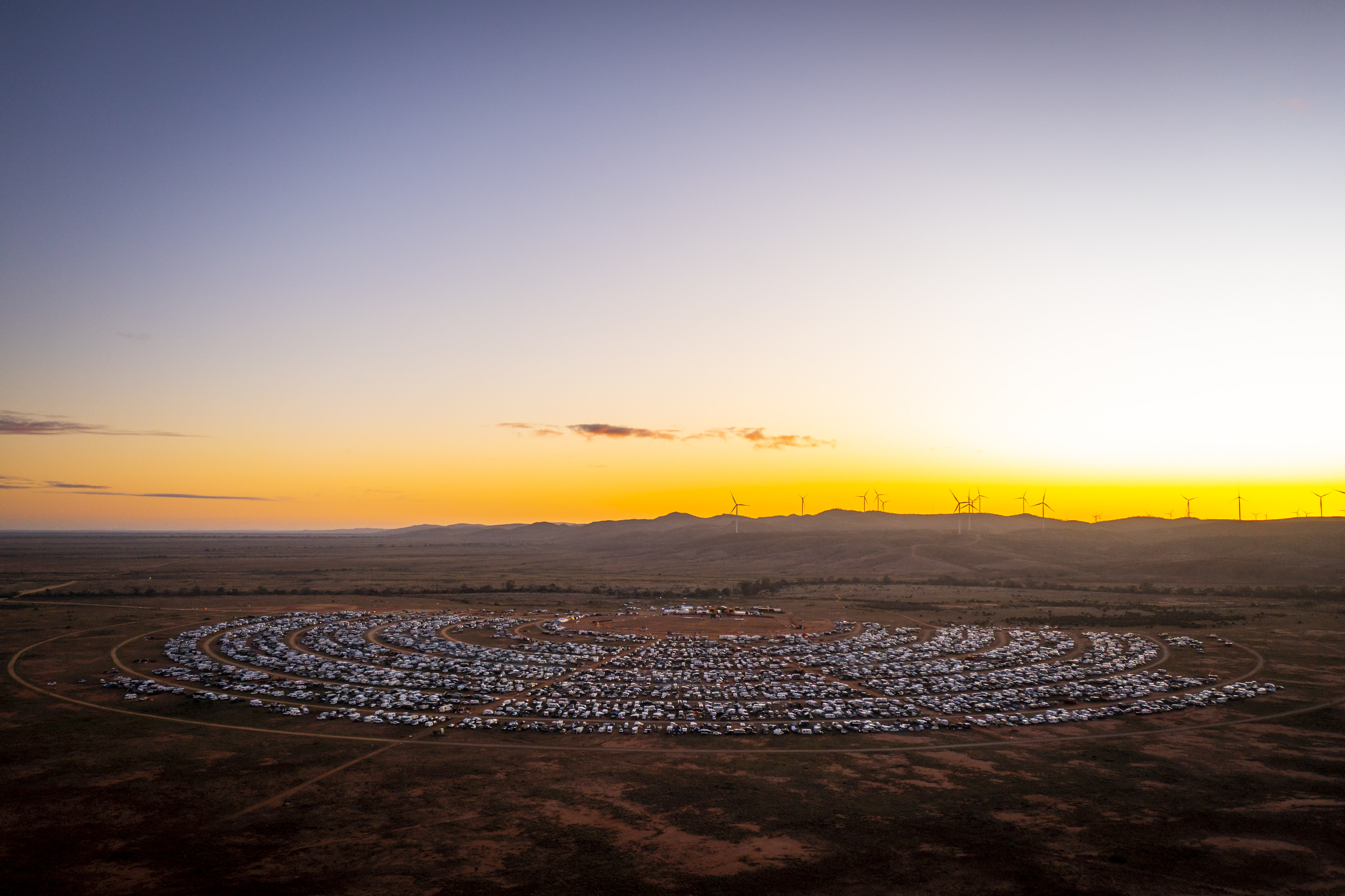
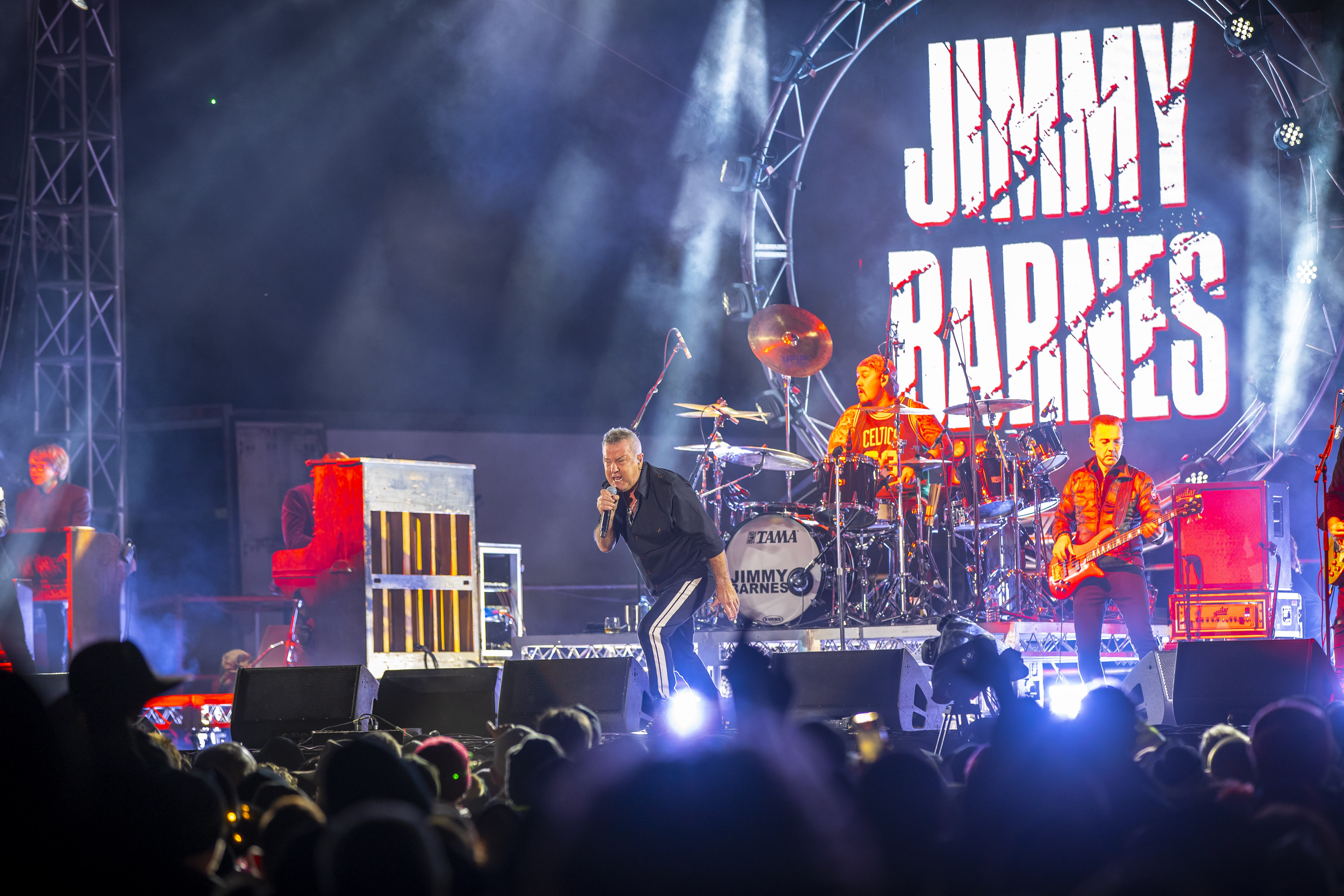
The most recent Mundi Mundi Bash was held in August and with music acts including Midnight Oil, Mick Thomas, Kasey Chambers, Jimmy Barnes and Missy Higgins, Tex Perkins and Tim Rogers among the dozens of others, it was a sell-out full house.
Michael Ellem took some time away from his busy schedule working at Offroad Images to kick up some dust at the Bash but he couldn’t resist taking a few photos for us showing the faces, performers and the 4x4s of the Mundi Mundi Bash.
The 2023 Mundi Mundi Bash is happening over the week of August 17 to 19, while the Birdsville Bash is on July 4 to 6, 2023.
Keep an eye on social media for details of who’s playing and when tickets go on sale.