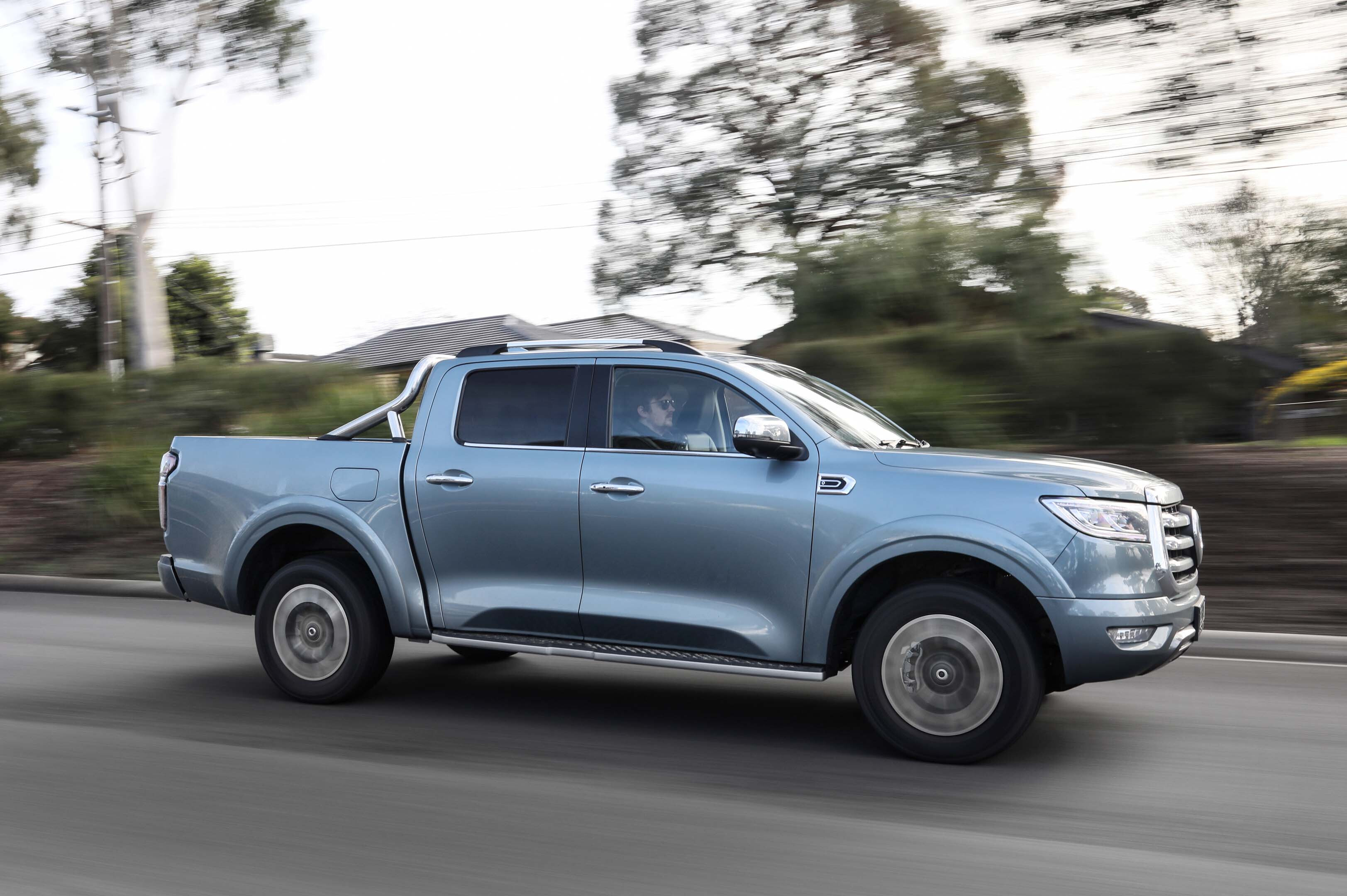
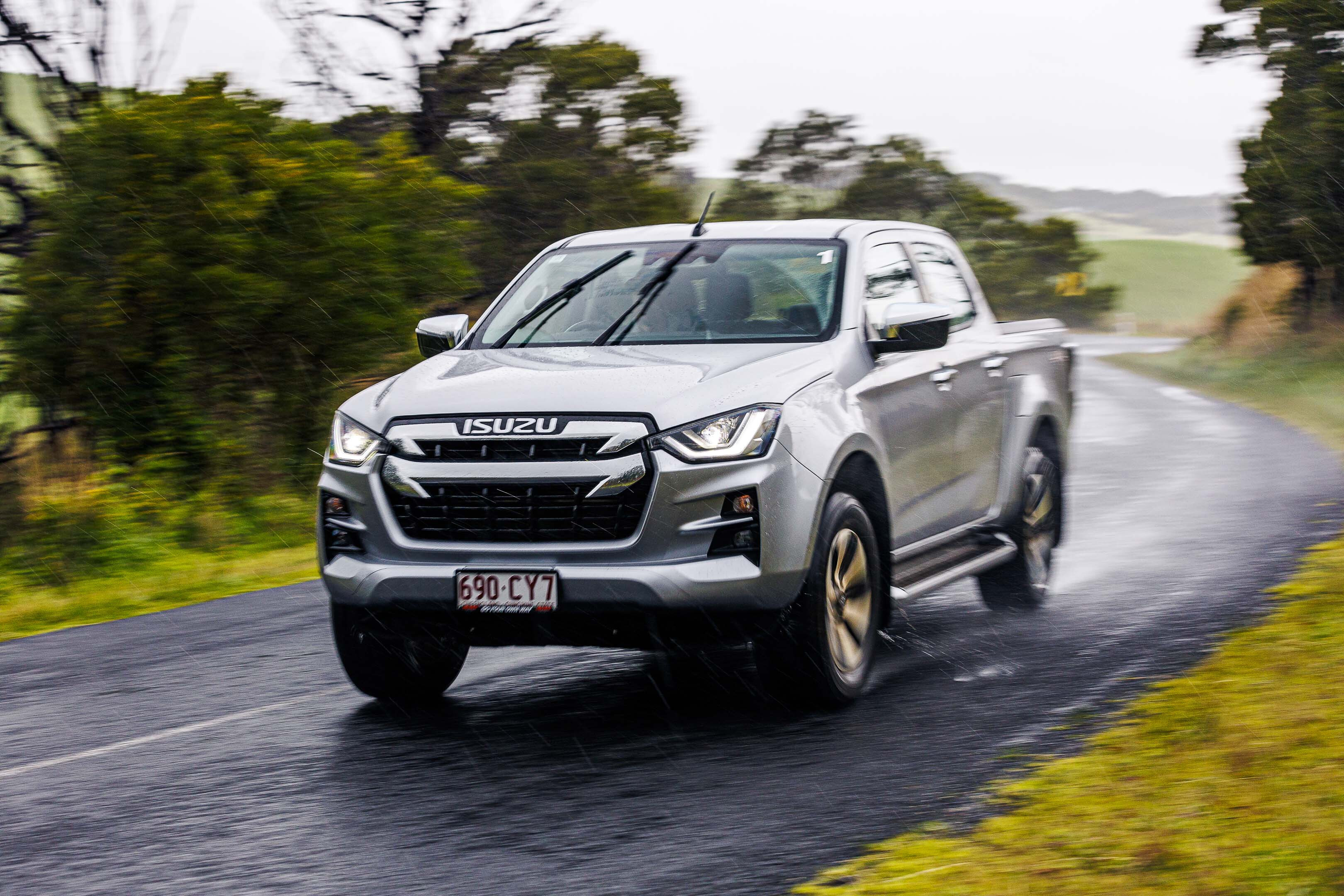
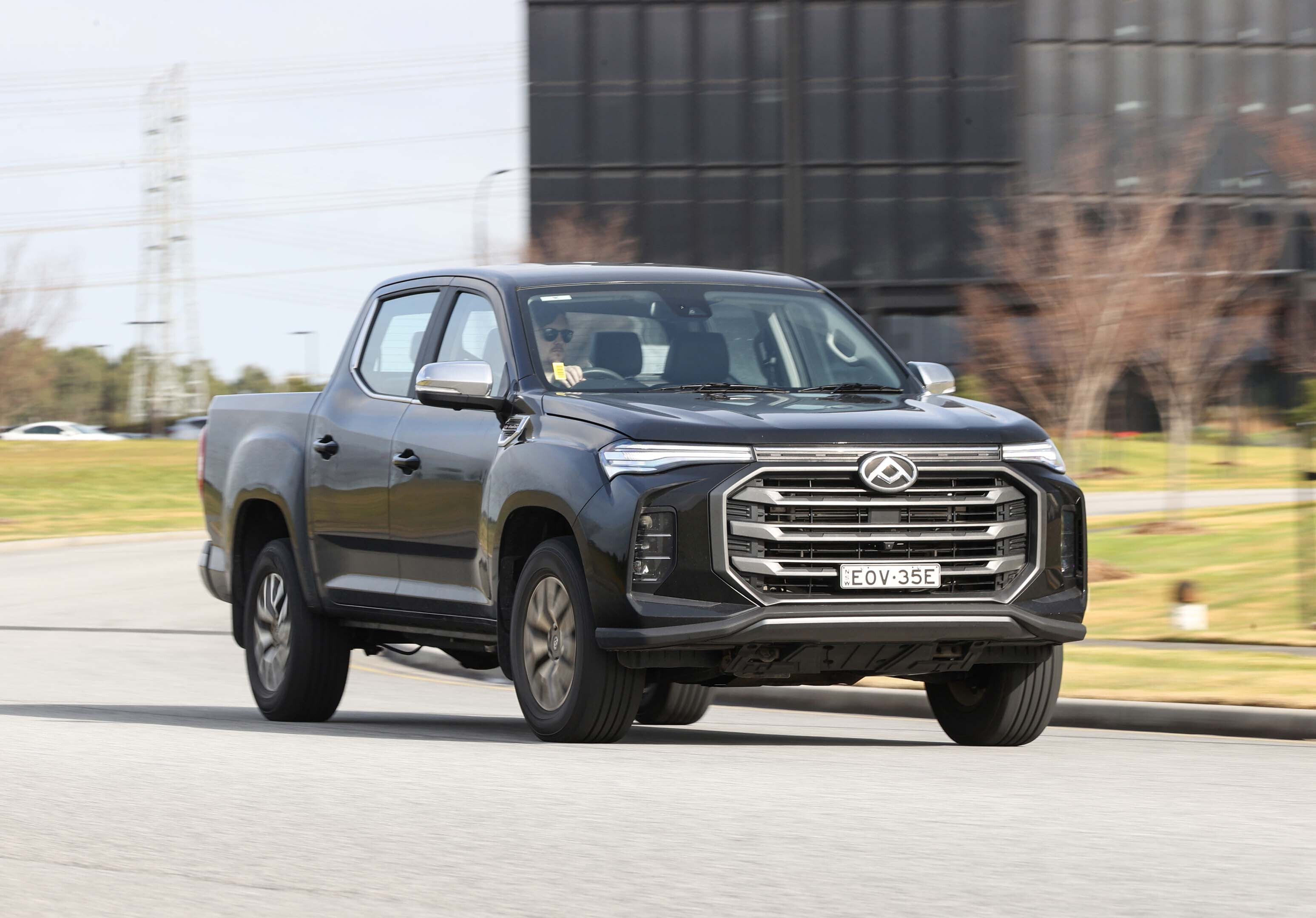
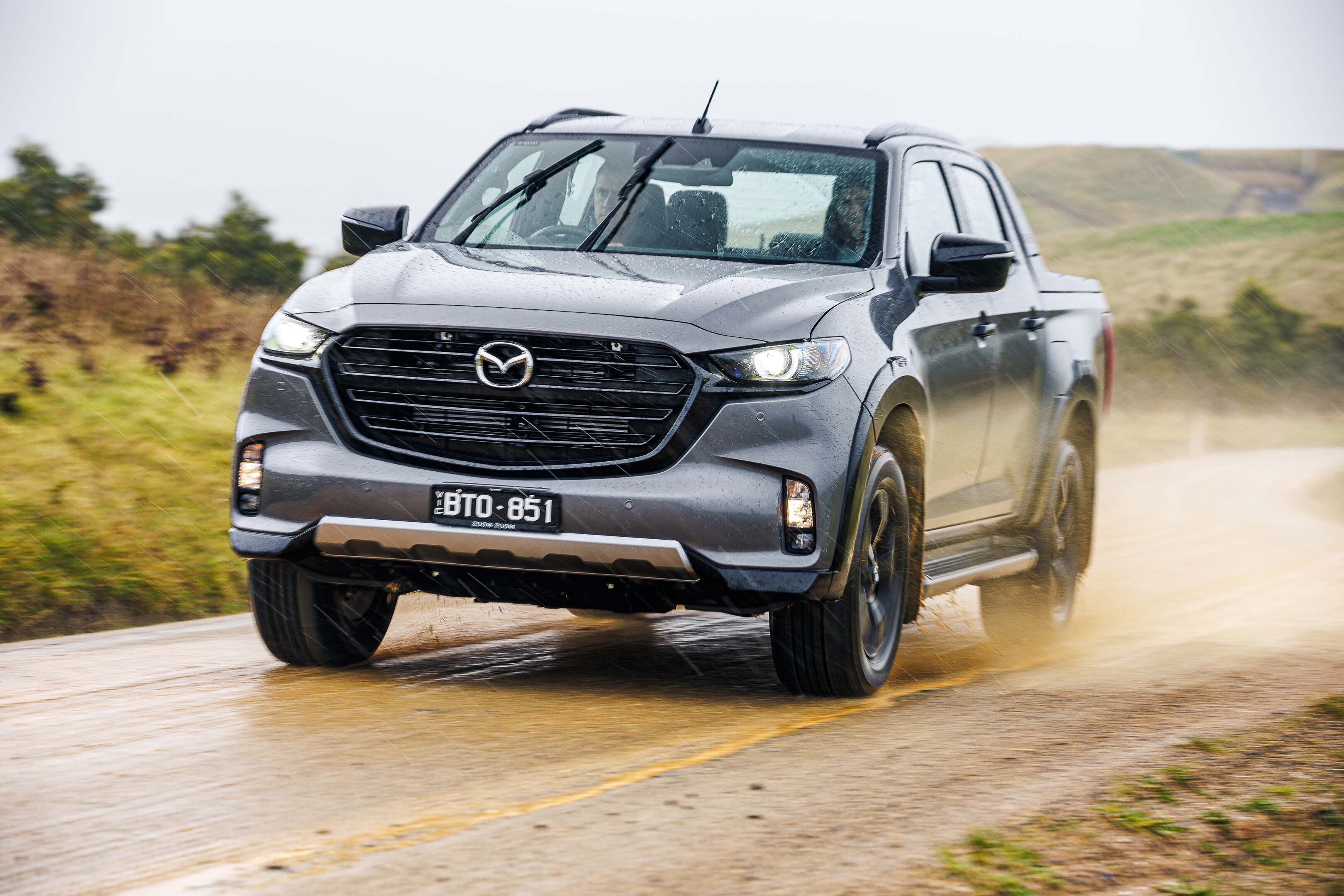
Published power ratings rate the Tank above the Wrangler
Big price savings on the Tank over Wrangler
Poor Tank payload capacity sours its appeal
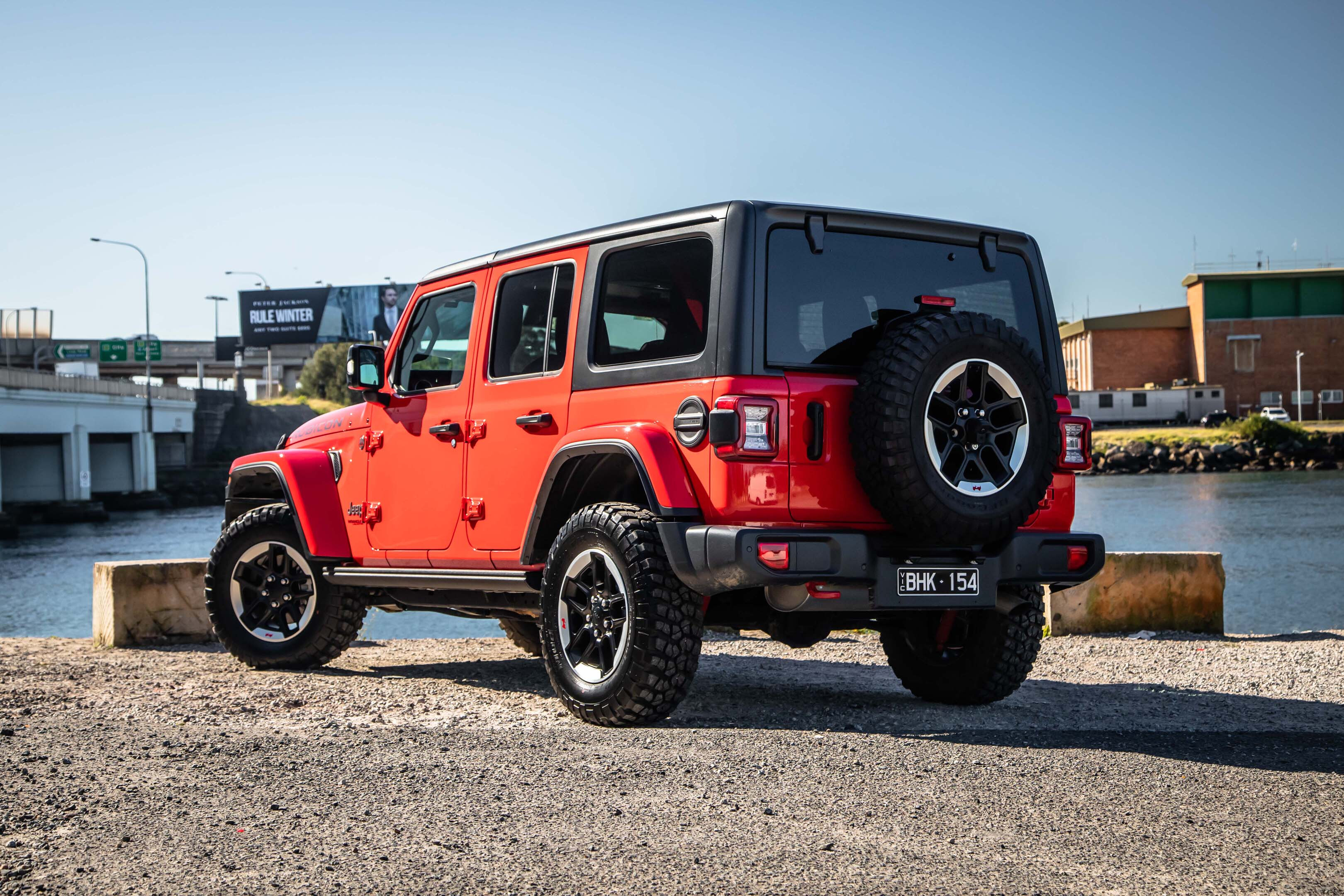
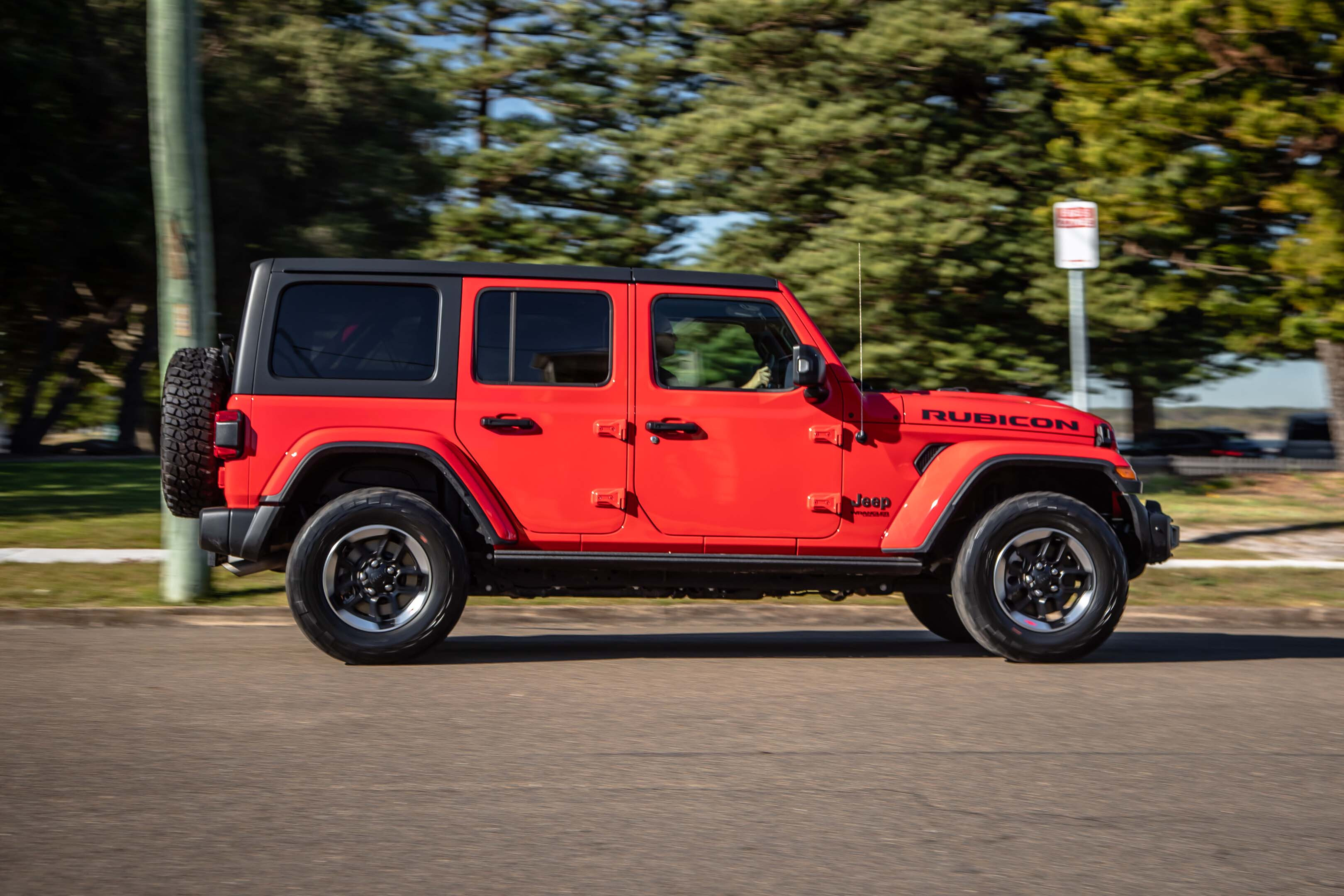
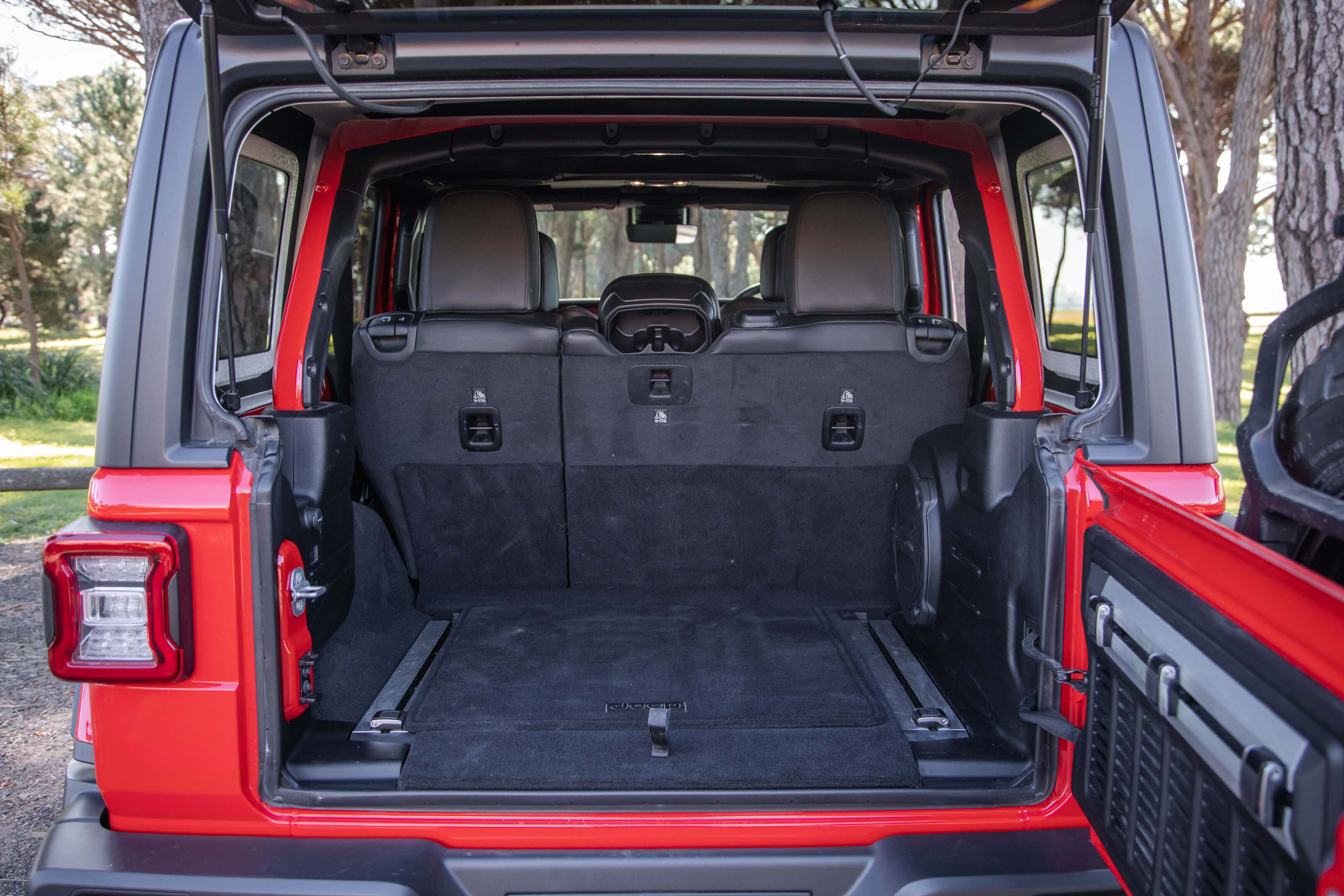
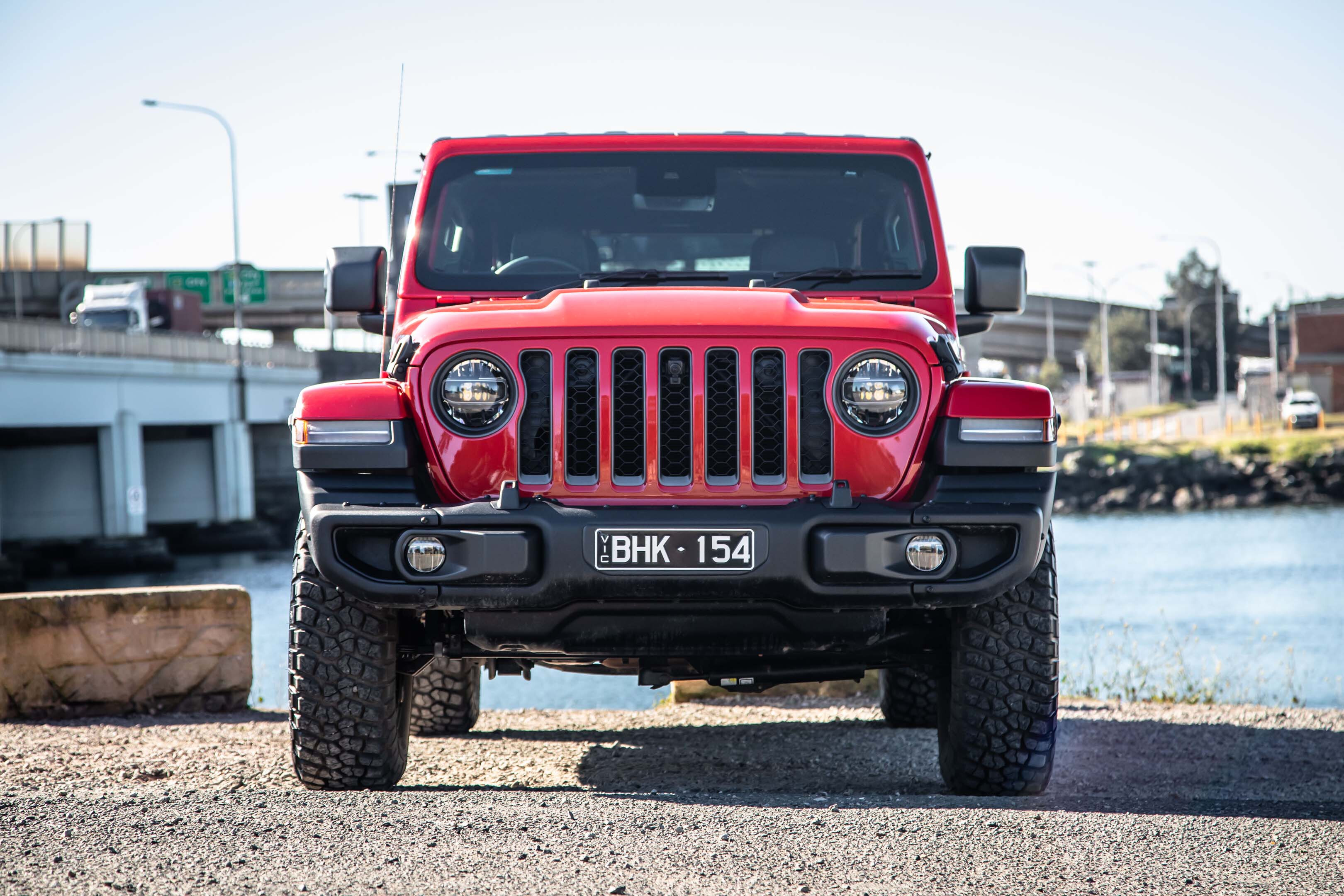
The Jeep JL Wrangler Unlimited is a traditional body on ladder frame chassis four-door four-wheel drive, with solid axles front and rear, and coil springs on all four corners. The JL Wrangler Unlimited is powered by a 3.6L naturally aspirated V6 petrol engine mated to an 8-speed automatic gearbox.
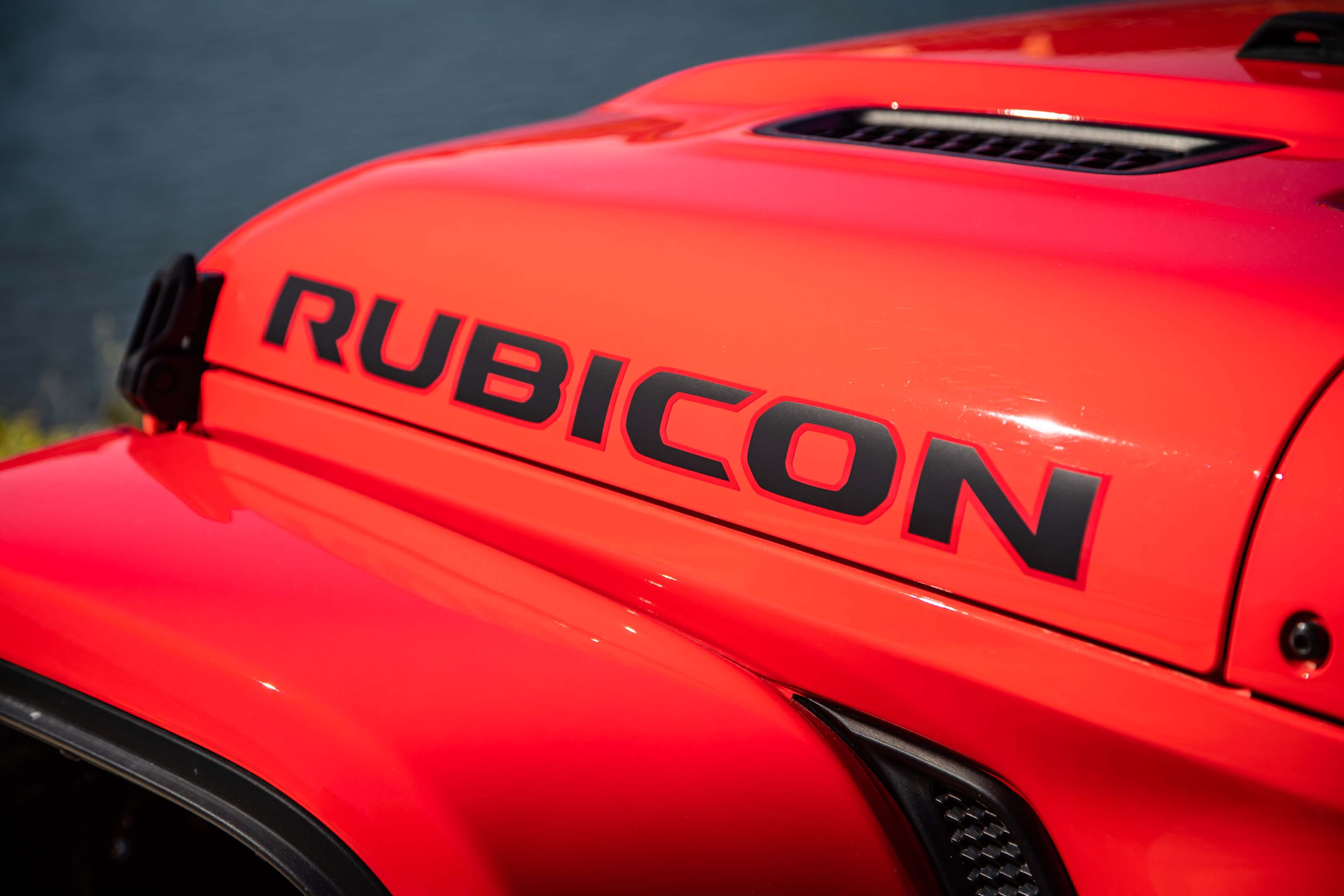
There are three models in the Unlimited range: Night Eagle, Overland and Rubicon. In top-spec Rubicon trim, the JL Wrangler features a suite of off-road goodies, including front-and-rear diff locks, a selectable disconnecting sway bar and ultra-low reduction gearing in the transfer case.
1
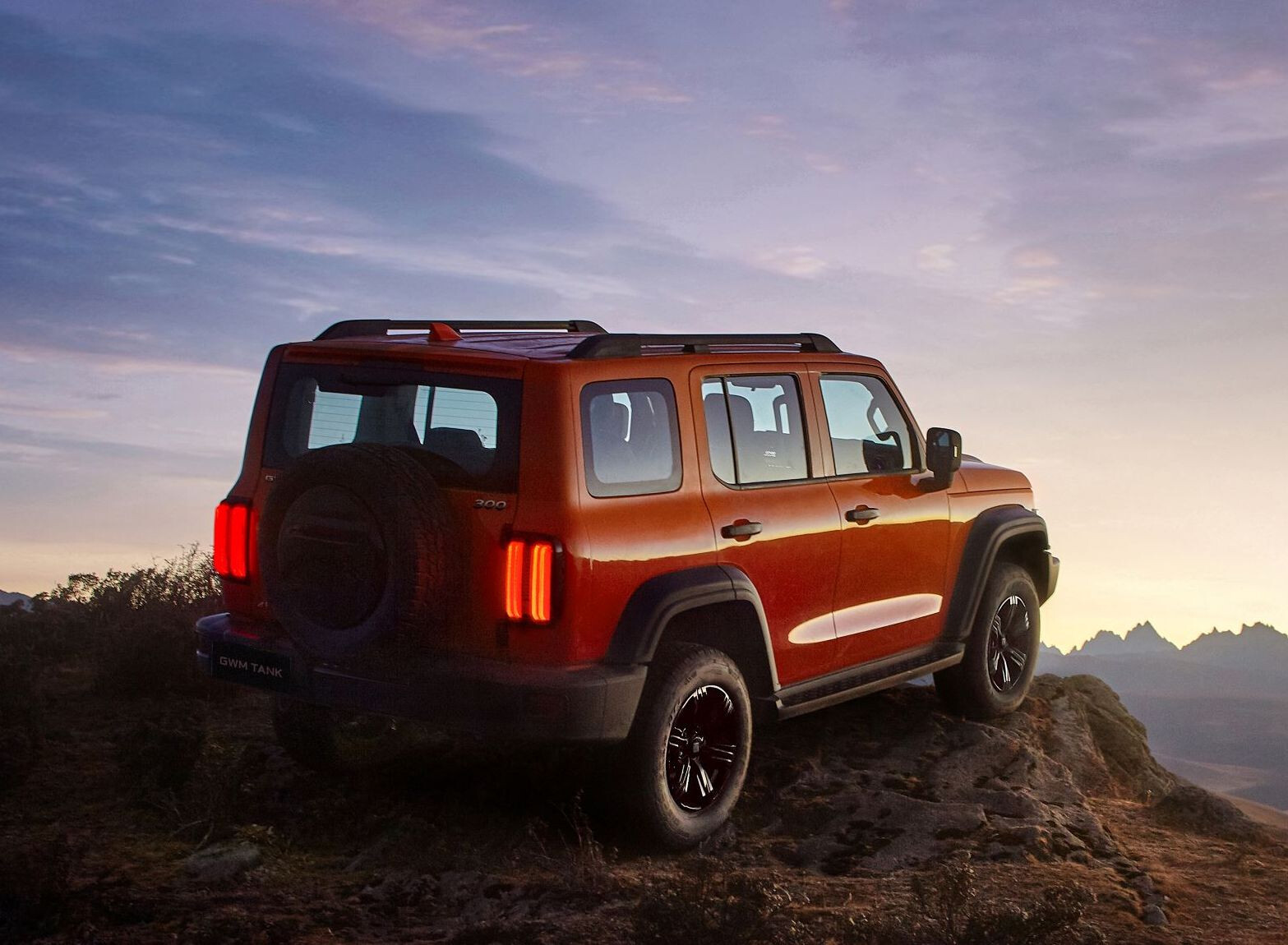
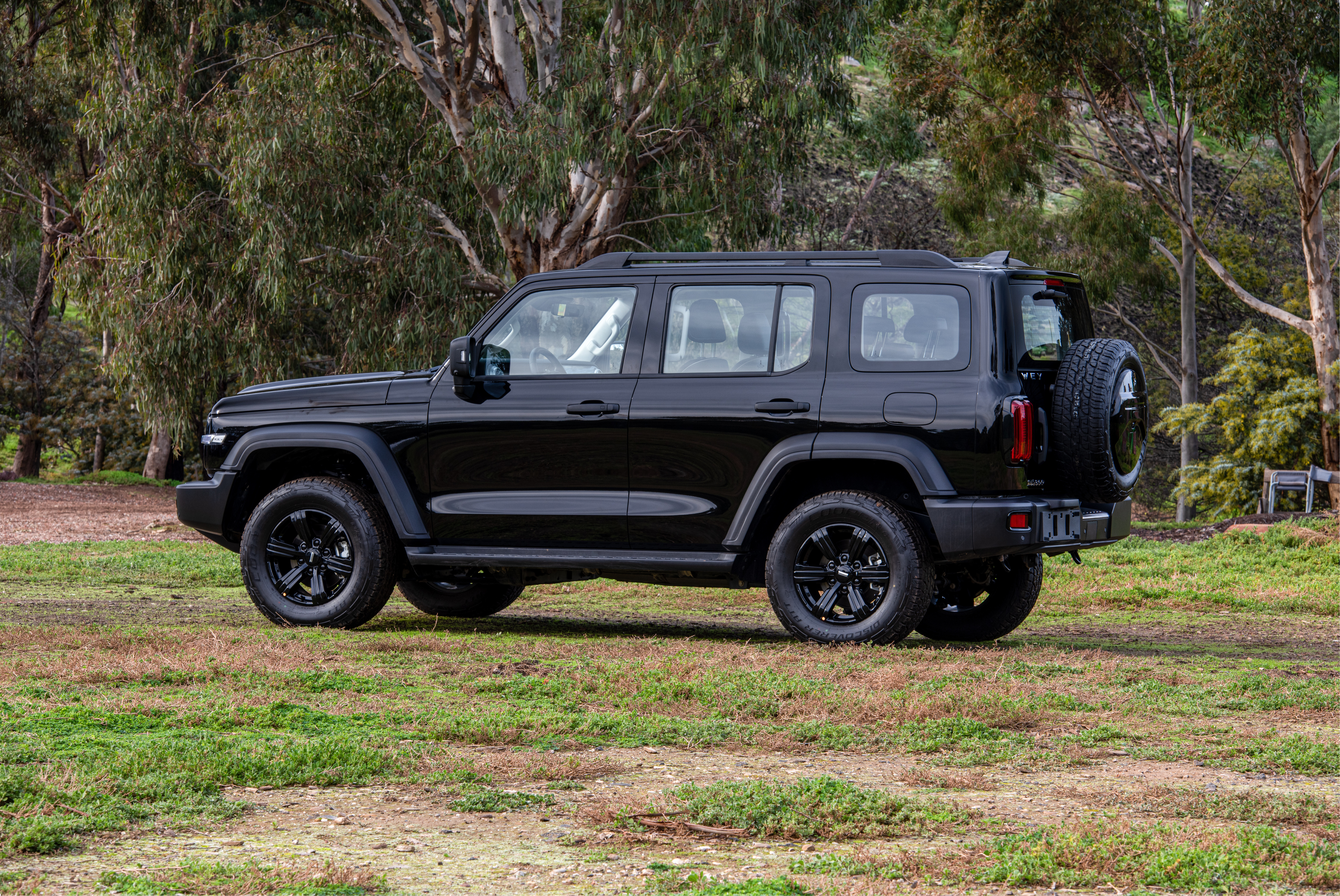
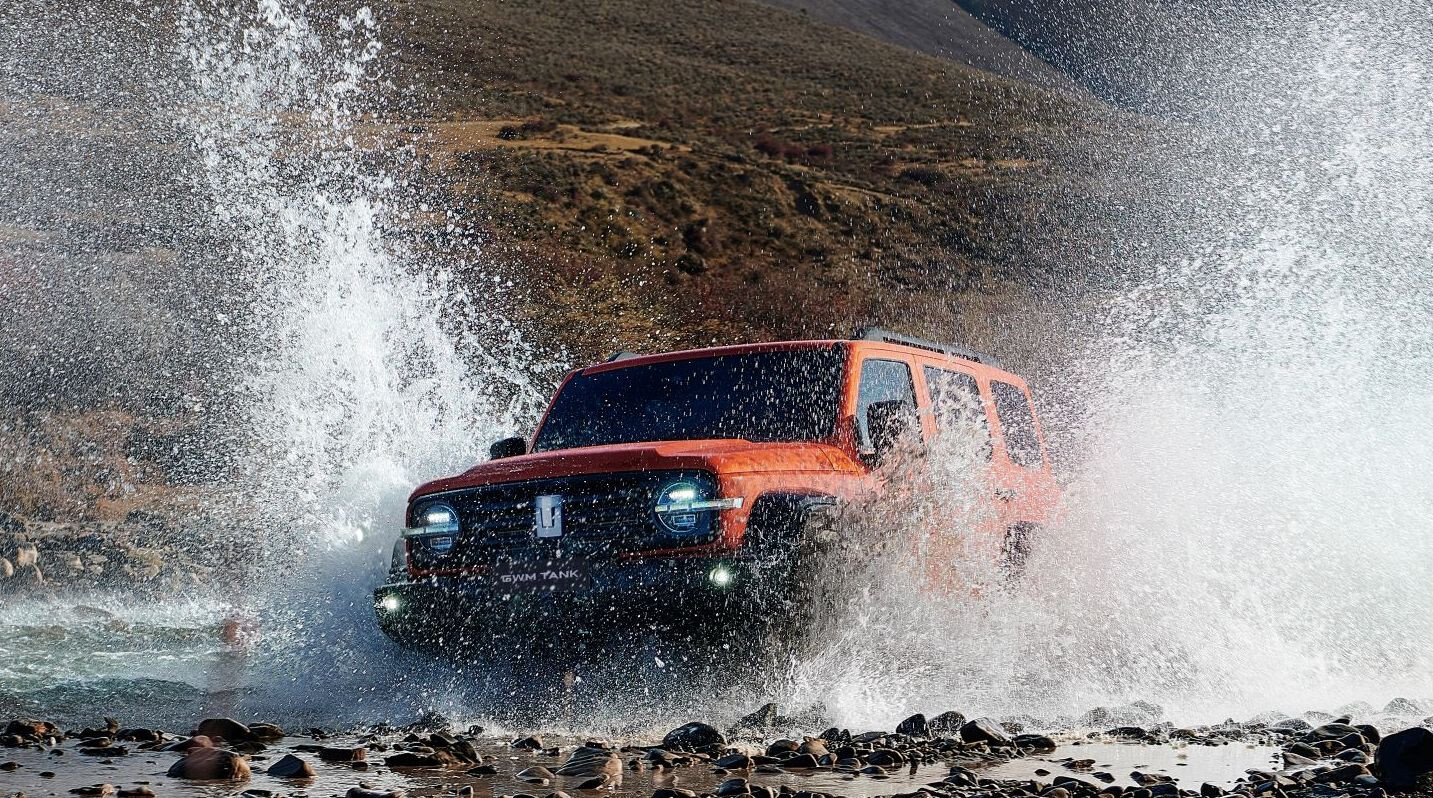
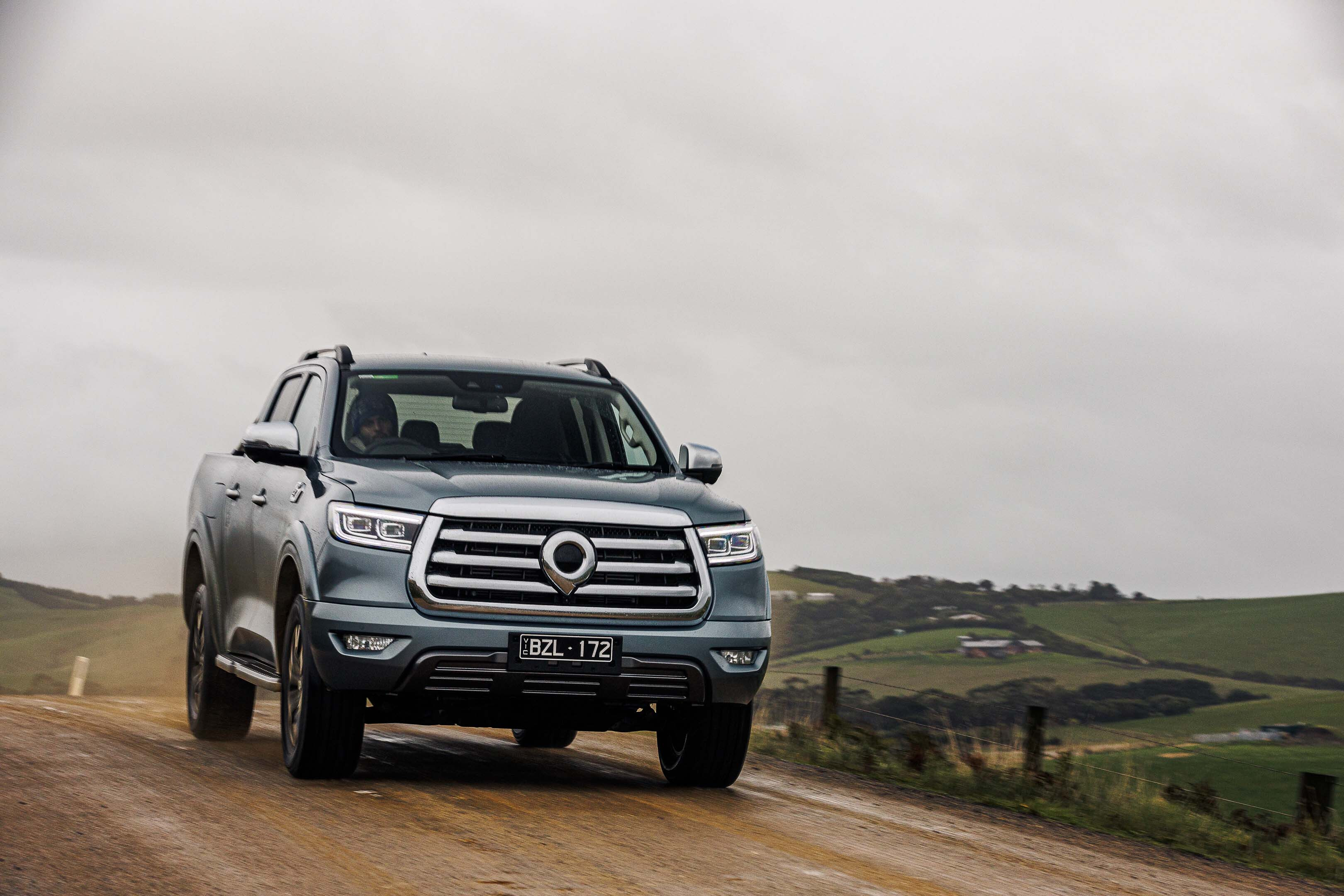
A new player to the Australian 4WD market, is the GWM Tank 300, touted as being a cheaper alternative to the Jeep Wrangler. It’s a separate body on a ladder frame chassis, with a solid axle in the rear and independent suspension on the front. Power is delivered by a 2.0L petrol-electric hybrid engine that sits in-front of a 9-speed automatic transmission.
1
The top-spec Ultra model from GWM features front and rear locking differentials, with the lower spec Lux arriving with just a rear differential lock. Both have Crawl control and Tank Turn functions as standard to boost off-road performance.
With that out of the way, before we have a chance to drive the GWM Tank 300, we thought the only logical thing to do was to put together a list of specs of both 4WDs, compiling the information we have at hand.
On paper, does the new Tank 300 have what it takes to compete with the proven and extremely capable Jeep Wrangler Unlimited? Let the spec battle begin.
Engine and transmission
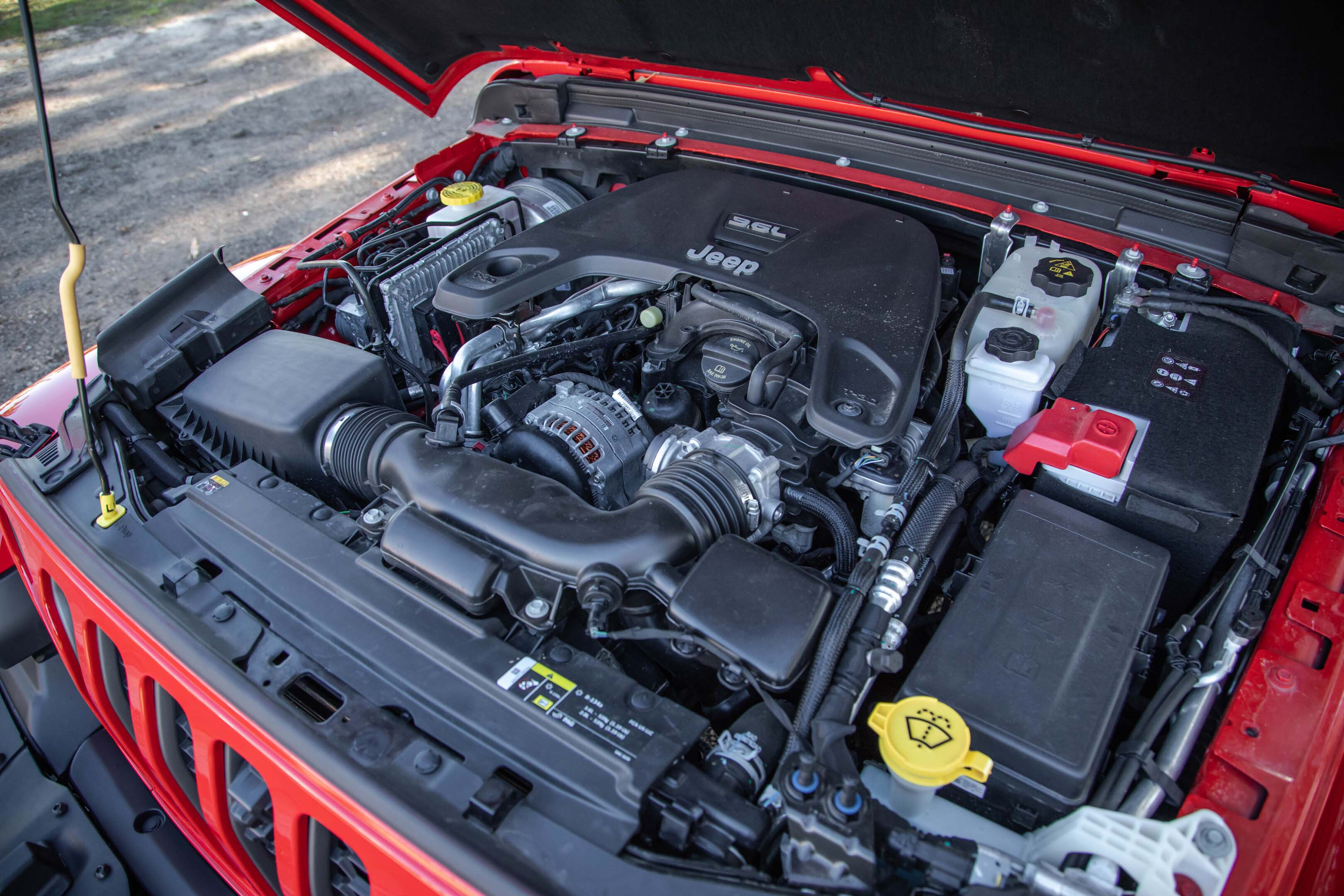
At the time of writing, both vehicles are available with one choice of engine and transmission combination. Jeep has stuck with its Pentastar V6 petrol engine across the Wrangler line-up, which is now matched with an 8-speed automatic transmission.
1
It makes less power and torque compared to the 2.0L petrol hybrid engine and 9-speed transmission found in the Tank (what a cool name btw), however the Pentastar has been around long enough to have some serious runs on the board. It is also used in a range of vehicles globally, so parts and knowledge to work on them are available. They also sound pretty cool when you sink your boot into them.
By contrast, GWM has gone with a petrol hybrid arrangement in the Tank, producing a claimed maximum figure of 224kW and 640Nm. The Tank trumps the Wrangler when it comes to claimed power figures, and we look forward to comparing them both in the future to see how these figures stack up in the real world.
Jeep Wrangleru00a0
GWM Tank 300
Engine
3.6L V6 petrolu00a0
2.0 L petrol-electric hybrid
Transmission
8-speed automatic
9-speed automatic
Power
201kW
224kW
Torque
347Nm
640Nm
Dimensions
The Jeep Wrangler Unlimited is longer and has a longer wheelbase than the GWM Tank 300, by 22mm and 58mm respectively. The Tank however, is wider, and taller than the four-door Jeep.
1
As the majority of Jeep owners will modify their Wrangler with bigger and wider wheel and tyre combinations, as well as installing aftermarket suspension lifts, these numbers will be affected by aftermarket modifications. Speaking of lift kits, I have no doubts the Tank will receive a wide range of accessories to further improve their off-road ability, but as the Wrangler is the most modifiable vehicle on the planet, there will be some catching up to do in terms of aftermarket gear.
1
Jeep Wrangler
GWM Tank 300
Length
4882mm (4-door Rubicon)
4760mm
Width
1894mm (4-door Rubicon)
1930mm
Height
1848mm (4-door Rubicon)
1903mm
Wheelbase
3008mm (4-door Rubicon)
2750mm
Towing and payload
Both the Wrangler and Tank have similar maximum braked towing capacities, with the Wrangler coming in at 2496kg and the Tank just topping it at 2500kg maximum braked towing capacity.
The Jeep beats the Tank when it comes to payload capacity however, and this I feel is the biggest let down when it comes to the GWM Tank 300 – its payload capacity is crap.
1
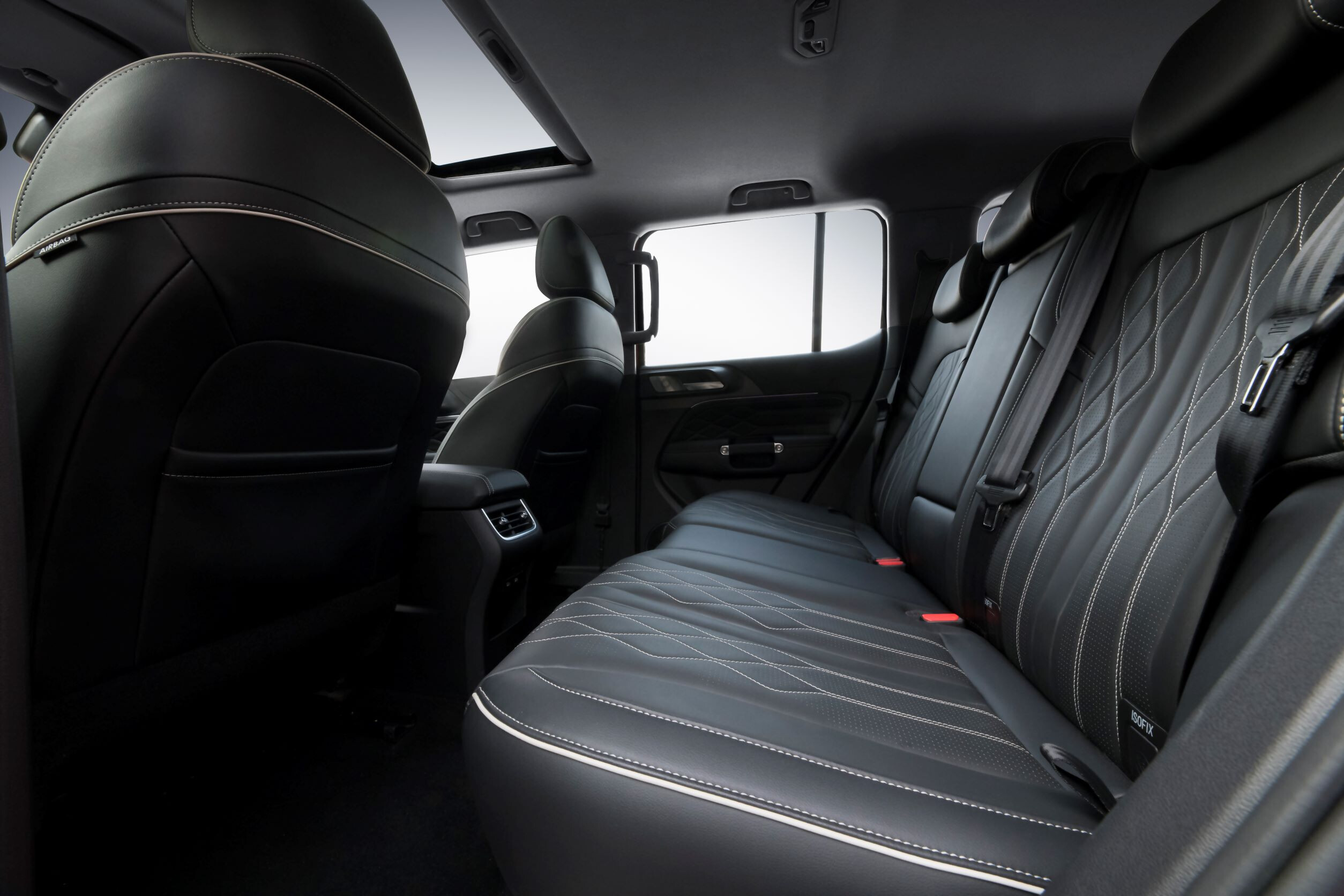
With just 394kg of payload capacity to play with, you would be over limit and thus unroadworthy carrying five passengers weighing 80kg, that doesn’t take in to account luggage or aftermarket accessories like bullbars and winches. This needs to be improved; I dare say aftermarket GVM upgrades will be popular for anyone planning on touring in a GWM Tank 300, if they are made available in the future.
1
Jeep Wrangler
GWM Tank 300
Towing capacity
2495kg (4-door Rubicon)
2500kg
Payload capacity
570kg (4-door Rubicon)
394kg
Off-road
In Rubicon trim, the JL Jeep Wrangler has it over the GWM Tank 300 in terms of off-road angles. The Tank does have a better departure angle, at 34 degrees compared to the Rubicon’s 31.9 degrees, but this is where it ends. The JL Wrangler Rubicon has a better approach angle, more ground clearance and a higher wading depth figure from factory. It also has a bigger fuel tank … by one litre.
1
Comparing the top trim Rubicon to the top spec GWM Tank 300 Ultra Hybrid, both have front and rear diff locks which is great to see. The Tank does offer Crawl control as well as a Tank Turn function, offering potentially some rather useful off-road goodies.
1
In saying that, and I’m not a betting man, but I’d bet the Wrangler Rubicon would be the more capable vehicle in the rough stuff. With sway bar disconnect engaged, as well as front and rear diff locks, the solid axles and mud terrain tyres of the Rubicon would have the edge off-road. Again, I look forward to the opportunity to prove this point in the near future.
Jeep Wrangler
GWM Tank 300
Approach angle
41.7u2070u00a0
33u2070
Rampover angle
21.2u2070
N/A
Departure angle
31.9u2070
34u2070
Ground clearance
252mm (4-door Rubicon)
224mmu00a0
Wading depth
760mm
700mm
Fuel tank
81L
80L
Warranty
This one is a bit of a no-brainer, the GWM Tank 300 warranty is rather good coming in at 7-years unlimited kilometre. This is compared to 5-years or 100,000km (whichever comes first) for the Jeep Wrangler.
According to Jeeps website, there are 66 Jeep dealerships located Australia wide. An accurate figure for GWM is hard to track down, but going by a story published by Wheels in 2021, there were 80 GWM dealerships in Australia with the view to grow that to 90 before the end of 2022.
So, the GWM Tank 300 offers a longer warranty period, and there are more dealerships – that’s a win to the Tank it seems.
Jeep Wrangler
GWM Tank 300
5-year 100,000km
7-year unlimited kilometreu00a0
Pricing
There sure is some financial motivating to take the Tank for a test drive, as it is significantly cheaper than the Wrangler across the field. In fact, you could grab the top-tier Ultra Hybrid over the Wrangler’s base Night Eagle model, and still pocket a cool $17,742 in change.
It has to be competitive price wise though, as it is going up against one of the longest running and most established 4WDs globally, the Jeep Wrangler. Is a saving of that size enough to make you consider the GWM Tank 300 over the Jeep Wrangler JL Unlimited? I feel you’d be lying if you said no, or you’re super cashed up … and probably not looking at either if that was the case.
Jeep Wrangler Unlimited
GWM Tank 300
Night Eagle $78,732
Lux Hybrid $55,990
Overland $84,507
Ultra Hybrid $60,990
Rubicon $88,182
N/A
Verdict
It’s cheap, it has proper off-road capability on paper, and while you can see where it has received styling cues from, the GWM Tank 300 doesn’t look half bad in my opinion. But it’s not a Wrangler, and doesn’t have decades of history behind it.
1
I think competition is a good thing, and I eagerly await my chance to take the GWM Tank 300 for a proper off-road test in the new year to see if it is in fact any good. I feel if they increased the payload capacity to better what the Wrangler offers, more people would be inclined to take one for a test drive.
However, that payload capacity figure is so low, many Australian families simply wouldn’t be able to do what they want and need to do legally. For couples, it might be a different story – perhaps the GWM Tank 300 is more suited to those looking at the Suzuki Jimny?
Run an eye over the latest selection of four-wheel drives submitted by our readers. Better still, get involved and send a snap of your ride via our Facebook page.
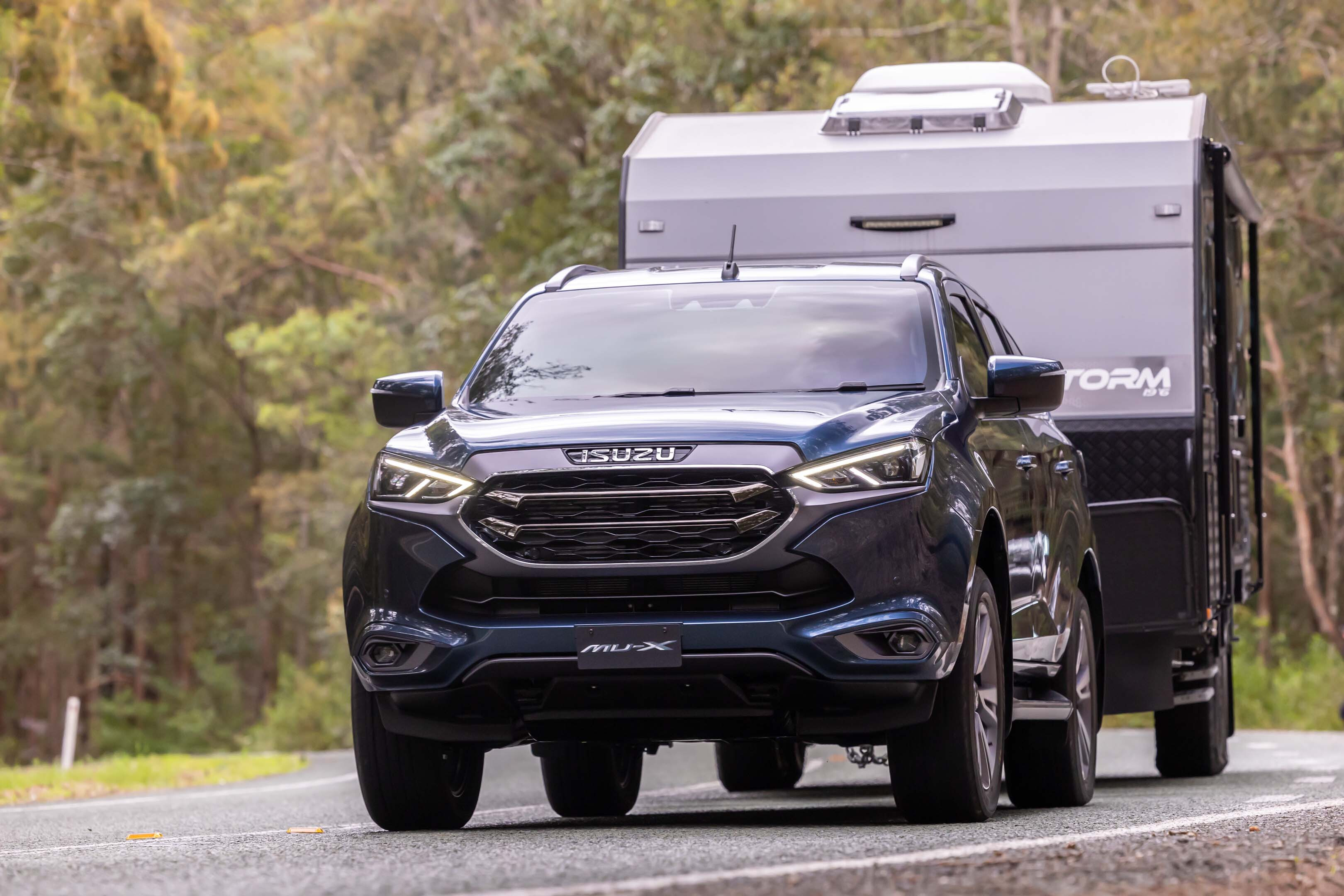
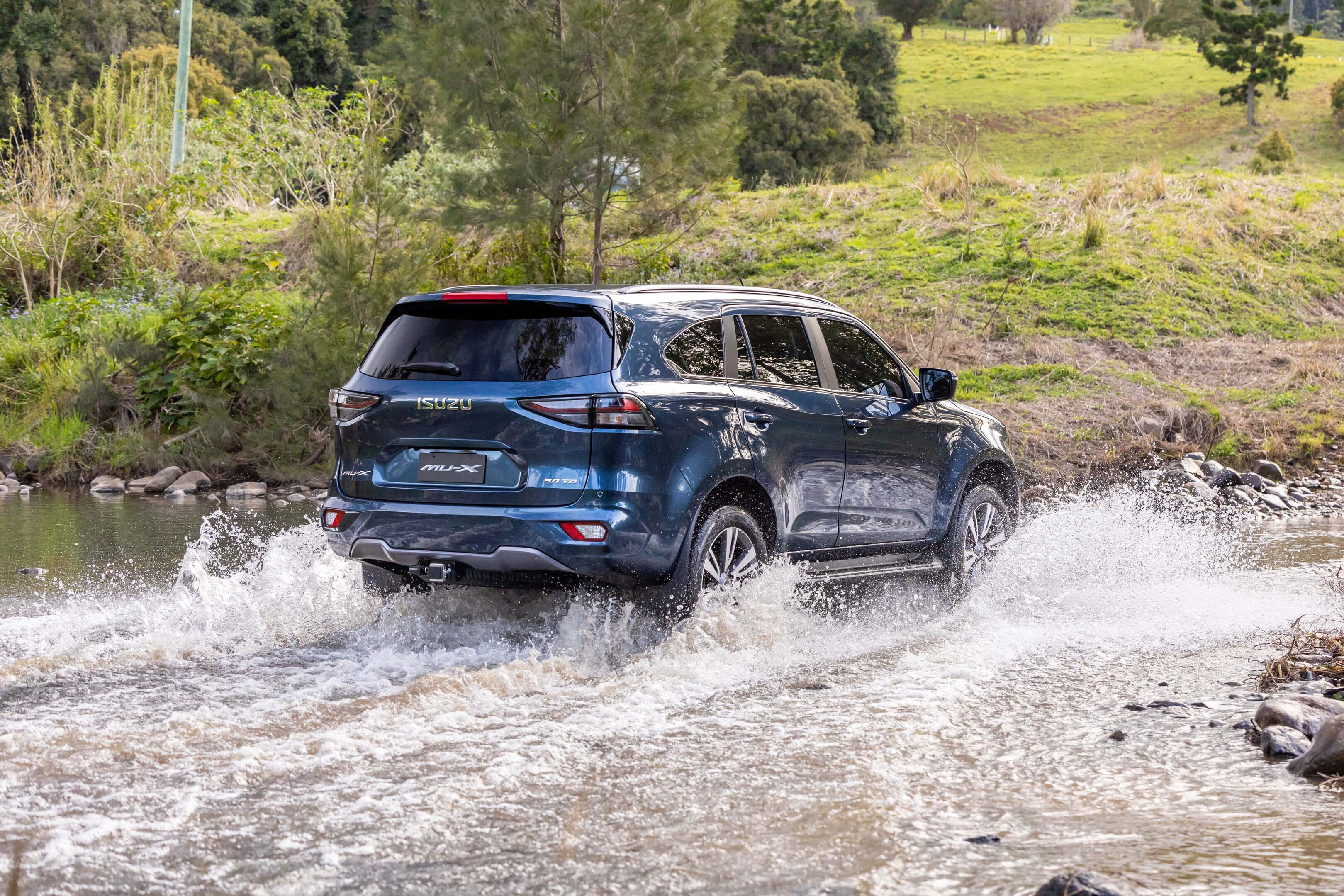
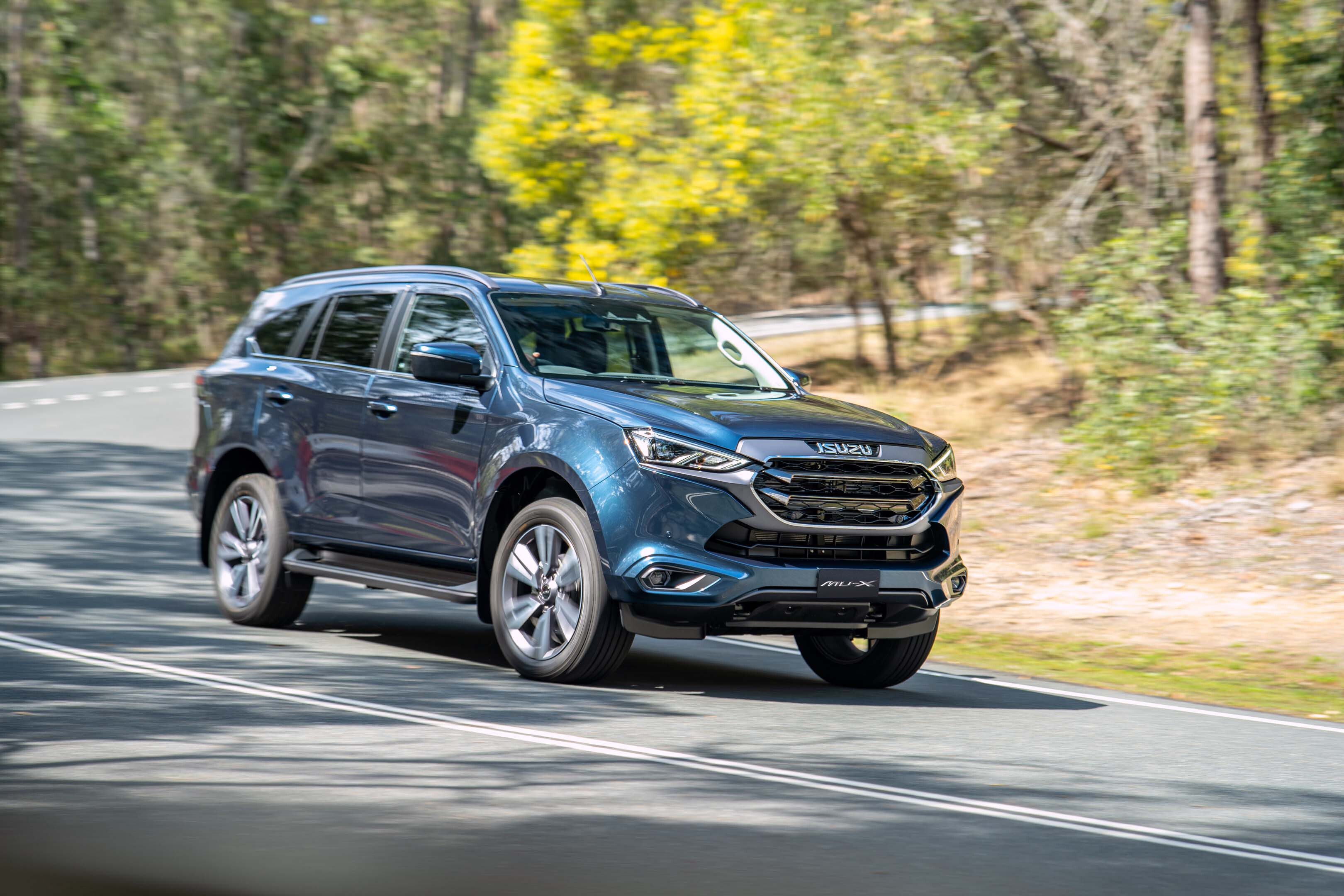
2022 Isuzu MU-X LS-T
1
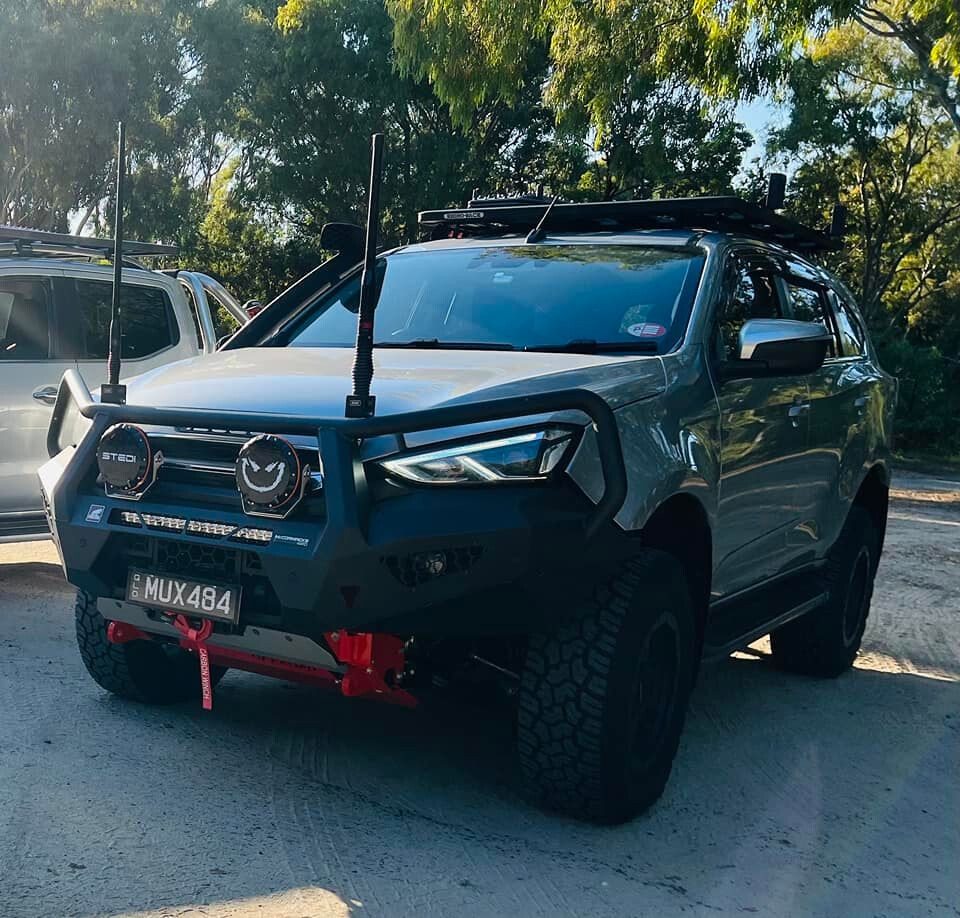
It’s only a couple of months old and it has spent lots of time in workshops. Just taken day trips so far to Straddie, Bribie and Bellthorpe NP. Big trips coming in the New Year.
Gear includes a two-inch EFS lift with Airbag Man suspension under the back; 17-inch ROH wheels and Yokohama Geolandar X-AT tyres; three-inch Legendex exhaust; Animal Toro bar and Carbon winch; custom off-road plates; STEDI lights all around; and a Rhino-Rack on the roof.
A Baintech battery in the back is topped up by a Hardkorr panel on the roof and Redarc inside. Plus it has hard pipes under the bonnet and a bunch of other bits and pieces, and it still has a few things on the to-do list. – Shaun Chandler
Holden Jackaroo
1
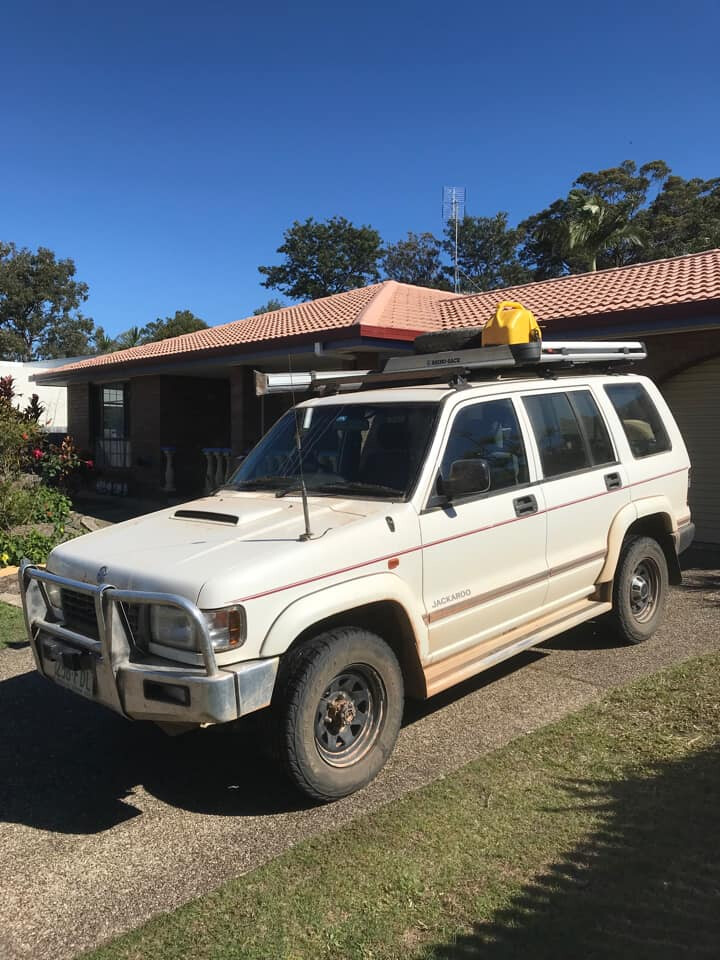
It’s fairly standard except for OME suspension for outback travel, along with necessary gear like a bullbar, side-steps and UHF. It’s running Bridgestone 697 ATs and it currently has 385,000km on clock. We’re off to SA to see what a good season does for the outback. – Ian Edgar
2021 Haval H9 Ultra
1
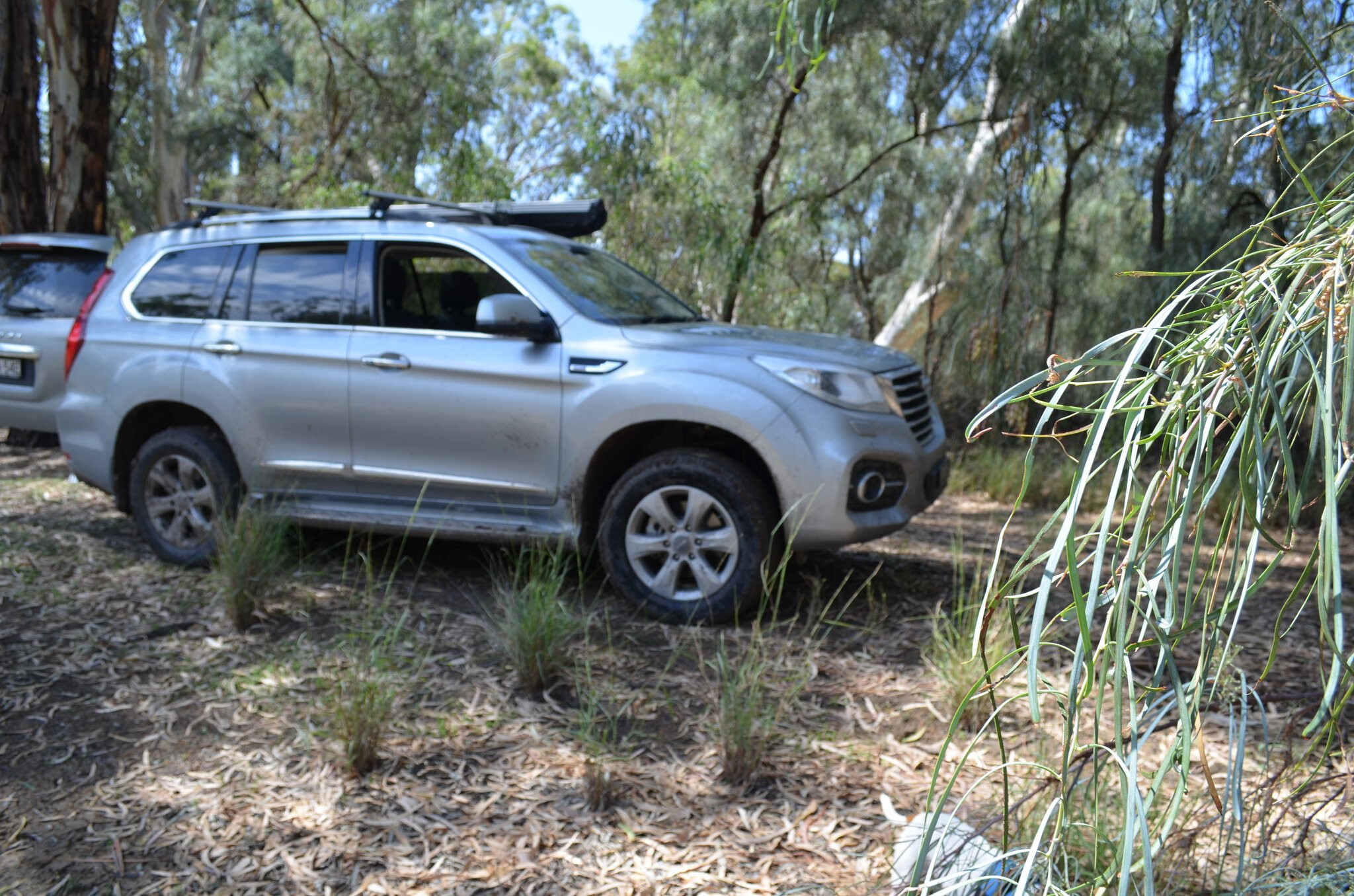
Something a little bit different to most, with Razor ATs and a lift on the way. This shot was taken during a trip along the Murray River in January 2022, and I’ve only done a few trips to Cargo, NSW, and to the Snowies during the end of winter – but more to come. I have a Kings drawer set-up in the rear, a 100L lithium fridge-freezer, and a Kings 270-degree awning. – Todd Bridge
Toyota 60 Series LandCruiser
1
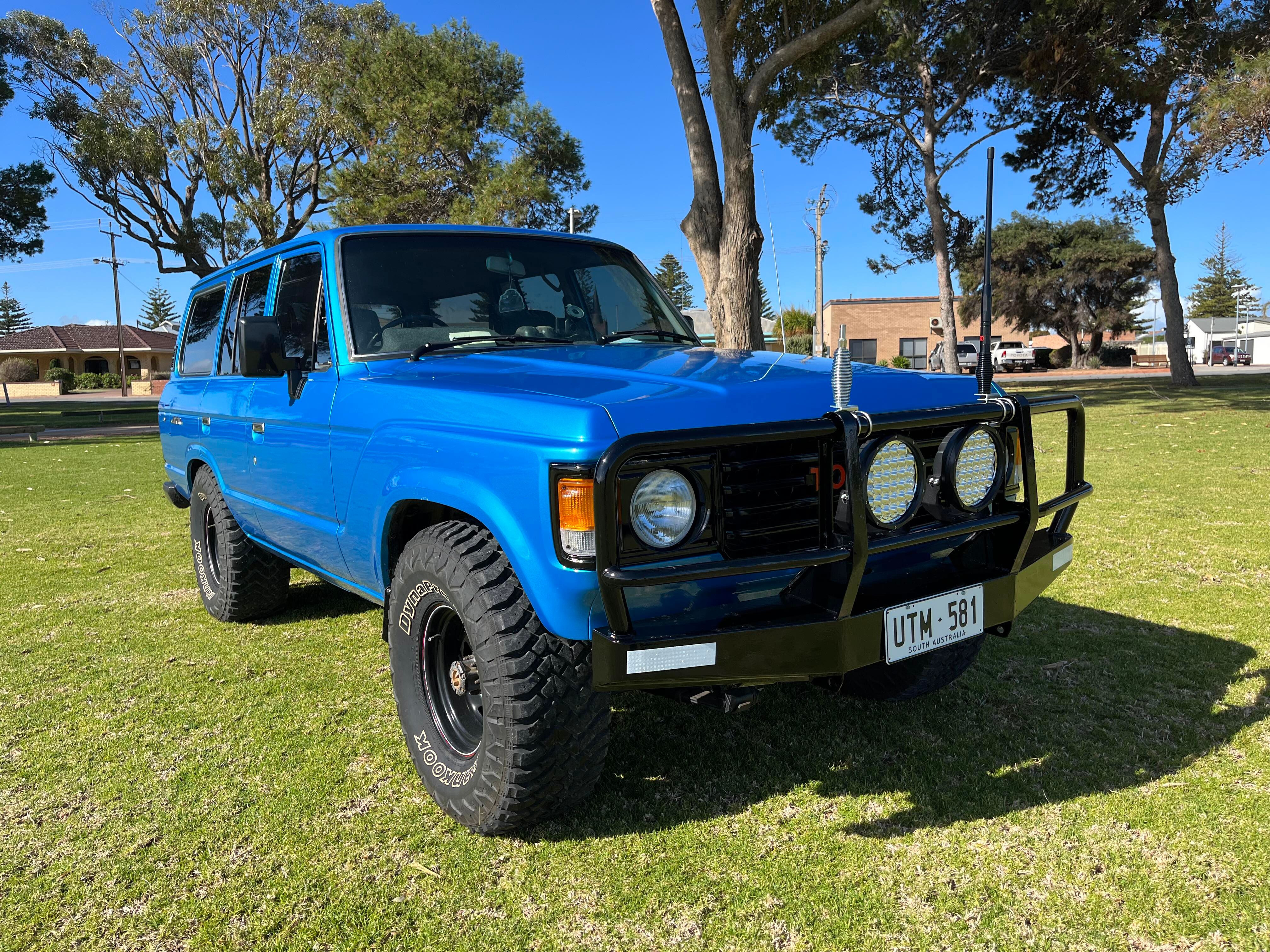
This vehicle is the ultimate 60 Series! Recently driven on a return trip from Ceduna, SA, to the Red Centre NATS in Alice Springs, and it never missed a beat.
Kit includes a mildly worked 454 Chev mounted to a Toyota five-speed gearbox, with the heavy-duty upgrade on fifth gear; 15 x 8-inch black Sunraysia rims on 33 x 12.5 x 15 Kumho tyres; factory air and power steering; Black Duck seat covers; laser-cut door trim; two-inch lift with Ironman 4×4 suspension; an ARB bullbar; Sandgrabba floor mats; Long Ranger auxiliary fuel tank; ARB 40amp DC-DC dual-battery system; custom-built Adrad aluminium radiator; and a dual 2.5-inch exhaust with Lukey sports muffler. – Mario Nicholls
Mitsubishi Triton
1
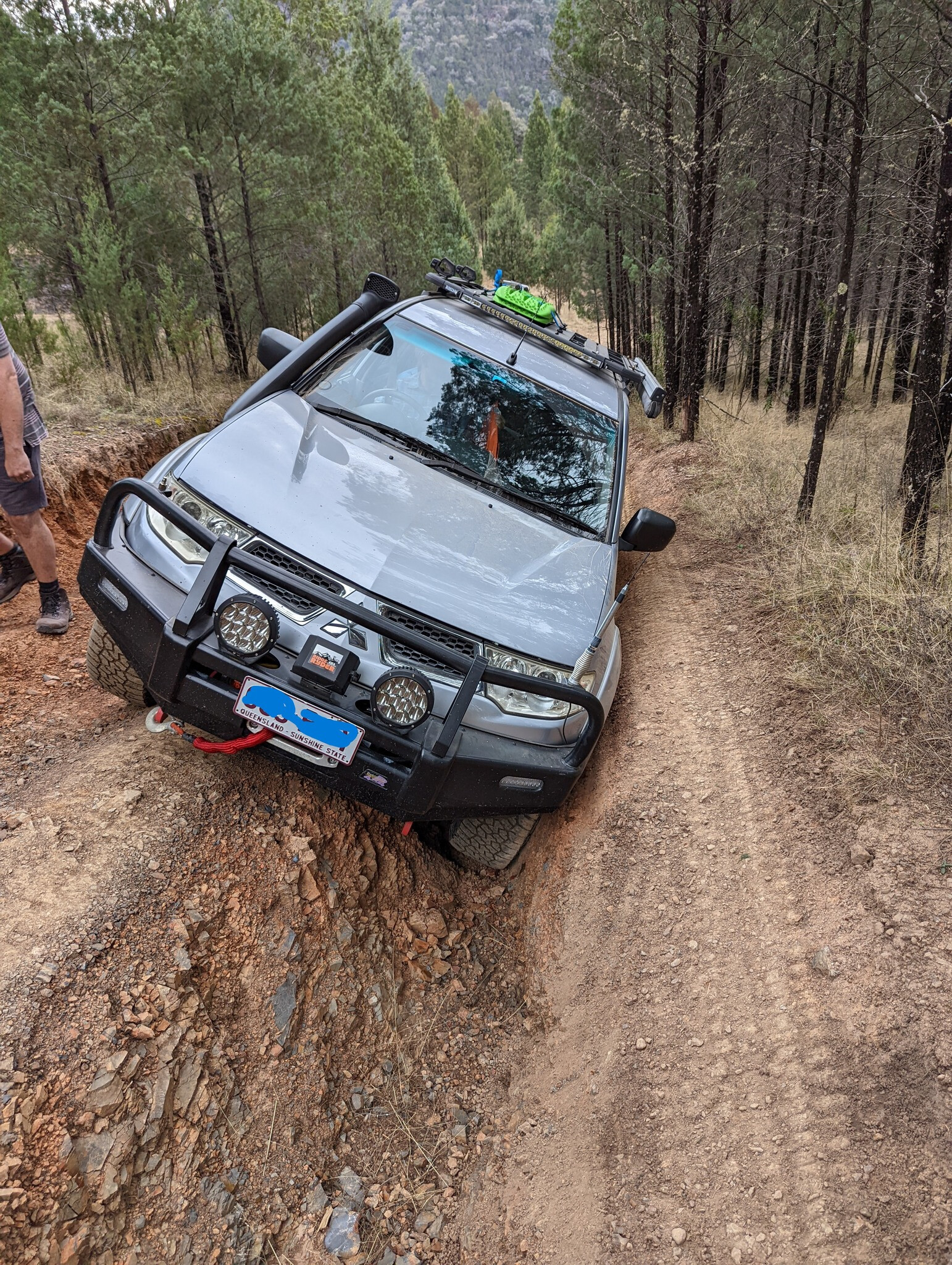
Mods consist of a three-inch King Brown exhaust; two-inch Dobinsons springs and shocks; Oricom UHF; Rhino-Rack Platform roof rack and awning; aftermarket intercooler, ForeFront Industries hard intercooler pipes; eBay snorkel; Dobinsons bullbar; Ridge Ryder 12,000lb winch; MCC recovery points; Victron Energy Orion DC-DC; SuperNova 32-inch light bar and Rough Country seven-inch driving lights; and full rear axle swapped with factory diff lock. – Graham Blanch
2017 Ford Everest
1
This whole build was designed to balance the need for that extra power and reliability, while trying to keep it light for towing.
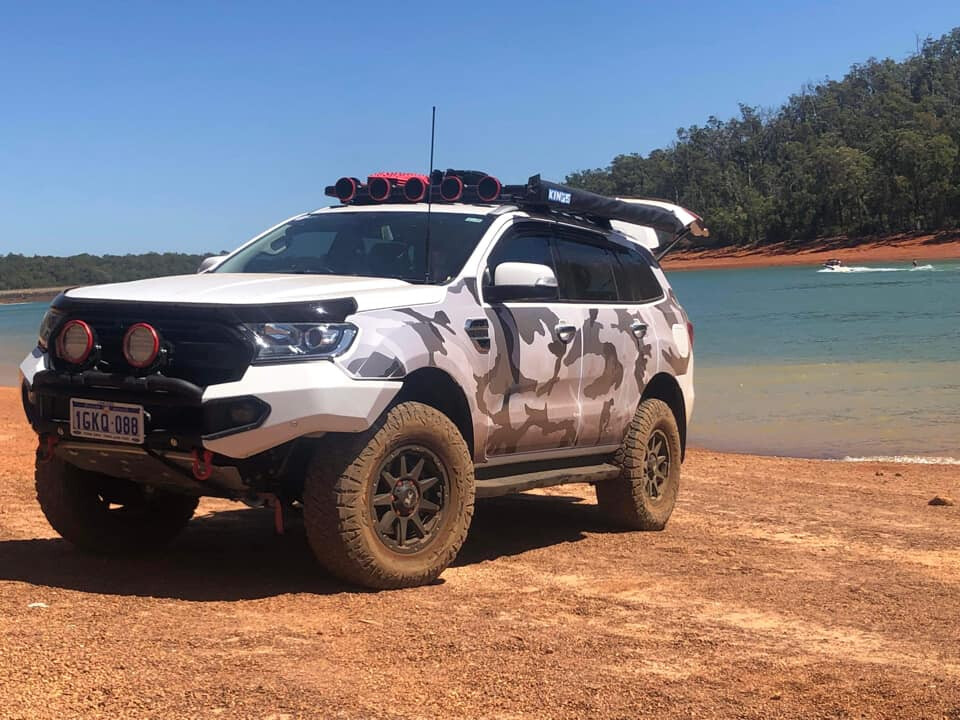
Mods include a Rhino bar and bash plate; Maxxis AT 285/70R17 tyres; two-inch lift on Outback Armour shocks; Kings winch; Yakima roof platform; custom second-battery set-up; and a GMC radio.
The real magic is under the hood, to give the lazy 3.2-litre a lot more gusto and reliability off-road and for towing. This includes a House Of Automotive (HOA) Stage 1 turbo with dyno and gearbox tune, to deliver about 30 per cent more power. There is more power to extract from the engine, but we traded that off against drivetrain reliability.
A HOA torque converter with a lower set point makes it quicker off the mark and also delivers that little bit of extra low-down power, to get over dunes or through heavy mud. We swapped the Everest cooling system for a Ranger set-up, which keeps her much cooler in peak summer and while towing.
A BushBarrier protection system makes getting through scratchy bits a lot more fun. The last hidden gem is the Kufatec Sound Booster Pro, which lets me tailor the sound of the car from a deep V8 to a screaming Maserati, or just go silent if I am sneaking in late at night. No exhaust mod. – Anton Kroger
It’s not every day you get invited to attend an event, that is a first of its kind.
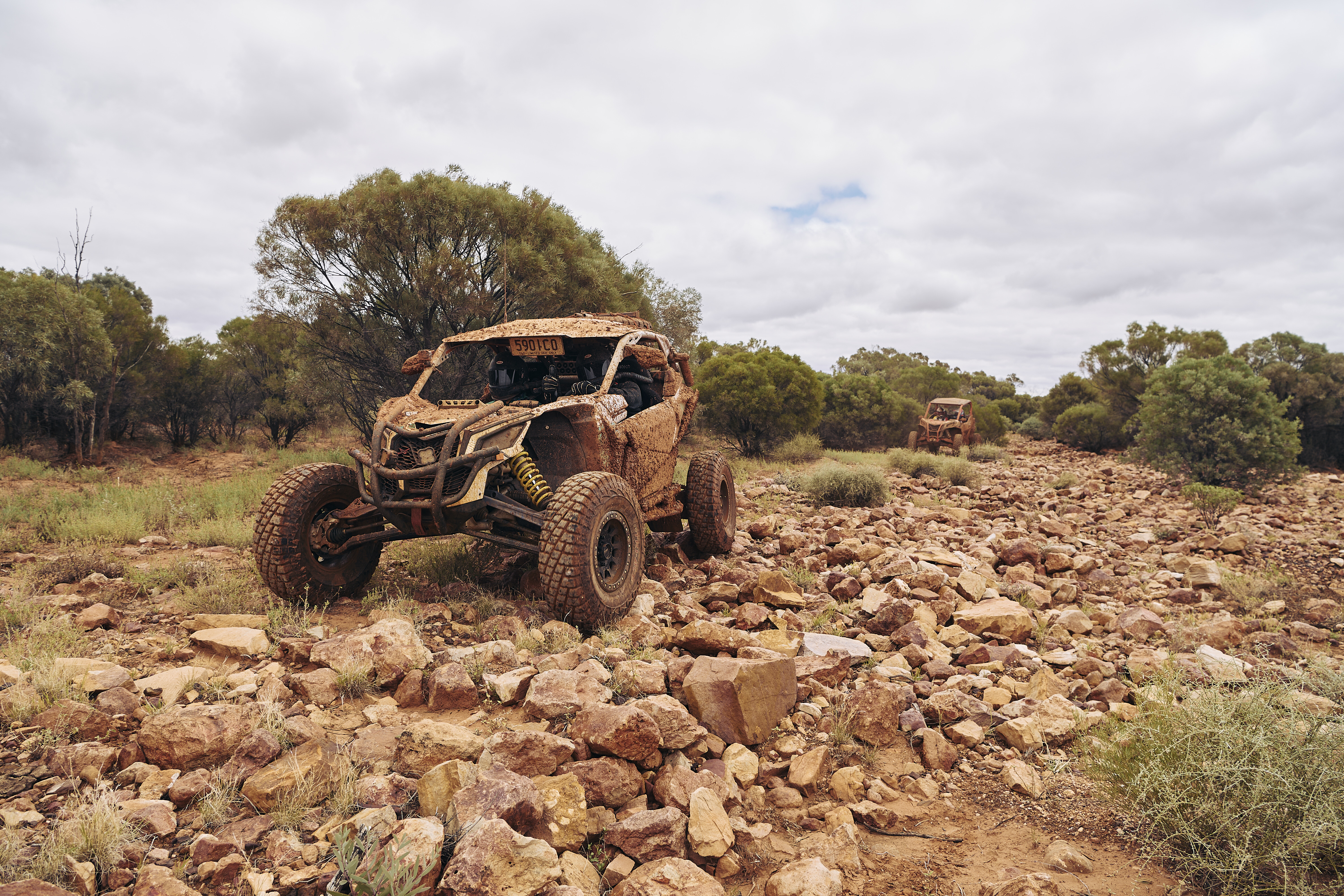
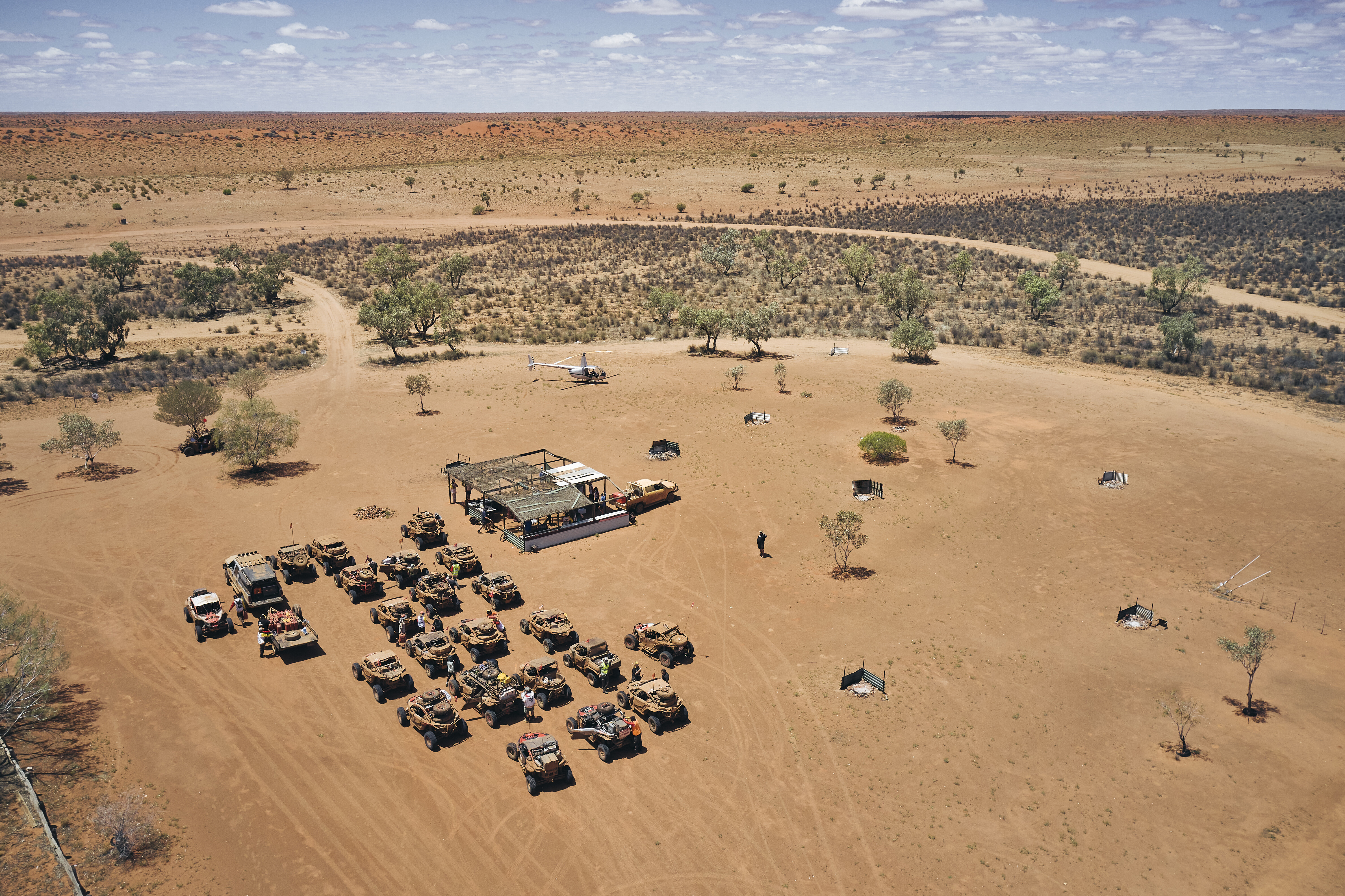
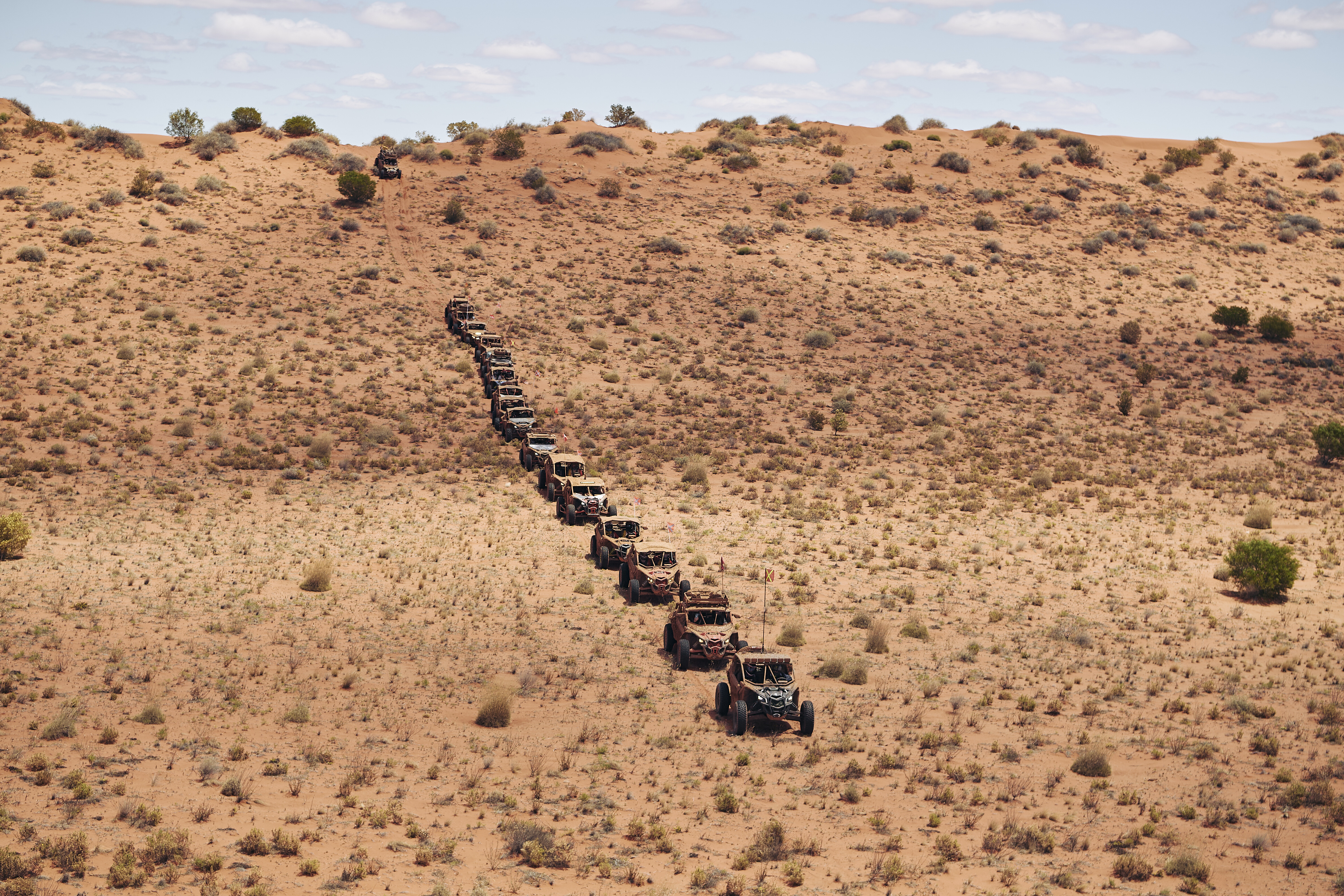
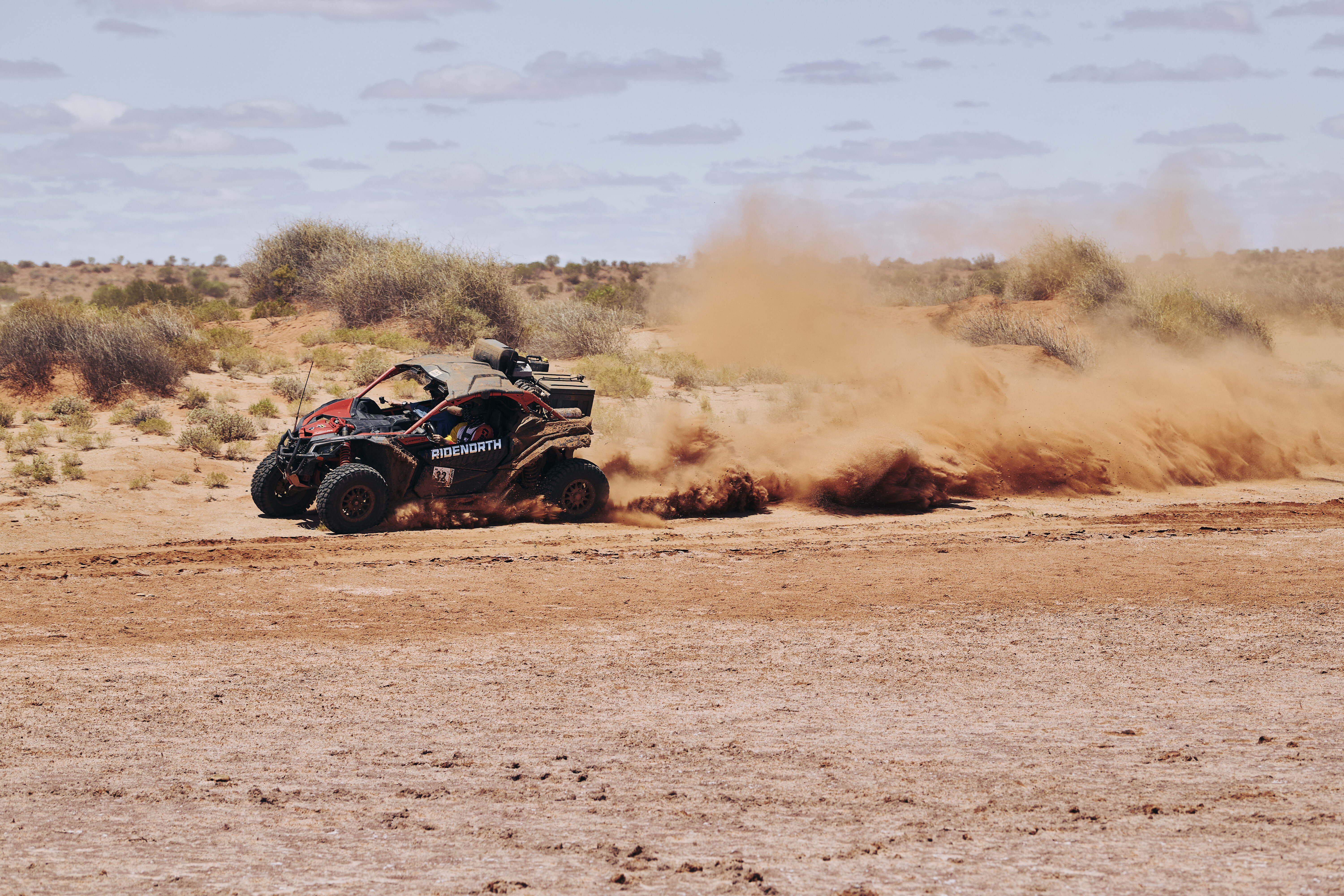
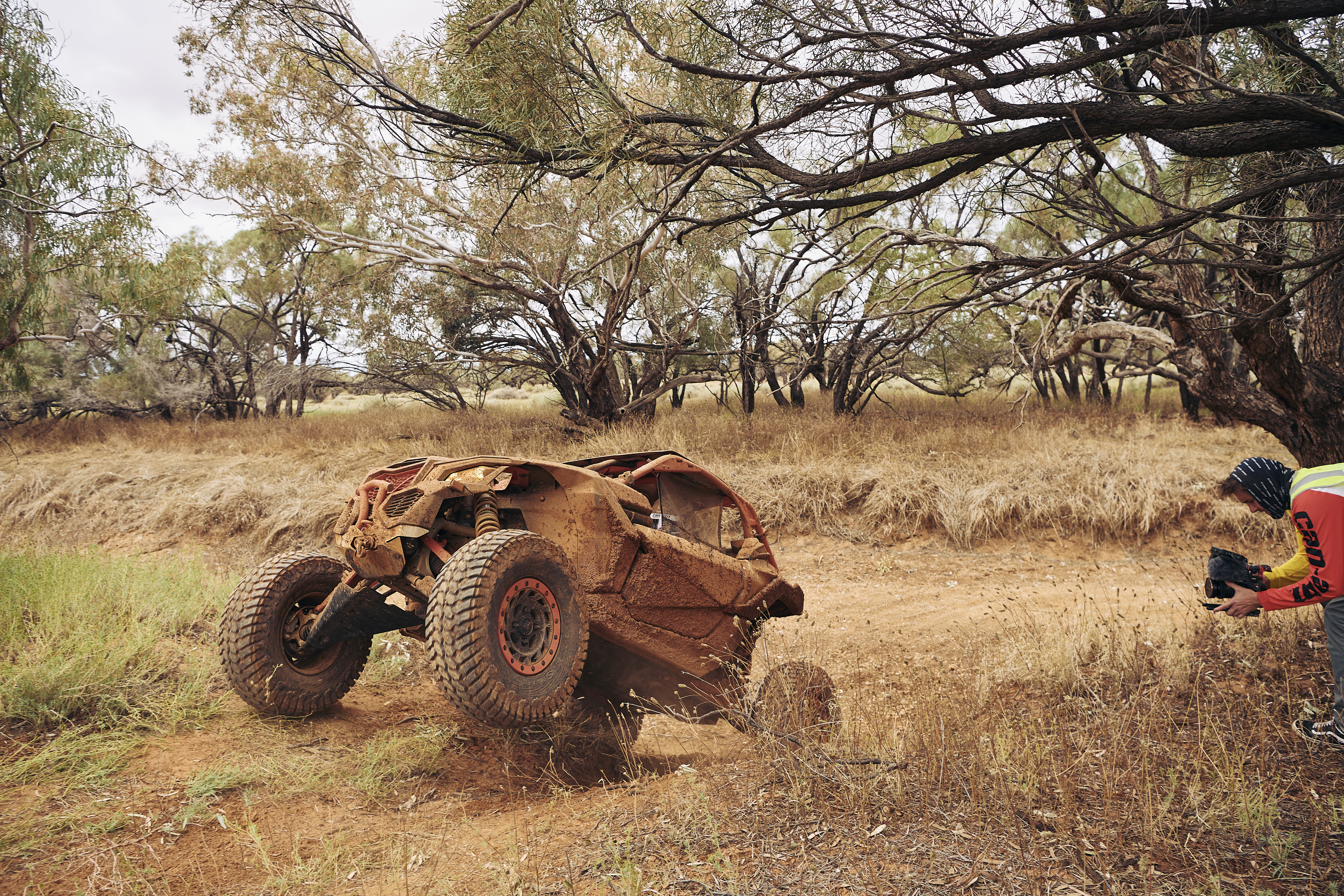
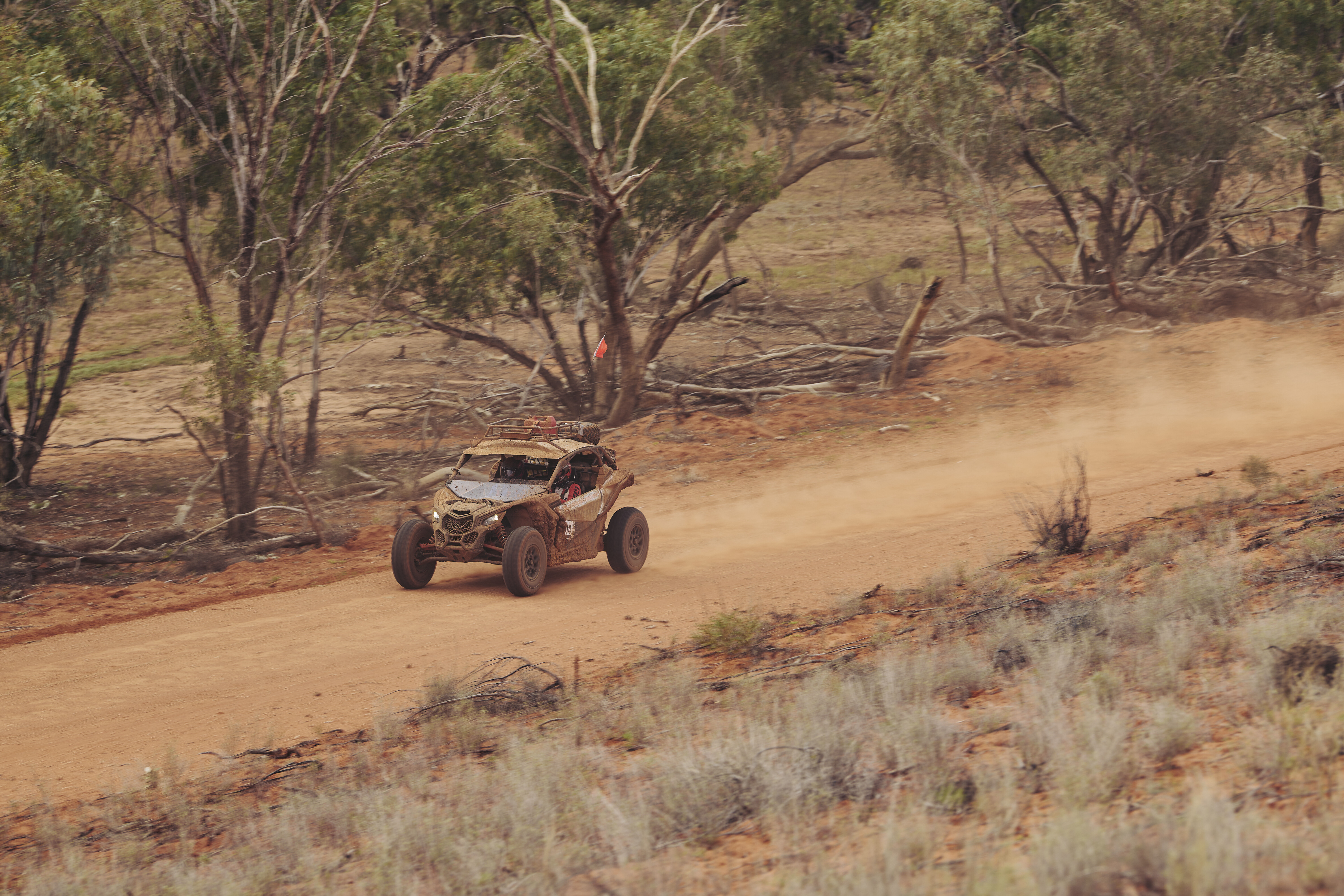
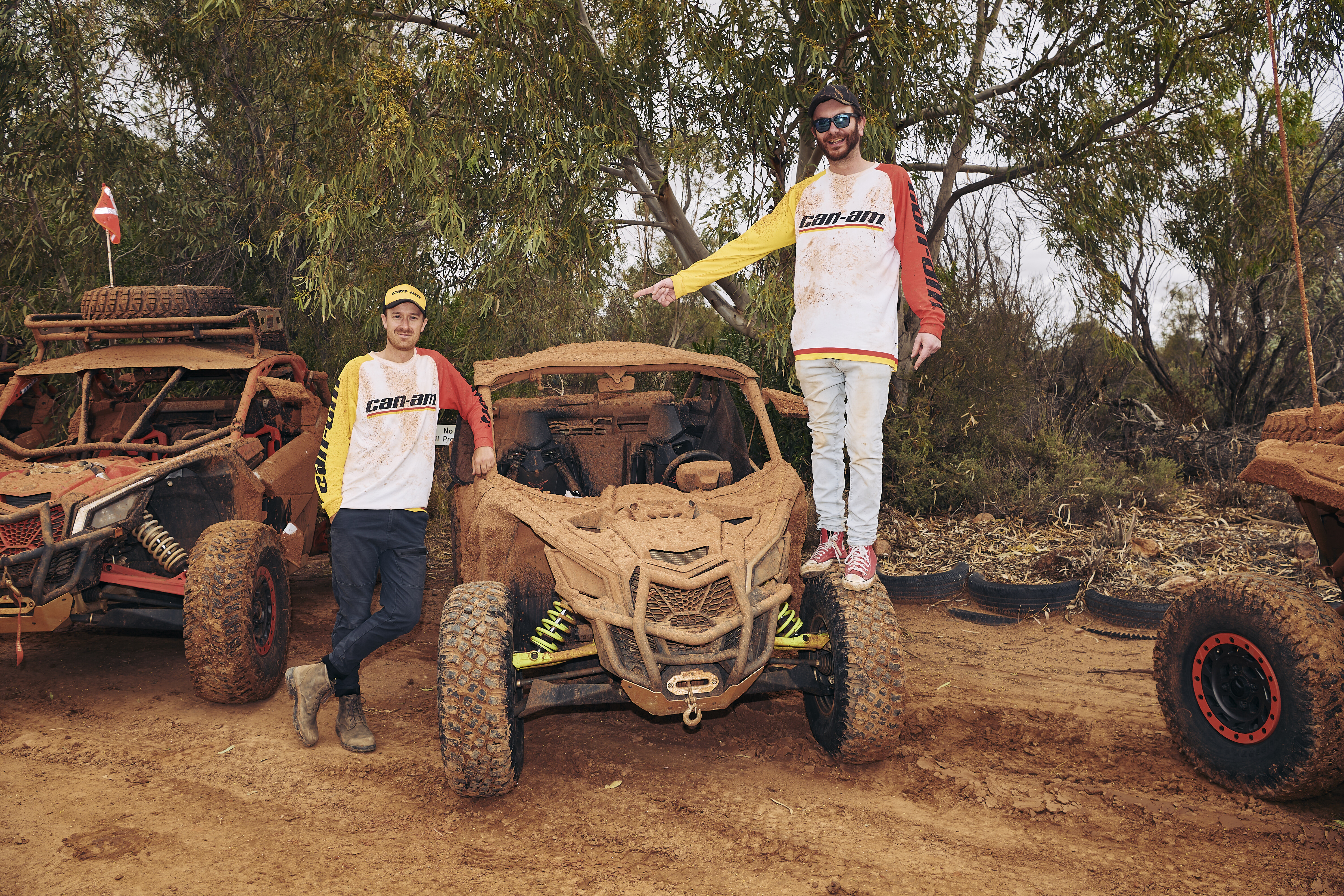
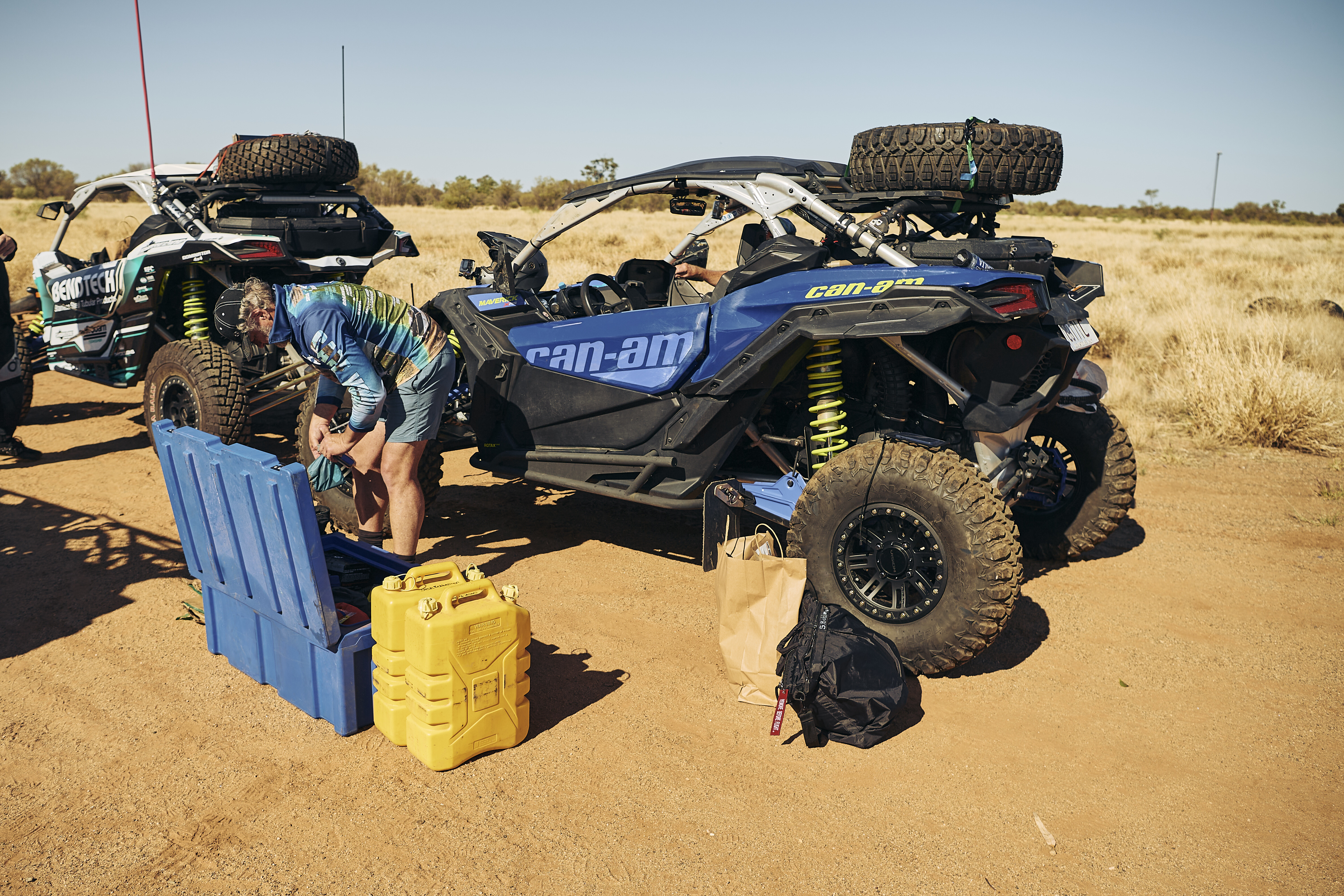
I was lucky enough to be invited along to cover this recent journey of more than 1500km on the dirt with 26 Can-Am Maverick X3 side-by-side buggies and their like-minded owners from all around the country, going from Finke to the Simpson Desert over six days.
This event was put together by the team at BRP Australia, and Ride North who arranged everything so punters just needed to get their vehicles to Alice Springs, and strap in for an adventure of a lifetime. The good news is, you can do the same thing too and I strongly suggest you do as there’s no feeling like this.
1
Day one: Transit
This particular adventure started differently for everyone, as people were attending from all around the country. For myself and the production crew, we flew out from Sydney to Alice Springs early Sunday morning.
It would have been quite a logistical effort transporting everyone’s vehicles to Alice Springs, with everything other than a missing swag arriving safely; the swag was collected from the airport the next day.
1
First port of call was Alice Springs where we were staying at the Hilton, a stark contrast to the locations we’d find ourselves in over the coming week.
This first day was a cruisy one, where we had our first team briefing and the chance to get to know over a beer at the nearby Casino coming in at a hefty $13 a pop. Worth it.
Day two: Testing
The objective for Monday, was to meet up early and head to the start of the Finke Prologue Track for a testing session to iron out any bugs in the vehicles, and for some training to get a feel for the units and iconic track conditions. This was going to be a long trip, so we needed to know we could finish it, it was brilliant to have this opportunity.
1
Two buggies did have to pull into the pits, as the radiators were shipped full of mud from their last off-road session and were getting a bit warm. With a team of experienced mechanics on-board this was fixed quick smart and we have no real mechanical issues from here on in. This is why you have testing days; I was now feeling confident and ready to hit the tracks knowing we were fully supported along the way.
1
The more experienced operators were champing at the bit to get out there and experience everything Finke could offer. However, it was back to the Hilton for our last taste of phone reception and a dust-free existence, and another early night in preparation for a massive week ahead. It’s safe to say I didn’t sleep a wink that night, I was more excited than a kid on Christmas Eve.
Day three: Finke to Mt Dare
Day three was going to be a big one, driving (I think buggy people call it riding) parts of the Finke Desert Race Track and ending up at the remote Mt Dare Hotel. A large part of this day was spent on the actual Finke Track, hitting whoops at 90 to 100km/h was an amazing experience, a real test of person and machine.
It’s safe to say, I’m hooked. The suspension is incredible on these Mavericks, it’s not like a traditional 4×4, the harder you hit them the better they feel, and that turbo-charged motor is as sweet as a nut.
1
Something that truly amazed me on this leg of the journey, was how the scenery changes constantly. From tight sandy tracks, to relentless whoops, to sections of wide-open land. We made it to Mt Dare tired, covered in mud and dust, and utterly in awe of what we’d just experienced.
Ride North, the organisers of this event, had set up a beautiful campground area at Mt Dare, which was sadly smashed by a wind storm. Nobody complained, and everyone chipped in to fix the place up, followed by a lovely evening swapping war stories and talking smack around the fire. Perfection.
Day four: Who dares wins
After racking up some serious kilometres yesterday, today was touted as being an easier day of dirt-road driving, but spectacular nonetheless exploring the area around Mt Dare. This started with wide, open sections of dirt road, that the X3s just ate up for breakfast.
Next up, we were guided through dry river beds, rocky sections and deep gullies that the entire group agreed was not only spectacular to experience, but a whole lot of fun in these Can-Am buggies. We had burgers for lunch by the water, prepared by the awesome Jolene from Ride North, then decided to make the 100km trip back to Mt Dare for what was to be a big occasion.
1
Ride North had arranged an amazing feed that night by the team at Cooking With Heavy Metal (their details are at the bottom of this article) and some terrific singalong action provided by a local musician named Glenn. This was to be a worthy evening, as our group raised north of $25,000 to be donated to the Royal Flying Doctors via an auction organised by Can-am and Ride North.
The ceremony was hosted by the ever-charming Lucas from Can-Am, who even auctioned off his singing abilities taking song requests for $100 a pop. This is a great group of like-minded people, who dug deep for such a worthy cause.
Day five: Into the dunes
Today was a real adventure, one we were all looking forward to as we inched towards the dunes of the Simpson Desert. The route in front of us started at Mt Dare, heading out to Old Andado Station via the Binns Track and into the Simpson Desert dunes. After enjoying the challenging terrain of the Binns Track, we made it to Old Andado Station for a poke around.
It’s a bit of a creepy place, but also incredibly eye opening to see how people lived out here not that long ago. Inside the house, you’ll find all sorts of treasures and historical items to investigate, it’s amazing that this place is opened to the public yet is virtually untouched and so respected by visitors. There’s even a pair of LandCruisers (40 Series and 60 Series) parked under a lean-to, that look as though they’d fire up with a new battery installed.
1
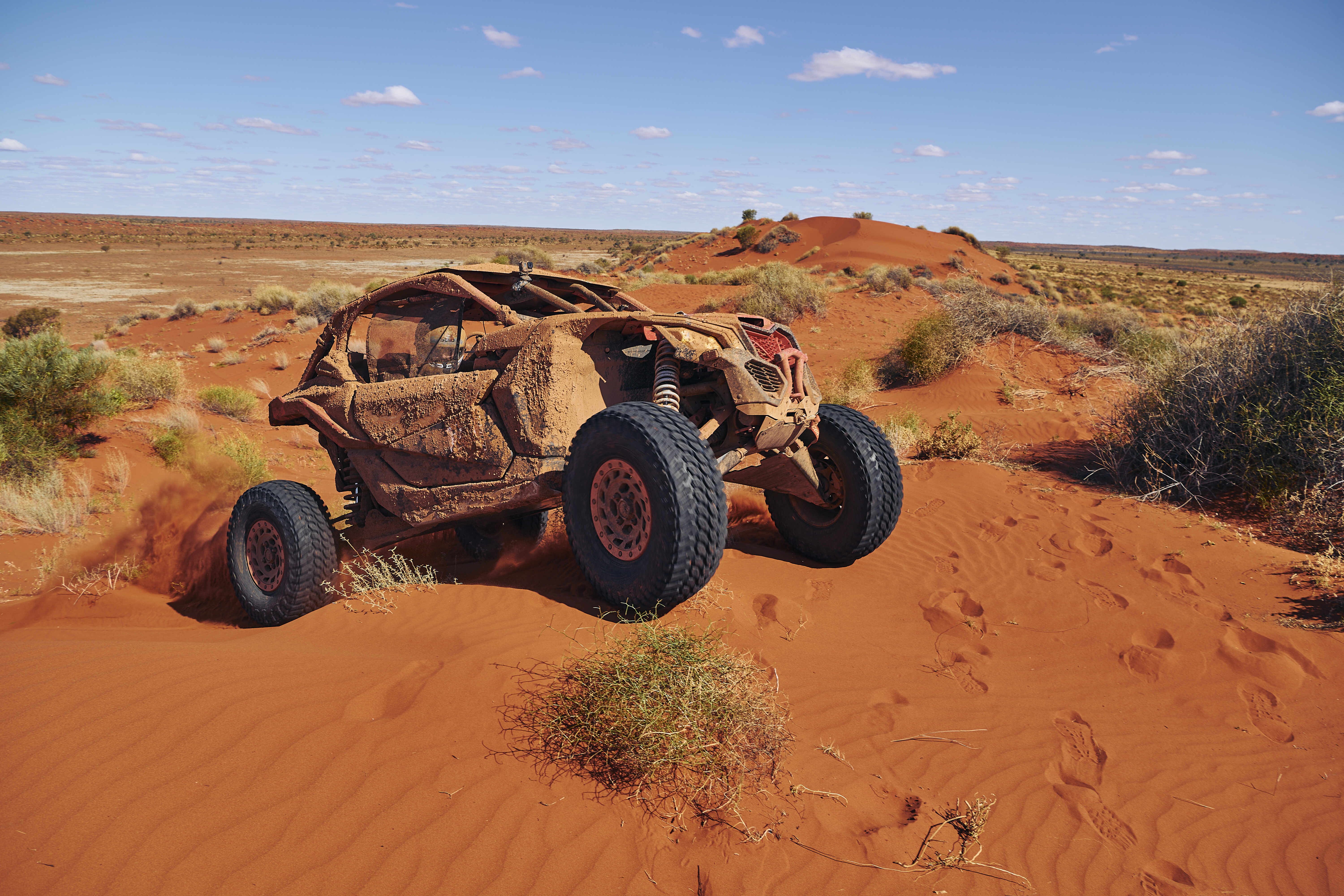
After exploring Old Andado Station, it was on to the dunes for a play and wow, these vehicles are just so capable, I can’t imagine any 4×4 conquering the sort of terrain we experienced without getting bogged. It was also quite an experience to have a helicopter fly low overhead with the camera crew inside taking images and video, while driving the red dunes of the Simpson Desert in a Can-Am.
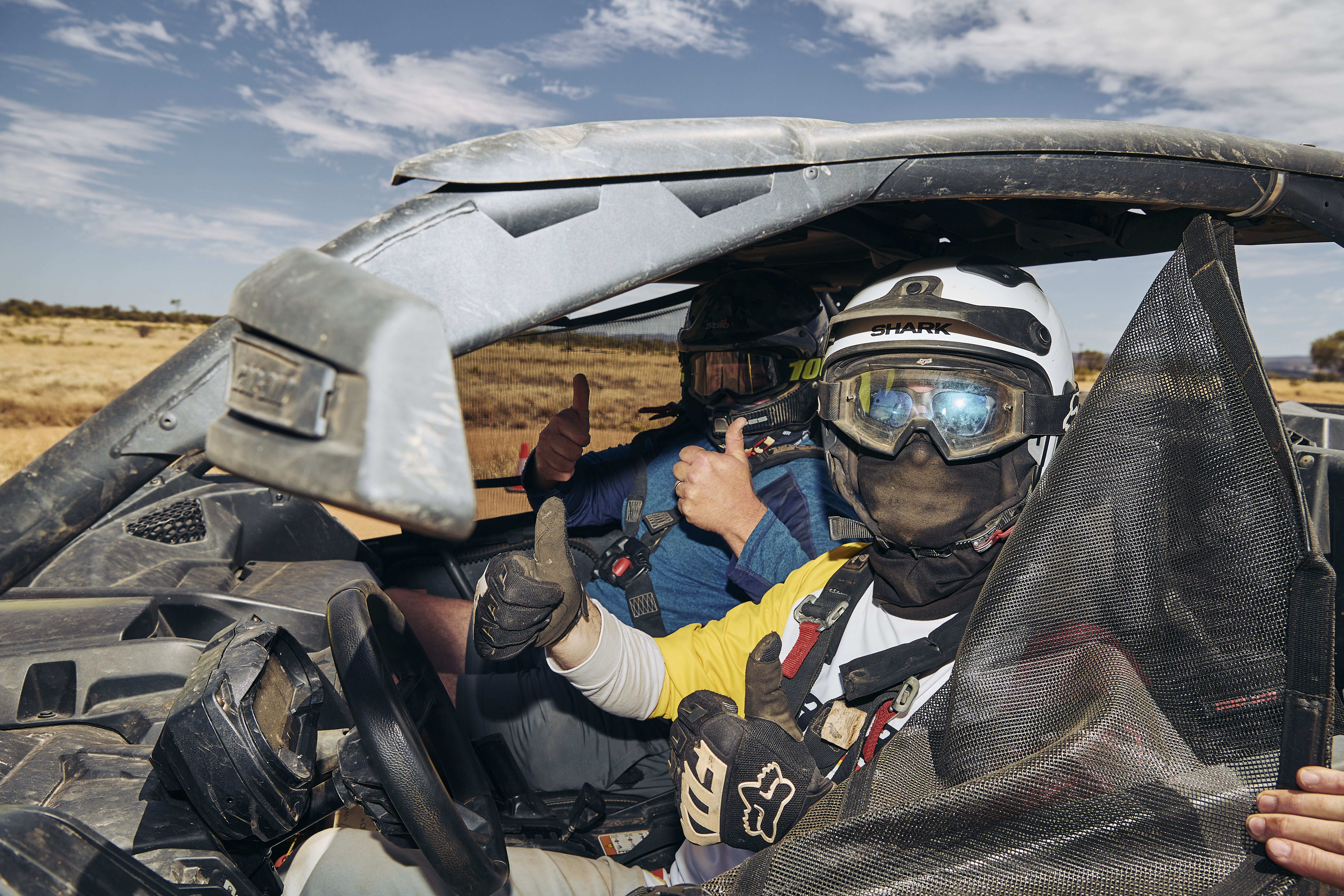
With the adrenaline pumping after a run through the dunes, the group went back out on the Binns Track, which was incredibly dusty in a vehicle with no windscreen, but all part of the experience.
We once again arrived back at Mt Dare ready for dinner by Cooking With Heavy Metal, including what many had decided was the best lasagne they had ever eaten – not even taking in to consideration it was cooked in a cast iron camp oven. Tomorrow was to be a big day, so with full bellies we retreated to our swags under the blanket of stars only Outback Australia can produce.
Day six: All good things must end
Day six began back on the Binns Track out from Mt Dare for the last day of driving, we had to cover some ground today with over 400km of driving (or riding) on dirt to get back to Alice Springs.
Binns Track is a sensational driving experience, a real highlight of the trip we were all stoked to experience once again. There’s so much to see along the way, I know why so many people want to experience this part of the country in a 4WD. To do it in a buggy like a Can-Am, was pure joy.
After fuelling up the buggies and riders, you could tell the mood in camp had changed. Nobody wanted this to end, but we all shared the common goal of completing this journey as a group. We were so close, but still had another 100km to go on fast dirt roads, to end back through the whoops we experienced way back on our first training day.
1
It’s safe to say we arrived back at our starting point completely different people. We’d covered over 1500km on dirt from Finke to the Simpson Desert, the first group to do it in Can-Am side-by-side buggies. I didn’t want this to be over.
Sadly, the buggies were loaded back on to trucks ready to go, with the coolest thing being all but one made it back under its own steam after a bit of a mishap. These are super impressive machines; I’m beyond amazed by their durability as well as off-road ability.
“This is something you need to experience for yourself”
After one of the longest showers I’d ever had, we exchanged race jerseys for collared shirts in preparation for attending a gala dinner back at the Hilton that the team had put together. We were shown a slide show of images taken on the trip by the ultra-talented event photographer, Brett Hemmings, had a wonderful meal, presented The Royal Flying Doctors with a large cheque and shared our new memories with new mates we’d all made along the way.
Naturally, this was followed by a few $13 beers at the Casino, but you know the drill … what happens on tour stays on tour – trust me though when I say, this is something you need to experience for yourself.
Cooking with Heavy Metal
Food can make or break a trip, as nobody wants to be hangry while out exploring. It’s safe to say we did well when it came to catering, with meals for each trip provided and prepared by the Ride North team.
1
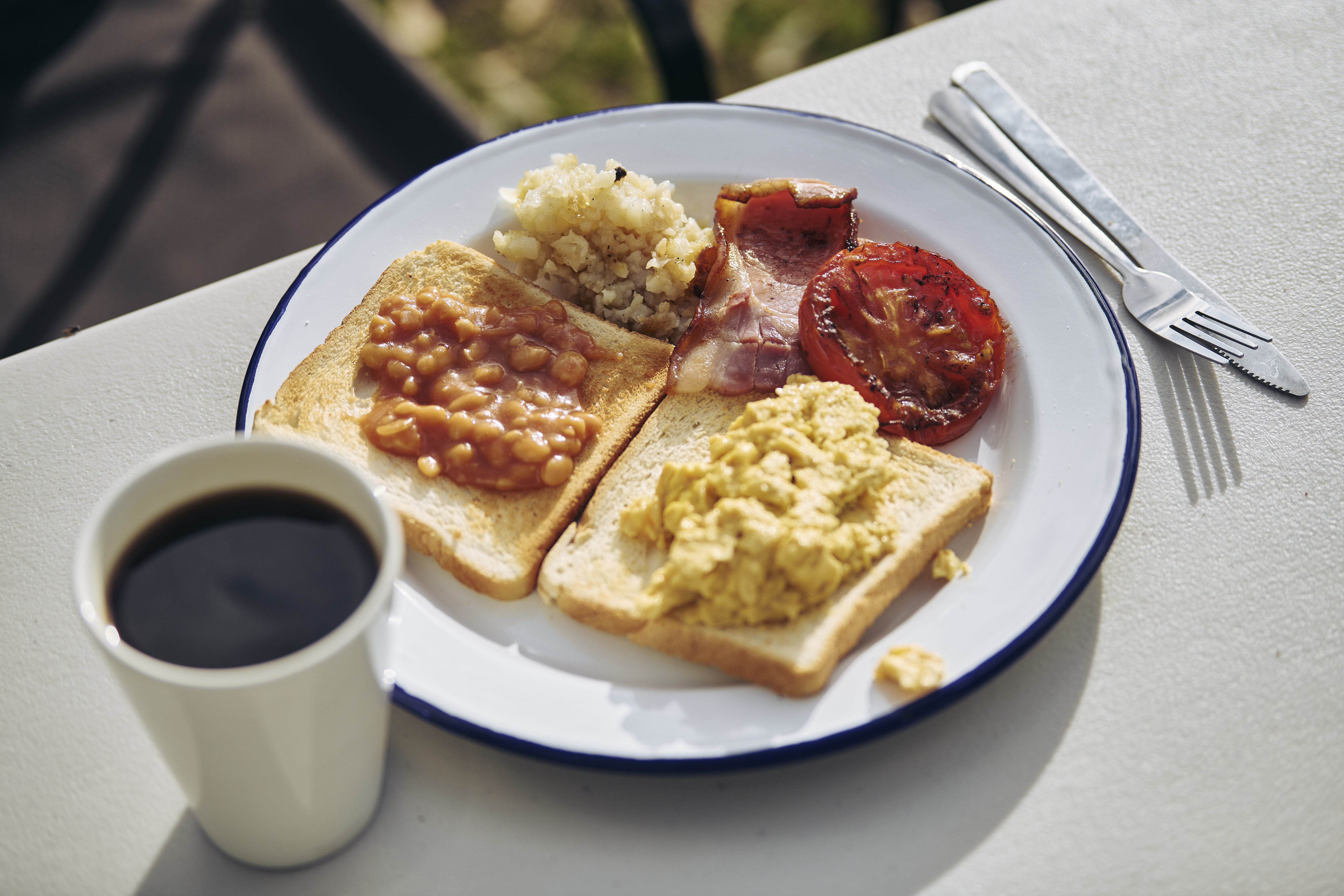
Breakfast and dinner was prepared by the legends from Cooking With Heavy Metal. These guys and girls specialise in cooking with cast iron camp ovens, and to say they put on a spread is an understatement.
If you need remote area catering that will blow your socks off, check out Cooking With Heavy Meal, or give Kerry and Jodi Harrold a call on 0427 807 738 or 0447 190 800.
Special guest: Molly Taylor
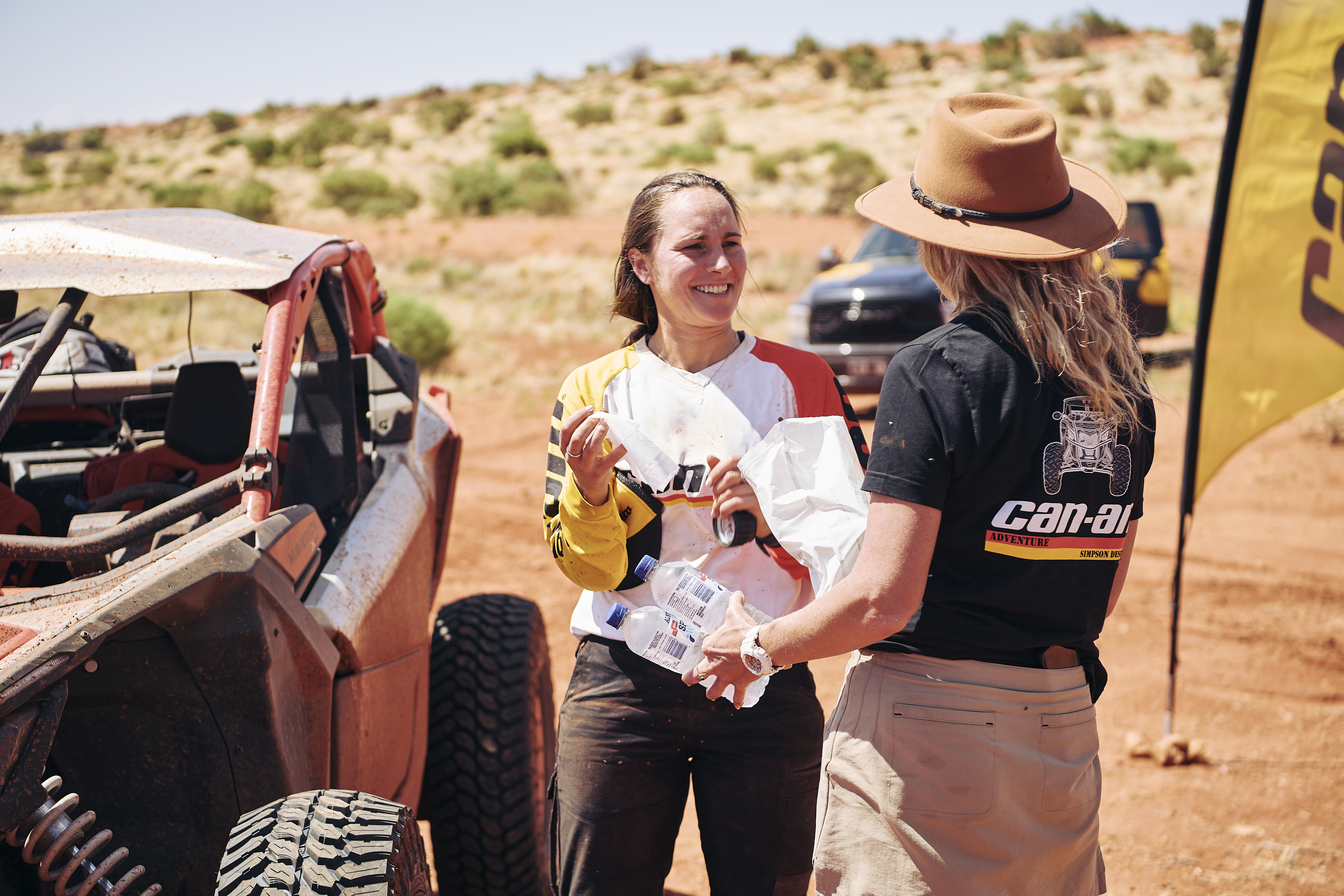
Joining us for the adventure, was professional rally driver and Can-Am Factory South Racing Team member, Molly Taylor. It was awesome to have a professional driver on the trip, who was more than happy to offer driving tips or to just spin a yarn about her racing career and past events.
1
Even though these Can-Am buggies are super capable and you feel unstoppable, there’s nothing like watching a true professional at work to knock your ego down a peg or two; it’s safe to say Molly can steer.
Molly is gearing up to do the 2023 Dakar Rally, an event which lasts over 16 days through the Saudi Arabian desert, so be sure to check out Molly and her efforts in the Dakar event, as she is guaranteed to put on a show and do Australia proud.
Maverick X3
As I don’t (yet) own a Can-Am, I was graciously loaned an older model X3 Maverick to use throughout the duration of this trip.
1
These things are simply incredible; being turbocharged, they have plenty of up and go, and no matter how hard you hit a whoop or bump in the track, the suspension just eats it up. Travelling through tight dune country, I’m not sure there’d be another four-wheeled vehicle that could keep up with them.
Capable is an understatement. Not only was I impressed with how they performed, I was blown away with just how durable they are.
Ride North
It would be impossible to organise an event like this without a team, and the team that made this come true is Ride North, a Qld based adventure tour operator which organised every detail of the trip from route, to permits and logistics.
1
Nothing was too hard for them, and they sure know how to put on a trip. If you would like to participate in an event similar to this, Ride North conduct a range of adventures through iconic destinations such as Cape York.
Check out www.ridenorth.com.au for more information on upcoming adventures you can join in on.
Special thanks
Special thanks must go to the team from BRP Australia who invited 4X4 Australia along for this journey, and organised a Can-Am Maverick X3 for me to drive the entire time. It’s an experience I’ll never forget, and I urge you to take one of these incredible machines for a drive. Much like myself, you’ll be hooked.
Check out www.brp.com to view its range of Can-Ams and other adventure machines, and stay tuned for further events like this one as this is just the beginning.
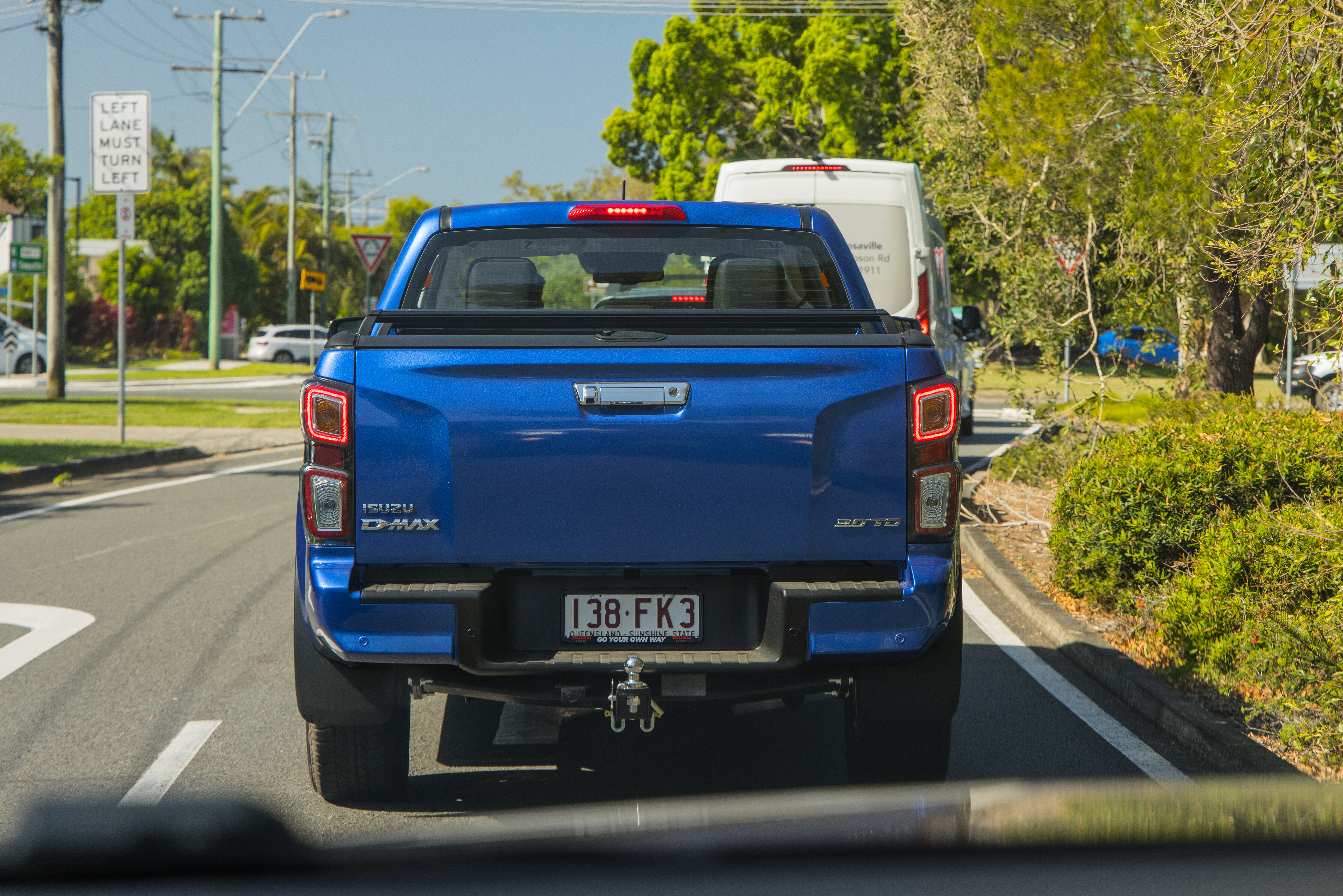

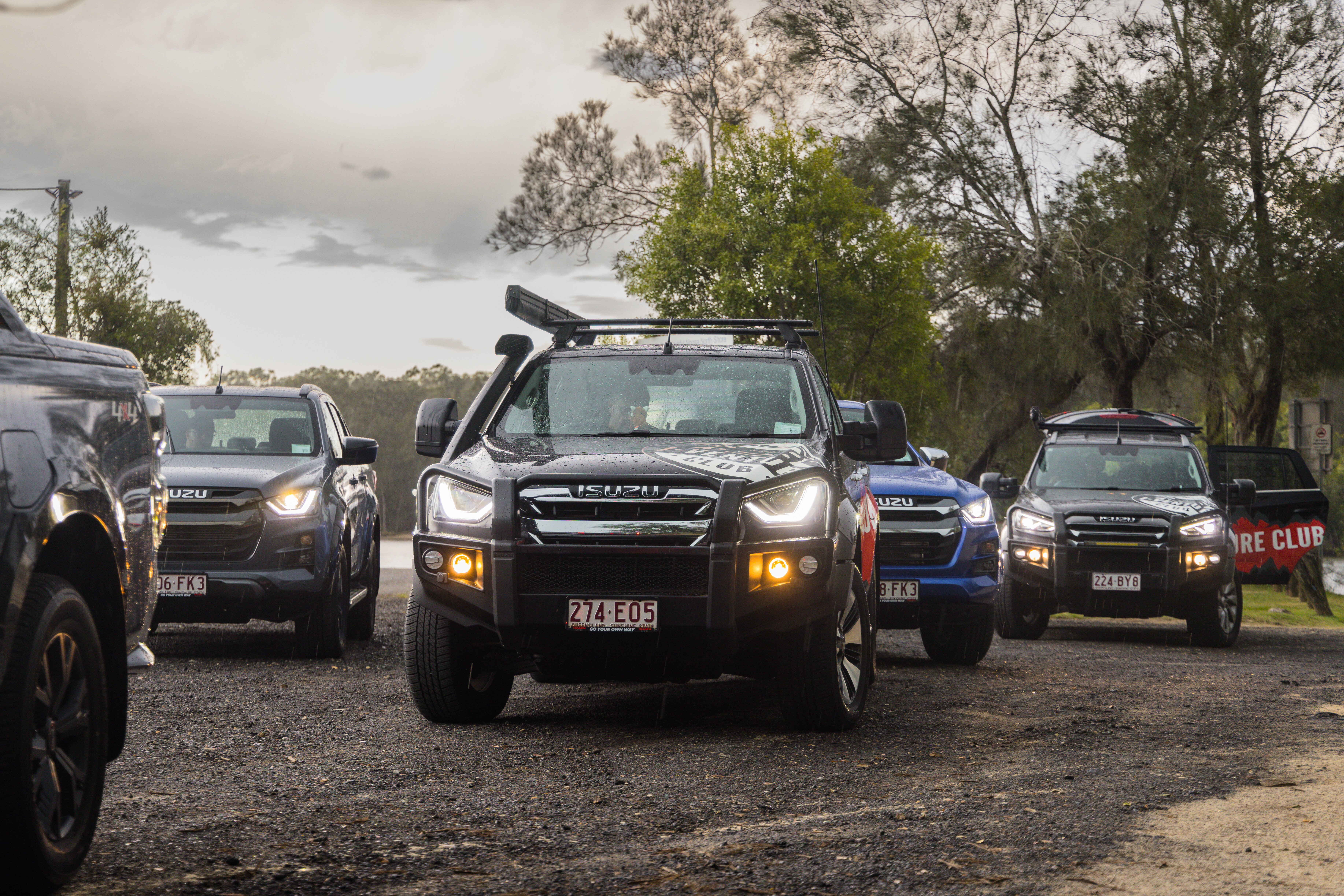
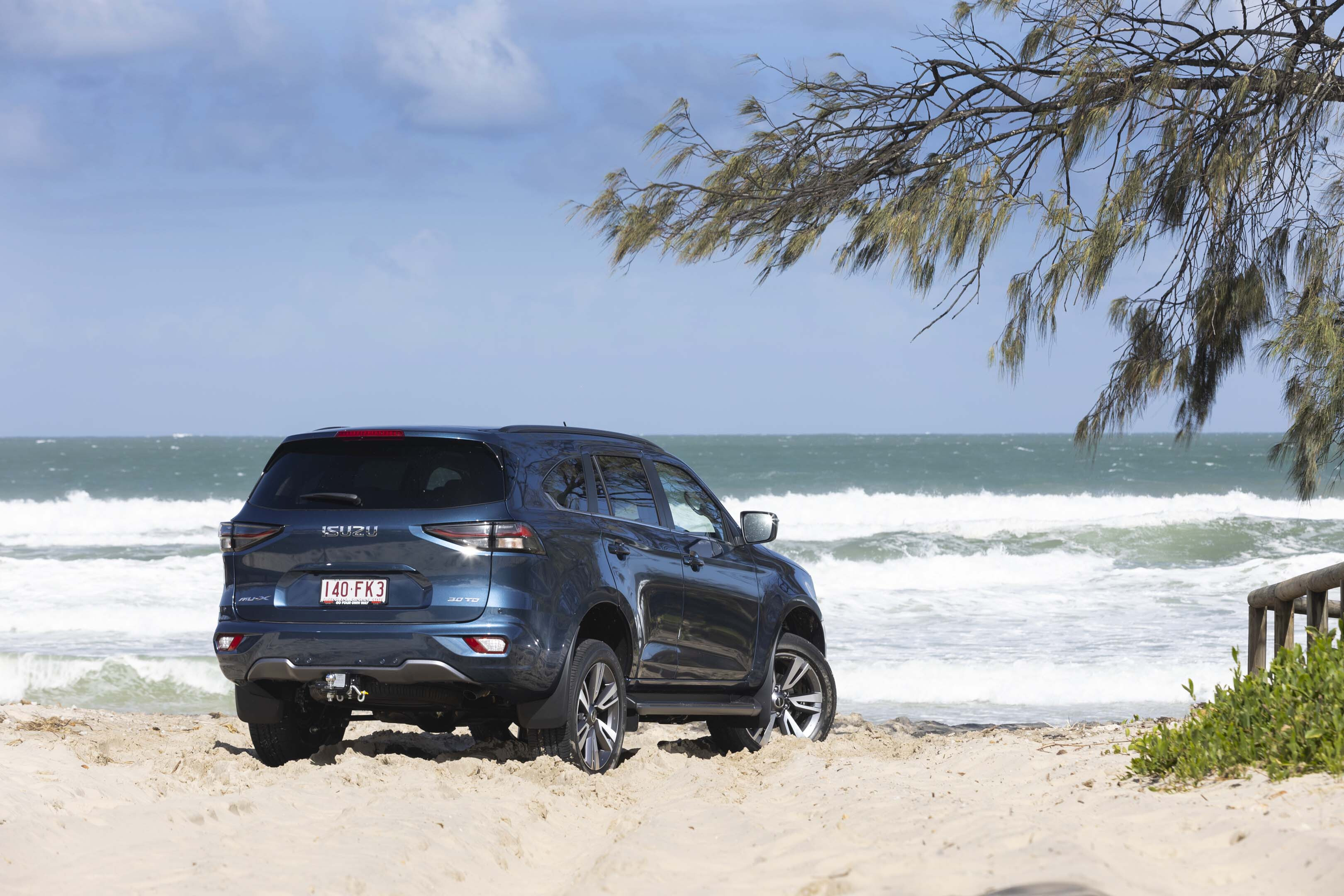
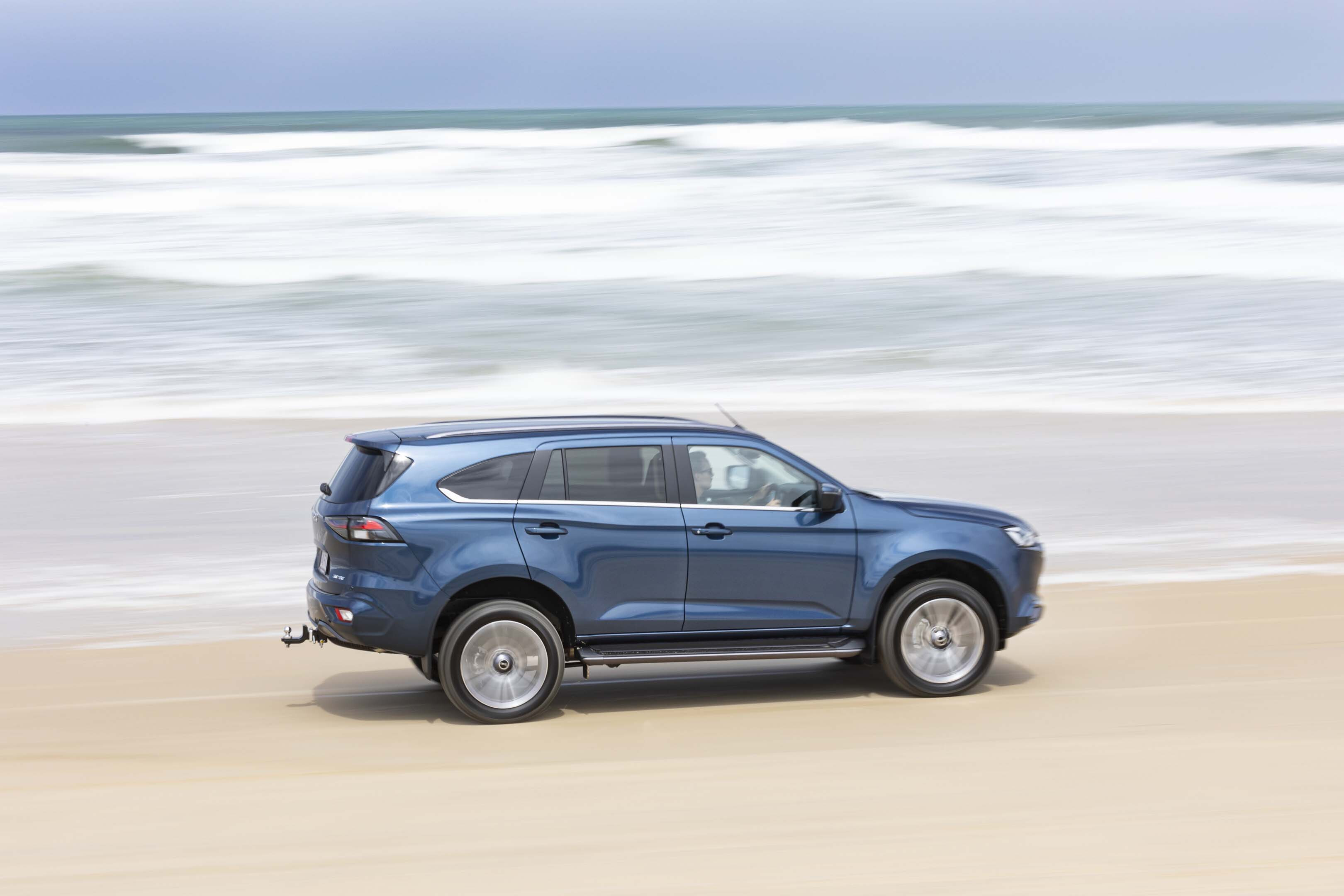
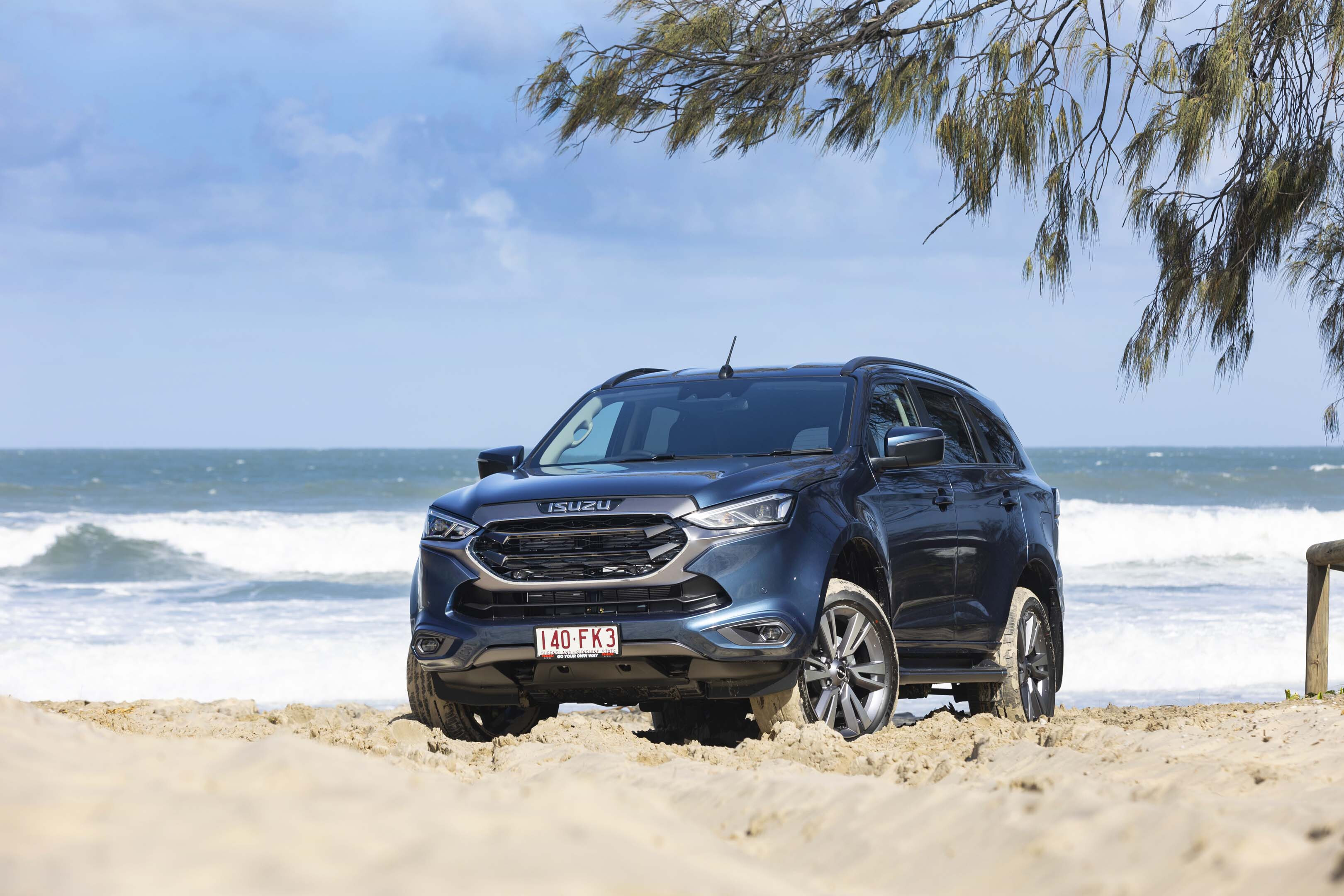
It’s no secret that by now Isuzu has lightly updated its range of MU-X and D-Max vehicles for 2023. We published our first drive impressions of the 2023 Isuzu MU-X earlier in the week, but as we also had the opportunity to take the 2023 Isuzu D-Max for a long drive on the media launch in perfect Queensland conditions, it would be rude to not take a closer look at the D-Max as well and discuss the updates for 2023.
For the most part, these updates are based around the cosmetics of the ute, with new wheels, updated grills and new colours on offer. But there are some useful additions to the 2023 D-Max that we’re excited to see.
We’re talking about tailgate assist that works well when both opening and closing the tailgate, interior enhancements, and the option of a 1.9L turbo diesel engine in the SX Spec Crew Cab 4×4 mated to an automatic transmission.
We didn’t have the opportunity to pilot the 1.9L motor yet (although Wheels has driven it in MY22 guise, see here), but we’ll keep you updated when we do get a drive early in the new year.
My first observation from driving the 2023 Isuzu D-Max, is that the rear end rides firm with no weight in the back. It’s not bad for an unladen ute, but not class-leading either, and I’d be ditching the stock suspension for an aftermarket lift kit anyway – because that’s how I roll.
There’s plenty of low-down grunt, like the MU-X we also had the chance to pilot during this drive event, and this makes the D-Max easy to drive over technical terrain. However, I’d love to see just a bit more power – as I know this engine is capable of it – to help keep up with the competition.
Braking performance is solid, and steering feel is nicely weighted, and over a few days of on-and-off road driving, fuel economy seemed to stay at the 8L/100km mark, which is right on the money for a vehicle of this size.
1
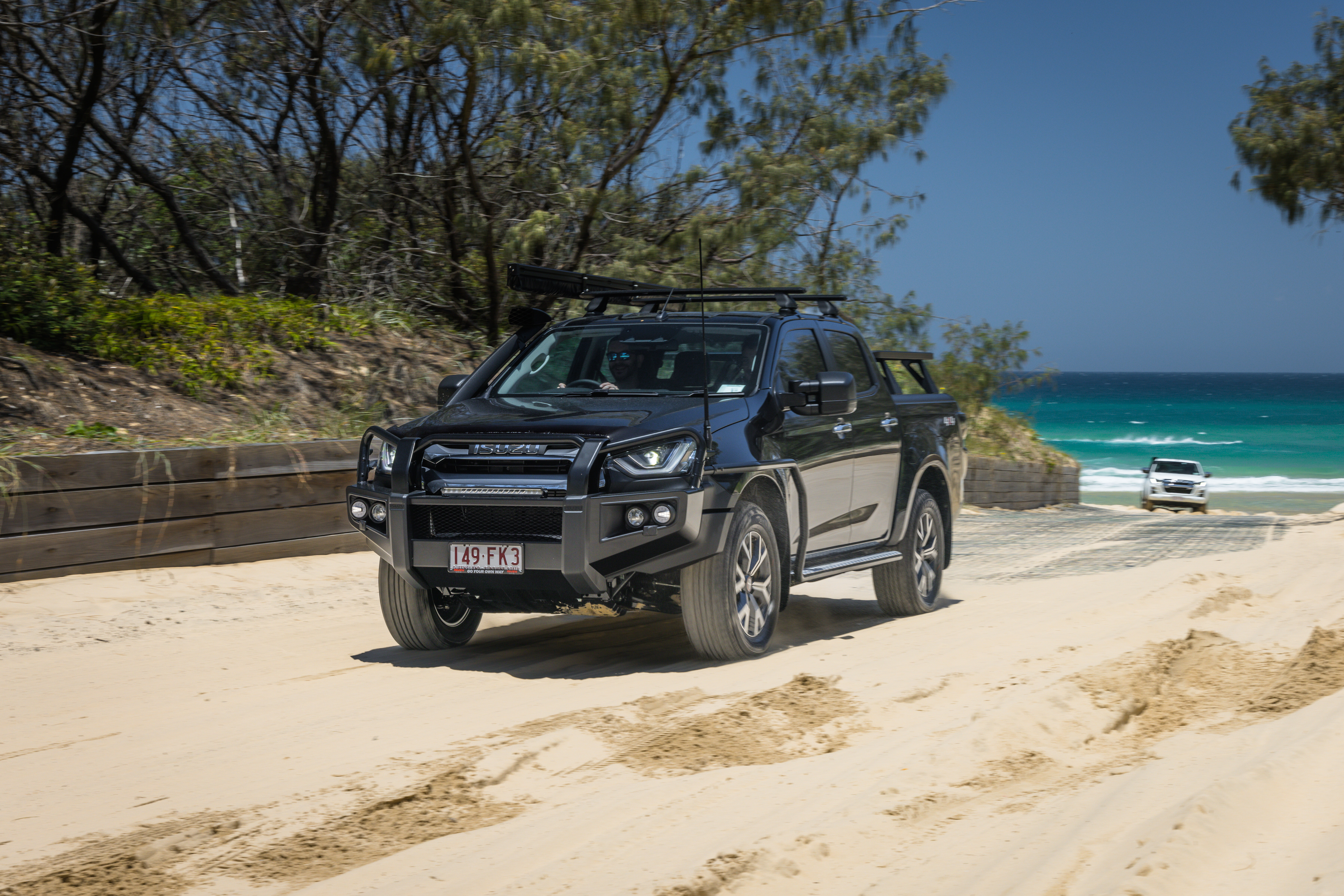

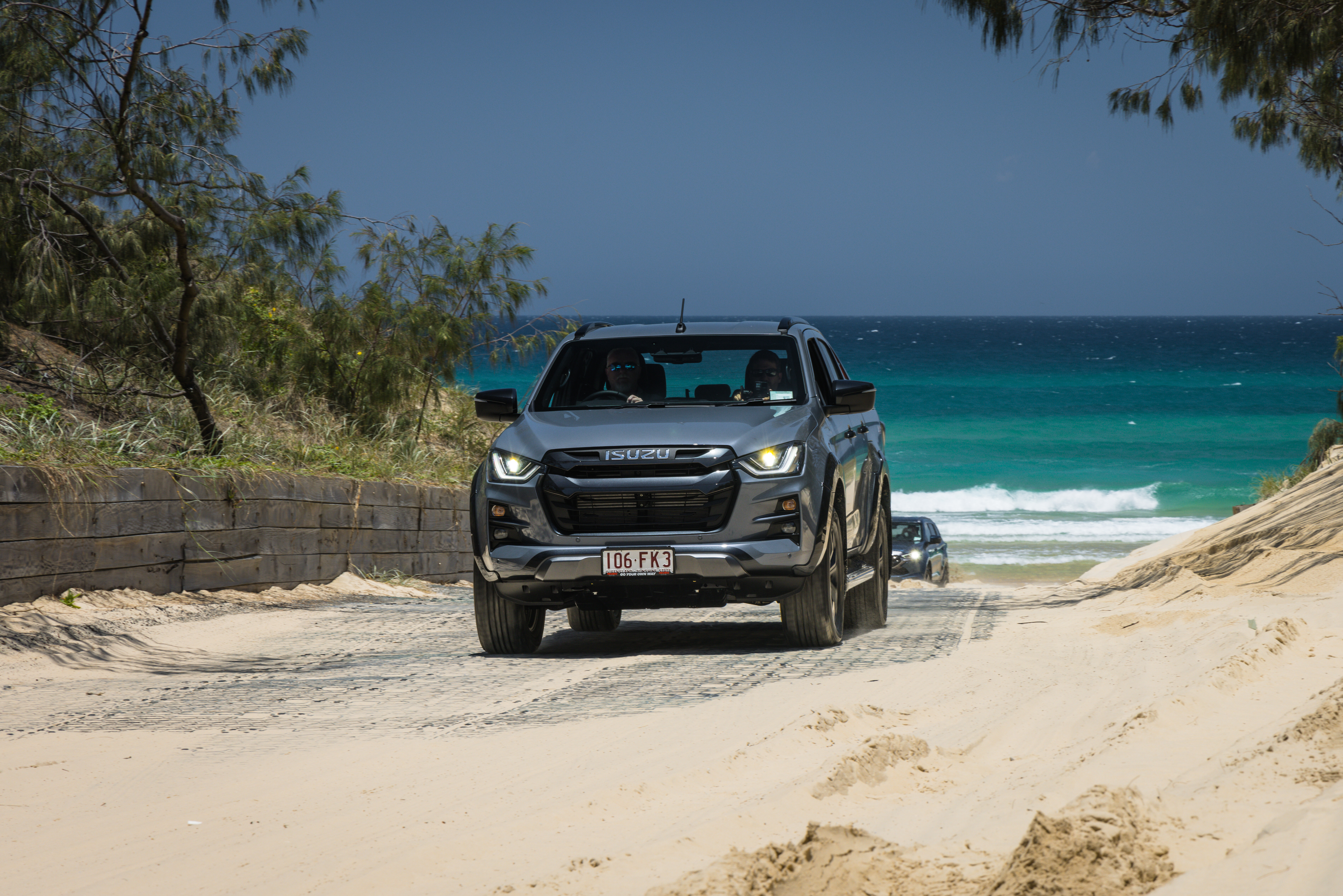
On the beach of Double Island Point, the D-Max felt right at home. In patches of soft sand, the low-down grunt of the 3.0L engine allowed us to tractor through without issue. It’s when you open the engine up that you notice it’s loud in operation. It doesn’t bother me, because I’ve owned plenty of old diesel four-wheel-drives, but it is worth mentioning.
I also wish this D-MAX update for 2023 had included the Rough Terrain Mode feature found in the 2023 Isuzu MU-X.
This magic button genuinely offers a solid improvement in off-road ability in the MU-X thanks to a more aggressive traction control calibration when selected, and would push the D-MAX closer to HiLux and Ranger in terms of off-road ability. C’mon Isuzu, you know you want to do it.
As we reported in our recent 2023 Isuzu MU-X first drive article, Isuzu tells us that close to half of all Isuzu owners use their vehicle to tow.
To offer a simpler experience, the 2023 Isuzu D-Max now automatically disables Blind Spot Monitoring and Rear Cross Traffic Alert when a trailer is connected and detected via the genuine trailer wiring harness.
Previously, Isuzu had Introduced a Lane Support System Switch allowing drivers to turn lane keeping functions on or off.
1
1.9L Turbo Diesel Engine option
Isuzu is now offering its 1.9L RZ4E-TC engine in a 4×4, specifically the SX Crew Cab 4×4 Auto. Pricing for this model is $50,200, a saving of $2000 if you select this motor over the 3.0L 4JJ3-TCX in similar trim, which was previously the only motor offered in the D-Max and MU-X range.
The RZ4E-TC produces a claimed 110kW and 350Nm, with Isuzu telling us up to 80 per cent of power is produced between 1550rpm-3700rpm. In comparison, the 4JJ3 makes 140kW and 450Nm.
While we haven’t driven the 1.9L, and are eagerly awaiting our chance to – is a saving of $2000 enough to sway you to the smaller engine?
I’m keen to hear your thoughts on this, 4X4 Australia readers, so please leave a comment to let us know what you think.
There are now nine colours available in the 2023 D-Max line-up, including three new colours. Every colour except Mineral White incurs an additional $650 paint premium.
2023 Isuzu D-Max colour options
Mineral White
Granite Grey mica
Basalt Black mica
Granite Grey metallic (new and exclusive to LS-U, LS-U+, and X-Terrain)
Neptune Blue Mica (new)
Magnetic Red mica (LS-U, LS-U+ and X-Terrain only)
As this is a 4X4 publication, we’ll focus solely on 4X4 pricing across the 2023 Isuzu D-Max range. If you want the full range of pricing, including the 4×2 range, they can be found at the link below.
It’s a good thing, and I like the fact it is still a relatively simple vehicle in a world gone mad with technology.
I’d love to see Rough Terrain Mode included, and some more power would be great as well just to keep up with the competition.
As per the 2023 MU-X release, the line-up has received some nice additions that freshen up the appearance of the D-Max range, and again we aren’t even paying for the privilege as pricing hasn’t increased for the 2023 Isuzu D-Max.
We are a nation of dual-cab ute drivers. That’s the inescapable conclusion from poring over Australia’s new vehicle sales data. What’s more, we are increasingly enamoured of a brawny ute.
A decade ago, the Toyota HiLux was pipped by the Mazda 3 in the sales charts but it has been the country’s most popular vehicle for the past six years. In 2021, the Isuzu D-Max and Mitsubishi Triton joined the HiLux and Ranger in the top 10.wheels
This year has seen the launch of the new Ranger, with early reports suggesting that the game has changed as a result. And with the Ranger’s bones underpinning the next-generation Volkswagen Amarok, due here in early 2023, the whole ute division could well be in for a thorough shake.
But rather than fall back on any assumptions about the current pecking order, we’ve gathered the current crop of dual-cabs – including those from challenger brands Great Wall, LDV and Ssangyong – and put them into some sort of order.
HEY THERE
This is a long read, as any comprehensive multi-vehicle comparison will inevitably be. We hope you’ll find this an engaging story and a helpful buying resource. We’re eager to hear your thoughts, and we hope you’ll read it in full before diving into the comments.
Our thanks, from the 4X4 Australia team.
1
Is there a true correlation between what you pay and what you get? Which brands are building their reputations and which are leaning on their bank of brand equity?
Last year’s ute showdown majored on off-road ability, but this year we’re keeping things on the bitumen. The vehicles are ranked according to their driving dynamics, tray practicality, interior finish and space, infotainment sophistication, safety, and – in recognition of the fact that many dual-cabs are now bought to perform family duties – the child-friendliness of the rear seats.
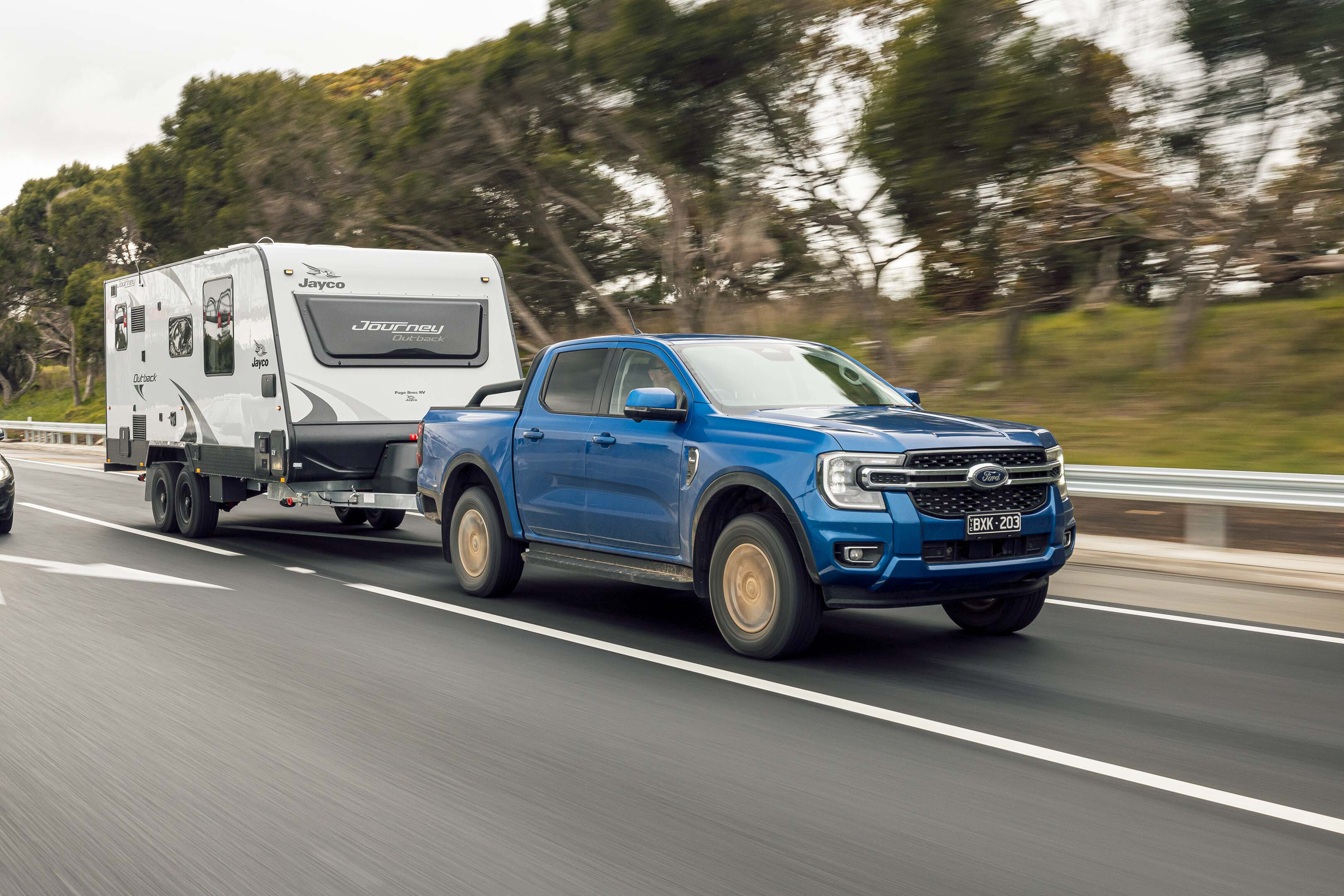
Those utes fitted with tow bars and electronic brake controllers were also tested for towing ability – with the help of a Jayco caravan.
And to ensure our giant ute test is as relevant as possible, our team of experts from WhichCar, Wheels and 4X4 Australia was joined by a couple of guest testers: two ute owners who have used these types of vehicles for years, including the job of ferrying their kids and friends around.
This year, we’ve focused on how each of these utes performs as a daily work ute and a daily family hauler, so you won’t find an off-road section.
But, most of the utes here were featured in last year’s massive off-road test, and since there haven’t been any major mechanical changes to that lot, we reckon the results remain valid. Read and watch that test here.
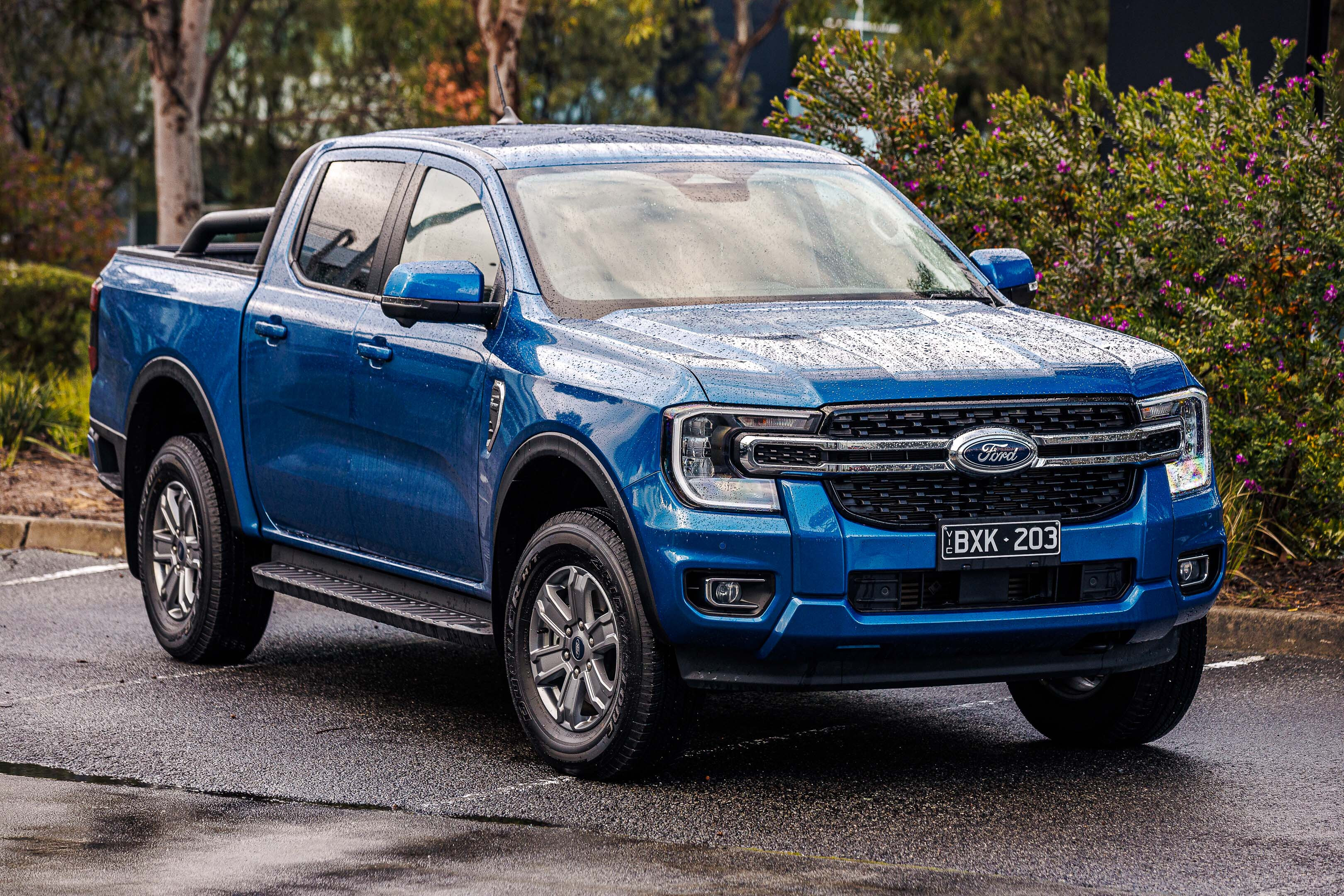
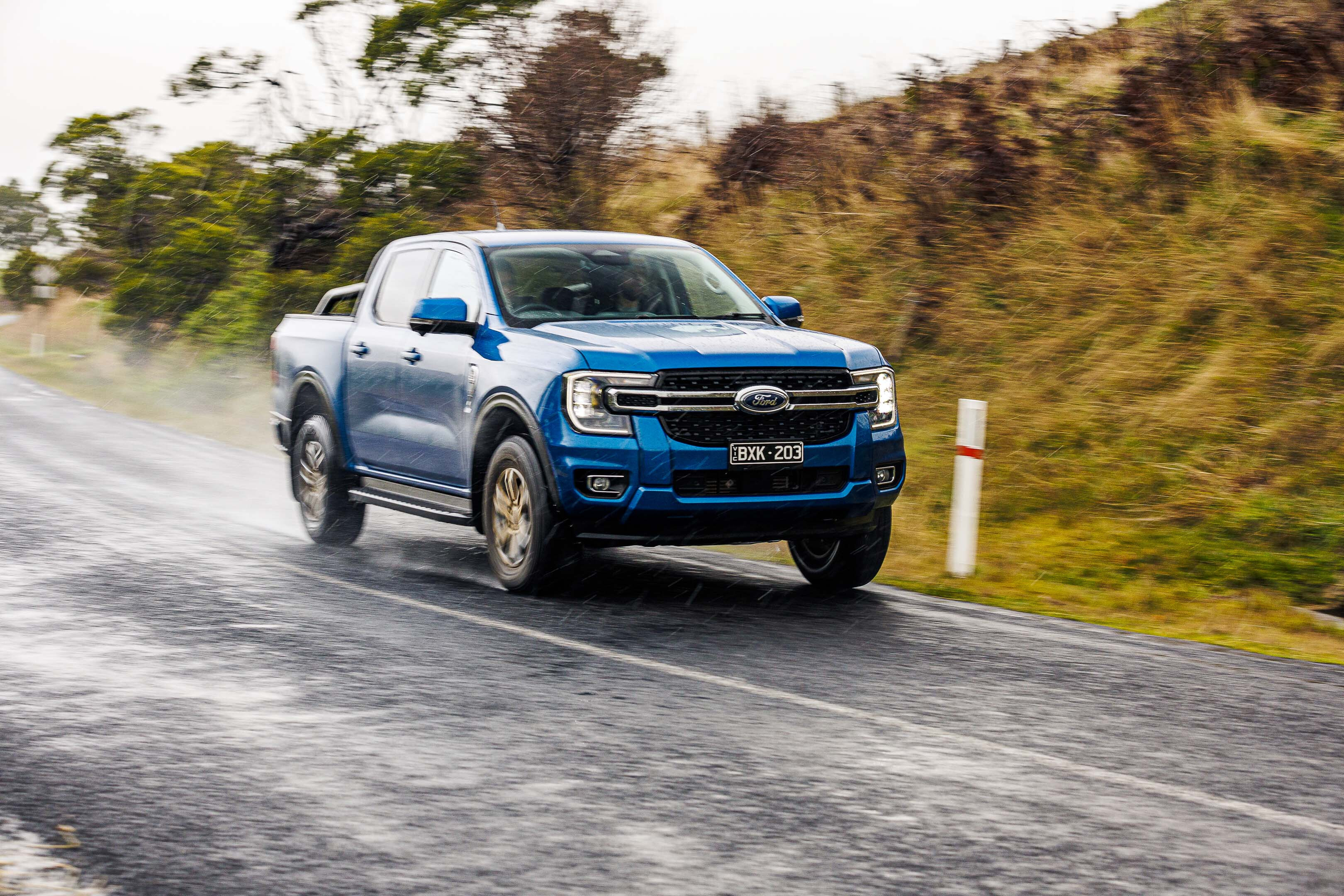
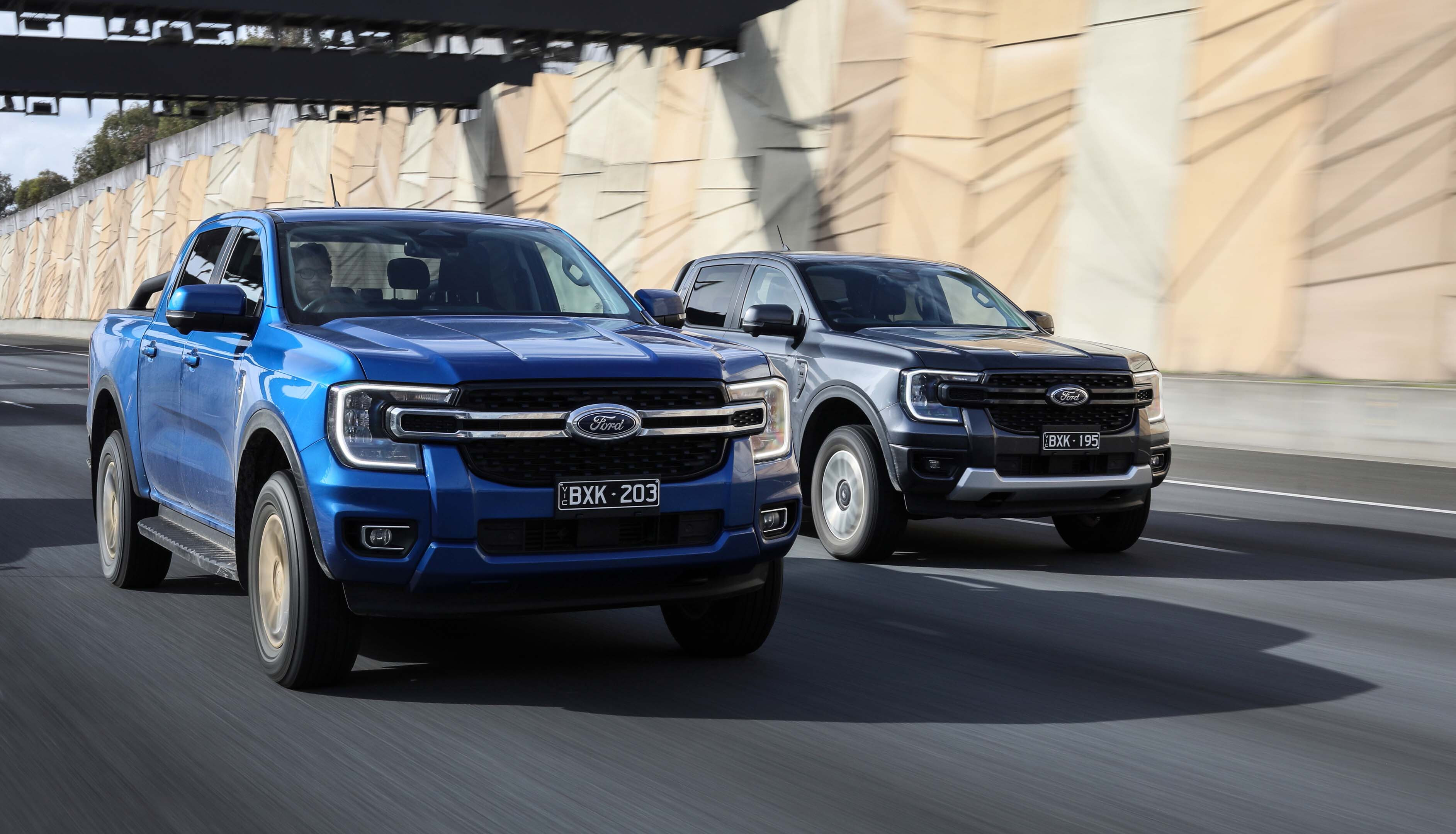
The Ranger has just launched in heavily updated T6.2 guise, complete with an overhauled cabin, upgraded interior tech, higher safety levels, and a revised chassis. Here it’s represented with a new 3.0-litre V6 turbo-diesel that joins the line-up from mid-spec XLT grade and above. We’ve chosen the new Sport grade, which sits below only the Wildtrak and Raptor variants.
The circa-$60K bracket is one of the most popular price points in the dual-cab segment, and the XLT has been an ever-popular variant in the Ranger line-up. Here it features a carryover 2.0-litre bi-turbo diesel (154kW/500Nm) that is now hooked to a revised 10-speed auto.
Just $3000 separates the four-cylinder and V6 engines if you opt for the same trim level, which is why we’ve chosen to include two Rangers in this test.
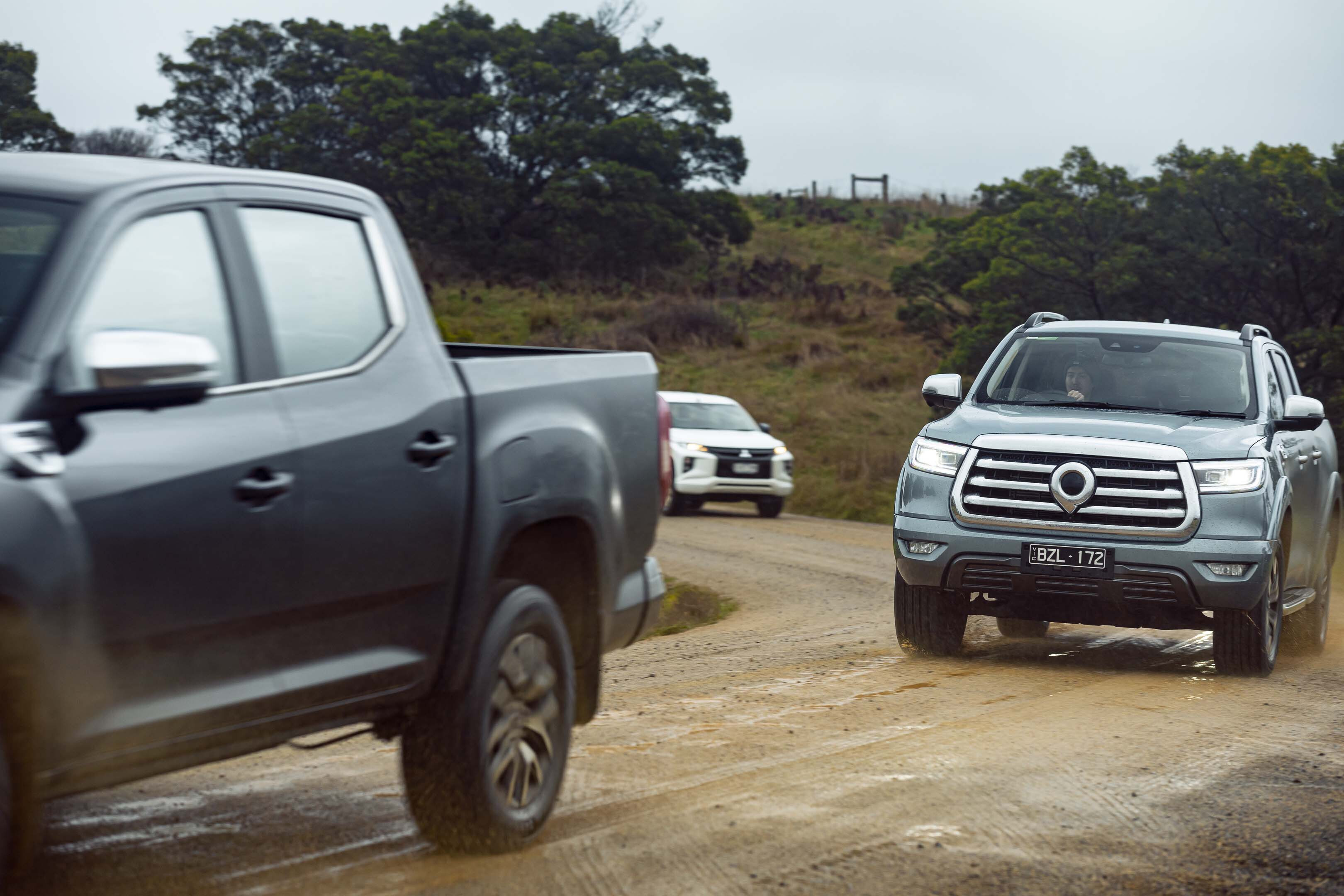
Another contender quickly gaining sales momentum is the GWM Ute. Represented here as the flagship Cannon-X, it carries a sticker price of $44,490 and is bristling with standard gear – such as a 360-degree surround view camera, digital dials, and LED headlights that’s not even available on some of its more established rivals. It’s the least powerful ute on test, mind, due to a single-turbo 2.0-litre diesel with 120kW/400Nm.
The D-Max is one of the freshest utes in this test thanks to recent updates following its 2020 launch in second-generation form. It’s powered by Isuzu’s venerable 3.0-litre turbo diesel and is strong on safety and drive-assistance technology. The recent update brought keyless start and other upgrades to the mid-range LS-U on test.
The title of ‘Most affordable ute on test’ goes to the LDV T60 Max Luxe. It retails from as low as $41,568 driveway in manual form and has been heavily updated for 2022 with a striking facelift and a more powerful 160kW/500Nm 2.0-litre twin-turbo diesel. Our tester rolls on the more road-focused Luxe suspension tune, though a more trade-capable Pro set-up is also available.
Twinned with the D-Max, the current-generation BT-50 is also a relative newbie. The GT is also a mid-spec variant in its respective model range and their level of performance – courtesy of a shared drivetrain – is also par for the course in the dual-cab segment thanks to outputs of 140kW/450Nm. Considering the mechanical similarities, there will be an intriguing mini comparison here to suss out the differences between the Mazda and Isuzu.
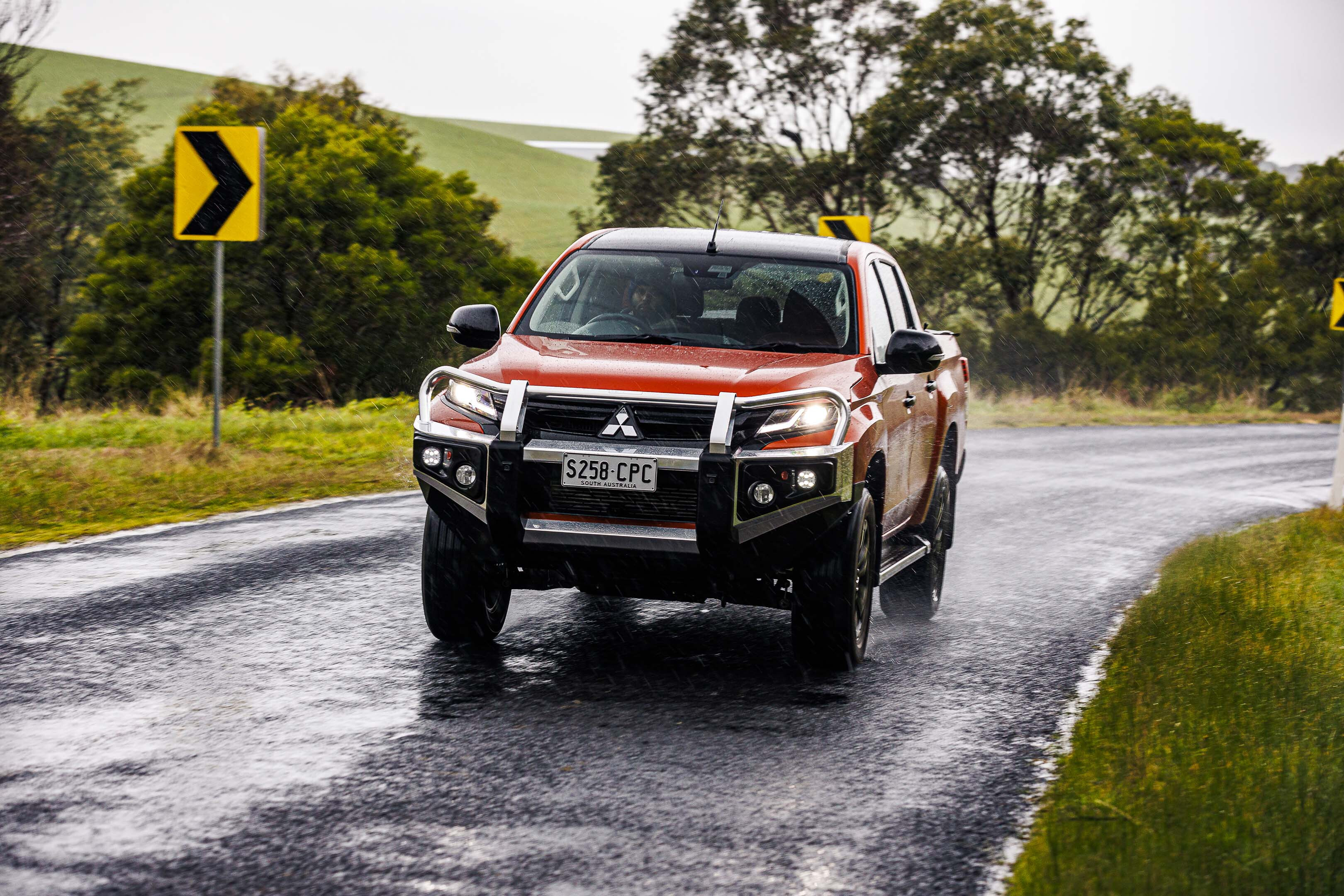
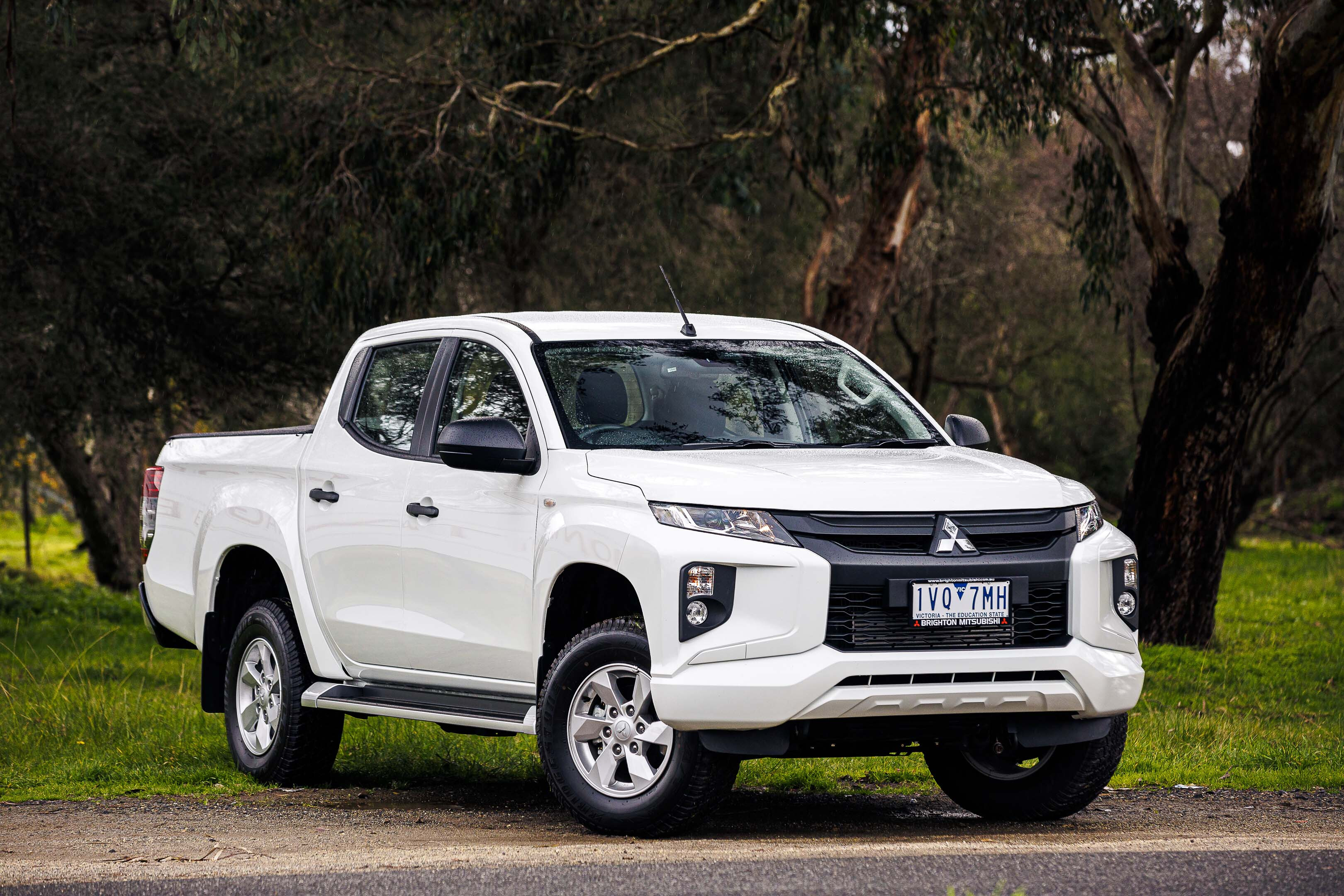
Here in top-spec GSR, the Triton is one of the oldest contenders – with an all-new replacement due in 2023. Mitsubishi has treated its ageing workhorse to a minor MY22.5 update, which adds improved infotainment and a 360-degree monitor for the top-spec GSR. That update is rolling into dealers as you read this, though our test vehicle was a pre-update GSR.
Do you really need to spend $60K on a dual-cab? We’ve included a second Triton in GLX+ trim to answer exactly that – and to create an established reference point for challenger models in the $40,000-$50,000 bracket. The GLX+ shares a 133kW/430Nm 2.4-litre turbo diesel with the GSR, so mainly trades on fewer features – though this also means missing out of Mitsu’s clever Super Select AWD.
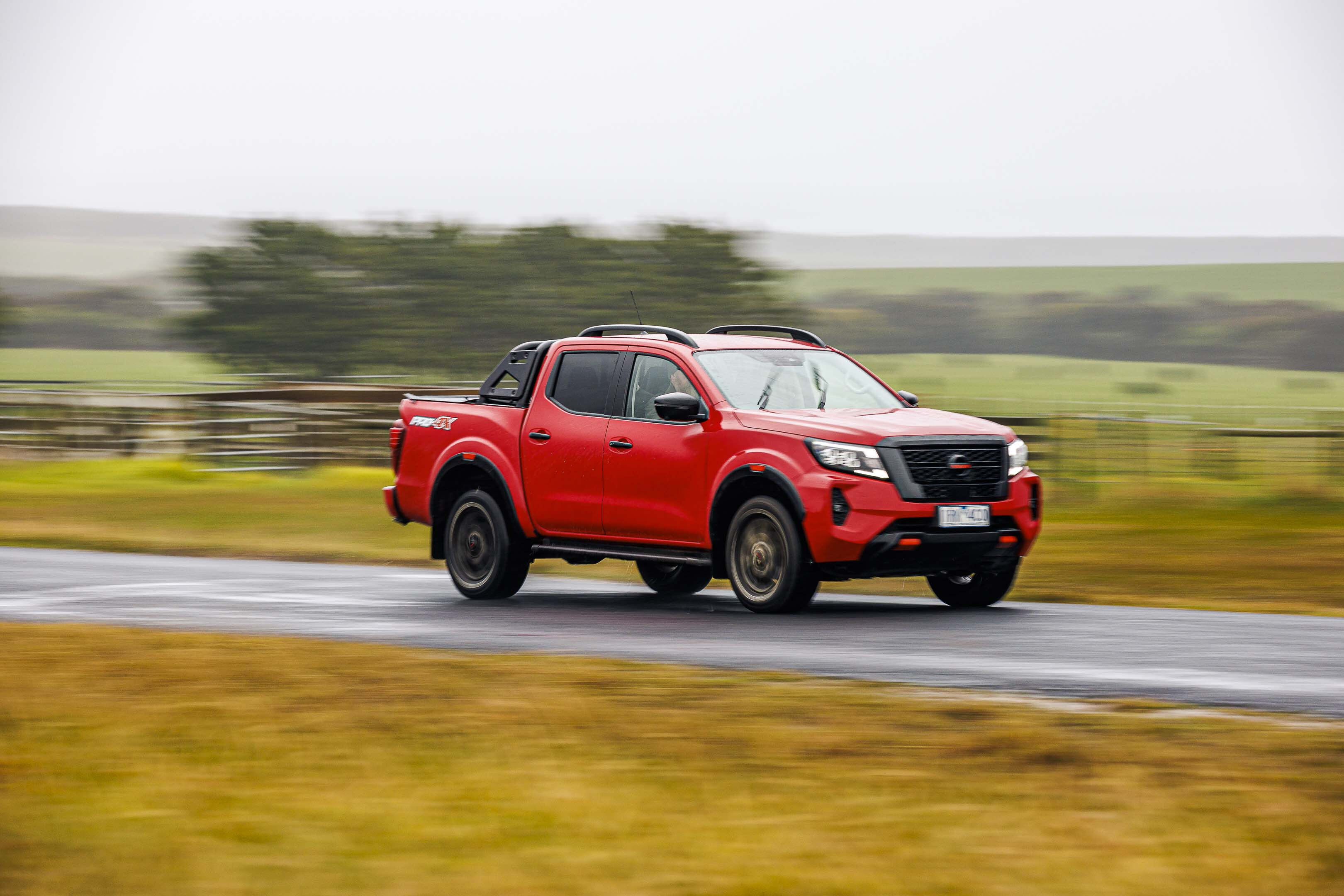
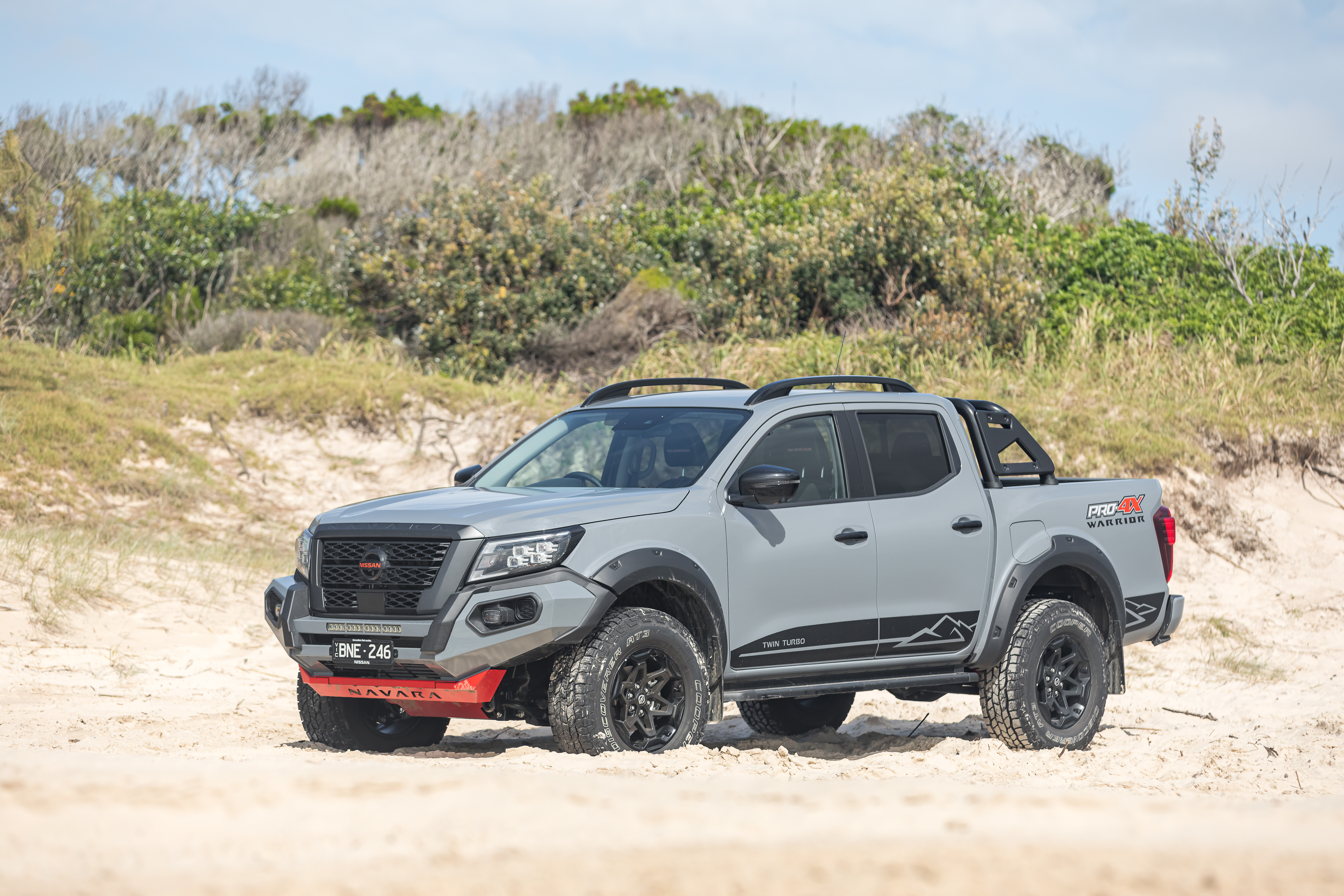
The Navara is another older ute that has benefitted from a recent refresh. This generation of Navara first went in sale back in 2015 but, towards in late 2021, Nissan gave it a bold new look and added some useful active safety gear. That update also saw the Pro-4X replace the N-Trek at the top of the regular model range and it’s that variant we have on test here. Its 2.3-litre turbo diesel matches the Isuzu/Mazda for both power and torque with 140kW/450Nm.
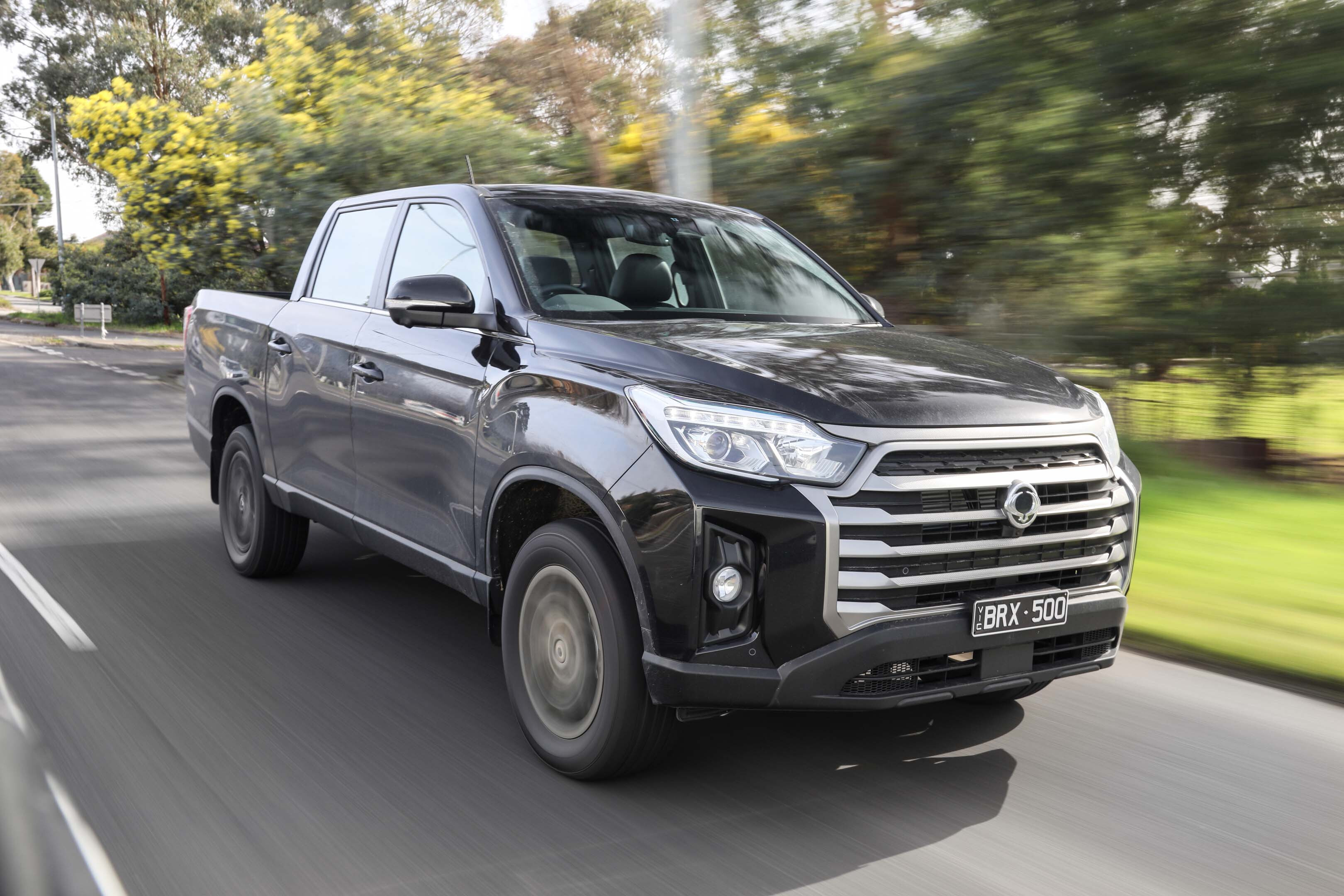
The South Korean ute has just been updated for MY22 and our range-topping Ultimate XLV includes a 300mm-longer tub and features a multi-link rear end as standard (with leaf springs optional). The $1500 XLV pack increases the Musso’s payload from 790kg to 880kg and bumps the engine’s torque from 400 to 420Nm. Our test vehicle was also fitted with the optional ($3000) Luxury Pack, which adds a host of worthwhile equipment such as dual-zone climate and nappa leather seats with heating.
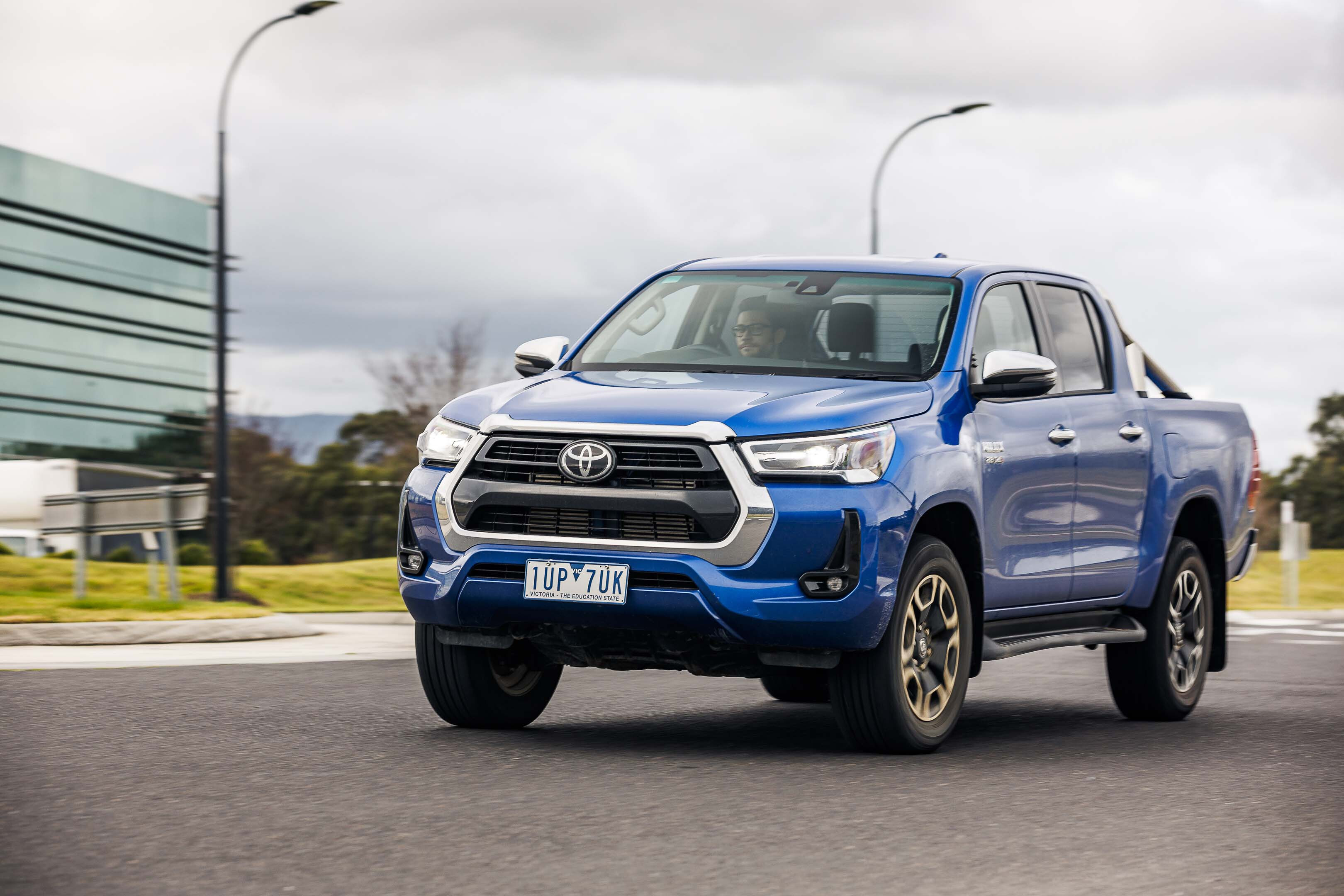
The flagship Rogue doesn’t return until later in 2022, so Australia’s biggest-selling vehicle is represented here by the immensely popular (range-topper-for-now) SR5. Power comes from a 2.8-litre turbo diesel with 150kW and 420Nm. This generation of the HiLux has been around since 2015; will a succession of updates and upgrades be able to overcome its age? (Another minor update for the SR5 is coming in late 2022.)
A few points worth mentioning? All our contenders are turbo diesels, and every ute on test is fitted with an automatic gearbox (which reflects the majority of dual-cab sales). If you prefer to shift cogs yourself, you can opt for a manual in everything except the two Rangers, the LDV T60, and GWM Ute.
The majority also share the same independent front suspension/leaf spring rear set-up. Two exceptions are the Nissan Navara and SssangYong Musso, which both feature coil-sprung multi-link set-ups at the rear.
Safety
Safety ratings are also similar across the board with every contender boasting a 5-star ANCAP rating except for the unrated SsangYong Musso and yet-to-be-tested Rangers.
UPDATE, September 12: The Ranger now has a five-star ANCAP rating. Story here.
Towing
Another commonality is a maximum braked towing capacity of 3500kg, although it’s worth noting the Triton is rated to a lower 3100kg and the T60 and Cannon are limited to 3000kg.
Warranty
Most also carry a five-year/unlimited km warranty but there are a few high achievers: Isuzu offers six years (though capped at 150,000km), while GWM and SsangYong bump that up to seven years (unlimited km). Mitsubishi is the king of aftersales support thanks to its 10-year/200,000km offer – providing you service your Triton at a certified dealer.
Who’s not here?
Finally, who’s missing? The most obvious is the Volkswagen Amarok. An all-new model, which shares some commonality with the fresh Ford Ranger, is due to arrive in early 2023 and VW didn’t have any examples of the current dual-cab available to test.
Also absent are the Jeep Gladiator, Toyota LandCruiser 70 Series, Ram 1500 and Chevrolet Silverado. None is a direct rival for the mid-size pick-up class and all are pricier than the circa-$60K price ceiling we’ve applied to this test.
Towing is a huge piece of any ute test, particularly as a factor in helping buyers decide which model will prove safest and most capable for their needs.
No surprises, the towing component of our 2022 Dual-Cab Ute Comparison is a story in its own right – so to keep this main piece a little easier on the eyes and to save your fingers from scrolling fatigue, we’ve broken the tow test out into its own story.
To read Matt’s full rundown, and to see why some models couldn’t be towed for this test, hit the link below.
It’s fair to say car manufacturers hadn’t always paid great attention to how well their dual-cab utes performed on the road.
Yet their ever-increasing usage as family lifestyle vehicles – as well as greater expectations from those who have been forced into them after the axing of car-based Falcon and Commodore utes – has seen a commensurate increase in engineering emphasis.
We should also acknowledge that dual-cab utes are one of the biggest engineering challenges around. How to develop a multi-purpose vehicle that is equipped to carry heavy loads, go off-road, tow up to 3.5 tonnes, take the kids to soccer and ferry the family along tourist roads and freeways in assured comfort?
So, we drove all our contenders back-to-back on an extensive mixture of roads – urban streets, highways, rural roads and loose-surface tracks – to discover how each of our utes performed in the areas of ride comfort, handling, driveability, and performance.
And it’s fair to say that again, there were some emphatic differences.
1
Most impressive
Two utes absolutely excelled during our road loops, with remarkable suspension damping, confidence-inspiring body control, fantastic steering and cabins that surpass expectations for a dual-cab. They were our Ford Ranger pair.
The XLT four-cylinder and Sport V6 show how the Ranger has moved the segment forward in terms of what we can expect for ride quality and refinement.
Perhaps the biggest compliment we can give the Ranger is that it steers and rides better than many SUVs we’ve driven.
The Ranger feels firm but not harsh – neither crashing nor jolting, instead riding with the poise and purpose of a vehicle utilising much more sophisticated suspension than it actually possesses. Forget the traditional jitteriness and rear-end bounce associated with dual-cabs (and still very much evident throughout our field).
Differing the pair is a slightly softer tune in the XLT that’s more appropriate for daily urban use, while the Sport feels stiffer with a decrease in overall roll when cornering.
Backing up the suspension is a steering calibration that falls straight into the sweet spot in terms of weighting – feeling muscular without being a chore to steer. It communicates front-wheel grip and loads clearly, and is accurate immediately off centre with clean movements lock-to-lock.
1
Under the bonnets, both the 2.0-litre bi-turbo four-cylinder and 3.0L V6 offer excellent power delivery with wide powerbands, impressive off-the-line thrust and responsive throttles. The 10-speed automatic transmission has also been revised, with the new calibration eliminating our prior criticisms of its applications.
No longer does the auto go searching for the right ratio every time you modulate the throttle, instead shifting quickly, subtly and logically to the appropriate gear.
The inclusion of a 4A (4WD auto) setting on V6 Rangers improves confidence, providing permanent four-wheel drive operation that distributes power exactly as required at all times and eliminates the hassle of having to switch between RWD High (2H) and 4WD High (4H) modes when transitioning from tarmac to dirt and back again.
The Ranger not only had the best electronic stability control system in the group, but one of the best calibrations we’ve experienced regardless of segment. When pushed, the Ranger’s ESC steps in gradually, progressively, and settles the vehicle with a deft touch.
We would put the Ford’s electronic safety net on par with the likes of Porsche’s Porsche Stability Management (PSM) system and BMW M division’s M Dynamic Mode.
1
While the pair of Rangers streaked away from the class, several utes still impressed during our road testing loops – namely the Mazda BT-50, Isuzu D-Max and SsangYong Musso.
The BT-50 was one of the best utes to drive when it was twinned with the Ranger and nothing has changed now it’s a platform buddy with the D-Max.
A particular highlight is the steering, which is accurate, responsive and nicely weighted. The steering wheel’s proportions also fall into a Goldilocks ‘just right’ size. If we were to be picky, there’s just the slightest whiff of a dead zone off centre.
The brakes offer good pedal feel and are easy to modulate in what were extremely damp and grimy driving conditions during testing.
One improvement for the new BT-50 is a ride that is no longer overly firm.
1
The engine, which it shares with the D-Max, is the BT-50’s biggest shortcoming, if far from wiping too much shine off what is a well-resolved package.
While overall refinement isn’t ideal, the engine is relatively responsive, with a surge of torque on tap from 2000rpm and remaining in a sweet spot until 3500rpm.
The transmission is for the most part intuitively geared, though it can often feel like it holds onto more revs than you’d like on downhill sections – a knock-on effect of having just six ratios available compared to rivals with eight and 10 gears.
Perhaps unsurprisingly, the Mazda’s mechanical sibling, the D-Max, is also highly commendable for the way it drives.
The main difference is inside the cabins, where the Mazda plays to those dipping a toe in the rugged world of dual-cab utes with an especially car-like interior, while the Isuzu embraces a more utilitarian approach.
Instead of the generous use of leather experienced in the Mazda, for example, the Isuzu offers up practical and durable materials.
1
You can take most of the notes on the Mazda’s driving experience and transfer them to the Isuzu. Apart from Mazda and Isuzu’s different cabin-presentation philosophies – luxury versus utilitarian – the main dynamic difference between the duo is suspension set-up; the Isuzu is more stiff-legged over bumps and with more of the typical dual-cab patter over urban roads.
Both vehicles impressed us with how they kept road and tyre noise in check, offering some of the best cabin refinement of the assembled contenders.
The surprise package of the group was the SsangYong Musso, which stood out for its engine refinement, interior quality and overall package cohesion.
Our test vehicle was fitted with optional off-road suspension that made the ride stiffer than we may have liked, but the overall damping was still among the best on test.
The Musso’s secret weapon is its engine, which surpasses the Ranger’s for overall refinement. This impressive characteristic is present the moment you fire the Musso into action with a subtle idle that belies the powertrain’s diesel nature. It’s more of the same when moving, with a smooth and wide powerband providing good torque low in the rev range.
Although the Korean ute’s steering is quite light, it is impressively accurate and without a dead zone off centre, making daily use easy.
1
Honourable mentions
The Nissan Navara Pro-4X is chiefly let down by boomy interior refinement and a lacklustre steering calibration that manages to be too heavy and sluggish at slower speeds and too vague and light at highway speeds.
However, the Navara is redeemed by a strong engine that will spin all the way to 5500rpm without any noticeable tapering of power at the top end. This imbues the dual-cab with a muscular feel and nature that is matched by the Nissan’s roadholding capabilities on loose surfaces.
Another worthy midfield ute was the Mitsubishi Triton. In both trims the Triton’s ride was able to handle slower compressions, riding these kinds of undulations with confidence.
The Triton just struggles with faster suspension movements, where sharp speed bumps and potholes are communicated immediately, often resulting in harsh jostles in the cabin.
Its steering is accurate and naturally, consistently weighted.
The more expensive GSR variant was one of only two dual-cabs on test with paddleshifters (the other being the GWM Cannon-X). It’s a nice novelty in this segment, though using the column-mounted levers is like sending a telegram to the transmission, which takes an age to respond. Overall, the Triton offers good, honest value for money, particularly at the GLX+’s lower price point.
1
Room for improvement
If you’re shocked to see the Toyota HiLux in this bottom group, some perspective is needed. If an off-roading component had formed part of our testing, the country’s most popular vehicle would have scored much higher – because it’s an area where the HiLux continues to excel. Count excellent towing ability, too.
On-road, the HiLux is far from terrible; it simply feels agricultural when compared to the newer utes – a contrast that is particularly stark next to the 2022 Ranger.
This generation of the Toyota HiLux has been around since 2015 and regular updates – including improvements to the unladen ride – have been able to do only so much.
Its ride is fairly stiff, can be jolting and struggles to settle, yet there’s little proper body control as compensation.
A lack of adequate reach adjustment on the steering column doesn’t help; the driver is forced to choose between squishing their knees against the dash while having their arms comfortable, or reaching for the wheel while their legs bash against the door card and transmission tunnel the moment they turn a corner.
To the Toyota’s credit, its engine, while a bit vocal, is powerful and punchy.
A new generation of HiLux is on the horizon but in the interim, it will be interesting to see what improvements will be delivered by the wider-body Rogue variant coming in late 2022.
1
In terms of thrust, the LDV T60 is one of the quicker utes in the bunch – and indeed several testers, including guest tester Paul, said they enjoyed its spirited performance.
It’s not instantaneous acceleration, though; significant lag means there can be a frustrating lack of response to throttle inputs.
The steering also communicates nothing you want it to communicate and everything you don’t – every bump, jolt and vertical suspension movement.
On the upside, the LDV has one of the best turning circles of any dual-cab we tested, which is a boon in tighter urban environments.
The GWM Cannon-X’s vague and lifeless steering also disappoints.
Its diesel powertrain feels sluggish and laggy, while the Great Wall’s lane-keep assist was the most intrusive on test (and the most complex to deactivate).
Fuel consumption on test
All vehicles were topped with fuel at the start of our primary drive day, then again upon final fills at the end of the day, with individual odometer readings recorded at beginning and end.
Recorded odometer readings provide distance travelled, while noting the amount of fuel filled at the end of the day allows us to calculate real-world fuel figures from our eleven contenders.
During the drive day, the vehicles are driven as uniformly as possible – with both competitor groups of vehicles returning a narrow split of distances.
From the more affordable class, it was the LDV T60 Max Luxe that returned the most frugal fuel figures, measuring 10.38L/100km – narrowly edging the GWM Cannon Ute X, at 10.39L/100km.
They both travelled an even 204km, with the GWM taking a slightly bigger sip at the bowser upon day’s end, drinking 21.19L compared to the LDV’s 21.15L.
The Triton GLX+ podiums in third, returning 11.0L/100km after drinking 22.55L/100km and travelling 205km. The Ssangyong Musso XLV received a slightly smaller 22.39L fill at the end of the road testing loops, however travelled the least distance at 201km, returning 11.14L/100km.
Stepping up to the more premium class of competitors, sees the Mazda BT-50 GT, Toyota Hilux SR5, Isuzu D-Max LS-U and Nissan Navara Pro-4X return sub>10.0L/100km.
The Mazda BT-50 gets the hyper-miler award, hitting just 9.3L/100km after taking 20.36L and covering 219km. The Hilux follows closely, registering 9.5L/100km, covering slightly less kilometres on the road loops, also drinking slightly less at the end of the day.
The third-placed Isuzu D-Max travelled the same 215km as the Hilux, but took 20.75L as opposed to the Toyota’s 20.42L at the end of the day.
The Nissan Navara Pro-4X also dips under 10.0L/100km, returning 9.83L/100km, covering 217km using 21.33L of petrol.
The Mitsubishi Triton GSR may have travelled the greatest distance, doubling as our camera car for the day – but it didn’t use the most fuel, despite covering the most kilometres. The Triton GSR registered 10.64L/100km, covering 235km with 25.01L of fuel.
The pair of next-gen Ford Rangers returned the highest fuel consumption readings of our test, with the 2.0-litre four-cylinder returning 11.28L/100km, covering 215km with 24.29L. The Ranger Sport with its larger 3.0-litre V6, naturally, was the thirstiest vehicle at day’s end, covering 218km and using 25.66L, returning an ultimate fuel reading of 11.75L/100km.
The T6.2 Ranger may be resetting dual-cab benchmarks with its refined driving dynamics and modern interior, but its class-leading rear end also makes it a compelling proposition.
Most impressive
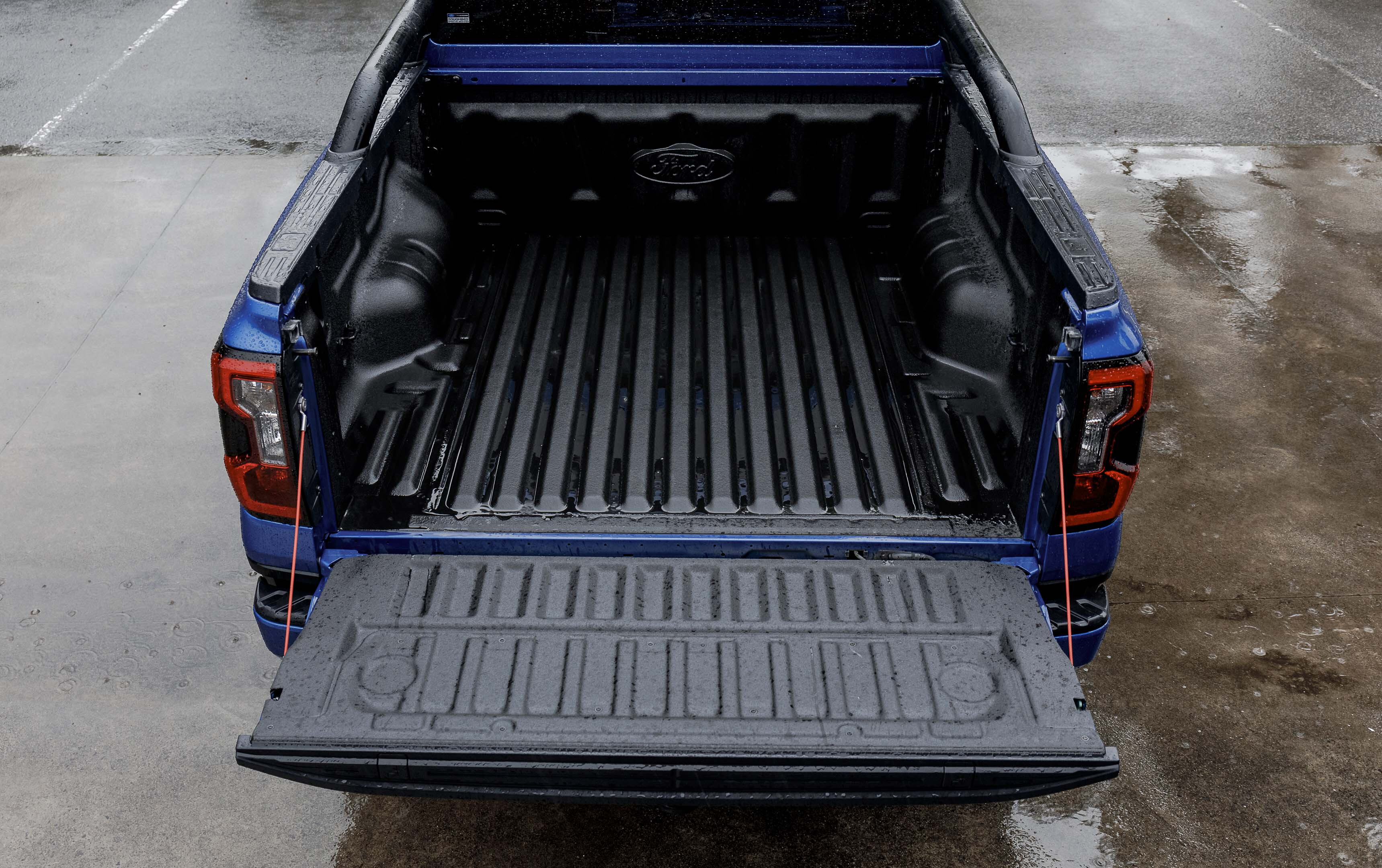
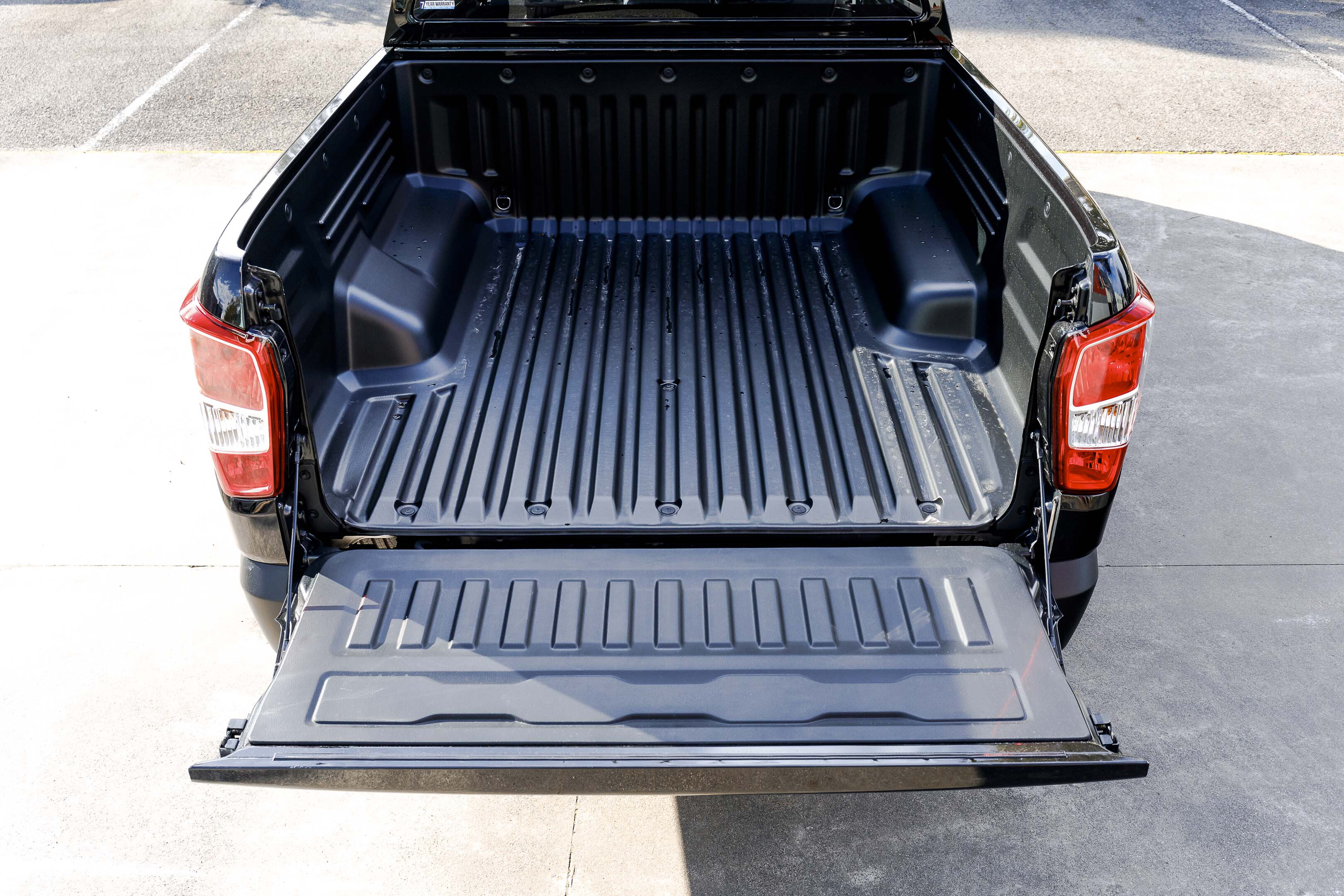
The fact the Ranger can swallow a Euro pallet (1200mm) between the rear wheelarches shifts it towards the front of the pack, while external tie-down rails and six tie-down points (the most on test) will prevent gear from rattling around on corrugated tracks.
Range-topping Wildtrak models feature an internal rail with adjustable cleats to modulate tie-down locations, similar to the Navara’s Utili-Track, but we didn’t have the top-spec model on test.
The addition of side steps on either side of the tray, to complement the rear step, is another clever and useful inclusion and once in the tray, the spray-in bedliner is kind on your knees.
A spring-loaded and damped tailgate enables it to be opened and closed with one hand, and it was the easiest on test to do so. While novel features like the clamping pockets and a ruler with 10mm increments can transform the tailgate into a workbench, it’s unlikely any tradies will find these features genuinely useful.
Still, it will prove handy to some, and it shows Ford has listened to consumer feedback. There’s also a provision to keep a drink sturdy when the tailgate is lowered, perfect for that roadside cuppa.
The Ranger was also the only vehicle on test that had an included 240-volt power outlet and LED lighting to illuminate the tray. It may seem like a simple thing, but the 240V outlet is something our resident landscaper Luke Paag says he uses all of the time for his trade.
Opt for the XLT bi-turbo and you’ll get a payload capacity of 959kg, compared to 934kg for the Sport V6. All models feature 1233 litres of capacity.
1
Honourable mentions
At its price point, the Triton GLX+ is the value choice and would make an ideal work/farm ute. Luke Paag even said it’s where he’d put his money if his budget was around $40K.
“If I was buying something for work, whether it’s for landscaping or up at the farm, I’d be buying this Triton in this spec. It’d be the pick for work,” said Paag. “The GLX+ is a much better proposition than the Triton GSR.”
Helping sway the GLX+ into Luke’s corner was its higher payload capacity than the GSR – 945kg versus 901kg – which is just enough to cater for another one of Luke’s lawn mowers.
It’s also the only vehicle to receive colour-coded tie-down points; four in total. And both Tritons were equipped with soft tonneau covers – as was the Navara Pro-4X – which are simple to take off but cumbersome to put back on, but thankfully they do stretch over time.
1
Speaking of the Navara, the as-mentioned five-channel Utili-Track system is a clever addition that enables you to manually reposition tie-down points within the tub so that all shapes and sizes of stuff can be strapped down. It’s an intuitive system that is simple in its operation.
Another tick for the Navara is that it will take a payload of more than a tonne (1004kg). Plus, the Nav can fit 1134mm between the rear wheelarches.
The Chinese-made GWM Cannon-X is a polarising vehicle, but it must be applauded for its slide-out rear step inspired by the Ford F-150. It’s a highly underrated piece of kit that allows owners to step up into the tray when the tailgate is lowered. Plus, struts in the tailgate make it easy to open and close.
Other Cannon-X features include four tie-down points, a steel sports bar, a square tray that measures 1520mm x 1520mm, and a payload capacity of 1050kg.
1
Missed the mark
A direct Cannon competitor, the SsangYong Musso is 300mm longer in XLV guise (compared to the standard model) and boasts a spacious tray: 1600mm long, 1570mm wide and 570mm in height.
The lack of a rear step means it can be difficult to access cargo with the tailgate up, but as one of the few utes without a sports bar, storage space is maximised. It comes with four tie-down points all positioned quite low, and a mediocre 880kg payload capacity (the lower ELX trim level ups this to 1020kg in XLV guise courtesy of a leaf-sprung rear end).
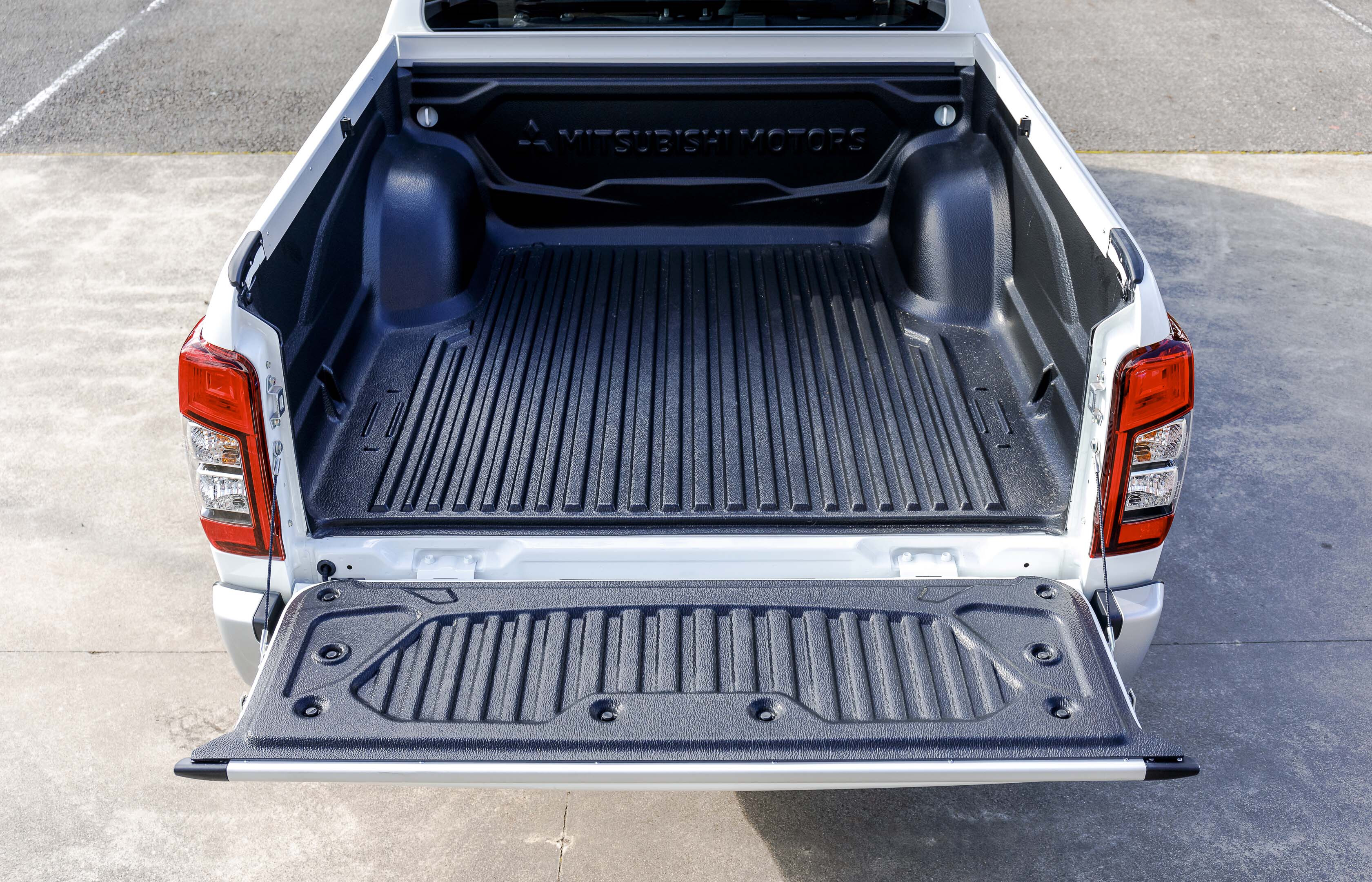
Mazda’s BT-50 and its Isuzu D-Max twin were both equipped with hard roller tonneau covers, which are simple in operation and an effective way to keep gear locked away from prying eyes. However, they take up valuable real estate and will be the first thing tossed if you use the tray for adventure or work – which is why you’ll find a bunch on online marketplaces.
Both vehicles only feature two tie-down points towards the rear of the tray, which is the lowest on test and simply not enough. In better news, the BT-50 GT features a 1065kg payload capacity; the D-Max in roughly equivalent LS-U trim as tested here has a 995kg payload.
The HiLux may seem a bit long in the tooth at first glance, and it shows by being the only tub on test without a bedliner as standard. The naked tray was severely scratched and looking rather sad by the end of our week with it, and it’s clearly in need of some form of protection.
It’s an issue that irked landscaper Luke Paag: “I have a standard PXIII XLT Ranger with a tow kit and bedliner, and when you look at the SR5 it doesn’t even have a bedliner on it. You have to pay more for it,” he said. And he’s not wrong.
1
Still, the HiLux has four tie-down points, 1110mm between the wheelarches and a decent payload capacity edging a tonne at 995kg. The steel sports bar does get in the way when trying to access the tray, though.
Also failing to impress is the LDV T60, with a restrictive payload capacity of just 750kg. The tray is well-sized, though, at 1525mm (L) x 1510mm (W) x 530mm (H) and it features 1131mm between the wheelarches plus four tie-down points.
Occupying four of the top 10 best-selling vehicle slots for 2022, and ranking highly month-in-month-out, dual-cab utes are fast becoming popular family haulers as much as they are a typical tool of trade.
But should they be? For each of our 11 contenders, we examined how family-friendly they are, looking at space, comfort, safety and how easy it is to fit a child seat.
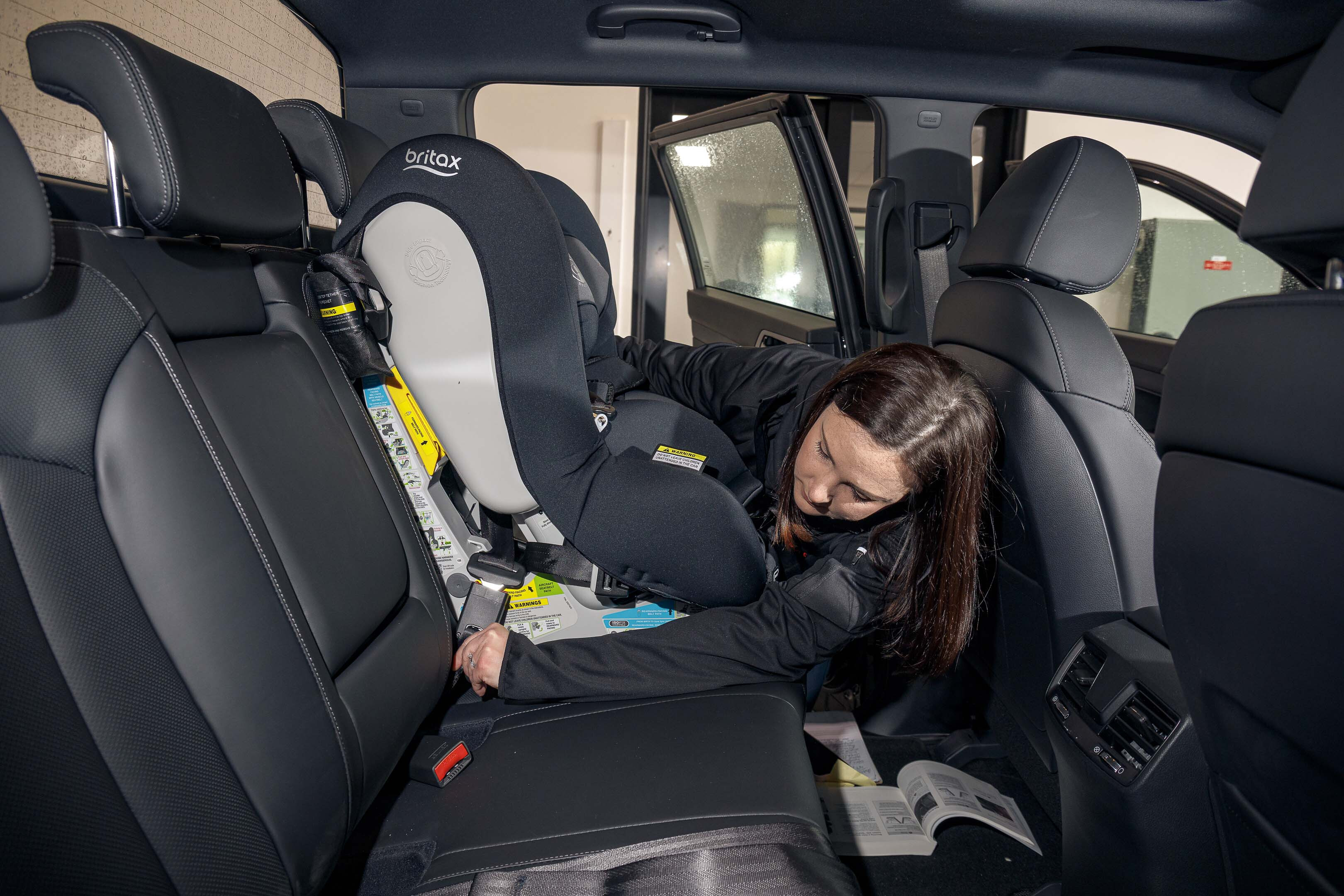
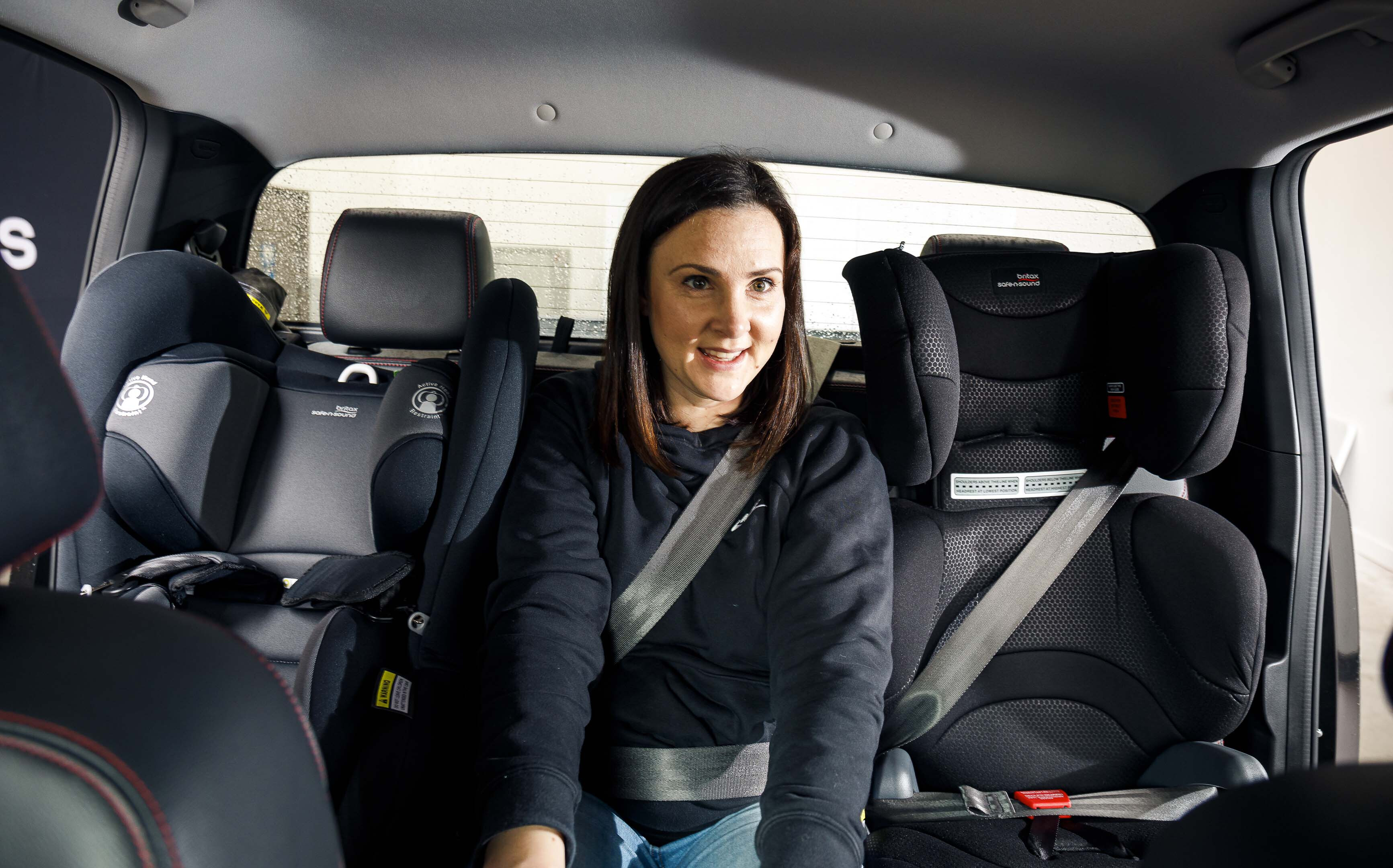
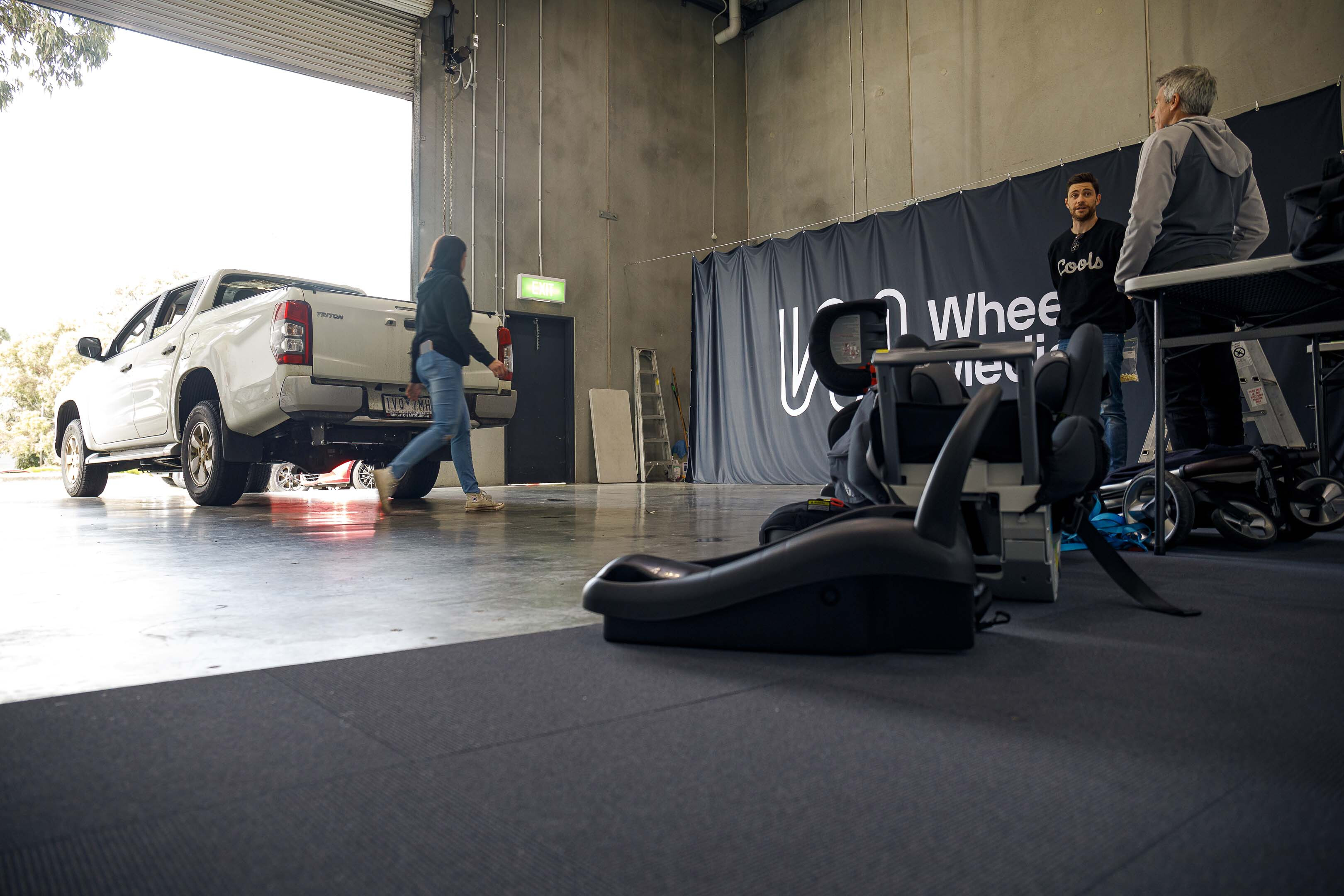
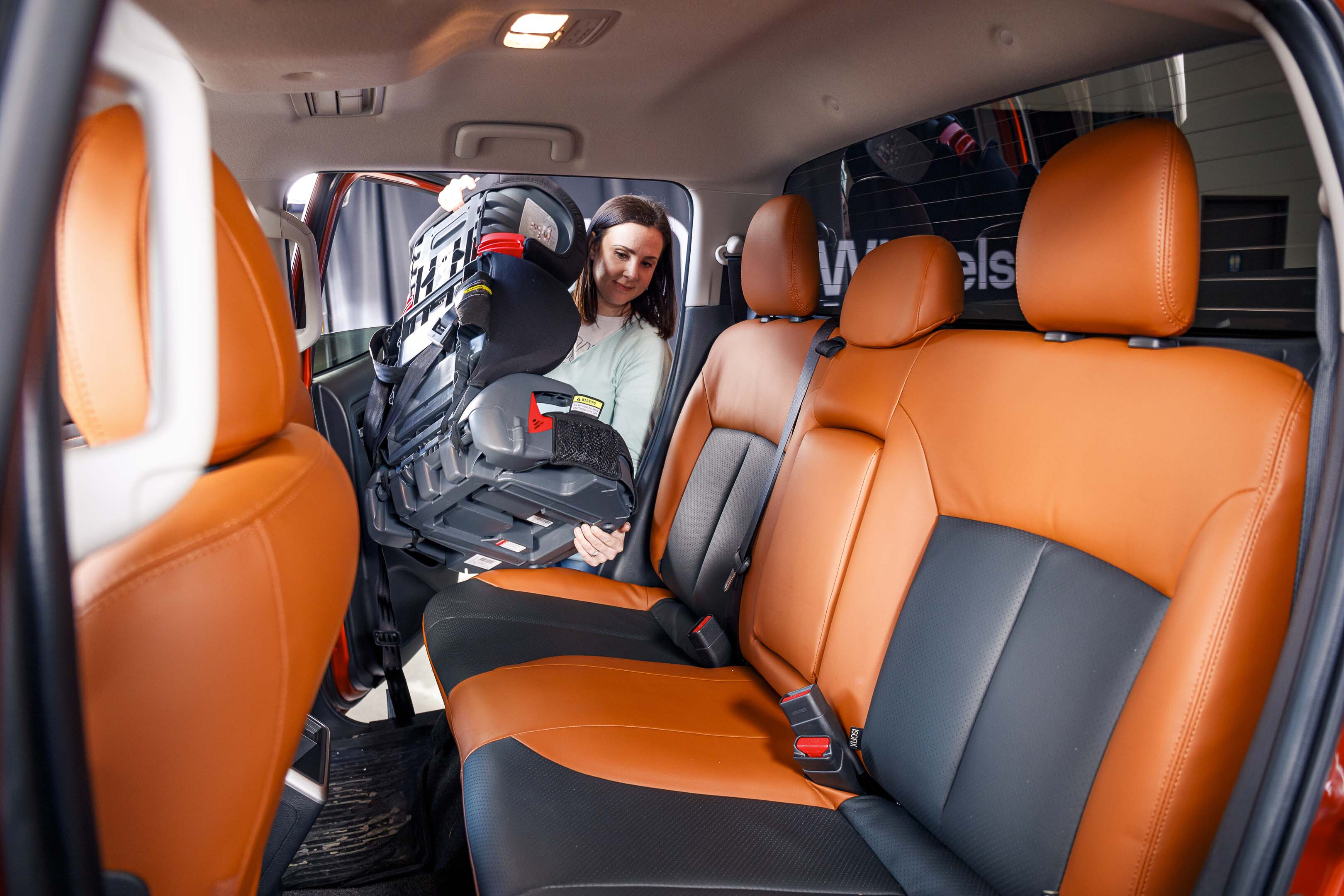
Now, fitting child seats in dual-cab utes is a very tricky business. The three types of seat we had available here – a rear-facing capsule (for babies up to six/12 months), a convertible (0-4 years old), which can be used front- or rear-facing, and a booster (four to roughly seven) – did not have ISOFIX anchors, instead just using seatbelts and top tether straps to hold them in place.
Before we even got started on our testing, we consulted the good folks over at Baby Bunting about how these vehicles differ from passenger cars and SUVs – because crikey do they ever.
The most obvious way is that they have a tub instead of a boot, which is great for transporting everything you own for a driving holiday but almost useless if you just have the normal daily essentials, such as a pram or shopping bags. Because they just don’t tie down easily, the result is that they get thrown around, bashing up both them and the paintwork.
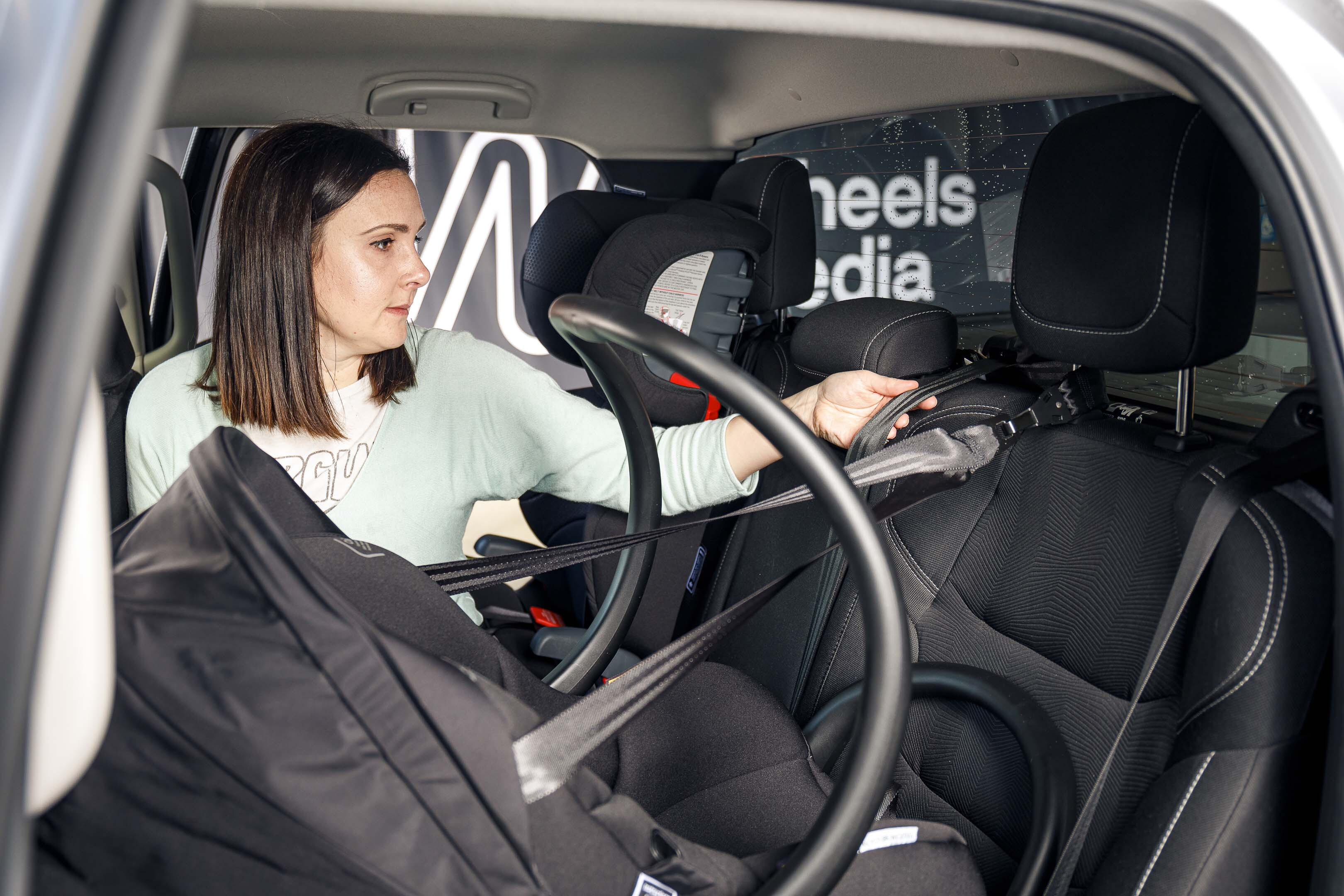
More importantly, in terms of fitting child seats, the lack of access to a boot to adjust a top tether is a nightmare because it makes the entire process incredibly difficult, frustrating, time-consuming and – in some cases – almost impossible to fit safely for the average person.
1
Getting the leverage to pull the strap tight enough is harder in some than others due to factors including the second-row seats’ positioning in relation to the door frame, tight spaces that make it easy for the top tether strap to get twisted when it should be flat, and whether or not the second row is split or comes forward as one.
The only ute in this pack to have a split rear row was the GWM Cannon-X, which divides 60:40 as many cars do, a huge plus because it means that you don’t need to unhook or adjust one child seat to be able to put in or take out another. Then depending on the ute, you’ll find either two or three top tether anchor points – but their location will not always be immediately obvious.
Some, as in the Toyota HiLux and Mazda BT-50, have fabric ‘webbing’ loops above each outboard seat, through which the tether needs to pass to reach a metal hook in the middle. Once you have found them, the rest is pretty straightforward (by ute standards of course; a car would still be much simpler).
The Nissan Navara has three such loops to pass the top tether strap through and no metal fixture at all. While Nissan says this means three child seats can be fitted, Baby Bunting disputes this and would not recommend installing more than two. The only vehicle in our pack to have three metal fixtures was the SsangYong Musso.
Most of the vehicles on test have two metal top tether anchorages hiding behind the second row, requiring the whole backrest to be brought forward to access them, which is a pain in practice. It is worth noting that only the Musso did so using a lever – the rest just had a little fabric strap to yank.
In fact, during testing we had to consult the user manual in three vehicles just to make sure we absolutely had found the right place for the top tether to attach.
1
Some also have built-in or non-adjustable headrests, so you couldn’t put the top tether strap through or around it if you tried.
The good news though is that all dual-cabs tested here are fitted with ISOFIX anchor points in the second-row seats. However, they can, as with cars, be hard to locate.
Baby Bunting recommends that you always seek professional advice when travelling with children. Making the correct judgments around what is the most appropriate way to protect the most precious of cargo is vital.
Our winner for family duties was the HiLux SR5 because, quite simply, getting the child seats in it was the easiest and they felt most secure. It also had the largest amount of space for an adult sitting in the middle between two child seats, a decent amount of room in the door for drinks and toys, and our test vehicle was fitted with easily wipeable optional leather upholstery.
Its only letdowns were a slightly high transmission tunnel that robs some space in the footwell and that those fabric webbing loops could be subject to wear over time since they’re not as robust as metal.
Offering a split rear row was one of the reasons the GWM scored so highly in second – as well as offering lots of space in the doors, USB ports and pockets for rear passengers, and as well as good legroom, while the LDV T60 was just behind it for similar reasons, minus the divided seat.
Mazda and Isuzu’s BT-50 and D-Max twins were capable all-rounders but rear legroom was a little more snug and door space was restricted to just a drink bottle only.
1
Middle of the pack
The two Rangers sat in the middle of the pack because, although they excel in many other fields and had some handy features like decent space in the door cards, there were a few let-downs, such as a lack of rear legroom (including a high transmission tunnel making things a bit more cramped in the middle), and restricted door space – with the most problematic issue being how awkward it is to fit child seats due to difficult-to-reach top tether anchorages.
It was almost impossible to fit a rear-facing seat for a newborn securely enough without getting a professional to do it each time. Also, the XLT doesn’t get pockets on the front seatbacks and its very basic cloth interior wouldn’t be wipe-down friendly.
Similarly, the Triton pair had a high transmission tunnel with only satisfactory rear legroom, with the front seats needing to come fairly far forward to accommodate rear-facing child seats. The door cards too didn’t offer much space, and again the top tether anchorages were hard to reach.
While the GSR was the better of the two with softer leather seats compared to the basic and cheap-feeling fabric trim of the GLX+, both felt quite uncomfortable to sit on as an adult passenger in the middle of the second row and gave a feeling of being squished when child seats were fitted either side.
1
Missed the mark
Bringing up the rear was the Navara Pro-4X, in the main because the top tether anchorage system was so user-unfriendly. Room for tightening was poor, awkward adjustment meant the straps got all twisted up and having solely fabric loops made it more likely to wear over time. We also couldn’t get a rear-facing seat in securely enough at all.
It won points for a good door aperture, low transmission tunnel and space in the doors.
An honourable/dishonourable mention has to go to the Musso, which was the only vehicle with three metal top tether anchors, a lever-adjusted back row, a sunroof, large doors that both open wide and fit lots in, and features like heated rear seats, leather upholstery and map pockets on both sides.
But, and it’s a big but, the middle seat comes only with a lap belt, which in our mind felt both unsafe and outdated.
The upshot is that, if we were to buy any of these dual-cabs, we’d opt for an ISOFIX-compatible seat because, if fitted correctly, it offers us peace of mind over having to constantly ensure a seatbelt is tight enough, or to be absolutely sure we’d have it installed by a professional.
The friendly and experienced team at Baby Bunting offers an accredited installation service at all its stores across Australia and New Zealand.
It’s just over a decade since the Volkswagen Amarok became the first dual-cab ute to be awarded the full five stars by independent crash test body ANCAP.
The segment has continued to make progress, and the vast majority of the utes carry maximum ANCAP ratings. The new SsangYong Musso has not yet been tested.
Safety is such an important consideration of any new vehicle purchase, yet one very often overlooked. Speaking from experience, we know we’ve been guilty of buying a car without looking thoroughly at its equipment list or how it performed in crash testing before parting with our cash.
Here we’ve pitted our 11 utes against each other and done the homework so you don’t have to – assessing factors such as active safety and driver assistance technologies, airbag count, and how well it did in ANCAP tests (as well as when that was).
1
Most impressive
Taking joint top spot in this test were the two Ford Rangers. Both performed well (having identical safety specifications) with nine airbags (the most of any model on test), three-point lap/sash seatbelts all round, childproof door locks, intelligent adaptive cruise control, blind-spot monitoring with cross-traffic alert and trailer coverage, speed limit recognition, lane-keep assist with road edge detection and driver alert, and pre-collision assist with autonomous emergency braking (AEB).
Both XLT and Sport variants have front and rear parking sensors plus a rear-view camera. A 360-degree camera is optional on the Sport.
UPDATE, September 12: The Ranger now has a five-star ANCAP rating. Story here.
The twins-under-the-skin the Isuzu D-Max LS-U and Mazda BT-50 GT both did admirably, sporting eight airbags apiece, a raft of active safety tech and each earning a five-star ANCAP safety rating in 2020.
1
Honourable mentions
An honourable mention goes to the GWM Cannon-X as it has the most recent five-star ANCAP rating, and also gains the Chinese marque’s full suite of safety systems including AEB, forward collision warning, lane departure warning, lane-keep and lane-change assist, front and rear parking sensors, seven airbags, a 360-degree camera and rear door child locks.
Meanwhile, the Nissan Navara and Toyota HiLux both occupied the middle ground with slightly older ANCAP ratings and seven airbags balanced against healthy spec lists.
The Navara was tested by the safety watchdog in 2015, but its rating applies to vehicles built from December 2020 onwards because a mid-life update was introduced locally in early 2021. The HiLux’s ranking however dates back to 2019.
Missed the mark
Earning last place was the SsangYong Musso XLV. While its equipment list is respectable – featuring lane departure warning, AEB with forward collision warning, six airbags, front and rear parking sensors, driver attention warning, rear-cross traffic alert and blind-spot monitoring – it is unrated entirely by ANCAP and has a lap belt for the middle rear passenger, which seems outdated and unsafe in the modern age.
Only slightly ahead were the Mitsubishi Triton GSR and GLX+ pair. While the GSR receives the Japanese marque’s full kit list, its five-star safety rating goes back to 2015 and even that will expire at the end of this year – leaving one of Australia’s more popular utes unrated until a new model arrives.
Though the GLX+ gets a forward collision mitigation system with pedestrian detection, it misses out on lane departure warning, blind-spot monitoring and rear cross-traffic alert. Both have six airbags – joining the SsangYong and LDV in the lowest number on offer from our array of utes.
1
The LDV also lost points for its number of airbags, less extensive feature list and 2017 ANCAP test date.
(Child-specific safety analysis, looking at ISOFIX and top tether anchorage availability for each dual-cab is covered separately in the family duties section.)
As more and more Australians elect for a dual-cab as their main car or family mover, the technology, comfort, space, ergonomics and function of the cabin become increasingly important.
While all the models here offer four doors and accommodation for up to five, that’s where a lot of the interior similarities end.
For context, our author Daniel is 187cm tall and touchscreens were measured for actual functional area and not just to the outer edges of the frame.
Most impressive
At the top of the pack, the Ford Ranger is a hard act to follow with the best balance of technology in the form of its portrait-oriented Sync4A infotainment touchscreen and large digital instrument cluster, practicality in the form of numerous clever storage options, and overall quality and finish.
It also offers one of the most spacious cabins for front occupants and modern touches such as an electric park brake, which frees up even more space, and the Ranger is one of the only contenders here to offer USB-C charging sockets.
But it’s not perfect. Even budget rivals such as the SsangYong weigh in with stunning levels of equipment and space for prices that save about $20,000 over the Ranger, while the GWM offers initial wow factor with a surprisingly plush interior and more high levels of technology for the cash.
1
In the case of the SsangYong, it is the only ute here to offer a sunroof, has one of the most cavernous cabins and boasts the fastest infotainment boot-up time, requiring just three seconds from ignition on to fully functional, while the Cannon-X has impressive features such as a class-leading 3D manoeuvring system.
Mazda must take line honours for easily the most car-like cabin with a pleasant two-tone upholstery and particular attention paid to seat design and comfort, plus an elegant and ergonomic steering wheel covered in high-quality leather.
Honourable mentions and pleasant surprises
Despite an inescapable utilitarian bond, some of our fleet attempt to push the boundaries of comfort and sophistication with some innovative features. Nissan’s Navara has a unique rear central window that is electrically operated from the driver’s seat, allowing dog owners to chat with a four-legged friend in the tray, for example.
The D-Max has good amounts of space in all interior areas but feels small on the road with excellent visibility, while the LDV’s central information and entertainment screen is the sharpest and one of the most pleasant to navigate in this group.
We also like the Ranger’s unusual but ergonomic door release handles that allow a more natural hand and arm position when opening the door.
1
Missed the mark
The sheer plastickyness of the Triton GLX+ and LDV can be forgiven to some degree if they are to be put to hard yakka where durability could be seen as an advantage over the relatively premium feel and comfort of their rivals. Conversely, initial good impressions of the Cannon-X quickly tarnish when too many functional and ergonomic fails emerge.
Other disappointments include the noticeably cramped HiLux second row, as well as its overall dated interior feel, especially when its price is factored in. Woefully slow-to-start infotainment systems dragged the Mazda, Isuzu, Toyota and Mitsubishi further down the tech ratings with between 17 and 21 seconds required from ignition on to fully functional.
Finally, observations such as the LDV’s lack of telescopic steering column adjustment, no realistic place for a phone to live in the Navara and the single-zone climate control of the Triton GLX+ are all examples of omissions that are hard to excuse in today’s modern and competitive market.
Before signing on the dotted line for a brand-new car, it’s important to research manufacturer service intervals and capped-price servicing programs when budgeting for your next vehicle.
Some manufacturers offer attractive and extensive capped-price service schemes to incentivise consumers, while other programs are rather limited in what they bring to the table. Here’s what each brand offers.
The Mitsubishi Triton comes with 15,000 km/12-month service intervals and an industry-leading 10-year capped-price servicing scheme, with the first interval priced at $399. Prices then fluctuate between $499 and $999 for the length of the servicing program.
Nissan offers six years of capped-price servicing for its Navara, with service intervals listed at 12 months or 20,000km. Prices for automatic variants start at a fraction over $500 for the first service and max out at $782 on the sixth. Servicing costs for manual models are marginally higher.
1
D-Max service intervals are listed at 15,000km or 12 months, and seven capped-price services are included for up to seven years or 105,000km. The first paid-for service costs $409 and prices then waver between $319 to $769 for the ensuing intervals.
Mazda BT-50 service intervals are also set at 15,000km or 12 months, with capped-price servicing running for five years or 75,000km. Under this scheme, costs for 3.0-litre BT-50s start at $463 and are slightly cheaper for 1.9-litre variants.
Ford lists service intervals for its new Ranger at every 12 months or 15,000km, whichever comes first. Capped-price servicing of just $329 is eligible for the first four general services, covering up to four years (or 60,000km), for MY22 Ford Rangers.
After a complimentary one-month initial inspection, Toyota offers the shortest service intervals on this list, at 10,000km or every six months, with three years of capped-price servicing at $260 per interval.
The first service for GWM’s Cannon-X is due after just six months or 5000km of ownership. Service intervals are then listed at 10,000km or every 12 months. Capped-price servicing is offered for the first five visits, with service costs ranging from $260 to $360 per visit.
SsangYong offers the most easily deciphered capped-price servicing program, with seven years included at $375 per visit. Service intervals are every 12 months or 15,000km.
Finally, service intervals for the LDV T60 are 12 months or 15,000km, with an initial service required within the first six months or 5000km. No capped-price servicing is offered.
Our giant team of experienced vehicle testers was complemented with a couple of existing dual-cab ute owners, both of whom are also considering upgrading to a newer model.
Paul Dermatis and Luke Paag live with dual-cab utes every day, using them for both work and lifestyle purposes, giving them an extra perspective on the fit-for-purpose nature of the 11 vehicles
Paul is a construction specialist, and also a petrolhead who’s even built engines in previous years. He can count the legendary Audi B7 RS4 Avant among the cars he’s owned, and they also include a Ford Falcon XR6 ute. Paul’s dual-cab lives up to his passion for performance – it’s a 2008 Toyota HiLux TRD featuring a supercharged V6.
Luke runs a landscaping business in Melbourne, and manages a 300-acre farm up on the way to Bendigo. He started off with a 2010 Ford PK Ranger, followed by a PXII and he’s currently on a Ranger PXIII XLT 3.2L that has clocked 100,000km in three years.
Luke’s Ranger is constantly at work on the farm with a trailer in tow, towing hay, firewood or feed.
This is the part where we declare the Best Dual Cab Ute of 2022 after all our exhaustive analysis from our vast team of independent testers and guest reviewers.
Of course, we also acknowledge it’s not the role of our Megatests to simply pick one winner, rub our hands, and pat ourselves on the back for a job well done.
Just as there’s a huge breadth of options in the dual-cab ute segment, there’s a wide spectrum of buyers with differing priorities, desires, and budgets.
So, think of our Megatests as more of an expert tour guide that aims to make you feel less giddy when it comes to facing the dizzying array of choices.
What we will say is that we have assessed all 11 vehicles beyond their specification sheets and price tags – rating their value holistically. Because we’re guessing that, if you’re reading this Megatest, you’re not planning to buy your next ute without being fully informed.
So, our ratings have a healthy skew towards the way these utes drive, the way they perform, how they function, and how comfortable they are for everyday lifestyles.
1
Works-in-progress
China’s challenger brands, Great Wall and LDV, have plenty to offer buyers looking for an affordable brand-new ute packed with goodies.
The Cannon X has a particularly impressive features-to-price ratio, and adds another bonus in the form of a long warranty. And both the Cannon and T60 tick an important ANCAP box with maximum five-star ratings, though GWM has the edge on its safety feature arsenal.
Both our guest ute testers were pleasantly surprised by the amount of kit offered by the cheapest models in the group, as well as how each cabin presented.
The next big steps for Great Wall and LDV – still in their relative infancy as ute builders – include improving cabin ergonomics and developing the engineering side to bring greater polish to the all-round driving experience. Both utes are currently below-average in the areas of ride comfort, steering quality and drivetrain refinement.
Solid performers
Great Wall and LDV can look to Korea if they need inspiration for a well-sorted, well-specced ute that is also well priced. And, of course, we’re not talking about Hyundai and Kia which have yet to enter the segment.
SsangYong has been building utes since the 1990s, yet the latest-generation Musso, facelifted in 2021, is finally an entrant that isn’t entirely forgettable (or curiously styled).
Joining the Navara here as the only other ute to employ rear coil springs for improved on-road handling, the Musso offers impressive rolling refinement, a likeable engine and unexpectedly good steering.
1
It’s sharply priced and keenly specified in fully brimmed Ultimate XLV form, and only a sub-900kg payload, lap-only centre rear belt and lack of an independent crash-testing score prevented a higher result.
The Musso finds itself in good (middle-of-the-pack) company, ranked alongside segment stalwarts – the Navara, Triton and HiLux.
Although the Navara is at its best in Pro-4X Warrior guise, the regular, non-Premcar-tweaked Pro-4X does plenty right on the road and its tray features a clever tie-down system as well as the ability to carry more than a tonne.
The package just goes a bit awry inside, with a somewhat lacklustre cabin that could be better for storage, rear-seat comfort and noise insulation. The Nissan’s steering was also found to be inconsistent.
Mitsubishi’s Triton is getting on, but it remains a competent all-rounder. The GSR is our pick of the two variants, mainly because this Megatest is skewed towards family lifestyle and the flagship brings more safety tech to the table, better seat comfort and the convenient Super Select 2WD/4WD on-the-fly selector. However, the GLX+ is the better pick for a farm or trade buyer.
The venerable Toyota HiLux rounds of this middling group. Like the Triton, it’s not far off a generational change and a dated cabin, cramped rear seat and vocal engine are some of the key giveaways. The equipment list isn’t particularly generous, either.
Yet the HiLux does functionality expertly, with a kid-friendly rear cabin, useful cabin storage, and a near-one-tonne payload. The seats also rate highly for comfort, and the Toyota’s diesel engine is punchy.
1
Best of the rest
Double cream is rising to the top here, with the Isuzu D-Max and Mazda BT-50 twins competing for the final podium spot.
While the Isuzu has a slightly longer warranty, its Japanese compatriot edges the contest. The BT-50’s ride is less stiff, its tray can carry an even heavier load, its fuel consumption was the best on test and the Mazda’s interior looks more premium.
A shortage of engine refinement and limited tray practicality were two main downsides for both utes.
The new(er) benchmark
The Ford Ranger, too, will have a twin in early 2023, when the second-generation Volkswagen Amarok arrives.
Until then, at least, Ford’s dual-cab ute is in a class of its own.
Highest prices and highest fuel consumption in this test mean the scorecards aren’t perfect, but beyond that our two Ranger representatives have few downsides.
Across the board, the Ranger serves up an interior that manages to look both tough and sophisticated, presents a slick and intuitive infotainment system, pays plentiful attention to practicality and equipment yet provides the driver and front passenger with particularly good comfort.
1
Active and passive safety is impressive, and the Ranger’s tray is one of the biggest and most thoughtful in the group.
Sealing the deal is a driving experience that could trick you into believing you’re driving a (well-sorted) large SUV rather than a dual-cab ute. That includes two excellent drivetrain options in the four-cylinder and V6 diesels.
Our testers would be happy with either the XLT four-cylinder or Sport V6, though we think the Ford Ranger sweet spot is somewhere in the middle – an XLT V6 that mixes a good-value features spec with the silky six-cylinder and slick all-wheel-drive system.
Regardless of variant, though, the Ford Ranger is quite the benchmark.
Paul – It’s comfortable and easy to drive. It really soaks up the bumps; it’s almost car-like in the way it drives. It’s quiet as well. You don’t get that road noise you seem to get with a lot of the others. And it didn’t have any of that jiggly body movement typical of these utes.
I felt like I was driving more of a good-quality SUV than a dual-cab ute. The V6 provides effortless acceleration, though I also quite liked the four-cylinder diesel – it actually likes to rev a bit.
I’m not overly tall, but good headroom inside. For me, it’s under-thigh support that matters most, and it’s okay in here. It feels a bit short, but all of these utes do.
Luke – The obvious positives are ride and refinement. Handling, like the previous generation, is really good. It’s also a big step up with the infotainment and the interior.
The V6 is the pick of the engines: it’s ultra quiet and there’s torque everywhere. I found the 2.0L’s auto wanted to hunt a bit, with fuel economy probably the goal. But, overall, the Ranger is the package – it’s the benchmark.
D-MAX
Paul – My foot tended to roll off the small footrest, so that wasn’t ideal.
The steering felt quite light, but the ratio feels good. I noticed that I needed to be a bit heavier on the throttle compared with the Ranger, as the D-Max’s transmission tends to search for the lower gear, even up a hill.
It doesn’t jar over bumps but can get a bit jiggly and you can hear rattles over rougher surfaces.
It’s a nice cabin to be in. I did find some of the instruments to be blocked by the dash [cover]. They were a bit low for me. Seats are quite forward, feels a touch lower than the Ranger on the legs. And I’m short, so if you had long legs you’d be up here [have no under thigh-support].
Luke – I’m tall, so the driving position feels nice and comfortable – and the layout is okay. The engine has plenty of grunt, but it just seems a bit harsh and a bit gruff. But I have just stepped out of the Ranger!
BT-50
Paul – Straightaway, lovely cabin to be in. The presentation is great. If you just stuck me in here without seeing the exterior, I’d be asking what car am I in? Am I in a CX-9 or something? In that regard, a beautiful cabin. This doesn’t feel like a work ute.
But, again, there’s a rear seat in this class that isn’t great at supporting your under-thigh.
Luke – A bit more refined than the Isuzu D-MAX – a bit quieter and a bit of a nicer ride and a bit less choppy. I’m not sure if that has to do with the spec level, but it just feels a bit tighter, a bit nicer and a bit quieter.
I like the heated seats, the interior is quite plush.
TRITON GLX+/GSR
Paul – Engine-wise it felt okay; the gearbox works quite well with the powertrain. Even on light throttle inputs going uphill, it’ll kick down nicely and work on the torque, so it’s very well-matched in that way.
The GSR’s ride is quite firm. I thought the GLX+ on the smaller (16-inch) wheels was better at absorbing bumps. Going off centre, the Triton’s steering doesn’t seem to turn as sharply as some of the others.
It’s a nice cabin to be in. The instruments are nice and visible. The GSR’s back seats are quite good, too; one of few benches here that nicely support the underside of the thigh. I thought they were better than those in the GLX+.
With the GLX+ you are looking more at a work car rather than a family lifestyle thing compared with the GSR, but I think the GLX+ offers particularly good value for money, for people who are buying on a budget.
Luke – When you bury your foot and start to put the Triton under load, you can feel that lack of [engine] capacity. However, a big pro is the constant 4WD [in 4H] up on that dirt loop, which gives you more confidence. Some of the others felt more tail-happy, whereas the Triton felt quite planted – much like the V6 Ranger (the only other full-time AWD ute in the group).
The long-term liveability of the GLX+ – especially the interior – makes it the best in the $40K group. It also has a better chassis, better feel, and it could probably take a load a bit better, whether I have some weight in the tray or put a trailer on it, it’d probably be the most settled out of all of them.
NAVARA
With the coil-sprung rear suspension, the Navara’s rear end is very car-like – especially when you go through a corner. Unlike many of the utes, there isn’t that slight bouncing effect when you’re not carrying a load. As someone who likes driving, that’s a big sell for me.
There can be some shudder over real rough surfaces, but generally the absorption of bumps is quite good The steering felt a bit funny just off centre, though it’s not a dealbreaker for me.
The cabin’s a nice place to be, I like the instruments, and the seating position is comfortable. And the rear seats are also nice – plenty of foot room and I had full under-thigh support.
The Navara’s cabin seems to focus more on being durable than luxurious, though you have to think that people are going to buy these things and use them for work as well.
Luke – You can definitely feel that twin-turbo – it’s a little bit more linear in its delivery. The engine doesn’t feel as gruff as some of the others. It doesn’t feel as confident on dirt roads due to the steering, as there’s not much feel or feedback going on compared to many of the others.
The Interior is probably the let-down. This is the top-spec and it’s just a cheap cabin.
HILUX
Paul – There’s something in the HiLux’s suspension tune, where it falls into bumps – if not with a bad thud. It’s just a weird feeling, and it’s got that body roll and gets unsettled a bit.
The steering just off-centre… it needs corrections or the vehicle tends to start wandering.
Luke – It has good handling, and the 2.8L feels nice and torquey but it’s quite gruff. It just falls well short of the Ranger.
I have a standard PXIII XLT Ranger with a tow kit and bedliner, and when you look at the SR5+ it doesn’t even have a bedliner on it. You have to pay more for it.
Another example is the 240v power plug in the back of my Ranger for work all the time, and it comes standard.
It feels like the Hilux is now lagging behind most utes in the class.
CANNON
Paul – It has comfortable seats and a nice interior… it’s very well-appointed for a family-lifestyle vehicle.
The Cannon’s steering felt different to the others. Off-centre it started getting a bit heavier, and not in a good feedback sort of way. On the gravel roads, there was also vibration through the steering and a slight shuddering through the body.
I found the engine to be a bit uninspiring, to be honest. It just felt very linear no matter what revs it was at, so that was a bit unexciting.
Luke – For the price point, I’m surprised. You get plenty of kit. And the cabin feels quite big and spacious with my height.
When you lean on the Cannon’s engine a bit, you get that diesel chatter, and there’s a rutted-out section on our loop where it felt a little bit unsettled coming through there.
MUSSO
Paul – Straight off the bat, for a daily driver it needs side steps. Climbing in and out of this thing on a daily basis would become tiring.
But the interior looks pretty fancy for the Musso’s price point and the back seat is good for leg support, so it ticks those boxes.
Cabin noise is good on the move, as well, and the steering was surprisingly good. I just found the ride to be a bit jiggly.
Luke – Totally surprised. The underdog. Good interior, it’s refined, it steers well, brakes well, it’s quiet, and it has quite a perky engine. I was expecting something a bit cheap and nasty, but this has a sunroof, heated seats, really good leather, and heaps of legroom.
I’d get one as a bang-for-your-buck work ute that you turned over every three years, not worried about resale because you’d depreciate that on tax anyway.
T60
Paul – First impressions: no side steps, and there’s no grab rail on the driver’s side to actually pull yourself into the car – they’re two must-haves on a ute, for me.
The rear seats don’t have support under the legs. Other than that, the trimmings are nice; it’s a nice cabin to be in, even if it’s more like a work ute than a family ute.
If you drive the T60 in a sporty way – driving it manually [via the tipshift] – the engine has a nice sweet-spot from about 2500rpm up to 3500rpm. I found it quite enjoyable.
The T60 felt a bit frantic on the country roads; you feel the bumps. The side mirrors are very good but the vision out the back windscreen is just a bit narrow.
Luke – Definitely at the bottom [of the pack]. It has the most predominant diesel chatter of all cars here. It’s quite laggy; really vague, floaty steering; and I’d question the long-term build quality. The driveline just seems to be underpowered.
The interior feels dated. It’s the cheapest vehicle here, but you’d pay the $5K to step up to the next level.
Available in Australia in both XLT and Lariat specifications
F-150 durability testing same as the new Ranger and Everest
The 2023 FordF-150 XLT and Lariat will be available for sale in Australia from the second half of 2023.
Best of all, this isn’t just a conversion and a copy paste of what the American market receives, Ford tells us these vehicles have be tested in Australia for Australian conditions.
“When F-150 hits Australian showrooms, customers can rest assured it has been put through the same local durability program as the Ranger and Everest which, of course, is the same program the left-hand-drive F-150 went through in the States,” said Dave Burn, Performance and Customisation Chief Program Engineer for Ford Australia.
“We’ve torture-tested, tuned and re-worked the right-hand-drive F-150 so that Aussie customers know they’re getting the full factory F-150 experience. We’re doing everything to make sure the truck will be right at home here in Australia,” said Burn.
As part of this durability testing, the 2023 Ford F-150 was put through conditions ranging in temperature from -40 degrees celsius to +50 degrees celsius. It towed trailers, was pushed through mud, sand, water crossings and corrosion testing. Ford even tells us that the F-150 travelled more than 135,000 kilometres to make sure the vehicle was ready for the conditions we experience here.
1
Torture testing was conducted at Ford’s Silver Creek Road durability track, which Ford mentions was done hundreds of times. Then some of the world’s most challenging roads were replicated in the laboratory at its You Yangs Proving Ground assessing driveline, wheels and suspension to the limit.
Both the XLT and Lariat models will be powered by a 3.5-litre EcoBoost V6 engine, mated to a 10-speed automatic transmission. They will be sold in 4×4 crew cab configuration, with both a SWB (145-inch wheelbase) and LWB (157-inch wheelbase).
Ford has told us that the vehicles will be available in showrooms from the second half of 2023, however pricing has not yet been announced. We’ll update this closer to the market release in Australia next year.
The 2023 Isuzu MU-X has landed in Australia, officially available to the public since December 1.
It’s also nice that pricing across the 2023 Isuzu MU-X range has not changed from 2022 models, with the top-of-the-line LS-T model still costing $65,990 drive-away on special.
On our test loop, we experienced highway, inner-city and rural driving conditions. We also spent a day at the stunning Double Island Point, experiencing how the 2023 Isuzu MU-X performs on sand with a few PSI knocked out of the tyres. It was a great experience to see what these vehicles can do out of the box, and to use them just as you would if you purchased one.
While the 2023 update is largely cosmetic, with no updates to the chassis or drivetrain, let’s take a look at what is different on the 2023 model compared to last year’s version.
There are three grades of MU-X available in the 2023 line-up, including the LS-M, LS-U and LS-T.
The MU-X is available in both 4×2 and selectable part-time 4×4, all powered by the revered 3.0-litre turbo-diesel 4JJ3-TCX motor that offers 140kW and 450Nm through a six-speed automatic transmission.
Here are the updates each grade of 2023 MU-X receives.
2023 Isuzu MU-X LS-M
Blind-spot monitor and rear cross-traffic alert auto-off when towing
New 17-inch six-spoke alloy wheels
LED rear combination lights trimmed in dark grey metallic
Two-tone black grille
1
2023 Isuzu MU-X LS-U
Blind-spot monitor and rear cross-traffic alert auto-off when towing
Handsfree tailgate
Tyre pressure monitoring system
Magnetite accents across interior dashboard and door trims
Magnetite accents across exterior fog light trim, rear bumper, roof rails and sidesteps
LED rear combination lights trimmed in dark grey metallic
Magnetite and black chrome grille
1
2023 Isuzu MU-X LS-T
Blind-spot monitor and rear cross-traffic alert auto-off when towing
Handsfree tailgate
New 20-inch six-spoke machined alloy wheels
Tyre pressure monitoring system
Magnetite accents across interior dashboard and door trims
Magnetite accents across exterior foglight trim, front bumper, rear bumper, roof rails and side steps
LED rear combination lights trimmed in dark grey metallic
That chassis and suspension package is a winner. While the previous-generation MU-X felt a little floaty on-road, this new LS-U Isuzu MU-X is planted and feels remarkably solid around corners.
This is no doubt due to the suspension revisions, including geometry changes, a higher spring rate and thicker sway bars front and rear.
Hit a speed bump with a little too much gusto and the car, rather than your spine, absorbs the shock. Isuzu has dialled in the suspension package well, but I’m sure the aftermarket industry can make it even better again – a bit of lift would do wonders.
2
Electronically controlled power steering replaces the more traditional hydraulic system of old, and it’s well-weighted and responsive. Isuzu has done a great job there, as it can be a challenge to tune these high-tech steering systems to be light enough yet still offer a positive feel when cornering.
So, while the old MU-X was criticised for being agricultural, I don’t think many people will be saying that about the new model.
Yes, there is still a bit of engine noise when you are hard on the loud pedal, but at idle and when cruising, this is a much more refined four-wheel drive in comparison.
A rear differential lock is standard-fit across the 4×4 MU-X range. It doesn’t end there though, as the Isuzu MU-X has a selectable off-road setting called Rough Terrain mode, which improves the calibration of its traction control system for off-road duties. It works, too – really well.
Without pressing the Rough Terrain mode button, when crossed up the MU-X was going nowhere fast. A simple touch of this magical button and the MU-X made forward progression, and rather easily I might point out.
This is now a very capable four-wheel drive wagon, something that couldn’t be said about the old-generation MU-X, without spending some money at your friendly local 4×4 accessory store having an aftermarket diff lock fitted.
1
As well as riding well on-road, the same can be said when off-road. Suspension travel on all four corners has also been improved over the previous generation.
Combine this with solid low-range reduction gearing and all those new traction aids, you can take this MU-X pretty damn far off-road.
This is probably as good a time to mention the factory underbody protection plates, too; they are made up of a combination of 1.5mm-thick steel and some 5mm-thick poly-composite plates. This vehicle ticks many boxes for the off-road enthusiast.
While the changes for the 2023 Isuzu MU-X are mostly cosmetic, they have certainly freshened up the appearance of a vehicle that was already heavily updated back in 2021.
The new wheel design stands out as being a huge leap forward from a visual perspective, enhancing the looks of the MU-X drastically, as does the redesigned front grille, offering a more aggressive front end.
Overall, the Isuzu MU-X is a solid vehicle both on- and off-road. It’s also spacious inside for larger families, and comfortable to pilot over long stretches of driving.
1
During our time at this media event, we drove over a few days through the Noosa region, into the hinterland and on the highway. Then we boarded a barge and skipped over to the iconic Double Island Point for a sand driving experience. It was a terrific loop that included plenty of time both on- and off-road.
Not one vehicle got bogged or even looked like getting stuck. Ride quality is quite good for OEM suspension, and is able to soak up bumps from washouts on the beach as well as it does speed bumps and corners when back on sealed roads.
Something that I appreciate about the MU-X is the way it develops power super low in the rev range.
1
This makes it perfectly suited to off-road driving as well as towing heavy loads, something that the majority of MU-X owners will do. In fact, Isuzu tells us that in a recent customer survey, close to half of MU-X owners use their vehicles for towing.
The 2021 Isuzu MU-X was a huge step forward for the model, making it a much more refined and capable four-wheel drive wagon.
The 2023 Isuzu MU-X retains the same recipe, it’s just got a few more cherries on top – and best of all, you aren’t paying for the privilege as Isuzu hasn’t increased the prices for the 2023 range.
Published on the company’s Instagram page, the Jimny pick-up pocket-rocket has been dubbed the “Golden Queen”and is a special-edition one-off build showcasing the talents of the Z.Mode crew.
The Jimny is only sold in Europe in two-seat guise due to strict emissions regulations, so the job of converting the vehicle from small SUV to ute was a matter of scrapping the roofline from above the B-pillar without having to clear a second row of seats.
1
An internal structural roll bar was then installed behind the front pews, and it was connected to the rear bulkhead, floor and ladder-frame chassis. The material used for the tray bed consists of a shockproof and UV-resistant ABS/ASA plastic compound.
Space in the rear tray may appear a little tight, but the design means the Z.Mode team eliminated any rear overhang, and in doing so improved the vehicle’s on- and off-road characteristics.
Approach, breakover and departure angles are improved over stock – 51°/38°/60° versus 37°/28°/49°, and the vehicle comes with diff protectors and heavy-duty shafts. A detachable anti-roll bar can be equipped for rock-crawling duties.
3
By adding a turbo kit – consisting of a Garrett T25 turbine, manifolds, injectors and an intercooler – the Jimny pick-up now makes 125kW and 270Nm, up from the 75kW and 130Nm it makes in stock turbo-less form. It’s paired to a five-speed manual gearbox and runs to all four wheels.
Golden features scattered throughout the build link back to its “Golden Queen” nomenclature, including; a scratch-resistant “golden black” wrap, golden alloy wheels and golden exterior stripes. On the inside, golden seams are stitched into the dark leather and alcantara upholstery, and a “Golden Queen” logo is embroidered on the seat headrests.
2
Z.Mode says on its Instagram page the Jimny was built in memory of its founder, Giuseppe Quintavalli, who recently passed away at the age of 75.
While this may be a one-off special, Z.Mode offers a range of conversion options for the Suzuki Jimny, including the NEXT pick-up conversion.
The Navara Warrior first hit the market in early 2020, followed by the tougher facelifted model in 2021. We’ve driven it a few times since then, but we knew it was time to see how it handles everyday life with our team.
Our six-month stint with the Navara Pro-4X Warrior has come to a close, so you can now get the full six-part story below.
After we helped (or hindered) the assembly of our PRO-4X Warrior down the production line at Premcar, it then took a week to get it registered and back to us at 4X4 Aus HQ where it will be for the next six months.
When we usually collect a test car, they have been run in and tested but our Warrior had just 28 kays on the odometer when we collected it from Nissan so a road trip run-in was called for.
The Warrior arrived as Melbourne swung from summer to autumn and we wanted to get in some beach time before things cooled down, so we hit the highway for a 1000km run up to Newcastle in order to get some sand in the Warrior’s Cooper AT3 treads.
3
I’ve said before when testing Navaras that the seating position takes a bit of getting used to if you’re coming at it from other 4×4 utes and that might take a couple of days.
The leather seats are manually adjusted, which is a bit of a surprise for a top-of-the-range ute, and there’s no reach adjustment for the steering column, just height adjustment. But once you get in to the groove, the Navara cabin is a nice, comfortable and easy-to-use place to wile away the highway miles in.
All the controls are easy to find and operate, there’s a 12-volt and USB power outlet in the centre stack and another set of them inside the console, plus another USB outlet at the back of the console for rear-seat passengers so you can keep all your devices plugged in and charging.
Apple CarPlay or Android Auto are included to provide the tunes and navigation for the road trip, again with easy controls.
1
The rear seat base in the double-cab Navara folds up to reveals some storage spaces underneath it where we stowed a few items that shouldn’t be needed often, and with the seat up we were able to stash a bicycle and luggage there without having to carry them out in the elements in the cargo tray.
We ordered our Warrior with the six-speed manual gearbox and at highway speeds it sits at 2200rpm on the open road, which does seem a bit high, but the engine isn’t buzzy at those revs and it still allows for easy overtaking in top gear if needed. Easier still with a shift back a gear or two.
I was surprised that the Navara doesn’t have radar cruise control, but happy at the same time as I find those systems annoying as they can lull the driver in to not paying attention to their speed while the system latches on to the back of the car in front. Normal cruise control allows me to set it to keep the speed within the limit and make my own call on it when approaching other vehicles or traffic on the highway.
The Navara has an 80-litre fuel tank and it felt like it was eating through that quickly as we cruised along. Every time I looked at the gauge it seemed to be half empty so I would top it up but it didn’t take as much as expected.
Nissan quotes the fuel use at 7.5L/100km on the ADR combined scale and this is the same in the Warrior as it is in the regular PRO-4X manual double-cab despite the Warrior riding higher and wearing bigger and heavier all-terrain tyres. With these off-road improvements, I would expect the test rate to be higher.
1
On the highway it logged 10.5L/100km and it will be interesting to see if that drops at all as the new car loosens up.
It seems that we timed our trip north poorly as it coincided with record rainfall and severe flooding along the coast and beach driving was off the cards. The first opportunity to put the Warrior in to four-wheel drive came not on the sand, but when pulling a passenger car out of a boggy front driveway.
Four-wheel drive selection in the Navara comes via an electronic dial as it does in most modern 4x4s and the Warrior slipped in to 4×4 High Range without too much fuss, however it would not go in to low range. We tried rolling forward, edging back, switching back and forth (we’ve done this once or twice before) but it would not select low range.
We had to pull the car out in high range, which wasn’t ideal on the sodden lawn, but it got the job done. It was only once I had the car back up on the road and fiddling with the dial some more that I was able to get it to select low range, however, that wasn’t when I needed it.
We’ll be experimenting to find the best way to make this work when it’s needed as the next time might not be so easy and forgiving.
We’ll motor onwards to find some sunshine and sand as the Warrior is proving to be a sweet tourer and I certainly appreciate the positive comments on the look of the car whenever I’m stopped somewhere along the way.
TOTAL KILOMETRES: 1405km
KILOMETRES THIS MONTH: 1377km
AVERAGE FUEL USE: 10.55L/100km
Part 2: Sand to snow
Our drive north in search of some sun and sandy beaches gave us plenty of time to get acquainted with our PRO-4X Warrior, both on the beaches and the highway.
As such, it has racked up more than 3500km since our last report. The Warrior proved up to the tasks we pointed it at, as it was more than capable on the sand and comfortable and efficient on the highway.
We mentioned in our first instalment that we had some trouble getting the transfer case to click into low range, and this continued on our beach drives. It really takes some messing around, switching the dial from 4×4 high to low range, rocking the car forward and back, switching it again, and sometimes we couldn’t get it into low range when we needed it to.
1
It needs to be done on flat, smooth ground where there is no load on the drivetrain, even though the gearbox is in neutral and the clutch is in. This is just an annoyance and it has failed to stop us so far, but we can imagine situations where it could leave us in trouble.
Another thing that has taken us a while to get used to is the fuel range. We were recording consumption in the low 10L/100km range, and with the 80-litre tank figured we should be good for close to 800km touring range, but the distance-to-empty computer had us coming up short.
After getting a few tanks through the car, we found that when the DTE was reaching zero kilometres there was still 10 to 15 litres of fuel in the tank, and once we figured that out we were confidently racking up 750km+ to each tank before filling up.
1
While some might not think 10L/100km is good for a modern 4×4 ute, you need to consider that this car has raised ride height and larger, heavier Light Truck tyres fitted to improve off-road performance, and these will be detrimental to fuel consumption. Fit these modifications to any otherwise standard vehicle and fuel consumption will go up. As for this car, the suspension and tyres are a standard part of the Warrior package over the regular Navara PRO-4X.
With close to 800km touring range, a comfortable and well-appointed interior and healthy performance from the bi-turbo 2.3-litre diesel engine, the Warrior makes a competent highway cruiser.
Back in Melbourne and with the onset of winter, the Navara has been relegated to commuting duties which it also handles with ease and comfort. The action of the clutch and gearshift are both light and pose no problem with city driving; although, we’re rueing the lack of seat heaters on cold mornings.
1
Nowhere was that more evident than on a morning drive up in the hills for an early season snow drive. The cold fronts coming through dumped a nice amount of the white stuff mid-week and we ran to the hills with some of the team from Ironman 4×4 for a jaunt.
Aside from the cold seats, the Warrior applied itself well to the greasy roads and snow-covered tracks. Snow over the sealed roads meant we were in 4×4 high range early and that was enough for most of the conditions once we got off the black (now white) top. On a few steeper climbs and in deeper snow we went for low range and the transfer case wouldn’t engage on the first time, but it went in straight away later on.
The standard Warrior-spec Cooper AT3 tyres did really well in these conditions with the pressures dropped to 17psi. Driving in deeper snow is akin to driving in soft sand and similar rules apply here. The opportunity gave us another terrain to tick off for the Warrior.
TOTAL KILOMETRES: 5253km
KILOMETRES THIS MONTH: 3848km
AVERAGE FUEL USE: 10.61L/100km
Part 3: Back in the ‘burbs
From sandy beaches up north to snowy mountains in the south-east, it’s been fun searching out different terrain for our Navara PRO-4X Warrior to take on, but this past month it has been in town on commuter duty.
While long hours on the highway and days on off-road tracks really give you an appreciation of what a car is like to live with and how it performs particular tasks, it’s really when you are back home and living the everyday grind that you start to appreciate the nuances of any vehicle. And as with any vehicle, the Warrior has features we love and loathe.
Every time I get in the Warrior after driving something else and I press the clutch in and start changing gears, it makes me smile. There’s something about driving a car with a manual gearbox that floats my boat, as it gives me a better connection with the car and the drive is more engaging.
1
I know manuals aren’t for everyone, but I like them and I give massive kudos to Nissan for giving us the choice in this halo model. Driving the manual Warrior around town is never a chore, as the clutch action is light and the gear shift easy to navigate. It’s just as simple on the highways and off road.
Something I haven’t enjoyed so much since being back in Melbourne in winter is the lack of seat heaters in a $70K halo model variant. Yeah, I know, I’m soft, and I don’t expect such comforts in every car, but as the top-spec model and with leather seats, I’d expect seat heaters in the Warrior. Add in the fact that the car’s heater seems to take a long time to warm up, and the missing seat heaters are even more noticeable.
I said at the beginning of this loan period that the Navara has a strange seating position, but it’s one you soon get accustomed to. I was reminded again of this after a couple of weeks driving the Grand Cherokee L, and getting back in the Warrior felt odd. The seat squab is relatively flat and high and there is no reach adjustment for the steering column to get it just right for my size. A few days behind the wheel, though, and all feels normal again.
1
The Warrior has actually done some ute work while back in town, being used to pick up a set of wheels and tyres and haul push bikes in the tray on a few occasions. The Navara is well-equipped to carry loads in the tray, with four sturdy tie-down loops positioned low in each corner of the tub and the adjustable Utili-Tracks running lengthways along the upper sides of the tub. There’s also the plastic tub liner fitted to the car as part of the Warrior package, which protects the painted metal tray from scratches and damage.
Another Warrior-specific addition to the Navara that hinders your ability to make best use of those cargo tie-down points is the so-called sports bar at the front of the tub. Nissan isn’t the only offender here, as these style-over-substance add-ons find their way in to the back of many upper-spec utes.
“The PRO-4X Warrior is just as easy to live with in the suburbs as it is in the bush”
The sports bar prevents the user from leaning over the side of the tray to access the front tie-down loops when you need to connect and disconnect them, which is an unnecessary pain in the butt when you need to secure cargo in the tub.
As much as we would like it to be, life’s not always about hitting the highway and getting out of town; so, thankfully, the PRO-4X Warrior is just as easy to live with in the suburbs as it is in the bush.
After four months of driving it around, I still get comments from others saying how good the Warrior looks in its Stealth Grey with black wheels and accessories. And I’m happy to say the Warrior continues to prove that it has the performance to match its appearance.
TOTAL KILOMETRES: 7796km
KILOMETRES THIS MONTH: 2543km
AVERAGE FUEL USE: 11.2L/100km
Part 4: Comparing models
I have just spent some time behind the wheel of the regular Navara PRO-4X, the non-Warrior version, which has reminded me what a great job the team at Premcar has done with the PRO-4X to turn it in to the Warrior, particularly in the way the suspension both softens the ride and improves control over rough roads.
With Nissan announcing the arrival of the Navara SL Warrior, it will be a great way for owners to get the benefits of that suspension, wheel and tyre package at a more affordable price. Like the PRO-4X Warrior, the SL will be a vehicle you can tour anywhere in Australia with, right off the showroom floor.
Our PRO-4X Warrior has done plenty of its kilometres on the highway on a few interstate trips, where it has proved well and truly up to the task. Again, the powertrain and suspension are well-suited to racking up the miles, and the fuel consumption being in the low 10L/100km mark made it very economical.
A unique feature of the Navara I could never figure out is why you’d want it, revealed its usefulness on the open road. I like to drive with the window open to let fresh air in the car, especially once you get away from the city and all its filth.
1
Driving at speed with the window down in most modern cars usually creates a lot of buffeting in the cabin that you can somewhat alleviate by partially opening the rear door windows. The Navara has a sliding opening in the rear window that, when open, creates a flow-through passage for fresh air to move through the cabin without the buffeting, and it is a great way to travel without letting wind or even rain on to the back seat.
Back in town the Warrior has been used to transport pushbikes in its cargo tub. Originally hoping to carry two bikes in the back, it was quickly obvious that isn’t possible without leaving the tailgate open, so compromises had to be made. This would be the case with any double-cab ute and the relatively short length of their cargo tubs.
1
A single bike fits snuggly diagonally across the tub, which places the bike’s wheels perfectly adjacent to the tie-down points fitted low in each corner of the tub. It’s easy to access the rear one with the tailgate down, but then getting to the front ones is hampered by the sports bar that you can’t reach through to get to the hooks and straps.
This is an area that the Warrior SL has an advantage, as it doesn’t have the sports bar and you could simply reach over the tub-side to attach the tie downs.
With the days getting longer and warmer, we’re looking forward to getting back out in the bush in these last few months we have with the PRO-4X Warrior.
They say that time flies when you’re having fun and we’ve had plenty of fun with the Warrior. From following it down the production line at Premcar, to interstate road trips and weekend bush escapes to the beaches and the snow, it’s proven to be a well set-up and capable 4×4 ute.
The one problem that we have had with the Warrior was recently rectified with a trip back to Nissan. From day one with the car, we’d always found it hesitant to engage 4×4. Now we know that all of these electronically actuated transfer cases can be fussy and fiddly when you go to use them, but the one on the Navara was more so than most.
1
From towing a mate out of a bog when the Navara wouldn’t go into low range to when we were away on the snow drive when it sometimes went in straight away and at other times it wouldn’t engage at all, it has been a constant problem.
Thankfully, when it went back to the techs at Nissan they also found it to be hesitant to engage 4×4 and low range, so they replaced the electric motor on the transfer case that does that job, under warranty of course.
We were keen to put it to the test and with the spring weather thawing Melbourne out, we got away for a Sunday in the bush. And we’re happy to say that the transfer case engaged straight away each time we used it.
The suspension is perfect in that it improves both the ride quality on- and off-road
Our day trip out around the forests near Toolangi reinforced my beliefs that the two best improvements you can make to any standard 4×4 are a quality and well-controlled suspension upgrade, and tougher tyres that you can depend on in rough tracks and conditions.
Thankfully, Nissan and Premcar have done these upgrades for you with the PRO-4X Warrior and it’s all part of the new-car package, covered by the manufacturer’s warranty. And the gear all works well too.
1
The suspension is perfect in that it improves both the ride quality on- and off-road, and copes with the bumps and bashes you cop on rough tracks or low-speed off-road driving. The Cooper AT3 tyres that are part of the Warrior package haven’t given us any reason to complain; again, they have been excellent for both on- and off-road driving.
It’s rare that we can get a new car with these features straight from the manufacturer so it will be hard to replace the Warrior in the 4X4 Shed. Let’s see what we can come up with next.
Part 6: Motorbiking
After a three-month stint with the Mazda BT-50 Thunder, I found myself without a ute but with a mountain of lugging to do. Editor Raudonikis took pity on me and threw me the keys to the Nissan Navara PRO-4X Warrior.
Besides our visual similarities (Matt and I regularly get mistaken for each other at car meets and gigs), it turns out Raudonikis and I both enjoy similar things about the Warrior, starting with some of its more analogue features.
The biggie in this regard, is the six-speed manual gearbox our Warrior is optioned with. Like Matt, I enjoy how connected and engaged I feel with a good stick shift and, boy, is this a good one. Even in traffic, shifting the tractable Warrior never felt like a chore. And the manual ’box suits the Warrior’s burly vibe down to the ground.
Other analogue features I give the Warrior big ticks for include the old-school handbrake, buttons to operate the climate control and – praise be! – rotary dials for volume control and scan.
1
I’m no luddite, though. While Matt was glad of the Warrior’s lack of radar cruise control, I was missing it, as well as speed-sign monitoring. You see, I’ve grown to rely on this kind of tech to reduce the number of rude letters I receive in the mail from the good people at Fines Victoria. Luckily, the Navara is no rocket ship off the lights, so that helped tame my top-fuel instincts.
The Warrior is otherwise well-equipped with safety tech, including intelligent AEB, blind-spot monitoring and active lane assist. None of which I found overly intrusive.
As a package, the Warrior is a tougher-looking proposition than the BT-50 Thunder I’ve been in previously. The chunky Cooper all-terrains no doubt have a lot to do with that, with the Mazda’s more-anaemic rubber leaving it looking a little like a rugby player in ballet flats.
The whole package is super-cohesive to my eye, although I’d swap the frankly pointless (aren’t they all?) sports bar for a tonneau cover in a heartbeat. The nifty fold-up rear seat went some way to making up for the open tray, swallowing all kinds of loads that I didn’t want to expose to Melbourne’s ever-changing weather conditions.
While I didn’t get the Warrior anywhere near off-road, I love the idea that it is ready to go bush straight off the showroom floor, with everything covered under the factory warranty. What I did do was a stack of shifting workshop equipment and car parts, making good use of the lined tub and handy tie-down loops in the tray – while cursing the sports bar that makes it difficult to access the rear loops.
1
I also did a spot of towing with the Warrior, but nothing that put any kinds of strain on the big girl. I’ve been neglecting my 1971 Triumph Tiger since the start of COVID and if there is one thing old English motorcycles do not like, it is not being ridden! The bike and lightweight trailer were never going to trouble the Nissan, but they looked pretty cool. And I loved that I could store the heavy tow tongue under the rear seat afterwards, instead of having it floating around the cabin.
Overall, I found that the Warrior’s steering, ride and handling are class-leading. Even with the tray heavily-loaded, the Warrior remained composed even on shitty B-roads.
I was also impressed that the ute’s serious off-road credentials do little to hamper its utility as a well-mannered daily driver, with no excess noise from the all-terrain rubber – or anywhere else, for that matter. Fuel economy is also completely acceptable, especially given the extra weight of Premcar’s off-road add-ons.
If you aren’t fazed by Warriors’s dated-but-practical infotainment set-up and are happy to miss out on a few luxuries (heated seats, anyone?), then it is hard to go past the Warrior as a highly-capable all-rounder – Simon Telford
TOTAL KILOMETRES: 8718km
KILOMETRES THIS MONTH: 922km
AVERAGE FUEL USE: 11.4L/100km
When you have a business that is known nation-wide as the go-to workshop for the best Nissan Patrol builds in the country, then it pays to have a standout vehicle that showcases the best of what you can do.
So it’s been for Andrew Cassar from On Track 4×4 in the Melbourne suburb of Kealba. On Track is renowned for its Patrol builds; be they for competition-spec GQ and GUs or the latest and greatest touring Y62s, On Track has done them. More and more these days, it’s the Y62 builds that keep the team at On Track busy.
After a history of running some of the fastest old-school Patrol comp trucks, Andrew wasn’t fazed by the new technologies that Nissan introduced with the Y62. His own family touring rig was one of the first to receive a Harrop supercharger installation on its VK56 V8 engine, and it appeared on 4X4 Australia back in 2016.
1
Other ’62s from On Track have also been in the magazine as the first dual-cab and single-cab ute conversions to be built, while many others have featured Y62 components developed and manufactured by On Track.
This ongoing development of the Y62 platform and powertrain has pushed On Track to design, develop and manufacture a range of bespoke components to improve on the Nissan package for bigger and faster Patrols.
Things like billet alloy control arms that allow heavier GVM ratings, rear airbag conversions for improved towing performance, and further development of the supercharger package, have all taken the newest Patrols to the next levels of performance.
This has seen customers shipping their new Patrols to On Track from all corners of the country, to have the work done by the best in the business.
Project 6×6
Having all of these customer cars showing the world what On Track can do is one thing, but to really get noticed Andrew planned a Patrol like no other. Something never seen before and a true world-first for a Y62.
“A few people had done LandCruiser 6x6s but no one had done a Y62 6×6,” Andrew told 4X4 Australia. “We wanted to build a new car to showcase what we do at On Track 4×4, and thought what better than a 6×6 Patrol.”
Andrew and his team kept the 6×6 project heavily under wraps during its construction. Working on it behind closed doors and after hours, keeping it covered and out of sight when it was in the workshop and only telling those who really needed to know about it what they were building.
1
The plan was always to debut the car at the Melbourne 4×4 Show in August 2022, and on the morning of show, social media pages were set ablaze with sightings of the candy red Nissan driving down the highway to the showgrounds, and further throughout the weekend, as show visitors were stunned by the big red rig.
Let’s clear up one thing about the car before we go any further. From the outset, the Patrol has been designed to be a 6×6, but it’s not quite there yet. There was plenty of speculation from keen spotters at the Melbourne 4×4 Show saying that the rear axle is simply a lazy axle, and this is true for now, but it won’t be for long.
1
“We ran out of time to get the driveline finished before the show,” says Andrew. “We were working on it night and day just to get it there in time, and that drive from the workshop to the show was the first time we’d ever driven it.”
The Patrol certainly was the talk of the show and the most stunning build there. Not just for its third axle, but that stunning candy red paint, the canopy and those twin snorkels all had tongues wagging.
Andrew tells us drive will be going to the rear wheels eventually, but the hardware just isn’t ready yet. The day out on the tracks for this 4X4 Australia photo shoot was the longest road trip it had done to that date, and even then there’s still more work to be done for upcoming show appearances.
Build spec
What has the wildest Y62 in Australia got so far? Let’s start from the beginning. This 2016 Patrol Ti-L was originally an On Track customer’s car. It was black and built with all the fruit including a Harrop supercharger kit.
“It was a perfectly decked-out touring wagon,” says Andrew. “It was a customer’s car, it had 30,000km on it and it was already supercharged. It had a good history with On Track.”
As good as it was, the Patrol was set to be sacrificed to create something more. Something unique and special.
1
After getting the black car back, the body was lifted off the chassis and the chassis stripped of its driveline and suspension. With it stripped bare and cleaned up, it was cut and had an extra 350mm welded into its length between the wheelbase, plus an extension to the rear to accommodate the third axle.
The extra differential is simply a second Y62 rear diff and it is mounted on a factory Nissan K-frame so that all the suspension components retain their factory mounts. The K-frames are lowered using 22mm spacers. All three diffs have been re-geared to 3.7:1 ratio and are mounted to the chassis using billet diff-drop kits and chromoly drive flanges, both products developed at On Track. The two rear diffs retain their factory lockers, while the front diff benefits from an ARB Air Locker.
Both rear axles retain the Y62’s independent suspension design but are beefed up with On Track’s billet upper and lower control arms. The springs have been replaced with AAA Airbags, while Koni 90 shocks dampen the ride.
1
The front end is relatively standard by comparison but also benefits from On Track’s billet upper control arms, billet diff drop, modified lower arms and Ironman Foam Cell Pro shocks.
All three axles get DBA slotted brake rotors and Bendix pads, while the Fuel wheels are wrapped in massive 37×12.5-R20 Mickey T muddies.
While work on the Y62 Patrol’s chassis and suspension was ongoing, its body also went under the welder’s knife. The wagon back-end was lopped off and replaced with a rear wall and window fabricated and fitted by The Tin Man to create the double-cab body.
Mazda Duco
The body and new front end were treated to liberal coatings of Mazda red by the team at Amex Autobody. We’ve seen other cars painted in this Mazda metallic red, but never with the depth and lustre as it has on this Patrol. It pops like a true candy apple red, in the style that the old-school hot rodders and street machiners were fond of back in the day.
1
There’s more of that candy red up on the MITS Alloy canopy. On Track 4×4 is the Victorian distributor and installer of MITS Alloy products and the canopy sits on an aluminium tray with side toolboxes and a rear trundle drawer, all from MITS. The tray has a 30-litre water tank in its headboard, while there’s a 60-litre tank beneath it.
Inside the canopy is a Bushman upright fridge, drawers for storage, and a slide-out induction cooktop. Powering the accessories is a full Redarc system comprising a RedVision Manager 30, Redarc inverter and 200AH lithium battery. It’s a full touring set-up indicative of what a Patrol like this is made for.
Blown V8
The 5.6-litre Nissan V8 didn’t get left out while the body and chassis were being massaged. It was stripped down and reassembled with forged CP pistons swinging on Crower rods, while the heads were bolted down using ARP studs.
The forged pistons are not only more durable but were chosen to lower the compression ratio to make the engine better suited to more boost. Of course, the Harrop 2650 blower went back on and the engine has been mildly tuned to deliver around 350kW to the 37s.
While work continues on the Patrol itself, the engineering of the gearbox that will deliver drive to the rearmost axle also rolls on. With commitments to show the Patrol interstate, and a successful business to keep running while completing the development of the 6×6, Andrew and his team at On Track 4×4 are flat-out.