
Without doubt, the most talked about new car of 2022 was the Ford Ranger. As one of the most popular new cars on the Australian market, and with an almost all-new model, the next-gen Ranger was the hot topic of the year.
The next-gen is now the current-gen or RA Ranger, and after many road tests and vehicle comparisons we were keen to get our dirty mitts on one for ourselves. It only made sense for our next build to be with the most talked about new 4×4 in the country.
We were lucky to secure a Ranger Sport V6 from Ford’s demonstrator fleet, with just 4000km on the clock and ready to be transformed.
Upgrade your Ranger
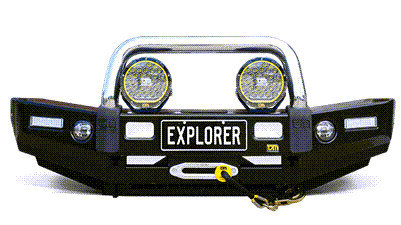
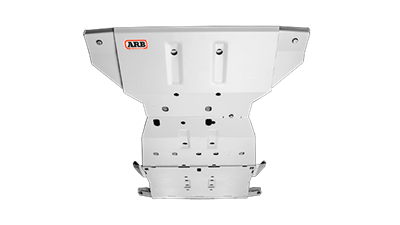
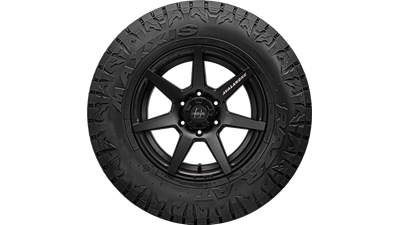
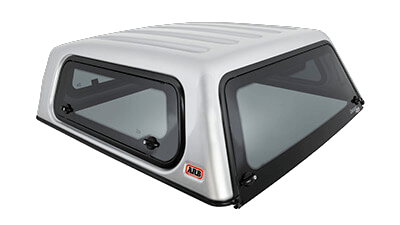
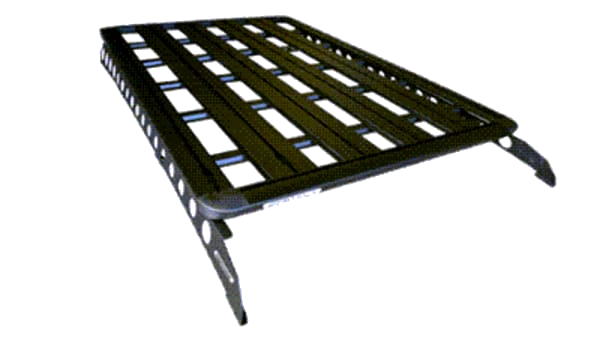
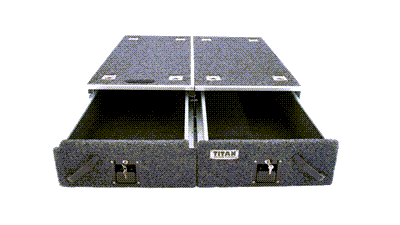
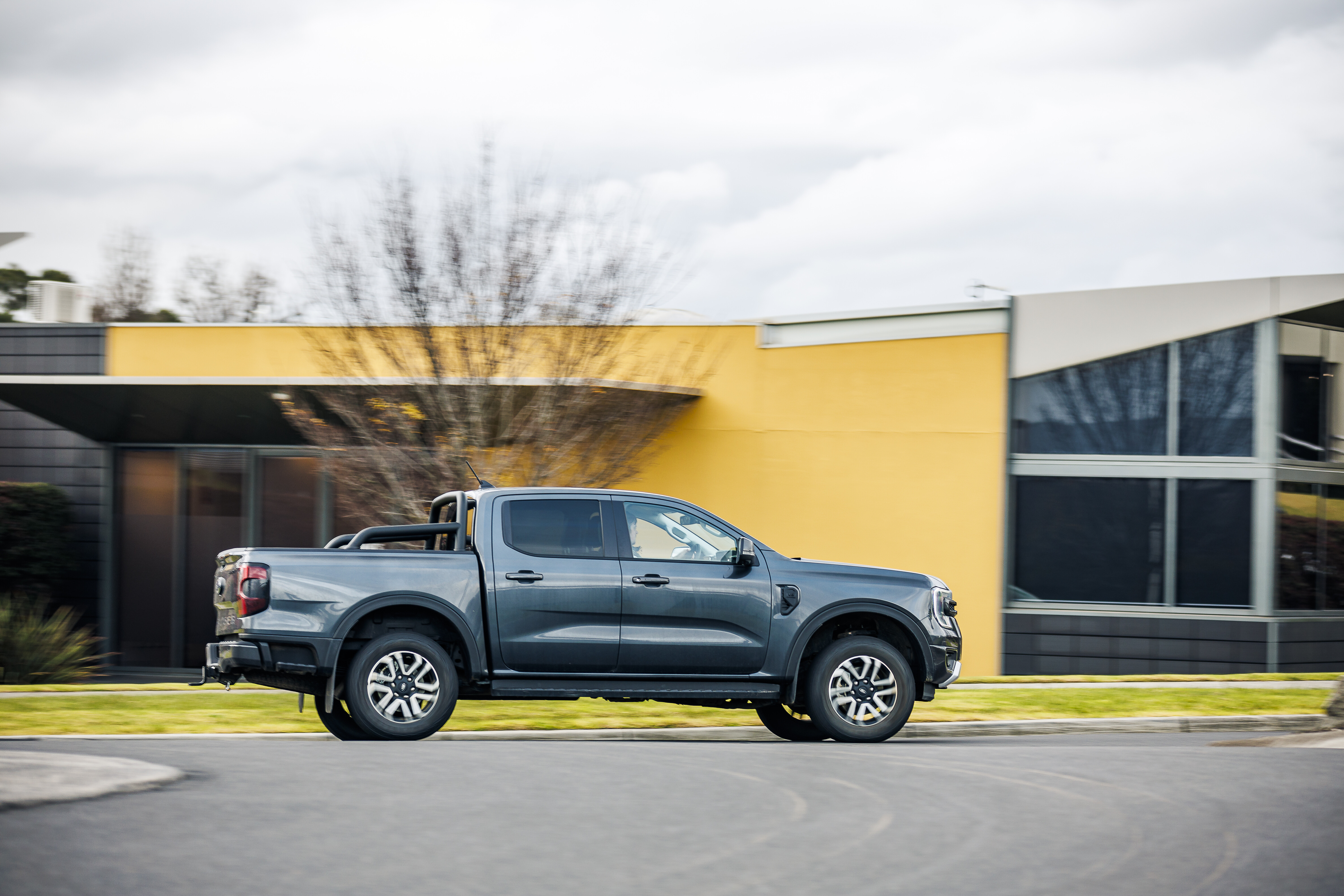
The plan is to build the Ranger up as an off-grid touring 4×4, something you can take anywhere in Australia and live out of remotely for as long as you need to. To achieve this, we’re again teaming up with some of the biggest names in the 4×4 accessories business to supply their products and services.
Returning for this build after being with us on previous vehicles will be Tough Dog Suspension, MSA 4×4 Accessories, MaxTrax recovery gear, Rola roof racks, Hayman Reese X-Bar, Narva lights, Maxxis tyres, Maxtrac 3D floor mats and Pacemaker King Brown exhaust systems. All brands and products we’ve worked with already, and we know and trust their products.
A couple of brands we’re happy to have back involved again are Dometic which will be supplying a CFX fridge, and Wheel Pros Australia which is sending us a set of trick-looking Fuel Wheels.
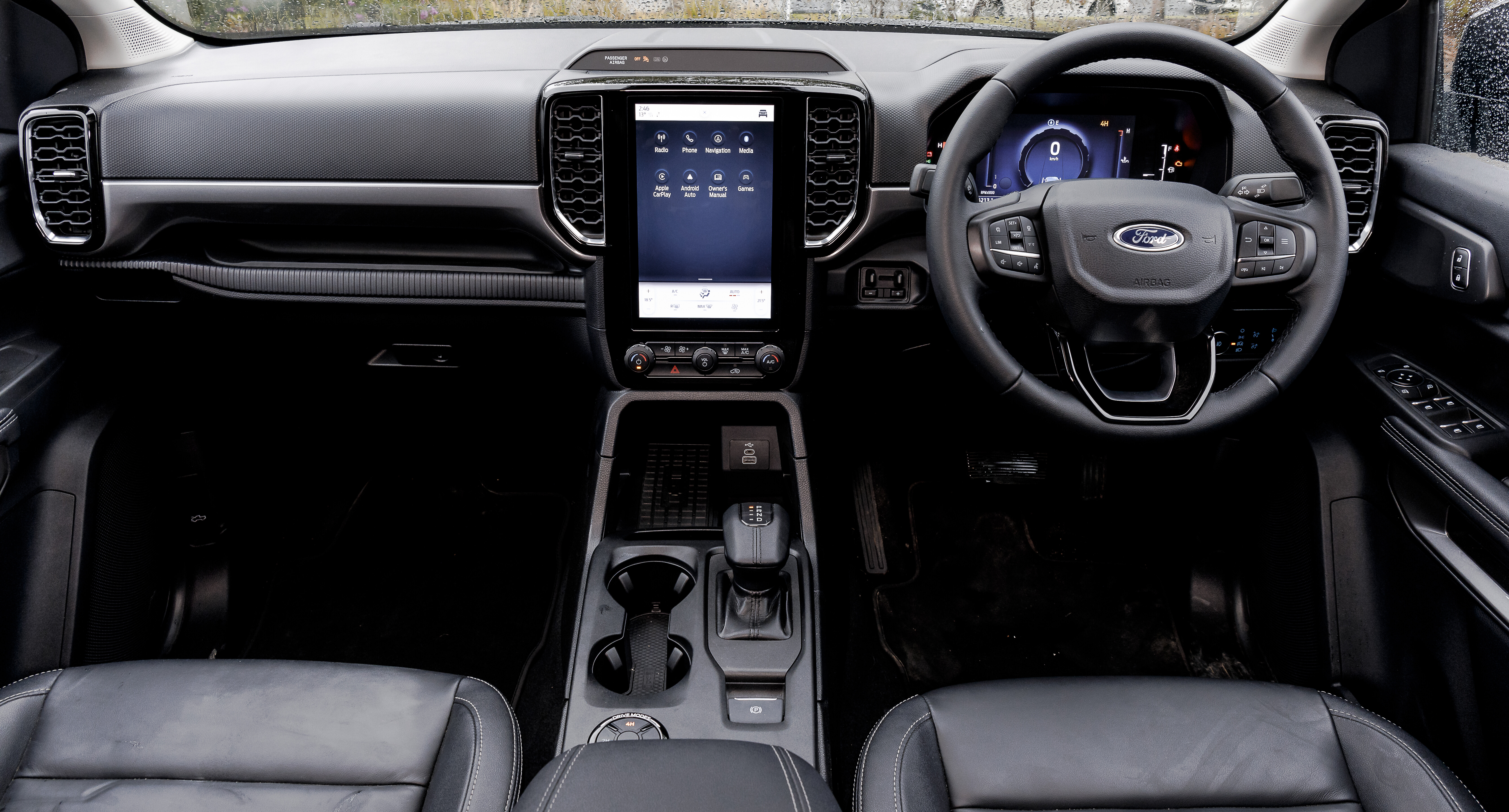
We’re also excited to welcome some new partners to our builds, with TJM signing up for the frontal protection set-up, Projecta with an extensive 12V system, and Trig Point Canopies to supply the service body/canopy that will be a major part of the build.
There’ll be more suppliers coming aboard as the build progresses, and this is promising to be our biggest and most exciting 4×4 build yet. We can’t wait to get stuck into it!
4X4 Australia's project builds
Lightweight hiking tents are a necessity for overnight hiking adventures. You can go to sleep with a view of the stars, or throw the fly on to protect against the elements. Best of all, it’ll pack down small to fit in your backpack.
The best hiking tents are lightweight and durable – keeping you warm, dry and sleeping soundly, while adventuring out on the trail. But with so many hiking tents on the market, how do you choose the best one?
We’ve reviewed tents from MSR, Companion, Zempire, OZtrail, Mountain Designs and BlackWolf to find the best lightweight hiking tents in 2022. To give you the best recommendations, we compared the size, weight, features and durability of each of the tents.
Whether you are after an entry-level tent or looking to upgrade to a newer model, we’ve got you and your camping buddies covered – with a mix of 1, 2 and 3-person tents. We’ve also compiled a buyers’ guide to break down the features you should be looking for when buying a lightweight hiking tent.
| Weight | Capacity | Floor space | Packed size | Seasons | |
|---|---|---|---|---|---|
| OZtrail Nomad 1 | 1.75kg | 1 | 230 x 105cm | 44 x 14 x 14cm | 3 |
| Zempire Mono | 1.95kg | 1 | 227 x 90cm | 45 x 13 x 13cm | 3 |
| Companion Pro Hiker 2 | 2.7kg | 2 | 215 x 140cm | 43 x 16 x 16cm | 3 |
| Zempire Zeus | 2.88kg | 2 | 220 x 140cm | 55 x 14 x 14cm | 3 |
| MSR Elixir 2 | 2.77kg | 2 | 200 x 127cm | 51 x 17 x 17 cm | 4 |
| BlackWolf Grasshopper 3 UL | 3kg | 3 | 220 x 180cm | 50 x 18 x 18cm | 3 |
| Mountain Designs Alpine Bunker | 4.56kg | 3 | 230 x 275cm | 52 x 21 x 21cm | 4 |
One-person hiking tents
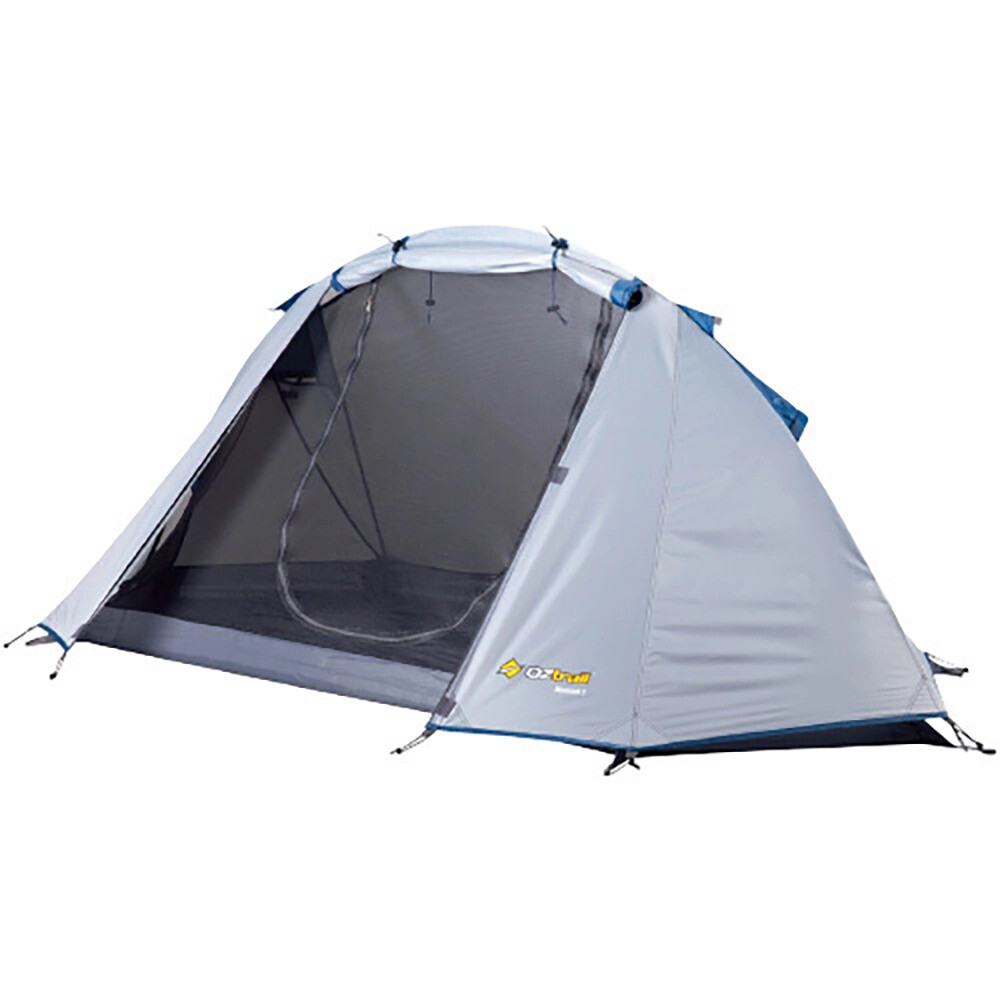
OZtrail Nomad 1
OZtrail’s Nomad 1 is an entry-level hiking tent that is spacious and simple to set up, with a very affordable price tag. It’s simple, as a hiking tent should be, and provides enough weatherproofing and durability to see you comfortably through three seasons.
One of the best features of the Nomad 1, is the space. For a single-person hiking tent, it has great internal floor space plus 100cm of headroom. The 230cm length will allow you to fit your gear inside the tent with you or, depending on your height, able stretch out comfortably after a long day of hiking. There is also a small vestibule to store gear outside under the fly.
In terms of durability, the Nomad 1 has a polyester tub floor and 190T polyester fly, which will keep you dry. All of the walls have No-See-Um mesh for breathability and to keep the bugs out. While it’s not as durable as some of the other tents we reviewed, it is great as an entry-level tent and will stand up to the elements.
The Nomad 1 packs down small and weighs just 1.75kg – a not-too-heavy addition to your backpack. The simple design means it is easy to set up and pack down, giving you more time to enjoy your hiking adventures.
Things we like
- Price
- Space
- Lightweight
Not so much
- Small vestibule
- Durability
- One-year warranty
Specifications
- Weight: 1.75kg
- Capacity: 1
- Floor space: 230 x 105cm
- Packed size: 44 x 14 x 14cm
- Seasons: 3
- Weight: 1.75kg
- Capacity: 1
- Floor space: 230 x 105cm
- Packed size: 44 x 14 x 14cm
- Seasons: 3
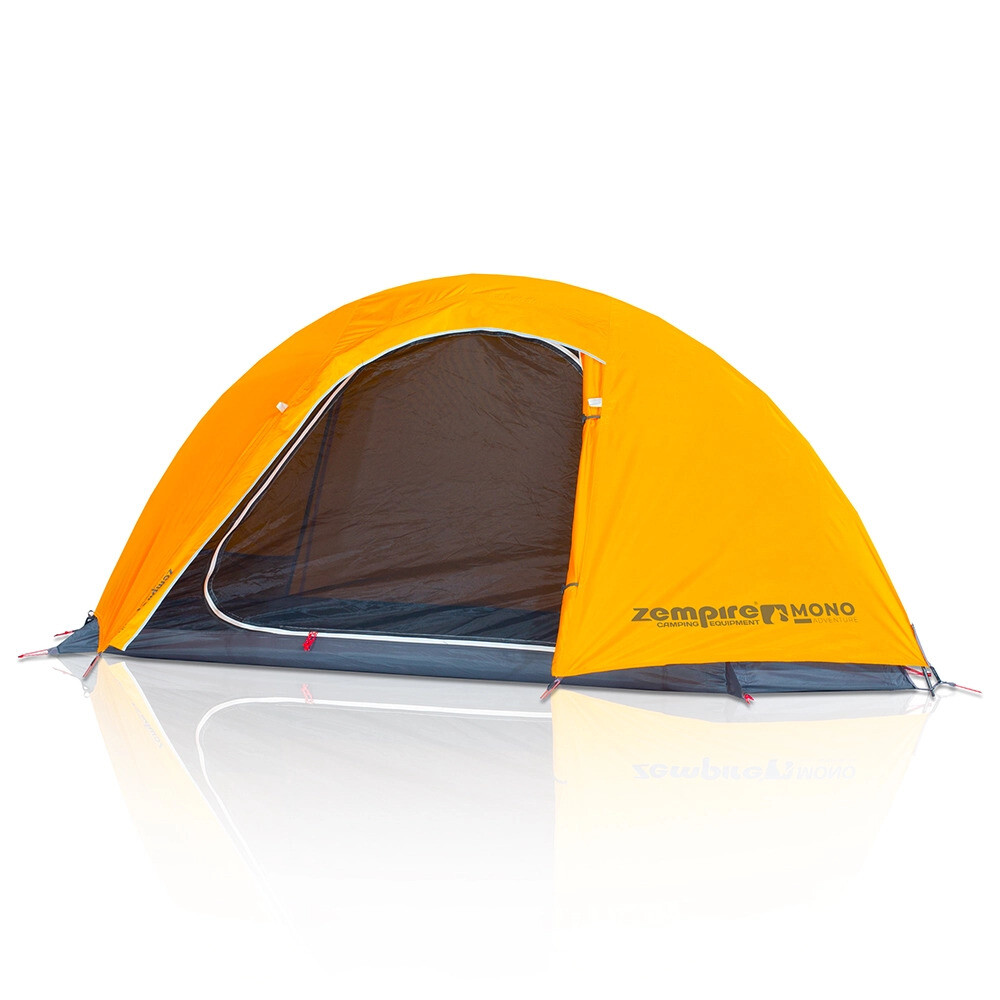
Zempire Mono
Zempire’s Mono one-person hiking tent is strong, sturdy and made from high-quality materials that will ensure you are protected from the elements. If you are ready to invest in a quality hiking tent that will perform for many years to come, we think the Mono is a great option.
The Mono is built with durable materials, from the tent, flooring and fly – to the zippers and pegs. The tent is made from super-fine mesh with a PolyOxford floor. The fly is made from 75 denier 210T polyester ripstop, with a 5000mm waterhead rating. It also has two-way YKK door zippers and tough, unbendable tri pegs.
The one-pole configuration with clip-on fly makes the Mono easy to set up and pack down. While it is built to last, and to withstand rougher conditions, it also has full-mesh walls which will make summertime camping a breeze if you remove the fly.
Space-wise, the 105cm head height will give you room to sit up in the tent. While the tent is long and narrow with tapered ends, there is plenty of vestibule space to store gear outside. The Mono is also covered by a three-year manufacturer’s warranty – to give you peace of mind on your purchase.
Things we like
- Quality
- Vestibule space
- 3-year warranty
Not so much
- Floor space
- Weight
- Tapered ends
Specifications
- Weight: 1.95kg
- Capacity: 1
- Floor space: 227 x 90cm
- Packed size: 45 x 13 x 13cm
- Seasons: 3
- Weight: 1.95kg
- Capacity: 1
- Floor space: 227 x 90cm
- Packed size: 45 x 13 x 13cm
- Seasons: 3
Two-person hiking tents
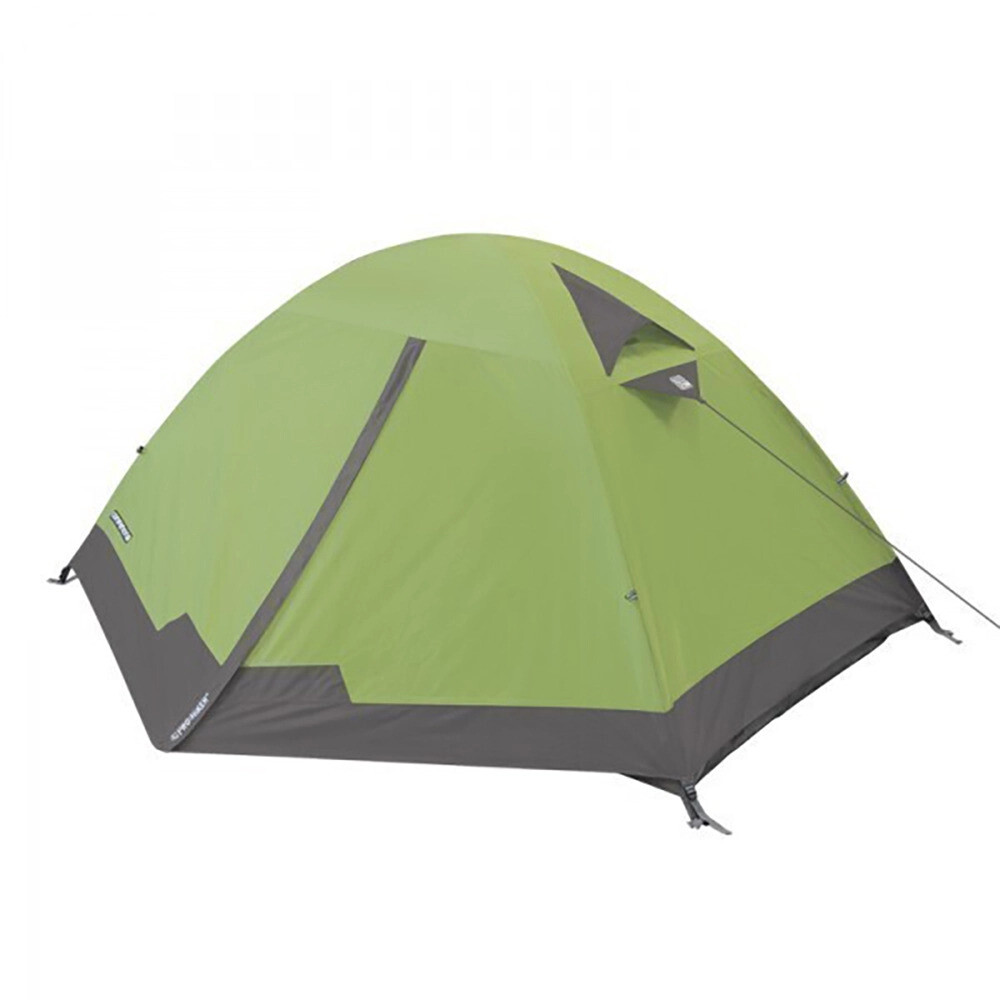
Companion Pro Hiker 2
Companion’s Pro Hiker 2 is a great entry-level hiking tent that provides functionality, durability and space – without the lofty price tag. If you want to hit the trails with a two-person tent, but not spend your whole camping gear budget to do it, the Pro Hiker 2 could be just what you need.
This tent provides a comfortably sized sleeping space and 110cm of head height. Compared to other two-person tents which sit around 100cm high, the extra 10cm might make all the difference to taller hikers.
The Pro Hiker 2 has good waterproofing – with 3000mm waterhead rating on the fly and 4000mm on the floor. The fly is made from 210T ripstop polyester and the tent has a 150T polyester floor. The No-See-Um mesh sections will keep the bugs away, while still allowing for good ventilation.
Features include a gear loft, compression bag for storage and dual entry and vestibules. For the affordable price, you are getting a durable and feature-filled tent.
Things we like
- Price
- Functionality
- Durability
Not so much
- 1-year warranty
- Three seasons only
- Footprint not included
Specifications
- Weight: 2.7kg
- Capacity: 2
- Floor space: 215 x 140cm
- Packed size: 43 x 16 x 16cm
- Seasons: 3
- Weight: 2.7kg
- Capacity: 2
- Floor space: 215 x 140cm
- Packed size: 43 x 16 x 16cm
- Seasons: 3
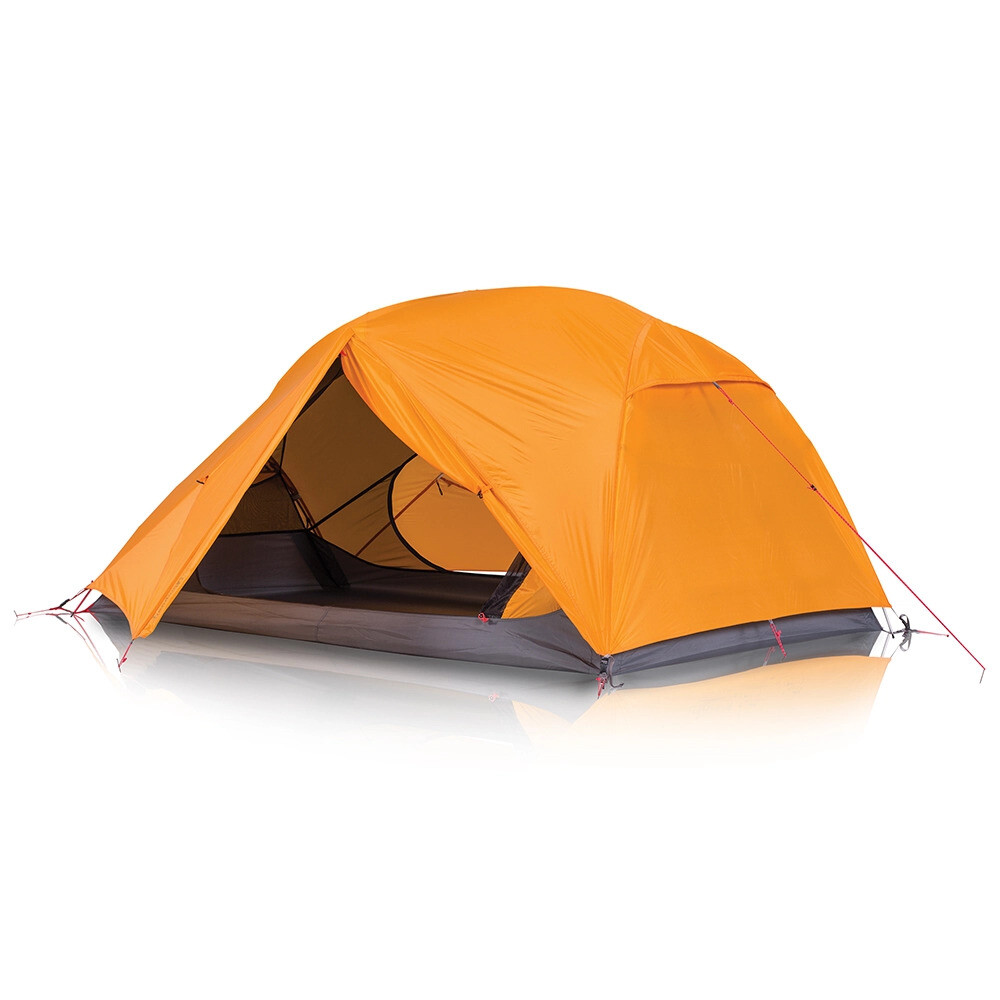
Zempire Zeus
Zempire provides great durability again in its Zeus lightweight hiking tent. The two-person tent also has great design features and usability. It is a mid-range hiking tent that will stand the test of time and keep you protected from the elements on many camping adventures to come.
A great feature of this tent is the ability to pitch the fly only. With the footprint (sold separately) you can camp out in the open with just the fly overhead if the weather allows. This is a great space (and weight) saver if the weather is clear and mozzies are not an issue.
The Zeus is made from quality materials – the 75 denier 210T polyester ripstop fly and 150D PolyOxford floor give the tent a 5000m waterhead rating. The ultralight-mesh walls provide ventilation for using the tent in warmer weather.
Dual entry and vestibules improve the usability of the tent for two people. Plus, it also has the largest floor space of the two-person hiking tents we’ve reviewed. If that doesn’t sell you, the three-year warranty should make you consider this tent as worth the investment.
Things we like
- Design
- Durability
- Three-year warranty
Not so much
- Footprint sold separately
- Packed length
- Weight
Specifications
- Weight: 2.88kg
- Capacity: 2
- Floor space: 220 x 140cm
- Packed size: 55 x 14 x 14cm
- Seasons: 3
- Weight: 2.88kg
- Capacity: 2
- Floor space: 220 x 140cm
- Packed size: 55 x 14 x 14cm
- Seasons: 3
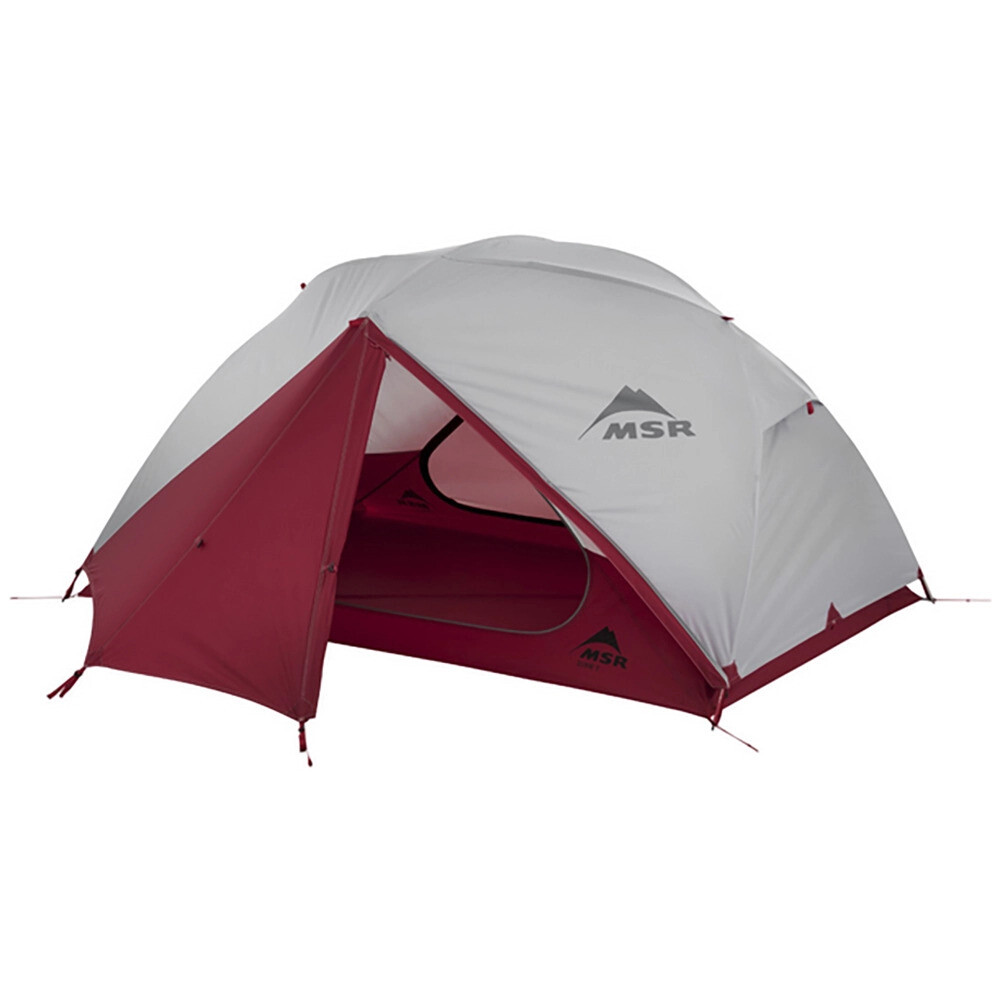
MSR Elixir 2
The MSR Elixir 2 is a two-person, four-season tent with the features and durability to see you through many years of hiking adventures. If you love hiking and camping, and you’re ready to invest in a quality tent to take on your adventures, the Elixir 2 is a sure winner.
The Elixir 2 is a premium hiking tent that comfortably sleeps two people. The design encompasses dual doors and vestibules, making access and storage a breeze. The latest version has 35 per cent more vestibule space, giving you greater storage options.
It is built from the right materials to protect you from the elements across four seasons. The fly is made from 68D ripstop polyester and 1500mm polyurethane, while the floor is 70 taffeta nylon and 3000mm polyurethane. Both have a DWR coating to provide extra waterproofing.
This tent comes with the footprint included and has some handy features like glow-in-the-dark zips and colour-coded frame for easy set up.
Things we like
- Durability
- Dual doors and vestibules
- Footprint included
Not so much
- Length
- Longer set-up time
- Price
Specifications
- Capacity: 2
- Weight: 2.77kg
- Floor space: 200 x 127cm
- Packed size: 51 x 17 x 17 cm
- Seasons: 4
- Capacity: 2
- Weight: 2.77kg
- Floor space: 200 x 127cm
- Packed size: 51 x 17 x 17 cm
- Seasons: 4
Three-person hiking tents
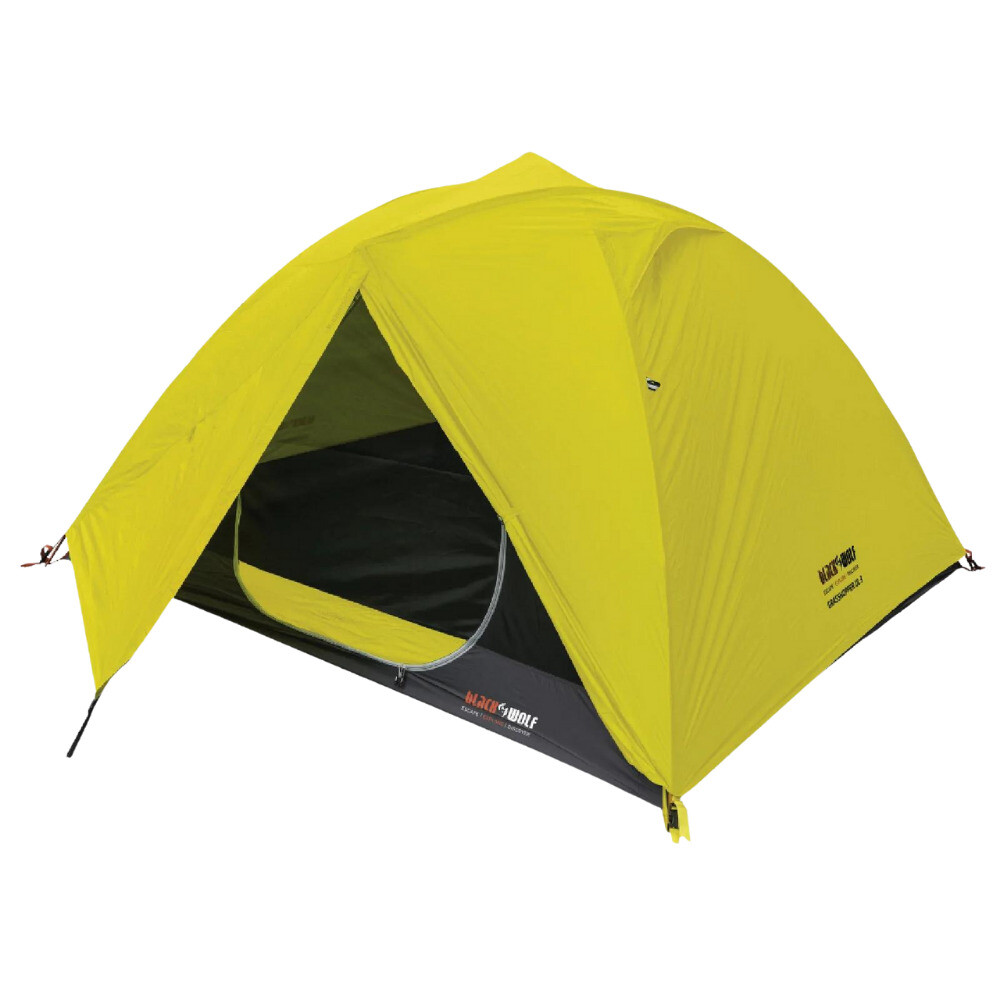
BlackWolf Grasshopper 3 UL
BlackWolf has released a new UL (UltraLight) series of its popular Grasshopper hiking tents. The Grasshopper 3 UL is a three-person tent that will suit a family of campers, or a couple that appreciate a little extra shoulder space while sleeping.
The Ultralight series has a lightweight fly made from 40D ripstop Sil-Nylon and a floor made from 70D polyester – quality materials that will stand up to the elements across three seasons. The full-mesh inner tent will give you plenty of ventilation when hiking and camping in warmer conditions.
The Grasshopper’s space-saving design ensures the tent is light but still durable enough for the elements. The dome structure gives it good stability, even in windy conditions. At 3kg it is just a few hundred grams heavier than a lot of two-person tents, so it could be a good upgrade space-wise.
It has dual entry and vestibules for ease of access and storing your gear. Plus, it also comes with a three-year warranty, making it a good investment for campers looking for a long-term hiking tent.
Things we like
- Weight
- 3-year warranty
- Dual entry and vestibules
Not so much
- Durability
- Floor width
- Footprint not included
Specifications
- Weight: 3kg
- Capacity: 3
- Floor space: 220 x 180cm
- Packed size: 50 x 18 x 18cm
- Seasons: 3
- Weight: 3kg
- Capacity: 3
- Floor space: 220 x 180cm
- Packed size: 50 x 18 x 18cm
- Seasons: 3
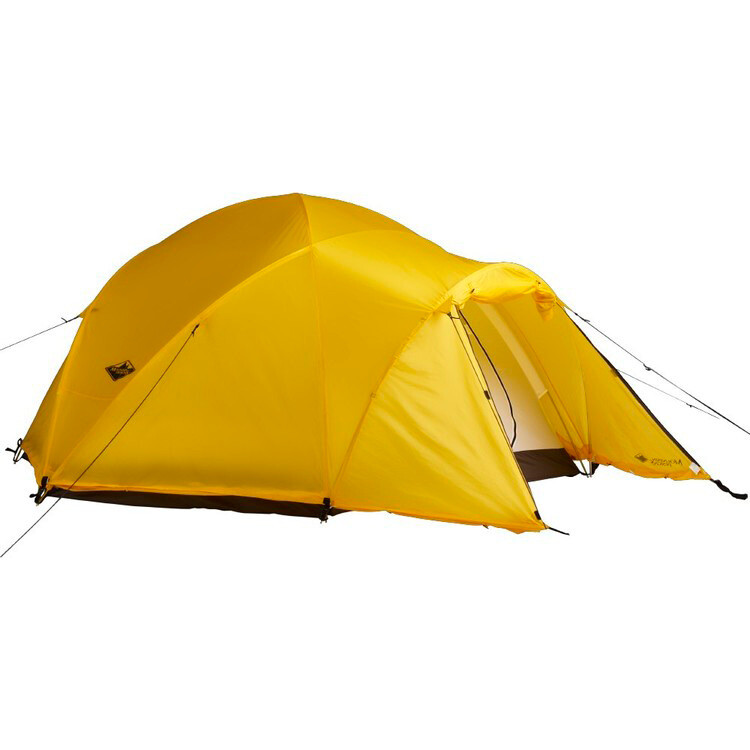
Mountain Designs Alpine Bunker
The Alpine Bunker three-person tent by Mountain Designs is a true expedition tent. Whether you are adventuring in Australia’s Alps in wintertime or the cold of Tassie’s south coast – this tent will keep the whole crew protected from the elements.
The Alpine Bunker has generous headroom at 124cm and comes with handy features like 12 internal pockets, a gear loft and a compression storage bag. The dual entry and vestibules give the tent better usability and more storage space.
The fly is made from 40D ripstop nylon and the floor is 75D polyester – giving the tent a 5000mm waterhead rating. For use in cold or windy conditions, it comes with additional pegs and a storm flap and snow skirt.
With such heavy-duty durability, you can’t expect this tent to be light – and it’s not. Weighing in at 4.56kg, it is the heaviest of the tents we have reviewed. But if you consider that it can sleep three people, you can share the total gear load with your fellow hikers.
Things we like
- Durability
- Four-season tent
- Floor space
Not so much
- Weight
- Price
- Complex set up
Specifications
- Weight: 4.56kg
- Capacity: 3
- Floor space: 230 x 275cm
- Packed size: 52 x 21 x 21cm
- Seasons: 4
- Weight: 4.56kg
- Capacity: 3
- Floor space: 230 x 275cm
- Packed size: 52 x 21 x 21cm
- Seasons: 4
How we review products
4X4 Australia has been reviewing four-wheel drive vehicles, aftermarket products and camping gear for more than 40 years. When looking for the best lightweight hiking tents in Australia, there are some things that are essential to ensure you get a good night’s sleep out on the trails.
When we compared each of the tents in the list with hundreds out there, we looked at the size, weight, durability and price. We also searched for additional features that make these hiking tents stand out from the rest.
We looked at hundreds of user reviews and drew on our own experience using hiking tents to make sure our recommendations are for the best on the market.
Disclosure: When you buy through our links, we may earn a commission. We also include products that we do not earn a commission from.
Buyer’s guide to lightweight hiking tents
How to choose the best lightweight hiking tent
There are many factors to consider when buying a lightweight hiking tent. Size, weight and durability are perhaps the most important things to look for. However, the features and usability will play a large part in how much you enjoy your camping. To help you out, we’ve broken down the key things to look for when purchasing a lightweight hiking tent.
Size
We have reviewed 1, 2 and 3-person hiking tents. However, the actual size of lightweight hiking tents can vary a lot. It’s important to consider not only how many people will be sleeping in the tent, but also how comfortable or spacious you want the tent to be. Keep in mind, hiking tents are designed to be lightweight and pack down small – therefore they are not spacious tents! There’s generally only room to sleep inside, and perhaps store some of your gear. If you are tall, or if you want to keep all your gear inside the tent with you, make sure you check the floor dimensions carefully.
Weight
Weight is important in a hiking tent. If you are just walking a short distance, you might not be too worried about weight. But the more often you plan to hike with your tent and the longer the distances, you will appreciate being able to shave a few hundred grams off your pack weight. The majority of the tents we’ve reviewed range between 1 to 3kg, which is a great weight range for carrying in your backpack. The exception is the Mountain Designs Alpine Bunker tent, which is a four-season expedition tent and weighs 4.56kg.
Packed dimensions
The packed dimensions of these lightweight hiking tents are important as you will need to carry them, along with your other overnight gear, on any backpacking trips. Generally, the smaller the tent, the tighter it will pack down. However, look for tents that come with a compression sack or straps to allow you to pack them down as small as possible.
Seasons
Hiking tents are rated for the number of seasons you can use them in. A three-season tent will be suitable for most Australian conditions. However, if you are planning to camp in extreme cold or snow, a four-season tent will be designed for those conditions. Four-season tents use better quality materials and have more features such as draft proofing and snow skirts to keep you warm and dry.
Durability
The durability of your tent is important to not only protect you from the elements, but also ensure that the tent will last you for many camping adventures to come. Look for hiking tents with durable flooring, as this will protect against rocks, sticks and other rough surfaces when you’re camping out on the trails. Many tents come with, or have an option to buy, a footprint for extra ground protection.
Access
If you are buying a tent that sleeps more than one person, it’s a good idea to choose one that has multiple access points. In a tent that is already limited in space, the last thing you want is to be climbing over each other to get in and out. Dual access doors are a great way to avoid this. Plus, they make it easier to access the tent for setting up mattresses and sleeping bags.
Ventilation
Good ventilation in a hiking tent will allow you to use it in all conditions. The interiors of hiking tents can heat up during the day making it uncomfortable to sleep. However, with mesh walls and doors and a removable fly the problem is easily countered. The use of good quality mesh is important to allow for ventilation but still keep the bugs out. If the mesh extends up over the roof, you can also remove the fly and gaze up at the stars on warmer nights.
Vestibules
Most hiking tents will come with a vestibule, which is essentially outdoor storage space under the fly. This is a great way to keep your gear safe from the elements, without having to bring it into the tent with you. For 2 or 3-person tents, dual vestibules will allow even more storage space – and prevent your gear from blocking the entrance to your tent.
Ease of set up
The last thing you want after a long day of hiking is to struggle with setting up a tent for the night. Most tents will have poles that come apart or fold down small and this means a bit of coordination to get the tent upright. The ease of set up really depends on the tent’s design – and a smaller tent doesn’t necessarily equal a simpler set up. Check the set-up instructions before buying a hiking tent and you’ll have less of a surprise when you go to erect it for the first time.
Internal storage and hooks
Because of the small interior of hiking tents, you don’t want them to be too full of features. But there are a few features that make using a hiking tent much easier. Internal storage pockets or storage loft, will allow you to keep your gear off the ground and in a safe, easily-reachable location. If you plan to keep a lantern inside your tent, a simple hook on the roof can make a big difference to having good lighting, and not having to search around in the dark to find it.
Price
While it is possible to pay very little for a lightweight hiking tent, by doing so you’ll sacrifice quality. Plus, there’s a great chance you’ll have to replace it a lot sooner, so you haven’t really saved money at all. If you plan on getting a lot of use out of your hiking tent, we recommend making the investment in one that is durable and has all the features you need for current and future camping trips.
If you venture off road, a recovery kit’s pretty much essential. Sooner or later, you or a mate are going to get bogged or caught in a spot you can’t get out of. With the right recovery gear, you’ll be able to get out of most sticky situations.
The thing is, your recovery kit needs a handful of essential items. Otherwise, it’s going to be virtually useless. What are they? The list’s surprisingly short:
- Snatch strap
- Tree-trunk protector
- Winch extension strap
- Rated shackles
- Cable/strap dampener
- Snatch block (if you have a winch).
Based on our list of essentials, we’ve come up with a selection of the best recovery kits. We only looked at kits suited to vehicles with a GVM of up 3500kg. Most dual-cab utes and wagons fall in that range.
What if you’re cruising around in something much bigger like an American pickup or a small 4WD truck? Then you’re generally going to need recovery gear bigger than we’ve listed here. Check out our buyers’ guide to help you choose the right gear.
Terrain Tamer Bush Recovery Kit (Lite)
The Tuff Terrain Bush Recovery Kit Lite provides essential 4×4 recovery gear in a single, heavy-duty bag, keeping all components organised and easy to access.
The kit includes an 8T snatch strap, a 5T extension strap, and a 12T tree trunk strap to handle common sand bogs, clay ruts, and difficult bush tracks. It also comes with a soft shackle recovery hitch, three 15T braided soft shackles, two 15T sheathed soft shackles, a winch ring, a winch dampener bag, and recovery gloves, giving you a complete setup for typical touring and off-road recovery situations.
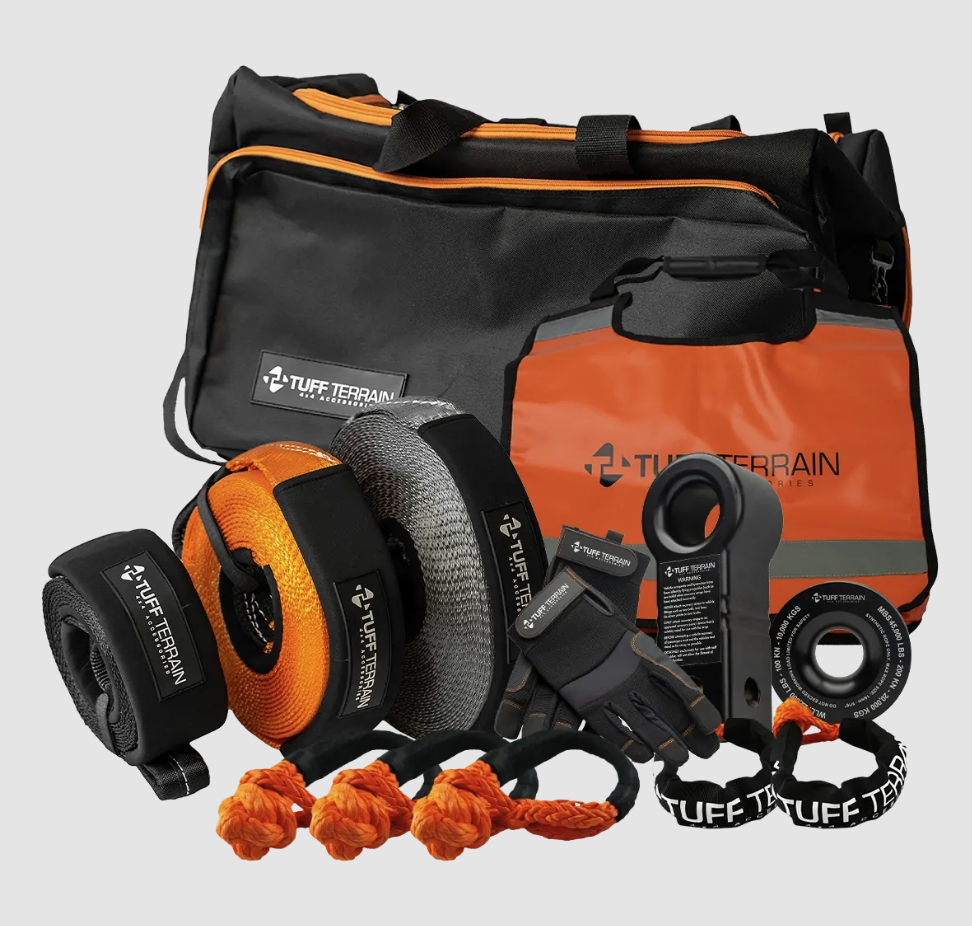
Soft shackles replace traditional steel shackles, reducing weight and making handling safer and easier. The winch ring can be used with soft shackles for smooth double-line pulls, while the winch dampener bag provides added safety by controlling tension if a line snaps. Designed for touring setups, this kit ensures you have all the core recovery tools at hand when the tracks get tough.
| Snatch Strap/Kinetic Rope | 8T, 9m snatch strap |
|---|---|
| Tree Protector | 12T, 3m trunk strap |
| Winch Extension | 5T, 20m extension strap |
| Shackles | 3 x 15T braided soft shackles, 2 x 15T sheathed soft shackles |
| Dampener | Yes |
| Snatch Block/Ring | 1 x winch ring |
| Storage Bag | Yes, heavy-duty recovery gear bag |
| Warranty | Not specified |
Pros
- Complete recovery kit in one organised bag
- Soft shackles reduce weight and are easier to handle
- Includes essential accessories for common off-road situations
Cons
- N/A
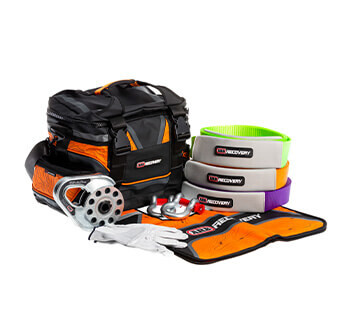
ARB RK9A Premium Recovery Kit
- Snatch strap/kinetic rope: 8T, strap
- Tree protector: 12T, strap
- Winch extension: 4.5T, strap
- Shackles: 4.75T, bow shackles
- Dampener: Yes
- Snatch block/ring: 9T, block
- Storage bag: Yes
- Extras: Gloves
- Warranty: 3 years
Specifications
- Snatch strap/kinetic rope: 8T, strap
- Tree protector: 12T, strap
- Winch extension: 4.5T, strap
- Shackles: 4.75T, bow shackles
- Dampener: Yes
- Snatch block/ring: 9T, block
- Storage bag: Yes
- Extras: Gloves
- Warranty: 3 years
Things we like
- Supplied with snatch block
- Long warranty
Not so much
- Low load rating on winch extension strap
ARB’s RK9A Premium Recovery Kit contains:
- 9T snatch block
- 8T snatch strap, 60mm x 9m
- 12T tree-trunk protector, 80mm x 3m
- 4.5T winch extension strap, 55mm x 20m
- 4.75T rated bow shackles, 2 pack
- Winch dampener
- Gloves
- Storage bag.
All straps come with reinforced eyes, plus eye and seam protector sleeves for long life and extra protection from damage. ARBu2019s Premium Kit is designed for 4WDers who have a winch on their vehicle.
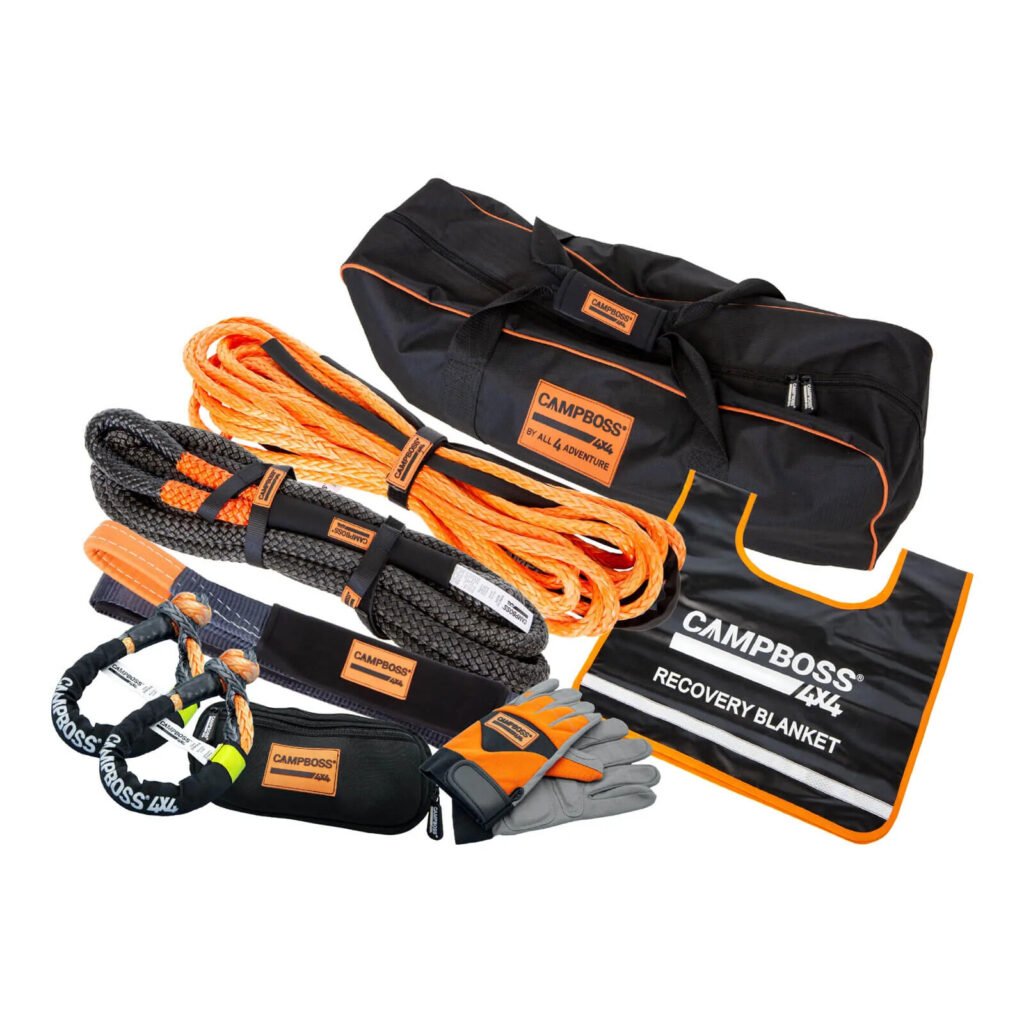
CampBoss Premium Adventure Recovery System
- Snatch strap/kinetic rope: 14T, kinetic rope
- Tree protector: 10T, strap
- Winch extension: 10T, static rope
- Shackles: 14T, soft shackles
- Dampener: Yes
- Snatch block/ring: No
- Storage bag: Yes
- Extras: Gloves
- Warranty: Not specified
Specifications
- Snatch strap/kinetic rope: 14T, kinetic rope
- Tree protector: 10T, strap
- Winch extension: 10T, static rope
- Shackles: 14T, soft shackles
- Dampener: Yes
- Snatch block/ring: No
- Storage bag: Yes
- Extras: Gloves
- Warranty: Not specified
Things we like
- Lightweight
- Winch extension rope suitable for use as a tow rope
Not so much
- Snatch block/ring not included
- Warranty not specified
The CampBoss Premium Adventure Recovery System uses kinetic rope and soft shackles in place of the more traditional straps and metal shackles. As a result, its kit is lightweight and provides a level of safety not possible when using the usual metal components.
The kit includes:
- 14T kinetic recovery (snatch) rope, 22mm x 9m
- 10T tree-trunk protector, 3m
- 10T winch extension rope, 11mm x 15m
- 14T rated soft shackles, 2 pack
- Winch dampener
- Gloves
- Storage bag.
This kit does not include a snatch block. CampBoss use what it calls recovery rings (snatch or winch rings), which are lightweight aluminium rings used instead of snatch blocks.
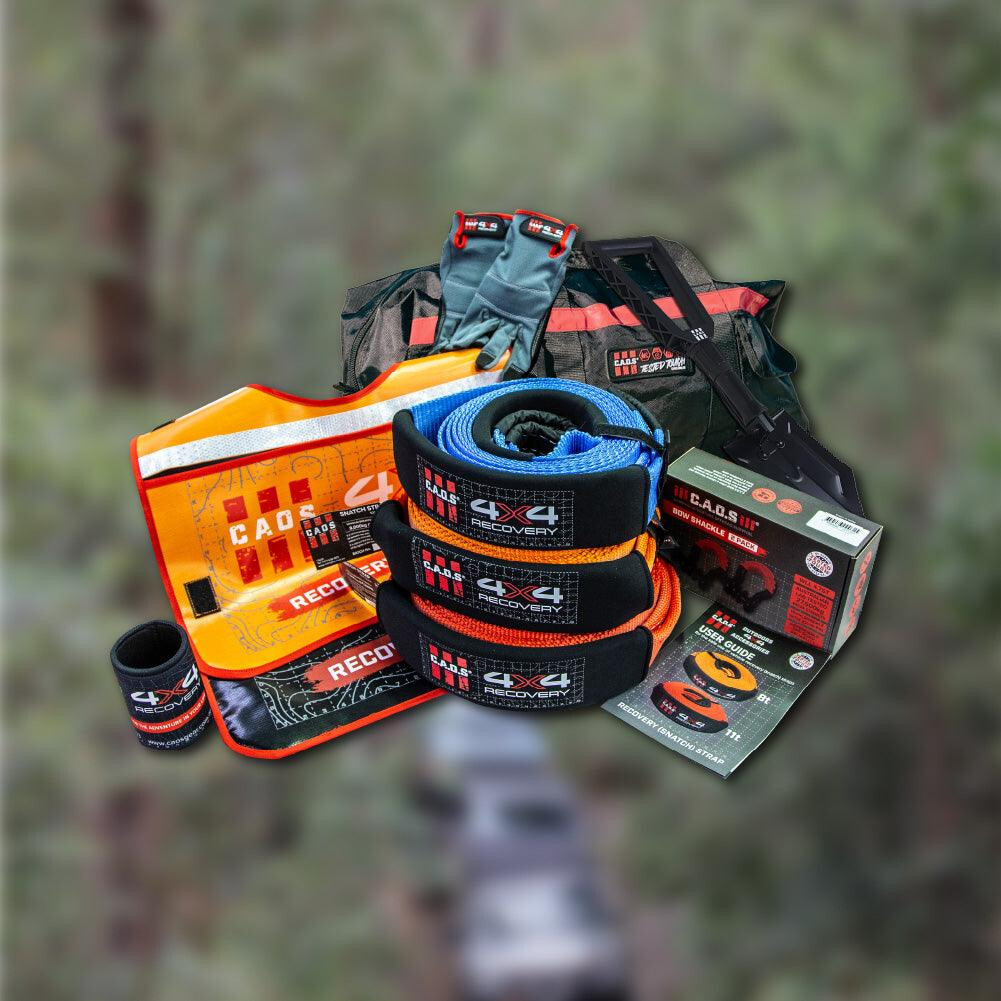
CAOS Recovery Kit – Large
- Snatch strap/kinetic rope: 8T and 11T, straps
- Tree protector: 10T, strap
- Winch extension: 10T, strap
- Shackles: 4.75T, bow shackles
- Dampener: Yes
- Snatch block/ring: No
- Storage bag: Yes
- Extras: Gloves, folding shovel
- Warranty: Lifetime
Specifications
- Snatch strap/kinetic rope: 8T and 11T, straps
- Tree protector: 10T, strap
- Winch extension: 10T, strap
- Shackles: 4.75T, bow shackles
- Dampener: Yes
- Snatch block/ring: No
- Storage bag: Yes
- Extras: Gloves, folding shovel
- Warranty: Lifetime
Things we like
- Heavy-duty extension strap has multiple uses
- Lifetime warranty
- Folding shovel provided
Not so much
- Snatch block/ring not included
The CAOS Recovery Kit – Large is supplied in a canvas storage bag.
The kit contains:
- 8T snatch strap, 75mm x 9m
- 11T snatch strap, 75mm x 9m
- 10T tree saver, winch extension, equaliser and tow strap, 75mm x 5m
- 4.75T rated bow shackles, 2 pack
- Recovery dampener
- Gloves
- Folding shovel w/ storage pouch.
All CAOS straps are NATA tested and certified and comply with Australian standards. Loop straps are triple reinforced to ensure maximum strength. The tree-trunk protector is a multipurpose strap u2026 you can also use it as a winch extension strap, equaliser or tow strap.
If you need a snatch block for a winch cable, CAOS supplies these separately.
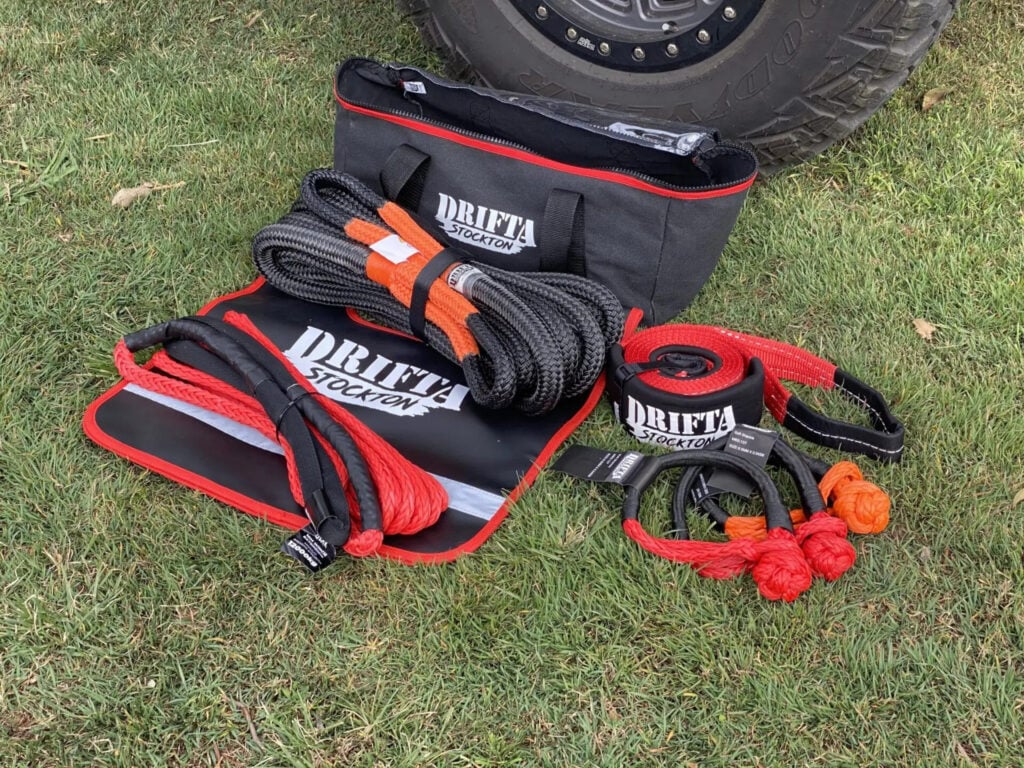
Drifta Stockton Light-Duty Recovery Kit
- Snatch strap/kinetic rope: 11T, kinetic rope
- Tree protector: 12T, strap
- Winch extension: 12T, static rope
- Shackles: 2 x 13T, 1 x 16T soft shackles
- Dampener: Yes
- Snatch ring/block: 11T, ring
- Storage Bag: Yes
- Warranty: 1 Year
Specifications
- Snatch strap/kinetic rope: 11T, kinetic rope
- Tree protector: 12T, strap
- Winch extension: 12T, static rope
- Shackles: 2 x 13T, 1 x 16T soft shackles
- Dampener: Yes
- Snatch ring/block: 11T, ring
- Storage Bag: Yes
- Warranty: 1 Year
Things we like
- Supplied with snatch ring
- Lightweight
- High load rating on extension rope
Drifta’s Stockton Light-Duty Recovery Kit uses synthetic rope and soft shackles, rather than the flat straps and bow shackles.
The kit includes:
- 11T snatch ring
- 11T snatch rope, 22mm x 9m
- 12T tree-trunk protector, 75mm x 3m
- 12T winch extension rope, 11mm x 10m
- 13T rated soft shackles, 2 pack
- 16T rated soft shackle
- Winch dampener
- Storage Bag.
Driftau2019s Stockton Light-Duty Recovery Kit is designed for vehicles up to 3500kg. They have another heavy-duty kit suited for vehicles over 3500kg. At around $100 more, the heavy-duty kit is worth considering.
The snatch ring is a free extra, only available for a limited time.
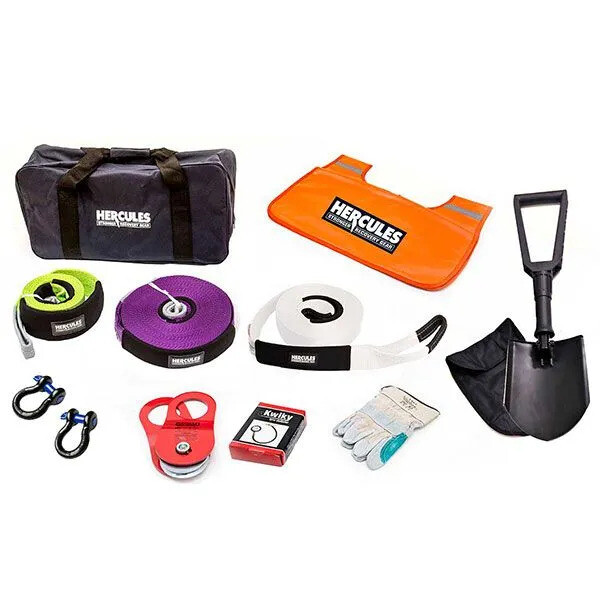
Hercules Complete Recovery Kit
- Snatch strap/kinetic rope: 8T, strap
- Tree protector: 10T, strap
- Winch extension: 5T, strap
- Shackles: 4.7T, bow shackles
- Dampener: Yes
- Snatch block/ring: 8T, block
- Storage bag: Yes
- Extras: Gloves, folding shovel, tyre deflator
- Warranty: 1 year
Specifications
- Snatch strap/kinetic rope: 8T, strap
- Tree protector: 10T, strap
- Winch extension: 5T, strap
- Shackles: 4.7T, bow shackles
- Dampener: Yes
- Snatch block/ring: 8T, block
- Storage bag: Yes
- Extras: Gloves, folding shovel, tyre deflator
- Warranty: 1 year
Things we like
- Supplied with snatch block
- Supplied with folding shovel
- Supplied with tyre deflator
Not so much
- Low load rating on winch extension strap
The Hercules Complete Recovery Kit from the 4WD Supacentre is great value for money.
It contains:
- 8T snatch block
- 8T snatch strap, 60mm x 9m
- 10T tree-trunk protector, 75mm x 3m
- 5T extension strap, 50mm x 10m
- 4.7T rated bow shackles, 2 pack
- Winch dampener
- Folding shovel
- Kwiky tyre deflator
- Gloves
- Storage bag.
This kit comes with some handy extras, like a folding shovel and a tyre deflator. The Hercules Complete Recovery Kit is a good all-round budget-priced option.
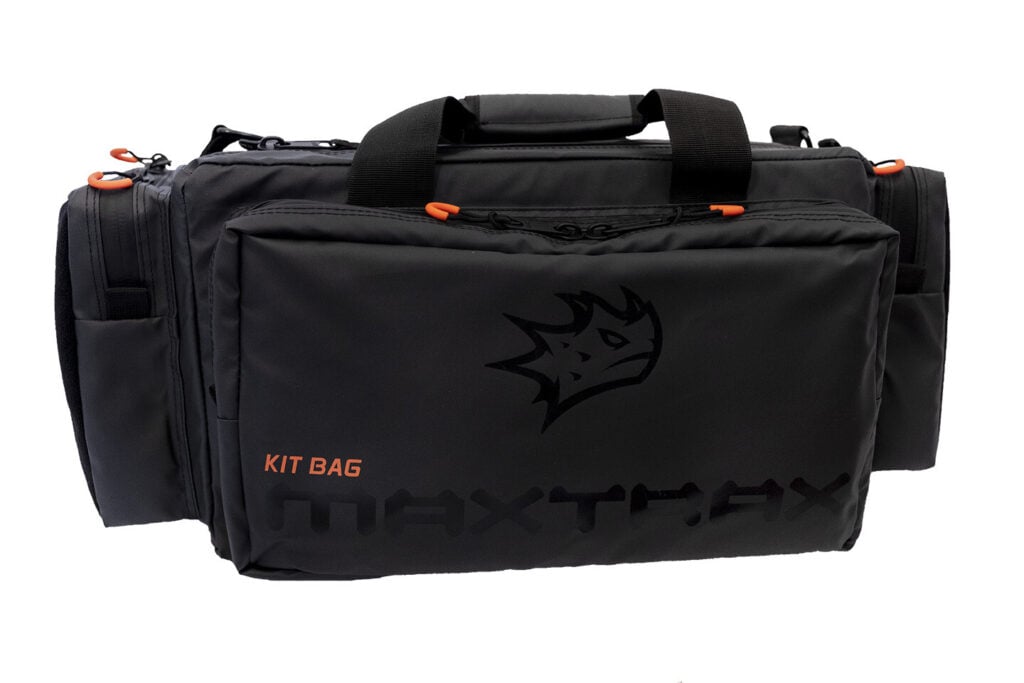
MAXTRAX Bush Recovery Kit
- Snatch strap/kinetic rope: 3 at 12T 2m, 3m & 5m, kinetic rope
- Tree protector: 28.9T, static rope
- Winch extension: N/A
- Shackles: 5 x 7T, 1 x 14T soft shackles
- Dampener: Yes
- Snatch block/ring: No
- Storage bag: Yes
- Extras: No
- Warranty: 1 year
Specifications
- Snatch strap/kinetic rope: 3 at 12T 2m, 3m & 5m, kinetic rope
- Tree protector: 28.9T, static rope
- Winch extension: N/A
- Shackles: 5 x 7T, 1 x 14T soft shackles
- Dampener: Yes
- Snatch block/ring: No
- Storage bag: Yes
- Extras: No
- Warranty: 1 year
Things we like
- Heavy-duty tree protector has multiple uses
- Innovative design
- Supplied with 5 soft shackles
Not so much
- Snatch block (recovery ring) not included
- Pricey
MAXTRAX has taken an innovative approach to vehicle recovery. Instead of one fixed-length kinetic (snatch) rope, it provides three shorter kinetic ropes. This innovative feature means you have plenty of flexibility on tight bush tracks, where space is often at a premium.
The kit includes:
- 12T kinetic recovery (snatch) rope, 24mm x 2m
- 12T kinetic recovery (snatch) rope, 24mm x 3m
- 12T kinetic recovery (snatch) rope, 24mm x 5m
- 28.9T tree-trunk protector/extension rope/load-spreading bridle, 3m
- 5 x 7T rated fuse (soft) shackles
- 1 x 14T rated core (soft) shackle
- Winch dampener
- Storage bag.
You join the kinetic ropes by using what MAXTRAX calls fuse shackles. Theyu2019re designed to be the weakest point (or fuse) in the system. Then use the supplied core shackle to connect to a vehicle, tree protector, winch extension, and so on.
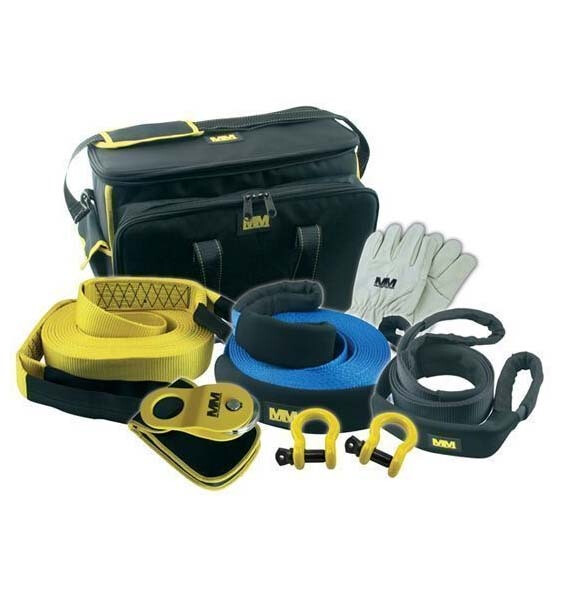
Mean Mother Recovery Kit
- Snatch strap/kinetic rope: 11T, strap
- Tree protector: 12T, strap
- Winch extension: 8T, strap
- Shackles: 5T, bow shackles
- Dampener: No
- Snatch block/ring: 8T, block
- Storage bag: Yes
- Extras: Gloves
- Warranty: 1 year
Specifications
- Snatch strap/kinetic rope: 11T, strap
- Tree protector: 12T, strap
- Winch extension: 8T, strap
- Shackles: 5T, bow shackles
- Dampener: No
- Snatch block/ring: 8T, block
- Storage bag: Yes
- Extras: Gloves
- Warranty: 1 year
Things we like
- Supplied with snatch block
- High load rating on extension strap
Not so much
- Winch dampener not included
The Mean Mother 11T Recovery Kit is a mid-range product, with all the gear you need to get you out of sticky situations.
The kit includes:
- 8T snatch block
- 11T snatch strap, 75mm x 9m
- 12T tree-trunk protector, 75mm x 3m
- 8T winch extension strap, 50mm x 10m
- 5T rated bow shackles, 2 pack
- Gloves
- Storage bag.
Surprisingly, the kit doesnu2019t include a winch dampener. However, you can purchase this separately.
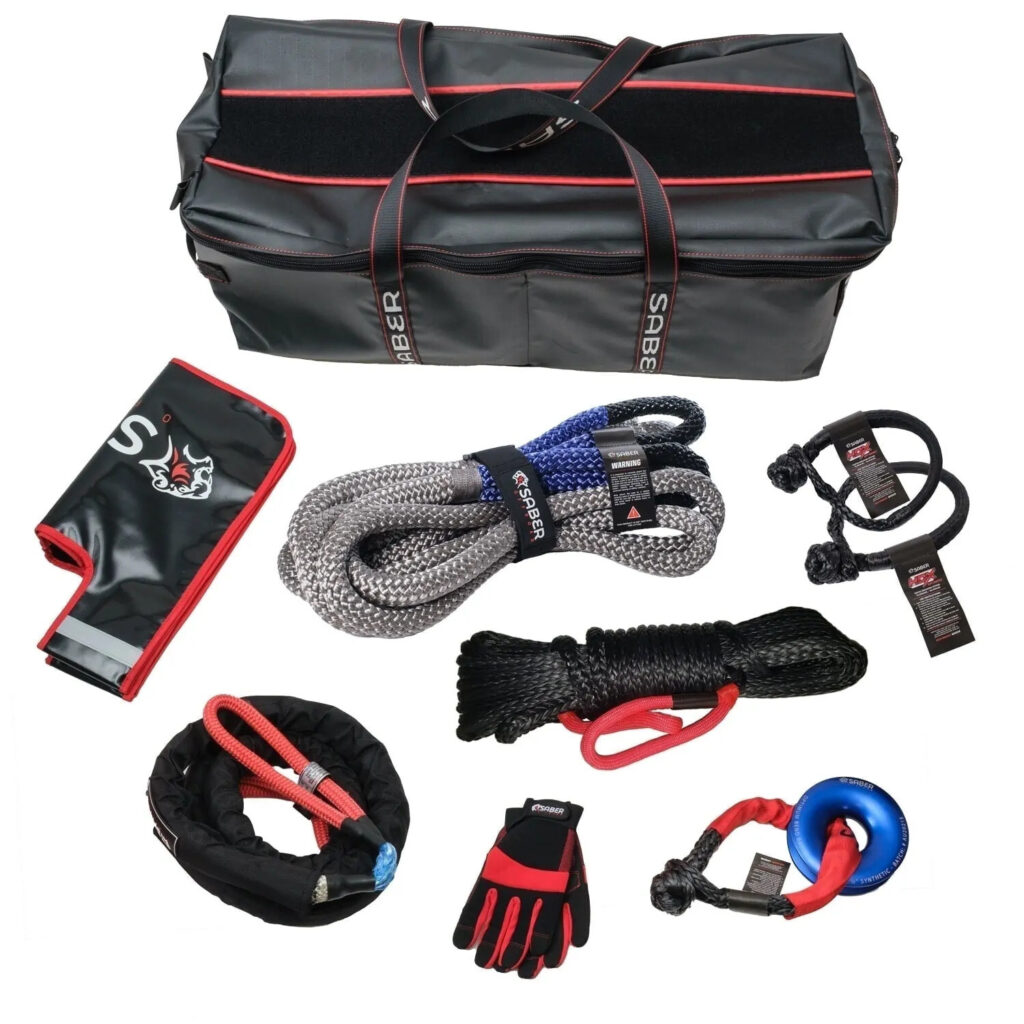
Saber 8K Ultimate Recovery Kit
- Snatch strap/kinetic rope: 8.2T, kinetic rope
- Tree protector: 15T, static rope
- Winch extension: 9.5T, static rope
- Shackles: 2 x 10T, 1 x 18T soft shackles
- Dampener: Yes
- Snatch block/ring: 12T, ring
- Storage bag: Yes
- Warranty: 1 year
Specifications
- Snatch strap/kinetic rope: 8.2T, kinetic rope
- Tree protector: 15T, static rope
- Winch extension: 9.5T, static rope
- Shackles: 2 x 10T, 1 x 18T soft shackles
- Dampener: Yes
- Snatch block/ring: 12T, ring
- Storage bag: Yes
- Warranty: 1 year
Things we like
- Supplied with snatch ring
- High load rating on extension rope
Not so much
- Pricey
Saber’s 8K Ultimate Recovery Kit uses synthetic rope and soft shackles.
The kit includes:
- 12T snatch ring
- 8.2T snatch rope, 9m
- 9.5T winch extension rope, 20m
- 15T utility rope, 3m
- 10T rated soft shackles, 2 pack
- 18T rated soft shackle
- Winch dampener
- Gloves
- Storage bag.
The 3m long utility rope is a versatile piece of gear, which can be used as a tree-trunk protector, winch extension or equaliser rope.
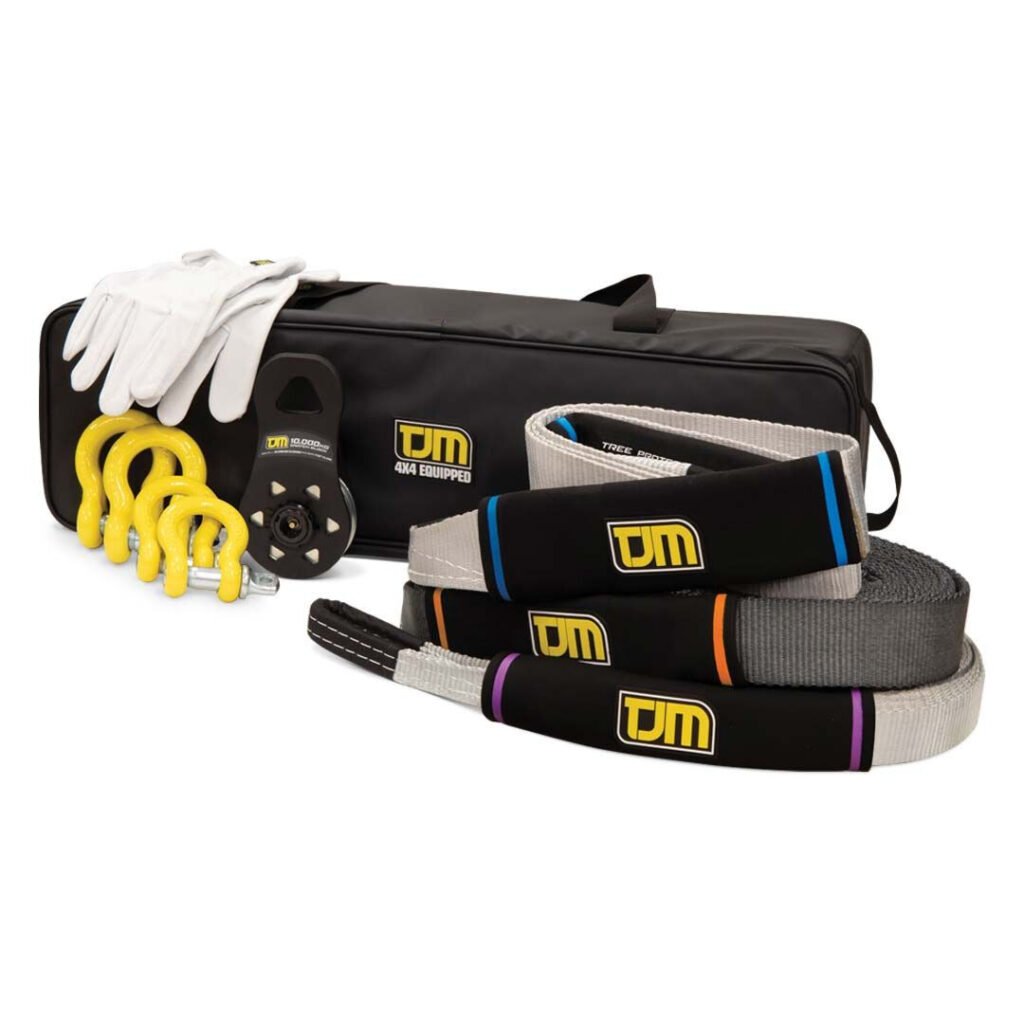
TJM Heavy Duty Recovery Kit – Large
- Snatch strap/kinetic rope: 11T, strap
- Tree protector: 10T, strap
- Winch extension: 6T, strap
- Shackles: 3.25T & 4.75T bow shackles
- Dampener: Yes
- Snatch block/ring: 10T, block
- Storage bag: Yes
- Extras: Gloves
- Warranty: 3 years
Specifications
- Snatch strap/kinetic rope: 11T, strap
- Tree protector: 10T, strap
- Winch extension: 6T, strap
- Shackles: 3.25T & 4.75T bow shackles
- Dampener: Yes
- Snatch block/ring: 10T, block
- Storage bag: Yes
- Extras: Gloves
- Warranty: 3 years
Things we like
- Supplied with snatch block
- Good load rating on extension rope
- Long warranty
The TJM Heavy Duty Recovery Kit contains:
- 10T snatch block
- 11T snatch Strap, 75mm x 9m
- 10T tree protector, 75mm x 5m
- 6T winch extension, 60mm x 20m
- 2 x 3.25T, 2 x 4.75T rated bow shackles
- Recovery dampener
- Gloves
- Storage bag.
The kit also has handy guidelines for safe use of snatch straps, plus snatch block and recovery dampener instructions.
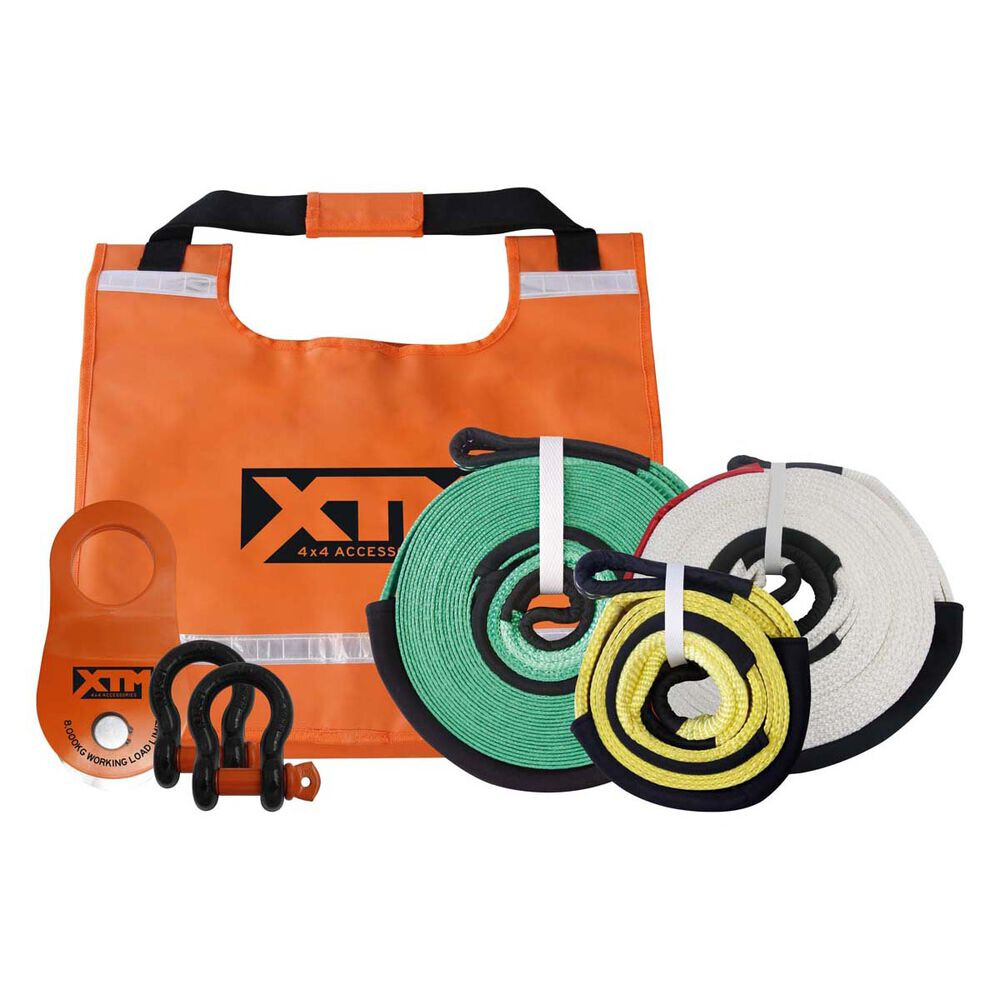
XTM 7 Piece Recovery Kit
- Snatch strap/kinetic rope: 8T, strap
- Tree protector: 10T, strap
- Winch extension: 4.5T, strap
- Shackles: 4.7T, bow shackles
- Dampener: Yes
- Snatch block/ring: 8T, block
- Storage bag: Yes
- Warranty: Not specified
Specifications
- Snatch strap/kinetic rope: 8T, strap
- Tree protector: 10T, strap
- Winch extension: 4.5T, strap
- Shackles: 4.7T, bow shackles
- Dampener: Yes
- Snatch block/ring: 8T, block
- Storage bag: Yes
- Warranty: Not specified
Things we like
- Supplied with snatch block
- Great value for money
Not so much
- Low load rating on winch extension strap
- Warranty not specified
XTM’s 7 Piece Recovery Kit is an entry-level, budget-priced kit. It’s good value for money and has all the bits you need for a recovery.
The kit includes:
- 8T snatch block
- 8T snatch strap, 9m
- 10T tree-trunk protector, 3m
- 4.5T winch extension rope, 10m
- 4.7T rated bow shackles, 2 pack
- Winch dampener/carry bag.
The carry bag doubles as a winch dampener.
How we review products
4X4 Australia has been reviewing four-wheel drive vehicles and aftermarket products for more than 40 years.
When looking for the best recovery kits in Australia, there are some things essential to making sure you have the best off-roading experience.
When we compared each of the products in the list with others out there, we looked at:
- What’s included in the kit
- Warranty
- Build quality
- Value for money
- Load ratings,
to determine what’s the best product across each price point.
We also looked at user reviews and our own experience with these products to make sure our recommendations are for the best on the market.
Disclosure: When you buy through our links, we may earn a commission. We also include products we don’t earn a commission from.
Buyers’ guide for recovery kits
Every recovery kit needs a handful of go-to essentials. They’ll get you out of trouble in the bush or on the beach.
Carry these and you’ll be able to recover your fourbie from most situations:
- Snatch strap
- Tree-trunk protector
- Winch extension strap
- Rated shackles
- Cable dampener
- Snatch block (if you have a winch).
So, what exactly are these bits of gear and what do you use them for?
Making sense of it all
Ideally, you want each piece of equipment to do multiple jobs. But as you’ll see, some are specialists, while others can wear more than one hat.
Snatch strap
A snatch strap’s like a giant elastic band. It stretches, then snaps back.
Why’s a snatch strap better than your ol’ faithful tow rope? Well, as the snatch strap stretches it stores energy. Once the energy is high enough to move the vehicle being recovered, the snatch strap contracts and pulls the towed vehicle forward.
The best part is, the shock forces are nothing like you get with a tow rope. So there’s less chance of ripping half the front-end off your mate’s pride and joy.
However, the forces involved in a snatch recovery are pretty scary. There’s always a chance of something failing … whether it’s tow points, shackles or something else. Before you attempt a snatch recovery, check out this guide on snatch recoveries to learn what to look for and how to make the immediate area safe.
You’ll notice we talk about snatch straps and kinetic ropes in our reviews. Snatch straps are flat straps, while kinetic ropes are round synthetic ropes. The biggest advantage of kinetic ropes is they’re lightweight when compared to snatch straps.
Snatch straps are definitely specialists. They should only be used for snatch recoveries. Although you can use one as a tow rope over short distances … but only if you have no other option.
However, never use them as tree-trunk protectors or winch extensions. Snatch straps are designed to stretch. That’s the last thing you want a winch extension or tree protector to do.
One final thing – snatch straps have a limited lifespan. After a while, they’ll stretch and lose their elasticity.
Tree-trunk protector
A tree-trunk protector has two main jobs. The first is to prevent the tree you’re winching from being ringbarked. The second is to protect the winch cable. You don’t want to wrap a winch rope around a tree and fill the weave with splinters.
Tree-trunk protectors are around 3m long and are usually wide, flat straps. However, some manufacturers do use static (non-stretchy) synthetic rope with a protective sheath along the length of the rope.
You can also use tree-trunk protectors as winch extension straps, as a load-spreading bridle between two recovery points, or even as a tow rope at a pinch.
Winch extension
Winch extensions are designed to provide extra winch-cable length by attaching to the end of the cable. You can buy flat straps or round static (non-stretchy) synthetic ropes. They can be anywhere from 3m to 20m long.
Sometimes winch extensions are rated the same as tree-trunk protectors, but not always. And this is where it gets confusing …
Often, winch extensions are rated to match the typical rating of the winches used on vehicles. In the kits we looked at earlier, that’s generally 4 to 5.5T (9000 to 12,000lb). That’s why you’ll often see winch extensions rated as low as 4.5T, whereas the rest of the recovery gear is rated much higher.
If you buy one of these lower-rated winch extensions, be wary when using it to tow or as a load-spreading bridle. It likely won’t be up to the job.
Rated shackles
Bow shackles are by law rated for lifting. Lifting regulations require a much larger margin of safety than recovery situations. So bow shackles have ultra-conservative load ratings, otherwise known as Working Load Limit or WLL.
You’ll notice they’re all rated around 4.5 to 5T. That’s the WLL … breaking load is six times higher.
On the other hand, soft shackles are rated much higher. But their rating is for breaking strength, not load limit. The result? You’re not comparing apples with apples.
To cut a long story short, bow shackles rated at 4.5 to 5T are fine for your average ute or wagon. And if the soft shackles are rated the same or higher than the kinetic (snatch) rope, you’ll be sweet.
Soft shackles are a fantastic innovation. They eliminate the potential for a heavy steel bow shackle becoming a potentially deadly missile if a recovery point lets go. They really are a massive step forward in recovery safety.
Cable dampener
If a winch cable breaks when under full load, the results can be fatal. There are many stories of people being killed or severely injured when something fails during a recovery. By placing a cable dampener over the winch cable, you help control the cable should the worst happen.
Snatch block or ring
Snatch blocks have nothing to do with snatch straps or snatch recoveries. Never use a snatch block in this situation. Rather, they’re a pulley or ring.
If you run the winch cable out and attach it to a tree, that’s called a single-line pull. But if you run the cable back to the vehicle, you halve the load on the winch. This is called a double-line pull. To do this, you need a snatch block or snatch ring.
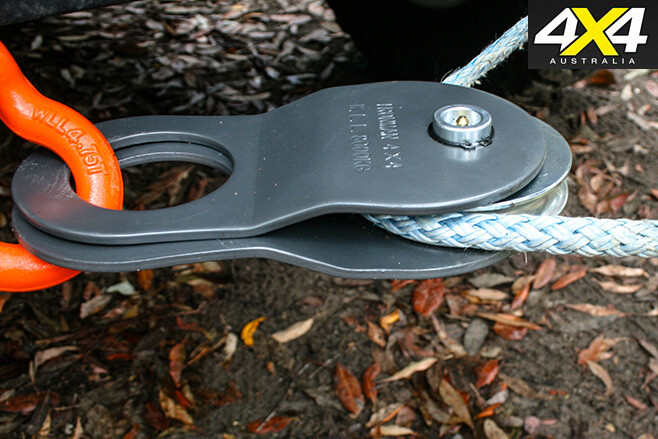
Run the winch cable through the snatch block, attach the snatch block to the tree-protector strap, then attach the end of the winch cable to a recovery point on the vehicle.
Snatch blocks let you do side pulls and even reverse pulls … if you can remember how to rig it all up!
Snatch rings or winch rings do exactly the same thing as snatch blocks, except they’re compatible with synthetic rope and soft shackles.
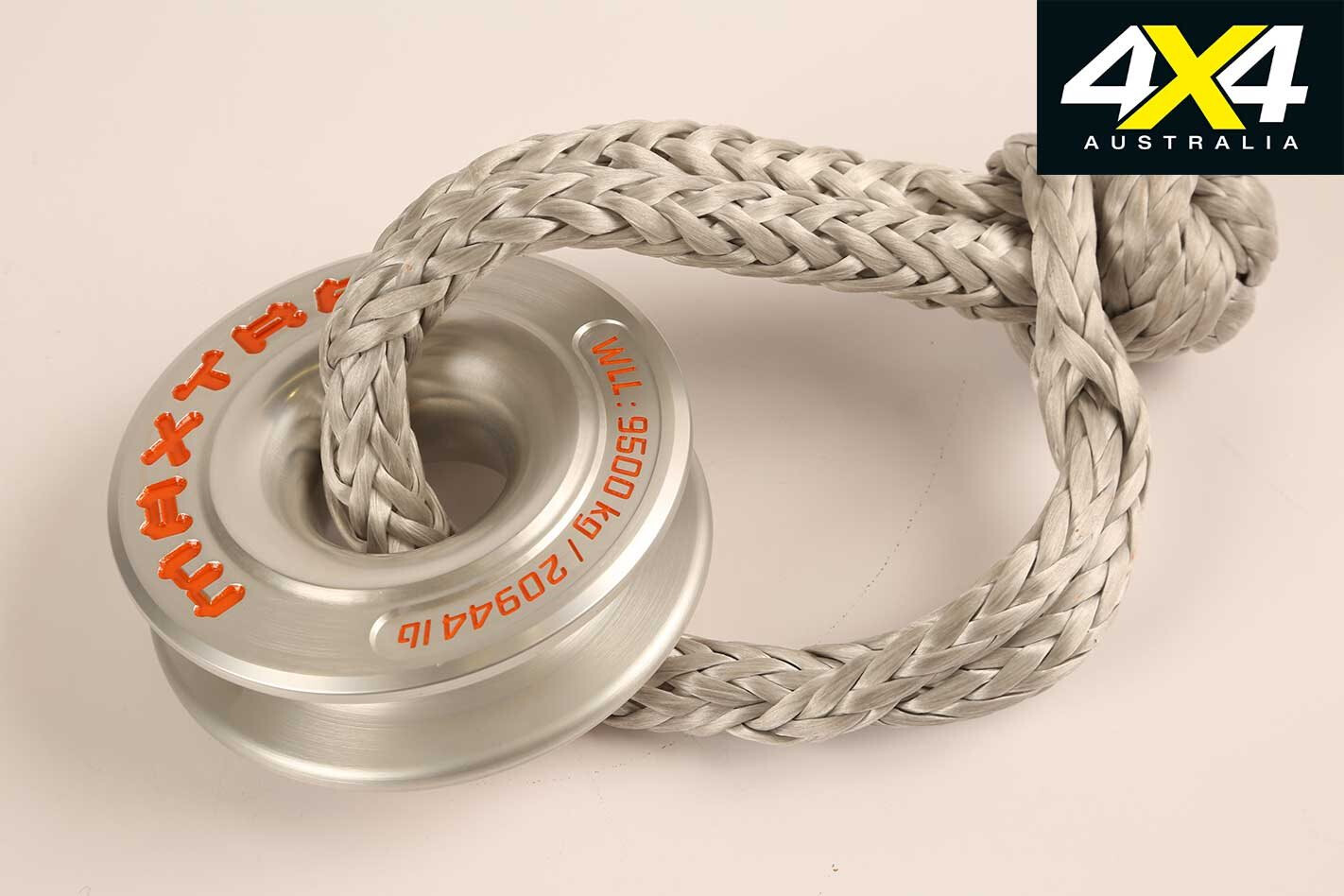
The best thing about winch rings is they’re super-lightweight and compact compared to snatch blocks. Plus, you eliminate the possibility of a heavy snatch block causing injury or worse if something lets go.
Like the soft shackles, snatch rings are a game-changer when it comes to recovery safety.
What size gear is best?
If you’ve had a look at our comparison table you might notice something … the load ratings for the same type of strap/rope are all over the shop.
Take snatch straps/kinetic ropes for example. They vary from 8T to 14T, and everywhere in between. That’s a huge difference.
Winch extension straps/ropes are even worse … 4.5T to 12T.
What’s going on?
It’s all to do with what figures the manufacturers quote. There’s a working load limit (WLL) and then there’s breaking strength (or load). WLL is usually around a third to half the breaking strength.
Some manufacturers quote WLL, others quote breaking strength. The problem is, the buyer often doesn’t know which figure they’re quoting.
Luckily, there’s a rule of thumb to go by:
Make sure the breaking strength is two to three times higher than the lightest vehicle in a recovery.
Why the lightest vehicle? Because:
- If it’s the tow vehicle, the wheels will lose traction long before you apply the breaking force to the rope or strap. There’s simply not enough weight to maintain traction.
- If it’s the vehicle being recovered, it’ll get sucked out of the bog or up the steep hill well before the rope or strap hits breaking force. Again, it’s all about weight.
To be on the safe side, use your vehicleu2019s rated GVM as a guide. A typical ute or wagon GVM is 3 to 3.5T.
To figure out what gear you need, multiply the GVM by two, then by three to get a range. So, a 3T GVM ute needs recovery gear rated between 6T and 9T. This means you’ll want every piece of gear in your recovery kit to be rated somewhere between the two.
If you tow a camper trailer or caravan, take it into account too. You’ll need higher-rated recovery gear to suit.
Bigger’s not always better with snatch straps. If you go too heavy, the snatch strap won’t stretch as much as it should. So it won’t be particularly effective. Stay within the range of two to three times the vehicle’s loaded weight.
However, the other gear can be as heavy as your wallet can afford. Just keep weight in mind – all those individual bits of gear quickly add up. That’s another reason why soft shackles, synthetic ropes and winch rings are a game changer … they’re a fraction of the weight of traditional recovery gear.
What to look for
When you’re shopping for recovery gear, make sure the manufacturer’s clear about the load ratings. They should tell you whether it’s the breaking strength or something they’re quoting. If not, steer away from them.
And make sure the load ratings are clearly marked on each piece of gear. All straps or ropes should be clearly labelled. This way, you don’t accidently grab the winch extension strap when you meant to get the snatch strap.
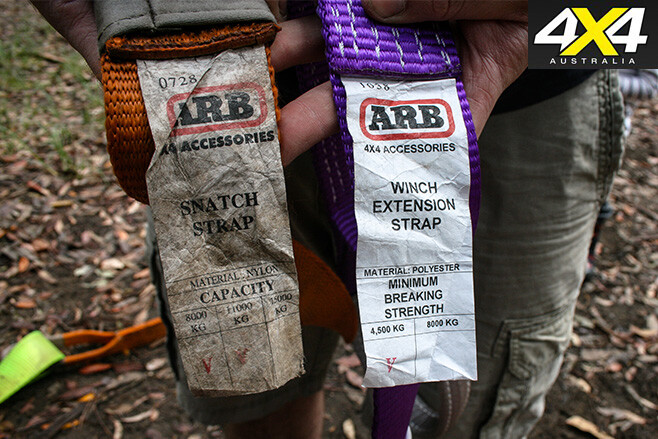
By law, steel bow shackles must have a load rating (WLL) stamped or moulded into the shackle. If not, then they’re not rated for load and are extremely dangerous in recovery situations.
Other things to look for:
- Do straps/ropes have protector sleeves to protect them from damage?
- Are the end loops of straps triple stitched?
- Do the end loops have protector sleeves over the strap?
- How large is the carry bag? Can you fit everything in easily?
- Can you add more weight (sand or soil) to the cable dampener to increase its effectiveness?
Price
Prices vary widely. The two entry-level recovery kits we looked at are well under $200. At the other end, a couple of premium brands are pushing towards $1000. Then in the middle, the rest sit in the $350 to $600 range.
You’d expect the entry-level kits to get you out of trouble a couple of times then be worn out. And this might be enough for you. If you want a ‘just in case’ kit, then they’re worth a look.
The kits priced in the mid-range tend to be the best overall value for money. They’ll last for years if you only use them every now and then.
But if you’re one of those people who goes looking for the steepest, wettest, roughest tracks then you should consider a premium brand kit. They’ll last forever if you look after them (with the notable exception of the snatch strap).
A vehicle’s GVM, or Gross Vehicle Mass, is the amount of weight you can carry combined with the total mass of the vehicle (known as kerb weight).
If you have a kerb weight of 2500kg and a payload of 650kg, the Gross Vehicle Mass is 3150kg. That means you can add or carry 650kg of accessories or passengers, before you’re over GVM.
While 650kg sounds reasonable, that can be eaten up quickly with bar-work, winches, drawers and long-range fuel tanks, hence why GVM upgrades are so popular with four-wheel drivers, as you are legally permitted to carry more weight with an increased GVM over the factory offering.
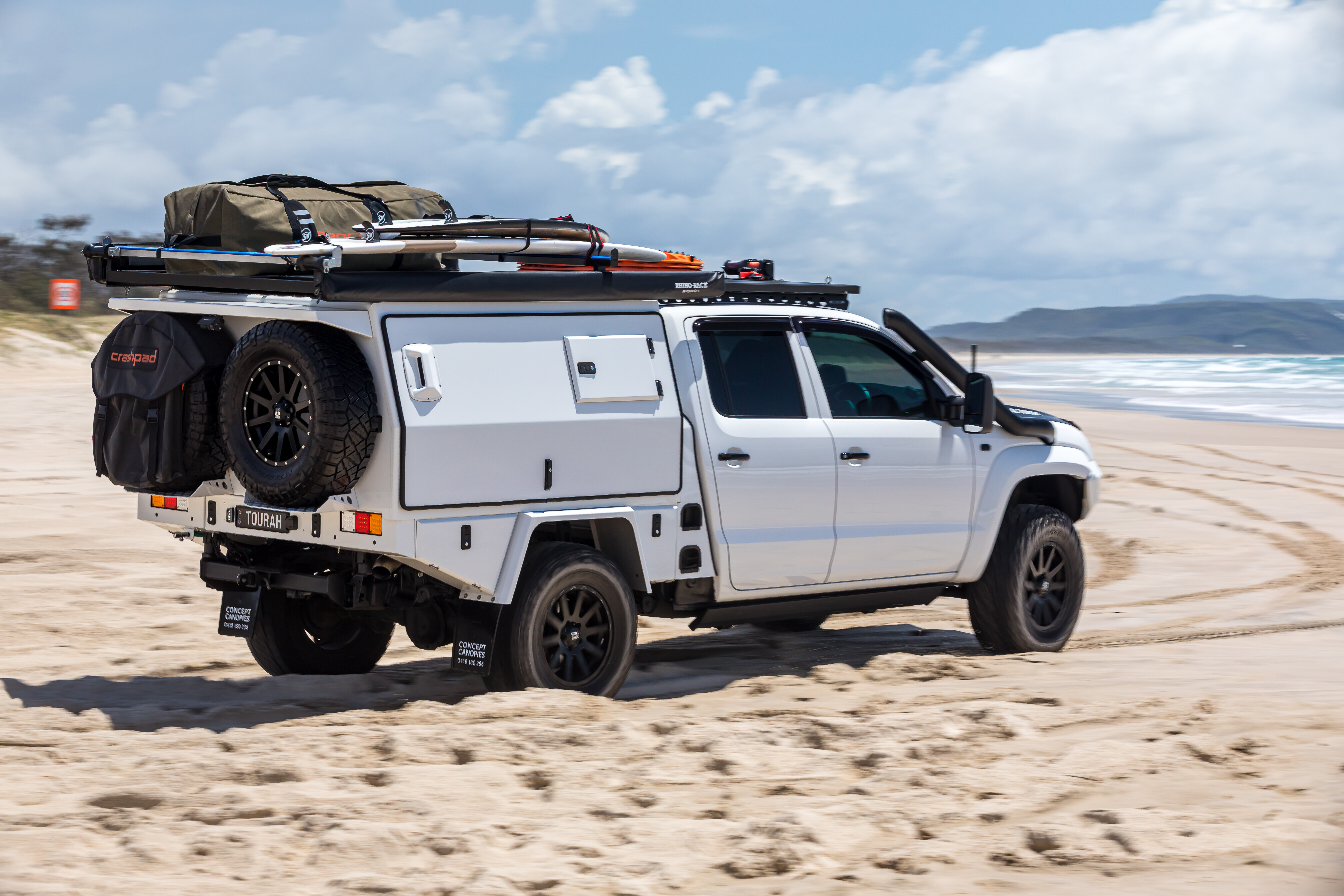
What is a GVM upgrade?
A GVM upgrade involves the professional fitment of an aftermarket suspension kit which has been designed, tested and approved in Australia to increase the factory GVM, allowing you to carry more weight legally.
Commonly, this means replacing the factory springs, shock absorbers and stock suspension components at a minimum; brake and tyre upgrades might also be required or even entire replacement axle upgrades.
This is different to fitting just an aftermarket suspension kit, even though most GVM upgrades will also increase the ride height of a vehicle from factory, as well as provide a higher payload capacity figure.
Why would you need a GVM upgrade?
If you are carrying payload figures close to the factory GVM constantly or regularly, you are the perfect candidate for a GVM upgrade. If you exceed the factory payload figure provided by your vehicle’s manufacturer, your 4WD is now considered to be in an unroadworthy condition.
Police have been targeting and weighing overloaded 4WDs and trailers, especially in recent times, so there is a very real risk you will be caught. If your vehicle exceeds the factory GVM figure, this will also void your insurance in the event of an accident. It’s not worth the risk at all; you’ll either need to put your vehicle on a serious diet, or spend the cash on a GVM upgrade.
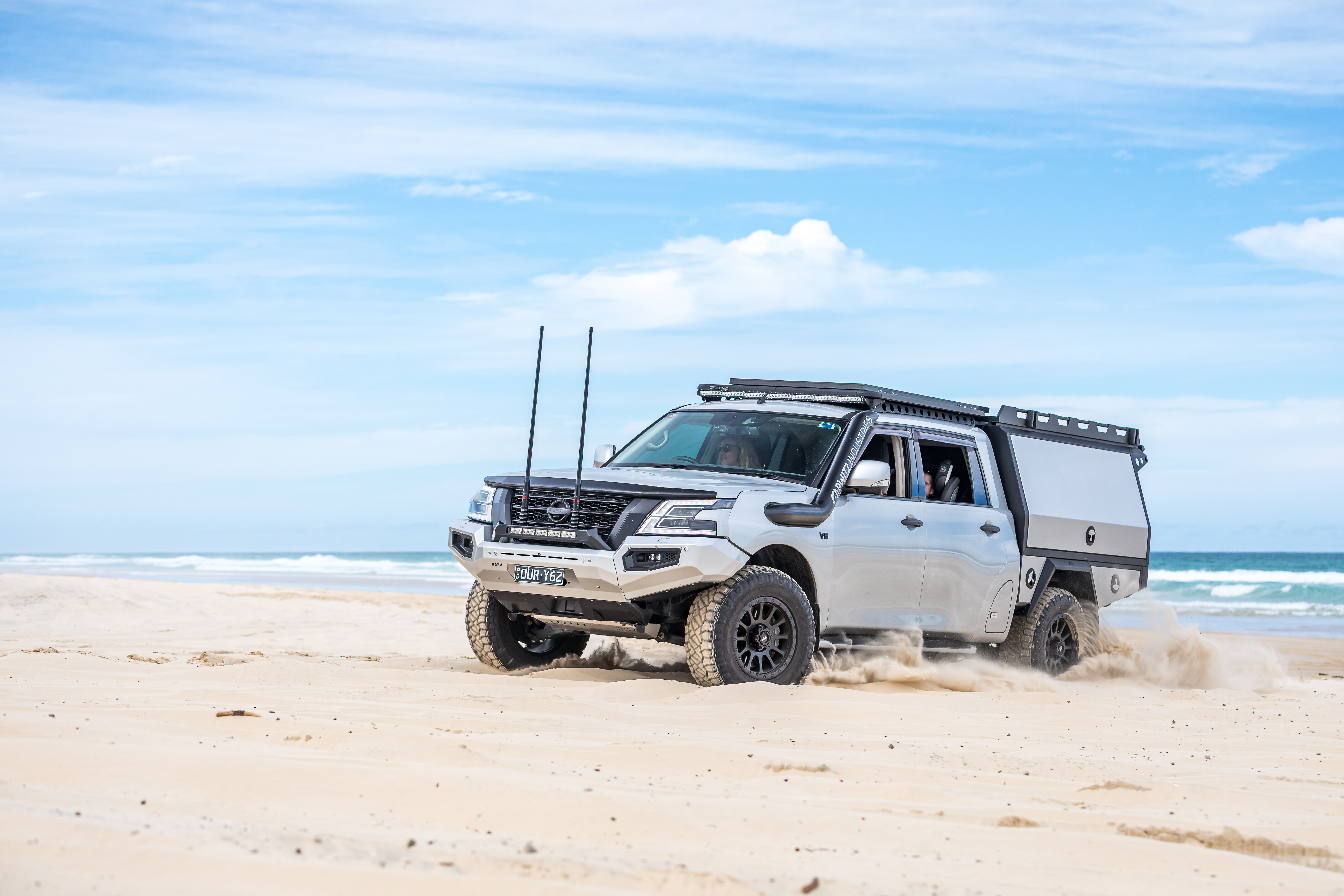
Pre-registration GVM upgrades
If you have just signed on the dotted line for a new 4WD, there’s an option to have the factory GVM upgraded before registering it for the first time. Detailed and expensive testing is carried out by authorised suspension manufacturers during development, and once relevant tests are passed these upgrades are granted by the Federal Department of Infrastructure and Transport.
This means the engineering leg work has essentially been done for you, and the new GVM kit will be supplied with the correct certification and compliance plates; offering a higher GVM from day one, when fitted by an authorised agent. Sorry DIYers, this isn’t a task you can handle yourself.
There are numerous benefits when choosing pre-registration GVM upgrades, some of which we’ll touch on later in this article. However, the main one is cost, as it is a cheaper exercise due to an automotive engineer not being required to sign-off on the individual installation. This certification was completed when the suspension kit was tested for compliance and met minimum ADR safety requirements.
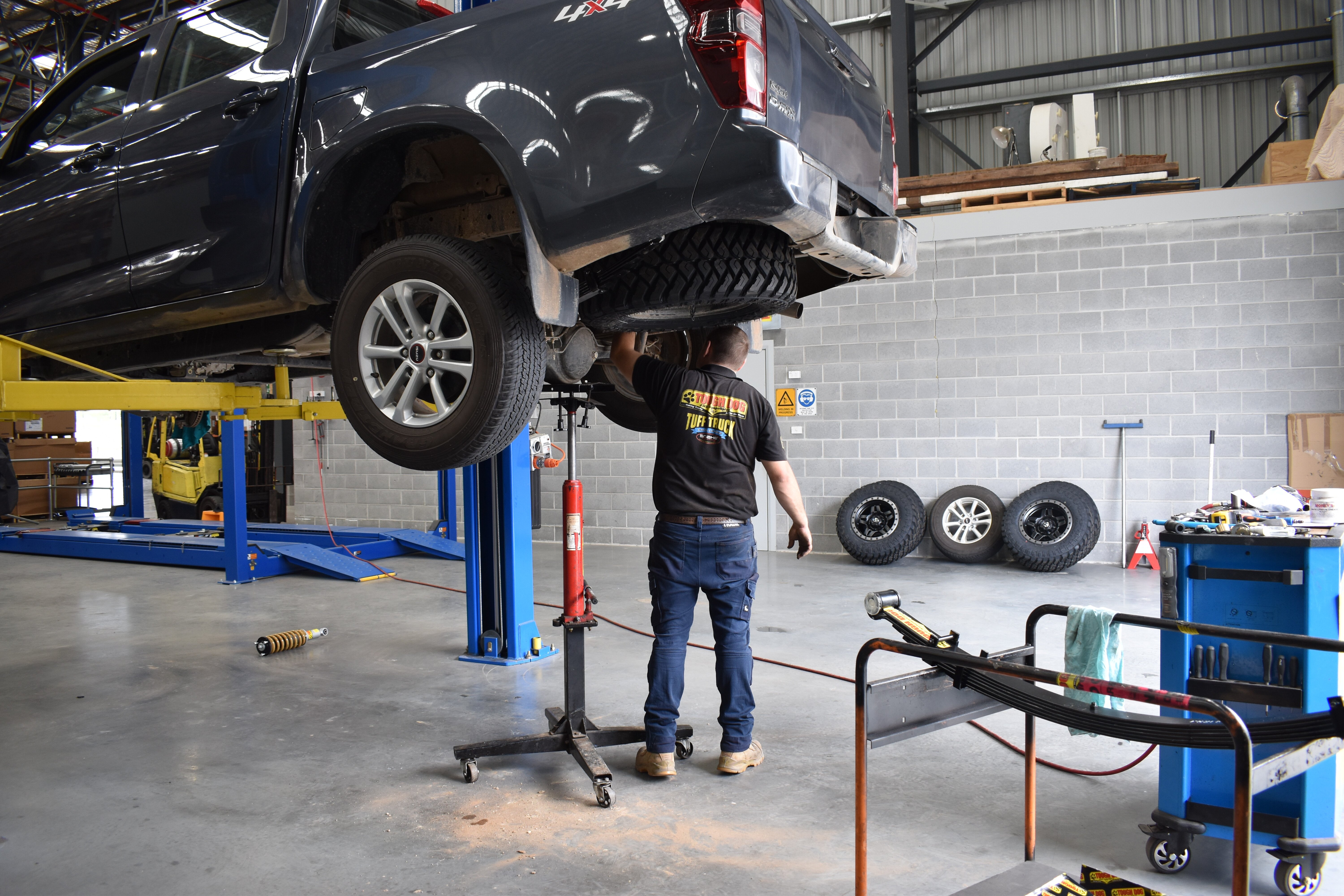
Post-registration GVM upgrades
This is a bit more involved and expensive compared to pre-registration GVM upgrades, as the rules vary from state to state. We spoke with Simon Vella from Tough Dog about this, as he is a specialist in the field of suspension development and GVM upgrades.
“If you are wanting to perform a GVM upgrade on your vehicle post-registration, the process requires an Authorised State Engineering Signatory to inspect, validate and certify the upgrade, which takes place in all states and territories except for WA and NT,” Simon tells us.
“There is a different process in both Western Australia and the Northern Territory compared to other States in Australia that is based on a Type Approval System. This means for what we do at Tough Dog Suspension, we have a pre-approved upgrade approval agreement in place with the transport departments of either state and territory. Basically, for those living in WA or the NT it is not necessary to have a signatory to validate a Tough Dog GVM upgrade.”
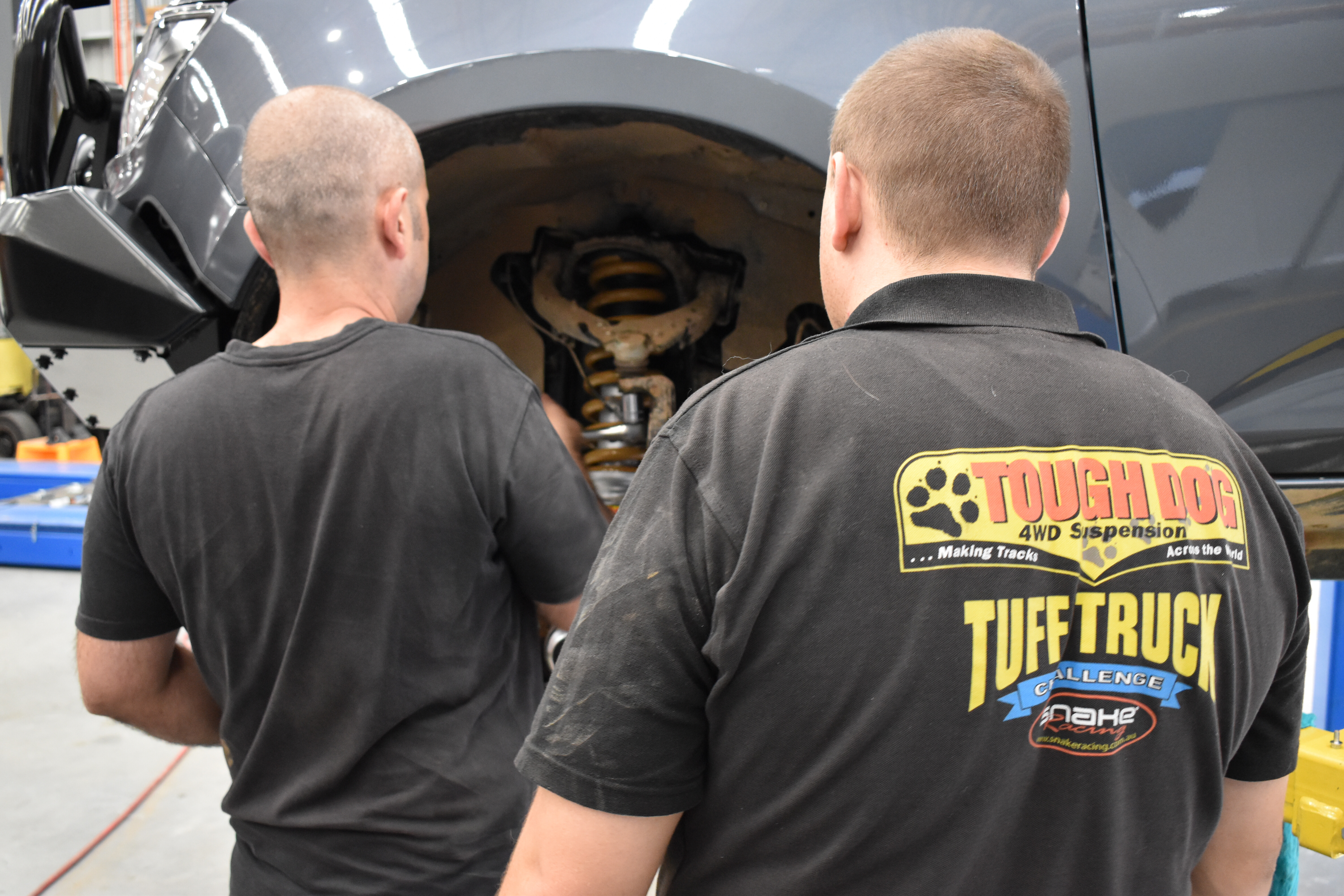
When asked about other states in Australia, Simon had this to say: “When it comes to the rest of the country, including Queensland, New South Wales, Victoria, Tasmania, South Australia and the ACT, it is a requirement to have a signatory certify any post-registration GVM upgrades. You will need an authorised state-engineering signatory to carry out the needed inspection and supply certification of an upgrade.
“The signatory may require access to our test data and reports for which Federal Approval (pre-registration) has been granted against, to validate the certification.
“We have a list of engineers on the Tough Dog website who can help with post-registration GVM upgrades. As we are NSW-based, we use John from Consulmotive in Peakhurst NSW, and the cost for this process usually costs around the $1000 mark, but this will vary from vehicle to vehicle and job to job, but gives you a ballpark figure.”
How much does it cost?
This is going to come down to the vehicle you own, and the components required to do the job. For example, the parts required to upgrade a VW Amarok to a maximum GVM of 3500kg using Bilstein shock absorbers and H&R coil springs will set you back $5899 from Advanced Installation Service in NSW’s Emu Heights. This is a drive-in-drive-out price, including parts, labour and engineering certification post-registration.
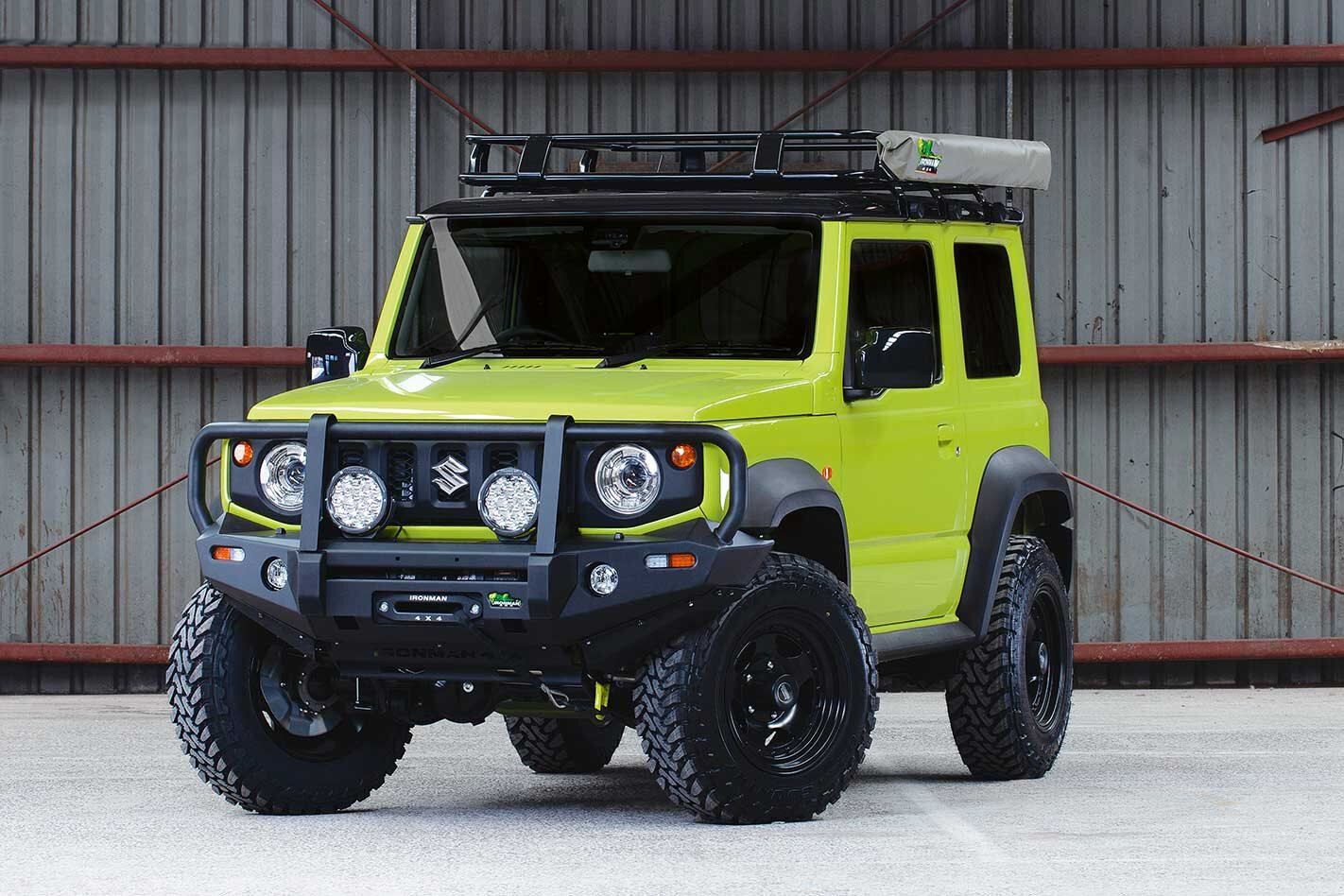
If we look at the Ironman 4×4 GVM upgrade for the petite JB74 Suzuki Jimny, increasing the GVM from 1435kg to 1785kg you are looking at an approximate minimum of $2571 pre-registration for parts alone, coming in at approximately $3000 for total install, ready to go. Post registration, this figure is reported to be around the $3700 to $4000 figure for the Jimny drive-in-drive-out, according to posts on various Jimny pages and forums found online.
If we look at the higher end of the scale, upgrading the rear axle to have a higher maximum axle load (and a track width correction) on a 79 Series LandCruiser, Brent from BAW Automotive in Queensland provided these figures for us.
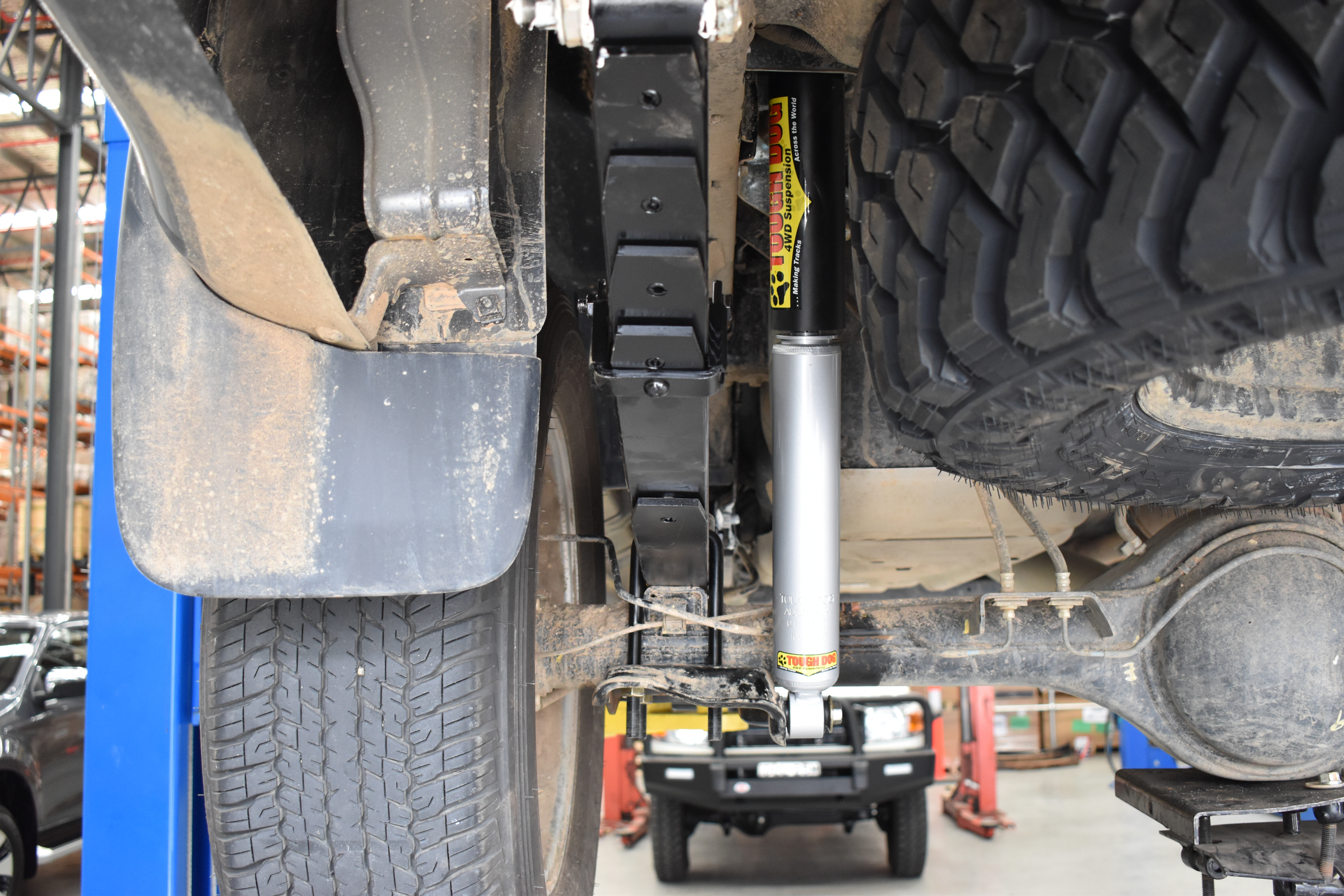
“Supply and install for GVM upgrades start from $17,000. This includes parts, labour and engineering,” says Brent. “With GVMs specifically, no brand allows just the sale of parts and all must be installed by trade professionals. Engineering and labour must be part of the package and can’t be costed out separately, as it gives the impression that you can just purchase the parts.
“In terms of costs at this stage, there aren’t huge differences – however, if we were talking about the 70 Series LandCruiser pre-registration, then it allows you to go higher than 50mm overall in suspension. At this height, it also allows the fitment of 35-inch tyres legally and compliant with federal-approved standards. Pre-rego you can also maintain your braked tow capacity, whereas with a post-rego GVM upgrade, it takes away from your braked tow capacity. In simple terms – post-rego, you won’t be able to tow items as big as you would if you’d sorted it pre-rego.”
“The maximum Gross Vehicle Mass upgrade you can achieve with a four-wheeled set-up is 4495kg, keeping it still driveable under a standard vehicle licence. You can move to a six-wheel set-up, but that’s a whole other kettle of fish and a whole different vehicle licence.”
Tyre and wheel load rating
It’s worth pointing out that if you increase the GVM of your vehicle, you might also need to look at upgrading your tyres and wheels, as the factory offering might not meet the new load-rating requirement. For example, if the rear-axle load limit is 3000kg, each rear wheel will need to be rated to 1500kg or above to handle this load legally and safely.
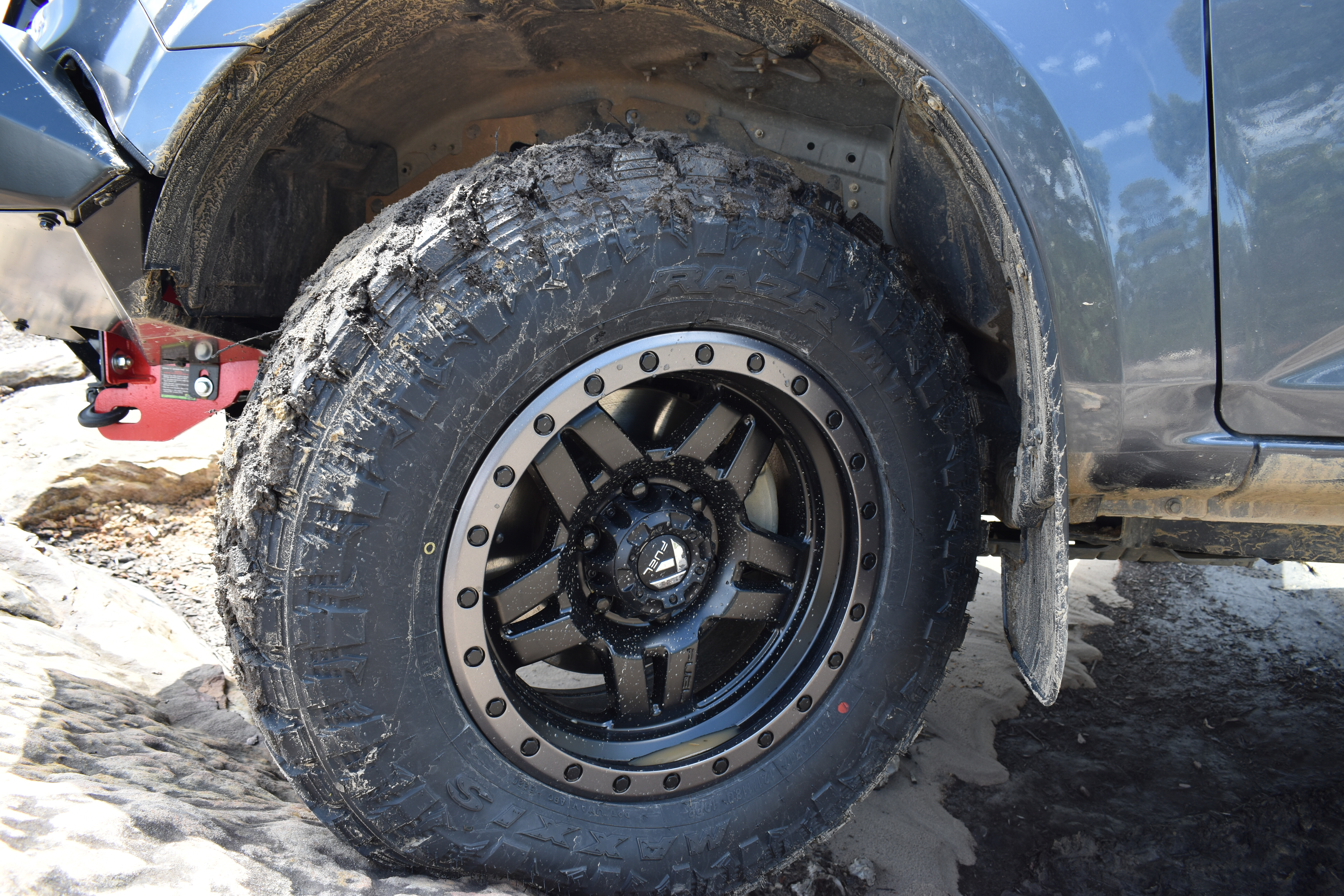
Tyres also have a load rating, with aftermarket Light Truck tyres generally offering a higher load rating compared to the passenger tyres fitted to most new vehicles. We won’t go into specifics as this is quite a rabbit hole, but tyre and wheel upgrades are something to be aware of when looking to upgrade your vehicle’s GVM and increase tyre size.
This is why you need to speak with a knowledgeable and experienced suspension specialist before conducting the work, so you do things right the first time and don’t waste time and money.
What are the consequences of GVM upgrades?
When we caught up with Simon Vella from Tough Dog Suspension at the Sydney 4X4 Show, he said the number one question he received from punters at the show, especially those new to the 4×4 game, was if they need a GVM upgrade straight away?
The other main comment was from those who had saved up to build their dream vehicle, and did a GVM upgrade, but the vehicle was now borderline dangerous to drive when unladen. This is because the spring rate used in GVM upgrade kits is much higher than factory to cope with the increased maximum load. Take that load out, and the vehicle is now over-sprung.
“The number one thing people need to do when it comes to GVM upgrades, is qualify their vehicle to determine if they need a GVM upgrade,” Simon told us. “Load your vehicle up, put it on a set of scales and weigh it, so you know exactly what your vehicle weighs trip-ready before deciding you need a GVM upgrade.”
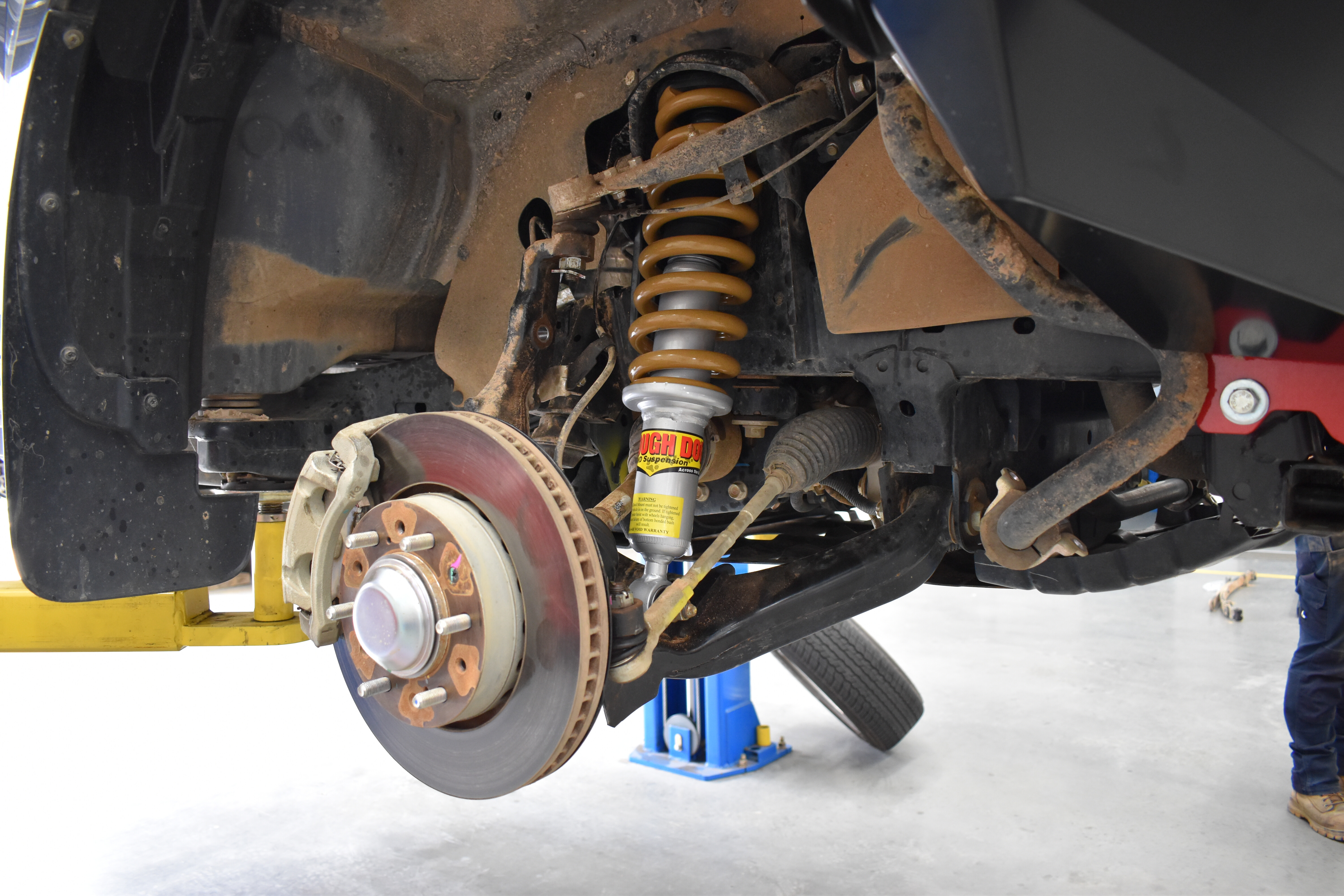
Apart from the expense of undertaking a GVM upgrade, end users are reporting poor ride quality unless loaded up, additional component costs, and the fact you must run all part numbers specified on the GVM upgrade kit.
So, if for example you want to run longer shock absorbers in an attempt to gain more suspension travel, you can’t. You have to use every item that came with the GVM upgrade kit, which is signed off by an automotive engineer as part of the approval process.
Having witnessed the approval process personally, I can confirm the engineer will inspect the vehicle, and take pictures of every part number of every part upgraded, to see that they match perfectly the part numbers listed by the manufacturer of the GVM upgrade kit. So, while a GVM upgrade is a useful inclusion for many four-wheel drive tourers, they aren’t for everybody.
With thanks
Big shout out to the following people who helped provide information for this article. These companies specialise in 4WDs and suspension upgrades, as well as GVM upgrades.
- Simon from Tough Dog Suspension
- Phone: (02) 9672 8899
- Website: toughdog.com.au
- Brent from BAW Automotive
- Phone: 0417 783 415
- Website: bawauto.com.au
- Jeremy from Advanced Installation Services
- Phone: (02) 4739 9009
- Website: advancedinstalls.com.au
When I first drove the previous generation Ford Ranger Raptor a few years back, with the bi-turbo diesel engine, I was one of the few motoring journalists who thought it had sufficient power to throw the Raptor around off-road and have a bit of fun. Well, I was wrong. Totally wrong. And I’m happy to admit that.
The 2023 Raptor is a different animal altogether, and it’s not just an exterior freshen-up. This vehicle offers so much more than the Raptor of old, all based around a fire-breathing 3.0-litre twin-turbo V6 petrol engine – the powerplant the Raptor should have come with the first time around.
Upgrade your Ranger
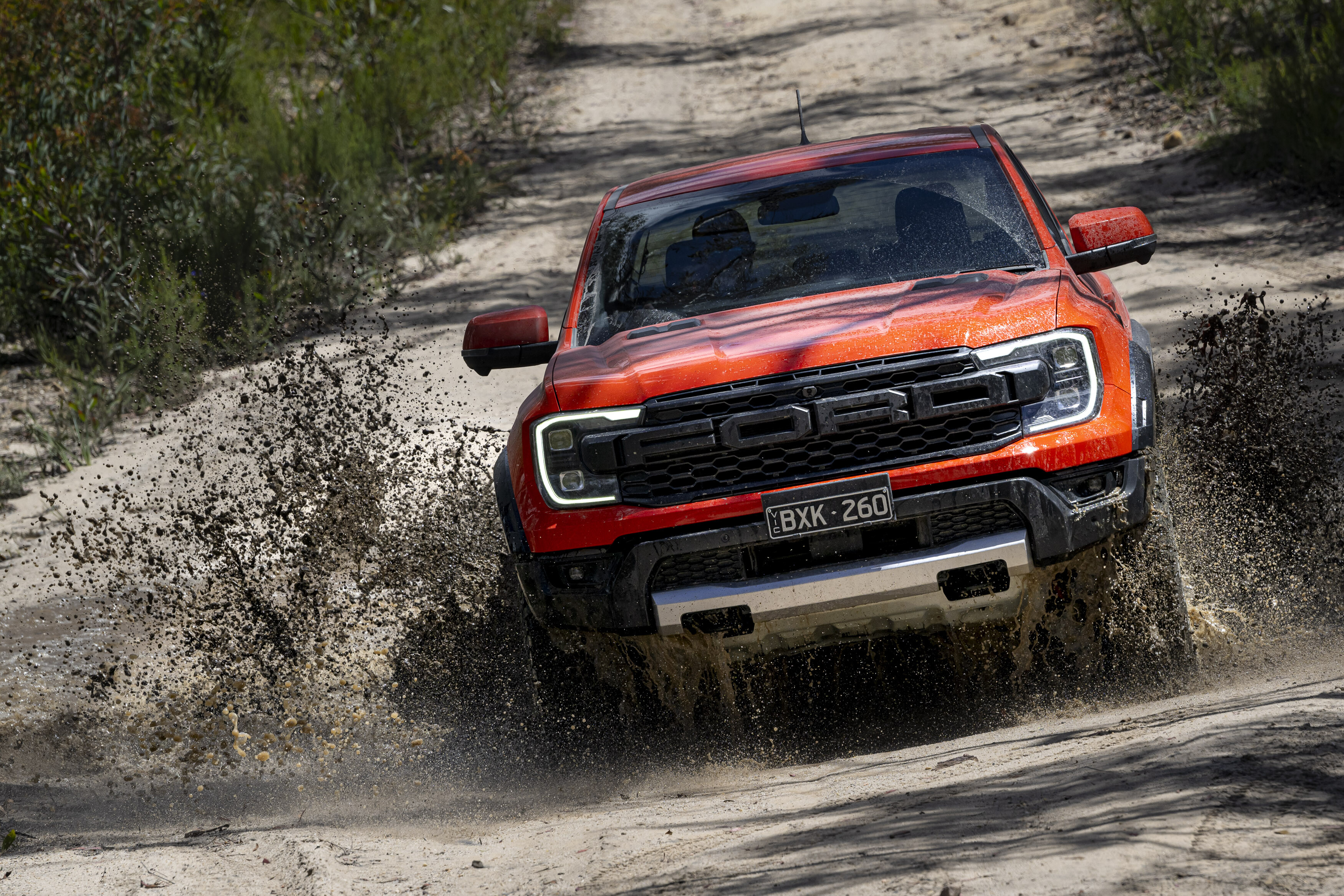
How does 292kW and 583Nm of grunt matched to a 10-speed automatic transmission sound? It sounds bloody awesome and goes just as well. However, it’s not just about the engine, even though it plays a massive part of what makes the 2022 Raptor a special four-wheel drive.
With Fox suspension and coil springs on all four corners, advanced off-road technology with interactive driver and terrain modes, and a beautifully thought-out interior, this new Ranger Raptor ticks plenty of boxes.
But just how good is it in the real world of muddy job sites, remote campgrounds and off-road parks? That is what we are here to find out.
JUMP AHEAD
- Powertrain and performance
- On-road ride and handling
- Off-road
- Cabin and accommodation
- Practicalities
- Verdict
- Specs
Powertrain and performance
Petrol-fuelled 4WDs don’t seem to fill Australian off-roader’s hearts with joy, but I assure you this one will. Producing a claimed 292kW at 5650rpm and 583Nm at 3500rpm, the 2022 Raptor has the performance it needs, and then some.
Mated to a 10-speed automatic transmission, the only word that truly describes the driving experience of this vehicle is rapid. The transmission shifts rapidly, but not in a busy way that is annoying; it’s smooth in operation, offering a gear ratio to suit any occasion.
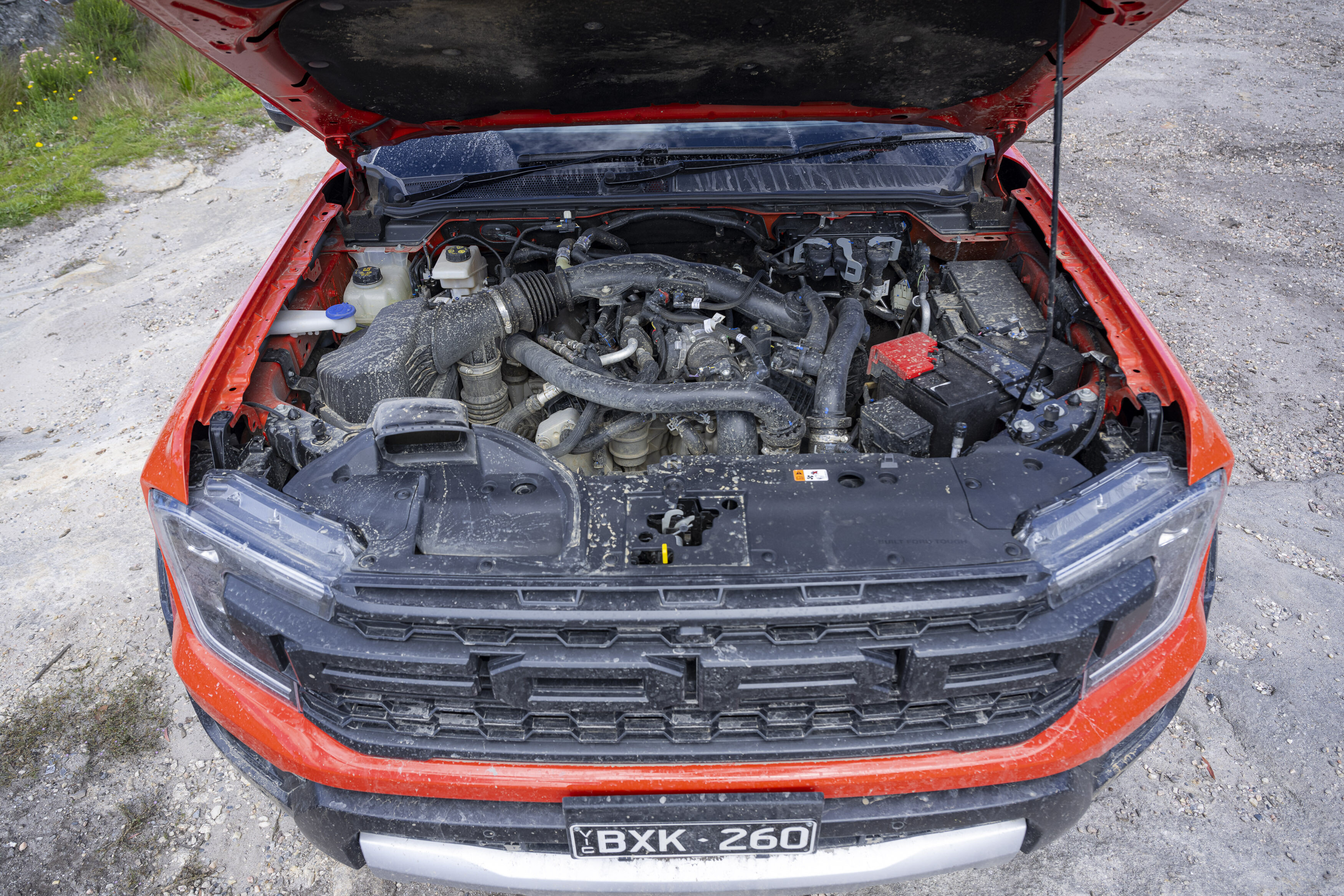
The engine is rabid. It pushes you back into the bolstered bucket seats under acceleration so savagely it feels like it’s trying to kill you. Thankfully, the 2022 Ranger Raptor has a five-star ANCAP safety rating should you run out of talent. In saying that, the Raptor is an easy vehicle to steer and provides a truly engaging driving experience.
With this power comes thirst, and on test we returned fuel economy figures of around 16 litres per 100km. This is the same figure I recently achieved from the V8 petrol-powered Nissan Patrol, just to put things in perspective. Surely, with less spirited driving this figure would drop; but the Raptor really is a case of thinking about smiles per gallon and not miles per gallon, as cheesy as that sounds.
On-road ride and handling
Something I was rather surprised by was brake pedal feel. I was expecting it to be razor sharp in operation, yet it was more on the spongy (read: progressive) side. Don’t get me wrong, the brakes work well both on- and off-road, but you need more input compared to the Nissan Patrol and Toyota LandCruiser 300 GR Sport, for example.
That’s about where the negatives end, as I thoroughly enjoyed my time in the 2022 Ranger Raptor. Ride quality is exceptional; hit a speed bump at the posted speed limit and you won’t even notice it.
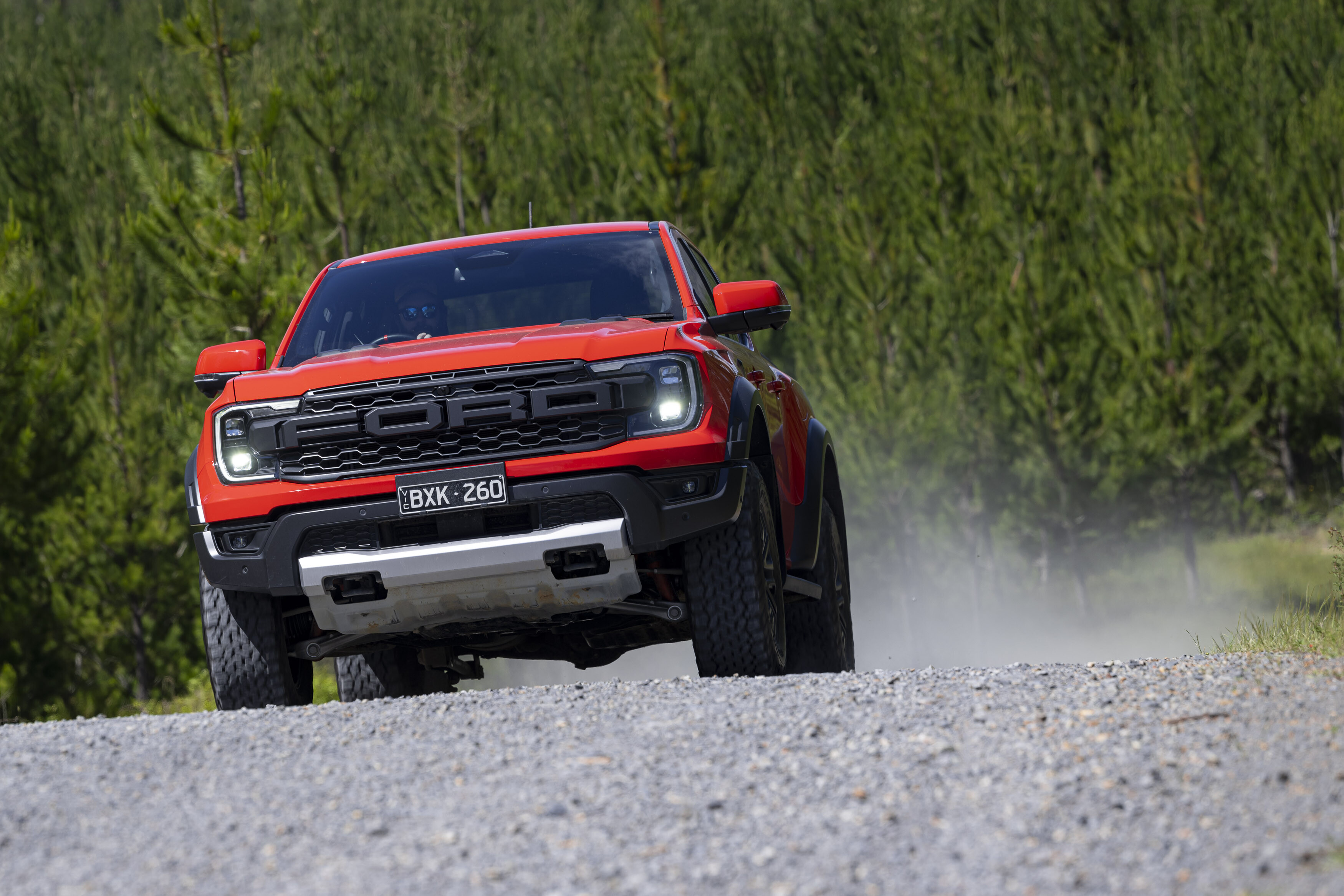
Fox makes quality suspension, and when combined with the locally tuned chassis found under the 2022 Ranger Raptor, you have a ute that has no right to handle this well. Good suspension is something you’ll appreciate every time you drive a vehicle, and factory 4WD suspension doesn’t get better than this.
Tip the Raptor into a fast corner and it remains flat while sticking to the road like Sikaflex to bare skin. And that’s in 2WD; you can drive the Raptor in 4WD auto mode on-road for even more grip.
Dampening can also be adjusted via a button on the steering wheel, allowing you to take the ride quality from Comfort to Sport to Off-Road modes instantaneously. As well as adjustable suspension settings there are buttons for adjustable steering modes, as well as a button to control how loud you want the exhaust to be. Naturally, we had it in sport mode the entire time. Yee-haw!
Off-road
This is where the Raptor shines, and that probably comes as no surprise. We went looking for as many different terrain types we could drive on in the Blue Mountains, from fast dirt to mud and rocks, and there’s no dual-cab ute on the market that handles the rough stuff like the Ranger Raptor.
Corrugations and bumps can be taken at speeds that would send you through the roof of other utes, and when you want to slow things down for steep descents, the gearing options provided by the 10-speed automatic transmission are seemingly endless. In low range, this thing can crawl with the best of them.
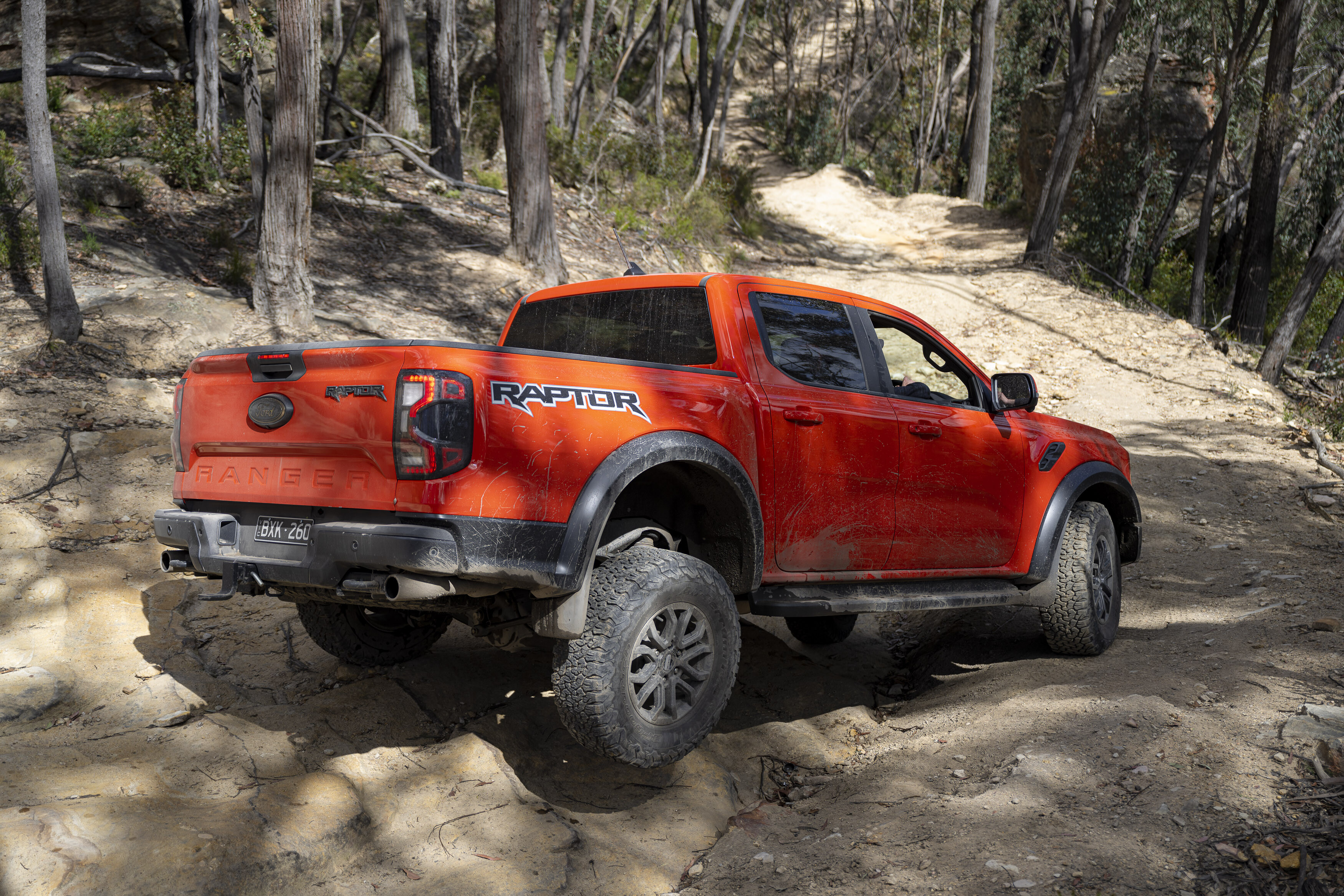
In saying that, if you leave the diff locks and terrain modes off and simply put the Raptor in low range 4×4, it’s nothing special when it comes to traction control stopping spinning wheels.
Luckily, there are many aces up the Raptor’s sleeve, and by selecting what terrain you are driving on via the selectable drive modes, things get considerably more serious. Front and rear diff locks certainly help the cause, as does the previously mentioned Fox suspension which not only rides well but offers an impressive amount of suspension travel.
Engaging the 4WD modes isn’t as simple as twisting a dial, and it can be a bit confusing to operate as you need to be in certain drive modes to make some selections. Once you have a play with it, you get used to it, and we recommend you get familiar with it before heading bush. When you do have the system dialled in, all 4WD sequences are quickly and smoothly engaged.
Cabin and accommodation
I don’t think I’ve seen a sportier interior in a 4WD. With black leather seating and interior components, highlighted with Code Orange accents, it’s over the top in all the right ways and really sums up what the Raptor is about.
Traditionally, anything with the word sport in it is void of comfort, but that’s not the case with the Ranger Raptor. It’s comfortable for daily use, as well as being supportive when chucking the ute around on private property or doing serious off-roading. The seats in particular are brilliant, and when you have a bad back like I do, comfortable and supportive seats are important.
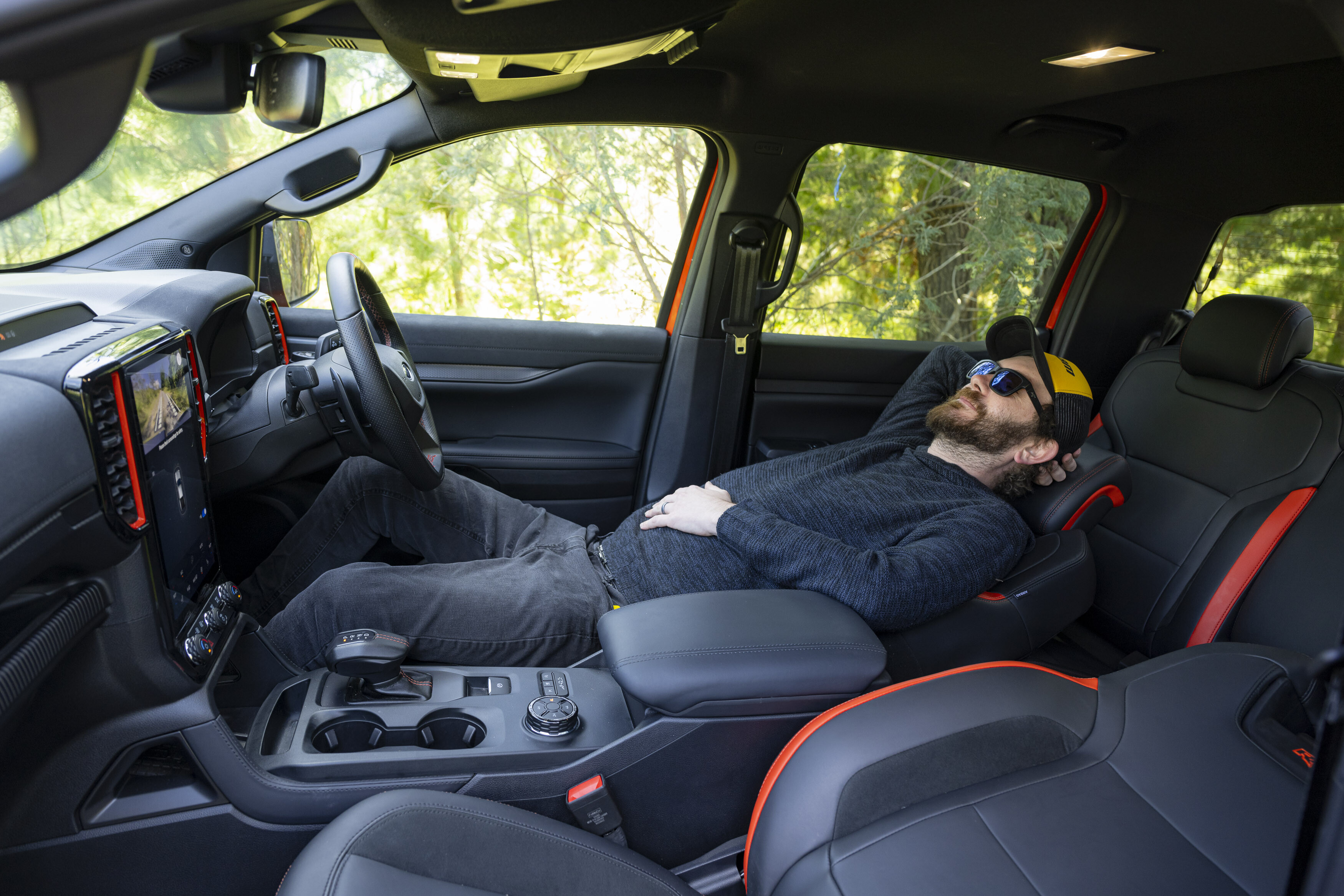
Something we discovered by accident while arranging the seats for photography, is that the front seats can be folded back, basically flat, making a genuinely comfortable spot to have a nap. I’ll still pack my swag, but it’s a clever addition for a side-of-the-road power nap.
The Ford is loaded with features. Wireless phone charging is built-in, as well as wireless Apple CarPlay and Android Auto, and connecting my older iPhone to the system proved no issue. The sound system is a cracker too, especially when you fiddle with the EQ settings, but it could be slightly louder as I like my tunes dialled up to 11.
While most interior controls can be found and adjusted through the massive centrally-mounted infotainment screen, it is still refreshing to see basic knobs for volume and air-conditioning.
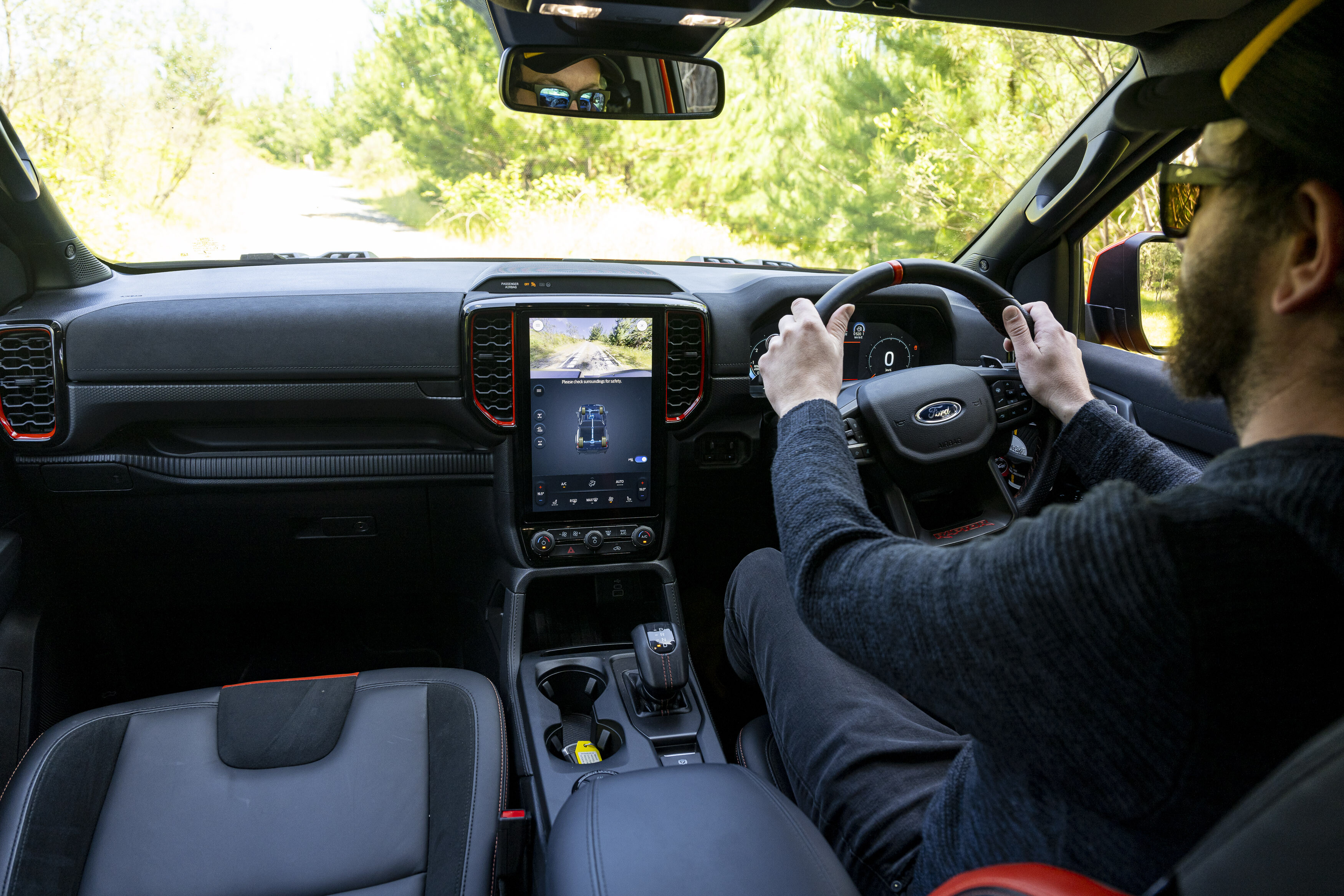
As well as controlling vehicle functions, the touchscreen acts as the display for high-quality cameras mounted around the vehicle, which offer a bird’s eye 360-degree top-down view and trailer-hitch view. I found this particularly handy when off-road and when parking as close as possible to the other vehicles on my steep driveway.
We didn’t tow on this test, but I dare say that hitching up a caravan would be child’s play with this technology.
Practicalities
What! No gas struts on the bonnet? We had to open the bonnet to take images of the engine bay, and it was so hot we burnt our hands deploying the bonnet support. In this spec, and at this price point, I don’t understand how this is acceptable. I dare say, there will be an aftermarket solution to this problem very soon … but seriously?
On the plus side, you’ll find the best cup holders in the industry inside the cabin. The two mounted on either side of the dash under the air-conditioner vents are works of art, and I was able to easily store a one-litre water bottle in the front door pockets.
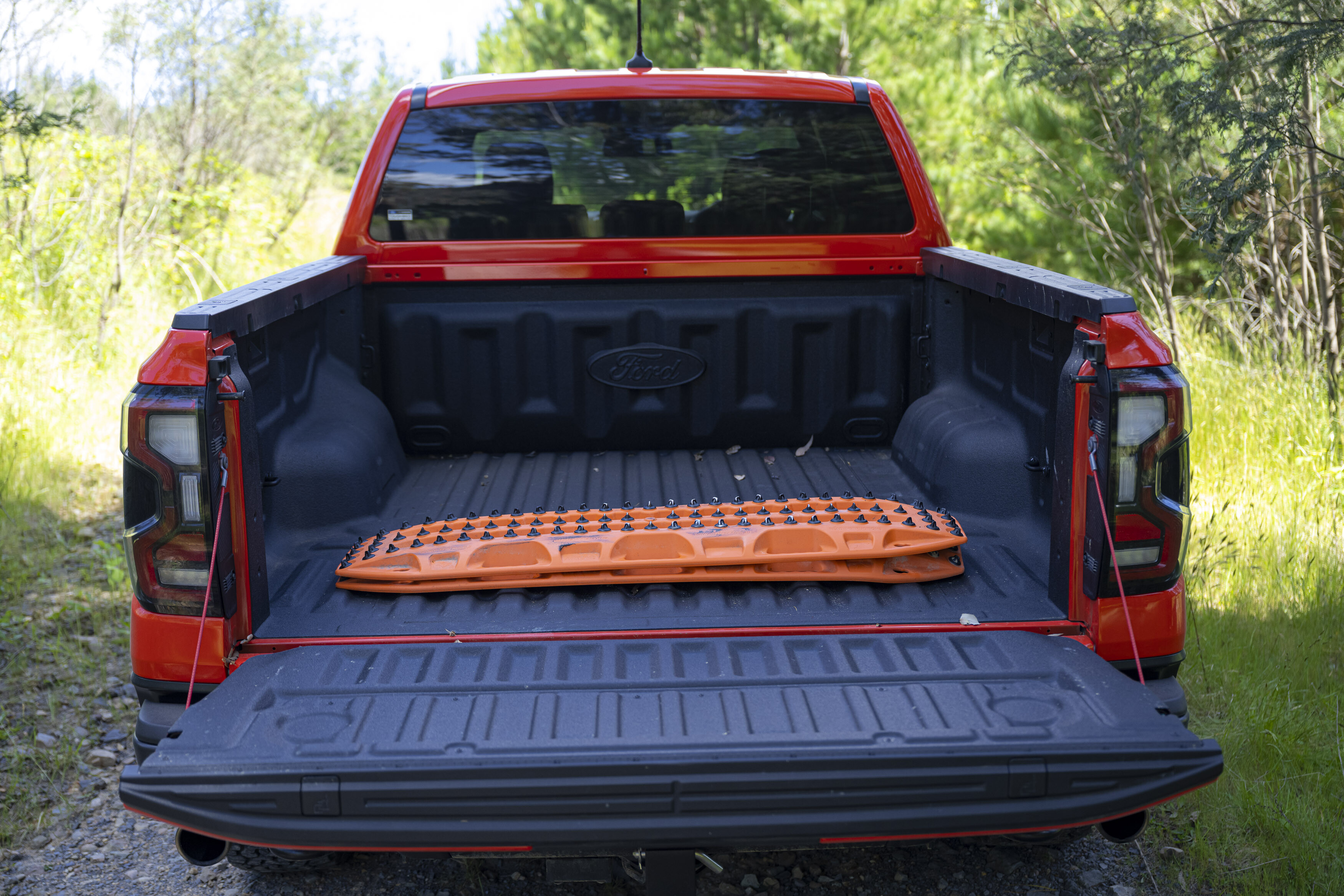
The tray area is massive and came from the factory with Ford’s own spray-on tub liner to prevent scratches when loaded up. There are tie-down points on all corners, as well as in-built LED lighting which came in handy after a late-night shopping trip. There’s a 12V outlet on the passenger side, perfect for plugging in a fridge when on the move.
Towing capacity is limited to 2500kg, 1000kg less than the regular Ranger models. This is a good thing, because who really wants to tow more than 2500kg with a dual-cab ute? Not me. Payload capacity is listed at a maximum of 753kg, which isn’t class-leading but still respectable.
Wading depth is listed at a maximum of 850mm, which is up there with the best of them. I was sceptical of this figure due to the forward-facing air-intake, but no water made it into the airbox on this or any previous 2022 Ford Ranger reviews, so I’m inclined to trust this figure. Job well done.
Verdict
The new 2022 Ford Ranger Raptor is a bit of a freak, as it does so many things well without feeling like a compromise. It’s fast, comfortable, stupidly capable off-road and easy to pilot on-road. You can use it as a ute, a rally car and a daily driver.
“The hype is real, it’s a brilliant 4WD”
The only limitation is the previously mentioned reduced towing capacity of 2500kg, so if you need to tow heavier loads than that, you’ll need to look elsewhere. I’d also be looking at a long-range fuel tank to feed the beast on longer journeys, as that 80 litres of 98 octane (the preferred fuel) won’t get you too far if you drive with enthusiasm. Which you will.
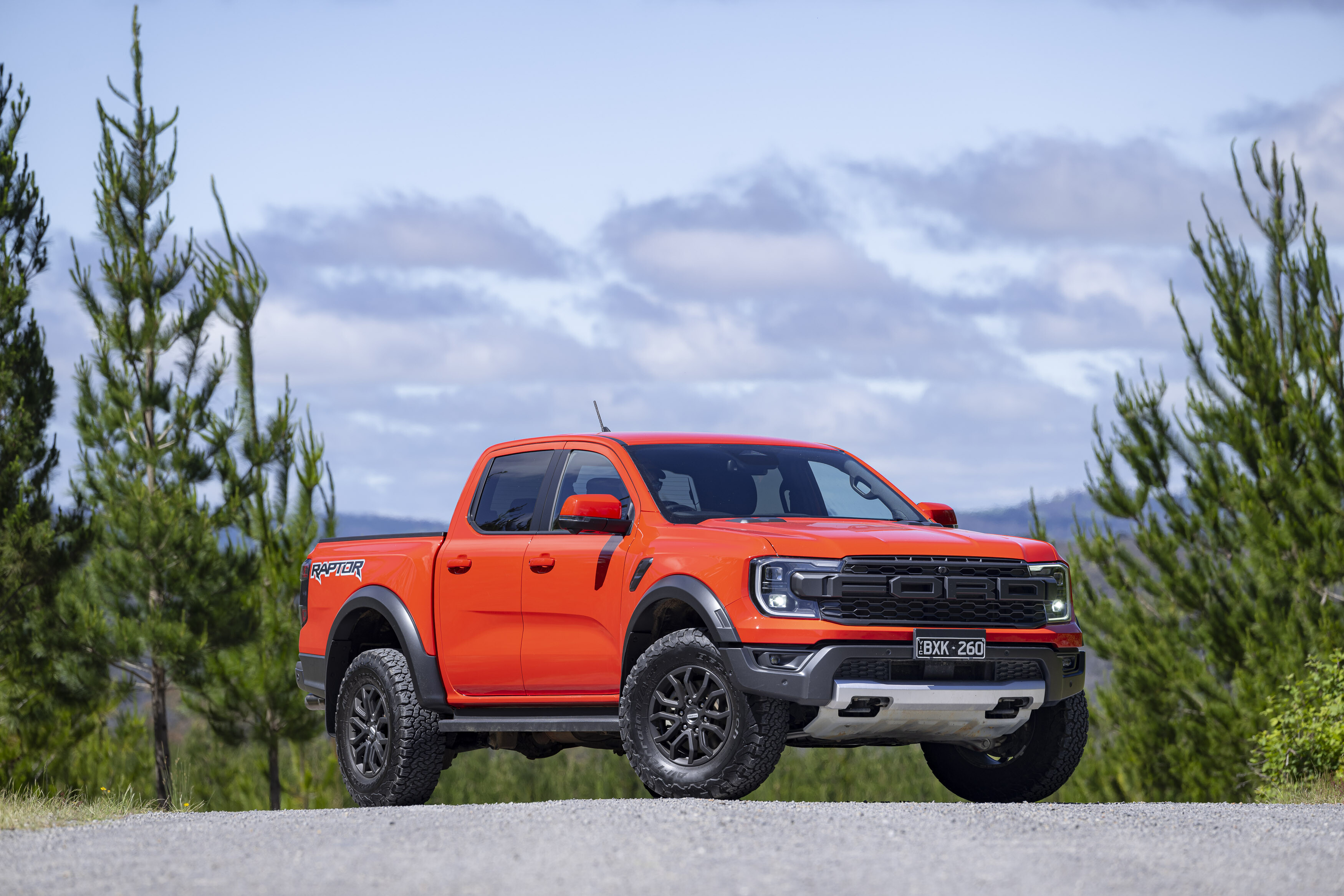
It’s not just better than the previous generation, it is in another league. It offers more tech, more power, better off-road ability and a better all-round driving experience.
The hype is real, it’s a brilliant 4WD that I’d be happy to see parked in my driveway, and I’d take it anywhere in Australia. Petrol power alone hasn’t transformed this new generation Ranger Raptor, but it sure as hell hasn’t hurt it.
4X4 Australia's project builds
2023 Ford Ranger Raptor specs
| Body | 4-door, 5-seat dual-cab ute |
| Drive | permanent four-wheel |
| Engine | 3.0-litre V6, DOHC, 24V, twin-turbo petrol |
| Compression | 9.5:1 |
| Bore/stroke | 85mm X 86mm |
| Power | 292kW @ 5650rpm |
| Torque | 583Nm @ 3500rpm |
| 0-100km/h | 6.5sec (estimated) |
| Transmission | 10-speed automatic |
| Weight | 2674kg (kerb) |
| Fuel consumption | 11.5L/100km (combined) |
| Front suspension | struts, double A-arms, coil springs, adaptive dampers, anti-roll bar |
| Rear suspension | Watts link, coil springs, adaptive dampers, anti-roll bar |
| L/W/H | 5425/2028/1926mm |
| Wheelbase | 3270mm |
| Brakes | 332mm disc brakes (f/r) |
| Tyres | BF Goodrich All-Terrain T/A 285/70 R17 |
| Wheels | 17-inch alloy |
| Price | $85,490 + on-road costs |
A good day’s drive north-west from Brisbane led us to the small town of Taroom in Central Queensland.
Today, Taroom is a rural town servicing the many properties in the Banana Shire, but it’s the gateway for us in to Expedition National Park.
Taroom’s claim to fame is that in 1844 Prussian explorer Ludwig Leichhardt marked a tree as LL44 when he was in the area. The tree is in the main street, yet the markings have since grown over and trying to decipher it can be a little difficult. Leichhardt was on his way towards Darwin from the Darling Downs area near Brisbane, opening up new pastoral land. He discovered and named the nearby Dawson River as well as Expedition NP.
Another feature in Taroom is a rare windmill made around 1900 by the Steel Wings company in Sydney. The windmill has a rare steel frame holding up the blades that was supported by a timber frame. This one at Taroom came off a property nearby and was in service until late 1950.
Unfortunately, a fire burnt the base and caused it to collapse, but it was moved to town and restored in 2003. There are now only two examples of this windmill left in the world.
Detouring
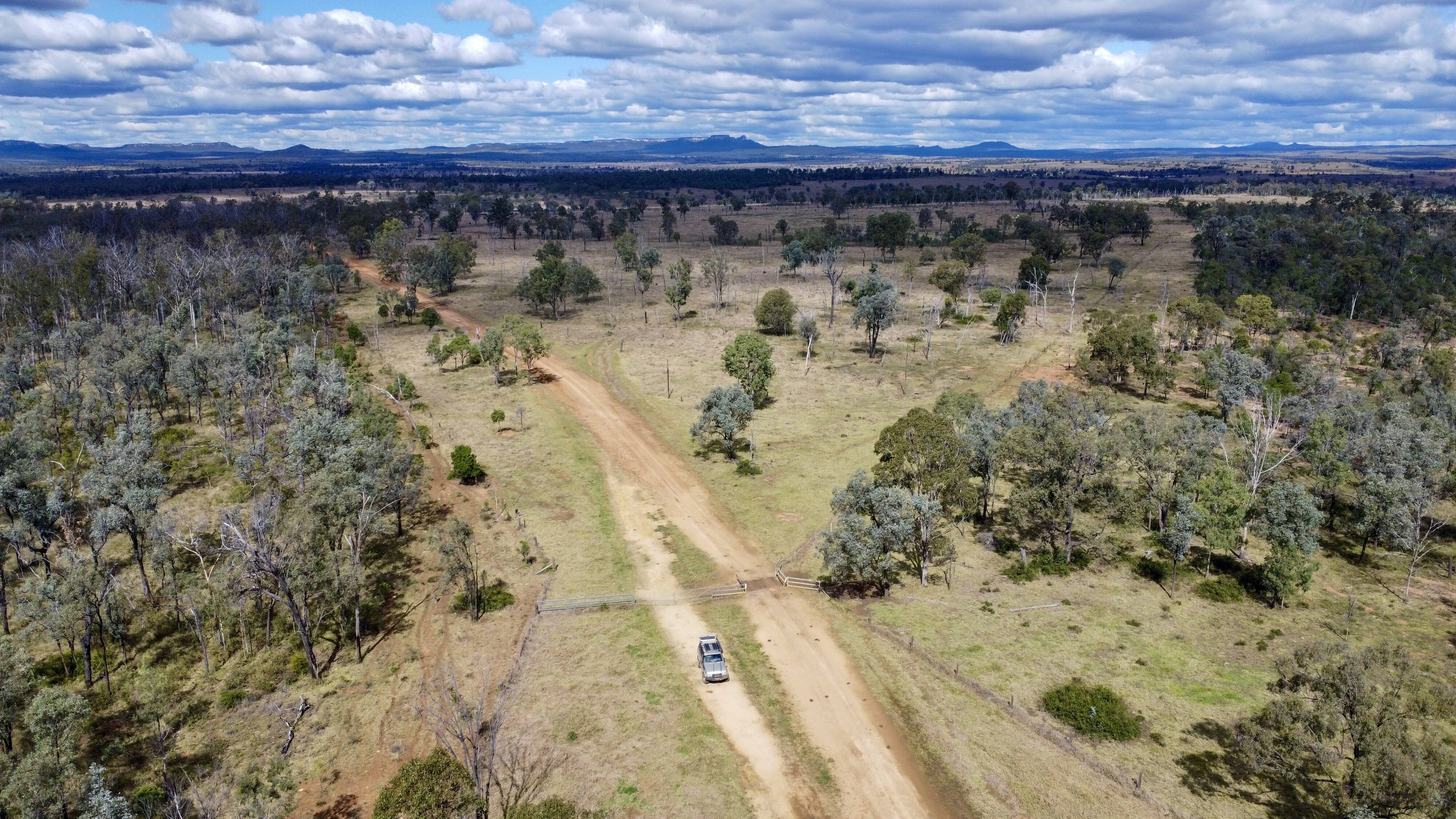
There are several ways into Expedition but our entry to the park was halted at the Glenhaughton Road section due to recent heavy rainfall closing the roads, but we found Bradmere Road was open and it detoured around the flooded lakes and road sections.
The main features of the park are found as you head towards Robinson Gorge, with high sandstone cliffs, stunning gorges and a river lined with Dawson River palms. Other options to enter the park include from the Beilba and Lonesome sections, where both provide different views across the ancient landscape.
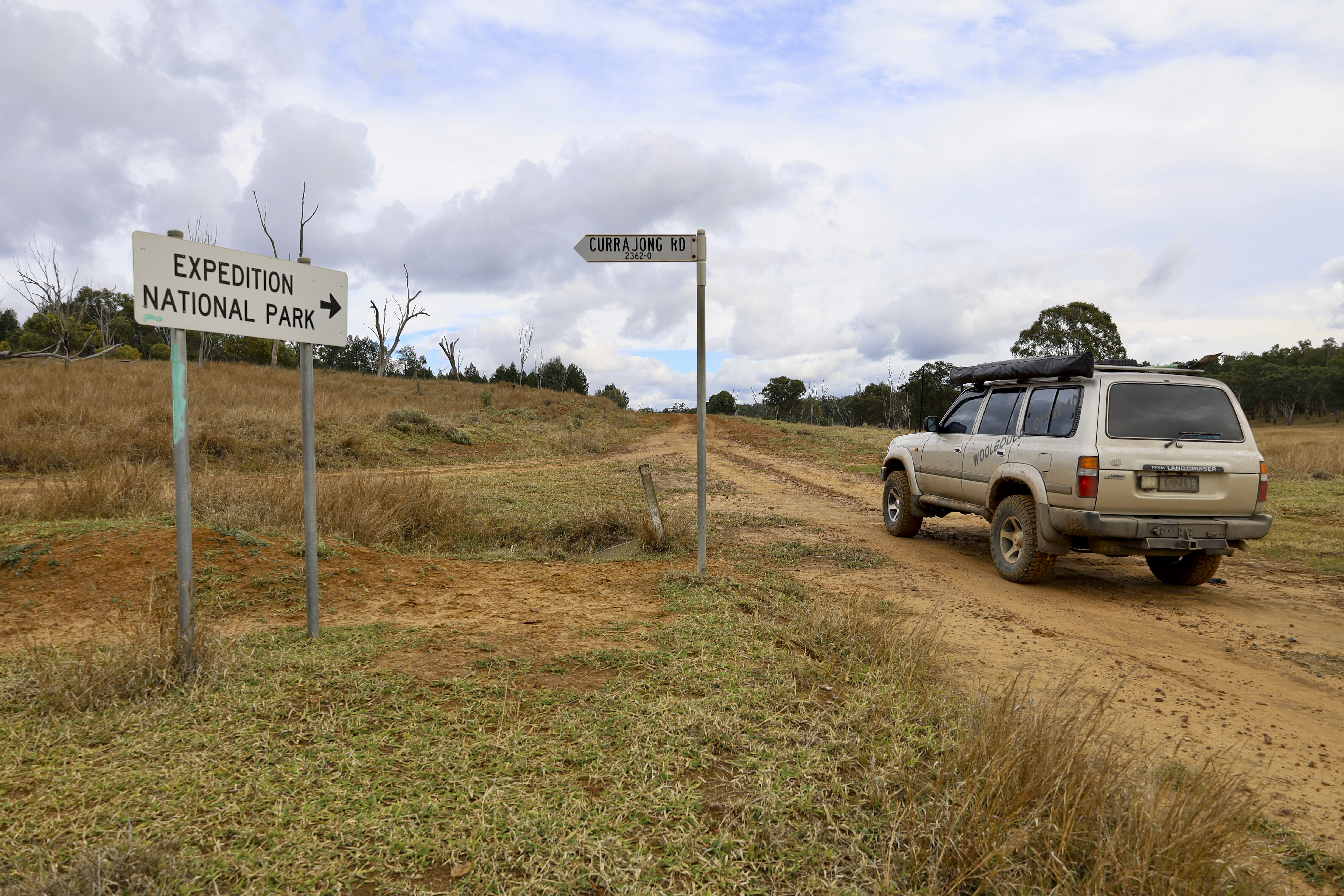
Our plan was to find the remote Starkvale Creek campsite within the Robinson Gorge area, explore the Cattle Dip gorge and find the heritage cattle yards along the way. Joining back on to Glenhaughton Road past the flooding, we stuck to the main road that passed through cattle stations and eventually led to Expedition.
The final road to Starkvale was well-signposted, but it’s 4WD only for the last 16km. Midway along we found the old cattle yards and took time out to wander around, checking out the build quality which was all held together with wire and interlocking poles.
The Starkvale campground along the side of the creek has to be one of the best I’ve come across. Clean, plenty of room, and some pretty flash toilets. This is remote camping, so make sure you’re totally self-sufficient here.
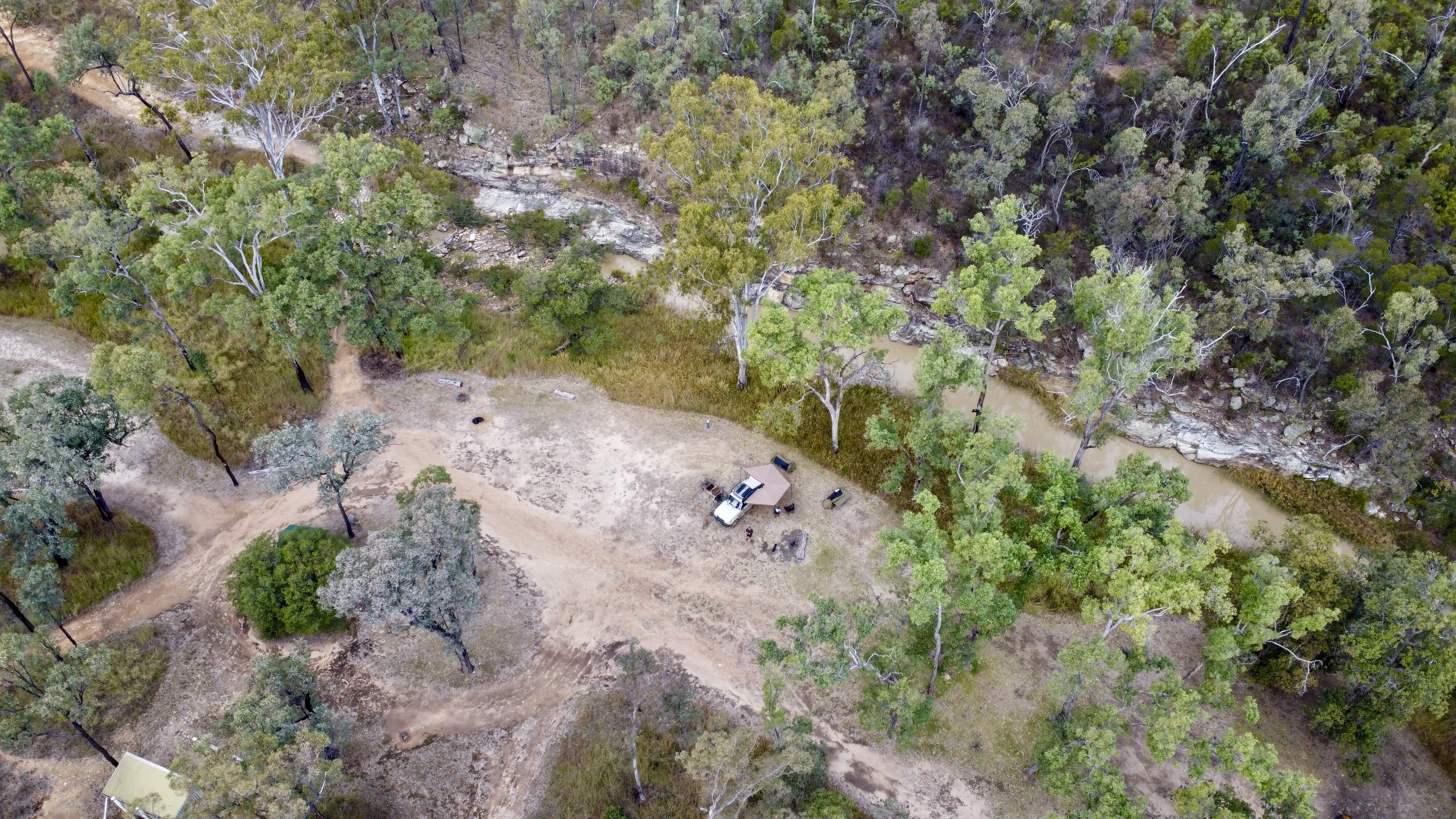
A track just near the campground takes you across to Cattle Dip in Robinson Gorge where you have stunning views down to the water-filled rock areas. The track to the parking area of the gorge is at times low-range 4WDing with several steep sections, but the gorge walk is well worth it.
If you’re keen for a hike, you can tackle either the Robinson Gorge Lookout walk, the Gorge access track, Shepherds Peak track, or walk to Cattle Dip. A detailed info board is a must-read before you do any of these, for your safety.
Sandstone country
Through Central Queensland this area is known as sandstone belt country and covers at least 82,000km². The varied landscapes were formed by millions of years of uplift, where huge sheets of sand that were deposited 190 million years ago have worn away to leave tough basalt rock formations. This wild landscape is a result of a long and turbulent geological history.
Today, we are left with a complex of scenic gorges, waterholes and springs, and the park conserves a range of plant communities and threatened animal species. The park is home to 10 different species of animals that are classed as ‘vulnerable to extinction’, and some of the bigger rock plateaus are more than 1000m high and have earned the nickname as ‘the roof of Queensland’.
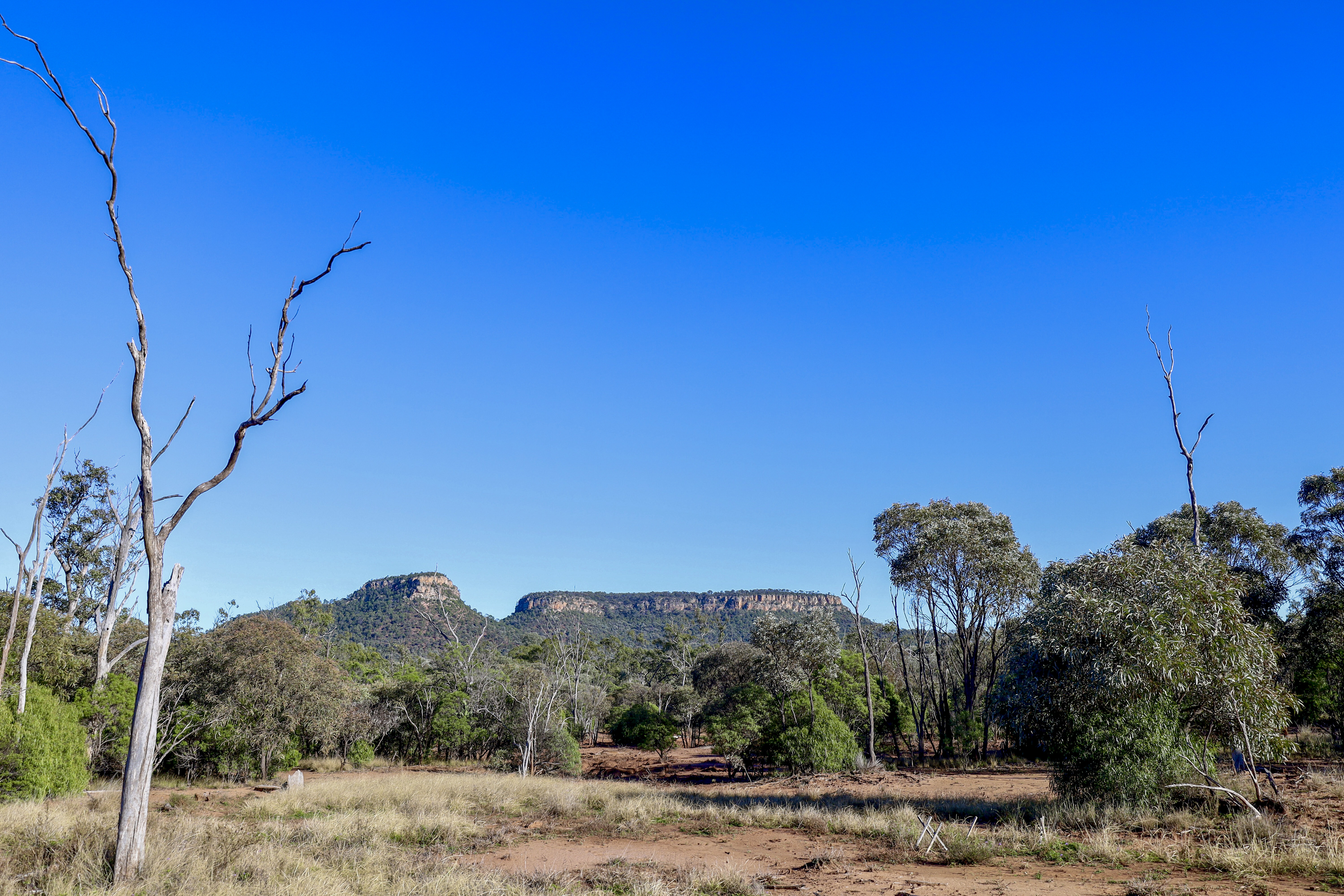
After Leichhardt went through, the settlers and pastoralists moved in causing decades of conflict with the local people, and by 1920 European diseases took their toll and the remaining Aboriginals were forcibly moved out.
Formed in 1852, Glenhaughton sheep station covered all of the NP and surrounding forests. At one stage the station employed more than 50 shepherds to look after the sheep, but by the late 1890s the sheep were replaced by cattle. Old shepherd hut ruins and their sites can still be found throughout the park.
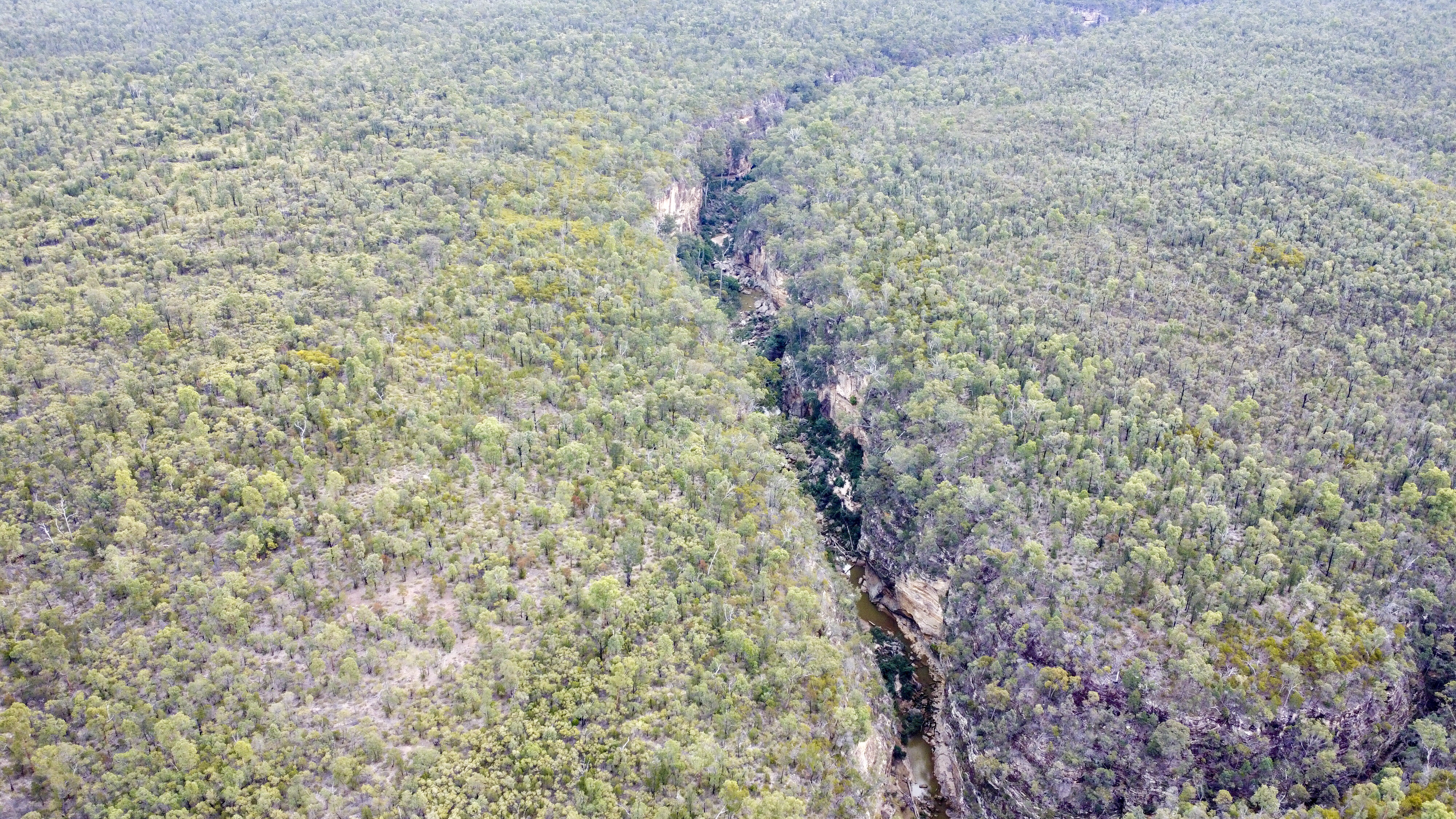
After an extremely quiet night at camp, we decided to head up through the park along the Robinson Gorge track and to the north. Signposted as ‘slippery when wet’ was a good intro to the track as it was low-range 4WD for its entire length. There are a stack of creek crossings, as well as rutted and narrow roads, and towing a large trailer through here is not recommended.
The plan was to cut across Oil Bore Road towards the wetlands of Lake Nuga Nuga in the Arcadia Valley. The lake is the largest natural waterbody in the Central Queensland sandstone belt, created 140 years ago when Browns Creek silted up. Today, it’s a natural haven for birds, water plants and more. There is bush camping on the lake’s shores, all overshadowed by Mount Warrinilla on the south-western end of the lake.
Lonesome
With a few hours under our belt counting numerous different bird species, we decided to keep heading up the Arcadia Valley towards the Lonesome section of Expedition NP.
It’s a spectacular drive through the valley, with the sandstone cliffs in the distance on both sides created after millions of years of weathering down the soft sands to leave behind only hardened rock. Like them or hate them, gas plants are scattered throughout the valley, pulling natural gas from the earth.
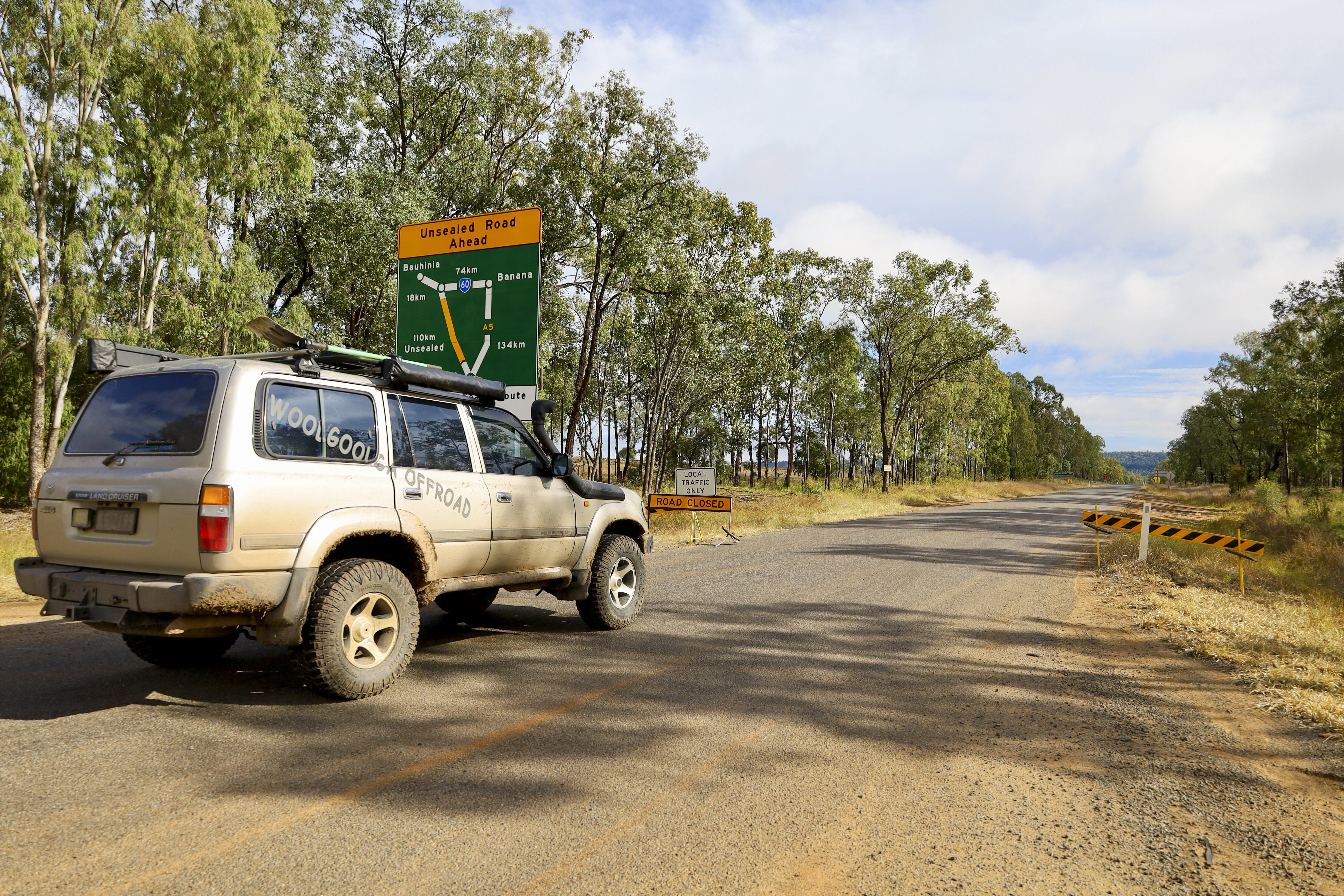
Our final camp was at the Lonesome bush camp area. There are no facilities but it’s easily accessible from Arcadia Valley road. Set high above the Dawson River and with high sandstone mountains above, it’s a beautiful setting to kick back and relax.
Sunrise on the high rocky cliffs with glowing colours from the ancient rocks is worth waking early for, but before leaving Expedition we decided to do a couple of loops around nearby plateaus.
By heading straight out of the camp and turning right, the loop around Mount Jiman is spectacular and we were graced by massive rock formations that are nearly 600m high – the vivid earth colours adorning the bare rock as we passed around the mountain.
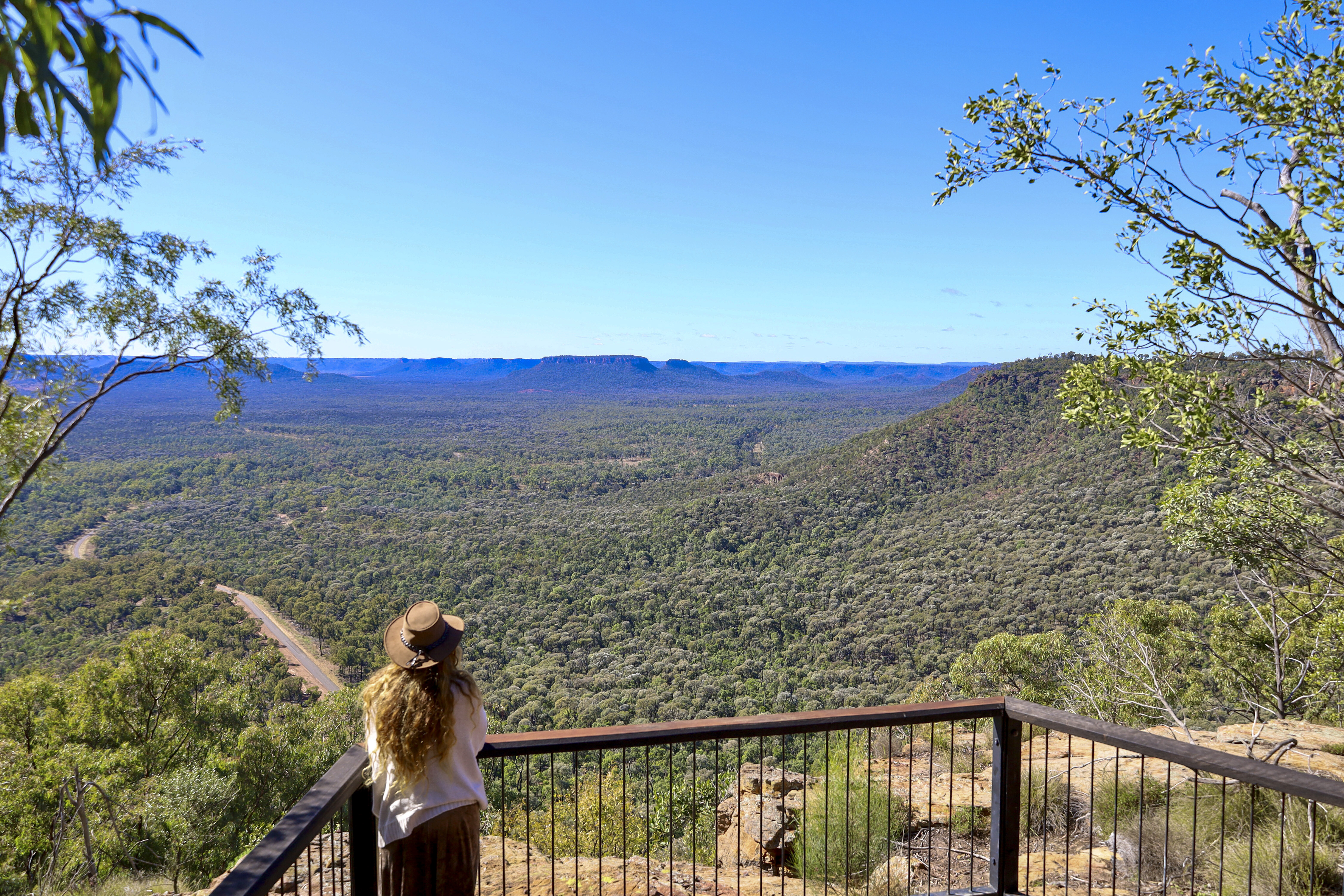
Leaving the Mount Jiman loop, we followed the National Park boundary trail to the top of Karingbal Pass. This trail is 4WD only, with several steep pinches and a multitude of creek crossings. It’s well worth the drive, where you’ll see huge age-old bottle trees, a variety of bush settings and different cycad plants.
At the top of the pass, a quick turn right down to the Lonesome lookout will leave you with breathless views eastward through the beautiful Arcadia Valley.
Ideally, the perfect time to be here would be sunset, where rich colours light up the surrounding sandstone cliffs. Ending our exploration here, it was an unexpected surprise finding history, 4WDing and spectacular scenery through Expedition NP, where it often gets overshadowed by nearby Carnarvon Gorge.
It’s worth the effort if you have a few days on your hands when touring Central Queensland, to explore this ancient landscape.
Top five
Taroom
The RV Friendly Town of Taroom, 380km north-west of Brisbane, has plenty to offer tourers and makes a great base to explore nearby local natural wonders, such as Chain Lagoons, Expedition and Gorge NPs, Flagstaff Hill, Lake Murphy Conservation Park, and excellent fishing at Dawson River, Glebe Weir and Palm Tree Creek. Annual events are mostly dedicated to the horse and horsemanship with the Taroom Races, Golden Horseshoe Campdraft, Taroom Professional Rodeo, Polocrosse Club Carnival and Dawson River Festival.
Expedition National Park
Located 500km north-west of Brisbane in the heart of sandstone country, Expedition NP covers an area just larger than 1000km². Some sections are accessible by a 2WD vehicle, but for the full experience a 4WD is highly recommended. It’s a remote park so you’ll need to be totally self-sufficient.
What to see
Expedition NP is all about serenity, where hiking trails lead you through the park and to different features, with 4WD tracks to explore, remote gorges and waterholes shadowed by huge sandstone plateaus.
Where to stay
There are several official campsites at Expedition. Lonesome bush camp has no facilities and is accessible by 2WD, but the Starkvale campsite in the heart of the park is only accessible by 4WD but has toilets, fire pits and non-potable water. On the western side of the park, Beilba camping area offers remote camping away from the crowds. For the hiker, there are walk-in camping areas throughout the park. Bookings are essential online.
Other info and maps
Most relevant and up-to-date information can be found here and includes closures, park management programs, maps, camping info and costs. Taroom Visitor Information Centre has relevant info when open. It can be found in the main street of Taroom, phone (07) 4628 6113.
The best camping tables in Australia all have a few things in common – they are durable, versatile and portable enough to be used on any camping adventure. Luckily, whether you want an outdoor camp cooking table, a camping dining table, or a side table to hold your beer and packet of chips, we’ve got you covered.
We’ve reviewed camping tables from Lifetime, Wanderer, Darche, Kings, Zempire, Spinifex and Trekology. To find the best camping tables, we compared the size, weight capacity and durability of each. However, we also looked at the versatility, portability and price to ensure these tables will give you maximum value for money.
Along with being tough enough to withstand the elements, these tables come with great features such as adjustable height, rollaway table tops and enough weight capacity to hold your barbecue and more. We’ve also included a buyers’ guide to help you decide what features and functionality you should be comparing when purchasing a camping table.
| Surface area | Weight capacity | Height | Weight | Packed size | |
|---|---|---|---|---|---|
| Lifetime Blow Mould Folding Table | 122 x 60.9cm | 340kg | 73cm adjustable | 8.2kg | 64 x 60.9 x 4.4cm |
| Wanderer Aluminium Folding Table with Storage | 120 x 60cm | 30kg | 70cm adjustable | 7.72kg | 64 x 18.5 x 30.3cm |
| Darche Traka 1800 Table | 180 x 70cm | 30kg | 70cm | 10.7kg | 70 x 60 x 11cm |
| Kings Portable Alloy Camping Table | 55 x 94cm | 20kg | 68cm | 5.3kg | 68 x 23 x 15cm |
| Zempire Kitpac Round V2 | 90 x 90cm (diameter) | 50kg | 70cm adjustable | 7.76kg | 93 x 26 x 12.5cm |
| Spinifex Square Aluminium Folding Table | 70 x 70cm | 30kg | 69cm | 2.75kg | Not specified |
| Trekology Talu Portable Camping Tables | 39 x 34cm / 56 x 45cm / 68.5 x 45.5cm | 13kg / 23kg / 23kg | 32cm / 40.5cm / 40.5cm | 0.85kg / 1.3kg / 1.5kg | 40 x 14 x 6cm / 56 x 15 x 6cm / 70 x 15 x 7cm |
Lifetime Blow Mould Folding Table
These Lifetime foldable tables are incredibly popular, and for good reason – you can use them anywhere. From campsites, to backyard cook ups, to the garden shed, this table has some great features and is built strong, with a whopping 340kg weight capacity.
Lifetime builds a whole range of durable tables. This particular one is 121cm long and is height adjustable, so you can use it at three different height levels. It has a large surface space that will allow you to use it as a dining table or as a multipurpose table for cooking and other activities.
The table top is made from high-density polyethylene, while the frame is powder-coated steel. To pack it away, it folds in half and has a carry handle for easy transport.
This table is versatile, and strong enough for you to use it for a range of purposes. It also comes with a two-year warranty to give you peace of mind. While they might not be the most portable tables on the market, they more than make up for it with their toughness and usability.
Things we like
- Weight capacity
- Height adjustable
- Durable
Not so much
- Weight
- Fold-down size
- No carry bag
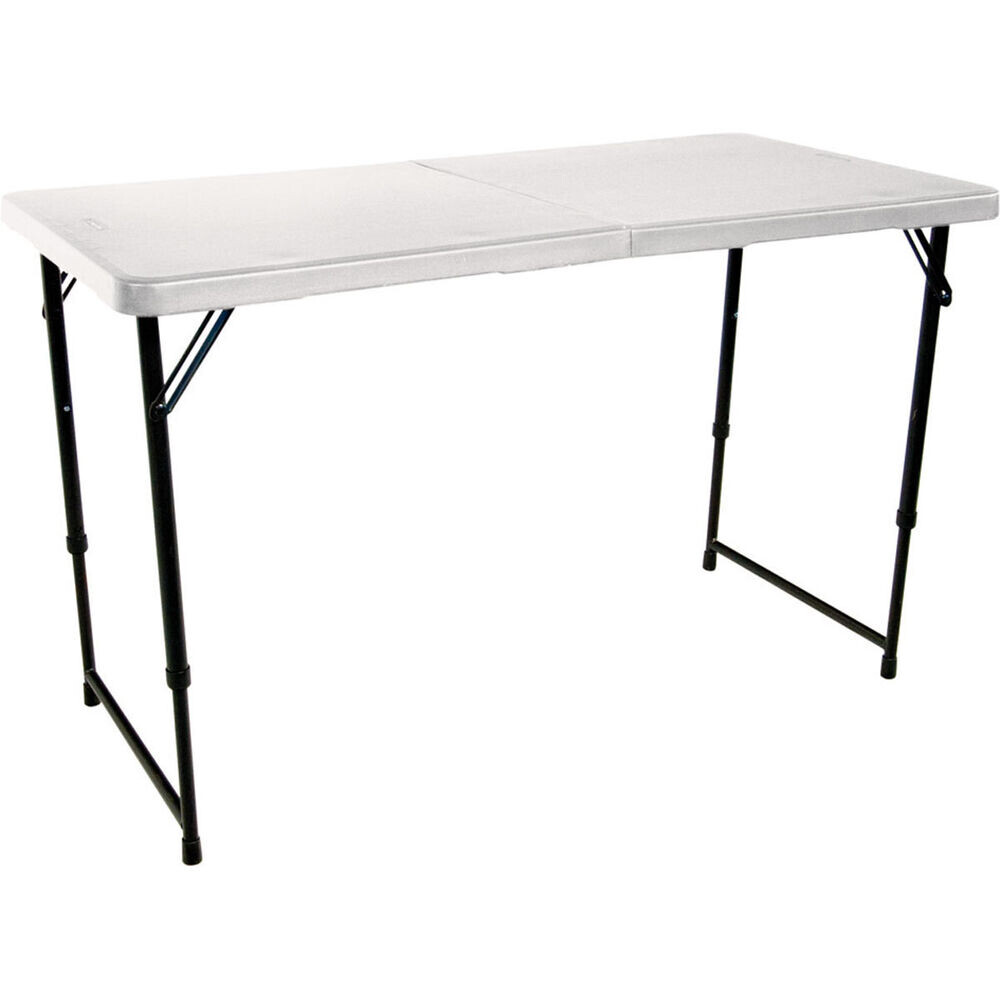
Specifications
- Surface area: 122 x 60.9cm
- Weight capacity: 340kg
- Height: 73cm adjustable
- Weight: 8.2kg
- Packed size: 64 x 60.9 x 4.4cm
- Surface area: 122 x 60.9cm
- Weight capacity: 340kg
- Height: 73cm adjustable
- Weight: 8.2kg
- Packed size: 64 x 60.9 x 4.4cm
Wanderer Aluminium Folding Table with Storage
The Wanderer Aluminium Folding Table with Storage is a great camping table option for cooking. With plenty of bench space and two large compartments underneath, you’ll have ample room to cook up an outdoor feast.
This camping table has a good amount of surface space and 30kg of weight capacity, which includes the storage pockets underneath. The hanging storage compartments have an internal wall divider and mesh covered walls to keep the bugs out. There are also handy side pockets where you can stash extra gear.
The polyester fabric and aluminium frame are built for the outdoors. Plus, the table is two-height adjustable, which will allow you to use it while seated or standing. There’s no reason why you can’t use it for a dining table as well, you just won’t have room to put your legs underneath.
The Wanderer Aluminium folds in half to be transported or stored and it has a handle for carrying. This is a durable, practical camping table that will no doubt become the centre of your camp kitchen.
Things we like
- Storage compartments
- Height adjustable
- Surface space
Not so much
- No leg space as dining table
- Low weight capacity
- Packed size
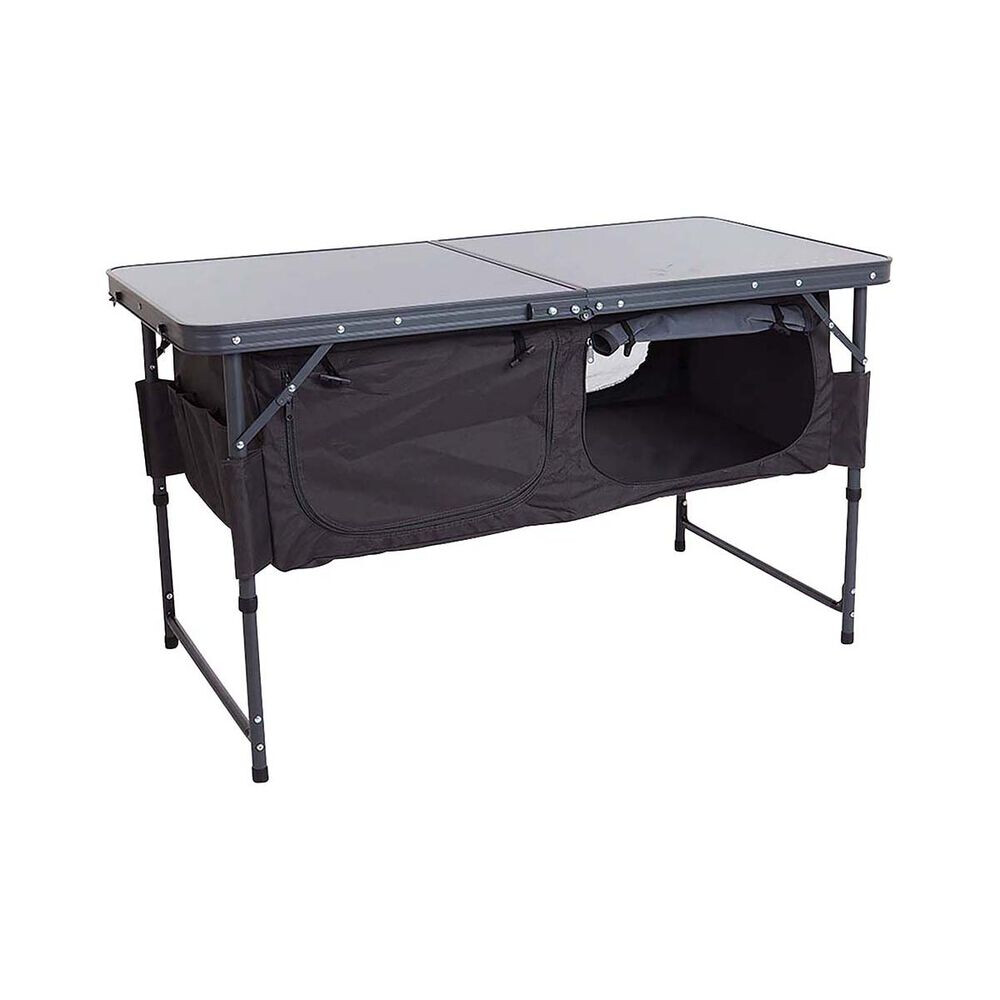
Specifications
- Surface area: 120 x 60cm
- Weight capacity: 30kg
- Height: 70cm adjustable
- Weight: 7.72kg
- Packed size: 64 x 18.5 x 30.3cm
- Surface area: 120 x 60cm
- Weight capacity: 30kg
- Height: 70cm adjustable
- Weight: 7.72kg
- Packed size: 64 x 18.5 x 30.3cm
Darche Traka 1800 Table
Darche’s Traka 1800 camping table is the largest of the tables we’ve reviewed. It has a heat resistant surface that is a great feature when using it as either a camp kitchen table or dining table.
The Traka is 180cm long and 70cm wide, giving you plenty of room to seat the whole family for dinner. It’s also the perfect table for food prep as it has an alloy surface that resists heat. This smooth surface also makes the table easier to clean.
For packing away and transporting, the Traka 1800 simply folds in half with the legs tucked up underneath the table top. It has a handle, but also comes with a carry bag that will prevent it getting dirty or scratched and make it easier to carry.
This camping table has individually extendable feet, which means you won’t have to worry about uneven surfaces. It also has impact resistant edges so there are no sharp corners to scrape yourself on. Although it’s at the higher end of the price range, with the features you are getting, the Traka 1800 is worth the investment if you spend a lot of time outdoors.
Things we like
- Heat resistant surface
- Extendable feet
- Carry bag included
Not so much
- Weight
- Pack-down size
- Weight capacity
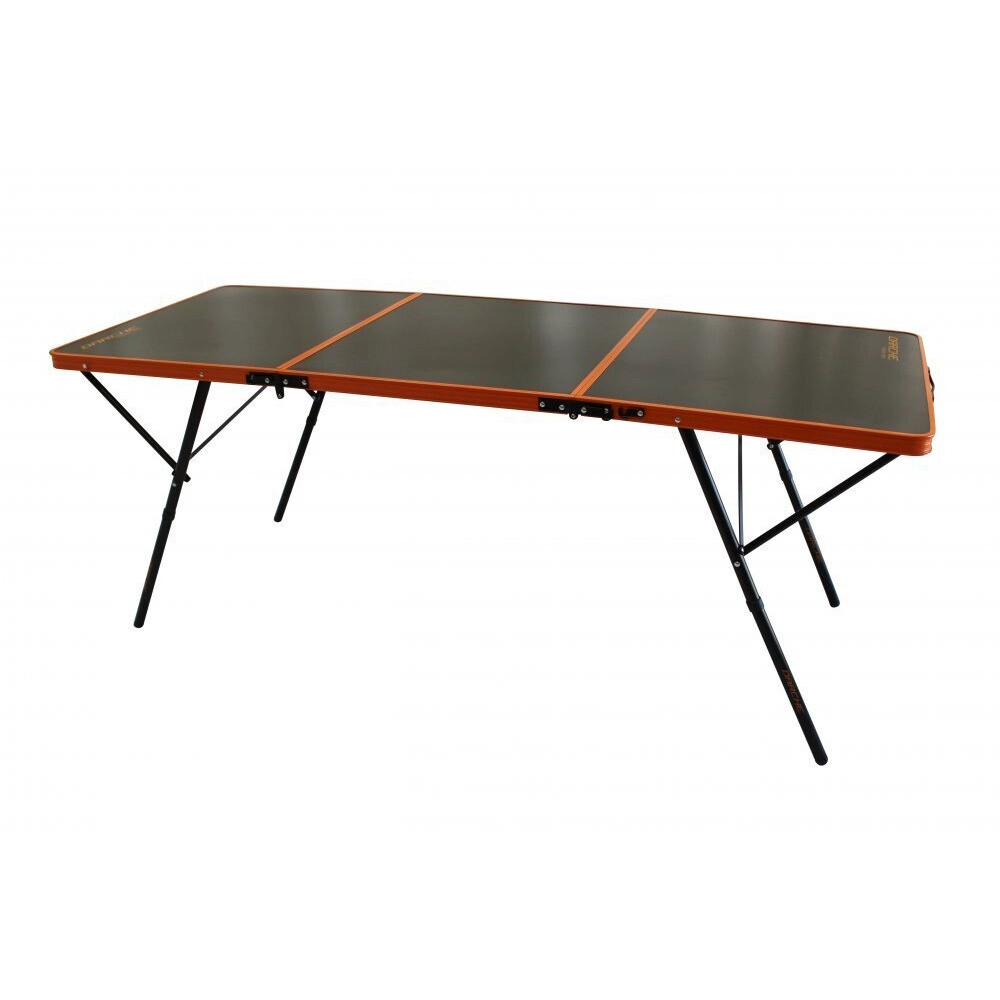
Specifications
- Surface area: 180 x 70cm
- Weight capacity: 30kg
- Height: 70cm
- Weight: 10.7kg
- Packed size: 70 x 60 x 11cm
- Surface area: 180 x 70cm
- Weight capacity: 30kg
- Height: 70cm
- Weight: 10.7kg
- Packed size: 70 x 60 x 11cm
Kings Portable Alloy Camping Table
The Kings Portable Alloy table is a mid-size, very portable camping table that comes at a great price. If you want a camp table that is convenient, easy to set up and doesn’t take up too much room when packed away, this is a great option.
A roll-up camping table is an excellent way to save space. This Kings camping table has a detachable table top that rolls up small. You can then fold-up the frame and store it along with the table top in the included carry bag.
While the height is slightly lower than other tables we’ve reviewed, the beauty of this camping table is the portability and ease of set up. To set it up, simply unfold the frame and attach the support beams on top. Then unroll the table top to secure it in place using the sockets at each end and two clips in the middle.
With a weight capacity of just 20kg, it is perhaps best used as a dining table or for food prep. However, it has a powder-coated aluminium table top and powder-coated steel legs, meaning you won’t have to worry about putting a hot pan on top of it, or leaving it out in the rain.
Things we like
- Roll-up top
- Portability
- Pack-down size
Not so much
- Height
- Weight capacity
- Not height adjustable
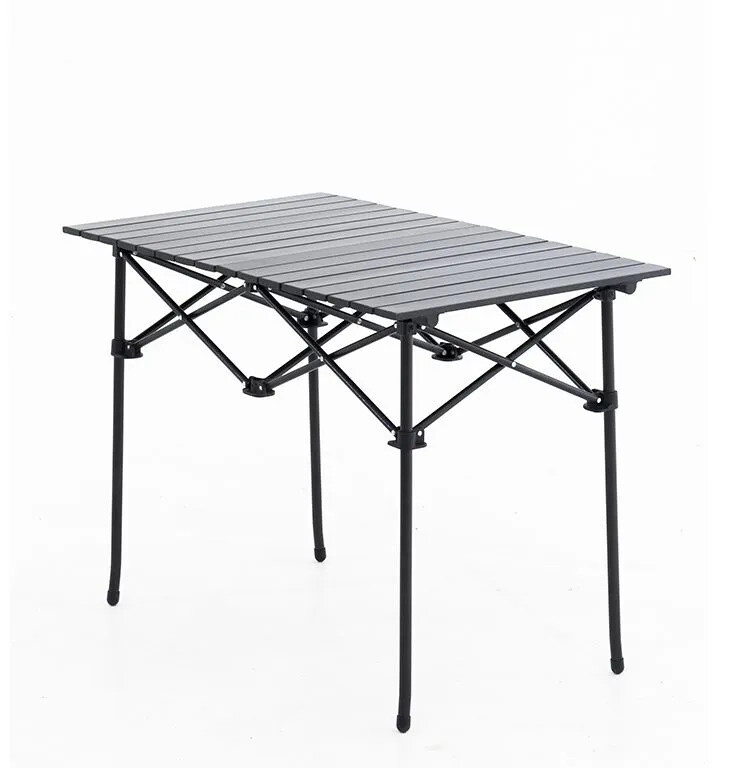
Specifications
- Surface area: 55 x 94cm
- Weight capacity: 20kg
- Height: 68cm
- Weight: 5.3kg
- Packed size: 68 x 23 x 15cm
- Surface area: 55 x 94cm
- Weight capacity: 20kg
- Height: 68cm
- Weight: 5.3kg
- Packed size: 68 x 23 x 15cm
Zempire Kitpac Round V2
Zempire’s Kitpac Round V2 stands out from other camping tables because of its round table top. It’s a stylish table that won’t suit all campers, but if you like the look of it, you’ll be pleased to know it is durable, portable and versatile to be used as either a dining table or coffee table.
The Kitpack Round V2 has a natural bamboo table top with a 90cm diameter. It has individual height-adjustable legs so you can still have a flat surface on uneven ground. It also allows you to use it as a dining table at full height (70cm) or lower it down to use as a coffee table or kids’ table.
This table is rated to hold up to 50kg, making it stronger than many other camping tables we’ve reviewed. To pack down, the table top folds in to four sections. The legs also fold up and you can store it all in the included carry bag.
The rounded shape lets you fit more people around it and it even has a sneaky bottle opener for when it’s time to crack a cold one. While it is at the higher end of the price range for camping tables, if you like a bit of style in your camping set-up, this table is all about it.
Things we like
- Round table top
- Height adjustable
- Bamboo surface
Not so much
- Surface space
- Price
- Bulky pack-down size
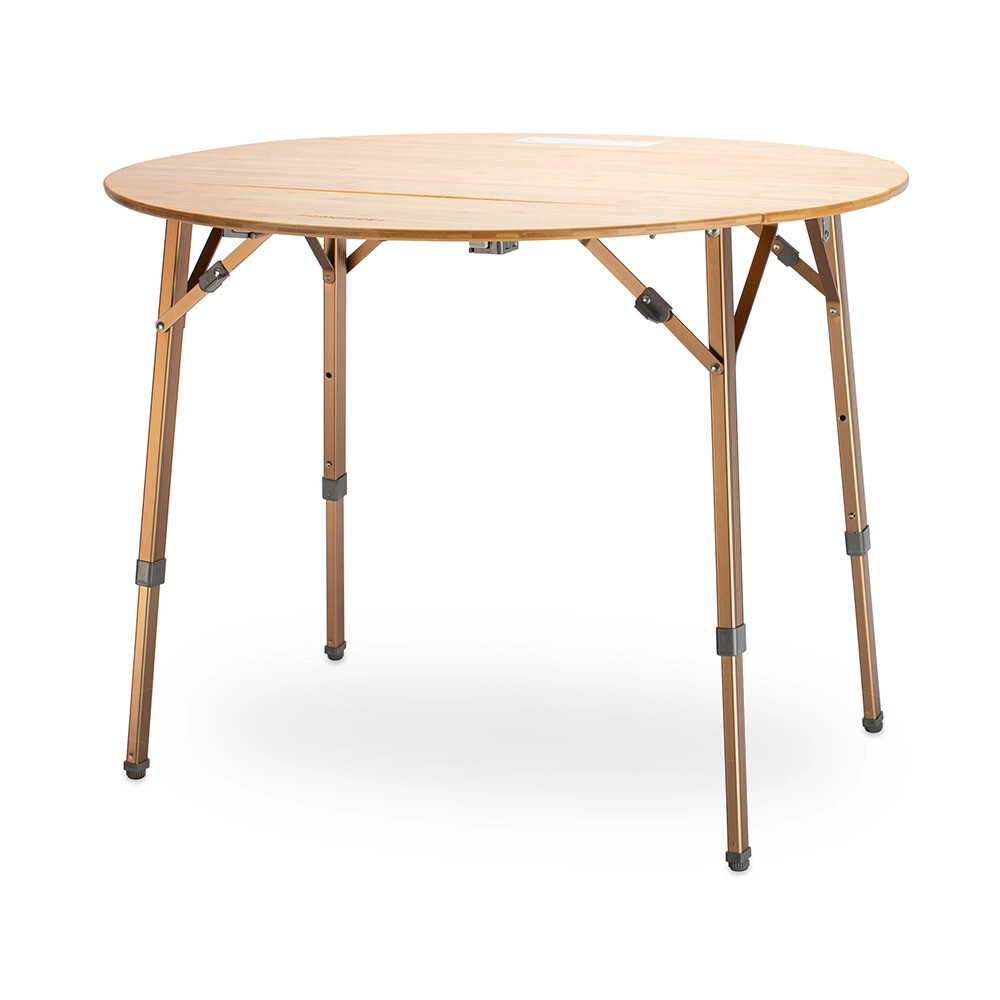
Specifications
- Surface area: 90 x 90cm (diameter)
- Weight capacity: 50kg
- Height: 70cm adjustable
- Weight: 7.76kg
- Packed size: 93 x 26 x 12.5cm
- Surface area: 90 x 90cm (diameter)
- Weight capacity: 50kg
- Height: 70cm adjustable
- Weight: 7.76kg
- Packed size: 93 x 26 x 12.5cm
Spinifex Square Aluminium Folding Table
Whether you want a two-person dining table or an extra dinner prep table, the Spinifex Aluminium folding camping table is a great option in terms of portability. It is lightweight, it packs down small and yet it is very durable.
This Spinifex camping table has a lightweight aluminium table top. The row of aluminium panels clip to the top of the aluminium frame for use and then roll up to be stored. The total weight is just 2.75kg, making it an easy option to be set up by just one person.
The 30kg weight capacity is more than enough for whatever you want to fit on this medium table, whether it’s your barbecue or a plate full of baked beans on toast. This folding table even comes with a carry bag for extra protection and easy storage.
While it’s not the most sturdy of the camping tables we’ve reviewed, it is durable to stand up to the elements, and you won’t have to worry about putting hot plates or pans on top of it. If you need an extra table for your barbecue, or a dining table for two, this is an easy, lightweight option at a decent price.
Things we like
- Weight
- Price
- Ease of set up
Not so much
- Not height adjustable
- For two people only
- Durability
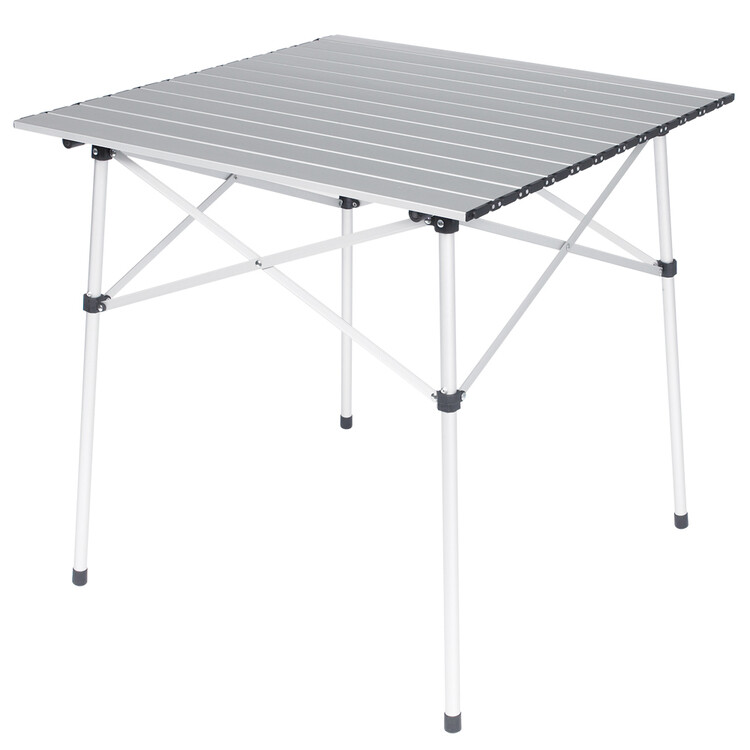
Specification
- Surface area: 70 x 70cm
- Weight capacity: 30kg
- Height: 69cm
- Weight: 2.75kg
- Packed size: Not specified
- Surface area: 70 x 70cm
- Weight capacity: 30kg
- Height: 69cm
- Weight: 2.75kg
- Packed size: Not specified
Trekology Talu Portable Camping Tables
For a lightweight, compact camping table, Trekology’s Talu Portable aluminium tables are a great choice. Folding down small and weighing around 1kg each, these are perfect to put in the backpack for an overnight hike, or stash in the car for an impromptu picnic.
For a lightweight hiking camp table, these Trekology tables are fairly inexpensive. They are, however, built to withstand the outdoor conditions. The table top is built from aerospace-grade aluminium alloy, making it tough, waterproof and weather-resistant. The rubber feet will give you stability on any surface.
These tables are designed to be used for meal prep, dining or as side tables. They come in three sizes and each packs down small by removing and rolling the table top, then folding away the frame. A carry bag is included to keep it all together when not in use.
While these tables are designed for hiking, they can also be a convenient piece of gear for car campers. Being so small and light makes them easy to throw in the back of the car and bring along on any camping trip.
Things we like
- Lightweight
- Portable
- Tough materials
Not so much
- Small surface
- Not height adjustable
- Versatility
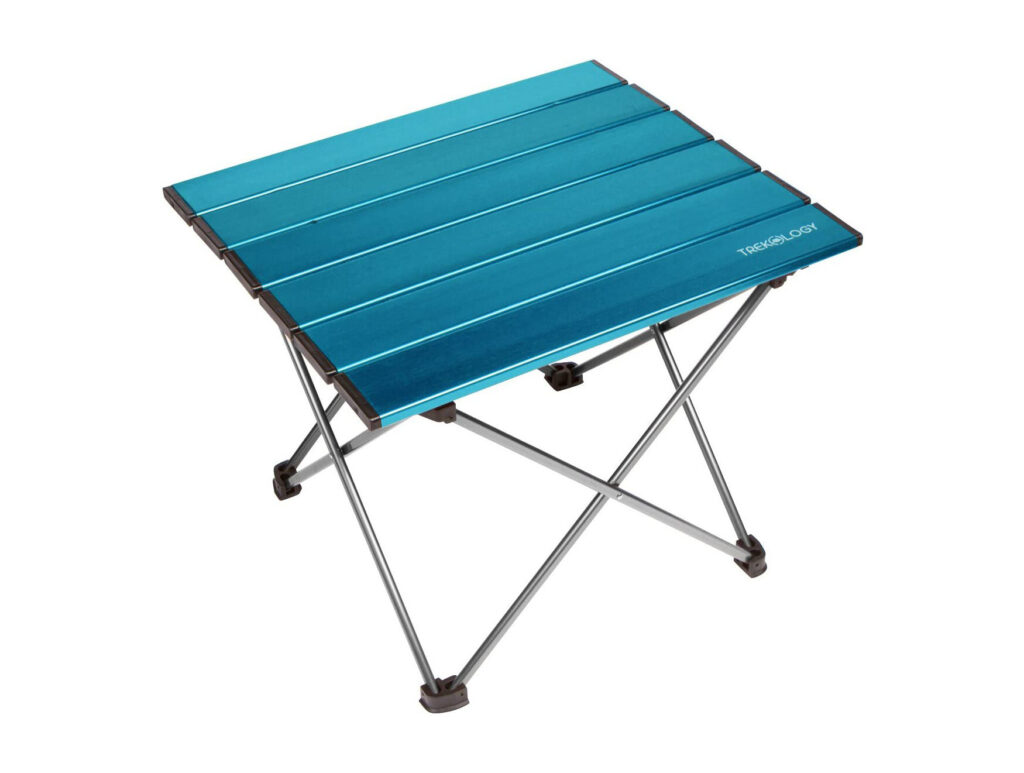
Specifications
- Surface area: 39 x 34cm / 56 x 45cm / 68.5 x 45.5cm
- Weight capacity: 13kg / 23kg / 23kg
- Height: 32cm / 40.5cm / 40.5cm
- Weight: 0.85kg / 1.3kg / 1.5kg
- Packed size: 40 x 14 x 6cm / 56 x 15 x 6cm / 70 x 15 x 7cm
- Surface area: 39 x 34cm / 56 x 45cm / 68.5 x 45.5cm
- Weight capacity: 13kg / 23kg / 23kg
- Height: 32cm / 40.5cm / 40.5cm
- Weight: 0.85kg / 1.3kg / 1.5kg
- Packed size: 40 x 14 x 6cm / 56 x 15 x 6cm / 70 x 15 x 7cm
How we review products
4X4 Australia has been reviewing four-wheel drive vehicles, aftermarket products and camping gear for more than 40 years. When looking for the best camping tables in Australia, there are some things that are essential to buying one which suits your style of camping.
When we compared each of the tables on the list with hundreds out there, we looked at the height, weight capacity and surface area, along with the versatility, portability and price. We also searched for additional features that make these camping tables stand out from the rest.
We looked at hundreds of user reviews and drew on our own experience using camping tables to make sure our recommendations are for the best on the market.
Disclosure: When you buy through our links, we may earn a commission. We also include products that we do not earn a commission from.
Buyers’ guide To camping tables
How to choose the best camping table
For this buyers’ guide to camping tables, we’ve broken down some of the key things to look for when purchasing a table to add to your camping kit. Buying a table might seem pretty straightforward – you just need something with legs and a table top right?
Well, the latest camping tables offer a little more than that, and for good reason. The camping tables we’ve reviewed are going to be a versatile, long-lasting addition to your camp set-up. So it’s worth putting a bit of consideration in to what you need in a camping table, before buying one.
Here are some things to consider before handing over your hard earned cash.
What do you need a camping table for?
Like most camping gear, before you purchase a camping table you should consider what you need to use it for. If it’s going to be the camp dining table, you’ll want space for everyone to sit around it. For a camp kitchen table, you’ll need to check the weight capacity and additional features like storage. Maybe you just need a multifunctional table, so versatility and height adjustment should be on your list of things to look for.
Weight capacity
Checking the weight capacity of your camping table is important, because if you overload it, you might just be eating dinner in the dirt. The camping tables we’ve reviewed have a capacity of 13 to 340kg. They will hold everything from a deck of cards and poker chips, to your heaviest camping gear. So, before you buy a camping table, think about what you’ll be putting on top of it.
Portability
Like most camping gear, portability is key with camping tables. You want to be able to take this with you on any camping adventure. For good portability, look for camping tables that fold up, have handles or carry bags and can be carried by one person.
Size
When assessing the size of your potential new camping table, take into consideration the surface area and the height, as well as the pack-down size. The surface area should be enough for whatever you plan to use it for – barbecuing, kitchen prep, seating everyone around the table at dinner time, etc. A larger surface will affect the pack-down size and portability of your camping table. The pack-down size is also important so you know you can actually fit it in the rig, along with all your other camping gear.
Weight
Weight will play a big part in how portable the camping table is. The tables we’ve reviewed range from 0.85 to 10.7kg. They can easily be lifted and set up by one to two people. They also won’t overload your car when packing for a long trip.
Ease of set up
A good camping table shouldn’t be too complicated to put together. To ensure an easy set up, look for table tops that are already attached to the frame. Or check the number of steps required to connect the table top to the frame. Tables that clip in place will be a lot easier to set up than any tables requiring tools to assemble.
Storage
Storing the camping table in-between camping trips shouldn’t be a big issue, so it’s worth checking the pack-down size and storage options before buying. Check how it packs down – flat, rolled or folded. Also, check whether it can be locked shut when folded and if it comes with a storage bag for some extra protection.
Materials
To check the durability of your camping table, choose one made from quality, long-lasting materials. Look for qualities such as powder-coated surfaces, waterproofing, heat resistance and rust-proofing. Also check the warranty period to ensure you are covered by a manufacturer’s warranty.
Versatility
It’s easier to get versatility in a camping table these days, thanks to modern designs and adjustable features. If a camping table is height adjustable, you can use it for dinner, for the kids, or as a side table for your camping chairs. In addition, if the table has a higher weight capacity it can likely be used for more purposes. However, larger tables won’t always pack down small and will require a bit of planning for how and when you use them. If you choose a camping table that packs down small, it will be more versatile to leave in the car and use it for picnics or impromptu occasions.
Price
A camping table doesn’t need to break the budget. The ones we’ve reviewed range between $45 and $250. If you choose a durable camping table made from quality materials, it should last longer, giving you more value for money. If you go camping often and plan on getting plenty of use out of your table, you might want to invest more money to ensure it lasts. If you only camp once in a blue moon, the budget options might just be suitable for what you need.
“I suppose it will start to get hard to buy diesel (fuel) soon,” said a mate in a resigned way as he pondered the viability of his diesel car in a future world of electric vehicles.
And it seems like my mate isn’t alone, given similar concerns I’ve heard voiced elsewhere. Well, I’m here to tell you that there’s no need to panic!
Diesel fuel will be available in this country for a very long time as the huge number of diesel utes, 4x4s, SUVs, vans and even diesel passenger cars currently on Australian roads, and the ongoing robust sales of diesel utes and 4x4s in particular, means the demand for diesel fuel and the commercial viability of selling it will be in place for a very long time.
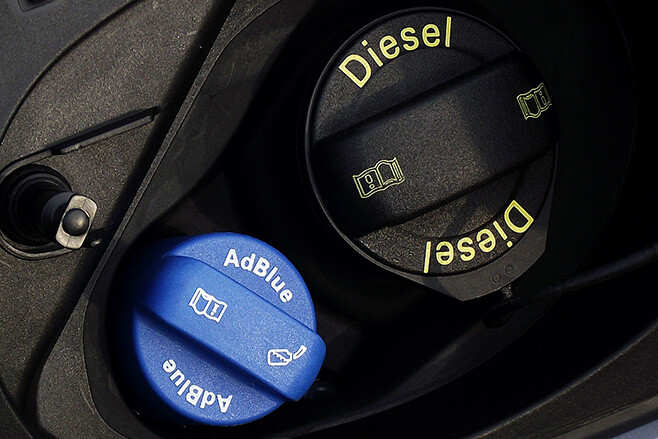
And, if nothing else, diesel fuel will be needed for the foreseeable future for heavy road transport here as electrification of our long-haul truck fleet is a very long way off, even if Europe and North America are starting to think that way.
Where there will be a defining change in the foreseeable future is that it will become increasingly hard and seemingly eventually impossible to buy a new diesel car, wagon or ute. The exact timeline on that is still a bit of a fogged-up crystal ball but there’s inevitability here.
Much of this will come down to exhaust-emission legislation and decisions yet to be made (at the time of writing) by the new Labor federal government with regards to the introduction of Euro 6 exhaust emissions standards.
Currently, all new diesel light vehicles sold in Australia must meet the less stringent Euro 5 standard. Light vehicles, by Australian law, are those under 3500kg Gross Vehicle Mass, which means all the currently popular 4x4s and utes. Even Toyota’s beefy 70 Series LandCruiser is considered a ‘light vehicle’ when it comes to emissions standards.
Most but certainly not all current Euro 5 diesel engines should be able to upgrade to Euro 6 without too much problem, and indeed there are many diesel engines currently sold here that are already Euro 6 compliant. However, and here’s the rub, anything beyond E6 starts to become problematic for current-tech diesels.
Under the schedule set out by the previous Labor federal governments (2007 to 2013) we would already be five years into Euro 6 implementation had Labor not lost office in 2013.
Under the various Liberal-National Party governments in power since 2013 up until 2022, Euro 6 was put on the backburner, which means the new Labor government may well feel justified in introducing Euro 6 in a short time frame and then look at Euro 7 (itself just being finalised in Europe) as soon as possible after that. We could see Euro 7 introduced here in a window that spans 2026 and 2027, assuming Labor wins the next federal election, which even now looks likely.
But no more diesel vehicles doesn’t mean no more petrol vehicles as petrol engines can more easily meet the exhaust-emission standards as they are currently framed.
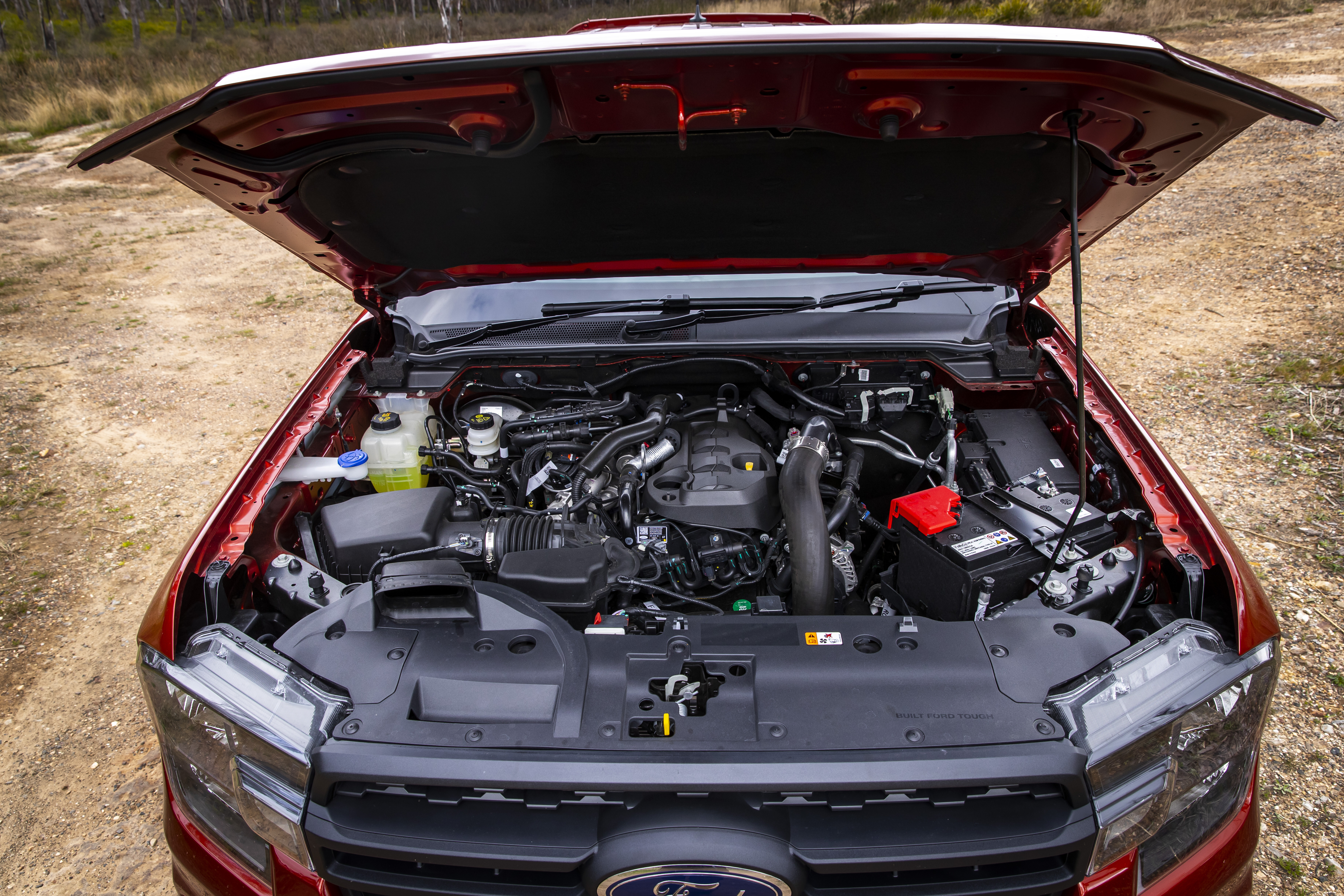
The emission problem with diesel compared to petrol is twofold: carbon particulates and the various oxides of nitrogen, collectively known as NOx. Modern diesels address these two problems with diesel particulate filters (DPFs) and selective catalytic reduction (SCR), commonly known as AdBlue to reduce NOx. Stricter standards however, make these inherent diesel problems increasingly harder to address.
Given these problems, you may well question why diesels, or more correctly turbo diesels, are so popular they effectively shut petrol engines out of the ute, 4×4 and van markets.
Well, diesels are inherently more fuel-efficient than petrol engines and produce relatively less carbon dioxide, commonly known as greenhouse gas, which is linked to global warming and climate volatility.
Legislative changes in Europe in the 1990s promoted the development and take up of diesel cars over petrol cars for this very reason. So, in helping to solve that major environmental problem, diesels have run into an environmental problem of their own making.
2022 Mitsubishi Pajero Sport GLS Deluxe long-term review
JUMP AHEAD
Part 1: Family friendly
Our family is no stranger to the Mitsubishi Pajero. My partner drove a 2002 model Paj for many years until recently, when the old girl met her maker on Victoria Pass in the Blue Mountains at almost 400,000km. May she rest in pieces.
Back in 2012, Mitsubishi loaned me a Pajero GLS for around 18 months when I was the editor of Camper Trailer Australia magazine. It served as the mag’s official tow-tug and I recall handing the keys back with some reluctance.
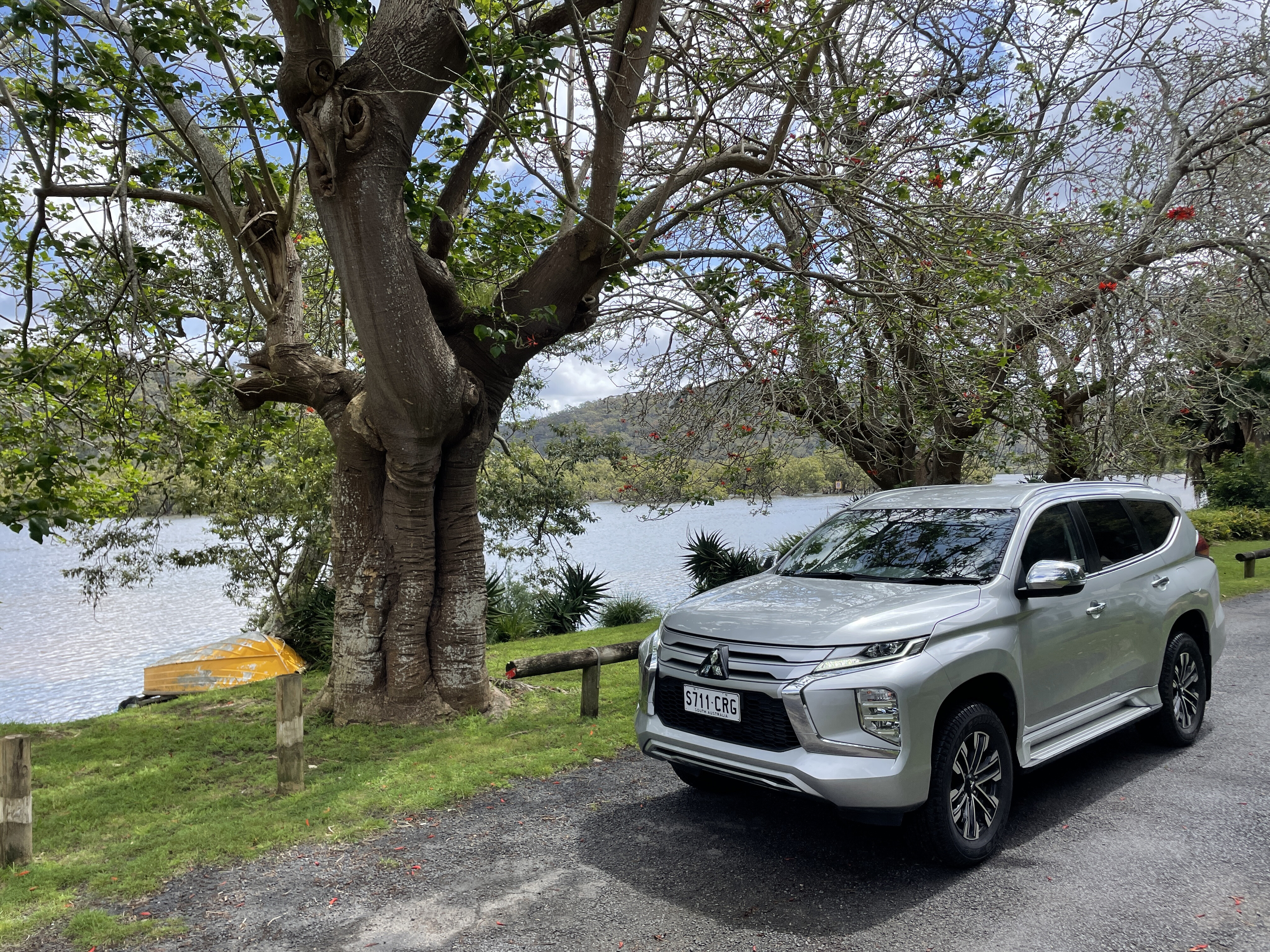
One decade, a sea change, two step-kids and a baby later, and I find myself in the driver’s seat of a Pajero long-term test car once more, but not as I know it.
The Pajero Sport is decidedly an SUV, comfortable and safe as a family mover, but with the goods on-board for proper weekend adventure. In short, exactly my type of car.
The spec we’re driving here is the Pajero Sport GLS 4×4 7-seater with the ‘Deluxe’ option pack, which adds leather-appointed seats, powered front seats and a 360-degree camera system.
In this configuration, the price is $55,940 before on-road costs.
So how does it hold up as the daily family ride and weekend adventure machine? I’ll be testing it over the coming months to find out.
I’ve had this Pajero Sport GLS Deluxe 4×4 seven-seater for nearly a month and have driven 1856km, using 216L of fuel. Average fuel consumption is sitting at 8.5L/100km.
The car got a workout off road when Wheels Media journos John Law and Evan Spence tested it against stablemate, the Mitsubishi Outlander in the Blue Mountains, which might account for the increase in consumption against the manufacturer-stated average of 8L/100km.

The GLS Deluxe Option is right in the middle of the range, giving it a few niceties that I appreciate, especially with a toddler on-board.
Safety features like auto-lock doors that kick in after a few seconds of driving, adaptive cruise control, auto-braking forward collision control, and automatic headlights and wipers make life behind the wheel a little easier when the toddler is screaming and you’re trying to shovel ‘Bluey bikkies’ in her mouth.
Leather seats are easy to wipe clean of sticky handprints, and electric front seat adjusters make it easy when I jump in after my 6-foot 3-inch partner has been driving.
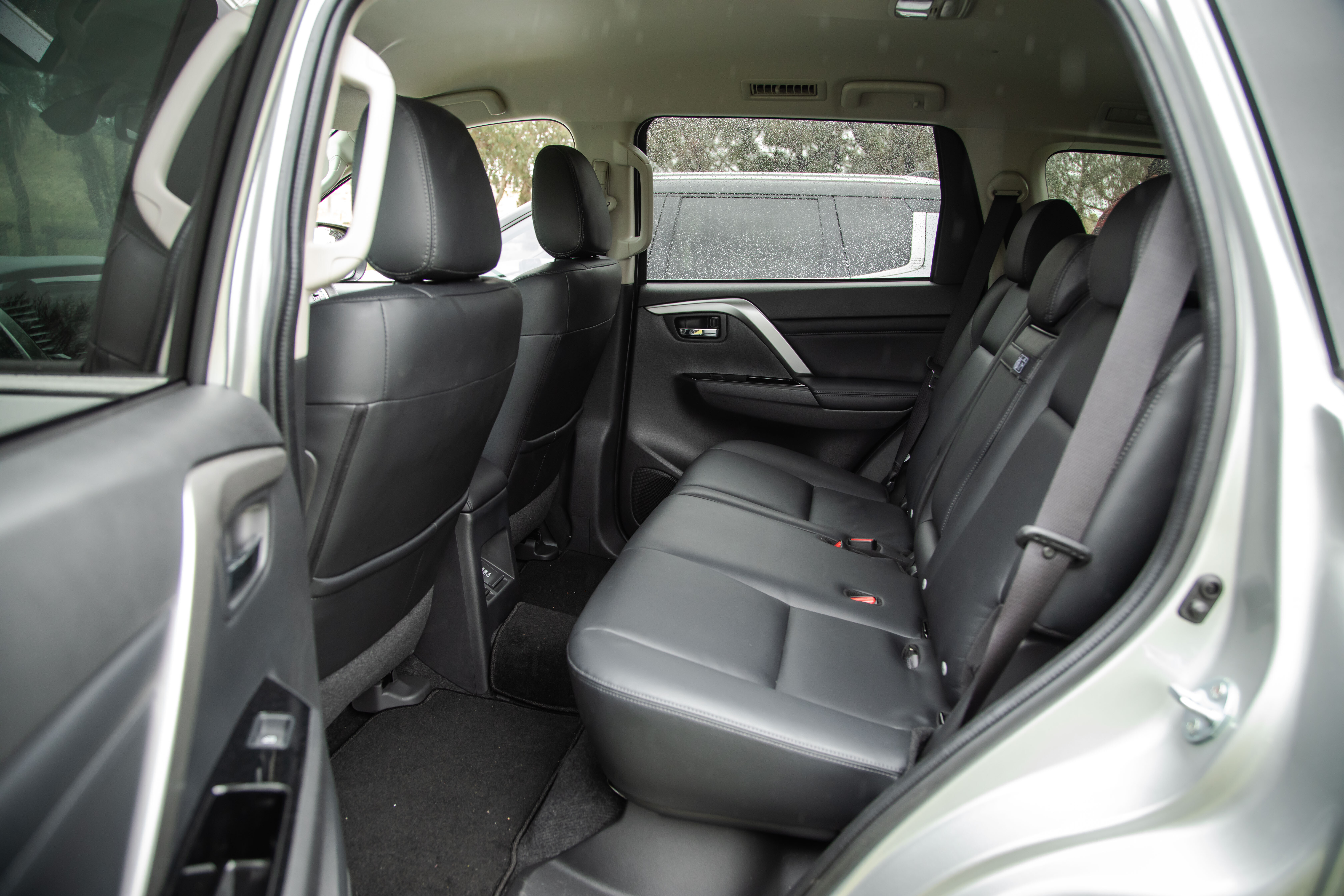
The toddler’s car seat is a breeze to install, thanks to the Isofix anchorage system that allows the seat to clip-in at the base. When my 9- and 11-year-old step-kids are with us, which is half the time, the seating configuration could not be easier.
For everyday driving, we drop one half of the third row of seats so one kid can sit in the far back (a spot they call ‘shotgun’ for), and the other in the second row with the middle space free between them and the toddler.
The seat mechanism on the Pajero Sport is ingenious. The third row of seats is erected simply by yanking a handle from the floor of the boot until the seat clicks in. When stowed, they sit flush against the back of the second row of seats, taking up minimal boot space and leaving a flat surface area for cargo.
Although boot space is minimal when both the third row seats are up (especially when compared with our Volvo XC90), by erecting only one of the two seats we have ample space for the pram, the school bags, and the groceries.
That third row can be easily stowed to allow for greater luggage capacity, and the boot can eat up to 502 litres of luggage when the third row is folded down. Folding all of the seats opens up 1488 litres and ample space: 1575mm (L) x 1370mm (W) x 885mm (H).
Of course, all three kids can sit along the second row of seats, as they did when we went on holiday to the Central Coast for the weekend and needed the full boot space for our gear.
Even with the bulky infant seat, the bigger kids still had adequate space and plenty of leg room. They enjoyed being able to operate their own air vents via a roof-mounted control panel and the two USB outlets meant there was no jostling for power when the iPad batteries waned.
We’ve had the car for three weeks now and thanks to our old pal La Niña, haven’t taken it off road or camping yet. When we do, we’ll need to consider how best to load all our camping gear and ourselves into what is a fairly compact vehicle. More on that next time.
Total kilometres: 5600km Date acquired: October 2022 Kilometres this month: 1856km Average fuel use: 8.6L/100km
Part 2: Family weekender
Over the past few weeks, our long-term Pajero Sport GLS has continued to serve dutifully as the family steed, carting the wee one to day care and the bigguns to school, swimming lessons, the beach, and the shops.
We even managed to find a moment when the diary and the weather conspired positively to allow us to sniff out some local tracks.
On road, the Pajero Sport is a comfortable but no-nonsense family mover, a little sluggish perhaps but with a prevailing feeling of security for its precious inhabitants. Off road, however, it feels decidedly more, well, sporty.
We poked around some tracks out the back of Picton near the Southern Highlands and had a great time. The Pajero is nimble and fun to drive off road, with the traction-control system providing more than adequate performance for the task at hand.
The front cameras came into their own when we straddled high ground in a particularly washed-out spot, and helped to avoid snagging the front bumper on rocks and other traps.
Front-end ground clearance could be better on the Pajero Sport, so being able to quickly flick to a front camera view is a handy tool for the driver while crawling in low range. The front, however, is protected by factory-fitted bash plates.
The inclusion of a rear differential lock enhances the vehicle’s off-road performance, while a solid rear axle and coil springs made for a comfortable travelling experience as the vehicle trundled along bush tracks.
Back on the tarmac, the Pajero Sport is right at home as an everyday family mover. Last month, I mentioned how much I like the third-row seat set-up (quick, easy, folds flat), and this continues to serve us well as we lug various configurations of kids and kids’ friends around the traps.
I would, however, prefer if the second row of seats was adjustable, because getting the toddler into her car seat would be a lot easier for me if I could slide the seat backwards. Presently, I have to lift her up, forward and around the bulk of the child seat, which is a bit tricky, particularly given I’m recovering from shoulder surgery. My much taller and stronger partner, on the other hand, has no trouble with this.
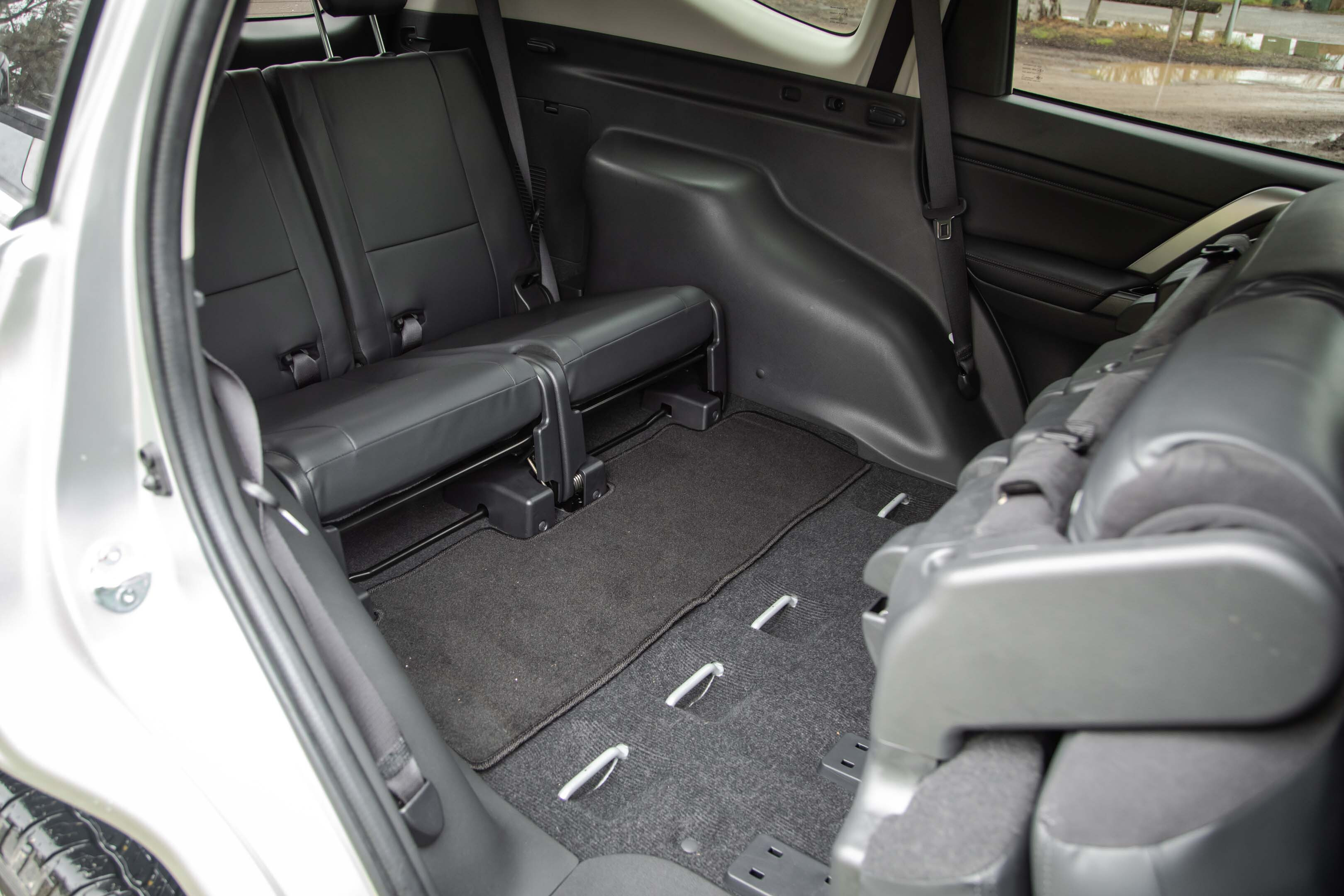
Miss 18-Months has decreed her favourite feature of the Pajero Sport to be the electric rear door, and gets most upset if button pushing duties are not left in her tiny, capable hands. For me, the jury is out. I have found the electric rear door to be temperamental, occasionally refusing to close, while chiming an alert alarm despite nothing being in the way.
A few times I’ve been left more baffled that your gaslit ex, with a door that simply refuses to close. Manual closing of the door is clearly not part of its intended design (it feels sticky and forced), but personally I’d rather have the option.
“The Pajero Sport is is a hard-working, utilitarian vehicle that doesn’t pretend to be something it’s not”
Sticking with electronics, my partner and I both lament the lack of memory function on the driver’s seat. Our preferred driving positions vary considerably because of the aforementioned size difference between us. Because we are both regularly driving the vehicle, we’re constantly trying to find the sweet spot. Our Volvo XC90 remembers driver seat and wing mirror positioning, so having to manually adjust each time feels a little rudimentary.
That said, after another month of use as a family all-rounder, my predominant sense of the Pajero Sport is that it’s a hard-working, utilitarian vehicle that doesn’t pretend to be something it’s not.
Total kilometres: 7911km Kilometres this month: 4167km Average fuel use: 9.05L/100km
Part 3: Bush therapy
This month was a fun one with the Pajero Sport GLS long-term loan car. Think winding rivers, wilderness bushland and crackling campfires. But more on that in a moment.
By now, our family has well and truly settled into life with the Pajero Sport. It feels like part of the family, such that the kids feel at liberty to stash empty Twisties bags in seat pockets and the newly chatty toddler points to its sleek silver form and declares: “Mumma car.”
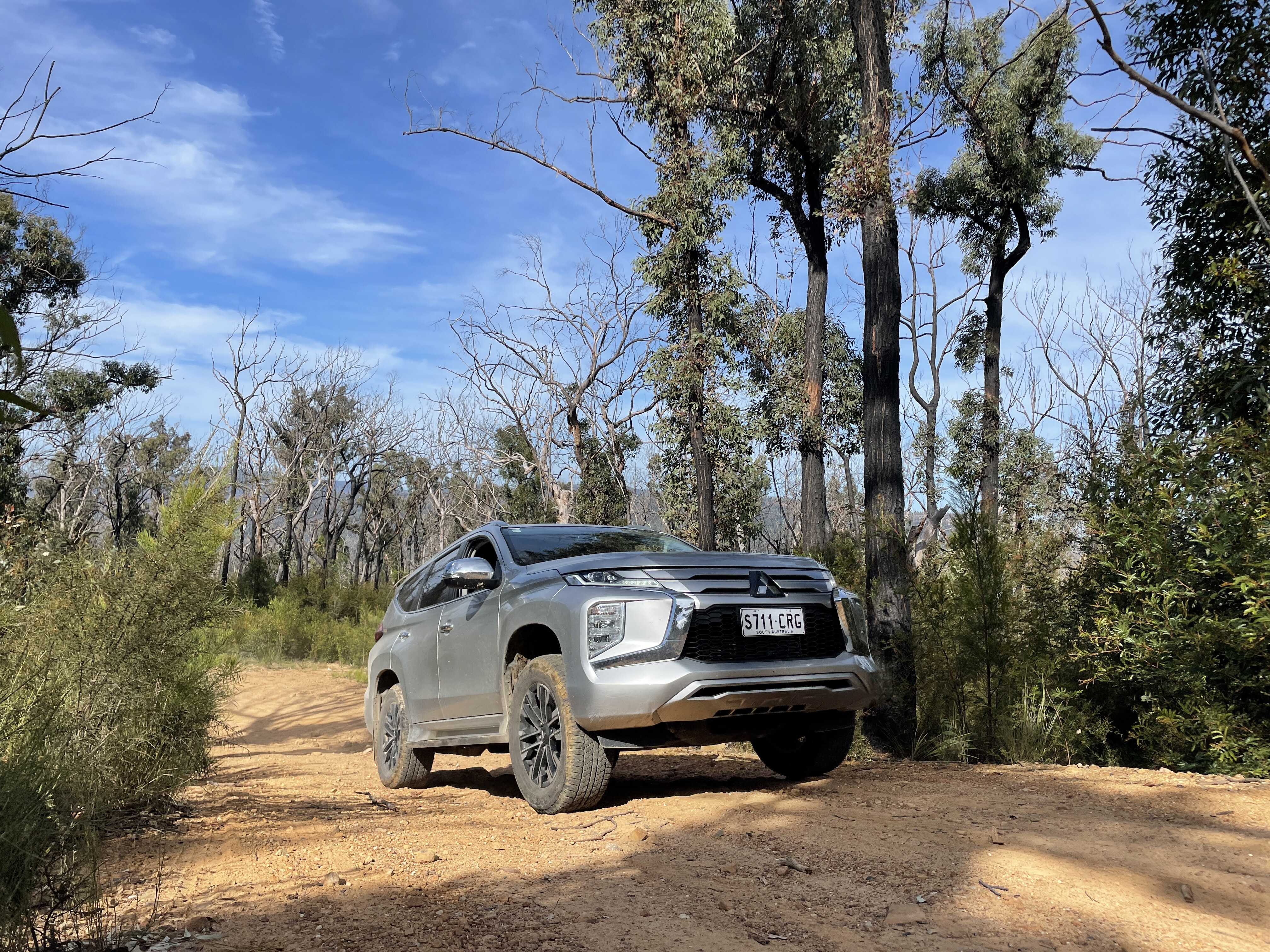
Amid the end of year chaos of school events, grocery runs and Christmas shopping (a nod here to the Sport’s smallish dimensions, excellent turning circle and helpful park-assist features), we actually managed to get away for a weekend.
We loaded our gear into the Pajero’s sizeable boot and headed south a couple of hours to a spot we like on the upper reaches of the Shoalhaven River. The sun was shining, and the mood was high. First stop: Kmart for inflatable pool toys.
Lazy river days
Coolendel is a private property campground around half an hour west of Nowra. It enjoys 2.5km of river frontage and is fringed by Morton National Park. The property is dotted with shaded campsites, glamping tents, a bunkhouse and a couple of cabins. The allure of the latter was too strong to resist with the toddler in the throes of a sleep regression.
We still took lots of gear, including a double mattress, our camp chairs and all of the endless stuff tiny people seem to need. It was a fully loaded boot, and if we’d been camping we’d have needed a trailer or a roof storage solution. But such is the life of a family of five.
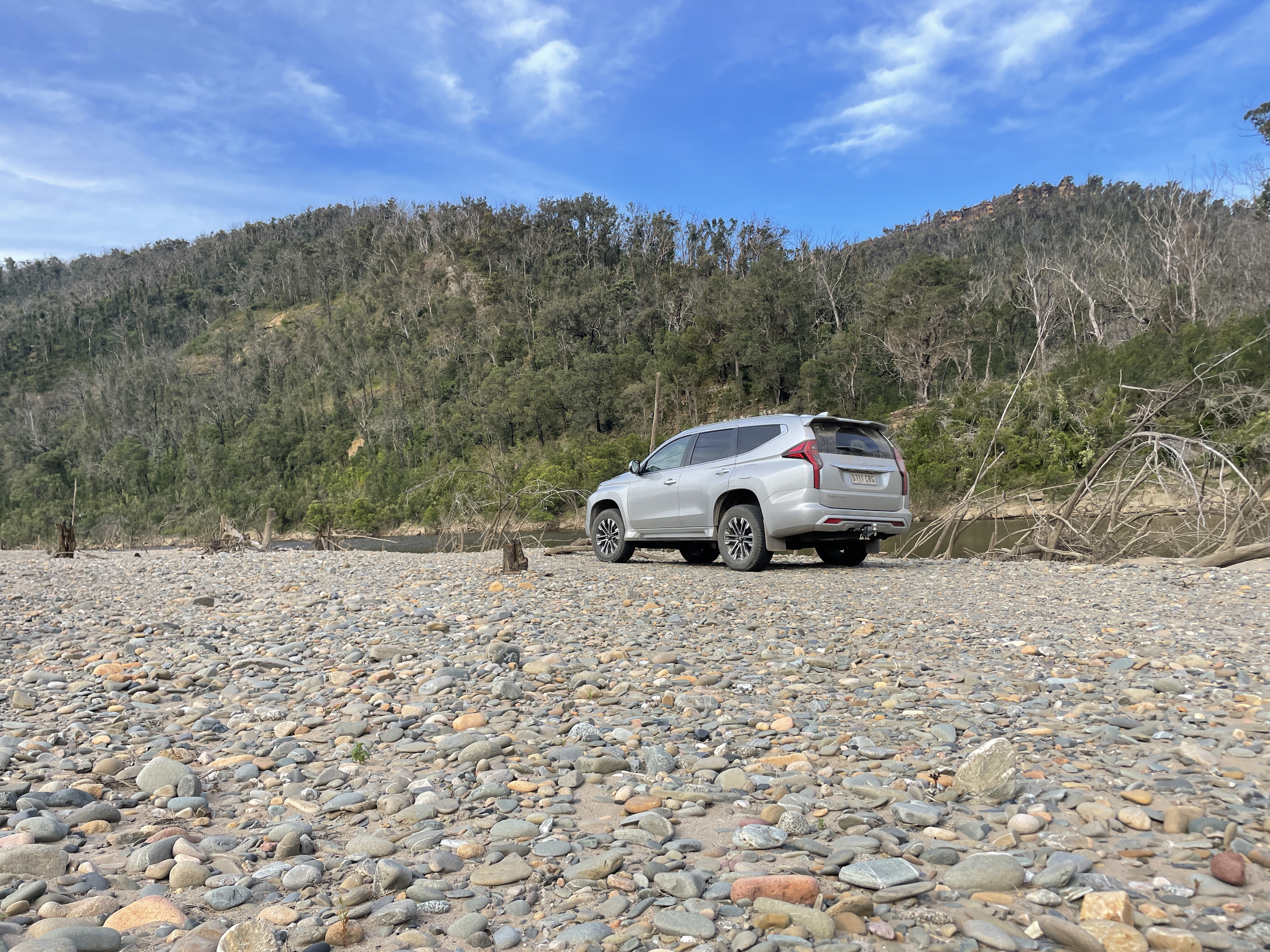
The best swimming spot at Coolendel was a bit of a trek from the cabin, so we loaded the kids and the tubes in the car when the time came for a splash. We were able to drive down on to the soft river sand and across the rocky shoreline to find a private place where the water was still and calm. We flicked the Sport in to ‘sand driving’ mode and the ride was comfortable and controlled.
Later, it was snags cooked on the fire, a marshmallow roasting tutorial and a baby asleep in the comfiest spot in the world: fireside on mum’s lap.
Morton mayhem
The next day, after negotiating a strange cavalcade of frisky peacocks, we asked the bloke at the front office for the low-down on some 4×4 tracks. He pointed to a few spots on a map and we set forth, loaded to the gunwales with sangers and snacks.
The Pajero Sport was a joy to drive on the winding, undulating tracks. It handled the terrain with ease, feeling steady and sure of itself across loose rocky sections and steep climbs.
Mum’s inner hoon roused from a long slumber and simmered menacingly to the surface to the horror and delight of all on board. The kids giggled and gasped with glee and the toddler, ever the life of the party, fell asleep. Testament to the Pajero’s ride quality; she stayed that way for an hour despite the twists, turns and bumps.
Along the way, we spotted incredible views of endless forested valleys and sandstone escarpments through the trees, which were thinned out by the Black Summer fires but recovering beautifully.
On the way home, with the kids passed out on the back seat, my partner and I chatted about wriggling a Pajero Sport into the budget. It’s weekends like this where the value in a car like the Pajero Sport becomes undeniable.
Through the week, it’s a hard-working family mover. Spacious but not lumbering, intuitive but not space age, comfortable but doesn’t frown on sticky fingers and errant chip packets. And when holidays call, the Pajero Sport’s fun-loving attitude shines through.
It’s confident and capable in taking you just about anywhere. The kids will see places out the window of the Pajero Sport that they’d never see from a softer SUV. The verdict is in: Mumma’s Car is a winner.
Total kilometres: 9967km Kilometres this month: 2056km Average fuel use: 8.89L/100km
Pajero Sport (Exceed) v Toyota Fortuner
2022 Mitsubishi Pajero Sport GLS Deluxe specs
Not everyone who owns a dual-cab ute hits the hardcore off-road trails or embarks on long adventures across the outback, and 4×4 utes are increasingly being chosen as the family car to take care of the school run and shopping trips.
However, more than 60 per cent of Australia’s roads are unsealed – so even though a dual-cab may not be frequently subjected to mud, sand or rock crawls, there’s a fair chance that at some point it will leave the asphalt behind and hit the dirt roads.
During our recent dual-cab megatest, we focused on a ute’s suitability for day-to-day on-road driving but this time we’ve reunited Australia’s two favourites for an (unsealed) road trip into Victoria’s High Country.

JUMP AHEAD
- How much are they and what do you get?
- Interior comfort and space
- What are they like to drive?
- How are they on fuel consumption?
- How safe are they?
- VERDICT
- Scoring
- Specifications
- Related videos
How much are they and what do you get?
All eyes will be on the Ford Ranger that has virtually aced every test thrown at it since its T6.2 generation was launched in June 2022 and has proven its superiority on- and off-road. But how will it go all day on corrugations and potholes?
It’s up against the venerable Toyota HiLux which, despite a steady flow of updates, some compelling features and a fearsomely loyal customer base, is slipping down the pecking order as many challengers catch up. Perhaps a new high-spec variant will turn the tables?
Much attention has been focused on Ford’s hero Raptor version of the Ranger, which has stolen some of the limelight from the former range-topping Wildtrak. And while it doesn’t get the defining twin-turbo V6 petrol and Fox suspension of the halo variant, it does now get an excellent turbo-diesel V6.
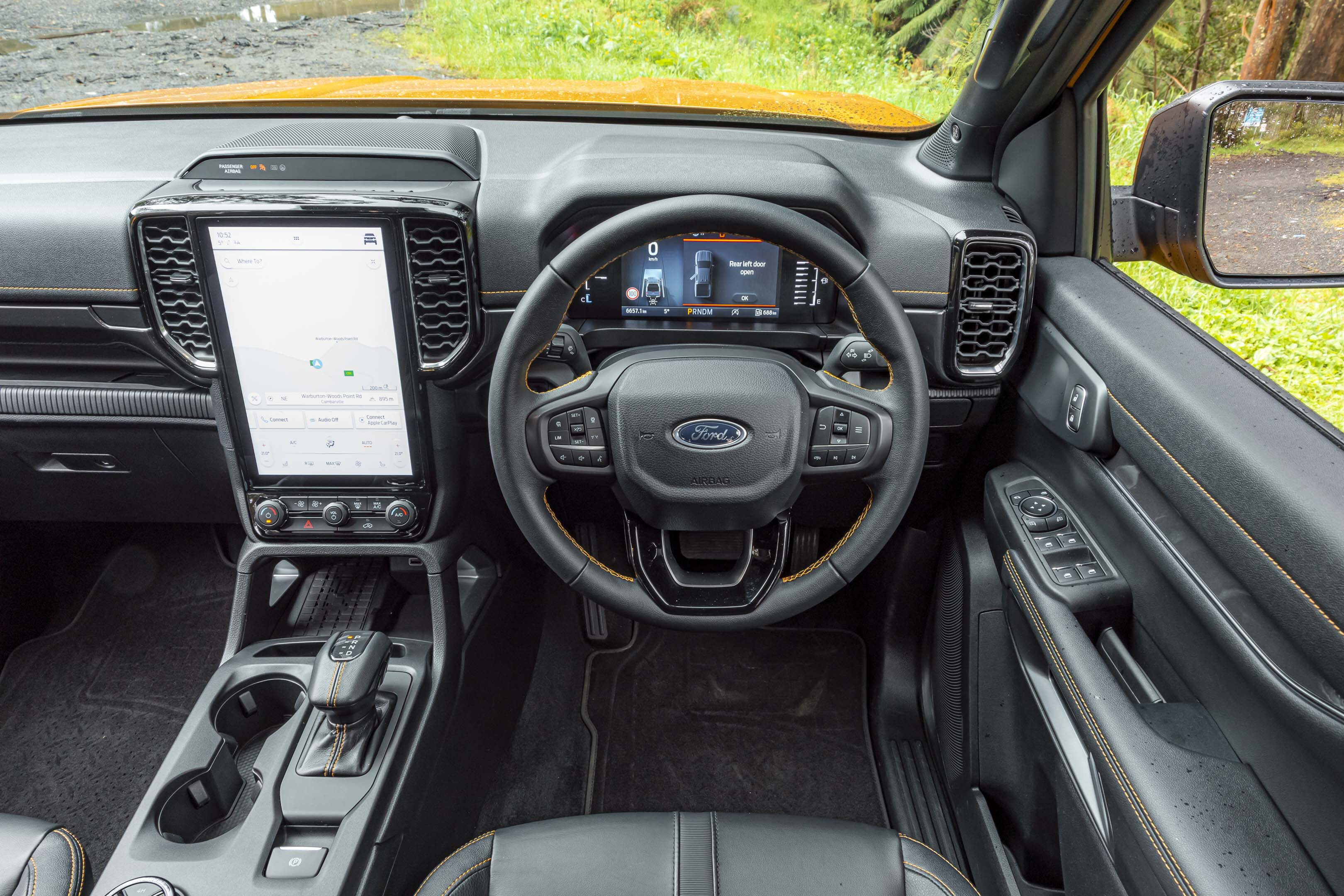
Toyota doesn’t have anything that could possibly compete with the Baja-battering Raptor, but its Rogue version of the HiLux has the Wildtrak firmly in its sights.
Pricing completes the picture with the Rogue on offer from $70,200 while Ford asks $70,190 for its Wildtrak (both before on-road costs).
Which is why this pair arrives on a very cold and damp morning in Warburton ready to do battle.
In response to a growing number of factory-modified-style utes such as the Nissan Navara Warrior, Toyota introduced a pair of toughened HiLuxes including the current range-topping Rugged X and this, the Rogue.
Based on the popular SR5, the Rogue adds to the list of standard equipment with a significantly modified chassis to boost off-road ability, says Toyota, and features a 20mm lifted ride height plus a 140mm widening of the track.
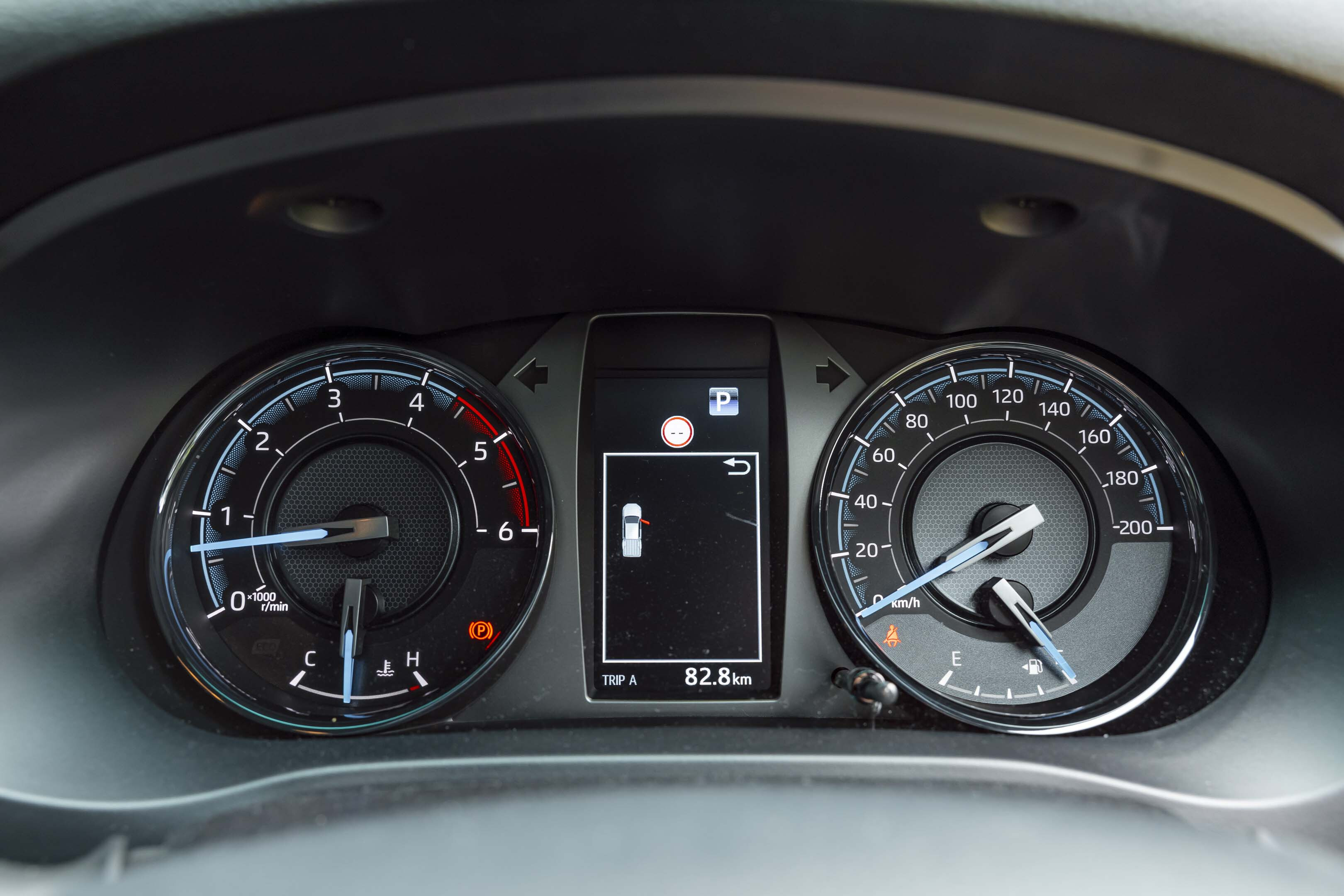
Its maker says it also inclined the dampers to further improve efficiency although we suspect the mod was a symptom of widening the track by such a significant degree. The rear of the Rogue is also modified, with the axle length extended, dampers moved closer to the wheels, and a rear stabiliser bar installed to ‘enhance cornering stability and ride comfort’.
Rounding out the suspension revisions are extended front and rear arms, and front anti-roll bar. Braking was also identified as an area of enhancement with larger front discs now measuring 17 inches, while rear discs and calipers replace the drums and cylinders of the SR5.
A new bodykit was also developed for the Rogue to accommodate the wider track, lending a noticeably different look and presence that distances it from the rest of the HiLux range along with its unique alloy wheel design, sports bar and Rogue branding throughout.
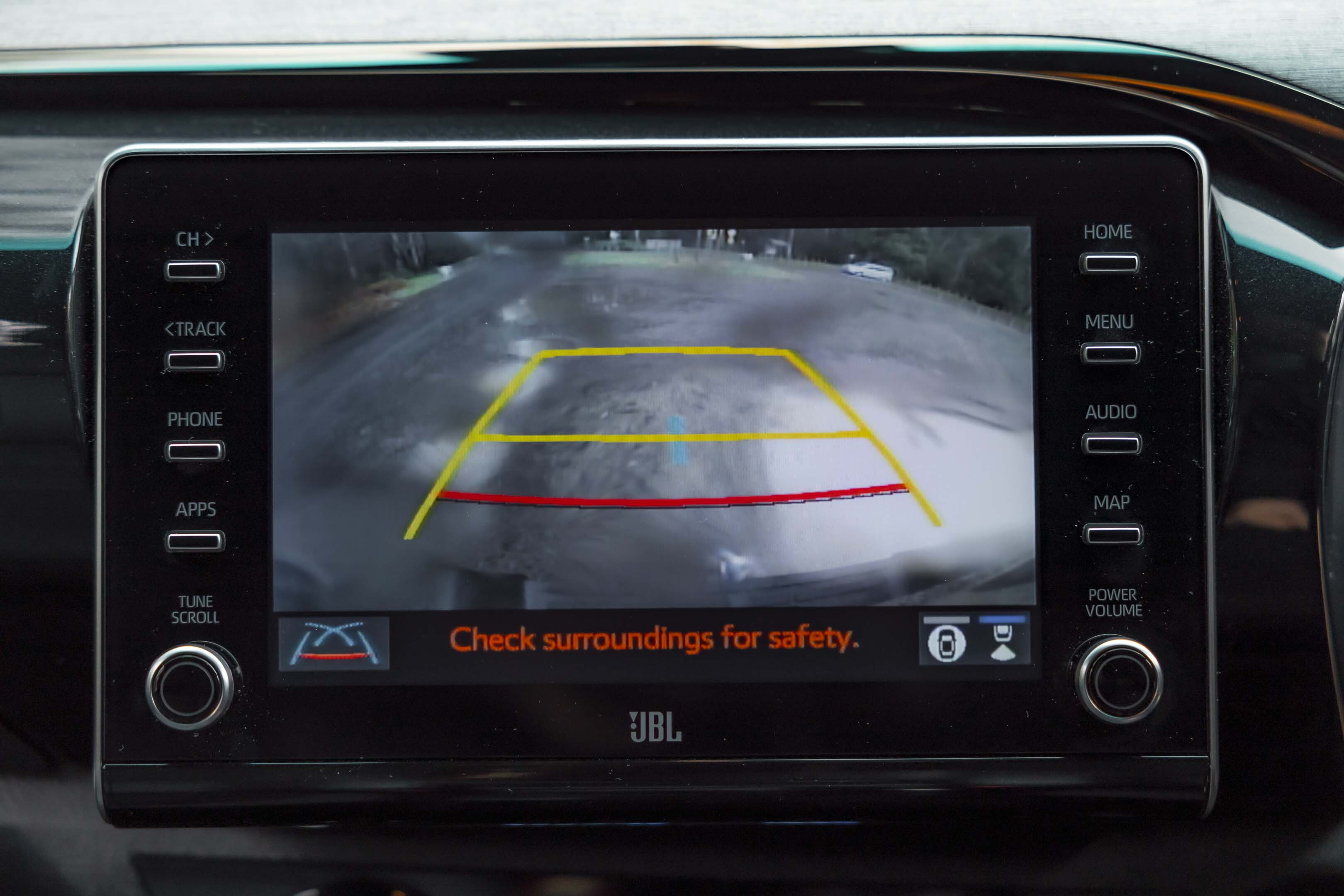
A JBL sound system, black roof lining and leatherish upholstery complete the list of equipment highlights included in the $9500 step up from an SR5.
The Ranger, by comparison, has gained very little to differentiate it from the lesser Sport V6 on which it’s based. For the $3500 it costs to upgrade, the signature moulded sports bar, different grille mesh design, Boulder Grey 18-inch wheels, roof rails and badging are the only features to distinguish the Wildtrak.
A few other goodies thrown include a trailer brake controller, power roller shutter for the load bay, ambient interior lighting, and electric adjustment and heaters for the front seats.
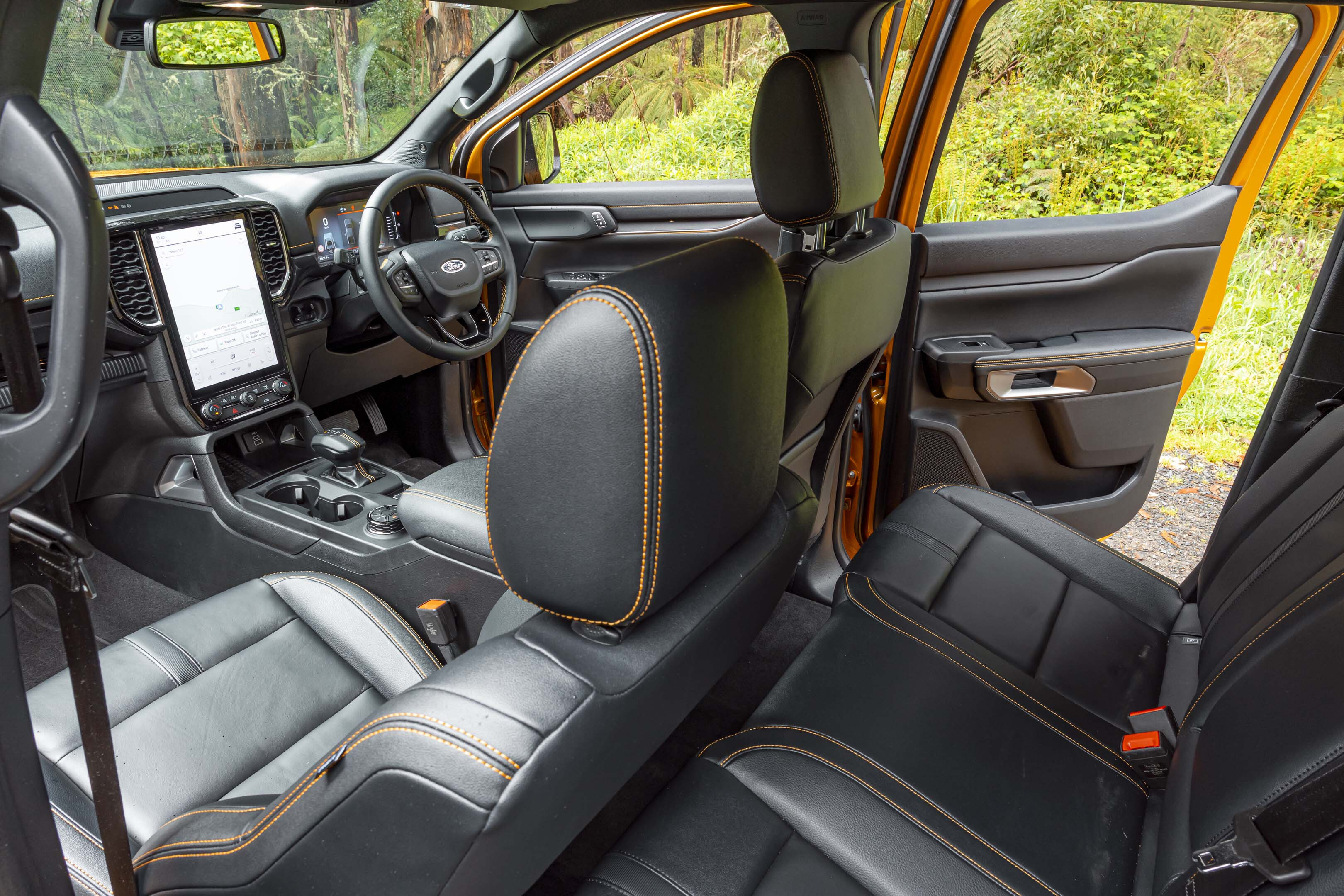
Interior comfort and space
From the 12-inch portrait-oriented touchscreen full of up-to-the-minute tech, through the superior driving position and ergonomics, to the Bang and Olufsen sound system that is beautifully integrated, the Ford’s cabin instantly stands out as the most premium, contemporary and, after a few kilometres at the wheel, the most comfortable.
The Toyota’s equally good JBL stereo looks very much like an afterthought.
Like the Ford, the Toyota also gets electric front seat adjustment and heaters although the latter feel a bit weak – perhaps it was just the unseasonal alpine weather. Both also feature a power roller shutter for the tray and although the Ford has a tough plastic liner with adjustable tie-down points, we particularly liked the Toyota’s full carpet lining that not only protects the paint but also the items being carried.
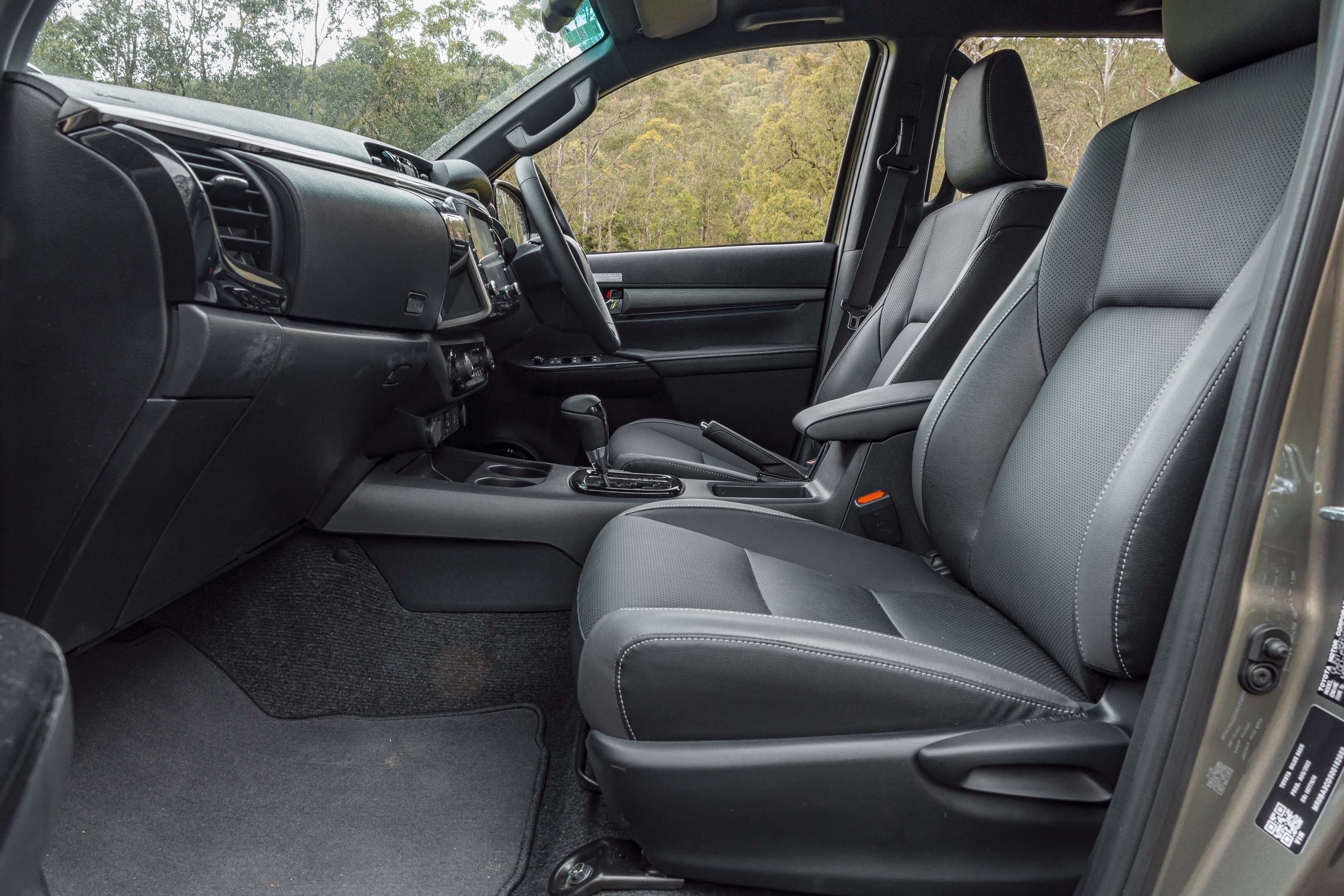
The Ford’s interior is spacious and modern with excellent technology – not just compared with the Toyota but all dual-cabs. Highlights include a large digital instrument cluster and practicality in the form of numerous clever storage options, and overall quality and finish.
It also offers one of the most spacious cabins for front occupants and contemporary touches such as an electric park brake, which frees up even more space, and the Ranger is one of the only one-tonners to offer USB-C charging sockets.
Step into the HiLux’s cabin and it feels a bit like going back in time with a dated design, and strange ergonomics – telescopic steering column adjustment is now included but it doesn’t extend far enough – while the gear selector looks like something Mercedes stopped using in the 1990s.
Finally, the Toyota’s interior feels cramped, especially in the rear seats where a church pew-like bolt-upright backrest and short knee room will get old for occupants very quickly.
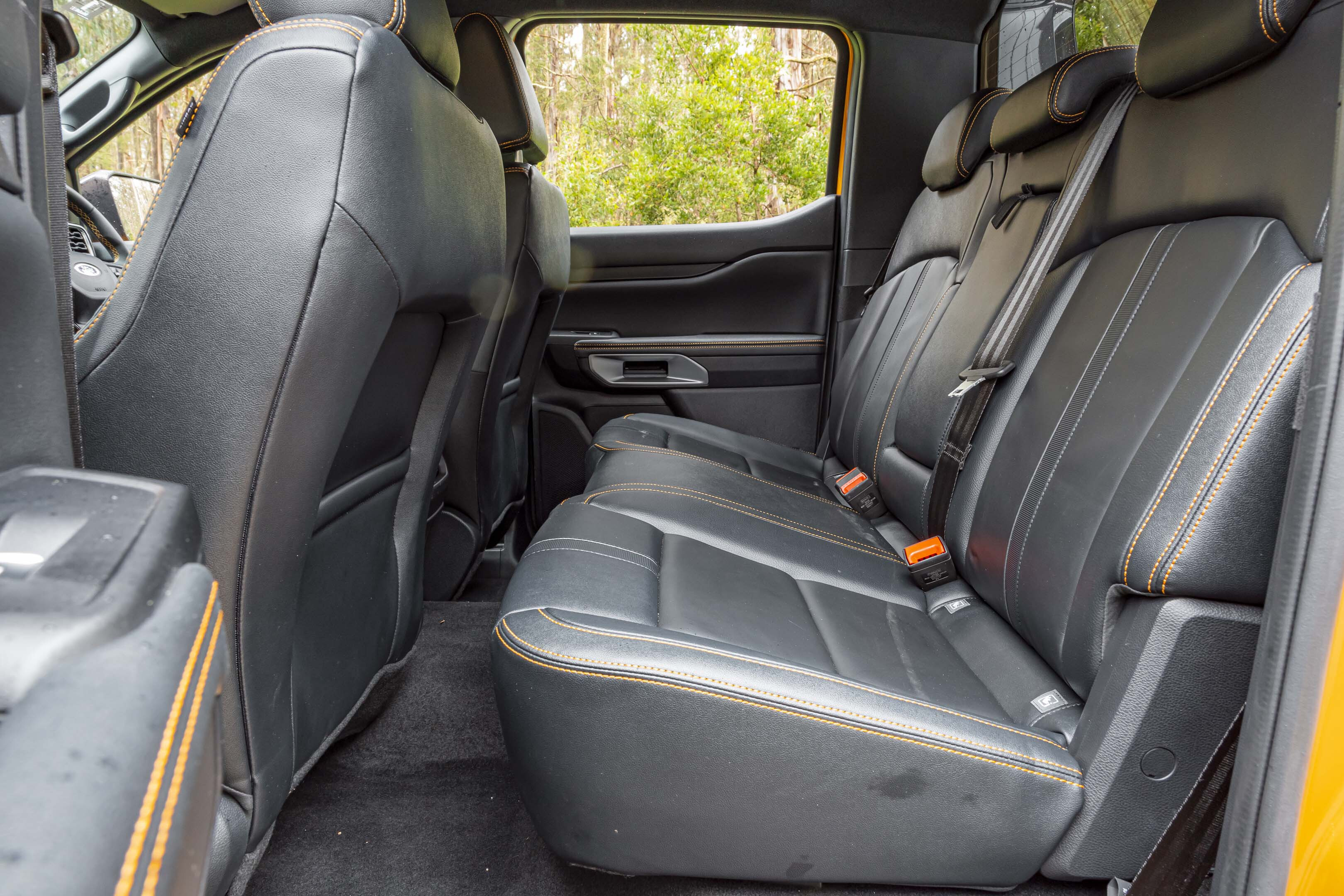
What are they like to drive?
Even before you turn a single wheel in this pairing, the HiLux and Ranger are stacking up to be wildly different beasts, and the void gets even bigger on the trail.
The Hilux’s 2.8-litre four-cylinder diesel was updated with the most recent mid-life refresh and its power and torque bump to 150kW and 500Nm was very welcome, but the dependable donk has a decidedly agricultural clatter that permeates the cabin a little too much. Performance is respectable and ushers the Rogue along with enough pace, at least when unladen.
Its six-speed automatic transmission feels similarly old-school and really stands out in a car park of other utes which offer seven, eight and 10-speed autos with smoother operation and better fuel economy.

The Ford is one such model that features the market-leading 10-speed automatics, which is not particularly new to the Ford family but a recent revision of its calibration has bred out the irritating tendency to constantly hunt around the ratios. An occasional reluctance to kick down was the only gripe we could find.
Bolted to it is Ford’s 3.0-litre turbocharged V6 diesel, which is certainly not the newest or most sophisticated diesel on the market, but after switching from the HiLux the Ford engine feels like a jet engine in both smoothness and performance.
With 184kW and a beefy 600Nm under your toe, the Wildtrak deserves its name. Torque is abundant and, unless deliberately told to switch to rear-wheel drive, the Ranger’s permanent variable four-wheel-drive system distributes grunt and grip superbly on loose surfaces.
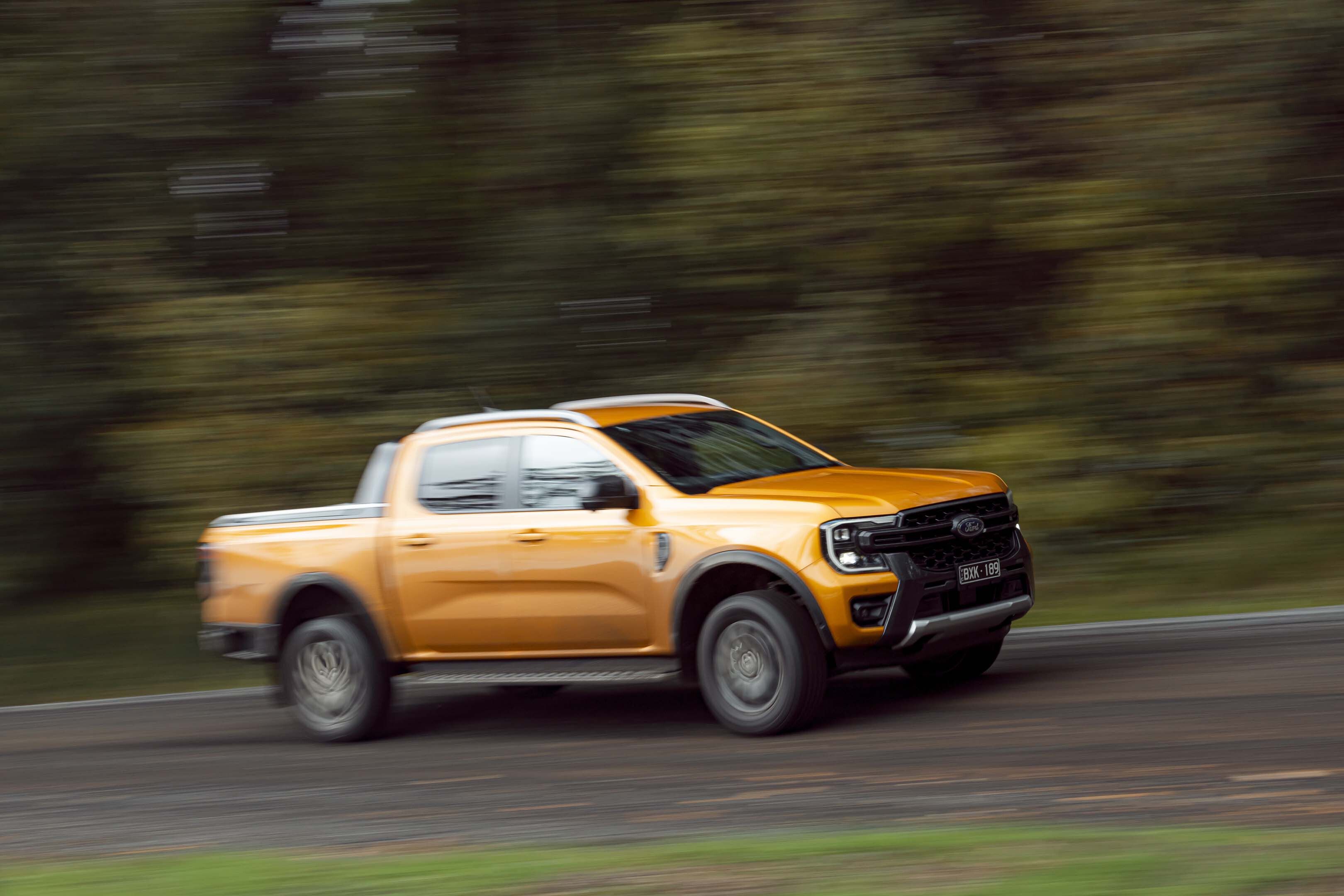
It also has a very finely calibrated stability control system that’ll allow enough slip while keeping the power flowing, whereas the Toyota is too keen to shut the taps when things get slippery.
The Ford’s cabin is also wonderfully quiet and even its no-cost-optional Goodyear Wrangler Territory AT/S rubber doesn’t infiltrate the interior with grumbling on any surface.
Winding through snow-dusted and damp trails, the Ford demonstrated the same composure and confidence we’re becoming accustomed to on sealed roads and its steering has a connected feel without too much kick from surface damage and no rack rattle to speak of.
Easily the biggest difference between the pair, however, is in the ride quality and resulting roadholding. While the Toyota’s uprated suspension crashes and bangs through potholes, the Ford’s unmodified chassis is sublime by comparison, filtering out even the biggest impacts with eerie precision.
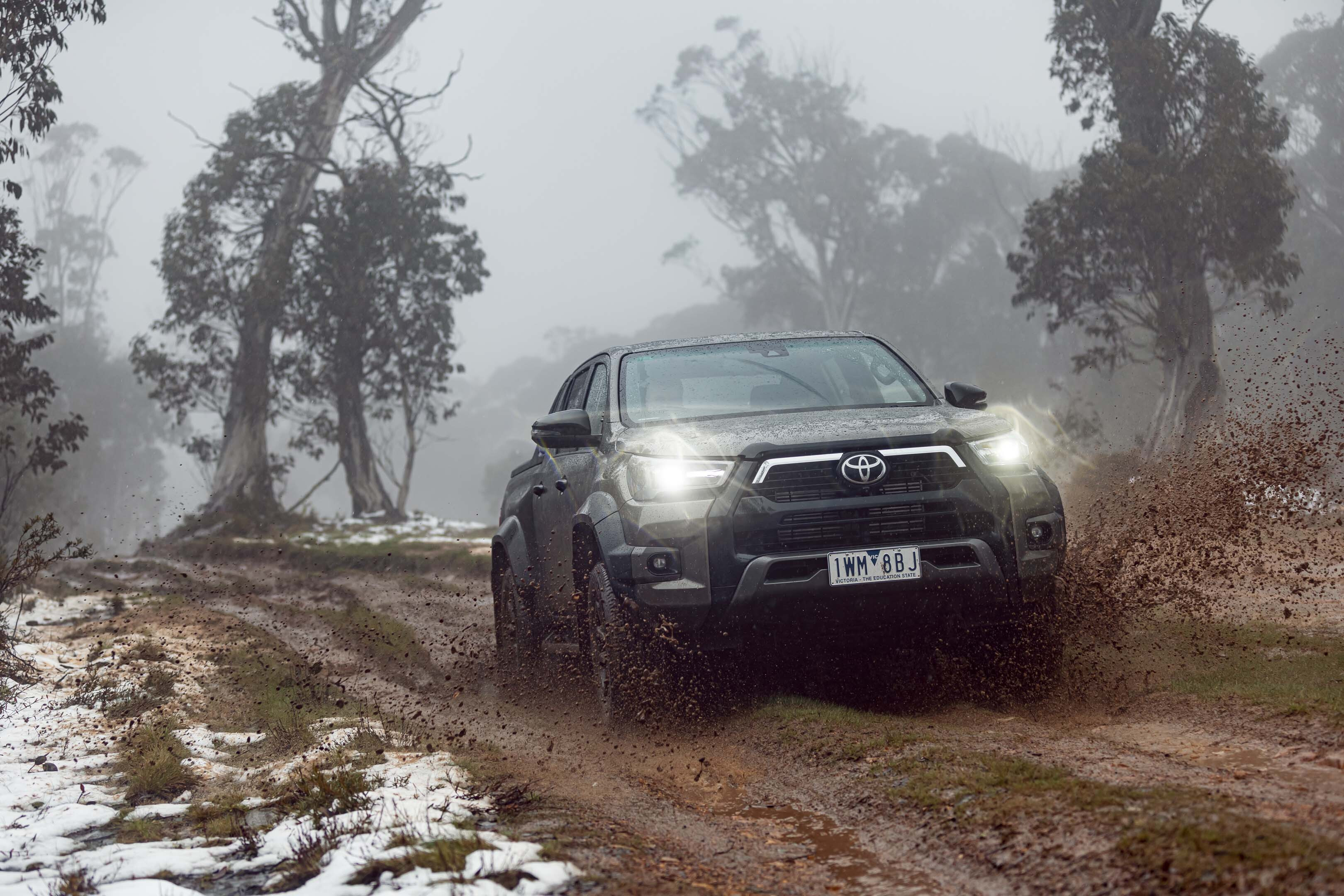
While the Toyota’s uprated suspension crashes and bangs through potholes, the Ford’s unmodified chassis is sublime by comparison, filtering out even the biggest impacts with eerie precision.
Its line is also unphased and unaltered by changing surfaces, but the Toyota is easily flustered and requires steering correction to maintain a line through damaged sections of trail with too much front-end bump-steer. A slower steering rack ratio than the Ranger exacerbates the problem.
Despite the firmer suspension tune unique to the Rogue, it’s the Wildtrak that is most resistant to body roll.
While the Ranger feels like it’s working hard to look after occupant’s comfort and make life easier for the driver, the HiLux feels like it’s demanding you to do the hard work. The result, after a full day into the snow and back, is a noticeable difference in fatigue.

How are they on fuel consumption?
Interestingly, despite the difference of 200cc and two cylinders, the manufacturers claim identical fuel economy for both their respective models – 8.4 litres per 100km on the combined cycle.
Given our trip into the hills involved lots of climbing and some spirited driving, we certainly weren’t expecting optimum efficiency but the tour did throw a surprising result when the numbers were crunched.
The Toyota consumed an average of 11.9L/100km while the more powerful and torquier Ford got closer to its claimed figure with a very respectable 9.7L/100km.
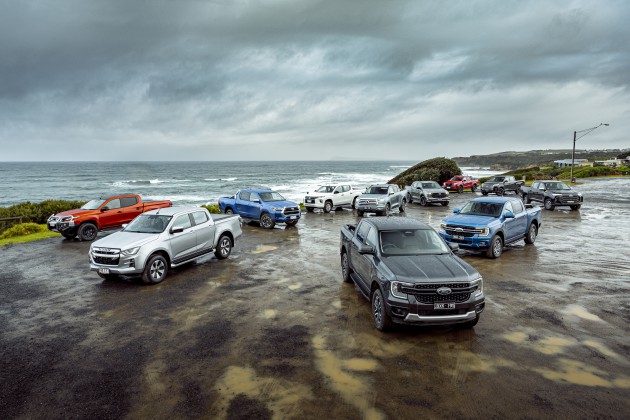
Dual-cab ute comparison 2022: The daily living test
Dual-cab utes have charged in as a firm favourite for family hauling and daily duties, well beyond the old mould of tradie tasks and off-road adventures. It’s time to see which are best suited to the role.
How safe are they?
According to the Australasian New Car Assessment Program (ANCAP), the Ford ranger achieved the maximum five-star safety rating when it was tested earlier this year and scored well in all areas.
“Dual frontal, side chest-protecting and side head-protecting (curtain) airbags, and driver and passenger knee airbags are standard,” it reports. “A centre airbag which provides added protection to front seat occupants in side impact crashes is also standard.
“Autonomous emergency braking (Car-to-Car, Vulnerable Road User and Junction Assist) as well as a lane support system with lane keep assist (LKA), lane departure warning (LDW) and emergency lane keeping (ELK), and an advanced speed assistance system (SAS) are standard equipment.
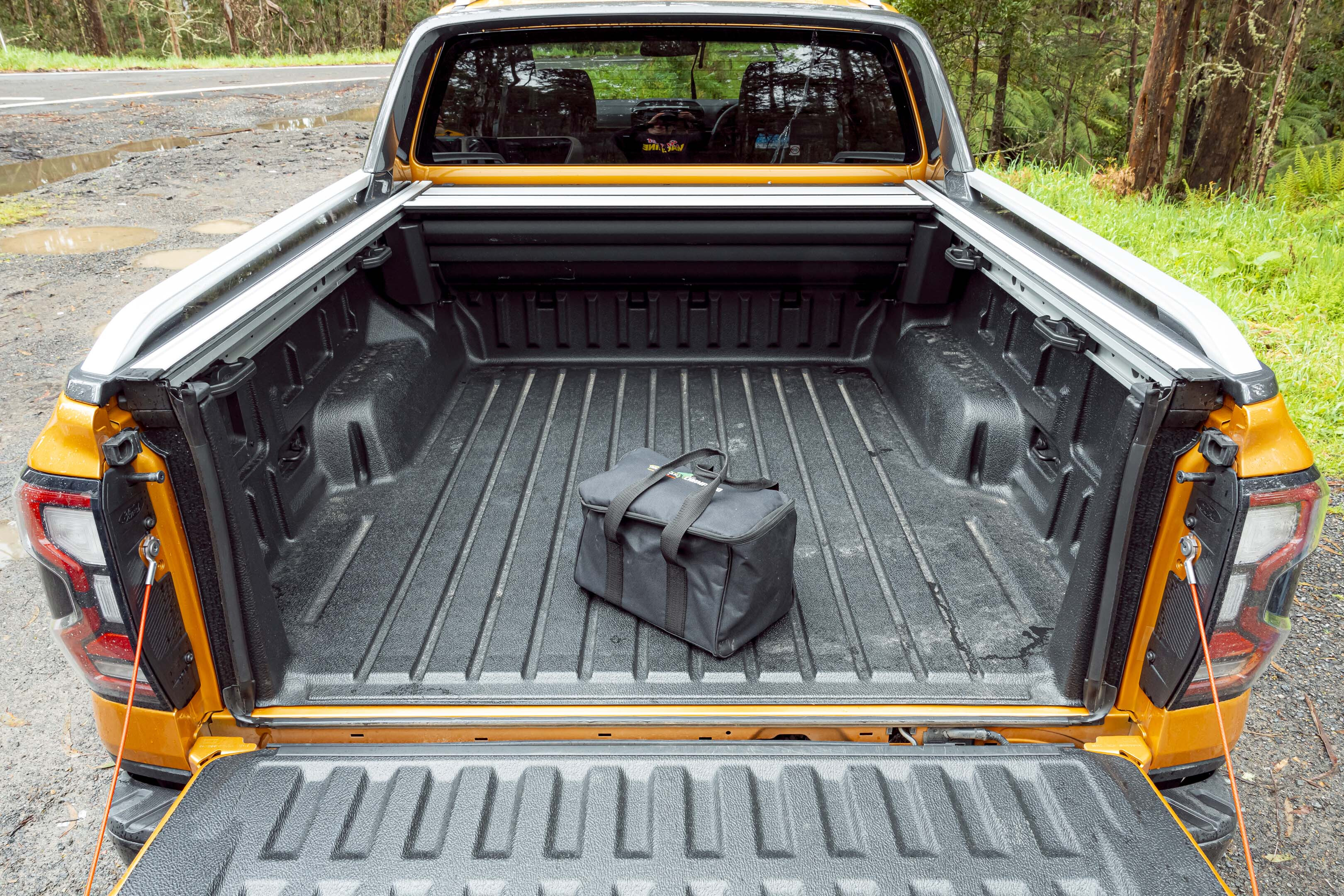
“AEB Backover and ELK-overtaking functions are not available on cab-chassis vehicles, but are standard on all other variants.”
The same top rating was also awarded to the HiLux following its testing in 2019. The safety assessor highlighted the model’s standard driver assistance systems and active safety tech for praise including “dual frontal, side chest-protecting and side head-protecting airbags (curtains) and a driver knee airbag are standard”.
“Autonomous emergency braking (City, Interurban and Vulnerable Road User), as well as lane-keep assist (LKA) with lane departure warning (LDW) and an advanced speed assistance system (SAS) are fitted as standard equipment on all variants.”
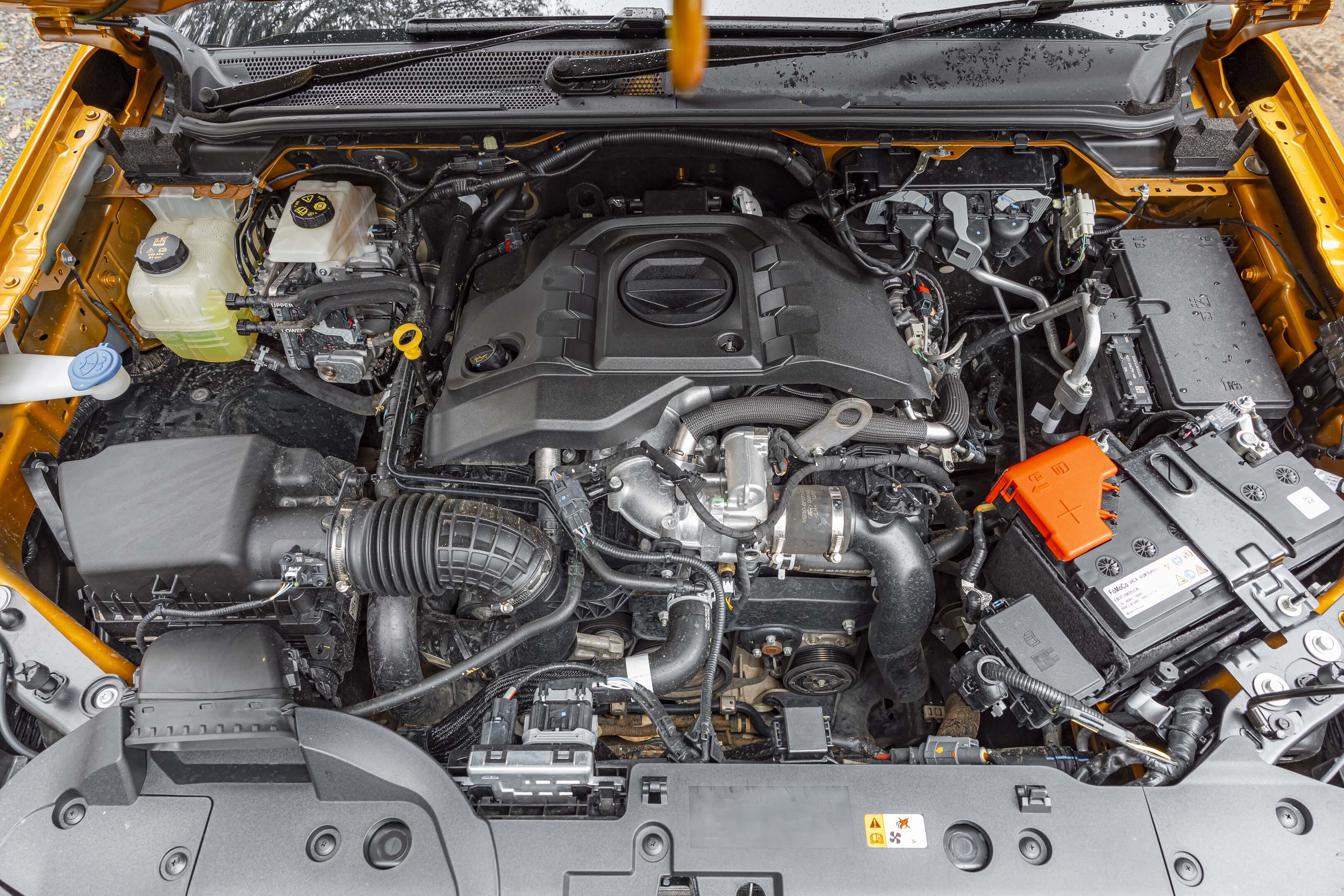
VERDICT
The HiLux still has a handful of virtues that keep Toyota fans coming back for more and the Rogue introduces a version that will appeal to ute buyers who like the look and ability of modified machines without the trips to ARB and afternoons getting greasy in the garage.
No matter how much tough kit you dress it up in, however, the HiLux can’t hide its age as its many ergonomic and technological qualms become ever more obvious as its competitors evolve.
And there’s no more effective way of highlighting its shortcomings than driving it back-to-back with the Wildtrak.
Ford’s one-down-from-the-top variant (two if you count the recently announced Platinum) is a reasonably pricey proposition but when compared with an identically priced alternative, it’s very easy to see exactly how much kit you’re actually getting for your cash.
Its manners seem utterly unflappable regardless of the surface and its lovely V6 diesel brings effortless torque, admirable smoothness and surprising fuel economy, while the thoroughly modern cabin is filled with technology and comfort-boosting features.
The lone Ranger was always going to prevail over a Rogue tradie.

SCORING
Ford Ranger Wildtrak: 9.0
What we liked
- Smooth and powerful V6
- Tons of tech
- Modern interior
Not so much
- Relatively pricey
- Needs more unique Wildtrak bits
Toyota Hilux Rogue: 7.5
What we liked
- Tough looks
- Beefy brakes
- Uprated chassis
Not so much
- Fussy ride and handling
- Dated interior
- Questionable ergonomics
Scoring breakdown
| Ford Ranger Wildtrak | Toyota HiLux Rogue | |
|---|---|---|
| Safety, value and features | 8 | 8.5 |
| Comfort and space | 9 | 7 |
| Engine and gearbox | 9 | 7.5 |
| Ride and handling | 9 | 7.5 |
| Technology | 9 | 7 |
| Toyota HiLux Rogue | Ford Ranger Wildtrak | |
|---|---|---|
| Engine | 2755cc 4cyl, dohc, 16v turbo-diesel | 2993cc V6 turbo-diesel |
| Power | 150kW @ 3000 u2013 3400rpm | 184kW @ 3250rpm |
| Torque | 500Nm 1600-2800rpm | 600Nm @ 1750-2250rpm |
| Transmission | 6-speed automatic | 10-speed automatic |
| Fuel consumption | 11.9L/100km (tested) | 9.7L/100km (tested) |
| Weight | 2256kg | 2412kg |
| L/W/H/W-B | 5320/2020/1870/3085mm | 5370/1918/1884/3270mm |
| 0-100km/h | 9.5s (estimated) | 8.2s (estimated) |
| Price | $70,200 + on-road costs | $70,190 + on-road costs |
| On sale | Now | Now |