
Tossing up between the Ranger and HiLux utes? Kick off the decision with this ‘on paper’ comparison
When you’re done, check out these stories for our comprehensive driving assessment
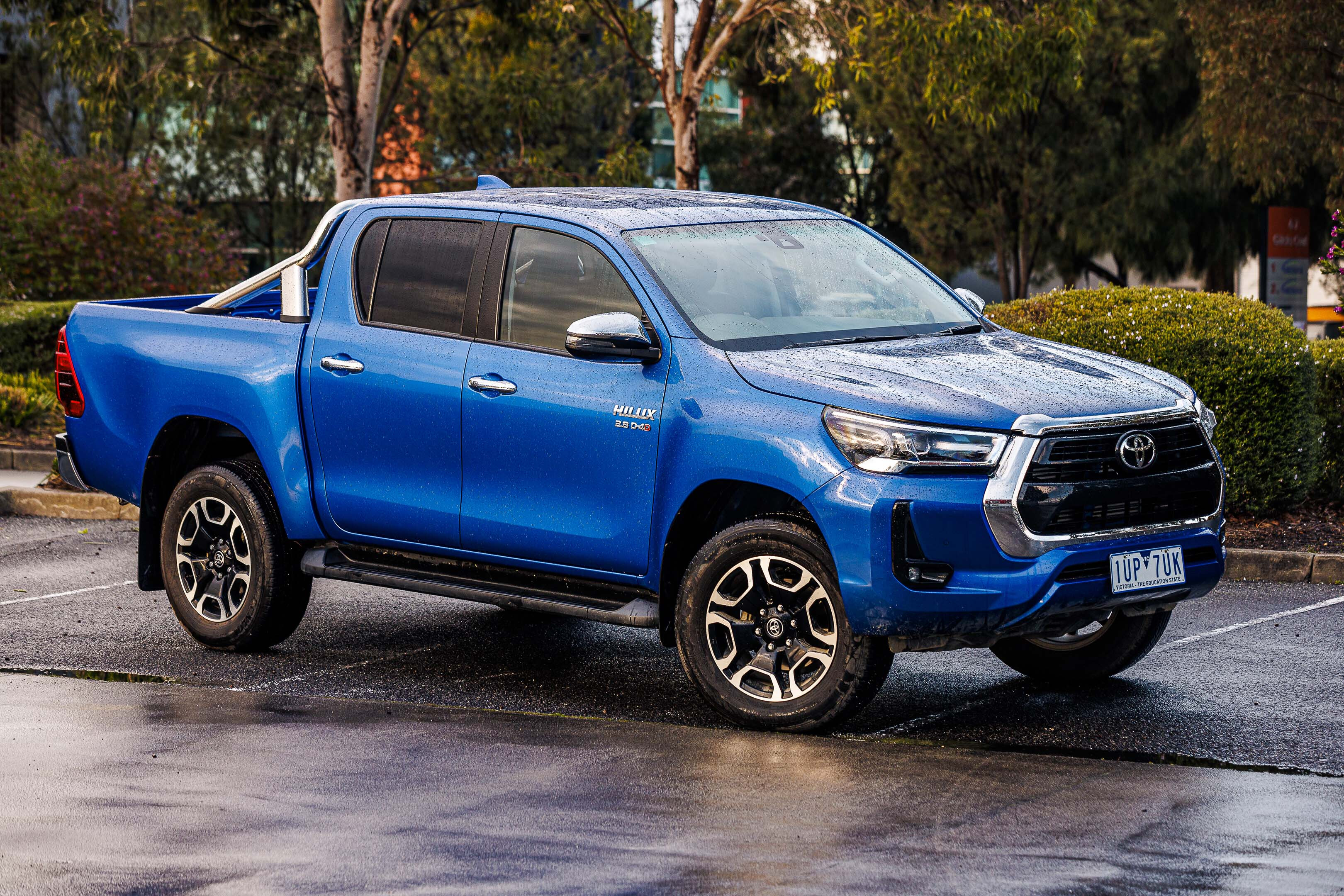
While the HiLux may seem a little long in the tooth compared with the new Ford Ranger and recently updated Isuzu D-Max, it remains in the fight as the three duke it out for top spot on the dual-cab sales ladder.
Long in the tooth it may be, the HiLux remains a frontrunner and for good reason; the platform is trusted. Not even widespread diesel particulate filter dramas could turn buyers away from the ute famously dubbed ‘unbreakable’.
JUMP AHEAD
- Crunching the numbers
- So how do they stack up?
- Dimensions and off-road chops
- Engine and gearbox
- Towing and Payload
- Pricing and Value
How do they compare?
In the name of ute-based science, let’s put the dual-cab Ranger XLT and HiLux SR5 head-to-head on paper and see which of the two mid-range mules comes out on top.
The fairest comparison is between the automatic variant of the 2.8-litre four-cylinder HiLux SR5 and the four-cylinder 2.0-litre variant of the Ranger XLT – because the six-pot Ford is both more expensive and a fair bit gruntier, and because the Ranger XLT isn’t offered with a third pedal.
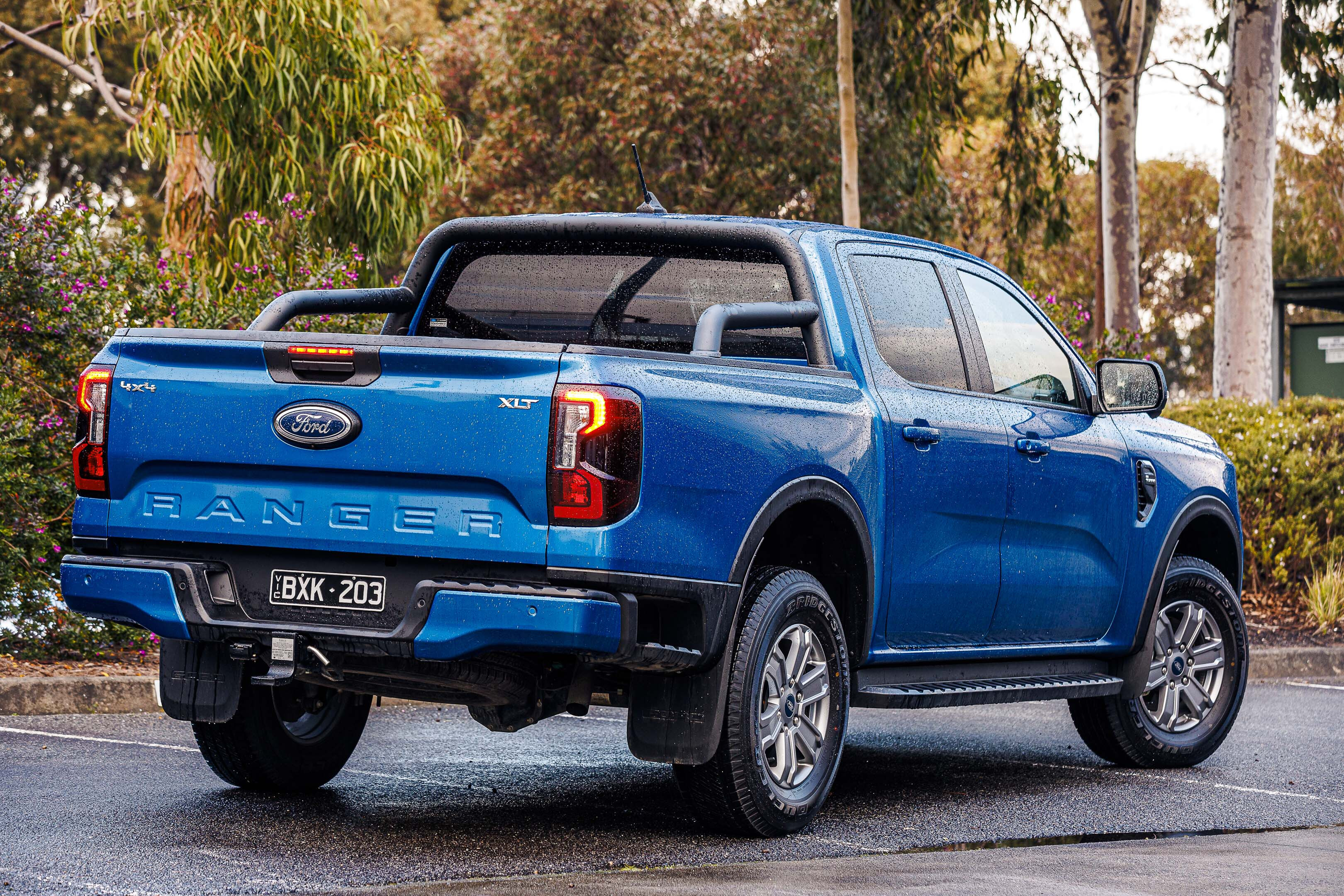
Crunching the numbers
Ranger 4-cyl v HiLux SR5 Specifications
| Ford Ranger XLT | Toyota HiLux SR5 | |
|---|---|---|
| Length | 5370mm | 5325mm |
| Width | 1918mm | 1855mm |
| Wheelbase | 3270mm | 3085mm |
| Kerb Weight | 2271kg | 2110kg |
| Payload | 949kg | 940kg |
| Towing Capacity | 3500kg | 3500kg |
| Engine | 2.0-litre turbo-diesel | 2.8-litre turbo-diesel |
| Transmission | 10-speed automatic | 6-speed automatic |
| Power | 154kW @3750rpm | 150kW @ 3000-3400rpm |
| Torque | 500Nm @ 1750-2000RPM | 500Nm @ 1600-2800rpm |
| Claimed fuel use | 8.4L/100km | 7.9L/100km |
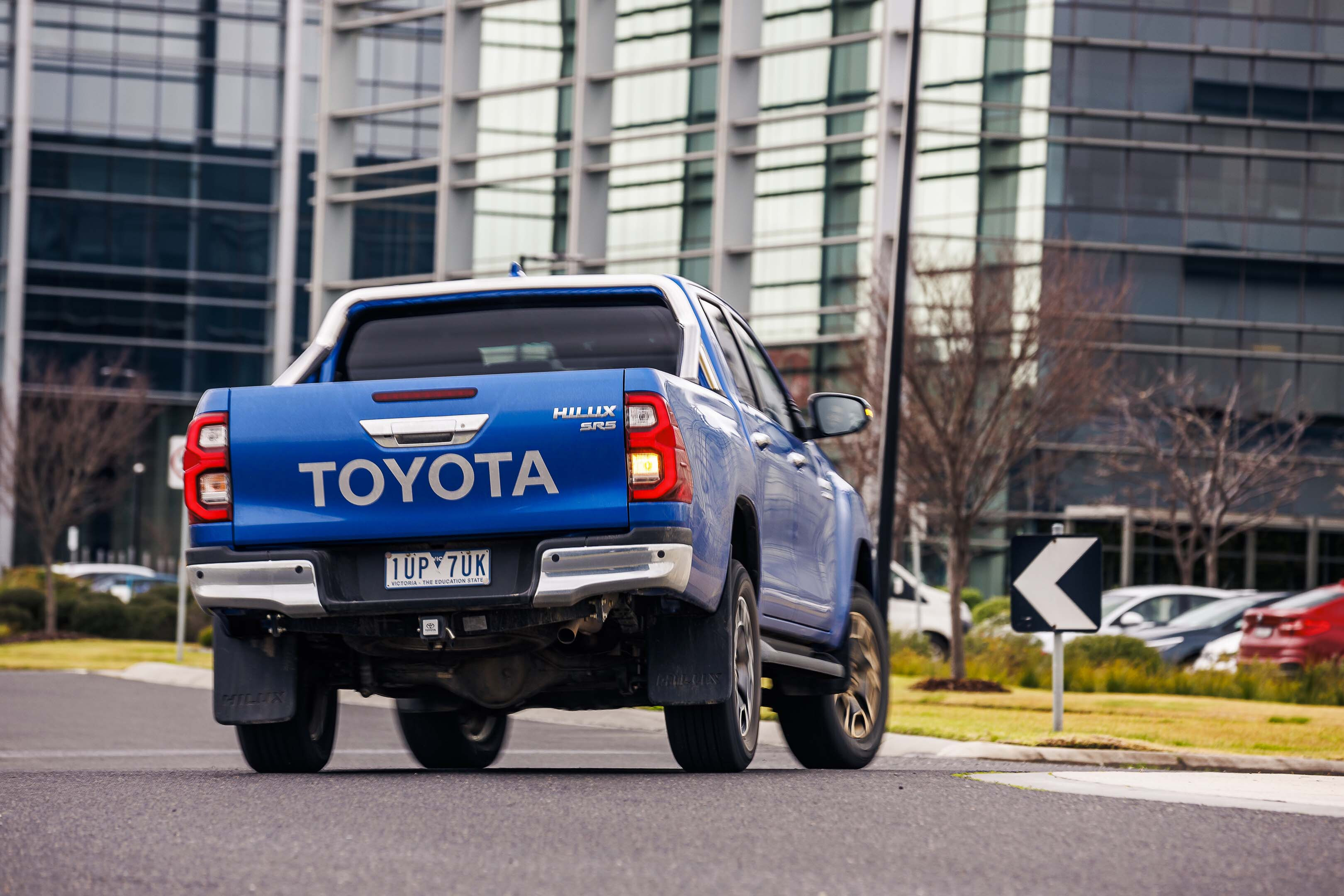
Ranger v HiLux: Size and off-road chops
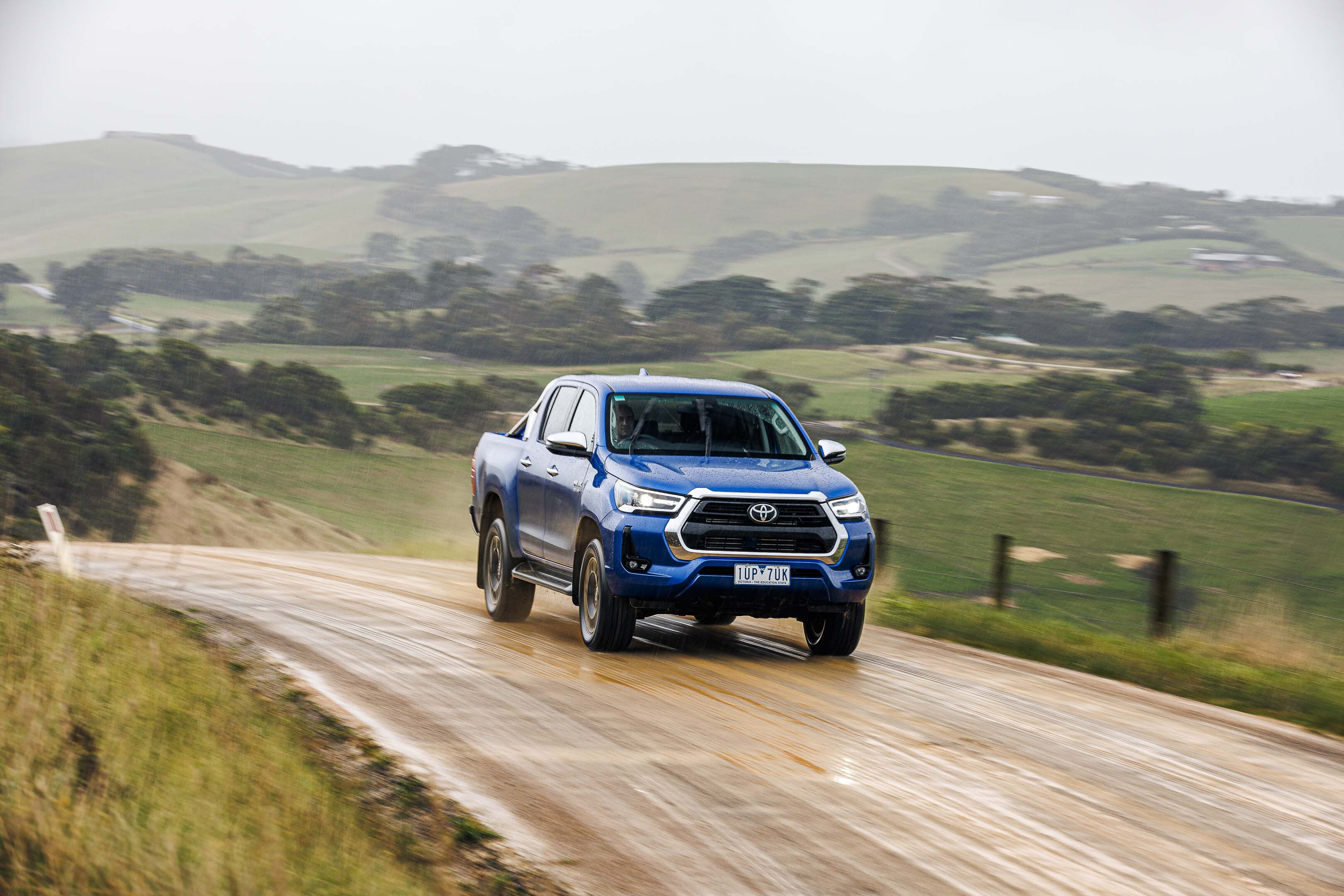
In standard guise, both are strong off-road contenders and will tackle anything their slightly more premium stablemates will.
Both have a rear locking diff but, bear in mind, both are also praised for their intelligent off-road smarts – so most owners won’t be needing it. Nice to have, regardless.
Ground clearance is comparative for both models, and competitive within the 4×4 ute segment, at 234mm for the Ranger and 226mm for the HiLux.
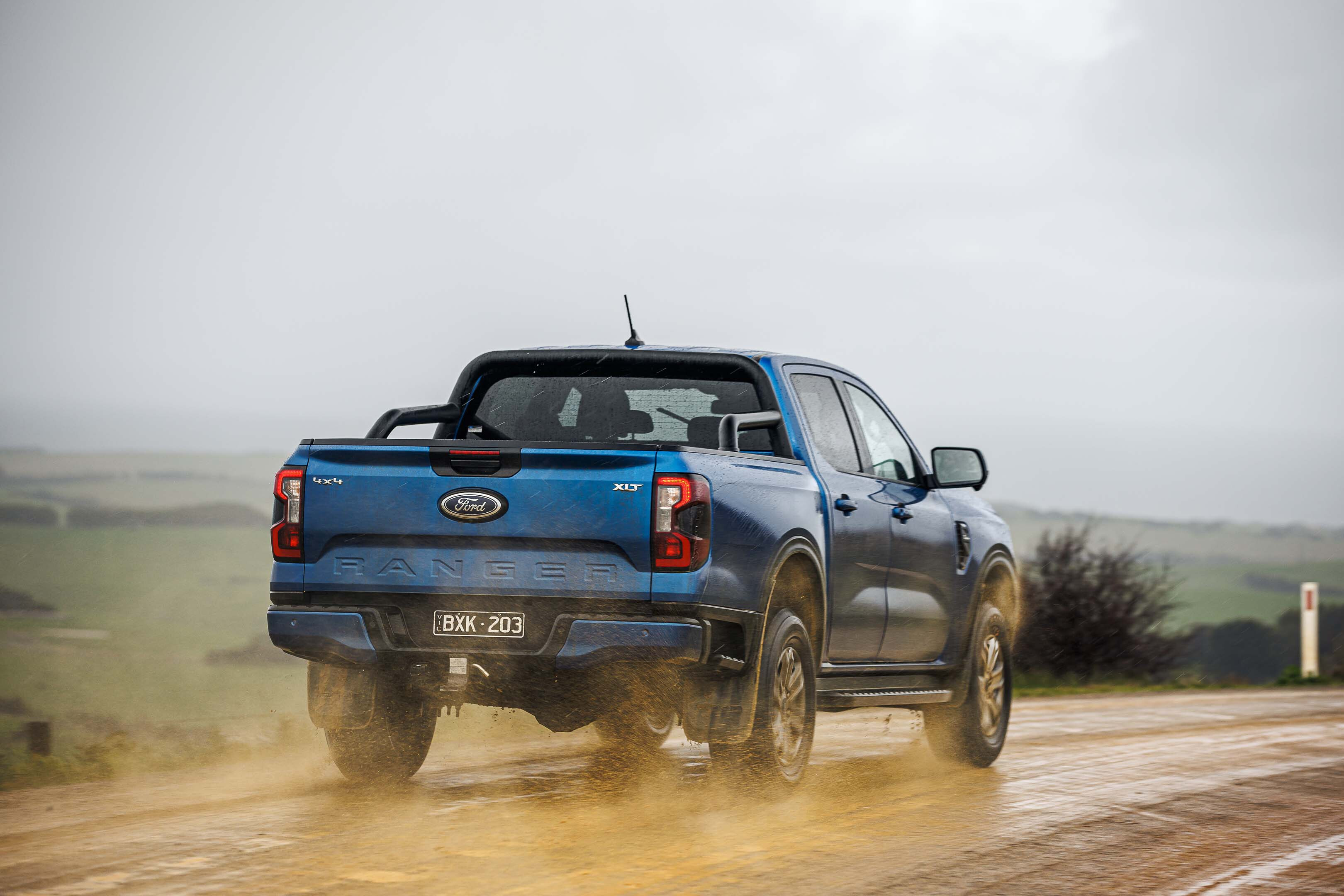
The Ranger measures 5370mm in length against the slightly shorter HiLux at 5325mm, and width is a similar story with the burly Ford coming in at 1918mm versus 1855mm.
More likely to have a bigger impact on driving manners than length and width is wheelbase, which again has the Ford coming out as largest of the two at 3270mm against 3085mm for the Toyota.
For inner-city dwellers, height is an important number when frequenting underground carparks. Both come in under the magic 1900mm number, meaning they’ll fit in pretty much any car park, the Ranger topping out at 1884mm and the HiLux 1865mm.
Ranger 4-cylinder v HiLux: Engine and gearbox
On paper, these two utes offer comparative grunt and both offer exactly 500 newtons of twist, which seems to be the gold standard these days.
Power figures are near-identical at 154kW/500Nm for the Ranger and 150kW/500Nm for the HiLux, but how they arrive there is a little different.
The HiLux uses a 2.8-litre turbo-diesel while the Ranger gets the smaller 2.0-litre turbo-diesel and, while punchy, the Ford unit has to work a little harder.
Whereas the HiLux makes peak torque by 1600rpm and carries it all the way to 2800rpm, the Ranger’s torque band is slimmer as all 500Nm arrives at 1750rpm before dropping off after 2000rpm.
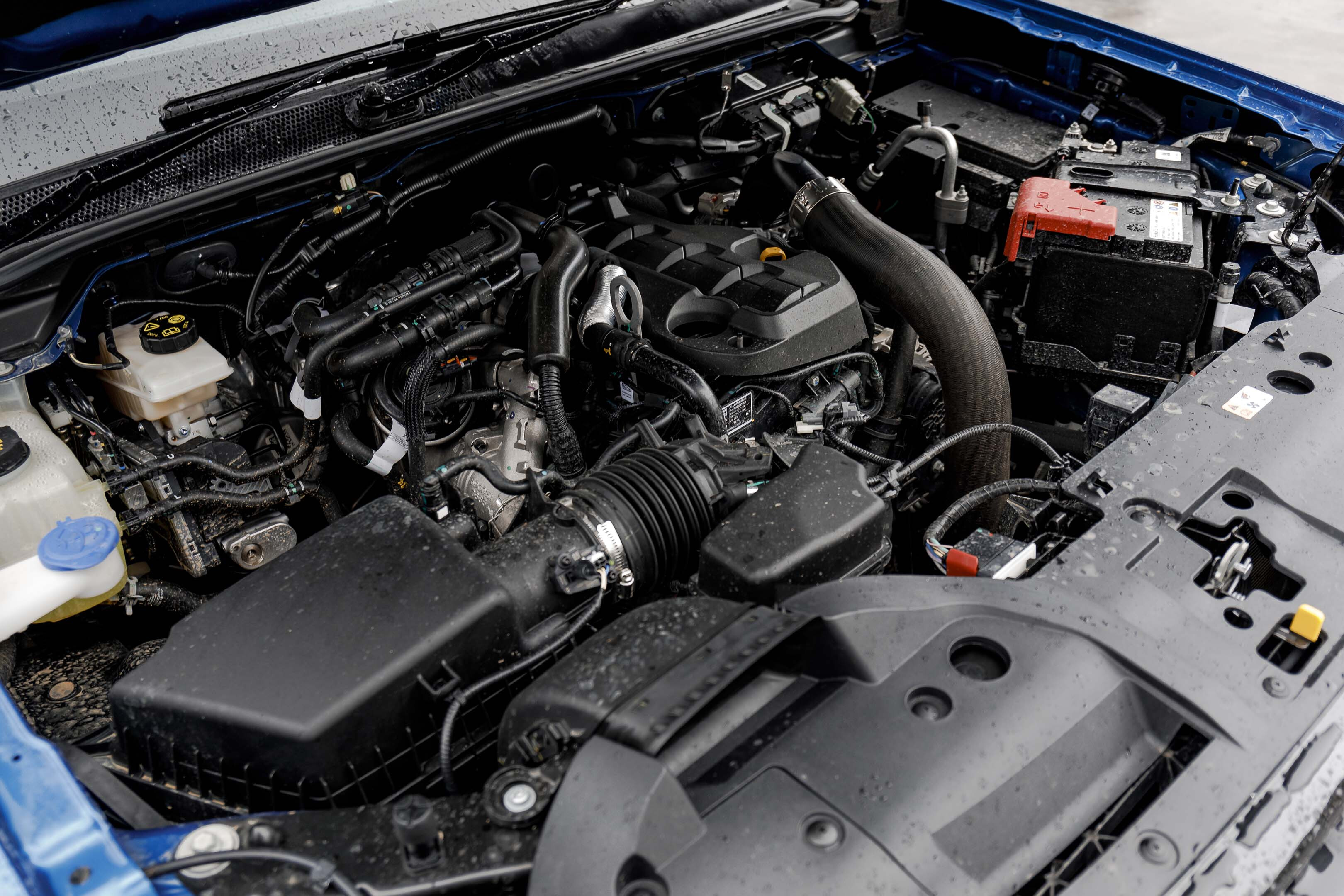
The HiLux also makes peak power at 3000rpm, versus 3750rpm for the Ranger.
All of this does, on paper, mean a more usable torque band for the HiLux, but the 10-speed automatic transmission in the Ranger changes things. This is something that, while not obvious when looking at a spec sheet, becomes apparent after driving the Ranger.
While the HiLux gets a six-speed automatic unit, the Ranger gets 10 gears to keep it on the steam despite its narrower torque band. In short, this evens things out and Ford makes good use of the torque with the extra cogs.
When we performance tested the new Ranger last year, we found the 2.0-litre XLT gets to 100km/h in 9.2 seconds. By contrast, the HiLux SR5 did it in 11.1 seconds when we last tested it.
Ranger v HiLux: Towing and payload
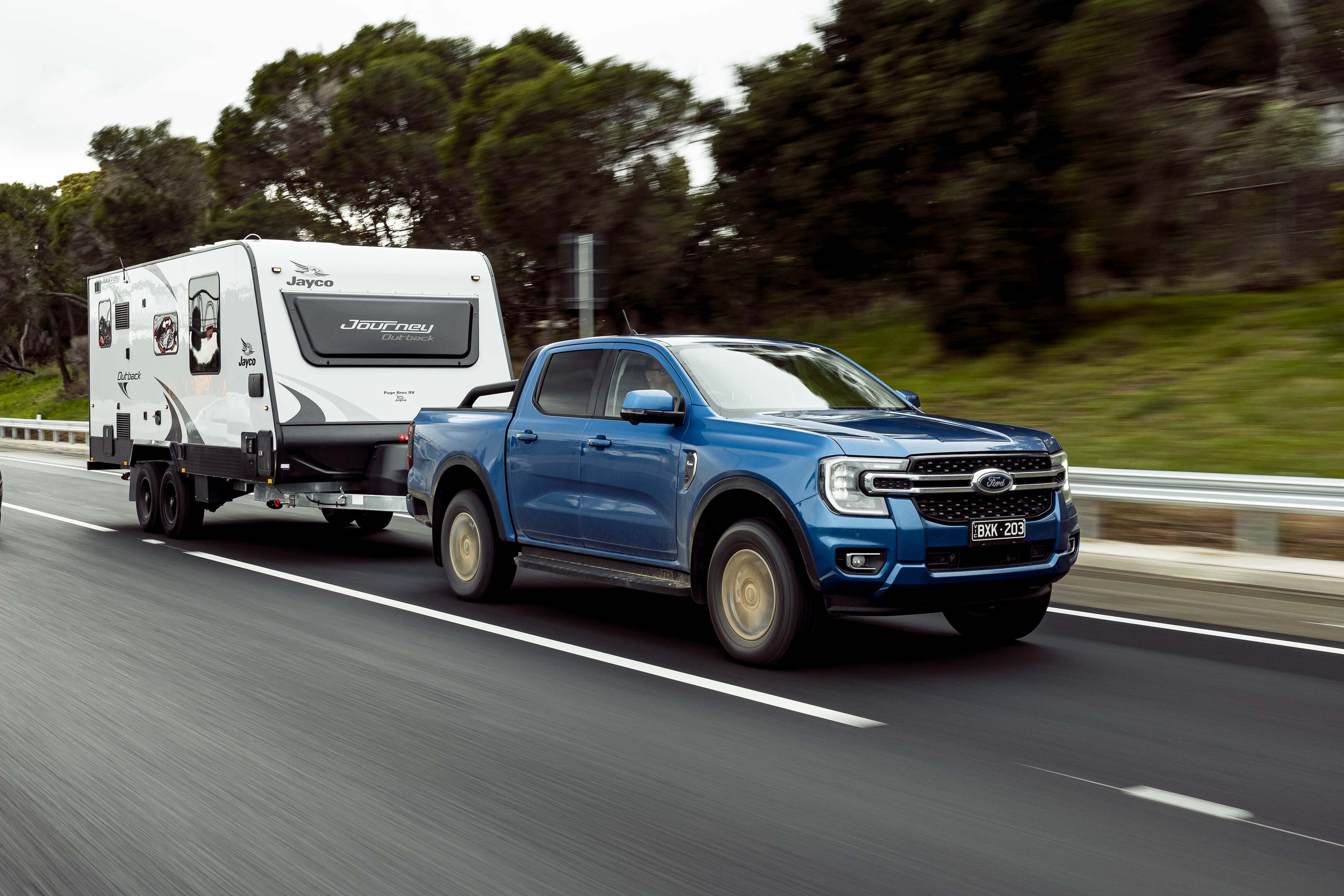
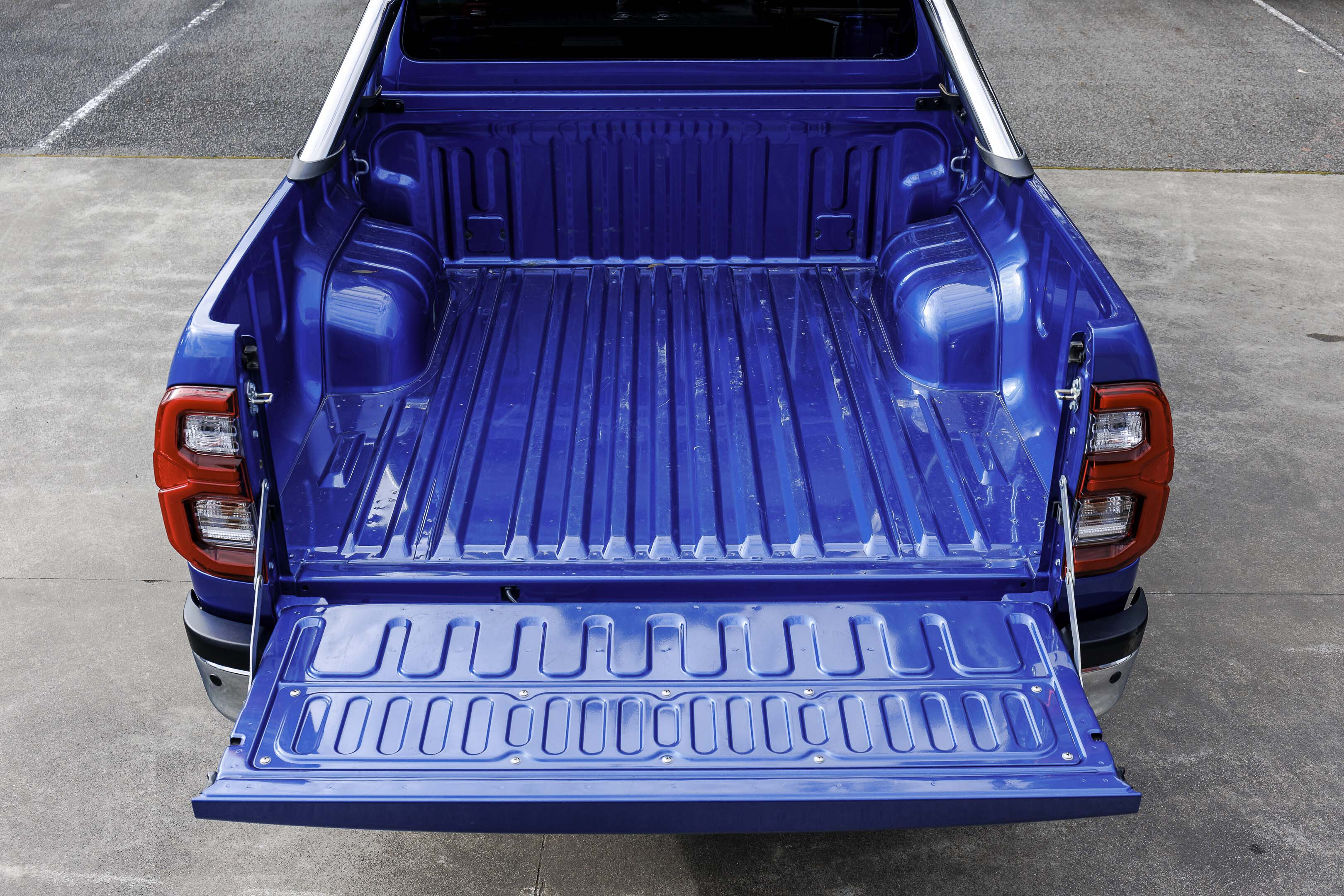
It’s apples for apples here, because both have a full 3500kg braked towing capacity and nearly a tonne of payload potential.
The Ranger offers 949kg of payload, while the HiLux comes in a smidge lower at 940kg. Given passenger weight factors into the payload equation, less than 10kg is zilch in the scheme of things.
Both utes will comfortably tow and run around loaded, but the HiLux may do it slightly more effortlessly with its wider torque spread.
Pricing and Value
The automatic HiLux SR5 starts at $61,930, while the Ranger XLT 2.0-litre bi-turbo starts at $61,990 – less than a 100-dollar note between them – both before on-road costs.
Neither is the cheapest option, though, especially when pitted against budget-friendly options like the Mitsubishi Triton GSR at $56,940, or even the Isuzu D-Max LS-U at $61,000.
Toyota offers a five-year, unlimited-kilometre warranty for its HiLux range and will extend it to seven years for the driveline if serviced within its dealer network. Ford stands by its five-year, unlimited-kilometre warranty on all Ranger models.
Services come around every 10,000km or six months with the Toyota, which may deter some buyers. For Ranger owners, trips to the dealership will come around every 15,000km or 12 months.
Related video: Ranger Sport V6 v HiLux SR5
Now, go read these stories for our in-depth driving comparison of the HiLux and new Ranger in various configurations!
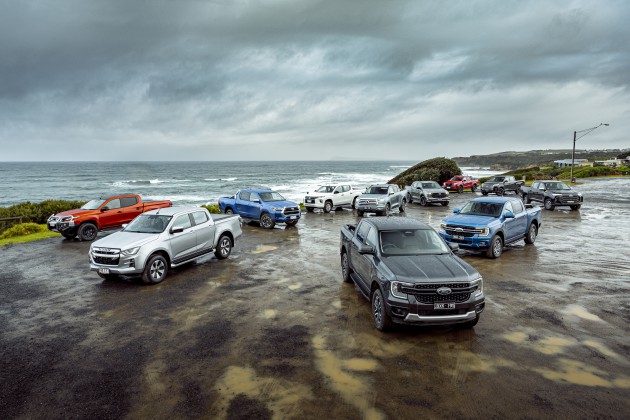
Dual-cab ute comparison 2022: The daily living test
Dual-cab utes have charged in as a firm favourite for family hauling and daily duties, well beyond the old mould of tradie tasks and off-road adventures. It’s time to see which are best suited to the role.
Once you’re finished ogling the latest batch of Readers’ Rigs, head on over to our Facebook page and send us a photo of your 4×4. It could even end up on the cover one day.
U1700 Unimog
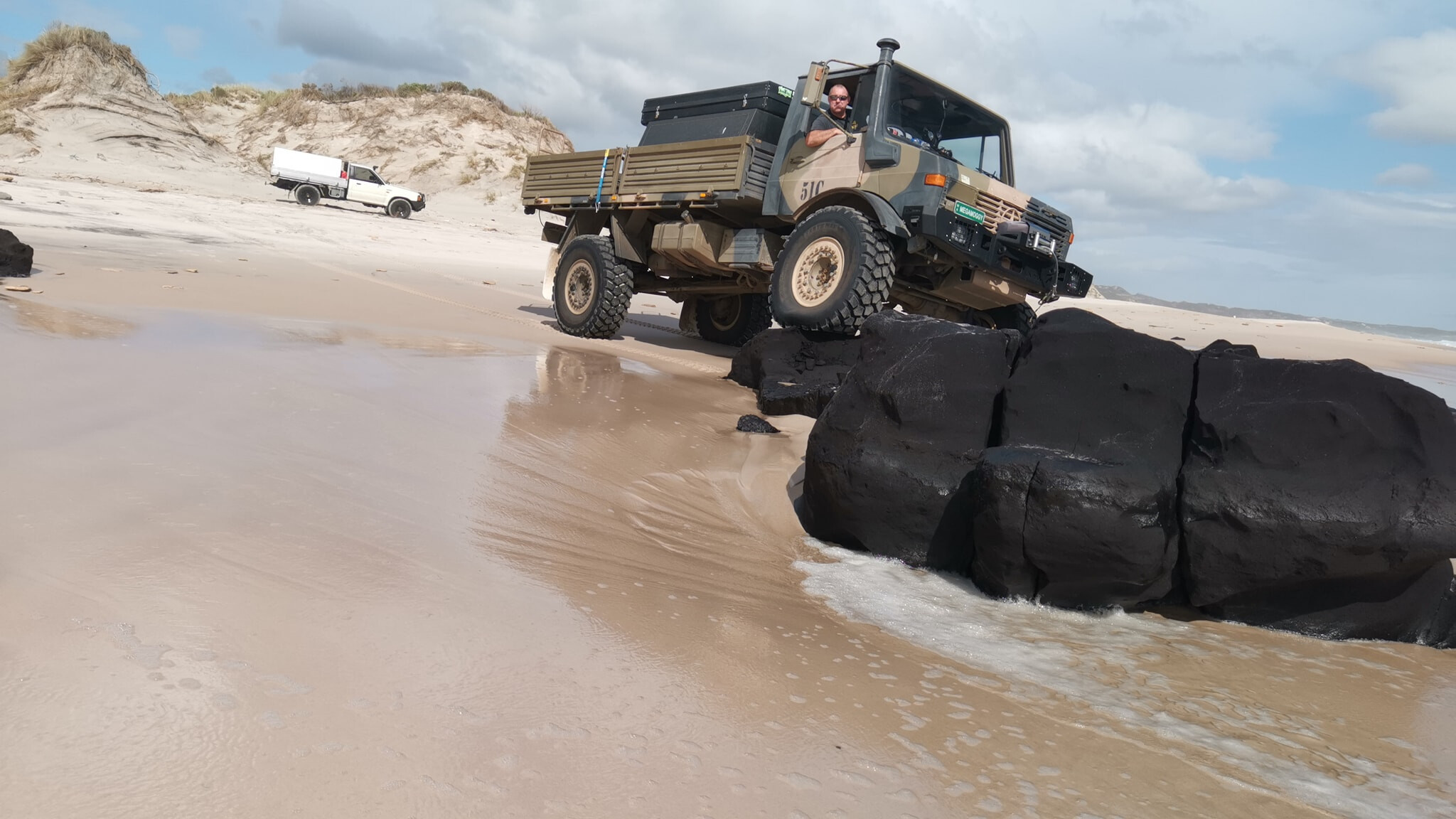
Ex-ADF Mog with 46-inch tyres, 25K winch front and rear, eight-speed, and twin-lockers on portals. It has an air-pressurised driveline for water crossings and it’s fully coil sprung. It’s a total beast, provided you can fit down the tracks – Darren Gandy
2014 Nissan Navara
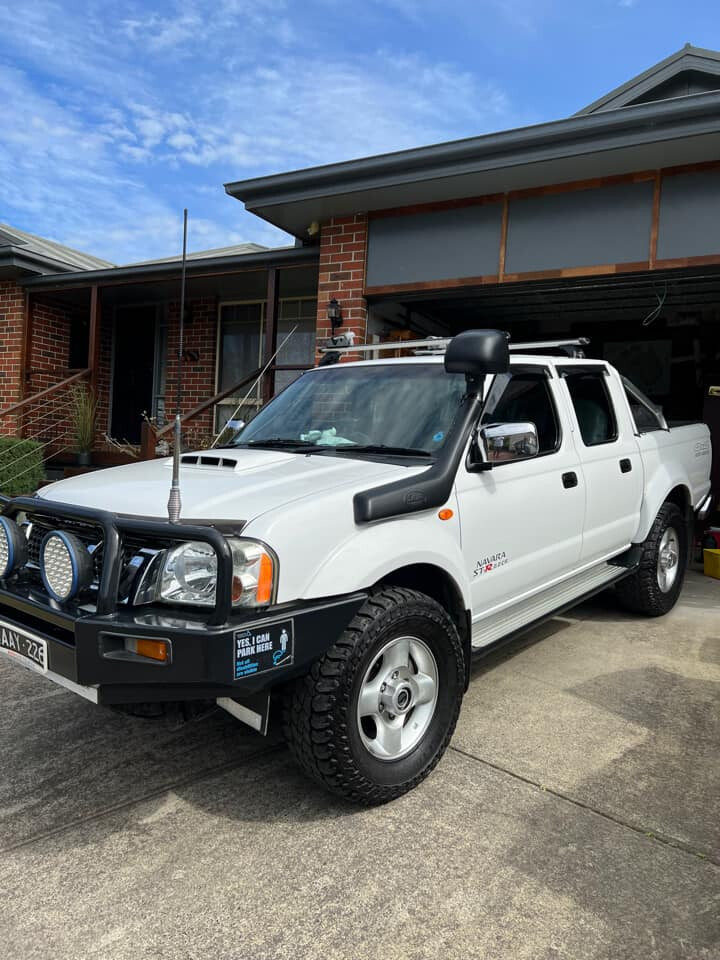
It has a Nissan bullbar, Kings nine-inch LED spotlights, Flashlube Catch Can, three-inch exhaust, K&N air filter, Safari snorkel with square mushroom head, an off-road suspension kit, and Cooper Discoverer S/T MAXX Extreme all-terrain tyres. Apart from that, it’s all stock standard – Andreas Seyffer
1995 75 Series LandCruiser
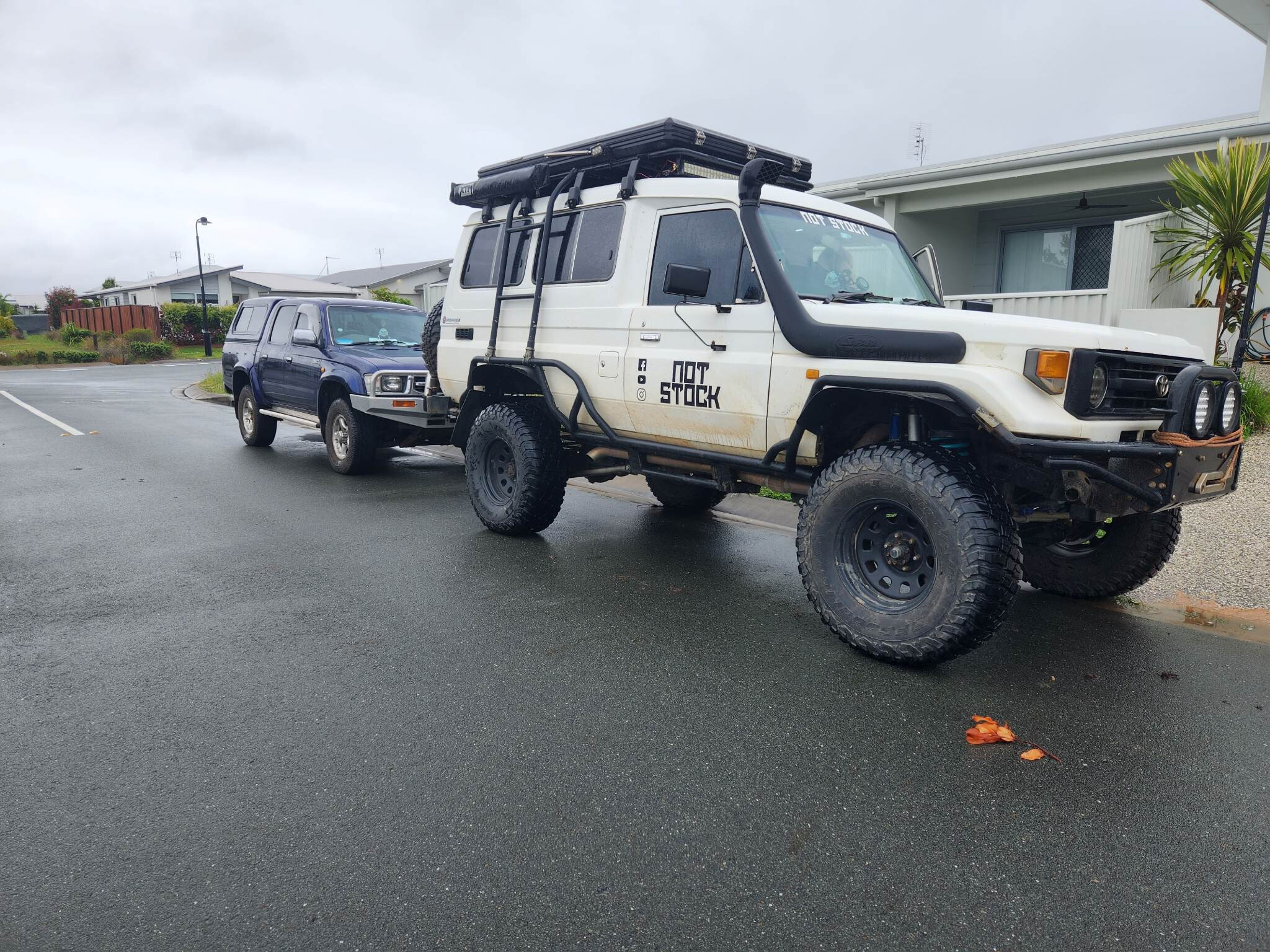
It’s a coil-converted 75 Series using 80 Series housings done by Ironhide Customs. It features a triangulated 4-link rear; fully braced chassis; six-inch lift sitting on 37-inch tyres; rebuilt diffs with 4.88s to suit 37s; and custom rock sliders and rails running down the full side of the Troopy and up to the roof for access to the MoTop rooftop tent.
A complete rear fit-out features a 120-litre upright Bushman fridge, Weber Baby Q and Adventure Kings drawers. The 1HZ with 12mm pump and 20g Mamba turbo puts out 30psi and makes ridiculous amounts of power. There’s 560,000km on the motor. It’s most likely the biggest Troopy anyone has ever seen. I live on the Sunny Coast – Wade Morris
2003 Nissan Patrol
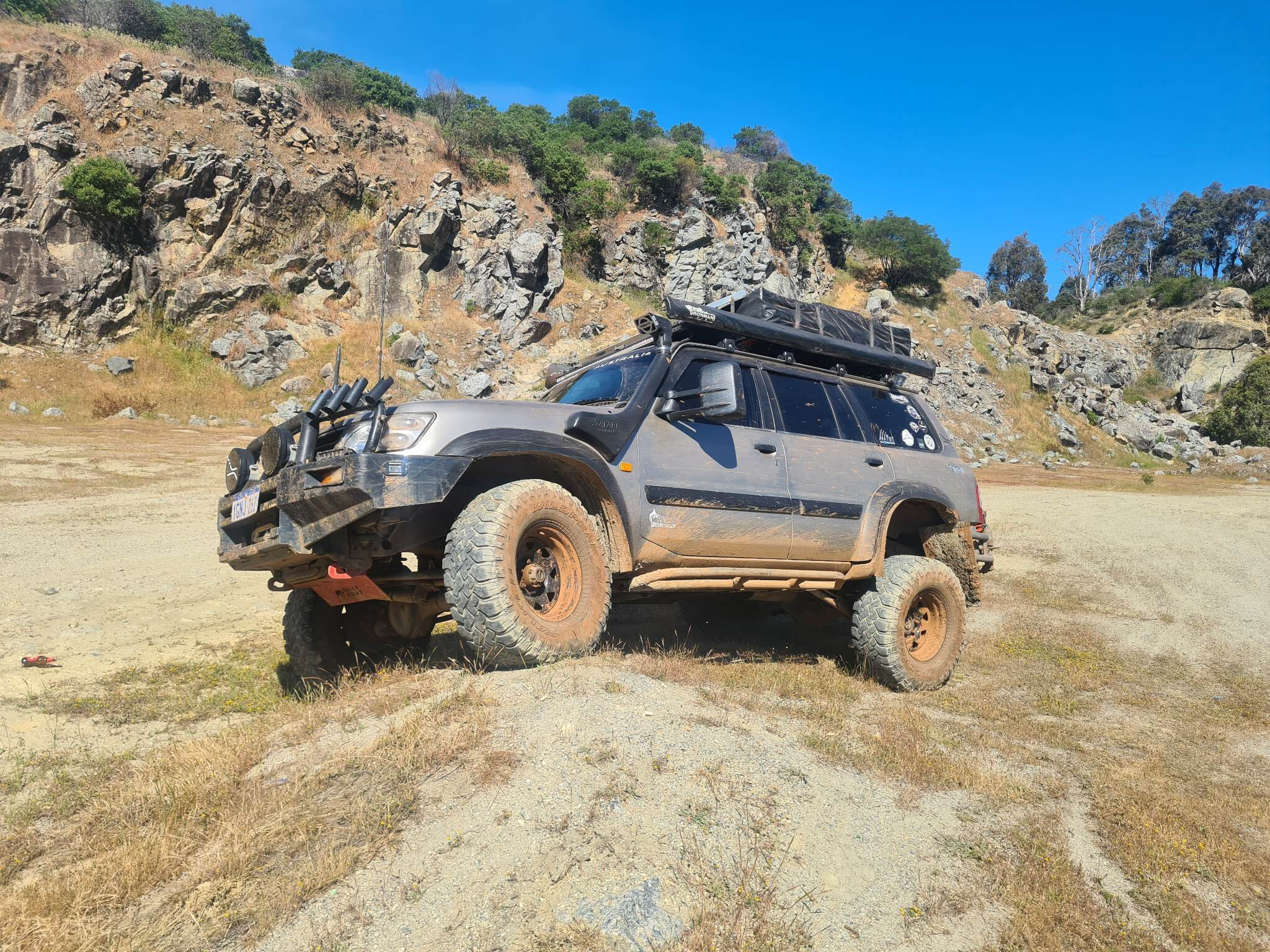
My TB48 has 40,000km on the motor which has never been touched. It has a 2.5-inch Manta exhaust, custom-made rear carrier I built myself, five-speed manual gearbox, and a three-inch lift consisting of three-inch Dobinsons with adjustable Panhard rods.
It also has a UHF380 Oricom, 130amp AGM battery in the rear with Intervolt DCC charger, 110W solar on the roof with Darche roof-top, 315×75 16 Falken M/T tyres, and Supernova lights on the roof. The rear set-up features custom drawers, cargo barrier, Travel Buddy oven, and a 40-litre Ironman fridge.
Other kit includes Vic Off-Road mirrors, rear custom-made carrier with gas bottle and chainsaw holder, Ironman awning, and a Kenwood DMX5020S stereo – DG Brooke
2021 Toyota Fortuner Crusade
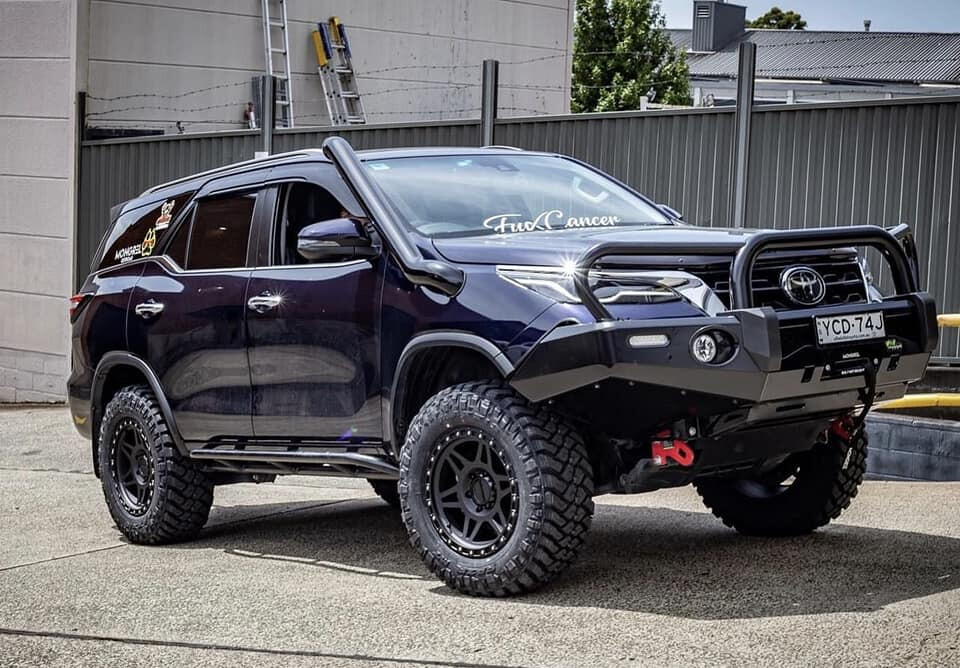
Mods include a Tough Dog suspension foam cell two-inch lift; Tough Dog upper control arms; Tough Dog rear adjustable Panhard rod; Kinselas Kustoms angled rock sliders; Ironman 4×4 proguard bullbar (powder-coated, black loops and facelifted version); Mongrel Offroad 12,000lb winch; and a Meredith Metalworks four-inch extension snorkel.
Other kir includes a High Performance diesel catch can; Windsor Exhausts 3.5-inch DPF-back exhaust; 18-inch Method 312 wheels with +18 offset, Maxxis Razr mud-terrains (275/65R18); Throttle Grenade throttle controller; a factory rear locker with Harrop ELocker in front; and Superior Engineering diff breathers – Owen Line
2011 Toyota FJ Cruiser
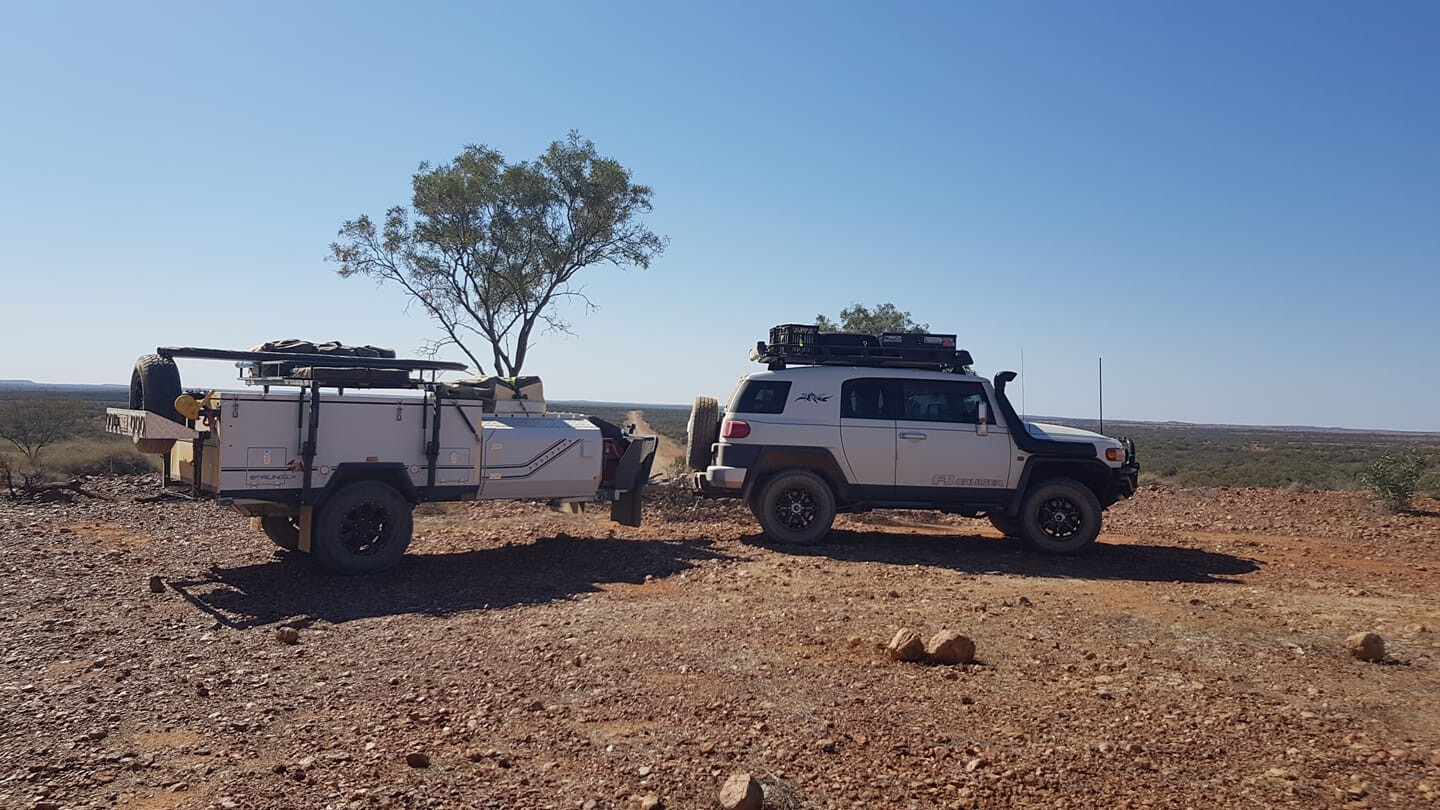
Called Thirsty Girl, it’s running two-inch lift (airbags), 90-litre extra fuel tank and plenty of other extras. It has been to Tip three times, with a few desert runs thrown in as well – Andrew Sauffs
These days, I always carry MaxTrax with me when I drive off-road.
Sure, my vehicle is equipped with a winch, and I also have a full recovery kit on board, but MaxTrax are usually my first option when it comes to vehicle recovery because they are so quick and easy to use, and nine times out of 10 they are effective at getting out of a pickle.
Of course, MaxTrax aren’t exactly small, but their low-profile and light weight makes them ideally suited to going up on the roof rack. MaxTrax sells mounting pin sets that hold and secure recovery boards in place, but how do you fit these to a roof rack platform like my Rhino-Rack Pioneer?
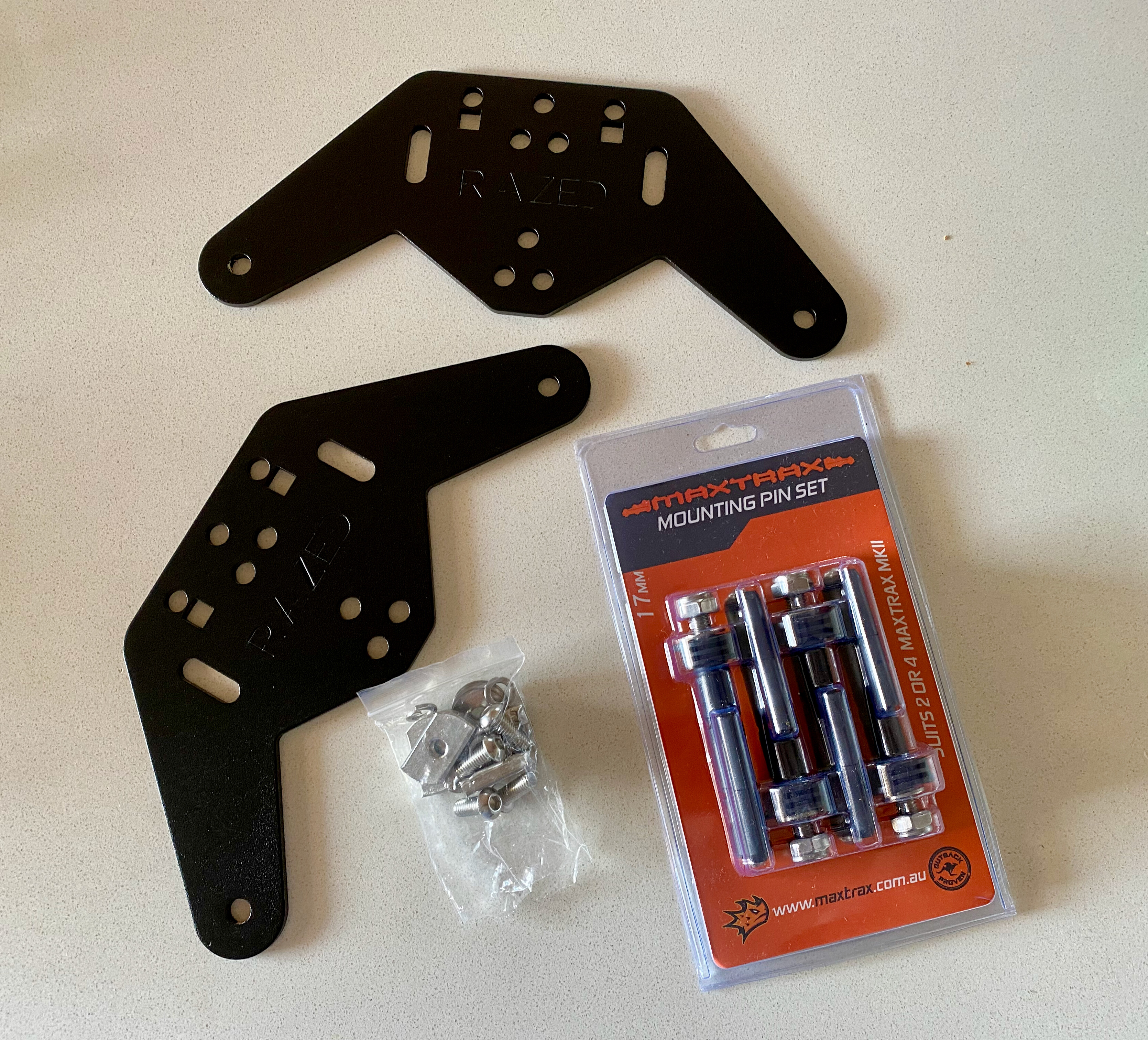
I opted for a Razed Products MaxTrax Flush Mounting Kit for the bargain price of 75 bucks, or $115 supplied with genuine MaxTrax MkII pins included.
The Razed kit consists of two plates manufactured from black powder-coated 5mm aluminium, which look great and don’t weather. The kit comes with all supplied hardware including button-head screws, washers and nuts, and they are super easy to fit either across your roof platform or longitudinally.
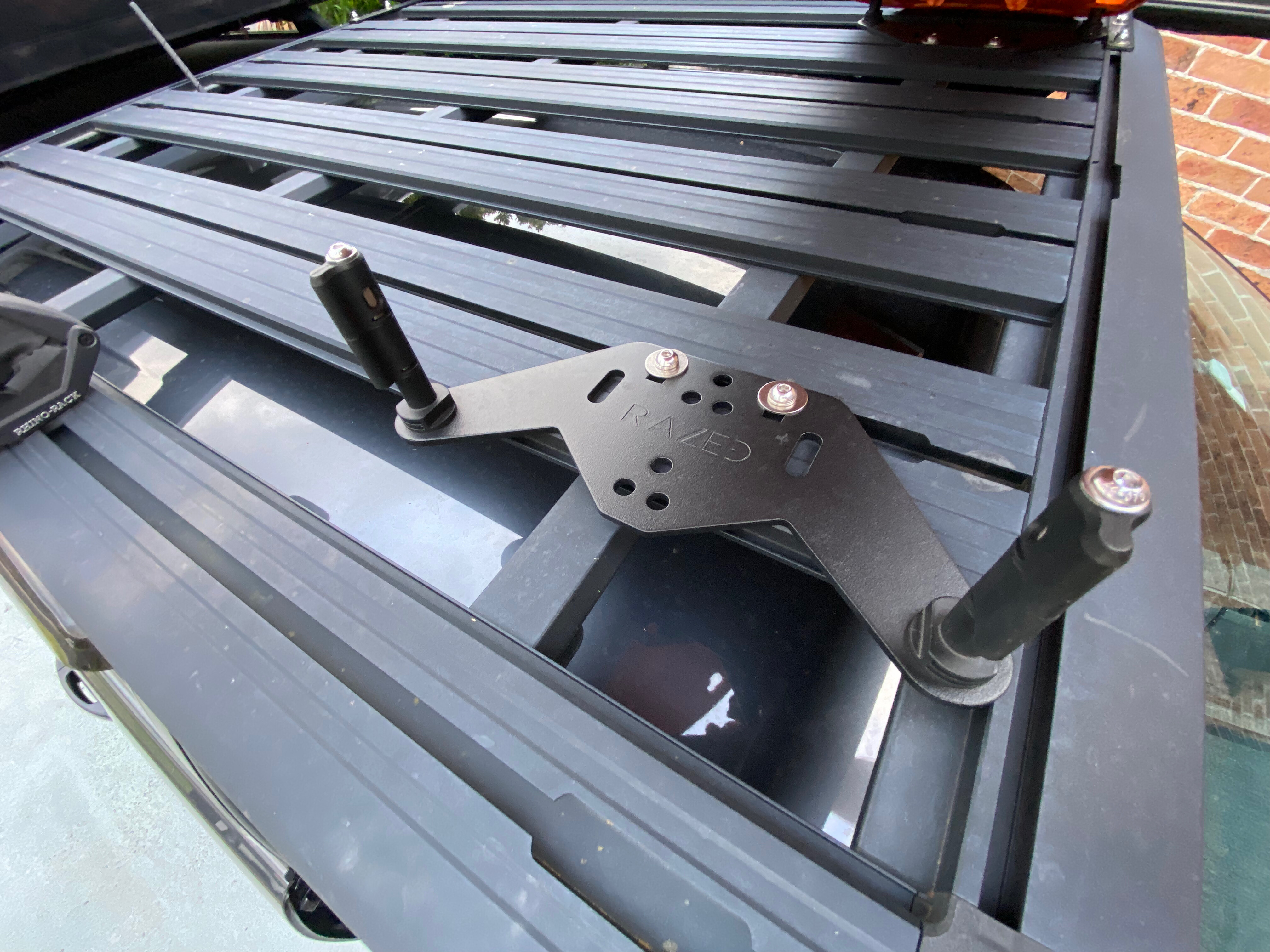
All you have to do is fit the mounting pins to the base plates, measure the distance between plates so the pins match up with the holes in the MaxTrax recovery boards, and then screw them down to the roof platform.
I’ve had these for more than a year now and can’t fault them, other than the fact they stick up a fair bit and can make underground car-park access a problem at times.
But hang on, I just looked on the Razed website and they now have a new MX-360 MaxTrax Foldable Pin Mount, which allows the pins to be folded flat when not in use. Brilliant!
Pricing
RRP: $75; or $115 with MaxTrax MkII pins Available from: www.razedproducts.com.au
Isuzu Ute Australia has refreshed its range for 2023, with some blacked-out exterior trim, new wheels for higher-end models, functionality improvements across the range – and perhaps most importantly, a new light-sipping budget 4×4 model.
The smaller 1.9-litre turbo-diesel was first introduced on the tradie-focused 4×2 SX D-Max last year, after running the engine in European markets for some time.
It returned frugal fuel figures when we tested it, sipping just 8.9L/100km after fairly lead-footed use, against Isuzu’s claim of 6.9L/100km.
That ute represented a future-proof model for Isuzu, given its 3.0-litre ‘4J’ will inevitably be phased out; not anytime soon, but the trend is of course leaning towards smaller engines.
It didn’t, however, offer a frugal option for off-road-focused buyers wanting 4×4 capability in the same work-spec ute model.
That all changed with the introduction of the base-spec 1.9-litre 4×4 SX option, with more payload than its big brother and a price tag that’s just a yellow note or two over $50,000 before on-road costs.
JUMP AHEAD
- How much is it, and what do you get?
- Interior, comfort, space and storage
- What’s the payload and is the tray practical?
- What is it like to drive?
- How is it on fuel?
- How safe is it?
- Warranty and running costs
- VERDICT
- Specifications
How much is it, and what do you get?
The new 1.9-litre 4×4 D-Max SX model is priced at $50,200 before on-road costs, which by comparison saves you exactly $2000 over the equivalent 3.0-litre model. For fleet buyers, though, it’s the fuel savings that will make all the difference.
Order books opened in December, and we got the first of the 1.9-litre 4×4 test rigs. How many of these will sell, though, is anyone’s guess this early on.
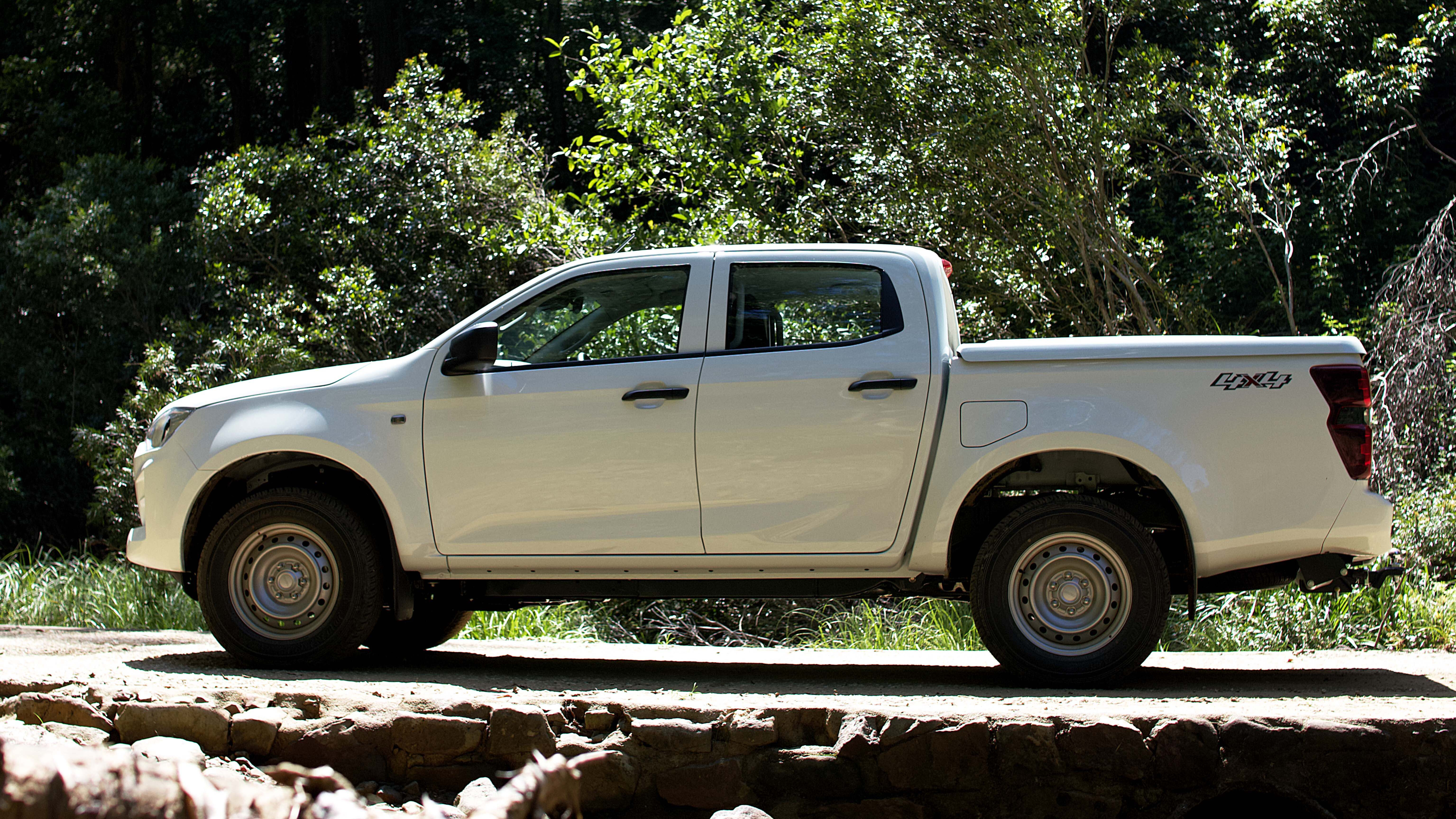
All of the 2023 range improvements carry over to the 1.9-litre SX, however being a base-spec model the new wheel options are out of reach. Instead, the SX models all get hardy 17-inch steelies and ubiquitous Dunlop Grandtrek AT25 dual-use rubber.
Some small functionality upgrades were added too, the best being a user-friendly tailgate assist feature that utilises gas struts to lighten the lifting and lowering effort. We tested the tailgate weight back-to-back with last year’s model, and it’s a very noticeable improvement.
Base SX models miss out on LED headlights and taillights but, for a hard-working ute, the simple, budget halogen units provide decent illumination at night. They also feature automatic high-beam control and auto-on functionality. Automatic wipers are also included, so despite being a base model it’s all very ‘set and forget’.
The grille has been redesigned for the range update, but it appears to have had a gloss black colour change rather than any significant alterations to its size and shape.
Aside from the new engine, the running gear remains the same with an Aisin-sourced six-speed automatic, and Isuzu’s 4×4 Command off-road system with rear locking diff.
For off-road users, the SX offers 235mm of ground clearance and an 800mm wading depth. The LSU, LSU+ and X-Terrain benefit from an extra 5mm of ground clearance, but that is likely due to the extra ride height their 18-inch wheels afford.
Isuzu offers its Intelligent Driver Assistance System (IDAS) across the entire D-Max range consisting of auto emergency braking with turn assist, forward collision warning, adaptive cruise control, traffic sign recognition, lane departure warning and lane-keep assist.
For 2023 the IDAS system was tweaked to automatically disable blind-spot monitoring and rear cross-traffic alert when a trailer is attached.
Those who tow with the 1.9-litre SX do lose out slightly, with a maximum braked towing capacity of 3000kg down on the 3.0-litre model’s 3500kg limit.
Upgrade your D-Max
-
Bullbars
-
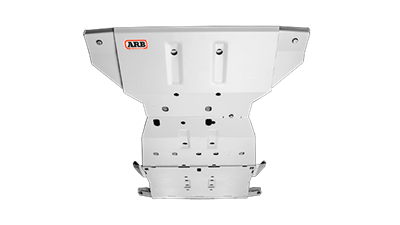
Underbody Protection
-
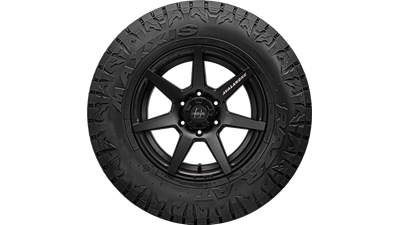
4X4 Tyres
-
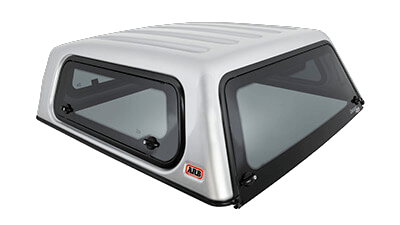
Canopies
-
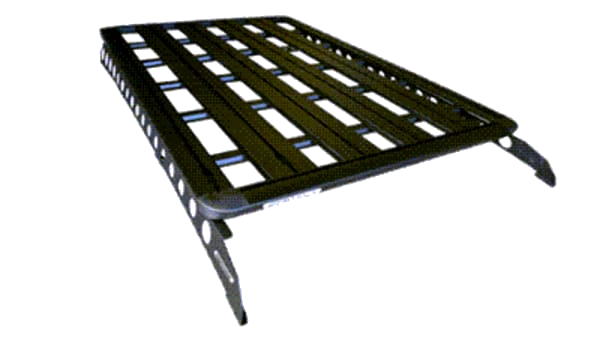
Roof Racks
-
Storage
Interior comfort, space and storage
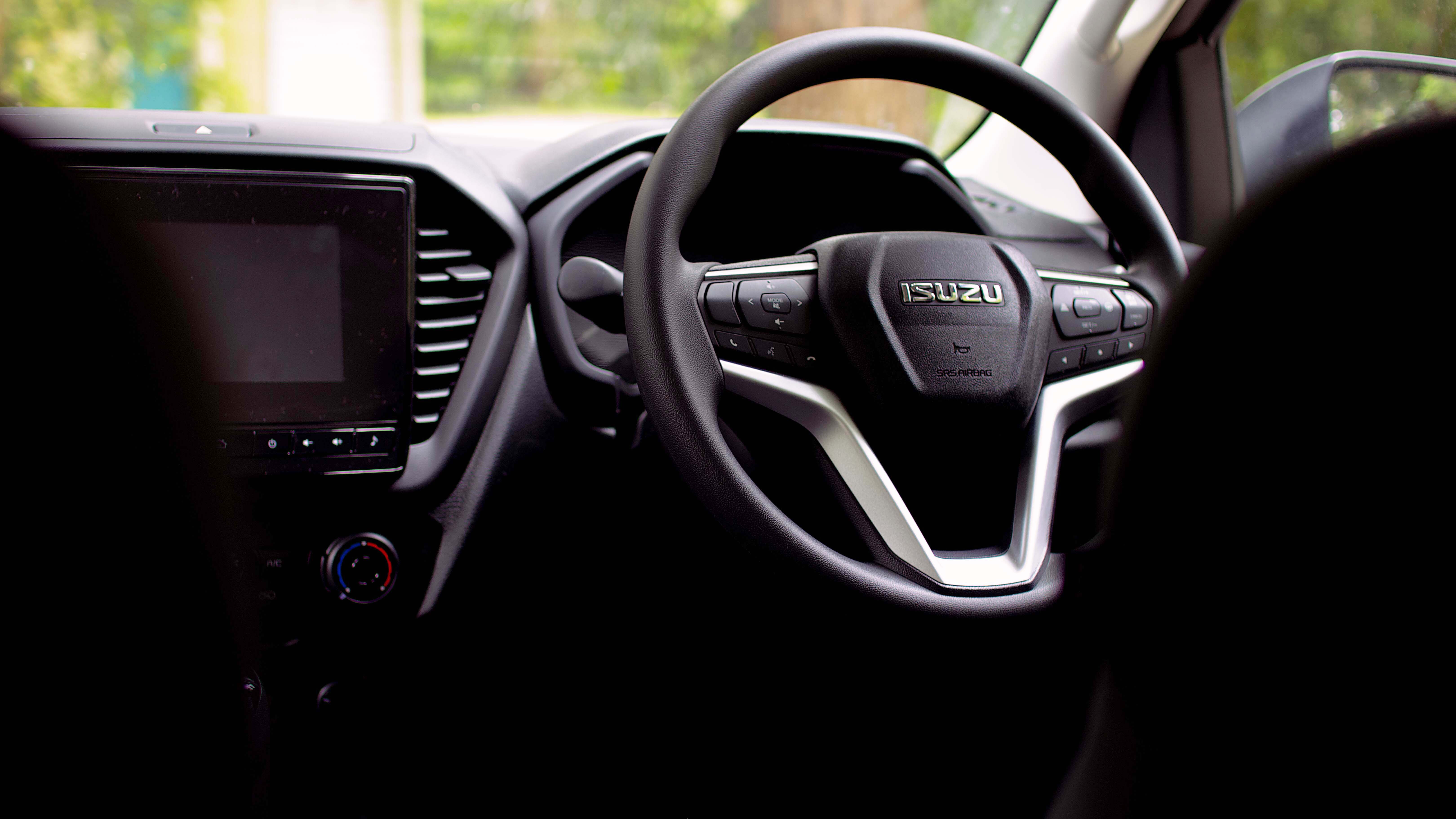
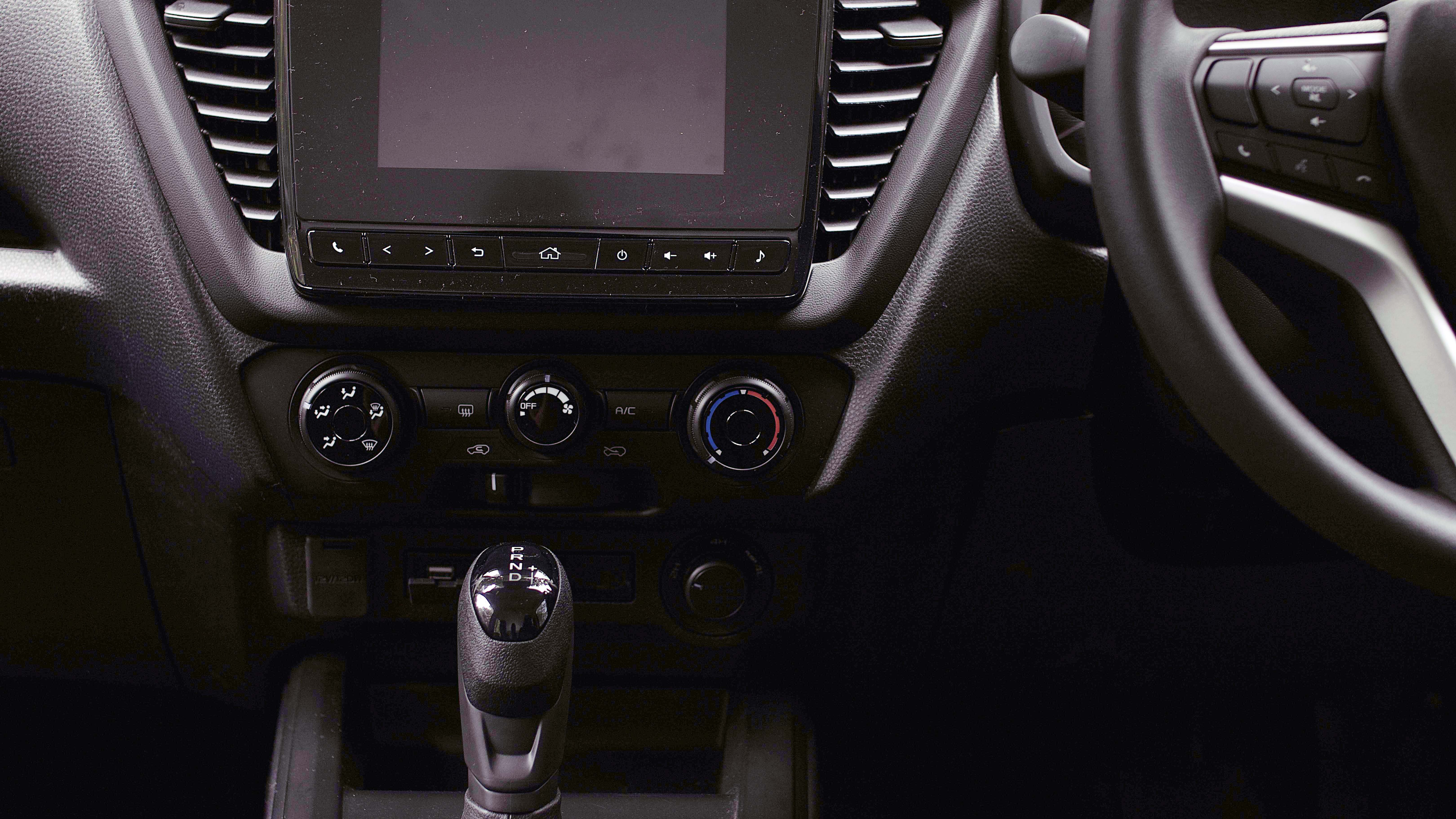
A gripe with the SX range was the single USB charging point, but Isuzu has added a second 2.1-amp port for the 2023 base models. Aside from that, the wipe-down vinyl interior with simple cloth upholstery remains unchanged for SX models.
The SX features a smaller 7.0-inch infotainment screen than the 9.0-inch unit found in higher-spec models, with voice recognition, wireless Apple CarPlay, wired Android Auto, DAB+ digital radio and a humble four-speaker audio system.
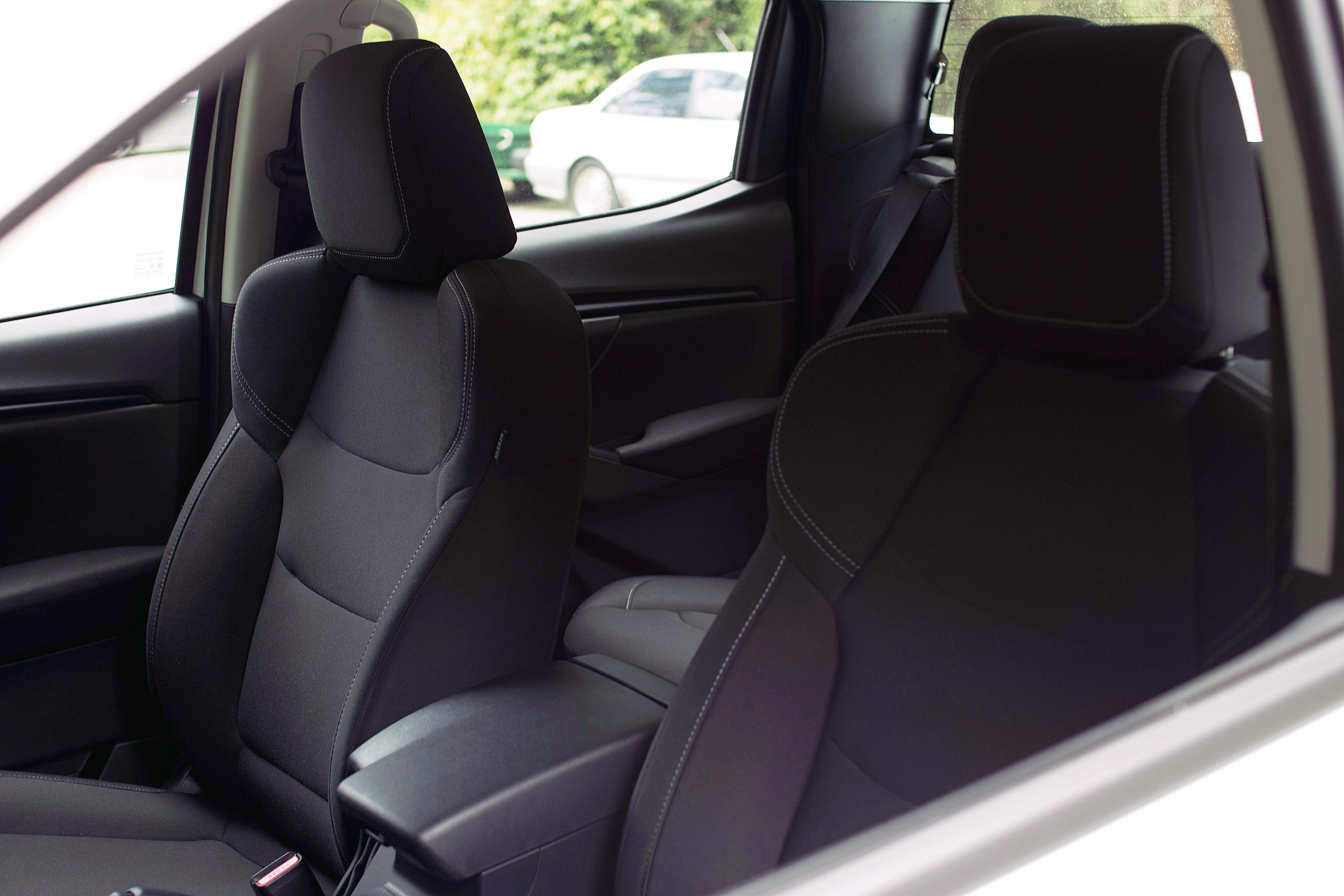
Hard plastics throughout the cabin, coupled with easy-to-clean vinyl floors, make this a work ute interior that should stand the test of time. Storage is plentiful, too, with large door pockets, a roomy centre console, and two ‘hidden’ storage compartments under the rear seats.
This new 1.9-litre model may not be capable of towing as much as its big brother, but it can carry more in the tray. Payload comes in at 1150kg, 85kg more than the 3.0-litre model, which is a perk for tradies and fleet buyers wanting to fit a canopy.
What is it like to drive?
I own a 3.0-litre D-Max, for context, so jumping into this 1.9-litre model required an adjustment to my driving style.
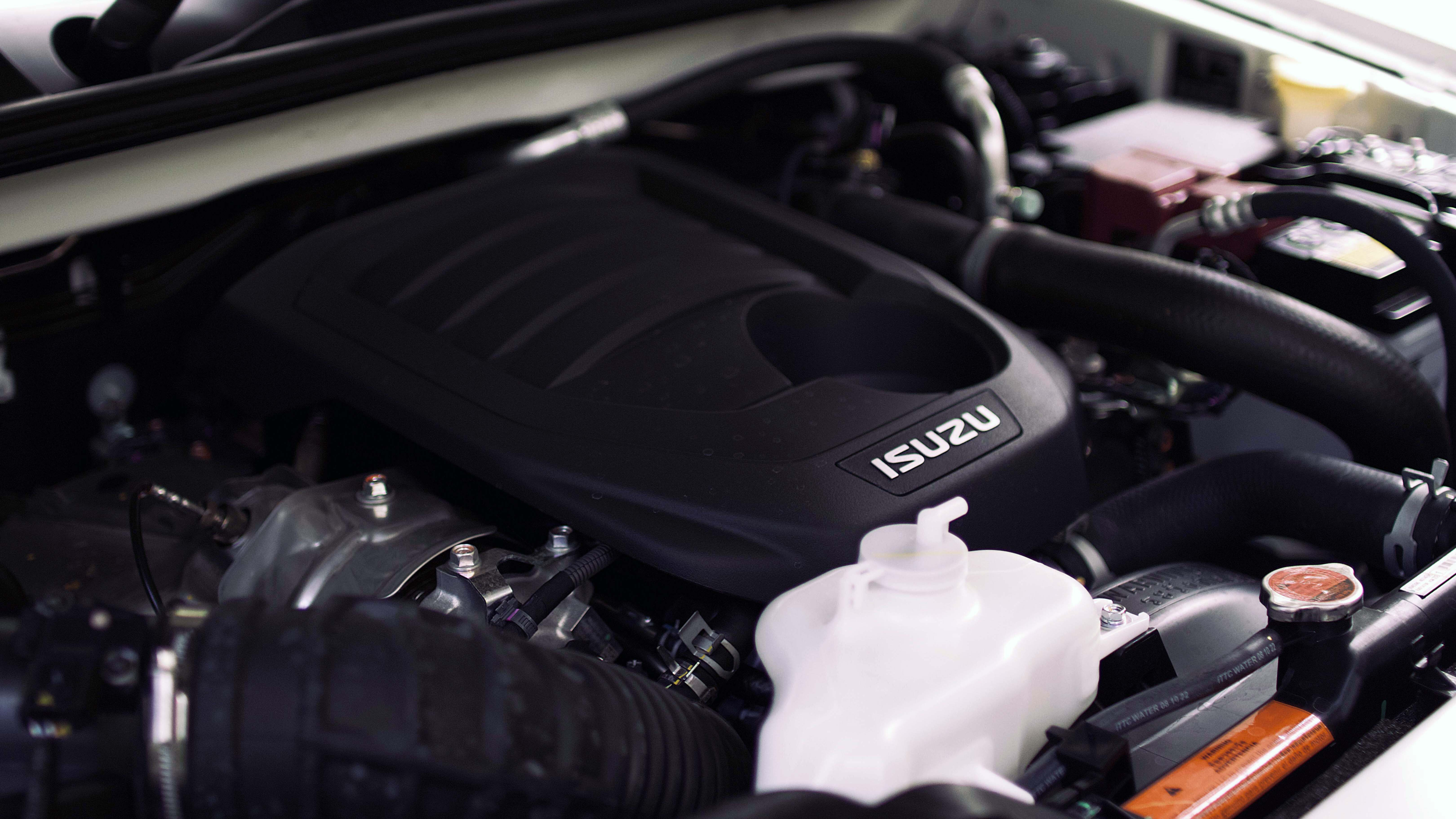
The 1.9-litre RZ4E-TC turbo-diesel four-cylinder engine produces 110kW/350Nm which, while ample, is 30kW and 100Nm down on the 3.0-litre engine. It’s noticeable.
Although the 1.9’s transmission holds gears for longer, the engine still has a very usable torque spread, making all 350Nm from 1800 to 2600rpm. This is a budget option people will buy for its fuel economy benefit, so less performance is just part of that compromise.
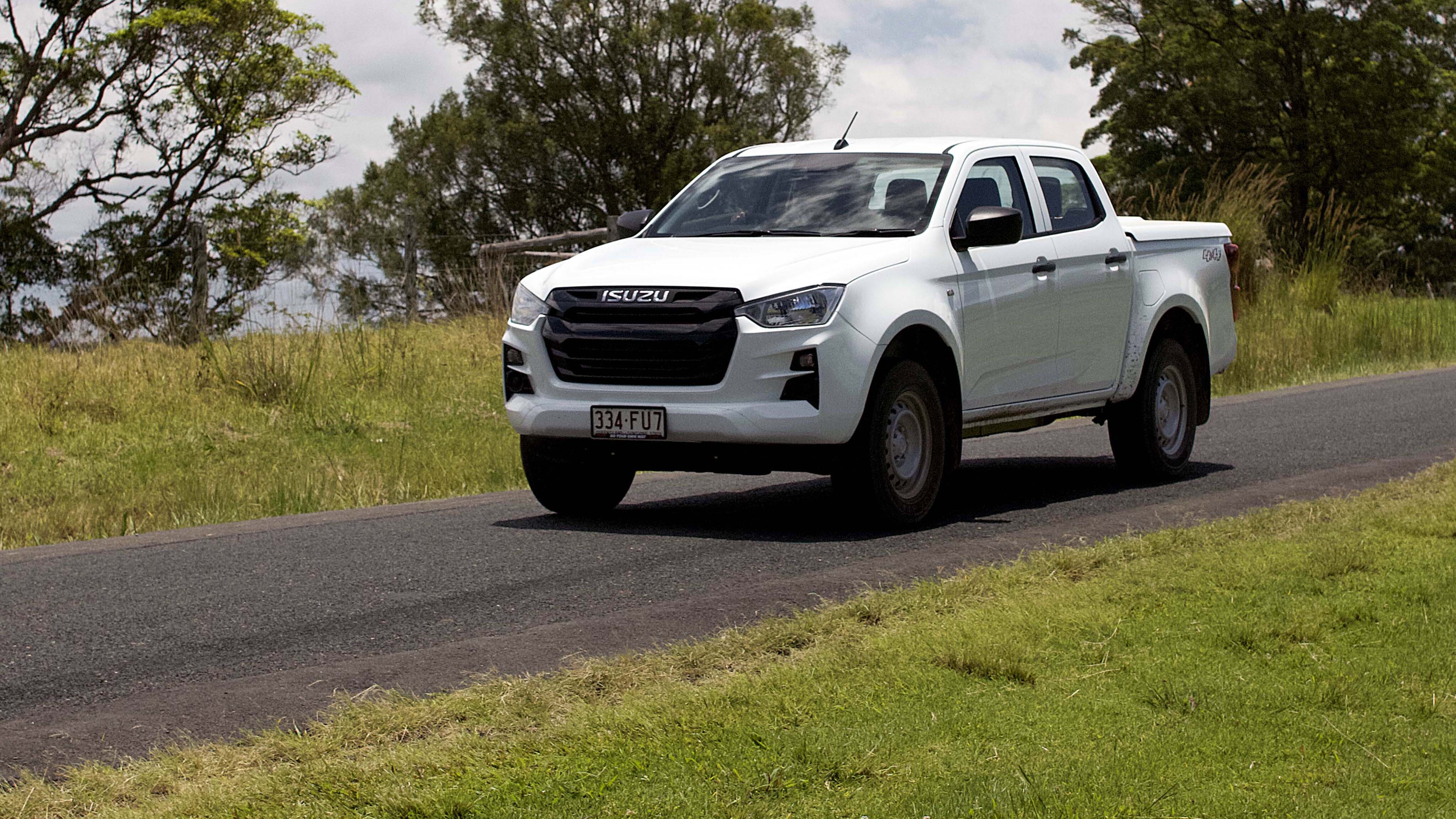
While slower to accelerate off the line, in-gear, and just about everywhere other than off-road where it feels like it has plenty of grunt, this engine is the smoothest to feature in an Isuzu.
The 1.9-litre is a refined unit that produces less noise and vibration than the 3.0-litre engine, which is something that became very evident after jumping back into my personal D-Max.
Steering has been a strong point in D-Max models since Isuzu moved to an electronic system in 2020, and less weight over the front axle has helped make it even better in this model. The 1.9 SX feels slightly more agile than other 4×4 D-Max models.
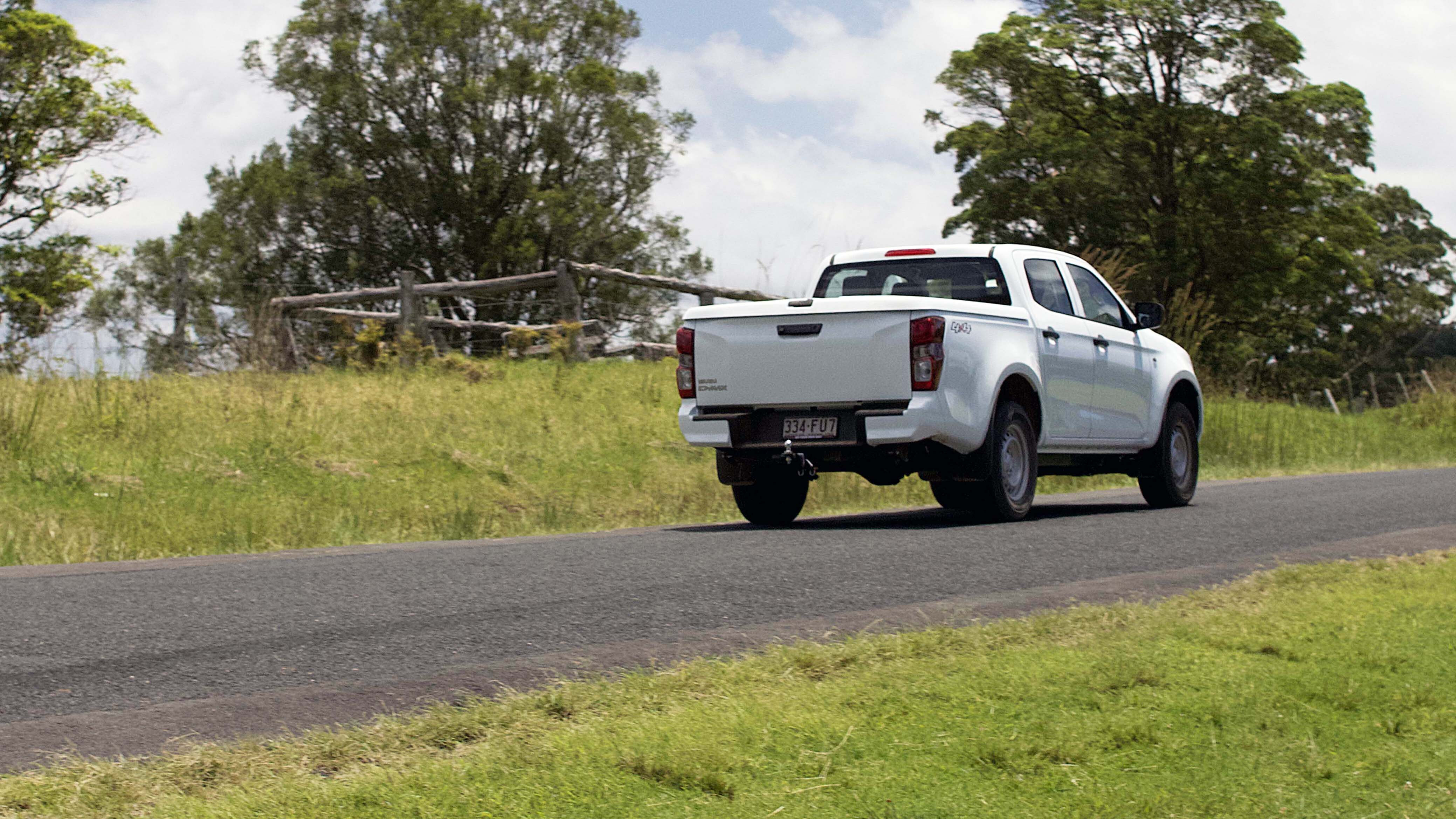
The basic but dependable Dunlop Grandtrek AT25 tyres are quiet on-road, but they are limiting off-road. Given this model makes most sense as a fleet or work ute though, they’re a suitable all-rounder.
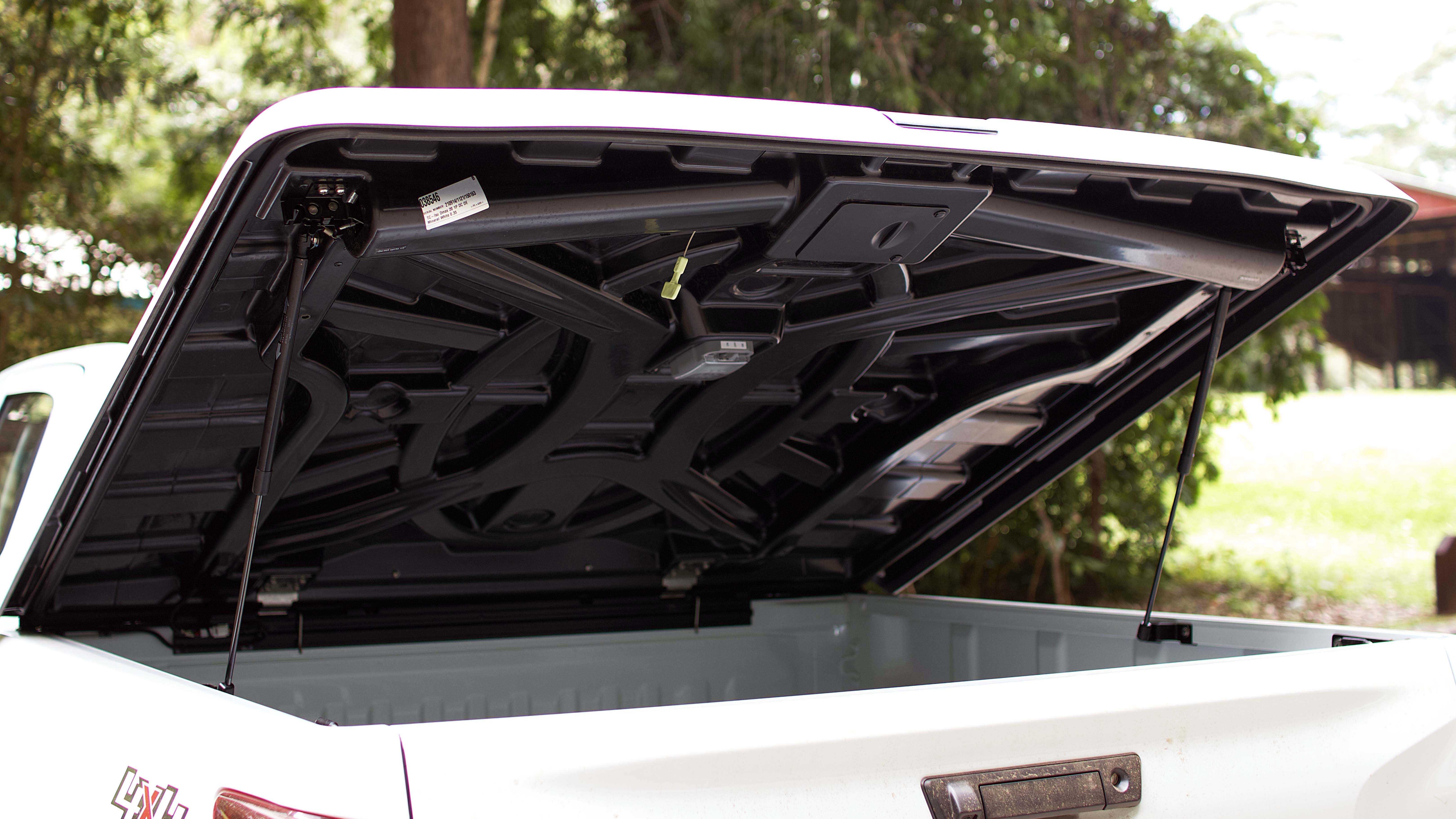
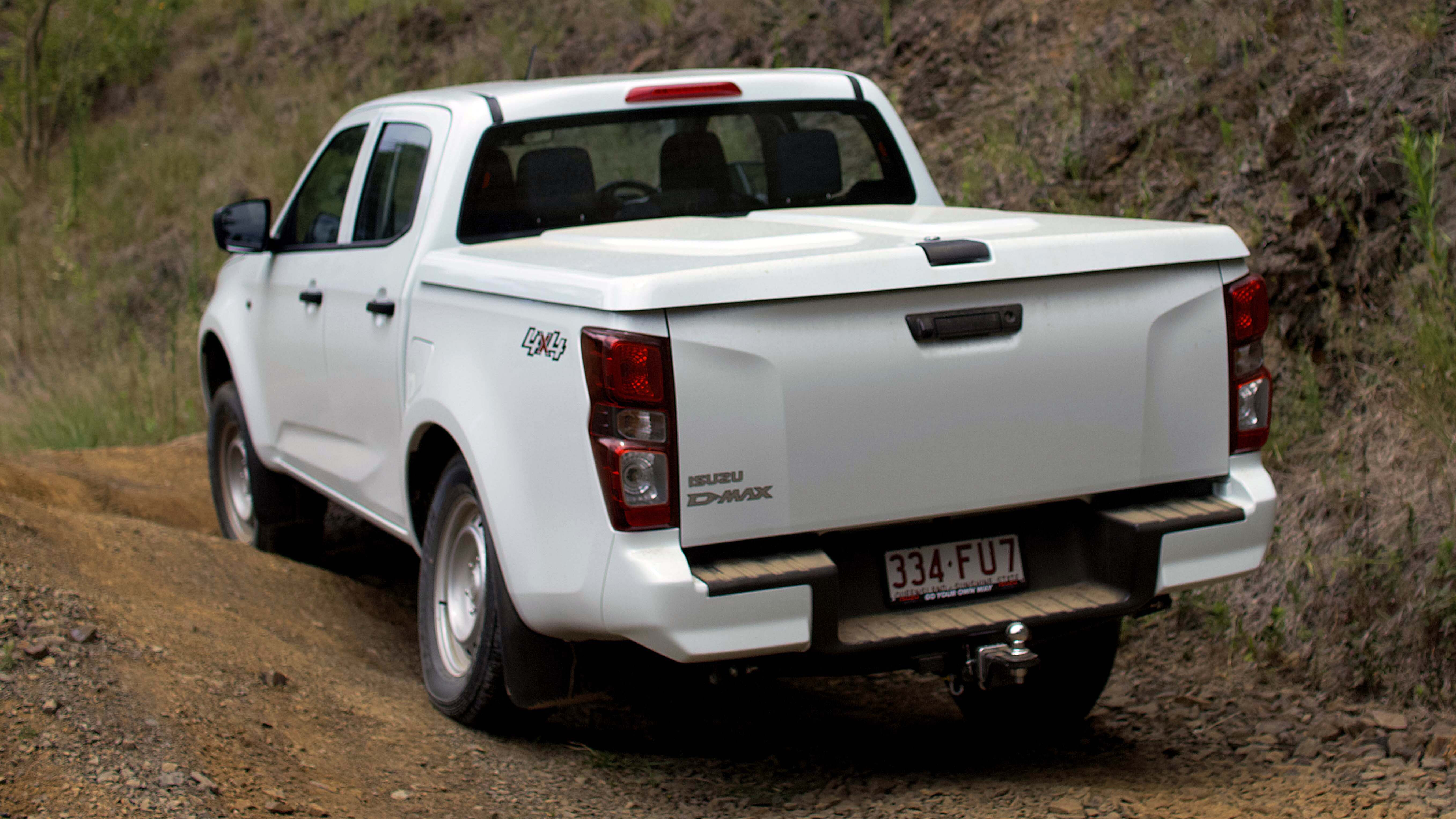
We had a factory hardcover fitted to this tester, which was linked up with the central locking (no more carrying a separate hardcover key), but it was noisy over rough surfaces. Some foam or rubber damping could easily fix this, but it rattled more than we’d like for a factory-fitted option.
Off-road, the 1.9-litre engine got us up and over some steep climbs with only ground clearance limiting us (the norm for stock ride height dual-cab utes). With low range engaged, the lower torque figure was also less noticeable.
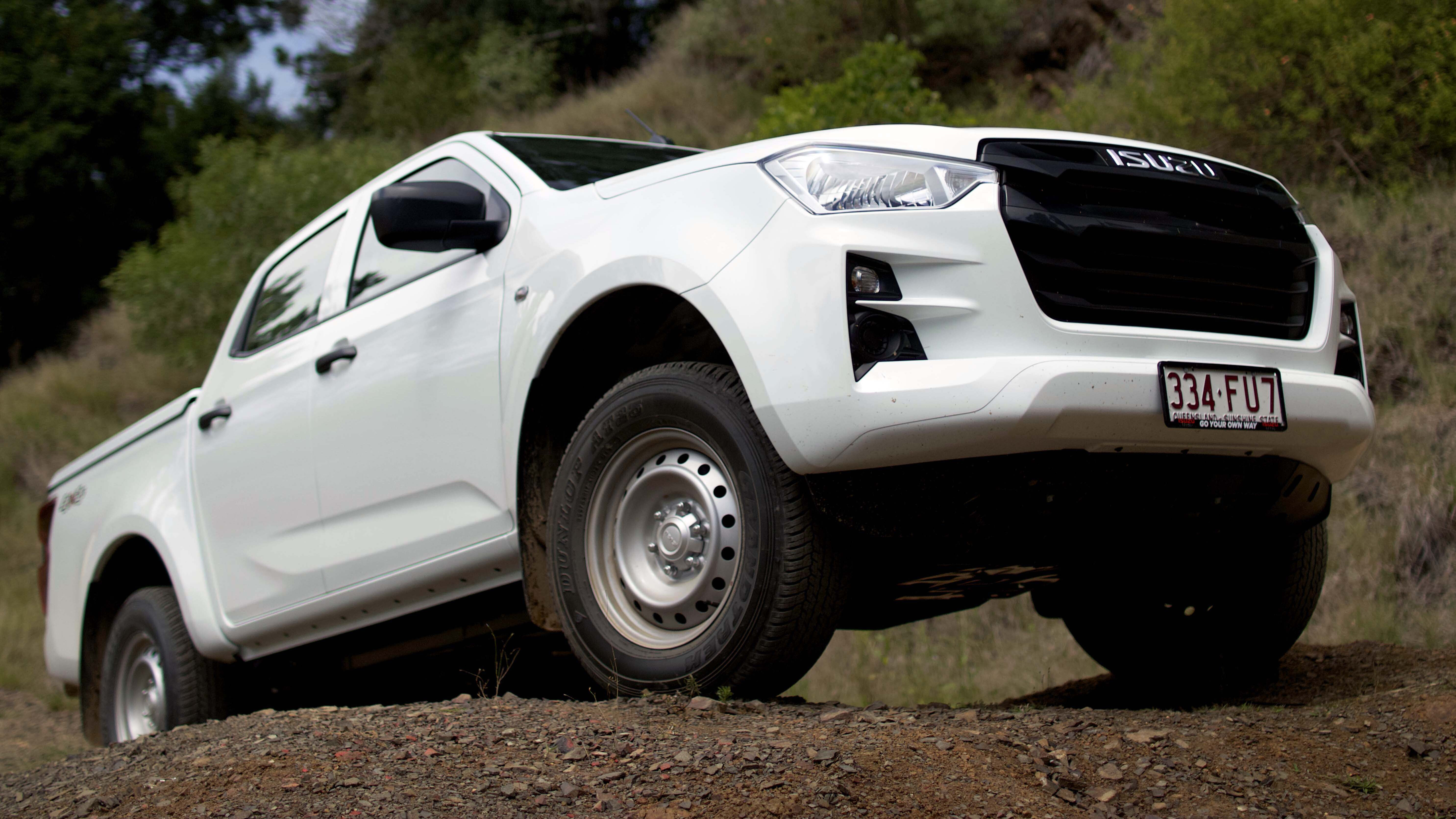
During day-to-day use, we quickly adapted to the smaller engine. As an all-out workhorse, especially if towing, the larger engine is a more effortless experience, but this 1.9-litre does get the job done.
This is a proven engine too, having served in D-Max models in overseas markets for quite some time, so reliability can be vouched for.
On the plus side, owners will be less likely to accidentally speed in this model.
How is it on fuel?
Isuzu claims combined fuel use of 6.9L/100km for this model, against the 3.0-litre model’s claimed 8.0L/100km.
We achieved fuel use of 8.8L/100km after a mix of urban and off-road driving, including low-range use. This D-Max wasn’t babied or driven gently across our 1000 kilometres of testing so, after its run-in period and if driven more sedately, the number will undoubtedly drop.
This engine does need to be worked hard at times, but the fuel savings compared with the 3.0-litre engine option are evident.
How safe is it?
The full range of D-Max models received a five-star ANCAP safety rating after being retested recently. The entire range also features eight airbags.
Isuzu offers its Intelligent Driver Assistance System (IDAS) across the entire range, so the full suite of safety tech puts this model ahead of other work-ready ute options.
Warranty and running costs
The entire Isuzu D-Max range comes with a six-year, 150,000km warranty, as well as capped-price servicing and roadside assist for seven years.
Services are taken care of every 15,000km or 12 months, and pricing is capped for the first 105,000km across all models and engine variants.
VERDICT
This isn’t likely to be a ute the general public rushes to buy when you can snag an equivalent 3.0-litre model for just $2000 more, but it would appeal to tradies and fleet buyers with an eye on total cost of ownership.
Across a fleet of vehicles, one or two saved litres of diesel every 100 kilometres offers a significant saving. From a corporate environmental, social, and governance (ESG) standpoint, it also means reduced tailpipe emissions.
For $50,200 before on-road costs with a comprehensive safety suite, good payload rating and impressive fuel use figures from an engine that is smoother and quieter – while working harder – than its big-bore sibling, the D-Max SX 4×4 1.9 looks like good value as a business vehicle.
The good news is, it’s still not a huge leap in sticker price to get the gruntier three-litre version if you need it.
Specifications
| Isuzu D-Max SX 1.9-litre 4×4 specifications | ||
|---|---|---|
| Engine | 1.9L 4cyl turbo-diesel | |
| Power @rpm | 110kW @ 3600rpm | |
| Torque @rpm | 350Nm @1800-2600rpm | |
| Transmission | 6-speed automatic | |
| Body | 4-door, 5-seat dual-cab ute | |
| L/W/H | 5303mm | |
| Wheelbase | 3125mm | |
| Weight | 1950kg | |
| Fuel / tank | Diesel / 70L | |
| Fuel use (ADR) | 6.9L/100km | |
| Fuel use (tested) | 8.8L/100km | |
| Suspension | double wishbone (f) / leaf (rear) | |
| Steering | electric power assisted | |
| Brakes | disc (f) / drum (r) | |
| Tyres | Dunlop Grandtrek AT25 255/65 R17 | |
| Wheels | 17-inch steel, full-size spare | |
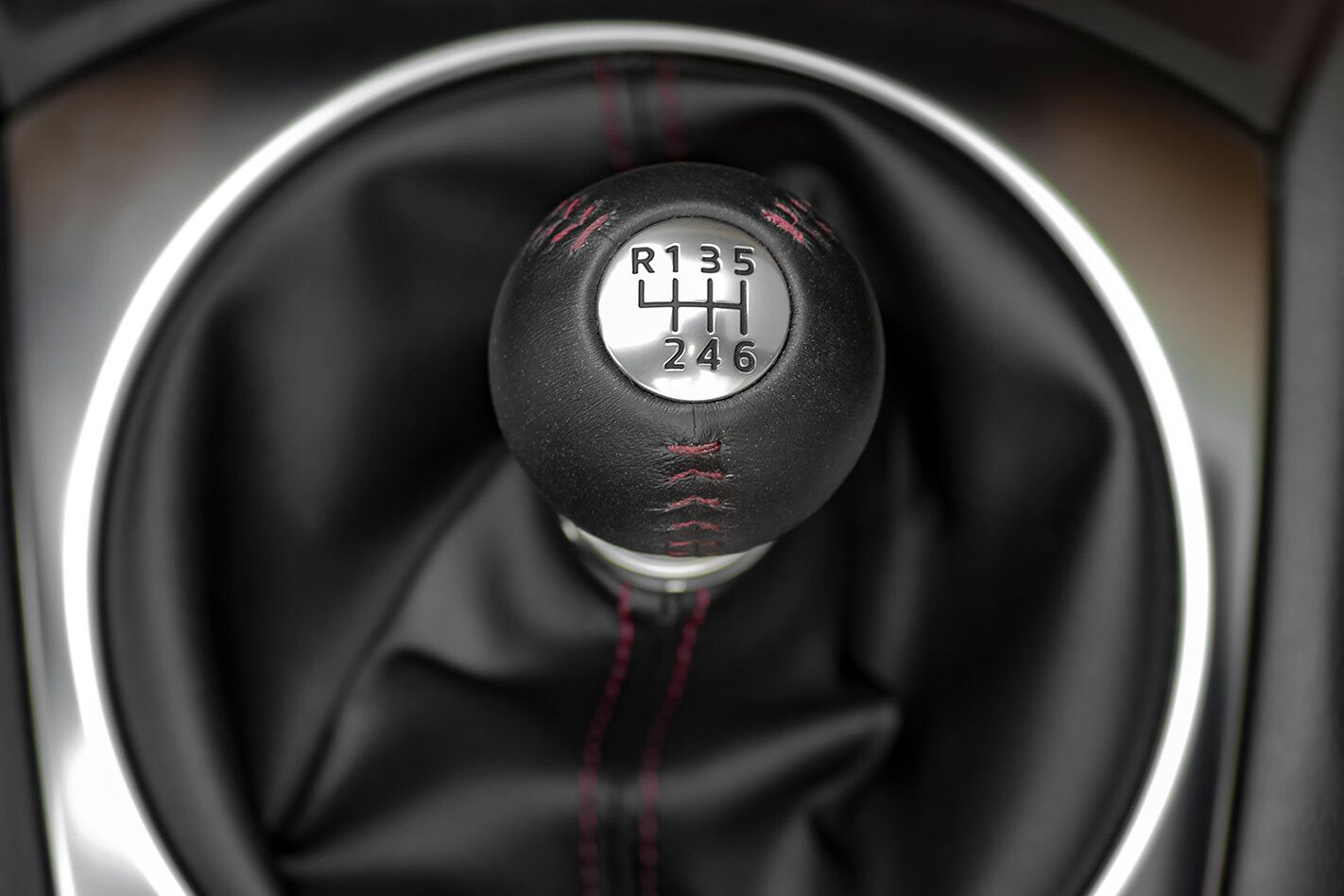
The automotive world is being turned on its head right now, but that doesn’t mean we aren’t about to be swamped by EVs, nor will diesel and petrol fuels disappear anytime in the foreseeable future. But what is on the endangered list is the manual gearbox and its availability in new four-wheel drives.
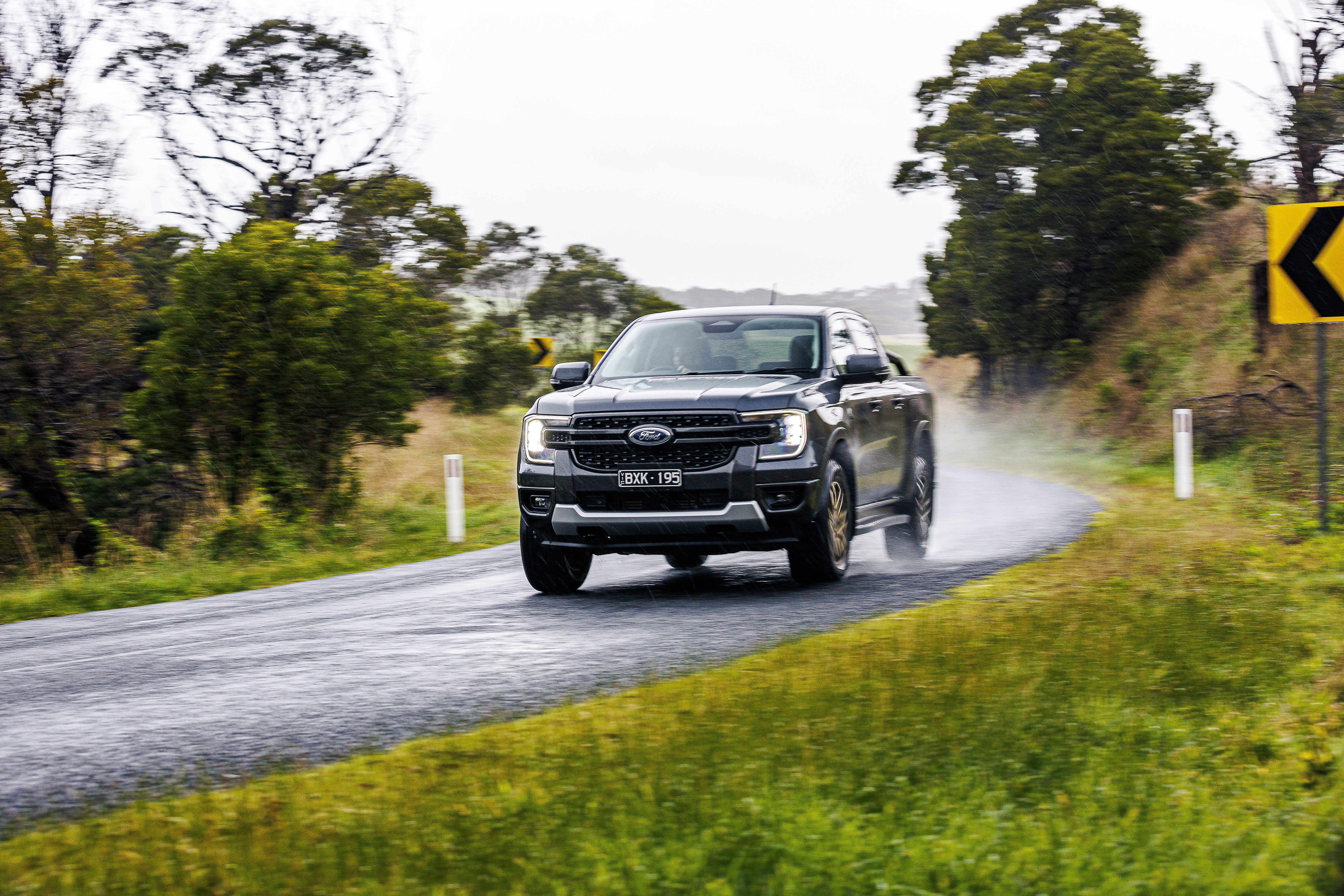
Ford’s next-generation Ranger, a significant new model not just for the 4×4 and ute markets but for the overall new-car market in Australia, isn’t available with a manual gearbox. No manual, of course, in Toyota’s 300 Series LandCruiser, as there wasn’t with the 200 Series.
And you can no longer buy a manual Prado or a manual in the other popular 4×4 wagons: Isuzu MU-X, Mitsubishi Pajero Sport, Toyota Fortuner and Ford Everest. There’s also a good chance the next-generation Hilux will be auto-only, at least in up-spec 4×4 variants.
Meanwhile over at Land Rover/Range Rover, manual gearboxes disappeared long ago, while Jeep doesn’t offer a manual at all, not even in the Wrangler Rubicon.
Lack of buyer demand, claims Ford, is the reason it doesn’t offer a manual in the new Ranger. A manual is available with the new Ranger in some overseas markets, just not here in Australia. Lack of buyer demand is also the reason why Toyota dropped the manual option from the Prado.
Small capacity engines that don’t produce much torque at low revs simply don’t work well with torque-convertor automatics
Despite what might or might not be ‘buyer demand’, not everyone is happy that manuals are disappearing, as you would expect. For one thing you can’t clutch-start an automatic, which brings a new dimension to a flat battery when you’re out bush.
Some people just don’t like automatics for various reasons, perhaps scarred by the experience of two and three-speed automatics of years back or, more recently, four-speed automatics mated to smaller capacity (naturally aspirated) petrol engines that need to rev hard to give their best. Small capacity engines that don’t produce much torque at low revs simply don’t work well with torque-convertor automatics.
While contemporary five- and six-speed automatics with their electronic controls have moved the game on appreciably, new-generation automatics with eight, nine or ten speeds and even more sophisticated electronic control take the driving experience to a whole new level.
These eight-speed-plus automatics vary in detail of operation of course, and some do things better than others, but the key attribute shared by them all include the ability to swap from any given ratio to any other ratio without having to go through all the ratios in-between. And they can do this both going up and going down the ratios. If they couldn’t do this, then having so many ratios would mean very slow multi-ratio shifts.
When accelerating under light throttle for example, the gearbox might skip every second ratio or even skip two or more ratios at a time so as to get up to the taller gears more quickly. Likewise, with heavy throttle application, in a taller gear the gearbox doesn’t downshift one ratio at a time but goes straight to the ratio that will provide the most effective acceleration, even if that means jumping four or five ratios on the way.
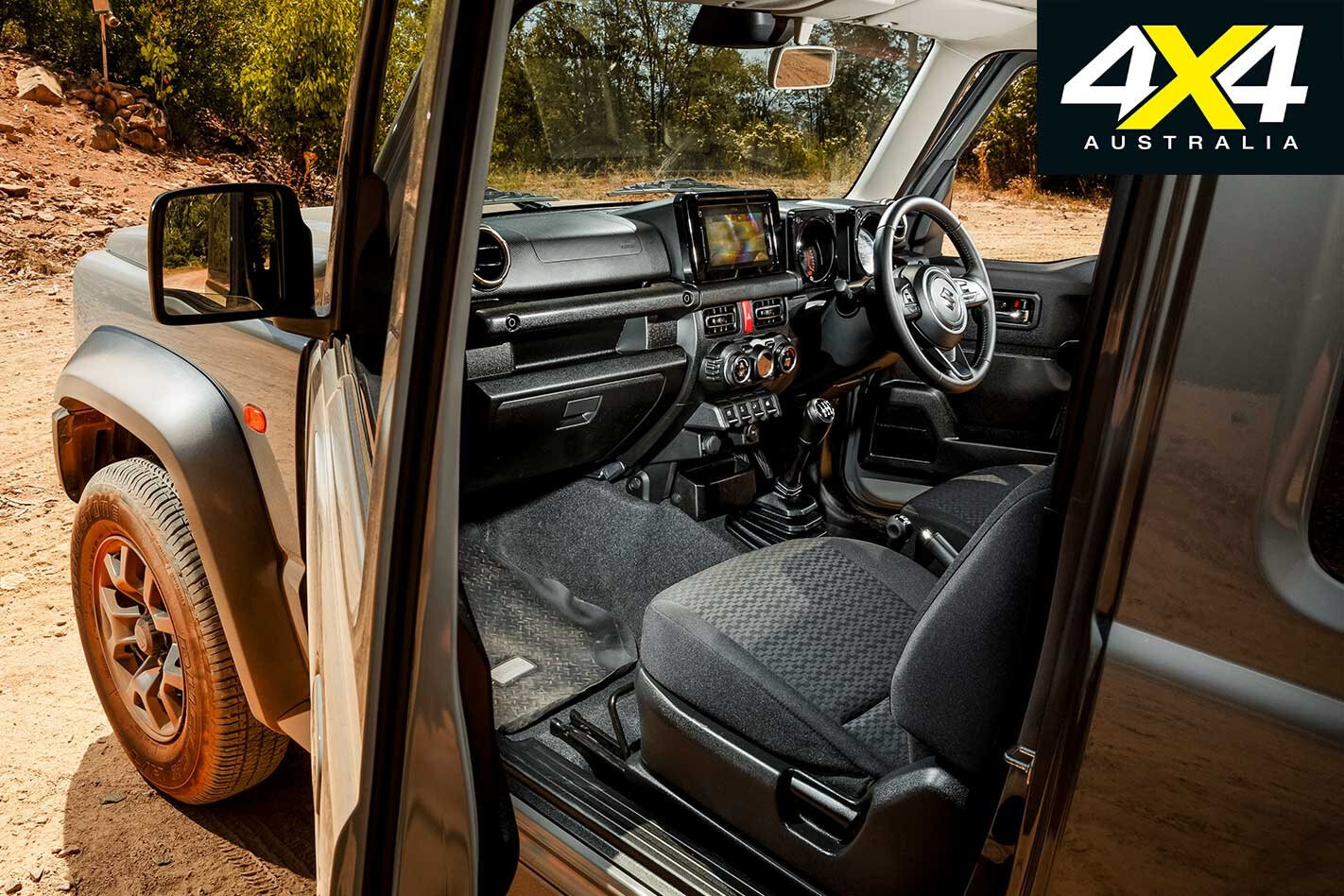
All of these automatics will also downshift on brake application down hills and some will even downshift on descent without brake application in off-throttle mode.
These gearboxes also allow the driver to select gears manually and will only revert to automatic control if the driver (through gear selection and/or throttle application) ‘asks’ them to operate outside their pre-programmed manual-mode protocols, which they won’t do.
All of these modern automatics are generally so good that they are best left to do their own thing in ‘Drive’ almost irrespective of the driving environment. The rare exceptions include descending long, steep slopes when towing heavy loads to optimise the engine braking and thus reduce the risk of overheating the wheel brakes.
Manual control can also be useful off-road when descending steep slopes, although for most off-road driving situations these slick new automatics will do all you want in Drive.
Going a lap of the map has crossed the minds of many 4×4 owners, or struck a spark for newcomers to own their first off-road rig – but where do you start once the decision has been made to do it?
Base camp for Joe Delich is the West Pilbara town of Karratha, home of the Ngarluma and Yindjibarndi people, and surrounded by some of the most breathtaking vistas and fishing in the country. Camping with mates during time-off from work is the default for a large majority, so after cutting his teeth on a Subaru WRX, then a Land Rover Discovery Series 2, Joe decided it was time to build his ultimate touring rig.

“Hiluxes are excellent value for money and they come with all the creature comforts internally. Parts are easily accessible in regional Australia too,” Joe explained.
It had to be an SR5, fully spec’d from the factory and then loaded with the tools deemed necessary to be comfortable and, most importantly, reliable, because there’s always room for improvement. With the mantra of ‘the poor man pays twice’ keeping upgrades well-researched, Joe modified his rig to be fit for purpose.
Stepped-up spec
With the exception of an ARB breather kit keeping water out of the driveline, and a ProVent catch can, Joe has kept reliability in mind and held back on any immediate mods to the 1GD-FTV engine, with an exhaust and tune slated for the future.
Running out of fuel in the outback can be hazardous, so a Long Ranger 182-litre fuel tank was swapped in, with a Diesel Care secondary filter further guarding against engine-killing contamination.

On the inside, a pair of Black Duck 4Elements seat covers keep mud off the seats, while Bedrock floor liners keep it contained down below. Having no need for a rear window or rear seat gave Joe the space for some extra cabin storage. The clever Offroad Affiliate rear window holder overlays the rear glass, with an Engel 40-litre Eclipse fridge/freezer strapped to a false floor.
Not being able to make contact with mates in a convoy can be frustrating, but when out in the middle of nowhere it’s downright dangerous – so for comms, a GME XRS 370 is positioned front and centre, using a GME pass-through connector through the dash.
Panel preservation
Fending off suicidal wildlife is the Deluxe bullbar from ARB, with matching scrub bars and rock sliders extending the protection down each flank. Joe duly loaded the ’bar with Stedi Type-X spotties, plus a Domin8r X winch should the track ahead get dicey.

An OCAM bonnet protector guards against stone chips, with the same company’s weather shields keeping rain from entering the window tops. Mounted securely to the roof is the ARB Base Rack, complete with wind deflector, MaxTrax mounts and gas bottle holder from the same outfit.
Moving on up
Soon after securing the 2016 Graphite N80, Joe set about getting the chassis up to the task of supporting the canopy soon heading its way. Starting with the rolling stock, there’s a full complement of six 17×8-inch PDW Outback steel rims sporting a P10mm offset.
With the extra circumference of the new tyres filling the guards, Joe added an extra two inches of lift all ’round
After waiting eight months for some BFG KM3s to arrive, Joseph pulled the pin and switched to Yokohama Geolandar G003 muddies in a 265/70R17 sizing, but if a set of BFG KO2s came up Joe would be all over them, citing: “Why change a winning formula?”

With the extra circumference of the new tyres filling the guards, Joe added an extra two inches of suspension all ’round, dampened by Old Man Emu BP-51 adjustable shocks on all four corners. The rear leafs can handle an extra 600kg of constant load, keeping the sills level once loaded up.
Old Man Emu fixed upper control arms help dial out some of the unwanted camber caused by the lift, until Joe can swap them out with a set of adjustable arms.
Bringing all that extra weight back to a stop was something that wasn’t going to be left to the standard anchors, so a pair of DBA T2 4×4 Survival rotors were fitted, reducing fade under heavy braking.
Everything and more
If designing a canopy stopped at just throwing a big box on the back of your 4×4, then we’d be picking them up at Bunnings. However, making one that actually looks the part while being functional, sorts the men from the boys.
Joe got in touch with Paul Paget Welding some 1600km away in West Pinjarra, to build his canopy and tray from scratch
After seeing his work, Joe got in touch with Paul Paget Welding some 1600km away in West Pinjarra, WA, to build his canopy and tray from scratch. A lot of groundwork was undertaken researching the ins and outs of different layouts and their virtues before this point, though, paramount being to keep weight down and as forward of the rear axle as possible.

“Everything is alloy, both tray and canopy, and I wanted the ability to be able to lift the canopy off if I needed,” revealed Joe. “Paul is a one-man-band with a plethora of experience, and he’ll make you literally anything you want. He prides himself on getting a nice rolled edge on the headboard, tying it in with the Hilux (and canopy). It’s a work of art.”
After Joe dropped off the Hilux along with any canopy accessories he wanted fitted, Paul set the foundation with a bespoke tray containing the rear trundle drawer, plus 93 litres of water storage forward of it. Access for draining or filling is via a gravity-fed tap, plus a 12V pump directing pressurised water to the rear. Here, a KickAss gas water heater sits outside on the canopy’s rear wall, protected by its own sealable enclosure, also containing the shower head for easy access, whether it be for hot showers or freshwater wash-downs.
While most of the tray uses 3mm aluminium, or 2mm for the main doors, Paul upgrades this to 6mm sheet for the custom toolbox doors, giving extra rigidity against impact, and better sealing. All compression locks on both tray and canopy are hooked into the Hilux’s central locking, making security a breeze. With so much attention to detail, it’s not surprising to learn 316 grade stainless-steel nuts, bolts and washers are used throughout.

Diving inside the canopy finds a kitchen layout better than your average caravan, providing power and accessories to make extended camping a piece of cake. Starting with a huge Bushman 130L upright fridge-freezer sharing a corner with a Redarc RedVision monitor.
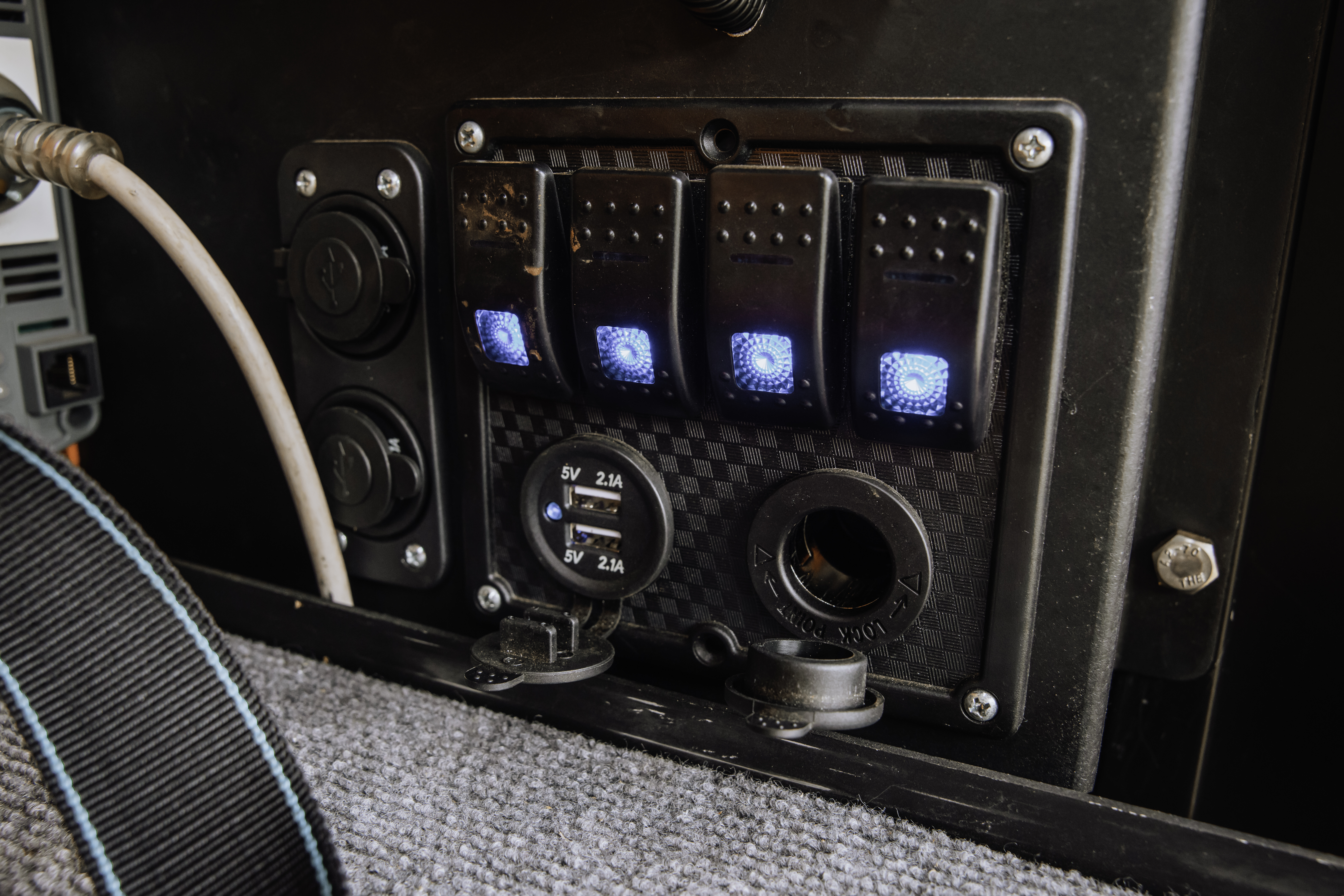
Combined with the Redarc Manager30 parked on the other side of the front wall, it allows Joe to keep an eye on charge levels and current draw from the twin 100amp/h Amptron lithium batteries. Twin 200W fixed solar panels further top the batteries up when the engine’s alternator isn’t spinning. Complementing the 12V system is a Redarc 1000W 240V inverter and eight high-current USB outputs on either side of the canopy.
A twin water-tank level indicator sits above the RedVision interface, giving Joe the ability to monitor a second tank should it be added further down the track. Next to the fridge is an extendable table, stout enough to be the kitchen bench or support the mini Weber barbecue. This extends from underneath a storage drawer loaded with cooking utensils, but most impressively a fully stocked pantry slides out from along the back wall
“The beauty is I can see everything, and it’s all within an arm’s length of reach, and not have things stored on top of each other,” said Joe.
Penthouse living
Placed out back between the second spare wheel and hot-water system is the drop-ladder used to access the Bush Company AX-27 Alpha rooftop tent. Offering a massive 2.13m x 1.28m of mattress area, along with a 1.7m of internal height, this South African offering is built for comfort.
With the set-up complete, Joe has been making the most of it, enjoying the landscapes around the Pilbara and well beyond
Taking advantage of the machined mounting slots along the side of the tent base, the Bush Company’s XT awning is solidly attached, giving a full 270 degrees of coverage once deployed.

“It’s probably my favourite feature of the entire build,” admitted Joe. “It’s so quick and easy with no dicking around with poles, being completely free-standing. I’ve had it in torrential rain and wind and it’s been incredible.”
Joe has been so impressed by the awning he’ll be upgrading to the larger XT Max version in the near future.
With the set-up complete, Joe has been making the most of it, while also enjoying the landscapes around the Pilbara and well beyond. If you cross paths, be sure to say g’day, or follow him on Instagram @josephdelich
The 4×4 market is booming and has been for quite some time, with utes and SUVs replacing the passenger car as the vehicle of choice for many Australian buyers. Dip your toes into the 4×4 segment and the long list of 4×4 models and variants can be daunting, though.
So we’ve scanned the current major players in the burgeoning 4×4 segment, shortlisting a few favourites where we reckon money will be well spent.
Got a different opinion? Let us know in the comments below.
Ford Ranger
When we compared the all-new Ford Ranger to its long list of contemporaries for our mega dual-cab comparison, we concluded that the Ranger has reset the standards in this segment and set a considerably higher benchmark. For this reason alone, it’s impossible to exclude the vehicle from this list.
Granted it is considerably newer than the majority of its competition, but the Ranger’s exemplary interior, refined composure on bitumen, and well-calibrated powertrains makes it a smart choice.
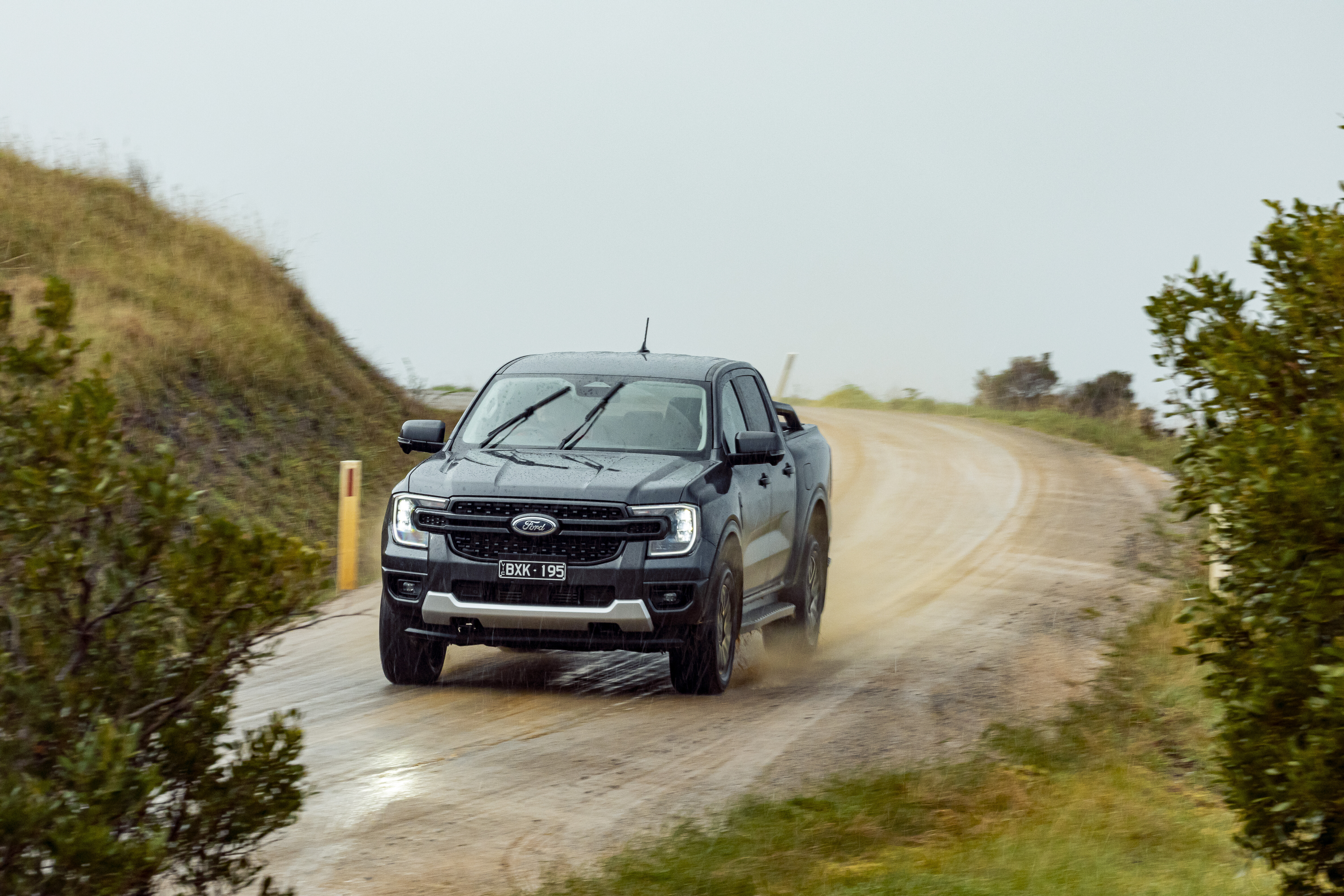
The Ranger is available with three engine options: a 2.0-litre single-turbo four-cylinder (125kW/405Nm); a 2.0-litre bi-turbo four-cylinder (154kW/500Nm); and a 3.0-litre V6 (184kW/600Nm). Plus, it now has a full-time 4×4 system on V6 models – joining the Triton in rare company in the Australian ute market.
Waiting times vary and current indications suggest you’ll need to sit tight for about 188 days once an order is submitted (as of January 2023).
Considering it now shares its DNA with the Ranger, it’d also be remiss of us to not include the all-new Amarok, which is expected in showrooms imminently.
Toyota LandCruiser 300 Series
Replacing the venerable 200 Series was never going to be an easy feat, with expectations soaring due to the success of the 200. For the 300 Series, Toyota ditched its V8 powertrain for an all-new 3.3L twin-turbo V6 diesel engine, which is used throughout the entire six-model line-up and generates 227kW at 4000rpm and 700Nm from 1600 to 2600rpm.
The base-spec GX is the cheapest variant and the only model not to exceed six figures when you sign on the dotted line. Still, you’re going to have to pony up $90K to park one in your driveway.
However, 4X4 Australia’s Deputy Editor, Evan Spence, said of the GX: “ I’m struggling to think of a better off-road touring-friendly wagon available off the showroom floor.
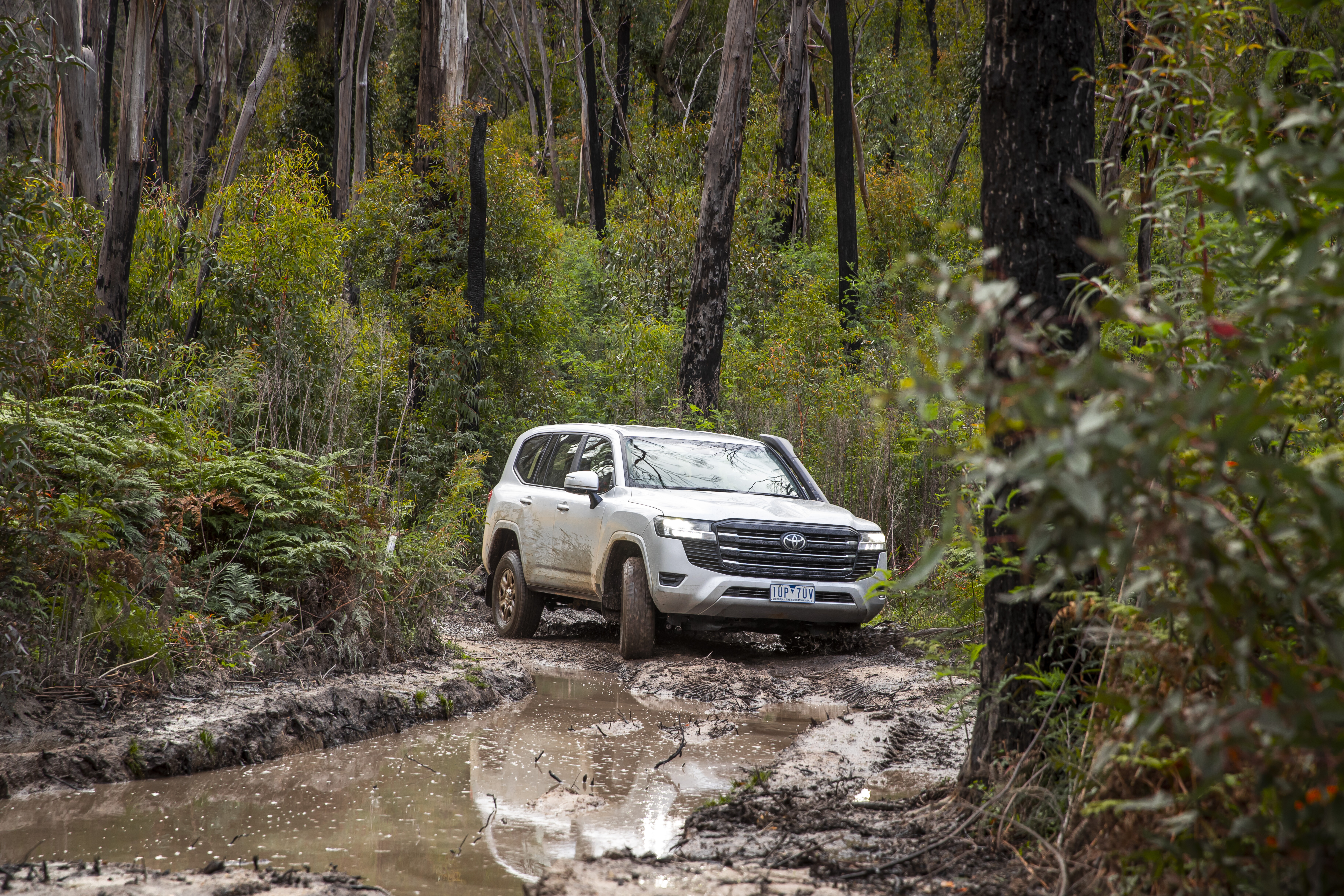
“I’d be buying a GX and spending the extra money on accessories … like all-terrain tyres, a bullbar and a proper snorkel, which will see the GX getting most places you’d want to go.”
Strangely, if you want a set of lockers without visiting an aftermarket shop, the $137,790 GR Sport is the only model in the line-up that gets them from factory. Something to consider if technical off-roading is on the agenda.
The GR Sport also features E-KDSS (Electronic Kinetic Dynamic Suspension System), which combines to make it the most capable 4×4 in the 300 shed from the showroom floor.
Toyota retained low-range reduction across the 300 Series range, and all models use a full-time 4×4 system with a lockable centre diff.
Mazda BT-50 + Isuzu D-MAX
Essentially the same vehicle with different skins, the BT-50 and D-MAX twins offer decent bang for buck in the dual-cab segment.
Despite stylistic discrepancies, the vehicles share core fundamentals of chassis, engine and drivetrain, with Isuzu’s venerable 3.0-litre turbo-diesel engine revised for the current models. Known for its reliability, the engine is good for 140kW and 450Nm.
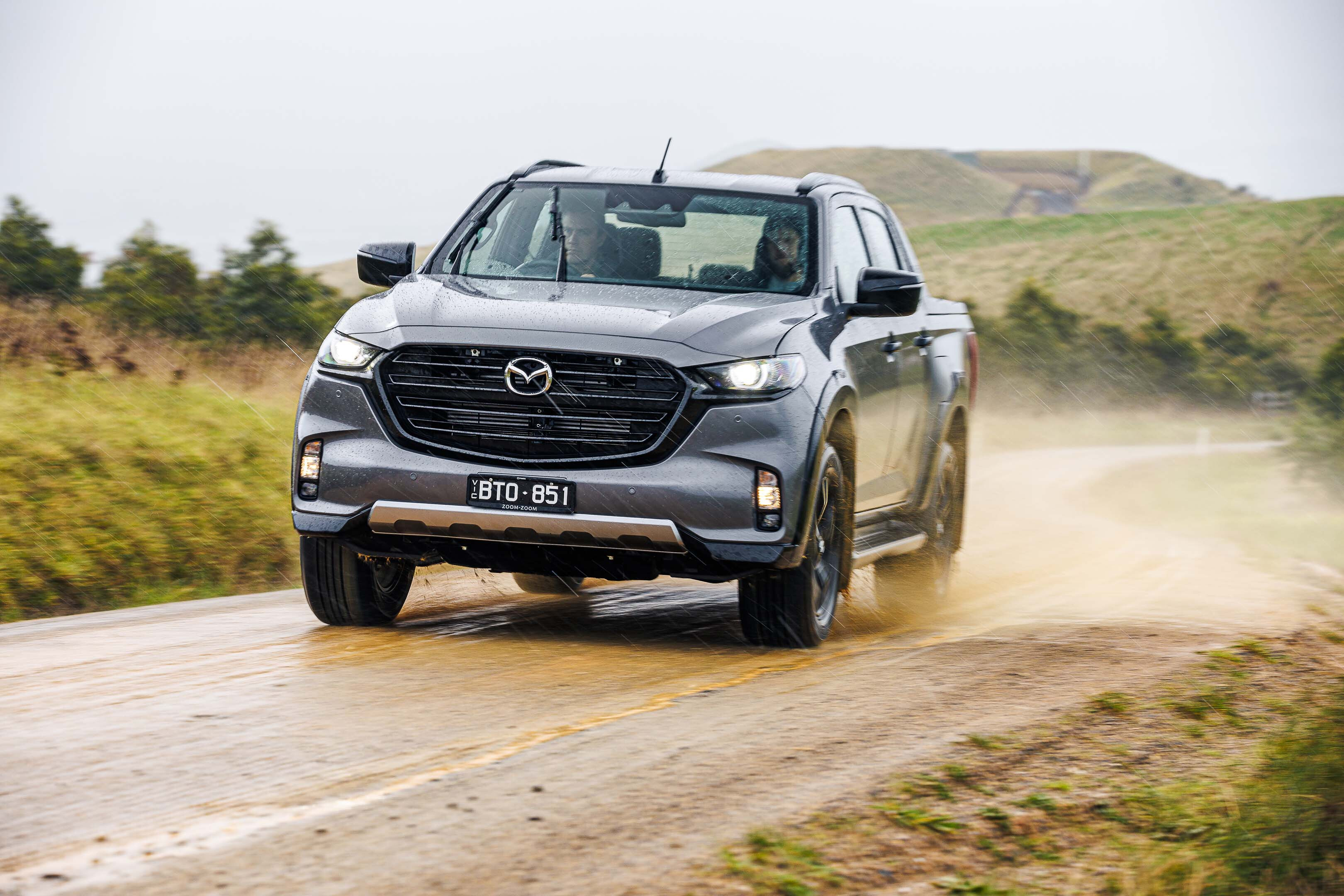
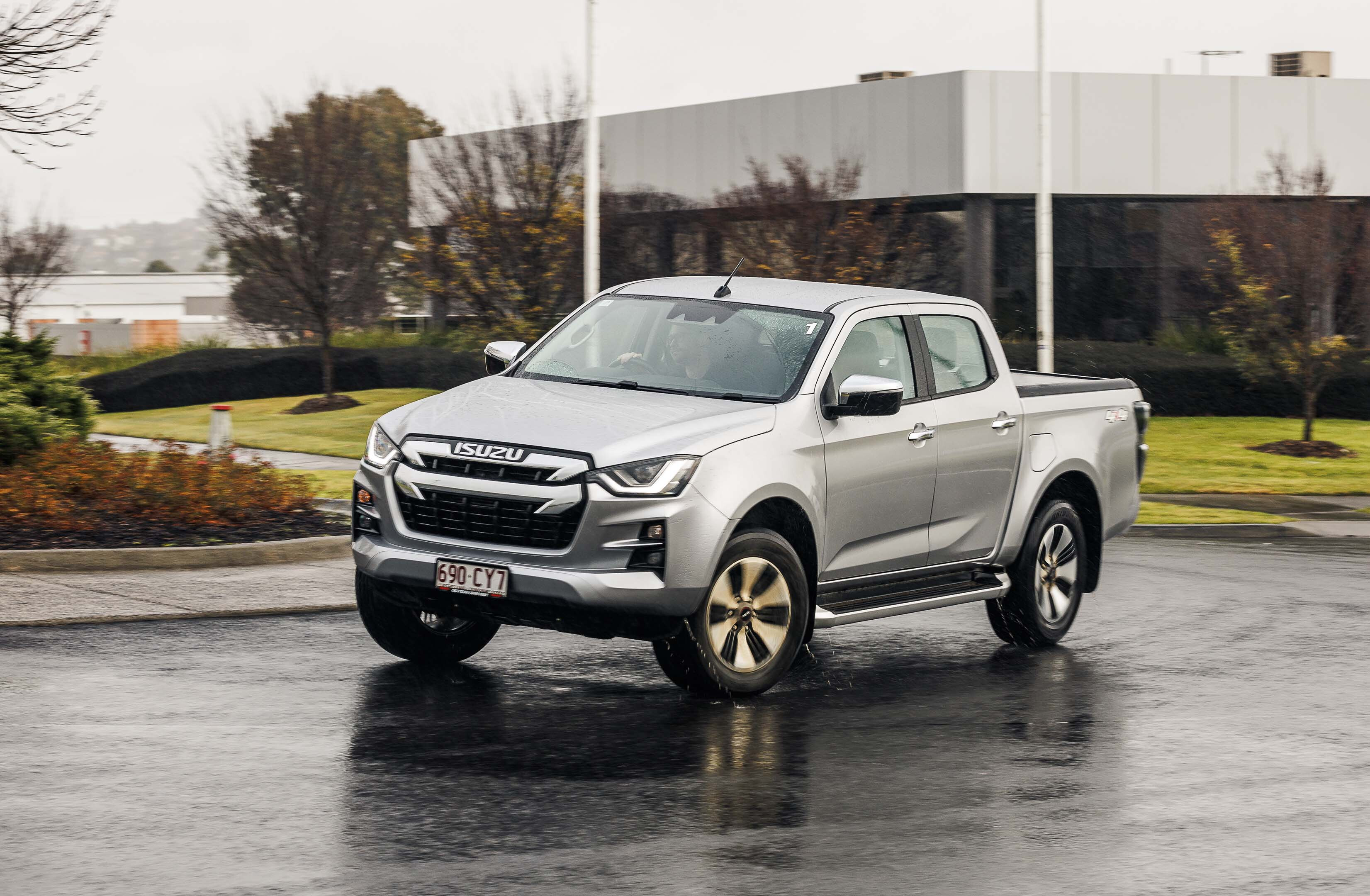
The D-MAX dual-cab range begins with the LS-M variant priced at $51,900 and tops out with the X-Terrain which starts at $62,900. The BT-50 XT dual-cab starts at $50,860, while the top-spec SP is priced at $66,090.
A 1.9-litre-powered BT-50 (110kW/350Nm) was launched locally at the beginning of 2022, dubbed the XS. The new entry-level model is priced at a fraction over $50K, but loses more than a litre of engine capacity.
At the 2022 mega ute test where the Ford Ranger was the runaway winner, the next positions on the podium were occupied by both the BT-50 and D-MAX – the BT-50 edging out the D-MAX due to a slightly less-stiff ride, class-leading fuel consumption and its ability to carry a heavier load.
Mitsubishi Triton
If you’re on the hunt for a dual-cab ute and your budget can’t exceed $50K, then the Triton is a vehicle that should be on your shopping list – especially in GLX+ guise which retails for $46,190.
Occupying a sub-$50K dual-cab segment that includes the GWM Ute, LDV T60 and SsangYong Musso, the Triton is – arguably – a much better proposition that can transform from work rig to family weekend adventurer. It’s not a surprise that the Triton consistently sits near the top of the monthly 4×4 sales charts.
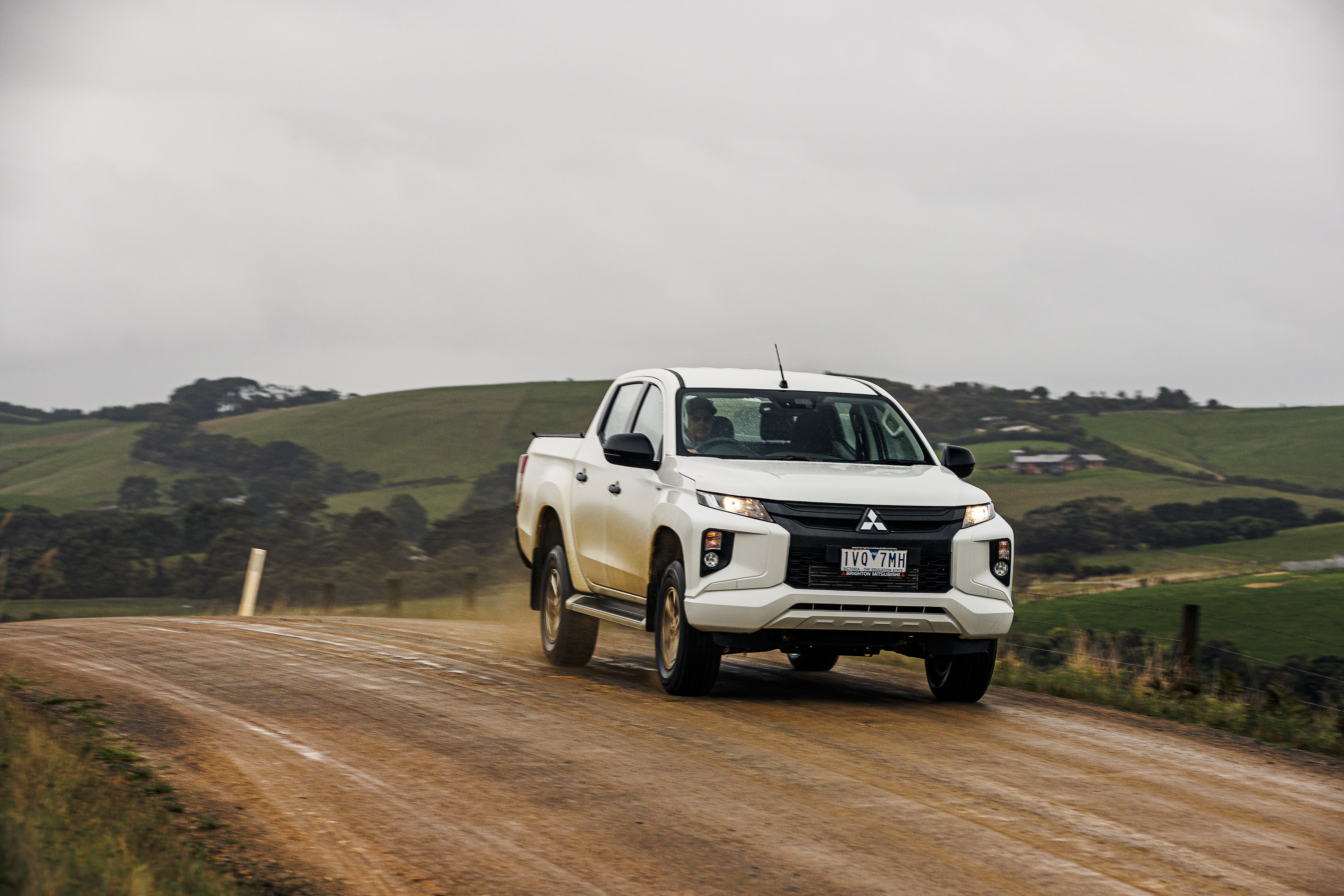
The Triton’s extensive Australian line-up is powered by Mitsubishi’s long-serving 2.4-litre turbo-diesel four-cylinder diesel engine, which is mated to a six-speed transmission (manual or auto). In GLX+ guise, the rear leaf springs and front coils provide a settled ride on bitumen, soaking up road imperfections nicely.
A compromise with the GLX+ model specifically is that it misses out on Mitsubishi’s Super Select II 4×4 system, instead getting the more rudimentary Easy Select 4WD system. Plus, it doesn’t have an Off-Road mode selector, which is standard on higher grades.
Another drawback across the entire range is the archaic infotainment system. Plus, cost-cutting in the GLX+ variant means the interior is rather utilitarian – still, you get what you pay for.
At this price point it’s also worth checking out the SsangYong Musso, which has been known to surprise a few doubters in its time.
Suzuki Jimny
Despite Suzuki Australia pausing sales of the automatic variant earlier this year due to an increasing backlog of orders, we simply couldn’t omit the pint-sized off-roader from this list. When the order books do re-open, though, put down a deposit – it’ll be worth the wait.
Bucket-loads of fun to punt around an off-road track, this fourth-gen Jimny iteration arrived in Australia in 2019, and it has been hard to pin one down ever since. Live axles front and rear make the three-door cult classic a favourite within the 4×4 scene – a great city-runabout and tight-track tourer.
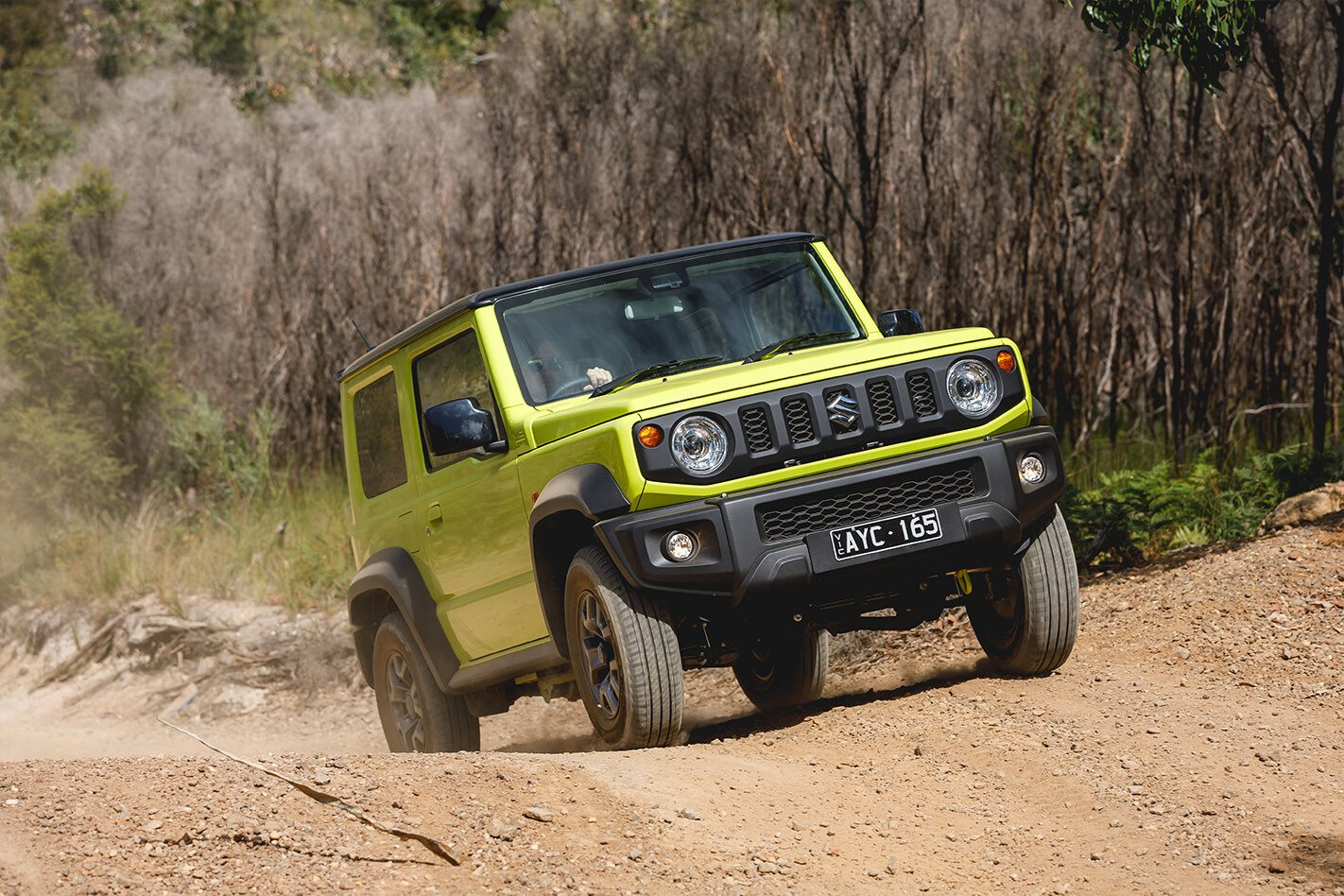
Its 1.5-litre four-cylinder petrol engine (75kW/130Nm) may sound underpowered, but it only has to shift 1110kg of heft- or 1095kg if you opt for the five-speed manual.
Space may be compromised due to its small stature, but you could rip the rear seats out and convert into a remote-area tourer for two … just sayin’. Or you could wait for the five-door variant which Suzuki debuted at the 2023 Delhi Auto Expo, which is expected to hit Australian dealerships toward the end of 2023.
Key Points
- Just 150 Anniversary models for the USA only
- Based on Wrangler Rubicon 4xe and Rubicon 392 models
- Not planned for Australian release
Jeep USA has marked the 20th anniversary of its iconic Rubicon models by releasing a limited run of special editions in its home country.
Limited to just 150 vehicles based on the Wrangler Rubicon 392 and Rubicon 4xe variants, neither of which are offered in Australia, the Anniversary Editions are sure to sell out fast.
The Rubicon moniker refers to the legendary Rubicon Trail in Northern California that was forged by pioneers in early Jeeps and is still used today to validate the off-road capabilities on the new ‘Trail Rated’ Jeep models.
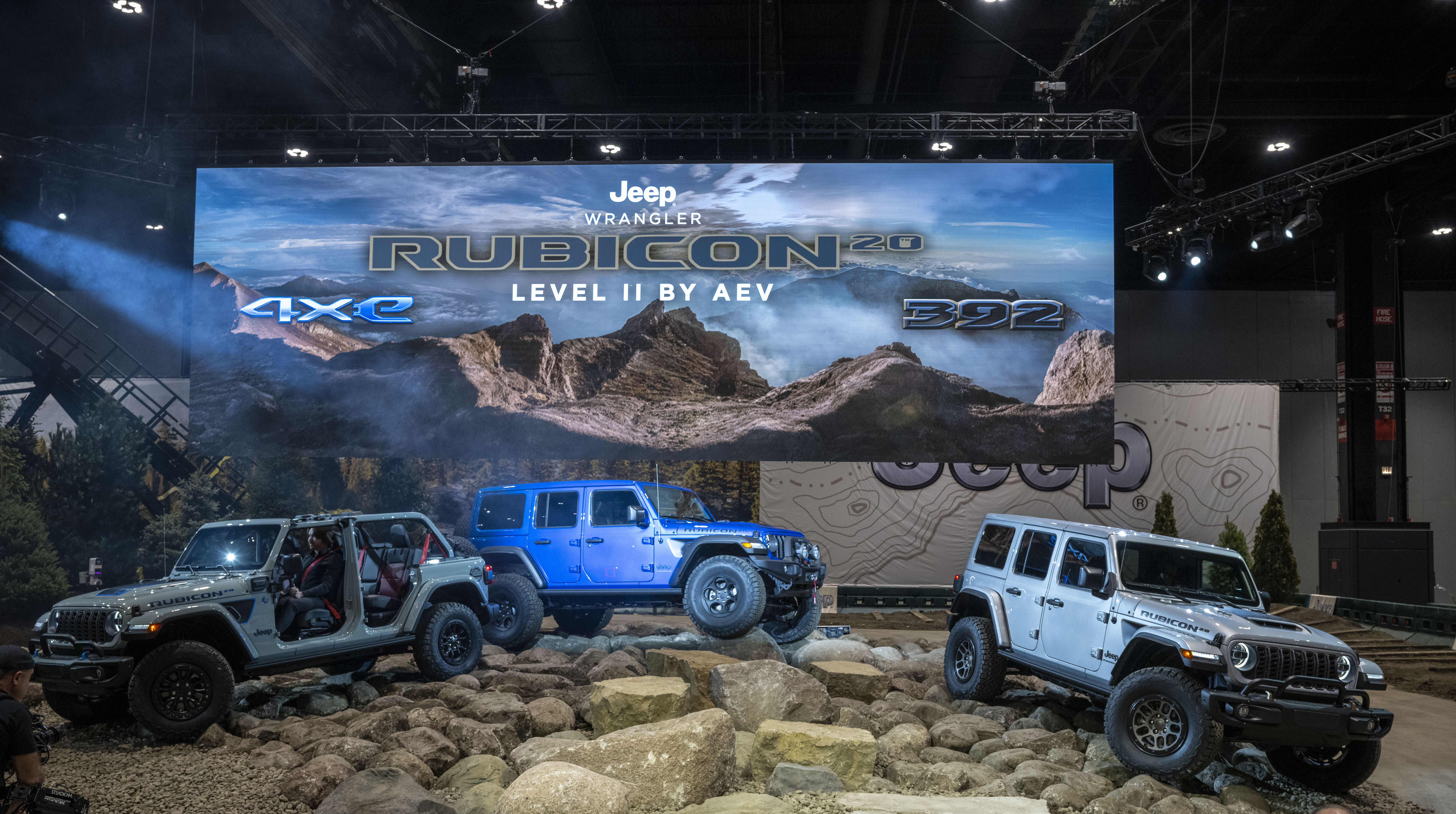
The first Wrangler Rubicon was unveiled at Easter Jeep Safari in Moab, Utah, in spring 2002. It was a 2003 TJ Wrangler, while the current generation of Wrangler Rubicon is the JL model.
The 150 Anniversary Editions are beefed up with the inclusion of a host of extras to further improve their leading off-road capability, many of them from leaving aftermarket company, American Expedition Vehicles (AEV).
Wrangler Rubicon 20th Anniversary extras
| 37-inch BFGoodrich All-Terrain T/A KO2 tyres |
| Warn VR EVO 10-S winch |
| AEV 17-inch Savegre II wheels |
| AEV 2.5-inch DualSport RT Suspension System w/ Bilstein 5100 shocks |
| AEV 7000 Series Off-Road Lights |
| AEV EX Front Bumper |
| AEV Rear Bumper & Tyre Carrier |
| AEV Front Skid Plate |
| AEV Off-Road Jack Base |
| AEV ProCal SNAPu00a0 |
| AEV Vehicle Build Plaqueu00a0 |
| 4.56:1 axle ratio (4xe) |
| Mopar performance wipers with integrated washer jets. |
Other cool features include a Gorilla Glass front windscreen, a new design grille, a red leather wrapped dash panel and an 83-piece tool kit.
The extra feature on these exclusive models create what Jeep claims to be the “the most capable Wrangler ever” and with off-road spec’s including 360mm of ground clearance, 942mm water fording ability, a 50° approach angle, 33° breakover angle and a 43° departure angle, we have no reason to question that claim.
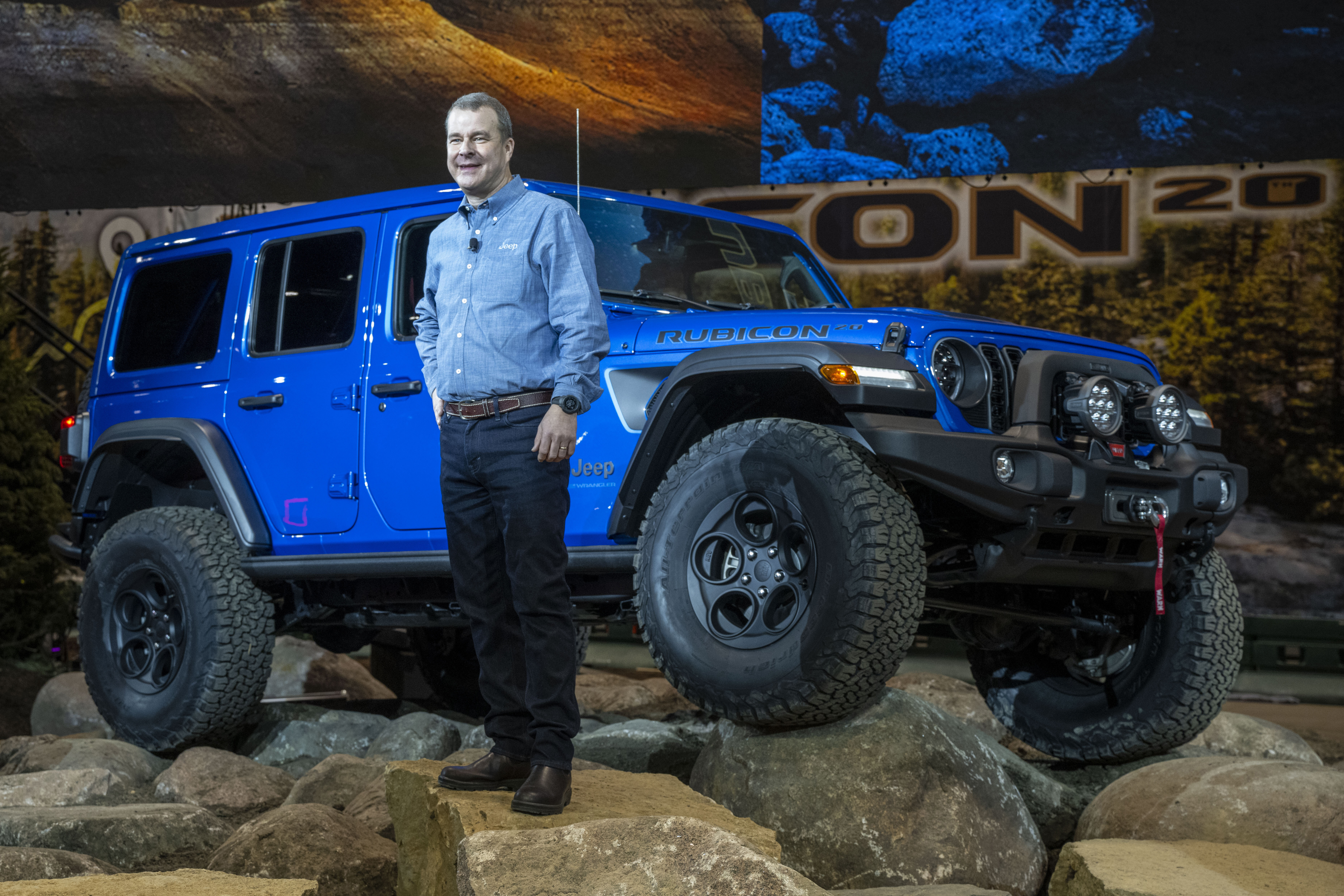
The Rubicon 20th Anniversary kit adds USD$21,983 to the cost of the Wrangler Rubicon 4xe which starts at USD$54,735 in the USA, and USD$20,135 to the Wrangler Rubicon 392 which will set you back at least USD$82,495. Even at these high prices, they are expected to sell fast.
A regular JL Wrangler Rubicon with the 3.6-litre V6 engine and small tyres, starts at AUD$90,450 here in Australia.
AEV is a Michigan-based, Montana-born designer and manufacturer that has been creating parts and vehicles since 1997. Many of those vehicles were show specials commissioned by Jeep, and parts that have been officially licenced by Jeep.
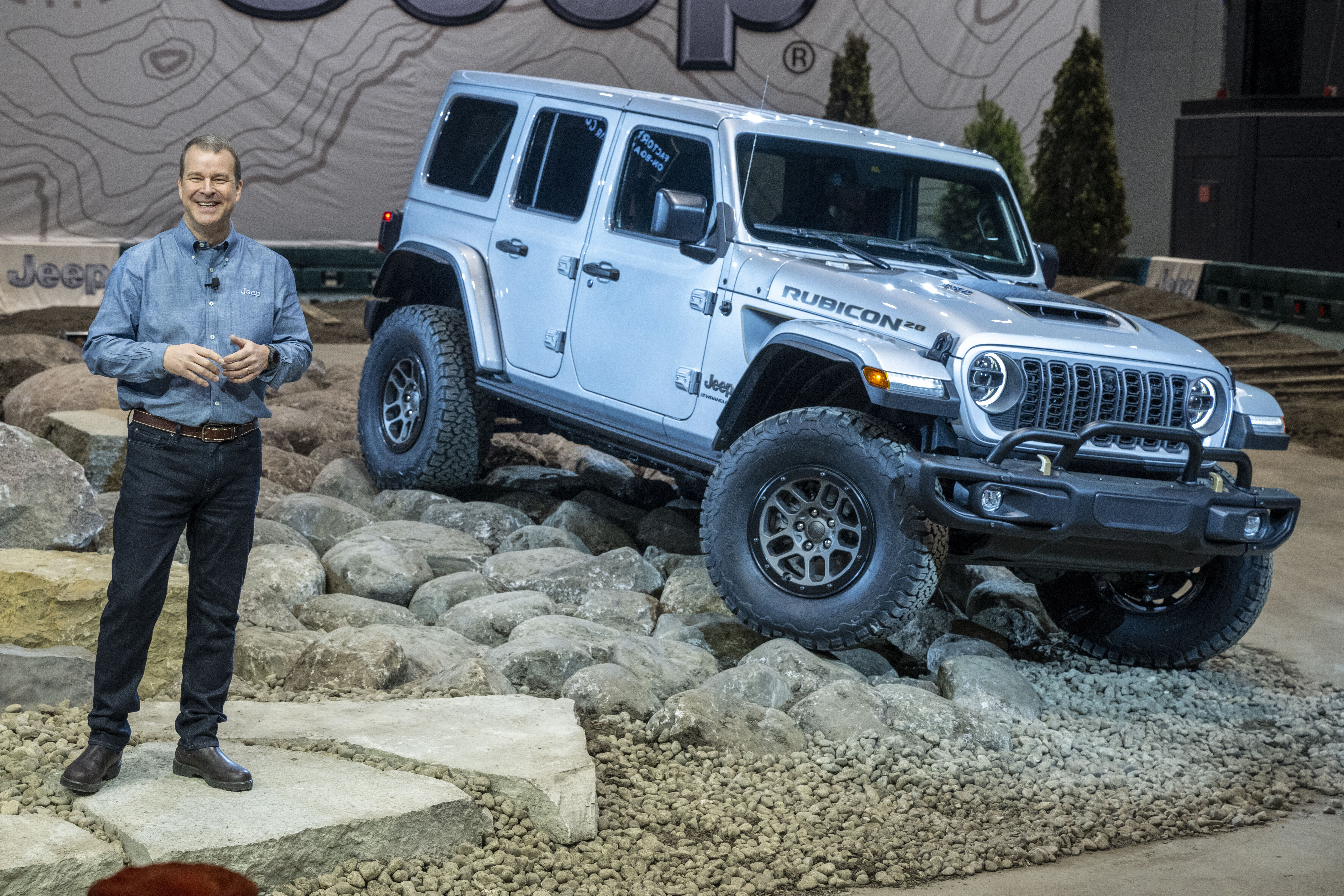
AEV was doing Hemi V8 conversions in Wranglers long before Jeep built the Wrangler Rubicon 392 and created the Brute ute that bares more than a striking resemblance to the current Jeep Gladiator.
While the 20th Anniversary Rubicon models are not being built in right-hand drive so they are not for Australia, you can buy AEV products here via the official agents and Jeep specialists, Jeep Konnection in Melbourne and Murchison Products in Brisbane, or at www.upfitter.com.au
Get in touch with team to create your own special edition Wrangler Rubicon.
Ineos has confirmed that its first electric vehicle will follow in the footsteps of its Grenadier pilot model, offering a serious all-terrain option wrapped up in a zero-emissions package.
The imminent Grenadier has already proven its off-road mettle in an adventure across Scotland’s frozen central Highlands powered by BMW’s silky six-cylinder petrol and diesel engines, but its maker says the first electric Ineos will continue the family tradition of go-anywhere-ability.
Speaking at the international launch of the Grenadier in Scotland, Ineos Automotive’s commercial director, Mark Tennant, said capable 4×4 vehicles for adventurous customers are what Ineos is all about.
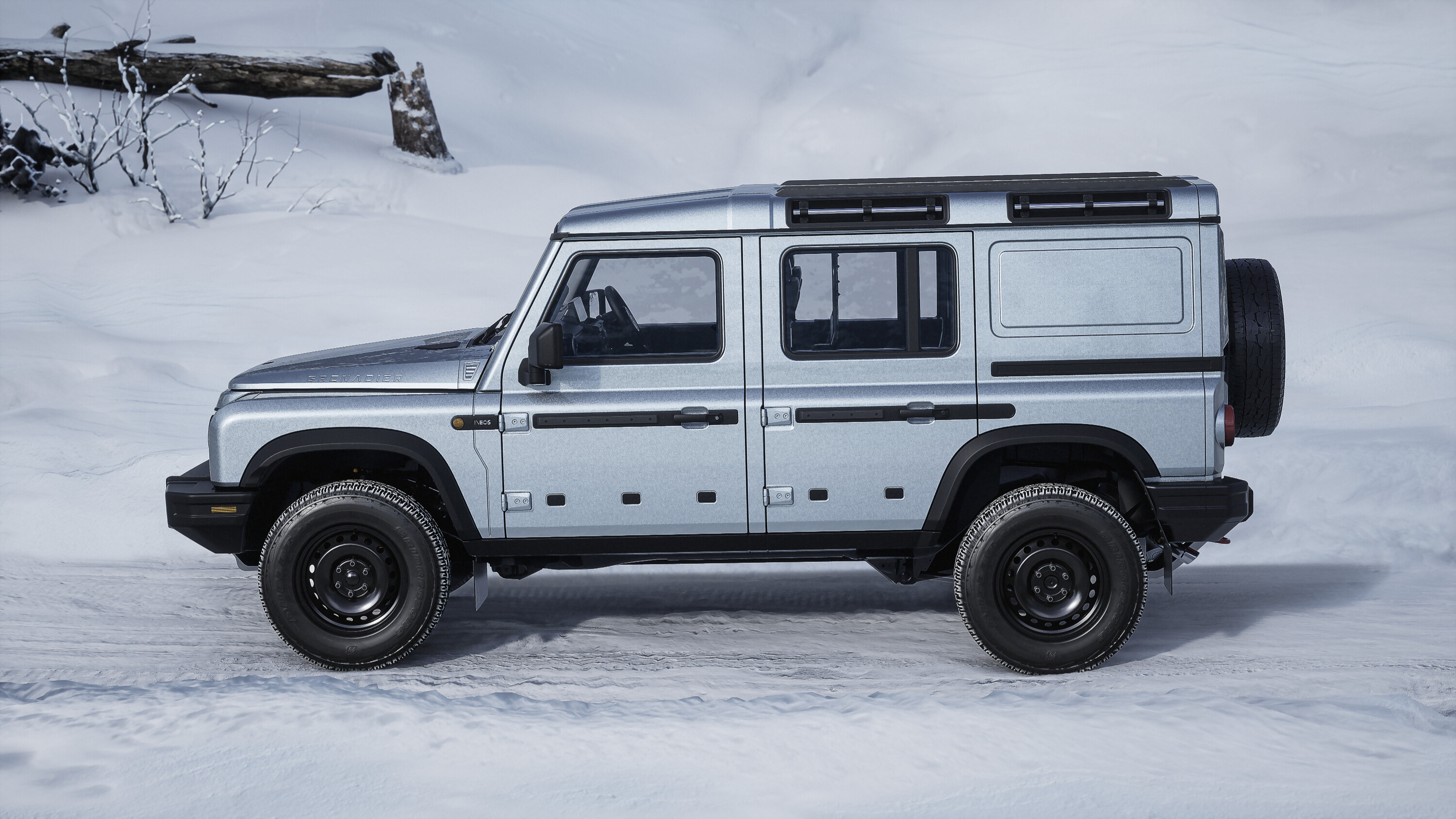
“We do see off-road as being a big part of the growing DNA of the Ineos Automotive brand for sure,” he said.
“The page was blank five years ago. We’ve done some quite significant scribbling on that page from a brand point of view that gives us the sort of product we’ve been driving over the last couple of days. That for me will be the cornerstone of what Ineos stands for, for the long term.”
Tennant wouldn’t reveal many technical details about the second Ineos model, but confirmed its EV would offer respectable off-road ability, despite significant mechanical differences to the Grenadier.
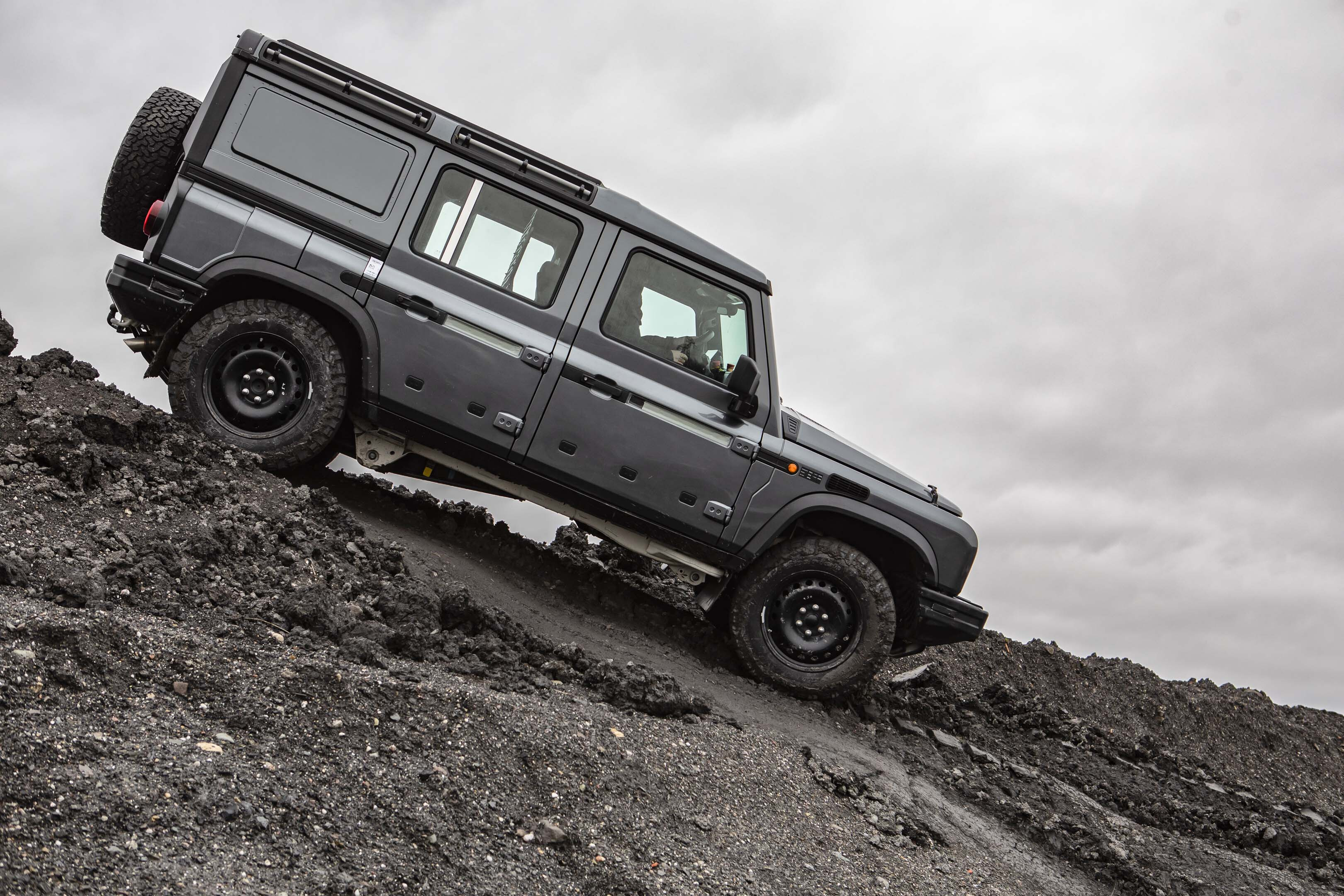
“From a battery-electric point of view, it will still have some pretty impressive off-road credentials, it’s not going to be a ladder chassis – it’ll be a skateboard base vehicle, but we’re still pushing our engineers to make sure it can do some impressive things.
“It won’t be by definition quite what the Grenadier is, but it’ll still be pretty bloody good.”
While Ineos is confident of its EV ability when the road comes to an end, critical battery life, towing capacity, and overall range will be just as important to a local audience when it comes to Australian off-road adventures and feasibility, and Ineos is yet to offer a claimed driving range.
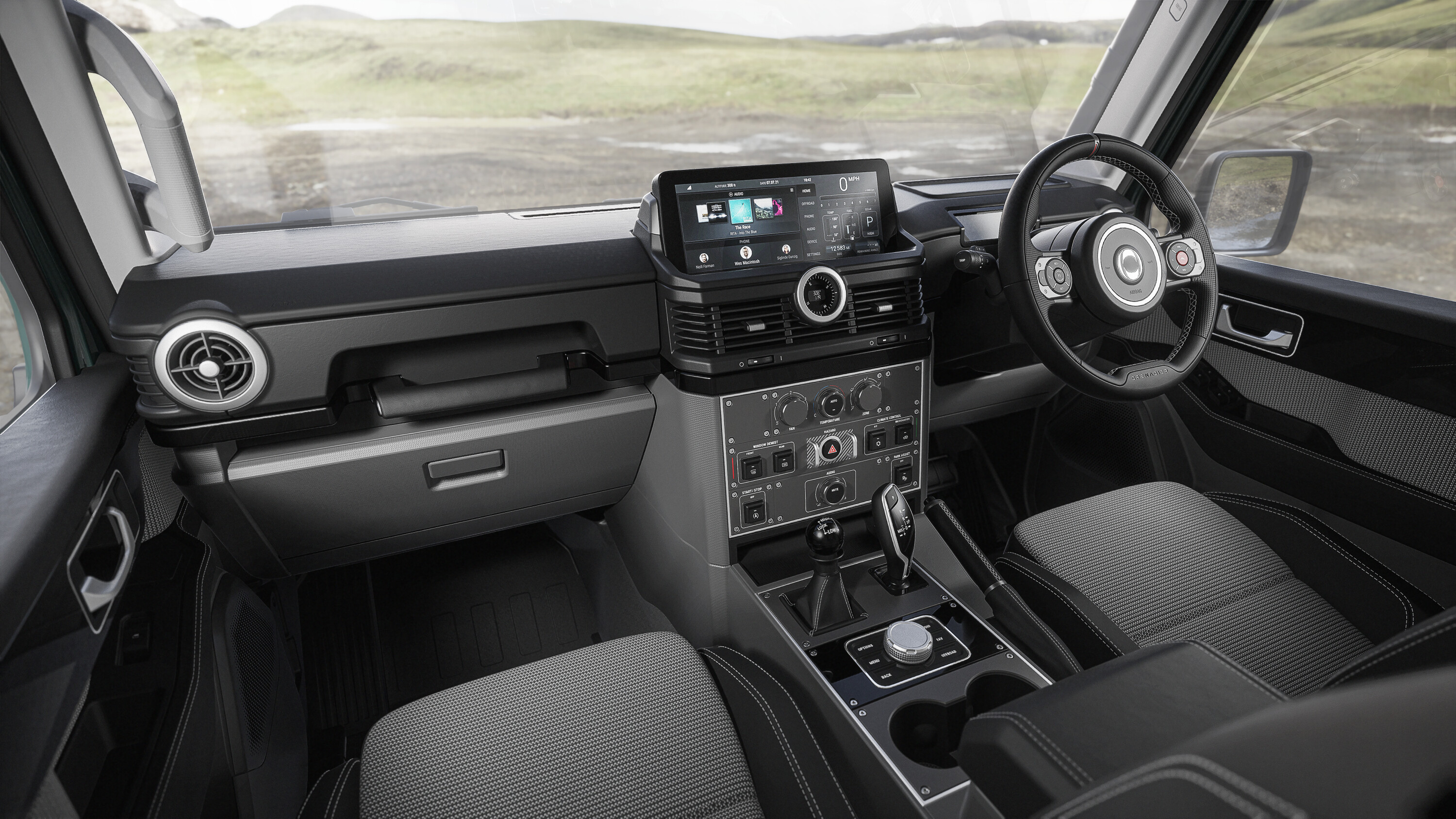
Like the BMW partnership required to bring the Grenadier to life, Ineos will recruit the expertise of third-party engineering specialists to develop and build its electric off-roader, but is not ready to confirm exactly which suppliers will provide the major building blocks including battery, drive motors and power management systems.
However, it can be confirmed that existing macro manufacturing partner Magna would be assigned to assist with development and construction.
“We’re working with Magna for the engineering. That’s the first building block, but it’s a bit premature in terms of the partners beyond that. We’re still a small entity and we bring in the expertise where it’s appropriate.
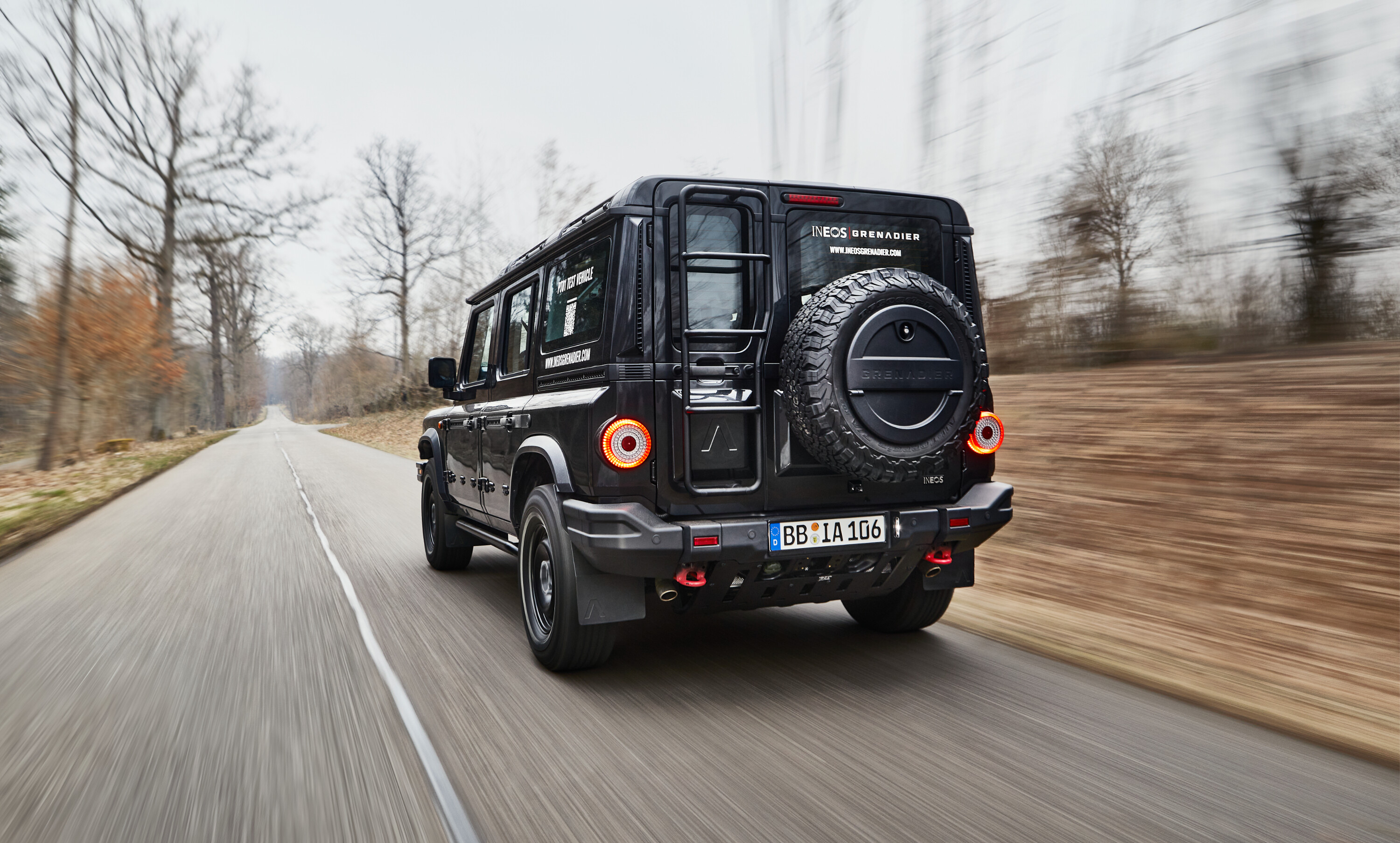
“We’re at a stage where we need to build the credibility and we get a lot of imparted credibility from some of the people we’re working with.”
For now, Ineos is only talking about its first two models, but a recent memorandum of understanding with Hyundai resulted in a Grenadier prototype powered by a hydrogen fuel-cell.
This could offer a glimpse at how the company is looking to future-proof its first model while developing a sustainable drivetrain that could find use in others.
“We’re very excited to be doing a battery-electric vehicle, but for this sort of vehicle, the Grenadier and things that are bigger, we think hydrogen represents a really good alternative.
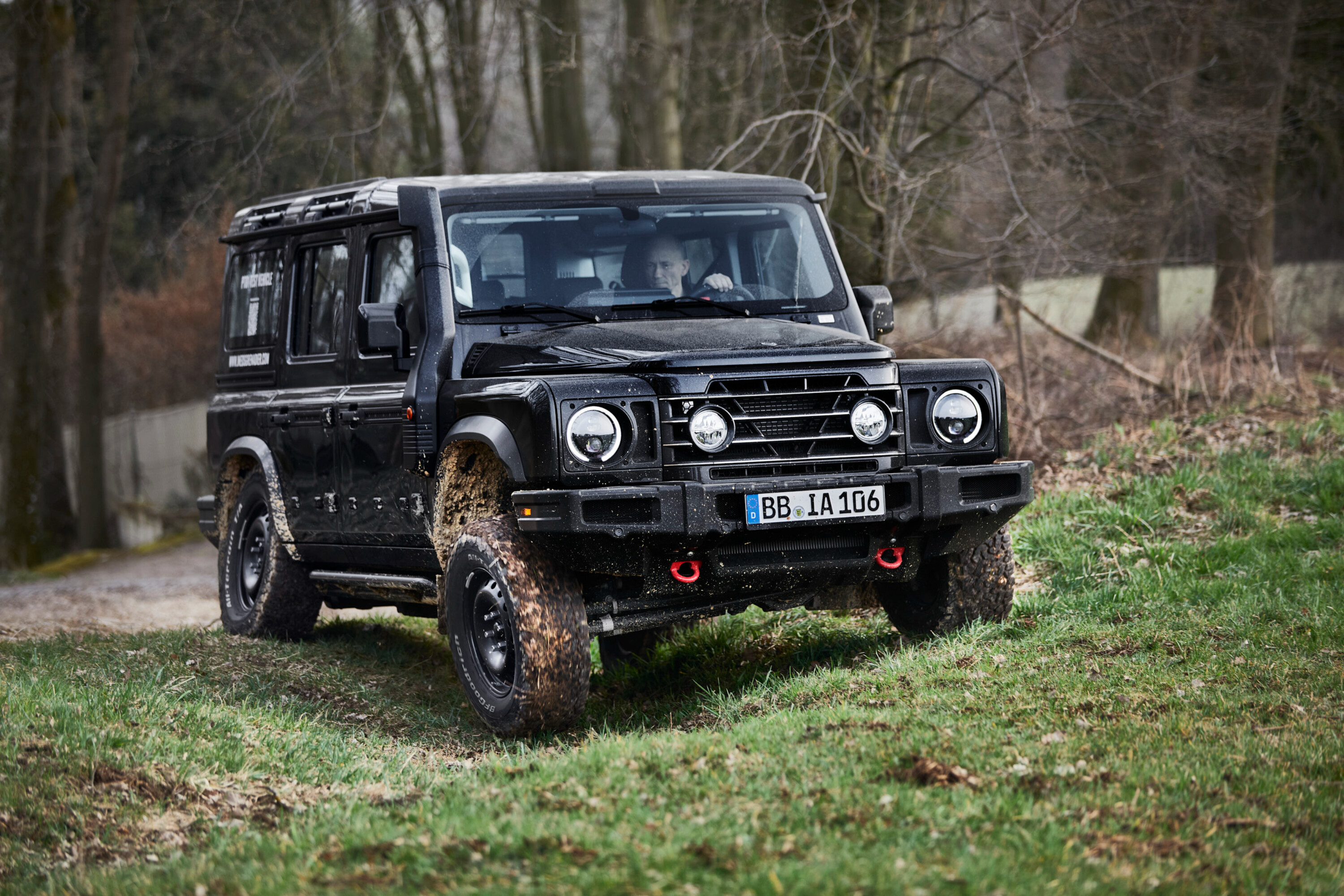
“There’s still some work to be done on the BEV side, but absolutely it would be great if we could look at broadening the range of what we’re pursuing as our range of alternatives,” said Tennant. “There’s a lot of lessons to be learned – probably good and bad – from that tipping point that EVs are coming to.”
According to Tennant, the future of sustainable transport is not necessarily about one type of drivetrain that will prevail but a combination of all feasible options including battery electric, hybrid and hydrogen depending on the application.
“There’s been massive focus on battery electric and that technology, including infrastructure, is much further advanced than hydrogen, but I think it’s worth keeping the focus on what could be a mixed economy.”
Yokohama Geolandar M/T G003 Mud-Terrain tyres
With all this rain we’ve been experiencing in Australia lately, it’s no surprise many people are opting to run more aggressive tyres on their four-wheel drives, such as the Geolandar M/T G003 mud-terrain tyre from Yokohama.
Yokohama tells us its Geolandar M/T G003 has been designed with extreme four-wheel driving in mind, and has been built to conquer the wild terrain we have here in Australia, and still handle well on-road so you can get to your destination and back safely and comfortably.
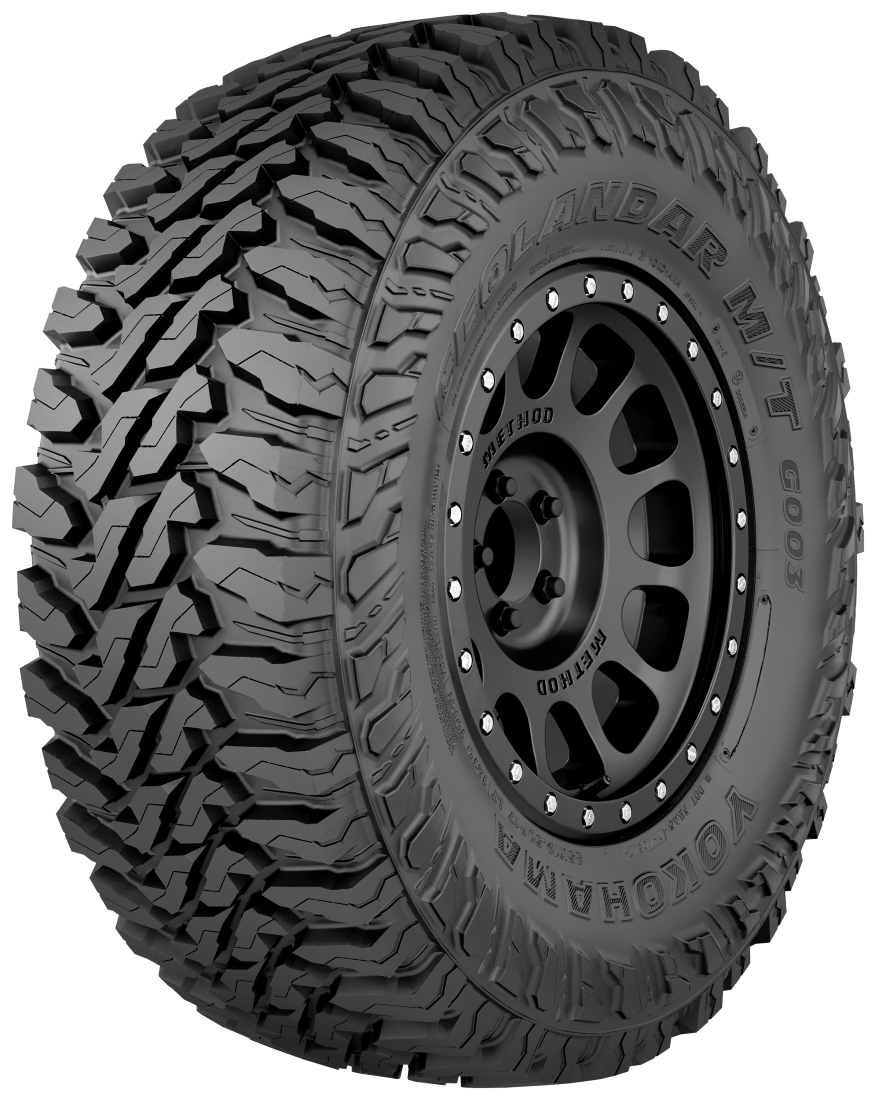
With an aggressive tread pattern, chunky looking sidewall as well as mud-and-stone ejectors, there’s plenty of technology incorporated in these mud-terrain tyres. There’s also a massive range of sizes available too, with tyres available to suit rim sizes from 15-inch right up to 20-inch in diameter.
RRP: POA Website: www.yokohama.com.au
ARB Intensity IQ LED lights
ARB’s range of Intensity driving lights has just received a new and extremely advanced addition to the line-up, with the recent announcement of its Intensity IQ LED driving lights. ARB says these IQ driving lights offer limitless control and have been developed from the ground up.
A unique four-optic design features Super Spot, Spot, Flood and Midrange beam patterns, all of which can be manually selected, so you can tailor the beam pattern and light output to suit the conditions you are driving through. If you take a closer look at the light, you can see four unique sections of LEDs, this is what makes up each of these beam-pattern combinations.
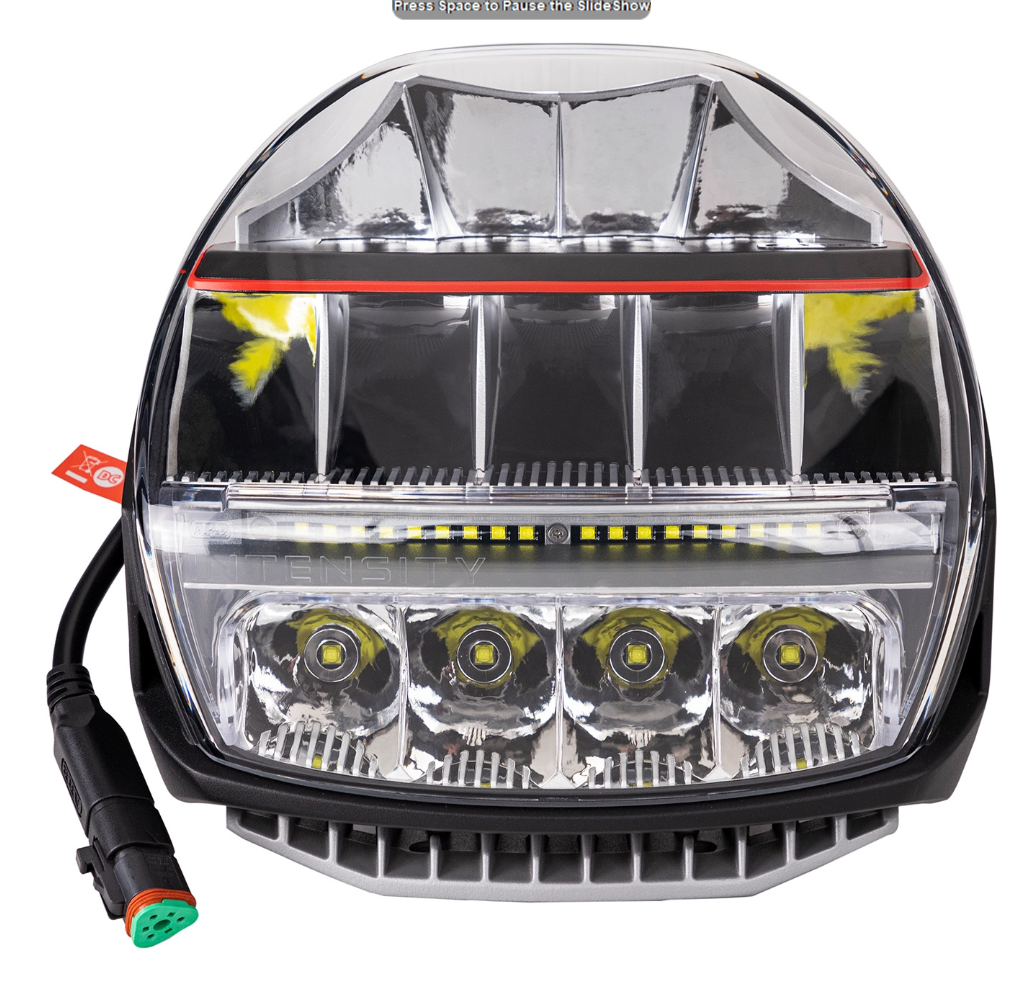
ARB has also developed a physical switch controller that allows you to have up to eight preset configurations of lighting modes. If that’s not enough, ARB has also developed an app for your mobile phone, allowing for 1000s of lighting combinations all from one set of lights.
RRP: From $1995 Website: www.arb.com.au
XGS Remote Suspension by TJM
The top-of-the-line new release from the new XGS range, is the XGS Remote which TJM tells us is packed full of groundbreaking technology and premium materials. It features the same 52mm piston and takes things to the next level with the introduction of a remote reservoir doubling the oil-carrying capacity of the shock absorber.
Every XGS Remote shock absorber also features a patented inbuilt hydraulic bump-stop, providing a progressive feel when compressing the shock absorber at high speeds, resulting in a much better ride when fully loaded and driving over corrugations or bumps at speed.
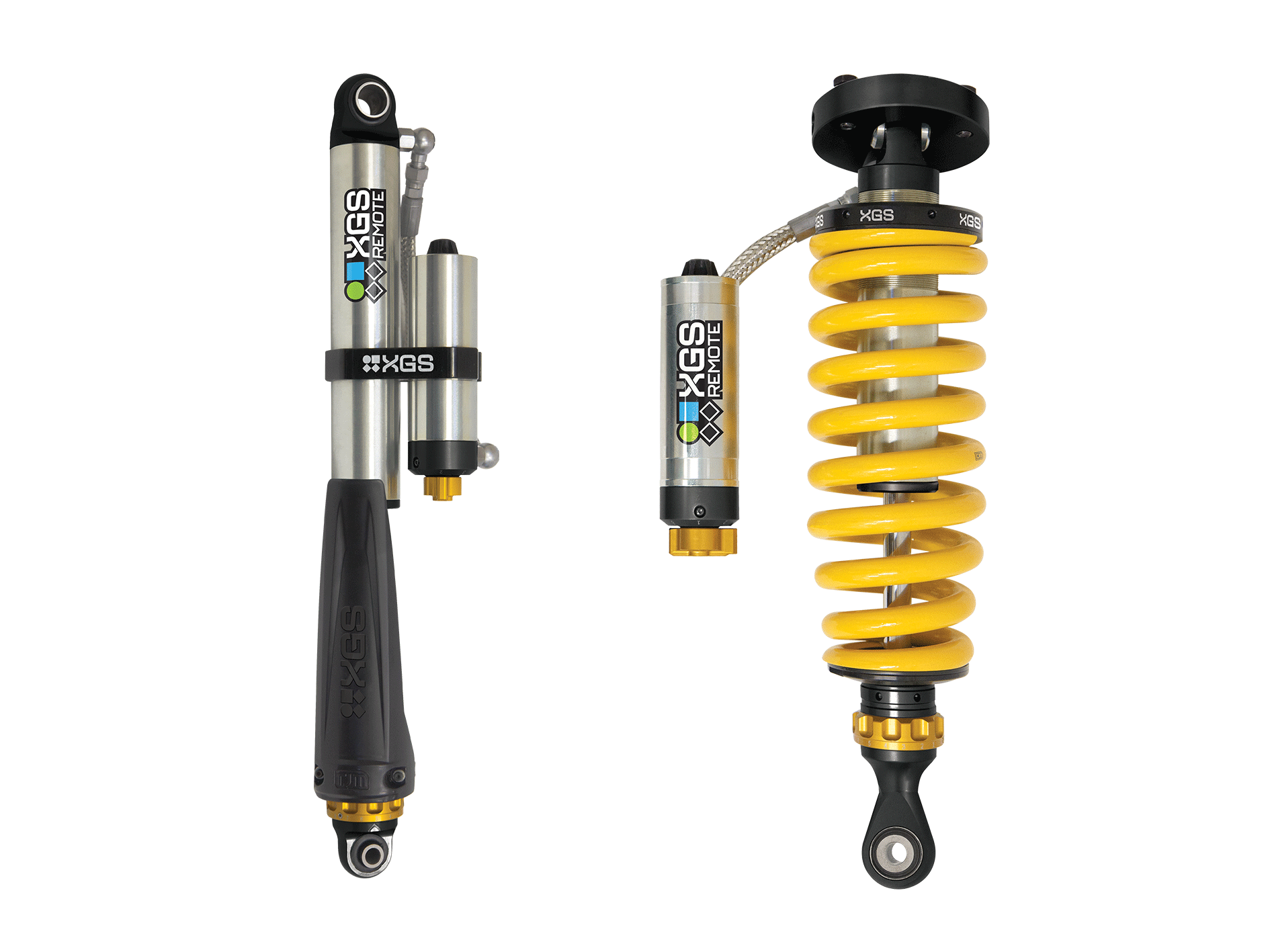
The final piece of the puzzle for the XGS Remote range, is the fact this shock absorber is fully adjustable and features 8-stage compression and rebound damping dials to customise the ride quality you need to suit your vehicle and the terrain you drive.
This allows you to set not only how fast your suspension compresses but also the extension rate of the shock absorber after compression. Adjustment is as easy as turning a dial, so you can really play with this system to find a setting that best works for your needs and the loads you are carrying.
RRP: From $4153 (full kit to suit LC300 supply only) Website: https://xgs.com.au
EFS seat covers for next-gen Ranger and RAM
EFS has just expanded its range of seat covers, which now includes the new Next-Gen Ford Ranger, as well as RAM Crew Cab, Express and 1500 Laramie models. All seat covers in the EFS range are 100 per cent cotton for maximum durability, then double stitched for further strength.
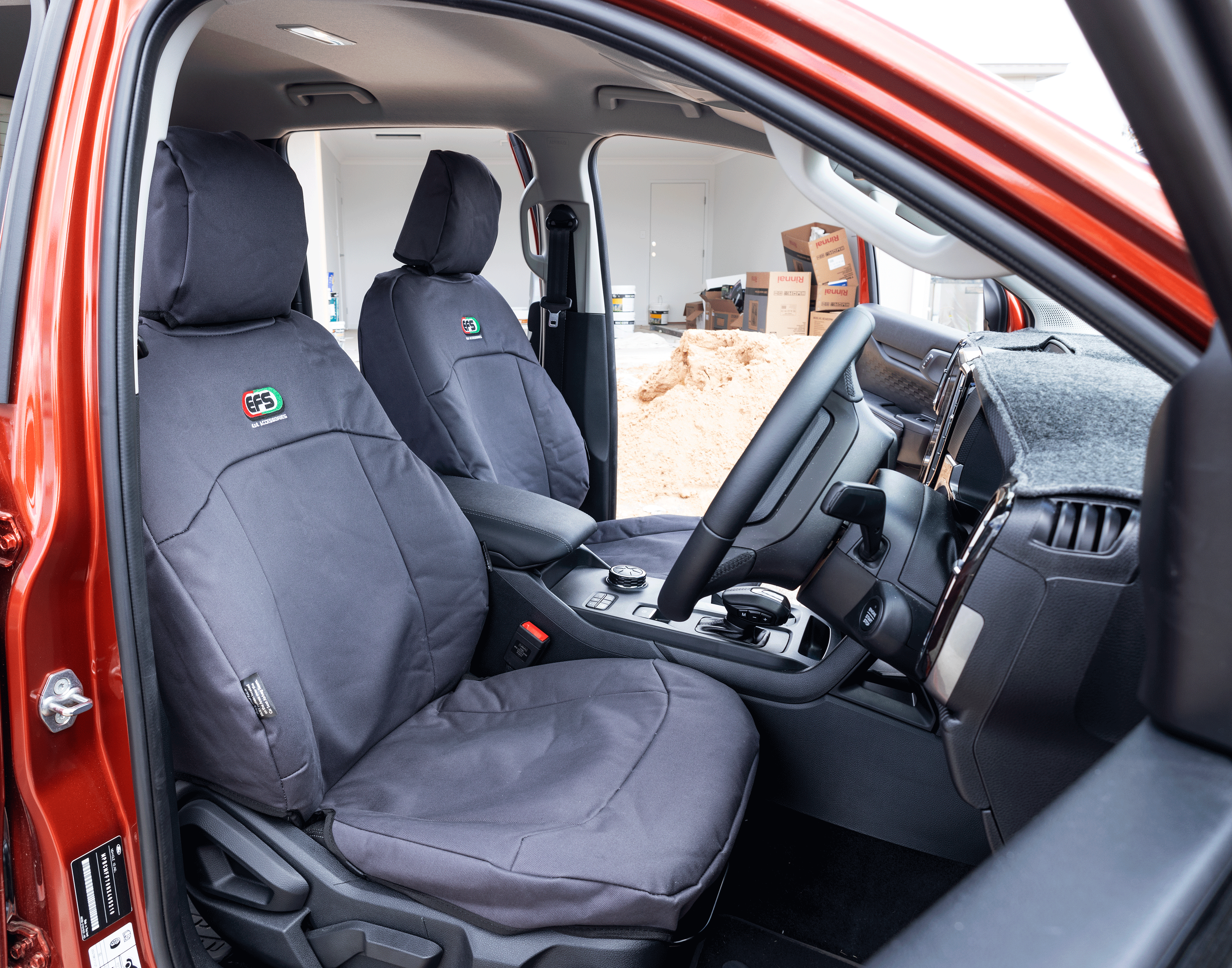
These seat covers are both UV and water resistant, which will protect your seats come resale time. EFS tells us its seat covers have been airbag tested, which is an important factor to consider with modern vehicles.
They have been designed to be an easy-to-fit product anyone can do at home, and feature an extra layer of foam padding for additional comfort while out exploring.
RRP: $350 per row Website: www.efs4wd.com.au
Ironman 4×4 2021+ Nissan Navara rear protection tow bar
Do you want to tow with your 2021+ Nissan Navara, as well as have additional protection on the vulnerable rear quarters when off road?
Well, Ironman 4×4 has the product for you. Its rear-step tow bar to suit the Navara allows for the full towing capacity of 3500kg found in the 2021+ Navara, making it a practical addition to your four-wheel drive.
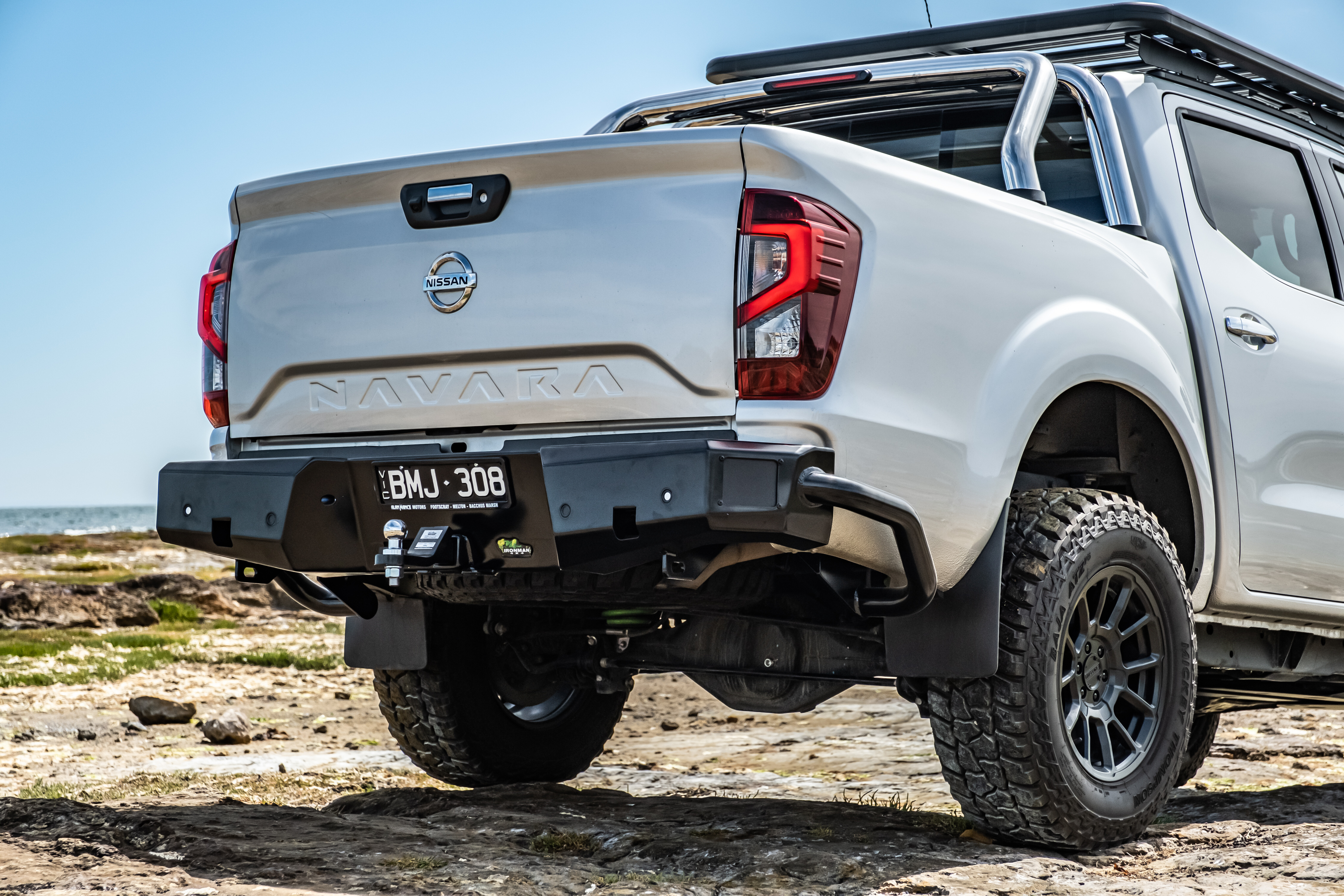
As well as being a tow bar, it can be used as a rear step when required, and offers much more protection off road compared to a traditional tow bar, thanks to the tube side wings which wrap underneath the tub’s quarter panels.
The price listed doesn’t include installation, however Ironman 4×4 lists fitment time as just two hours, so having your Navara protected and ready to tow won’t break the bank come time to have it bolted and wired up.
RRP: From $1328 Website: www.ironman4x4.com
Bendix brake-wear sensors
It’s often the little things in life that make a huge difference, especially when you consider the number of smaller sensors and bits of technology incorporated into modern four-wheel drives.
These little things add up quickly, so it’s important to be ahead of the game. Bendix has recently updated its range of brake-wear sensors, which has evolved to more than 900-part numbers, covering the majority of modern FWDs on the market.
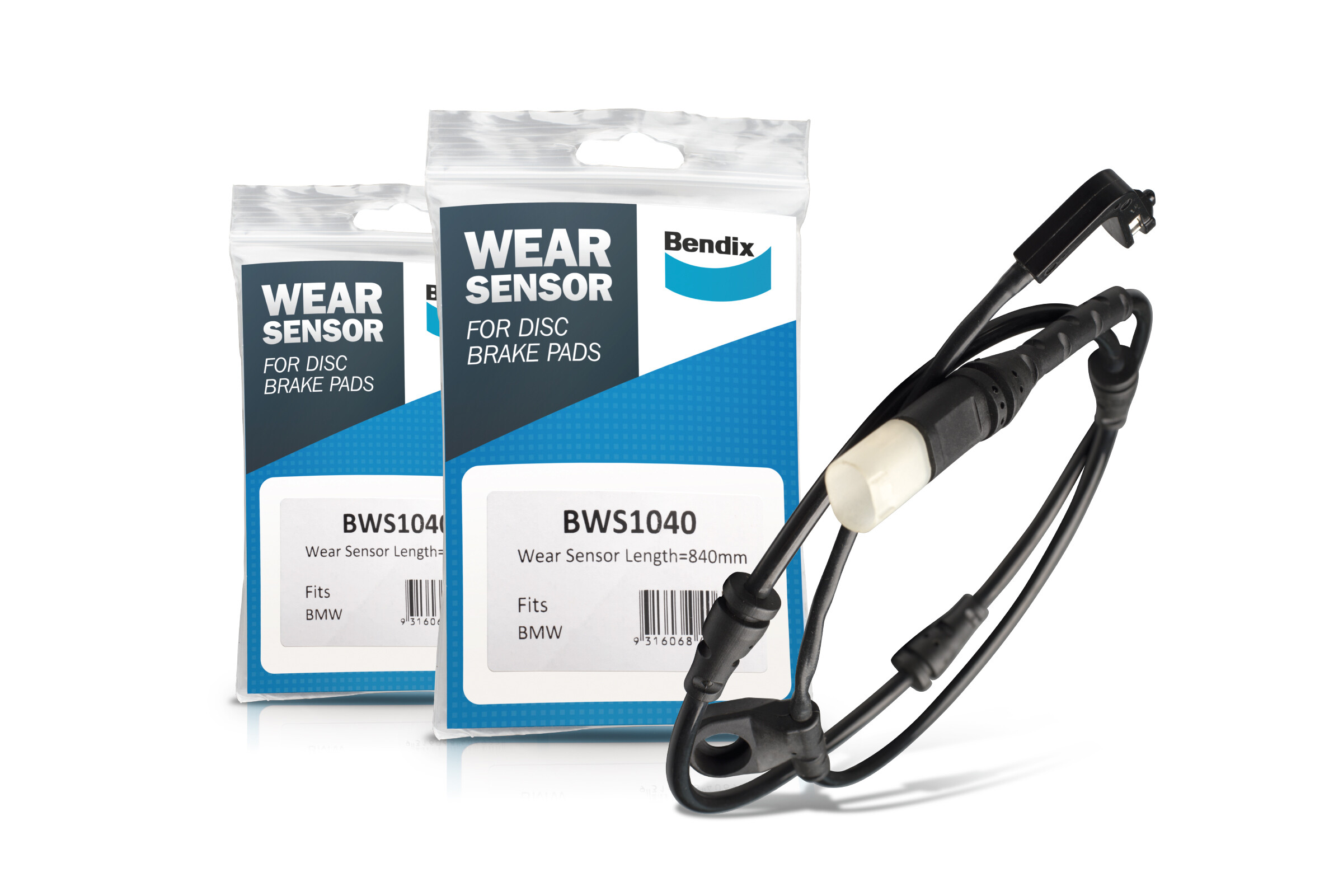
Brake-wear sensors essentially trigger when a vehicle’s braking system needs inspection, such as when brake pads are worn and need replacing. As they are damaged during this process, these brake-wear sensors need to be replaced every time you change brake pads.
RRP: POA Website: www.bendix.com.au
Off Track Wines
It’s great to see more variety of these when it comes to beers in cans for a cool beverage around the fire at the end of the day, but what about wine drinkers who don’t want the hassle of lugging around bottles or a goon sack?
Off Track Wines are a new Australian wine brand, which claims to be the first to create a wine specifically with outdoor adventure in mind. While this is a new product, the company leans on 15 years of experience, so they obviously know how to make an adult grape juice.
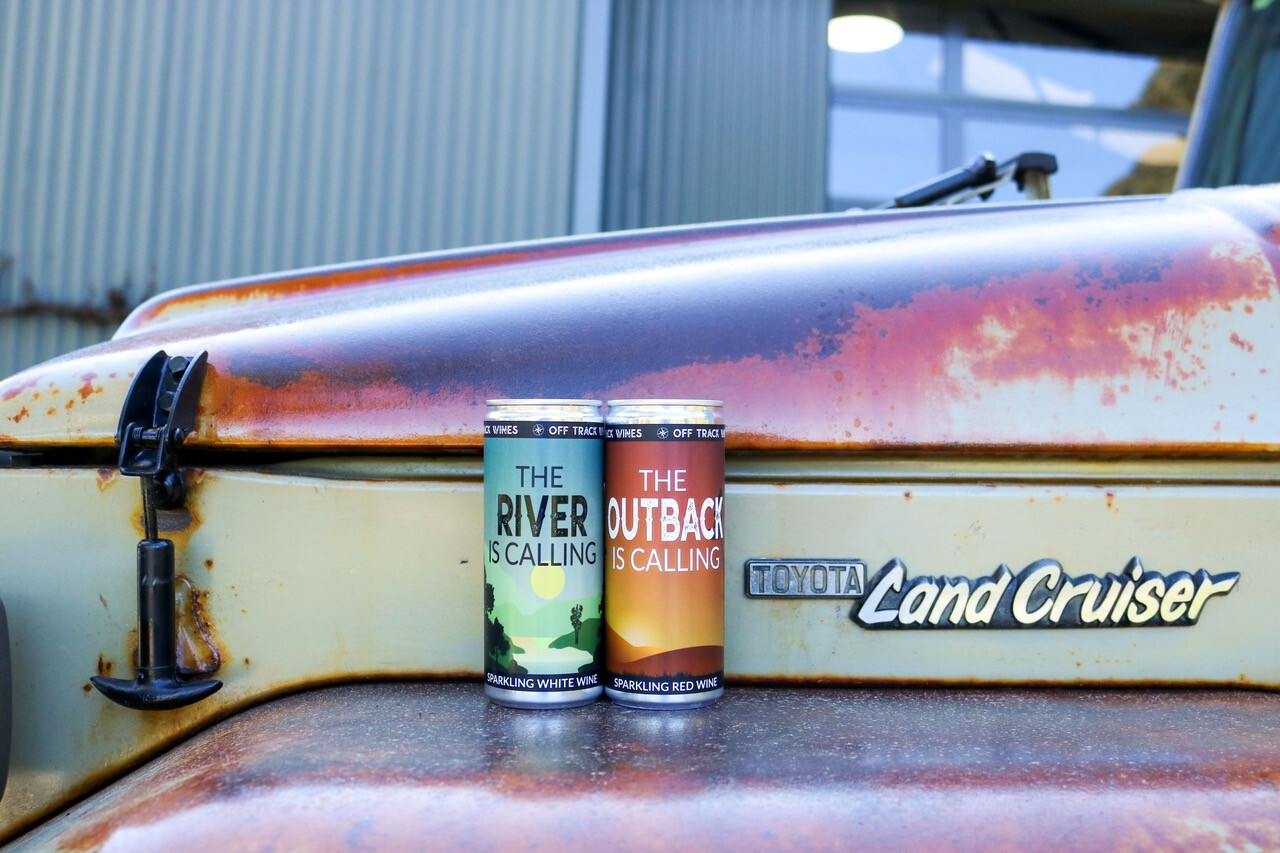
There are five varieties in the range: a sparkling white wine, sparkling red wine, white wine, rose and a red, meaning there is something for everyone.
Best of all, 12 of their cans take up less space than one bottle of wine in your fridge or esky, and the cans are easily crushed for easy transport on the way out of camp.
RRP: $98.50 per carton (12x 250ml) Website: www.offtrackwines.com.au
Oztent Air Tent AT-4
The latest release from Oztent, is their range of Air Tents which they say have been designed to be easier and quicker to set up compared to a conventional pole and peg tent.
The smallest tent in the range is the AT-4 which is ideal for smaller families up-to four people. The tent is constructed with what Oztent are calling their Rapid Air Frame Technology, and a pump is included to erect the tent.
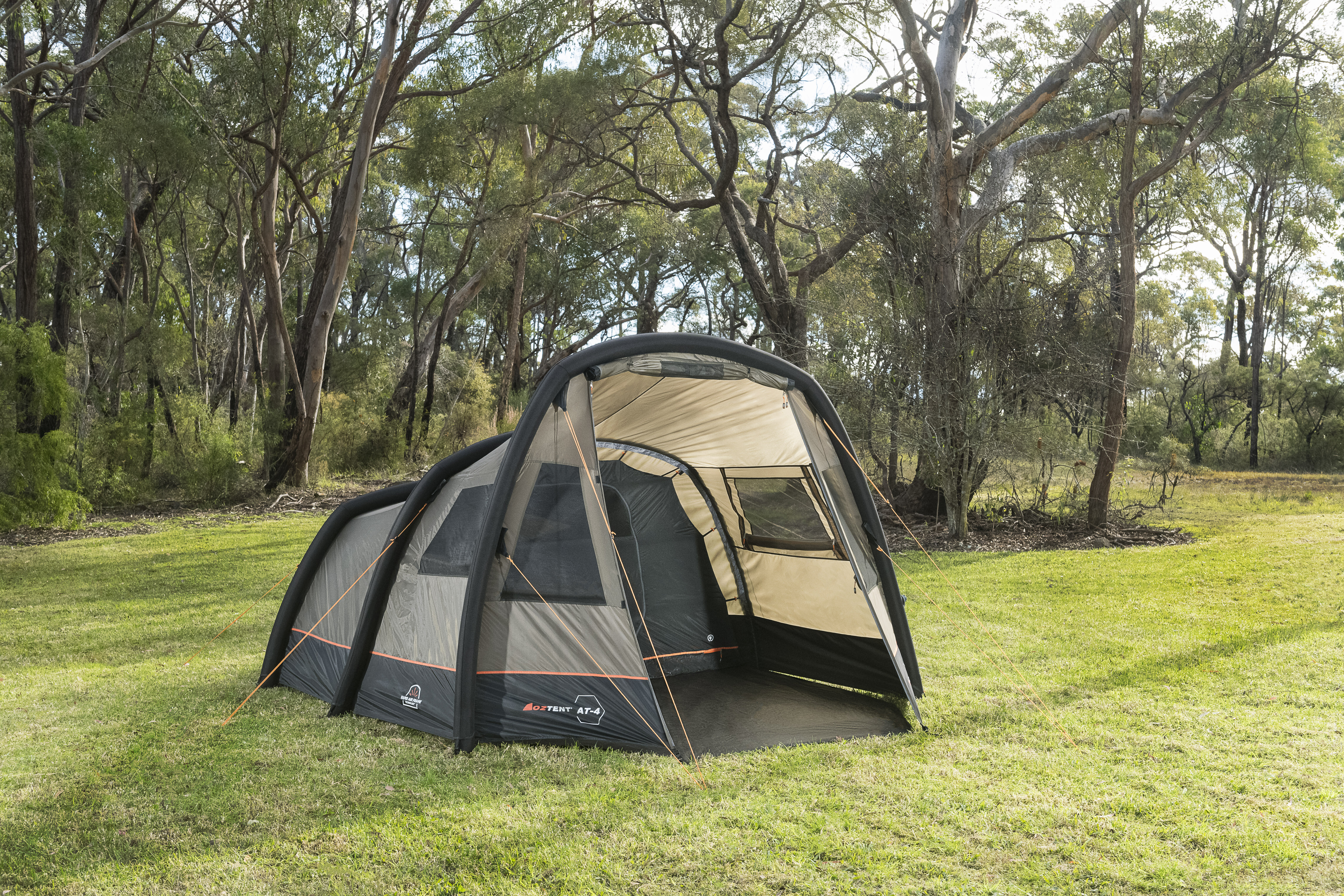
Standing at 1.9M high and with a footprint of 2.4m x 4.m you’d think this tent would be bulky when packed down, however Oztent says the AT-4 packs down to a size roughly the same as your pillow at home.
Reflective guy ropes are included, as well as rope storage pockets and pegging loops, and the internal bedroom can also be removed completely if you are chasing one larger space.
RRP: From $949.99 Website: www.oztent.com.au
Narva heavy-duty RV accessories
Narva has continued to expand its range of 12V plugs and connectors, with the addition of 10 new 50amp connectors.
These clever items combine two popular accessories into one single mount for ease of installation and simpler packing in smaller modern vehicles or even camper trailers and caravans.
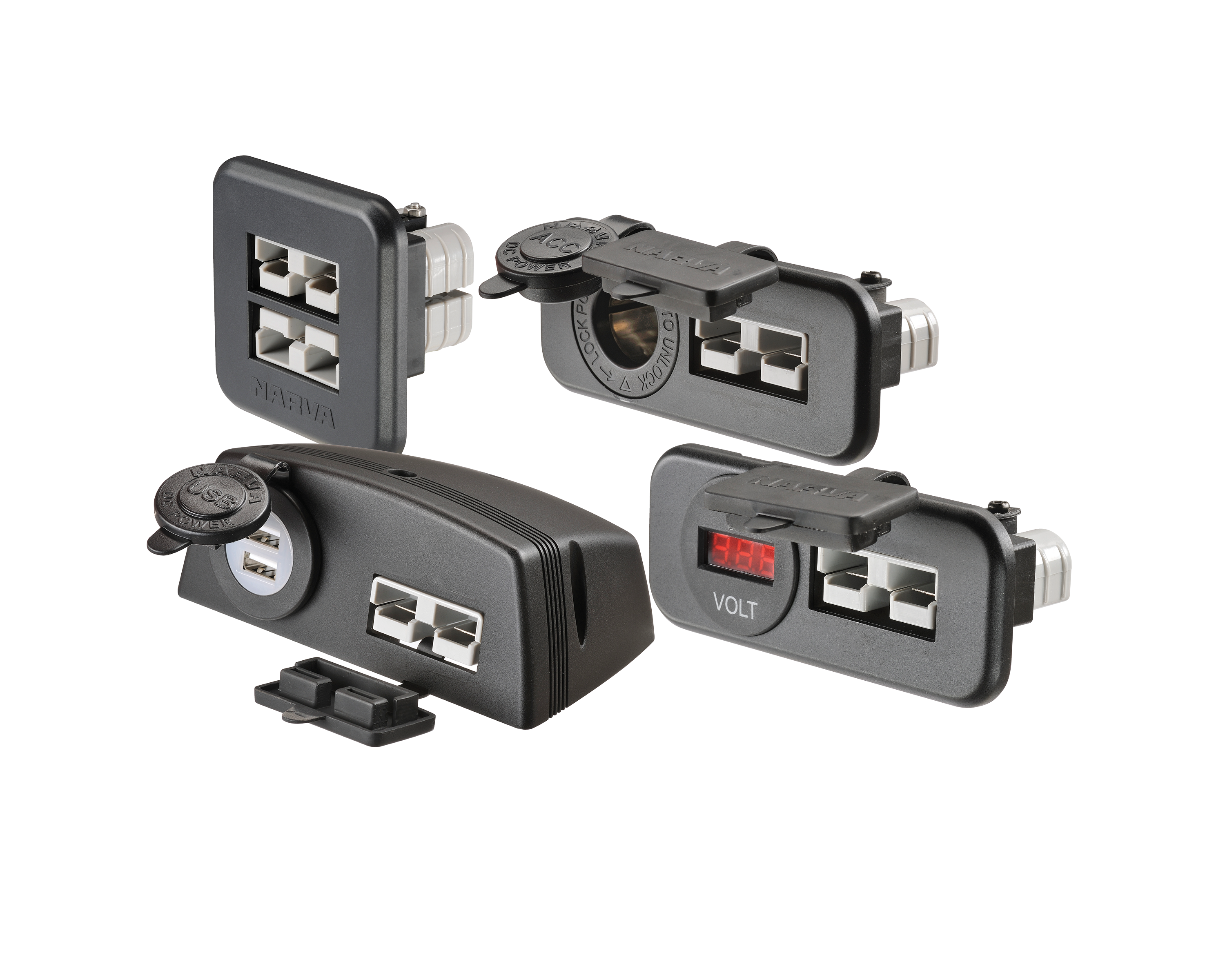
This means, for example, if you want one outlet to combine an Anderson Plug and two USB points, two Anderson plugs, or an Anderson Plug and a 12V CIG outlet (just for example) you can, as they have made a massive range of connectors to suit whatever your imagination can conjure up.
Each connector has been crafted from ABS housings for longevity, and as such can be fitted inside or outside of your vehicle.
RRP: POA Website: www.narva.com.au
Ironman 4×4 quick-fold dog bed
It’s just not a camping trip without the family dog joining the crew, and with the warmer months well and truly here, it’s the perfect time to head bush for a break with the whole family.
Ironman 4×4 has recently expanded its range of camp furniture, including this awesome folding pet bed designed just for your pooch. The Ironman 4×4 Quick Fold Dog Bed includes a padded mat for the ultimate in pet comfort, which is also removeable for easy clean up.
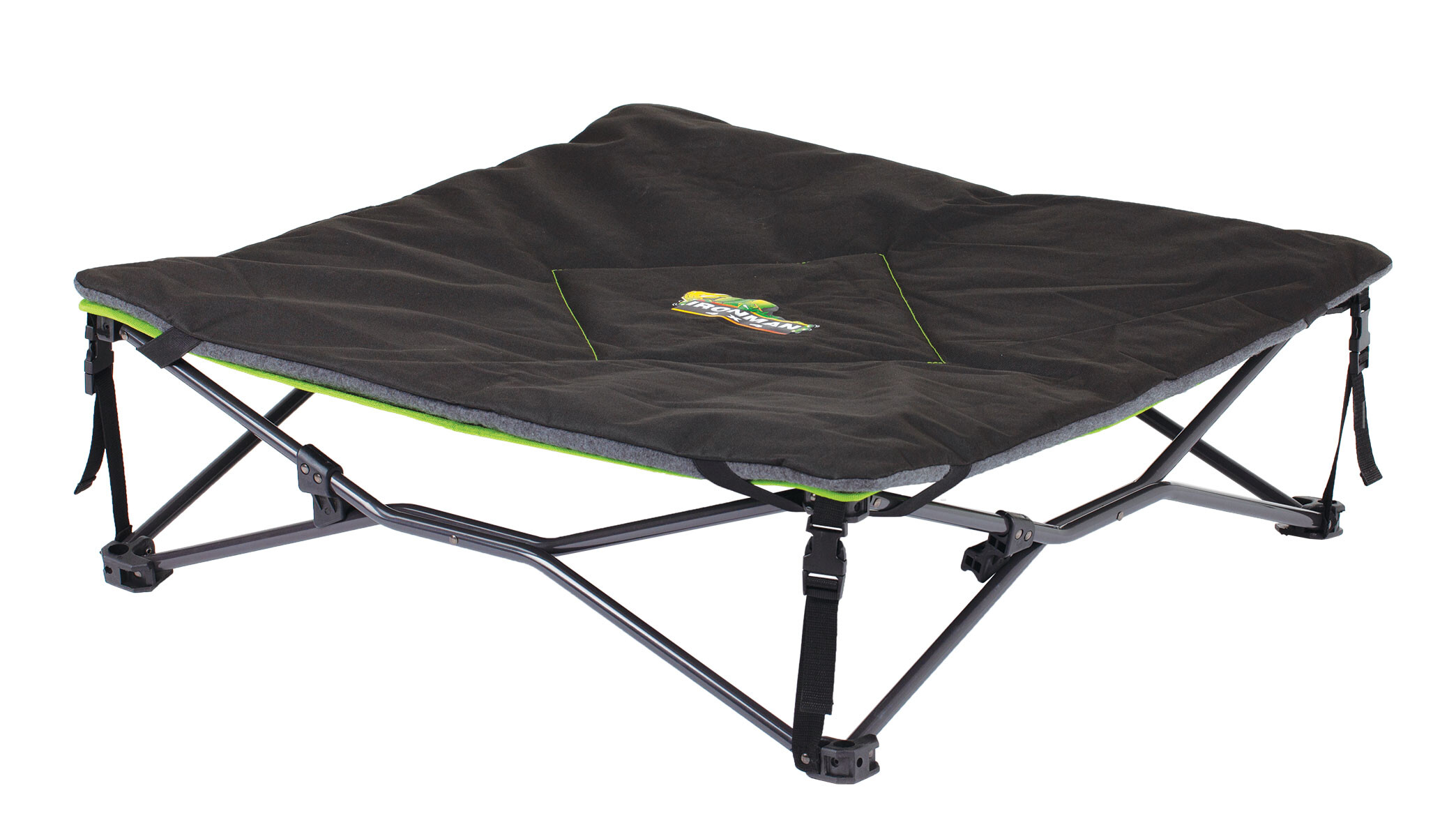
It folds down to a compact size for ease of transport, and is also supplied with a dust-and-water resistant carry bag.
RRP: $99.95 Website: www.ironman4x4.com
Icebergs to Iguanas
Jason Edwards, photographer for National Geographic, has just released his first book called Icebergs to Iguanas which features a wide collection of photographs collected over his 30 years of photography assignments all around the world.
You can tell it’s legit too, as this book weighs in at a hefty 3kg, and is packed full of images and stories from his adventures around the globe.

Jason has travelled in four-wheel drives, boats, ships, rafts, planes and rickshaws to make this book happen, including stories from his journals and iconic images taken throughout his career travelling remote Australian destinations as well as exciting adventures internationally.
If you are into stunning photography and interesting travel stories, put this one on your must-read list.
RRP: $125 Website: www.jasonedwards.co
Opposite Lock Premium 300 Series bullbar
Coming soon to Opposite Lock stores near you, is their latest bullbar and range of accessories to suit the Toyota LandCruiser 300 Series.
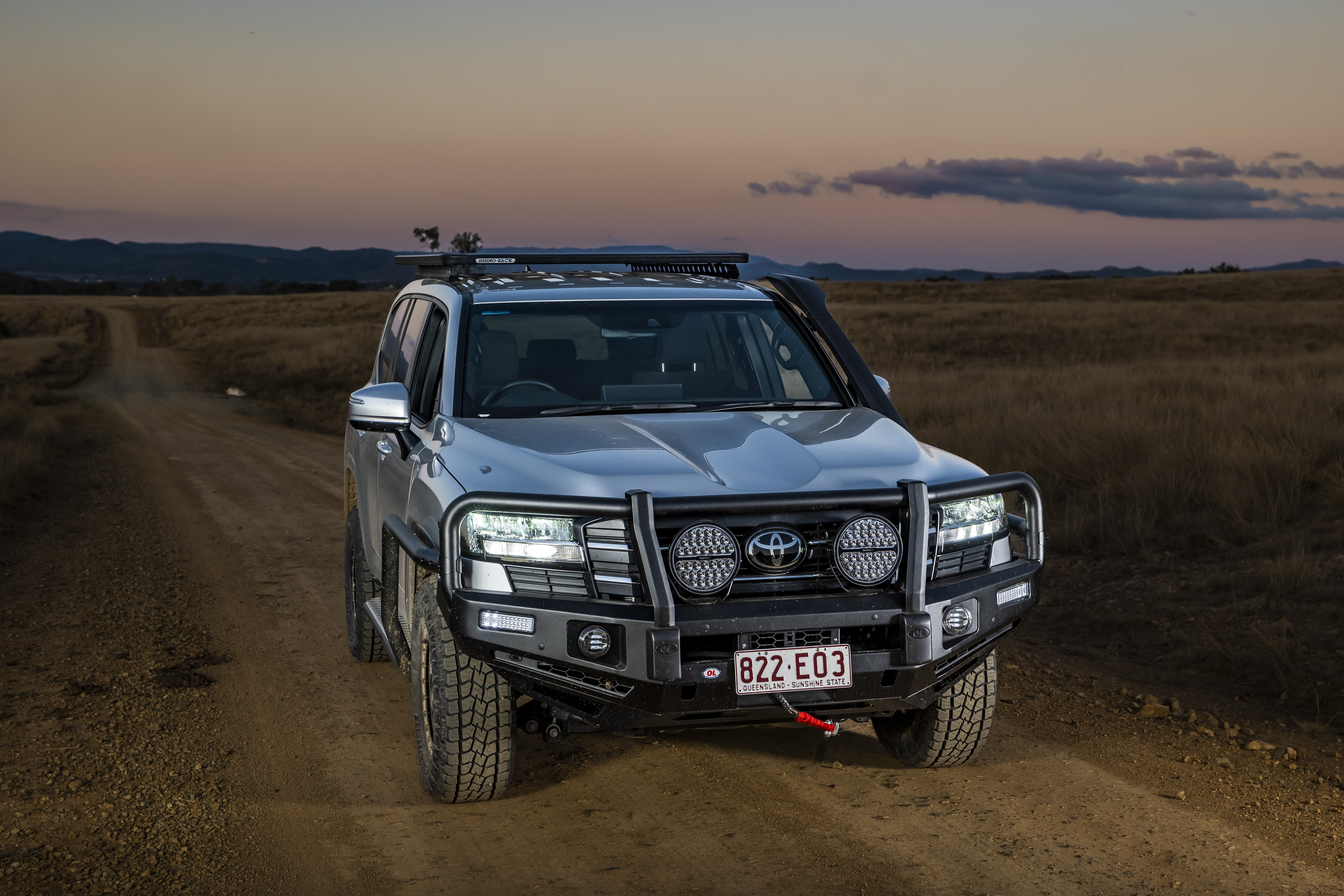
This bullbar features driving-light mounts for securely fitting a set of driving lights, inbuilt high-lift jack points, as well as three CB aerial mounts. The Opposite Lock Premium bullbar to suit the LC300 is covered by a massive two-year warranty for peace of mind.
Opposite Lock’s Premium bullbar will be available Australia wide, so visit your nearest store or enquire online if you need a bullbar for your new 300 Series.
RRP: TBA Website: www.oppositelock.com.au
Ironman 4×4 multi-use side camp table
This clever camp table from Ironman 4×4 features a compact design that folds flat for easy transport and storage when not in use.
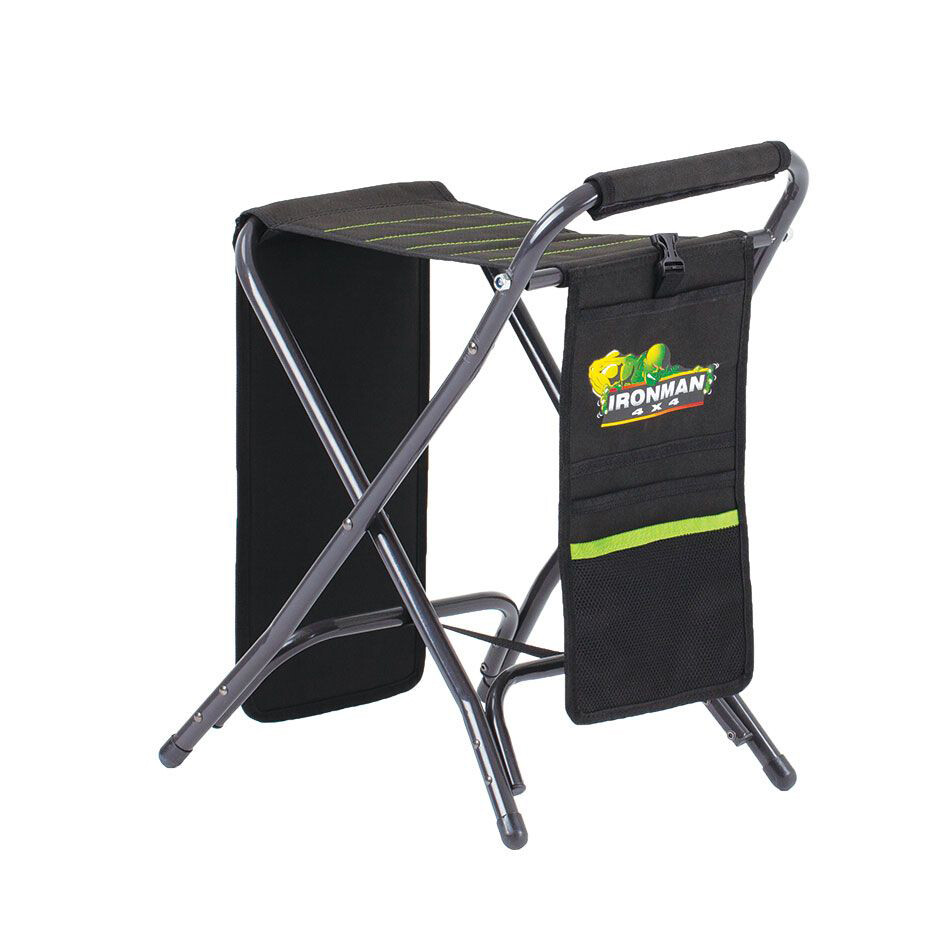
It is also convertible, with the option of running it as a hard or soft table top. Another key feature to mention, is its multi-use design that allows you to use the Ironman 4×4 Side Camp Table as a chair, footrest or a table depending on your requirements.
With an 80kg weight rating, you know it’s a quality item that also comes with a side storage pocket and a padded carry handle.
RRP: 54.95 Website: www.ironman4x4.com
Projecta switch and power point range
Electrical set-ups in our four-wheel drives, camper trailers and caravans are getting more and more advanced, and not to mention much neater compared to basic 12V systems of old.
This is why Projecta has just announced a new range of switch and power points specifically to suit the outdoor industry. Firstly, they have been designed to look good, and are available in a range of colour and outlet options. Switch plates include from one to six-gang options, as well as some switches coming pre-labelled for common applications.
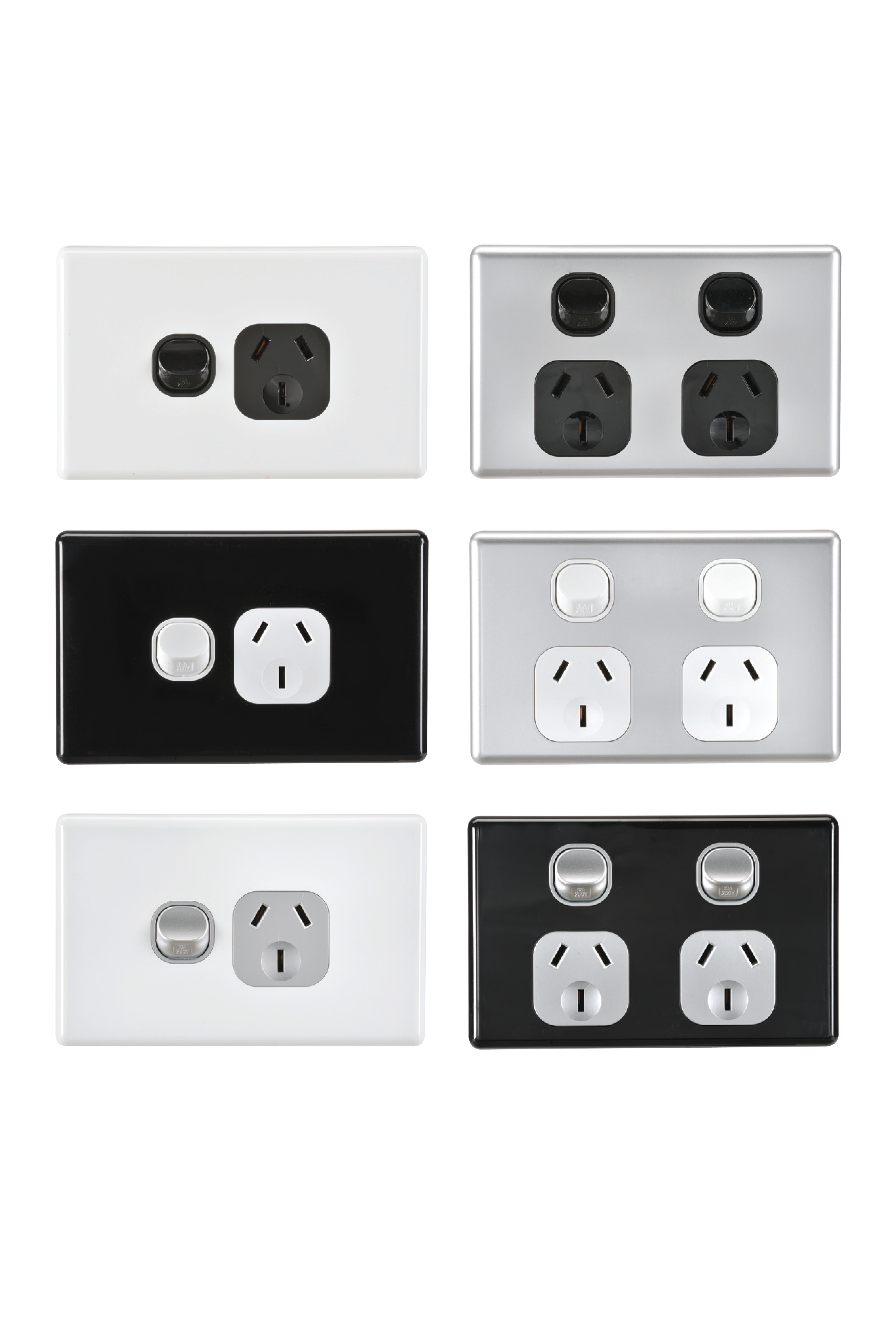
Current rating options for the switches include both 10 and 35amp options, with a locked rotor current rating of 98amp across the range. If you are planning on having a big inverter set-up in your 4×4, van or motorhome, why settle for a boring switch, when you can have something that looks the part?
RRP: POA Website: www.projecta.com.au
TJM upper control arms
TJM has recently expanded its range of suspension systems and components, with the recent release of a new range of XGS 4WD Suspension. As part of this, TJM now has its own upper control arms to suit a wide range of popular four-wheel drives.
These upper control arms have been designed to address wheel alignment issues after fitting a suspension lift kit, and provide up to three-degrees of additional castor and camber.
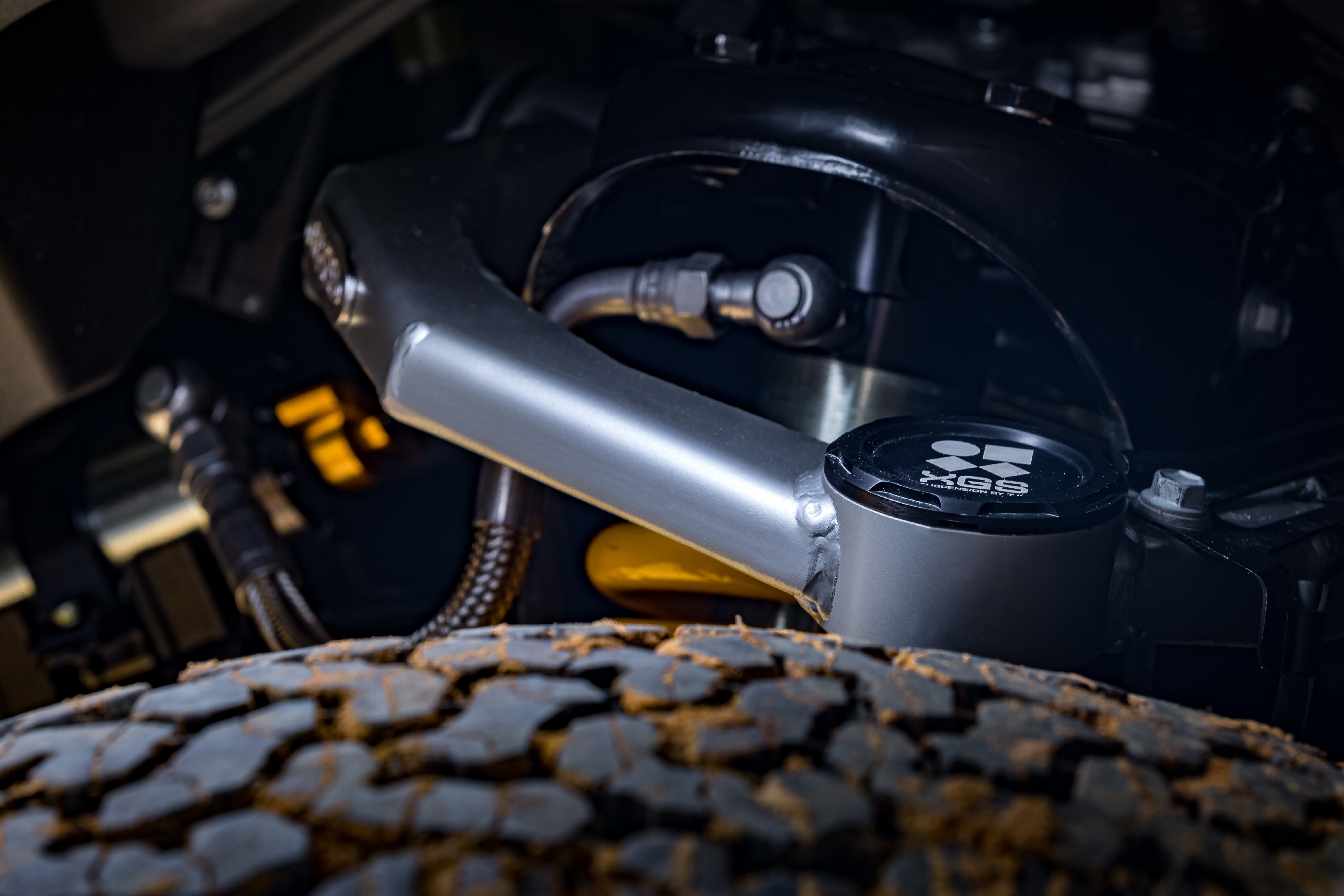
They have been engineered using the latest CAD (computer aided design) practises available, and by design they offer as much clearance as possible to avoid rubbing on rims or front suspension components.
If you have a lift kit, or are thinking about raising your 4WD, a set of upper control arms like these XGS units from TJM will complete the package perfectly.
RRP: POA Website: www.xgs.com.au
Hardkorr portable battery box
If you are looking for a quality portable battery box, this one from Hardkorr ticks a lot of boxes. Firstly, it’s available in either a white or black finish.
Secondly, there are five Anderson plugs built into the battery box, four of which are 50amp plugs that operate as both inputs and outputs, with the last larger Anderson plug offering a 175amp output that could run a reasonably sized inverter or even use to jump-start your vehicle in case of an emergency.
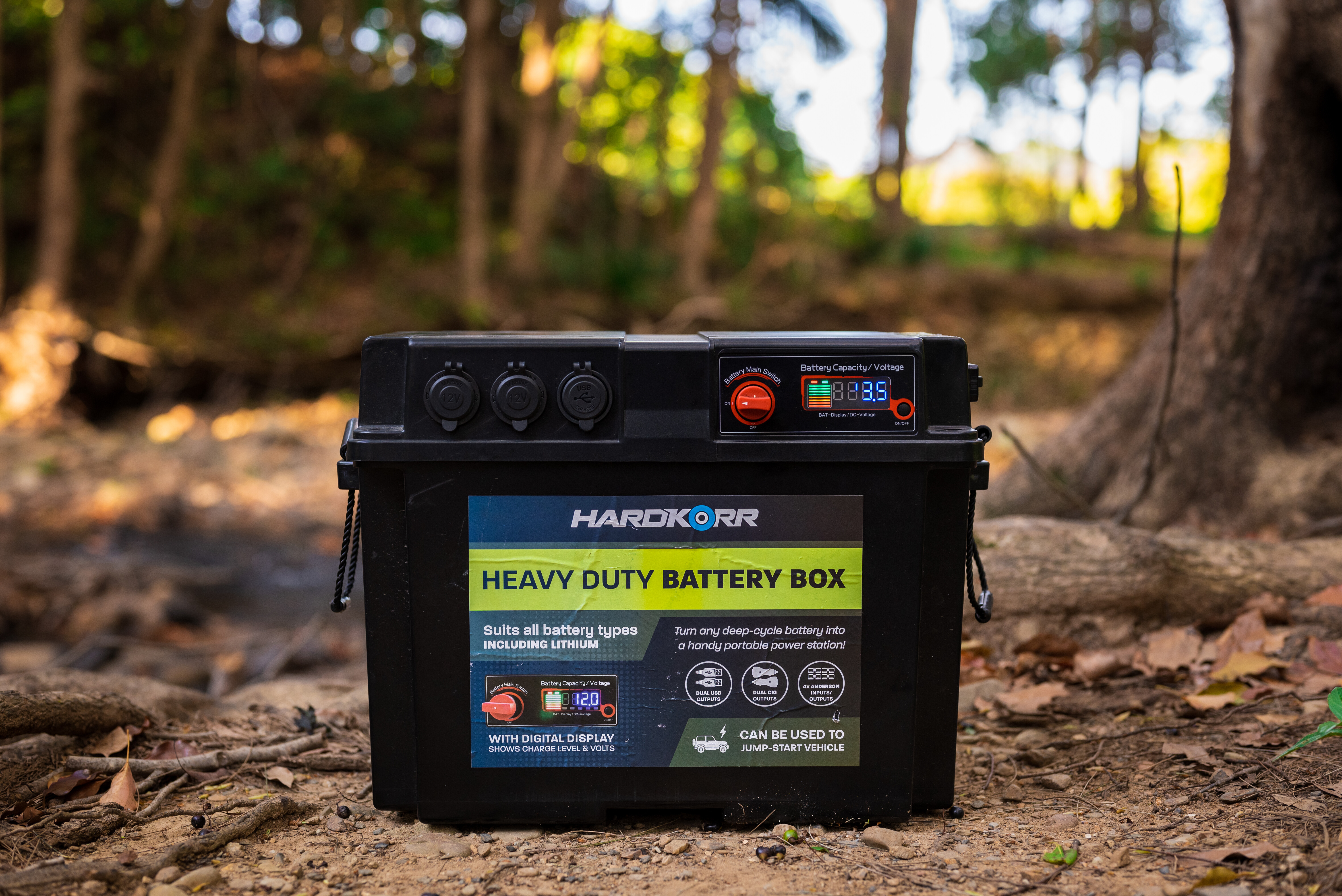
There are also two 12V outlets with 10amp fuses, a dual USB outlet and a battery monitor. Battery and mounting tray are sold separately, and it is also worth mentioning Hardkorr offers a voltage sensitive relay, and complete wiring kit as well (additional costs apply) if you want a complete 12V portable dual-battery system.
RRP: $199 Website: www.hardkorr.com.au
Ironman 4×4 Swift 1400 rooftop tent
Ironman 4×4 has again expanded its range of off-road goodies, with the announcement of a new rooftop tent, the Swift 1400.
This roof tent has been designed for larger wagons or utes fitted with alloy or steel canopies due to its large footprint of 2300mm x 1400mm. The aim of the game with this product, is to offer quick set up and pack down times, as well as a comfortable night’s sleep.
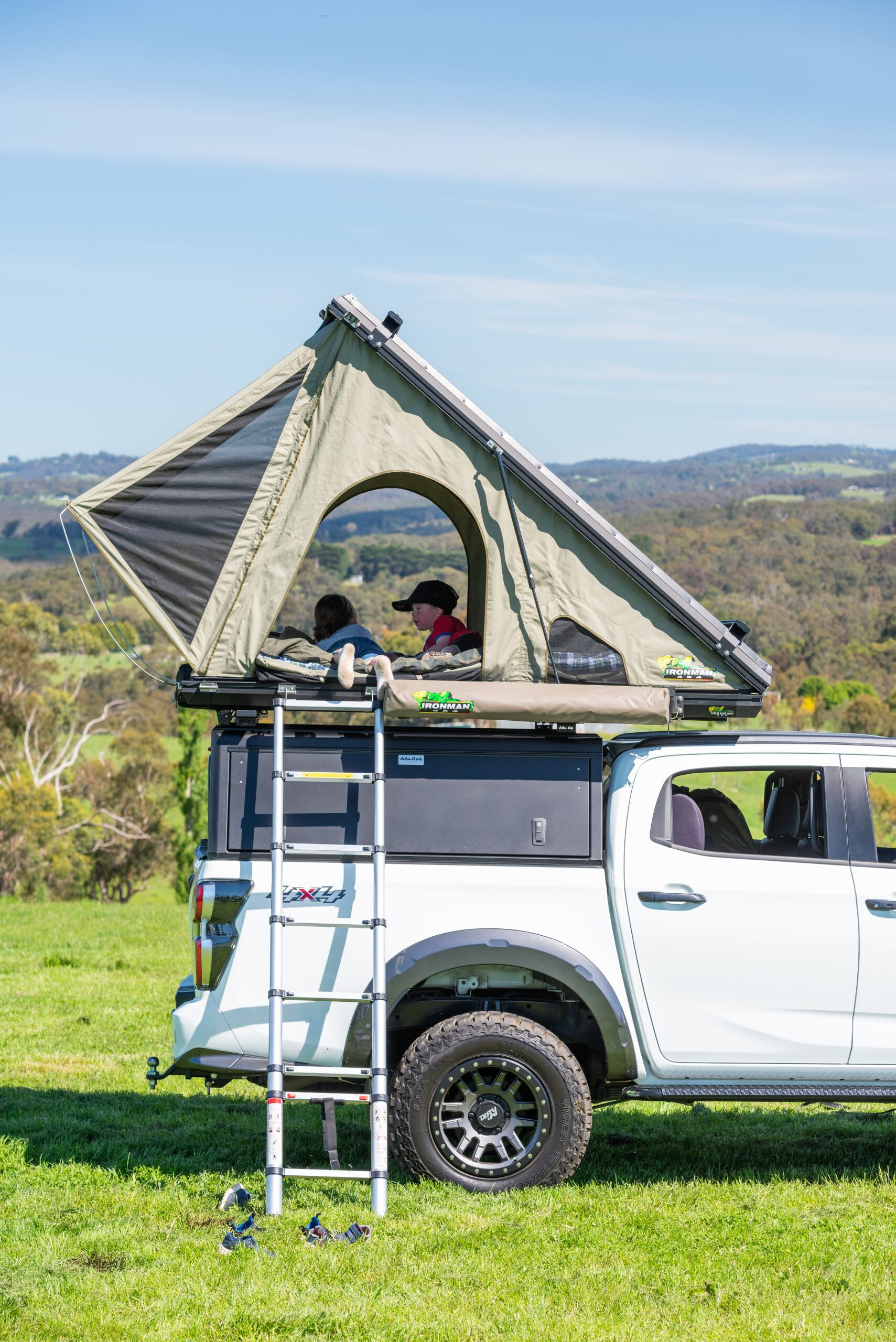
The Swift 1400 even comes with two roof rails which are rated to hold a 50kg dynamic load, perfect for a decent-size solar panel. There is also an extruded aluminium perimeter T-slot channel which allows you to easily mount awnings or shower rooms directly to the Swift 1400.
Inside, you’ll find an insulated roof, anti-condensation mat, large windows and additional mesh vents for extra airflow.
RRP: $3499 Website: www.ironman4x4.com
Fuel FFC113 Santiago forged design
Fuel Wheels has a long-standing reputation for building both a quality product as well as a good looking one.
Fuel has announced the release of five new wheels in the Fuel Forged range, that aren’t for the faint of heart. One of the more striking designs in the Forged range, is this wheel – the Fuel FFC113 Santiago, available in both a polished or black and machined finish depending on your tastes.
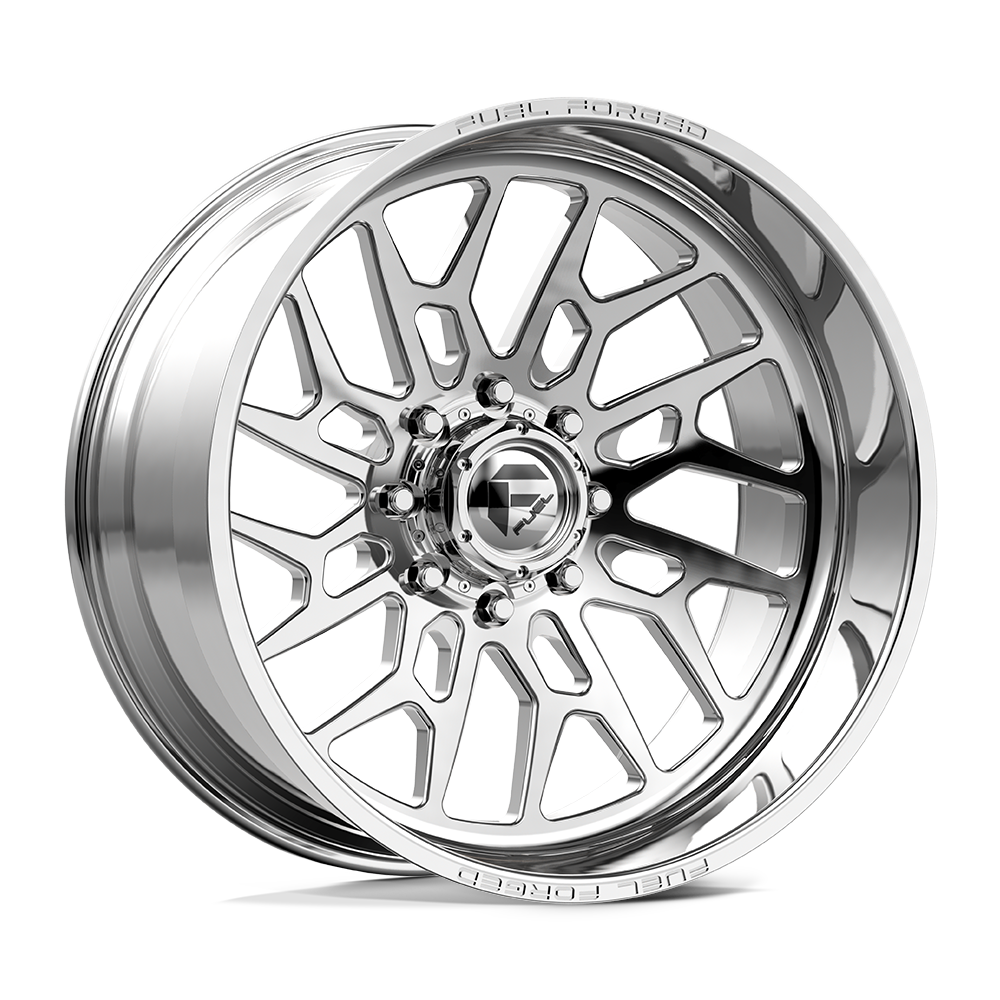
The Santiago is only available in larger wheel diameters, ranging from 20-inch right up to 26 inches, with widths ranging from 11 inches right up to 14 inches wide.
RRP: POA Website: www.wheelprosaustralia.com.au
Terrain Tamer LandCruiser electronic secondary park brake kit
It’s common knowledge that 70 Series LandCruiser and handbrake are words that should never be used in the same sentence – the factory offering is underwhelming to say the least.
Terrain Tamer has a new product out to address this issue, their Electronic Secondary Park Brake Kit, a secondary inclusion designed to support the vehicle’s primary factory handbrake rather than replace it.
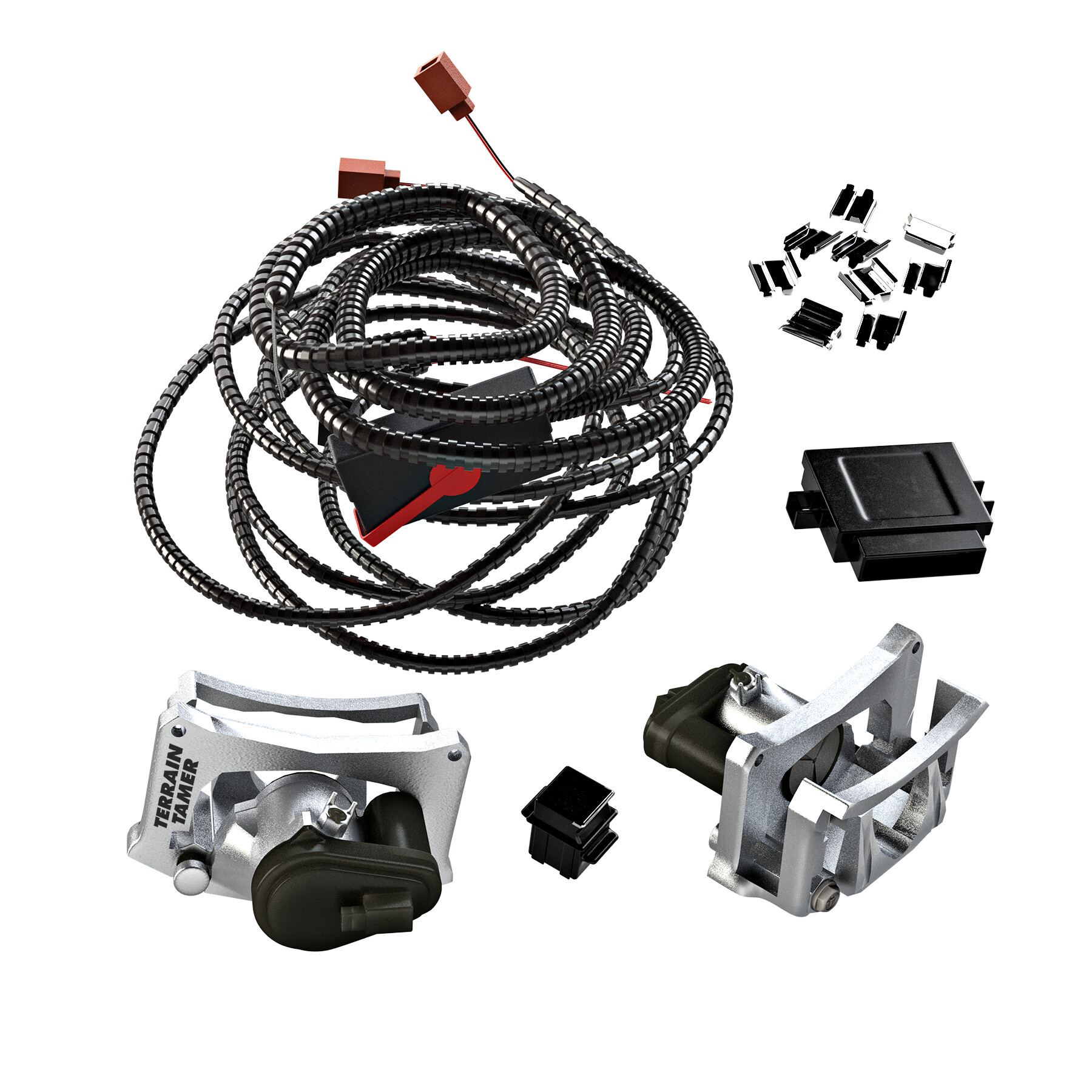
The kit comes complete with everything you need, from calipers, wiring, controllers and all fitment components. Once fitted, activating the Electronic Secondary Park Brake is as simple as operating an in-dash switch.
Installation is a plug-and-play affair taking approximately three hours to complete, and best of all it does not require ADR engineering compliance once fitted.
RRP: $2719 Website: www.terraintamer.com.au
Clearview power boards
Are you or someone in your family struggling to get into your four-wheel drive after you lifted it and fitted larger tyres?
Clearview Power Boards have been designed to provide a safe stepping surface to gain access to the vehicle, without compromising on ground clearance. Once installed correctly, when a door is opened the Power Boards are activated and automatically lower up to 300mm for easy access.
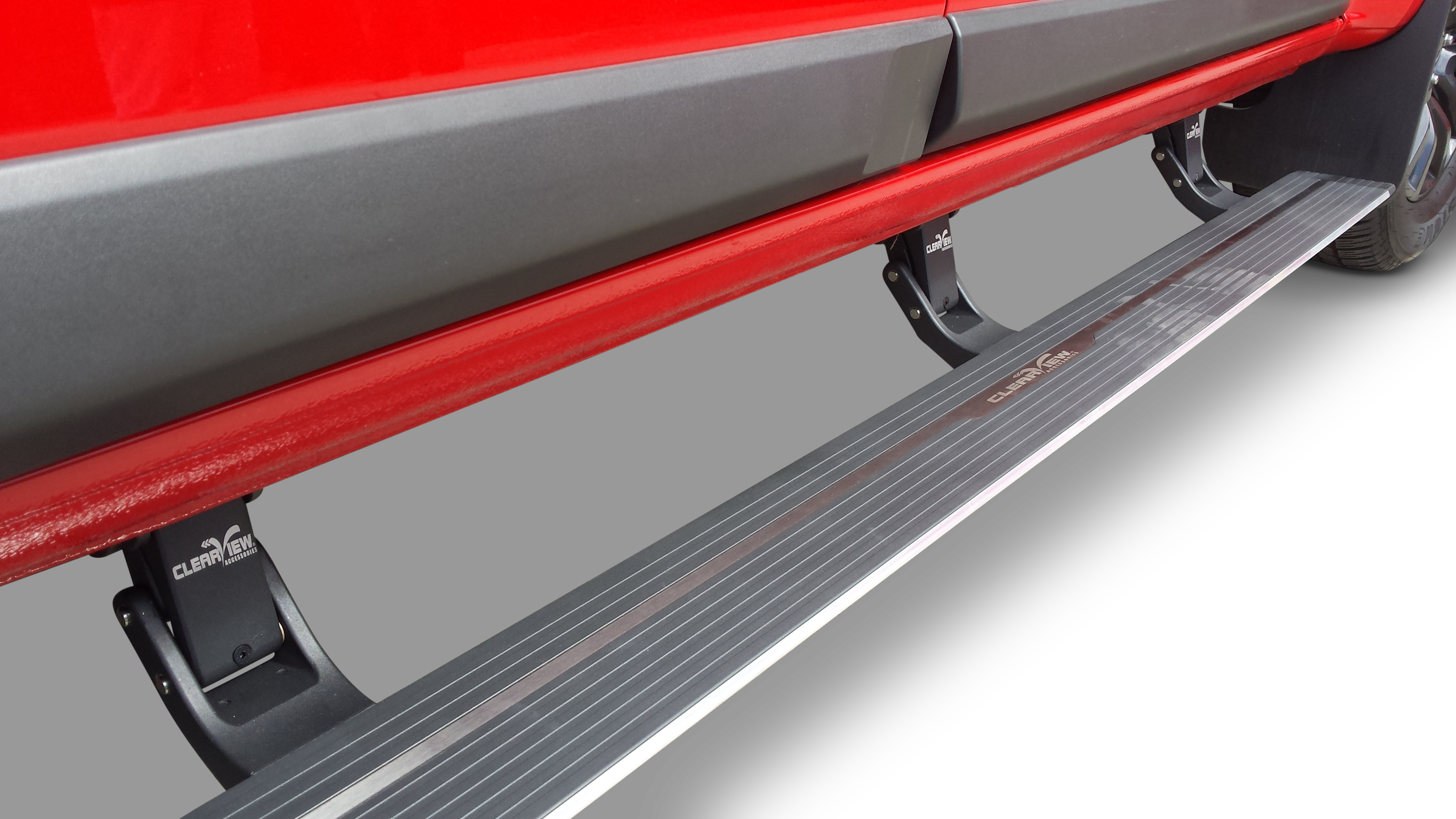
When the door is closed, the Power Boards automatically retract to the body of the vehicle. No drilling or new holes are required, and the motors are rated to IP68 for water and dust ingress protection.
With a hefty 300kg load capacity per step, it’s easy to see these are a well-made step that offer the best of both worlds.
RRP: From $1599 Website: www.clearviewaccessories.com.au
MaxTrax Indeflate
Are you looking for a quick and easy way to inflate or deflate your tyres on your next four-wheel drive trip?
Well, take a close look at the Indeflate by MaxTrax, designed to take physical work out of maintaining your tyre pressures.
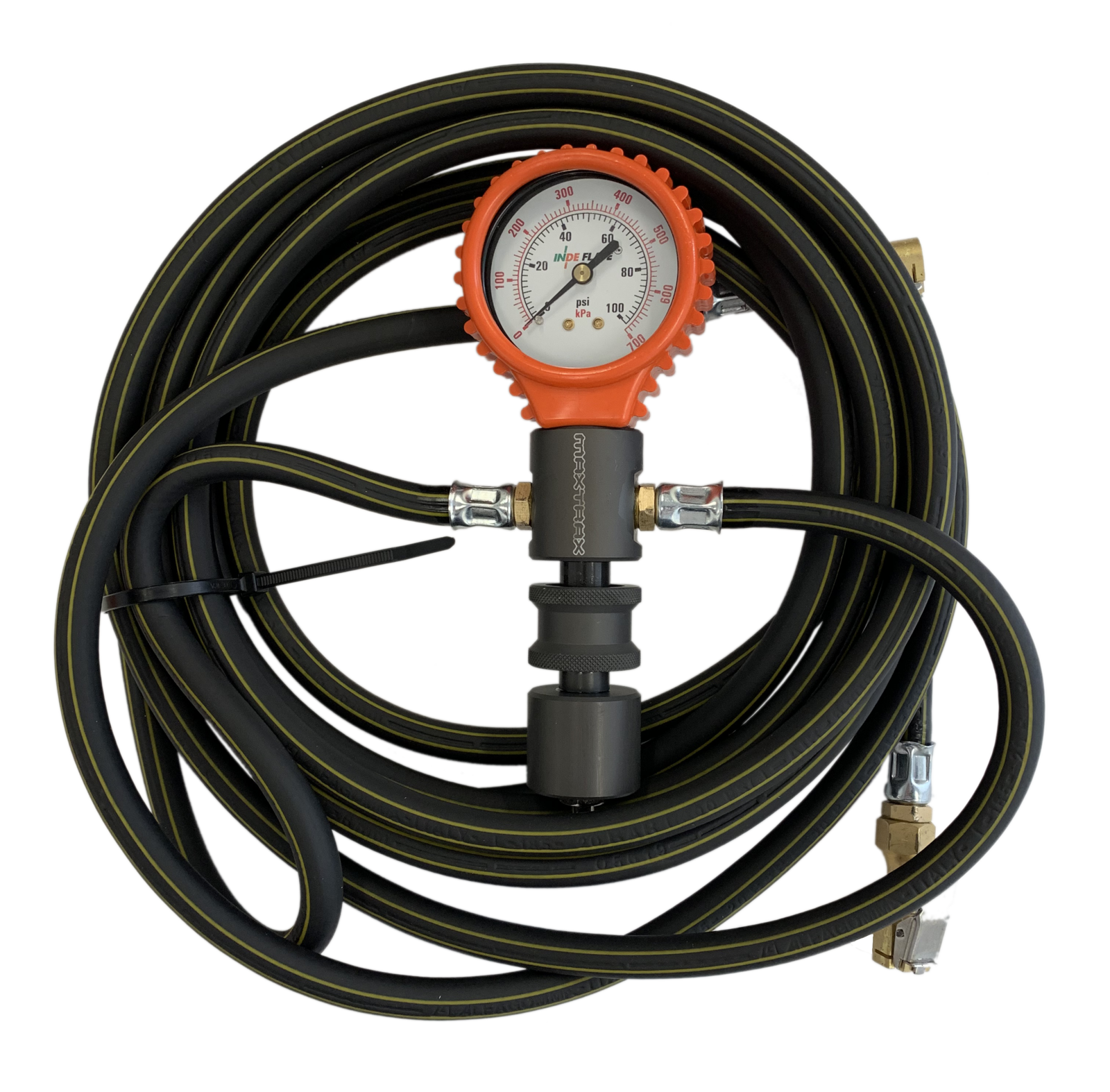
The Indeflate unit is manufactured in South Africa, and works by joining two or four tyres (there are two models available) together, which then allows you to adjust tyre pressure via the unique dump-valve mechanism that equalises pressure between the tyres.
This not only makes it quicker and easier to raise or lower tyre pressures, it means you can set it up and control everything standing up, rather than spending a few minutes per tyre crouched down to get this important job done.
RRP: From $215 Website: www.maxtrax.com.au
Projecta personal folding solar panel
Projecta has announced the release of a range of personal folding solar panels, designed for travellers and outdoors people who need to charge their devices on the go.
There are two models in the range, the PP10 which produces 1.6A and the larger PP15 which can produce up to 3A. Both kits are made up of monocrystalline folding solar panels with 3-in-1 charging cables.
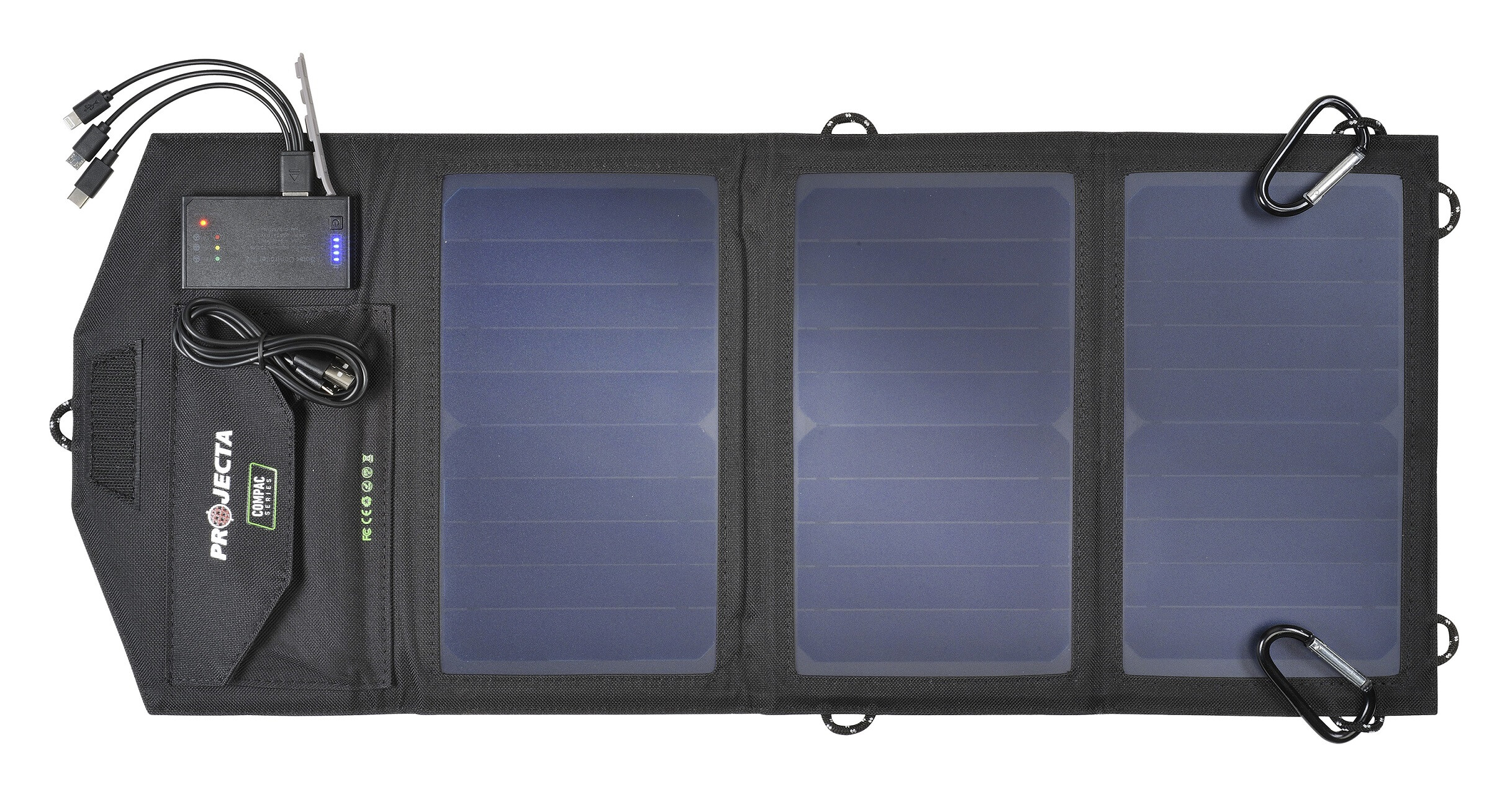
The PP10 is suited to direct charging of devices such as smartwatches and phones, and offers charging via a USB-A connector. The PP15 has three solar panels instead of two, as well as a 10,000mAh battery for higher current device charging, such as drones.
With an inbuilt battery, you can naturally store charge for when the sun goes down which is a neat feature.
RRP: Priced between $89 and $189 Website: www.projecta.com.au