The 4×4 market kept pace with the broader Australian market in May, with the nation achieving a record calendar month with good signs pointing to improving supply.
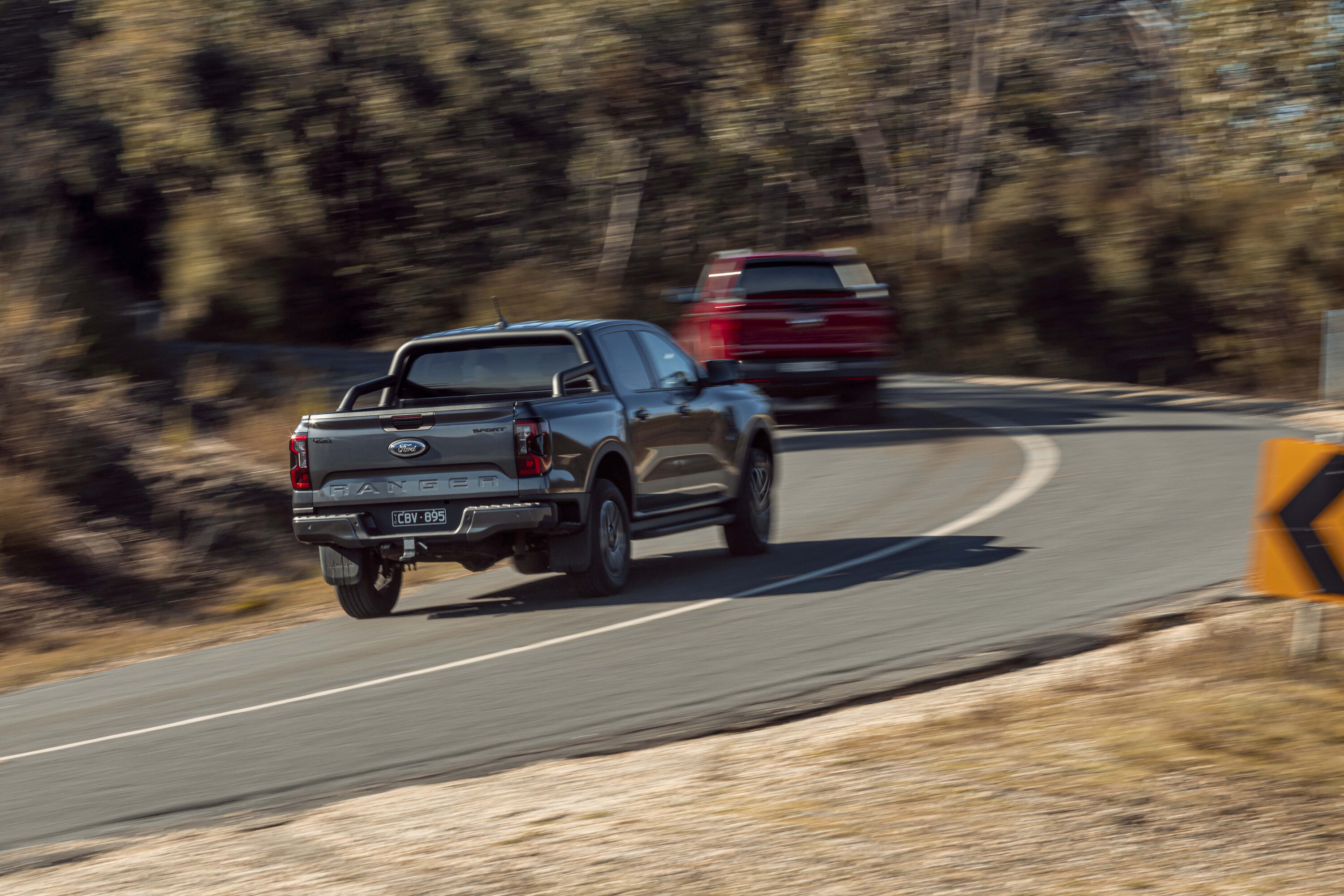
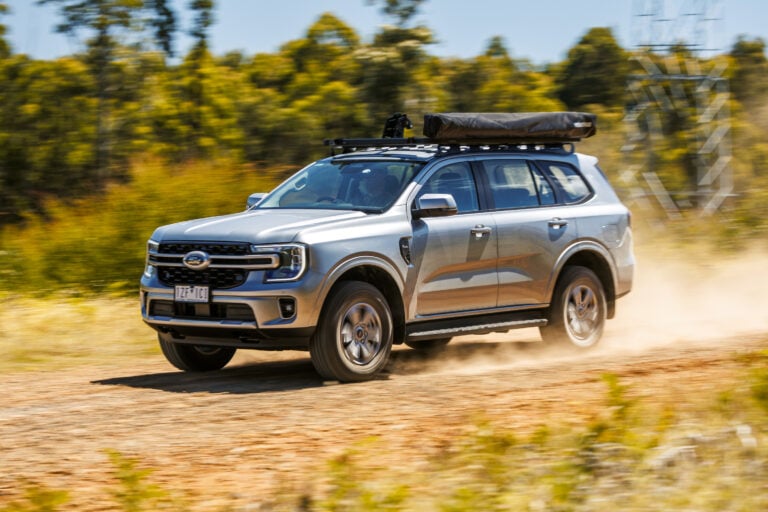
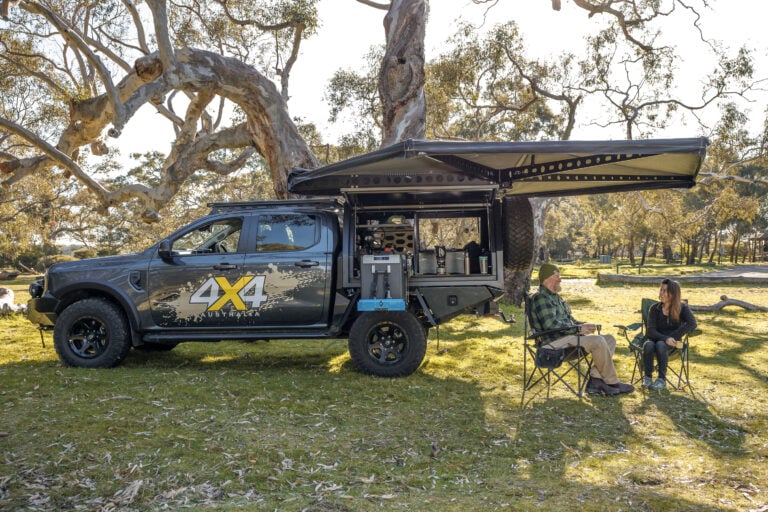
While Rangers lead the way through April, Toyota’s HiLux outpaced them with a strong showing from 4775 new registrations. That’s exactly 1111 more HiLuxes let loose across the country than Ford‘s popular Ranger, which logged 3664 new registrations in May.
When combining 4×4 and 4×2 YTD figures, however, the annual sales race is still neck and neck, and a strong month from either rival could be the one that turns the tide. Year-to-date, it’s the old, faithful, HiLux that currently leads the top spot, with 21,951 new HiLuxes on the road this year, against Ford’s 21,407 new Rangers.
1
Elsewhere in the Top 10 4×4 sector, familiar faces populate the list, but the hierarchy has rearranged due to robust performances by certain models.
New registrations of Toyota‘s Prado (1435) more than doubled through the month of May compared to what was observed in April (762), while Mazda‘s ageing BT-50 continues to trickle along healthily, delivering over 300 further units than the previous month, and maintaining its fifth place position.
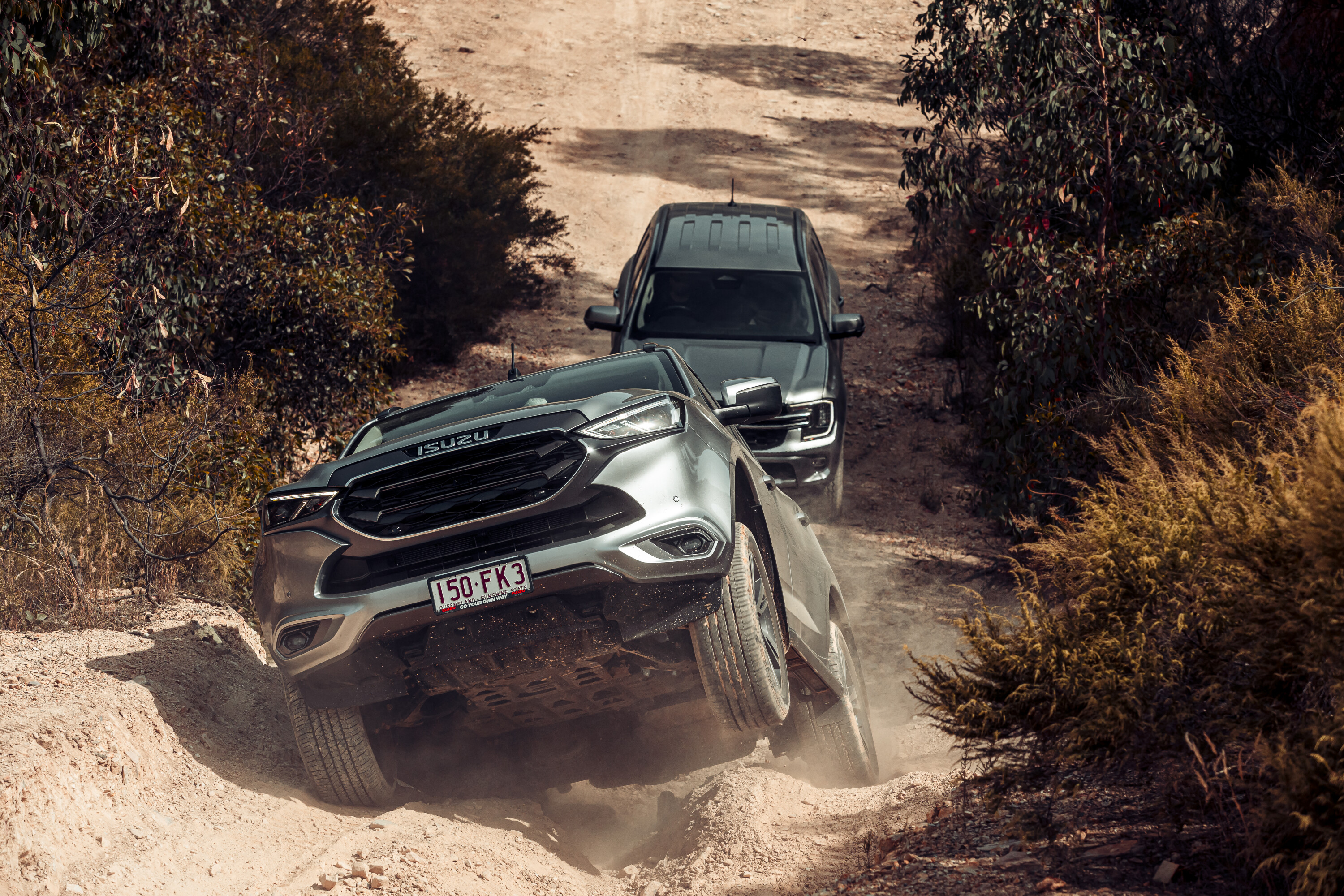
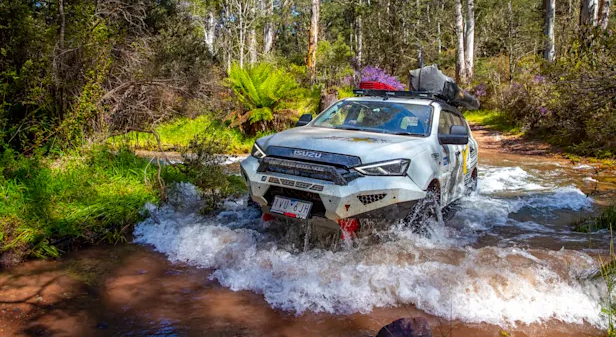
Isuzu‘s pair, the D-Max ute and MU-X wagons, continue to make steady progress, registering (combined 4×2 and 4×4) 2371, and 1110 new units, respectively.
1
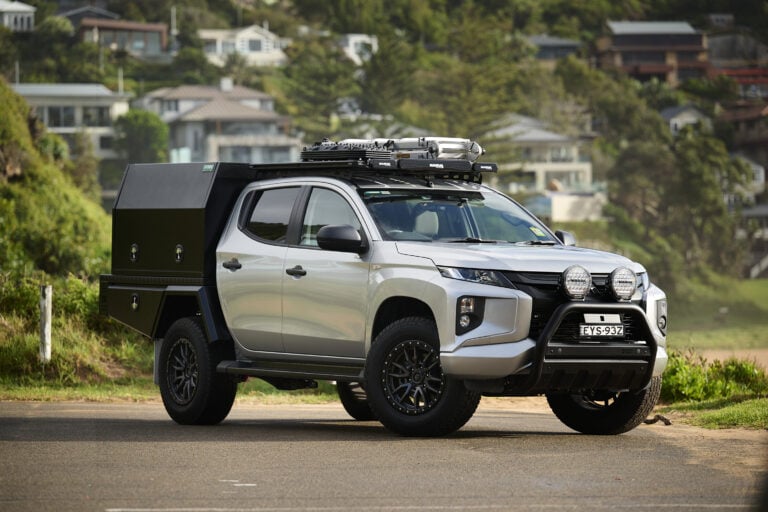
Despite Mitsubishi Triton and Everest remaining unchanged in the pecking order, both models made big month-on-month gains in new registrations, with Triton deliveries through May improving by 41 per cent, while Ford’s Everest bettered April’s effort by almost 20 per cent.
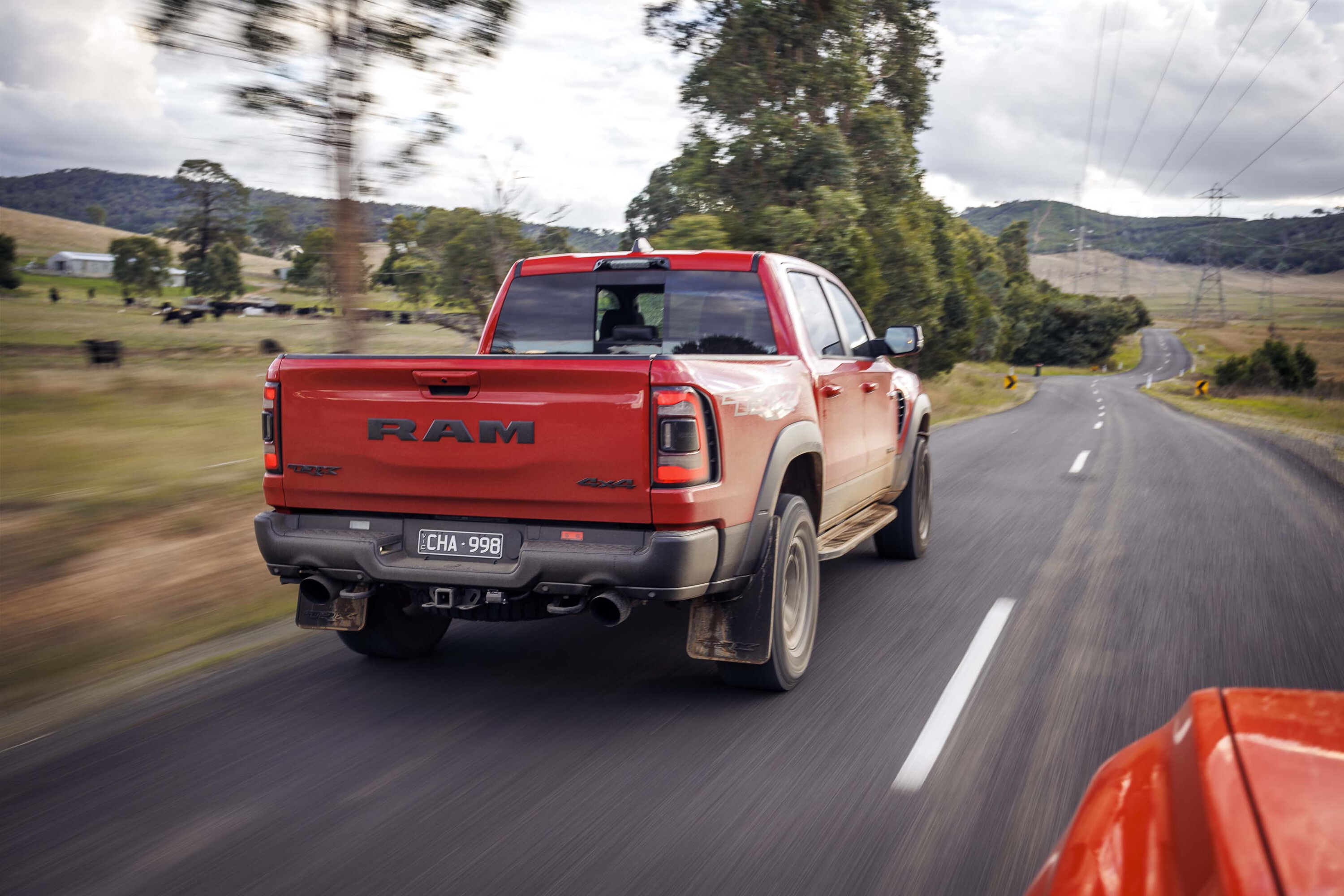
Within the American heavyweight sector, RAM continues to supply its 1500 (696 in May) in greater numbers than Chevrolet’s Silverado (230), with the RAM 1500 comfortably leading the sales race, with 2705 vehicles delivered YTD, against Chevrolet’s 748 Silverados delivered in 2023 so far.
Top 10 best-selling 4x4s in Australia: May 2023
Total 4×4 sales nationally enjoyed a market-wide surge in registrations for May, with the PU/CC 4×4 segment growing by 41.3 per cent month-on-month from 12,197 in April 2023, to 17,244 registrations through May 2023.
When compared against the broader Australian market for May, the PU/CC 4×4 segment proportionally outgrew the wider market for May, with total national registrations growing by 28 per cent, against April 2023’s national figure.
1
Despite a month of strong new deliveries, the PU/CC 4×4 segment remains slightly down in its YTD figures, with 73,928 4x4s delivered in 2023 so far, compared with 76,871 achieved throughout the same period of 2022.
Toyota wins the best-selling award for the month of May, registering 18,340 new vehicles across the nation, ahead of Mazda (8475), Hyundai (7078), Kia (7000), and Ford (6251).
Top 10 best-selling 4x4s in Australia: year-to-date
Rank
Model
YTD Sales
1
Ford Ranger
18,725
2
Toyota HiLux
16,993
3
Isuzu D-MAX
8810
4
Isuzu MU-X
6003
5
Mazda BT-50
5864
6
Mitsubishi Triton
5471
7
Toyota Prado
5417
8
Toyota LandCruiser 300
4979
9
Ford Everest
4456
10
GWM Ute
4081
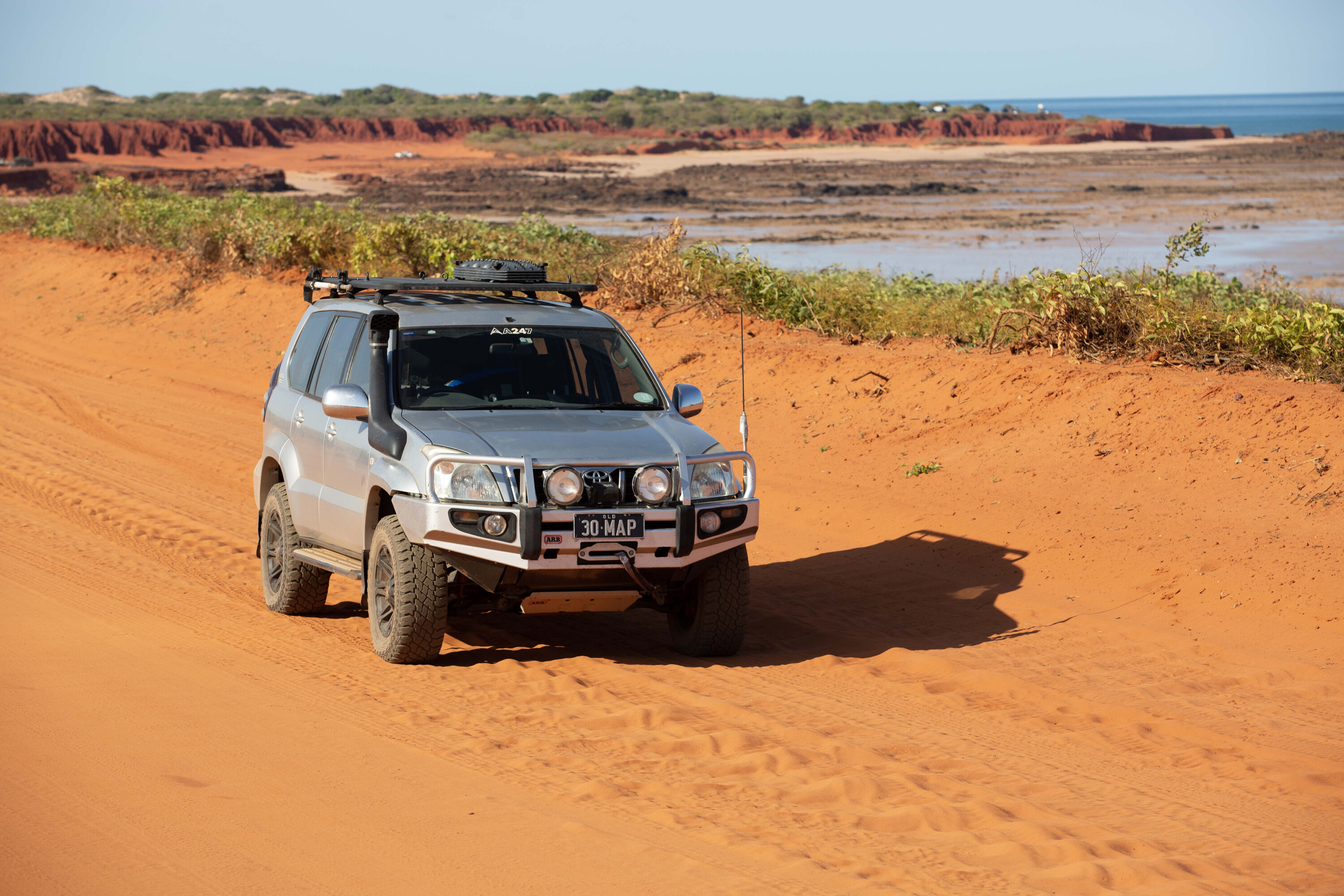
I’ll never forget my first sunset in Broome.
It was September 1994, with my wife on a ‘second honeymoon’ mapping trip to the Kimberley – the end of an arduous drive from Brisbane, running in a brand-new Land Rover Discovery. We’d been bogged out the back of Windorah (don’t ask!), bent a steering dampener on a jump-up on Mt Elizabeth Station and travelled more than 5000km in under a week.
Travel weary, we arrived at Cable Beach to the strum of a busker’s guitar, ordered our fish ‘n’ chips and headed down to watch the fire-orange sunset across the pearlescent sand and silky-blue ocean. The cool coastal breeze blew our cares away with the long drive now a distant memory. It felt like we’d been shipwrecked and washed up on a distant shore.
Not surprisingly, the serene stretch of coastline north of Broome is called Goolarabooloo – the coast where the sun goes down – a fitting name given the litany of open beaches, headlands and beachside bush campsites that frame this daily spectacle of colour as the tropical sun melts into the Indian Ocean.
1
There’s a rich indigenous connection to country that’s been captured in the Lurujarri Dreaming Trail that in part follows traditional song cycles, camping areas, middens and bush tucker (in season) for over 82km north from Minyirr (Gantheaume Point near Broome). Although it never took off as a hike, the coastal backroads and tracks follow a similar route and the trail’s signage is very helpful for local navigation.
White-bellied sea eagles (boongginy) cruise majestically along the shoreline searching for fish, birds, mammals, reptiles and crustaceans. It’s Australia’s second-largest raptor and a spectacular creature to watch or be lucky enough to get close to as it rests and keeps watch over its native homeland. Offshore, extensive seagrass beds feed dugong and green turtles, and countless humpback whales come here to calve in season.
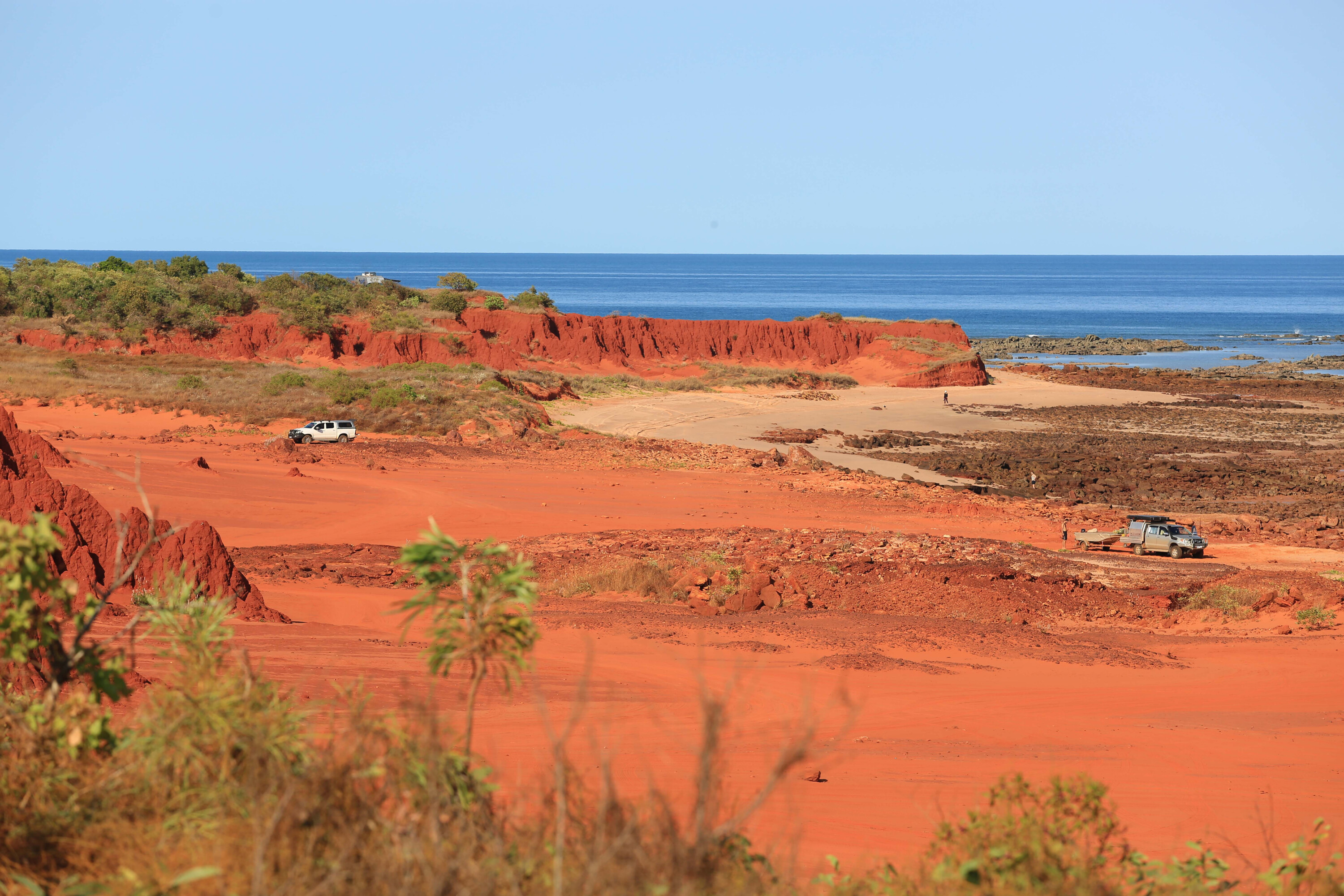
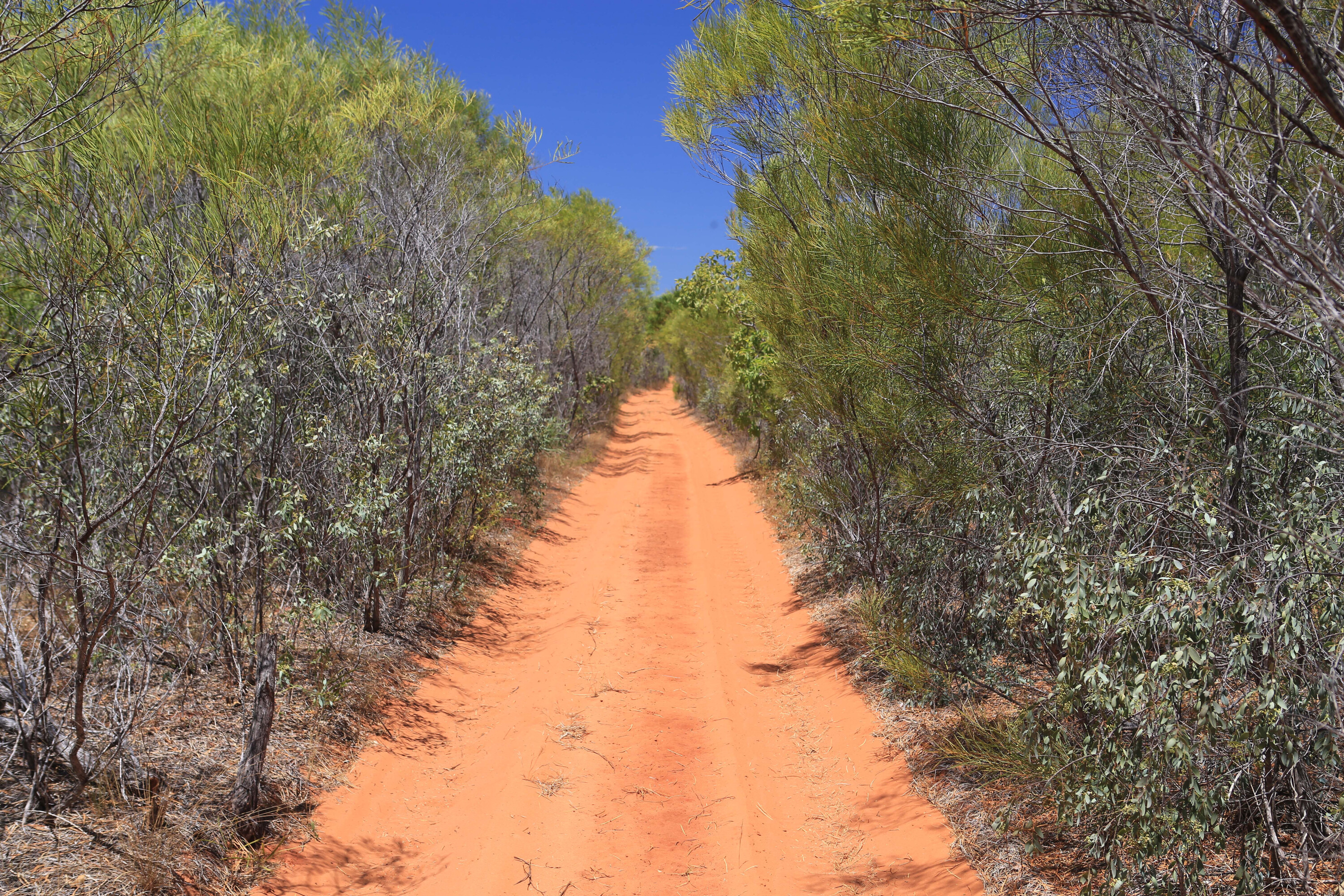
Access to the area is via the Manari Road which turns off the main Cape Leveque Road, 14km north of the Great Northern Highway. The road cuts deep into the pindan red sand and is often-corrugated but unlikely to cause any issues for offroad caravans and trailers.
1
Cable Beach day trip
Cable Beach is a beautiful but busy place. There’s an easy day trip north of Broome, which takes in a tour of the world-class Willie Creek Pearl Farm. The pearl farm has several guided tours including a boat trip along the turquoise waters of Willie Creek and a live pearl harvest. Lunches can be pre-booked or just enjoy a cold drink or coffee at the licensed outdoor café and view some exquisite pieces in the gallery showcases. There’s also a public boat ramp to access the estuarine or offshore fishing areas; just beware of crocs.
You can access Willie Creek via the shorter, but more weather affected ‘red route’ or the 4×4-only ‘blue route’. Both routes are well-signed and clearly marked. For more info see www.williecreekpearls.com.au
Alternatively, the ‘free beach’ north of the Cable Beach Resort access ramp is a perfect place to find a section of open beach all to yourself, enjoy a cool swim, a cold drink and watch the sun set.
1
Exploring farther north
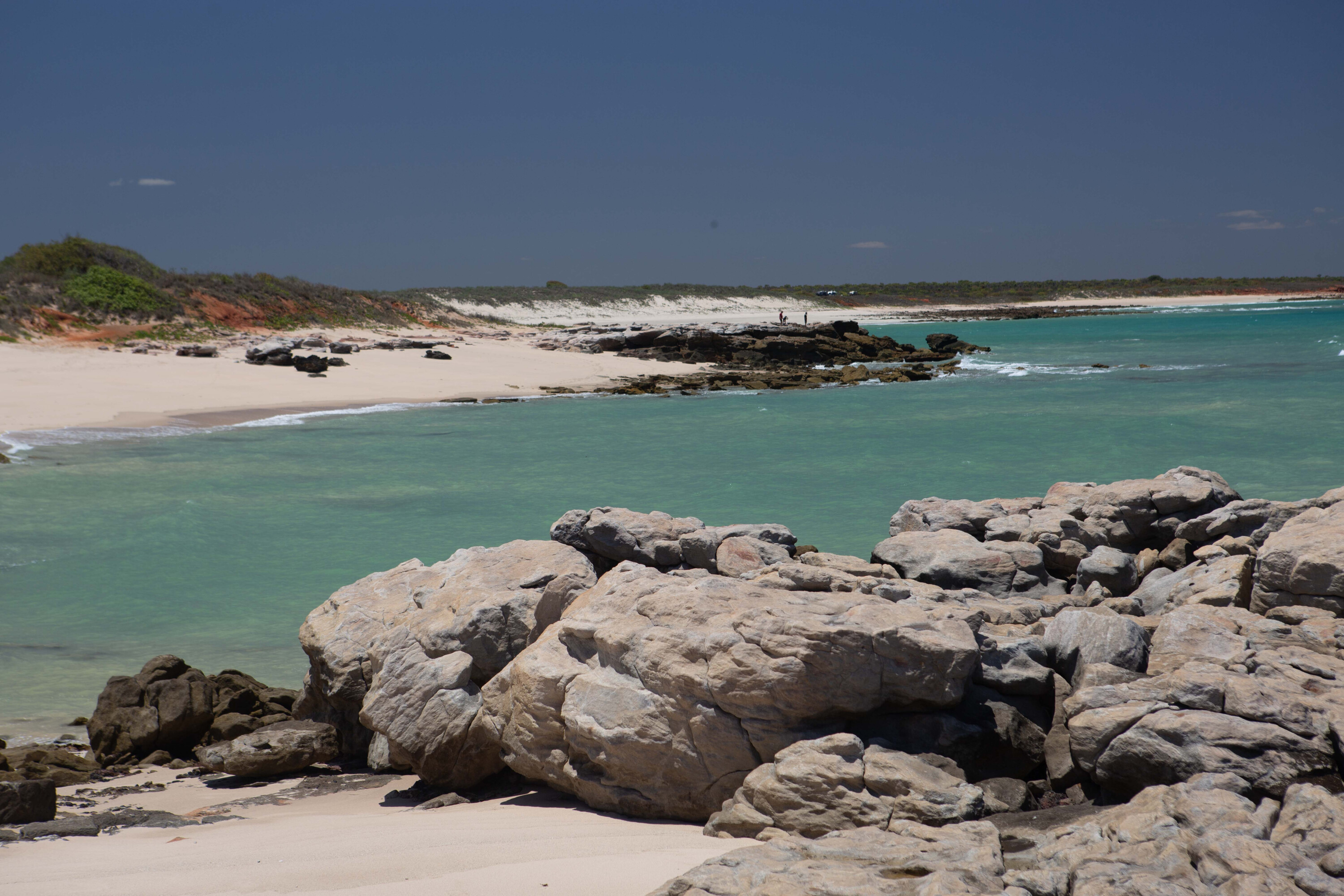
The region provides some of the best beach camping in the country, especially south of Quandong Point (Kardilarkan) where multiple flat sites sit high atop the foredunes with open views across the beach to the Indian Ocean horizon. It’s ideal for compact off-road vans with on-board amenities and there’s easy access to Quandong Beach for walking and exploring the many rocky headlands, rockpools and secluded beaches to the north.
But there’s little shade or wind protection so plan accordingly to make your stay a comfortable one. Campfires are permitted but bring your own wood and ensure your fire is fully extinguished before you leave.
The mouth of Barred Creek is a special place, its turquoise waters cutting deep into the pearly-white sand. It’s also a hidden place and not so easy to find as you zigzag your way through the coastal scrub with little in the way of signage or directions.
1
There’s some idyllic beach camping amongst the foredunes to the south of the creek mouth and some shady trailer sites back inland, but only for a few vehicles. Other sites are scattered along the beach to the south where you’ll likely have it all to yourself. There’s a few places to launch a small boat for some excellent fishing and crabbing in Barred Creek but beware of the big tides, currents and of course crocodiles.
Walmadan was an early 20th century warrior for his people so it’s fitting that just a decade ago, James Price Point (Walmadan) was a battleground to protect its significant, environmental and cultural heritage including monsoonal vine thickets and a breeding bilby population.
The Goolarabooloo custodians backed by some well-organised supporters mounted a successful legal challenge to overturn the WA Environment Minister and Environmental Protection Agency approvals for the Browse LNG Project. It’s a decision that has left the unique area free to explore and enjoy for generations to come.
1
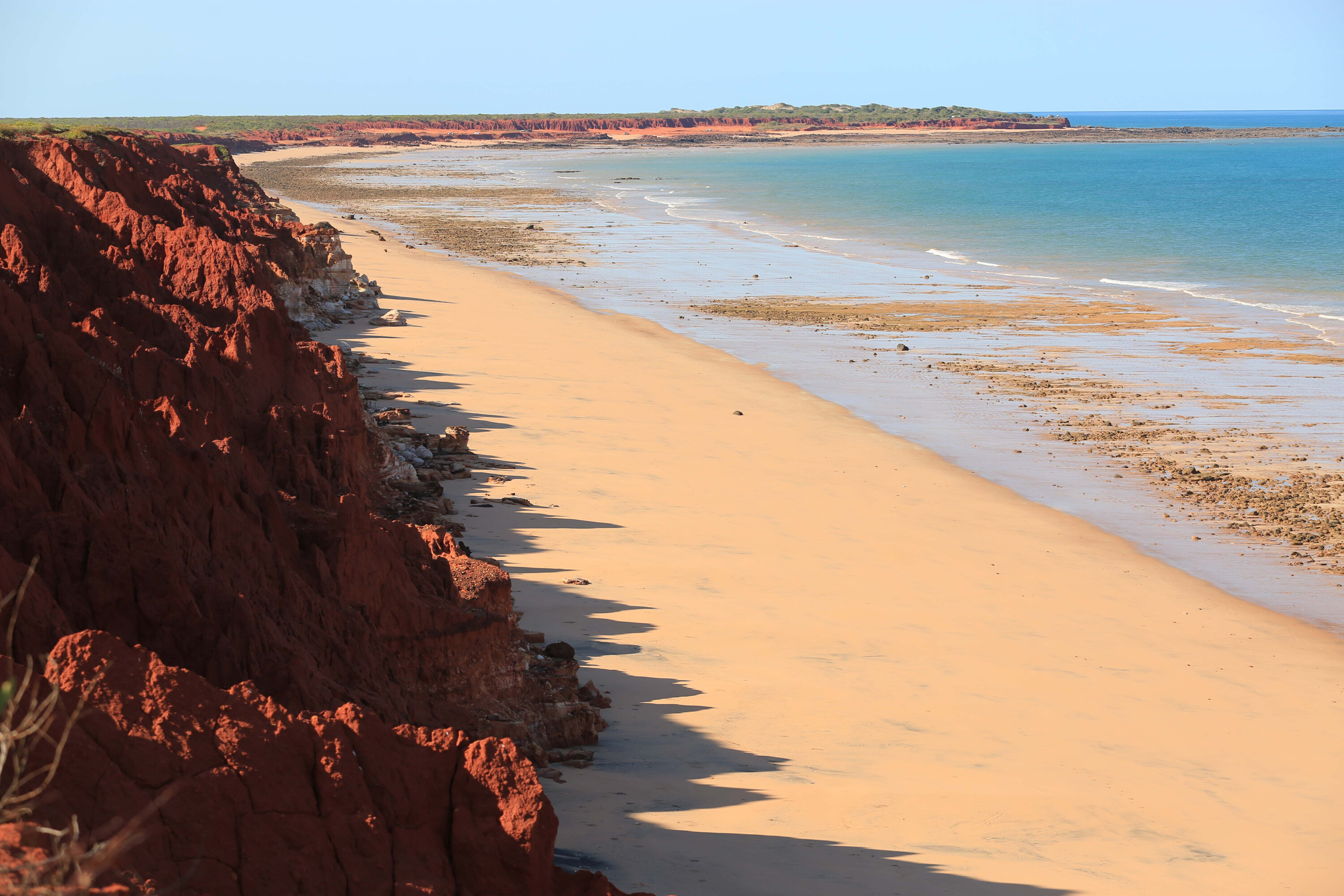
The camping here is very special, and every site has an ocean view. The best sites are atop the red pindan cliffs with their unlimited views and drive-through access, but most will need to find a flat spot along the kilometres of open beach frontage at the base of the cliffs. (There’s easy access via the track just north of the point).
The rocky point is a perfect place to just wander, fish, paint or even write poetry as one day in this timeless paradise blends effortlessly in to the next.
Although exposed and without facilities, the overnight camping sites on the beach rock at Manari Point (Flat Rock) have some epic views of the ocean, and the beach north to Coulomb Point.
1
Coulomb Point (Minarriny) can be accessed via a 6km beach run at low tide or along an easy but often-narrow inland 4×4 track. If following the track, turn west at the makeshift beach shelter called ‘Bonny Doon’ and follow the track to the beach (or in reverse from the beach).
The inshore rocky reefs form some easy-to-access rock pools at low tide and reasonable rock or beach fishing around the point or in a small beach-launched boat. Although permitted, there’s little protection for camping along the dunes, making this area better for day trips from Manari or Quandong Point camping areas.
If you’re keen to venture even farther north, the small estuary at Cape Bertholet is best accessed via the inland track, heading east of the beach shelter, and crosses several dry streams above their tidal reach. It’s also best to take a mate and a second vehicle to manage the risk of getting stuck on the tidal mudflats or in the soft sand.
1
Facilities and access
There are no public toilets, fuel or freshwater facilities and phone coverage is limited so you’ll need to be self-sufficient and take out what you bring in. Campfires and pets are generally permitted but should be well-managed at all times. At this stage camping and access is all free, with a three-night maximum stay in many areas. The best offline maps are found on the Lurujarri Trail signs, so simply take a photo of one and use this to find your way.
I expect that increasing visitor numbers and environmental impacts will eventually trigger a visitor permit system and proactive management, but until then the area is free for all to enjoy.
Top 5 highlights
Lurujarri Dreaming Trail
There’s a rich indigenous connection to country that’s been captured in the Lurujarri Dreaming Trail that in part follows traditional song cycle, camping areas, middens and bush tucker (in season). The trail traces the Dampier Peninsula coastline north for more than 82km from the Broome suburb of Minyirr (Gantheaume Point) with campsites and beach access points from various backroads and tracks for off-roaders. The Goolarabooloo community (the collective term for the Indigenous groups of the peninsula meaning Saltwater People) offers and organises a nine-day hike along the Dreaming Trail in early July. Unfortunately it is booked out for 2023, but applications are open for 2024, email: [email protected]
Staircase to the Moon
If you’re in Broome around the full moon, check out the ‘Staircase to the Moon’, a reflective phenomenon that occurs around two or three days when the full moon rises over the exposed tidal flats of Roebuck Bay. As the name of the optical illusion suggests, it gives the impression of a staircase rising to the moon at moonrise. Don’t forget the Staircase to the Moon Markets [↗] at Town Beach which is held from 4pm to 8pm on selected dates.
Curious creepy crawlies
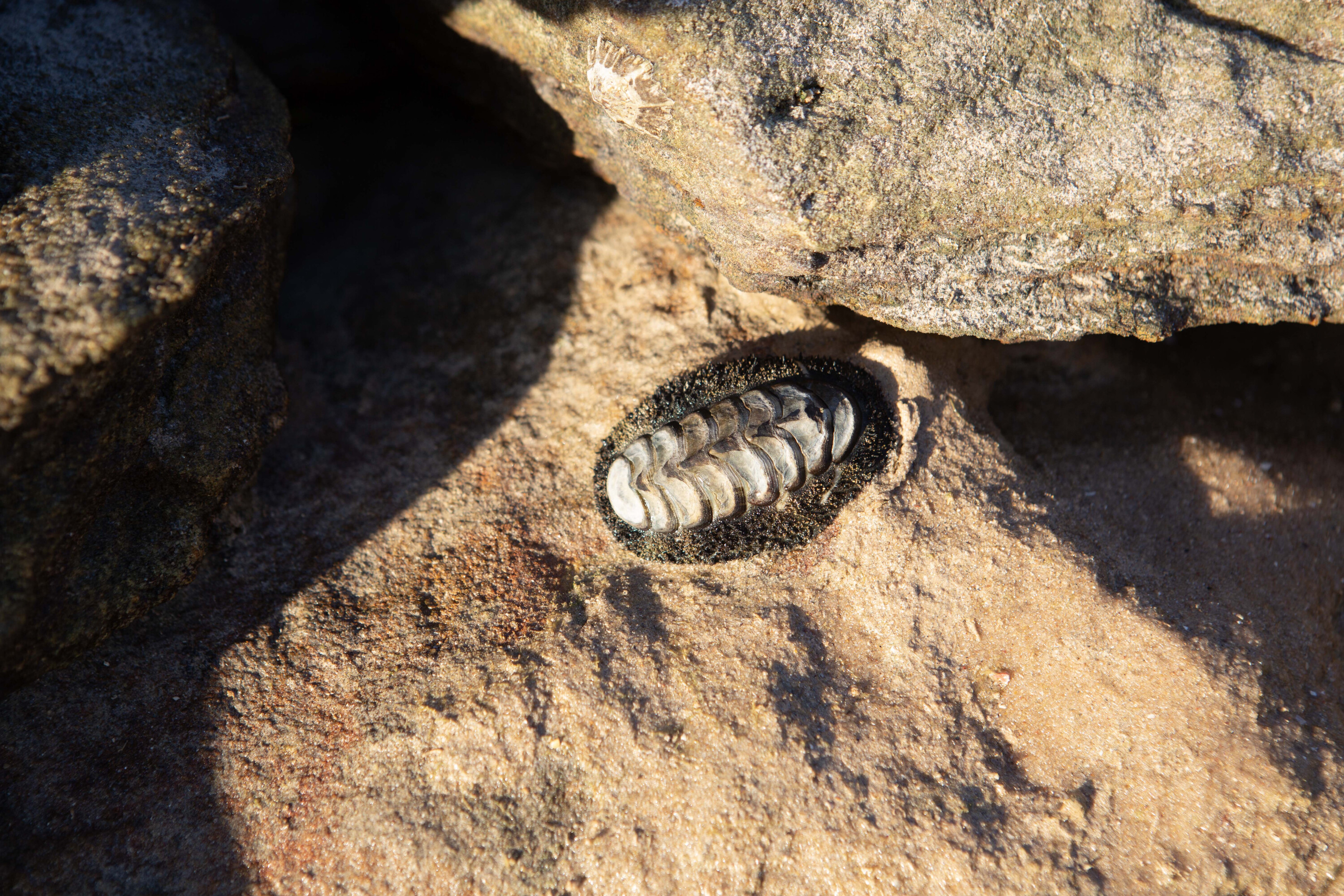
Large and biting insects are common in the tropics as are crocs, sharks and snakes, but I had no idea about the giant shelled ‘ants’ that comb the coastal red dunes around Quandong Point. Literally millions of tiny footprints form a labyrinth of trails, covering every square inch of bare sand. During the day there’s hardly a creature to be found but come dusk there’s a curious army of shelled creepy crawlies parading through your campsite as hermit crabs large and small head out for their nightly forage. Thankfully, they are shy and don’t bite, but are a whole lot of fun, especially for kids.
Barn Hill
Situated 140km south of Broome, Barn Hill Station continues the spectacular sunset serenity of the northern beaches. There’s over a hundred powered and unpowered grassy, flat campsites of various sizes with easy-access and open-air ablutions. Whilst no four-wheel driving is permitted on the beach, that’s the main attraction with more than 10km of pristine coastline to explore and enjoy. The dramatic sandstone formations that line the beach have soaked in the sunset colours since the dawn of time and form a perfect backdrop to the daily sunset spectacle. See www.barnhill.com.au [↗] for bookings and more info.
Willie Creek Pearl Farm
As mentioned, it’s an easy day trip to the north of Broome to the world-class Willie Creek Pearl Farm, and if the tides are right it is possible to drive the 17km back to Broome along open beach from Cape Latreille (Coconut Well) to the vehicle access ramp at Cable Beach Resort. But check the tides first as getting on to the beach and around the rocks at Cape Latreille can be difficult and is not suitable for trailers.
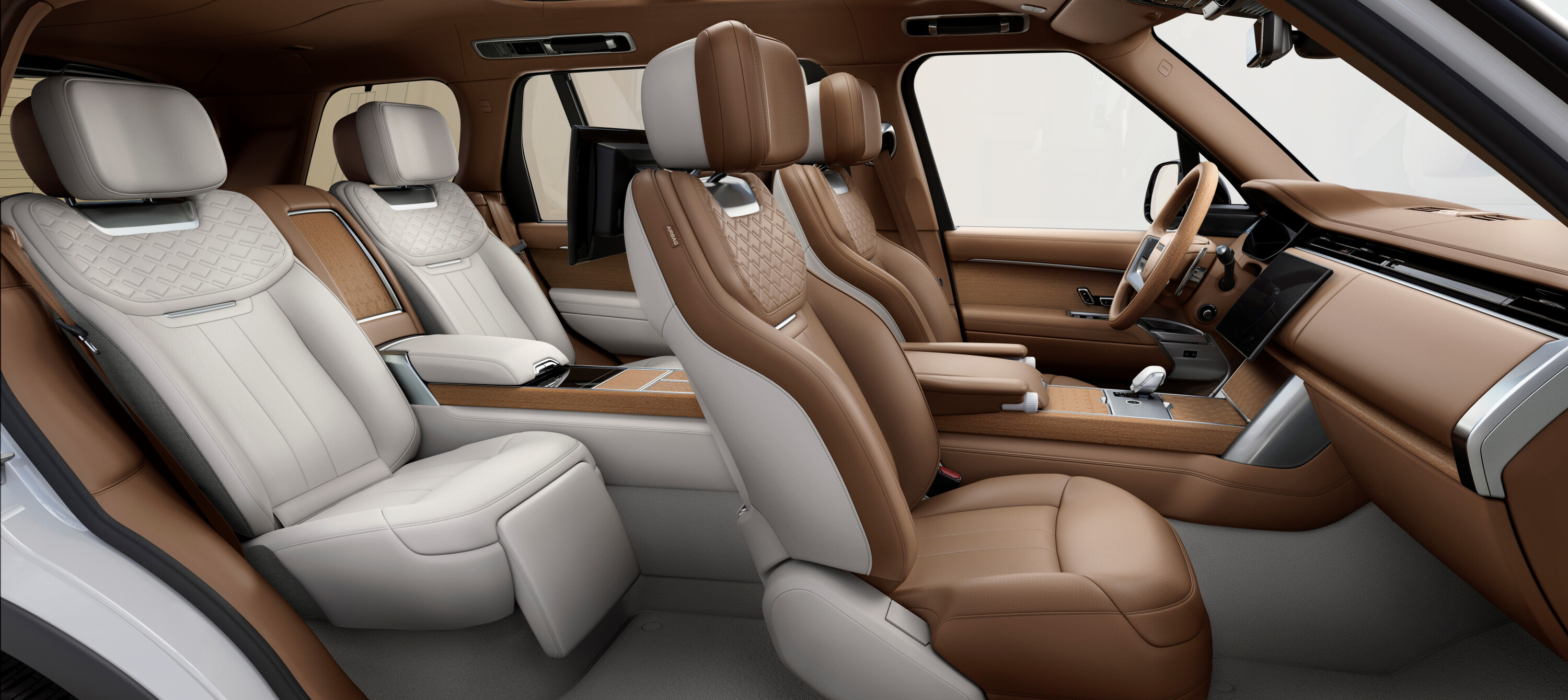
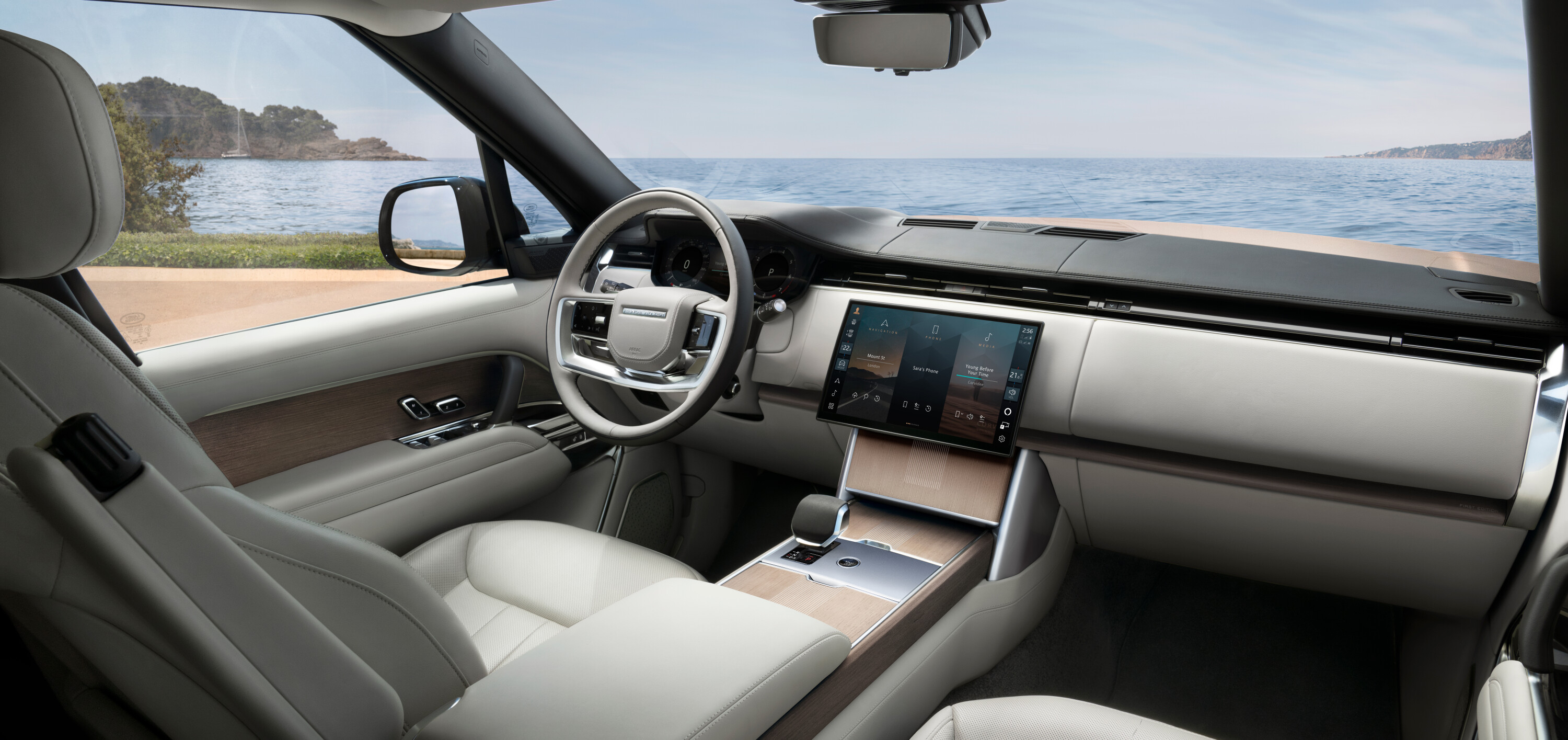
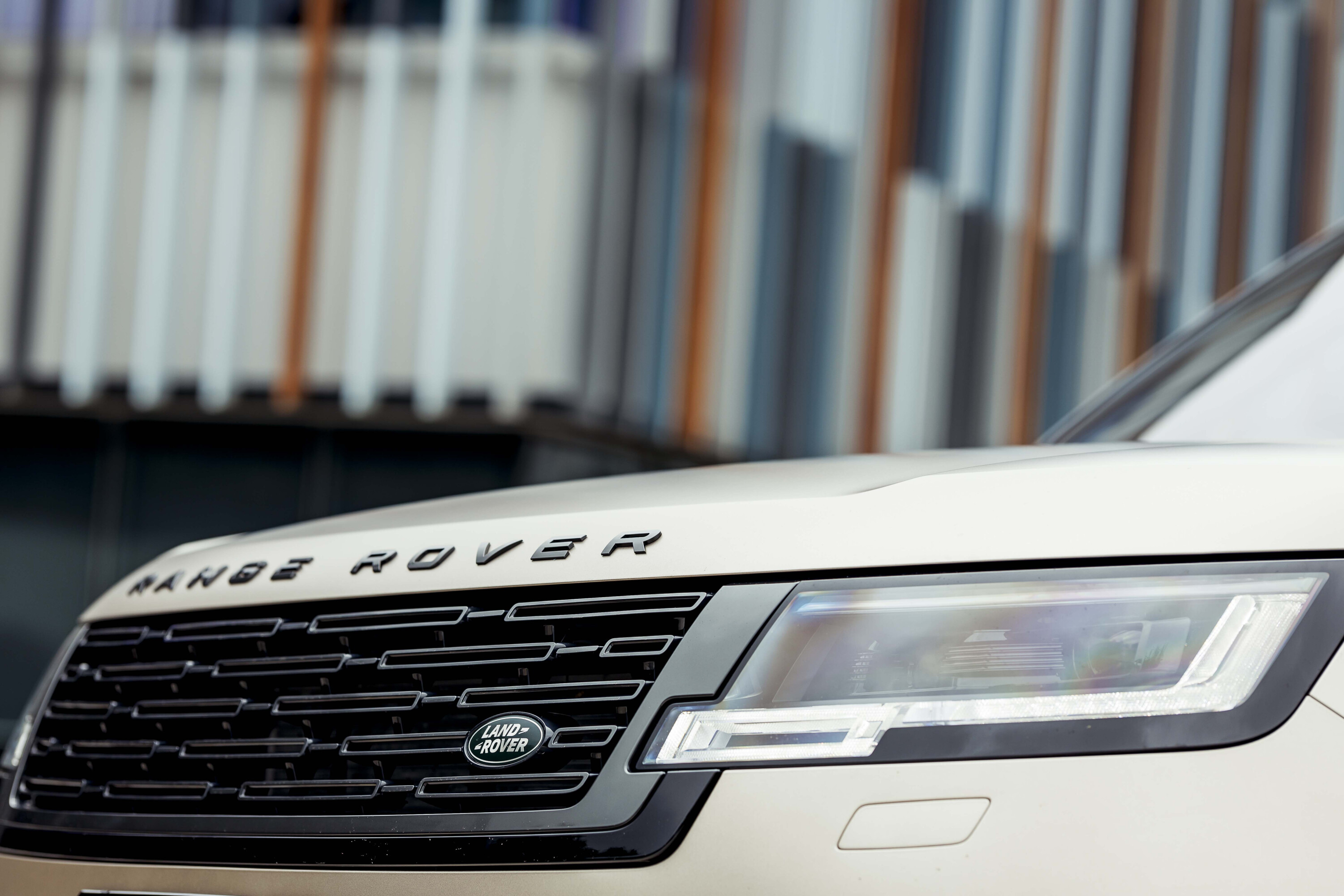
Do you have nightmares about an identical Range Rover getting parking next to yours at your favourite’s valet?
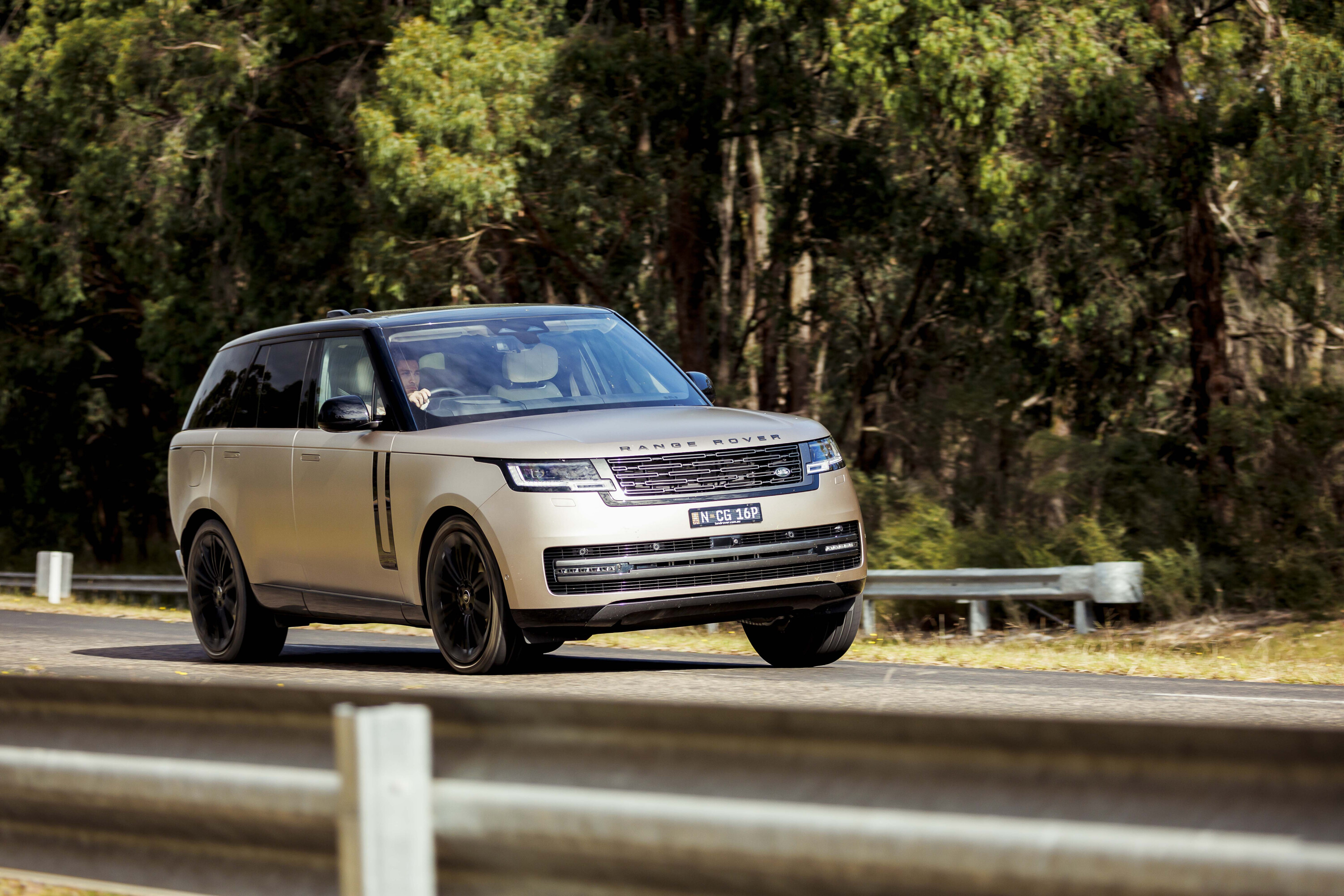
Great news, the storied British luxury icon is ramping up the levels of personalisation and refinement with the services of its SV Bespoke department open for business.
The service is available only to Autobiography and SV variants of the newly refined 2024 Range Rover err… range, which also drops the P400 petrol variant, but replaces it with a new hybridised P460e, and further introduces mild-hybrid technology to its existing twin-turbo V8 vehicles and flagship high-output Range Rover SV.
3
Of course, Land Rover’s classic luxury arm hasn’t skimped on tech and luxury.
The entry-level Range Rover P400 has been retired for the 2024 range. The new petrol entry-point now features a hybrid system with a 160kW electric motor, in tandem with the existing 3.0-litre Ingenium inline-six, for a 338kW total system output.
The existing D350’s mild hybrid 3.0-litre inline-six diesel (producing 258kW) returns for worthy service and, in HSE trim, represents the new entry point into 2024 Range Rover ownership, at $250,350.
1
Mild hybrid (MHEV) technology is newly featured on the twin-turbo 4.4-litre V8s found within the P530 Range Rover variants, and the high-output Range Rover P615 SV, with the flagship now producing 452kW and 750Nm.
Almost all powertrains; diesel D350 and petrol P460e and P530 Range Rovers are available in standard wheelbase HSE and Autobiography trims, plus in standard- and long-wheelbase Autobiography configurations with either five- or seven-seats.
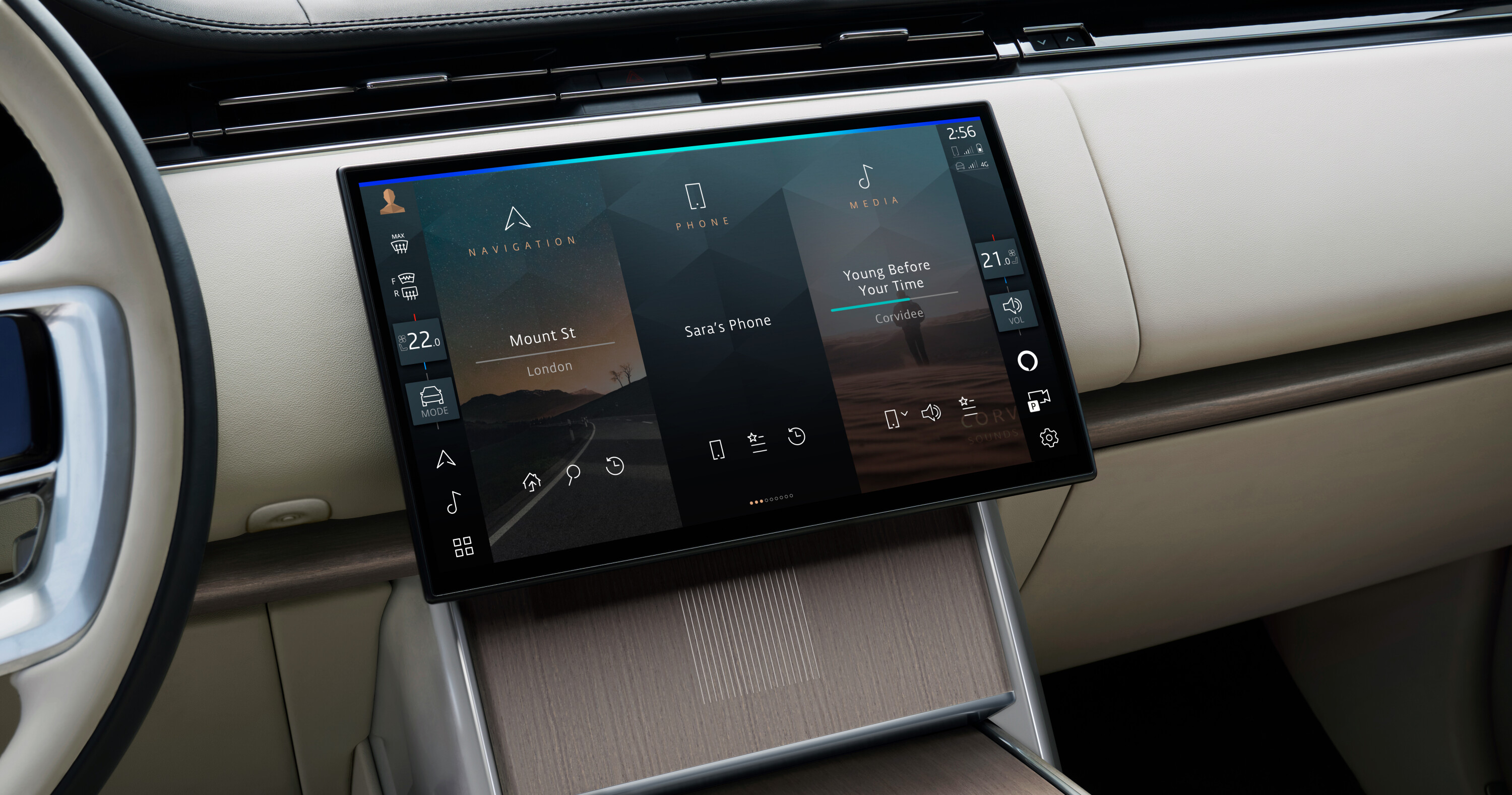
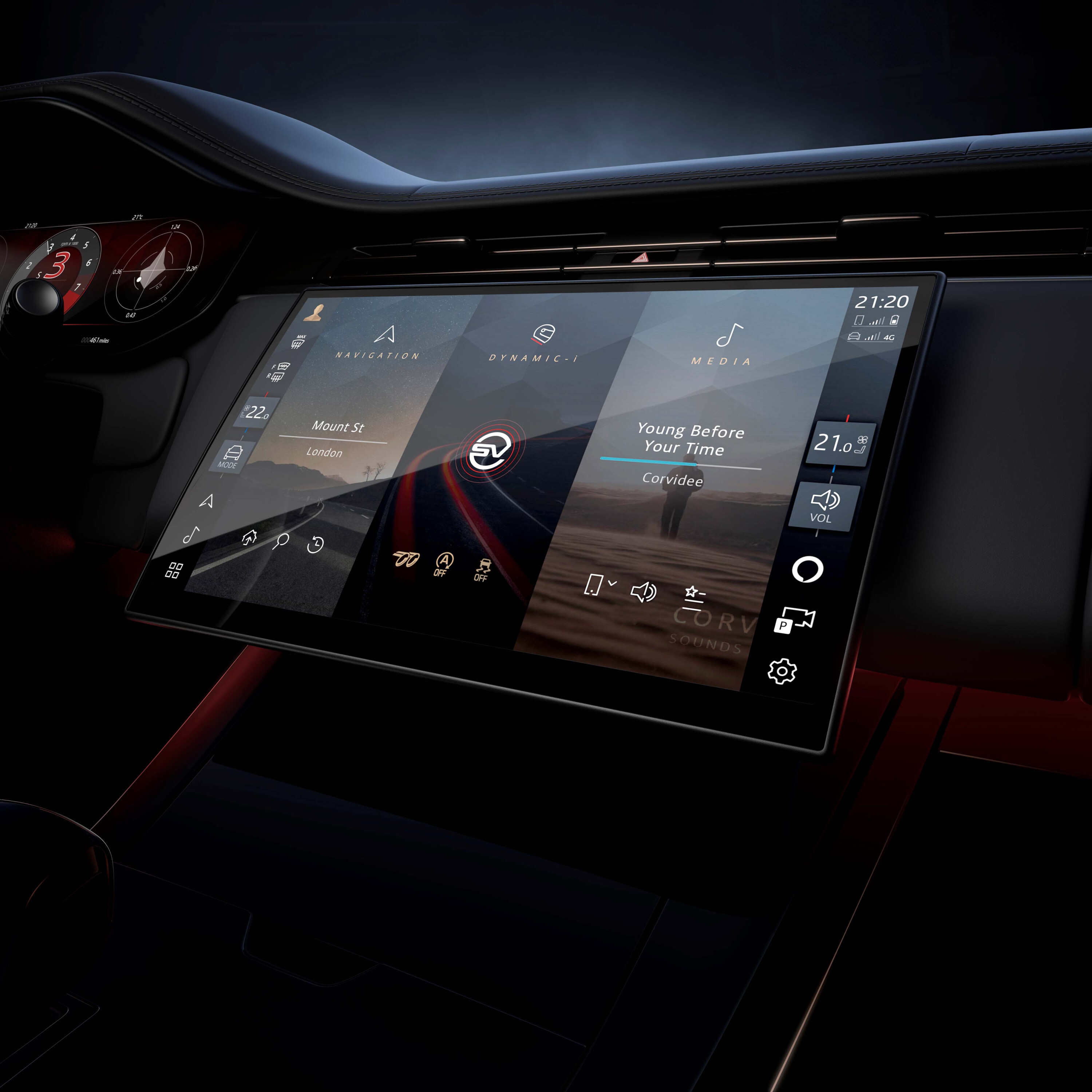
The first model year update for the new-generation Range Rover includes the latest Pivi Pro infotainment system, displaying through a 13.1-inch floating touchscreen.
1
New digital sidebars add hotkeys and shortcuts for frequent functions like audio volume and climate control — with Range Rover claiming around 80 per cent of the infotainment’s tasks can be executed within two taps of the home screen. Haptic feedback is said to aid tactility and ease of use.
In addition, the 2024 Range Rover features an in-house voice control systems as well as Amazon Alexa integration, and is capable of over-the-air updates.
Country Road Assist technology makes its debut for incoming newly updated Range Rover, integrating within the Range Rover’s Adaptive Cruise Control, and uses navigation data to automatically adjust the target speed, considering bends in the road and changes to the speed limit accordingly.
1
Dynamic Response Pro, Range Rover’s electric active roll stabilisation, is adopted from the new Range Rover Sport and employs strut actuators at each corner which can counteract lateral body roll at up to 1400Nm to each axle, helping mid-corner stability and, effectively, making the driver feel as if the car is ‘bending physics’.
The existing Terrain Response 2 system expands with a new Adaptive Off-Road Cruise Control function, allowing the driver to select one of four comfort settings, and maintains a consistent travel speed while the driver can focus solely on the steering path.
A 4WD touring adventure can take you to some of Australia’s most remote and stunning landscapes. With the marine wonderland of the Great Barrier Reef, an epic journey to the tip of Australia, and the red earth and vast blue sky of the brilliant Outback, a North Queensland road-trip more than fits that bill when it comes to the ultimate driving experience.
For 4WD touring families there are certain road trips that are essentials on any bucket-list, and The Savannah Way most definitely qualifies. Traversing three states and territories, as it crosses the entire continent, and over a total distance of 3699km (of which 1099km is in North Queensland), the Savannah Way is unparalleled as a road trip that provides one hell of a life memory.
This epic route is relatively easy, with some side-tracks that suit more experienced four-wheel drivers. In terms of a vehicle, a well set-up 4WD tourer is the go; you don’t want to miss out on exploring any off-road side-tracks.
Five Highlights of North Queensland u2013 Dick Eussen
How do you choose five ‘favourites’ from a destination that offers, literally, hundreds of memorable locations and moments for 4WD tourers? Well, it ain’t easy, but here’s five non-negotiable, must-visit spots for any North Queensland road trip.
The Wet Tropics: The true tropics commence north of Townsville where the Bruce Highway tracks under imposing mountain ranges, pass palm-clad beaches, rainforests and mangroves, part of the Wet Tropics World Heritage Area which encompasses 894,420ha and extends from Townsville to Cooktown in an unbroken line for some 450 km.
It’s a stunning landscape that includes the rainforest-clad coastal ranges (the second highest coastal range in Australia), open forests, woodlands, wetlands, mangrove inlets and swamps.
The Cape York Peninsula: Regarded as one of Australia’s best 4WD trips, ‘The Cape’ sits high on the bucket-list of 4WD travellers. With great camping, fun creek crossings, refreshing swimming holes and the end-goal of reaching Australia’s northernmost point, it’s deserving of its iconic status.
There are numerous ways to get there, to the point where it’s nearly ‘Choose your own adventure’. And it doesn’t matter which way you end up opting for – they’re all equally memorable.
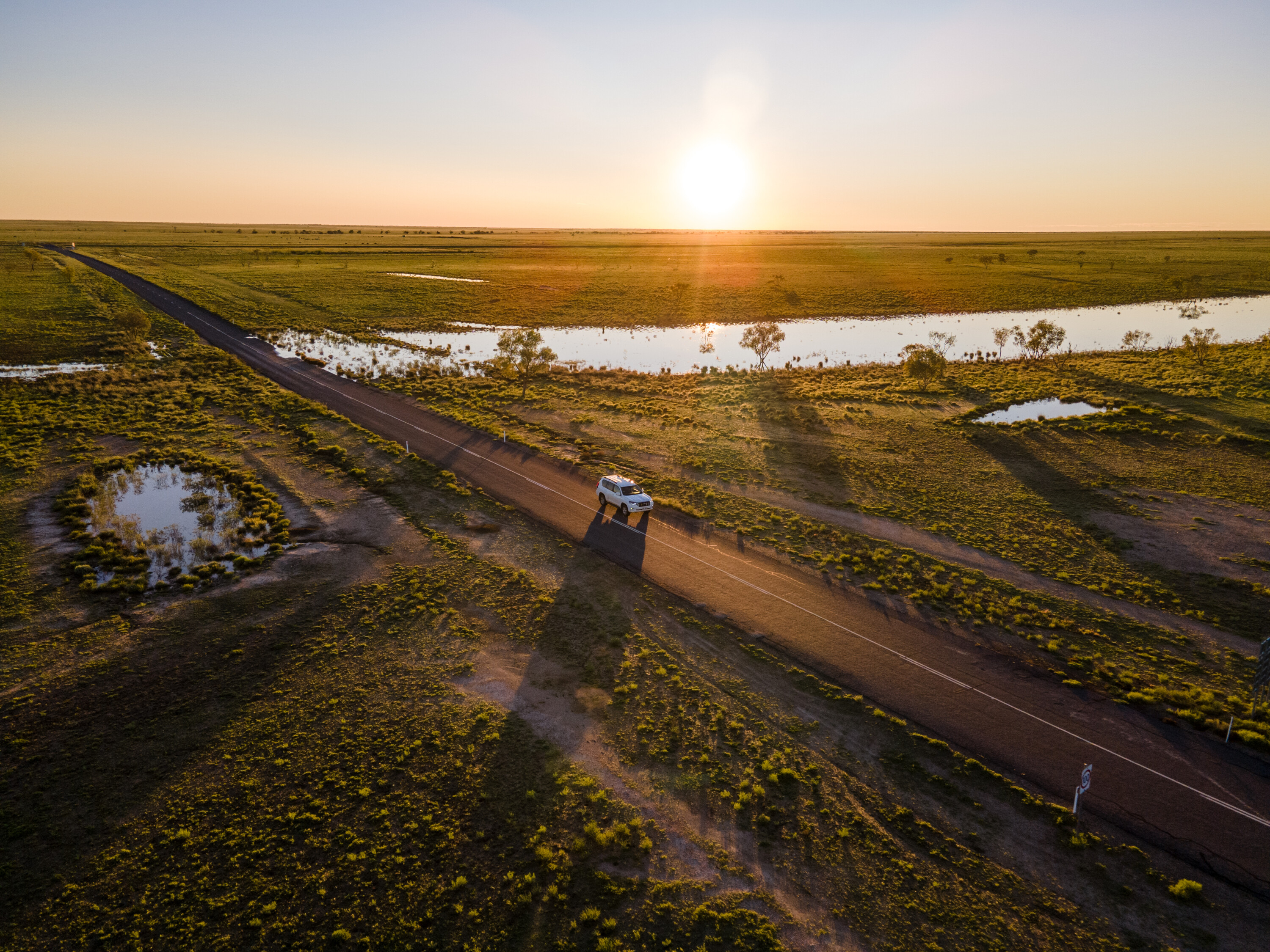
The Gulf Country: It’s huge, and if you venture onto the more remote tracks, the Gulf Country is truly wild and woolly. Starting from the east in Cairns, onto the Savannah Way, visit the Hot Springs at Mount Garnett, Lava Tubes at Mount Surprise, Gobbold Gorge at Forsyth and the Tallaroo Hot Springs near Georgetown and Croydon’s historic town precinct and other attractions en route.
Cloncurry – Mount Isa Region: Ranging north-west from Winton and Boulia are semi-desert hills, gorges, outcrops and escarpments that are beautiful beyond description. Both Cloncurry and the Isa have all you need from accommodation, tours and attractions to food and supplies.
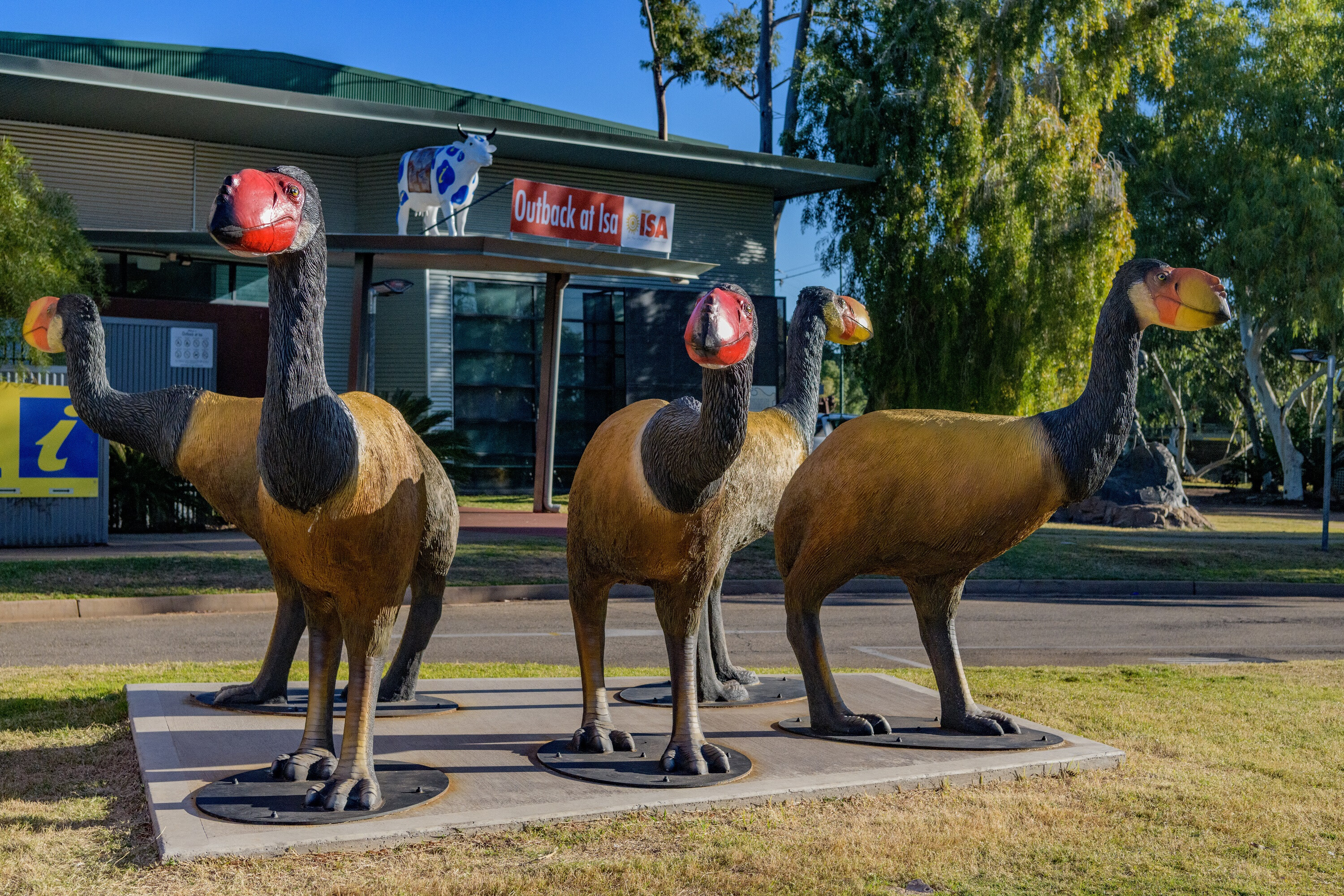
Key attractions include Outback at Isa, Riversleigh Fossil Discovery Centre, and tours of the underground Hard Times Mine. In Cloncurry don’t miss the John Flynn Place Museum, and nearby Chinaman Creek Dam for swimming, fishing and water sports.
Plus, there is the bonus of old mining, and water impoundments, where you can camp for free for weeks on end, while Lake Moondarra at Mount Isa has some of the biggest barramundi anywhere. North is Lake Julius, which has fine fishing for sooty grunter, and an amazing walk into the Impassable Gorge below the dam.
The Starkey Track: This amazing track extends north from Cooktown to the Cape Melville and Rinyirru national parks. It’s the most scenic route on the Cape with patches of rainforest, waterfalls, and abandoned mining settlements.
The track is maintained as far as the Starkey River, there is a boat ramp and camp area on the mouth of the river. Melville N/P has high escarpments, stony ranges and outcrops that are similar to the Black Mountain Range south of Cooktown, apart from the colour as unlike the Black Mountain rocks no lichen covers them.
En route visit lovely Ninian Bay, a hidden cove where camping, fishing and bushwalking are all on offer. The Starkey Track junctions with the Kalpower Track at abandoned Wakooka Station, from there you turn towards Rinyirru and the Musgrave Roadhouse on the PDR.
1
The Wet Tropics: The true tropics commence north of Townsville where the Bruce Highway tracks under imposing mountain ranges, pass palm-clad beaches, rainforests and mangroves, part of the Wet Tropics World Heritage Area which encompasses 894,420ha and extends from Townsville to Cooktown in an unbroken line for some 450 km.
It’s a stunning landscape that includes the rainforest-clad coastal ranges (the second highest coastal range in Australia), open forests, woodlands, wetlands, mangrove inlets and swamps.
The Cape York Peninsula: Regarded as one of Australia’s best 4WD trips, ‘The Cape’ sits high on the bucket-list of 4WD travellers. With great camping, fun creek crossings, refreshing swimming holes and the end-goal of reaching Australia’s northernmost point, it’s deserving of its iconic status.
There are numerous ways to get there, to the point where it’s nearly ‘Choose your own adventure’. And it doesn’t matter which way you end up opting for – they’re all equally memorable.
The Gulf Country: It’s huge, and if you venture onto the more remote tracks, the Gulf Country is truly wild and woolly. Starting from the east in Cairns, onto the Savannah Way, visit the Hot Springs at Mount Garnett, Lava Tubes at Mount Surprise, Gobbold Gorge at Forsyth and the Tallaroo Hot Springs near Georgetown and Croydon’s historic town precinct and other attractions en route.
Cloncurry – Mount Isa Region: Ranging north-west from Winton and Boulia are semi-desert hills, gorges, outcrops and escarpments that are beautiful beyond description. Both Cloncurry and the Isa have all you need from accommodation, tours and attractions to food and supplies.
Key attractions include Outback at Isa, Riversleigh Fossil Discovery Centre, and tours of the underground Hard Times Mine. In Cloncurry don’t miss the John Flynn Place Museum, and nearby Chinaman Creek Dam for swimming, fishing and water sports.
Plus, there is the bonus of old mining, and water impoundments, where you can camp for free for weeks on end, while Lake Moondarra at Mount Isa has some of the biggest barramundi anywhere. North is Lake Julius, which has fine fishing for sooty grunter, and an amazing walk into the Impassable Gorge below the dam.
The Starkey Track: This amazing track extends north from Cooktown to the Cape Melville and Rinyirru national parks. It’s the most scenic route on the Cape with patches of rainforest, waterfalls, and abandoned mining settlements.
The track is maintained as far as the Starkey River, there is a boat ramp and camp area on the mouth of the river. Melville N/P has high escarpments, stony ranges and outcrops that are similar to the Black Mountain Range south of Cooktown, apart from the colour as unlike the Black Mountain rocks no lichen covers them.
En route visit lovely Ninian Bay, a hidden cove where camping, fishing and bushwalking are all on offer. The Starkey Track junctions with the Kalpower Track at abandoned Wakooka Station, from there you turn towards Rinyirru and the Musgrave Roadhouse on the PDR.
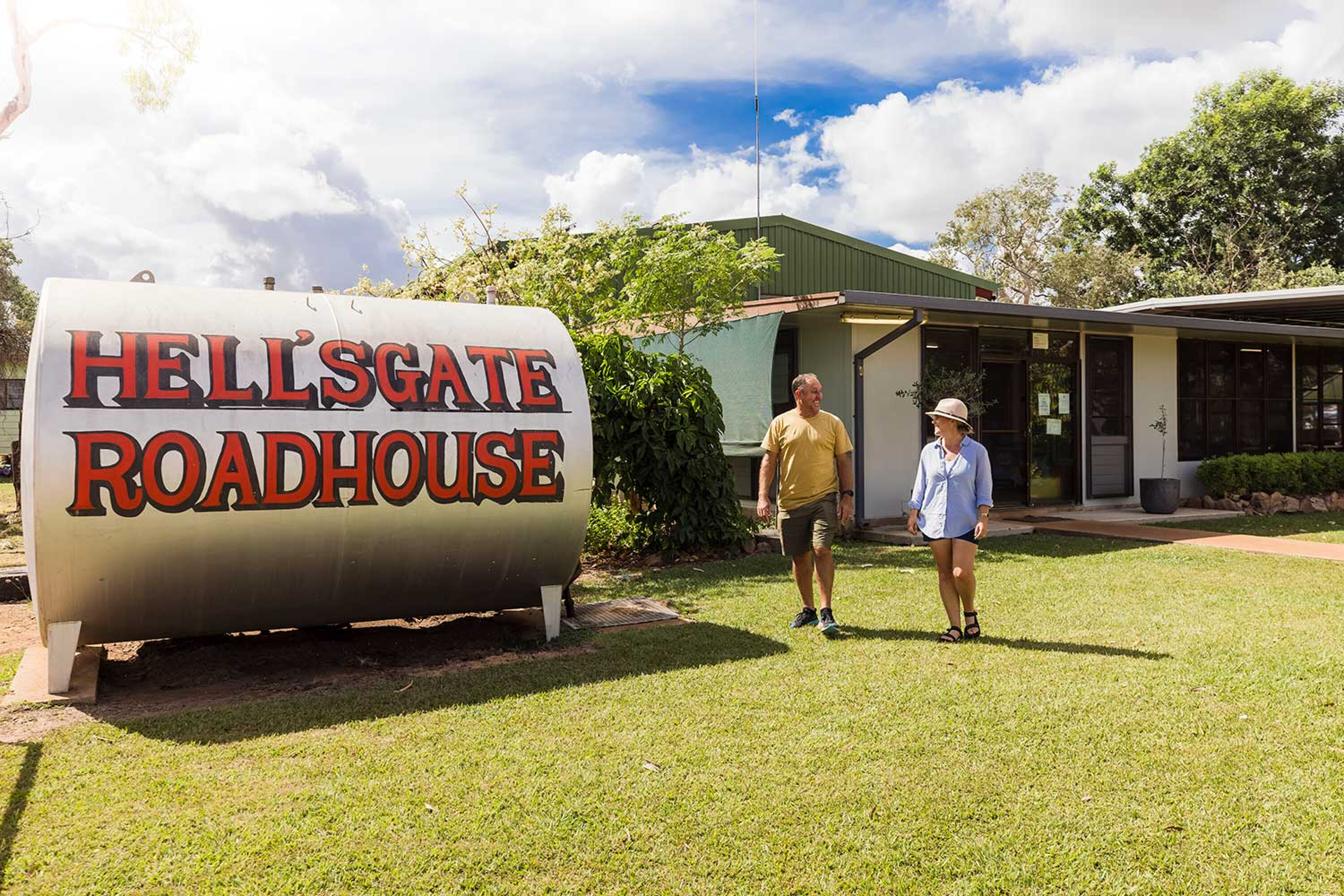
Perhaps ironically, it is at Hell’s Gate Roadhouse, just east of the NT/QLD border, that the North Queensland leg of the Savannah Way begins. Belying its name, this roadhouse offers top nosh and brilliant hospitality – an ideal way to start the journey east to Cairns.
From the vast grassy plains of the west, through rugged gorge country, and then on to the volcanic landscape near the Atherton Tablelands, before dropping down to the coast, this journey takes you and your crew through a wide variety of landscapes.
Among the many highlights of this adventure, Boodjamulla (Lawn Hill) National Park and nearby Riversleigh (Miyumba) Fossil Fields are stand-outs and are part of your first stop, reached via an unsealed road south from Hell’s Gate.
The sandstone gorges in the national park are fed by freshwater springs (and rainfall) and make for brilliant water-borne exploration – something you would never think possible in the outback. Camp at Lawn Hill Gorge Camping Area (or Wugudaji-Adel’s Grove, 10km away, where you can opt for a campsite to set up the tent, or cabins). From here you can also join guided tours to the gorge (and/or the fossil fields) for a few days and explore it by canoe, kayak or SUP.
For touring families, time spent at the fossil fields is a no-brainer. The site provides a pathway back in time (around 25 million years), with the fields’ high concentration of mammal fossils, including that of a small relation to the Tassie Tiger, a carnivorous giant rat-kangaroo and – yep, it’s true – a tree-climbing crocodile.
For excitement of a different kind the following day, the trip to Burketown will reward both anglers (it’s considered Australia’s barramundi capital) and birdwatchers, with the town bordered by both wetlands and grasslands, rich with Aussie birdlife.
1
Be sure to throw a line in for that elusive barra and, if you’re there in spring, get up early to witness the famous morning glory clouds, a low-lying cloud formation that, literally, rolls into town from the coast. Burketown deserves at least a few days, for not only those activities, but a few others, such as hearing the Gangalidda People’s Dreamtime stories interpreted through star-gazing with Yagurli Tours.
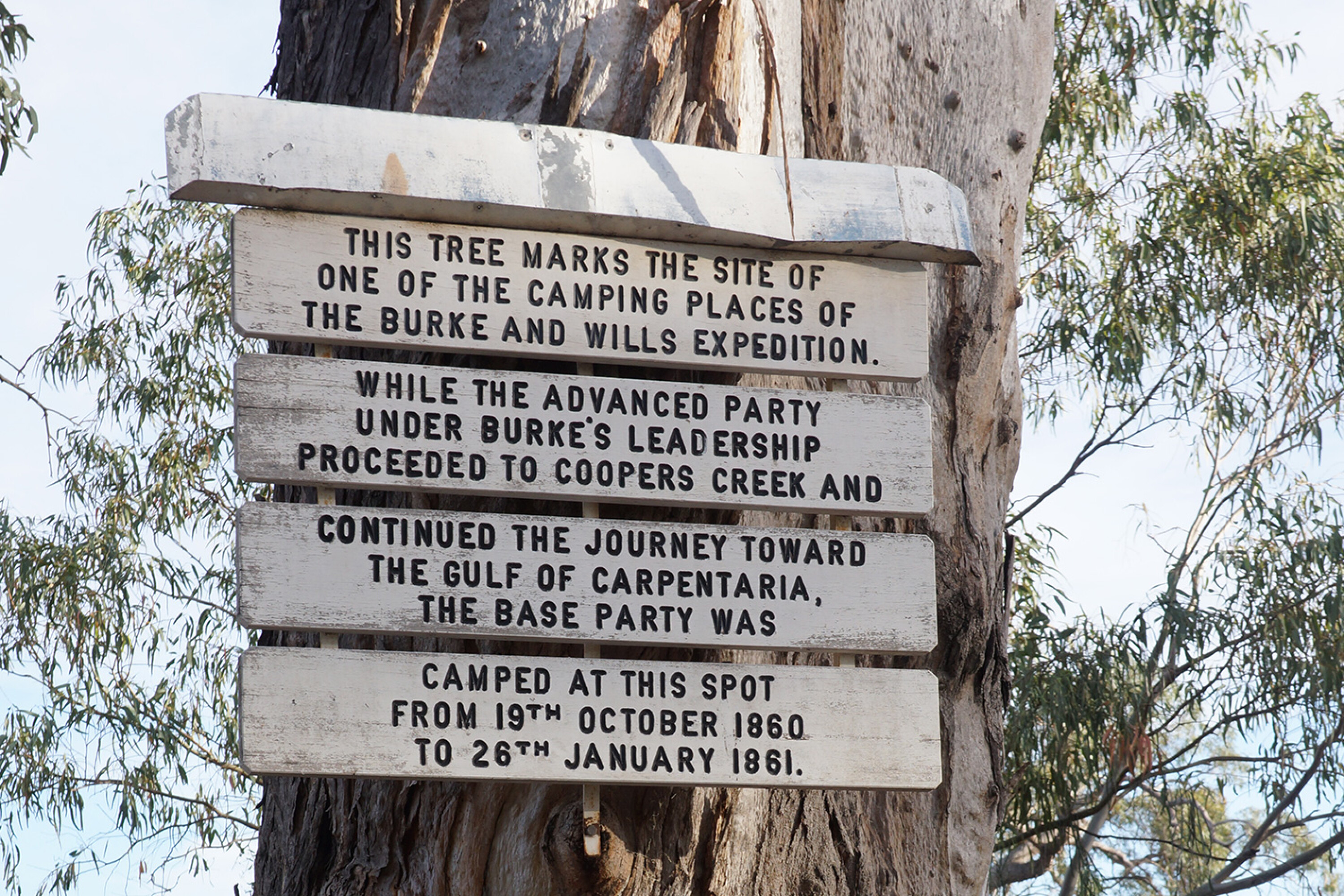
If you fancy getting up close and personal with a gigantic saltwater crocodile, head to Normanton, around two hours from Burketown. Here, you’ll find a replica of what is claimed to be the largest croc ever captured, as well as some cracking local pubs. For history buffs, a monument to Camp 119, the last campsite of the 1861 north-south Burke and Wills expedition, before they reached the Gulf of Carpentaria, can be found near the banks of the Little Bynoe River.
And that croc? Well, at 8.63 metres in length ‘Krys’ (named after Krystina Pawlowski, the woman who shot it, in 1957.) is immortalised as a life-size statue in the middle of town – and yeah, it makes for a cracking selfie.
For lovers of train travel, be sure to schedule in an extra day to jump on board The Gulflander and enjoy the train guides’ stories of the gold rush in nearby Croydon, before returning via coach.
Georgetown is famous for its fossicking opportunities and is only an hour away from Croydon. It’s a great stop-over before reaching one of the Savannah Way’s other natural highlights: Cobbold Gorge.
Join a guided boat tour at the gorge or grab a paddle and head out on a stand-up paddleboard to get up close to this natural wonder. There’s also a helicopter flight over the gorge if you so wish. Spending a day or two here won’t disappoint. From the gorge, heading northward takes you to Talaroo Hot Springs and then, the following day, you reach the amazing Undara Volcanic National Park.
The drive to Undara Experience is easy, and this awesome bush accommodation site makes a brilliant base-camp for a few days’ exploration of the nearby Undara Lava Tubes, the world’s longest lava flows, estimated to be roughly 190,000 years old. The national park has some great short walks (a sunset walk around Kalkani Crater is a cracker) and going down into the tubes on a guided tour is brilliant.
More hot springs follow as you drive the well-graded dirt roads eastward from Undara, with Innot Hot Springs a nice stop-over before the landscape changes again as you move closer to Atherton Tablelands. For those with time, a side-trip to Chillagoe-Mungana Caves National Park allows you to explore some of these deep caves on a ranger-guided or self-guided tour.
The green, rolling hills of the Atherton Tablelands, combined with a proliferation of waterfalls, provide the transformation from outback to hinterland as you arrive at Atherton itself. The Waterfall Circuit is a must-do, starting from the town itself, or you can enjoy this region’s sumptuous food trail. For the more active, there are short walks to waterfalls or, for two-wheel fans, the famous Atherton Forest Mountain Bike Park, with trails for all rider levels.
A couple of days (or even a week) in Atherton is a nice way to enjoy this next-to-last stop on the Savannah Way, with Cairns, just ‘down the hill’ from Atherton, and the gateway to the Great Barrier Reef, the end-point of this road-trip epic.
It’s well worth noting that a few days spent in Cairns itself is fun and rewarding. The Cairns Aquarium is fantastic, with 71 exhibits that feature 10 different ecosystems. You can also dive with sharks here or check out the Aquarium’s turtle hospital.
Cairns is also a foody’s delight, with many seafood restaurants and the must-visit Rusty’s Markets, where you’ll find plenty of local produce. Add in a morning run along the Cairns Esplanande, or some short walks through the Cairns Botanic Gardens and you can easily while away a few days here. Of course, also here you can join trips to the reef or nearby islands, such as Green and Fitzroy.
The Savannah Way rightly holds a place as one of Australia’s premier road trips and this North Queensland leg definitely contains enough natural highlights and enjoyable driving to keep you ‘up north’ for far longer than you may have originally planned – and that’s gotta be a good thing.
North Queensland’s other big-bopper road trip is the mighty Overlanders Way, travelling 1097km from the coastal city of Townsville, and the Great Barrier Reef, through gold mining towns, rugged gorges, dinosaur country, and then into the red dirt and blue skies of spectacular Outback Queensland.
This big road trip is long but a relatively easy drive, best suited to a prepared 4WD. It is best kicked off with a day in Townsville itself (check out the Reef or visit Reef HQ Aquarium and its Turtle Hospital) before heading to Charters Towers, one of Australia’s most famous old gold mining cities, where you can tag along on a Ghosts of Gold Heritage Tour or check out the city’s historic centre and goldrush-era buildings.
Dinosaur nuts will love Hughenden, your next stop, where close to 3000 dinosaur and marine fossils (this area was once an inland sea) have been found and where the excellent Flinders Discovery Centre is located. You can also check out a life-size replica of the first complete dino skeleton found in Australia.
1
An hour’s easy drive north of Hughenden, on the way to Richmond (another dinosaur hot-spot and regarded as Australia’s ‘dinosaur capital’), make sure you stop and check out Porcupine Gorge National Park. This park’s creeks, huge cliffs and lush vegetation are an incredible contrast to the region’s much drier surrounding landscape.
Once at Richmond, head straight to Kronosaurus Korner, where you will find more than 1150 fossil specimens. You can also do some fossicking at the fossil site. For those visiting in warmer weather, Lake Fred Tritton is worth a stop-over (or paddle spot; if you have a canoe). If you’re keen, throw a line in and you may snag a barra for lunch (the lake has free barbecue facilities).
The westward journey continues, firstly to Julia Creek (check out the ‘At The Creek’ visitor’s centre, you will get the chance to view the very rare Julia Creek dunnart in a cool nocturnal viewing area), and then on to the birthplace of the famous Royal Flying Doctor Service (RFDS) where the Reverend John Flynn first came up with the RFDS concept. The museum and art gallery dedicated to Flynn are both found in Cloncurry.
More pioneer history can be found at the town’s Mary Kathleen Memorial Park & Museum, which is home to a keepsake (a drink bottle) of the explorer who named the town – Robert O’Hara Burke – as well as providing plenty of info for visitors about the abandoned Mary Kathleen uranium mine.
The leg from Cloncurry to Mount Isa is scenic, taking you through the rugged mountains of the Selwyn Range, where gold and copper were discovered, back in the late 1880s. Make sure you take the dirt road side-track to Fountain Springs waterhole along the way. From here, there is the 4WD-only Ballara Mining Heritage Trail. It’s a more challenging drive, but a well set-up 4WD will provide the chance to check out a couple of old mine towns along it.
2
Mount Isa is Outback Queensland’s only city, with a wide range of facilities, restaurants/cafes and things to explore. To that end, you’ll find plenty of memorable experiences here, such as a tour of the underground Hard Times Mine, located in the Outback at Isa Visitor Centre. Here, you’ll drop down 22 metres below the ground to see what a miner’s life was like.
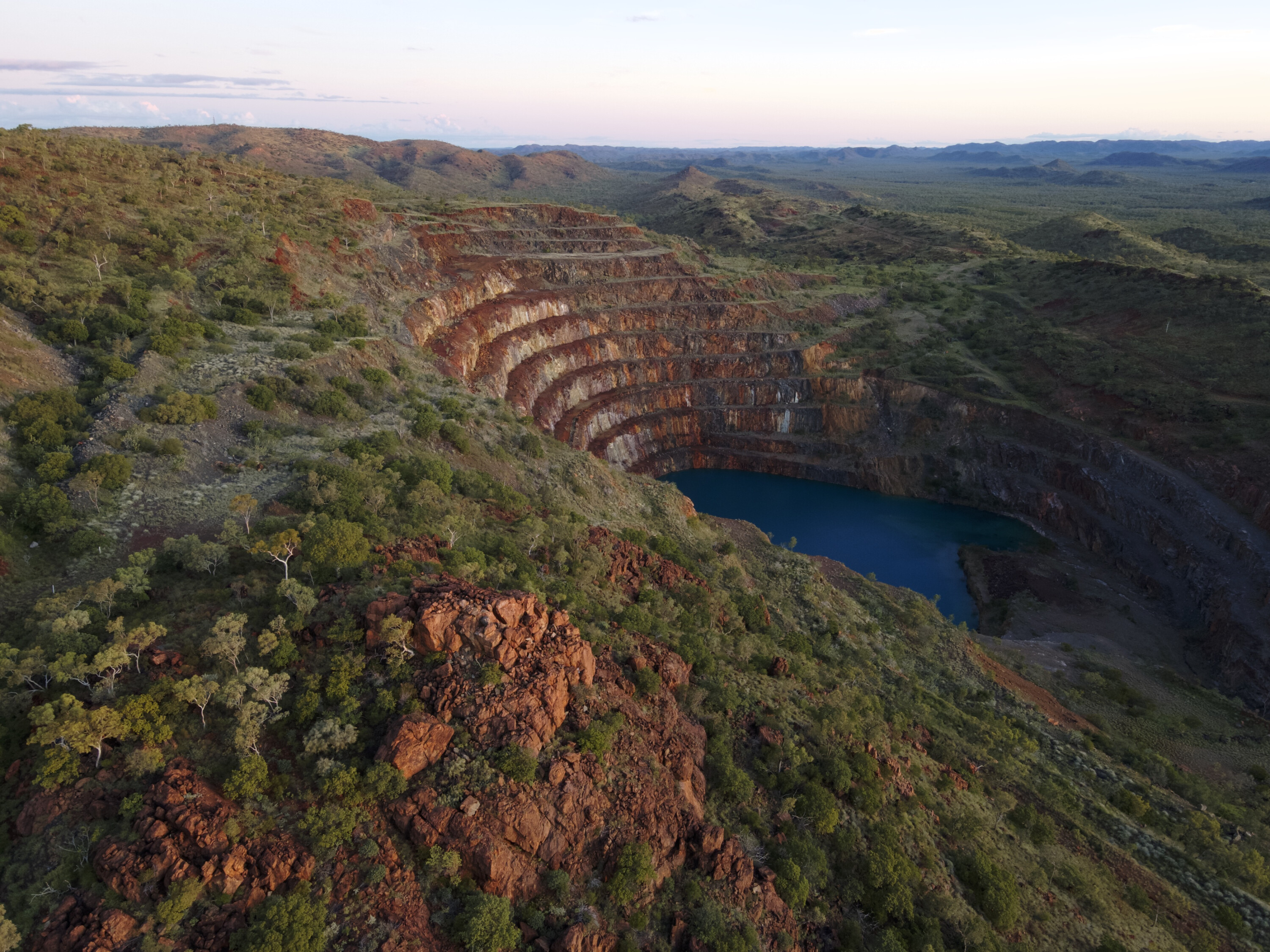
For those ever-keen dinosaur hunters, the nearby Riversleigh Fossil Centre (also at Outback at Isa) showcases some of the fossils dug up at the nearby fossil fields. For 4WD tourers, there are a number of tracks to explore just out of town, too, with the trek to the old town of Mary Kathleen a great half-day jaunt and allows you to explore not only the historic town, but the old mine pit as well.
Australia’s School of the Air has a base at Isa, so duck in to check out how kids in remote areas and properties learn – it’s impressive. Other highlights for history buffs include the World War II underground hospital and also the last surviving ‘tent house’. This abode was built for miners back in 1937 and has been preserved to show the style of accommodation those early workers resided in. It’s great.
The mighty Overlanders Way ends 188 kilometres west of Mount Isa, at Camooweal, known as the ‘Gateway to the NT/Queensland’. There is a Drovers’ Camp Museum here, which is a great source of information about the town’s droving history, while just out of town is the amazing Camooweal Caves National Park, with its many sink-holes and caves estimated to be up to 500 million years old. For keen ‘spelunkers’ (that’s ‘cavers’ for the rest of us), it’s a must-explore destination. Uniquely, now that Camooweal is considered a suburb of Mount Isa, the Barkly Highway that links the two is claimed to be the world’s longest main street.
For fans of Australia’s unique wildlife, North Queensland is the ultimate destination for a wild driving adventure. Whether it’s a koala, wallaby, platypus, saltwater croc, the majestic brolga or the towering cassowary, you will be more than spoilt for choice on this 300km sojourn from Ayr to Hinchinbrook Island.
This route is suitable for all vehicles, and is an easy, relaxed drive, allowing you to take in the gobsmacking surroundings as you explore the region.
The townships of Ayr and Home Hill are located in agricultural country, aptly titled the sugar cane capital of Australia, and it’s this food bowl of fresh fruit, vegetables and sugarcane fields that makes it the ideal place to stock up on fresh produce for this road trip! This area is part of the Burdekin River delta, with the wetlands home to 44 mammal species, 250 bird species and 51 species of reptiles. At the 1600-hectare Cromarty Wetlands, you will spot magpie geese, brolga, and more.
1
For advanced divers, the SS Yongala, at Alva Beach, Ayr, is a no-brainer. Touted as one of the world’s best diving sites, this shipwreck dive will have you swimming amongst mega marine fauna including giant trevally, Queensland groper, moray eel, and a variety of ray and turtle species. If you want to stay dry, a visit to the Ayr Nature Display will have you up close and personal to creatures of a very different scale – with a mosaic of critters on show – including beetles, butterflies and other unique North Queensland crawlies.
It’s only a bit more than an hour’s drive north from Ayr to Townsville where, again, you’ll be overwhelmed by the variety of native wildlife, conservation parks and surrounding natural environments, offering no shortage of potential wildlife encounters. The city’s famous Town Common Conservation Park, and Cape Pallarenda Conservation Park are criss-crossed with walking tracks and mountain bike trails that provide (seasonal) viewing of brolga flocks, magpie geese, wallabies and more.
While these places are abundant in all manner of quintessential native animals, a sure way to meet Australian fauna is at the iconic Billabong Sanctuary, a wildlife park home to creatures big and small including koalas, dingoes, wombats, cassowaries and even mainland Queensland’s largest captive saltwater croc – Krakatoa (5.1m).
1
Jump aboard a ferry to nearby Magnetic Island National Park where, again, you’ll have no trouble spotting native wildlife, from photogenic rock wallabies to the largest colony of wild koalas in Australia’s north, or (from May to August) experience the butterfly walk – a flock of migratory Blue Tiger butterflies – along a pretty paperbark forest walk in Horseshoe Bay.
The National Park island is worth at least a couple of days of exploration, with 23 beaches and bays and the chance to go snorkelling along fringing coral reef (there are two self-guided snorkel trails, and a number of operators offering guided snorkel tours), and a direct launchpad to the central section of the Great Barrier Reef, before chilling out at sunset on the beach (or a sailboat).
The island is not a 4WD destination as such, but you will need your tourer for the short track out to West Point, thanks to a couple of creek crossings. It’s worth the short diversion, though, both for the drive and the uninterrupted sunset views.
For a truly unique North Queensland wildlife experience (it’s hard to find just one here; there are so many to choose from) you can’t go past a trip out to Hinchinbrook Island, north of Townsville, and off the coast of Ingham. And that ‘truly unique’ experience?
Well, that’d be the trip by boat (or sea kayak) across to the island; travelling through the Hinchinbrook Channel, there’s a chance of spotting the very shy dugong feeding among the channel’s sea grass beds, or fish to catch the almighty barramundi. Matched with spotting one of the island’s other, more prolific native residents: the beautiful cassowary, this National Park island – the biggest in the Great Barrier Reef Marine Park is a special place.
Partnered with the mainland counterpart in Girringun National Park – home to Australia’s tallest waterfall – the Hinchinbrook region is a nature-lover (and wildlife tracker) paradise.
For a relatively short road-trip, this wildlife-focused journey has to rank as one of the world’s best, for not only the pleasant drive experience itself, but the sheer volume of wildlife and birdlife you have the chance to observe during it.
The Whitsundays region is the epitome of wild natural beauty, with the 74 island wonders being an iconic bucket list experience. However, look past the islands’ pristine beaches and fringing Great Barrier Reef, and you will find The Whitsundays mainland. An equally amazing part of this region, and one ripe for an exploratory road trip that, thanks to the easy access via sealed roads to most attractions, means your 4WD can take it easy. This is how you do it…
The Whitsundays hinterland is home to Conway National Park and the beautiful Cedar Creek Falls, our start-point for this 194km road trip, accessed via Conway and Saltwater Creek roads. If you’re at the waterfall in the wet season, you’ll see it in full flow, but even when not, the year-round swimming hole at its base is worth the drive.
You can even explore the smaller rock pools higher up, thanks to tracks that lead to the top of the waterfall. It’s an invigorating way to start a road trip.
1
When it comes to locals’ favourites, it’s hard to beat the gorgeous Hydeaway Bay [↗] and surrounding beaches, 45 minutes’ drive north of Airlie Beach. The 2km beach has a number of access points and is perfect for strolling along the sand at sunset, checking out the rocky outcrops that dot the coast and encouraging the kids to find some cool seashells.
Tip: If you’re travelling with your furry friends, Hydeaway Bay has a designated dog off-leash area, perfect for letting them run wild.
Next, make your way south from this heavenly piece of coastline to The Whitsundays’ mainland hub, Airlie Beach [↗]. Here, you can book a number of hinterland and island-based activities, such as hikes or boat trips out to the islands and Great Barrier Reef, as well as enjoy top-notch dining, swimming in the Coral Sea (or even the Airlie Beach Lagoon) and buying up big at the local markets each Saturday.
Nestled behind Airlie Beach, the rainforest-covered mountains are home to some incredible walking tracks. One of the highlights is the challenging but oh-so-worthwhile 2.5-hour climb to Honeyeater Lookout (you’ll cop an all-encompassing view of Airlie Beach and The Whitsunday Islandsfrom here). While you’re heading uphill, don’t forget to look up and around – this walking track offers fine birdwatching.
1
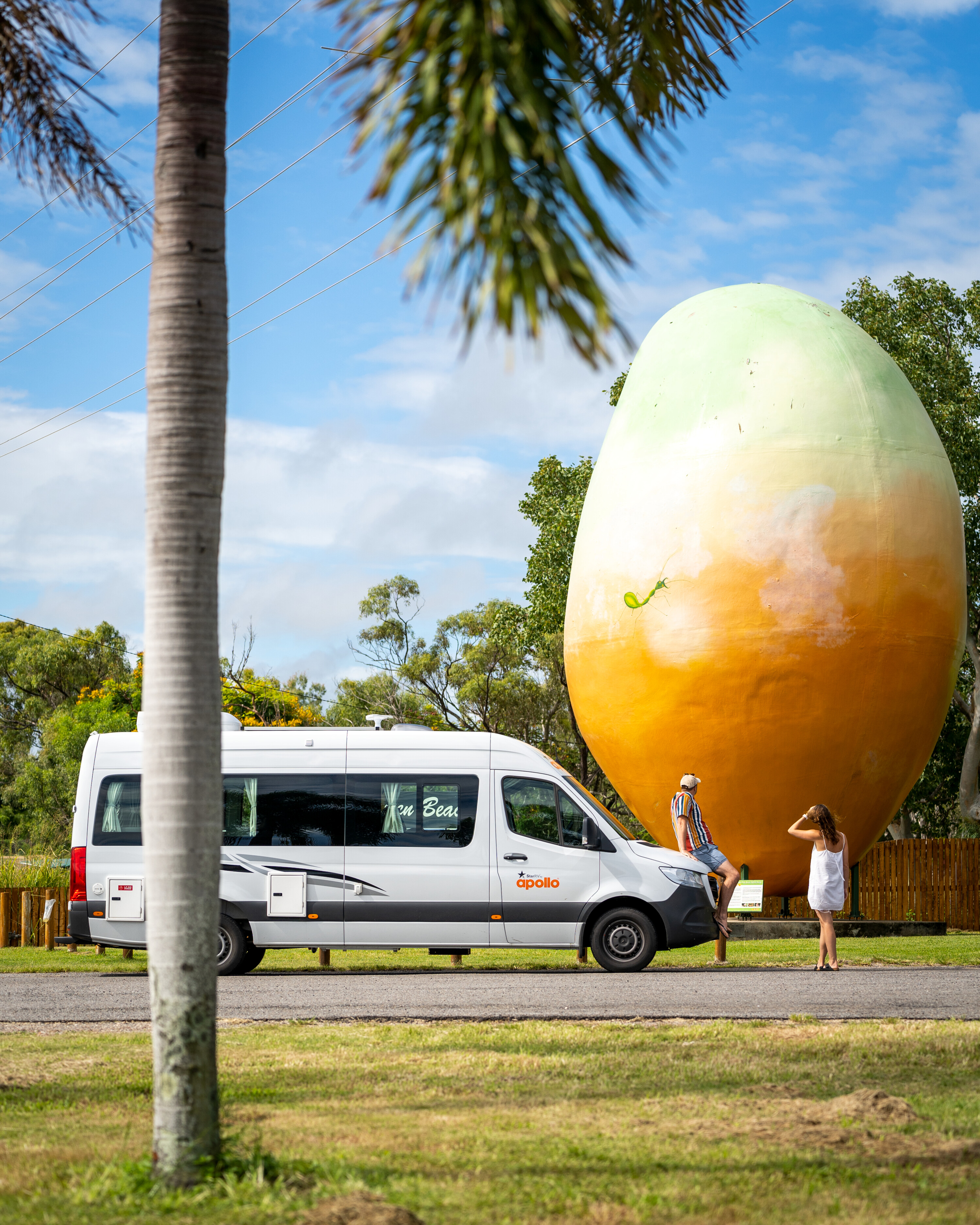
After enjoying Airlie Beach’s many delights for a day or two, the final leg of this road trip is a short jump north, to Bowen [↗], the mango capital of Australia and home to – you guessed it – the Bowen Mango (also known as the Kensington Pride) as well as the iconic Big Mango – a prime selfie opportunity.
Of course, it’s not only the sublime mangoes that are responsible for Bowen’s fame as a must-visit part of The Whitsundays; the town’s many secluded beaches are (each and every one) are worth spending time at. Horseshoe Bay is a great option for those keen on a swim, picnic or some exploratory snorkelling (you can hire snorkelling gear in town).
1
In fact, this is one of the few locations where you can snorkel the fringing Great Barrier Reef straight off the beach. And, after that breathtaking experience, be sure to visit Flagstaff Hill, where you will experience even more amazing views across this area’s bays and beaches.
There’s no more fitting way to finish off a road trip in The Whitsundays than to tuck into some of Bowen’s famous fresh seafood. The seafood at Bird’s Fish Bar, at Bowen Fishermans Seafood Co, is unloaded from the boats each day and cooked to order, with handy outdoor seating nearby. Yep, like we said, it’s most fitting!
The Mackay Isaac region is the perfect location for an adventurous North Queensland road trip. From camping in old gold towns and paddling in huge lakes, to enjoying a historic watering hole and chasing the elusive barramundi, this part of North Queensland will keep you entertained for a week or more. This route is, again, relatively easy in terms of driving, with either an SUV or a 4WD more than suitable.
Starting at the regional hub of Mackay, on the coast, this 500km road trip meanders southwest, via Nebo, before turning slightly north-east for another half an hour or so to reach the first stop on this itinerary: the former (and long since abandoned) gold mining town of Mt Britton.
1
After being founded in 1880, through its halcyon gold rush days, where it grew to include a number of pubs, hotels and 1500 people, until the gold dried out less than 10 years later, the town dwindled and then was abandoned. There are many examples of mining equipment still here, along with information signage relating to the town and mine’s short history, and a lookout.
You can camp here, too, and experience the town’s ‘spooky’ reputation enjoying a beautiful North Queensland sunset and star-filled night sky. There is also more camping at nearby Moonlight Dam, inside Homevale National Park. This camping area also offers good birdwatching around dusk.
A short 77km further inland, you will find Lake Elphinstone which, again, offers fantastic camping, but is also popular with anglers (you can catch the elusive red claw crayfish here), birdwatchers, those who like to water ski (in one section of the lake only, and dependent on water levels), and paddlers – canoes and kayaks are brilliant for exploring this natural lake.
Leave Lake Elphinstone for the longest leg of this trail (281km) and head to Nebo to check out the town’s famous heritage-listed pub, which was built in 1862, and overlooks Nebo Creek. After checking out this watering hole, take a stroll to the nearby Nebo Museum, which contains the Mount Britton Collection of paintings that reveal early pioneer life, as well as some restored vehicles and other historic objects.
From Nebo, take a stop at Moranbah (one of Queensland’s youngest towns, and one with plenty of services) and tackle the easy 1km Federation Walk that takes you to the Big Red Rhino Bucket, a nod to the town’s mining industry. Leaving Moranbah, it’s time to continue on to Clermont, another town with a mining history, both in gold and copper. You will pass the Gemini Peaks, two volcanic formations, along the way. Another landscape standout is Wolfgang Peak, in The Peak Range National Park. Do yourself a favour and trek up to its summit for some brilliant views.
Theresa Creek Dam is the end of this road trip – and it’s an absolute belter for those looking to fish and camp. The dam holds plenty of golden perch (aka yellow-belly), barramundi and the delicious red claw crayfish. Grab a fishing permit from the kiosk at the dam and try your luck, before kicking back at your lakeside campsite and think back on your previous few days exploring this unique part of North Queensland.
Service and education: Before heading out on any road-trip, no matter how close to home or otherwise, get your vehicle serviced beforehand. Your mechanic will pick up any potential issues and advise you on any spare parts you should take or any essential modifications (such as new suspension, additional lighting or frontal protection) that may be needed to ensure your 4WD (and yourself) completes the trip safely.
In addition to making sure your 4WD is up to that big road trip, be sure you, as the driver, are as well. Attending a 4WD driver training course is a must; you will learn how capable your particular vehicle is and be far more confident in both its – and your own – capabilities when exploring remote areas. Topics usually covered include how to perform a vehicle recovery, water crossings, how to safely negotiate steep terrain, drive in sand, and more.
Tyres: For off-road travel (dirt roads, fire tracks, etc.), we’d advise – at a minimum fitting All Terrain tyres of Light Truck (LT) construction to your 4WD. If the route you’re contemplating is particularly rugged, go for LT Mud Terrain tyres. Tyres of Light Truck construction feature a thicker and more aggressive (read: grippier) tread pattern than the highway terrain tyres that are standard fitment on most new 4WDs these days.
LT construction tyres will also include a stronger sidewall, which increases resistance to staking or puncturing – especially pertinent when travelling off-road and having to lower tyre pressures. Speaking of which…
Air up, air down: A four-wheel drive vehicle can take you to some spectacular remote parts of Australia, via some often rough, and/or sandy, tracks. For optimum traction (and safety), you will need to learn to adjust tyre pressures to suit different terrain.
When driving on sand, for example, by lowering your tyre pressures, you subsequently increase the tyre’s ‘footprint’, i.e., more of the tyre is in contact with the sand, which enhances traction in these types of loose surfaces. A similar process applies for rocky terrain; lowering tyre pressures so that your tyre ‘folds over’ the rock, means the rock has less chance of puncturing the tyre, as it has conformed to the shape of the rock, rather than being too highly inflated and thus forcing the rock into the tyre, causing a puncture.
Oh, and remember to pack a portable air compressor. You will need this to reinflate your tyres to safe pressures once you are back on sealed roads.
Pack properly, pack safely: It is all too tempting to just throw all your camping gear, luggage, recovery equipment, water containers and other road-trip paraphernalia into the back of your 4WD and then drive off – but please don’t. In the unfortunate case of an accident, any unsecured luggage or gear transforms into a potentially deadly missile for vehicle occupants.
By strapping down all your gear with ratchet straps (or ropes), you will ensure that everything stays still and secure in the back, while you and your fellow occupants stay safe up front.
Safety first: Before you head off on your big adventure, leave a rough timeline or itinerary with family and/or friends. Make sure you pack reliable communications as well, whether that is a UHF radio or a satellite phone; a mobile phone will not have a signal in most remote (and even not so remote) parts of Australia.
If you don’t own a sat-phone, hire one – they are the most reliable form of remote area communications. If you’re travelling with more than one vehicle, adhere to ‘convoy procedure’ which is, in a nutshell, where you always maintain visual contact with the vehicle behind you – especially if turning onto another road.
And don’t crowd yourself and the other vehicle, either; keep at least a 100m gap between each to avoid rocks hitting the windscreen or dust kicked up from the vehicle in front obscuring your forward vision.
Service and education: Before heading out on any road-trip, no matter how close to home or otherwise, get your vehicle serviced beforehand. Your mechanic will pick up any potential issues and advise you on any spare parts you should take or any essential modifications (such as new suspension, additional lighting or frontal protection) that may be needed to ensure your 4WD (and yourself) completes the trip safely.In addition to making sure your 4WD is up to that big road trip, be sure you, as the driver, are as well. Attending a 4WD driver training course is a must; you will learn how capable your particular vehicle is and be far more confident in both its – and your own – capabilities when exploring remote areas. Topics usually covered include how to perform a vehicle recovery, water crossings, how to safely negotiate steep terrain, drive in sand, and more.
Tyres: For off-road travel (dirt roads, fire tracks, etc.), we’d advise – at a minimum fitting All Terrain tyres of Light Truck (LT) construction to your 4WD. If the route you’re contemplating is particularly rugged, go for LT Mud Terrain tyres. Tyres of Light Truck construction feature a thicker and more aggressive (read: grippier) tread pattern than the highway terrain tyres that are standard fitment on most new 4WDs these days.LT construction tyres will also include a stronger sidewall, which increases resistance to staking or puncturing – especially pertinent when travelling off-road and having to lower tyre pressures. Speaking of which…
Air up, air down: A four-wheel drive vehicle can take you to some spectacular remote parts of Australia, via some often rough, and/or sandy, tracks. For optimum traction (and safety), you will need to learn to adjust tyre pressures to suit different terrain.When driving on sand, for example, by lowering your tyre pressures, you subsequently increase the tyre’s ‘footprint’, i.e., more of the tyre is in contact with the sand, which enhances traction in these types of loose surfaces. A similar process applies for rocky terrain; lowering tyre pressures so that your tyre ‘folds over’ the rock, means the rock has less chance of puncturing the tyre, as it has conformed to the shape of the rock, rather than being too highly inflated and thus forcing the rock into the tyre, causing a puncture.Oh, and remember to pack a portable air compressor. You will need this to reinflate your tyres to safe pressures once you are back on sealed roads.
Pack properly, pack safely: It is all too tempting to just throw all your camping gear, luggage, recovery equipment, water containers and other road-trip paraphernalia into the back of your 4WD and then drive off – but please don’t. In the unfortunate case of an accident, any unsecured luggage or gear transforms into a potentially deadly missile for vehicle occupants.By strapping down all your gear with ratchet straps (or ropes), you will ensure that everything stays still and secure in the back, while you and your fellow occupants stay safe up front.
Safety first: Before you head off on your big adventure, leave a rough timeline or itinerary with family and/or friends. Make sure you pack reliable communications as well, whether that is a UHF radio or a satellite phone; a mobile phone will not have a signal in most remote (and even not so remote) parts of Australia.If you don’t own a sat-phone, hire one – they are the most reliable form of remote area communications. If you’re travelling with more than one vehicle, adhere to ‘convoy procedure’ which is, in a nutshell, where you always maintain visual contact with the vehicle behind you – especially if turning onto another road.And don’t crowd yourself and the other vehicle, either; keep at least a 100m gap between each to avoid rocks hitting the windscreen or dust kicked up from the vehicle in front obscuring your forward vision.
The 2024 Range Rover Sport line-up has been revealed, available to order now with the first new diesel cars expected to make landfall before the end of the year.
Snapshot
2024 Range Rover Sport lineup on sale now
Pricing starts from $143,600 (up $4440)
Petrol derivatives available from 25MY
Prospective petrol buyers, however, must wait a little longer. As Range Rover quotes, “petrol derivatives available from 25MY”. Assuming a similar timeline, expect these to arrive from Q4 2024.
Spearheading the new model year is the performance flagship Range Rover Sport SV, with a newly mild-hybridised 4.4-litre twin-turbo V8 making 467kW and 750Nm. Positioned as an exclusive Range Rover product, the flagship Sport SV P635 will only be available by invitation for the first 12 months of production.
Elsewhere, there’s the latest infotainment tech, a claimed ‘world first’ advanced air suspension system, newly hybridised powertrains and, of course, a heightened dose of luxury.
2024 Range Rover Sport Australian pricing
All prices are before on-road costs.
Model
Price
Availability
SE D250
$143,600 (up $4440)
from Q4 2023
Dynamic SE D300
$156,050 (up $5024)
from Q4 2023
Dynamic HSE D350
$174,000 (up $5362)
from Q4 2023
Dynamic SE P460e (new)
$178,650
from 25MY
Dynamic HSE P460e (new)
$189,500
from 25MY
Autobiography D350
$197,700 (up $6559)
from Q4 2023
SV Edition One P636 (new)
$360,800
Invitation-only
1
2023 Range Rover Sport features
The 2023 Range Rover Sport comes in three main trims, SE, Dynamic SE and Dynamic HSE, plus a flagship luxury Autobiography. The high-performance SV Edition One, will be available for the first 12 months by invitation-only.
Headline technology updates include the latest generation of Land Rover’s Pivi Pro4 infotainment system, interfacing through a slick 13.1-inch curved display.
The latest iteration of the system adds shortcut side bar functions, offering hotkeys and easier access to most of the vehicles critical functions. Land Rover claims that approximately 80 per cent of the vehicle’s tasks can be performed within two taps of the home screen, with haptic feedback aiding ease of use.
New Country Road Assist also makes its Range Rover Sport debut, in effect, adding off-road functionality to the car’s adaptive cruise control, dynamically adjusting target speed via navigation data, and further considering bends in the road and speed limit changes when decelerating and accelerating.
SE
Dynamic SE
Dynamic HSE
Autobiography
Sport SV Edition One
Michelin Pilot Sport All Season 4 285mm (f); 305mm (r)
23-inch alloy wheels
Carbon fibre bonnet
6D Dynamics suspension (SV-tuned)
SV Mode
Unique 8-piston Brembo Octyma front brake calipers
SV-exclusive exterior styling
Carbon fibre-tipped quad tailpipes
Exclusive carbon-backed SV Performance seats
29-speaker 1430W Meridian stereo w/ Body And Soul Seat (BASS)
1
Powertrains, transmission and fuel economy
Under the bonnet, the entry-level D250 features a 3.0-litre turbocharged inline-six diesel with mild-hybrid technology.
It produces 183kW of power and 600Nm of torque, with Land Rover claiming the D250 can complete the 0-100km/h sprint in 8.0 seconds.
The D300 and D350 include higher-output versions of the 3.0-litre diesel engine producing 221kW/650Nm and 258kW/700Nm, respectively.
A 0-100km/h time of 6.6 seconds is estimated for the D300, while the D350 can reach the speed in 5.9 seconds.
1
The entry-level petrol P400 powertrain has been retired for the new 2024 line-up.
The new P460e petrol entry-point features a new hybrid system with a 160kW electric motor, in tandem with the existing 3.0-litre Ingenium inline-six, producing a total of 338kW.
Deliveries of diesel variants will commence first, before the end of 2023. Petrol variants of the new Range Rover Sport, unless you’re an invited to purchase one of the SV Edition One’s, won’t be available until the MY25 lineup is revealed in 2024.
1
The flagship Sport SV will clock 0-100km/h in “as little” as 3.8-seconds, with its 467kW/750Nm credentials seeing it outgun the previous-generation 5.0-litre V8 Range Rover Sport SVR by 44kW and 50Nm.
A number of debut options are available for the exclusive powerhouse, with the option of 23-inch carbon fibre wheels that shave 76kg of unsprung mass, compared to the standard 23-inch cast-alloy units.
Carbon-ceramic front discs are also available for the first time, reducing 34kg of unsprung mass, but clamped by the same bespoke eight-piston Brembo units regardless of if you opt for the standard dual cast iron discs.
Safety
The third-generation Range Rover Sport is yet to be tested by ANCAP or Euro NCAP.
Each variant includes the following active safety equipment as standard:
Warranty and servicing
As per the wider Land Rover range, the Range Rover Sport is covered by the marque’s five-year/unlimited-kilometre warranty, along with a five-year/unlimited-kilometre roadside assistance program.
1
Availability
The refined 2024 Range Rover Sport lineup is available to order now, with prices starting from $143,600 plus on-road costs, with first deliveries of the diesel SE D250 expected in the fourth quarter of this year.
Beyond the invite-only flagship twin-turbo V8 Range Rover Sport SV, petrol variants won’t be locally available until the manufacturer’s 2025 lineup is revealed some time in 2024.
GWM’s Tank 300 is here, and we’ve had a proper run off-road. Get Tristan Tancredi’s thoughts here.
He mentions the Wrangler, like, SIX TIMES. Six!
May 30: Tank 300 on sale in Australia
The 2023 GWM Tank 300 off-road medium SUV line-up has expanded with two petrol variants.
Snapshot
2023 GWM Tank 300 petrol: Full Australian details
Petrol variant to arrive in June from $46,990 drive-away
Tank 300 hybrid delayed for Australia due to supply issues
1
Joining the previously-announced Tank 300 Lux and Ultra hybrids, the petrol-only models will arrive in local showrooms in June – beating the electrified variant to market.
A GWM Australia spokesperson said “dealers will start receiving their initial Tank 300 petrol allocations in the coming days”, with customer inspection and test drives to commence following pre-delivery checks.
“Customer deliveries, depending on grade, colour and so forth, should be able to happen relatively smoothly after that.”
The Tank 300 is priced from $46,990 drive-away for the Lux petrol and $50,990 drive-away for the Ultra petrol – $9000 and $10,000 less than the respective hybrid variants.
Under the bonnet, the petrol GWM Tank 300 retains the hybrid’s 2.0-litre turbocharged four-cylinder engine, with 162kW and 380Nm.
It is matched to an eight-speed torque-converter automatic transmission and a part-time four-wheel-drive system, compared to the hybrid’s nine-speed transmission and on-demand 4×4 system.
June 5, 2023: GWM’s Australian arm has now confirmed official fuel figures for the Tank 300 range, with the hybrid listed at 8.5L/100km and the petrol model at 9.5L/100km.
The petrol retains a 2500-kilogram braked towing capacity.
Standard equipment for the Lux and Ultra petrol is identical to hybrid variants, except for an automatic parking system, which is unavailable for the petrol.
2023 GWM Tank 300 Lux petrol features
17-inch alloy wheels
Front and rear parking sensors
12.3-inch infotainment system
360-degree camera system
Wired Apple CarPlay and Android Auto
Rear differential lock
Nine-speaker audio system
All-terrain mode selection
12.3-inch digital instrument cluster
Turning assist
LED headlights and tail-lights
Transparent chassis function
Leather-accented upholstery
Autonomous emergency braking
Six-way power-adjustable driver’s seat
Lane-keep assist
Four-way power-adjustable passenger seat
Lane departure warning
Front and rear USB-A ports
Lane centring
Glass sunroof
Adaptive cruise control
Side steps
Traffic sign recognition
Roof rails
Rear cross-traffic alert.
Tyre pressure monitoring system
2023 GWM Tank 300 Ultra petrol features (in addition to Lux petrol)
18-inch alloy wheels
64-colour ambient lighting
Nine-speaker audio system
Auto-dimming rear-view mirror
Nappa leather-accented upholstery
Wireless phone charger
Heated and ventilated front seats
220-volt power outlet
Eight-way power-adjustable driver’s seat with lumbar adjustment and massage
Front differential lock.
Warranty
As with the hybrid and other GWM vehicles, the petrol Tank 300 is covered by a seven-year, unlimited-kilometre warranty, five years of roadside assistance, and five years of capped-price servicing.
Hybrid delays
While GWM Australia initially said the hybrid Tank 300 would arrive in March, local communications boss Steve Maciver said it remains affected by supply constraints in China.
“We are still experiencing some challenges with Tank 300 Hybrid supply and continuing our discussions with the factory on this.”
The hybrid’s internal-combustion engine offers 180kW and 380Nm, with the electric motor adding 78kW and 268Nm, for a 224kW and 640Nm total system output.
GWM has already conducted a roadshow across Australia with pre-production examples, with interested buyers invited to inspect – but not test drive – the Tank 300 hybrid at selected dealerships.
Local details for the GWM Tank 300 were released in December 2022, when a five-star ANCAP safety rating was announced under the now-superseded 2020-22 testing criteria. Officially, the Tank 300’s rating remains valid.
From 2023, vehicles tested by ANCAP must meet new criteria for vehicle submergence, motorcyclist detection, child presence detection, vehicle-to-vehicle compatibility, and driver attention alert systems.
Wheels Media is not suggesting the GWM Tank 300 would fail to achieve a five-star ANCAP rating under the latest criteria.
When will the GWM Tank 300 be available in Australia?
The 2023 GWM Tank 300 petrol will arrive in local showrooms in June, while deliveries for the hybrid are expected in the coming months.
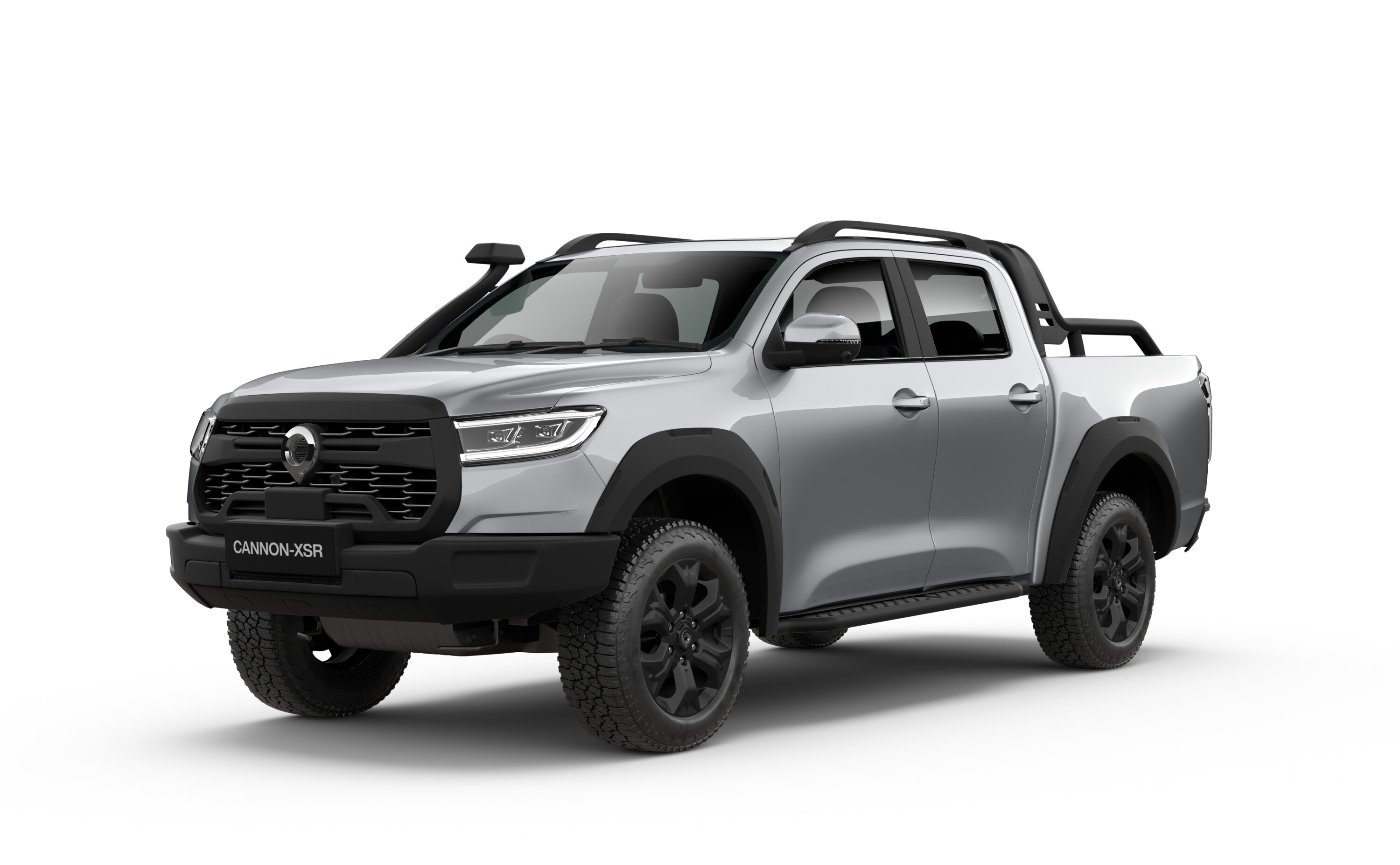
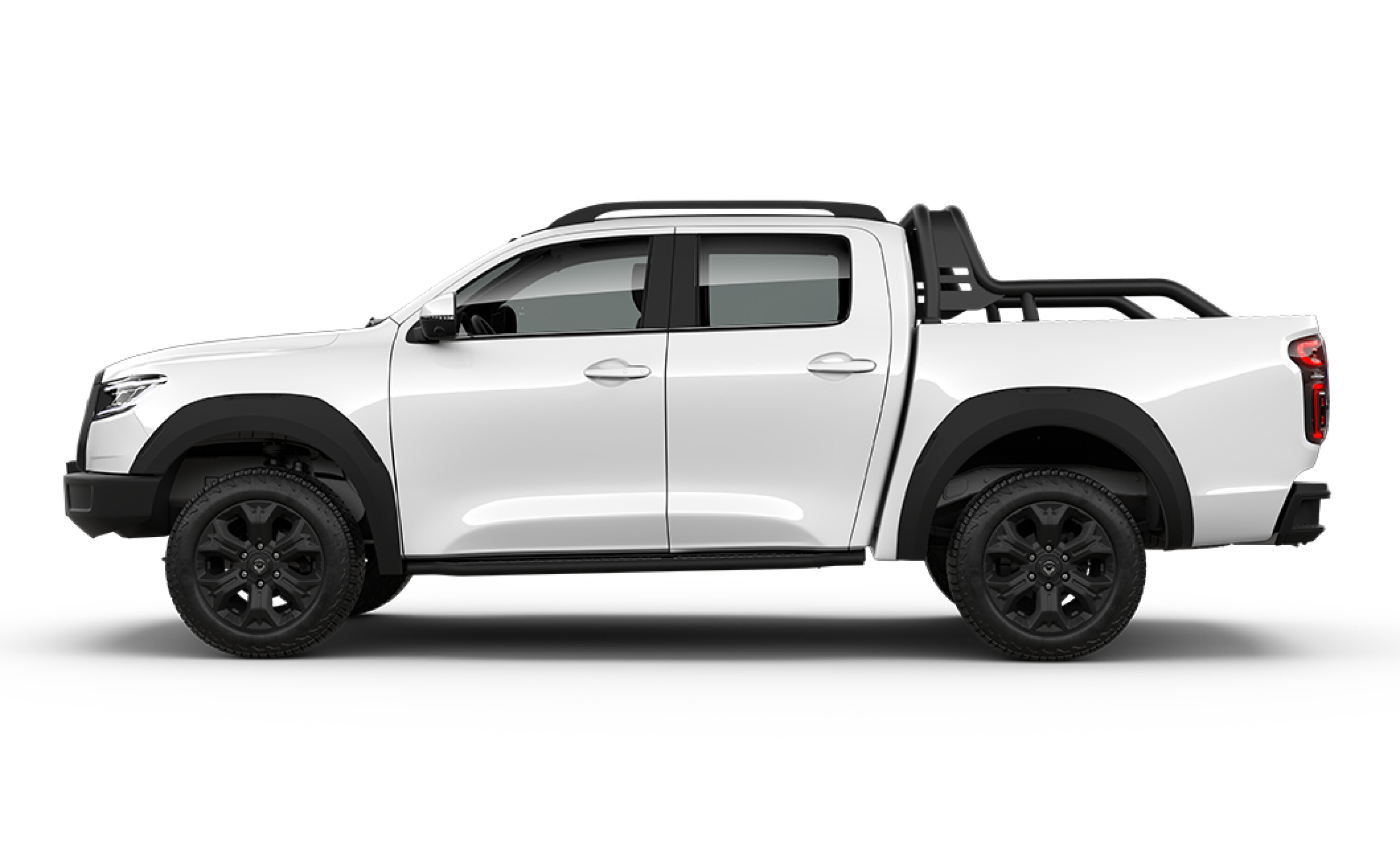
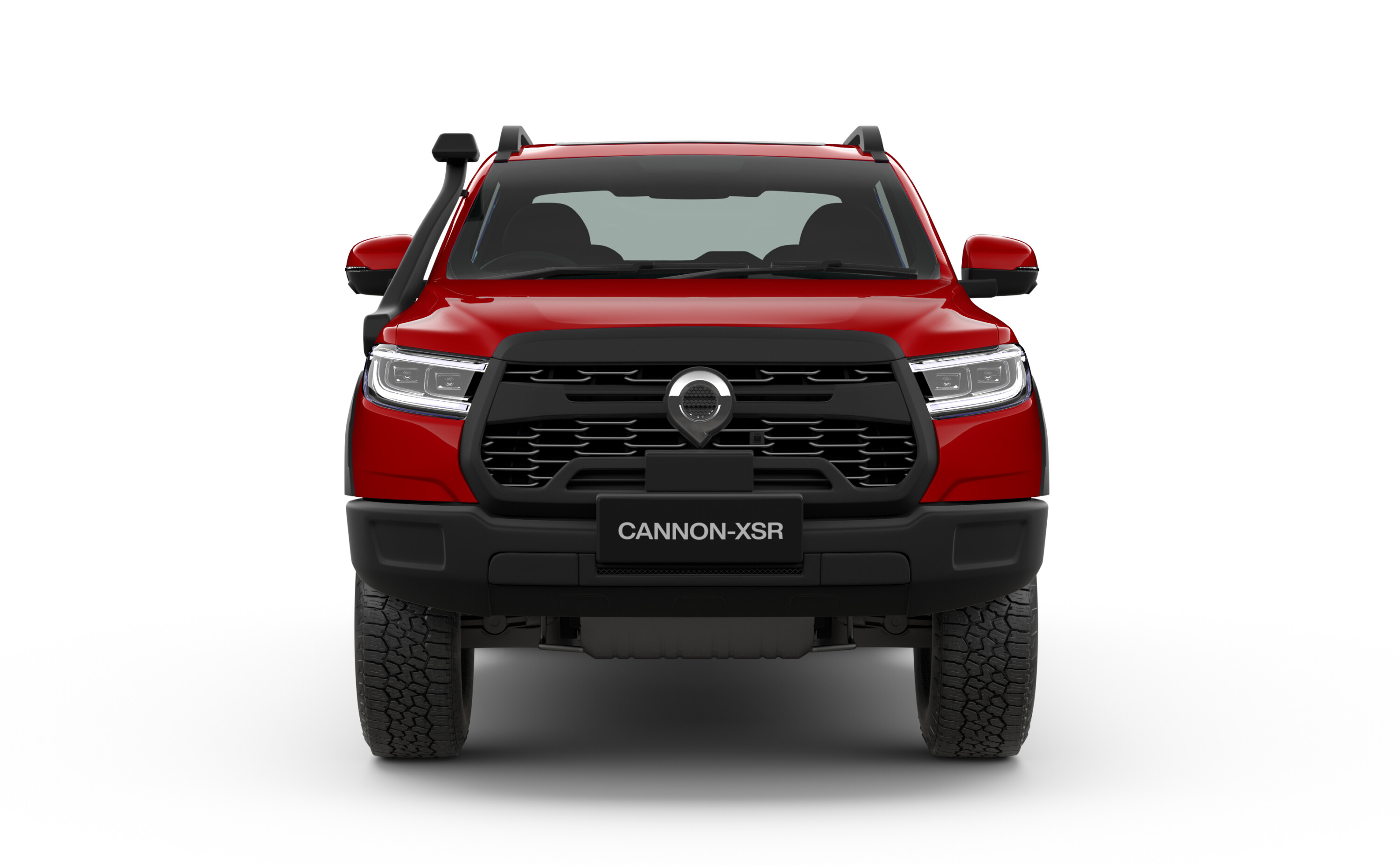
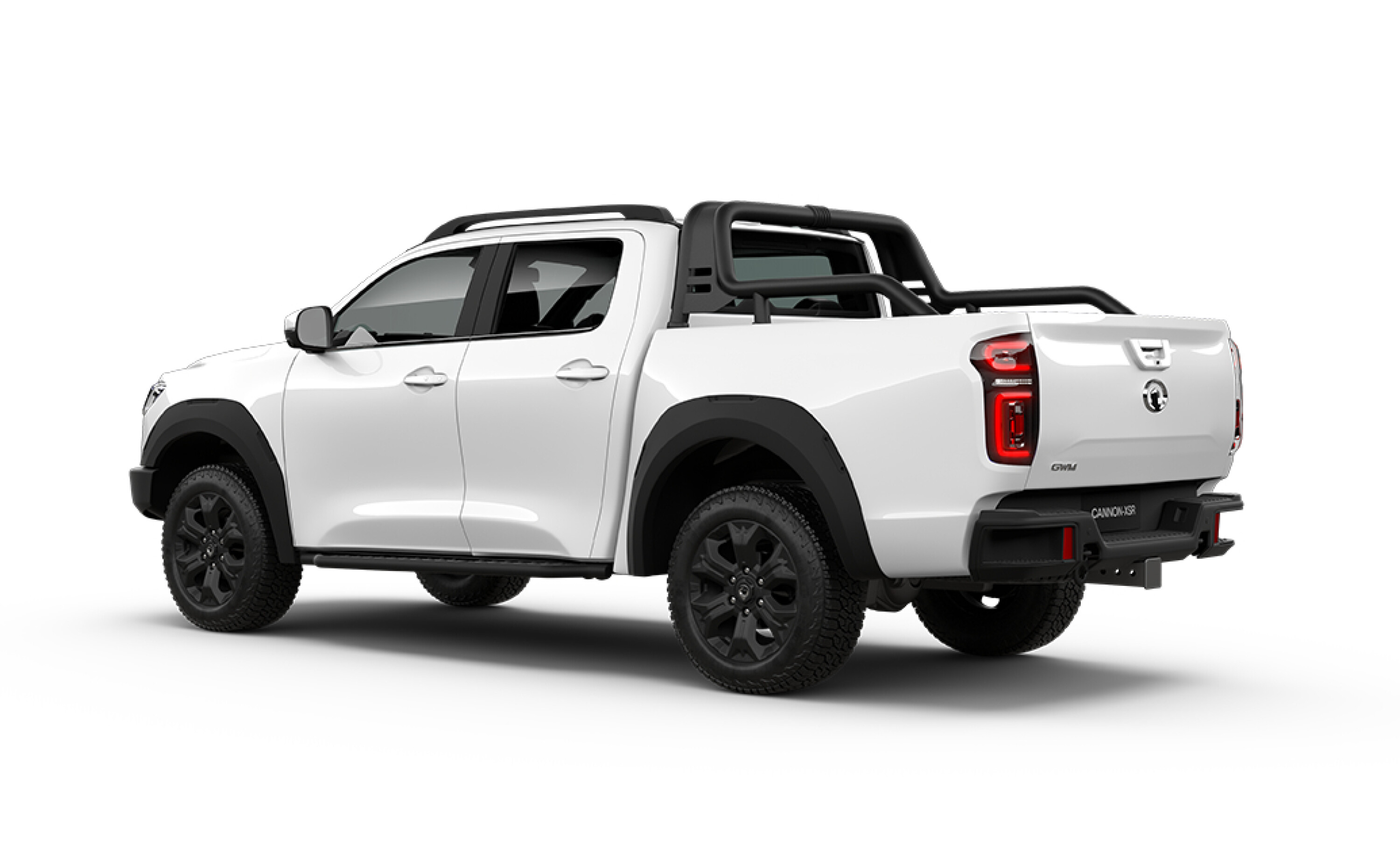
The 2023 GWM Ute range has expanded with the addition of the new off-road-focused Cannon-XSR.
Snapshot
2023 GWM Ute Cannon-XSR pricing and features
New off-road-focused flagship variant on sale now
Priced at $52,990 drive-away
Priced at $52,990 drive-away ($51,490 drive-away for ABN holders), the 2023 GWM Ute Cannon-XSR is $6500 dearer than the Cannon Vanta, with a host of additions said to “provide enhanced operation in tougher off-road conditions”.
Based on the Mount Everest Edition launched in China in 2021, the new variant is a cut-price alternative to other off-road-based dual-cab utes, such as the Toyota HiLux GR Sport and Nissan Navara Pro-4X Warrior.
Compared to the standard four-wheel-drive GWM Ute, which has an automatic full-time system, the Cannon-XSR has a part-time 4×4 system to manually switch between 2H, 4H and 4L.
It features a crawl mode function to control acceleration and braking on tougher terrains, and ‘turn assist by braking’ to tighten the turning circle by braking the inside rear wheel.
Unlike the beefed-up Toyota HiLux GR Sport and Ford Ranger Raptor, the Cannon-XSR retains the same 120kW and 400Nm turbo-diesel four-cylinder engine as the GWM Ute, matched to a ZF-sourced eight-speed automatic transmission.
1
Earlier this year, government homologation documents stated an off-road GWM Ute variant would have a 2250-kilogram braked towing capacity, down from the standard 3-tonne limit.
4×4 Australia has been unable to verify the Cannon-XSR’s towing capacity. GWM Australia has been approached for comment, and this story will be updated with its response.
Under the skin, GWM has added a front differential lock (and rear), a passive front stabiliser, and an underbody chassis guard.
1
Other additions include; a steel front bumper, standard-fit snorkel and side steps, unique alloy wheels, 265/65 all-terrain tyres, red brake calipers, chunkier flares, and a larger sports bar.
A glass sunroof has been added to the Cannon-XSR, joining the Nissan Navara’s optional sunroof for the ST-X grade.
However, the Cannon-XSR omits the front parking sensors, halogen fog lamps, and centre differential lock available in lower grades.
Features unique to the Chinese-market version include four-wheel ‘tank turn’ capability, an ‘off-road expert’ drive mode to disable stability and traction control automatically, a 700-millimetre wading depth, and a taller 228mm ground clearance – compared to 194mm for the Cannon-XSR, shared with the standard GWM Ute.
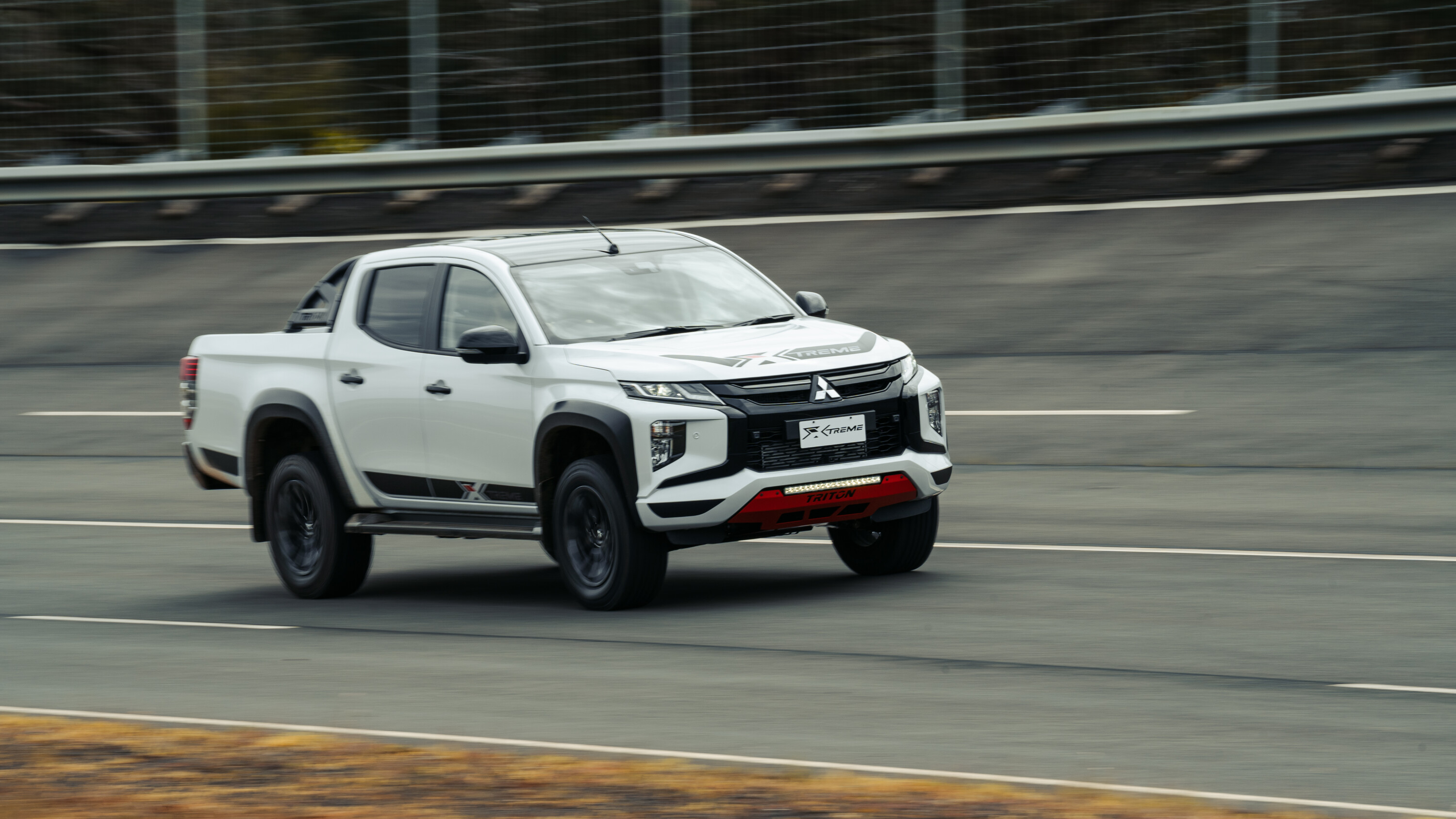
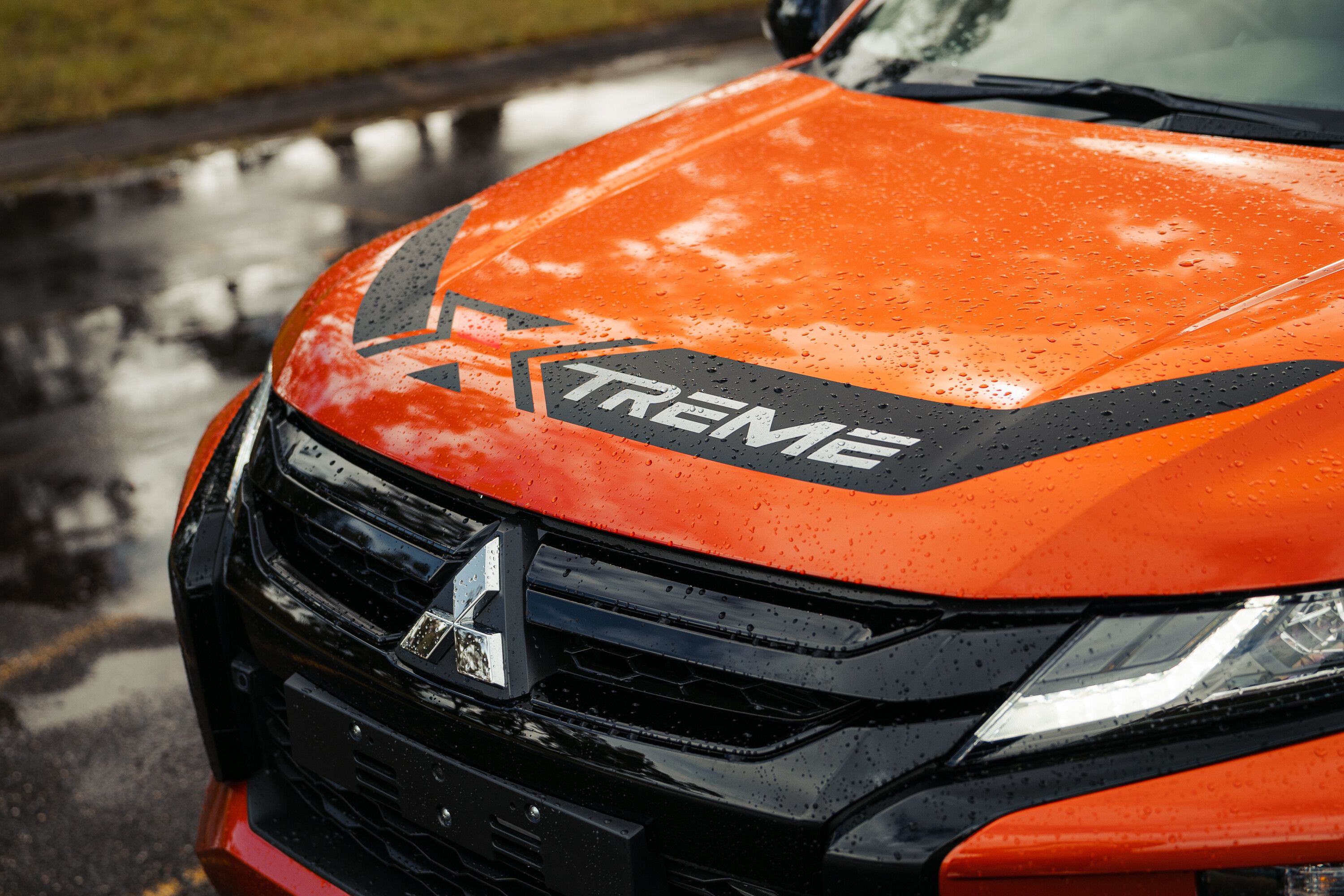
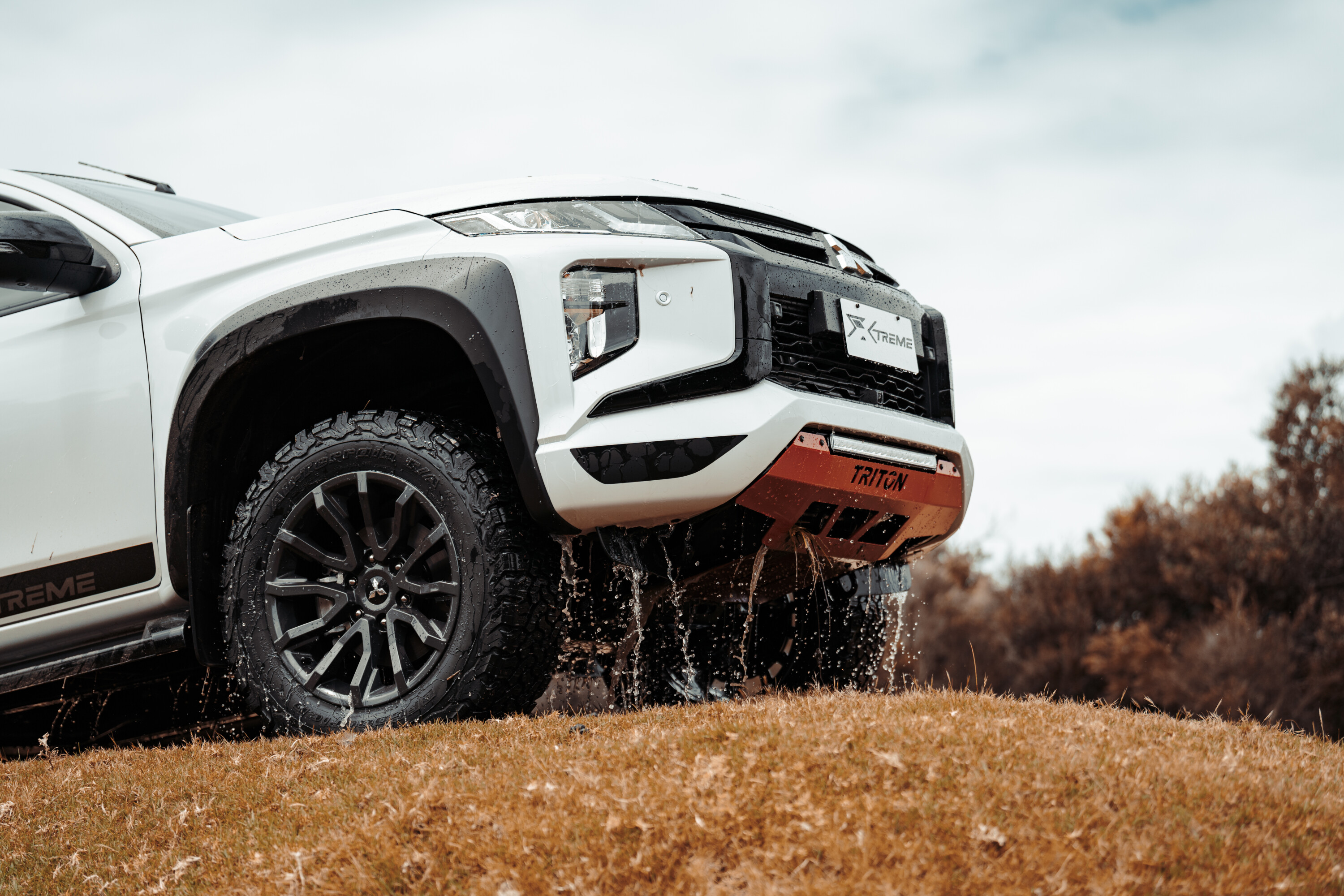
A Walkinshaw-fettled Triton has officially entered the Australian market, but buyers will have to be quick to claim one – a limited run of just 500 units will be available through select dealers in Q3 of this year.
Dubbed the Triton Xtreme, the limited-edition variant has been stamped with an RRP of $71,990, making it around $14,000 dearer than the Triton GSR it’s based on.
Why the Triton? In the build’s infancy, Walkinshaw sat down as a team and looked at the best-selling utes of 2022, soon realising the Triton consistently sat at the pointy end of the charts behind the Ranger and Hilux. And it didn’t have a similar halo model like the Ranger Raptor or Hilux Rogue atop its hierarchy.
1
The process began by 3D-scanning the Triton GSR, to provide the Walkinshaw team with exact areas where they could improve the vehicle.
From this initial step, it was noted that improving the vehicle’s suspension – especially for off-road driving – should be prioritised.
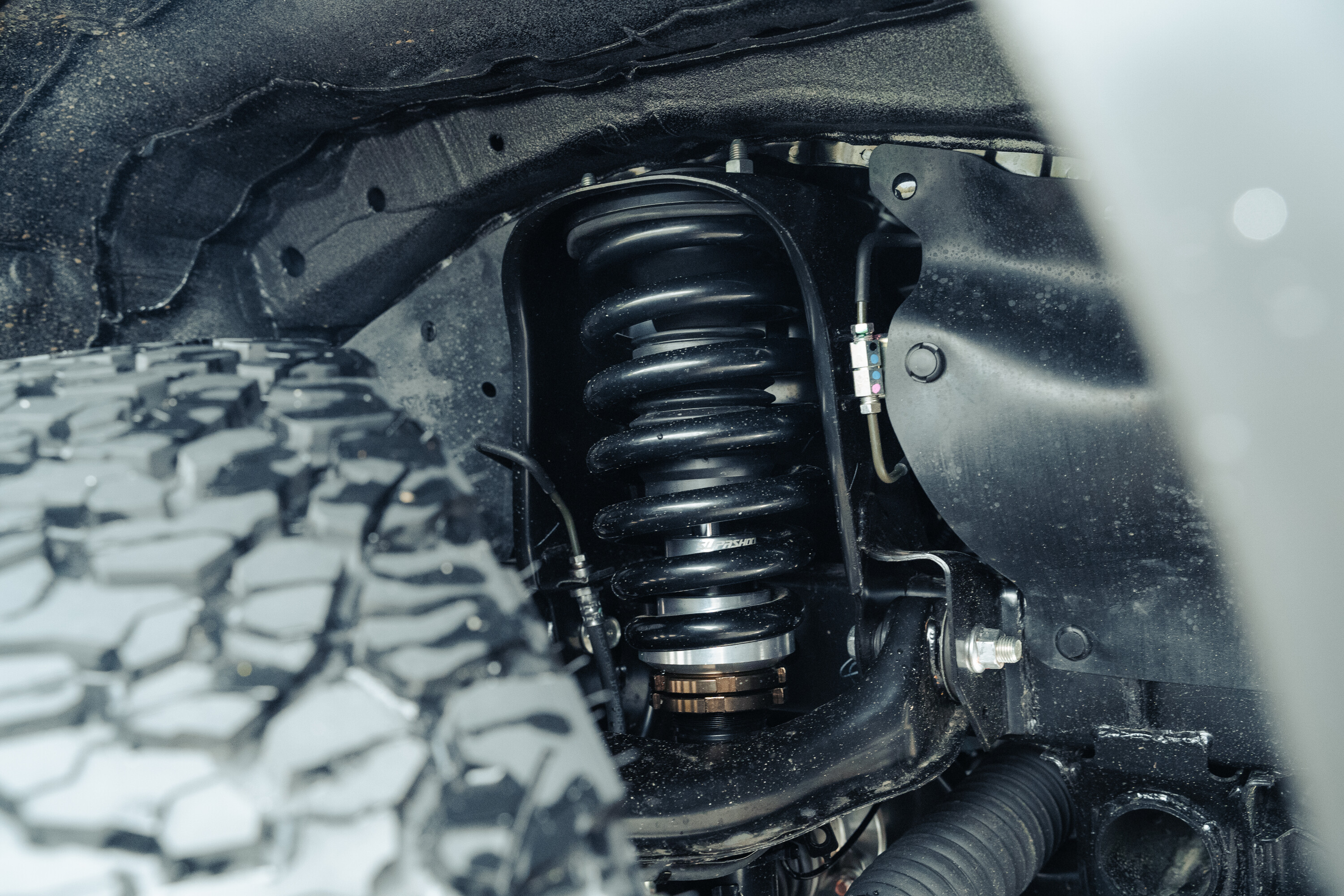
An enduring relationship between Walkinshaw and Supashock meant that another collaboration was essential to enhance the top-spec Triton dual-cab with a state-of-the-art suspension set-up designed to improve both on- and off-road performance.
1
Four Supashock 46mm monotube dampers with a 20mm rod design were installed on each corner of the vehicle, with the front units running a remote canister and the rear a piggyback system.
Walkinshaw tells us it’s a much simpler setup than what they installed on the second-gen SportsCat (remember that?) which employed an upside-down damper and sliding bodies.
Still, a few laps around Lang Lang’s road circuit in the Xtreme proved it handles considerably smoother with this suspension package, soaking up the loop’s minor road imperfections effectively. It’s the same diagnosis when tarmac turns to mud and ruts, with the Supashock system providing a compliant ride on what was a sloppy track.
1
Walkinshaw engineers spent considerable time testing and towing with the vehicle in South Australia’s majestic Flinders Ranges, with tuning ensuring the vehicle maintained the GSR’s towing capabilities at a GVM of 2900kg and a GCM of 5885kg.
The 2.4-litre MiVEC turbo-diesel engine that powers the entire Triton range remains untouched, with Walkinshaw Automotive telling 4X4 Australia it was purely a time-based decision. To tinkle with the powertrain and put the vehicle through stringent emissions testing protocols would’ve taken far too long and made the project impossible for what the 18-month timeline allowed.
Clearly, more power would’ve been a welcome addition for a Walkinshaw-badged vehicle, but the standard 133kW and 430Nm on offer from the regular mill gets the lithe vehicle – relative to its immediate competitors – along nicely and it doesn’t want for me.
1
The vehicle’s stance has also been widened, creating a more menacing appearance, making it – subjectively of course – the best-looking Triton in the line-up.
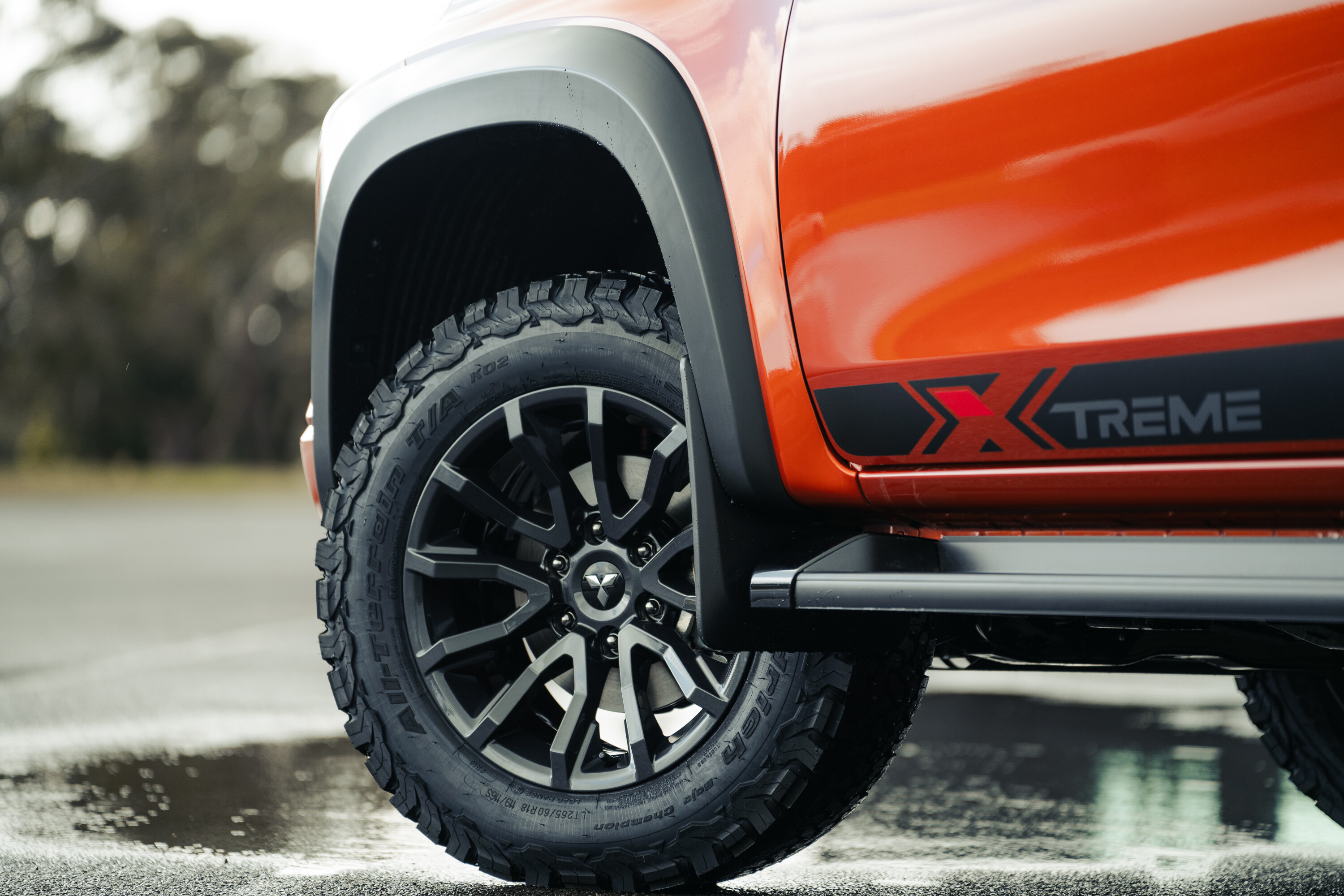
To achieve the widened stance, Walkinshaw designers created bespoke fender flares and mud flaps to cover the custom-designed 18 x 8.5-inch forged aluminium wheels housed inside on- and off-road conquering BFGoodrich AT 265/60R18 K02 tyres.
The wheels are strong, lightweight and a grade ahead of cast-alloy units, and the alloys employed by Walkinshaw create a much deeper dish with greater offset on the wheel itself.
The outside edges of the BFG rubber are 21mm wider than the standard GSR set-up on both sides (42mm wider all up), so the flares were essential for legal coverage.
To complement its visual appeal, custom styling features are positioned on the front bar, and front bar Xtreme decals – designed off Mitsubishi’s own dynamic shield graphic – appear throughout the vehicle.
On the inside, an Xtreme plaque sits below the gear selector, and it’s the only change to the interior of the vehicle.
The Triton GSR is a rather premium cabin, with leather-appointed seats (heated up front); a leather-bound steering wheel and gear selector; carpet floor; and a seven-inch central touchscreen that is now undersized in this segment.
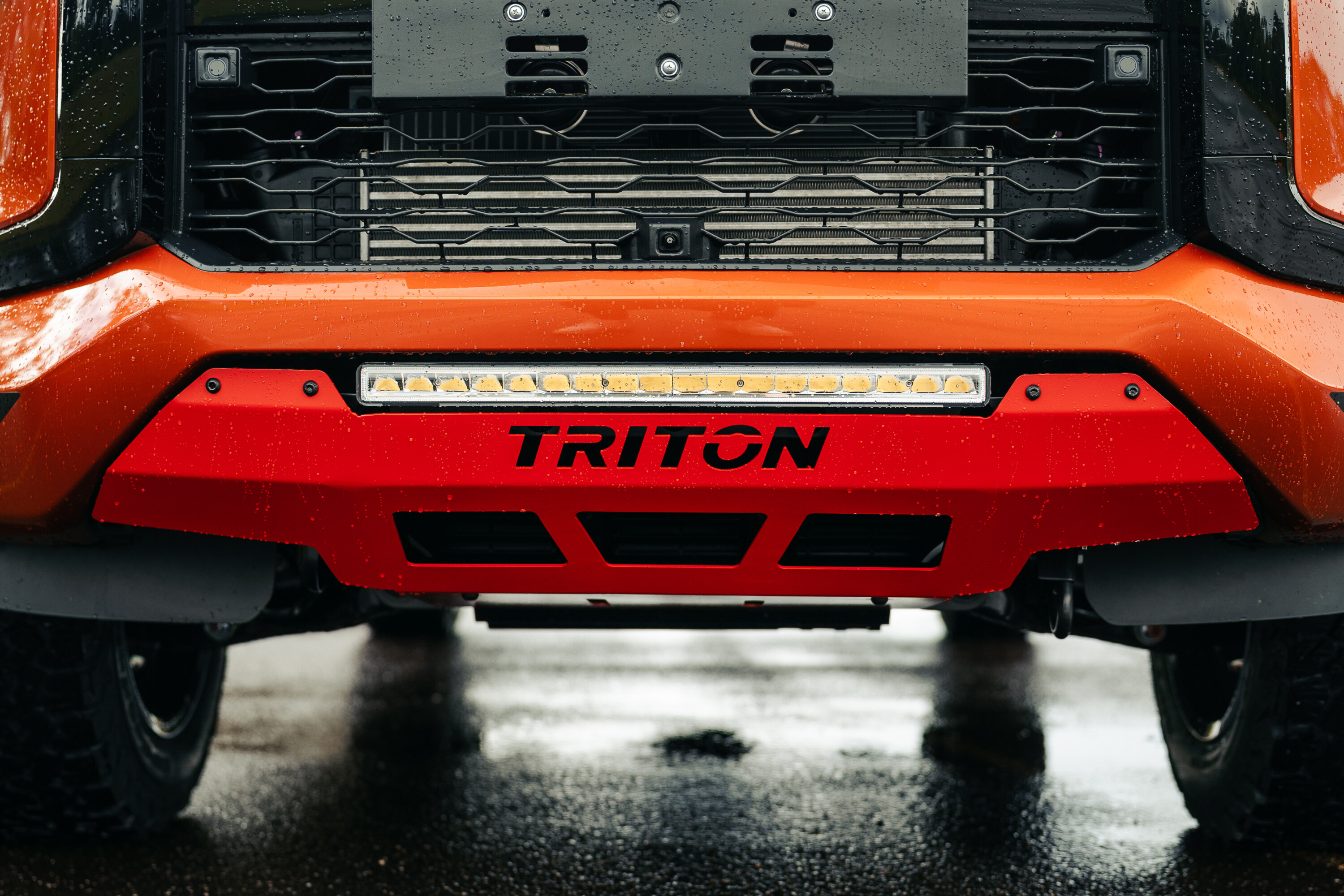
Another major addition to the Xtreme is the neat-looking, custom-designed bash plate that protects vulnerable underbody components and features an in-built lightbar. Substantial testing was conducted – including wind-tunnel tests – to optimise the bash plate’s effectiveness.
1
Testing initially exposed an issue with airflow, so Walkinshaw designed and tested multiple styles before settling on the design you see fitted with three strategically-positioned slots to maximise airflow. Even the Triton lettering on the bash plate is designed to increase airflow.
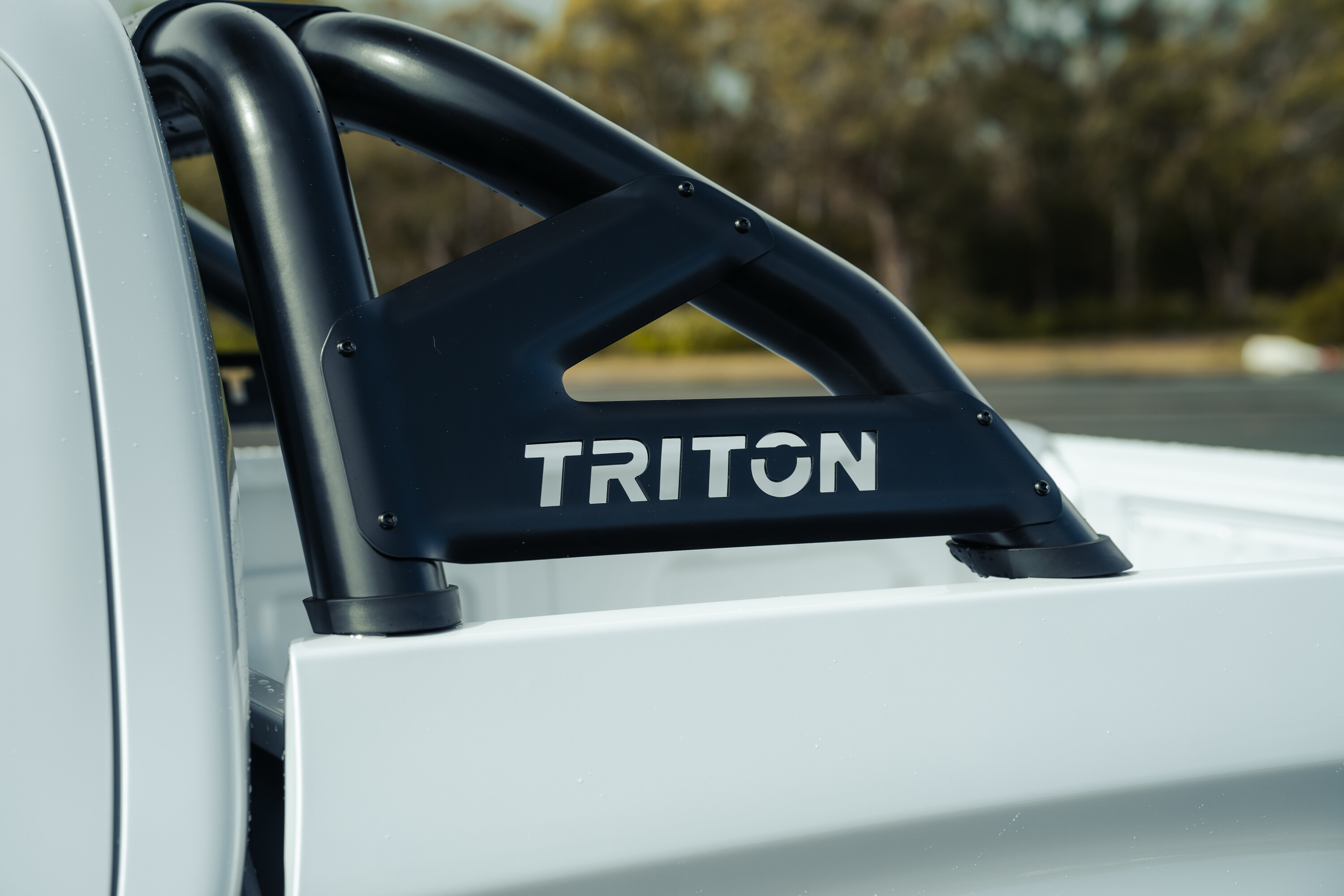
Custom styling features to the front bar integrate neatly into the vehicle, while a new sports bar not only provides the vehicle with a new silhouette, it has a practical purpose by adding further tie-down points.
Walkinshaw’s team of designers noticed that on the standard GSR, the back of the tray meets the back of the cabin rather abruptly, so the pressing of the sports bar now integrates neatly with the angle of the back door to give the car a much more coherent profile than stock. A standard Mitsubishi soft cover still fits, to cover the tub.
1
With Walkinshaw Automotive confirming that only 500 of these vehicles will be built, regardless of demand, it’s critical to lodge your interest with dealers early to avoid missing out on what could be the best Triton in the line-up.
The Walkinshaw team has already shifted its focus to other projects. They’re behind a Ford Ranger Raptor at the upcoming Finke Desert race, and while a collaboration with the next-gen Amarok isn’t officially set in stone, they’ve told us they’re open to doing it once again.
Their track record proves, they’re bound to get it right.
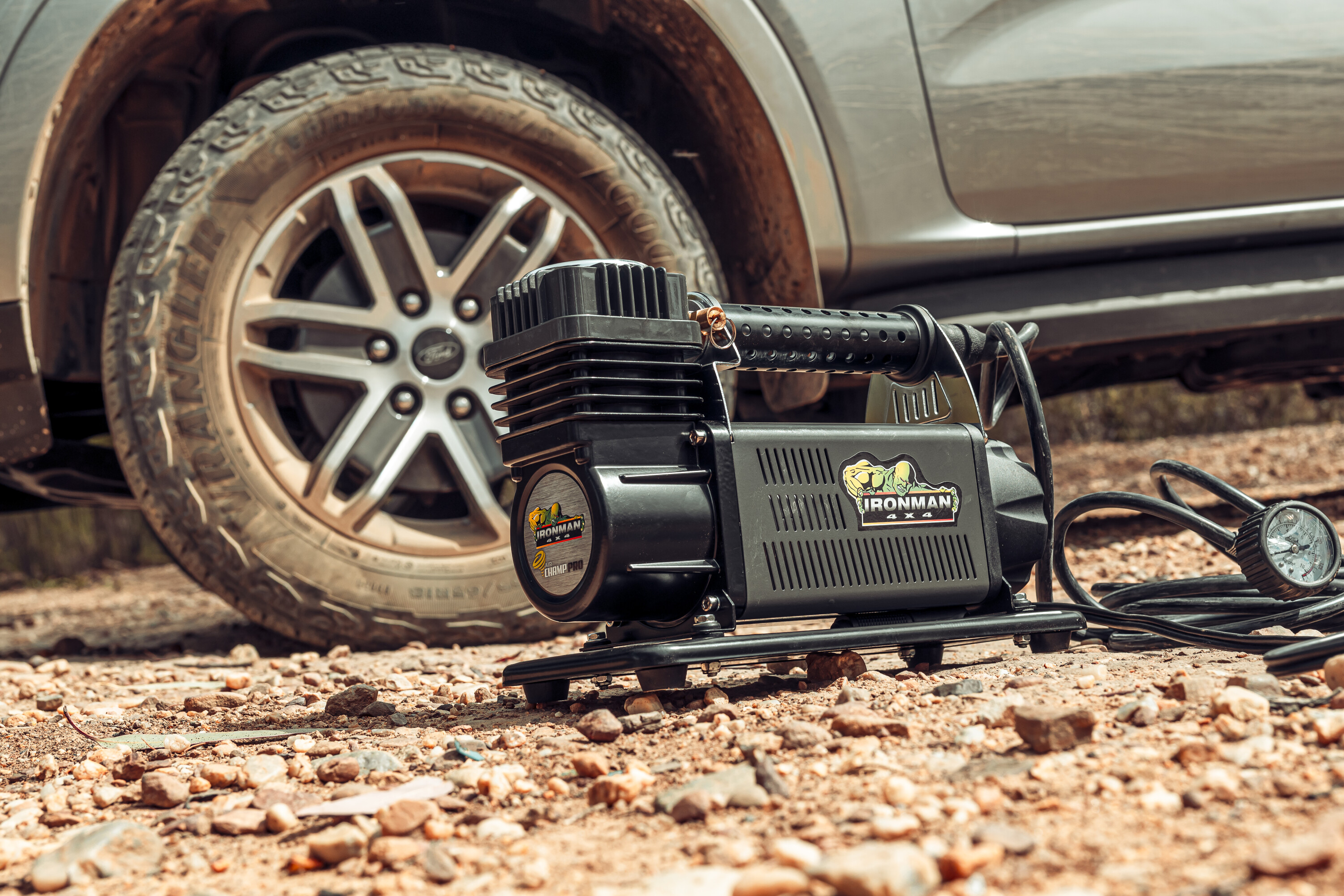
It was fortunate for us that on the cold, wet afternoon the airline on our decades-old 12-volt air compressor failed, we were returning from a trip with a few of the team from Ironman 4×4.
We were able to borrow their compressor to air up as we hit the blacktop again, and they kindly suggested that we drop by their showroom for a replacement for our troublesome old one.
Some 18 months later and the replacement compressor has been serving us well, reliably reinflating our tyres after many adventures and maintaining them when required without a hitch.
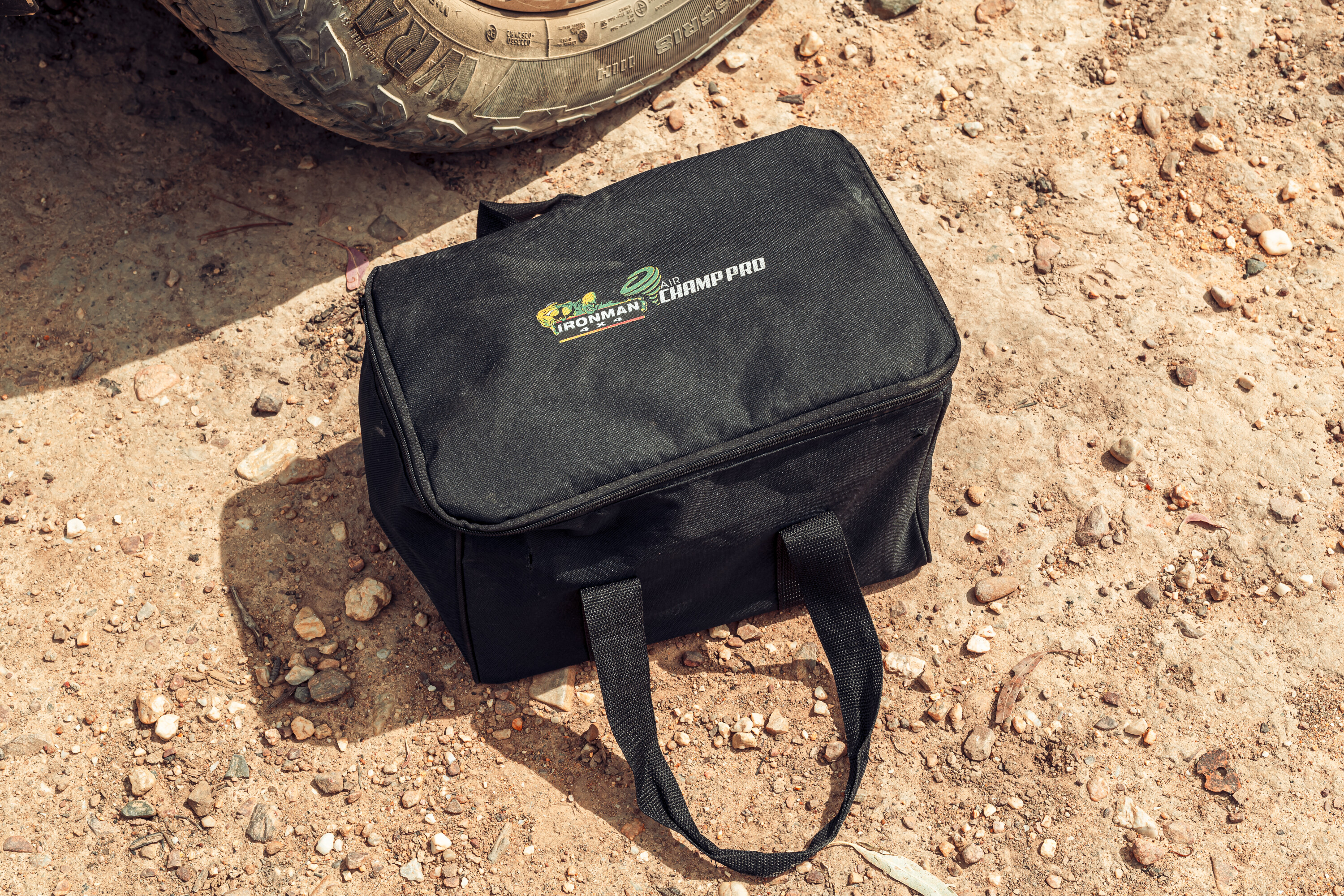
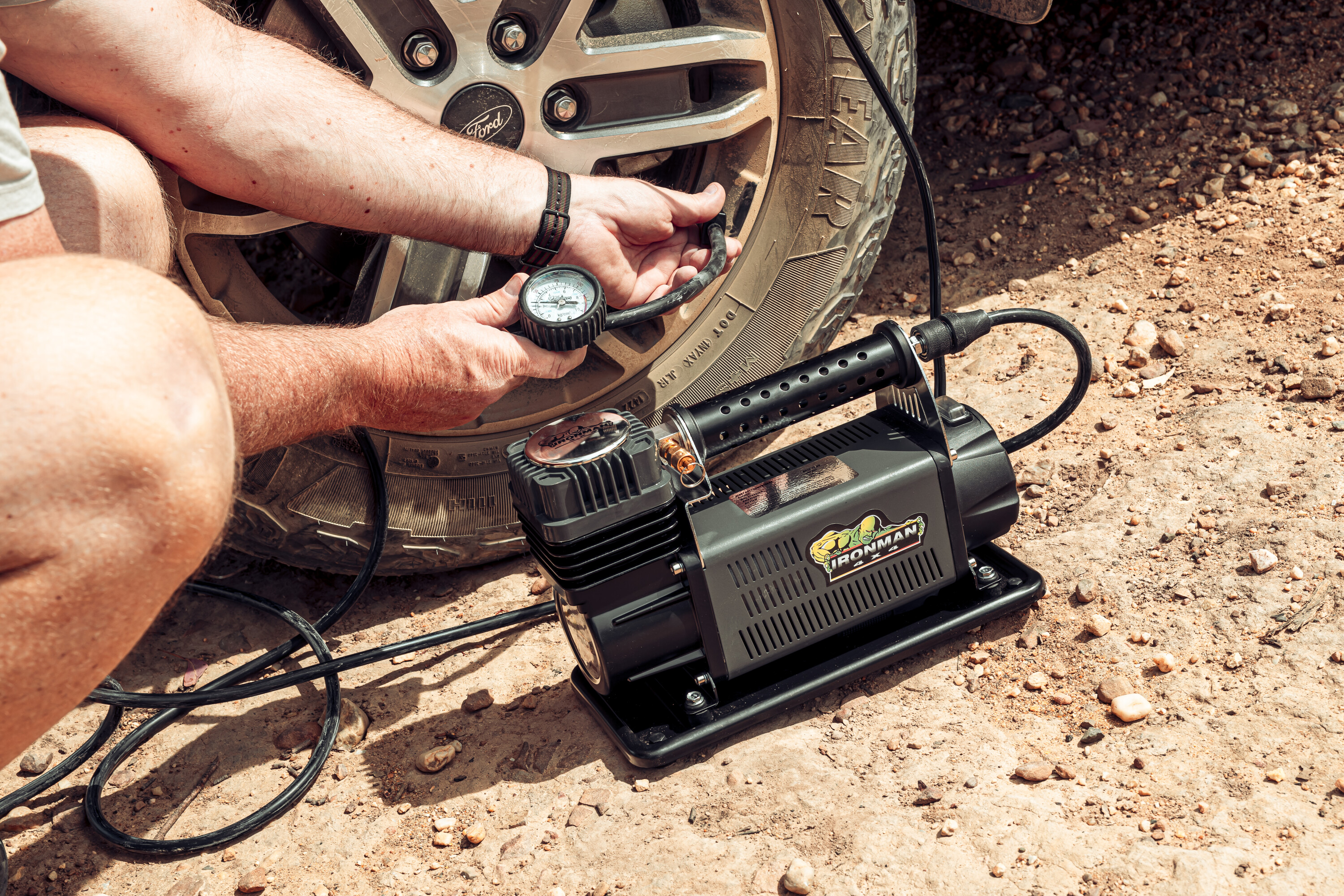
Our new unit is Ironman 4×4’s Air Champ Pro Compressor. It’s the bigger and more powerful of the two air compressors in the Ironman catalogue, and its 540 Watt motor allows it to pump out a claimed 160L/minute of air. The Air Champ Pro sells for $220 from your local Ironman 4×4 store.
We reckon a quality air compressor and gauge should be some of the first accessories you should buy for your 4×4, no matter what sort of driving and terrain you have in store for your vehicle. Different road surfaces such as corrugated gravel, sand and snow all require specific pressures in your tyres if you want to get the best performance, ride quality and durability out of them.
Also, various load weights can also require altered pressures, with more air added to increase the pressure for heavier loads.
Whether you’re dropping your tyre pressures for off-road use or increasing them for a heavy load, then a 12-volt air compressor is an essential piece of kit. Add in a tyre repair kit and you have all the gear you need to keep your vehicle on the road by being able to make an emergency repair to a simple puncture. As always, such temporary repairs should be assessed and either professionally patched or replaced as soon as possible.
Ironman 4×4’s Air Champ Pro includes all you need for pumping up and deflating your tyres. The 8m-long rubber air hose has a screw-on connection to suit your tyre’s Schrader valve, and the inline pressure gauge has a release button for letting air out.
The 12V power from your vehicle’s battery comes via a 2.3m cable with a pair of insulated clamps appropriately marked for the positive and negative terminals. Between the cable and the 8m air hose you should be able to easily reach the tyres at each corner of your 4×4.
Quick-release airline fittings, an insulated carry handle and a sturdy carry bag complete the Air Champ Pro package, making it easy to use and a product that should see years of service on our future 4×4 adventures.
The Air Champ Pro is covered by a two-year warranty from Ironman 4×4.
In the home market, they’re available in either two- or four-wheel-drive, with two engines, two beds, and multiple trims to choose from.
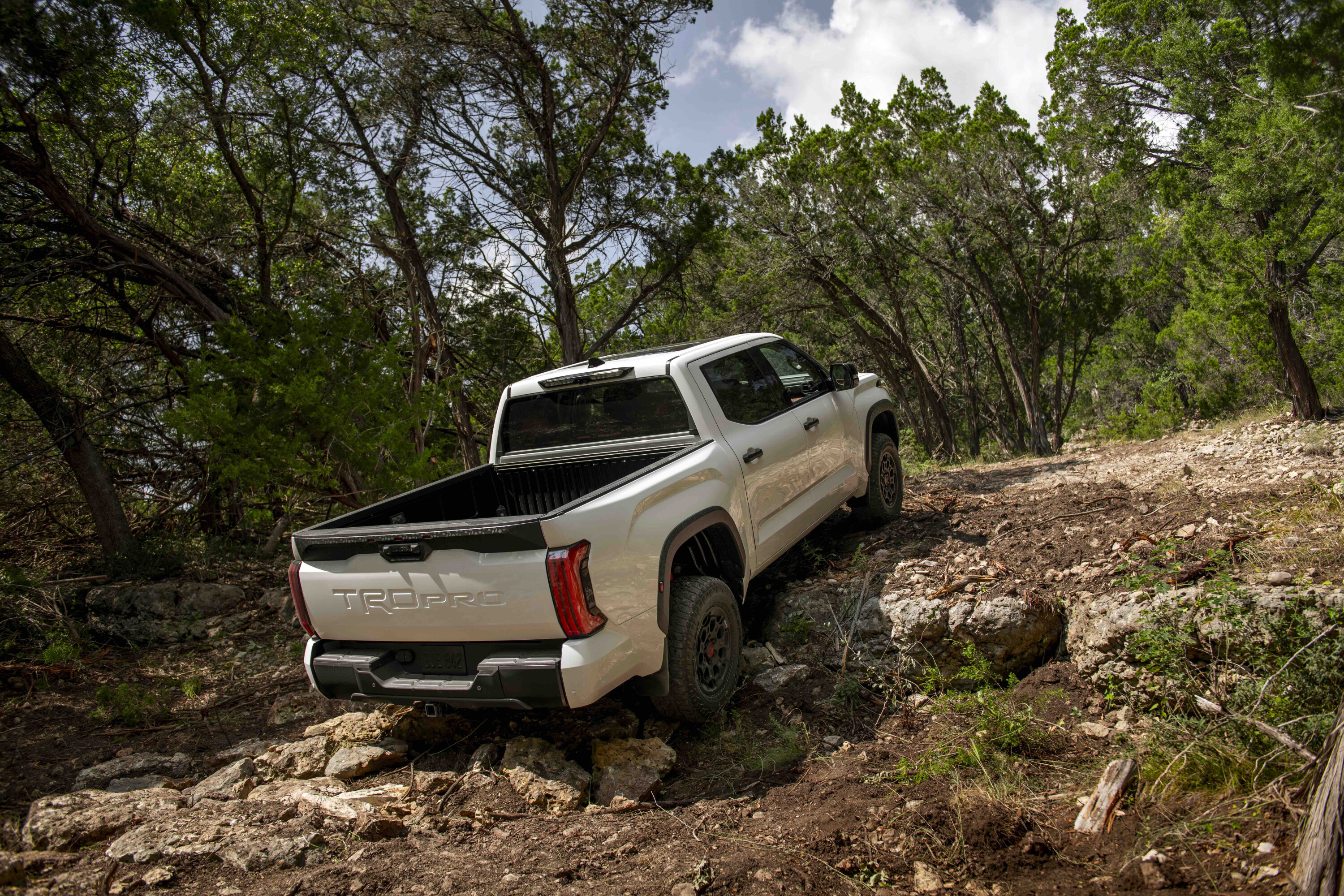
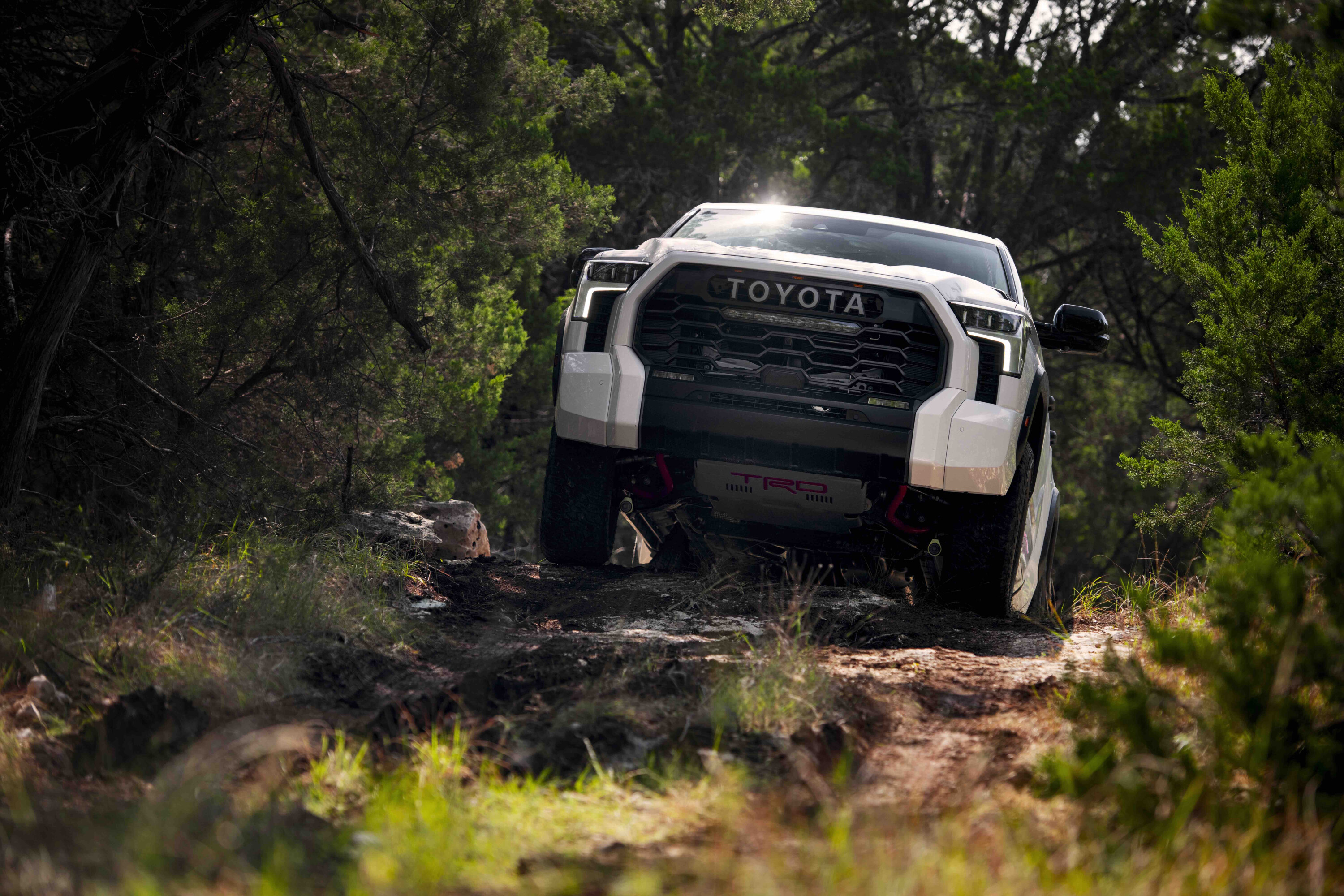
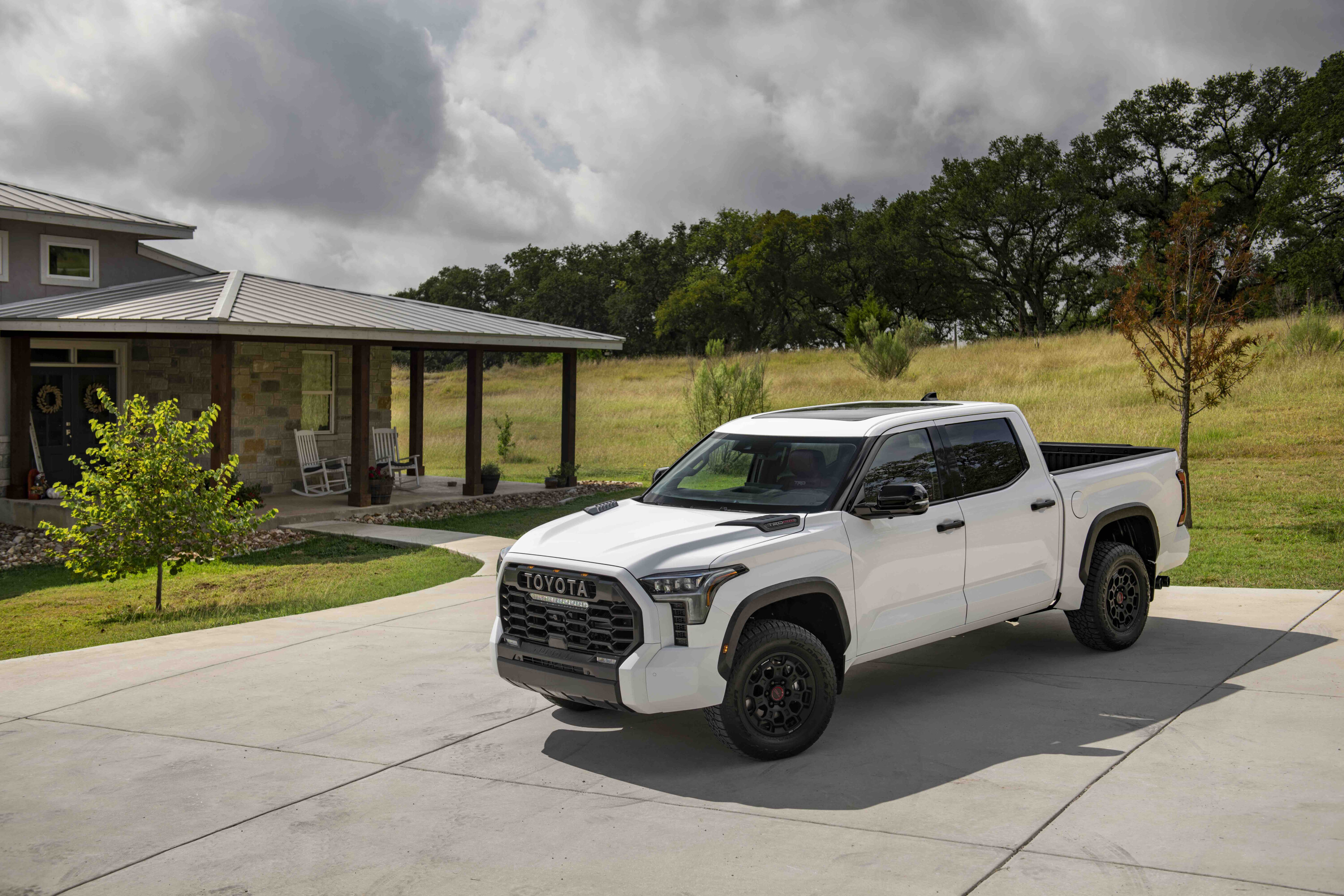
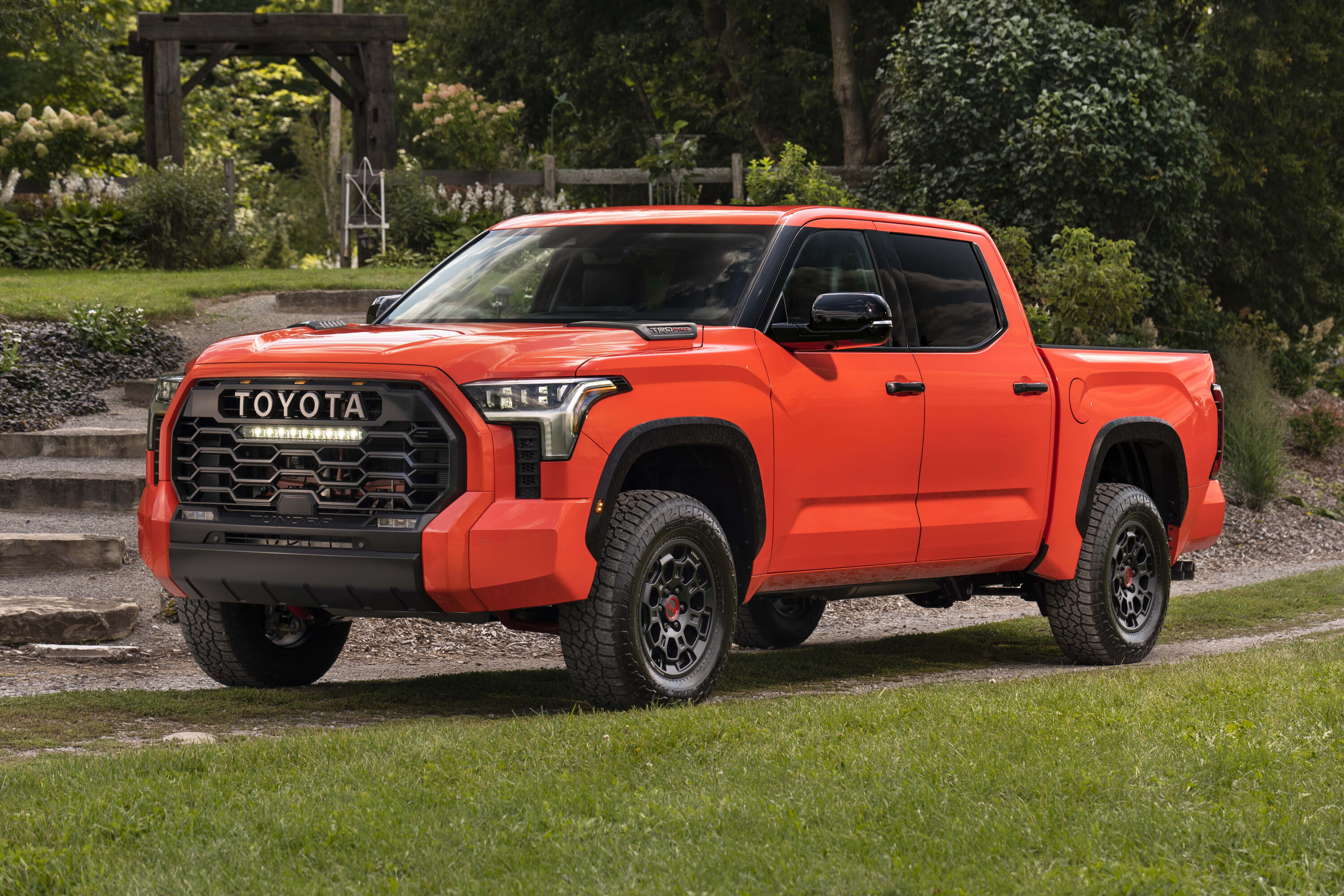
Still using a traditional full-size pick-up body-on-frame construction, the new Tundra is also Texas-sized and suited to Americans’ XXXL tastes. In its longest configuration, the Double Cab paired with the long box, it stretches nearly six and a half metres in length. It’s just shy of two metres in height and at its widest it spans almost 2100mm across for the model we’re driving here, the TRD Pro.
1
Powertrain
The standard engine is what Toyota calls the i-Force 3.5-litre, twin-turbocharged petrol V6 and like most modern turbo motors, it produces acceptable power and abundant torque.
According to Toyota, this internal combustion engine hits 286kW at 5200rpm and 649Nm at 2400rpm.
With the TRD Pro, the powertrain gains an electric motor between the V6 and the 10-speed automatic. It’s rated at 36kW and 250Nm.
Combined, the i-Force MAX hybrid twin-turbo V6 makes 326kW at 5200rpm and an earth-moving 790Nm at a usable 2400rpm. By the numbers alone, it’s clear that engineers have tuned this hybrid for performance first and fuel consumption a distant, secondary consideration.
For example, with a trim-to-trim comparison between the hybrid and non-hybrid power units, the electrified version is officially rated at 11.8L per 100km combined compared to the gas-only engine at 12.4L/100km combined, a modest five per cent improvement.
The addition of specialised components to the TRD Pro nullifies fuel savings from the hybrid powertrain, but its off-road prowess makes up for that minor penalty at the fuel pump.
1
Styling and features
On the outside, the TRD Pro is distinguished by its bespoke, forged, 18-inch BBS wheels fitted with 33-inch, 285/65R18 all-terrain Falken Wildpeak tyres.
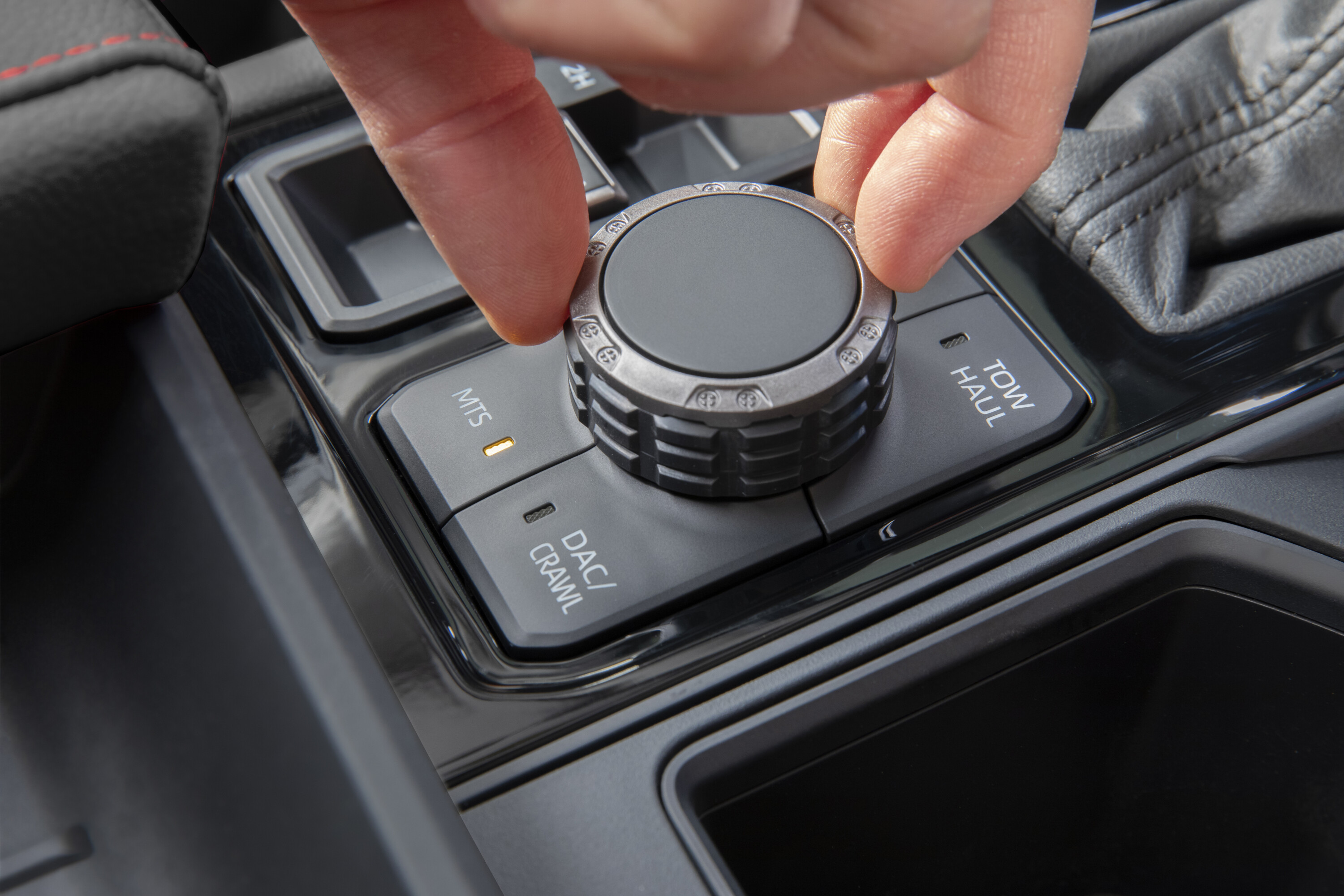
Its four-wheel-drive system uses an electronic transfer case and gives the driver the ability to choose between two-wheel drive, four-high and four-low ranges. Some American Tundra owners have lamented the lack of an automatic four-wheel drive setting.
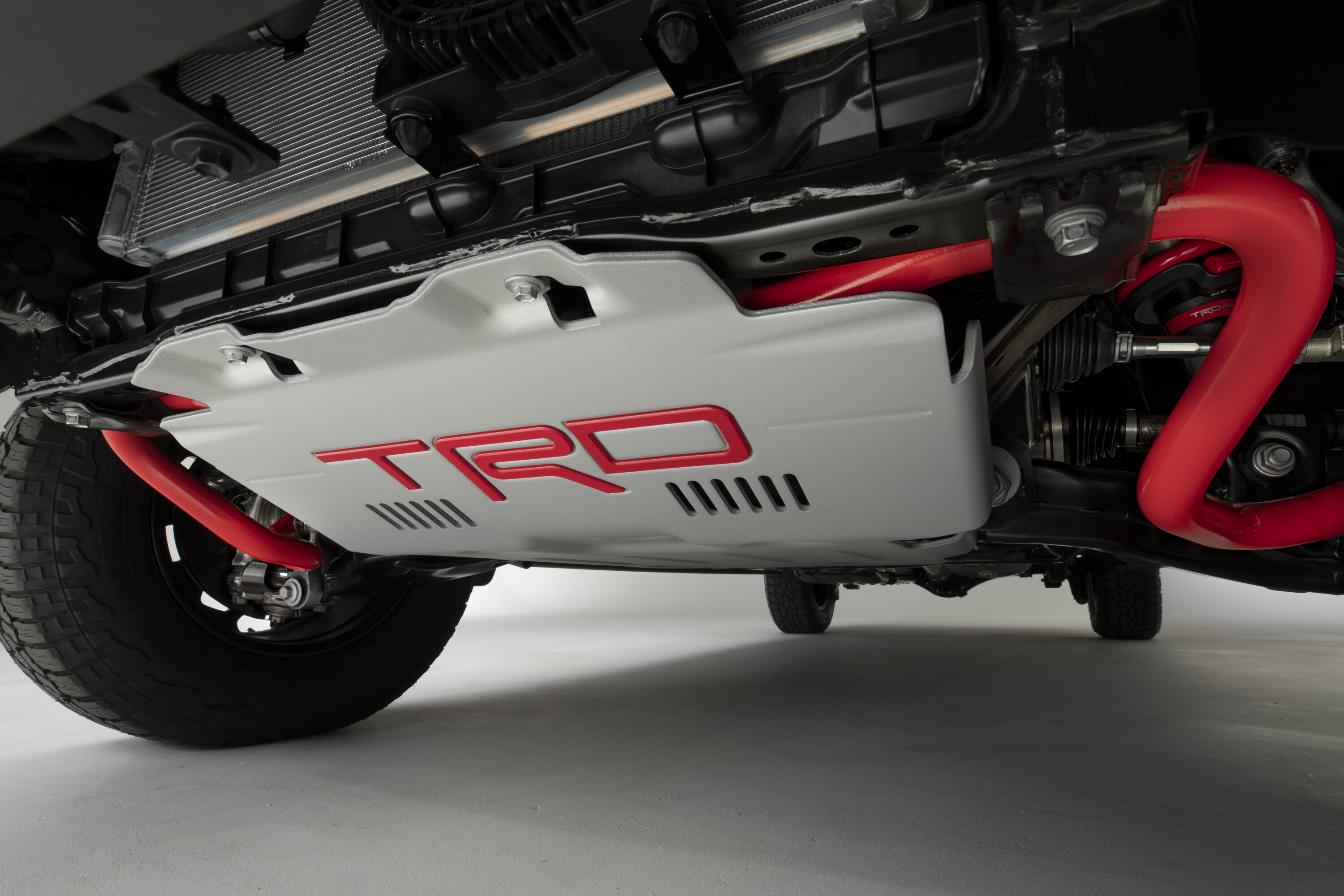
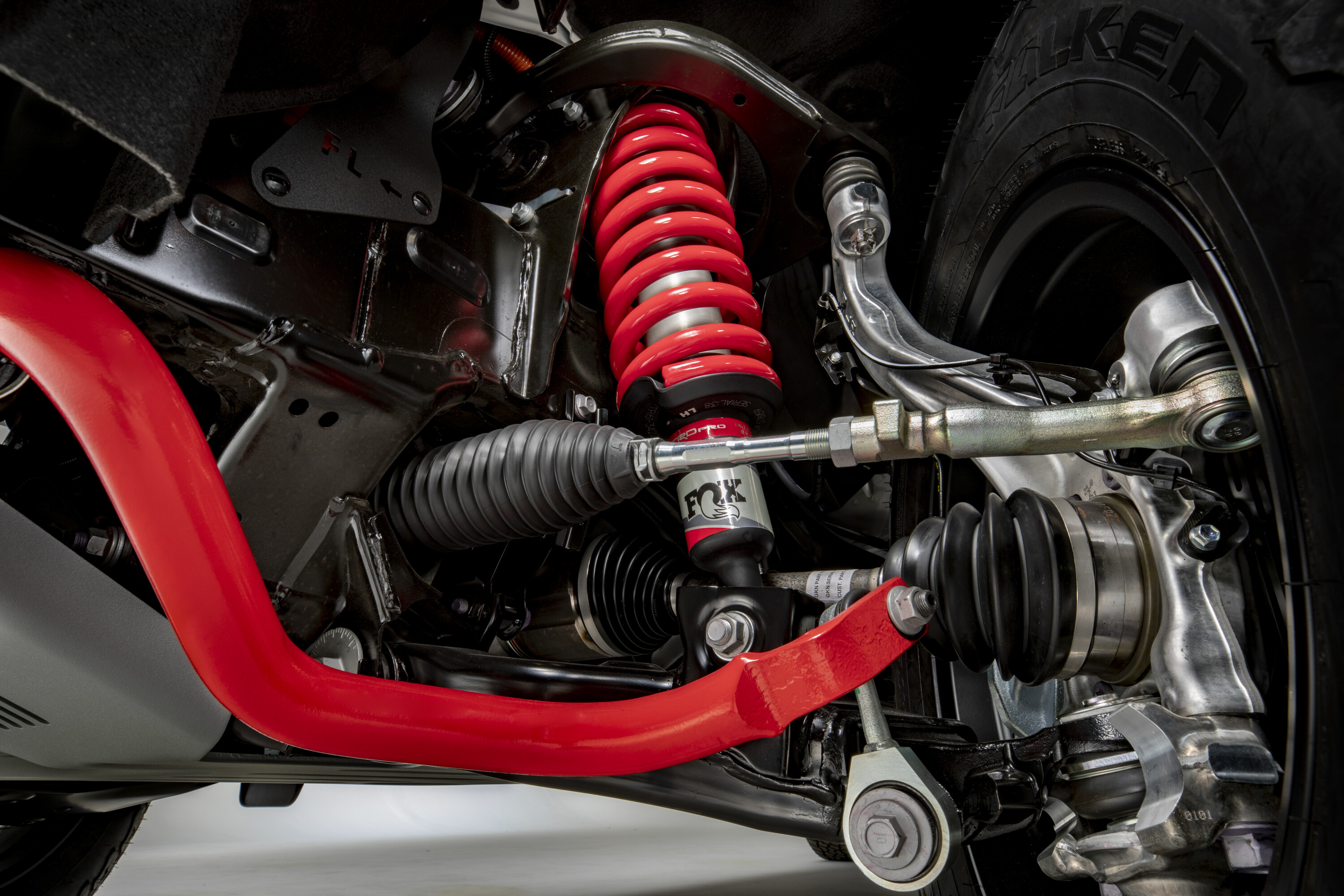
Underneath, there’s a TRD aluminium front skid plate, but all of the magic happens with the suspension tuning. Based on the Tundra’s standard double-wishbone front and multi-link rear design, the TRD Pro adds a unique front anti-roll bar, TRD Pro springs, and a set of tuned internal-bypass Fox dampers. They use a large 63.5mm-diameter aluminium body with onboard external reservoirs.
1
Satisfying the need for moderate off-road capabilities, the TRD Pro springs and Fox dampers add 28mm of height to the front suspension of the Tundra.
For a little cool factor, some of these TRD Pro-specific components are finished in red, making them the perfect conversation starter at your local truck meet.
The TRD Pro, in fact, claims the greatest tow rating of all trim levels at 5068 kilos, along with a maximum payload capacity of 727kg. Those who tow will appreciate the transmission’s tow/haul mode and the Tundra’s integrated trailer brake controller (no aftermarket add-ons required).
Cameras assist with not just aligning the truck hitch to the trailer, but when both manoeuvring and driving; the wide-view rear camera gives the driver a glimpse at objects that may be on either side of the trailer.
1
In the cabin: Space and tech
The TRD Pro is available exclusively with the full four-door CrewMax cab (and the shorter 5.5-foot/1.7m bed) and the interior is as spacious as the plains of Texas.
Front seats appear to be designed for that 99th-percentile American and are broad in every dimension.
On the other hand, they’re exceptionally comfortable and supportive for long drives, though a little short of lateral bolstering. In the TRD Pro, the front seats are heated and cooled. Between the seats is a wide, multi-function console with abundant storage options.
As you’d expect with an all-new truck, the cabin is also very tech-forward. It’s on-trend and dominated by a massive 14-inch infotainment touchscreen. The system boasts voice activation, though there’s no word on whether it prefers Texas accents. Wireless Apple CarPlay and Android Auto, and the wireless phone charger resides beside the shifter. North American Tundras are available with a Wi-Fi hotspot that can support up to 10 wireless devices.
In this off-roader, Toyota eschews leather in exchange for its Softex upholstery that’s used across their other TRD Pro trucks and SUVs.
It doesn’t have the feel of leather, is more supple than vinyl, and seems durable enough to outlast the truck, which is more appropriate for a vehicle intended to travel well off the beaten path.
1
Rear-seat passenger room is abundant with generous head and leg room, and like the front seats, the entire second row seems designed to accommodate that elusive 99th-percentile American.
The 60:40 split-folding bench seat adds some cargo-carrying versatility inside the cab, but unlike some competitors, the hybrid system’s battery sits underneath the seat, eliminating any chance of storage below the cushion.
From the driver’s perspective, the new 12-inch digital instrument cluster is well designed, with gauges and necessary information laid out clearly, and the screen itself is highly visible in a wide range of lighting conditions.
The secondary ergonomics are oversized like the Tundra itself, with large buttons, dials, and switches within easy reach.
While the infotainment system has a volume knob, a tuning dial has been omitted, and in practice, the 14-inch infotainment screen is so large that if the driver needs to reach the right-hand side, it often requires a stretch out of the seat.
Overall, it’s a relatively quiet cabin and they’ve tuned the acoustics so that you can hear a little thrum from the engine and the occasional spooling of the turbos.
2
Driving
Speaking of power, its abundance is one of the Tundra’s highlights and the hybrid system makes full use of both the V6 and the electric motor.
Unladen with just the driver on board, the Tundra TRD Pro has incredible thrust, either from a stop or accelerating to highway speeds. Zero to 100 km/h launches happen in less than six seconds, which is incredible for a full-size truck that tips the scales at over 2700 kilos.
Acceleration is so relentless at anything less than highway speeds that the only conclusion the driver can derive is that the petrol and electric motors seem to produce much more power and torque than Toyota’s official numbers suggest.
1
Selecting the Sport drive mode does change the transmission’s shift algorithm by choosing lower gears than normal, but the truck’s responsiveness doesn’t measurably change because there is such an abundance of torque available at any time.
The combination of this torquey twin-turbo engine and the responsive electric motor is a match made in full-size truck heaven.
Toyota has fitted the TRD Pro with a slightly quicker steering rack than the rest of the Tundra models. The steering’s well weighted with decent on-centre feel, but as expected with electric assist, feel and feedback are at a minimum. It’s no surprise that given its length, the Tundra has a massive 7.5-metre turning radius.
1
Braking is simply excellent and, when you’re on the move, you have a lot of confidence in the Tundra’s ability to slow itself with very clear modulation and a decent amount of feel through that pedal.
The brakes also feel up to the task of towing up to its maximum capacity.
It’s easy to assume that with the TRD Pro’s off-road orientation, its suspension may be compromised for day-to-day use. While the Ford F-150 Raptor and Ram TRX and excellent at high-speed off-road running, they’re softly suspended and in daily use demonstrate excessive body roll along with too much compliance.
Thankfully, the TRD Pro’s suspension set-up works for daily use and it absorbs road imperfections without complaint. Credit to the Fox dampers for delivering excellent body and wheel control, with limited secondary body movement.
1
Fuel use
In a mix of equally mixed city and highway driving, the Tundra TRD Pro returned an observed but decidedly non-scientific fuel consumption of 15 litres per hundred kilometres.
For context, full-size pick-ups like the F-150, Ram 1500 and Chevy Silverado all deliver between 18 and 20L/100km in that same driving environment. Toyota may just have the fuel consumption champion among pick-ups for the time being.
VERDICT
The new Tundra is a refreshing take and a welcome option for full-size truck buyers. It’s distinctive, with a spacious and tech-forward cabin, and satisfying driveability.
It’s also got the right badge, but whether this Toyota can take on the likes of the established competition is a question that only Australian truck buyers can answer.