A key component of any touring 4×4 build is a suspension upgrade.
Some might ask why this is necessary when the OEM engineers have spent countless man-hours and millions of dollars developing the suspension for the vehicle, so why would you ever need to replace it?
The answer is simple. Like most everything on a production car, the suspension is a compromise. It has to meet acceptable standards for body control, handling, ride quality and load carrying ability, all while meeting a cost per unit to meet the manufacturer’s targets.
They are built to a price and that price is the lowest possible one while achieving the desired performance. Some manufacturers invest more in the suspension of their vehicles than others do and it shows when you drive them.
This compromise is amplified in a double-cab 4×4 ute as these vehicles are the biggest compromise themselves.
They are marketed to be family vehicles that are capable off-road, able to carry a one-tonne payload, pull a 3500kg trailer, and be a great all-round touring vehicle. In reality, they don’t do any of those things particularly well. Sure, they do an acceptable job, but rarely do they do a good one.
Take the current Ford Ranger for example. Its chassis and suspension deliver ride and handling that are best in class, but start to load it up with weight on the back and the rear springs sag terribly, and it doesn’t take much to have it riding on the bump stops.
1
So if you want to tow or carry a load in your ute you will want to upgrade the rear suspension at the very least. You might even want to fit a suspension kit that increases the GVM of the vehicle to allow for heavier loads.
If you are fitting a lot of heavy accessories like steel bullbar, side rails, winch, canopy, rooftop tent and so on, you’ll also want to upgrade the suspension and might want to consider a GVM upgrade.
If you want to use your ute for off-roading then you’ll want to raise the ride height to give more ground clearance, and maybe some added tyre clearance. You’ll want heavier springs to carry the loads required of a touring 4×4, and better quality shock absorbers to control those springs and manage the rough terrain you will experience when driving off road.
It’s all about dialling-in the vehicle to best suit your requirements to give you a safe, competent and reliable rig for the type of use you need it for.
1
Getting it right
There are countless companies out there with ready-made suspension packages they are only too willing to sell you for your 4×4 but, just as you tailor the vehicle to your own specific needs, you need to tailor the suspension to the vehicle and its use.
The biggest factor here is vehicle weight, followed by how you plan to use it, so rather than simply buying an off-the shelf or online suspension package, you should speak to the suspension manufacturer/supplier to discuss your needs and planned use in detail so you can tailor a package that will best suit your application.
As mentioned, the RA Ranger comes with the best off-the-lot suspension for general driving in the class, but we knew that as we loaded our Ranger up with equipment, it wouldn’t cope for long. And we were surprised at how soon it fell short of being acceptable!
1
To get the right suspension for your 4×4 you need to know how much weight you’ll be adding to it.
Having a definitive list of all those added products and what they weigh is a good start but ideally you want to set the vehicle up at full touring weight, with all the accessories already fitted.
As with our last two 4×4 builds we again turned to the team at Tough Dog Suspension for the kit to go under our Ranger. We discussed with them what we wanted for the vehicle and what was going on it, and planned to leave the suspension installation until the latest possible moment when most of the gear would already be fitted, allowing us to dial it all in.
1
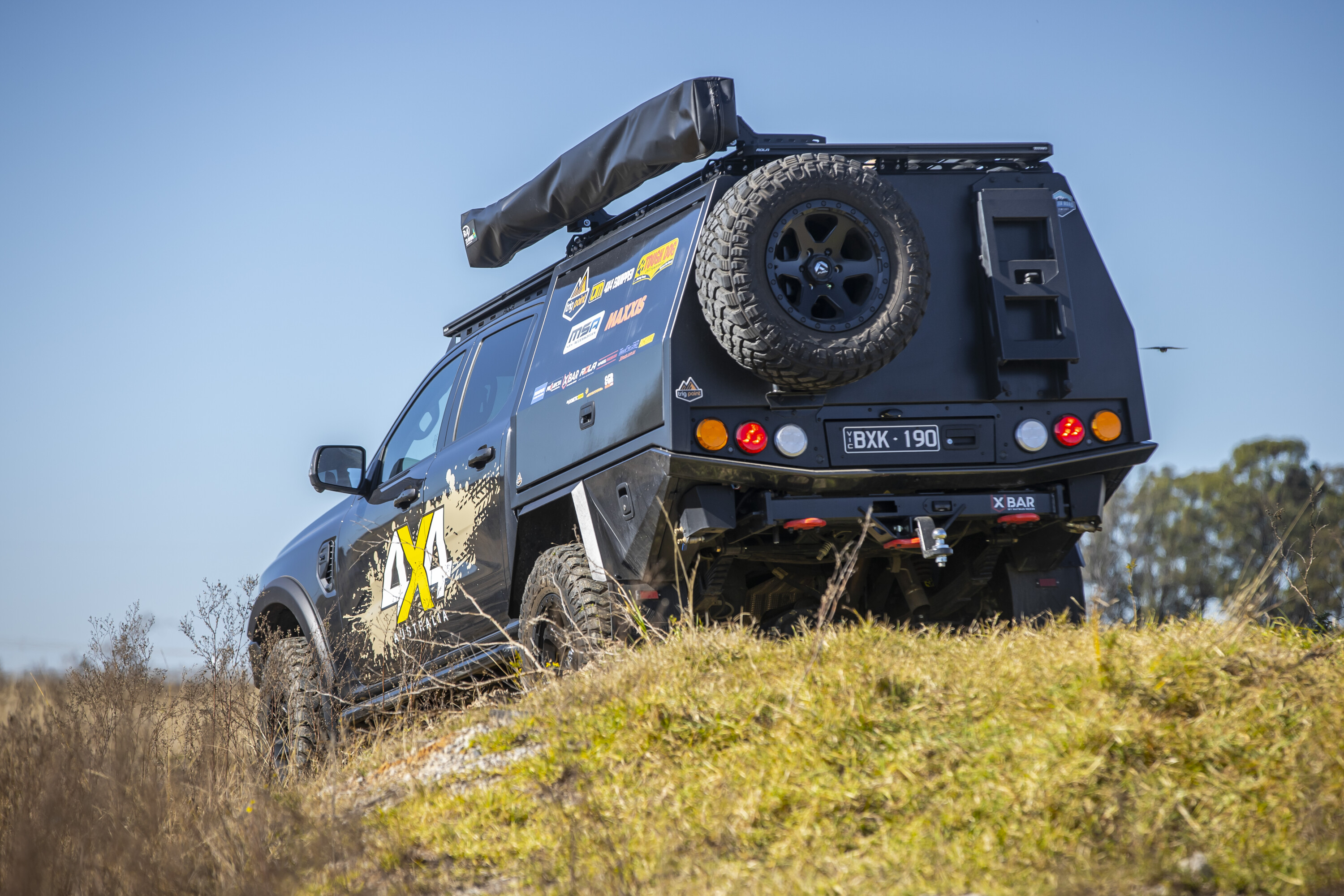
Our 285/70R17 Maxxis tyres on Fuel Ripper zero-offset wheels fitted the on the vehicle without requiring any suspension changes, so we were able to run them right from the outset.
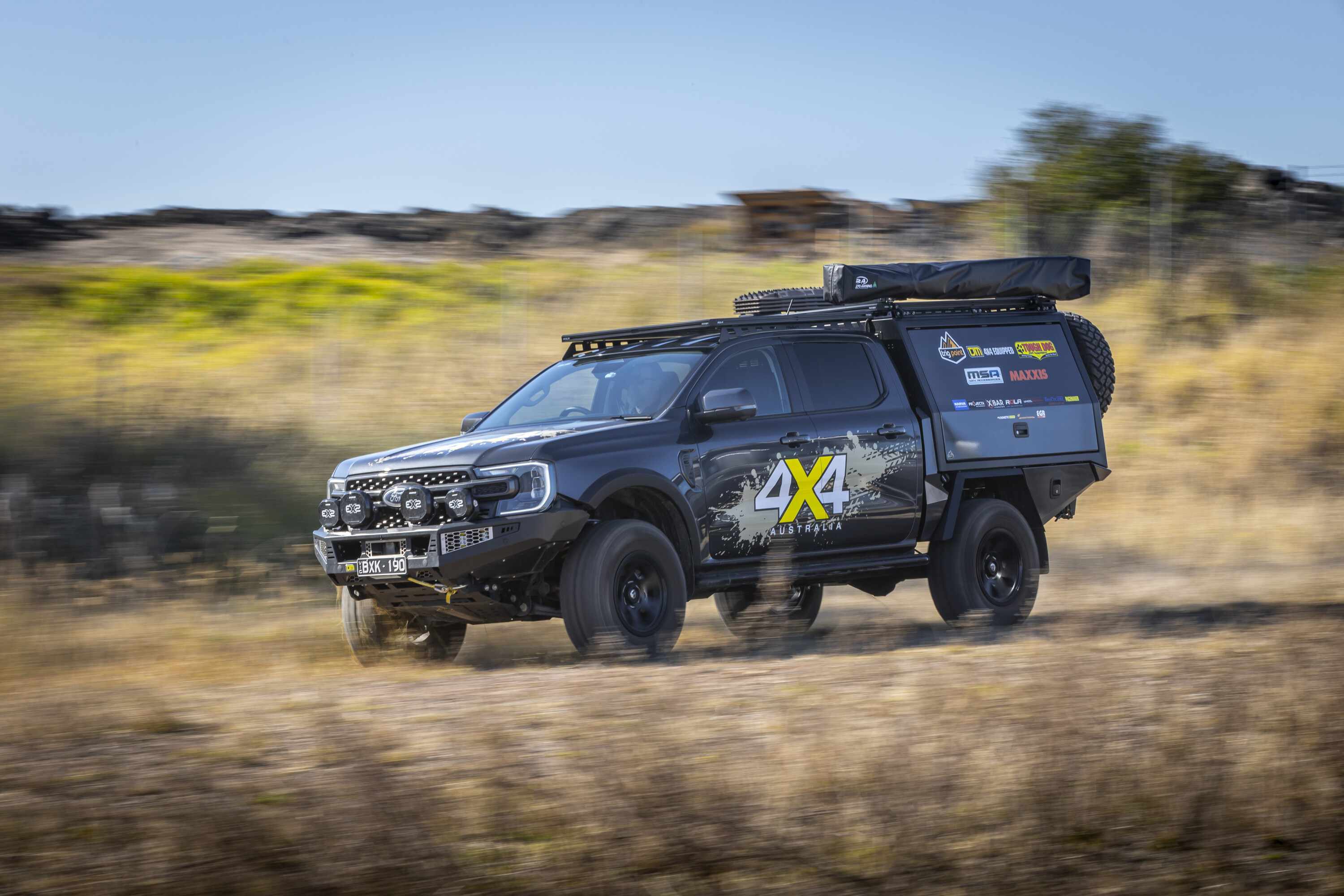
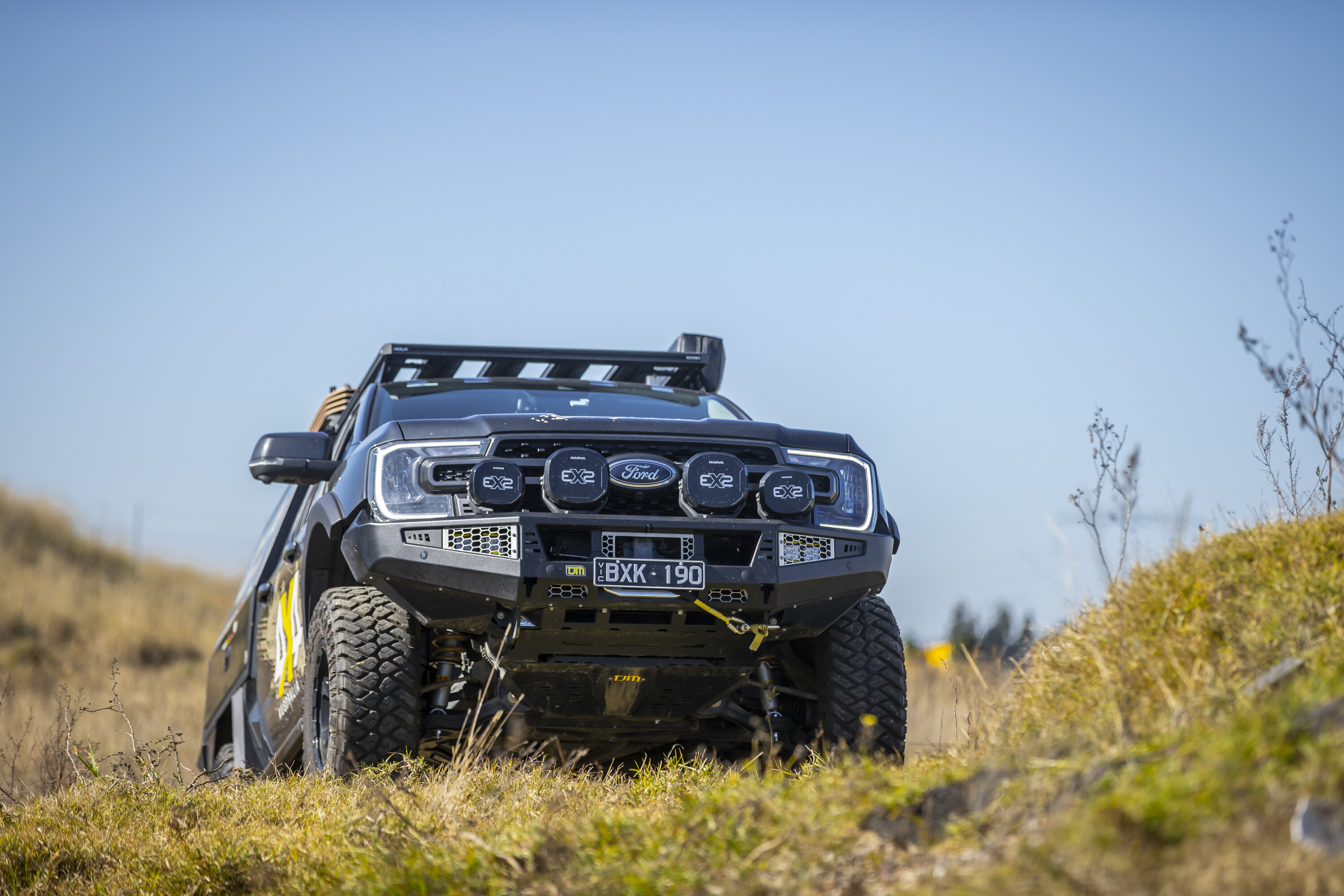
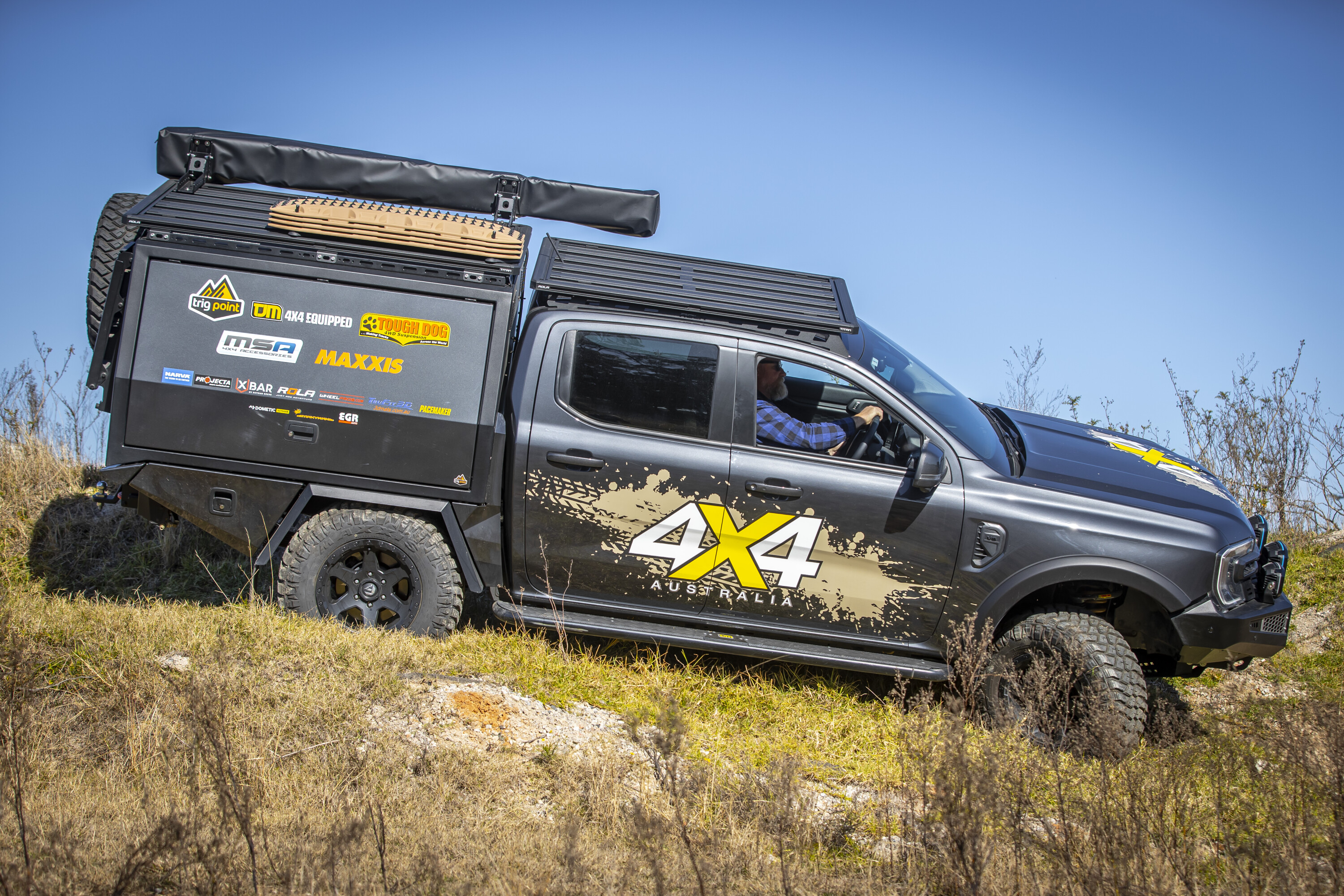
The TJM Venturer front bar, Torq winch and side steps added a noticeable weight to the front-end, but with no detrimental effects on the way the car drove. It wasn’t until we removed the standard cargo tub and fitted the Trig Point canopy that we really started to see and feel the OE suspension struggling.
Removing the steel cargo tub and fitting the aluminium canopy/service body only adds around 230kg or so, but the longer body does move the weight of the vehicle further back behind the rear axle, especially with the spare wheel mounted right at the back.
1
This again was noticeable when driving but still acceptable. It wasn’t until we started loading the canopy up with the Projecta 12-volt power system, and the MSA Powerslide with the Dometic fridge, that things started to turn south.
The rear-end sagged so much that the suspension was bottoming out over suburban speed bumps and the springs were only millimetres off the bump stops. This is something we also heard from folks who were buying their Rangers to tow 3000kg trailers with, and they were having to update their suspension.
The team at Tough Dog was still working on its suspension systems for the new Ranger and we still had more gear to fit before we planned to take it to Sydney for the final installation, so as a stop-gap fix, Tough Dog sent us a set of 500kg constant-load rear springs to get the back-end back up, and tide us over till we headed up north for the full kit.
1
The leaf springs were selected in line with the weight we had already fitted to the vehicle, as well as what we had planned.
The 500kg springs had the Ranger looking like a 70s street machine with the rear-end raised and the nose down, but at least it was driveable again. With our Narva lights, Rola Racks, Boss Aluminium awning and a few other goodies fitted, we figured we were getting closer to our target, so we hit the Hume and headed north for the trip to Tough Dog HQ.
1
Fitting time
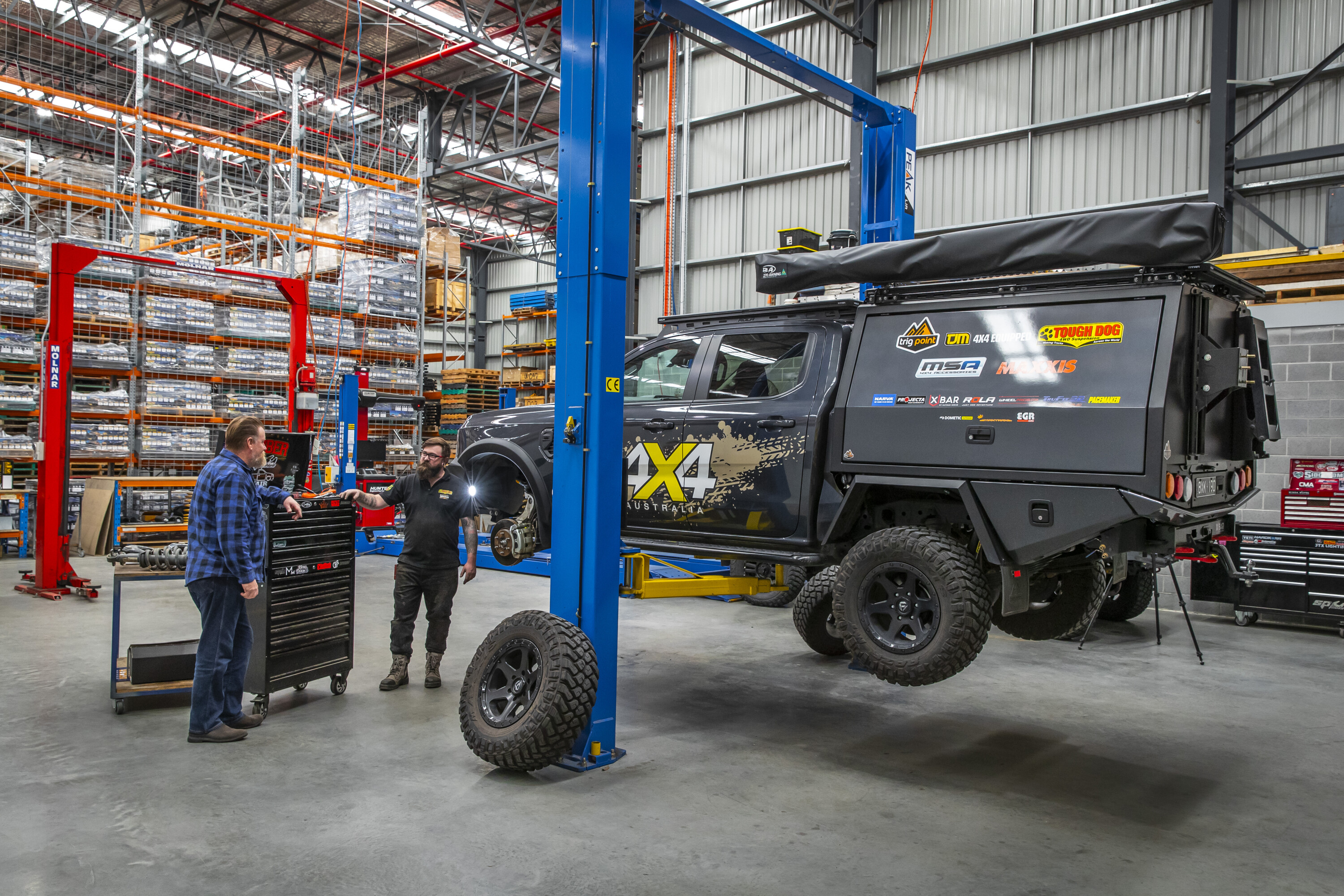
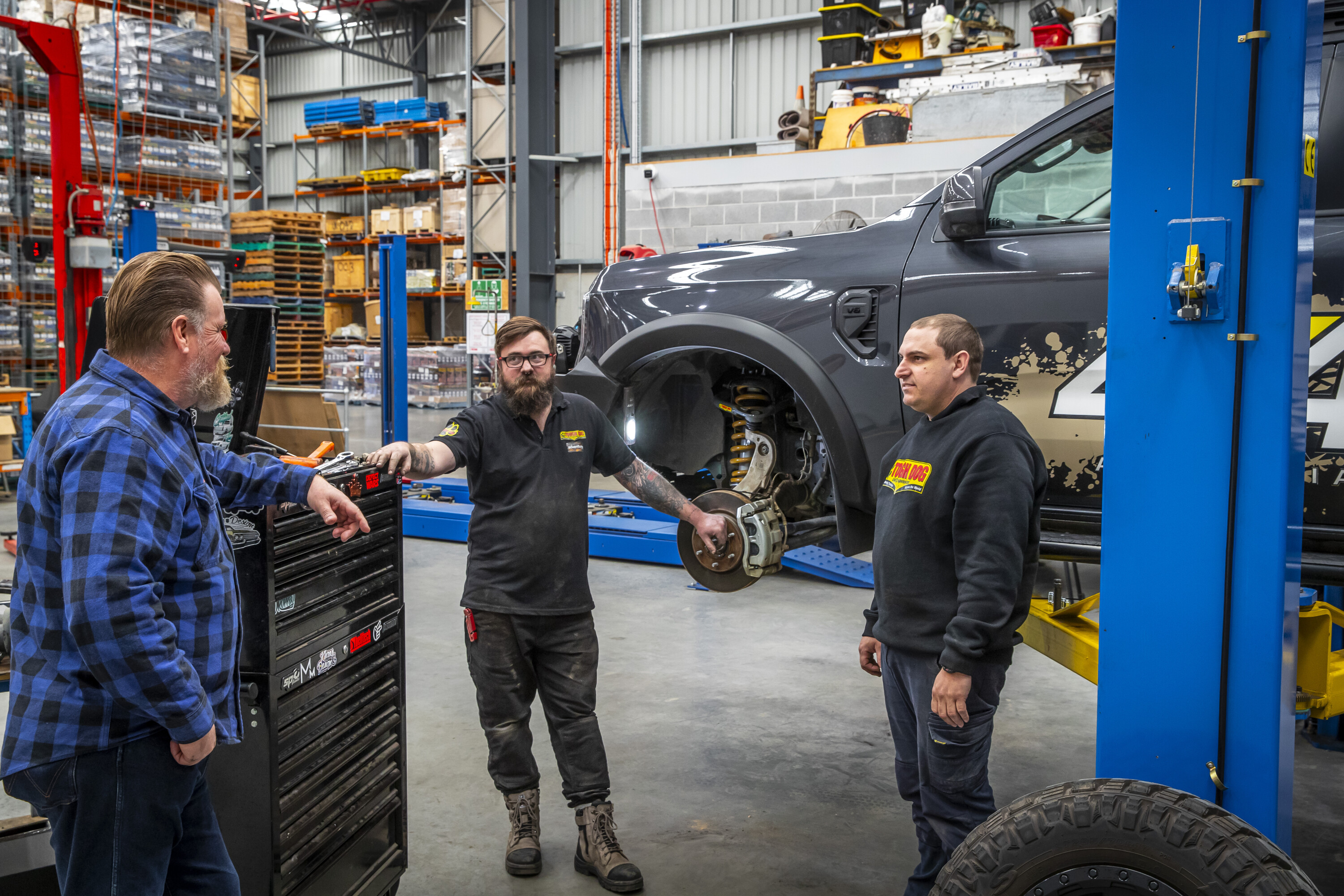
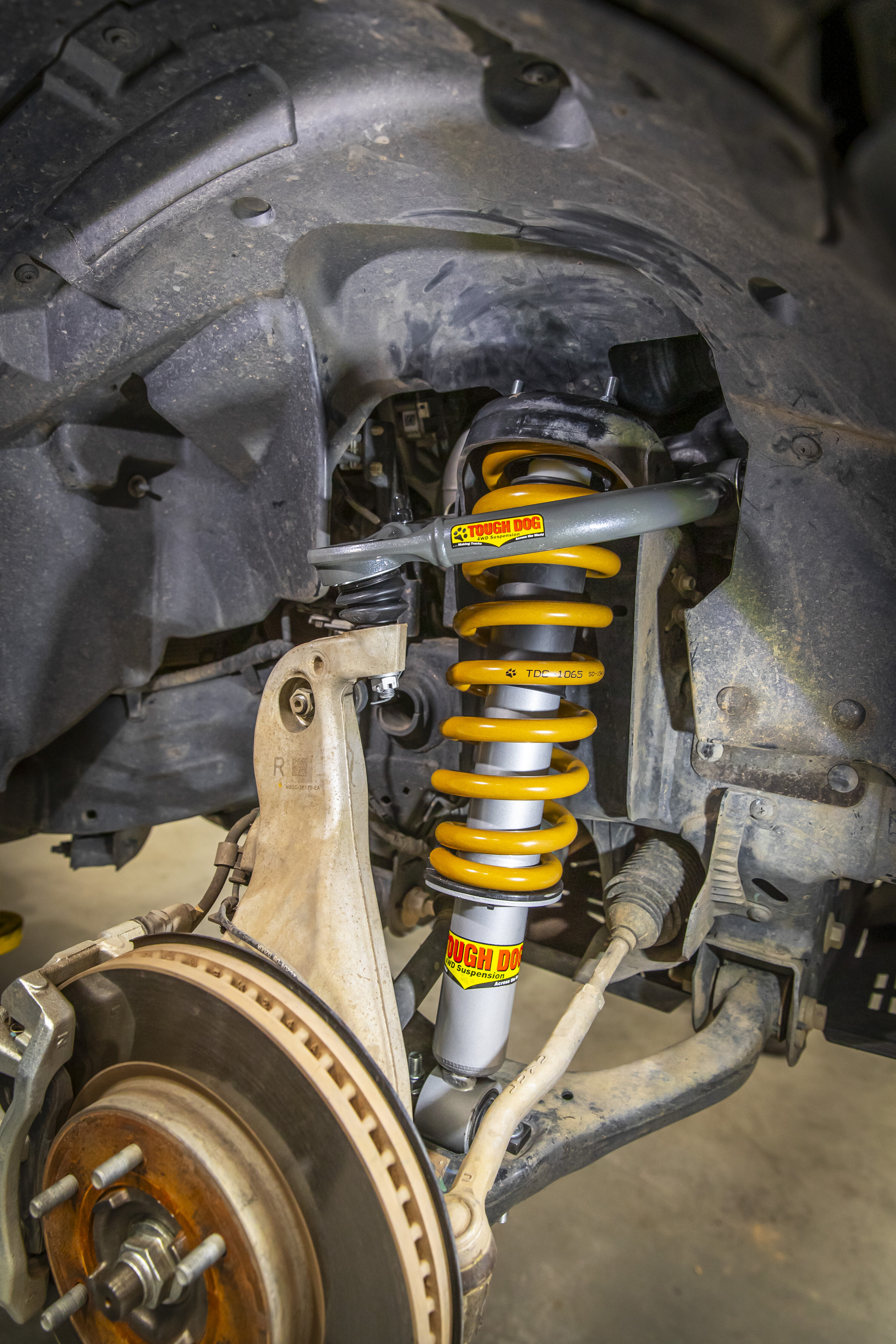
On arrival at Tough Dog’s huge facility in Marsden Park, the team was ready to install a set of front struts they had already built using the information we had supplied earlier.
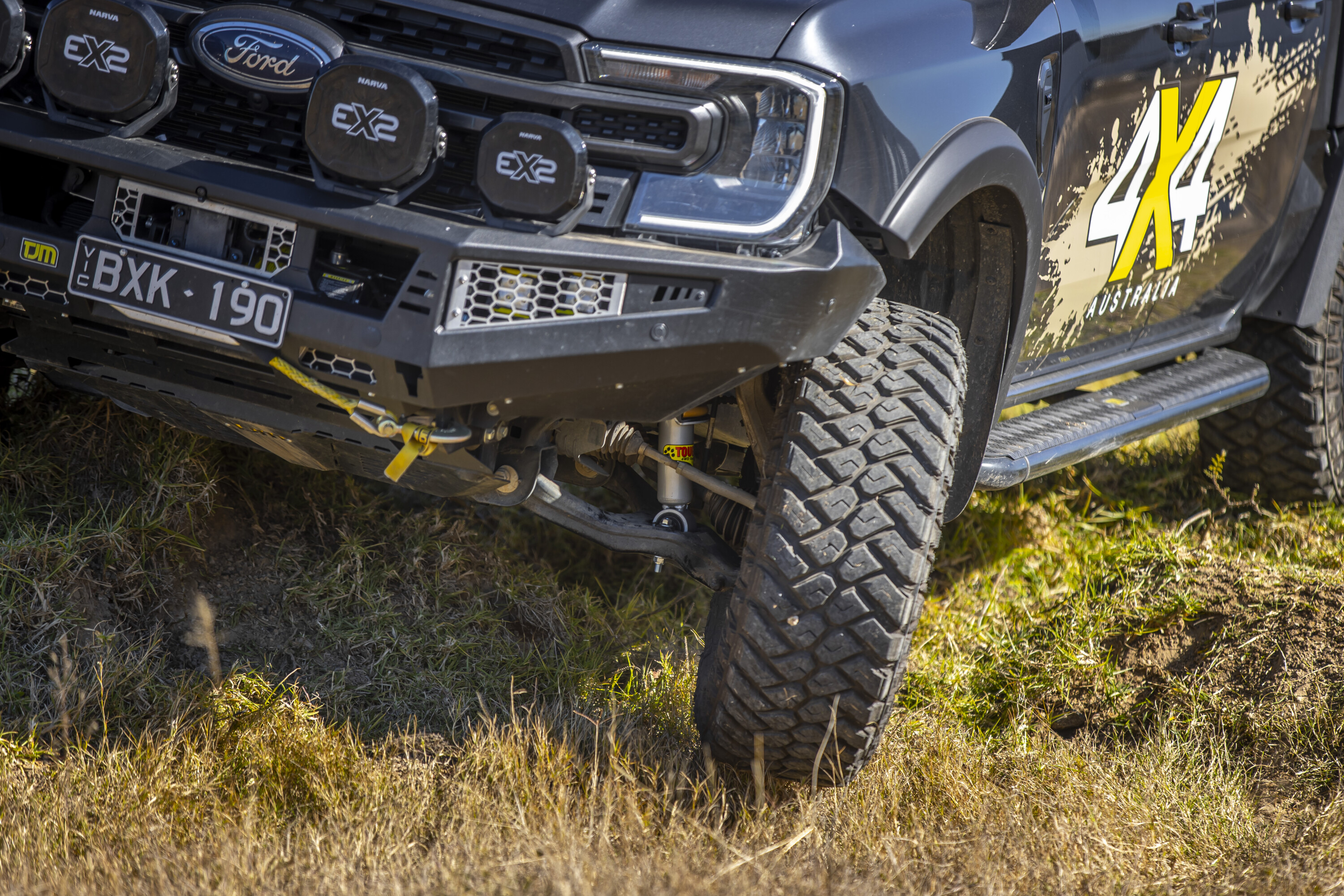
Specifically, they were designed for a vehicle running a steel bullbar and winch, which of course we had. The fully assembled struts include the dust boot and bump stop along with the strut top mounting and bushings.
The struts are fitted with Tough Dog’s Foam Cell 40mm bore shock absorbers. The Foam Cell shocks are a twin-tube design and have a foam insert inside them that helps manage the oil flow to reduce shock fade from sustained corrugations and rough roads.
1
They also employ velocity-sensitive valving so they best react to high- or low-speed frequency bumps.
They are a great value for money, all-round performance shock absorber, and our previous experience with the foam cells meant we were happy to be using them again.
The Tough Dog struts were installed along with replacement upper control arms. The latter are not only tougher and stiffer than the OE arms but more importantly allow the suspension geometry to be adjusted back to the factory specifications after installation of the taller struts. The new struts raised the front ride height by around 50mm.
1
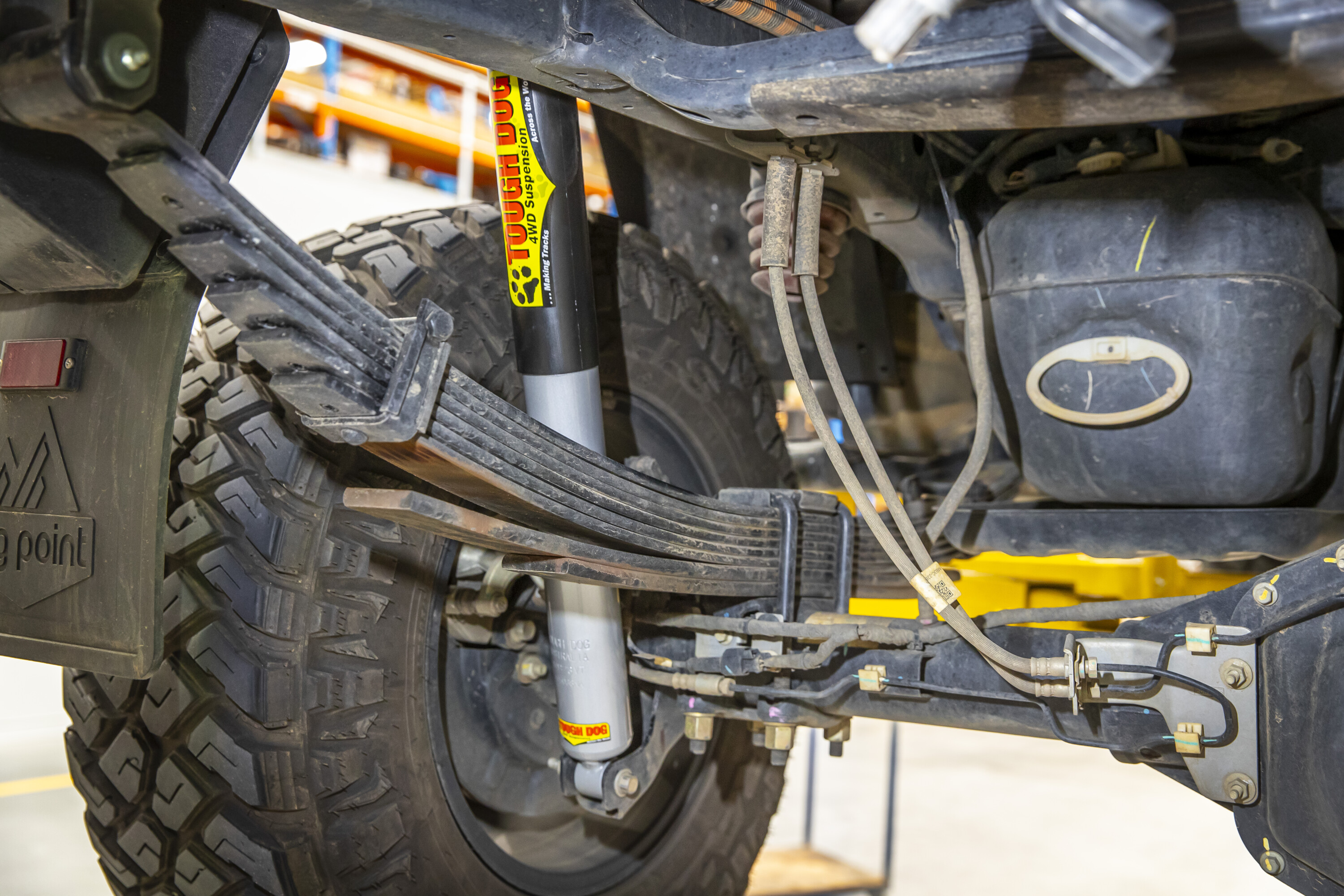
A set of 40mm bore Tough Dog Foam Cell shocks were also fitted to the rear-end where the OEM Ford shocks had been topping out over every bump when made to work with the taller leaf springs.
The longer shocks allow the springs to work to their full travel, and they better control the load and movement.
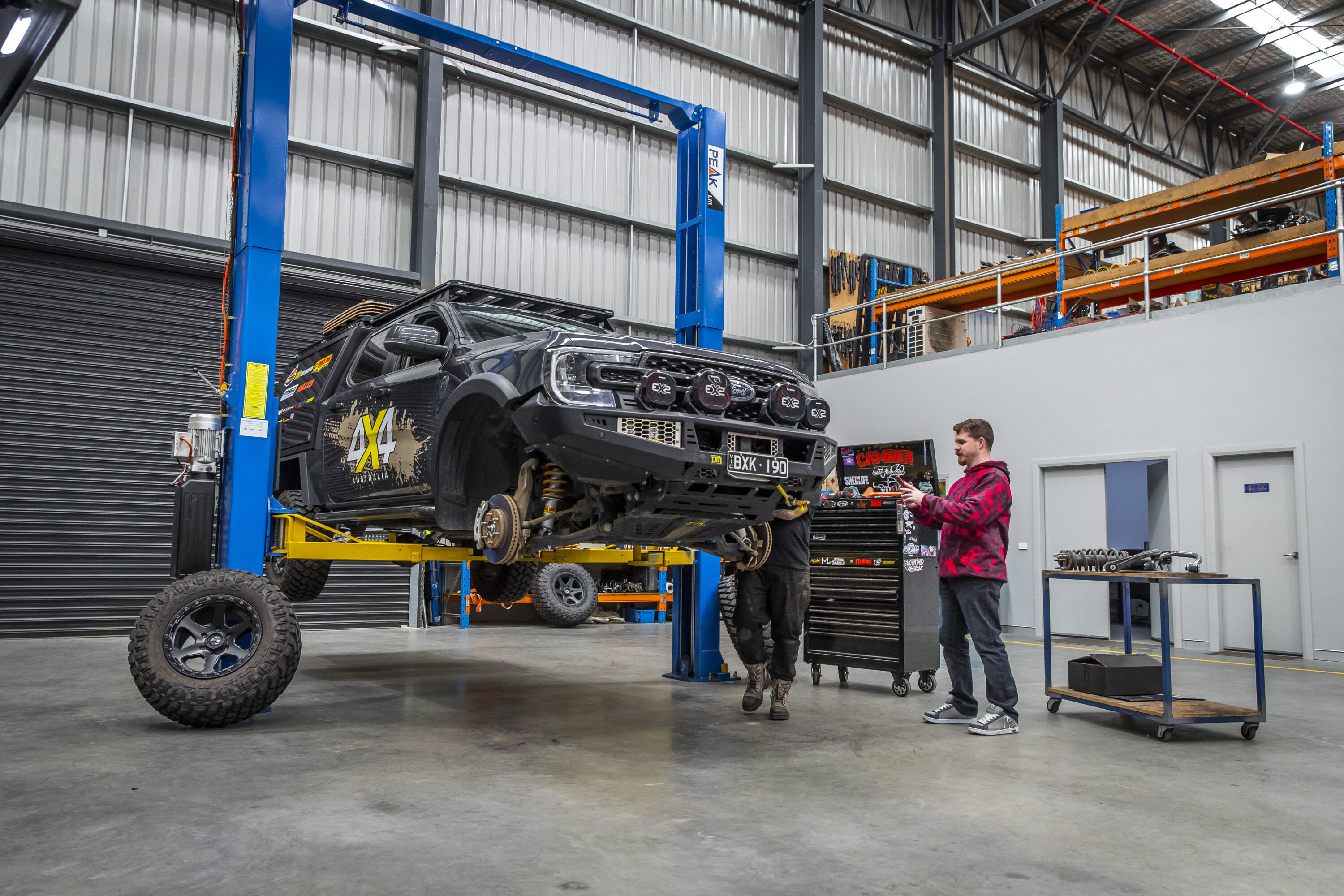
The full suspension installation was a straightforward job for the team at Tough Dog. This is after all what they do everyday… and have been doing for more than 35 years. Their experience showed once we got the Ranger back out on the road after a wheel alignment.
1
All the alignment settings were brought back to the factory specifications with a little bit of added caster to sharpen up the steering a tad.
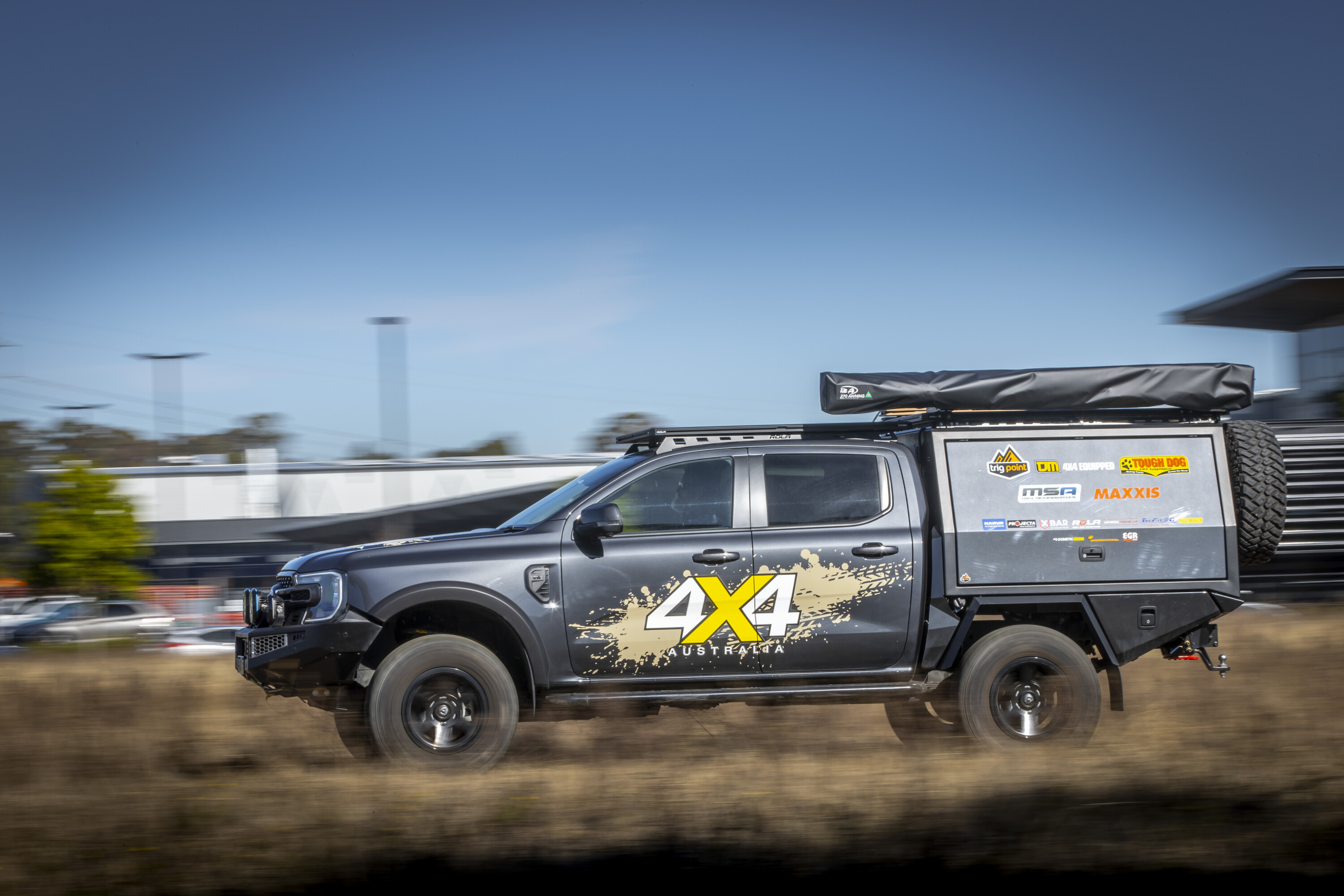
The Ranger not only steers and rides better than it did when we drove in there, but it now copes better with bumps, and thanks to the added control of the new shock absorbers, the rear-end no longer tops out over every bump. It looks more like a proper touring 4×4 now as well, thanks to a lever ride height and plenty of ground clearance.
The drive back down the Hume Highway to Melbourne was a much more pleasant experience than the drive up to Sydney, as everything is now working in cohesion and the weight of the vehicle is much better controlled over humps and bumps. We’ll let you know how it performs off-road soon, so keep an eye out.
The term masterpiece is hardly new. In fact it’s something that has been coveted since the Middle Ages.
Something apprentices and journeymen aspire to create in all realms of craftsmanship and artistry.
Under the old guild system, young men and women learning the skills to be Goldsmiths and Masons, Painters and Sculptors, Bakers and any number of countless other talents would work under a master as they honed their skills.
1
Eventually, with proper guidance and perseverance, they’d produce a piece of their own work so perfect in all aspects that they could be admitted to a guild, and become masters themselves. Their masterpiece.
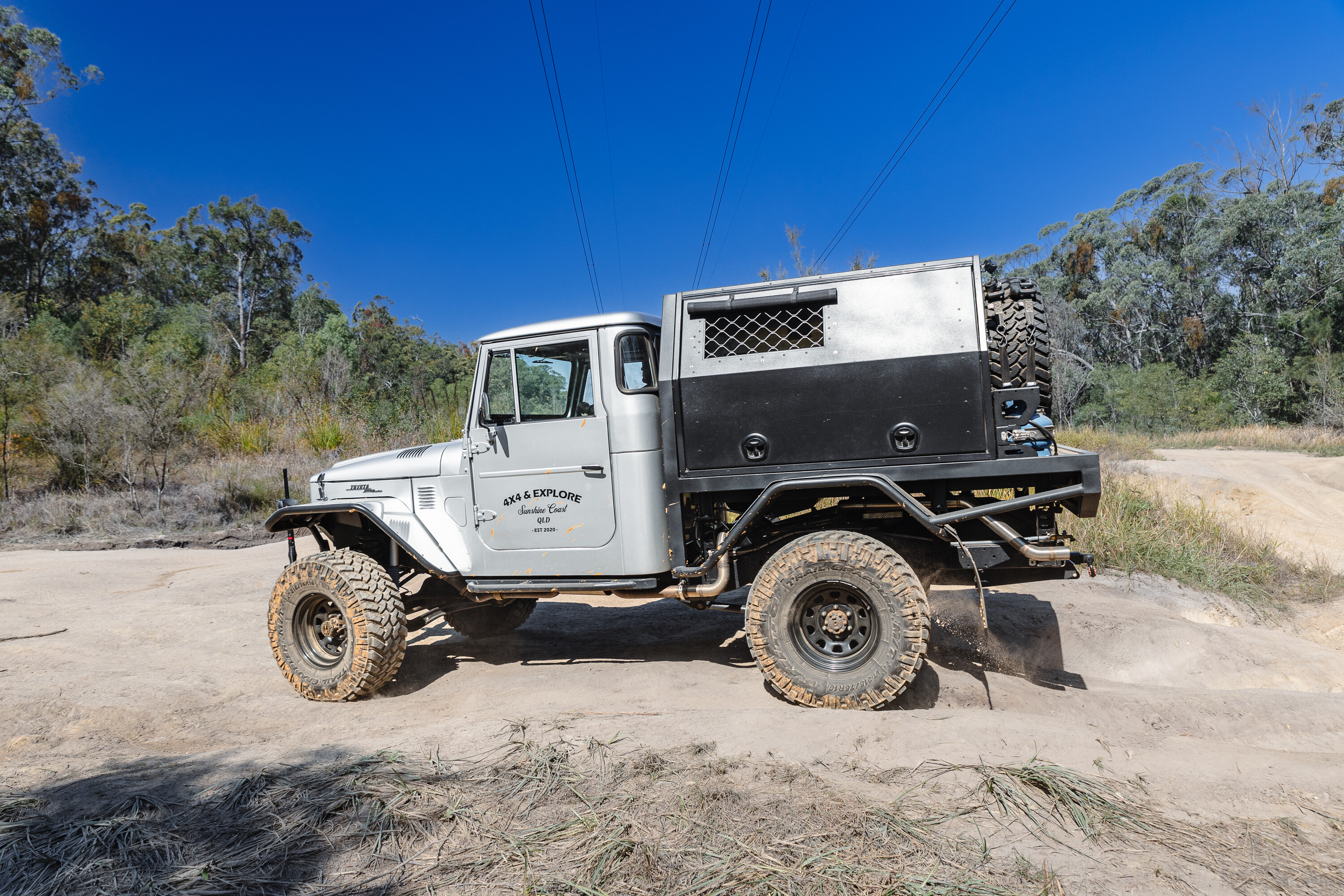
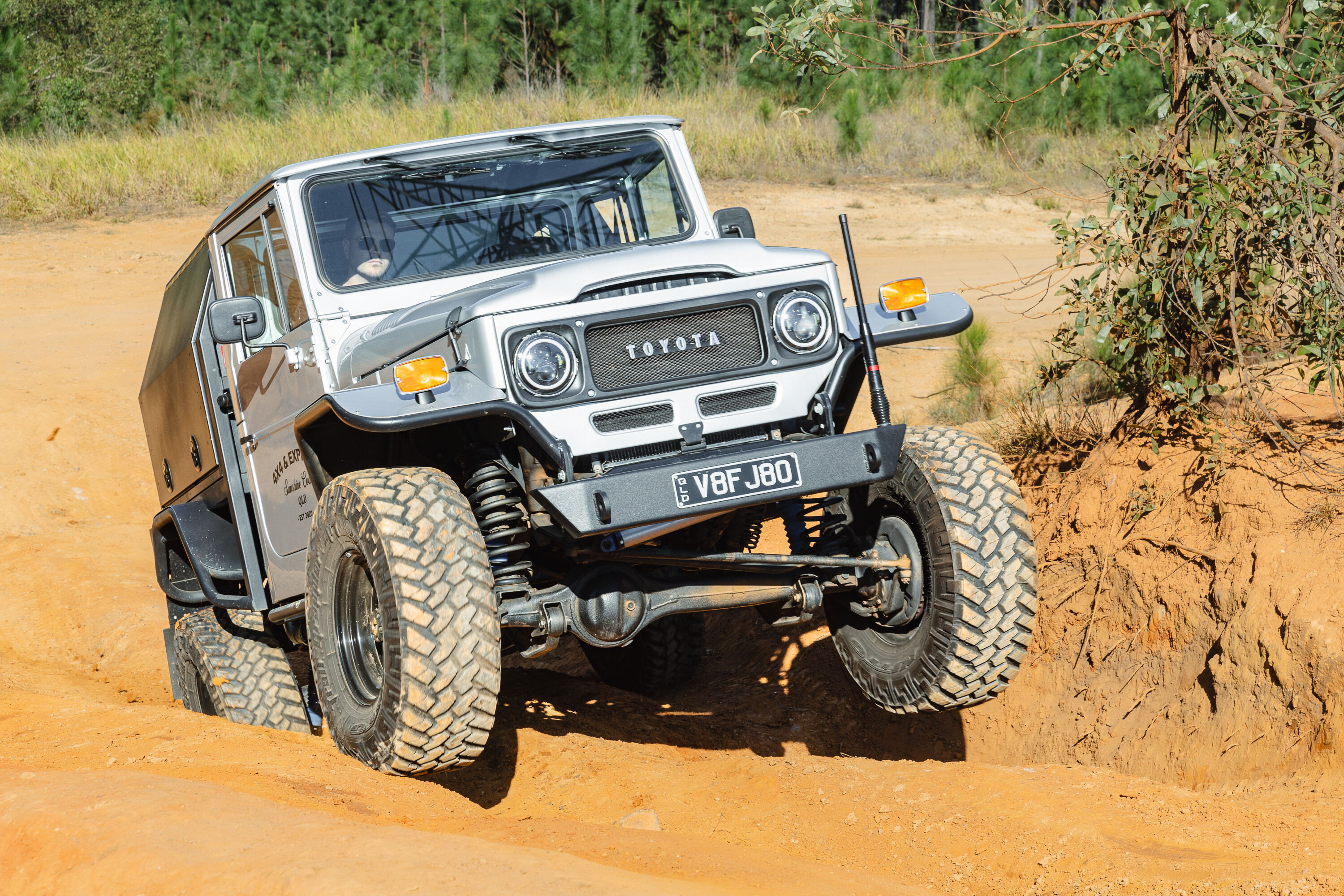
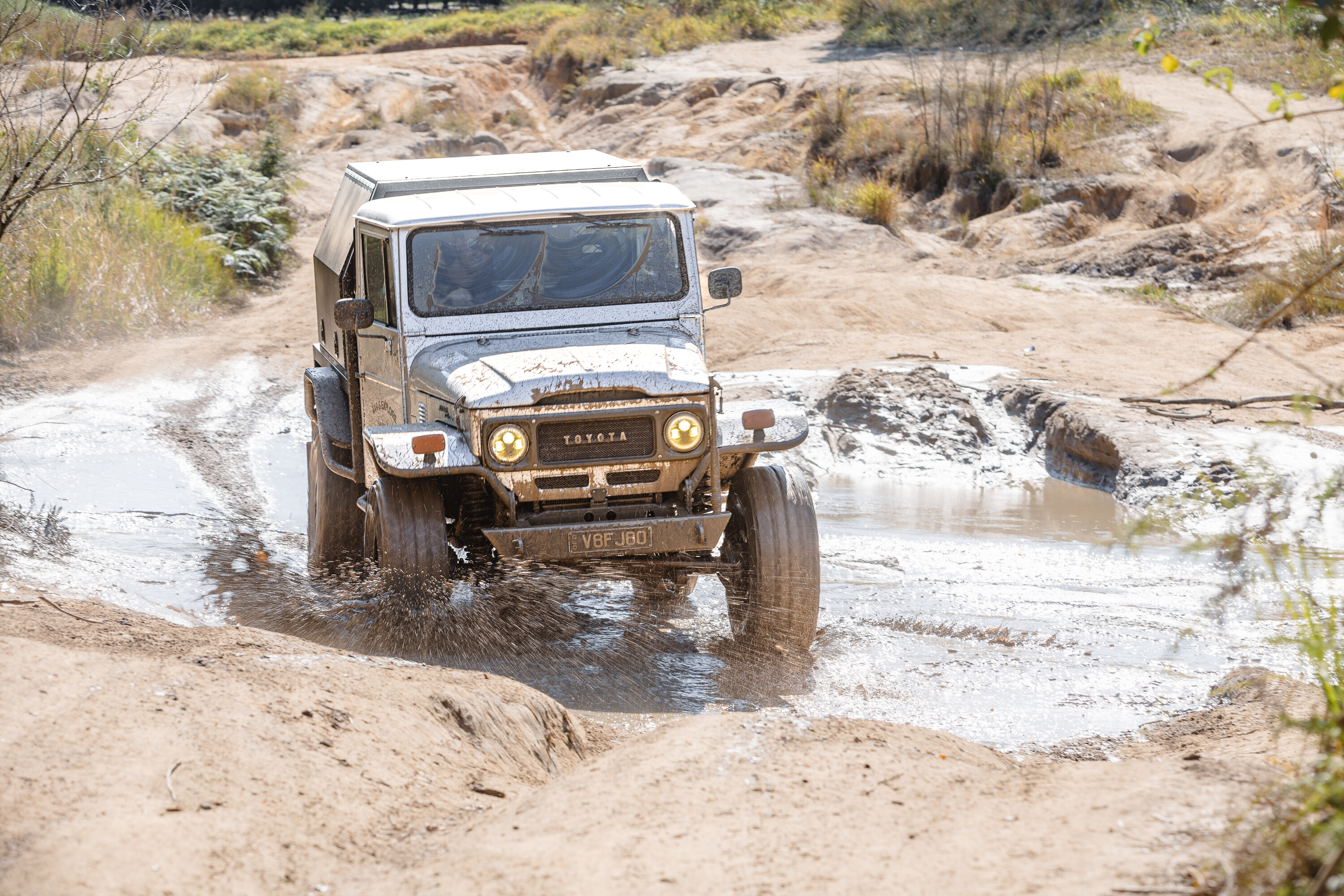
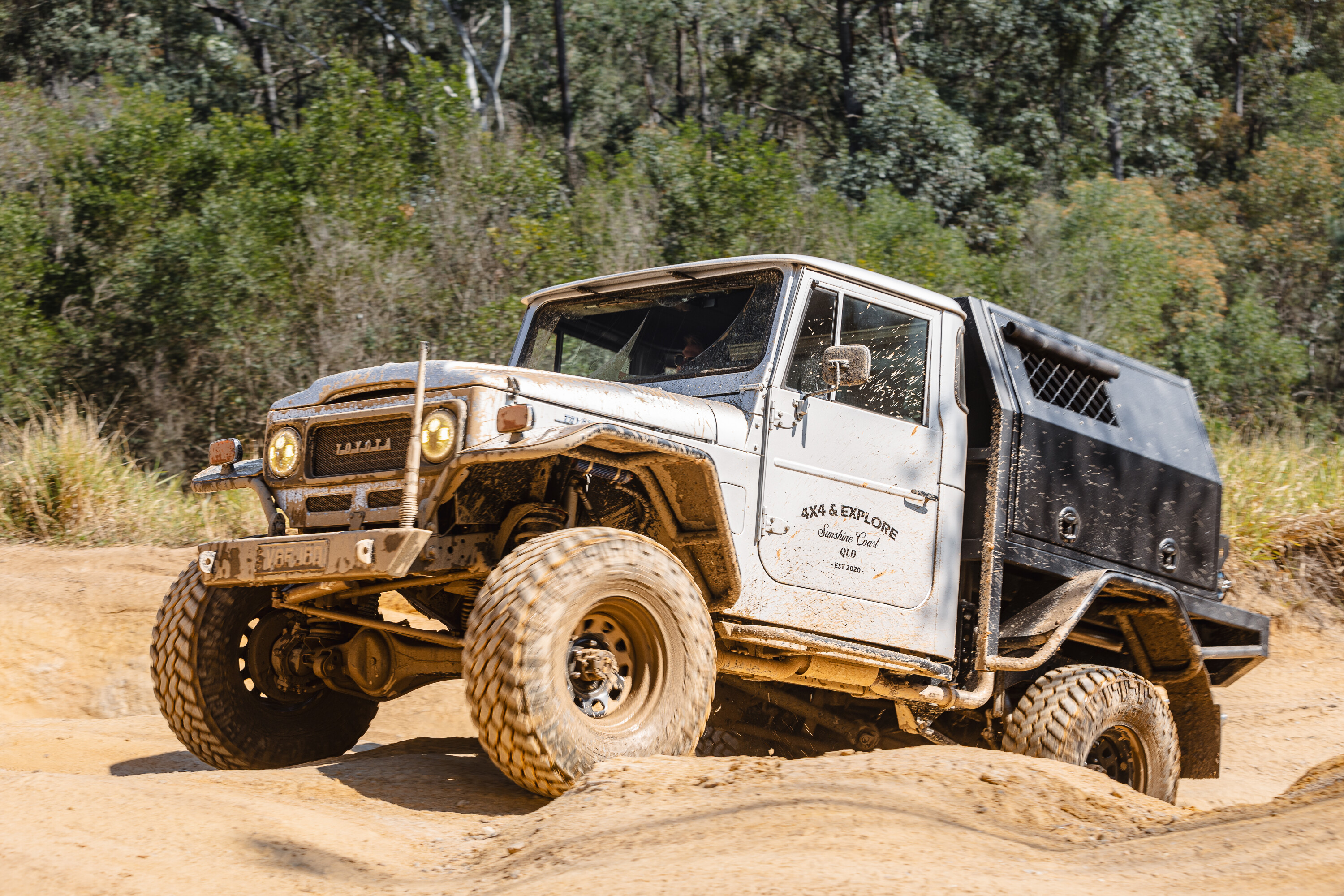
The LandCruiser you’re looking at on these pages is a masterpiece in its own right. The result of painstaking lessons, impeccable attention to detail, and sheer perseverance. But what the ruddy hell is it, actually?
In short, it’s an FJ45, although it’s also an 80 Series. And technically, there’s a little 75 Series and some Lexus in there too, and a seemingly endless supply of box tube. But let’s start with the chassis, yeah?
1
From the ground up
Despite the 1971 FJ45 cab perched on top like a crown, underneath, and on the rego papers, Patrick Savery’s masterpiece is a 1994 80 Series LandCruiser.
“I had begun to restore a short wheelbase 40 Series,” Patrick tells us. “But as I progressed I realised it wasn’t going to suit my needs. Leaf springs and a thirsty 2F petrol engine wasn’t my idea of comfort or performance.”
As luck would have it, when a mate reached out with a complete 45 Series Cab, an 80 Series chassis just happened to pop up for sale in the same town. Some things are meant to be, eh? Another call to good mate Hugh Ager from Limitless Chassis in Coolum Beach and things really kicked into gear.
1
A spot was cleared in the corner of the shop, plans were sketched out, and the roar of welders and the sizzle of grinders wouldn’t stop for two years.
Peel your eyes off the stunning body for a second, past the custom cab mounts, and you’ll find a surprisingly stock 80 Series chassis hiding underneath, doing a convincing job it’s meant to be there.
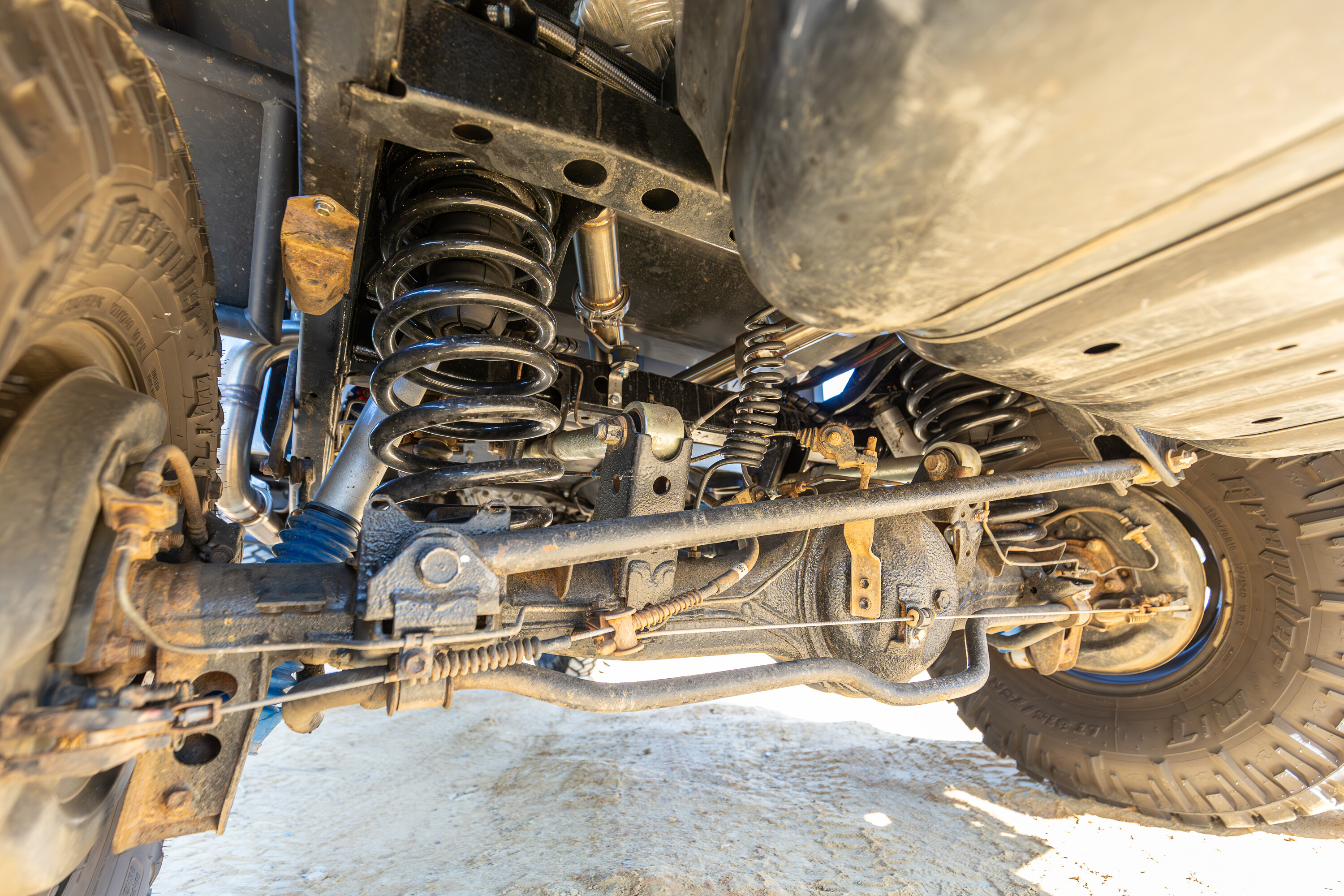
Up front, two-inch lifted coils slink their way into the factory coil buckets, a pair of Superior Engineering remote reservoir shocks the only giveaway this 45 drives a whole lot better than stock.
Up the back has a similar treatment, with the only addition being a pair of adjustable upper control arms allowing Patrick to dial the pinion angle back in. It’s a real testament to Toyota just how good these chassis are and why they’re such a hot ticket item with resto-modders.
1
Powerplant
While the diffs at either end may remain largely stock, the drivetrain combo spinning them couldn’t be further from stock if you tried.
Nestled between the rails up front is none other than a 1UZ-FE. “I decided on the 1UZ-FE as I wanted the Cruiser 100 percent Toyota,” says Patrick. “I truly love the history of the engine, it’s still heralded as one of the most reliable V8s ever built.”
Not the kind of donk you’d typically find in a 4×4, Patrick sourced a Lexus LC400 to pinch the 4.0L V8 from and promptly set about tearing it down for a full rebuild. A custom alloy sump was welded up at Limitless Chassis to clear the front diff under full articulation, while custom engine mounts in conjunction with LC74 rubbers get the 1UZ bolted in place.
1
With a gut full of factory forged internals, Patrick knew with a freshen-up the 1UZ would be more than up to the task of reliable power and set to work making it a hoot to drive.
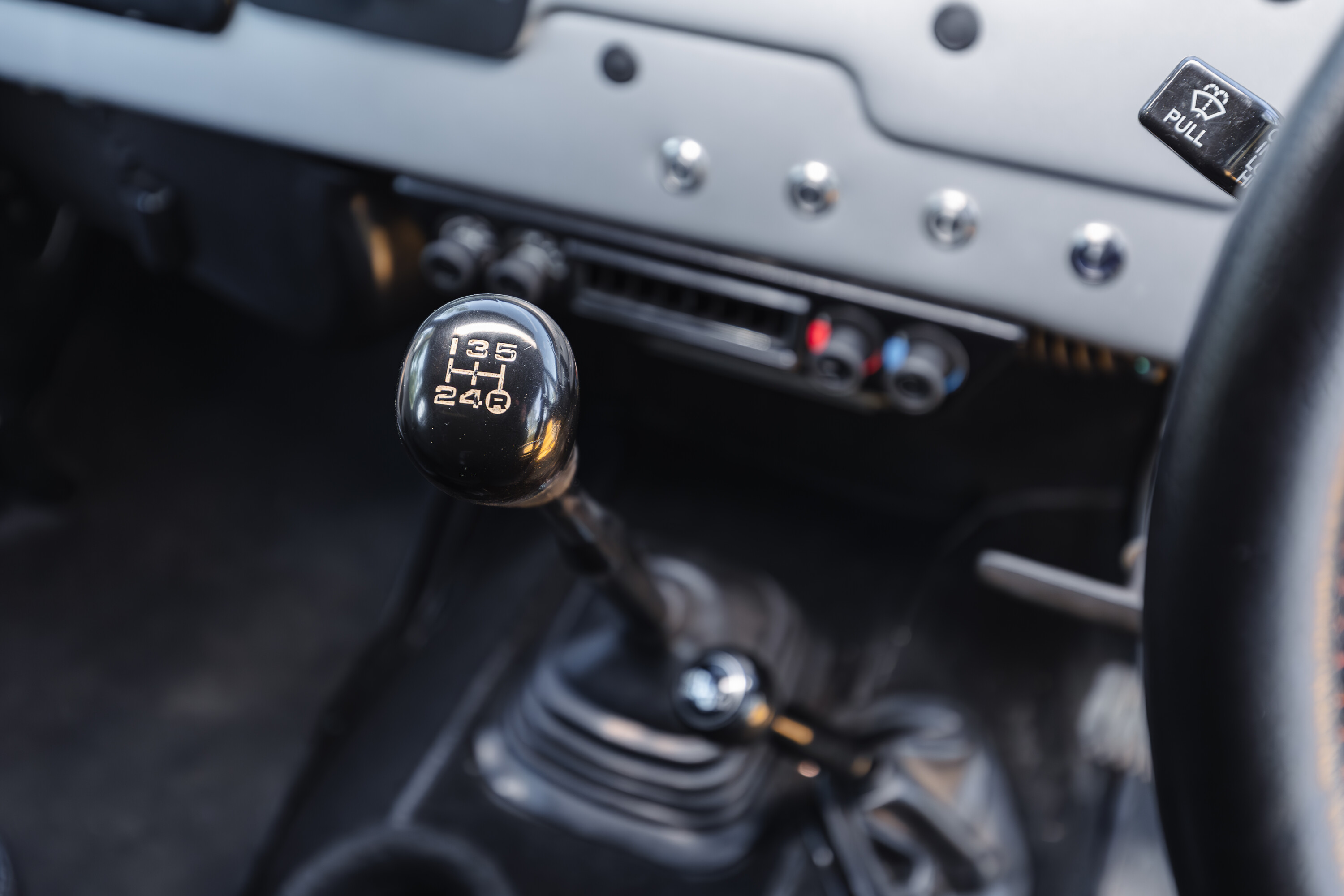
The solution was a Dellows Automotive bellhousing mating up a five-speed manual cog-swapper from a HZJ75 Cruiser – that’s a H55F for any Toyota nerds eager for all the details. There’s an Exedy heavy-duty clutch linking the two, while the HF1A transfer case and Aisin free-wheeling-hubs from the 75 finish the part-time 4×4 conversion of the LC80 chassis.
Of course a combo like this doesn’t come together easily; a custom gearbox crossmember was needed to hold it up in place, and as the cab floor was sliced and diced to suit the H55F package, a custom cover was fabricated to keep things civilised inside.
1
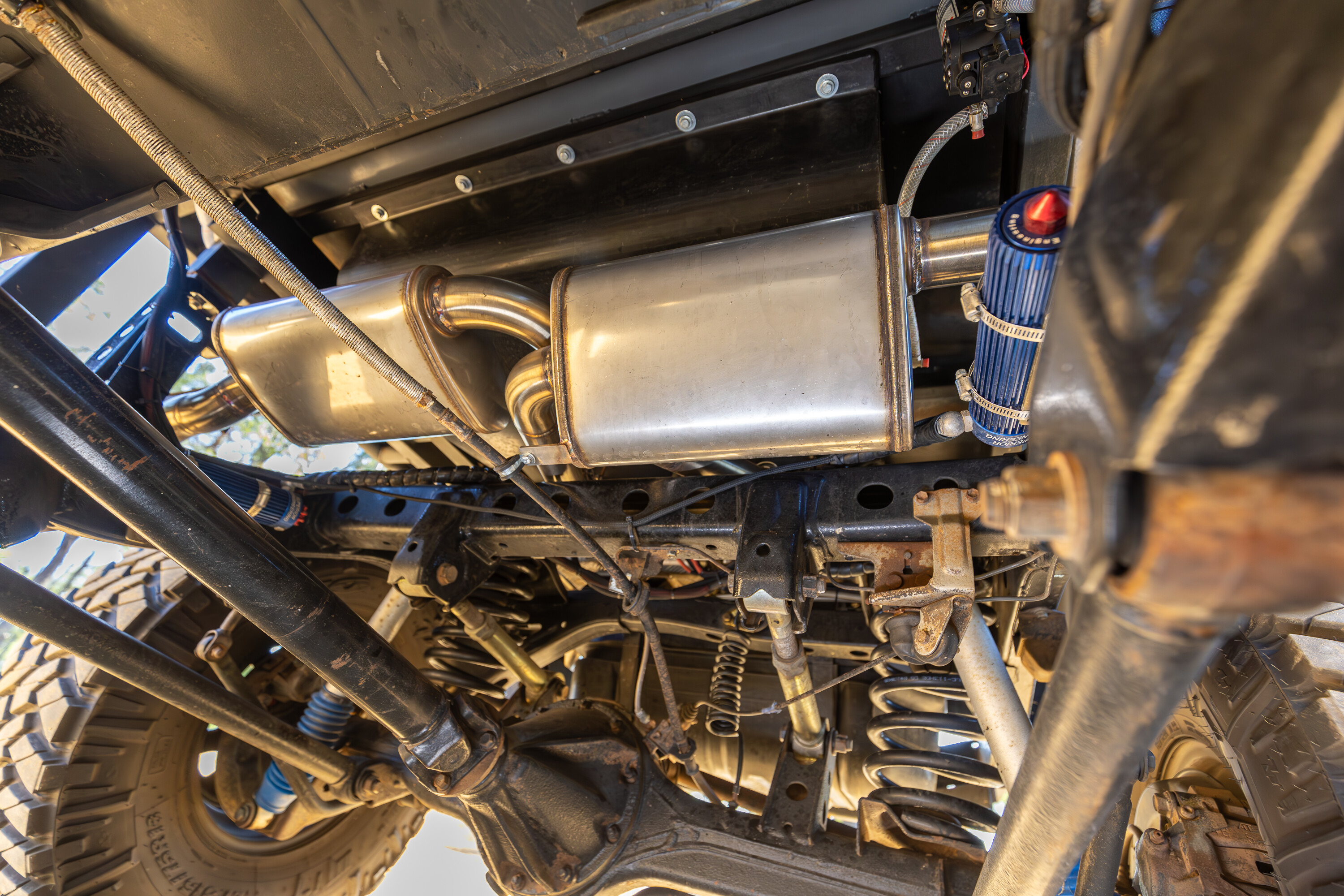
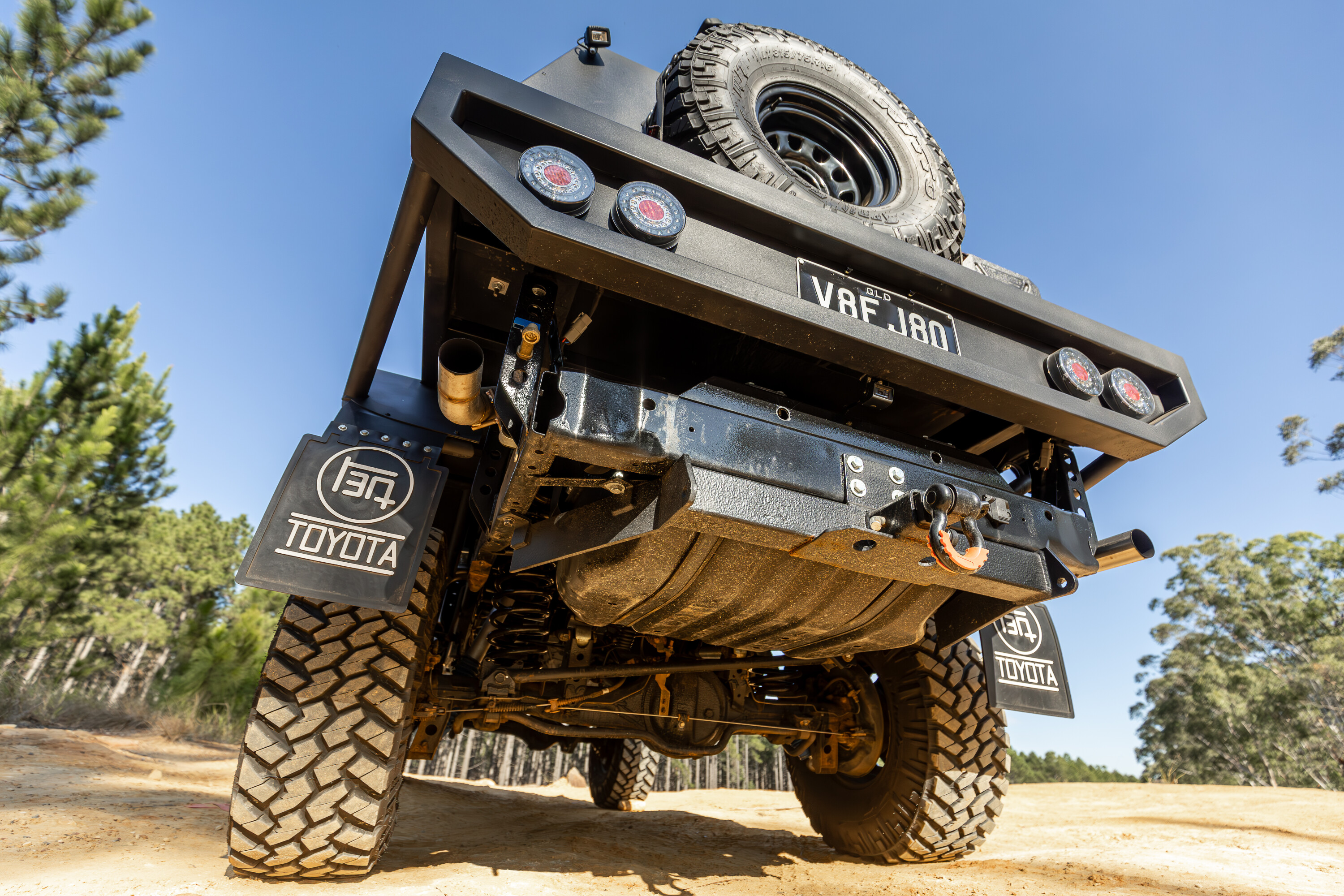
A symphony roars out twin stainless exhaust tips either side of the 130L LC79 fuel tank down the back.
Modified & Driven Fabrication expertly pieced together the twin stainless system snaking its way through the compact chassis. The end result, after all that hard work, is a 6200rpm redline, an idle so smooth Top Gear famously balanced a glass of water on the intake manifold without a hint of vibration, and twice the horsepower, and 50 percent more torque than an FJ45 rolled off the production line with.
When the clutch drops and the revs pick up, 35-inch Nitto Trail Grapplers on all four corners scrabble for traction. Inside them, 16 x 9-inch steel wheels give an old school look, with more precise steering than the 15-inch rims of yesteryear.
1
Above the chassis
Back up on solid ground and that attention to detail throughout the drivetrain is taken to a whole new level.
Up front, trick JTX LED headlights and late-model 45 grille are well protected with some sleek yet strong bar work. Patrick pieced together the custom stubby front bar including the integrated recovery points and UHF antenna mount.
Following the body lines back and McKinnon’s Cruisers flat-pack wheel arches were pieced together at Limitless Chassis, and bracing added including tie-ins to the shock towers for additional strength and to help close in the engine bay. Matching flat-packed McKinnon’s Cruisers sliders were welded together at the same time.
1
Moving past the period correct and oh-so-smooth silver paint to the rear-end really drives home just how passionate Patrick is about the Cruiser not just looking good, but working well too.
“I’m very proud of the canopy,” he says. “Many people told me it’d be too tricky to make, but I worked hard on it for three solid weeks and got it don’t just in time for our maiden trip.”
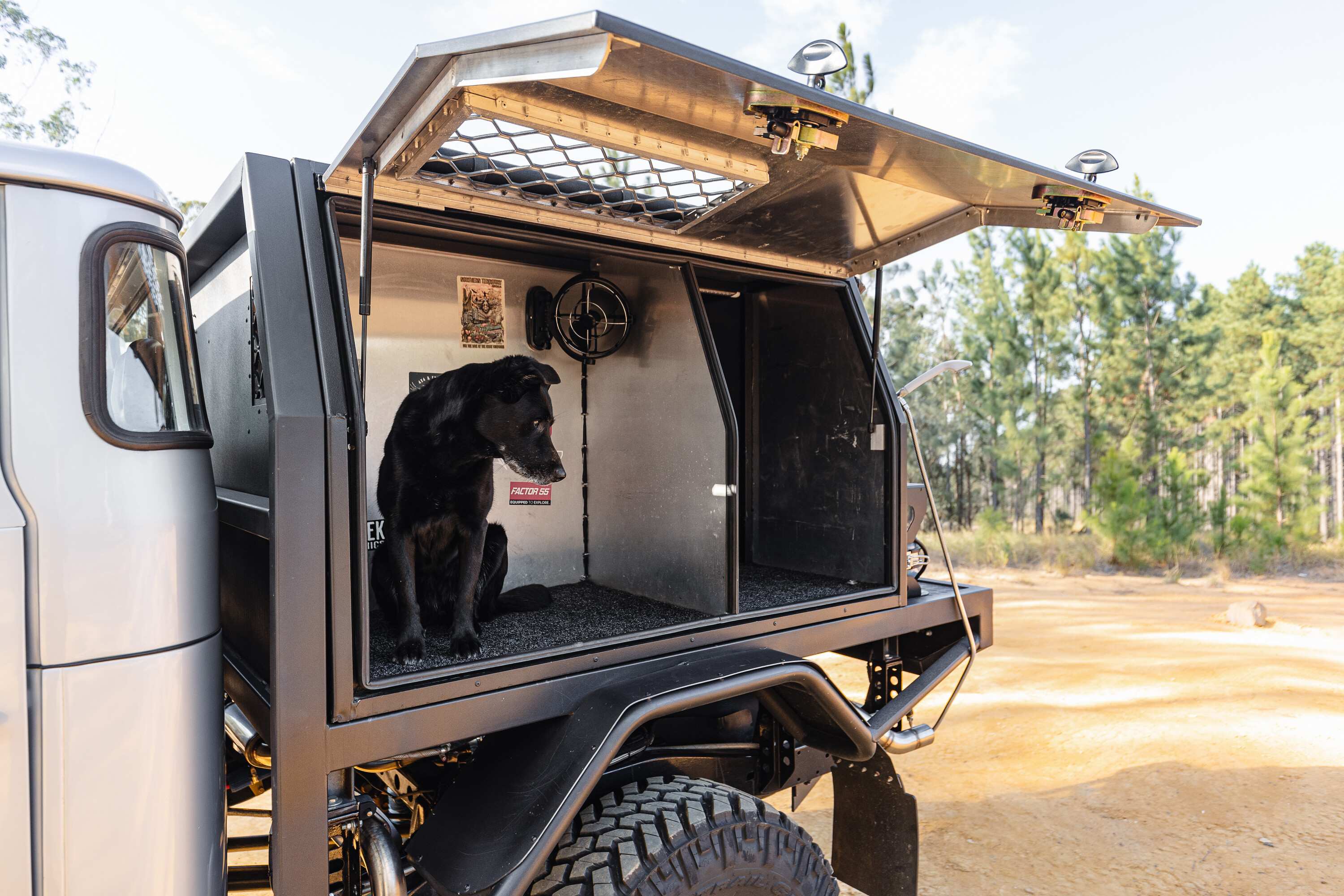
Constructed out of a lightweight steel frame with aluminium skins, Patrick worked together with Kahn Burrel from Hardarc Engineering to make sure it would not only have ample room for camping kit, but Patrick’s Kelpie pup Blue would be right at home in there.
1
There’s carpeted flooring and roll-down covers for wet rainy days, and dual air vents and a fan for warm summer days.
Sure, there’s a shower for Patrick too, fed from an 85L water tank and 12V pump mounted under the tray, but he knows where he sits in the pecking order.
A simple 12V system also managed to sneak in, a Redarc BCDC Core charging the 130Ah deep cycle for the fridge, with the 1UZ’s starting battery snuck back there as well.
1
Interior design
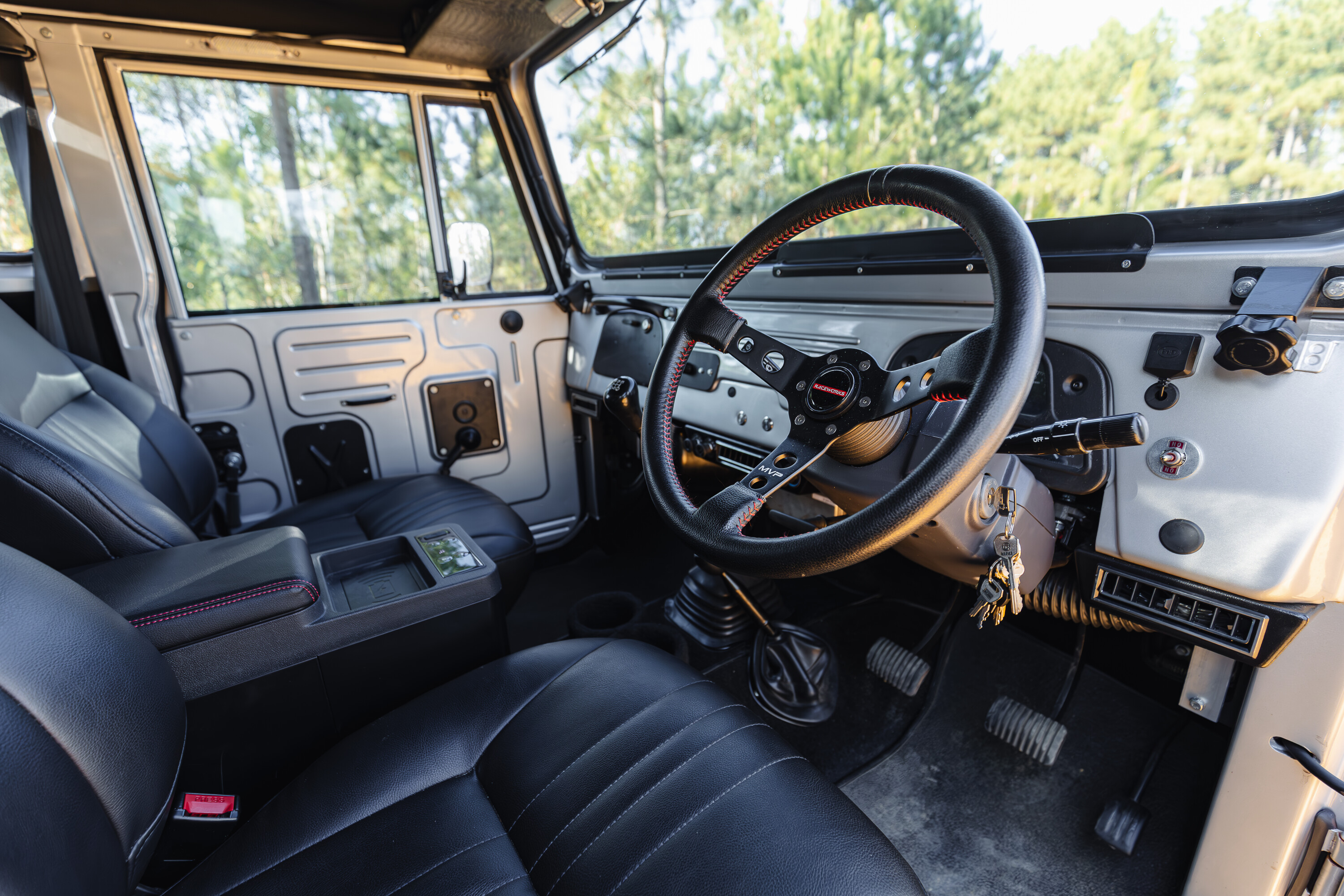
On the inside Patrick has attempted to walk the tightrope between serious improvements in comfort, without butchering the sheet metal and making the place unrecognisable.
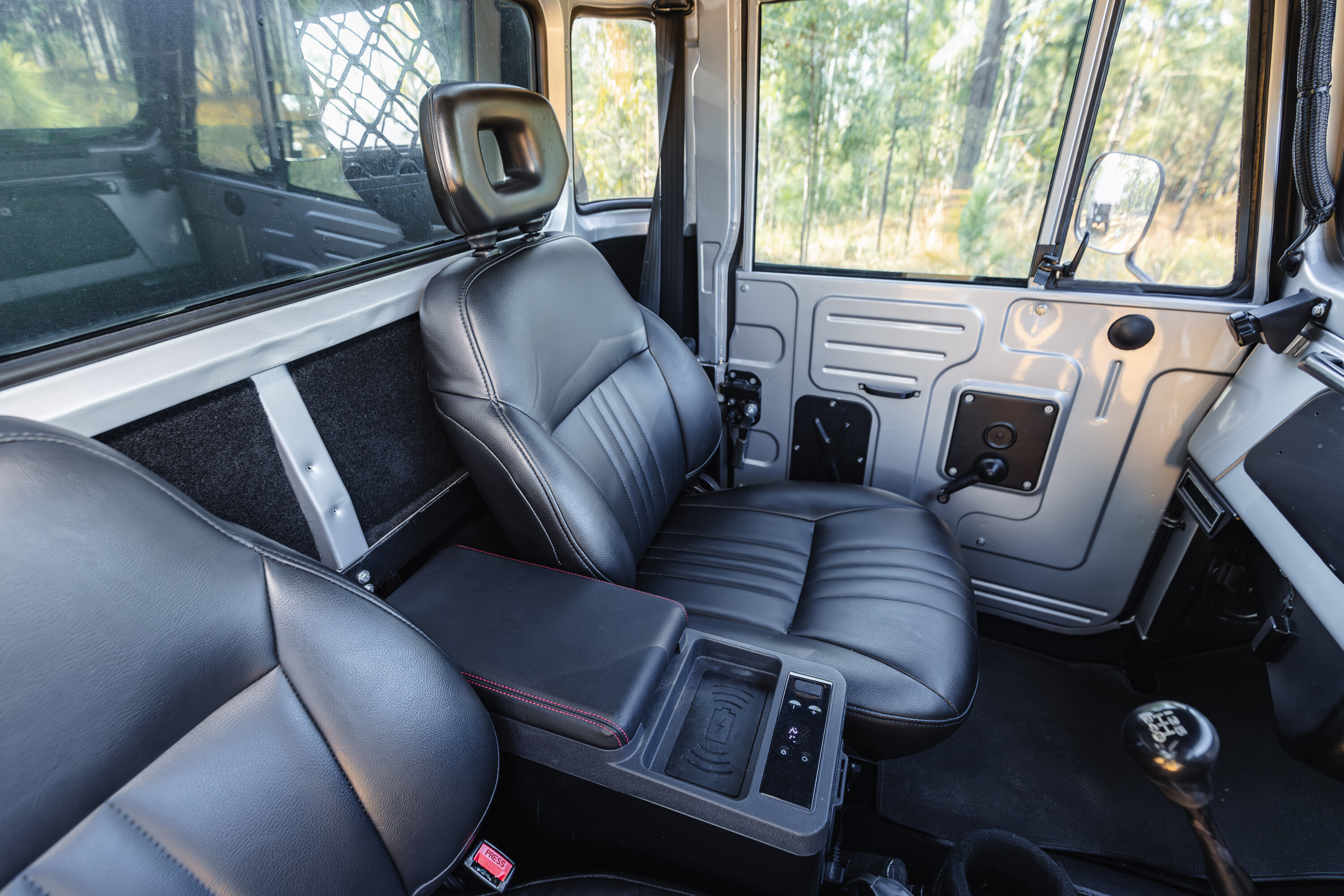
The biggest standout improvement is without a doubt the pair of Suzuki Vitara seats. Riding on custom mounts they’ve been bolstered, re-upholstered, and somehow look period correct and comfortable all in one hit.
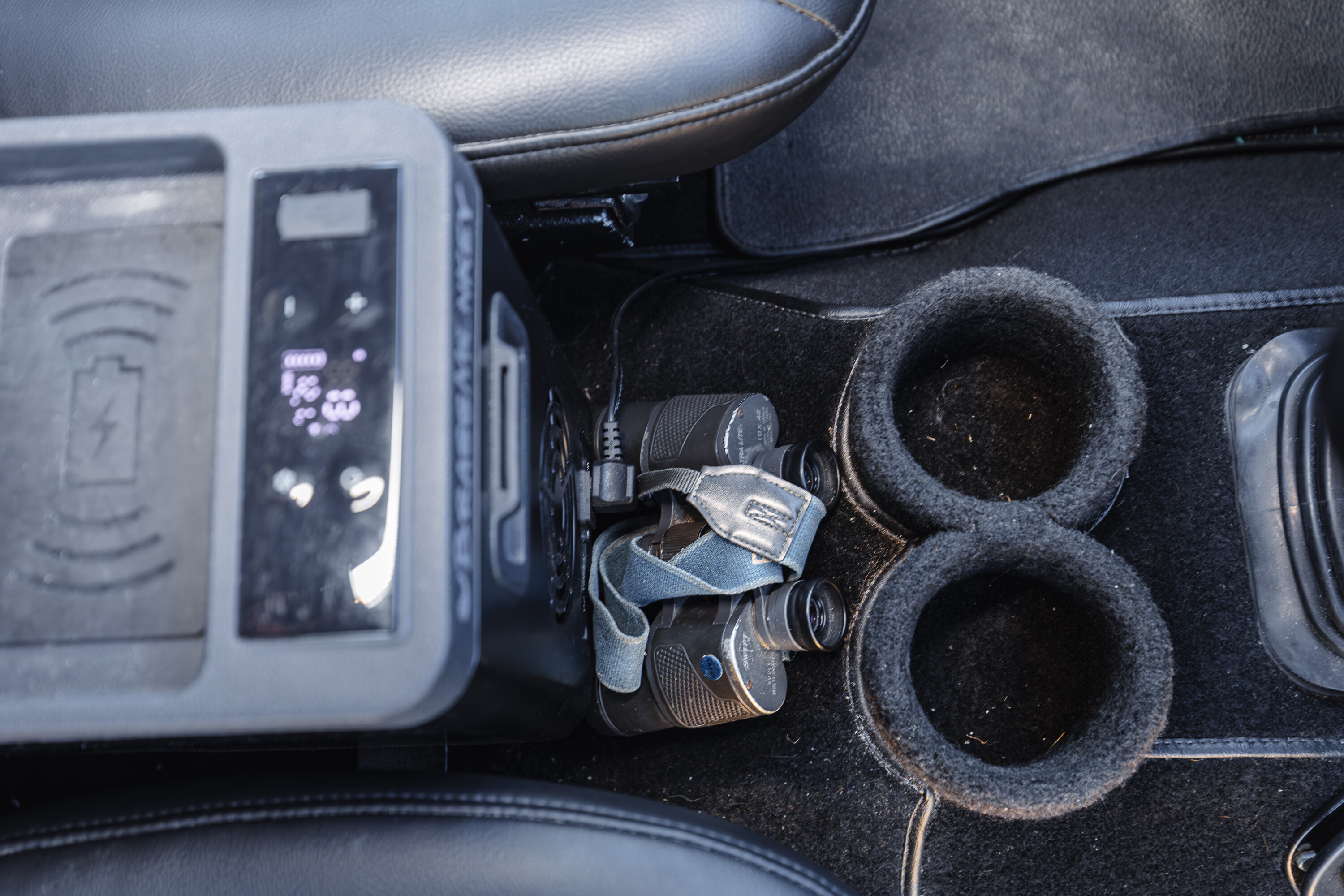
The seats are paired with a Brass Monkey centre console fridge and fresh black carpet, making the 52 year old cab is a seriously nice place to be. Rather than cut into the 40’s iconic dash, Patrick pieced together an LCS4X4 overhead console with a few custom tweaks including the Sony touch screen stereo and faux croc-skin trimming.
1
“I firmly believe that attention to detail makes a big difference,” Patrick says. “This classic interior, with a subtle modern twist, makes for a great place to be.”
Old bodies on new frames are hardly a new concept, and Patrick’s is far from the wildest modified Cruiser we’ve ever seen, but it’s that attention to detail that has elevated it beyond anything you’ll spot down the local tracks. It’s just proof that, with a little creativity, a handful of good mates, and a whole bunch of hard work, a masterpiece just might be within reach.
1
Why the 1UZ-FE is the Greatest Of All Time
Have you ever imagined what you could do with enough time and money? You might dial in the perfect suspension, teach yourself to weld to make the perfect barwork, or maybe learn the principles of tuning for the ultimate reliable powerhouse.
Or, if you’re a plucky young team of 60 designers, 1400 engineers, and 2300 technicians with no deadline and a blank chequebook to build the perfect luxury sedan, you might just build the 1UZ.
We won’t bore you with why the LS400 was a game-changer for Lexus, but we will bore you with why its engine, the 1UZ-FE, is one of the most highly regarded engines that most people have never heard of.
In their pursuit to build the perfect V8 engine, the Lexus team pushed the limits of what over-engineering even means. After 450 different prototype vehicles and 900 engines came to the only logical conclusion: multi-valve for power and efficiency, 32 valves and quad overhead cams should do the trick.
And it needed to last forever, so a reinforced block and forged crankshaft with eight counterweights should help there too. Not to mention the six cross-bolted main cap bearings, and the sintered forged steel conrods holding onto hypereutectic pistons.
A clever yet unconventional camshaft system means the exhaust cams aren’t directly driven by the timing belt, instead, to keep the package compact, they are gear driven from the intake cam.
The UZ-FE is known to handle 1000hp, and there are countless examples with well over a million kays on the clock.
On paper, 190kW and 330Nm may pale in comparison to newer engines, but how many of them have been FAA certified to be used in passenger planes? The little 4L V8 is seriously punching above its weight class.
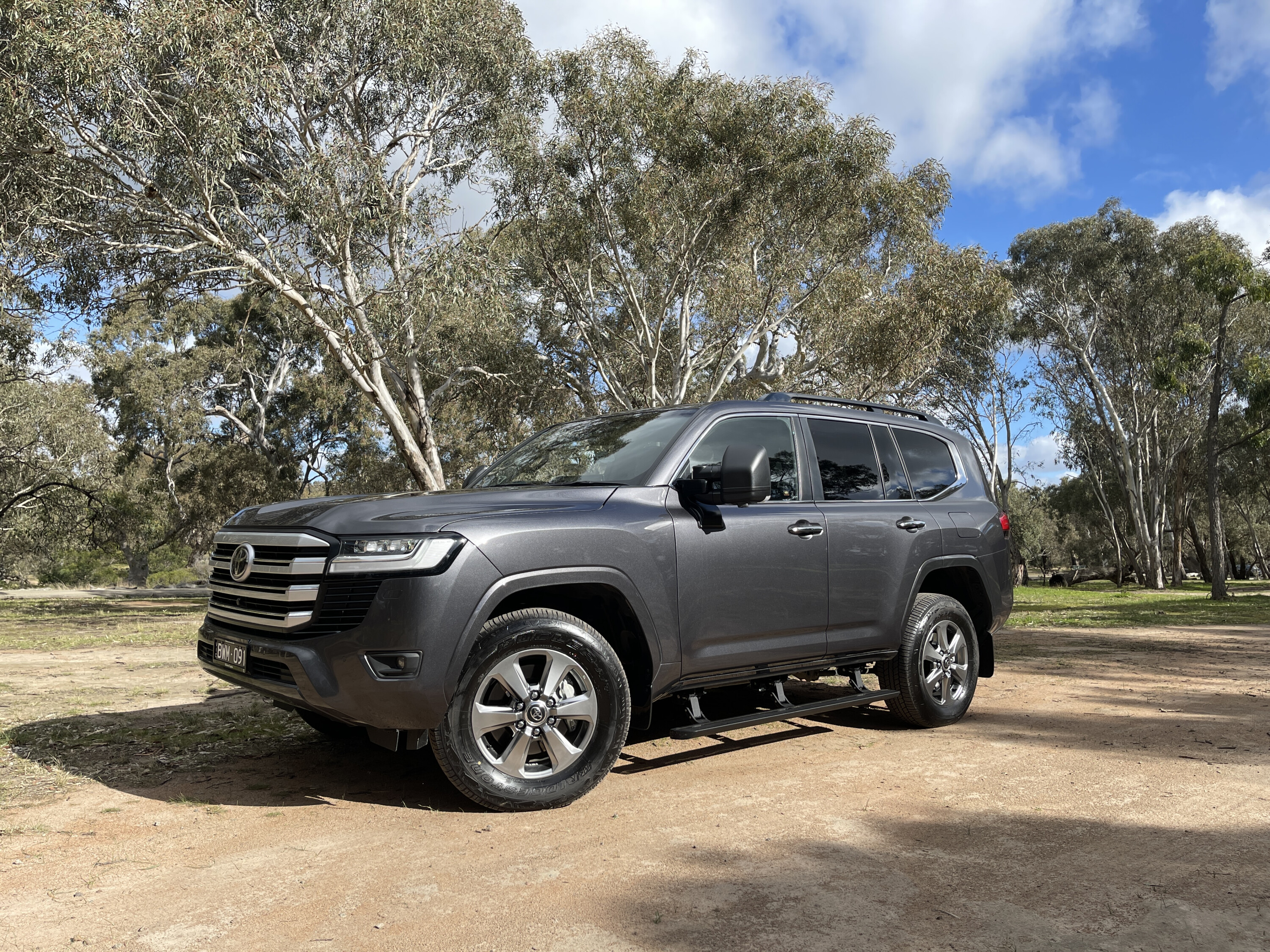
When investing in a 300 Series LandCruiser, it doesn’t seem appropriate to spend money on a set of side steps that cheapen the look of your asset.
Clearview Accessories has come up with a solution that respects the lineage of the vehicle while also adding a touch of luxury, with its Power Boards for the 300 Series LandCruiser.
“This is an exciting time for us – we’ve been working on Clearview products for the new LC300 for over 12 months now, and we’re finally starting to release them into the market!” said Jay Praag, co-founder of Clearview Accessories.
1
Triggered by the door sensors, the new electric side steps are an advanced running board that automatically lowers to a more accessible height when any of the doors are opened; and when the door is closed, the Power Board will automatically retract back into the body of the 4WD.
The Power Boards are practical, discrete and a worthwhile addition to your vehicle, and they’re great for those who struggle to get in and out of high 4WDs, especially if they have been lifted.
“We’re often asked whether our Power Boards reduce clearance on the vehicle. Our Clearview Power Boards provide a safe stepping surface without sacrificing all-important clearance! When the door closes, the Power Board automatically tucks back into the body of the vehicle,” said Jay.
1
The LandCruiser 300 Series Power Boards can handle a hefty 300kg load capacity per step, helped by the three mounting brackets on each side that add strength and durability for when you need it most.
No drilling is required when mounting the side steps as they are designed to mount into existing OEM holes, meaning no damage is done to your pride and joy.
The Power Board lowers up to 300mm from the door sill to the lowered board, and there is a safety cut-off feature that safeguards the Power Board by holding its position if it senses any resistance during opening or closing – so if you’re sill rests on a rock, the Power Board won’t open.
Pricing
Clearview Power Boards are only available for purchase and installation through the Clearview Accessories Australia-wide dealer network and retail for $1799. Allow three hours for installation.
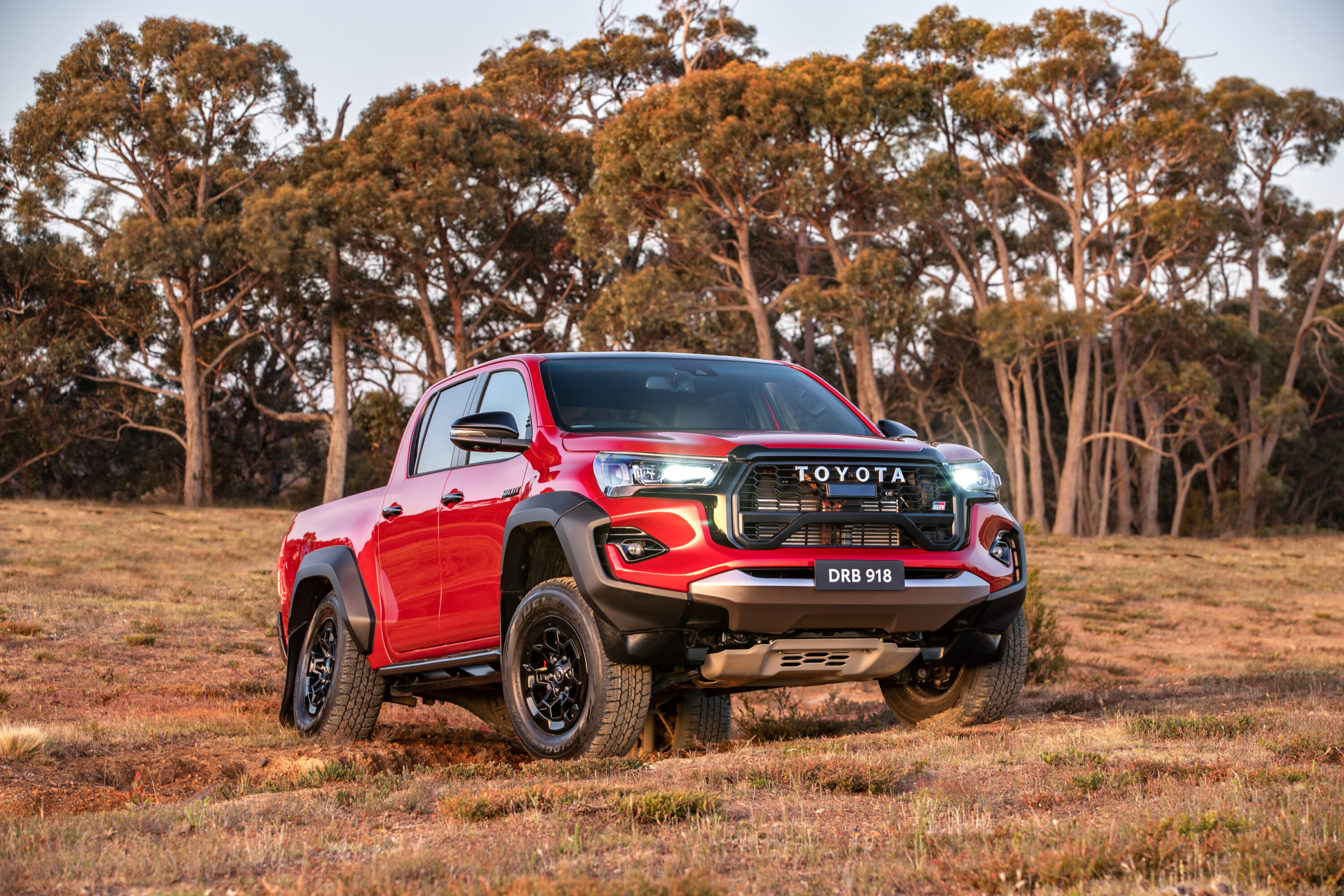
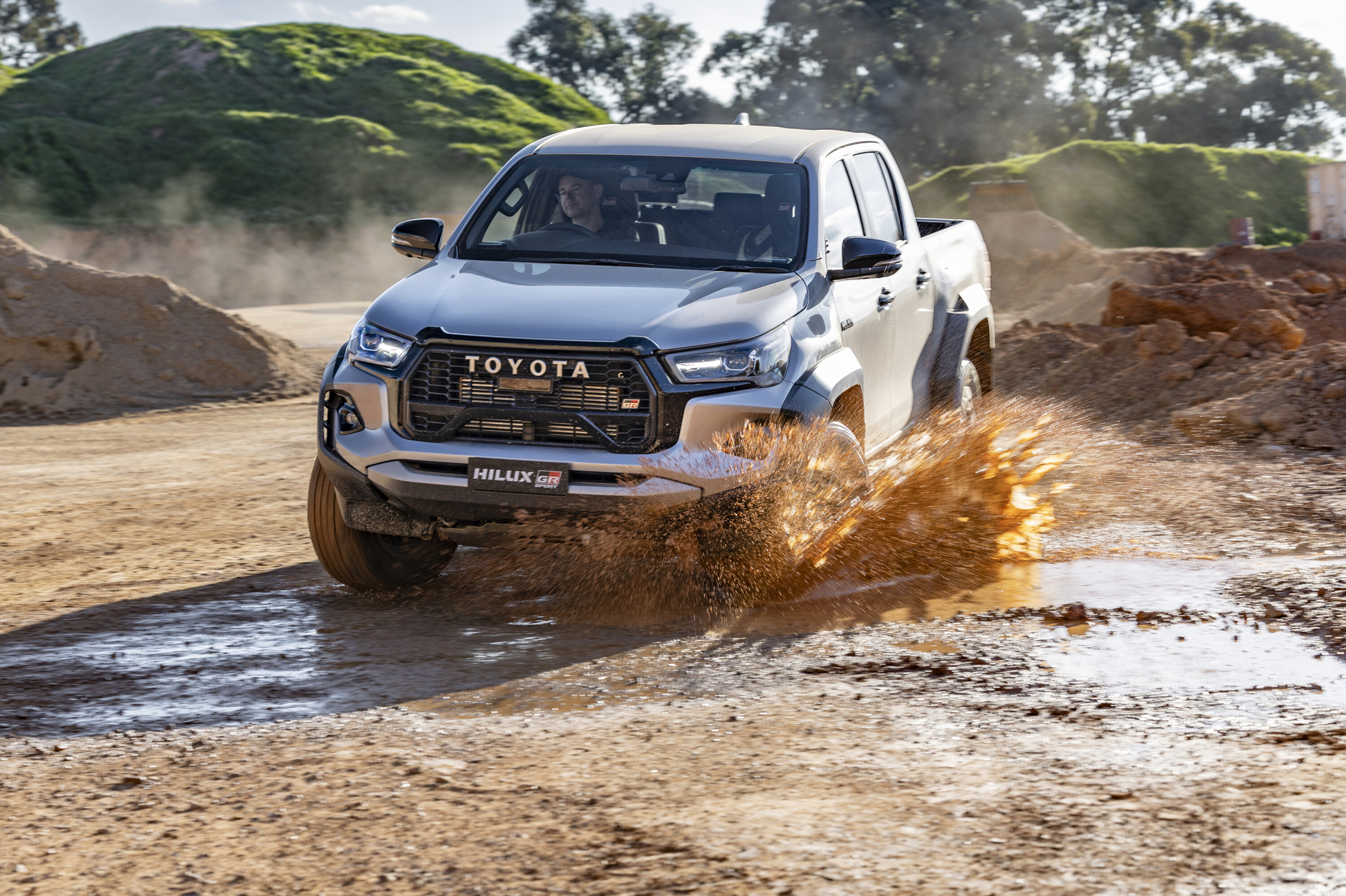
There’s no arguing that the current-gen Toyota HiLux is a bit long in the tooth. It has received several substantial upgrades and facelifts throughout its lifespan, but the bones of the eighth-gen HiLux and its 1GR 2.8-litre engine have essentially been wandering mountains and deserts since 2015.
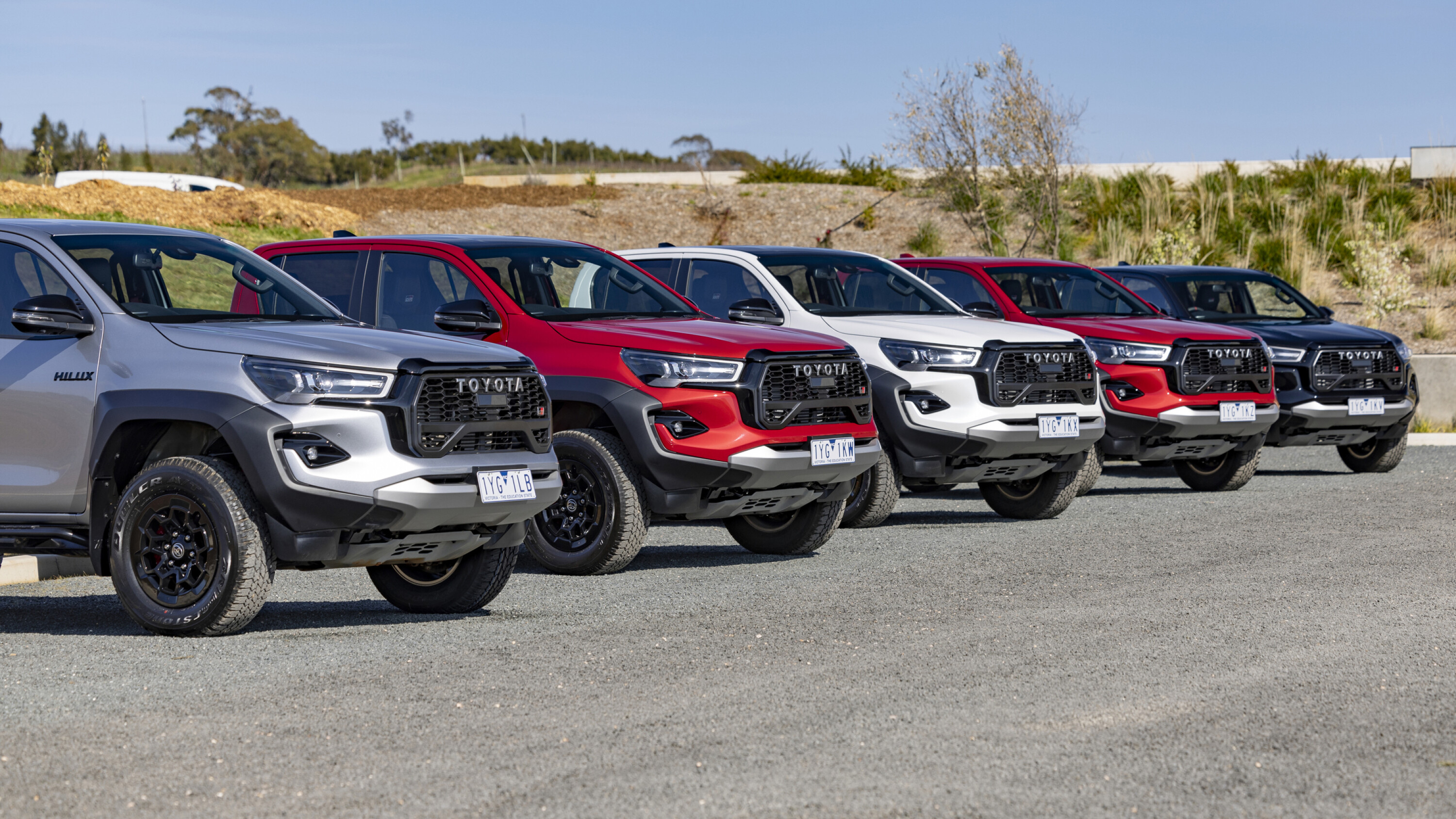
However, it’s entirely unfair to say the GR Sport is a “sticker pack” aimed at keeping the Japanese brand relevant until the new-gen arrives.
That this vehicle is bred from racing stock – inspired by the 2019 Dakar-winning GR HiLux piloted by Nasser Al-Attiyah and co-driver Mathieu Baumel – proves that Toyota was serious about planting a new flagship variant atop its line-up.
1
For starters, Toyota engineers have eked an extra 15kW and 50Nm from the 2.8-litre engine by dialling into the ECU and tweaking the turbocharger characteristics and fuel injection control.
This has netted a gain of 10 per cent across the board, with the turbo-diesel now producing 165kW at 3000rpm and 550Nm from 1600-2800rpm – up from the standard outputs of 150kW and 500Nm.
To harvest this increase in power and torque, the six-speed automatic transmission has been recalibrated accordingly. To achieve this, Toyota changed the transmission’s oil pressure control to enhance shift operation speeds and then revised the mapping for a more accurate shift feel.
1
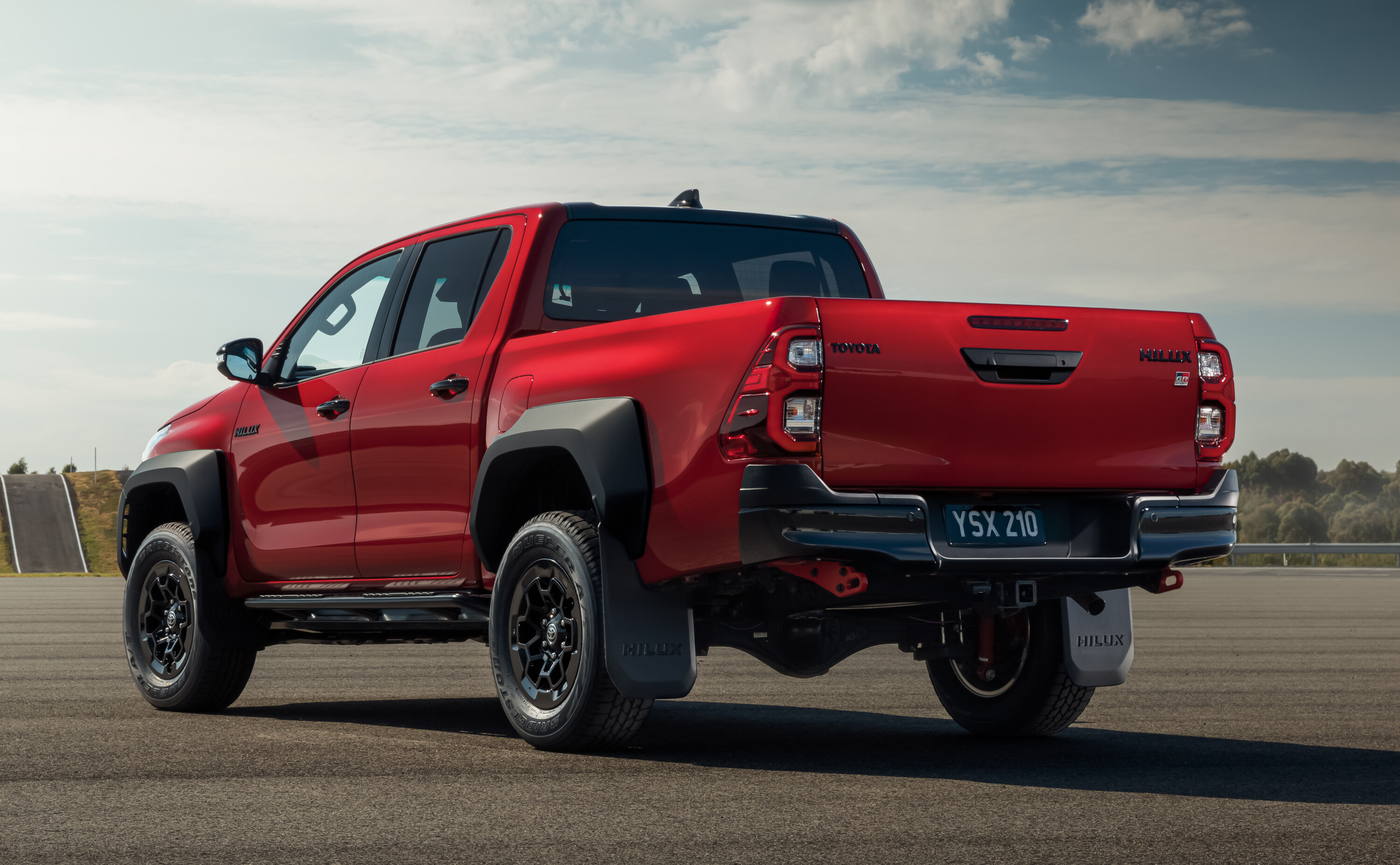
The GR Sport also has a wider track, as seen on the HiLux Rogue, making it wider (135mm at the front; 155mm at the rear) and taller (15mm higher than the rest of the HiLux range).
However, unlike the Rogue, the GR Sport benefits from revised front suspension, including increased rigidity for the front coil springs. In addition, the front and rear shock absorbers have been upgraded – tuned KYB monotube-type dampers with increased piston diameter – and are also specific to the GR Sport. Toyota then removed the rear sway bar for this specific variant.
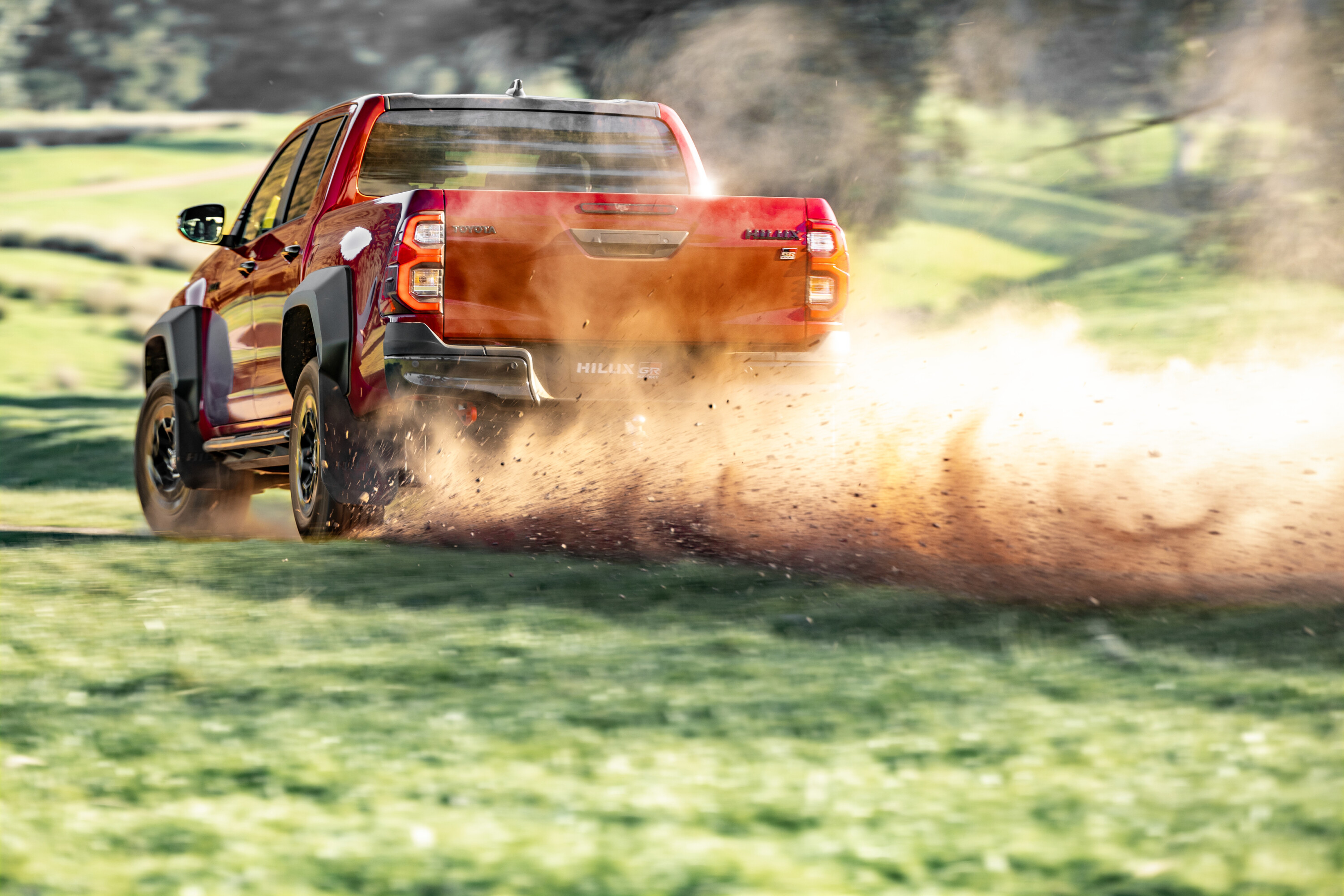
On paper, the changes to the engine and consequent gains in output may seem mild, but you notice it, especially when off-road.
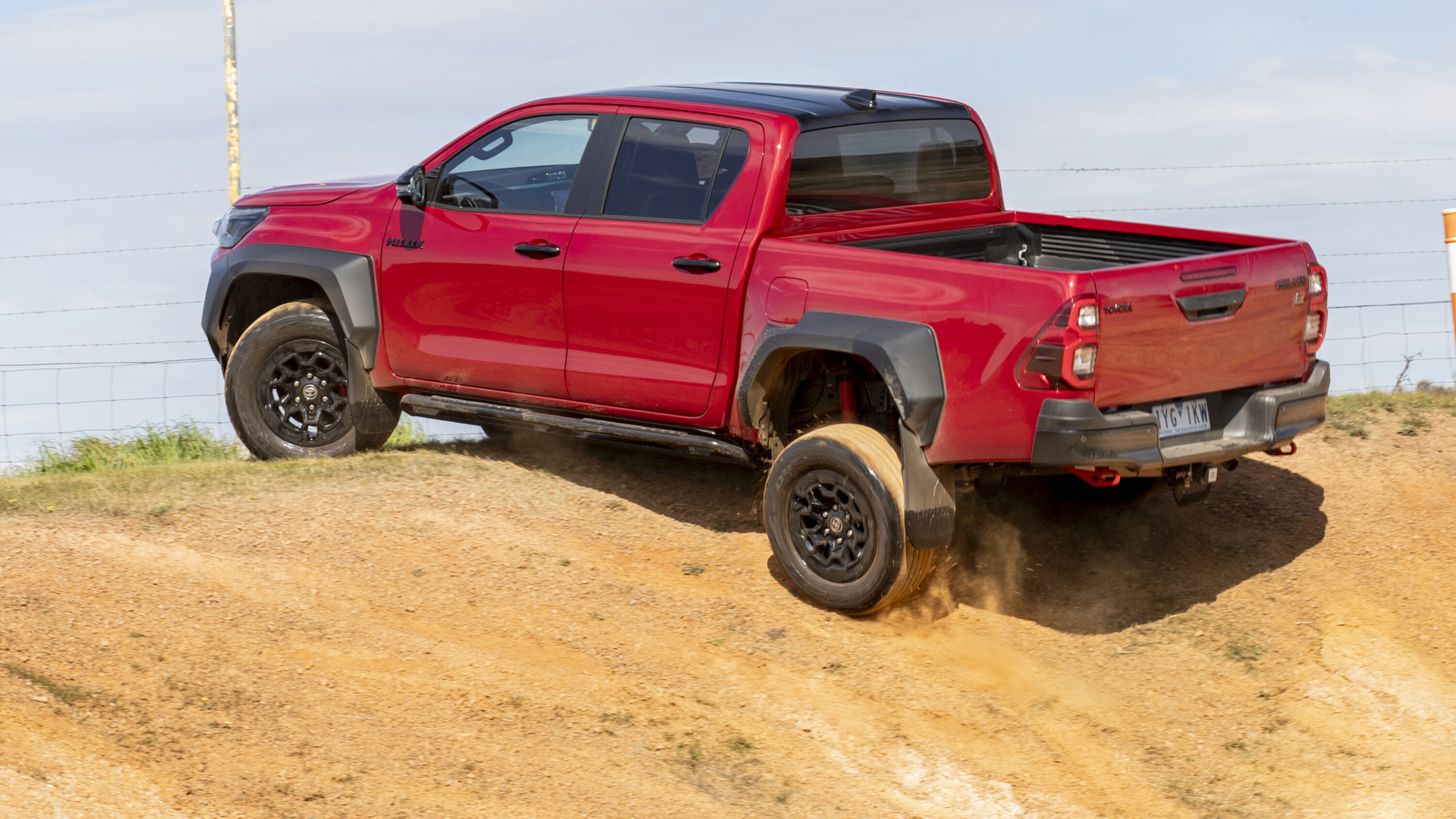
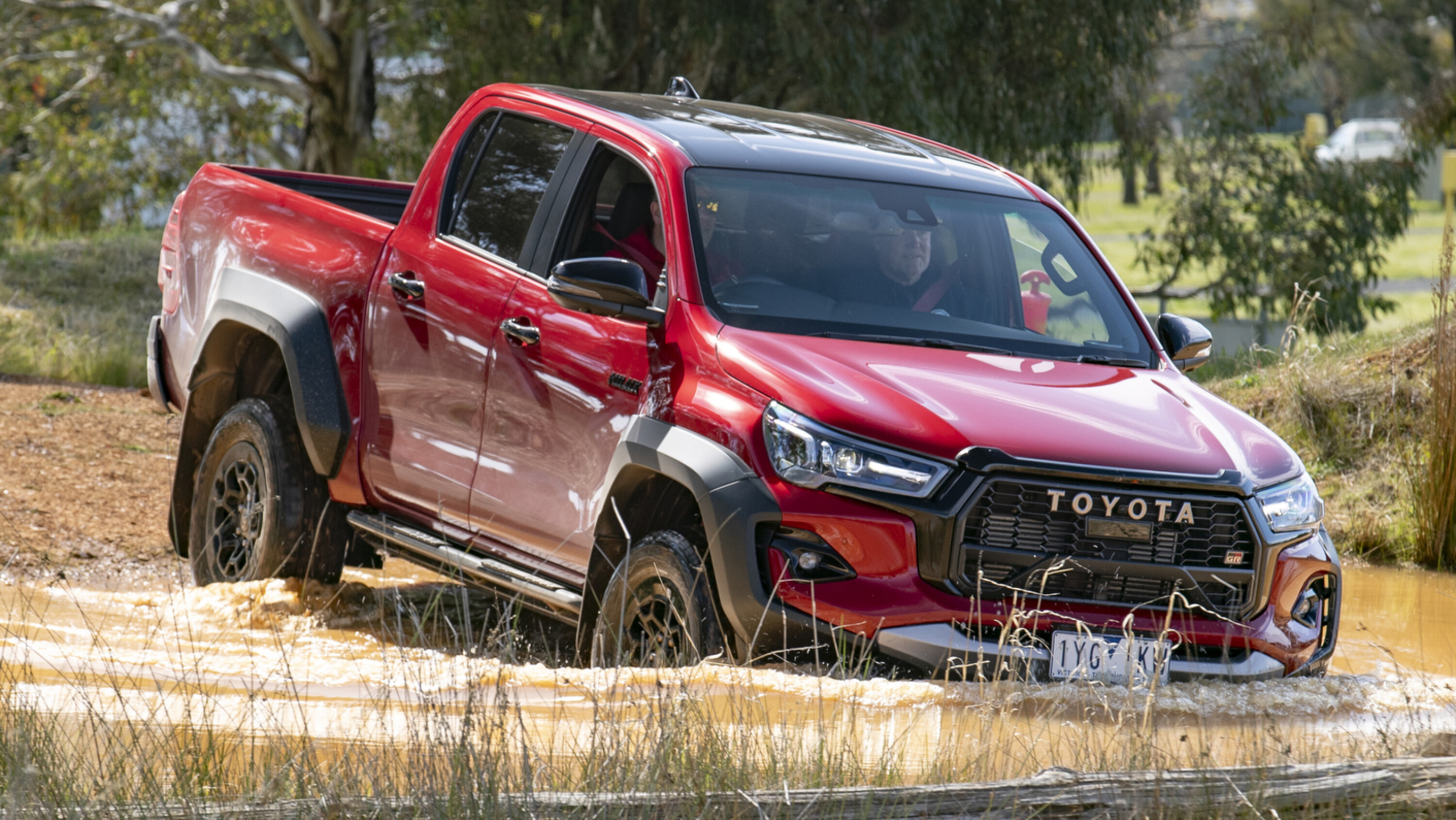
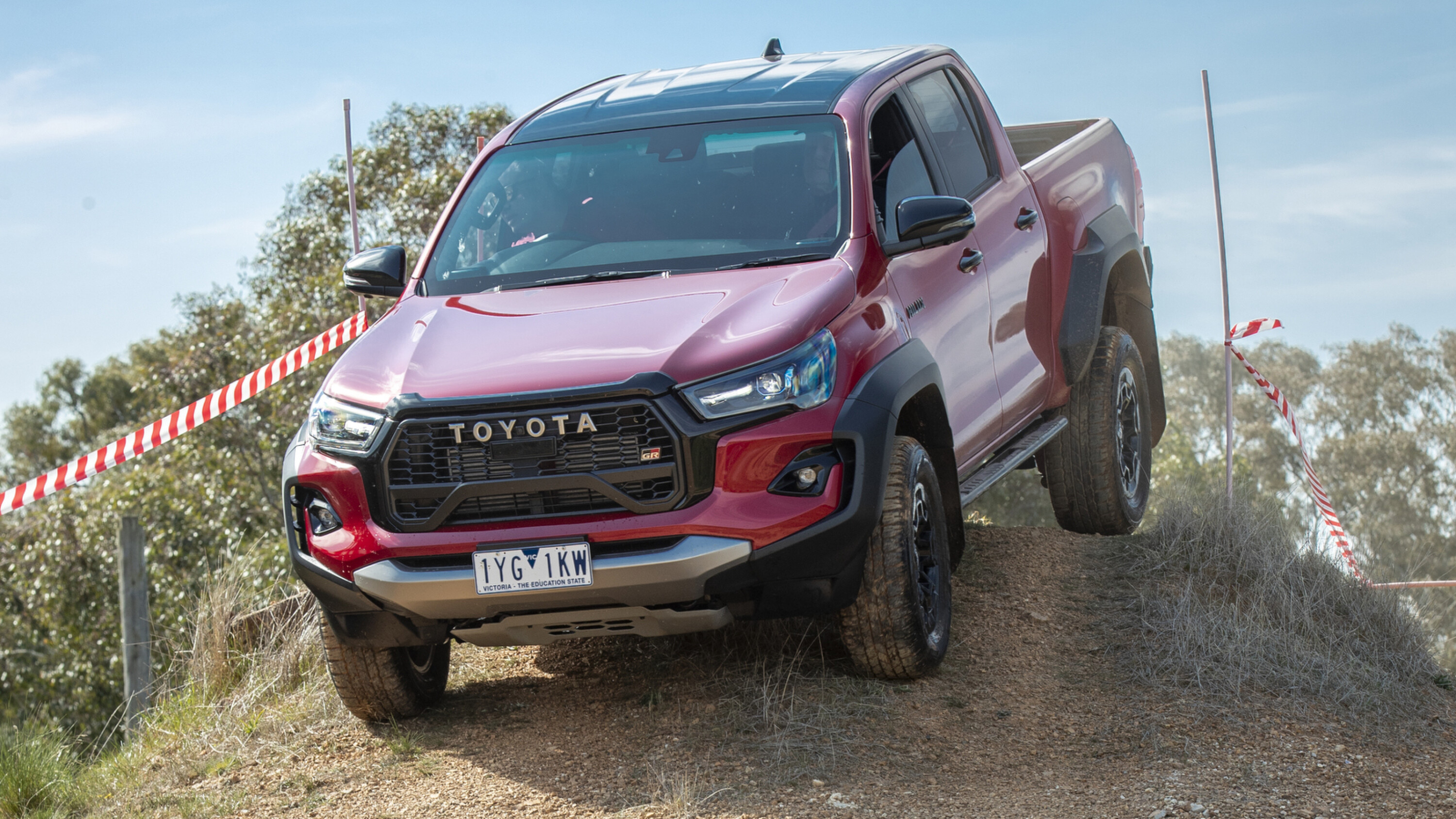
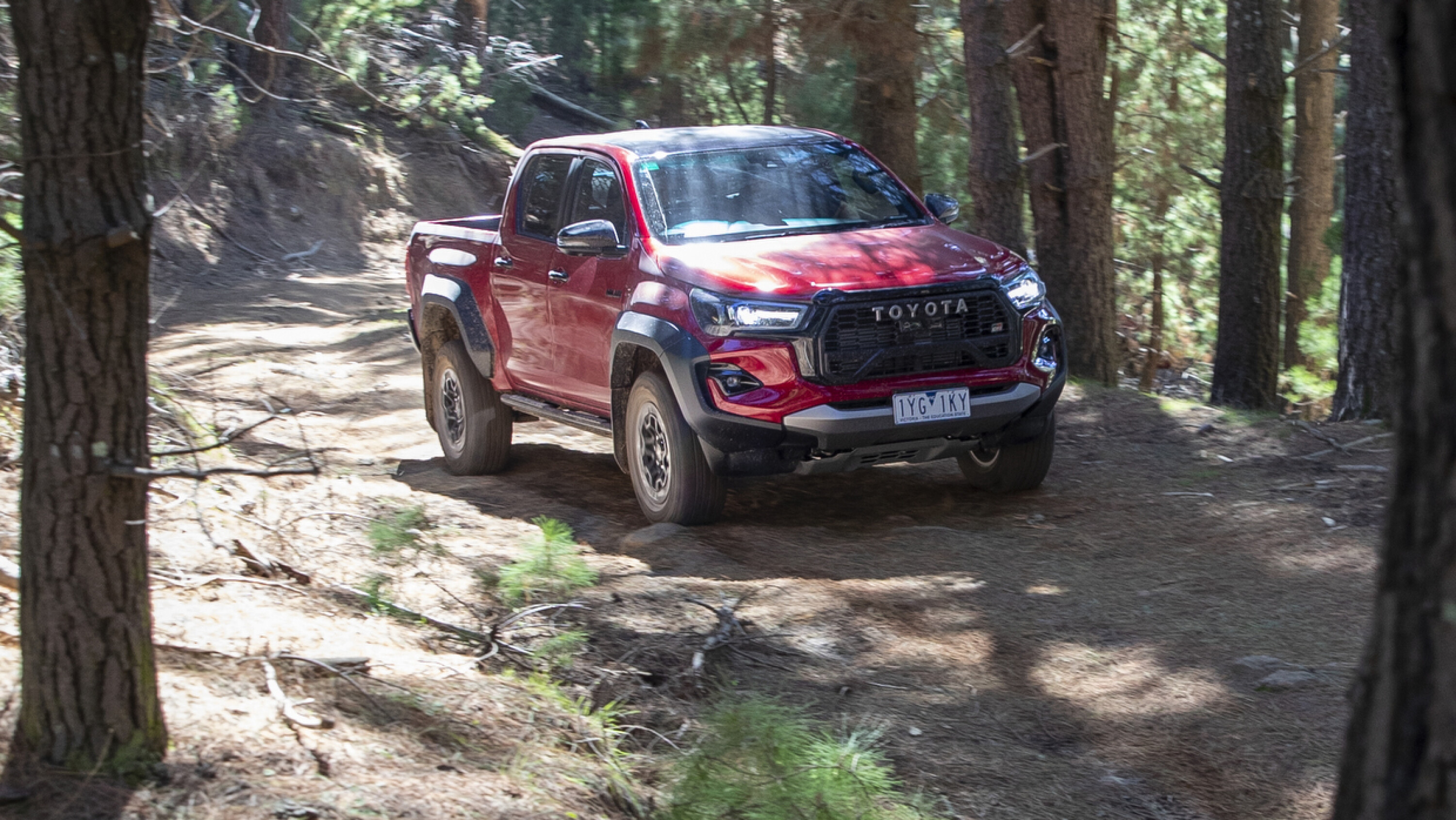
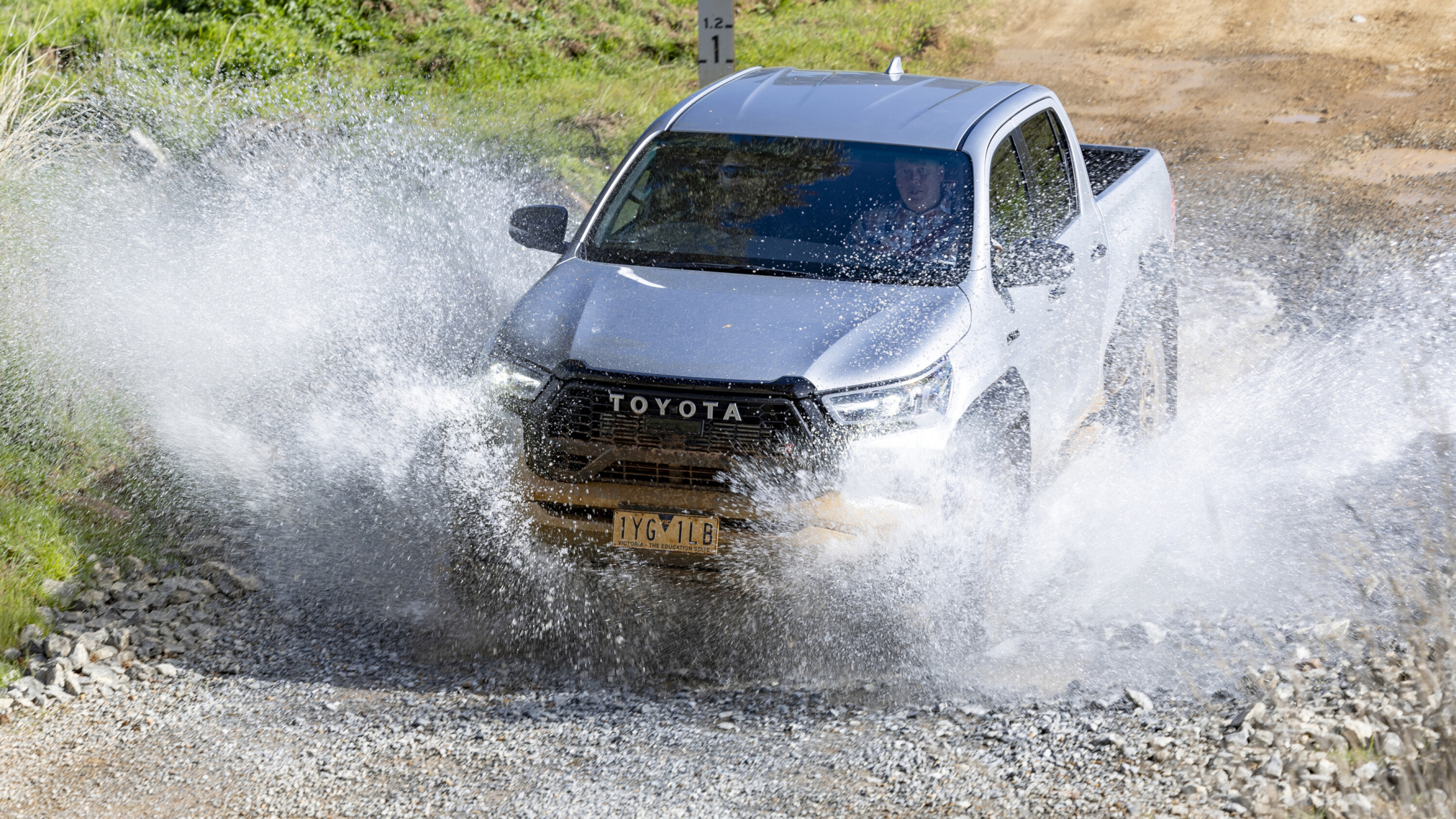
The HiLux has always been a competent off-roader, and a brief off-road test loop at the vehicle’s launch demonstrated that the GR Sport has the off-road chops to carry on this tradition.
Its extra power and torque, combined with an excellent electronic traction control system, make it a worthy consideration for remote area exploration. A rear diff lock as standard helps when battling more serious terrain.
1
The implementation of those tuned KYB monotube dampers does transfer to more stable on- and off-road performance, especially on rutted tracks – better than the Rogue, at least. It does have the same wider track as the Rogue, but its performance falls well short of something like a Ranger Raptor – don’t expect a Raptor-like performance from the GR Sport, despite it being stamped with those Gazoo Racing logos. Instead, its closest competitors would be the Ranger Wildtrak X and Navara Pro-4X Warrior.
However, when combining the increase in performance, retuned suspension and extra width, the GR Sport remains composed on both potholed back roads and bitumen – the best of any HiLux in the line-up.
The recalibrated transmission feels dialled in, with swift and punchy upshifts. More than once on bitumen, though, the transmission hesitated to downshift.
1
Also aiding off-road driving is the inclusion of a skid plate designed to protect vital underbody components when traversing outback dirt roads at pace.
The skid plate is made from 4mm-thick pressed and laser-cut aluminium alloy, powder coated in a matte silver colour. The GR Sport also gets bespoke rails and side steps, built and designed in Australia.
It features the same ground clearance and departure angle as the Rogue, at 265mm and 23 degrees respectively, but it has lost one degree of approach angle – 30 versus 31 degrees.
1
From the showroom, the GR Sport comes with 17-inch alloy wheels (opposed to the Rogue’s 18s) inside 265/65R17 Bridgestone Dueler all-terrain tyres. Despite being capable tyres in their own right, they look undersized beneath massive satin black over-fenders. It may be aesthetic, but it’s obvious the GR Sport needs bigger tyres to fill those wheel arches.
Large ventilated disc brakes on all four corners – 338mm x 28mm four-piston fixed calipers at the front and 312mm x 18mm single-piston floating calipers at the rear – make it an efficient stopper when anchors are deployed. Plus, the calipers are painted red because … red is fast.
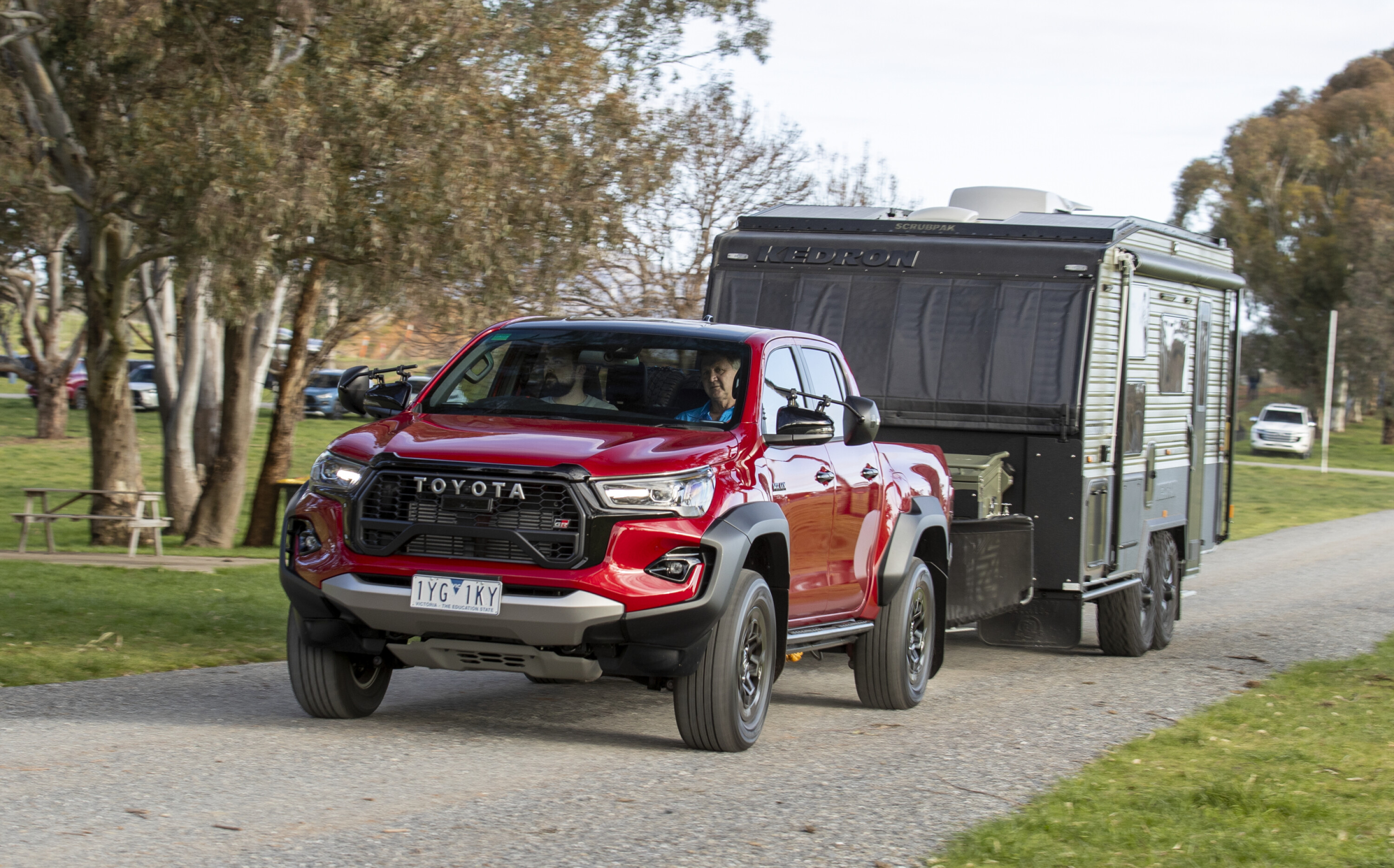
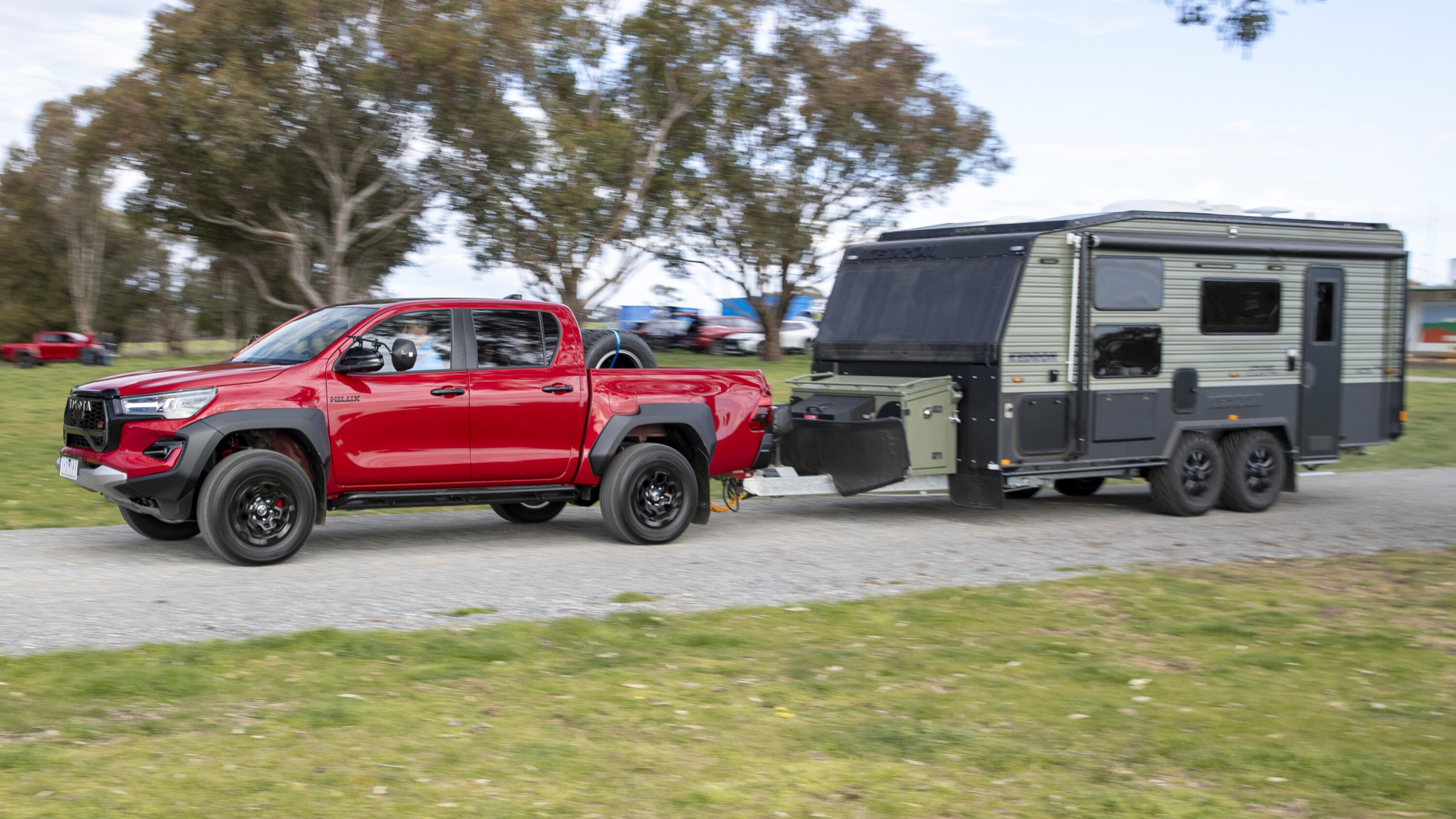
The GR Sport retains the range-wide 3500kg braked towing capacity, and a towbar and rear recovery points are fitted as standard.
2
2023 Toyota HiLux GR Sport standard features
GR Sport front bumper and fascia
Front underbody skid plate
GR sport mesh grille with TOYOTA badge
Red rear recovery points
Gloss black exterior treatment
Heavy-duty steel rock rails
17-inch gloss black alloy wheels with 265/65R17 Bridgestone Dueler AT tyres
Five-piece moulded tub-liner with GR branded headboard and anti-slip floor
Interior
On the inside, the GR Sport mimics the Rogue in many ways, and it’s here that reminders of the age of the current-gen HiLux become most obvious.
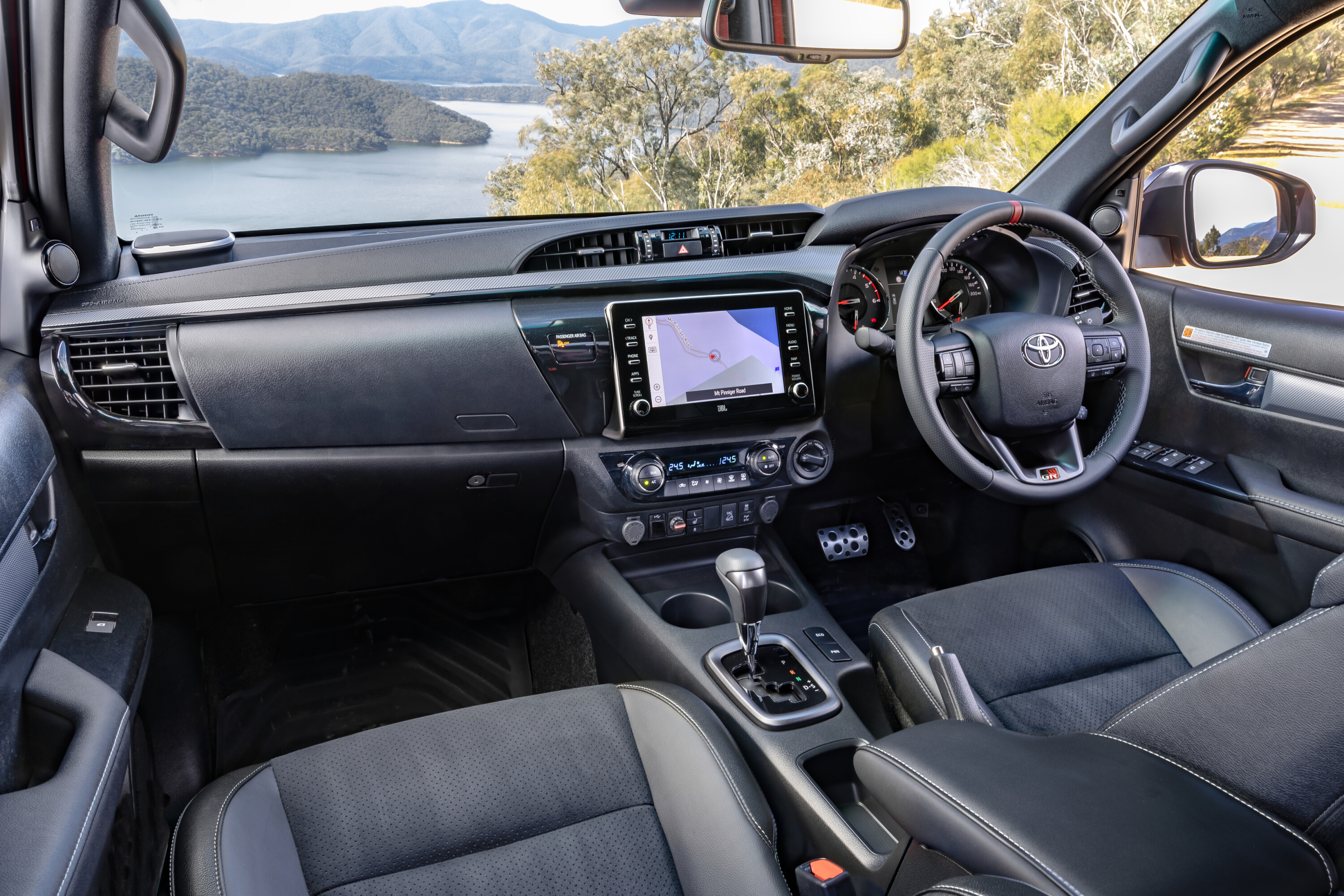
The 8.0-inch touchscreen on the centre console is small by modern standards, especially for a flagship model. It does feature Android Auto and wireless Apple CarPlay compatibility, with the rest of the user interface easy to operate and well mapped out, and the nine-speaker JBL sound system is booming.
A few notable differences between the Rogue and GR Sport, though. Importantly, the GR Sport gets suede- and leather-accented sports seats (heated, of course), which are embroidered with the GR logo and are appropriately bolstered and comfortable for longer stints behind the wheel.
1
There’s plenty of head, shoulder and leg space afforded in the front pews, with copious storage pockets and well-sized drinks holders appropriately positioned. The rear seats are also comfortable and supportive, with room for three abreast at a squeeze.
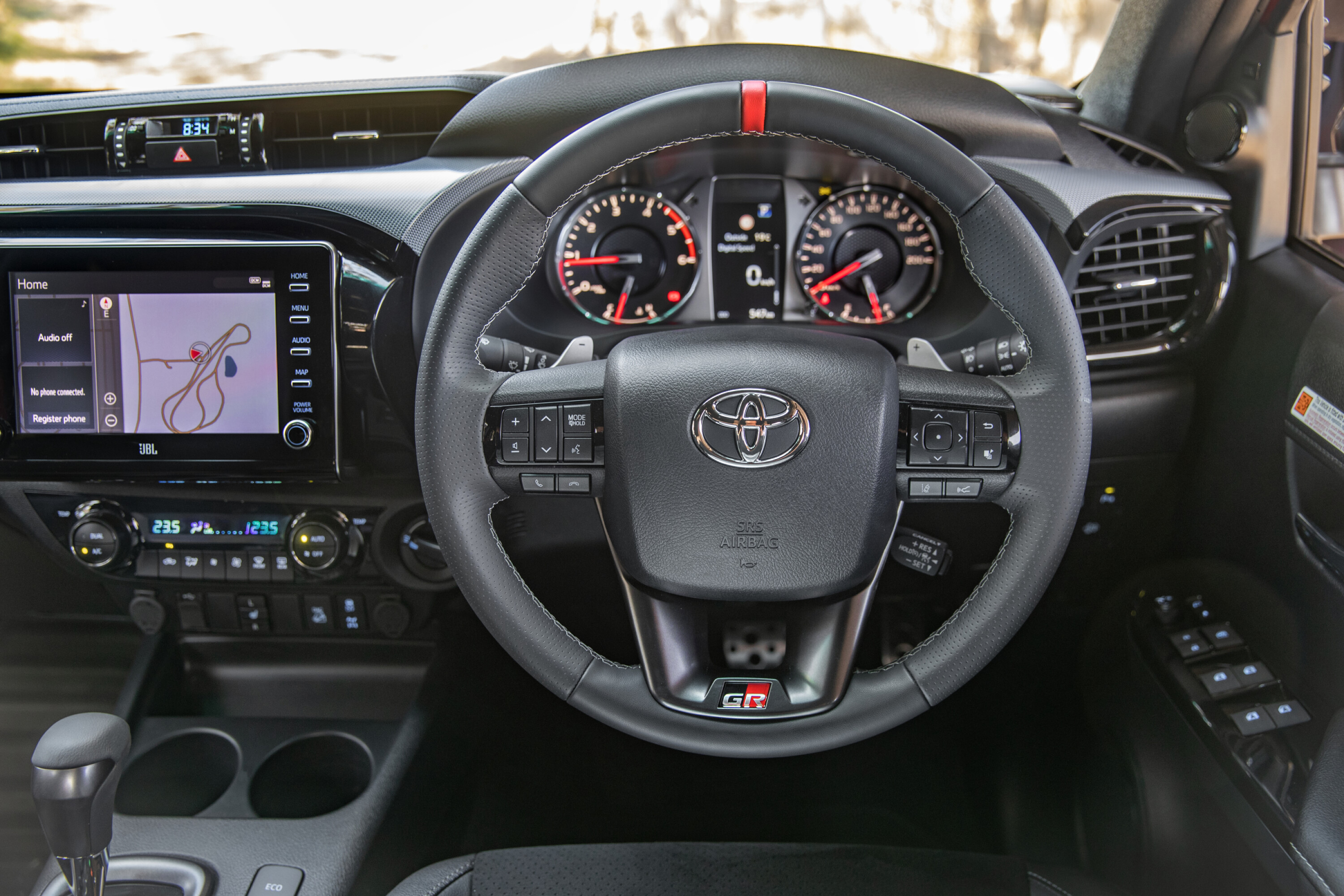
Also unique to the GR Sport are aluminium sports pedals, red seatbelts for all occupants (yep, fast) to accentuate the sporty theme, a unique trim on the dashboard and doors dubbed “technical mesh”, and all-weather floor mats for the driver and front passenger which prove handy for off-road pursuits.
1
Kerb weight is listed at 2270kg and payload is limited to 780kg, which is significantly less than its competitors: Ranger Wildtrak X (918kg) and Amarok PanAmericana (1031kg).
The tub features four tie-down points, while a five-piece moulded tub liner with GR-branded headboard and anti-slip floor is unique to the GR Sport. However, it misses out on the Rogue’s motorised roller cover and 12-volt tub outlet.
2023 Toyota HiLux GR Sport interior features
Suede- and leather-accented sports seats with GR logo
Unique ‘technical mesh’ trim on dash and doors
Aluminium sports pedals
All-weather front floor mats with GR logo
Red seatbelts on all seats
Leather-accented steering wheel with paddle-shifters and GR logo
1
Safety
Although the GR Sport is officially unrated by ANCAP, all regular Toyota HiLux models built from July 2019 have been awarded a five-star ANCAP safety rating, with scores of 96 per cent for adult occupant protection; 87 per cent for child occupant protection; 88 per cent for vulnerable road user protection; and 78 per cent for safety assist.
The GR Sport shares all of its safety features with the Rogue. This means it benefits from the full suite of Toyota’s Safety Sense tech, which consists of auto emergency braking (with day and night pedestrian and daytime cyclist detection); high-speed adaptive cruise control; lane departure warning with steering assist (brakes); and speed-sign recognition.
Despite its age and the fact it competes head-on against next-gen rivals, the HiLux continues to sell well. Heck, it was the best-selling overall vehicle in Australia in August 2023 – not bad for an “old” vehicle. It’s a trusted fan favourite, with an immovable customer base.
Like the Rogue, the wider chassis of the GR Sport makes it surefooted and dynamic (for a ute) on bitumen and twisting roads. Unlike the Rogue, though, further tweaks to the suspension make it a better all-rounder and equally at home on dirt-riddled back roads.
Just don’t call it a sticker pack … or a Ranger Raptor competitor either. What you can call it, is the best HiLux in the Japanese marque’s line-up.
Front: Coil springs, double wishbones, stabiliser bar, monotube dampers. Rear: Leaf springs, monotube dampers.
L/W/H
5320/2020/1880mm
Wheelbase
3085mm
Fuel tank
80 litres
Brakes
Front: 338mm ventilated discs with 4-pot caliper. Rrear: 312mm ventilated discs with single-pot caliper.
Tyres
Bridgestone Dueler AT 265/65R17
Wheels
17-inch alloy
GVM
3050kg
Payload
780kg
Towing Capacity
3500kg
GCM
TBA
Departure Angle
23u00b0
Approach Angle
30u00b0
Wading Depth
TBA
Departure Angle
23u00b0
Price
$73,990 + on-road costs
Australians continue to flock to the ute segment in their tens of thousands. Or, to put it as a more enlightening statistic: one in every five new vehicles sold in this country features a tray.
The seemingly unstoppable growth in utility vehicle sales is being driven by the dual-cab variant that has evolved from rugged multi-seat commercial workhorse to (relatively) refined, multi-purpose family lifestyle vehicle.
It’s not uncommon to see multiple utes in the monthly Top 10 charts for best-selling cars.
1
With so many choices and so many price points, Wheels Best Utes 2023 is your ultimate guide to the top picks in this vast and varied segment.
Whether your buying priority is safe and convenient family transportation, towing capability, performance, value, or you simply have a specific budget ceiling, our nine Wheels Best Ute categories deliver the definitive independent expert insights.
We also crown an overall segment winner for those looking for the best of the best.
Our Wheels Best series covers all utes currently on sale, regardless of how old or new the vehicle is.
What’s new in the field?
Despite the segment’s popularity, all-new models are relatively rare events; Utes typically have longer lifecycles than the average passenger car or SUV.
The current-generation Toyota HiLux, for example, has been around since 2015 – and a new version isn’t expected before 2025.
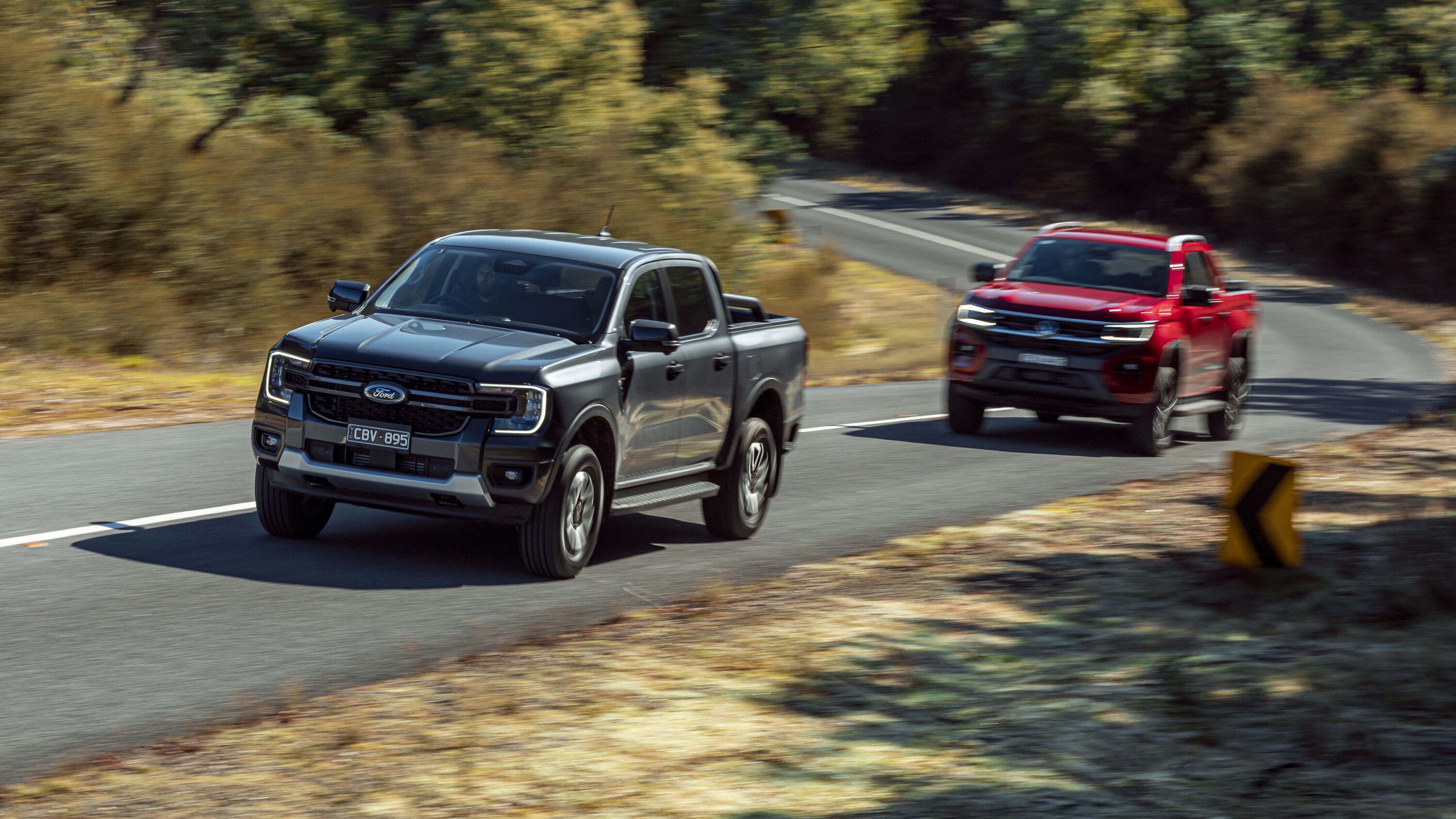
The Volkswagen Amarok is the only all-new ute to be released locally in 2023, arriving as a twin to the Ford Ranger that was the only new-generation entrant in 2022.
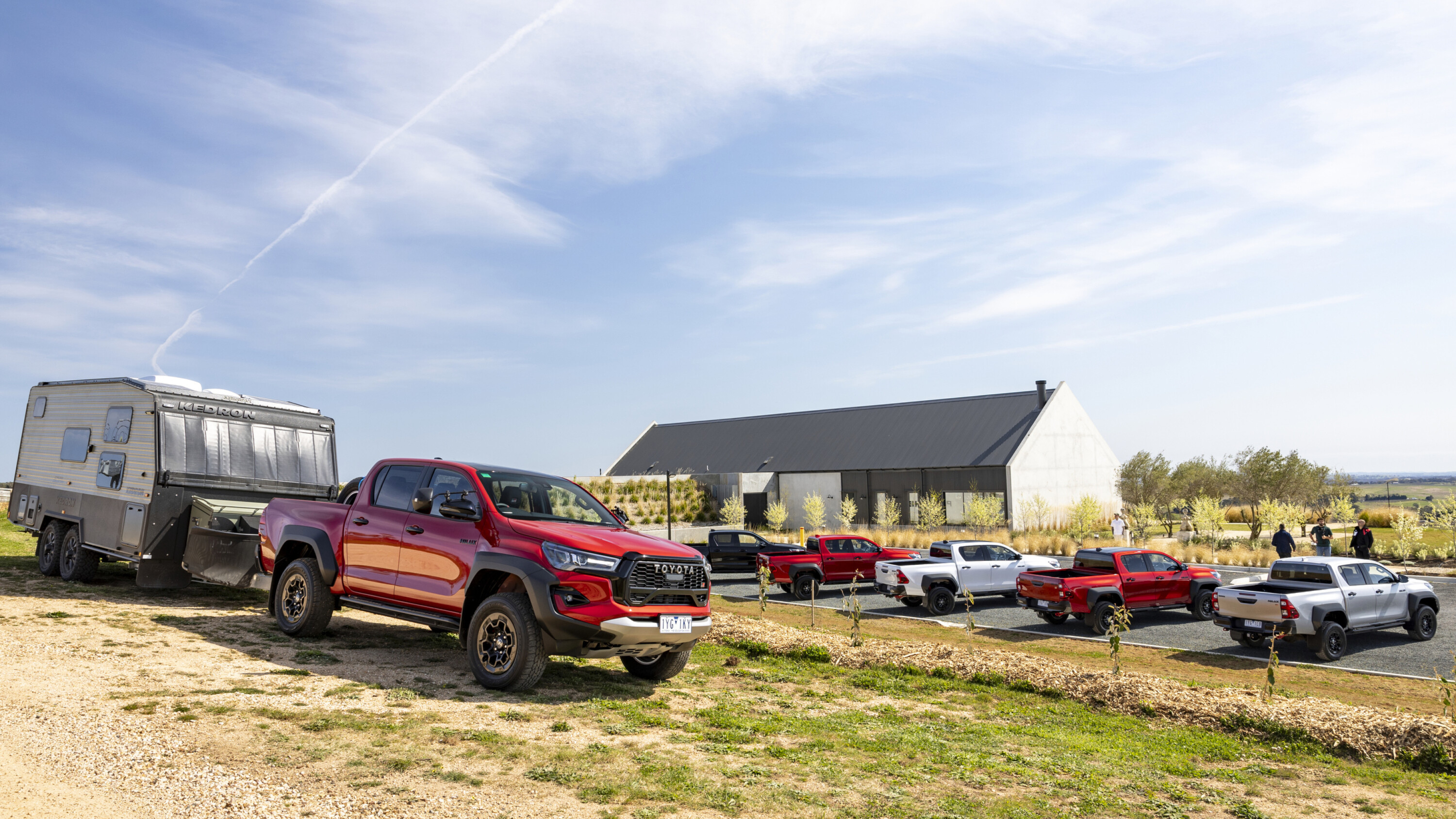
We will see a new-generation Mitsubishi Triton in 2024 (pictured above), while Korean stablemates Hyundai and Kia are developing new contenders for some time in the near future.
Click any of the utes above to see more news, reviews, videos and buying advice for each model.
Where are the big utes?
Our Best Utes coverage doesn’t incorporate the US pick-up trucks that are being converted to right-hand drive for Australia – the Ford F-150, Chevrolet Silverado, or RAM 1500 (though the latter is referenced in our Best Performance Ute category).
These ‘full-size’ utes are much bigger and much more expensive than the ‘mid-size’ segment we’re focused on here – and therefore not models that would be naturally cross-shopped with the likes of the HiLux and Ranger.
1
So, which are the best (mid-size) dual-cab utes you can buy?
Read on for the most comprehensive comparison guide in Australia.
Best Utes: Read the full series
Wheels Best Utes 2023 is your ultimate guide to the top picks in this vast and varied segment.
Let’s cut straight to the punch. You’re looking at the most powerful Ford Ranger in Australia. By a long, long, long way.
While the internet is rife with people pushing their 3.2 Duratorqs to their limits chasing anything north of 200 rear-wheel horsepower, Michael has obliterated that with an eye watering 750hp at the rear wheels.
If you’ve come here hoping for a write-up on storage drawers and roll-out awnings you’re in for a bad time. But if forged rods, billet internals, and one-off adaptors for exotic transmissions are your kind of funk then you’re in for a treat.
1
Let’s get one thing clear right from the start: the original 3.2L five-cylinder turbo-diesel that came standard in Michael’s 2013 PX1 Ranger (yeah, she’s a first gen) is a distant memory.
In its place is now the holy-grail of Aussie motoring: a 4.0L six-cylinder ‘Barra’. Aussie designed and built, the big-six was found in everything from naturally aspirated taxis to high-performance factory turbocharged applications, but none of them were ever as wild as this offering.
Taking an x-ray to the Barra reveals the secret to a reliable 750hp at the wheels. ACL race bearings wrap around a factory crank tasked with keeping the forged Spool rods moving freely, with matching forged Spool CP pistons on the angry end.
1
The combination is good for a reliable 1000hp-plus should Michael decide to wind the wick up even further.
A factory Barra head is still more than handling the power. Michael’s fitted it up with heavier duty Crow Cam valve springs to fight off the dreaded valve float. A combination of ARP head studs and an MLS head gasket keep it firmly sealed to the block even when the two-step button is fired into life.
Of course, forged internals alone don’t make horsepower, they just make the engine hold together when pushed far beyond figures that’d pretzel a stock setup. Under the bonnet of Michael’s Ranger, a Garret GTX3584r turbocharger is responsible for all the power and noise.
1
It’s paired up with a 50mm Turbosmart HyperGate wastegate ensuring it peaks at 22psi for reliable shenanigans.
On the back-end, Michael pieced together a work-of-art four-inch stainless steel exhaust system from the turbo back with flexi-joiners, V-band flanges, a catalytic converter, resonator, and high-flow four-inch muffler, all teaming up to give one hell of a note without offending the EPA in the process.
On the cold side, a matching stainless steel airbox and intake pipe combination play host to a huge nine-inch Stealth Extreme air filter ensuring an endless supply of cool filtered air.
1
Once the turbo does its work, the charged air is forced through a polished PWR charge air cooler to drop temps and increase air density, before a factory FG Falcon short-runner style inlet manifold rockets the compressed air in to meet the forged pistons.
There’s zero chance the factory fuel system would be able to cope with the demands of a 750hp package, and even less chance the factory ECU would either.
To ensure the Barra pulls strong all the way to redline, Michael spec’d up a pair of Walbro 460lph fuel pumps draughting from a 2.3L alloy surge tank and feeding into six 1000cc Bosch injectors.
1
Managing the whole affair like an orchestra of mechanical mayhem is none-other than Haltech’s Elite Pro electronic control unit.
“I went the Haltech for all the functions it supports,” Michael tells us. “There’s a rotary switch for multi-boost level maps, crackle and pop tunes, an anti-lag button and two-step for launch control; the Haltech was the easiest solution for all of this and to talk to the vehicle through CANbus.”
Moving backwards and Michael’s fitted up a late-model BMW automatic transmission in the form of a ZF 8HP eight-speed. A DomiWorks bellhousing adaptor marries it up to the Barra engine with custom mounts holding the combo in.
1
It’s paired with a standalone transmission control unit from TurboLamik giving Michael ultimate control and a bunch of neat tricks.
“I’ve got eight different driving modes,” he says. “Normal automatic mode, sports mode, sports plus, full manual… it’s got a transbrake for hard launching and even an electronic clutch mode if I want to drive it like a manual.”
Despite the trick features of the bimmer ’box, in 2WD form it wasn’t going to cut the mustard. Michael took matters into his own hands and machined up not only a custom adaptor to mate the 8HP to the factory Ranger transfer case, but the input shaft as well.
1
Paired up with a shortened rear shaft and extended front shaft, the 4×4 system works exactly as it used to, just with five times the power pushing through it.
Jump into the captain’s chair and it’s obvious this Ranger means business. A sequential style shifter from 8Speed sits inside the factory Ranger gear shifter location, a small LCD screen spits out gearbox data including gear position, drive mode and transmission temperature, while a boost gauge tells Michael when it’s time to calm the party down.
A huge 11-inch Tesla-style touchscreen not only updates the PX1’s dash, it also feeds into an eight-inch Pioneer sub/amp combo under the front seats, while Kicker six-inch speakers in each door hit the mid notes and a pair of tweeters bang the highs. A slimline 120Ah Kickass battery hides in behind the rear seats.
1
Moving to the outside and Michael’s styled the Ranger’s looks as loud as he’s built its drivetrain.
That striking blue colour scheme is no vinyl wrap; it’s a flash layer of paint Michael mixed and sprayed on himself. The engine covers copped the same treatment, because details matter, right? Hiding under that oh-so-loud paintjob is a PX2 Raptor-style conversion up front, significantly updating the looks from the original PX1 affair.
The full replacement bolt on plastic front-end was picked up for a bargain basement price off Marketplace, but looks a million bucks paired up with the SS custom headlights, and the matching rear panels fitted up over the top of the factory tub.
1
That polished stainless steel Fabulous Fabrications snorkel pairs perfectly with the machined 17 x 9 KMC Machete Crawl wheels.
The genuine beadlocks have a -38mm offset. For context, that’s a wheel track increase over seven inches wider than a stock Ranger. The wheels are shod in 35 x 12.5 Kenda Klever R/T tyres, with four-inch front Bilstein struts and two-inch rear lift combo courtesy of Fulcrum shocks and King springs.
With a shift in popularity from older 4x4s to newer dual cabs, a certain amount of uniqueness was lost as four-wheel drivers drifted from DIY to bolt-on camping setups.
1
But with these dual cabs now starting to age and come onto the secondhand market, we’re like kids in a candy store waiting to see all the amazing DIY builds people are dreaming up in their garages.
But we reckon it’ll be a while before we see another dual cab with anywhere near to the power Michael’s Ranger is punching out.
1
Despite being an absolute whiz on the welder, paint gun and lathe, Michael reckons one of the hardest parts of the whole build was finding someone with the skills to wire the new driveline package into the Ranger’s CANbus system, and unless you’ve tried engine swapping a late model 4×4, you’ve might never have come across the term before.
In order to understand what a CANbus system does, you first need to understand the problem it solves. In the old days, when the ECU controlled six injectors and the fuel pump, wiring was relatively straightforward. The ECU would send a signal to the pump to turn on, and if it got a signal back it knew things were working well. Simple, right?
Things started going pear shaped as systems became more complicated, with multiple ECUs, transmission control units and vehicle body computers. Having individual wiring from every component to every control unit would soon become an absolute disaster of a wiring loom that would add complexity and weight to the system.
CANbus simplifies things by having multiple components talk over the one set of wires, using a special language to identify what they are.
Instead of each wheel-speed sensor needing to be wired to the ECU, traction control system, stability control system, transmission control unit, and even the stereo to bump your music up a little louder at higher speeds, they can send a signal into the CANbus network with a little intro on where the info is coming from and what it’s saying.
The individual computers can then receive that information, decide if it’s relevant or not, and do it without a million kilometres of wiring bogging things down in the process.
Think of it like having 30 4x4s in your convoy and needing a separate radio to talk to each one, or just using the one channel and announcing who you are and who you’re talking to when you key-up the mic.
The October 2023 issue of 4X4 Australia is out now.
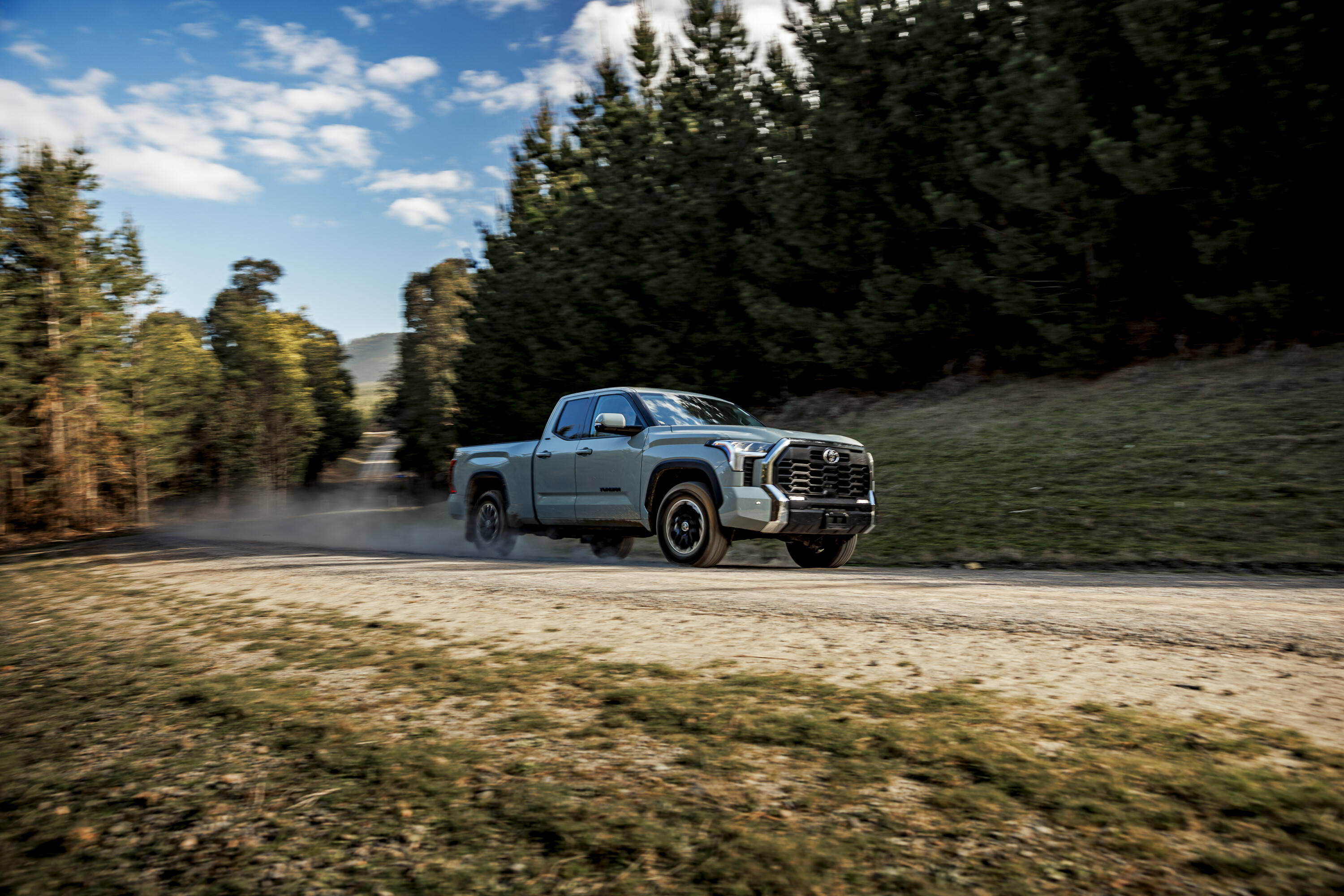
Headlining this issue is an exclusive Australian drive of the 2024 Toyota Tundra. This example – the first new-gen Tundra in Australia – was given to us from Melbourne-based American Vehicle Sales, who re-engineered this vehicle to right-hand drive. Matt reveals if it’s a better alternative to the RAM 1500, Ford F-150 and Chevrolet Silverado.
1
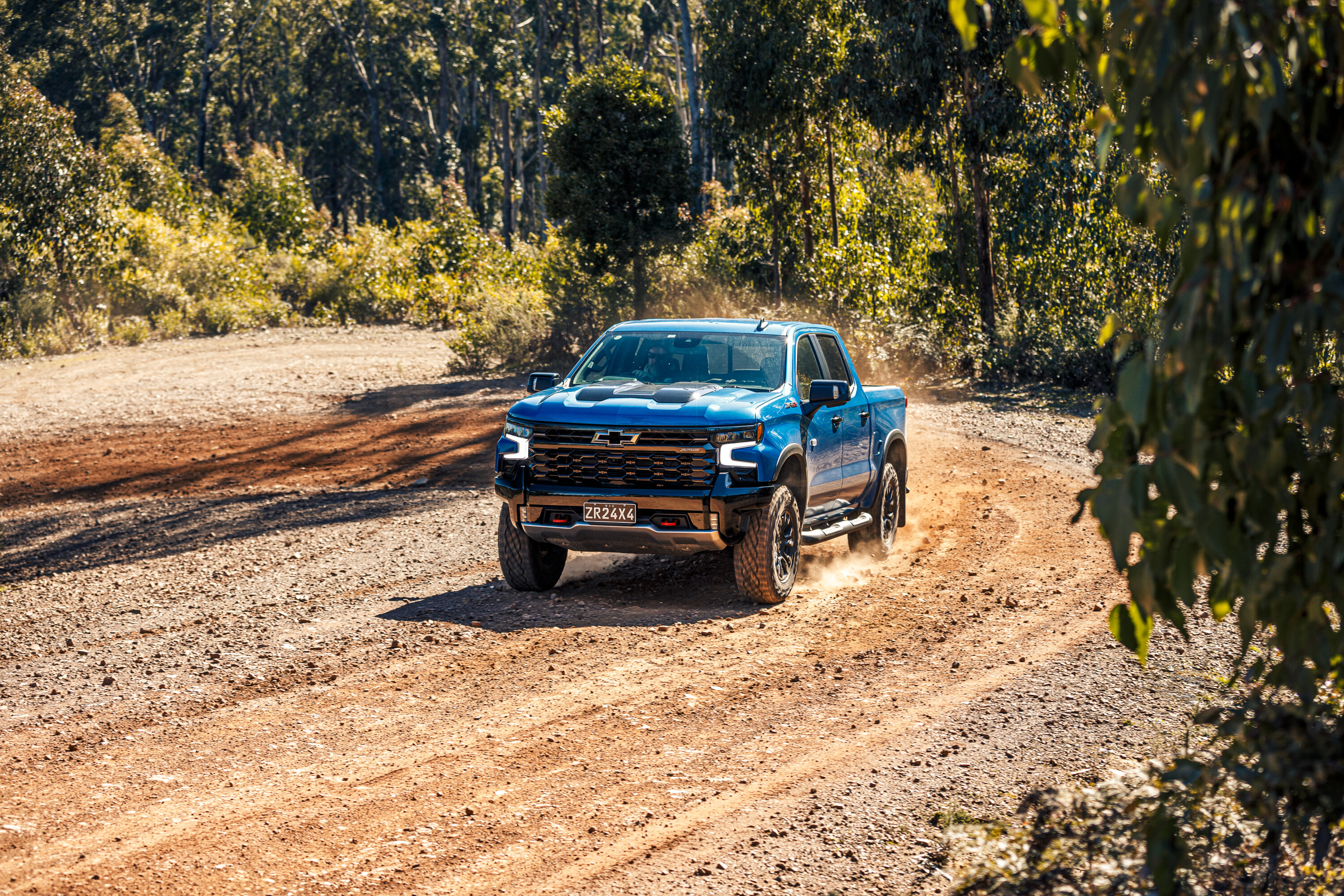
On the topic of super-sized utes, we spent a week in the Chevrolet Silverado 1500 in both ZR2 and LTZ Premium guises. Plus we attached a Jayco Silverline 24-foot caravan and tested the Silverado’s towing capability, and it didn’t disappoint.
1
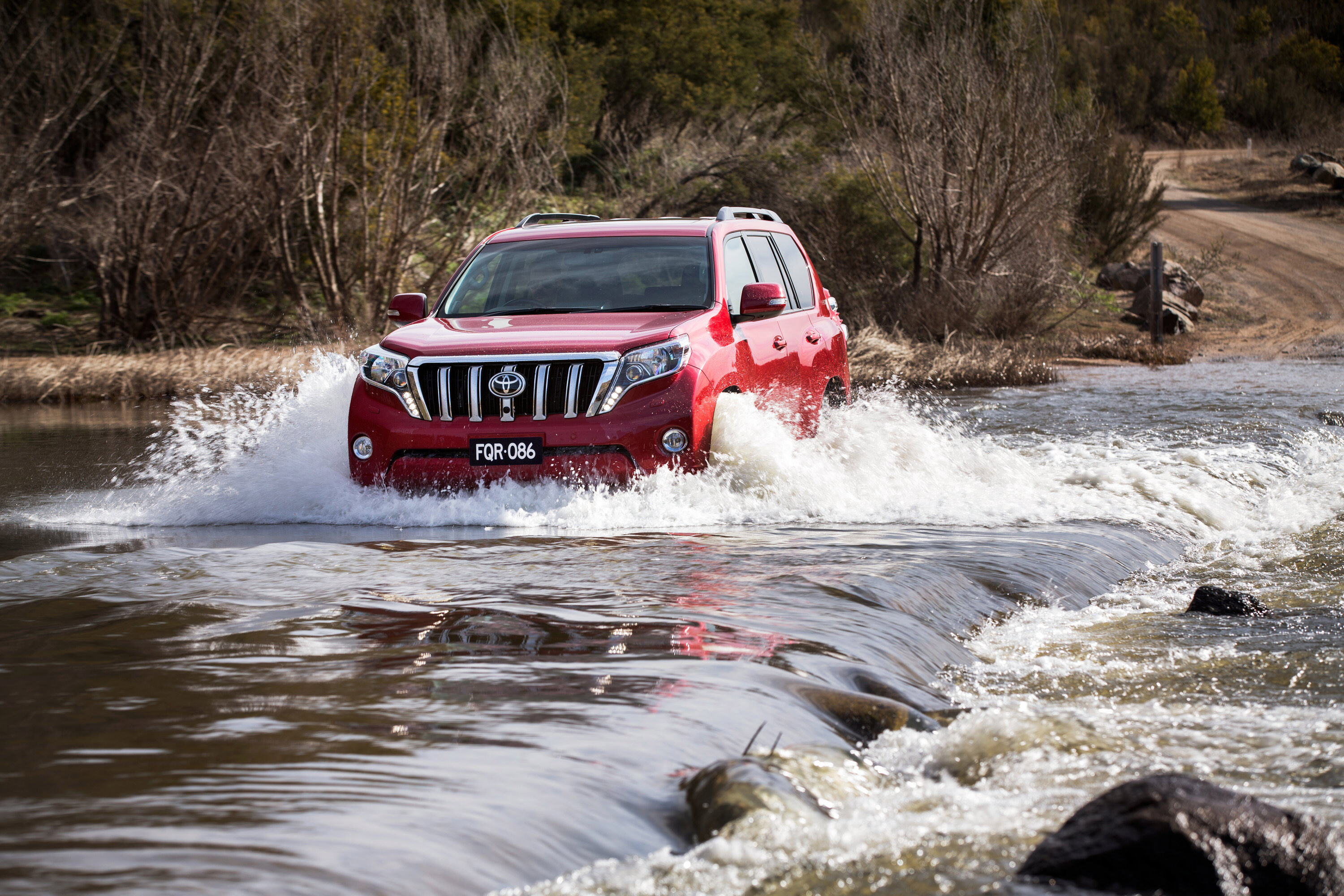
We then examine the used Prado market and provide an insight into what to look out for if you’re considering buying a second-hand model. The market stretches from less than $20K to more than $80K for the much-loved Toyota SUV, and you’ll want to read this if you want to buy a Prado before the new one arrives next year.
1
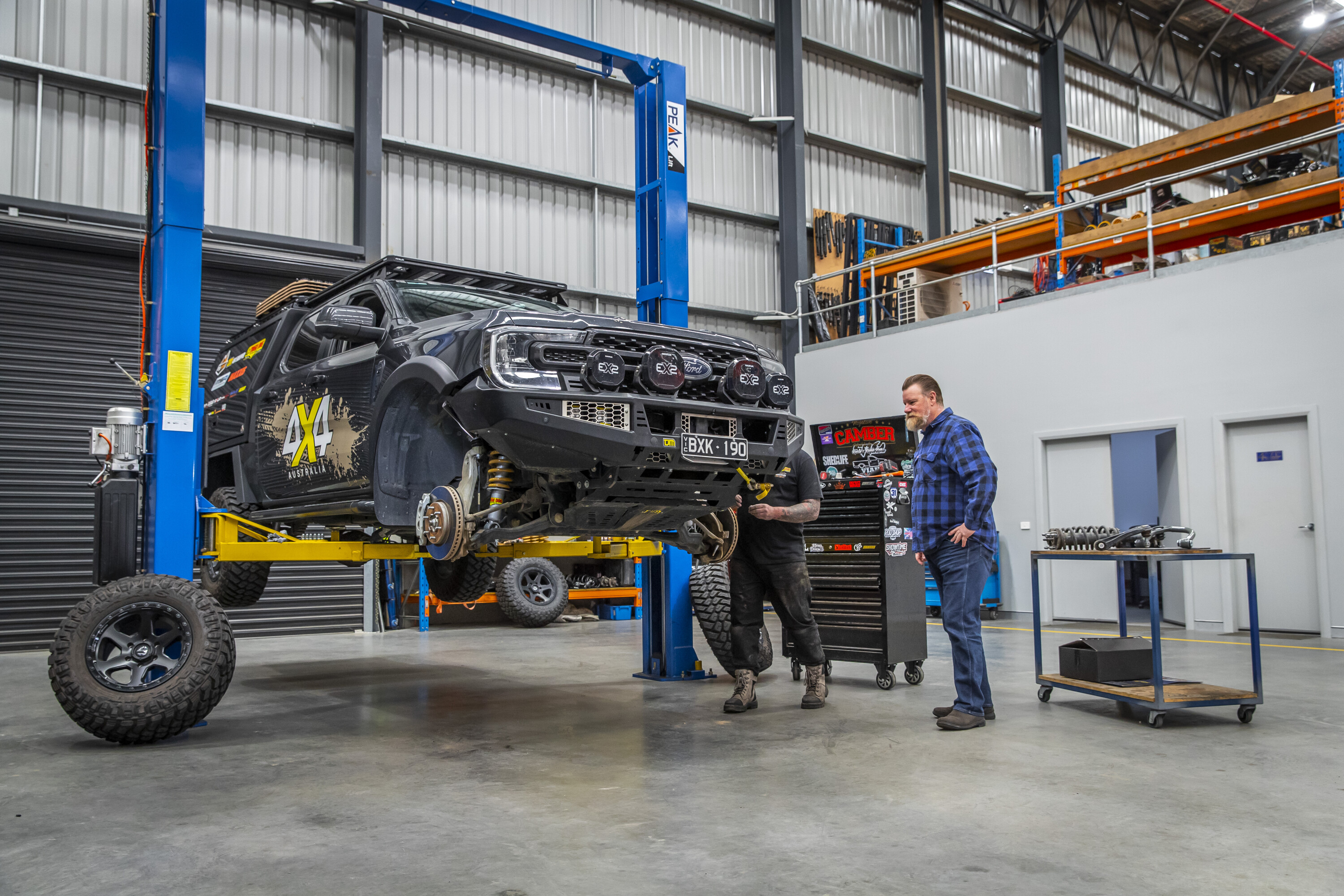
Progress continued this month on our 2023 Ford Ranger, and we added a full Tough Dog suspension upgrade which has transformed the vehicle. We also completed the interior fit-out of the Trig Point canopy with a slide-out kitchen. We’re nearly at the finish line for the build, so stay tuned as we add the final pieces to the puzzle over the ensuing months.
1
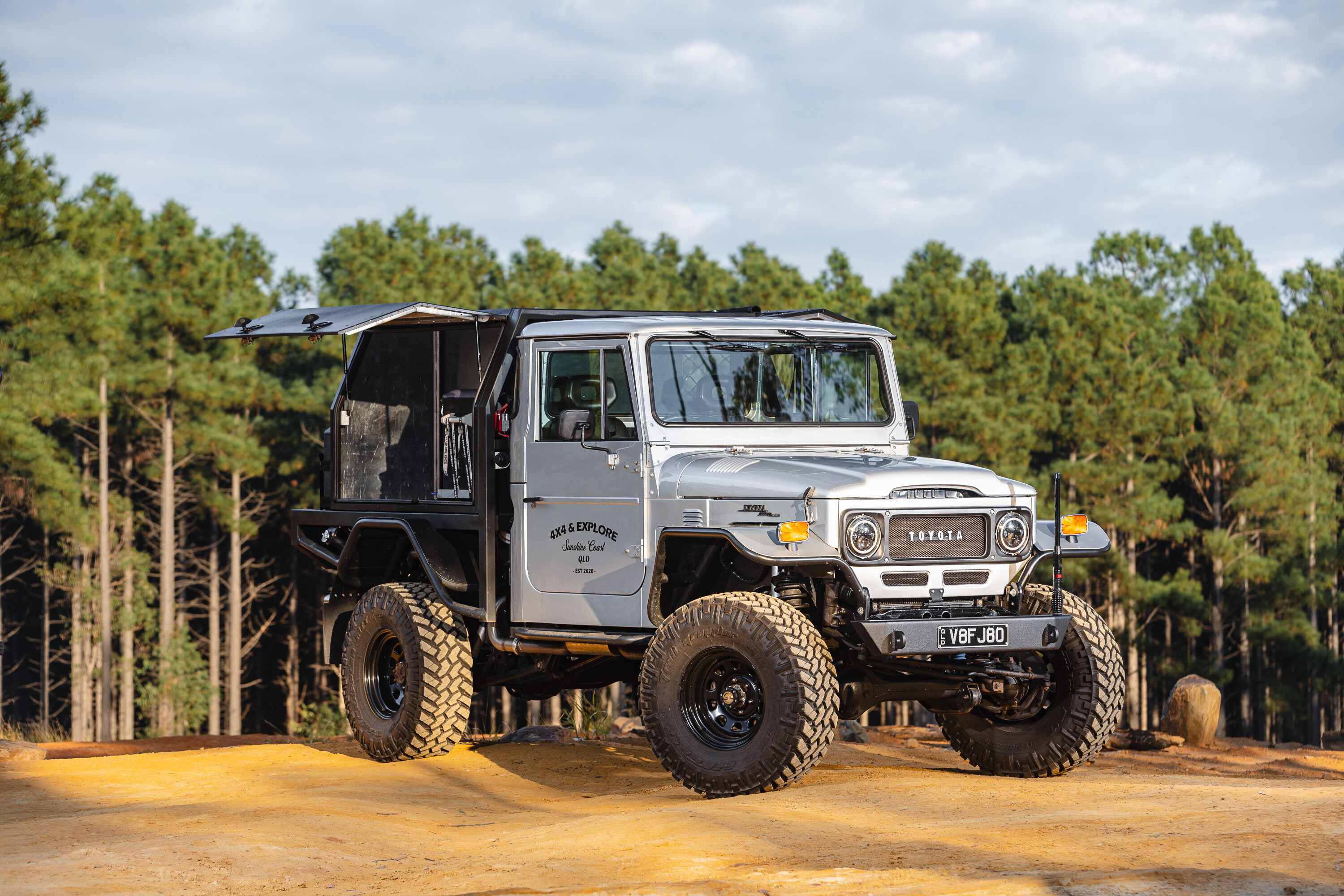
We take an in-depth look at a LandCruiser hybrid that has been dubbed a “masterpiece”. The vehicle is a combination of a 1971 FJ45 perched atop a 1994 80 Series, and it’s totally insane. Read all about it in this issue! We’ve also included a guide on how to resto-mod your own build, if you want to mimic the brilliance of this LandCruiser.
1
On the travel front this month, we venture to Limmen National Park in the NT, have a brew at the Adavale Hotel in Queensland, and tour the Kennedy Range-Mt Augustus and Connie Sue Highway, both in WA.
“No,” said Hanley. “Different vehicle, different circumstances. Aimed up at a different customer base for different reasons.”
Due to arrive in Australia in the first half of 2024, the 48-volt system will reduce fuel consumption by around 10 per cent, from 8.4L/100km to approximately 7.6L/100km – in line with four-wheel-drive Ford Rangers fitted with the 2.0-litre bi-turbo diesel engine.
A stop-start system to automatically turn off the engine when it is idling will be added, and it is also said to improve drivability and reduce the engine’s noise, vibration and harshness.
Toyota has confirmed the 48-volt system will not impact the HiLux’s 3500-kilogram braked towing capacity, and three years of local development was conducted to ensure it is suited to Australian conditions.
“[GR Sport] sits in what we call ‘a set of its own’,” added Hanley.
“We have strong competitors in this market. However, this is aimed fair and square at that one of a quarter million HiLux customers who might want to upgrade and we believe that based on our research, this is a really engaging vehicle for them and we’ll attract those people.
1
“It kind of sits in that sweet spot above SR5 and offers our customer base an alternative, which is quite significant.”
Toyota Australia expects to sell 3500 examples of the HiLux GR Sport annually, with 1600 orders already in the books.
Will the Toyota HiLux SR5 and Rogue receive the GR Sport’s high-output tune?
Toyota has confirmed that current flagship HiLux variants, including the wider new Rogue, will not receive the more powerful 160kW/550Nm tune available in the GR Sport – up 10 per cent (10kW and 50Nm) over standard 2.8-litre diesel auto models.
“No, at the moment, the performance improvements are just planned for the GR Sport,” said Toyota Australia senior product planning specialist Rod Lyons.
Toyota said there are no changes to the HiLux’s turbocharger or other parts, with the GR Sport featuring a retuned powertrain and six-speed automatic.
“[There’s] no plan to move the Rogue [to the high-output tune],” added Hanley.
Stay tuned for our 2023 Toyota HiLux GR Sport launch review on Thursday, September 21 at 7:00pm AEST.
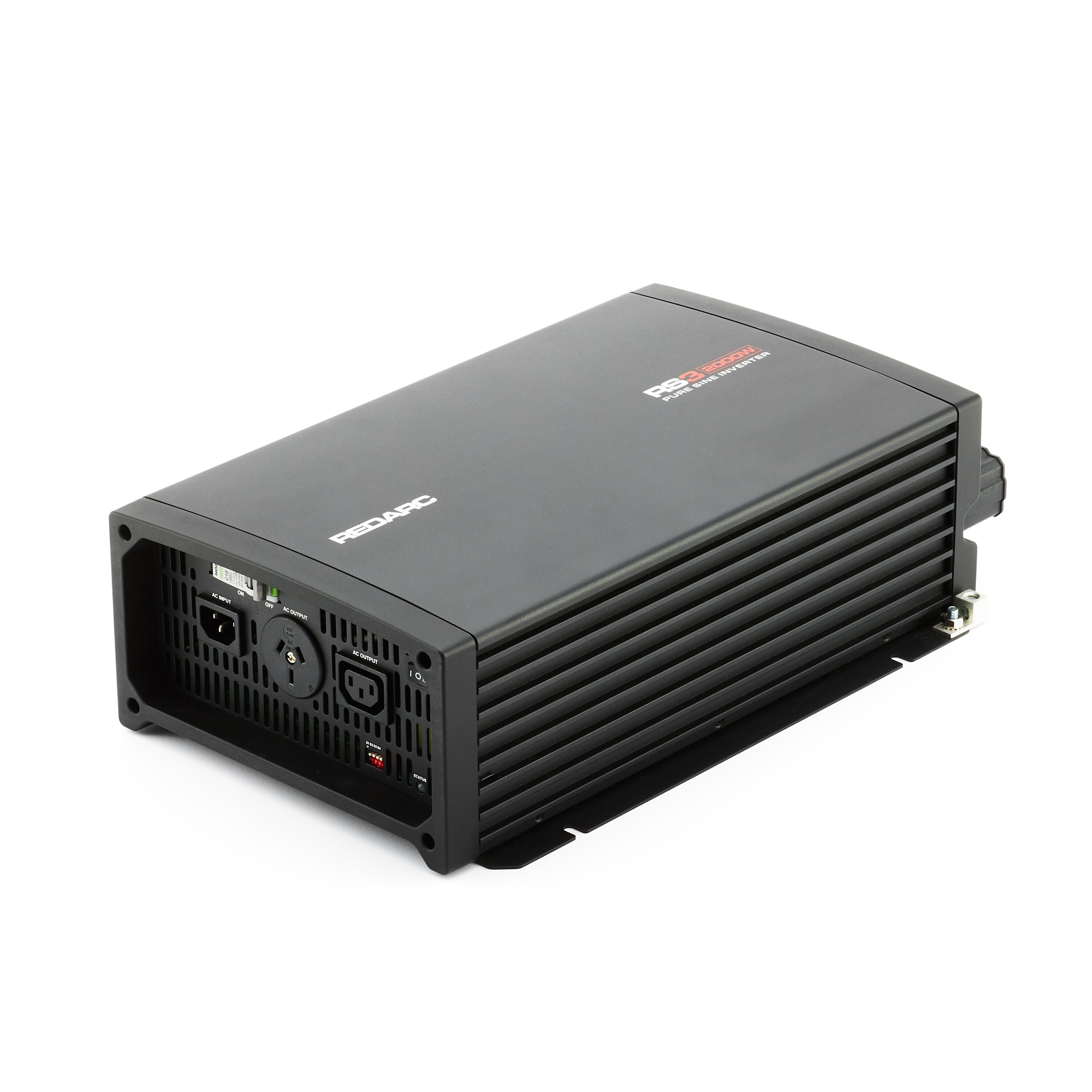
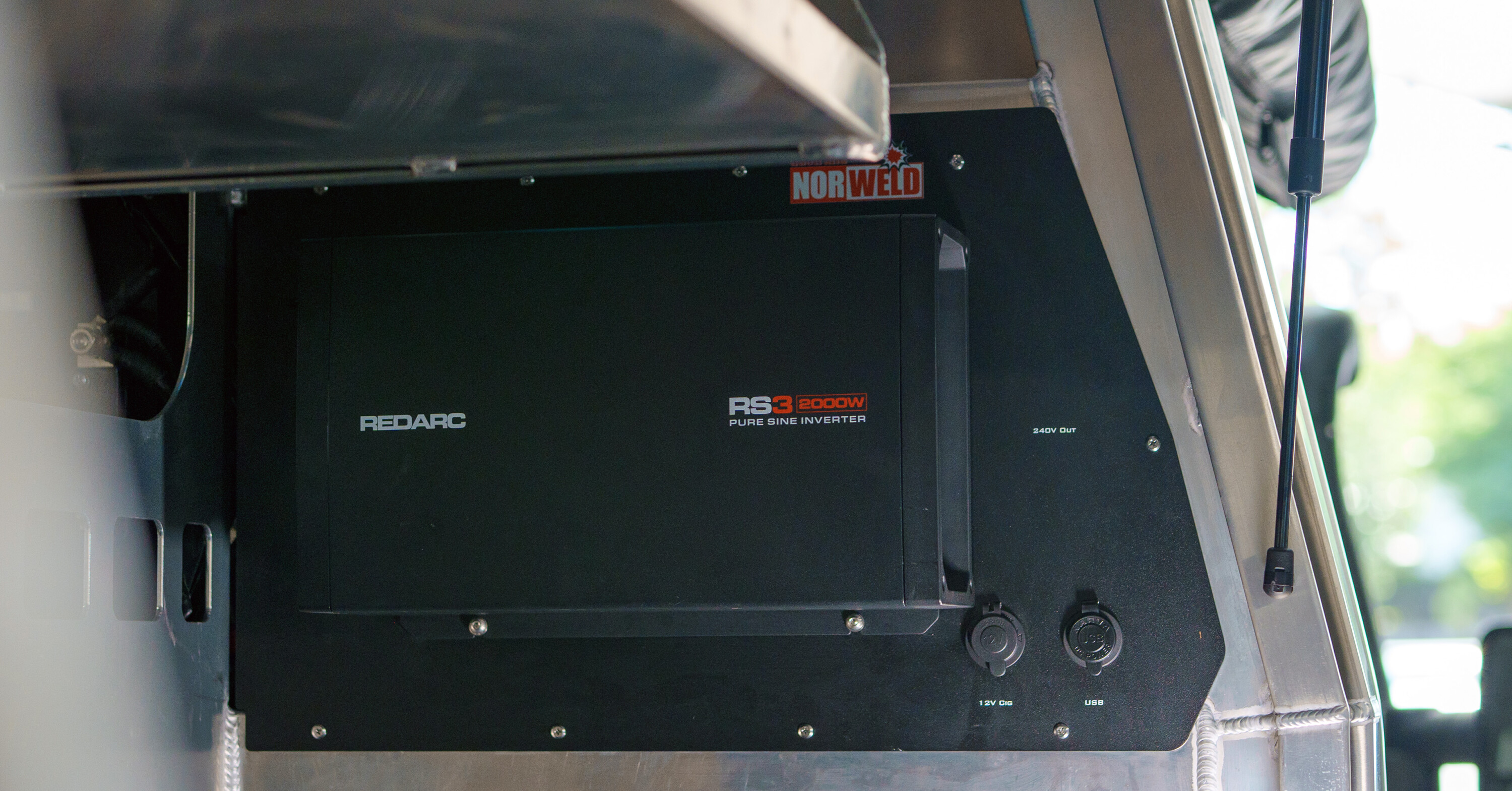
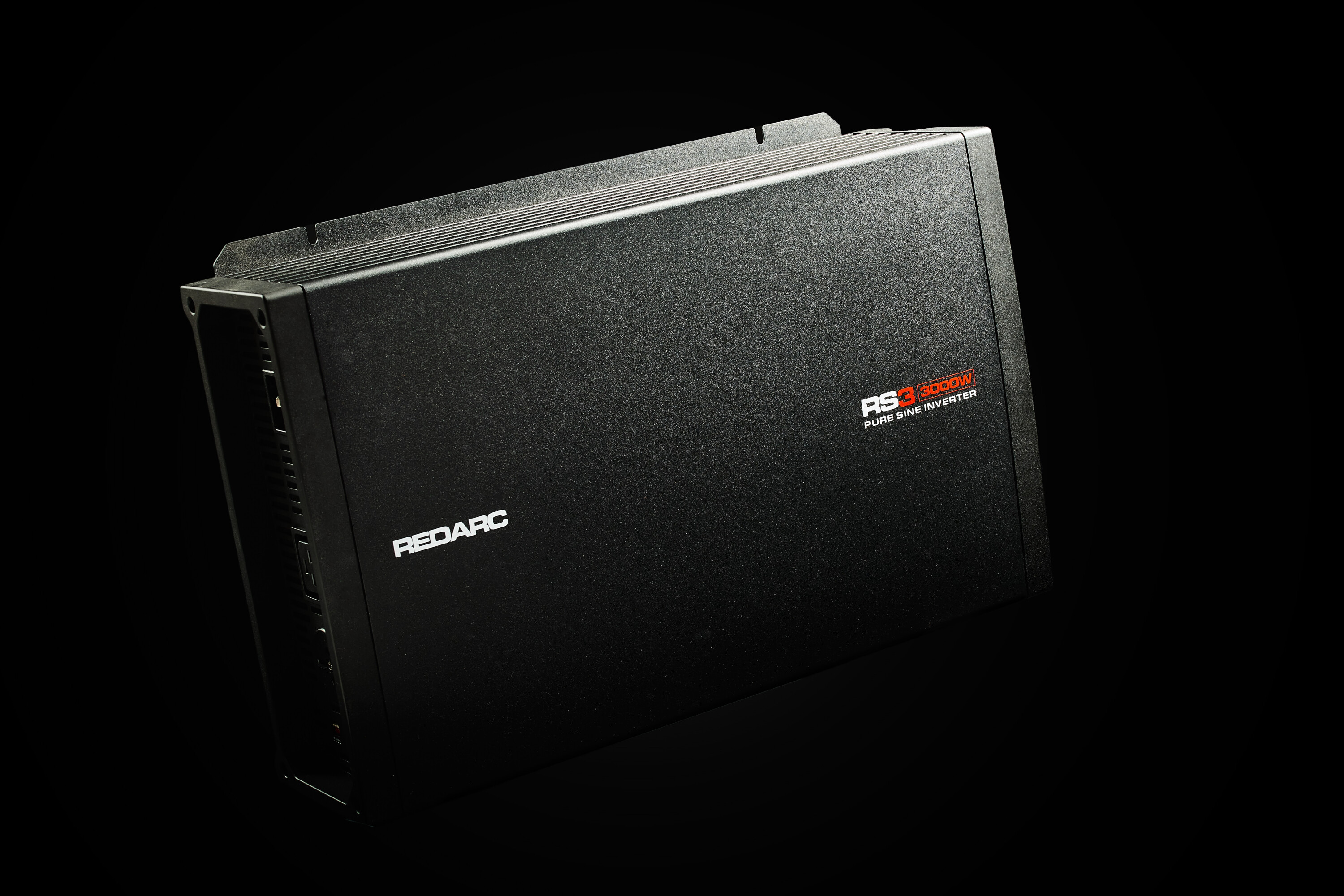
REDARC has released a new range of inverters and it’s great to see its added some great features to the RS3 Inverters.
Available with 1200, 2000 and 3000W capacities for 12 and 24V systems, the new range of features has been tailored for installation and end use.
“REDARC is further cementing their position as a total off-grid power solution provider with the launch of two key elements to any build,” said Albert Atkins, Product Manager for the RS3 Inverters.
“Recognising that inverters are an essential component in many work and travel setups, we’ve engineered the RS3 range to deliver powerful performance and quiet operation for life on and off the beaten track.”
The first new feature is built-in Automatic Transfer Switching (ATS) as standard. What this means is that when you connect to 240V power, the inverter seamlessly switches from using battery power to mains power. This is something more often seen in caravans and camper trailers, but now can be utilised in your 4WD.
1
The second feature is improved surge capacity, up to 200 per cent higher and for twice as long as comparable inverters. This means smaller inverters can power appliances with a higher start-up power demand; and by downsizing your inverter, you can reduce weight and save valuable space.
Finally, the RS3 Inverters run up to 75 per cent quieter than comparable models, guaranteeing they won’t interrupt the serenity at the best campsite when powering essential items. It also means they won’t interrupt your sleep on hot nights.
1
“REDARC have recognised that inverters are no longer a luxury but have become an essential component in many work and travel setups,” said Atkins. “The RS3 inverters have been engineered for life on and off the beaten track, delivering powerful, energy-efficient performance and quiet operation.
“Whether you need to run an air conditioner, power an induction cooktop, operate a CPAP machine, or charge power tools, there’s an RS3 inverter for your needs,” he added.
1200W 12V RS3 Pure Sine Wave Inverter
Dimensions: 423 x 261 x 126mm
Weight: 6.0kg
Price: $1499
2000W 12V RS3 Pure Sine Wave Inverter
Dimensions: 443 x 261 x 126mm
Weight: 6.8kg
Price: $2219
3000W 12V RS3 Pure Sine Wave Inverter
Dimensions: 467 x 318 x 131mm
Weight: 10.3kg
Price: $3297
Spend enough time exploring off-road in your HiLux and eventually you will get stuck.
We’ve all been there. Getting stuck means a recovery is required, and this means something needs to be connected to your HiLux to give it a tug.
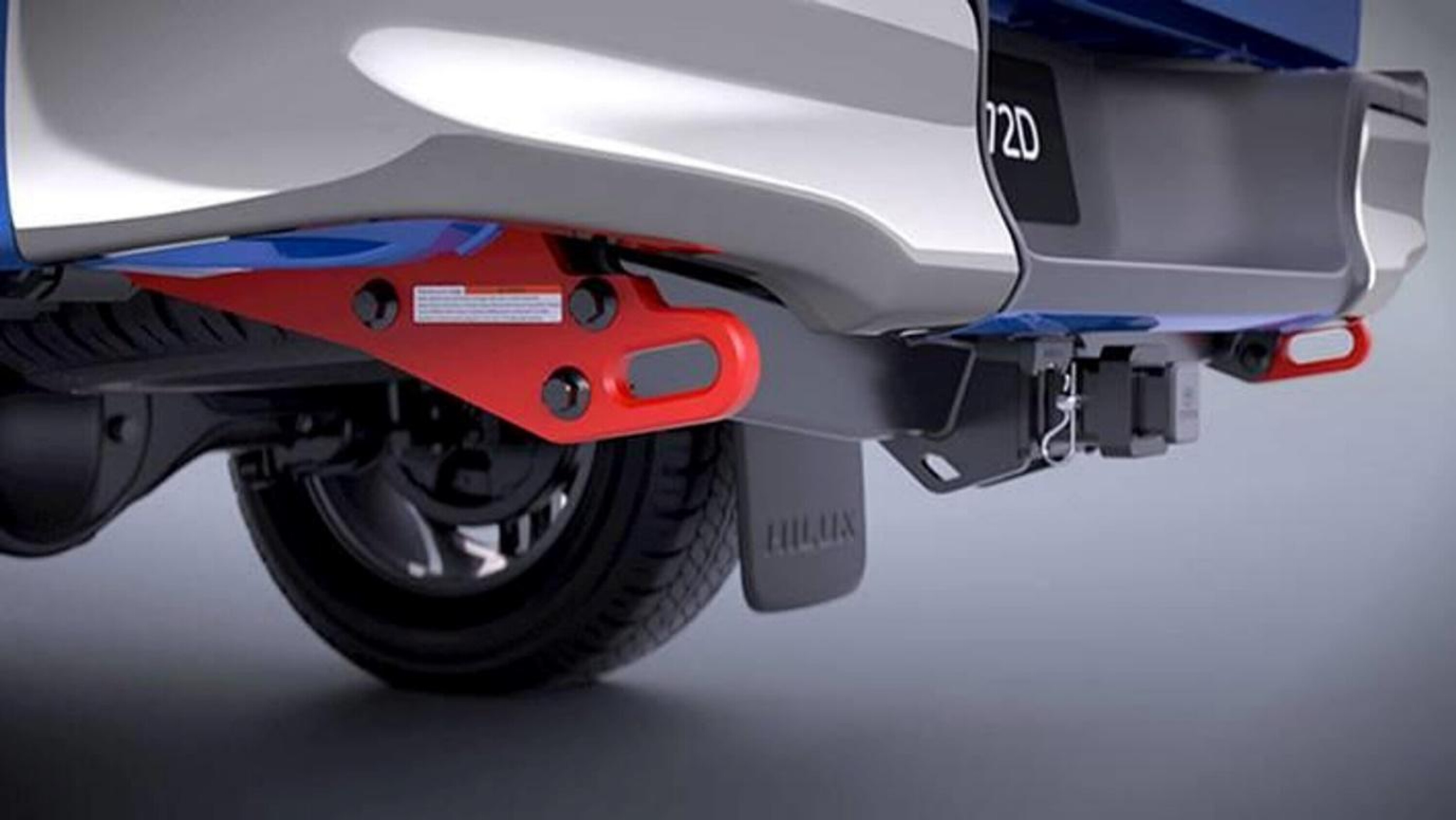
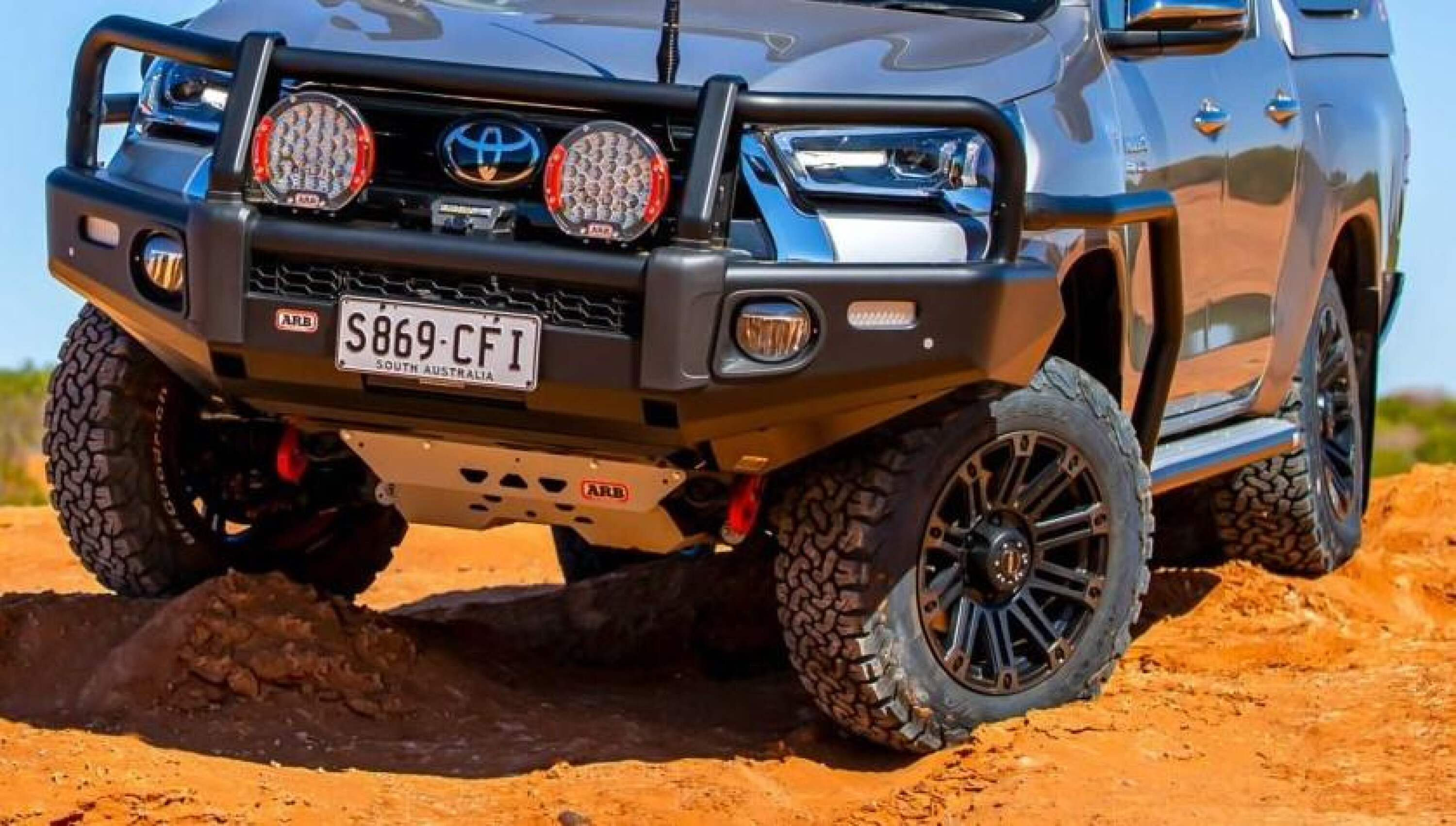
Attaching to inappropriate points like tow balls and factory tie-down points can have dire consequences. There have been numerous fatalities associated with inappropriate recovery points breaking and becoming projectiles. How do we avoid this? The first step is to get some purpose-built recovery points.
Here are four products we recommend. They’re intended as a starting point, to give you an idea of what’s available. We’ve included Genuine Toyota options, if you want to stay OEM.
What it is: Attachments designed to be connected to straps or similar during a vehicle recovery.
Why you need it: Sooner or later you’ll get stuck or need to recover someone who is stuck. When this happens, factory tie-down points just aren’t up to the significant forces that will be in play in such a recovery. A failure of these points is dangerous to anyone in the vicinity of the recovery. Fitting proper recovery points is a safety requirement every 4WDer should get on to as soon as they start to head off-road. We advise considering using a bridle to connect to two recovery points where possible, and reduce the load in each point.
Buying tips: Check the mounting system and how easy the recovery points are to install. Ensure compatibility with other accessories like bash plates, bull bars, etc. before committing.
Designed to be compatible with the factory tow bar, these recovery points bolt onto each side of the tow bar and negate the use of the tow hitch mounted recovery point. They provide a handy rear recovery option for anyone who tows to camp before dropping the trailer or caravan and heading off for a day drive.
Each ARB recovery point includes an engineered ‘Recovery Train’ in which each vehicle specific recovery point is rated for use with a 4.75t rated bow shackle and 8000kg snatch strap. Manufactured from 350-grade 20mm plate for maximum strength and durability and featuring long-slot design suitable for a side-angled pull.
Specifications
Material: Forged steel
Max load: Rated for use with a 8000kg snatch strap
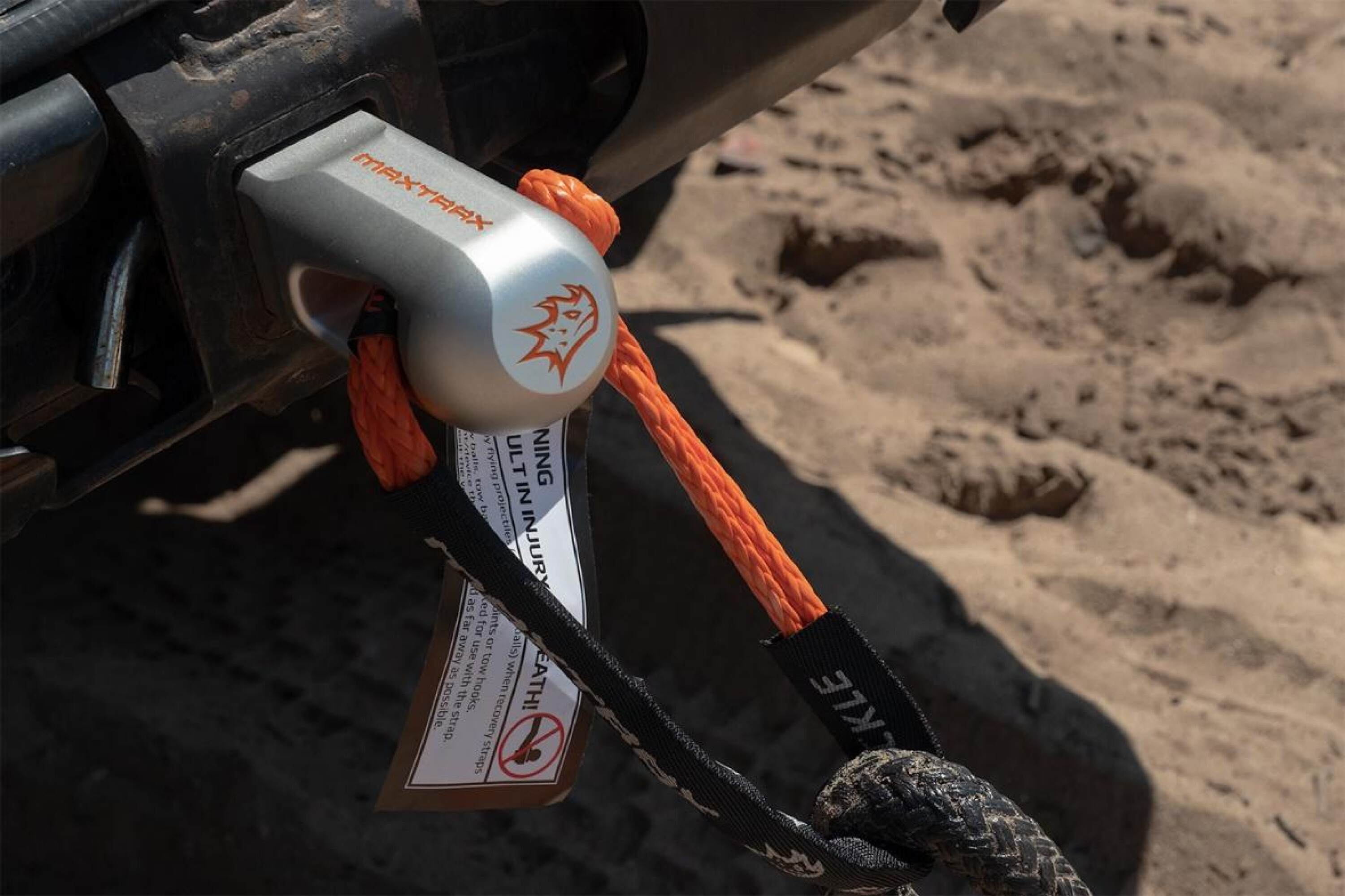
This hitch-mounted rear recovery point has been designed specifically for use with soft shackles. It is made with lightweight aluminium (only weighs 1.45kg) that will never rust, and it fits a standard 50mm hitch receiver.
Specifications
Material: 6061 billet aluminium
Max load: Working load limit (WLL) 8800kg. Tested break load of 44,000kg
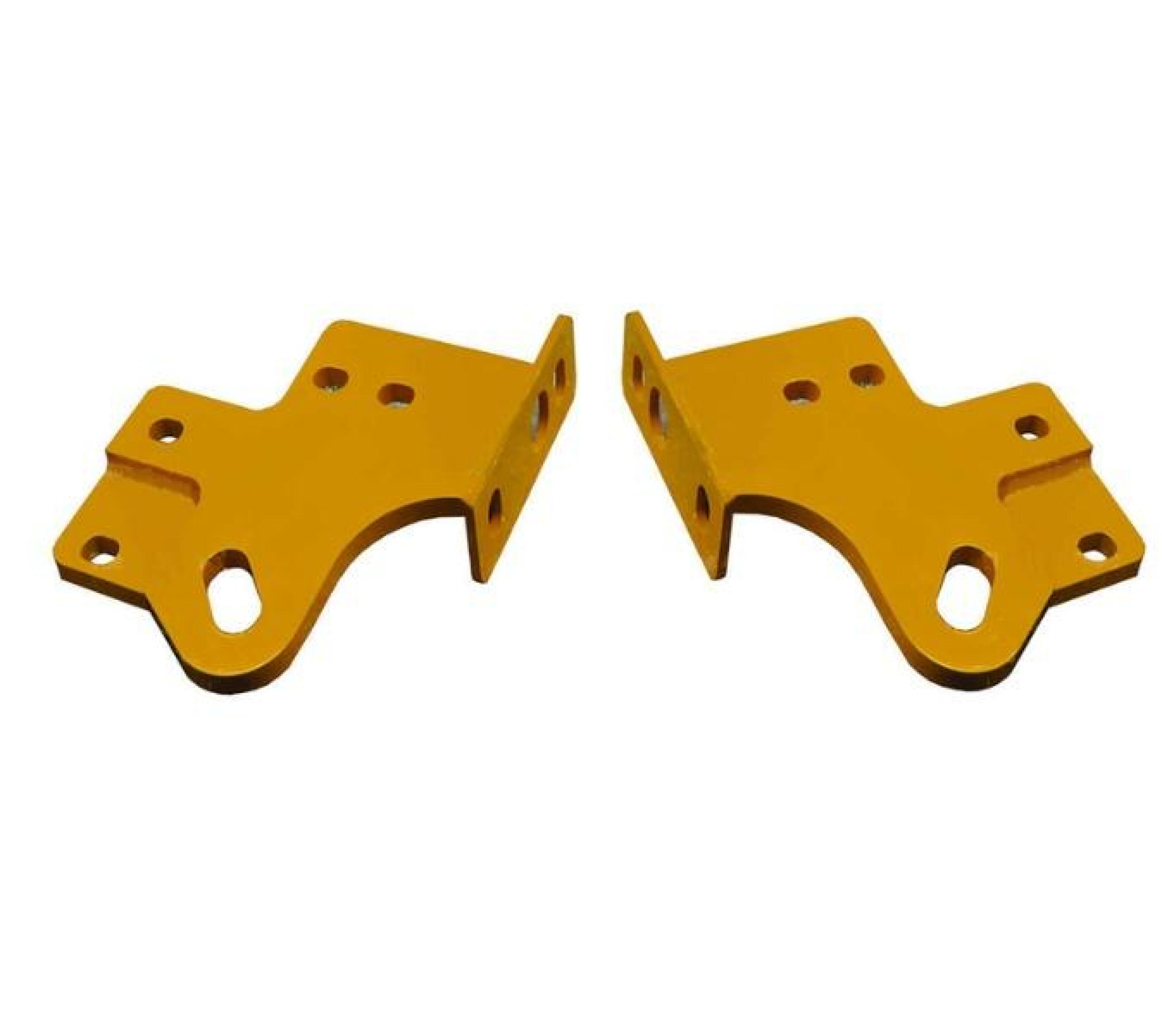
Roadsafe recovery points have been designed for use with a 4.75t rated bow shackle and 8000kg snatch strap. Roadsafe tow points are tested during design and destruction-tested during development, to establish Working Load Limits (WLL).
Specifications
Material: Steel
Max load: Rated for use with a 8000kg snatch strap
Suitable for soft shackles: Yes
1
Pros
Stamped WLL
Well tested so other components in your recovery train will fail before these do
Compatible with Opposite Lock bull bar
Cons
Not compatible with ARB, Ironman, TJM and Genuine Bull Bars or the Factory bumper
4X4 Australia has been reviewing four-wheel drive vehicles and aftermarket products for more than 40 years.
When looking for the best accessories for your make and model of 4WD, there are some things essential to making sure you have the best off-roading experience.
When we compare products, here are some of the things we consider:
Warranty
Build quality
Value for money
Time and ease to set-up/install
Weight
Fit and finish
How well it gets the job done
What materials they’re made from
Corrosion/UV resistance
Coatings
Compatibility with other accessories
Compliance with ADRs and vehicle safety systems
Country of manufacture
Load ratings, to determine what’s the best product across each price point.
We also consider user reviews and our own experience with these products to make sure our recommendations are for the best on the market.
Disclosure: When you buy through our links, we may earn a commission. We also include products that we do not earn a commission from.