Gear

Gallery 1
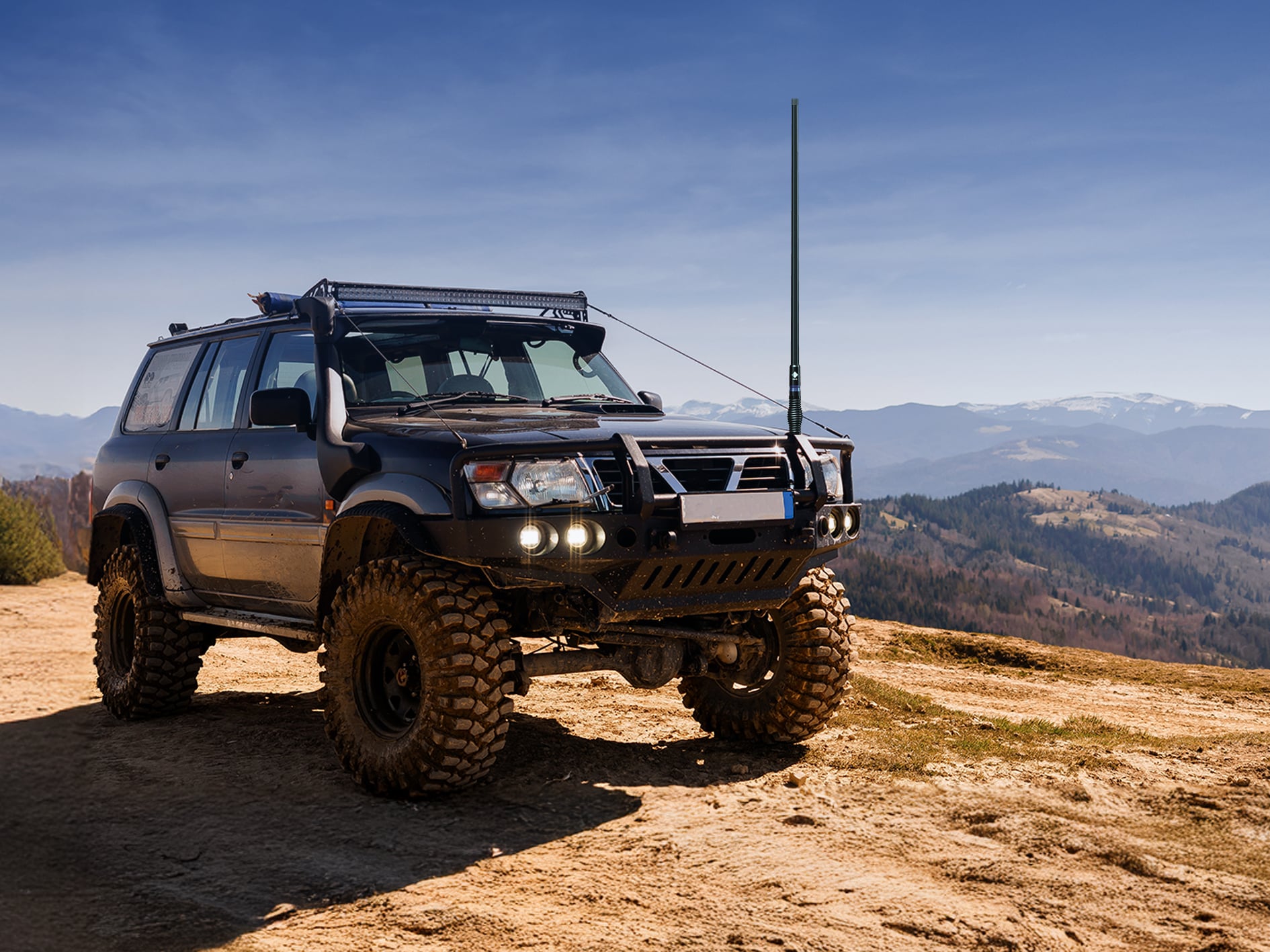
Plenty of people assume any antenna bolted to the bull bar will do the job once they venture into remote country.
It’s an easy assumption to make, until the phone drops out the moment the nearest tower disappears behind a range. When you’re travelling beyond reliable coverage, the antenna is doing more work than most people realise.
A phone’s antenna is small, and it can be boxed in by metal, glass, wiring, roof racks and canopies, not exactly an ideal environment for picking up a signal. An external antenna moves the receiving element out of that environment and into a much better position. On the fringe of coverage, a few extra decibels can be the difference between a usable connection and nothing at all. However, not all external antennas are created equal.
1
More gain isn’t always better
Increasing antenna gain reshapes the signal pattern rather than simply amplifying it.
A high-gain collinear antenna concentrates its performance toward the horizon, which suits flat country where the tower sits at roughly the same elevation. In hilly or mountainous terrain, though, that flatter pattern can work against you if the signal is coming from well above or below the vehicle.
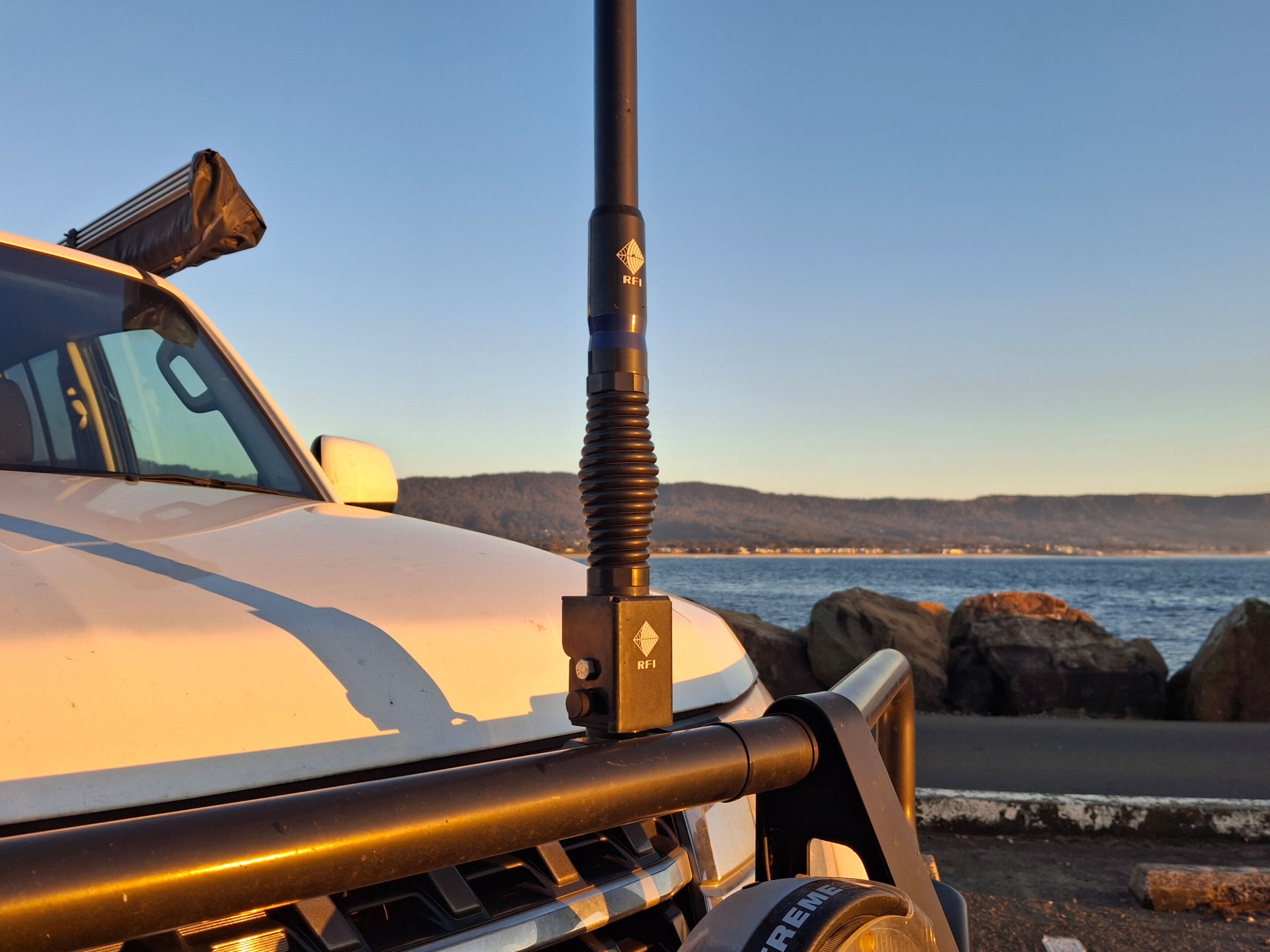
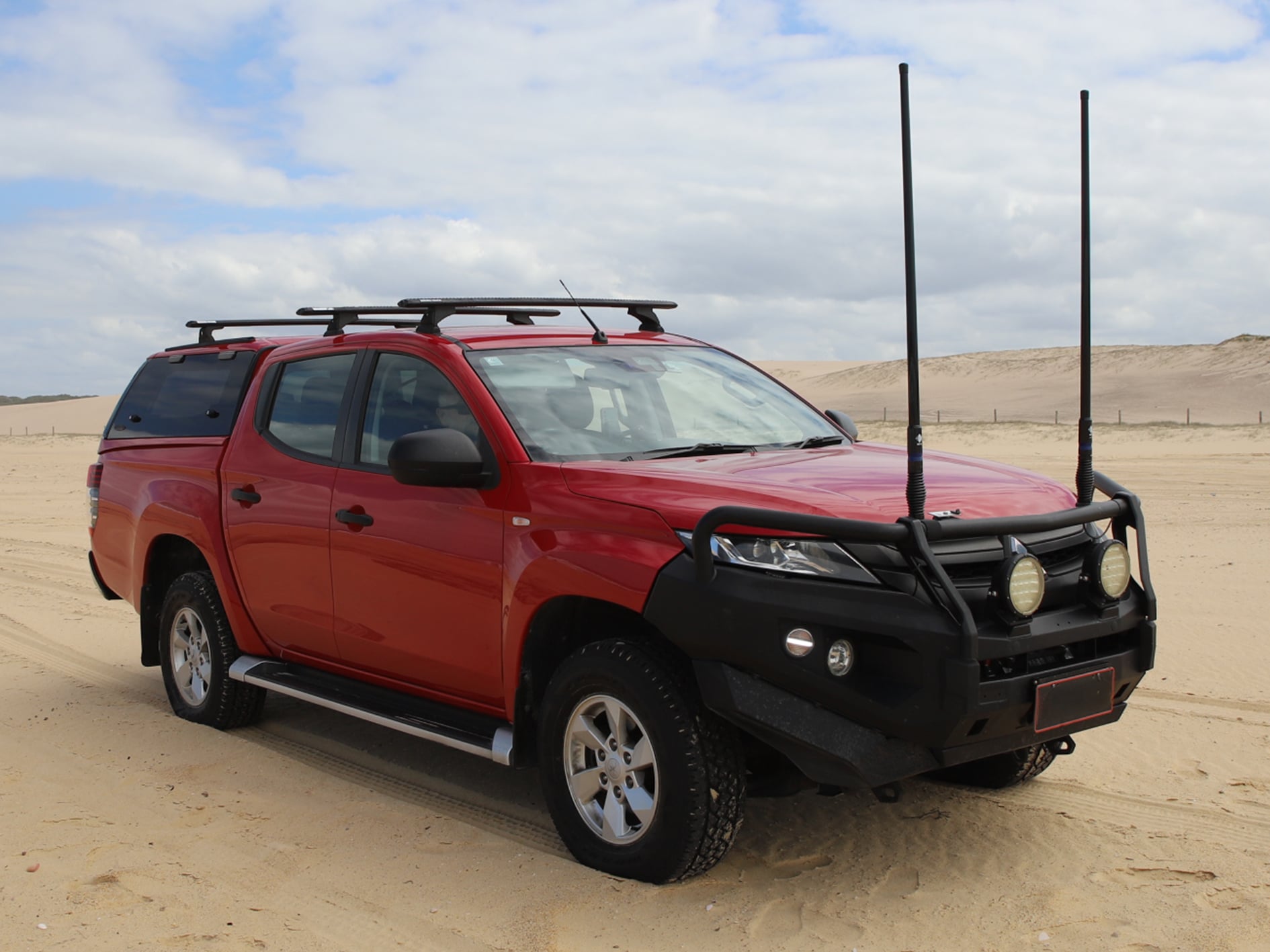
This is where RFI’s CDX-TREME range (↗) comes in. The line-up includes a 600mm 4.5dBi antenna and a longer 1200mm 7.5dBi option, both spanning 698MHz to 3800MHz across multiple bands. The 4.5dBi and 7.5dBi figures apply at 698-960MHz, with gain varying across the higher-frequency bands, including 3400-3800MHz. Neither is inherently better; they simply distribute gain differently depending on the terrain.
Build quality matters too, given the vibration, corrugations and temperature swings involved in remote touring. The CDX-TREME (↗) uses an integrated spring assembly and locking whip, with a removable whip useful for scrub or restricted-height situations. RFI’s Meander-based collinear design is intended to maintain a consistent radiation pattern as conditions change.
Antenna selection is only part of the equation. Where and how it’s mounted can have just as much impact.
1
Don’t just bolt it anywhere
Mounting position is just as important as the antenna itself.
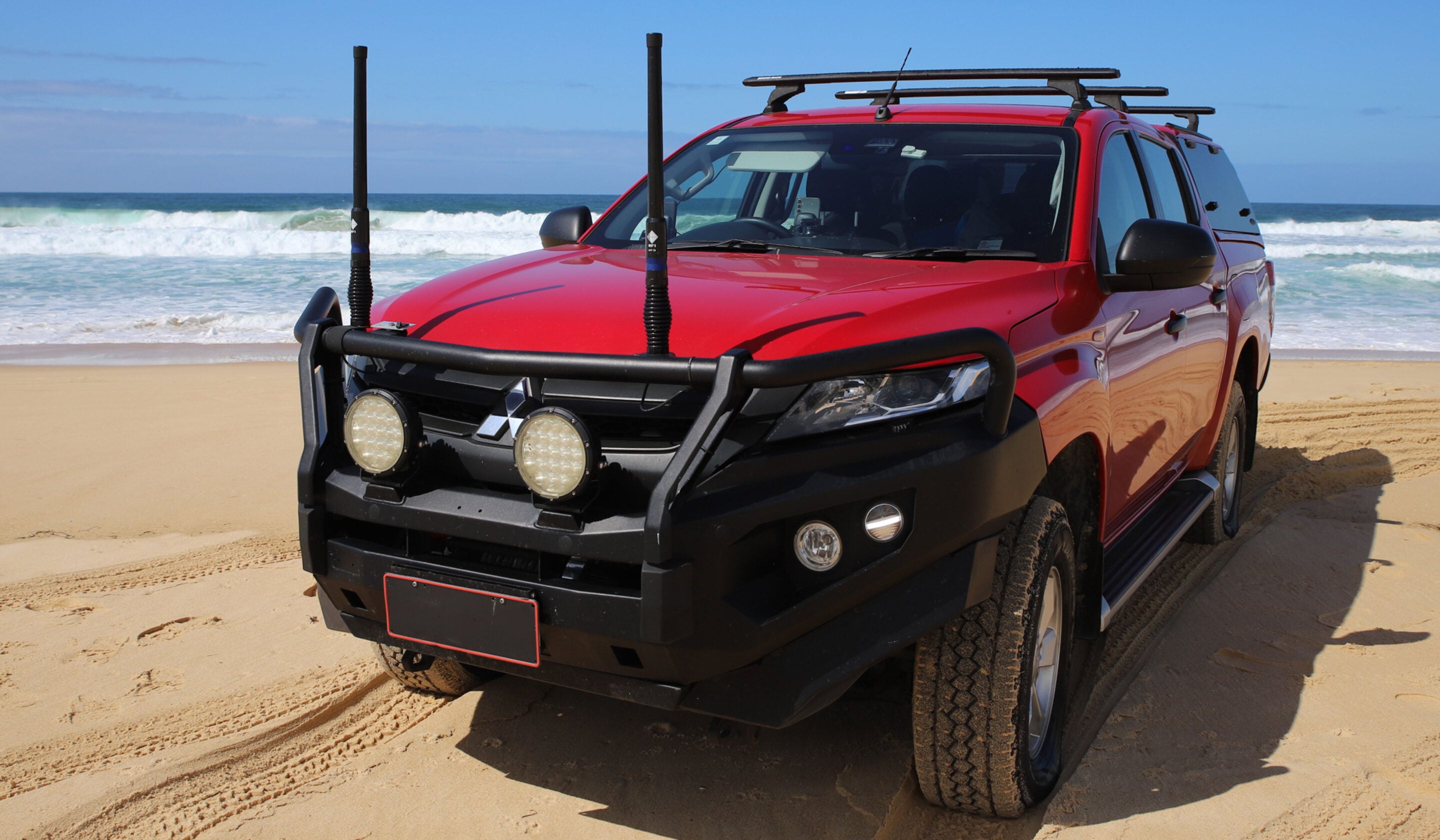
It should sit as high as practical, with a clear view around it, rather than tucked behind a roof rack or pillar. Keeping antennas separated also reduces interference. RFI recommends at least 600mm between its cellular antenna and another antenna.
For most touring 4WDs, the bull bar is the practical mounting point, and a folding bracket allows the antenna to be lowered for garages, car parks or low branches without removing the whole assembly. The cable run deserves attention too, since coaxial cable has real losses at higher frequencies. Keeping the run short and using appropriate low-loss cable matters. And that’s where the antenna becomes part of a bigger communications setup.
1
It’s all about the setup
No antenna alone will get you through the Simpson Desert. It feeds a modem, router or repeater, and it’s a separate system entirely from a UHF CB, which operates on its own short-range radio band. Once you’re genuinely out of mobile range, satellite communications take over.
Getting the antenna, mount and cable right gives everything downstream the best possible starting point when it matters most.
Follow 4X4 Australia on Google
Get more 4x4 news, reviews and gear stories from 4X4 Australia in your Google feeds.

We recommend
-
 Electronics & Gadgets
UHF CB Radios: everything you need to know
A UHF CB radio is an essential, non-negotiable tool for any remote-area traveller
-
 Gear
GearSatellite Messengers: How they work and why you need one
Big parts of Australia and the world lack cell coverage, hence the need to carry emergency comm devices like satellite messengers.