Gear

Gallery 1
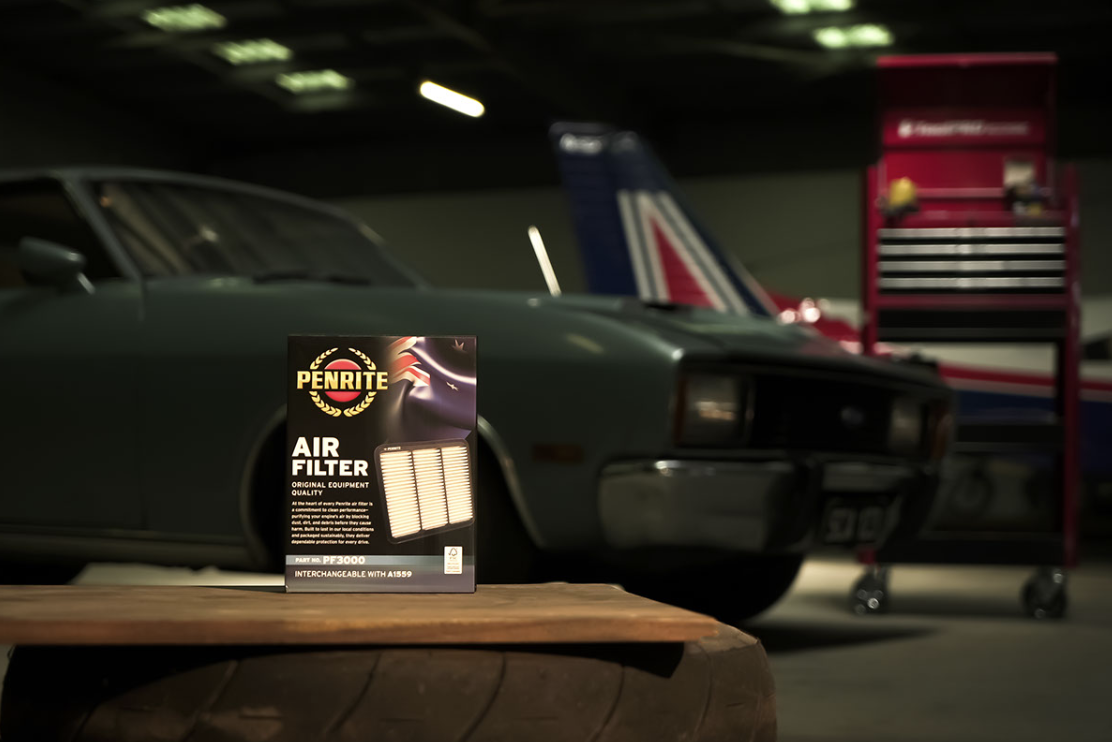
When it comes to pre-trip engine maintenance, an oil and filter change is usually near the top of the list. But there’s another filter under the bonnet that’s just as important to engine health and often gets overlooked.
The air filter doesn’t get much attention, but its job is critical. Every breath the engine takes passes through it, and in dusty conditions, a quality filter can make a big difference to what reaches the intake.
Hot on the heels of its oil filter range, Penrite has now added a matching line of air filters, giving us a good reason to take a closer look at what’s going on inside the airbox.
Why the air filter matters
Here’s the thing about dust. In the suburbs, it’s an annoyance, something you wipe off the dash. Out on the Oodnadatta Track or grinding through the Victorian High Country in the dry, it’s a genuine threat to engine health.
Every breath your engine takes pulls in whatever is floating around outside. If that air isn’t properly filtered before it reaches the intake, it can accelerate wear on cylinder walls, pistons and rings. No amount of premium oil is going to fix that.
Think of it this way: the oil filter protects the engine from what’s already inside it, while the air filter stops the enemy getting in through the front door. Skimp on either one and you’re only doing half the job.
What makes a quality air filter?
Penrite’s air filter range (↗) follows the same philosophy as its oil filters: take a component people often treat as a commodity and engineer it properly.
Whether it’s a flat panel, cylindrical unit or uniquely shaped filter for a specific application, each one is precision-built around a construction platform focused on strength, consistency and durability.
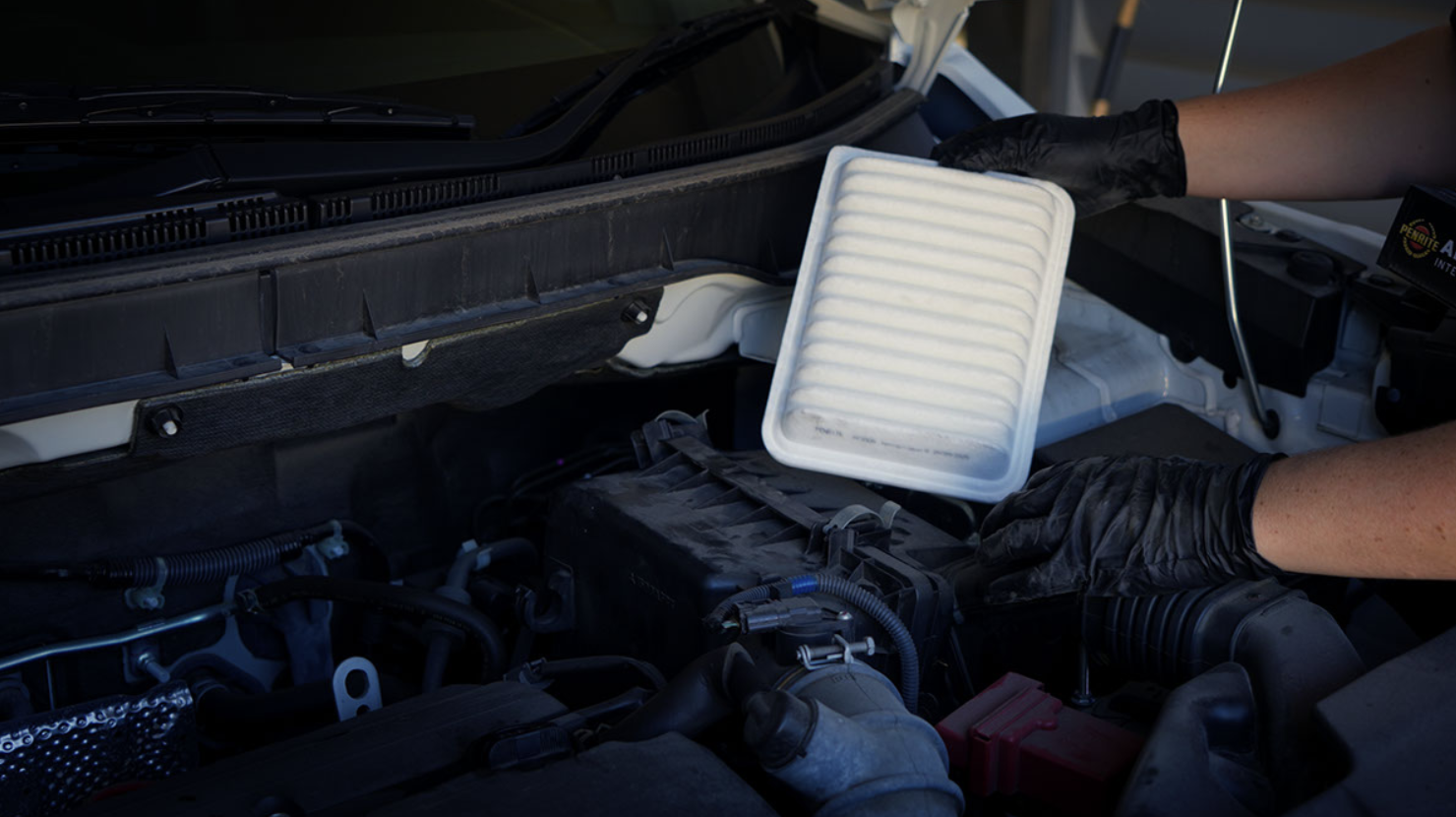
The filtration media combines glass fibre and wood pulp, formed into pleats. The pleating provides plenty of surface area while helping maintain consistent airflow as the filter collects dirt, rather than restricting flow as quickly as a lower-quality filter can once it starts to load up.
1
Around the edges, engineered seals and gaskets secure the filter in the airbox and help prevent contaminants from bypassing the media altogether. That’s particularly important in dusty conditions, where even a small gap around the filter can allow unfiltered air into the intake.
The combination of precise fitment, reliable sealing and consistent airflow is designed to meet or exceed OE performance benchmarks, while the media blocks dust, pollen, soot and road debris before they reach the intake.
The result is cleaner air reaching the engine, helping maintain proper airflow and combustion while reducing the amount of dust and debris reaching the engine.
And because most of us aren’t going to memorise a part number, the range can be searched through Penrite’s online rego lookup tool (↗). Enter your registration, confirm compatibility and it provides the correct part number, taking the guesswork out of finding the right filter.
When should you replace an air filter?
There’s no single replacement interval that suits every vehicle.
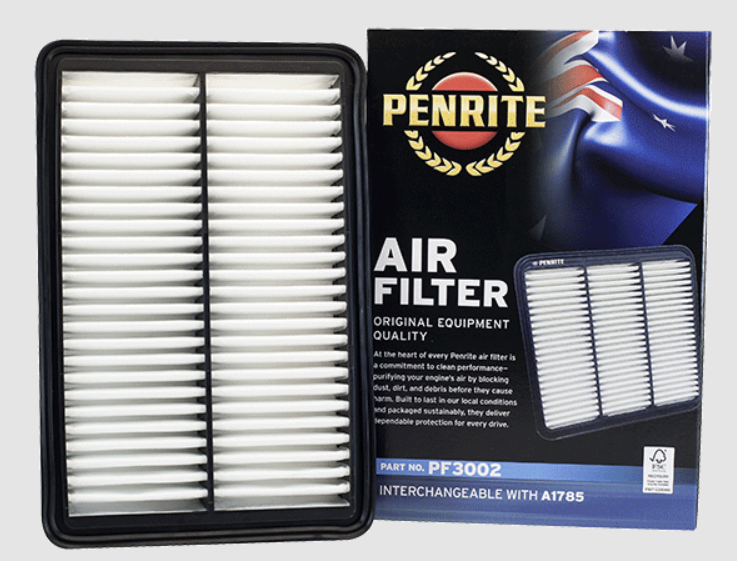
The manufacturer’s service schedule is a good starting point, but air filters need more frequent attention if a vehicle regularly travels on dirt roads, follows other vehicles in dusty conditions or spends plenty of time off-road. A filter that’s heavily loaded with dust, damaged, wet or showing signs of deterioration around the sealing surface should be replaced rather than left until the next scheduled service.
It’s also worth inspecting the filter after extended trips through dusty country. A vehicle that spends most of its life on sealed roads can go much longer between replacements than one that’s regularly touring remote tracks. And don’t judge a filter purely by how dirty it looks. Damage to the media or sealing surface can compromise filtration even when the filter doesn’t appear heavily loaded.
1
Can you clean an air filter?
For the disposable filters used in most factory airboxes, replacement is generally the safer option than trying to clean and reuse them.
Aggressive cleaning, particularly with compressed air, can damage the filter media or create gaps that allow contaminants through. If you’re running a reusable aftermarket filter, follow the manufacturer’s specific cleaning and servicing instructions rather than treating it like a disposable paper filter.
Built for dusty conditions
It’s one thing to engineer a filter for a daily commute on sealed roads. It’s another when your “commute” is a corrugated station track outside Birdsville with bulldust hanging in the air behind the vehicle in front.
That’s the kind of environment Penrite says it has considered with this range, with filters designed to keep protecting the engine when conditions get seriously dusty.
A snorkel can help position the engine’s air intake higher and away from some sources of dust and water, but it doesn’t replace the air filter. For vehicles regularly operating in extreme dust, a pre-cleaner or pre-filter can also reduce the amount of debris reaching the main filter.
It also ties into something Penrite has been pushing since the oil filter launch: a matched filtration system. Running Penrite oil with its oil and air filters means the key filtration components are designed to work together, rather than being a mix of whatever happened to be cheapest on the shelf.
Final thoughts
Nobody’s going to tell you a good air filter is the difference between a bulletproof engine and a boat anchor. But it’s cheap insurance, especially when you consider the cost of an engine rebuild.
It’s another simple bit of maintenance that can help give your rig the best chance of staying healthy when you’re a long way from help. So next time you’re changing the oil and filter before a trip, spare a thought for what’s sitting in the airbox too. Your engine needs clean air just as much as it needs clean oil.
Frequently Asked Questions
How often should you replace an air filter?
There’s no single replacement interval for every vehicle. Follow the manufacturer’s service schedule as a starting point, but inspect the filter more often if you regularly drive on dirt roads, in dusty conditions or off-road.
How do you know when an air filter needs replacing?
A filter should be replaced if it’s heavily loaded with dust, damaged, wet or showing signs of deterioration around the sealing surface. It should also be inspected after extended trips through dusty country.
Can you clean and reuse a disposable air filter?
For disposable filters used in most factory airboxes, replacement is generally safer than trying to clean and reuse them. Aggressive cleaning, particularly with compressed air, can damage the filter media.
Does a snorkel replace an air filter?
No. A snorkel can position the engine’s air intake higher and away from some sources of dust and water, but it doesn’t replace the air filter. A pre-cleaner or pre-filter can also help reduce debris reaching the main filter in extreme dust.
Why is the air filter important?
The air filter keeps dust, pollen, soot and road debris out of the engine intake. Proper filtration helps maintain airflow and combustion while reducing the amount of contaminants reaching the engine.
Follow 4X4 Australia on Google
Get more 4x4 news, reviews and gear stories from 4X4 Australia in your Google feeds.