News

Gallery 1
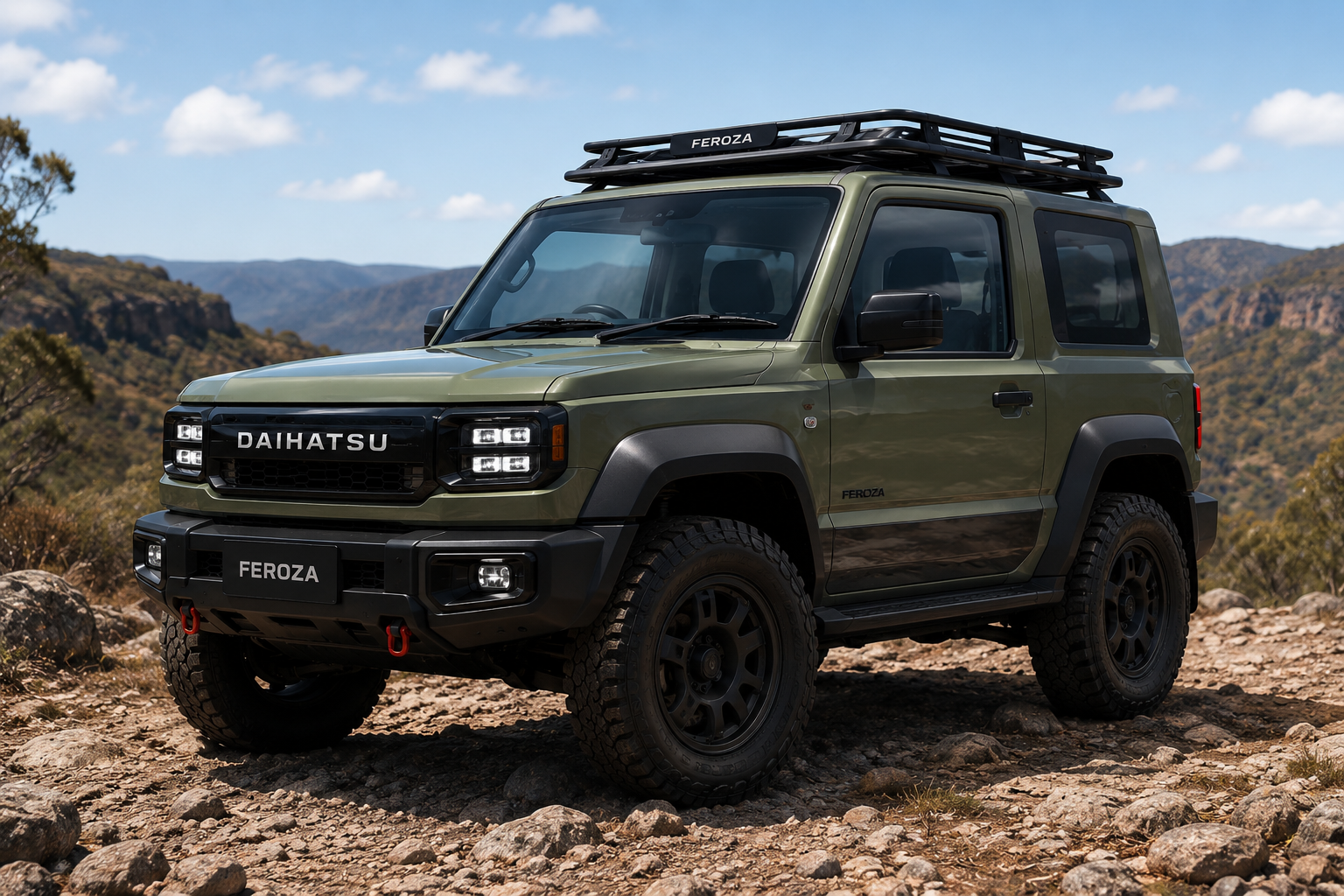
Could the Feroza be the 4×4 comeback nobody saw coming? A stripped-back compact 4×4 like the Feroza could be exactly the kind of simple, capable off-roader the modern market is drifting back toward.
The Daihatsu Feroza was a compact 4×4 built around function first. It had proper low range, narrow proportions, and mechanicals simple enough to understand without a diagnostic laptop. It was never aimed at urban image buyers, instead finding use on tracks, in the Vic High Country, and on fire trails where size and weight mattered more than refinement. Today, clean examples are starting to command stronger prices than their original positioning would suggest, pointing to a renewed appreciation for simple, purpose-built off-roaders.
That resurgence mirrors a broader shift in the market. Compact off-roaders are back in demand. The Suzuki Jimny has proven there is strong appetite for small, capable 4x4s, often with long wait times in Australia. At the same time, more buyers are questioning whether large dual cabs are necessary for recreational touring, particularly for trips like the Gibb River Road or Victorian High Country. In that context, a smaller, lighter 4×4 becomes less of a compromise and more of a rational alternative.
1
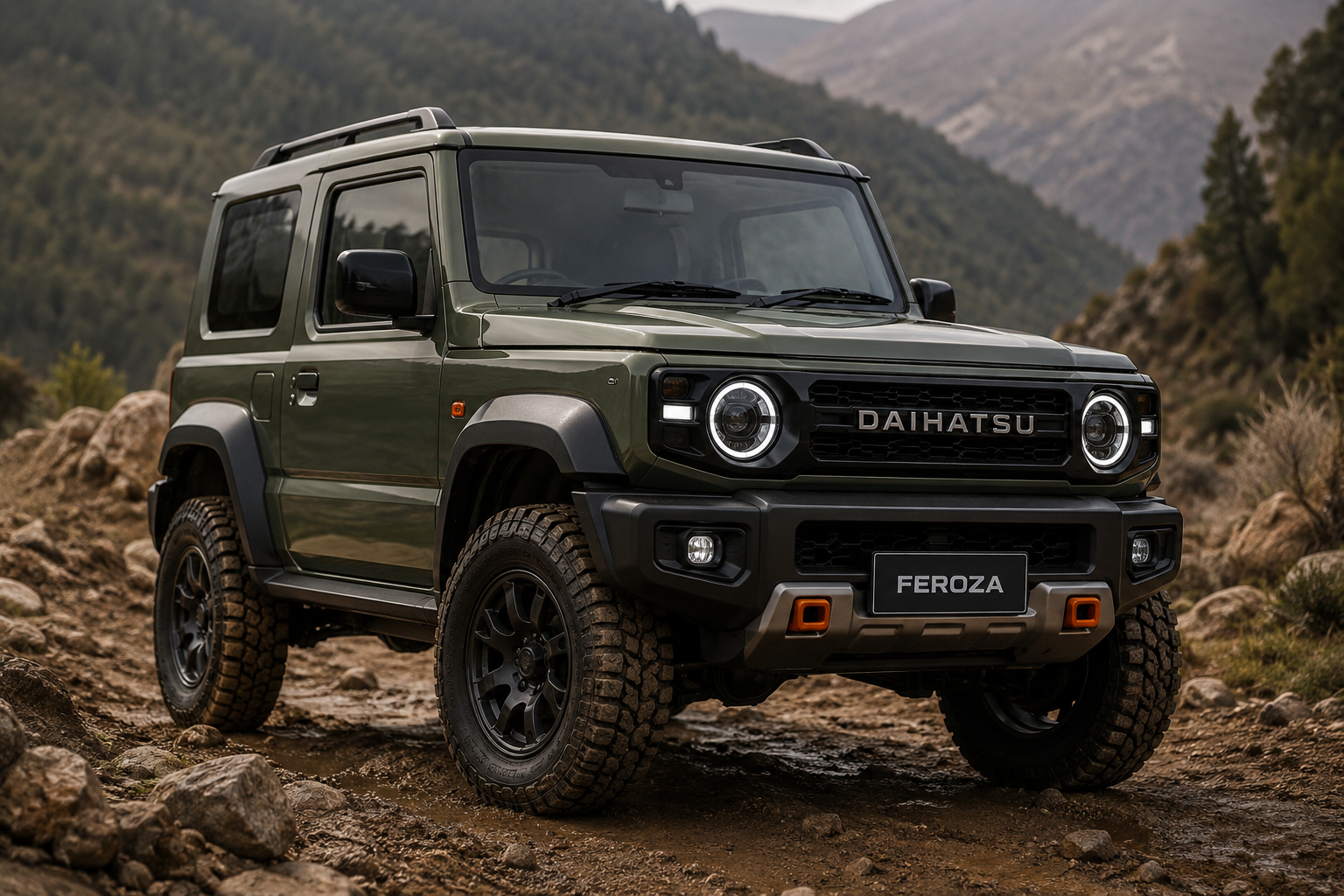
A revived Feroza would need to sit in that space: compact, durable, and genuinely off-road capable. The most realistic direction would be a reinforced lightweight SUV platform with proper low range 4×4 capability rather than a soft-roader layout. Wheelbase would likely sit close to the five-door Jimny, allowing seating for four and modest luggage space behind the rear seats.
Design would inevitably lean functional rather than decorative: upright glass, simple surfacing, and squared off guards. A removable or semi open roof option could be a strong differentiator, provided structural requirements could be met.
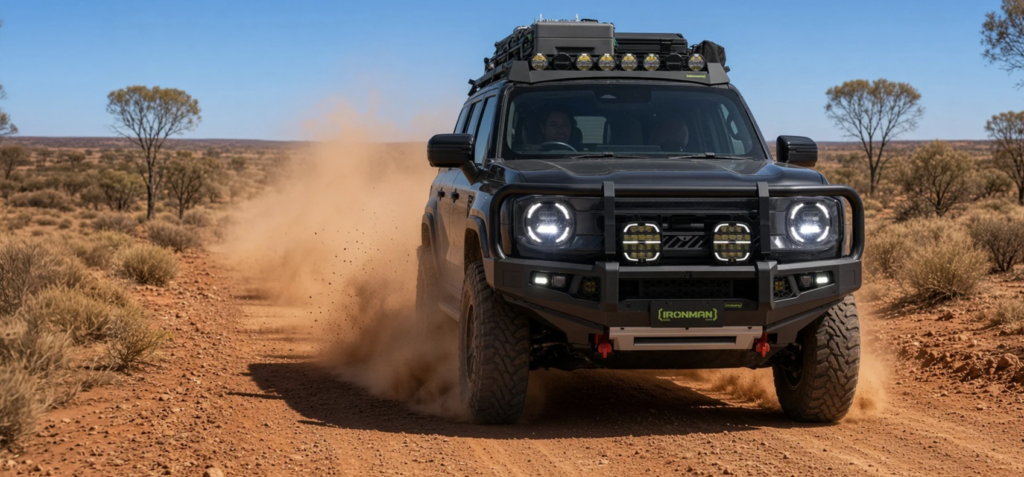
From day one, it would be an aftermarket canvas rather than an off-the-shelf touring package. Owners would lean straight into a mild lift and bull bar from ARB or Ironman 4×4 to suit tight bush tracks, and all-terrain tyres from BFGoodrich or Falken. Add recovery points, underbody protection, and a simple roof rack setup, and it would quickly take on the familiar shape of a properly equipped compact tourer. Nothing about it would require overthinking, just incremental upgrades to match intent.
Powertrain wise, a small turbocharged petrol engine with mild hybrid assistance is the most realistic approach. Outputs in the 100 to 130kW range would be sufficient, with torque delivery and gearing more important than peak figures. Keeping kerb weight under roughly 1400 to 1500kg would be critical to preserving capability and efficiency. Full electrification remains possible in theory, but would need careful consideration given long range touring across remote Australia.
Towing capacity in the 1000 to 1200kg range would position it for light campers and trailers without pushing the platform beyond its intended size or weight envelope.
Pricing is where the opportunity sits. If it could land around the low 40,000 dollar drive away mark, it would sit directly against the Jimny, entry level dual cabs, and compact soft roaders. The key differentiator would not be outright performance, but genuine off road hardware in a compact footprint.
For Australia specifically, success would depend on specification discipline: all terrain tyres from factory, proper recovery points, meaningful roof load rating, and a clear accessory pathway. The aftermarket already exists for this type of vehicle, with brands like ARB and Ironman 4×4 ready to support anything that proves itself mechanically sound.
The competitive landscape is clear. The Jimny sets the benchmark for compact capability. Larger 4x4s dominate towing and touring. Soft road crossovers dominate sales volume. A revived Feroza would need to sit deliberately between those categories rather than trying to outdo any single one.
The concept arrived ahead of its time. In the 1990s, buyers wanted bigger and faster. In 2026, the brief has shifted toward lighter, simpler, and more efficient vehicles. If executed correctly, the idea is no longer out of step with the market, it fits it.
Follow 4X4 Australia on Google
Get more 4x4 news, reviews and gear stories from 4X4 Australia in your Google feeds.