Gear

Gallery 1
When people start building a touring rig, the focus usually lands on suspension, tyres, power systems and recovery gear. But one of the most important parts of any long-range setup is often overlooked: water storage.
Because once you leave towns behind, water quickly becomes more important than almost anything else you carry. Whether it’s drinking water, cooking, washing up or a quick camp shower after a dusty day on the tracks, having a reliable water setup can make remote travel far easier and far more comfortable.
The good news is there are now more options than ever for fitting 4WD water tanks into modern touring setups, from compact cabin-mounted systems through to larger underbody tanks and modular canopy setups. These systems are designed to make water storage safer, cleaner and far more practical than loose containers or jerry cans.
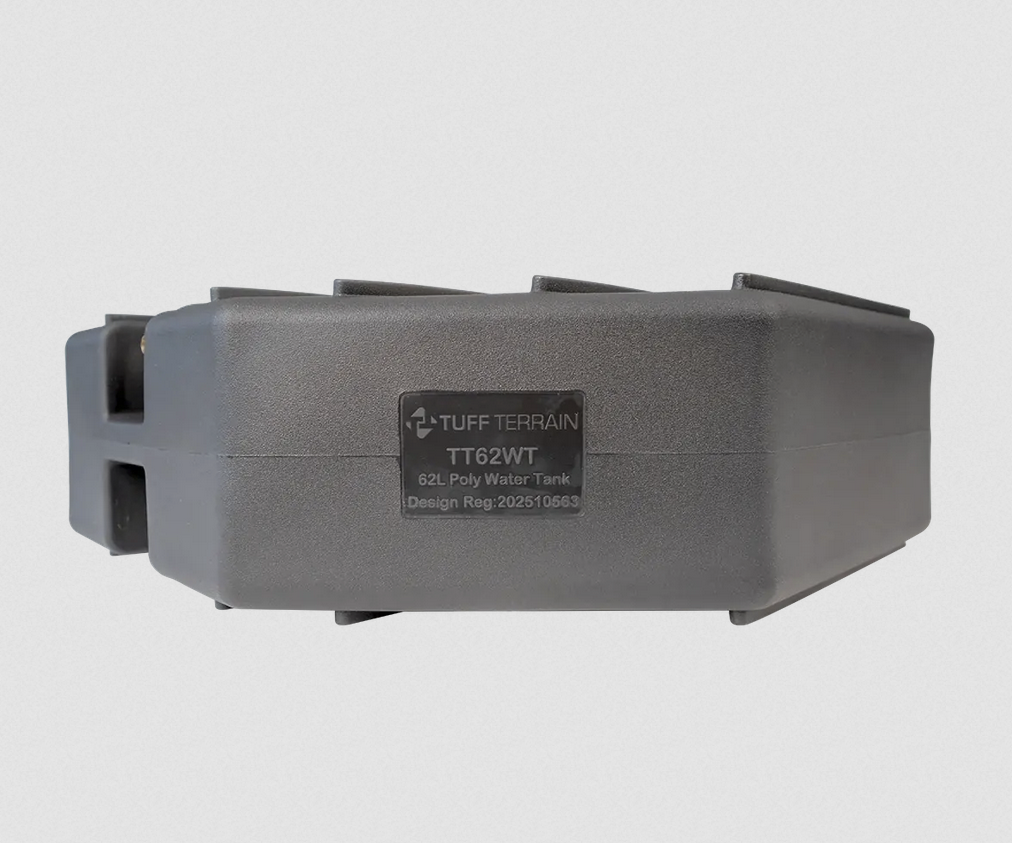
Products like the Tuff Terrain Spare Wheel Water Tank 62L (↗) and modular Outback Explorer water storage solutions (↗) are helping modern tourers maximise unused space while carrying more water safely for off-grid travel.
JUMP AHEAD
- Why a proper 4WD water tank setup matters
- How much water do you need for 4WD touring?
- Types of 4WD water tanks for touring setups
- What to look for in a 4WD water tank
- What about grey and waste water systems?
- Weight matters more than most people think
- Caravan and camper trailer setups
- Why a water tank can be essential
- Upcoming 35L Tuff Terrain Spare Wheel Water Tank
- FAQs
Why a proper 4WD water tank setup matters
Portable jerry cans still work, but dedicated water tanks offer a far cleaner and more practical solution for touring vehicles, especially once you start travelling longer distances or spending multiple nights off-grid.
A properly mounted tank doesn’t just store water, it changes how usable your setup is day to day. Instead of lifting heavy containers in and out of the vehicle, you get a fixed system that’s always ready to use, often with taps or pumps integrated directly into your setup. A properly installed tank:
• Keeps weight lower in the vehicle, improving handling on rough tracks
• Frees up valuable storage space in canopies or cabins
• Makes water access quicker and more convenient at camp
• Reduces movement and noise over corrugated roads
For longer trips, the biggest advantage is reliability. Water becomes a constant requirement in remote travel, and a fixed system ensures you’re not constantly managing loose containers or worrying about leaks and spillage.
1
How much water do you need for 4WD touring?
Water requirements vary significantly depending on trip length, climate and how self-sufficient you want to be.
In cooler conditions with minimal cooking, usage can be relatively low. In hot or remote environments, consumption increases quickly, especially if you’re washing up, showering or staying off-grid for extended periods. Most touring setups use water for:
• Drinking and hydration
• Cooking and food preparation
• Washing dishes and utensils
• Basic hygiene and cleaning
As a general baseline, 3 to 5 litres per person per day is considered the minimum for drinking and cooking only. However, once you factor in washing and comfort, real-world usage often sits closer to 5 to 10 litres per person per day. This is why 4WD touring water tanks typically fall into a few common ranges:
• 20 to 60L compact systems for weekend trips or solo touring
• 60 to 80L setups for mixed use and short off-grid stays
• 80 to 120L+ systems for extended remote travel or family touring
The right capacity comes down to balancing water independence with payload limits and available storage space in your build, whether it be underbody, portable or modular.
Types of 4WD water tanks for touring setups
Modern touring setups use a range of tank styles depending on layout, space and intended use. Each design solves a different storage challenge, and many builds use a combination of systems rather than a single tank.
Footwell water tanks (cabin-mounted storage)
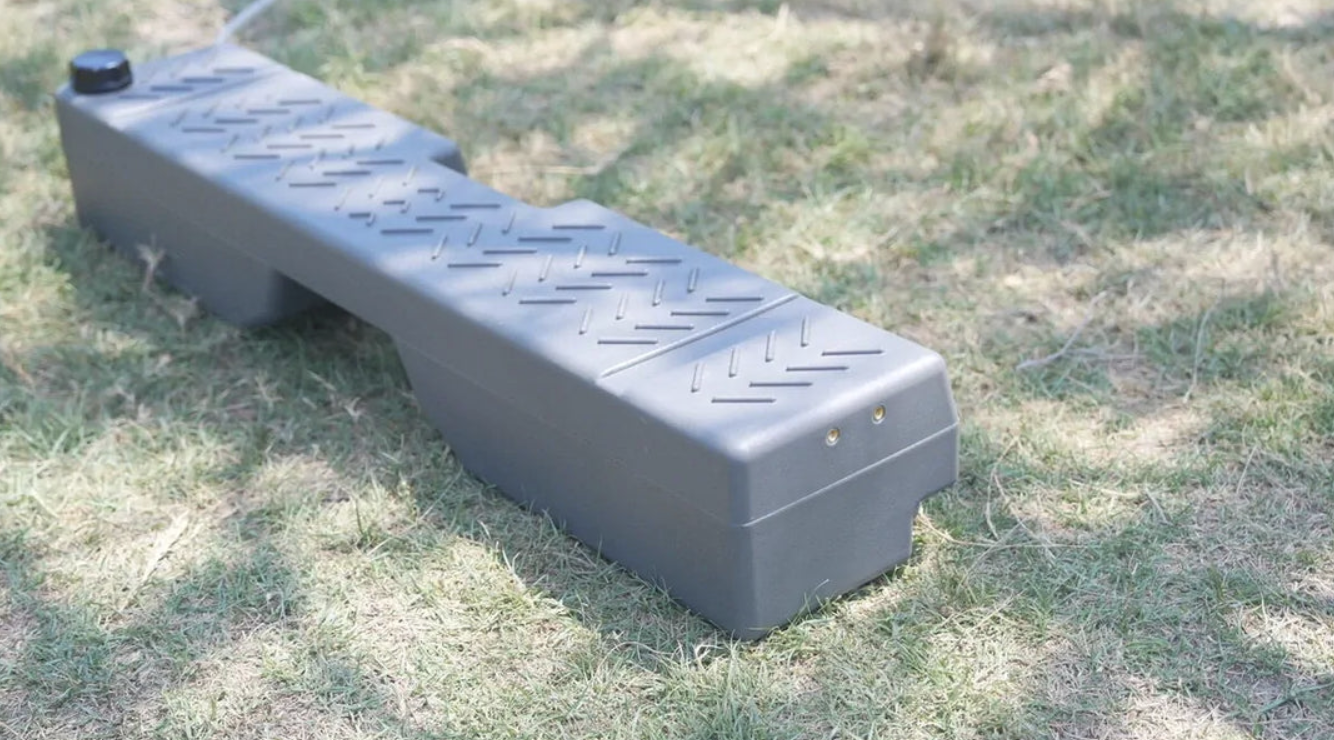
Footwell water tanks are designed to fit into unused cabin space, typically behind seats or in rear footwells. They have become especially popular in dual-cab touring setups where canopy space is already heavily used for drawers, fridges and gear storage. Compact solutions like the Tuff Terrain Poly Footwell Water Tank (↗) are increasingly used in dual-cab touring builds where every bit of canopy and drawer space counts.
Because they sit inside the cabin, these tanks are protected from external damage and temperature extremes. They also help centralise weight in the vehicle, which can improve balance on uneven terrain and reduce load on suspension components. They are best suited to weekend touring setups, compact dual-cab builds, and vehicles where canopy space is limited or fully utilised.
1
Underbody water tanks (long-range touring setups)
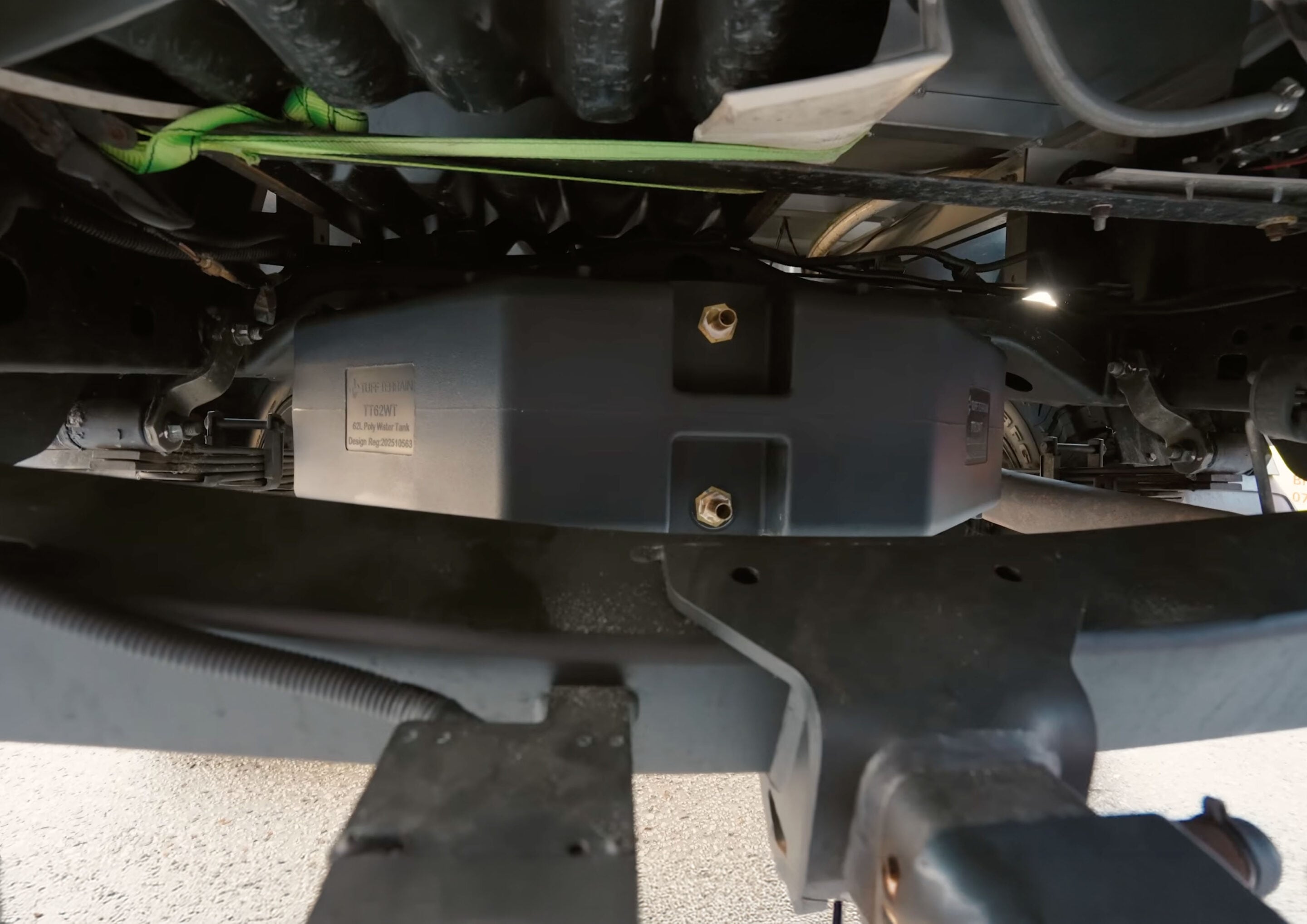
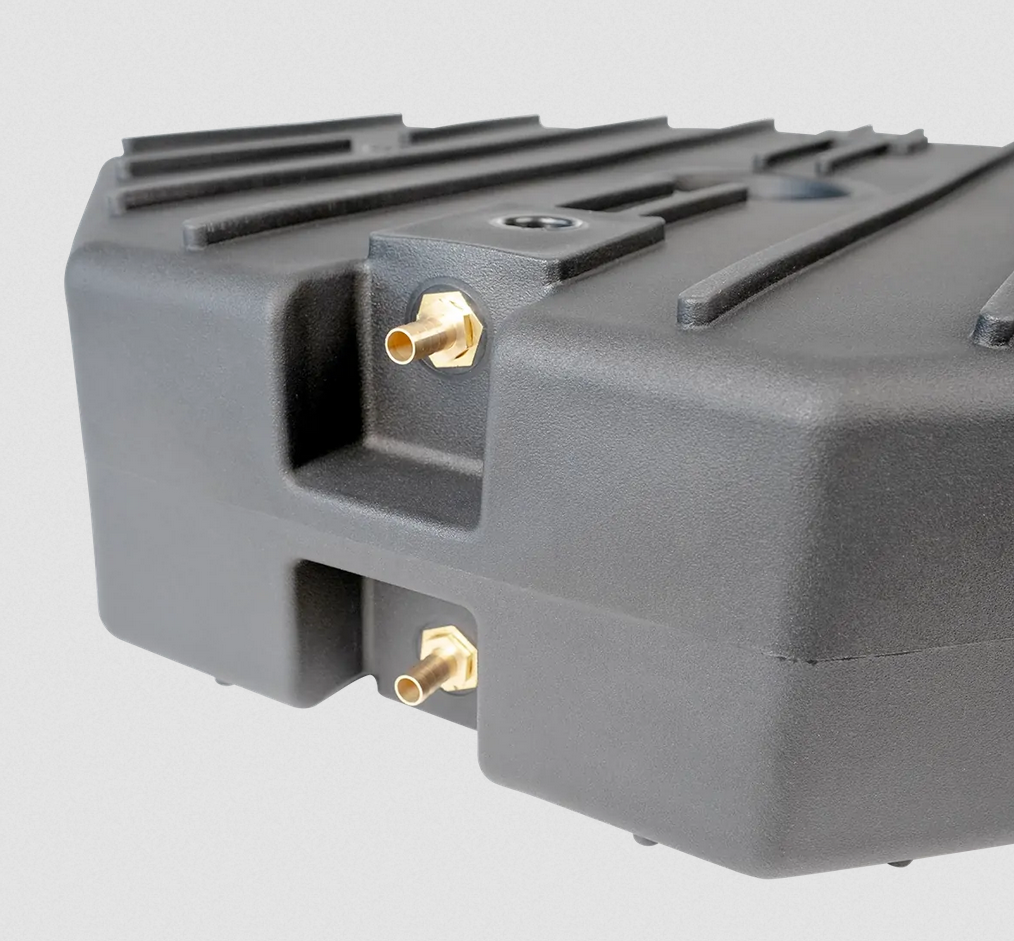
Underbody water tanks are mounted beneath the tray or chassis rails, allowing you to carry larger volumes without sacrificing internal storage space. This makes them particularly popular in long-range touring builds where space efficiency is critical.
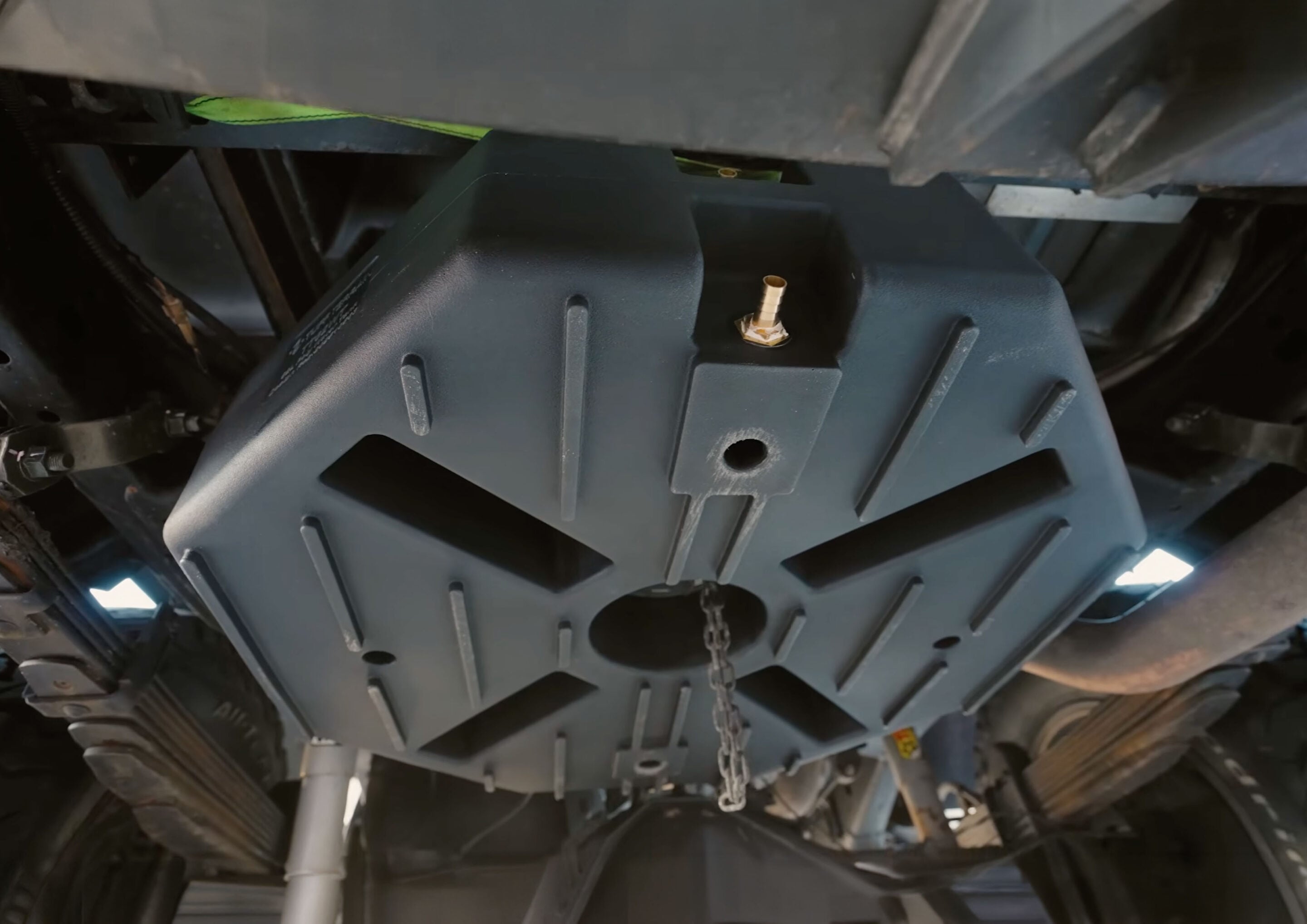
These systems are often used in tray-back 4WDs, canopy builds and camper trailers where maximising usable storage above is a priority. The biggest advantage is capacity, you can carry significantly more water without affecting cabin or canopy layout. Underbody systems are particularly effective when paired with larger touring setups, while space-saving designs like the Tuff Terrain Spare Wheel Water Tank 62L (↗) utilise otherwise wasted spare wheel cavity space for high-capacity water storage.
However, because they are exposed, they must be properly mounted and protected. On rough tracks, they are subject to rocks, debris and impact, so build quality and installation are critical.
1
Vertical and modular water tank systems (canopy setups)
Vertical and modular tanks are designed to fit into tight or custom canopy layouts where space is limited or irregular. These systems are increasingly common in modern touring builds because they allow owners to tailor water capacity around their gear setup.
Modular systems are particularly useful because they can be expanded or reconfigured over time. This makes them ideal for evolving builds where storage needs change as trips become longer or more remote. Space-efficient designs like the Tuff Terrain 45L Vertical & Flat Water Tank (↗) and Tuff Terrain 42L Vertical Mount Tank (↗) are designed for tight canopy and tray setups, helping maximise usable storage space while still carrying practical water capacity for touring and camping.
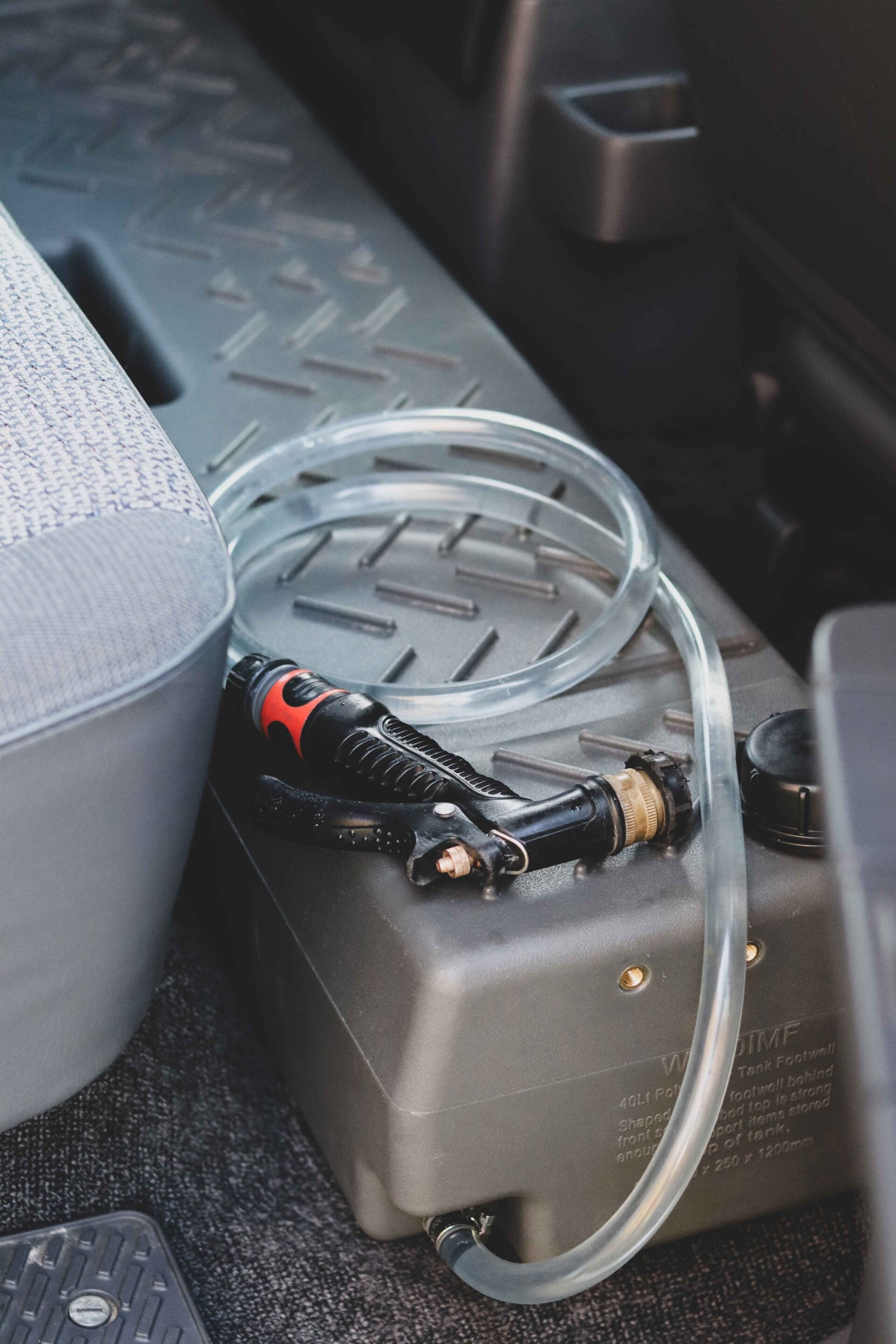
These systems can also be paired with optional pump kits for easier pressurised water access at camp, making them ideal for washing up, showers and general off-grid use. Outback Explorer pump kits (↗) are also commonly used in touring setups for similar applications. They also help distribute weight more evenly throughout the canopy, rather than concentrating it in a single area.
1
What to look for in a 4WD water tank
Choosing the right water tank is about more than just size, it’s about durability, compatibility and long-term reliability in off-road conditions.
Food-grade material quality: Most quality touring water tanks use food-grade polyethylene designed for potable water storage. This is essential for maintaining water safety over long periods, especially in warm conditions where lower-quality plastics can affect taste or encourage algae growth. Good-quality materials also improve resistance to cracking, UV exposure and long-term wear, which is important in vehicles exposed to constant movement and vibration.
Mounting strength and off-road durability: Water weight increases quickly, and a full tank places consistent load on mounting points. This is especially important on corrugated roads where vibration is constant. Because 1L of water equals approximately 1kg, even a mid-sized tank can add significant weight once filled. Poor mounting systems often fail not from static load, but from repeated vibration over time. Secure mounting and proper bracing are essential to ensure the tank remains stable and safe under off-road conditions.
Shape and space efficiency: Efficient tank design plays a major role in modern 4WD builds. Instead of using generic rectangular tanks, many setups now rely on purpose-shaped designs that fit into unused or awkward spaces. This includes footwells, wheel arches and vertical canopy gaps that would otherwise go unused. These designs help maximise water capacity without compromising storage for other essential touring gear.
1
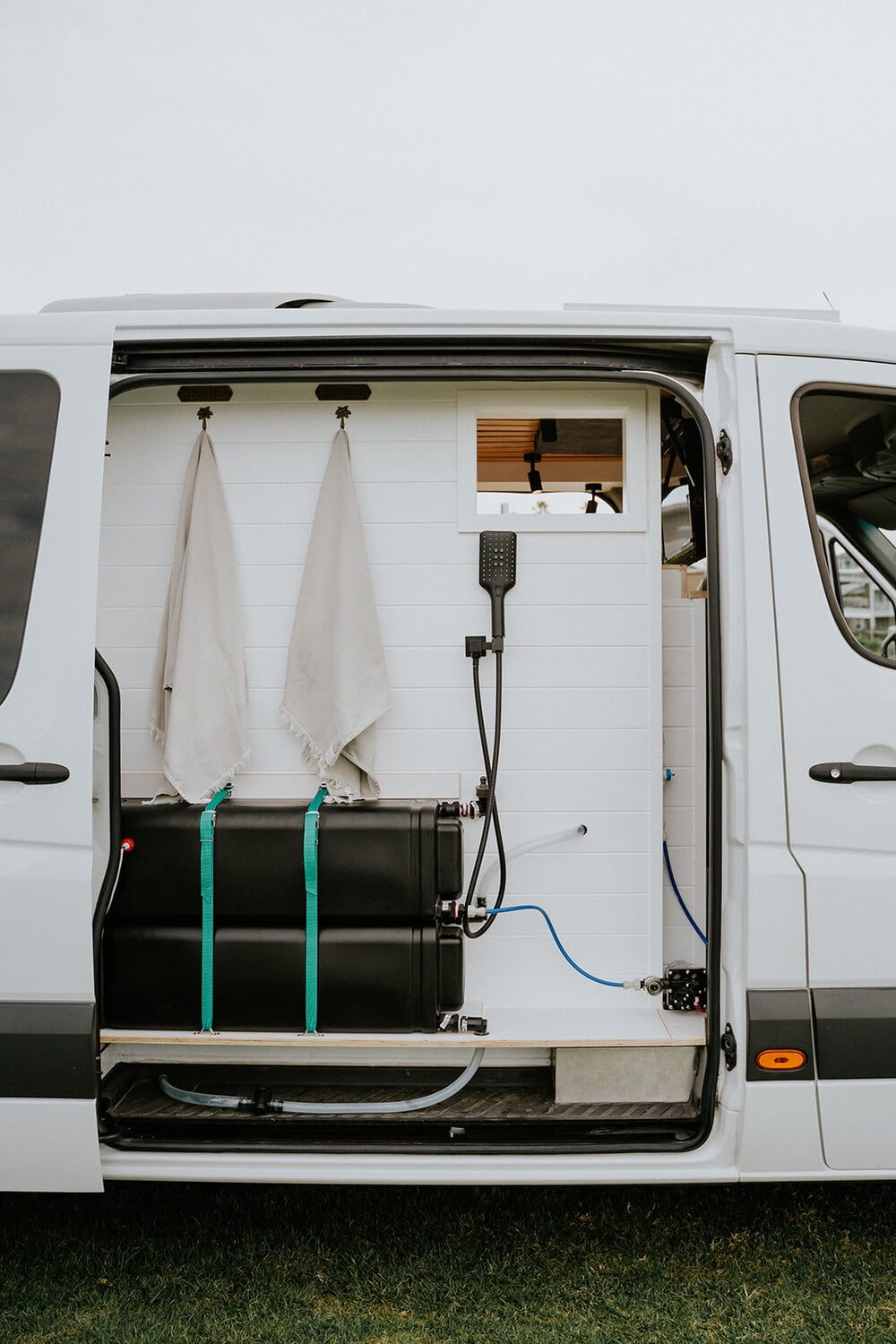
Water pumps, fittings and touring accessories: Once a water tank is installed, additional components can significantly improve usability and convenience at camp.
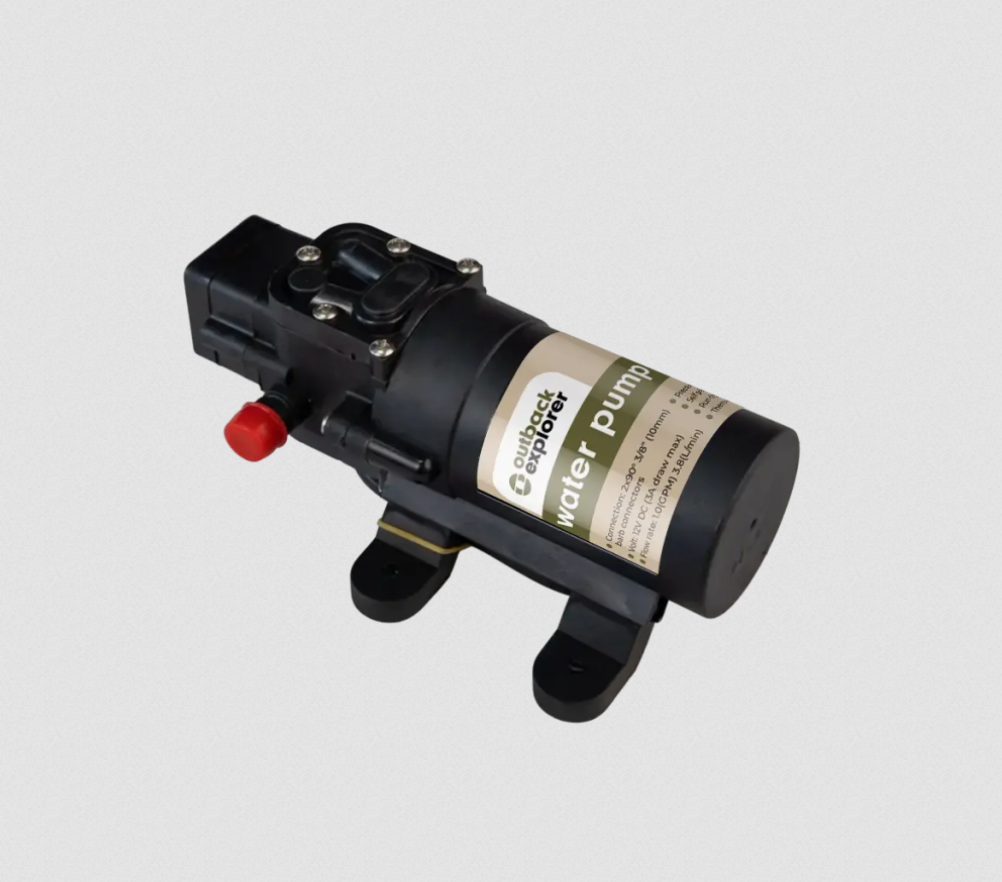
12V water pumps: A 12V pump allows for pressurised water delivery, making tasks like washing dishes, filling bottles or running camp showers far easier. Instead of relying on gravity-fed systems, pressurised setups provide consistent flow similar to household taps. This is now a standard upgrade in many touring builds because it dramatically improves usability without adding much complexity. Reliable pump systems such as the Outback Explorer 12V Water Pump (↗) are commonly used in touring and caravan setups to provide consistent pressurised water flow for camp kitchens, showers and general use.
Quick-connect fittings and hose systems: Quick-connect systems simplify water transfer between tanks, jerry cans or external sources. This becomes especially useful on longer trips where refilling is frequent and efficiency matters. They also reduce mess and spillage, which is a common issue when handling water in remote or uneven terrain. Pairing tanks with quality hose kits, quick-connect fittings and portable pumps can make refilling and camp setup significantly faster, especially on extended remote trips.
Tank level monitoring: Water levels are difficult to estimate accurately, especially in opaque tanks or modular systems. Simple gauges or digital monitoring systems provide real-time feedback, helping avoid unexpected shortages. This is particularly important in remote areas where water access is limited or unreliable.
1
What about grey and waste water systems?
Grey water refers to wastewater from sinks, showers and washing up, while black water comes from toilets in camper trailers and caravans.
In most 4WD touring setups, grey water management is the more relevant consideration, especially when camping in areas with strict environmental rules or sensitive ecosystems. Simple diversion systems can route sink or camp kitchen runoff into a dedicated container, allowing it to be disposed of responsibly at approved dump points.
More advanced setups integrate underbody grey water tanks that store waste temporarily while travelling. Black water systems are typically only found in caravans and camper trailers, where sealed holding tanks and regulated disposal points are required.
Weight matters more than most people think in touring setups
Water is one of the heaviest consumables in any 4WD build, and its impact on vehicle dynamics is often underestimated.
When combined with other touring gear such as drawers, fridges, dual batteries, rooftop tents and recovery equipment, payload can be consumed quickly. Poor weight distribution can also affect handling, braking and suspension wear, especially on uneven or corrugated tracks. That’s why placement is just as important as capacity. Keeping water low and central helps maintain stability and reduces strain on the vehicle.
Caravan and camper trailer water tank setups
Water storage principles are similar in caravans and camper trailers, but capacity and usage patterns are often larger due to extended stays in one location.
Because caravans carry more overall weight, distribution becomes even more critical, particularly in relation to tow-ball load and axle balance. Most setups include combinations of:
• Fixed underbody tanks such as the Tuff Terrain Spare Wheel Water Tank 62L (↗)
• External fill points
• 12V pump systems
• Hot water systems for showers
Why a water tank is essential
A well-designed water system is one of the most underrated upgrades in any touring build. While it does not get the attention of suspension or tyres, it has a direct impact on how long and how comfortably you can travel off-grid.
Modern 4WD water tank systems make it far easier to carry enough clean water safely, without wasting valuable storage space or relying on loose containers. Whether it’s a compact footwell setup for weekend trips or a full underbody system for long-range touring, the right setup adds genuine independence once you leave sealed roads behind. When you’re days from the nearest town, reliable water storage stops being a convenience and becomes essential.
1
35L Tuff Terrain Spare Wheel Water Tank
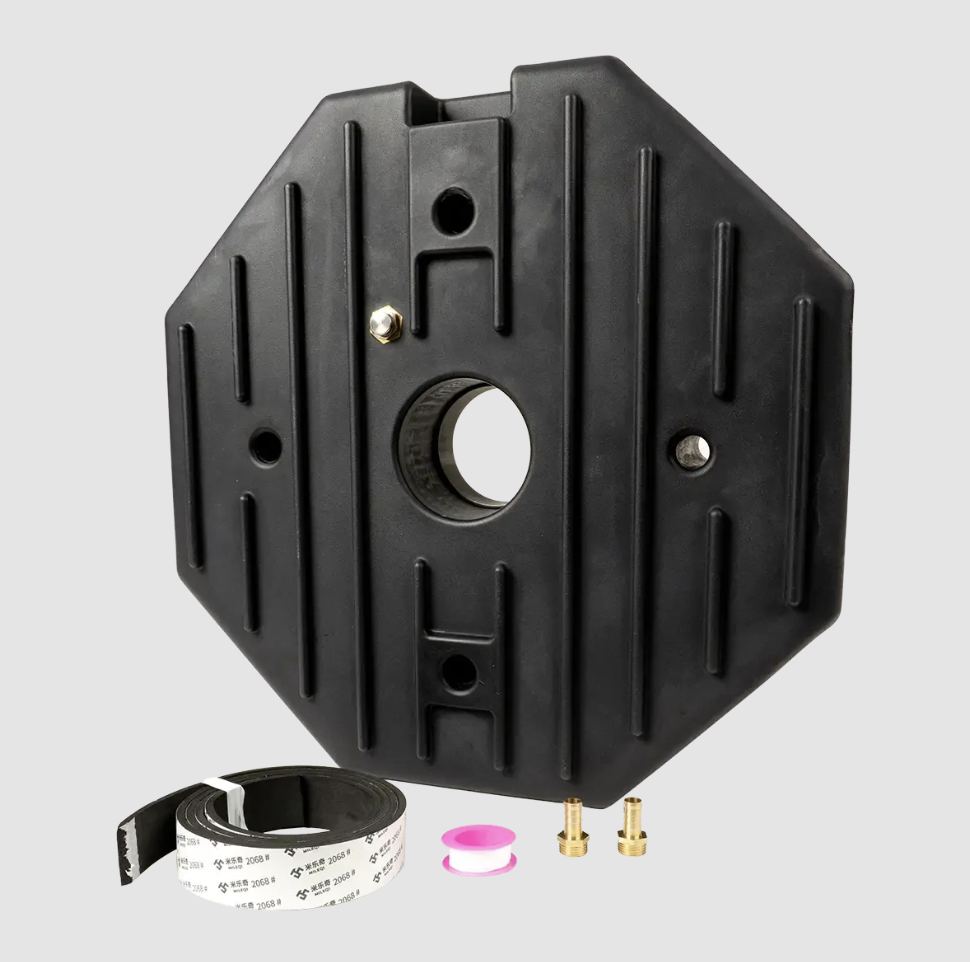
Coming soon and available now to pre-order, the 35L Tuff Terrain Underbody Spare Wheel Water Tank (↗) adds extra water capacity without taking up valuable canopy, tray or cabin space.
Designed to fit into the spare wheel location underneath the vehicle, it makes use of space that would otherwise go unused. Shaped like a spare wheel, the 35-litre tank is suited to touring rigs and vehicles running larger tyres where the factory spare no longer fits. Measuring 555mm x 555mm x 170mm and weighing just 6kg, it provides additional water storage without adding unnecessary bulk.
Made from food-grade polyethylene, the tank is built to handle off-road conditions with internally baffled construction to reduce water movement while driving. A stainless steel sleeve helps spread the load and keep the tank secure, while the included mounting options, inlet/outlet ports, pre-fitted stainless steel breather and rubber strips make installation straightforward.
1
FAQs
What size 4WD water tank do I need for touring?
Most touring setups range from 20 to 40L for short trips up to 80 to 120L+ for extended remote travel, depending on occupants and usage.
Are 4WD water tanks better than jerry cans?
Yes. Tanks offer better weight distribution, easier access and improved storage efficiency compared to loose containers.
Where should I mount a water tank in a 4WD?
Common locations include underbody mounting, cabin footwells and inside canopy storage systems depending on vehicle layout.
Do I need a pump for a 4WD water tank?
Not always, but a 12V pump greatly improves usability for washing, drinking and camp showers.
Are underbody water tanks safe off-road?
Yes, provided they are properly mounted, reinforced and protected from impact and debris on rough terrain.
What is a spare wheel water tank?
A spare wheel water tank is a space-saving water storage solution designed to utilise the unused cavity inside a spare wheel location. Products like the Tuff Terrain 62L Spare Wheel Water Tank (↗) allow tourers to carry large water capacity without sacrificing valuable canopy or tray space.
Follow 4X4 Australia on Google
Get more 4x4 news, reviews and gear stories from 4X4 Australia in your Google feeds.


We recommend
-
 Gear
Gear4WD recovery gear explained: Building a setup that actually works off-road
Knowing what gear you need, and how it all works together, is what makes a recovery safe and effective
-
 Gear
GearTuff Terrain V4 High Output Air Compressor: Built for the end of the track
A high-output 4WD compressor built to make post-track tyre inflation faster, easier and more consistent
-
 Gear
GearTuff Terrain Recovery Kits: Essential gear for off-roading
Compact all-in-one recovery kits to keep you safe and prepared on any off-road adventure