Gear

Gallery 1
Ask any experienced four-wheel driver what the most important gear in their setup is, and recovery gear will be right up there.
Because the reality is simple – if you’re heading off-road, at some point you’re going to get stuck. Whether it’s soft sand, sloppy mud or a rutted-out hill climb, having the right recovery gear (and knowing how to use it) is what gets you moving again safely. A proper kit isn’t just about having one strap in the back – it’s about having a system where each component works together.
The basics: Where most recoveries start
For most touring setups, recovery begins with a snatch recovery – the classic two-vehicle setup.
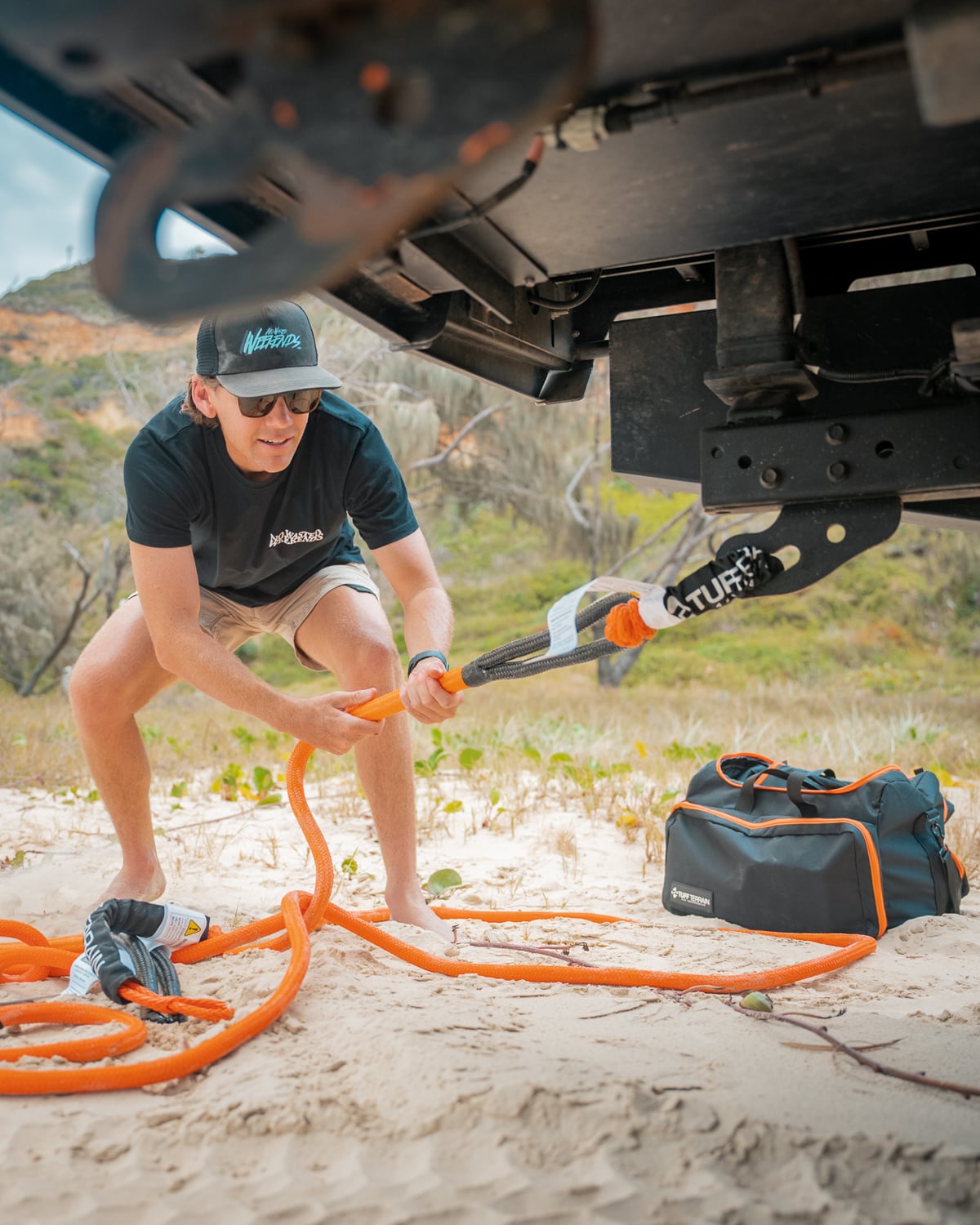
At the centre of that is a snatch strap, which is designed to stretch under load and then recoil, using stored energy to pull a bogged vehicle free . But the strap is just one part of the equation. To connect everything safely, you’ll need:
- Rated recovery points on both vehicles
- Soft shackles or rated shackles to join components
- A properly rated strap matched to vehicle weight
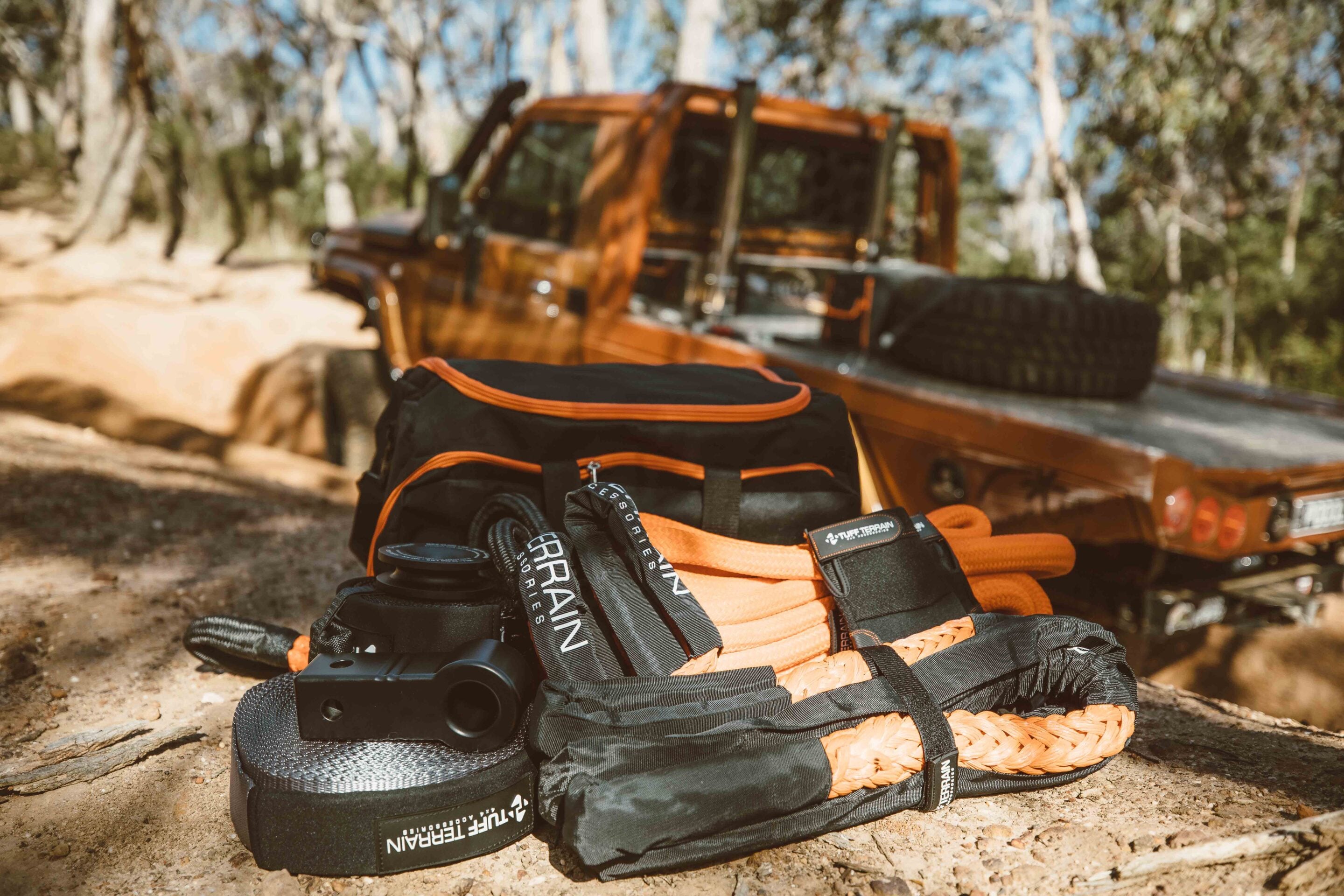
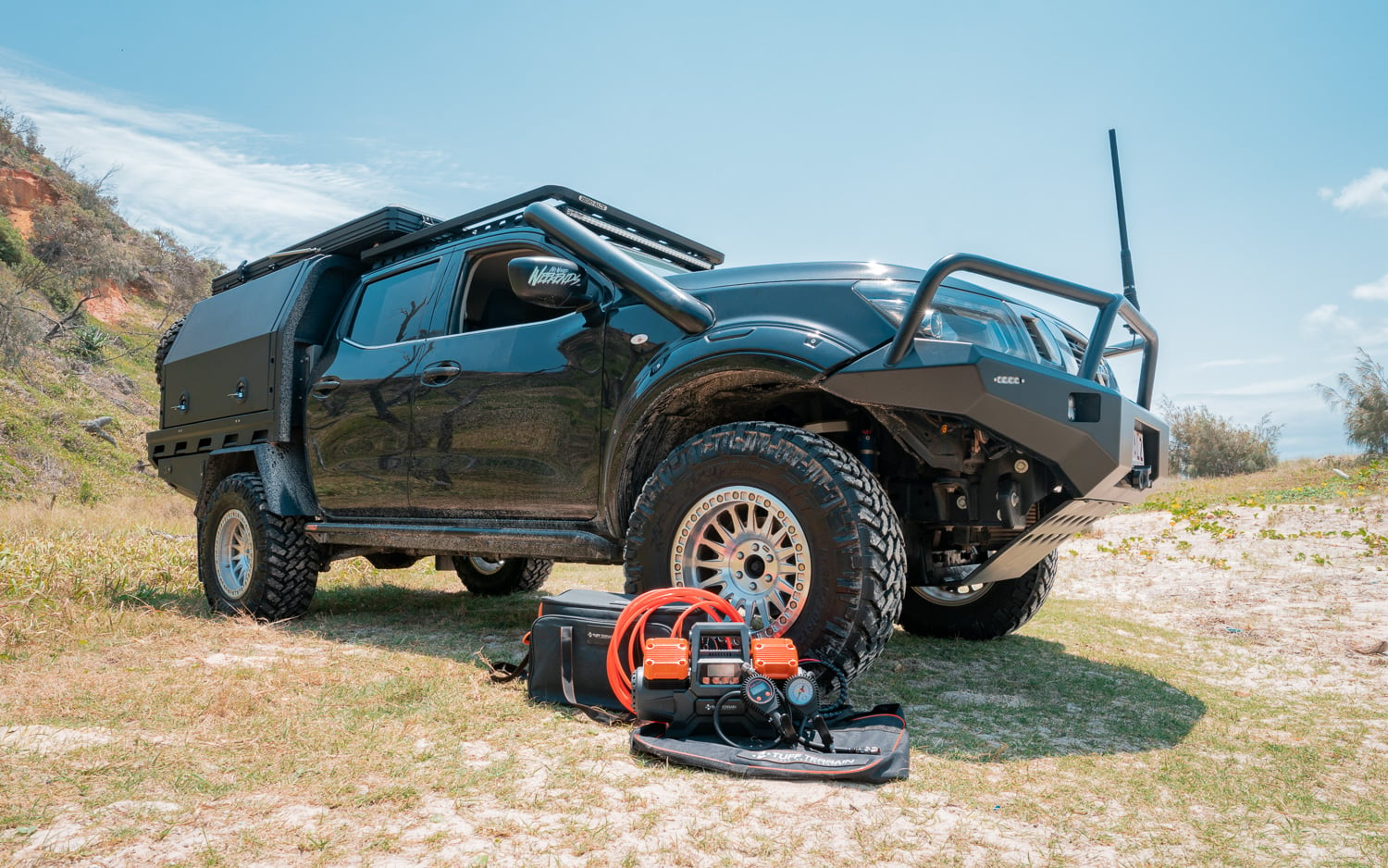
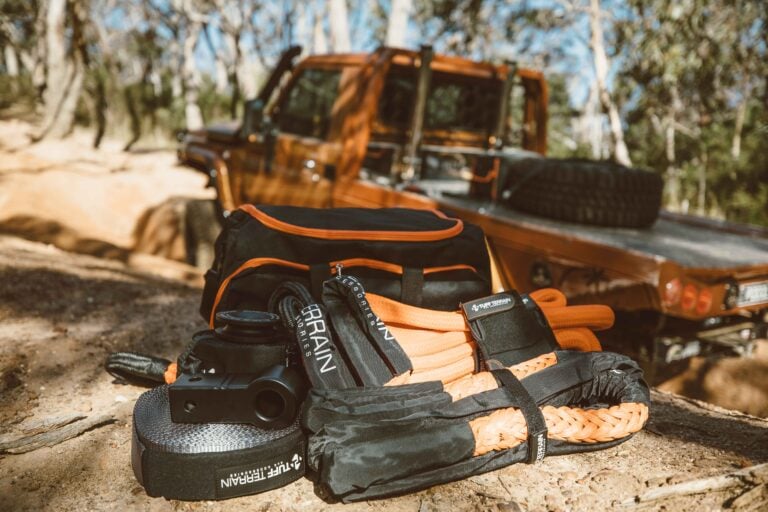
Modern kits – like those in the Tuff Terrain range – tend to lean heavily on soft shackles, and for good reason. They’re lighter, easier to handle and eliminate the risk of a heavy steel shackle becoming a projectile if something fails.
1
Soft shackles, straps and ropes: The core kit
A solid recovery setup starts with a few key items you’ll use regularly.
- Snatch straps and kinetic ropes: This is your go-to for sand and mud recoveries. A snatch strap or kinetic rope stretches under load, applying force gradually rather than with a harsh jolt. Kinetic ropes, which are becoming more common in modern kits, offer smoother load delivery and are often easier on both vehicles.
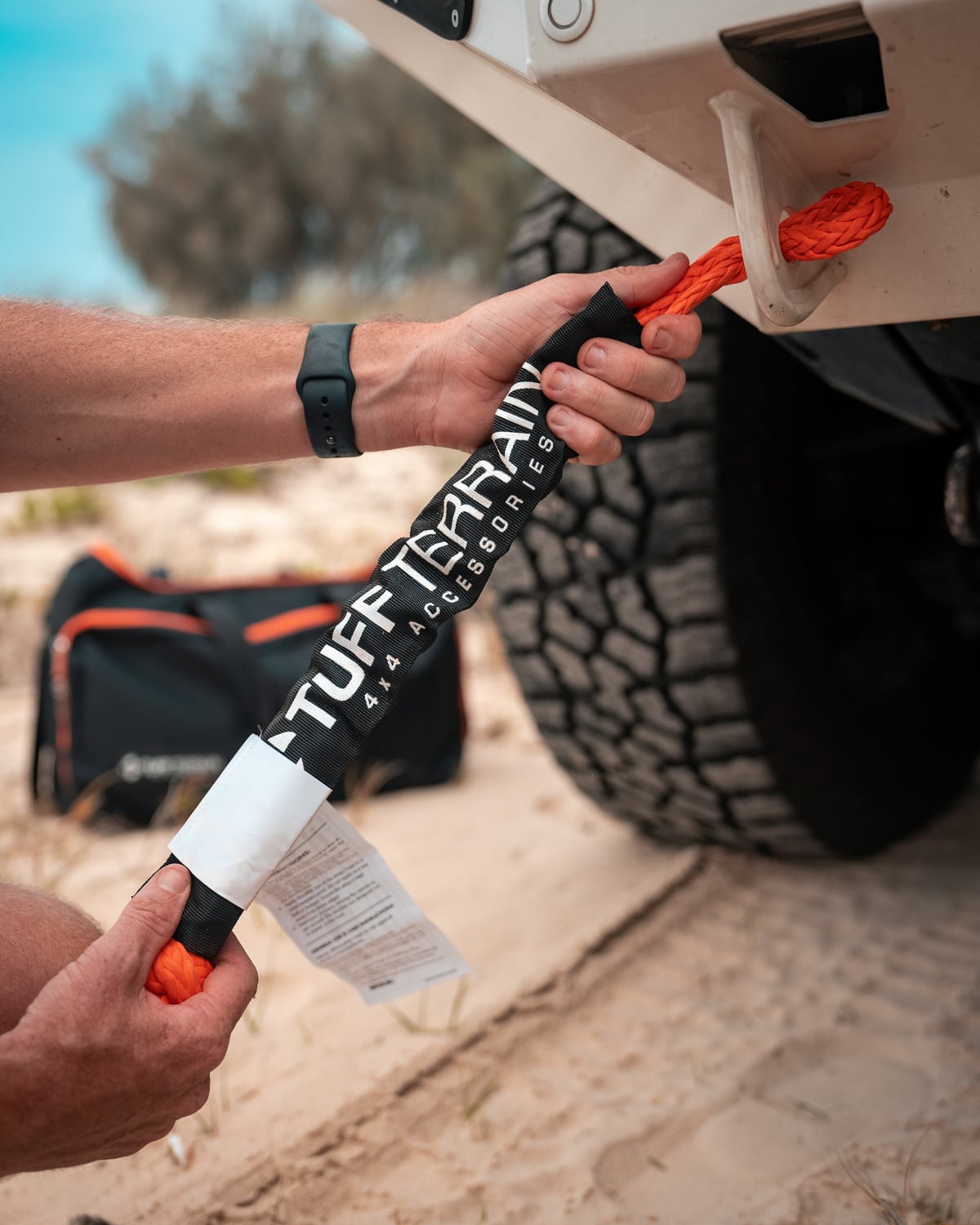
- Soft shackles: These replace traditional steel shackles in most setups. Made from synthetic rope, they’re strong, lightweight and far safer to handle. They’re also far easier to use in real-world conditions – no seized pins, no rattling around in the tray, and no damage to recovery points.
- Recovery hitches and connection points: If your vehicle runs a tow hitch receiver, a recovery hitch gives you a proper rated connection point. It’s a simple addition but critical for safe recoveries.
The key takeaway here is that everything needs to be rated and designed for recovery use – not just whatever is handy on the vehicle .
1
Stepping it up: Controlled and more complex recoveries
Once you move beyond basic snatch recoveries, your gear starts working together in more technical ways.
- Tree trunk protectors: If you’re using a winch, a tree trunk protector becomes essential. It wraps around an anchor point (like a tree), spreading the load and protecting both the environment and your gear. It’s a simple piece of kit, but it’s what allows safe anchoring when there’s nothing else around.
- Winch extension straps: Sometimes your winch line just won’t reach. That’s where an extension strap or rope comes in, giving you extra reach without overloading your system. These are especially handy in steep or remote terrain where anchor points aren’t ideal.
- Snatch rings: Snatch rings have become increasingly popular as a lighter, simpler alternative to traditional pulley blocks. Paired with a soft shackle, they allow you to change the direction of a winch pull; double your winching power; and reduce load on the winch. Compared to older-style steel snatch blocks, they’re lighter, simpler and easier to pack.
1
Putting it all together: How a recovery system works
The key to a good recovery setup isn’t just having gear – it’s understanding how it all links together. A typical setup might look like this:
- Snatch recovery: strap + soft shackles + rated recovery points
- Winch recovery: winch line + tree trunk protector + soft shackles
- Advanced recovery: winch + extension strap + snatch ring for mechanical advantage
Most complete recovery kits combine these elements into one package, which is why you’ll often see kits including straps, shackles, protectors and recovery accessories all in one bag.
Safety matters more than anything
Recovery is one of the highest-risk parts of four-wheel driving. When things go wrong, they go wrong quickly. Five non-negotiables are:
- Only use rated recovery points
- Never attach to a tow ball
- Stand clear of straps under load
- Use a dampener where possible
- Check all gear for damage before use
Even the best gear won’t help if it’s used incorrectly.
1
Building a practical recovery kit
You don’t need to go overboard. The following combination will cover the majority of real-world scenarios – from simple beach recoveries through to more technical winch setups. A well-rounded kit should include:
- Snatch strap or kinetic rope
- Soft shackles
- Tree trunk protector
- Winch extension strap
- Snatch ring
- Recovery hitch (if applicable)
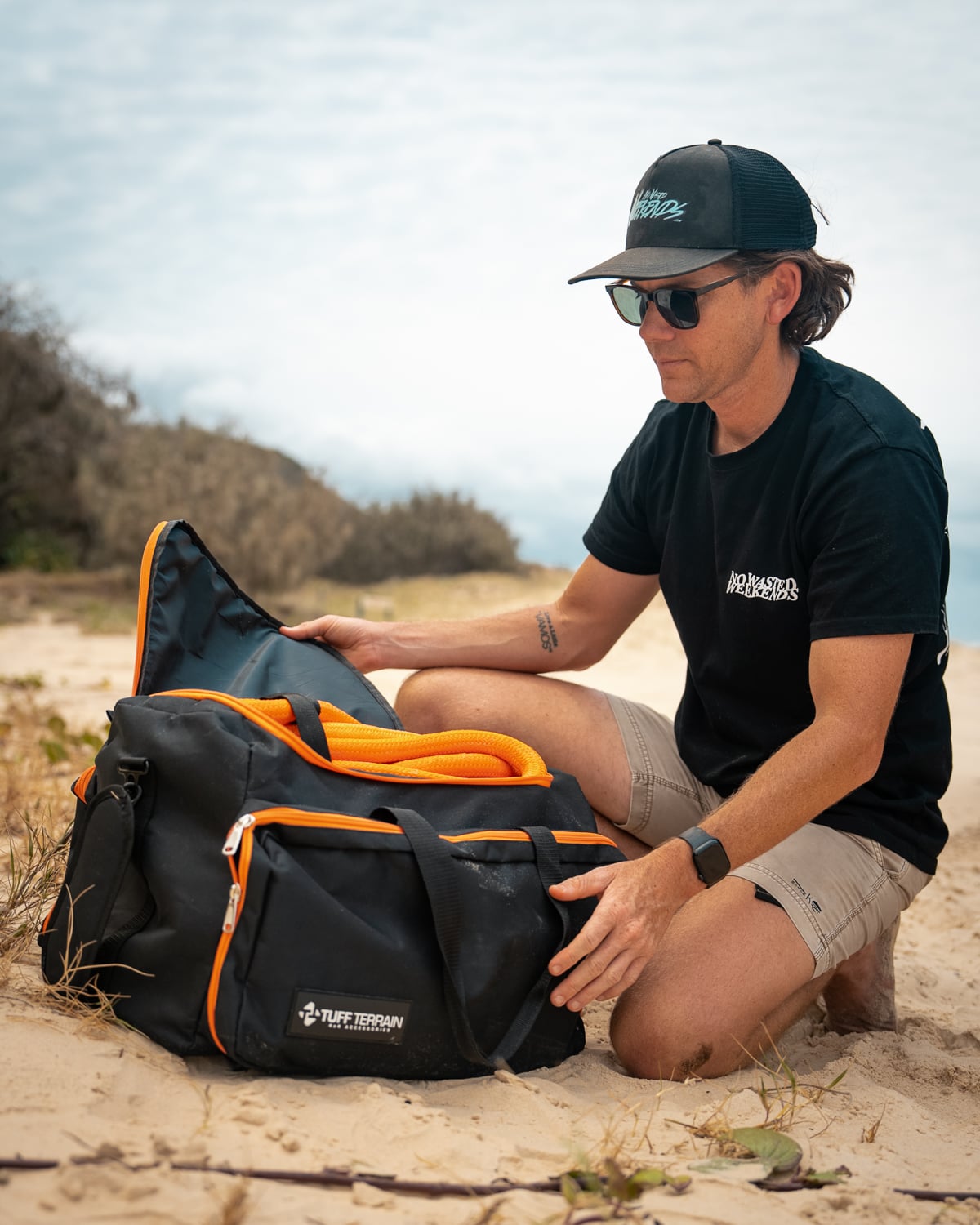
- Gloves and storage bag
The bottom line
Recovery gear isn’t just another accessory – it’s essential equipment for anyone leaving the bitumen.
The good news is modern gear has come a long way. With lighter materials, safer designs and more versatile setups – like those seen across the Tuff Terrain recovery range – it’s easier than ever to build a kit that’s both capable and practical.
Get the basics right, understand how each piece works together, and you’ll be in a far better position when the tracks turn soft and the wheels stop turning.
Follow 4X4 Australia on Google
Get more 4x4 news, reviews and gear stories from 4X4 Australia in your Google feeds.


We recommend
-
 Gear
GearTuff Terrain Recovery Kits: Essential gear for off-roading
Compact all-in-one recovery kits to keep you safe and prepared on any off-road adventure
-
 Gear
GearReal builds, real tracks: TJ & Mac show how Tuff Terrain gear improves 4WD capability
Through practical builds and touring content, TJ and Mac demonstrate how Tuff Terrain gear enhances off-road performance on popular 4x4 platforms
-
 Gear
GearTyre deflators and inflators explained: Why every 4x4 owner needs to know how to use one
Mastering tyre pressures is one of the easiest ways to boost your 4WD traction and comfort off-road