4x4 Comparisons


Gallery 1
First things first, if you want a ute, maybe go read Matty’s review of the new HiLux.
These aren’t that. These are toys. Yes, they can do ute things – carry some gear, tow a small trailer, head away for a weekend – but for me, a proper ute needs to haul close to a tonne, tow 3500kg and do it without fuss. Forget that here.
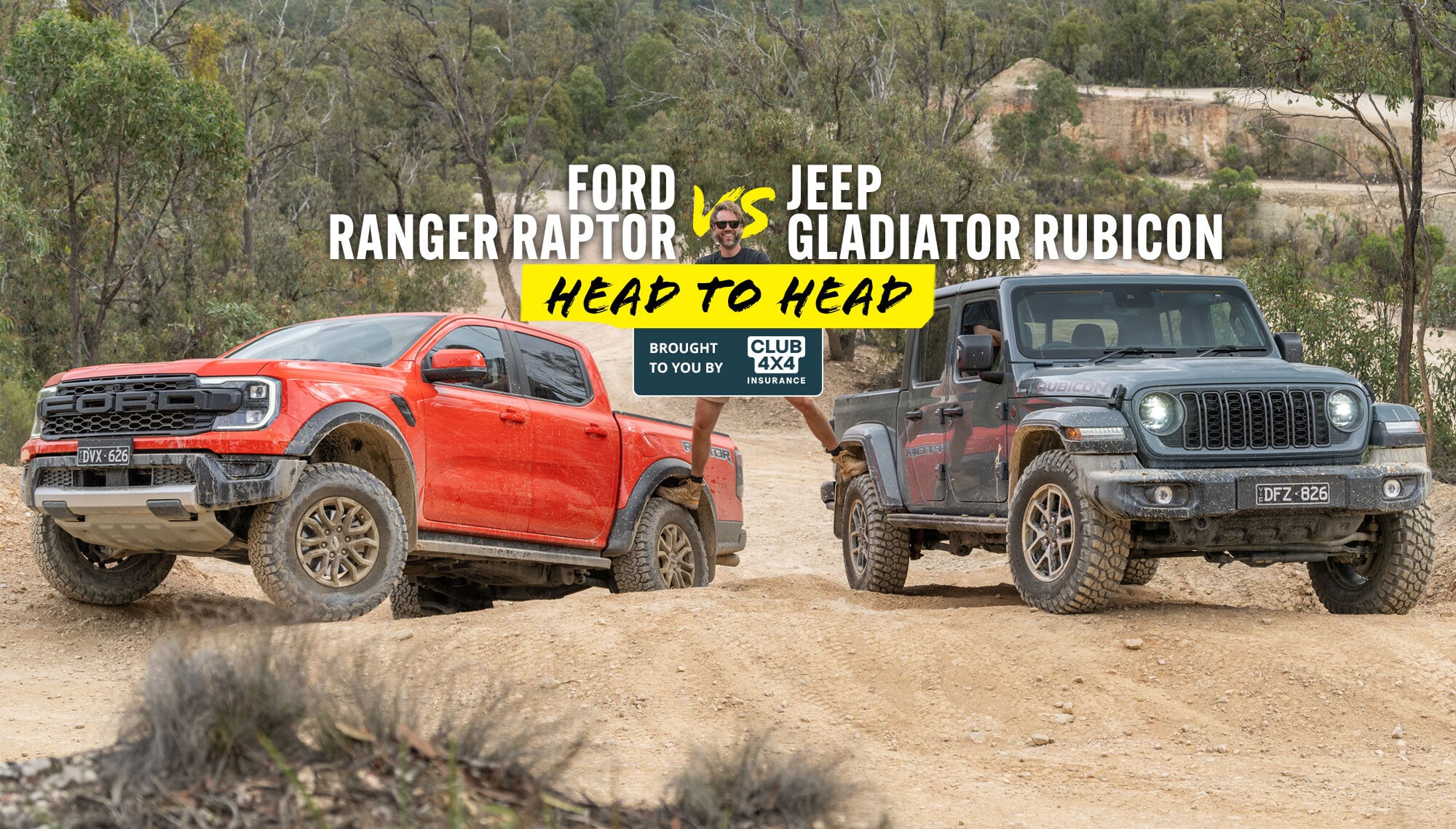
What we have instead are two of the most exciting, slightly ridiculous things masquerading as utes on sale today. The Ranger Raptor and Gladiator Rubicon lean hard into the fun side of the equation – speed, articulation, noise, presence – and only loosely into the traditional brief. And that’s kind of the point.
Because if you squint hard enough, you can justify both of these as utes. They’ve got tubs, they’ve got usable interiors, and they’ll get a job done if you ask them to. But really, you’re not buying either of these because you need a ute. You want something fun in your life.
You’re buying them because you want one – and strewth, do I want one!
Why are we doing this?
Most utes these days are sensible. Capable, yes – but sensible. Same goes for a lot of four-wheel drive wagons. They do the job, they tick the boxes, and they’re about as exciting as a council-issued wheelbarrow. These two aren’t that.
We’re doing this because they sit right at the other end of the spectrum – the pointy end of what a ute can be when fun becomes the priority. They’re the kind of vehicles you don’t need, but can absolutely justify if you try hard enough. You might tow a jet ski, move some gear, throw the dogs in the back and head to the beach. But really, you’re buying one of these because you want something that makes all of that feel like an event, not a chore.
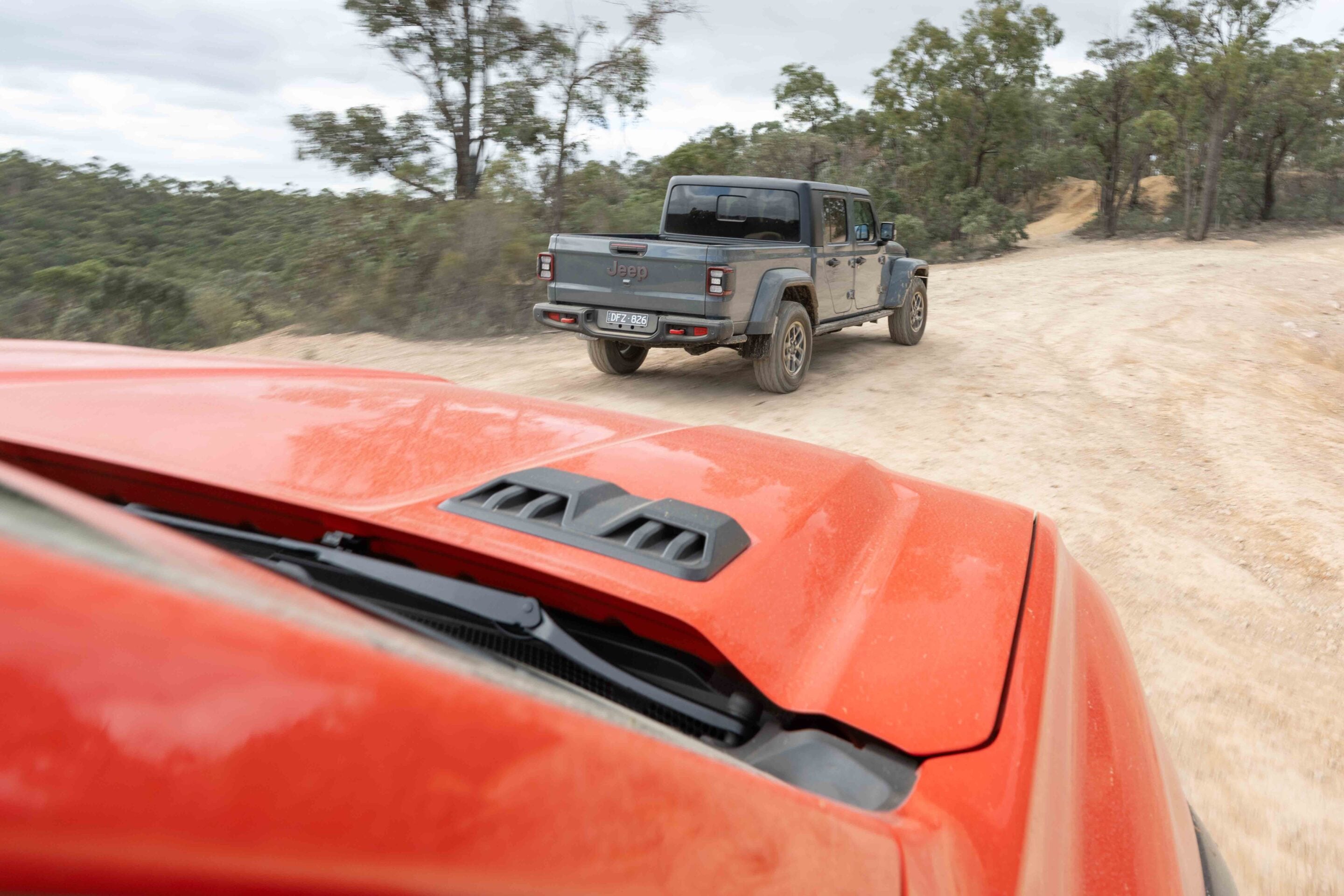
Jeep’s story is built on capability. From the original military Willys through to the Wrangler, it’s always been about getting further off-road than anything else. The Gladiator is a relatively recent addition – essentially a Wrangler with a tub – but in Rubicon form it carries all the hardcore hardware that made Jeep famous.
The Ranger started life as a global workhorse, but the Raptor flipped that script. First launched in 2018, it took a humble ute and turned it into a high-speed off-road performance machine, developed with Ford Performance, now Ford Racing.
1
Jeep Gladiator Rubicon
In Jeep’s world, everything revolves around the Wrangler – short wheelbase for agility, long wheelbase for touring – and the Gladiator slots in as the dual-cab version of that formula.
In Australia, we only get it in Rubicon spec, which means you’re getting the full suite: the Rock-Trac transfer case with its ultra-low gearing, locking diffs front and rear, and the ability to pull the roof and doors off entirely. That’s what defines it. This isn’t a polished, everyday ute – it’s quirky, mechanical, and a bit rough around the edges.
Inside, it leans into that brief. The cabin is tight, upright and unapologetically Jeep, with splashes of colour and contrast that break up the usual sea of grey. The materials feel tough, almost hose-out ready, like it’s been designed with dust, mud and bad decisions in mind. Tech is there – a modest screen with Apple CarPlay – but it’s not the focus. Comfort isn’t either.
What you get instead is character. It feels a bit agricultural, a bit old-school, and a long way from the polished norm – but that’s exactly why it stands out.
1
The Rubicon’s party tricks
This is where the Rubicon earns its badge.
Underneath, it’s built properly – Dana axles front and rear, locking differentials at both ends, and the Rock-Trac transfer case delivering a proper 77:1 crawl ratio. That’s not a headline number, that’s a design decision. Everything here is geared towards slow, controlled, technical off-road driving.
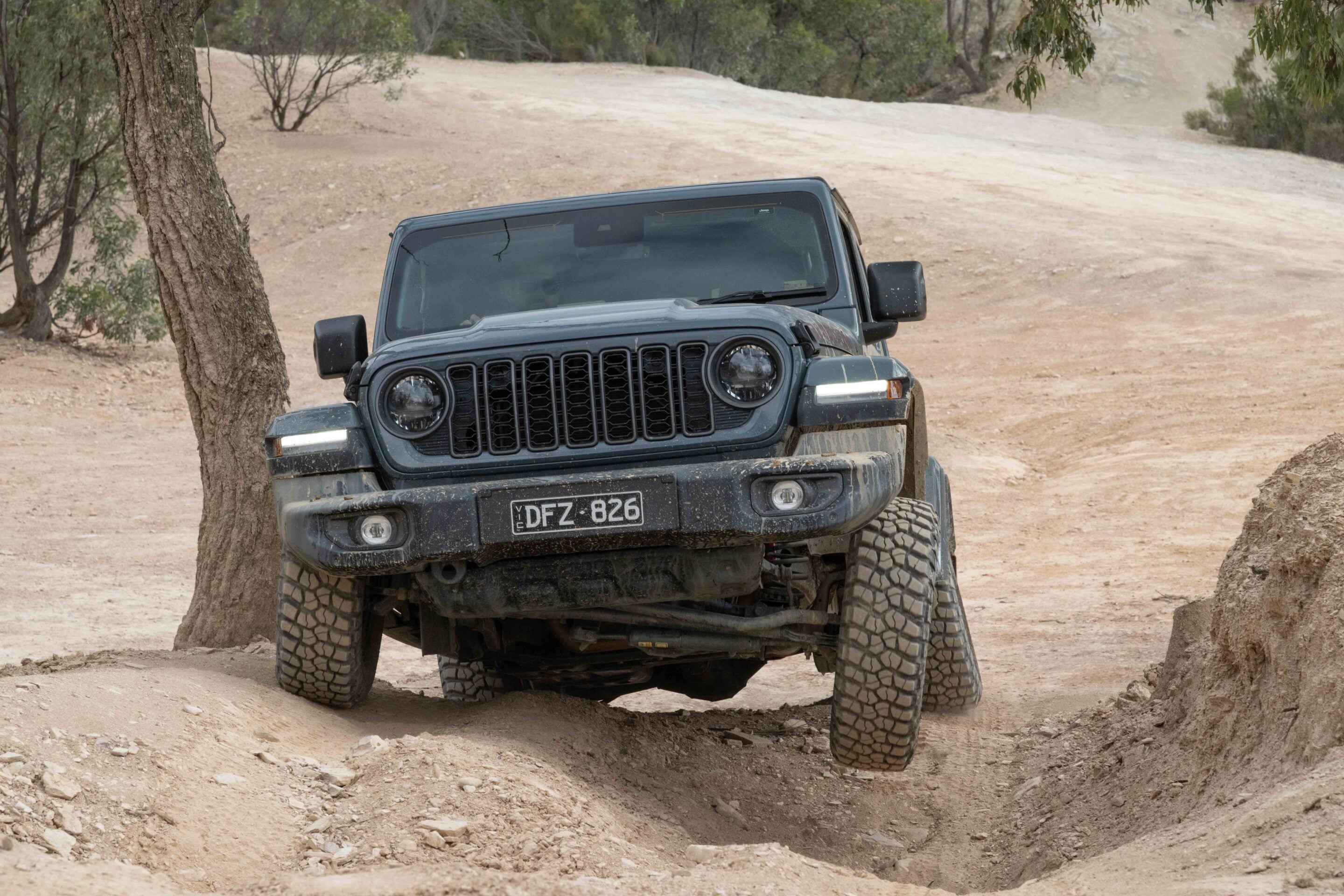
But the standout is the electronic front swaybar disconnect. Press the button and the front swaybar decouples, removing the tension that normally limits axle movement and allowing the front end to articulate far more freely over uneven terrain. More flex means more tyre contact, more traction, and less reliance on momentum.
And then you notice something else. At the rear, the swaybar setup looks… approachable. Four bolts and a ratchet and you’re in. It’s not advertised, it’s not encouraged, but it’s there – a quiet nod to the kind of owner who wants to take things a step further.
That’s what makes the Rubicon interesting. It’s not just capable out of the box, it’s built in a way that invites you to get involved. To tweak it, understand it, and push it further. There aren’t many vehicles left that feel like that, and we should celebrate and appreciate it.
1
Gladiator’s old-school heart
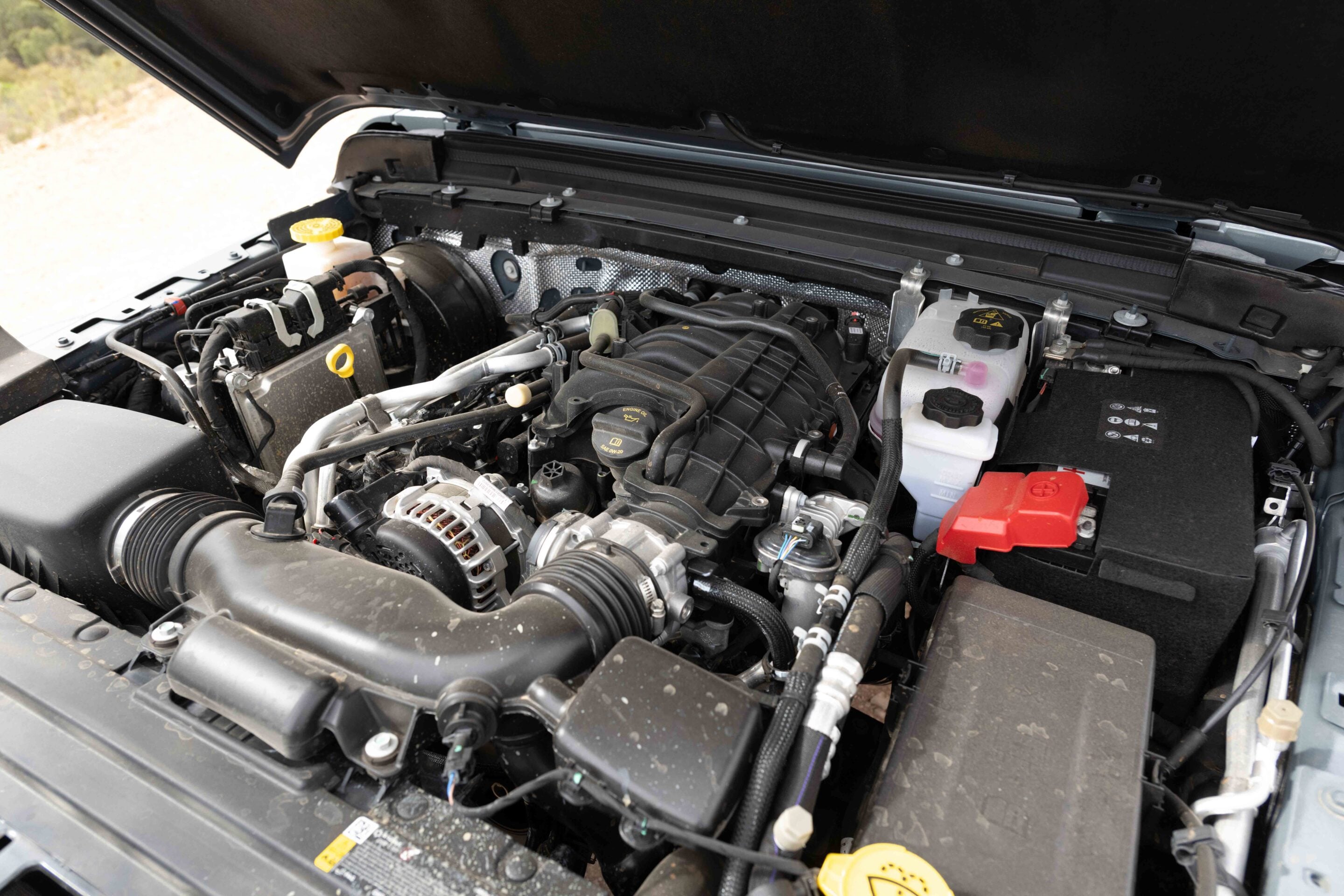
Under the bonnet sits Jeep’s 3.6-litre Pentastar V6, putting out 209kW and 347Nm, paired to a ZF-sourced eight-speed automatic.
Peak power comes high in the rev range, and you feel that – it’s not a torque monster, but it’s willing, and it sounds good doing it. There’s a raspy, slightly throaty note to it that suits the character of the vehicle. At around 2242kg kerb, it’s not light, but there’s enough power here to make it feel lively on a dirt road. It’ll build speed and carry it well, even if it doesn’t punch like a turbo-diesel.
On a fast dirt road, it’s fun – but not sharp. The steering is slower, the turning circle is 13.6m, and the solid front axle never quite delivers the same confidence as an IFS ute. But that’s not what this is about.
1
Gladiator hits and misses
In low range, this thing feels like a cheat code.
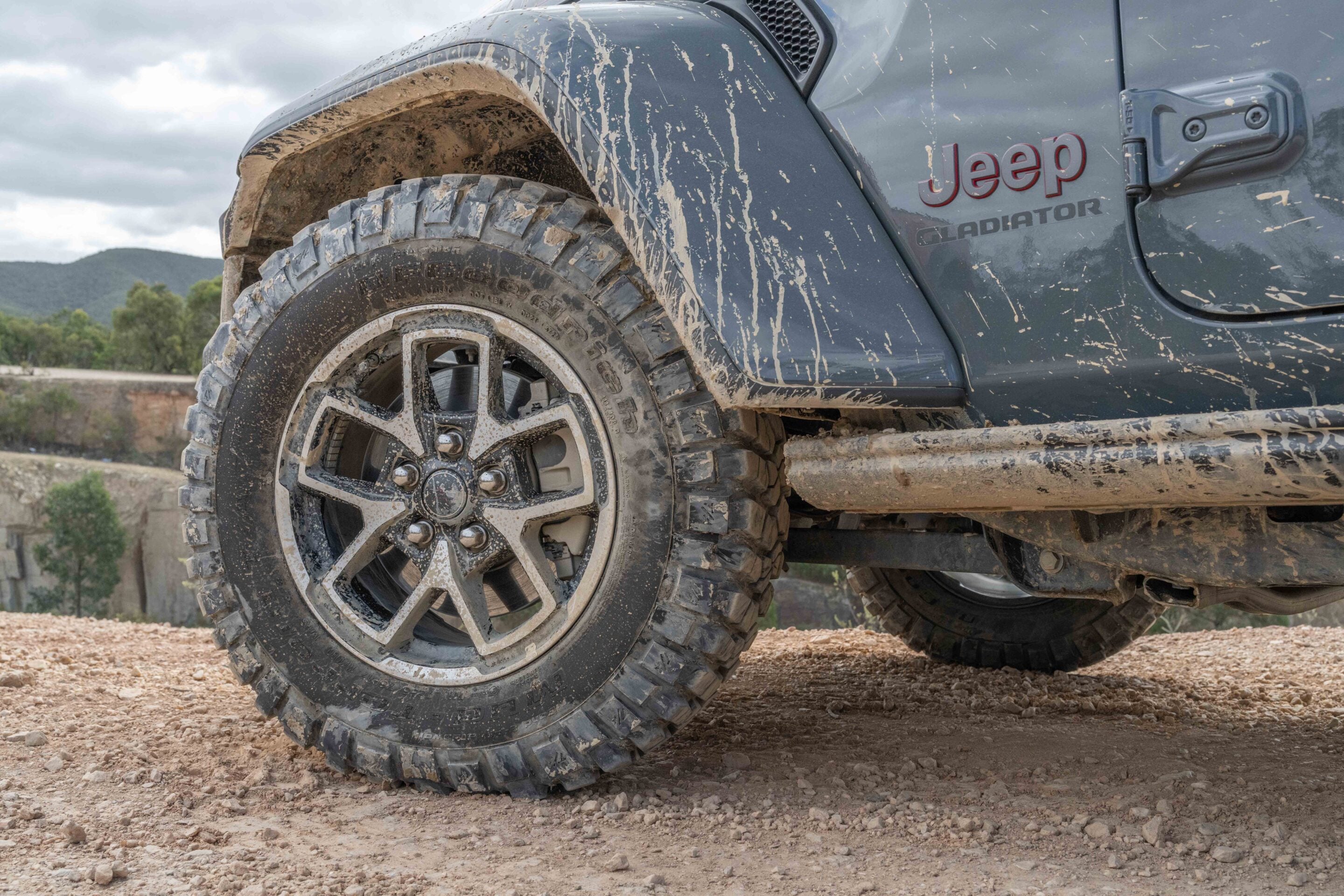
We drove it with lockers engaged, swaybar disconnected, and in its most aggressive off-road mode, and the result is ridiculous. The combination of solid axles, 77:1 crawl ratio and BFG KM3s delivers outright mechanical grip that very few vehicles can match. It just finds traction where others spin – the front axle in particular is a flex monster.
The driving position helps too. Upright seating, near-vertical windscreen, and great sightlines make it easy to place on a track. Take the doors off and it’s even better – you can just lean out and read the terrain.
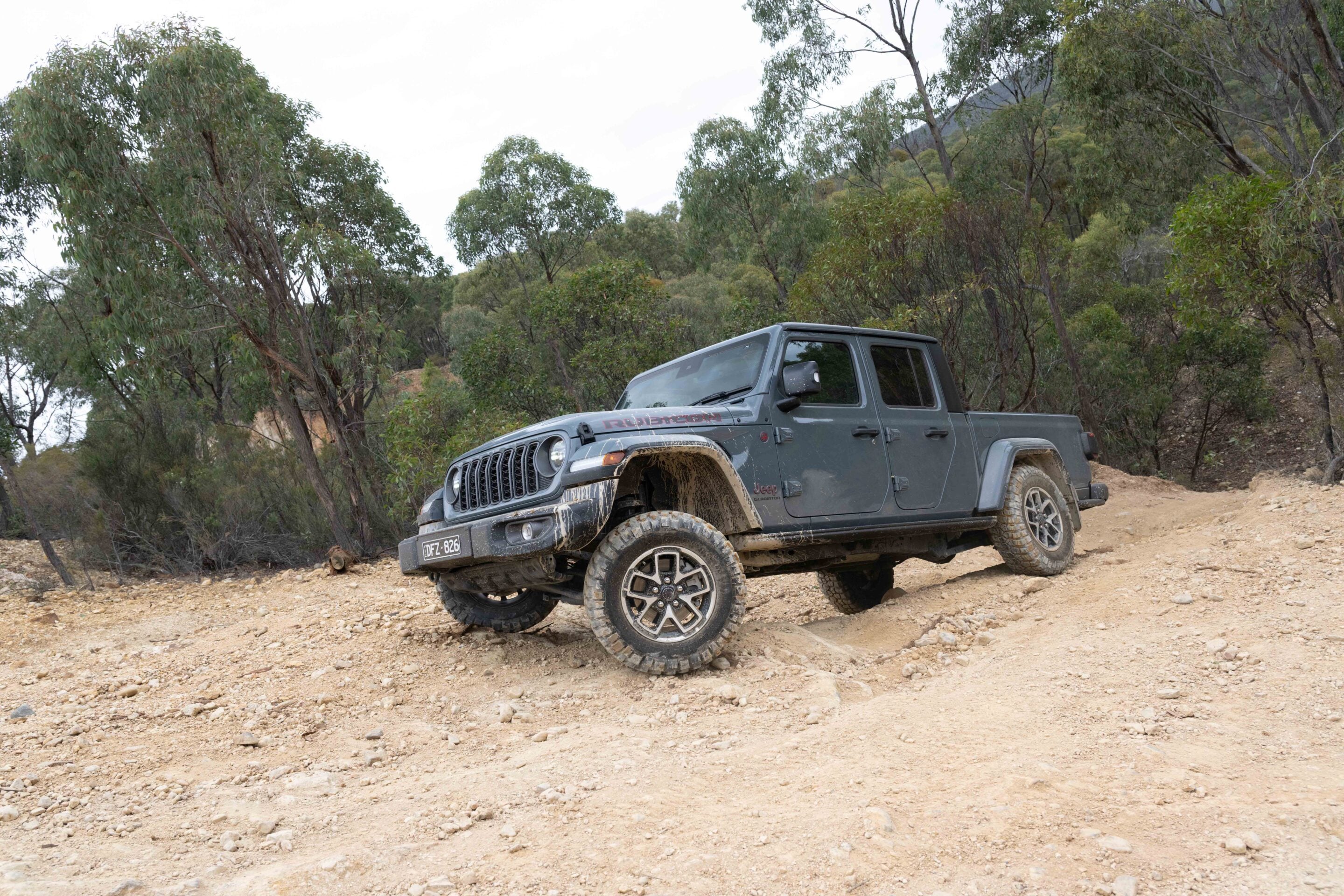
But there are trade-offs. The 3488mm wheelbase is the big one. On paper, 249mm of clearance doesn’t look bad, and the 40.7° approach angle is genuinely excellent – helped by those forward-mounted front wheels – but the 18.4° rampover angle is the limiter, and you feel it constantly. We bellied out repeatedly – cresting climbs, dropping into wombat holes – just running out of clearance where shorter vehicles wouldn’t. The 25.1° departure angle is decent, but it’s the middle of the vehicle that lets you down. The saving grace is durability. There’s solid underbody protection, and the sidesteps are genuinely robust.
So here’s the reality. Out of the box, this is one of the most capable off-roaders you can buy for grip and articulation – but also one of the easiest to catch out on clearance.
1
Ford Ranger Raptor
If the Super Duty is peak Ranger for work, the Raptor is peak Ranger for everything else.
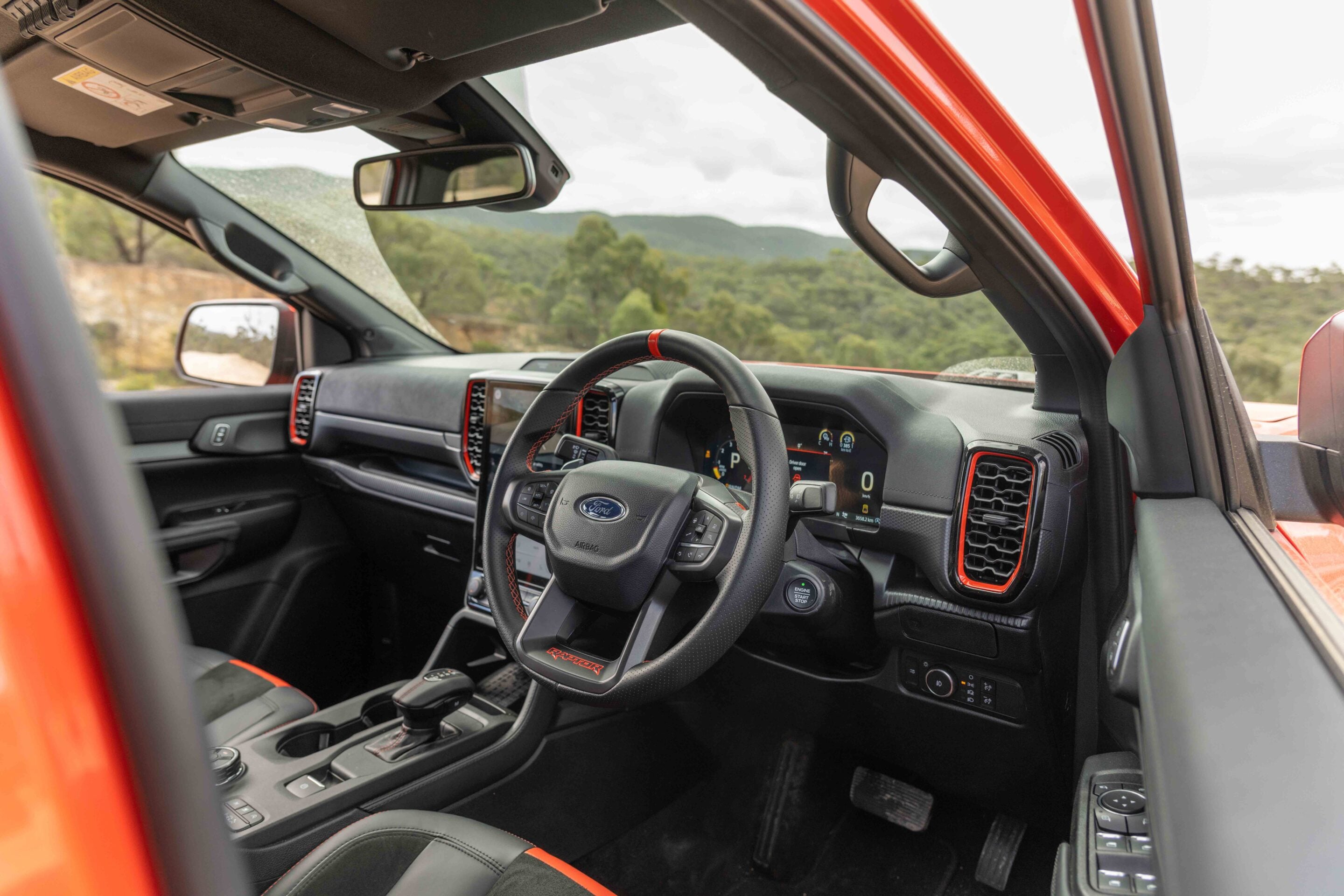
It sits at the very top of the range, but it’s not trying to out-carry or out-tow anything – it’s built to go fast, go hard and make you laugh while doing it. This is the Ranger you buy when the job is optional but the drive isn’t. Inside, it’s as good as anything in the segment. The Next-Gen Ranger cabin brings a big vertical screen, crisp graphics, wireless Apple CarPlay and seats that are properly comfortable, properly supportive and just a little bit shouty with the Raptor embossing. It feels modern, sorted and easy to live with.
And that’s the thing. For something this ridiculous, it’s also completely usable. The driving position is spot on, visibility is good and it behaves like a normal Ranger when you want it to. Until you don’t. Because this is the one that encourages bad decisions. The one that turns a dirt road into a racetrack and a quick trip into something you start making excuses for.
1
The Raptor is built to be abused
This is where the Raptor separates itself from every other ute on the market.
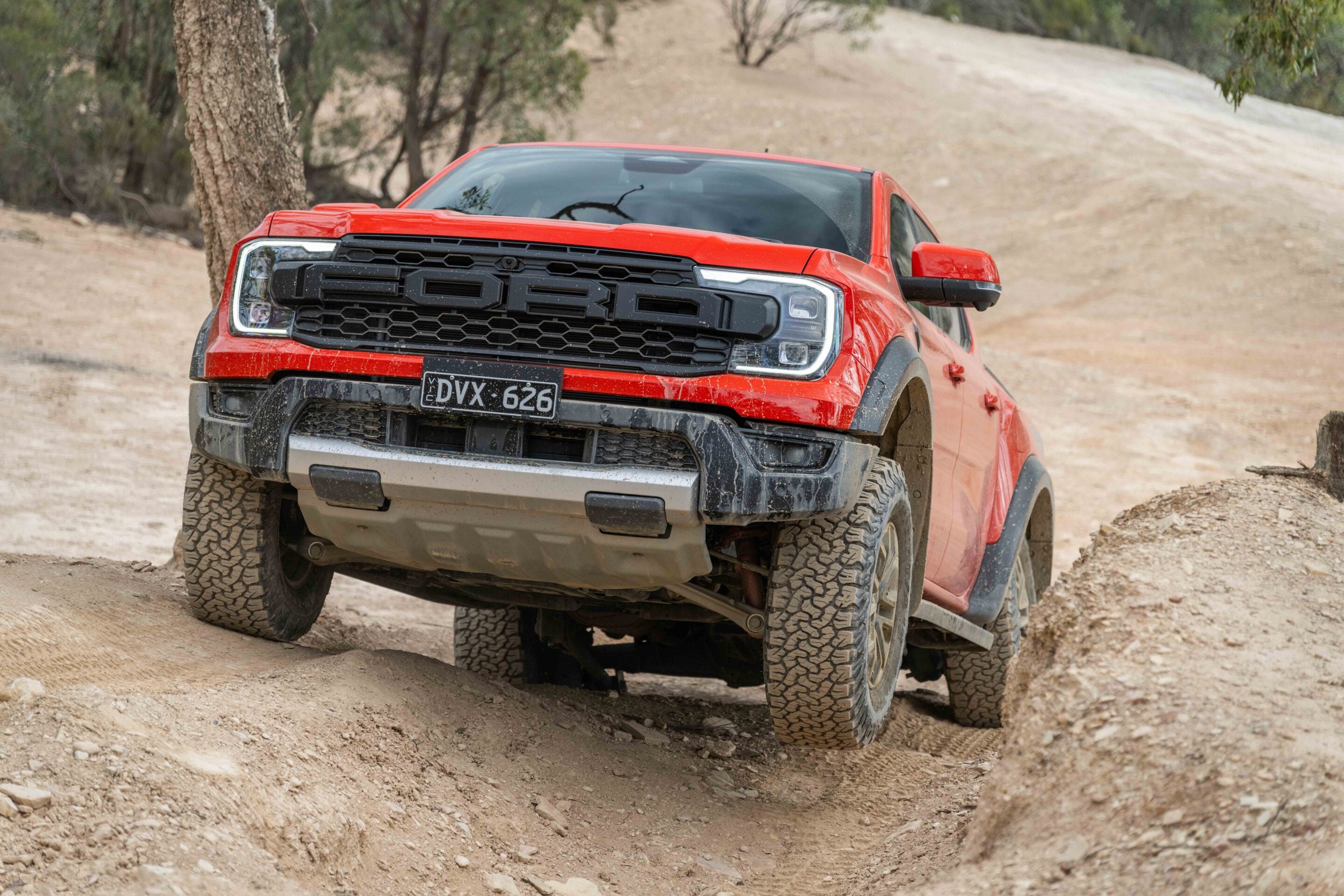
Underneath, it’s nothing like a traditional load-carrying setup. Instead of leaf springs, you get a coil-sprung rear with a Watts link, which keeps the axle centred under the chassis and far more controlled at speed. The result is stability – especially when things get rough – that a conventional ute just can’t match.
Then there are the shocks. FOX 2.5-inch Live Valve internal bypass dampers, constantly adjusting in real time depending on what the vehicle is doing. Hit a corrugation, a jump, a washout – the system reacts instantly, firming or softening to keep the BFG KO2 tyres in contact with the ground. It’s not just clever, it’s transformative.
Add in a properly calibrated drivetrain with multiple drive modes – including Baja mode – and you start to understand the brief. This isn’t built to carry weight. It’s built to carry speed. And it’s tough. There’s serious underbody protection, designed to take hits you’d avoid in anything else. You can drive this thing hard and it feels like it wants you to. That’s been proven too. In production class, the Raptor has made a name for itself at events like the Finke Desert Race, where speed, durability and outright punishment define success.
Put simply, this isn’t a ute that tolerates abuse. It’s one that’s built for it.
1
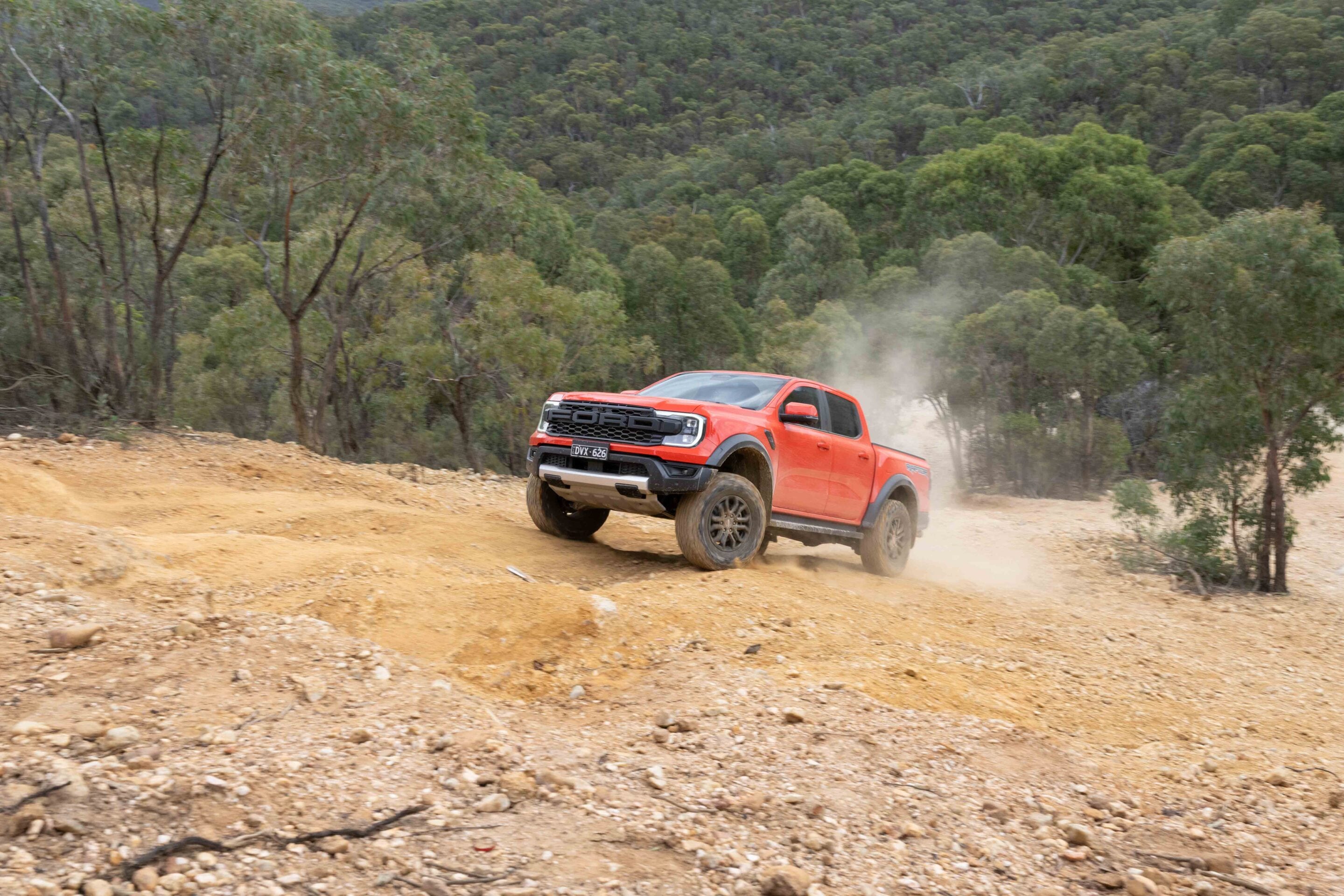
Nothing comes close to the Raptor at speed
Under the bonnet, the 3.0-litre twin-turbo EcoBoost V6 delivers 292kW and 583Nm, paired to a 10-speed automatic and dual-range transfer case. Peak torque comes in low and holds strong, giving it that effortless surge out of corners and across loose surfaces.
But there are rules here. Baja mode is for off-road use only, so what we ran instead was a mix that actually worked better in the real world – Sport drive mode, suspension in its most aggressive setting, steering in comfort and exhaust dialled back.
And then we drove it properly. On open gravel roads, this thing just comes alive. It doesn’t just tolerate speed – it asks for it. Triple digits come up effortlessly, and once you’re there, the Raptor feels planted, composed and almost egging you on to keep pushing.
The suspension is the standout. Those FOX 2.5 Live Valve shocks just absorb everything – corrugations, washouts, mid-corner bumps – the sort of hits that would unsettle or slow down anything else. Here, you barely lift. The drivetrain plays its part too. In Sport, it holds gears longer and downshifts aggressively under braking, and with paddles behind the wheel you can take full control if you want to.
But the real story is how it makes you feel. This isn’t just quick for a ute – it’s in a different league. If you want something faster on a gravel road, you’re not shopping in the ute aisle anymore.
1
How does the Ranger stack up in low range?
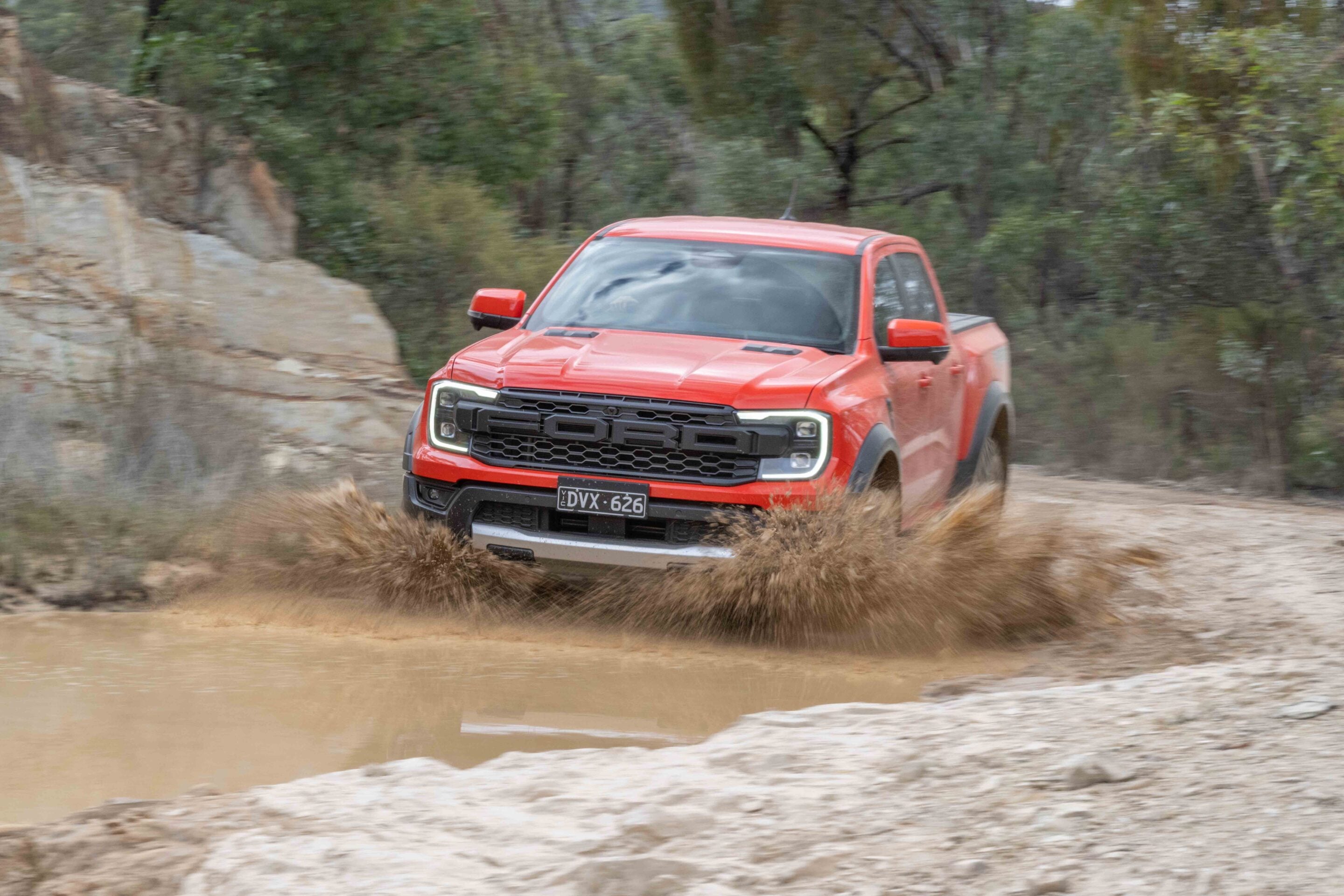
Low-range work is where things get interesting, because this isn’t what the Raptor is built for – and yet it still delivers.
Running it back-to-back with the Ranger Super Duty, the differences are clear on paper. The Super Duty brings a more traditional setup – leaf springs, load-focused chassis tuning and General Grabber AT3s – while the Raptor leans into performance with its coil rear and Watts link.
Out on track, though, the Raptor surprised. In mud and ruts mode, with the rear diff automatically engaged and the front locked manually, it just went. The BFG KO2s offered more grip than expected – in fact, more than the Super Duty in the same conditions – with less wheelspin and more control. Yes, you still get that typical IFS moment where a front wheel lifts, but it’s not excessive, and with both diffs locked, it simply pushes through.
Articulation from the rear is excellent too, the coil setup working far better than you’d expect from something tuned for speed. It’s not Rubicon-level – nothing is – but taken on its own, this is one of the most capable off-road utes you can buy. And even against the Super Duty, it feels more resolved, more confident and ultimately more effective.
1
Verdict
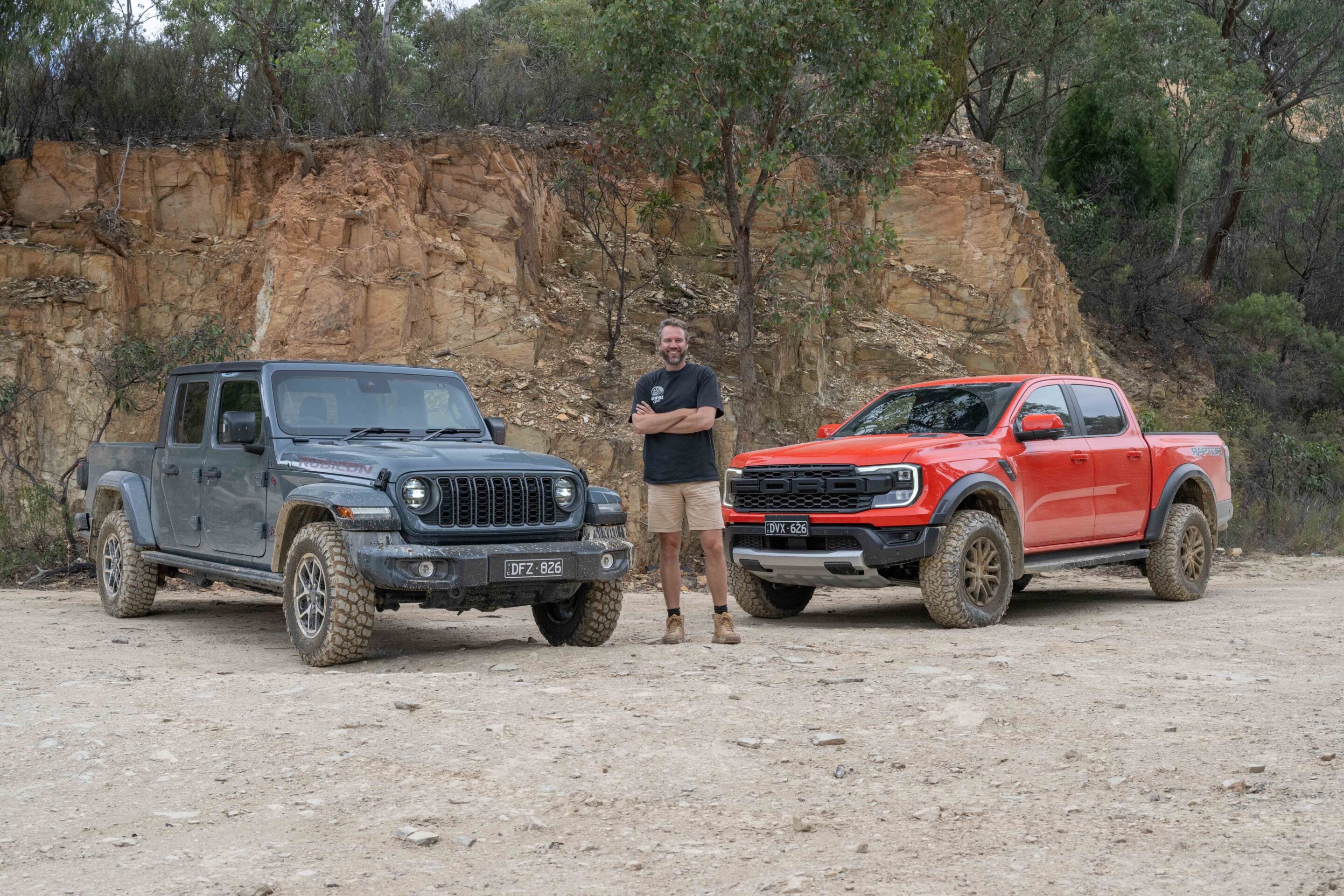
On paper, these two overlap. In reality, they go about the job in completely different ways.
- Comfort is an easy win for the Raptor. The cabin is better, the seats are better and it drives more like a modern SUV than a traditional ute. The Gladiator, by comparison, feels tighter, more upright and a long way less polished.
- High-speed driving is no contest. The Raptor is in a different league – stable, fast and genuinely exciting on a gravel road in a way nothing else in this segment can match.
- Low-speed, technical work swings the other way. The Gladiator Rubicon just has more mechanical grip, more articulation and more confidence in difficult terrain. The Raptor gets close – closer than expected – but the Jeep still takes it.
- Uniqueness is all Jeep. You just don’t see many Gladiators, and nothing else on the market offers that same open-air, configurable experience.
- Cool factor is harder to call. The Jeep is cool in a classic, mechanical sense. The Raptor is cool because it feels alive – and for most people, most of the time, that probably wins.
Both of these come out of the box seriously capable – but neither is perfect, and both benefit from a few key changes. Start with tyres. The factory rubber on both was excellent in testing, but stepping up to a larger-diameter tyre is almost a given. You get a visual lift and, more importantly, extra clearance – something the Gladiator in particular desperately needs.
Then there’s payload. This is the big limiter. The Raptor runs a 3130kg GVM and ~651kg payload, while the Gladiator sits at 2935kg GVM and ~693kg payload. Both are tight, especially once you start adding passengers, gear or towball weight.
1
Here’s where the paths split:
- The Raptor’s FOX Live Valve suspension is brilliant, but it’s also restrictive. GVM upgrades are limited and that makes it hard to build into a proper touring rig without constantly managing weight.
- The Gladiator is the opposite. There are GVM upgrades pushing close to 4000kg, which completely changes its usability. Add a 2-inch lift, bigger tyres and suddenly that breakover issue disappears. The aftermarket is massive – bars, suspension, even superchargers if you want more power.
- Both would benefit from long-range tanks – around 130–140 litres available – and proper front protection.
The difference is simple: the Raptor is incredible as-is, but hard to improve. The Gladiator starts with flaws, but gives you the tools to fix them.
Calling a winner
The Gladiator Rubicon deserves serious credit. Off-road, it’s a weapon. The grip, the articulation, the uniqueness – and the fact you can fix its flaws so easily – makes it hugely appealing. But for me, this comes down to one thing: How a vehicle makes you feel.
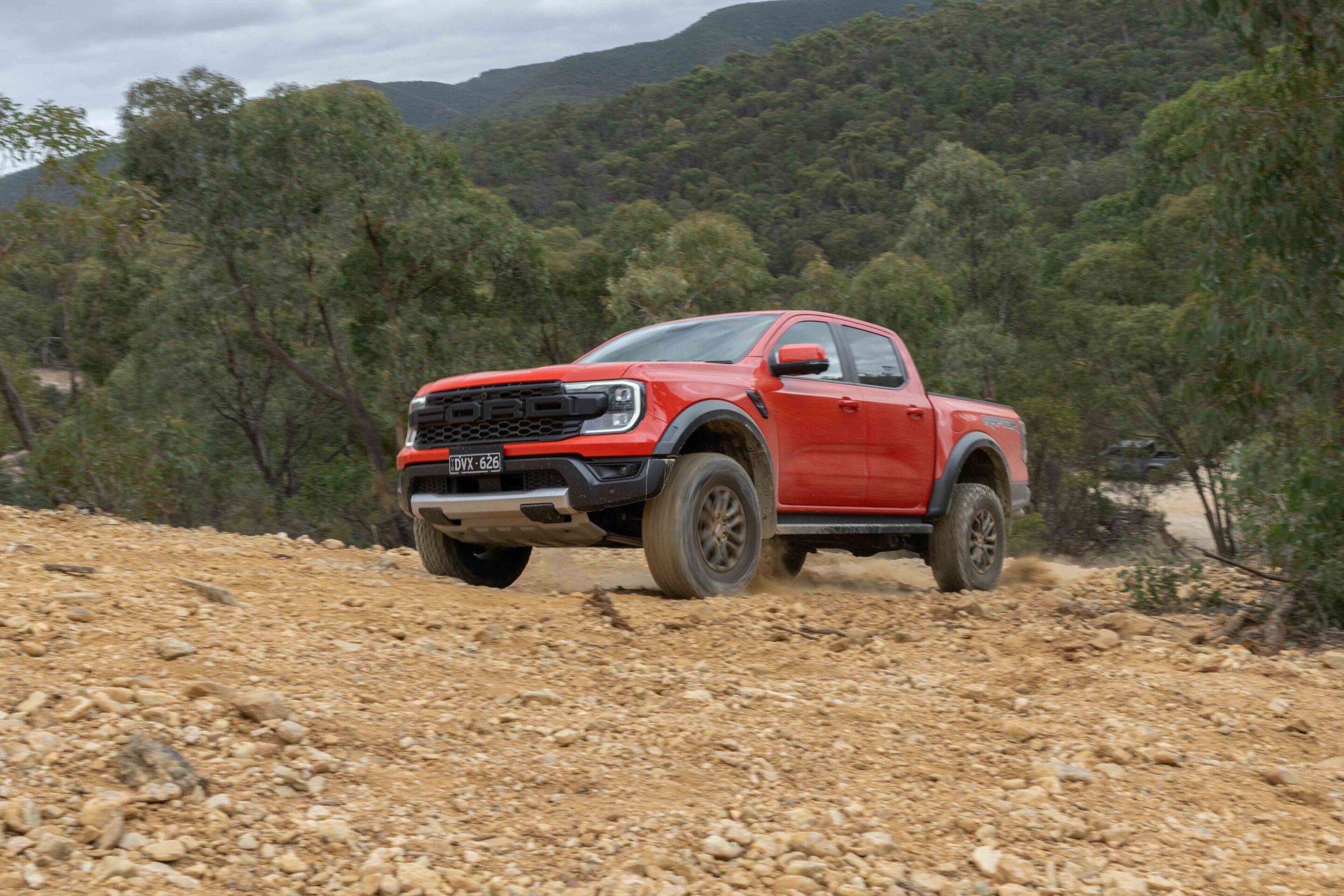
The Ranger Raptor is on my dream three-car garage list. Lightly loaded, on a dirt road, there is nothing more fun. It’s not perfect – the payload is tight, the fuel use is real – but none of that matters when you’re behind the wheel. If you can justify buying one, do it. Because nothing else like it exists.
1
Specs
| Spec | Ford Ranger Raptor | Jeep Gladiator Rubicon |
|---|---|---|
| Price | $90,440 + ORC | $84,990 + ORC |
| Engine | 3.0L twin-turbo V6 petrol | 3.6L V6 petrol |
| Capacity | 2956cc | 3604cc |
| Max power | 292kW @ 5650rpm | 209kW @ 6400rpm |
| Max torque | 583Nm @ 3500rpm | 347Nm @ 4100rpm |
| Transmission | 10-speed automatic | 8-speed automatic |
| 4×4 System | On-demand 4×4 with 2H/4A/4H/4L and dual-range | Part-time 4×4, dual-range Rock-Trac, front & rear lockers |
| Crawl ratio | 48:1 | 77:1 |
| Construction | 4-door ute with tub on separate chassis | 4-door ute with tub on separate chassis |
| Front suspension | IFS, coil springs, FOX Live Valve dampers | Live axle with coil springs |
| Rear suspension | Live-axle, coil springs, Watts link, FOX Live Valve dampers | Live axle with coil springs |
| Tyres | 285/70R17 BFGoodrich KO2 (A/T) | 255/75R17 BFGoodrich KM3 (M/T) |
| Kerb Weight | 2479kg | 2242kg |
| GVM | 3130kg | 2935kg |
| Payload | 651kg | 693kg |
| Towing | 2500kg | 2495kg |
| GCM | 5370kg | 5656kg |
| Seating | 5 | 5 |
| Fuel Tank | 82L | 83L |
| ADR Fuel Consumption | 11.5L/100km | 12.4L/100km |
| Off-road spec | Ford Ranger Raptor | Jeep Gladiator Rubicon |
|---|---|---|
| Departure angle | 27 | 25.1 |
| Rampover angle | 24 | 18.4 |
| Approach angle | 32 | 40.7 |
| Wading | 850mm | 760mm |
| Ground clearance | 272mm | 249mm |
Follow 4X4 Australia on Google
Get more 4x4 news, reviews and gear stories from 4X4 Australia in your Google feeds.

We recommend
-
 Reviews
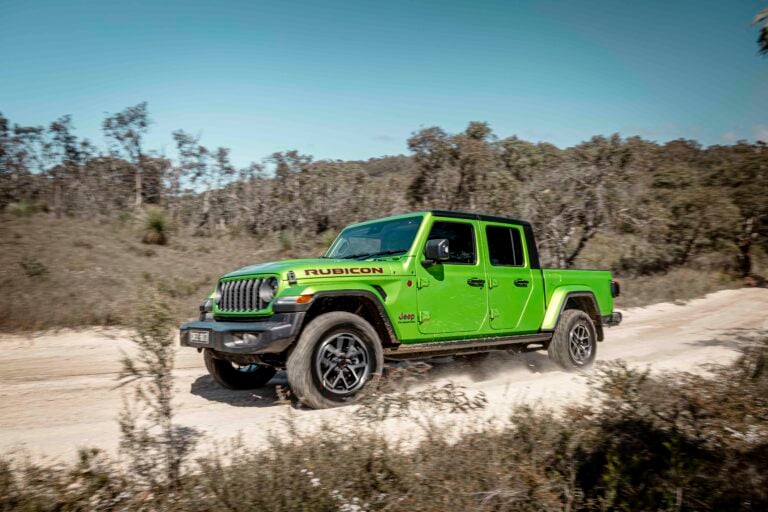
Jeep Gladiator Rubicon 2025 review: Tackling trails in the updated off-road icon
Jeep Australia has cut the price and boosted the standard equipment in the Gladiator Rubicon, so we grabbed one for a week to see if it still lives up to its formidable reputation
-
 News
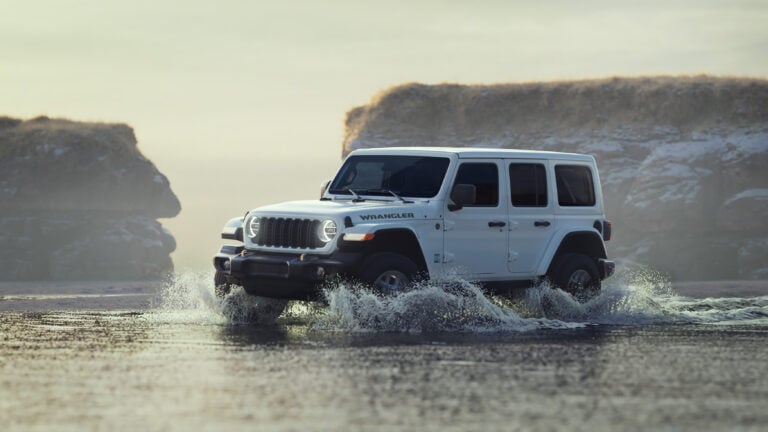
NewsJeep Wrangler and Gladiator Rubicon updated for 2026; Wrangler 85th Anniversary Special Edition announced
Jeep Australia tweaks the 2026 Wrangler and Gladiator Rubicon with small, practical upgrades for off-road use
-
 Reviews
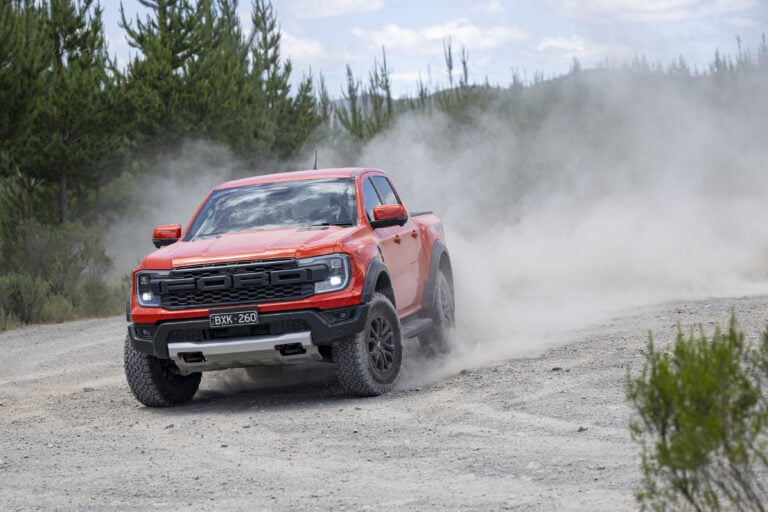
2023 Ford Ranger Raptor: 4x4 review
Has petrol power relegated the new Ranger Raptor to the world of cashed-up tradies? We hit the dirt to find out