Advice


Gallery 1
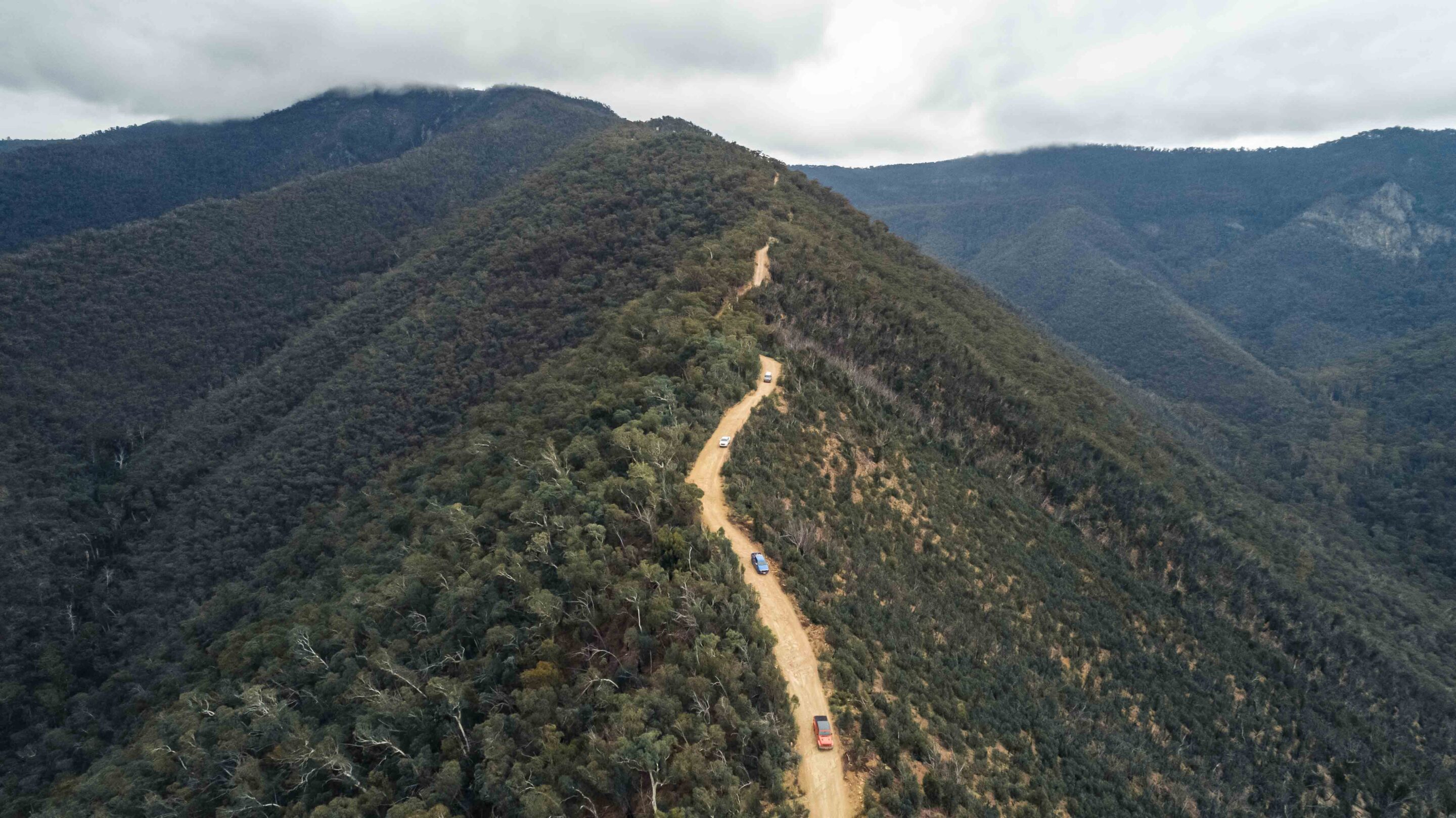
The Victorian High Country is one of Australia’s premier 4×4 locations, blending scenic trails, spectacular mountains, historical significance, challenging tracks and excellent campsites into an adventure that can range from a day trip to as long as you’ve got to spare.
The beauty of High Country four-wheel driving is that it’s accessible in just about any 4×4 vehicle. We’ve taken dozens of showroom-stock 4x4s through the High Country, visiting some of the most iconic must-see locations as part of new-car road tests and 4×4 of the Year extravaganzas. Everything from luxury Range Rovers and Porsches to the latest 4×4 utes – and even single-range vehicles – have been driven over the Alps, with careful driving ensuring they made it through unscathed.
While it’s possible to see the best of the Victorian High Country in a bone-stock 4×4, that’s not to say you wouldn’t be better off doing it in a vehicle properly equipped for the job. You don’t need to spend tens of thousands of dollars gearing up your 4×4 to travel the High Country with confidence, but here are a few things we’d add to any vehicle of our own heading into the VHC.
JUMP AHEAD
Tyres
The tracks of the High Country will throw just about every type of terrain imaginable at the tyres fitted to your 4×4.
From the loose rocks on the climb up Billy Goats that can cut a sidewall in the blink of an eye, to muddy bogs in the lowlands and valleys – and even snow and ice depending on the time of year – your tyres need to be able to cope with any and all conditions.
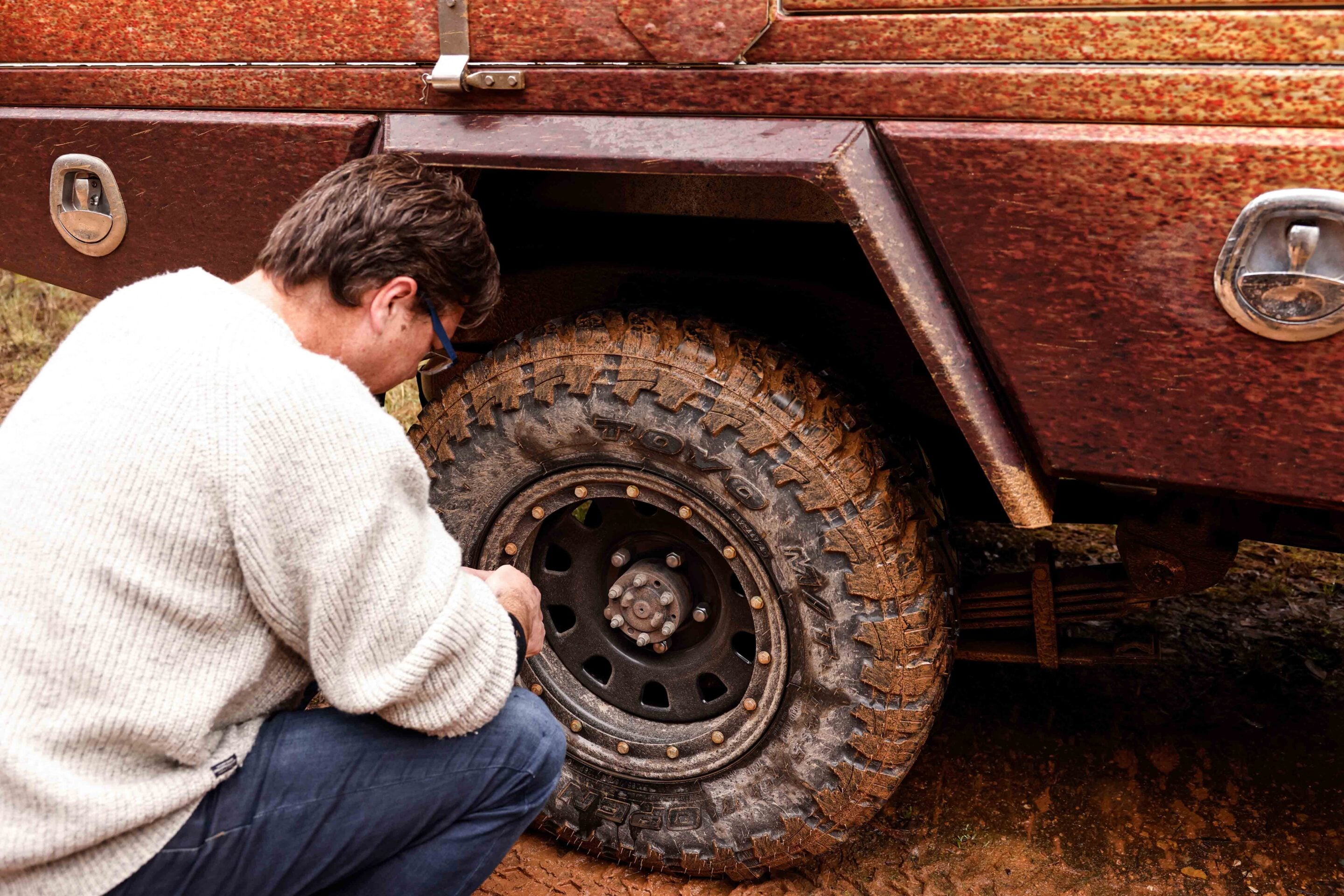
As with any vehicle doing regular off-road work, we always recommend tyres with a light-truck (LT) construction, which makes them tougher in the sidewalls and tread for increased durability against damage and punctures. An all-terrain tread pattern will get you just about anywhere in the High Country, but plenty of punters prefer the deeper, more aggressive tread of a mud-terrain tyre to get them through anything.
You’ll want to drop your tyre pressures as soon as you leave the blacktop, with how much you drop them depending on track conditions, vehicle weight and the tyres themselves. We generally like to drop down to 22-25psi for gravel roads, then down to 15-20psi for steep or boggy low-range sections. For this reason, you should carry a quality tyre pressure gauge and a 12-volt air compressor for reinflating your tyres. And don’t forget to pack them in the vehicle.
1
Clearance
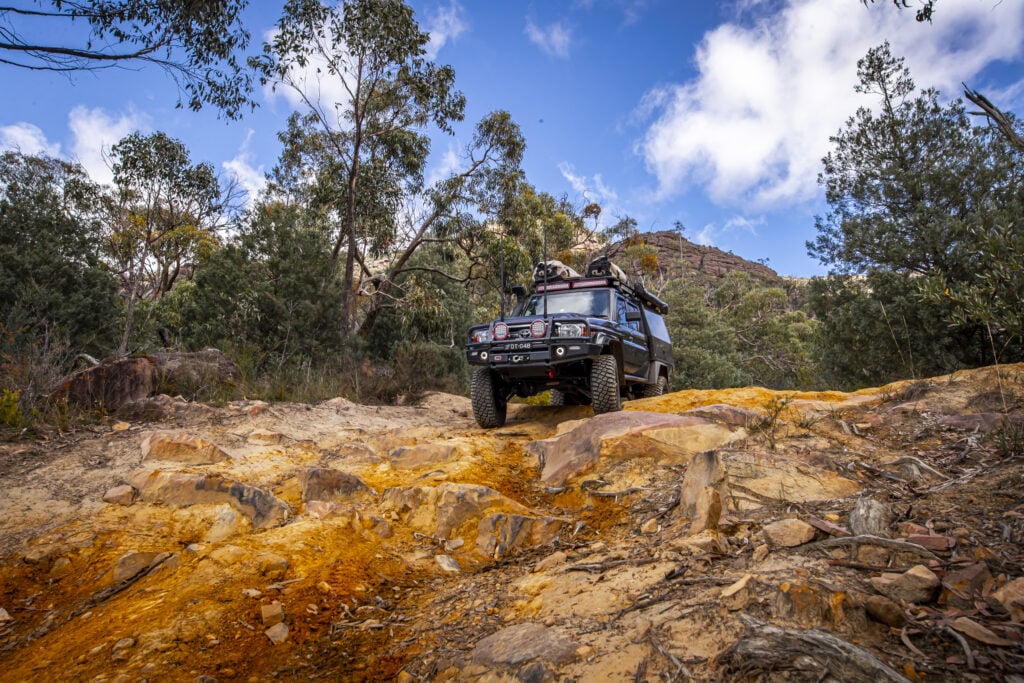
High Country tracks can feature deep ruts, steep erosion mounds, and mud or snow, all conspiring to get the undercarriage of your vehicle hung up, stuck or damaged.
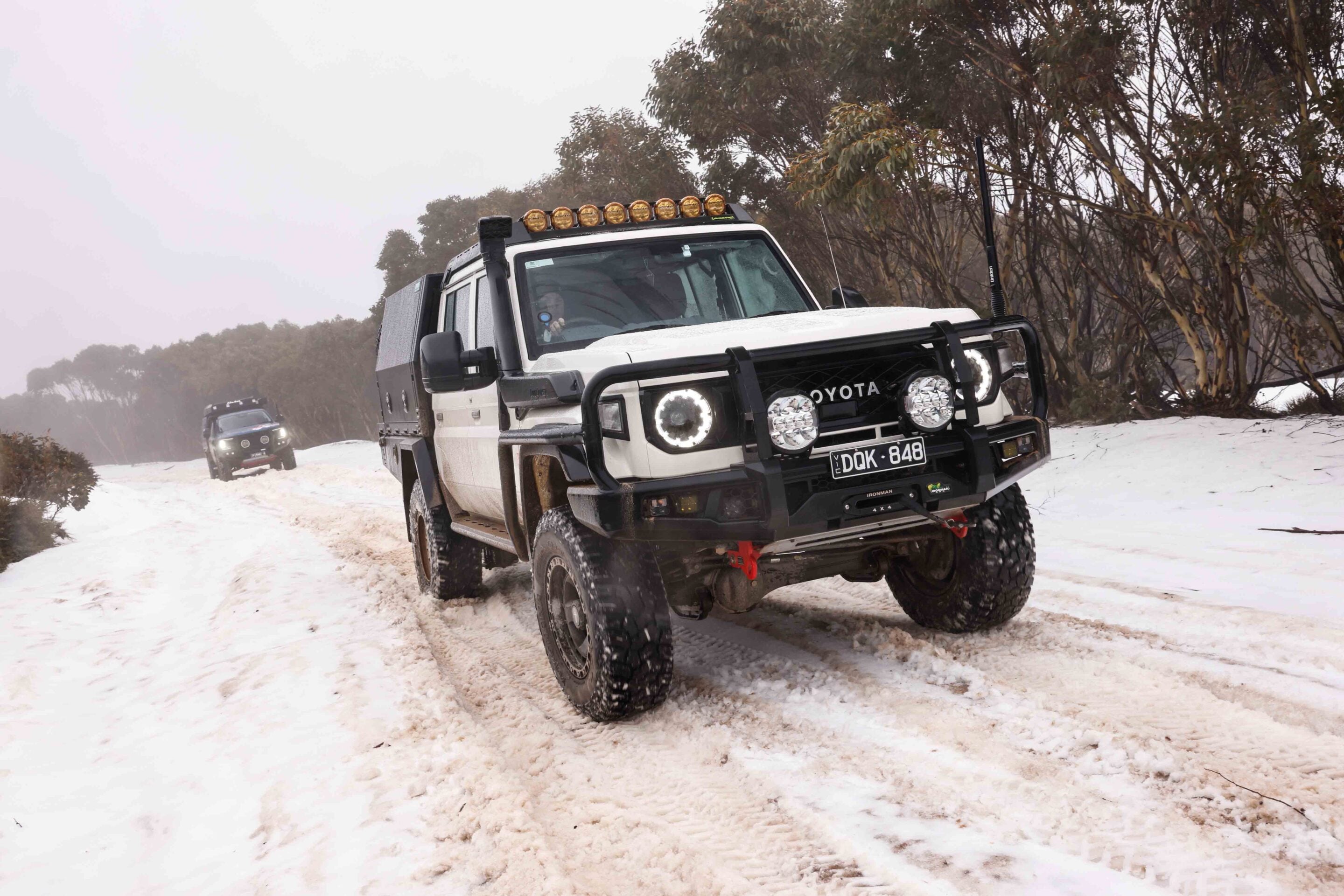
The easiest way to improve clearance is to raise your vehicle higher off the track, which can be achieved with taller-than-standard tyres and/or a replacement suspension with a raised setup. The suspension fitted to most new 4x4s is generally quite good, but it’s often compromised when it comes to off-road travel or carrying heavy loads. As a result, a suspension upgrade offers benefits beyond increased ride height alone.
You don’t need a massive suspension lift to tour the High Country; a sensible 50mm lift will handle all but the gnarliest tracks while keeping your setup legal. In most cases, you’ll also benefit from higher-quality springs and shocks than those fitted from the factory. Another worthwhile upgrade is replacing the plastic or composite guards underneath your vehicle with metal plates, which help protect the undercarriage from scrapes and impacts.
1
Recovery
Spend enough time exploring the mountains and eventually you’ll get stuck somewhere.
Be it snow, mud, or hung up on a rock in a creek, there will inevitably come a time when your 4×4 stops moving forwards or backwards because it’s stuck on – or in – something. A basic vehicle recovery kit should include a static tow rope, a kinetic snatch strap or rope, a selection of rated shackles to connect them to the vehicle, a recovery damper or blanket, and a bridle to spread the load across recovery points.
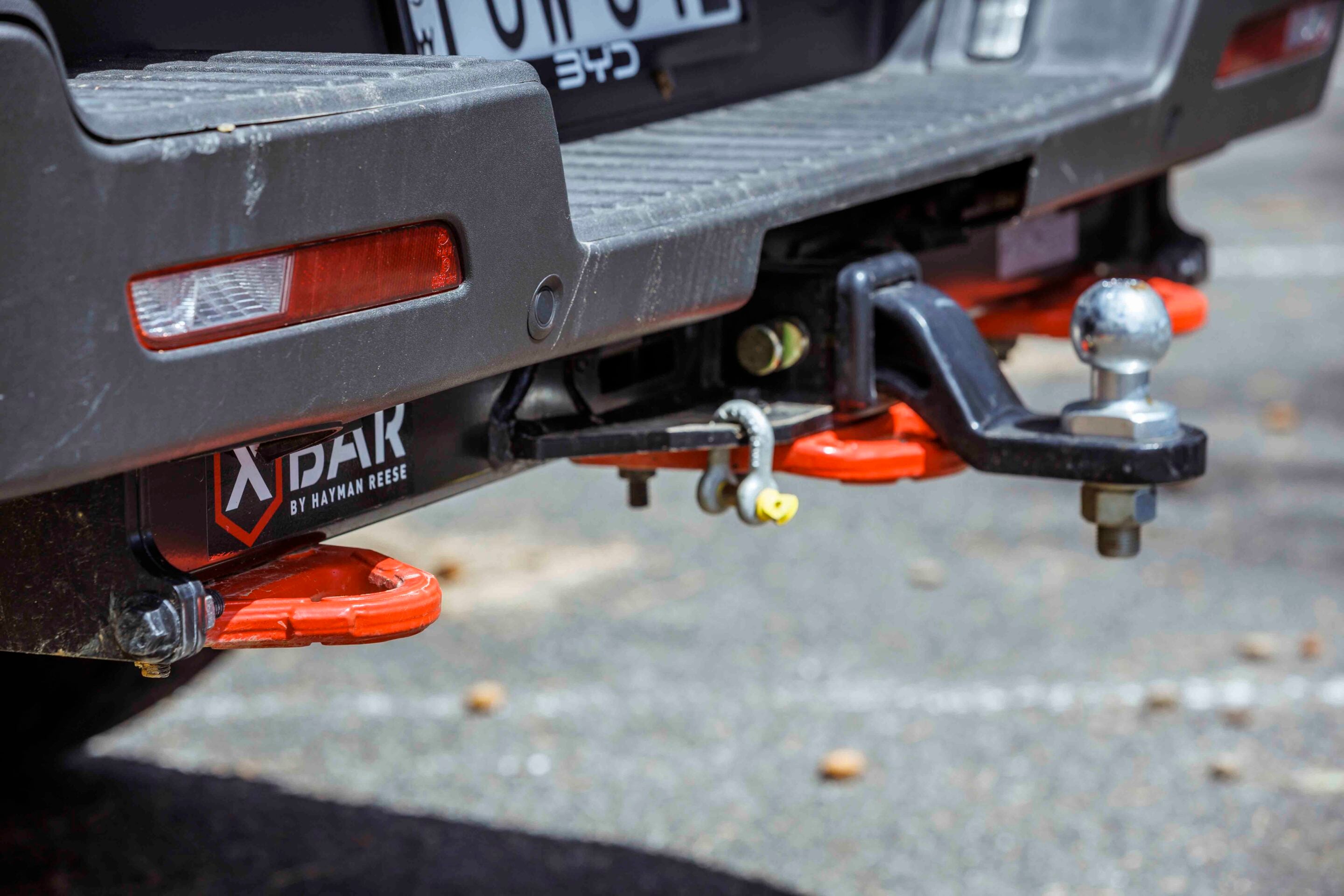
Speaking of recovery points, most new vehicles don’t have any! Certainly not anything you’d want to connect a snatch strap to and load up with another 4×4. The tie-down points fitted under many modern vehicles are not designed for recoveries, and if they fail when used as such, they can be deadly.
Fit a pair of rated recovery points securely mounted to the front of the chassis. These are vehicle-specific and available from all major 4×4 accessory suppliers. At the rear, a recovery point that slides into the tow hitch will suffice for most situations. A set of Maxtrax and a shovel can be invaluable for self-recovery if another vehicle isn’t available, while a powered winch provides the next level of confidence but is by no means essential equipment.
Before heading for the hills, spend some time learning how to use your recovery gear properly, so you’re not scratching your head while your vehicle fills with water after getting hung up on a rock mid-stream.
1
Water proofing
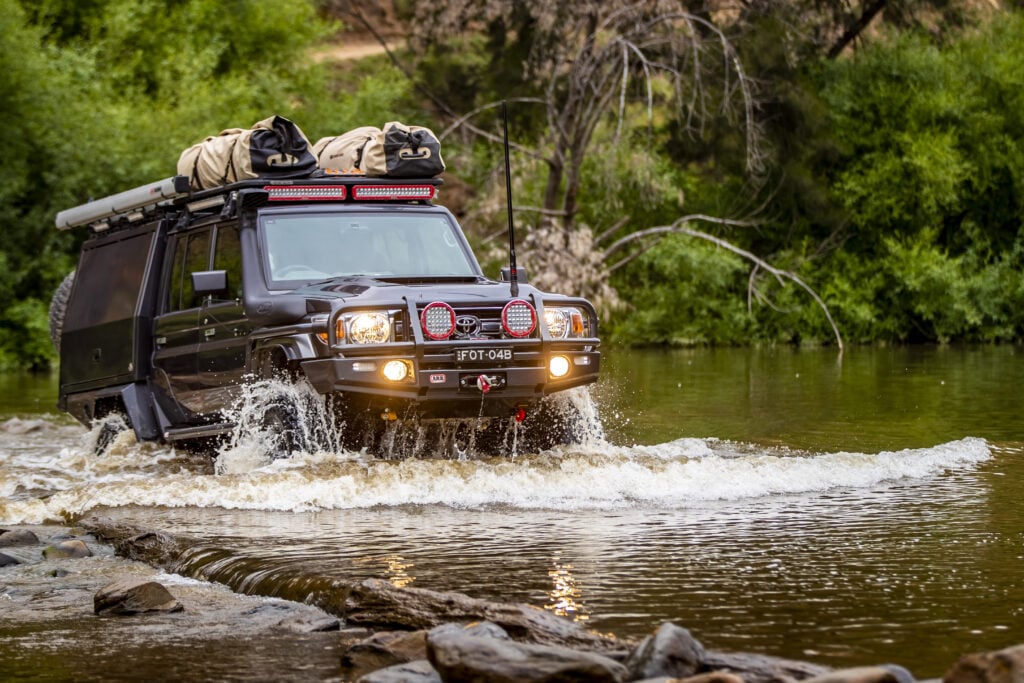
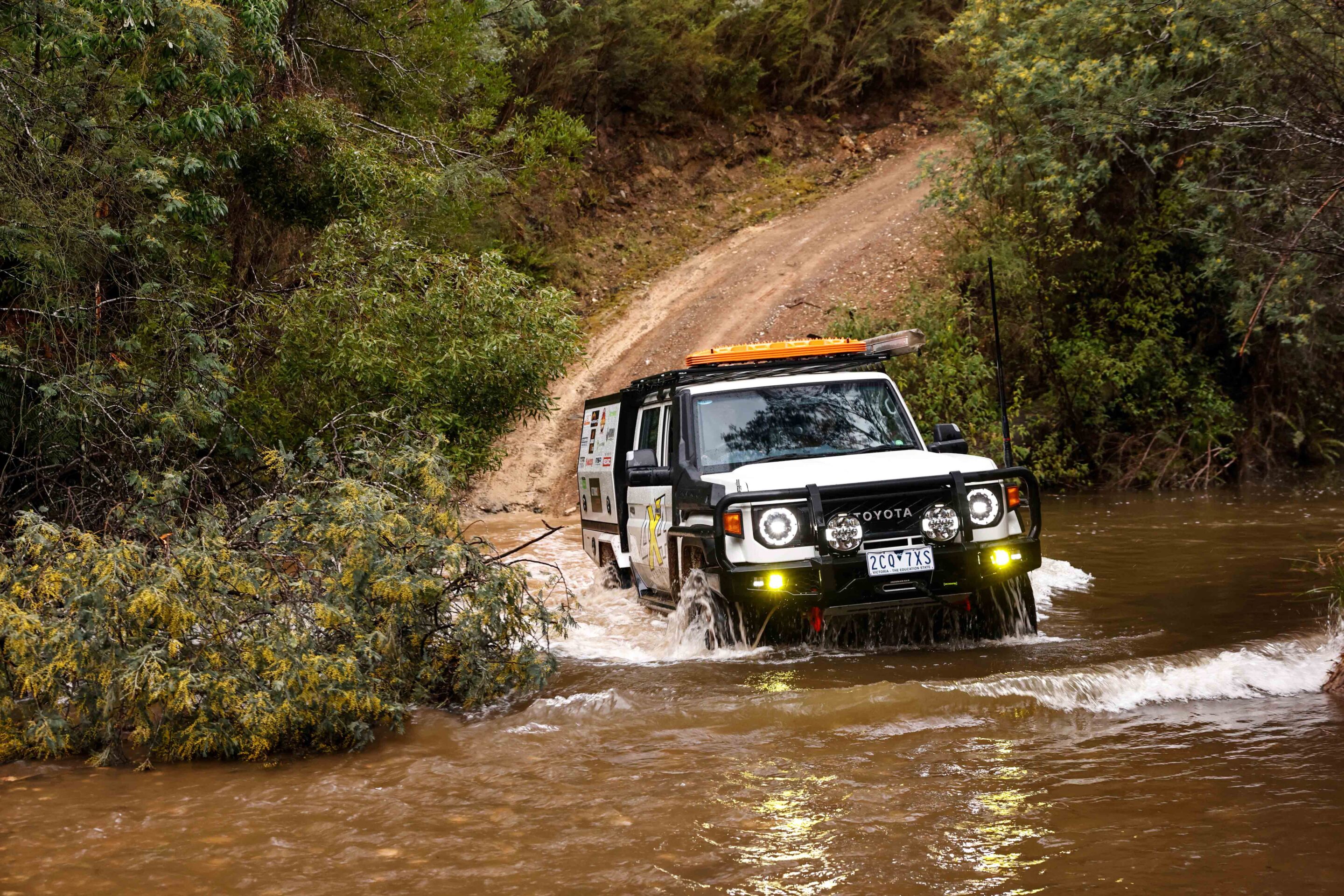
The High Country is criss-crossed with hundreds of creeks, rivers and streams, and sooner or later you’ll find yourself needing to drive across them.
Most are relatively shallow and no deeper than wheel-hub height, but some rivers can be deceptively deep, with hidden holes ready to drown the unsuspecting fourby. If you don’t know the depth of the water, the condition of the base underneath, or the safe depth your vehicle can drive through, it’s best to err on the side of caution and find another track or turn back. Stalling a vehicle mid-stream can spell the end of it and create a potentially life-threatening situation.
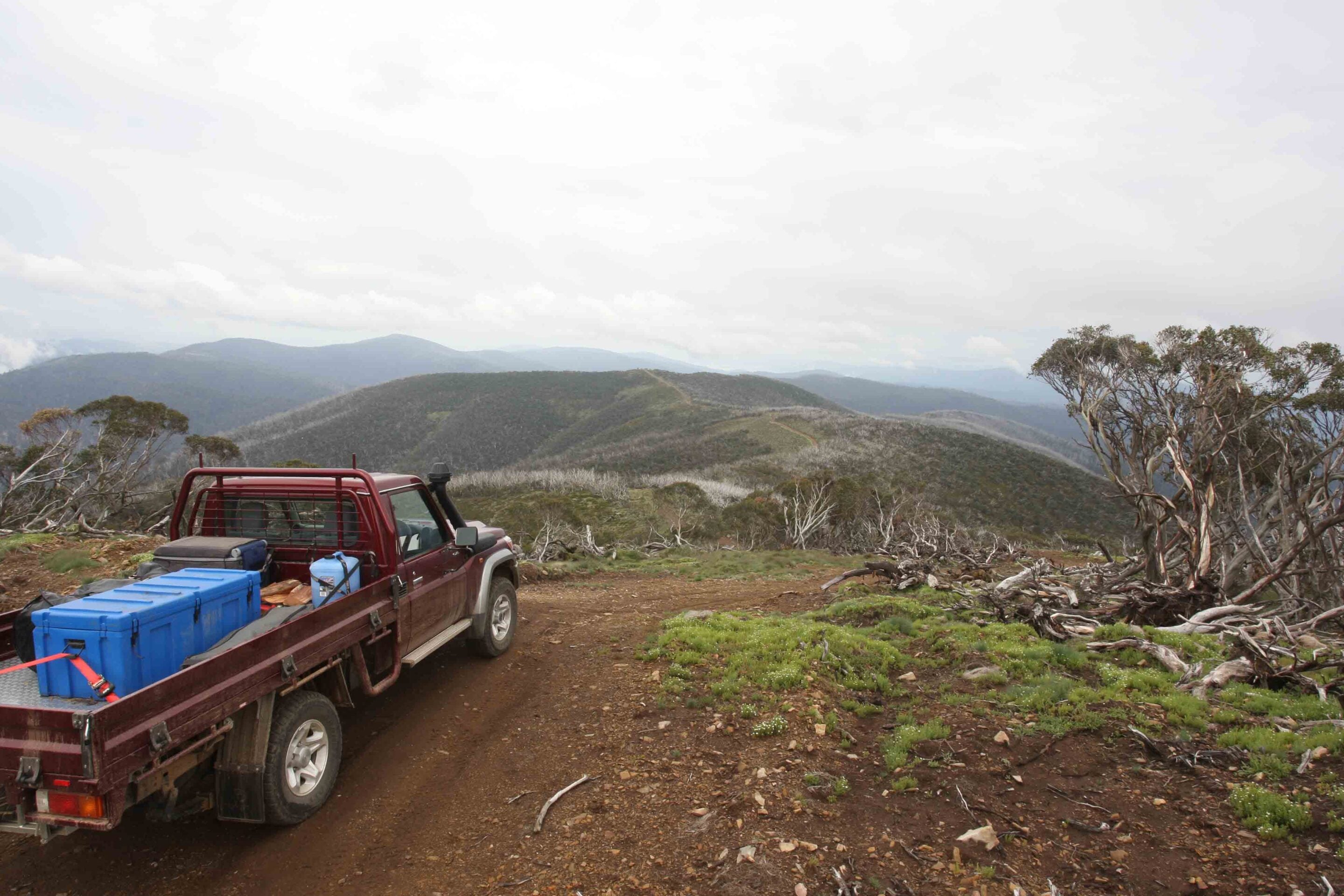
An intake snorkel is another of those non-essential accessories for High Country touring, but it can be reassuring to have one when confronted with a river crossing. A bespoke water bra or tarp fitted across the front of the vehicle can also help when tackling deeper water. One thing we would consider essential is fitting extended breathers to your differentials, transmission and tanks.
After hours of climbing and descending steep hills, driveline components heat up. When they’re suddenly submerged in cold water, that temperature change can draw water in through the factory breathers, allowing it to mix with the oil and reduce its ability to lubricate properly. It may not cause immediate failure, but over time the lack of proper lubrication can lead to serious damage. Extended breathers relocate those openings to a higher position – usually within the engine bay – where water is far less likely to enter.
1
Extra preparations
While the gear above will get you around 80 per cent of High Country tracks, there are other items worth considering before heading out for an adventure in the Alps.
While it’s getting harder to escape mobile phone coverage, you still can’t rely on mobiles for communication in the mountains, so consider a satellite phone or Starlink setup for more reliable comms. A UHF radio is ideal for vehicle-to-vehicle communication, and you’ll often pick up other travellers in the area, especially during busy periods.
If you’re staying in the mountains, you’ll usually be camping. The High Country boasts some of the best campsites in Australia, and you can almost always find one. Your camping gear – and anything else carried inside the vehicle – needs to be properly secured. You don’t want loose items hitting you or your passengers during steep descents, or worse, flying around the cabin in the event of a rollover. A secure cargo barrier is a worthwhile investment in any 4×4 wagon to separate gear from passengers, while tie-downs and/or a load cover can also help.
Lastly, if you have any doubts about best practice, how to use the gear fitted to your vehicle, or driving techniques, consider doing a training course with an accredited 4×4 trainer or four-wheel drive club before you head off. They’ll show you what you need, how to use it, and the correct techniques for tackling different conditions.
An added bonus of joining a 4×4 club is that most run regular trips with experienced members, so you’re not out there on your own. Then the only thing left to do is your research, get the maps out, and explore.
21
Six essentials
- Rugged LT tyres
- Increased ground clearance
- Proper underbody protection
- Recovery kit and rated recovery points
- Raised differential and gearbox breathers
- The knowledge and know-how to use your vehicle and equipment
Follow 4X4 Australia on Google
Get more 4x4 news, reviews and gear stories from 4X4 Australia in your Google feeds.


We recommend
-
 Explore VIC
Five of the best Victorian High Country tracks
These Vic High Country tracks represent four-wheel driving at its most demanding and rewarding
-
 Explore VIC
An epic snow trip with 4X4 Australia's supporters and suppliers
An alpine convoy over Mt Skene, a brewery stop in Mansfield and plenty of snow driving brought our supporters and mates together for a memorable weekend