4x4 Ute of the Year

Gallery 1
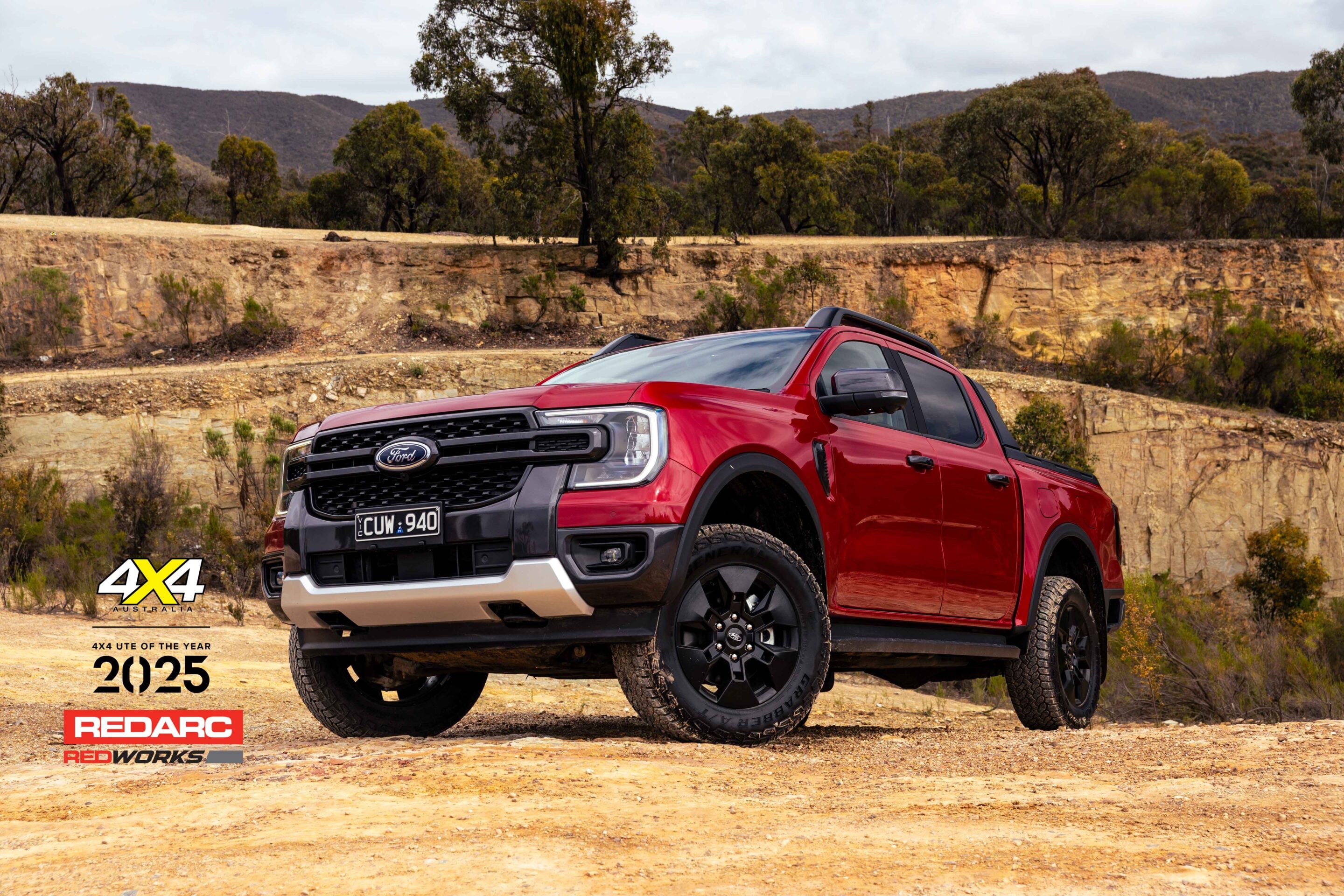
For the first time at our Ute of the Year testing, we included plug-in hybrid (PHEV) utes. Each had its own strengths, but one quickly stood out from the pack: the Ford Ranger Sport PHEV.
What made it shine? Simply put, it drives like a Ranger, and that’s a very good thing in our books. Unlike some EV‑derived pickups, the Ranger PHEV isn’t a bespoke design. It’s built on the existing T6 platform that underpins the current Ranger range. This proven foundation, combined with Australian-developed and tuned suspension, ensures the PHEV feels familiar yet capable, both on- and off-road.
JUMP AHEAD
Key highlights
For buyers seeking a hybrid 4×4 that doesn’t compromise on capability, the Ranger Sport PHEV offers:
- 2.3-litre EcoBoost petrol engine and 75kW electric motor (207kW/697Nm)
- 11.8 kWh battery with plug-in hybrid capability
- 10-speed automatic transmission with dual-range 4×4
- 3500kg towing capacity and strong payload
- Ranger‑proven chassis and Australian-tuned suspension
- Battery can power tools and appliances off-grid
How it drives: On- and off-road performance
Significantly, the Ranger PHEV is the only model in the Ranger line-up powered by a petrol engine. Under the bonnet sits Ford’s turbocharged 2.3‑litre EcoBoost four-cylinder, the same engine used in the VW Amarok, but unique within the Ranger range.
Paired with a 75kW electric motor and an 11.8kWh battery, the combined power output is 207kW at 4600rpm with 697Nm from just 2500rpm, exceeding even the diesel V6 in torque. The hybrid system feeds a 10-speed automatic transmission and a dual-range 4×4 transfer case, giving the PHEV the same on‑ and off-road capability as the ICE-only Ranger models.
On tarmac, the Ranger PHEV feels remarkably like a conventional Ranger: Smooth, composed and confident. Torque arrives early and consistently, making highway cruising, overtaking and load-carrying effortless. The petrol engine is quieter and more refined than the diesel V6, while the electric motor fills in any gaps in acceleration, giving the PHEV a linear and responsive feel. Steering and suspension are well-tuned, so long-distance drives remain comfortable, with minimal fatigue behind the wheel.
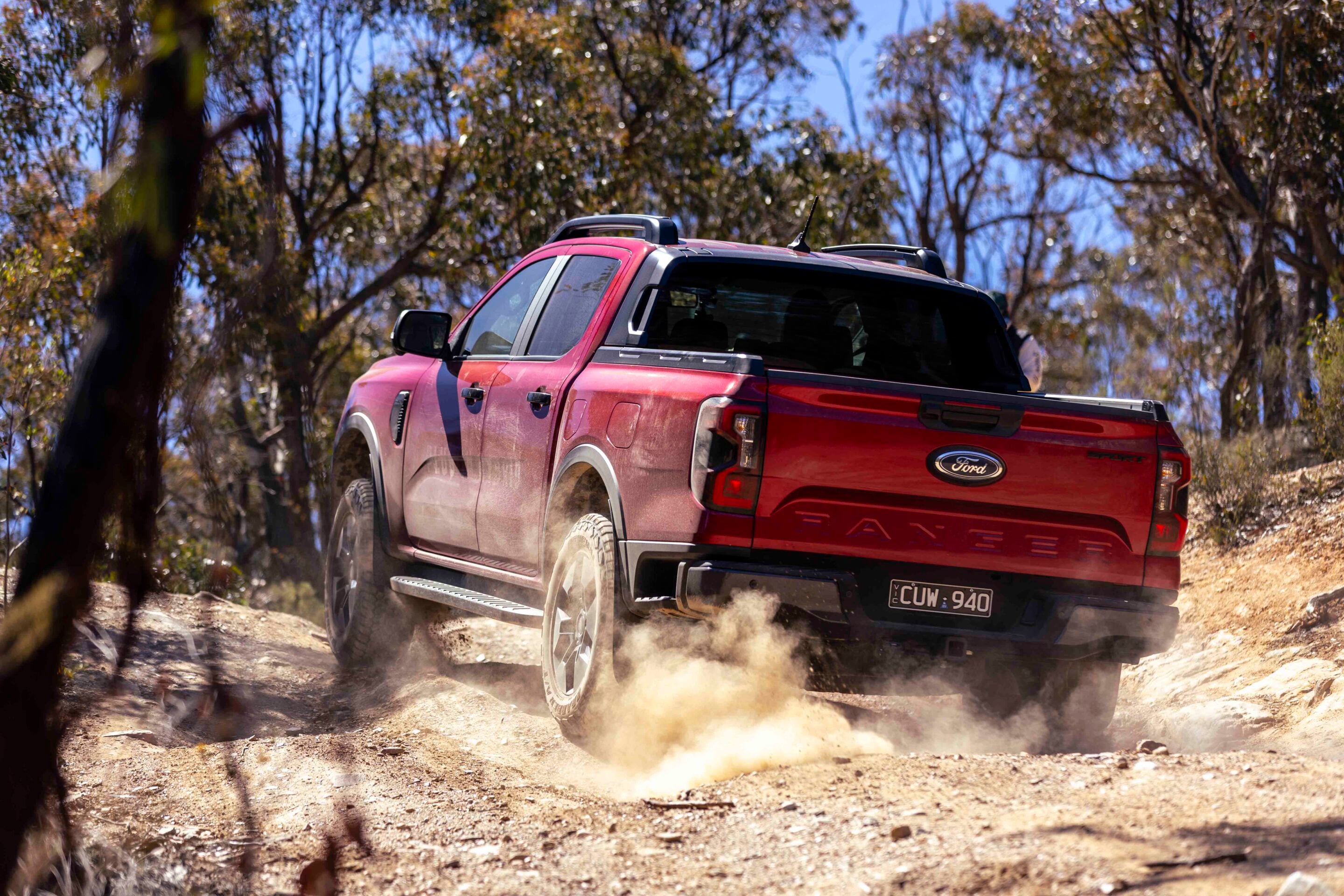
Off-road, the Ranger PHEV benefits from the same Australian-tuned suspension and dual-range 4×4 system as other Rangers. It tackles uneven tracks, mud and steep climbs with confidence. Traction is excellent, and the hybrid torque delivery helps smooth low-speed crawling.
The additional battery weight at the rear adds stability on slopes and rough terrain, although ground clearance is slightly lower than a standard Ranger due to the battery placement.
8
Towing performance
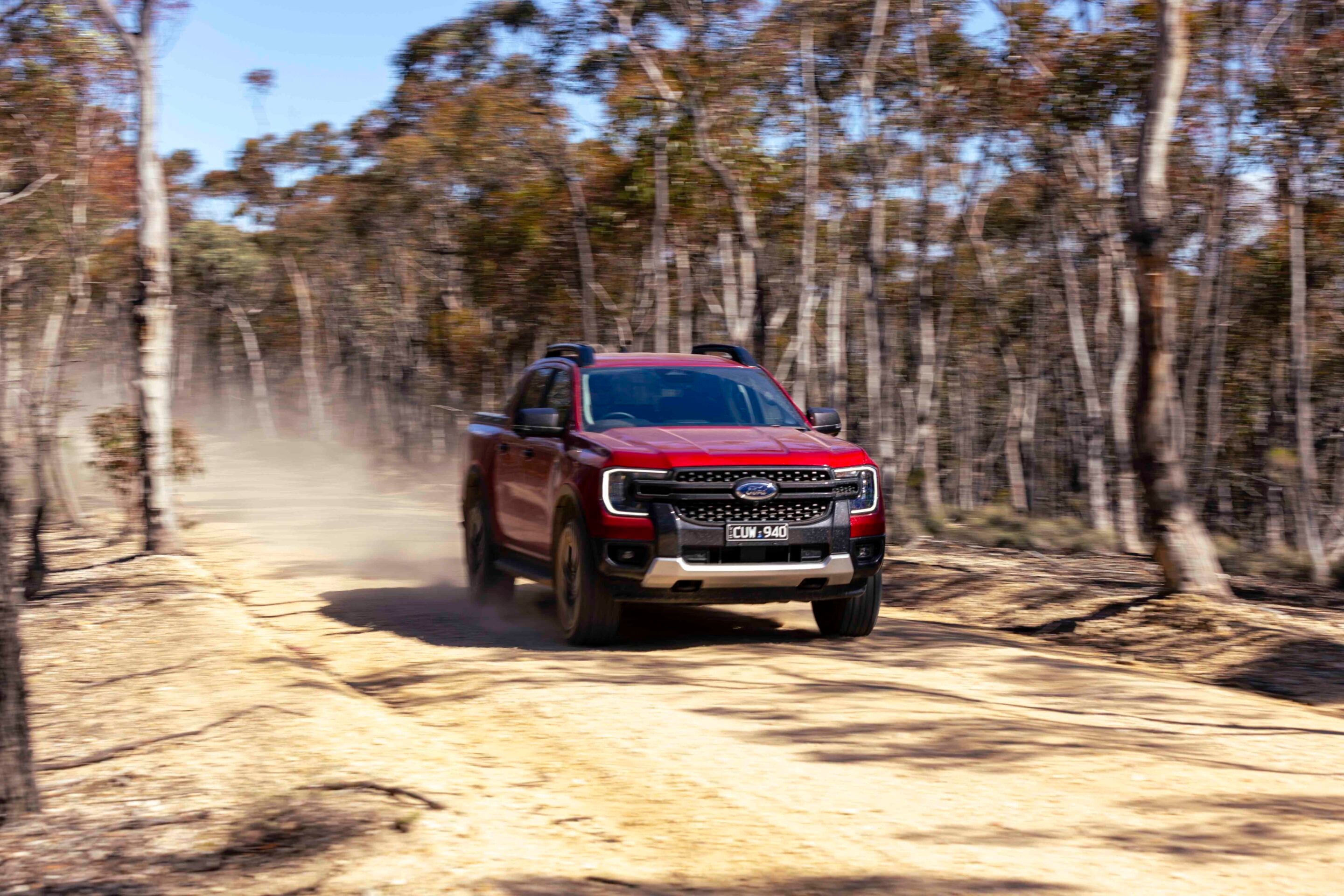
Despite being a hybrid, the Ranger Sport PHEV handles towing like a conventional Ranger.
“It felt planted, it felt safe. The tow-tech built in is still the best around, but there is one catch: When you are underway the hybrid does little to offset fuel use as you are not harvesting energy unless braking,” said towing judge, Tim van Duyl. “The net result is fuel use in the mid‑ to high‑teens when testing; not ideal when the fuel tank is only 70 litres, yet it was by far and away the best of the PHEVs for towing.”
With a 3500kg towing capacity and a strong payload, the Ranger PHEV remains a practical workhorse. The hybrid battery can also power tools and appliances directly from the vehicle, adding extra utility for off-grid or worksite use.
Some compromises include the fixed cargo tub (no cab-chassis or service-body option) and a smaller 70-litre fuel tank due to the battery placement. EV-only range is very limited, so pure electric driving isn’t its strong suit.
1
| Ford Ranger PHEV specs | |
|---|---|
| Price | $75,990 + ORC |
| Engine | Turbo-petrol four with 75kW electric motor |
| Capacity | 2.3L + 11.8kWh battery |
| Max Power | 207kW (combined) |
| Max Torque | 697Nm (combined) |
| Transmission | 10-speed automatic |
| 4×4 System | Selectable full-time 4×4, dual-range |
| Construction | 4-door ute on ladder-frame chassis |
| Front Suspension | Independent double wishbones, coil springs |
| Rear Suspension | Live axle on leaf springs |
| Tyres | 255/65R18 on alloy wheels |
| Kerb Weight | 2566kg |
| GVM | 3500kg |
| GCM | 6580kg |
| Towing Capacity | 3500kg (braked) |
| Payload | 934kg |
| Seating Capacity | 5 |
| Fuel Tank Capacity | 70L |
| ADR Fuel Consumption | 2.9L/100km |
| Approach Angle | 30.1 |
| Rollover Angle | 20.6 |
| Departure Angle | 24.7 |
| Wading Depth | 800mm |
| Ground Clearance | 228mm |
Interior comfort and practicality
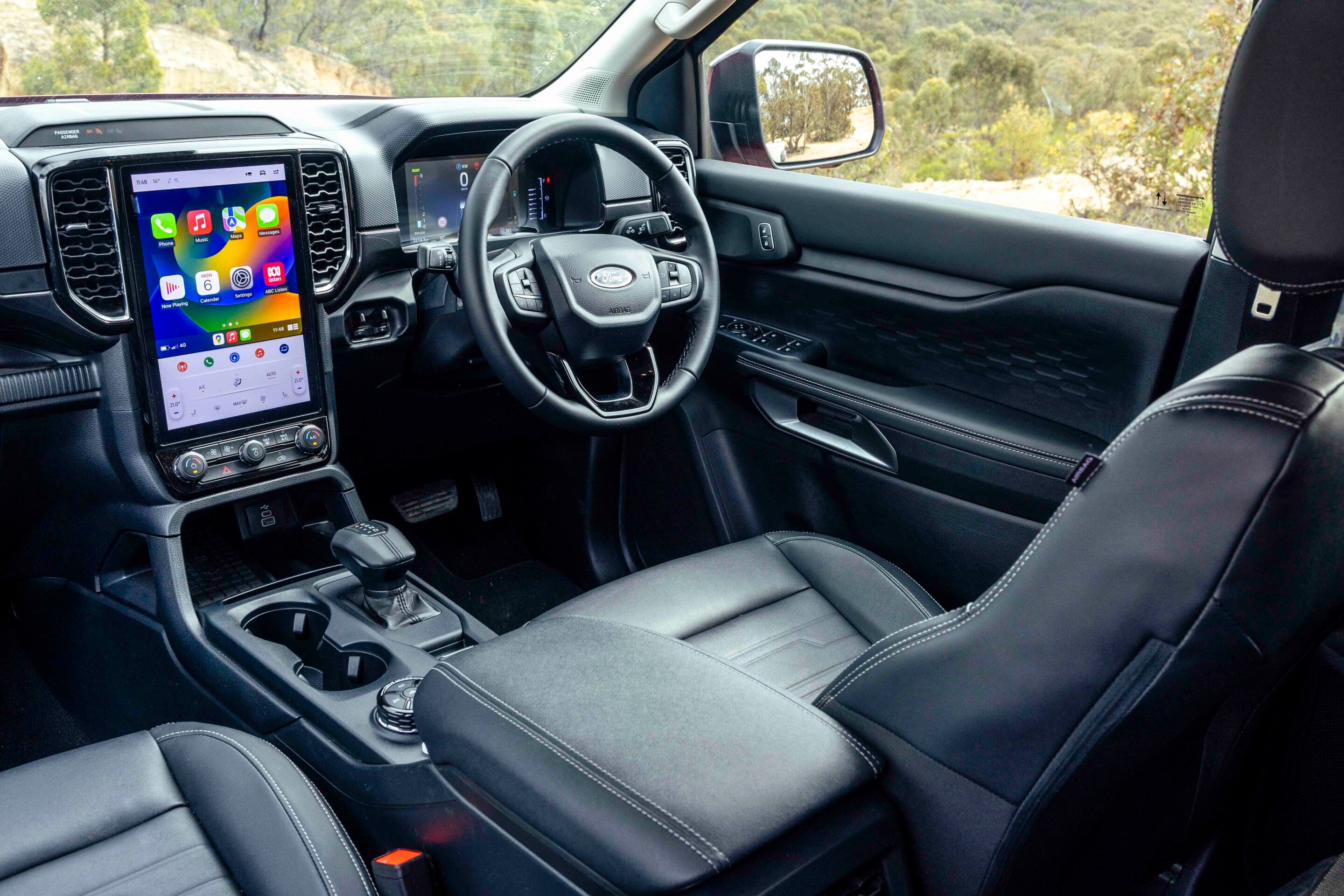
The Ranger PHEV retains the well-known Ranger cabin that is practical and comfortable for long drives.
Seating, controls and ergonomics are intuitive, with dual-zone climate control, modern infotainment supporting Apple CarPlay and Android Auto, and plenty of storage for gear and personal items.
While it isn’t radically different from other Sport models, the PHEV benefits from the usual Ranger refinement and build quality, making it easy to live with on workdays, touring trips or off-road adventures.
1
Why it won Best Hybrid 4×4 Ute
The Ranger Sport PHEV takes out our Best PHEV Ute award because it delivers a true Ranger experience with the advantages of hybrid technology:
- Ranger capability – Proven T6 chassis, dual-range 4×4, and Australian-tuned suspension.
- Hybrid performance – 207kW/697Nm for strong on- and off-road performance.
- Practical utility – 3500kg towing, solid payload, and battery-powered appliance capability.
Yes, it comes with some compromises – limited EV range, fixed cargo tub, and a smaller fuel tank –but judged purely on its driving experience, towing ability and overall practicality, it’s the standout PHEV in a growing market segment.
Pros
- Drives like a conventional Ranger
- Strong hybrid torque for towing and off-road
- Powers tools and appliances directly from battery
Cons
- EV-only range is limited
- Fixed cargo tub limits cab-chassis or service-body options
- Smaller 70-litre fuel tank
| How it scored | |
|---|---|
| Value for money | 6/10 |
| Breaking new ground | 8/10 |
| Built tough | 9/10 |
| Doing the job | 7/10 |
| Bushability | 6/10 |
| TOTAL | 36/50 |
2025 4×4 Ute of the Year
A stacked field hit this year’s 4X4 Ute of the Year test, with everything from value picks to heavy-duty touring rigs lining up. Here’s every contender that made the cut for 2025.:
Follow 4X4 Australia on Google
Get more 4x4 news, reviews and gear stories from 4X4 Australia in your Google feeds.

We recommend
-
 4x4 Ute of the Year
Ford Ranger V6 Sport wins 2025 4x4 Ute of the Year title
The Ranger Sport V6 takes top honours in our 2025 Ute of the Year test
-
 4x4 Ute of the Year
KGM Musso Ultimate: 2025’s Best 4x4 Ute Under $60K
You don’t need big money to get a well-equipped, comfy, hard-working 4x4 ute
-
 4x4 Ute of the Year
REDARC powers our 2025 4x4 Ute of the Year with new REDWorks platform
REDARC brings its Aussie-made REDWorks power panels to 4x4 Ute of the Year