News
Gallery 1
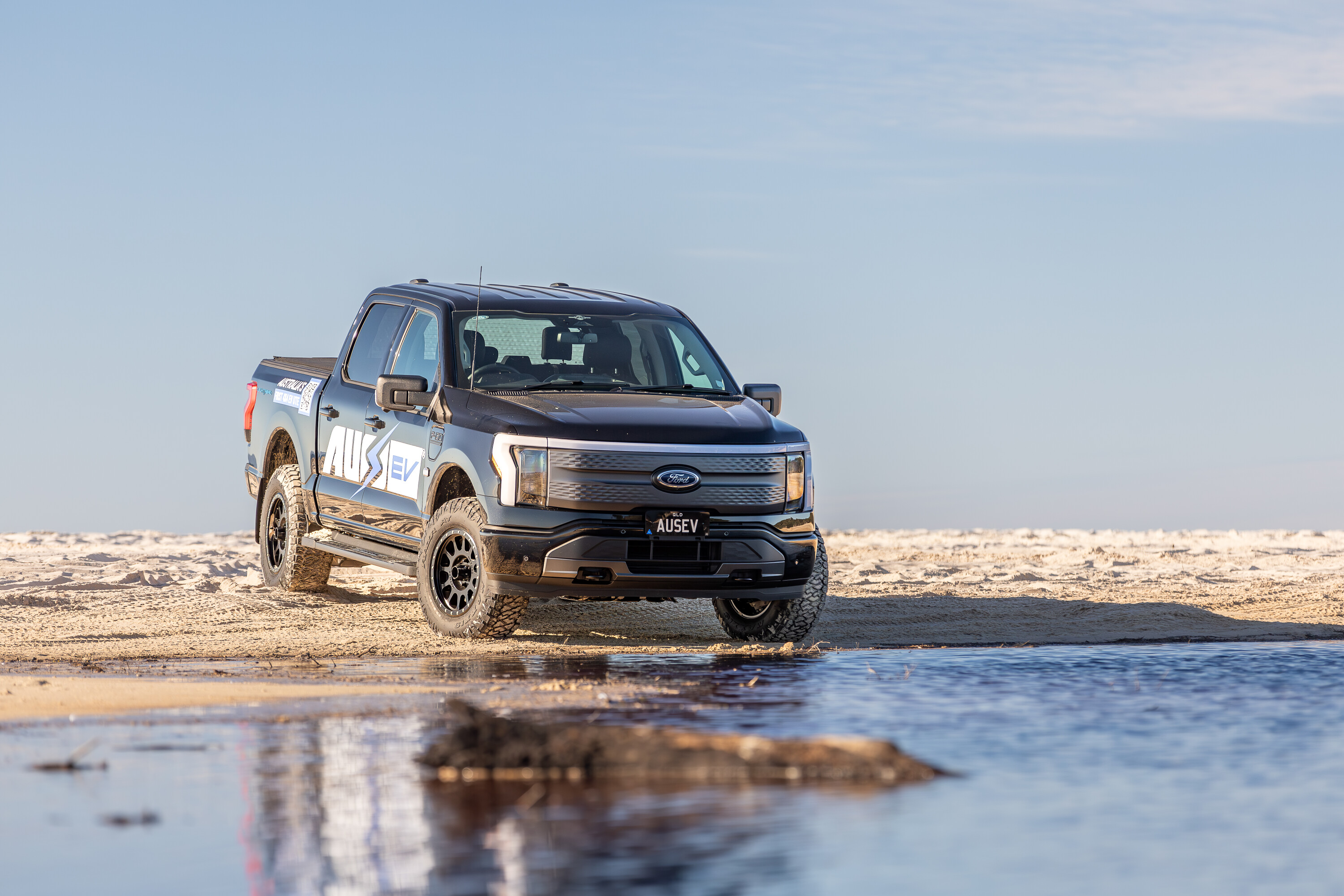
A recall has been issued for AUSEV‑converted Ford F-150 Lightning models in Australia due to a charging issue, in a further blow to the local importer following its recent collapse.
The recall, listed on the Australian Government’s Vehicle Recalls Australia under campaign REC‑006569, affects a total of 146 vehicles built between 2022 and 2025 that have been remanufactured to right‑hand drive. According to the notice, a defect in the battery system could cause the internal charging pins to overheat. If a person makes direct contact with the overheated charge port pins immediately after a charging session, there is a risk of burns or serious injury.
“Vehicles that are fitted with a Combined Charging System (CCS2) charge port may experience increased electrical resistance during high-power Direct Current (DC) fast charging causing the internal charging pins to overheat,” the report reads. “Please avoid charging the vehicle using DC fast chargers. Use AC charging instead”.
The safety notice comes just days after AUSEV’s parent company, BossCap, entered receivership on March 17. The Queensland company, founded in 2012, imported and converted the F‑150 Lightning for Australia. Its collapse is linked to Ford’s global strategy shift and weak demand for the electric pickup.
Earlier this year, AUSEV significantly reduced pricing on remaining stock, with the entry‑level Lightning Pro (equipped with a 98 kWh battery) dropping to $109,990 plus on‑road costs, down from $169,900. The move followed Ford ending F‑150 Lightning production in the United States.
The recall comes amid broader strain within Ford’s Australian operations. The company has warned that without government support to mitigate the costs imposed by the 2025 New Vehicle Emissions Standard, up to 1500 engineering jobs tied to local Ranger and Everest development could be at risk, underscoring the impact of tightening emissions regulations on the business.
Owners of affected vehicles are advised to contact AUSEV to arrange an inspection and necessary repairs, which will be carried out free of charge. Affected owners should be contacted directly, but anyone unsure of their vehicle’s status is encouraged to check their VIN against the official recall notice.
Follow 4X4 Australia on Google
Get more 4x4 news, reviews and gear stories from 4X4 Australia in your Google feeds.

We recommend
-
 News
NewsAusEV slashes price of Ford F‑150 Lightning Pro ahead of 2027 EREV
AusEV slashes the price of the Ford F‑150 Lightning Pro to $109,990, as it clears stock before the next-generation EREV arrives
-
 News
NewsAustralia’s electric utes: Current models and future launches
What's out, what's coming and what's likely, in what is currently a very shallow segment
-
 News
NewsFord F-150 Lightning EREV coming to Australia; RHD launch set for 2027
Reports confirm the next-gen F-150 Lightning EREV will arrive in Australia, converted to RHD by AusEV