Gear

Gallery 1
Tyres are easy to forget about when everything’s working properly. A good set will get you down the highway, across corrugations and along the beach without much fuss, but it’s a different story when something goes wrong.
A slow leak, rising tyre temperature or sudden pressure loss might not seem like much at first. Keep driving, though, and it can turn into a damaged tyre, an expensive recovery or a very long walk for help. That’s where a tyre pressure monitoring system, or TPMS, comes in.
Checking your pressures before you leave is still essential, but it only tells you what’s happening at that point in time. Once you’re on the road, pressures and temperatures can change as the tyres heat up, the load changes or the road gets rough. A TPMS monitors what’s happening while you drive and gives you a warning when something isn’t right.
Why tyre pressure and temperature matter
Tyre pressure has a bigger impact on your 4WD than you might think. It affects how the vehicle handles, rides and puts its power down, as well as how much work the tyres have to do.
Run too much pressure and you can lose some of the tyre’s contact with the road, particularly on loose surfaces. Run too little and the tyre flexes more, creating extra heat and increasing the risk of damage. That matters even more when you’re carrying a big load or towing.
Off-road driving adds another variable. Dropping pressures can give you a bigger footprint and help the tyre conform to uneven ground, but you still need to keep track of where those pressures are sitting. Those tyres need to be aired back up before you head onto the highway, too.
Then there’s temperature. Tyres naturally get hotter as you drive, and some increase in pressure as they warm up is perfectly normal. But if one tyre starts getting significantly hotter than the others, or its pressure starts doing something unexpected, it could be telling you there’s a problem.
Monitoring both pressure and temperature gives you a better idea of what’s happening at each wheel. A tyre running hotter than the others, losing pressure or behaving differently can be an early indication that something needs attention.
The problem with tyre failures
Tyre failures rarely happen somewhere convenient. They’re even less welcome when you’re a few hundred kilometres from the nearest town.
There are plenty of things that can contribute to a tyre failure, including:
- Incorrect tyre pressures
- Excessive heat
- Overloading
- Punctures and slow leaks
- Damage from rocks, potholes and corrugations
- Age or tyre deterioration
- Incorrect load ratings
- Sustained high-speed driving
Towing adds another load to the equation, quite literally. A loaded 4WD and caravan combination puts considerably more work through its tyres, particularly over long highway runs. Caravan and trailer tyres are also easy to overlook because they’re out of sight, despite spending hours at highway speed carrying a serious load and dealing with potholes, corrugations and road debris.
1
How TPMS works, and why it matters when towing
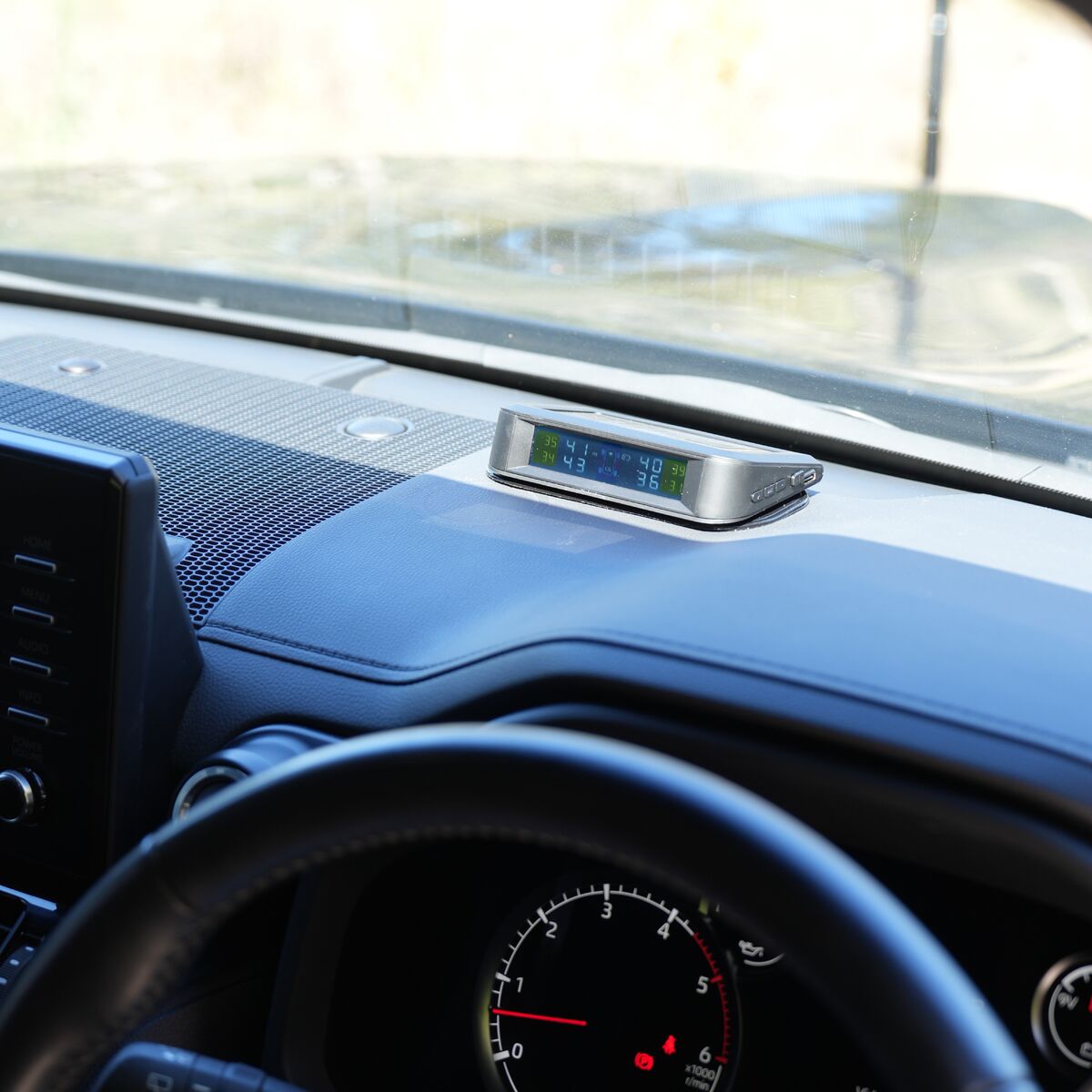
A TPMS is pretty simple. Sensors fitted to the tyres measure pressure and temperature and send that information wirelessly to a display inside the vehicle.
You can see the readings for each tyre without pulling over and getting the pressure gauge out, while audible and visual alerts let you know if a tyre moves outside the pressure or temperature limits you’ve set. The benefit is that you’re getting information while you’re driving, rather than only checking the tyres before you leave. If a tyre starts losing pressure or running hotter than the others, you can pick up the change and investigate it before the problem becomes more serious.
This becomes particularly useful when towing. A loaded caravan or camper trailer changes the demands placed on the whole combination, while long highway runs can generate plenty of heat in the tyres. The trailer tyres are also easy to overlook because they’re out of sight, and you can’t feel one starting to lose pressure from the driver’s seat.
That matters even more the further you get from home. A puncture outside town is annoying, while a tyre failure hundreds of kilometres from the nearest tyre shop can become a much bigger problem, particularly when you’re travelling somewhere remote.
Remote touring can be hard on tyres, too. Heavy loads, long highway runs, corrugations, gravel roads, hot weather and changing terrain can all take their toll. A TPMS won’t prevent every tyre failure, but it can give you an early warning when pressure or temperature starts moving outside the expected range.
For a touring setup, that means you can keep an eye on the whole vehicle combination from the driver’s seat rather than relying on a problem to make itself obvious.
TPMS for off-road and beach driving
Tyre pressures are especially important when you hit the beach. Airing down gives the tyre a larger footprint and helps it float over soft sand, but once you’ve dropped the pressures, it’s useful to know where they’re sitting.
The same applies to rocky tracks and corrugations, where tyres are dealing with impacts, heat and changing loads that simply aren’t part of a normal commute. Keeping an eye on the readings can help you make better decisions about your pressures as conditions change.
When it’s time to leave the beach, you can also use the system to confirm the tyres are back at the appropriate pressure before you hit the bitumen.
Monitoring the whole vehicle combination
Before buying a TPMS, think about how many tyres you actually need to monitor.
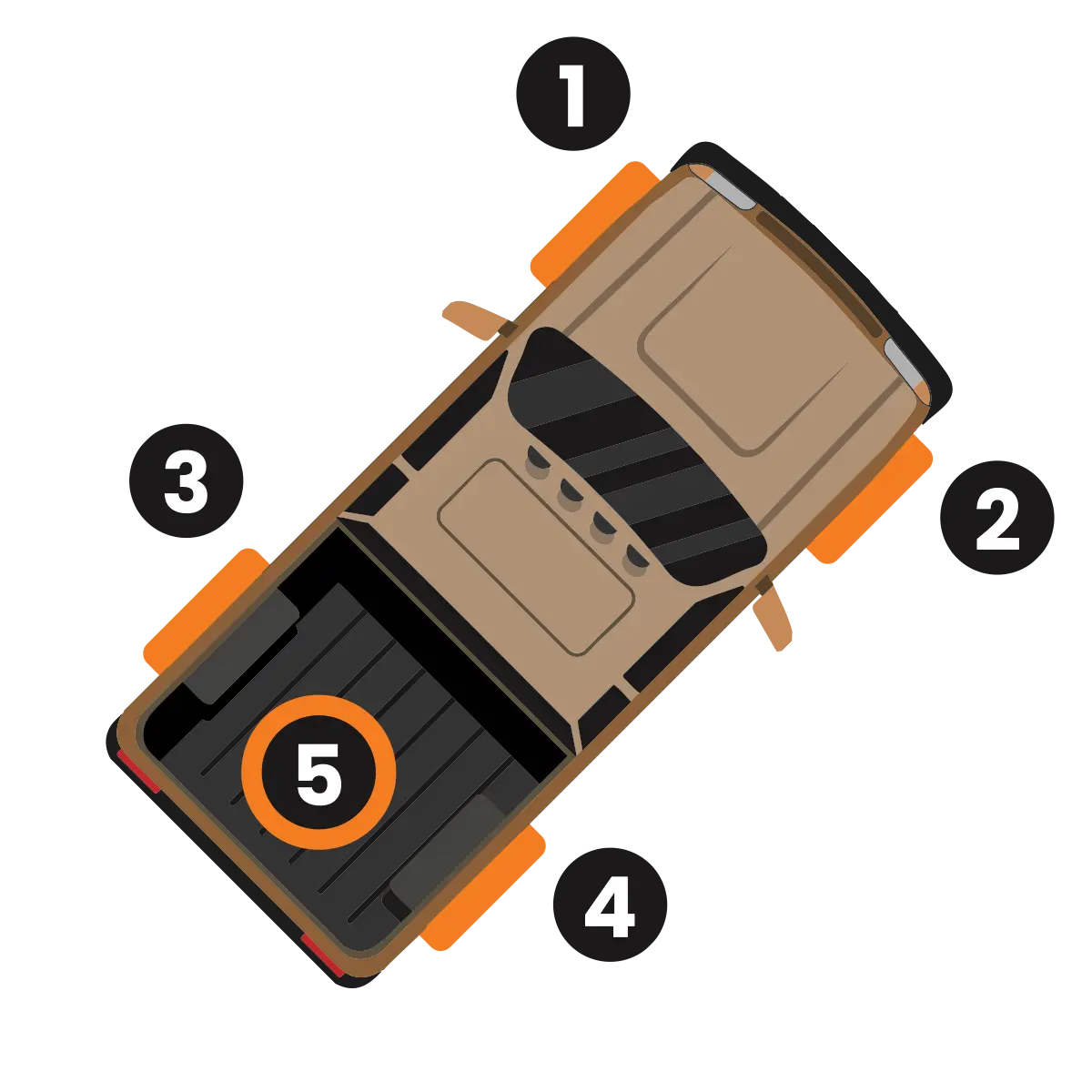
For a standard 4WD, that’s generally the four road wheels plus the spare. Start towing a camper trailer or caravan and things get a bit more complicated. Tuff Terrain (↗) offers 5, 8 and 10-sensor TPMS kits, so you can choose a setup that matches what you’re actually driving.
- The 5 Sensor Kit (↗) covers the four tyres on the 4WD plus the spare. It’s suited to most single-vehicle touring setups.
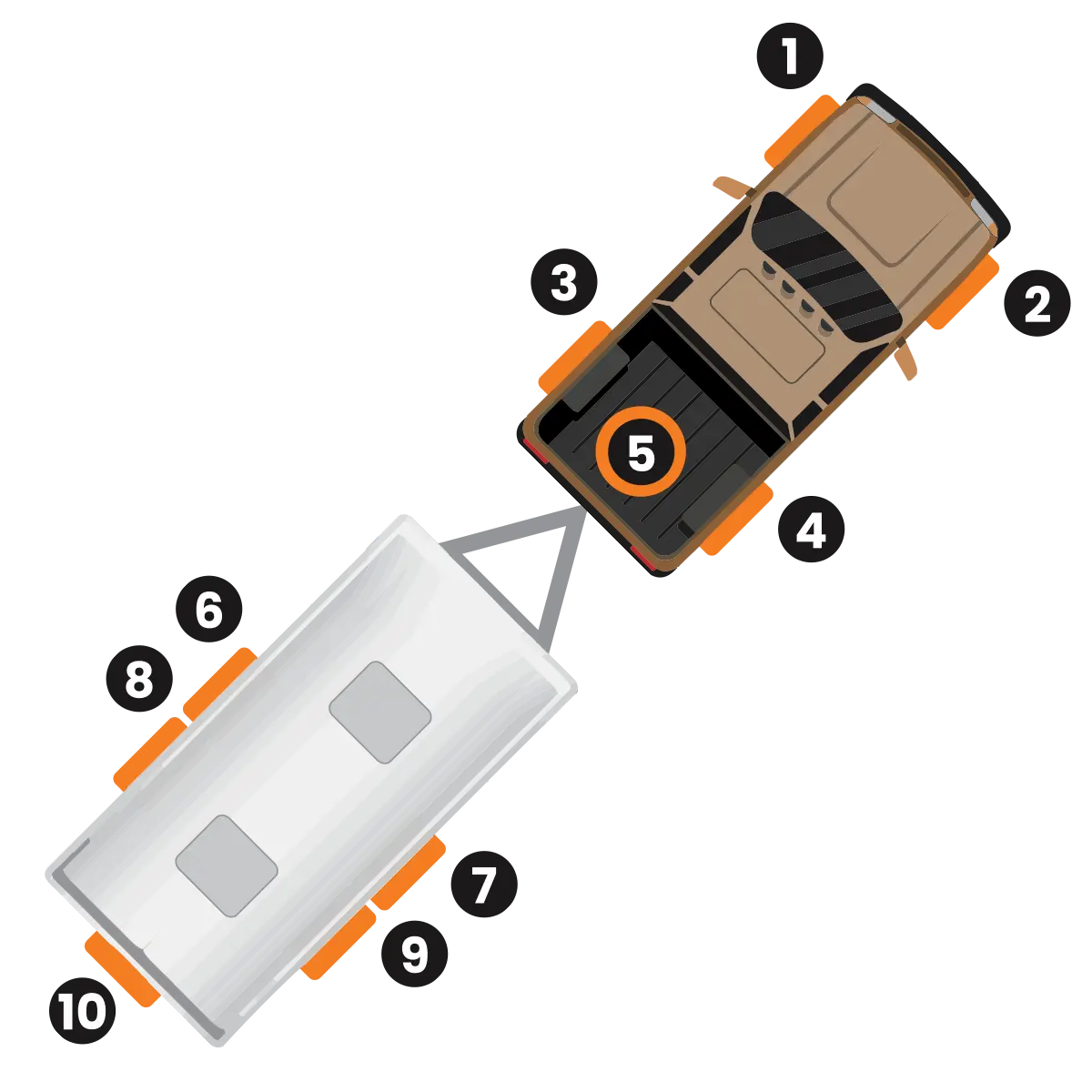
- The 8 Sensor Kit (↗) adds coverage for a camper trailer or smaller caravan, allowing you to monitor the tow vehicle and trailer from the same display.
- The 10 Sensor Kit (↗) is aimed at larger caravans, trailers and touring combinations where you’ve got more tyres and multiple axles to monitor.
The important thing is not to just count the tyres on the 4WD. If a tyre behind you goes flat, it’s still your problem.
1
External vs internal TPMS sensors
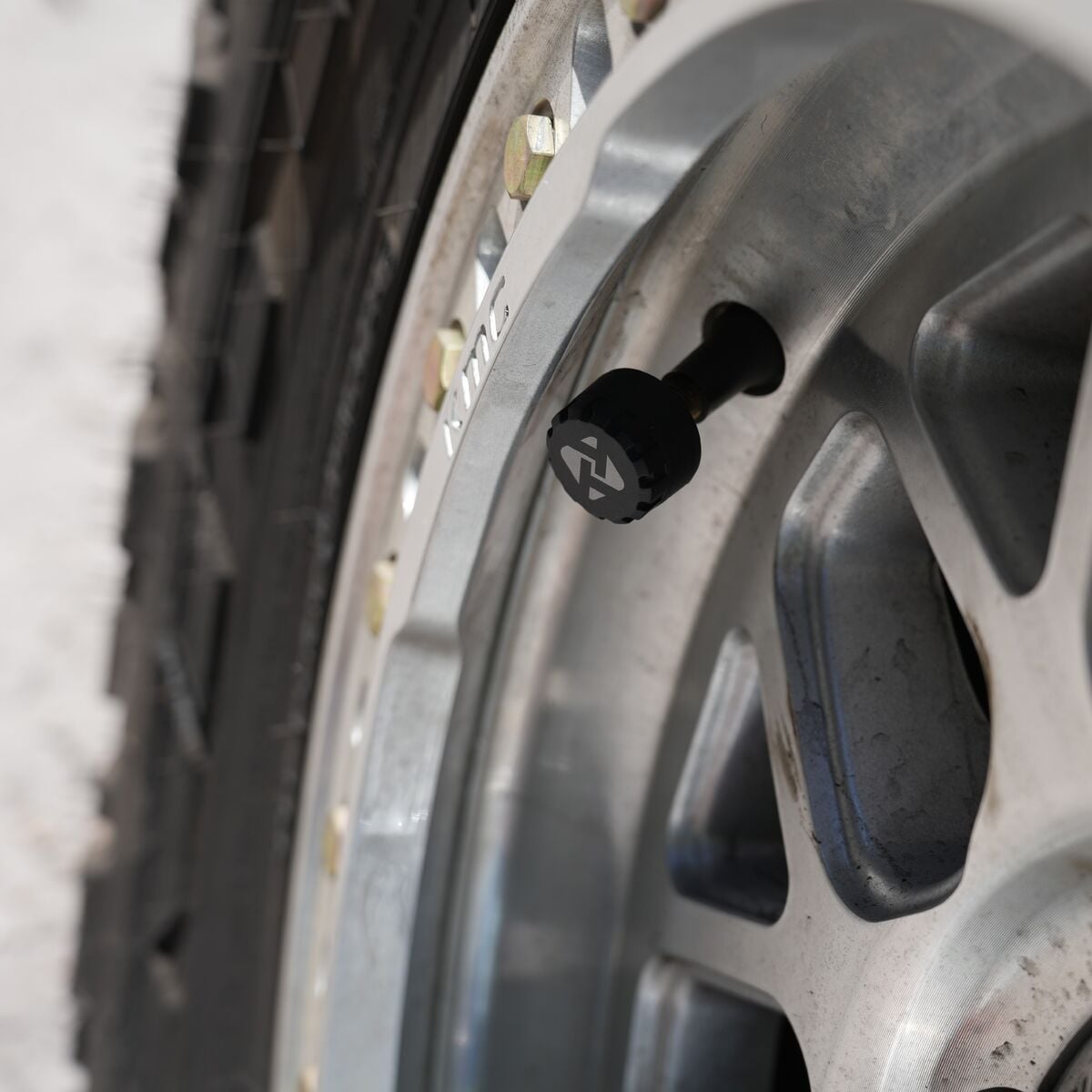
There are two main types of TPMS sensors: internal and external. Internal sensors sit inside the tyre, while external sensors screw onto the valve stem.
For a touring vehicle, external sensors make things pretty straightforward. There’s no need to remove the tyre from the wheel to install them, which makes them a practical option for DIY fitting. They’re also handy if your setup changes down the track and you need to move or add sensors.
Tuff Terrain’s TPMS range (↗) uses external wireless sensors, so you can fit the system without complicated vehicle modifications.
What should you look for in a premium TPMS?
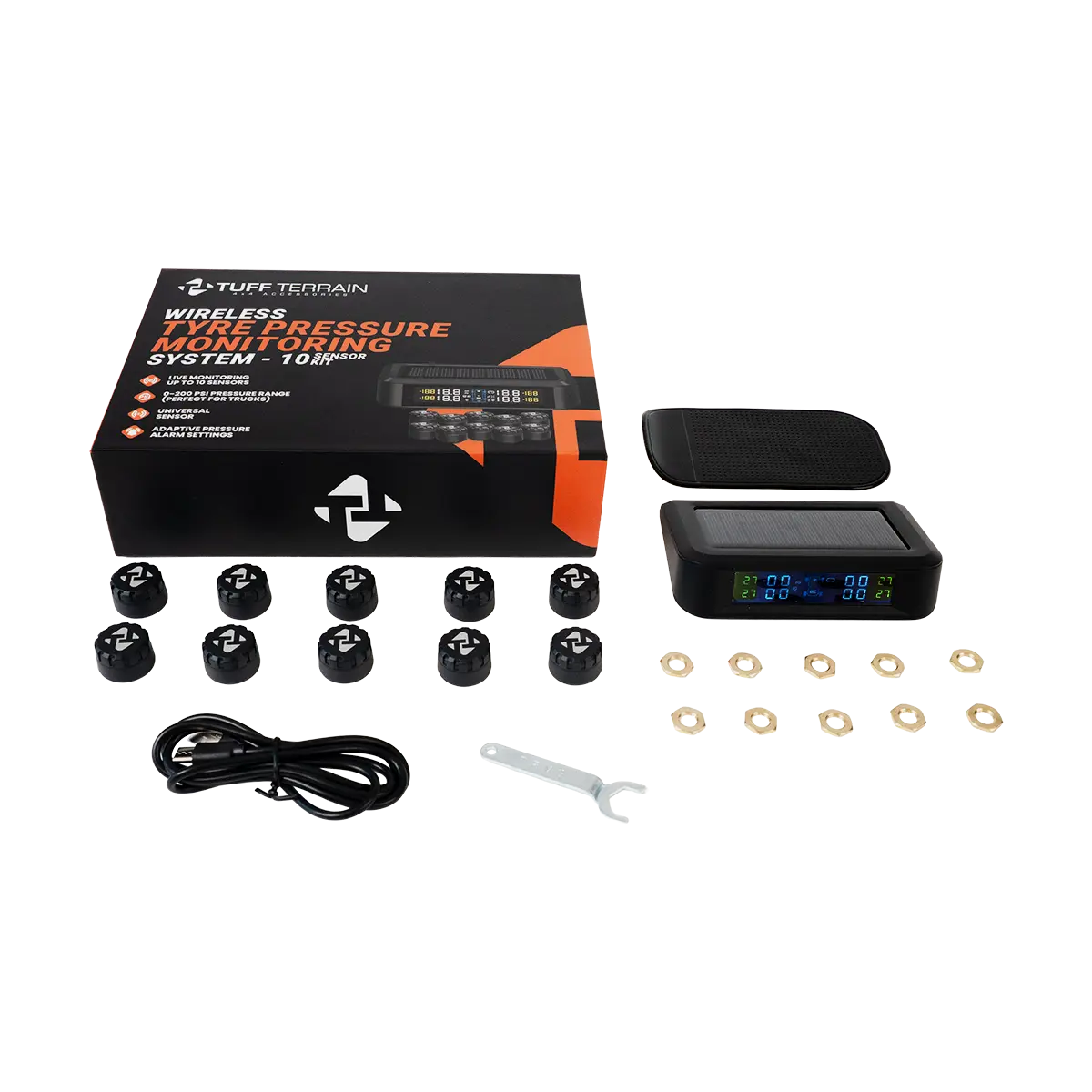
Not all TPMS systems are created equal, so it’s worth looking beyond the fact that a system simply displays tyre pressure. For a touring setup, look for:
- Pressure and temperature monitoring: You get a much better picture of what’s happening when you’re watching both.
- Real-time alerts: Audible and visual warnings mean you don’t have to constantly watch the display.
- Adjustable alarm thresholds: Useful when you’re changing pressures between highway, dirt and beach driving.
- Enough sensors: Make sure you can cover the whole vehicle combination, including the spare where required.
- Good wireless range: Particularly important when there’s a caravan or trailer sitting several metres behind you.
- Easy installation: External wireless sensors keep installation simple.
- A decent display: You want to be able to glance at the information without squinting at a tiny screen.
- Flexible power: A solar-powered display with USB charging backup is handy when you’re spending a few days away from a power outlet.
Tuff Terrain’s TPMS range (↗) covers these features, with systems designed for everything from a single 4WD through to larger touring combinations.
1
Choosing the right TPMS for your setup
The number of tyres you need to monitor should be the first consideration when choosing a TPMS. There’s little point fitting a system that only covers the 4WD when you’re regularly towing a caravan or camper trailer.
As mentioned above, Tuff Terrain offers three configurations to suit different touring setups. The 5 Sensor Kit (↗) covers the four tyres on the 4WD plus the spare, making it suited to most single-vehicle touring setups.
For a 4WD towing a camper trailer or smaller caravan, the 8 Sensor Kit (↗) adds four sensors for the trailer, allowing the entire combination to be monitored from the one display.
The 10 Sensor Kit (↗) is designed for larger caravans, trailers and multi-axle touring combinations where additional sensors are needed to cover every tyre.
The rest comes down to the features that matter for the way you travel. Real-time pressure and temperature monitoring, adjustable alarm thresholds, audible and visual alerts, reliable wireless range and an easy-to-read display all become more important when you’re spending long days on the road or travelling well away from home.
Tuff Terrain’s TPMS range (↗) gives you the option to match the system to your setup rather than trying to make a one-size-fits-all system work. Whether it’s a daily-driven 4WD, a camper trailer combination or a larger caravan, there’s a configuration designed to cover the tyres you’re actually relying on.
1
Frequently Asked Questions
Q: Do I really need a TPMS if I check my tyres before every trip?
A: Checking your tyres before every trip is essential, but it only tells you what’s happening before you leave. Pressure and temperature can change once you’re driving, particularly when towing, travelling long distances or driving in rough conditions. A TPMS keeps monitoring while you’re on the move.
Q: How accurate are TPMS systems?
A: A quality TPMS is designed to provide continuous pressure and temperature readings so you can identify changes while driving. Like any monitoring equipment, it should be used alongside regular manual tyre checks and maintenance.
Q: Can I use one TPMS for both my vehicle and caravan?
A: Yes. Tuff Terrain’s larger TPMS configurations are designed to monitor the tow vehicle and trailer from a single display. An 8-sensor kit suits many 4WD and camper trailer or smaller caravan combinations, while the 10-sensor kit provides additional coverage for larger touring setups.
Q: What happens if I lose pressure while driving?
A: A sudden pressure change can trigger the TPMS’s audible and visual alerts, giving you a warning that something needs attention. You can then slow down, pull over safely and investigate the problem before it becomes a bigger issue.
Q: Can a TPMS detect a puncture before I notice it?
A: A TPMS can alert you to a change in tyre pressure, including pressure loss from a puncture or leak. A slow leak may be picked up before it’s obvious from the driver’s seat, giving you a chance to stop and inspect the tyre.
Q: Is tyre temperature really important?
A: Yes. Tyre temperature gives you another indication of what’s happening inside the tyre. Monitoring temperature alongside pressure can help identify unusual conditions, particularly during heavy towing, long highway runs or hot-weather travel.
Q: Will a TPMS work off-road?
A: Yes. Tuff Terrain’s TPMS range is designed for touring applications and provides wireless pressure and temperature monitoring on and off sealed roads. It can also continue monitoring after you’ve aired down for sand or other off-road conditions.
Q: How many TPMS sensors do I need?
A: It depends on your setup. A 5-sensor kit is suited to most 4WDs and SUVs, including the spare. An 8-sensor kit adds coverage for a camper trailer or smaller caravan, while a 10-sensor kit is better suited to larger caravans, trailers and touring combinations with additional axles.
Q: How easy is TPMS installation?
A: Tuff Terrain’s external wireless sensors are designed to make installation straightforward without requiring the sensors to be installed inside the tyres. The system can be added to a touring vehicle without complicated vehicle modifications.
Follow 4X4 Australia on Google
Get more 4x4 news, reviews and gear stories from 4X4 Australia in your Google feeds.


We recommend
-
 Gear
Gear4WD water tanks explained: Choosing the right setup for touring and off-grid travel
A practical breakdown of 4WD water tank options, sizes and setups to help you carry clean, reliable water for camping and remote touring
-
 Gear
GearAir hose reels explained: The overlooked 4WD upgrade that makes every trip easier
Your onboard compressor is only as useful as the hose connected to it. Here's why an air hose reel is becoming an essential upgrade for modern 4WD touring setups