Gear

Gallery 1
When setting up a four-wheel drive for touring, most owners spend plenty of time choosing the right UHF radio and antenna. But where you mount that antenna is just as important as the equipment itself.
Whether it’s fitted to the bull bar, bonnet or roof rack, its position can have a big impact on how well your radio transmits and receives signals. That’s worth considering if you regularly travel in convoy, tackle remote tracks or head off into areas where mobile reception is patchy or non-existent.
Height, clearance and mounting position
UHF radio signals generally travel in straight lines, so line of sight plays an important part in communication range.
Mounting an antenna higher on the vehicle can help keep the signal clear of surrounding metalwork, but simply putting it on the roof doesn’t guarantee better performance. Roof racks, light bars, vehicle pillars and other accessories can all affect the signal, potentially creating weaker spots around the vehicle.
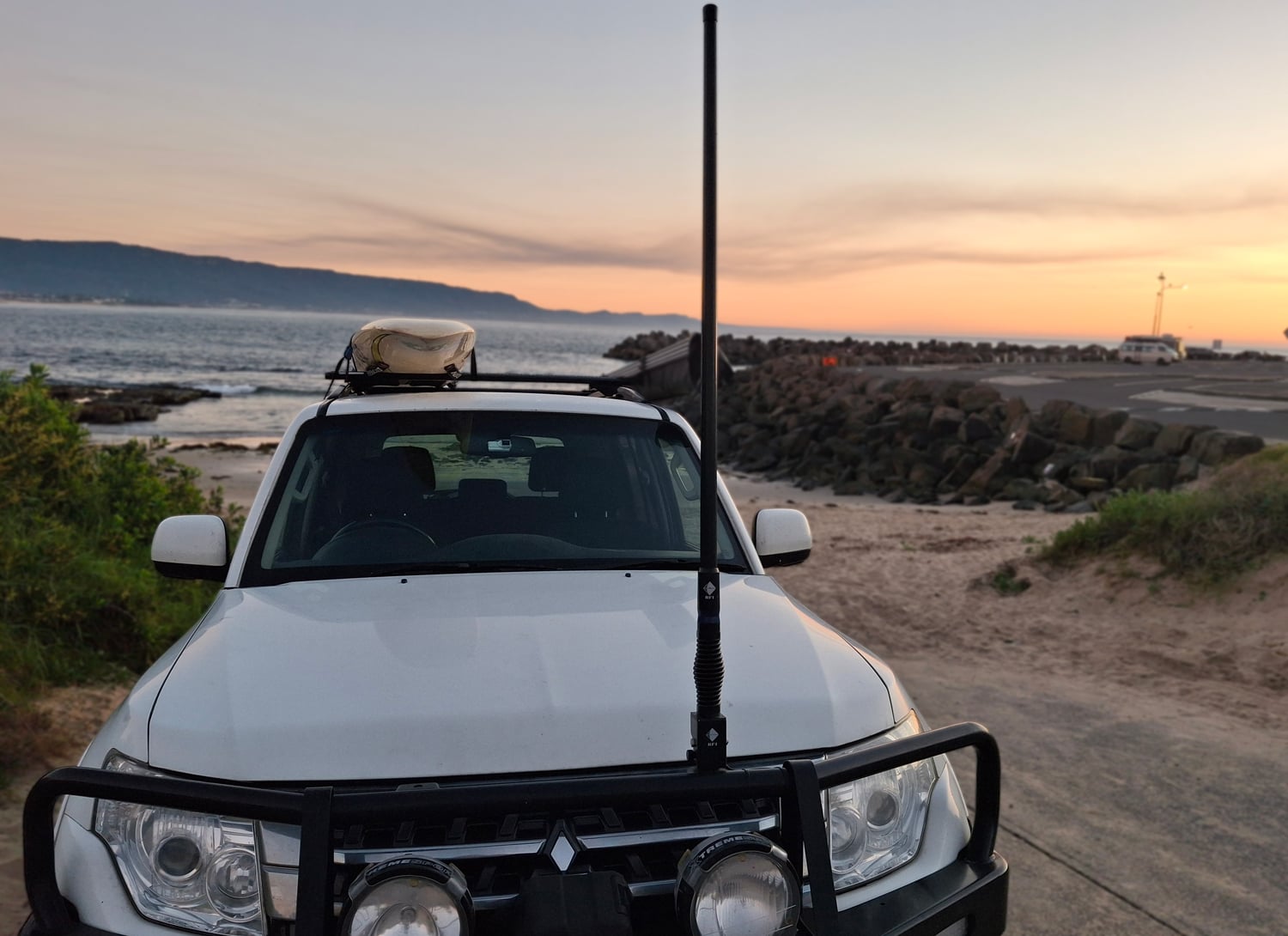
RFI (↗) recommends mounting the antenna as high as practical, with the whip clear of surrounding metalwork. There’s no single mounting position that suits every fourby, though, and the best option often comes down to how your vehicle is set up.
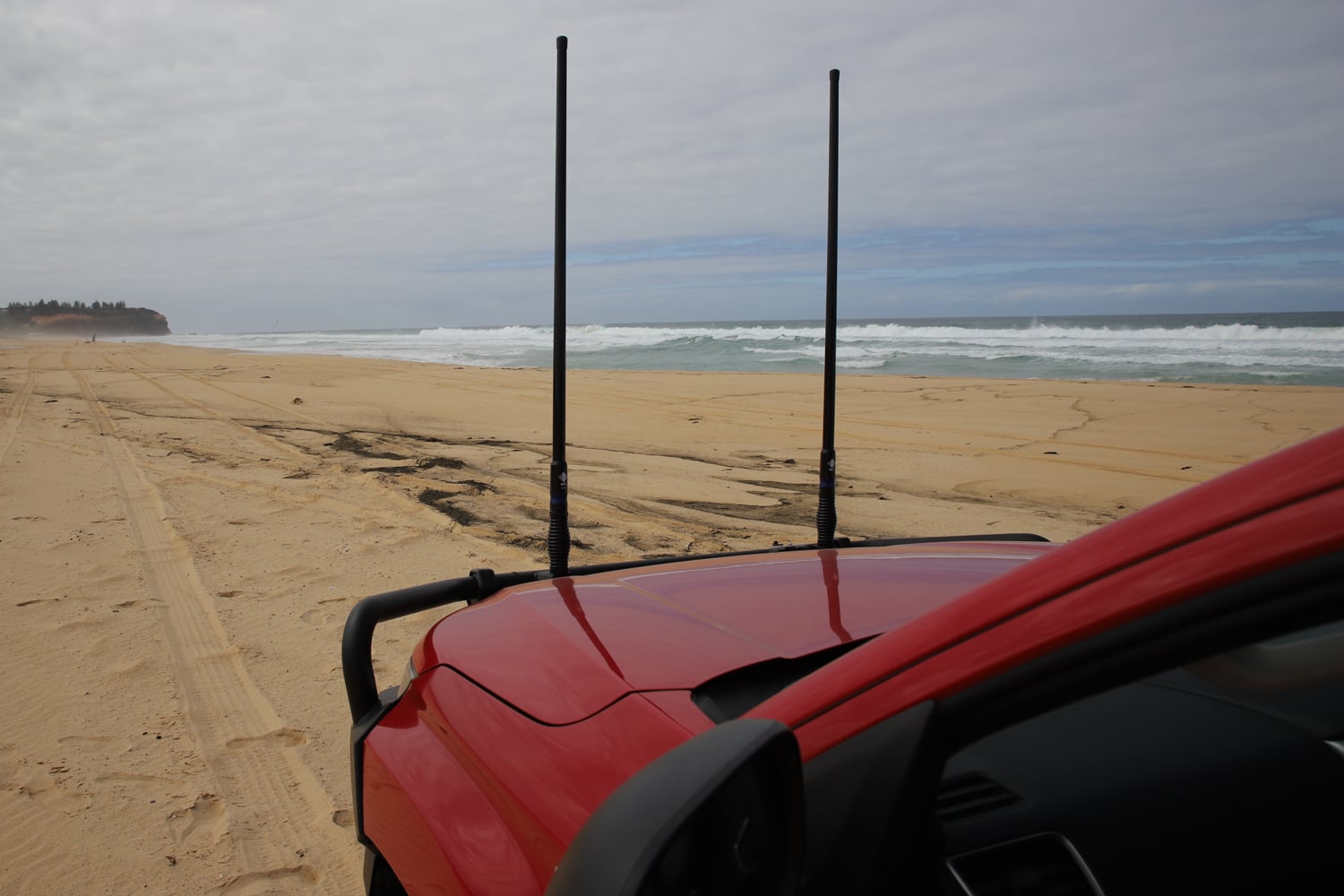
A centrally mounted roof antenna generally provides more even coverage around the vehicle, provided it’s correctly matched to the installation. However, roof mounting isn’t always practical on touring rigs fitted with rooftop tents, roof racks and other accessories. Bull bar mounting is popular because it’s easy to access, relatively straightforward and keeps the antenna away from much of the gear on the roof. The trade-off is that the vehicle’s body can affect the signal pattern, particularly when the antenna sits below the roofline. Bonnet and guard mounts offer another option, although nearby panels and pillars can also influence performance.
If mounting flexibility is important, ground-independent antennas, including options within RFI’s range, can reduce reliance on a metal ground plane. They won’t eliminate the effects of surrounding obstructions, but they offer more flexibility when choosing where to fit an antenna.
Modern touring vehicles can be crowded with accessories, so it’s worth thinking about antenna placement before the build is finished rather than squeezing it into whatever space is left. Driving lights, aerials, roof racks and storage systems all compete for room. RFI’s CDX-TREME UHF CB (↗) installation instructions recommend keeping other antennas at least 600mm away where practical, while ensuring the whip has enough clearance from nearby metalwork. A secure mounting bracket is just as important, as corrugations can shake fittings loose and branches can put extra strain on the antenna base.
Antenna gain and installation
Antenna gain is another consideration, particularly if you regularly travel through different types of terrain.
Higher-gain antennas concentrate more of their signal towards the horizon, making them useful across open, relatively flat country. Lower-gain antennas generally have a broader vertical radiation pattern, which can be more useful in steep or undulating terrain where the signal needs to cope with changes in elevation.
RFI’s CDX-TREME range (↗) includes compact and high-gain UHF CB options, allowing owners to choose an antenna to suit their vehicle and typical touring conditions. There’s little point chasing a high-gain antenna if it’s going to be mounted behind substantial metalwork, where its performance could be compromised. The antenna, gain and mounting position all need to work together.
The cable and connections deserve attention, too. Even a well-positioned antenna can suffer from poor performance if the coaxial cable is damaged, connectors are loose or the cable has been installed incorrectly. Keep cable runs protected from abrasion, avoid sharp bends and unnecessary extensions, and secure the cable away from moving components.
For spring-mounted antennas such as the RFI CDX-TREME (↗), leave enough slack near the base to allow the antenna to flex over rough tracks without pulling on the connection. RFI recommends a 50mm cable loop at the base of its CDX-TREME UHF CB antennas (↗) to prevent unnecessary strain when the spring moves.
3
Getting the setup right
A reliable touring communications setup comes down to choosing a compatible UHF radio and antenna, then making sure everything is installed properly.
Mount the antenna as high as practical, keep it clear of surrounding accessories, use a suitable bracket and protect the cable from damage. Before heading off on a big trip, check the mounting hardware and connections, then test the radio with another vehicle. If reception or transmission is inconsistent, an experienced installer can check the antenna system and its matching.
The RFI CDX-TREME range (↗) offers ruggedised options for different touring setups, but even a quality antenna needs to be mounted properly to get the best out of it. After all, when you’re travelling kilometres apart on a dusty outback track, the last thing you want is a UHF that struggles to reach the rest of the convoy.
FAQs
Where is the best place to mount a UHF antenna on a 4WD?
As high as practical, with the antenna whip clear of surrounding metalwork. Roof mounting can provide more even coverage, but bull bar, bonnet and guard mounts can also work depending on the vehicle setup.
Does a higher UHF antenna improve reception?
Generally, yes. Mounting an antenna higher can improve line of sight and reduce obstructions, although surrounding accessories and metalwork can still affect performance.
Is a higher-gain UHF antenna always better?
No. Higher-gain antennas generally suit flat, open country, while lower-gain options can work better in hilly or mountainous terrain.
How far apart should UHF antennas be mounted?
RFI recommends keeping other antennas at least 600mm away where practical to minimise interference.
How much cable slack should I leave on a spring-mounted antenna?
RFI recommends a 50mm cable loop at the base of its CDX-TREME UHF CB antennas to allow the spring to flex without putting strain on the cable connection.
Follow 4X4 Australia on Google
Get more 4x4 news, reviews and gear stories from 4X4 Australia in your Google feeds.

We recommend
-
 Gear
What makes an antenna suitable for harsh off-road use?
Corrugations, scrub and rough tracks put 4WD antennas to the test. Here’s what to look for before heading off-road
-
 Gear
Why your 4WD antenna matters when travelling remote
When you're pushing into the edge of mobile coverage, the right antenna can make the difference between a usable signal and a dead screen