
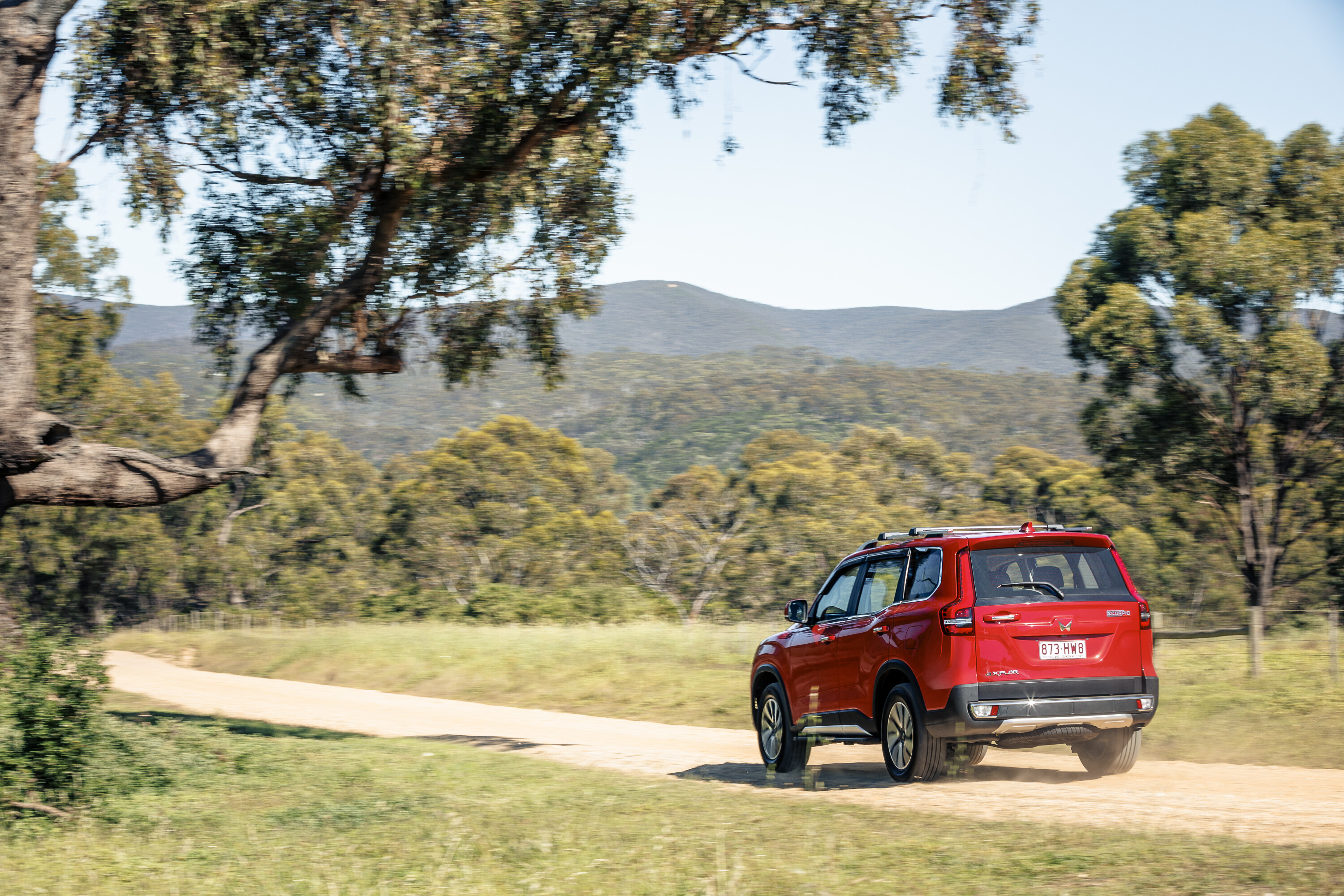
Hot on the heels of the launch of the D-MAX Tour Mate, Isuzu has applied similar treatment to its seven-seat SUV, with the Japanese marque confirming the release of an MU-X Tour Mate special edition.
Just like the D-MAX version, the special edition MU-X Tour Mate is loaded with more than $9200 worth of optional genuine accessories. Priced at $73,990 drive away, Isuzu claims the package represents significant savings.
The special edition variant uses the top-spec, leather-clad MU-X LS-T as a starting point, which means it is already equipped with a host of premium kit including 20-inch two-tone alloy wheels with 265/50R20 Bridgestone 684 II HT tyres; a Tyre Pressure Monitoring System; a 9.0-inch infotainment system with Android Auto and wireless Apple CarPlay connectivity; and power-adjustable front seats (heated, of course).
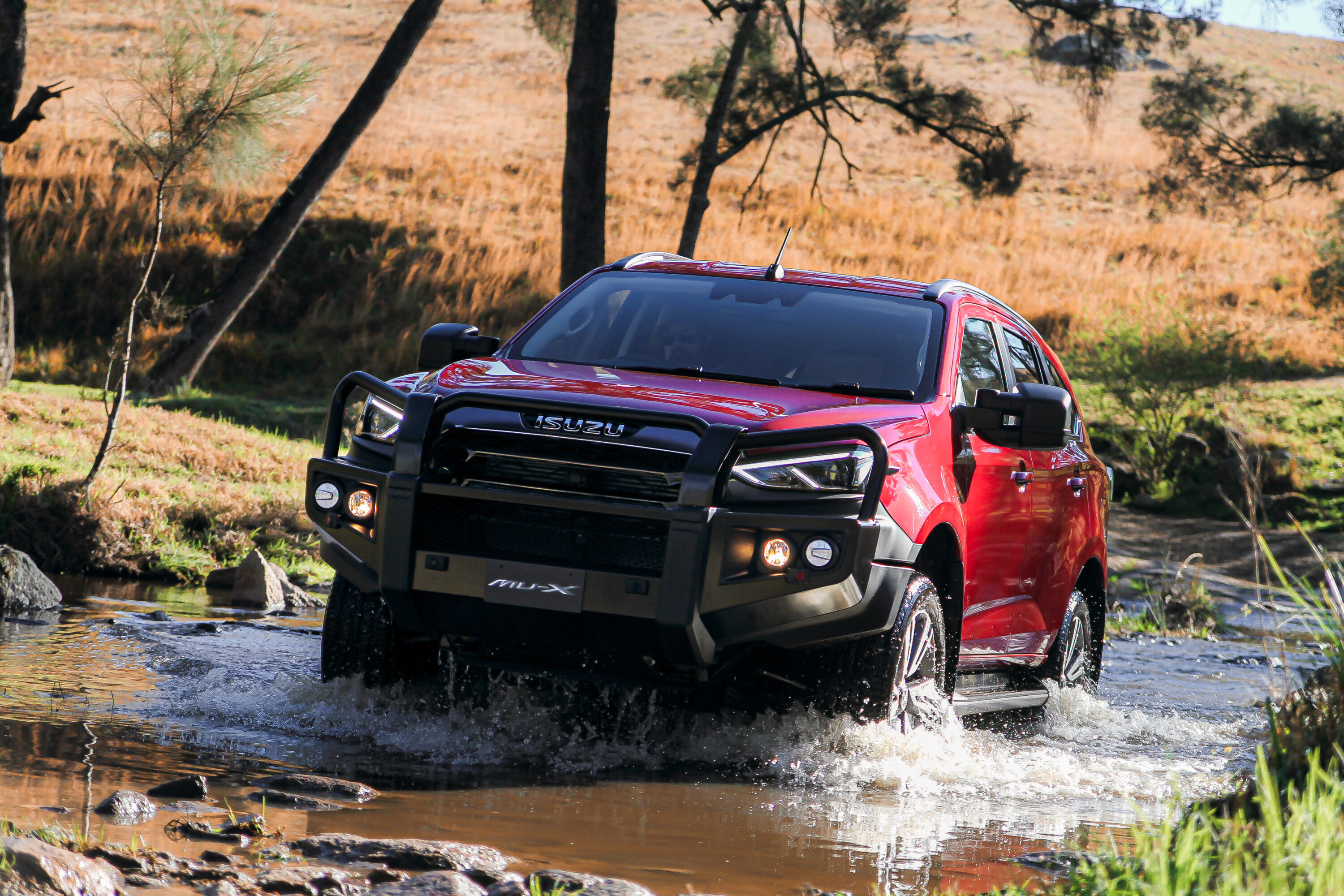
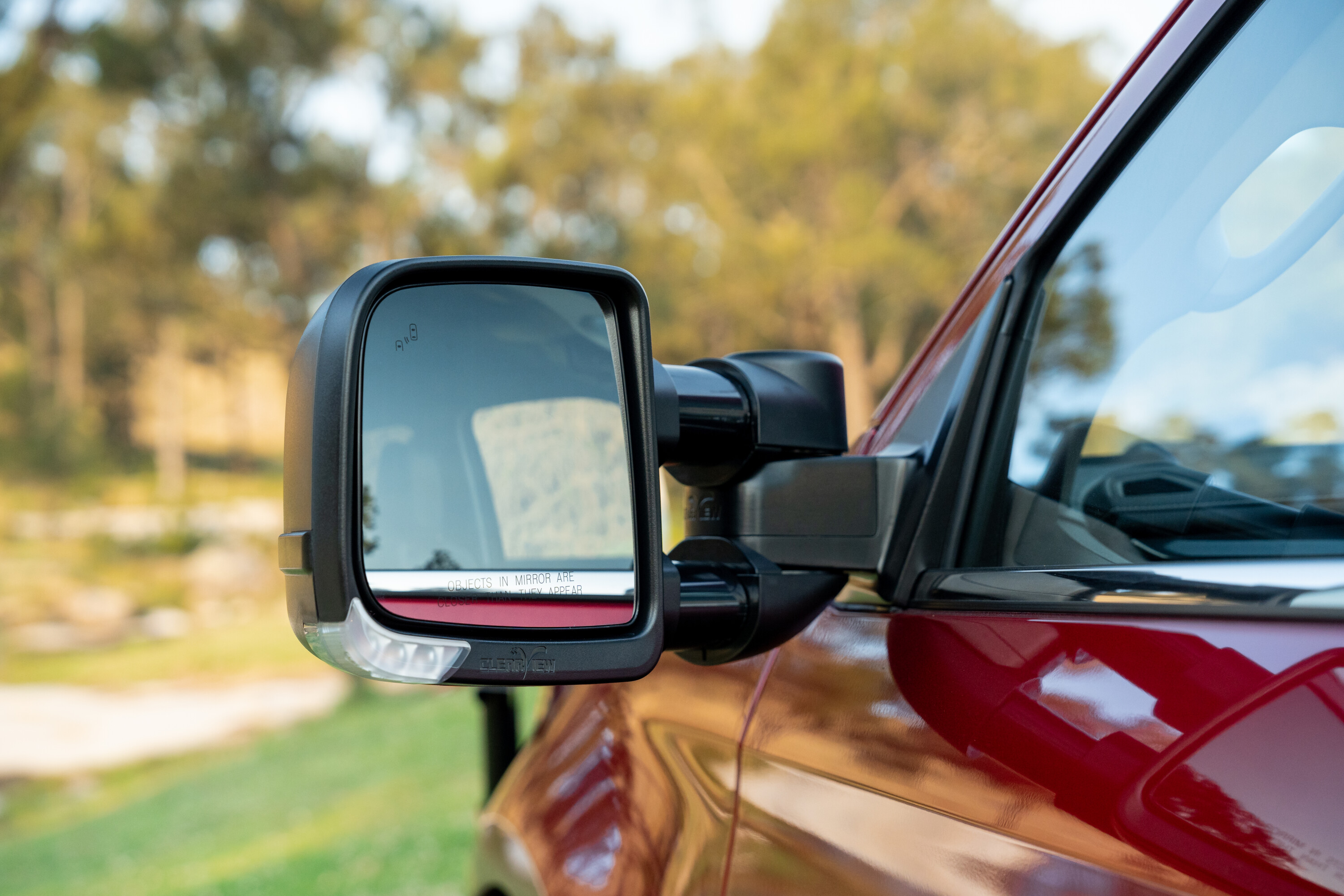
To give it the Tour Mate edge, Isuzu has equipped the vehicle with a number of bespoke accessories including a black steel bull bar with integrated parking sensors and fog lights; a tow bar kit with 50mm ball, 12-pin wiring harness and electric brake controller; and Clearview towing mirrors. More features below ?
The MU-X Tour Mate remains powered by Isuzu’s venerable 140kW/450Nm 3.0-litre four-cylinder turbo-diesel engine, mated to a six-speed automatic transmission and a dual-range transfer case. A rear diff lock is standard, as is a 3500kg braked towing capacity, an 800mm wading depth and 235mm of ground clearance. The MU-X is lauded for its ample interior space, boasting 311 litres with all seats up, 1119 litres with the third row folded, and 2138 litres with the second and third rows folded.
“With the D-MAX Tour Mate proving popular since its introduction in August 2024, it was only natural that we offer a Tour Mate special edition to our MU-X customers,” said Isuzu UTE Australia’s Deputy Managing Director, Mr Koichiro Yoshida.
“For years, the Tour Mate badge represented towing- and touring-ready capability, along with value for money. The 2024 Isuzu MU-X Tour Mate is no exception, a highly equipped vehicle that offers motorists adventures direct from the showroom,” he added.
Accessories include
- Satin black steel bull bar with integrated parking sensors and LED fog lights
- Tow bar kit with 50mm ball, 12-pin wiring harness and electric brake controller
- Clearview extendable heated and power-fold compact towing mirrors
- Unique TOUR MATE badging
- Intelligent Driver Assistance System (IDAS)
- Rear diff lock and Rough Terrain Mode
- Automatic electric park brake with auto hold function
- 20-inch two-tone alloy wheels with 265/50R20 Bridgestone 684 II HT tyres
- Tyre Pressure Monitoring System
- Body-coloured door handles
- Magnetite and chrome front grille
- Magnetite side steps, roof rails, and lower rear bar trim
- Premium leather steering wheel and gear selector
- LED ambient interior lighting
- Remote engine start – with unauthorised entry and anti theft measures
- Power tailgate, with remote and hands free operation
- Dual-zone air-conditioning
- Automatic Bi-LED headlights
- LED combination tail lights
- Reversing camera with dynamic guidelines
The special edition MU-X Tour Mate will be available at Isuzu dealerships across Australia from today, October 1.
BLADE LAUNCHED: Isuzu has a new flagship model sitting atop its D-MAX model line-up, with the Walkinshaw-fettled D-MAX Blade revealed and set to land in dealerships across the country from November 1.
The original story ?
A Walkinshaw-fettled D-MAX is in the works, with Isuzu confirming the halo ute will be officially revealed on November 1, 2024.
In a statement to officially confirm the date of the unveiling, Isuzu UTE Australia’s Deputy Managing Director, Mr Koichiro Yoshida, said the D-MAX Blade “was a project that was reengineered specifically for local Australian conditions in partnership with Walkinshaw Automotive Group in Melbourne.
“For as long as I can remember, customers and the media have asked about a higher-spec, off-road ready ute to rival the competition, something extremely capable, without compromise.” he added.
Isuzu says local deliveries will follow soon after the Blade is revealed.
An approval document published by the government-regulated ROVER (Road Vehicle Regulator) system has revealed Isuzu and Walkinshaw are combining forces to produce a tougher D-MAX ute, dubbed Blade.
The document reveals that “modifications are styling only”, which indicates the Blade will utilise Isuzu’s proven 140kW/450Nm 3.0-litre turbo-diesel powerplant. It does however reveal that a change to the wheels, tyres and springs will result in a height change of 26.5mm at the front and 29mm at the rear.
It will also add a sailplane and high-mounted stop lights, as well as tweaks to the wheel arches and sump guard. Axle ratings and the vehicle’s GVM remain unchanged. No photos are available yet.
While Isuzu has not revealed a launch or reveal date, it has confirmed the collaboration with Walkinshaw.
“Isuzu UTE Australia (IUA) and Walkinshaw Automotive Group (WAG) are collaborating on possible future product developments – however, we are not currently able to provide any further details,” said Mark Harman, Isuzu UTE Australia’s PR Manager.
The most recent ute to receive the Walkinshaw treatment was the 2023 Mitsubishi Triton Xtreme, which, among other things, received a style update, Walkinshaw-forged wheels and Supashock suspension.
Can we expect similar treatment for the incoming D-MAX Blade? Stay tuned for more info.
We list some of the best 4×4 products that came out in September 2024 ?
- ALTIQ Rogue MK3 LED driving lights
- MaxLiner Venture canopy
- OzTerrain portable kitchen
- Terrain Tamer’s new fortified shock absorbers
- Pirate Camp Co underbody protection for LC300
- Blacksmith Camping Supplies tool roll
- GME 5G cellular antennas
- Can-Am Maverick R MAX X rs SAS
- BOAB heavy-duty cargo slide
- Lonely Planet travel guides
- Pirate Camp Co UHF mount for LC300
- Polyair load assist kits for SsangYong Musso
- ARB 4×4 Ensuite Room
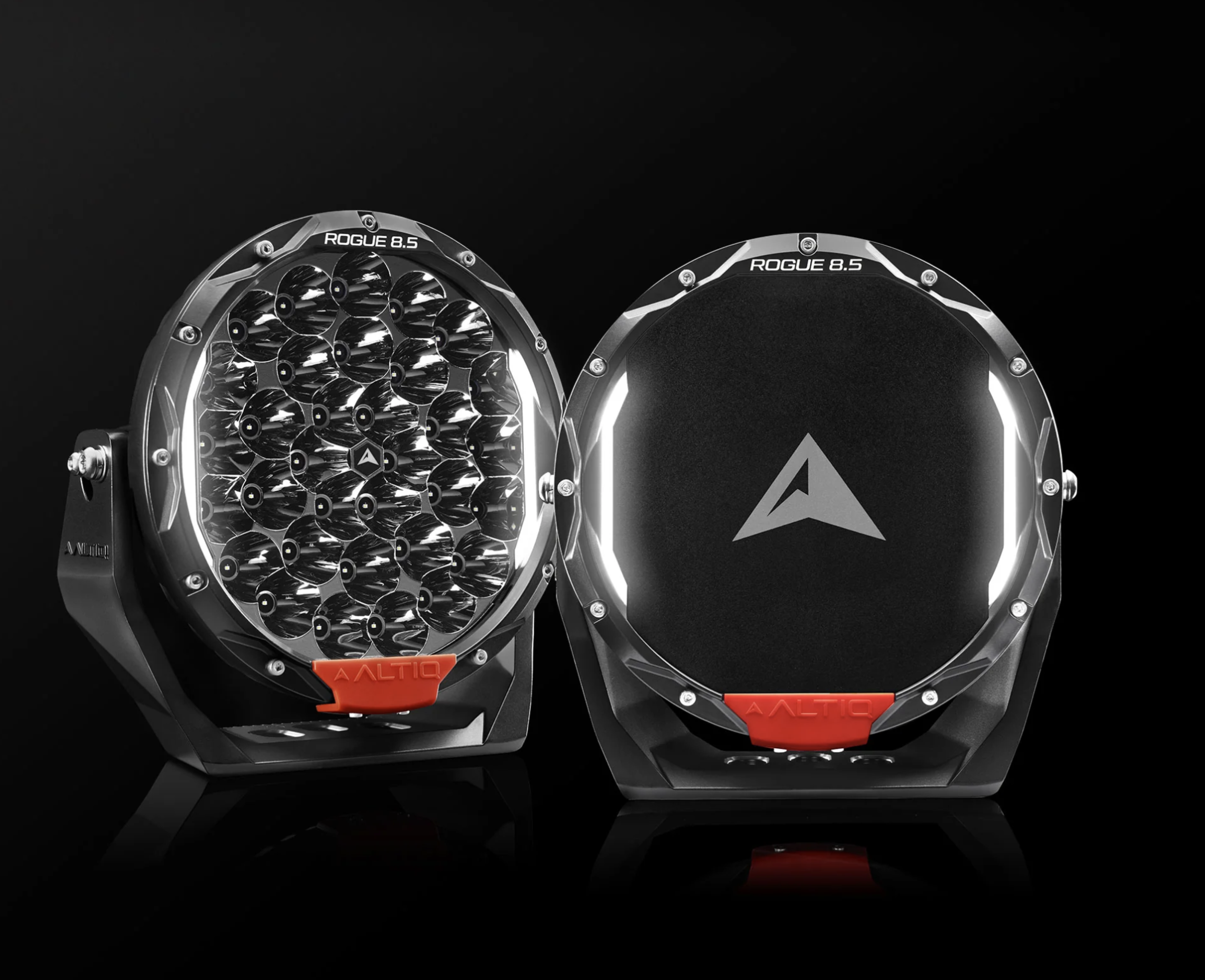
ALTIQ Rogue MK3 LED driving lights
- RRP: $729 (7-inch); $879 (8.5-inch)
ALTIQ says its Rogue Mk3 LED Driving Lights are designed for those who demand unparalleled lighting distance on highways yet still want expansive flood coverage on all roads.
They are available in 7-inch and 8.5-inch models, with options for blackout covers, different coloured fascias, and stainless-steel brackets. The Rogue Mk3 features a hybrid beam pattern of flood and distance. It is equipped with 7-watt Osram Oslon chips, providing excellent colour resolution and an impressive distance capability.
With a 1 lux distance of 1900m, these spotlights provide impressive reach, and for those after maximum light spread, the included Panoramic Flood covers expand the already impressive combo beam to a panoramic 180°.
MaxLiner Venture canopy
- RRP: $4595
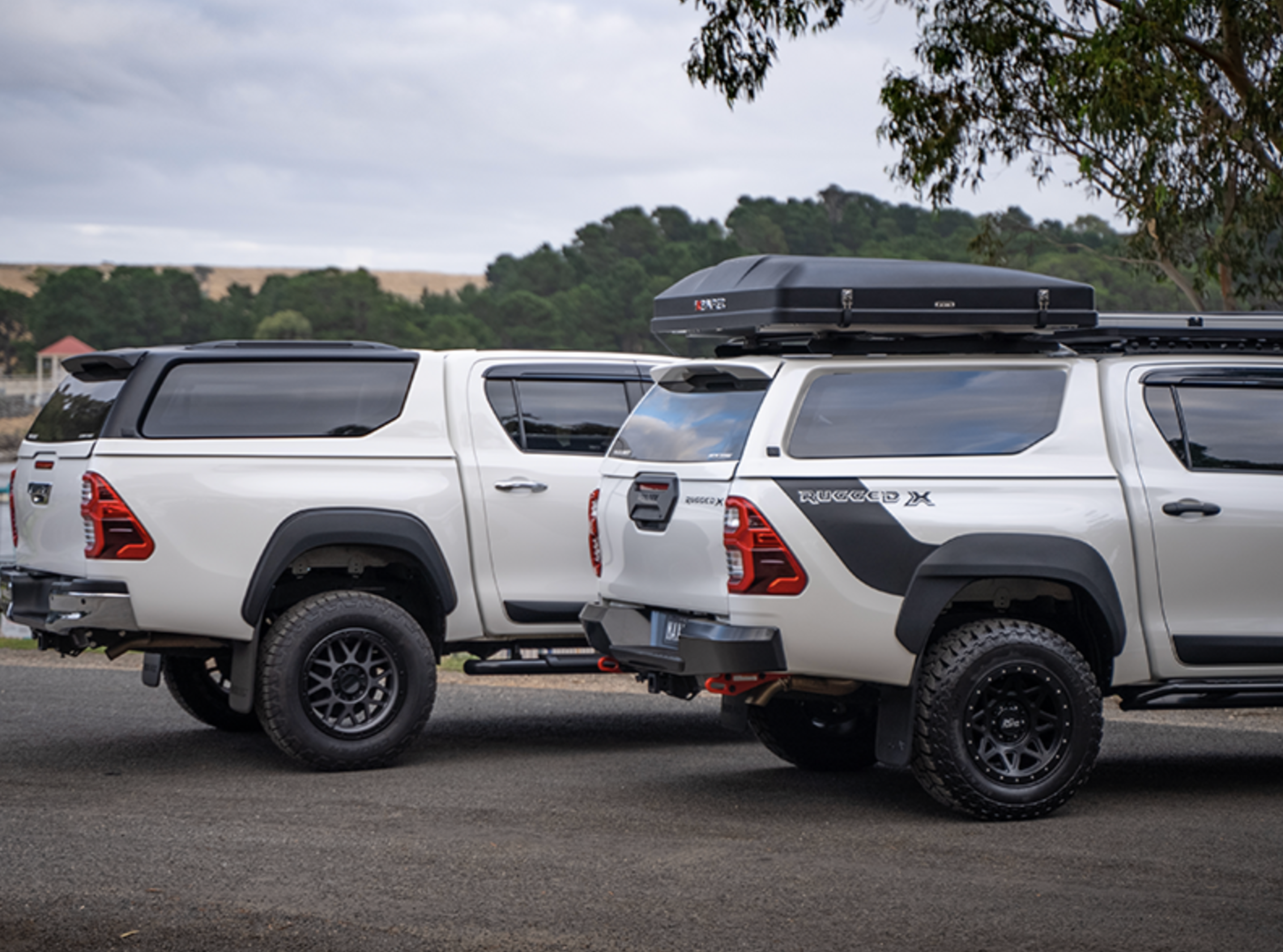
The Maxliner Venture canopy is available in a classic colour-coded painted body or a black-accented version.
The canopy is available to suit next-gen Ford Ranger, Toyota HiLux, Mazda BT-50, Isuzu D-Max, and the new Volkswagen Amarok. It features an internal steel structure for maximum roof carrying capacity, allowing for a 100kg dynamic and 300kg static payload. Additionally, the canopy has a handle-free large side window for easy access, a front lift-up window with optional ventilation, and a rear spoiler with a colour-coded lower glass accent panel. Other features include central locking and handle-free push-button entry on all external windows.
OzTerrain portable kitchen
- RRP: $1175
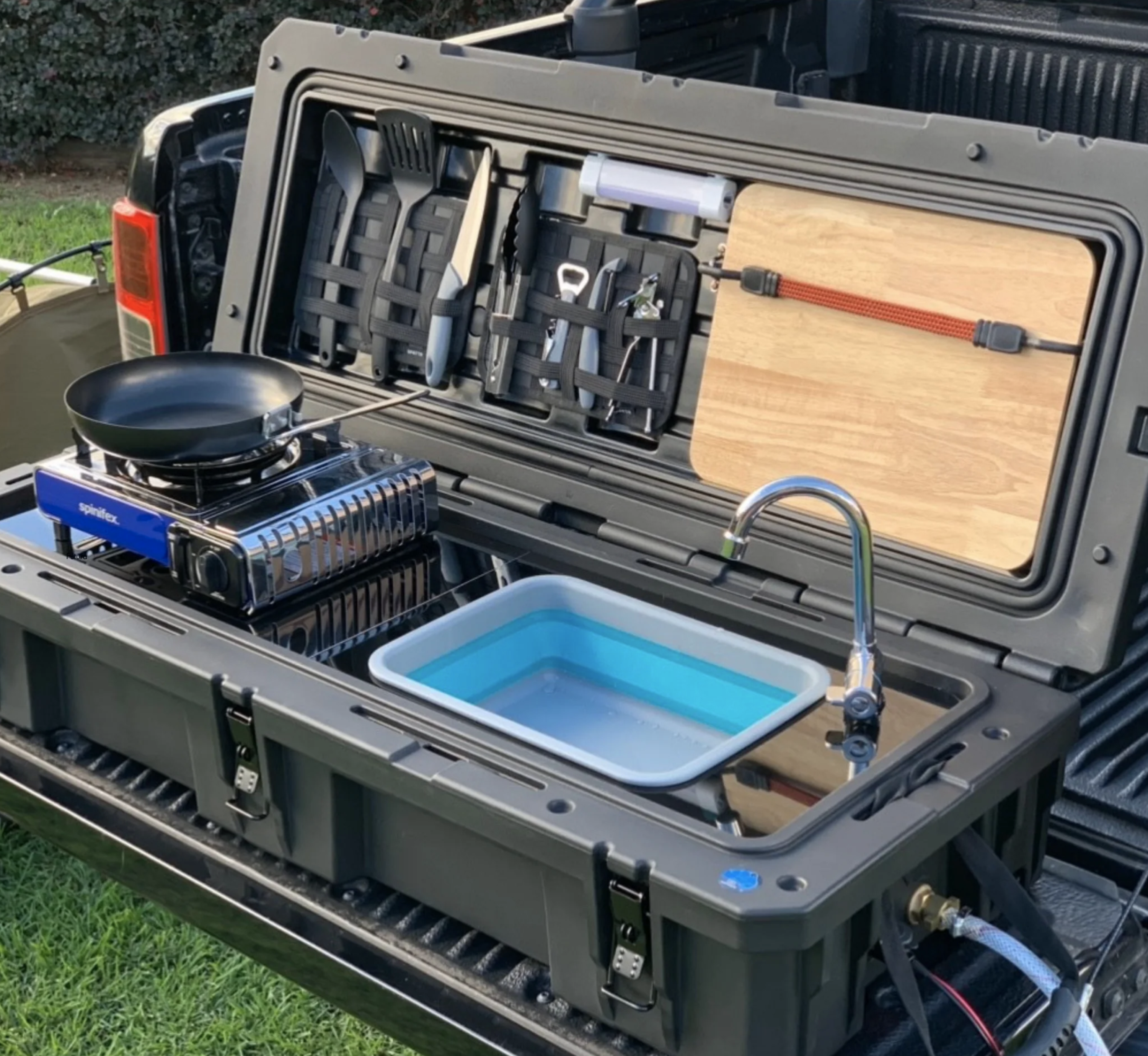
The Aussie-made OzTerrain Portable Kitchen has over 40 accessories including a 12V pump and flip mixer, making it ideally suited to camping and tailgating, as you can take the hassle out of meal prep by bringing a full kitchen on your next adventure.
This 95-litre cargo case includes a butane stove, frypan, 12V Seaflo pump flip mixer and sink, chopping board, rechargeable light, water inlet hose, 3m 12V cable, and seven cooking utensils. It also includes an 18-piece cutlery set, two sharp knives, four plates and cups, three washing-up brushes, and a tea towel.
The all-in-one OzTerrain Portable Kitchen is dust and weatherproof, easy to set up and pack down, and fits perfectly on a tailgate. It is constructed using rotation-moulded food-grade LLDPE and features concealed stainless bar hinges and adjustable or removable belt handles.
It can be stacked with other like-sized cases and includes a lid tie-down structure or side tie-down points that allow the lid to open when secured. The case dimensions are 1210mm (l) x 490mm (w) x 290mm (h).
Terrain Tamer’s new fortified shock absorbers
- Designed for: LandCruiser 76/78/79 and Patrol GU/GQ
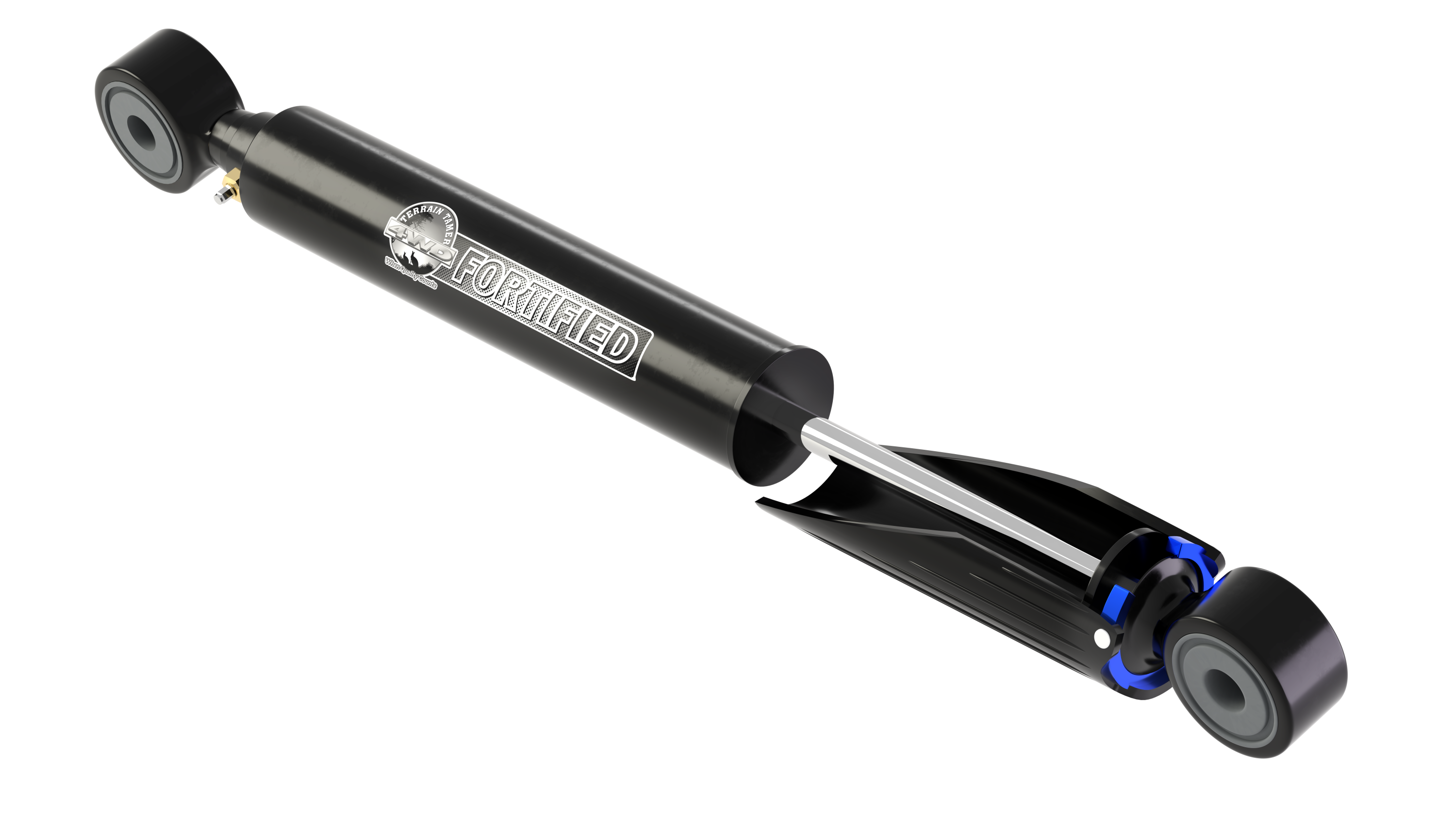
Terrain Tameru2019s new range of monotube fortified shock absorbers is said to be the brandu2019s heaviest duty shock absorber design ever!
Offering a weight capacity of up to five tonnes, the shocks feature a monotube design. The single cylinder is separated into two chambers – one holds gas, the other fluid – where the piston and shaft move. These chambers are separated by a 60mm free-floating piston and a double u-cup and wiper seal, which stop the gas and oil from mixing. This formula provides better responsiveness and improved heat dissipation.
To assist with ride control when towing or carrying heavy loads, the shocks also feature a 2.5-inch bore diameter for larger oil volume; a 22mm chrome-hardened shaft; and an induction-hardened chrome piston rod.
The new shocks are initially available for a range of 76, 78 and 79 Series LandCruisers, and Nissan Patrol GU/GQ vehicles. They’re ISO 9001:2008-certified and come with a three-year/100,000km non-commercial warranty.
Pirate Camp Co. underbody protection for LC300
- Everyday Touring: $699
- Heavy Duty Mad Max: $1199
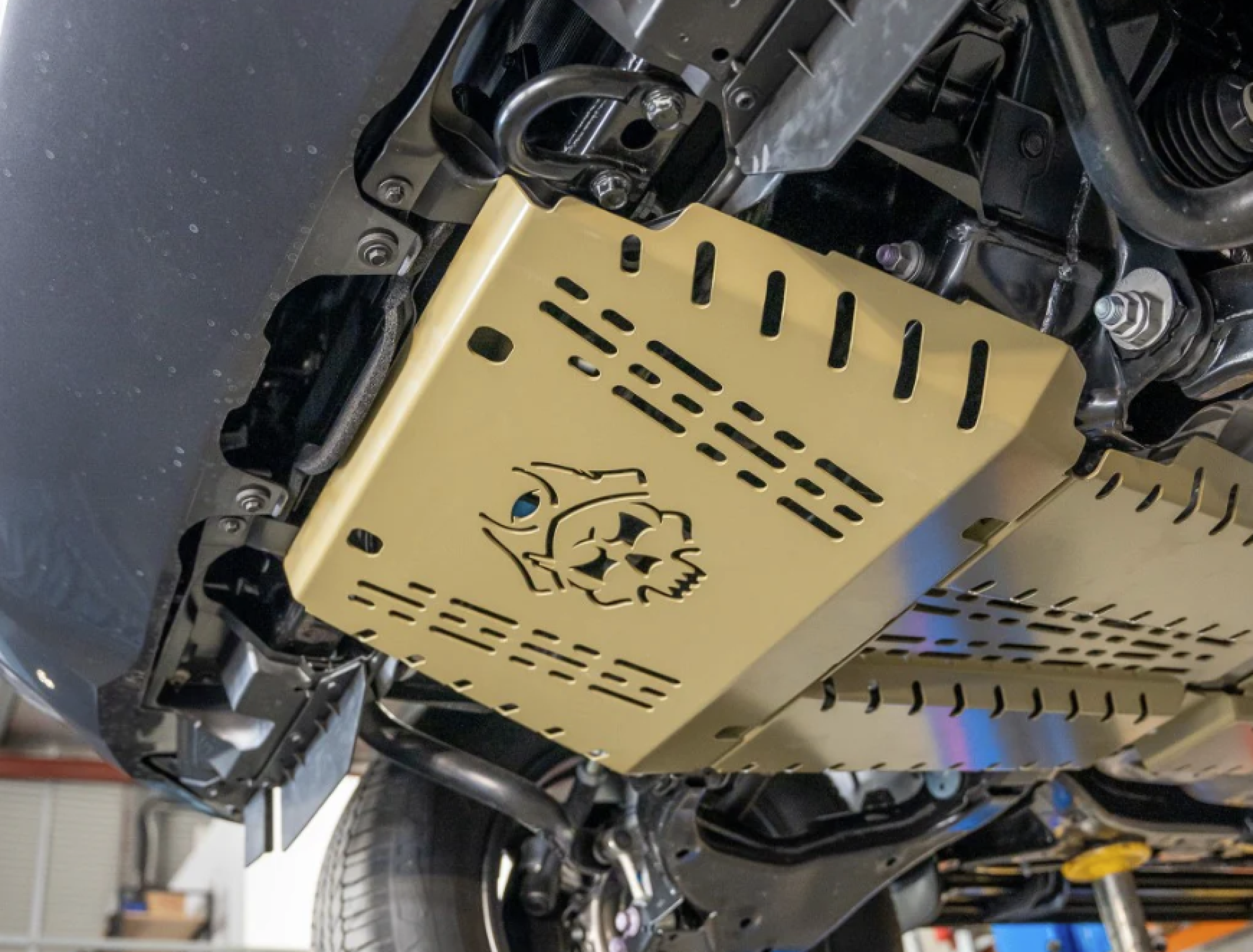
Pirate Camp Co. has just released an all-new underbody protection plate that has been designed to safeguard the LandCruiser 300u2019s vital components when traversing harsh terrain.
Designed to protect the intercooler, radiator, engine oil sump and gearbox of the 300 Series, the protection plates directly mount to factory points and come with all fasteners and hardware included.
Two options are available: Everyday Touring and Heavy Duty Mad Max. The Everyday Touring unit is lighter, manufactured with 3mm mild steel and powder-coated for durability; while the Heavy Duty Mad Max unit features 4mm stainless steel and is powder-coated for ultimate strength. The plates are powder-coated with either a Picton Green or Texture Black finish, and both designs feature enhanced approach angles.
Blacksmith Camping Supplies tool roll
- RRP: $229.90
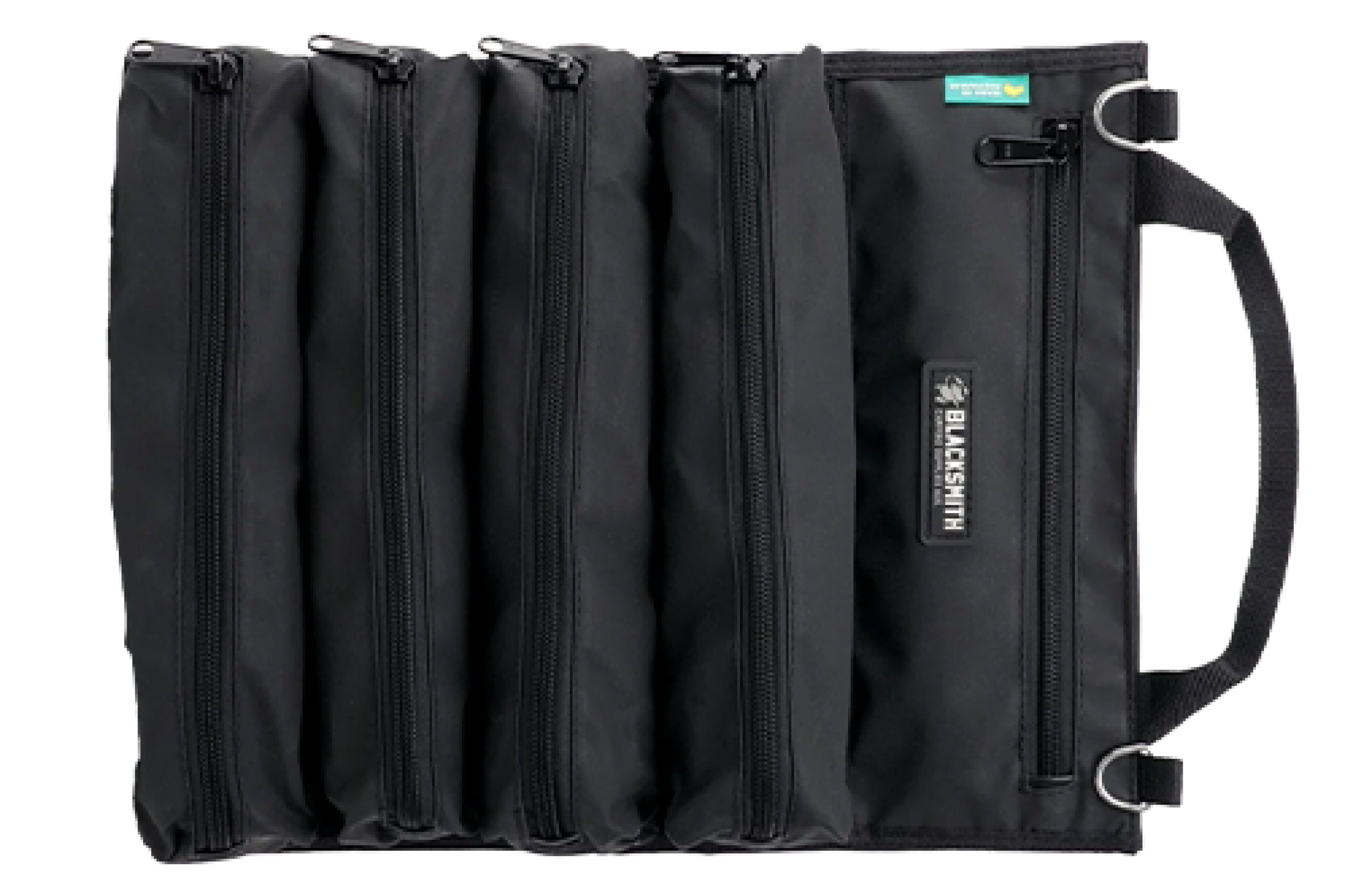
Blacksmith Camping Supplies has introduced this top-notch Australian-made Tool Roll. Equipped with five storage compartments on the front and 18 sleeves on the back, the Tool Roll allows you to store your tool kit comfortably under the seat of your 4×4. Hand-made using durable Dynaproofed 370gsm Australian-made canvas with reinforced stitching on all the stress points, it has D-rings to hang it off the ground and YKK zips.
There are four chunky compartments and one all-purpose slim compartment, perfect for storing your screwdrivers, a socket set, spare fuses, nuts and bolts and other large tools. On the rear are 11 spanner sleeves and seven multi-purpose sleeves for your spanners and pliers. Two carry handles make it easy to move the Tool Roll from your vehicle to wherever you need to use it. The Tool Roll measures 500mm (h) x 400mm (w) x 100mm (d) when empty, but expands once tools and spares are added.
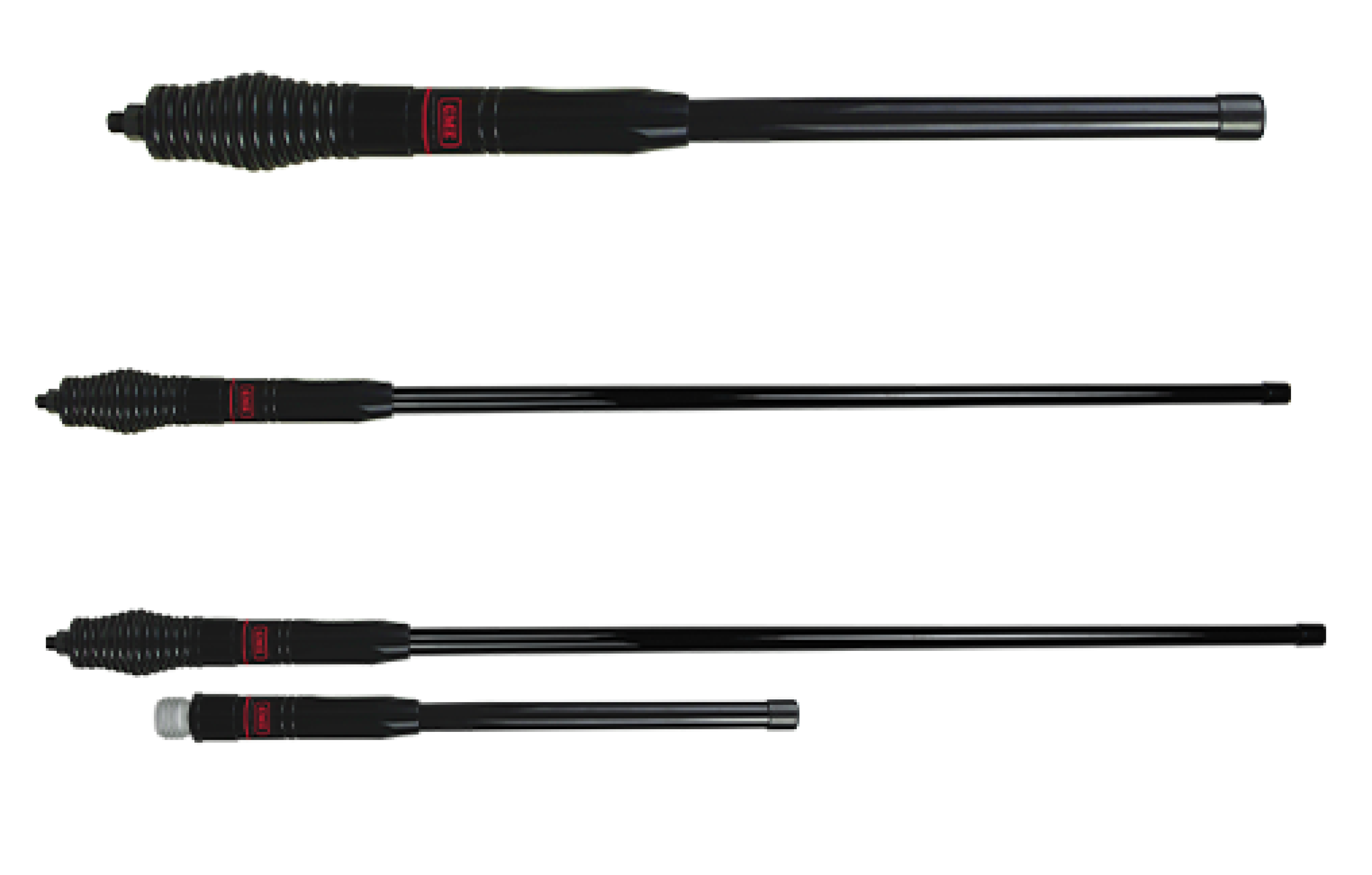
GME 5G cellular antennas
- RRP: $299 (AT4714BA); $349 (AT4715BA); $449 (AT4715BATP)
In developing these cellular antennas, GME has utilised the proven, rugged mechanical design of the AE4700 series of UHF antennas in conjunction with an innovative PCB electrical circuit. As a result, GME says the AT4700 series sets a new benchmark for multi-band cellular antennas in the Australian market.
Covering 690-960, 1710-2700, and 3400-3800Mhz bands, the AT4714 and AT4715 are true multi-band cellular antennas that are 5G ready. The AT4700 series delivers excellent LTE coverage across existing mobile phone networks, ensuring optimum connection wherever there is a signal, even in areas with limited or poor cellular network coverage.
There are two GME antennas available in the AT4700 range: the 580mm (AT4714BA) and the 1200mm (AT4715BA). Alternatively, you can also purchase the twin pack (AT4715BATP).

Can-Am Maverick R MAX X rs SAS
Can-Am has added its latest side-by-side vehicle (SSV) to its line-up: the Maverick R MAX X rs SAS. Built on the Maverick R platform but with two spacious rear seats that allow families and friends to enjoy the action together.
The Maverick R is powered by a Rotax 240hp engine paired with a seven-speed dual-clutch transmission (DCT). The DCT features a 40%-per-cent shorter low-gear ratio, improved torque control and reinforced components. Its cutting-edge tall-knuckle suspension technology maximises the smooth-riding, high-octane performance.
The R MAX also gets an updated 10.25-inch touchscreen display with built-in GPS; front and rear cameras; and enhanced visibility of transmission gears and drive modes.
“At its core, Can-Am is a brand that is all about pushing the envelope and creating the ultimate experience for every type of rider, from ranchers to outdoor enthusiasts and racers,” said Julie Tourville, Director, Global Marketing, Can-Am Off-Road at BRP.
“We are continuing to blaze the trail in the SSV category with the introduction of the Maverick R MAX. From adding brawn to your workday, to conquering the desert, to playing in the mud, the Can-Am lineup of SSVs is built to do it all.”
BOAB heavy-duty cargo slide
- RRP: $1399
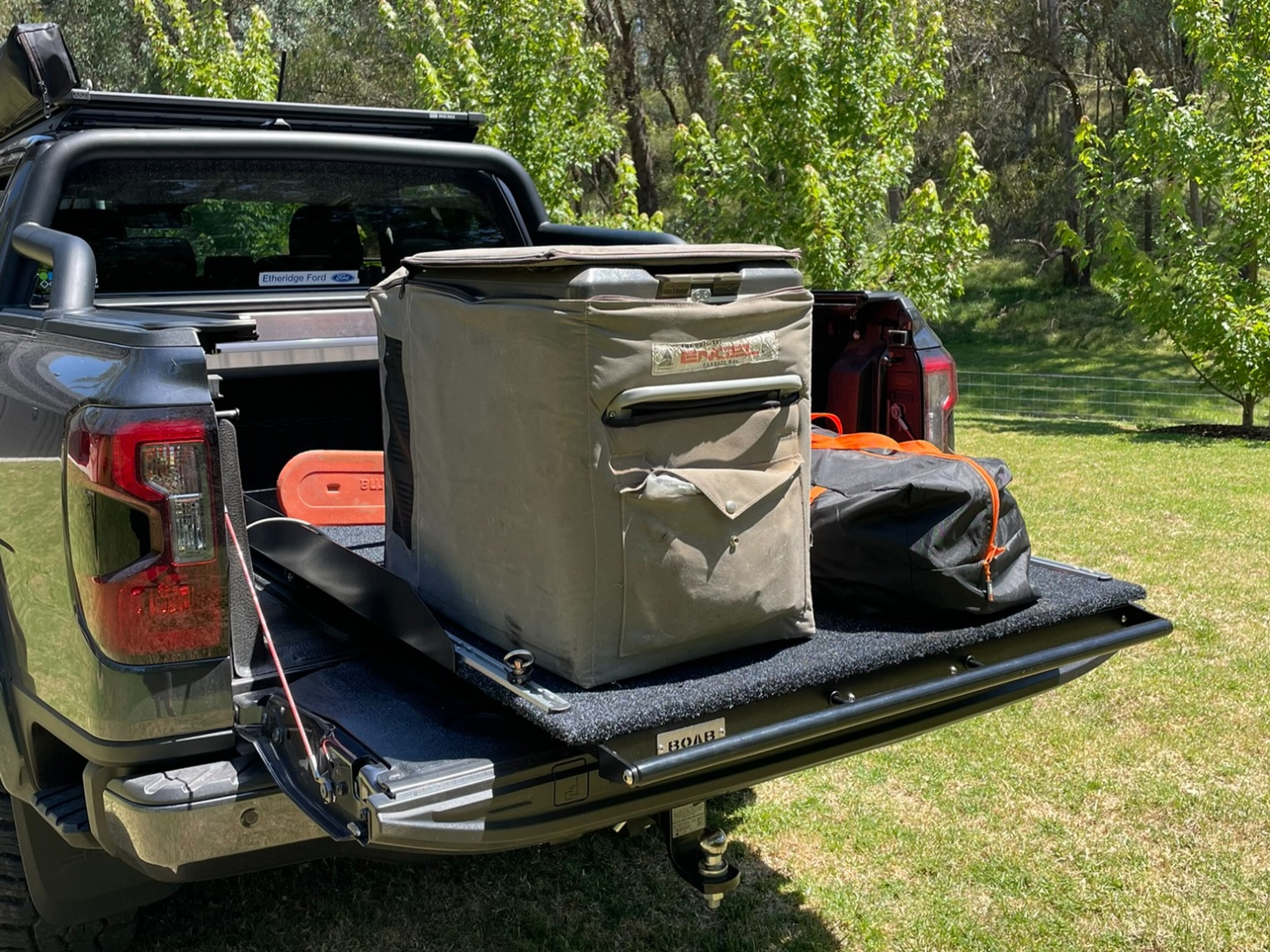
The all-new BOAB heavy-duty cargo slide is a convenient accessory that will make it easier to load and unload heavy cargo u2013 think camping fridges, storage boxes and water tanks.
Available to fit a range of utes, vans and trucks, a key feature of the cargo slide is its release handle and three locking positions for easy item management. The use of heavy duty springs enables smooth operation.
Measuring 1300mm (L) x 1050mm (W) x 190mm (H), weighing 61kg and with a load rating of 300kg, the cargo slide also features two anchor track tie-down rails and four lashing rings to keep gear secure. The cargo slide features a plywood base and steel frame. It’s covered in a non-scratch marine carpet.
The mounting kit with all hardware and instructions is included, and DIY installation is said to be a two-person job. It comes with a three-year warranty.
Lonely Planet travel guides
- RRP: From $21.99
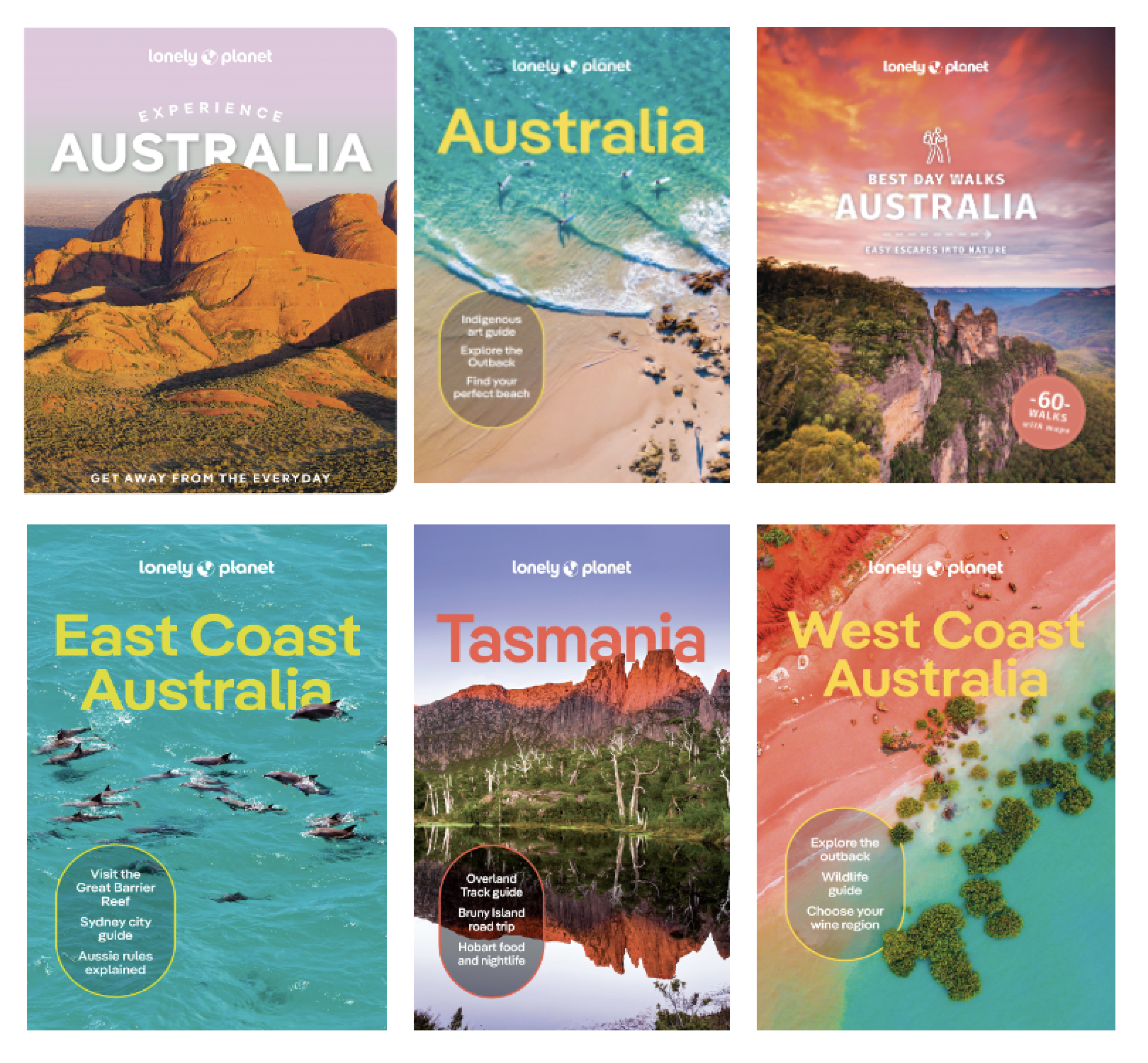
Lonely Planet has released a range of reimagined travel guides, with the series of books covering all corners of Australia.
The suite of guides includes new titles, guides, pocket guides and planning maps, with Lonely Planet stating they offer travellers “a fresh and immersive journey reflecting on the needs of today’s travellers”. The guides feature insider secrets, diverse perspectives and insights from local experts. A new essay and storybook section has also been added, to provide rich insight into Australian history and culture.
“Experience Australia” is a first edition release, as part of the new Lonely Planet Experience Guide series; and the Pocket Sydney and Pocket Melbourne guides are among the first of the newly designed pocket guides to be published globally.
“We’ve conducted extensive research to understand what travellers seek in this new era of travel. These new editions are an evolutionary response to those insights, while keeping the essence of the much-loved Lonely Planet brand,” said Chris Zeiher, Global Marketing and Sales Director at Lonely Planet.
Pirate Camp Co. UHF mount for LC300
- RRP: $49
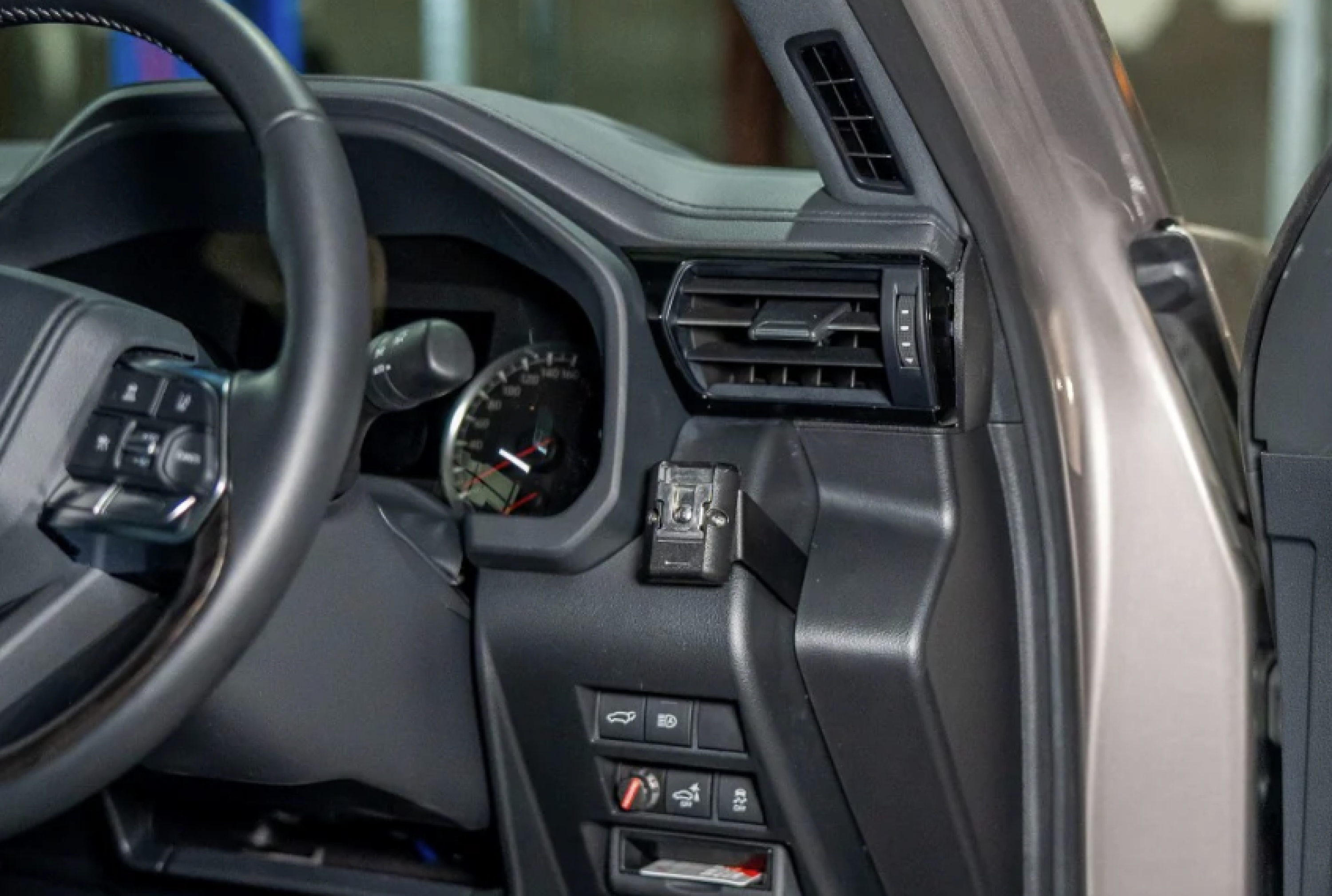
Pirate Camp Co. is a 100-per-cent Australian company that produces high-quality aftermarket 4×4 gear, and the Queensland-based mob has just released a new UHF handpiece mount for the Toyota LandCruiser 300 Series.
The Australian-made unit has been made from the ground up utilising a powder-coated two-piece steel bracket. Designed for the GME catch or magnetic button, the bracket comes with all mounting hardware supplied for easy installation. Plus other brands can be secured to it. The UHF mount comes with a 24-month warranty.
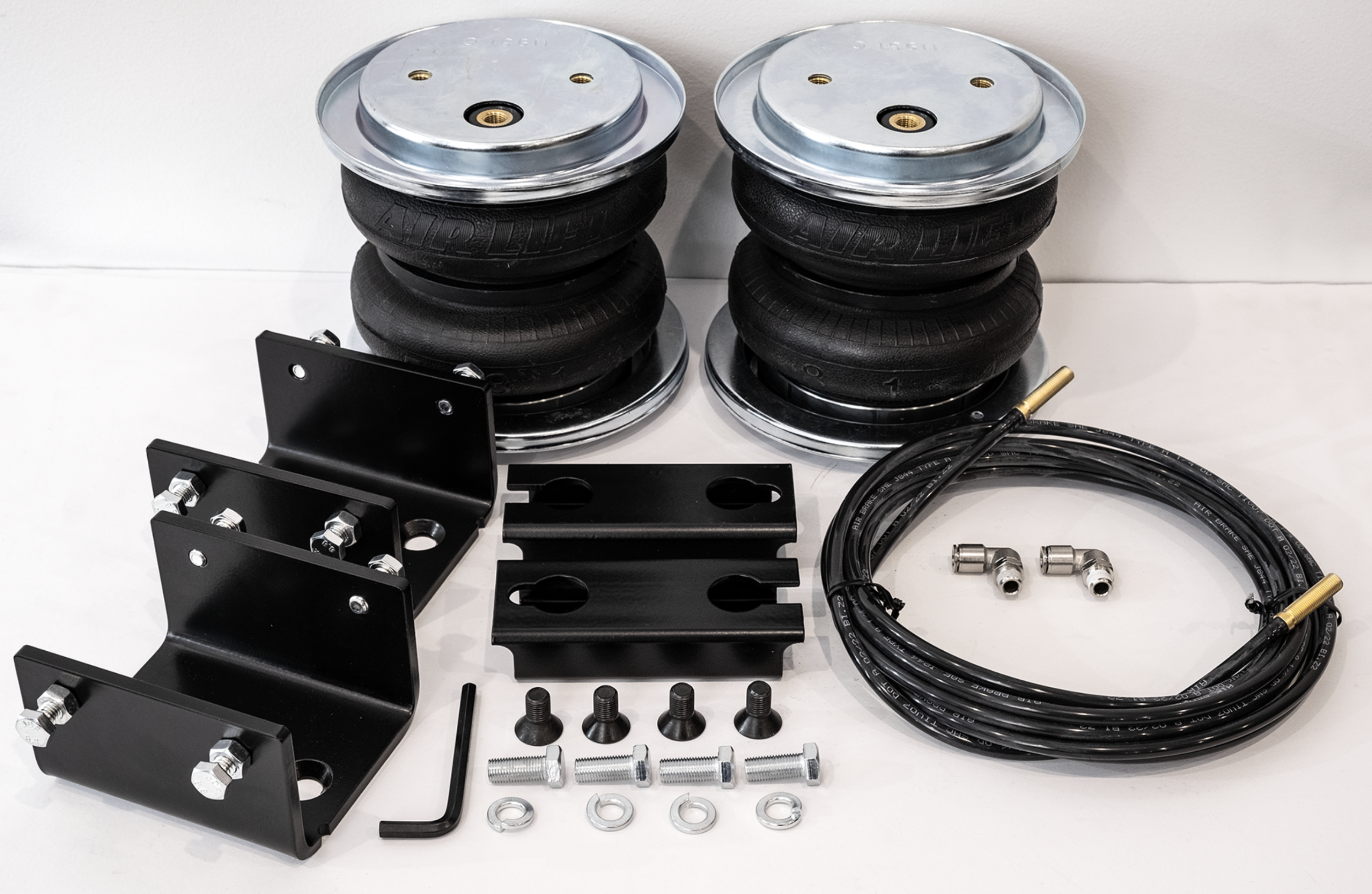
Polyair load assist kits for SsangYong Musso
- RRP: $960
Polair now offers load assist kits for the Ssangyong Musso at standard height and and for two-inch raised models with leaf-spring suspension.
The load assist kit allows air adjustability from 5-100psi, ensuring optimal rear-end support and preventing rear-end sagging when loaded or towing. It also ensures a smooth ride when unloaded and can be easily adjusted to handle varying loads. The kit features an internal bump stop for added protection for those really heavy loads, offering peace of mind that the airbags can handle any unexpected challenges.
The Polyair bellows are constructed with two-ply fabric-reinforced rubber and feature ultra-high-strength, corrosion-proof Zytel Nylon end caps. They are designed for long-lasting performance and reliability, and are easy to install thanks to illustrated instructions. In many cases no chassis drilling is required for installation.
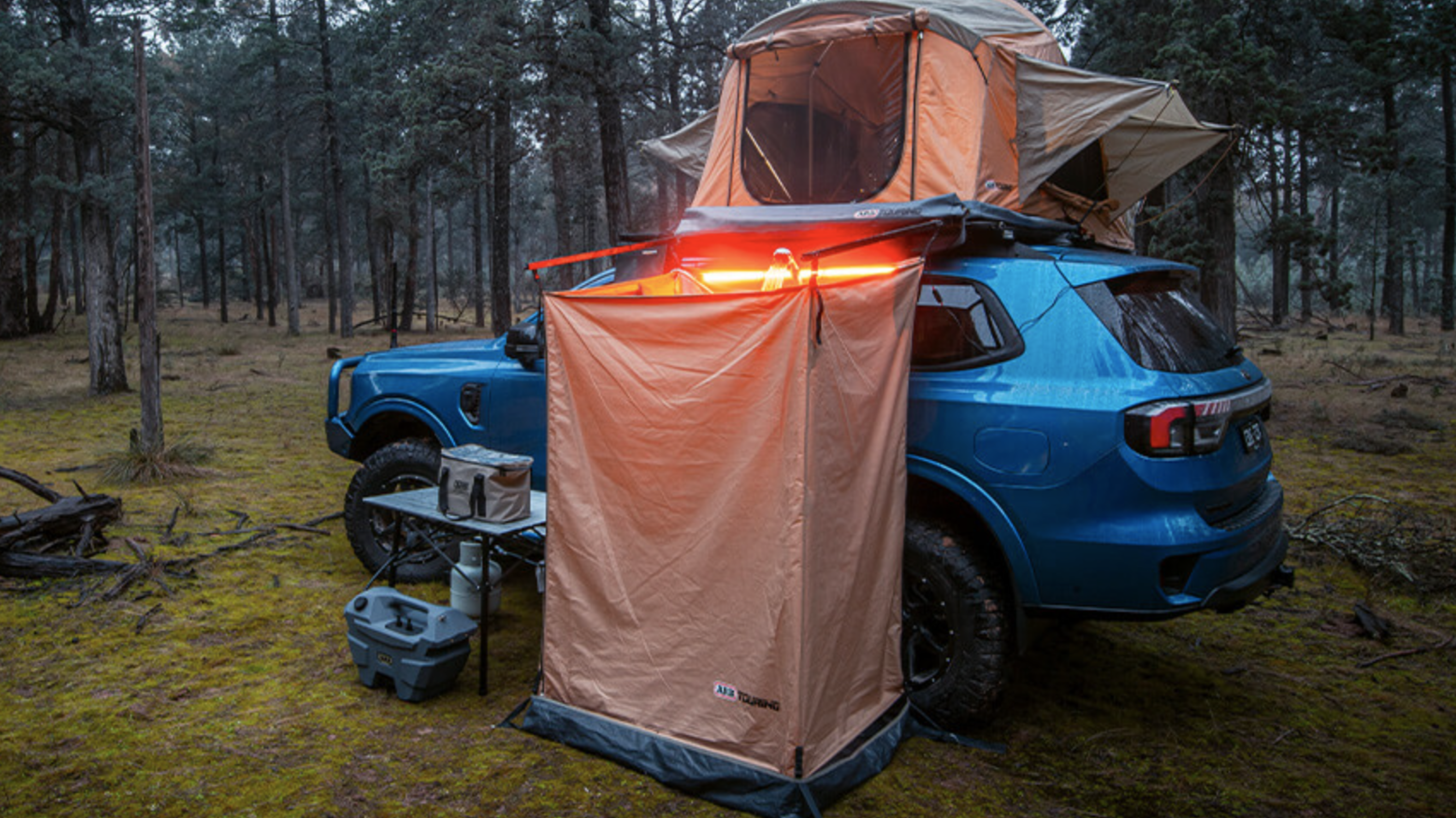
ARB 4×4 Ensuite Room
- RRP: $399
Exploring the great outdoors with friends and family is one of lifeu2019s great experiences but, no matter how much you like someone, there are times when a little privacy is needed.
ARB’s Ensuite Room brings that privacy when your camping; simply attach the brackets to your roof rack system and away you go.
The Ensuite Room is height adjustable and features integrated dual-colour LED lighting that is dimmable, wall hooks for your body sponge or loofah, and three potential shower head mounting options, all wrapped up in 200gsm silver-coated canvas. The Ensuite Room has also been equipped with five individual storage pockets and an integrated towel holder.
A purpose-designed roof provides weather protection and comes with a centre bow for increased strength, and the Ensuite Room can still be used without the roof being fitted. The removable flooring is heavy-duty polyethylene with a corner drain hose for easy cleaning.
Need a break from footy chat? There are a bunch of great off-road tracks not too far from Melbourne’s CBD.
Lerderderg State Park is only 70-odd kilometres away from the city and makes for a great afternoon trip. Stretch your legs a big further and the Otways and Grampians NP make for great weekend destinations. Or for a small taste of the Outback, Victoria’s Little Desert National Park – a 1326km² park bordered by the Wimmera River – is located about four hours’ drive west of Melbourne, not far from Dimboola.
4×4 tracks close to Melbourne
Around the country
Explore by state








Not much more than an hour north of Melbourne, via Bacchus Marsh, this 201.8km² state park is popular with off-road tourers, campers, anglers, rock-climbers and bushwalkers.
The Lerderderg River cuts a path through the main section of the park, with the gorge it has created up to 300m deep in places, showcasing just how powerful flowing water is over many years. The terrain is rugged in parts, with heavily forested areas that contain a mix of ironbark, dry stringybark and peppermint-gum trees and, as well as the Lerderderg River, there are many other smaller waterways throughout the park. As the park is close to the city it can get crowded on weekends, but it is still worth checking out. Of course, if you can visit mid-week, it’s quieter.
The majority of 4×4-only tracks are in the park’s main northern section (where the park boundary abuts Wombat State Forest, another great off-roading destination) and the eastern side (note: some tracks in the park are closed from mid-June to October.
When open, these tracks make for great off-roading – steep, muddy when wet, with plenty of water crossings – and you can use them to link the park’s major roads and scenic highlights; O’Briens Road offers some brilliant views of the gorge itself. For this adventure, we’d recommend accessing the park via its southern entry point of Lerderderg Gorge Road, not far out of Bacchus Marsh.
This also means you can stop for lunch/morning tea at Mackenzies Flat Picnic Area, which has excellent facilities (toilets, picnic tables and electric barbecues). The picnic area is next to the Lerderderg River, so bring your swimmers for a dip in warmer weather. Be warned, however, this location is (understandably) hugely popular with day-visitors and can get crowded.
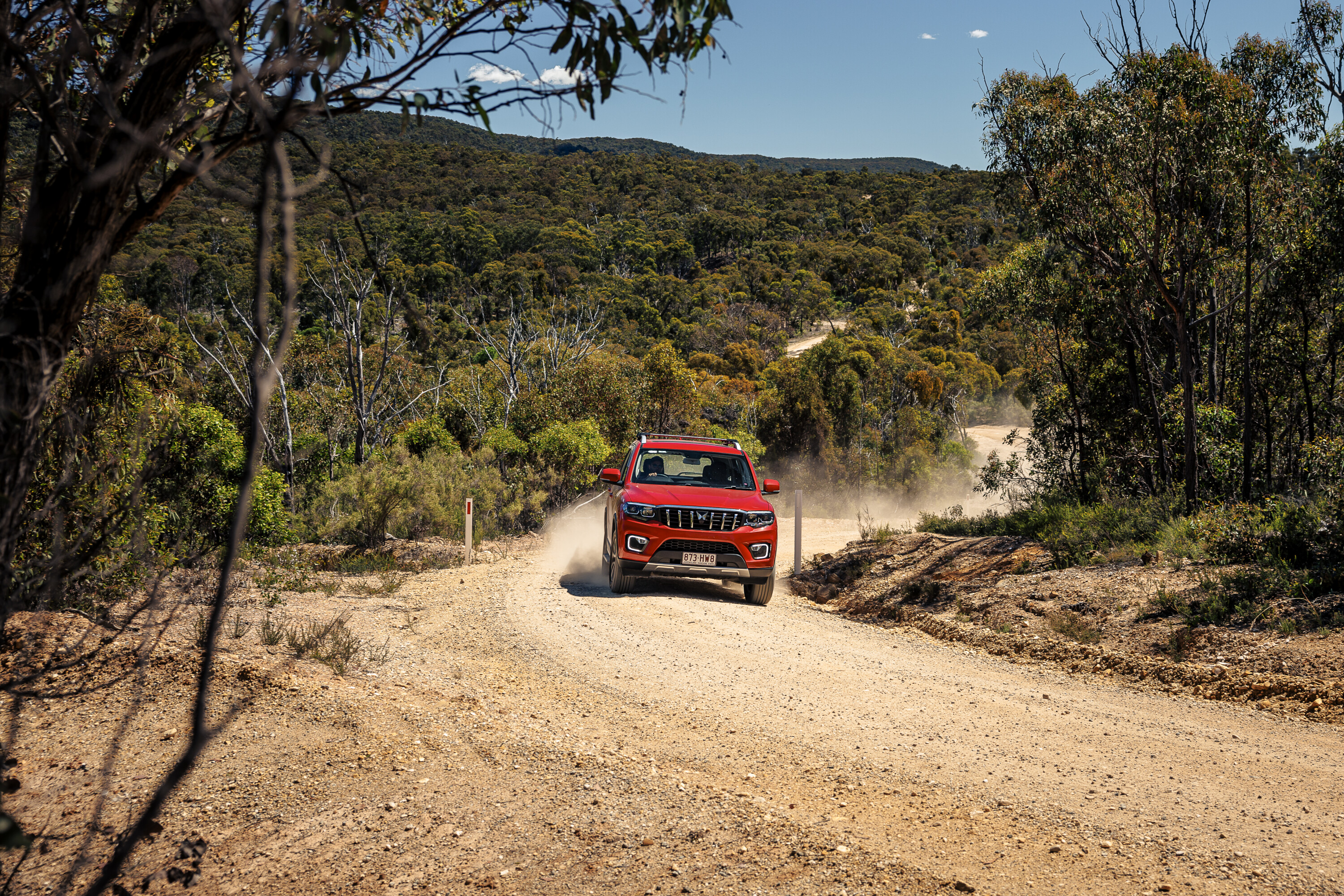
Look at a map and you will also see a separate part of the park – dubbed Pyrete Range Lerderderg State Park – with it and the main part divided by the Bacchus Marsh-Gisborne Road. This area is strictly no-vehicle access, but if you’re a bushwalker or mountain biker you can walk/ride the access trails here; however, camping is not allowed.
In the western part of the park, vehicle-based camping can be found at O’Briens Crossing (it’s a small site next to the river with barbecue pits and a toilet nearby). You’ll need to either bring your own water or treat what you draw from the river. From this campground there are a number of bushwalks easily accessed, ranging in length from a one-hour stroll down to Grahams Dam (a top swimming spot); the six-hour medium-grade East Walk that follows the river before a climb up Cowans Track and then back again via the road itself; and then Short Cut Track.
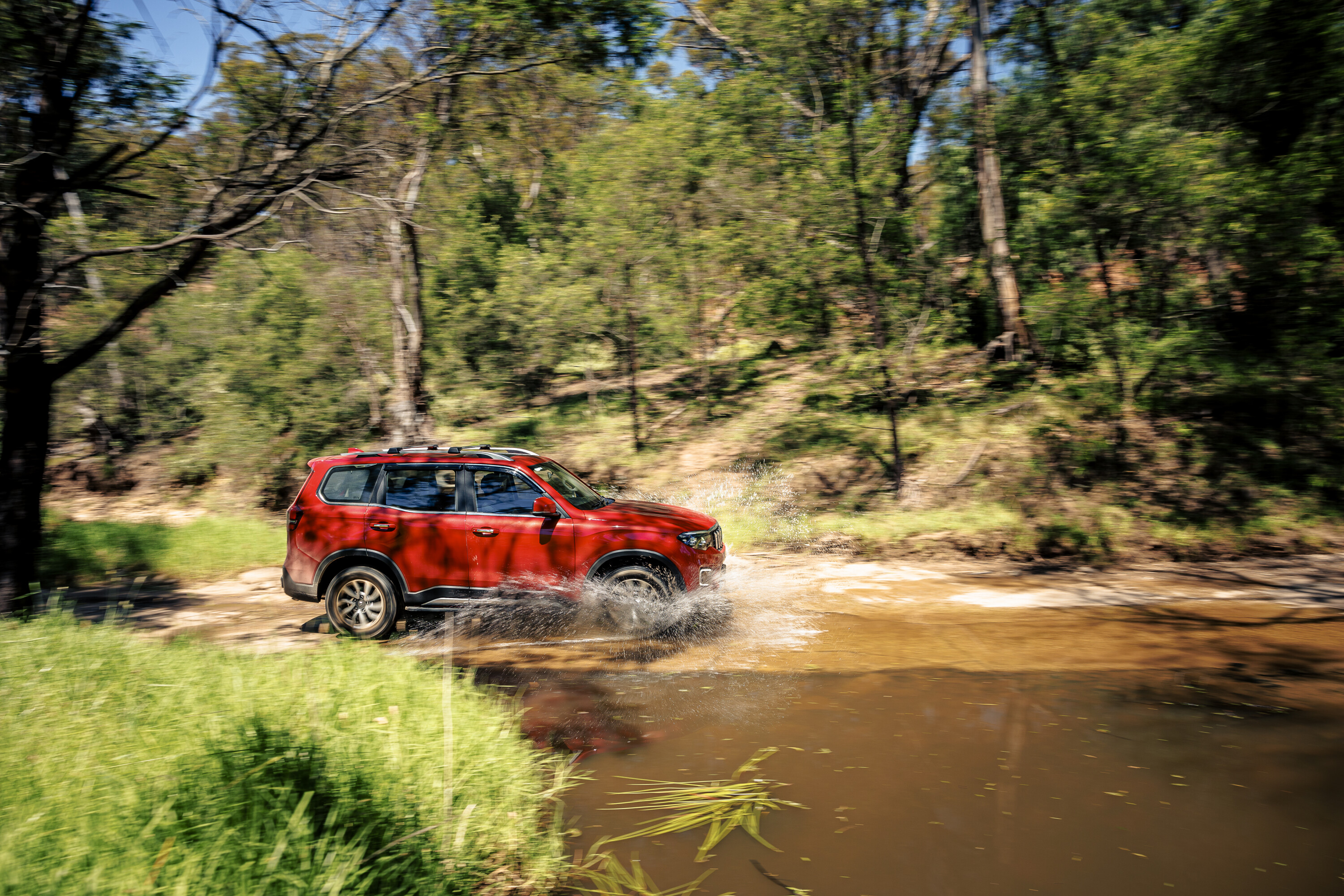
For the super-keen, there’s an overnight trek that follows the gorge and river from O’Briens down to Mackenzies Flat. Camping at O’Briens Crossing you will also (hopefully) spot some of the native fauna that reside in the park: swamp wallabies, echidna, powerful owls and greater gliders are some examples. For anglers, it is worth an amble along the riverbanks to try your hand at catching the brown trout found in the river.
A more remote, 4×4-access-only campsite can be found at Amblers Crossing, accessed via Amblers Lane Track in the park’s northern section. This is a small campsite that offers an escape from the relative hustle and bustle of Mackenzies Flat and O’Briens Crossing, plus it is right next to a water crossing so ideal if you’re camping in summer and need to cool off.
The walk to The Tunnel, a natural rock formation, can be accessed from camp. Amblers Lane Track also goes into Wombat State Forest if you’re keen for cross-border exploration; the state forest’s tracks offer everything from a laidback cruise to seriously challenging terrain. There is one other remote campsite near the northern state park/state forest boundary meeting point on the Upper Chadwick Track.
A night at Amblers Crossing is our tip, followed by a leisurely morning exploring this area before jumping in the rig and turning northwest toward the park boundary near the town of Blackwood (making sure you stop at Shaws Lake for another dip) and back to the bitumen.
Alternatively, you could head east and wind in and out of the state park and Wombat State Forest, before finishing off your visit by tackling the steep, rutted Ratcliffe Track (check conditions first – don’t attempt this track after heavy rain) and then rejoining the bitumen at Bacchus Marsh-Gisborne Road.
It may be small, but Lerderderg State Park promises a couple of days of big fun.
This immense 6474km² national park sprawls across central and north-east Victoria, with the three ‘sections’ linked by narrower areas.
True to its size, Alpine NP is jam-packed with off-road touring opportunities, tracks ranging from easy to challenging and myriad historical huts dotted throughout. Plus, there’s a ton of campgrounds, plenty of sightseeing, mountain biking, bushwalking, and mountain streams filled with trout to entice the angler.
There are numerous entry points from the east and south (including Mansfield and Bright), and there’s the potential to spend a few weeks in the park. For a shorter adventure, we suggest kicking off in Dargo, around four hours’ drive from Melbourne and located just outside the NP’s southwest section.
One of the most popular destinations for off-road tourers is the Wonnangatta Valley and the historic station (and campground) of the same name. From Dargo, drive south to Short Cut Road, then on to Crooked River Road that, initially, follows the course of the Wonnangatta River.
There is a campsite at Black Snake Creek if you want a short drive on the first day, but we recommend continuing on Crooked River Road and then making your first big decision of the trip at the junction of this road with the (in)famous Billy Goat Bluff Track – one of the park’s steepest. For the ‘long way around’ to Wonnangatta Station campground, turn onto Billy Goat Bluff Track and start the ascent westward.
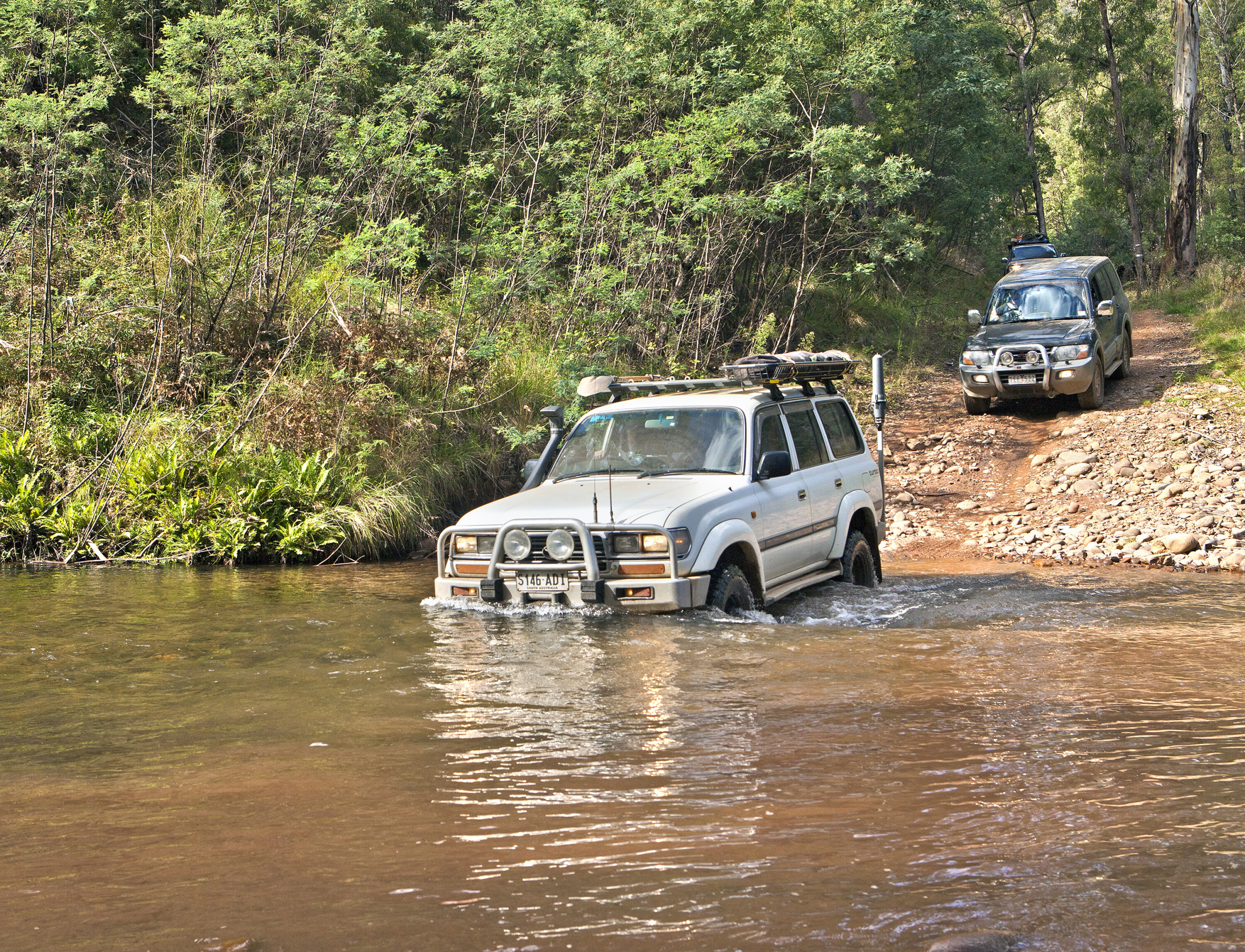
Atop this lengthy climb you find the Pinnacles lookout (the views across to Gippsland Lakes and Mt Hotham from the fire tower lookout are fantastic) and then Horseyard Hut (an excellent riverside campground) before reaching Moroka Hut not long after you finish the climb and have joined the track/road of the same name.
Following Moroka Road northwest brings you to Arbuckle Junction, where a left turn heads up onto Lost Plain and towards McMichaels Hut and Kellys Hut via, firstly, Tamboritha Road, then on to a track to the right that becomes Kellys Lane. The views are magical, so take your time and get out and stretch the legs.
This diversion loops back on to what was Moroka Road but is now Howitt Road. A highlight along the 30km stretch between this junction and Howitt Hut is the Bryce Gorge Circuit walk carpark; a wander here is rewarded with gobsmacking views of Bryce’s Gorge and Pieman Falls. Another walking track here takes you to historic Guys Hut. Hop back in the 4×4 for the rest of the days’ drive to Howitt Hut – a top spot for a night’s camp.
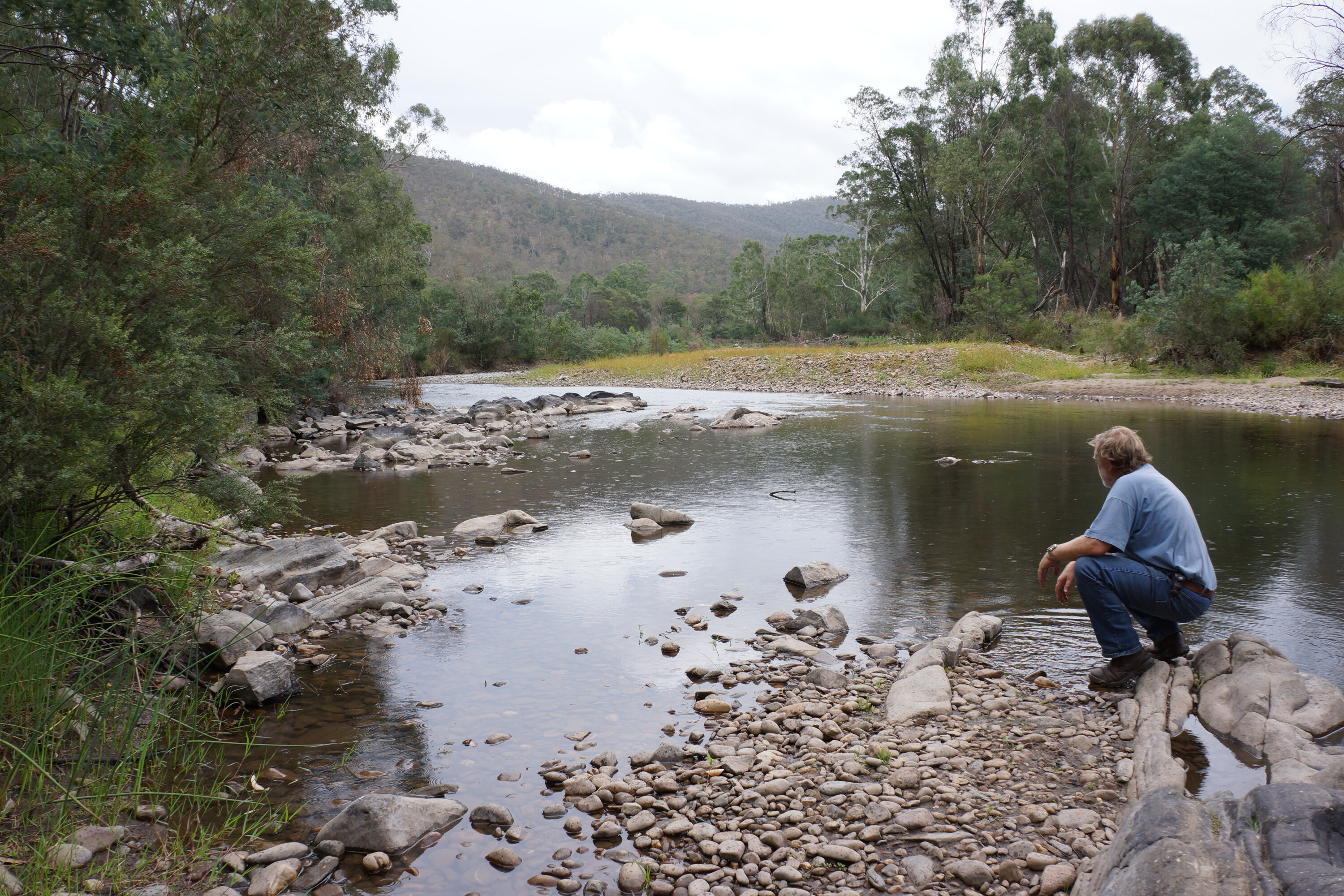
The next day is a big one, as you descend the steep Zeka Spur Track into the Wonnangatta Valley. The valley makes for a great camp, but for more seclusion head southeast along Wonnangatta Track and the steep Herne Spur Track before joining Cynthia Range Track that traverses Wombat Spur. You can take a diversion to the mining ghost town of Talbotville via the McMillans Station Track, or continue on the main track and find a remote bush campsite next to the Wonnangatta River for the final night.
The nearby Grant Historic Mining Area is worth a look the following morning before returning to the city lights. The good thing is you can, on the way home, console yourself with the fact that Alpine NP is so big, there are plenty of reasons to return for more adventures.
Not much more than an hour from Melbourne, via one of the world’s best coastal drives (the Great Ocean Road), you’ll find the Otways, comprising Great Otway National Park, Anglesea Heath and Otway Forest Park.
This area borders Bass Strait and the Southern Ocean to the south, and pushes north from the rugged coastline and its many beaches into mountainous forested terrain that contains lush rainforest, a number of waterfalls, lakes, plenty of tracks, great campsites (both coastal and forest; camper trailer access at most) and brilliant viewpoints.
As well as touring and camping, there are a number of bushwalks in the area (including the beautiful Great Ocean Walk), beach fishing, cycle touring (the 45km Old Beechy Rail Trail, from Colac to Beech Forest Ridge, is a family-friendly ride that can be broken into shorter sections) and loads of mountain biking opportunities at the township of Forrest, which has a 60km MTB trail network.
A number of vehicle tracks in the park are closed seasonally (most tracks close at the start of June and reopen November 1 each year, with most tracks being relatively straightforward (barring Denham Track). For those looking for a spring-through-autumn destination that is super close to the city, the Otways is up there as one of the best weekend getaways in Australia.
The Great Ocean Road town of Anglesea is the most popular access point and also allows you to stock up on any last-minute or forgotten supplies before heading to the hills. You can do this virtually straight from town, heading slightly northwest to join Coalmine Road, or you can access the popular Denham Track via Mt Ingoldsby Road. Denham Track is the more challenging route into the park and we’d recommend a vehicle with low range, owing to this track’s sandy ascent early on.
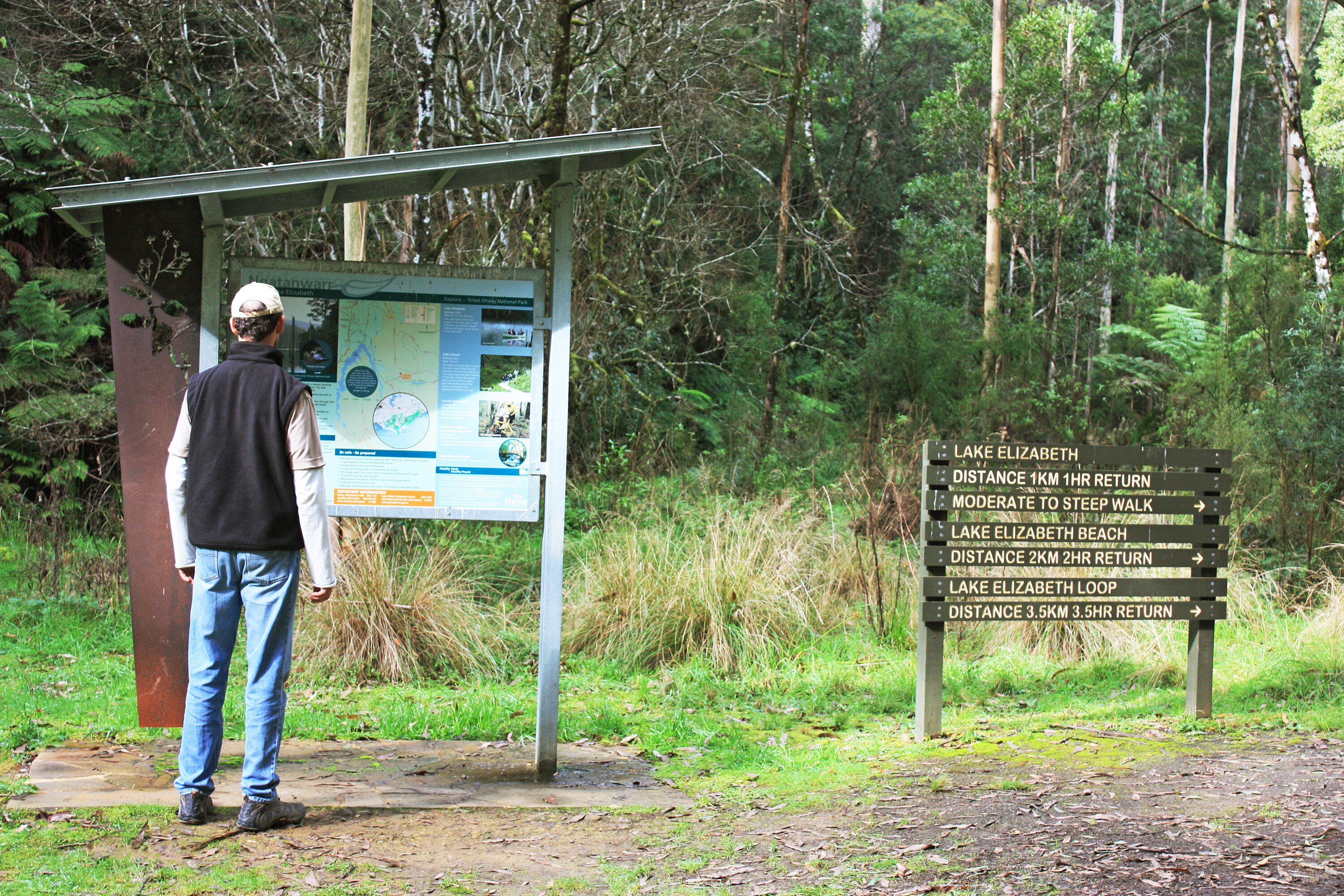
This track winds its way up and northwest for around 12km from the gate, eventually joining the No.2 Track. If you are heading for Hammonds Campground, turn right here and continue along No.2 Track before coming to a junction. Hammonds Campground is further northwest from here, along Bambra-Aireys Inlet Road (with a short turn onto Hammonds Road just before the campground), or turn left (south) if you want to have lunch or just check out Distillery Creek Picnic Area.
Some of the park’s bushwalks leave from here, too. The Hammonds Campground is first-in, best dressed in terms of grabbing a site, but it is a large cleared area (Parks Vic estimates room for 20 ‘sites’) that has toilets, fireplaces (bring your own wood) and picnic tables. However, there’s no available water, so remember to bring your own.
If you’re keen on making a full weekend of this park but want to explore as much as you can, there’s the option to loop onto Hammond Road northwest to Deans Marsh-Lorne Road to visit Big Hill Campground. This campground can also be reached from the Great Ocean Road via Big Hill Track, another dirt-road climb that also closes over winter.
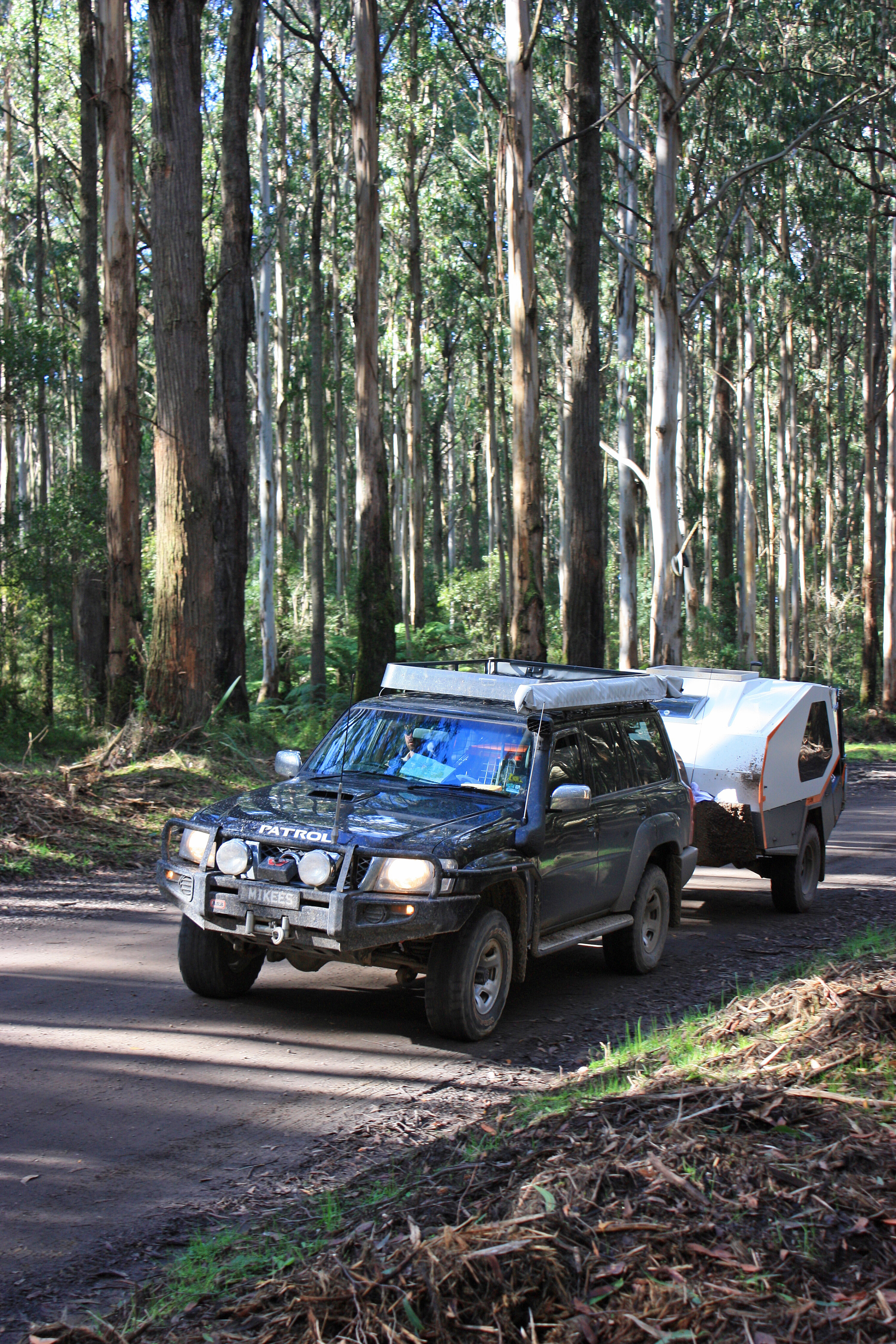
Big Hill Campground offers 12 to 20 sites (depending on how many camper trailers vs tents), is free, and is another first-in, best dressed scenario. Both Big Hill and Hammonds are very popular in-season. For those looking for a touch more remoteness and fewer campers, your best bet is to head south from Big Hill campground to Jamieson Track Campground via Deans Marsh-Lorne Road and the Great Ocean Road. This small bush camping area has minimal facilities and is 4×4-access only.
It is in between Lorne and Wye River, inside Great Otway NP, and just north of the Great Ocean Road and beside pretty Jamieson Creek. The track of the same name also offers access into the middle section of park, so if you’re keen for a ‘quieter’ first night, aim for this pristine campsite on the first day from Melbourne.
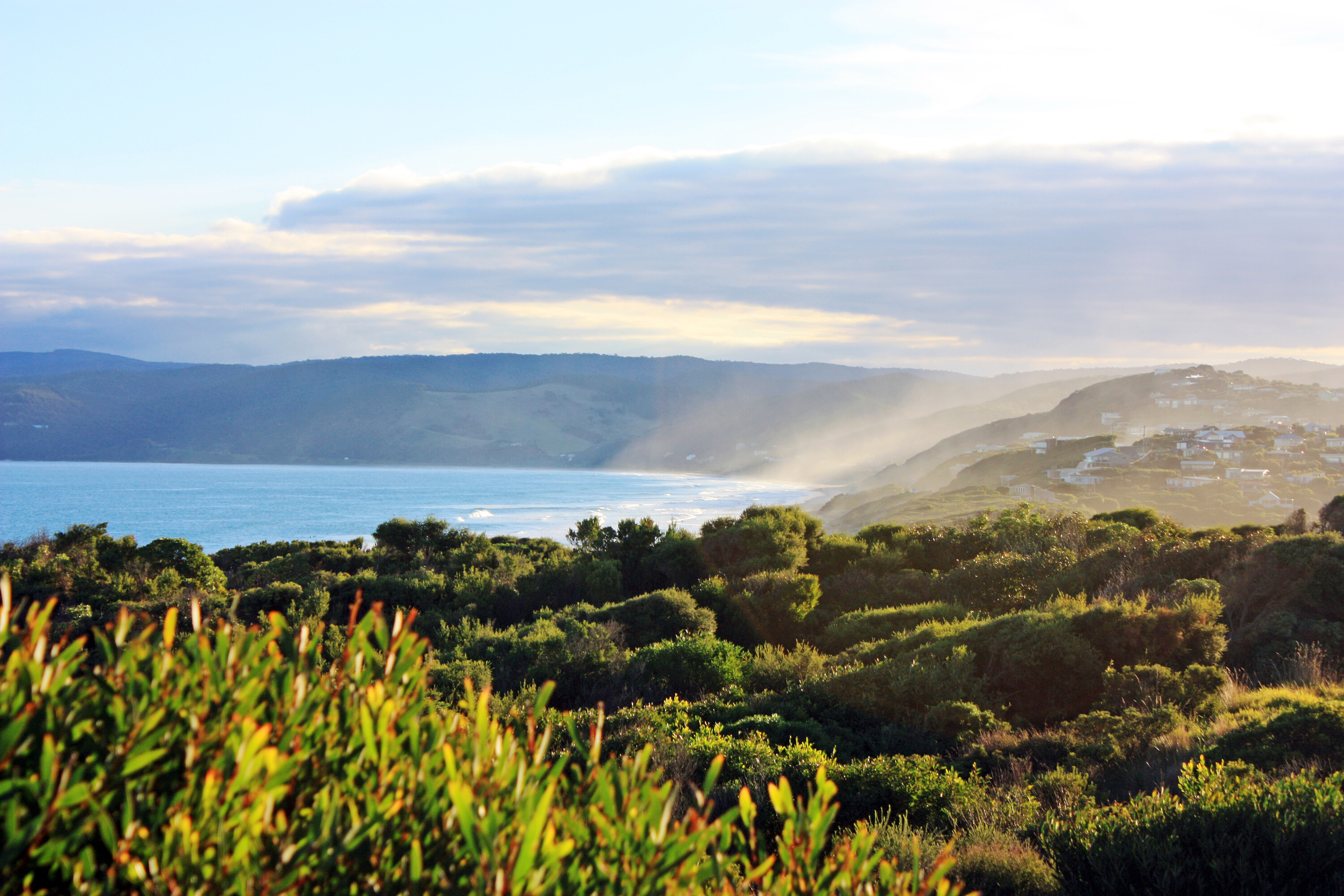
For those with an extra couple of days, it’s worth continuing from the middle section of the park to its western borders. There are spectacular waterfalls (Triplet, Hopetoun and Beauchamp Falls) in the north and great camping at Aire River in the south, just inland from the coast and along both sides (east and west; close to 100 sites all-up) of the river.
Canoeists and kayakers can explore this waterway, and the fishing is great. Aire River Beach is a short drive (or long walk) from the campsite, too, so beach fishing (or boat; there’s a ramp at the east campground) and swimming are also popular activities.
To do the Otways justice it’s best to divide the east and west sections into two different weekends away. The bonus is you are guaranteed a mix of landscapes (forest, beach, waterfalls and rivers), campsites and driving conditions on both occasions, and you’ll see something new each time. Not bad at all.
Little Desert NP is Victoria’s own ‘outback’; located around four hours’ drive west of Melbourne, not far from the township of Dimboola.
The 1326km² park is bordered by the Wimmera River (great for fishing) and the SA/Vic border on the western side, near Naracoorte, and has a fantastic mix of sandy desert terrain and huge river red gums beside the Wimmera.
The landscape offers an incredible mix of vegetation, too – mallee country vegetation, such as heath, is dominant in the eastern section due it receiving less rainfall than the western section. The west plays host to casuarina woodlands and some sections of swamp (after rain), with the ubiquitous river red gums bordering some of the park’s waterways.
The park includes several campgrounds, ranging from the easily accessed (via bitumen roads) to the more remote desert sites. There are numerous sandy 4×4 tracks to drive as you explore the park, plus two sealed ‘main’ roads that you can hop on and off as you link these tracks. The tracks here are sandy and very soft – a dual-range rig is essential – but they offer the chance to escape the crowds and really immerse yourself in this park.
For us, a great adventure is to tackle an east-west traverse of the park’s three ‘sections’ via the McDonald Highway, which starts at the eastern end of the ‘centre’ section of Little Desert NP, via Nhill Road to the east. Don’t let the moniker fool you, as this ‘highway’ is actually a sandy track.
However, if you link it with the Eastern section tracks and then, once you’re through the centre, drop south along Kaniya-Edenhope Road (just outside the centre section’s park boundary) to re-enter the park via the East-West Track, then you’ve got at least a rough plan for a weekend.
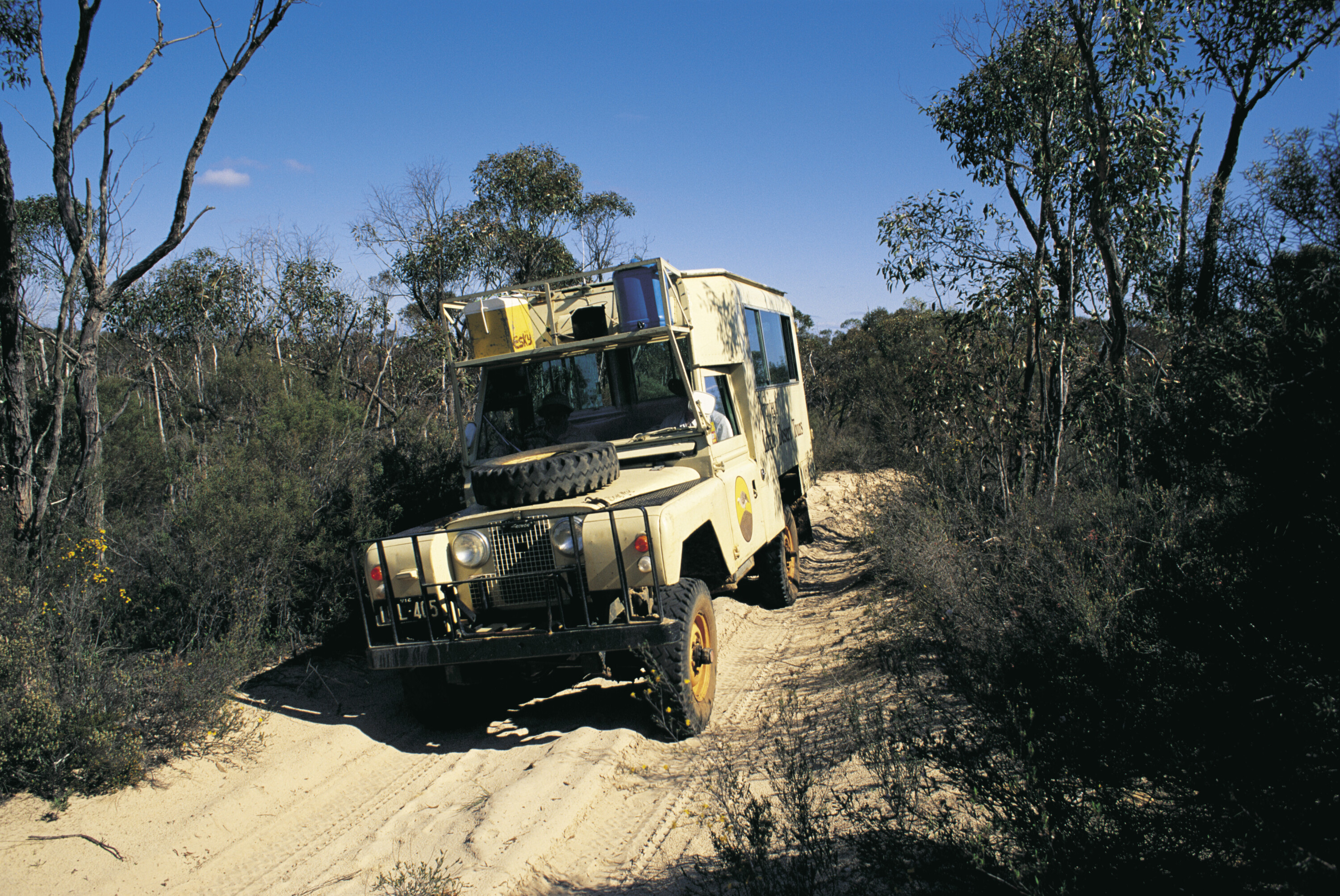
If you start in the east you can spend the first day exploring the eastern section of the park and its numerous tracks, before camping that first night at Kiata Campground, or Ackle Bend and Horseshoe Bend campgrounds (these three campgrounds are also ideal for caravan/camper trailers).
The park’s six campgrounds (including a couple of walk-in ones such as Mallee Walkers Camp and Yellow Gum Walkers Camp) offer excellent camping; plus, you can also bush camp in the central and western sections of the park, allowing you to find that perfect desert solitude along one of the side-tracks. Camp fees apply at Ackle Bend and Horseshoe Bend, so you need to book ahead.
It’s also worth noting that you will need to bring your own water, as potable water (or any water) is a scarcity in the park and not always guaranteed. It’s also worth packing a powerful torch for some night-time wildlife viewing at the campgrounds; possums and nocturnal birds are aplenty in this national park and spotting them makes for a memorable experience for young’uns (okay, okay – all of us, really) in your company.
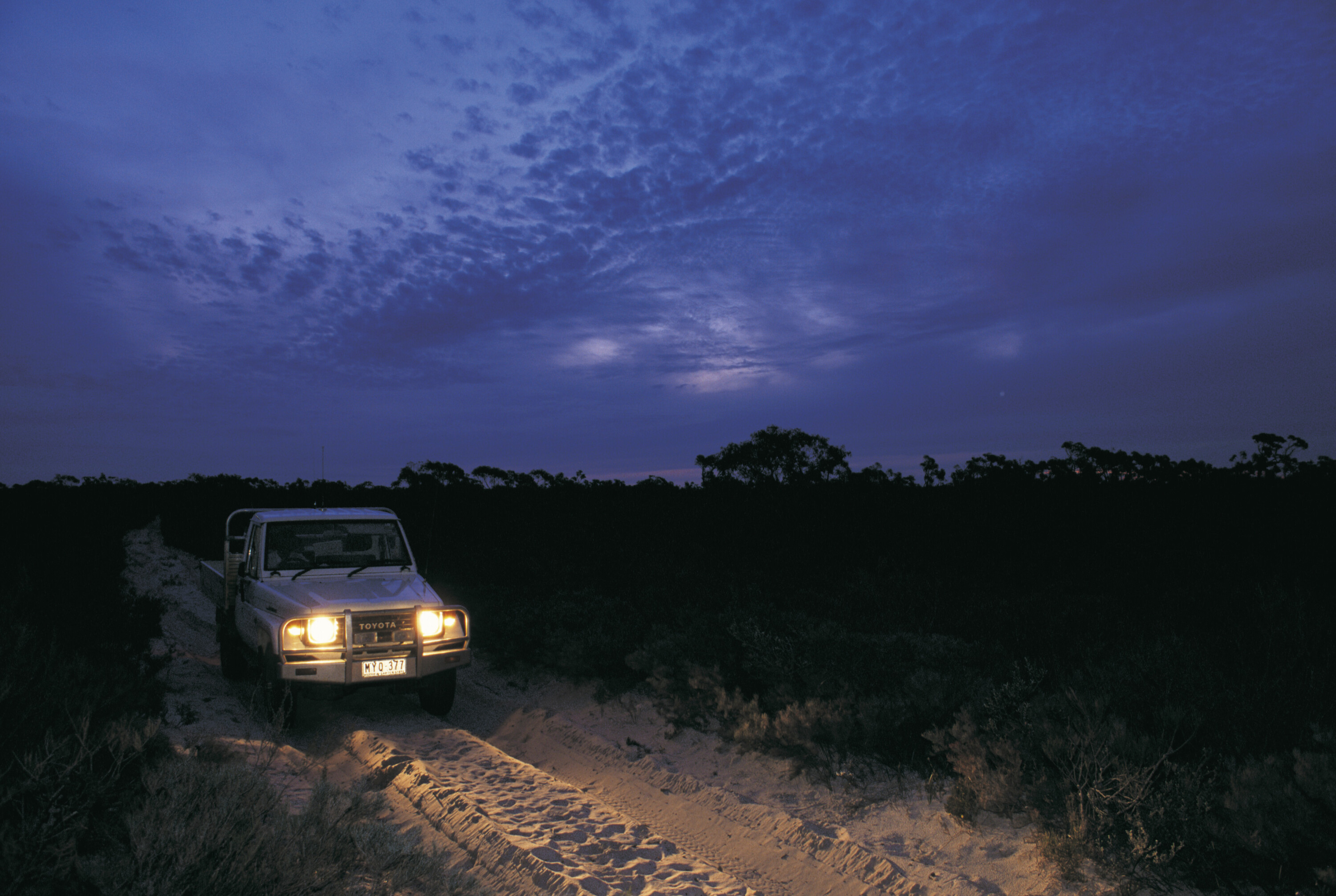
With roughly 600km of tracks in the park, there are some crackers including Dahlenburgs Mill, Jungkum, Salt Lake, Mallee and McCabes Hut (in the eastern section), as well as Broughtons-Sambells (this takes you to Broughtons Waterhole campground), Lawloit (for views of and from Sister Hills), Jacobs and Mt Moffat, this one found in the far western section of the park and leading to its namesake peak (worth a visit).
The tracks in the park’s western section are generally rated as more difficult, but experienced drivers should have little trouble negotiating them. Just keep an eye on the weather forecast when planning your trip out here as the tracks can become seriously boggy after precipitation. Be aware that the tracks in the western and central sections are subject to seasonal closure (June 1 to October 31) and weather conditions.
As well as plenty of off-roading, Little Desert NP is a great destination for bushwalkers; numerous short walks averaging a couple of hours include the Pomponderoo Hill Nature Walk in the park’s north near Dimboola, a pretty stroll beside the Wimmera River between Ackle Bend and Horseshoe campgrounds, and the 74km Little Desert Walk, which can be broken into shorter sections if you wish.
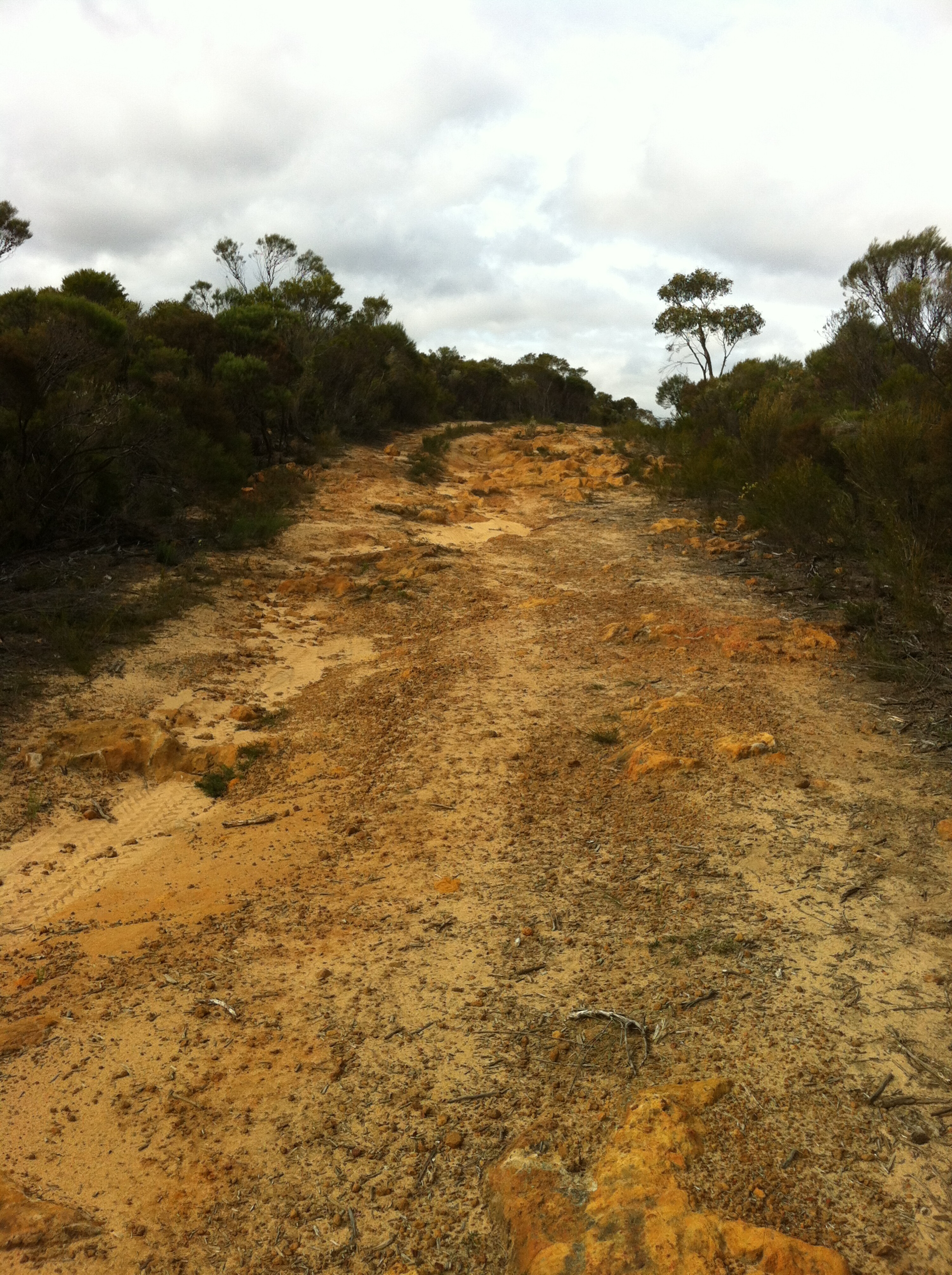
This walk also brings you in closer contact with the park’s 220 bird species (including emus, wedge-tailed eagles and the rare malleefowl), plus you’ll spot plenty of kangaroos, reptiles (look out for snakes) and, if you’re there in spring, a landscape dotted with wildflowers. If you decide to make your Little Desert Walk an overnighter (or longer) you’ll gain access to walk-in-only campgrounds and true remoteness – just don’t forget to register online with Parks Victoria.
For those after that outback adventure but don’t have the time to travel into SA or the NT, Little Desert National Park offers a brilliant desert driving experience, combined with prolific wildlife to view and sublime campgrounds to enjoy.
Road to Ruin documents a fantastic trip along the Canning Stock Route in a Series Land Rover.
First constructed as an alternative to take on the established Kimberley cattle monopoly controlling the supply of beef from the east Kimberley to the Perth market, the Canning Stock Route (CSR) surprisingly saw barely 20 droves between 1931 and 1959.
Long abandoned for cattle work since, the track has gone through multiple stages of repair and disrepair, but due to the availability of water from the multiple wells located approximately a day’s drive apart, and later the implementation of fuel sites (Parnngurr Community near Well 22, Kunawarritji Community near Well 33, and a drop point near Well 23), it has thrived as a badge of achievement for 4X4 owners seeking non-homogenised off-roading adventure.
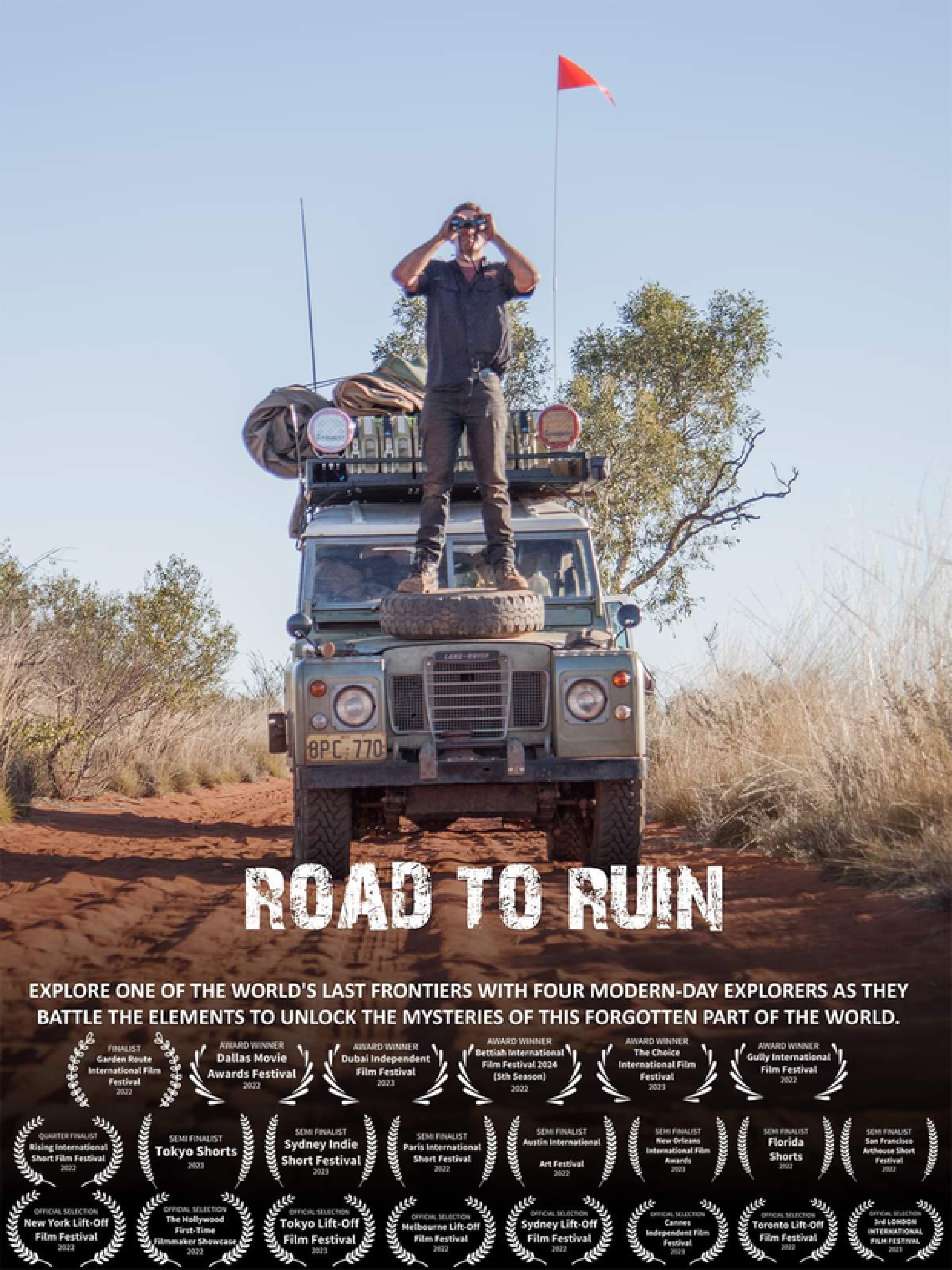
Stretching south-west from Halls Creek in the Kimberley, through to the goldfields near Wiluna, there are no towns along the CSR’s entire length for support. It was this kind of open country, offering such distance, history, isolation and challenge, that saw the team at Seriously Series wanting to take it on using the most basic off-road vehicle and tools. The idea was to follow Alfred Canning’s route, starting in Wiluna and travelling north-east towards the Tanami Desert and the route’s original start point at Halls Creek, all the while documenting the landscape and journey on video.
The trip centred around Geoff Lewis and Damon Heather travelling in Geoff’s 1975 Land Rover Series 3, fresh from a two-year rebuild completed the same day the journey began. A much younger 2010 Land Rover Defender piloted by Claire Lewis and Stevie Tuchowski served as camera car, while also providing a safety net should things go wrong.
With all the hallmarks of previous Australian explorers like Malcolm Douglas and Mike and Mal Leyland, Road to Ruin strips the usual Youtube-esque gloss and replaces it with the gritty outback travel reminiscent of those pioneers of early 4×4 television shows.
Dealing with setbacks and multiple failures any way they can in a dauntingly remote part of Australia, however stunning the scenery may be, the Seriously Series team dig deep through the stress and frustration when things go awry. Stick around for the rundown figures at the end, as it gives a brilliant insight into what the team went through to achieve what they did.
To give perspective of the scope of challenge the team faced, the usual 4×4 travel time of the CSR clocks between 10 to 14 days, but by the end of their journey, that counter had pushed past 22.
Since being released, Road to Ruin has now been accepted to stream in 25 countries on several platforms including Amazon Prime, Google Play, YouTube Movies and Apple TV. It is well worth the watch for any 4×4 traveller looking for inspiration and adventure.
1975 Series 3
Geoff Lewis, a dyed-in-the-wool Landy enthusiast, made a number of modifications to his 1975 Series 3 to tackle the CSR.
The factory 2.25 litre 4 cylinder petrol engine was left mainly stock with its 8:1 compression ratio allowing ultra-low octane fuel to be run with just a timing adjustment should it need to. Rover differentials were used with 4.7:1 ratios, as well as ARB air lockers, along with Powerlock free wheeling hubs, while the suspension was heavy-duty Land Rover leaf springs and fresh Old Man Emu nitrocharger shock absorbers.
Two 72-litre fuel tanks were topped-up by six 20-litre roof-rack mounted jerry cans. An Aero parts Capstan winch was fitted, running a dog clutch from the engine’s crankshaft.
Grampians NP, three hours’ drive northwest of Melbourne, has something for any adventurer, whether you’re a keen four-wheel driver, rock-climber, hiker, cyclist (both road and MTB routes are found inside the park), birdwatcher, or just want to sit back with a coldie at camp and watch the sun set over some of this country’s most dramatic mountain ranges.
Known as Gariwerd to the local indigenous people, the park’s landscape is dominated by sandstone rock formations interspersed with lakes, waterfalls and a number of rock-art sites, five of which are open to public viewing. The park has some 80 per cent of Victoria’s aboriginal rock art.
From Melbourne, Grampians NP is best accessed from Halls Gap on the park’s eastern boundary, off Grampians Tourist Road reached via the Western Highway, through Dunkeld to the south. Halls Gap is a great place to check out and/or grab some supplies, and it’s also home to the excellent Brambuk, the National Park and Cultural Centre which contains loads of maps, walk guides and park info; plus, it’s the place to grab any relevant permits. It also houses a ‘Dreaming Theatre’ and interpretive displays, and, most importantly, a café.
To explore the park the best bet is to tackle it in sections, with the southern, central and northern Grampians all offering a unique experience. The park is popular, and Parks Victoria (unlike its neighbouring state directly north) understands the appeal of camping in national parks and offers 10 vehicle-based campgrounds.
We reckon going west is the best way to quickly immerse yourself in the park’s speccy natural attractions. Following the Northern Grampians Road west leads to Boroka Lookout side-trip, which is a cracker; with the peaks of the Mount William and Wonderland ranges, as well as Halls Gap itself, all visible from this lofty viewpoint.
From here you return to what becomes Rocks Road when you turn (and continue) west, passing Reeds Lookout and then – just nearby – a turn-off to Bluff Lookout and a grand sight: MacKenzie Falls. Here, you can check out this wild waterfall’s cascading descent into the river of the same name, or you can head to Broken Falls Lookout (from the same carpark) for similar views.
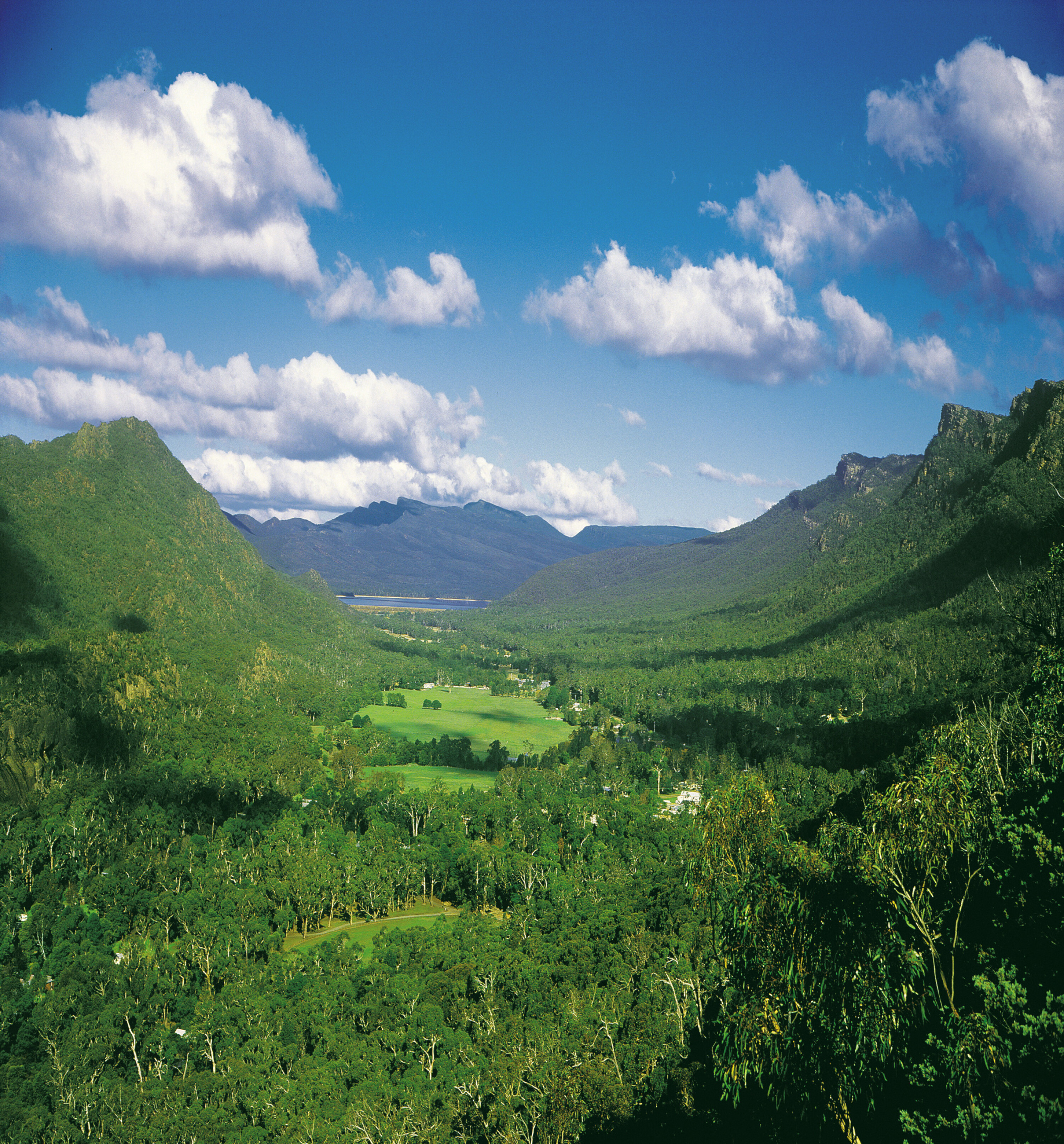
The park is full of bushwalks such as these, but for the really keen/experienced walkers, there is the new Grampians Peaks Trail that, when finished, will comprise a 12-day trek from one end of the park to the other. At the moment, only the first stage is open.
From Buandik Campground, loop south on Harrop Track and tackle a steep ascent (on foot) to another natural feature: the Chimney Pots, a collection of eroded rock turrets that are a steep scramble to reach but offer epic views north across the park.
Leaving these age-old sentinels you can either keep following what is now Glenelg River Road or take the ‘high way’ along Victoria Range Road, backtracking north until you eventually reach Boreang Campground. This popular campground (bookings are essential all year ’round) offers a dozen tent sites (with vehicle parking) and 11 caravan/camper-trailer sites.
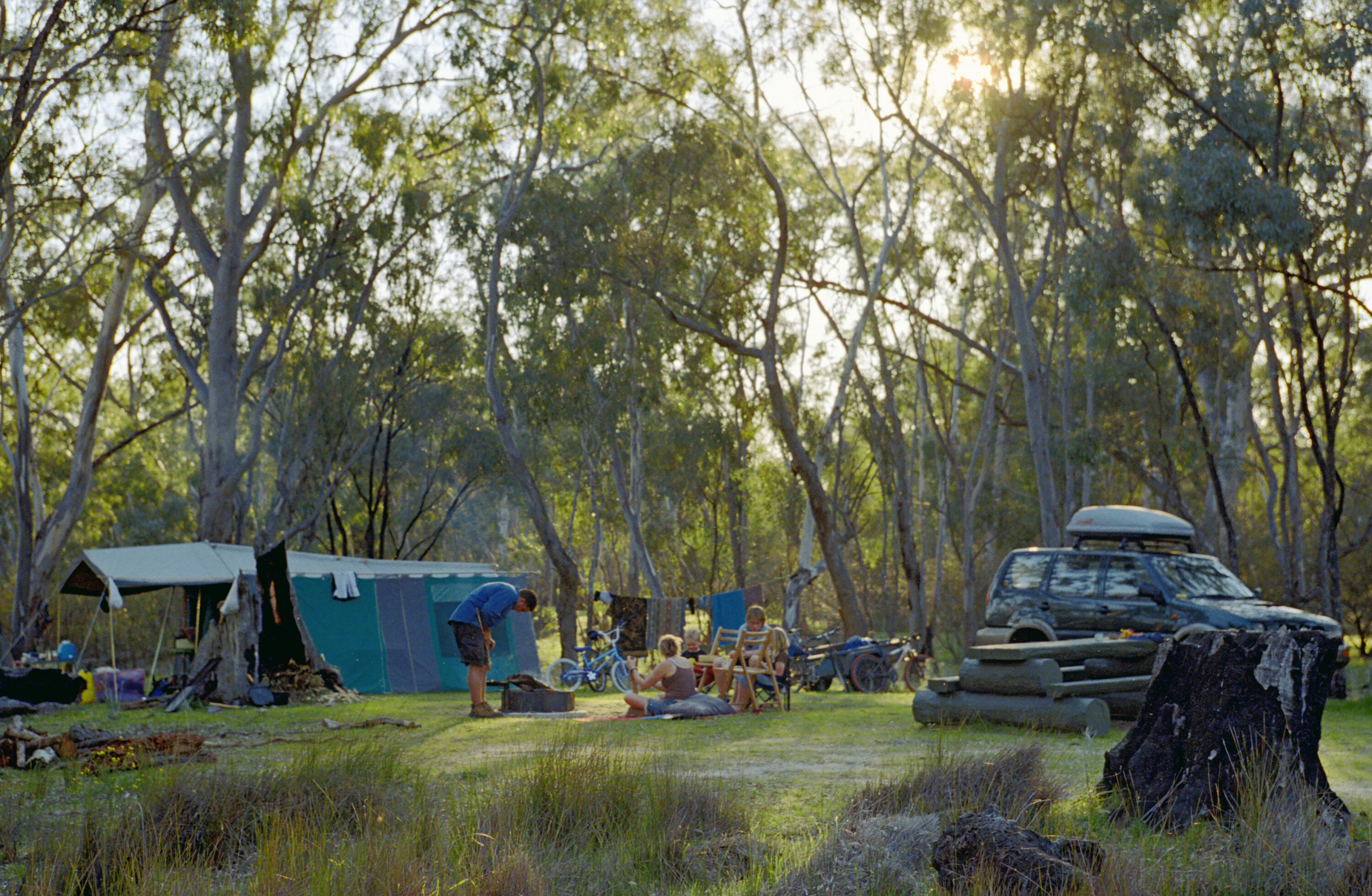
All sites are unpowered but there are toilets, fireplaces and picnic tables. If you had to break down a Grampians trip(s) into a couple, then this campground makes a top spot from which to explore the vast central Grampians, or – as with this route we are describing – it provides a nice final night in this park.