
Modified tourers come in all shapes and sizes. Some are built for weekend rock-crawling or fun in the mud, while others are built for specific reasons, which is the case for outback social media icon, Jillaroo Jess.
As readers would know after reading our recent profile on Jess, her job – indeed, her life – is one big outback road trip, travelling from one seasonal job on a remote property to another. For this very busy lady, there’s only one choice when it comes to her own vehicle: it must be a reliable, bombproof rig that will get her there, back and there again as she criss-crosses the outback for work. The rig of choice for Jillaroo Jess is a Toyota Land Cruiser 79 Series ute – yep, the iconic outback workhorse – that has, as you would expect, copped a few essential mods from the team at Terrain Tamer.
The Land Cruiser 79 build was the focus of the recent TV series Terrain Tamer meets Jillaroo Jess, with Jess joining 4×4 icon Allan Gray and his son to fit some bush-ready accessories to Jess’s ute and make it even more capable, something which most of us could do with for our own rigs, as Brent Hutchinson from Terrain Tamer explains.
“Jess and her vehicle were the perfect example because they do such long kilometres,” Brent says. “So the whole reason behind fitting her vehicle out was it was just such a great example to so many of our core customers out there that needed to be aware those accessories were available [for the LC79 and other vehicles].”
One of the interesting things about this modification story was the fact that the Terrain Tamer team initially had to try and figure out the mods needed from, quite literally, the other side of the country.
With Jess being nomadic but mostly based somewhere in the huge state of Western Australia, and Terrain Tamer HQ in Melbourne, it meant more than a few phone calls to figure out what was needed – and nail down any problems Jess was experiencing with the ute that could be fixed by fitment of certain accessories.
“This was a different one because we were a long way away, literally on the other side of the country trying to diagnose things before heading out there,” Brent says. “So there was a lot of dialogue based around what her vehicle has and needs and what problems she comes across.
“So, certainly, Alan and I would discuss that before we put everything together, but we knew we had a number of parts that were just released – or shortly to be released – that would be of great benefit.”
One of these parts to be ‘just released’ was Terrain Tamer’s replacement fifth gear for the LC79. The final gear in the Toyota workhorse is notoriously low, meaning that big lazy 4.5TV8 is actually not so sedate, staying relatively high (for a diesel) in the rev range.
Terrain Tamer’s replacement fifth gear, manufactured from Rockwell steel, drops RPM by a claimed 20 per cent – a significant reduction, especially for someone who is driving many thousands of kilometres each year – which means a big saving in fuel costs for Jess.
Another essential mod for Jess’s LC79 was fitment of Terrain Tamer’s Pro Shock Absorbers, Smart Coils, and matched leaf springs and bushes. Brent goes into more detail about the full suspension kit, and just how ‘smart’ those Smart Coils are.
“It is a Terrain Tamer suspension kit and it has the Terrain Tamer Pro Shock, so they’re the ones with the remote canister and the adjustable dial,” he says. “The reason for that [fitment] is that she is travelling such high kilometres and also travelling a lot on bitumen to get to a job. Then she’ll be travelling for three months at a time on the station where she’s not seeing the bitumen, so she can adjust the dial there.”
In terms of the Smart Coils, fitting them was a must, with the end result of more stability when on- and off-road, and improved cornering.
“We test for body roll and try and keep things as stable as possible, so there is less wear and tear on the suspension and she’s got more control over the vehicle,” Brent explains. “So that smart coil on the front of the vehicle; it gets thinner (tapers) higher up the coil and this means that as you are leaning into a corner, there is less rebound as it is coming back out of the corner, so you’ve got more stability.”
The Pro Shock’s additional oil reservoir, courtesy of the remote canister, also means lower shock temps, thus minimising the chance of the shocks fading due to overheating – another no-brainer for anyone driving many outback kilometres in trying conditions. Brent mentioned that, during testing over a short 8km off-road drive course, the Pro Shocks measured approximately 9.3 per cent cooler. And that’s over a very short test distance – over a longer all-day journey, the benefits of shocks that cope with heat build-up more effectively is immeasurable.
One thing Jess – as a certified rev-head – was keen on was a bit more grunt from the 4.5TDV8 donk. Terrain Tamer fitted a Safari Armax ECU, a ‘piggy-back’ style unit (it works with the stock ECU) that is claimed to produce up to a 25 per cent increase in power, along with improved fuel economy, in conjunction with a Safari Armax snorkel. This lead to another mod: fitment of a Terrain Tamer Fortified clutch. Again, this was with a focus on reliability, as Brent explains.
“We knew that we could get more power – and more fuel economy – and we know the Toyota 70 Series is right on the threshold with the clutch and it will start to slip once you put that modification (the Armax ECU) on. We just know that from experience,” Brent affirms. “And really interestingly it did – Jess mentioned it during filming – it did slightly slip driving from her homestead into Karratha, which is about an hours’ drive. So it was good to know it had happened in ‘real life’ before we went and changed it to the fortified clutch.”
Jess is often driving at highway speeds for long distances and, on these more remote roads, the risk of animal strike, whether wildlife or wandering stock, is high. Therefore, a decent set of stoppers is handy. The need for braking power to match the LC79’s increased grunt led to Terrain Tamer fitting its own high performance rotors and heavy-duty brake pads.
Further reliability-boosting mods to the Cruiser included fitment of a Flashlube diesel pre-filter, owing to the fact that Jess could not always be sure of the quality of diesel she was filling the Cruiser with. A well-proved Piranha dual-battery system – to keep those after-work coldies, ahem, cold, in the fridge/freezer – was also added.
Of course, on a more serious note, the dual-battery system minimises the chance of Jess being left stranded in the middle of nowhere due to said fridge/freezer draining the battery. If this modified LC79 sounds relatively straightforward, it’s because it is just that – and it is also smart.
The modification process for this rig reflects both Terrain Tamer’s many years of experience at tweaking off-roaders, and the common-sense approach of its owner. As a station worker who travels many kilometres during the year over a variety of road/track surfaces and into some very remote parts of this country, Jess needed a modified workhorse built that was as close to unstoppable as can be – and with the clever modification process by Terrain Tamer team and Jess, that’s exactly what she got – and she’s stoked.
In fact, this LC79’s sensible mods list is a bloody good example for anyone considering building up a bush-tourer in which to explore this awesome country of ours. Now, where’s that Terrain Tamer HQ phone number…
I regularly drive from my home base in the ’Gong down the Hume Highway to Melbourne. Over the years this trip has become easier and easier, though it has also become more and more boring.
Sure, wide dual-carriageway freeways are a more efficient and safer way of moving lots of traffic around than old two-lane highways, but Australia’s draconian speeding laws make freeway driving one of the most tiresome and boring pursuits a motorist could ever face. The other day 4X4 Australia deputy editor Justin Walker and I had to do the run down the dreaded Doom to Melbourne.
Justin was kind enough to pick me up at sparrow’s fart in Wollongong and, after a 30-minute run along Picton Road, we found ourselves heading south down the Hume Highway. Wanting the journey to finish before it had even begun, we thought we’d better push the envelope, so to speak, so I cracked open the ‘Speedometer’ app on my iPhone and set the cruise control to around nine per cent over the posted limit.
After all, there’s a rumour of a 10 per cent tolerance in NSW and we thought we’d take full advantage of it. While this ‘10 per cent tolerance’ has never been confirmed by the NSW police, a speedo error of 10 per cent used to be written into the Australian Design Rules well before GPS technology could provide a more accurate way for the average punter to confirm their velocity.
We saw a couple of cops on the run down to the Victorian border and, despite our possibly dodgy interpretation of what speed is acceptable to the boys (and girls) in blue in NSW, they left us alone to carry on our merry way.
Other than speed-limited trucks, I reckon more than 50 per cent of the traffic on the Hume Highway that day agreed with our synopsis of just how fast you can go without being pulled over – some were a little more pessimistic while others were far more optimistic, and we spotted a couple of vehicles that must have been barreling along at a dollar thirty or more. Despite the speed discrepancy between vehicles, or perhaps because of it, everyone seemed to happily travel along the freeway in safety and without incident.
Then we reached the Victorian border. It’s well-known that in Victoria the police have zero tolerance for speeding drivers, even if they’re only a smidge over the limit, by just one or two kilometres per hour. So, once we crossed the Mighty Murray we backed the Disco 5km/h off and set our speed at the posted limit, again using the GPS in the phone to more accurately measure velocity (as an aside, the Disco’s speedo was optimistic by around six per cent).
Everyone around us, also aware of the zero-tolerance attitude south of the border, did likewise, resulting in what I refer as the Victorian Shuffle.
The Victorian Shuffle is where all the cars, buses and trucks on the freeway are travelling at almost exactly the same speed. Of course, there will be tiny variations in speed between vehicles, which will result in some of them trying to pass others.
The trouble is that trying to pass another vehicle when you’re only travelling 1km/h faster can take a very, very long time and, as a result, you can end up with groups of vehicles all travelling in close packs at very similar but slightly different speeds. In other words, the Victorian Shuffle, where everyone is scared of exceeding the speed limit by even the tiniest amount, results in vehicles travelling in close proximity for longer periods of time.
Obviously, the closer and longer vehicles are to each other, the greater chance of an accident, either through the lack of physical distance between vehicles or pent-up driver frustration. Yep, the Victorian Shuffle sucks, and it’s about time the powers that be reintroduced a bit of tolerance when it comes to speeding in Victoria.
Not too much, of course, because as we’ve all been told “Speed Kills”, but just enough to put some separation between vehicles once again. And, at the very least, the coppers down south should be able to use their discretion when it comes to booking drivers for speeding.
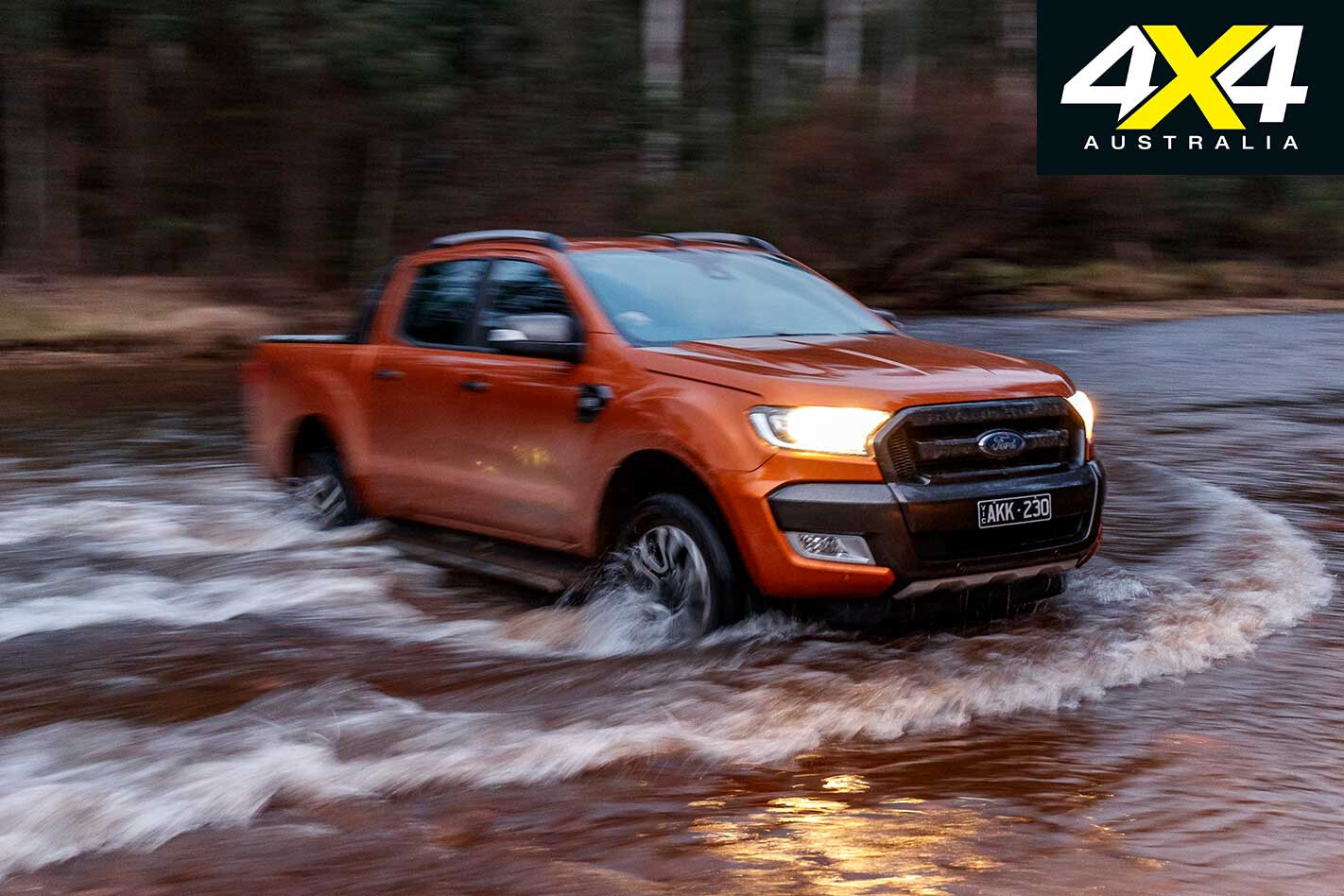
THE Ford Ranger has started 2018 where it left off at the end of last year, by topping the 4×4 sales charts.
With January 4×4 sales counted, the Ford Ranger outsold its biggest competitor, the Toyota Hilux, by just 12 units (2892 versus 2880). There’s then daylight between the next-best 4×4, Nissan’s Navara, which pushed out 1323 units.
Significant growth in the Light Commercial (LCV) segment saw sales increase by 20.3 per cent overall, compared to January 2017 figures. In fact, 4×4 LCV sales were up a substantial 26.6 per cent.
Tony Weber, the chief executive of the Federal Chamber of Automotive Industries (FCAI), suggested that the strong sales growth was indicative of the tough competition within the market segments.
“2017 was a record year for the industry and we’re pleased to see that strength continuing in the January 2018 sales results. Notably there was very strong growth in business sales of SUVs and Light Commercials.” Mr Weber said.
The growth of the LCV market is largely due to an increase in business purchases, which was up 26.7 per cent over the 2017 comparative sales. Private purchases were up 11.1 per cent.
When combining 4×4 and 4×2 variants, the Toyota Hilux was the best-selling vehicle on the overall sales charts (3860 units). It was followed by Ford Ranger 4×4 and 4×2 (3260); Mazda3 (3201); Toyota Corolla (2776); and Mazda CX-5 (2152).
u00a0 | 4×4 | Jan 2018 | Dec 2017 | 2018 Total |
| 1 | Ford Ranger | 2892 | 3105 | 2892 |
| 2 | Toyota Hilux | 2880 | 3114 | 2880 |
| 3 | Nissan Navara | 1323 | 1185 | 1323 |
| 4 | Mitsubishi Triton | 1313 | 2462 | 1313 |
| 5 | Holden Colorado | 1267 | 2871 | 1267 |
| 6 | Toyota Prado | 1169 | 1590 | 1169 |
| 7 | Toyota Land Cruiser wagon | 927 | 1021 | 927 |
| 8 | Mazda BT-50 | 679 | 647 | 679 |
| 9 | Isuzu D-MAX | 678 | 1525 | 678 |
| 10 | Toyota Land Cruiser PU/CC | 582 | 761 | 582 |
The question we get asked the most here at 4X4 Australia HQ is, “What’s the best 4×4?” That question is closely followed by, “What’s the best tyre for my 4×4?”
With our annual 4X4 Of The Year and tyre test, we’d like to have answered both those important questions. But we can’t. Why not? Let’s start with 4X4 Of The Year.
4X4OTY is to choose the best 4×4 vehicle of a particular year, this year being 2017. To be in the running, the vehicle needed to have been launched between December 1, 2016 and November 30, 2017. It is only open to vehicles that are new or significantly revised during that year. It is not the best 4×4 of all time nor is it the best 4×4 currently available. None of the 4x4s eligible for 2017 would win either of those titles, so we can’t say any of them are ‘the best 4×4’.
Of course, the best 4×4 is going to be different for different people. A large, single-cab, heavy-duty 4×4 ute might be the best 4×4 for a farmer in the bush or a young fella who likes to go off-road, but it would be totally useless for the family of five who like to go camping on the holidays.
It is horses for courses, and that’s why 4X4OTY is scored against criteria and not personal preference or taste. We might score a vehicle ahead of the others, but that doesn’t necessarily mean we’d own and drive it ourselves; it just means it was the best of the nominated vehicles when scored against the criteria.
As for the best tyre, we had hoped to conduct a shootout of all the big tyre bands, but when it came to the crunch, the big tyre brands didn’t want to play by supplying the necessary tyres.
Not that it means all that much anyway, as I believe there are only two types of tyres in this world: those that hold air pressure and those that don’t, and, for my money, the ones that hold pressure will always be the right choice. They’re all black and round and do the same job and, like the vehicles they’re fitted to, most buyers make their tyre choice on price and appearance.
So read the facts, take a test drive, and make your own choices to get what you want.
To read all about 4X4OTY and the 4×4 Tyre Test, pick up a copy of the February issue of 4X4 Australia.
We’ve driven it to the High Country Alps, the Simpson Desert dunes and across the stony tracks of outback NSW, and the G300 Professional has proven capable and dependable in the harshest terrain and conditions. But what’s it like to live with around town?
Off-roading forms only part of our driving life and we have to endure work and city-life to allow us to get out bush, and, despite its four-decades-old commercial vehicle design, the G-Wagen is an easy truck to commute with in the suburbs.
That old design includes the G’s slab-sidedness, the large, flat glasshouse and its upright seating position, which all combine to make the G-Wagen easy to manoeuvre around town, with plenty of visibility around the car. The massive turning circle and relatively heavy power steering don’t help, but you get used to them and make allowances for the turning radius.
The G-Wagen may look big but that’s just an illusion, as it covers a smaller footprint than any of the modern dual-cab utes and most full-size 4×4 wagons – plus it’s easier to park than most other modern vehicles due to its great visibility.
The interior is Spartan by any standard, and you miss some of the modern creature comforts when in town – Bluetooth phone connection, a modern audio system and power windows would all be appreciated in a vehicle that costs $120K – but when it comes to the crunch, the G doesn’t lack anything essential for an off-road vehicle.
The modest performance of the 3.0-litre diesel engine and five-speed auto combo is adequate around town, but you need to allow for a bit of turbo lag when pulling out into traffic. We noted last month that the G Pro sucks down the diesel when travelling at 110km/h on the highway, but that settles down in town to around 13.5L/100km – still high by modern standards, but aerodynamics wasn’t on top of the agenda when the G was penned back in the 1970s.
As our three months with the G Professional draw to a close, we reckon it will be a difficult vehicle to replace in our shed. Four-wheel drives like this are few and far between – we also had a Land Cruiser 79 before the Merc – and there’s nothing else available new that will deliver the character and feel of an authentic off-road vehicle.
The history of a four-decades-old design and the bulletproof toughness of the G-Wagon make it one of the few new 4x4s that never fails to make me smile when I drive it, despite its shortcomings. There is a new G-Wagen coming which will host some of the biggest changes to the iconic model in its 39-year history. Let’s hope it lives up to the legend.
4×4 Shed Log: 2017 Mercedes-Benz G300 Professional Current mileage: 14,346km Date acquired: Sep 2017 Price: $119,800 Mileage this month: 3059km Average fuel consumption: 13.45L/100km
What we love: It’s an authentic, no-frills off-road vehicle; capable and dependable on the toughest terrain; oozes charm and character What could be better: Basic is nice, but a few more features for $120K would be appropriate; price should be lower; G350d engine and transmission would improve highway performance and economy
With a legacy dating back three-quarters of a century, the Jeep is one of the world’s most iconic vehicle platforms.
From the US government’s initial call for a four-wheel drive light personnel carrier in 1940 to pioneering the Rubicon Trail in the 1950s and setting the standard of 21st century off-road capability, the seven-slot grille has a place, not only in the hearts of Americans, but with backcountry enthusiasts the world over.
During the recent recession when the brand was struggling financially, it closed its museum and, unfortunately, liquidated its inventory. It was an economic necessity at the time, but gone was one of the most comprehensive Jeep collections on the planet.
All is not lost: a few years ago the guys at Omix-ADA (Rugged Ridge/Alloy USA) began acquiring rare models with a plan to create a museum of their own. During the past decade they scoured the World Wide Web in search of well-preserved models ranging from prototype Ford GPs and Willys MAs, to CJ-7s and Jeepsters.
Prior to the passing of Jeeping legend Mark A. Smith, they purchased much of his collection with the promise that the fleet would stay together, have a permanent home, and be shared with the public. If restoration was required, they approached each undertaking with an end in mind: to bring it back to near-assembly-line condition.
Fortunately, the Omix-ADA warehouse is stacked to its 50-foot ceiling with thousands of new and old stock parts. Need an OE 1946 Willys 2A hood or XJ body panel? No worries, it’s probably in stock.
We took a tour of their 250,000-square-foot facility and were beside ourselves with the number of vintage OE parts they carry. As with all articles of antiquity, classic Jeeps should be shared with future generations. Upholding their promise to Mark, and feeding their passion for the seven-slot grille, the collection was assembled and given a dedicated portion of their building.
I recently joined Dave Logan, Omix-ADA’s sales training manager and Jeep aficionado, in Suwanee, Georgia, for a comprehensive tour of the museum. Here are some of my favourites.
MILITARY MODELS
1941 BANTAM BRC Bantam Motors was the first manufacturer in the running for what would be a very lucrative US Government contract. It won the bid for its Blitz prototype, but lacked the production capacity and financial liquidity required to support the needs of the government.
Bantam’s initial design was shared with Willys Overland and Ford, who went to task to not only replicate but improve upon the design. Bantam produced several thousand BRCs for the Lend-Lease program, supporting the allied forces in Europe prior to the US entering the war.
Number built: 2605 (estimate) Engine: Continental BY4112 4-cylinder Output: 45hp, 86lb-ft torque Transmission: T84D 3-speed manual Transfer case: Spicer 18 Axles (front, rear): Spicer 40, Spicer 40 Wheelbase: 79 inches Length: 127.25 inches Weight: 2100 pounds
1941 FORD GP Ford also answered the call for a ¼-tonne all-wheel drive. Its offering was the GP. It was not selected, but some of its features made their way to the final production model. It included a Ford truck instrument cluster and pintle tow hitch, and it could be started with a hand crank.
Number built: 1500 (estimate) Engine: Fordson N 4.4-litre 4-cylinder Output: 45hp, 84lb-ft torque Transmission: Ford GP-7000 Transfer case: Spicer 18 Axles (front, rear): Spicer 25, Spicer 23-2 Wheelbase: 80 inches Length: 127.85 inches Weight: 2150 pounds
1941 WILLYS MA The Willys MA, which was preceded by the prototype Quad, became the primary light personnel carrier during WWII. It’s said the Go Devil engine, which produced 33 per cent more horsepower than Ford and Bantam’s offerings, was the primary reason Willys was awarded the contract. By the end of the war more than 350,000 MBs (MA’s successor) had been built.
Number built: 1555 (estimate) Engine: Go Devil 2.2-litre 4-cylinder Output: 60hp, 105lb-ft torque Transmission: T84J 3-speed manual Transfer case: Spicer 18 Axles (front, rear): Spicer 25, Spicer 23 Wheelbase: 80 inches Length: 132.75 inches Weight: 2315 pounds
1942 WILLYS MB It’s said World War II could not have been won without the Willys Jeep. The MB followed the prototype MA and served in all theatres of the war including Europe, the Pacific and North Africa. It would eventually be fitted with small machine guns as a long-range desert reconnaissance vehicle, and it would even be fitted with a propeller and converted to an amphibian.Production years: 1941-45 Number built: 361,399 Engine: Go Devil 2.2-litre 4-cylinder Output: 60hp, 105lb-ft torque Transmission: T84J 3-speed manual Transfer case: Spicer 18 Axles (front, rear): Spicer 25, Spicer 23 Wheelbase: 80 inches Length: 132.75 inches Weight: 2315 pounds
1943 FORD GPA AMPHIBIOUS The Ford GPA Amphibious was a marvelous idea that simply didn’t work. Based on the GPW chassis, it was encapsulated with a steel hull so it would float, given a PTO-driven propeller and rudder out back so it would move, and be called a boat.
Unfortunately, thousands of young soldiers piled into GPAs with rucksacks, arms, and ammunition only to find the vessel could barely stay afloat. It sat low in the water, and anything more than light water would flood the cockpit and send it to the bottom of the sea – which is where most GPAs found a final resting place. This rare example was part of Mark A. Smith’s collection.
Number built: 12,778 Engine: Go Devil 2.2-litre 4-cylinder Output: 60hp, 105lb-ft torque Transmission: GPW 7000 3-speed manual Transfer case: GPW 7700 Axles (front, rear): FPW 4001, GPW3001 Wheelbase: 84 inches Length: 181.8 inches Weight: 3400 pounds
1944 FORD GP “SAS” During World War II, Ford built the GPW under license by Willys Overland. Specifications were technically the same, allowing for interchangeability of parts in the field. Specific for the campaign in North Africa, vehicles were stripped of all non-essential parts to allow them to carry additional fuel, water and ammunition.
Known as the Long Range Desert Group, which was made up of New Zealanders, members of the British SAS (Special Air Services) and volunteers from Southern Rhodesia, they performed deep-penetration reconnaissance missions and monitored enemy transport caravans. On occasion, they would slip into an Axis airfield under the cloak of darkness and set the crosshairs of their Browning and Vickers machine guns on parked enemy aircraft, wreaking havoc and disabling or destroying dozens of planes.
Production years: 1941-45 Number built: 278,000 Engine: Go Devil 2.2-litre 4-cylinder Output: 60hp, 105lb-ft torque Transmission: GPW 7000 3-speed manual Transfer case: GPW 7700 Axles (front, rear): GPW 4001, GPW 3001 Wheelbase: 80 inches Length: 132.75 inches Weight: 2315 pounds
1951 WILLYS M38 The M38 entered the scene in 1950 with the build-up for the Korean War. Considered a light tactical vehicle (based on the CJ-2A), it included a pintle tow hitch, one-piece windshield, larger tyres, 24-volt electrical system, and more durable suspension and frame.
Production years: 1950-52 Number built: 45,473 Engine: Go Devil 2.2-litre 4-cylinder Output: 60hp, 105lb-ft torque Transmission: T90 Transfer case: Spicer 18 Axles (front, rear): Spicer 25, Spicer 44 Wheelbase: 80 inches Length: 133 inches Weight: 2750 pounds
1952 WILLYS M38-A1 THE M38-A1 was the first Jeep to have rounded fenders and hood. It was designed for military use and served as the standard light personnel transporter through the Korean and Vietnam wars.
Production years: 1952-71 Number built: 101,488 Engine: Hurricane F-head 4-cylinder Output: 72hp, 114lb-ft torque Transmission: T90 3-speed manual Transfer case: Spicer 18 Axles (front, rear): Spicer 25, Spicer 44 Wheelbase: 81 inches Length: 138.5 inches Weight: 2660 pounds
CIVILIAN MODELS
1946 WILLYS CJ-2A Following WWII the American public, ready for some rest and relaxation after years of war, embraced the Willys for its ability to access backcountry camp, fishing and hunting spots. It was light, capable and became synonymous with overland travel.
As greater America realised the utility of the Jeep as a farming tool, dozens of implements were designed, attached and run off a PTO from the transfer case.
This well-preserved example includes a Ramsey winch, Westinghouse PT-1 air compressor, 200amp welder, side-arm mower, Canfield tow boom, Newgren buzz saw, and a Novi governor to adjust engine and PTO speed. It also featured Canfield overload springs and dual wheels fore and aft. It is a rare sighting in the Jeep world.
Production years: 1945-49 Number built: 214,760 Engine: Go Devil 2.2-litre 4-cylinder Output: 63hp, 105lb-ft torque Transmission: T90 manual Transfer case: Spicer 18 Axles (front, rear): Spicer 25, Spicer 41 Wheelbase: 80 inches Length: 122.75 inches Weight: 2137 pounds
1947 WILLYS CJ-2A FIRE TRUCK THE Howe Fire Apparatus and Boyer Fire Apparatus companies converted a small number of Willys CJ-2As into fire trucks. With four-wheel drive and a diminutive size, the 2A could access wildland fires in terrain that thwarted conventional fire trucks of the day. This example (a Boyer conversion) was part of Mark Smith’s collection in Georgetown, California.
Production years: 1945-49 Number built: Unknown Engine: Go Devil 2.2-litre 4-cylinder Output: 63hp, 105lb-ft torque Transmission: T90 3-speed manual Transfer case: Spicer 18 Axles (front, rear): Spicer 25, Spicer 41 Wheelbase: 80 inches Length: 122.75 inches Weight: Unknown
1949 WILLYS VJ JEEPSTER
In an attempt to attract a younger demographic, Willys Overland developed the sporty VJ Jeepster convertible sedan. Early versions were equipped with the standard Go Devil engine, but in 1950 the company offered the Hurricane F-134 and Lightning L161. It was only available in two-wheel drive and did not gain traction (pun intended) with the general buyer. The VJ was phased out in 1951.
Production years: 1948-51 Engine: Lighting 148-cubic inch 4-cylinder Output: 70hp, 118lb-ft torque Transmission: T96 Axles (front, rear): Dana 23 Wheelbase: 104 inches Length: 174.8 inches Weight: 2392 pounds
1959 FC-150 The FC, or Forward Control, is a bit of a unicorn in the Jeep World, in that the cab sits directly over the motor and the motor sits between driver and passenger. There were numerous versions offered (FC-170, FC-180, FC-180 DRW and so on) but, for various uses, the common denominator was that they all had a utility bed out back.
The much-loved FC was put into service as farm trucks, tour buses and even motorhome conversions. Driving one is like operating a school bus, but you’ll receive loads of looks, smiles and raised thumbs.
Manufacturer: Willys Motors, Kaiser Jeep Production years: 1957-65 Number built: 16,251 Engine: Hurricane 134-cubic inch 4-cylinder Output: 75hp, 114lb-ft torque Transmission: T90 3-speed manual Transfer case: Dana 18 Axles (front, rear): Dana 25, Dana 44 Wheelbase: 81 inches (this vehicle) Length: 147.5 inches Weight: 3273 pounds
1960 WILLYS DJ-3A SURREY With a frilly ragtop, side-steps and pinstriped seats, the Surrey was ready for mint juleps and leisurely drives on a Sunday afternoon. It was designed with the hotel and resort client in mind, trotting guests from the hunting lodge to sundowners by the lake. As such, many were shipped to Hawaii and the Caribbean for the aforementioned high rollers and use as rental cars.
Production years: 1959-64 Number built: 1100 Engine: Go Devil 2.2-litre 4-cylinder Output: 63hp, 105lb-ft torque Transmission: T90 3-speed manual Axles (front, rear): Dana 27 Wheelbase: 80 inches Length: 136 inches Weight: 1819 pounds
1964 CJ-5 The CJ-5 was essentially the civilian version of the M38 A1 military Jeep. With a 29-year tenure, it claimed the longest production of any vehicle. It was available with a variety of engines, transmissions, transfer cases and axles, as well as in models such as the Renegade, Golden Eagle, Tuxedo Park and Super Jeep.
Manufacturer: Willys Motors, Kaiser Jeep, AMC Production years: 1954-83 Engine: Hurricane 134-cubic inch 4-cylinder Output: 75hp, 114lb-ft torque Transmission: T90 3-speed manual (this vehicle) Transfer case: Dana 18 Axles (front, rear): Dana 25, Dana 44 Wheelbase: 81 inches Length: 135.5 inches Weight: 2469 pounds
1966 WAGONEER The SJ Wagoneer, successor to the Willys Wagon, appeared in 1963 and was the first luxury four-wheel drive wagon, or SUV, offered by the company. During its two-decade production run it was fitted with everything from the Tornado inline six-cylinder to a 401 cubic-inch V8.
A manual transmission was available in some models, but more common was the Turbo-hydramatic 400 and Torqueflite 727 automatic. This particular vehicle was purchased from the second owner with only 17,830 original miles.
Manufacturer: Kaiser Jeep Production years: 1963-83 Number built: Unknown Engine: Vigilante 327-cubic inch V8 Output: 250hp, 340 lb-ft torque Transmission: THM400 3-speed automatic Transfer case: Dana 20 Axles (front, rear): Dana 27A, Dana 44 Wheelbase: 110 inches Length: 183.7 inches Weight: 4514 pounds
1967 CJ-6 The “6” was the long-wheelbase version of the CJ-5 (adding approximately 20 inches). The US Forest Service and foreign enthusiasts gravitated toward the CJ-6 more than domestic buyers. This example, which is in stellar condition, was used as a volunteer ambulance in Troy, Michigan. It has the original tyres, an optional Ramsey PTO winch, and the odometer reads a scant 14,000 miles.
Manufacturer: Kaiser Jeep Production years: 1955-75 Number built: 50,172 Engine: Hurricane Output: 75hp, 114lb-ft torque Transmission: T90C 3-speed manual Transfer case: Spicer 18 Axles (front, rear): Spicer 25, Dana 44 Wheelbase: 101 inches Length: 155.5 inches Weight: 2431 pounds
1971 “HURST EDITION” COMMANDO With the muscle-car generation’s foot firmly on the skinny peddle, and Commander sales falling off, AMC joined forces with Hurst Performance Products to inject some adrenaline into the Jeeping world. The Hurst Edition features a custom hood scoop (yes, designed with a swale in the middle) and GTO-style tachometer, Dual Gate shifter, custom Goodyear tyres, roof-top luggage rack, and a stylish (for the day) graphics package. The example here is one of only 100 built.
Production years: 1966-71 Number built: 57,350 Engine: Dauntless 225-cubic inch V6 Output: 160hp, 235 lb-ft torque Transmission: THM 400 3-speed automatic Transfer case: Spicer 20 Axles (front, rear): Spicer 27, Spicer 44 Wheelbase: 101 inches Length: 168.4 inches Weight: 2966 pounds
1973 CJ-5 “SUPER JEEP” The Super Jeep, offered in 1973, was the result of a shortage of the classic 70s-style aluminium slot mag wheels needed for Renegade models. It featured a groovy graphics package, white soft top and custom upholstery. Only 300 were built.
Manufacturer: AMC Production years: 1955-83 Number built: 300 Output: 125-150 hp, 220-245 lb-ft torque Transmission: T15 Transfer case: Dana 20 Axles (front, rear): Dana 30, Dana 44 Wheelbase: 83.5 inches Length: 138.9 inches Weight: 2469 pounds
1983 CJ-8 “SCRAMBLER” The CJ-8 was technically a stretched CJ-7. It featured a removable half cab and a short pick-up bed out back. The Scrambler designation was derived from a model that included a graphics and wheel package. In South America it was sold as the CJ-8 Overlander, which included a full-length hard top.
Manufacturer: AMC Production years: 1981-86 Number built: 27,792 Output: 115 hp, 201 lb-ft torque Transmission: 4 or 5-speed manual, 3-speed automatic Transfer case: Dana 300 Axles (front, rear): Dana 30, AMC 20 Wheelbase: 103.5 inches Length: 177.3 inches Weight: 2650 pounds
Smack bang in the middle of NSW’s Kings Highway (B52) is Clyde Mountain, which forces road travellers down a slow, steep and winding descent.
On the left, passengers are faced with a sheer rock face through which the road has been carved; on the right, the driver is separated from a frighteningly steep valley of eucalypts and towering tree ferns by a narrow car lane. With a series of switchbacks and safety ramps, this route requires a steady hand at the wheel and a decent set of brakes.
However, the last time we navigated the route we were in a fully loaded Hilux that was pulling a camper trailer, and we found ourselves bearing down on a learner driver on a blind corner who was travelling well below the speed limit. With no safety ramp in sight, our options were limited: run into the slow-moving family sedan; use the cliff wall as a secondary brake; veer into oncoming traffic; or emergency brake… hard. We opted to sacrifice the brakes. We achieved a safe outcome, but it didn’t take long to realise the result of our evasive action was overheated brakes.
The first sign was that several of our wheel-nut indicators had melted; the second warning was the perceptible brake shudder that ensued once they’d cooled. We could simply machine them down, but, after having served us for more than 200,000km, we opted to treat the Hilux to a brake upgrade.
In circumstances like these we usually find a conversation with mates is a recipe for success. So, we dropped in on a few mechanics and rally driver mates – we all know that competitive drivers abuse their brakes. Their advice was consistent and, first up, we were told to get some Bendix 4WD/SUV brake pads. Then they told us to partner the brake pads with some Disc Brakes Australia (DBA) 4×4 survival slotted rotors for the front, and then finish it all off by upgrading the rear drums to discs.
Happy that we were getting the same advice from different quarters, we figured that, before we parted with our hard-earned cash, it was important to find out why everyone seemed to be reading from the same brake boffins’ storybook. The answers were pretty compelling.
BEND IT LIKE BENDIX
Bendix is an old hand in the brake industry, having manufactured in Australia since 1955, which makes it Australia’s premier manufacturer of brake pads. Today, Bendix Brakes is Australia’s largest manufacturer of friction material.
The benefits of Bendix 4WD/SUV brake pads centre on performance and endurance. Our mates reckon Bendix are top-notch for their effectiveness, and we’re assured that, with no bedding-in required, they’ll withstand the heat build-up caused by frequent braking during city driving, as well as the demands of towing and off-roading.
As testimony to the strength of Bendix, none of our gravel-pounding buddies had seen these brakes fail. While the technical explanations for the brakes’ high performance started getting a bit deep, it’s got to do with innovations in technology and new friction materials that Bendix accesses by virtue of its affiliations with Honeywell, one of the world’s largest aerospace companies. Now, we’re not rocket scientists, but it did sound reassuring.
GOOD MATES
When it comes to stopping power, there’s no one size fits all. Brake pads need to be mated with compatible rotors, and we were pleased to find that Bendix brakes match well with DBA’s 4×4 Survival series slotted rotors.
Slotted rotors have increased cooling capacity than most OME, which gives them an edge in situations where hard braking is likely to occur in short bursts.
The major advantage of DBA rotors is the ability to absorb and dissipate heat more evenly, and to sustain higher temperatures for longer than their competitors. The strength of the DBA rotors derives, in part, from a ‘kangaroo paw’ rotor ventilation system designed and manufactured in Australia. This design consists of 144 diamond- and teardrop-shaped pillars and columns spaced between the rotor surfaces, which assist to dissipate heat and increase the rotors’ capacity to resist warping.
According to the marketing spiel, these rotors are up to 20 per cent cooler than straight-vane rotors. A quirk of the design is that it mimics the paw print of the kangaroo – hence the name.
The curved slots in DBA rotors dampen vibration, which promises to reduce noise and provide a smoother braking experience. There are also more exit points for the slots to release the gases created by braking, which enhances pad-to-rotor friction. In short, DBA slotted rotors promise high performance in continuous heavy braking situations such as driving down a mountain or when towing – exactly what we were looking for.
After a bit of sniffing around, we found DBA’s 4×4 Survival series of rotors come in two models: the entry-level T2 slot design is targeted towards the daily driver who fancies a bit of towing and off-road action on the side; and the more advanced T3 slot design is for serious off-road or heavy towing applications.
What makes them different? For one, the two models have different slot designs. And, when we talked to DBA, we learned the T3 series is also heat-treated differently in manufacture to contend with the pressures of excess heat associated with heavy braking in motorsport, or when dealing with loaded vehicles such as four-wheel drive tourers.
On balance, we were recommended the T2 as our best option. Now we just had to order the Bendix brakes and DBA rotors.
THE VERDICT
Once fitted, we tested our new brakes in a range of conditions: unloaded, part-loaded and fully loaded and, regardless of the circumstance, the upgrade clearly resulted in more powerful braking. Combined with the REDARC Tow-Pro Classic Electric Brake Controller, our rig with camper trailer attached was stopping in half the distance we’d previously achieved, which was seriously impressive.
Our co-driver, who deals with her fair share of dicey drivers on the morning commute, reckons the new brake set-up has already saved her bacon – having been cut-off just a few days after the upgrade, the renewed stopping power saved her from a potentially expensive metal-on-metal incident.
Confident in the new set-up, we set off on an 8000km trip from the Murray Mallee to the Cape and a return along the eastern seaboard, with a few side-trips thrown in. We’ve also hit the B52, including the Clyde Mountain, to enjoy a few weekends fishing by the beach. And, you know what? There’s been no sign of distorted or melted wheel-nut indicators.
The Bendix-DBA combo has our crew’s seal of approval, and we’ll be running with this set-up for a while to come. Now… maybe it’s time to talk to the mob from DBA about a rear brake upgrade so we can be rid of those notoriously bad Toyota rear drums.
A good days’ drive from Sydney or Brisbane, Narrabri looks like any farming shire, but dig a bit deeper and you’ll discover the region is full of hidden treasures.
Covering nearly 15,000km², the Namoi Valley has a rich and colourful past. Traditional owners of the land, the Kamilaroi and Gamilaroi tribes, named the town Forked Waters because of the three waterways that split the town. History has it known that John Oxley passed through here back in 1818 and, soon after that in 1834, a settlement gave new life to the area.
There are generally two camping options within the Narrabri area: at the hot baths or lakeside. This allows travellers to set up a base camp for daily trips and then hit all the hot spots in the mountains.
The most significant landmark in the shire is Mount Kaputar National Park, just 40km to the east of Narrabri. This ancient area of rainforest pockets and rock formations was created 20 million years ago when two massive volcanos upheaved the land and rocked the mid-west, pushing Mount Kaputar skyward.
Now you can walk the trails, bird-watch, camp and bike-ride in the park. There are two designated camping options in the park: Bark Hut and Dawson Springs.
Bark Hut, positioned midway up the mountain, is large enough for trailers and features barbecues and toilets, and it is close enough to most of the walking trails. If you’re after the bee’s knees of camping areas head to the top of Mount Kaputar to find Dawson Springs, which is a magical spot with coin-operated hot showers, toilets, fire pits, barbecues and access to walking trails.
The top of the mountain is 1520 metres above sea level, so come prepared in the cooler months. The walking trails are amazing, and NPWS have put in viewing platforms, steps with handrails and formed paths; some are even wheelchair-friendly. The views vary from stunning sunsets across the Narrabri plains, to the volcanic plugs across the Nandewar Range.
After exploring the heart of Mount Kaputar National Park, head to the northern side of the park to the stunning Sawn Rocks. These basalt pipe-shaped rock columns are 40 metres high and are the result of slow lava flow during volcanic eruptions. There’s no camping here, but it’s a perfect spot to spend a few hours exploring and appreciating how these rocks weren’t carved by chisel. A 10-minute walk leads to a viewing platform, which provides awe-inspiring views looking up at the rock face.
With Mount Kaputar in the rear-view mirror, an exciting place to camp and explore is Yarrie Lake, just 30km west of Narrabri on Yarrie Lake Road. This 3km-diameter natural mass of water is a playground for campers, bird lovers and locals. Some reports say this circular piece of water was created by a meteor that hit the earth thousands of years ago and, since then, locals have cleaned out the reeds to create this haven.
Camping on the western side will have you paying fees, but you get flushing toilets, hot showers, a fire, picnic shelters and clean water. The eastern edge of the lake is free, but there are no facilities. It’s a great spot for kayaking, fishing, throwing a yabby pot in, or wandering the lake to count the endless species of birds.
Setting up a base camp here will allow you to head back into town for supplies and also check out the other wonders of the area. Only 10km away is the CSIRO Australia Telescope National Facility, which is open daily, free to enter and an amazing place to satisfy your curiosity of the universe.
Upon entry to the facility are old steel structures that look like skeletal remains of a bygone era. In the main area, five telescopes tower above and point skyward in search of radio signals from outer space. A sixth telescope is located a few kilometres away and, working together, form a massive antenna. Hands-on displays, photographs of solar mysteries, and a display centre filled with scaled models of the site, should enhance your visit and hopefully solve any unanswered questions.
If your bones are beginning to ache, head 70km west from camp to the Pilliga Artesian Bore Baths. The original bore, sunk back in the early 1900s, discovered that the minerals contained in the water had a therapeutic effect on the body, and artesian water flows into the pool at a constant 37°C all year ’round.
Camping is permitted here, but it’s just a big, open paddock with basic toilets – you can occasionally pick up a bag of firewood supplied by a local. Camping fees are payable at the local shop. During the cooler months, camping space is at a premium, as grey nomads hit the area during their tours of the mid-west.
Recent improvements have been made, with barbecues, several shelters, showers and parking now available for day trippers. The excess water from the hot baths has created a nearby billabong, and a wetland walk has been carved to allow an array of birdlife and other animals to gather. There’s not much at Pilliga these days but a general store, a few houses and the pub… there’s always a pub!
If you’ve travelled this far to reach the hot baths, a great side trip is into the mystical Pilliga Forest that starts just south of the Pilliga. Reports suggest this is where large footprints and sightings have been made of the infamous Pilliga Yowie. While we didn’t see any signs, it is a very quiet forest where the roads and landscape all look the same. If you delve into the forest, grab a pamphlet from the Pilliga shop before you head deep to the salt caves as there are more than 2500km of roads and most are unnamed.
Rumour has it these caves were once very deep and that wild animals gathered to lick the salt columns and local Aboriginal women collected the salt to cure meat. Nowadays there are several walks around the cave and up to the Pilliga firetower, which provides spanning views across the forest. Nearby at the salt caves is the Aloes Picnic Area, which has toilets, free barbecues and shelters positioned among casuarina trees.
Deeper into the forest is the Pilliga Forest Discovery Centre, which features interactive displays created by local indigenous artists. A forest walk leads through diverse flora into the valley, where plants and animals thrive. With views across the gorge, active displays in the information centre, picnic facilities and much more, it’s a must-do when in the area. It’s only a 90-minute drive back to Narrabri when on the Newell Highway.
Who would have thought a mid-western town could hold so much diversity and history, with stunning locations, volcanic rock formations and much more.
TRAVEL PLANNER
Located Narrabri is located in mid-west NSW, around 530km north-west of Sydney and 580km south-west of Brisbane. The local indigenous meaning is ‘forked waters’ as there are three waterways that converge here.
Camping There are a host of camping options within the shire depending on what you’re after. Narrabri has several great caravan parks, a host of motels and cheap camping at the local showground. If you prefer a little more solitude, head farther out of town to locations like Mount Kaputar NP, Yarrie Lake, the Pilliga Hot Artesian Bore Baths, or into the Pilliga NP.
Attractions After exploring the township and riverside walks, there are attractions for everyone within a 50km radius. Head to the east and spend several days in the stunning Mount Kaputar NP, where the walking trails range from easy to hard and provide views of volcanos and million-year-old rocks. To the west, head out to the Pilliga NP and visit the sculptures in the scrub, relax in the Pilliga Hot Baths, enjoy a peaceful few days on the Yarrie Lake, and then head to the CSIRO’s Australia Telescope.
More Info The best source of information is all found online. For all relevant information regarding local attractions, camping and events, visit their website here. The Narrabri Shire Visitor Information Centre is located on Tibbereena Street beside Narrabri Creek, and can be contacted on (02) 6799 6760.
Toyota Australia has issued a recall for 17,554 Hiluxes and 2526 Fortuners produced between June 2015 and December 2015, due to an airbag sensor fault.
This recall, completely unrelated to the Takata airbag fiasco, is caused by two separate manufacturing issues, which can see the insulation layers of the IC chips possibly peel over time and create an open circuit in the IC chip. This could deactivate the side/curtain shield airbags and/or the front airbags.
To rectify the issue, Toyota will begin to contact the owners of affected vehicles in the coming days. Once the replacement part is available in Q2 of this year, owners will be advised to take their Hilux/Fortuner to their preferred Toyota dealer for free reparation.
Initial inspection – to see if the sensors need replacing – should only take 30 minutes. Should the sensors be faulty, repair time will vary between one and seven hours.
Toyota Corolla and Prius models produced during the same period have also been affected by the recall.
Affected owners can contact the Toyota recall campaign helpline on 1800 987 366.
AUSTRALIAN brand EFS has just released its newly developed EFS Xtreme 45mm big bore front struts and rear shocks for the Toyota 200 Series Land Cruiser.
The 200 Series is one of the biggest and heaviest wagons on the Australian market, so, with this in mind, EFS developed a strut to suit and control the heavy mass.
A large volume shock with the right valve improves control of a vehicle of this size, especially when towing and touring.
Designed for standard height and raised height applications, the struts and shocks are easily paired with EFS’s range of raised-height coil springs.
RRP Front Struts: $299.00 incl. GST (each) Rear Shocks: $255.00 incl. GST (each)
Specs
– 45mm big bore piston valve – 65mm outer body diameter – 20mm hardened chrome shaft – 2mm HD wall thickness – Quality multi-lip seals – Twin-tube design – Dynamic Motion Control valve – Bonded rubber bushes – Low-pressure nitrogen gas-charged