
I HAVE JUST returned from a quick trip up to Coober Pedy along the Anne Beadell Highway. We only went as far west as Voakes Hill Corner, where we turned south before getting to the coast at Cheetima Beach. It was a top trip through an area I hadn’t visited in a long time and I vowed to return much sooner than my previous visit.
It got me thinking about why I like desert country so much: Is it the remoteness or the challenge of travelling such harsh country? Is it the seemingly lifeless expanse that hides such variety? Or is it that sense of freedom many of us pine for and which seems to get harder to find as the planet gets more crowded?
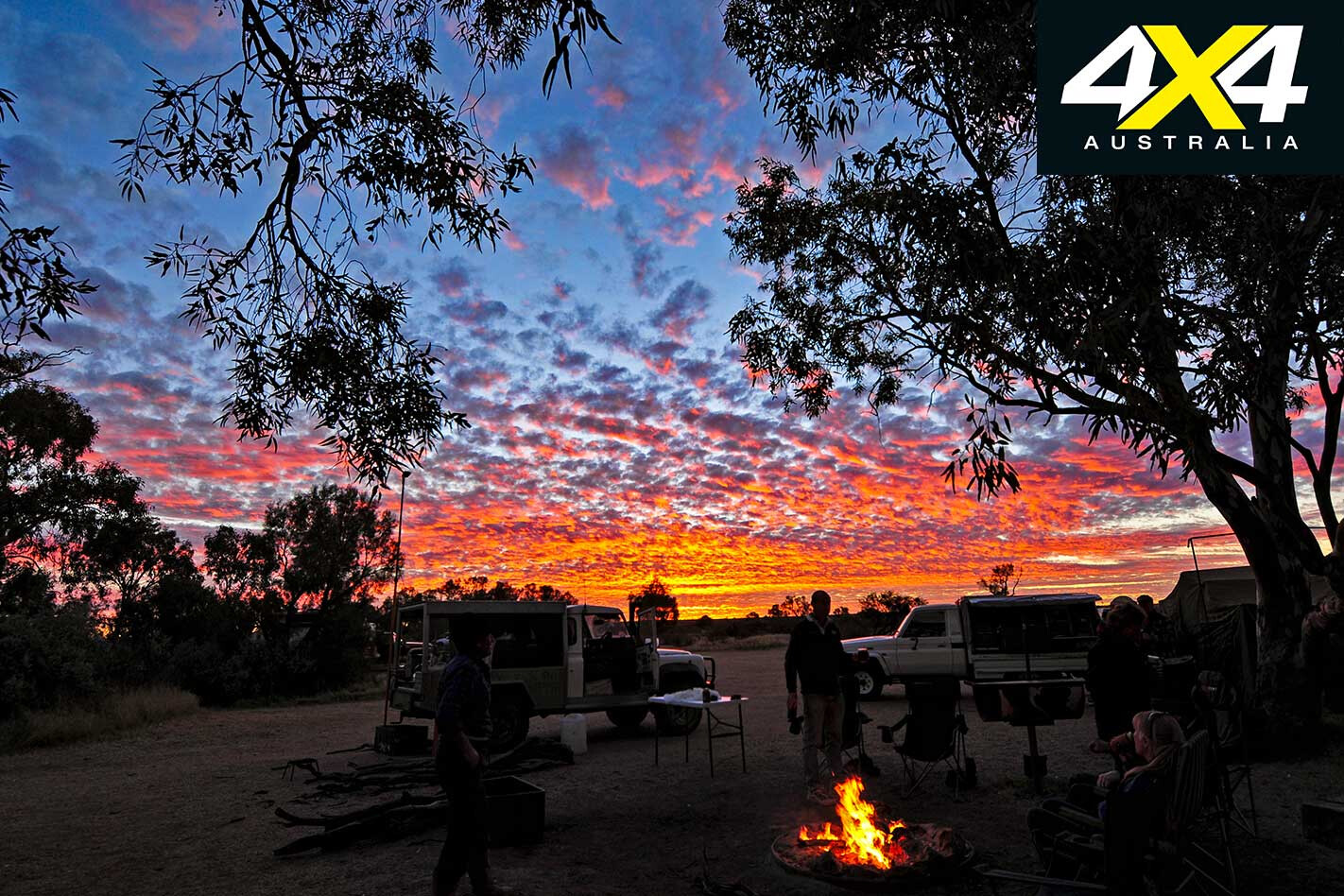
Maybe it’s just the wide open spaces that attract me, or the incredible transformation that comes about when water falls or flows, such as what is happening along the Diamantina River and Warburton Creek floodplain all the way to Lake Eyre.
Then, of course, the desert is a great leveller. It doesn’t matter who or what you are, the desert will bring you down to earth, often with a thud. And it can be cruel. Do the wrong thing out here and you’ll have a very hard time of it all – some may even die.
Being born in Tennant Creek and living all my early days in the Northern Territory and northern South Australia perhaps imbued me with a sense of ‘home’ and belonging. Maybe it is all those things that attract me.
Over the past 12 months I’ve spent a fair amount of time in desert country, on one occasion passing through Corner Country and ending up at Innamincka on Cooper Creek, a place every Aussie should visit at least once in their life. Water was flowing across the causeway and we wandered down to the creek and drove across the shallow stream a few times; for no reason other than it seemed like a good thing to do after a few days of crossing some very dry and dusty country north of Broken Hill.
Before our Corner Country travels we’d been driving our RAM 2500 through the high desert country of Moab, Utah, in the US of A.
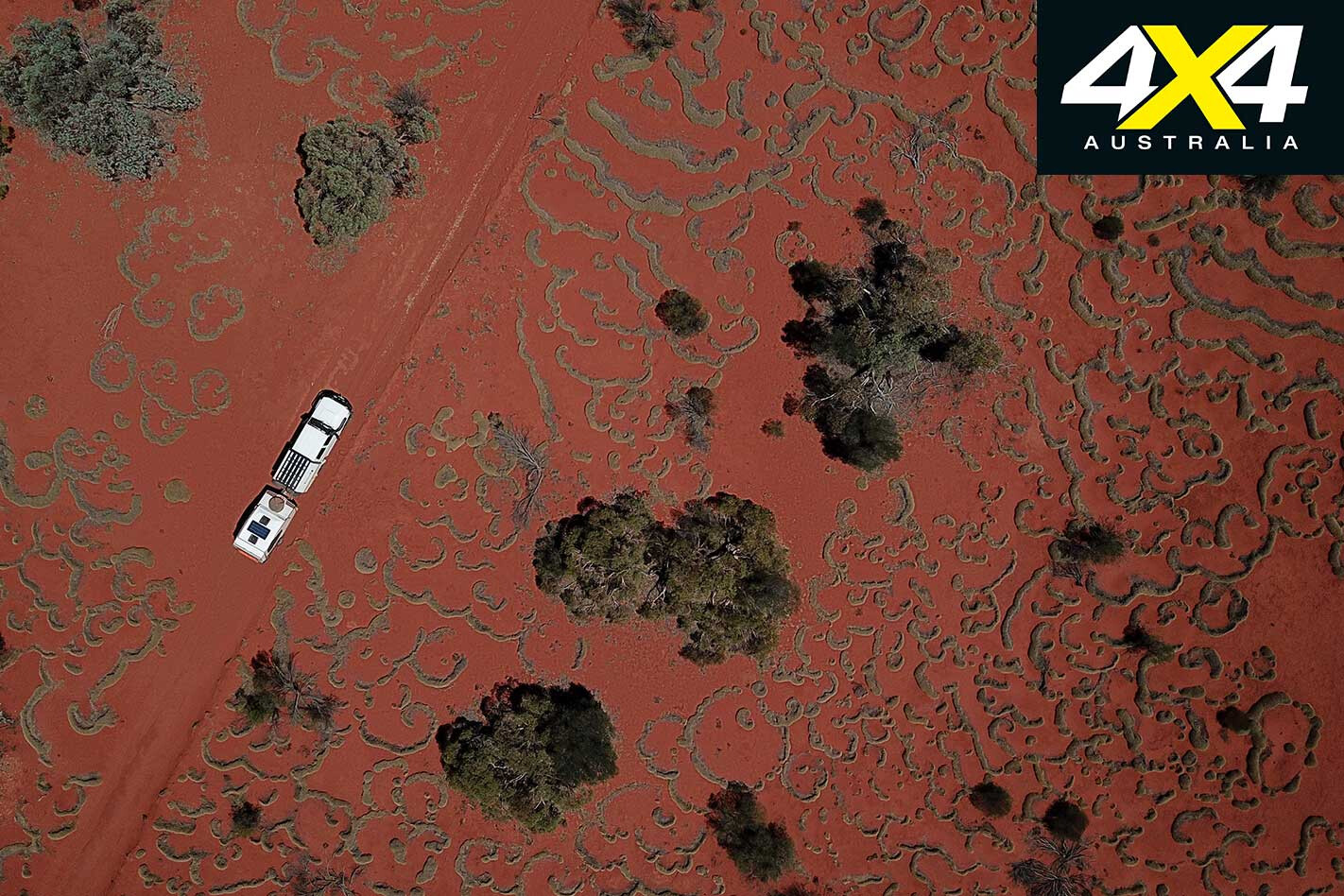
There are many delights to be had in the west of North America, but Utah and its red-rock desert country would have to be our favourite and keeps drawing us back every time.
Edward Abbey, author of Desert Solitaire knew the Utah back country like the back of his hand, and an excerpt from his book reads: “The desert is nothing. Completely passive, acted upon but never acting, the desert lies there like the bare skeleton of Being; spare, sparse, austere, utterly worthless, inviting not love but contemplation.”
Denis Bartell, who named that big Simpson Desert dune, Big Red, back in 1977, was struck by the magic of the desert when he set out on the first of many trips (see: www.desertwalker.com.au). He said to me while at Big Red a couple of years back:
Picture: Denis Bartell on top of Big Red
“Over the past 40 years and 70-plus crossings, mostly solo, a ritual formed between that dune and me. A sunset whenever possible from Big Red was something not to be missed for it was then that I could easily relive, in a most vivid form, my past journeys and scenery from its ever-changing landscape – I could truly be at one with the spirit of the desert.”
I know how he feels; in that place of seemingly lifeless expanse, you feel more alive than ever.
VERY FEW of today’s 4x4s can trace a line of ancestry back 50 years like the 2019 Suzuki Jimny. What started in 1970 with the LJ10 and its 360cc air-cooled twin-cylinder two-stroke engine, has culminated in this latest model complete with its 1.5L petrol four, the biggest and most powerful engine to ever grace a Jimny, or a Sierra to use its other name.
Between 1970 and today, plenty has changed but two things remain a constant over those 50 years, namely a separate ladder-frame chassis and live axles back and front. That puts Jimny in unique ‘old-school’ company, with the Toyota 70 Series and Jeep Wrangler as the only other 4x4s currently sold that are similarly equipped.
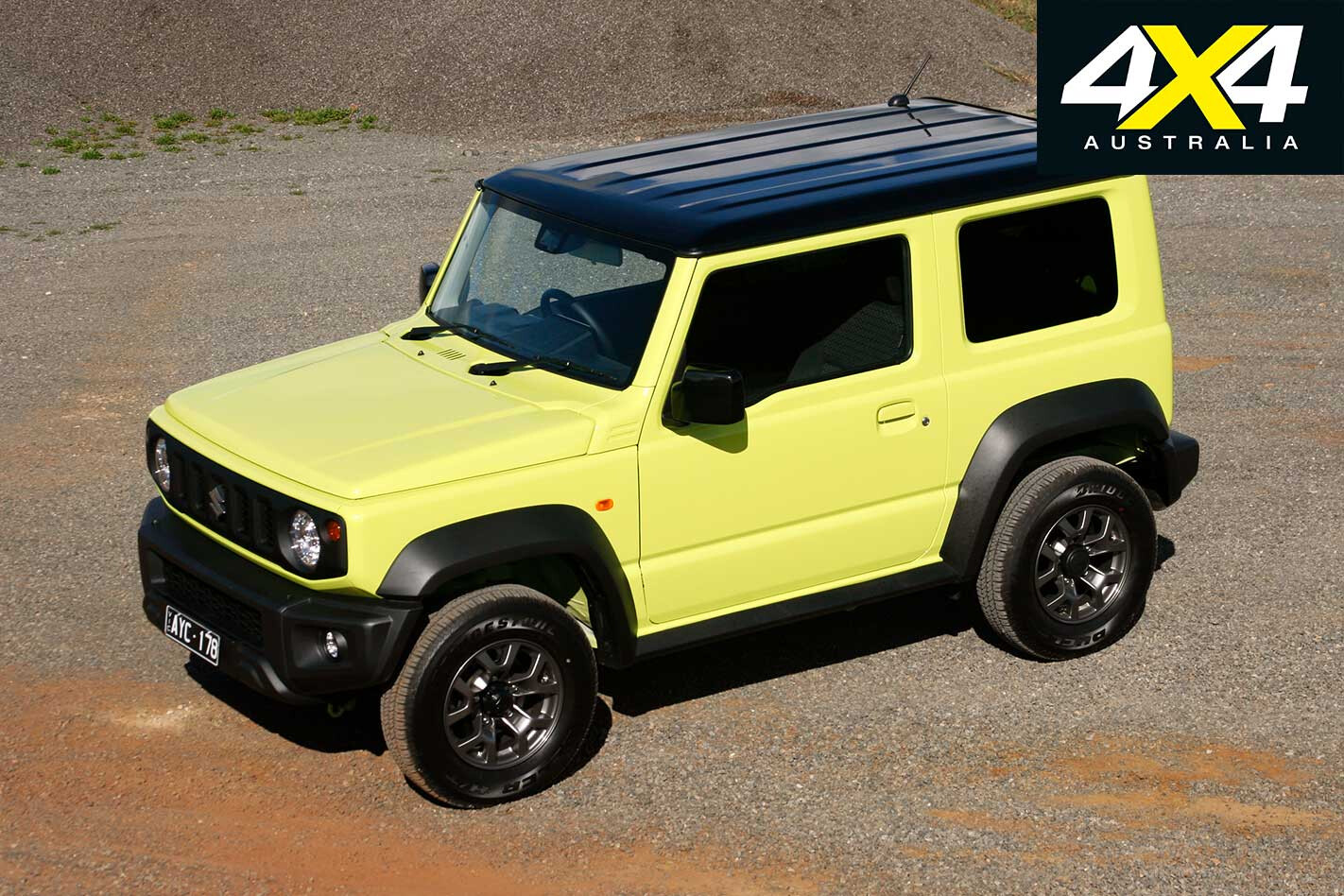
Compared to the previous generation model that arrived in 1998 this new Jimny not only has the 1.5L engine (replacing the previous 1.3) but is marginally heavier, wider and taller, and it rides on a wider track and skinnier tyres. More significant with this new Jimny is an all-new-but-still-retro body that harks back to the LJ10 and subsequent LJ20 and LJ50 models.
On-road
THE JIMNY’S 1.5L engine may be ‘new’, but it’s a long way from cutting-edge petrol-engine technology where turbocharging, direct injection and variable valve lift, as well as variable timing, now define the genre. It makes a modest 75kW and an even more modest 130Nm, and both those maximum numbers are only achieved at high engine speeds: 4000rpm for peak torque and 6000rpm for peak power.
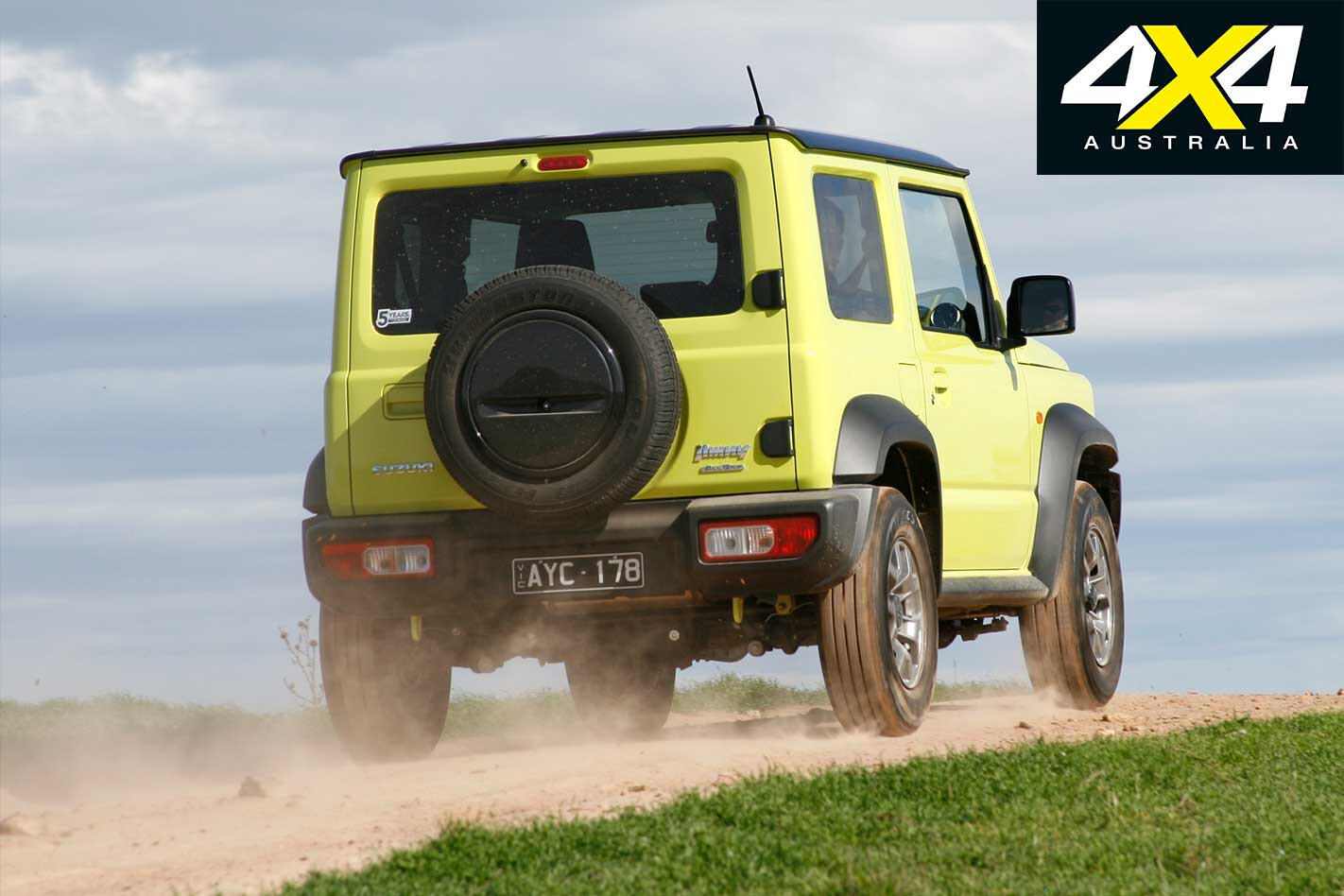
If none of that sounds encouraging the good news is that the Jimny only weighs 1100kg, so its power-to-weight ratio isn’t too bad and the Jimny is nippy enough and even relaxed at low and medium speeds. At highways speeds, where power-to-aerodynamic-drag ratio is more important than power-to-weight ratio, things go south and the engine needs to work hard to maintain highway speeds, even on lesser hills.
The five-speed manual is definitely better than the four-speed auto on-road, for the simple reason that it has one more gear to play with. Plus, manual control for a high-revving engine is always better anyway.

The auto isn’t too flash in terms of shift quality, while the wide gaps between the four ratios can be momentum killers. Top gear with the auto is a bit taller than the manual’s, so the fact it sits at a slightly lower rpm at highway speeds is one benefit of the auto, even if the engine revs hard with both ’boxes. It’s a pity Suzuki didn’t junk them and replace them with six-speeders.
The engine is agreeable, but gets noisy when revving hard, which is often on highway and country roads.
In terms of on-road dynamics the Jimny is nippy and fun to drive on tight roads and at slower speeds, but it isn’t as convincing at higher speeds where it can be upset by bumps and crosswinds. Still, the ride is surprisingly good and the potentially unsettling presence of the live axles at both ends is well-disguised.
Off-road
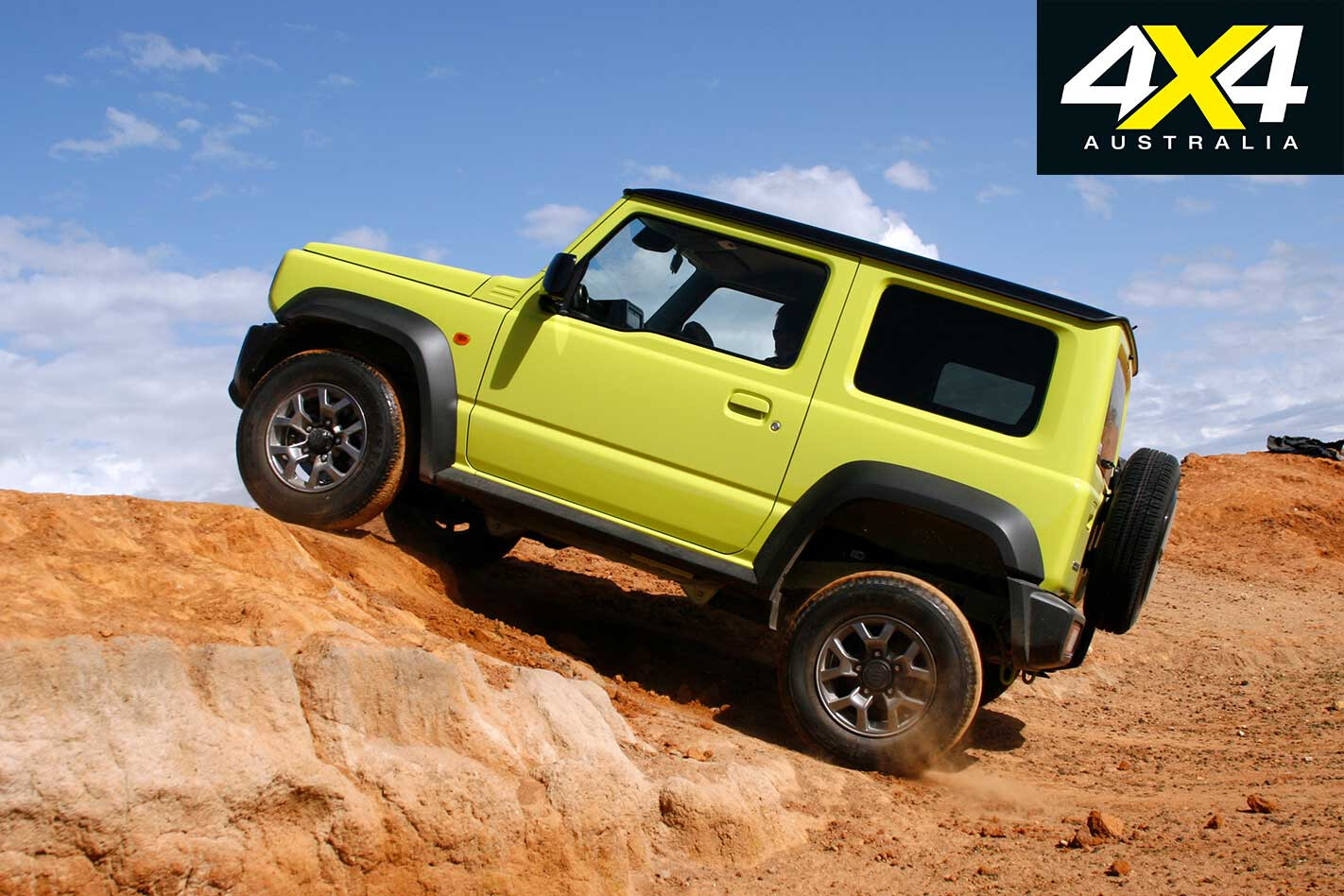
IF YOU think the Jimny is fun on-road it’s even more fun off-road thanks to its clearance, short wheelbase and very steep approach and departure angles, allowing it to go places where bigger, longer 4x4s can’t.
Its light weight also makes it just the ticket in sand or mud; although, the overall small diameter of the 15-inch wheel and tyre package lets it down on rougher tracks, even if the live axles provide a decent amount of travel. Larger diameter tyres, even within the limited legal increase, is the first modification the Jimny needs for off-road driving. A snorkel wouldn’t go astray, either.
For off-road use, the auto variant comes into its own as its torque convertor gives a gearing advantage (and torque multiplication) for steep climbs, even if the manual’s crawl ratio is slightly lower. For the new Jimny, Suzuki has also gone back to a traditional transfer lever in place of the push-button transfer selector used previously, which is a welcome touch.
Cabin and Equipment
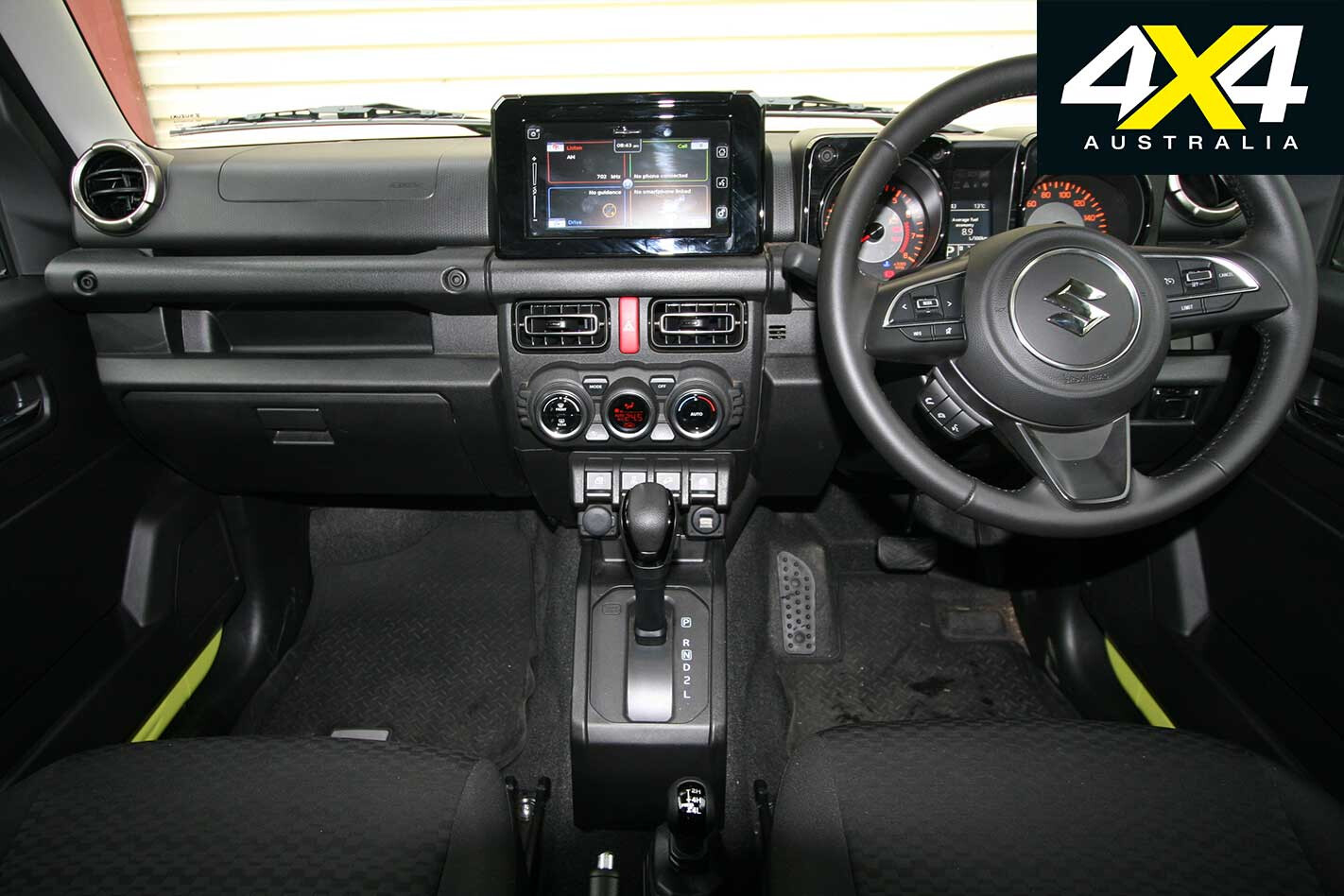
THE JIMNY is small but deceptively roomy inside. It only seats four and the back-seat passengers need to be small, but the room up front is good for tall drivers. Good vision, too, from the driver’s seat, but shorter drivers would be better off with seat-height adjustment. There’s no steering wheel reach adjustment, either – only tilt.
The Jimny is surprisingly well-equipped with a 7-inch touchscreen, sat-nav, Apple CarPlay and Android Auto. Active safety features include automatic emergency braking, lane-departure warning and rear cross-traffic alert.
Sum Up
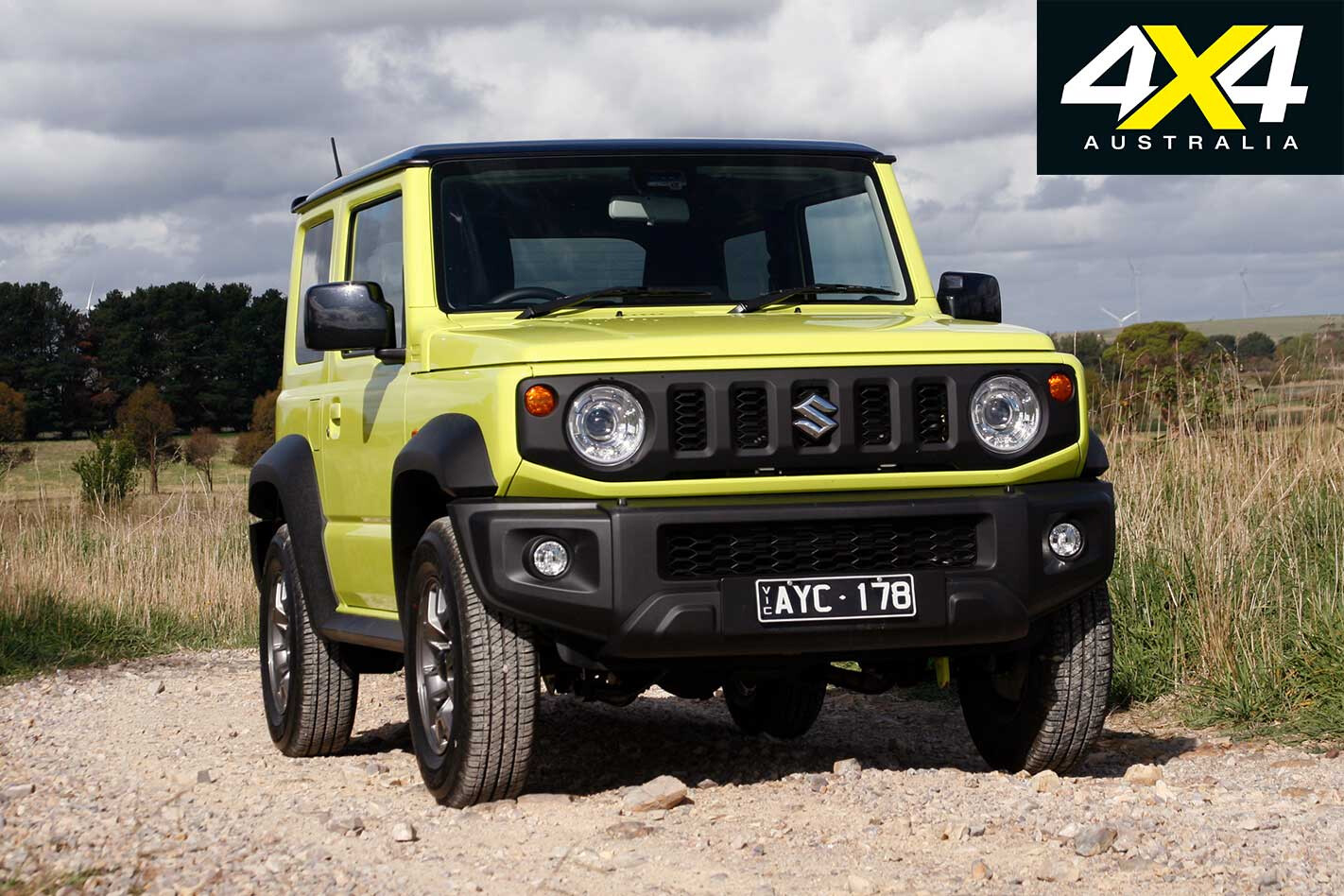
THERE’S nothing else like the Jimny on the road, or indeed off it. Nothing else is this useful and convenient in the confines of the tightest city street yet equally at home in the bush, where it feels like it could just about go anywhere and is built tough enough to take it. It’s just a shame Suzuki didn’t see fit to add a sixth gear to the manual and at least two more gears to the automatic.
2019 SUZUKI JIMNY SPECS Engine: 1462cc OHC inline 4-cylinder, 16-valve, petrol Max Power: 75kW @ 6000rpm Max Torque: 130Nm @ 4000rpm Gearbox: Four-speed automatic 4×4 System: Dual-range part-time Crawl ratio: 32.7:1 Construction: 3-door body on separate frame chassis Front suspension: Live axle with coil springs Rear suspension: Live axle with coil springs Tyre: 195/80R15 Kerb Weight: 1090kg GVM: 1435kg Payload: 345kg Seating capacity: Four Fuel tank capacity: 40L ADR fuel consumption*: 6.9L/100km On-test fuel consumption: 8.9L/100km Base price: $25,990 (Auto + ORC)
*Australian Design Rule ‘Combined-Cycle’ claim
IF YOU’RE the sort of Jeep Wrangler owner who hits the tracks often but doesn’t want to get your 4×4’s bodywork scuffed, American aftermarket specialists, Quadratec, has the solution in the form of MEK Magnet magnetic body armour.
Designed to line the side body panels of TJ and JK generation Jeep Wranglers, each cut-out of the body cladding is made from multi-layer cast vinyl that Quadratec says is tough enough to resist scratches from the odd run-in with any bushes on the track.
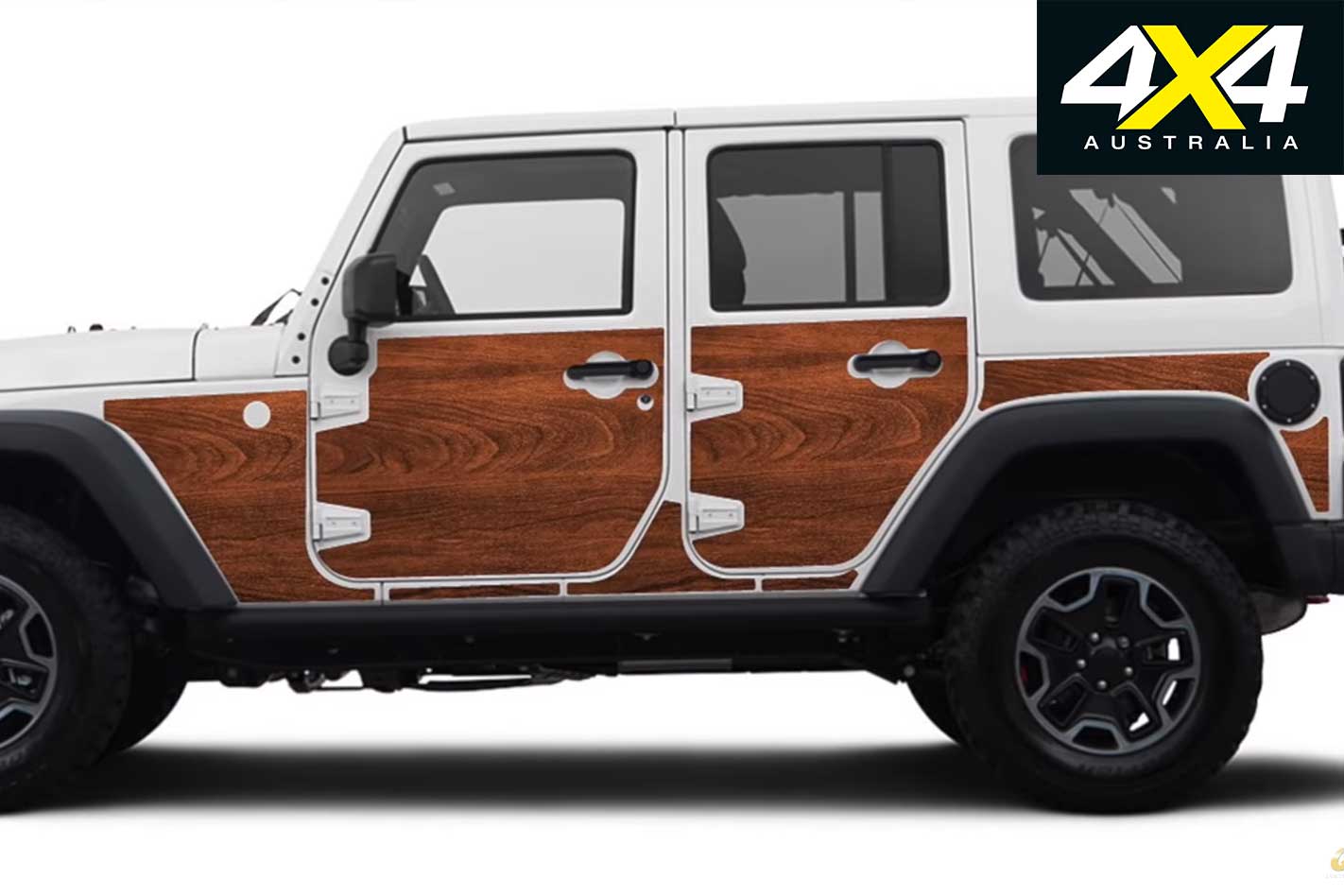
According to Quadratec, installing the cladding doesn’t require any prior modifications to the body, as the back of the vinyl claddings are magnetic and will stick to the body panels, similar in principle to that of a fridge magnet.
Likewise, the claddings are easy to be removed for cleaning or readjustment and, if fitted properly, will still adhere to the panels when the vehicle is driven up to highway speeds.
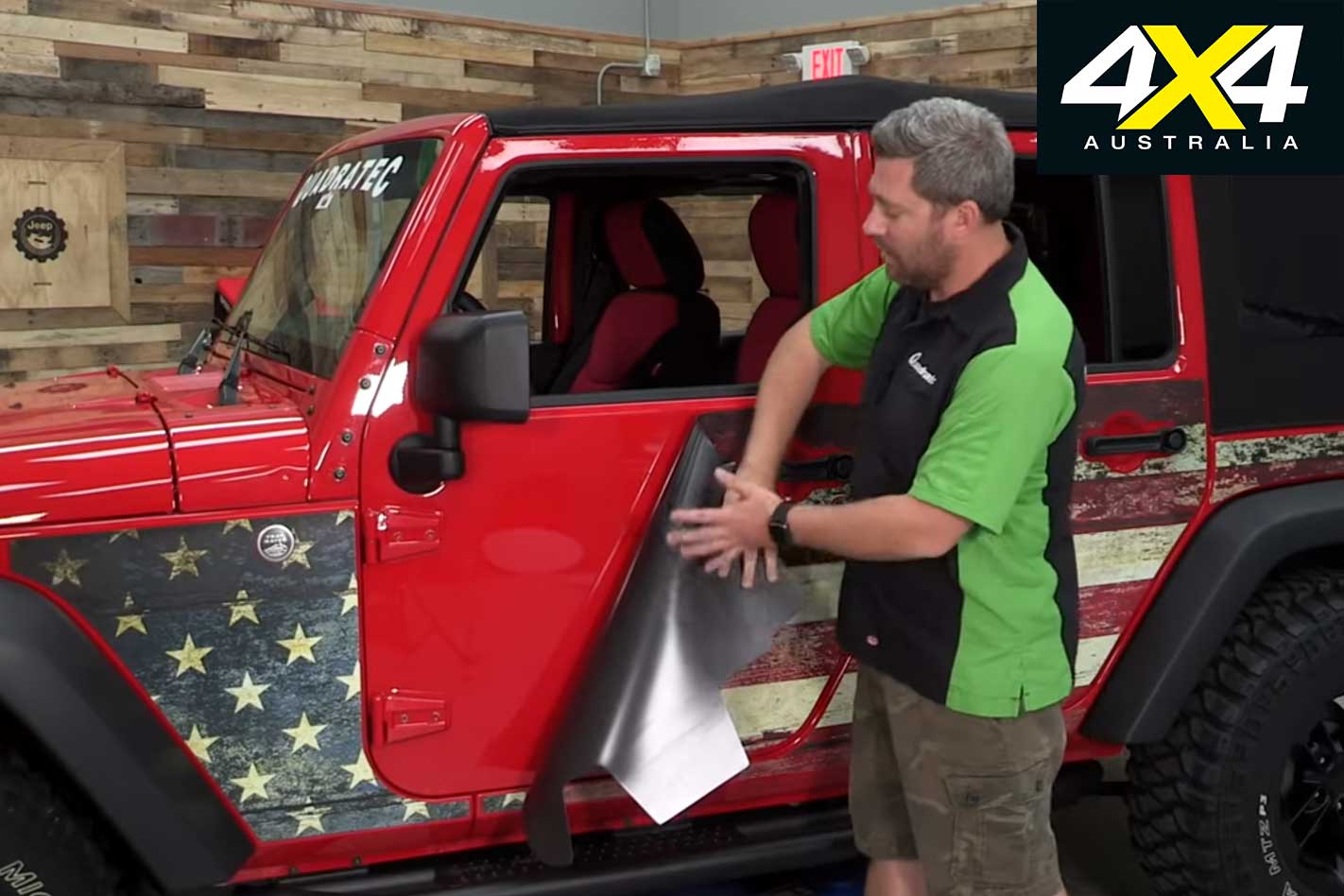
The claddings are available in several different patterns, themes and designs for those who would like to customise the exterior look of their Wranglers, and are available from the Quadratec website.
FORD Ranger outsells the Toyota Hilux in the 4×4 market for April, while Isuzu targets 30,000 sales in 2020.
A total of 2737 Ranger 4x4s were sold in April (a 16.6 per cent increase compared to April 2018), proving there’s still an appetite for the Blue Oval, while Toyota shifted 2702 units (up 1.6 per cent). Better still, Isuzu’s D-Max 4×4 posted a 23.9 per cent increase compared to the same month last year (from 809 to 1002 sales), making it the sixth best-selling 4×4 in April 2019.
At the recent unveiling of IUA’s MY19 D-Max and MU-X, Ben Jaegar, IUA’s deputy general manager of sales, spoke of the company’s sales targets for the next two years, with the Japanese brand targeting 28,500 overall sales by 2019 (19,000 D-Max sales and 9500 MU-X sales) and 30,000 sales by 2020.
This modest 3.0 per cent sales growth target for 2019 is partly due to the trends of the current market, with overall sales considerably down on last year.
The current VFACTS report listed a total of 75,550 units were sold in April 2019, a drop of 8.9 per cent when compared to April 2018 (82,930). That slide is mirrored in the YTD sales, with an 8.1 per cent decrease noted from year to year.
“This decrease is the result of a number of factors in the Australian market, including the downturn in the housing market, the tightening of lending practices, environmental factors such as drought and flood, and, of course, the imminent Federal Government election,” chief executive of the FCAI, Tony Weber, said. “With all these elements currently present in the market, it is no surprise that Australian consumers are conservative in their approach to major purchases at the moment.”
Despite the overall decline, LCV sales only slid 3.0 per cent compared to the same month last year; unlike the Passenger vehicle market and SUV market which both dropped considerably (-13.5% and -8.2%).
10 Best-selling 4x4s in 2019
| Rank | 4X4 | Units Sold |
| 1 | Toyota Hilux | 12,488 |
| 2 | Ford Ranger | 11,258 |
| 3 | Mitsubishi Triton | 7647 |
| 4 | Toyota Prado | 6057 |
| 5 | Holden Colorado | 5180 |
| 6 | Toyota Land Cruiser wagon | 4536 |
| =7 | Nissan Navara | 3581 |
| =7 | Isuzu D-MAX | 3581 |
| 9 | Toyota Land Cruiser PU/CC | 3055 |
| 10 | Mazda BT-50 | 2812 |
20 Best-selling 4x4s in April 2019
| Rank | 4X4 | Units Sold |
| 1 | Ford Ranger | 2737 |
| 2 | Toyota Hilux | 2702 |
| 3 | Toyota Prado | 1473 |
| 4 | Toyota Land Cruiser wagon | 1177 |
| 5 | Holden Colorado | 1089 |
| 6 | Isuzu D-Max | 1002 |
| 7 | Mitsubishi Triton | 914 |
| 8 | Toyota Land Cruiser PU/CC | 857 |
| 9 | Nissan Navara | 685 |
| 10 | Mazda BT-50 | 643 |
| 11 | Isuzu MU-X | 514 |
| 12 | Volkswagen Amarok | 511 |
| 13 | Mitsubishi Pajero Sport | 330 |
| 14 | Ford Everest | 312 |
| 15 | Toyota Fortuner | 272 |
| 16 | Holden Trailblazer | 202 |
| 17 | Jeep Grand Cherokee | 196 |
| 18 | Range Rover Sport | 191 |
| 19 | LDV T60 | 181 |
| 20 | Mitsubishi Pajero | 150 |
Though Australians were denied a taste of Jaguar Land Rover’s new Ingenium straight-six in the Range Rover Sport HST, the engine will be making its way to our shores on board the 2020 Range Rover.
The new 3.0-litre turbocharged straight-six petrol unit, which will be replacing the venerable 3.0-litre supercharged V6 in Australia’s Range Rover line-up, comes paired with a mild hybrid setup that utilises a 48-volt electrical system. The latter supplies power to an electric supercharger which supplements the engine’s twin-scroll turbocharger as well as an electric motor that provides torque-assist for the engine.
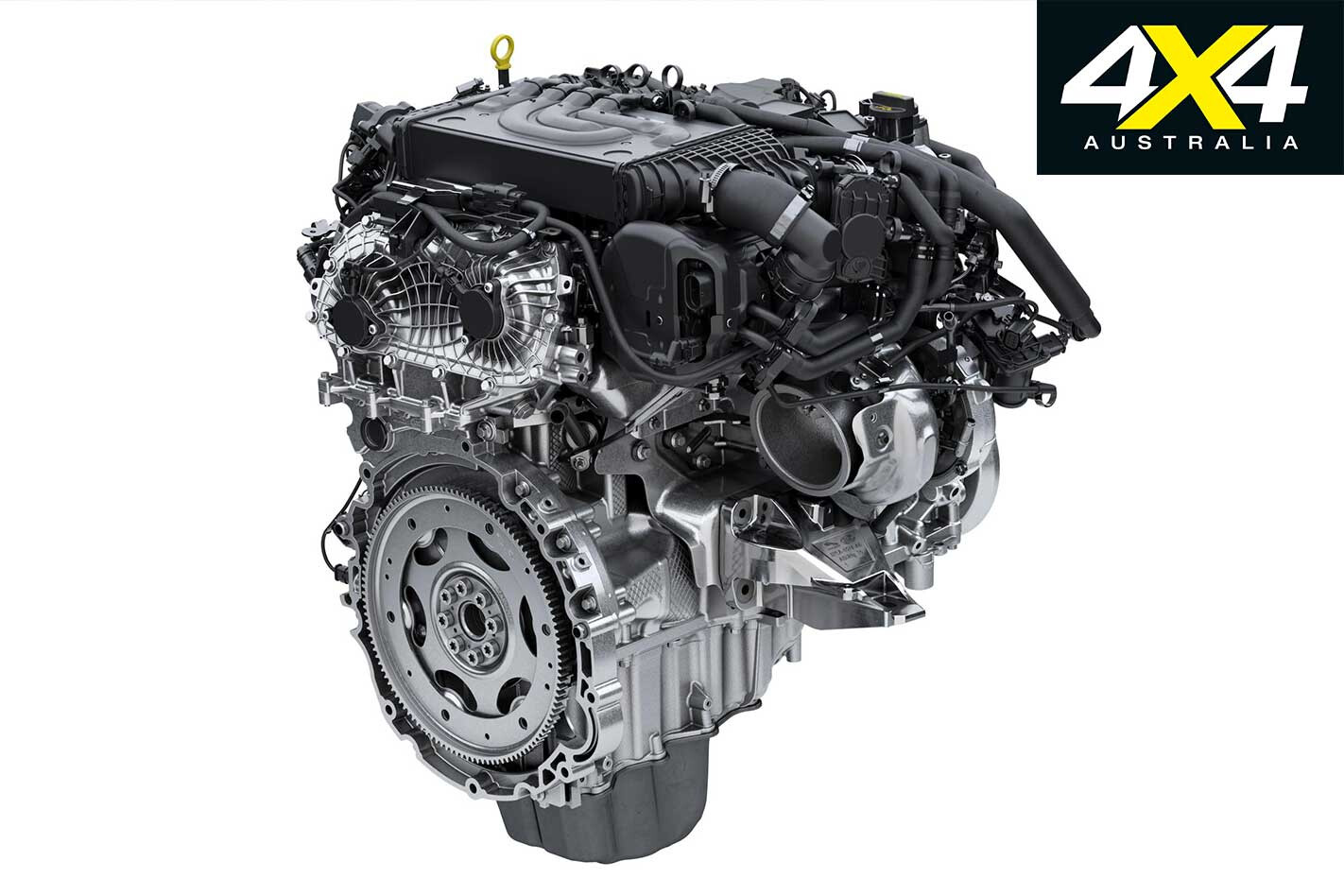
According to Land Rover, the electric supercharger is able to deliver an immediate boost by spooling up to 65000rpm in half a second, reducing turbocharger lag and improving engine response.
“The otherwise wasted energy (in braking) is used to power the electric supercharger, which enhances the vehicle’s capability by enhancing the torque curve at low engine speeds for greater responses,” executive director of Product Engineering at Jaguar Land Rover, Nick Rogers, said.
The Australian market will be receiving the full-blown 294kW/550Nm iteration of the Ingenium straight-six engine, 14kW/90Nm more than its supercharged V6 predecessor. The new engine is able to charge from 0-100km/h in 6.3sec whist delivering an NEDC combined claimed fuel consumption figure of 9.3L/100km. That’s a second quicker and nearly 2L/100km more frugal than what the supercharged V6 managed.
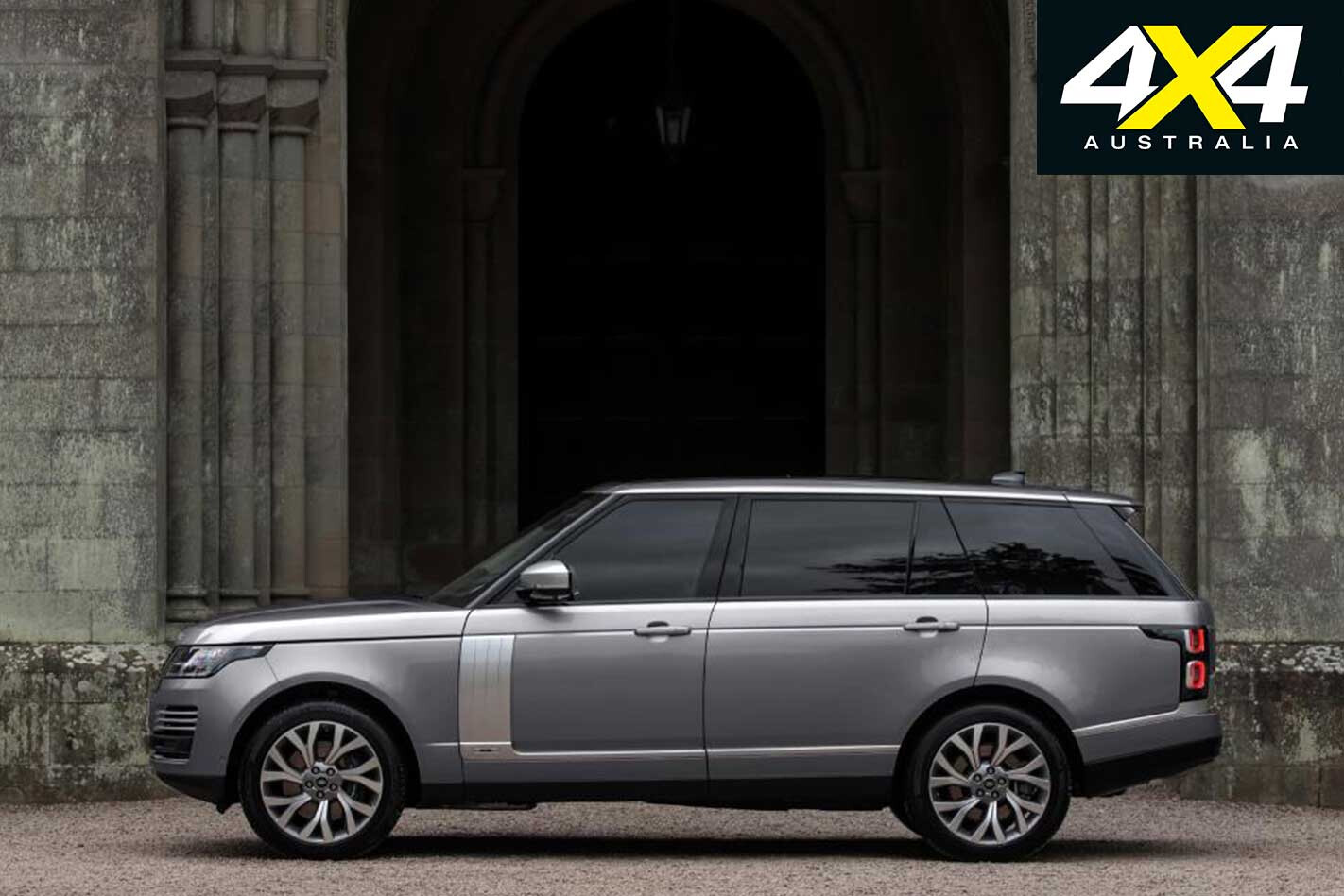
Land Rover has also updated the 2020 Range Rover’s list of standard features with the addition of a Sign Post Dimming feature that identifies road signs and controls individual LEDs in the headlight to reduce glare to the driver. A new Smartphone Pack that enables Apple CarPlay and Android Auto mobile device mirroring is also offered.
Australian specifications and pricing for the 2020 Range Rover will be confirmed later this month with deliveries expected to begin in October this year.
IT AIN’T 4X4 Australia magazine without some quality custom metal, and the May issue is no exception.
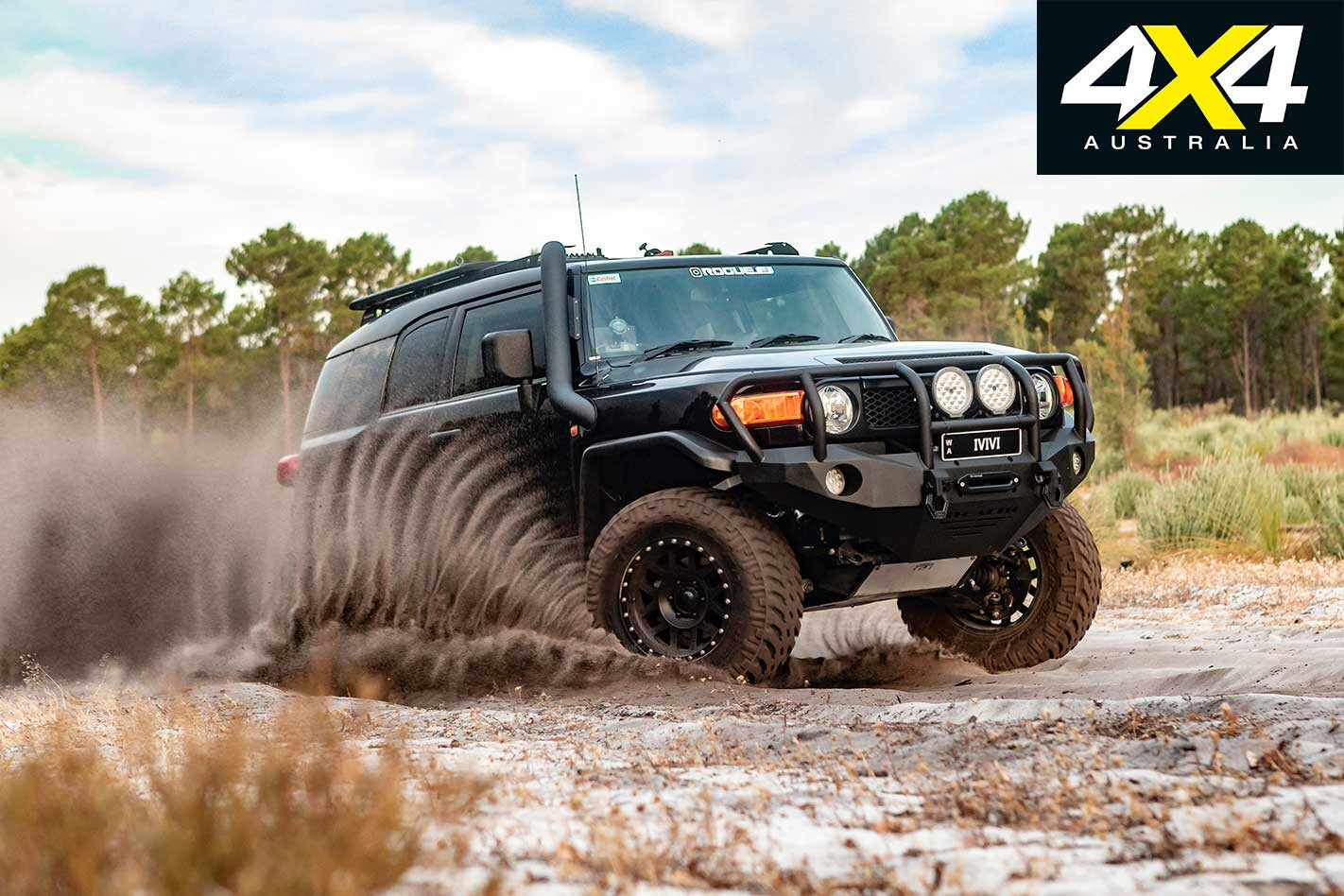
Gracing the pages this month are two track stompers: an FJ Cruiser that’s all show and go, and a resto-modded Suzuki Sierra.
We headed to the hills to test the mettle of the three best-selling vehicles so far this year – Hilux, Ranger and Triton – which were all decked out with an array of Ironman 4×4 kit. We also put Mitsubishi’s new MR Triton to the test against two of its immediate class rivals: D-Max LS-U and Triton Exceed.
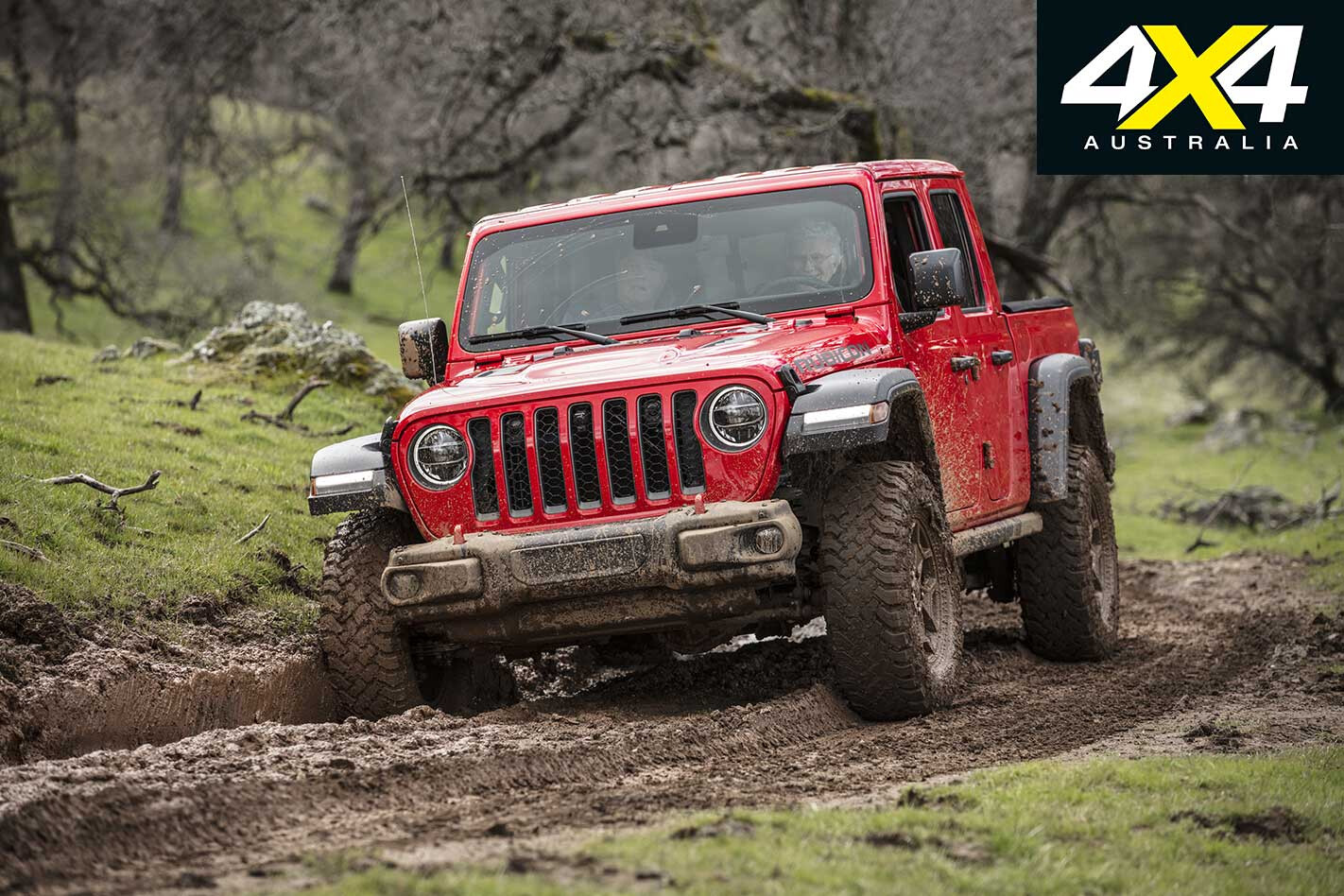
We may have to bide our time before we get the Jeep Gladiator on local soil, but that didn’t stop up heading to the USA to drive Jeep’s JT dual cab. Plus, we finally got to assess the Jimny’s four-speed auto on some tricky off-road tracks.
The May issue also kicks off our 4×4 adventure to the south-east forests of NSW, where Ron, Matt and the team tour from coast to mountain in search of off-road bliss. For even more travel inspiration we ventured to Guy Fawkes River National Park and Copeton Dam, both in NSW.
Every off-roader appreciates the role a shock absorber plays, but how do they work, why are they essential and how do they differ from one model to the next? We chatted to a few industry experts and took an in-depth look.
As a bonus, an Adventure Series DVD is stuck to the front of this issue – kicking off our south-east forests trek in NSW.
WHAT ELSE IS THERE? – Patrol and Disco in the shed. – New aftermarket product tests. – Columns by Fraser and Ron. – Readers’ Rigs, travel bulletin and heaps more.
The May 2019 issue of 4X4 Australia is on shelves now.
ISUZU Ute Australia (IUA) has subtly refreshed its Isuzu D-Max and MU-X line-ups for MY19, but the trusty steeds remain mostly unchanged bar for a few tech and cosmetic tweaks.
Surprisingly, Apple CarPlay/Android Auto remains absent from the list of features, as does Autonomous Emergency Braking (AEB).
The most notable revision, however, is a recalibration of the MU-X’s hydraulic steering rack, providing the seven-seater with more refined and tactile steering feedback.
“Recalibrating the MU-X steering to require lighter inputs while manoeuvring at low speeds, whilst retaining the sturdy firm feedback at medium to high speeds has given the MU-X the best of both worlds,” Isuzu UTE Australia’s Managing Director, Hiroyasu Sato, said.
A brief spurt at the Australian Automotive Research Centre (AARC) in Anglesea, Victoria – a purpose-built off-road circuit – and the surrounding roads, revealed a tighter feel to steering input, especially at lower speeds.
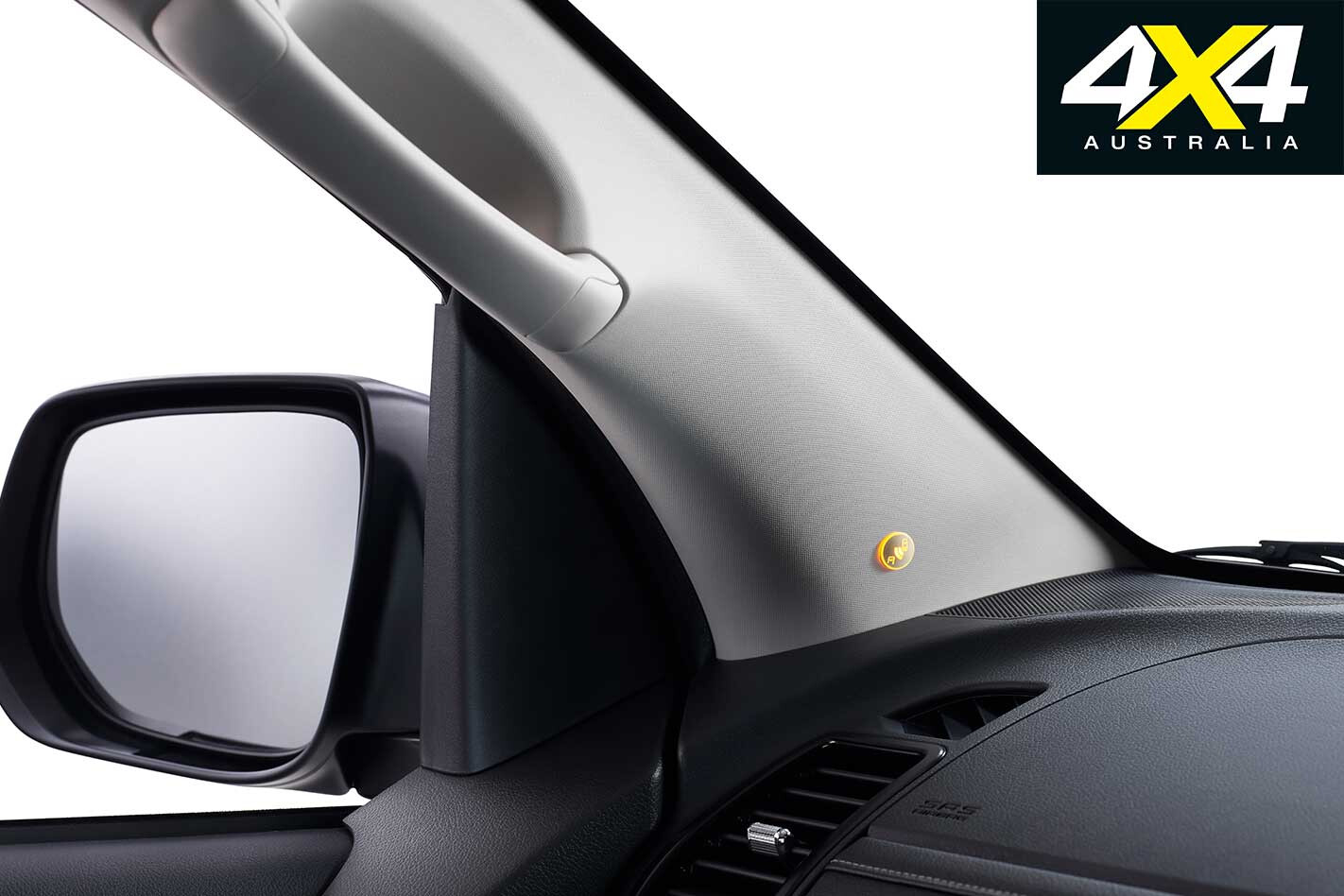
Blind Spot Monitoring (BSM) and Rear Cross Traffic Alert (RCTA) are now optional extras available across the MU-X range, and the systems can be retrofitted to MY17 and MY18 MU-X models. BSM with RCTA will set you back $955 (RRP).
Another optional extra is Front Park Assist ($545 RRP), which can also be retrofitted to MY17-onwards MU-X models, as well as MY17-onwards D-Max LS-M, LS-U and LS-T models.
Another tweak to the MU-X range includes new-look 18-inch gloss black aluminium wheels (LS-U and LS-T models) wrapped in 255/60R18 Bridgestone Dueler Highway Terrain tyres. The front grille is bordered by chrome and gloss black on LS-U and LS-T models (it’s grey and black for the LS-M).
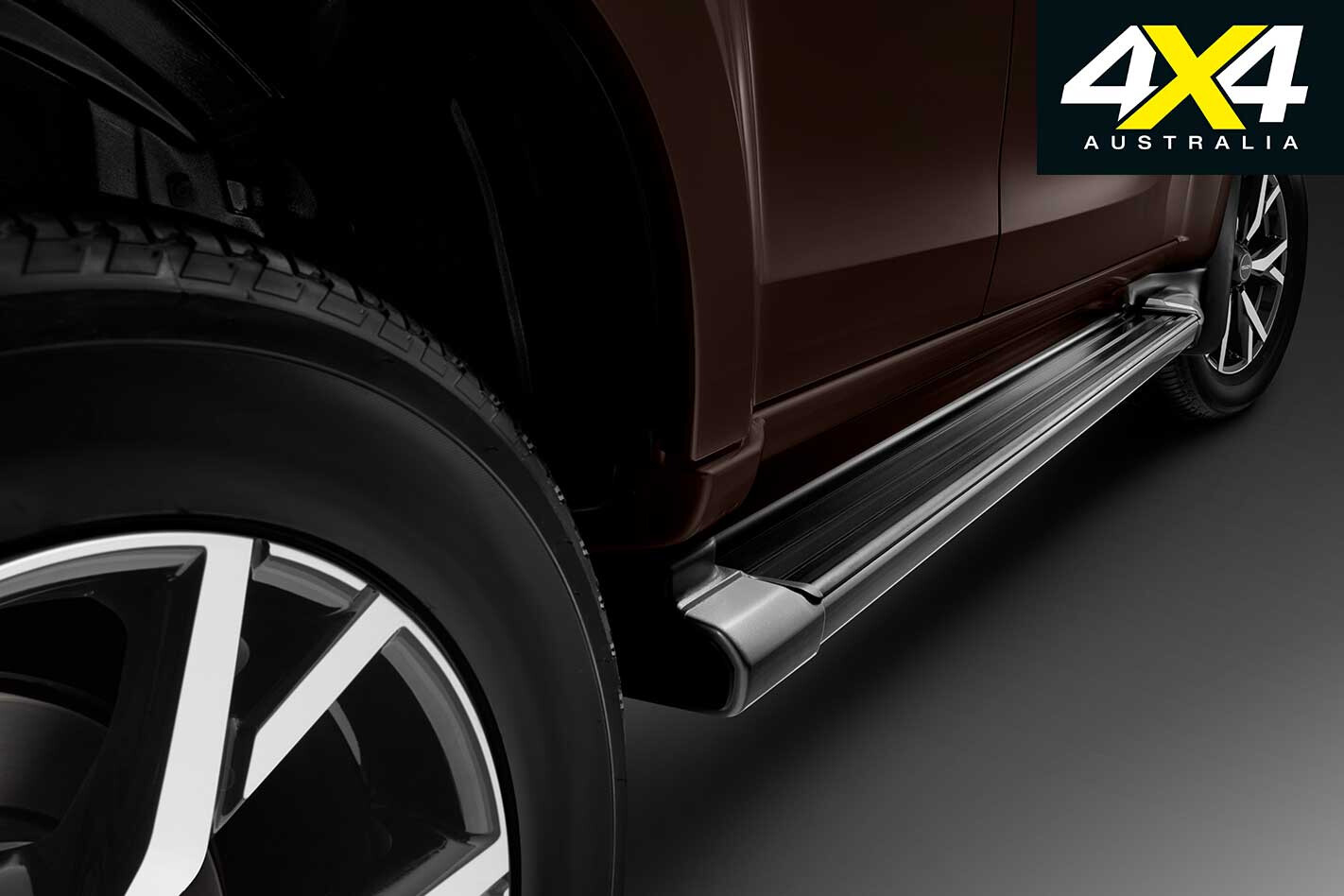
Key changes for IUA’s venerable D-Max are limited to cosmetics, though the LS-U and LS-T do receive Fibre-Reinforced Polymer (FRP) sidesteps bolted on with steel brackets. The LS-T is the focus of most MY19 changes, with the range-topper the only model to get 18-inch matte black aluminium wheels wrapped in 255/60R18 Toyo Open Country Highway Terrain rubber. Matte black roof rails and a matte black sports bar complement the matching wheels.
The rest of the range doesn’t miss out on some tweaks, though, with the LS-M and LS-U variants receiving a splattering of black to the bodywork, as well as matte black treatment to the radiator air intake and B-pillars.
At launch IUA also unveiled its new six-year/150,000km warranty, aligning it closer to recent moves made by its competition.
The new range is on sale now nationally, with 4×4 RRP (listed below) starting from $38,200 (MY19 D-Max) and $50,200 (MY19 MU-X).
THE D-MAX X-Runner has been revived, with the limited edition model available in showrooms from May 1.
Introduced back in 2011, and last seen in 2017, the X-Runner is designed to strike a more commanding presence than the D-Max it’s based on – in this iteration, that’s the top-of-the-range LS-T.
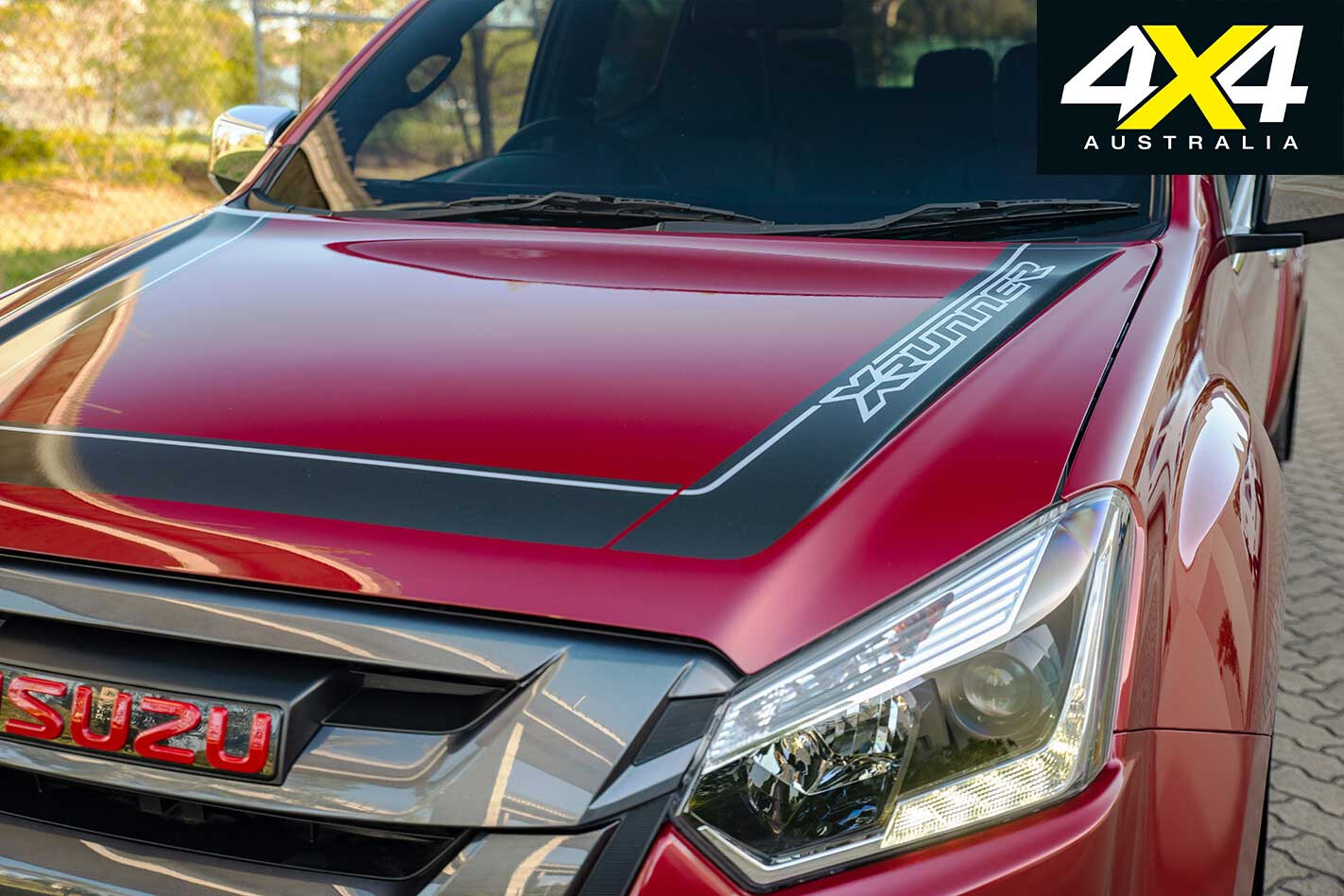
The launch of the X-Runner coincides with an ‘end-of-life’ refresh to the ageing D-Max line-up. As part of the MY19 update, the LS-T received Fibre-Reinforced Polymer (FRP) side steps, a Passive Entry and Start system (4×2) and 18-inch matte black aluminium wheels, while the matte-black look continues throughout the body and on the roof rails.
In addition to these tweaks the X-Runner copped a few exclusive features including head-to-tail X-Runner branding and red Isuzu badges. Also delineating the X-Runner from the LS-T are the front fog lights which are now surrounded by a dark grey trim, as well as a bunch of genuine accessories: under-rail tub liner, rear park assist and a satin black sports bar.
The interior carries a more premium feel courtesy of piano black trims on the door and centre console and black roof lining and pillars, all merged with red-stitched leatherette across the dashboard, doors, glovebox and console lid. The seats, too, are trimmed with red perforated leather.
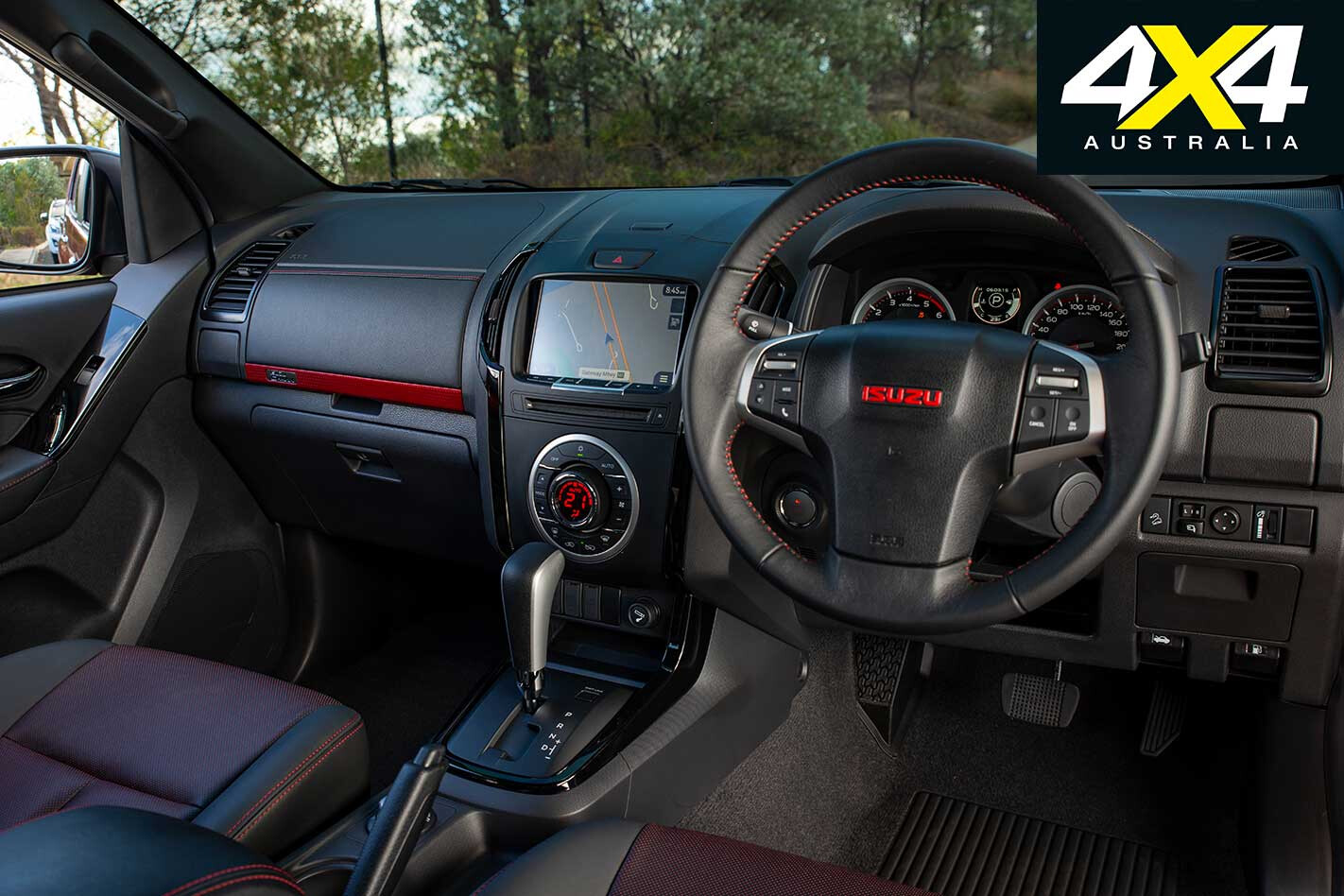
“With a number of unique features and accessories inside and out, and bolstered by its exclusive styling and exclusive paintwork, we fully expect that the 2019 X-RUNNER will be even more successful than its predecessors,” Managing Director of Isuzu UTE Australia, Hiroyasu Sato, said.
With changes limited to purposeful aesthetics – Isuzu’s 3.0-litre turbo-diesel engine remains untouched, as does the rest of the drivetrain – the X-Runner is hardly a Raptor fighter, but the limited edition model does keep the ball rolling for the brand’s ageing line-up.
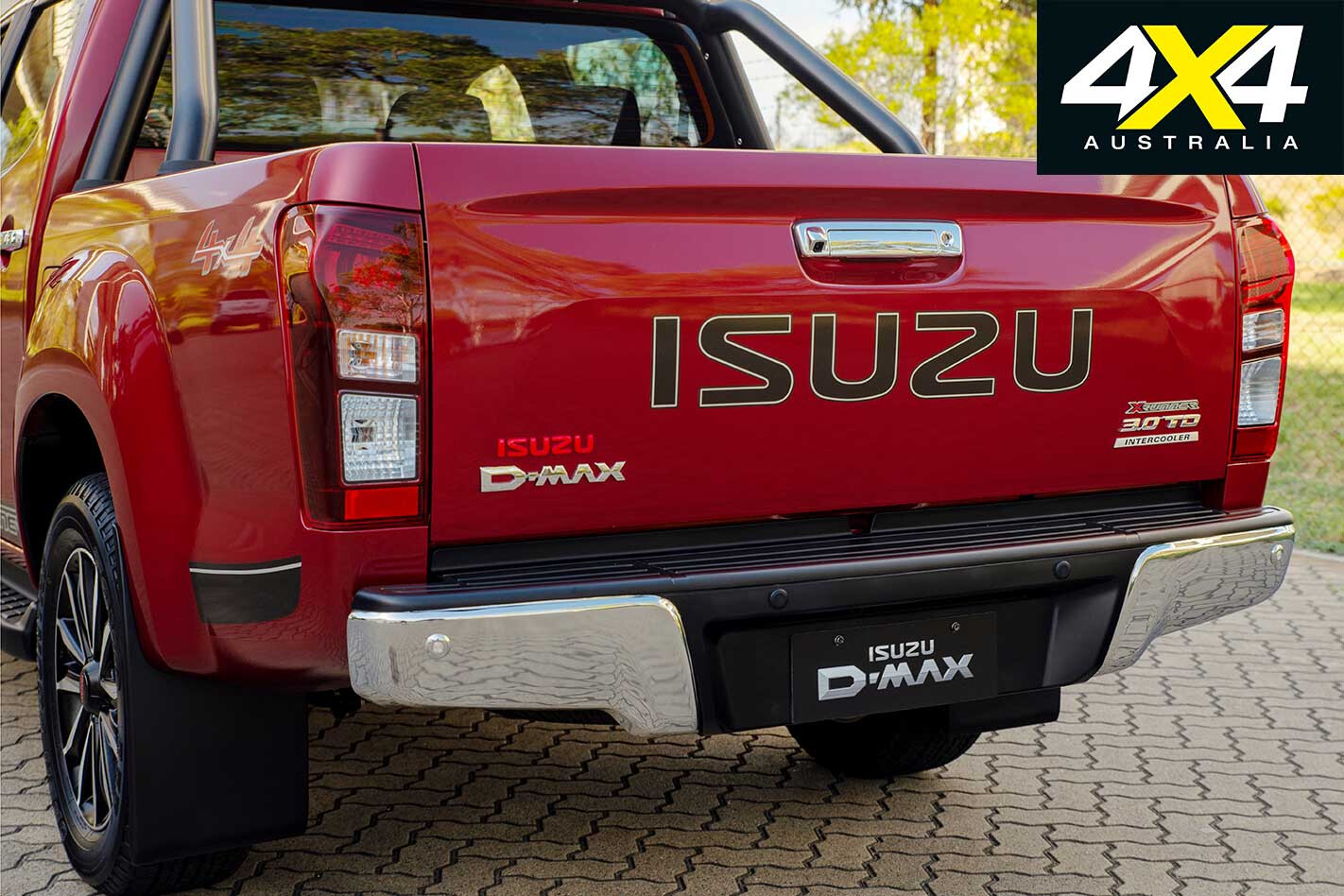
The X-Runner is limited to two colours – Pearl White and Magnetic Red – and just 645 units. The $54,990 driveaway price puts it $3000 more than the LS-T it’s based on.
Isuzu remains tight-lipped when asked of its next-gen models, but with one of the oldest utes still in the game that change can’t be too far off, can it?
Returning champions, the Elphinstone brothers and Cody Upton, took hard-fought and well-deserved top class honours at the 2019 Coral Coast Helicopter Services Gascoyne Dash for the Auto and Moto category respectively.
Despite starting in fourth on the first leg from Carnarvon to Gascoyne Junction, after late seasonal rains dampened the tracks for the prologue qualifying stage, Shane and Curt Elphinstone managed to reach Gascoyne Junction with a commanding lead of nine minutes in their #44 Jimco Pro Buggy.
The following day saw the brothers manage to maintain their pace on the return leg to Carnarvon, cutting more than three minutes off their time and crossing the line to chart an overall event time of 4hr 15min 13.2sec and take the Pro Buggy class and outright win for the Auto category.
Finishing behind Elphinstone were John Purshouse and Murray Hynes who took second outright for the Auto category and the Extreme 4WD class win with an overall time of 4hr 33min 53sec.
Mal Yeardley and Alex Cowan led the Prolite Class to round up the Auto category outright podium with a third place finish, while Mathew Birnie and Rochelle Funneman dominated the SxS Turbo class and clinched fourth place outright in the category.
As for Upton, luck wasn’t on his side right from the event’s start. The Honda rider began in fourth, and later suffered from a broken left hand after it was struck by a rock thrown from a competitor’s bike on Day 1’s run to Gascoyne Junction.
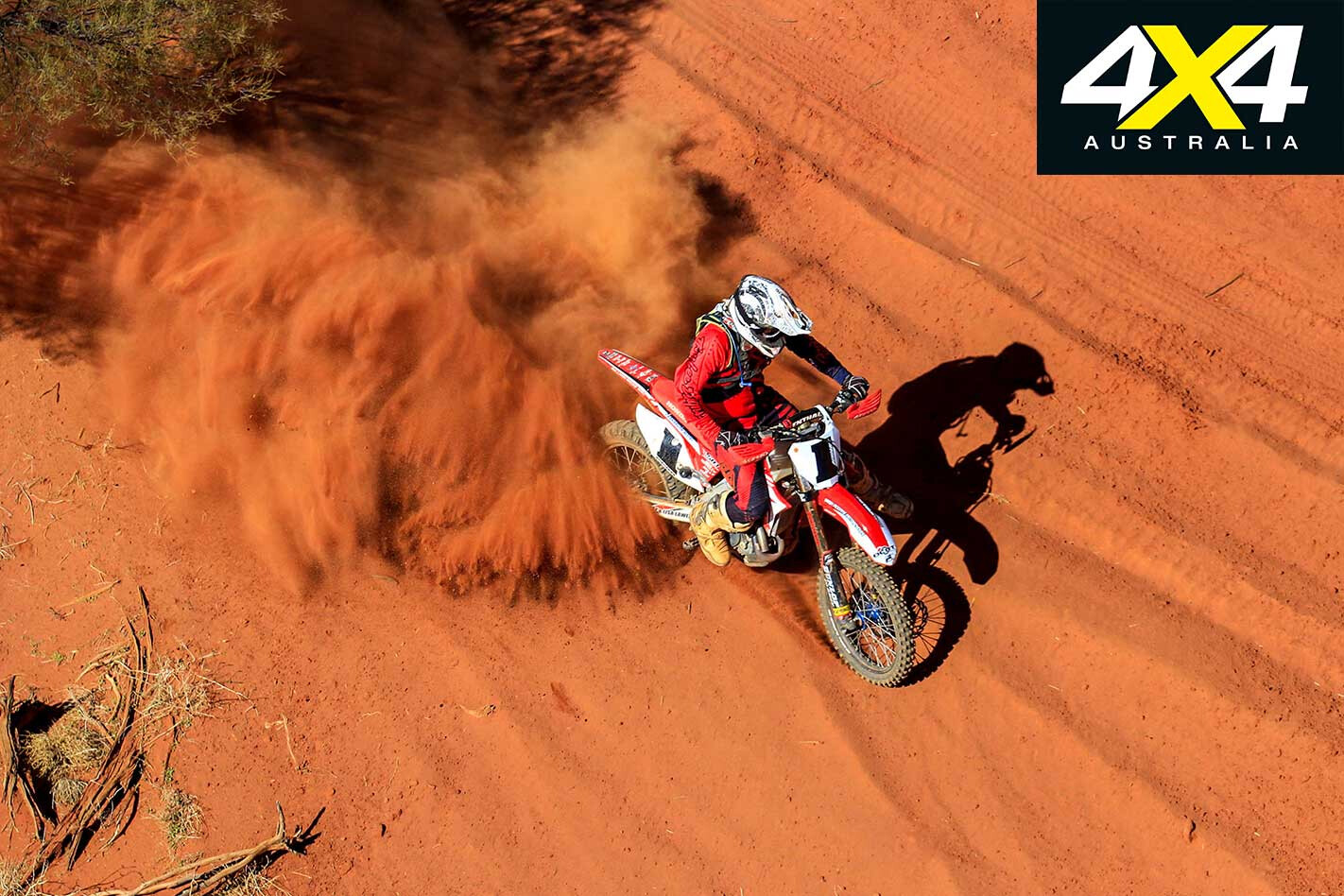
Yet, in spite of his injuries, Upton was able to reach Gascoyne Junction ahead of the Moto field and maintained his dominance the following day, crossing the line at Carnarvon to take the Moto category outright win with a 2min 18sec margin over #19 James McCarthy and 6min 32sec over Alex Moore.
As for the other Moto categories, Michael Lough took the Bike Veterans class win and ninth outright, Rob Pollard topped the charts in the Bike Masters class and finished 13th outright, while Luke Gaisford took his first desert enduro win for the ATV MX specialist class with a 15th outright finish.
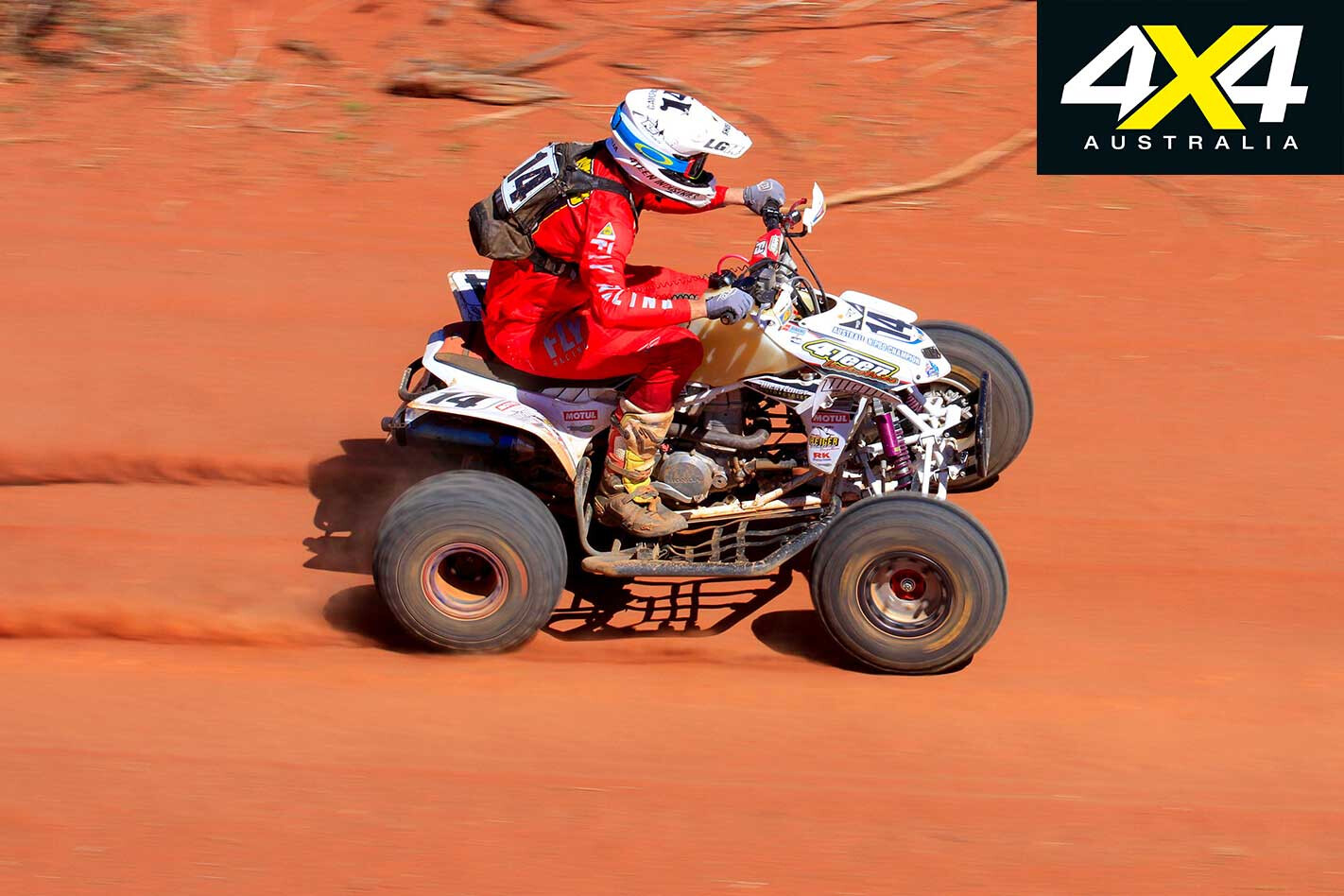
The 2019 Coral Coast Helicopter Services Gascoyne Dash continued with 2018’s new point-to-point race format that proved popular with competitors.
This year’s event saw 86 entries with the Auto category growing to 35 and the Moto category attracting 51 participants, 19 of which were quads. Only 30 motos and 23 cars managed to complete the 400km-plus racing distance from coastal Carnarvon to the outback oasis of Gascoyne Junction, 205km east, and back.
With the desert racing terrain providing the perfect stage for endurance racing and the tarmac service roads between Carnarvon and Gascoyne Junction providing an easy route for service crews, organisers promise that the Coral Coast Helicopter Services Gascoyne Dash will be bigger and better next year.
For the full results of the 2019 Coral Coast Helicopter Services Gascoyne Dash, visit https://my4.raceresult.com/118991/.
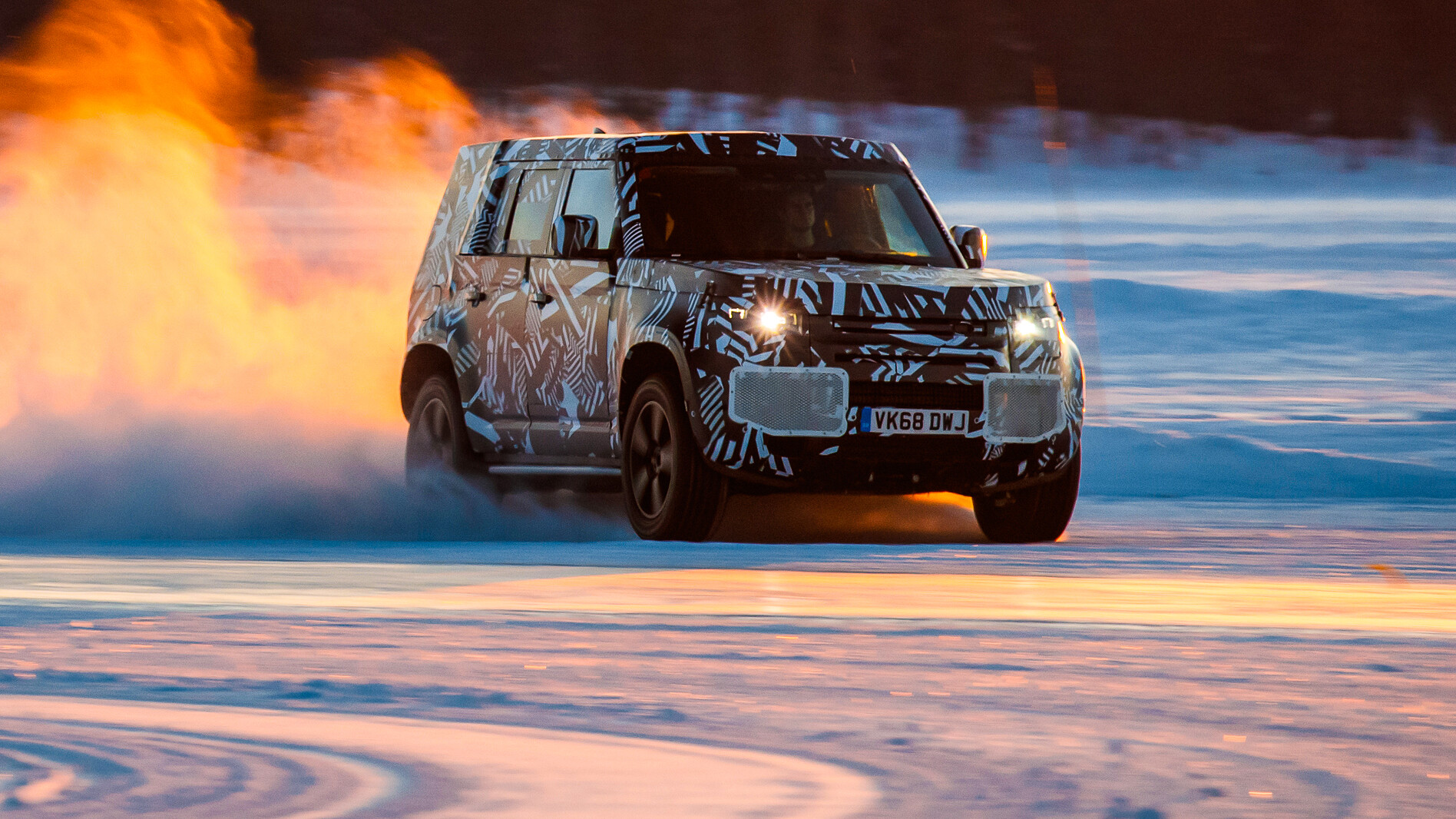
Land Rover is literally leaving no stone unturned with its all-new 2020 Land Rover Defender, with the prototypes now clocking up a combined 1.2 million kilometres of testing, ahead of an expected September 2019 official launch.
A lot hinges on the immediate sales success of this new Land Rover Defender – the first all-new incarnation since the 1948 launch of the original Series 1 – and the company is ensuring this new model offers the ultimate in off-road capability, as well as upping (significantly) the on-road performance of its iconic workhorse.
To celebrate World Land Rover Day, Land Rover has revealed that the final stage of testing will include a Defender prototype on location in Kenya’s Borana Conservancy as part of the Tusk Trust’s conservation work.
Here, it will perform all the duties expected of a remote-area vehicle, with plenty of towing, water crossings and challenging terrain to negotiate each day in the 14,000-hectare reserve.
It’s a real throwback to the brand’s long history of conservation work in remote areas and – hopefully – hints at this new Defender being as capable – or more so – than the vehicle it is replacing.
The prototype pictured here, adorned with Tusk Trust decals, offers the clearest view of what the new Defender’s profile will look like; previous images have given plenty of hints, but the camouflage panels have hidden things like the actual roofline and front end side profile, both of which are clearly visible here.
The new Defender borrows heavily from the Discovery 3 and 4 in terms of side profile but offers a more square rear-end, plus the rear-mount spare wheel of course.
The significant testing regime for the new Defender has included on-road at the famous Nürburgring, Germany, as well as desert terrain in Dubai and Moab (Utah), the Arctic countries and, of course, the 4×4 test facility at Eastnor Castle, in the UK.
We know there will be a short-wheelbase three-door and a long-wheelbase five-door Defender, but still not known is whether Land Rover will enter the burgeoning dual-cab ute market. Likewise, the Defender’s engine options are yet to be confirmed, but we envisage a range of Ingenium-based powerplants, including – possibly – even a three-cylinder, 1.5-litre jobbie, as well as a likely hybrid donk (most likely combined with a petrol engine).
Even though (some) Landy-philes may be happy with the square-ish profile of this new incarnation, what is not going down so well with the green oval brigade is news that the new Defender won’t be manufactured in its spiritual home of Solihull, but rather in eastern Europe, at the company’s new hi-tech facility in Nitra, Slovakia.
Still, if it performs as well as Land Rover is promising, we don’t think too many potential Defender buyers will be concerned.