
Most people think they know Litchfield National Park. Just over an hour south of Darwin, it’s a Territory institution – a playground of waterfalls, safe swimming holes and magnetic termite mounds that features on almost every NT itinerary.
Ask the average traveller what Litchfield means to them and you’ll hear the same names repeated: Florence Falls, Buley Rockhole, Wangi Falls, Tolmer Falls. And they’re right – those spots are magic. But what if I told you there’s a side to Litchfield that doesn’t make the brochures? A part of the park that requires a key to enter, where the crowds don’t follow, where campsites are limited to just a handful, and you can literally roll out of your swag into your own private swimming hole.
That’s Central Valley – a 4×4-only pocket of paradise, recently opened to the public, fiercely loved by locals and, in my mind, one of the best new camping destinations in the Top End.
Central Valley access: Keys, permits and 4×4 needs
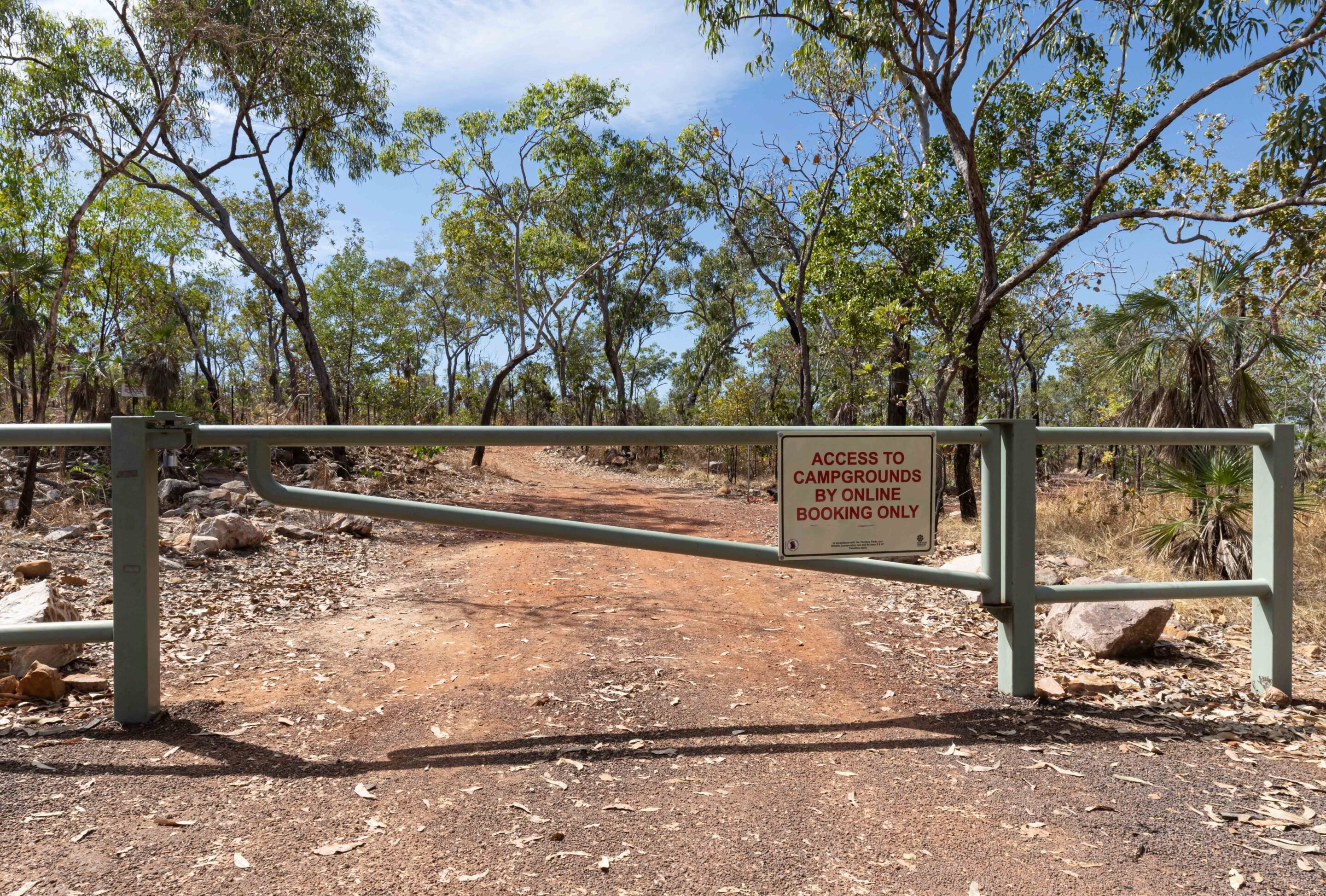
I’ve explored plenty of national parks around the country, but Central Valley was the first time I’d needed to collect a key from Parks and Wildlife before heading in.
You book online through the NT Parks website, then pick up the key from either the permits office in Palmerston, Territory Wildlife Park in Berry Springs, or by prior arrangement from the NT Parks office in Katherine. You’ll need to show ID and pre-authorise $250 on a credit card before signing out the key.
There’s something old-fashioned about it. In a world where everything’s gone digital, here you are signing your name in a logbook and pocketing a physical key. You’ll need it to unlock the heavy steel gates that mark the start of the Central Valley access tracks.
The key system might seem like a hassle, but it’s actually a stroke of genius. It limits numbers, prevents the campground from being overrun, and preserves that special feeling of discovering a rare oasis. It also stops ghost campers. You’re not just turning off the highway onto another tourist track – you’re unlocking something most people will never experience. And here’s a tip: you can return the key to the Parks office at Batchelor on your way out, which is handy if you’re looping back north.
The Lost City: Litchfield’s top 4×4 detour
If you’re making the effort to grab the key and bump your way into Central Valley, you’d be mad not to add the Lost City to your itinerary.
Sitting just off the same 4×4 access track, this collection of towering sandstone pillars feels like stumbling across an ancient civilisation hidden in the scrub. Of course, it’s not the ruins of a long-lost civilisation – it’s a natural sandstone formation shaped by millions of years of wind and water erosion. The result is a sprawling maze of stone towers, narrow passages and sheer cliffs that eerily resemble crumbling city walls. Time your visit right and the low sun sets the rock ablaze in deep oranges and reds, creating an otherworldly atmosphere.
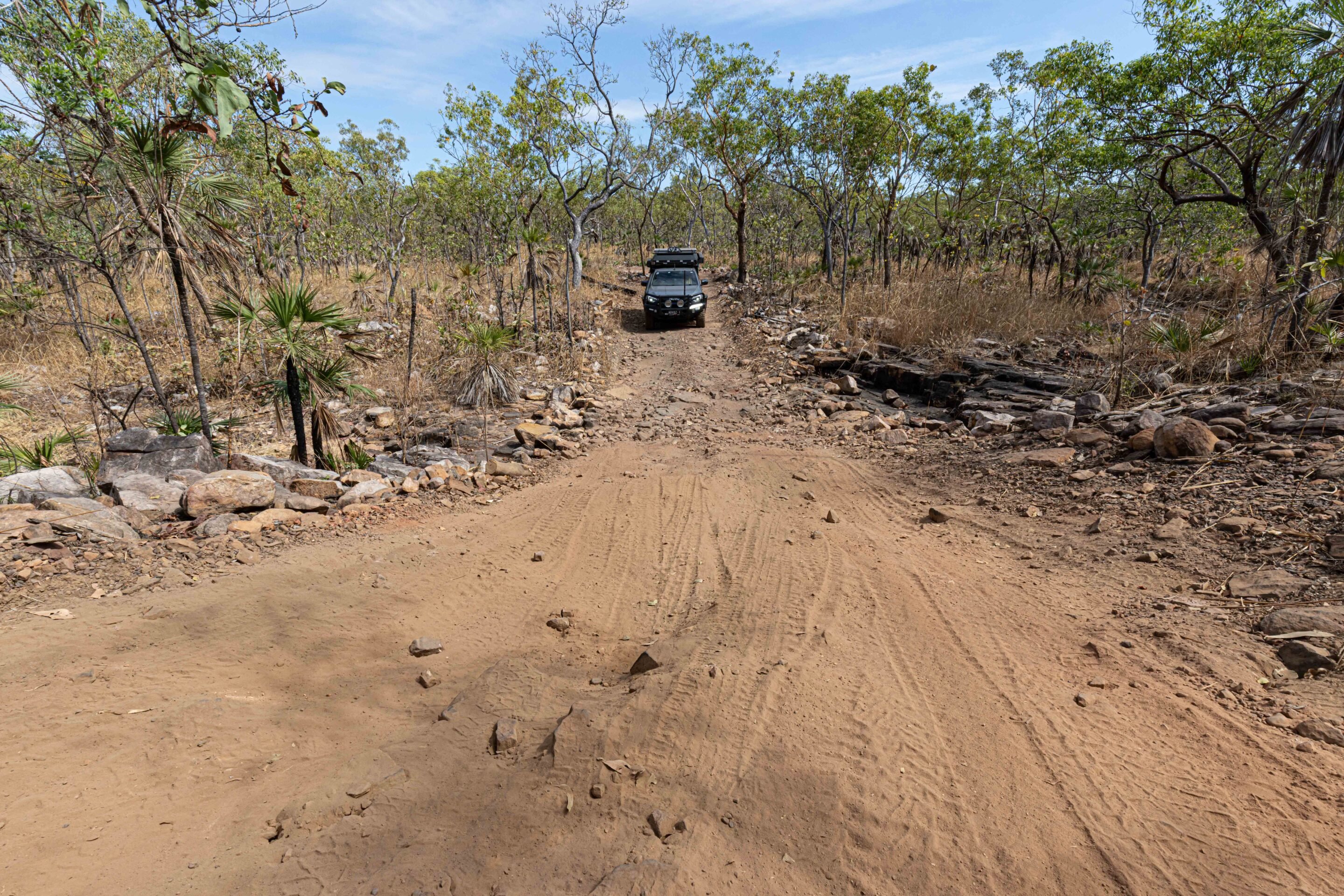
The track to the Lost City is the same one you’ll take into Central Valley – rough, slow-going and strictly 4×4 only. It’s about a 10km detour, with rocky sections and washouts that may call for low-range and careful tyre placement. Caravans and camper trailers are definitely a no-go.

Once you pull up at the small car park, you’re free to wander among the formations. There aren’t formal walking tracks – it’s more about carefully picking your way between the sandstone towers and soaking it all in. The silence is profound, broken only by the rustle of a wallaby or the calls of cockatoos overhead.
Kids will love scrambling through the nooks and crannies, while photographers could spend hours chasing the play of light and shadow across the stone. Aim for early morning or late afternoon, when the colours are at their richest and the whole place feels even more mystical.
The Lost City is the perfect warm-up or wind-down for Central Valley. It’s a short detour that adds another layer to your Litchfield adventure – one minute you’re crawling through rocky 4×4 tracks, the next you’re standing in the middle of a natural wonder that looks like it belongs on another continent. Best of all, it’s quiet. Like Central Valley, the Lost City doesn’t see the tour bus crowds. It’s strictly for 4×4 travellers, which keeps the numbers down and the experience all the richer.
When planning your trip to Central Valley, allow an extra couple of hours to explore the Lost City. It’s a reminder of just how diverse Litchfield is – not just waterfalls and swimming holes, but geology on a grand, almost surreal scale.
Central Valley track: What to expect
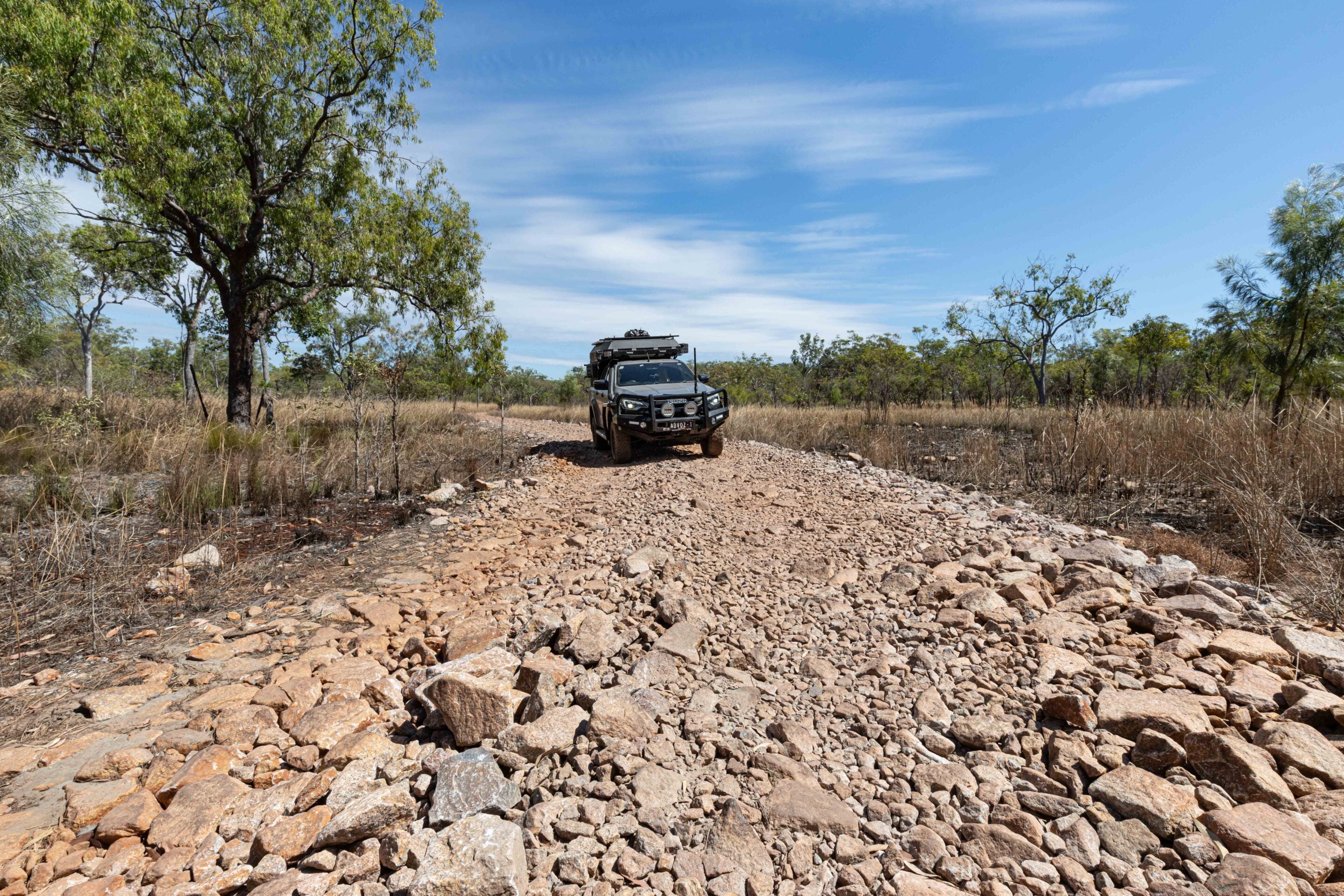
The sealed road through Litchfield takes you past the well-known attractions, but as soon as you swing onto the Lost City track, the game changes. The bitumen ends, the corrugations begin, and you’re firmly in 4×4 country.
From the moment you leave the gate behind, the drive itself becomes part of the adventure. The track isn’t the toughest in the NT by any stretch, but it’s rough enough to demand respect. Expect washouts, deep ruts, rocky sections and a couple of creek crossings. If you’re towing a camper trailer, you’ll need to know your rig and your clearances. Caravans? Forget it – they’re not permitted, and for good reason.
Campground 1, in particular, is only accessible to high-clearance 4x4s. This is low-range country – the sort of track where dropping your tyre pressures makes all the difference. If you’re running a long wheelbase or low sidesteps, be prepared for a few belly scrapes.
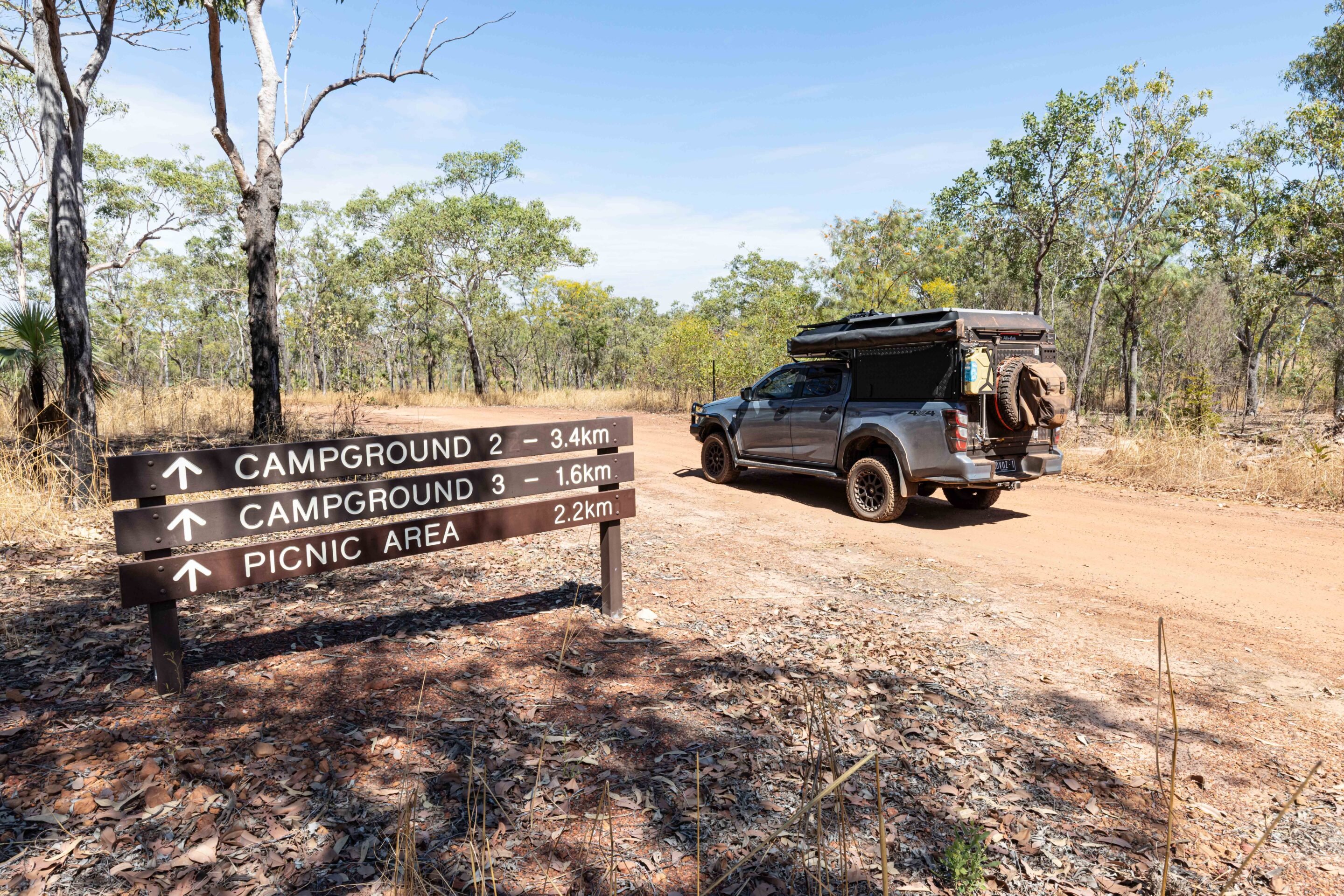
By comparison, Campgrounds 2 and 3 are easier to reach, though you’ll still want proper 4×4 gear under you. They’re a good choice if you’re not keen on testing your bash plates but still want that secluded bush-camp feel.
Central Valley campgrounds guide
Central Valley is neatly divided into three campgrounds, with a total of just 32 sites. That’s it – 32 campsites across a massive valley, which means space, privacy and the kind of quiet you’ll never find at Florence Falls.
Campground 1: High-clearance 4×4 access
Campground 1 is the toughest to reach, but it’s also the most rewarding once you get there. The sites are small, shaded and strung along the East Reynolds River, with several backing directly onto the creek. That means private plunge pools right at camp – picture stepping out of your swag or off-road camper at sunrise, boiling the billy, and sliding straight into crystal-clear water without another soul in sight.
This is the campground for purists. No caravans, no big groups – just a handful of hardy travellers with well-set-up rigs. If you’re chasing solitude, this is the pick.
Campground 2: Family-friendly camping
A short drive further in, Campground 2 is more forgiving. The sites are larger, more spread out, and the river widens here into broad, shallow swimming holes perfect for kids. There’s still enough depth for adults to cool off, but the sandy-bottomed shallows are safe for little ones to splash about under supervision.
You’ll also see more off-road camper trailers here. If you’ve got a family rig and want a balance between adventure and comfort, Campground 2 strikes it beautifully.
Campground 3: Shady, easy access
Campground 3 is the most accessible of the three, but that doesn’t mean it lacks character. Tucked under big paperbarks and eucalypts, the sites are shady, private and only a stone’s throw from the river. If you’re not up for the rougher track into Campground 1 but still want the Central Valley experience, Campground 3 is ideal.
Each campground offers the same basic facilities: pit toilets, fire pits and the occasional picnic table. There are no showers, no water taps and no generators. It’s bring-your-own everything – exactly as it should be.
Central Valley swimming: Croc-free spots
The East Reynolds River is the real star here. Unlike many other Top End creeks where saltwater crocodiles are a constant concern, Central Valley’s swimming holes are croc-free during the dry season.
That’s a game-changer – no second-guessing before diving in. Each campground has its own safe swimming spots, from sandy-bottomed pools where you can sit waist-deep with a cold drink to deeper rockholes where you can stretch out and float.
The water is cool, clear and utterly irresistible in the heat of the NT dry. Late afternoons are pure magic – the paperbarks glowing gold, dragonflies skimming the surface and kookaburras calling through the valley. At night, the pools reflect the stars, and if you’re lucky, you might even hear the splash of a freshwater fish breaking the surface.
Central Valley wildlife
Camping in Central Valley means sharing the space with the locals – and not just the Territorians who’d rather keep it secret.
In the early mornings, agile wallabies graze on the edges of camp, while goannas meander through the pandanus. The birdlife is outstanding – I spotted rainbow bee-eaters, azure kingfishers and a noisy squadron of red-tailed black cockatoos overhead.
At night, the bush comes alive. The eerie wails of bush stone-curlews echo across the valley, sugar gliders dart between the trees, and if you’re lucky, you might spot a bandicoot scurrying through the undergrowth. For wildlife photographers, this place is a goldmine.
Country and culture in Central Valley
It’s important to remember that Central Valley, like all of Litchfield, sits on Limilngan-Wulna and Koongurrukun Country. This land has been cared for and respected for thousands of years, long before national parks were marked on maps.
The East Reynolds River, the surrounding escarpments and even the campsites themselves all form part of cultural landscapes with deep significance. Parks and Wildlife, working with Traditional Owners, manage Central Valley carefully to protect both its natural and cultural values. As travellers, the best way to show respect is to tread lightly, follow the rules and leave no trace.
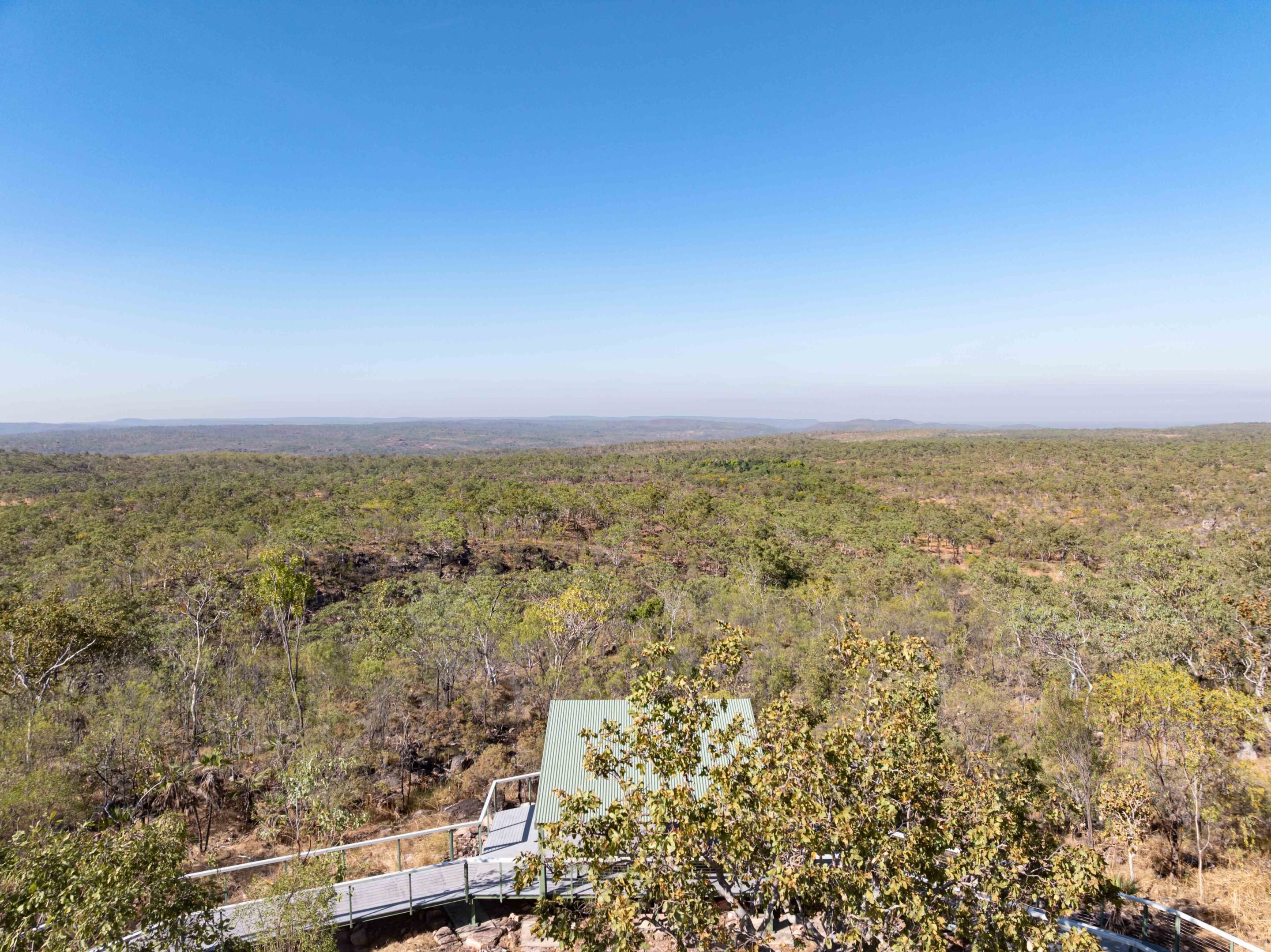
Why locals love Central Valley
Talk to anyone from Darwin who’s spent time in Central Valley and you’ll hear the same thing: don’t tell too many people about it!
And it’s easy to see why. For years, Darwin locals have treated Litchfield as their backyard getaway, but with the main falls and swimming holes often packed with tourists, Central Valley offers something different – space, peace and the feeling you’ve got a corner of the park to yourself.
The key system keeps numbers down, and the limited campsites mean it’ll never be overrun. It’s become the weekend escape of choice for those in the know. Outside school holidays, bookings are usually straightforward, and you might end up sharing a campground with just a handful of others.
Why Central Valley stands out
For me, Central Valley sums up everything I love about four-wheel driving in the NT.
It’s not about conquering extreme tracks or covering massive distances – it’s about finding places the bitumen doesn’t reach, where you can still feel that sense of discovery, and where the effort to get there pays off in spades.
Sitting by the East Reynolds River with a fire crackling and the night sounds of the Top End all around, I felt like I’d stumbled onto something special. And in many ways, I had – a part of Litchfield the locals would rather keep secret, a place where you need a key to enter and where the reward is peace, solitude and endless swimming holes. Yes, Litchfield is famous for its waterfalls, but the real treasure might just be hidden in its Central Valley.

Fast facts
- Where: Central Valley, Litchfield National Park, NT
- Access: 4×4 only via the Lost City track. Key required.
- Bookings: Online through NT Parks – nt.gov.au/parks/find-a-park/Litchfield-national-park/central-valley
- Keys: Collect from the permits office in Palmerston, Territory Wildlife Park in Berry Springs, or the NT Parks office in Katherine (by prior arrangement). Keys can also be returned at Batchelor.
- Season: Dry season only (May–Nov). Closed during the wet – check NT Parks for updates.
- Facilities: Pit toilets, fire pits, picnic tables. No water, showers or power.
- Campsites: 32 sites across three campgrounds. Unpowered.
Ideal set-up
- Vehicle: A high-clearance 4×4 is essential. Low range is handy, and a snorkel’s a bonus if water levels rise early in the season.
- Tyres: Drop pressures to around 22–24psi for the rougher sections. Carry a compressor to reinflate once you’re back on the blacktop.
- Towing: Off-road camper trailers are fine if you’re confident, but caravans aren’t permitted.
- Camping gear: Swags, rooftop tents or compact setups work best. Sites aren’t huge, so leave the annex walls at home.
- Supplies: Bring all food, water and firewood. There are no bins, so pack it in and pack it out.
Toyota Gazoo Racing has confirmed it will field a new GR HiLux at the 2026 Dakar Rally.
The Dakar Rally will kick off the FIA World Rally-Raid Championship season, with the gruelling endurance race to be held from January 3 to 17.
The new, stronger HiLux is equipped with a reinforced transmission and a new tubular chassis, which is said to not only increase torsional stiffness and reduce weight, but improve serviceability for quicker track-side fixes. Toyota says the vehicle is currently undergoing a “comprehensive testing programme to prepare it for the punishing demands of the Dakar Rally”.

The Australian connection with the DKR GR Hilux lies with Toby Price, who will make his TGR W2RC debut at the Dakar Rally. Price has previously tasted success at the event, being a two-time winner of the rally in the bikes category. In 2025, he swapped two wheels for four, driving a privately entered Toyota HiLux.
Price will be joined by navigator Armand Monleón, who sat alongside Lucas Moraes to win the 2025 drivers’ title for TGR W2RC. The duo is joined by fellow TGR HiLux drivers, Henk Lategan and Seth Quintero.
“This is one of those pinch-yourself moments in my motorsport career,” said Toby Price. “Dakar at this level is something only a very small group of people get to experience, and I’m extremely grateful to Toyota, Red Bull, Peter Kittle Motor Company, and all our partners for making it happen.
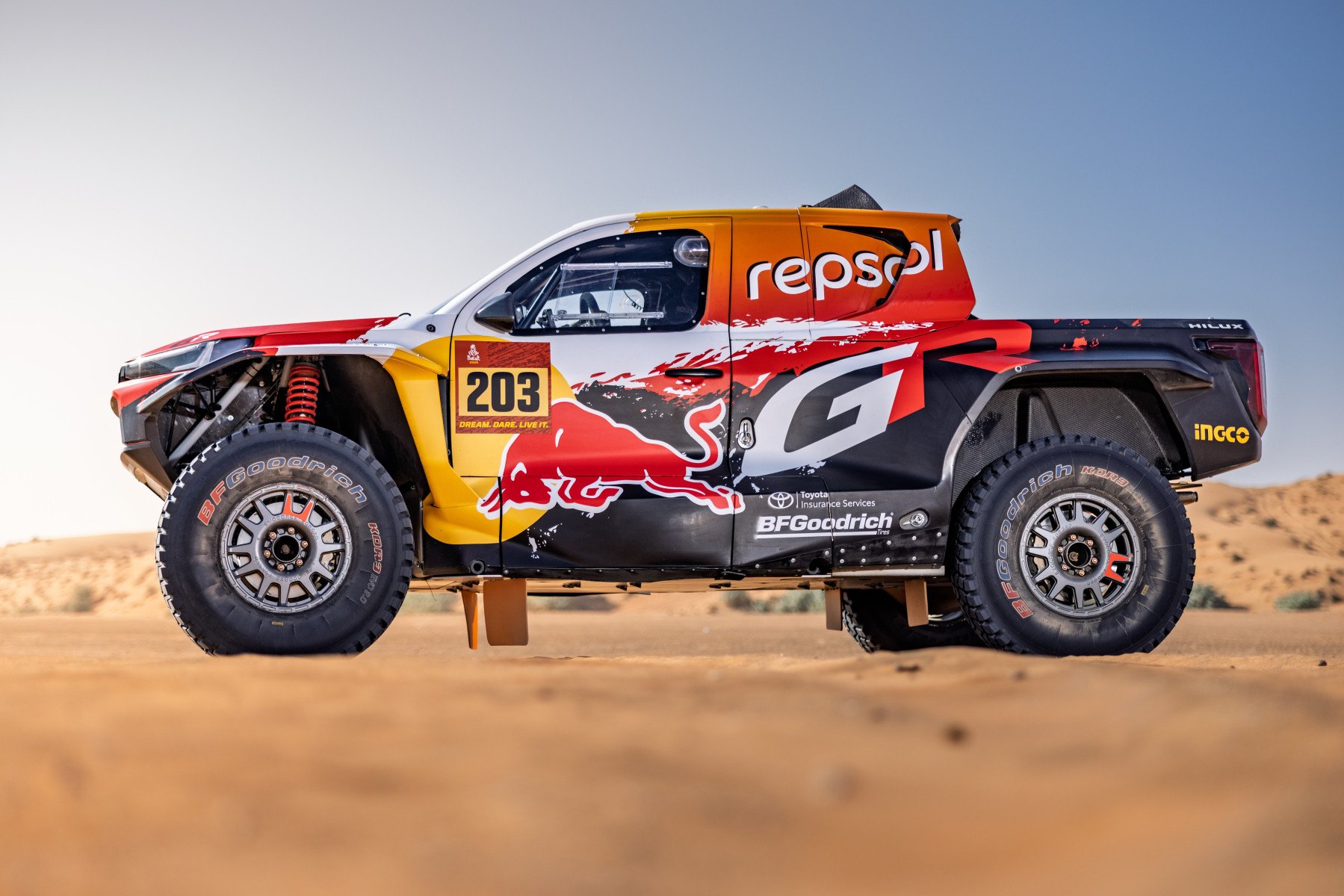
“I’m really looking forward to heading back to Dakar for redemption after how our debut ended last year. Letting our partners down and seeing Sam suffer a concussion was tough, but it’s only added to my motivation. Teaming up with Armand is incredible. He brings so much experience, and I truly believe we’re in a great position to take it to the Dakar greats,” he added.
The three DKR GR Hilux vehicles will debut at Dakar, before competing in Portugal (12-22 March), Argentina (24-29 May), Morocco (28 September-3 October) and Abu Dhabi (22-27 November) throughout the five-event 2026 W2RC season.
Hyundai has unveiled its menacing CRATER concept at the 2025 Los Angeles Auto Show.
Designed at Hyundai America Technical Center in Irvine, California, the CRATER is a compact off-road SUV concept built on a compact monocoque architecture. It features steep approach and departure angles, 18-inch hexagonal wheels fitted with 33-inch off-road tyres, a wide skid plate, roof platform for auxiliary equipment, limb risers, and protective rocker panels.
Off-road capabilities include front and rear locking differentials, traction and braking management, downhill brake control, trailer brake control, compass, altimeter, and a tactile gear-style off-road controller.
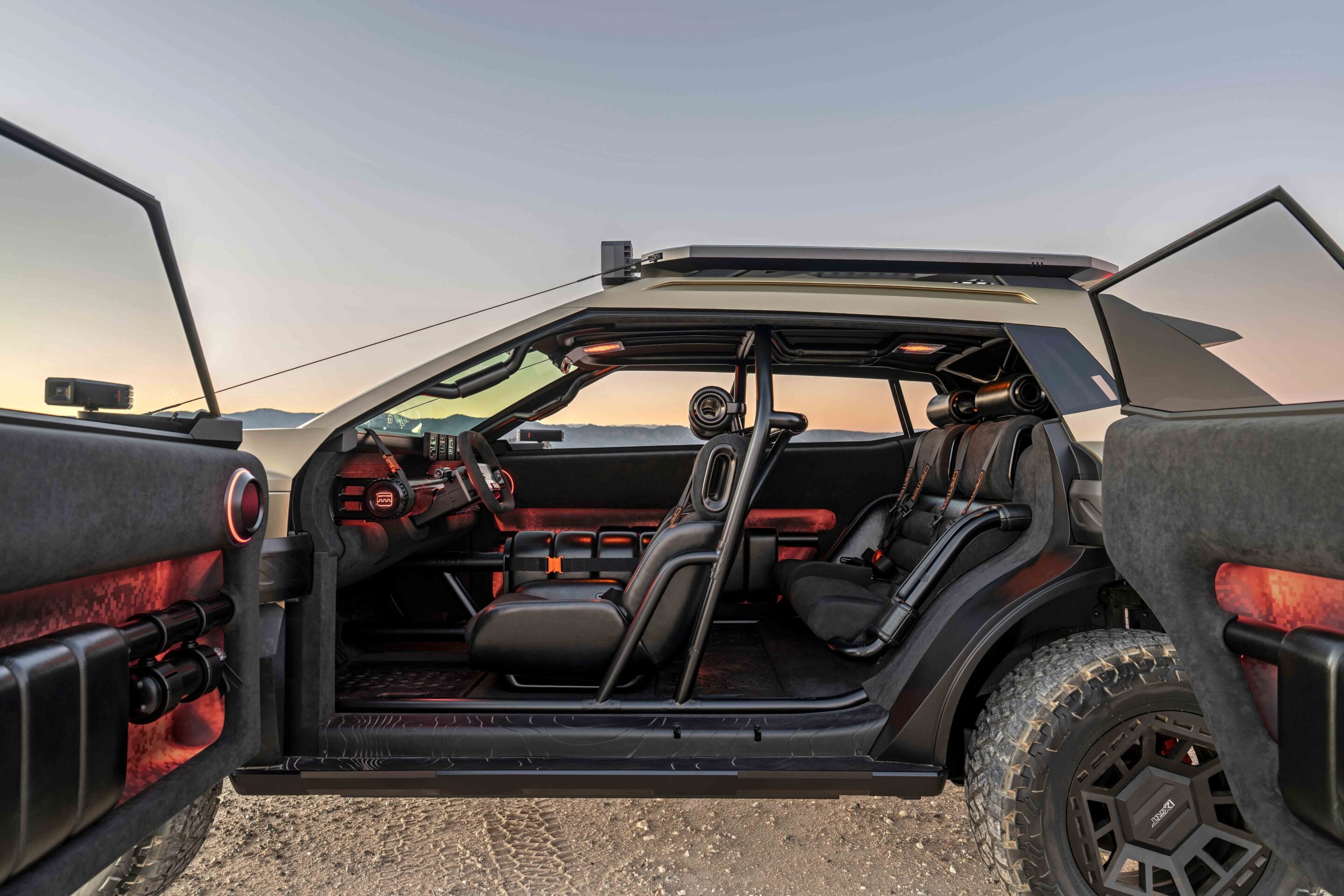
The exterior design is finished in Dune Gold Matte, inspired by California coastal terrain, with anodised orange accents. Lighting includes parametric pixel elements and auxiliary roof-mounted off-road lights. The CRATER incorporates Hyundai’s Art of Steel design language, with chiseled bodysides, sheer fender surfaces, and protective elements intended to convey strength and resilience.
Inside, the cabin is designed for function-first off-road use. It features wraparound seats with three-dimensional padding, cylindrical cushions, supportive headrests, and a four-point seatbelt system. A functional roll cage, integrated grab handles, fire extinguisher, first-aid kit, and removable Bluetooth speaker are included.
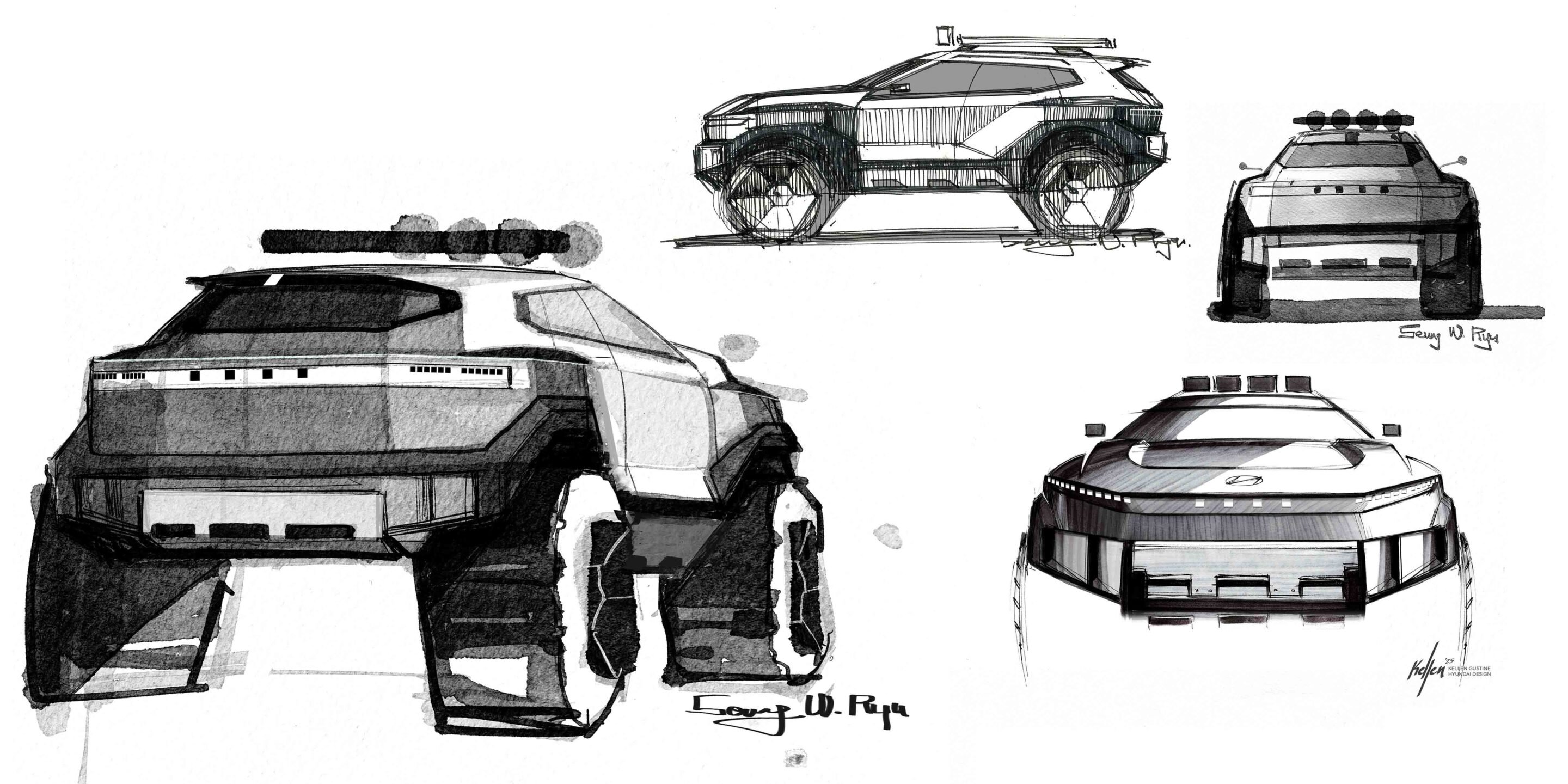
The full-width head-up display, BYOD interface, and terrain mode selector with Snow, Sand, Mud, Auto, and XRT settings support adaptable driving in different conditions. Materials such as black leather, Alcantara, and brushed metal, along with topographic surface patterns, are used for durability and practicality.
Hyundai unveiled teaser sketches of the vehicle earlier this week, hinting at its extreme off-road design before the official debut. The concept follows Hyundai’s existing XRT models, including the IONIQ 5 XRT, Santa Cruz XRT, and Palisade XRT Pro.
The CRATER is on display at the 2025 LA Auto Show through to November 30.
Nissan has used Australia to pull the wraps off its brand-new D27 Navara, with the covers coming off at a live event that was also live-streamed around the planet.
As expected, the Navara is heavily based on the Mitsubishi Triton (Nissan calls it an `Alliance platform’) with no sheet metal nor mechanical changes from the Mitsubishi.
The one exception there is local suspension input from Premcar (the Melbourne-based engineering mob that brought us the Patrol and Navara Warrior hot-rods) with new twin-tube dampers replacing the Triton-spec units.
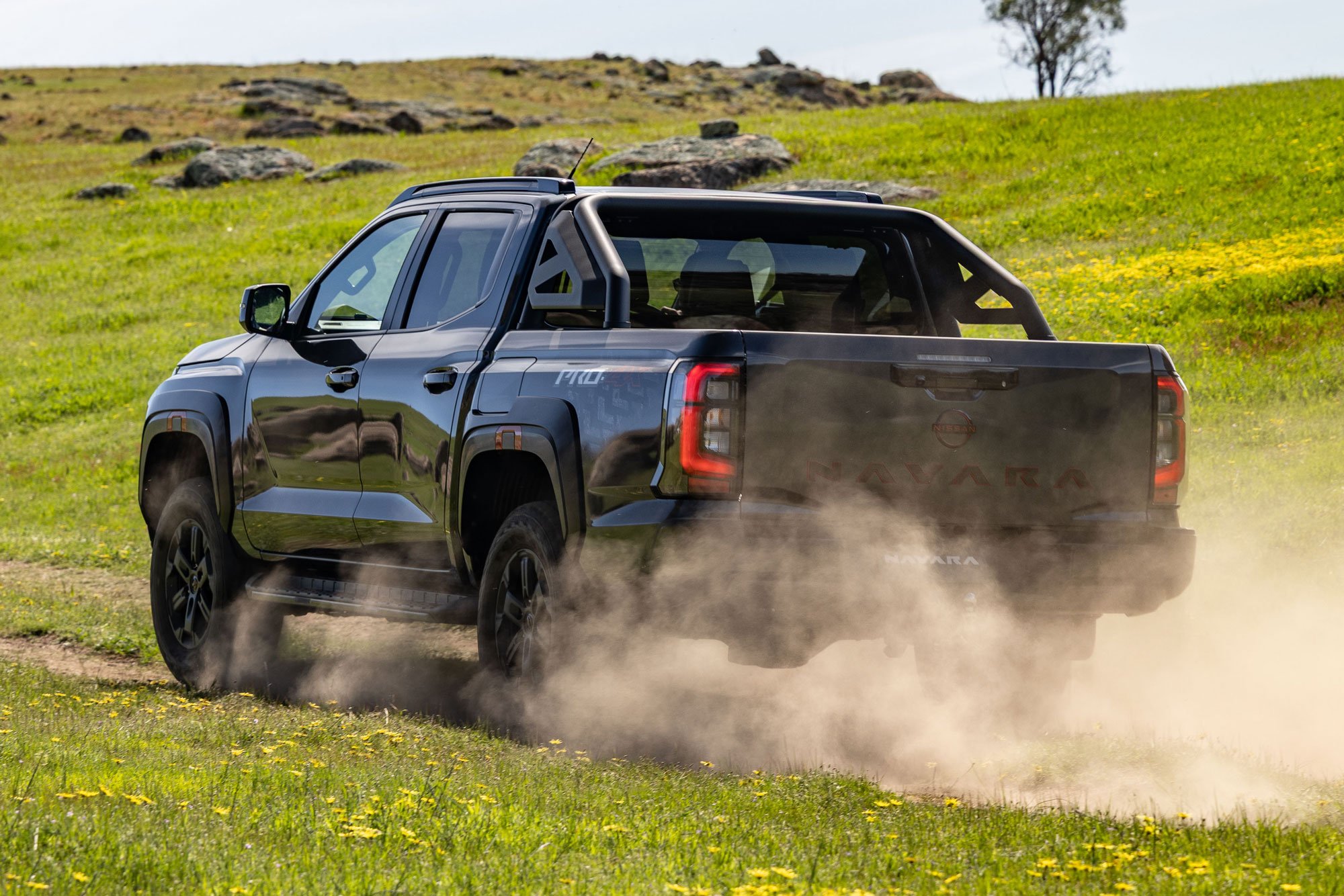
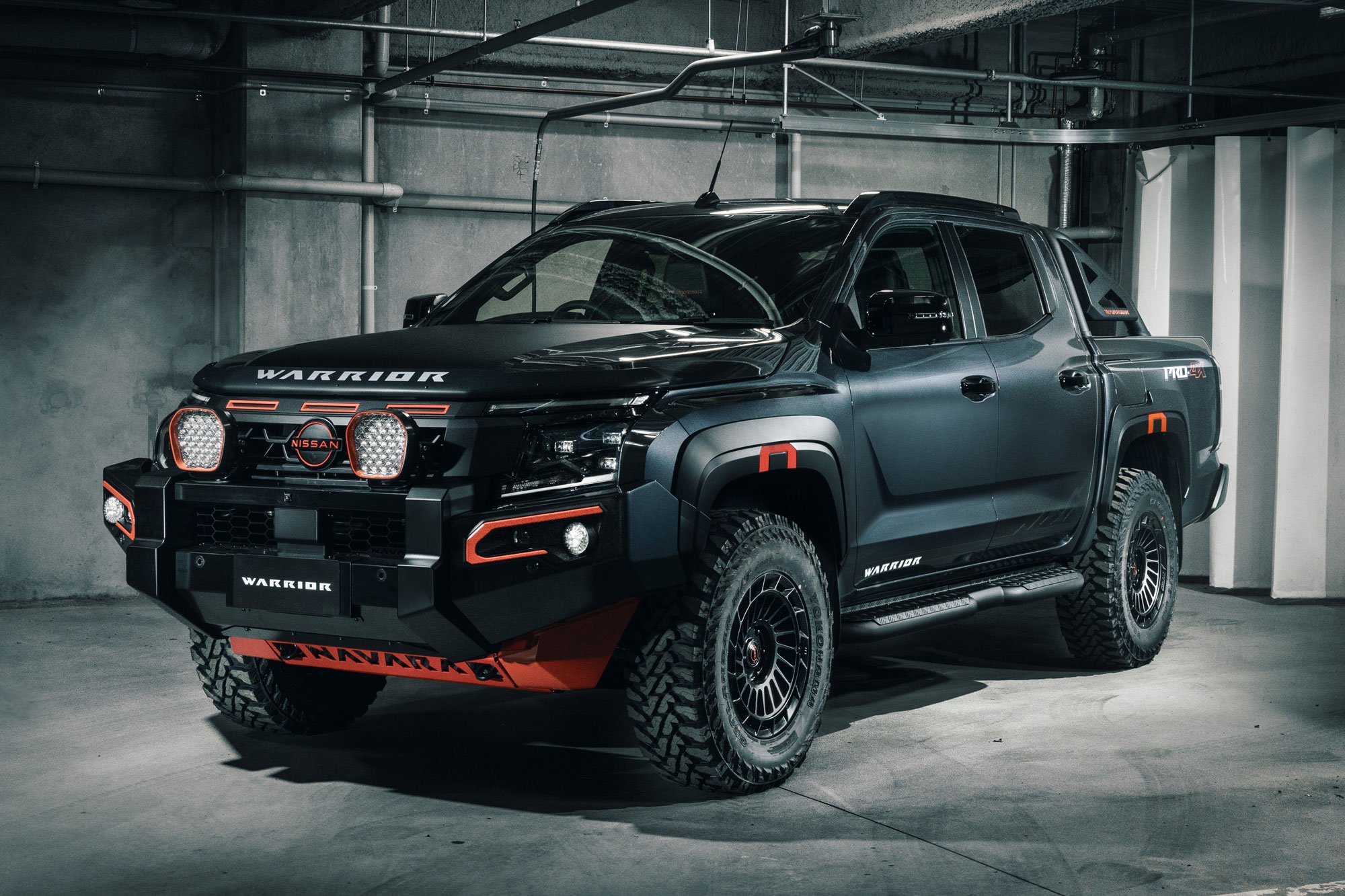
Very little was given away at the unveiling, and while we know there will be an ST-X and a Pro-4X and very likely an entry-level trim also. A high-end concept shown at the same time confirms that Premcar has also developed a Warrior variant of the new car.
Beyond that, specifications and pricing remain largely unknown.
Giving the Navara a Nissan face has been achieved by some typical Navara styling cues such as the three slots in the bonnet’s leading edge as well as the corporate grille structure. At the rear, C-shaped tail-lights are the best way to tell a Navara from a Triton (badging aside).
Mechanically, we’re talking Triton-spec stuff including the 2.4-litre, bi-turbo-diesel with 150kW and 470Nm, a combined fuel number of 7.7 litres pr 100km and a six-speed automatic transmission that incorporates the Mitsubishi Super-Select system (which Nissan calls Super 4WD Terrain Selector) with seven driver-selectable modes and the ability to run in four-wheel-drive on bitumen. A rear diff lock will be optional.
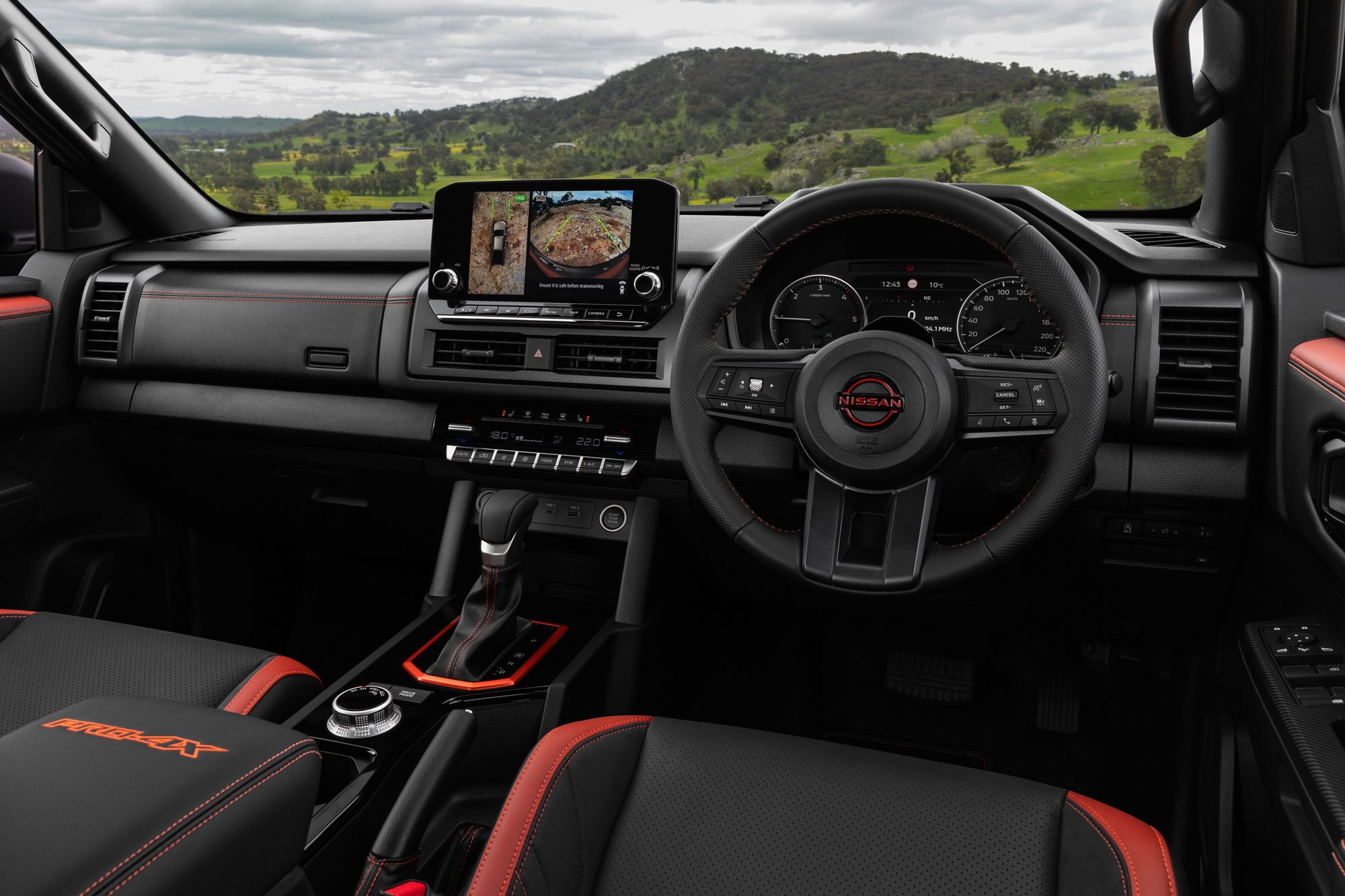
Payloads vary from model to model but come in between 950kg and 1047kg, and towing capacity is the expected 3500kg.
There’s 228mm of ground clearance, and the new car is bigger than the D23 apart from being slightly lower overall, with a lot more interior space. The tray is also a useful 46mm longer.
Inside, you can count on a nine-inch central screen, digital radio, a 360-degree camera and a seven-inch dashboard display. There’s also wireless connectivity and wireless charging, all wrapped up in a cabin that will be utterly familiar to Triton owners.
Accessories will also be a big part of the Navara proposition at dealership level, and there are big plants for canopies, racks, snorkels and proper bull-bars.
The vehicle is expected to be in Australian showrooms in the first quarter of next year.
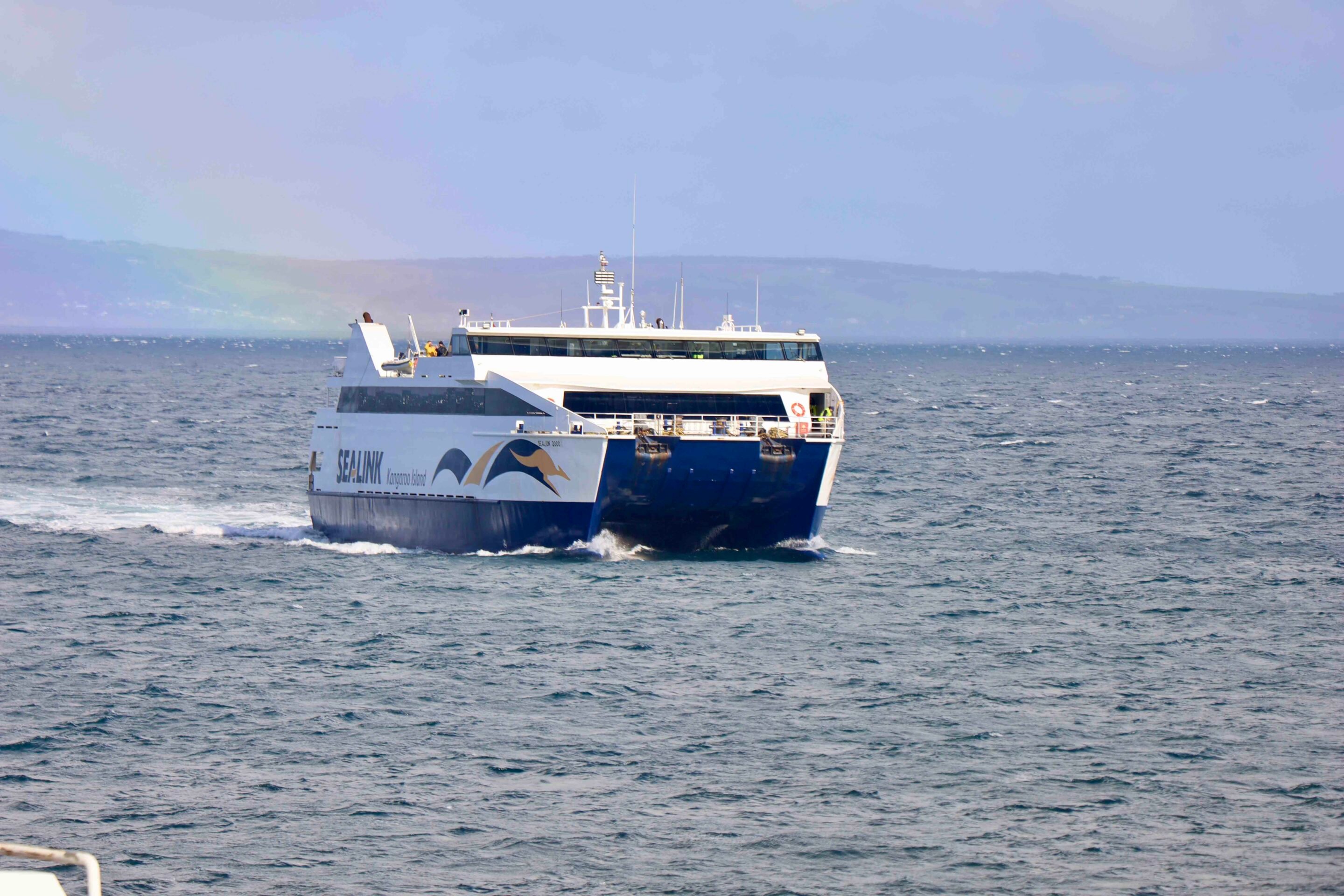
Kangaroo Island had long been on my radar, sitting just 100km south of Adelaide and only a short ferry trip away. With a few weeks up my sleeve, I finally pointed the rig out of Adelaide and booked a spot on the 14km barge ride across Backstairs Passage. Advance bookings are essential.
This deep and often dangerous strait was formed nearly 13,000 years ago when rising seas cut Kangaroo Island off from the mainland. Explorer Matthew Flinders charted the area in 1802 and named it Backstairs Passage, a nod to its position between Gulf St Vincent and the Southern Ocean.
Narrow waters, heavy swells and breaking seas have claimed many ships here, prompting the construction of South Australia’s first lighthouse at Cape Willoughby in 1851. The dangers remain very real – even in 2005, two inexperienced sea kayakers lost their lives attempting the crossing.
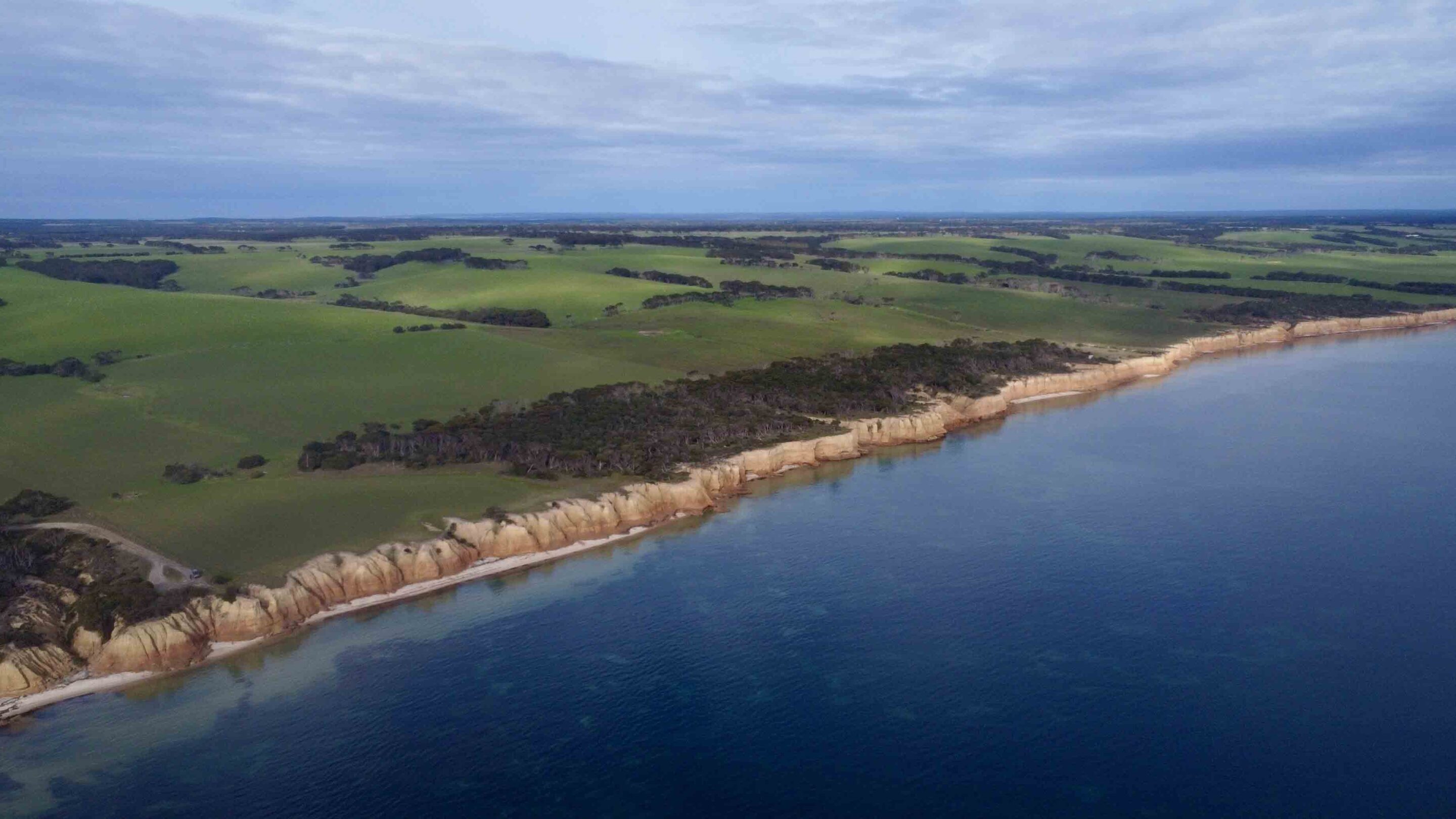
Kangaroo Island is Australia’s third-largest island after Tasmania and Melville Island off Darwin. Its Indigenous history is just as impressive, with artefacts dating back at least 16,000 years. The Aboriginal name for Kangaroo Island is Karta Pintingga, meaning ‘Island of the Dead’. Before the island was cut off from the mainland, three tribes lived across KI, and over the years archaeologists have uncovered stone hammers, shell middens, cave shelters and ceremonial sites.
After the 40-minute ferry ride, you instantly feel like you’ve escaped the mainland. There’s a sense of calm and isolation that sets in the moment you roll off the barge. The gateway to KI is Penneshaw, the island’s second-largest town with a population of just 275. It’s known for its historic streetscapes and local attractions, with penguin-spotting at night, the beautiful Hog Bay beach, and one of the island’s best lookouts at Ironstone Hill.
There’s no set way to explore Kangaroo Island – it really comes down to time and personal interest. Across the island you’ll find wineries, local produce, guided adventure tours, fishing charters and plenty more. The island’s main town of Kingscote has everything you need – fuel, food, bottle shops and a spread of local boutiques. It’s the perfect place to re-stock, grab a pie and wander the streets to get a taste of KI life.
About an hour’s drive west lies Flinders Chase National Park, a destination worthy of several days’ exploring. Here you’ll find the Kelly Hill Caves, wildlife sanctuaries, the striking Remarkable Rocks, a network of walking trails and the historic Cape du Couedic lighthouse.
Kangaroo Island lighthouses
For a relatively small island, Kangaroo Island is home to three lighthouses thanks to its rugged coastline and exposure to the Southern Ocean.
Cape Willoughby Light Station, just south of Penneshaw, sits high on a hill overlooking the coastal plains and across to the mainland. Matthew Flinders first navigated the nearby channel in 1802, and soon after whalers and sealers began working the area. It quickly became clear a light was needed to help vessels through the treacherous seas.
By 1852 the lighthouse was completed, powered by a 15-wick oil lamp. It was converted to kerosene in 1920, and today an efficient LED still shines from the tower, providing a crucial navigation aid. A self-guided heritage trail winds around the grounds, with a dozen landmarks to explore.
Cape Willoughby is often the coldest place in South Australia, and its tower – built from granite and lime mortar – is also the state’s oldest lighthouse. Known as the Sturt Light, it was named after inland explorer Charles Sturt, who helped secure the funding needed for its construction.
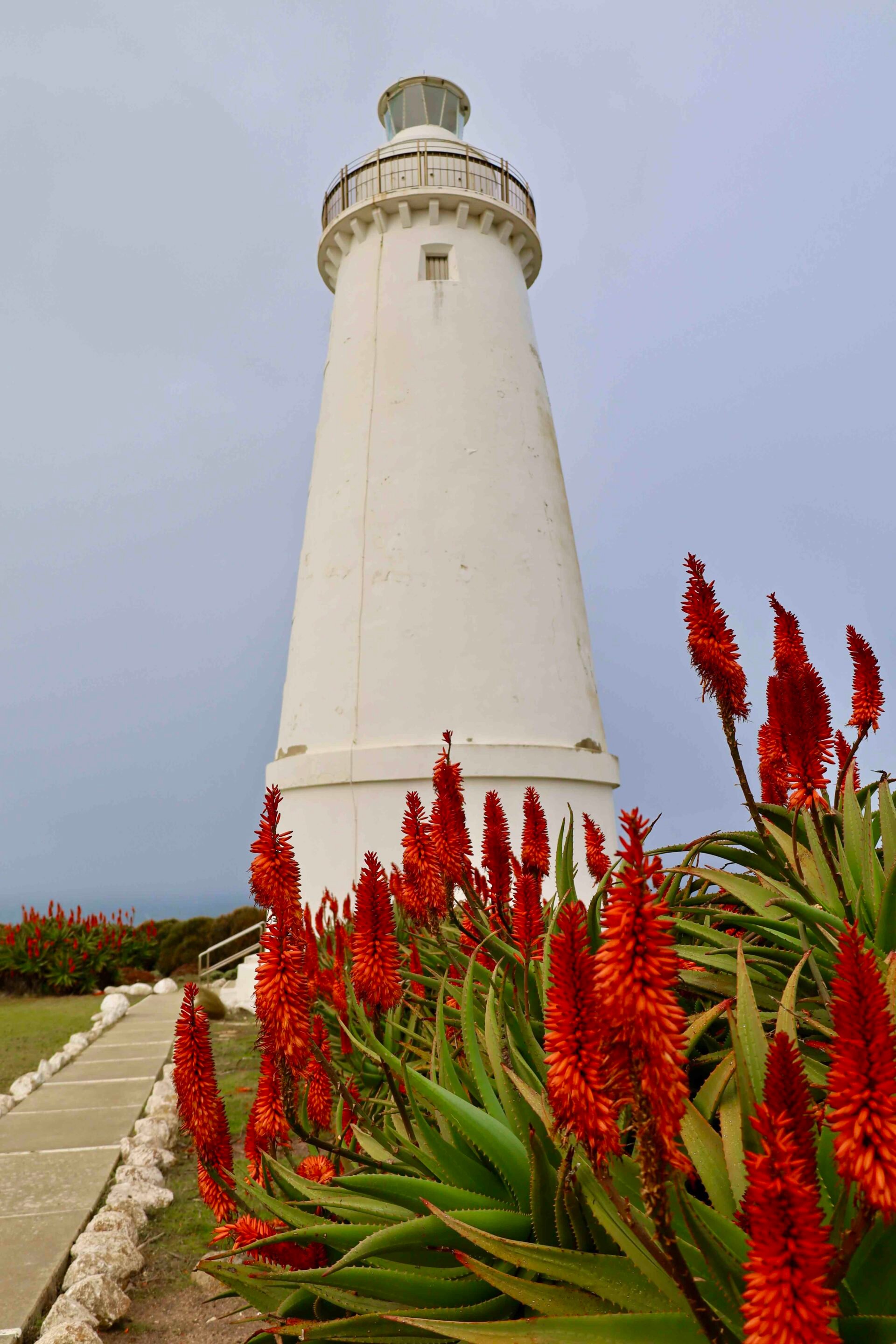
On the far western side of the island lies the remote Cape Borda Lighthouse, built in 1858 to guide ships through the rough waters of Investigator Strait. The unusual square tower with its high dome stood virtually cut off from the rest of the island until 1928, when a rough track was pushed through to link it with Kingscote. For decades before that, supply ships visited only a few times a year, landing some 8km away in a small cove.
The grounds today are rich in history, with remnants of the weather station, stores, workshops, powerhouse and telegraph station still on display. During the devastating 2020 bushfires, firefighters fought desperately to save the historic site. Forced to retreat at one point, their earlier efforts paid off, with only a BBQ shelter and toilet block lost.
Cape Borda was built for navigation, but also had a defensive role at a time when governments feared foreign interests in the region. A small cannon still sits at the site, though it was never used in anger – in fact, its range couldn’t even reach the cliff edge. Instead, it was fired daily at 1pm so ships could set their chronometers, and to signal favourable weather to returning supply vessels. Reputation-wise, Cape Borda is known as one of the coldest and windiest points in South Australia.
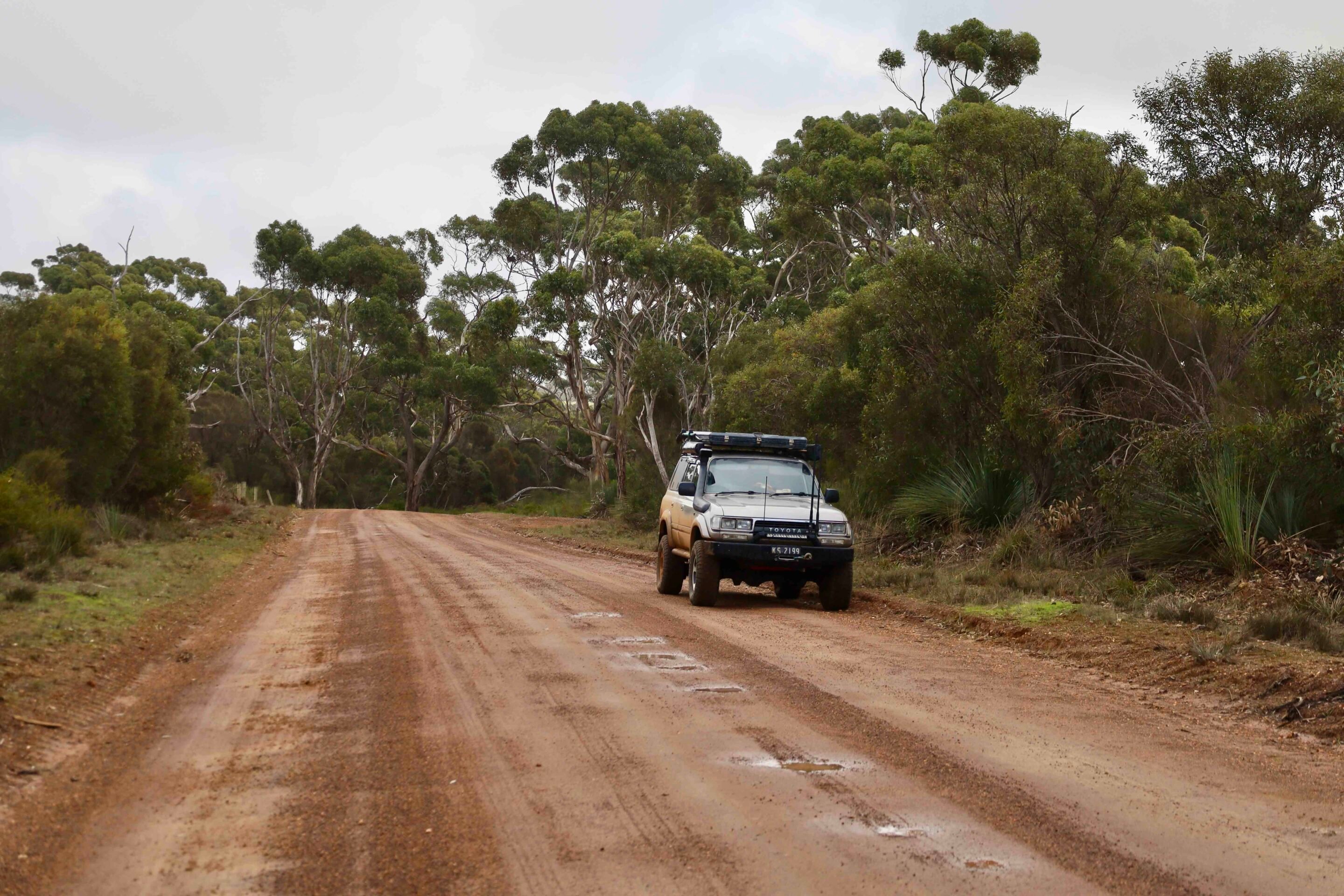
To the south, in Flinders Chase National Park, stands the beautiful Cape du Couedic Light Station. This elegant granite tower was completed in 1902 after several ships were lost to the hidden reefs offshore.
The cape itself was named in 1803 in memory of a French naval officer who died while commanding his ship in 1780. Today, lighthouse tours are available during peak times and give visitors a great insight into both the tower’s history and the surrounding area.
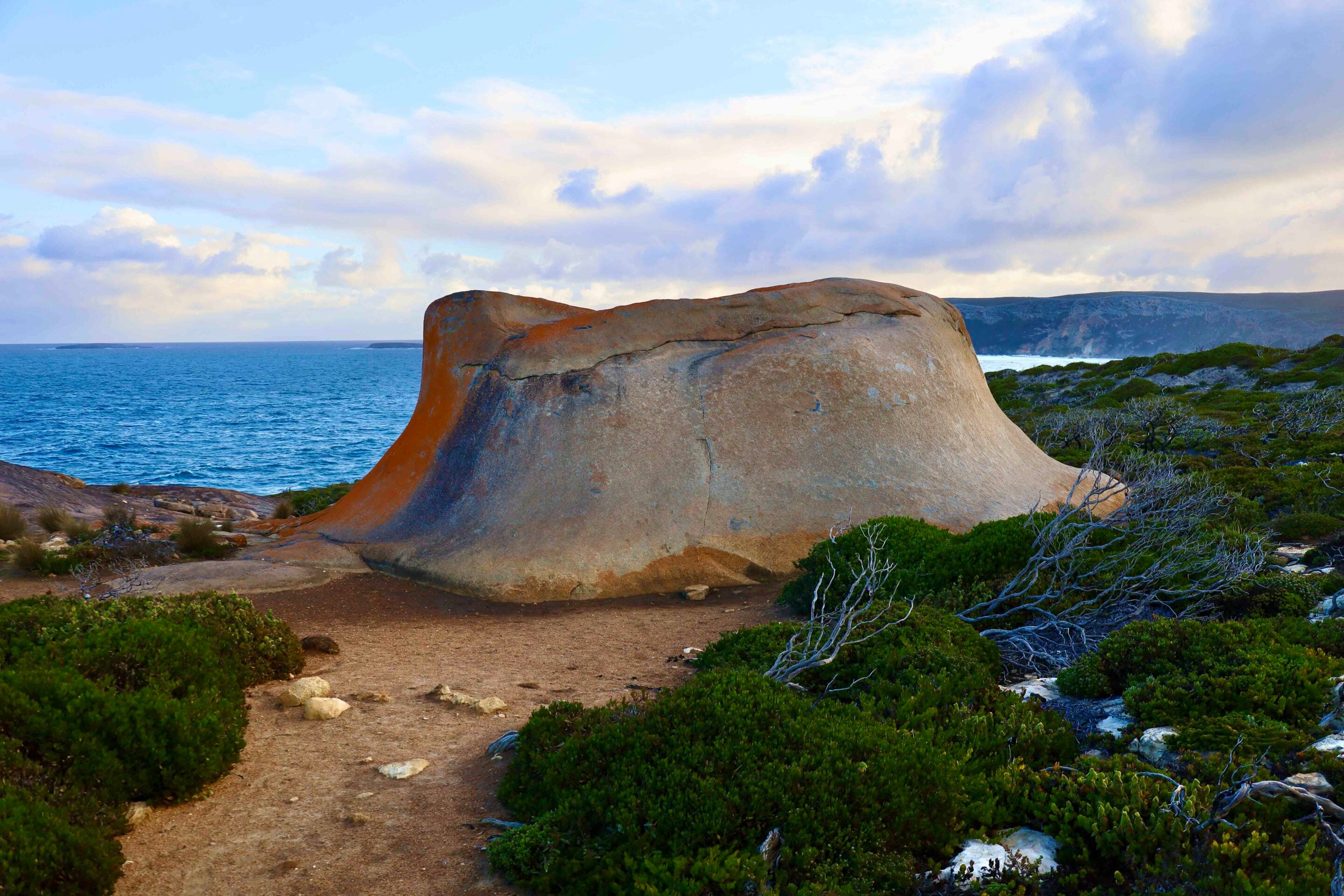
Cape du Couedic is also the starting point for three walking tracks. From here you can watch long-nosed fur seals lazing on the rocks below, or head out to the Remarkable Rocks and the dramatic, wind-swept Admirals Arch formation.
Best places to visit
Kangaroo Island stretches 155km in length and up to 55km in width, with a sealed highway linking the main towns and key tourist sites.
The island is often divided into eight distinct regions, each offering its own scenery, backdrops and character. Around a third of the land is set aside as national park or conservation reserve. A network of unsealed roads crisscrosses KI, leading to countless natural wonders and off-the-beaten-track experiences. The western side of the island is still recovering from the devastating 2020 bushfires. Undergrowth is slowly returning, walking tracks have reopened, and most of the 4×4 routes are accessible, albeit with caution.
For something different, the Stupa Buddhist Retreat offers a peaceful escape from the mainstream, with space to reflect and recharge. Seal Bay Conservation Park is another must-visit, where you can get up close with the resident sea lions from the boardwalk and viewing platforms.
Across the island you’ll also find plenty of camping options – from secluded sites in thick forest to spots overlooking the water. I visited in early spring, when the weather was still cool and damp, and some tours and facilities were closed for the off-season. The upside was having fewer people around, which made exploring the island all the more rewarding. The trick is not to underestimate how much time you need on KI. Allow at least a week to soak in its solitude, scenery and unique way of life.
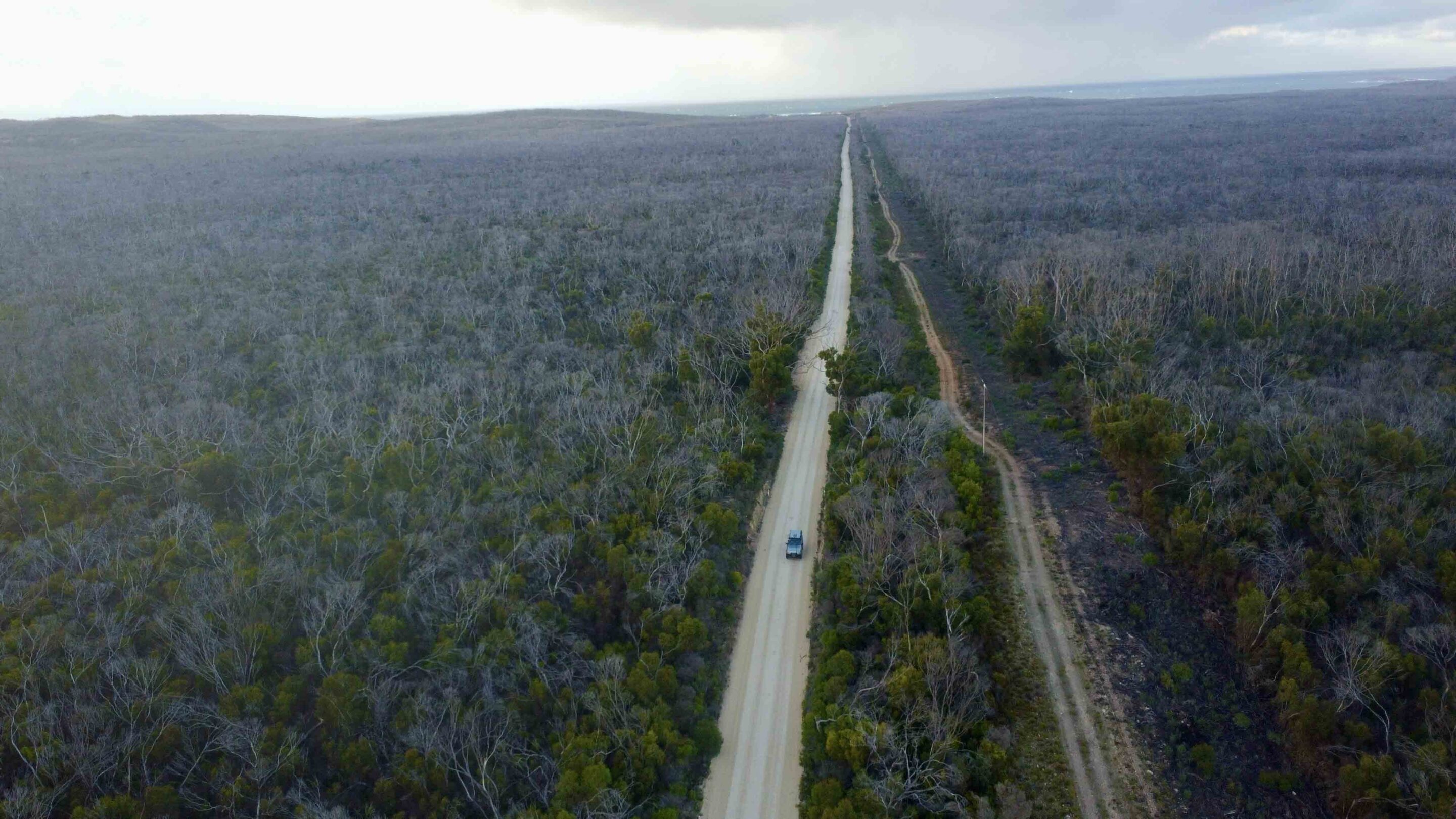
How to get to Kangaroo Island
Kangaroo Island lies off Cape Jervis at the southern tip of the Fleurieu Peninsula, just over 105km south of Adelaide. Sealink ferries operate daily, with multiple crossings to and from the island.
Australia’s third-largest island is 55km wide, nearly 155km long and sits only 15km off the mainland. While many of KI’s roads are unsealed, they’re generally well maintained for locals and visitors alike. From rolling green hills to the rugged beauty of Flinders Chase National Park, through to remote beaches and wild headlands, Kangaroo Island is as diverse as it is stunning. Allow at least a week to make the most of what it has to offer.
How to spend your time
For its size, Kangaroo Island packs in plenty to see and do. Adventurers can tackle walking trails, drive out to remote lighthouses, or explore secluded headlands and beaches. There are also quad biking tours, sand boarding and kayaking for those chasing a thrill.
If you’d rather take things slower, the island’s food and wine trails showcase local produce, while wildlife encounters are around every corner. It’s also the perfect place to simply relax and recharge. Flinders Chase National Park offers remote drives, caves to explore and some of the best bush camping you’ll find anywhere. And don’t miss Stokes Bay – named Tourism Australia’s Best Beach in 2023.
Barge and road conditions
A trip to Kangaroo Island isn’t cheap for a short visit, but it deserves a spot on everyone’s bucket list. Bookings are essential for the barge to and from the island, and services can be cancelled when seas are rough.
Most of KI’s roads are unsealed but generally in good condition, making it easy to explore beyond the main tourist trail. Camping options are scattered right across the island, though sites must be booked online – and keep in mind that mobile service can be patchy in some areas.
- For ferry details visit: www.sealink.com.au/kangaroo-island
- For visitor information go to: www.tourkangarooisland.com.au
Jeep has revealed the 2026 Recon, the brand’s first fully electric, trail-rated SUV. Designed from the ground up for off-road adventure, the Recon combines Jeep’s legendary 4×4 capability with an electrified powertrain.
The SUV delivers 478kW and 840Nm of instant torque through standard all-electric four-wheel drive. Jeep says the Recon can accelerate from 0 to 100km/h in 3.6 seconds and offers an estimated all-electric range of up to 400km, depending on trim. Off-road features include Jeep’s Selec-Terrain system with multiple drive modes, electronic locking differentials, low-speed Selec-Speed Control, and up to 231mm of ground clearance.
Built on a purpose-designed electric architecture, the Recon uses 250kW front and rear electric drive modules and a 100kWh battery pack protected by high-strength underbody shields. The Moab trim adds extra off-road capability with a 15:1 rear final drive ratio, Rock mode, and robust suspension paired with 33-inch tyres.

The exterior maintains Jeep’s iconic design with a seven-slot grille, removable doors and glass, premium LED lighting, and a dual-pane sunroof or Sky One-Touch powertop. Inside, the Recon features durable, trail-ready materials, modular storage, and a two-tiered centre console. The Moab trim adds a Joshua Tree tan interior, and recycled materials are used throughout the cabin. The SUV comes standard with a premium Alpine audio system.
Technology highlights include a 12.3-inch driver cluster, 14.5-inch centre touchscreen, Uconnect 5 infotainment, the Trails Offroad app, Dynamic Range Mapping for route planning, Amazon Alexa integration, and the updated Jeep mobile app for maintenance and safety alerts.
The 2026 Jeep Recon has a starting price of US$65,000 (roughly AU$105,000), excluding on-road costs. Production will begin early next year at Jeep’s Toluca Assembly Plant, with initial availability in the USA and Canada, followed by global rollout.
Reports have indicated that Jeep will bring the Recon to Australia.
REDARC has launched its new REDWorks range of pre-wired power panels, offering complete, plug-and-play 12V power solutions.
Each panel combines REDARC’s proven charging, monitoring, and control technology into a compact, ready-to-install system, removing the complexity from off-grid setups.Designed for touring, canopy, and service vehicles, REDWorks makes installation faster and simpler while delivering the rugged reliability REDARC is known for.
“Spend a little time at a 4×4 show and it’s clear how confusing dual battery systems can be, but what if they weren’t? What if dual battery systems were as easy to understand as bull-bars and snorkels?” said Dylan Pinkard, Senior Product Manager at REDARC Electronics.
“REDWorks was born of feedback from consumers, trade customers and our own sales team. The goal was to remove the guesswork from vehicle power and make it easy to choose, easy to install, and easy to use,” added Pinkard. “By bringing everything together into a pre-wired panel, we’ve made installation faster, cleaner, and more consistent. Australian made, installer friendly, and built to perform wherever our customers go.”
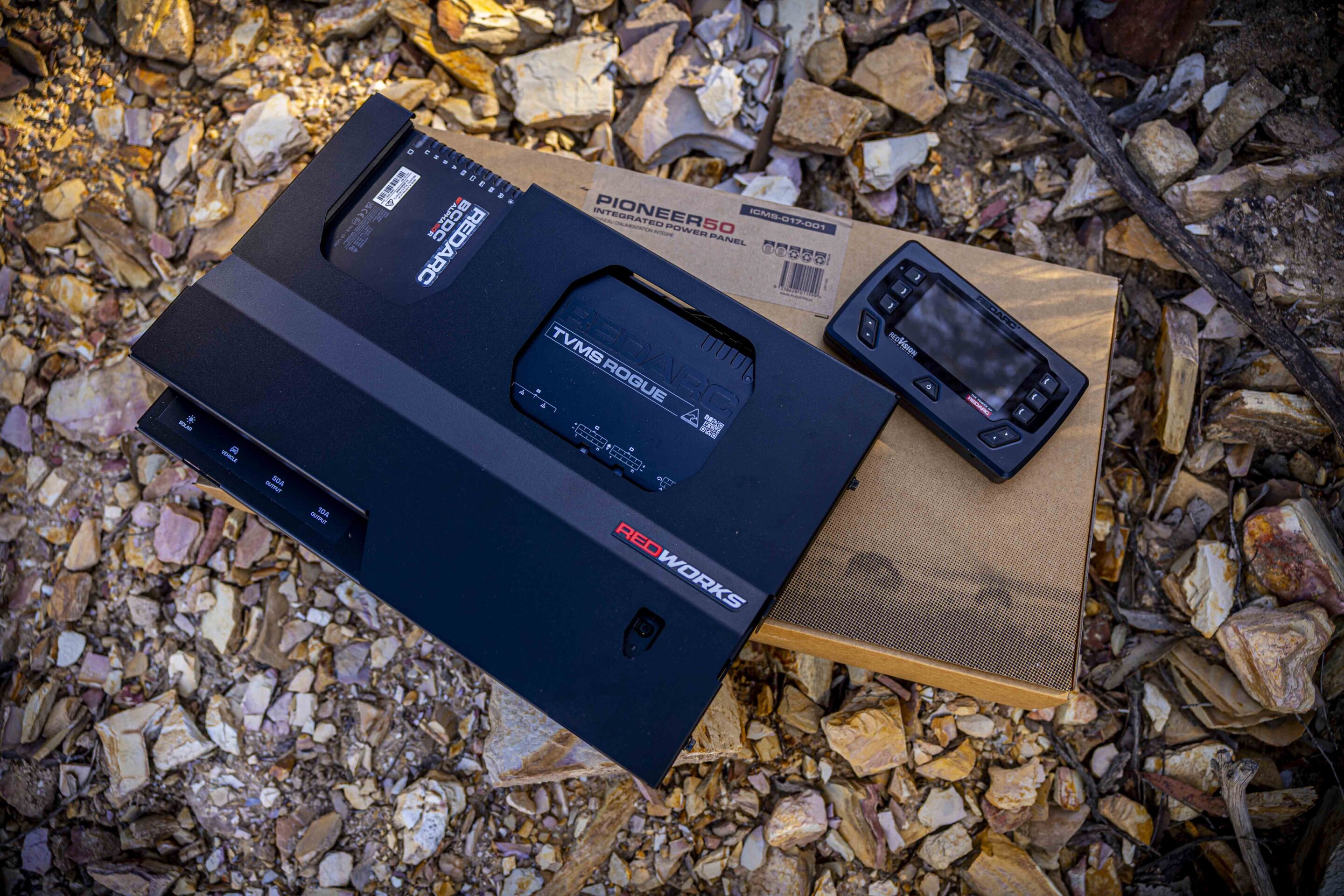
The REDWorks range is available in three models:
Scout
The Scout range is the no-nonsense option for weekend trips and smaller rigs. It includes a dual-battery setup, built-in battery monitoring, a DC-DC charger (BCDC Alpha50 for the 50A model), and an MPPT solar regulator.
Compact enough to fit under seats, behind drawers, or in tight spaces, Scout uses Green Power Priority to ensure solar energy is used first, easing the load on your vehicle’s alternator. It’s straightforward: charge on the go, monitor your battery via Bluetooth, and power a fridge, lights, or small accessories – all without overcomplicating things.
Nomad
The Nomad is a scalable system for travellers, tradies, or anyone whose rig is evolving. Nomad features a 10-way combo fuse block (6 blade fuses + 4 MIDI), making it simple to wire multiple loads – from lights and pumps to fridges and compressors – without adding a tangle of separate fuses.
Charging remains smart, with a BCDC charger and MPPT regulator plus Green Power Priority to maximise solar input. Real-time battery data – state of charge, time remaining, and charger performance – is available via Bluetooth. A handy feature for those long trips: Start Battery Recovery can revive a flat starter battery in around 15 minutes, triggered either by a physical button or remotely via the app.
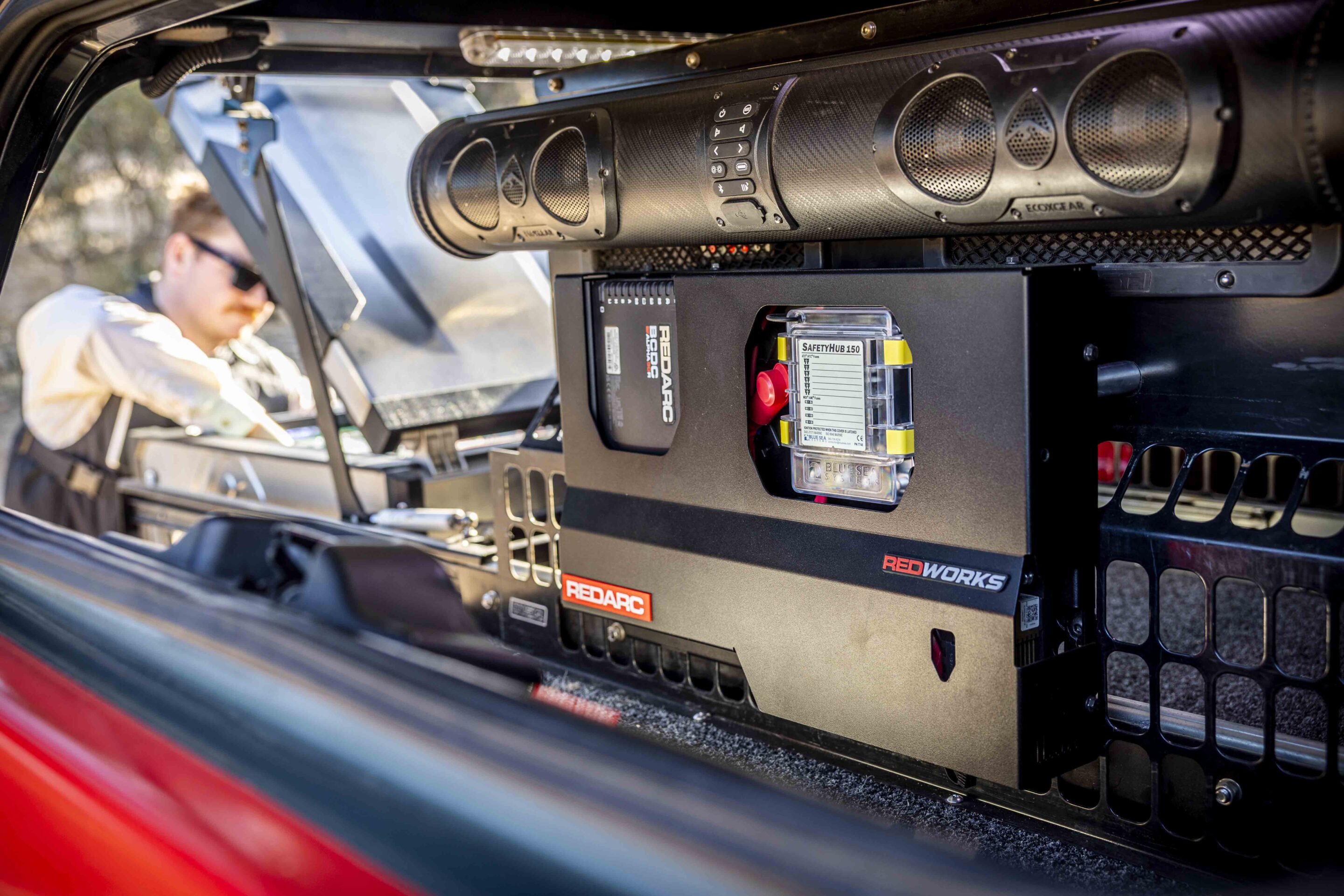
Pioneer
For those who want full integration, the Pioneer range delivers advanced monitoring and control via REDARC’s RedVision interface. Ideal for serious off-grid setups or service vehicles with multiple loads, Pioneer lets you manage every aspect of your 12V system from a central, user-friendly platform.
All REDWorks panels arrive pre-wired with Anderson plugs, smart fuse protection and pre-crimped connectors. Installation takes less than half the time of traditional setups – just mount, plug in and power up. Bluetooth monitoring gives real-time insights into battery state and system performance straight from your phone.
Designed, tested, and manufactured in South Australia, REDWorks is built to withstand Australia’s toughest conditions. Backed by REDARC’s 45 years of experience, each panel comes with nationwide technical support and after-sales service.
REDWorks by REDARC will be the headline sponsor of our 2025 Ute of the Year testing, which kicks off in just a few weeks.
The upcoming Ford Ranger Super Duty will feature onboard scales and reinforced hardware, giving drivers a real-time readout of payload and improved carrying capabilities.
The payload sensors work by measuring suspension compression to track the weight of passengers, gear and modifications, removing the guesswork that’s often involved when carrying heavy loads. The read-out is then displayed on the vehicle’s SYNC screen.
“But a simple scale wasn’t enough,” said Drew O’Shannassy, program manager for the Ranger Super Duty. “It’s a complete payload management system. We knew crews would add bull bars, winches and passengers. The system allows you to account for all of it to get your remaining payload. There’s less guesswork. More confidence.”
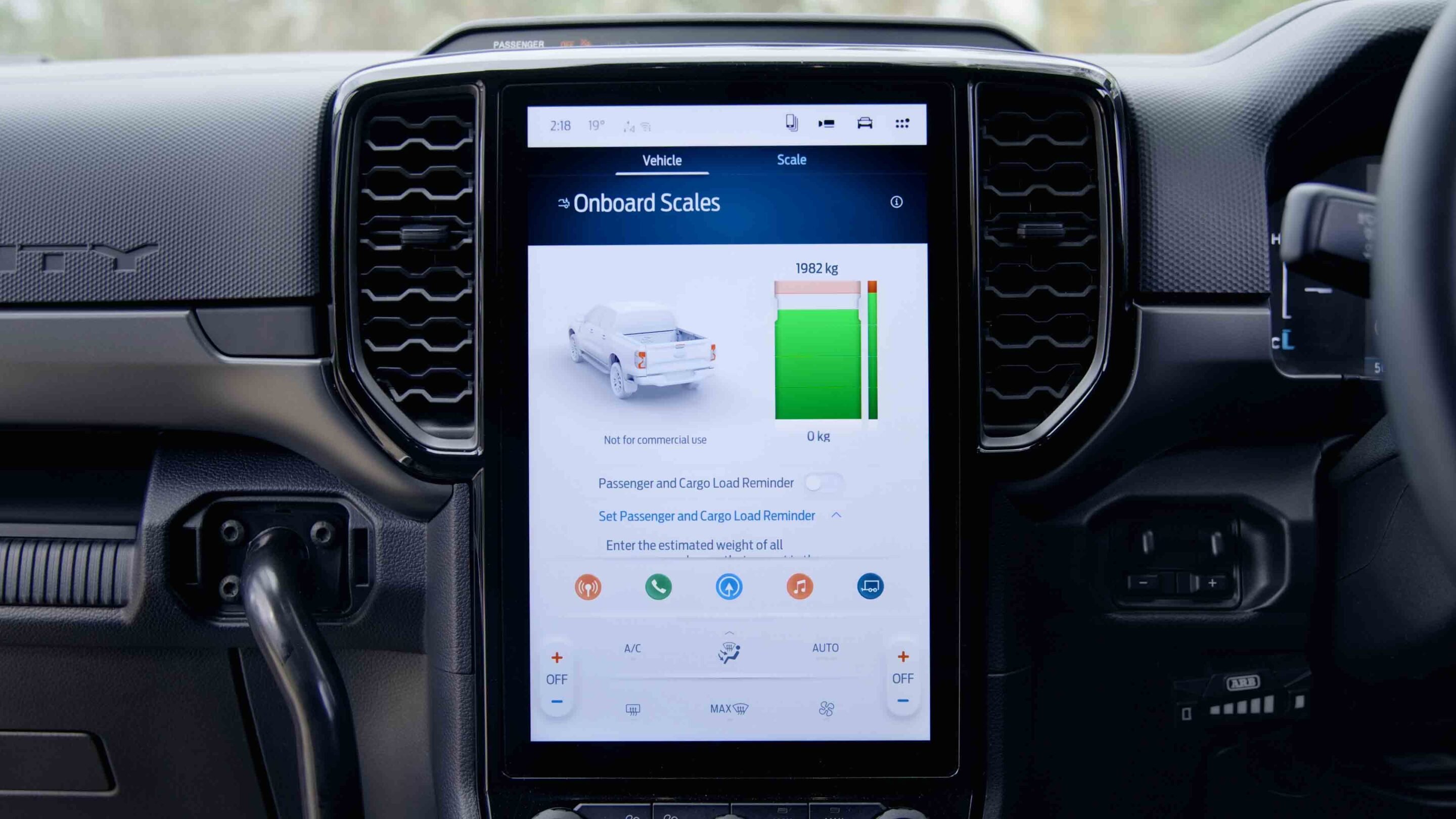
The Ranger Super Duty was developed with input from those who operate in remote and challenging terrain. “We heard about the impossible choices they were forced to make,” said Jeremy Welch, strategic projects manager at Ford Australia. “They needed to carry heavy, specialised equipment, but were often limited by payload. It was a problem we knew we had to solve.”
To handle these loads, Ford reinforced the chassis, thickened the steel backbone, upgraded body and suspension mounts, strengthened axles, fitted eight-bolt wheel hubs, and installed the toughest rear differential ever used on a Ranger.
“You don’t just show up to a powerlifting competition without doing the work,” O’Shannassy said. “This Ranger has done the work.”
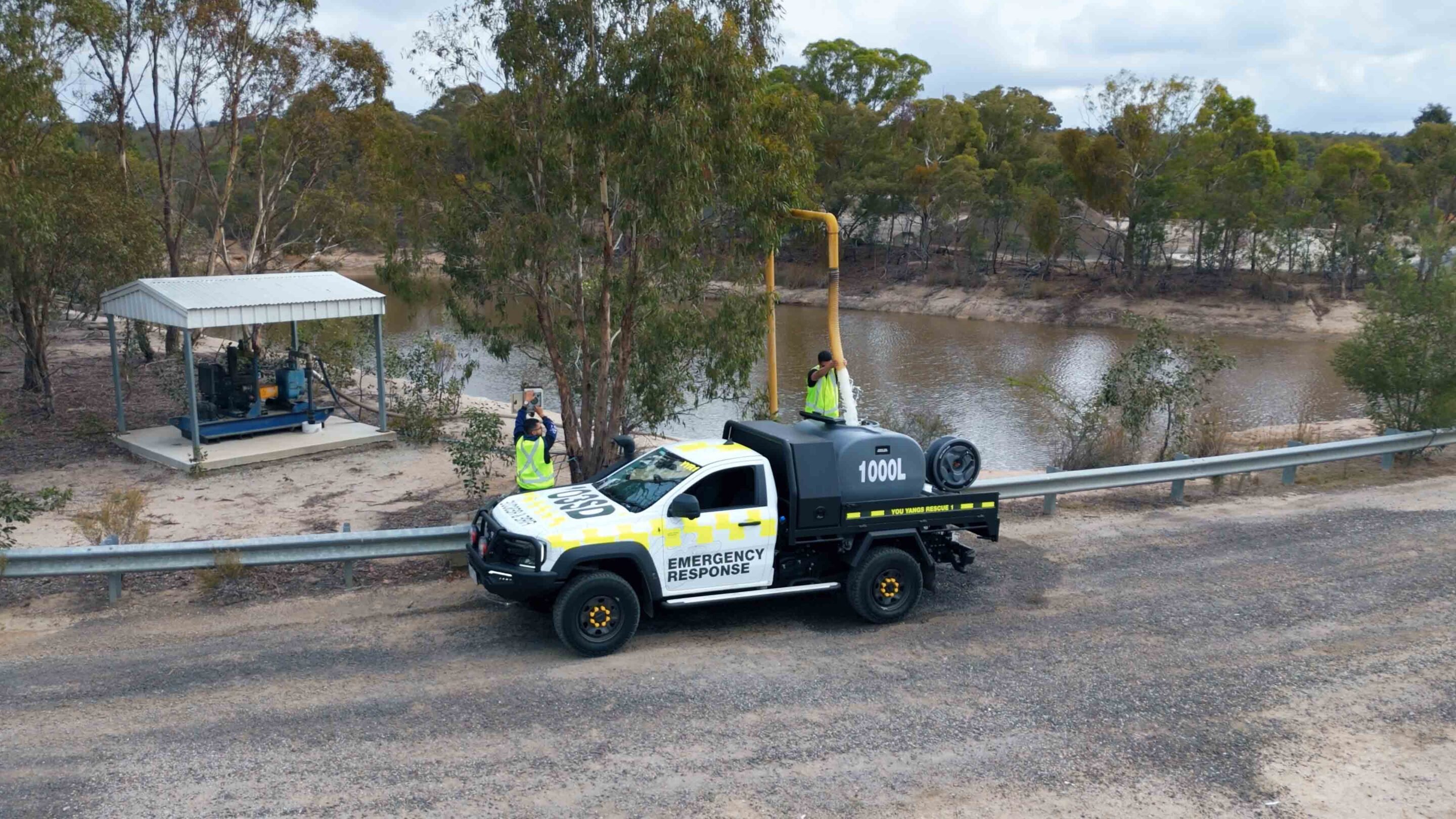
Prototypes were tested extensively at Ford’s You Yangs Proving Ground near Geelong, including the notorious “Corrugation Lane” to simulate years of wear. “We had pushed the truck to its limits with concrete blocks, but you can’t truly understand someone’s mission until you walk a mile in their boots,” said Abdool Beebeejaun, a senior engineer in Special Vehicle Engineering.
One prototype was a light-attack fire truck fitted with a 1000-litre water tank. Fully loaded with two crew and water, it weighed around 4400kg. Ford then took the trucks to Queensland for side-by-side testing with the crews who inspired the project, hitting terrain previously inaccessible to standard vehicles.
“The truck was driven on tracks the teams hadn’t previously been able to reach,” Beebeejaun said. “We watched as, in one test, they deliberately bogged the trucks down to their axles and then dead-pulled them to assess the winch and recovery points. These trucks, loaded to near their 4500kg Gross Vehicle Mass, were pushed to the limit.”
The Ranger Super Duty is expected to hit the market sooner than expected, with customer deliveries starting later this year.
KGM Australia has launched the Musso EV, with the brand’s first fully electric ute set to go on sale from December 1.
At release, the range will include 2WD and AWD variants, plus a 2WD Black Edge edition. Recommended drive-away pricing for private buyers starts at $60,000 for the 2WD, $62,000 for the 2WD Black Edge, and $64,000 for the AWD.
The EV will sit alongside the existing 2.2-litre turbo-diesel Musso line-up, which includes EX, ELX, Ultimate and Ultimate Luxury grades in standard and XLV form. The Musso range was refreshed earlier this year.
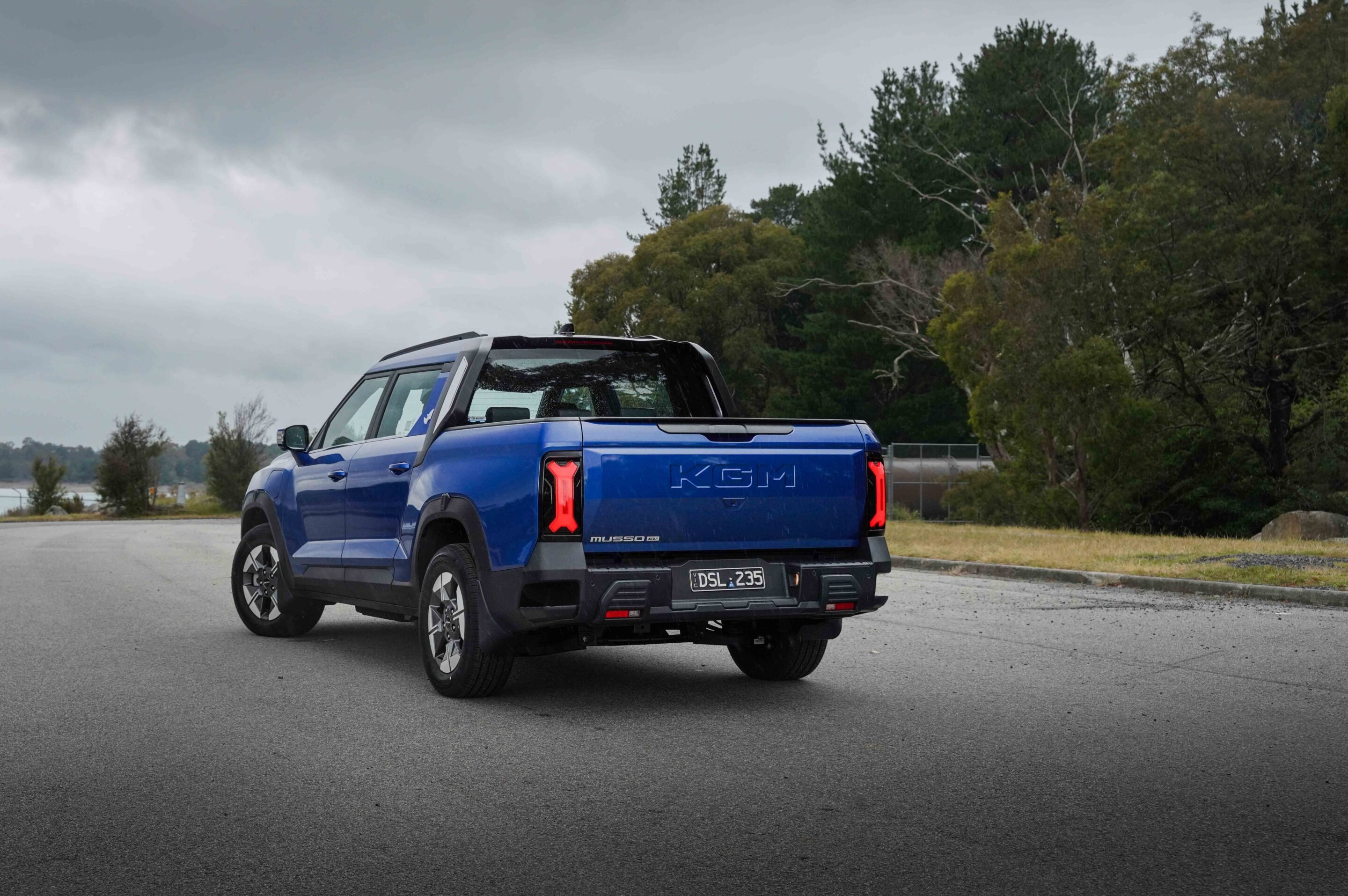
Power comes from an 80.6kWh LFP blade battery. The 2WD uses a 152kW/339Nm front motor, while the AWD adds a second 152kW/339Nm rear motor for a combined 175kW and 630Nm. Claimed range is 420km for the 2WD (230Wh/km efficiency) and 380km for the AWD (260Wh/km). The battery uses Cell-to-Cell construction for improved energy density and impact protection.
Regenerative braking offers three levels of adjustment via steering-wheel paddles, with adaptive control based on gradients and traffic. With 300kW DC fast charging, KGM claims a 20 to 80 per cent charge takes roughly 31 minutes. The Musso EV also supports custom charge limits and Vehicle-to-Load power for tools, camping gear and other equipment. Self-levelling rear suspension is standard, aimed at improving stability and safety when carrying heavy loads.
“This is more than just an electric ute – it’s a turning point,” said Joseph Lee, Managing Director at KGM Australia. “The Musso EV is purpose-built for lifestyle drivers who want practicality, efficiency and weekend-ready versatility in one package. It’s a vehicle that embraces the outdoor lifestyle while pushing the boundaries of innovation. This highly anticipated new vehicle offers KGM Australia the opportunity to lead into the lifestyle electric ute space.”
Exterior features include a reshaped bonnet, dot-pattern LED DRLs with integrated indicators, LED headlights, a 3D black grille and a silver skid plate. The C-pillar carries an integrated sail plane and “Rhino” emblem, while the tailgate features a debossed KGM logo, LED combination lamps and a bumper with corner steps.
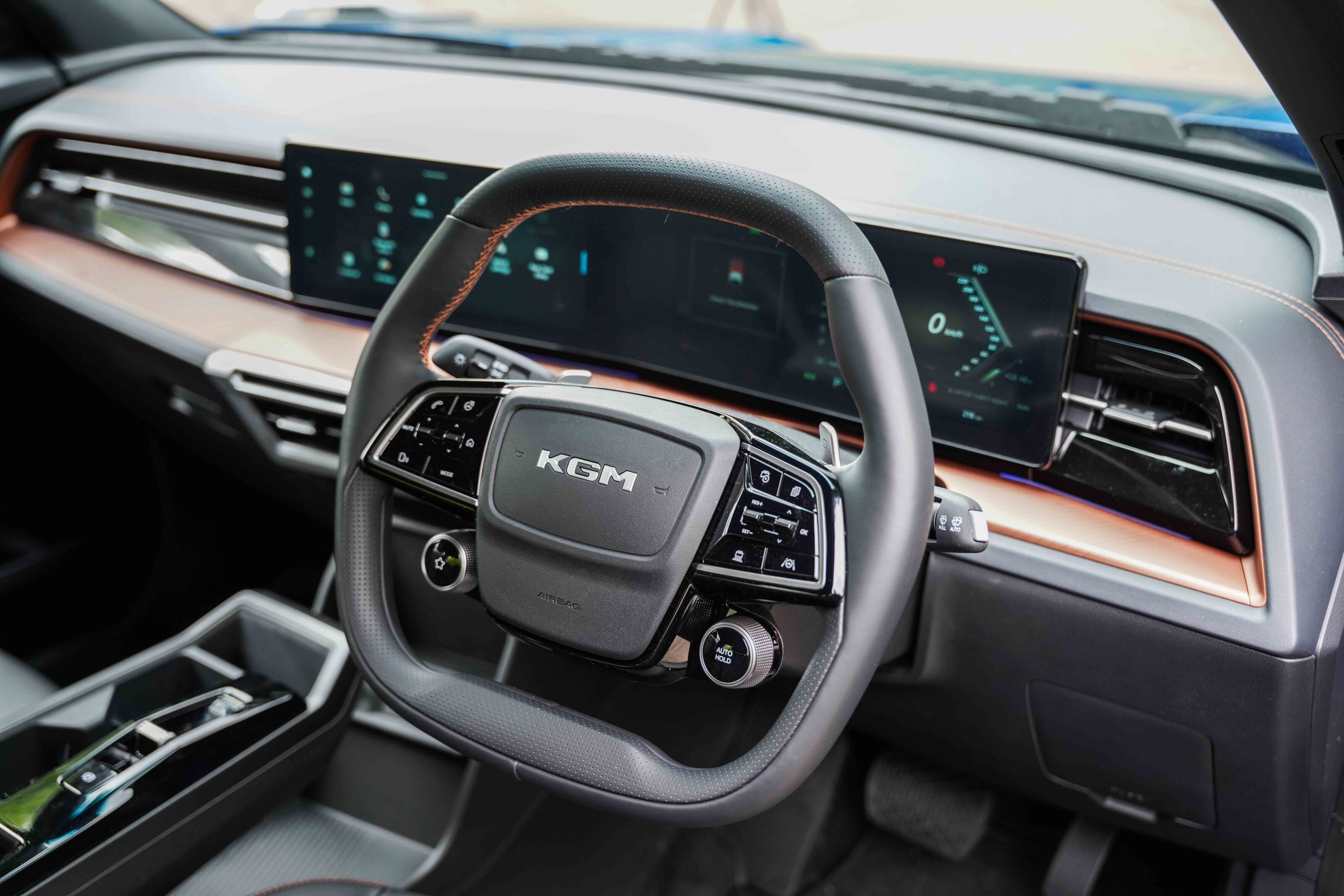
Inside, the Musso EV runs a panoramic dashboard layout with a 12.3-inch digital cluster and 12.3-inch centre touchscreen using the brand’s Athena 2.0 system. Features include heated and cooled powered front seats, ambient lighting, and rear seats with an 80mm slide range, 32-degree recline, heating for the outer positions, and 60/40 adjustability. Headroom is listed at 1002mm.
The EV shares the same tub dimensions as the rest of the Musso line-up, and includes eight tie-down hooks and a moulded tub liner.
Vehicles will arrive at select KGM dealerships in November, with sales to officially commence from December 1, 2025.
What do you get?
Musso EV
- Adaptive Cruise Control (ACC)
- 17-inch alloy wheels
- LED headlights, taillights and DRLs
- Self-levelling rear suspension
- Dual-zone climate control
- Integrated panoramic display with 12.3-inch dual display LCD instrument cluster and touch screen infotainment
- Apple CarPlay and Android Auto
- 3D 360-degree camera
- Leather look eight-way powered front seats with powered driver seat lumbar
- Sliding, folding and reclining 60/40 rear seats
- Heated front and rear outer seats
- Ventilated front seats
- Ambient interior lighting
- Leather heated steering wheel
- Heated, power adjustable and power folding door mirrors
- Rain-sensing wipers
- Wireless phone charger
- Durable rear tub liner with lighting and bumper corner steps
Musso EV Black Edge adds
- Leather and suede seats
- Suede headrests and door trim section
- Black 17-inch alloy wheels
- Black exterior highlights:
- Bonnet garnish
- Door mirrors
- Tailgate badge
- Sail plane
- Front bumper trim
- C-Pillar emblem
- Black steering wheel bezel
- Dark wood grain dash trim
Standard safety equipment
- Eight Airbags
- Autonomous Emergency Braking (AEB)
- Lane Keeping Assist (LKA)
- Lane Departure Warning (LDW)
- Forward Collision Warning (FCW)
- Front Vehicle Start Alert (FVSA)
- High Beam Assist (HBA)
- Safety Distance Alert (SDA)
- Electronic Stability Control (ESC)
- Anti-Lock Braking System (ABS)
- Brake Assist System (BAS)
- Emergency Stop Signal (ESS)
- Multi-Collision Braking (MCB)
- Trailer Stability Assist (TSA)
- Front and rear parking sensors
Specs
| KGM Musso EV AWD | |
|---|---|
| Drivetrain | AWD |
| Electric motor type | Interior permanent magnet synchronous motor |
| Maximum power (front/rear) | 152kW / 152kW |
| Maximum torque (front/rear) | 339Nm / 339Nm |
| Combined system output (power/torque) | 175kW / 630Nm |
| Transmission type | 1 Speed automatic (reduction gear) |
| Driven wheels | All Wheel Drive |
| Battery Type | Lithium Iron Phosphate (LiFePO4) |
| Battery Capacity | 80.6kWh |
| Battery Voltage | 371.2V |
| AC Standard Charging (0-100%, 11kW charger) | Approx. 10h20m |
| Onboard charger power | 10.5kW |
| DC Fast Charging 10-80% (300kW charger) | Approx. 36min |
| DC Fast Charging 10-80% (100kW charger) | Approx. 46min |
| Electric range (Combined) | 380km |
| Electric energy consumption (Combined) | 260Wh/km |
| Length | 5160mm |
| Width | 1920mm |
| Height | 1750mm |
| Wheelbase | 3150mm |
| Minimum ground clearance | 181.4mm |
| Approach / Departure / Ramp breakover angle | 20.2 / 24.3 / 15.1 |
| Tub length | 1345mm |
| Tub width | 1515mm |
| Tub depth | 510mm |
| Kerb weight | 2285kg |
| Gross Vehicle Mass (GVM) | 3090kg |
| Gross Combined Mass (GCM) | 4890kg |
| Maximum payload | 805kg |
| Towing capacity (unbraked) | 750kg |
| Towing capacity (braked) | 1800kg |
| Max. tow ball download | 180kg |
It’s warm but not too hot – the perfect weather for camping, picnics, and road trips.
And just in time for your next getaway, BLUETTI, a global leader in clean energy storage and portable power stations, is kicking off its Black Friday Sale from November 15 to 28.
Expect massive discounts of up to 58 per cent, exciting giveaways, and two brand-new releases – the Elite 10 ultra-small power station and the B500K expansion battery. Whether you’re powering an off-grid campsite or preparing for summer outages, BLUETTI has the best portable power and home battery deals of the year. Plus, enjoy extra savings with tiered discounts – $50 off orders over $1000, $120 off orders over $2000, and the higher your order amount, the bigger the discount.
New arrivals: Elite 10 mini power station & B500K expansion battery
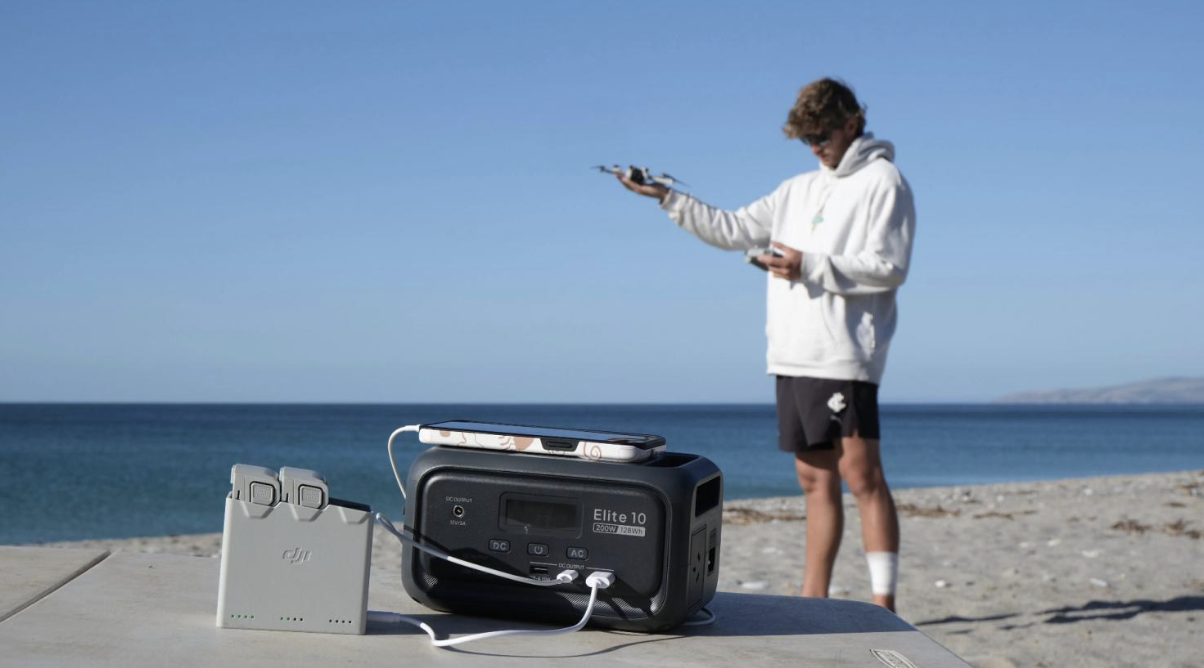
The Elite 10, BLUETTI’s smallest portable power station yet, weighs only 1.7kg and is travel-friendly.
With six outlets, including a 200W AC socket and a 100W USB-C port, you can power two laptops at once or even run a mini-fridge – not something you’d expect from a 128Wh power bank. Even better, its 10ms UPS mode keeps your gaming online nonstop, and the three-mode LED light offers over 50 hours of camp lighting. The Elite 10 launches at $229.
The new B500K expansion battery brings home energy storage to the next level, boasting 5,120Wh of durable LiFePO₄ cells. It’s compatible with old, existing, and future BLUETTI power stations. Pair it with the Apex 300 for a 100kWh home battery backup, or integrate it with ecosystem components like the SolarX 4K and Hub D1 for solar-powered RV living. The B500K launch price is $2899. Both the Elite 10 and the B500K will be available on the BLUETTI official website starting November 15.
Deals you can’t miss
BLUETTI Elite 100 V2 & Elite 200 V2: Perfect for camping and road trips
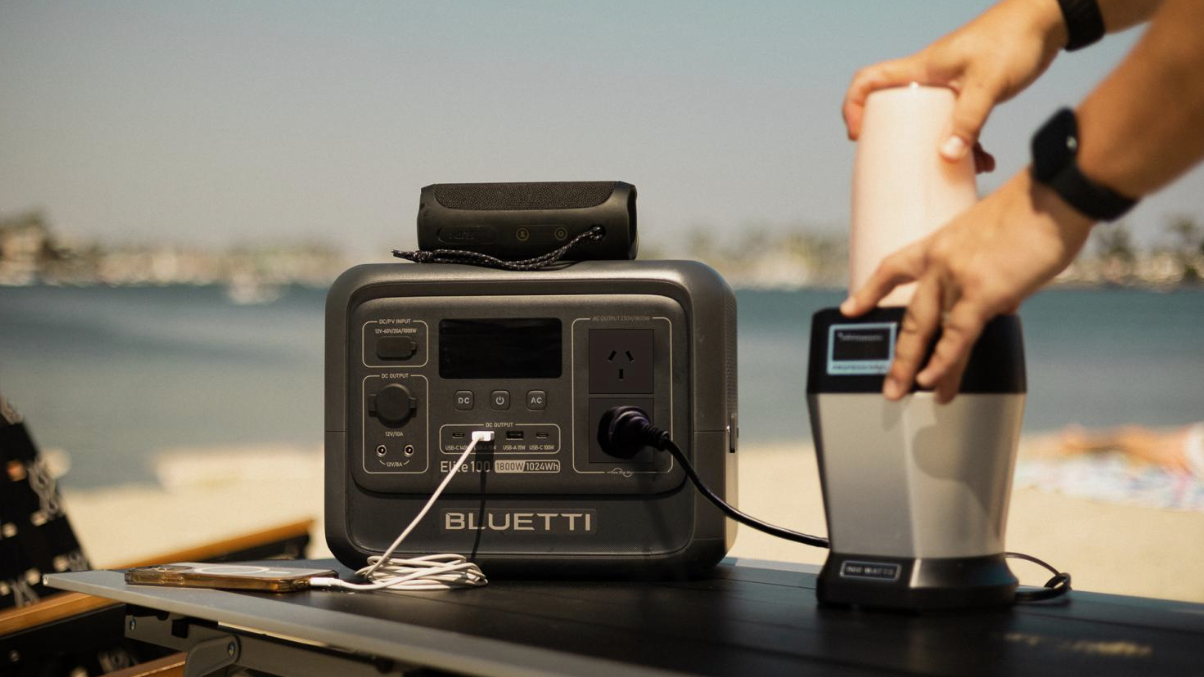
Need big power without the weight for your camping trip? The Elite 100 V2 is your go-to partner. As a leap from the bestseller 1800W AC180, it powers all your camping gear while being 30 per cent lighter, at only 11.5kg. You can charge it faster with 1000W solar and enjoy smarter app control via both Bluetooth and Wi-Fi. At $899, it’s a great value add for any trip.
For extended glamping or family outings, the Elite 200 V2 doubles the fun with 2,073Wh capacity and 2,600W output, plus 3900W lifting power to run high-draw grills and microwaves. It’s the first in the industry to use automotive-grade LiFePO₄ batteries with over 6000 charge cycles – more than 17 years of reliable use. It’s now priced at $1799.
BLUETTI Apex 300: Smart, scalable power for RVs and homes
Winner of “Sustainability Award 2025 Product of the Year” at IFA, the Apex 300 is your gateway to a greener lifestyle. With 3840W output and 2764.8Wh capacity, it can handle most home appliances, including coffee makers, fridges, and A/Cs. Its real advantage is scalability: boost its storage to 19.3kWh for whole-home backup, harness up to 30kW solar input from rooftop panels with SolarX 4K, or pair it with the Hub D1 to power RV devices directly. The Apex 300 + B300K combo now costs $4998, and you can mount it to the Trolley 2 for easy transport.

BLUETTI Elite 30 V2: Power travel and party with style
The first of its kind, the Elite 30 V2 comes in three colours – Light Sand Grey, Meadow Green, and Classic Black – to match your outdoor style. At just 4.3kg, it offers 288Wh capacity and 600W power, enough to run drones, speakers, and projectors for hours. It also includes a 10ms UPS feature for pro-level backup. Powerful and stylish, it’s built for beach parties and tailgating, and is now priced at $369.

More BLUETTI Black Friday rewards
Besides these top picks, many other BLUETTI power stations and solar products are at their best prices of the year. The RVSolar System, which recently won the IFA Innovation Award for Best Tech in Good, is a must-grab for RVers and van lifers. During the sale, shoppers can also earn extra discounts, BLUETTI Bucks, and spin the Lucky Wheel for a chance to win exclusive prizes.
About BLUETTI
As a technology pioneer in clean energy, BLUETTI is committed to a sustainable future through innovative portable power stations and home solar batteries. With a focus on continual innovation and a customer-centric approach, BLUETTI is trusted by more than 3.5 million users across 110+ countries and regions.