
We’ve driven the new Land Rover Defender a few times – a full test review from Fraser Stronach in December 2020, and our initial pre-vehicle launch drive from Africa back in March 2020 – but we wanted to see how the latest Land Rover fares on your typical long weekend away in the bush with some mates.
That opportunity presented itself when our booking of a P400 Defender was perfectly timed with the easing of travel restrictions in Victoria and we were able to venture to the High Country.
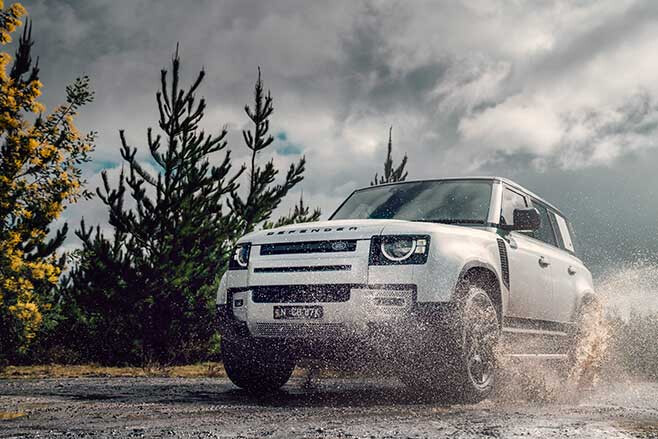
The P400 was the only Land Rover Defender available at the end of 2020, as the first batch of four-cylinder diesel models sold out instantly and the new six-cylinder diesel won’t be arriving until February or March 2021. Travelling in the alps in a petrol-fuelled four-wheel drive with only a 90-litre fuel tank can pose a problem, but we felt we should be okay for a casual three-day trip.
AFRICAN ADVENTURE: New Land Rover Defender driven in Africa
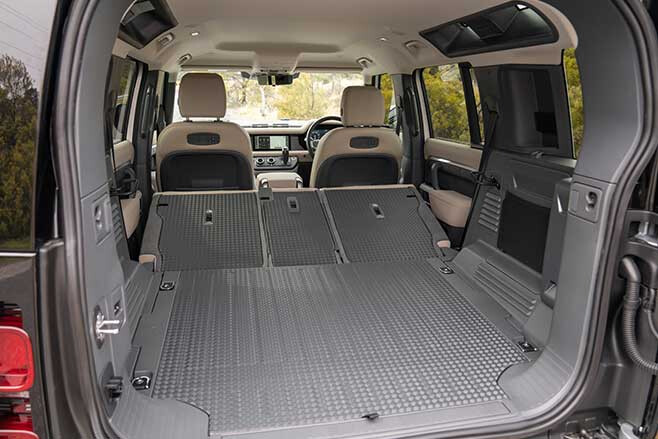
The back of the Land Rover Defender 110 wagon becomes massive once you fold the rear seats flat. They fold completely flat, giving a long load area with a couple of tie-down points at the sides of the rearmost section. There’s also a 12-volt point there, so our ARB fridge was strapped in and powered up; and swags, stretchers, chairs and other kit were easily accommodated with a strap to hold them in place. I even slept in there on a wet and stormy night.
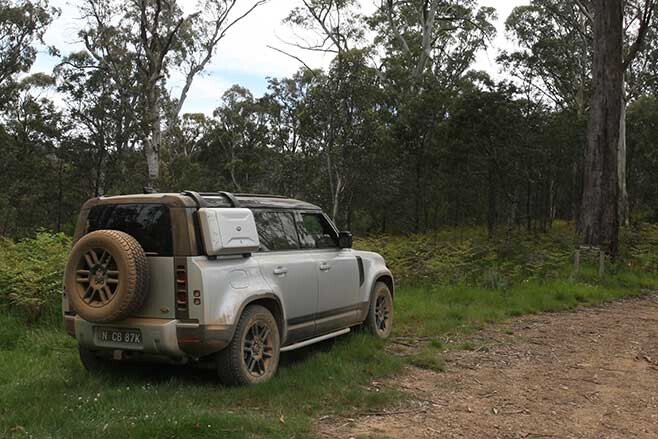
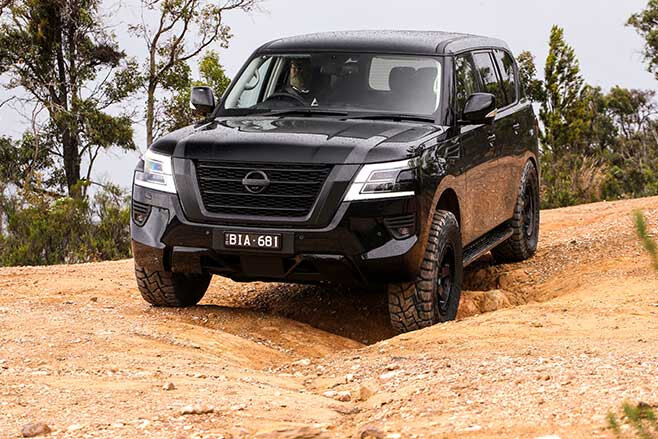
This vehicle was fitted with the optional 20-inch alloy wheels (19s are standard) with standard all-terrain tyres. The 255/60R20 tyres actually offer a half-decent amount of sidewall on them to cushion the ride and provide a bit of expansion with the pressure dropped, and we dropped them to 25psi for this sort of touring. They are a road-biased tyre so we knew we’d have to be wary of punctures on the often rocky tracks.
FRASER’S REVIEW: Land Rover Defender 110 P400 SE
While the new Land Rover Defender is a tour de force of off-road technologies that can boggle the mind and confuse the operator, it surprised at how simple it was to get the right setting for mountainous terrain. Land Rover has moved away from a simple easy-to-use dial for the Terrain Response (TR) settings and instead placed them in the main screen accessed via a few menu prompts. Thankfully, this latest version of TR has an auto mode, so we chose to forget about it and get back to the basics.
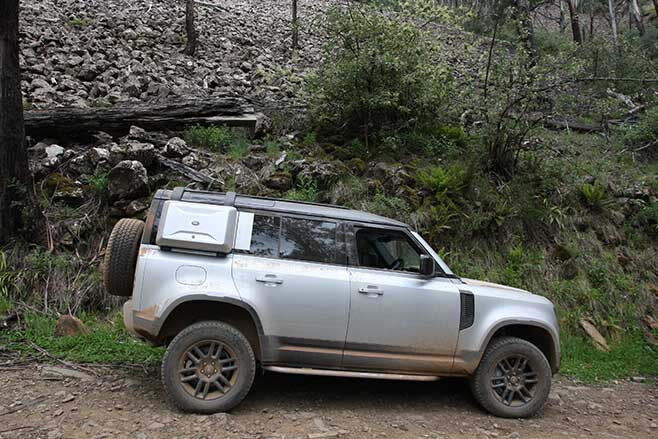
Select low range – turn the Hill Descent Control off – and jack the air suspension up to its off-road setting. That’s all it takes to set the Defender up for all but the most technical off-road driving, where you may need to select a specific mode in TR for quicker action of the locking diffs or sand driving.
The suspension now stays up at its off-road height at speeds up to 80km/h, so we didn’t need to touch it over three days of driving. And, unlike older systems like in the Land Rover Discovery and Range Rover models, the Defender has more suspension travel which gives a better ride over harsh bush tracks, even with it at its highest. Set and forget – enjoy the drive! High Country tracks aren’t the most challenging around, but the travel offered by the Defender’s suspension kept the wheels on the ground and gripping out of ruts and holes.
Driving the Land Rover Defender is every bit as easy. The driver’s seat has plenty of adjustment to get it right and the steering column adjusts for both reach and height. The large glasshouse that is a feature of Land Rover off-roaders is still there, making the Defender easy to place on the track, over rocks and between the trees.
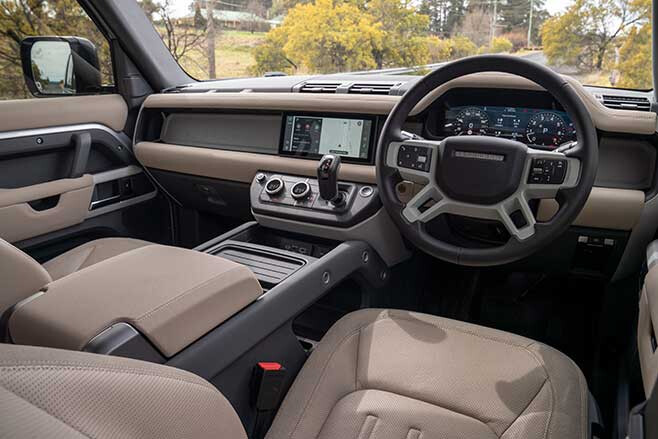
I played with the off-road cameras on a few river crossings that had boulders in their path and, while they do give an excellent view of each front tyre and the rocks directly in around them, it does require you to stop and look down at the screen to make the most of the cameras. It’s easier to look ahead, plan your direction and take your time.
OPINION: Why does the new Defender upset LR purists?
The P400’s 550Nm 3.0-litre supercharged and turbocharged engine delivers ample grunt for climbing the steepest tracks while holding first gear in the eight-speed auto, and in low range producing more than enough engine braking on the steepest descents. This isn’t always the case with petrol engines and auto transmissions; but on most hills it was too low and brought the Defender to a stop, so a bit of throttle or 2nd/low was better suited.
Three days of steep low-range tracks and the Defender didn’t put a tyre wrong. It went everywhere our travel companions went in there fully equipped outback touring 4x4s and impressed the drivers by how easily it did it.
Going off on-board computer readings, the Defender used less petrol than expected, recording an indicated 16.4L/100km of fuel. Still, at the end of three days we would have been looking for fuel going into day four, so a bigger tank would be handy.
What we really came away with from this outing was how easy and capable the Land Rover Defender P400 is on such a weekend 4×4 trip. Now let’s see if the aftermarket is going to come out with products to make it even better.
MY name is Evan Spence, and I’m the new bloke at 4X4 Australia. I’ve owned, at a guess, 30 4WDs over the years, but I think I’ve nailed it with my current setup.
There are currently two 4x4s parked at home; one is my daily driver/weekend escape machine, a 2005 SR Hilux with custom camper on the back.
The second is a scummy old Suzuki Sierra I’ve been chipping away at for years with no real end in sight.
Cheap therapy, I call it; something to tinker away on when I’m bored, or when something pops up on Gumtree.
One day I’ll do something silly with it, like drive it to Cape York.
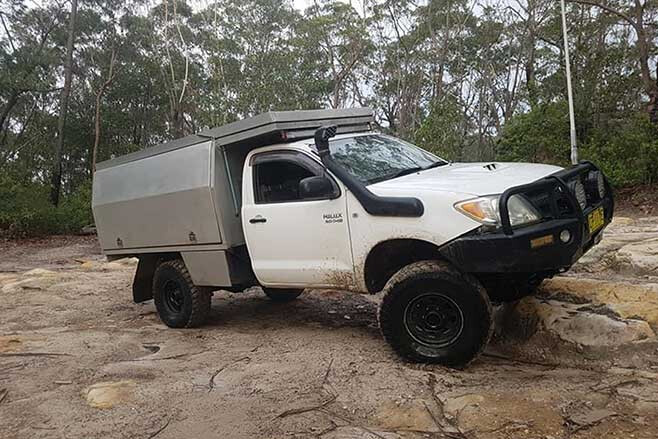
The ’lux is a weapon, with Outback Armour suspension, diff drop, new upper control arms, a custom CRD Tech dyno tune, three-inch exhaust and TJM bullbar with Bushranger spotlights on the front.
It’s gained 20 per cent power with the tune (103kW at the wheels … woo-hoo) so it moves alright, but there’s more power to be had if so inclined.
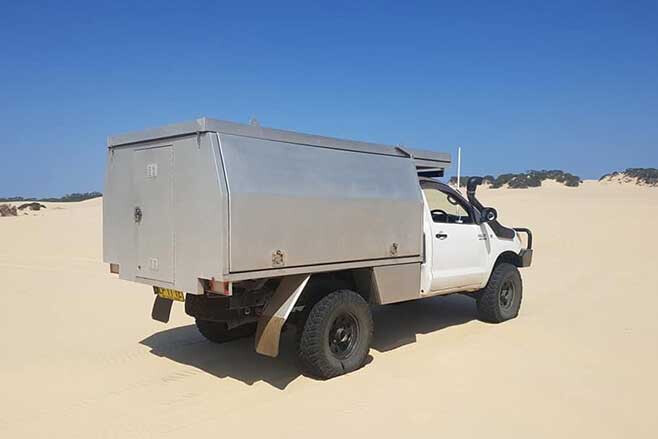
The main attraction with the Hilux would have to be the custom camper on the back though, it’s simply brilliant.
I can’t claim credit for it; the previous owner built it, and it’s a credit to him as there’s nothing like it on the market.
It’s a simple, lightweight affair; lift two clips, push the roof up and put two poles in place to stop the roof falling down.
There’s a full-size bed inside, and room for two people to sit. There are 100-litre water and diesel tanks, and the roof even turns into a gutter to collect rain for drinking water.
I’ve since refined it and rewired it to suit my needs, but those needs are ever-changing. I’ve done plenty of local trips in it, and drive it every day.
It’s comfortable, reliable and unique. I don’t think I’ll ever sell it.
The Suzuki on the other hand, is none of those things.
I picked it up cheap about five years ago, and have basically rebuilt it.
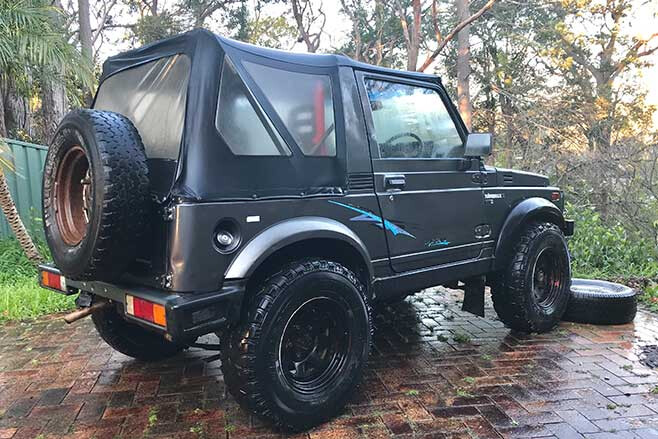
The suspension is a custom mix of parts I had including shocks from a Holden Commodore, and I’ve rebuilt the transfer case with 6.5 ratio crawler gears and installed a Uneek 4×4 front bumper with Lightforce lights.
The front end and all brakes have been rebuilt, and I recently refurbished the entire fuel system, including a professional carby rebuild after my attempt at freshening it up made it run worse…
It’s on a woeful set of 31-inch tyres I bought for $100, and I’ve changed most of the panels around to make it somewhat presentable.
Some parts arrived for it today, actually, so I’m itching to get into the shed and have it one step closer to being on the road. It’s a giggle, and I can’t wait to get it finished.
I’ve owned seven Zooks in the past, so it’s safe to say I’m slightly obsessed with them.
I think I’ll always have one around, even though the new Jimny is tempting.
Stay tuned for slightly regular updates, as you witness me drain my bank account making poor life decisions with a smile on my face.
1995 SUZUKI SIERRA
Total KM: 164,021 Date acquired: 2015 Price (as tested): $1800 KM this month: 1km Average fuel: 0/100km
2005 TOYOTA HILUX SR
Total KM: 295,068 Date acquired: 2017 Price (as tested): $17,000 KM this month: 2000Km Average fuel: 12.6L/100
While it mightn’t be the sales giant it once was in the automotive space, Nissan has a successful history of bringing proven and popular 4×4 vehicles to market.
For some owners, though, showroom condition doesn’t quite cut it. These people turn to the aftermarket industry and build a unique vehicle tailored entirely to their needs.
With the impending release of the updated 2021 Nissan Navara, we are taking a stroll down memory lane to bring you six of the best custom Nissan builds we’ve seen over the years.
From earth-shattering V8 transplants to clean chopped conversions, these unique Nissans prove what’s possible with the right idea and the perfect execution.
We hope to see some more tickled Nissans next year when the aftermarket gets to work on the refreshed 2021 model. Until then, here are some of the best Nissan builds gracing outback tracks.
PATROL UTE GETS CUMMINS V8 POWER
Words: Justin Walker Photos: Mick Hurren
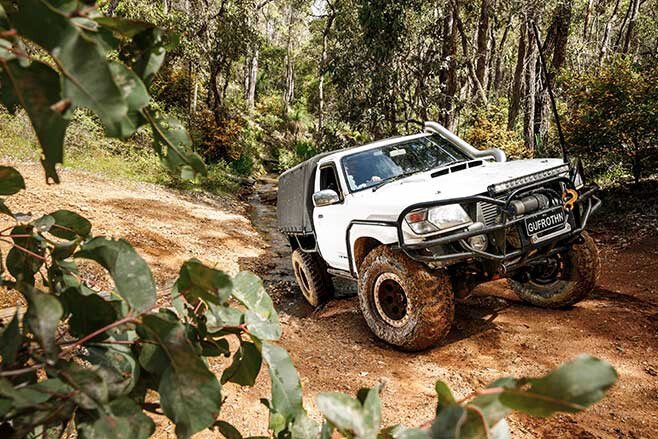
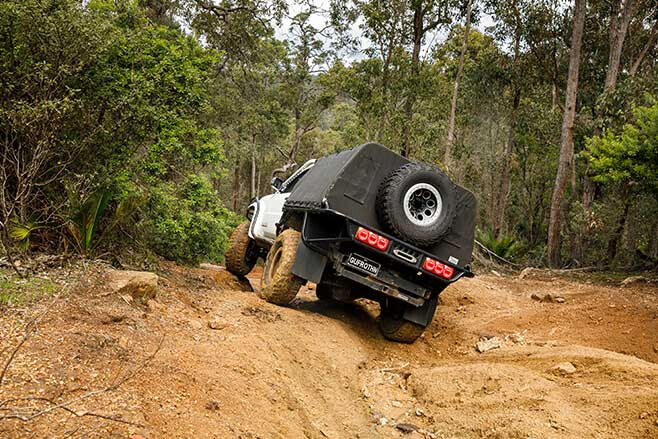
It’s not too often you see a Patrol with a rear tray, like this big bopper built by Guy and the team at Patrolapart, in Lilydale, Victoria. It was built as a promotional vehicle for the business, and it’s also very comfortable when put to work as a fully-fledged touring rig – a fitting result after 18 months of after-hours work by the team.
Looking at how well that rear tub tray fits in with the Nissan’s silhouette makes you wonder why it wasn’t made available to Oz-based Patrol ute buyers back when it was on sale. Guy and the team saw it on some Japanese-based Patrols (it was factory-fitted over there) and thought it’d make the Patrol stand out visually from the rest of the many thousands of Patrol utes on Australian tracks, and, with a few additions, it was a relatively straightforward fit.
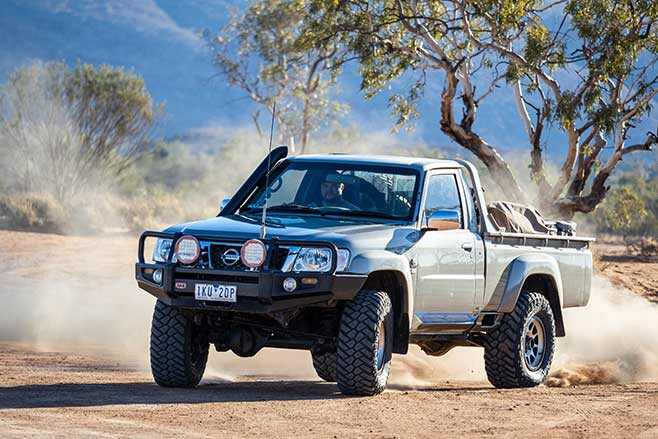
The Patrolapart team was also keen to up the grunt factor on what was – when they first got hold of it – a stock-standard 3.0-litre turbodiesel Patrol. Not an earth-shaking powerplant by any means, but the guys had the perfect solution: a 242kW/827Nm Cummins 5.9-litre turbo-diesel six-cylinder. The engine is the ISB variant – the second generation of the popular American oiler – and it is also one of the physically largest straight-six diesel engines on the market. Even allowing for the Patrol’s voluminous engine bay, it was time-consuming and tricky to ensure the Cummins could be shoe-horned inside, with everything needing to be relocated.
The stock radiator and five-speed manual gearbox stayed, but the Patrolapart team has plans to slot in an Albins five-speed as a replacement. Adding extra air is a custom four-inch stainless-steel snorkel, with gases expelled via a custom steel exhaust. Fuel is pumped through effectively thanks to an AirDog II-4G fuel pump, which is a common fitment to Cummins engines.
The Patrolapart team was determined to make the vehicle seem ‘attainable’ in terms of the mods done, and they focused on ensuring nothing was too extreme in the build. This common sense, subtle approach is evident in the Patrol’s suspension setup. The KONI suspension (coils and dampers) offers a three-inch lift and combines with heavy duty control arms and Patrolapart’s own beefed-up swaybar links. Adding more ground clearance is a set of 17-inch alloys shod with Maxxis RAZR LT315/70 R17 rubber.
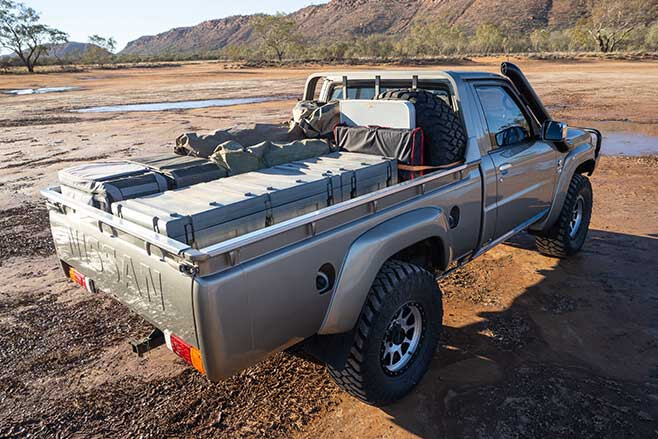
Cummins diesel engines can be pushed to punch out even more serious grunt than stock, but the team just went with a ‘base tune’ and has reaped overall performance benefits as a result. This includes a very impressive 14-15L/100km on Guy’s recent trip to the Finke Desert Race in the NT. With its twin 90L fuel tanks (accessed via the two factory-fit fuel fillers on the driver’s side of the tub), the big rig gets more than decent touring range on top of the extra performance.
One of the most appealing things with this Patrol ute is its purposeful yet understated appearance, with only the rear tub catching the eye of fellow tourers. The low-profile appearance is, again, thanks to the smart and subtle approach, with only a few visible external additions such as the ARB bullbar fitted with ARB Intensity lights that hint at this rig’s capability. There are no front or rear lockers, instead the Patrol does with its rear LSD and all that on-tap articulation.
The interior benefited from Guy’s decision to retro-fit a late-GU Patrol interior. The driver and passenger now enjoy the comforts of powered leather seats and a full leather trim interior. A Polaris head unit has OzExplorer and Hema navigation software fitted, and – for essential bush comms – a new GMA XRS UHF radio has been fitted. Keeping all the electricals humming, the Patrolapart team also managed to fit a dual-battery system in that chock-a-block engine bay.
Since the Patrol has been in public there’s been plenty of interest in the engine transplant, which isn’t surprising – as Guy states, “those Cummins engines are bulletproof”. Add that rugged powerplant to what has always been considered one of the toughest touring vehicles around, and any potential customers would be guaranteed an awesome return on investment.
PATROL Y62 DUAL-CAB SPAWNS FROM WILD IDEA
Words: Justin Walker Photos: Alastair Brook
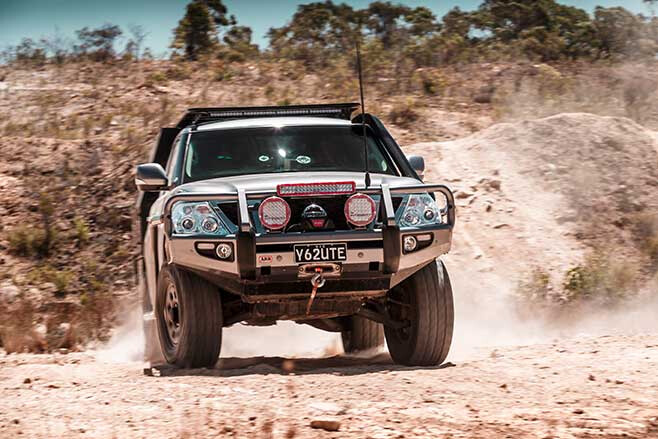
Sure, chopping a Y62 Nissan Patrol may seem like a crazy idea, but that view is easily dismissed when you see this bruiser in the metal and listen to its owner, Peter Thorpe, talk about what he rates as the ultimate all-rounder.
Peter’s aim was for the build to be equally adept at transporting him and his family on their regular camping adventures, as well as his own fishing and hunting expeditions. Plus, it would see a lot of towing work. Encouragingly, his idea didn’t seem that far-fetched after he proposed it to On Track 4X4’s Andrew Cassar.
Andrew knew the exact crew of specialists to entrust with the project, firstly checking with the engineer that he uses for his work at On Track 4X4, and then enlisting Les, at Tinman Fabrications, who he rates incredibly highly, to firstly answer the ‘can it be done’ question, and then to do the actual cutting work. Once he received nods of agreement, he got back to Peter and the big build began.
As the Y62 is a high-tech, modern 4×4, the team struck a few small problems early, most notably with the air conditioning system and the airbags. The vehicle’s air-con ducts go right through the vehicle to the third-row seating at the back, which meant having to re-route them to ensure they finished at the back of the second row – and still worked as designed.
The next issue was the Patrol’s airbags which meant designing a bracket that would retain the side-pillar airbag. On top of these two issues, the re-wiring took a bit of time to figure out, again to ensure the vehicle would meet ADR and safety regulations after having its back half removed. Trying to ‘trick’ the engine management system was a challenge, according to Andrew, with the vehicle still ‘looking’ for the tailgate, as one example.
Perhaps surprisingly, the actual cutting of the vehicle was straightforward, with Les removing the back section, and welding the ute-back on to the body and finishing all the fabrication work – a top-notch job that Peter raves about in terms of the quality of the work.
The Nissan was re-painted back at On Track 4X4, before Andrew got stuck into the rewiring and re-fitting of the interior. Peter decided to also fully rewire the Patrol so as to accommodate all the power-reliant accessories that were to be fitted. This entailed fitment of a Redarc dual battery management system and some tricky positioning of two auxiliary batteries in the powder-coated tray. The tray also includes a slide-out drawer at the rear for storage.
“I had the tray designed with a false floor in the bottom that went underneath the tray to hold two extra batteries and a dual air compressor,” Peter says. “I also had a [80L] water tank built in to the head board.”
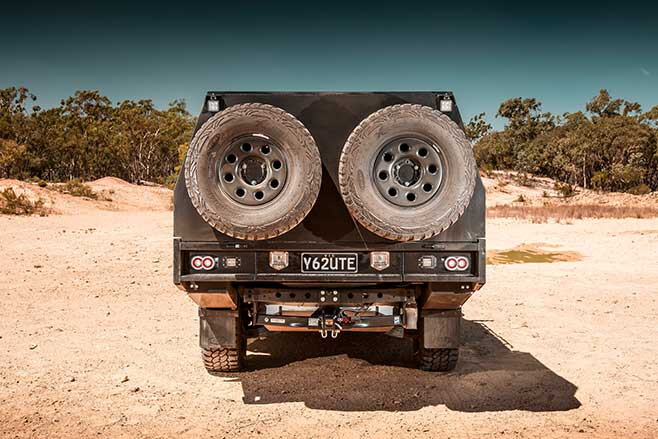
It is this use of all available space that adheres to Peter’s idea of creating a vehicle that could do double- or triple-duty, with the canopy a key component in making that work. The canopy was built by Will from WF Fabrications in Bendigo. It features a separate dog cage, along with another storage box (housing the ever-present 60L Engel fridge/freezer and Clear View Easy Slide, as well as offering additional storage space), and a dual spare-wheel carrier setup. The canopy is all-aluminium in construction, so doesn’t add excessive weight to the tray – and it’s easy to remove.
The front end of the Patrol features ARB bar-work, (front winch bar with Warn winch, side-rails and side steps), as well as an ARB Intensity light set-up (spotties and light bar). A TJM Airtec snorkel keeps that big V8 (fitted with a Unichip) breathing freely, while beefy Pro Comp XTreme MT2 315/70R17 rubber roll on Black Rock Crawler 17×8 steel rims. Peter has also lifted the Patrol by two inches and fitted ARB’s BP51 remote-reservoir shocks (along with Airbag Man airbags in the rear).
Underneath the tray, Peter has fitted a 150L Long Ranger fuel tank to up the Patrol’s total fuel capacity to a lofty 290 litres.
The build for this unique bush tourer took around six months with an additional bit of time taken up with some final tweaking to the tray and canopy setup. Since then, the dual-cab Y62 has seen plenty of use, with Peter stoked with its overall performance.
MONSTER 2000Nm PATROL
Words: Dan Everett Photos: Nathan Jacobs
Whatstarted out as a mild-mannered farm truck is now packing a 450 per cent torque increase, sports-car trumping speeds and off-road ability that’d rival anything this side of a mountain goat. Ant’s ’01 GU coil-cab pounds out a mind-melting 2000Nm and 836rwhp thanks to a 6.6L V8 Duramax swap. In stock form the bent-eight will put to shame anything offered within the Australian market. However, what does it take to make it punch out more than double the power and torque?
First things first, you rip it down to a bare block. The stock pistons and con-rods were binned. In their place are forged rods from Carillo, they’re-topped off with ceramic-coated pistons from Mahle Motorsports designed to handle 1000hp. From here an ATI balancer was fitted at one end with a Wagler billet flexplate at the other. An aggressive camshaft was slotted between the two banks of pistons; although, with an altered firing order it’s designed to improve longevity, not just punch out more power.
The stock heads were also shelved, atop the Duramax are a set of CNC ported offerings from Socal Diesel stuffed full of oversized valves. Finally, a 12mm injection pump was strapped to the oiler, with 150 per cent oversized injectors satisfying the powerhouse’s insatiable thirst for diesel.
The turbo has been upgraded to a billet 72mm VGT offering which breathes deep through the five-inch snorkel and airbox fabbed-up in-house at Ozmax conversions, with an Ozmax front-mount intercooler sneaking in between the turbo and intake. The whole affair is reigned in with a DSP5 tuner.
Backing up the Duramax is a tickled six-speed Allison transmission. In fact, it’s a fully built item from Limitless Diesel. It’s sporting everything from billet shafts to a race-ready shift kit, clutch packs and billet baskets. From here power feeds through to an Ozmax Conversions transfer case adaptor into the stock Patrol transfer case. With the transfer case sitting 50mm rearwards to suit the engine, both front and rear driveshafts needed to be custom-built from heavy-wall chromoly to suit the new lengths.
Up front the factory diff runs an Eaton E-locker wrapped around 4.11 cryogenically treated diff gears. Longfield 300m chromoly axles and CV joints have been slotted inside to send power to the front wheels. In the rear, a locker simply wasn’t an option. Instead, Ant installed the stronger H260 rear diff and then yanked it apart and shimmed the LSD. He’s also cryo-treated the axles and gears.
To make the goliath engine fit in the comparatively small Patrol, Ant knocked together custom mounts from front to back, then extensively massaged the firewall to clear the dump pipe without running a body lift. “Getting the engine in is the easy part,” he said. “The wiring, intercooler piping, coolers and airbox all took far more work.”
With most of the Patrols weight over the front axle, Ant’s gone for an unusual, albeit successful, approach to his suspension. Up front he’s running Fox 2.5 body remote res DSC shocks, with the rear copping a smaller diameter 2.0 remote res Fox, all from Down South Motorsports. Of course, it’s not all about shocks. Up front the diff is now kept in place by a set of Ozmax long arms, at 350mm longer and with a Cruiser bush end they’re able to take full advantage of the big shocks and 3.5-inch-taller coils.
The rear is running 300mm longer lowers from Down South Motorsport, with heavy-duty adjustable uppers helping correct pinion angle after the two-inch King flexxy coils went in. PSR adjustable Panhard rods front and rear keep it all centred, with a matching tie rod and drag link up front.
Ant’s swapped out the stock front guards for a set of Kevlar replacements that sit two inches wider with an opening that’s also two inches wider. It provides ample room for the 37 x 12.5-inch Goodyear Wrangler MTRs at full articulation. They’re able to run at insanely low pressures, too, thanks to genuine 17 x 9-inch -30 Allied Rattler beadlocks.
Ant opted for the base model DX for its rugged vinyl flooring and manual wind-up windows. The pews have been replaced with a set of leather-clad reclining Recaro bucket seats, with an Intervolt dual-battery system tucked behind. Storage is taken care of by a Department of the Interior roof console with a Bluetooth-enabled XRS UHF from GME sorting out comms. Ant also swapped the steering wheel out for one from an imported WC34 Nissan Stagea.
The GU is an incredibly capable workhorse, reliable enough to head off into the scrub for remote camping trips that’ll then run with a Lamborghini Aventador? This might be the ultimate 4×4. Just don’t ask how much it cost.
THE ULTIMATE TOY HAULER
Words: Dan Everett Photos: Ellen Dewar
If you haven’t heard the name Mitch Thorpe, then you’ve never heard of Ultra4. For those who have heard the name, you’d know he’s spent the best part of the last few years soaring through the air, bouncing off the rev-limiter in his 6.0-litre V8-powered rocket-ship he tries to pass off as an off-road race car. Like most off-road racers, Mitch doesn’t just turn up to a race meet, get dirty and then head home to take his Prius down to the local organic markets.
We had the opportunity to not only chew his ear over all the things we could never afford to do to our rigs, but point the shiny end of a camera at his trick NP300 Nissan. While the coil-sprung NP300 mightn’t be everyone’s first pick as a tow tug, Mitch told us he’s given it no quarter but it keeps on ticking.
Mitch works for the blokes at Ozzy Tyres in their ‘flying through the air’ division, so he gets his choice of shoes as new models become available. Filling out the NP300s huge guards are a set of custom 0 offset Hussla Stealth wheels. The matte bronze units punch in at 17×9-inch, giving the Nissan its aggressive stance. Of course, wheels alone aren’t enough to get drive to the ground, so Mitch opted for a set of the new Terrain Gripper from booming Aussie-based Monsta Tyres.
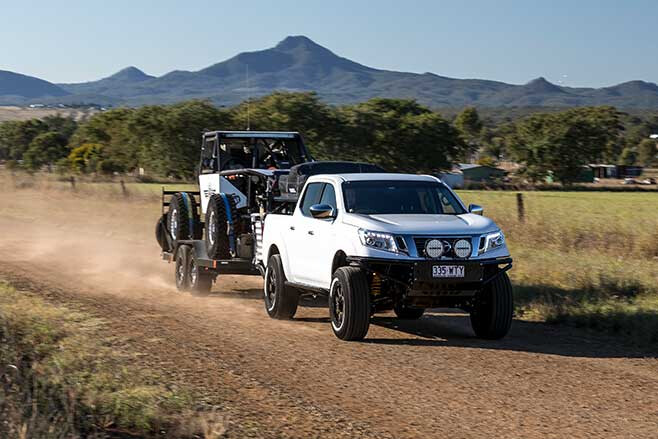
While the rest of the build is reserved, the suspension is where Mitch really cut loose. Most of the magic has been cast by SWAT Suspension Wheel and Tyre. The WA-based company has gone to town on the NP300, giving it a 3.5in lift in the front and a 1.5in lift in the rear, with King spring progressive rate coils front and back. To keep things working as they should, PSR upper control arms in the front have been fitted to correct geometry and PSR heavy duty lower control arms went in the rear after Mitch bent the factory offerings. The rear also copped extended swaybar links to cope with the new flex, though that’s not Mitch’s key to success.
“It’s running West Coast Suspension remote res 2.0 shocks all ’round,” he told us. “They’re eight-stage adjustable, with a clicker on the reservoir controlling oil flow.”
One of the big issues with lifting any IFS 4×4 is running out of down travel the higher you lift. The result is poor ride and handling and lifted wheels on even basic tracks. Despite the front sitting 3.5in higher than stock, Mitch reckons the NP300 still keeps a reasonable CV angle with a few inches of down travel left in reserve, helping the Nav stay planted in the rough stuff.
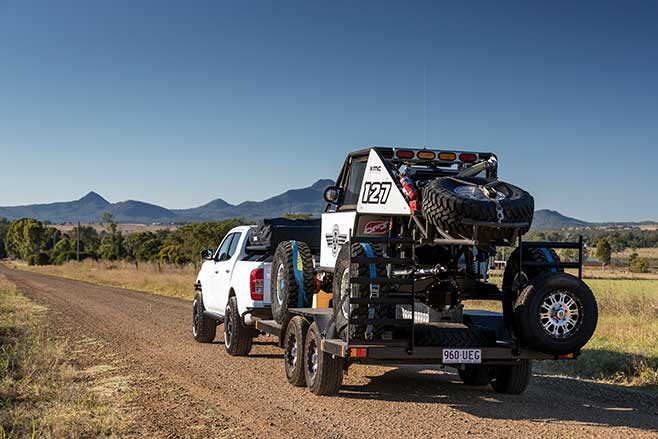
With Mitch earning a ‘never-lift’ reputation on and off the track, it’s no surprise he’s gone to town on bar work for the NP300. Keeping the big Nissan’s nose in line despite Mitch’s best efforts is a comp-style tube bar from the guys at Xrox. The hoopless unit keeps weight off the front suspension, which is perfect if you’re not playing whack-a-mole with kangaroos every night. Plus, it improves the approach angle in the process. Down the flanks, the NP300’s vulnerable sill panels have been up-armoured thanks to a set of sliders from Southern Cross Fabworks; while the rear bar is a towbar/quarter protection arrangement from Ironman 4×4.
If you’re eyeing off the rear cargo rack with credit card in hand, you’ll be disappointed to hear it’s a custom-built unit by Mitch. Depending on where he’s pointing the spotlights, the rack can either hold an Adventure Kings roof-top tent or a space case and spare tyre. The arrangement keeps the centre of gravity nice and low with the tent on top, while also keeping the tray free for spares for the race car.
On the electrical front, Mitch kept things relatively simple, throwing all in with the buggy rather than decking out the tow tug with trinkets; although, it has still copped a couple of essentials for those late night runs out to the track. A set of Adventure Kings 9in LED driving lights help light the way, while a Redarc Tow-Pro Elite trailer brake controller stops the trailer pushing the NP300 around when Mitch jumps on the anchors.
While Mitch’s NP300 takes him wherever he wants to go, it’s doing it with relatively few modifications. The right gear here and there turns an already capable platform into something that’d leave some wildly modified rigs for dead.
ONE-OF-A-KIND Y62
Words: Dan Everett
What has the ability to travel to any corner of Australia, take on tracks that’d leave twin-locked GU Patrols scratching their heads, a refined interior and more power than a Ferrari 488 GTB? If you answered anything but Andrew Cassar’s insane supercharged 5.6L Y62 Patrol you’d be sadly mistaken.
The owner of On Track 4×4 Repairs in Kealba, Victoria, Andrew is no stranger to modified 4x4s and could see the potential lurking underneath the Patrol.
“It was between this and the 200 Series,” Andrew told us. “The creature comforts were better in the Y62 and it just represented better value for money. It’s a huge step up from the GU Patrol in every way.”
If it sounds like Andrew might be a little smitten with his Patrol it’s because he has reason to. Lurking under the bonnet in stock form is Nissan’s VK56 5.6L V8 engine pushing out 300kW.
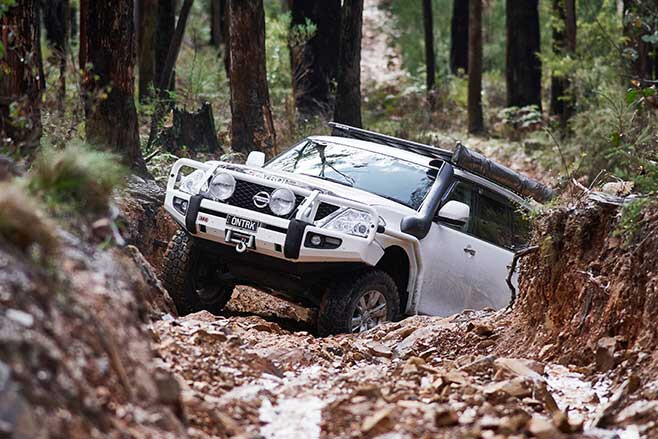
“When we first got it we threw it on the dyno and it pushed out 160kW at all four wheels after drivetrain loss,” Andrew said. “We then fitted it with a Harrop 2.3L supercharged kit and had the stock ECU retuned by Harrop; it’s now putting out 350kW at the wheels.”
That’s a huge 118 percent increase in power and still comes in cheaper than a comparable 200 Series. You might be forgiven for thinking power like that must take a balance of modifications, but the Patrol driveline is basically stock other than the Harrop supercharger and tune, and HM exhaust system. The engine, as well as the transmission and transfer case, all remain unopened.
Despite this the Patrol still has a range of well over 1000km between drinks, with a 150L LRA auxiliary fuel tank taking the total capacity up to 290 litres.
While independent suspension and a host of electronic aids make the Y62 perform better on- and off-road than the older models could only dream of, the 35-inch tyres are a nod to out-and-out off-road performance.
“We actually run two sets of tyres depending on use,” Andrew told us. “If we’re heading to the snow or mud I’ve got a set of 35/12.5R18 BFGoodrich mud terrains on the stock rims. I’ve also got a second set of rims with 305/70R18 Mickey Thompson ATZ P3s we’ll use for running around town or beach work.”
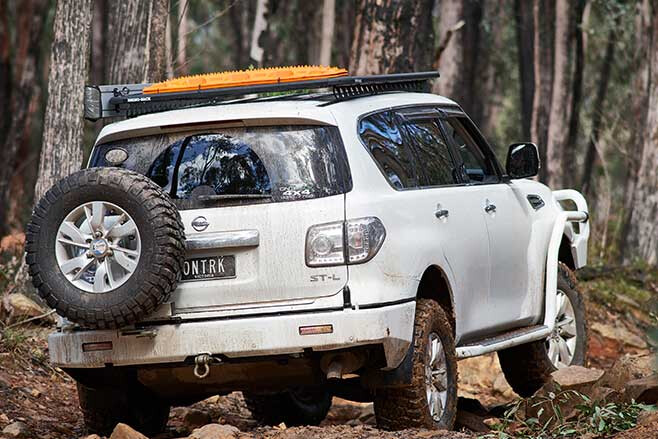
Between both sets of 35-inch tyres, the factory rear diff lock and the Harrop ELocker up front, the Patrol is a sight to behold off-road. Asking the huge Y62 wheel arches to take a 35in tyre at full stuff was a little more than they could handle, so Andrew raised the Patrol by a full 50mm on each end.
It’s riding on Old Man Emu springs with matching Nitrocharger Sport shocks on each corner. Like most modern independent suspension set-ups, 50mm is the max the Y62 can be lifted before running into issues with alignment and angles. However, Andrew tells us it’s currently on the hoist again, swapping out the Nitrochargers for a full set of remote reservoir fully adjustable BP-51s.
While the bar work may look neat and orderly it’s actually a compilation of off-the-shelf and custom, something that seems to be a running theme with Andrew. Up front there’s a colour-coded ARB Deluxe bullbar that plays host to a Magnum 10,000lb winch. Andrew ditched the stock Magnum motor and swapped it out for a 6hp unit from a Warn 9.5XP for a little more power. Protecting the Patrol’s flanks are matching scrub bars and sliders. With no off-the-shelf solution for these the team from On Track 4×4 custom-made them to suit. The rear end now looks the part, with a full rear bar from Kaymar guarding the rear quarters and carrying the spare tyre.
Getting the spare out of the recess in the rear floor wasn’t just for looks, either. In its place now resides five Fullriver 20Ah batteries for a total of 100Ah in reserve. The set-up is controlled by a Redarc BCDC 1225 charger with provisions for solar and smart start, so at the flick of a button the big Patrol can jumpstart itself. The battery system packs more than enough power for the Lightforce 240s up front and Icom IC440 UHF inside.
If the future of 4x4s in Australia is fully independent grocery getters with ungodly amounts of power and ability, then the future is looking bright.
GIANT-KILLING BEHEMOTH
Words: Dan Everett Images: Nathan Duff
When Craig McGuiness first got his hands on the 2004 GU Patrol it was owned by his brother-in-law and still looked very much like a wagon. Eventually, as they often do, the ZD30 went pop, so the deal was made and the pair traded vehicles, with Craig offering up his XH XR8 ute.
First cab off the rank was replacing the dead diesel engine. While a rebuild might have been the easy option, Craig knew it was only a matter of time until it grenaded again and he was back to square one. He bit the bullet, yanked the motor, and lined up a 5.7L LS1 V8 to replace the ailing diesel.
The engine slotted in front of the four-speed automatic 4L60E transmission, which is mated to the standard Patrol transfer case. Before it could fire into life Craig had the guys from Scott’s Rods in Ipswich piece together a custom exhaust system, from manifolds through to exhaust tip, before having the package tuned by Forced Performance & Tuning in Toowoomba.
It wasn’t long after this that Craig was kicking back on Moreton Island with some mates when the idea of a ute chop first crossed his mind. “The wagon just wasn’t good to camp out of,” Craig said. “With the barn doors on the back you can’t access anything if you have a camper trailer connected, and there’s very little room once you put a big fridge in.”
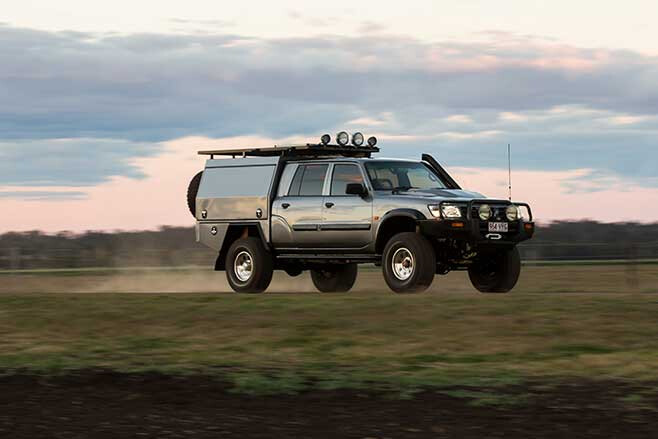
The decision was made. But chopping a wagon into a ute isn’t exactly a DIY kind of job, especially if you’re after a factory finish. So Craig went in to see Darren Vassie at Custom RV Creations & Repairs. The plan was simple, they’d source a back wall from a GU single-cab ute, and Darren and the team would slice the back off the wagon and graft the new rear wall into place with factory precision.
While the tools were out Darren also re-skinned a damaged rear door, repaired all the dents, and grafted in a fibreglass reverse cowl bonnet off a Camaro to hint towards what lurked underneath. Before the body was re-coated in factory silver, a custom four-inch stainless-steel snorkel was fabbed up to run along the passenger-side windscreen pillar.
With the cab now looking the part, attention was turned to the wheelbase. Wagons often run a shorter wheelbase than their respective ute siblings, so when you lop off a few feet of sheet metal in a wagon you’re left with very little room to run a tray, especially if you want to keep some semblance of departure angle. To get around this Darren got out the welder again and proceeded to stretch the GUs wheelbase by a whopping 600mm. This meant the rear axle would line up perfectly in the middle of the large, new tray the pair concocted together.
The tray itself is constructed from 3mm-thick alloy sheet with 50x100x8mm alloy channel providing the strength throughout. There are gas struts on both passenger and driver doors, with compression T handle locks and deeper back structures on the doors providing better water and dustproofing. The interior is also decked out to a highly professional finish, with ply floor, roof panels and marine carpeting throughout.
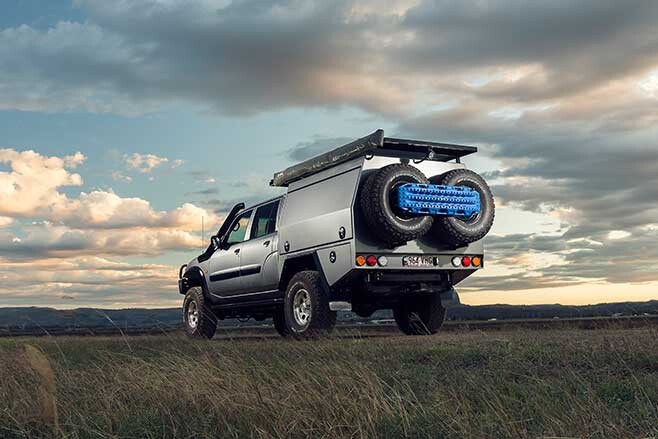
The tray’s been separated into two, with a partition running down the centre. The passenger side houses both fridges on twin Clearview slides, as well as a separate drawer for cooking supplies. The driver’s side has been divided into three drawers, with a shelf 300mm down from the roof for storage of lighter items – although with a custom alloy roof rack bolted to the canopy, storage space is never going to be an issue.
Hidden throughout the tray is an electrical system purpose-built for remote-area touring. Up on the roof rack there’s 150A worth of solar panels that feed through a compression gland in the tray and down into the RedArc battery management system. From here there’s twin 120A AGM batteries powering not only the fridge and electrical outlets but the heat exchanger and water pump for hot showers on the go. There’s no chance of running out of water, either, with 140 litres of on-board capacity. There’s plenty of distance to use it, too, thanks to the custom aluminium long-range tank doubling the standard fuel tanks capacity.
This might sound like one of the most comprehensive builds on the tracks right now, but we’ve barely even scratched the surface. It’s one of those vehicles where a determined owner with an uncompromising goal has worked perfectly with a talented workshop.
A FORD Ranger built for family-ferrying duties leads the latest batch of reader-submitted 4x4s.
Head to the 4X4 Australia Facebook page and send us a photo and brief description of your fourbie. You could win a Wurth under-bonnet LED valued at $249!
2016 FORD RANGER WILDTRAK
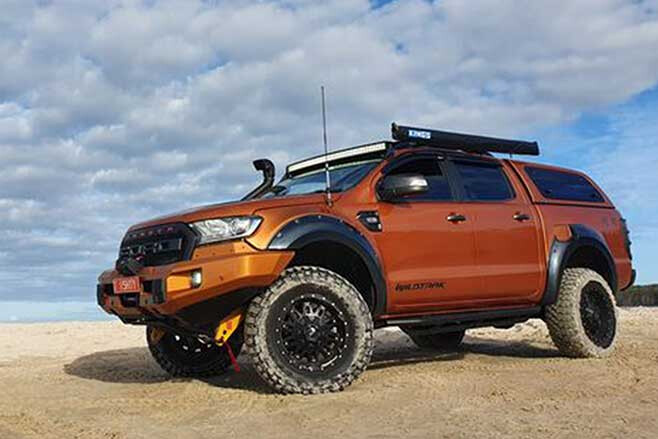
It’s set up as a family touring vehicle in Brisbane. It’s awesome to drive, with around 240hp at the rears it moves along nicely. It’s twin-locked and kit includes four-inch Bilstein lift kit; three-inch turbo back Rhino Exhaust; PIAK hoopless front bar; 13,000lb Offroad Armour winch; Offroad Armour sliders and steps; Forefront Industries catch can; intercooler and Stage 3 piping kit; Aeroklas canopy; 50-inch curved light bar; 110W solar panel on roof; CTEK DC-DC charger; Roadsafe recovery points; Kings awning; Ironman 4×4 snorkel; Titan rear drawer with custom fridge box and a 70-litre Kings dual-zone fridge-freezer; 75mm flare kit; Kings rooftop tent; full LED light upgrade (inside and out); Rola flat rack on canopy; and an Oricom UHF. I have two sets of wheels for the car: 17×9 OX wheels wrapped in 285/70/17 tyres, and a set of Ballistic 20×10 wrapped in a 33/12.5/20 tyres -Ishty Fulop
NISSAN PATROL
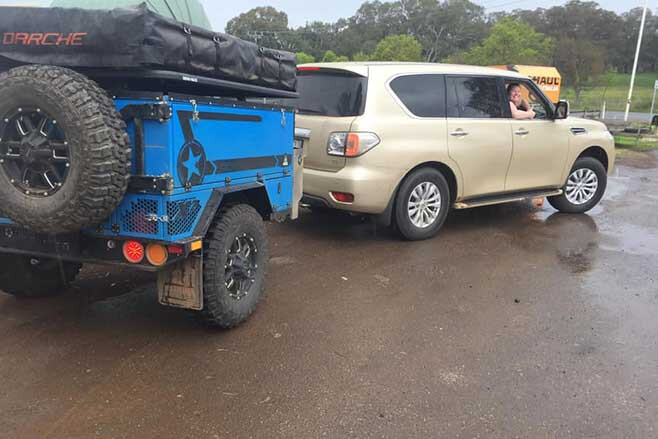
I just bought the Patrol and have a lot of plans to make it my own. Owned it for about six hours before we had it in low range and towing through mud holes -Jess Pink
2010 JEEP WRANGLER
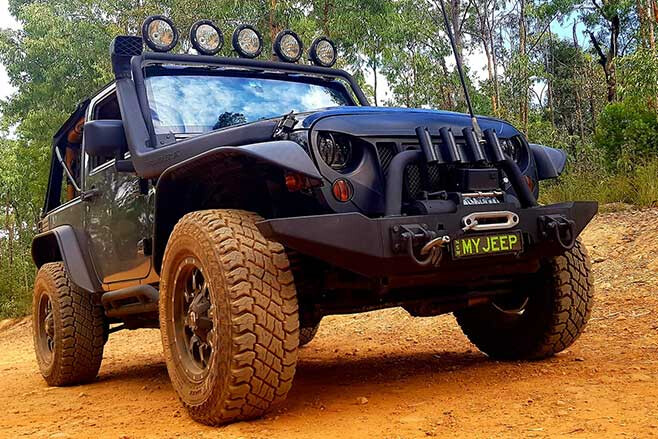
Gear includes Fuel rims on 33-inch Cooper ST Maxx tyres; flat fender flares; XHD front bar, rear bar and rockers; Tough Dog two-inch lift; Panhard bars; winch; LED head- and tail-lights; light bar with HIDs; Rhino-Rack; Kings awning; 40-litre water tank; MaxTrax; farm jack; heat-reduction bonnet; aftermarket grille; AEV snorkel; and a Uniden UHF -Kris Willis
2014 TOYOTA FJ CRUISER
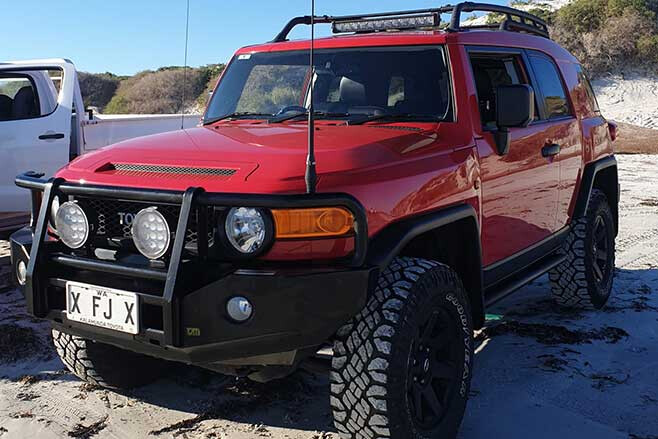
My Cruiser features upgraded suspension; 33-inch Goodyear Wrangler all-terrains; TJM bar work; UHF; and a rear locker -Chris Loxton
TOYOTA LANDCRUISER 75 SERIES
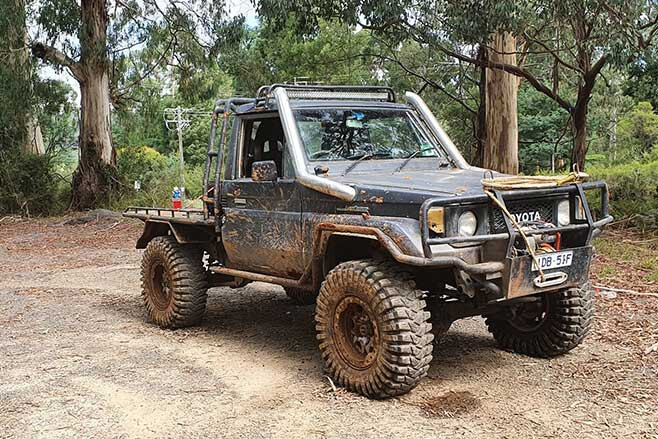
I’ve done all the work myself. It’s coil-converted and features a Patrol front diff and 80 rear; twin lockers; front and rear winches; a roll cage; and an LS1 turbo -Jay Drummond
FORD RANGER
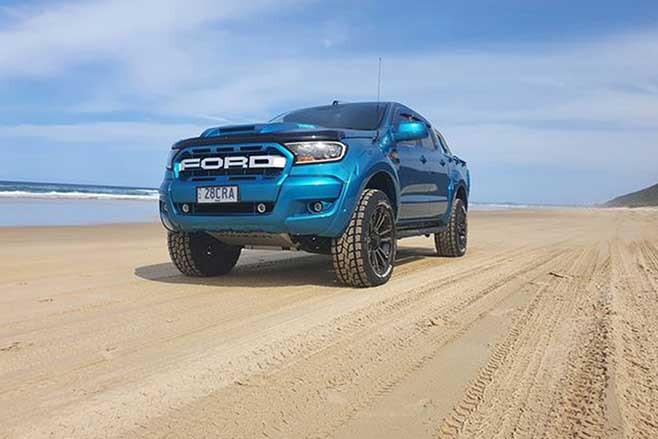
Three-inch lift; 20-inch rims; LED lights; halo ring lights; oil catch can; three-inch stainless steel exhaust system; and a custom rack. The custom paint is a head-turner; everyday people come up to me a say it’s the most beautiful Ranger – one guy said he was gobsmacked. The interior is stunning, with a custom tablet and diamond-stitched floor. The engine is all painted and detailed, too. It will be finished by the end of November; I just have a stainless steel snorkel, custom airbox and lights to be fitted -Craig Freeman
https://www.whichcar.com.au/reviews/december-2020-readers-4x4s
IT seems that no matter where you are in the world, you always want something that you can’t have. It’s the automotive ‘grass is always greener on the other side’ envy for vehicles that aren’t readily available to us.
For Australians it might be the new Ford Bronco or Colorado ZR2 that you are hankering for from the USA or some sort of exotic sports car available exclusively in Europe.
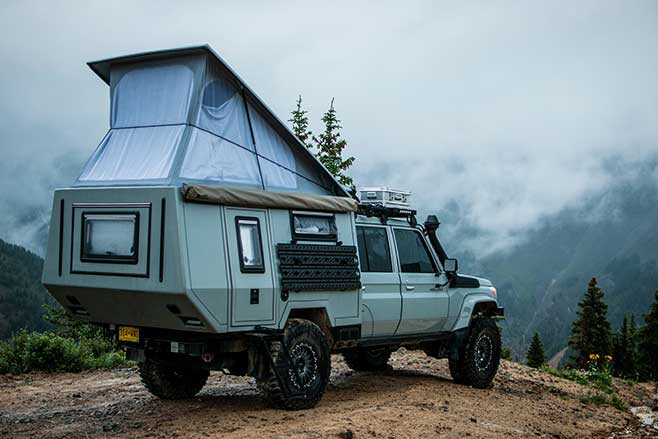
For the Americans, there’s always a touch of auto envy when we start talking about and showing pictures of the LandCruiser 70 Series that are so popular here in Australia. The 70s have never been openly available in the USA, although plenty have found their way in through private channels. In many states of the USA there is a rule that allows the importation of vehicles 25 years and older, so many older Cruiser are finding their way across the Pacific now, but they still can’t buy a new one.
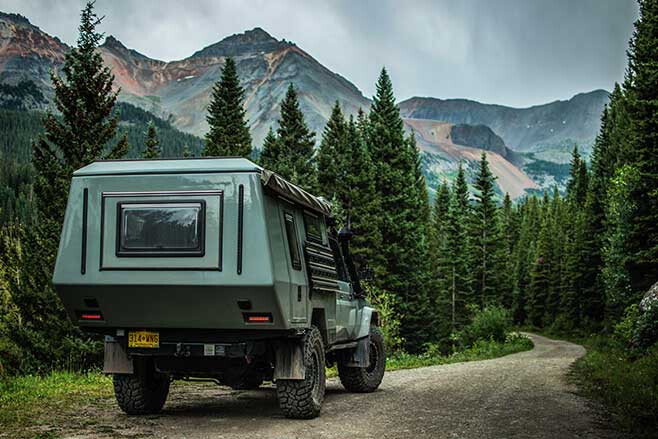
So what’s the deal with this left-hand-drive LandCruiser 79 camper wearing New Mexico plates? On first glance it looks like a current model LC79 that has been stretched and fitted with a camper on the back, but all is not what it appears with this rig.
“I love LandCruisers, especially the 70 Series,” says Albuquerque, NM resident Tim McGrath. “This truck checked all the boxes for me.”
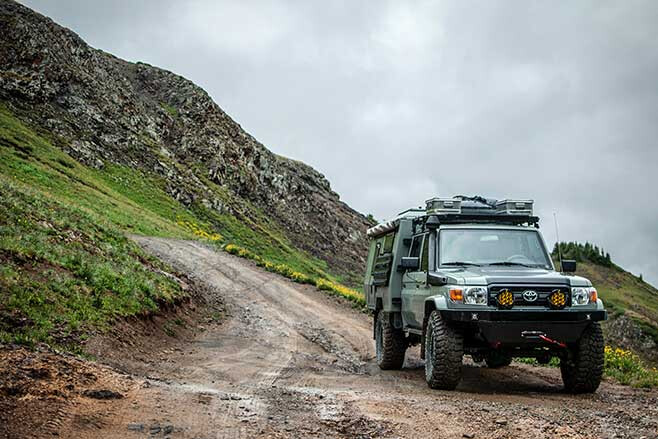
As we know, it’s one thing to love a vehicle but another to be able to get one in a country where it isn’t allowed. Luckily for Tim, German expedition company Maltec has a solution for Cruiser loving Americans.
The ‘Maltexplorer Series 7’ is actually built on an 80 Series LandCruiser chassis and basing the build on a 25 years or older 80, the vehicle is allowed to be imported in to and registered in the USA. Maltec build these rigs using both single and double-cab 79 bodies and Tim chose the latter to accommodate his family.
“We wanted a camper that could fit our family of four,” he told us. “A camper that was extremely capable, that could take us to places other campers can’t go. A true four-season camper that could easily go up a mountain and keep us warm and dry at 13,000 feet no matter what the weather was doing. There are a few trucks on the market but the 70 series checked all the boxes and I really wanted a truck that I was very passionate about.”
Tim’s not kidding when he says he’s passionate about Cruisers. We featured his stunning 1966 FJ45 Troopy a few years back and he also owns a ’74 FJ40. Tim’s business Sackwear Overland Outfitters produces Toyota 4×4 oriented apparel among other 4×4 kit and off-road accessories. Check them out at www.sackwear.com for some cool stuff.
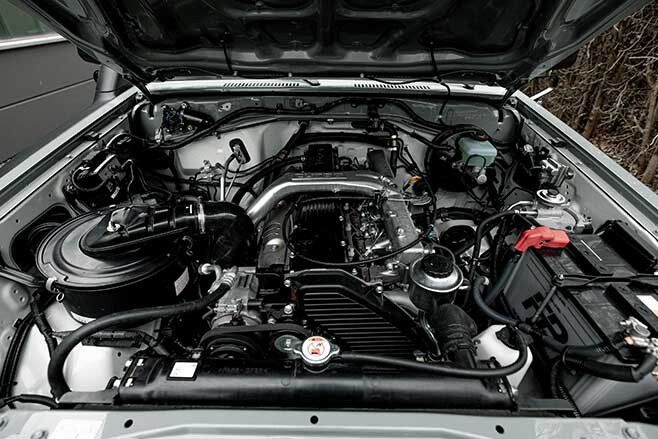
For the double-cab camper, Maltec stretched the 80’s chassis 808mm to give it a 3658mm wheelbase; around 480mm longer than the standard wheelbase of an LC79 double cab. Maltec mechanically refreshes the chassis with all-new suspension including remote-res shocks, bespoke coil springs, 16-inch brakes, and new bushes and rubbers throughout.
Braid wheels are usually found on Dakar race cars but Maltec fits them to its expedition builds for their superior strength in the toughest terrain. Tim has wrapped his beadlocked Braids in 37-inch Cooper STTs.
The extra length in the chassis not only improves the ride and stability of the Cruiser, but also accommodates Maltec’s carbon-fibre camper module. These campers are next-level in terms of design and fit-out with bespoke timber and stone finishes that can be chosen by the owner. Tim selected teak flooring with grey cabinetry to match the vehicle’s Porsche grey exterior paint, while grey and back leather and suede covers the seats and door panels.
The rear of the 79 cab is cut open to allow a walk-through to the camper where there is sleeping for four, two Dometic fridges, a Webasto heater, a sink with hot and cold water, 3-burner stove, LED lighting and charging ports. A pair of AGM batteries are split using a Simarine PICO system that also regulates the input from solar panels on the roof. A tablet-like touchscreen controls all the electrical functions, while a 2000W inverter allows 120V power to run appliances like the coffee machine.
Describing camping with the family in the Maltec, Tim says, “There’s not a lot of room but it’s doable. The trade-off is that I can wheel this thing to places where most campers can’t go. I love that we can do that and set up camp someplace crazy and stay comfortable and warm at night.”
Jeep has officially pulled the wraps off its latest Grand Cherokee SUV, and the previously five-seat wagon has grown to three rows on a new platform.
The Grand Cherokee has ditched the Mercedes-Benz-derived monocoque chassis of the WK/WK2 model for a platform from the FCA stable, said to be that used under the Alfa Romeo Giulia sedan.
Despite the origins of the chassis the GC will retain its modest off-road capabilities, offering the choice of single- and dual-range 4×4 systems and the option of Quadra-Lift height-adjustable air suspension.
UPDATE, May 12 2022: The new Jeep Grand Cherokee L is now in Australia, and we’ve driven it. Read and watch our review at the link below.
The story to here
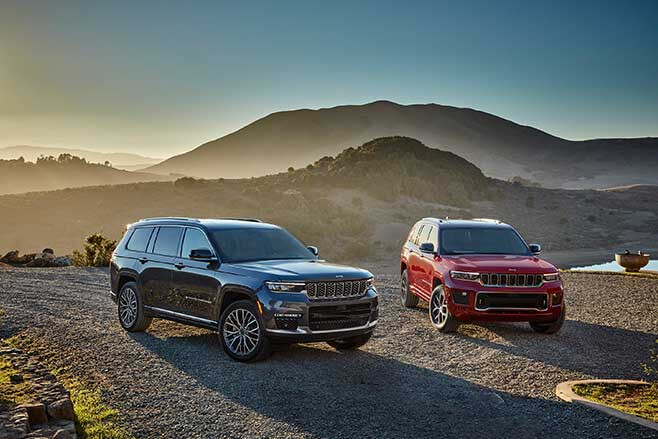
The new, stiffer monocoque uses independent suspension front and rear and the highest of the two off-road settings raises the body 100mm above normal driving height.
This gives the wagon 277mm of ground clearance and a 600mm wading depth.
There are two dual-range four-wheel-drive systems offered depending on the variant specification. Quadra-Trac II is the standard system, while Quadra-Drive II is the more off-road capable system and employs an electronic limited-slip differential in the rear for optimal traction.
The US-centric product release mentions two petrol powertrains – the existing 3.6-litre V6 and the 5.7-litre V8 – will be available in the Grand Cherokee at launch.
There is no mention of any diesel engine or any hybrid or EV powertrains at this point.
Hybrid will be a dead certainty for future release as Jeep looks to electrify its range, while question marks remain over future diesel Jeeps.
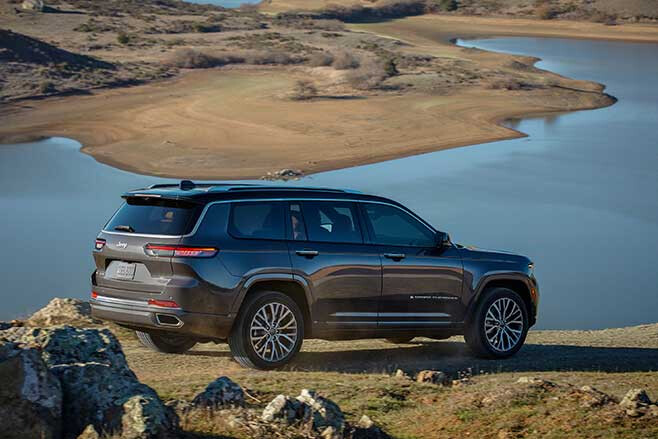
To make the Grand Cherokee a true seven-seat SUV it rides on a massive 3.1-metre wheelbase and the track is 36mm wider than that of the WK Grand.
The new body is instantly recognisable as a Grand Cherokee, with sharper lines and harder edges giving it a more modern look.
The WK2 Grand Cherokee was a sales hit when it launched in Australia back in 2011 as it regularly challenged the popular 4×4 wagons for top sales positions and was one of the best-selling Jeeps ever in Australia.
It was a good-sized, well-appointed wagon with modest off-road ability, a choice of petrol V6 and V8 and a diesel V6 engines, a class-leading 3500kg towing capacity, and it was reasonably priced.
But a series of highly publicised cases of so-called ‘lemon vehicles’ and owners disgruntled with the support they received from Jeep Australia soon saw the reputation tarnished and sales dropped dramatically.
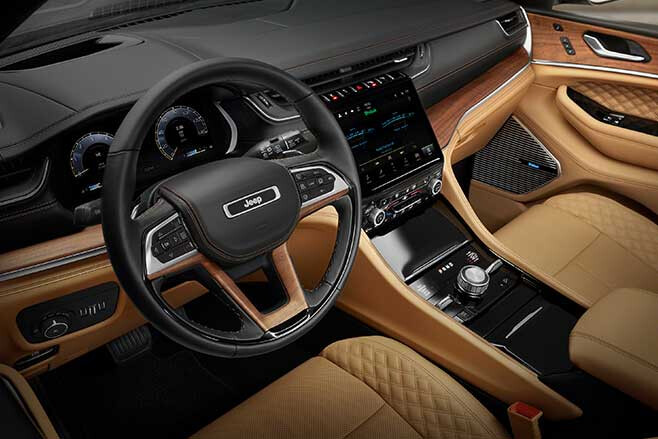
FCA/Jeep has worked hard to improve its customer relations and aftersales support since those days, and it will be hoping this new Grand Cherokee can replicate the strong sales of its predecessor when it lands here later this year.
So far there is no mention of what the line-up and pricing will be in Australia, with the company saying these will be revealed closer to the local launch.
THE Ford Ranger was the best-selling 4×4 in Australia in 2020.
In what was a tough year for the new car market – down 13.7 per cent on 2019 – the ageing Ranger ute bucked the trend, selling more units than it did the year before (37,889 units compared to 37,004 in 2019).
The total 4×4 PU/CC (pick-up/cab-chassis) market was down 9.5 per cent in 2020, but it was one of the strongest segments in new car sales.
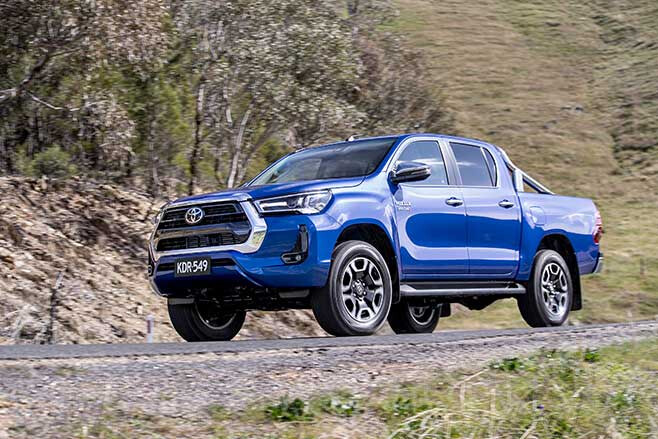
The Ranger’s biggest rival, the Toyota Hilux, might have been the best-selling vehicle overall in 2020 (45,176); but when you strip away the two-wheel drive models it fell short of the Ranger, selling 34,766 units (36,325 in 2019) for the year. This was despite a strong December, where it was the top-selling 4×4 with a stellar 4453 sales against its name. Hilux sales are up since the release of the updated model in September.
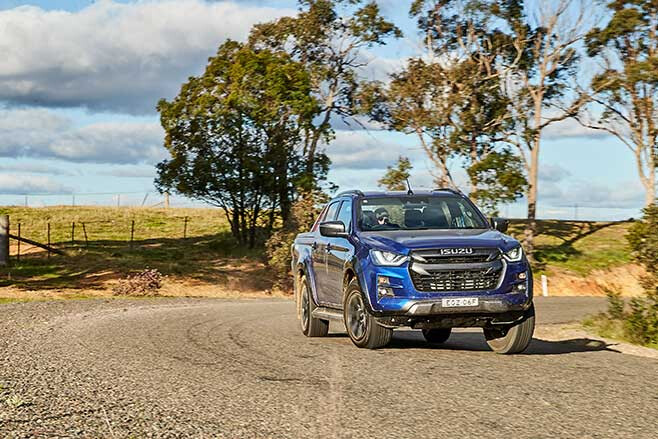
The other big mover in December was the Isuzu D-MAX which recorded 1775 sales for December, indicating that some of the early supply issues of the new model are freeing up. This also allowed the D-MAX to crack 10,000 sales for the year and finish as the sixth best-selling 4×4 for the year.
The D-MAX’s sister vehicle, Mazda’s BT-50, also had a reasonably strong December with 889 sales, allowing it to leapfrog the Holden Colorado in the yearly sales. For what it’s worth, the now defunct Holden sold just 27 Colorado 4x4s of its old stock in December, and this will be the last time we see the Australian nameplate on these lists.
The amazing performers are the only two wagons on the list: the Toyota Prado and LandCruiser 200. The only vehicles that aren’t utes pretty much have their respective classes to themselves, and they finished the year in third and fifth places on the 4×4 ladder. It leaves us wondering why other manufacturers can’t build a decent 4×4 wagon to challenge the Toyotas.
With four vehicles in the top 10 4×4 list and the only manufacturer with more than one entry, Toyota was again the top-selling manufacturer in the country, selling 204,801 of the 916,968 new cars sold overall. To put that in perspective, Mazda was the second best-seller (85,640) and Hyundai third (64,807).
DECEMBER 2020: 4X4 SALES
- Toyota Hilux: 4,453
- Ford Ranger: 3,875
- Toyota Prado: 2500
- Toyota LC200: 2235
- Isuzu D-MAX: 1775
- Mitsubishi Triton: 1388
- Toyota LC79: 1237
- Nissan Navara: 1058
- Mazda BT-50: 889
- Isuzu MU-X: 861
2020 OVERALL 4X4 SALES
- Ford Ranger: 37,889
- Toyota Hilux: 34,766
- Toyota Prado: 18,034
- Mitsubishi Triton: 15,649
- Toyota LC200: 15,078
- Isuzu D-MAX: 10,719
- Toyota LC79: 10,064
- Nissan Navara: 9777
- Mazda BT-50: 7193
- Holden Colorado: 6714
WAVE goodbye to 2020 and welcome in the New Year by picking up a copy of our latest issue of 4X4 Australia.
SUBSCRIBE TO 4X4 AUSTRALIA MAGAZINE
We’ve packed this issue tight with quality 4×4 content, including comprehensive coverage of that immaculate 79 Series set-up plastered on the cover. In fact, that very vehicle will feature regularly throughout 2021 as we follow it on its lap around Australia.
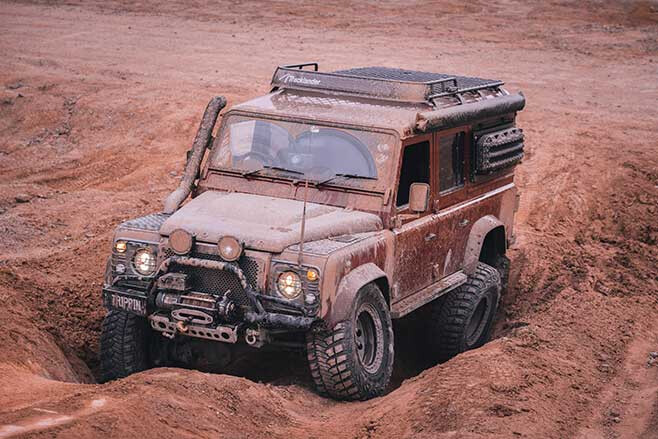
On the topic of custom metal, we examine a budget-built Hilux and a beautiful 2012 Defender that has been meticulously built with only the best quality accessories – not bad considering it’s the owner’s first 4×4 build.
We also convinced Harrop to lend us the keys to its V8 Patrol fitted with a supercharger kit, which has been fettled to produce 360kW and 662Nm. Pick up a copy to read all about its mind-numbing acceleration.
Planning a 4×4 trip this year? To get you started, we’ve included three essential 4×4 destinations: Googs Track in SA, Burke Developmental Road in Queensland and Stradbroke Island in Queensland.
WHAT ELSE IS THERE?
– New Defender hits the Vic High Country. – A guide to dual-battery systems. – Kenda Klever MT tyres tested. – Product reviews, opinions and more!
The January 2021 issue of 4X4 Australia is available now.
VICTORIA’S Mallee region is a vast expanse of wheat-and-sheep country that travellers have typically passed through on their way to other places considered more enticing, like the thriving riverside cities of Mildura and Swan Hill.
You can’t blame tourists for overlooking the region. Until recently, it had a reputation for being a harsh place filled with dying towns and struggling farmers locked in a never-ending battle against droughts, dust storms and plagues of rabbits and mice. Indeed, if you look at the Visit Victoria website, the Mallee is barely mentioned at all, buried as it is in a section called ‘The Grampians’.
Yet the Mallee now finds itself in the midst of an unlikely tourism-led revival, sparked largely by the development of the Silo Art Trail and a growing appreciation for the natural beauty of Lake Tyrrell.
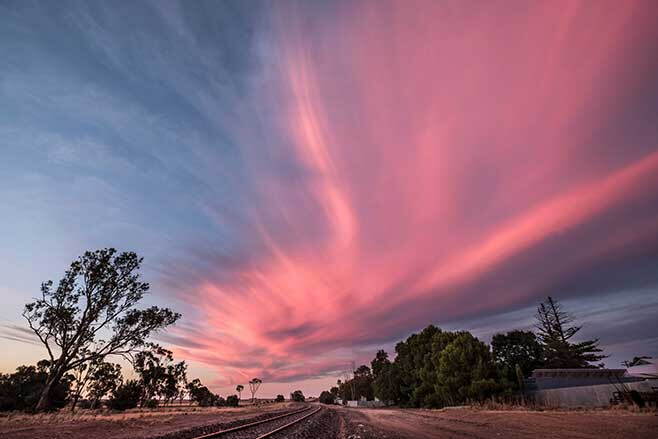
It is this moment in time, when a region best known for being in the middle of nowhere has found a new relevance as a destination for travellers keen to explore their backyard, that we have captured in our new documentary book The Mallee: A journey through north-west Victoria.
Having grown up in the tiny Mallee town of Manangatang, I had long dreamed about putting together a publication that celebrated the region and its great characters. Teaming up with five of Australia’s best documentary photographers – Andrew Chapman, Jaime Murcia, Melanie Faith Dove, Noel Butcher and Erin Jonasson – gave me the chance to make it happen. And I can’t forget our superstar book designer and part-time snapper, Phil Campbell. We think his graphic design prowess sets our book apart from many others.
Our snapshot of the Mallee follows the railway lines built through the region in the late 1800s and early 1900s. Using this as the narrative, we tell the story of the Mallee’s history as a whole and also focus on the stories of the little towns we find along the lines. Many are greatly diminished when compared to the bustling commercial centres they were 60, 70 or 80 years ago.
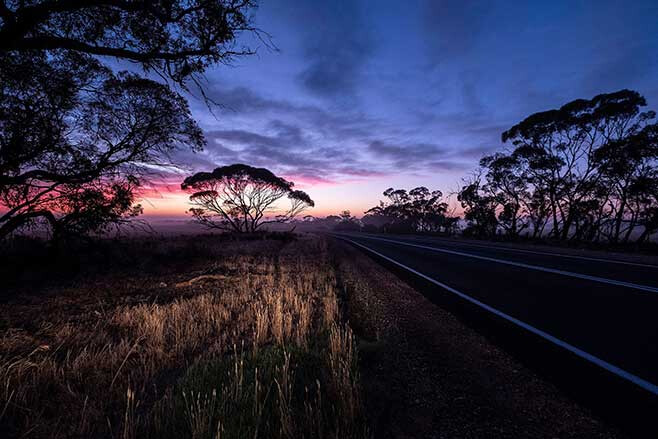
Rosebery, for example, once had a population of more than 300. It had numerous shops and sporting clubs. Today, just five people call the Rosebery district home. As photographer Andrew Chapman likes to say, “The Mallee has a clapped-out look about it.” Yet the sense of nostalgia you get from walking the streets of a Mallee town is a tourism drawcard in itself.
PATCHE PUB
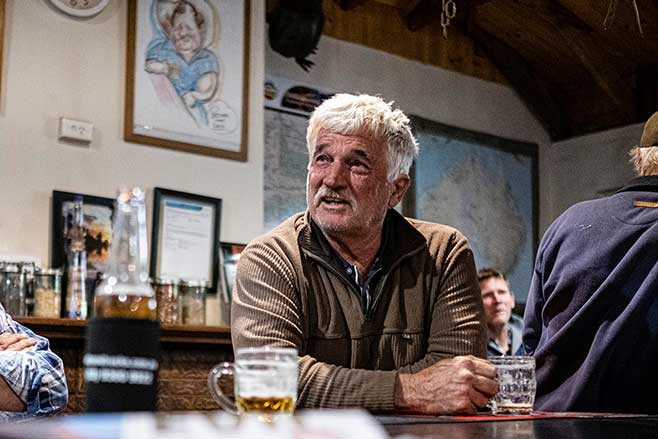
AND tourism is already reviving a number of other towns that could have gone the same way as Rosebery. The outpost of Patchewollock, which is only 430km from Melbourne but has a real outback feel, has been swarming with caravanners since the opening of its painted silo. The silo is handily located over the road from the much-loved ‘Patche Pub’ where you can be assured of cold beer, hearty food and spotless rooms, has benefitted greatly from this influx of people.
Be sure to have a cold one while leaning on the horseshoe-shaped front bar. You’ll no doubt end up chatting about the weather or wheat prices or even the annual Patchewollock Music Festival with one of the super-friendly locals. You might even get to say hi to Nick ‘Noodle’ Hulland, the farmer who is painted on the silo.
Patchewollock’s other great strength when it comes to tourism is its proximity to Wyperfeld National Park. The park has plenty of attractions for 4×4 lovers, although it’s a good idea to steer clear of the area in summer when temperatures can rise to near 50⁰C … in the shade.
One of the most popular things to do in Wyperfeld National Park, if you have entered the park from near Patchewollock, is visit the giant sand dune known as Snowdrift. Kids can have hours of fun rolling down the steep dune or riding down it on one of the rudimentary boards that are housed in a shelter at the bottom of the dune near the campsites.
The view from the top of Snowdrift is spectacular. You look across the vast Wirrengren Plain and see the trees that line Outlet Creek arranged snake-like across the landscape. The Wirrengren Plain was once an important indigenous trading route, with the area playing host to gatherings of people who had travelled north from the Wimmera River and south from the Murray River.
Another popular spot in the north of the park is the Casuarina Camping Area. If driving in from Patchewollock, you can access the area with a two-wheel drive. But a four-wheel drive is required if coming from the Mallee Highway town of Underbool via the Gunners Track.
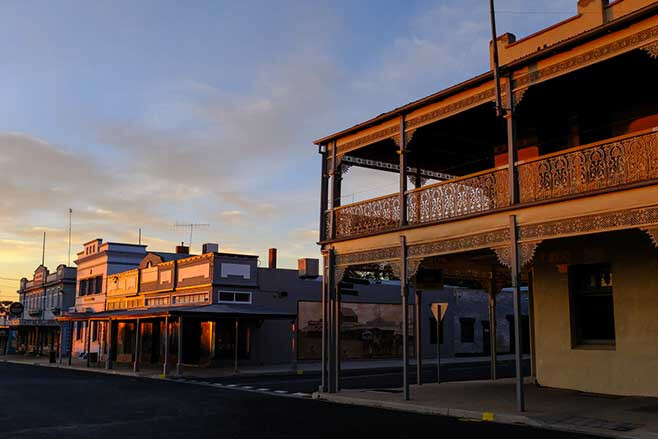
There are no booking requirements or fees for camping at Snowdrift or Casuarina, but advance bookings and payment are required to camp at the Wonga Camping Area in the south of the park, which is accessed from the town of Rainbow.
To the north of Wyperfeld is the Murray-Sunset National Park and its Pink Lakes. Once home to a salt mine, the lakes are now celebrated for their natural beauty. This area, too, has some beautiful camping areas and some excellent tracks for 4×4 enthusiasts.
Away from the national parks, the Mallee has plenty of other attractions to offer. There are now painted silos in a host of towns, including Lascelles, Sea Lake and Nullawil. Sea Lake is also the perfect base for exploring Lake Tyrrell, a giant salt lake renowned for its shallow water that on most days provides a perfect mirror of the sky. You can’t beat a trip to the lake at sunrise or sunset with Julie Pringle, who runs Sea Lake Tyrrell Tours.
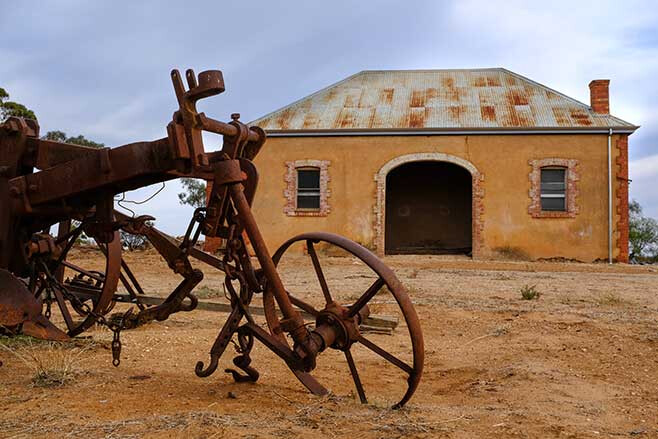
If events are your thing, there are iconic horseracing meetings at Wycheproof and Manangatang, the latter of which has achieved a degree of fame thanks to the popularity of the saying, “They’re racing at Manangatang.” Both events are sure to be bigger than ever in 2021 after being cancelled this year.
No matter which way you want to approach the region, now is the time to put the Mallee’s reputation for drought and disaster aside and take a look at the place for yourself.
MORE INFO
www.wimmeramalleetourism.com.au www.malleehighway.com.au
SOMETIMES, it takes a setback to take a step forward in life. And unfortunately for the owner of this 105 Series LandCruiser, Callum Mackellar, it took a serious accident for him to arrive at this dream setup.
Callum cut his teeth in the 4WDing world in a 2003 Holden Jackaroo, and a slow, yet trusty 105 Series LandCruiser with the naturally aspirated 1HZ diesel motor which he loved to pieces. Sadly, that vehicle is no longer with us.
“My first 105 was written off,” says Callum. “But that presented me with the opportunity to buy the holy grail, a stock-as-a-rock 2003 Kakadu Grey 105 LandCruiser. Well, stock apart from having a Sahara spec interior trim conversion, and (let’s be honest – the main attraction) a highly sought-after factory turbo diesel 1HD-FTE motor swapped in.”
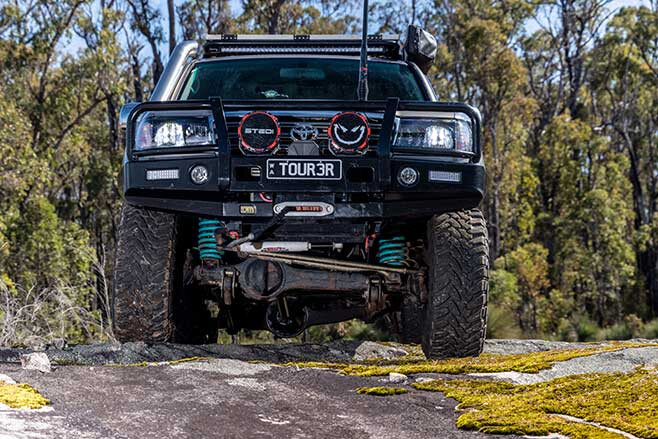
Now, the 4.2L 1HD-FTE factory turbo diesel motor needs no introduction, as it’s proven to be an absolute workhorse, yet it was only available in the 100 Series LandCruiser which features a torsion bar IFS setup that isn’t favoured by hard core 4WDers. When Callum saw this beast up for sale, with the factory turbo motor swapped into a 105 Series Cruiser with solid axles front-and-rear, he knew it was too special to pass up on.
While the bones of this vehicle were solid, it was a bit sad in the accessory and modification department, and we all know that’s not going to cut the mustard off road. “The vehicle was basically stock standard,” says Callum. “Which to be honest, suits me just fine as I’ve been able to build it up the way I like and create my version of the ultimate vehicle for extended trips all around Australia.” A job well done we say.
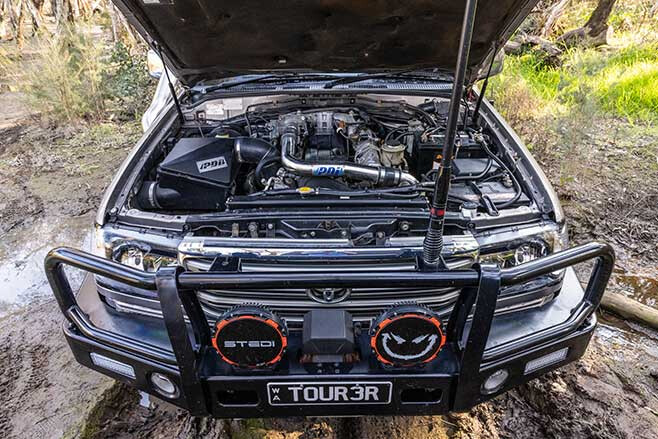
Callum mentioned that that side of things was actually rather smooth sailing, as he undertook most of the work himself. And while it was challenging, he found the experience extremely rewarding. The build took him a year to complete, and he tells us it cost $65,000 to put together, which in the scheme of things is money very well spent as he learned plenty along the way.
First cab off the rank, was extracting a little bit more power out of that lovely motor, by enlisting the help of Graham at GTurbo in Balcatta, Western Australia. With a few key modifications, Callum’s 105 is now making 233hp and 640Nm at the wheels, serious numbers indeed. These modifications include a GTurbo Red Wheel turbo upgrade, a front-mount intercooler conversion, PDI 4-inch airbox and a 4-inch stainless steel snorkel from Moonlight Custom Fabrication.
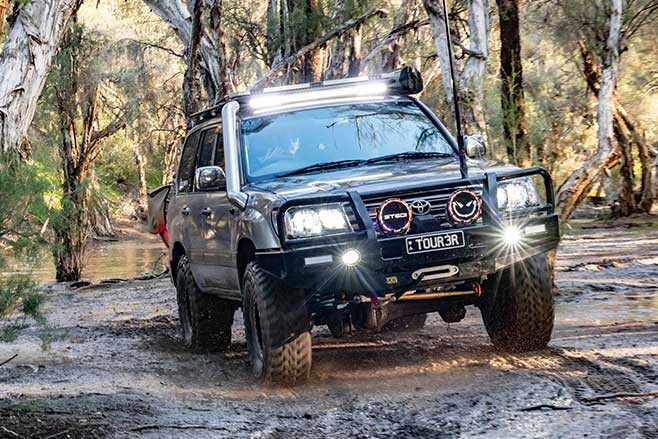
To allow the tuners to talk to the engine, a Unichip Q4 module was also installed, as well as a Manta 3-inch exhaust system meaning you can definitely hear Callum coming. To get power from the engine to the tyres, Callum wisely decided on a clutch upgrade, using a proven NPC unit. Around this time, Callum also decided it was important to have a solid touring range, and installed a 170L Brown Davis long-range fuel tank to extend his time between fuel stops dramatically. To further assist with fuel economy, a Marks 4WD 2WD conversion kit was also installed.
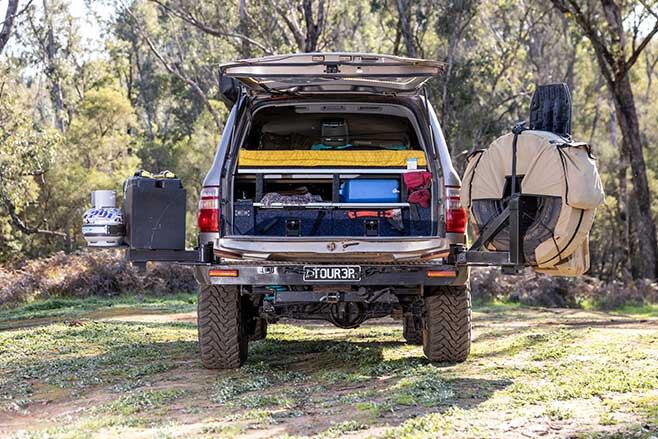
Touring mods include a winch compatible TJM steel front bar, with Stedi Type X spotlights, a Shoreline alloy roof rack with 50-inch LED light bar across the front and some aftermarket headlights to complete the lighting package. Callum has had a custom rear bar manufactured which incorporates twin jerrycan holders and a space for the spare tyre. A set of basic rear drawers house any camping gear and tools Callum needs to haul, and provides an area to put a bed on top as well as a hidden fridge. Solar screens on all windows help keep interior temps down too, as well as provide security while parking up for the night.
Suspension and tyres are two of the most important aspects for any touring 4WD, and Callum is wrapped with his setup. Starting with 3in Dobinson coil springs and 5in Superior Engineering remote res shocks. The coils are set up to carry 150kg constant load in the front, and 450kg in the rear. Superior Engineering again got the nod for its beefy upgraded suspension arms, such as tie rod and Panhard rods. A wise decision as the factory offerings are a little tame. Wheels are 16in Dynamic steelies with fake beadlocks, covered with 315x75R16 Toyo mud terrains, which Callum says are the best bang for buck mud tyres he’s driven on.
Regarding 12V, Callum is running a triple-battery setup (one start and two auxiliary) which is managed by a Redarc BCDC1225 and fed by a 180W solar panel when camping. A JVC head unit has been installed, as well as a 1000W amp to power a sub and 6 x 9 speakers when he is sick of hearing that FTE purr. So not often, in other words. With the Sahara interior fitted, Callum has such luxuries as woodgrain trim, leather seats in the front (the rears were turfed early in the game) and the coveted centre console icebox.
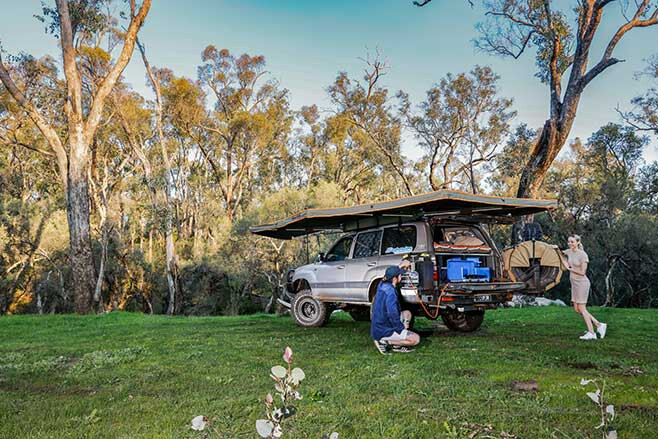
When asked why the 105 is so special to Callum, he summed it up nicely. “It’s an extremely capable and comfortable touring vehicle that I have 100 per cent confidence in.” And what’s in store for the future? Callum answered rather simply, by saying “many things.” His plans include improving the sleeping platform inside the Cruiser and installing some gullwing windows on both sides to allow for better access.
Interestingly, Callum is also planning on installing a sunroof directly above their heads so they can watch the stars of a night while sleeping in the vehicle. A capable, powerful and rugged vehicle for touring, and a comfortable place to sleep at the end of the day. What more could you ask for in a dream setup?