
The last couple of years you’d be forgiven for thinking the only way to head off-road is with a ute. Tub, tray or canopy, it makes no difference; it’s the correct way to go camping, right?
Modern dual-cabs make a lot of sense, as they’re comfortable, reliable, powerful and practical. But not everyone needs a tub or wants the somewhat jarring ride of a set of springs designed to carry a full tonne in the back – or quite frankly, wants a ute as a family car.
That’s why manufacturers build wagons based off the same platform. The same basic rig, just a little more steered towards comfort and family duties, and a little less towards dirt bikes in the back and Monster Energy stickers.
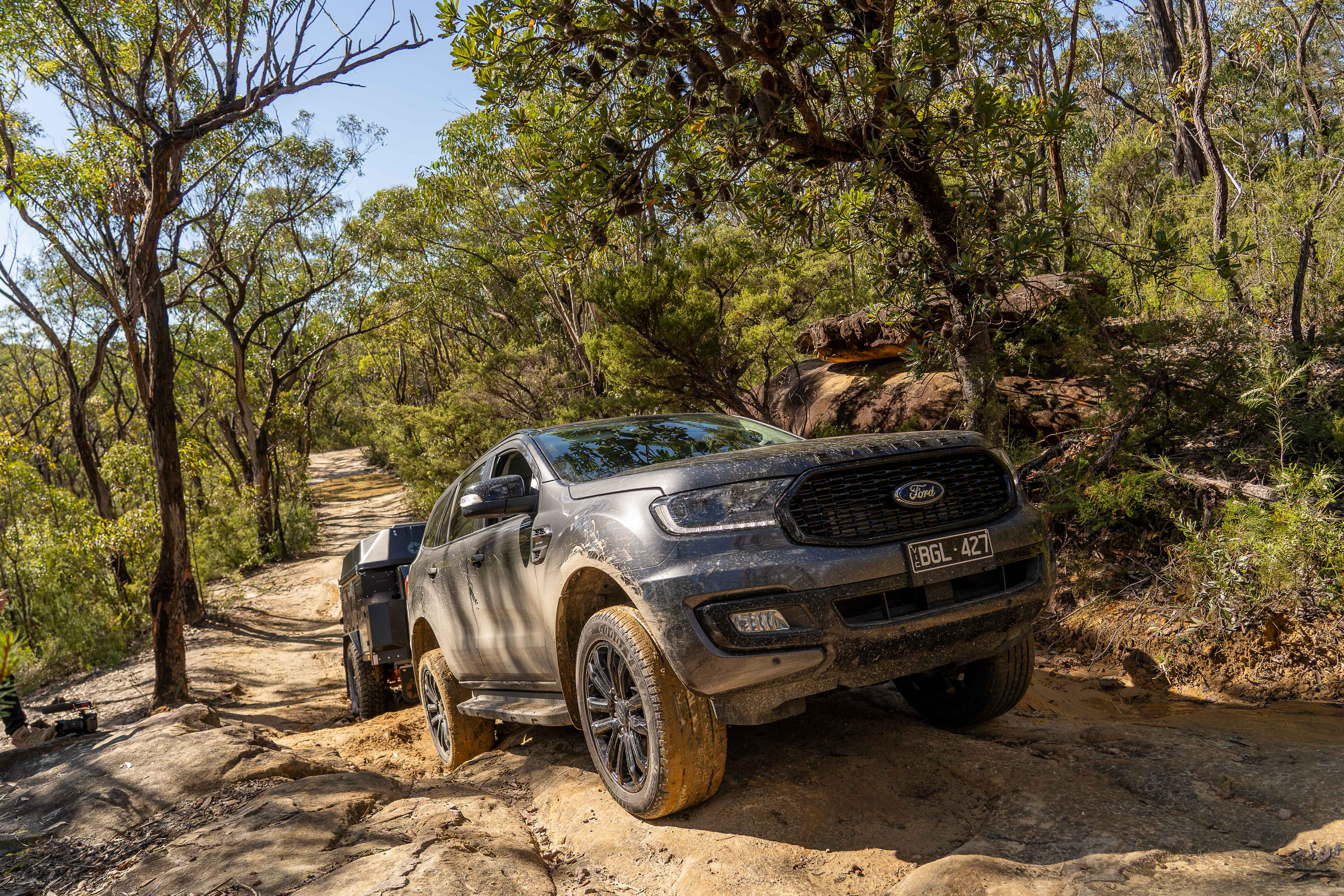
However, are they good a platform for not only everyday duties but towing serious loads, driving serious tracks and doing anything you could with the ute variant? There’s only one way to find out.
This month we’ve added an Everest Sport to the 4X4 Australia long-term fleet, a seven-seat 10-speed auto with a 2.0-litre bi-turbo punching out more killerwasps and torque than it has any right to, and we’re going to put it through the ringer.
First impressions of the Everest kinda make a lot of sense: it feels a lot like a Ranger, only nicer. It’s quieter, smoother to drive, has a more car-like interior, and its cargo space is protected from the elements so it’s far easier to go grocery shopping without worrying your eggs will end up scrambled by the time you get home.
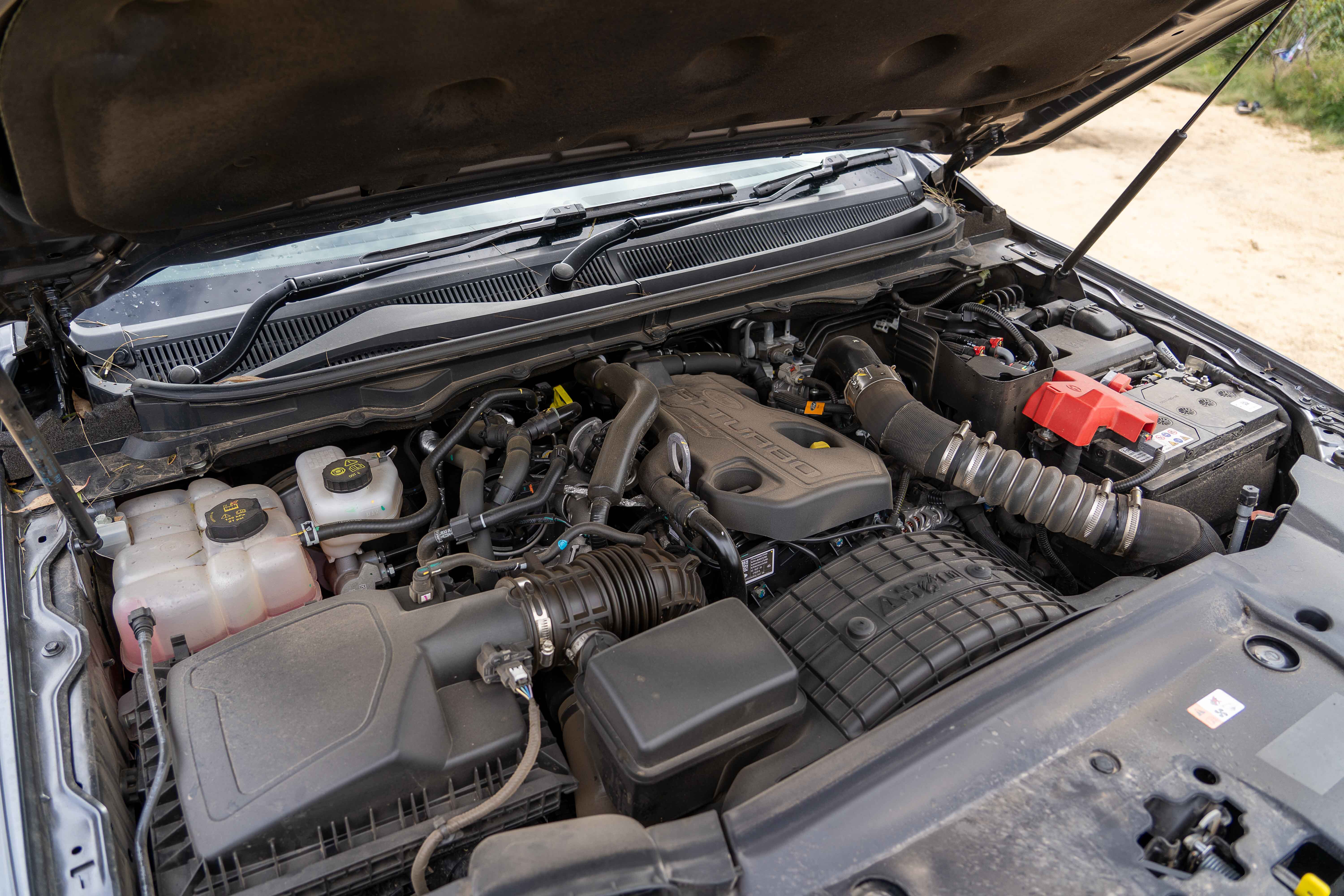
The 2.0-litre donk is surprisingly energetic for its size. It’s far more free-revving than the more work-orientated 3.2-litre, so it feels quicker off the mark and more effortless to drive around town. It feels more like you’re driving a truck and less like you’re driving something the size of an 80 Series LandCruiser.
We had the opportunity to put it through its paces off-road, too, in a recent back-to-back with the current generation Prado. Much to the photographer’s horror, the Everest was easily able to drive through deep wombat holes despite considerable wheel lift.
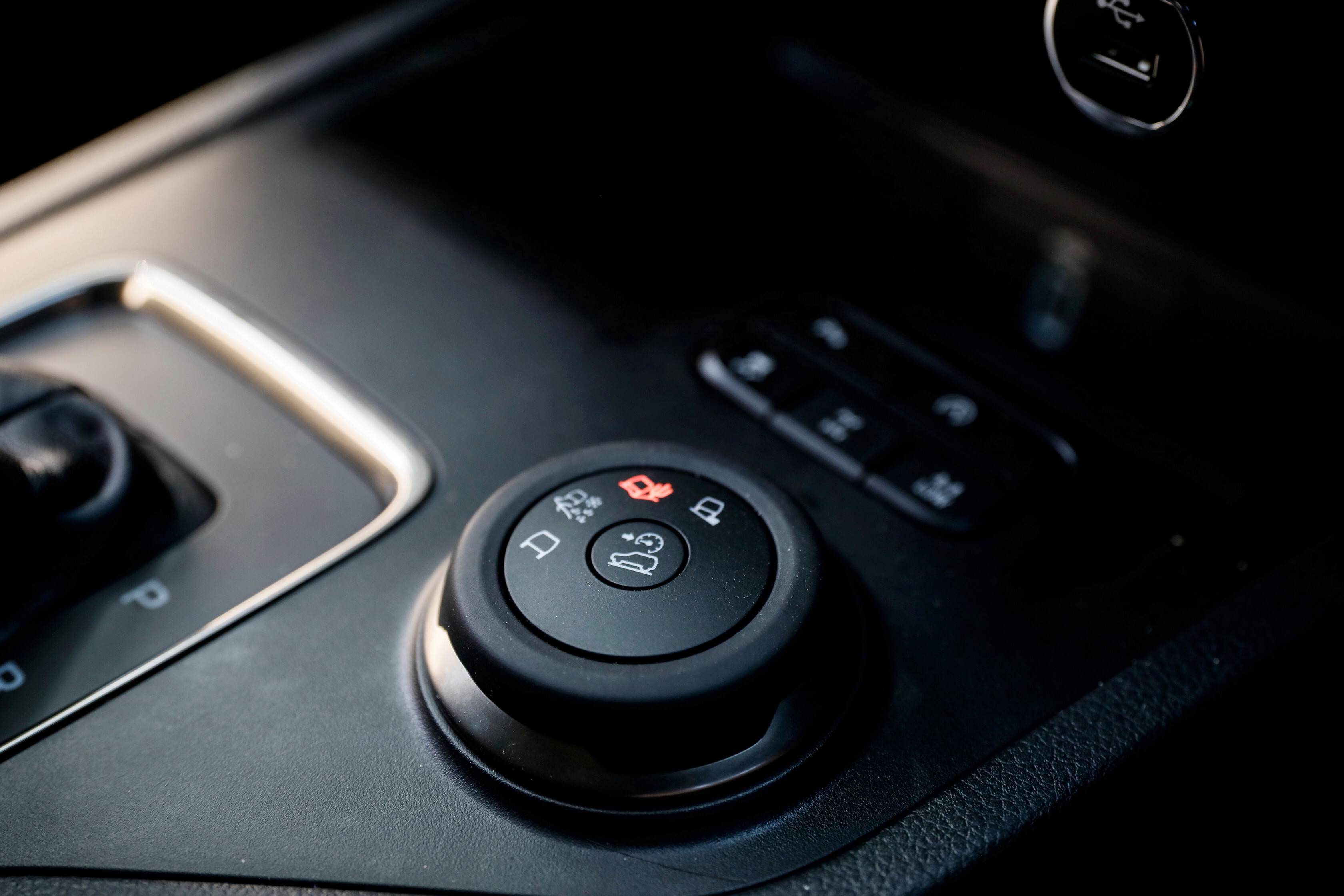
The combination of the factory rear locker and effective traction control up front meant that, even with a wheel in the air, the Everest was able to claw its way forward. With a set of more aggressive tyres, the only thing that would stop you driving a track would be mechanical sympathy rather than a lack of capability.
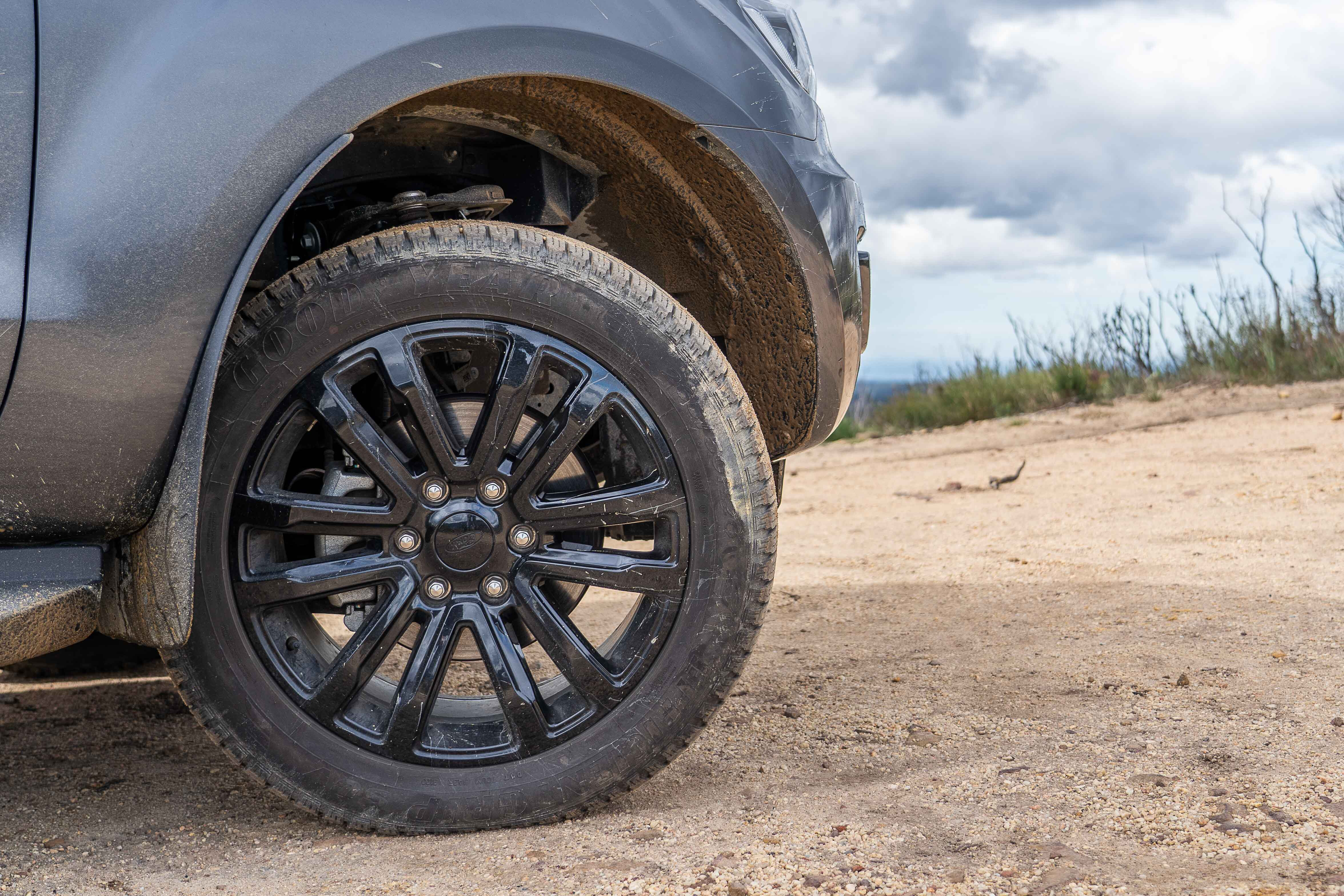
We’ve also slung a half-dozen different trailers on the back, from dirt bikes to caravans. The biggest stand-out was the lack of sag in the otherwise supple rear suspension – coil-sprung wagons typically feel the effects of a heavy ball weight far more than a leaf spring vehicle. It definitely lost its punch off the line when loaded up, but it was still more than capable.
After a few thousand kays it feels like we’re only just starting to get to know the Everest, so we’re looking forward to putting it through its paces some more over the coming months. Perhaps Ford will let us install a set of Raptor guards and 33-inch mud tyres? Probably not, but a boy can dream right?
Snapshot
- Heavier duty chassis than LC200
- Platform to be shared with Tundra and Prado
The next Toyota LandCruiser which is due to arrive before the end of 2021, is expected to get a higher payload than what the 200 Series currently has.
Payload has been an issue for owners of LandCruiser 200 Series vehicles, particularly those who like to load-up and equip their Cruiser for extended travels and those with high-specification models.
Despite its large size an LC200 Sahara has a payload of only 600kg, so by the time you’ve fitted a bullbar and winch, loaded up the roof rack, packed the cargo space, and have a family of four on board, you barely have the payload left to throw in a packet of Minties for your trip.
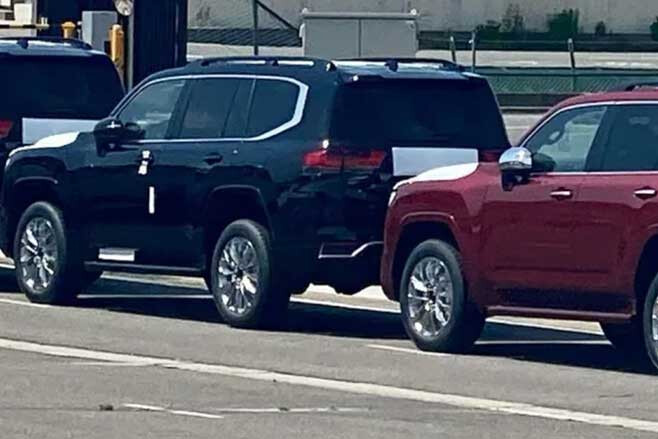
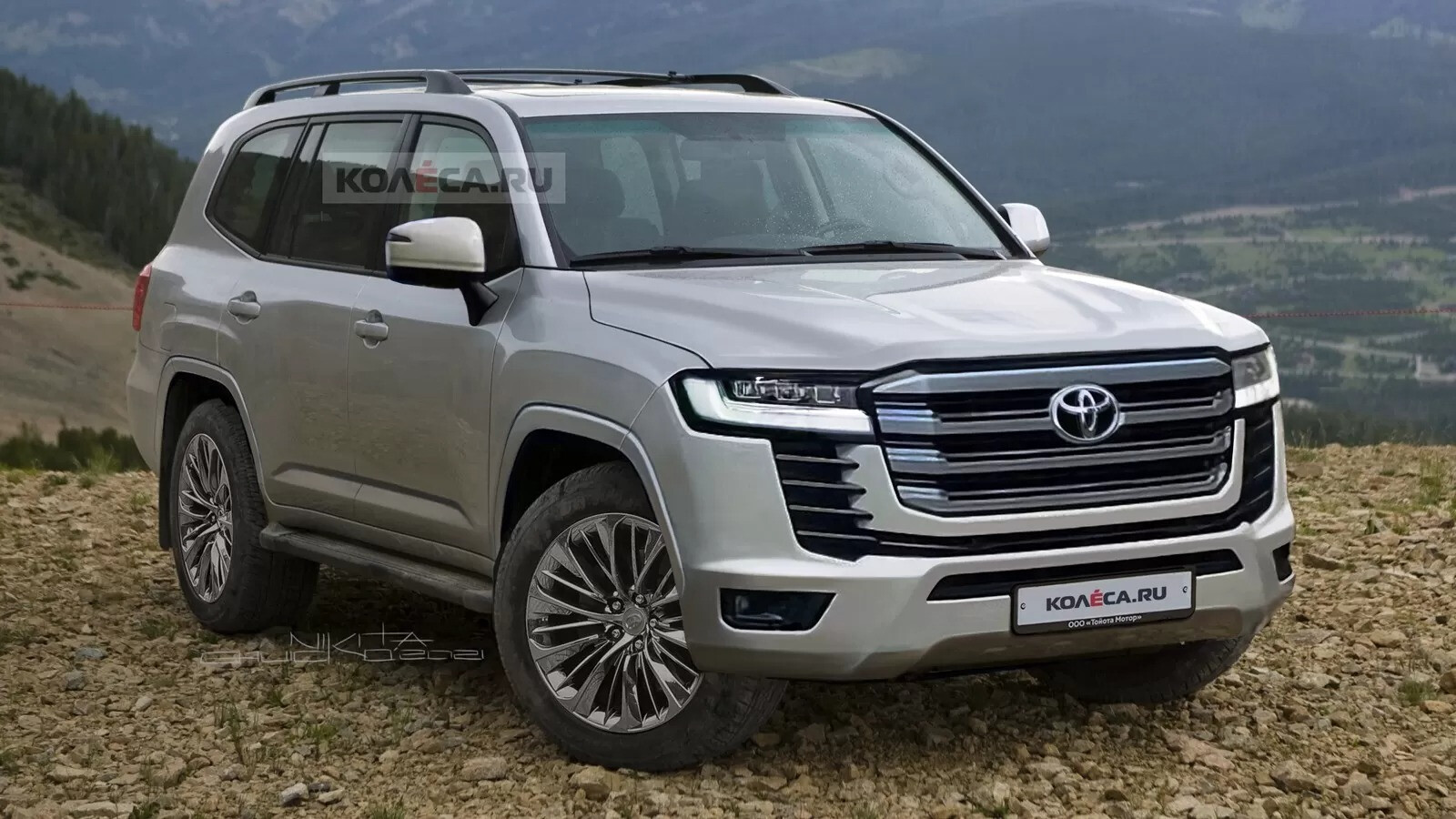
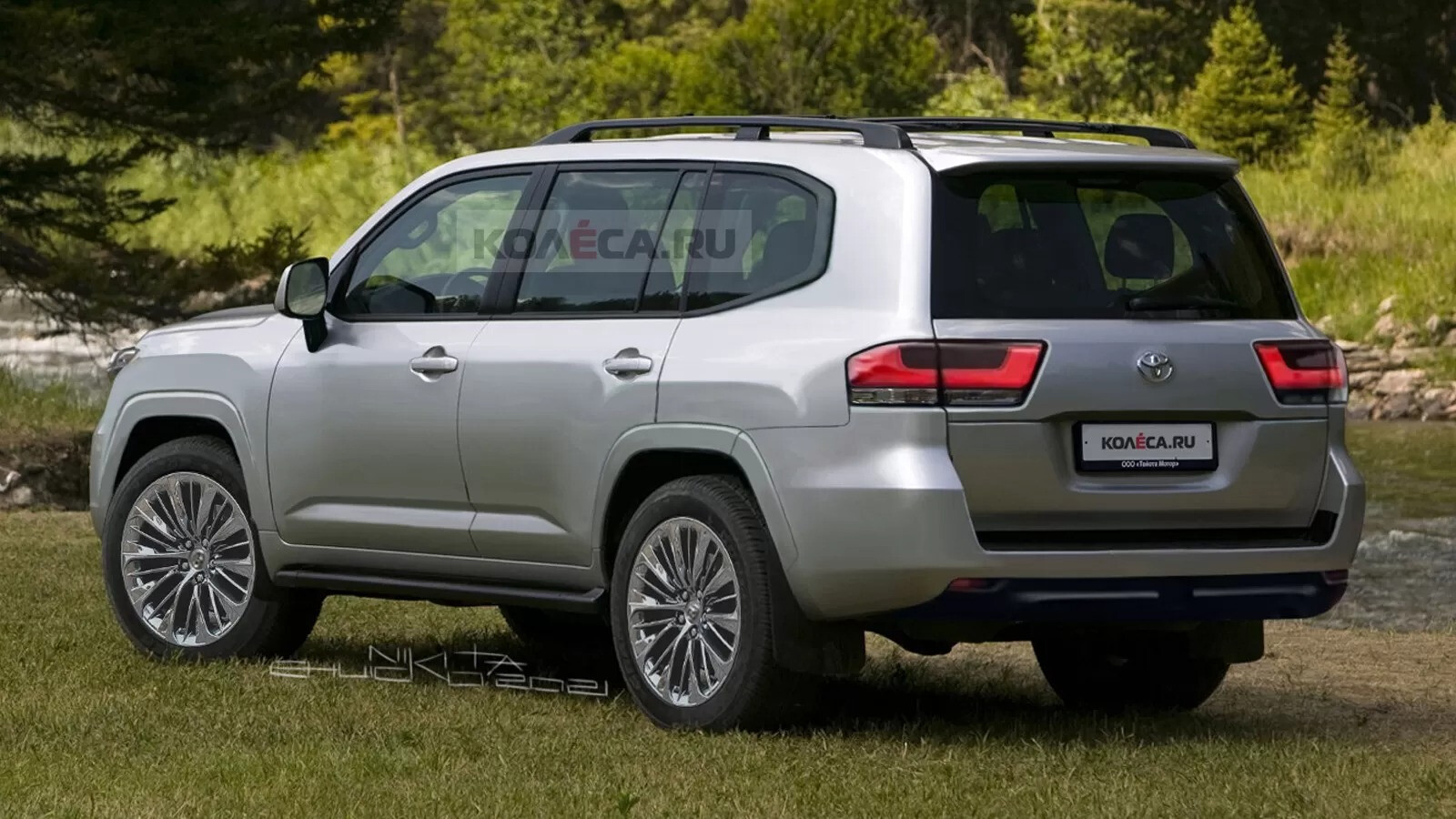
There has been plenty of leaked spy photos of the new LandCruiser, which many are already calling the 300 Series, and if you look closely at them, you’ll find something not seen on a LandCruiser since the demise of the 80 Series back in 1998.
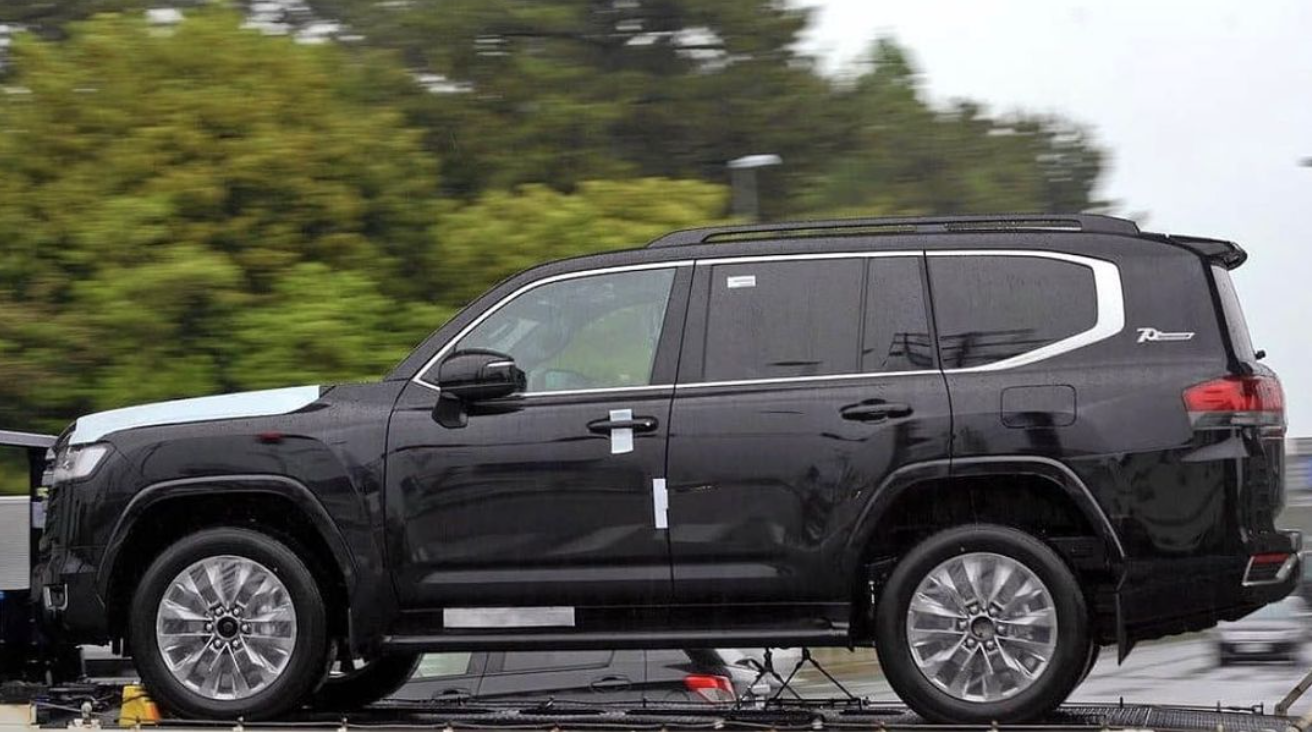
Zoom in on those big alloy wheels in the spy photos and you’ll see that the pre-production vehicles have six-lug wheels fitted. Toyota went to five-lug wheels on Land Cruisers with the introduction of the 100 Series in ’98.
The use of six-lug wheels indicates the possibility of heavier duty axles which would support a higher payload and towing capacity.
Across the Pond in the USA, keen American Toyota spotters have been encouraged by the sight of six-lug wheels on prototypes of the 2022 Tundra pick-up truck which have been seen out and about testing for more then a year now. They are claiming the new half-ton truck will have increased payload to better compete with the home-grown Ford F150, Chevrolet Silverado 1500 and Ram 1500 trucks.
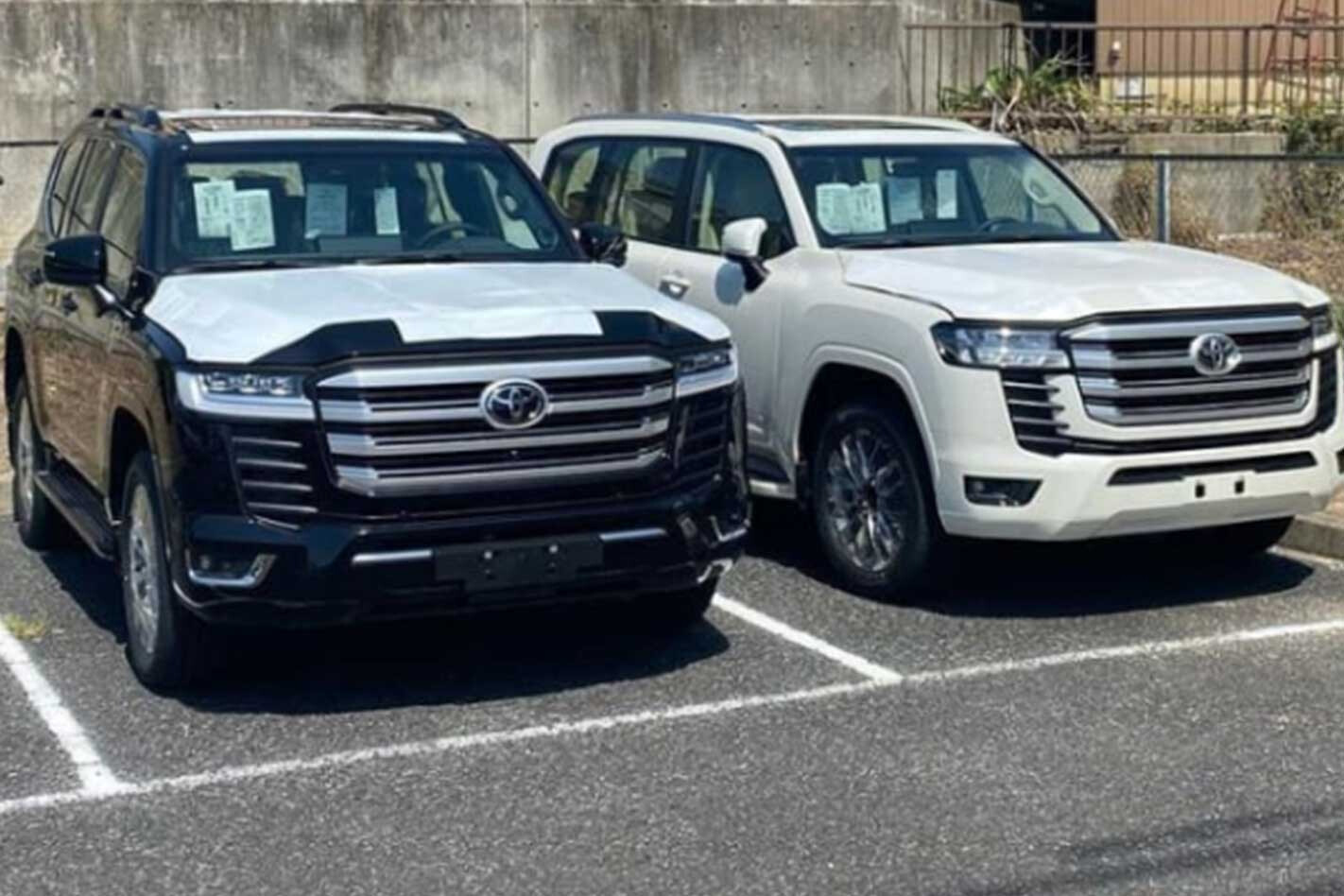
It has been predicted that the 2022 Tundra will share its new platform with the next LandCruiser, and further spy photos in the USA have revealed the new Tundra to have a coil-spring, Panhard rod-equipped live rear axle under the back. Previous Tundras have always had a leaf-spring rear suspension configuration, while this coil set-up is similar to that under the current LandCruiser, further cementing the link between the two upcoming vehicles.
Even though it is a large (by Australian standards) pick-up truck, the current Tundra only has a 735kg payload, so fans of the model in the USA would welcome any increase, just as Australians would welcome any payload increase on LandCruiser. The current Tundra has a 4.5-tonne towing capacity compared to the LC200’s 3500kg.
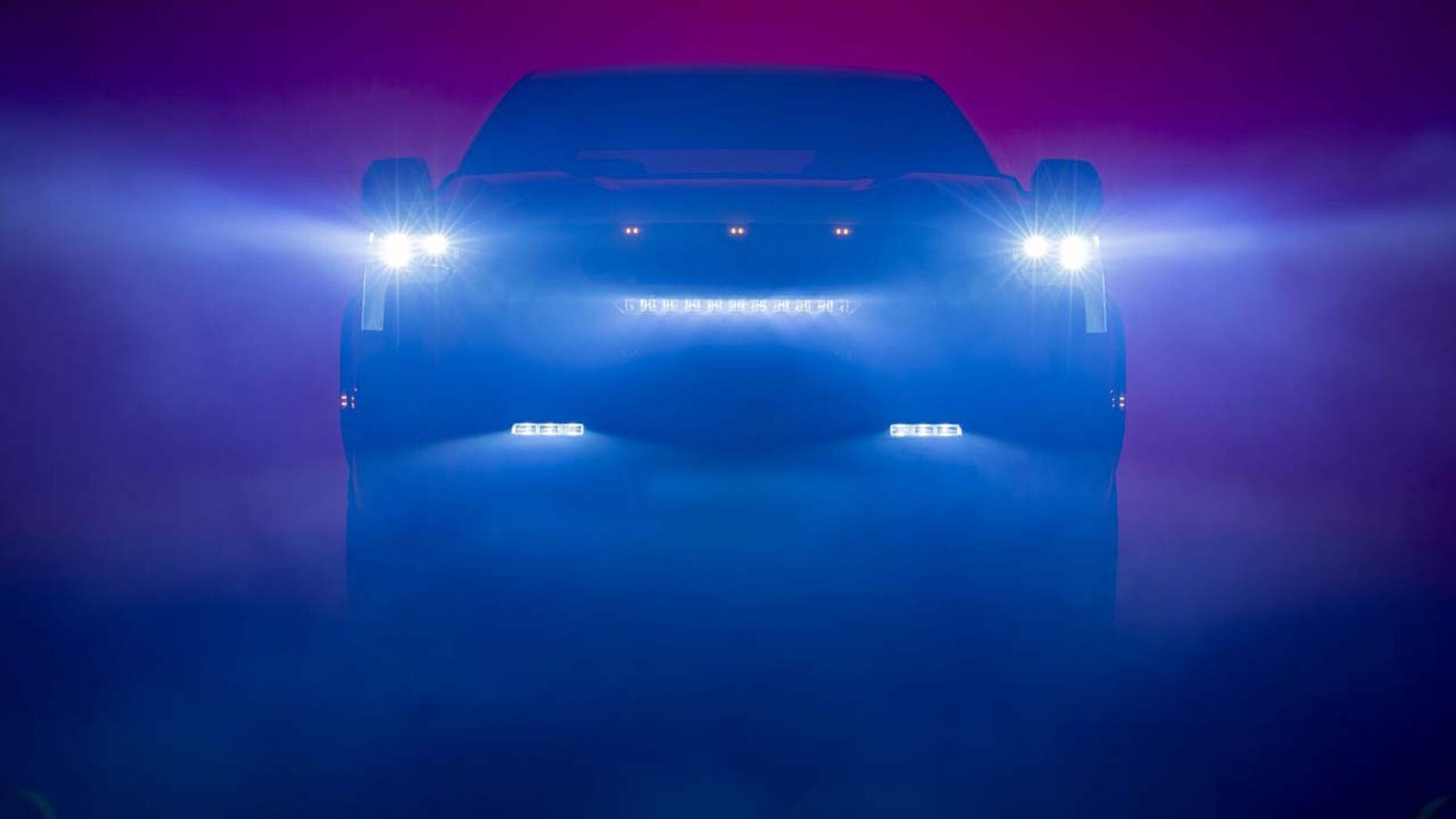
Toyota USA released a teaser image of the 2022 Tundra on May 18 hinting that a full reveal is not to far away. While it doesn’t reveal a lot, it does show a tall blocky front end with high-set slimline headlights, similar to that seen in the LandCruiser spy images.
With the shared ladder chassis platforms between 2022 Land Cruiser and Tundra, it again raises the question of whether we’ll see the full-size pick-up imported to Australia by the factory.
With the relative success of the factory-backed imports of Chevrolet and Ram pick-ups, both locally re-engineered to right hand drive by Walkinshaw Performance in Melbourne, it has been asked of TMCA if they plan to bring their own truck to our shores. Aside from confirming that the Australian arm is looking at a business case for Tundra, the company couldn’t say plans have gone any further.
“We’re definitely interested in a full-size pick-up… we see very much an expansion in that segment,” said Sean Hanley, Toyota Australia vice president of sales and marketing.
A new body-on -frame chassis for Tundra and Land Cruiser also poses the question of scalability. Could any such chassis find its way under the next Toyota Prado?
The current Toyota Prado mid-size wagon, the 150 Series has been on sale since 2009 so it’s almost as old as the Land Cruiser 200. But the 150 was really only a refresh of the 120 Series which first went on sale back in 2002, so it’s way overdue for a replacement and we are expecting one in the next year.
With the relatively limited number of Toyota vehicles built on a body-on-frame platform, it stands to reason that any new platform would be scalable to slip under a range of vehicles including the full Toyota 4×4 wagon and pick-up lines.
WE WERE closing in on the western side of the desert when spasmodic, light, misty rain started to fall. When we arrived at Dalhousie, South Australia, the weather was decidedly cool and overcast, and there were a few spits of rain.
That evening we arrived at the oasis of Mt Dare and were greeted by Graham and Sandra Scott, the owners and operators of this fine establishment. As we were one of the first across the desert for the 2021 season (after a very poor 2020 year because of you-know-what) and the only ones at the hotel at the time, we had plenty of time to chat and catch up on previous travels and to find out the latest gossip in the area.
But there was a word of warning amongst the gaiety with the knowledge that rain – heavy rain – was on its way. The next hour was spent poring over BOM weather maps on the satellite-fed internet and trying to judge when the rain would hit the lonely outpost.
“You’ll want to get out of here in the morning I reckon, otherwise you’ll be staying here for a week or more,” Graham advised.
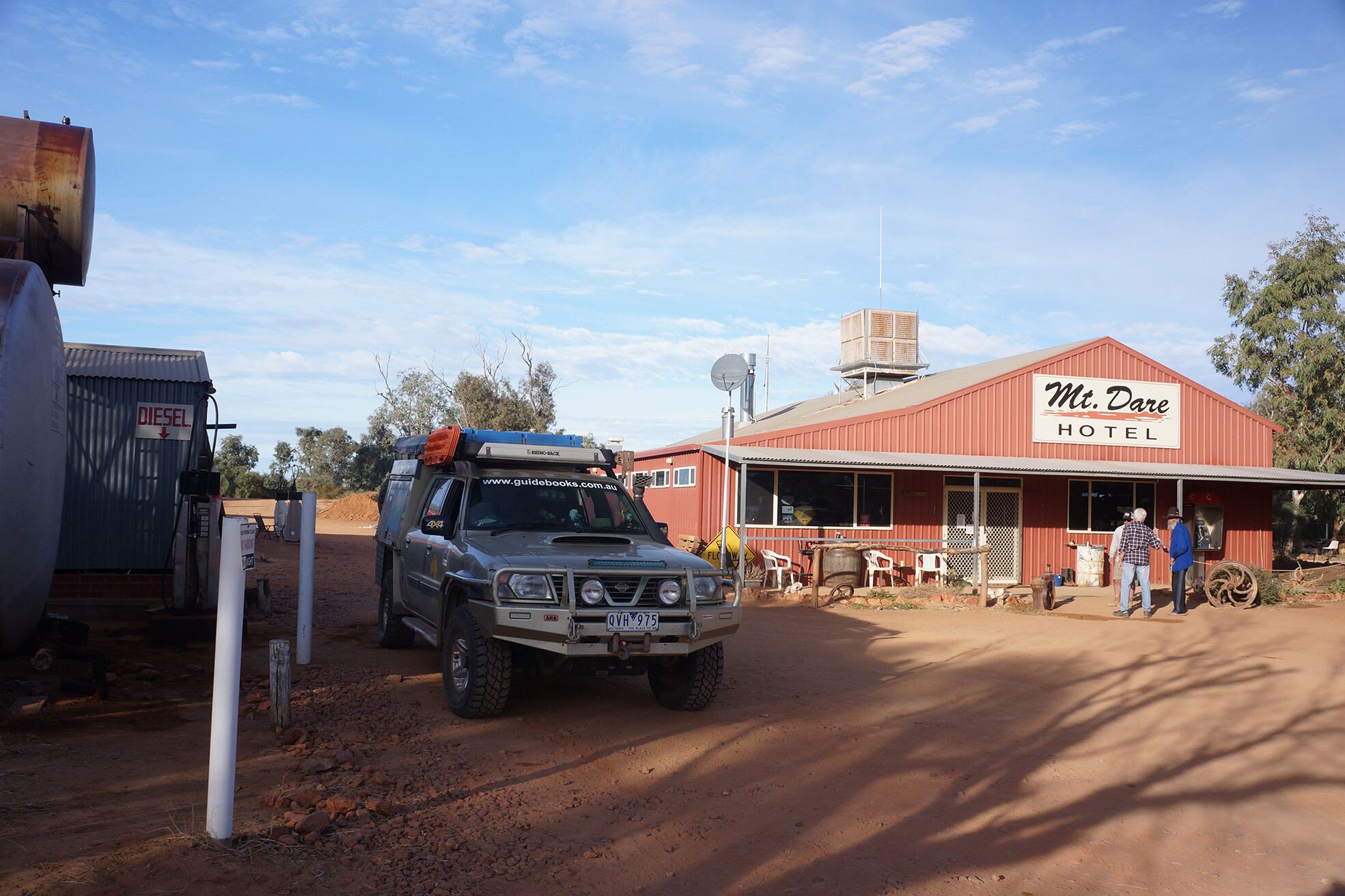
With those words of advice, all of us and our party of eight vehicles were packed, refuelled and on the road early, heading out over the flood levy banks at Mt Dare as a still misty rain – now near continuous – was falling.
We were the last of our group to head off, along with two others who had come to join us and Moon Tours at Mt Dare for a west-to-east crossing which, with the rain around, was not to be. The rest of that second group of adventurers we had advised to stop at Kulgera and we would join them there. How glad we made that decision – but there was a lot more drama as we headed to the planned meeting point.
By the time we got to the low lying country around the old telegraph station at Charlotte Waters, NT, water was pooling across the road and all over the pans and flood plains. Three of the last four vehicles were towing off-road trailers and in the slippery conditions we had them slithering and sliding all over the place, with some losing traction at times and needing a snatch to get moving again.
Even my rig, which was trailer-less but fitted with only fairly mild Cooper AT3 XLT tyres was finding it hard to gain traction, especially when trying to help someone else. When one vehicle slipped off the road it sank in the soft mud and somehow the hours flew by as we recovered it and others, using MaxTrax and even a winch on one occasion, as we struggled on.
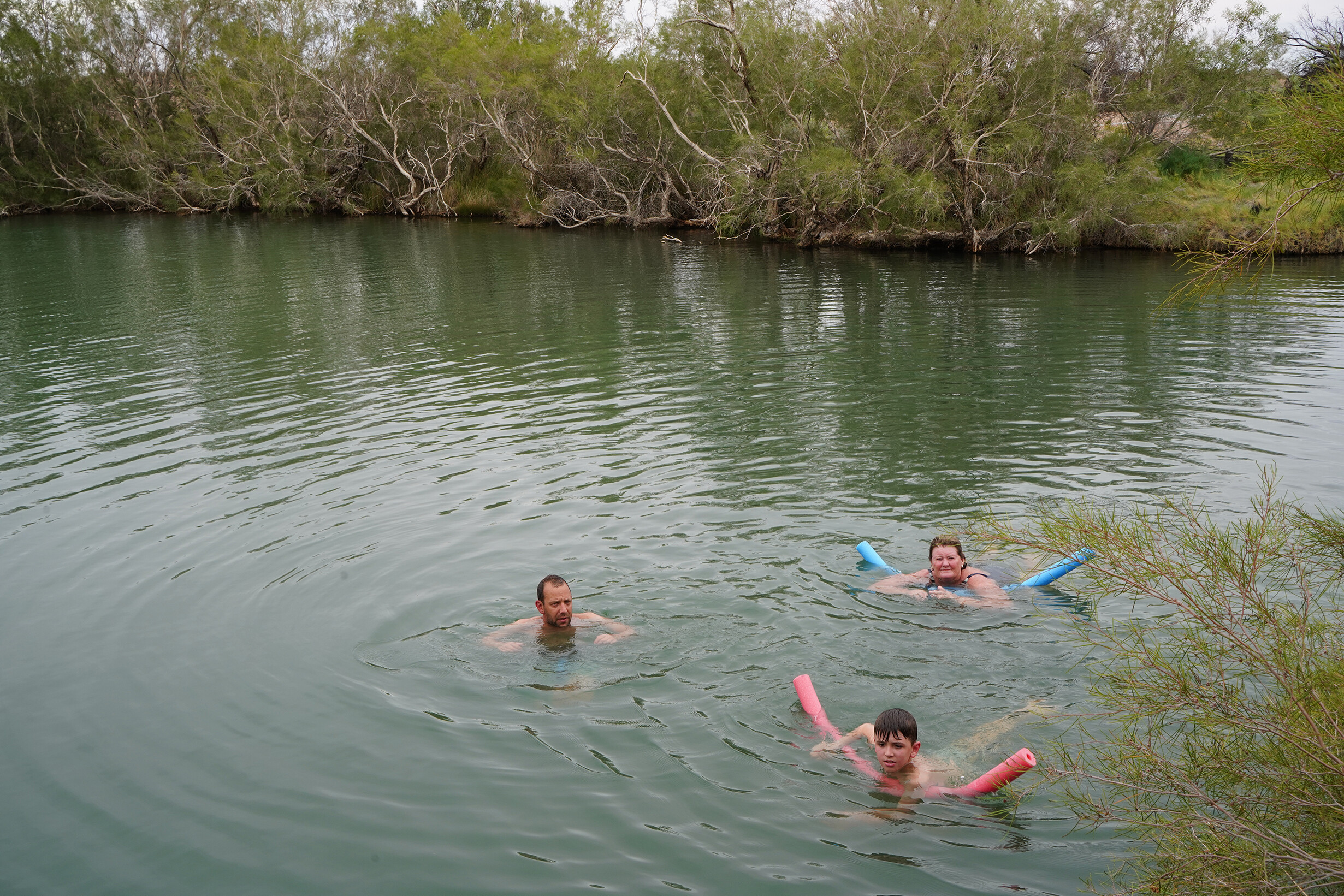
It was 5.30pm when we pulled up outside Finke (Aputula) to find the road still open, so with hardly a stop to phone home (it has Telstra mobile) we turned west for the 170km dash to the bitumen. By now the rain was steady and heavier and as darkness descended, we were coming on frequent long-flooded areas of the road which we splashed through and deeper sections where floodways were now running strongly but still relatively shallow, across the road.
It was near 9pm when we pulled into Kulgera after a 12-hour drive and a mere 270km from Mt Dare. Now, I’ve been to this tiny Stuart Highway hamlet more times than I care to recount but I gotta say, I’ve never been more pleased to get there!
Ten days later we travelled some of the same roads we had travelled on that ‘Escape from Mt Dare’ episode and I was pleased and relieved to find that there was no visible damage done by our escapade. But the road was badly scoured for hundreds of metres in places by running water, there were numerous erosion gullies across the road and down any slight rise or hill, with sloppy mud occasionally laying across the track in low-lying places.
Every vehicle – every one of the eight – needed brake-pad replacements at the end of this little jaunt, testifying to the abrasion level of outback mud!
THE current-model D-MAX is a ripper of a ute, but there’s one thing I absolutely dislike about it: they ride like crap when unladen – to be blunt – and the stock suspension was never going to last long.
After a chat with Simon Vella and the team at Tough Dog Suspension, a plan was devised and a date locked in to fix my main gripe with the vehicle and gain some extra ground clearance in the process.
Simon explained that the reason the rear-end rides so rough is due to the three-leaf pack design. While a tapered or progressive leaf pack is usually a good thing, this one is essentially riding on the secondary spring at all times. This causes the rear to jolt on bumps instead of gradually firming up.
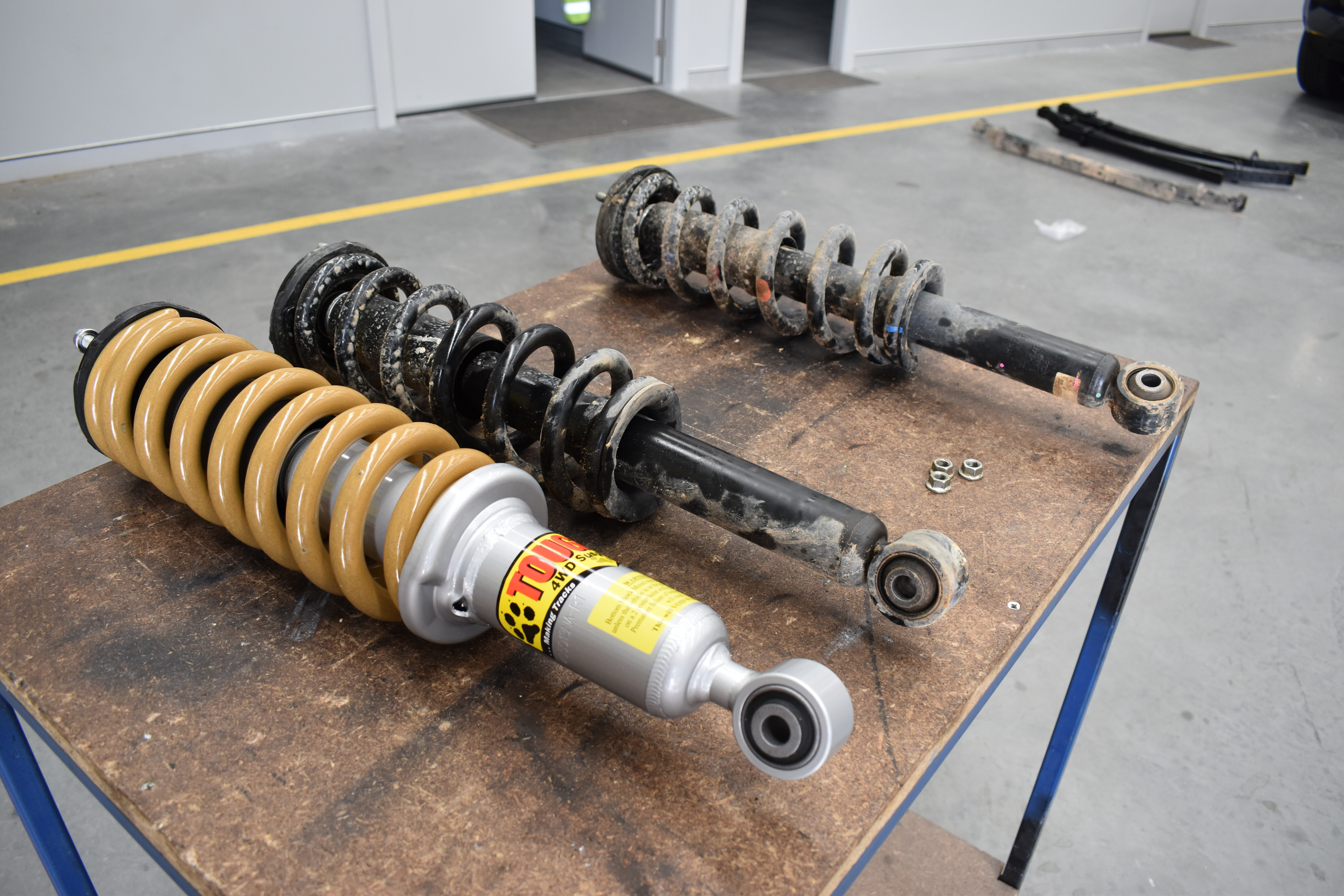
The solution for us was a more linear Tough Dog comfort leaf spring matched with its shock absorbers in the rear. A package that has been designed to carry a load between 0 and 300kg, while gaining 40mm in altitude.
This should be ample for our needs, but as we are adding a fair bit of weight to the tray in the upcoming months (stay tuned for that) we can revisit it later if required. New front struts and coil springs were also installed, which helped bring the front-end up after fitting the Ironman 4×4 bullbar and winch.
Simon and Peter from Tough Dog, who handled the installation for me, are absolute gurus that took the time to educate me on everything suspension. We started the day by weighing the vehicle on scales, to accurately determine how much weight we have added after fitting the steel bullbar and winch. This helped determine the correct spring rates front and rear, and the results are outstanding. Not only did we get our 40mm lift, but the ute rides and handles so much better now. No more jolting on bumps, and no more wallowing around corners.
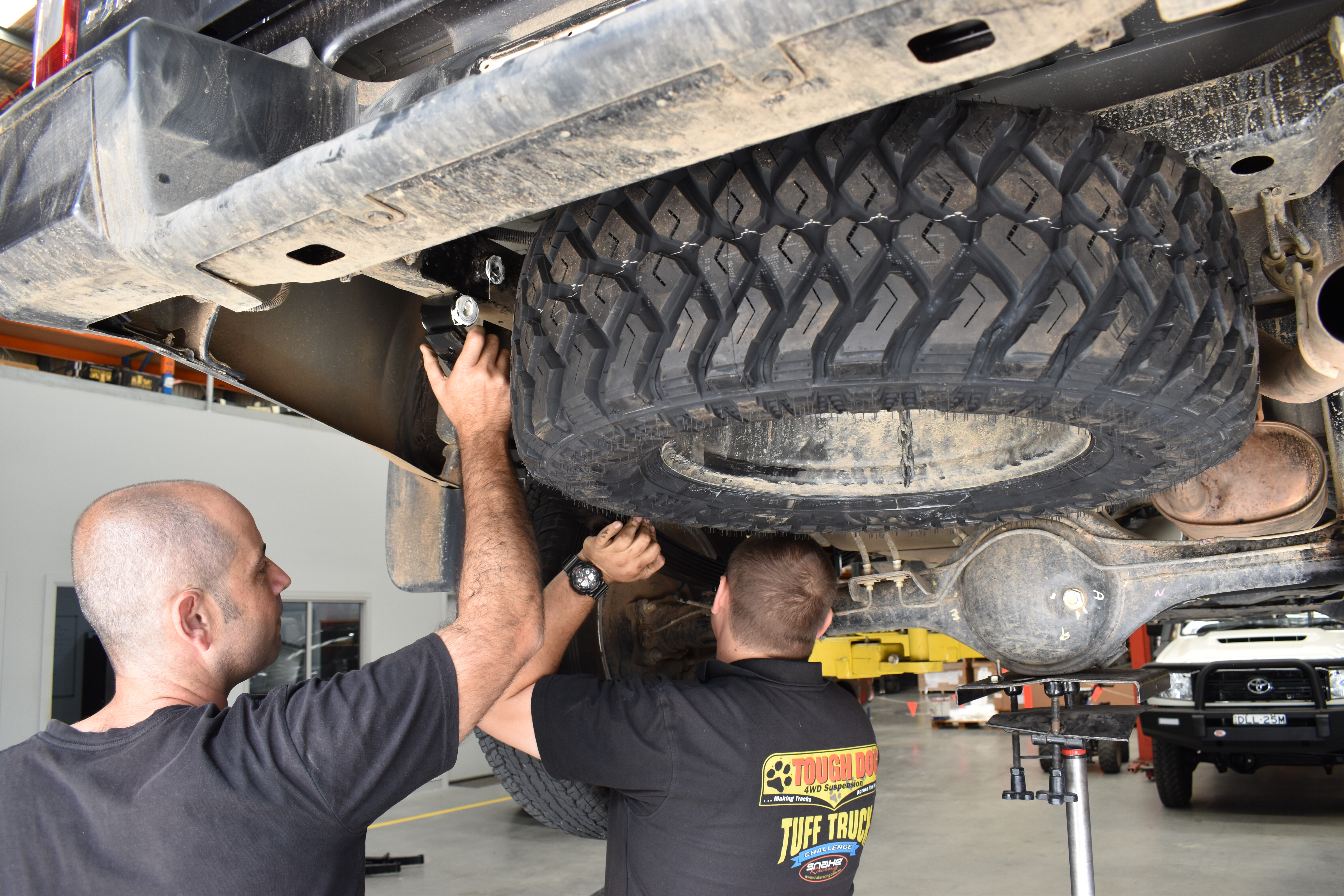
The installation was handled by the people who designed the suspension, so as expected it all went smoothly. The team started at the front, and had me rolling by lunch time. So far there are no negatives to report. No weird vibrations, no handling issues thanks to a proper wheel alignment (always have a wheel alignment done after playing with suspension) and it’s all fully legal for road use.
With a few key modifications, Project D-MAX now looks and drives like a proper 4×4. Watch this space for our next update, as we keep transforming this previously stock tradie-spec ute, into a touring machine.
Oh, you might have also noticed we’ve added some new wheels and tyres to Project D-MAX. We wanted them on to get a proper wheel alignment, which the Tough Dog team handled for me in-house. And we all know stock tyres look wrong after installing a suspension lift. You’ll have to check back soon as we reveal the details.
THE owner of this well-kitted-out Mazda BT-50, Jake Lawrence, is a self-confessed poker nut. He loves nothing more than a game of cards with mates, going camping and four-wheel driving. Jake likes doing things a bit differently you see, and he wanted to stand out from the crowd. He’s also never modified a four-wheel drive before now though; told you he was a gambling man.
Jake works in car sales, so is tempted on a daily basis to buy a new vehicle. Once he laid eyes on a BT-50 though, he thought bugger it … let’s buy one and build it up as a unique project.
“It’s something different to most other cars out there,” Jake tells us. “There really aren’t too many like it, or that get driven as much and as hard as mine does.”
“Although it’s set up to do tough tracks, it is also my daily driver and a reliable one at that – it hasn’t let me down. These BT-50s aren’t that common in the highly modified 4×4 scene, so I like that mine is unique and I doubt someone will ever make something the same.”
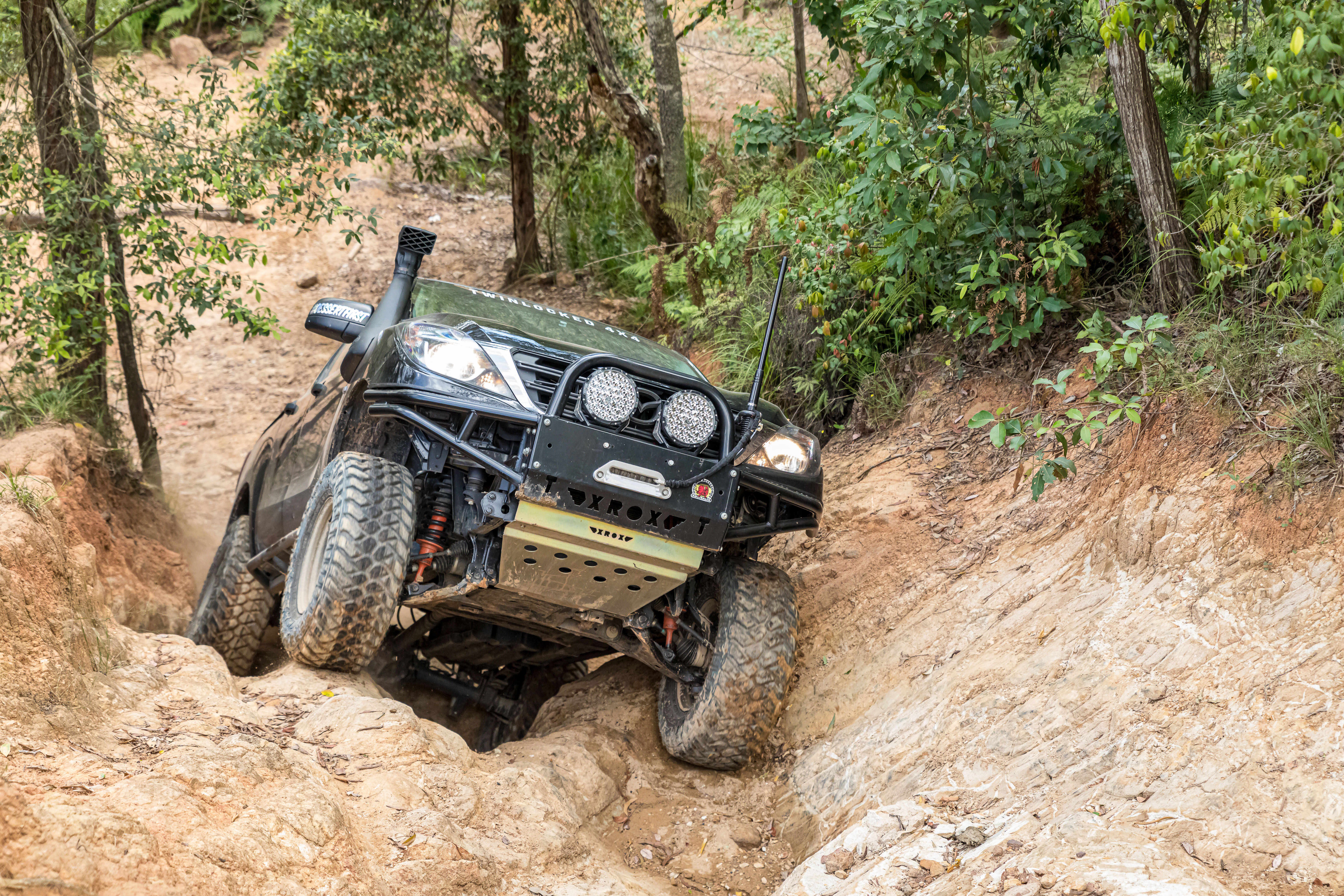
Talking about unique, Jake’s BT-50 is riding high thanks to a 4-inch lift. This is made up of a 2-inch Superior Engineering body lift, and 2-inch Outback Armour struts and coils in the front and Superior Engineering shock absorbers in the rear with Outback Armour leaf springs.
“Originally the modification list for the vehicle was short; pretty much a small suspension lift, 31-inch tyres, tub rack and rooftop tent,” Jake says with a familiar grin. “Once I did all that, I was well-addicted to wheeling and camping, and my car was smaller and not as capable as my mates. It was about April 2020 the modification bug bit and I decided I was going to take it up to the next level, fit a front locker and put a body lift in so I could fit the bigger tyres.”
Speaking of being twin-locked, Jake’s BT-50 came with a factory rear locker, so he had ARB install an air locker in the front taking away any traction limitations in wild terrain. With the 4-inch lift, there is enough space for a set of chunky 305x70r17 Maxxis RAZR mud-terrain tyres, which Jake is wrapped with performance wise. These have been mounted on a set of 17×9 King steel wheels, in a 0 offset.
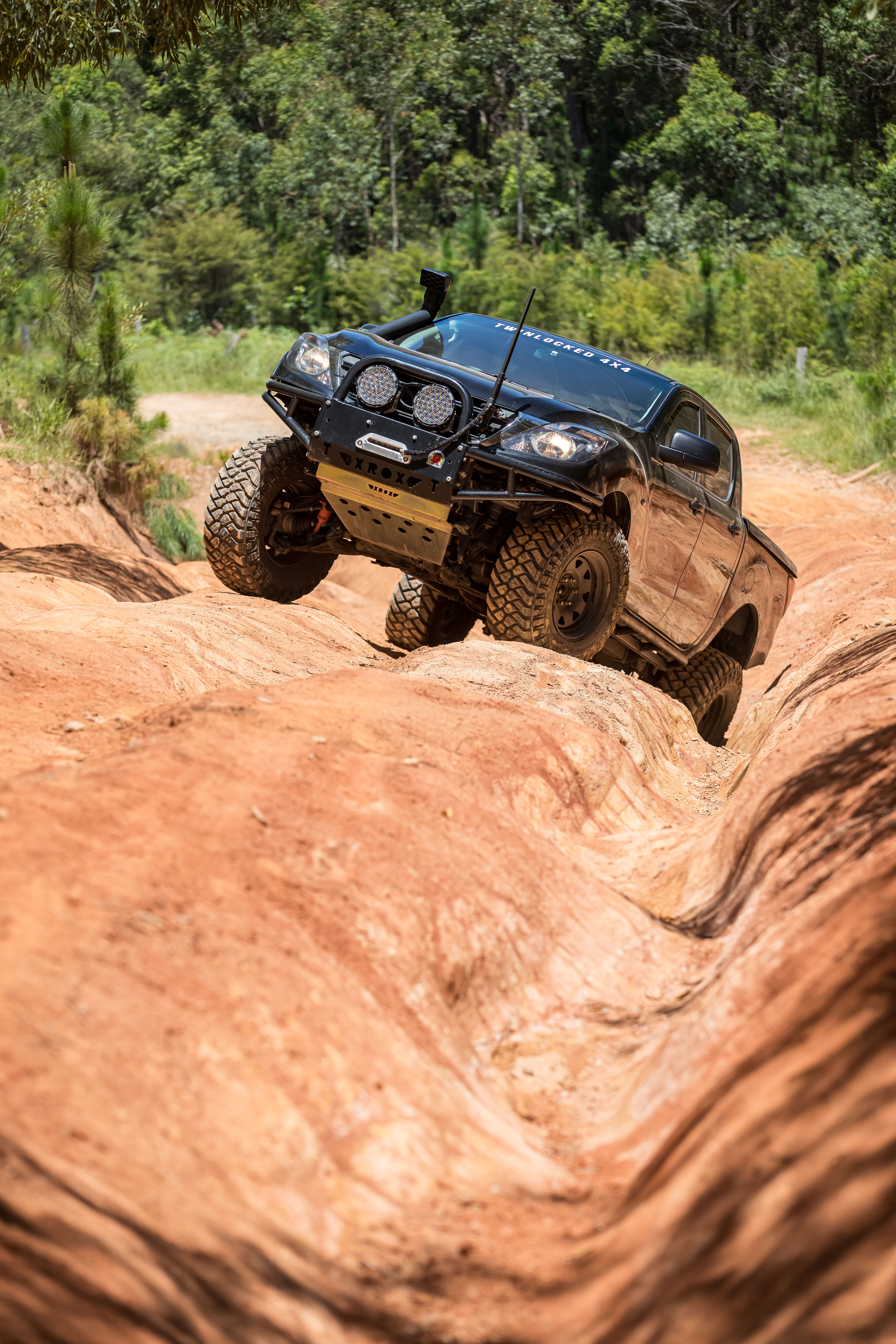
“When the warranty runs out, Jake would like to swap in a BMW M57 motor”
One area Jake has left stock, bar a K&N air filter and Safari snorkel, is the engine. It seems Jake has played the power-up game with vehicles in the past, and has a history of putting pistons through engine blocks. Once the warranty runs out though, it’s game on.
Inside the BT-50, Jake has kept things practical by installing an Alpine 7-inch head unit, a Uniden UHF radio for communications and an Ultimate 9 throttle controller to help get the Mazda moving off the line quicker. But he rates it for off-road use too, being able to dull down throttle response in technical terrain.
On the exterior of Jake’s ute, things definitely get a bit wilder. Starting at the front, Jake opted for an Xrox bullbar, as it could be made to suit the body lift and is winch compatible. The bar also came with a neat bash plate, which provides protection for vitals such as the radiator. Mounted to the tube front bar, Jake has selected a pair of Stedi Type X Pro spotlights. To get the party started when on the tracks or at camp, he also wired up a suite of Stedi RGB rock lights.
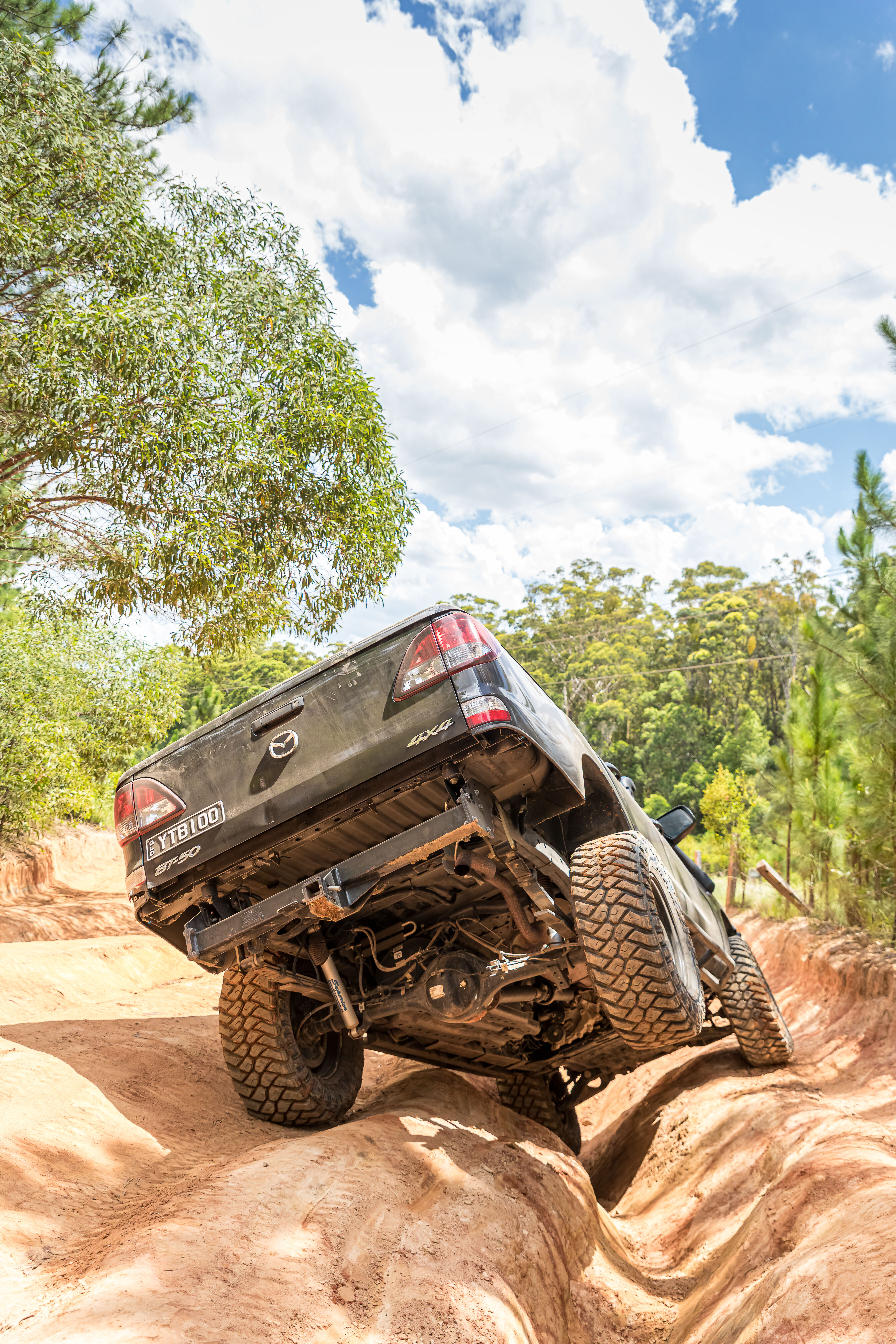
If you look closely at the rear end of Jake’s 4×4, you’ll notice a fair bit of space between the tailgate and the ground. This is because he has done a tub chop, providing a decent increase in departure angle. So much so, that he had to screw the numberplate directly to the tailgate as it wouldn’t fit anywhere else.
I reckon you’ll be seeing more and more dual cabs with this mod in the future. To protect the sills of the vehicle off road, Jake also bolted on a set of rock sliders from JTW. These were fabricated to suit the body lift also, so there’s no awkward gap between the sliders and sills.
Even though this is Jake’s first 4×4 build, it’s clear to see how hard the bug has bitten.
“At first, I just bought a 4×4 to tow my jetski and I simply just needed a new car,” Jake mentions. “It has very quickly turned into a lifestyle for me though, and I have made so many friends through owning a 4WD. It’s incredible. The community is so happy to help each other. The friends I’ve made through meeting people over Instagram, and the trips I’ve planned and done with complete strangers who are just happy to go wheeling and have some fun out on the tracks is why I will always have a 4×4 now.”
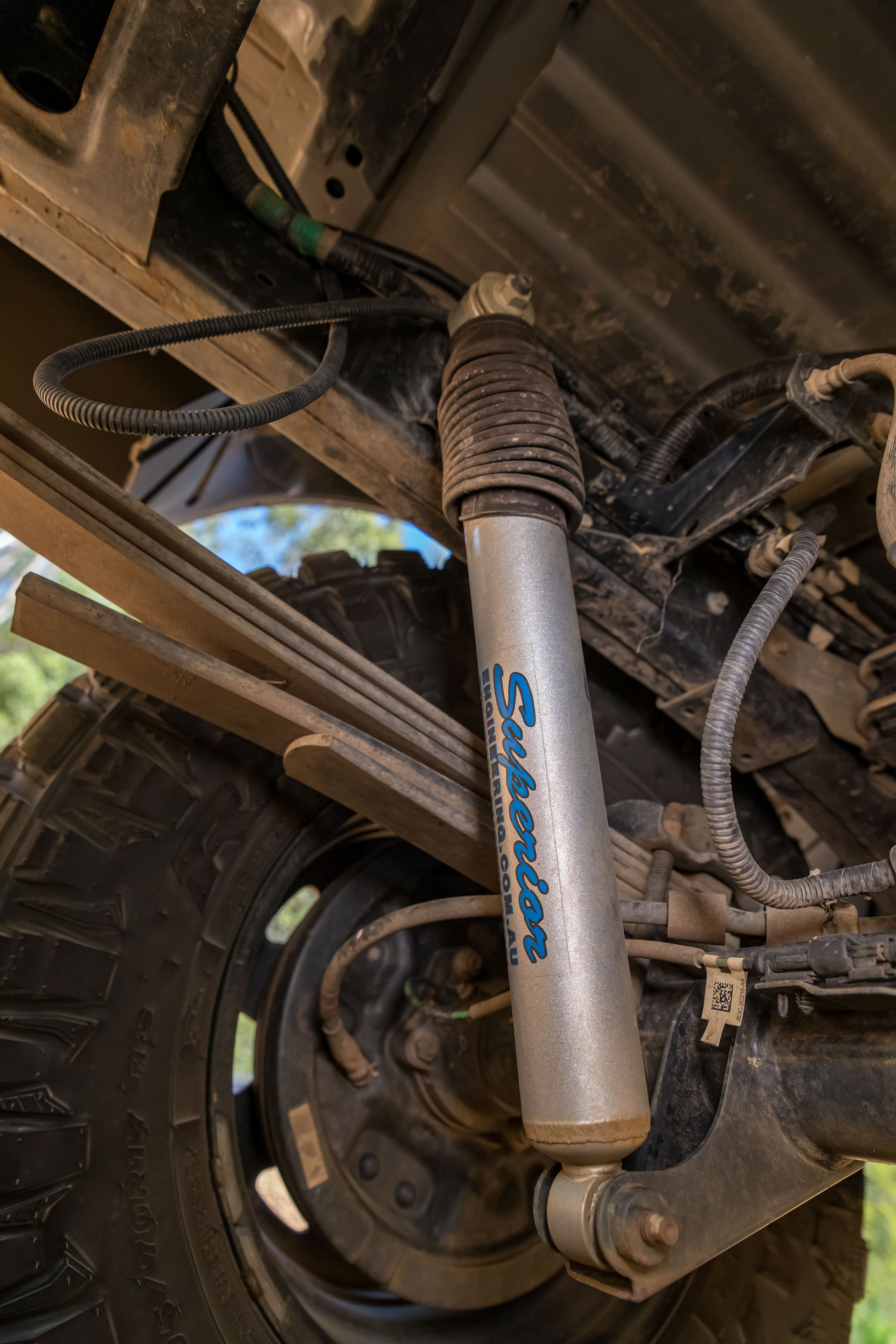
Jake estimates the entire build has set him back $55,000, which is a bargain considering what he’s achieved. He does have some regrets, saying he had to do a few things twice, but you have to make mistakes to learn at the end of the day. The build also took roughly eight months to get it to the stage it is today, which is a very reasonable amount of time.
So, while Jake has done an admirable job of building this BT-50, we all know these vehicles are truly never really done. Jake’s future wish list is a long one, with plans to undertake a solid axle swap. He’s eyeing off a set of 35-inch Maxxis Trepadors as well, which would make for a wild combination.
But wait – there’s more, with Jake saying when the warranty runs out, he’d like to swap in a BMW M57 motor. I’ll say it again, Jake’s a gambler. And we like that about him.
HEAD on over to the 4X4 Australia Facebook page and send us a photo of your 4×4. You could win a Wurth under-bonnet LED valued at $249.
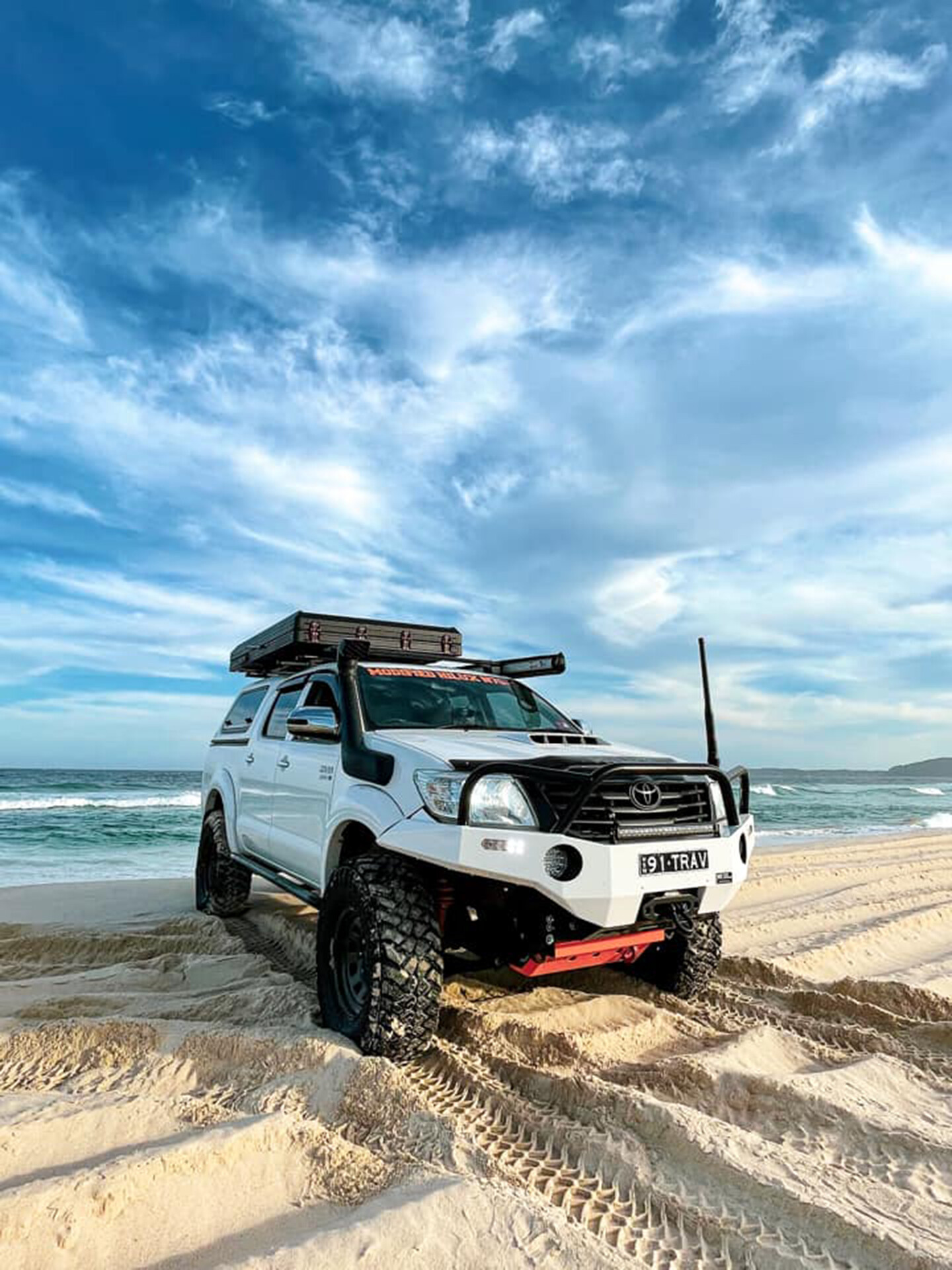
2011 SR5 HILUX
I bought it completely stock, and I’ve added a lot of mods: SEQ muzz bar; 33-inch tyres; 3-inch lift, diff drop and UCAs; LED light bars; long-range fuel tank; Bush Company Alpha RTT; full canopy setup including fridge/freezer, drawer system and drop slide; 12V setup; Phat Bars bash plates and rock sliders; diff breathers; EGT and boost gauges; and a diesel pre-filter and catch can. It has taken us to some amazing places around Australia including Cape York. Next month we will visit the Eyre Peninsula in SA, and the NT -Travis Keuneman
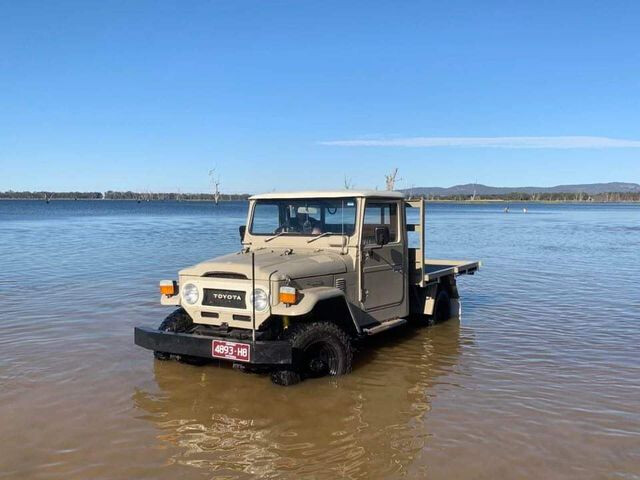
1979 TOYOTA LANDCRUISER FJ45
It’s fully restored with all steel panels, and the original 2F motor. It has been my dream to own one since I was a young kid. I finally got one and did all the work myself -Aaron Edmondon
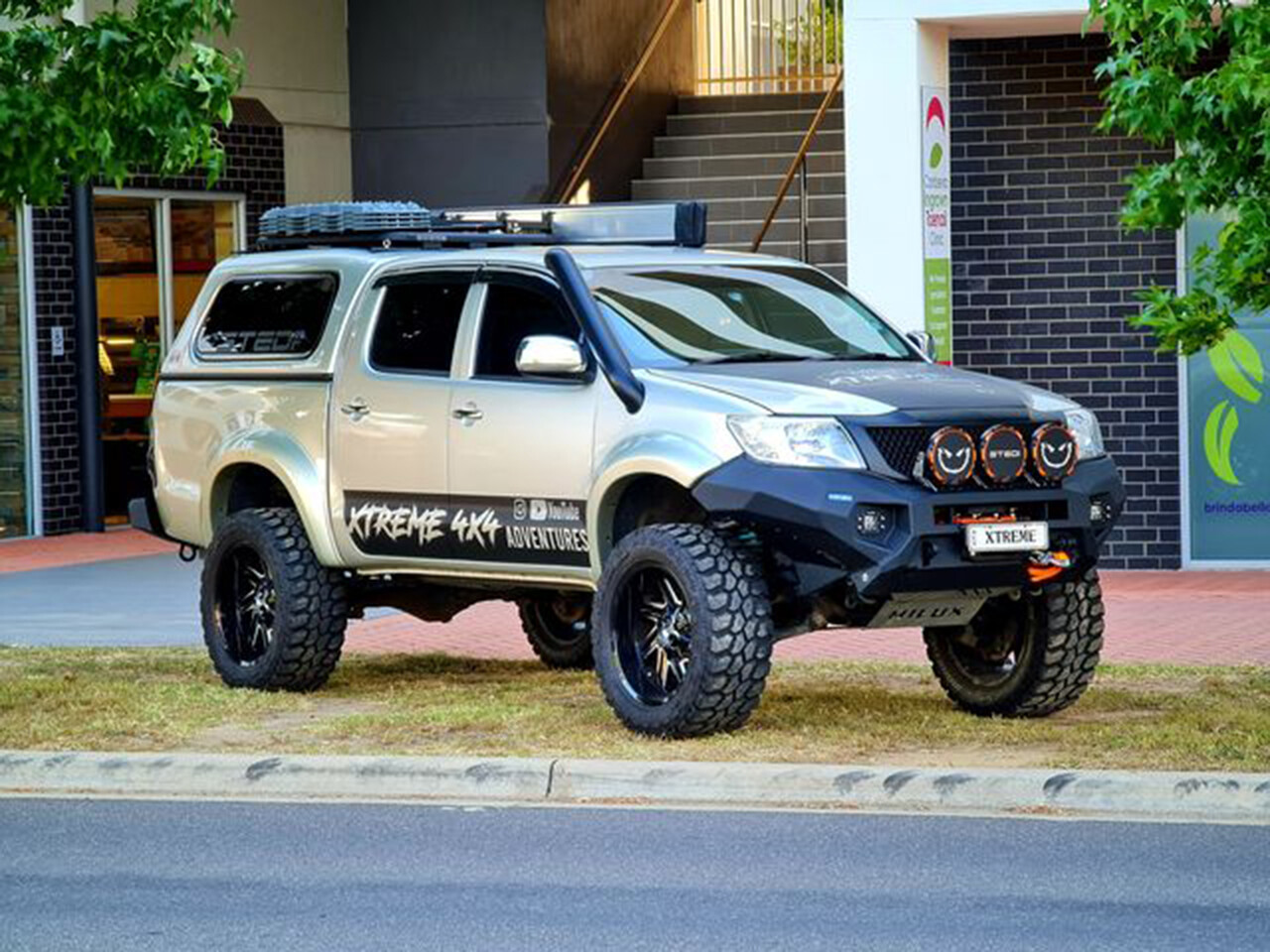
TOYOTA HILUX
It has had a full 2015 facelift, with aftermarket grille, and LED headlights with LED switchback indicators. A long list of aftermarket gear includes a Rival bullbar with 14,500lb winch; Stedi Type-X Pros; Bilstein 4in adjustable lift (front); extended upper control arms and ball joints; rear Enduro Pro remote-res shocks and lifted leafs at 4in; and a Rival bar (rear).
The canopy has 2900mm drawers and full custom-built side panels and wings, with AGM battery; Enerdrive DC2DC 40amp charging system; 1200W inverter; Projecta battery management system; GME XRS UHF; MSA drop slide; and an ARB 60L Zero fridge. The custom Boss Air suspension consists of fully remote-controlled airbags in the rear, with a 19L air tank that has a separate line for the ARB air system for inflating tyres, etc.
The high-output twin ARB air-compressor is hard-mounted. Other gear includes 20in Hussla Toxic rims with Extreme M/Ts; a custom-mounted roof tray with a Darche 270 awning; solar panels; two sets of TREDs; and GME antenna on a swivel mount. Twin air lockers are about to be installed, and a Raptor Stage 2 supercharger with front-mount intercooler is being built as we speak. Plus, a new canopy has just been ordered from 4D Engineering -Dion Kirkland
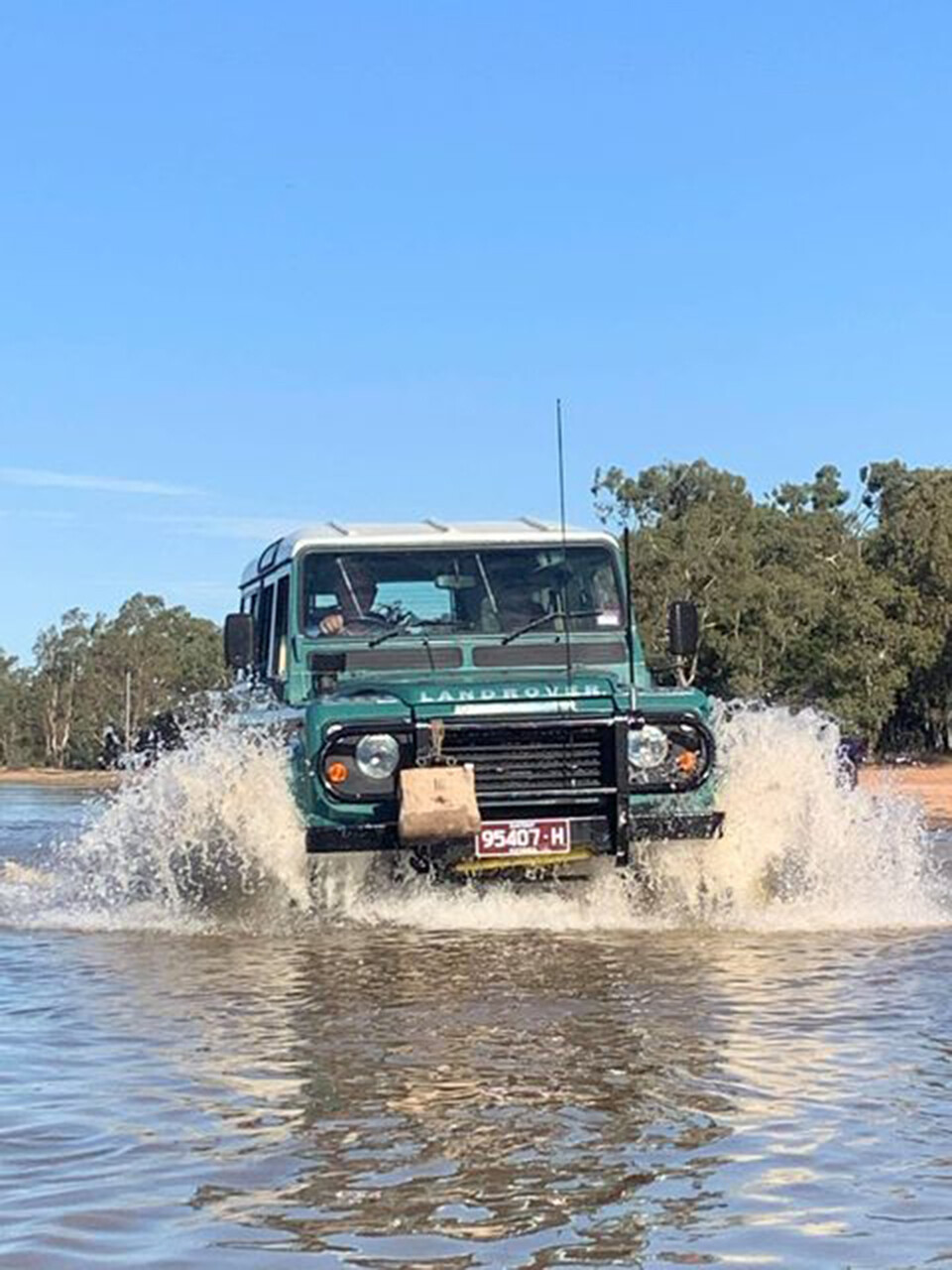
1985 LAND ROVER DEFENDER
Registered as a nine-seater, it runs a 5.7-litre V8 diesel. It has diff breathers, full Monroe Wylie coil and shock suspension, a five-speed Santana gearbox, custom half-snorkel, UHF CB radio and a diff lock -Tony Taylor
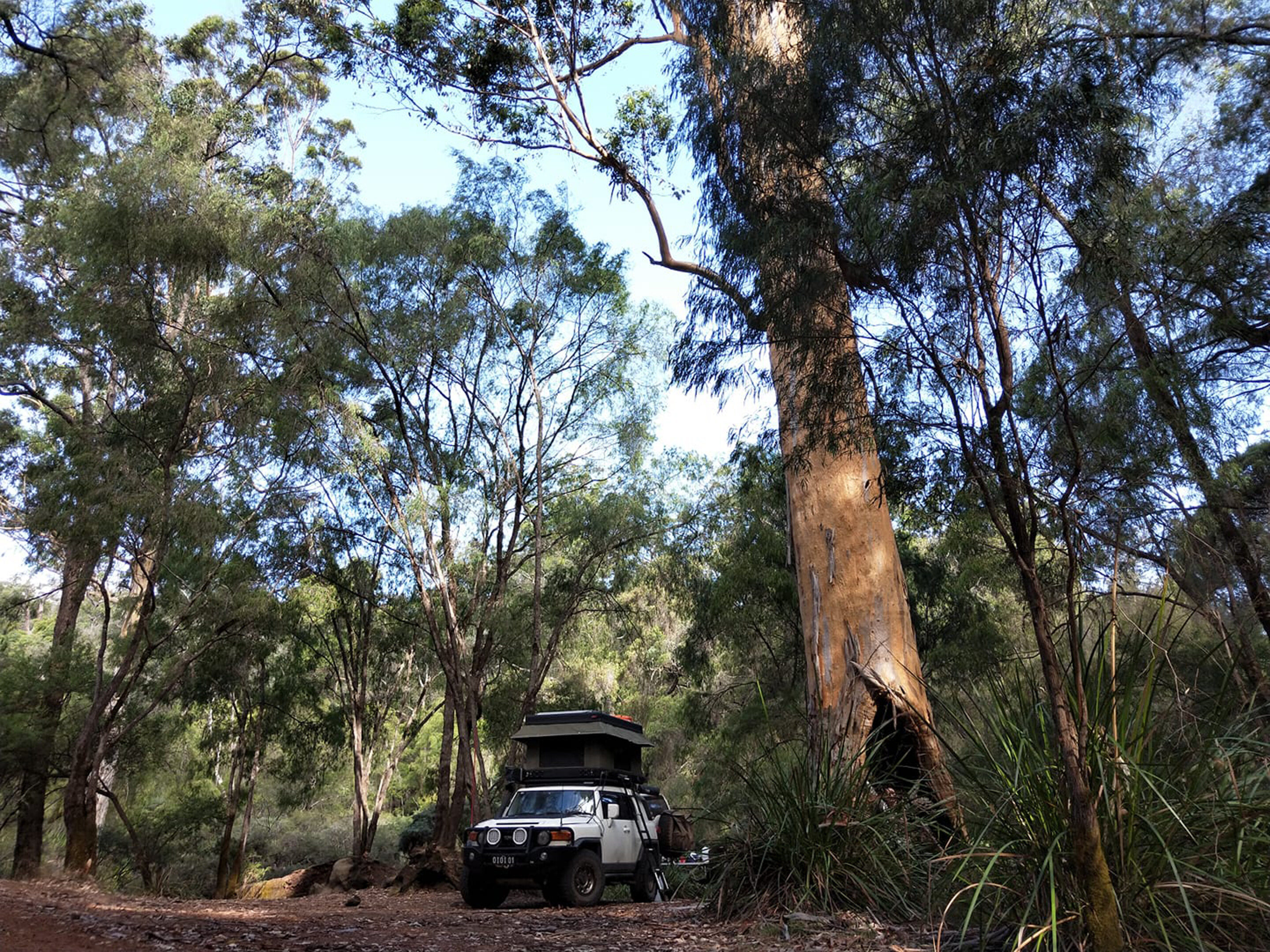
2013 FJ CRUISER
It has 33-inch KO2s; a two-inch TJM lift; a TJM bar with Runva 11000XP winch and TJM snorkel; 120W bonnet-mounted solar panel powering a 100amp/h LIPO aux battery; Bundutec RTT; 30-second 270 awning; KickAss shower tent with Glind hot water; 45-litre water tank; custom pull-out kitchen/stove/sink and workspace in the back; 48-litre Isotherm upright fridge; and a Travel Buddy oven that’s worth its weight in gold! Great setup; very happy with it -Ben ‘Matt’ Doorn
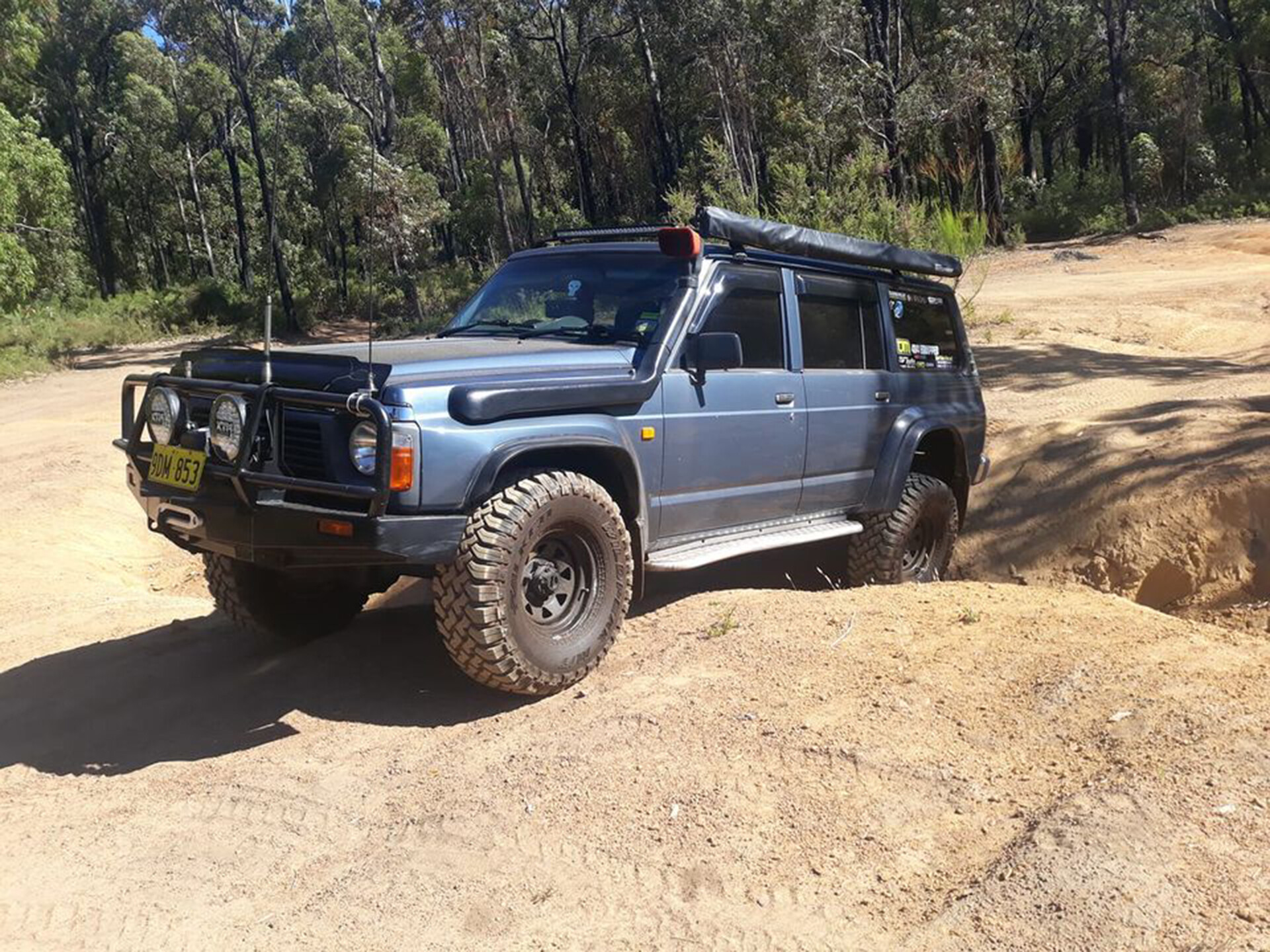
NISSAN PATROL
Equipped with an RB30 EFI, with everything new or rebuilt under the bonnet. Other kit includes heavy-duty clutch; 2.5-inch exhaust extractors; 3-inch Dobinson lift; 33/12.5/15 Falken Wildpeak MTs; ARB front bar; Domin8r Xtreme winch; Kings light bar; Rhino-Rack awning; and roof bars. There’s probably more I’ve forgotten. I’ve had it near-on 10 years and probably 5km on new motor. It’s still not finished, though -Nathan White
When I was growing up dazed and confused in 1980s Australian suburbia, cultural binarism engulfed us like a plume of hairspray on a poodle perm.
Labor or Liberal, male or female, Coke or Pepsi, Summer Bay or Ramsay Street… there was no middle ground and tough titties if you didn’t fit in. Or, worse still, refused to.
Such black-and-white thinking even applied to the family transport tucked away behind the B&D roller door. Local or imported. Holden or Ford. Cars or 4WDs.
Except for Subarus, the latter were universally ladder-frame off-roaders with names like LandCruiser, Patrol and Pajero, but began splintering off into cheaper pick-up-derived wagons during the decade, led by the HiLux-based 4Runner. Then somebody created a car that looked like a 4WD, the world went crazy for SUVs and here we are today. Choice, glorious choice.
Evolution is the enemy of binary thinking.
Yet, like the primordial reptiles of 300 million years ago, body-on-frame 4WDs survive. Strike that. They thrive, going forth where SUVs can’t tread, as off-road adventurers and holidaymakers alike snap ’em up. Demand for many far outstrips supply.
Australia’s favourite has long worn Prado badges, but now nudging $90K in Kardashian Kakadu guise, they’re getting a bit rich for many working-class Aussies. More like Toyota Prada!
This is where the smaller, cheaper Fortuner steps in. A latter-day 4Runner (which evolved into a larger and more sophisticated Prado-based 4WD for the USA decades ago), it was designed mainly for South East Asia and rides on the same, ageing low-cost ‘Innovative Multi-purpose Vehicle’ chassis as the last two HiLux generations.
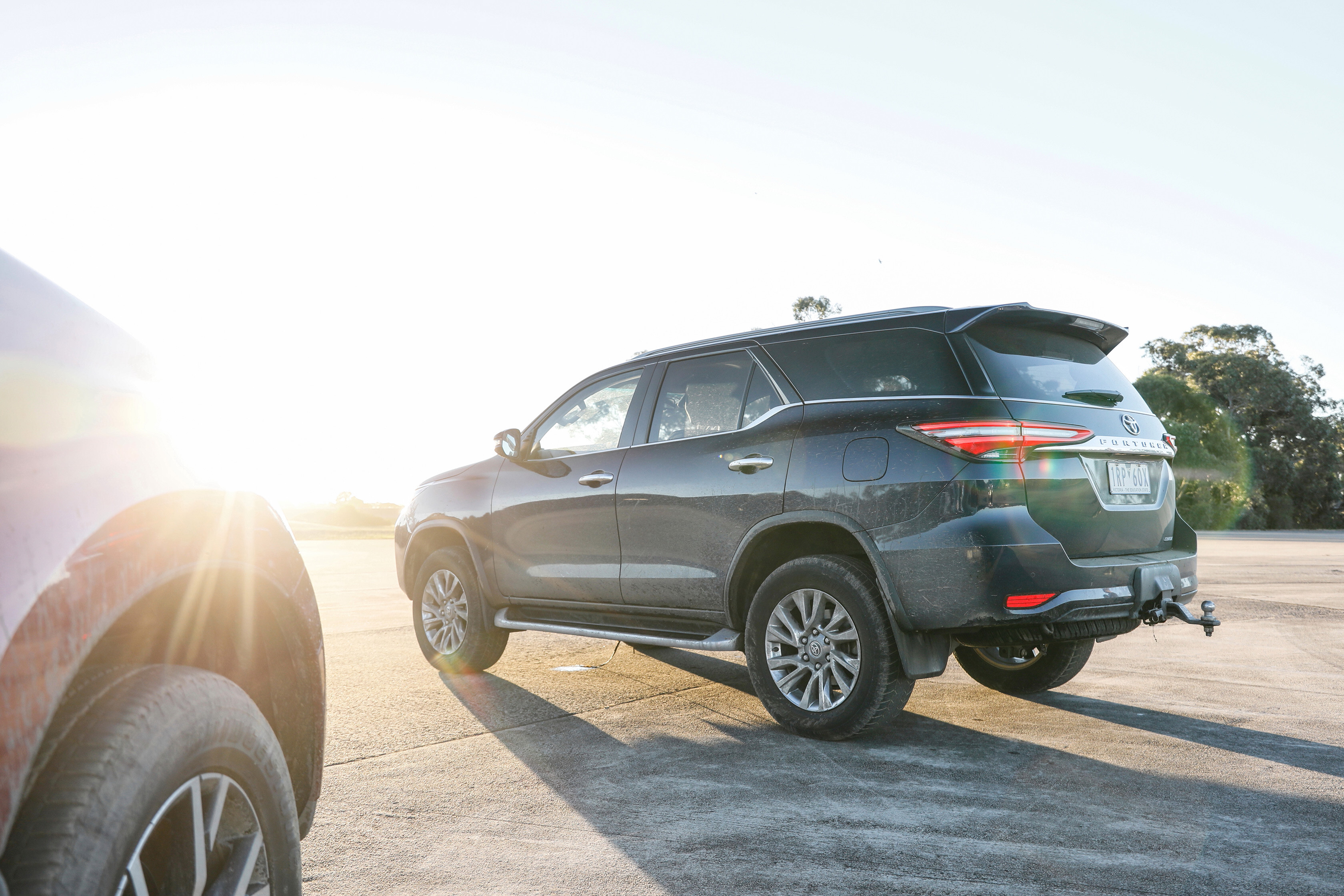
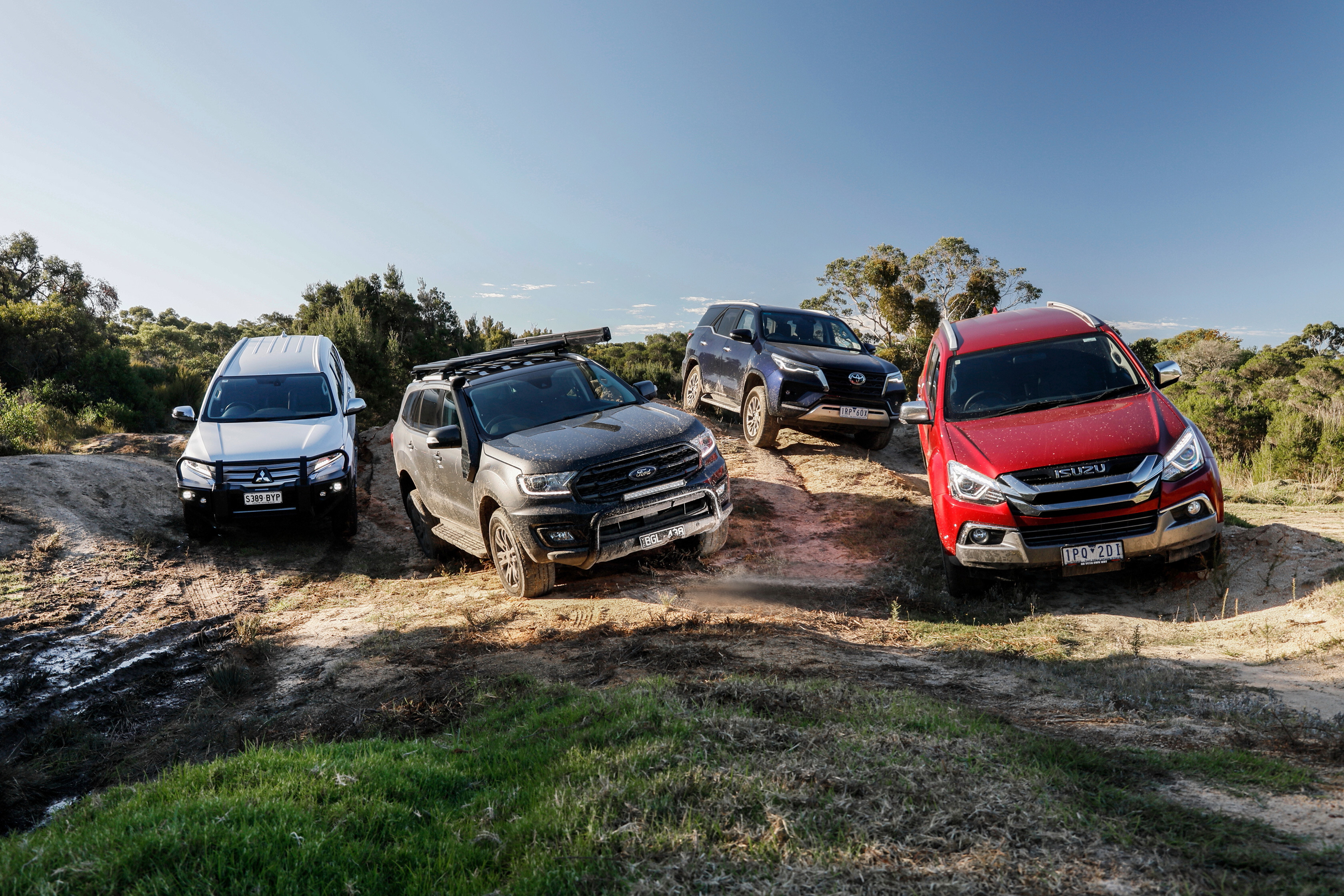
Unusually for a Toyota, the gawky-looking Fortuner has underperformed since launching locally in late 2015, despite significant Aussie input, lagging behind the Isuzu MU-X, Ford Everest and Mitsubishi Pajero Sport – which are also pick-up based seven-seater 4WD wagons built in Thailand to help keep prices in check.
With a facelifted version arriving in mid-2020 bringing much-needed visual improvements (namely slimmer headlights and a restyled grille and bumpers), a larger touchscreen and updated multimedia, can the Toyota finally reel in its high-riding rivals? Let’s find out.
Somebody created a car that looked like a 4WD, the world went crazy for SUVs and here we are today. Choice, glorious choice.
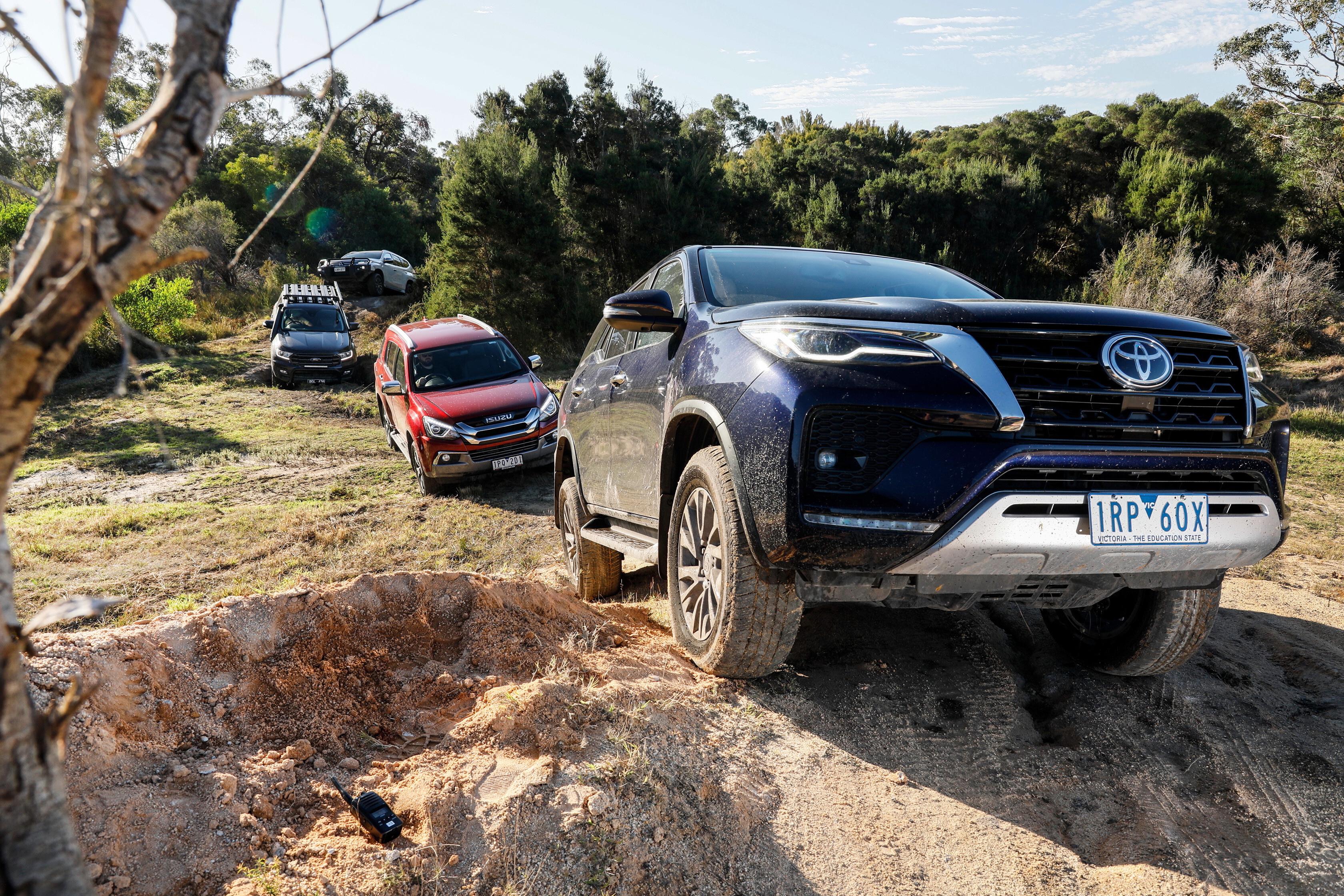
Like the corresponding HiLux, the Fortuner gained a gutsier yet more economical 2.8-litre turbo-diesel last year, along with improvements to towing capacity and steering responses. The GX opens at $49,080 before on-road costs, while ours is the swish Crusade from $61,410. That’s more than base Prado GX money.
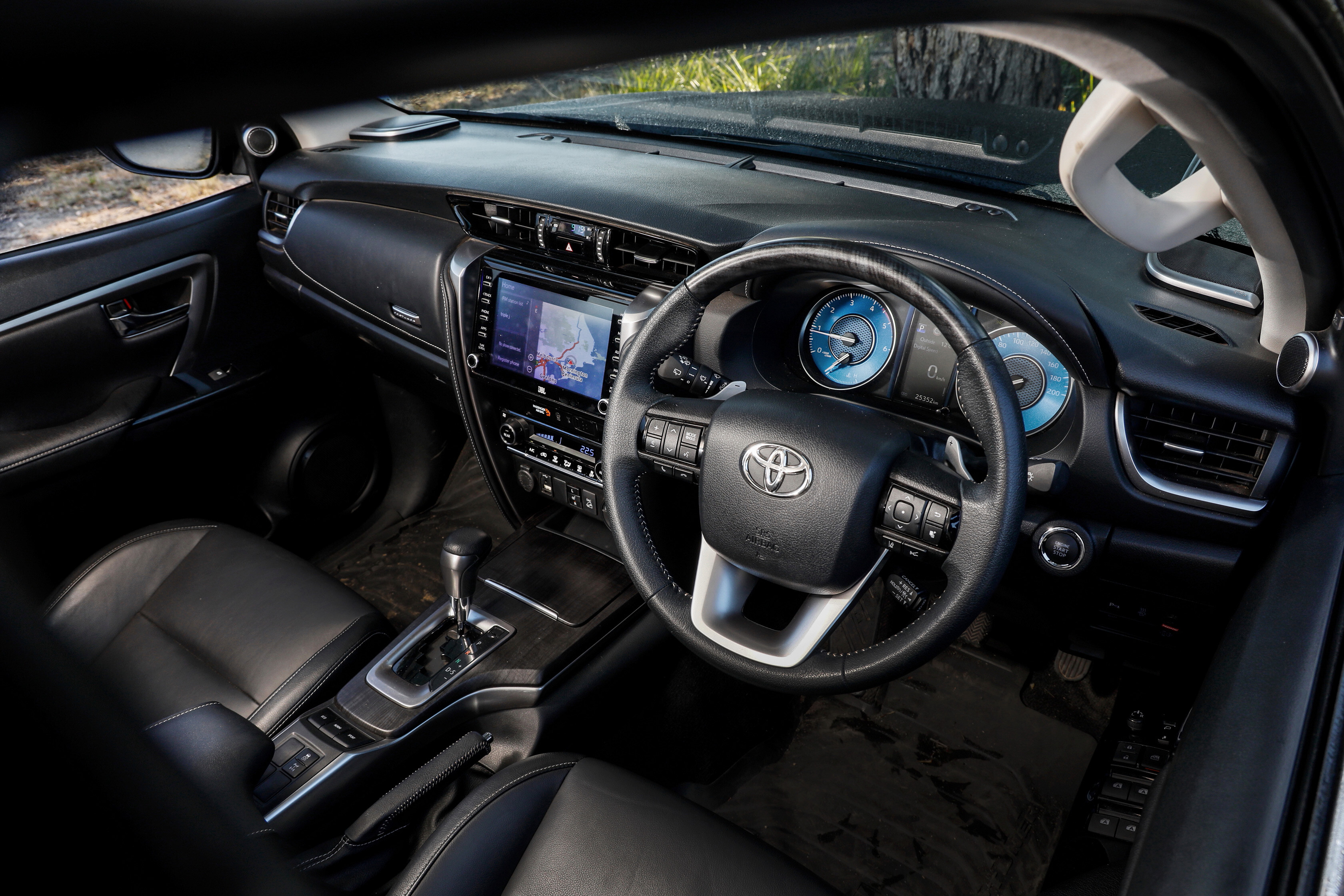
As with the Pajero Sport and Everest but not MU-X, the Fortuner includes autonomous emergency braking (AEB), lane-departure warning with steering assist, adaptive cruise control, front and rear parking sensors, Apple CarPlay/Android Auto connectivity and digital radio, while a reverse camera, keyless entry/start, climate control, sat-nav, electric front seats, part-leather upholstery, roof rails and alloy wheels with a full-sized spare are common in all. The Toyota (with Mitsubishi) also usher in a powered tailgate and premium audio, while a chilled cool-box and – ahem – fake wood trim are sole Crusade offerings. Formica for your Fortuner, anybody?
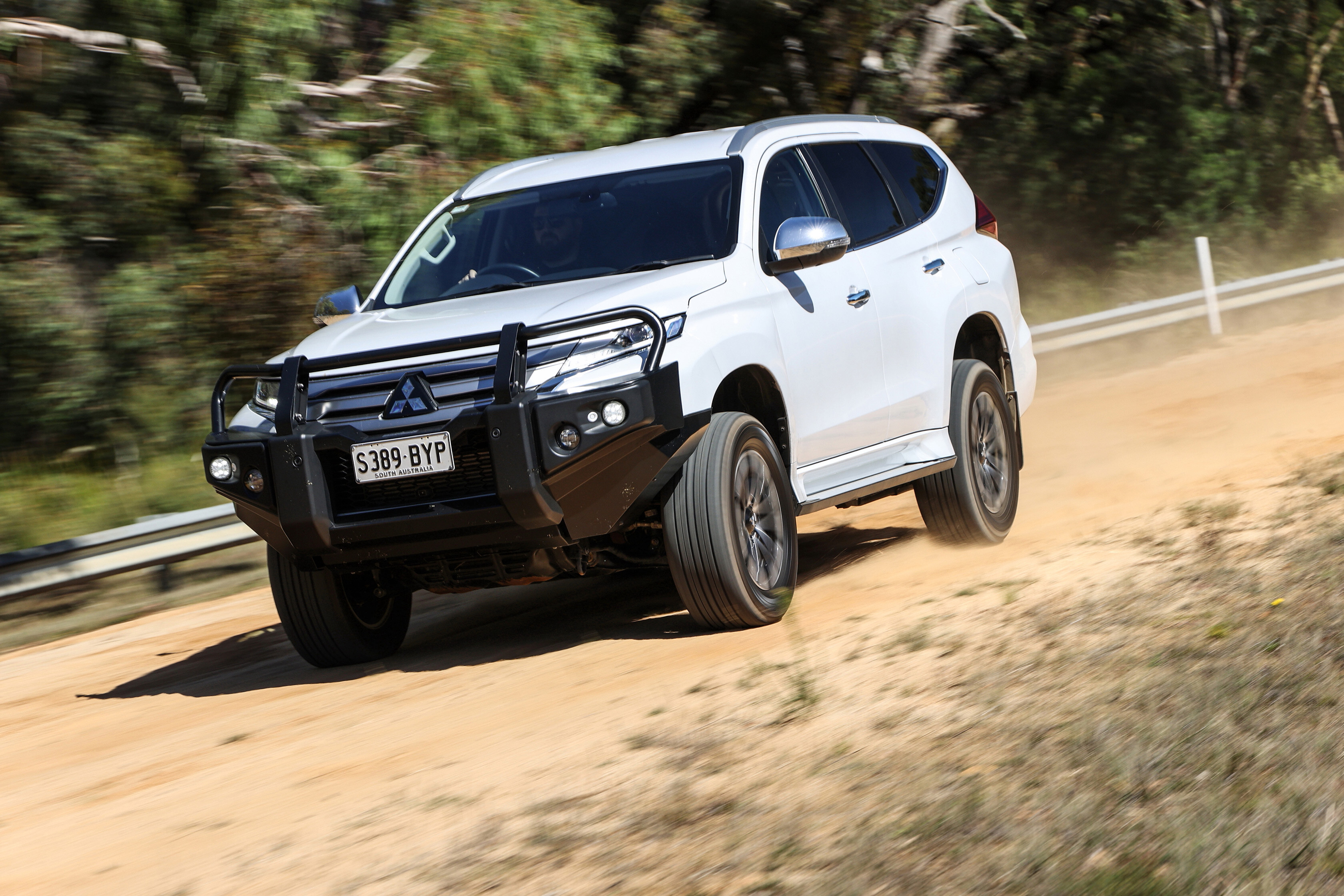
Also updated in 2020 (and coincidentally another late-2015 debutante, as the old Challenger successor) the latest Pajero Sport brings a stronger Mitsubishi family look thanks to that toothy boomerang-style chrome smile shared with its Triton pick-up twin, reshaped bumper and revised tail-lights.
There’s also uprated safety from the base $47,490 GLX five-seater up, including blind-spot monitoring and rear cross-traffic alert tech not fitted to the any other of the 4WDs tested. Revised multimedia, a redesigned centre console and electric park brake debut, along with extra convenience items such as a remote-control app for tailgate and headlight operation, exclusive to the Exceed as tested, from $57,690. That’s strong value, backed up by a conditional 10-year/200,000km warranty – or half that term if you choose not to service at a Mitsubishi dealer.
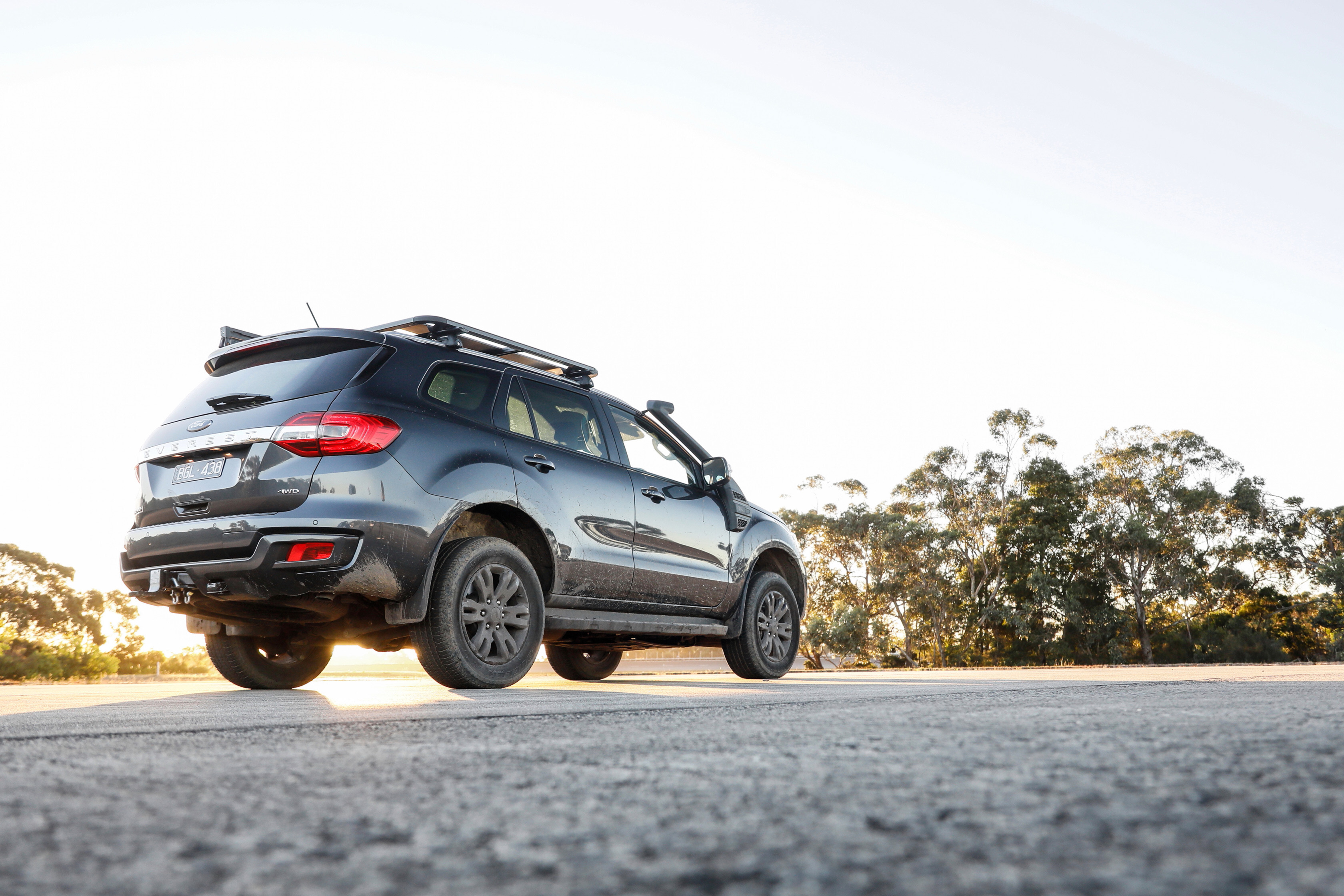
The Everest is also now approaching its sixth birthday, facelifted in 2018 with the usual headlights/grille/bumper makeovers, and is now the sole Australian-designed and engineered wagon made on Earth. Let that sink in for a moment.
Interestingly, the Ford straddles the Fortuner and Prado for pricing, kicking off from $50,090 (Ambiente 3.2L RWD five-seater), meeting its rivals here with the mid-range Trend 4WD from $60,890 and then reaching for the stars with the $73,190 Titanium Bi-Turbo 4WD. Deserved or delusional?
Our test car is one of the 450-build BaseCamp edition Trend Bi-Turbo 4WDs from – deep breath – $64,590. Emo-fied to within an inch of its grey life with tonnes of black-out make-up, there’s $6K’s worth of adventure gear (nudge bar, light bar, snorkel, towbar, roof-mounted carry bars, side steps and awning) for $2200. Trend also aligns with Crusade equipment-wise, though is alone with traffic-sign recognition.
The Everest is now approaching its sixth birthday and is now the sole Australian-designed and engineered wagon made on Earth. Let that sink in for a moment.
Finally, there’s the MU-X. Sorry, folks, not the box-fresh second-gen MU-X heading here later this year, but the 2013-vintage RF original (albeit updated in 2017), that grew out of the Isuzu MU (for Mysterious Utility). Fun fact: it also spawned the contemporary Colorado 7/Trailblazer, so is technically the last new Holden-ish vehicle out there. So get in quick.
Maybe that’s why sales are up 72 percent this year, growth that’s well ahead of the others. Or perhaps because the top-line LS-T AWD at $56,400 is (marginally) the cheapest of the quartet.
However, the MU-X really shows its age with a roof-mounted DVD screen but no digital radio, while vital driver-assist safety systems like AEB, lane-keep warning/assist, adaptive cruise and front parking sensors simply aren’t available. The all-new MY22 model is expected to standardise all, as it’s based on the latest (and not previous) generation D-Max pick-up.
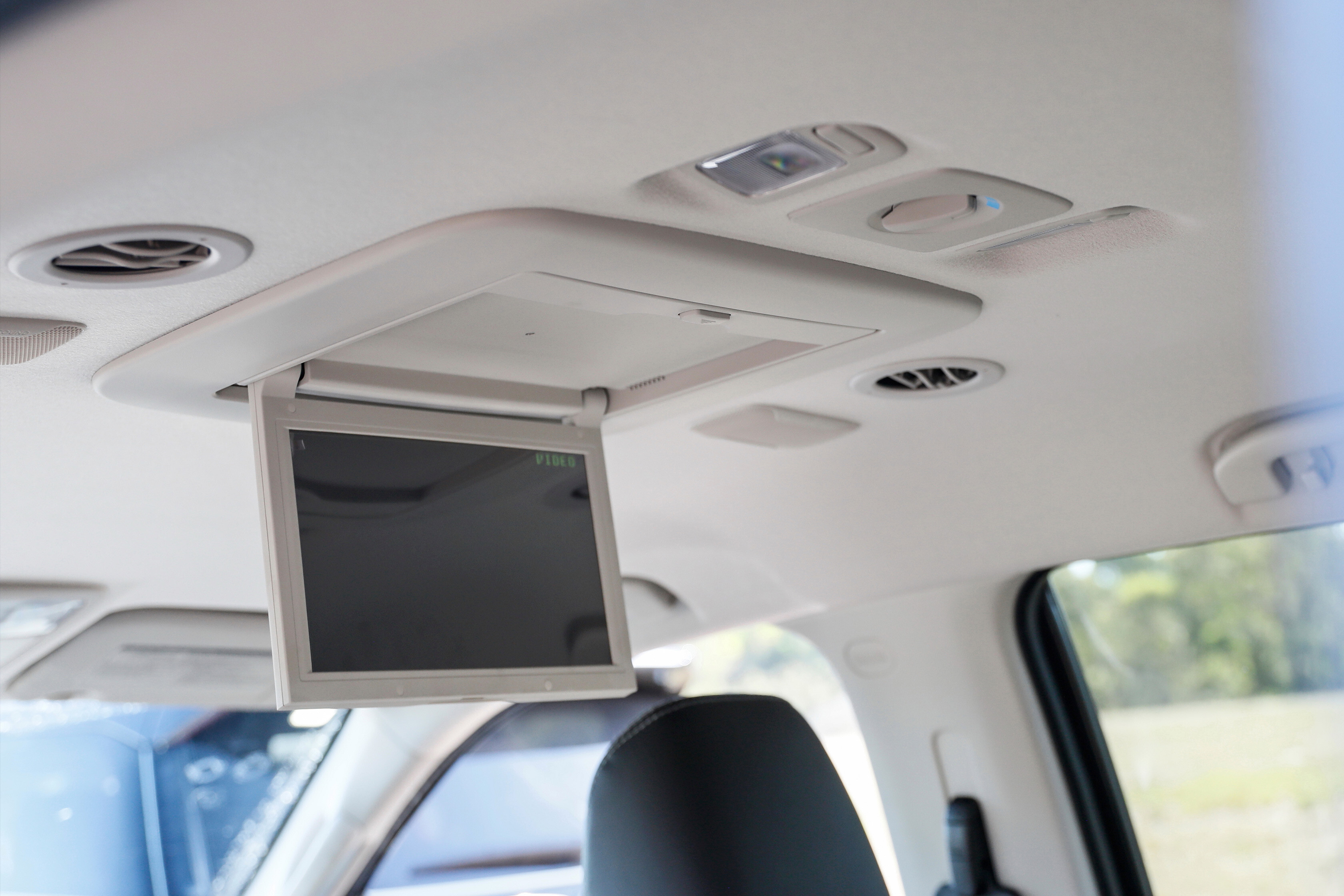
The Isuzu starts behind the eight ball as a result, and it’s easy to stick the boot in from the moment you are first met with the laughably dated dash design, off-the-shelf multimedia and its low-fi graphics, AWOL digital speedo, cheap, sheeny finishes, slippery upholstery and persistent off-plastic reek. It can also get pretty noisy back there.
Yet, sound packaging knows no age. There’s plenty of space for a family of seven – even in the third row; the seats feel soft and comfy, with easy one-touch access thanks to a middle bench that tumbles forward and out of the way; sufficient ventilation and storage are provided – with cupholders and door pockets fitted (as per all the 4WDs tested here); vision out is good and the driving position is AOK despite – like Everest – there being no steering column reach adjustability.
The MU-X really shows its age with a roof-mounted DVD screen but no digital radio, while vital driver-assist safety systems simply aren’t available
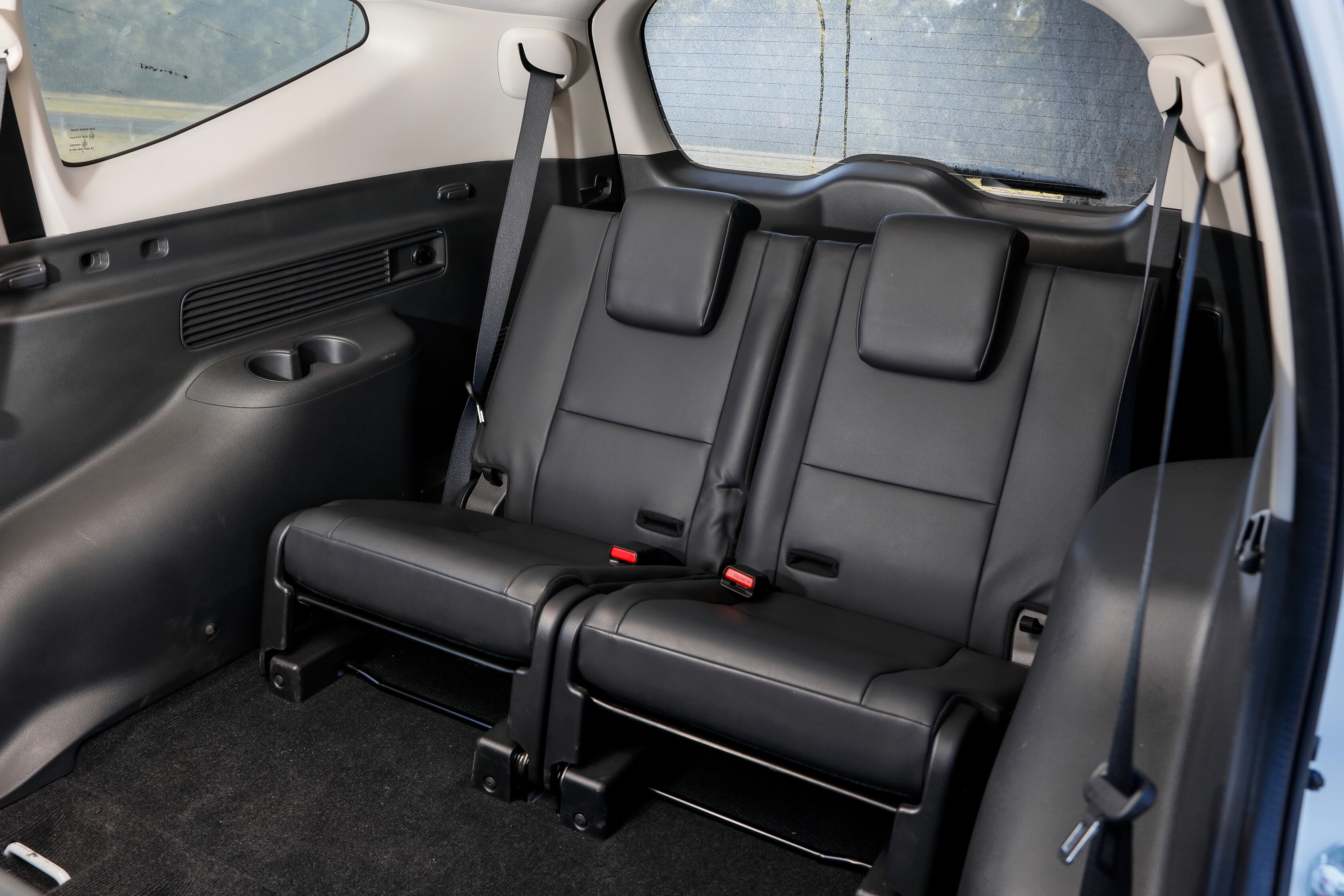
Only two years separates the Isuzu from the Mitsubishi but the latter’s cabin seems from a newer era – and a higher class. The MY20 facelift brought a bigger screen and digital instrumentation, backed up by attractive finishes and intuitive control layout. The front seats are sumptuous, there’s plenty of room for three behind on well-sculptured outboard cushions, and all expected amenities like USB ports are present.
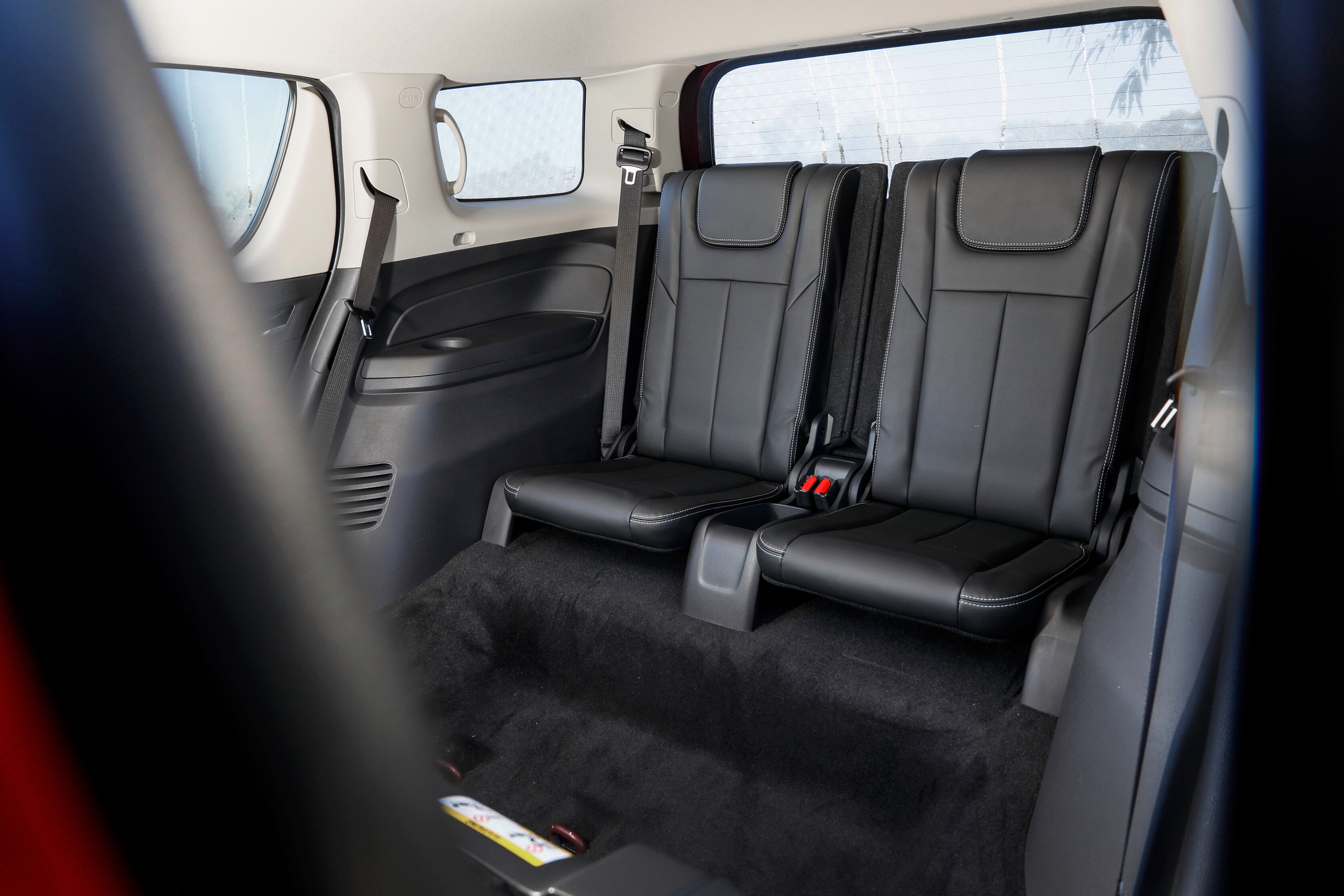
Note, though, that the Pajero Sport’s second row bench does not slide, hampering access behind, forcing people to squeeze past the reclinable backrest’s narrow aperture; and while the third row’s also recline and there’s a useful amount of kneeroom, the cushion feels thin, the suspension is jolty and there’s too much tyre roar.
Amongst this lot, the Fortuner’s packaging feels… compromised, with a narrow-body look and feel that betrays its ageing IMV HiLux-based architecture; occupants sit noticeably closer to each other. The third-row passengers miss out on cupholders, overhead vents and USB ports, the cushions are firmest, the ride is hardest, there’s also excessive noise intrusion and access back there is the most difficult. Plus, the twin seats fold out into the sides, reducing cargo capacity, rather than in the floor as per the others – a strange layout.
Up front, the bulky dash includes two gloveboxes and it’s easy to figure out all the switchgear; the big screen is a cinch to use and the seats are supportive enough. The smallest of the quartet, it’s best to consider the Fortuner a 5+2-seater.
Only two years separates the Isuzu from the Mitsubishi but the latter’s cabin seems from a newer era – and a higher class
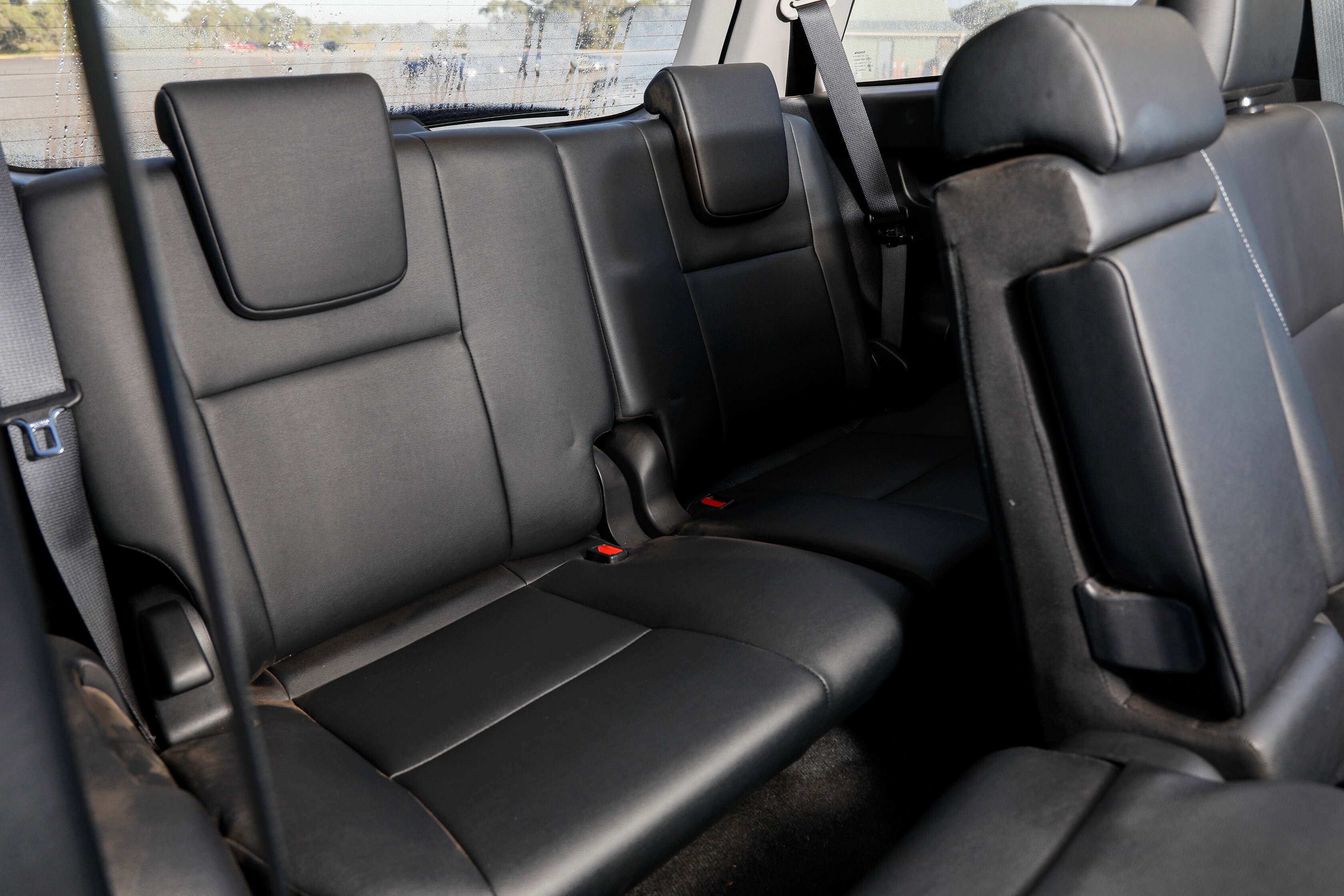
Though feeling substantially wider, the Everest’s third row suffers because entry/egress is limited by the middle row seatings’ inability to tumble forward; it’s also pretty cramped for adults and there are no USB ports. But the seating is far comfier, it’s quietest and the ride is softest of the group. The same also applies to the middle row, which benefits from the largest rear doors, while the front seats are the best for support.
The Trend’s dash may be very familiar by now, but it still works exceedingly well, with excellent controls, great ventilation, heaps of storage and a very friendly (if dated looking) multimedia system. It doesn’t seem as upmarket as the Pajero Sport’s, but is miles more appealing than those of the Toyota or Isuzu. From a functionality and practicality perspective, the Everest still shines.
The Ford is also the only 4WD here to offer a choice of two powertrains.
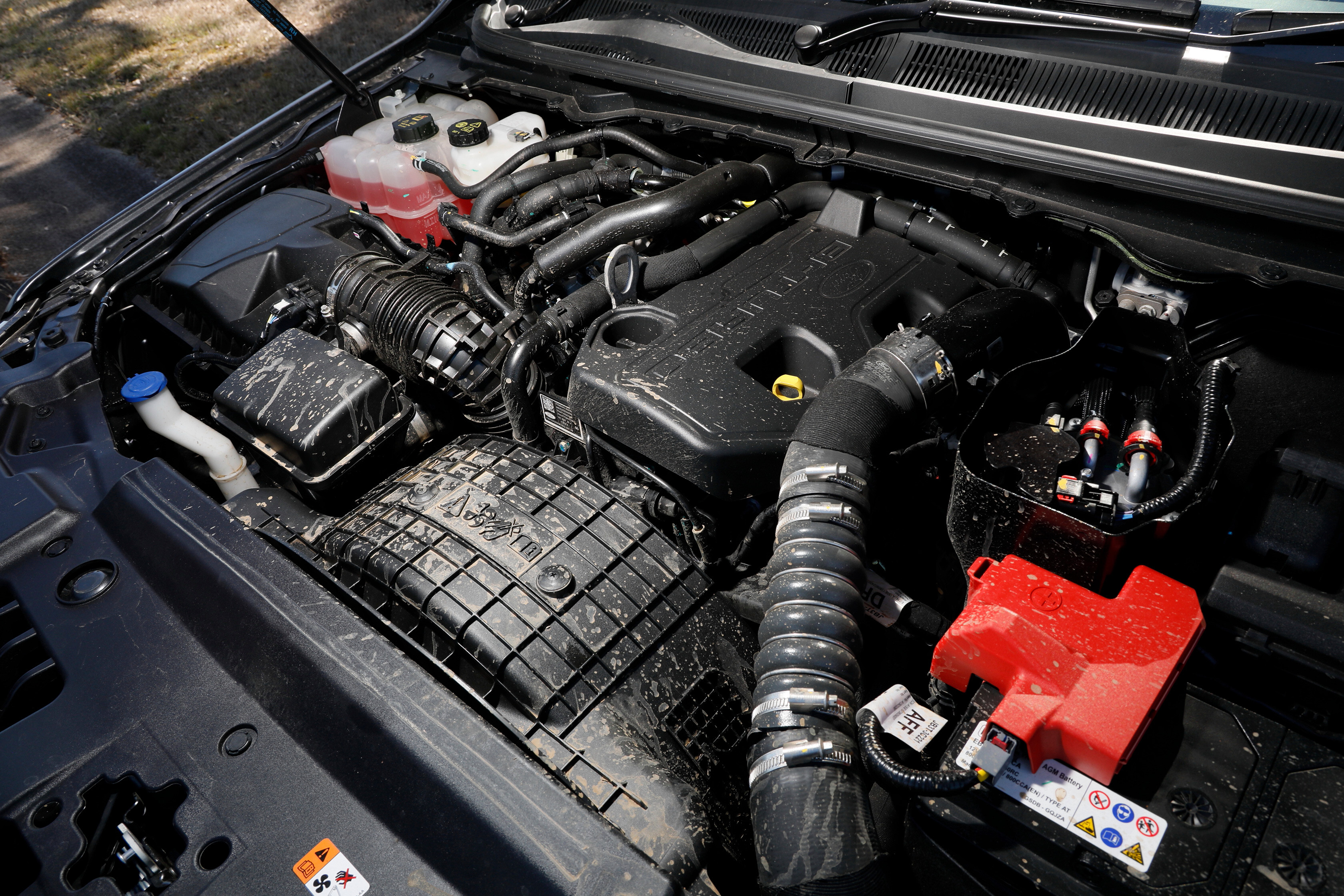
Ours is the 157kW/500Nm 2.0-litre four-cylinder Bi-Turbo diesel instead of the hoary old 143kW/470Nm 3.2-litre five-pot turbo-diesel, coupled to a slick 10-speed (rather than six-speed) auto. It might be down on capacity, but this is an impressively strong powertrain – once you’re on the move.
Off the line, the portly (from 2387kg) Everest feels slowest, trailing the rest and barely keeping the actual tardiest (Pajero Sport) in its sights right up to 60km/h; but with the twin turbos blowing in strongly, the Ford then pulls the hardest, smoothest and quietest of the quartet, crossing the 100km/h mark in 10.6s, and is pipped only by the Fortuner past 120km/h. Keep in mind that our BaseCamp extras impede aerodynamics, which hindered top speed.
Some testers have noted that the transmission can feel busy or indecisive by having to slice through so many ratios, but in our experience, the driver-adaptive tech comes into play seamlessly. This is the most refined powertrain here.
As mentioned, the 2155kg Fortuner is easily the fastest. Aided by the highest power-to-weight ratio, a big new turbo and smartly spaced six forward speeds, its 150kW/500Nm 2.8-litre four-pot turbo is the group’s tearaway racer, beating the Everest by at least a 0.3s interval at every increment. Toyota’s done a great job extracting such punchy performance, and without sacrificing civility either – except when the particulate filter purge kicks in like a big old noisy generator.
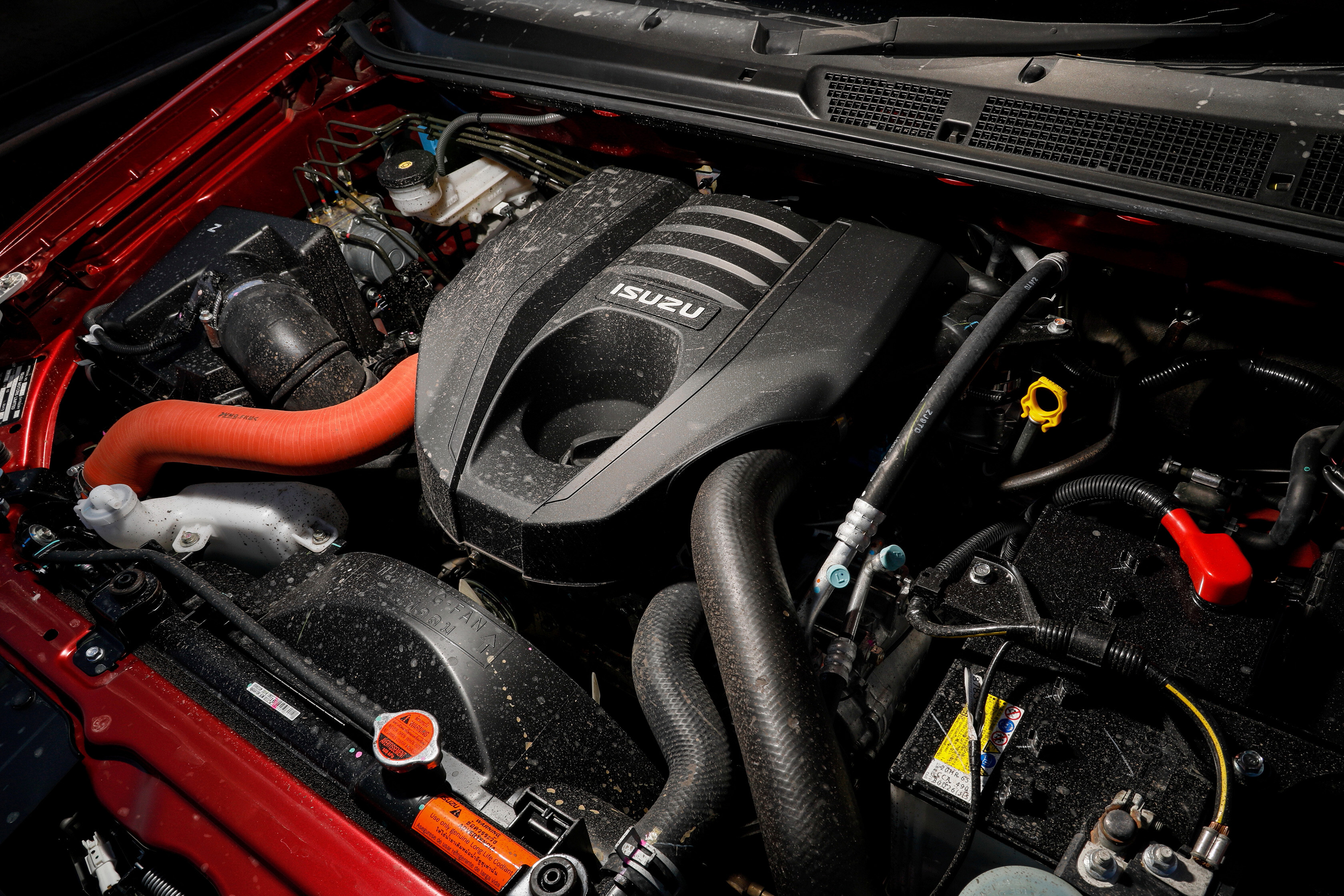
The wooden spoon is a tie-up between the 130kW/430Nm 3.0-litre Isuzu and 133kW/430Nm 2.4-litre Mitsubishi, which are within 0.1s of each other at virtually every marker – and that’s no surprise, given they both have similar (at 60kW and 63kW per tonne respectively) power-to-weight ratings.
But while the end results are similar, the way they go varies. The 2110kg Pajero Sport lives up to its name by being a revvy little unit, feeling friskiest when the engine is working hard and relying on its close-ratio eight-speed auto to shuffle through the ratios without fuss; in contrast, the Gloria Marshall’d 2062kg MU-X is a slogger, and quite loud to boot, relying on its extra 600cc capacity for a dollop of low-down pull. And once momentum is achieved, it maintains the muscle as speeds rise.
Off the line, the portly Everest feels slowest, trailing the rest and barely keeping the actual tardiest – the Pajero Sport – in its sights
All four 4WDs have impressive average fuel consumption claims, with the Everest’s being the lowest for the longest distances between refills – 7.0L/100km, with over 1140km possible due to its 80L tank. At the other end of the scale is the MU-X’s circa-830km range, as a result of its bigger thirst (7.9L/100km) and 15L-smaller diesel reservoir.
In truth, there really isn’t that much in it between them against the clock – but away from the flat, smooth drag strip, the differences are far more telling… and definitive.
All four are fundamentally light and easy to drive by people across the height and size spectrum, belying their sheer bulk to be amenable urban family haulers as well as weekend lifestyle getaways. Given they feature body-on-frame construction, lockable low-range 4×4 engineering and ample ground clearance for light-to-medium bush bashing, they’re all impressive all-round performers.
But focussing on their on-road dynamics and comfort, only one model here can do it all.
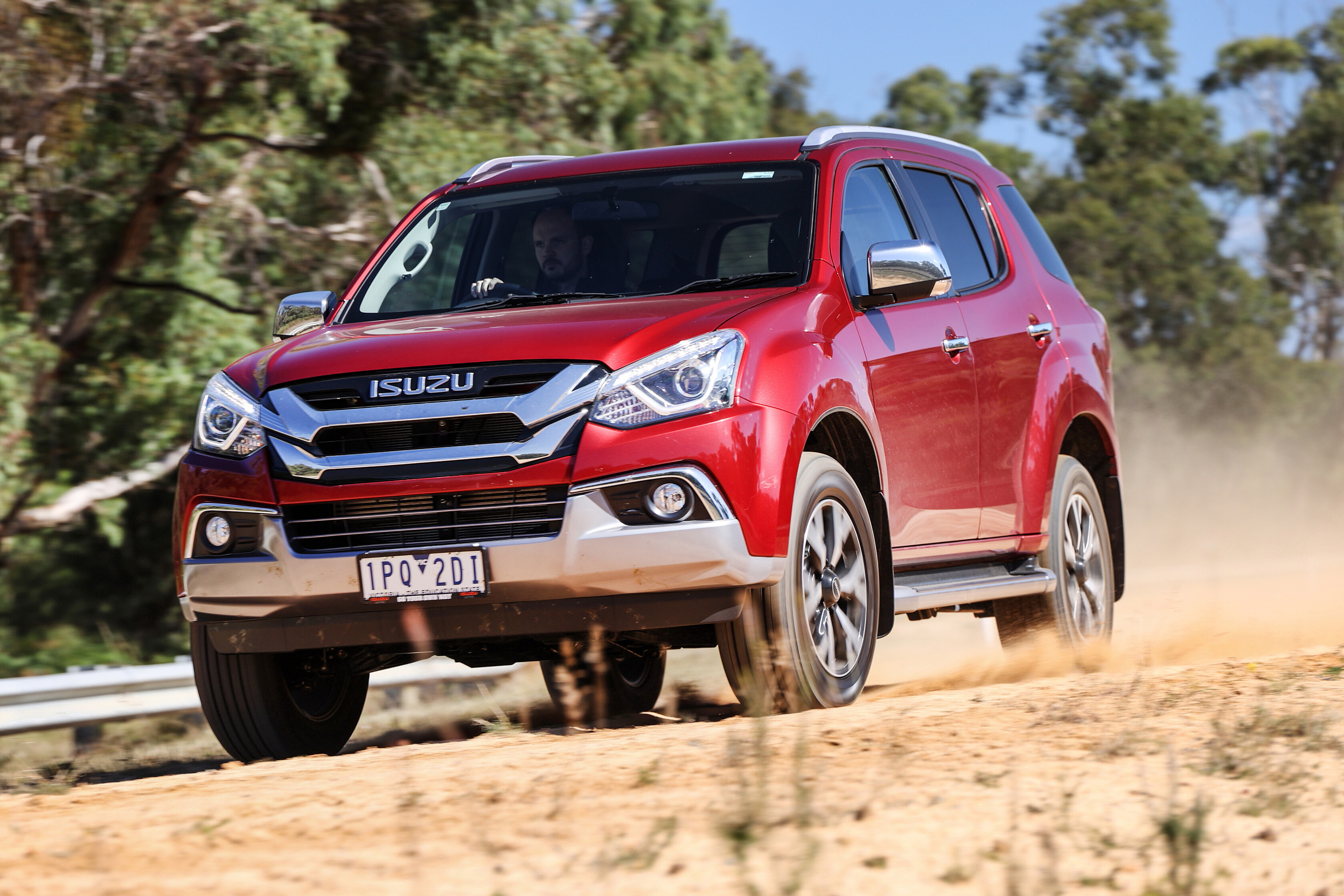
Inevitably, the MU-X isn’t it. Superficially, you might be impressed by the Isuzu’s eager steering, which makes it feel lighter through corners than its size suggests. And there’s plenty of grip too, with minimal body lean. However, even at moderate speeds, the handling can feel nervous, the ride is jittery and the amount of noise coming through really betrays the Isuzu’s age. The electronics cut power mid-corner with tiresome regularity and the steering rack rattles too, like a cheap set of dentures. Which might be an apt metaphor for the MU-X’s overall on-road behaviour.
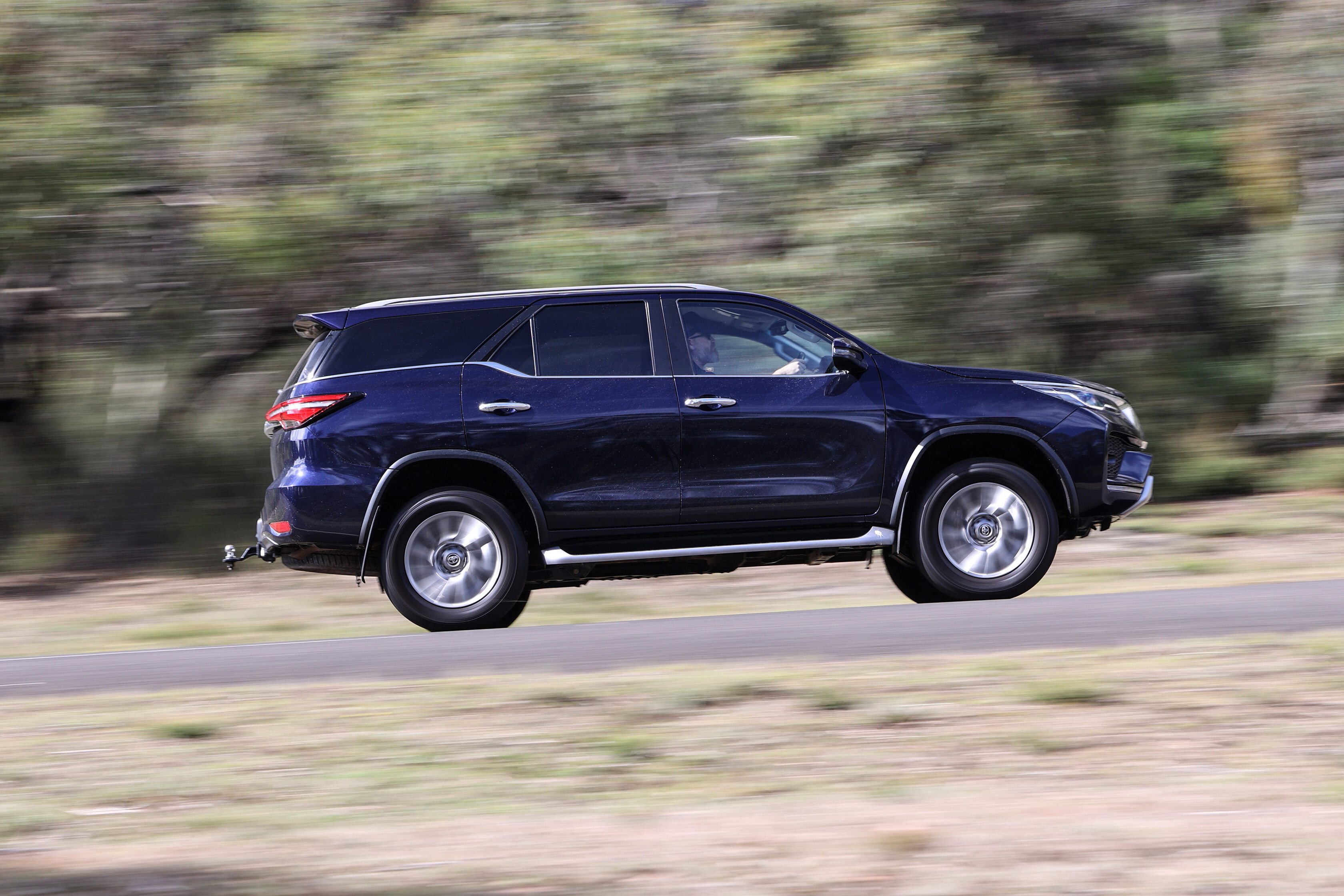
Then it’s a big step up to the Fortuner. Already the fleetest of the foursome, the chassis engineers have clearly set this up for handling agility and composed roadholding, thanks to smooth and progressive steering, backed up by fine body control – making it unexpectedly fun to throw around, in a scrappy sort of way.
But, you can sense a ‘but’ coming on, right? Your butt’s already on it, suffering from the unyielding ride that rarely settles down. Slow or fast, over smooth or rough, the Toyota will have its occupants shaken as surely as the driver is stirred. Not good enough.
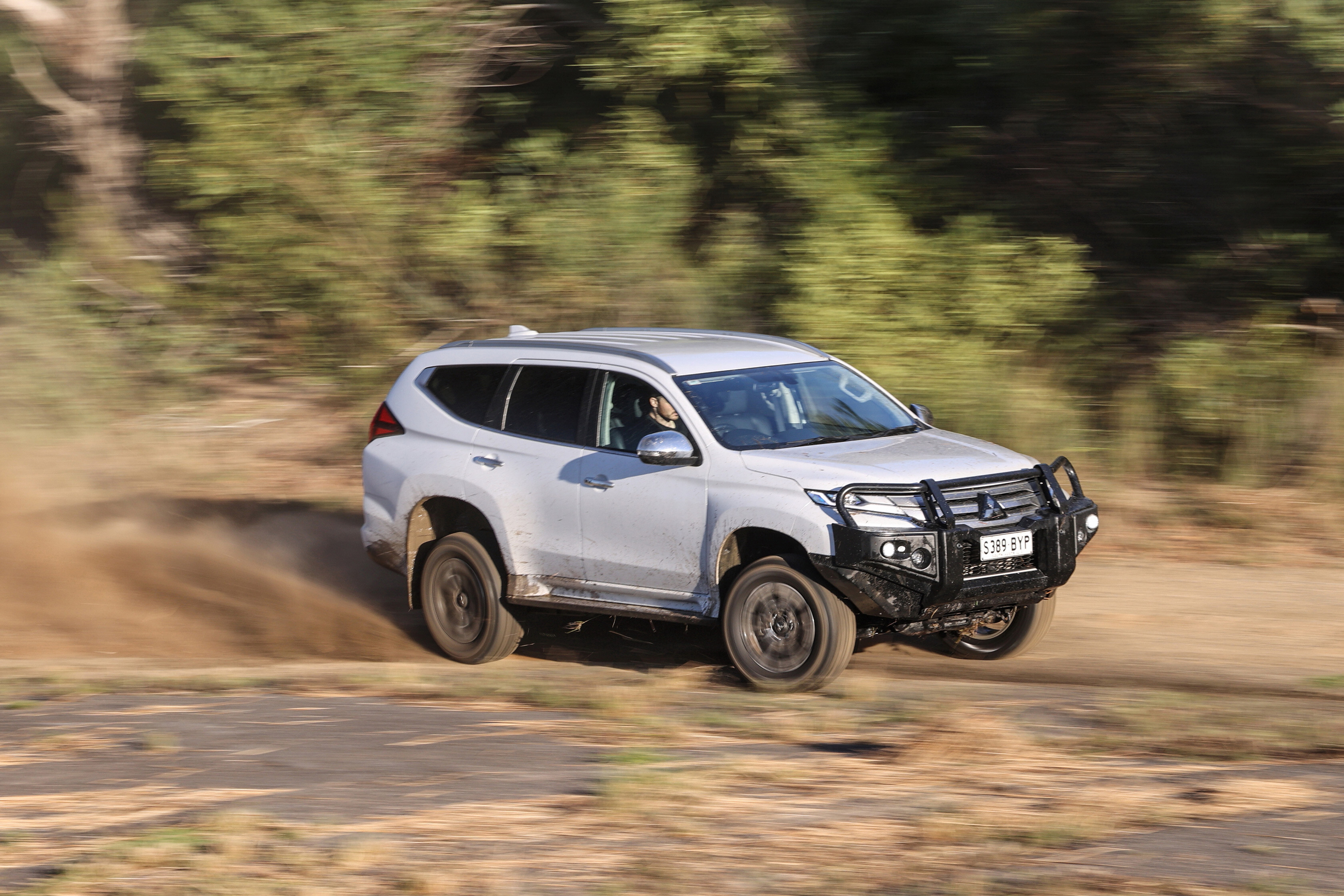
The opposite applies to the squidgy Mitsubishi, due to its engineers emphasising comfort over agility. In concert with the sumptuous seating, the suspension is soft, absorbing bumps left, right and centre – and that too describes how loosely the body feels as it leans and pitches compared to the rest. That said, we applaud the diamond brand’s priorities, because most occupants will gladly trade the harshness and at-times discomfort of the Toyota and Isuzu for smooth and relaxed transportation.
Ultimately, there’s nothing athletic about the Pajero Sport’s remote, feel-free steering or handling that is tuned for safe but ultra-dull proficiency. It’s easy to achieve a balanced flow through a series of corners, but way before any limits are reached, the ESC will abruptly end play, ensuring the driver will never be having fun.
This is where the Everest is an absolute knockout, displaying next-level sophistication and finesse the others cannot hope to match. My notes on the steering (“wonderfully talkative and flowing”), handling (“car-like”), roadholding (“exceptional”), suspension (“supple”) and emergency braking distance (“best of the lot”) all spell it out: The Ford is leagues ahead. Keener drivers will feel nourished as surely as occupants will appreciate how plush and isolated the ride is.
As we said at the beginning, the Everest and Ranger represent the end of a very long road of mass-produced Australian-engineered vehicles, and while it may not be as cheap as the MU-X, opulent as the Pajero Sport or fast as the Fortuner, it is by far the best in class. This is an achievement we can be proud of.
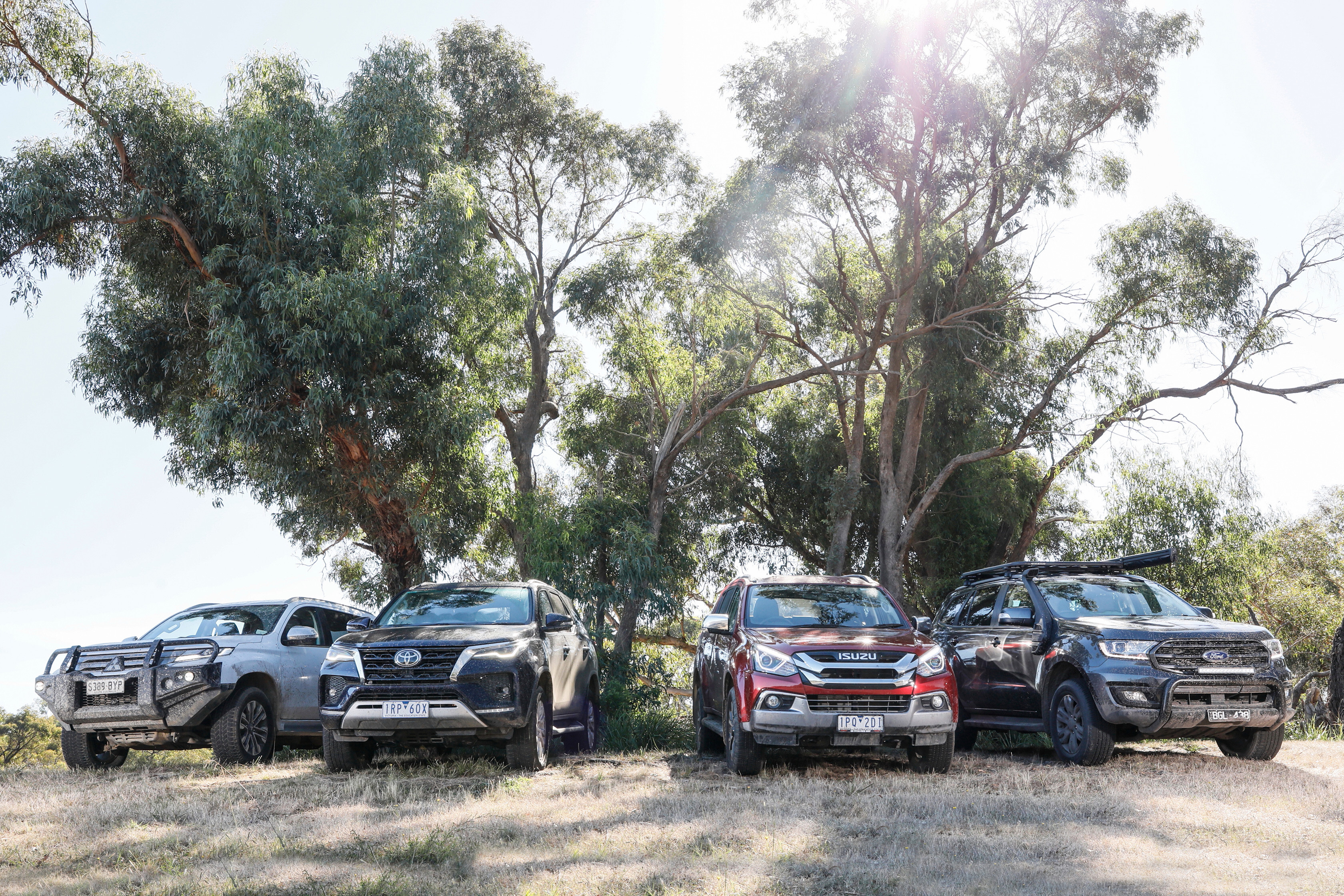
There’s a clear space between it and second-placed Pajero Sport, which puts in a good, honest showing by dint of its value pricing, passenger-first comfort engineering and appealing ownership protection. Too bad it’s such a dreary drive.
Just behind that comes the Fortuner, which – performance aside – shows its age and limitations in too many areas, while the group’s actual geriatric, the MU-X, surprisingly puts up a fair fight with low pricing and smart packaging, but ultimately is just too creaky to properly compete. We have high hopes for the MY22 model.
The Ford’s resounding victory reminded us of two things. Firstly, it smashes rigid expectations and blurs lines with its pan-category capabilities. And, secondly, as a result, there isn’t a more-accomplished body-on-frame 4WD wagon on this continent.
Everest by name, Everest by nature.
Interior Comparison
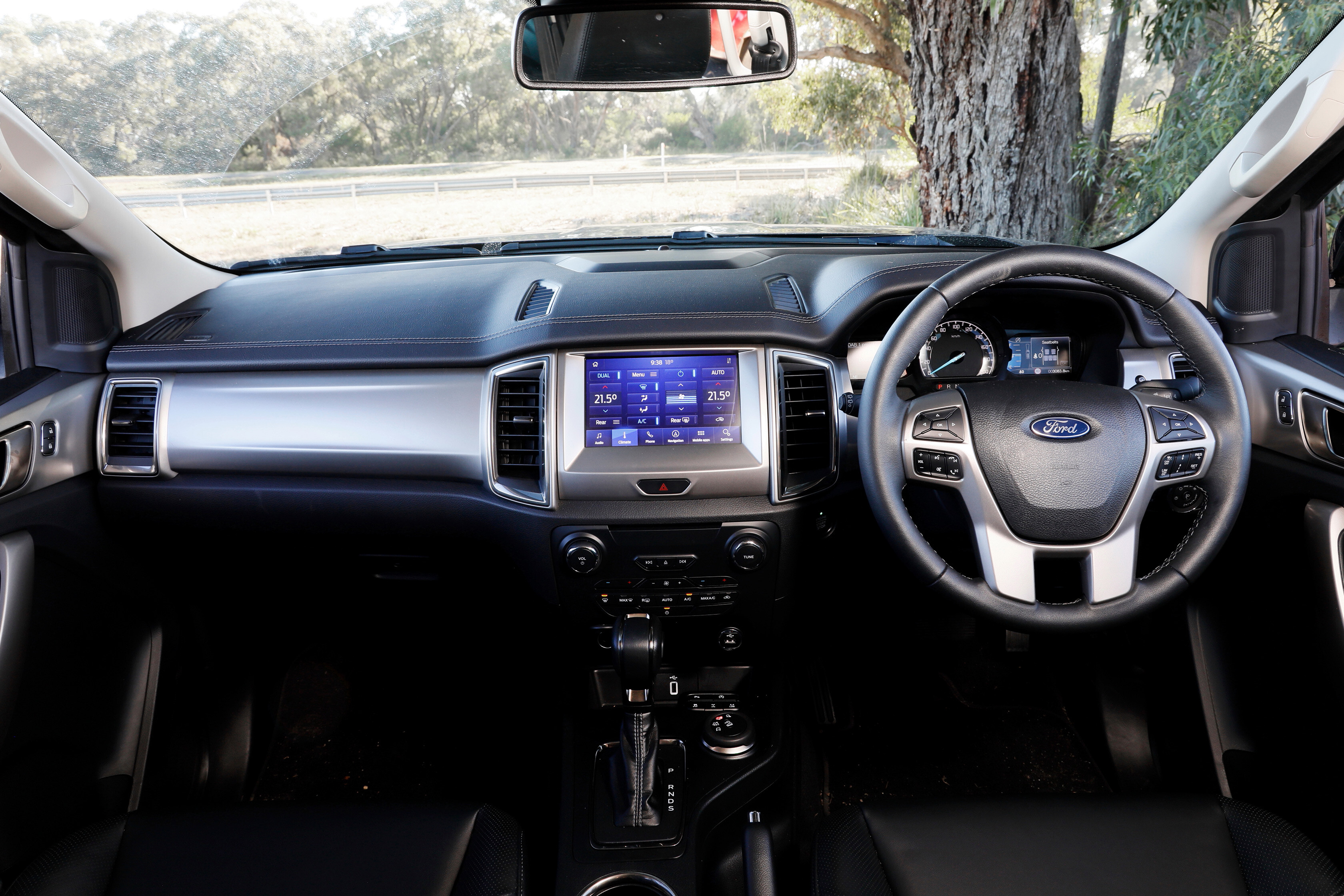
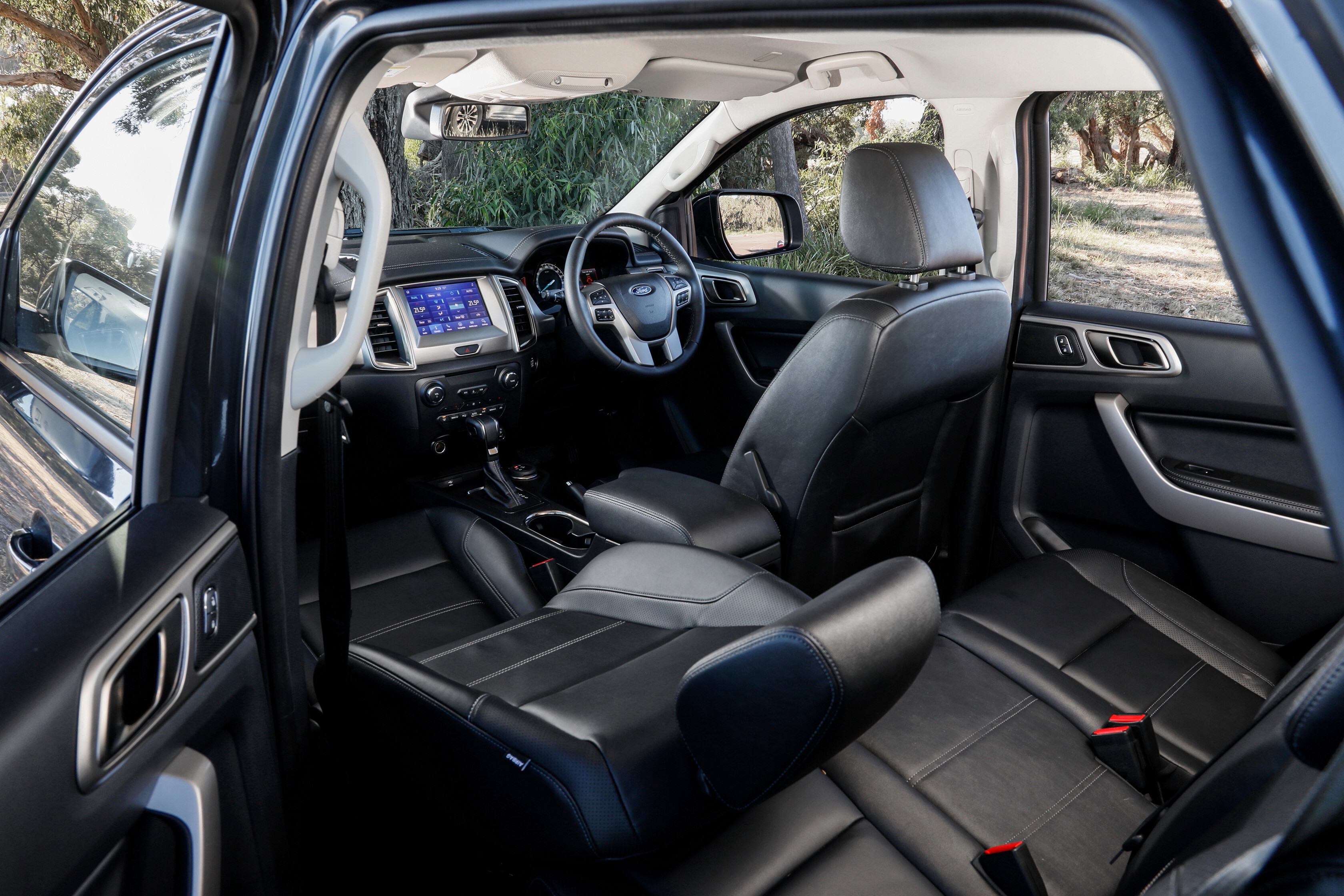
Ford Everest
Shared with the Ranger, the Everest’s dash is dated but smart and functional, with user-friendly SYNC3 multimedia, supportive seating, excellent storage and strong packaging for taller people up front and in the second row. But there’s no telescopic steering adjustment while third-row entry/egress isn’t elegant and space back there is tight. Cargo volume is 249L with all seats erect, 876L in five-seat mode and 1796L with two-seater configuration. Braked towing capacity is rated at 3100kg, ground clearance is 227mm.
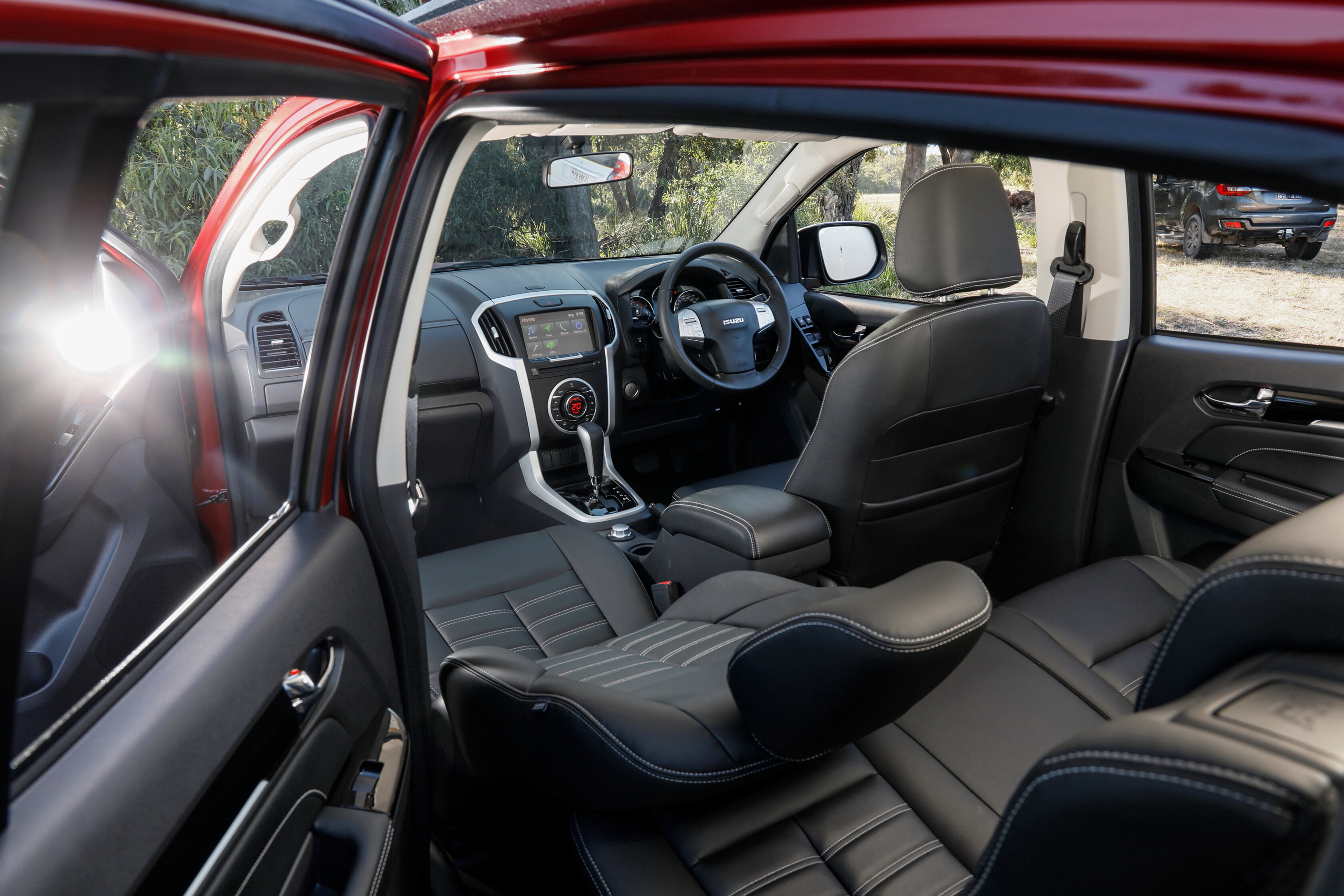
Isuzu MU-X
The MU-X cabin feels old and cheap, and steering is tilt-only, though there’s plenty to recommend, including comfy seats, heaps of space, the oddball circular ventilation controller is quite nice to use and third-row access is easiest of quartet. But doors don’t open up very wide and there’s too much noise intrusion. Cargo volume is 235L with all seats up, 878L in five-seat mode and 1830L with two-seater configuration, beating Everest. Braked towing capacity is rated at 3000kg, ground clearance is 230mm.
Mitsubishi Pajero Sport
Updated digital instrumentation helps boost the Paj Sport cabin’s luxury feel, and also scores with soft seats, lots of space and heaps of useful features. But third-row access isn’t great, the seats are uncomfortable and there’s too much noise coming in. Second-row child-seat tethers impede third-row space because of ceiling hooks. Cargo volume trails the best, with 131L in seven-seat mode, 502L with the third-row folded and just 1488L with rows two and three flattened. Braked towing capacity is rated at 3100kg, ground clearance is 218mm.
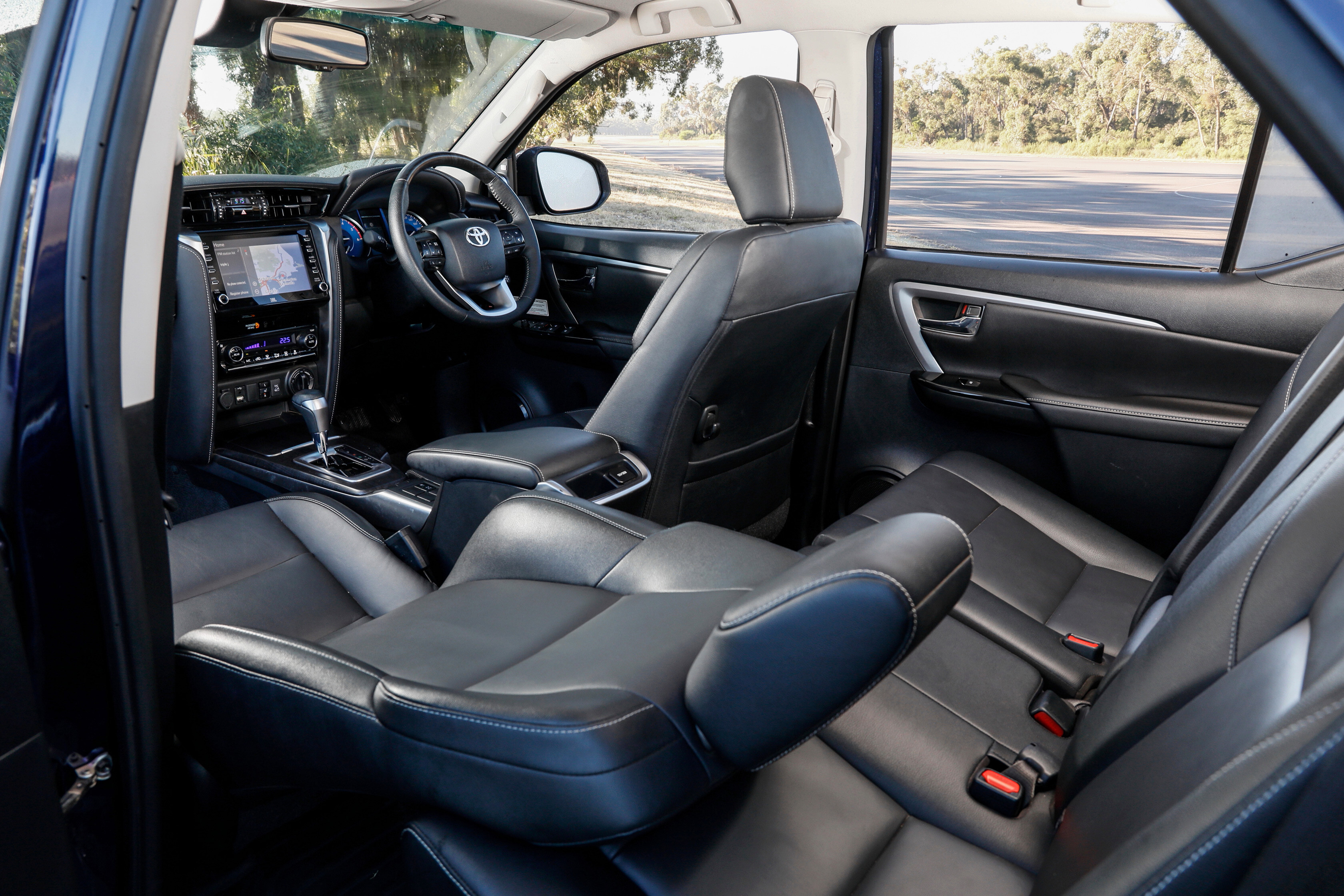
Toyota Fortuner
The Fortuner’s dash looks dated and bulky but is typical-Toyota practical, and benefits from revised instrumentation and multimedia. Seating is fine, but the whole vehicle feels narrower than the rest. Rather than folding into the floor, the twin third-row seats fold up into the sides, eating into luggage space. Cargo volume is 200L with all seats up, 716L in five-seat mode and a disappointing 1080L with two-seater configuration. Braked towing capacity is rated at 3100kg, ground clearance is 216mm.
Verdict
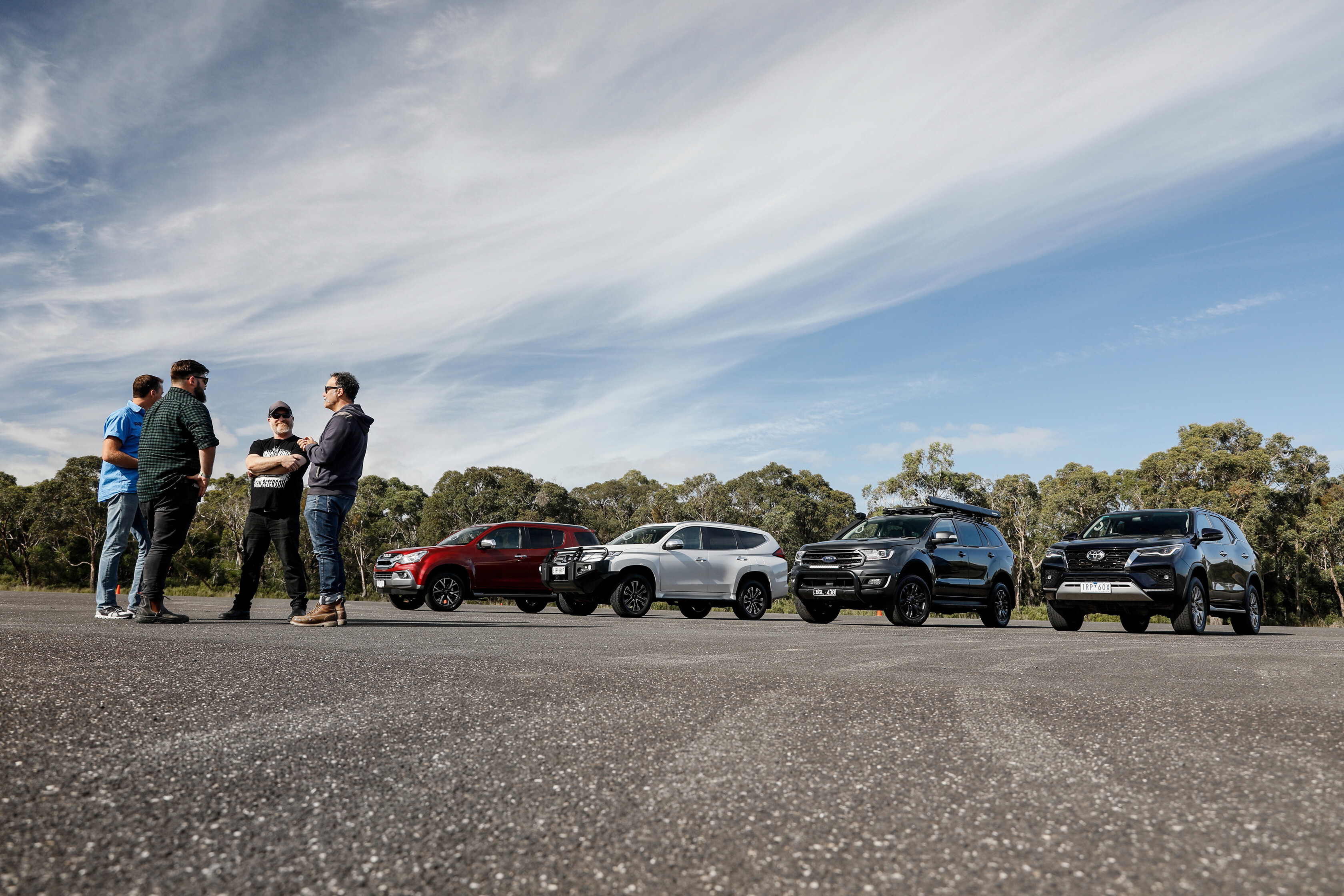
1st – Ford Everest
Score: 8.5/10 Like: Outstanding ride and handling, polished powertrain, comfort, space, design Dislike: Expensive, dated dash, no telescopic steering, difficult third-row access
Warranty: 5yr/unlimited km. Service interval: 12 months, 15,000km. Glass’s 3-year resale: 58%. AAMI Insurance: $958
*Includes BaseCamp special edition with nudge bar, LED light bar, snorkel, towbar, carry bars, Pioneer platform and Sunseeker awning ($2200), Meteor Grey prestige paint ($650)
2nd – Mitsubishi Pajero Sport
Score: 7.0/10 Like: Value pricing, conditional 10-year warranty, comfy ride, plush interior Dislike: Dull steering, noisy interior, excessive body lean through corners
Warranty: 5yr/unlimited km. Service interval: 12 months, 15,000km. Glass’s 3-year resale: 60%. AAMI Insurance: $914
3rd – Toyota Fortuner
Score: 6.5/10 Like: Gutsy performance, sharp handling, Toyota dependability, build quality Dislike: Dreary dash, narrow cabin, jittery ride, cramped and noisy third row
Warranty: 5yr/unlimited km. Service interval: 12 months, 15,000km. Glass’s 3-year resale: 57%. AAMI Insurance: $981
* Includes premium paint ($600)
4th – Isuzu MU-X
Score: 5.5/10 Like: Smart packaging, sharp pricing, easy-access third-row, six-year warranty Dislike: Lack of driver-assist safety, stiff ride, cheap-looking cabin, noise intrusion
Warranty: 6yr/150,000km. Service interval: 12 months/15,000km. Glass’s 3-year resale: 54%. AAMI Insurance: $1018
* Includes Magnetic Ted mica paint ($500)
Specifications
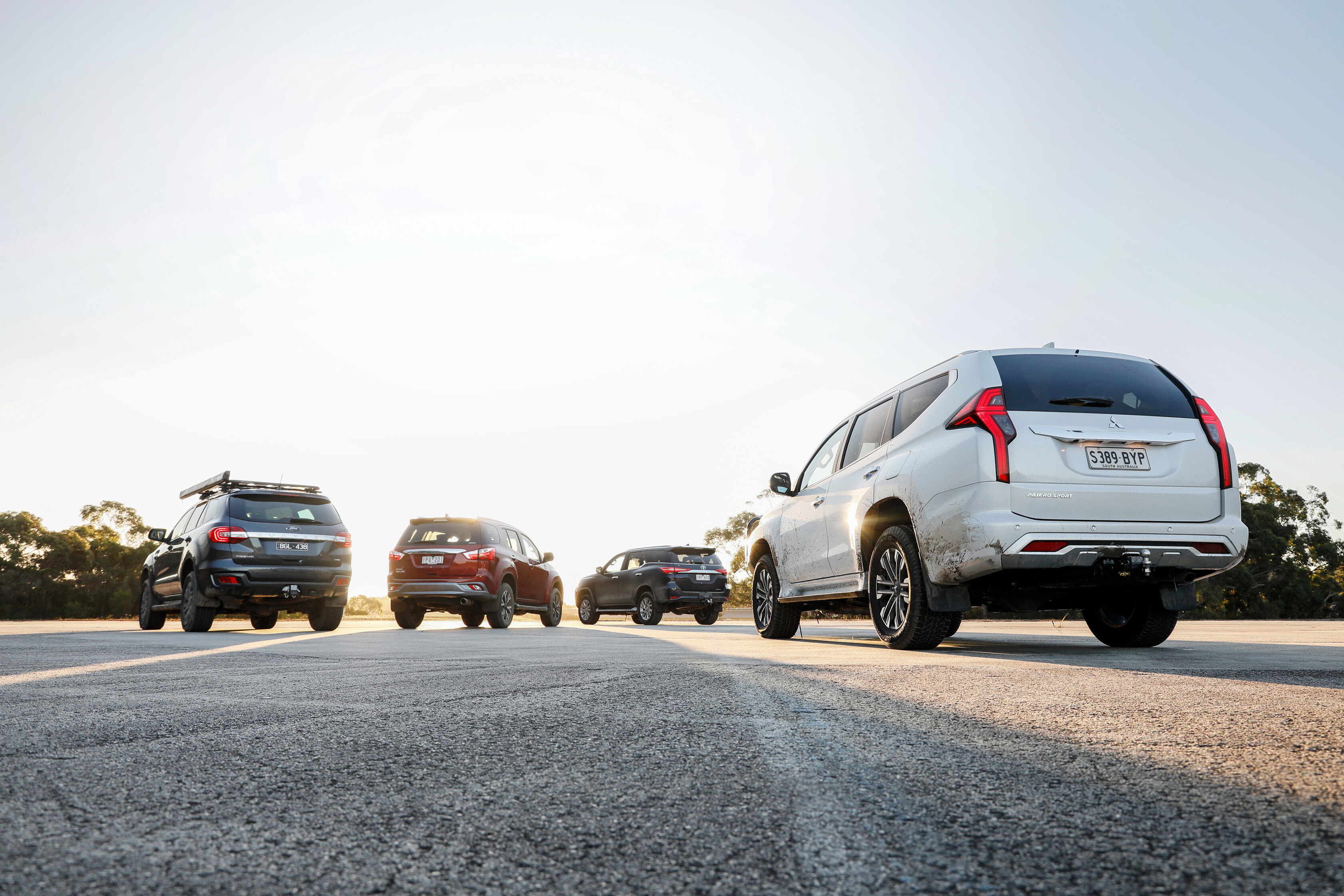
Performance figures
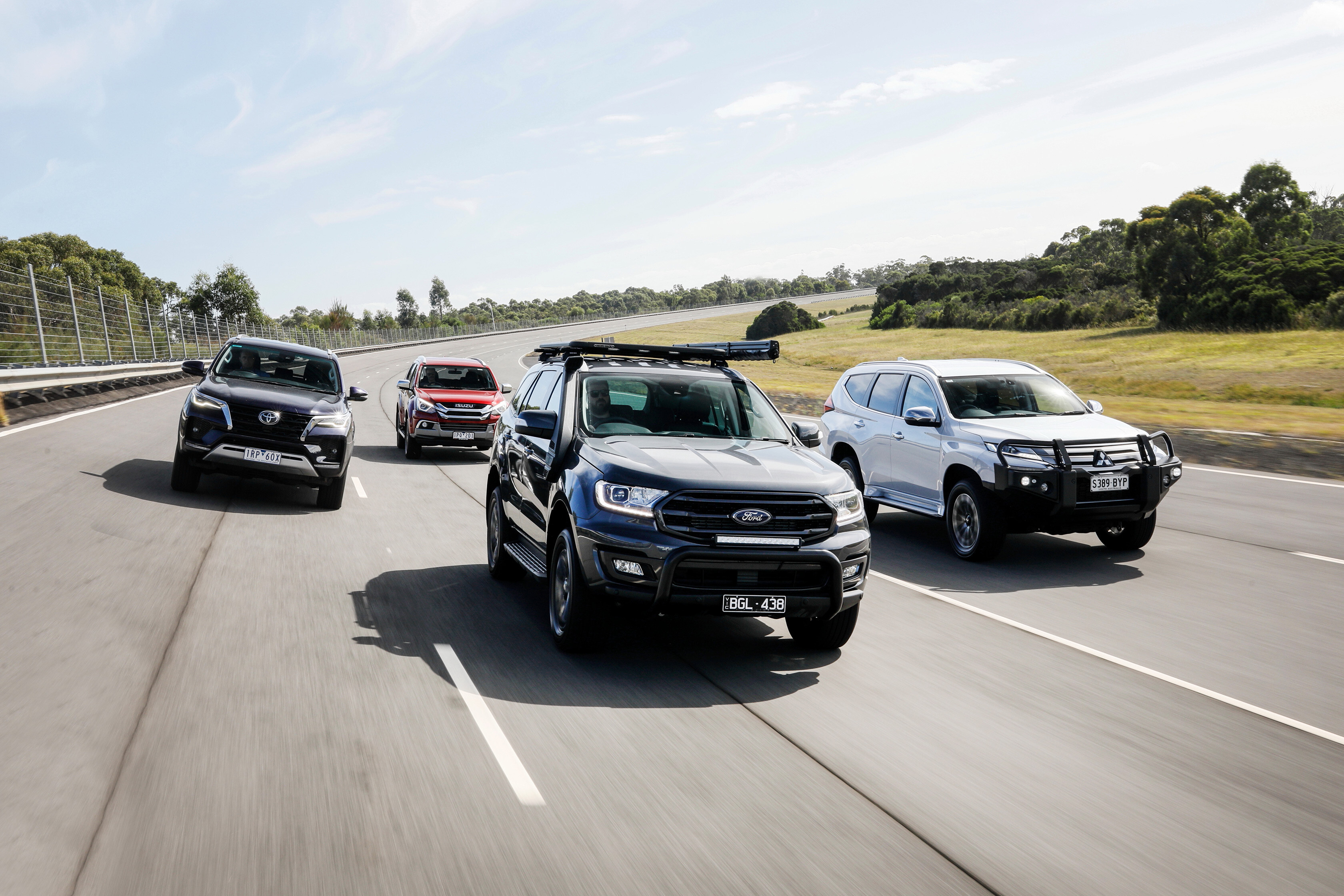
Track: Warm, dry Temp: 23ºC Driver: Byron Mathioudakis
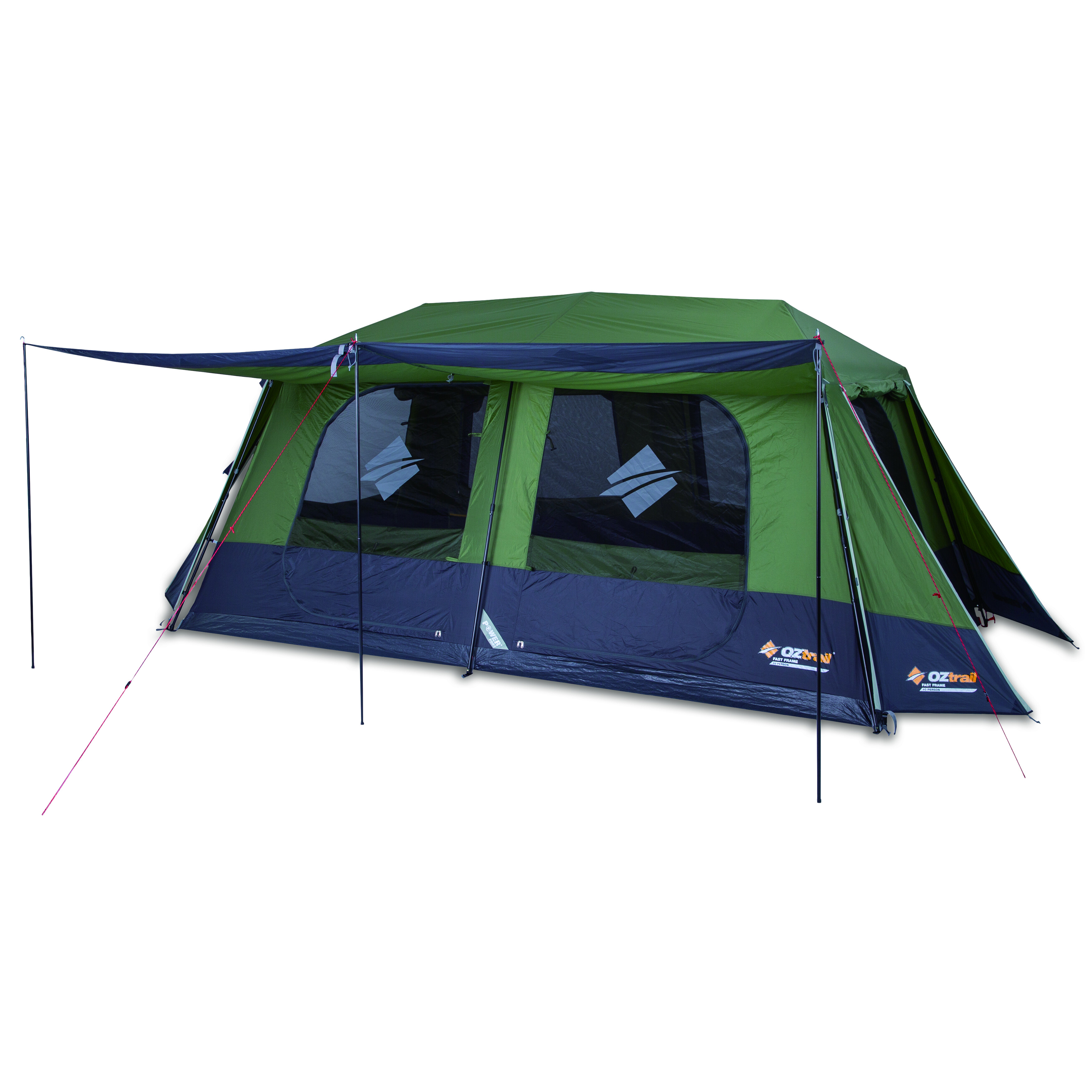
OZTRAIL FAST FRAME TENT
After a long day out on the tracks, the last thing anyone wants is to spend hours setting up lodgings for the night. With an OZtrail Fast Frame 10-person tent, you’ll be off to sleep in no time. The system’s strong integrated hub system is designed for fast pitching, plus it has enhanced headroom and internal space. The 1500mm waterhead rated Ripstop polyester fly will keep you dry, while the heavy-duty PE floor is built for durability. It also has flexible shade options, with front and full side awnings.
RRP: $679.99 Website: www.oztrail.com.au
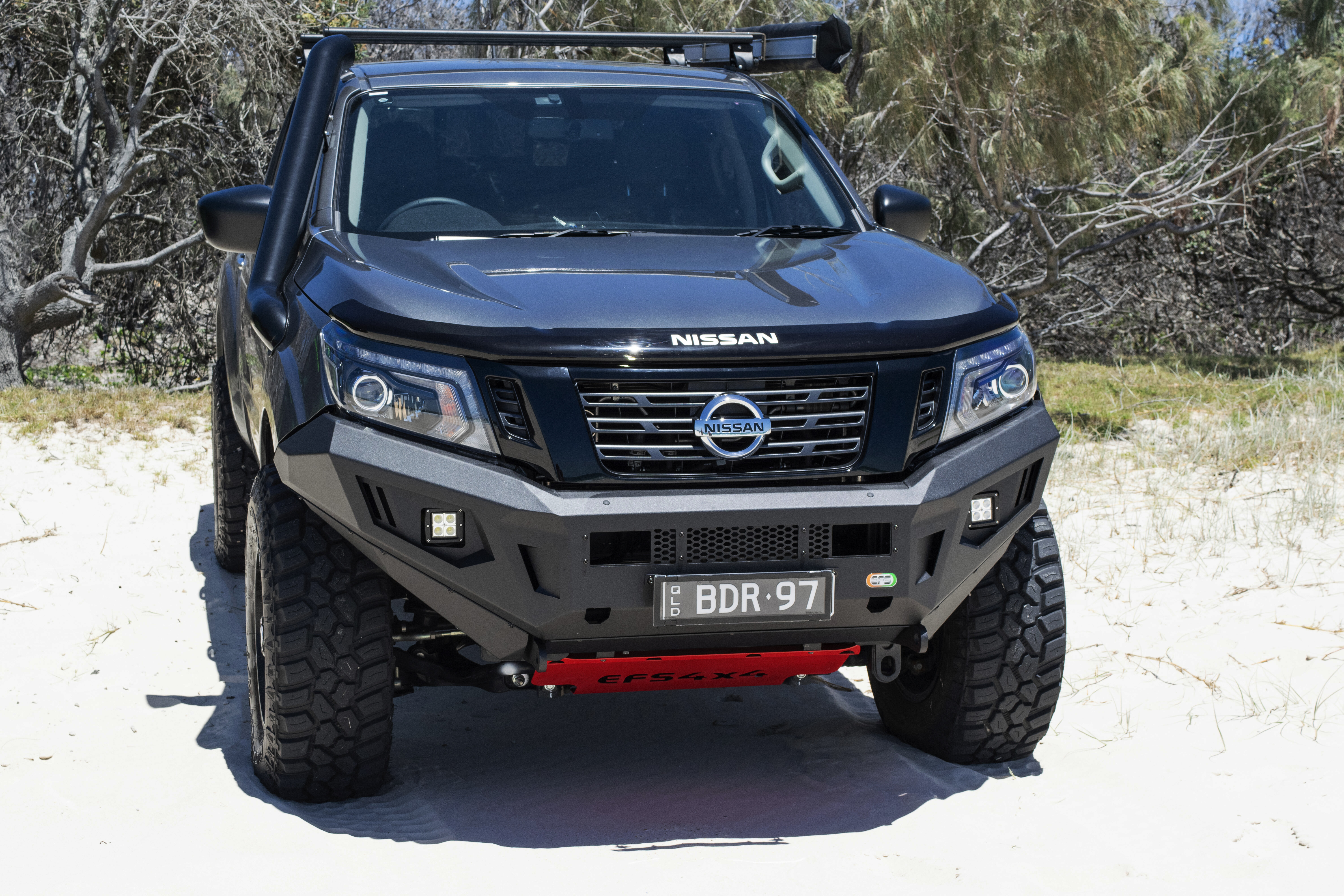
EFS XCAPE BAR
Designed to suit the Nissan Navara NP300 (coil cab and king cab leaf-spring 2015+ models), the EFS Xcape bars are made from high-quality steel and finished in EFS’s Endura coat for maximum protection. Designed specifically to suit Australia’s unforgiving climate, the slimline bar is winch-ready and features LED lights, robot welds, lower bash plates, and high clearance for greater approach angles. The Xcape bars comply with Australian design rules and are air-bag compliant.
RRP: $1799 WEBSITE: www.efs4wd.com.au
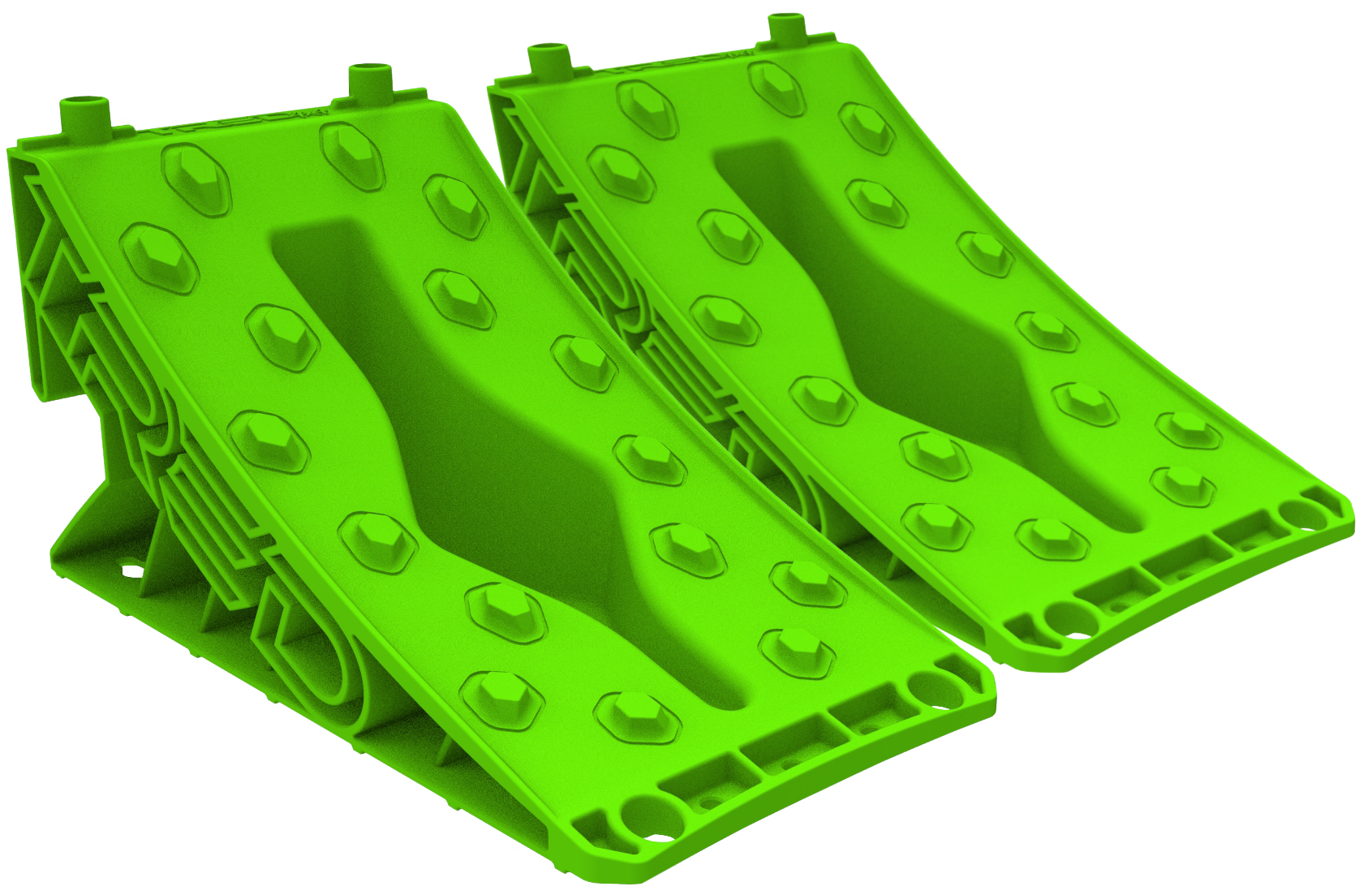
TRED WHEEL CHOCK
Ditch the brick or block of wheel sitting ugly in your garage and pick up TRED’s new Wheel Chock, which has been designed to safely and securely keep your 4×4, trailer and/or caravan in place. The Australian-made unit has a tyre-hugging, aggressive profile, so it won’t slip, and features multiple securing points and TRED-link so it’ll snap together for neat and easy storage. A rope-fixing point allows for easy retrieval, and it’s available in black and green.
RRP: $19.95 WEBSITE: www.tred4x4.com.au
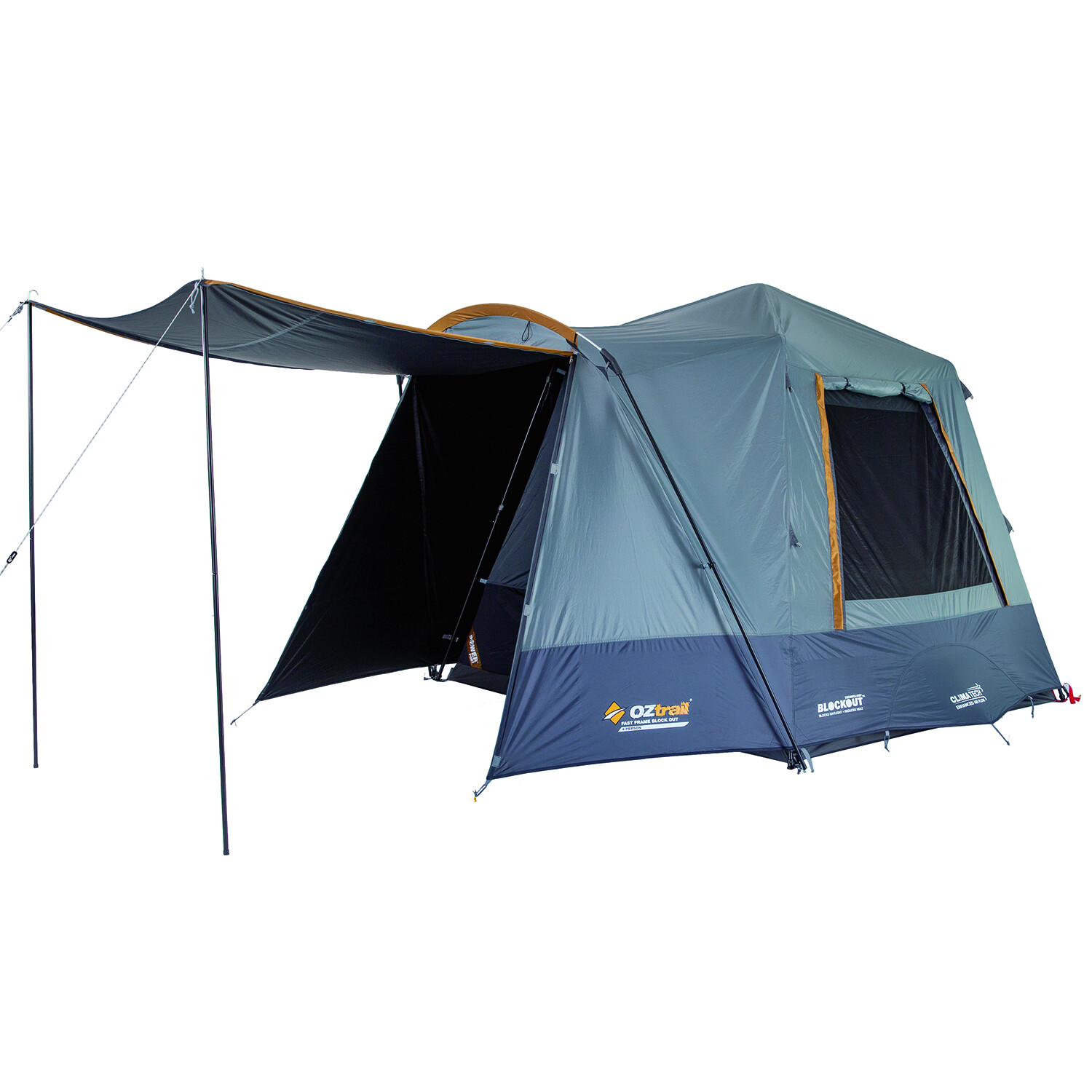
OZTRAIL FAST FRAME BLOCKOUT 4P TENT
Skip the sunrise on your next camping adventure and have a sleep-in inside OzTrail’s Fast Frame BlockOut tent. The BlockOut technology is said to block light by up to 95 per cent and reduce heat by 10⁰C. The single-room tent includes a Fast Frame system which features an integrated hub designed for “fast pitching, enhanced headroom, internal space and strength”. ClimaTech vents are also utilised to enhance ventilation. The tents are made with 3000mm waterhead rated Ripstop polyester fly, with tough Polyoxford floor.
RRP: $529.99 WEBSITE: www.oztrail.com.au
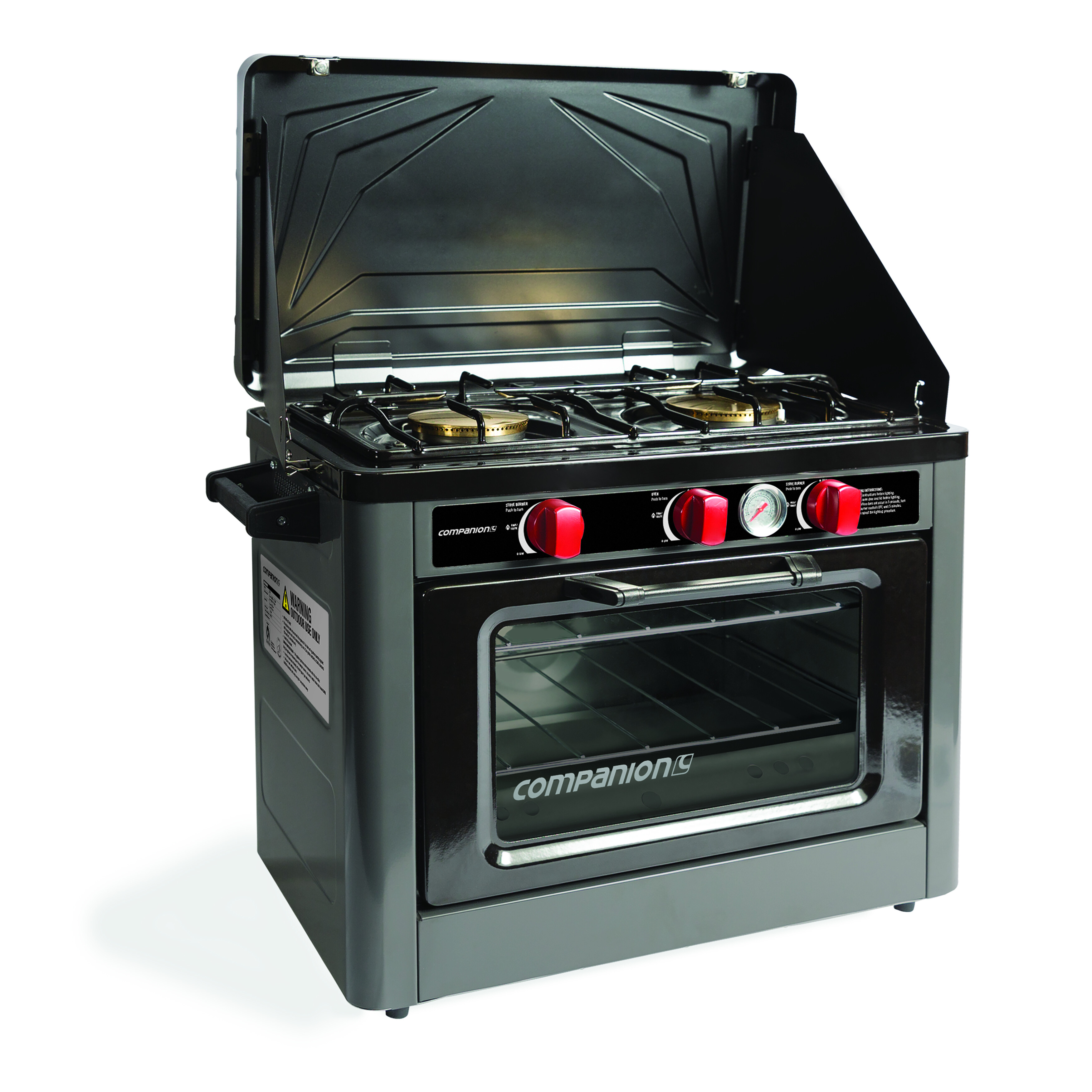
COMPANION OVEN/COOKTOP
Roast for dinner? Be the envy of the other chefs at camp on your next adventure with your very own stainless-steel oven and cooktop combo (the cooktop burners are brass). The low-pressure design makes it ideal for caravan and camping use. The unit features easy-start piezo ignition, a flame failure device inside the oven, temperature-resistant porcelain that can be heated up to 250⁰C, a built-in thermometer, and a 1000mm LP gas hose and regulator for connection to POL cylinder.
RRP: $499.99 WEBSITE: www.companionoutdoor.com
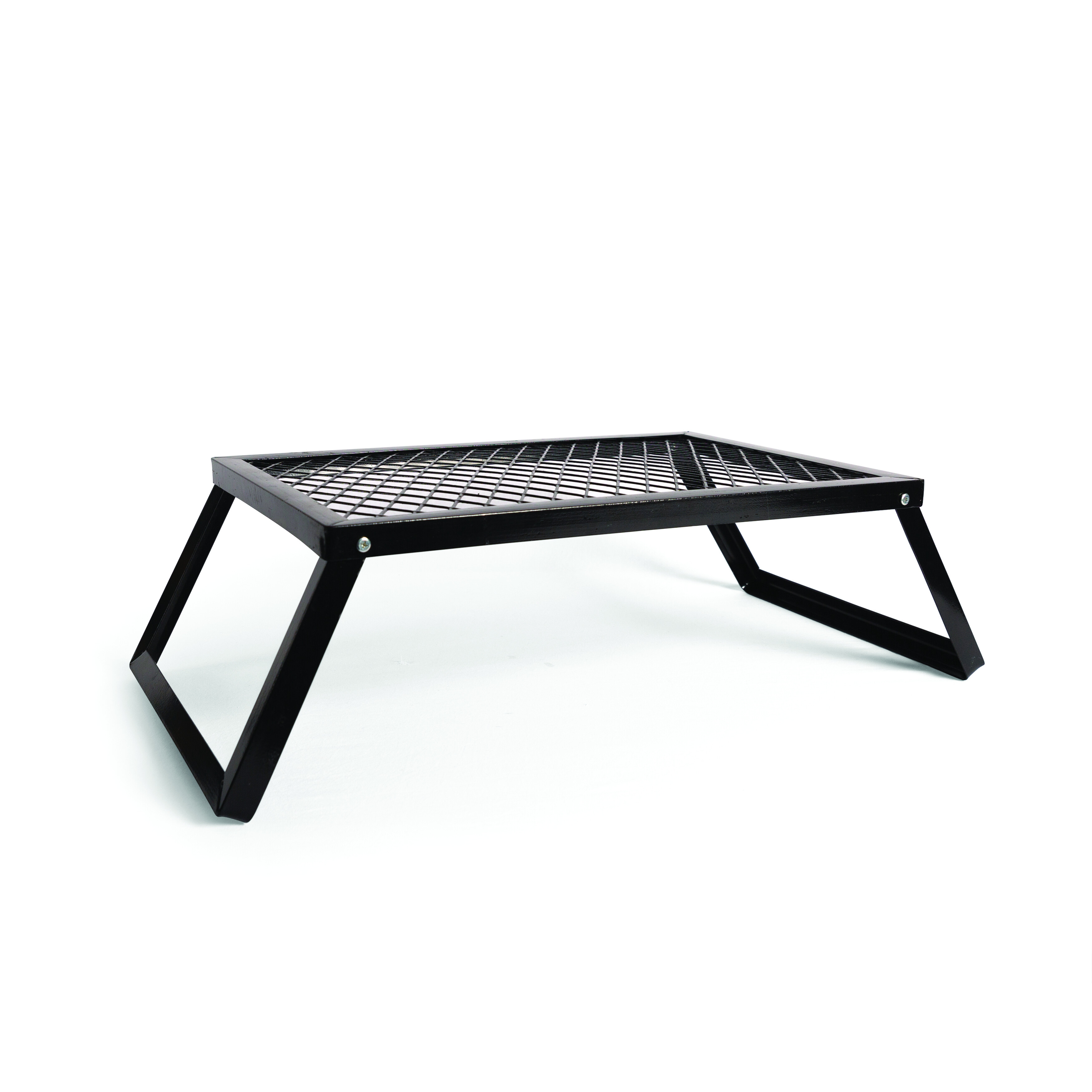
CAMPFIRE CAMP GRILL
Cooking a feast for the family? You’re going to want more cooking space. Enter the camp grill from Campfire. With an expanded metal grill surface – a cooking area of 60 x 40cm – the Campfire camp grill is an ideal tool to cook your dinner over the campfire. Not only does its clever design allow you to easily position it above a campfire, the legs fold down so that it can be easily stored in the back of your 4×4 without consuming too much space.
RRP:$59.99 WEBSITE: www.campfirecook.com
Snapshot
- Disguised PRO-4X Warrior caught testing
- Expected in showrooms within three months
Spy shots have leaked online revealing a prototype Nissan Navara PRO-4X Warrior dual-cab ute testing in Melbourne.
The PRO-4X Warrior is expected to arrive in local showrooms within the next three months.
Much like the PRO-4X which launched earlier this year, the top-spec Warrior model will get the four-cylinder 2.3-litre twin-turbo diesel engine capable of 140kW and 450Nm. Much of the same equipment is also expected to carry over.
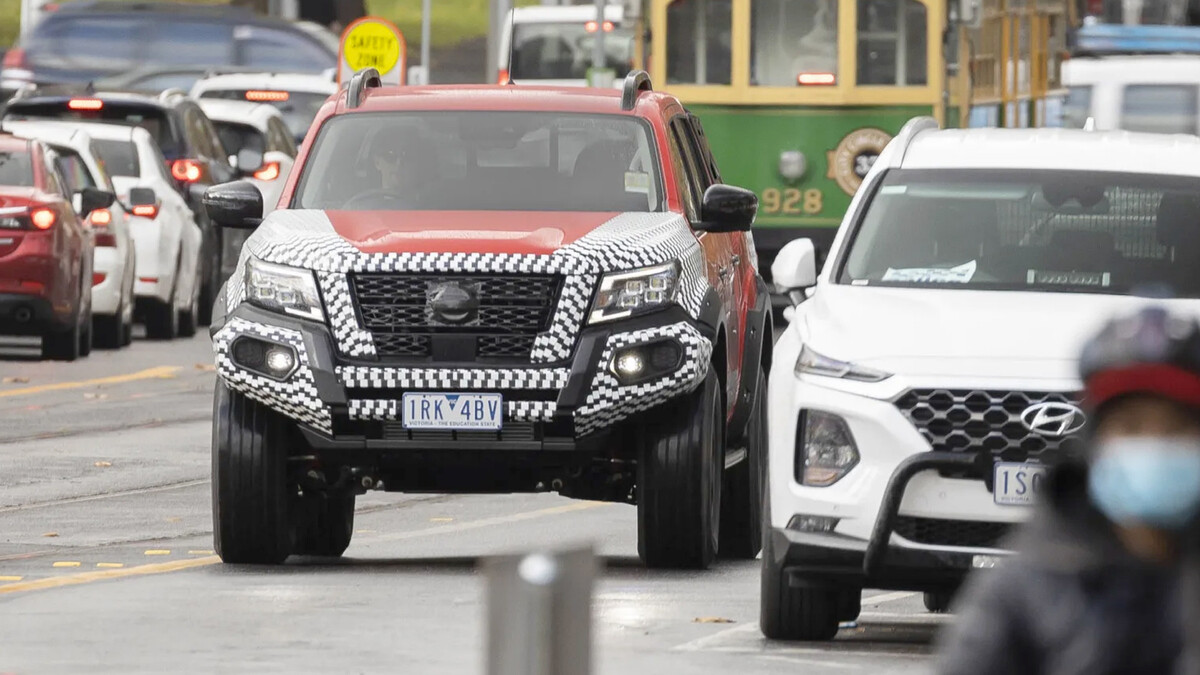
The 2021 Navara PRO-4X debuted earlier this year with a bold, new look, mimicking the rugged front-end style of the Titan in the USA. In doing so, Nissan dropped the N-TREK nomenclature of the flagship Navara.
The N-TREK Warrior wore specially tuned springs and dampers and came with a bigger wheel and tyre package than the base N-TREK. It also had a bespoke steel front bar, underbody protection, siderails, an LED light bar, a redesigned towbar and various styling enhancements.

It was re-engineered locally by the folks at Premcar in Melbourne, with this strategy expected to continue on the PRO-4X Warrior.
The PRO-4X double-cab starts at $59,790 with the six-speed manual gearbox or $61,290 with the seven-speed automatic. Expect to dig a little bit deeper for the Warrior – for comparison’s sake, the N-TREK Warrior when it launched started at $63,790.
No proper touring 4×4 is complete in Australia without frontal protection.
You don’t have to head far from any major city or regional centre to see just how many ’roos are out there, or how much carnage an unprotected vehicle can sustain in the event of an impact. This is why we decided the first thing to get added to our D-MAX was a sturdy steel bullbar from Ironman 4×4.
We chose the Commercial Deluxe bar, for a number of reasons. Firstly, it just looks right. Designing a bullbar for the new D-MAX would have been an engineering nightmare, thanks to all the additional safety features found in this model.
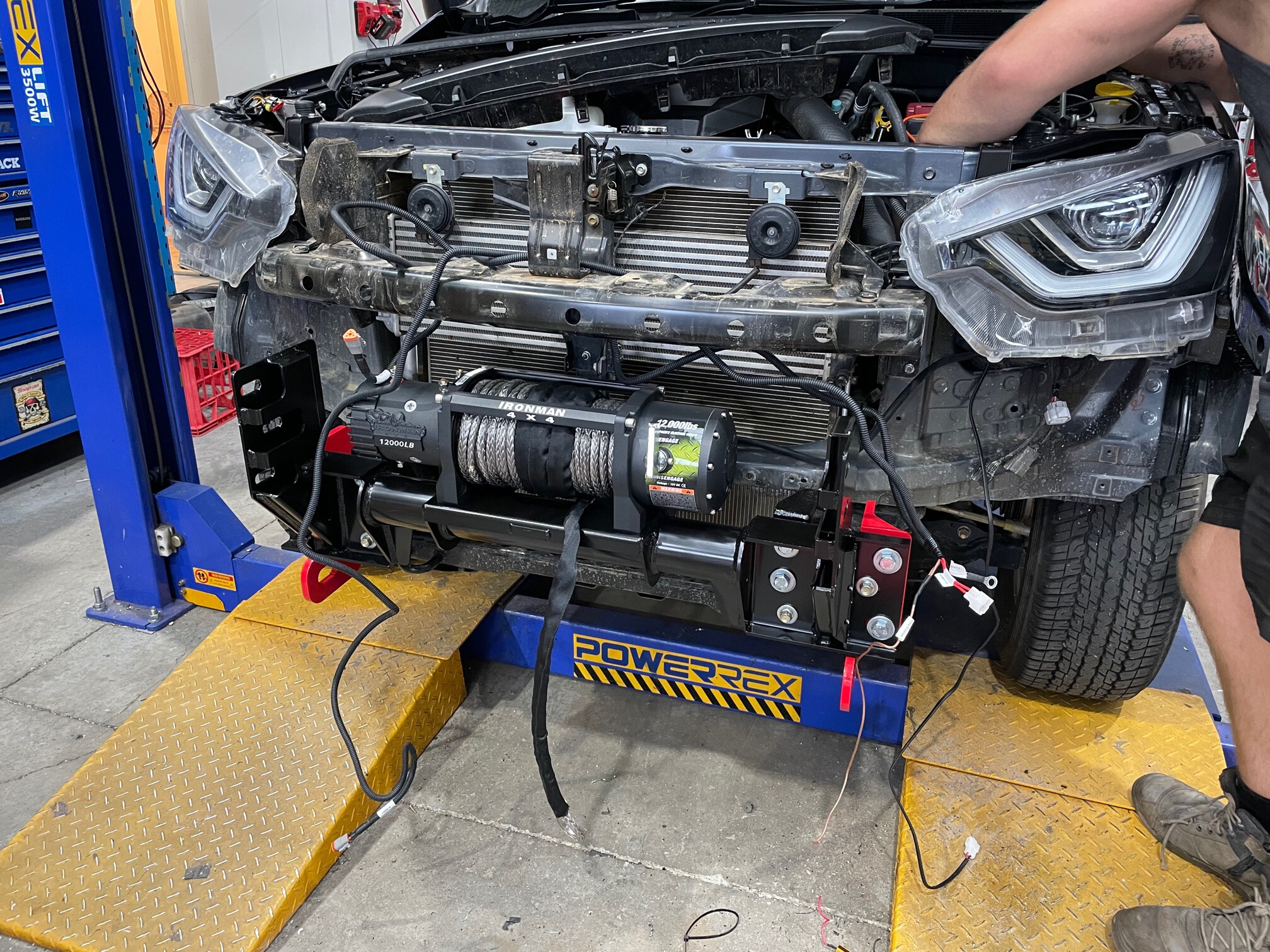
Taking in to account those limitations from a design point of view, I feel Ironman 4×4 has done an awesome job designing this bar. It doesn’t impede the vehicle’s cameras and sensors, while still looking modern and dare I say, aggressive. Seeing it drive out of Truracks in Penrith (which did the fitting – thanks guys) made me almost feel like a proud parent. Our little ute was growing up.
As well as the bullbar, we decided to have a bunch of other gear fitted at the same time. As the front bumper was coming off, it would be rude not to basically. The main addition is a 12,000lb Ironman 4×4 Monster Winch with synthetic rope. I really like the positioning of the clutch handle; you don’t need to be a yoga instructor to operate it. I also rate the supplied controller, with built-in LED light and the ability to run it wireless or plugged in with everything supplied to do either. There was even a winch damper included, which I feel is a neat touch.
While the tools were out, a pair of rated recovery points were bolted on as well, again we didn’t want to be doing things twice. All that is left to do now is some underbody bash plates, which should arrive any day now.
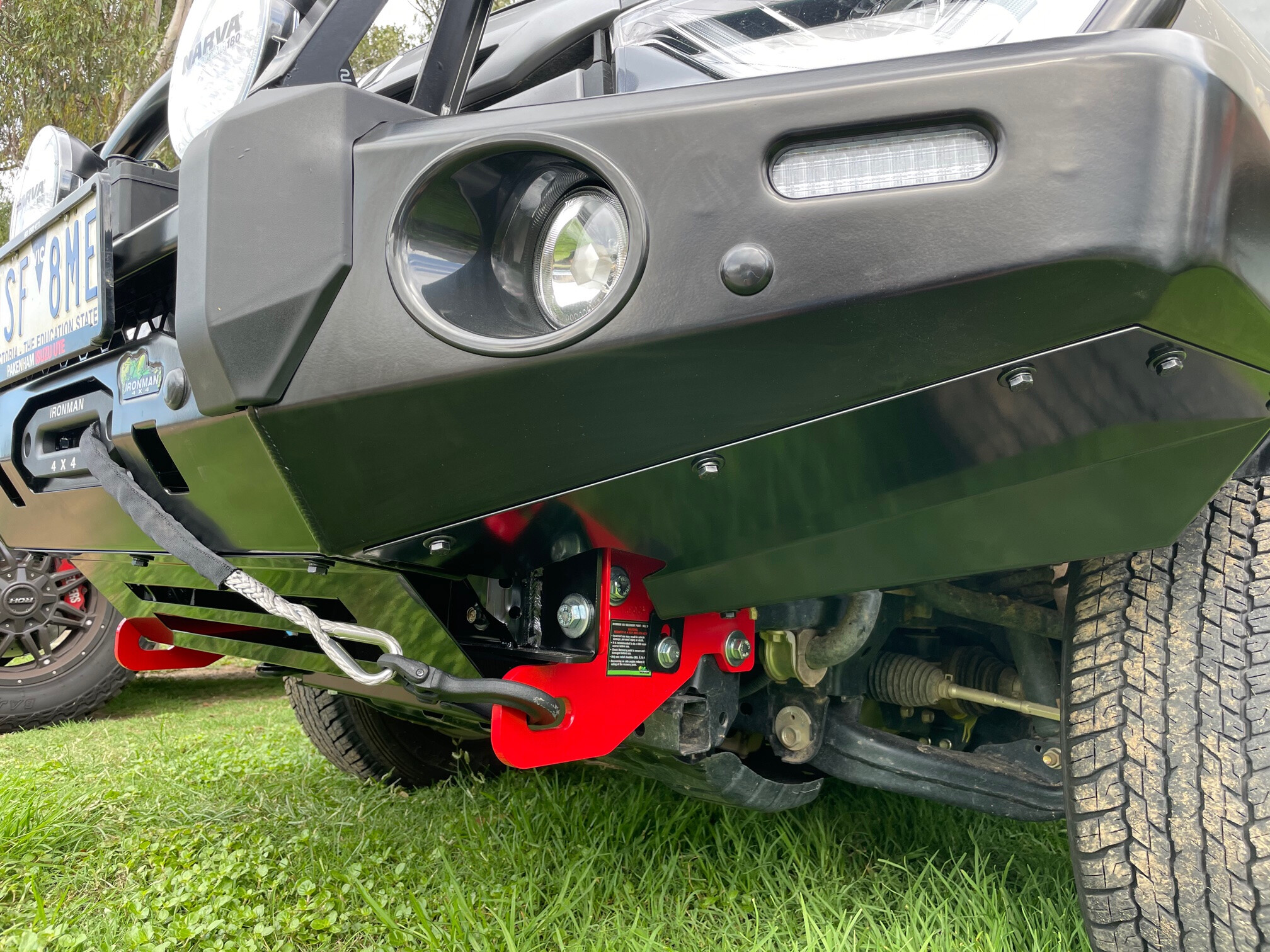
All in all, this is a really good first mod to do, as we wanted to add weight to the vehicle, so we could set the suspension and wheel alignment just right. We also had the Truracks’ team wire up a set of Narva 180 MkII LED driving lights, with daytime running lights; but we’ll focus on these more in a full upcoming review.
As a side note, adding the weight of the bullbar, 12,000lb winch and recovery points made the stock suspension sag 20mm. If you were to do these mods to your vehicle, I’d strongly recommend upgrading the suspension as well.
A trip to Tough Dog Suspension is up next for us, to fix this issue and one other major problem we have with the stock D-MAX suspension.