
Visitors to Barrington Tops National Park and neighbouring Chichester State Forest will be spoilt for choice with what is on offer here for the off-road tourer.
Fantastic camping (including some of Australia’s highest-altitude campgrounds), bushwalks, mountain biking, fishing, some of the country’s most spectacular rainforest (including Antarctic beech trees), and vistas from myriad lookouts all mean a long weekend will barely do it justice.
Around four hours’ drive north of Sydney, these destinations are best accessed from the south via the township of Dungog. Chichester State Forest’s eastern (Telegherry) section (it is split by a southern section of Barrington Tops NP) is only around 20km north from Dungog (via Chichester Dam Road, then Wangat Road) and offers four riverside campgrounds.
Be aware that there are numerous causeways in both the Telegherry and western Allyn River sections that can be impassable after heavy rain, so check track conditions before your visit. Each of the campgrounds in the Telegherry section offer direct access to the river of the same name, so bring your canoe and swimmers.
Frying Pan Creek and Coachwood campgrounds are close together and reasonably spacious, so they’re great for larger groups, and Coachwood is right next to the start of a short walk to the Problem Creek Falls. For those wishing to escape the crowds we’d recommend Currawong Camping Area, a remote, 4×4-only campground just north of Telegherry campground accessed via a river crossing that needs to be negotiated.
Once here, you’ll find brilliant swimming and canoeing in the Telegherry River. The state forest’s western Allyn River is a 40km drive north from the small village of Gresford, 28km west of Dungog, and you’ll need to follow the Allyn River Road to reach the state forest’s southern gateway.
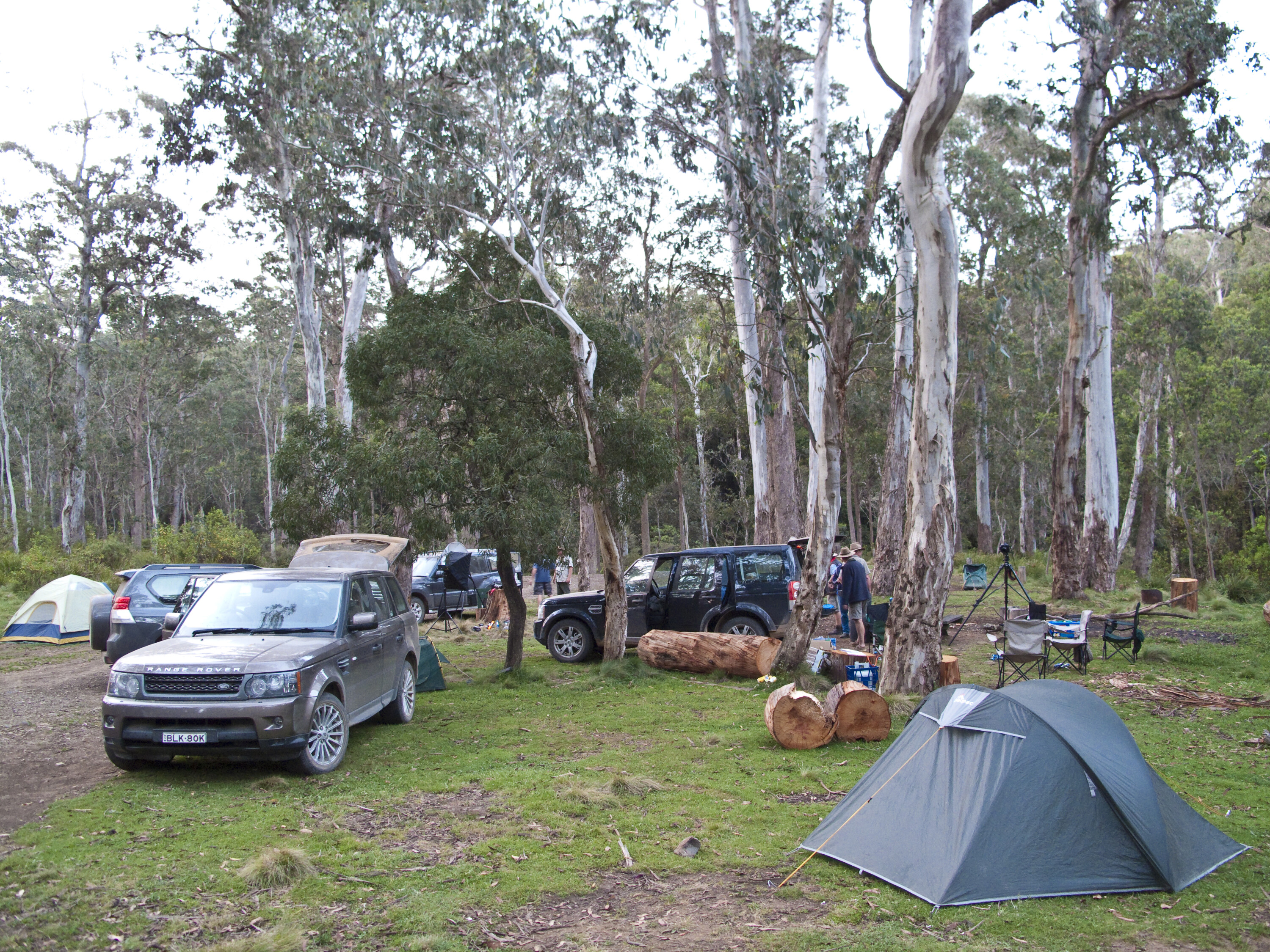
Three largish campgrounds are located just inside the state forest – Dobbie Rim, Pademelon and Old Camp – all of which offer spacious sites that are ideal for off-road camper trailers and caravans. Just north of Old Camp is Ladies Well, a beautiful swimming hole on the Allyn River that’s perfect for families.
Continue farther north into the state forest to reach Allyn River Forest Rest Area, a day-use area with direct access to the Allyn River for swimming and canoeing. Farther north along Allyn River Forest Road you’ll find the northernmost campground of White Rock, which also offers direct river access.
It would be easy to spend a few days in Chichester State Forest, but we’d recommend venturing to the lofty mountains above it that comprise Barrington Tops National Park. The World Heritage-listed national park is best accessed via the town of Gloucester. There are campgrounds aplenty throughout the park, but the 4×4-only campgrounds are recommended to avoid the crowds.
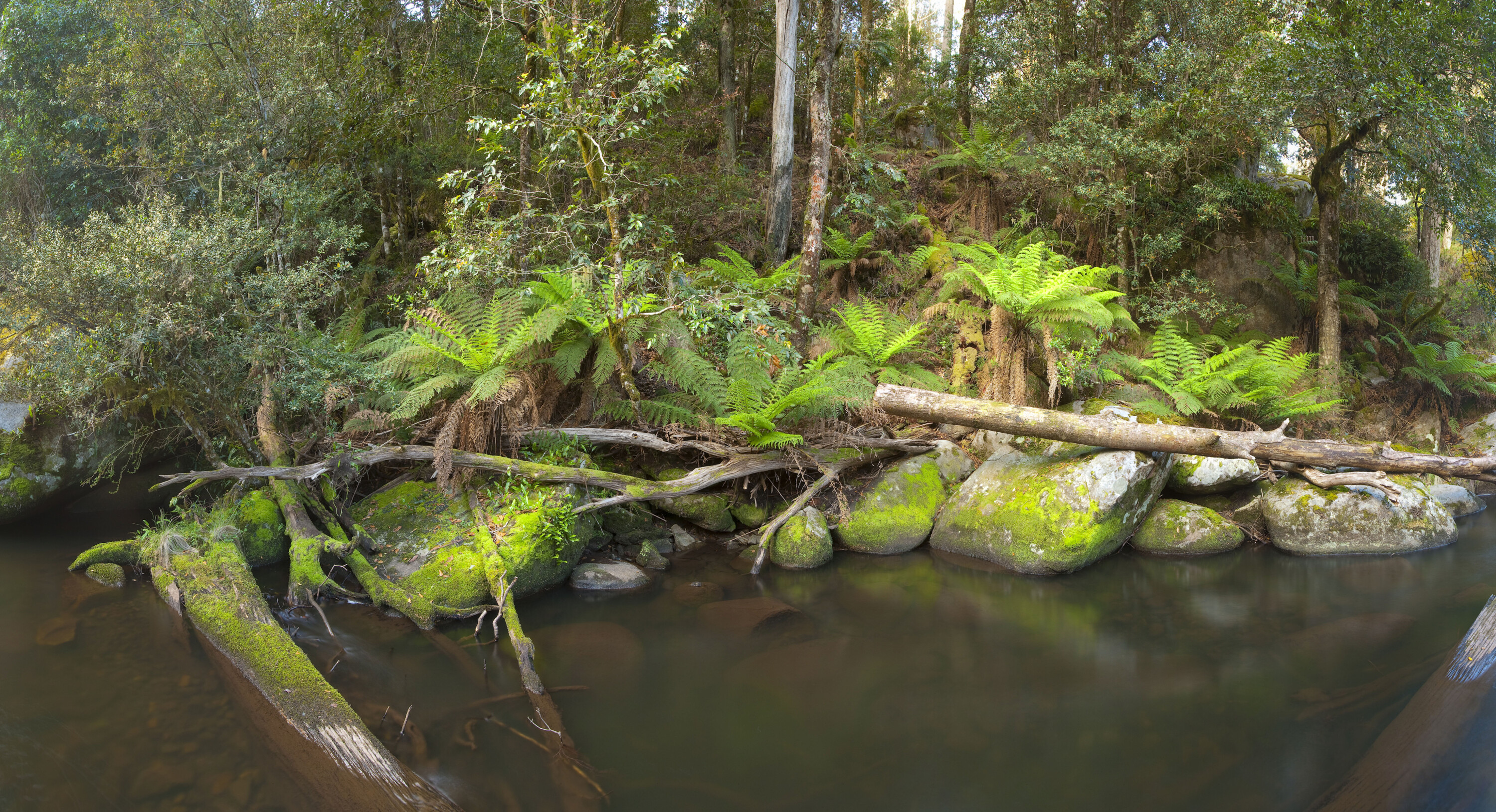
The Barrington Trail is a seasonal 4×4 track (October-May) that runs south along the plateau from the Barrington Trail picnic area off Forest Road. This 15km route provides access to Little Murray and Junction Pools campgrounds, as well as Mt Barrington Picnic area and two of the park’s bushwalk tracks: Aeroplane Hill and Careys Peak.
Little Murray Campground is the launch point for the walk to access Careys Peak Lookout’s epic views, while Junction Pools offers great swimming and trout fishing in the nearby mountain streams. The campground also provides access to the 12km-return Aeroplane Hill Track which passes by Careys Peak Lookout, or you can just sit in camp and watch the local wildlife forage in the sub-alpine grasslands that define this beautiful part of the park.
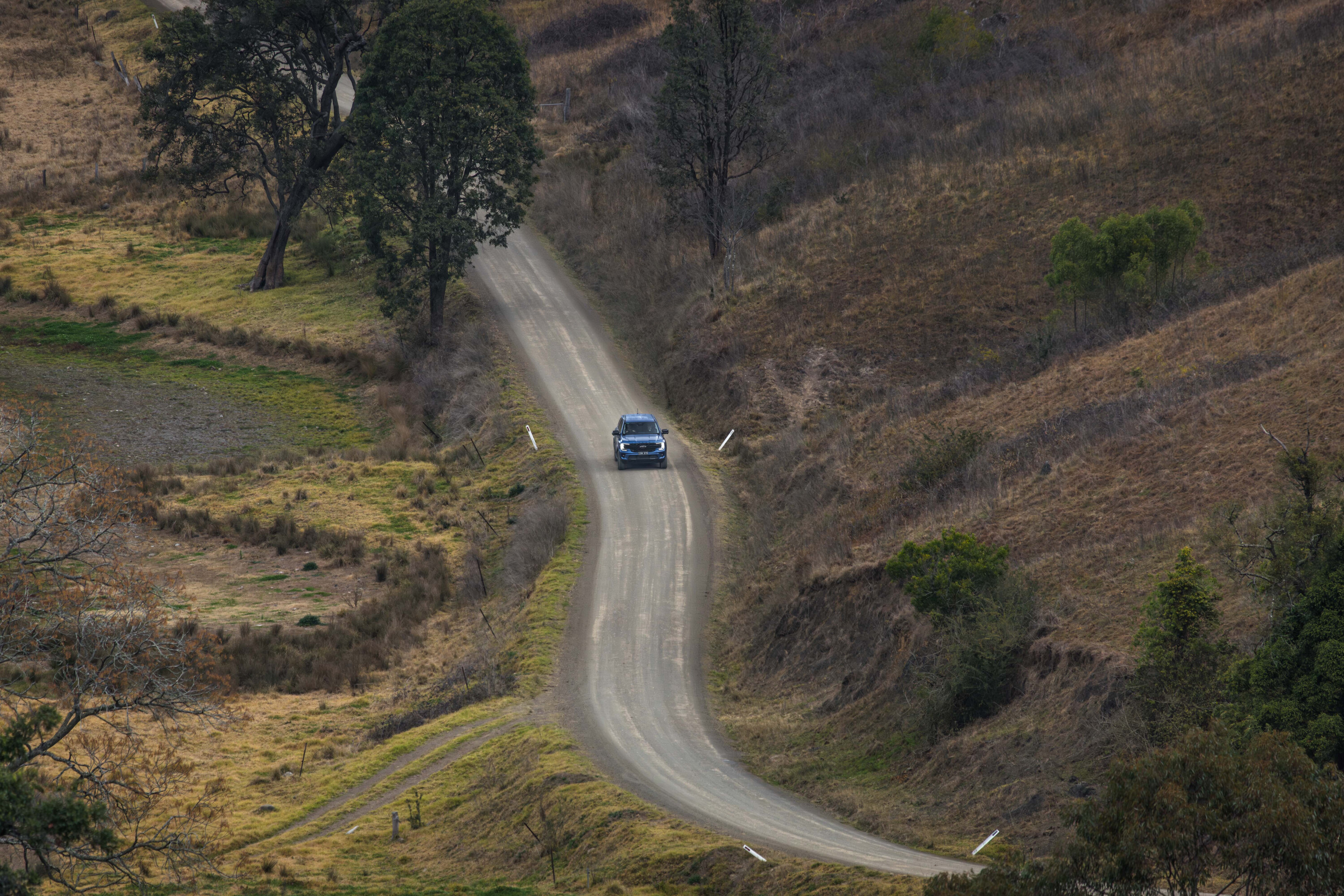
The bushwalking in Barrington Tops NP is comprehensive and ranges from short walks to lookouts that take in the views of this World Heritage-listed area, through to day walks such as the excellent Gloucester Tops circuit.
This half-day walk takes in three separate sights – Gloucester Falls, the River Walking Track, and the Antarctic Beech Forest walking track – that combine to showcase the variety of landscape in the park. All of these walks can be done separately if you have little ones in tow, while overnight routes and multi-day epics that traverse the entire mountain range and then drop down to the lowlands are available for serious walkers.
Best time of year: June 1 to September 30.
Oxley Wild Rivers NP lives up to its ‘wild’ title with a mix of high ridgelines, deep gorges, free-flowing rivers, towering waterfalls and an abundance of native fauna and flora.
Add in fishing, bushwalking, photography, swimming and canoeing opportunities and it’s a no-brainer as a destination. The off-roading ain’t bad, either, with steep, technical low-range-only tracks leading to beautiful campgrounds such as Riverside (located right next to the Aspley River) and Youdales Hut (beside the waters of Kunderang Brook).
There are a total of nine campgrounds in the park. Or, for those who don’t want to ‘rough it’ too much for their overnight digs, there is the option to stay at a restored historical homestead inside the park.
Oxley Wild Rivers National Park can be accessed at various points running south from Walcha along the Oxley Highway. Access is a bit tricky, owing to the park being part of the Kunderang Wilderness Area and thus having no real ‘through’ track.
The park comprises two separate sections, which means that, if you’re keen on camping at Riverside (and we’d highly recommend that), you have to do a bit of out-and-back driving on what is one of the park’s steepest tracks – Moona Plains Road.
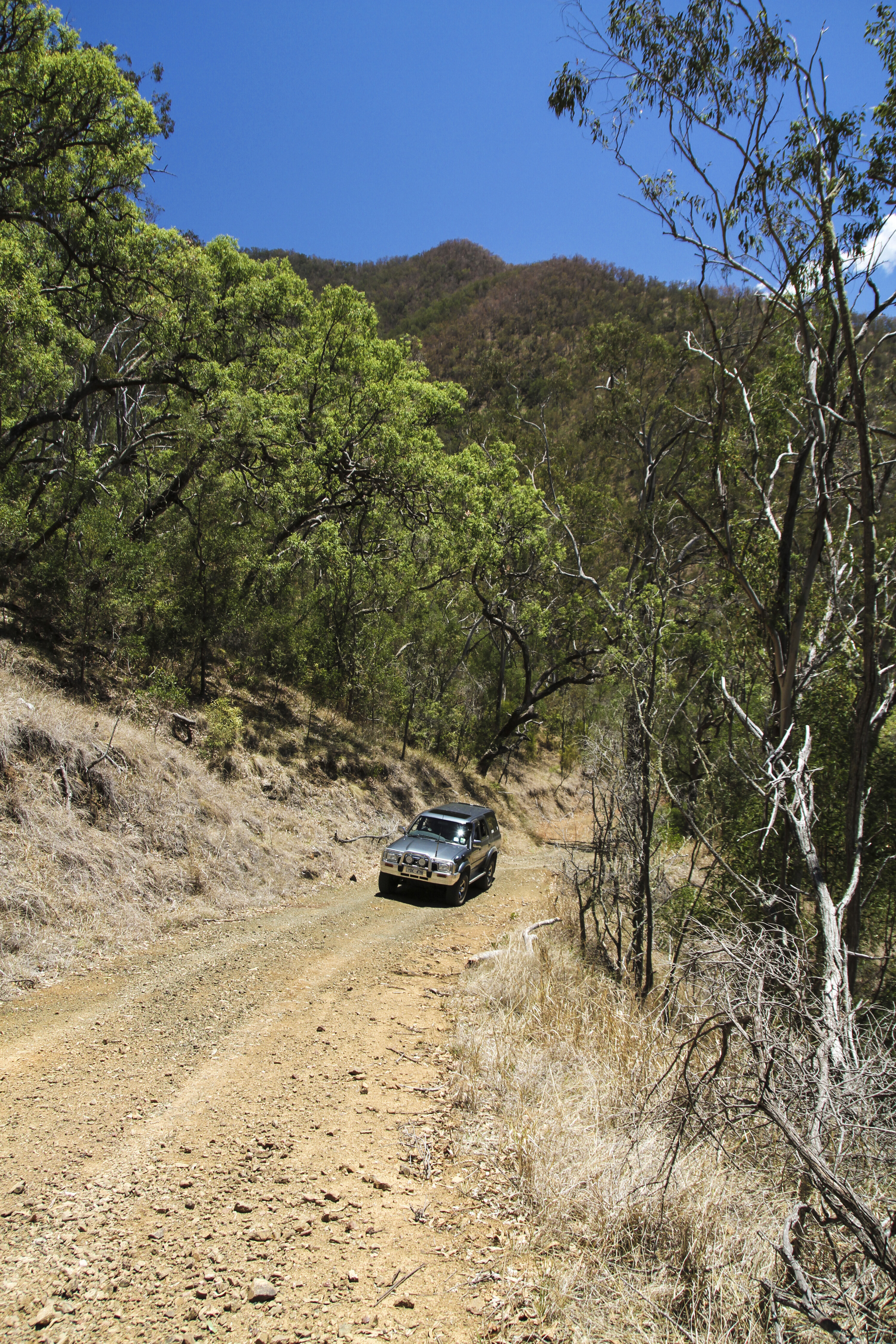
This road tracks east from Walcha and takes you past the Budds Mare campground via a gated access road that crosses private property (hence the gate). Budds Mare is a great campground, but we recommend dropping into low range to tackle the super-steep 700m descent to Riverside campground. It’s so nice there you won’t want to drive back up the hill.
It may seem a bit rich for National Parks to charge a considerable fee for camping at this site, but when you consider that camping numbers are controlled, there’s a river right beside you that offers fishing, swimming and canoeing, and there are plenty of amenities (toilets, tables, gas and barbecue facilities), it’s a small price to pay.
Yep, a full day and night here is a must, with the return up the steep access road the perfect farewell to Riverside and an exhilarating start to your second day in this immense park.
If you didn’t check out the amazing Apsley Falls on the way in, definitely take the short detour on your way out along Moona Road, before cutting through from the falls to the Oxley Highway for a quicker way to the park’s southern access point of Kangaroo Flat Road.
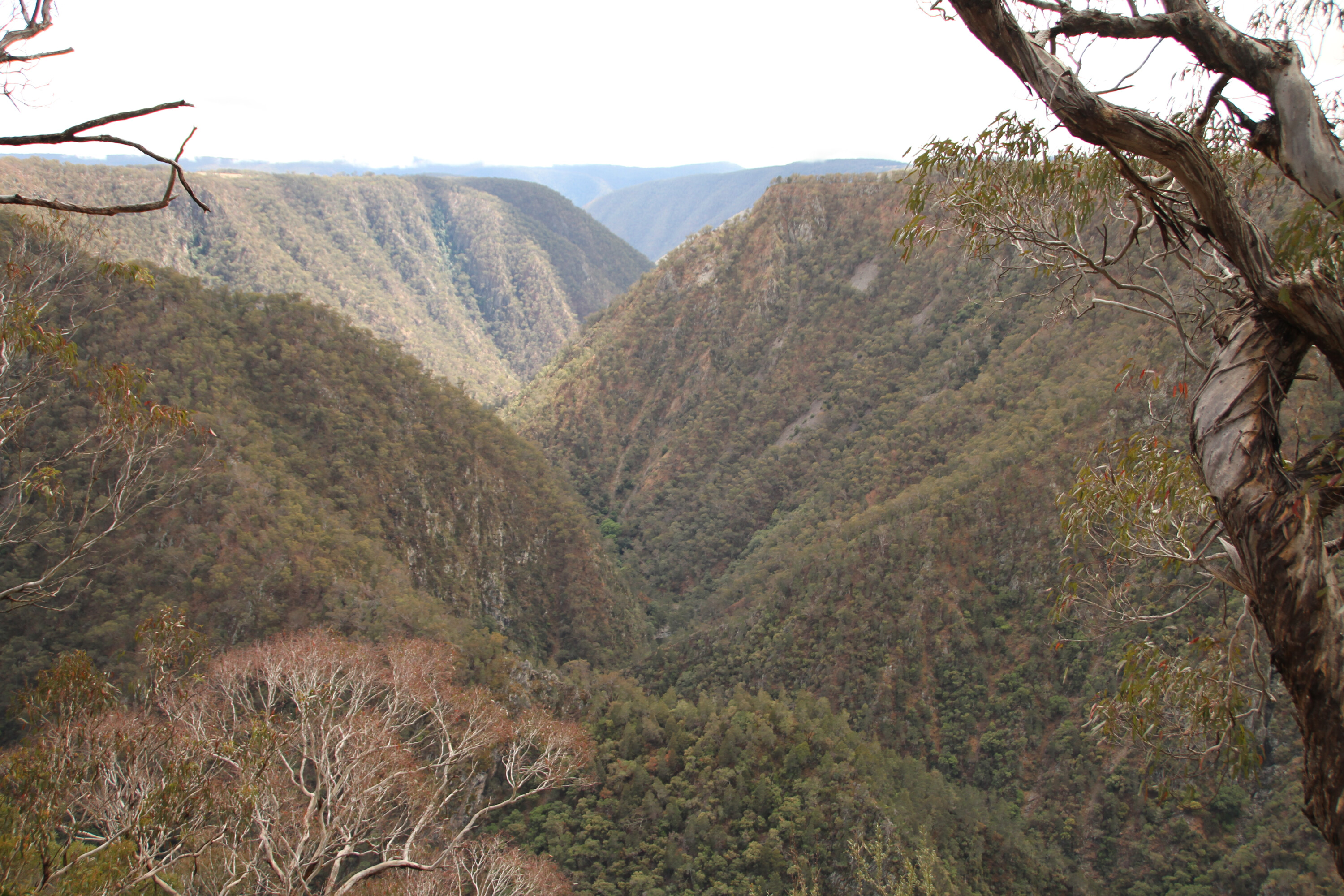
The Tia Falls side-trip walk is a must along the way, offering sweeping views across the falls and the numerous deep gorges. From the Kangaroo Flat Road turn-off, follow this northeast for around 20km before it becomes Mooraback Road and diverts briefly into neighbouring Werrikimbe NP, passing the camping area of the same name.
The track soon re-enters Oxley Wild Rivers NP, dropping into another steep descent that takes you way down to the historic site of Youdales Hut and Stockyards.
The access track is steep and low-range-only, and there’s a creek crossing (do yourself a favour, check for water levels before tackling this track) before you reach the open areas surrounding the hut. The slab-side hut showcases the perseverance of early settlers as they chased their dreams in this rugged mountainous area. The hut is well-preserved and it’s worth spending a bit of time checking it out, as well as the nearby stockyards.
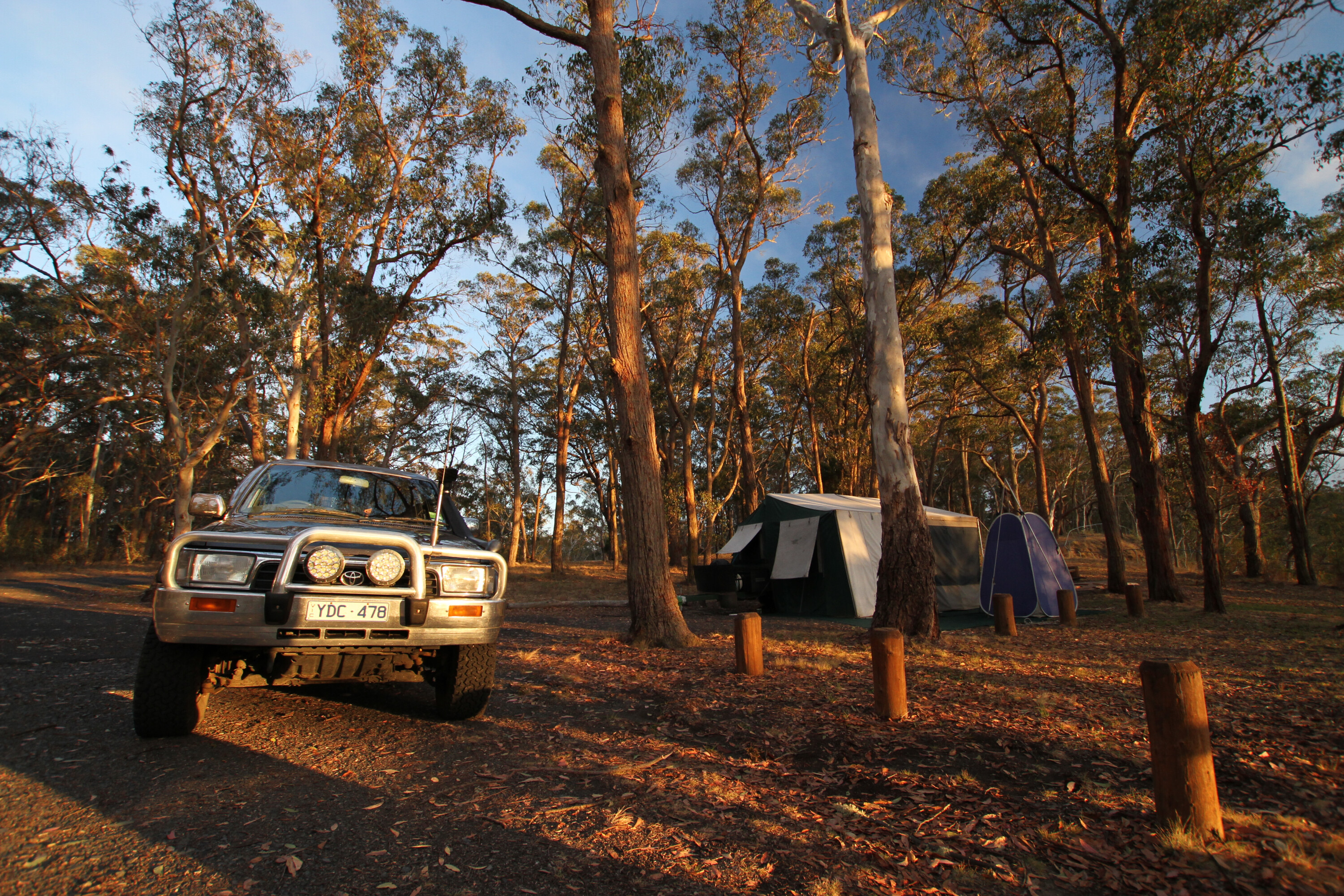
Youdales Campground (permit and access key is required – you can only camp in the campground, not in the hut) is near the historic site and, nestled beside the bubbling waters of Kunderang Brook, is another brilliant place to doss down for the night.
The campground is located between Kunderang and Werrikimbe wilderness areas, so there’s plenty of wildlife here – keep an eye out for birds, goannas, wallabies and dingoes. The following morning, it’s worth taking a wander on foot (or on bikes) along the Bicentennial National Trail before driving back up and out of the valley.
Accommodation at Oxley Wild Rivers NP isn’t limited to its nine excellent campgrounds; for larger groups of tourers, the fully restored historic East Kunderang Homestead provides a unique doss-down option. It’s accessible from the park’s eastern side via Kempsey – follow the road all the way to Georges Junction on the border of Cunnawarra NP, and then track south to the locked access gate.

The cedar-slab homestead was restored in 1992 and has five bedrooms (a maximum of 14 guests), lounge and dining room, two bathrooms, kitchen, toilets, barbecue facilities, picnic tables and an awesome large verandah. It’s the perfect weekend escape for extended families, but it ain’t cheap.
Rates start at $1200 for a three-night weekend, while a four-night stay during the week is the same price. However, if you can get the numbers and split costs, it makes for damn cool digs.
Plus, the location is sublime. The Macleay River runs right by, so there’s ample opportunity for fishing, swimming and canoeing, and there are a few walking tracks nearby. Of course, nothing would beat sitting on that huge verandah with a coldie watching the sun go down.
Oxley Wild Rivers NP is probably at the limit of a three-day escape from the city, however, when it offers big mountain scenery, 14 waterfalls, great camping, canoeing, fishing and swimming in the wild rivers, and the chance to check out some Aussie pioneering history, we reckon it’s time well spent.
Grade: Moderately challenging. Best time of year: All year, but winter can be chilly.
Deua National Park is one of NSW’s most popular national parks for good reason.
The park is nestled in a rugged, mountainous part of the Great Dividing Range that’s crisscrossed by beautiful mountain rivers, creeks and a network of caves, and it sits midway between the coastal town of Moruya and Canberra. For Canberra residents, the park is a couple of hours’ drive (it’s even closer for those living on the coast). From Sydney, it’s roughly four hours’ drive to the park’s northern boundary via the historic town of Braidwood.
The popularity of the park is due in part to great off-roading, especially the drive to the most popular camping area of the Bendethera Valley. Whether you come in from the coast or the north-western route, the tracks wind up, down and over seriously rugged mountain terrain, with immense trees (and huge tree ferns) towering above.
The trees are sparingly interspersed with clearings that provide views of even more rugged mountains in the distance and – occasionally – glimpses of the valleys below. Then there are the creek crossings, but be aware of impending bad weather as these waterways rise very quickly after rainfall. The spacious camping area at ‘Benny’ (as it’s colloquially known) offers a mix of open sites, those closer to the trees, or spots next to a tranquil tributary of the Deua River.
For a three-day adventure driving from Sydney, the quickest way into Deua NP is via a blast down the Hume, then via Goulburn on to the Kings Highway to the village of Braidwood. The park’s north-west boundary is around 30 minutes’ drive south of here, via Cooma Road.
Entering the park here means you can spend the first night at Berlang Campground, which has 10 sites, barbecue facilities and toilets positioned alongside Shoalhaven River. From here, one of the park’s famous attractions, the aptly named Big Hole, can be reached via a left turn (sign-posted Berlang/Big Hole) off Cooma Road.
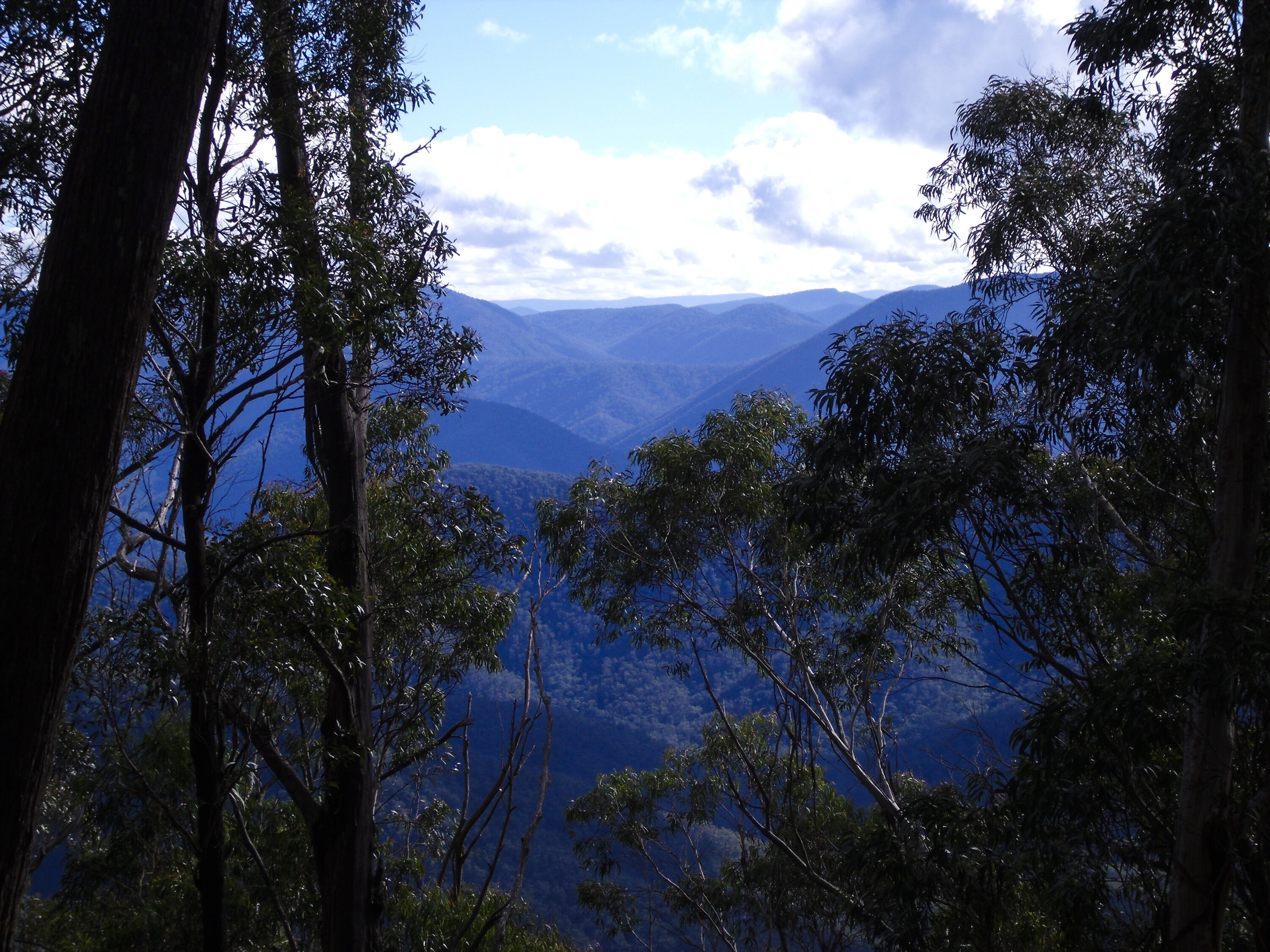
Big Hole is a massive, roofless limestone cave measuring more than 50 metres wide and an estimated 95-100 metres deep. The roughly 3.5km (return) bushwalk from Berlang Campground to Big Hole entails a crossing of the Shoalhaven River (there are stepping stones if the water level is low, but you’ll have to wade through if the water level is high).
Marble Arch, a nearby rock formation accessed via a loosely defined track, is different but just as spectacular as the Big Hole, with an open cavern to explore and a slot canyon nearby. Allow four to five hours (return) for these two attractions, before kicking back on your return to camp by enjoying a few coldies around the campfire as you plan the next day’s drive to the Bendethera Valley campground.
The descent into Bendethera Valley is preceded by an easy drive from Berlang Campground along Snowball Road, with a short detour to check out Wyanbene Caves before turning on to the Minuma Range Fire Trail. This rugged track leads to the Dampier Fire Trail, the steepest track of the day with a mix of tight hairpins, steep, rocky surfaces and incredible views across the ranges.
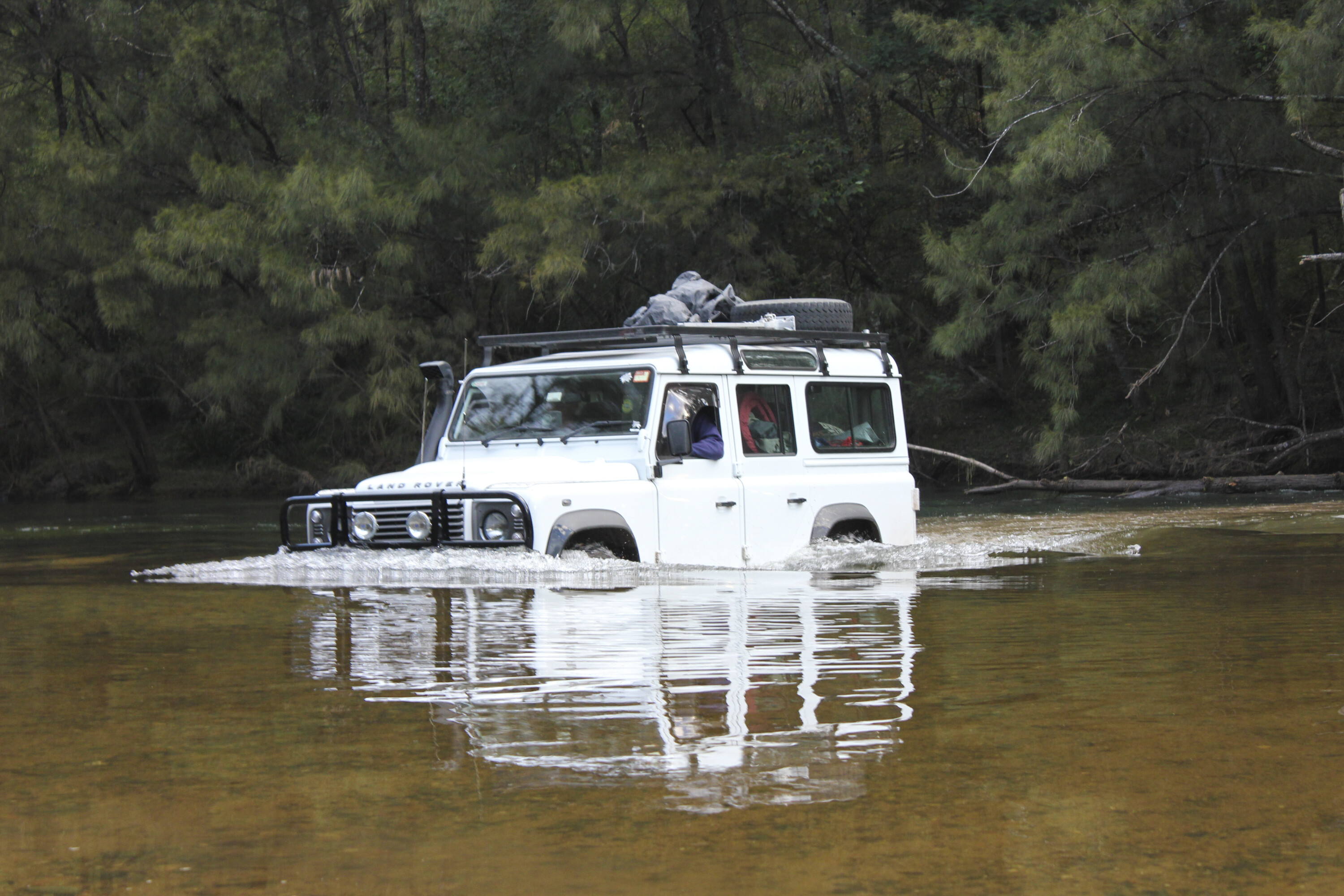
This descent takes time and caution, before finishing on the doorstep of the grassy Bendethera Valley campground. Originally Bendethera was a cattle property, often used by stockmen to rest cattle after they’d come down the mountains from Cooma and surrounding townships, before they were moved on to the coastal towns.
Incorporated into the national park, Bendethera is now a massive camping area with no actual sites, so you can camp anywhere from close to the Deua River to beneath the trees bordering the cleared valley. It’s a remote campground with limited facilities (a couple of toilets and barbecues/fire pits are dotted around the valley), so you’ll need to ensure you’re self-sufficient.
It’s less crowded during autumn, spring and winter, and it can be packed on summer weekends and during the Easter break. For the return to Sydney you can leave Bendethera and travel northwest via the same fire trail you came down, or you can opt to experience more of the park’s famously steep fire trails.
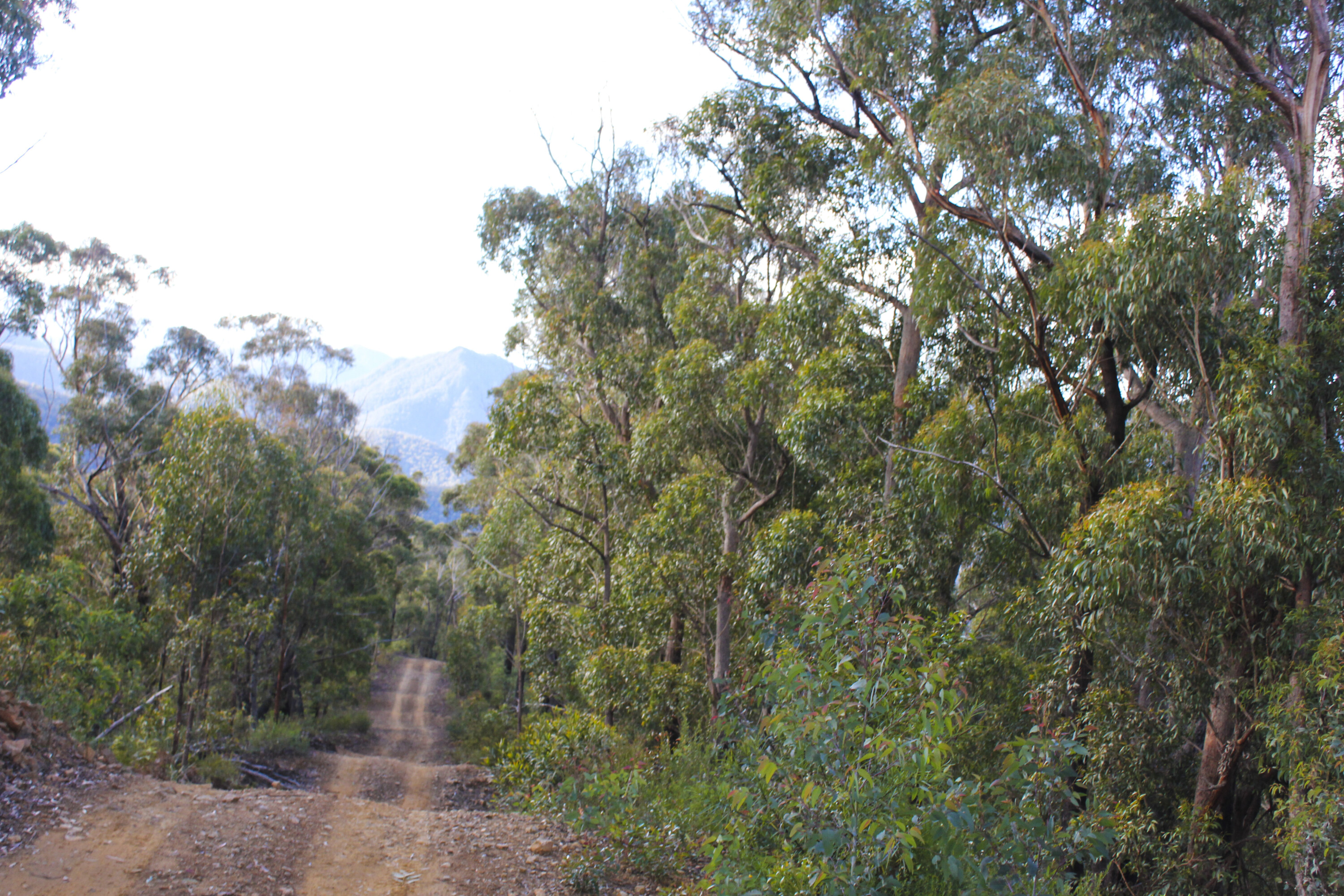
By choosing the latter, you’ll climb the Bendethera Fire Trail up to the junction with Mericumbene Fire Trail, before continuing on this undulating route and (eventually) dropping down 700m, joining the Dry Creek Fire Trail along the way. You’ll then tackle the final crossing of the Deua River, before reaching the comparative smoothness of Araluen Road.
From here you can opt to wind back up the mountains to Braidwood (via the awesome Araluen pub), or turn east and head to Moruya and the coast. A quicker and easier way to reach Moruya is following the Bendethera Fire Trail up out of the valley, and then turning right at the Mericumbene/Bendethera junction and joining Little Sugarloaf Road.
If you’ve got the time, head home via the south coast; if pressed for time, the return up Dampier Fire Trail and then back via Braidwood and Goulburn to the Hume is the go. No matter which way you return home, you’ll be travelling with some cracking memories of this iconic 4×4 destination.
Grade: Moderately challenging
Best time to visit: Spring and autumn. Summer can be busy and hot, with high bushfire danger. Winter is bloody cold, but far less crowded.
One of NSW’s lesser-known national parks, Coolah Tops, offers a brilliant long-weekend escape for families.
About five hours’ drive from Sydney via the town of Coolah, the park is relatively small at slightly more than 12,000 hectares, but it packs in a tonne of attractions for visitors including some of the country’s biggest timber (what’s claimed to be the world’s tallest snow gums), massive grass trees, the largest population of Australia’s biggest possum (the greater glider), beautiful waterfalls, and a number of bushwalking and cycling opportunities.
Coolah Tops NP is a semi-oasis of wild Australia, with the rugged plateau smack-bang between the Great Dividing and Warrumbungle ranges and surrounded by grazing country. The park is reached by taking Vinegaroy Road from Coolah, then left onto Coolah Creek Road before a final right onto State Forest Road, which takes you to the park’s main entrance.
The tracks in the park are all pretty tame, with the only caveat being they can become quite slippery after rain. There are also numerous side-tracks to explore, which branch off the main Forest Road that transects the park.
Talbragar River Road is one we’d highly recommend. This loop track is reached approximately 11km from the park entrance and is roughly 3km in length, taking you through dense, lush forest to a small carpark. From here you can walk to a lookout that offers a great view over Talbragar Falls.
This track is pretty steep and gets slippery after rain, but it’s a cracking short drive in good conditions. Other waterfalls found inside the park include Rocky Falls, Bald Hill Creek Falls (both of which drop high over the edge of the park’s northern plateau) and Norfolk Falls – the park’s most well-known and one that, with a bit of balance and nerve, you can access at its bottom pool.
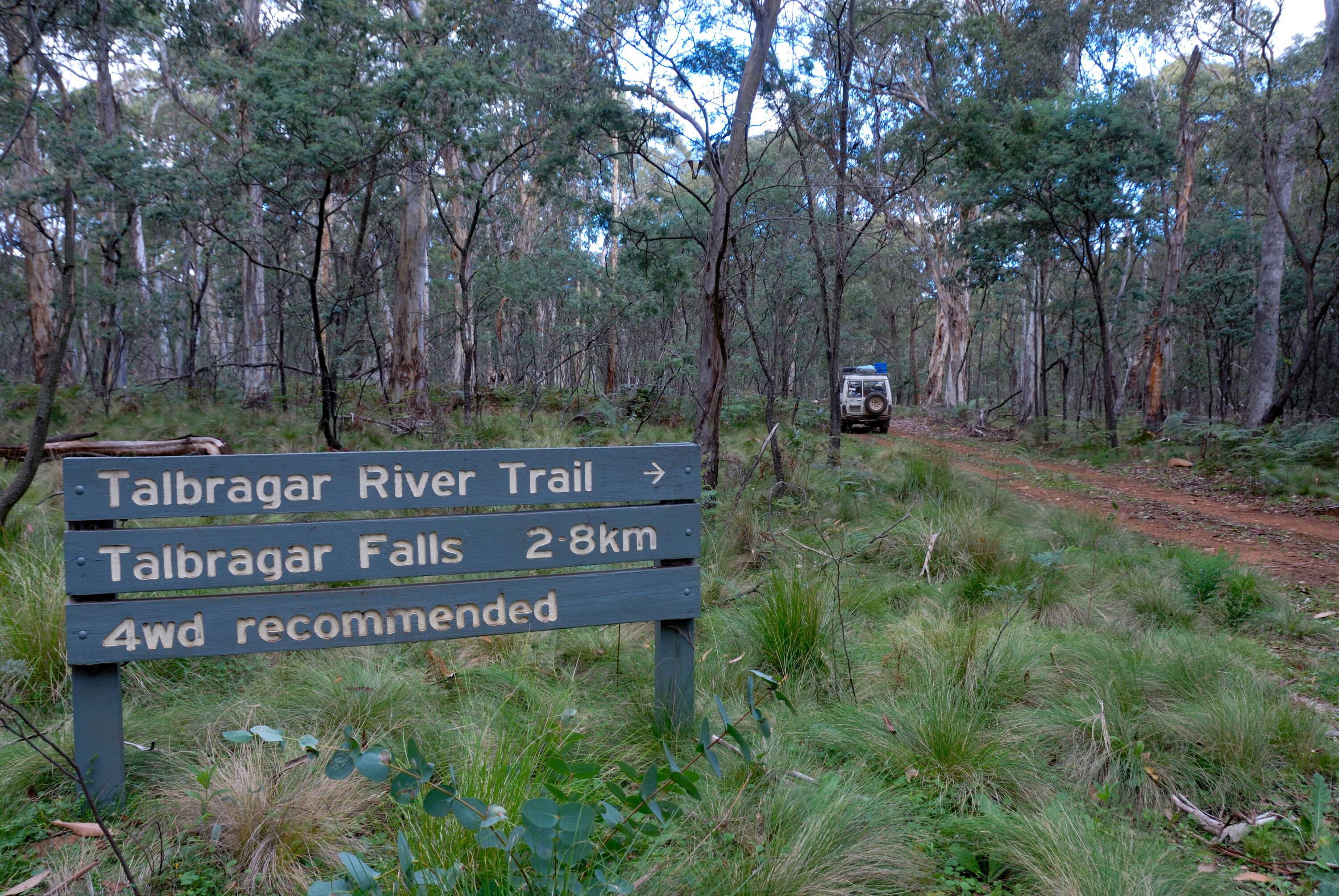
A definite highlight of the park is its population of snow gums, with a Snow Gum Loop walk in the eastern section of the park taking visitors through a large population of eucalypts. Owing to the fact the park is subalpine, the snow gums thrive here and reach heights unknown to anywhere else in the state.
The theory is that the park is high enough for the snow gums to grow, but not too high – thus not too exposed to the harsh alpine conditions – to impede their growth.
Rather than the stunted, twisted examples synonymous with Australia’s alpine regions, the snow gums here are straight and very tall. Shepherds Peak Trail, a few kilometres further east from the Snow Gum Loop walk, leads to a lofty viewpoint offering more expansive views back over the Liverpool Ranges east toward the town of Merriwa.
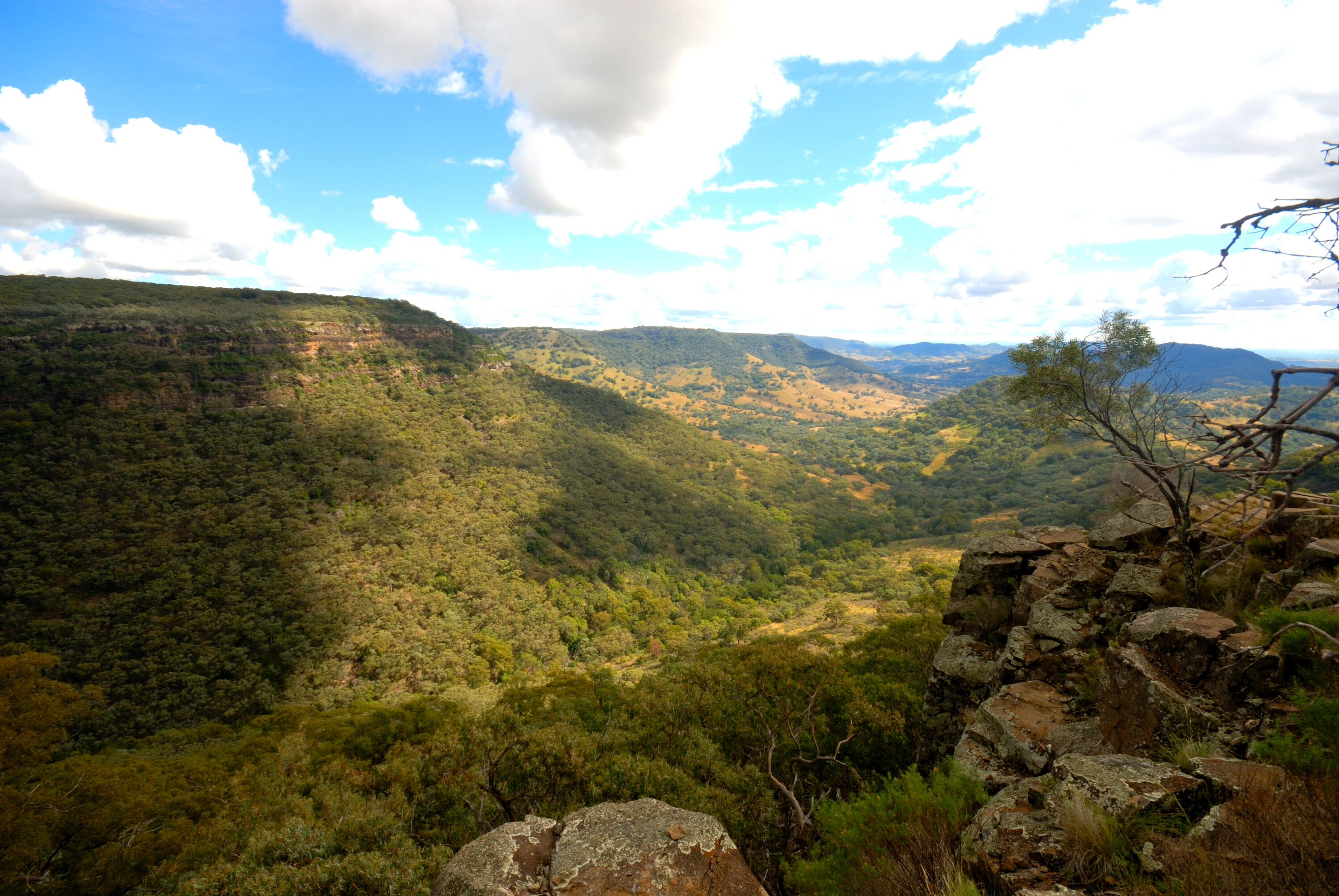
For keen bushwalkers and mountain bikers, there are some great tracks to choose from including Racecourse and Grasstrees Trails (the grass trees are estimated to be more than 400 years old) for walkers, and Mullion and Bundella trails for cyclists. They’re a fantastic way to explore more of the park before heading back to camp, and none of them are particularly arduous, making them ideal for all ages and abilities.
Coolah Tops NP has three campgrounds and one rather unique ‘other’ accommodation option: Brackens Hut. The three campgrounds – Coxs Creek, The Barracks and The Pines – are free. Coxs Creek and The Barracks are both located off Pinnacles Road, while The Pines campground is next to Forest Road and is the largest in the park.
For those keen on reliving a bit of history, there’s the option of staying at the restored Brackens Hut, 2km further along Forest Road. The hut is very basic and you need to bring all bedding including mattresses, as well as cooking facilities.
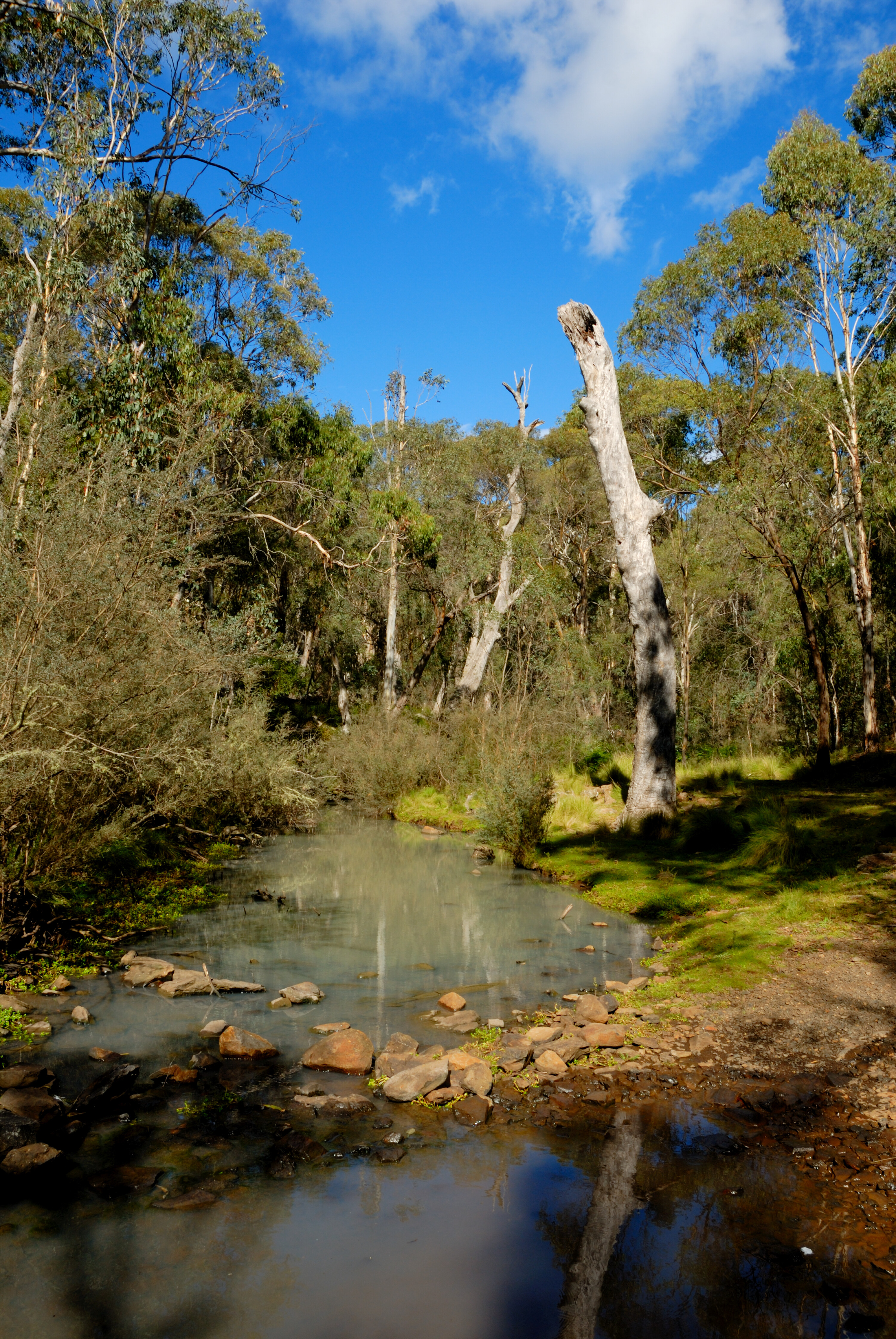
Pinnacle, the main lookout, is accessed via the road of the same name (again, off Forest Road) and is a 5km drive, walk or bike ride from The Barracks campground. Once you reach the Pinnacle carpark, it’s another 500m walk along a flat track right out to the edge of the plateau.
The views here are awesome and, on a clear day, you’ll easily see the rugged ramparts of the Warrumbungles to the northwest. If you’re a keen birdwatcher, this is the place where you may spot a wedge-tailed eagle searching for its next meal.
Barring the annual Jazz at the Tops music festival in March, Coolah Tops NP is relatively unknown and quiet. However, it packs in plenty for the touring family looking for a place that will keep the entire family well occupied with heaps of activities and points of interest to check out.
Do yourself a favour on the way home and allow enough time to stop in for a coldie and lunch at one of Coolah’s awesome pubs – you won’t regret it.
Grade: Easy-moderate
Best time of year: All year, although winter is very chilly (temps can reach -10°C)
A differential lock is an essential piece of kit to enhance the Ranger’s off-road prowess.
A diff lock helps to increase control in low-traction conditions, making it a valuable addition to the Ranger’s already impressive off-road capabilities. ARB offers a front diff lock for the next-gen Ranger, but, curiously, Ford Australia doesn’t offer an ARB air locker as a factory option under the Ford/ARB licensing agreement.
What it is: Diff lockers.
Why you need it: The Ranger 4×4 has a standard rear cross-axle differential lock, but as the brake traction control is quite average – even in the next-gen model – a front locker will help those who dabble in hardcore off-roading.
Buying tips: Consider whether you really need this, as the Ranger is a capable off-roader out of the box.
ARB Air Locker
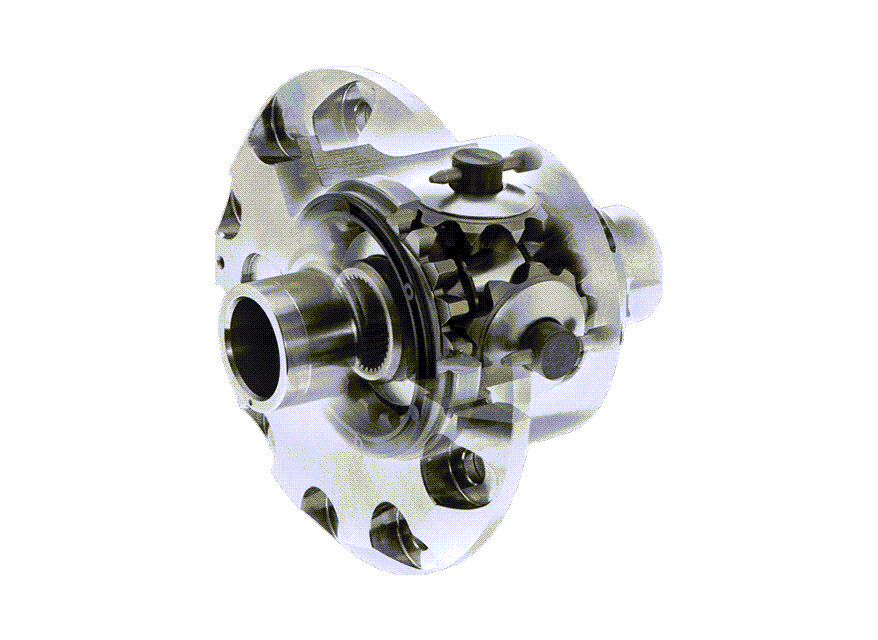
Manufactured in Australia, the ARB Air Locker is made with quality materials and an uncompromising approach to manufacturing.
With a state-of-the-art two-piece design and forged gears, the Air Locker has increased strength, durability, and resistance to fatigue. It also has a reduced number of moving parts, making it more responsive to activation. ARB has invested heavily in the application of forged gears, commonly used in heavy duty commercial, race and agricultural transmissions.
All Air Lockers come with a five-year warranty and are supported by ARB’s extensive network of stores and distributors worldwide. The product’s superior design, quality and support make it a reliable choice for both 4×4 enthusiasts and professionals.
| Locker activation | Air |
|---|---|
| Gears | Forged nickel alloy |
| Warranty | Five years |
Things we like
- Proven track record in off-roading
- Designed for high torque loads
- Simple activation, no electrics
Not so much…
- Requires on-board compressor
- Can be expensive
Back to top ⬆️
How we review products
4X4 Australia has been reviewing four-wheel drive vehicles and aftermarket products for more than 40 years.
When looking for the best accessories for your make and model of 4WD, there are some things essential to making sure you have the best off-roading experience. When we compare products, here are some of the things we consider:
- Warranty
- Build quality
- Value for money
- Time and ease to set-up/install
- Weight
- Fit and finish
- How well it gets the job done
- What materials they’re made from
- Corrosion/UV resistance
- Coatings
- Compatibility with other accessories
- Compliance with ADRs and vehicle safety systems
- Country of manufacture
- Load ratings, to determine what’s the best product across each price point.
Back to top ⬆️
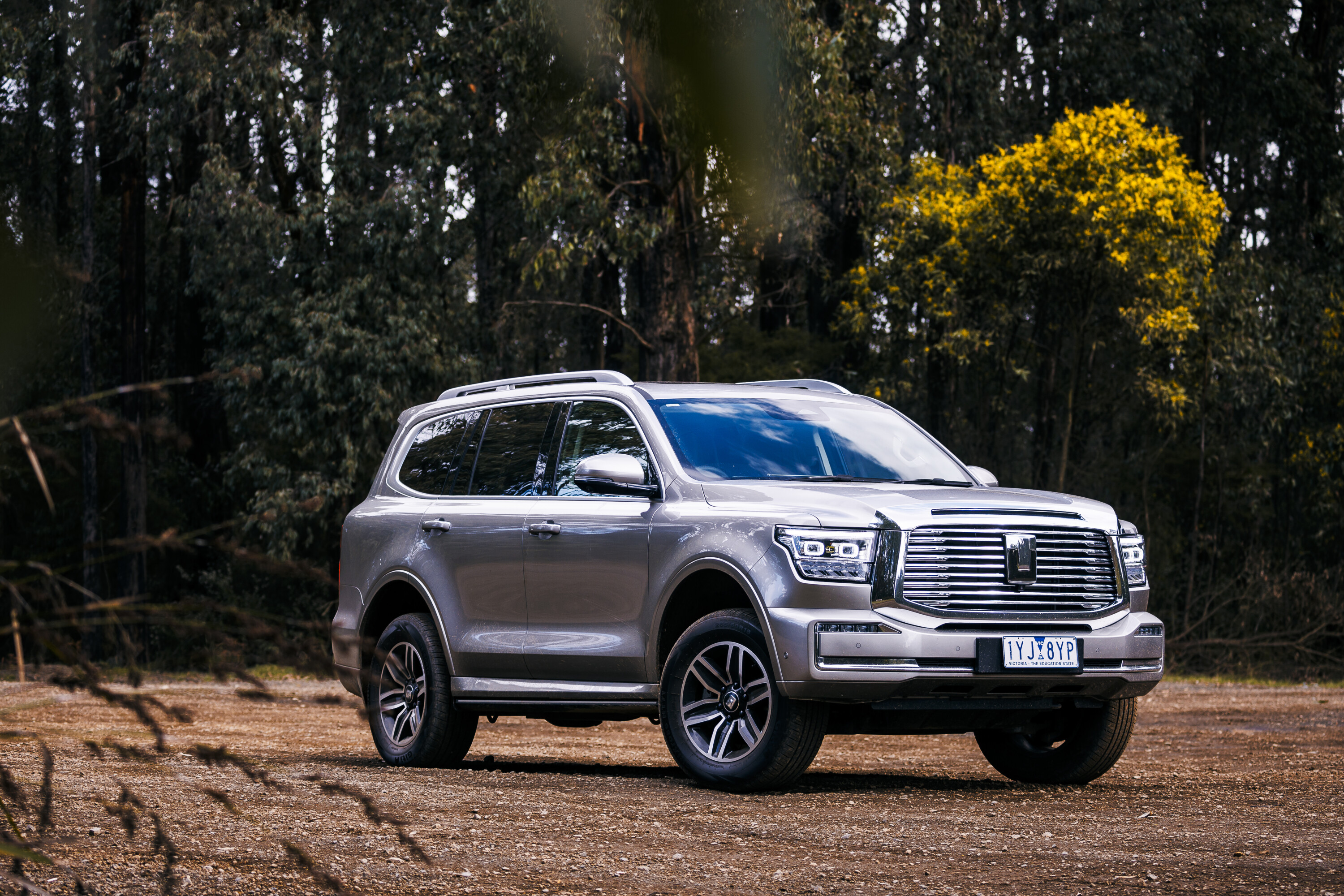
The GWM Tank 500 is the brand’s large 4×4 wagon and it’s an impressive piece of gear. It’s a well-equipped three-row, seven-seater that could be considered to be a cheaper alternative to a Toyota LandCruiser 300.
Cheaper in that it costs just $73,990 drive-away, which is a lot less than an LC300, but not cheaper in its levels of equipment. You’d need to be looking at high-spec LCs like the $140k-plus GR Sport and Sahara models to get the same level of kit that comes standard in the Tank 500 Ultra.
The body-on-frame Tank 500 marks the tape at 5078mm long and 1934mm wide; for comparative purposes, the LC300 GR-S runs out at 4995mm and 1990mm over the same measurements. The Tank rides on a 2850mm wheelbase, exactly the same as what’s under the LandCruiser.
There are currently two models in the Tank 500 line-up; the Luxury and Ultra models both feature hybrid powertrains. A new Tank 500 variant is currently undergoing evaluation for Australia that could introduce a plug-in hybrid powertrain, but this is not locked in at the time of writing.
JUMP AHEAD
What do you get?
Here we’re testing the $74k Ultra which is the top-of-the-line model loaded with features.
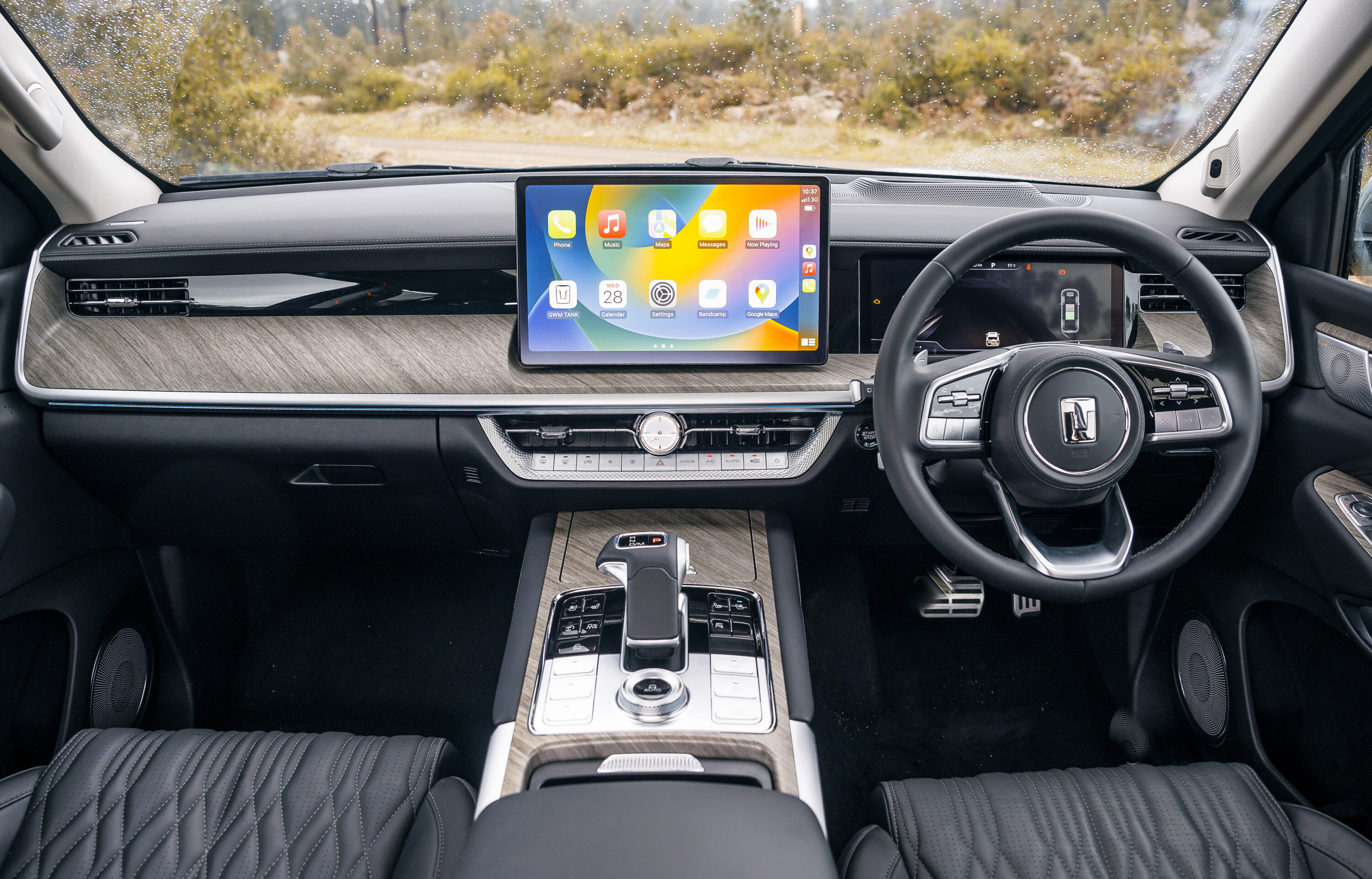
Standard equipment includes auto-levelling LED headlights; 18-inch alloy wheels; a powered sunroof; Napa leather interior trim with heating, massager and eight-way power adjustment on the driver’s seat and six-way power adjust on the front passenger’s seat; power fold third-row seats; rear side window blinds; and power deploying side steps.
Other interior features include a heated steering wheel; 14.6-inch touch infotainment screen with 360° view monitor and clear chassis view; 12.3-inch digital gauge cluster; head-up display; wireless CarPlay and Android phone mirroring; a 12-speaker premium Infinity audio system; and active cabin noise cancelling.
Back to top ⬆️
Powertrain
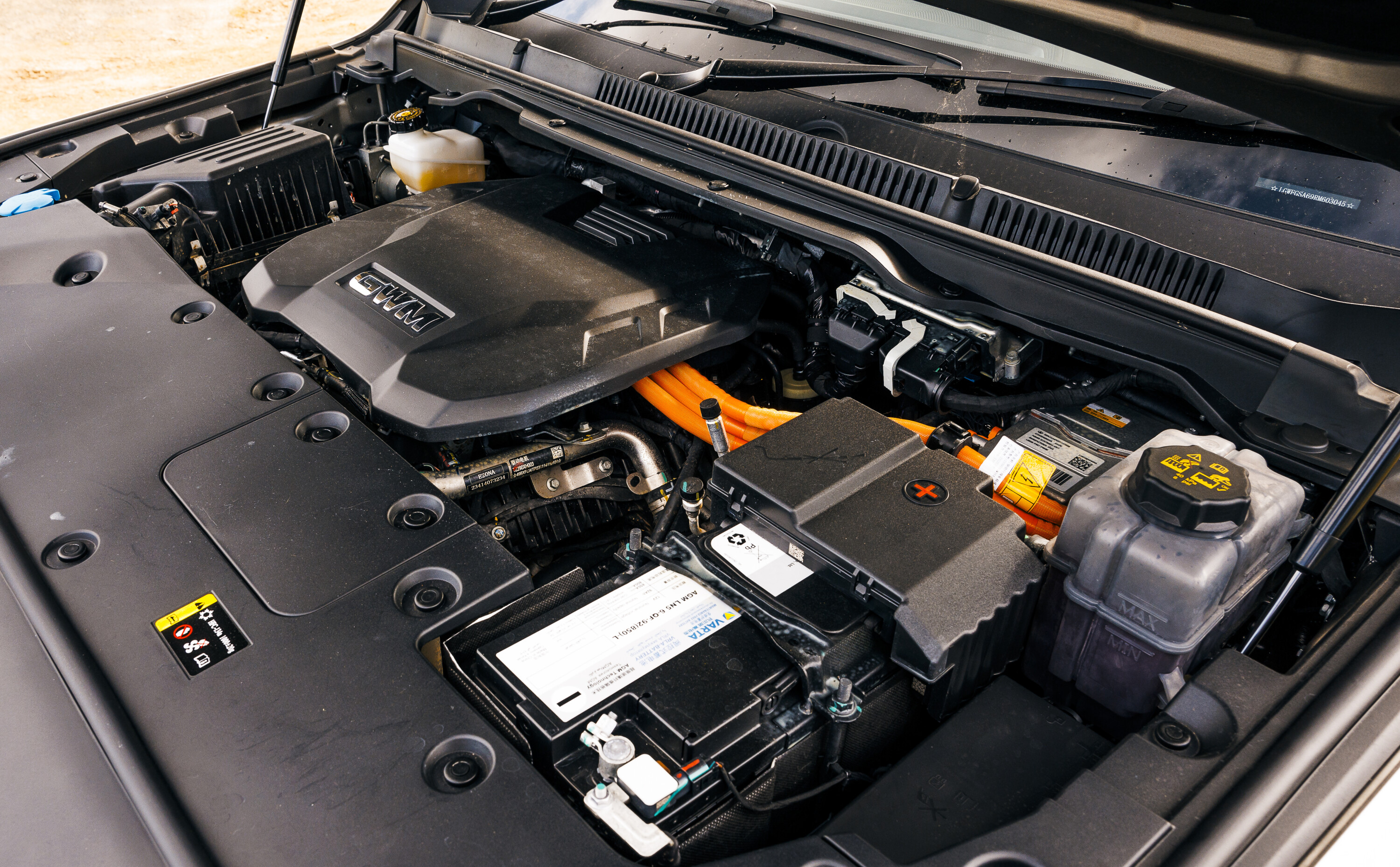
The powertrain starts with a 2.0-litre turbocharged petrol engine backed by an electric motor in the bellhousing, which combined put out a claimed 255kW and a meaty 642Nm. Behind the engine and motor is a nine-speed automatic transmission; on-demand, dual range transfer case; and front, centre and rear locking differentials.
Safety and warranty
Standard safety kit includes AEB; TPMS; front, side centre and curtain airbags; EPS; ETC; forward collision and lane departure warnings; driver monitoring system; and all the other ADAS features required to gain a five-star ANCAP safety rating.
There’s no hiding from the high level of safety, comfort and off-road features that come standard in the Tank 500, which make it an attractive consideration for many family buyers; features that you’ll be paying more than $100,000 for in other off-road capable luxury wagons.
Backing it up is the GWM Care 777 ownership package offering a seven-year unlimited kilometre warranty, seven years of roadside assist and seven years of capped-price servicing.

Back to top ⬆️
On-road driving performance
Slip inside the Ultra and straight away there’s a feeling of luxury and the level of equipment is obvious. There’s no escaping the massive multimedia and the dash screens, while the soft leather seats give a feeling of quality.
Some might see the powered side steps as a luxury, but for me they are nothing more than a trip hazard and a great way to get your jeans dirty. Maybe they would be more useful once you fit that six-inch lift kit you bought from Wish.com, but at standard height they seem unnecessary.
There’s no engine noise when you push the starter button, but the dash signifies that the Tank is ready for action. At light throttle it will move on under electric drive but press the accelerator to get up to road speed and the turbocharged petrol engine cuts in straight away. There is very little electric power available for full EV driving in this version of the hybrid system.
Power comes in responsively but smoothly. There can be a hesitation in the transition from electric power to the petrol engine, and this is noticeable when you put your foot down to overtake on the highway. It’s a small hesitation but one you will want to get used to. The transmission is seamless and smooth; the paddle shifters behind the steering wheel are handy for manual gear selection when off road and on tracks.
The steering column is power adjustable for both height and reach but for me, it doesn’t come back far enough to be in the ideal position for driving. The panoramic powered glass roof is huge and lets in plenty of light when uncovered which is something I always appreciate in any vehicle.
The ride from the coil spring IFS and multi-link live-axle rear is firm and offers plenty of control but it can feel a bit jittery over high frequency small bumps and corrugations in the road surface, be that on sealed or gravel roads. There’s no getting away from the fact the Tank is a large, top-heavy wagon, but its handling is predictable and well controlled.
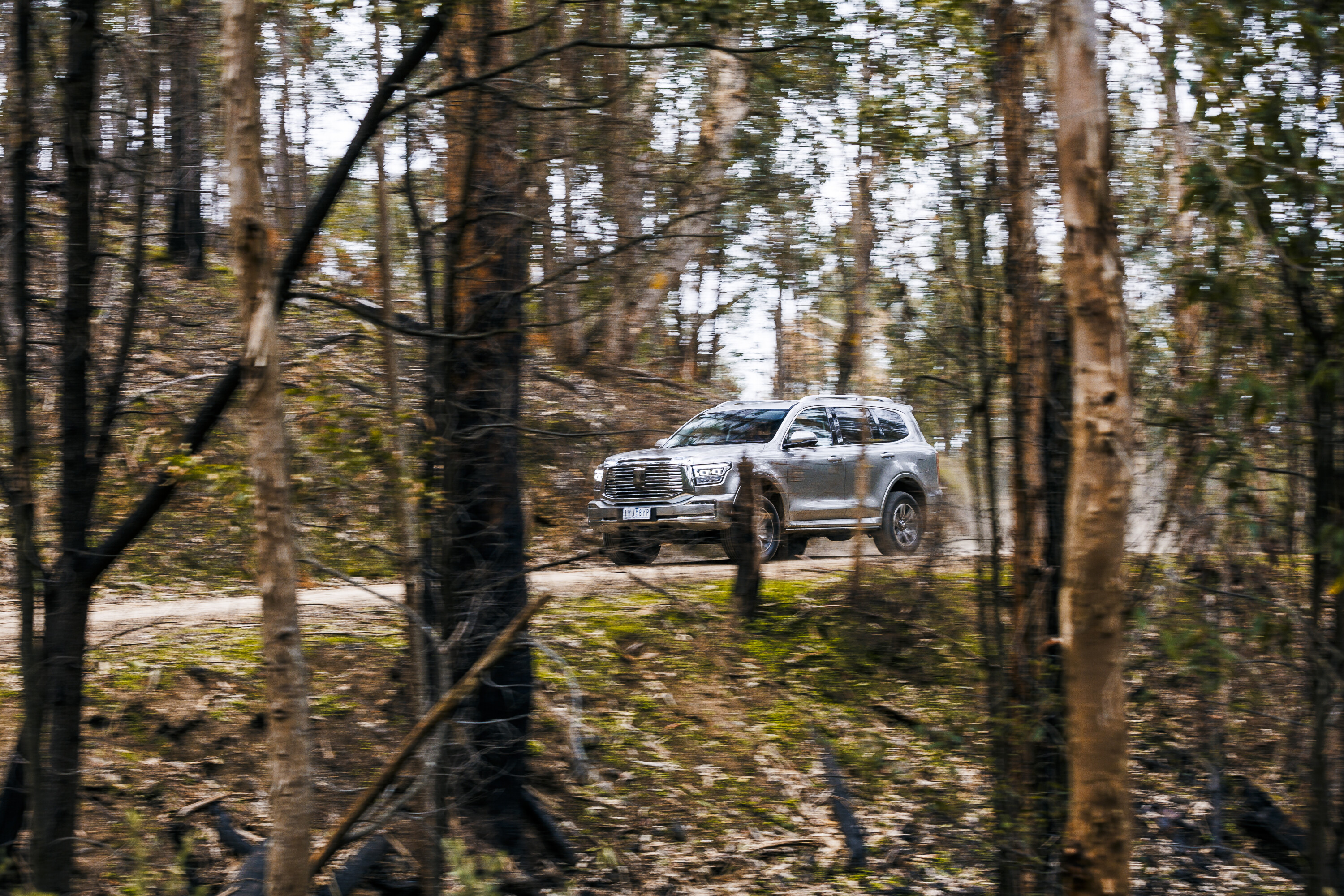
Its size and weight is reflected in the fuel consumption figure, but the hybrid powertrain does its thing to keep that as low as possible; throughout our week with the 500 it returned a figure of 11.1L/100km, which is a fair bit more than the ADR combined cycle figure of 8.5L/100km. The figure of 11.1 is comparable with large diesel-fuelled 4×4 wagons without hybrid assistance.
As we found on the launch of the Tank 500, and again when testing the GWM Cannon, the driver monitoring system is annoying and frustrating; it constantly spits out warnings and advice that are more incessant than a nagging passenger, and for me this would be a deal-breaker when considering any new vehicle. GWM, like other manufacturers using similar monitoring systems, has recognised this and is working on a software upgrade that will ease the nagging, and we look forward to driving the updated GWM vehicles.
Back to top ⬆️
Off-road driving performance
With healthy ground clearance, decent low-range gearing, a sensible tyre size, and good underbody protection, the Tank 500 has better off road capability than many other standard 4x4s.
More than any other feature this comes courtesy of its lockable front and rear differentials, as well as the locking centre diff. The number of electronic driving modes offered for both on and off road driving is becoming ridiculous and the Tank is no different to many other new 4x4s in this regard, giving the driver a choice of nine different modes, which is probably twice as many as you would ever need.
The locking diffs are really all the off-road hardware you need in any 4×4 heading into rough terrain and they do a better job than any electronics to get drive to all the wheels when you want it. The Tank is one of the few new 4x4s to offer a locking front diff in addition to its centre and rear locking diffs.
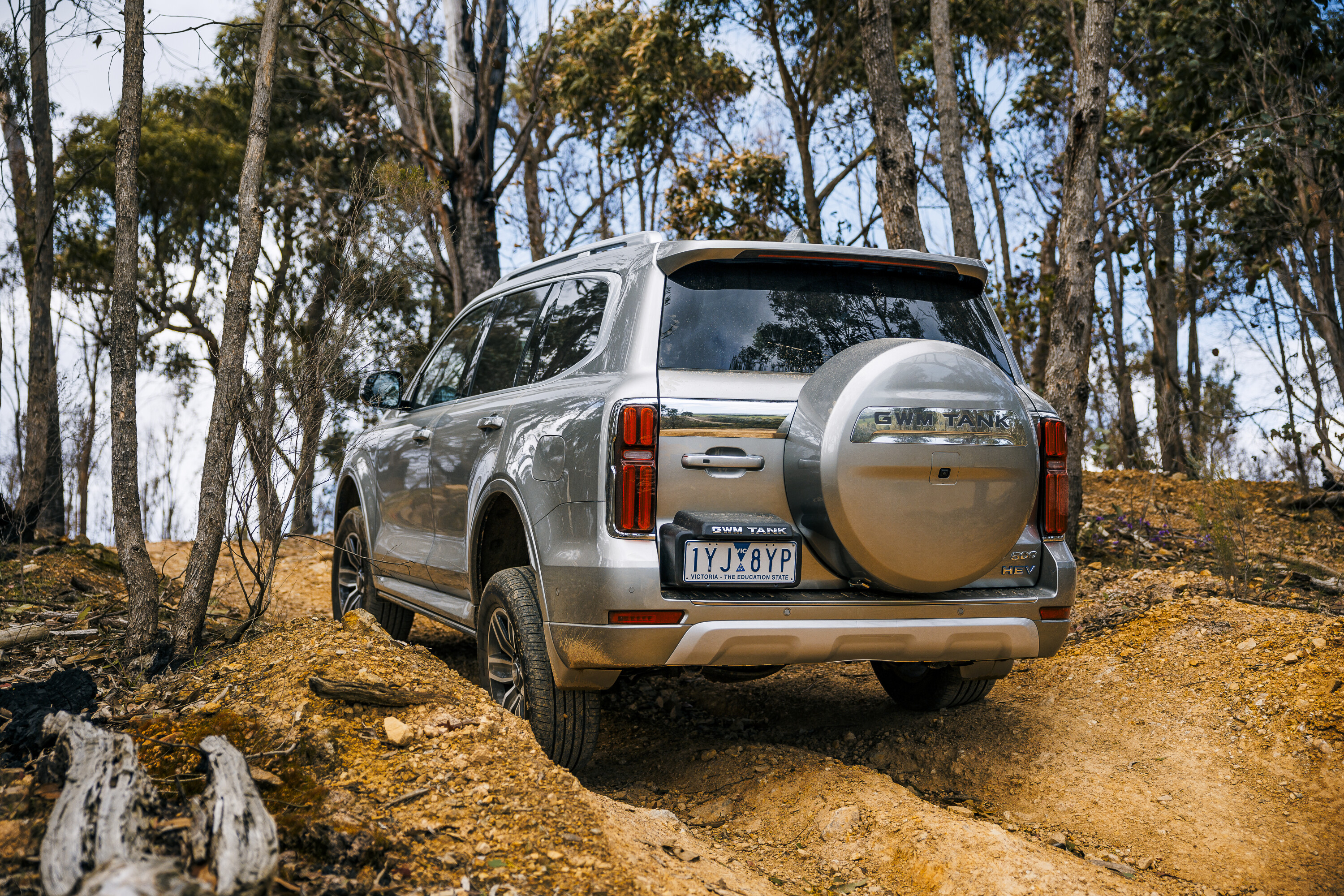
Once in low range with all three diffs locked, a climb with deep moguls that we thought would challenge the Tank proved no obstacle at all with some careful wheel placement and light throttle application. Using the crawl control could have made it even easier for a less-experienced driver, but it shows the advantage of getting maximum drive to the wheels. This was driven on road-going tyre pressures which impressed us.
There were a couple of small niggles on gravel roads. Firstly, the lane centering constantly intervenes and makes automatic steering adjustments as it tries to stay in lanes that aren’t there, although this is something you might get used to. The other is that the auto-braking won’t let you get close to objects like long grass when turning in tight spaces in the bush, adding to the difficulty of multi-point turns.
| Off-road specs | |
|---|---|
| Approach angle | 30u00b0 |
| Ramp-over angle | 22.5u00b0 |
| Departure angle | 24u00b0 |
| Ground clearance | 224mm |
| Wading depth | 800mm |
Back to top ⬆️
Verdict
As we said at the start of this test, the Tank 500 Ultra Hybrid is an impressive vehicle as it offers levels of equipment and ability that are only available for thousands of dollars more from other manufacturers.
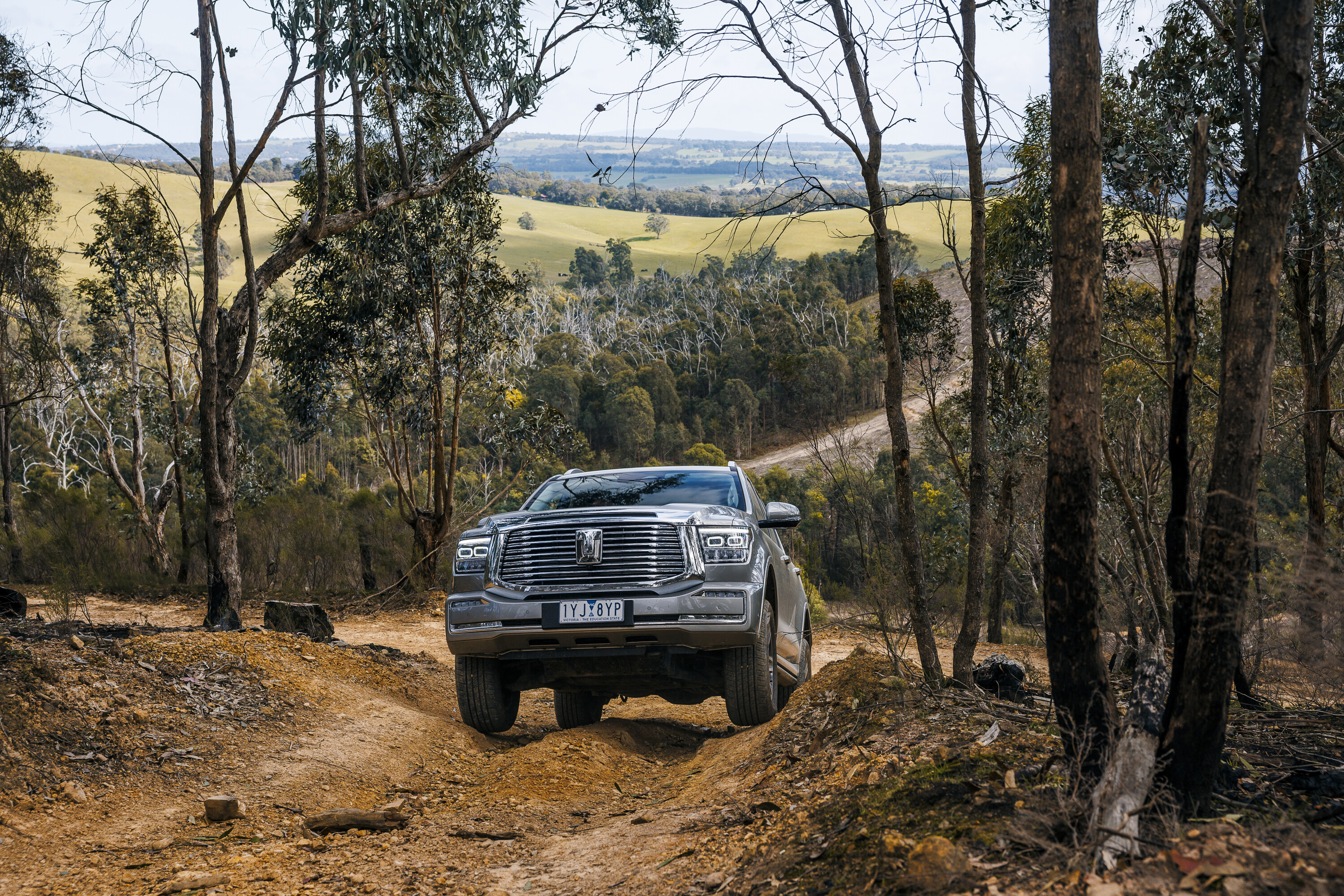
Its mix of luxury and refinement is unrivalled at a sub-$100k price and it will open the eyes of many 4×4 wagon buyers to the relatively new brand. While there are some features like the powered side steps, annoying driver monitor and number of drive modes that seem gimmicky, the Tank delivers the important things like performance and ability with great old-fashioned elements like locking diffs, good ground clearance, sensible tyre size and functional cabin layout. Add in the luxury features and GWM delivers a strong package in the Tank 500.
Back to top ⬆️
Specs
| 2024 GWM Tank 500 Ultra hybrid | |
|---|---|
| Price | $73,990 (drive-away) |
| Engine | Petrol-electric hybrid |
| Capacity | 1998cc |
| Max power | 255kW @ 5500-6000rpmu00a0 |
| Max torque | 648Nm @ 1700-4000rpm |
| Transmission | 9-speed automatic |
| 4×4 system | Full-time, dual range 4×4, locking front, centre and rear differentials |
| Construction | 5-door, 7-seat wagon on ladder frame chassis |
| Front suspension | Double wishbone, coil IFS |
| Rear suspension | Multi-link coils |
| Tyres | 265/60R18 |
| Kerb weight | 2605kg |
| GVM | 3395kg |
| GCM | 6705kg |
| Towing capacity | 3000kg |
| Payload | 790kg |
| Seats | 7 |
| Fuel tank | 80L |
| ADR fuel consumption | 8.5L/100km |
| On-test fuel consumption | 11.9L/100km |
Back to top ⬆️
Off-roading can be an exhilarating experience, but it comes with its fair share of challenges. Getting stuck is not uncommon, and without proper equipment it can quickly turn into a nightmare.
This is where rated recovery points come in handy. These recommended products are intended as a starting point, to give you an idea of what’s available. We’ve also included information on Ford Australia’s genuine accessories, in case you’d prefer to stick to OEM.
What it is: Attachments your vehicle can be dragged by or from.
Why you need it: Sooner or later you’ll get stuck or need to recover someone who is stuck. At that point significant forces will be exerted on your vehicle, and you need an attachment point strong enough for the job.
The Ranger NG includes two recovery points at the front, about which the Ford manual says: “Do not apply a load to the recovery hooks greater than the gross vehicle weight rating of your vehicle.” We advise considering using a bridle to split, but not halve the load on each point.
| Material | Max load | Suitable for soft shackles | |
|---|---|---|---|
| ARB front recovery points | Forged steel | 8000kg (at full steering lock) | Yes |
| MaxTrax Hitch 50 rear recovery point | Aluminium/Steel | Rated to 8800kg | Fits in 50mm square towbar receiver |
| Drifta Factor 55 Hitchlink 2.0 rear recovery point | Aluminium | 4300kg | No |
| TJM rear recovery hitch | Mild steel | 4750kg | No |
ARB front recovery points
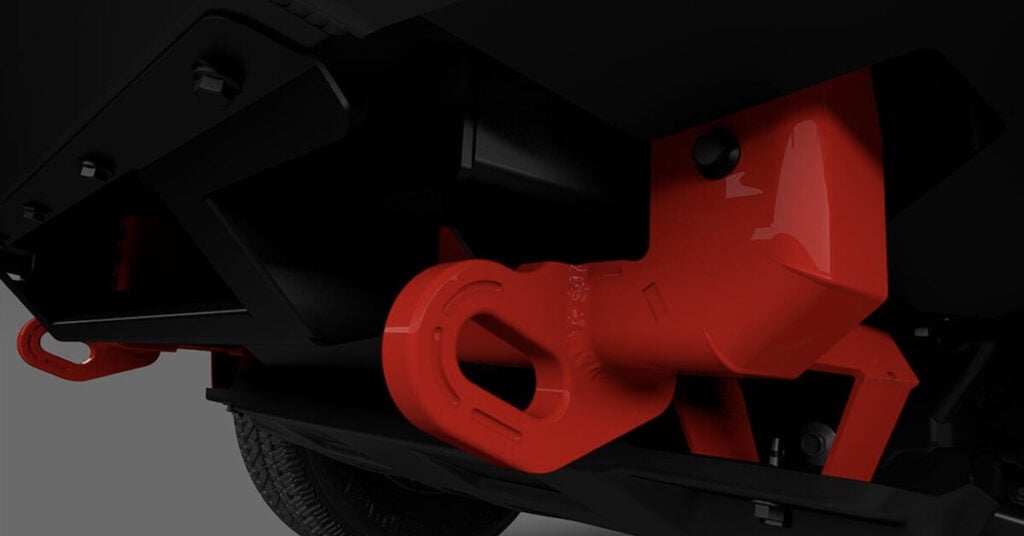
ARB front recovery points are robust attachment points designed for off-road vehicles, facilitating safe recovery operations when stuck in challenging terrains like mud or sand.
Constructed from reinforced steel, they can withstand significant loads and are typically designed for specific vehicle models for easy installation. Each recovery point has a specified load rating, crucial for ensuring safety during recovery. Some include safety features to prevent accidental disconnection.
These recovery points enhance safety, protect the vehicle by evenly distributing loads, and are compatible with various recovery gear.
Specifications:
- Material: Forged steel
- Max load: 8000kg (at full steering lock)
- Suitable for soft shackles: Yes
Things we like
- Load rating is at full lock
- Each recovery point rated to 8000kg
- Compatible with soft shackles
Not so much…
- More expensive than generic brands
- Conflicting appearance
- Material: Forged steel
- Max load: 8000kg (at full steering lock)
- Suitable for soft shackles: Yes
MaxTrax Hitch 50 rear recovery point
The MaxTrax Hitch 50 rear recovery point is a handy tool for off-roaders, making it easy to hook up recovery gear like tow straps and winches.
Built tough from materials like aluminum or high-strength steel, it’s designed to take a beating and last. It fits standard two-inch hitch receivers, so you can easily use it on different vehicles. With multiple attachment points, the Hitch 50 gives you options for recovery setups. Plus, a secure locking mechanism keeps everything connected, which is super important during tricky recoveries.
It’s strong enough to handle tough situations, and you can switch it between different vehicles without a hassle. Installing it is a breeze; just slide it into your hitch receiver and secure it with a pin.
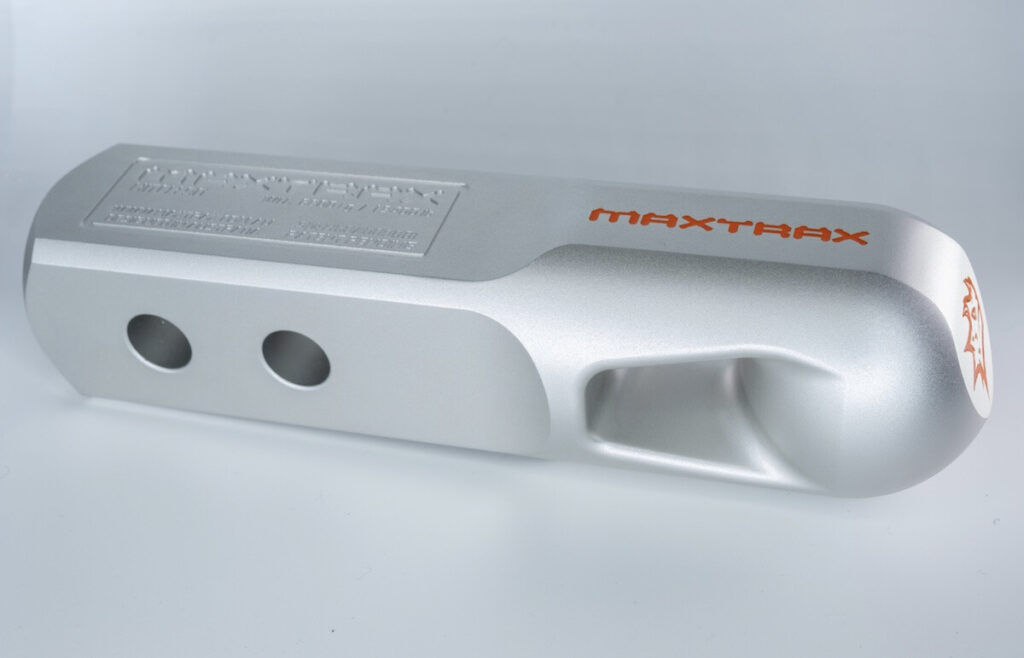
Specifications:
- Suitable for multidirectional pulls
- Rated to 8800kg
- Fits in 50mm square towbar receiver
Things we like
- Suitable for multidirectional pulls
- Rated to 8800kg
- Fits in 50mm square towbar receiver
Not so much…
- Not compatible with VW Amarok towbar
- Not universal fit
- Potential for wear
- Suitable for multidirectional pulls
- Rated to 8800kg
- Fits in 50mm square towbar receiver
Drifta Factor 55 Hitchlink 2.0 rear recovery point
The Drifta Factor 55 Hitchlink 2.0 rear recovery point is a durable accessory designed for off-road vehicles, providing a secure attachment for recovery gear like tow straps and winches.
Made from high-strength aluminum, it balances lightweight design with robust strength, making it easy to handle. A key feature is its positive locking pin, which keeps the recovery point securely in place, reducing the risk of accidental disconnection during recovery. It fits standard two-inch hitch receivers and is rated for loads up to 10,000 pounds, ensuring reliability in tough situations.
Installation is simple: just slide it into the hitch receiver and secure it with a pin. Regular inspections for wear are recommended.
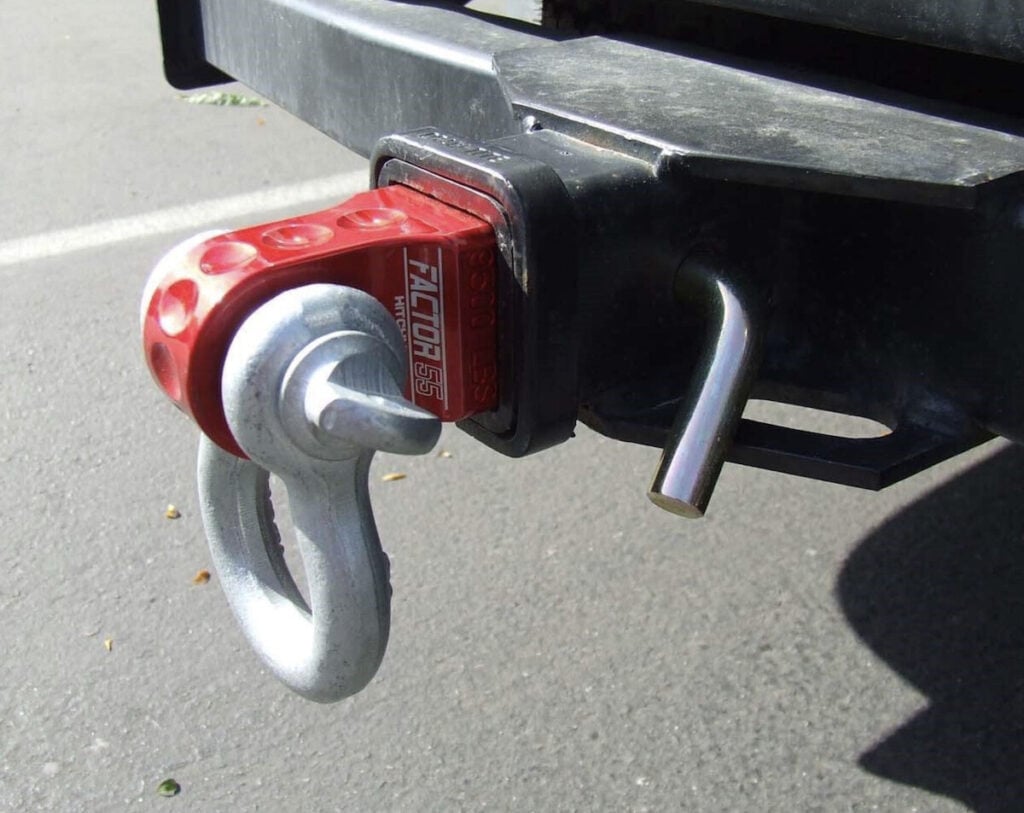
Specifications:
- Material: Aluminium
- Max load: 4300kg
- Suitable for soft shackles: No
Things we like
- Lightweight aluminium
- Value for money
- Fits in 50mm square towbar receiver
Not so much…
- Only suitable for inline pulls
- Not compatible with soft shackles
- Material: Aluminium
- Max load: 4300kg
- Suitable for soft shackles: No
TJM rear recovery hitch
Made from heavy-duty steel, the TJM rear recovery hitch is engineered to endure the demands of off-road recovery situations.
The TJM hitch can handle significant recovery efforts, making it suitable for larger vehicles and tough terrain. It is designed to fit standard two-inch hitch receivers, ensuring compatibility with a wide range of trucks, SUVs, and off-road vehicles.
One of the key features of the TJM rear recovery hitch is its multiple attachment points, which allow for versatile recovery setups depending on the situation. The hitch often incorporates a secure locking pin mechanism to prevent accidental disconnection during use, enhancing safety in recovery operations. It’s advisable to conduct regular inspections for any signs of wear, damage, or corrosion to maintain safety and effectiveness.
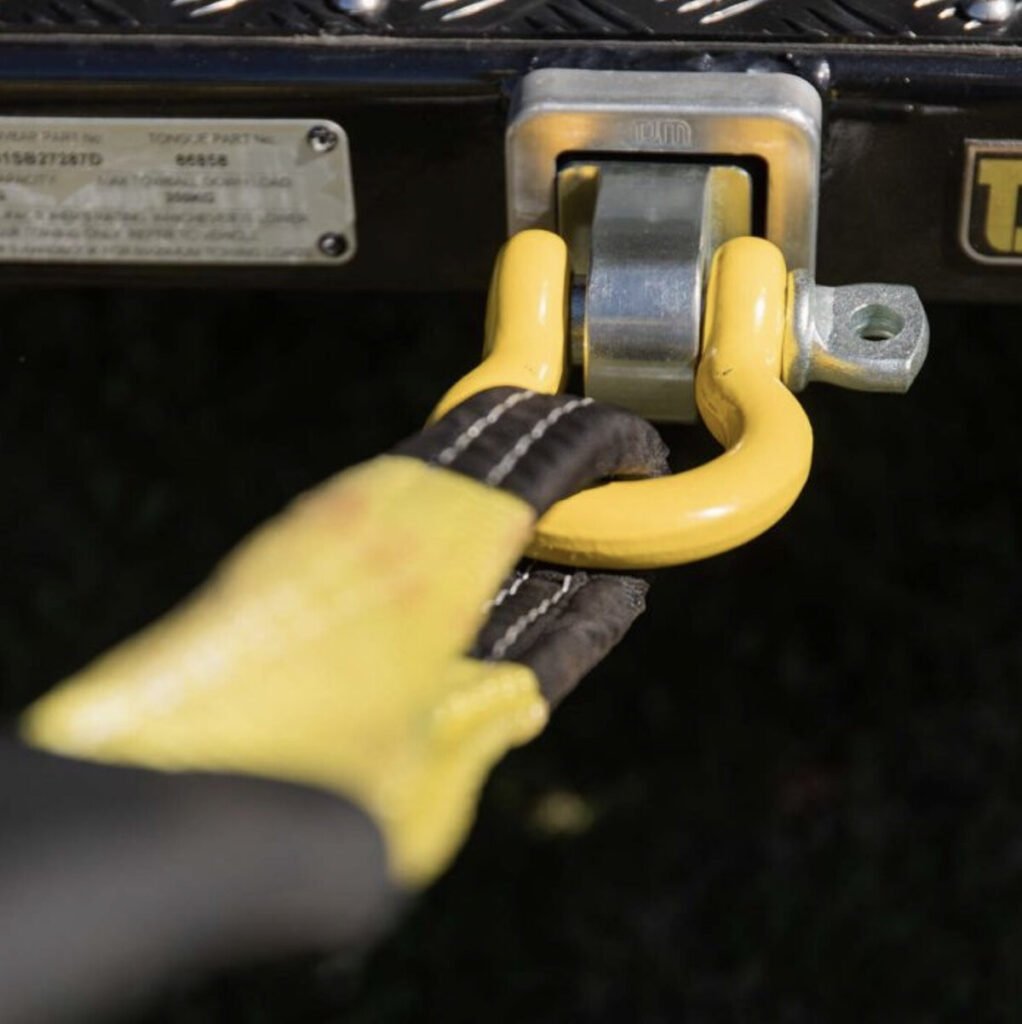
Specifications:
- Material: Mild steel
- Max load: 4750kg
- Suitable for soft shackles: No
Things we like
- Can turn hitch horizontal or vertical
- Fits in 50mm square towbar receiver
- Rated 19mm bow shackle included
Not so much…
- Not compatible with soft shackles
- Corrosion risk
- Material: Mild steel
- Max load: 4750kg
- Suitable for soft shackles: No
Ford Australia/ARB licensing agreement
Ford Australia has a licensing agreement with ARB. Order ARB accessories when you order your next-gen Ranger, and they’ll be covered by Ford’s five-year warranty. So if you have a warranty issue, there are no grey areas about which company’s responsible.
If you order ARB accessories after purchase (through a Ford dealer), they’ll be covered by the remainder of the warranty period. If you’d like to know more about the Ford/ARB partnership, then go here.
How we review products
4X4 Australia has been reviewing four-wheel drive vehicles and aftermarket products for more than 40 years.
When looking for the best accessories for your make and model of 4WD, there are some things essential to making sure you have the best off-roading experience. When we compare products, here are some of the things we consider:
- Warranty
- Build quality
- Value for money
- Time and ease to set-up/install
- Weight
- Fit and finish
- How well it gets the job done
- What materials they’re made from
- Corrosion/UV resistance
- Coatings
- Compatibility with other accessories
- Compliance with ADRs and vehicle safety systems
- Country of manufacture
- Load ratings, to determine what’s the best product across each price point.
Back to top ⬆️
There’s a seemingly endless supply of custom wheels available for the next-gen Ford Ranger.
This ranges from sleek and stylish to rugged and aggressive. So whether you’re looking for a set of flashy alloys or tough and durable steelies, there are plenty available to suit your requirements.
What it is: Replacements for the stock Ranger wheels.
Why you need it: High-profile tyres are ideal off-road, so that means they’re wrapped around 17-inch rims. But maybe your Ranger came with 18s or 20s, so you want to swap? Perhaps you need a different offset to run the tyres of your choice. There are many reasons to swap out wheels when building an off-roader.
Buying tips: Ensure the wheels you buy are Ranger-compatible, which means a six-stud with 139.7mm PCD (often written 6×139.7). Also ensure the offset is within legal limits, so no more than a change of 50mm (25mm per side).
You’ll also need to check the load rating matches or exceeds that of the standard wheels – check that on your specific vehicle. There are many companies that make wheels, and each of them make many wheels, so we’ve only listed a few examples to get you started.
| Material | Load rating | Bead restraint | |
|---|---|---|---|
| Method Race Wheels | 356 cast aluminium with T6 heat treatment | 5 & 6 lug, 1200kg / 8 lug, 1650kg | Patented bead grip technology |
| Speedy Wheels | Aluminium alloy or steel | Depends on wheel type | Depends on wheel type |
| Tyrepower | Aluminium alloy or steel | Depends on wheel type | Depends on wheel type |
Method Race Wheels
Method Race Wheels has some great options for the next-gen Ford Ranger, all about durability, performance and style.
These wheels are made from lightweight aluminium, perfect for tackling off-road adventures. You’ll find different sizes and offsets, so you can fit larger tyres for better traction. They come in finishes like matte black and polished aluminium, giving your Ranger a rugged look. Plus, they’re designed to be lightweight for improved handling and have features that help with brake cooling. Some models even offer beadlock technology, letting you run lower tyre pressures on tough terrain without worrying about the tyre dismounting.
Method Race Wheels are a solid pick for anyone wanting to boost their Ranger’s performance and style. Just keep in mind what kind of driving and terrain you’ll be dealing with.
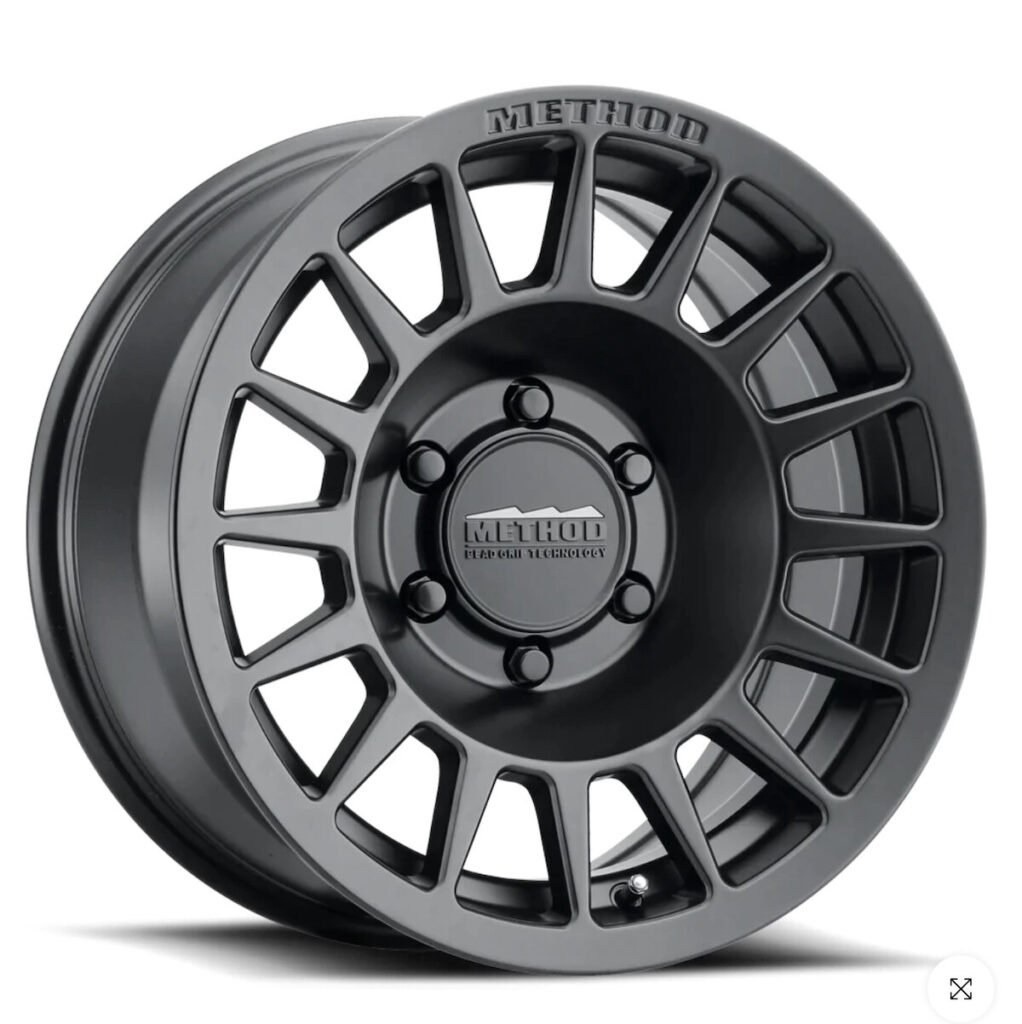
Specifications:
- Material: 356 cast aluminium with T6 heat treatment
- Load rating: Five- and six-lug, 1200kg / eight-lug, 1650kg
- Bead restraint: Patented bead grip technology
Things we like
- Designed to restrain aired-down tyres
- Multiple colours
- Good range of styles
Not so much
- Can be more expensive
- Availability
- Material: 356 cast aluminium with T6 heat treatment
- Load rating: Five- and six-lug, 1200kg / eight-lug, 1650kg
- Bead restraint: Patented bead grip technology
Speedy Wheels
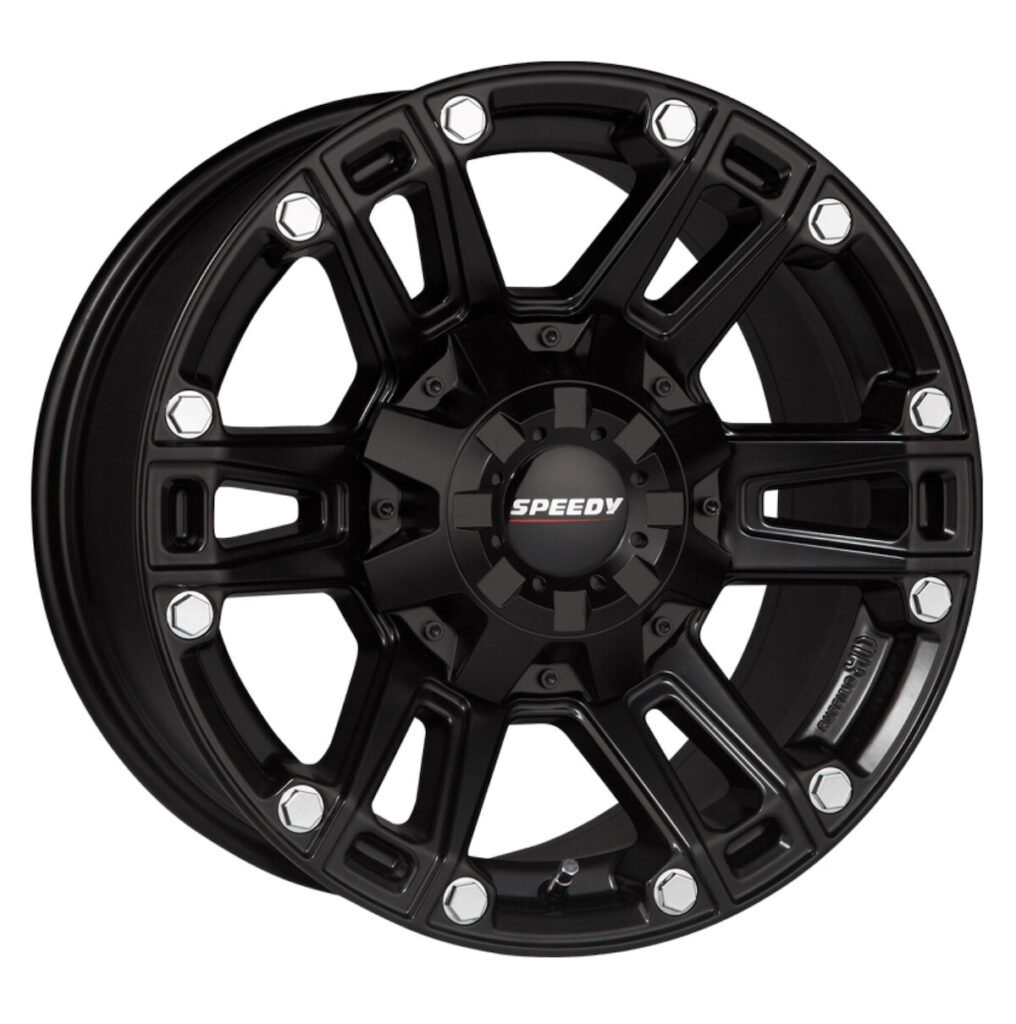
Speedy Wheels offer a diverse selection of wheels tailored for the next-gen Ranger. The line-up features various designs and finishes, allowing owners to find the perfect aesthetic.
One of the highlights of Speedy Wheels is an emphasis on durability. Many of the wheels are crafted from strong materials that can handle the demands of off-road driving, ensuring they stand up to rough terrain. They also come in different sizes and offsets, allowing for compatibility with larger tyres.
Speedy Wheels also provides a variety of styles, from sleek and modern to rugged and aggressive, ensuring there’s something for every taste. The wheels combine style, durability and performance to enhance both on-road and off-road experiences.
Specifications:
- Material: Aluminium alloy or steel
- Load rating: Depends on wheel type
- Bead restraint: Depends on wheel type
Things we like
- Custom machining available
- Large selection of styles
- Decent prices
Not so much
- Resale value
- Limited high-end features
- Material: Aluminium alloy or steel
- Load rating: Depends on wheel type
- Bead restraint: Depends on wheel type
Tyrepower
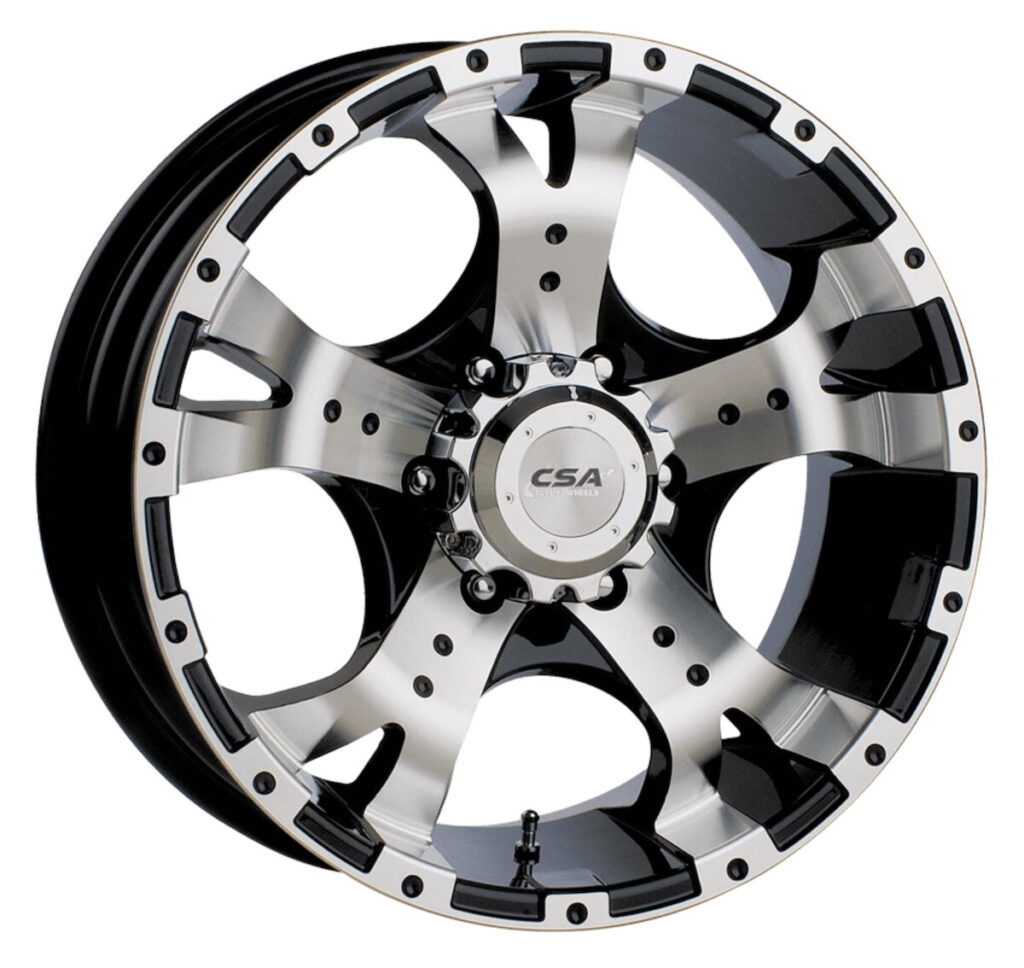
Tyrepower offers a solid selection of wheels specifically for the next-gen Ford Ranger, catering to both style and performance needs.
The line-up includes a variety of designs, whether you prefer a rugged off-road look or a sleek, modern vibe. The wheels are built to last, making them ideal for off-road driving.
You’ll find options in different sizes and offsets, allowing for larger tyres that improve traction and handling. Tyrepower also emphasises quality assurance, so you can trust these wheels will perform well and withstand the rigors of both on- and off-road adventures.
Specifications:
- Material: Aluminium alloy or steel
- Load rating: Depends on wheel type
- Bead restraint: Depends on wheel type
Things we like
- Wide selection of 4×4 tyres
- Wide selection of wheel brands
- Easy interface to find the right fit
Not so much
- Resale value
- Material: Aluminium alloy or steel
- Load rating: Depends on wheel type
- Bead restraint: Depends on wheel type
How we review products
4X4 Australia has been reviewing four-wheel drive vehicles and aftermarket products for more than 40 years.
When looking for the best accessories for your make and model of 4WD, there are some things essential to making sure you have the best off-roading experience. When we compare products, here are some of the things we consider:
- Warranty
- Build quality
- Value for money
- Time and ease to set-up/install
- Weight
- Fit and finish
- How well it gets the job done
- What materials they’re made from
- Corrosion/UV resistance
- Coatings
- Compatibility with other accessories
- Compliance with ADRs and vehicle safety systems
- Country of manufacture
- Load ratings, to determine what’s the best product across each price point.
Back to top ⬆️
Located just 2.5 hours from Brisbane, the 31,680-hectare Border Ranges National Park is World Heritage-listed for its range of rare and endangered wildlife and flora.
Plus, it has one road (Lions Road) that takes visitors through landscapes ranging from Australia’s largest area of protected sub-tropical rainforest to truly mountainous alpine terrain, and offers brilliant camping.
Accessed from the north via the hamlet of Tamrookum (south of Beaudesert), Lions Road initially crosses the narrow ‘join’ of the park’s west and east sections. It is well-worth checking out the short track branching off the right-hand side just inside this narrow section, as it leads 200m down to a picnic area that offers views over the Border Loop railway line.
This was an engineering marvel in itself; crews of workers shovelled, dug and exploded their way through the mountains, building a tunnel to join the NSW and Queensland ends of the rail line together more than 80 years ago.
Once back on Lions Road, you continue south parallel to the western border of the eastern section of the park, before turning left onto Wiangaree Forest Road and entering the park proper, where you pay your vehicle/visitor registration fees.
The popular Sheepstation Creek campground is just to the north of the entrance and provides access to a number of short bushwalks including the must-do Palm Forest Walk, a 2km loop along a long-disused bullock track to Brushbox Falls and then onto a large grove of the walk’s namesake bangalow palms. This campground’s sites are well away from each other and screened by natural vegetation, making it a great ‘base camp’ for maximising the weekend’s exploration of this park.
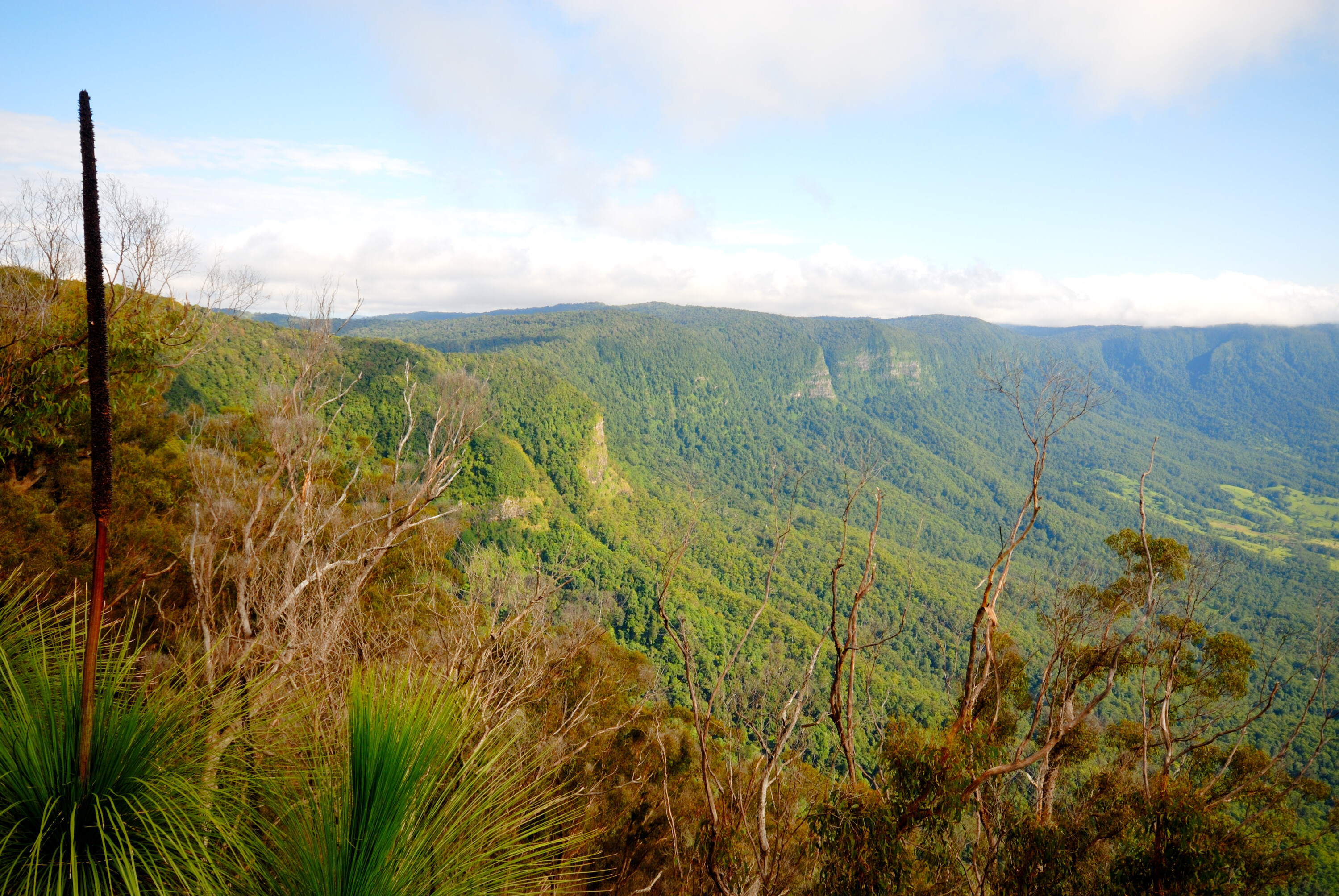
Of course, if you cannot walk that far, you can still reach this beautiful picnic area – take the vehicular side track just east of Forest Tops. This is a one-way loop that leads to the picnic area.
One last and much shorter walk worth your effort is the Red Cedar Loop, a 750-metre stroll to see one of the few – and massive – red cedar trees that escaped the timber industry. It is impressive.
The main track through the park – dubbed the Tweed Range Scenic Drive – is brilliant and joins Sheepstation Creek campground to Forest Tops before following the ever-higher escarpment as it winds eastward toward the aptly named Lookout Point. This is the first of a number of escarpment-based lookouts – others include The Pinnacle (reached via a short bushwalk) and, farther south, Blackbutt Lookout.
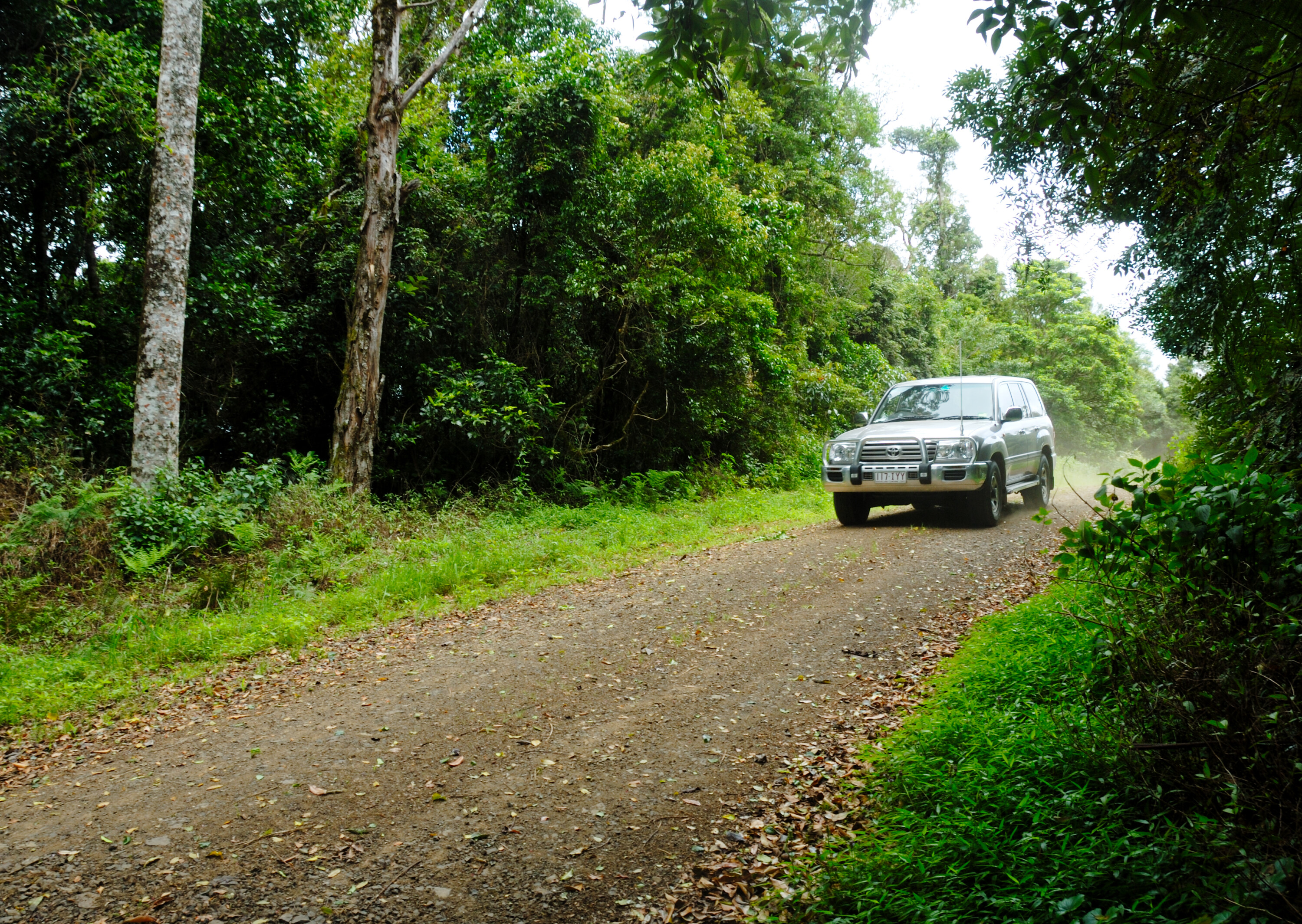
If you can, try and spend an early morning sunrise at The Pinnacle. This will give you what NSW National Parks rates as “the best views of the crater escarpment, Wollumbin-Mount Warning and the coast”. It sounds pretty epic to us.
There’s also one last short bushwalk here – the 4km Bar Mountain Circuit – that drops down to the escarpment edge, with views over Collins Creek, Mount Barney and Mount Lindesay.
Between the huge diversity of landscapes – including the ancient rainforest and steep escarpment – and plethora of wildlife to view (quolls, koalas, boobooks, Albert’s lyrebirds, tawny frogmouths, numerous reptiles and the black land mullet – actually a skink) plus a couple of great campgrounds, Border Ranges NP makes for a true ‘escape’ into its Lost World, and it is all only a few hours’ drive from the city.








This small (26,000-hectare) national park packs in plenty for a weekend away from Brisbane.
It’s a four-hour drive north of the capital, reached via a turnoff signposted Goodwood Road, near the town of Childers on the Bruce Highway. The park’s distance and location (hopefully) means you can visit without feeling cheek-to-jowl crowded, allowing you to fully enjoy the park’s many highlights.
And there are many of these – fishing is hugely popular here, owing to the fact you can fish from the beach, the Burrum River’s banks or from a boat on said river. Other popular activities include paddling (kayaking or canoeing the river, or sea kayaking offshore in Hervey Bay), bushwalking, bicycle riding and camping.
The park is comprised of four sections – Woodgate, Buxton, Burrum River and Kinkuna – with the town of Woodgate acting as a hub for visitors. Each of these sections offers visitors a different experience, belying the perceived ‘small’ stature of the park and explaining why it’s a must-visit.
Before entering Woodgate, access Heidkes Road on the right and you will come to Hoppy Larks day-use area, which has some picnic tables and is wheelchair-accessible and right on the Gregory River – there’s even a fishing platform to test your skills.
Continue along Heidkes Road and the track gets narrower, rougher and sandier, and you will have to negotiate a couple of creek crossings. There are also a number of fishing spots along the riverbank here, and it’s also a great chance to search for mudcrabs in the mangrove-lined banks.
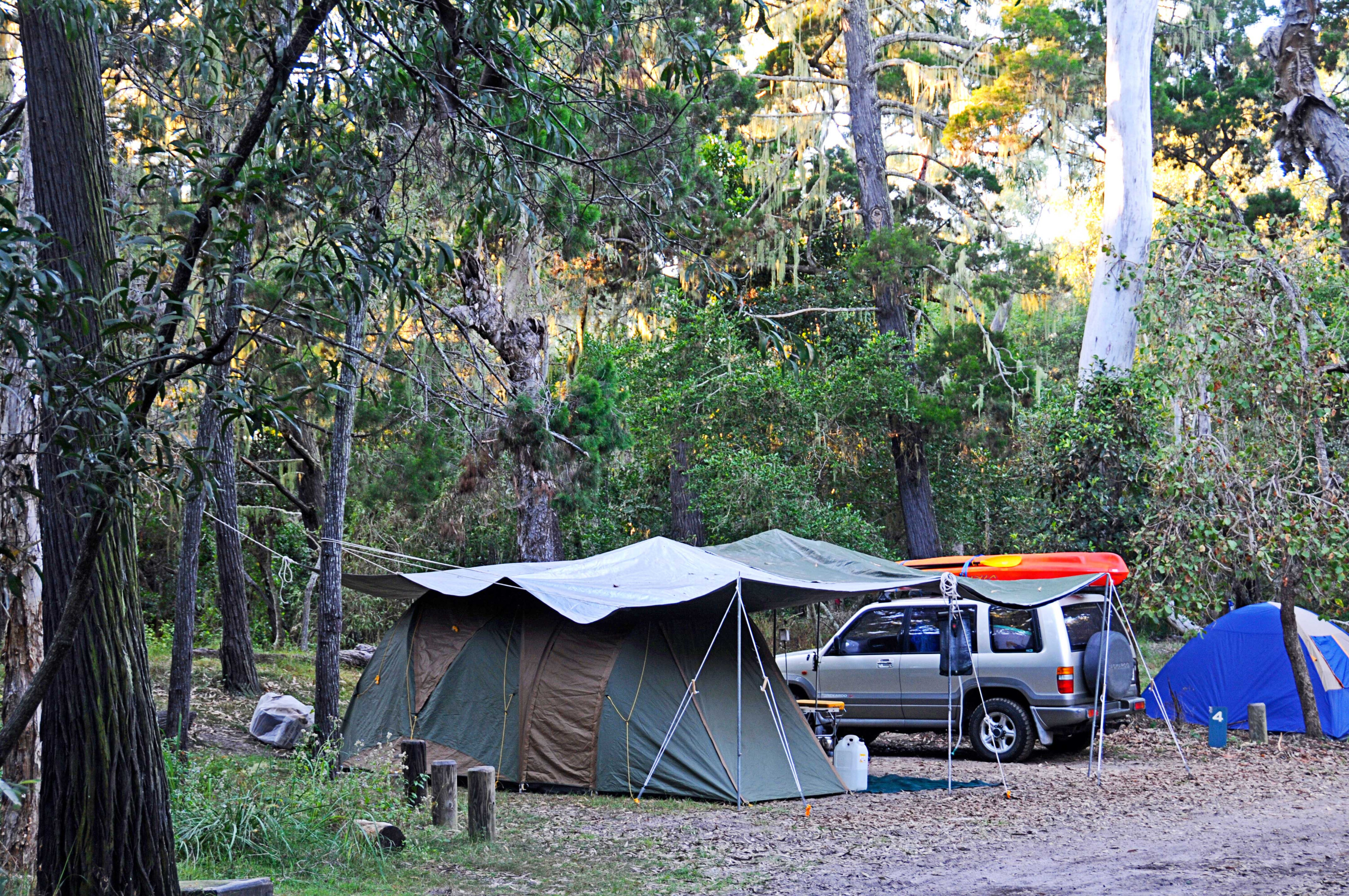
The terrain is magic, changing from dense bush to swamps, mangroves and then opening up to views of the confluence of the Burrum and Gregory rivers, with this large body of water dotted with the Gregory Islands. This track leads to Walkers Point fishing hamlet, before looping back north and around to the entrance to the 4×4-only Burrum Point campground, located next to Woodgate Beach. This campground includes showers, water and toilets, but you can’t have fires or generators here.
Woodgate Beach is ideal for not only 4×4 driving but also for swimming, owing to its sheltered orientation – perfect for those with young children or those who are less confident in the ocean.
For those keen on some true beach camping, the park’s Kinkuna Section, to the north of Woodgate, is ideal. This section is 4×4-only access (some tracks can be closed in wet weather) with Woppis Road Beach the entrance to the southern part of this section. From here you can follow Beach Road through swampy terrain to the signposted Kinkuna camping zone on the beach.
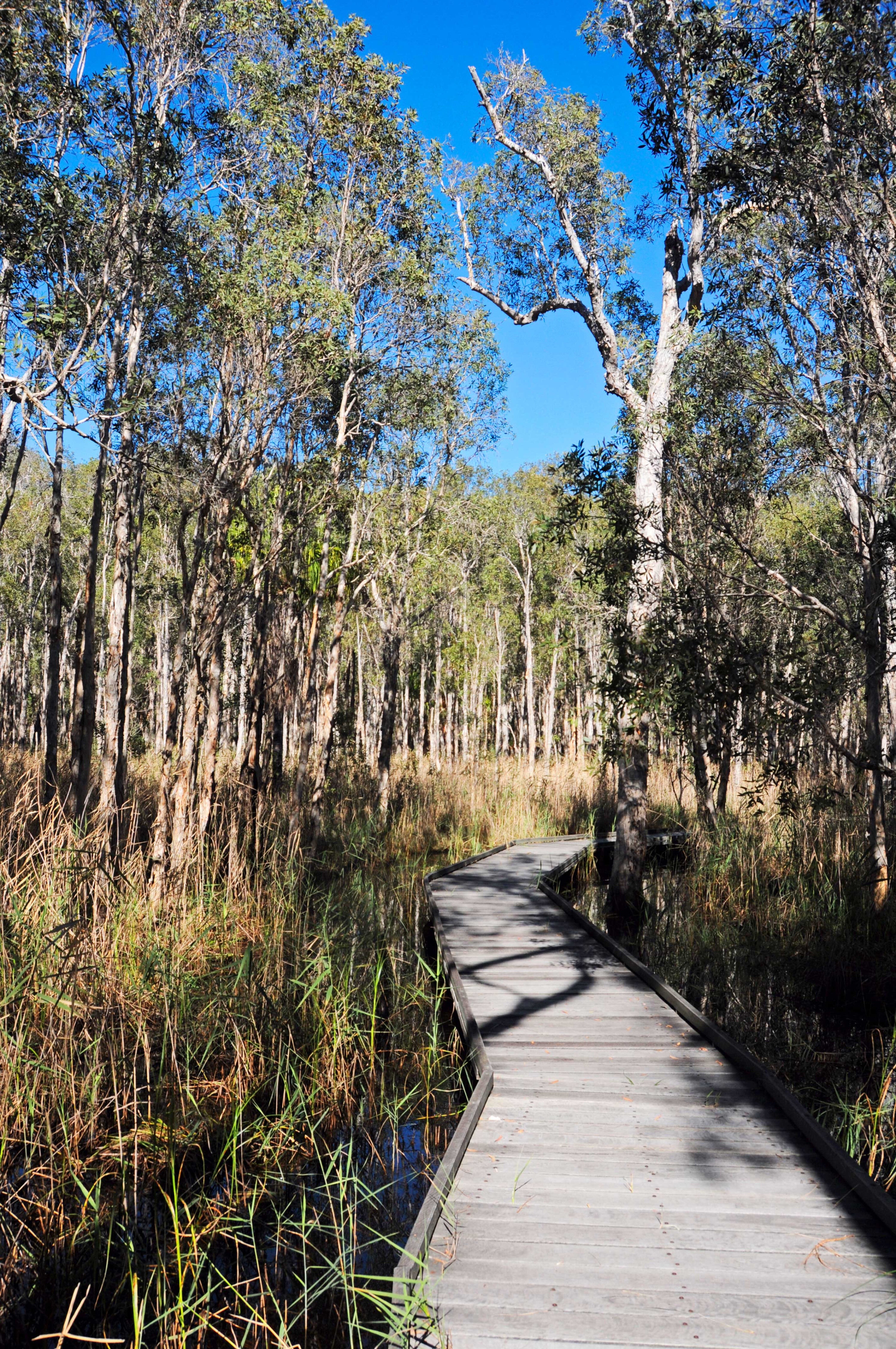
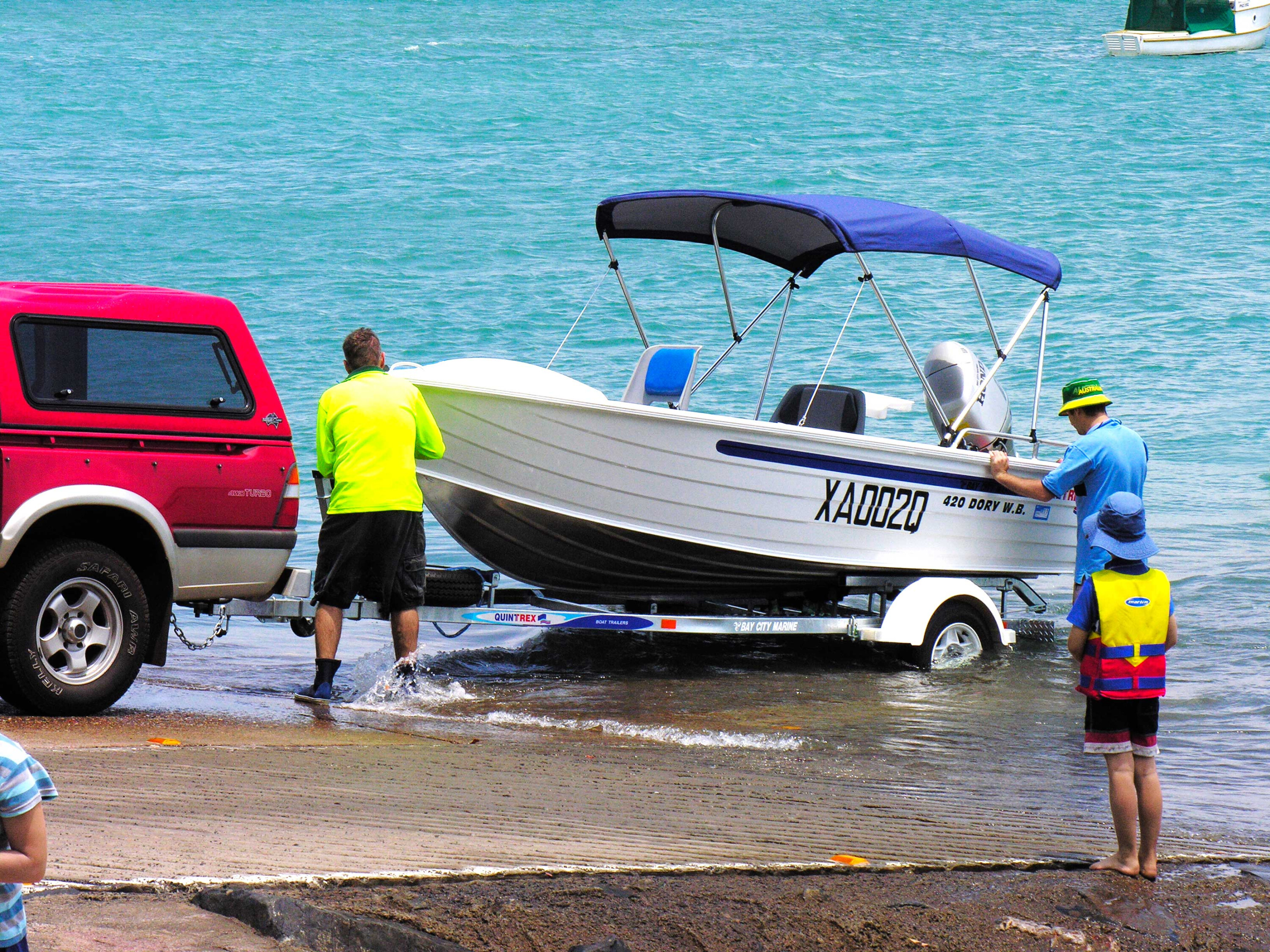
For day visitors, Theodolite Creek Track provides access to the same-named day-use area and is a great place to set off for a waterborne exploration of the waterways in your boat/canoe/kayak. You can also swim here or try and snare an elusive ‘muddie’ (mud crab) for dinner.
The Buxton section of the park in the southwest has no facilities at this time, but it is very popular with both birdwatchers and photographers, owing to the proliferation of birdlife in this part of the park.
Burrum River Section offers access to the Burrum River for canoes/kayaks and boats, plus the small village of Burrum Heads has supplies and facilities. To access this section you have to loop back out of the park and come in from farther south, via the township of Howard, off the Bruce Highway.
Another highlight of this park are wildlife encounters. Green turtles (and loggerheads) nest on Woodgate Beach from November to February, with the eggs hatching at the end of November through to March – an amazing sight. As is the whale migration, with these marine giants spotted off the coast here from August until the end of October.