
We all take our rigs to a trusted auto mechanic for servicing because we know it’s the right thing to do.
After all, a well-maintained vehicle will have a long life, and a well-tuned engine will use less fuel, produce more power and will release less emissions.
We also know that a mid-service lube and oil change is a good idea because lubricants lose their effectiveness over time and all moving parts must be lubricated. Otherwise we get unnecessary wear and tear from things including: inadequate engine temperatures during city driving; climatic conditions; cold starts; and towing.
So if we look after our ‘big engine’, why do some of us ignore the needs of the small engine that often lives in the back tray or is strapped to your roof racks? That’s right; we’re talking about the little engine attached to your chainsaw. It needs some love and attention, too.
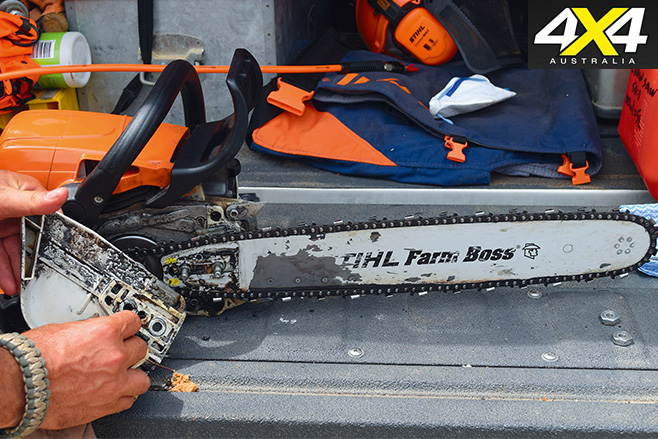
We use chainsaws for the odd job around the house, to cut fire wood when out camping (or at home), for fencing jobs and – more importantly – to clear a blocked track. When it’s time to leave an area because of a weather warning, or you’re evacuating your campsite because of a medical incident, you need to be confident that your chainsaw is ready to face whatever challenges you’re up against. It needs to start – first time.
So why is it that so often, when we’re out on the track, someone grabs their chainsaw to deal with a branch or tree, only to find that the little bugger fails to start? Normally it’s bad fuel, but sometimes it’s lack of maintenance.
Common Faults in Storage Most of us tend to pull out the chainsaw only when we’re packing for a big trip. This means that, for the rest of the time, it’s probably sitting in the shed, neglected. If this is the sort of life you’re offering your chainsaw, the least you can do is store it off the ground.
If you simply leave it lying around on the ground, or on a cement floor, moisture will inevitably wick through the ground. The result can be as simple as surface rust on the bar and chain, or it could even be as bad as engine seizure.
Other things to remember when storing your chainsaw are to: Make sure the chain and bar oil reservoir remain full. This helps to prevent moisture from building up.
Make sure you change your fuel every two months regardless of whether you’ve used your chainsaw. Fuel goes off after this time. Specifically, it will ‘gum up’ and affect your fuel line and system.
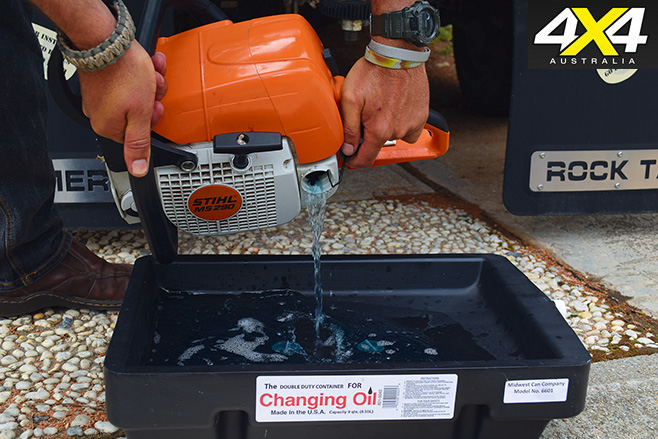
Start your chainsaw at least twice a year. This achieves two things. First, it ensures the engine will not seize. It also practices you in how to start the chainsaw, so that, when you do finally need it, you don’t inadvertently flood the engine through lack of familiarity. If you know that your chainsaw is going to be sitting around unused for more than a couple of months, empty the fuel tank entirely and store it dry.
To do this, start the chainsaw to warm up the engine. Then stop it, drain the fuel out (keep it in a container to one side, you’ll need it later) and then start the saw until it stalls (this stops the spark plug from becoming ‘wet fouled’).
Pre-use Routine Pre-use inspections should be carried out with any piece of equipment and your chainsaw is no different. Before you pull the starter cord remember to: Check the condition of your personal protective equipment (PPE) and put it on. Visually inspect switches, throttle control, pull starter cord, etc. Verify all guards are secure and function correctly. Verify the chain-brake functions. Ensure saw chain and guide bar are in good condition. Check that fuel and oil are full. Repair any identified deficiencies before proceeding further.
Home Servicing If you’re using your chainsaw regularly, you should be servicing it at least once a week. And servicing won’t take long. But if your chainsaw is sitting idle most of the time, make sure you give yourself a couple of hours to properly service it. You’ll need to factor this in to the time that you set aside to prepare for a trip away.
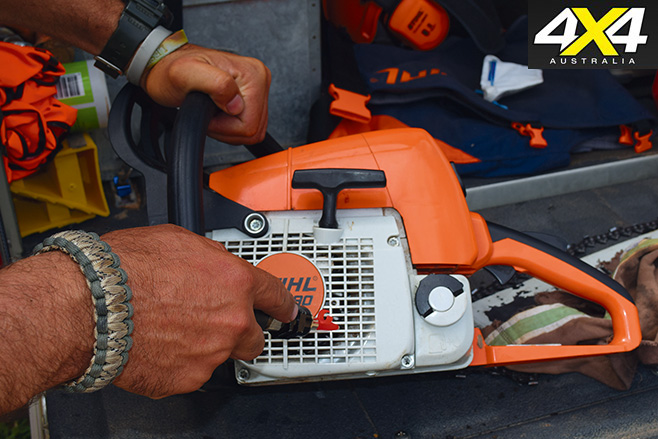
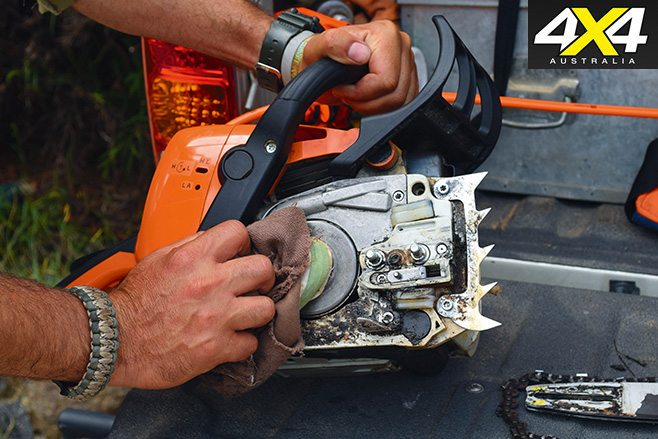
Cleaning – birds do it, bees do it, and even educated fleas do it. With a chain saw, cleaning starts with a piece of rag, a stiff paint brush and a source of air. First, wipe down all external surfaces and blow out any air from the chainsaw’s exterior including the engine cooling fins. Then remove the chain sprocket cover and brush out all of the crud.
Blow out any excess deposits with air. Wipe down all external components including the bar and chain with the old fuel saved when emptying the tank. People commonly overlook the chain/bar oil hole and passages. Make sure you blow these clear with air too.
Clean or replace the air filter – it’s important to clean or replace the air filter regularly. First, carefully remove the filter, trying not to dislodge dust and muck that could fall into the intake manifold. Place some ‘Chux’ cloth or equivalent, into the intake recess and the openings of the filter. Then clean the detached air filter with warm soapy water before rinsing it with clean water. Allow it to dry before re-installing.
Fuel filter – yes, chainsaws have one. And if you’ve left your chainsaw on the shelf for a year, or have been feeding it the spare left over fuel from yesteryear, you should probably replace it.
Spark plugs – should be replaced yearly. Dirty and worn spark plugs can reduce your chainsaw’s starting and cutting performance. If the plug is dirty, use a carburettor cleaner and fine sandpaper to clean it, then set the gap to specification. If the plug is worn, replace it (you should always carry a spare).
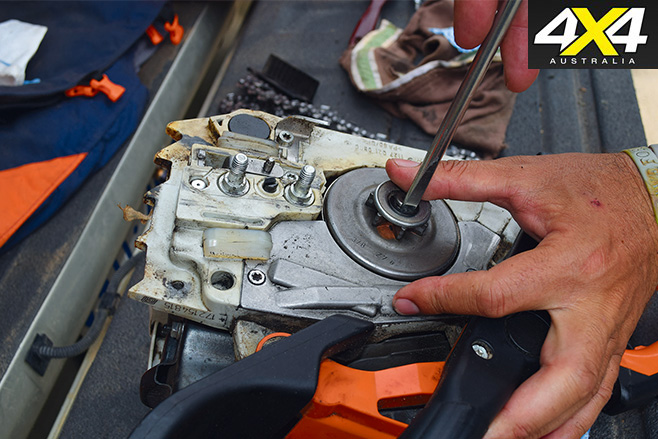
Drive sprocket – with heavy use, you may need to change these every year. So it may be handy to have a spare on hand. After all, it’s only held in by a ‘C’ clip, so changing it is relatively simple.
Sharpening the chain – keeping your chain sharp is the most important part of maintaining your chainsaw. A blunt chain, caused by contact with soil, rocks and general use, will simply rotate and burn the wood rather than cutting it. You’ll know your chain is blunt when you need to apply heavy force to push your saw when cutting.
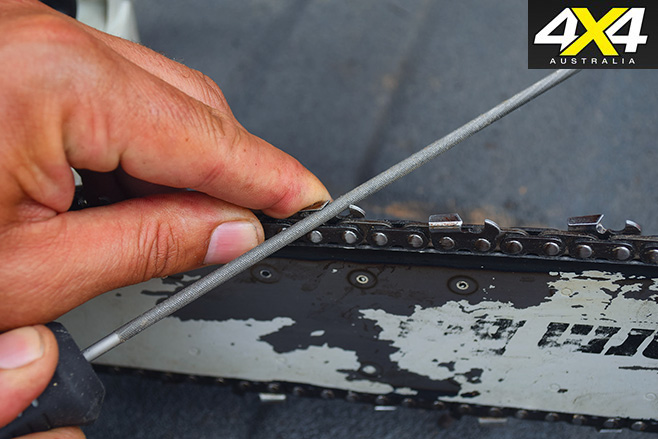
Chains can be professionally sharpened. Alternatively, you can easily do it yourself using a correct-sized sharpening file. Push it horizontally forward through each cleat – then lift – and repeat two more times. To help the process, consider utilising a vice to clamp the bar, locking the chain by pushing the hand guard forward.
Chain tension – general use stretches your chain, which, if not tightened, may come off during use. To adjust, loosen the guide bar’s retaining nuts – located on the side of the saw where the guide bar attaches to the motor. Next, turn the chain tension adjustment screw so that the chain is tight but you can still move it easily with your gloved hand. Once this is done, replace the guide-bar retaining nuts. If your chain doesn’t tighten, it may be time to replace it.
Lubrication – once your chainsaw is re-assembled, find a clean surface or a piece of newspaper and accelerate the saw a few times pointed in its general direction. Oil should spray onto the surface. If it doesn’t, check that the oil reservoir is full. Also check that the oil passages and holes on the guide bar are clean. If the oiling system still doesn’t work, it’s time to take it to an authorised service centre.
Other tips Routinely reverse the chain bar, top to bottom, to avoid wear on one side. Don’t operate the chainsaw with the air intake on the ground as this will draw foreign particles into the motor area and damage the motor.
If you notice that you’ve inadvertently knocked dirt or other crud into the oil reservoir while re-fuelling: drain the contaminated oil into an approved container; let the oil drain overnight by gravity; rinse the reservoir with fuel; let it air dry; and then blow out with air.
The Bottom Line Whether you have an electric or a petrol chainsaw, it’s important to undertake general maintenance and regular servicing to achieve optimal performance and longevity of your saw. Proper maintenance will not only prolong the life of your chainsaw, it will also make your work a lot easier.
Toyota’s Prado 150 Series has received its first significant mechanical upgrade since it appeared in late 2009.
At the centre of this is an all-new 2.8-litre diesel, replacing the out-going 3.0-litre diesel, and a new six-speed automatic that replaces the out-going five-speed auto.
The new engine is the first new diesel to appear in Prado since the 3.0-litre 1KD-FTV, or the D-4D as it’s commonly known, appeared in the 120 Series in late 2006, so it’s nearly ten years in the making.
It is designated the 1GD-FTV, where ‘GD’ stands for ‘Global Diesel’.
Despite the fact that the D-4D moniker is carried over to the 2.8, this engine is new from the ground up.
Most significantly, it claims 40Nm more torque (450Nm when mated to the auto ‘box) despite being 227cc smaller than the out-going engine and running a lower compression ratio, now 15:6, down from 17.9.
It does this off the back of the latest generation high-pressure (2500bar) common-rail fuel injection system, a more sophisticated variable-nozzle turbocharger and newly designed combustion chambers in the twin-cam 16-valve cylinder head.
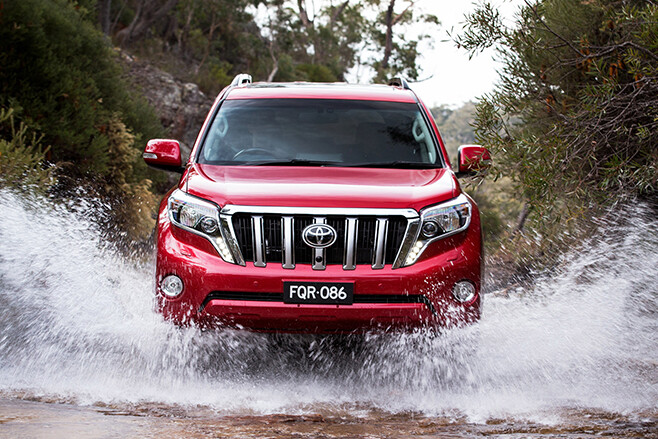
Interesting, while a decrease in the cylinder bore from 96mm to 92mm is the main reason behind the smaller capacity, the new engine’s stroke is marginally longer (now 103.6mm, up from 103mm), which means the engine is even more under square than before.
Other significant changes from the 1KD-FTV include the adoption of a timing chain to replace the belt used previously, the introduction of roller rockers in the valve train, and the use of one, not two rotating counter-balance shafts to quell the vibration that’s inherent with in-line four-cylinder engines.
For its part, the new six-speed automatic gearbox brings a fractionally lower first gear than the five-speed but a top gear that’s a significant 19 per cent taller.
While the claimed maximum power of the 2.8 is only up 3kW from the 127kW of the 3.0-litre engine, the 2.8 is more responsive on the road thanks to its extra low-rpm torque.
Significantly, the extra 40Nm of torque that the 2.8 makes with the auto ‘box is on tap at a low 1600rpm, the same engine speed as the bigger 3.0-litre needs to make its maximum of 410Nm
With the carried-over six-speed manual (only available on the GX and GLX) the 2.8’s maximum torque is pegged at 420Nm but this comes on tap at just 1400rpm, so 10Nm more at 200rpm less than the 3.0-litre – again, a measure of the extra efficiency of this new smaller engine.
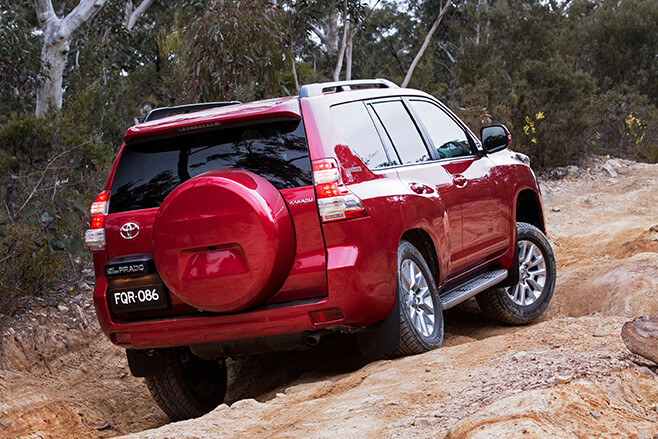
But this new 2.8 is not really about extra performance but about refinement, and this is where it makes the biggest leap forward from the 3.0-litre. It simply just doesn’t sound or feel as ‘diesel-like’.
Gone is the diesel rattle and much of the knock of the old engine. You can still tell the 2.8 is a diesel but it’s certainly a lot quieter and smoother under part or full load.
The overall driving experience is also enhanced by the extra refinement that the six-speed auto brings to the equation. The shifts are notable slicker and better timed on the road than the five-speed, while the off-road low-range shifts are also notable smoother than the sometimes abrupt five-speed.
As ever, the Prado offers a comfortable ride on both highways and backroads and is now even more relaxed as a tourer thanks to the extra tall top gear.
Off road the supple, long-travel suspension is as good as ever while the overall off-road performance is further enhanced by the new engine’s stronger low-speed torque. The fact that the maximum torque with the manual is now on tap at just 1400rpm will also be well appreciated by those who still prefer a manual and use it off road.
The Prado’s 4.0-litre petrol V6 has also been revised and now comes with the six-speed auto (as before, there’s no manual V6), while satellite-navigation has been added to the volume-selling GXL model and rear-cross-traffic alert added to the Kakadu.
Nissan has introduced King Cab and Single Cab chassis four-wheel drives to its NP300 Navara range.
According to Nissan, 13 new variants, including King Cab and Single Cab 4x4s, will be available from November, joining the Dual Cab pickup range that hit showrooms in June.
The NP300 Navara Single Cab range is available in two model grades – the DX and RX – with the YS23DDT 2.3-litre single-turbo four-cylinder diesel engine producing 120kW and 403Nm.
A standard-fitment six-speed manual transmission controls the 4×4 drivetrain, while a seven-speed automatic is available as an option for the turbo-diesel RX 4×4.
All Single Cab models are cab-chassis in configuration.
Maximum payload capacities for NP300 Navara single cab models range from 1,196kg to 1,362kg, depending on model grade and drivetrain. All Single Cab variants are fitted with leaf spring rear suspension.
The new NP300 Navara King Cab is available in three model grades: RX, ST and the range-leading ST-X. The King Cab body seats up to four, with rear seat access via a reverse-opening door panel behind each side door.
The King Cab range is available only in turbo-diesel – specifically single-turbo-diesel (120kW and 403Nm) for the RX grade and a twin-turbo-diesel (140kW and 450Nm) for the ST and ST-X grades.
The RX grade for the NP300 Navara King Cab is available in cab-chassis or with a pick-up-style rear body. The ST and ST-X grades are available only as a pick-up. All King Cab variants are fitted with leaf spring rear suspension.
Also joining the Australian NP300 Navara range is another variant of the Dual Cab: the Dual Cab Chassis 4×4. This Dual Cab variant allows fitment of a drop-side tray cargo body and comes fitted with leaf spring rear suspension and a maximum payload of 1,151kg. It’s available only in the RX model grade as a 4×4 with single-turbo-diesel power.
MSRP:
Single Cab DX 4×4 diesel cab chassis $31,990 Single Cab RX 4×4 diesel cab chassis with seven-speed auto $32,990 King Cab RX 4×4 diesel pick-up $36,990 King Cab ST 4×4 diesel pick-up, with seven-speed auto $42,990 King Cab ST-X 4×4 diesel pick-up with seven-speed auto $48,990
Toyota’s Prado has a new turbo-diesel engine and a new six-speed automatic transmission.
The engine is the 2.8-litre four-cylinder engine used in the eighth-generation Hilux and new Fortuner, both due to arrive in local dealerships from October.
Designated 1GD-FTV, the engine increases the vehicle’s torque to 450Nm, up 9.75 per cent, despite being smaller than the engine it replaces.
The common-rail diesel in the Prado is unique, however, in that it has a counter-balance shaft, which has been added for smoothness. A chain drive is also used instead of a belt for greater reliability.
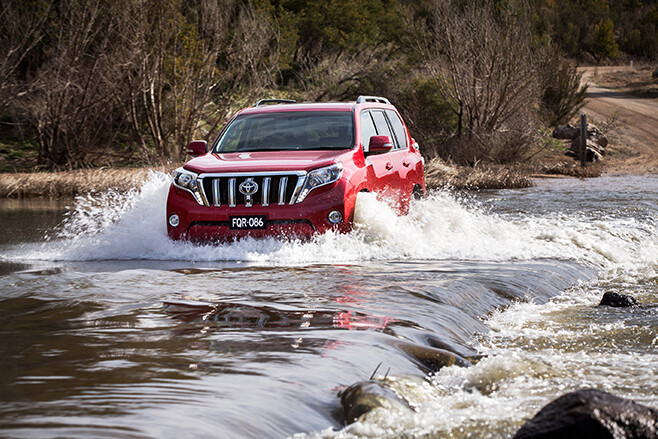
It’s also driven through a new six-speed automatic transmission which is the first in a Toyota to use technology that monitors acceleration and driving conditions to determine the best use of high-speed gears. The previous diesel had a five-speed shifter.
Fuel consumption and emissions have improved by about six per cent, at just 8.0 litres/100km for the auto on the combined cycle. The six-speed manual transmission produces 7.9 litres/100km – an improvement of 10.2 per cent.
Meanwhile, the V6 petrol engine now peaks at 207kW, with emissions lowered by 1.8 per cent, achieving Euro 5 certification for the first time in Australia.
This 4.0-litre DOHC engine gains new injectors that improve the fuel flow and atomisation. Its exhaust system has also been modified to improve gas flow and cylinder scavenging, while the engine ECU has revised mapping.
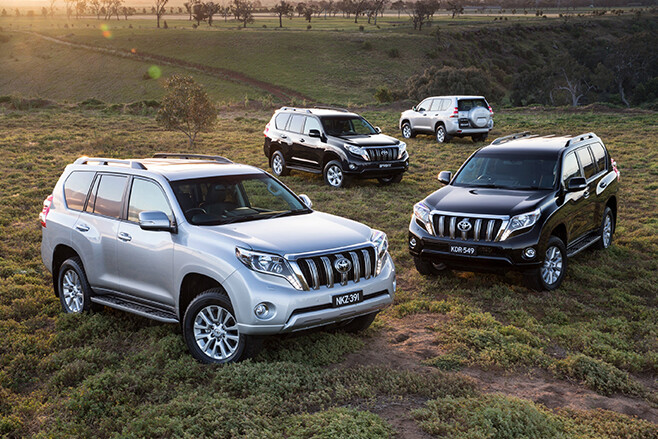
Prado’s line-up remains the same: the diesel-only GX is available with five or seven seats while seven-seat GXL, VX and Kakadu offer the choice of engines. The two higher grades are auto only.
The updated Prado range starts at $52,990 for the five-seat GX manual diesel. Automatic transmission adds $2,000 and diesel comes with a premium of $1,000 over the equivalent petrol variant.
Prices have increased by between .05 per cent and 2.6 per cent.
Keep your eye on 4x4australia.com.au this week for Fraser Stronach’s road test of the updated Prado range.
Get the latest info on all things 4X4 Australia by signing up to our newsletter.
It happens once a year: Harrop’s Open House.
But this year is special. To celebrate its sixtieth anniversary, Harrop will offer the public a behind-the-scenes look at its performance centre and will host a show-and- shine competition.
Held September 20, the annual open house will include a factory tour that showcases Harrop’s product-development process, including research and development, engineering, manufacturing and product validation. In 4X4 Australia’s April edition, we tested a ‘Harrop Hilux’ (pictured) kitted out by the engineering firm.
“This is a very special year for the team at Harrop as we’re celebrating our sixtieth anniversary,” Harrop Engineering General Manager Heath Moore says.
“To mark the occasion we’re planning a massive open day where enthusiasts and fans can go behind the scenes of our cutting-edge facility by pre-registering for a guided factory tour.”
Harrop has also invited enthusiasts to register their special vehicles for a show-and-shine competition, being held on the private road outside Harrop’s headquarters in Preston, Victoria.
Aussie, American, European, 4×4 and JDM Import vehicles are welcome and will be judged by the public. Harrop-manufactured billet aluminium trophies will be awarded to winners. Race vehicles and historic motoring pieces will also be on show.
“It’s just over a month until we open our doors to the public and we have kicked into full gear,” Heath says. “We have secured a variety of race vehicles and historic motorsport pieces to go on display and will continue to endeavour to provide attendees with the best experience yet.”
The number of factory-tour places available is limited.
For more information or to register for the factory tours or show-and-shine visit: www.harrop.com.au/events/open-house-2015
Get the latest info on all things 4X4 Australia by signing up to our newsletter.
Mark Clancy caught the Jeep bug more than 20 years ago and he hasn’t been able to shake it.
As a young bloke he was into some pretty serious hardcore off-roading, and he admits to ownership of “probably around 25 Jeeps”, many of which were heavily modified.
Now, as a family man, Mark says he’s more into general touring. “We used to do a lot harder stuff back in the day, but now having [a] family, we don’t do as much,” he claims with a laugh. When pressed a little more on the subject, though, Mark admits: “We still like to play a little bit hard… but yeah, we’ve still got to drive the car home.”
The car Mark’s referring to isn’t your average tourer. Sure, from the outside it looks only slightly modified, but lurking under the bonnet is a 5.7-litre Hemi V8 that makes this JK Unlimited a serious piece of kit or, as Mark describes it, “a go-fast tourer.”
The thing that attracted Mark to the Jeep brand in the first place has also played a big part in the reasoning behind this vehicle’s V8 conversion: availability of aftermarket parts. You see, Mark kicked off his four-wheel driving habit in a Daihatsu F20, moved on to a Suzuki after that and then a Land Cruiser, but eventually he discovered there were more off-the-shelf bits and pieces available for Jeeps than Japanese brands.
“I just liked the aftermarket parts you could get for Jeeps. It was easier to do Jeep stuff back in the day; getting stuff for Nissan Patrols was just too expensive. It was easier to buy old Jeeps and then spend too much money on them,” chuckles Mark.
And that’s still the case today; dropping a V8 into a Wrangler is as simple as buying a JK Hemi Kit from respected US-based company American Expedition Vehicles (AEV), and then finding someone with a basic mechanical understanding to do the job. Yep, AEV says this conversion kit is simple enough for do-it-yourself types, and it includes everything you need to complete the swap with factory-like results.
To make the engine swap as easy as possible, the AEV kit includes no-measure engine mounts, a fitted exhaust system, a custom radiator and a plug-and-play wiring harness that uses OE connectors and factory colour-coded wires. Mark employed the services of the boys at Jeep Konection and Dyers Auto Engineering to do the V8 conversion on his 2007 JK Wrangler, as well as perform a host of other modifications.
The engine is factory standard, though its claimed 260kW and 530Nm on tap is a marked improvement over the standard 3.8-litre V6, which could only muster 146kW and 315Nm. All that V8 grunt drives through a heavy-duty Jeep/Dodge automatic transmission and then on to the standard JK Wrangler transfer case. The factory diffs have also been flicked in favour of Dynatrac units.
“The front diff is a Dynatrac 44 with 35-spline shafts, ARB Air Locker and RCV [Performance Products] universals,” Mark says. “The rear is a Dynatrac 60 with 35 splines and ARB Air Locker.”
So how does it go on the road? “Yeah, good,” Mark says in a most understated way. “I reckon it drives better than a factory Jeep.”
And you can bet this thing is a monster off the road, too, thanks to that Hemi V8 power, front and rear lockers and the aggressive 37-inch Pro Comp Xtreme Mud Terrain tyres on bead-locked AEV rims.
There’s loads of ground clearance for difficult off-road terrain thanks to an AEV DualSport suspension system that gives this beast a 3.5-inch lift. As well as springs, the AEV kit includes Bilstein 5160 remote reservoir shocks, geometry correction front control arm brackets, a custom bent rear track bar and rear stabiliser end links, as well as a host of other components that ensure correct suspension geometry is maintained despite the significant lift.
As a result, AEV claims the kit brings “OE-level suspension engineering to the aftermarket… one that is both extremely capable off-road, while offering unparalleled on-road performance and handling.”
Mark is a big fan of AEV gear, as there’s a lot more of it on this rig, including the front and rear bars, the wheel carrier, the fuel caddy, hi-lift jack holder, bonnet, snorkel and corner guards. “I like the AEV product because it still keeps the car looking factory, in a way,” Mark says. “It doesn’t make it look like a big rock crawler.”
This JK is not just a one-shop catalogue special, though. To ensure there’s maximum wheel travel off-road, Mark’s fitted a Currie Antirock front sway bar. The Antirock, which doesn’t need to be disconnected for off-road use, is designed to increase off-road traction by balancing and distributing the vehicle weight over all four tyres.
Other aftermarket accessories that have managed to find their way on to this JK Wrangler include the bar-mounted Warn 9.5ti winch and a pair of KC POD carbonfibre 70W HID driving lights, while up top there’s a Front Runner roof rack and a Foxwing awning. Down below, there are Mopar Enhanced Rock Rails.
Mark put his own manufacturing skills to use on the inside, fabricating his own drawer system and fridge slide for the ever-reliable Engel. Above this is a cargo rack from US-company Adventure Trailers, which allows Mark to make use of every available cubic-inch of cargo space in the back of the Jeep.
Adding to the versatile nature of the JK Wrangler’s rear-end is a nifty drop-down table on the tailgate that was also sourced through Adventure Trailers. Called a Trailgater, it’s manufactured by a company called Outback Adventures, and is cleverly designed so that it can be installed without drilling any holes in the tailgate – you don’t even have to relocate the subwoofer. Remove a pin and it simply drops down for use, and the slide-out cutting board can be easily removed for cleaning.
Fitting electrical accessories to complex modern vehicles has become increasingly difficult and the JK Wrangler is no exception. To avoid the need to cut into any factory wiring, Mark has installed an sPOD system, which is mounted on the roof between the sun visors.
“The sPOD system has its own separate fuse box and relay system,” Mark says. “It’s a bolt-in system. It controls a light for the back, lights for the roof [not fitted at the time of the photo shoot], UHF, GPS, fridge, all the accessories I have in the car go through that; anything that runs off the second battery.” Making sure all the electrical accessories receive a reliable source of power is a Redarc BCDC in-vehicle battery charger.
In place of the standard rear-view mirror, Mark has fitted a screen that can be manually switched on when required and comes on automatically when reverse is selected. A Hema Navigator makes sure Mark doesn’t get lost in the bush and an Icom UHF is used for vehicle-to-vehicle comms.
Being Melbourne based, Mark does plenty of off-roading in the Victorian High Country. Without too far to travel to get into the scrub, touring range hasn’t been much of an issue with this big petrol-powered vehicle, despite the Jeep’s brick-outhouse aerodynamic package and the potent Hemi V8. In fact, Mark reckons fuel consumption is about on par with the old 3.8-litre V6 that once resided under the bonnet. At the moment the Wrangler is running the standard 79-litre fuel tank – there’s also the 40-litre AEV fuel caddy on the back if things get desperate.
Mark reckons he will fit a long-range fuel tank at some point in the future, but at the moment he can carry plenty of extra fuel on his trailer.
With its matching silver paint, black guards, Pro Comp muddies and AEV rims, Mark’s trailer almost looks as though it came out of the same Toledo factory in Ohio as his JK Wrangler, but nothing could be further from the truth. “We custom built it ourselves,” Mark says. “It runs 37-inch tyres, the same bead-lockers that are on the car, airbag suspension with four links; it runs a Front Runner roof rack… it’s pretty much just a gear trailer, not a camper.
“We call it the boys’ trailer; when I go away with mates we put all our camping gear in it, bike racks, kayaks, all that type of stuff.”
So what’s in the pipeline for Mark’s mighty Hemi V8 JK Wrangler? “Apart from putting a long-range tank in it, she’s almost done,” Mark says.
After a pause, though, he continues with a laugh, “I might think about supercharging the motor… you’ve got to spend your money on something!”
Specifications
| Engine | u00a05.7-litre Hemi V8 (260kW/530Nm) |
| Transmission | u00a0Jeep/Dodge heavy-duty automatic |
| Transfer case | u00a0Standard |
| Diffs | Dynatrac 44(front);Dynatrac 60(rear) with ARB Air Lockers |
| Suspension | u00a0AEV DualSport SC u00a03.5-inch lift u00a0Bilstein remote reservoir dampers u00a0Currie Antirock front sway bar |
| Exterior | u00a0AEV front and rear barsu00a0AEV bonnet u00a0AEV wheel carrier,fuel caddy andu00a0hi-lift jack mount u00a0AEV corner guards u00a0Front Runner roof rack u00a0Mopar Enhanced Rock Rails u00a0KC POD HIDs u00a0Warn 9.5ti winch u00a0Redarc BCDC battery charging system |
| Interior | u00a0Custom drawer system u00a0Adventure Trailers cargo rack u00a0Trailgater u00a0sPOD electrical system u00a0Hema Navigator HN6 u00a0Icom UHF |
| Thanks to | u00a0Jeep Konection u00a0Off-Road Konection (Pro Comps) u00a0Dyers Auto Engineering u00a0Explore X 4 (Front Runner) u00a0Delux Kustoms (Trailer paint) |
The Finke River has existed for a very long time indeed.
Some 340 million years ago, before the dinosaurs and even before geological forces created the nearby MacDonnell Ranges, this ancient river wandered through the centre of the Australian continent, draining to what was then an inland sea.
Having largely followed the same course for 100-million years or so, the Finke is said to be the oldest river in the world.
The MacDonnell Ranges rise spectacularly from the flat plains of Central Australia, but what’s visible today are just the eroded bones of a mountain range once higher than the Himalayas.
With its wide, flat bed and reliable permanent waterholes, the Finke has been important to Aboriginal people for thousands of years as a trade and travel route through this otherwise rugged and inhospitable country.
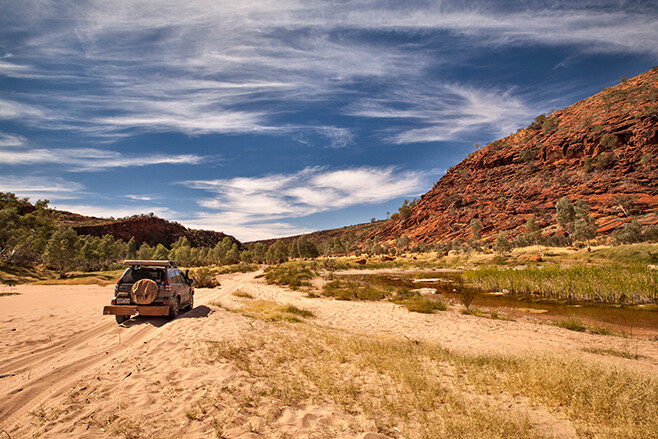
Early European explorers also used the river as a path through the MacDonnell Ranges and, following the establishment of settlements like Hermannsburg – 126km west of Alice Springs – it became a supply route from the south.
Starting just outside of Hermannsburg, the Finke River 4WD Route follows the dry river bed south to eventually meet the Ernest Giles Road about 97km away. Considered a difficult four-wheel drive track, authorities recommend against towing trailers along the river.
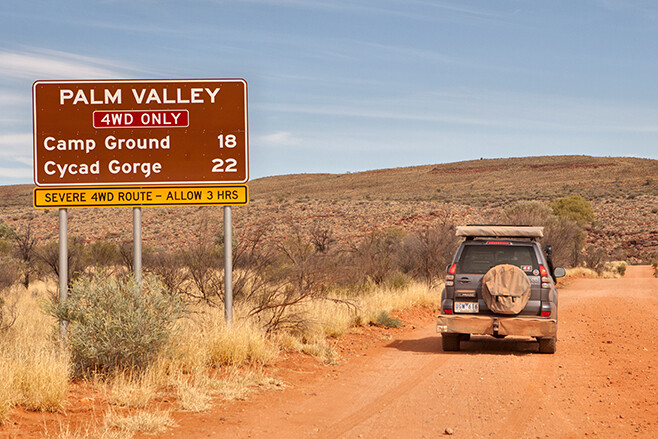
For the less adventurous, the easier alternative is to camp at the Palm Valley campground at the north end of the Finke Gorge National Park. Just after turning off the main road near Hermannsburg, there is a large sign warning travellers that the track into Palm Valley is 4WD only, severe, and will take about three hours to drive.
However, the most challenging parts of the track are found after the campground, access to which takes less than an hour but does entail crossing a couple of soft sand sections. While these are unlikely to seriously trouble any standard 4×4 towing a camper, reducing tyre pressure to improve traction and momentum is advised.
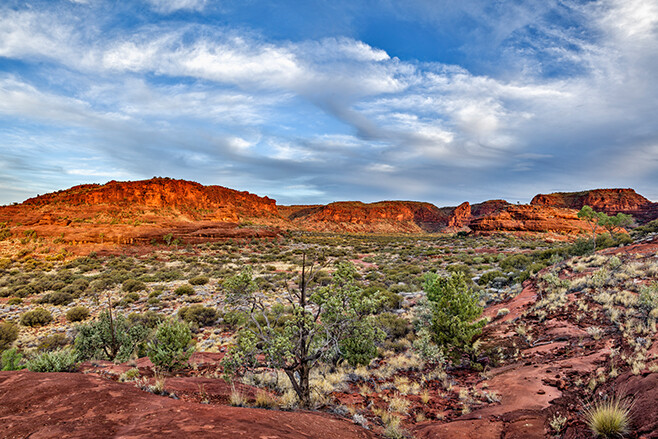
Overall, the track into the campground is a pleasant and scenic one. It follows the Finke and is bordered by high, red cliffs that have been cut over millennia by the river.
With its hot solar showers, gas barbecues and communal fire pits, the Palm Valley campground provides excellent amenities. Individual campsites are well separated and set among tall shady trees, providing campers with a degree of privacy. The solar lighting in the amenity block attracts all manner of flying insects, which provide an easy meal for the many small frogs that have taken up residency as a result.
However, atop the campground food chain is a 1.5m king brown snake which also occasionally frequents the amenity block at night, looking for said frogs. Given king browns are not noted for their pleasant disposition, if taken by the call of nature in the early hours it’s not a bad idea to carry a torch and look where you put your feet!
Near the campground are short walks which have spectacular views of a rock amphitheatre encircled by rugged, rocky ranges. The shorter walk to Kalarranga Lookout provides an elevated view over this natural formation. The rich-red rocks of the west-facing cliffs are especially scenic when lit by the last rays of the setting sun.
Palm Valley itself is a few kilometres past the campground and this is where the more extreme driving starts. The track is best suited to high-clearance vehicles because it’s quite rough and rocky. Several parts of it involve climbing over wide rock shelves with ledges and holes that need to be carefully negotiated.
More than 3000 red cabbage palms grow at Palm Valley, with some specimens more than 700 years old. From the car park, visitors can access a two kilometre and a five kilometre walk, which both meander through this lush oasis of palms and cycads. Palm Valley has long been considered a remnant of prehistoric times, when Central Australia had a much wetter climate.
It’s home to one of only three stands of red cabbage palms found in Australia, however, recent research indicates that the palms here are genetically separated by only 15,000 years from the two other stands found 1000km away near Katherine and Mount Isa. This raises the tantalising suggestion that these widely separate populations may have been introduced by unknown travellers in the more recent past.
Access to the Finke River Gorge from Palm Valley involves driving back to Hermannsburg to pick up the rough, corrugated and sandy track south to the Finke Gorge National Park boundary and the wide, sandy bed of Ellery Creek. So large is this dry river course that you could be excused for mistaking it for the Finke, but remarkably, Ellery Creek is just a tributary.
To avoid impassable rocky sections, the track regularly leaves the river bed to wind through the picturesque ghost and river gums that line the course of the Finke as it wanders through the rust-red ranges. It’s difficult to put the grandeur of this landscape into words. Rarely do you see such an expansive dry river bed or impressive stands of white-trunked ghost gums. With no shortage of water beneath the sand, the trees’ foliage has a lushness that’s not often associated with the hot, dry heart of Australia.
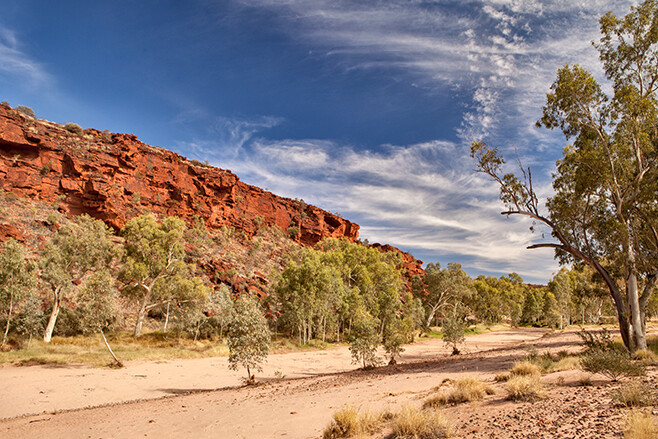
Like driving the Simpson Desert, travelling the Finke imparts a feeling of wonderment at the landscape’s natural beauty. You feel like a trespasser in country that has an almost-tangible spiritual feel to it and, unlike most of today’s world, shows little evidence of modern man. What evidence there is of man – mainly vehicle tracks in the sand – is erased every few years when the river flows.
Nearby Hermannsburg was the home of Albert Namatjira; the renowned Aboriginal landscape painter. When travelling down the bed of the Finke, it’s easy to see where he obtained much of the inspiration for his art. Ellery Creek joins the Finke River six kilometres from the park-entry gate and a further 10km of travel brings you to Boggy Hole.
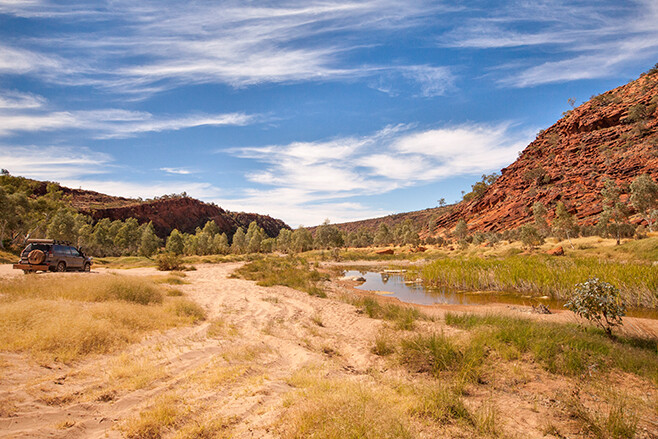
Despite its uninspiring name, this permanent waterhole can be up to two kilometres long after rain, and in this dry and inhospitable country a waterhole of this size is unexpected. Things to avoid when driving the Finke are patches of wet sand which can prove to be treacherously soft and can rapidly trap a vehicle. The dampness is caused by the river flowing just beneath the surface. Perhaps this was how Boggy Hole got its name.
Boggy Hole is a recommended bush campsite given its seclusion, inviting swimming hole, large shady trees and the picturesque red cliffs that glow behind the waterhole in the late afternoon light.
On the opposite side of the river from the campsite are the ruins of an old police camp established in 1889. The police presence was considered necessary to manage conflict between the local aboriginals and the recently-arrived graziers, who showed total disregard towards the indigenous people’s lifestyle, hunting grounds and sacred sites.
Boggy Hole’s past is a sad chapter in local history. Constable Willshire, who was in charge of the police station, became infamous because of his punitive attacks on the aboriginal people. The fact he was charged over the murder of two aboriginals at a time when very few Europeans faced court for such crimes is testament to his cruelty.
Boggy Hole is a three-hour trip from Palm Valley and arguably incorporates the most picturesque and interesting part of the Finke River 4WD Route. As such, for anyone on a day drive from Palm Valley, as we were, Boggy Hole is a good place to take a break before starting a return journey.
Travelling south from Boggy Hole, the river valley widens and the Finke spreads out to become a broad expanse of coarse white sand and gravel punctuated with innumerable river gums. From here it’s around 74km further south to the intersection with Ernest Giles Road.
It’s difficult to put a finger on what makes driving the Finke River so special. After all, it’s just a dry riverbed, albeit a very big one. Perhaps it’s the remoteness or those stunning ghost gums, but, whatever the reason, it imparts a sense of achievement, wonderment and respect to those lucky enough to make the journey.
Get the latest info on all things 4X4 Australia by signing up to our newsletter.
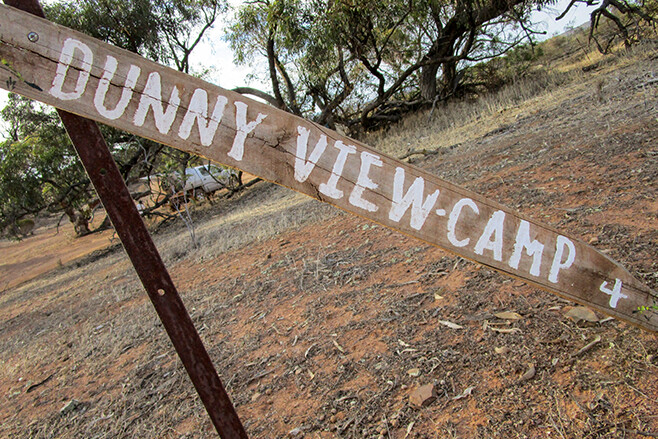
It’s not often that we’re thrilled to be allocated the dunny-view site at a campground.
Yet, with the panorama of a beautiful valley, not another soul in sight, and being surrounded by that special silence that only the Aussie bush can create, Number Four Camp at Willangi was the perfect place to be.
Located about 15km out of Peterborough in the mid-north of South Australia, Willangi Bush Escapes is exactly what its name suggests. It’s just a two-hour drive from the outskirts of Adelaide, so makes for an excellent weekend break. It is, however, equally as good for travellers on the long-haul.
The property is one of four owned and managed by the Willangi crew – Antoinette, Neil and Phil – and is used primarily for grazing and cropping. In the scheme of the stations’ history, tourism is a relatively new sideline so specific facilities have been set up for campers and four-wheel drivers to provide a real bush-escape experience.
There’s only a handful of campsites at Willangi and each has its own private access track, so there’s little chance of drive-throughs. It would also be rare to see the 4×4 tracks crowded. Individual camps are a good size, with enough room for large groups to set up.
Campsites at Willangi need to be booked in advance, and keys to the site need to be picked up from the office in Peterborough. Along with the key comes a booklet with a few mud maps, interesting facts about the property, and a list of rules and regs – most of which are common sense. Travellers who opt to tackle the 4×4 tracks are given extra mud maps that cover the country beyond the campsite areas.
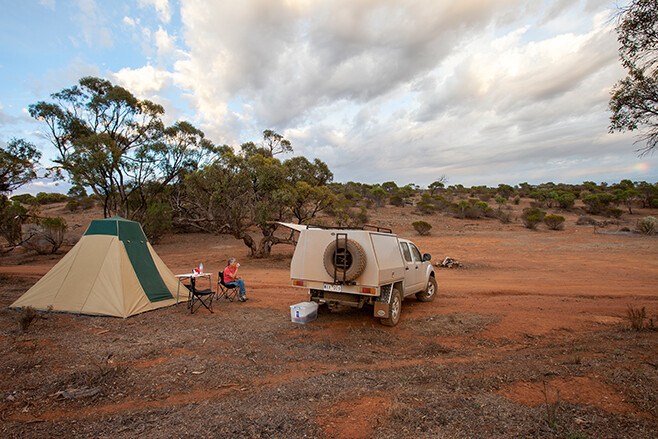
It’s a fairly quick run from the office in Peterborough to Willangi’s boundary gate, mostly on a well-formed dirt road. From the gate (don’t lose that key), a station track links the various campsite access tracks. These are easy to negotiate, and with a bit of care, some are even suitable for sedans.
Each camp is numbered and named, and each has a drop dunny that adds a touch of bush-basic sophistication. The only other facilities are a fireplace and drums for recyclable cans and bottles. Enough wood for a campfire is supplied but wood collection isn’t allowed on the property.
One campsite, however, does have a hint of luxury with an outdoor bathtub. A 44-gallon drum serves as a donkey for hot water and, while a few shrubs give some privacy, there’s little else to block the views of surrounding hills. Campers not on the bath-suite site have access to a central shower block – $1 for a three-minute shower is good value in this dry and dusty country.
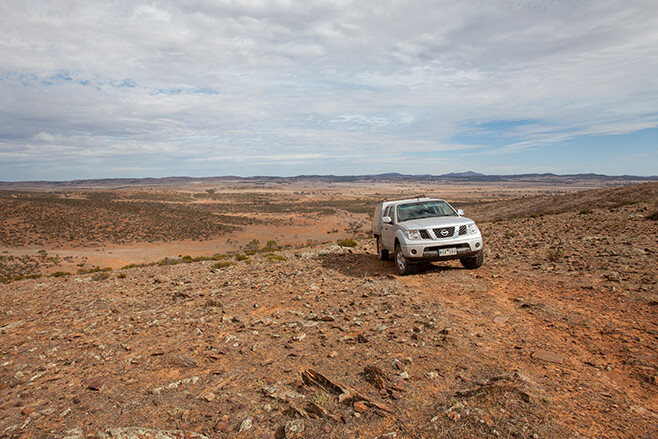
Willangi’s track network is pretty interesting and is spread over different parts of the property. There’s a combination of easy, hard and harder tracks to suit different vehicles and driver skill levels, with a few interchanges to cut-and-run or to extend the 4WDing experience. Minimal route notes, supplied with the mud-map pack, are supplemented by on-track signage with warnings for the most difficult sections.
In the Grants Hills area of the property, the Eldoratrilla Track gives an excellent overview of the region. This one is rated medium-high with a fair dose of steep gradients, side slope and sharp rock sections to clear. Views from the top toward the southern Flinders Ranges are impressive and it’s possible to get mobile phone service from this vantage – there is no service in the campsite valleys.
In parts, the tracks touch on local history, such as the Slate Pit Hills where slate was quarried many years ago for the footpaths and kerbing in Peterborough. Millers Tracks, on a remote part of the property, provides a glimpse of the workings of the station both past and present. Millers runs past saltbush plantations and through a maze of gates before meandering across rough rolling hills. Thick bulldust is likely to overtake vehicles purely because of the slow driving pace required.

With such a range of tracks spread over a huge slice of country, it’s not too hard to string a few tracks together for a really good day or two of full-on adventure. Rocky terrain, coupled with the nature of the hills and ranges, offers a good challenge for drivers and vehicles, while the tracks are just long enough for a great experience without becoming tedious. There’s no pressure either, to push on through; newbies can pick a lower-level loop and work up to the real rough stuff.
In a good season this country would really sing, with a new vista over every ridge and an awesome variety of plants and animals to see. But even when it’s dry and dusty, and you wonder how the hell anything could survive out here, it’s still an attractive part of the world – even more so because it’s not overrun with tourists.
With a good mix of 4×4 tracks, campsites and amazing views, Willangi is a great place to kick back and relax.
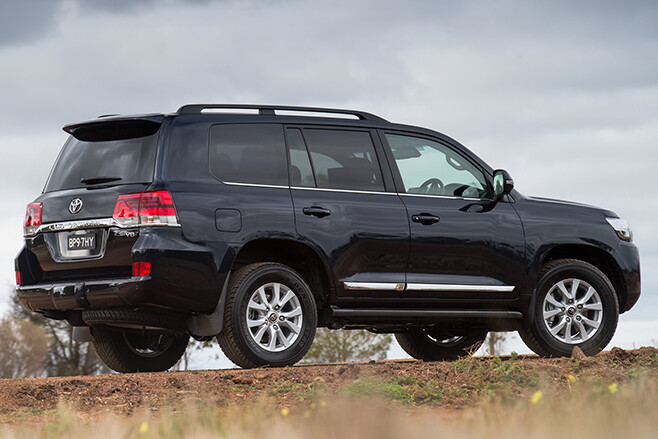
Toyota has revealed its revamped Land Cruiser 200 Series – with an upgraded engine, new safety technology and revised styling – ahead of its launch in Australia in October.
According to Toyota, the Cruiser’s V8 twin-turbo diesel will have more power and better fuel efficiency, while a facelift will make the series appear more aggressive.
Available as a five-seater, seven-seater and eight-seater, the updated Land Cruiser range will join the new Fortuna and the reworked Prado and Hilux on showroom floors before the year’s end.
Full pricing and specifications will be announced at the upgraded range’s official launch in October.
Engine
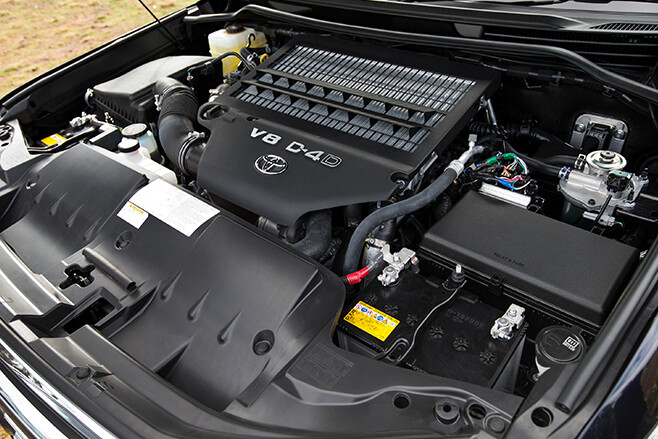
Engine upgrades include new injectors for the 4.5-litre twin-turbo diesel engine, revised mapping and a diesel particulate filter (DPF) fitted with a guard to protect it over rough roads.
Power output has increased in the common-rail diesel by 5kW (up 2.5 per cent) to 200kW, while peak torque remains 650Nm.
The petrol engine will maintain its peak outputs of 227kW and 439Nm with variable valve timing on the inlet and exhaust ports.
The GX is diesel only, while the GXL, VX and Sahara are available in petrol and diesel and are driven through an electronically controlled six-speed automatic transmission.
Styling
The exterior is more modern and aggressive. There’s a new front mask, a restyled grille, headlamps, bumper, fenders and bonnet.The new grille, with a hexagonal frame and triple horizontal bars, looks masculine and prominent. Convex shapes that extend to the front of the vehicle flank the scooping in the centre of the bonnet. Headlamps and front corners of the vehicle are set back from the grille to complete the three-dimensional look.Bars from the grille frame are integrated with the new projector-style headlamps to give them a thinner appearance.
The headlights are more protected in off road driving because of their rearward placement, while the lower grille is wider, extending to the foglamp area, which is also set back to help prevent damage.
Side protection mouldings and door handles have been revised and a new bumper, upper tailgate panel, combination lamps, reflectors and mudguards have been added.The tailgate is also now fitted with a more prominent panel between the restyled combination lamps, while the wider licence-plate garnish extends into the lamps to emphasise width and unify the rear design.Two new colours, Copper Brown and Onyx Blue, are available on all grades except GX, bringing the total palette to 10 colours.
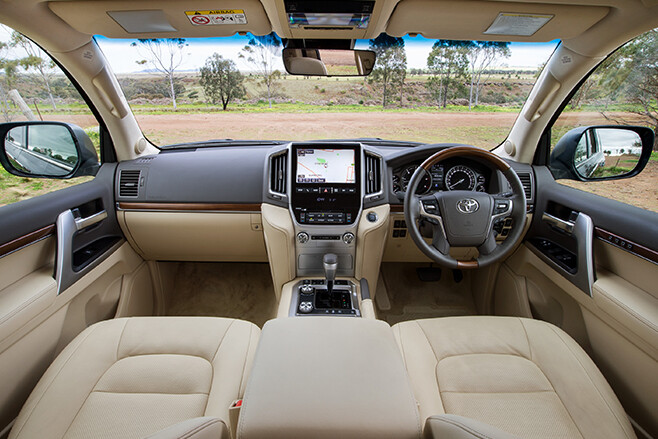
Inside, there is now soft-touch surfaces, revised instruments and controls.
The soft padding has been added to areas that directly contact occupants’ limbs and support their bodies.
The GX is trimmed with grey fabric and GXL with grey or beige fabric, while VX and Sahara offer the choice of black or beige for their leather-accented interiors.
Fuel economy
Fuel economy and emissions will improve by about eight per cent, with combined-cycle consumption at about 9.5 litres/100km, which is compliant with Euro 5 emissions regulations.The air-injection system in the 4.6-litre petrol V8 engine has been adapted to reduce emissions by inducing secondary air through the exhaust ports for faster catalyst warm-up from a cold start.
Safety
Toyota has expanded the safety features of the Sahara, the premier model Land Cruiser. The features now include radar and front camera, as well as other sensors to detect and monitor road users and lane markings.Safety features include:
- A Pre-Collision Safety System to warn the driver of a possible collision and automatically apply the brakes.
- A Lane Departure Alert to help avoid collisions by warning the driver if the vehicle is about to move unintentionally across lanes without using the turn signals.
- Dynamic Radar Cruise Control to help the driver keep a safe distance from the car in front. It also monitors vehicles merging into or out of the lane ahead to support smooth acceleration and deceleration.
- Automatic High Beamto detect the headlights of oncoming vehicles and the taillights of preceding vehicles, switching automatically between high and low beam to avoid dazzling other drivers. More frequent use of high beam also helps with earlier detection of pedestrians and obstacles.
Other features
Switches and displays for audio, air-conditioning and driver-related functions have been grouped more logically, while dials and switches have been reshaped to make them easier to use.The centre cluster has a storage area and a 12V outlet for all grades plus a wireless charger for Sahara. VX and Sahara grades get a new Optitron instrument cluster with 4.2-inch thin-film transistor colour Multi Information Display.
The Land Cruiser’s two top models are also fitted with new Electro Multi Vision and Navigation units with a nine-inch display screen (previously eight inch) for improved visibility. The Sahara will also get air-conditioned seats.
The GX is a 5-seater, the diesel VX and Sahara are seven-seaters and all other grades are eight seaters.
SPECS | u00a0 |
Model | 2015 Land Cruiser 200 |
Engine | 4.5-litre twin-turbo V8 diesel or 4.6-litre V8 petrol |
Max power | 200kW in diesel and 227kW in petrol |
Torque | 650Nm in diesel and 439Nm in petrol |
Transmission | 6-speed auto, 4×4 |
Fuel consumption | 9.5L/100km in diesel |
On sale | October, 2015 |
See Australia’s top 10 best-selling 4x4s.
You can also get the latest info on all things 4X4 Australia by signing up to our newsletter.
We all love cruising down the beach. But, sooner or later, we all get bogged.
That’s why it’s important to have the right recovery gear on board – no one wants to be the guy whose 4×4 was claimed by the tide.
But what is the right gear?
For beach driving, we tested nine of the top recovery boards to see what worked, what broke and what didn’t make the grade.
Inside the September edition, we also compare the New Nissan Navara and Mitsubishi Trition utes with the class-leading Volkswagen Amarok and Mazda BT-50, and take a look at a stonking V8 Jeep Wrangler.
To see what else is inside click here.
Want to see more 4×4 and beach action? Check out the below videos: