
JUST a few years ago a couple of mates were sitting around a campfire pondering the idea of starting an online 4×4 group specifically catering for LandCruiser Troop Carriers.
Troopcarriers of Australia was born via Michael Shaw (yep, it’s his missing finger that the Shawry Salute is derived).
The first two Winter Rambles were organised by three fellas: Cal Tomlinson, Ryan Kestle and Dan Smith, and held in 2013 at a reserve just out of Gloucester, NSW. Only three Troopies attended the inaugural event, but in 2014 that number rose to 17.
Looking for a larger venue to cram a couple of extra Troopies into, the guys moved it to Coorongooba Campground (near Glen Davis) in 2015 and attracted 76 vehicles. Fast-forward 12 months to this 2016 TOA Winter Ramble, and an incredible 150 Troopies turned up. That is nothing short of astonishing given TOA is a closed group. I reckon that number could easily break the 1000 mark next year, given there is a smidgeon over 3300 online members to date.
The administrators I spoke to at the Ramble all expressed their amazement and thanks to all who helped organise and turn up for this event, and they wanted to note they are not a club, just a group of like-minded people that are always ready to help each other out with info, advice and parts.
This means there is no El President, no fees and no insurance. The only rule is to ‘play nicely’ with one another. All are welcome, and this year there were a handful of families complete with caravans and kids joining in on the fun.
My experience with this mob has been nothing short of fantastic. About one month after purchasing my second-hand Troopy I was sent on a mission to Queensland, where I had a couple of dash lights come on.
Unfortunately, I didn’t have the manual or paperwork to know exactly what one of the lights meant, so I punched a question into the group while parked on the side of the road and had a reassuring answer within 10 minutes.
That’s all I needed to know, so I headed on my merry way knowing I could fix the problem at my leisure. Thanks again to those who answered. I’ve seen countless similar experiences with plenty of like-minded, helpful Troopy owners.
The 2016 Winter Ramble also raised $4850 for the Southern Cross Kids Camps charity, which is a not-for-profit mob who take less fortunate kids out camping in the bush – what a brilliant form of healing to be sitting around a campfire with people that care for you.
That amount was raised via a few members making, selling and donating profits from beanies, hoodies and various stickers. Plus there was a raffle over the weekend with all prizes donated from a heap of TOA members who run their own businesses.
A huge pat on the back to all who helped raise that money and organised the profits to be handed to the selected charity; I reckon those involved deserve an extra frothy around the next camp fire.
Toyota Troop Carriers are the epitome of touring 4x4s. They can be camped in, on top of, or next to, plus they can tow almost any camper trailer or caravan on the market. They fit the bill perfectly for short- and long-term remote travel, and they have cavernous internal proportions, are reliable, simple and have rugged mechanicals. Plus they can be easily modified, and there’s a huge choice of aftermarket gear.
While we don’t buy them for their on-road cornering prowess, super-flexi suspension, or standard stereo systems, the Troopy is the perfect platform for the adventurous. Plus they easily and comfortably double as daily drivers. Sure, they have their problems, as all makes do, but straight out of the box they can be taken almost anywhere on the planet.
There are other Rambles throughout the year during spring and summer, so, if your keen and own a Troopy, check out Troopcarriers of Australia on Facebook and join in the fun. Until next time, legends!
THE BIG LAP
IT’S everyone’s dream to hit the tracks for a full lap of our great country, and Adam and Caity are making those dreams a reality. On the road for seven months, they have no set time to return home to Queensland. They picked up their iron-faced 1993 Troopy, complete with all that bar work, from the NT.
Adam has fitted a triple bank of 130-watt deep-cycle batteries, which saw service on the Ghan Railway as boom gate back-ups.
He tells us these batteries have a service life of nine to 12 years, but for safety’s sake they are made redundant after just 12 months. They aren’t the size you’d normally fit under a bonnet, and are deep in the guts of the Troopy. To feed them, there’s a 130-watt solar panel on the Troopy’s roof, which is also home to a 45-litre PVC pipe water tank, a tool box, and an awning.
The best mod on this Troopy is the Punk Rock Fork, an ingeniously bent table fork to secure the rear-door-fitted drop-down table.
As luck would have it, Adam and Caity are currently the holders of the TOA T-Roopy mascot, which gets passed around TOA members during their travels and comes complete with a well-documented diary, with many photos of travels from around our wide brown land with previous carers.
SHARP THINKING
THERE are some talented folks operating in all sorts of jobs within this group. One such bloke is Drew Sharpe, a toolmaker (among other trades) who loves nothing more than nutting out solutions for everyday problems, especially Cruiser-related problems.
Drew has recently started selling his inventions online at sharpetooling.com, all of which he has designed and manufactured in Australia.
Drew’s spindle greaser is a perfect example of Australian ingenuity and will save both the DIYer and pro mechanic huge amounts of time having to grease axle spindles of the LandCruiser front hubs. Instead, the spindle greaser simply screws onto the stub axle to aid in repacking the spindle bearing and pumping grease deeper into the steering knuckle. While you’re adjusting wheel bearings, using Drew’s invention will add a couple of minutes to re-grease these often-forgotten bearings.
Drew’s flexible brake line adaptor replaces a section of the rigid brake lines leading to the brake backing plate and calipers, thereby allowing wheel bearing and associated front-end work to be undertaken without breaking into the brake fluid system. Simple, but it took a Sharpe mind to design and manufacture it.
Drew is on a mission to problem-solve a few other well-known Cruiser anomalies, so keep an eye on his website for more inventions.
GREEN MACHINE
YOU HAVE to wonder why people paint vehicles odd, or I should say ‘different’ colours? Did they just happen to have the paint in the shed? Was it on special at the local home decorator shop? Did they just want to be different? Kevin Roby and Julie Madden wanted to stand out from a crowded white Troopy market. Green paint, green trim and stickers, plus a green marquee to set-up camp ensure everyone gawks at their Troopy. Green with envy, we are!
TOUGH AS NAILS
EVERYONE loves the older Troopy shape, and everyone loves the burble of a V8. But it takes a special kind of Troopy lover to match the two perfectly. Dan ‘Hamzy’ Hames has achieved just that by dropping a 6.2-litre Chev diesel engine into a 1984 FJ45, which has a mere 380,000km to date.
Hamzy’s Troopy sports a five-speed Toyota manual cog-swapper, a rear ARB Air Locker and front auto locker, dual batteries, and Longfield front axles. It runs on 35-inch BAJA MTZ rubber, with alloy rims and a three-inch lift. A full-length custom-made roof rack sees space for two rooftop tents if the whole family decides to tag along. The rear swing-away spare-wheel carrier is also (partially) attached to the rack system to help take all that weight.
This Troopy has been dipped in gunmetal grey paint, which, together with those super-wide flares, makes this a stand-out machine. And yep, she sounds a treat with those 6.2 litres purring away.
BLUE BARS
YET another fella who wanted to be different and stand out was Glen Bower. Glen’s Troopy has custom front, side and rear barwork knocked up by Thorburns Fabrications, a Sydney based mob that’ll seemingly have a crack at anything a customer wants. Glenn has coated all mods in a beaut blue drop, except for that shiny work-of-art stainless-steel snorkel, which is also a Thorburns creation.
Glen has added a full-length K9 alloy roof rack onto which he has solar panels feeding his battery pack, which in turn powers the fridge. Glenn has made full use of every square inch of internal cavernous space to fit his Troopy out for long-term travel with his fairer half, Peta.
Glenn consulted with ORS for custom shelves, drawers and drop-down tables. An awning and detachable side room makes for the perfect escape machine, and Glen escapes with a recent fitting of front and rear Elockers.
A smart addition to Glen’s Troopy comes in the form of split CV boots, from Gearing Dynamics, which keep the swivel housing and king pin bearings clean. Another great addition is a full set of Tyre Checkers wheel nut indicators, which visually warn of impending loosening of nuts prior to catastrophic wheel separation.
HIGH-TECH WARRIOR
MANY would argue that Tex’s Troopy isn’t pretty, but I reckon the red-lippy-clad bonnet sets it apart as something worth looking at. As they say: “Beauty is more than skin deep”.
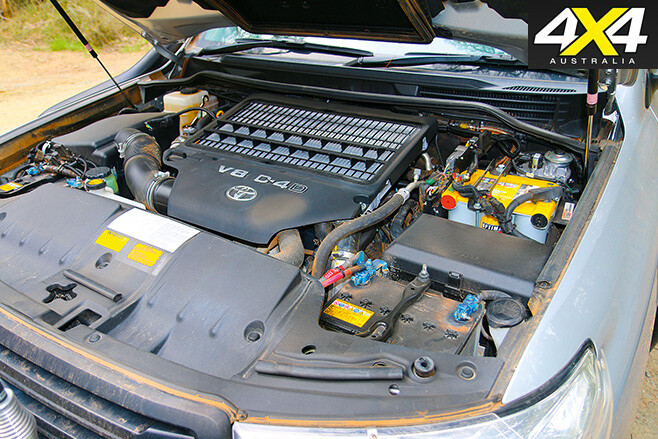
Popping that scoop-adorned bonnet shows the old 1HZ has been swapped for a 1HD-FTE factory turbo six-pot, which is arguably the best 4×4 diesel engine ever created. Sitting atop is a HPD replacement top-mount intercooler, while a custom stainless air box hugs the driver’s side inner guard. Clean air is fed in via a Donaldson centrifugal-style cleaner sitting on a custom stainless snorkel.
Tex is obviously not a fan of being stuck, as he has front- and rear-mounted 12V winches complete with synthetic rope and Factor 55 FlatLink thimbles in place of the standard hooks. Lighting the way is a combination of an LED bar, HID spotties and LED headlight inserts, as well as a splattering of smaller auxiliary lights.
A McHitch auto hitch hooks Tex’s Pod camper trailer on, while inside is a minefield of electronic wizardry and a full set of Drifta drawers.
COILS ALL AROUND
CRAIG ‘Dozza’ Potts is the envied owner of the ‘Silver Mudda’. This Troopy comes complete with a four-inch raise (OME rears and Dobinsons fronts), 80-series coil suspension backed up by Superior control arms, Tough Dog adjustable shocks, front and rear Panhard rods, and Polyair bags to take the variable loads.
Under the bonnet there’s a 1HZ with a 1HDT bottom end, turbo with 17 pounds boost and a Toyota five-speeder. A custom top-mount air-to-air intercooler is fed by a bonnet scoop, while a stainless-steel Thorburns snorkel and air cleaner box with a Toyota diesel V8-style air cleaner element keeps it all clean.
I LOVE camping. Whether I’m sleeping in a swag, a tent, a camper trailer or the back of a 4×4, there’s nothing quite as liberating as getting out there and enjoying the great outdoors.
Every time I prep myself for a camping getaway, my mind’s eye is always focused on the perfect trip: a pretty sunset, a roaring fire, some juicy steaks, a few chilled beverages, some laughs with good mates, a clear night sky littered with stars, one tall story after another, a ripper sunrise, a freshly brewed coffee, and sizzling bacon and eggs for brekky.
Of course, the reality of camping is that it doesn’t always pan out the way you think it will. After all, there are many variables, most notably inclement weather, which can always put a damper on any camping trip.
The first time I did the ‘big lap’ of Australia with a few mates back in the ’80s, I remember almost being washed out of the tent in Townsville when a river of water rushed through it thanks to an early morning downfall. Sleeping on an air mattress, I didn’t wake up until there was so much running water that I began to float. By the time I was alert enough to realise it, half of my body had already exited the tent.
Since then I’ve slept in plenty of leaky swags and tents, but with a bit of preparation – selecting the correct campsite, setting up a tarpaulin, pegging-down properly – I have never again been washed away.
On a recent trip to the NT’s spectacular Red Centre we copped a bucketing as we neared Rainbow Valley, our planned stop for the night. As the only visitors brave (stupid?) enough to be out there in the rain, we had plenty of space to set up our swags on the campground’s undercover tables, so we managed to stay out of the rain. With a bit of liquid accelerant we even got a fire going, although we used the facility’s gas barbecues to cook the pre-striped sausages we’d bought earlier that day in Yulara.
In fact, it was those dodgy looking snags – not the torrential rain – that would prove to be my undoing that night.
Then there was the time I camped in a thunderstorm out at Rob Emmins’ Melbourne 4×4 Training & Proving Ground at Mount Cottrell. The tent I was in had an external aluminium frame and I was almost certain I’d be struck by lightning that night. I wasn’t, and the tent proved remarkably waterproof despite the conditions. Nevertheless, I didn’t get a hell of a lot of sleep.
Without a doubt the most uncomfortable camping I’ve experienced was on a Land Rover G4 Challenge trip to Bolivia. In fact, it was like the perfect storm. I had grievances with the weather, the altitude, the campsite, the tent, the food and the ablution facilities.
While it wasn’t raining, it was extremely bloody cold. So cold, in fact, that several layers of clothing topped off with one of the puffiest of puffy jackets didn’t stop the shivering in the sub-zero temperatures. As for the altitude, we were situated on the 10,582km² Salar de Uyuni, the world’s largest salt lake, which sits 3656m above sea level.
As I’d only just arrived in the country I hadn’t the time to acclimatise, which made it awfully hard to breathe the thin air. Then there was the campsite; have you ever tried to pitch a tent and then find a comfortable sleeping position on the rock-hard surface of a frozen salt lake?
And the orange G4 Challenge tent was the silliest thing I’ve ever tried to erect, especially when wearing thick winter gloves.
The food and the ablutions deserve their own note. Put simply, we were fed spotted dick out of a bag. The main courses were also in a bag and included casseroles and curries that we would heat on the exhaust manifold of a Discovery TDV6. And when it was time to process said ‘food’, we would have to line up at the dunny tents with our own poo bag, which was designed to fit over a fold-out seat. The instructions were quite simple, but something must’ve been lost in translation with some of the trip participants because several people neglected to fit said poo bag before crapping on the dunny seats.
Did I mention worst offence? There was no beer on that first night!
Despite the conditions, I look back on that trip to Bolivia fondly. Sure, it remained cold for the rest of the trip, and we drove to even higher locations resulting in a decent bout of altitude sickness, but it was a once-in-a-lifetime opportunity to explore a wild and spectacular landscape with some good mates, and I will never forget it. The fact we found a local willing to sell us plenty of Bolivian Pilsner helped, too.
WELCOME to the eighth instalment of Readers’ Rigs. This time we’ve featured a 2007 Wrangler, a tinkered 2013 Triton, and an Amarok that’s decked out as the ultimate escape machine. We’ve even snuck in a 1992 Ford Maverick. Enjoy!
For more Readers’ Rigs check out: Part 1, Part 2, Part 3, Part 4, Part 5, Part 6 and Part 7.
To get your pride and joy on these pages, take a snap of your 4×4 when it’s on the tracks and then post it on our Facebook page. Your rig might even get published in the mag one day and, if we really like it, perhaps you’ll even see it on the cover of 4X4 Australia!
2007 JEEP WRANGLER – JOHN BOWIE
WHAT IT’S GOT: Bought it new in 2007, and it’ll soon turn over 200K (which will be on a track). It’s got a three-inch lift; Fox twin shocks; dual-locked drawers and Engel with dual battery set-up in the back; winch; snorkel; quick disconnects on the sway-bar; removable fenders for the off-camber stuff; and the list goes on. I spend a lot of time in Brunswick, Harvey and Wellington, and I’m not afraid to tackle some very gnarly tracks. It has been the best 4WD I have ever owned in terms of sheer fun and versatility.
2013 MITSUBISHI TRITON – MIAO YU
WHAT IT’S GOT: I’ve had it two years. It’s got a two-inch suspension and two-inch body lift; 33-inch MT ATZ tyres; rear ELocker; front and rear winch; rock sliders; radio; LED lights; plus more. The best place I have been is Swan Gully 4WD Park, Queensland, where there is a lot of fun driving.
2013 TOYOTA FJ CRUISER – PAUL BAKER
WHAT IT’S GOT: It’s got pretty standard mods including a bar; winch; light bars front and back; snorkel; breathers; OME 50mm lift; awning; fishing rod storage; and a UHF. I stripped out the rear end and built partitions for storage and a fridge slide for a 65-litre Waeco. An Arkpak dual battery system is removable. I built it for chasing fish up the east coast. Took it to Cape York last November/December and I can’t fault it. Also took it off-road along the Wenlock River to remote billabongs.
1992 FORD MAVERICK – SIMON STEWART
WHAT IT’S GOT: I’ve owned the Maverick approximately three years now. It’s a seven-seat 1992 XL TD 4.2. It had one owner prior to me, and it was never taken off road. I purchased it fitted with the following: bullbar; sidesteps; 60-litre sub tank; Denco turbo; 2.5-inch exhaust; Safari snorkel; dual battery system; Koni shocks; Lovell springs; EGT gauge; and 242,000km on the clock. Mods since I’ve owned it: Department of the Interior roof console; GME TX 3500 UHF in the roof console; upgraded the dual battery system to an Intervolt 25Amp DC-DC charger; Duracell 92Ah auxiliary battery; ORS drawer system and cargo barrier; ROH Trak 2 16×8-inch neg-13 offset; BFGoodrich KO2 265/16; and a full fuel system service and tune by Berrima Diesel. I am away due to work a bit, so I haven’t put many kilometres on it. Runs have been to Watagans NP and around the Blue Mountains, and I’m planning a run to Fraser Island.
2014 VW AMAROK – BRENDAN COONAN
WHAT IT’S GOT: Purchased it new. It’s got an ARB bullbar; 50mm lift kit to the front; Smittybilt winch; TJM Snorkel; GME UHF; Rhino lining in the tub; custom tonneau; ERPS rust proofing; Engel dual battery system; Rhino roof rack system; and ARB high intensity lights. Best places I’ve taken it include North Point, Yellow Patch, Eastern Beach, Fraser Island, Straddie, Gordon Country, Carnarvon Gorge, Longreach, and the inner Western suburbs of Brisbane (school drop-offs). Photo taken on Northern Beach, Moreton Island.
2014 JEEP WRANGLER SPORT – CHRIS WOODROW
WHAT IT’S GOT: I bought it new in 2015 on a ripper deal, because it had one or two dents from hail. Mods include: bullbar and winch; snorkel; lift kit; AEV wheels; 33-inch MTs; LED light bars (50-inch on windscreen and 24-inch on bullbar); Mopar rock sliders; engine sump skid; AEV roof rack; and an awning. All the gear for a capable family touring set-up! I love going to Bribie Island with my wife and two-year-old son. These photos were taken at Swan Gully 4WD Park, which was the most challenging 4WDing I’ve ever done. There are so many places we are planning to go to as a family in this Jeep.
2002 NISSAN D22 NAVARA – SHANNON EVANS
WHAT IT’S GOT: I bought it brand new six years ago. It’s got a three-inch EFS lift kit with Cal Offroad upper/lower control arms. It’s running three light bars and Narva 225 spotlights. It’s also got a Beaudesert Exhaust system, a Piranha dual battery system, custom rear drawers, overhead roof console, in-dash DVD player, genuine Nissan bullbar and snorkel, Ironman 4×4 winch, and BFG KM2 265/75R16 mud terrains. I’ve probably forgotten a few things, but where you do stop with your 4WD? The best place I’ve taken it to would be all over the Victorian High Country to different huts. I’ve done the SA/Vic border track twice, and it has been to Bathurst five times. It has only got 106,000km on it, so there’s still plenty left in it.
1990 NISSAN GQ TD42 PATROL – PAUL CARRIGAN
WHAT IT’S GOT: Owned it since 1992. It’s got an Old Man Emu 50mm lift; GME UHF; DTS turbo; 4Terrain clutch; and a Redarc dual battery system. Best place I’ve taken is to the Old Telegraph Track. Second best is up Big Red.
2008 TOYOTA HILUX – WAYNE SINGLETON
WHAT IT’S GOT: I bought it two years ago and it came with the ARB bullbar. Since then I’ve added ARB brush bars and steps; wheels and mud tyres; canopy awning; roof racks; fridge; and a 140Ah battery in the rear with homemade storage. It was lifted, but I improved it with RidePro springs and shocks in the front, with extended ball joints and a diff drop. The rear is all Ironman 4×4. It has IPF 900d spotties, with a 22-inch light bar on the front and a 42-inch light bar on the roof rack. The roof rack also carries a shovel, high-lift jack, and a 12,000-pound winch with Dyneema rope. It has a rear bar to protect the tray, but no engine mods or lockers as yet. I love the Vic High Country and surrounds close to Melbourne.
2012 NISSAN NAVARA D22 – LUCY EATON
WHAT IT’S GOT: EGR blank; oil catch can; In-House Fabrication four-inch stainless snorkel and custom air box; front and rear diff breathers; trans and gearbox breathers; three-inch Raw 4×4 suspension lift; winch; spotlights; 32-inch tyres; extended rear shackles; custom rock sliders; custom rear tow bar with beaver panel, in-built reverse lights and an air hose attachment with on-board air compressor; 2.5-inch straight-through exhaust; Tradesman Racks with in-built LED strip lighting; 200 Series roof-top tent rack; side and rear awning; forward-facing 42-inch LED light bar with 2×6-inch LED light bars off the sides; GME antenna and UHF; and a Tigerz 11 roof-top tent. Frequent campsites are Main Beach on Stradbroke Island, Janowen Hills 4WD Park, The Springs 4WD Park, Swan Gully, Fraser Island, Moreton and Bribie.
THERE are so many ways to cook a chook in the outback. You can grill it, fry it, cook it under or on top of coals, and you can even smoke it.
Not a fan of smoking your chicken? Check out these alternative recipes: Mango Chicken, Chook Amigo, or Chilli Beef.
Before you even handle any of the food, it’s important for the smoker to reach a decent temperature.
Once the smoker is billowing away, it’s time to get started.
To kick off this simple campsite cuisine, mix three to four tablespoons of brown sugar with a generous sprinkle of salt and pepper.
The next ingredient is strictly optional, but essential for Roothy’s troops: chilli flakes.
Shake on plenty of thyme, and then add onion flakes – a great alternative if you’re in a remote location and can’t carry fresh food. Roothy keeps a jar stored in Milo for such occasions.
That’s pretty much all there is to it – the dry mixture is ready to be applied to the chook fillets.
Cut the chicken into half-inch shreds and, after stirring the mixture, apply the dry mix to the chook pieces.
Place the coated chicken fillets into the already-smoking smoker, replace the lid, and then sit back and enjoy a coldie for about 15 minutes.
Check that the chicken is thoroughly cooked through and there ain’t no pink bits!
This tasty treat is incredibly simple to put together, and the kids will love it!
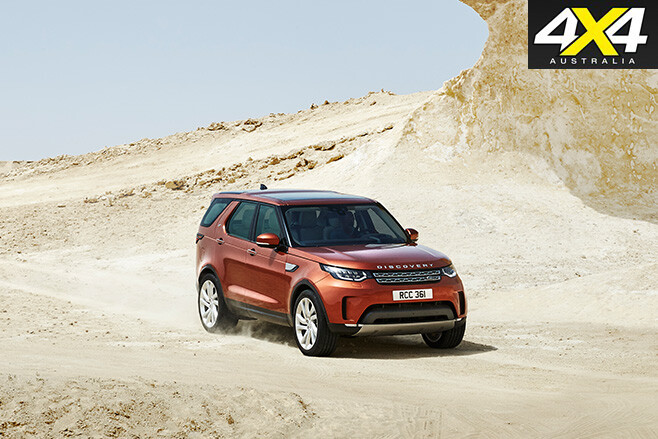
LAND Rover’s fifth-generation Discovery is longer, wider, sleeker and the most advanced example of the breed in its 27-year history – plus it brings a new aluminium-intensive body, meaning it’s almost half a tonne lighter than the car it replaces.
Sporting a sleeker skin in line with what previewed on the smaller Discovery Sport, the new Discovery – which drops the number, to be known (again) simply as Discovery – ditches its ladder frame chassis for the Range Rover Sport’s monocoque design.
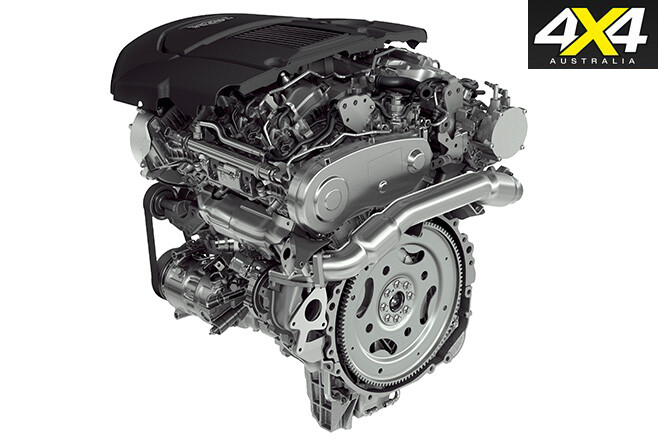
The aluminium architecture and predominantly aluminium body – the doors are steel and the tailgate is a plastic composite – have reduced weight by 480kg (as low as 2174kg), paving the way for Land Rover’s in-house-designed Ingenium four-cylinder engine family, which will complement the existing family of V6 diesels.
While the curvier body eschews some of the visual muscle of the squarer Discovery 4, the new Discovery is 141mm longer, at 4970mm. At 2073mm wide it is also 20mm wider.
However, the 1846mm height of the new Discovery means it is 41mm lower than the Discovery 4.
Sharing the Range Rover Sport’s 2923mm wheelbase, the new Discovery is claimed to have more interior space – while still catering for up to seven adults in its three rows of seats.
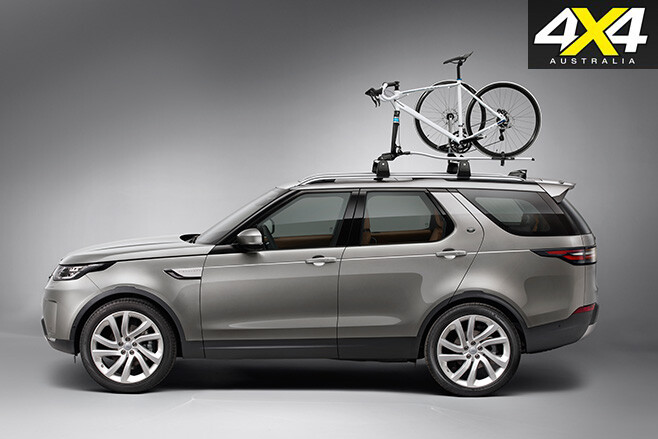
Land Rover smoothed the exterior look of the car to make it less polarising and help it better compete in the fast growing seven-seat SUV segment; the idea is to have it appeal to more buyers, in turn stealing sales from more luxury-focused models such as the BMW X5, Mercedes-Benz GLE and Audi Q7.
The much-loved split tailgate of the Discovery has been dropped in favour of a more conventional single set-up that maintains the Disco’s trademark offset number plate.
However, designers have created what they describe as a best-of-both-world solution, which involves an electronically folding panel that flips down to mimic the lower tailgate; it can hold up to 300kg, making it a seat, table or change table for kids.
On more expensive models those new seats can be individually flipped and folded in 14 seconds via a smartphone app, the first of many high tech additions boasted by what is shaping up to be Land Rover’s most advanced vehicle.
Referred to as the “digital Discovery” by Land Rover engineers at its reveal ahead of the Paris Motor Show, the new off-roader features a growing suite of 35 apps that can be controlled through the InControl system that works in conjunction with the voice control system and 10.0-inch colour touchscreen.
The remote connection app also allows the car to be heated or cooled and locked or unlocked from anywhere in the world, once the car and phone are connected.
Keeping the whole family content and connected was also a big focus of the new Disco. There are up to nine USB ports and six 12V power outlets covering all three rows.
It also picks up the Activity Key that debuted on the F-Pace from sister company Jaguar; it looks like a fitness tracker band, but is waterproof and can lock and unlock the car.
Land Rover designers have also tried to extend the Discovery’s renowned storage binnacles, while maintaining the dual gloveboxes and numerous other hidey holes; the most innovative storage area is one hidden behind the controls for the sound system, which electronically flips down revealing a hidden cavity.
Land Rover will offer the Discovery with three engines (each with an eight-speed automatic transmission) and in three trim levels: SE, HSE and HSE Luxury (the base S model available overseas will not be offered here), for nine variants in total.
For the first time the Discovery won’t have a petrol engine option in Australia, with the local Land Rover arm deciding to focus on the diesel engines, leaving the 250kW/450Nm 3.0-litre supercharged V6 for the likes of America and the Middle East.
For the first time in Australia the Discovery will be offered with a high-range four-wheel drive system on the entry-level Td4 diesel, which gets a 132kW/430Nm 2.0-litre four-cylinder diesel. While it will get air suspension, its off-road smarts will come from the Terrain Response 2 traction control system that now has an “auto” function designed to automatically detect what sort of terrain it is covering, in turn tailoring the electronics for added traction.
All other Discovery models will get a dual-range transfer case.
The Sd4 picks up a 177kW/500Nm of the same Ingenium diesel engine.
The flagship (for now) will be the TdV6, which gets a 190kW/600Nm version of the familiar 3.0-litre twin-turbo V6 diesel.
Land Rover claims superior off-road credentials for the new Discovery. With the air suspension on its highest setting it has 283mm of clearance and it can wade through 900mm of water courtesy of an innovative air intake system that utilises space on top of the underbonnet as an intake.
However, the approach angle has dropped from the Disco 4’s excellent 36.2 degrees to a still-good 34 degrees.
The rampover angle is 27.5 degrees (versus the 4’s 27.3 degrees), while the departure angle is 30 degrees (versus the 4’s 29.6 degrees).
Tyre sizes for the new Discovery will range between 19 and 22 inches; the company is believed to be working on an 18-inch wheel-and-tyre package for a future model and will also offer a 20-inch all-terrain tyre.
The fuel tank on the four-cylinder models likely to account or most sales is a modest 77 litres, although engineers claim a range of more than 750km due to significant improvements to fuel economy. The V6 diesel gets an 85-litre tank.
As with the Range Rover Sport it shares so much with underneath, the Discovery has independent suspension, with wheel articulation claimed at up to 500mm, a slight improvement on the current car.
The Discovery continues with its class leading 3500kg tow capacity and will introduce the soon-to-arrive Trailer Assist system that semi-autonomously reverses the car with perfect counter steering.
Pricing will start from $81,590 when the car goes on sale about July 2017.
KEY POINTS
- New aluminium architecture and body
- 480kg lighter than Discovery 4
- Diesel-only range
- Return of Discovery four-cylinder engines
- Improved off-road capability, but with lesser approach angle
- 283mm of ground clearance; 900mm wading depth
- Nine USB ports; six power outlets as part of tech overload
- Terrain Response with auto mode
LAND ROVER DISCOVERY FACTOIDS
- The fifth-generation Discovery is the first since the original Discovery of 1989 and the second generation of 1998 to utilise a four-cylinder engine. The 480kg weight reduction means the four-cylinder diesel performs better than the previous V6. Land Rover is also working on a 2.0-litre four-cylinder petrol engine for the Discovery family.
- The 480kg weight saving was brought about largely by the aluminium architecture and a predominantly aluminium body. Between them the body and monocoque saved 284kg. The four-cylinder engine saved another 108kg, while the suspension (made lighter because it is carrying less weight) saved 88kg.
- The bumper of the Discovery is designed to allow air to flow in through the vertical vents on either side and then escape into the front wheel arches. It’s all about reducing aerodynamic drag; the Disco has a co-efficient of drag (Cd) of 0.33.
- Land Rover engineers developed 23,000 lines of computer code just for the automatically folding seats. They can be operated using a smartphone app and are designed not to crash into the other seats, not to squash occupants, and to stop moving if they come up against resistance. The second and third row seats take 14 seconds to be automatically lowered or raised.
- The Discovery’s use of lightweight materials means it has a better weight distribution, which engineers claim is “near 50-50”.
- The Disco’s rear spoiler was designed to keep the rear screen clear of spray and dirt. No word yet how it will cope with the fine dust and mud of the Australian outback.
- The new Discovery will be available with coil springs and a high range-only four-wheel drive system. However, in keeping with the Discovery’s premium positioning, all Australian cars will get air suspension and all but the base model Td4 will get a dual-range transfer case.
- Land Rover says the new Discovery can potentially drive in deeper water than the claimed 900mm wading depth. However, any deeper than that and the tail starts floating.
- The electronic handbrake on the new Discovery is a caliper system, which applies an electronic motor directly on to each rear caliper. It is claimed to be more robust than the cable system of the previous model, something that was prone to regular (and expensive) failures.
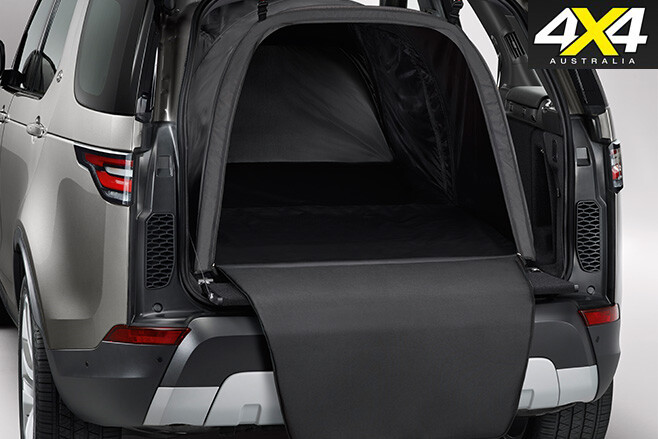
- Land Rover developed a CAD (computer aided design) model of one of the lead engineer’s dogs to ensure pooch would be happy in the revised load area of the Discovery.
- The tail of the new Discovery can be lowered by 60mm when loading, something that was also designed to make it easier for dogs to jump in the back.
- The Discovery’s tail can be raised up to 150mm when parked to help with hitching a trailer.
- The new Discovery is engineered to tow up to 3720kg for the US market. However, Australian regulations mean the company cannot claim a higher tow capacity than the 3500kg limit for SUVs.
- The new Discovery has space for a fuel tank up to 89 litres, however that tank is only used on the supercharged V6 petrol-powered models that won’t be sold in Australia. Four-cylinder diesels get a 75-litre tank, while the V6 diesel gets an 85-litre tank.
- No word yet on hybrid or V8s, although the latter seems certain given the platform is engineered to take them – with the popularity of the V8 configuration in the Middle East and America likely to cement its eventual arrival in the Discovery.
- Testing and development of the Discovery took place in 20 countries over more than one million kilometres. It’s understood Australia was used for hot weather testing for components such as the air-conditioning.
- Half of the aluminium used in the Discovery is recycled.
- All Land Rover Discovery models will come with a full-sized spare wheel and tyre; it is underslung, so must be lowered from beneath the vehicle to access it.
Spending more than $60K on a new four-wheel drive and then dropping another $20K at the local 4×4 store isn’t just for the rich and famous.
Follow our budget building guides to make your 4×4 the ultimate tourer
In fact, it’s quite easy to spend well in excess of $20,000 on accessories and modifications to tailor a four-wheel drive to match your needs, real or imagined. With a little planning and a few smart choices, you can transform a standard, low-spec wagon or ute into something that will end up more capable, comfortable and versatile than some far more expensive luxury 4x4s. And the best thing is it’ll have the features you want and none of the stuff you can do without.
Outback tourers who’ve already spent $10K on the accessories we’ve outlined in parts 1, 2 & 3 will now have a vehicle well-suited to the ‘big trip’ – but with another $10K (or more) they can really go to town – or leave it, as the case may be.
Some useful luxuries include a rooftop tent, an awning, roof cargo bags or roof pods, a navigation system, a battery charging system, infotainment, solar panels, inverters and power outlets, hot water systems, showers, auxiliary lighting, swingout wheel carriers, hi-lift jack holders, and top-spec suspension components.
Still got money to burn? How about some engine mods such as a turbo, chipped ECU and three-inch mandrel bent exhaust? Or how about an engine conversion? Then you could fit a rock-crawling transfer case, lower or higher final drive ratio and portal axles: the sky – and your credit card – really is the limit.
We’ve featured hundreds of modified vehicles in 4X4 Australia over the years, so there’s no shortage of inspiration to draw upon. One of the most impressive – and expensive – tourers we’ve featured is Hema Maps’ LandCruiser 79 Double Cab, jam-packed with goodies designed to make it self-sufficient in remote Australia for weeks at a time.
It’s had its chassis stretched and rear track widened to improve on- and off-road comfort, loadcarrying capability, handling and safety.
Stretching the budget even further is Icon’s Land Rover Defender, which cost around US$300,000 to build. It runs a 6.2- litre LS3 V8 mated to a four-speed auto gearbox and, as well as custom suspension, it’s loaded with custom-made parts, from door handles to air-conditioning vents.
It’d be nice to have an unlimited budget to build something really special, but you can achieve a hell of a lot with just $5K.
And if you plan your build wisely, there’s nothing stopping you from adding accessories and making modifications as you can afford them.
SHOPPING LIST
PRICE GUIDE* Fridge/freezer: $700-$1700 Dual-battery system: $1000+ Rooftop tents: $1000-$2000 Awnings: $100-$400 Roof cargo bags: $70-$250 Roof pods: $300-$600 Space case: $300-$600 Navigation systems: $600 Hot water/shower: $200-$300*Prices vary depending on quality, manufacturer and model. This list is a general guide only.
THE world’s first all-electric light-duty truck, Fuso’s eCanter, is coming to Australia in 2017.
Justin Whitford, Fuso’s truck and bus director, confirmed in a statement that the eCanter will be involved in a trial with key customer fleets next year: “We are excited to be able to conduct a local trial with the ground-breaking all-electric Fuso eCanter in Australia.”
Revealed at the IAA Commercial Vehicles Show in Hannover earlier this month, the eCanter makes use of a permanent synchronous electric motor, with outputs of 185kW and 380Nm.
Earlier this year we established that the Fuso Canter 4×4 makes a great basis for an expedition truck, after we took one for a bash in the Victorian High Country. Granted, that one had a 3.0-litre 110kW/370Nm turbo-diesel engine mated to a five-speed manual and two-speed transfer case.
Power in the eCanter is transferred to the rear axle by a standard single-speed transmission.
The eCanter on display in Hannover featured a battery capacity of 70kWh, which provides a range of more than 100km – depending on body, load and usage.
Five water-cooled lithium-ion batteries are used, one centrally in the frame right behind the cab and two more on either side of the frame. These batteries have a long service life and are highly efficient, especially at high ambient temperatures.
The amount of battery packs per vehicle comes down to customer preference. Daimler Trucks said in a statement: “Individual battery packs with three to six sets of batteries of 14kWh each are planned for the upcoming small-scale production run. This allows the eCanter to be adapted to customer requirements with regards to range, price and weight.”
Using a standard Combo 2 plug, charging options are limited to either quick charging stations (80 per cent capacity within an hour) or using an alternating current (100 per cent capacity in seven hours).
The 7500kg eCanter has an impressive chassis load capacity of 4630kg.
Australian pricing is unconfirmed, but it’s believed the eCanter will be offered at a competitive price due to lower technology costs: “Lower running costs compared with an equivalent diesel model mean that any additional expense can be repaid in around three years,” the statement stated.
FURTHER details have emerged for the 2017 Jeep Compass Trailhawk, following its recent revelation in Brazil.
Motoring website MotorChase has exposed important facts regarding FCA’s compact soft-roader.
The Brazilian website revealed that the top-trim Trailhawk version will have approach and departure angles of 29.1° and 33.1° respectively – the lower-trim Compass variants will have angles of 28.7° and 31.9°.
The Trailhawk will also come with Jeep’s Active Drive Low 4WD system.
MacPherson struts front and rear are expected.
MotorChase declared the Trailhawk will have the option of a High Tech package, which includes park assist, adaptive cruise control, lane departure warning, automatic high beam, and front collision warning and prevention.
The website also revealed the 2017 Jeep Compass – available in four trim levels (Sport, Longitude, Limited and Trailhawk) – will have a drag co-efficient of 0.35, making it the most aerodynamic Jeep ever.
A stretched version of a Fiat 500X and Jeep Renegade, the 2017 Compass will be 4420mm long, 1820mm wide and 1650mm tall, with a wheelbase of 2640mm. There will also be 388 litres of luggage space for the Trailhawk; the lower-spec models will have slightly more room, with 410 litres of rear storage space.
Two engine variants will be offered for the Brazilian market: a 2.0-litre 122kW/201Nm diesel (117kW/195Nm petrol) TigerShark, and a 2.0-litre 125kW/350Nm turbo-diesel Multijet. It is unknown which drivetrain/s will be available in Australia.
The TigerShark will be mated to a six-speed Aisin automatic transmission; the Multijet a nine-speed ZF auto.
MotorChase listed the US pricing for the Trailhawk to sit around the $43,000 mark. Stay tuned to 4x4australia.com.au for more information as it comes to hand.
FIAT Chrysler Automobiles has unveiled the Jeep Compass.
A stretched version of a Fiat 500X and Jeep Renegade, the all-new Jeep Compass replaces both the Compass and Patriot nameplates.
The Patriot badge is expected to be removed from the Jeep line-up – for now – with Jeep electing to retain the Compass badge.
“The Jeep Compass will be produced with 17 fuel-efficient powertrain options for consumers in more than 100 countries around the world,” an FCA press release stated.
“The all-new Jeep Compass expands the brand’s global reach with an unmatched combination of attributes that includes legendary and best-in-class 4×4 off-road capability, advanced fuel-efficient powertrains, premium and authentic Jeep design, superior on-road driving dynamics, open-air freedom, and a host of safety and advanced technology offerings.”
It may not be the type of rig that normally gets us going here at 4X4 Australia, but pics of the Trailhawk-inspired model got it over the line.
The covers were taken off the compact soft-roader to help celebrate the start of production at FCA Jeep’s assembly plant in Goiana, Pernambuco, Brazil.
Further information will officially be revealed when the Compass makes its North American debut at the Los Angeles Auto Show in November.
The Jeep Compass will be available in North America in the first quarter of 2017, so expect a late 2017 local launch.
New tyres, a suspension kit, bar work, driving lights and a UHF have started to transform your vehicle into an impressive touring rig, but there’s still a long way to go to maximise its load-carrying versatility, extend its touring range and improve its off-road capability following on from parts 1 & 2 of our potential maximisation guide.
Follow our budget building guides to make your 4×4 the ultimate tourer
With a $10K budget you’ll be able to afford everything we’ve mentioned above and have enough leftover for a heap of other gear, but you’ll still need to get your priorities sorted before you start spending more cash.
If you’re going to be travelling long distances with the family then you’ll need to carry a fair bit of gear, so depending on what vehicle you drive you might need to fit a roof rack, a canopy and a cargo drawer system, perhaps consider fitting a longrange fuel tank and some water storage.
A decent set of roof bars will cost $300-$400, and on top of that add $200- $300 for a roof basket. Alternatively, a complete roof rack system will cost around $1000. Don’t forget to factor in accessories such as jerry can, a hi-lift jack, and shovel holders and an awning.
This will still leave plenty in the bank for a set of storage drawers, which range in price from as little as $600 to more than $2000, depending on quality and features. A drop-down fridge slide is a very handy feature (adds another $800 or so) and a fridge barrier (around $450) will allow you to maximise the useable space around the fridge.
A canopy is the most obvious way of transforming a ute into a useful touring vehicle and these can range in price from $2500 to $4000. Accessories and options include air vents (to pressurise the canopy and keep dust out), pop-up or sliding windows, window screens, roof racks systems and more. So if you’re on a tight budget, you might have to be a bit picky.
If you haven’t already blown the budget, the safest way to carry extra fuel and to extend the touring range of your vehicle is by fitting a long-range fuel tank. Set aside $1000-$1500 for a quality tank depending on vehicle application or, if you’re just about out of cash, you can always carry a couple of jerry cans ($30-$60 each), which can be safely carried on your roof rack with jerry can holders ($40-$70 each).
Weekend warriors who don’t need the load-carrying capacity or touring range of outback tourers won’t need to spend their cash on racks, canopies, fuel tanks and the like, so their money could be better spent on fitting a couple of diff locks if they aren’t included by the factory.
There are plenty of options on the market, including air lockers and electronic lockers, and you can expect to spend up to $1500 per locker once fitted. Once it’s all locked up, your fourwheel drive will be able to tackle some seriously tricky terrain, so you’ll want to set aside some money to spend on under-vehicle protection ($300-$500).
No matter what four-wheel driving you’re in to, you’re going to want a portable fridge/freezer to keep drinks cold and food fresh, and you’ll be looking at around $700-$1400 for a decent 40-litre unit and up to $1700 for a 60-litre unit.
You’ll need a dual-battery system to power the fridge and other accessories, and basic set-ups (including isolator, wiring loom, battery tray and deep-cycle battery) will cost at least $1000 but will ensure your starting battery always has plenty of cranking power to get going in the morning.
Portable dual-battery systems are another option, and these will also cost around $1000+ once you’ve sourced a quality deep-cycle battery and relevant wiring loom/isolator. Strictly speaking, altering or adding to the electrical system of a vehicle is a job for professionals.
SHOPPING LIST
PRICE GUIDE* Roof bars: $300-$400 Roof basket: $200-$300 Full roof rack: $1000 Jerry can holder: $40-$70 Hi-lift jack & shovel holder: $80-$100 Ute canopy: $2500-$4000 Ute/wagon drawer system: $500-$2500 Long-range fuel tank: $1000-$1500 Jerry can: $30-$60 Locking diff (each, fitted): $1500*Prices vary depending on quality, manufacturer and model. This list is a general guide only.