
THE TRACK was overgrown with fallen trees, leaving just enough room for the Cruiser to slip through.
Brocks Road (more of a track than a road) deteriorates once you leave the short access track to Upper Jamieson Hut on the Jamieson River. There the so-called road begins its climb away from the stream and through a number of rocky and eroded switchbacks to the top of the Great Dividing Range. It’s relatively easy to get a camper into Upper Jamieson Hut from Sheepyard Flat (not far from Mansfield), but we wouldn’t advise taking it any further.
King Billy No 2 is at the crest of the range among large, old snow gums, and there is a small but pleasant camping spot on the nearby snow plains. Be warned though, as this is a very exposed campsite at an altitude of nearly 1700 metres. The weather here can change quickly, bringing sleet and snow even in the middle of summer. Still, the sense of remoteness and isolation is palpable and the views impressive. The Australian Alps Walking Track passes through this point and leads to the high points of King Billy.
A track junction at King Billy provides alternate routes: continuing east will take you to Howitt High Plains Road and on to Licola; heading along the ridge on Bluff Track will take you on a painstakingly slow and rocky drive towards Lovicks Hut. From Lovicks Hut the track improves as it continues west to Bluff Hut, where you can descend the ridge to the Howqua River.
This high, rocky route passes through some fine stands of snow gums untouched by recent fires, including an ancient (some say at least 500 years old) snow gum that has been declared one of the 50 most significant trees in Victoria. Along the way you’ll also pass some great lookouts including ‘Picture Point’. This lookout was made famous in The Man from Snowy River movies, and the views take in some of the finest mountain scenery in Australia.
The Wallaby Mine and its impressive gold stamper can be found in the Nine Mile Creek Historical Reserve, not far from Yackandandah. You can reach this historic site from either Beechworth or Yackandandah, though it’s probably easier from the Beechworth side. There’s also some pleasant bush camping along Nine Mile Creek, not far from Yackandandah.
Back in the 1850s and ’60s the whole region was seemingly awash with gold, making Beechworth at one time the most important town in Victoria. Over the years Beechworth has played host to Robert O’Hara Burke (of Burke and Wills fame), and Ned Kelly, who spent a few days in the local lock-up.
Today the heritage of the town is still very much intact, and the place acts as a good base to explore the local region. A maze of four-wheel drive tracks are in the area, but once you’re on the Wallaby Mine Track you’re close to the old mine site; although, last time we were there we were plagued with a lot of fallen trees and timber that made the track a little more challenging.
If you end up at the creek crossing down the very bottom of the steep hill – close to what I think is the large opening of the Rechabite Mine – you’ve come too far for easy access to the Wallaby Mine Gold Battery site and you’ll need to climb back up the hill, which is not an easy walk or drive.
A walking track at the top of the hill leads down the ridge along the gully to the battery plant. This 12-head stamper was installed here in 1912 after an older battery had been damaged by fire. The mines in the area – the Wallaby, Rechabite and Kingston – were first worked in 1869 and continued producing gold until the beginning of WWI in 1914, when they closed for good. More by good luck than good fortune the old stamper has survived relatively intact – so make sure you leave it as you find it for others to enjoy.
On the other side of the ranges, north of Bairnsdale, the Deptford Road winds into the mountains from the flat coastal plains of East Gippsland. The route passes the old town site of Store Creek and soon comes to the site of Deptford, once an important town on the Nicholson River Goldfields and the site of one of the earliest gold strikes (dating back to 1852) in Gippsland. It was only a small goldfield, attracting just 300 people or so, but the town soon had a bakery, a pub and a school which remained in operation until 1928.
Once you cross the stream at Deptford there’s a pleasant camping area just up the hill, and a few deep pools in the river make for a great spot to cool off or cast a line. The nearby Slaughter Walking Track leads to the town’s old baker’s ovens, as well as the Houghton’s Diversion Tunnel on the Nicholson River. From Deptford a series of bush tracks will take you deeper in the mountains or towards Swifts Creek and Omeo.
Moscow Villa Hut has long been one of our favourite spots in the High Country and is easily reached from Omeo, Swifts Creek or Ensay. The name Moscow Villa came about when Bill Ah Chow, who was working for the forest commission in those days as a fire spotter, built the hut so he had somewhere warm and comfortable to stay during the summer. The Battle of Moscow was being fought at the time – the summer of 1941/2 – and Bill thought it would be a good name for his new home.
The hut remains in a really good condition, but we prefer to camp just a few hundred metres away on the Bentleys Plain Reserve. There’s a great shelter shed there, along with a bush dunny, fireplaces and a number of walking tracks across the surrounding snow plains.
The much bigger Nunniong Plains aren’t far away, and the impressive Washington Winch is passed when coming here from Swifts Creek or Omeo. Check out the info board on the winch and see if you would’ve been game enough to work as a logger using this winch set-up. I’m guessing there were no occupational health and safety standards back in the ’50s!
The Wombat Post Office is another unique hut and camping spot found deep in the mountains south of Mitta Mitta and north of Omeo. For our latest escapade we came in along Omeo Valley Road, passing the excellent and large camping area on the Mitta Mitta River at the old Hinnomunjie Bridge.
From here we headed north on Kellys Road before coming to Four Mile Creek Track. This oft-eroded track leads east to the Mitta River at Taylors Crossing, which is a good spot to camp, canoe and fish.
Four Mile Creek Track also heads northwest from the junction through mountains and forest to a cleared area on the edge of two small streams, one being Wombat Creek. Crossing the creek leads to another small clearing with a low, dilapidated hut standing in one corner.
This is the Wombat PO and it dates back to the 1850s when the immediate area was a small gold-producing site, but I’m unsure whether the old hut saw any mail being sorted. Still, it’s a good spot to camp, and in the surrounding area there are a heap of 4WD trails that will keep you busy.
For some reason or another I have always bypassed the tracks around the Avon Wilderness in the southern section of the Victorian High Country. However, we poked our noses in and quickly realised that we should have been making this area a favourite.
Huggett’s Crossing on the Avon River is a cracker of a campsite that is best reached from Heyfield. Head out along Weir Road, cross Macalister River just below the Glenmaggie Weir, and then take Lanigan Road. Once you’re in the forest proper, turn onto Kentucky Road and then Greenhill Road. Eventually you’ll get onto Huggett’s Road and pass Huggett’s Lookout, before descending quite steeply on a rocky track to the crossing of Avon River. There are a few designated campsites along here.
There are also some good tracks and quite a few challenging ones deeper into the ranges.
Check the crossing of the Avon before plunging in as it is wide and fast-flowing, with a lot of boulders you can get hung up on. Once on the far side Huggett’s Track climbs steeply in parts to the crest of Mt Angus, before coming to the Old Moroka Road which gives great access to Moroka Hut, Moroka Road, the impressive viewpoint of The Pinnacles, and the top of the famous Billy Goat Bluff Track. You are now in the heart of some of the best 4WD country in Australia. Take the time to enjoy it all!
TRAVEL PLANNER
MOST of the tracks in the Vic High Country are subject to seasonal closure after the Queen’s Birthday long weekend in June and before the Melbourne Cup long weekend in November, although closures can be extended if the weather dictates. Many tracks will be blocked by fallen trees early in the touring season, so be prepared with all the right equipment and recovery gear. For the latest info go to: www.4wdvictoria.org.au
The best map for the region is Hema Maps’ Victorian High Country.
WAECO has issued a recall for a limited quantity of CF-40 and CF-50 fridge/freezer models purchased in Australia between October 20, 2016 and November 30, 2016.
Those fridge/freezers affected by the recall are: CF-40AC VER.B (portable compressor 40-litre fridge/freezer). Serial numbers: 63900001 to 63900550 and 64200001. CF-50AC VER.B (portable compressor 50-litre fridge/freezer). Serial numbers: 63900001 to 63900500. CF-50AC VER.B (portable compressor 50-litre fridge/freezer). Serial numbers: 64000001 to 64000100.
The recall was issued due to a minor controller failure that may occur while using the product. According to the report, this fault may cause the controller to overheat and partially melt.
Owners of affected models are advised to contact Dometic Australia on 1800 21 21 21.
WE need your help!
What do you think of 4X4 Australia? Are there any areas that need improvement? Are there topics in the 4×4 world we aren’t focusing enough on? Or perhaps there are aspects we focus too much on?
Well, now’s the time for you, our readers, to shape the future of both the 4X4 Australia magazine and www.4x4australia.com.au.
How? You ask. It’s simple, really. All you need to do is complete the 4X4 Australia Reader Survey. We’ll ask you a series of questions on your reading habits, as well as investigate which media outlets you get your information from. We’ll also ask personal questions regarding your off-roading talents, or lack thereof. All up, the survey should take you less than 10 minutes.
If helping to shape the future of 4X4 Australia isn’t enough of an incentive, there’s also almost $1700 worth of prizes up for grabs. First prize winners will receive a Hema HX-1 Navigator valued at $699, as well as a $500 VISA gift card. While five lucky runner ups will receive VISA gift cards valued at $100 each.
The promotion will run until 11.59pm (AEST) on January 29, 2017. The draw will take place on February 9, 2016 at 11.00am.
The survey will have a big impact on the future of 4X4 Australia, so get clicking!
Terms and conditions apply. The promotion commenced 00:01am (AEST) 09/12/2016 and closes 23:59pm (AEST) 29/01/2017. The promotion is open to Australian residents aged 18 years or over. The draw will be at 11:00am (AEST) 09/02/2017. Click HERE for full terms and conditions. Click HERE for our Privacy Notice. Promotion authorised under NSW Permit: LTPS/16/09824
Ron and Viv Moon’s latest news and info from Australia’s treks and tracks
Barra Season Opens (Qld) The Gulf of Carpentaria opens its fishing season for barramundi on midday, February 1, having been closed since early October, 2016. For regulations and further details, go to Recreational fishing.
Oakabella Homestead (WA) Steeped in historical significance, Oakabella Homestead is classified by the National Trust. Set in a dramatic landscape, this must-see location offers spectacular vistas including Elephant Hill, Table Hill and the ancient gorge and seasonal waterfall in the Oakabella Creek. Wildflowers are also plentiful in the cooler months. Caravans and campers are welcome. For more detail visit Oakabella homestead.
Port Lincoln Tunarama festival (SA) Port Lincoln’s Tunarama Festival is one of the largest and most popular regional festivals in Australia held over the Australia Day long weekend. It’s a family-friendly festival held on the foreshore lawns of Boston Bay, where you’ll find filled stalls, sideshows and rides, with fun events, activities and competitions for all ages. There’s the annual World Championship Tuna Toss competition where players attempt to fling a fish weighing between eight and 10kg as far as they can. It’s all good fun. For more information see Tunarama Festival.
Tamworth Country Music Festival (NSW) This is the big music event of the year, where up to 60,000 people head to northern NSW for this 10-day music extravaganza. This year it will run from January 20 (Friday) to January 29 (Sunday) and there will be hundreds of events to keep you and the family entertained. For more info visit Tamworth Country Music Festival official website.
Mount Bundy Station (NT) Set on the banks of the Adelaide River, famous for its crocodiles, is the historic Mount Bundy Station (established 1911). Just over an hours’ drive from Darwin in the NT, the station is a working cattle property with accommodation options for singles, couples, families, conference groups and campers. The unique station experience is also an ideal place to set up base and explore the area. For info: Mount Bundy station.
Enjoy the Murray this Summer (Vic) A mountain stream in its upper reaches, the mighty Murray turns into a meandering river lined with magnificent forests of red gum; while sandy beaches line its middle reaches downstream from Wodonga to Mildura. The region is home to a multitude of parks and forests with plentiful wildlife, supporting more than 350 varieties of birds, as well as many species of mammals, reptiles and fish. Relax in a canoe, try your hand at fishing, board an historic paddle steamer or visit museums in the many towns dotted along the river. You’ll find plenty of campsites and lots more. For more see Parks Victoria, or Visit Victoria.
the Festival of King Island (Tas) For something a little different try this festival in the middle of Bass Strait. Not easy to get to, the rewards are definitely worth the effort. Held over the weekend of Jan 27 to 29 in Currie Harbour overlooking King Island’s picturesque hills, the Festival brings together a bevy of great folk, blues and rock musicians. There’s horse racing, the Great Raft Race, and a 100m soap-accelerated plastic-sheet waterslide full of thrills as it weaves and cascades its way through the scrub surrounding the festival. Add to the mix great cheese, beef and seafood, as well as great surf, diving and beachcombing and you’re likely to find all your sensations tingling by the end of FOKI 2017. For more visit Festival of King Island.
WE’RE spoiled for choice when it comes to equipping ourselves for adventure.
This article was originally published in the December 2014 issue of 4×4 Australia.
A cursory look across the pages of 4X4 Australia demonstrates just how many options and accessories we Australians have to choose from when setting up our vehicles to perform a chosen task.
But what if that task was to not only see the continent (and possibly the world) but also to replace our house and go just about anywhere? This is the domain of the truck-based 4×4 camper, such as the SLR Adventurer.
This decision, to live on the road, is not an altogether uncommon one but it usually accompanies the decision to purchase a caravan and a tow rig. Queenslanders Ali and Sally have different thoughts. They plan to see just about everything and have no interest in being hampered by the access limitations inherent with a large caravan.
“We realised very quickly that although many of them [motorhomes] offered fairly sumptuous accommodation, there were definite limitations on where they could travel. By this stage we realised the vehicle we were looking for had to be far more robust,” Ali said.
“To our surprise and delight we found SLR and we knew instantly we had found what we were looking for. As an added bonus, SLR is a company that we had confidence in.”
FIRST IMPRESSIONS The SLR Adventurer is certainly a striking vehicle. The Isuzu NPS300 platform is a significant sized truck in its own right, but the motorhome on the back does not look like a boxy add-on, it looks like it is right where it is meant to be. This is partly due to the fact that the ladies ticked the ‘Custom Colour Truck and Motorhome Body’ option, and partly due to the build quality produced by SLR.
The NPS is appropriately proportioned with the optional raised ride height and the thoughtfully placed fuel tanks and spare wheels (usually a shortcoming on other Isuzu 6-tonne trucks). The recessed spare tyre design is an SLR innovation. The spare tyres even have remote controlled winches above for an effortless tyre change.
CONSTRUCTION The motorhome body is galvanised steel chassis and frame. The body is suspension mounted to the truck’s chassis, allowing the truck chassis to twist independently and reducing twisting forces from the body. This separation of the chassis and body allows for improved wheel travel, maximising the reach of the optional improved ride height suspension.
The frame is clad with a composite fibreglass skin – consisting of a honeycomb core between two outer layers of fibreglass. This layered skin provides a massive degree of strength and insulation. The body will be able to sustain a knock from the eventual, unavoidable bumps that it will encounter with life on the road.
SECURITY High on the list of priorities for Ali and Sally is the need to feel safe when out on remote roads and tracks but also when camped overnight. The SLR provides them with a lockable, secure home which will withstand most attempts at entry by all but the most determined thieves.
The door is solid and the locking system is robust. Should the need arise to move from the living quarters to the steering wheel quickly, it can be achieved thanks to a well thought out insulated and articulated ‘passage’ between the truck cab and the body.
INTERNAL LIVING QUARTERS Upon first entry into the SLR Adventurer it seems quite small inside, however after sitting down with Ali and Sally at the dining table (which would have comfortably sat at least a couple more people) and taking it all in, the overall impression is that it is exactly how big it needs to be for two people to travel and live together.
There are a few interior layout options for the SLR and the ladies chose an option with a very clever electrically operated, height adjustable double bed over the dining area. The bed can be lowered all the way down to a slightly higher than usual bed height, raised completely to the ceiling to be totally out of the way, or somewhere in the middle to allow sleeping and dining area usage or to sleep four people. Taking the bed out of the way and putting it up against the ceiling when it’s not bed time is a great space saving idea.
The living area of the SLR has been well thought out to have plenty of storage and ample bench space – interestingly the ladies have already observed that, unlike the kitchen at home, the bench space can only be used for immediate needs and not as a place to leave things. They’ve also noted they have over-packed and are wondering how long it would be before they start shedding some of the ‘must haves’ which are not being utilised.
Opposite the entrance is a full height cupboard for day to day essentials and next to this, heading to the back of the living area, is the walk-in en suite with a permanent, full height shower and separate toilet and hand basin plus plenty of storage. Hot water is supplied by the optional diesel water heater – diesel also powers the cooktop and space heater allowing for efficient use of a shared resource.
ENTERTAINMENT AND POWER SLR campers believe they have created “an almost self-sufficient power system – essential for long stays in the wilderness.” On good sunny days, the 450A hour battery and 405W solar panel combination, supply more than the required power for the compressor fridge and LED lighting system. Additionally, the system can take a 40Ah charge from the Isuzu when driving. With the supplied Honda generator as backup “you may never need to plug into a powered site again”.
The SLR team use and recommend lithium battery systems supplied by Mastervolt with technology found only in the Superyacht industry, creating what they believe to be “the most advanced and efficient electrical system available in Australia”.
With all of this capacity, it seems fitting that the ladies get to enjoy their time indoors, should they find the outside conditions unpleasant. A 21.5-inch flat screen TV/DVD mounted on a pivoting bracket enables easy viewing from the bed or dining area. A satellite dish folds out of the way on the roof for transit.
DRIVING This is a truck, and is significantly bigger, heavier (and slower) than the small sedan that was the previous form of transport for Ali and Sally. They intend to share the driving in their new home so both went out and earned their Light Rigid vehicle licence.
“We collected our vehicle at the end of May and started on the road at the beginning of August. The first few weeks required us to increase our knowledge base in a variety of areas. We had to familiarise ourselves and become accomplished at running the state of the art instrument panel inside the home – monitoring the battery, water tanks, solar voltage as well as learning to use the diesel heater, diesel cooktop and erect the awning successfully,” Ali said.
The Isuzu NPS is a well-known and respected platform for many offroad touring companies, and for Rural Fire Services. The generous cabin space, excellent visibility and reliable Isuzu engine and drivetrain make for a great starting point for any ‘built for purpose’ large offroad vehicle.
Inside the cab, the SLR team has made a few changes to improve the comfort levels for their clients. From the moment you enter the cab the Stratos suspension seats make it a comfortable place and offer adjustability and comfort on long hauls behind the wheel. This takes some of the harshness inherent in forward control vehicles away.
The vehicle will sit comfortably on 100km/h – it may take a while to get there but will happily hold that speed on most highway terrain. The super single tyres and wheels (doing away with the dual wheels on the rear) offer a degree of sure-footedness both on and offroad. This also takes away the ‘dual wheel’ problem known to many who use trucks offroad.
Narva Extreme spotlights light up the road ahead, mounted in the alloy bar which also houses the 15000lb Warn winch. A portable UHF radio, with car kit, helps Ali and Sally stay up to date on current conditions.
The ladies have already put the adventurer on some angles which made those outside the vehicle a little nervous, but which, from inside the truck, felt quite comfortable. This provided them with a sense of confidence in the ability of the vehicle to sensibly negotiate the type of terrain they’re likely to encounter on their way to seeing and experiencing so much.
“The drive is comfortable, even on relatively rough ground, and the views are expansive because we are seated so high off the ground. The accommodation is very comfortable and spacious. The thing we’d really like to change would be the awning.”
SUMMING UP The SLR Adventurer has been built for a purpose. Its design brief is to allow modern day adventurers to explore the country (or the world in fact) in safety and comfort and without the need to tow a trailer. Owners of an SLR will be aware of the limitations that the size of the vehicle creates, but they will also be encouraged that they will be able to take their four big wheels to places that a conventional 4×4 could not tow a caravan with similar specs.
When we last spoke, Ali and Sally were heading towards Longreach (where it had been raining), and had been forced to stay on the bitumen. There’s lots of blacksoil out that way and that’s one environment that the SLR, and everyone really, should avoid.
You can follow the ladies’ adventures on their blog Red Dragons’ Adventures
THE iDrive throttle tuner is a clever bit of tech that sharpens up your vehicle’s throttle response and reduces any lag.
It doesn’t interfere with a car’s ECU, power, torque or fuel delivery; rather it simply alters the throttle curve depending on driving style by providing new points of reference for the throttle mapping.
The unit spawned back in March, 2015. Back then, the business budgeted three units per day, and the company shifted 3000 units that year. 18 months later and iDrive Australia is selling a massive 600 units per month. 50 per cent of which are fitted to the popular Ford Ranger 4×4.
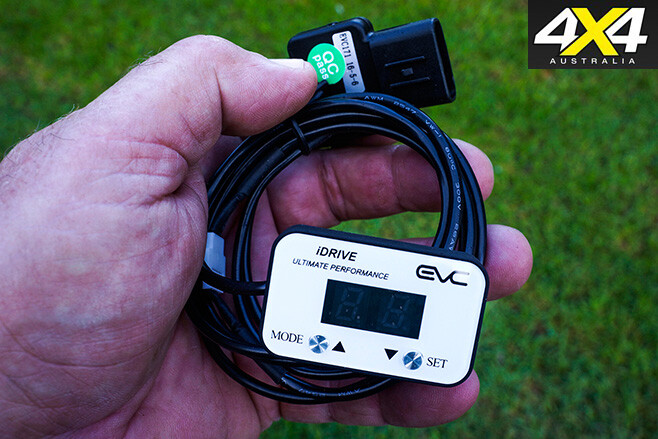
iDrive Australia’s General Manager, Tim Tettamanti, dropped in to the 4X4 Garage to chat about the small unit that’s making massive waves in the aftermarket industry.
“Basically the iDrive is an electronic throttle controller that works on late-model vehicle’s fly-by-wire systems,” Tim told us. “They remap the throttle and basically allow you to adjust it to suit the conditions, whether you’re on-road or off-road.”
This is achieved by sharpening the lag of a modern turbo-diesel engine when on-road, but then relaxing again once you hit off-road tracks.
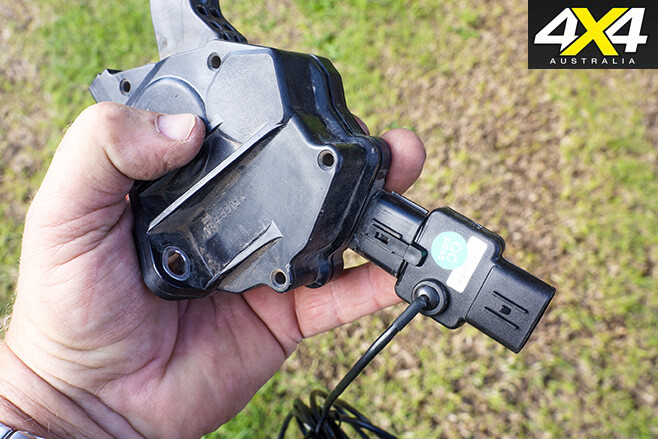
“The real benefit is the adjustability. When you’re on-road, if you’re towing, driving in traffic or just want to have a bit of fun, the iDrive can really sharpen up that performance and make the acceleration feel a lot less lazy,” Tim said. “But if you’re off-road, when there’s jerkiness in the acceleration, the iDrive can help to smooth that out. If you’re in soft sand, or you’re bouncing around inside the cabin, the iDrive can help.”
The iDrive features multiple settings for different driving styles: Eco Mode, Ultimate Mode and Automatic Control Mode (the Eco and Ultimate Modes have settings from one to nine). Setting the iDrive apart from the competition is its Automatic Control function, which alters throttle performance based on the pressure the driver applies to the pedal.
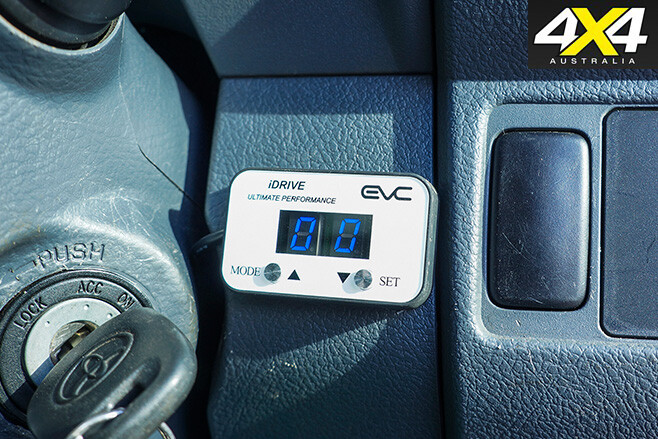
“The Automatic Control is basically like a set-and-forget, so it allows the unit itself to adjust based on the pedal pressure,” Tim said. “So if you’re in traffic and you accelerate gently, it will come on very gently. If you accelerate hard, for whatever reason, it will come on more aggressively.”
Installation is a breeze, and Tim demonstrated just how easy it is by completing the full installation in less than two minutes.
“We don’t like to judge anyone’s mechanical ability, but the fitment of these is quite simple,” Tim added.
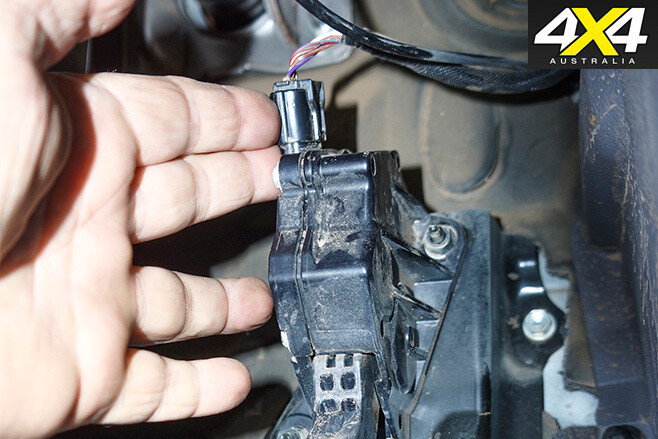
No tools are required and the fitment should take three minutes at the most for non-mechanical types.
Business is booming for Tim, and it’s no surprise – Ron Moon’s been raving on about it for months in his 4x4s and, after a quick spurt in an iDrive-equipped Ford Ranger, now we’re sold, too.
We took the PX Ranger out the following day and kicked things off in the standard setting that uses the OE throttle calibration, and the Ranger felt like any other. With the setting switched to Eco Mode the Ranger required more throttle input to get a result, and this slow throttle is what you want for off-road use.
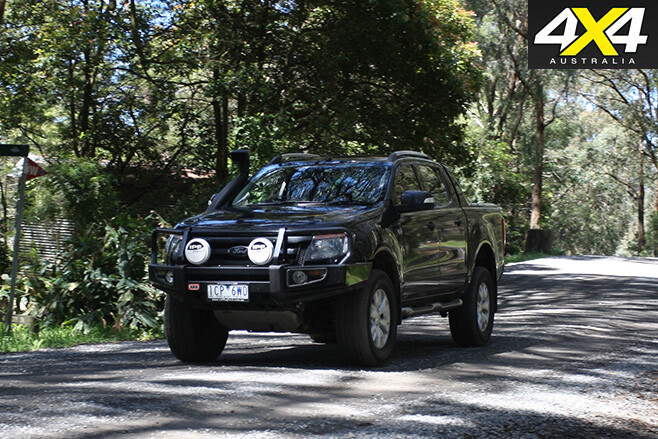
Pressing the button again chose one of the Ultimate Modes, and the pace picked up dramatically. The Ranger surged ahead at the same throttle application and responded much quicker to any input. The most aggressive of these modes actually felt too sharp for regular street use, but it would be good when you’re getting on with business.
Auto Mode is the one to use for regular driving. It adjusts automatically to how you drive, using a lazy throttle application or a quicker one, giving you the best setting for your style.
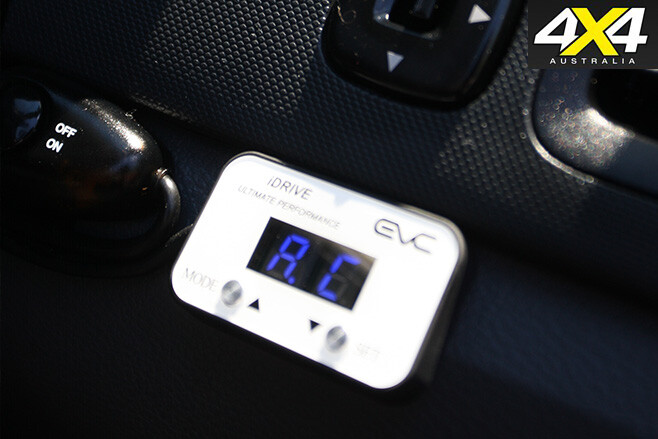
The iDrive throttle tuner retails for $299 and is available for most popular modern 4x4s that use an electronic throttle connection. Tim also gets requests from track-goers looking to give their small-capacity turbo engines an edge.
THE inaugural Custom 4×4 Of The Year headlines a stunning January 2017 issue of 4X4 Australia.
We’ve selected the 12 best custom 4x4s of 2016, and now it’s up to our readers to crown the winner. By voting, you give yourself a chance to win a pair of MaxTrax!
Among a heap of fresh content, we also head to the launch of Toyota’s new 70 Series Cruiser, and we bring you the best of SEMA 2016’s weird and wonderful.
You can grab your copy of 4X4 Australia from newsagents or by subscribing to 4X4 Australia in electronic or print format.
Here’s what we managed to squeeze inside the January issue:
LANDCRUISER LAUNCH All you need to know about the new 70 Series LandCruiser.
DISCO SPORT’S INGENIUM Sampling Land Rover’s Ingenium engine in the Discovery Sport.
IT’S SHOW TIME The SEMA Show is bonkers. We take you on a behind-the-scenes tour.
CUSTOM 4X4 OF THE YEAR 2016 was a bumper year for custom 4x4s. We’ve narrowed the field down to 12.
TRAILBLAZED Taking a spin in Holden’s born-again Colorado 7: the new Trailblazer wagon.
AUSTRALIA’S QUICKEST 76 SERIES Unique LandCruiser is more than just an off-road fun machine.
FEELING BLUE Insane bright blue and supercharged JKU Wrangler is turning heads.
FLINDERS RANGES WITH IRONMAN 4X4 We weave our way into an off-road expedition with the pros at Ironman 4×4.
WORLD EXTREME ROCK CRAWLING A serious rock-crawling event made for the brave.
SWAN GULLY 4X4 PARK, QLD It’s not far from Brisbane, which makes it perfect for a weekend getaway.
ARB OFF ROAD ICONS: PART 2 The thrilling conclusion to ARB’s epic Off Road Icon’s tour.
WORLD RECORD ATTEMPT The community of Lancelin assembles a collection of 4x4s to break a world record.
4X4 GARAGE: iDRIVE AUSTRALIA The small throttle tuner that’s making massive waves in the aftermarket industry.
SOLAR PANEL COMPARISON An in-depth analysis detailing which solar panel works best.
THE REST
Mark Allen’s Troopy gets sprung by Lovells, we test a Spot3 GPS tracker mounted on a RAM mount, and we list a heap of new gear on the market. We also lend out our Hilux SR5 to our mates at Caravan World magazine, and take our Mahindra to the Red Centre. Fraser discusses the future of autonomous cars, Roothy jumps on a plane bound for South Africa, Deano’s hunt for the perfect old Landy continues, and Ron questions the search-and-rescue procedures of the WA police.
The January issue is available in stores now!
LAST week we revealed that Mercedes-Benz would offer its ‘Professional W461’ models from the G-Class range in Australia.
Now, we have been lucky enough to score the keys to a G300 cab-chassis for a weekend drive through the Victorian High Country.
With nothing more than a fridge and swag in the massive aftermarket aluminium tray, you can tell this thing is sprung to carry a heavy load on its all-coil suspension. It’s stiff and jittery on any broken surface and took its toll on the occupants over the course of the weekend.
The stiff springs and over-inflated tyres didn’t help the operation of the ESP either, as it was all too keen to intervene on choppy roads and cut any throttle. You can switch the ESP off but it cuts back in at 60km/h. The ESP system feels a decade old compared to that in modern 4×4 vehicles, too.
The ride and performance were better with the tyre pressures dropped to an off-road-friendly 28psi as we ventured in to the mountains. The G scrabbled up most tracks with ease and even the rougher sections were taken without raising a sweat. We only engaged low range once we reached some steep descents, and we manually shifted the auto back to allow the G to crawl in a nice and controlled manner.
Getting up some rocky steps that had other vehicles scrabbling for grip, we simply locked the centre and rear diffs and the G wasn’t challenged. The stiff rear suspension doesn’t offer a lot of articulation and cocks a wheel sooner than you might expect, so having those diff locks is essential – and there is still the front locker if needed.
With its long wheelbase, the turning circle is a bit cruise-ship-like and the steering is quite heavy. You have to work hard to get the G-Pro around on tight tracks. That’s made harder for tall drivers as the seat doesn’t go back far enough before hitting the back of the cab.
But the G-Pro walked over everything we pointed it at in the High Country and cruised well on the highway. We’re keen to test it with some more weight on the back, which we’ll try after it goes on our 4X4OTY test next week. It’s a different truck to an LC79 and costs almost twice as much, but we still reckon it could be the perfect outback expedition rig with a camper on the back.
The G-Professional cab-chassis will retail for $119,900 (plus on-road costs), while a five-door wagon will come to Australia in the second quarter of 2017.
SPECS: MERCEDES-BENZ G300 CDI CAB CHASSIS Engine: 3.0-litre V6 turbo-diesel Maximum power: 135kW @ 3800rpm Maximum torque: 400Nm @ 1600-2600rpm Gearbox: five-speed automatic 4×4 system: dual-range full-time Crawl ratio: 41.0:1 Tyre spec: 265/75R16 Kerb weight: 2410kg GVM: 4490kg GCM: 6700kg Payload: 2080kg Towing capacity: 2210kg Fuel tank capacity: 97 litres ADR fuel claim: NA
IN MANY ways 4x4s are about individuality. They’re a way for people to forge their own path through life. To take their own road and do what others don’t, both figuratively and literally.
Vote for Shane’s Sandy LC79 to decide this year’s Custom 4×4 of the Year.
Speak to any off-roader in any part of Australia and you’ll find personalised modifications, plans for adventure, and a back story just that little bit more interesting than your average Joe. Occasionally, though, you’ll come across someone who stands out more than usual. Shane Griffiths from Port Stephens, NSW, is that kind of bloke.
Shane and his wife Lisa have led a life that’s taken them on a roller coaster of highs and lows: through financial hurdles, a near-fatal shark attack, travelling through remote Aboriginal communities you won’t find on any map, and living within a stone’s throw of one of the most popular beaches in Australia.
Their story includes singing success on television’s The X Factor, shark conservation, and one of Australia’s first eco water parks. They lead a versatile life, and they needed a versatile 4×4 that’d do everything the dynamic duo required of it.
“I’m away for work a lot,” Shane told us. “I do a lot of work with the railway and it sees me living on the road sometimes. I needed a tough 4×4, and there just weren’t too many options to choose from. I’ve had a 100 Series and a Toyota Surf, and I loved the idea of a 79. After a spate of bad luck things started going our way, so I reckoned ‘bugger it’ and got one.”
While Toyota’s Graphite Grey suits the 79, it doesn’t exactly stand out. “I did months of research and knew what I wanted when I went shopping,” Shane said. “It couldn’t be grey, and couldn’t have the same bars as everyone else.”
Shane opted to get his top-of-the-line double cab draped in Toyota’s Sandy Taupe. The GXL badge on the doors also means Shane’s Cruiser came fitted with front and rear diff locks right from the showroom floor.
One of the biggest benefits of a ute is that you’re basically left with half the vehicle to design how you want. The custom set-up was a collaboration between Shane’s designs and the fabrication skills of Tod from Tag Fab in Victoria.
The alloy arrangement is a two-piece design: the tray stays on the rig full time, with a few clever inclusions like under- tray storage boxes for wet gear and a full-length trundle tray under the rear that pulls the whole way out with a stainless steel water tank in front of the drawer. The tray’s headboard also doubles as an additional fuel tank, feeding into the stock set-up below. This added significant fuel range and helped keep weight forward of the rear axle.
Things don’t get any simpler with the lift-off camper set-up, either. “I wanted something that’d be really open,” Shane told us. “I use the ute for work and play, so it needed to carry tools as well as camping gear. Most of the other set-ups out there all came decked out, so you were stuck with whatever design the builder came up with. I wanted it to be really light weight, quick and easy to set-up, and simple to get on and off the ute. I can have it set up in three minutes.”
Up top there’s an electrically operated pop-top with a full-size custom innerspring mattress, while the rear door folds down giving an enclosed change space and ample standing room.
Inside the tray Shane’s kept the theme running with a few off-the-wall modifications that come together for a versatile pack. Rather than a drop-slide and top-loader fridge, there’s a 57L Engel upright fridge.
“Everyone I spoke to raved about them,” Shane told us. “It meant I didn’t need a drop-down slide, saving about 60kg.”
Keeping the fridge powered throughout the night is a lithium battery controlled by an Enerdrive DC2DC 30A. With a small solar set-up the battery system is fully charged by 10.00am.
There’s more to Shane’s 79 than a trick camping set-up, and the fluorescent green paint might just give it away. In the back end of the Cruiser the archaic leaf springs have been relegated to the scrap heap; in their place resides a full bolt-in coil conversion from Jmacx Off Road Solutions. Three-inch-lifted Dobinsons coils reside front and rear, as do a full suite of Superior Engineering eight-stage adjustable external reservoir shocks.
The castor up front is kept in check with three-inch Superior Engineering dropped radius arms that are colour-matched to the suspension cradle in the rear. The wheel arches are filled with 285/70R17 BFGoodrich KM2s. They’ve been wrapped around 17x9in KMC alloys with a -12 offset, increasing the Cruiser’s track, giving it its aggressive stance.
The ‘functional but different’ approach has been used throughout the build. Shane opted for a front bar, slider, and scrub bar set-up from TJMs commercial range. “You don’t see it much unless you ask for it,” he said. “I really like their round tube look; it’s just a bit different to the normal post-style most people run.”
The front bar has been filled with a waterproof 12,000lb Sherpa winch and two spread-beam XRay HID driving lights from TJM. Shane’s logic is that he’d be hard-pressed spotting a kangaroo 1000m away with or without light, so he’d rather the extra light in the 500m he can see clearly.
After talking everything from environmentalism, building design and colour-matched suspension, Shane had one parting thought to leave us with: “I had a pretty bad injury a while ago that could have killed me.
It put a lot of things into perspective. Anything could be around the corner. I took the plunge, made some financial sacrifices, built the truck of my dreams, and I’ve never been happier.”
WIDE LOAD
EAGLE-EYED readers may have spotted the rear wheel’s track aligns perfectly with the front.
While that might not normally sound like something worth writing about, it slipped Toyota’s mind when they developed the current 7X platform. Shane’s Jmacx coil conversion didn’t just change out the leaf springs for a set of coils, the upgrade also bumped the rear track width out to meet the front with an upgraded wider axle that avoids complicated spacers or mismatched wheels.
The kit also includes stronger rear axle shafts and a heavy duty sway bar. It also added 600kg to the GVM, taking it from 3300kg to 3900kg. The 7X platform is quickly becoming the Swiss Army knife of Australian 4x4s, with upgrades for just about everything you could imagine. However, the Jmacx coil conversion kit takes things to a whole new level!
Vote for Shane’s Sandy LC79 to decide this year’s Custom 4×4 of the Year.
There’s nothing better than finishing work on a Friday, packing the 4×4 with gear and the family, and heading off for a weekend in the bush. It’s only two days, but it is often all you need to recharge and reconnect with the outdoors.
The key to a successful weekend – or preferably many weekends – of camping is being prepared and having your favourite gear always packed and ready to be loaded in your vehicle. For our 4WD camping family, there are 10 pieces of equipment I always have ready to go. With these items, I’ve got all the camping essentials covered; choosing equipment that can also perform double-duty when at camp is one of my basic requirements. Having gear that is used for more than one thing around camp means you save packing space – and it’s easier on your wallet.
With these 10 essentials, any weekend in the bush is guaranteed to be a cracker.
1. NORTH FACE DUFFEL
Basic is nearly always better – especially in terms of luggage for camping. The North Face duffel is probably the most famous travel bag on the planet, and with good reason. The duffel is built for all sorts of abuse, with its outer laminated nylon material thick and strong.
It’s also double-stitched and has extra bartacks to keep it from bursting if overloaded. The tubular shape of these duffels actually means you’ll find a nook or cranny for any item of clothing or gear, so there’s no wasted space inside.
The bag features compression straps to cinch down the gear inside, plus its shoulder straps make for easier carrying. As well as these shoulder straps, there are two top hand straps and two end straps – all overbuilt to withstand rugged treatment – and the zips are lockable.
Speaking of which, the zips are YKK jobbies, so they’re tough, and the seal on them is pretty damn good. I have never had any dusty clothing when stored inside my various TNF duffels.
Yep, I have a couple of these. My 95L large duffel is now 10 years old (a relative youngster – I have heard of some being close to 30) and, barring a few scrapes and stains from being loaded in dirty ute trays and on the back of mules (don’t ask), it’s still going strong.
Website: www.thenorthface.com.au // RRP: $160-270 Sizes: 31L, 40L, 60L, 95L, 135L, 150L
2. BLACK WOLF TUFF DOME
For weekends away, you want your gear to be quick to pack, and even quicker to set up.
This six-person tent is the perfect combo of being relatively light in weight (11.5kg), while not sacrificing weight for quality. Strong 16mm and 13mm aluminium poles, a tough 300-denier nylon PU floor and tape-sealed seams are all welcome features.
There is plenty of floor space (4800mm long, 2400mm wide and 2000mm tall) and an excellent, roomy vestibule to store gear in. The roof-height is brilliant; any adult will relate to how much more enjoyable it is being in a tent when you can actually stand up, rather than being crouched over the whole time.
Other Tuff Dome tent features that make it a brilliant all-seasons weekend accommodation are the many windows (with No-see-um mesh) and ventilation points, with a bonus that the windows are gusseted on the outside – which means even if you cop some rain, you can still leave the windows open as the gussets will ensure the water flows out and away from the window, not into the tent.
Set-up is fast (as you want for a weekend), with the two pre-bent main poles easy to slide through the inner’s provided sleeves. The two 13mm poles are used to extend both the fly and the rear of the tent and are also quick to thread. Then you just clip the fly over the top, adjusting tension via buckles at the base, and you’re in and comfy in around 10 minutes max. Dismantling is about the same time – perfect for that weekend escape.
Website: www.blackwolf.com.au // RRP: $880
3. WILDERNESS EQUIPMENT I-OVERHANG TARP
I have been asked a few times why I use a seemingly flimsy, lightweight tarp when camping.
And the answer has always been the same: because the XL I-Overhang tarp ain’t flimsy, but it is light weight and it packs down small, making it the ideal additional shelter to keep stored in our camping box for those weekend getaways.
At a paltry 2kg in weight, this thing punches seriously above its weight in regards to its overall performance (the 4.5m x 2.95m Large is only 1kg; RRP $199). The tarp is made from 75-denier ripstop polyester, with a DWR (Durable Water Repellency) treatment for full waterproofness. It has an impressive 14 guy-line attachment points, with the ones on the XL featuring double shock cord loops for extra stability. Speaking of stability, the guy attachment points (with acetal rings) are a unique tear-drop shape, which is designed to optimise strength at the attachment point.
The acetal rings assist in reducing the strain/stress levels where the guy-lines attach as well. Yes, it all sounds like mumbo-jumbo, but after seeing this thing, fully pegged out off the side of our vehicle, provide enough shelter in a howling southerly storm for us to still cook and the kids to play, I rate it very highly. Of course, like any tarp, you have to peg it down properly – and against the prevailing wind – but it will work just as well as a “traditional” tarp every time.
Looking at how bloody big, heavy and awkward those “other” tarps of an equivalent size are – and the fact they ain’t much cheaper – I am happy to keep on answering questions.
Website: www.wildequipment.com.au // RRP: $249 Size: XL (4.5m x 4.5m)
4. ARB FRIDGE/FREEZER 47L
Yeah, I know, for a weekend camping trip you could get away with an ice-filled Esky if you needed to. But, for this long-term camper, there’s no way I would sacrifice the convenience of a powered fridge-freezer, regardless of how short the stay is. With a fridge-freezer permanently affixed in your 4×4, even the packing/tying-down time argument is eliminated.
With summer now upon us, the other issue of melting ice in the Esky becomes prominent. Even on a stinking hot day, a fridge-freezer will keep your coldies, er, cold, and your food fresh for when it needs prepping for meals.
I have used various-sized ARB fridge-freezers on various 4X4 Australia expeditions and family camping weekends and have found these units very reliable and very easy to operate.
Even though we’re talking weekend camping here – and a 35L jobbie would probably suffice – I would go for a 47L model as a minimum (preferred size would be 60L, but this is vehicle-dependent). The ARB fridge-freezer includes some cool features: the dairy compartment is handier than you would think, and the détente hinge makes removal (and re-fitting) of the lid in low-roofline vehicles a doddle.
Add in the excellent Secop compressor for fast cool-down times, the low current draw (a claimed 0.87amps/hour for the 47L), the rugged exterior case and sturdy tie-down points, and it’s easy to see how these fridge-freezers have become so popular, whether you’re a weekend camper or a long-distance tourer.
Website: www.arb.com.au // RRP: $1249
5. GASMATE 3-BURNER STOVE
It’s one of the most common camp stoves you’ll see kicking around campsites for the simple reason it’s near-bulletproof in terms of durability, reliability and construction. We’ve had ours for nigh on 14 years and it still looks pretty much the same, albeit with a touch of surface corrosion on the fold-out legs.
There are, of course, similar stoves out there from various outdoor brands, but the standout with this unit is the three burners and the space between them. Having the versatility to run three pots/pans (albeit small-ish sized ones) at different heat/simmer levels while cooking cannot be underestimated when it’s time to whip up a quick but still interesting camp meal. Plus, if you opt for larger pans and pots, you can still use two burners. It is this versatility of three burners that makes this unit a winner.
In terms of design, it is simple but effective; having three windshields means you’re pretty much guaranteed that most of the heat is going to stay directed on the base of the pots and pans, meaning you’ll use less fuel as the stove remains highly efficient regardless of wind.
Being able to pull out the cooking trivet quickly when you need to clean the stove is also a bonus, as is the simplicity with which it folds up for storage. When packed up, the stove takes up minimal space, making it easy to leave – minus the gas bottle – in your vehicle, especially if you have a cargo drawer set-up.
Website: www.gasmate.com.au // RRP: $110
6. LED LENSER SEO 7R HEAD TORCH
I reckon a head torch is a must-pack item on every 4×4 tourer’s camp gear list. For directional light, whether cooking at night or checking the vehicle for missing gear or a mechanical gremlin, a head torch is the best option by far.
The SEO 7R is the flagship model of a new series of head torches from German lighting company Led Lenser. The SEO 7R features a white High End Power LED that pumps out a maximum of 180 lumens of light to a distance of 120 metres, for up to seven hours. You can lower the output to stretch lighting time to 25 hours – there are three light modes, each differing in intensity, plus a flashing-light mode.
It is IPX6 water-resistance rated, so it’s able to withstand showers, and there is also a red LED with blink function.
The torch has Optisense Technology, so it only outputs the amount of light needed according to ambient lighting conditions, measured by a sensor in the torch. This means you never have too much light and ensures minimal battery drain.
You can also focus the light beam from a spread to a pencil beam if need be, simply by twisting the bezel surrounding the light itself. There is also a tilt function, easily effected by simply tilting a hinge at the base of the light mount.
Power is via either a USB-charged lithium-ion power pack, or you can fit three AAA batteries into it. The light weight, Optisense Technology, and adjustability of light levels and beam shape make the SEO 7R a worthwhile addition to any camping kit.
Website: www.ledlenser.com.au // RRP: $185
7. STERIPEN PURE+ WATER FILTER
This may seem an odd choice – after all, it’s only a weekend away and you’ve probably packed enough water, right? But if you’re heading to a more remote location and there’s fresh water available, chances are you will still use it at some point.
The point of this small but effective water purifier is that it can just sit in your glovebox or camp box until it’s needed. The SteriPEN Pure+ is a UV purifier that’s claimed to destroy 99.9 per cent of bacteria, viruses and protozoa.
What people tend to forget when camped beside that pristine waterway is that, upstream – maybe only a few kays, maybe more than 50 – there is likely to be pastoral land, with livestock being run on it. The many diseases that can be carried in water from dead livestock and/or faecal matter makes purifying/filtering your water a must-do every single time you draw water from any source out in the bush.
The Pure+ filters 500ml of water in 48 seconds, and it’s reusable for a claimed 2500 litres. UV light destroys the germs’ ability to reproduce, which is what makes you sick. All you have to do is wave it around inside the water (inside a container) and you take away any risk of that epic weekend camping in the bush turning into a miserable experience. It takes up a small amount of space and it simply works.
Website: www.zenimports.com.au // RRP: $159.50
8. ARB CAMP CHAIR
There are camp chairs, and then there are “real” camp chairs – ones that don’t collapse after a few weekends of camping. ARB’s camp chair duo, the Air Locker and the Sport, sit firmly in the second category. These big-boppers (rated to hold 120kg) reflect the company’s quality engineering background and offer plenty of the usual things you expect in a camp chair, as well a few nifty improvements.
The fold-flat design is not unique, but the set-up process is. Once out of the carry bag, simply unclip a small locking mechanism at the rear of the chair-arm, then extend that arm to its full length, which opens up the chair and allows a clip-lock at the rear of the arm to lock into the rear vertical metal tubing of the chair’s back. It’s quick and it’s simple, and the end result is a chair that definitely feels solid and supportive once set up.
Packing the chair up involves reversing the procedure; the clips lock into the chair leg. This is also simple to do and ensures the legs – and thus, the chair – are locked down so they cannot move during transit. It protects the chair and any surrounding gear.
The chairs take up slightly more space than the “roll-up” cheapies on the market, but this small negative is balanced by the benefits of having a chair that is tough and very supportive. This robustness continues throughout, with the nylon Oxford weave material of the padded seat and side pocket feeling up to the task of repeated usage. And yep, there’s a mesh pocket for your beer.
Website: www.arb.com.au // RRP: $81
9. IRONMAN 4X4 SPACE CASE
These robust storage boxes are brilliant for storing all your camping gear in some type of order. They range in sizes from 74L up to 196L and are easy to secure down in the cargo area. Yes, there are cheaper plastic boxes you can grab from any bargain store, and some aren’t too bad, but where the Space Case wins out is in its far superior heavy-duty build quality.
The thick UV-stabilised polyethylene plastic outer shell with built-in rubber seals in the lid and bottom ensure they are weatherproof, making them ideal for putting up on roof racks or in cargo areas. We’ve had two big boppers for about seven years and they’ve been tied down in box trailers, ute trays and dragged around camp with the contents inside always staying protected. The tough metal handles double as tie-down points, and you can padlock them shut via the metal latches along the front of the box, which is ideal for when you want to leave camp for a day drive.
For those worried about gear banging around inside and getting damaged during transit, you can cut foam padding to put inside. That’s what we’ve done for our camp kitchen gear and it works a treat. These Space Cases, regardless of size, ain’t cheap, but you’ll only buy them once – they last for bloody ages.
Website: www.ironman4x4.com // RRP: $256-$426
10. SEA TO SUMMIT SLEEP SYSTEM
I have cheated a bit here. This “system” is a combo of four camp bed items – a sleeping bag, sleeping mat, pillow and fitted sheet – that work together to create a seriously comfortable set-up.
The STS Basecamp BCII sleeping bag contains 750-loft Ultra-Dry Down fill and a dual-zipper design that can transform it from a sleeping bag to a big quilt in warmer weather. The contoured rectangular shape is far more comfy than a restrictive mummy-shape bag, while still offering a warmth rating (from a comfort level of -3°C to a minimum comfort level of -23°C) that covers pretty much all seasons in Australia. It is expensive, but construction is top-notch and the bag (like the mat and the pillow) can easily do double- or triple-duty for hiking and canoeing adventures.
The BCII combines with the Comfort Plus rectangular sleep mat via a small pocket at the bag’s foot-end, and then the top half of the bag and mat are joined via a strap and loop set-up, so you won’t slide off the mat. The Air Sprung mat uses two separate layers of air cells to ensure maximum comfort and insulation by dispersing the sleeper’s weight over more of these individual cells. The fitted sheet I use simply for comfort, and if I do open the sleeping bag up I am not sleeping on the actual mat surface, but on a nice sheet on top of it.
The Aeros Premium Deluxe Pillow is a winner. It can be attached via a strap to the BCII sleeping bag, meaning no more searching for your pillow in the middle of the night! This whole “system” is a fair investment, but as I mentioned it can all be used for other activities – and, speaking from many years’ of experience with other STS kit, I know it will last for ages. The Australian-based company knows how to make tough and, in this case, comfy gear that compacts down for stowage in your 4×4.
Website: www.seatosummit.com.au // RRP: $549 (BCII bag); $219 (CF Plus mat); $39.95 (fitted sheet); $79.95 (Premium Deluxe Pillow)