
While trekking through some remote places in both the Victorian High Country and the Kimberley, mapping tracks and gathering information for Hema’s new region guides, we had with us a Spot Gen3 GPS tracker mounted in a RAM mount.
Because of WHS issues we were required to have the unit track our travels, checking in every morning and night, or if anything untoward happened.
The Spot is smaller than a mobile phone and easily fits into the palm of your hand. It weighs less than 115g – most of that being the four AAA lithium batteries required to power it when not connected to a five-volt USB connection.
The Spot system relies on the GPS satellite network for location data and a commercial satellite system with its attendant ground stations for message sending. The unit tracks your movements which can be sent via SMS text or email to up to 10 pre-selected contacts, and it can be followed on Google Maps.
When required you can send a number of basic messages. These include an all-OK check-in with GPS position, a Help message for non-life threatening events, an SOS function which triggers an emergency response from emergency call centres, and a custom pre-programmed message with your GPS location.
These messages can be delivered via email to a computer or text message to a phone, while emergency notifications will go to an international co-ordination centre which is then forwarded, for cases in Australia, to the Australian Maritime Safety Authority. It should be noted that messages are purely one way – Spot cannot receive a message from your contacts sent to the Spot device.
Once you have bought a Spot (cost is around $190-$220 depending on where you buy it) you need to activate the unit by setting up an account and following the instructions. It’s all pretty easy and you can dictate who receives messages from the device.
The package you decide upon will determine what tracking data you receive. For AUD$213 per year the Basic Service sends a track position every 10 minutes. This is enough for most people, although for an extra $65 per year you can upgrade to Unlimited Tracking, which allows you to trace your track every five, 10, 30 or 60 minutes. You can increase your tracking rate to every 2.5 minutes for another $195 over the basic service. There’s also a social network facility (free) where you can share tracks and photos, if you are into that.
We found the Spot very easy to use and reliable. It connected to GPS satellites quickly and easily, even when mounted inside the car behind the windscreen. This kept it out of the way but in a position with a relatively clear view of the sky overhead. It stayed connected to the GPS satellites and relayed the track info as required. The OK messages went out without an issue wherever we were and whenever we pushed the button, although we found it easier to remove the unit from the RAM mount to operate it. A 12-volt to a 5-volt USB cable (supplied with the unit) kept it powered up at all times.
There are a number of combinations with RAM mounts, so take your time and make sure it’s the right part for the equipment involved and the right length for where you want to mount it. We’re impressed with the quality of the mount and its ability to stay put once attached.
The Spot reassured our contacts that we were okay and where we were, giving us a feeling of security and safety. Yes, there are other devices that offer two-way communication as well as tracking, but they can’t match the Spot Gen3 for price and ease of operation, and you can’t put a price on peace of mind.
We’ve been thinking of buying a Spot and mount for our own travels, and now that coverage includes most continents (all but the Arctic and Antarctica) it’s definitely on the list!
RATED
Spot Available from: au.findmespot.com RRP: Spot: $220 (approx.); plus annual subscription of $195. We say: Easy to use, well-priced, provides peace-of-mind.
RAM mounts: www.ja-gps.com.au RRP: RAM mounts and holder from: $65 We say: Secure and well-priced.
ABOUT 8km from the low-level crossing of the Clarence River at Paddy’s Flat, you’ll find the turn-off on the left to the Clarence River Wilderness Lodge.
The track into the campsite is a scenic introduction to the adventures that lay ahead, as it winds its way down heavily timbered hills to where the Upper Clarence runs.
For most 4WD owners it’s getting harder and harder to find a place where you can simply veg out for a while; a place where you don’t have to have the suspension at maximum travel to cover every metre of ground; a place where your camp is not hemmed in by others. It’s called passive recreation, and we’ve got just the spot for you.
Clarence River Wilderness Lodge is just downstream from the confluence of Tooloom Creek and the Clarence River. It’s approximately 16km² of bushland, and your campsite is on level grassy ground just a step or two from the banks of the Upper Clarence.
Some years back Steve and Sharon Ross decided that was how they wanted to live. They had escaped the confines of Brisbane, and as time slipped by they decided they didn’t mind the idea of sharing this little bit of paradise with others. Punters can come down and settle in beside the river, or perhaps go out and explore a couple of easy tracks knowing they’ll arrive back at the campsite with plenty of time to enjoy a refreshing sundowner or dip in the river.
There’s no need to worry about packing your camping gear, either. Steve Ross is an industrious soul and he’s been busy building a variety of accommodation for those who would prefer a solid roof over their heads. There are two styles: the basic bushman’s hut for one or two people; and the lodges, which are better suited to families and have more in the way of cooking facilities and amenities.
You needn’t worry about this being one of those camps where you trip over the neighbour’s tent ropes. In keeping with the peaceful aim of the place, you are required to book ahead.
The reason for this is that Steve and Sharon have put a limit on the number of campers, with campsites kept at a reasonable distance from one another. Lying in your swag at night and being kept awake by the snoring from next door is nobody’s idea of fun.
Visitors are provided with a map of the property so they can spend some time exploring. There are a few tracks to check out: the Old Mine Site track takes you down a steep hill to a section of the Tooloom Creek that has a deep hole on the bend, and the remains of some old huts and recent mining activity can be seen here. There’s still a current mining lease down there, but it’s on Ross’s land, so you can come and go as you please.
The Eagle Hawk track takes you further down the Clarence. There’s a long stretch of river and it looks like great spot for a bit of water-borne enjoyment. Swimming, of course, but paddling around on something inflatable could be a lot of fun too. Just don’t forget that if you drift off downstream, you have to paddle back home against the current.
The Rose Garden track goes down to where an old Aboriginal lady lived, and here and there are the remains of her time spent in the area. The other track, which can be a bit of a challenge, is the Tower track. This track takes you up to a repeater tower – probably the only sign of technology you will see here – and a capable 4WD is needed.
The wildlife is one of the great attractions here, and the steep rock faces across the river from the campsite are often visited by yellow-footed rock wallabies. These little marsupials are often found quietly poking around the nearby bushland, and city-dwellers are often astounded at how close the animals allow you to approach. The rock wallabies took a fair bit of punishment from some wild dogs not long ago, but they look to have bounced back. Platypuses also inhabit the area but are harder to see.
Back at the campsite there’s a great camp kitchen set aside for occupants of the bushman’s huts; those who come in choosing to camp are usually self-contained. The walls are decorated with all the old bush implements Steve has found in his wanderings, and a lot of people like to try and work out the function of some of the more obscure items. It’s a great place for campers to gather if they don’t want to cook at their own camp.
The Upper Clarence is a stretch of water that begs to be explored. Canoes are available for hire and the Lodge now has a canoe service available so visitors can leave the campsite and be picked up at the Paddy’s Flat area. This is a great opportunity to experience river travel in the most relaxing way possible, but to make sure it’s not too restful Steve also ensures you negotiate a few rapids on the way. All safety gear and guidance is provided.
Isn’t this what real eco-tourism is all about?
Travel Planner
YOU could make it a day trip, but you’d miss an awful lot. Coming from Brisbane, travel through Beaudesert and Rathdowney on the Mt Lindesay Highway and cut through Woodenbong and Urbenville. From Urbenville head out of town on Tooloom Road, then turn left into Upper Tooloom Road.
If you get to the Paddy’s Flat Bridge you have to backtrack 8km.
If you’re coming from the south end, turn off the Bruxner Highway onto Paddy’s Flat Road just west of Tabulam, and then follow it 8km past Paddy’s Flat.
This is not called a Wilderness Lodge without reason. It’s remote, so this means you have to come in fully provisioned and fuelled. Tabulam to the south or Urbenville to the north are the last places to top up with fuel. There is a swap-and-go gas exchange available on-site, though.
For a number of reasons fishing isn’t permitted near the campsite, but there are plenty of other things to do. As mentioned there is no lack of wildlife, both in the water and out of it. Fire pits are provided, so sitting around a fire at night is something to look forward to. Wood is available at the office.
Ring before you leave so Steve and Sharon can let you know about the road conditions and the state of the river. You can bring your camper trailer or off-road caravan – in fact, many people bring their new off-road ’van in before taking it to the outback, just make sure the 4WD tow vehicle is powerful enough to get the ’van up some of the steeper grades. When you see the track, you’ll see why.
CONTACT CLARENCE RIVER WILDERNESS LODGE Phone: (02) 6665 1337 Website: www.clarenceriver.com
VOLKSWAGEN has replaced the Amarok’s four-pot diesel with a 3.0-litre V6 diesel engine – a donk similar to that used in the Porsche Cayenne, but with stronger pistons and extra oil capacity for off-road use.
The numbers generated from this class-leading engine are 165kW (180kW on overboost) and 550Nm, digits rarely seen in this dual-cab segment.
To see exactly where the new Amarok sits in the 4×4 pecking order, we took it on an outback drive alongside the top-spec Ford Ranger Wildtrak.
The Ranger’s engine (outputs of 147kW and 470Nm), while comfortable to lope along on light throttle, can’t match the punch or flexibility of the Amarok’s – the Ranger takes more than 10 seconds to reach 100km/h; the Amarok takes less than eight seconds.
Not only does the VW Amarok V6 deliver superior performance, it’s also more refined and offers better noise control.
Both of these high-end utes are more than capable when off the beaten track, but where the Ranger makes up ground on the Amarok is when wading through water. The Ranger has a wading depth of 800mm, 300mm more than the Amarok.
The Ranger can also tow 3500kg compared to the Amarok’s 3000kg limit.
For the complete Volkswagen Amarok V6 versus Ford Ranger Wildtrak comparison, pick up a copy of 4X4 Australia’s February 2017 issue, in stores now.
Pricing for the Amarok V6 starts from $59,990*, while the top-spec Ranger Wildtrak retails for $61,590*.
*Prices do not include on-road costs. 3.2-litre 4×4 dual-cab pick-up automatics only.
UNLESS you’ve been living under a tweed-covered rock for the last half century, there’s no denying America and Australia are at the forefront for all things off-road.
Our paths have differed over the years, with the yanks focusing on rock crawling and huge tyres while we narrowed our spotlights in on serious overland travel, but it’s always been a safe bet the products would be some of the best off-road kit you can get.
Stuart Gruchy, owner of this immaculate Hydro Blue JKU Rubicon, couldn’t agree more. So when it came time to trade in his old Patrol, what better path to take than building one of the most popular 4x4s of all time with some of the best gear available on both sides of the planet. Seem simple? Anything is if you do it right the first time.
“I’d always been a Patrol man,” Stuart told us. “I’d had them ever since I was 18, but the Jeeps have always interested me. I put a deposit on a brand new TJ years ago, but the space concerned me so I pulled out. When they released the four-door I knew I had to have one.”
By the time the stars finally aligned the second generation JKU had hit the market with an updated interior and the then-new 3.6-litre Pentastar V6, but Stuart didn’t waste any time getting stuck right into it. While a build like this often takes the better part of a decade, this wild JKU has only just celebrated its second birthday.
“I bought it brand new two years ago,” Stuart said. “I had a budget of $55K originally, but I’m in it for around $80K now. I’m a service manager at a dealership so was able to get a lot of things for cheap. It’d cost around $140K to build from scratch, though.”
Stuart’s JKU looks wild, but it has been a steady progression where upgrades are required rather than a full-frontal assault on the credit card. It was originally built to handle 33s, but when they couldn’t keep up they went up on Gumtree to be replaced by 35s. When the 35s couldn’t hack it, out they went and in came 37s. As the accessories started adding up so did the weight, eventually surpassing the stock GVM.
“I didn’t originally want 37s,” Stuart said. “But after speaking to Henry at JeepKonection and finding out their GVM upgrade package allowed for 37s, I thought why not.”
Underneath the JKU are myriad components that all work together to complete the suspension package and GVM upgrade. There are heavy duty Dana 44 axles front and rear (they come stock in a Rubicon but have been tweaked slightly for the extra load) with 4.56 diff ratios to suit the larger tyres and ARB air lockers slotted inside each centre.
There’s an AEV 3.5-inch suspension system tucked in underneath, with heavy duty springs, bump-stop spacers, geometry correcting brackets and an AEV high-steer kit for good measure.
Stuart opted to upgrade from the included Bilstein shocks to the new BP-51 adjustable external reservoir options from ARB. The package bumps the GVM up from 2500kg to an impressive 3250kg and makes room for the 37×12.5-inch Pro Comp Xtreme All Terrains on 17×8.5-inch alloys.
37-inch tyres normally look over the top on just about any vehicle, but they seem right at home on Stuart’s JKU next to the extensive modifications and colour-coding by Martin at Acclaim Accident Repairs in Lilydale. Starting from the front there’s an ARB bar that houses a Warn CTI-S winch and no less than three Lightforce LED 215 driving lights. They’re accompanied by a Mopar 10th Anniversary bonnet and AEV snorkel.
Heading down the flanks and Uneek 4×4 have provided rock sliders, A-pillar light mounts, a bonnet-light mount and a roof-light mount with a combination of Rigid Industries LED light bars slotted in where possible – including the two Oracle LED side mirrors. Up top there’s a Rhino-Rack BackBone system with a Foxwing awning swinging off the passenger’s side.
The rear end has copped similar treatment with a Kaymar twin swing-out carrier. It incorporates the tow bar for improved departure angle, with a jerry can holder on one side and spare tyre on the other. Stuart optioned up for a telescopic light pole and light, a high-lift jack holder, and an UHF aerial mount. The protection extends underneath with a combination of Uneek 4×4 and ARB bash guards; while a Long Range Automotive 60-litre auxiliary fuel tank helps extend the Jeep’s range.
While the outside screams hardcore rock crawler, the inside is pure long-distance tourer. It’s been trimmed with Hydro Blue accents and the cargo area has been decked out by the guys at Affordable 4×4 Drawers. The extensive set-up includes additional storage space, a fridge slide, a pull-out table, and an SMEV stove and sink. The fridge is a 40-litre unit from Ironman 4×4 and is kept powered by a Genesis dual-battery system and twin Optima Yellow Top deep-cycle AGM batteries.
The cargo area is rounded out with a cargo barrier from Outback Solutions, a drop down tailgate table from Outback Adventure Products, and extensive LED strip lighting.
The passenger compartment has copped a similar treatment; there’s a HEMA HN7 Navigator doing GPS duties, while a Uniden UHF assists with communications for longer trips. AEV rubber floor mats keep mud and grit out of the carpet, and an ARB twin piston compressor lives under the passenger seat with a tyre inflation kit.
Everywhere you look you’ll find upgrades that seriously improve the overall package rather than just being a combination of parts. From the upgraded door straps through to the LED headlights and iDrive throttle adjuster, Stuart has gone through this JKU from front to back to create a serious do-it-all rig with a twist.
THE BEST ’TIL LAST
NO MATTER how much gear you throw at a 4×4 you’ll never truly make up for the extra weight and rolling diameter of larger tyres. That is, of course, unless you boost power at the wheels by more than 50 per cent.
Lurking under the Mopar bonnet of Stuart’s Jeep is a Sprintex Supercharger kit. Costing just a fraction of a V8 conversion, the supercharger bumped the stock power from 116kW at the wheels up to an impressive 190kW. “It’s a different car,” Stuart reckoned. “Ian Bailey from Bluey’s Automotive did all the work and it’s completely transformed it. The torque is right there from down low like a diesel now.”
The kit is 100 per cent bolt-on, including a water-to-air intercooler and internal oil supply making for an easy and reversible installation. Despite being in full rock-crawler trim, the Jeep Rubicon has no trouble at highway speeds and more than enough low-down grunt for serious off-road work.
Which suspension? It’s a damn hard choice to make. With so many variations on intended loads, terrains and expectations there’s no single correct answer, especially when you take into account how many 4x4s there are on the market.
After spending time trawling through the numerous articles on the net, talking to retailers and seeing what others were using and recommending, I noted early on that many ‘experts’ were using Australian-made Lovell springs, combined with a huge selection of shock absorber brands, from lowly online cheapies to top-of-the-line big bore and imported lines.
Monotubes, twin tubes and remote reservoir shocks; you name it, Lovells had kits on offer. Taking the hint, I fitted a set of Lovells springs and Gas Legends shock absorbers.
When you’re looking for aftermarket springs the trick is to put all your heavy gear on first: bullbar, winch, rear bar, rims, tyres, the whole lot. Sure, your 4×4 may sag for a while, but having all that weight on first will give you a good idea of which spring rates to choose.
From the Lovells catalogue I had the choice of three rear options of 50mm lifts in 100kg, 300kg and GVM constant incremental load rear leaf springs, of which I chose the 300s. This should allow a decent ride and flex (for a Troopy) when empty, when carting the usual camping gear for work, and right up to hauling the family and all the camping kit on larger trips.
I didn’t know whether the springs would maintain a level ride whilst towing my 2500kg caravan (with a ball weight of just under 200kg). While the ultra-heavy duty kit would do the job when fully loaded, it produces a harsh and jarring ride when the vehicle is empty.
Instead, I decided to utilise an adjustable helper air bag when fully laden (if required). I decided to do an initial test and loaded the four kids, my long-suffering wife and a moderate amount of cargo, and hitched the van for a 400km trip. In the end, the rear set-up handled the load surprisingly well and managed to keep the whole thing close to level – perhaps the air bags won’t be needed after all.
I had an aching desire to flex the Troopy’s new suspension and dropped into my local test track to see for myself how much the firmer ride would allow those solid axles to tuck and drop. I wasn’t expecting gangly, long coil spring travel, but it was reassuring to see those heavy duty rear leaves tuck well into the rear wheel arches. The front coils allowed the 33in Coopers to maintain contact on the dirt in places where the Troopy used to lift its wheels. Up front, heavy duty coils were the best option to handle the weight of the Opposite Lock steel bullbar and Runva 11,000lb winch.
During my initial flex test, a few short dirt road jaunts and hauling the van on the blacktop over 400km, the Lovells Gas Legend shocks controlled the narrow, top-heavy roof-top-tent-laden Troopy with ease.
The ride quality is firmer than the original kit resulting in less body roll, less jarring and more comfort – a hard act for a commercial-based vehicle. The design of the rear leaf springs has a lot to do with this; Lovells utilise 11 leaves in its 300kg constant load kit, set up with the three lower, thicker load bearers perfectly curved to match the shape of the eight longer, thinner main leaves.
In standard eight leaf set-ups, the two thicker, lower load bearers are dead straight which results in more severe initial contact with each bump, however the Lovells offer a more progressive firm ride. The curved lowest leaves also have less chance of snagging on obstacles when 4x4ing – a huge advantage when you’re out on the tracks!
The complete Lovells kit includes all the little, often forgotten parts that make up the complete improved suspension system. The brake proportioning link spacer and a handbrake extension bracket are the two main forgotten parts, while greaseable shackles and pins, plus new urethane bushes and U-bolts round out the inclusions.
Lovells can also supply upgraded GVM kits for some pre-registered and post-registered 4x4s, which would be ideal for constantly-heavy-loaded 4x4s towing large vans but would be too harsh when empty.
The Gas Legend twin-tube, long-travel shocks are gas-charged, have a large 60mm outer body, 36mm bore, 18mm shafts and feature multi-stage valving. The firmness of the shocks alters in relation to speed, velocity and terrain, allowing for progressive damping during the cycle of the piston, regardless of speed. The Legends include internal bump stops for both compression and extension to prevent damage, as do the internal and external 2mm thick walls – great for when your truck is thundering down debris-strewn tracks with dent-inducing projectiles!
All shock eyes and pins are fully welded, quality Fuchs brand oil is used, and heavy duty bonded rubber eye bushes with crush tubes are utilised. This, in part, allows Lovells to offer a huge three-year/70,000km warranty on all their shocks (and struts), while both coil and leaf springs come with an even longer five-year/unlimited km warranty – you’ve gotta be happy with that!
I’ve opted not to fit a Lovells caster correction kit. Given previous experience, and on the advice of the fitters at Momentum 4×4 in Wauchope, a simple two-inch suspension kit often doesn’t require it; although, some do need it to rectify the potential slight steering vagueness.
Before and after measurements of ride height indicated an all-round 80mm lift from sagged, standard height. And rather than buying (potential) mismatching shocks and springs from different manufacturers and suppliers, I’ve chosen a damn great set-up for my many needs: ride height; on-road handling; off-road ability; passenger comfort for both on- and off-road use; load-carrying capabilities; and all-round longevity.
Don’t forget that Lovells is an Aussie company and is arguably the best in the business when it comes to suspension. I am proud to be supporting a long-standing Australian business and stoked to be using the well-known ‘Navy Blue’ Australian steel on my Troopy.
RATED
Available from: www.lovellsauto.com.au RRP: Varies depending on kit and vehicle type. We say: Quality, Aussie-made suspension is hard to beat.
THE Toyota Hilux was Australia’s best-selling 4×4 in 2016, scraping in by less than 200 units from the increasingly popular Ford Ranger.
In an overall market that has strengthened by two per cent to 1.18 million units, the Hilux is also Australia’s most popular new ‘car’ overall – 2016 being the first year a ute has outsold all of the popular passenger cars. Combined sales of 4×4 and 4×2 Toyota Hilux models place it in front of the Toyota Corolla (the previous sales champion) and the Hyundai i30 on the overall new-car sales leaderboard.
In another win for ‘utes’ the combined sales of Ranger 4×4 and 4×2 place it in fourth spot overall, in front of the Mazda3. Last year the Hilux finished third overall and the Ranger was fifth overall, which further highlights the rise of the ute.
Both Hilux and Ranger 4x4s also comfortably outsell their respective 4×2 variants, the Hilux by 3:1 and the Ranger by 5:1; although next year with the demise of the Falcon 4×2 ute that ratio will no doubt abate as Ranger 4×2 sales pick up.
The 4×4 market was even more dominated by utes in 2016 than it was in 2015, with eight of the ten best-sellers being load haulers rather than family wagons. While most of the usual suspects remain in the 4×4 top ten, the Jeep Grand Cherokee has disappeared and its place taken by the Volkswagen Amarok. The demise of the Jeep Grand Cherokee leaves Toyota’s Prado and LandCruiser 200 as the only non-utes in the top ten.
TEN BEST-SELLING 4X4S IN 2016:
1. Toyota Hilux (31,076 sales): With a full year of sales of the new generation Hilux, with its 2.8- and 2.4-litre diesels and six-speed manual and automatic gearboxes behind it, Hilux sales have climbed 5137 units, or around 20 per cent.
2. Ford Ranger (30,880): The Ford Ranger is the big mover in 2016 picking up some 7444 sales compared to 2015, a whopping increase of 32 per cent on its already strong 2015 sales. If this trend continues the Ranger will be number one in 2017.
3. Mitsubishi Triton (17,969): The Triton remains the third most popular 4×4 despite dropping more than 2800 sales in 2016 compared to 2015. 2016 was the first full year of sales of the new generation 2.4-litre Triton.
4. Holden Colorado (16,353): Holden’s Colorado retains its fourth place from 2015 and has increased sales by a modest 390. Holden will be hoping for better things in 2017 when sales of the vastly improved MY17 Colorado kick in.
5. Toyota Prado (14,730): Prado sales continue to slide in the face of increased competition from the likes of the Ford Everest and Toyota’s own Fortuner. Some 525 less Prados were sold in 2016 than 2015, although the Prado retains fifth spot overall and is comfortably the best-selling 4×4 wagon.
6. Nissan Navara (13,863): With a full year of sales of its new NP300 model Navara sales have jumped by 1591, yet the Navara retains its number six ranking in 2016.
7. Isuzu D-Max (11,321): Isuzu’s D-Max is consistent, selling 20 more in 2016 compared to 2015. However, with the Jeep Grand Cherokee dropping out of the top ten, the D-Max has moved up a spot.
8. Toyota LandCruiser 200 Series (10,899): Following on from a sales rise in 2015, LandCruiser 200 sales continue to strengthen. With an additional 2648 units sold in 2016 over 2015, it moves to number eight on this list. No doubt the 200’s growing popularity is in part due to diminishing competition from Nissan, with either its Patrol Y61 or Y62.
9. Mazda BT-50 (9489): With a mid-life refresh behind it Mazda’s BT-50 enjoyed 809 more sales in 2016 than in 2015, but it remains in ninth place. In this game of snakes and ladders, the BT-50 has climbed past the on-the-slide Grand Cherokee while being overtaken by the even faster climbing 200 Series.
10. Volkswagen Amarok (7495 sales): Despite a drop in sales of 132 units from 2015 to 2016, Volkswagen’s Amarok makes it into the top ten for the first time. VW will be hoping for even better results in 2017 with the arrival of the sizzling-hot V6 models.
It’s probably quite obvious by now that the Mahindra Pik-Up appeals to my inner tight-arse (if not my outer seat warmer).
So after putting a few beach and bush kays on the clock of our Pik-Up, I figured it was time to get serious. Nothing had fallen off the red Mahindra to date and it still felt pretty tight, so I decided a decent run out to Birdsville was in order, as well as a foray into the Simpson Desert.
However, after a few hours in the saddle it became clear that the seats in the Pik-Up aren’t the most comfortable for a long trip. I found myself wriggling and squirming on occasion to get comfy and smooth out the aches. Those benches could do with a bit of extra padding.
The truck itself was happy enough to eat up country highway miles at highway speeds. It’s no powerhouse, and the 2.2-litre AVL donk is pretty coarse once wound up, but it keeps on trucking.
It was once I hit the dirt on the Birdsville Development Road west of Windorah that I figured some short-comings would start to make themselves known. To be fair, the Pik-Up still cruised the dirt well at speed and I didn’t have a great deal of weight in the tray either. The rear end still rode okay. But that torsion bar front end, while probably strong enough, doesn’t soak up the bumps as well as it could.
Everyone I encountered along the way was quite curious about the red “pretend Toyota” I was driving. The proprietor of the Windorah Roadhouse even helpfully predicted that she’d be towing me back to town. But the little Indian ute that could kept plugging away.
I didn’t have time for a crossing of the Simpson Desert, but I did take the QAA line about 50km into the Munga-Thirri National Park to see how the Pik-Up handled in the world’s largest parallel dune sea.
Ultimately it was very much at home out in the sand and scrub. Ground clearance was still the biggest issue with the Indian ute, as the Mahindra had to bulldoze its way across the top of some dunes.
The standard equipment Eaton autolocker was invaluable when it came to keeping up momentum when climbing some of the steeper, softer dunes.
I couldn’t pass up the opportunity to watch the sun go down from the top of Big Red, the Simpson Desert’s largest and easternmost dune. With a bit of momentum, and after a couple of goes, the Mahindra ploughed its way to the top (engine screaming) in time to see the setting sun paint the surrounding dunes an iridescent red.
As a long-distance cruiser the Pik-Up can handle the pace; it’s just not the most comfortable beast for hours on the highway. I did notice that, once I’d got back to Brisbane 3600km later, that the ute was sitting a little lower in the front end. It’s safe to say that the stock shockers aren’t really up to a constant outback pounding.
Our budget 4×4 Pik-Up has gone back to Mahindra now. But, unexpectedly, it’s left in its wake a little sneaking admiration for the sub-continental bush-basher.
Total kilometers: 6243 Date acquired: July 2016 Price: $32,990 Km this month: 4288km Av fuel: 9.82L/100km
If you believe the hype, autonomous vehicles are soon going to solve all the world’s problems.
Zero crashes, injuries and fatalities; lower traffic congestion; higher average speeds; mobility for all, including the physically and mentally impaired; no parking problems; and no need for vehicle insurance or a driver’s licence. For a few years now, supporters of autonomous cars have been predicting widespread adoption from 2020 on.
For mine, all this is getting way too far ahead of itself. While current timelines indicate that many car companies will bring fully autonomous vehicles to market from 2018, how many people will want to buy them? And how soon?
No doubt there will be people who will want a driverless car as soon as they are available. After all, driving in congested city traffic day-in-day-out just to get to work and back is no-one’s idea of fun. Recent surveys indicate that up to a third of respondents are already favourable to the idea of driverless cars. Then there will be others who won’t want a driverless car because they don’t trust the technology or they’d simply prefer to drive themselves.
Most people will adopt a wait-and-see approach, so the take-up will be slow. Perhaps very slow. Just because people readily jump on technology like smartphones or the latest tablet doesn’t mean everyone will jump straight into a driverless car.
What widespread adoption actually means in terms of a percentage is debatable, but I doubt adoption will go beyond 50 per cent in the foreseeable future. There are just too many reasons not to buy a driverless vehicle, if indeed you can buy an autonomous version of exactly the specific car you need. Not everyone needs an A to B city commuter.
Unfortunately for driverless cars, much of what they promise – especially in terms of safety – would be best delivered by not sharing the roads with human drivers, and that’s not going to happen anytime soon.
In many ways the auto industry has been blindsided by this rush to autonomy, even though a radio-controlled driverless car was successfully demonstrated down Fifth Avenue, New York, through the thick of traffic as early as 1925. Instrumental in this blindside is tech giant Google, which got a leg-up into the world of autonomous cars thanks to its support of the Stanford Racing Team, which won the US military’s DARPA autonomous vehicles Grand Challenge in 2005 (see sidebar).
Driverless vehicles, like pilotless planes or drones, are of great interest to the US military thanks to the significant advantages they offer, one being in a battlefield situation where a specific mission can be carried out without putting personnel at risk.
The auto industry would have preferred a more measured route to autonomy with a staged introduction of specific technology – like autonomous braking – eventually leading to full autonomy over a longer timeframe. But with a global giant like Google, and even smaller companies like Tesla – which already offers electric cars with an autonomous driving mode – threatening the status quo, no-one wants to miss out on what could be the next big thing.
And, as Tesla has demonstrated, you don’t necessarily need an automotive background (just some help from Lotus in Tesla’s case) to start making cars, so there’s nothing stopping Google.
What will hold back autonomous vehicles as much as any technical or mechanical issue will be legal and licensing issues, and liability in the case of injuries and accidents. No matter what, autonomous cars will be involved in accidents through either system failures – like the recent Tesla fatality in the USA – or through the fault of a driver in another car. While Google claim that most of the crashes its trial vehicles have been involved in were the fault of the driver in the other car, it leaves open the question of what would have happened if the Google vehicle had a human driver? Perhaps the accident might have been avoided in the first place as a human driver might have been better at reacting to the errant vehicle.
There’s also an ethical dilemma, as in how an autonomous car will be programmed when faced with an unavoidable accident. When confronted by an errant cyclist, for instance, do you hit the cyclist or run off the road and potentially kill the car’s occupants?
Driverless cars will also break down. When operating away from urban areas things like sensors and cameras will be subject to dust and mud, which may hinder their operation and the car’s safety. Away from urban areas there’s also the problem of poorer GPS mapping and less visual clues to help with camera navigation.
Supporters of autonomous cars site the benefits of artificial intelligence eliminate the risks involved with drink-driving, texting while driving, and driving while tired – therefore an autonomous car is less likely to crash than an affected driver. Even so, and despite the great advances in artificial intelligence, there’s a huge gap to bridge to match the skill or adaptability to varying driving conditions of any alert human driver, let alone experienced and skilled ones.
VW’s hotly anticipated Amarok V6 gets a baptism of fire as we pit it up against Ford’s Ranger Wildtrak in the February 2017 issue of 4X4 Australia.
We also drive a custom 1200Nm Duramax-powered Nissan GU Patrol and an immaculate custom AEV Jeep JK350.
Among a heap of fresh content we head to the launch of Mercedes-Benz’s G-300 Cab-Chassis, and we fly across the Pacific to drive a Toyota 4Runner TRD Pro edition.
Grab your copy of 4X4 Australia from newsagents or by subscribing to 4X4 Australia in electronic or print format.
Here’s what you’ll get for your hard-earned in the Feb issue:
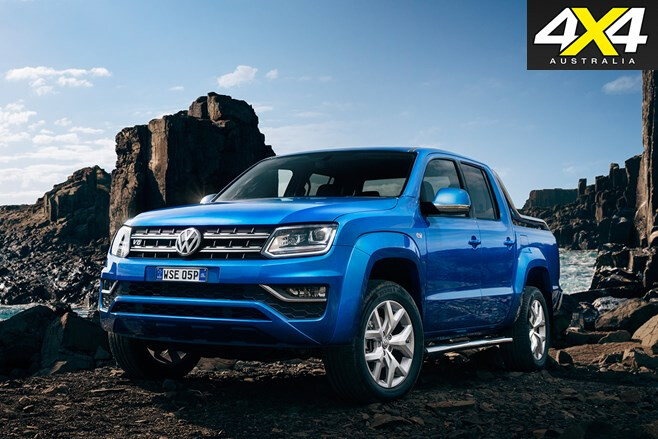
VOLKSWAGEN AMAROK V6 Complete on- and off-road analysis of the venerable Amarok.
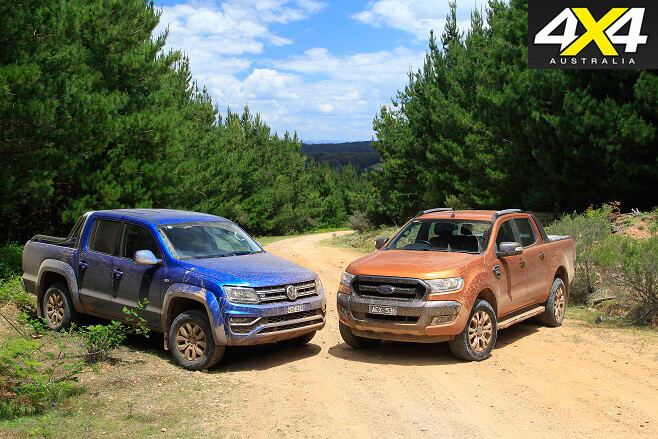
AMAROK V6 V RANGER WILDTRAK The big 4×4 guns battle it out for bragging rights.
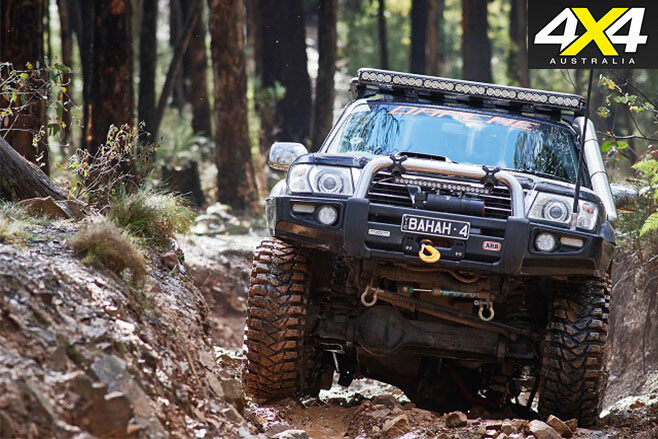
CUSTOM NISSAN GU PATROL 37-inch tyres and a 1200Nm Duramax V8 makes this Patrol the ultimate family rig.
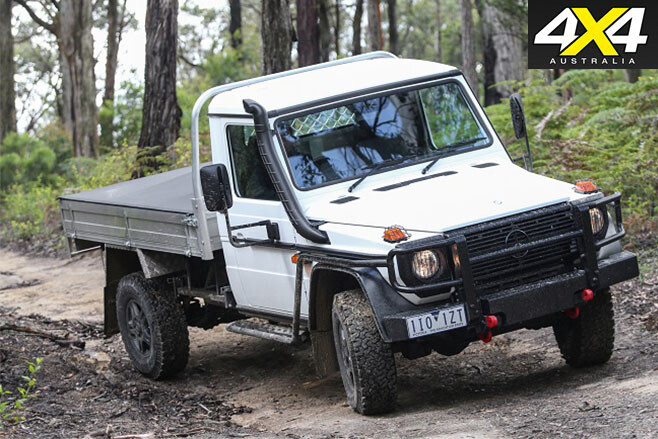
MERCEDES-BENZ G-300 CAB-CHASSIS The wait is over as Australia finally gets Merc’s bush-bashing G-Pro.
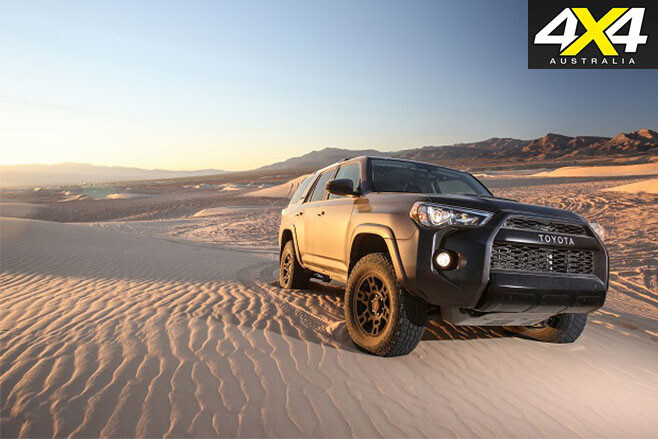
TOYOTA 4RUNNER TRD PRO EDITION We head Stateside to take a spin in a Toyota 4Runner TRD Pro edition.
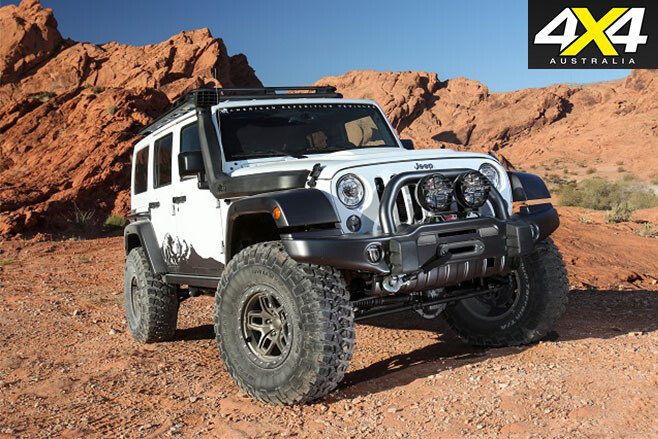
CUSTOM AEV JEEP JK350 20th anniversary edition JK350 highlights AEV’s excellence.
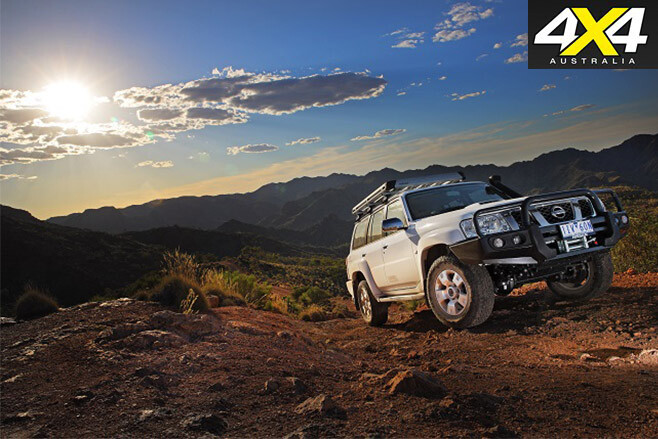
NISSAN PATROL LEGEND EDITION Nissan says adios to its GU Patrol with this Legend Edition.
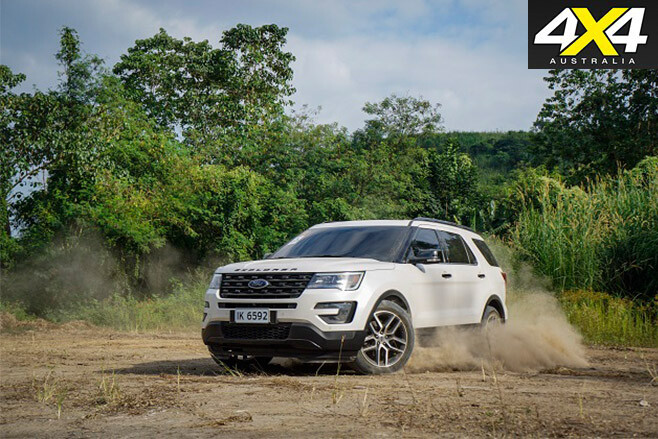
FORD EXPLORER Exploring the Filipino countryside in Ford’s seven-seat Explorer.
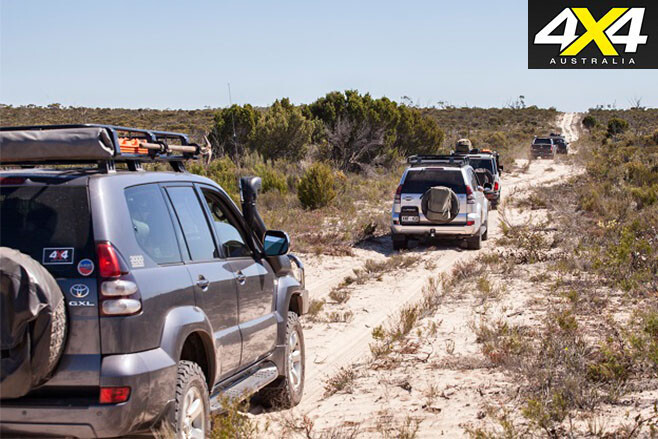
NGARKAT CONSERVATION PARK, SA Tracing the Border Track between Victoria and South Australia.
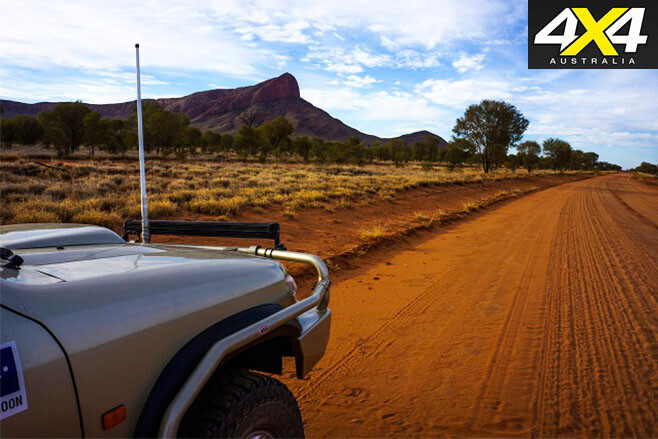
CLELAND HILLS, NT We get permission to tread the rarely ventured Cleland Hills.
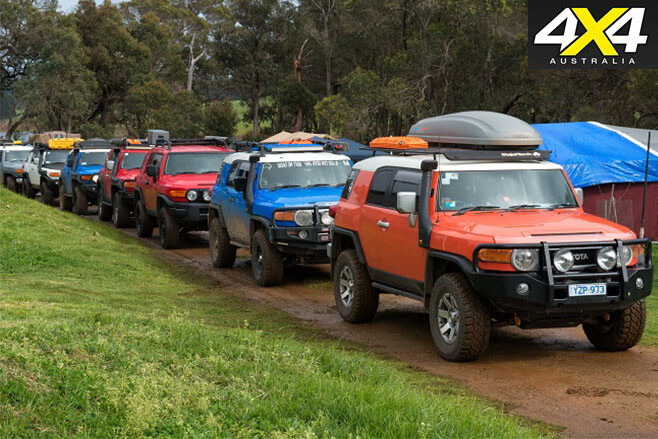
NATIONAL FJ CRUISER SUMMIT The FJ Cruiser Club of Australia descends on the Yeagarup Dunes for its bi-annual summit.
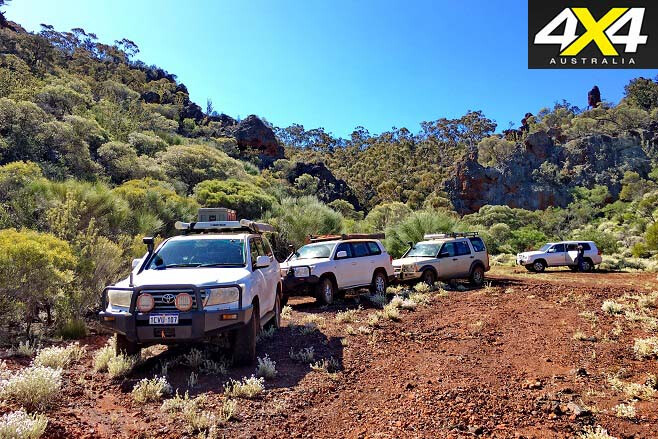
HELENA AURORA RANGES, WA The Helena Aurora Ranges are being ravaged by mining conglomerates, so get there before it’s too late!
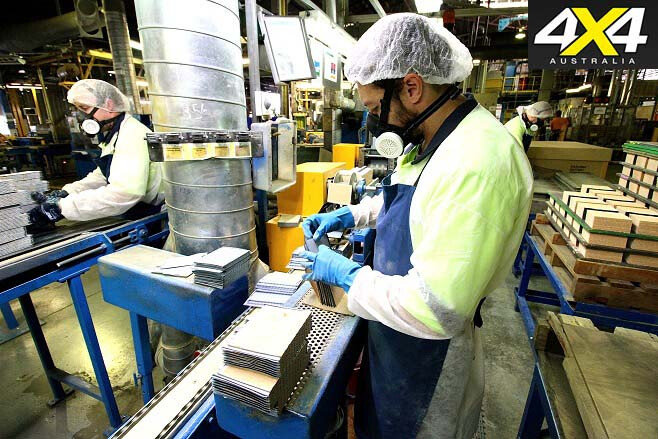
INDUSTRY INSIDER: CENTURY YUASA BATTERIES We pay a visit to Australia’s only manufacturer of automotive batteries.
ESSENTIAL HOLIDAY EQUIPMENT 10 must-pack items for your summer holiday.
THE REST Dan Everett installs Redarc’s Tow Pro Elite, we test an Engine Data Scan tool, a DPChip and ARB’s camp chairs, and we explain the importance of campsite vehicle orientation. We also take our Hilux SR5 on a 3600km trip to South Australia and up through outback NSW.
Ron Moon encounters some night-time campsite visitors, Dean Mellor reckons the best thing about outback travel is the folk you meet along the way, John Rooth cuts through Africa in a Kia Sorrento, and Fraser takes an in-depth look at the Chevrolet Colorado’s ZR2 suspension tech.
The February issue is available in stores now!
Who said four-wheel driving had to be remote?
Located only an hour and half from Brisbane, Swan Gully Park features more than 900 acres of camping and 4WD tracks. Sitting where City View 4WD Park used to be, this off-road playground is perfect for a day trip or even a full weekend jaunt.
Those who remember City View will find the entrance easily as it is located in almost the same spot. Setting up couldn’t be easier – sign in at the office, find your campsite, set up, air down, lock in the hubs and lose yourself amongst the bush.
Swan Gully really ticks all the boxes when it comes to casual off-roading, covering all skill levels from novice to competition-style rock crawling.
Driver training is provided, so those just starting out on the rock face or wanting to improve their skill set will find this a welcoming and relaxing destination. The tracks are rated, which encourages visitors to use their common sense when determining which ones to attempt – so to avoid unnecessary damage to your pride and joy, harder tracks should be left to the experienced (no one wants to be heading home on the back of a tow truck).
The tracks can be very steep, rocky, rutted and loose, so having a spotter calling you through is a distinct safety advantage – just make sure your vehicle is well-maintained and in good order before attempting the trip. Having a couple of UHF radios isn’t a bad idea, either.
You’ll certainly find your reward at the top of the ridges, though, with endless and breathtaking views. It’s all too easy to pull up after a hard day’s 4WDing and get lost in the spectacular scenery of the surrounding terrain.
When it’s time to relax for the night, the campsites offer well-cleared and maintained areas. They’re scattered throughout the park, so it’s up to you which one you choose. There are also special sites for motorhomes, although they do get busy so it pays to check availabilities before you arrive. Pets are allowed as long as they’re kept under control.
For those of you who aren’t of the ‘roughing it’ breed, Swan Gully is developing ‘glamping tents’. These softer options have proper beds and timber floors, which some will no doubt appreciate on aching backs after a hard day on the tracks.
In order for everyone to get the full experience, Swan Gully Park will soon feature SXS Buggies. These nimble side-by-side vehicles will be part of a guided tour throughout the park. The owners are very inviting, accommodating, and strive to make every guest feel right at home.
Swan Gully is definitely not your normal 4WD park – it caters for all skill levels and interests and will have you and the family looking forward to the next weekend!
Travel Planner
WHERE: Swan Gully is situated near Bromelton, not far from Beaudesert, QLD, giving easy access from Brisbane and its surrounds. With more than 900 acres of camping and 4WD tracks, you’re bound to have a blast!
CAMPING: Campsites are scattered throughout the park. Toilet facilities only.
TRIP STANDARD: There is 2WD and 4WD access with special level areas for motorhomes. The tracks range from easy to extreme where lockers and winches are required.
CONTACTS AND INFORMATION: 388 Swan Gully Road, Bromelton. Phone: 0475 630 843 Web: swangullypark.com.au