
PIRANHA Off Road Products prides itself on producing quality aftermarket battery products, and its all-new DBE180-SX Dual Battery Management system is no exception.
This is advertiser content
The 180Amp DBE180-SX Electronic Isolator features full spike and surge protection, and it’s the perfect companion for off-roaders who tour with multiple batteries and/or with caravans and camper trailers.
The electronics are rated for tough conditions and the high performance relays are sealed against dust and moisture, making it a 4×4-friendly unit. Plus, the wiring includes two three-metre, heavy duty heat- and oil-resistant cables with built-in strain relief.
A new feature of the ignition-sensing isolator is the Vehicle Protection Function (VPF), which protects it against electric overloads and faults. While all-new diagnostic indicators (LED) indicate charging, non-charging and fault modes. And, for added peace-of-mind, a new 100W solar panel can charge the auxiliary battery.
The Australian-made and designed product comes with a five-year extended warranty when fitted by a Piranha authorised dealer.
Throughout the month of May, 2017, Piranha is offering the unit for a pre-stocktake special price of $299 plus freight. After that, the RRP will be $425 (plus delivery). So get in quick to save 126 bucks!
CONTACT Website: www.piranhaoffroad.com.au; www.facebook.com/piranhaoffroadproducts Phone: (03) 9762 1200
CHECK out this tray-load of 4×4 and camping kit that’ll suit any off-road adventurer’s arsenal.
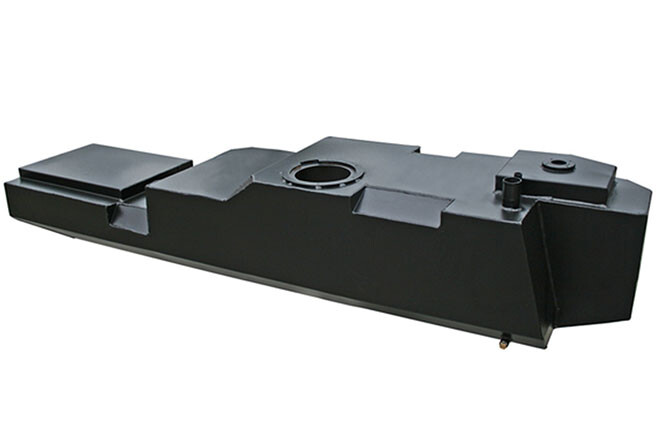
IRONMAN 4X4 LONG RANGE DIESEL TANK Ironman 4×4 has completed the design of its Nissan NP300 Navara long-range diesel fuel tank. The 140-litre tank, designed to give maximum fuel capacity without affecting ground clearance and departure angles, is manufactured from 2mm aluminised steel. It is also MIG welded and powdercoated. RRP: $885
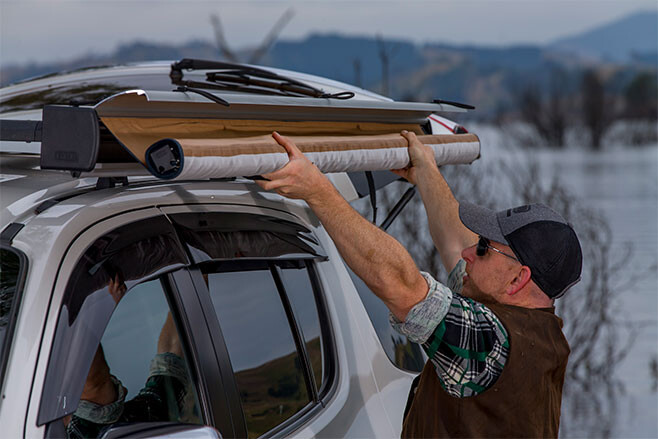
ARB AWNING Shelter from Mother Nature’s wrath awaits beneath ARB’s new 2.5m x 2.5m awning, which is encased in anodised aluminium housing. ARB’s proven 300gsm, PU-coated, waterproof and UV-protected canvas is used in tandem with an abrasion-resistant material that protects the awning when rolling it out. Other features include UV-treated, marine-grade, quick-release cords; anodised aluminium poles with nylon cuff joins; and metal cam locks.
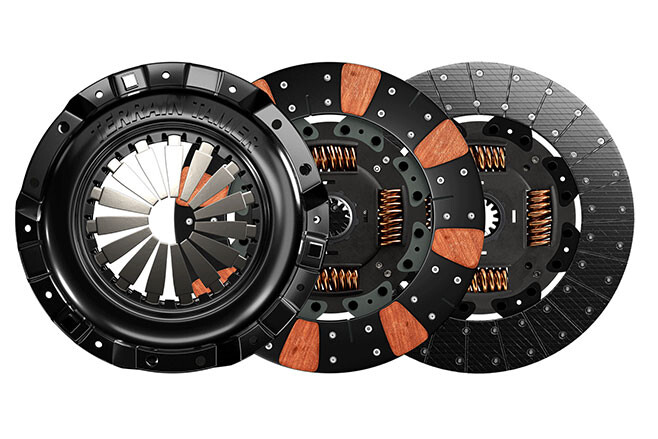
TERRAIN TAMER FORTIFIED CLUTCH Given your rig a GVM upgrade, power upgrade or carrying more weight? Perhaps you drive an armoured truck? Either way, your clutch is now probably your car’s weakest point. Never fear, the boffins at Terrain Tamer have released a Fortified Clutch that’s perfect for such vehicles and can theoretically provide up to an 80 per cent increase in torque. The clutch disc design utilises a unique combination of Velvetouch ceramic material on the engine facing and organic material on the transmission facing, while the cover assembly features a spheroidal graphite anti-burst pressure-plate casting. It’s available for a range of Toyota, Nissan and Mitsubishi models. RRP: From $1000
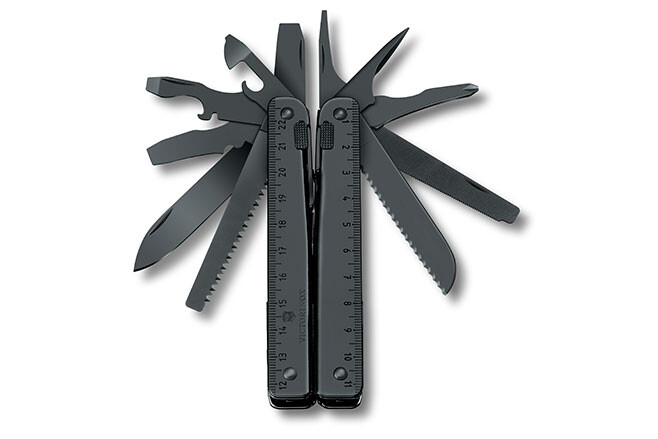
VICTORINOX SWISSTOOLS MULTI-TOOL A jack-of-all-trades tool can be a remote-area tourer’s best friend when your adventure takes a turn for the worse. Victorinox’s recently launched SwissTools multi-tool is manufactured to tackle all obstacles thrown your way. Two variations are available – the SwissTool BS (29 functions) and the SwissTool Spirit XBS (27 functions) – and they’re made using a black-burnished steel. Functions include a wirecutter, screwdriver, can opener, saw, ruler, corkscrew and lock release. The units weigh less than 300g and come in a nylon belt pouch. RRP: $349 (Spirit XBS); $359 (BS)
TJM OUTBACK BAR The 2017 4X4OTY-winning Toyota Land Cruiser 79 Series can now be enhanced via a TJM Outback Bar. To complement the Cruiser’s tough aesthetics, the bar has been designed to seamlessly blend with the updated design. Features include 63mm tubing, steel construction, full cato straps, 8000kg rated recovery points, integrated LEDs, flush steel-mounted LED combo lights, reinforced recovery jack points, and an integrated winch mount.
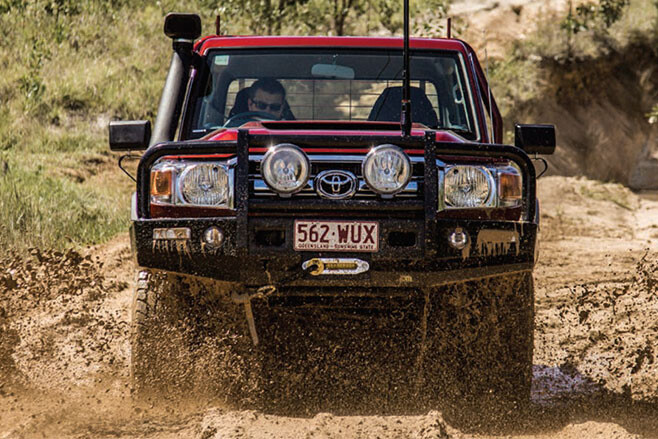
RIGHT across Australia, the increased pace of development is seeing bitumen and tar spreading farther onto roads that not so long ago were off-road tracks.
While I understand the rationale behind it and the joy that locals have when their main access road is upgraded to bitumen, for many four-wheel drivers it seems to be another nail in the coffin of the activity we enjoy.
Bitumen brings more tourists, which is a great thing for local shops and caravan parks, but it means many four-wheelers who don’t like mixing with the tourist masses have to go even farther afield.
It is incredible the difference bitumen makes. The last time we cruised up the WA coast every camp within cooee of the bitumen – good, bad or indifferent – was crowded with vans, motors homes, camper trailers and tents. To get away you’d just head down a dirt road for 20-50km and you’d lose 90 per cent of them.
The same happens on Cape York. Go to Karumba where the bitumen stops on the western side of Cape York anytime between May and late September and the local caravan parks are overflowing. To get away from the mass of humanity all you have to do is head up the dirt.
So what’s happening to bring on this latest lot of despair regarding ongoing development? Here’s just a snapshot of three iconic routes that have long been favoured by dirt-road travellers.
The Outback Way, Australia’s much touted ‘longest shortcut’ which links Cairns and Townsville on Far North Queensland’s coast to Perth in WA has just received funding for another section of the route to be bituminised. Of the 2800km route only 1600km remains unsealed, and the Laverton Shire in WA is pushing ahead with sealing another 50km or so this year.
Tourism isn’t the only driver of this increased pace of development. In this particular WA case the Gruyere Gold Project, east of Laverton, is the largest gold discovery in recent times and the largest untapped gold resource currently in Australia. With a road being built to the site and accommodation units being set in place, Gruyere is set to become a major mine within the next couple of years.
A little farther north the Gibb River Road is continually being upgraded, with more short sections of the route going under tar. Still, with the amount of rain they have had up there this Wet season, the dirt sections of the Gibb (which is by far the majority) will be pretty knocked around and will take a bit of fixing. Expect the route, especially the route north to Kalumburu and the Mitchell Plateau, to be chopped up for some time into the Dry season – they may even be closed for longer than normal, so it’ll pay to check.
Cape York in North Queensland will see the greatest change for outback tourers on the east coast. The plan there is for the main road from Mareeba and Lakeland to be bitumen all the way to Weipa by 2019. The road is already blacktop all the way to Laura and beyond, with more than 120km of bitumen being added in the last few years. In 2017, Cape York travellers can expect to see a lot of road work going on along the Peninsula Developmental Road between Laura and the Bypass Road Junction north of the Archer River, with much more of it going under tar before year’s end. To give you an idea, check out the map we’ve included.
It seems four-wheelers will need to look farther afield for adventures, and luckily we still have plenty of choices in this great country – you’ll just have to go a little farther to find them.
HIGHLY regarded 4×4 aftermarket retailer 4WD1 has been very busy lately, expanding its suspension and 4×4 accessory product range (it’s now working with 10 major 4×4 aftermarket brands) and releasing an all-new and more interactive website.
AN ICON’S COMEBACK ONE of 4WD1’s well-known brands is Rancho, with the company having a long association with this iconic Yank suspension brand, having imported it into the Australian market since 1990 where it enjoyed success for a number of years. Until, that is, the brand moved to a ‘geocentric’ model, where it concentrated on developing suspension systems for the North American off-road-vehicle market.
According to 4WD1’s Kirk Barker, this led to a drop in market share in Oz, as Rancho didn’t adapt to – or focus on – the changing off-road vehicle in Australia, particularly in regard to the ‘new’ suspension systems (IFS, coil-over-strut) appearing under 4x4s sold in Oz from the mid-2000s.
“At that time, Rancho didn’t really get on board, so there’s been a period where… they’ve not followed up on that sort of change in the Australian market,” Kirk said.
That has now changed, with Rancho re-focusing on the global market, with Australia and the Asia-Pacific region getting plenty of attention from the brand – which has also seen 4WD1 launch a Rancho-dedicated website (www.rancho.com.au).
“Over the last few years they [Rancho] have been working to change that… particularly with a full focus on the dual-cab market now, and 200 Series wagon and things like that,” Kirk told us. “Now they have the combination of both the quality of product that’s always been there, but the applications are there now… so Rancho is once again a very good thing.”
One of those ‘good things’ is the new, self-adjusting Rancho RS5000X shock, which will be available alongside the well-proved RS5000 model.
Kirk reckons the new damper is brilliant: “When people talk about shocks being self-adjustable, I mean most shock absorbers have a certain amount of self-adjustment to them, but often the reality of that is pretty academic, as in, whether you notice it or not.
“This product has a patented valve system, which allows the shock the ability to act softer or firmer according to the type of impact it receives and the speed of the impact that it receives. So its ability to actually adapt to the terrain is fair-dinkum.”
To explain how, Kirk said: “To help responsiveness, the shock is very high-pressure gas. A lot of shocks on the market are low-pressure – these are very high pressure gas. To achieve that and have a product that has a good lifespan, it has to be very precision-made and [have] very good top seals in the shock absorber, and this product has that. Having a high-pressure gas shock means the shock itself can be more sensitive and have a quicker reaction time – that’s part of what makes the RS5000X special.”
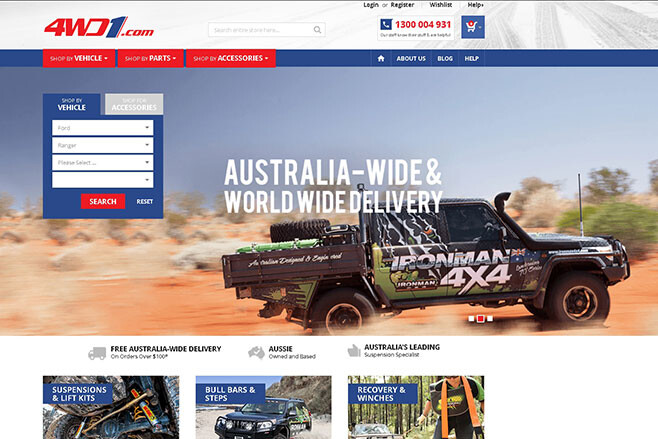
AN EASY ONLINE EXPERIENCE THE new website (www.4WD1.com) offers buyers an excellent (and straightforward) buying experience, with the new site optimised for tablets and smartphones. The site includes a number of how-to videos and the option of Live Chat, so you can directly ask the company’s experts any particular product questions you may have.
The team’s aim was to ensure the online buying experience was as straightforward, simple and appealing as possible, while also providing a unique and personable touch that didn’t come across as too pushy or brand-centric. In other words, it was designed to replicate the in-store experience.
The site took 12 months to develop – as having so many brands on offer meant ensuring each one was given equal presence on the site, all while trying to ensure the buyer’s experience was one that would see them return again for purchases at a later date. The 4WD1 team was adamant this experience had to be the same, whether buyers were accessing the site via their computer, tablet or smartphone.
“We were – at least in the four-wheel drive industry – first-movers to the online world back in 1996… that gave us a fair bit of ‘first-mover’ advantage, which we’ve held for a long time,” Kirk said.
“Today, while most businesses do have a website – and there are plenty of online stores – I believe we still hold the advantage. While a lot of people have online stores, actually being able get the information you need and make an intelligent purchase decision – without extra help – is rare.”
Kirk believes the 4WD1 site streamlines or personalises it to your vehicle and eliminates the need to chase further info. “You can go and buy a suspension kit with a lot of complex variables that you normally have to think about, and we’ve planned it in ways so that you can go through and do that. Being able to take a complex purchasing decision and do it online through a checkbox-tick system [means], at the end of the day, you’ve got the right suspension kit for your vehicle.”
Along with the ease of use, the new website’s how-to videos section is constantly being expanded, while the Live Chat has been very popular with users. This writer gave both the purchase side of the site and the Live Chat a test-run and came away impressed with both – even after Kirk’s good-natured ribbing of my recent Land Rover Discovery 2 purchase!
With feet firmly in both the in-store camp and the online retail world, plus with the impressive number of highly-regarded 4×4 brands on offer, it’s easy to appreciate the 4WD1 team’s confidence in the ever-growing, ever-changing 4×4 aftermarket scene.
PLENTY of useful aftermarket and outdoor gear has hit shelves recently. Here’s a sample of what’s on offer!
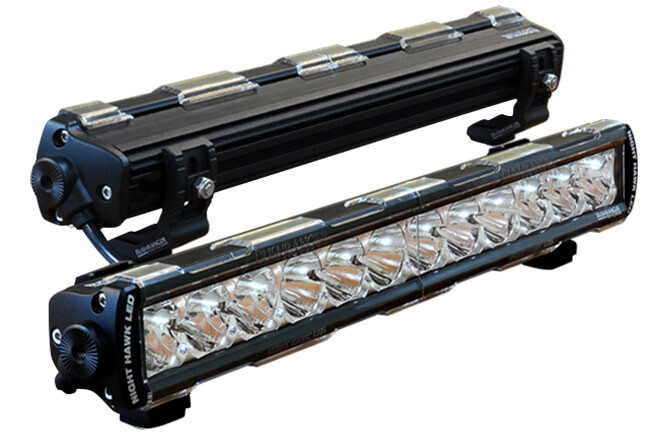
BUSHRANGER NIGHT HAWK LED LIGHT BAR Bushranger 4×4 has added two new Night Hawk LED Light Bar lengths to its range – 20.5in and 43.5in. This now means the choice of LED Light Bars ranges from 5.5in to 51.0in. The new single-row LEDs are available in both Combo and Flood Beam patterns. The highly efficient Osram 3W LEDs provide high intensity light output and have a life span of up to 50,000 hours. The lights come with a three year warranty. For a full list of features, head online. RRP: $245 (20.5in); $475 (43.5in)
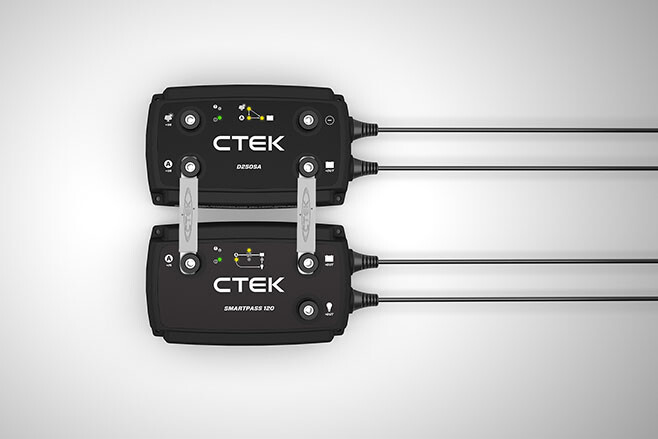
CTEK CHARGERS Control, manage and charge power more reliably with CTEK chargers from Bainbridge Technologies. The CTEK D250SA and CTEK SMARTPASS 120 are designed to work independently but when combined deliver a massive 140Ah to service batteries while you’re on the move. Full details available online. RRP: $499.43(CTEK D250SA); $531.25 (SMARTPASS 120)
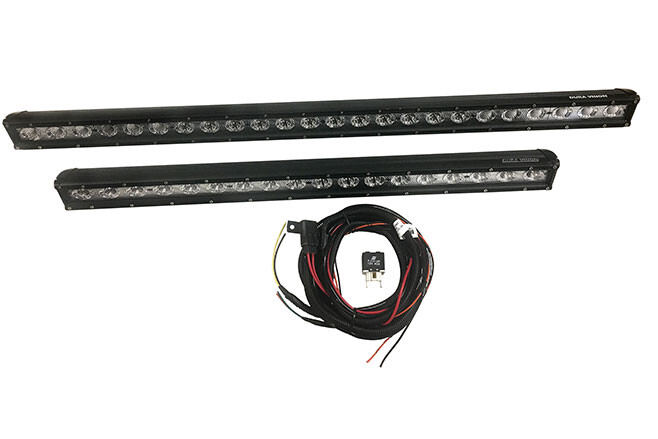
PIRANHA OFF ROAD PRODUCTS LIDL3 LED LOOM To maximise the effectiveness of high-output LED lighting an equally effective wiring loom is necessary, so Piranha Off Road Products developed an LED-specific wiring loom that still gives owners the ability to mount the lights practically anywhere on their rig. 100 per cent Australian made, the LIDL3 LED loom includes a 40amp relay. Lights “will only be as good as the wiring that carries the power to that globe,” Alan Johnson, MD of Piranha, said. RRP: $65
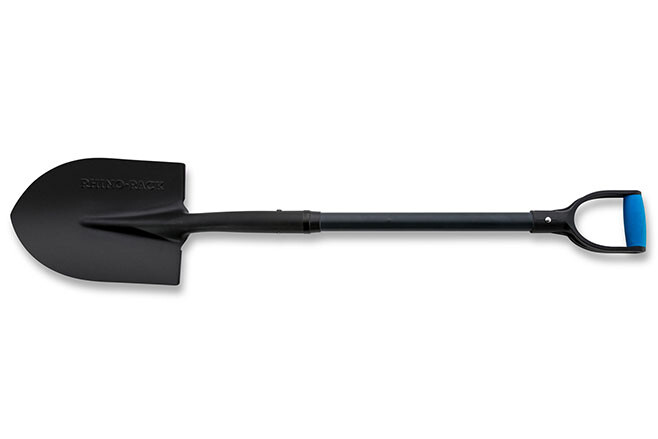
RHINO-RACK SPADE A shovel can be an extremely valuable tool on a remote adventure, so any serious tourer should have one stored away. The trick is to not have one that takes up too much space. Enter the versatile and compact Rhino-Rack Spade. The shovel, measuring in at 1065mm long, features a slip-resistant rubber grip, dual-core construction and a heavy duty, heat-treated, hi-carbon steel blade. Plus it’s zinc-plated and powdercoated to increase strength and protect it from rust. RRP: $49
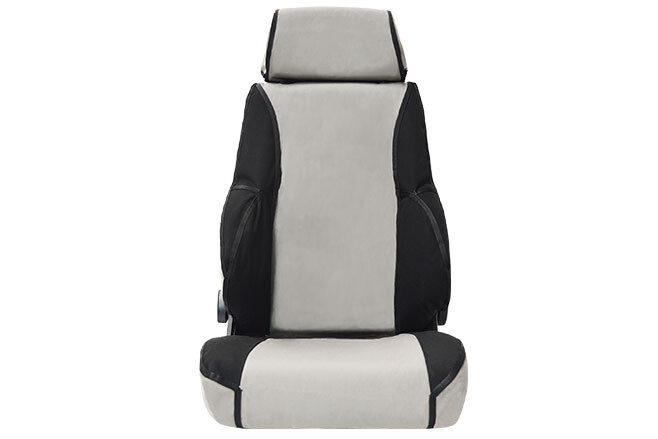
MSA 4X4 SEAT COVERS It’s all well and good having all of the best kit fitted to your 4×4, but it won’t be much fun if you ain’t sitting pretty on a comfortable and safe pew. MSA 4×4 seat covers are ADR compliant, meaning the factory airbags deploy as intended. The canvas seat cover looks good, feels good and works in harmony with a vehicle’s safety features. The durable seat covers come with a lifetime warranty and are available from all good 4×4 outlets. RRP: $367
AS IS THE case every year, we’ve received a lot of feedback regarding our 4×4 Of The Year decision. While many readers wholeheartedly agree with our call to award the Toyota Land Cruiser 79 Double Cab the 4X4OTY award, many others have questioned how a vehicle that originally hit the market more than 30 years ago could be considered for such a prestigious gong, especially when up against the latest all-new, high-tech 4WDs.
Of course, the 70 Series Land Cruiser has been significantly updated over the years, with chassis and engine upgrades now accompanied by a host of electronic driver aids and safety features, but it’s still not as ‘high-tech’ as all-new vehicle designs. But is high-tech what you want out in the bush? Despite its shortcomings we reckon the Land Cruiser 79 is one of the best bush-touring vehicles on the market, and it’s becoming a rare old beast: one of the last old-school 4WDs still on the market.
So what’s better: traditional or high-tech? Let’s look under the skin.
MONOCOQUE VS SEPARATE CHASSIS ALL modern cars and a number of modern four-wheel drive wagons feature monocoque construction, where the chassis and the body of the vehicle are incorporated into one structure. There are several advantages to designing and building a vehicle in this way: they are relatively light compared to vehicles with a separate body-on-chassis design, so offer better performance and improved fuel economy; they have greater torsional rigidity, offering improved ride and handling on the road; and they are generally safer vehicles because crumple zones around a rigid passenger cell can be more easily incorporated into their design.
While these are important advantages, many four-wheel drives on the market still have a body-on-separate-chassis design, and for good reason.
From a vehicle manufacturer’s perspective, the primary advantage of a separate chassis design is the ability to easily platform share. In the case of one-tonne utes, manufacturers can simply bolt different body structures atop the same separate chassis to create single, extra and double cab variants of their one-tonne utes, and then throw tubs, trays or service bodies on the back to suit customer requirements. Many go one step further, having developed wagon variants using the same chassis designs, such as Ford Everest, Toyota Fortuner, Holden Trailblazer, Isuzu M-UX and Mitsubishi Triton, all of which use the same basic chassis as their ute siblings. In the case of the 70 Series Land Cruiser, Toyota has for many years used the one chassis design for Single Cab, Double Cab, Wagon and TroopCarrier variants, simply adjusting chassis length as required.
From a four-wheel driver’s perspective, there are several advantages to the traditional separate chassis design, such as chassis flex and road noise insulation. While it doesn’t do any favours to on-road dynamics, chassis flex is beneficial off-road when a vehicle is crawling over obstacles and can aid the suspension’s ability to keep all four wheels on the ground over undulating terrain.
“You can get a really strong monocoque construction in any vehicle, but the vehicles I tend to choose for off-road travel, like GU Patrols, 70 Series Cruisers and Land Rover Defenders, all have a separate chassis,” said Ron Moon, 4X4 Australia’s Editor-At-Large.
As well as off-road strength and flexibility, a separate chassis allows for more options when fitting accessories. 4X4 Australia’s Road Test Editor Fraser Stronach explained: “You’ve got room to put [fuel] tanks and water tanks, and a solid place to mount a bullbar.”
INDEPENDENT VS LIVE-AXLE SUSPENSION NOWHERE is the tech versus tradition debate more obvious than when comparing modern independent suspension systems with old-school live-axle arrangements.
By definition, an independent suspension allows each of a vehicle’s wheels to act independently of each other. In other words, if a wheel hits a bump, it has no direct effect on the opposing wheel, unlike a live-axle arrangement where opposing wheels are directly joined via the solid axle between them. The other advantage of an independent suspension is it has less unsprung weight, so the springs and dampers are more easily able to control up and down wheel movement. Both of these attributes provide on-road ride and handling advantages over a heavy, live-axle suspension set-up.
Some examples of 4WDs with fully independent suspension include the Mitsubishi Pajero, Jeep Cherokee and Grand Cherokee, and Land Rover Discovery and Range Rover.
Many manufacturers like to have an each-way bet and equip their vehicles with independent front suspension and a live axle at the rear. Examples include the current crop of one-tonne utes, and wagons such as Toyota 200 Series Land Cruiser and Prado. But is this a good solution?
“It depends on your driving mix,” said Stronach. “The standard Toyota 200 Series/Prado with the independent front and live-axle rear is probably the right thing… but a fully independent vehicle can be a good thing, as the Land Rover Discovery has proven since 2003.”
When the going gets tough off-road, however, a live-axle set-up has advantages over an independent design, including constant ground clearance under the axle and the fact that as one wheel is pushed upwards by an obstacle the opposing wheel is pushed downwards, giving the vehicle more chance to keep all of its wheels on the ground.
“Independent suspension is fantastic for any road – a bitumen highway, a dirt road or a gravel road – but once you start to get into the really rough stuff I think the live axle tends to operate better,” said Moon.
4X4 Australia’s Editor Matt Raudonikis added: “You can’t beat live axles for off-road use, and unfortunately they’re dying out. The newer [independent suspension] systems try to make up for it with clever electronics to give you some traction when wheels are being picked up off the ground, but for off-road use you can’t beat live axles front and rear.”
With the recent demise of the GU Patrol and Land Rover Defender, the only four vehicles left on the market with live axles front and rear are the 70 Series Land Cruiser, Jeep Wrangler, Mercedes-Benz G-Class and the tiny Suzuki Jimny, so vehicle options for the four-wheel drive tourer are diminishing.
“There are so many electronic aids now which [enhance off-road performance] that it’s becoming less of a dramatic difference,” pointed out Moon.
Having said that, Moon isn’t a fan of the complex electronics on modern 4WD vehicles: “I’m a bit old school. I tend to like [a separate] chassis and no electronics for the remote driving I do. What electronics there was on my GU [Patrol], which was only the security system for the doors and all that sort of stuff, I ripped out! So I’m a bit of a troglodyte mate.”
ELECTRONIC VS MECHANICAL TRACTION AIDS A MODERN vehicle with a full suite of electronic traction aids will include traction control, stability control, hill descent control, trailer sway control and more, so there are a raft of obvious benefits when it comes to everyday driving compared to an old-school vehicle with nothing bar a couple of mechanical diff locks. But when it comes to serious off-road bush driving, are electronic traction aids up to the job?
“Electronic traction aids all work on the brakes and the vacuum reservoir and they have a finite time they can operate for in really hard going,” said Moon. “I’d much rather have a mechanical diff lock which is locked when you press a button and unlocked when you repress the button.”
Stronach agreed: “It depends on your driving mix. I mean ultimately mechanical lockers [for off-road use], but for convenience electronic stuff is fantastic.”
When it comes to traction aids, you can have your cake and eat it too; many modern four-wheel drives are now available from the manufacturers with both electronic traction control and a mechanically locking rear differential.
“The ultimate is the combination of both,” said Raudonikis. “Electronic traction control gives you every day driving around gravel roads, and for this it works really well. But having the ability to switch on a locker for when the going gets tough works far better; traction control will only get you so far.
“With newer vehicles we’re getting more lockers from the factory, plus you can have aftermarket ones, and that’s the best combination,” he said. “You’ve only got to go back 10 years or so when the one-tonne utes didn’t have electronic traction control in them, and they were totally useless.”
LOW-PROFILE VS HIGH-PROFILE TYRES ONE of the easiest ways for manufacturers to improve a vehicle’s on-road handling is by eliminating the vagaries of tyre sidewall flex by fitting large-diameter wheels with low-profile rubber. Another advantage of this is they can fit bigger brakes within the confines of large diameter rims, essential for big, heavy vehicles with engines that produce once-unimaginable power and torque peaks.
But low-profile tyres are not good off-road; they are prone to sidewall damage, and the lack of space between the wheel and the ground can result in damage to the wheel. Additionally, there’s not a hell of a lot of choice when it comes to low-profile off-road rubber.
While an old-school high-profile tyre will exhibit more sidewall flex when cornering on the road, the off-road benefits are many: less chance of damaging a wheel; less chance of sidewall damage; better “bagging” of the tyre when air pressure is reduced to aid off-road traction in slippery conditions such as sand and mud; and better tyre choice for off-road conditions.
“All the new tyre spec on most vehicles is bloody hopeless,” said Stronach. “In the bush you want as much sidewall as you can get, light truck construction and a low speed rating; you don’t need a high-speed rating because high-speed tyres are built more fragile [lighter construction for better heat dissipation], even though that seems like a contradiction in terms. Up to 17s and 18s are fine now, but anything north of an 18-inch wheel and your tyre choice and bush practicality goes out the door.”
With ever-increasing on-road performance and demands for better on-road handling, the vehicle manufacturers are not going to revert to 15- and 16-inch wheels on their modern high-tech 4WDs, but it’s still possible to run decent rubber with a larger diameter wheel. “As Nissan has proven, you don’t have to go low profile to have big wheels,” said Raudonikis. “They’ve got 18-inch wheels on the [Y62] Patrol and it’s got a big, heavy sidewall on it; up to an 18-inch wheel is probably as tall as you want to go, but 16s are still better for off-road use.”
ELECTRONIC INJECTIONS VS MECHANICAL INJECTION WHEN it comes to engine technology, the only way you can keep it simple is to buy secondhand; all new vehicles have high-tech electronically controlled engines in order to meet emissions legislation.
“Unfortunately there’s no real question here; because of emissions regulations you’ve got to have the high-tech engine,” said Stronach. “For ‘fixability’, if you’ve got an old-school mechanical diesel then you’re right, but there’s not many of them around; you can’t buy them, they’re all worn out or they’re getting worn out.”
While modern high-tech electronically controlled engines are generally far more reliable than their mechanically injected counterparts, that’s of no consolation if something goes wrong in the bush.
“In 45 years of touring the country, the only time I’ve ever had to be recovered was when an electronic box failed,” said Moon. “There was just no way we could get that to work and I had to get recovered.
“Prior to that, somebody in the group has always been able to fix [any mechanical problem],” continued Moon. “Now you mightn’t be able to get it working perfectly but you can get the thing to run… especially with a diesel that’s got a fairly basic pump system and basic injectors. I carry a spare set of injectors if anything like that happens or if I get a gutful of crook fuel, but with electronics the fuel has got to be really good these days, and that’s the thing, just the quality of fuel has got to be better for these high-tech engines, and any sniff of water or anything like that, that really stuffs them.”
Raudonikis agreed that traditional mechanical injection is the best solution for remote-area outback travel. “It is, yeah, you can get it fixed almost anywhere,” he said. “It’s easier to diagnose, and if you can’t do it yourself most bush mechanics can, they can diagnose it and fix it, or at least jury rig it to keep you on the road. You give them the electronic stuff and they don’t even have the equipment to diagnose it. Electronics can be more reliable, they keep going longer and require less servicing, but when they do go wrong you’re screwed.”
A HIGH-TECH FUTURE? SO WHAT does the future hold for the traditional old-school four-wheel driver? Well, if you’re a fan of a separate chassis, live axles front and rear, 7.50R16 rubber and a mechanically injected diesel engine, it doesn’t look too bright. In fact, the future for diesel engines is starting to look quite dim altogether, with ever-stricter emissions regulations being touted around the world.
“We’re bound to see more turbo-petrol engines coming in,” predicted Stronach. “Probably petrol engines in general, and probably even some bigger capacity ones. It’s just the way the emissions regulators have really changed sides on this whole debate, having gone from having diesels solving the problems of greenhouse gas to the petrol engine… generally small capacity, either turbocharged or supercharged… being better on NOx and particulates, the two problems that beset diesels.”
How will this affect the bush tourer? “Who knows?” questioned Stronach. “There’s a lot up in the air with forward emission regulations. I guess if you’re going to go touring in your petrol [four-wheel drive] you’ll just need a bigger fuel tank. Some of the modern vehicles aren’t too bad; the Haval H9 tested on 4×4 Of The Year wasn’t too thirsty.”
The seven-seat Haval H9 wagon has a high-tech 2.0-litre direct-injection four-cylinder turbocharged petrol engine that makes a respectable 160kW and 324Nm. It averaged 14.9L/100km on our 4X4OTY test, which included a mix of on- and off-road driving (the LC79 Double Cab used 13.8L/100km under the same conditions). And Haval has stated that it sees only petrol engines in its future model range.
“Haval has come out and said it’s not going to build diesel engines,” said Raudonikis. “There are more European countries where it’s very hard to keep diesel engines on the road; the manufacturers have already come out saying it’s going to get too expensive to keep updating diesel engines to meet emissions. So the modern petrol engines, with their direct injection and low-blow turbochargers, are making up that gap in terms of the torque down low. They’re much more drivable than the small, peakier petrol engines of old, but they still don’t have that long-distance drivability of a diesel engine when you’re out in the desert somewhere. Fuel vaporisation is also a problem.”
Is the end nigh for the diesel engine? “I was just reading a piece about London trying to ban diesels coming into the city, full stop,” said Moon. “I wouldn’t like to see it; diesel is the preferred fuel for outback travel, especially remote outback travel. Petrol engines might become more efficient as time goes on, but generally with low-speed work you tend to get better [economy] with a diesel… and diesel is also a lot safer fuel to handle when you’ve got it in drums.”
Hybrid vehicles and full electric vehicles have already made an appearance on Australian roads, but this technology is unlikely to become commonplace in four-wheel drives – at least in the foreseeable future.
“We’re yet to see any of that stuff yet, purely because they’re not reliable and capable enough off-road,” said Raudonikis. “Land Rover has got a bit of hybrid stuff happening, but no one has done any serious off-road touring with one. Yeah, it’s a real worry, it’s a big worry. It’s something you don’t want to go near.”
Stronach is also adamant that hybrid technology is not suited to four-wheel drives at this point in time and can’t see a future in the technology for bush tourers. “I think hybrids are a bit of a dud technology,” he said. “They work around town, but in terms of touring they’re a non-event. I don’t think they’ll have any impact on 4×4 designs. I mean, they’ll sell a few hybrids for people who want to drive them around town, as Range Rover does, but I can’t see it having any real effect.
“And I don’t think we’ll have to worry about autonomous cars if you’re going to ask about that, too,” laughed Stronach.
HIGH-TECH SAFETY STRINGENT vehicle safety standards have had a massive impact on the demise of many traditional 4WDs and have influenced how modern vehicles are designed, developed, manufactured and marketed. These days, if a vehicle doesn’t achieve a five-star ANCAP (Australian New Car Assessment Program) safety rating, it quickly cops a thorough bashing by the general press and motoring media.
While most modern high-tech 4WDs achieve a five-star ANCAP rating, it’s almost unheard of for a traditional 4WD with a separate chassis and live axles to meet this standard… until Toyota threw big money at its ageing 70 Series workhorse to keep its commercial customers happy.
While only the Single Cab variant, popular with mining companies et al, scores the five-star ANCAP rating, the rest of the 70 Series range (Wagon, Troopie and Double Cab) have benefitted from a raft of upgrades (ABS, vehicle stability control, active traction control, hill-start assist control, brake assist and electronic brake-force distribution) to improve safety. This is good for bush tourers as the Land Cruiser is one of the last options available for those who want a traditional 4WD with dependable off-road capability.
“I think the Cruiser is a good blend of old and new,” said Raudonikis. “Toyota has done the absolute bare minimum to keep it on the road, but it’s still what we need. It does all the old-school things. It’s got live axles, it’s capable off-road, it’s got lockers, it’s got traction control, it’s got some safety features, but nothing you don’t really need.”
Moon agreed that four-wheel drivers need access to traditional vehicles without too much tech. “I think Toyota has done a pretty good job trying to keep the 70 Series current and viable in this modern age. Hopefully a couple of other manufacturers, like Land Rover, will do the same with the Defender replacement in the not too distance future.
“These vehicles are what we want to use when we go bush, and mining companies and station owners, they want tough, go-anywhere vehicles, and the less electronics the better… because once upon a time, a station owner could fix their Land Cruiser in their garage, but now it’s a matter of, ‘oh well, I’d better stick it on the truck and send it into town’.”
CHOW Mein is a Chinese-style dish of fried noodles with shredded meat (or seafood) and vegetables. My version is a little different as there’s not a fried noodle in sight. I’ve been making this for well over 40 years and, truth be known, I probably got it from my mum. It’s packed full of mince and vegetables, and it’s a delicious, easy meal that everyone will enjoy.
INGREDIENTS Serves: 4-6 2 tbsp oil 1-2 onions – chopped 2 cloves garlic – crushed (or 2 tsp paste/minced variety) 2 stalks celery – chopped 1 large carrot – diced Handful of fresh green beans – cut into small pieces 1-2 tbsp curry powder (to taste) 750g minced chicken, pork or beef 1 can corn kernels – drained 1 can pineapple pieces – optional 3-4 tbsp rice 1 packet chicken noodle soup 1 tbsp sweet chilli sauce 1-2 tsp soy sauce (to taste) 1 cup chicken stock Salt and pepper (to taste) ½ small cabbage – sliced Water or stock (if needed) Finely sliced spring onions – optional
DIRECTIONS Preparation: 15 mins (approx.) Cooking: 20 mins (approx.)
- Heat the oil in a camp oven or a large, heavy-based pan.
- Add onion, garlic, celery, carrot and beans and sauté over a medium heat for a few minutes. Add the curry powder and sauté for a further two minutes until you can smell the aroma of the curry. Remove from the pan and set aside.
- Heat a little more oil if need be, then add the mince and brown, making sure you break it up so there are no lumps.
- You can add a little more curry powder to the mince at this stage, and stir for a few minutes.
- Return the sautéed vegetables to the pan, along with the corn, pineapple (pieces and juice), rice, noodle soup, sweet chilli sauce, soy sauce and chicken stock. Mix well.
- Taste and then season to your liking.
- Bring to the boil and then add the cabbage to the top of the mixture. Cover and reduce the heat to a gentle simmer.
- Cook for about 20 minutes, stirring occasionally.
- Monitor the liquid and add some more chicken stock or water if needed.
- As the Chow Mein cooks, the rice will swell and take up the liquid. You need enough liquid in the pot to cook the rice, but not too much or you’ll have a soup.
- Add whatever vegetables you prefer.
- If you like it hotter, add some finely chopped fresh red chilli or a teaspoon or more of crushed chilli paste. You can also add more curry powder.
- Serve it sprinkled with fried noodles.
THE storm was a tempest. The violent wind whacked and swirled the trees and leaves, and small branches flung from them like chaff from a giant thrashing machine. Thunder rumbled and reverberated, while lightening slashed across the blackened sky in long, single filaments that linked heaven and earth with brilliant ephemeral tethers.
Then the rain hit, thumping us with giant buckets of water in one continuous torrent and assaulting all our senses with noise, mayhem and restricted vision. For the next 10 minutes Mother Nature pounded us as we drove, albeit slowly, down a bitumen road absolutely covered in leaves, twigs and branches torn from the trees and dumped unceremoniously.
We hadn’t even arrived at the start of our little, self-proclaimed river odyssey. We had just turned off the Hume Highway and were heading into the Snowy Mountains when the first flashes of lightening heralded the approaching storm. By the time we got to Tumut just a drizzle of rain remained to remind us of the storm, but over the next week we were to find ourselves continually reminded of the tempest that had swept in from the west and battered the forest and trees along the great river we had come to check out.
We camped overnight on the edge of Blowering Dam, just one of the impoundments that control the short but mighty Tumut River, itself a major tributary of the Murrumbidgee River, which was the watercourse we intended to follow from its source to its junction with the Murray River.
Again we were battered by a thunder and lightening storm that evening, but the wind, though not as violent as before, was enough for us to keep a wary eye on the big trees around the camping area. It was a precaution which developed into somewhat of a phobia over the next seven or so days.
By mid-morning the next day we were on the Peppercorn Fire Trail which branches off the Long Plain Road in the heart of the Kosciuszko National Park, just north of the track to the historic Coolamine Homestead and delightful Blue Waterholes. A nearby camping area is a popular and enjoyable spot to spend a day or two, but on this trip we had other plans.
Knowing the Peppercorn Trail was closed to motorised vehicles I had brought my mountain bike along to follow this trail west to the source of the Murrumbidgee, just south of Peppercorn Hill.
My first foray along the track took me to a camping spot tucked in close to a copse of snow gums overlooking the boggy flats where the river gathers more water to make it more than just a trickle. The track finished here, which, as I had also discovered, can be accessed by vehicle – I called it Headwater Camp and it’s a nice, secluded spot to throw down a swag or set up the camper. From here I walked across the bog to the main channel of the nascent river and followed it up and downstream before heading back to the bike and backtracking to find where the Peppercorn Trail had diverted from the trail I had ended up on.
The fainter, less-used Peppercorn Fire Trail veers off the main track and descends the low hill and crosses the fledgling Murrumbidgee, about 2km west of the Long Plains Road. The river is about half-a-metre wide at the bridge, where a locked gate indicates the start of the Management Vehicle Only (MVO) track.
I pushed off west across the plain following in the footsteps of a mob of dingoes that had used the same track just a few hours previously. I saw no sign of them, but there were a few groups of wild horses around. This track enters the tree line and swings north climbing the low hills, before swinging westward again. From near here it’s a short walk through forest and across swampy ground to the mapped source of the river.
Back at the Cruiser I gladly traded two wheels for four and headed back out onto Long Plains Road, which crosses the Murrumbidgee a few kilometres south. We took the Port Phillip Trail as the ford across the backwaters of the Tantangara Dam is open to vehicles. At times the lake formed by the dam is too high, closing off access further east along the trail, though there was no such issue this time.
The green grass of the exposed floodplain of the dam was being cropped to lawn-like consistency by groups of wild horses, which seemed to be in very large numbers through here. If the NSW Parks & Wildlife Department are serious about ridding Kosciuszko of its feral horses, I can give them a tip: start around here!
With yet another crossing of the river – and it’s again a little bigger than previous – we came to the well-kept Currango Homestead and its 20 or so outbuildings. This historic homestead was built in 1895 and has been continually occupied since, with the homestead now offering pleasant rustic accommodation. The nearby open forest and snow plains are a delight, but camping isn’t allowed around the homestead – which is a bit of a shame, but there are a number of places nearby that cater for campers.
These high plains were first used by pioneer graziers in the 1830s, who brought their flocks of sheep and cattle during summer to these verdant grasslands. Homesteads and huts were built and the grazing continued until 1958, when all cattle and sheep were removed to protect the water catchment for the then fledgling Snowy Mountain Scheme – the Kosciuszko area having been declared a State Park in 1944.
Our route took us south along Pocket Saddles Road, which passes through some steep country before dropping down to another crossing of the Murrumbidgee, this time just below the Tantangara Dam wall. This is the first impoundment on the stream, used to control the flow of water of the river for irrigation and power purposes. Here we met up with a contract pig hunter who was scouring the area for feral pigs, which are now a major concern for the park’s management.
The river heads south-east after its expulsion from the dam, and we met it again north of Adaminaby where it was running through pockets of delightful farm land, some of it irrigated by the river itself – a sign of things to come further downstream. We travelled along bush roads, keeping as close to the river as possible. The area is alive with roos; in fact, while we had seen plenty of grey kangaroos in the national park, out here we had more variety including greys, smaller black (or swamp) wallabies and stocky euros to keep an eye out for and to dodge as they hammered across our track.
Later that evening we pulled up beside the Murrumbidgee, south of the small hamlet of Bredbo and the historic Bredbo Inn where you can enjoy free camping. Established in 1836 the pub is one of the oldest in Australia, and in the early days it was an overnight stop for the gold coach and a refuge from the bushrangers that once roamed the area.
The river was now flowing north as it paralleled the grey/green-clad ridges of the Namadgi NP, having changed direction suddenly as it cut through a gap in the Clear Range just north of Cooma. We crossed it again at Angle Crossing and followed the now defined and picturesque river valley northwards to the village of Tharwa, less than 40km from the heart of our nation’s capital.
This area is rich in Australian heritage. Aboriginal people were using the rich hunting grounds and fishing the rivers and streams a long time before Europeans arrived. In 1821 Charles Throsby, a pioneer settler and sometimes explorer, discovered and named the Murrumbidgee, which was an Anglicised version of the Aboriginal name for this river. Two years later Brigade-Major John Ovens and Captain Mark Currie explored the upper reaches of the stream. In 1824 Hume and Hovell crossed the river further downstream, south of present-day Yass, their journey to what was to be Geelong opening up a rich swath of country that was soon occupied by European graziers.
After climbing a hill north of Tharwa we came to Lambrigg Lookout, which overlooks the normally shallow stream and the farm once owned by the pioneer William Farrier. It was Farrier, who in the late 1800s and early 1900s set Australia on course as a major wheat producer by developing important new strains of wheat suitable for the drier country further west. His discoveries still reverberate through farming and agriculture today.
A little farther north we took the short diversion into the Canberra Deep Space Communication Centre at Tidbinbilla, now part of NASA’s Deep Space Network – Australia’s Tidbinbilla is one of three major tracking stations in the world. Here there are seven antennae including the biggest steerable antenna in the southern hemisphere, DSS-43. An information centre at the gate to the facility gives you a great insight into the work being carried out there.
The whole length of the river in the ACT is protected in the Murrumbidgee River Corridor which adjoins a number of other conservation reserves. While there are some very pleasant spots to swim, canoe and picnic along the river through the ACT, there is only one spot you can camp and that is at the well set-up Cotter Campground at the junction of the Cotter and Murrumbidgee Rivers. It’s a great spot to enjoy the river and to explore nearby Canberra.
We pushed on and crossed the river where the stream enters the backed-up waters of the Burrinjuck Dam, the biggest reservoir on the Murrumbidgee and the first major dam built for irrigation in NSW (completed before WW1). We stopped for the night at the Burrinjuck Waters State Park, a well set-up and large camping ground on the edge of the lake that provides a top camping spot for those who want to water ski, paddle or fish the large expanse of water.
The mighty Tumut River, enhanced by other streams, joins the Murrumbidgee and the river flows strongly and steadily past the historic town of Gundagai. Captain Charles Sturt passed through here in 1829 before he set out in a whaleboat down the Murrumbidgee and Murray to the sea. Not to be daunted, he and his men then turned around and rowed back upstream to their depot.
Downstream from Gundagai are a number of reserves and state forests along both sides of the river, which make for great camping and ideal places to swim, canoe, fish or birdwatch. We stopped for the night in the Currawarna State Forest and made sure to be out of the way of any overhanging red gum branches, our phobia being fed by the sight of numerous large trees and limbs lying scattered over parts of the track and in camping spots. A low bank at one point on the river, even though a big gum had fallen and partially blocked access, was still a favoured launching spot for boats that the locals used to go fishing.
Our little expedition continued down the river, passing a heap of potential camping and fishing spots including Sandy Beach (near the small village of Wantabadgery), Berembed Weir (the south side of the river is best) and Five Mile Reserve east of Narrandera. The latter is actually on Bundidgerry Creek, an anabranch of the main river and an ideal spot for canoeing and birdwatching.
Downstream of Narrandera we explored the largest section of the Murrumbidgee River NP, which features a dozen or so sandy beaches and a boat-launching area, but again our explorations were curtailed by fallen trees. That evening we camped in the Willbriggie Reserve near the small township of Darlington Point, before continuing downstream past a heap of good campsites to the historic Carrathool Bridge over the Murrumbidgee. The town of the same name started its existence here, but when the railway came through in 1882 the town uprooted and shifted 6km north out onto the flat plain where it remains today. It was 10am when we drove into the small hamlet, but only a lazy dog snoozing under the veranda of the recently rebuilt Family Hotel lifted an eye to greet us.
The next day after checking out numerous sites along the river we came into Hay and found our way to Sandy Point, where the outskirts of the town and the north bank of the river are very popular free-camping spots. While there a ranger warned us about camping and stopping under old red gums – as if our steadily increasing phobia wasn’t already on high alert.
That afternoon we were in the small town of Maude, where the nearby Maude Weir and its waters make for yet another pleasant camp. We used to hunt pigs up this way and hadn’t been here for more than 30 years, so it was good to see the old Maude Pub still offering camping, good meals and ‘the best piss on the Bidgee’.
Our next overnight stop was in the expansive Yanga NP just south of Balranald. Up until 2005, when national parks took it over, this was one of Australia’s biggest and most prosperous sheep stations. Again it was a property we used to hunt feral pigs on, but such pleasures are strictly curtailed these days. Still, you now have the opportunity to explore the shearing shed, the outbuildings and the impressive 1850s pine log homestead. The must-see station is located on a high isthmus of land between the two bodies of water that make up the Yanga Lakes.
We were disappointed to find little public access to the Murrumbidgee farther downstream, with our route ending near the homestead that lies close to the junction of the Murrumbidgee with the mighty Murray. We opted to cut our losses and head back to the bitumen to cross the Murray into Victoria, where we found our way through state forest and tall, crowding red gums to the confluence of the two great streams – the Murrumbidgee oozed a darker, muddy brown plume of water into the already brown waters of the Murray.
We celebrated upon reaching our goal and then, after taking a furtive glance at the overhanging trees threatening the small campsite, we headed downstream and found our way the short distance to a great camp. First named by Thomas Mitchel as ‘Passage Camp’, it was here in 1836 that he stood on the cusp of everlasting fame as the discoverer of ‘Australia Felix’. The sandy beach that had greeted him is still a delight today, and with no one else around and no overhanging gums we had a perfect campsite and a fitting place to end our journey down the mighty Murrumbidgee. There’s no doubt we’ll be back, this time with a canoe, a fishing rod and a bit more time.
WHERE TWO RIVERS MEET
THE controlled waters of the Murrumbidgee, considerably depleted by hundreds of farms and thousands of hectares of irrigated land, is a far cry from Sturt’s day when he states in his diary: “…such was the force with which we had been shot out of the Morumbidgee, that we were carried nearly to the bank opposite…”.
DESPITE being the best thing to happen to 4x4s for a very long time, Electronic Traction Control (ETC) wasn’t originally intended to be the four-wheel driver’s friend.
ETC came out of the push to make vehicles safer and was a next-step technology from anti-lock (or so-called ABS) brakes. Once the ABS hardware, namely the individual wheel-speed sensors, was in place ETC merely required software to do the opposite thing to ABS – that being to brake a spinning wheel rather than release the brake on a locked wheel.
ETC is simple in principle and, apart from a means to apply an individual wheel brake (rather than applying all four wheel brakes at once), just needs a conventional ‘open’ differential to get the job done.
Differentials, as found in both cars and 4x4s, allow wheels on different sides of the same axle to turn at different speeds, which is required for the vehicle to round a corner smoothly, as the outside wheel has to rotate faster than the inside wheel to cover the longer distance of the wider arc it is following.
Unfortunately, an open differential also allows the power from the engine to follow the path of least resistance. If one of the wheels across an axle has absolutely no traction and starts to spin once the power is applied, the differential will send all of the engine power to that wheel, which keeps spinning leaving the vehicle going nowhere.
However, if you apply the brake on that spinning wheel, as ETC does, and forcibly slow down that wheel, the differential will automatically start to feed the power to the other wheel where there will be more traction, hopefully sufficient to get the car moving forward.
Electronic Traction Control first appeared on a 4×4 in Australia in 1993 courtesy of the Range Rover, in what turned out to be part of the last upgrade to the first-generation Rangie. ETC was extremely effective on that particular RR as there was an excellent off-road chassis – thanks to the generous wheel travel afforded by its old-school front and rear live axles – for the ETC to profit.
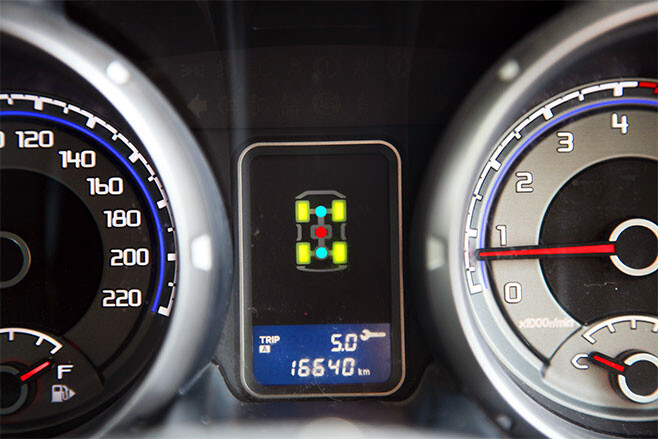
At the other end of chassis design, namely fully independent suspension, ETC was also a game changer. Nowhere is this better demonstrated than with the Mitsubishi Pajero, which from 2000 on – courtesy of the NM model – adopted monocoque construction and fully independent suspension in place of the separate-chassis, rear live-axle design used on all previous Pajeros. In doing so the Pajero instantly became very ordinary in difficult off-road going. However, two years later the Pajero gained ETC and was transformed. It was still prone to lifting wheels, sometimes alarmingly so, but it would now get up gnarly hills rather than failing at the first difficult pinch.
There’s only so much ETC can do, though. It just depends on the chassis it’s working with and what it’s actually asked to do. Notably, when asked to control both inter-axle wheelspin and cross-axle wheelspin things get difficult.
This was the case when ETC was fitted to the Land Rover Discovery II in 1998, despite that generation Discovery having front and rear live axles. When the ETC was fitted, Land Rover did away with the lever-operated mechanical centre-diff lock. The lock was still in place inside the diff case, but the case top and shifter had been changed so the lock couldn’t be engaged.
Land Rover thought ETC could do both cross-axle and inter-axle control successfully, but had to reinstate the old arrangement where the driver could manually lock the centre diff, following poor press reviews and complaints from owners.
The problem of ETC trying to cover both inter-axle and cross-axle duties was well demonstrated in the ranks of soft-roaders, such as the Ford Territory AWD and shorted-lived Holden Adventra AWD. Both had three open diffs with ETC but struggled off-road beyond the limitations of their ground clearance and/or approach and departure-angle shortcomings. But, tellingly, another soft-roader of the time, the first-generation (E53) BMW X5, was transformed off-road when BMW replaced the open centre diff used initially with an electronically controlled self-locking centre diff, leaving ETC just to look after cross-axle duties.
ETC has, of course, come a long way since the 1990s, even allowing the driver to select specific operating protocols for various off-road situations; Land Rover’s Terrain Response being the original and best example.
More recently – and more simply – the new Toyota Hilux has one set of traction-control protocols for on-road driving and another set for off-road driving that come into play as soon as you engage 4WD. This off-road specific ETC, which Toyota calls ‘Active’ traction control or A-TRC, is so good it makes the rear diff lock on the mid- and up-spec models effectively redundant. In fact, you’re generally better off not using the Hilux’s rear locker, as engaging it also cancels the ETC on both axles.
FOE NOT FRIEND
WHILE Electronic Traction Control is the 4WDer’s friend, the associated technology known as Electronic Stability Control (ESC) is a hindrance off-road despite being a potential lifesaver on-road.
ESC helps prevent skidding on slippery roads by selectively applying one or more of the individual wheel brakes, or by cutting engine power, or both. The trouble is this also slows the vehicle down, and this isn’t what you want when driving off-road in soft sand or deep mud where momentum is your best friend.
ESC is triggered when it detects the vehicle isn’t heading in the direction it’s being steered, which is often the case in soft, loose sand or in deep mud, as the driver attempts to correct the vehicle yawing from side to side. In a worse-case situation the ESC can become confused and just say “let’s shut everything down” and will attempt to bring the vehicle to a complete halt.
Thankfully, for sand and mud driving, most 4x4s have an ‘ESC Off’ switch that, at the very least, will desensitise the ESC, if not disable it all together. Selecting low-range also automatically disables ESC on most 4x4s.
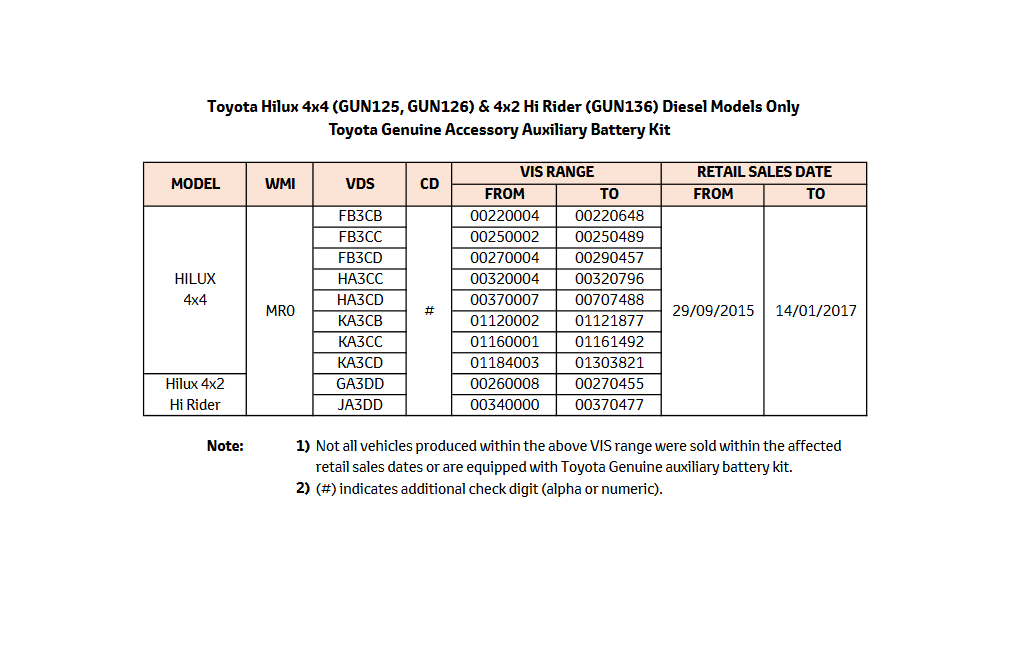
A RECALL has been issued for a Toyota genuine accessory auxiliary battery kit, as fitted to the Hilux 4×4 (GUN125/126) and 4×2 Hi Rider (GUN136) diesel models.
Due to persistent vibration when driving off-road, the auxiliary battery kit (part number PZQ85-89560) is said to damage its host vehicle’s mounting points on the fender apron.
This can cause the battery assembly to shift and obstruct the surrounding engine wiring harness, which can damage the wires and result in a possible engine stall.
For an expert opinion on the issue, we gave the battery professionals at Piranha Off Road Products a call. Piranha Off Road Products has been in the industry for more than 25 years, and it specialises in dual battery systems. It has a wide range of battery products available, including its recently released LIDL3 LED wiring harness.
“Errors can occur because installers are often not mindful of the surrounding wiring loom,” Piranha Off Road’s MD, Alan Johnson, said. “And so this typically compromises the loom.”
He recommended owners head back to Toyota for a fix, as the affected vehicles will still be under warranty.
Owners of affected vehicles will receive a letter in the mail from Toyota, where they’ll be advised to take their rig to the closest Toyota dealer for inspection and reparation.