YOU’RE on your favourite beach at dusk attempting to lure barramundi. You notice the tide’s lapping at the wheels of your fourbie parked up the beach, so it’s time to get going. Soon enough you’re bogged to the chassis rails. All you can do is watch your vehicle become swamped with sea water. The situation worsens when you ring your insurance company and find out you’re not covered.
Car insurance companies offer a range of extras, either as part of comprehensive coverage or as an extra-cost cover. Some of the features offered include replacing stolen car keys, replacing a stolen car seat cover, and the reimbursement of a taxi fare after dropping off a vehicle for insurance assessment. Here we’re looking at insurance features that relate to a 4WD that’s set up to go off-road.
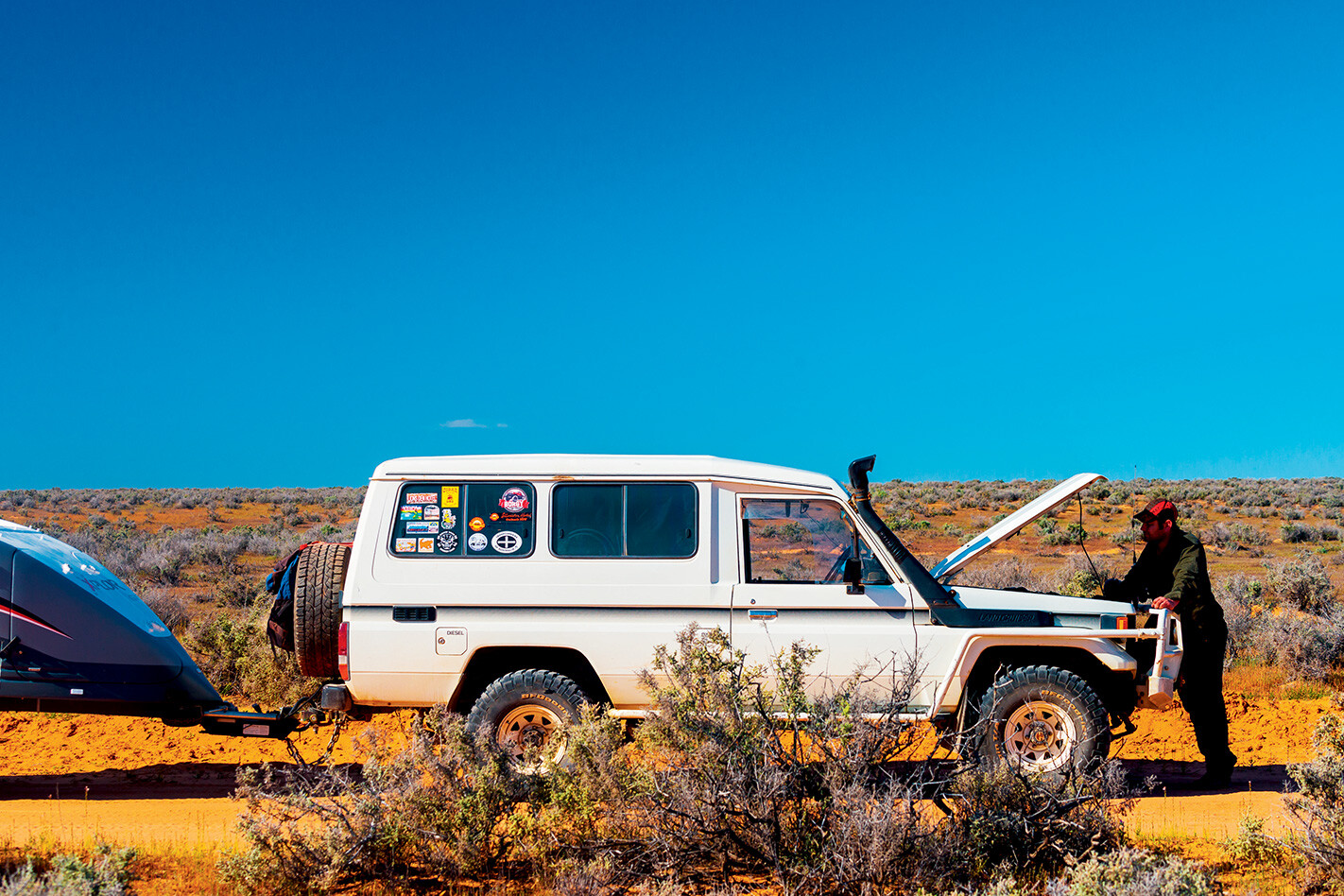
Some 4WD modifications cause problems when you need to make a claim. If your vehicle is lifted more than 50mm, for example, you may find that you have no insurance cover because it doesn’t meet your state’s registration requirements – as it’s not legal, insurance companies can refuse a claim. Getting the all-clear with an engineering certificate is an option, but even then don’t assume you’re covered. You’ll have to inform your insurance company and have the modification accepted and noted on the policy.
Insurance companies have a Product Disclosure Statement, which is essentially a document that outlines the insurance company’s obligations to you, and you to them.
Some PDS documents are pretty vague about things like cover for when you’re driving on a beach, off-road tracks or non-gazetted roads. At the time of writing, many insurance companies were struggling with the onslaught of claims from Cyclone Debbie in Queensland and Northern NSW, so we weren’t able to get clarification from them all.
Of the policies that have a clear PDS, or of which we could get clarification, NRMA Insurance, CGU Insurance, Club 4×4 (underwritten by The Hollard Insurance Company), Affinity Insurance Brokers and DGA Insurance (also a broker) will provide coverage for gazetted and ungazetted roads. So if you’re off-roading on private property, for example, and have a crash, you’re covered (provided you have permission to be there).
If you crash and your vehicle isn’t safe to drive, many insurers provide free towing to the nearest repairer. However, imagine you’ve crashed your vehicle somewhere remote, like up in Cape York. That’s when you need to know exactly what a free tow means. NRMA says, “We review motor claims on an individual basis and there is no ‘one size fits all’ approach to how we review our comprehensive cover. In regards to recovery, we can tow your vehicle from where an incident has happened to the closest repairer or safe location.”
The trouble is it costs $300-$400 per hour for off-road recovery in remote areas, and the risk is that the recovery mightn’t be covered because the insurance company may decide not to cover some or all recovery costs after assessing your individual situation. Get it in writing before you head off on a big trip if it isn’t specified exactly where the insurance company will retrieve your vehicle from.
Specialist 4WD insurers are much clearer about what they will and will not do for remote recovery. Club 4×4 will reimburse you up to $1500 of recovery costs as part of its comprehensive insurance policy. For an extra fee you can get $30,000 of coverage, which isn’t a ridiculous figure if you’re deep in the outback and it costs $400 per hour to get your vehicle out of there. For breakdowns, this cover will only get your vehicle to the nearest gazetted road.
For crash-damaged vehicles, Club 4×4 will continue on with the vehicle to the nearest repairer as part of the policy coverage. Club 4×4 has an optional breakdown cover for sealed roads, with up to 50km free towing.
Setting up a 4WD to go off-road is expensive – once you add up the cost to buy and fit a bullbar, driving lights, winch, lift kit, UHF radio, snorkel, cargo barrier, rock rails, drawer system and a cargo barrier, the total can easily exceed $20,000. Most comprehensive insurance policies with mainstream insurers will cover these modifications and accessories, but the value they put on them will not be anywhere near what it will cost you to replace them.
It’s worth checking because you might discover the components are individually covered for a very small figure, as they are bundled into the value of the vehicle. Insurance companies have a value range to cover any given vehicle, so don’t expect the insurance value to include the cost of replacing the vehicle and all of its modifications and accessories.
This cover is generally worked out on the market value of a standard vehicle, so it won’t come close to covering the off-road gear you’ve fitted to it. Agreed value is the way to go for an accessorised 4WD, but, as noted above, most polices won’t separate the accessories and modification from the vehicle value.
Some specialist 4WD companies cover the full replacement cost of modifications and accessories. The Club 4×4 policy, for example, lists modifications and accessories separate to the value of a 4WD.
This also applies to camping gear. Many policies will cover $500 of personal items in the vehicle, but not stuff that’s left out in the open. Personal items are often covered to a certain value (usually around $500), but only if they’re in your vehicle at the time.
What about gear not in the vehicle? Club 4×4 will cover personal items or camping gear up to a value of $2000, even if it wasn’t in the vehicle at the time it was damaged or stolen. However, there’s a catch: the coverage is only up to $1000 per item, there’s a maximum of two claims per policy period, and you have to pay a $500 excess fee.
Temporary repairs, vehicle hire and accommodation are other coverage extras that need to be considered when out bush. Many insurers will pay up to around $1000 for temporary repairs to get your vehicle going again (AAMI will only pay $500) so you can get to your destination.
There’s also car hire bundled in comprehensive polices, but not all are equal. In its standard 4WD policy, Club 4×4 or AAMI won’t pay for a hire car if your vehicle has been damaged (although you can get this as an optional extra in both cases), but will provide up to 21 days of vehicle hire.
For Club 4×4, it’s up to $180 per day if your vehicle has been stolen, for AAMI (if you pay an additional fee), it’s a “vehicle, in our opinion, that is of a similar make and model to your car” for the entire period of the claim. The qualification is, you have to select a vehicle from AAMI’s ‘provider’ and that the rental depot is “within a reasonable distance from your location”. NRMA will pay up to $3000 for car hire after an ‘incident’ as part of its Comprehensive Plus policy, but only at a maximum $95 per day. That amount isn’t going to get you a large 4WD.
If your vehicle cannot be driven after an accident and you’re more than a certain distance from home, many companies will pay up to $500 for travel back home or accommodation while your vehicle is being fixed.
While some mainstream insurers may cover you if you have an accident when off-road, there’s a question mark over whether they will come and get your vehicle. The mainstream insurers also don’t put a high enough value on 4WD modifications and accessories, meaning if those components are stolen or damaged you’re potentially out of pocket by tens of thousands of dollars.
DRIVE 4 Life has been running fun-filled fundraising 4×4 trips for more than 10 years now, and the recent trip in the Victorian High Country was no exception.
40 4x4s set off from the alpine hamlet of Harrietville for a week of mountain adventures and great camping in some of Australia’s most spectacular terrain.
Before you go thinking that a convoy of 40 four-wheel drives sounds painful, D4L breaks its numbers up into group of six or seven vehicles, each led by a group leader and tail-end Charlie, and the groups head out in different directions using different tracks each day. There is also a group for people with camper trailers, who set up in Talbotville for the week and set out for day trips from there.
At times through the week, two or three groups might meet up to camp together at areas where space permits. This boosts the social aspect of the tour, as tall and true tales are shared around the campfire at night. Many people on D4L trips are novice 4WDers, so the wide-eyed stories of conquering steep tracks and wide river crossings each night are always entertaining. It’s interesting to see the confidence of the drivers grow as the week goes on and they benefit from the knowledge of the group leaders.
The experience of the group leaders and organisers was tested this year, with fires in the Dargo and Crooked River areas meaning the planned routes had to be changed at short notice. D4L’s Chris Bates got out his maps and route notes from previous trips to reroute the groups and keep them away from the fires and out of harm’s way.
Some iconic locations the groups visited this year included Craig’s Hut (and other High Country mountain huts), Mount Blue Rag (with its stunning 360-degree panoramic views), Lake Cobbler, Wonnangatta Station and Talbotville valley. The fires weren’t enough to keep a few groups from stopping at the famous Dargo Pub for a beer or bite to eat when they passed through. In fact, aside from the DSE information, you wouldn’t have known there were fires nearby, but the fires did prevent us from driving the always impressive Billy Goat Bluff.
Rain was more of a problem, as slippery tracks forced a few groups off their planned routes to seek tracks better-suited to the vehicles and experience of their drivers. Some groups ventured as far away as Woods Point and Licola in search of dry conditions and, in some cases, a dry bed.
Heavy storms hit the mountains on the first night out and campers and their gear got soaked, but the storms weren’t enough to deter the good spirts of those on tour and it added to the adventure. Winches were sometimes pulled out to get up slippery hills or pull vehicles back on track, while other 4x4s had no troubles.
The sun finally came out blazing on the last day and many of the groups detoured via Mount Blue Rag on their way back to Harrietville. They were rewarded with amazing views from above the clouds that lay in the lower valleys. The drive in and out of Blue Rag is always spectacular and should be on the agenda of everyone’s High Country adventures. As always, the D4L tour concluded with a big night at the Harrietville Snowline Hotel, with great food, live music and a few cold bevvies.
The speeches were informal but included talks from David Dennis and Scott Taylor about how money raised by Drive 4 Life has improved the lives of their families who have dependents needing special care. This really brought home the fact that this wasn’t just about having a great time in a 4×4 in an amazing location, but raising money for a good cause.
With the money donated by those on the 2017 tour, Drive 4 Life has now sent more than $870,000 to Northcott Disability Services to help young people with disabilities and special needs. Participants in the tour donate $1000 per vehicle (tax deductible) direct to Northcott for their place on the trip, and the running costs for the event are covered by long-time partners ARB 4×4 Accessories, Cooper Tires and IGA Supermarkets.
Plans are already afoot to return to Harrietville in the High Country during the first quarter of 2018. Hopefully the weather and fires will be kinder to us next time, but, regardless, it’s sure to be a great trip for all who make it.
For more details and to express interest in attending, take a look at the Drive 4 Life website at: www.drive4life.com.au.
IT’S HARD to forget my time on 4X4 Australia.
It was my first full-time journalism gig and I snuck in to 4X4 HQ in 2005 initially as sub-editor, with Deano as the 4×4 Australia boss back in those days. I loved (and still love) working on the mag; the combo of a great editorial team, regular contributors, loyal advertisers and an off-road touring community that was seriously passionate about everything four-wheel driving saw me stay until 2011 (and I’m still writing as a freelancer). I spent the last 18 months of my tenure at 4X4 Australia as editor.
My time in the big chair at 4X4 was fantastic, if a bit tumultuous. At the same time I was also tackling the same role at Australian Geographic Outdoor mag, which I still edit to this day, so it was pretty frantic (not helped by a painful staff issue and senseless ‘title review meetings’ with publishers) but enjoyable at the same time.
Funnily enough – or rather, sadly – being the editor meant I spent more time than ever behind the desk, as opposed to being out in the bush exploring in a 4×4 – my main passion that remains to this day.
I always used to grit my teeth a bit when I sent some lucky contributor on an epic adventure, with the biggest teeth-grinding decision sending now-editor Matt Raudonikis on what looked to be an amazing two weeks driving the Canning Stock Route in a Mercedes-Benz G-Wagen (I thought this a great time to remind him of my generosity!).
Really, though, those decisions weren’t that hard, as I was just stoked to be producing what I reckon is still the best off-road touring mag in the country, with a top team of contributors to keep it all running smoothly.
Some highlights of my tenure as editor include a frantic (read: crazy) three-day visit to the USA for the launch of the Jeep Grand Cherokee, a vehicle that boosted the US off-road icon’s stature in the marketplace. The crazy part? The entire 72 hours encompassed both the flight over to the US, the one-day/one-night drive experience, and then the flight back.
Another highlight was having the chance to be one of the first Aussie journos to drive the then all-new Nissan Patrol. It was a left-hand drive jobbie that was delivered under darkness to Robbie Emmins’ 4X4 Training & Proving Ground at Werribee, Victoria. Photographer Mark Watson and I flew down for a day of testing the big bopper on the tough tracks down there. It was a great exclusive at the time.
Great trips, great people and awesome vehicles to test each week aside, my favourite memory as editor of 4X4 Australia was being a part of a hugely passionate community – one that I am still a part of today, and that the magazine still appreciates.
STRAP a set of Yokohama’s all-new Geolandar A/T GO15 tyres to the corners of a four-wheel drive and you’re guaranteed great grip on and off the road.
To prove that point, the person in charge of Yokohama’s passenger car and light truck tyres, Rob Young, dropped by to talk all things rubber in the latest iteration of 4X4 Australia’s Garage web series.
The Geolandar A/T GO15 – both Passenger Car (PC) and Light Truck (LT) construction – have been engineered with a strong focus on providing ultimate traction for all manner of surfaces. The tyres are fit for purpose for both SUVs and 4WDs, and are tailor-made to suit both bitumen and coarse terrain.
“The Passenger Tyre construction is made for those all-wheel drives and SUVs that spend most of their time on the bitumen, but still like to go off-road on the weekends and have some fun,” Rob Young said. “It’s quieter and has much better road-handling characteristics. It’s just a much better road-handling tyre.”
The LT construction, however, is more suited to readers of 4X4 Australia.
“The light truck [tyre] has a heavier construction, deeper tread, bigger blocks and it’s more aggressive for off-road use. It’s also really good for tradies with a higher load-carrying capacity,” Rob added.
Five tips for longer-lasting tyres
To improve off-road traction and sidewall protection, Yokohama has implemented a wide and aggressive shoulder profile. “The [square] shoulder gives it an aggressive look, it gives it much better off-road traction, and it protects the sidewall from cuts and abrasions,” Rob added. “[The new tyres] also have optimised lug grooves, four deep main grooves to expel water and prevent hydroplaning, and 3D sipes to improve traction.”
Yokohama hit the reset button and created a new compound for its GO15, making the tyre resistant to wear, cuts and chips and temperature changes. A nylon underlay was added to reinforce the tread and add an extra layer of protection from pesky sticks and stones, while the tyre compound was infused with orange oil.
“Orange oil is actually the oil from an orange peel that’s added to the compound and creates a greater molecular bond between the natural synthetic rubbers. It aids in three factors – longer life, better wear and better fuel economy,” Rob said.
The Geolandar nomenclature has been within Yokohama’s range of tyres for the past two decades. In fact, this fourth generation of the range celebrates the 20th anniverarsy of the Geolandar. Where does this all-new tyre sit within the Geolandar hierarchy? “We believe this tyre is the toughest tyre yet in the all-terrain range,” Rob said.
That’s a big call, and there’s only one way to find out – by strapping a set to our long-term Cruiser and hitting the road.
The 285/75-16 LT Geolandars instantly improved the directional stability of the front end in the Cruiser and now it tracks straighter on uneven roads. The tyres coped well with bush tracks, rocky climbs and some dry sandy river beds, reinforcing the idea that this is a do-it-all tyre design for any terrain. They do this while remaining quiet and smooth on the highway.
Currently, Yokohama offers the Geolandar G015 in 53 sizes, but Rob said that number will rise to about 80 in total.
Both the PC and LT tyres are backed by Yokohama’s Road Hazard Warranty. Not that you’ll need it, as according to Rob, “we’re that confident that this tyre is very hard to puncture.”
THE Volkswagen Amarok V6 Highline ute has become 4WD Victoria’s new flagship vehicle.
The president of Victoria’s peak off-road organisation, Wayne Hevey, received the keys of the turbo-diesel-powered variant from Volkswagen Group Australia’s managing director, Michael Bartsch.
The handover took place during the annual Spirit of Amarok event, which was held at the Melbourne 4×4 Training and Proving Ground near Werribee.
“[The] Amarok V6 has raised the expectations of ute buyers and fundamentally changed the market,” Mr Bartsch said. “As even our four-cylinder Amarok Core manuals have shown here on this challenging course – one from which we had to haul out a rival brand ute this week – Volkswagen vehicles are part of this nation’s automotive landscape.”
Volkswagen Group Australia is also an ongoing sponsor of 4WD Victoria. “[The organisation provides] thousands of owners with best practice, safe and sustainable off-roading experiences,” Mr Bartsch said.
The Spirit of Amarok event pits 126 competitors from all over Australia against each other for a challenging off-road trial. The three winning teams – comprised of two members – will represent Australia at the international Spirit of Amarok event to be held in South Africa in August.
AT THE recent Overland Expo in Flagstaff, Arizona, Australian aftermarket companies were well-represented.
Newcomers to the event included the multi-award-winning Patriot Campers, the highly regarded Redarc electronic specialists, and Norweld alloy trays and canopies. They joined Aussie veterans of the show, including ARB, MaxTrax, Hema Maps, Earth Cruiser, Rhino Rack and TJM.
The Overland Expo is one of the largest gatherings of four-wheel drive overlanders in the world, and this year’s event was the biggest in the nine years the expo has been running. With more than 300 exhibitors, nearly 400 classes, and clinics run by 160 of the world’s leading experts in off-road travel – plus an international film festival to indulge in – the expo was a busy and hectic place.
Our man Moonie was there with classes on travelling the world, including touring Australia and Africa.
One of the things that knocked us out was the prices being asked for early model 40 Series Land Cruisers. These had been completely rebuilt to the stage where they were better than new, with bodywork that was impeccable. Prices started at US$80,000, and the one pictured was a cool $100K… make that around $130K in Aussie dollars!
Then there were the big trucks. Not sure why you need anything this big to tour the USA or the world, but they do make a statement. Starting at around US$450K, they would make a decent dent in your wallet.
More than half of the spectators camp on site, which makes for not only a huge camping area but also for an exciting time with travellers from all over the world participating. It was an action-packed and rousing weekend!
Website: www.overlandexpo.com
WE’VE tried dozens of barbecue plates and grilles over the years for cooking over an open fire, but the Boomerang BBQ is the lightest one we’ve used and the only one made completely from 316 stainless-steel.
The basic barbecue comes as a flat-pack in a carry bag, with a two-piece pole, a boomerang arm and a grille. The pole base can be hammered into basically any form of ground, apart from solid rock, while the arm’s height above the ground can easily be adjusted to the desired height. Simply suspend the tray from the arm and you’re ready to cook.
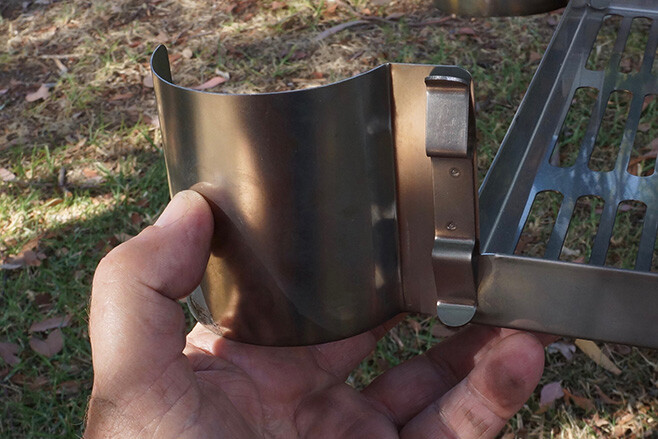
An optional Boomerang Fire Pit is a clever design that is stored as a flat-pack in a carry bag. The fire pit consists of two side-plates and two end-plates that slide together, while two small pegs clip into special slots on the side to add rigidity and stop the unit from coming apart. The Fire Pit is a little fiddley to put together the first time, but it gets easier.
Once you have put a fire in it, the stainless side and end-plates will show discolouration and some signs of distortion, but this isn’t an issue; the unit still goes together just as easily and works just as well. The size of the fire will be more than adequate for cooking and keeping a couple of people warm on a cold night.
Still, we found the fire pit a bit flimsy, especially on uneven rocky ground. The boomerang arm tends to swing in the direction of the lean of the unit and not necessarily over the centre of the fire, and the supplied pegs did little to the overall stability so we stopped using them.
There are a couple of other options with the Boomerang BBQ that you may find handy. A Patio Kit allows the BBQ and fire pit to be set up where you can’t hammer the poles into the ground. The lightweight T-bracket clips to the base of the fire pit, and the unit’s two-piece pole slips into a square tube, while a bracket helps secure the pole to the fire pit. Flat ground (or even a patio) is required for this to work well.
The Boomerang BBQ blades clip onto the corners of the grille cooking tray and slowly rotate the tray over the fire, ensuring the food is evenly cooked. It’s a smart idea and it works. Plus the unit can be easily washed in a dishwasher.
Whether you buy the entire system or just the barbecue, it should give you many years of faithful service.
Available from: www.boomerangbbq.com.au RRP: Basic Kit ($189); Fire Pit ($249); Patio Kit ($49); BBQ Blades ($20). We say: Well-designed, packs small and light, expensive.
WOW! This year marks the eighth since I stepped down as editor of 4X4 Australia, a position I held for close to 100 of the magazine’s now 400 issues. So many memorable things happened in that time and I was fortunate enough to travel to so many fantastic off-roading destinations, all around the world; here are the few of the highlights.
THE FUNNY THINGS
A mix up at the printer saw several copies of the May 2005 issue of 4X4 Australia get bound up with a section from Ralph magazine. A 4X4 Australia reader phoned me to tell me he’d “been busted” by his missus looking at women in their underwear.
Then there was the photo of Ron Moon stepping down from a roof-top tent with no undies on. 4X4’s art director noticed the “problem” before the magazine went to print, so he photo-shopped some undies on Ron in the nick of time. But it wasn’t until we got the magazine back from the printer that we noticed Ron’s reflection in a lake in the foreground of the shot was still sans briefs.
THE NOT-SO-FUNNY
I had only been the editor for a few weeks when I received an early morning call from my then Dep Ed Marcus Craft who informed me that 4X4 Australia’s long-term test Toyota LC79 Cab Chassis had been pinched from out the front of his apartment. It wasn’t a great start to the day, let alone my tenure at the magazine. Nevertheless, Toyota’s marketing manager Mike Breen took it in his stride and rather than getting upset he recalled a funny anecdote about the last time a Toyota press vehicle had been stolen… twice. But that’s a story for another day.
Another not-so-funny moment was when one of my journos phoned me from a NSW state forest to tell me a top-of-the-range Land Rover Discovery he was testing had caught fire. The good news? The fire burnt through a radiator hose, spraying coolant everywhere, so it self-extinguished.
THE DESTINATIONS
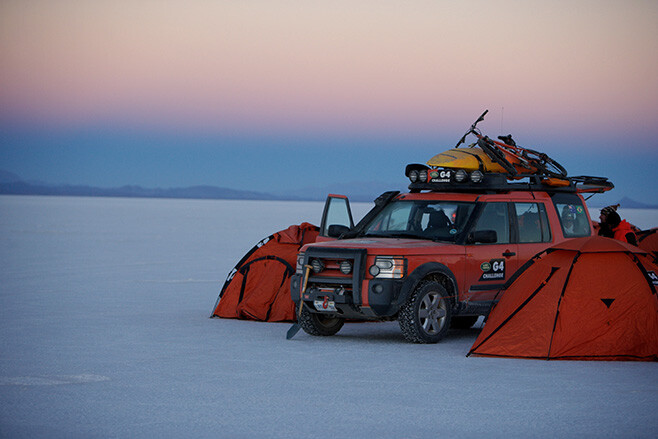
Editing 4X4 Australia afforded me the opportunity to go four-wheel driving all over the world. Despite having been sandboarding in the Gobi Desert in Mongolia, camping on Salar de Uyuni in Bolivia, driving Lara Croft’s Defender in the UK and testing tyres in Death Valley in the US, my favourite destinations have always been right here in Australia.
THE VEHICLES
I have driven so many fantastic vehicles in my time at 4X4, from luxury vehicles like LX570s and Range Rovers, to tough tourers like 70 Series Land Cruisers and GU Patrols. But the vehicle that’s given me the best memories is the Land Rover Defender.
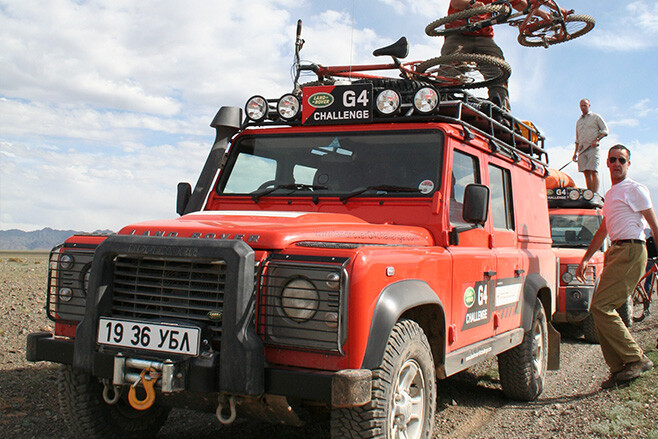
For me, a Defender adds an extra element to any off-road adventure, and I have driven several of them including a 110 Wagon up through the Gulf Country, a 130 Crew Cab across the Madigan Line, and G4 Challenge Defenders in South Africa, Bolivia and Mongolia. Despite their reputation, none of them ever let me down (knock on wood).
THE PEOPLE
The best thing about 4X4 Australia and four-wheel driving in general is the people you get to meet. The simple act of getting off one’s backside and getting out there and travelling – domestically or internationally – means you meet the most amazing people. I have forged many, many lifelong friendships through 4WDing, which is why I’ll always keep travelling.
IT HAD started as any normal weekend where we’d head off on a substantial road test, this time with three vehicles, all V6-powered.
Somehow we had convinced ARB to lend us its recently built pride and joy, a V6 Hilux. In fact, Peter Alderson, 4×4’s long-term advertising manager and a good friend of the bosses at ARB, had pleaded with them for the loan. This was long before Toyota brought out a Hilux V6, and ARB’s impeccable vehicle was powered by the V6 Holden Commodore engine. It had been quite a coup for ARB, with Holden engineers working with them to bring the concept to fruition and ARB bringing it to the market place just a few months earlier.
The loan came with some strict provisos as they knew we were heading for Robe, the adventure playground on the southeast coast of South Australia. There was to be no driving the vehicle in any saltwater, and it was to be kept clean and tidy for the duration. Well, that was the plan. Trouble was the plan didn’t quite work out that way.
On the very first day on Long Beach – that delightful sweep of sand near Robe –enthusiasm and vigour conspired against us and Pete rolled it in quite spectacular fashion within the first five minutes of hitting the beach. That made the three-way comparison we had been planning a two-way battle.
The only straight panel on the vehicle was the canopy which had come through completely unscathed, but the vehicle was still drivable and so we used it as a recovery vehicle for the next three days before driving it back to Melbourne.
That wasn’t the end of the weekend debacle, though. A couple of days later we were down in Little Dip Conservation Park when my deputy editor, the late great Paul Harrington, had trouble getting up a particular dune. He backed down while the rest of us stopped at the base of the dune to watch the show. He gave it another go to again come to a wheel-spinning stop on a particularly nasty and narrow piece of the track with a sheer drop on one side.
As sand slipped away from under the outside back wheel we all stood at the bottom transfixed by what we knew was going to happen. Seconds later the 4Runner lurched to the rear as sand washed away from the rear tyre. It squatted backwards and to the side and, slowly (or seemingly so) rolled down the dune.
Stu Grant, 4×4’s long-suffering photographer, had been in ARB’s Hilux when it had ended on its roof and now he crawled out of the overturned Tojo thoroughly shaken and stirred. Luckily no one was injured or even scratched, although prides had been severely dented.
The two Toyotas bore similar scars, no windscreens, dinged roofs and bent panels – while parked in Beachport for lunch we had a few bystanders wonder what the hell we had been doing. ‘At 4X4 we test the vehicles pretty hard, mate’, was the flippant answer.
Of course, that wasn’t the end of it. I had to take the 4Runner back to Toyota while Pete took the V6 Hilux back to ARB. It was quite a while before I showed my face at either establishment again.
We caught up with Ben Napier and Pete Antunac, two seasoned KOH competitors who hail from Australia.
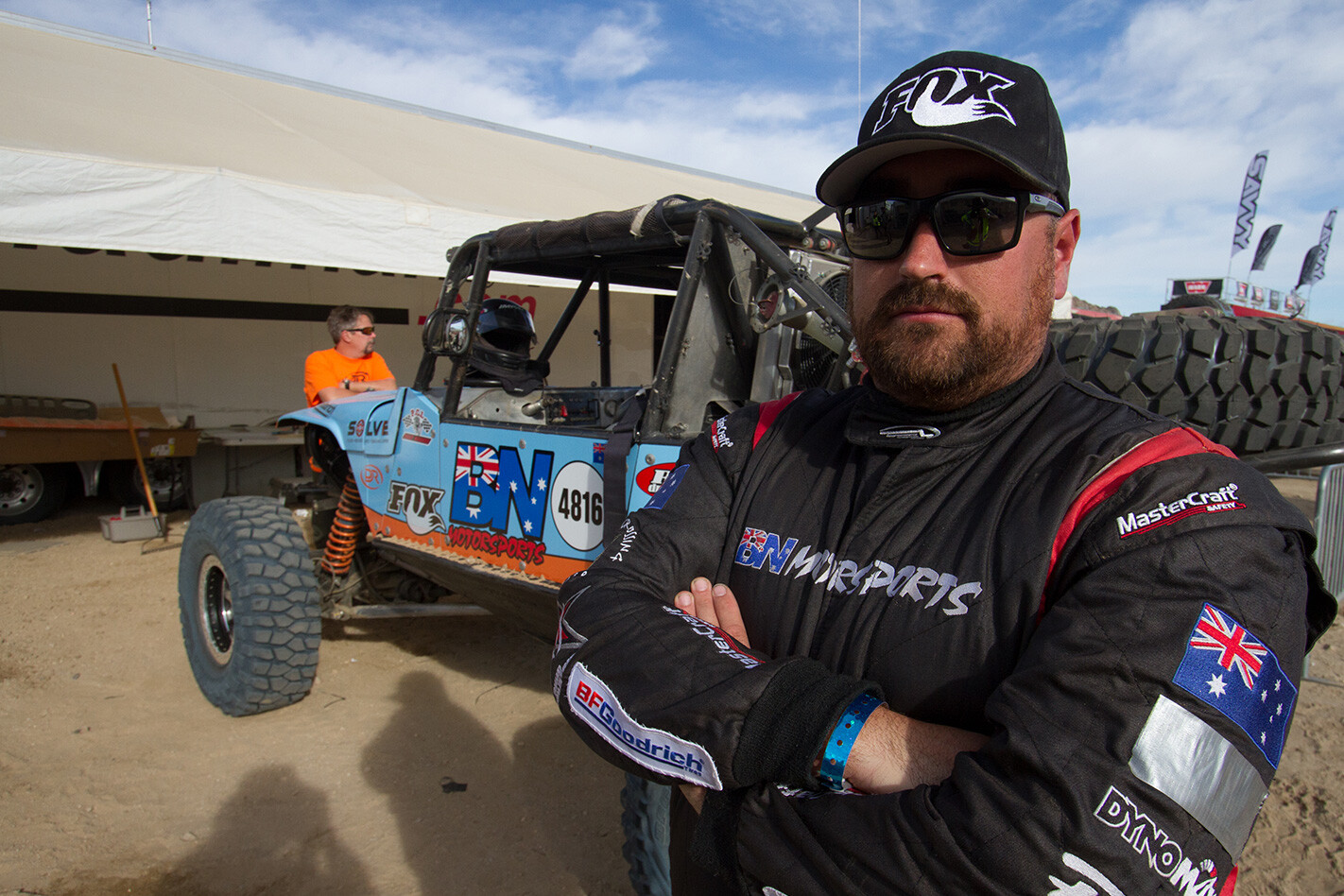
BEN NAPIER
We introduced you to Sydney-based Ben Napier’s KOH career in 2010. With a strong track record at home, he had borrowed a Bomber Fabrication buggy and gained sponsorship from King Shocks, Raceline Wheels, BFGoodrich and CTM.
He only made it to race mile 80, but he was hooked on KOH adrenaline. He followed up by serving as an apprentice to Bomber Fabrication owner Randy Slawson – paying his dues and learning from one of the industry’s best. Napier went on to be a force in ULTRA4, landing a second place overall in the 2011 series, and he has competed in every KOH since 2010. He landed a fifth place finish in 2013 and won the Legends Class in 2015. Rolling into the 2017 season, he is easily considered a seasoned veteran in the ULTRA4 circles.
We spent time with Ben to get the low-down on what it takes to compete in the toughest one-day race on the planet.
How does KOH stack up to Australian rock racing events, and has it become more difficult? There’s nothing like it in Australia – Outback Challenge is about as close as it comes. There’s some amazing terrain at Broken Hill, but nothing rivals the Hammers. KOH is, and always will be, the longest and toughest race out there. It’s become more difficult and serious. It’s no longer a week to go party and play around – we are racing to win.
How did this year’s race go and what were the challenges? We didn’t get to do much prerunning, as Top Gear was using our vehicle for filming. We got it back right before qualifying and, unfortunately, the Atlas transfer case must have been damaged.
It grenaded during qualifying, causing us to start at the back of the class. We took it easy and worked our way up from mid-30s start position to top 5 at the end of the first lap. A long pit stop to fix a broken link bolt put us back to the high 20s, but we fought back and finished seventh in class.
Are you coming back for 2018? I hope to bring my Penhall ULTRA4 back to the US and enter the main race again. I’ve come fifth overall before and desperately want to win.
What advice do you have for an Aussie who wants to race KOH? Research and get over there. Join a team and help out.
Understand out how crazy it is. Prep, prep, prep, test, and prep some more. Work on your car for months on end, become sleep deprived, and spend all your money… and then some. When you finally get over there, have an awesome time racing!
PETE ANTUNACWith a long career here at home, Pete flew across the pond in 2013 to help friends with their car and get a feel for the event. He set his KOH sights on 2015 and spent the next two years building a vehicle. This year marks the first time he finished the race, and we spent an afternoon with him in Hammertown to get the lowdown on his first three years.
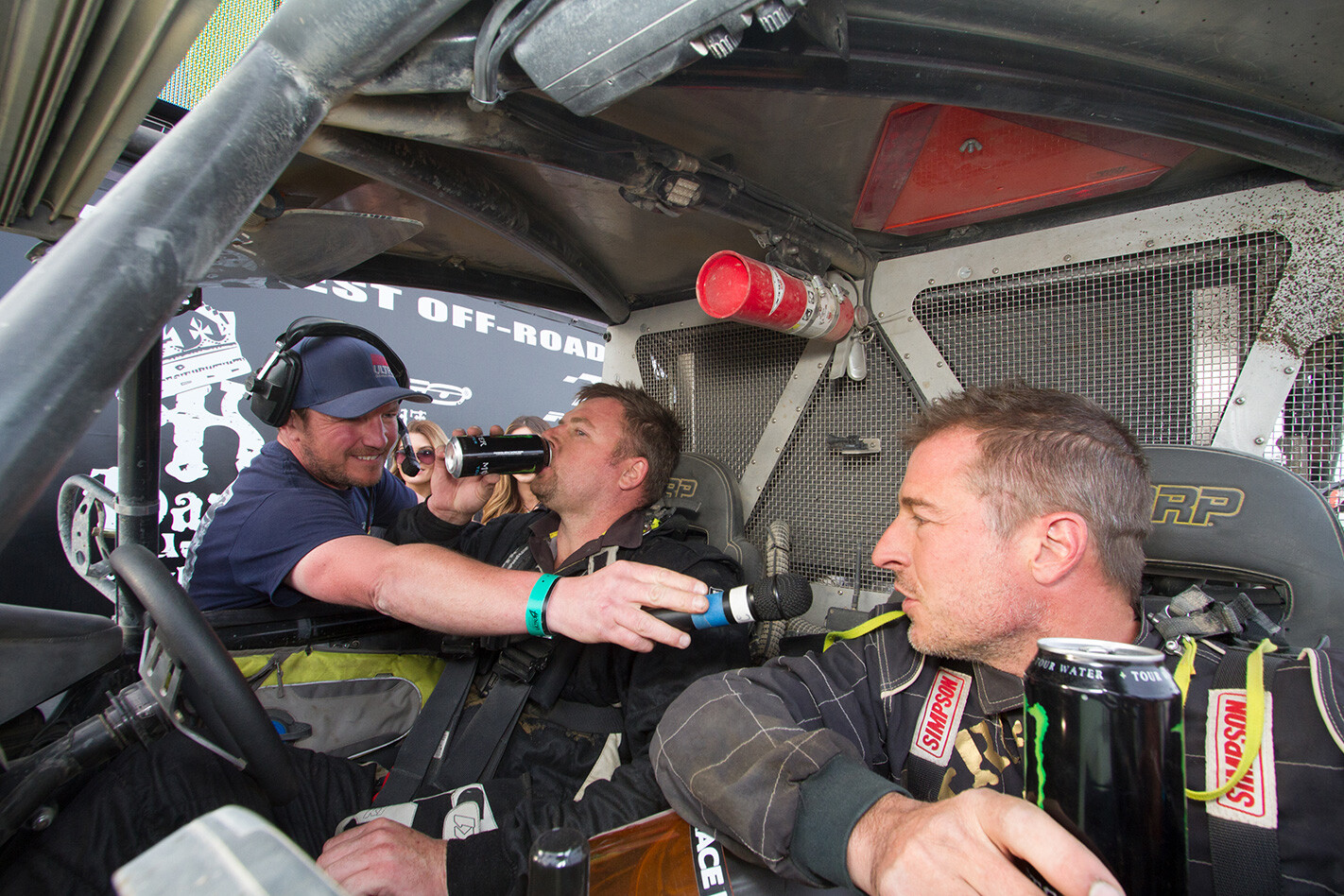
Can you tell us about your first two years as a KOH competitor? After two years building the vehicle, we had a bit of bad luck in 2015, losing a rear shock and reverse gear. I suppose it was mostly from inexperience with this type of racing.
Has KOH become more difficult in the three years you have been competing? I would say it is evolving, and fast. There are a lot of teams building new cars, and it has become much more expensive to be competitive.
What was your strategy for this year’s race? For this car it’s not really about strategy. There are some great drivers and teams out there. We don’t need to drive faster, we just need to match their pace, maybe get a better line in the rocks.
I’m not here to just finish the race; if that as the goal I would have spent half the money and had a car like everyone else. We were coming off of three wins in a row back home and had a good chance of being in the top 10.
Can you tell us about your decision to run IFS and IRS? I wanted to do something different, to have independent all around. Having the portal hubs gives you an advantage from one perspective, but we found that there are disadvantages as well. We’ve done everything we can this year to increase the strength. The car has been great and done everything we want it to do and more.
If someone back home had their sights on KOH, what advice would you have? If you don’t have a spare half-million dollars, you’d probably not bother. You can do it for a lot less if you are not worried about placing a top 10 and just want the experience.
It is definitely worth trying. I’d start with the Every Man Challenge and get as many sponsors as you can.