
TICKETS for the 2017 Gympie Music Muster are now on sale.
Gympie, a regional town in Queensland, is located about two hours’ drive north of Brisbane in the Amamoor Creek State Forest. There are a few good 4×4 spots en-route and, to make the trip a memorable one, Gympie is a great spot to drop a line or take a stroll on the many walking trails.
However, luring people to town from August 24 to August 27, 2017, is the Music Muster, a quintessential Australian music experience.
The event, now in its 36th year, is one of Australia’s largest charity festivals and has raised more than $15 million for charities Australia-wide since its inception.
The 2017 line-up, headlined by Jessica Mauboy, includes Adam Brand, Busby Marou and plenty more.
The 2017 Broadbeach Country Music Festival is also on the horizon, taking place July 28-30.
Broadbeach Alliance Chief Executive Officer Jan McCormick said: “The event will feature more than 84 performances from these stars on 12 stages, including a major stage in Surf Parade, and for the first time a headline stage in Kurrawa Park, right next to the beach.”
Acts performing at the Broadbeach Country Music Festival include Kasey Chambers, Troy Cassar-Daley and Shane Nicholson.
Tickets for the 2017 Gympie Music Muster are available at: www.muster.com.au.
The 2017 Broadbeach Country Music Festival is a free event.
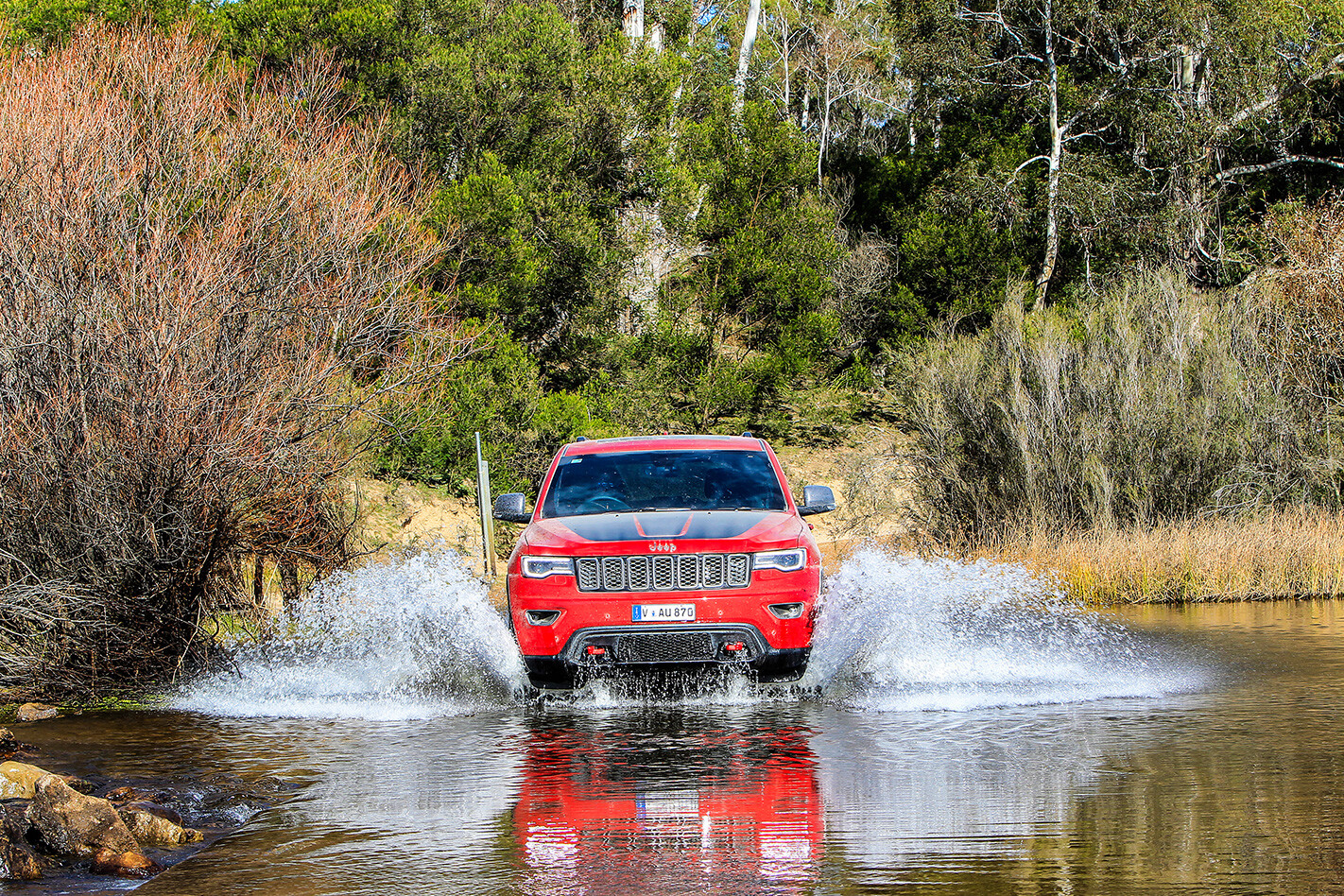
SAY HELLO to the most off-road orientated Grand Cherokee yet offered in the brand’s fourth (WK2) generation range.
It’s called a Trailhawk, a nameplate also used for the off-road-pitched models in the respective Cherokee and Renegade ranges. All Trailhawk models carry a ‘Trail Rated’ badge; although, whether that means they’re rated for the fabled Rubicon Trail in the USA’s Sierra Nevada mountain range isn’t certain.
The Trailhawk is the headline act in a revamped 2017 Grand Cherokee range, and it uses both existing hardware from the Grand Cherokee options inventory and some Trailhawk-specific bits. Key features include a fully automatic electronic rear locker and height-adjustable air suspension in a unique Trailhawk ‘tune’, which adds more wheel travel and articulation.
The Trailhawk also gets underbody protection, a distinctive front lower fascia complete with two prominent (red) recovery hooks, and all-terrain rubber on bespoke 18-inch alloys that carry a small red image of the original WWII Jeep. If all this detail goes unnoticed, you won’t miss the blacked-out bonnet panels.
POWERTRAIN AND PERFORMANCE
THE Trailhawk comes with the familiar 3.0-litre turbo-diesel V6 from Italian diesel specialist VM Motori. It’s mated to an eight-speed ZF automatic transmission, which has received a number of internal upgrades for improved shift quality and durability.
Jeep Renegade Trailhawk review
As before, the engine claims healthy maximums of 184kW and 570Nm, and it delivers on those claims with brisk and lively performance helped along with the relatively close ratios of the slick-shifting eight-speed automatic. From a standing start the Trailhawk will sprint to 100km/h in just over eight seconds – more than handy by 4×4 standards – and offers decisive overtaking performance on the highway.
The engine and revised gearbox runs in a default ‘Eco’ mode, which makes throttle and downshift responses feel a little doughy at times; although, the Eco mode can be cancelled via a dashboard button. Switching it to Sport mode (adjacent button) sharpens throttle and creates more aggressive shift protocols from the eight-speed auto. Even so, the V6 diesel isn’t all that strong just off idle, with maximum torque not on tap until a relatively high (by diesel standards) 2000rpm.
However, there are no complaints with general running refinement and noise level, or the agreeable partnership the V6 has with the smart and intuitive ZF eight-speed auto. Fuel economy is good, too, with highway figures in the eights and mixed on- and off-road driving in the tens. Combined with a handy fuel capacity of more than 90 litres, this thrifty economy translates to a touring range almost always in excess of 800km.
ON-ROAD RIDE AND HANDLING
THE HIGH benchmark set by the Trailhawk’s powertrain is reflected in its polished on-road dynamics. Thanks to its fully independent suspension and monocoque construction, the Trailhawk has the road feel of a passenger car, and a good one at that – the Grand Cherokee’s platform is shared with the third-generation Mercedes-Benz ML SUV (now called GLE) thanks to Jeep (as part of the Chrysler group) being previously owned by Mercedes-Benz.
Even on its all-terrain rubber, the Trailhawk’s new electric steering is sharp and predictable, while the height-adjustable air suspension provides a compliant ride on all surfaces including potholed bitumen and gravel roads. The Trailhawk is nicely poised at speed on bumpy back roads, far more so than the likes of Prado and Everest with their live rear axles.
The height-adjustable suspension, which automatically lowers the ride height once you get up to highway speeds, also contributes here in terms of better road holding, less body roll and reduced aerodynamic drag. The lower ride height is also activated – regardless of road speed – if the driver selects Sport mode.
OFF-ROAD
THE height-adjustable suspension plays a huge part in the Trailhawk’s off-road performance. The fact you can jack it up to provide 260mm of clearance puts it, literally, well above competitor vehicles with conventional fixed-height coil-spring suspension. Add the Trailhawk’s automatic self-locking rear diff into the mix, which includes a self-locking and self-proportioning centre diff, and you have off-road performance that’s worthy of a ‘Trail Rated’ badge.
However, all of this comes with a caveat. Despite being able to lift (or lower) some 85mm, the Grand Cherokee’s suspension doesn’t have the wheel travel of the fully independently sprung Discovery or Range Rover Sport, let alone a live-axle vehicle.
Jacked right up, the Trailhawk’s ride becomes harsh and sometimes noisy as the suspension tops out due to the limited droop travel it has when extended. On gnarly tracks, the Trailhawk also readily lifts wheels and is ‘dramatic’ in situations where something like a Toyota Prado, with its much longer suspension travel, is far more composed.
Jeep’s Quicksand concept scorcher
Thankfully, the Trailhawk can be jacked up in two stages for off-road use, initially from the default 205mm to 233mm (comparable with the Prado), and then up to 260mm at max lift. At the first off-road setting, the ride, although not plush, is still pretty good and is all you need for most trail and beach driving. The system automatically holds the selected higher height up to a decent speed – 40km/h for the highest (260mm) setting and up to 80km/h for the 233mm setting; although, the driver can override this manually.
Like all Grand Cherokees, the Trailhawk comes with Selec-Terrain to allow the driver to set the chassis and drivetrain electronics for different conditions such as Sand, Snow, Mud and Rocks, or just leave it in Auto mode. Selecting low range also changes the chassis and drivetrain settings, most noticeably tightening the rear locker.
The Trailhawk comes with no fewer than five steel underbody plates to protect vitals like the engine, transfer case and fuel tank, but it could do with rock rails to protect the vulnerable-looking rear bumper. There are also no recovery hooks at the rear, which seems at odds with the set-up at the front. The location of the engine air-intake behind the bonnet lip is also something to be aware of before getting too adventurous with water crossings, even if the air-filter box is big, tall and drained.
CABIN, EQUIPMENT AND SAFETY
GIVEN the Trailhawk sits near the top of the Grand Cherokee model range, it’s no surprise that it comes loaded with kit given that even the base-model Laredo (including the budget 4×2) features keyless entry and start, electric seat adjustment, dual-zone climate, a reversing camera, seven airbags, and a five-star ANCAP safety rating. The Trailhawk then adds sat-nav, bespoke premium leather seats with suede inserts, driver’s memory settings, heating and cooling for the seats (including heated second row), a heated steering wheel, and a power tailgate. The seat and steering wheel heaters have an auto-on function in cold weather, so they start warming up the instant you switch on the ignition.
As ever with the Grand Cherokee, the cabin is nicely detailed, comfortable and roomy, and by not squeezing in a third row it benefits in terms of rear-seat and luggage space. Not so good is the tight driver’s footwell that’s further crowded by the foot-operated parking brake. Older buyers may also lament the lack of a CD player.
PRACTICALITIES
AS mentioned, the Trailhawk comes with all-terrain rubber, specifically 265/60R18 Goodyear Wranglers. This size is used by the Prado and Hilux (among others), which is a bonus, but the large front brakes mean that 17s can’t be fitted to open up the tyre choice further.
Custom 2014 Jeep Grand Cherokee
There’s also a problem with the spare, as it’s not a match for the road wheel/tyre combination. It’s a narrower 245/65R18 road tyre on a steel rim that – unusually – for a space saver has a higher speed rating (H or 210km/h) than the T-rated (190km/h) all-terrains and is not distance restricted.
The good news here is that the spare-wheel well in the cargo bay is just deep enough for a 265/60R18, even if it’s a bit of squeeze to close the spare-wheel cover.
SUM UP
AS WITH all Grand Cherokees, the Trailhawk offers a shedload of 4×4 for the money and a broad spectrum of on- and off-road capability. That spectrum of capability may be skewed more towards the on-road side of things than off-road, but it’s nevertheless impressive. However, where the Trailhawk does miss out off-road is more through its comfort rather than its capability.
Those who don’t wish to pay the $74K (plus on-roads) for the Trailhawk but still want an off-road-capable Grand Cherokee can save a packet by opting for the Laredo and adding the off-road options pack, which includes air suspension, rear locker, underbody protection and all-terrain tyres. That way you get most of what the Trailhawk offers and only miss out on luxury and convenience features.
JEEP GRAND CHEROKEE TRAILHAWK SPECSEngine: V6 turbo-diesel Capacity: 2982cc Power: 184kW @ 4000rpm Torque: 570Nm @ 2000rpm Gearbox: eight-speed automatic 4×4 System: dual-range full-time Crawl Ratio: 44.2:1 Construction: monocoque Front suspension: independent/air springs Rear suspension: independent/air springs Tyre/wheel spec: 265/60R18 (see text) Kerb weight: 2300kg (approx.) GVM: 2949kg Payload: 650kg: (approx.) Towing capacity: 3500kg Seating capacity: five Fuel tank capacity: 93.5 litres ADR fuel claim: 7.5L/100km? On–test consumption: 10.6L/100km Touring range*: 832km *Based on test consumption and 50km ‘safety margin’.
NISSAN’s Titan XD, engineered by Performax International, will debut this week at the Queensland Caravan Camping & Touring Supershow in Brisbane.
The ute, powered by a 5.0-litre Cummins turbo-diesel V8, is capable of generating 235kW and 752Nm. This, in conjunction with an Aisin six-speed automatic ’box and dual-range, on-demand 4WD, means the Titan can carry a 900kg payload and tow up to 5200kg.
A 2.0m x 1.62m tray sits on a fully-boxed ladder chassis and hosts a 120V power outlet and overhead light. Other features include in-board Titan boxes, a Utili Track tie-down system and an under-rail cargo bed.
A 20-inch wheel and tyre combo, as well as underbody protection, hill-start assist, tyre-pressure monitoring, vehicle dynamic control and trailer-sway control makes the Titan off-road capable.
The Queensland Caravan Camping & Touring Supershow will run from June 7 to June 12 at the Brisbane Showgrounds.
A top-of-the-range Titan XD Platinum Reserve crew-cab (priced from $139,000) will headline the Performax stand. Performax will also take orders for the full range of diesel Titans starting with the $105,000 single-cab.
According to Performax International: “Right-hand drive Performax vehicles are converted at the company’s Gympie, Queensland, factory to ISO 9001 Quality Assurance and ISO/TS 16949 Automotive Quality Management standards and meet Australian Design Rules.”
The latest Chevrolet Silverado, as well as a pre-production, aluminium-bodied F-250 Super Duty, will also feature on the Performax International display.
HAVELAAR recently unveiled the Bison all-electric ute, at the eighth annual EV/VÉ Conference and Trade Show.
Who… what… where? Havelaar is a multi-national corporation with operations in Netherlands, China and Canada, and the business emphasises the importance of advancing technology and, at the same time, protecting the environment.
In its own words: “At Havelaar we seek to distinguish ourselves from many other traditional automotive manufacturers by emphasising our social and environmental responsibilities in advocating for a sustainable transportation future.”
This focus led to the development of the Bison, which has been developed and tested in Canada.
According to Havelaar, the all-wheel drive, dual-motor Bison is capable off the bitumen and is “built for severe weather conditions”.
The Bison is made utilising a carbon-fibre-reinforced steel space frame, and is claimed to have class-leading torsional stiffness.
With 1.3m³ of exterior cargo space and 0.51m³ of lockable storage, there’s also plenty of room for a not-too-remote holiday.
The pollutant- and emissions-free Bison was unveiled at the EV/VÉ Conference and Trade Show, a national event for electric vehicles. The theme for 2017 was Smart e-Mobility.
The E-Pickup is said to be capable of covering more than 300km on a single charge, but don’t expect any to come to Australia.
NESTLED in the northern Flinders Ranges, 60km north of Wilpena, Moolooloo Station is operated by third-generation owners Keith and Lesley Slade.
Like many working properties, Moolooloo supplements its grazing income by offering a range of farm-stay accommodation. Visitors can choose to get up close and personal with nature in an idyllic and remote bush campsite, where they might not see another soul for days. For those seeking something more substantial over their heads than canvas, the renovated shearers’ quarters near the homestead provide a more salubrious level of comfort and can cater for small groups.
For a couple who want to leave the kids at home for a few days, Moolooloo’s restored shepherd’s cottage, tucked away in a remote corner of this 60,000ha property, offers a more romantic option. Wired for power (via a generator) with a wood stove and wood-fired hot shower, the cottage offers a very special one-off experience not to be forgotten.
While Moolooloo’s homestead and adjacent shearers’ quarters are accessible by conventional vehicles and even large vans, a high-clearance 4×4 is required to explore the property further. The station sits on a South Australian peculiarity – a 4×4-only Public Access Route (PAR). A PAR allows the public a rite of passage over the track, but not to camp without the permission of the property owner.
Starting 13km east of Blinman, the PAR initially runs north-west, winding through stands of picturesque native pine that line the Artimore Creek valley. After significant rain, the landscape comes alive with new growth and is indescribably beautiful. For a brief time, grass forms a carpet of green beneath the ubiquitous native pines. Wattles burst into showy yellow blossom, while other native shrubs and wildflowers of blue and red punctuate the hillsides in a kaleidoscope of colour. This is normally a dry, arid landscape, and to see it lush and green with running water in its creeks and rivers is a rare and privileged experience.
The PAR is irregularly maintained by the SA Pastoral Board, and if the track hasn’t seen a grader for some time, expect to encounter numerous small washaways that make for slow going. On a positive note, this leisurely pace allows more time to appreciate the spectacular scenery. Some 15km from the main Wirrealpa-to-Blinman road, the track passes the ruins of Artimore Station, which is outside the boundary of Moolooloo and camping is permitted. At its peak, Artimore carried 40,000 sheep, however unreliable rainfall challenged its operations and in 1903, after the death of the then owner, the station was abandoned.
Both Moolooloo and Artimore were first settled in the 1850s, only a handful of years after SA was founded. In 1854, Moolooloo was surveyed by none other than the famous Australian explorer James McDouall Stuart, who in 1861 used the property as the starting point for his successful crossing of the continent from south to north.
Continuing on the PAR passes a side track to Patawarta Gap. While worth the drive, there’s nothing special to see along this short one-way track as it passes through country much the same as the main PAR.
Shortly past the Patawarta Gap turn-off the track reaches Hannigan’s Gap, which is marked by the long abandoned wreck of an old Ford ute that Moolooloo’s owners believe may have belonged to rabbit trappers in the first half of last century. Hannigan’s Gap was the site of the first settlement of Moolooloo in 1851, and the ruins of that original stone hut, now little more than a pile of rocks, lie nearby. A hard-to-find headstone marking the grave of Walter Gill, a pioneer squatter who died in 1858 while travelling from Warraweena to Port Augusta, lies in the grass near Hannigan’s Gap.
There are some idyllic bush campsites near Hannigan’s Gap which are highly recommended. All camping is by arrangement only and in any event you need a key to a locked gate to reach them. If it has rained and the creeks are running, you will be lulled to sleep by the sound of bubbling water. Even better, you won’t be kept awake by other campers because there aren’t any. Moolooloo’s owners ensure only one group of campers are in any designated campsite at one time, which makes life easier for everyone.
Moving on, the track descends into the wide, gravelly bed of Gap Creek, which cuts a narrow gorge through the range. Once through the Gap, the country opens up and the rugged red ranges give way to more gentle rolling hills for the last few kilometres to Moolooloo Homestead. Anyone not staying at Moolooloo can continue on to the station’s entrance gate, where a left turn leads to Blinman via Glass Gorge and a right turn to Parachilna Gorge and the main Blinman-to-Parachilna road.
Just before reaching Moolooloo’s entrance gate there is another PAR that runs 14km out to the site of the Nuccaleena Mine. Like all the station’s tracks this PAR receives only limited maintenance and needs to be negotiated with care. Close to Nuccaleena, the track follows the bed of a rocky, dry creek bed. Be aware that the point where the track leaves the creek can be hard to spot while concentrating on avoiding the gnarly river rocks. Miss the turn and 100 metres further the track seems to come to a perplexing dead end.
Copper was discovered on Moolooloo in 1857 and, while little remains of many of the mines dotted within the hills and ranges, Nuccaleena’s ruins are remarkably well-preserved given they have been abandoned for 150 years. Within 12 months of starting in 1860 some 88 men were working at Nuccaleena, and by the end of their second year of operation a small town had sprung up around the mine. As well as the prerequisite hotel to slake the miners’ thirst in this dry and dusty environment, there were substantial stone stables, a goods store, a blacksmiths workshop, a general store, a doctor’s surgery and 20 or so miner huts. Regrettably, the mine was hardly a financial success, spending £57,000 to produce only £13,000 of copper and, after losing what would have been a small fortune in the 1860s, it was abandoned after only six years.
Moolooloo has another plus, being one of the few places like this where the family woofer can come along (subject to arrangement with the station owners). Unlike just about every other grazing property, Moolooloo makes only sparing use of 1080 poison baits. However, with the potential for emus and kangaroos to wander into your camp, anyone taking their dog must keep it in close check, preferably on a lead at all times and certainly not leave it loose to roam freely at night. With overnight temperatures regularly dropping to single digits, a canine hot water bottle can prove to be a handy camping accessory.
For anyone keen to explore the area further, some 20km to the north of Nuccaleena in the Warraweena Conservation Park are the Sliding Rock Mine ruins. The Copper Track is a one-way 4×4 track from Sliding Rock to Nuccaleena, which follows the route of an 1870’s road that connects the two mine sites with nearby Blinman. The track is rated easy to moderate, and you are greeted with great panoramic views along the way from Lake Torrens to Mount Samuel, the ABC Range and Wilpena Pound. Access is by way of a key (plus maps and handy track notes) that can be obtained at Warraweena, some 25km east of the historic town of Beltana. Anyone staying at Moolooloo can do a round trip by way of Parachilna (which, of course, means checking out the Prarie Hotel) and Beltana.
Moolooloo won’t disappoint as a 4×4 destination, with its PAR and other station tracks wandering through picturesque valleys of native pines bordered by red rocky ranges and rolling hills. Anyone wanting an intimate experience of the Flinders Ranges could do worse than load up the 4×4 (not forgetting the family woofer and accompanying luggage) and head to Moolooloo for a few days to enjoy its natural beauty.
TRAVEL PLANNER
WHERE Moolooloo Station is located in South Australia’s Flinders Ranges, 20km north-west of Blinman and some 500km north of Adelaide.
WHEN TO TRAVEL April to September offers the most pleasant conditions with daytime temperatures in the mid-20s, although single digits can be expected overnight. Summers are harsh and hot with temperatures often more than 40°C. In spring, a few weeks after significant rainfall, you can expect to see the station at its best with wildflowers and a carpet of fresh green growth.
SUPPLIES Campers need to be totally self-sufficient with food and water. Fuel and some basic foodstuffs are available at Angorichina, 20km south of Moolooloo. Nearby Blinman doesn’t have fuel, but it does support a hotel and general store where the latter stocks a range of basic foodstuffs including frozen meat and bread.
ROAD CONDITIONS The bitumen from the south ends at Blinman (or Parachilna in the west). The major gravel roads, including access to Moolooloo, are suitable for standard 2WD vehicles, vans and campers. The PAR and station tracks require a 4×4 with good clearance (ideally a high lift as well). However, in dry conditions, an experienced driver won’t face any major challenges towing an off-road, heavy duty camper.
MAPS Good quality paper maps backed up with an off-road GPS (such as Hema) is recommended.
CONTACTS
Moolooloo Station Phone: (08) 8648 4861 (Keith or Lesley Slade) www.moolooloo.com.au
Warraweena Conservation Park Ph: (08) 8675 2771 (Gina or Stoney Steiner) www.warraweena.com.au
STAYING THERE
The shearers’ quarters on the banks of the picturesque Moolooloo Creek can accommodate up to 24 people. The shower and toilet block provides visitors with all the comforts of home, and the quarters feature a communal kitchen and dining room with 240V power provided courtesy of a generator. The entire complex can be booked for $150 to $200 a night (minimum of two nights). Individual room hire is $35 per person per night for a twin room, or $45 for a single room. Linen hire is $25 per bed.
Blinman Hut can be rented for $15 per person per night with a minimum of $70 (including $20 for the generator). Bush camping is available at a range of locations for $15 per vehicle per night. There are two campsites with long drop toilets, one of which also has a shower block (BYO shower bag) for $25 to $30 per vehicle per night. To ensure privacy, campsites are only rented to one group at a time.
ARRIVING in Australia in 2005, the Land Rover Discovery 3 came largely thanks to Ford.
It was tagged Discovery 3, but it was effectively a second-generation model given the original Discovery and Discovery II were built off the same core platform.
Ford had purchased Land Rover from BMW in 2000, with a brand new BMW-developed Range Rover as good as ready to go but with a Discovery whose core design was 30 years old.
To address this, Ford wrote Land Rover a blank cheque and, as a result, Land Rover’s engineers went to town. Out went the front and rear live axles of the first-generation Discovery, replaced with cleverly designed independent suspension front and rear, either with steel coil springs or, even more effectively, height-adjustable air springs. And while this newly designed Discovery still retained a separate chassis, it was a high-tech hydroform arrangement and not a simple ladder frame.
Ford also opened its powertrain cupboard for Land Rover to plunder, the result a modern 32-valve quad-cam V8 to replace the original Discovery’s ancient 16-valve pushrod V8 that had its roots back in the 1960s and came to Rover courtesy of Buick. Even better than the 4.4-litre V8 was a brilliant 2.7-litre V6 turbo-diesel, a joint Ford-Peugeot design, again a monumental leap forward from the earlier Discovery’s four- and five-cylinder diesels.
Both engines, as well as a short-lived 4.0-litre petrol V6 (also courtesy of Ford), came with a super slick six-speed ZF automatic – the benchmark auto ’box of the day – although both V6s were offered with a manual for a time. However, the icing on the Discovery 3 cake was the spacious and practical body, a design that still sets standards to this day.
ARE the cooler months tempting you to take the fourbie to some wet and nasty tracks?
Before you take off on an epic adventure, be sure to equip your 4×4 with some of the best new gear currently on the market.
Here are a few examples of what’s on offer.
01: GREAT WHITE LIGHT
This is one Great White you’d be happy to encounter. The light specialists have released three new long distance light bars: 3 LED, 9 LED and 21 LED. Each one features a halo light surrounding the LED, making them perfect for dusk driving. The lights feature high-powered Cree XP-L 10W LEDs, which throw an impressive volume of light – the 21 LED bar 14,158 effective lumens, the 9 LED 5655 effective lumens, and 3 LED 2011 effective lumens.
Website: www.greatwhites.com.au
02: BREATHE EASY
Got a 2016+ Mitsubishi Pajero Sport but can’t cross rivers? Looks like you need to visit TJM for its Airtec Snorkel. The snorkel is made tough and rigid by using high-grade UV-resistant polyethylene material, as well as stainless steel components. The aesthetically pleasing snorkel flows with the contoured lines of the Pajero Sport, while installation minimises modifications to the Sport’s original components.
Website: www.tjm.com.au
03: HEAVY CLUTCH
A new heavy duty clutch kit has been introduced to Xtreme Outback’s repertoire to increase its range of 70 Series options. The kit – the KTY30095-1AX upgrade for the 4.2L, 2001-2007 Toyota Land Cruiser – provides 1300kg of clamp force and is supplied with an organic friction disc, thrust bearing, alignment tool, spigot bearing and slave cylinder. The upgrade is said to offer a 58 per cent increase in clamp load.
Website: www.xtremeoutback.com.au
04: POWER PLAYER
Bainbridge Technologies has released – what it calls – the ultimate power system. The CTEK D250SA and CTEK SMARTPASS 120 have been collectively designed to provide the ultimate 140A power management system that will charge, manage and control power more reliably. The two units can be used separately but the work best when combined, delivering a whopping 140A to the service batteries while you’re on the move. It’s the perfect one-two punch for your next remote getaway.
RRP: $499.43 (D250SA); $531.25 (SmartPass 120) Website: www.baintech.com.au
05: STEP UP
ARE you too short to reach the gear on your roof rack? You’re not alone, and Hayman Reese knew this, so it designed and built the Hitch Step. The easy-to-install, lightweight, aluminium step simply mounts over the tow ball and fits virtually any towbar. It’s rated to carry 120kg and has a high-grip non-slip step with a raised upper lip to stop you from breaking a leg. It’s no surprise the Australian Automotive Aftermarket Association (AAAA) chose the Hitch Step as the most innovative new aftermarket product (accessories).
Website: www.haymanreese.com.au
IT’S THE end of the financial year, so it’s time to start planning what you’re going to do with your tax return. We’re sure you can find something to splurge on in this jam-packed July edition.
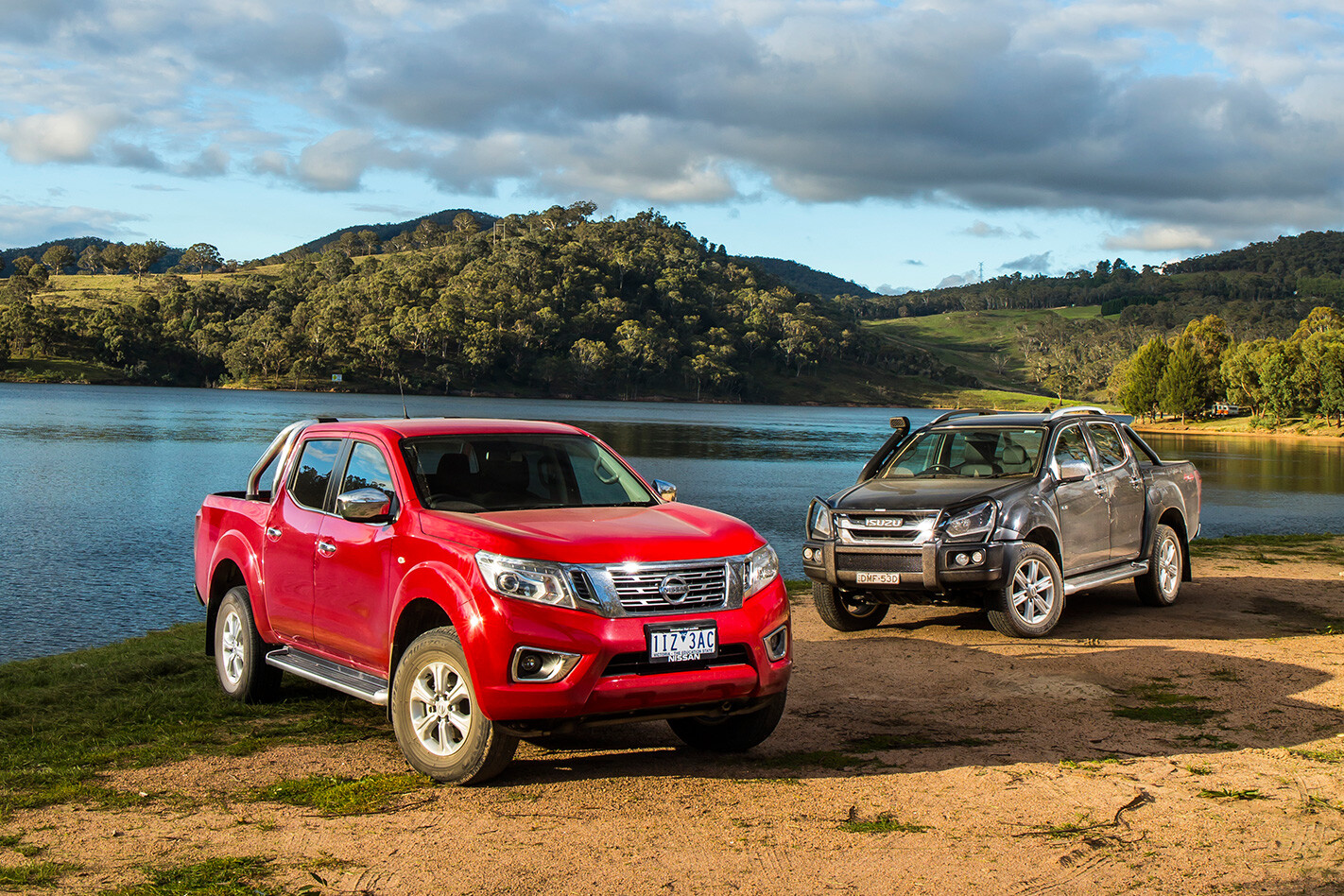
We’re testing new metal from Isuzu with the updated, under-the-skin-twins MU-X and D-MAX – the latter of which is pitted against and old foe in the Nissan Navara. We also get behind the wheel of a tweaked Grand Cherokee. All four are put through their paces both on- and off-road for your benefit.
As usual, the 178-page mag is also full of custom creations, readers’ rigs and some cool off-road adventures to tap into your sense of wanderlust.
Get your copy of 4X4 Australia from newsagents or by subscribing to 4X4 Australia in electronic or print format.
What you’ll get this month:
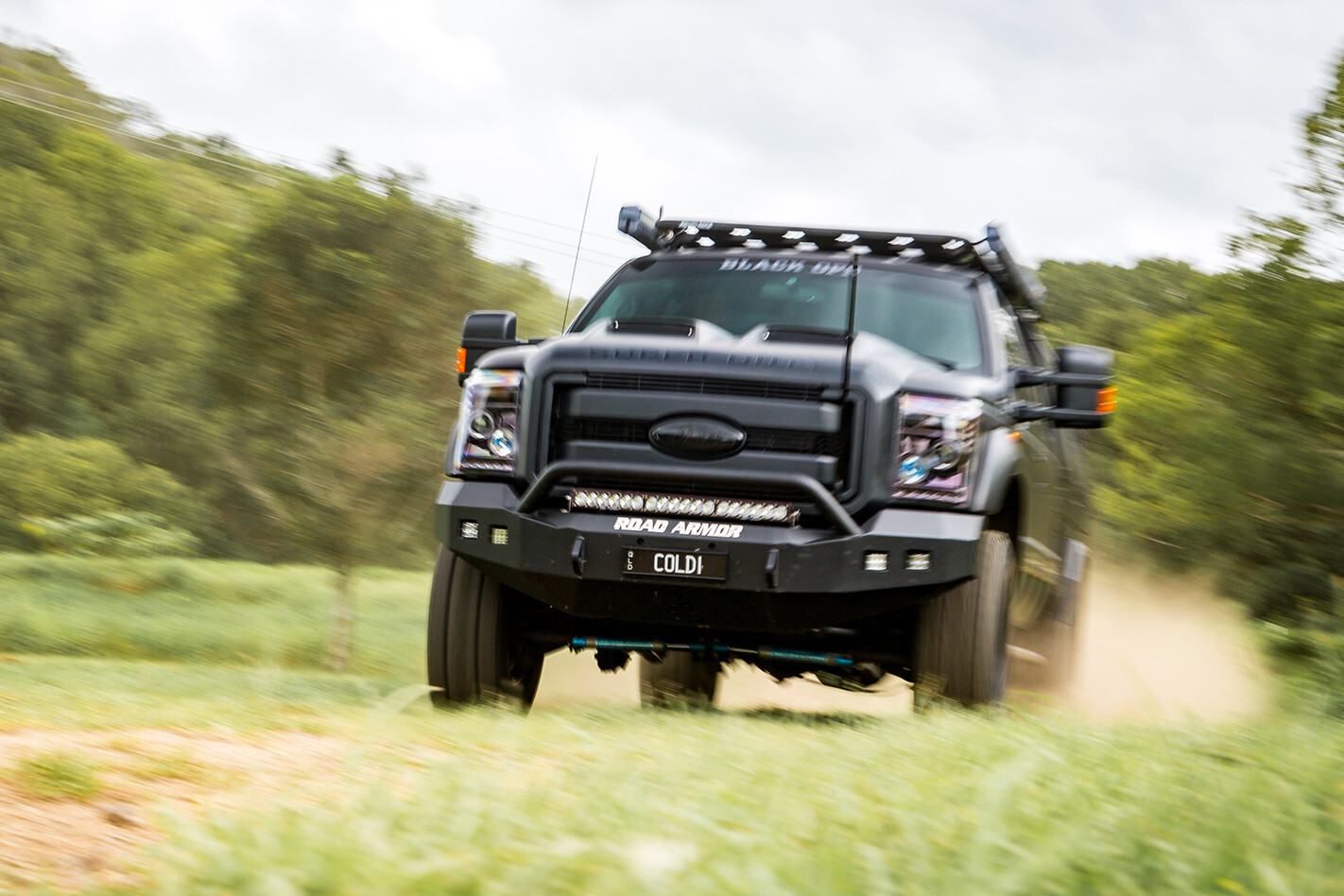
BLACK OPS When the standard Ford F250 isn’t enough.
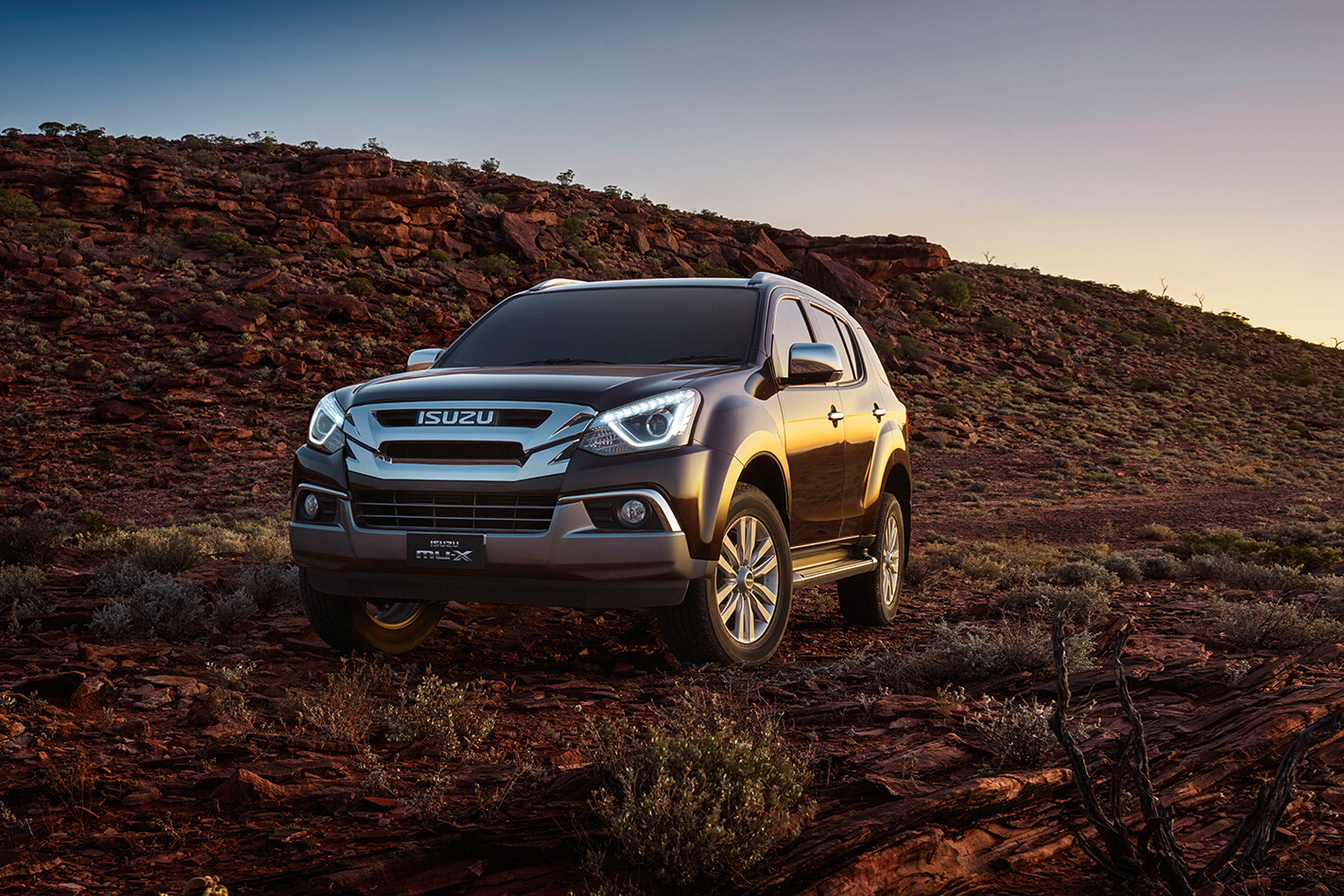
ISUZU MU-X Off-road-focused wagon gains an update to keep up with the pack.
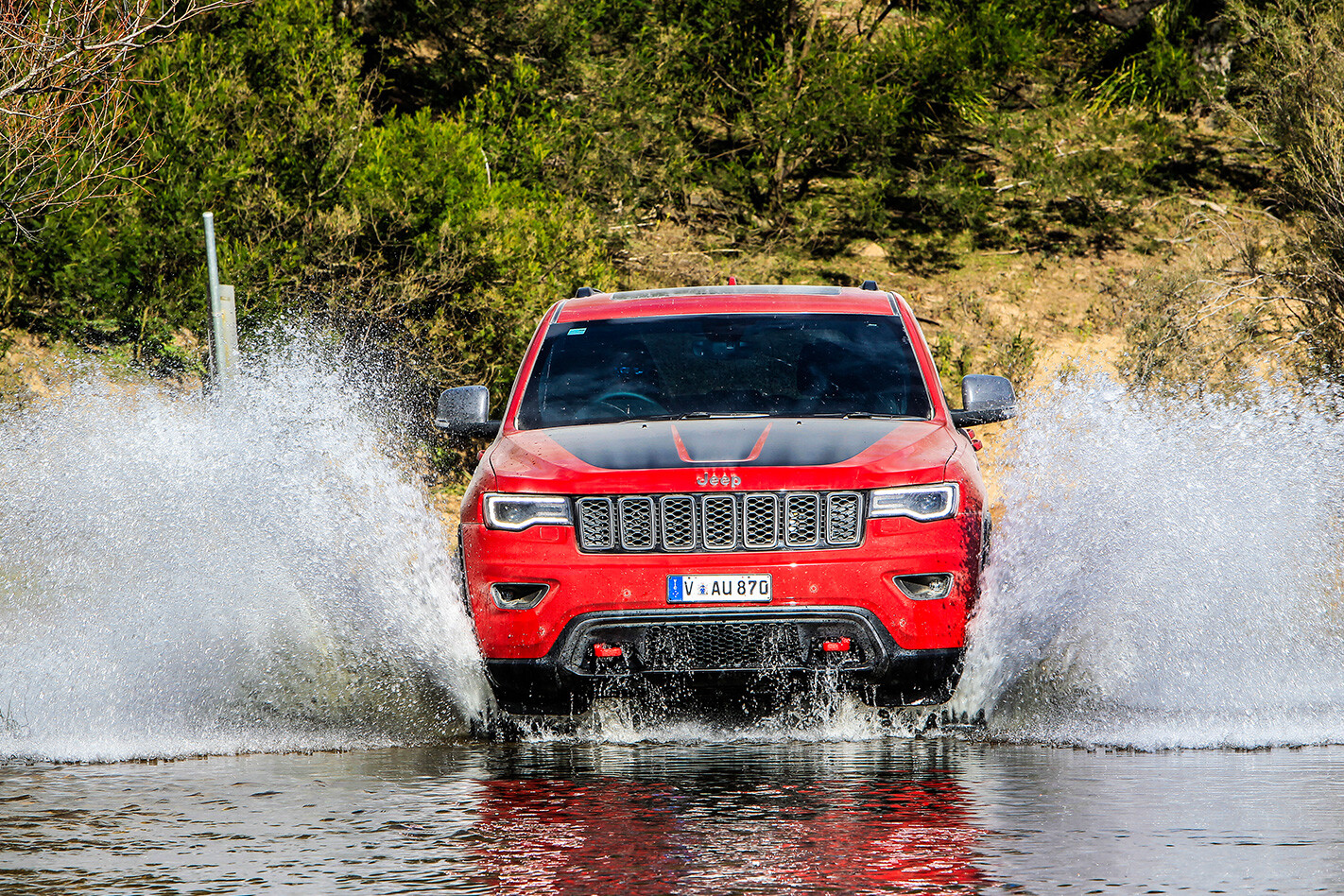
JEEP GRAND CHEROKEE TRAILHAWK Trail-focused Jeep headlines the changes to the fourth-gen (WK2) Grand Cherokee range.
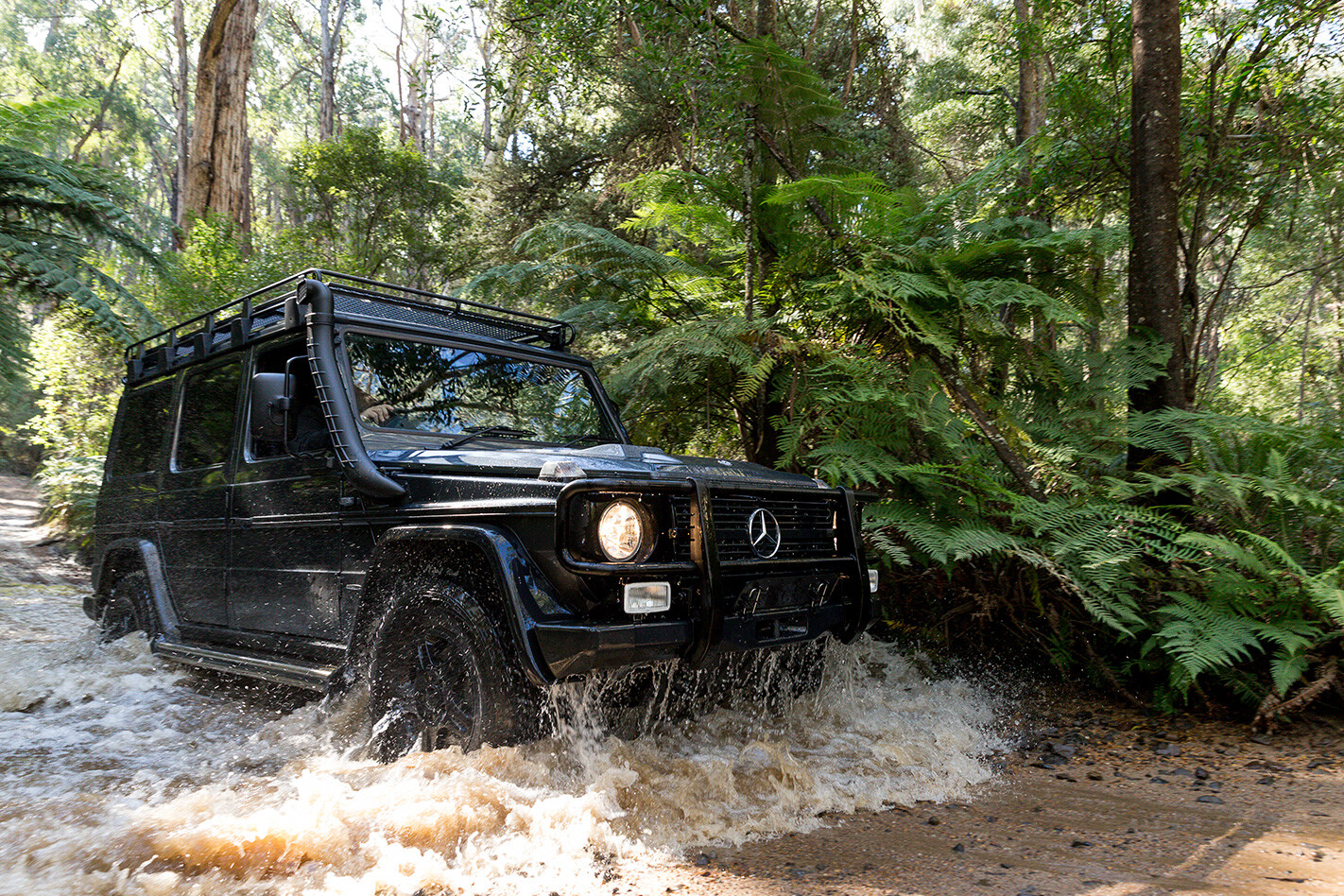
MERCEDES-BENZ G300 CDI PROFESSIONAL You can’t teach an old dog new tricks – but that’s not always a bad thing.
D-MAX TAKES ON NAVARA It’s a battle of the tweaked heavyweight dual-cab utes.
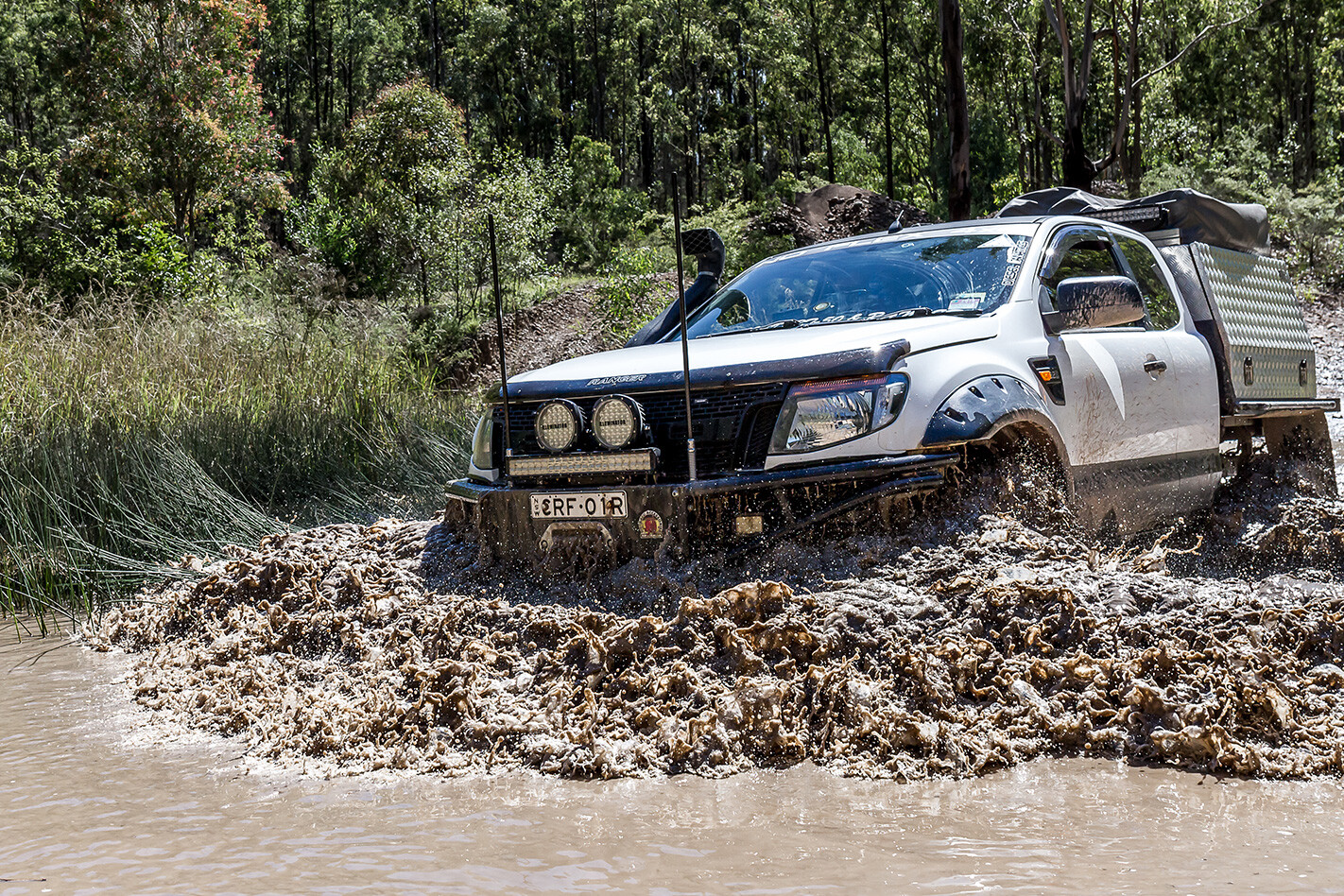
CAN-DO ATTITUDE Battle-ready Ranger is ready for a fight.
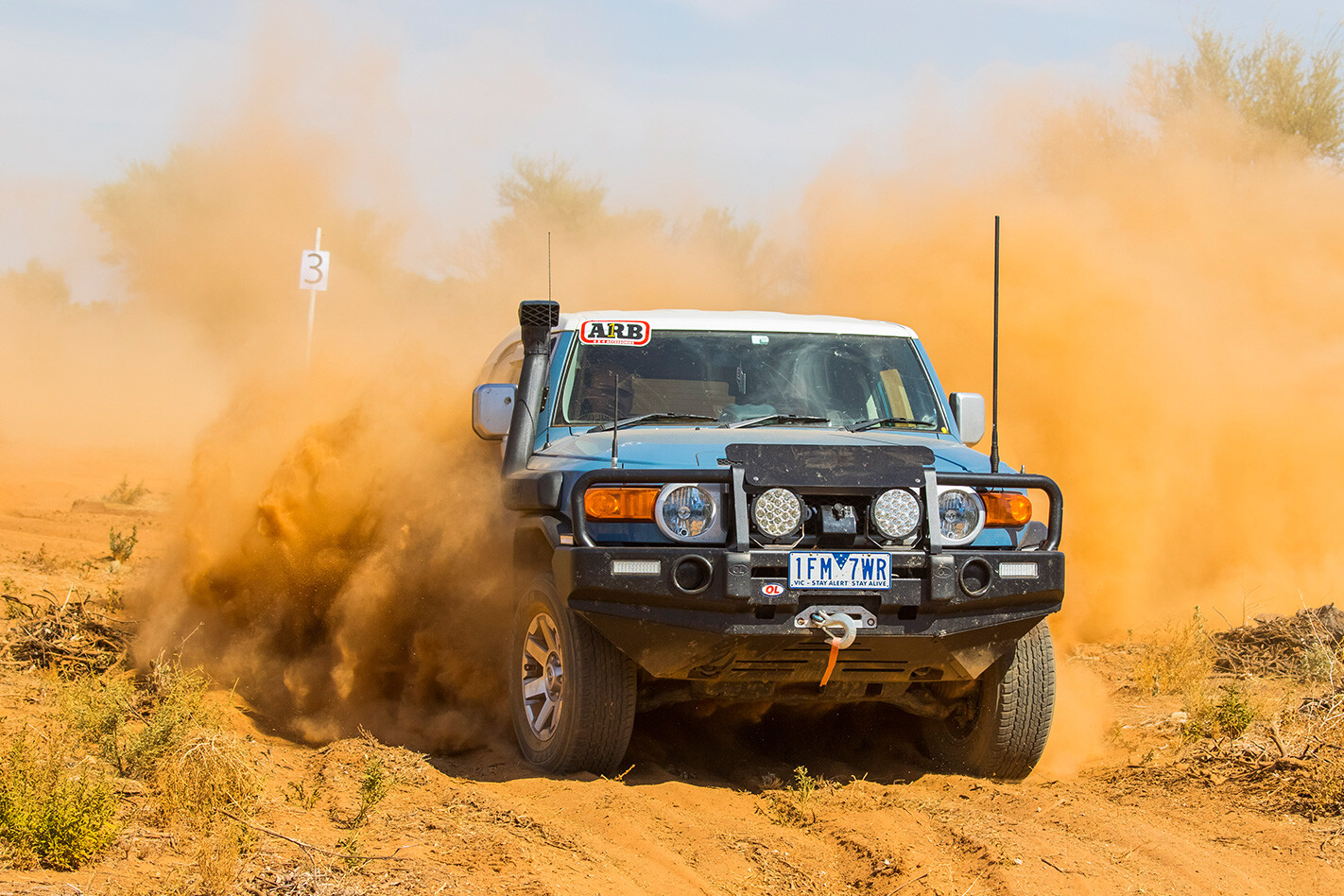
2017 ARB ELDEE EASTER EVENT Fun-filled, off-road family event in which everyone can get involved in.
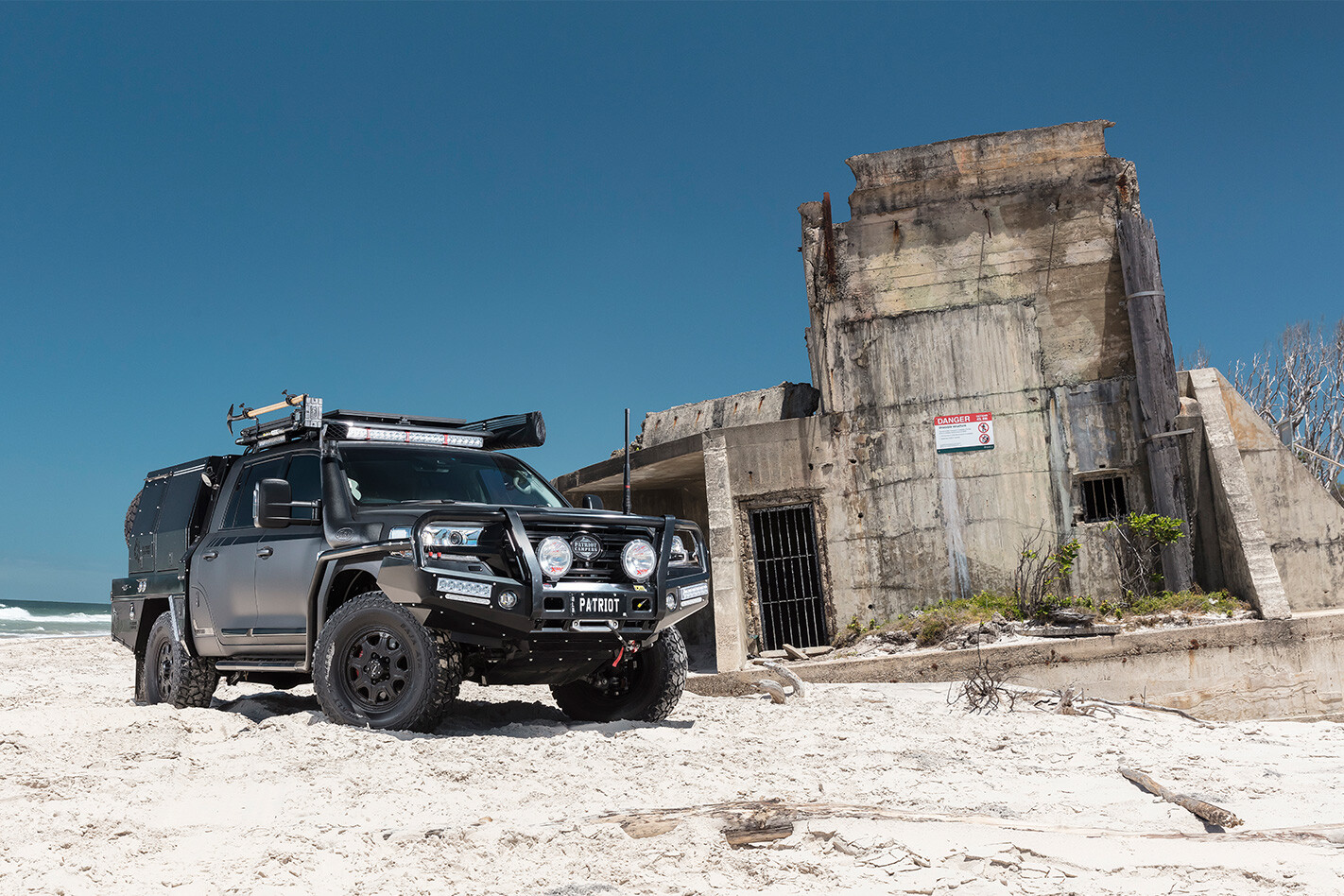
KING OF THE HILL Patriot Campers creates the ultimate LC200, with the Super Tourer, Black Edition.
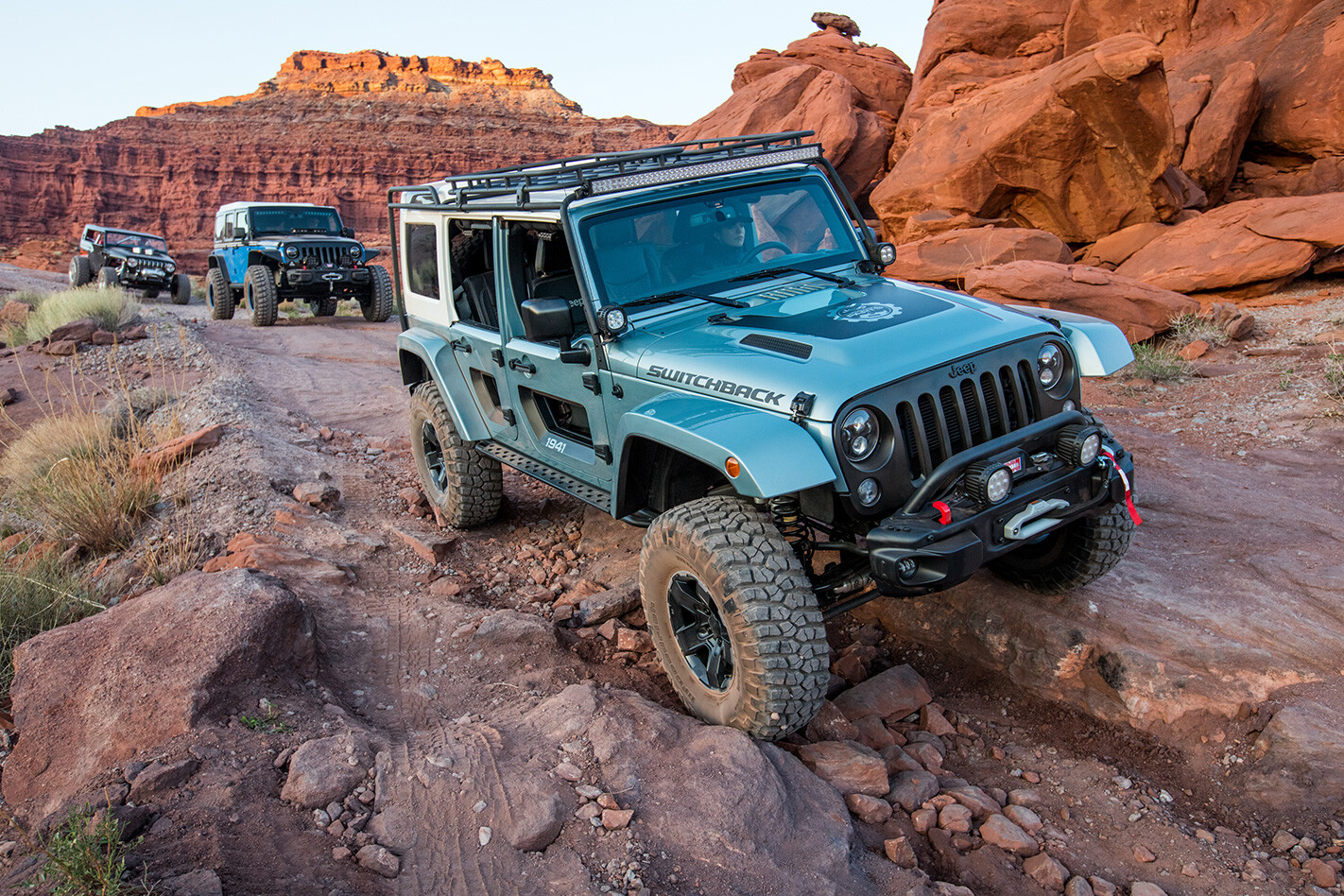
EASTER JEEP SAFARI Heaven on earth – or an American desert – for seven-slot grill aficionados.
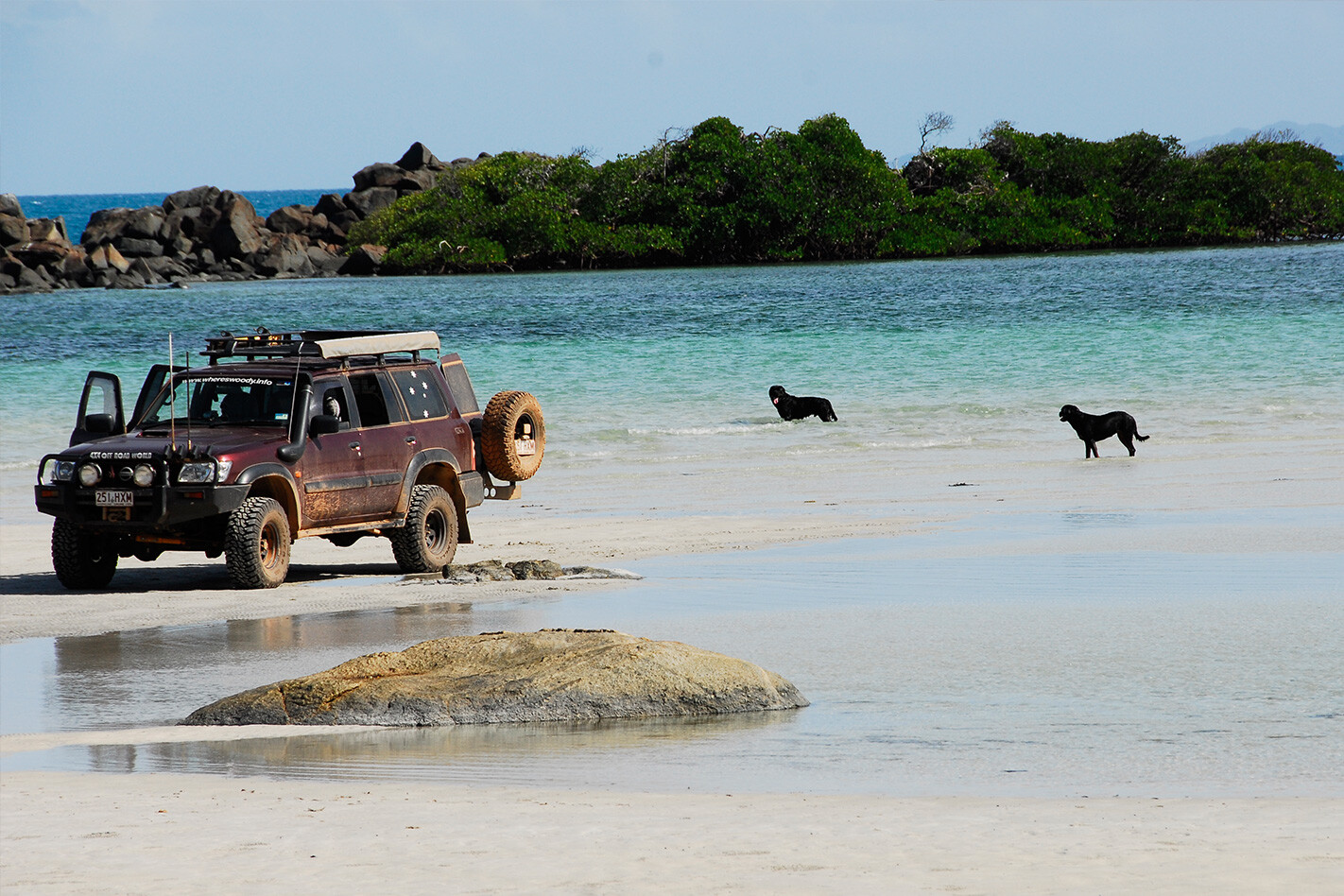
CAPE YORK PENINSULA, QLD If there’s one must-do trip in Australia, this would have to be high on the list.
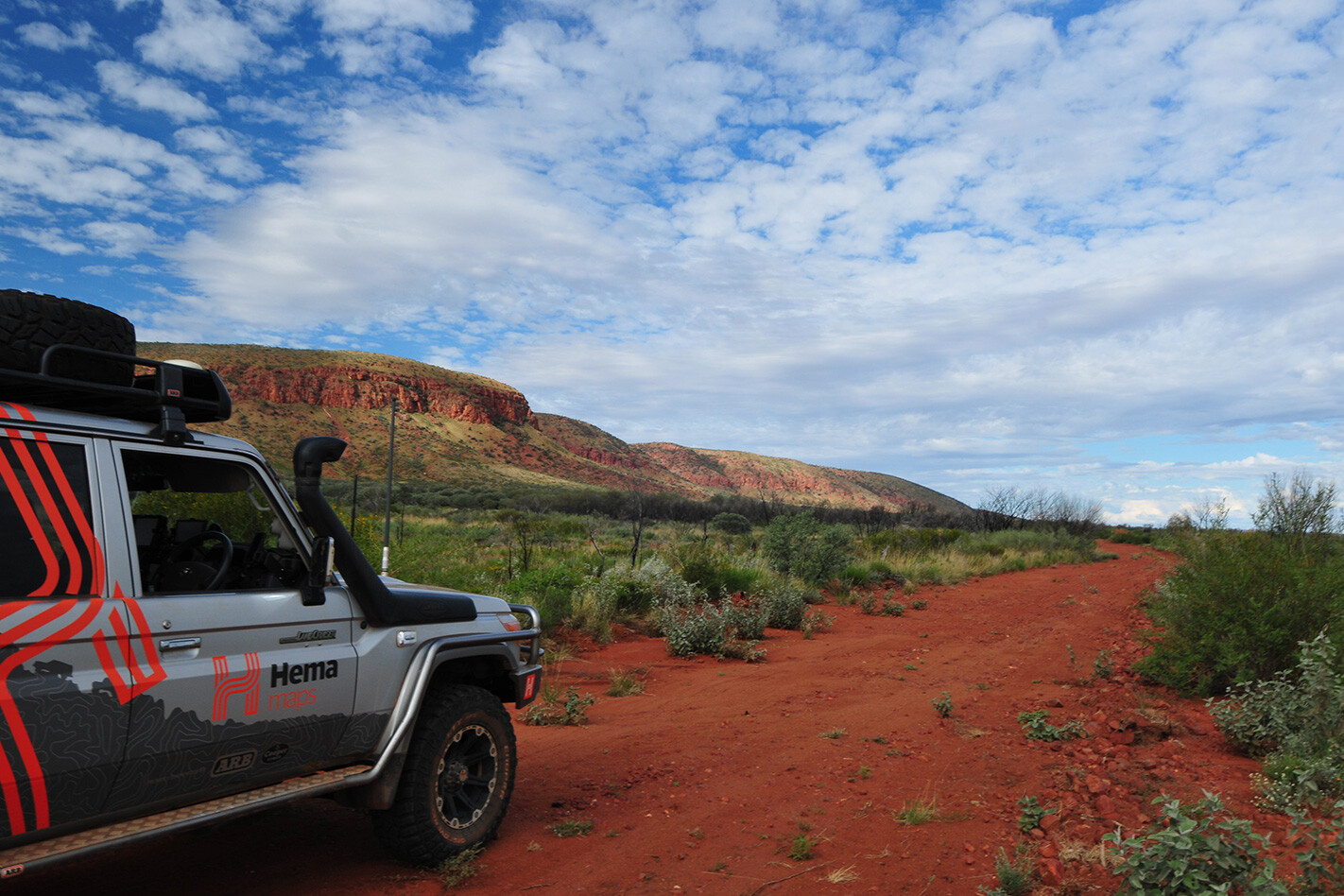
NEWHAVEN WILDLIFE SANCTUARY, NT A hidden gem tucked away in desert country, for wildlife lovers alike.
PEOPLE LIKE US – JOHN DYNON The self-proclaimed ‘colourful drunk’ also happens to be an amazing artist.

HOW TO BUY A USED FOURBIE Escape the second-hand blues with this quick how-to guide.
4X4 GARAGE: LAND CRUISER 79 GXL SINGLE-CAB All good things must come to an end, hence we regretfully hand back the Cruiser keys.
THE REST
Myriad products have once again come through our office to test: Bridgestone Dueller 697 A/Ts, Lightforce Genesis LEDs, Yakima Literider and the Projecta IDC25 charger.
Readers’ Rigs continues to gather momentum with some strong entries. This month we’ve included a tough Everest, an off-road-ready Amarok and a mud-slinging Challenger (among others).
Deano explains how to hold down your breakfast, Ron puts the call out to save the remaining High Country huts, Fraser talks the 70 Series and V8 engine upgrades, while Roothy finds an unlikely camera vehicle.
Plus, Dan’s 60 gets the chop, and we have a bunch of performance upgrades in the 4X4 shed.
The July issue of 4X4 Australia is in stores Thursday, May 8.
THE Toyota Hilux and Ford Ranger were the best-selling vehicles in May on the overall charts, repeating the success of April.
The Hilux and Ranger (4×4 and 4×2 variants) sold 4154 and 4069 units respectively this month, placing them ahead of the Toyota Corolla (3160), Hyundai i30 (2683) and Mazda3 (2594).
In particular, this is a great result for Ford, with Ranger sales up a substantial 30.6 per cent month-on-month – Hilux growth is 13.0 per cent.
Ford’s sales total of 4069 is also one sale short of its all-time monthly sales record of 4070, and sales director, Greg Davidson, said of the result: “Ranger has been incredibly successful, and we’ve continued to offer updates with more equipment, such as SYNC3 in 2016, and FX4 model, which has a unique look and leather-appointed upholstery.”
Things also look good for Ford in the 4×4-only segment, with the Ranger again pipping the Hilux to remain the most sought-after 4×4 – 3384 monthly sales to 3136. The Prado, Colorado and Triton round out the top five on the May 4×4 sales charts.
On the overall market, things were booming this month, with new-car sales up 6.4 per cent on this time last year. And it’s the SUV segment that’s again leading the charge, outselling passenger cars and holding a 38.5 per cent share of the total market.
In particular, mid-sized SUVs are dominating that sector, showing 23.3 per cent growth in May compared to the same time last year.
Passenger cars held a 37.7 per cent slice, while LCVs maintained a healthy 20.6 per cent share.
Tony Weber, chief executive of the FCAI, said: “Light commercials and SUVs were again strong performing segments, both up by 9.4 per cent on the result of May 2016.”
u00a0 | 4X4 | MAY 17 | APR 17 | YTD |
1 | Ford Ranger | 3384 | 2708 | 14,114 |
2 | Toyota Hilux | 3136 | 2607 | 13,202 |
3 | Holden Colorado | 1699 | 1622 | 7423 |
4 | Toyota Prado | 1619 | 1322 | 6686 |
5 | Mitsubishi Triton | 1472 | 1114 | 7661 |
6 | Toyota Land Cruiser Wagon | 1313 | 1032 | 5196 |
7 | Isuzu Ute D-MAX | 1242 | 921 | 4384 |
8 | Nissan Navara | 1194 | 1103 | 5439 |
9 | Toyota Land Cruiser PU/CC | 824 | 597 | 3227 |
10 | Volkswagen Amarok | 713 | 500 | 3237 |
IN AN effort to increase storage options and ease roof-rack access, we’ve attached a Roadsafe ‘Blackhawk’ rear wheel tray and step to the spare wheel of our Troopy.
The kit is ridiculously easy to attach to a vertical spare wheel (tyre sizes ranging from 14 to 37 inches in diameter) using the included ratchet strap and easily adjustable tie-down rings under the main tray.
The optional step, held in place by the same strap, has teeth that ‘bite’ into the tyre and anti-slip tape on the upper surface to provide an extra stepping point for those wanting easy access to roof racks.
Care must be taken not to exceed the weight restrictions of your spare wheel carrier. Given that, this tray is rated to carry 120kg (static) and 60kg (mobile), while the step can handle a person up to 120kg.
A brace rail can also be mounted vertically (as we have done) to prevent the load moving towards your 4×4; or horizontally to allow a larger platform. The powdercoated platform incorporates various holes and slots to aid in securing gear, which can be done via bolts, straps or ropes (not included).
To give you an idea of the size of the platform, we’ve chucked up a jerry can, a 47-litre Evakool icebox and a stack of firewood. We won’t use the tray to cart gear all the time, but it’ll remain in place – I reckon our main use will be as a (two) step up to the roof racks.
On the downside, the tail of the ratchet strap is way too long for 33-inch tyres, so it needs to be trimmed – a heat knife is best to prevent the strap fraying. Also, the ratchet strap doesn’t lay flat on the tyre where it hooks onto the underside of the tray. A simple secondary ring or fitting would solve that.All up, the Roadsafe rear wheel tray and step provides a great extra storage option, along with safer and easier access up to the roof racks.
AVAILABLE FROM: www.roadsafe.com.au RRP: $199; $39 (optional step)