The old IPF driving lights that came with my Nissan Patrol have served me well, but they’re now 16 years young and it’s time to update them to a set of Narva Ultima 215 LEDs.
These LEDs are super powerful, producing 165W punched out through 33x5W LEDs that claim 10,500 raw lumens.
Constructed from pressure die-cast aluminum and sealed against dust and water ingress, the lights weigh only 2.8kg each. And at only 235mm high, the LEDs weren’t too much bigger than the IPFs they were replacing.
The hard-coated polycarbonate lens is claimed to be virtually unbreakable and will survive the onslaught of bouncing stones and debris I’ll soon encounter out on the tracks. The lights come with a lens protector and the customer’s choice of three colour trims to suit vehicles – call me Barry Boring, but I stuck with standard silver.
The first task in the fitting was removing the old lights, which was easy once I figured out how to get the Sidchrome up in the space. I then had to drill some new holes in the bar to mount the Narva 215s. While you could get away with one main mounting bolt, I chose the three for maximum stability – and to get the positioning right, I used a thin rubber mounting mat as a template.
It was then time for the old harness to come out, making mental notes of where things ran under the bonnet for when it came time to fit the new one. It’s strongly advised to get the matching wiring harness, as it makes the job pretty much idiot-proof given it’s a plug-and-play set-up. All of the wires in the kit are clearly labelled, and the kit comes with everything you need to get the job done.
The 40amp fuse was secured using an existing fitting, while for the 40amp relay we had to pop in a self -tapping screw to hold things in place. The most time-consuming part of installation was running the driving light switch through the firewall. It should have been simple, as we were running it alongside the wiring for the old lights, but we were hamstrung by fat fingers and eyesight not as good as it was 10 years ago.
Before long, though, it was through, with the push-button switch stuck on the dash by the steering column within easy reach of the driver. The new wiring loom was run in the same spot as the old and, once tapped into the headlight/high beam circuit, it was all cable-tied into position, ensuring the complete job looked neat as a pin.
The final task was to tap into the parking light circuit so the parking light pipe would be operational. One could live without them, but it looks neater when complete.
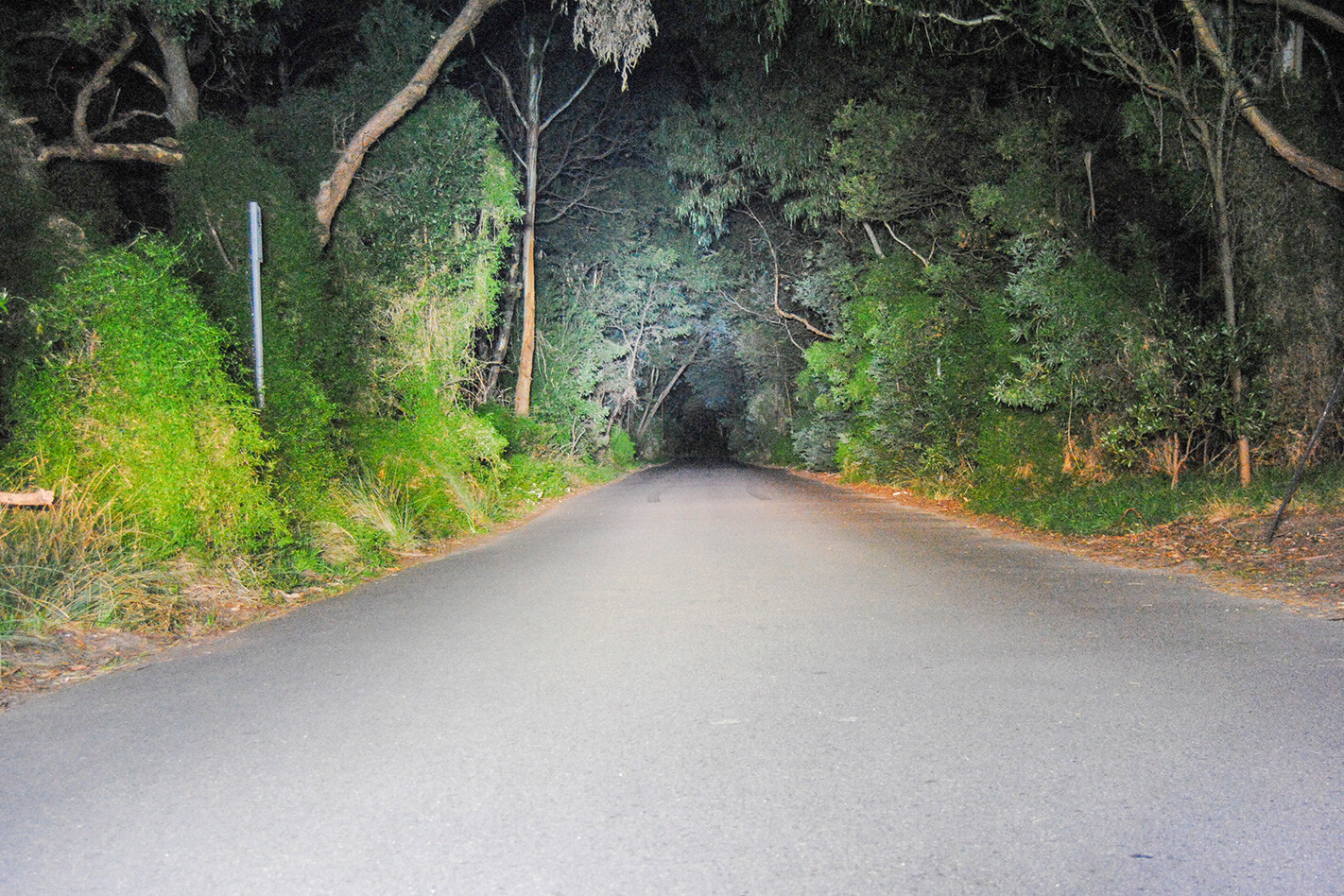
The difference in the performance so far has been amazing and, as can be seen in the photos, the LEDS clearly lit up the entire 300-metre road we pointed them at. Unfortunately, there is scrub on both sides of the road, limiting the view of the spread. Adjusting them was easy, as it has a unique tool-free adjustment on the side – just unscrew, adjust, then tighten.
The Narva 215s are a very impressive set of LEDs. If you, like me, are sporting a set of old favourites that do an okay job, we recommend you go and have a look at new tech such as these. Safety on outback roads is paramount, and you can’t avoid something you can’t see.
AVAILABLE FROM: www.narva.com.au RRP: $699 per lamp (expected) WE SAY: Quick installation, make a massive difference.
FOUR-WHEEL drives are all somewhat versatile, but they still tend to fall into certain niches depending on the gear you fit to them. Want to travel to the ends of the earth and back? A two-inch lift and some 32s will be bang on for that job. Aiming to take on the toughest tracks you can point your winch at? How about a set of 37s and enough lift to see you looking down on yank-tanks like they’re city runabouts?
Vote for the 2015 Jeep Wrangler Rubicon JKU to win 2017 Custom 4×4 of the Year
In a dream world we’d all have Jay Leno-style garages with a different 4×4 for every day of the week. After all, you’re not going to punt a stock Navara through six stages without days of winching, and you’re not weaving your way through Cape York looking for remote campsites with an 8in-lifted Patrol. So, what’s a man to do when he wants it all? Well, if you’re anything like Bill, you buy a Jeep.
If you’ve had your head in the sand (or up a suitably dark orifice) you mightn’t have noticed how incredibly popular Jeep’s four-door JK is. Put simply, they’re one of the most popular 4x4s on the tracks right now, and it’s down to their sheer versatility.
“I’ve had a few different 4x4s, from stock to highly modified,” Bill told us. “But I wanted something that could do all of it. The only option was a Rubicon.”
Off the showroom floor, the Rubicon picks up a beefier front axle than the Sport model, as well as lower transfer case gearing and a heap of trick off-road gear like rock sliders and electronically disconnecting swaybars. While some might be happy with a spec sheet like that, Bill figured he could do better and had the guys from Double Black Offroad (DBOR) go right through the Jeep from front to back before the dealer had even screwed the plates on.
Alright Jeep fans, we know you want to hear more about trick suspension and over-sized wheels than custom bonnets and unique paint jobs, so we won’t waste any time. Bill’s JKU is now sitting 4.5in closer to the skies thanks to a full DBOR Wild Kit. Despite the Rubicon sporting the far superior D44 front axle, the suspension links lack the adjustability to run at taller lifts and can easily turn into pretzels in hardcore wheeling situations. To rectify this, the DBOR Wild Kit swapped out all the factory offerings and replaced them with heavy duty adjustable items from US-based Synergy Manufacturing.
Of course, arms alone aren’t enough to get the clearance required, so the box was also ticked for a taller set of coils front and rear thanks to the guys at Rubicon Express. Those with eagle eyes will spot both front and rear axles are kept in check with Fox remote reservoir 2.0 shocks, the external reservoir allowing for more oil volume to help fight shock fade. The kit also comes with a heap of hard parts to make things work like stock, such as longer brake lines, extended bump stops, and relocation brackets to get the front and rear Panhard rods sitting flatter for a more compliant and predictable ride. The factory Rubicon front and rear diff locks have proved they’re more than up to the job, although Bill uses a Superchips Flashcal to disconnect the swaybars and engage the lockers in high-range.
Where most 4x4s have tyre sizes limited by the wheel arches, Bill was able to swap his low-hanging units out for a set of DBOR’s Flatty Fenders. The new fenders, combined with the suspension kit, lets the big JK swallow the huge 37in BFG KM2 tyres, with Walker Evans beadlock wheels keeping them in place even when pressures are dropped down to single digits.
Got your fix Jeep freaks? Now back to your regular programming. The front of the JK sports a more aggressive look thanks to a stubby DBOR bullbar. It not only provides a better approach angle for technical rock driving but also houses a fully waterproof Smittybilt X20 12,000lb winch. Lightforce’s HID/LED combo HTX230 driving lights also made it on there, with a set of LED headlights replacing the stock 7in candlesticks in the M1 mesh grille. While Smittybilt boast features like stainless construction, Bill just wanted to stand out in a crowd of angry eyes.
To help the Jeep cope with Australian conditions, a Daystar hood cowl was installed with a set of their bonnet vents and an AEV snorkel feeding into the Air Raid air box. Daystar claims the set-up can reduce under-bonnet temperatures by as much as 12 per cent, which should give Bill confidence for slow-wheeling in the summer months.
In the three days a year the sun comes out in Victoria, the stock removable hard-top gets yanked off with a roof-winch set-up, with a Smittybilt mesh roof and cargo net helping keep Bill’s gear in and the sun out. The rear end copped similar treatment to the front, with an Atlas rear bar getting the heavy 37in spare off the tailgate and onto a dedicated carrier. The set-up not only gets the load off the tailgate hinges but also provides vital protection for the exposed rear quarter panels, and it also sees the rear kitted with twin recovery points and 40 litres of fuel storage in twin Jerry cans.
Like the rest of Bill’s Jeep, the interior came together like a man-sized Meccano set, with key upgrades exactly where he needed them.
“I’ve owned an old FJ40 before,” he told us. “So I know how much vinyl and leather burn after sitting in the sun for a while, and opted for the cloth Rubicon seats instead of the leather option.”
A GME UHF has also been fitted up for convoy comms with a matching aerial up front on the DBOR bullbar, while Jeep rubber floor mats help keep mud off the carpet. Navigation off-road is handled by the factory in-dash head unit, but Bill’s ran through the stereo system and upgraded components left, right and centre to build the ultimate summer cruiser.
It’s near impossible to build the perfect do-it-all 4×4, but while manufacturers are offering easily upgradable platforms and the aftermarket are finding smarter ways of making use of them, we’re getting closer and closer. Bill’s JK Rubicon has all the gear to take on some of the toughest tracks, and it can lift huge 37in tyres a metre in the air and still remain composed. At the end of that he can hose it off and drive to the other side of the country. It really is proof that the actual modifications you make to a 4×4 don’t impact reliability, it’s how well they’re done that’ll give you the results you’re looking for.
WHAT’S IN A NAME?
We mentioned before that Bill’s Rubicon comes optioned up with the beefier D44 axle rather than the base model’s D30, but if you’re not fluent in seven-slot grilles, that might not make a whole lot of sense. Unlike most other 4x4s that use their own proprietary axle assemblies front and rear, Jeep diffs are from aftermarket manufacturer Dana – yes, the same Dana offering rear axle upgrades for Land Cruisers.
In JK Wranglers, you’ve got the choice of either a Dana 30 front axle or Dana 44, depending on which spec you get. There are a few key differences that make the D44 axle the pick of the two, such as an increased spline count on the axles (30v32), a sturdier gear carrier which can prevent deflection and damage to the gear set under load, and a physically larger ring and pinion. While the differences aren’t huge, they do mean the larger axle will cop more punishment from larger tyres without too much concern.
If you’re looking to kick things up a notch, the Dana 60 axles, which are beefier in every single way, are the next step up the ladder and are a key component to getting a late-model Jeep road legal on 37s.
While the pen and paper is out plotting the route for your next adventure, why not deck out your 4×4 with some new aftermarket kit before you take off. Here’s just a small sample of what’s currently on the market:
OPPOSITE LOCK PREMIUM STEEL 3 LOOP BULLBAR – D-MAX
Oppy Lock has expanded its range of protective bar-work for the Isuzu D-MAX, with the release of its new Premium Steel 3 Loop Bullbar. This airbag-compliant bar includes a central split air dam, heavy-duty over-riders to protect against those carpark nudges, and a provision for fitting fog lights and low-mount electric winches. The central split air dam combines with the three-piece protection plate up front to minimise engine damage during a collision. The recessed LED indicator lenses are also well protected in the event of a collision. Also included are three quick-release aerial mounts, the option to fit spotties into the bar, and twin high-lift jack mounts. The two recovery points are rated at 3000kg, and the bar itself is phosphate cleaned and powdercoated in matte black to ensure durability and easy cleaning.
Website: www.oppositelock.com.au
XTREME OUTBACK HEAVY DUTY CLUTCH KIT – VW AMAROK
This heavy-duty upgrade is suited to 2011+ Amarok 2.0TD vehicles. Designed to offer increased clamping forces up to a claimed 30 per cent above the standard clutch, this kit does so while retaining a self-adjusting clutch cover and dual mass flywheel. For any Amarok-based off-roaders – and those who tow regularly – this kit is a worthwhile upgrade as it boosts durability and offers smooth operation. The kit includes the heavy-duty, self-adjusting pressure plate, a 240mm sprung organic friction disc, and a concentric slave cylinder. There’s little doubt this kit is built tough, with the ability to handle torque loads of up to 600Nm.
Website: www.xtremeoutback.com.au
IRONMAN 4X4 120W SOLAR MAT KIT
Packing plenty of power into a compact size, the new 120W solar mat kit from Ironman 4×4 is packed with efficient charging technology for all battery types (excluding lithium). The kit comprises a 12V digital five-stage 15A PWM (pulse width modulated) controller, a mat featuring six panels (20W each; the black monocrystalline C60 cells are claimed to be 22.5 per cent more efficient than others on the market), 50A heavy-duty Anderson style plugs, five-metre extension lead and a 0.8m extension lead with battery clamps. The increased efficiency means more Amp hours are delivered into the batteries being charged. All this packs up into a carry bag that measures 40x30cm and weighs a paltry 4kg.
Website: www.ironman4x4.com RRP: $799
RHINO-RACK FOLDING AERIAL BRACKET
Radio aerials and flag antennae add considerable height to your 4×4, making the transition from outback travel to parking in urban areas with limited height clearance (read: low-roofed carparks) an often painful experience. Rhino-Rack’s new folding aerial bracket minimises the hassle of (often) having to remove the aerial or antenna from your rig, with up to seven customisable angles over a 180-degree arc. The bracket’s tough steel frame body features a large internal space design for associated cables and is compatible with Rhino-Rack’s Vortex, Heavy Duty, and Pioneer rack systems. You can also mount the bracket direct to the bullbar of your rig. Operation is easy – just pull the spring-engaged lever and move to the appropriate angle.
RRP: $89 Website: www.rhinorack.com.au
MSA 4X4 ACCESSORIES PROTECTION TUBES
Exploding beer bottles in the fridge/freezer when you’re away on a big trip is an off-roader’s worse fear. MSA 4X4 Accessories’ neoprene protection tubes are now available to remove that fear. The crew at MSA haven’t just gone with the chunkiest protection, either; the 2mm neoprene is just the right thickness to ensure protection and maximise storage. These come in two colours (red and black) for easy identification of the goodies inside, with the can and stubby version housing 12 tubes; the wine bottle model has six. There’s even a canvas storage bag that can be easily affixed to your fridge/freezer when not in use. These jobbies come with a lifetime warranty.
Website: www.msa4x4.com.au RRP: from $34
There are six levels of vehicle autonomy.
They start at Level Zero, which is an older, basic car with no autonomous functions at all.
Level One autonomy introduces technologies such as radar cruise control, auto braking, lane-keeping assistance and blind-spot monitoring – Level One AVs are now common.
Level Two autonomy combines various Level One features to provide the car with the ability to match the speed of the car in front up to a pre-selected speed, automatically brake if need be, and self-steer to keep in the lane – this isn’t too hard to achieve now.
Level Three autonomy is where the car starts to think for itself and can move out of lanes and navigate through traffic in an active way rather than the essentially passive/re-active Level Two mode. However, a human driver has to be ready to take control if need be in an emergency, something which the car industry sees as being very problematic going forward.
Level Four is full autonomous control (no human intervention at all), but only on roads and in locations specifically approved or designed for this purpose.
Level Five autonomy ups the ante further by also offering full autonomous control without road and location restrictions.
BOLLINGER Motors has dropped the curtains on its B1, the world’s first all-electric sport utility truck.
Revealed at the Classic Car Club of Manhattan in New York, the all-wheel drive B1 employs a dual-motor powertrain configuration, with front- and rear-mounted synchronous electric motors. This full-time all-wheel drive system is capable of delivering 270kW and 640Nm.
“We are so thrilled to be able to finally take the wraps off of our Bollinger B1 SUT,” founder and CEO, Robert Bollinger said. “This is the culmination of what has been a 40-year-long boyhood dream of mine and I couldn’t be more pleased with the vehicle and the incredible team who worked so hard to create it.”
Two lithium-ion battery-pack options (60kWh and 100kWh) will be offered for production models, providing maximum ranges of either 120 (193km) or 200 miles (322km). Charging includes conventional 110V and 220V options, as well as Level 3 “DC Fast” charging. The battery packs are designed to withstand being submerged in 3.3ft of water for 30 minutes.
“At either a 120 or 200 mile estimated range, the Bollinger B1 will have more range than most electric vehicles on the road today,” John Hutchison, Bollinger Motors engineer, said. “The average US driver travels less than 36 miles (58km) per day, so the B1 has plenty of charge for anything you throw at it. I think we found the right combination of utility, off-road capability and range options.”
CJ Winegar, another Bollinger Motors engineer, added: “The B1 combines Bollinger Motors’ advanced all-wheel-drive system with our all-electric powertrain to produce best-in-class horsepower, torque and ground clearance.”
Self-levelling, four-wheel independent, hydro-pneumatic suspension can adjust ground clearance between 10 and 20 inches. While approach, departure and breakover angles are 56 degrees, 53 degrees and 33 degrees, respectively.
The B1’s off-road credentials are improved further thanks to its advanced, all-aluminium chassis and high-strength, low-alloy steel rollover structure.
The 1769kg B1 has a payload capacity of 2767kg. While rolling stock is in the form of Mud Terrain LT285/70/R17 tyres with high offset aluminium wheels.
The minimalist interior is designed with off-roading in mind, evidenced by the rubber seals and gaskets of the instruments (and polyurethane –coated floor plans) which can all be hosed down.
“The interior follows the strong and straight-line design of the exterior using simplicity and straight-forwardness as the main design language,” Ross Compton, who assisted Bollinger with the design of the B1, said. “We also wanted to give the vehicle a feel of openness and spaciousness so you can use the vehicle in a variety of different ways.”
Bollinger added: “Since the B1 is an all-electric truck, it’s really a portable energy source. So we put 100 volt plugs throughout the truck so you can use it to power any equipment and tools you might need out in the field. USB and 12 volt plugs are also integrated into the dash to cover all power needs.”
Bollinger Motors is currently in talks with third-party manufacturers in the US, and it’s also reviewing options for potential build facilities.
“While we’ll be announcing pricing and manufacturing targets later this year, the business case for the B1 makes sense at a very realistic and modest production number and at a price point of a nicely equipped sport utility vehicle,” Bollinger said. “When you factor in this vehicle’s superiority over the other choices on today’s market, we think we have a winning combination.”
Once manufacturing is locked away, deliveries are expected to start in the USA within 19 months.
For more information, head to: www.bollingermotors.com.
VOLKSWAGEN has released a Sportline variant of its Amarok V6 range, and it will be available in local showrooms from August 1.
The Sportline V6 will be priced from $55,490, undercutting the Highline V6 ($59,990) and Ultimate V6 ($67,990) to be the cheapest way into a V6-powered ’Rok.
The V6 engine, capable of 165kW (180kW on overboost) and 550Nm, is paired with an eight-speed automatic transmission. While a six-speed manual Sportline V6 will arrive locally in 2018.
In light of the recent launch of the Mercedes-Benz X-Class, the director of Volkswagen Commercial Vehicles, Carlos Santos, said: “Amarok V6’s technology derives wholly from within the Volkswagen Group. We have not had to look to Japan for a donor vehicle. Amarok remains the only V6 turbo-diesel ute on the market, a space it alone will occupy for some time to come.”
The Amarok Sportline V6 TDI550 also features full-time 4×4, four-wheel disc brakes,18-inch ‘Manaus’ alloy wheels, front and rear parking sensors, a rear-view camera, four 12v USB sockets (including in the tray), tinted rear windows, and a mechanical diff-lock.
The Sportline V6 will be in showrooms from August 1, 2017.
*Unfortunately, official photos of the new Sportline won’t be available until next week. So stay tuned.
AUSTRALIAN off-road suspension company, EFS, has expanded into general 4×4 accessories, announcing the release of a range of EFS Adventure barwork (bullbars, rear bar, side rails, side steps), snorkels, and an electric winch for off-road vehicles.
EFS has been building highly regarded off-road suspension for more than 50 years, and this expansion into the accessories market is just as considered, following on from nearly three years of development and research – and no-holds-barred testing, thanks to the All 4 Adventure team of Jason and Simon.
The Recon winch, in particular, is a standout, both in terms of industry-leading 13,000lb capacity (single line pull), and how it survived the rigorous demands of the All 4 Adventure team.
“Jason and Simon… they just did the final test on the winch a few weeks back,” James Don, EFS 4X4 Accessory Marketing manager, elaborated. “We knew if it comes back with flying colours with them – and they are just brutal on gear – we are on a winner.”
In fact, the gear’s performance (the duo also fitted out their rigs with EFS Adventure series barwork, as well as the Recon winch) went beyond just “flying colours”.
“We had no problems,” James said of the winch testing.
Initially, the EFS Adventure barwork and the Recon winch will be available for all popular dual-cab 4×4 utes and Toyota’s Land Cruiser 200 Series. The front and rear bars are on sale now, with the Recon winch becoming available mid-August.
This first wave of products will be followed by the release of the EFS side rails, side steps and snorkel towards the end of this year. EFS plans to further expand its accessory range to cover other popular off-road vehicles, such as the 150 Series Prado, by the end of 2017.
Owners of older vehicles shouldn’t worry, either, with plans to cover superseded models already in the works. For EFS, it’s all about how the customers react to the product as to what happens next, reflecting the company’s considered approach to product development.
“Once we get feedback from our customers, we will start working backward towards the vehicles that aren’t being made any more – so vehicles like the 80 and 100 Series Cruisers, as well as Nissan’s GU Patrols, for example,” James said.
With the company’s decades of experience in the Aussie off-road scene, it’s easy to be confident that EFS will deliver some exciting aftermarket products to the market over the next few years. For more info on the new EFS accessories range, check out www.efs4wd.com.au
Anybody who says the sizeable Ford F250 isn’t a good Aussie touring vehicle hasn’t spoken to Neil or Helen Cocks about their well-set-up rig.
Bought brand new in 2004 when Ford was still converting the full-size pick-up (as the Yanks called them) for the Aussie market, the Ford has since been all over Australia, from the Victorian High Country to cross country desert trips in the Gibson and Great Sandy Desert. For a few years it wandered the world, overlanding across Africa, Europe, Russia and the Americas, before coming back ‘Down Under’ for more outback travels.
Powered by the old 7.3-litre V8 turbo-diesel engine with a Super Chip for even more torque than standard and a Banks exhaust for better breathing (and just a lovely note when it’s used in anger), the engine is hardly run-in despite having 400,000km on the clock.
The gearbox has been rebuilt and strengthened by Wholesale Automatics in Bayswater, while the diffs have had ARB air lockers fitted front and rear. An alloy Mag-Hytec diff cover on the rear and an ARB diff cover on the front axle not only improves cooling but also adds more oil capacity to both diffs.
OME springs with OME shocks grace each corner, while 35-inch Cooper ST Maxx tyres are fitted to 16-inch alloy wheels – the tyres specifically chosen for their weight-carrying capability, in this case 1750kg per corner.
Red Line oils are used throughout and, with the standard oil filter, engine oil changes have been extended to around 40,000km, meaning the Ford doesn’t need an oil change when on its annual long distance outback trip.
A Safari snorkel feeds clean air to the engine, while an extra battery helps power both the vehicle and the big Warn 12,000lb winch. The big Yank carries 255 litres of fuel to provide an impressive cruising range.
Inside the cab, a plethora of electronic gear graces the dash, including an ARB reversing camera, a Garmin Nuvi, an iPad running Hema’s latest mapping software, a tyre monitor, and a ScanGauge to keep track of tyre air pressures and engine electronics. A Codan HF radio and a GME UHF radio round out the navigation and communication wares.
For outback work, the rear seats have been removed and replaced by a huge storage box, while on the roof is a Tradesman Oval alloy roof rack. Tucked into the edge of the rack and barely visible is a set of impressive air horns that would make most locomotives envious.
However, it’s at the back-end where the Ford is vastly different, with a new 2450mm custom alloy tray that features four storage boxes, one for each corner, and a huge drawer in the centre that’s good for recovery gear and some tools.
Acting as a spacer between the tray and the bottom of the camper (to lift the camper high enough to clear the roofline of the cab) are two drawers which again add to the storage capability of this rig. All of that storage gets used, and Neil is known for his ability to roll out a veritable workshop when the situation demands it.
Under the tray are two 30-litre water tanks to back up the 100-litre water tank installed on the slide-on camper. Two spare tyres and two sets of MaxTrax, along with a long-handle shovel, are tucked in between the vehicle cab and the camper and are within easy reach.
The impressive camper on the back is a V2 model XPCamper imported from the USA, where it has been designed and built since its inception seven years ago. In fact, Neil had one of the first models – a V1 XP Camper – for a few years, but decided it was too big, too long and too heavy for the touring he likes to do. When the V2 version came along, he swooped on it.
This unit features the most modern construction techniques and materials, and the seamless shell of the XPCamper is both extremely light and exceptionally strong. The hard-sided monocoque construction combines a moulded composite-over-foam core wrapped with hand-laid unidirectional fiberglass, reinforced with carbon-fibre.
This unique self-supporting design is stronger, lighter and provides better thermal and acoustical insulation than a traditional internal frame camper, and the unit has proven to be dustproof and durable.
The hard-sided pop-up roof is powered by a hydraulic drive which lifts the roof easily and quickly. It has both a remote controller (although Neil prefers to use the on-board control unit) and an emergency wind-up. There are two six-volt heavy duty 150AH batteries used to store the power from the outstanding 360-watt solar panels.
Inside the camper is a queen-size bed, which needs minimal preparation to sleep in. The 50mm foam mattress uses a Froli Star Base, which is an impressive box spring system that acts as an independent spring mattress and works a treat. More storage is located beneath the bed.
Importantly, there is a 130-litre Dometic fridge/freezer, a Webasto heater for cold nights and a diesel-powered cooktop and water heater. An integrated sink, foldable taps and glass lid finish off the kitchen attire. The dining table and seating can be converted to a small bed if required and can handle two people with ease. Even more storage can be found under the seats.
At first you’d think ventilation may be a little wanting, but insulation of the camper and the roof is exceptional, with Neil commenting on how good the camper is on hot days. Two reversible electric roof vents and three dual-pane windows help in this regard. Electric power and water can be monitored and controlled from inside the camper, and all wiring is marine-grade and to Australian specifications.
A friend was so impressed with Neil’s unit, they ordered another similar one from the US, so now there are two XPCampers wandering the outback.
As we write this, the big Ford and camper are travelling the beaches of South Australia, heading to Twilight Cove and then onto Israelite Bay and Esperance in Western Australia, before heading into red sand country. Whoever said big isn’t good off-road?
BACK in March, 2017, 4X4 Australia was invited to a playdate with the unique Tonka concept.
The unique concept transformed many a kid’s favourite toy into a life-size, sand-dune-hopping juggernaut. It packed plenty of off-road goodies including bespoke carbon-fibre bodywork, LED light bars, Marks 4WD portal axles, Toyo Open Country M/T tyres, Method Race Wheels, King Suspension, and a 12-volt winch was slotted in behind a custom front bar.
Nicolas Hogios, Toyota’s product design chief, said: “We have taken Tonka out of the sandpit and reinvented Hilux from top to bottom and from nose to tail.” “Inspired by the Tonka trucks that kids play with in their backyards, the Hilux Tonka Concept goes way beyond the already hugely capable abilities of Hilux to traverse rocks and other rugged terrain.”
At the time, Toyota was adamant it wouldn’t offer a version to the public. So Car Giant, a car dealership in Perth, WA, put together this replica that’s now up for sale. The replica, built for sand dunes, features full vinyl Tonka wrap, Rhino bumper bar, massive lift, five new tyres with Tonka rims, sports bar, spare wheel carrier, jerry can holders, snorkel, flares, bonnet scoop, LED lights, and a tow bar.
As a bonus, the rig has only had one previous owner and is within new-car warranty until late 2018. Plus, it comes with a full logbook history. The six-speed auto dual-cab is listed at $67,955.
MSA 4X4 Accessories’ Explorer Aluminium Drawer System was launched recently, so we took the opportunity to chat with MSA’s founder Shane Miles and take a look at some of the company’s newest products.
This is advertiser content
Shane Miles and his wife Michelle established MSA 4X4 Accessories back at the start of the millennium (back then it was called Michelle’s Sacs Australia).
“My wife Michelle and I were driving around the country and we just needed canvas storage products. I had great ideas, Michelle could sew, so we just combined it together and we released quite a wide range of canvas products,” Shane told us.
From small beginnings, the company has grown to now include a plethora of revolutionary 4×4 kit: the DropSlide, the Water Bra, canvas seat covers with fully adjustable air lumbar support systems, and a wide range of 4WD accessories.
Before a product is released on the market, it must pass stringent safety procedures. “If it’s not safe and if it’s not compliant, it’s not released,” Shane explained. “People need to understand if you bolt an accessory or install anything onto a vehicle that is not ADR compliant, you lose the compliancy of the entire vehicle.”
Check out the video to witness the extensive man-hours that go into making MSA’s drawer systems, and why they’re up there with the best on the market.
What’s next? As Shane explained, there are plenty of fresh ideas on the horizon for the Australian-owned company: “There are a lot of products in the pipeline that people haven’t even thought of before.”
To stay informed, check out: www.msa4x4.com.au