
THE Warn Magnum series offers a more affordable Warn-badged winch than the top-of-the-line versions.
The Magnum, with an ‘on-paper’ advantage rating of 10,000lb instead of 9500, returned no real-life extra pull and follows the same lack of information for horsepower ratings as the Zeon range – Warn simply don’t tell you.
The Magnum drew high amps, often more than 400, and returned the second slowest time overall. Slow isn’t a problem unless other components fail.
While the Magnum didn’t fail, it started smoking on the fifth pull, at which it was pulling 400-plus amps with motor temperature readings of 104 and gearbox at 97 degrees.
After its duty-cycle cool-down period of 10 minutes, and during the last part of its sixth pull, it started smoking even more with slightly higher temperatures. We called it quits for a seventh pull, leaving a total of about 17 metres of winching compared to all of the others which managed about 20. Would it have kept going? Who knows, but there was simply no point destroying it just for the sake of it.
The Magnum winch also sports the strengthened thimble as per the Zeon; a simple design that saves the thimble from crushing under load, and one that all other manufacturers should heed.
This winch offers good protection sheaths at each end of the rope, while the drum end is red to signify how much rope is left on the drum, making it perfectly clear how much rope should not be pulled off.
Interestingly, the red portion is far more than the much bandied six, eight or 10 wraps suggested to keep on a drum; rather it takes up a full drum wrap plus some. The retaining bolt that secures the end of the rope to the drum is protected via a conical cover arrangement to loop the rope over, offering good rope protection from chaffing or cutting.
The Magnum control box is a step up in design from plonking a square box on top of a winch or bar work, but it is one step below the Zeon’s futuristic appearance.
A cast-aluminium tie-rod plate aids in rigidity of the whole winch body, helping to reduce flex during uneven winching.
A good rubber cover over the hand control plug should keep dirt and water out when it’s not in use. Hand control pictorial instructions are to the point and easy to understand.
Warnings and instructions of use are exceptional, as with most Warn products.
INCLUDED Wired hand remote control; alloy hawse fairlead; open hook with spring-loaded safety catch and removable clevis pin; safety strap; rope protector.
| Price | $1490 |
| Warranty | Limited lifetime mechanical / limited 7 year electrical |
| Load rating pound / kg | 10,000 / 4536 |
| Motor Hp | N/A |
| Gear ratio | 261:1 |
| Gear train type | 3 stage planetary |
| Brake type | Automatic direct drive cone |
| Synthetic rope size (diameter x length) | 9.5mm x 27.4m |
| Solenoid | Albright |
| Clutch | Sliding ring gear |
| Fairlead | Aluminium hawse fairlead |
| Drum size (diameter x length) | 64mm x 230mm |
NISSAN has unveiled the Navara N-SPORT Black Edition.
Much like what RAM did with its 2500 Code Black, which launched locally in July 2017, Nissan has thrown its darkest accessories and decals at the range-topping Navara ST-X dual cab 4×4.
The Black Edition, limited to a run of just 500 units, features a range of Nissan Genuine Accessories including a black sports bar, black nudge bar, a fitted LED light bar, black fender flares and 18-inch black alloy wheels.
Up front, smoky chrome fog lamp finishes surround a black gloss honeycomb grille, while a black soft tonneau covers the tray. N-SPORT badging and Black Edition decals are scattered from head to tail.
“The N-SPORT Black Edition gives the Navara a tough-looking makeover,” Nissan Australia managing director Richard Emery said. “Black is all the rage at the moment and certainly makes the Nissan Navara ST-X Dual Cab stand out.
“With its aggressive but stylish look and limited numbers we think this will be a popular variant for ute buyers.”
It’ll cost $2500 to get the black treatment applied. The six-speed manual Black Edition is priced from $54,490 (the manual ST-X dual cab retails for $51,990); the seven-speed auto version asks $56,990 (the auto ST-X dual cab costs $54,490).
All else remains the same as the ST-X dual cab 4×4, including the 140kW/450Nm 2.3-litre twin-turbo diesel engine, shift-on-the fly 4WD system and 3500kg braked towing capacity.
TINKERING with everyday products (think: MacGyver) to make life easier when miles away from the bright lights of the city is something 4x4ers have been doing for generations.
So to help jazz up camp life on a shoestring budget, we’ve assorted a selection of clever DIY travelling tips sent in by our readers.
1: DUMB KEY Electronic keys are great, but they don’t like water. So just leave it behind and take a dumb key that’s attached to a necklace. The dumb key is bare metal and can be purchased at any locksmith (check it works before relying on it). It won’t start the car, but it will unlock it, so you can get the electronic key from its safe spot inside. Sandie Walters
2: WASHING UP Wouldn’t it be handy to have water to wash your hands or your feet after a recovery before you get back in and start driving? We have a Land Rover Discovery and my husband has taken off the fittings for the headlight washers that weren’t working for our model vehicle. He connected a hose to the pump for the headlight washers and added a switch, and we now have water on tap on the bullbar. It’s even hot water if you’ve been driving for a while. Allyson Watts
3: RECYCLED BARBIE Don’t throw out your barbecue. If you’ve got your old Weber barbecue kicking about, you can take this out camping with you and give it a new lease on life as a camp fireplace. It works brilliantly. Ed and Donna Zerus
4: INDISPENSABLE Here’s a homemade toilet paper or paper towel dispenser. The top of a two-litre soft drink bottle is cut off, retaining parallel sides a little longer than the paper roll. The inner cardboard tube in the roll is removed and the inner end of the roll poked down through the neck of the bottle. The bottle can be kept in a zip-lock plastic bag with a hole cut in the base. Anonymous
5: CUSHIONED FLOOR Tents can be uncomfortable to sleep on if you don’t have the right gear. Buying some foam tiles for the floor can add a bit of colour to your tent and also make it much more comfortable to sleep on. Plus, they’re easy to store away and don’t take up much space if stacked correctly. Eric Triton
6: LIGHT IT UP Every 4×4 adventurer needs more light. We rigged up an LED work light on a magnetic base and it can sit anywhere on the roof. Instead of mounting a permanent light, risking damage and fading, we just pop this out when needed, connect it with the Anderson plug to our external socket, and put it on the roof. The magnetic base sits up there tight and won’t budge. You can drive with it on here, too. We simply bought an LED work light from eBay, a magnetic base and an Anderson plug 12-volt lead. Attach them all together and presto! If you don’t have an external Anderson plug, no problems, simply use a 12-volt cigarette-socket style-lead in your vehicle and run the lead out the back door. Sally
7: WINDSCREEN SAVIOUR Never mix detergent with your windscreen washing fluid. Always use clean water, because in an emergency situation this can be used as drinking water. Elias Martyn
8: STORAGE SOLVED Storing tricky little things like spices, salt and pepper can become a real issue when travelling. The last thing you want is a plastic bag that rips and spills turmeric everywhere. Keep old Tic Tac containers and use these to store your spices. Bowe Liever
9: KNOT JUST A ROPE With your camping ropes, wrap all the different ropes up for storage and place them together in similar types – single, double and extra-long. Then on cardboard, lay out each type together and spray-paint a solid line across the group. Use a different colour for different types, that way when they are all together you know which one to grab. JP Hartill
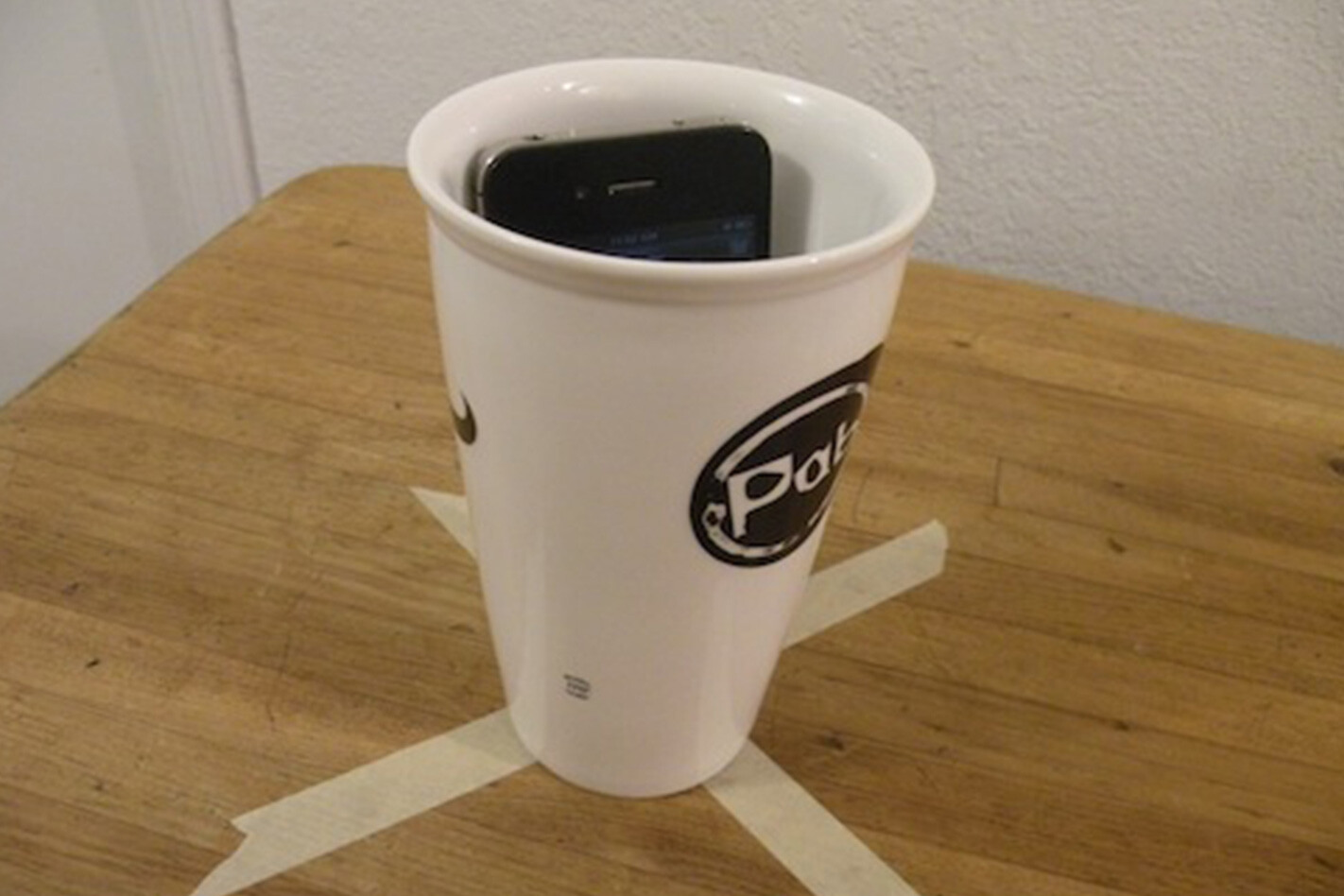
10: MUSIC ECHO Camping isn’t camping without some tunes, but lugging around a speaker system can be a real pain in the backside. A ceramic bowl or mug can be just as good. Throw in the phone and voilà, the sound carries. Pitman Brody
THE JL Wrangler and Jeep Scrambler online forums are the hotbed of news on the upcoming new Wranglers.
Yesterday they confirmed the JT, the pick-up version of the JL Wrangler, will be called the Scrambler in a nod to the CJ8 Jeeps from 1981-86.
The Jeep Scrambler forums also shared leaked CAD drawings that show the new ladder frame for the JT alongside that of the current four-door JK Unlimited Wrangler. These reveal it will be some 840mm longer to accommodate the load bed.
The wheelbase will also be longer than the four-door Wrangler, as seen in photos of test mules where the rear wheels are well behind the rear doors.
The website also shows a new heavy duty rear axle tipped to be Dana’s new 12-bolt unit, which suggests the JT should have a decent payload. A live axle will also be retained under the front end.
Also confirmed on the site via leaked documents is the 3.0-litre V6 diesel engine we’re familiar with from the Grand Cherokee, and the inclusion of an open top on the ute with the option of removable soft and hard tops. The V6 diesel will be backed by an eight-speed automatic transmission expected to be found across the JL/JT range.
The JL Wrangler will be launched to the US market late this year as a 2018 model, while JT production is expected to commence at the upgraded Toledo factory in September 2018 as a 2019 model.
Australian Jeep fans will have to wait around 12 months after each of those dates for the respective availability here.
REGARDLESS of how big a rig you own, cargo space is a premium. So, camping equipment that can perform double duties should be packed first, and there should always be room for camp essentials such as camp lighting.
Having a camp-lighting source that also recharges phones, iPads, iPods and other electronic gadgets is heaven.
The Nite Ize Radiant 300 (signifying 300-lumen light capacity) Rechargeable Lantern draws on the company’s lengthy experience producing innovative outdoor gear to produce a camp-light source that is robust (weather-resistant, and drop-resistant to one metre), does the primary job it’s designed for, and can recharge said gadgets via two integrated USB ports (a micro port for charging the lantern; and a standard port for charging gadgets).
Add in its compact size (72x174mm), light weight (252g) and cool features such as a carry bag that doubles as a light diffuser, and the integrated carabiner for hanging at the top of the tent, a pole, or the back of your 4×4, and it’s hard to argue with the unit’s appeal.
The Radiant 300’s grunty 2600mAh battery is rechargeable via the USB port, but it’s worth noting it won’t take standard batteries if/when it does run out of juice, which means you’ll need to recharge it via your vehicle or portable power source.
During the past couple of months of testing, the Radiant 300 has worked seamlessly; the 300-lumen output (on the High setting) is bright and lasts a claimed five hours. I have been switching between the High and Medium (20 hours at 75 lumens) settings and found it to last a weekend of camping without issue – I accidently left it out in a rainstorm for around 20 minutes, so I can also report its level of ‘weatherproofness’ isn’t too bad.
The light output at 75 lumens is more than adequate for around-camp duties. And, yep, we’ve even managed to charge our daughter’s seriously over-worked iPod and it still had enough light ‘left over’ for another night before needing a recharge.
The Nite Ize Radiant 300 is an appealing addition to your camp gear-box. Whether it is your primary or secondary light source, it’s well worth a look.
AVAILABLE FROM: www.zenimports.com.au RRP: $108.95
FEW vehicles can claim the history of Warren Carswell’s Austin Champ.
This article was originally published in the March 2014 issue of 4×4 Australia
Designed by the British as a specialist military combat vehicle, it survived its early service years dodging bullets in Papua New Guinea before retiring in 1964 and finding its way to Townsville, Australia.
“I scored it as a company car in a carpet-laying business. As an 18-year-old, it was pretty cool. It was the only one of its kind around at the time, so it would always score plenty of attention on the street, with many people mistaking it for an FJ40,” Warren said.
Built to replace the US-sourced Jeep, the design followed similar cues with a ute-styled four seater body of welded pressed steel panels and a vertical five-slot grille. A distinguishing factor was the bull-nosed hood with ribbed ventilation flares on each side.
The restoration project began in the 1990s and extended over 16 years. This wasn’t helped by Warren’s deteriorating health at the time.
“Fearing the worst, I gave up work and committed myself to getting the restoration done. With parts continually rolling up at the door, purchased both locally and overseas, it almost felt like Christmas. It was a great sense of achievement seeing it finally come together after such an extended time frame,” Warren said.
During the latter course of the project, Warren’s health took an unexpected turn for the better, suggesting the distraction of the rebuild had done him wonders.
The first things to go during the rebuild were the tall and skinny military spec wheels and the large fold-up snorkel. Wide chrome wheels with Maxxis Bighorn rubber were called into duty, requiring some modification to pump out the rear flares, and a Donaldson air cleaner was mated to an externally mounted barrel to help source clean air.
Providing some front and side protection, a large aluminium bullbar with side rails and steps dominates the front view, disguising the unique lines of the Champ. It doesn’t endear an enviable approach angle, acting more like a sand plough during our photo shoot, but it’s clearly evident from the big tyres and limited clearance under the guards that the project wasn’t geared to mountain goat specifications.
Even so, the independent suspension runs out of wheel travel relatively quickly and, with open diffs at each end, it’s not the best performer on slow lumpy terrain, relying heavily on momentum to get the job done. A crawler first gear is used in place of low range and is rarely used for everyday driving.
Rust was removed and the body was cleaned up, primed and repainted in a brilliant black duco, complemented by chrome highlights, including big exhaust stacks. But the latter proved a little problematic when the Champ was hired for weddings, as the light smattering of exhaust particles wasn’t particularly conducive to happy wedding parties. Instead, it was re-routed under the vehicle using a stainless steel system. The stacks were left in place.
Taking care of suspension, the torsion bar independent system is largely unchanged, assisted by Bilstein shock absorbers on each corner. The Rolls Royce engine is unmodified and retains the same compression since rolling off the production line. With a 24-volt electrical system, the engine readily fires to life and, once warm, it settles into a low 400rpm idle.
The interior is much more welcoming with the addition of a pair of leather Recaro seats and soft-feel marine carpet on both the floor and walls. The bus-like steering wheel was also retired in favour of an SAAS number with chrome inserts, matching the gear stick and other decorative touches. Between the seats, a gate for the shifter can select forward or reverse gearing, or the power take-off (PTO) winch.
Instrumentation is original with a large central cluster showing RPM, coolant temperature, fuel, MPH, an odometer and a trip meter.
The standard instrumentation is waterproof, with some switchgear provided with waterproof caps, which were screwed on prior to any deep water crossings. To finish it off, a large alloy rollbar provides additional street cred.
With permission from the landowner, we toiled around a local quarry amongst massive earthmoving machinery during the course of our photo shoot, climbing mountains of sand and looking for the ultimate photo op.
We had been warned of a feral goat which policed the grounds, but he kept his distance for the duration of events, only taking interest when the highly polished Champ hit the water course; otherwise known as a big brown puddle. It was interesting watching the goat peer down from the highest peak at the antics below.
A Google search indicates Champs still pop up for sale in various forums and classifieds; although, there was nothing for sale locally at the time. It seems a trip to the UK would be the best bet for well-heeled enthusiasts keen to get in on some Champ action.
Tallying the costs revealed a project spend of more than $80,000. While traditionalist Chapmen (Champ owners) will cringe at Warren’s creation, to the average guy or gal on the street, it’s a very sweet looking ride.
HISTORY OF THE CHAMP
THE Austin Champ was produced between 1951-56 following a number of prototypes built under tender, with a long list of contributing manufacturers. The official name was an FV1801A Truck, quarter tonne, CT/GS (combat truck/general service) with ambulance, cable laying or gun-mount versions.
There was also an FV1802A Truck, quarter or half tonne, offered in utility or civilian builds, the latter without the Rolls Royce engine and expensive waterproofing. The FV was short for Fighting Vehicle.
Part of the development included studies into the rationalisation of equipment and powertrains to reduce the inventory of parts held. Studies revealed an inventory of 3000 parts would be required based on the various types of equipment and transport in use at that time.
Instead, it was proposed to rationalise that list, manufacturing a premium range of four-, six- and eight-cylinder petrol engines to service a broad range of military equipment. In this case, inventory would drop to 300 parts. The answer to that study was the Rolls Royce B40, B60 and B80 engines, with the B40 finding its way into the Champ.
The Austin Motor Company eventually won the contract to produce 15,000 Champs, powered by the single overhead cam, inline four-cylinder petrol B40 unit of 2838cc capacity, producing 60kW at 3750rpm and 199Nm at 1750rpm.
While Rolls Royce originally manufactured the engines, it was unable to maintain the supply, with tooling passed to Austin to manufacture under license to help stem demand. The engine, transmission and driveline were all fully sealed to sustain water crossings of up to two metres with a fold-up extendable snorkel.
The transmission offered five synchromesh gears in forward and reverse, with a top speed of 104km/h.
A transfer box allowed the selection of two- or four-wheel drive and longitudinal torsion bars provided the springing for the fully independent suspension at each end. A 24-volt electrical system helped motivate the large pistons into life, and an adapter for the alternator facilitated welding in the field.
Common military accessories included a shovel and pickaxe mounted on the side of the vehicle, a carrier for a standard 20-litre water jerry can at the rear, and a forward-folding windscreen to accommodate a machine gun using a built-in pintle mount.
At a cost of 1200 pounds in 1952, the Champ eventually lost favour and was considered too complex and expensive. Maintenance costs were also considerable and, when left unattended, it was considered unreliable for front line work. As a result, the contract with Austin was terminated 4000 units short of its 15,000 target. The Australian Army purchased 400 units.
The Land Rover was its successor, said to be available for half the price yet still able to do most of that of the Champ. With that said, the Champ will go down in history as a unique, high calibre vehicle, built from the ground up for specialist military work.
It is even more amazing when you consider it was spawned in the 1950s, with fully independent suspension at each end, rack and pinion steering, 104km/h capability in forward or reverse, and that magnificent fully sealed Rolls Royce engine.
References: Austin Champ, the first 60 years, Gus Gowers.
AUSTIN CHAMP OWNERS CLUB (ACOC)
FOR anyone seeking further information on the Champ, the UK-based Austin Champ Owners’ Club is a good place to start, with regional contacts in Australia, UK, Italy, US, Holland and South Africa.
According to ACOC Australian contact, Rose Altmann, “There isn’t an Australian Club, just a loose network of Champ enthusiasts. Each year, someone volunteers to arrange a Champ Camp in a different place. So far we’ve ventured to Victoria, Tasmania and New South Wales, with each event offering four-wheel driving and social activities. Occasionally we have overseas visitors participating.”
The Austin Champ Owners’ Club website includes information on identifying your Champ using the chassis and engine numbers and where to find them. An owner’s register contains information on vehicles that have been previously registered, for those that are researching information on used buys.
Members have access to the club magazine, register and forum.
For more information go to: www.austinchamp.com
LAND Rover is owned by Indian company Tata, and another iconic off-road manufacturer could be set for Asian ownership.
Reports out of the US have suggested Chinese company Great Wall wants to buy Jeep. US industry publication Automotive News reported that a Great Wall executive claimed the company has reached out to Jeep owners, FCA, to start negotiations on a deal. FCA, on the other hand, denies any talks have commenced.
The official statement from FCA read: “In response to market rumours regarding a potential interest of Great Wall Motors in the Jeep brand, Fiat Chrysler Automobiles confirmed that it has not been approached by Great Wall Motors in connection with the Jeep brand or any other matter relating to its business.
“FCA is fully committed to its 2014-18 plan, having achieved each one of its targets to date and with only six quarters left to its completion.”
With 2018 just months away, that last line doesn’t add much relevance.
Jeep is seen as the jewel in the FCA crown, with its strong global product line said to bring in more sales alone than the rest of the FCA brands combined. Those brands include Fiat, Alfa Romeo, Abarth, Dodge, RAM and Chrysler. RAM is another FCA brand said to be on the radar of Chinese buyers.
With a new JL Wrangler set to debut before the end of 2017 and the subsequent Wrangler pick-up a year later, the strength of the seven-slot grille is only set to grow. The new Compass mid-size SUV that is due in Australia early in 2018 is also doing great things for Jeep in markets where it has already been launched.
Whether or not FCA is prepared to break up its brands and sell one of its most successful marques is yet to be seen, but what would Chinese ownership mean for a company like Jeep?
If we look at Land Rover, for example, the sale from Ford to Tata injected billions of dollars into development of new technologies and products, allowing the Jaguar and Land Rover brands to return to profit.
Sure, LR has steered more toward the profitable, luxurious style of vehicle with less off-road ability, but it does show what can be achieved without a massive US corporation hanging over your head.
Hopefully the same could be said for Jeep should these Great Wall rumours prove true.
WARN winches represent the best of the best in quality and design – and you pay for that!
The Zeon range is the most advanced ‘looking’ winch available, thanks to the moulded control box fitted atop the winch body and larger diameter motor and gearbox surrounds.
So large, in fact, it was the only winch that wouldn’t fit into our winch cradle without removing the cradle’s carrying arms. If you’re set on buying this winch, check first that it will fit into your chosen bullbar and check the control box will also fit as intended.
Warn have omitted horsepower specs from its winch line-up and, despite all requests, no official results are available. Warn just note that its winches are ‘series wound’ – which all others are, too.
The Warn Zeon’s unique way of attaching the rope is superior to all others. It negates rope damage and offers a strong purchase point, as well as attains a high load, without breaking. The drum isn’t painted or powdercoated as all others are, which affords a better grip on the rope to help avoid rope-slip under load.
A long, red sheath on the drum-end helps to stop too much rope being pulled off, but it rolls more than a full drum and a half to help avoid slippage under load. The Zeon rope was the equal longest (with the Bushranger Seal) by a couple of metres on test, offering 30.5m in total.
The Warn thimble is the only thimble (other than the Warn Magnum) to not crush during winching. It features an extra plate welded into the eye to prevent the loop from crushing during high-load winching.
On the remote handpiece, an easily-understood pictorial explanation of winching in and out gets the message across clear and simple. So too are the pictorial instructions for engaging and disengaging the clutch via the dimpled lever. The rubber cover over the remote plug affords weatherproofing to keep dust and water out.
On paper, the Zeon had a slight advantage over the other winches, as it’s rated at 10,000lb instead of 9500lb, but it made little difference when hauling our sled. It performed faultlessly and pulled fourth fastest overall while drawing moderate to high amperage and excellent low temperatures for both motor and gearbox.
The one drawback of the Zeon is the higher price. Many will argue, “you get what you pay for” or “buy once, cry once”, and while that may be true of buying the best quality winch available, on the day it didn’t perform notably better than many other winches. The only component we can’t test is longevity; perhaps it’ll be pulling strong in five, 10 or more years, while cheaper versions won’t – who knows?
INCLUDED Wired hand remote control; alloy hawse fairlead; open hook with spring-loaded safety catch and removable clevis pin; safety strap.
| Price | $2163 |
| Warranty | Limited lifetime mechanical / limited 7 year electrical |
| Load rating pound / kg | 10,000 / 4536 |
| Motor Hp | N/A |
| Gear ratio | 216:1 |
| Gear train type | 3 stage planetary |
| Brake type | Automatic mechanical cone |
| Synthetic rope size (diameter x length) | 9.5mm x 30.5m |
| Solenoid | Contactor pack |
| Clutch | Rotating ring gear |
| Fairlead | Aluminium hawse fairlead |
| Drum size (diameter x length) | 80mm x 229mm |
I’M A BIG fan of polarised sunglasses, especially when I’m driving long distances in the harsh light of day.
Up until recently, my preference has been for a dark-tinted glass lens, but about 12 months ago I dropped my Ray-Bans prior to a trip to the Flinders Ranges and I badly scratched one of the lenses.
Rather than grab another pair of Wayfarers, I thought it might be time for a style update. So for the last year or so I’ve been running a pair of Spotters Blaze sunnies, featuring the brand’s iridescent blue/green Nexus Mirror lens.
You’ve probably heard of Spotters, the sunnies brand that markets itself as “Australia’s premium polarised sunglass brand for fishing, four-wheel driving, hiking, biking and any outdoor activity.” Spotters is an Australian-owned company, and the sunglasses are designed locally.
New 4X4 gear: Yakima AceO’spades, Ironman Power Pack, and more!
The lenses are sourced from Japan (there are no Australian lens manufacturers) and the frames are sourced from either Japan, Italy or China (depending on the model), but the sunglasses are hand-finished and hand-assembled in Australia, which includes hand grinding, cutting and finishing the lenses, and then fitting them into the frames.
One of the most surprising aspects of the Blaze is just how light these sunnies are. At first I thought they must’ve had plastic lenses, but they actually have high definition, emerald green, polarised crown, glass lenses.
In the case of the Nexus Mirror lens, the mirror effect is courtesy of an iridescent blue/green mirror made from metallic particles. This is designed to reflect heat and glare for a cooling effect and thus reduce squinting.
Beneath the mirror surface is a high-definition, emerald green, base tint, crown glass lens, designed to enhance depth perception without affecting colour perception. And the Nexus Mirror is protected between layers of crown glass, so it can’t be damaged or scratched off.
While not as dark as I’m used to, the tint of the Nexus Mirror lens certainly offers superb clarity and a soothing sensation. It also does a fantastic job of minimising glare, and it provides good below-the-surface vision when you’re on the water. And in low-light situations, such as at dusk, I find I can wear these sunnies for longer than I could with a darker tint.
The Blaze frame fits my face well, and its wrap-around shape and light weight provides good comfort. A secure fit ensures they hold on to my face well, which prevents them from falling off when I’m looking down or jumping around. Of course, different sunnies fit different faces differently, but there are plenty of frame styles in the Spotters range – so chances are, there’s a pair to suit just about anyone.
RRP: $298.50 Website: www.spotters.com.au
LET’S PUT a V8 in it.” Gary Coleman of Diesel Leaders doesn’t often hear a suggestion from a client along those lines, especially when they’re discussing a Ford Ranger.
Vote for the Ford Ranger V8 to win the 2017 Custom 4×4 of the Year
It may well have been said out of exasperation, though. Gary’s client, who wishes to remain anonymous, was trying to figure out what to do with his Ranger after it had blown its standard 3.2-litre inline five-cylinder engine.
Maybe it just popped into the owner’s head that fitting a Ranger with a V8 petrol mill would make it a local equivalent to the Ford USA off-road monster that is the F150 Raptor, but we’ll probably never know the real reason.
Instead, we can admire this tough rig for what it is: an example of how plenty of time, loads of patience, and exemplary engineering can transform a regular off-roader into something unique that retains a factory look.
FIRST THINGS FIRST
WHEN Gary first saw the Ranger it had been rolled in with a blown engine, and the owner was having difficulty getting it replaced under warranty; so the conversation was struck up regarding options of fitting another engine. The owner suggested the option of a V8, and the conversation went from there.
“So we decided to put a V8 in it and had a think about what kind of engine we wanted to put in there. He [the owner] wasn’t too fussed,” Gary said.
However, he had one stipulation: the transplanted engine had to look factory, which meant for Gary and the team that it had to be a Ford engine. Even though the temptation was there, they weren’t altogether keen on going too crazy, dismissing the idea of a big-block engine in favour of a supercharged Ford ‘Coyote’ V8 that, in stock form, pumps out 335kW and 570Nm.
This engine was readily available in Australia, as it had been fitted to a number of high-performance Falcons. Gary also decided to stick with the Falcon’s six-speed auto gearbox to make the job as easy as possible. Then they just had to make it fit, before looking at further mods needed to complete the job.
Surprisingly, the engine bay didn’t need much in the way of modification. “To get the engine in, we just had to cut the top off the radiator mount. That was the only thing we had to do to get it in [the engine bay],” Gary explained.
“Then it was just a matter of fabricating engine mounts and gearbox mounts. For the engine bay mounts, we could re-use the engine and gearbox mounts.”
The team had to manufacture new matching mounts for attachment to the engine block and the gearbox, to marry to those in the engine bay.
THE BIG SQUEEZE
THE idea of fitting a Ford V8 petrol engine into a Ranger isn’t new, but few have wanted to tackle it. The seriously large engine is light, so weight isn’t the issue, but physically fitting this big bopper in the Ranger engine bay is no easy task as there isn’t much room.
“The problem is, the engine is so big there is only one spot that it fits. You can’t lift it up, or lower it, or move it forward or move it back; it has to sit in the exact spot that it’s in,” Gary said.
“Move it down, you can’t get the exhaust on; move it up, it hits the firewall; move it back, the heads hit the firewall; move it forward, you can’t get the radiator in. Where it is, is the only way it can go in there.”
The engine’s snug fit was just one juggling act for the Diesel Leader team. Fitting the Falcon’s transmission to the Ranger transfer case was also a massive job, and a job few engineering companies were willing to risk their reputation on.
“We struggled to find someone who would do it. We knew a few machinists who were sort of capable of doing it. They had the equipment and the expertise to do it, but no-one wanted the responsibility of doing something like that; to rely on their machining to put such a gearbox behind such a big engine. We eventually came across a company in Nerang, Queensland – Rage Engineering – and they had to do it.”
This task took a couple of months. The engineer had to map out then digitise the gearbox, before machining a back housing to fit the Ranger’s output shaft into the Falcon gearbox. This big job was due to the fact that, although the Ranger and Falcon gearboxes are similar – and, indeed, look virtually the same – they’re not.
This meant the rear housings didn’t line up, which then meant the engineer had to ‘fill in’ the original mount holes, weld a new ‘base’ around it, and then drill new mount holes. The engineering work had to be perfect, and the aim was to ensure there were no vibrations or anything that could cause damage to the drivetrain. The owner and Gary are both happy with the result.
“He’s done a fantastic job. You get in and drive it and it feels like it is right out of the factory,” Gary reckoned.
THE BIG SQUEEZE: PART II
THE engine and gearbox mods weren’t the end of working with confined spaces – the exhaust is also a work of art. The custom-made headers took a fortnight to make; the two-piece manifolds had to wrap around the steering shaft that runs between them, before then bending up and over the front driveshaft and around the side of the gearbox.
This job was also farmed out to a local company with favourable results. It was this fine-tolerance work that defined this whole project, with all work focused on matching transplanted parts with standard fitments.
“There was nothing that fit. Nothing,” Gary said. “Nothing lined up with anything, everything had to be modified. Because he [the owner] wanted everything to be factory, we couldn’t fit aftermarket bits that looked obviously aftermarket. We basically used everything we could off the Falcon and adapted it to the Ranger.”
Some of these mods included cutting and reshaping the Falcon air box so it would fit in the Ranger’s engine bay. This air box was moved to the opposite side to the standard Ranger one, which then necessitated swapping the battery and power steering reservoir to the opposite side.
“If it wasn’t such a cool ute, yeah, I would say it was a nightmare of a job, but I just love it to death,” Gary added.
One Ranger item that stayed was the radiator, owing to it being a larger size than the Falcon version and the fact it mounts on the opposite side, which gave the engineers more room to work with. However, this still copped some mods to fit.
With no room for a fan, Gary fitted the Falcon’s thermo-fans at an angle to the radiator (they’re actually wider than the Ranger radiator) and then cut and reshaped the Ranger’s radiator shroud to fit over the top – again, for that factory look.
PASSION MEANS TIME
WHEN we asked Gary how much time it has taken to get the Ranger to its impressive final appearance, he laughed ruefully.
“I’m sort of the only guy who worked on it. There were a couple of guys that did a few hours on it, but I think the boss said something like 300 man-hours or something like that over about six months or so, not including all the stuff we outsourced.”
What about the owner? Well, he’s had to be patient. Initially, Gary estimated the project was going to take around a couple of months at most.
“It’s been here for almost a year, and the owner’s been really good. You know, he gets a bit uptight every now and then, but through the process we’ll get him in to have a look at it, show him what we’ve done, and, yeah, once he’s heard it start up, he’s got a smile on his face,” Gary added. “When it got dyno’d out at Real Dyno he drove it back from there and he just loves it.”
The Ranger’s sweet-sounding V8 punches out 344kW according to a dyno sheet Gary has. Originally, the tuners had it producing even more power, but they backed it off in the interest of longevity and the fact it has to push around larger-than-standard tyres and more weight.
The Diesel Leaders team usually take on the challenge of one or two of these projects each year to break up the monotony of their regular truck fleet maintenance and heavy-diesel repairs, and to keep the crew sharp.
This power-packed Ranger has left Gary particularly proud of the end result. “I am stoked, mate. The owner, he just wants to remain anonymous, and he owns it. But that ute is mine. I built it, that’s my ute,” he laughed. “He can take it away when we’re done with it, but I love it.”
Looking at the end result of all that hard work, it’s easy to understand why.
WHAT LIES BENEATH
DESPITE how seriously impressive it is, this monstrous rig isn’t just about its V8 transplant. The Ranger also has some sweet off-road mods, proving it’s far from an on-road show pony.
The lifted suspension is a mix of heavy duty springs and well-proven Bilstein dampers, with underbody protection taken care of via the fitment of a massive Rhino 4×4 aluminium bash plate. Additional body protection is afforded via a set of rock slider/side steps.
The rolling stock (just) covered by the aftermarket wheel-arch flares is a combo of chunky 35×12.50R20LT Nitto Grappler M/T tyres, wrapped around a set of KMC Wheels’ satin black XD820 Grenade rims. And, as with everything on this build, even though this wheel/tyre combo is far larger and wider than the stock wheels, the matching colour scheme and the flare set makes them look like standard kit.
Continuing the chase for the factory look, the Rhino 4×4 Evolution 3D front winch bar looks like standard fitment as well. A mix of 3mm and 5mm steel construction ensures plenty of front-end protection, and it’s topped by a driving light bar that sits below the grille.
The bar fitment improves the approach angle, and two rated recovery points finish off the front end (the aluminium bash plate comes as part of the Evolution bar kit). And what modified Ranger wouldn’t have a tweaked F-150 Raptor ‘FORD’ grille to signify it’s a little bit different.