
A RECALL notice has been issued for specific Ford Ranger and Ford Everest models, due to an airbag problem.
Affected vehicles are: Ford Rangers built from October 29, 2016, through to February 24, 2017; and Ford Everest models built from October 29, 2016, through to January 27, 2017.
Click here for a complete list of affected vehicles.
The Product Safety Australia recall report indicates that “the airbag initiators within the side airbag modules of certain Ranger and Everest vehicles may contain an incorrect chemical mixture”.
What this means is that the incorrect mixture may result in the side airbag not deploying as it should in the event of an accident.
According to the safety report, there have been no reported cases in Australia.
If your vehicle is affected, the report recommended owners “drive with caution and at a moderate speed”.
Owners of affected vehicles should also expect a letter in the mail from Ford, advising them to take their Ranger and/or Everest to an authorised dealership for inspection and reparation.
THE build on Milo 2 continues, and as parts get bolted on I can almost feel the roar of the old girl coming back to life.
What began as a replacement for my poor, old ’83 Toyota, Milo, has turned into endless lessons in new techniques and products, and I love every minute of it.
This is the thing about a truck rebuild as opposed to just buying one. There’s a sort of intimacy involved here, an understanding that comes from researching, planning, sourcing and bolting on bits that eventually all come together to be the vehicle.
It’s exciting, fun and I recommend it to anyone who can find the space to play. Why? Because when you’ve finished it you’ll have learnt things that can’t be learnt any other way. And someday they might just keep you alive (more on that later).
You’d be amazed at how many ‘father and son’ or ‘grandad and granddaughter’ projects I hear about in my travels. So many people have got something old on the go these days you have to wonder if it’s a backlash against automotive products becoming too techno-centric for the skills of us mere mortals.
Understanding a vehicle starts with understanding the parts; just as an essential component of good driving is understanding what’s happening behind the pedals.
All this occurred to me while I was fitting up the new clutch to Milo 2’s 12HT motor, because my first ‘major automotive repair’ was chucking a new clutch in a Hillman when I was about 14.
It was all done with the car in the air on logs and a set of farm spanners that were mostly BSF Whitworth sizes; the old British bolt size that’s somewhere between metric and AF. There’s not much you can’t do with teenage enthusiasm and a hammer.
But it took about a dozen goes to get the clutch plate centred enough to be able to slip the gearbox on without doing damage.
Lying underneath the car – hoisting that dirty old lump of iron off my chest so it could hang off the bolts until it finally jiggled over the first motion shaft – gave a bloke plenty of time to think he might just take it easy on the clutch in the future because it sure was a bugger to replace.
Once you’ve replaced a clutch plate you’ll never hold a vehicle on a hill by slipping the clutch again; you’ll never ‘ride’ the pedal because you’ve got a lazy foot; and there’s every chance you’ll not bother with unnecessary things like wheelies and burnouts, either.
Every time I see some kid smoking it up, I know straight away the most serious mechanising they’ve done is pulling the backing off stickers.
Things have come a long way in the last 45 years – the new Terrain Tamer heavy duty clutch came ‘complete’. There was a new clutch plate, of course, featuring much heavier duty linings and improved springing, but it came with a new pressure plate, too.
It’s that combination – stronger springs squeezing denser linings to the flywheel – which is the essence of clutch improvement. Obviously it’s going to hold under pressure much better than the standard component, but with improvements in materials thanks to technology it’s now possible to fit a much better clutch to an old vehicle. Think about how many times you change gears in a day of driving, and this is one improvement you’re going to notice constantly.
The kit also came with the little bearing that supports the gearbox first motion shaft in the back of the flywheel. If you ever hear a screaming noise from deep within the drivetrain that disappears when you put your foot on the clutch, it’s this little and often forgotten bearing.
Terrain Tamer supplies one so you don’t forget to replace it. It’s the old case of ‘you’re in this deep so you’d better replace anything else that might need it’. The bit I loved most, though, was the plastic motion shaft dummy Terrain Tamer supplied, which meant I only had to bolt the pressure plate to the flywheel once because the plate was guaranteed to be centred.
So with a much stronger motor running through a much improved clutch, it was time to think about gearboxes. Once again I was off to Melbourne to Terrain Tamer HQ where Dave, who’s been building gearboxes for the past 25 years or more, was putting together the five-speed from the original 60 Series we purchased to grab the motor.
He did this using improved parts – when you’ve been in the Toyota parts and repair business this long you know what can be improved – and a lot of meticulous construction.
Yes, I went straight for a set of Marks Adaptors transfer case gears this time because I know how much they improved control in the original Milo. The ratios I chose add about 10 per cent road speed in high range – to suit more horsepower and easier cruise speeds – and reduced low range by about 30 per cent.
That means the low range gears are true crawler gears now, with fifth low range being slightly lower than first high range for a true ratio spread. Phew, run out of space again. I’ll have to tell you about the lifesaving potential of building your own vehicle some other time. Got to go, got spanners to spin!
I AM A DIY kind of guy. It’s something my father always tried to ingrain in me from a young age, but it really took hold when I was knee-deep into my apprenticeship.
While my mates were throwing pay cheque after pay cheque at their new rides, I was counting coins working out how many days that week I had to dodge the train guards so I could buy a tin of body filler and a few cans of primer. It’s something that’s still with me today – if a drain gets blocked or steering wheel shake develops, I lay out the trusty spanner roll and figure it out as I go.
That said, I’ve been burnt enough times to know sometimes I need to put on my big boy pants and call the experts. I’ve been sketching out roll cage designs for the last few months, going through every aspect, every weld, every bend and every rule book, but I kept running full-steam into road blocks, a lack of tools and a lack of experience.
With the 60 entering a line-up of events with governing bodies as varied as their terrains, the cage had to be extensive to keep all happy. From first gear low-range in CCDA events through to foot-to-the-floor and flying-through-the-air in CAMS races, I had my work cut out for me.
I enlisted the help of long-time friend, Steve Etcell from Automotive Etcellence, to bend a few of the more complex tubes I couldn’t do. He laughed at me, called me an idiot, and then told me to bring it down and we’d do it right.
A complex roll cage can look like someone’s thrown a bundle of spaghetti in the cab, but there’s actually a method to the madness with every individual tube designed as part of the larger picture. For a reference point to build off, Steve cleared a space on the shop floor and got to work bending up the B-pillar hoop.
In single-occupant race cars you can get away with a diagonal bar to protect the driver’s head, but an X was more suitable as the events I’ll be in often require a navigator. From here, the complicated roof bars/A-pillar supports were bent up.
While the 60 is almost a square box, it does have a little curve to it making for a complex series of bends to follow the body’s profile (the stuff I originally reached out for help with). Additional supports were added to reinforce the A-pillar bends in a big hit, with side impact bars joining the windscreen bars to tie it all together.
Think Death Proof and you’re on the right line. Before we could pull the cage out of the gaping hole at the rear for final welding, the Beard Race Seats were dropped into place, with Steve cutting and folding a set of stout brackets with his CNC machine.
While five-point harnesses mount to a set of taxi bars that were installed at shoulder height. There are a few options for mounting the cage to the body, depending on the style of events you’re running in and how precious you are about your paint.
With the plan to eventually tie the front and rear suspension points into the cage, we made the call to weld the cage straight to the floor pan for maximum strength. By the time Steve sent me on my way, almost 30m of high-tensile tube steel went into the 60’s cab, with enough custom bracketry and dimple-died wizardry to make things stand out for all the right reasons.
With an extensive tube rear-end design that’ll tie into the cage, I’m not able to close up the rear wall yet, so the next step will be to ditch the temporary 40s it’s currently wearing and fit a set of race-ready 37s on bead-locked wheels. Then I’ll take the gas-axe to the stock rear suspension.
Now, where’d I leave that lotto ticket?
A FLAT battery ain’t a pleasant thing, especially when you’re out in the bush on your own.
Fortunately, the last time I tried to crank over my engine without success I was in the company of several other four-wheel drivers, one of whom grabbed a Super Power Booster out of his glovebox, hooked it up to my starting battery, and had the engine fired up in no time – it was that easy.
I had about 1500km of solo driving ahead of me, and the thought of another flat-battery situation on my Pat Malone was not my idea of a fun 4WD getaway, so I dropped in on Jonathan Oliver at ARB Broken Hill who hooked me up with the latest Super Power Booster.
When Jonathan handed me the box I thought it must’ve been empty, as this thing is seriously light. It might be just 1.5kg, but that doesn’t mean it’s a lightweight; it packs a powerful 20Ah punch, with a start current of 450A and a peak current of 900A.
That’s enough spark (so it’s claimed) to be able to start a diesel engine up to 4.5 litres in capacity, or a petrol engine up to 7.0 litres in capacity. The Super Power Pack is supplied with 240V AC and 12V DC charging cables (so you can charge it off your vehicle’s accessory outlet), as well as a lead with alligator clamps for vehicle battery connection.
It’s incredibly easy to use and features reverse polarity protection (with alarm), short circuit protection, overload protection, overload current protection, over-charge protection and a claimed six-month standby time.
Additional features include a 12V accessory outlet, two USB power outlets (for charging phones, tablets and the like), a pair of LED lights, a digital voltage display and a handy carry handle.
Measuring just 170x127x100mm, the Super Power Booster is now a permanent resident in my vehicle’s glovebox. In case you’re wondering, like Henry Ford’s Model T, it comes in black.
Available from: www.superpowerbooster.com RRP: $298
THE popularity of the Ford Ranger ute has lifted the Blue Oval back into the hearts and minds of 4×4 enthusiasts.
The Ranger is not only one of the best-selling 4x4s on the market right now but, with a swag load of aftermarket gear available for it, it makes for a capable off-road warrior.
While 4×4 utes are the flavour of the year, the wagon derivatives of the same vehicles aren’t feeling the love so much. Vehicles like the Ford Everest, Toyota Fortuner and Holden Trailblazer don’t sell anywhere near as well as their ute counterparts, while wagons like the Isuzu MU-X and Pajero Sport do a bit better.
Aside from lacking the load-hauling cargo capacity of the utes, the wagons can make better off-road expedition rigs. With a shorter wheelbase, wagons have better rampover angles and more ground clearance, and most of them forgo the leaf springs used on the utes for more compliant and better-flexing coils. Their shorter length also makes them more manoeuvrable on tight bush tracks.
That size and manoeuvrability played in to Chris Mark’s decision to purchase a Ford Everest rather than a Ranger (or any other) ute. Chris had a Mazda BT-50 as a work truck, but when he planned to cut back to a single car for work and family duties, he needed something smaller.
“I liked the set-up of the BT-50,” Chris told us. “But we needed a more comfortable and shorter wagon – something my wife could easily drive, with our newborn baby.”
One of the things Chris liked about the BT was its torquey 3.2-litre diesel engine, so when it came time to choose a 4×4 wagon, the Everest was the only option. The Ford wagon shares the same basic engine with the Mazda ute, and it’s slightly improved in the Everest. So a 2016 Everest in Trend specification soon found its way into the Mark family garage.
Having owned a plethora of modified 4x4s over the years, from an FJ40 right up to the BT-50, the Everest wasn’t going to stay the way Ford made it for long once Chris it got home. “I need a capable off-road touring and camping vehicle for myself and the family,” he said.
Rather than just drive in to his local 4×4 accessories store and throw the catalogue at his Everest, Chris researched the gear he wanted and picked the best of it from multiple suppliers. Starting with protection gear, he fitted a steel Summit bullbar from ARB, along with the associated brush rails and sidesteps.
While steps and brush rails might seem over the top for a family tourer, Chris uses his Ford off-road and the colour-coded pieces need regular touch-ups – at least the steps will after our day in Cobaw State Park.
Mounted in the bullbar is a Warn M8000 winch wrapped in synth line, while a pair of LED spotties light the way ahead. Under the bar are rated recovery points and a metal bash plate, all from Roadsafe.
Chris chose Ironman 4×4 for the suspension components, employing the Foam Cell Pro shock absorbers and heavy duty coil springs for all corners. The Ironman package gives a 50mm lift in ride height. Also providing extra clearance are the 285/65R18 Cooper ST Maxx tyres mounted to CSA Raptor alloy wheels.
Choosing a wagon over a ute means you need to better plan your storage solutions. A set of 900mm-long slide-out drawers are fitted in the cargo area to carry recovery gear and off-road essentials, as well as mount the Waeco fridge on one side. Under the fridge slide is also where the auxiliary battery and Projector DC-DC charger are concealed, as there is no room for the second battery in the engine bay.
External storage starts with a Rhino XTray roof rack, where the high-lift jack, traction boards, shovel and other gear that doesn’t mind getting dirty are kept. A full-width light bar from Gemtek runs across the front of the rack and nicely supplements the spotties up front, while an awning is mounted on the passenger side.
The Trend is the mid-spec model in the Everest range and comes with just about everything a family would need inside, but there’s always room for more kit and long-haul comforts.
To this end, Chris has fitted an 80-channel UHF radio from GME and had the factory front seats upgraded with three-stage heaters for those cold Melbourne mornings and High Country trips. A ScanGauge rests atop the steering column to display engine vitals and any fault codes should they arise.
The five-cylinder Ford engine was one of the selling points that got Chris into the Everest in the first place, and for now he’s content with its 143kW and 470Nm. That could all change once the car comes out of its factory warranty period and some power-adding mods are introduced. As it is, the TJM Airtec intake snorkel is the only addition, providing fresh air to the engine.
Backed with a clever on-demand torque-proportioning centre clutch system managed by a Multi Terrain System, the Ford powertrain works well both on- and off-road. There’s a factory-fitted rear diff lock as well, and Chris says he might add an aftermarket one to the front end at some stage.
“There’s always room for more accessories,” he said. “An oil catch can and extra fuel filter; more lights for reversing and camping; more accessory power outlets; plus an on-board compressor and air tank” are all on his shopping list at this stage.
An area Chris thinks needs improving is the location of the AdBlue tank in its factory place behind the rear wheel, as it’s susceptible to damage. A protective plate will go in there to keep it safe from stone damage.
“Ford needs to fix the AdBlue tank level indicator and have an override for the AdBlue cut-off in case something happens to it in the bush,” Chris said. If the emissions-cleaning AdBlue or SCR system is damaged or runs out of fluid, the engine computer will put the engine into limp mode and eventually prevent you from starting it.
This could mean a very expensive recovery from a remote outback location for something that shouldn’t cripple a vehicle. It’s something to think about on any modern diesel tourer with such a system fitted – and there are more of them coming.
As an active member of the Ford Everest Club of Australia, Chris gets out and uses his vehicle. The club is more of an online group that organise trips and shares tips and tricks on modifying their cars to get the most of them. Look them up on Facebook if you’re considering getting into an Everest – we know one owner who would recommend owning one.
“It’s such an easy car to live with and drive,” Chris said. “People don’t expect to see it keeping up with twin-locked 80s and Patrols, but it does.”
We knew there was a lot of potential in Ford’s 4×4 wagon when we awarded it 4X4 of the Year back in 2015. Choosing the right accessories for an Everest helps it realise that potential.
AFTERMARKET KIT ARB Summit bullbar with the associated brush rails and sidesteps. Warn M8000 winch wrapped in synth line. Roadsafe rated recovery points and metal bash plate. Ironman 4×4 Foam Cell Pro shock absorbers and heavy duty coil springs. 285/65R18 Cooper ST Maxx tyres. CSA Raptor alloy wheels. Waeco fridge. Projector DC-DC charger. Rhino XTray roof rack. Gemtek light bar. Kings awning. GME 80-channel UHF. TJM Airtec intake snorkel.
IT’S BEEN a little more than a year since the retro-inspired Toyota FJ Cruiser stopped being imported to Australia and three years since the left-hand–drive models ceased production, which meant the end of US sales.
But the FJ has soldiered on in very limited number in its home market of Japan – and that, too, will soon come to an end.
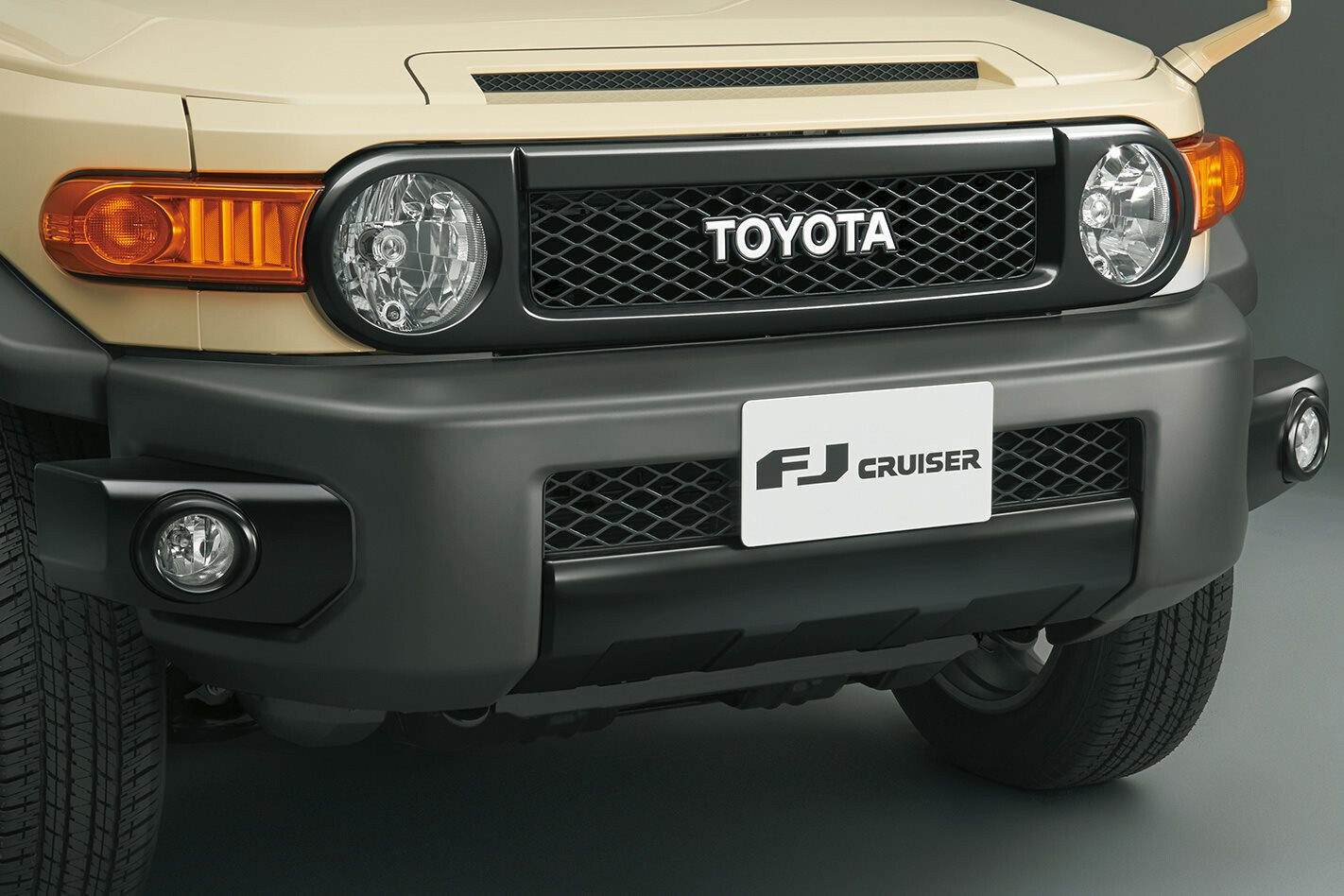
Launched in Australia in 2011 the FJ Cruiser won our coveted 4×4 Of The Year award for that year and went on to sell many more than Toyota Australia originally anticipated. Buyers were attracted not only to its unique styling, but the solid value-for-money package it offered and its honest off-road ability.
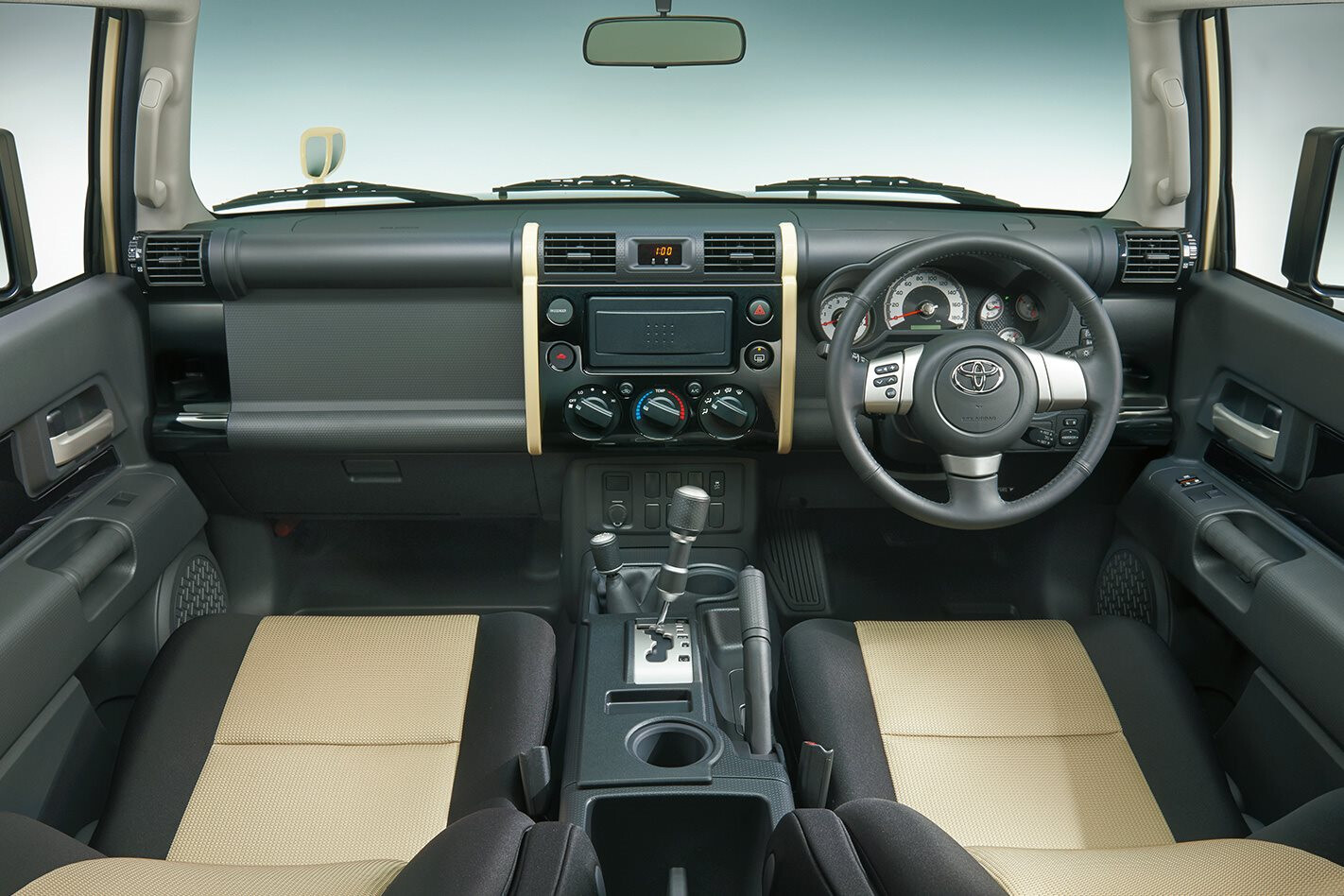
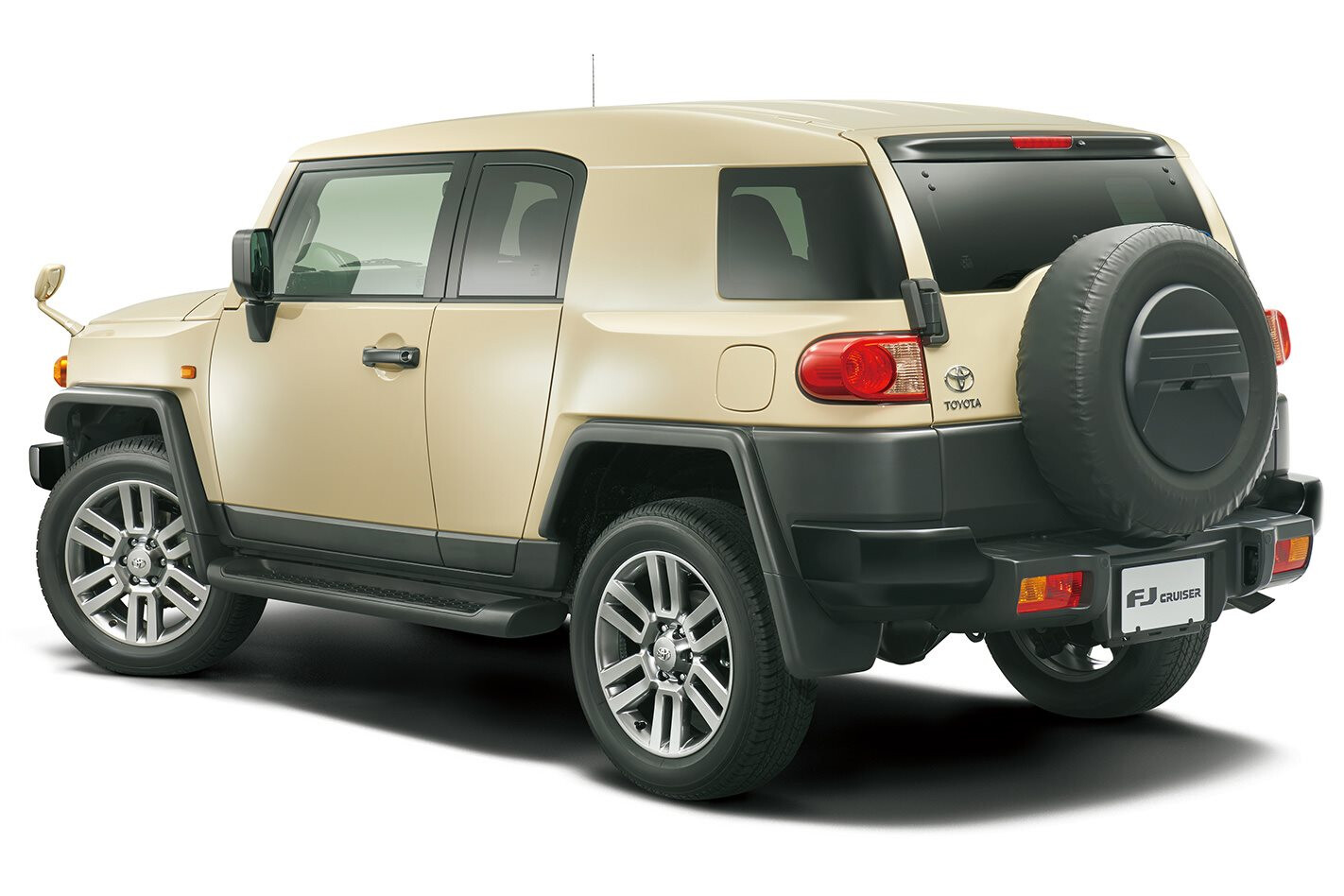
The final FJ Cruisers go on sale in Japan in October while around the same time, Toyota is reintroducing the Hilux ute to Japan after a 13-year absence.
TOYOTA has revealed a facelifted Prado that will go on sale here in November.
With a chiselled new bonnet and fresh headlights and grille, the Prado front-end takes on a look closer to the Land Cruiser 200 Series. New tail-lights mark the most prominent change at the rear.
There are no major mechanical changes to the refreshed Prado, except the poor-selling V6 petrol engine option has been discontinued, The range will continue exclusively with the GD 2.8-litre, four-cylinder diesel engine back by a choice of six-speed automatic or manual gearboxes and full-time four-wheel drive with low range.
One feature that will be appreciated by off-roaders is the inclusion of the rear differential lock that was previously only available in Prado Kakadu models. It’s now standard fit on VX and GXL grades.
Significantly, some of the driver-aid tech features that were previously only available on the top-end Kakadu and VX grades are now standard on the GXL and GX specifications. These include lane departure warnings, a pre-collision safety system and automatic cruise control. A blind spot monitor and rear cross traffic alert are now fitted to the VX grade as standard, while the Kakadu retains all these features.
Revisions to the interior centre on the dashboard and gauges, which have been tweaked to deliver a more premium look.
In a segment dominated by soft-roaders, the off-road-ready Prado is Australia’s best-selling large SUV (VFACTS) and it’s breaking the trend towards soft-roaders, with its 11,001 sales to date in 2017 representing an increase of 8.3 per cent over the same period last year.
No details on the price range as yet, but these will be revealed closer to the November launch. Currently, the Prado range starts with the GX at $54,050 through to the Kakadu at $85,900.
FOR THOSE who questioned the new Discovery’s ruggedness, Land Rover has answered with the Frankfurt Motor Show reveal of the Discovery SVX.
Dubbed “the ultimate all-terrain Land Rover Discovery” by Land Rover, it’s hard to argue with that claim; a monster 386kW/625Nm supercharged 5.0-litre V8 petrol donk powers a Disco that features raised body height, significant suspension mods, beefy 275/55 R20 Goodyear Wrangler rubber wrapped around forged-alloy wheels, integrated rear-mount electric winch, and front recovery points.
The good news for Oz-based Landy fanatics is this pumped-up Discovery will be available Down Under, albeit not until the third quarter of 2018. Still, it will be worth the wait – and that gives you time to save for what will undoubtedly be the most expensive Disco (pricing will be announced late 2017), as James Scrimshaw, Product Public Affairs Manager Jaguar Land Rover Australia, suggests.
“The SVX offers killer combination of unrivalled all-terrain capability with compelling design aesthetics,” Scrimshaw says. “It also sits at the pinnacle of the new Discovery family, building on the outstanding versatility offered by that vehicle. We have not finalised pricing but… this will be the ultimate all-terrain Discovery and will be priced accordingly.”
Expect local pricing in the next two to three months – and also expect this uber-Disco to sit above the current high-end TD6 HSE Luxury, which sets you back north of $117K.
A product of the brains trust behind Land Rover’s Special Vehicle Operations (SVO), the SVX will, Land Rover says, “sit alongside the acclaimed Range Rover SVR and Range Rover SVAutobiography, which are hallmarks for outstanding on-road performance and supreme luxury respectively”.
Luckily for us, SVO has opted to go down the off-road modification route for the SVX, and used the brand’s many years of experience modifying previous Discovery models for the famous Camel Trophy and G4 Challenge events. It will also be the first Land Rover model hand-assembled at SVO’s UK Technical Centre once production kicks off early next year.
The big differences between this Disco and the ‘regular’ model include a system called Hydraulic Active Roll Control (H-ARC), which has been designed to up wheel articulation for off-roading, while better controlling bodyroll on-road.
This combines with plenty of engineering work done to improve approach, breakover and departure angles – achieved through a combination of lifting the Disco’s monocoque body and air suspension set-up, which allowed fitment of those big 275/55R20 tyres.
To make enough room for those tyres and to enable improved articulation, revised knuckles and long-travel shocks were fitted.
On top of these mods, the SVX also cops active centre and rear locking diffs, along with a tweaked Terrain Response 2 off-road system and modified eight-speed auto. For the luddites among us, Land Rover has also fitted what they call a “Pistol Shifter” – a more traditional design gear shifter to “offer the driver optimum control of gear selection in off-road manoeuvres.”
If the raised suspension and big tyres don’t give away the fact the SVX is different, off-road-skewed styling cues, such as model-specific front and rear bumpers (with skid plates), bright orange recovery points, exclusive paint scheme and plenty of SVX logos dotted around the vehicle should.
Yep, it looks impressive, with the only question mark around just how suitable the big and undoubtedly thirsty V8 is for an off-road specific Discovery. Land Rover has some impressive diesel engines that it could have used – and modified, if need be to meet the SVO brand standards.
Another avenue to get your Disco up to SVX spec would be if Land Rover offered certain features, such as H-ARC and/or the suspension/body lift as an option, but that may be wishful thinking at this point.
“This feature has only been announced as part of the unique Discovery SVX specification, it is too early to say if it will make it into other Discovery models,” according to Scrimshaw.
A diesel engine powering this Discovery would make it a more viable off-road tourer, without a doubt. Still, it looks bloody impressive and we can only hope that some of its modifications do trickle down to the ‘regular’ diesel models in the near future.
For those with the dosh, you can register your interest at www.landrover.com.au. Hell, we might even register ourselves – any chance to get this thing dirty, we’ll take it.
WE’RE on a bit of a G thing at the moment, which is why we couldn’t resist sharing this G-Wagen that was unveiled at the Frankfurt Motor Show this week.
Tuning-haus Brabus has fettled the venerable G65 G-AMG to create the G900; the 900 designating the horsepower produced by the V12 engine.
That’s 662kW and 1500Nm in real-speak, enough to launch the brick-shizenhausen of a truck from zero to 100km/h in just 3.9 seconds – that’s supercar acceleration territory – and it has a limited top speed of 270km/h to top it off.
This makes the Brabus 900 the fastest V12-powered off-roader available, and there will be just 10 of these limited edition specials created.
Brabus says ‘off-roader’, but we doubt those 23-inch forged alloy wheels and 305/35 liquorice-strap tyres would take well to the Gibb River Road.
The Brabus mods centre on a billet stroker crank, taking the Mercedes-Benz 6.0-litre V12 out to 6.3 litres. It’s boosted by Brabus-spec turbos that are larger than the OE units, and it vents though a massive stainless steel exhaust system.
Special parts are needed to control 2.5 tonnes of besser-block at speeds in excess of 200km/h, so the G’s wheel track has been widened for stability, and monster 412mm brake discs with 8-piston callipers have been employed to pull it up. An adjustable air suspension set-up from Bilstein also manages to swerve topple-over.
Of course, there’s an over-the-top body kit crafted in carbon-fibre and an equally ostentatious, bespoke interior to match the performance. Even the floor in the G900 is covered in fine grain leather! Back seat passengers are treated to cup holders and a safe to keep any valuables.
No word on price for this very exclusive rig, but we think that if you’re seriously considering the Brabus G900, the price would be about as relevant to you as the fuel consumption figures.
IT TOWERS three metres tall, stretches six metres long, and perches on knobby tyres more than a metre high.
Originally published in January 2014 issue of 4X4 Australia.
In fire-engine red, the Unimog U5000 cuts an imposing figure on ‘Mog’ man Jim Curtin’s 110-acre property, on the Wingecarribee River in Berrima, NSW.
It’s an agricultural-looking, intimidating bit of gear, but it’s easy to drive, so I’m told… Still, to buy a bit more time before Mercedes throws 4X4 Australia the keys to the 12-tonne, $225K ute, let’s first look back at the 67-year history of the Unimog.
After World War II, former Daimler-Benz engineer Albert Friedrich set out to design a better tractor. “He said, okay I’m going to have the wheels the same size all ’round. I want the machine so it can plough a paddock during the day, it can take the produce to market, but the guy can take his girlfriend to the movies on Saturday night,” explains Philip Leslie, Mercedes’ national manager of special trucks.
“The word Unimog is from Universal Motor Gerät, which is the German word for tool.”
The first Unimog prototypes were built in 1946 by Erhard and Söhne in Göppingen, Germany, and in 1947 Boehringer began production in nearby Schwäbisch Gmünd.
Daimler-Benz took over production in 1951 at its Gaggenau plant in Baden-Württemberg, which continued until 2002. “It ended up with a star on the front,” says Leslie. “Before that it just had a ‘U’ with an Ox head in there. They used the Ox as a symbol because they said it was as strong as an Ox.”
In 1986, the Australian Army took delivery of 2258 military-spec Unimogs which were built in Oz from CKD components and, today, Mogs are used by armies in more than 25 countries.
The heavy series known as Hochgeländegängig – German for highly mobile cross-country, honest – was introduced in 1974, and 2000 brought the medium U300, 400 and 500, which was designed for municipal duty.
Manufacturing moved to Mercedes’ Wörth am Rhein truck plant in 2002, where production of the heavy series continued in the form of the new-generation U 3000, 4000 and 5000.
Today, there are three series, two of which come to Oz – the U400 and U500 (see below), and heavy U4000 and 5000.
In Europe and other parts of the world the Unimog, which enjoys a cult following in its native Germany, continues to serve as its designer intended in a multitude of utilitarian roles – military vehicle, fire truck, road-rail vehicle, troop carrier, ambulance, expedition vehicle, utility vehicle, agricultural implement … and off-road adventure machine.
There are two side steps with which you vault up into the Unimog’s driver’s seat, which, at two metres above the ground, offers a commanding view of the landscape through the upright windscreen.
Strapped into the seat, I’m presented with a large, truck-like horizontal steering wheel, an array of unfamiliar controls, and a minimum of safety or comfort equipment. There’s ABS underfoot, and air-con, for example, but no airbags.
But there is technology on board. The massive, turbocharged, intercooled in-line four-cylinder – it’s a bloody 4.8! – is ECU controlled, and the mill meets Euro 5 emissions standards with help from Benz’s Bluetec.
The system squirts urea – “bird shit” – into the catalytic converter to clean up the exhaust. The engine’s outputs are as lop-sided as its big-block four-banger design. It musters just 160kW at 2200rpm, but a towering 810Nm at half the revs.
I’m intrigued by one particular rocker switch on a panel right of the steering wheel, which is marked with a hare, and a mule saddled with a box. This, Jim tells me, is to switch from the usual eight forward and six reverse gears into eight lower, slower ‘working gears’ designed for load carrying.
Jim gives me the crash course on driving the Benz behemoth. Okay, so starting the engine is easy. Twist the key, and it settles into a marble-gargling metallic idle that shakes the cabin. The pre-selector manual is exactly that – you rock the lever forward or backward to cue your next forward or reverse ratio, and then depress the clutch to make the air-actuated shift happen.
Jim warns that I should stay in gear until the truck has come to a near standstill, unless I want to try stopping 12,000kg in neutral. Though, in fact, it’s not too difficult to pull up, thanks to powerful air-over-hydraulic brakes which, like the gear shifts, are run from the 18bar air pressure system.
A central tyre-inflation system will please the lazy man, and means there’s no getting out, or even stopping, to drop pressures, and no stopping at servos to pump up the giant 365/85R20 Michelin X tyres.
The Unimog’s actually a rear-wheel drive for highway work, with four-wheel-drive, and front and rear diff locks engaged progressively via a dial as the terrain gets tougher.
In the nearby Belanglo State Forest, the Mog’s unladen tray makes the ride punishing and sets me floating on the sprung driver’s seat with every bump, which makes smooth throttle applications difficult.
The steering is slow and a bit vague, though doesn’t require excessive effort, and the 5950mm overall length means a truck-like late turn-in is needed to avoid clipping corners and taking the scrub with you.
With tips from Jim, I get into a rhythm, lifting the throttle over bumps, and pre-selecting lower ratios and engaging them just as the revs drop, as the Mog rolls up larger lumps, before waiting until the front wheels are on the down-slope before again pressing the right pedal.
Soon, I’m immersed in making plodding progress to a satisfyingly truck-like soundtrack of drivetrain whine, punctuated by the whoosh and hiss of frequent air-shifts, and the gravelly overrun vocals of the two-stage exhaust brake.
Approach and departure angles of 45 and 49 degrees, respectively, and a ramp-over angle of 41 degrees help endow the U 5000 with near unstoppable off-roadability, which I leave it to Jim to demonstrate. Words fail to convey the ease with which the truck drives up, over and down rocks that’d stop your average lift-kitted Land Cruiser in its tyre tracks, though the pictures will help.
From the passenger’s seat, I’m presented with blue sky on the way up, and it seems certain we’ll eat dirt on the way down. It’s only when I watch the Mercedes G Wagen support car fight for grip while performing the same feats that I fully appreciate the Unimog’s awesome ability.
But what gives the Mog this extreme ability to climb rocks, as well as ford rivers and power through mud?
Its backbone is a flexible ladder-frame chassis, which forms part of the suspension. The front and rear body sections are mounted via yokes and a torque tube at one end and a pivot point the other. As the Mog drives over uneven ground, the front and rear move in the same plane but opposite directions without inhibiting the chassis.
Front and rear helical coil springs with separate dampers bring long suspension travel, which means all four wheels stay in touch with the ground.
Meanwhile, portal gears – reduction gear drives – allow the axles to be located above the wheel centreline for unmatched ground clearance. The tail shaft is enclosed to avoid tangles, and positive air pressure in the driveline keeps water out of the workings.
The Unimog is the Swiss Army Knife of the 4×4 world, with hydraulic connections that allow the operation of bucket loaders and hydraulic arms, and power take-off connections that provide power to the likes of snow brooms and blowers, brush mowers, conveyors, grain augers and chippers.
You need a medium rigid truck licence to drive it on the road, and trained technicians in Brisbane and Melbourne take care of servicing, which, according to Jim, is surprisingly straightforward. “Just filters and oil – there’s plenty of ’em.”
Tyres cost $1600 each, but can last up to 60,000km, and fuel consumption ranges from 22L/100km at an 80km/h cruise, to 29L/100km at 100km/h, which is the Mog’s limited top speed. Its gearing might otherwise see it maxxed-out at around 130km/h, but at that speed the brick-shaped Benz’s thirst for diesel would be frightening.
But the Unimog is not to be feared. It’s an endearing, friendly giant, and there’s little else on earth that can go where it goes, or do what it does.
MINI MOG
MERCEDES’ other Unimog line in Oz – the U400 and 500 – is designed with a focus on civil rather than agricultural or military duty, and isn’t as wide as its bigger brother, though there’s little in it for height or length.
Turbo-diesel engines endow the full-time-4wd ute with more than 650Nm, while Mog trademark features such as helical springs, portal gears and diff locks – standard at the rear and optional at the front – mean its ability to tame terrain is limited only by its smaller tyres and smaller ground clearance and access angles in comparison with its bigger brother.
Like the big Mog, U500 has working gears and an additional switch alongside the mule-and-hare switch, marked with a tortoise brings even lower crawler gears than offer a glacial 0.13km/h minimum speed.
A handy feature is its ability to swap from left- to right-hand drive by swinging the entire steering wheel and pedal assembly from one side of the cabin to the other, to give the driver the best view possible of the hydraulic and rotary tools that can be attached.
JUNGLE JIM
JIM CURTIN has been a Unimog man since 2007, though confesses to “40-odd years of outback and desert experience,” starting with an OKA 4WD. He’s an enthusiastic customer, but amounts to a salesman. “We pay him with a slab of cans,” chuckles Merc’s Philip Leslie, who’s happy to let Jim do his job for him.
Jim’s actual job is running Australian Unimog Expeditions, which specialises in moving people and equipment to difficult to reach locations. People call Jim wanting to hire one of his Mogs, but that’s not what his business is about. “They can have a Mog, but it comes with a driver,” he grins.
His continuing project is to transform his twin-cab Unimog into an expedition vehicle that can accommodate four, complete with shower, toilet, kitchen and dining facilities, and an on-board water purification system that can make almost any source of water drinkable. Importantly, all without trading the Mog’s unique go-anywhere ability.
Jim and wife Julie host of the annual Australian Mogfest weekend. The challenging tracks on their property become a playground for the event, which is held in late-September/early-October and recently ran for the third time.
But when the expedition Mog is complete, Jim and his family will be off touring indefinitely.