OFF the back of consistent sales for both its D-Max and MU-X, Isuzu UTE Australia has seen growth of 10.4 per cent year-on-year.
The seven-seat MU-X notched up 8087 sales in 2017, an annual increase of 15.2 per cent (7018 units were sold in 2016). The staunch D-Max accrued 12,795 total sales, a 13.0 per cent year-on-year increase (11,321 units were sold in 2016). This placed the D-Max in 8th spot on the overall 4×4 sales charts.
“We are particularly proud of the growth of the D-Max and MU-X in an extremely competitive market.” IUA Managing Director, Mr Hiro Kuramoto, said. “We are excited to see that our updated models have really hit the mark with our consumers.”
“Customer satisfaction and loyalty is the key to our ongoing success,” he continued, “with many happy owners now transitioning into a newer model as well as increasing numbers of new customers being referred.”
“It is particularly exciting to see such dramatic and continuous growth for nine years in a row in a key market such as Australia. As we head into our 10th year of sales, we are confident that our ongoing commitment to continuously refine and improve our products to meet Australian needs will ensure another exciting year for the brand as we strive to hit double-digit growth again in 2018,” concluded Mr Kuramoto.
Interestingly, 2017 sales results saw Isuzu ranked as the 13th largest automotive brand in Australia.
Pen these upcoming events into your diary for Summer
APPLE ISLE ADVENTURES (TAS)
Summer is here and it’s time to look to the far south – Tasmania, to be exact – for some on- and off-road adventures. The Apple Isle offers a mix of destinations and tracks in its NPs and forests. Accommodation ranges from mountain resort ‘glam’ to pristine bush campgrounds. Taking the ferry from Melbourne to Devonport means it’s easy to bring your rig, so there’s no excuse not to visit our island state. See or discovertasmania. com.au
SILVERTON SUNSETS MUSIC FESTIVAL (NSW)We’ve been pushing this event a bit, but with bloody good reason: how much better can it get than a weekend of top-notch music at one of our most famous outback pubs? Saturday, February 24, is the date, with the event featuring some of the best of Aussie country music. The gig is hosted by country music stars Catherine Britt and James Beverley, in combo with Silverton Hotel owners Peter and Patsy Price. Artists include John Williamson, Adam Harvey and The Sunny Cowgirls. Camp at Penrose Park or at Broken Hill and catch the free bus to the festival.
Visit silvertonsunsetsmusicfestival.com for more info.
ARB ELDEE EASTER FESTIVAL (NSW)Held over Easter at Eldee Station, north of Broken Hill, NSW, this event is a must-do for off-roaders and their families. The event kicks off on Friday March 30 and is a cracking four days in a beautiful location and packs in the perfect mix of off-road driving (both comp and leisure), with family-friendly activities, including a bouncy castle and colouring-in comp for the kids.
For more see eldeestation.com
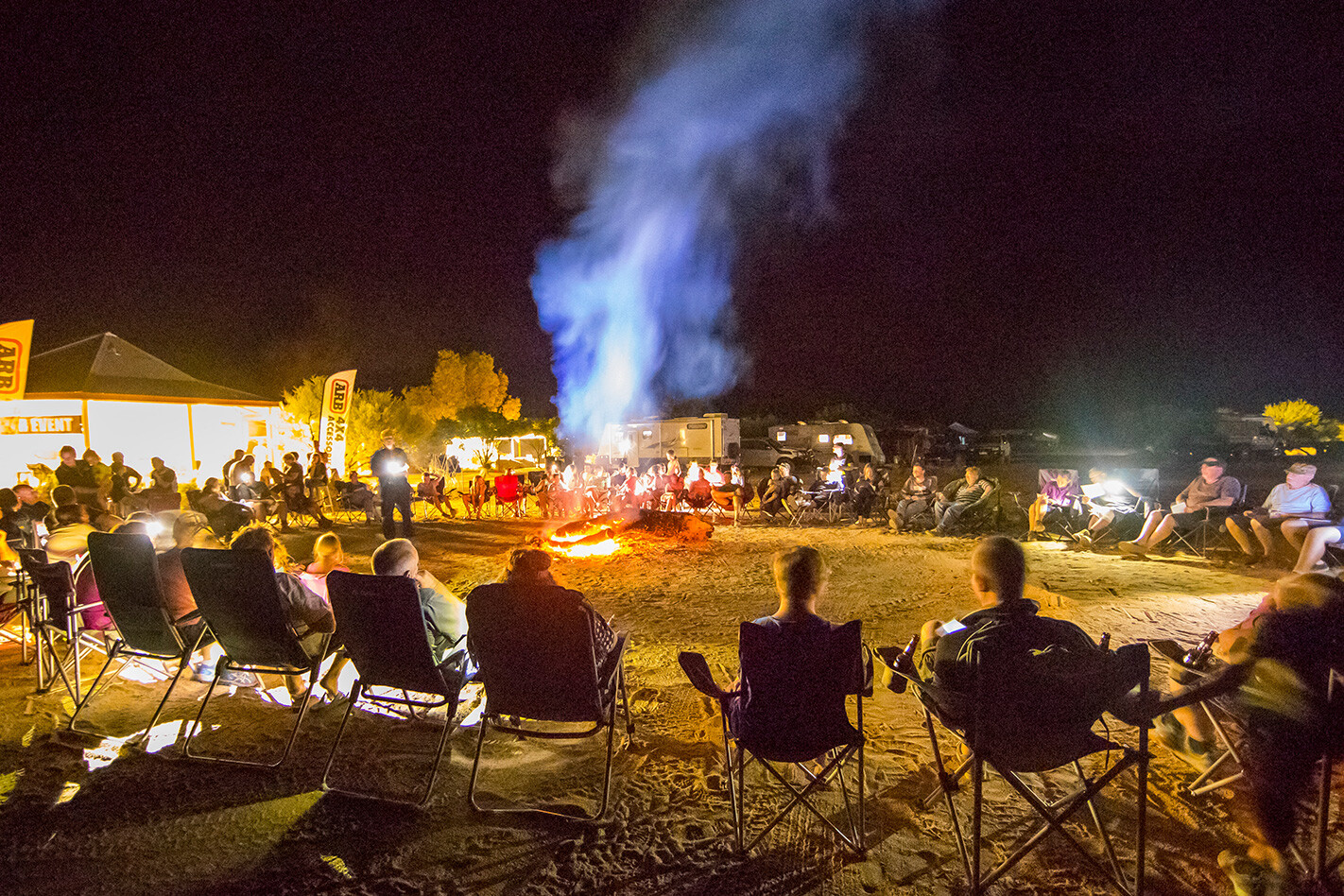
VICTORIAN CARAVAN, CAMPING & TOURING SUPERSHOW (VIC)Clocking up 60 years, this huge event is like heaven on earth for off-road tourers. Running from February 21 to 26 and located at the Melbourne Showgrounds, expect to see all the latest – and greatest – gear from a number of caravan, camper trailer, camping and touring suppliers and retailers. It’s a family-friendly event, too: the Caravanning Explorers’ Club is aimed at kids, and the Adrenalin Zone will keep the little ones busy while you check out all the gear. For adults, there’s the Walkabout Stage, with live music, cooking demos and information sessions.
For ticket prices and all information, click on caravanshow.com.au
BRIGHT ADVENTURE TRAVEL FILM FESTIVAL (VIC)If you’re looking for inspiration for an outdoor adventure, head to Vic’s alpine village of Bright for the annual adventure travel film festival, from February 9 to 11. Expect some great films, plus talks from Aussie and international adventurers like Alienor le Gouvello, an Australian-based French lady who has worked with indigenous youth while fitting in a horse-borne traverse of Mongolia and Australia’s Bicentennial Trail. Heather Ellis, author of Ubuntu: One Woman’s Motorcycle Odyssey Across Africa, will talk about that and her Silk Road motorcycle trip.
See adventuretravelfilmfestival.com for all information.
TOUGH DOG TUFF TRUCK CHALLENGE (NSW)
The Tough Dog Tuff Truck Challenge is on again, from Friday April 13 to Sunday April 15 at Milbrodale. Drivers and navigators have to negotiate 10 different stages to overcome everything from vehicle-sized boulders to near-90-degree vertical climbs. There is camping on-site and all the event stages are easily accessed for viewing. Kids are kept busy with the Tuff Trampoline, the Tuff Tower (an 8m rock-climbing wall) and face painting. There are fireworks and you can even jump on-board the Challenge Helicopter for a chopper ride above the event arena.
See tufftruck.com.au for info.
LAND ROVER 70TH ANNIVERSARY COOMA (NSW)It’s only fitting that Cooma, the Snowy Scheme ‘capital’, is the base for this birthday bash, which will take place over the Easter Long Weekend. As well as the Grand Parade of Land Rovers through town, there will be guided tagalong tours in the surrounding areas, as well as the Land Rover Experience Terrapods, a swap meet, navigation trials, a Grand Display and a gala dinner and awards night, with a final farewell brekky on Easter Monday.
See www.landrover70thcooma.com
AUSTRALIA’S longest running and most enjoyable 4×4 show has found a new home. After 29 years at its Wandin site, the Victorian 4WD Show will move to its new home at Lardner Park near Warragul, south-east of Melbourne.
Run by the Land Rover Club of Victoria on the third Sunday of February, the Vic 4WD Show differs from the rest by being set in a rural outdoor location; and the move to Lardner Park will continue that tradition with more space for the 2018 event.
The new venue is developing a specially made 4×4 test track so that show-goers will be able to sample the capability of 4×4 vehicles as well as check out the latest wares from exhibitors from all the big 4×4 companies. There’s also a 4×4 swap meet and a great display of old and unique 4×4 vehicles.
For more information, check out the event website at: www.vic4wdshow.com.au
IT’S A hard ask of any manufacturer to provide a vehicle that delivers a commodious interior yet turns and parks on a paper plate.
One that can accelerate like a motorbike, can pull the QE2 yet sip fuel like a sparrow, and can glide through corners like an F1 car despite having a tonne in tow. The day they build a ute that is all things to all people is the same day we’ll all be driving it.
Until then we can expect compromise, as manufacturers try to best balance performance, practicality, function and form. However, as owners want to change some of those balanced compromises to better suit their own requirements, there’s a thriving multi-billion-dollar aftermarket industry.
Before we turn to the booming aftermarket world, we’ll look at the benefits a well-designed and engineered base vehicle affords. The Ford Ranger, for example, is well-known for its rugged good looks, comfortable ride, roomy interior and honest off-road capability. It’s a winner with families, tradies and grey nomads and, with strong sales in 2017, it looks like its popularity and strength in the marketplace is set to continue.
But has Ford left enough wiggle room to finesse the Ranger’s impressive capability? Enter our 2017 Ford Ranger XLT PX Mk II with optional auto gearbox – a 4×4 double-cab with an e-locking differential and 3.2 litres of muscle producing 147kW and 470Nm. It was purchased from the showroom floor with just 16km on the clock, gloss black paint and all. On the other side of the ring stands a menacing-looking Ranger finished in Winning Blue and sporting an A-grade list of who’s who in 4WD accessories.
More akin to Mike Tyson than its Tom Hanks opponent… surely this wasn’t going to be a fair fight. The first tick of approval was awarded to the modified Ranger’s enhanced and raised BP-51 suspension system. Simply because, long after suburbia was a rough edge on the horizon, we still hadn’t noticed it was there.
Smooth and comfortable, it was completely forgettable because it was that good. The same can’t be said for the persistent drumming of the tyre’s aggressive tread pattern, but they would prove their worth later (did I mention compromise?).
The premium BP-51 kit is designed to improve the off-road experience without adversely impacting on-road performance, so, on-road, the modified Ranger and stock Ranger are relatively similar. After all, what good is extra lift to clear off-road obstacles if the vehicle handles like a bucket of warm water on the drive home? However, as soon as we hit secondary gravel roads, the BP-51 kit started to justify its considerable price tag, as the modified Ranger continued to display an almost on-road level of comfort and smoothness.
Good directional stability allowed us to easily maintain momentum through sweeping corners, despite encountering several sections of rough corrugations. This is in part due to the method of progressive dampening using the BP-51’s internal bypass technology, like that used for off-road competition racing to provide impressive and consistent control when reaching the outer limits of compression and rebound. Allowing the oil to move through and around the piston, the BP-51 has five stages of dampening for both rebound and compression, and these can also be externally adjusted independently to suit ride, load and driving conditions.
The modified Ranger had a little more weight up front with a bullbar and winch, and it was running 300kg springs to offset the long-range tank, rear step, drawers, fridge, canopy, etc. However, despite having a rear with leaf springs – not normally conducive to a smooth or stable ride – the Ranger was remarkably settled, providing exceptional level of comfort and control. Not so the OEM counterpart. The standard shock absorbers strained trying to maintain consistent control over the corrugation’s short rebound oscillations, which translated into noticeable cabin vibrations, with the vehicle displaying a skittish reaction to surface irregularities.
Throw a directional change into the mix, and the limited traction meant it wasn’t long before the electronics intervened. Given this narrow range of control offered by the standard shock absorbers, it’s slower going on the rough stuff for the OEM Ranger. On less-defined bush trails the ability to flex over undulating terrain and provide wheel articulation to maintain traction takes priority, as opposed to dampening control and stability at speed.
The BP-51 suspension was noticeably smoother, and it better isolated the driver from the jarring of small, sharp bumps and dips. This also pays dividends by reducing driver fatigue over extended trips. The modified Ranger was the first to ascend a slippery hill with off-camber dips and hollows. With the wheels compressing and extending almost beyond the wheel arches, our blue test mule twisted and contorted into positions that would have made a yoga instructor pass out. With only minimal wheel-slip at the extremity of the suspension travel, the modified Ranger completed the challenge with assertive confidence.
As the OEM Ranger began the climb it looked like it might succumb to wheel-spin, until we engaged the e-locker at the rear to settle things down. The bog-standard Ranger then demonstrated beyond doubt why it’s a formidable base on which to build a long-distance tourer, impressing everyone with its out-of-the-box determination and ability. At the very top, a deep hollow on one side saw the standard OEM run out of travel by a bare 10mm.
If not for the e-diff transferring torque across the axle, Round Two might have gone the way of Winning Blue. The standard Ranger was also competent when traversing loose rock and deep washouts through the valley trails; though, we had to make several cautious stops to road-build through sections the modified vehicle walked through.
Let’s be honest, the Ranger is no shrinking violet; the dimensions of the front grille and surrounding bodywork have about as much practical application for off-road driving as a bull in a china shop. And, with a claimed unladen approach, departure and ground clearance of 29, 21 and 237mm respectively, the Ranger’s not agile when manoeuvring in tight places on uneven ground. The rear tow bar assembly screams impromptu plough, complete with guide fins to thoroughly embed you into terra firma.
Plus, we had to be very cautious traversing crossovers, as the decorative sidesteps constantly hindered the standard Ranger’s ability to cross even the most moderate of angles. A peak underneath both vehicles revealed a few more differences. Remote canisters mounted to the BP-51 suspension system ensure it runs cool even under demanding conditions, and solid, robust tubing and mounting points are designed to withstand the impacts of off-road adventure.
An electric winch mightn’t be a necessity, but we demonstrated how handy it was to have one neatly mounted into a rated bullbar and easily accessible behind a flipping number plate. Yep, we discovered a water-sodden clay pan lay beneath the crusty surface we’d stamped our feet across, and our OEM Ranger’s wheels broke through that crust and dropped us chassis-rail-deep in goop. This is when the modified Ranger’s winch and aggressive MTZs proved their worth.
With lots of digging, and a rear-line pull from that helpful winch, the Ranger was finally free… but having lost our path back we needed to carefully plot a new path around the side. Once again, the modified vehicle, with its extra ground clearance and enhanced approach and departure angles, made light work of the tricky 45-degree exit, and the clever upswept wings on the side of the modified bullbar allowed the tyres to gain purchase for a side angle step-up.
Unfortunately, the stocker required more digging and road-building before we could head home. At day’s end, all the accessories hadn’t morphed a standard Ranger into some form of super vehicle; they had enhanced the capabilities that already existed and unlocked the Ranger’s hidden potential to achieve what is essentially a formidable long-distance tourer with outstanding off-road capability. If you were to choose one upgrade, make it the BP-51 suspension system, as it took the Ranger’s solid driving dynamics to a new level of driving pleasure.
The bullbar, side rails, underbody protection and rear step all served a purpose beyond their aesthetics, by either protecting the vehicle or aiding off-road practicality. Other kit – driving lights, rear drawers, fridge, canopy, comms and roof rack – all added significant improvement and usability to the vehicle’s existing design.
It’s a combination of these accessories that turns a great product into a well-set-up vehicle for extended touring and off-road adventure.
Ford Ranger Kit
Keen to know what our modified Ranger was wearing so you can budget for your Christmas list?
BP 51 suspension kit (including 300kg rear springs): $4351.20 Summit bar: $2270.10 + $275 (colour coding) 9.5 XP Warn with Spydura rope: $3103.80 Summit side rails and steps: $1224.30 + $260 (colour coding) Intensity AR32 LEDs: $1733.55 Intensity AR40 light bar: $887.25 ARB recovery point: $329.70 ARB under vehicle protection: $651 Ascent canopy (rear): $3952 ARB alloy canopy rack: $1350.30 Summit rear bar: $1571.85 + $90 (colour coding) Safari snorkel: $485.10 ARB front locker: $999 ARB rear locker: $999 ARB high-output compressor: $388.50 Outback Solutions drawers: $2526.30 Frontier 140L fuel tank: $1092 ARB seat skin covers: $292.95 Elements s/steel fridge: $1783.95
TOYOTA will introduce a trio of new models to its Hilux range in the second quarter of 2018.
The three new 4×4 variants – Rogue, Rugged and Rugged X – will up the ante with increased off-road protection, recovery and functionality.
“Hilux buyers increasingly demand additional features – in fact, they spend more on accessories than any other vehicle in our range,” Toyota Australia’s vice president of sales and marketing Sean Hanley said.
“These new vehicles will enable them to make a statement with advanced toughness, added capability, practical comfort, first-class safety and in-built strength.”
The Rogue, to sit above the SR5 in the Hilux line-up, will feature a bold, aggressive appearance highlighted by a hexagonal upper grill, new front bumper and revised fog lamps.
“[The] Rogue is for people who want refinement and capability, enabling them to go for weekend adventures and do it in style,” Hanley said.
The Rugged will also feature an aggressive front-end design, with a premium steel bullbar. “[The] Rugged is about toughness and off-road performance – an ideal vehicle for getting off the beaten track,” Hanley added.
The Rugged X will sit atop the Hilux line-up thanks to the addition of a high-tensile alloy bash plate and a winch-compatible hoopless steel bullbar, both compatible with the vehicle’s airbags and safety systems. The X is also equipped with a snorkel, LED driving lights, high-strength front and rear recovery points, rock rails, a load-carrying sports bar and other heavy-duty components.
As Hanley explained, the “Hilux Rugged X is a no-compromise vehicle for those seeking adventure with a robust and capable vehicle that makes the ultimate statement.”
All components will be fully integrated with the vehicle and certified to ADR, with full warranty coverage available.
With the Ford Ranger topping the 4×4 sales charts in 2017, these three additions to Toyota’s 4×4 stable could swing the game back in the Japanese brand’s favour.
Stay tuned for further info and pricing details.
THE Thunder Multi-Function Jump Starter kit provides plenty of punch to crank over a fourby.
It also incorporates 240- and 12-volt chargers, intelligent jumper cables, a gaggle of laptop and mobile phone connectors, a 10-amp ciggie power outlet to run lights or any other 12-volt appliance, and two USB outlets (1 amp and 2 amp). There’s also a handy LED light that can be set to constant on, slow flashing and SOS flashes.
The kit is all packed into a classy carry case. The heart of the kit is a compact, high-performance Lithium battery, which only weighs 615g and boasts 18,000mAh and 600CCA – that’s similar cold-cranking-amp starting ability to some car-starting batteries.
The intelligent jumper cables have eight gauge wires and feature an audible LED light alert for reverse polarity clamping, to protect both the battery and the vehicle. When clamped correctly, a green light confirms all is okay.
If your starter battery is dead flat, the intelligent jump-cable controller features a boost button to ensure the full amount of juice flows during attempted starting. As a test, the Thunder unit managed to jump-start my 4.5-litre V8 turbo-diesel Troopy with its starter battery disconnected (as my battery wasn’t flat), then went on to jump my old ride-on lawnmower.
With the ability to power or recharge a laptop, tablet or smartphone, the Thunder Multi-Function Jump Starter could get you out of a pickle while out camping should your smaller battery-powered devices pack it in.
Regardless if you’re going bush, beach or picking the kids up from school, given its compact size and light weight, the Thunder can stay packed away for any occasion.
Available from: www.thunderauto.com.au RRP: $360 We say: Every 4×4 should have one!
WE’VE just received a package containing pre-production samples of the new Responder Tactical jacket and hoody from American outdoors outfitter AMABILIS Gear, and we’re impressed by what we see.
This gear is made with long-life outdoors in mind, and with AMABILIS’s past in producing gear for the US Special Forces in mind, you can see where the quality and design of this product comes from.
High-tech, quality materials, heavy duty waterproof YKK zippers and clever designs all combine to make this some of the best all-weather gear you can get. The Responder jacket and hoody are made to work in partnership with each other, with the hoody forming a snug layer under the waterproof jacket – or you can wear them individually as conditions dictate.
The Responder range isn’t due for release until May (just in time for the Australian winter), but buyers can get in early for huge savings on the products.
There are just two days left to get on the Kickstarter campaign AMABILIS is using to launch the products, so get in quick to be some of the first people in Australia to receive the gear. In fact, Aussies have been keen on the Responder products and rank second only to the USA in pledges to the new gear as well as the excellent existing products from AMABILIS.
Follow this link now to get on it before time runs out: http://kck.st/2z0Bo4H
Also, check out the full range of products, including the Dave Duffle which has become a favourite here at 4X4 Australia, at: www.amabilisgear.com
We’ll have a full review of the Responder Tactical wear as soon as it cools down enough to wear it here in Australia.
TO properly put Land Rover’s quintessential off-roader, the all-new Discovery, under the microscope, we gathered a trio of intercontinental rivals and took the foursome to some punishing WA terrain.
The Discovery is in a different class to its immediate competition, especially when it comes to cabin ambience. You pay for the privilege, though. Our HSE Sd4 starts at $93,550 ($3400 more if you want an extra row of seats).
The Ford Everest Titanium shares a basic mechanical package with the hugely successful Ranger, right down to the grunty 3.2-litre five-cylinder. At $74,701 the Titanium is a big whack for a car with lots of grey plastics that don’t do a lot to justify the price. The list of standard gear is also thin, doing without things such as smart key entry or auto braking.
The Trailhawk is the most off-road-capable version of the Grand Cherokee, and it hits a note for tourers that favour luxury over interior space. At $74,000 it’s loaded with kit, including leather and suede, and it also comes with a tantalising sales pitch among this quartet: more power. The 3.0-litre V6 twin turbo diesel musters 184kW and 570Nm.
Toyota’s 150 Series Prado Kakadu GXL’s 2.8-litre four-cylinder manages just 130kW and a more respectable 450Nm, which arrives from just 1600rpm to make it a handy performer on initial throttle applications. There’s no zing or excitement, but none of this affects its performance off-road, as the engine is, after all, better suited to grunt work.
For all the facts and all the fun, watch the above video. And read the review in detail by picking up a copy of the 4X4 Australia Summer Edition, in stores now.
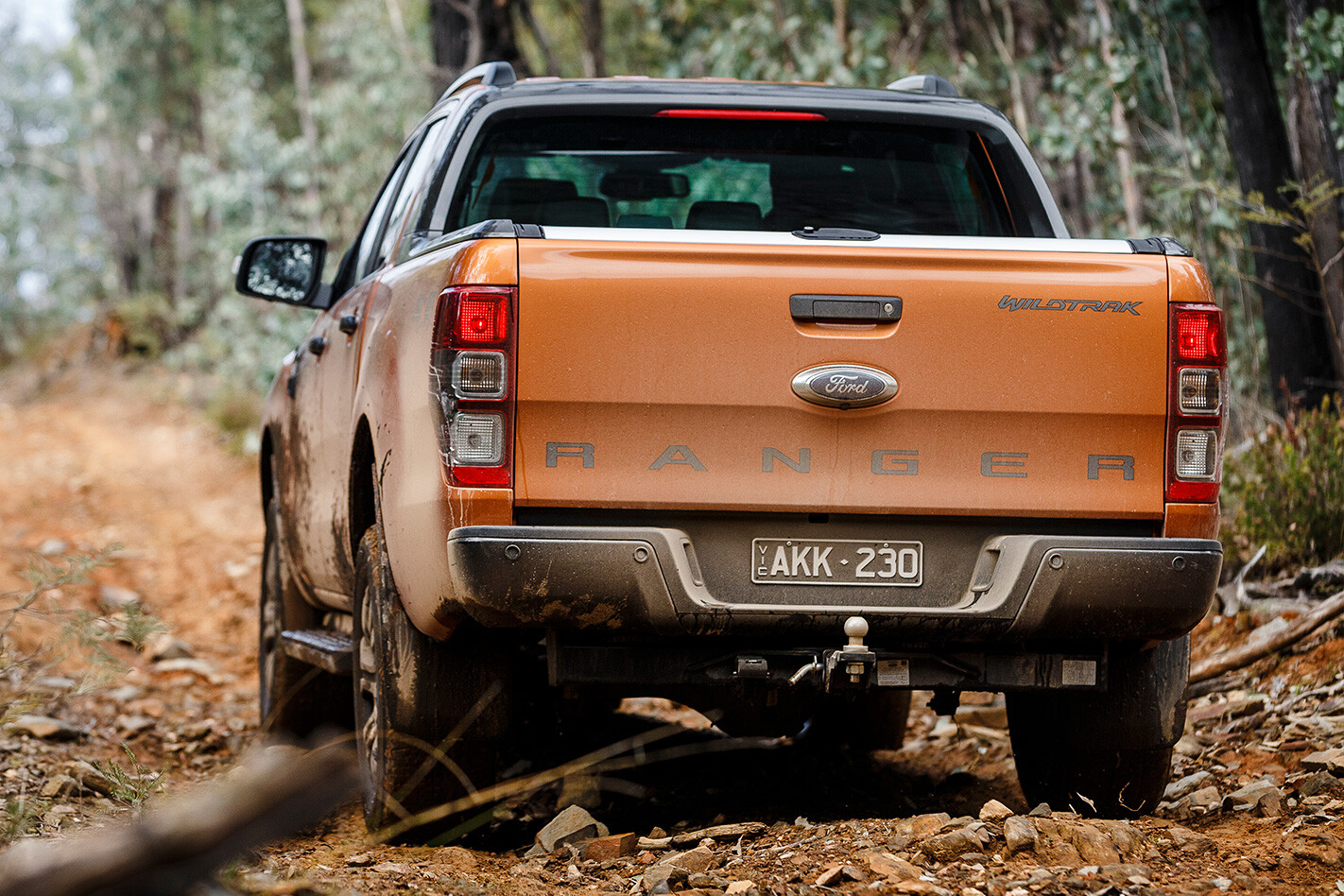
THE FORD Ranger was Australia’s best-selling 4×4 in 2017, with a total of 36,932 units driving off the showroom floor for the calendar year.
That people flocked to the Blue Oval in 2017 was representative of a steady increase in sales for the light commercial vehicle (LCV) market. LCV sales held a 19.9 per cent share of the total market in 2017, up from an 18.5 per cent share in 2016.
Rounding out the top three best-selling 4x4s for the year were the Toyota Hilux (35,297 sales) and Mitsubishi Triton (20,513).
According to the VFACTS report, “FCAI Chief Executive Tony Weber said that while the stability of the Australian economy and low interest rates were influential factors in the overall market growth, it was the fierce competition within the market place between brands which provided the momentum.”
It was also a record-breaking year for overall car sales, with 1,189,116 sales reached in 2017, making it a 0.9 per cent increase on 2016. The 102,820 overall sales in December was also a record for that month, up 4.1 per cent on the previous year.
The best-selling model on the overall 2017 sales charts was the Toyota Hilux (4×4 and 4×2 variants combined).
The Hilux was also the best-selling model in December with 3949 sales. It was followed by the Holden Astra (3533), Ford Ranger 4×4 and 4×2 (3458), Holden Colorado 4×4 and 4×2 (3222) and Mazda3 (2807).
u00a0 | 4X4 | 2017 TOTAL | NOV 17 | DEC 17 |
1 | Ford Ranger | 36,932 | 3153 | 3105 |
2 | Toyota Hilux | 35,297 | 3174 | 3114 |
3 | Mitsubishi Triton | 20,513 | 1588 | 2462 |
4 | Holden Colorado | 19,107 | 1701 | 2871 |
5 | Toyota Prado | 15,982 | 1492 | 1590 |
6 | Nissan Navara | 13,149 | 1091 | 1185 |
7 | Toyota Land Cruiser wagon | 12,814 | 1101 | 1021 |
8 | Isuzu D-Max | 12,795 | 1229 | 1525 |
9 | Toyota Land Cruiser PU/CC | 8915 | 872 | 761 |
10 | Mazda BT-50 | 8900 | 670 | 647 |
THE 2018 Mercedes-Benz G-Class is set to be revealed in G500 guise at the Detroit Auto Show later this month and will arrive in Australia in AMG trim in the second half of the year, with diesel and other models set to follow later on.
We already know the heavily revised G, the biggest changes to the model in nearly 40 years, will have a longer and wider body to provide more interior space, and, for the first time in its long history, will have independent front suspension (IFS) for improved on-road manners. One of the G-Wagen’s strengths has always been its front and rear, coil-sprung live axles, and off-road purists will say that an IFS G just won’t be the same.
When he was in Australia last year for a G-Wagen crossing of the Simpson Desert, Mercedes-Benz G test driver, Erwin Wonisch, told us we shouldn’t be worried and that the new G is a more capable off-roader than the current model. “I have driven it a lot and it is still in engineering and development,” he said at camp in the middle of the desert.
Erwin has probably driven the next G more than anyone and can been seen behind the wheel of this camouflaged development model. These images were taken on the Schöckl, a 1445m mountain near the Austrian city of Graz, where the G-Wagen is and always has been built. It’s Erwin’s little test track, and the 5.6km route includes gradients of up to 60 per cent and lateral inclinations of up to 40 per cent, so it’s an ideal test of off-road ability.
The new IFS uses a double-wishbone design, where the arms are mounted directly to the ladder-chassis without an additional subframe. The attachment points for the lower wishbone to the chassis are in a Z-formation to keep them as high as possible and ground clearance between the axles is now 241mm, 6mm higher than the current live-axle model. Fording depth is 100mm higher at 700mm.
The rear axle remains a live arrangement mounted on a parallel four-link set-up. Even when it had live axles front and rear, wheel travel wasn’t a strong point of the G and it relied on its triple differential locks to maintain forward movement. Thankfully these have been retained in the new model, and the low range gear set in the transfer case has been changed to a deeper 2.93:1 ratio.
There’s no doubt that the IFS, with expected electrically assisted rack-and-pinion steering and wider wheel track, will all combine to improve the G-Wagen’s on-road dynamics and comfort, and the bigger body will allow a larger cabin that will be a nice place to ride. We’ll await our local dive of the new model to confirm its off-road prowess.