
A NEW five-seat GLS variant headlines a raft of updates for Mitsubishi’s 2018 Pajero Sport range.
The all-new GLS slots into the line-up alongside its seven-seat stablemate and between the entry-level GLX (previously the only five-seater in the model line-up) and the top-spec Exceed.
No changes beneath the bonnet, with the 2.4-litre turbo-diesel donk still good for 133kW and 430Nm. What is new, however, is that Forward Collision Mitigation and Adaptive Cruise Control are now standard for all Pajero Sports.
Other updates for the GLX, GLS and Exceed models extend to a 150W/220V AC outlet, two rear-seat USB ports, illuminated driver and passenger vanity mirrors, and soft-finish side console trim.
The GLX comes with new 18-inch alloys, while the top-spec Exceed now gets a tailgate spoiler as standard.
The updated models, as well as the all-new five-seat GLS are available from April 4.
2018 MITSUBISHI PAJERO SPORT RRP GLX: $45,500 GLS (five-seater): $48,500 GLS (seven-seater): $49,500 Exceed: $53,650
Amidst what seems like the panic to switch from the internal combustion engine to the electric motor for our transport needs, German company Bosch says there is another way. It’s called synthetic fuel.
Put simply it has manufactured a fuel than can replace current fossil fuels (petrol, diesel, etc.) and has the potential, according to Bosch, to make the internal combustion engine carbon neutral. What’s more, it means current engine technology can be used and, more importantly, the existing refuelling station network can be used with absolutely no changes.
The problem with electric cars is that they will need a whole new support infrastructure to be viable: charging stations (as per current fuel stations), kerb-side chargers (arranged like parking meters) and/or domestic home-based charging systems.
Just in case you don’t know, Bosch is a huge automotive component supplier producing chassis control systems, fuel-delivery systems, vehicle electronics, and even humble automotive components like windscreen-wiper blades. Bosch also makes other things such as domestic appliances and power tools, and globally employs more people than Toyota.
Synthetic fuels use carbon dioxide as the raw material in their manufacturing process, which also relies on electricity, ideally produced via renewable sources.
In the first stage of synthetic fuel production, hydrogen is produced from water, and carbon is then added to produce a liquid fuel. The carbon can be recycled from industrial processes or even captured from the air using filters.
Technically speaking it’s already possible to produce synthetic fuel, and pilot projects to produce synthetic are underway in Germany and Norway.
Currently, producing synthetic fuel is an expensive and complex process, but favourable electricity prices and increased production will help to reduce the costs in the future.
Bosch is not suggesting that synthetic fuels will mean the world won’t have to turn to electric cars to reduce air pollution, but that synthetic fuel could be a supplement to electric cars and a means of keeping existing cars on the road.
Given that synthetic fuel has all the properties of petrol or diesel (or LPG, for that matter), current-technology cars will run on it without the need for modifications. Synthetic fuels can be made to burn practically soot-free so engines will rely less on the exhaust-gas cleaning treatments widely used today.
Bosch says that the cost of ownership (up to a lifetime mileage of 160,000km) of a hybrid running on synthetic fuel could also be less than that of a full electric vehicle.
Autumn festivities are ramping up between the months of May and July with concerts, desert rallies, and rodeos.
St George 399 (QLD)
Entries are now open for the St George 399, which acts as the first round of the 2018 BFGoodrich CAMS Australian Off Road Championship, as well as the CAMS Queensland Off Road Championship.
For the 2018 event, which runs from Friday May 4 until Sunday May 6, the track has been subject to a number of updates and changes, with one of the main ones being upping the distance of the iconic event. As well as the race itself, the St George Show will run on the Sunday and this includes a rodeo and fireworks display that night.
Check out offroadracing.com.au or go to the St George 399 Facebook group for more information and updates.
Richmond Outback Fossil Fest and Bush Sprints (QLD)
The outback Queensland town of Richmond is gearing up for a big weekend from May 4 to May 6, at the event location on Racecourse Road. The Fossil Fest will include a guided museum tour of Kronosaurus Korner on the Friday morning, and this will be followed by an action-packed rodeo on the Friday night.
The Saturday is jam-packed: a street parade, the famous bush sprint horse races and even a moon-rock throwing competition will keep visitors entertained, with live entertainment, a fireworks display and local market stalls finishing off the Saturday night. It’ll be a great event.
Email [email protected] for more info.
Shark Bay Fishing Fiesta (WA)
The Shark Bay Fishing Fiesta is on again. Keen anglers should note the dates of Friday May 18 to Friday May 25 and get ready for what is more than just a fishing comp.
The Fishing Fiesta is run as a celebration of the Shark Bay region and includes numerous fishing comps each day, plus a crazy beer-can regatta, entertainment each night during the festival, and local market days where you get to check out – and purchase – homegrown produce.
Check www.sharkbayfishingfiesta.com for more info.
Finke Desert Race (NT)
For some of the most exciting desert driving you’ll see anywhere in the world, the Red Centre’s famous Finke Desert Race is an absolute must-see. This epic two-day off-road racing event runs over the June long weekend (June 8-11) and there’s a mix of monster off-road buggies, modified vehicles, quads and dirt bike racing to cater for all motorsport fans.
‘The Finke’ runs from the Red Centre capital of Alice Springs to the Aputula community and then back to Alice. For those who want to get super-close to the action, you can camp along the 250km route for the ultimate outback race experience.
For more information, check out www.finkedesertrace.com.au.
Big Red Bash (QLD)
Mark the dates of July 10-12 in your diaries for the 2018 Big Red Bash. This music extravaganza, held at the base of Australia’s most famous sand dune – Big Red – has grown again for this year.
A massive roster of some of the biggest names in Australian music including The Angels, Hoodoo Gurus, John Farnham, Kate Ceberano and The Black Sorrows, to name a few, will be keeping the crowd well entertained. There’ll even be ‘drag’ races (and not of the automotive kind!) and a Fashions in the Desert parade, all with the aim of raising much-needed funds for the Royal Flying Doctor Service.
See www.bigredbash.com.au for more info.
Waikerie Hotel ARB Riverland Enduro (SA)
Round four of the ARB Australian Off Road Racing Championship (which doubles as Round 4 of the AORRA SA Off Road Racing Championship and Round 4 of the SA Off Road Racing Association Multi Club Series) sees drivers tested on a tough mix of off-road terrain at Murbko.
This event, held July 13-15, will showcase excellent driver skills, as competitors thunder through spectacular outback country. www.offroadracing.com.au.
Head to the Corner
It’s time to start planning a visit to one of this country’s iconic destinations: Corner Country. This region, encompassing northwest NSW, southwest QLD and northeast SA is packed with great driving on some famous desert tracks.
Visiting this region also offers the chance to stand on the junction of all three states. Take your canoe, too; Cooper Creek is a top paddling (and fishing) destination, right next to Innamincka Hotel.
We arrived just on dusk on a chilly winter night, barely beating the sun as it appeared to kiss the top of the mountain.
This article was first published in 4×4 Australia’s October 2012 issue.
We’d just driven through historic Beechworth, in north-east Victoria, promising our children we would be back to visit the famous shop belonging to the Beechworth Sweet Company. We still had about 20km to go and were keen to set up our camper before dark. Our destination was the mountain village of Yackandandah, surrounded by forest, native bush and history – the perfect place for a weekend of adventure and relaxation.
Once a prosperous gold town, Yackandandah (or Yack as it’s affectionately known by the locals) was originally on the old main road from Sydney to Melbourne. Bypassed, it now sits in the triangular country region bounded by the Great Alpine Road and the Hume and Kiewa Valley highways. Nestled and snug in the picturesque valley, it could be a world away from anywhere.
As we descended from the forest into the avenue of English oak trees in Yackandandah’s main street I was struck by the town’s beauty. The air was crisp and there was something special that seemed to seep into our bones as soon as we arrived, forcing us to slow down.
We crossed the stone bridge (built in 1860) over Commissioners Creek and a large sign pointed to our destination, the Yackandandah Holiday Park.
This is one of the best places to camp. The park is right in the middle of town but it feels like it could be in the middle of nowhere. It’s a small, quiet country park with a motto which seems to epitomise the entire town and its lifestyle – ‘simply relax’. Commissioners and Yackandandah creeks merge here and flow around the park’s perimeter. Trout are abundant in its pure waters and we were reliably informed it’s the perfect place to cast a line, but it was late and there was no time for fishing.
On the friendly advice of Rob Syer, the park’s acting manager, we chose a grassy flat site close to an annexe and slab. We had some protection in case of bad weather, and loads of space for our friends who were joining us the next day. We also had the creek in front of us, perfect for our canine companions to frolic in.
With all hands on deck the camper was promptly deployed before the sun disappeared. The camping part of the park was deserted with only the cabins occupied. It seemed that most people considered the weather too cold and only the brave were out, so we virtually had the whole park to ourselves.
After the camper was set up warmth was next on the agenda. Rob kindly offered us wood for our evening fire. Fire drums aren’t supplied so we had brought our own. The troops were ravenous and so our pasta was served, infused with extra local herbs as, in my rush to drain it, half was lost in the grass. I threw it back in with the thought ‘what doesn’t kill you makes you stronger’. There were no complaints.
The next morning we woke to 0°C and a frosted creek. Rugging up, we headed out to explore. Just down the road we found a retro garage sale. Barely five minutes later we were in the main street lined with those sturdy oaks – even with bare limbs they were impressive.
The best way to explore the town was on foot and it was especially fun when the roads and creeksides were heavy with fallen autumn leaves. The town had shady verandahs on the colourful building facades and wide gutters – our youngsters had great fun jumping over them.
We met a bloke called Ralph Czarnecki, the owner of Frankly Speaking Antiques, a great place to browse through quirky and old-time treasures. Ralph has owned the antique store for 25 years and said the only thing he loved more was riding his motorbikes, one of which sat outside the store, a silver Can-Am Spyder.
The main street is Heritage Listed with 37 National Trust buildings to explore, including the Athenaeum, the Courthouse and the Bank of Victoria but there’s something about a shiny, three-wheeled motorcycle that has it over the historical stuff and appeals to all the boys, especially mine. Look out for the old signs at the nearby Yackandandah Motor Garage. The garage closed in 2003 when petrol was just 70.5 cents per litre.
That afternoon we headed back to Beechworth with our friends, who had by now joined us, to visit the famous confectionary shop. It was a holiday weekend and everyone was ready for a sugar fix. We chose our favourites and farewelled the bustling town, happy to head back to quiet Yackandandah.
We enjoyed another late-afternoon stroll along the main street, stopping to browse through quaint stores filled with local craft and the most amazing wooden furniture. Other stores, selling winter woollies stand side-by-side with bakeries and cafés.
For an interesting walk, head to The Gorge, accessed from the Yackandandah Creek in town or from the carpark on Bells Flat Road. We took the creek track. The scenic walk led to cascading waterfalls and took us through rugged countryside on a pathway that twisted and turned through native bushland.
Four-wheel driving offers a real treat around here and it was literally at our doorstep, a perfect place to try out our new Great Wall 4X4. The V200 2.0-litre LT turbo-diesel has proven itself handy
at towing our camper-trailer and, back home, a horse float. On the tracks the Great Wall (GW) had no trouble with power or traction and we were impressed with its capabilities.
Yackandandah sits in the foothills of the Stanley State Forest so it was a mere five-minute drive from our camp to reach the start of some awesome tracks. There was also a leisurely 14km Forest Drive Circuit passing several local and interesting features including The Gorge, the army training ground, the old town site and the Yackandandah sawmill. There’s still alluvial gold up in the hills and creeks of the area. Throughout the forest old tunnels and mineshafts remain unguarded, so take care if you go bushwalking.
To reach the Stanley State Forest we took Bells Flat Road for about 3km onto Service Basin Road and then followed this road onto No1 Link Road. There were also a couple of road- and creek-side campsites off this road and we saw a few people camped, nicely tucked away in the bush along the creek.
In Yackandandah, the GW handled the terrain easily and we discovered some top tracks including Kohns Spur and Finlay Spur, but you could easily drive in any direction and find fun. There was something in the Stanley Forest for everyone, from softroaders (in the dry) to rigs with big lifts, diff locks and off-road rubber. You could spend days exploring the tracks as there is a varying degree of challenges and surfaces.
One of the most challenging was Schmidt Track, a long, steep trail which had us crawling to the bottom of a fairly big descent only to discover that a huge fallen tree blocked our way. Although we had a chainsaw, it would have been a massive job to cut through the errant wood so we decided to turn around. Fortunately, there was room at the bottom of the hill to manoeuvre a multi-point turn before crawling back up the steep track. At this stage the clouds looked threatening but thankfully the rain held off as wet weather would have made the terrain very slippery.
Parts of the forest are used for logging and army training, so it pays to watch out for other vehicles. The most traffic we saw were some horse riders on a navigational ride through the forest, as well as a group of trail bikers. The Stanley Forest is an extremely popular spot for dirt-biking.
We found great free camping spots, many along the fast-flowing Yackandandah Creek; several had well-constructed fireplaces and there were even drop toilets in some locations. It would be a fantastic place to return to in summer.
Closer to town, but still on the edge of the forest, is Kirby’s Flat Pottery, run by master craftsman John Dermer. His work has been displayed in the Australian National Gallery and Parliament House. Set in the hills amid a spectacular backdrop and surrounded by Japanese gardens, his studio gallery is memorable.
It would be very easy to drive further afield from Yackandandah, to visit nearby mountain resorts and gourmet regions.
Yet this unassuming little place had all we needed and we were content staying true to the caravan park’s motto – to simply relax.
TRAVEL PLANNER
GETTING THERE
Yackandandah is about 20 minutes south of Albury and Wodonga, 300km north of Melbourne. Travel via the Hume Highway, turn onto the Alpine Road and follow the signs to Beechworth, then take the Yackandandah turn-off.
WHERE TO STAY
There are several accommodation options in town including Yackandandah Holiday Park for camping and cabins, The Yackandandah Hotel, Yackandandah Motor Inn, Crystal Creek self-contained cottage and several B&Bs.
CONTACT
For the visitors information centre, see www.uniqueyackandandah.com.au or phone 02 6027 1988.
FESTIVALS & FILMS
The annual Spring Migration Festival, an annual springtime gay and lesbian festival that welcomes all visitors and features markets, parties and movie screenings, is on from September 14-16. Yackandandah was the location for the 2004 film Strange Bedfellows starring Paul Hogan and Michael Caton.
THE end of the GU Patrol and Land Rover Defender left a huge hole in the 4×4 landscape, not only for the loss of these popular models, but more so because of the loss to the heavy-duty 4×4 ute segment.
Nissan still sells a Patrol in the form of the Y62 wagon and Land Rover is promising a replacement for Defender in 2020, but neither of these new models will spawn or are likely to spawn a ute.
Before we look too far into this, a traditional ute, as coined by Lew Brandt’s Ford Coupe Utility, was a vehicle with a cargo tray integrated with the passenger body. This is what differentiated a ute, as the name was shortened to, from a pick-up, which had a separate passenger compartment and load bed.
With the demise of the Holden ute last year, there are technically, by definition, no more utes available in Australia. The GU and Defender were, by definition, pick-up trucks, just as Land Cruiser 79s, Rangers, Hiluxes, Tritons and all the other one-tonne, load-carrying vehicles are. But the term ute has been corrupted to include these pick-ups within its usage; although, call them what you will, we’re not fussy.
The Land Cruiser 79 is the only heavy-duty 4×4 ute/pick-up/trayback/truck still readily available in Australia from the manufacturer. American pick-ups are also available from grey importers who convert them to right-hand drive for Australian use, but none of these come from the vehicle manufacturer. Nor are any of them as suitable to our four-wheel drive usage as the 79 is, or the GU and Defender were. They are great for towing and load hauling, but aren’t as tough and rugged as these three specialist vehicles.
Another alternative is to create your own, and we’ve seen plenty of chopped Land Cruiser 200s, 100s and GQ/GU Patrol wagons, but Peter Thorpe’s double-cab is the first Y62 ‘ute’ we’ve seen. There is another double-cab Y62 in Queensland, and Andrew from Ontrack 4X4, who did much of the work on Peter’s rig, is currently working on a single-cab Y62 for himself.
Wagons chopped to utes are nothing new, and with the demise of the GU and Defender we’re sure to see more of them. We’ve seen Land Rover Discoverys, Toyota Prados and even an FJ Cruiser converted to a ute. It’s a trend we love, as it harks back to the ingenuity of a great Australian designer working for Ford back in the 1930s, when he created a vehicle that could “both take passengers to church on Sunday and pigs to market on Monday”.
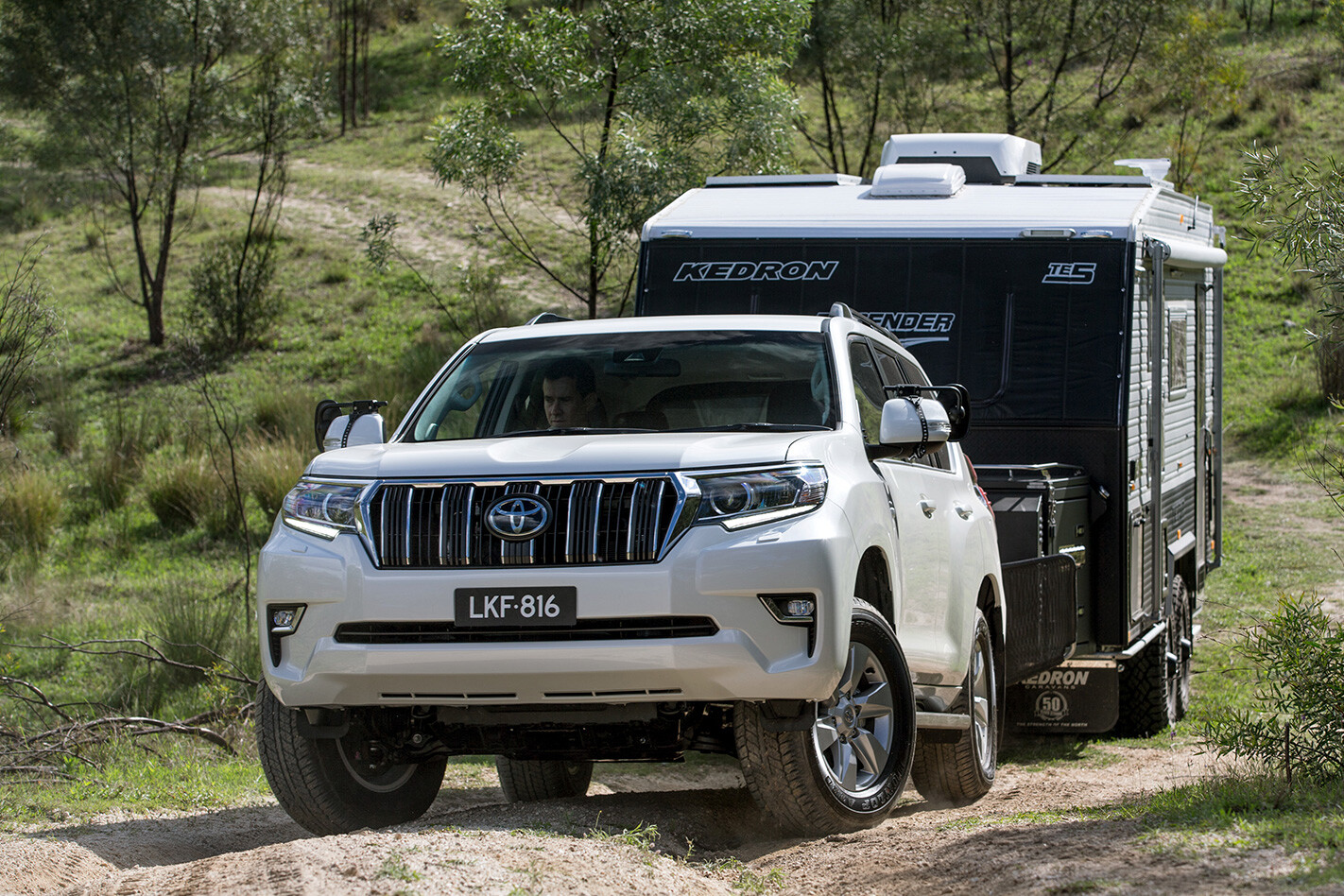
TOYOTA has bowed to market pressure and upgraded the tow rating of Prado automatic models from 2500kg to 3000kg, bringing it into line with its major competitors. Manual transmission models (only available in GX and GXL) remain at 2500kg.
The update is well overdue, as even the Prado’s cheaper sibling, the Fortuner, offers a 2800kg tow rating, and competitors like the D-MAX, Everest and Trailblazer offer 3000kg. The Pajero Sport tops them all with 3100kg.
The tow rating upgrade for Prado comes off the back of a Gross Combination Mass (GCM) upgrade from 5370kg to 5990kg. The Gross Vehicle Mass (GVM) remains unchanged at 2990kg for all models. There has also been a raft of equipment upgrades (see MY18 New Kit breakout on page 28) across the entire range but most notably with the popular GXL and the entry-level GX.
To sample the changes we drove a GXL auto and a GX manual. The GXL was fitted with the $3500 premium interior option that brings electric adjustment, heating and ventilation for the front seats, and leather all around. All of which makes you think you could well be in a VX, except for the fact that the GXL still doesn’t have KDSS (Kinetic Dynamic Suspension System), which is a shame given KDSS takes the Prado to a new level such is its impact on both on-road dynamics and off-road performance.
Emergency automatic braking (now on all automatic models) headlines the safety upgrade and brings adaptive cruise control with the commonality of hardware (front camera, etc.) and even some software.And while the auto braking is something you don’t wish to sample, adaptive cruise control is something you’re likely to use if you do any expressway or long-distance open-road driving.
The smart thing Toyota has done is retain manual cruise, so the driver can choose either. Adaptive cruise can be very good in some driving situations – the heavier the freeway traffic, the better it is – but doesn’t work well all the time. The GXL’s adaptive cruise is more seamless and effective in general operation than some, but it’s still better to have the option of manual cruise in low and medium density expressway traffic, where speed differentials between vehicles are greater. The GXL also gains lane-departure warning, which is either handy or annoying depending on your approach to driving – “am I driving the car or is it driving me”. At least you can switch it off.
The GXL gains a rear locker but activating it cancels the traction control on the front wheels (and not just the rear wheels), so it’s not really a win-win. This is the same setup as the Hilux. The now discontinued FJ Cruiser remains the only Toyota 4×4 where you can keep the front traction active with the rear locker engaged.
The GX tested was an entry-level five-seat manual. Interestingly the six-speed manual in the Prado isn’t the same as the six-speed now in the Hilux, as the six-speed from the 3.0-litre engine was retained when the 2.8 engine was introduced. The big difference between the gearboxes is that the Prado manual has a single overdrive gear (fifth is 1:1), while the Hilux’s six-speed manual has two overdrive gears (fourth is 1:1), with sixth being notably tall.
The Prado manual’s overall gearing is notably shorter than the automatic Prado and is better off for it. The automatic’s gearing is too tall at legal highway speeds if the road is at all undulating, which leads to some shuffling back and forth between fifth and sixth. In contrast, at highway speeds, the lower-geared manual carries top gear much better, yet the engine never feels busy.
As ever, the Prado offers comfort and surprising refinement in an old-school-tough and off-road-capable package. After all, the Prado is part of the Land Cruiser family, and it certainly doesn’t let the family name down.
MY18 NEW KIT
ASIDE from the towing and GCM upgrade for all Prado automatic variants, the MY18 Prado also brings new equipment to all model grades and price reductions for the manual GX, manual GXL, VX and Kakadu.
Most significantly, all automatic models now have autonomous braking, radar cruise, lane-departure warning and auto high beam, while the GX manual gets sat-nav and the GXL manual gains LED headlights, DRLs and fogs.
The GXL auto gains Optitron instruments, a rear diff lock and the option ($3500) of leather seats, plus heating, cooling and electric adjustment for the driver and passenger.
The VX gains a rear locker, as well as blind-spot monitoring, rear cross-traffic alert, and multi-terrain and panoramic-view monitors.
The Kakadu adds the panoramic-view monitor and then adds ‘Drive Mode Select’, which allows the driver to select different powertrain and chassis settings.
TOYOTA PRADO GXL (MY18) SPECS
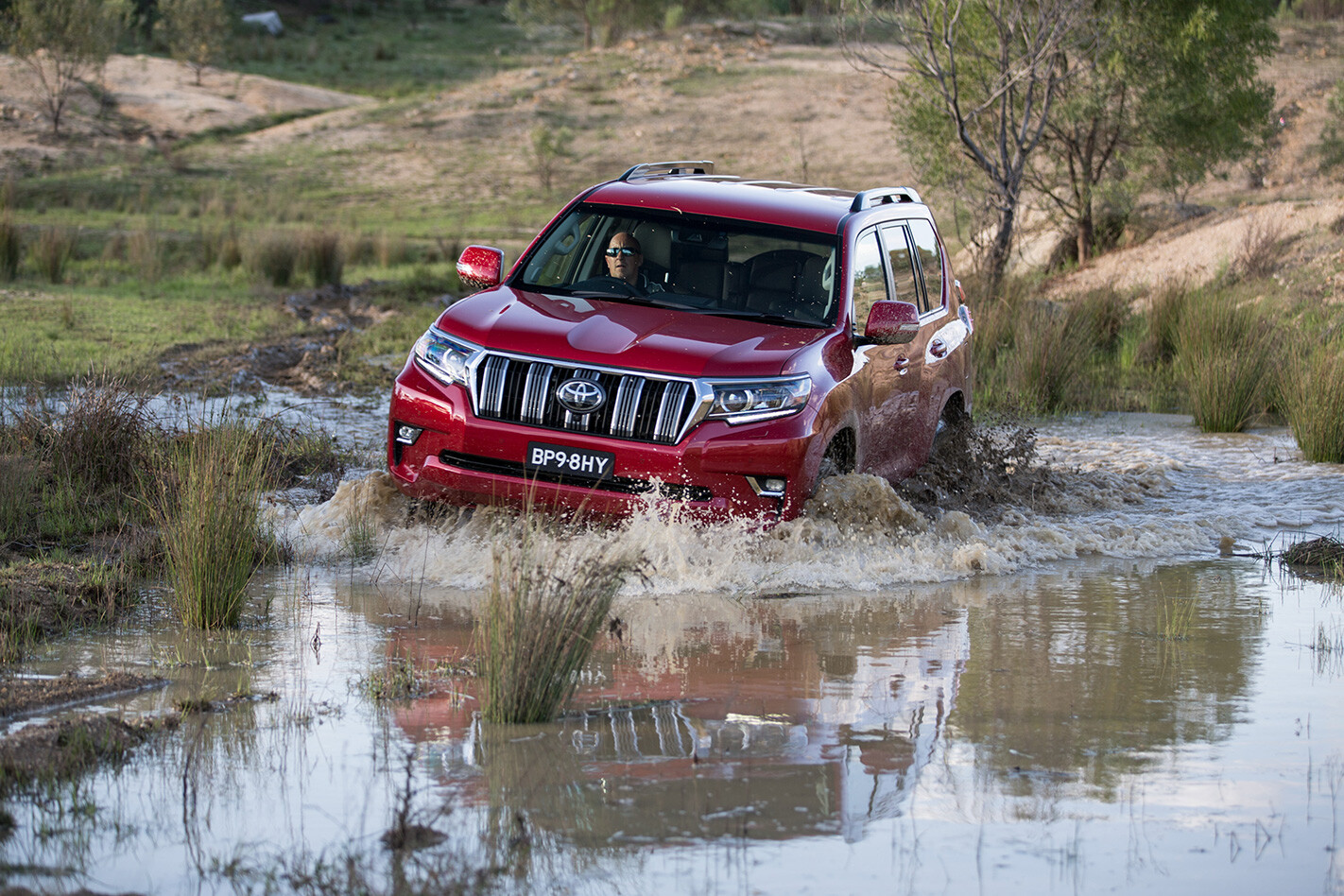
Engine: 2.8-litre 4-cyl turbo diesel Max power: 130kW at 3400rpm Max torque: 450Nm at 1600-2400rpm Gearbox: Six-speed automatic 4X4 system: Dual-range full-time Crawl ratio: 36.1:1 Construction: Separate-chassis Front suspension: Independent/coil springs Rear suspension: Live axle/coil springs Kerb weight: 2325kg GVM: 2990kg Payload: 665kg Towing capacity: 3000kg GCM: 5990kg Fuel tank capacity: 150 litres ADR fuel claim: 8.0L/100km
TOYOTA PRADO Range & PricesPrado GX: $53,490 (manual) Prado GXL: $59,990 (manual) Prado VX: $73,990 Prado Kakadu: $84,490 Auto on GX & GXL: $3,000

DIY Flat breads: Delicious, easy to make, and goes with anything.
This article was first published in 4×4 Australia’s April 2011 issue.
INGREDIENTS
- 1 bag/pkt bread mix and the required amount of water needed on the instructions and the yeast sachet, plus one extra tspn yeast
- A little extra plain flour for kneading
- About one tspn oil or some cooking spray
INSTRUCTIONS
- Mix bread mix into a dough according to instructions, then tip onto a solid, floured surface and knead until smooth. Place the dough ball back into the mixing bowl that has been greased with the oil or cooking spray. Cover with cling film and put in a draught-free, warm place for an hour or so, or until it has doubled in size.
- When the dough has risen, punch your fist right into the middle of the bowl to deflate the dough, then drop it onto a floured surface and knead for about another five minutes.
- Cut the dough into 6 or 8 pieces and pat each flat with the palm of your hand until they’re about the size of a lunch plate. Set the flat breads aside on a floured board for a few minutes while you get the pan ready.
- Heat the pan over a mod heat then reduce the heat to low. Do not use any oil or cooking spray as these need to be cooked in a dry pan.
- Place each of the flat breads in the pan in turn and cook on one side for about five mins or until golden brown.
- They will be thick enough to slice through the middle and DIY Flat breads: Delicious, easy to make, and it goes with anything.
- Enjoy!
IT’S NOT too often I get thrown a set of tyres and told “these are the only set in the country, so don’t stuff them”.
Especially not when it’s backed up by “but we really want to know how they perform, so don’t hold back”. What’s a bloke to do? Well, I figured I’d go right on and ignore the first part – I never was much for doing as I’m told.
Nitto’s calling its new Ridge Grappler a ‘hybrid’, a combination of the best parts of a muddy mixed with the best parts of an all-terrain. With the Ranger punching out a hair less than 45,000km in its first year, doing everything from the Telegraph Track to the Snowy Mountains, Nitto figured it’d make the perfect test platform for the new offering in extreme situations. And with my better-half using it Monday to Friday to ferry the tin-lids to school, it’d show any flaws for daily driving. Things like road noise, tyre life, wet bitumen performance and ability to impress my friends are all easily tested.
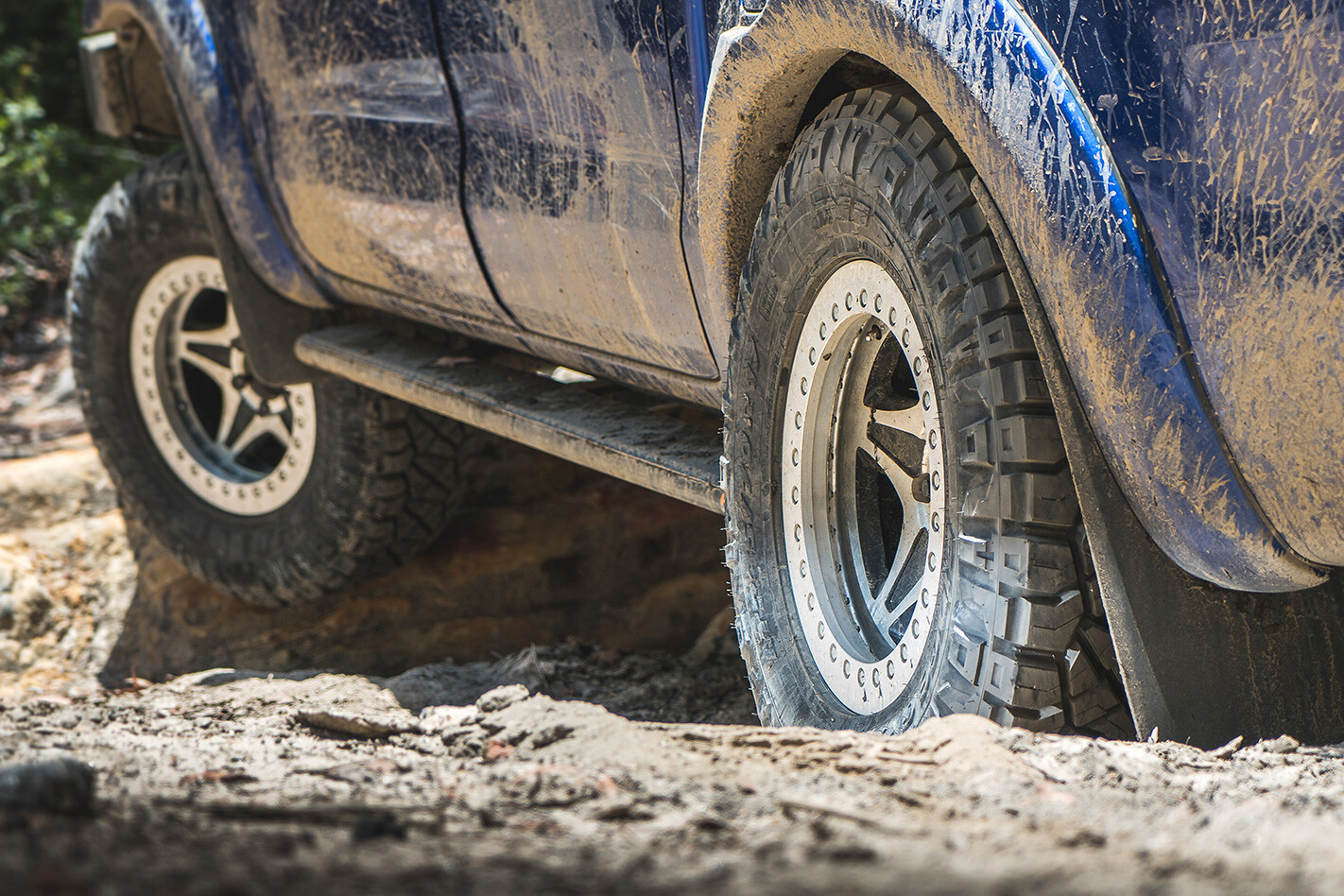
There’s minimal tyre vibration, with only a small amount coming into play when the speedo needle touches 90km/h, and that’s most likely due to the fact I’ve got the Ridge Grapplers wrapped around beadlocked wheels on each corner. I’ve even given them a few ‘emergency brake tests’ with the Ranger pulling up straight and quickly each time. No barking of the tyres and no drifting sideways as the tread blocks scrabble for traction.
But this is 4X4 Australia gosh darnit, and that’s how these tyres deserve to be tested. With a couple of weeks before my next big off-road trip I figured I better tackle a varied 4×4 route that’ll see me pick up all sorts of terrain, from slippery mud, corrugations, slick sandstone rock ledges and articulation-inducing hill-climbs. I also didn’t want to spend my Tuesday sitting at a desk.
With pressures dropped to a moderate 20psi on each corner it was almost point and shoot through all terrain, forward progress only halting when I’d cock a corner in the air like an overly hydrated cocker spaniel. Even good tyres can’t beat physics, right? The ‘alternating shoulder grooves’ seemed to perform well, spitting whatever refuse I’d managed to jam in them clean out with a quick blip of the throttle. I haven’t had a chance to test them in thick Victorian mud yet, but give me a couple of months.
The stone ejectors held up their end of the bargain; each new revolution forcing out any stones I’d collected on the previous. I have noticed light damage on the leading edge on the rear tyres; it’s almost as if someone intentionally ran at higher pressures and pushed it up rock ledges in 2WD just to see what it’d take to get the new Grapplers to break traction. But that wasn’t me, I was told to take care of them.
SIZES TO COME Nitto tells me they’ll be available in a range of sizes, but I shoehorned a set of 285/70R17s in the Ranger’s guards.
Early Rating Wear can’t be gauged until well into five-digit-km figures, but so far, performance is more than up to the task.
AVAILABLE FROM: www.nittotyre.com.au RRP: POA WE SAY: A serious do-it-all tyre with race-proven design.
“Stay in your tent … the lion will visit tonight…”
This feature was originally published in 4×4 Australia’s November 2011 issue
His ivory-white eyes appeared like two searchlights on a stormy South Atlantic coast, and his skin, dark as obsidian, was absorbed by the moonless Kalahari night like the featureless miles of bush surrounding our camp. Climbing into an old LandCruiser trayback, he disappeared into the night.
As the taillights vanished, his last words of advice, “Stay in your tent…” trampled through my subconscious like a stampede of elephants, awakening every childhood nightmare of the boogieman in my closet. I’d spent weeks camping in the wilds of Namibia, South Africa, Lesotho and Zimbabwe.
I’d had elephants walk through my camp, baboons steal my food, and caught hyenas patrolling the perimeter of my fire light. But with the park ranger’s final nine words, things instantly changed. What we’d thought would be another tranquil night in the depths of Kalahari, suddenly became one of internal mind games, strange and foreboding noises, and fear.
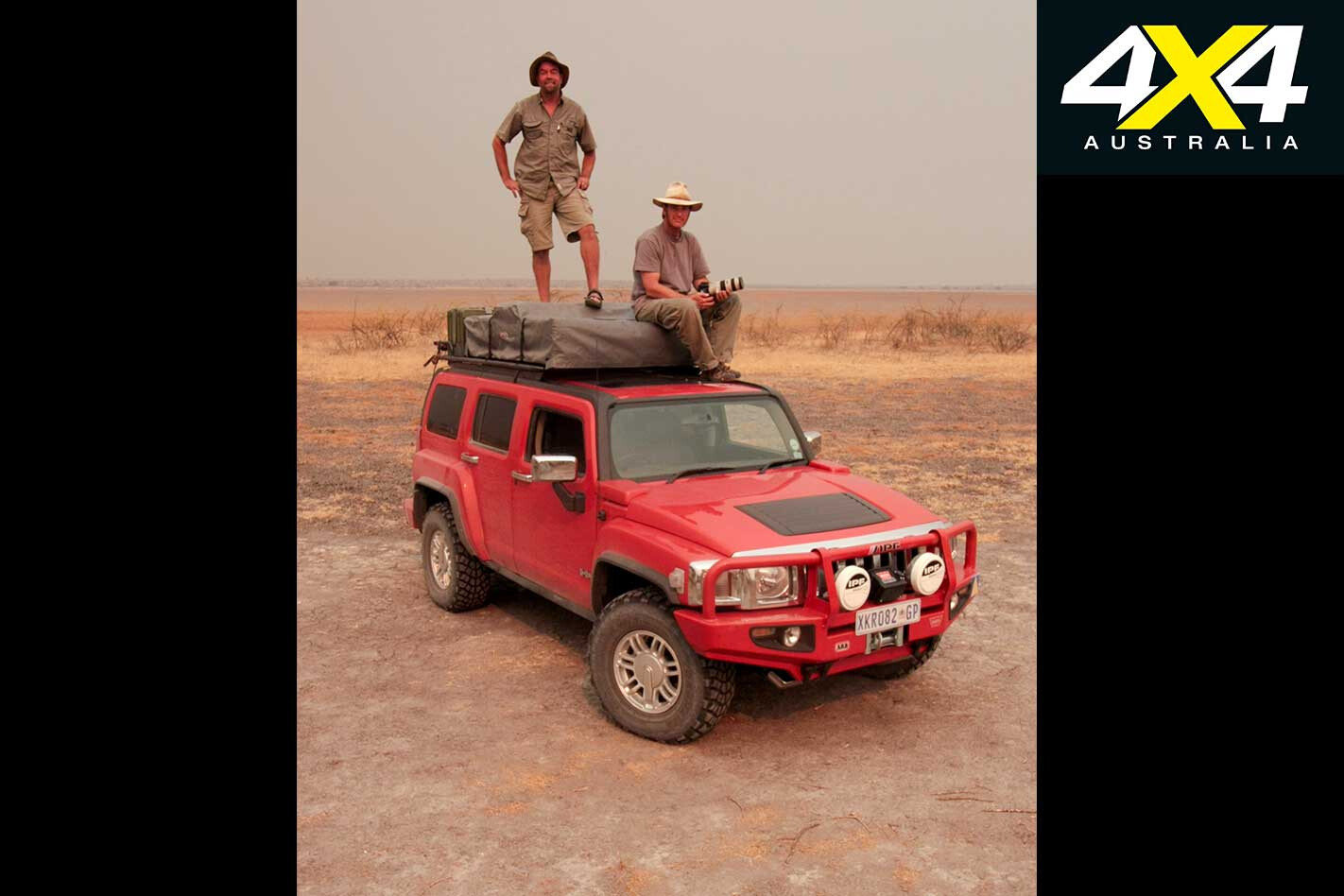
Four days earlier, we’d crossed into Botswana from South Africa. The other half of ‘we’ was old college buddy, Allen Andrews. We were a week into the adventure of a lifetime. General Motors had offered me a deal I couldn’t pass up – an H3 Hummer … and no time limit.
As a kid, only a few could draw my attention from my dirtbike and endless tracks of the California desert. The first was 4X4 trucks, and the second, oddly enough, was a TV show.
Each Sunday my dad would turn on Mutual of Omaha’s Wild Kingdom. Sporting safari garb and trekking through a distant land called Africa, Marlin Perkins, would authoritatively describe the deadly prowess of a python or lion, as his sidekick, Jim Fowler, wrestled it into submission. I dreamed of one day pitching my tent on the African savanna and falling asleep to the sound of elephants trumpeting in the bush, lions making a kill and hyenas scavenging for carrion.
As an adult, I never let go of those childhood ambitions. This was my chance to follow in Marlin’s footsteps, to live the dream.
DARWINISM AND THE FOOD CHAIN
I’d chiselled two months out of my schedule and planned to cross eight countries and cover approximately 10,000 kilometres. Allen would join me for three weeks. After that, I’d be on my own.
Kalahari, which means ‘waterless place’ in the Setswana language, may be one of the most diverse semi-deserts on the planet. And while services are more frequent to the north, the southern Kalahari, from Letlhakeng to Rakops – about 750km of deep Kalahari sand tracks – you are on your own.
A trek through the Kalahari is like stepping into another dimension. One of centuries past, where common sense and preparedness are prerequisites, and Darwin’s theory of evolution rules the bush. It is the realm of the Big Five (lion, leopard, rhino, elephant and cape buffalo), survival of the fittest, and a place where, if you put yourself in the wrong situation, you may become part of the food chain.
I’d hooked up with the guys at 4×4 Megaworld, southern Africa’s largest suppliers of off-road gear, to help with kitting the vehicle. Waiting for us were a Warn 9.5ti winch, high-lift jack, two Optima batteries, IPF lights and a slew of gear from ARB (bullbars, roof rack and tent, compressor, etc.)
The Megaworld crew fitted the gear and even gave me an open-ended shopping spree through their racks of camping gear: chairs, stove, etc. – everything I needed for two months in the bush.
BORDER CROSSING, LAST GAS AND GIRAFFES
The sun burned a searing orange hole in the morning sky as we passed through the border post at Ramatlabama, Botswana.
Unlike many African border crossings, this one was seamless. Insurance, registration, passports and carnet were in order, the guard issued our visas, stamped everything in duplicate, lifted the gate and we motored through.
Barring any major issues, we’d cover approximately 2500km before reaching the Kazengula ferry to Zambia. The last fuel before entering the Central Kalahari Game Reserves was in Letlhakeng. Ahead lay 750km of soft sandy two-tracks. Topping-up the H3’s 87-litre tank and four jerry cans, about 167 litres in total, we’d need to conserve fuel and avoid costly detours. Running low on fuel would mean a 200km detour to Namibia.
The Khutse Game Reserve, at 2600km2, is but a speck on the map compared with the Central Kalahari (52,000km2). But within its boundaries, the arid landscape stretches into oblivion and feels as though you are entering the burning gates of hell.
The sun was setting and we’d knocked off 150 kilometres by the time we pulled into the Molose Camp waterhole. Our first night in the Kalahari, we sat and watched in awe as the fiery orb settled into a distant acacia forest. A giraffe stepped into scene along with a few jackals and a variety of birds.
We stoked up a good fire, listened to the sounds of Africa, and witnessed the passing of a billion stars across the austral sky.
THE ROAD FROM HELL AND T’D OFF RANGERS
The thin red line on the map didn’t seem so long, but the trek from Molose to Xade Camp, at 266km, would be a brutal day. The sand of the Kalahari, which is exceptionally dry and fine-grained, made for a gruelling pace.
Fire had swept through the area a few days earlier, and smoke and the smell of charred wood hung heavy in the air. A pair of headlights poking through the haze at dusk, the first traffic of the day. Two couples in hired Toyotas who had spent the day digging out of the sand. They said there was a big military camp ahead set up to fight the fire. With 90km to go, we flipped on the headlights as darkness fell. Suddenly, the guidebook’s suggestion, “don’t travel alone” was gaining credence.
Park rules prohibit driving at night, but also bush camping. At the military camp, the soldiers rerouted us to the XaXa camp just a few minutes away. A few minutes turned into 25km and precious litres of fuel, something we could not afford.
It was quite late when we found the waterhole, but there were no signs for the camp and it is illegal to camp close to a water source. We were dog-beat tired and said the hell with it – camp here. About this time another ranger appeared, and an angry one at that. We got our arses royally chewed for not using the official camp.
“It is illegal to camp here, you could be arrested,” he proclaimed, and “I’ll take you there if you can not find it – it is well marked.”
There was the sign, and in perfect English, but it was lying on the ground to the side of the track and in the bushes. TIA (This Is Africa).
LIONS, JACKALS AND SCARES… OH MY!
As the sound of the ranger’s LandCruiser faded into the darkness, our first thoughts were, ‘we need to get a fire started.’ Allen volunteered to manage spotlight duties, while I scrounged the edge of the bush for dry grass.
My heart raced, eyes trained intensely into the darkness, the words “stay in your tent” swept through my mind. Allen panned the brush with the torch and shadows seemed to grow, dart to one side, and disappear with each pass…it was the boogieman, I knew it! And as tough as you think you might be, when you are tossed into the food chain, and you’re no longer at the top, you become a lily-livered weak-kneed chicken.
I collected a few handfuls of grass and quickly scrambled back to the safety of the camp. Lions have a distinct roar, and they did come to visit. Through the camel thorn acacia and scrub brush, we could hear the unmistakable call of a pride of lion on their nightly hunt. Even with a campfire blazing, the ARB camp light on and strobe in hand, we didn’t stray far.
The fuel light came on as we reached Xade military Camp. The fire had grown to 20,000km2 and was moving fast across the Kalahari. “It could be dangerous, be very careful,” we were told.
Though we had 80 litres of fuel on our ARB roof rack, the extra 50km to Xaxa Camp had pushed our previous range estimates over the limit. The decision was made to head to Ghanzi for fuel (250km return). Two nights later we’d set foot on the edge of Deception Pan.
DECEPTION PAN, WILDFIRES AND T4A
Deception Pan was launched into the global limelight in the ’80s by a pair of young zoologists, Mark and Delia Owens. Living in tents on the edge of the pan for seven years, they studied the wild dog, hyena and lion, and published a book, Cry of the Kalahari. Allen had a copy of the book and had been reading me excerpts.
Driving around the pan, we identified the Tree Island on which they lived and envisioned life in this truly remote and wild place. Smoke rolled in like a fog bank as we headed back to camp – by dusk we could see the faint orange glow to the southeast. Fire! Strong hot winds blew from the south and the faint glow was growing and moving.
By 2300hrs, we were getting concerned. We packed everything for a possible quick departure and set our alarm for three hours. We were awakened by the smell of smoke. Peering out window of our ARB tent, the entire horizon was fiery red, flames whipping into the air like a crimson geyser. “We need to get the hell out of here.”
On my first trip to Africa, my only navigation aids were a set of maps and compass. But, with today’s technology and software, I had sourced a Garmin GPS and Tracks-4-Africa (T4A) software. T4A is by far the coolest thing since the invention of four-wheel drive. It details almost every highway, dirt road and two-track on the African continent, and was literally a lifesaver at this point.
Our planned escape route was north, around Deception and to the Mangana park gate, and that put us on a collision course with the rapidly moving fire. If we couldn’t get in front of it, we’d have to retreat to the west.
By the time we reached Deception Pan, the fire had encircled its southern end and was running north up both sides. Smoke and ash swirled through the cab and across our headlights as the road zigzagged east towards the fire, then north, then east again. We were certain that the fire had already crossed the road behind us, so turning back was not an option.
Option two was to park in the middle of the pan, let the fire burn around us, and wait it out. We didn’t like that one either.
With maps and a compass we would have been toast… Well, maybe barbecued. But the T4A map detailed the track precisely, and the decision was, “Drive … fast!” The flames ran like the wind and were within a few hundred metres of us by the time we got in front of them.
When we reached the park gate at 0400, a ranger and a few Brits greeted us and said, “We didn’t know if you mates were going to make it. All we could see were the flames, and two headlights coming out of the red fire.”
The trip meter clicked 3339km as we rolled through the Mangana gate and headed for Rakops for fuel. We’d covered 1097km through the Kalahari’s deepest sand tracks, been visited by lions and hyenas, walked in the footsteps of a childhood hero, and survived the biggest fire in recent history. By 0600 the winds had shifted and all seemed calm.
As the sun prepared for the daily arrival, it cast a golden pallet of orange, crimson and ginger over the scorched landscape.
MAKGADIKGADI, BAOBABS AND THE OKAVANGO
The searing austral winter heat was pressing against the windshield, whipping through my open window like a glassblower’s furnace. My legs, now a crimson tone, are reeling from the previous seven days of exposure to the intense sun and forty-plus-degree temperatures.
I could have reached down, hit the aircon and slid the power windows to the up position. But no, I was following the tracks of one of my childhood heroes and the explorers of centuries past, Marlin Perkins, Henry Stanley and Dr Livingstone, and had vowed not to cave in to modern conveniences; save the Hummer H3.
We’re heading towards the Boteti River, the Makgadikgadi and Nxai Pans, and the aqueous reaches of the Okavango Delta. Rakops is no more than a few dozen rondavels and a dirt main street. But it possesses all the necessities for an African road trip – two garage-sized markets and a fuel pump. With full tanks and a few sundries into our fridge, we went in search of the decade-dry Boteti River.
Rumours were drifting through the bush that floodwaters from the Angolan highlands were pushing south, and that the historically dry web of channels, including the Boteti, may have water.
Locating a faint track from the tar road, we headed east to its terminus at an abandoned camp. A game trail led us a few hundred metres through thick bush to the steep banks of the Boteti. Void of water, we shoehorned the H3 down through a maze of acacia, and were greeted by a very surprised herdsman and a few dozen cattle. It appeared that he’d been living with his cattle for months, maybe years, pumping (and drinking) water from a hand-dug well and sleeping under a tree.
The language barrier was broken with a smile, a bottle of clean water and a small piece of quickly melting chocolate. Bewildered, he attempted to put it in his pocket for later. We assured him he should eat the chocolate immediately.
From treetop perches, black-breasted snake eagles kept a curious eye on us as we followed the riverbed upstream in search of the oncoming flow. Reaching the boundary of the Makgadikgadi Game Reserve, and unsuccessful in our quest in the Boteti, we climbed the east embankment into Makgadikgadi and would continue our search in a few days.
Herds of zebra and wildebeest greeted us within 200 metres of the park gate. We’d transitioned from agricultural Botswana to the realm of the wild. Outside the gate, people hunt for subsistence and commerce, and the remaining wildlife competes with cattle for limited resources. But within the reserve’s four-metre-high game fence, the bush appears in a constant state of motion.
Springbok and gemsbok peer from camouflaged veils of mopani, and vervet monkeys play their mischief while keeping a vigilant eye out for predators. The Makgadikgadi lies on the footprint of ancient Lake Ngami.
Most of our maps showed the region as a large blue form and, based on its endorheic disposition, this most assuredly meant a lake surrounded by savanna. Wrong! The blue only indicated where a lake would be if Noah were preparing his ark for departure. And rather than one massive dry lakebed, or pan, Makgadikgadi is a compilation of dozens of small pans, broken by islands of yellow prickly salt grass, acacia and scrub.
It was just before sunset when we arrived at Nxai Pan. Matusi, a young park ranger, pointed us to our camp on the map, laid down the park rules, and urged us to get out to the South Waterhole to view the wildlife.
As the sun dissolved into a fiery orb in the western sky, we blasted across the ancient lake bottom towards the Baines baobabs. Perched on an island, this mini forest of baobabs gained notoriety via the late 18th-century painter Thomas Baines, who set their macabre forms to canvas.
Pulling the H3 to the edge of the saltpan, we deployed the ARB tent, quickly scrounged some grass to start our nightly fire and, after picking out the bones, dined on gourmet cuisine of canned chicken curry. A cool breeze softened the relentless heat of the day, and we’d share camp this night with a few black-backed jackals beneath the ghostly moon shadow of these prehistoric giants.
Unlike me, Allen is not the kind of guy who can wear the same pair of underwear for a week (the trick is to go commando, or turn them inside-out on day four, then wash or burn them on day seven).
It was time for another shower, and rather than surrendering to the tar road to Planet Baobab – a funky retreat to the east – we attempted to locate a thin dotted line on our map, the traditional Maun-to-Gweta route.
Although we eventually found the long-abandoned track, it had been closed by the government and the better part of the day was lost in the effort. But cold beers, a hot meal of game stew and a double bunk rondavels awaited. So we swallowed our pride, endured a few dozen kilometres of pavement, and an hour later were tossing back coldies.
MOREMI, CHOBE AND THE JEWEL OF AFRICA
We’d been in-country for thirteen days, set up our transient camp each night, and spun almost two thousand kilometres on the odometer.
The following morning would find us in Maun (Ma-oon), gateway to the Okavango Delta—The Jewel of Africa. One of the world’s largest inland water systems, the Okavango receives an annual 18 billion cubic metres of floodwater from the Angola Highlands. It is a world of rivulets, palm-lined channels and forested islands, and home to thousands of species of African flora and fauna.
Due to perennial flooding in much of the delta, there isn’t a direct route from Maun to Chobe and Moremi, and the tar road is a 280km detour.
There are two Botswanas – that which lies outside the game fence, and that which is inside. The outside is void of indigenous species, and all you see are cattle and agriculture.
Inside, however, elephants and giraffe walk across your path, leopards nap lazily from limbs of sausage trees waiting for an unsuspecting baboon, and if you stray to into the bush on foot, you might find your place somewhere in the food chain.
The next four days in Moremi and Chobe Game Reserves would be just that: Elephants, giraffe, kudu, eland, vervet monkeys and baboons. It was like driving through Wild Country Safari, but with no fences, caution signs or traffic.
North of Maun, the track came to an abrupt end at the edge of the Khwai River. It continued on the other side, and the local villagers said the government was working on a bridge, but hadn’t done anything in several years.
New plan: head up-river to a spot shallow enough to cross (and not congested with elephants, hippos or crocs), and enter the Moremi at the north gate. After navigating a web of tracks we found a crossing, located a suitable winch anchor in case we got stuck, scanned the banks for crocs, and forged across.
Camps in Moremi are named after the log bridges they are near, and our destination was Third Bridge Camp on the remote finger of the delta. The area is a massive floodplain, and in the dry, water is usually low enough to pass safely. Ninety kilometres and a dozen water crossings later, we wandered into camp at dusk.
We made a quick bush-forage for firewood. And, upon returning, the ranger informed us “A leopard made a kill where you just were last night; stay near camp.” Knowing that Zambian fuel was three-fold the cost in Botswana (US$12 vs US$4), we topped the tank and jerry cans and headed for the Kazengula Ferry.
It had been 18 days since we entered the Kalahari. I’d be dropping Allen at the airport the next day, and be on my own for the next month. I slipped a well-worn Botswana map in the glove box, pulled out Zambia, and unfolded the next chapter of my childhood dreams of following the footsteps of Marlin Perkins and exploring the Dark Continent.
THE crew at 4X4 have been out in the bush for the last two weeks, and along the way we came across an unattended campfire still burning. We put it out and continued, later passing through areas of private land that had prominent signs up warning that trespasses would be prosecuted for leaving the public road.
It only goes to reinforce an email I received the other week from a frustrated mate who runs a sheep and cattle property in far-west NSW. He has been having more than his fair share of people doing the wrong thing – either unknowingly or, sadly, intentionally – while they pass through his place, resulting in busted gates, shot-up water tanks, spooked cattle and thirsty sheep. As a keen 4WDer and tourer, he appreciates why we want to come to the outback and visit the remote parts of Australia; but along with the privilege of touring our vast country comes some responsibility.
Here’s what he said: “When travelling in station country (designated by stock, fences, gates and watering points) you’re travelling on a working station where stock is our livelihood. Please make the effort to contact/visit the homestead if you would like to do anything other than pass directly through, or if you have queries on road conditions. It is when travellers are found camping, exploring or travelling on station tracks or closed roads without permission that landowners and managers can become grumpy.
“Leave gates as you find them. If it doesn’t look right, call in to see the station staff or attempt to track down someone on the UHF radio. If travelling in a group use convoy procedures and make sure the last through closes the gate properly. We often see latches that are not put back securely. Children need close supervision if taking on the gate-opening task. We cannot stress this enough: a box-up of stock by leaving a gate open can incur very significant mustering and handling costs to resolve; while a closed gate (that should be open) can deprive stock of access to water, resulting in many costly deaths.
“On outback properties there are often activities in progress that can have a major safety implication if people are camping without permission. For example, many stations have ’roo shooters that operate at night, there may be hunters looking for feral animals, and there may be mustering activities in progress. Do not camp without making an attempt to gain permission from the property, and don’t camp close to water points as that will deprive stock of access to water.
“Dogs must be on a lead at all times. Many properties regularly bait, trap and/or use other methods for the management of wild dogs and there can be a very real risk to any dog that is allowed off a lead.
“Take out any rubbish with you and rake out fires to ensure no cans or other debris is left behind. When you need to go to the toilet, dig a hole and burn the paper before filling the hole in, while ensuring you are well away from watering points and the side of the road.
“Shooting and exploring are not allowed under any circumstances without specific permission.
“If it happens to rain and you’re leaving defined wheel marks, stop and access the damage. In most areas roads are closed whenever there is any amount of rain and in many cases it may just mean camping overnight to let sun and wind do some drying before proceeding. Again, make every attempt to contact the station to find out what conditions are doing. We have, on occasions, put people up in our shearers’ quarters for several days rather than make a mess of the road. Remember, we have to travel on these roads every day.
“And you can help us by doing a big favour and report anything that doesn’t look right. If you suspect there is stock in strife or a watering point has stopped working, please try to call in or make contact via the UHF. Given the distances involved in station country we often only find out about issues after it’s too late.
“As landowners we’re happy to provide advice where we can to those who travel through our ‘backyard’, thus improving the outcomes and experience for us all.”What more can I say? Be a good outback traveller and we’ll all be better for it.